
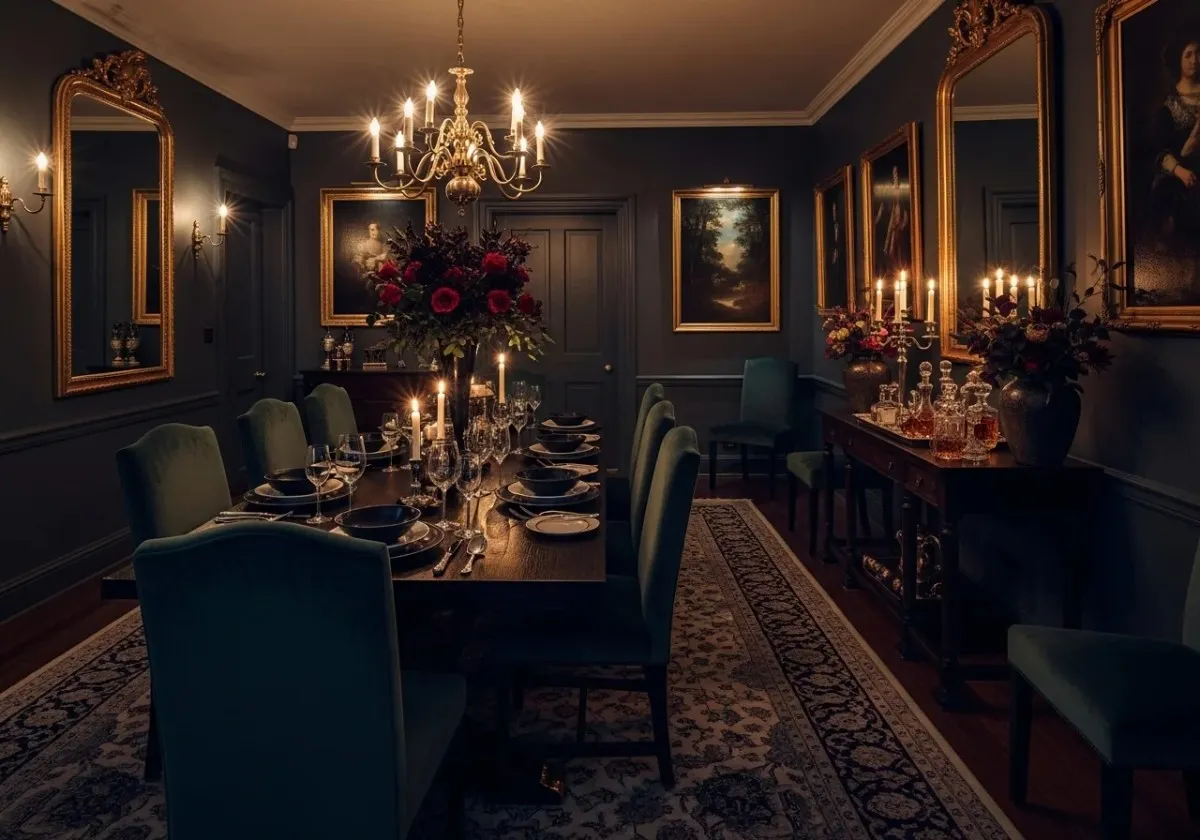
20 Moody Dining Room Ideas That Feel Bold, Cozy, and Unforgettable
Ever sit down in your dining room and feel… underwhelmed? Everything is in place, yet the space feels flat, uninspiring, and forgettable. You’re not alone—so many dining rooms look “done” but don’t feel right. What you’re really craving is atmosphere. Something warmer, deeper, more inviting. That’s where moody dining room ideas come in. By layering rich colors, soft lighting, and cozy textures, you can turn an ordinary setup into a space that feels intimate, stylish, and made for slow dinners, meaningful conversations, and moments you actually want to linger in.
1. Go All-In with Deep Charcoal Walls
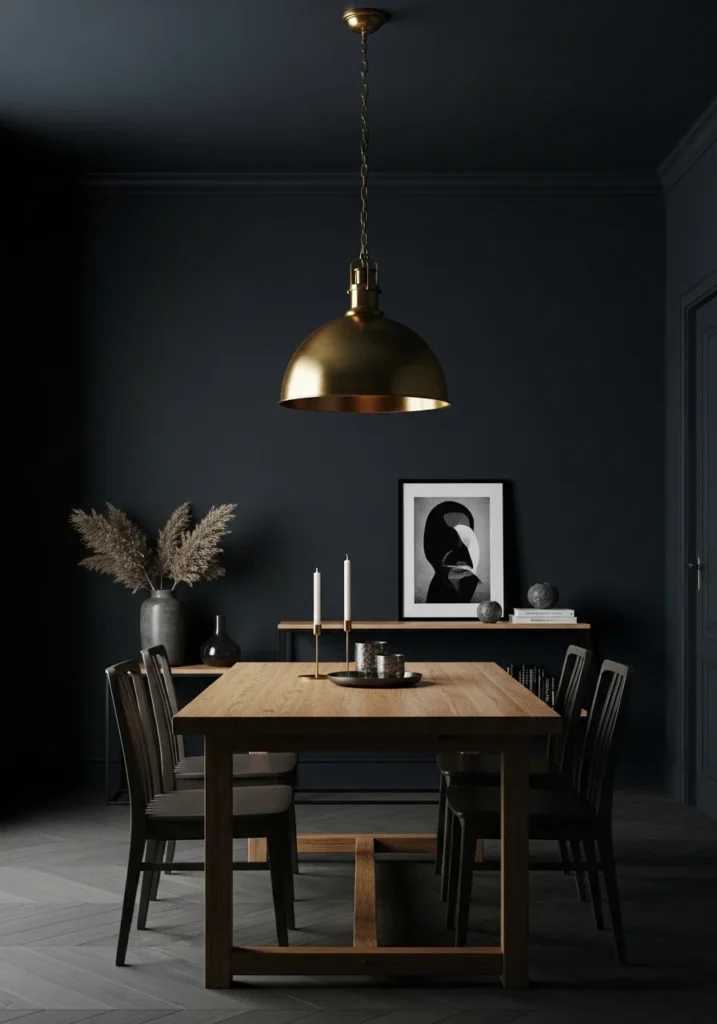
I painted our dining room charcoal on a whim one grey October weekend, and I held my breath while the first coat went on. By evening, though, the room had changed completely. The walls stopped shouting for attention and started holding the room together instead. Supper felt slower, candles glowed warmer, and even ordinary plates looked intentional. I learned to keep the ceiling and woodwork in a soft, warm white, because that thin pale edge stops the dark from closing in. It is the bravest colour choice I have made, and the one I would repeat first.
How to do it: Paint a test patch on the largest wall and live with it for three days, checking it at breakfast and by lamplight. Use a matt emulsion and cut in carefully around the ceiling, skirting and window frames. Keep the ceiling pale, add one warm wood or brass detail, and step back at night before deciding whether a second wall needs the same treatment.
2. Add a Statement Black Dining Table
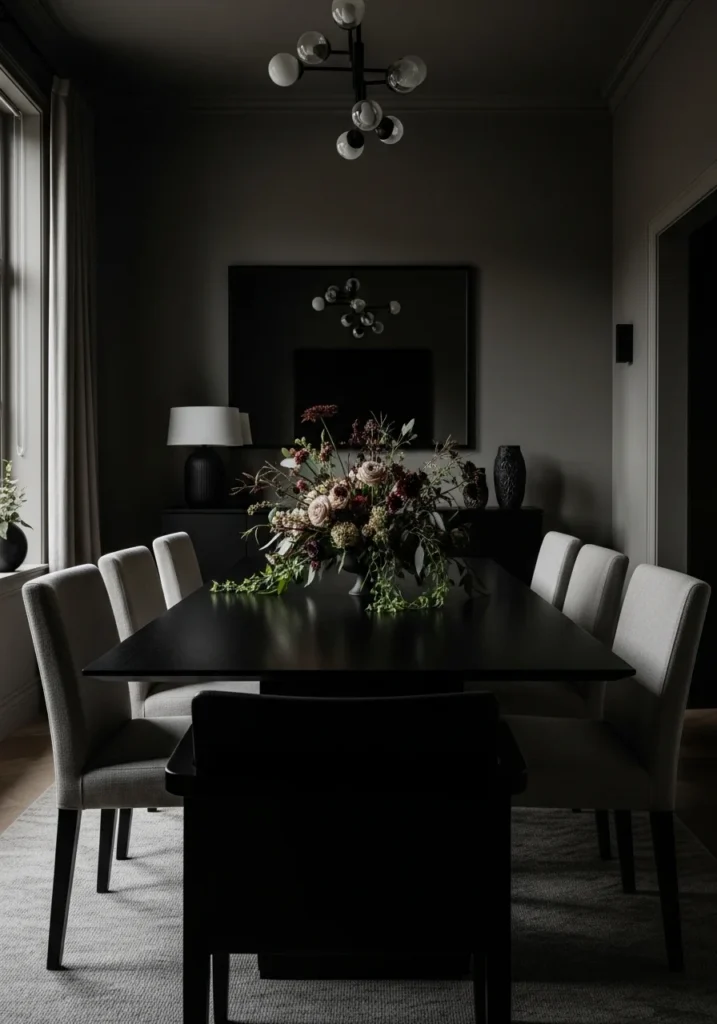
A black dining table was the boldest piece I ever brought home, and for a week I wondered whether I had gone too far. Then I set it for Sunday lunch, with cream linen, a low bowl of white flowers and sideways light, and it all made sense. The table does not shout; it holds the room, and everything pale or warm placed on it looks deliberate. I keep the chairs soft so the black never feels cold. When I dressed a round table the same way, the dark surface made the centrepiece glow — more of those combinations are in my round dining table decor ideas.
How to do it: Choose a matt or satin black finish that resists fingerprints, and measure the room so at least 90 centimetres remain behind each chair. Pair the table with pale upholstered chairs and one warm metal accent. Set it with cream linen and a low centrepiece, then sit down and check that elbows, plates and glasses all have room.
3. Layer Warm, Low Lighting
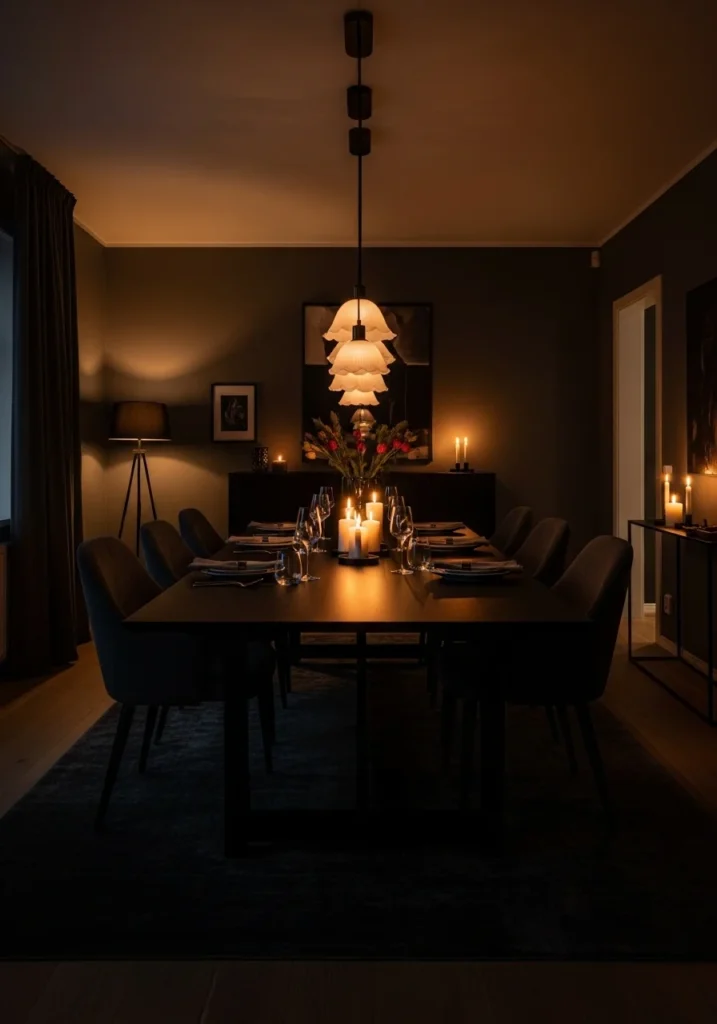
Our dining room used to have one bright ceiling light, and every supper under it felt like an interrogation. I changed it the winter we started eating later, adding a dimmer, two small lamps and candles I could actually reach. Now the light pools low over the table and the corners fall softly away, which makes even a Tuesday plate of pasta feel like an occasion. I keep the brightest light for clearing up afterwards, never for eating. If you want the same layered glow, my dining room lighting over table ideas show the heights and bulb warmth that worked for me.
How to do it: Fit a dimmer to the main light and choose warm white bulbs around 2700K. Hang pendants 75 to 90 centimetres above the table, add a lamp or candles at each end, and test the lowest setting at supper time. Keep one brighter task light for clearing away, switched separately.
4. Use Rich Jewel-Toned Accents
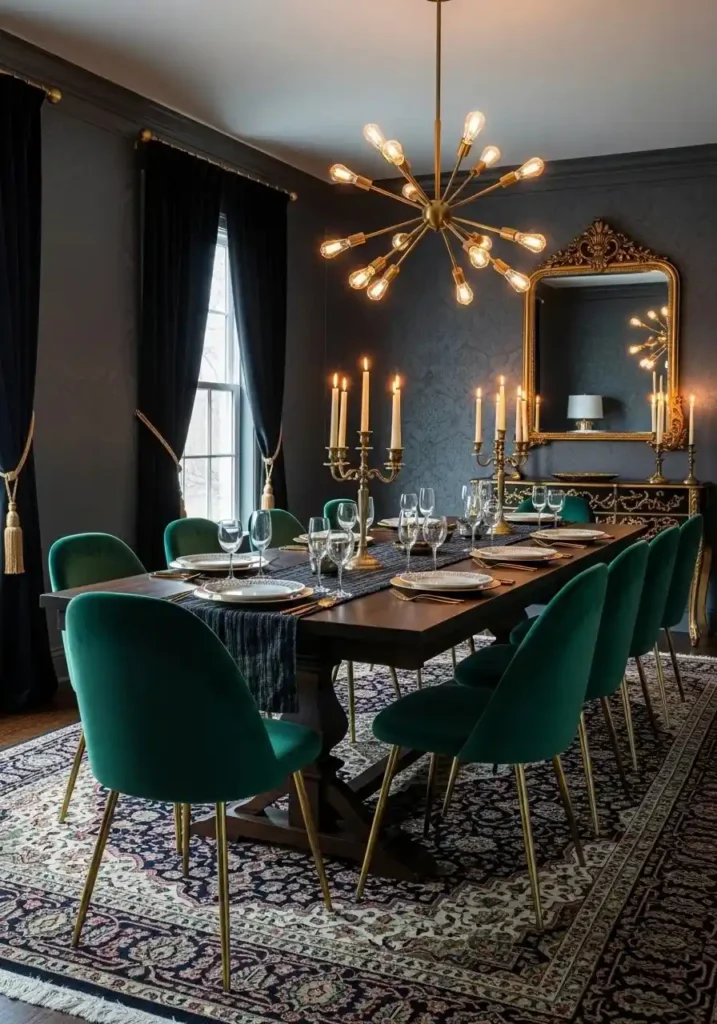
I was nervous about jewel tones at first, because emerald and burgundy can look theatrical in the wrong room. Then I tried one deep green velvet cushion and a navy runner, and the dining room suddenly had a pulse. The colour does the talking, so I keep everything else quiet — plain plates, clear glasses, wood that is not too polished. My favourite combination is emerald with brass, because the metal warms the green instead of letting it turn cold. It feels grown-up without feeling formal, and guests always ask where the cushions came from.
How to do it: Pick one jewel tone as your lead and repeat it in three places, such as cushions, a runner and a vase. Keep walls dark and neutral, add brass or gold for warmth, and use plain tableware so the colour stays the star. Test fabric swatches at night, when jewel tones look their richest.
5. Install Moody Wall Paneling
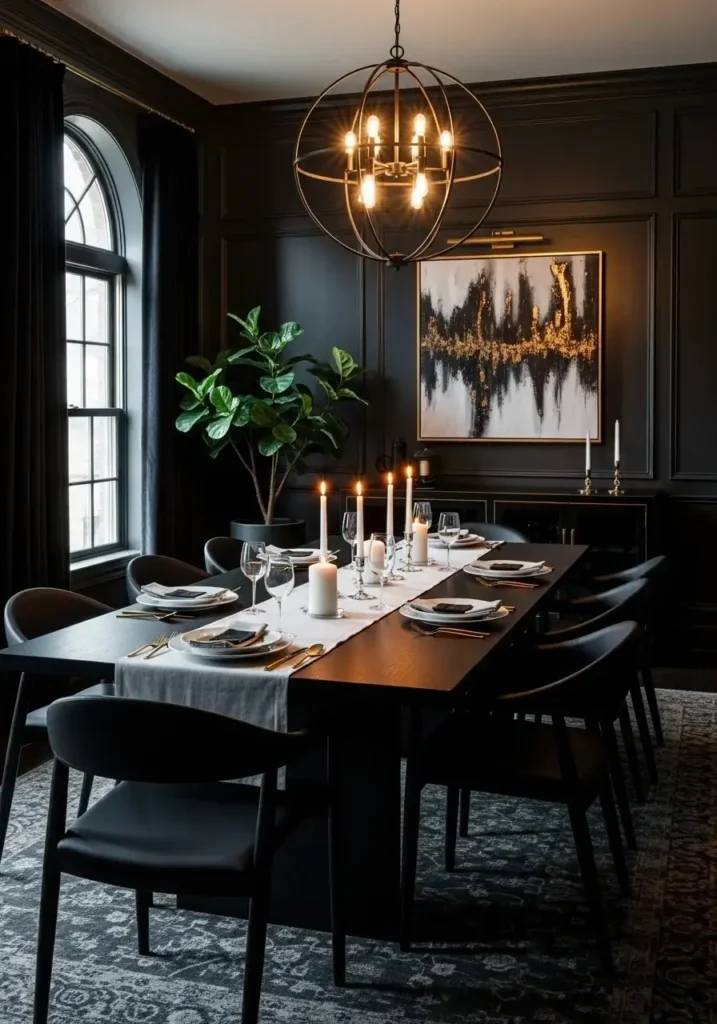
Our dining room had one long, blank wall that made the whole room feel unfinished, and paint alone was not solving it. I added simple picture-frame paneling, painted the same deep shade as the walls, and the wall finally had a rhythm to it. The shadows inside each frame change through the day, which gives the room a quiet kind of movement. It also makes the furniture look more considered, as though everything was chosen for that wall. I only wish I had measured twice before cutting the first length of trim, because a wonky frame is very hard to unsee.
How to do it: Measure the wall and mark out equal rectangles with a pencil and spirit level, leaving the same gap everywhere. Cut thin trim to size, fix it with adhesive and small pins, fill the joins, then paint the whole wall — trim included — in a matt dark shade. Stand back often, because one uneven rectangle will catch your eye forever.
6. Incorporate Vintage or Antique Pieces
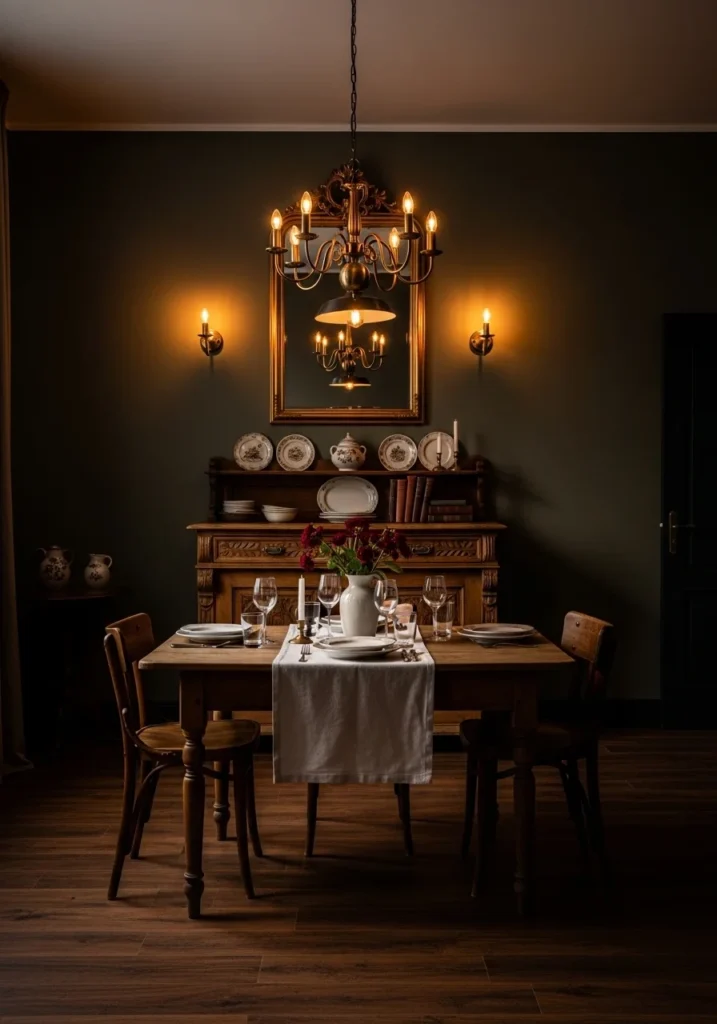
I found our dining table in a second-hand shop on a rainy Saturday, and it was scratched, wobbly and completely perfect. I spent a weekend tightening joints, waxing the top and learning which marks to keep, because they are the table’s history. Old pieces bring a softness that new furniture cannot fake, and in a dark room that softness matters even more. I mix one or two vintage pieces with plainer modern chairs so the room feels collected, not like a museum. Every scratch now reminds me of the Saturday I brought it home.
How to do it: Look for solid wood pieces with good bones and ignore scuffs you can wax out. Check joints, drawers and wobble before you buy, and measure doorways for the journey home. Clean gently, wax the top, and pair each vintage piece with something plain and modern so it looks chosen, not accidental.
Also More Amazing In the Below For You More:
21 Colorful Dining Room Ideas to Make Your Space Feel Alive and Joyful
20 Green Dining Room Ideas to Create a Fresh and Inviting Space
20 Dining Room Decor Ideas to Create a Warm and Stylish Space
7. Try a Dark Floral Wallpaper
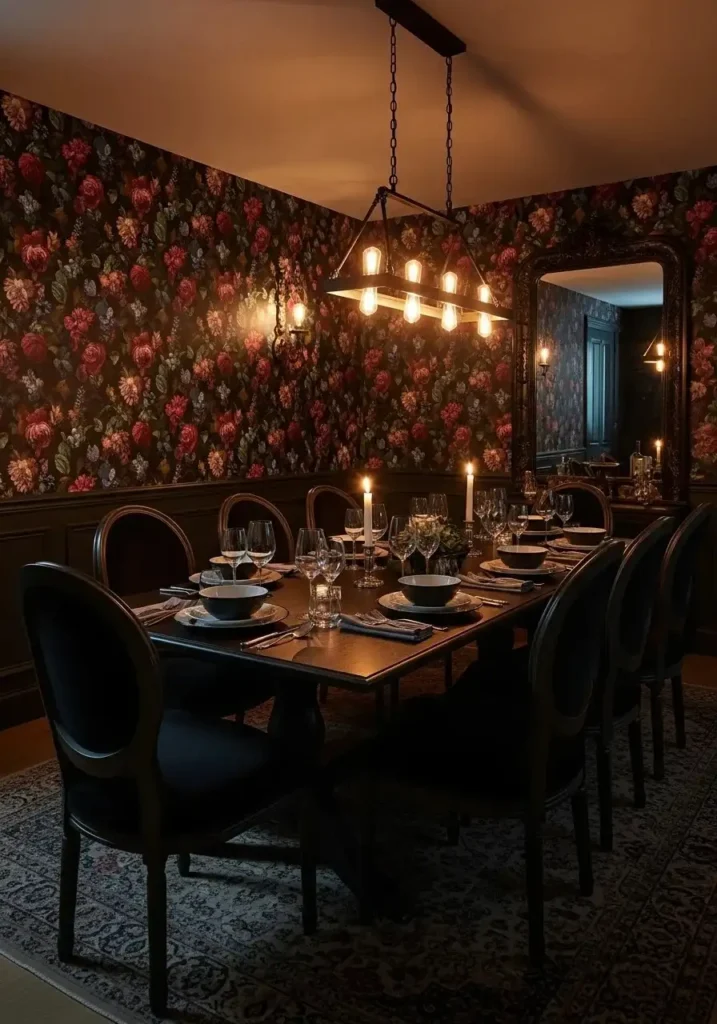
I put dark floral wallpaper on one dining room wall after months of hovering over samples, and I still remember the quiet when the first drop went up. The roses are almost black in the evening, then they soften at lunchtime, so the room never looks quite the same twice. It gives the walls a pattern to hold, which means I need almost nothing else on them. I keep the table plain and the chairs dark, because the wallpaper is already doing the talking. Friends always touch it, as though they cannot quite believe it is paper.
How to do it: Start with one wall, ideally the one you face while eating. Order a sample, paste it up and live with it for a week in lamplight and daylight. Choose a large-scale print in deep tones, hang it with a sharp blade and a level, and keep nearby furniture plain so the pattern stays the hero.
8. Bring in Natural Wood Tones
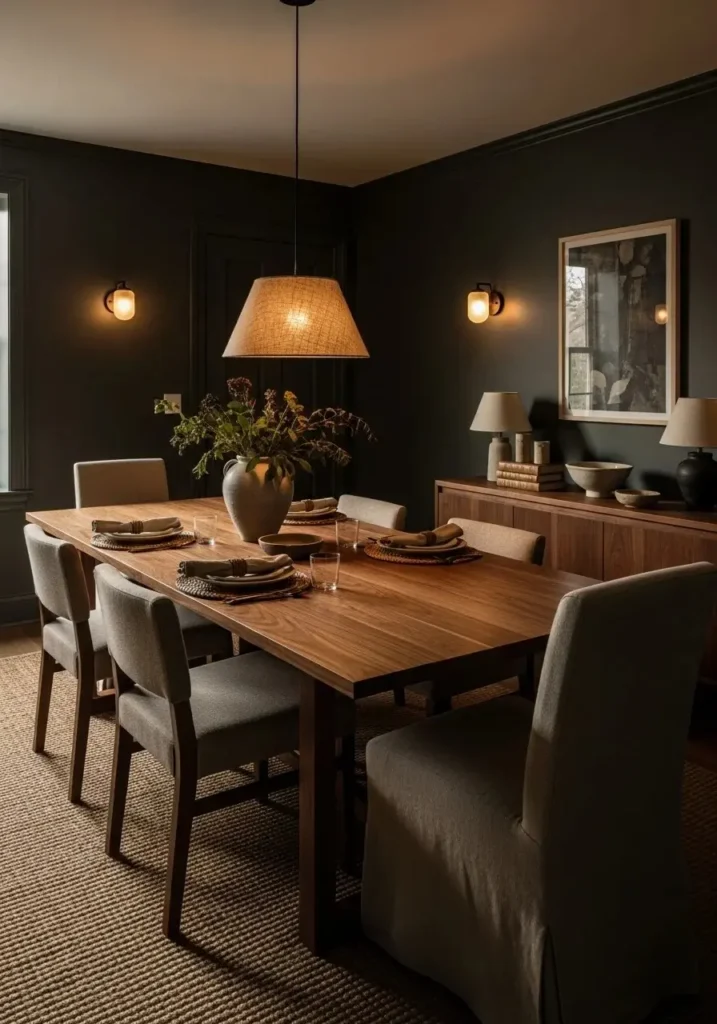
I keep coming back to wood in this room, because it is the one thing that stops dark colours from feeling cold. Our oak table has a honeyed grain that catches the candlelight, and the walnut sideboard grounds the whole wall. I like wood that shows its age a little, with knots and a grain you can feel under your hand. It pairs with almost any dark shade, which makes it the easiest decision in a moody room. If I ever doubt a colour choice, I hold a piece of wood against it, and the answer is usually obvious.
How to do it: Choose one dominant wood, such as walnut or oak, and repeat it in at least two pieces. Mix in a lighter wood only as a small accent, keep finishes matt or oiled rather than glossy, and let the grain show. Test wood samples against your wall colour at night, when warm tones matter most.
9. Use Black Curtains for Drama
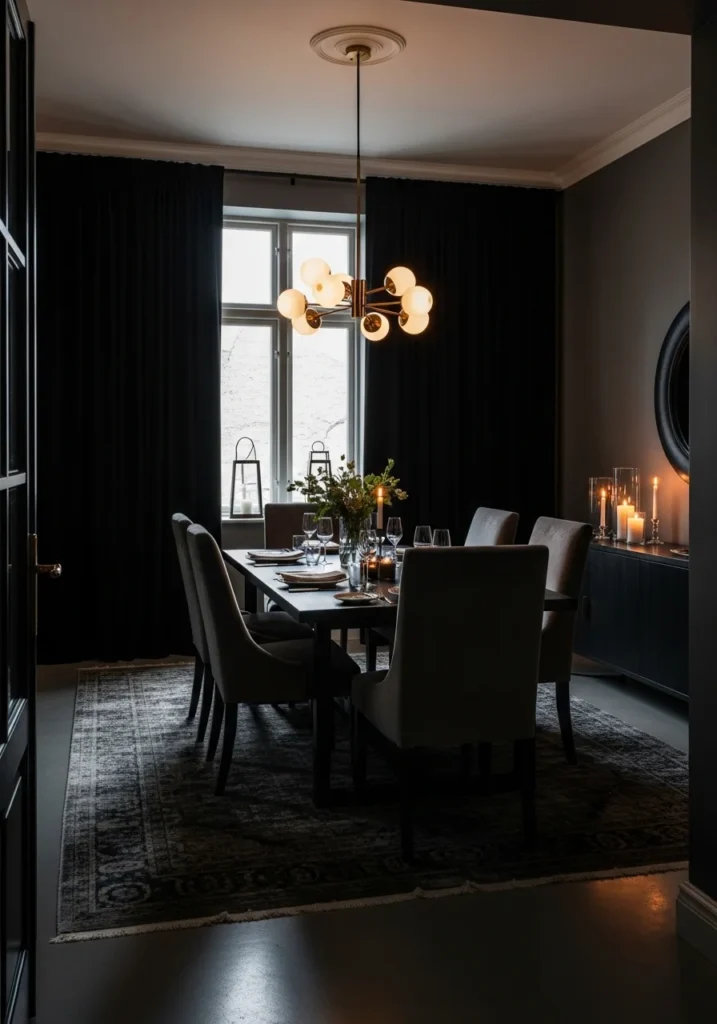
I hung black curtains on a whim, and the first evening I drew them I understood the drama everyone talks about. They frame the window like a picture, soften the edges of the room and make the lamplight feel warmer by contrast. I was worried they would swallow the daylight, but a heavy linen weave still lets a little light through at the edges. They also hide a view I never loved, which is a bonus I had not planned. Now I would rather have fewer, fuller curtains than any amount of pale sheers.
How to do it: Measure from just below the ceiling to the floor and add at least 15 centimetres, so the curtains pool slightly. Choose velvet or heavy linen in black or near-black, hang them wide enough to clear the glass when open, and steam out creases before the first supper. Lined curtains hold their shape best.
10. Style with Minimal but Bold Decor
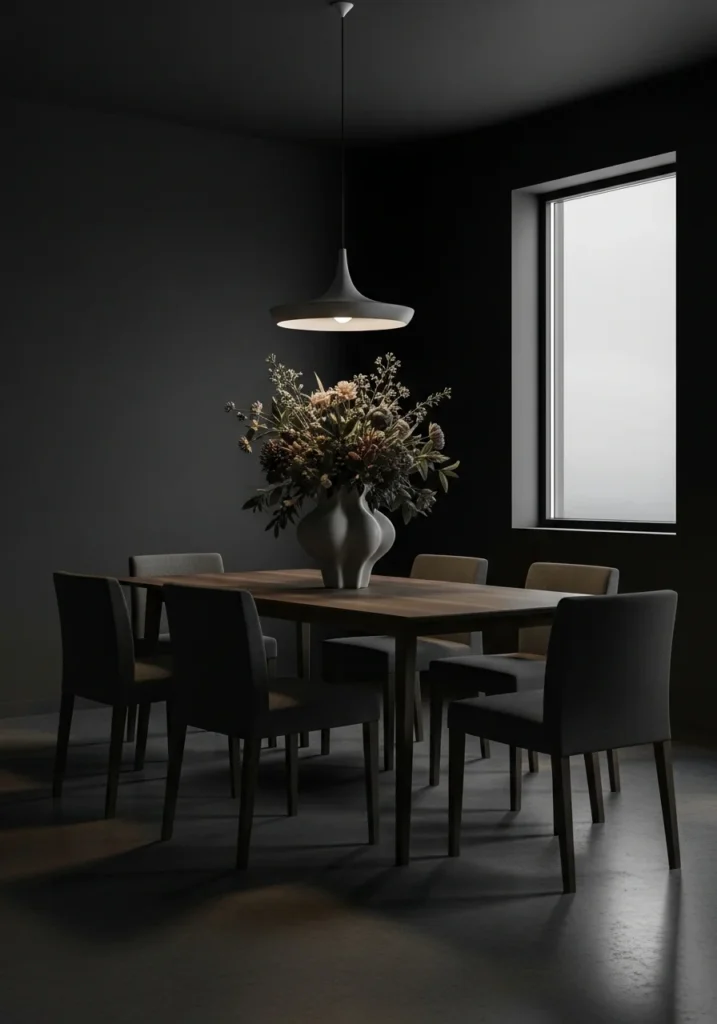
I used to fill every surface, convinced that more things meant more style. Then I cleared the sideboard to a single tall vase, one brass candlestick and a stack of two books, and the room exhaled. With dark walls, one strong object reads louder than ten small ones, because there is nothing competing with it. I rotate the centrepiece with the seasons — dried stems in autumn, fresh greenery in spring — and the table always feels new. Restraint, I have learned, is not emptiness; it is confidence. It also makes clearing up after supper far quicker, which I appreciate every single night.
How to do it: Remove everything from the table and sideboard, then add back only three items: one tall, one low and one with shine. Keep a limited palette of two colours plus wood, and leave at least a third of every surface empty. Change one item each season so the room stays fresh without growing cluttered.
11. Add a Dramatic Chandelier
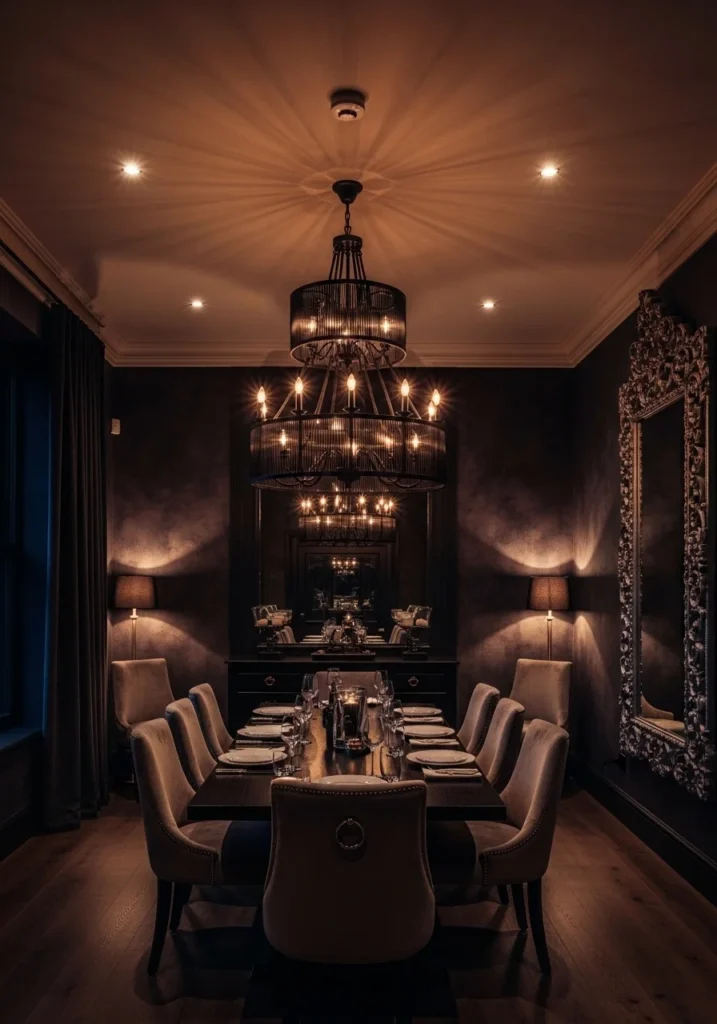
Our chandelier was a second-hand find with dark metal arms and a little too much sparkle for my taste at first. Once it was hung low over the table and put on a dimmer, it stopped being a showpiece and became the room’s heartbeat. Candlelight catches the crystals at supper, and the whole table glows. I keep the rest of the lighting quiet so the chandelier owns the evening. For a grander, more polished version of the same mood, my luxury modern dining room ideas show how to keep that sparkle feeling elegant rather than overdone.
How to do it: Choose a chandelier about half the width of your table, in dark metal or blackened brass. Hang it 75 to 90 centimetres above the tabletop, fit a dimmer, and use warm bulbs. Check it from every seat, because a fitting that dazzles one guest will ruin the whole evening.
12. Paint the Ceiling a Dark Shade
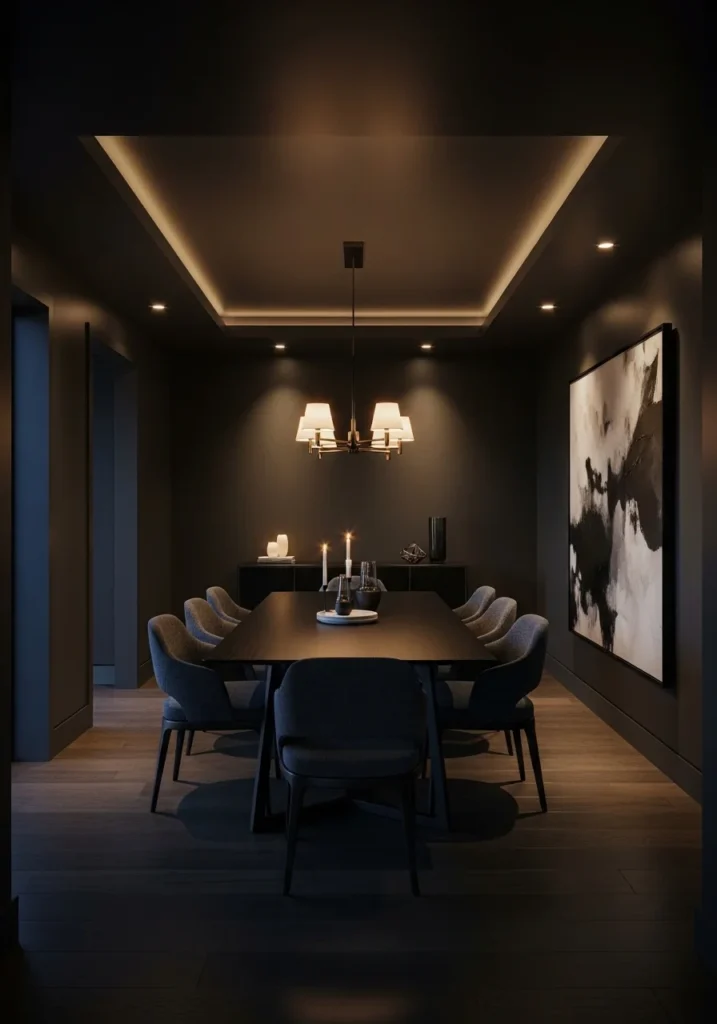
I painted our dining room ceiling charcoal on the same weekend as the walls, mostly because I was too impatient to wait and see. It was the best impulsive decision in the whole room. The ceiling seems to lower just enough to gather everyone in, and the walls look taller by comparison, which is a lovely trick. At night it disappears completely, so the lamps and candles become the whole picture. I kept the coving and the light fitting pale, because that thin line of contrast is what stops the room feeling like a box.
How to do it: Paint the ceiling the same deep shade as the walls, or one tone darker, in a matt finish. Keep coving, cornices and the light fitting in a soft pale shade for contrast. Paint with a roller on an extension pole, work in daylight, and check the result at night before deciding whether the walls need adjusting.
13. Use Textured Rugs for Warmth
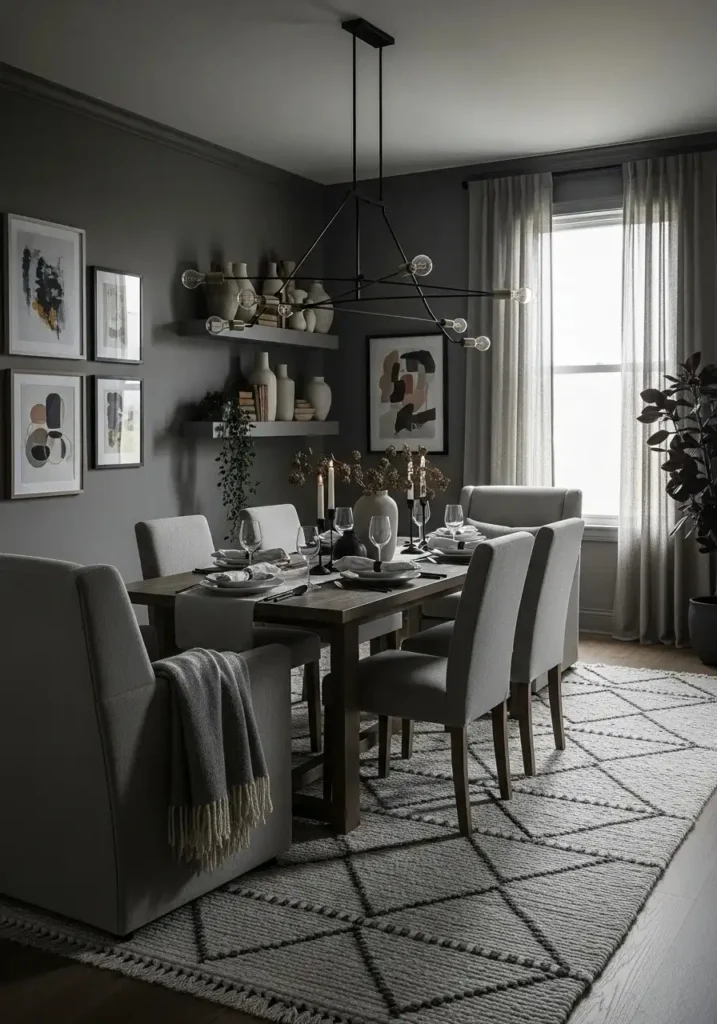
Our rug was an afterthought, bought to hide a scuffed patch of floor, and it turned out to be the cosiest thing in the room. A deep, textured pile under the table softens every footstep and makes bare feet at breakfast a small pleasure. It also pulls the chairs together, so the table stops floating in the middle of a dark floor. I chose a pattern that hides crumbs with dignity, because a dining rug earns its keep. When friends visit, they always comment on how warm the room feels underfoot before they notice anything else.
How to do it: Choose a low-pile rug at least 60 centimetres wider than the table on every side, so chairs stay on it when pulled out. Pick a deep, forgiving colour and a washable or stain-resistant fibre. Use a non-slip underlay, vacuum weekly, and blot spills at once rather than rubbing them in.
14. Mix Matte and Metallic Finishes
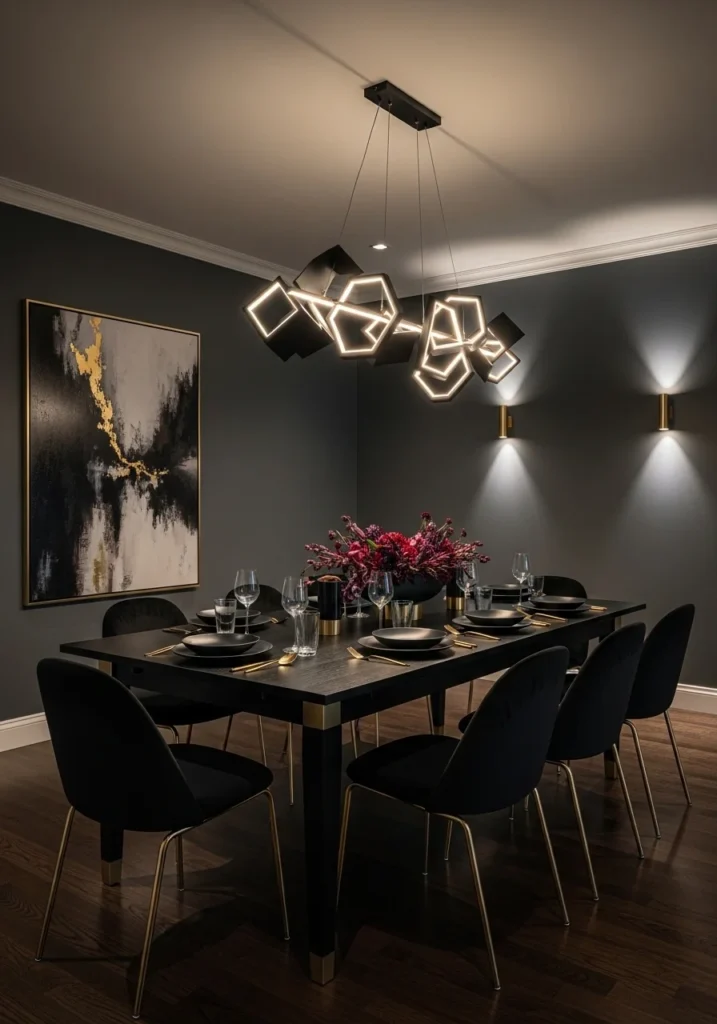
I learned the matte-and-metallic trick by accident, when a brass candlestick landed on our matt black sideboard and suddenly the whole corner lit up. Dark, flat surfaces swallow light, so a little shine gives the eye somewhere to rest. I keep the metal to one tone — warm brass — and repeat it in small doses: candlesticks, a picture frame, the odd drawer pull. Too much shine turns the room into a jewellery box, but just enough makes the dark feel deliberate. It is the contrast I reach for whenever a corner looks flat.
How to do it: Keep most surfaces matt — walls, table and sideboard — then add metallic accents in one finish only. Try brass candlesticks, a metal-framed mirror and warm-toned cutlery, each repeated twice. Step back at night and remove one shiny thing if the room starts to glitter.
Also More Amazing In the Below For You More:
21 Colorful Dining Room Ideas to Make Your Space Feel Alive and Joyful
20 Green Dining Room Ideas to Create a Fresh and Inviting Space
20 Dining Room Decor Ideas to Create a Warm and Stylish Space
15. Add Large-Scale Artwork
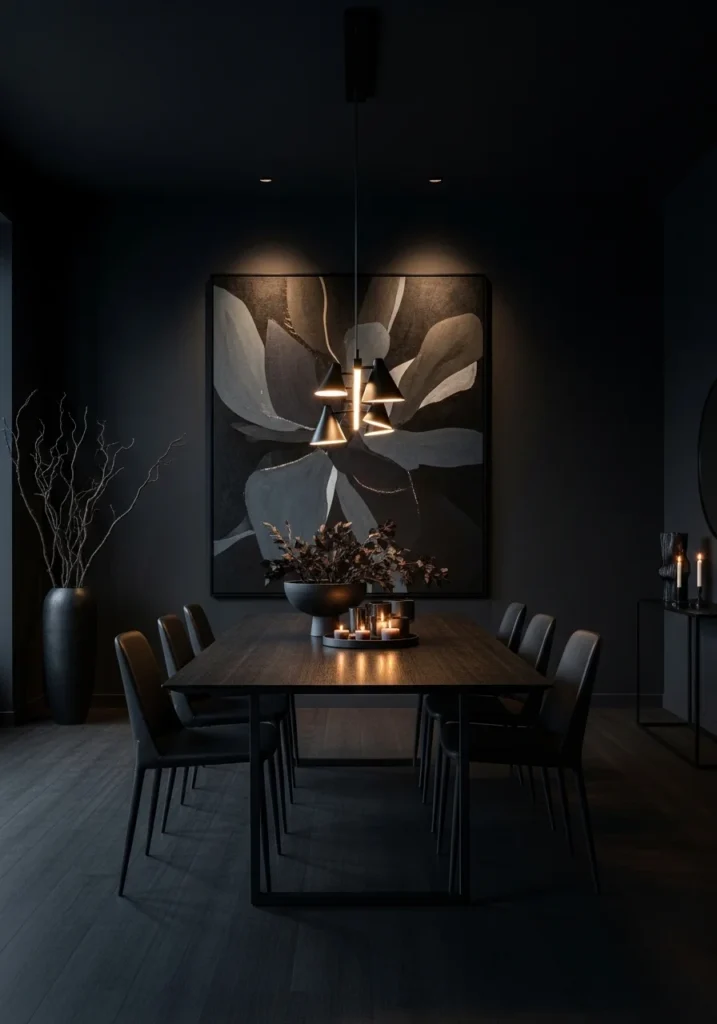
I hung our biggest piece of art above the sideboard after it sat on the floor for a month, and I still kick myself for waiting. One large, dark painting does more than a dozen small frames, because it gives the wall a single place to land. I chose a moody landscape with deep greens and a pale sky, and it pulls the whole palette together. The frame is simple black wood, wide enough to feel substantial. Guests stand in front of it with their wine glasses, which tells me it was worth every penny.
How to do it: Choose one piece at least two-thirds the width of the furniture below it, in deep tones that echo your walls. Hang its centre about 145 centimetres from the floor, use two fixings for heavy frames, and light it with a small picture light or a nearby lamp. Leave the wall around it empty.
16. Introduce Dark Upholstered Chairs
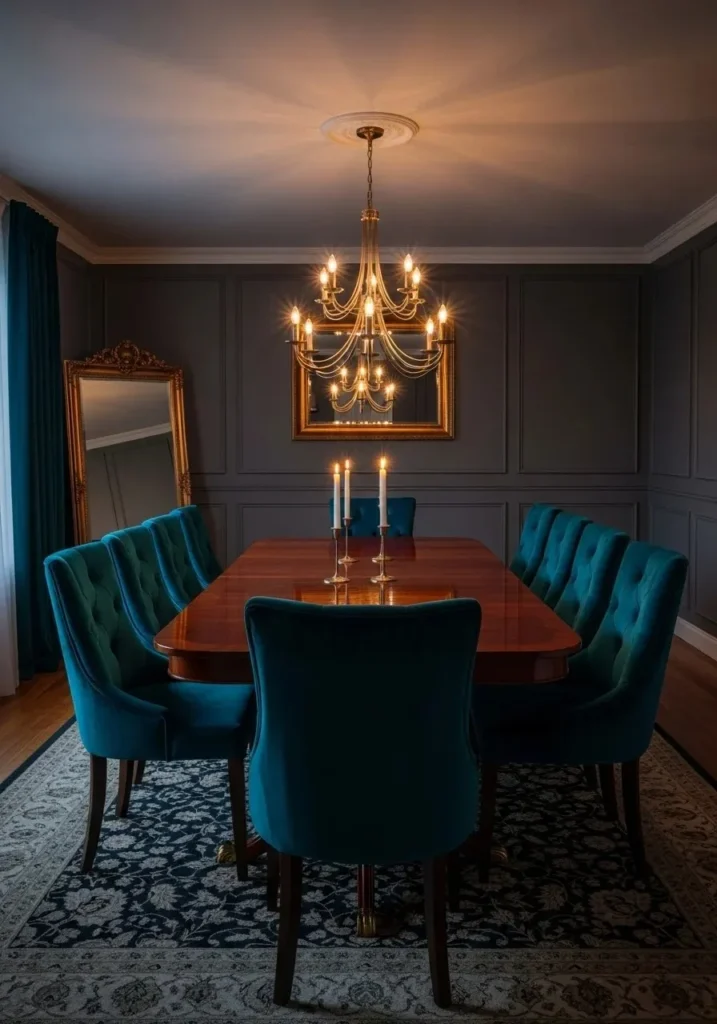
Our velvet dining chairs were the first thing I bought for this room, and I chose them sitting down, quite literally, in the shop. A dark upholstered chair changes how long people stay at the table — nobody rushes off when the seat is soft and the back is high. I picked a deep green velvet that hides marks better than I expected, and the nap of the fabric catches the light differently from every angle. They make even a plain wooden table look dressed up. My only regret is buying six instead of eight, because there is never a spare when friends drop in.
How to do it: Choose velvet or linen in a deep, forgiving shade, and test a fabric swatch for stains before ordering. Sit in the chair for five minutes, check the seat height against your table, and pick a wipeable or stain-resistant finish. Keep two spare chair covers for messy suppers, and brush velvet weekly to keep its nap even.
17. Use Mirrors to Reflect Soft Light
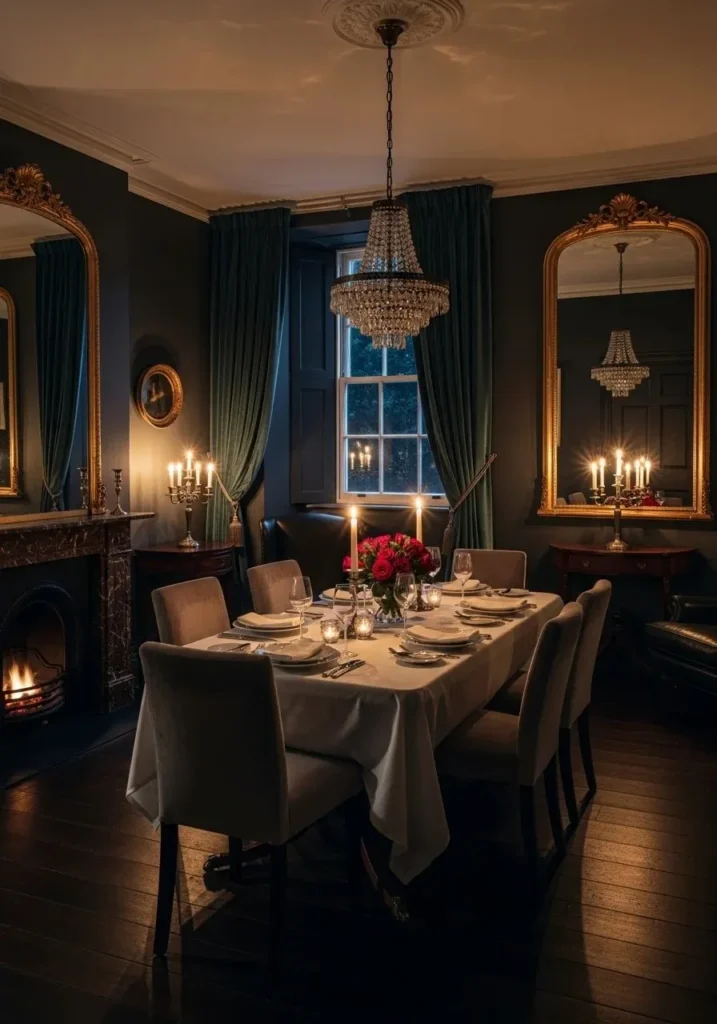
I hung a large mirror opposite our dining room window after a friend suggested it, and the change was instant. The mirror catches the candles and throws their light back across the table, so the room feels twice as bright without any extra lamps. It also makes the room look longer, which matters in a space that can feel closed in. I chose a dark wood frame so the mirror reads as furniture, not as a trick. Now I check my hair in it before guests arrive, and I am not even slightly sorry.
How to do it: Hang a large mirror opposite a window or across from the chandelier, with its centre at eye level. Choose a dark wood or black metal frame that matches your furniture, secure it with proper wall fixings, and check the reflection from every seat so it shows candles and greenery, never a bare bulb.
18. Incorporate Greenery for Balance
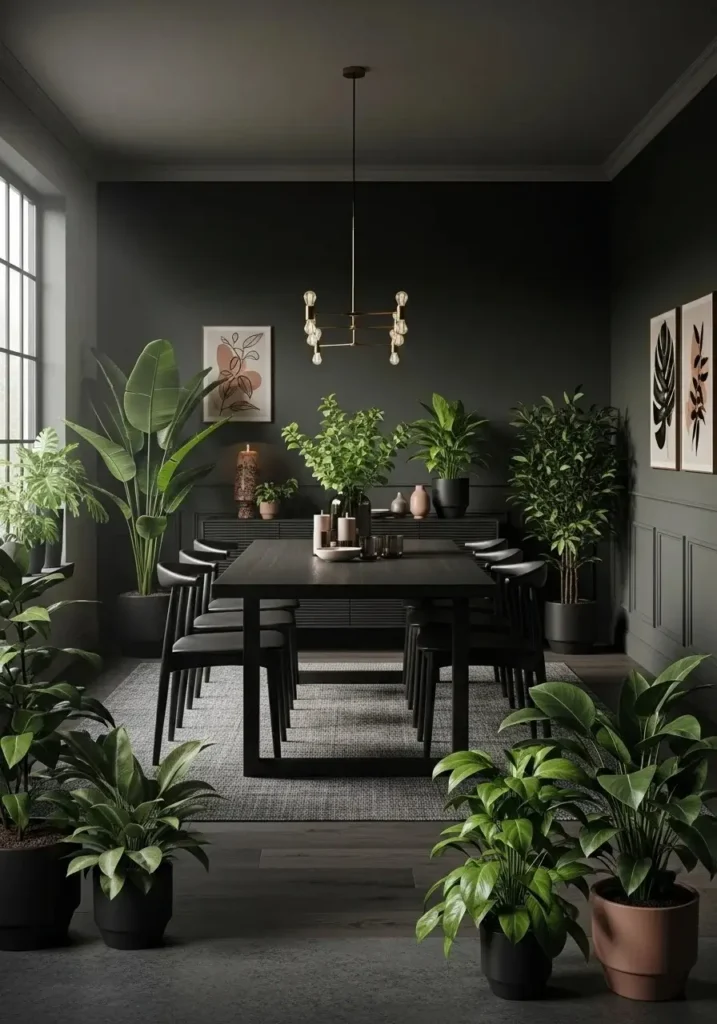
Our dining room was the darkest room in the house until I brought in a tall olive tree and a few trailing plants, and I wish I had done it years earlier. The green softens every hard edge, and against charcoal walls a single leaf looks like a small piece of art. I keep the planters plain — matt black, stone, or dark wood — so the plants are the colour. Watering them on Sunday mornings has become a small ritual, and the room feels alive in a way paint alone could never manage. Even one plant is enough to start.
How to do it: Choose plants that cope with low light, such as olive, snake plant or pothos, and give the tallest one a corner spot. Use plain dark planters, water sparingly in winter, and wipe leaves monthly so they catch the light. Keep one small plant on the table and larger ones on the floor.
19. Create a Moody Gallery Wall
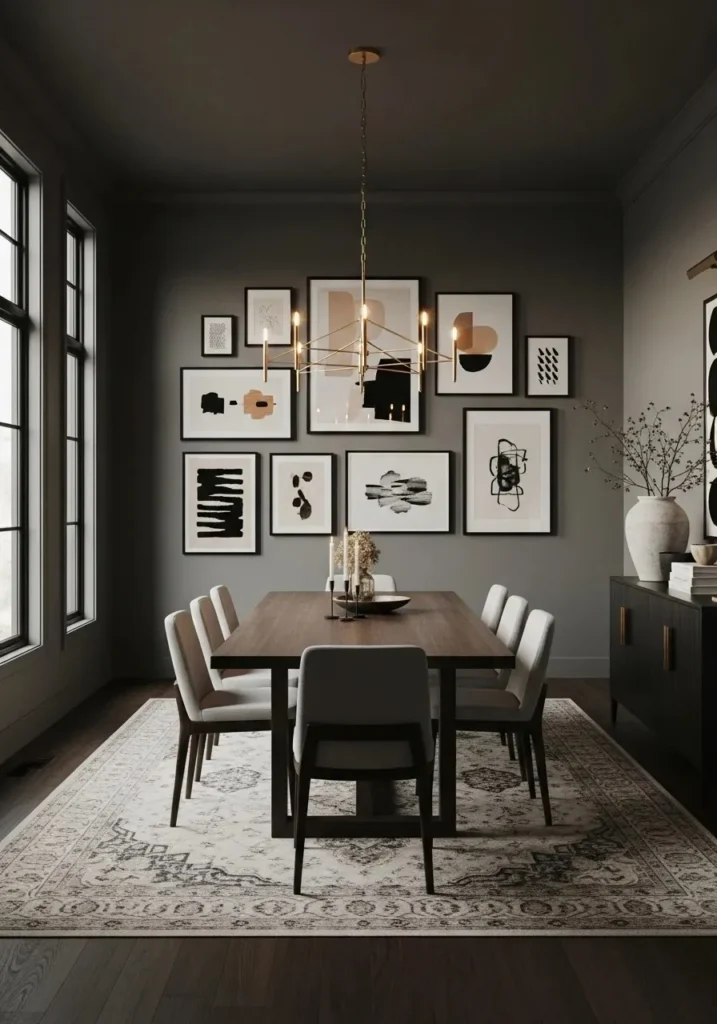
Our gallery wall started with three frames I could not decide between, and it grew into the most personal corner of the room. Dark frames tie the pictures together, even when the art itself is a mix of prints, photographs and one small painting my daughter made. I hung it on the wall we see from the table, so every supper has something to look at. It is the one place where the room tells our story, and I rearrange a frame whenever a new memory deserves a spot. Nothing else in the room feels quite so ours.
How to do it: Lay the frames on the floor first and photograph the arrangement you like. Keep frames in one dark finish and vary sizes, with one large piece as the anchor. Hang the centre at eye level, use paper templates on the wall, and leave a consistent 5-centimetre gap between frames.
20. Add Candles for Instant Atmosphere
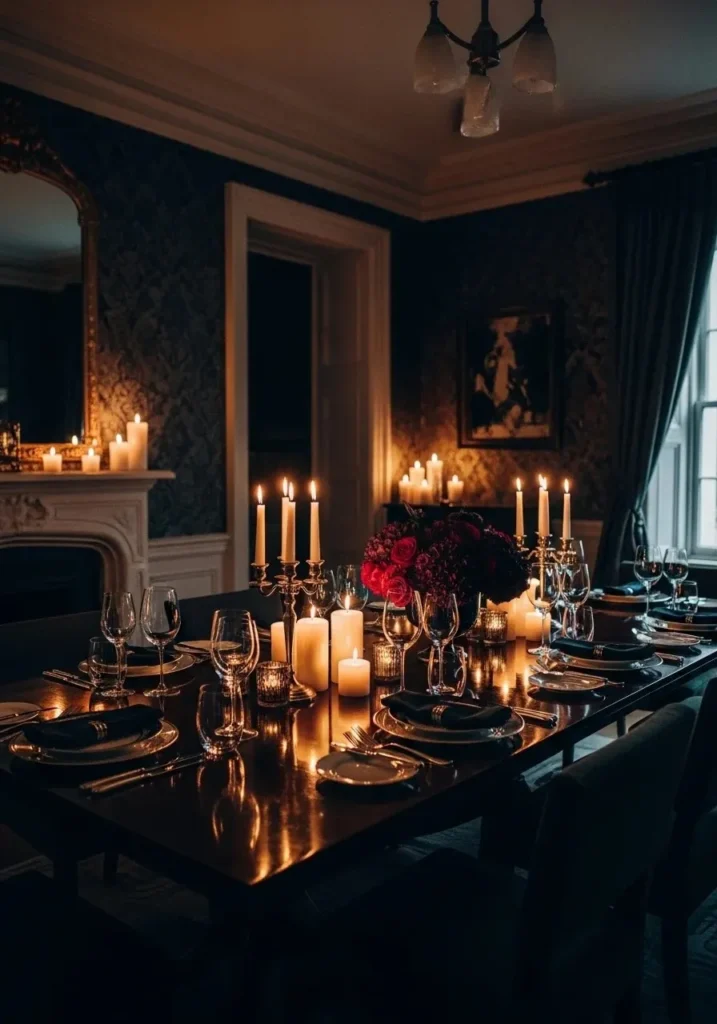
Candles are the cheapest, quickest way I know to make this room feel moody, and I reach for them every single evening. I light three pillar candles in the centre of the table and a pair of tapers on the sideboard, and the room drops half an octave. The flames move, the shadows move, and suddenly an ordinary supper feels like a small celebration. I use unscented candles for eating and save the scented ones for after, because nobody wants to taste their candle. It is a tiny ritual, and it never fails.
How to do it: Group candles in odd numbers on a heatproof tray, mixing pillar and taper heights. Keep flames away from curtains and dried stems, light them just before sitting down, and never leave them burning in an empty room. Trim wicks to 5 millimetres for a clean, steady flame.
Frequently Asked Questions
Will a moody dining room feel too dark?
Not if you layer the light. Keep a dimmer on the main fitting, add candles and one warm lamp, and leave the ceiling or woodwork pale so the dark has a frame. Most of my readers who try one dark wall first end up painting the rest within a month.
What is the best wall colour for a moody dining room?
Charcoal and deep green are the safest starting points, because they flatter wood, brass and candlelight. Navy works well in rooms with plenty of daylight, while plum suits smaller, lamp-lit rooms. Always test a large patch at night before you commit.
Can a moody dining room work in a small space?
Yes, and it often works better than pale colours, because dark walls blur the edges of a small room. Keep the furniture slim, hang a mirror opposite the window, and leave one wall largely clear. Low, warm light matters more than floor space.
How do I keep a dark dining room cosy rather than cold?
Add texture everywhere: velvet chairs, a wool rug, wood and candlelight. Warm metals such as brass soften dark paint, and one green plant stops the room feeling flat. If the room still feels chilly, swap a cool white bulb for a warm one before you change anything else.
Do I need to repaint the whole room at once?
No. Start with one wall, ideally the one you face while eating, and live with it for a week. Add the ceiling or a second wall only if the first
Your Moody Dining Room Checklist
☐ Choose one deep wall colour and test it at night
☐ Fit a dimmer and warm bulbs over the table
☐ Add one black or dark wood anchor piece
☐ Layer candles at different heights
☐ Bring in wood, velvet or another soft texture
☐ Hang one large piece of art or a mirror
☐ Keep a third of every surface clear
Conclusion
A moody dining room is not about darkness for its own sake; it is about choosing depth, warmth and a little drama on purpose. Start with one change — a deep wall colour, a dimmer, or a handful of candles — and live with it for a week before you add the next. The rooms that work best are the ones that feel collected over time, not decorated in a weekend. Trust your eye, keep the light low and the table set, and let the room grow darker slowly. That is how a dining room stops being a place you eat and becomes a place you linger.
2 Comments