
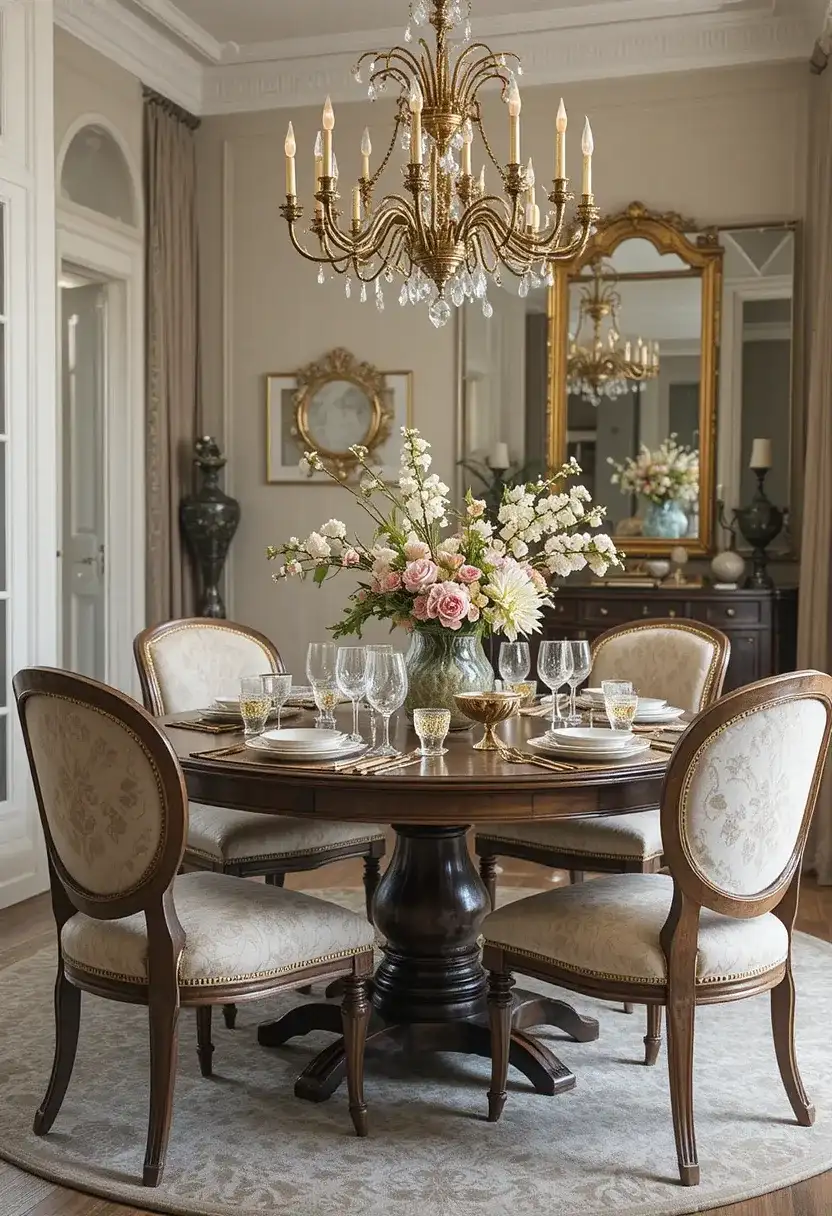
25 Round Dining Table Decor Ideas to Style a Beautiful Table
There is something wonderfully welcoming about a beautifully styled round dining table at the heart of a home. Its gentle curves invite conversation and connection, making every meal feel a little cozier and more intimate. With the right decor, a round table becomes a charming centrepiece, whether set for an everyday dinner or a special gathering. From fresh florals and candles to soft linens and seasonal touches, small details can make the table truly shine. Below are twenty five round dining table decor ideas, shared with warmth and inspiration, to help you style a beautiful table you will love to gather around.
1. Add a Fresh Floral Centerpiece
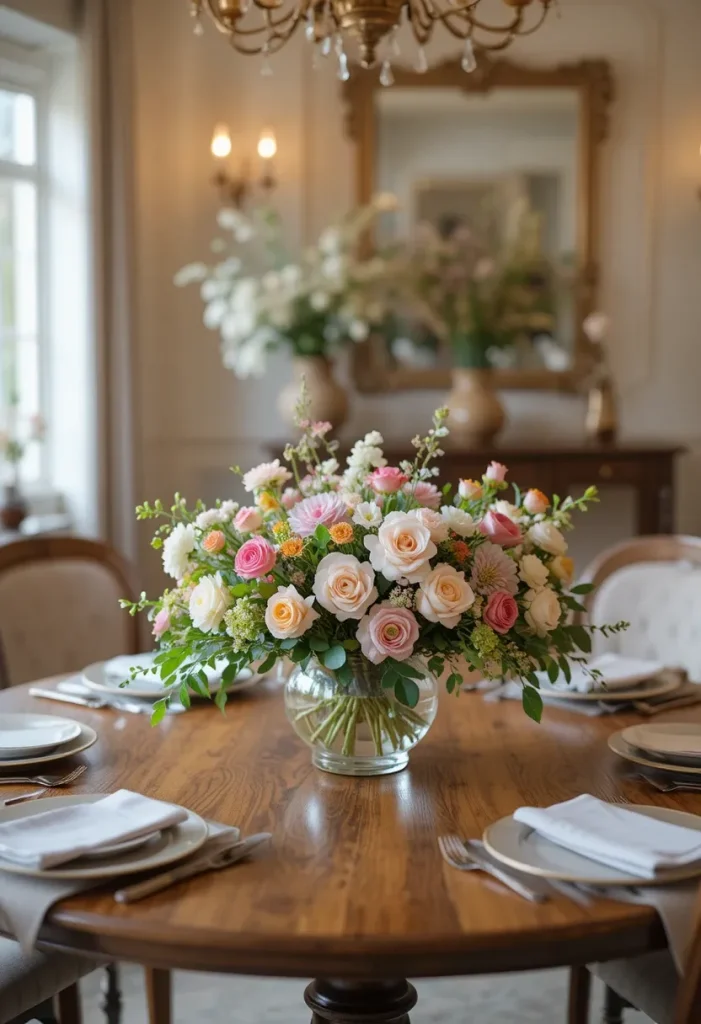
I always start with flowers, because nothing else changes the mood of a round table so quickly. I choose a low, wide vase so the blooms sit close to the table and nobody has to peer around them, then I fill it with whatever is in season — garden roses in June, dahlias in late summer, or a bunch of tulips in spring. I keep the stems short and the arrangement loose, letting a few stems lean over the edge, and I tuck in mint or rosemary for scent. Two smaller bunches look fuller than one grand one, and I can split them between the table and the windowsill.
How to do it: Choose a vase no taller than 20 centimetres, trim the stems at an angle, and strip any leaves that would sit below the waterline. Arrange the tallest stems in the middle, fill the gaps with shorter blooms, and set the vase in the exact centre of the table before adding anything else.
2. Style With Candles
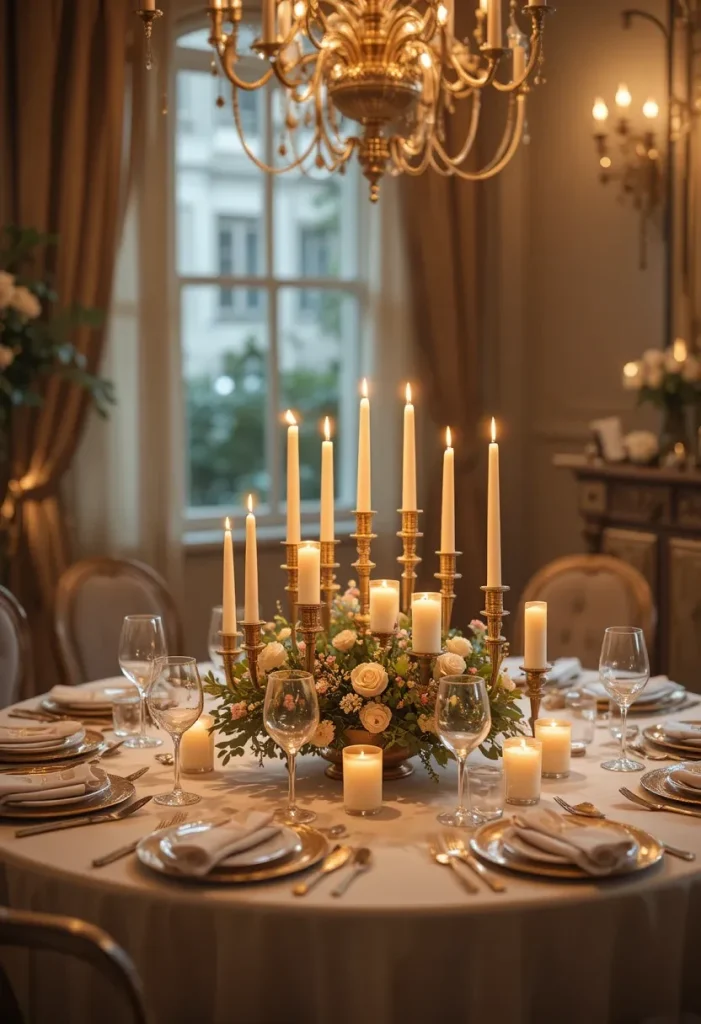
Candlelight is my favourite way to make an ordinary Tuesday supper feel like an occasion. I group candles in threes, mixing tall tapers with squat pillars, because the different heights catch the light in a way a matching set never quite does. I keep them in sturdy holders on a small tray, so wax never reaches the wood, and I light them just before we sit down rather than hours ahead. Unscented candles are my rule at the table, since a strong fragrance competes with the food, and I always trim the wicks first so the flames burn steady and clean.
How to do it: Pick three candles in two heights, place them on a heatproof tray in the centre, and leave at least 10 centimetres between each flame and anything flammable. Trim wicks to about 5 millimetres, light them last, and blow them out before leaving the room.
3. Add a Round Centerpiece Tray
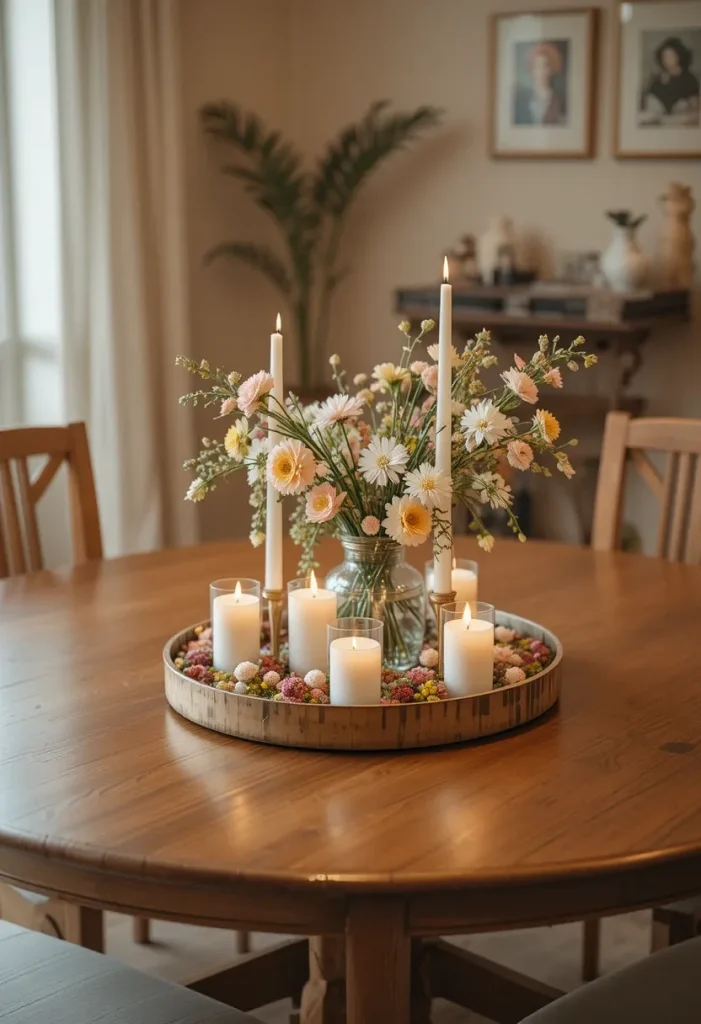
A round tray is the quiet trick that makes my table look considered instead of cluttered. Because it echoes the curve of the table, everything placed on it feels as though it belongs together, even when the pieces are quite different. I use a wooden one for everyday meals and a brass one when friends come over, and I keep the arrangement to three things: something tall, something low, and something green. When dinner is served, I can lift the whole tray off in one move, which means the table is cleared for plates without a dozen small journeys.
How to do it: Choose a tray about a third of your table’s width, set it dead centre, and build the display from the tallest piece downwards. Put candles or a small vase at the back, a low bowl or beads in front, and leave a little empty space so the tray does not look crowded.
4. Use a Soft Table Runner or Cloth
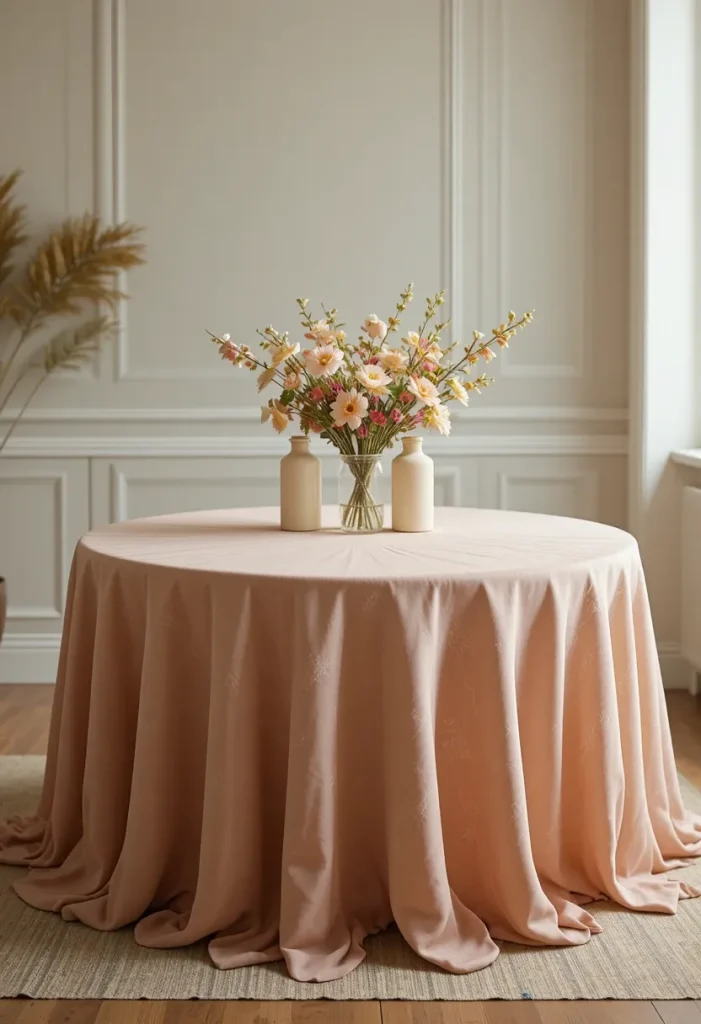
A cloth changes the whole feeling of a round table, and it is the fastest refresh I know when the room feels tired. I prefer a full round cloth for Sunday lunch, when I want the table to feel dressed, and a simple runner laid across the middle for everyday meals, because it leaves the wood visible at the edges. Linen is my first choice: it softens with every wash, it does not shine under lamplight, and a natural or pale sage shade suits almost any plates I own. When I am thinking about the wider room, I also browse kitchen peninsula ideas for extra space and style, since the table and the kitchen work together as one gathering place.
How to do it: For a cloth, choose one that hangs 20 to 25 centimetres over the edge all round; for a runner, let it overhang by the same amount at each end. Iron it, centre it by eye from two sides, and smooth out creases with your hands before setting the table.
5. Add a Bowl of Fresh Fruit
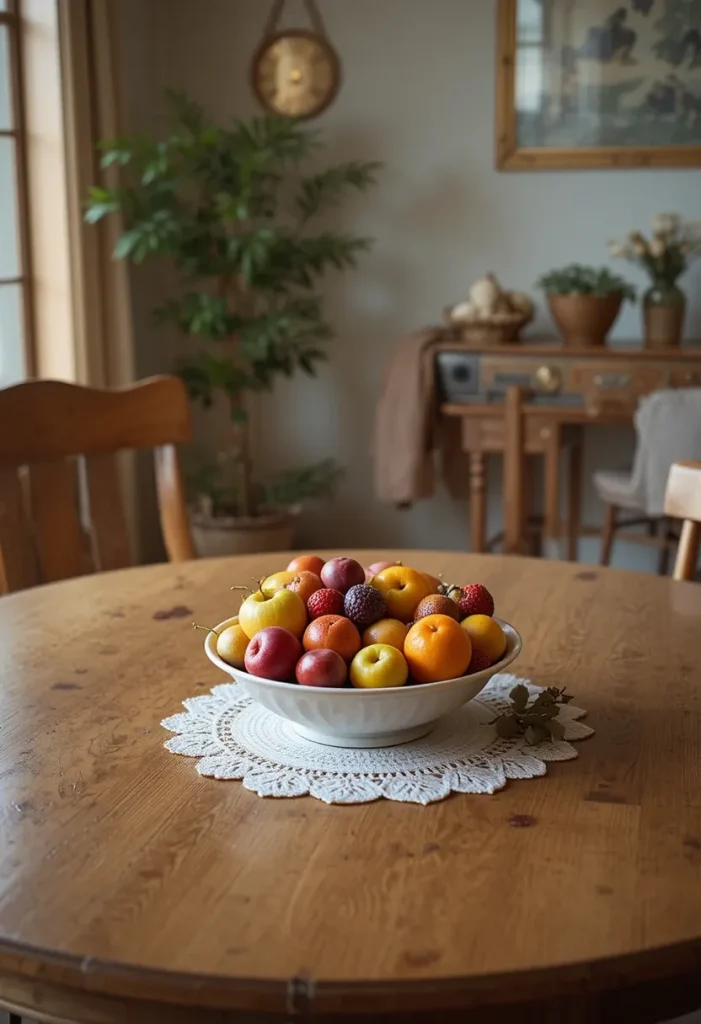
A bowl of fruit is the centrepiece I reach for when I have ten minutes and no flowers in the house. I love the honesty of it: glossy lemons in winter, peaches and plums in summer, or a mix of apples and pears when the garden is bare. I choose fruit that is firm and unbruised, polish it with a tea towel, and pile it loosely in a wide, shallow bowl so every piece shows. A sprig of eucalyptus or a few bay leaves tucked between the fruit makes it look gathered rather than shopped, and at the end of the meal the bowl doubles as pudding.
How to do it: Pick one fruit for a single-colour look or three for contrast, wash and dry each piece, and arrange the largest fruit at the bottom. Fill gaps with smaller fruit, tuck in a leafy sprig, and set the bowl in the centre where everyone can reach it.
6. Style With Seasonal Touches
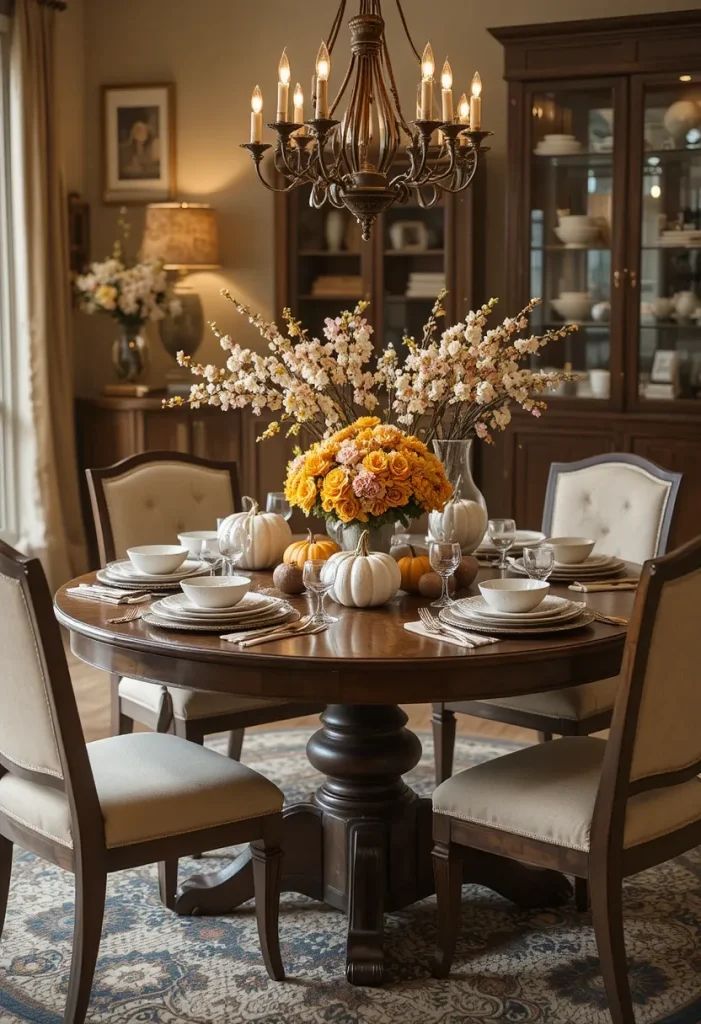
I keep a small box of seasonal pieces by the sideboard, and swapping them takes me less time than vacuuming the room. In autumn I add small pumpkins, conkers and a rust-coloured runner; at Christmas I use pine cones, cinnamon sticks and a sprig of holly; in spring I bring in blossom branches and pastel eggs. The trick, I have found, is to change just the centrepiece and one other detail, rather than redecorating the whole table, so the room still feels like ours. The children love spotting what is new, and it gives our meals a gentle rhythm through the year.
How to do it: Keep one neutral base — plain cloth, simple plates, clear glasses — and swap only the centrepiece and napkins with the season. Store each season’s pieces together in a labelled box, and change them on the first weekend of the new season.
7. Add Greenery for Freshness
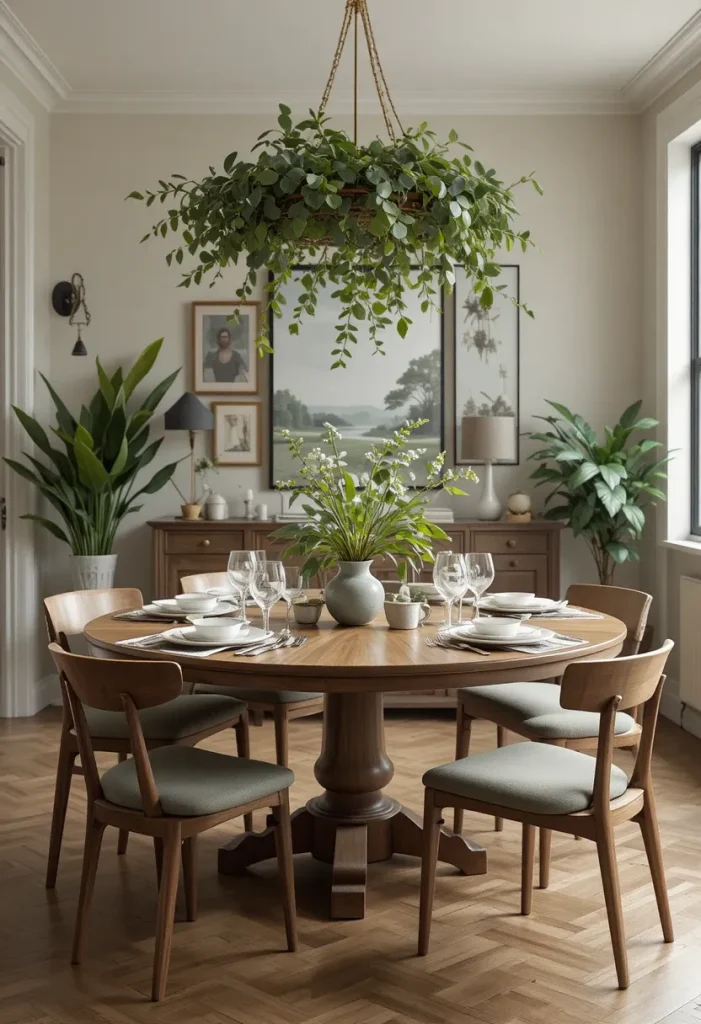
Greenery is what stops a table from looking too polished, and I use it most weeks. A length of eucalyptus laid in a loose curve, a small potted fern, or a trailing vine in a ceramic pot all bring a soft, living green that flatters wood and linen alike. I prefer real plants to artificial ones, because the leaves move and catch the light, and a eucalyptus stem perfumes the room gently as it dries. If I am short on time, I simply snip a few branches from the garden, pop them in a jug of water, and let them be the whole centrepiece.
How to do it: Choose one type of greenery and keep it low — under 25 centimetres — so it never blocks a face across the table. Lay stems in a loose S-curve or group three small pots together, water them, and wipe any drips from the table straight away.
8. Layer Pretty Place Settings
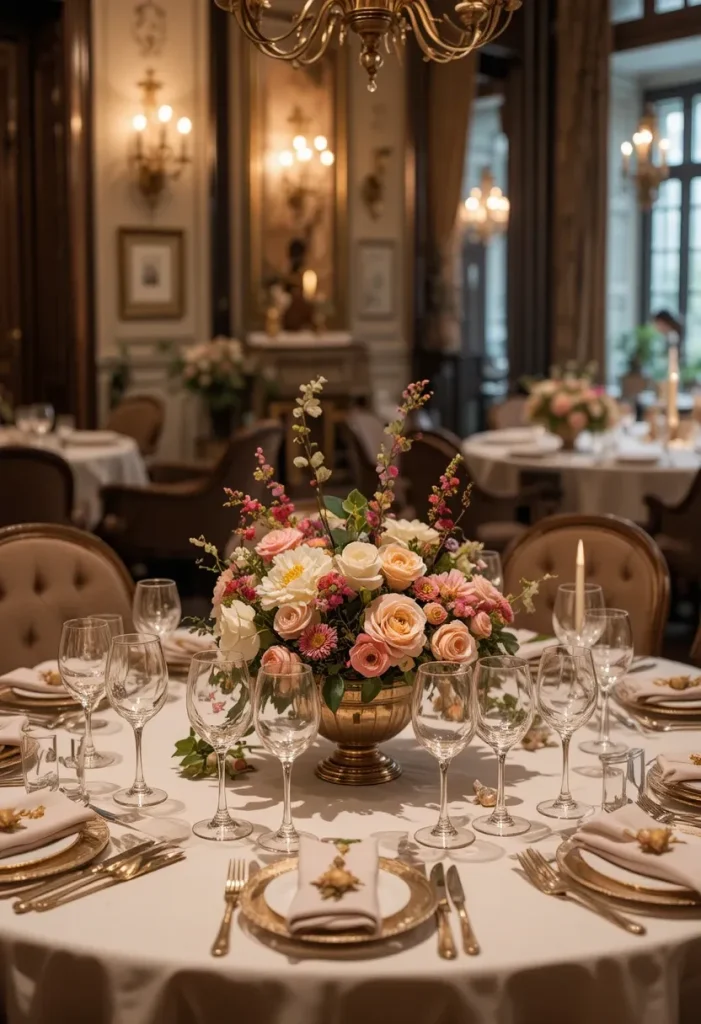
Layering place settings is how I make guests feel looked after before a single dish arrives. I start with a charger or a woven placemat, then a dinner plate, then a smaller salad plate, and I finish with a folded napkin and a small sprig on top. The layers add height and texture, and they make even a simple supper look intentional. I keep the colours calm — cream plates, sage napkins, wooden chargers — because on a round table the settings sit close together and busy patterns can quickly feel noisy. The best part is that it costs nothing extra if I use what I already own.
How to do it: Set chargers first, spacing them evenly around the curve with about 60 centimetres per person. Stack the plates, lay cutlery outside in, place glasses above the knife, and finish each setting with a napkin and one small natural detail.
9. Add Cloth Napkins
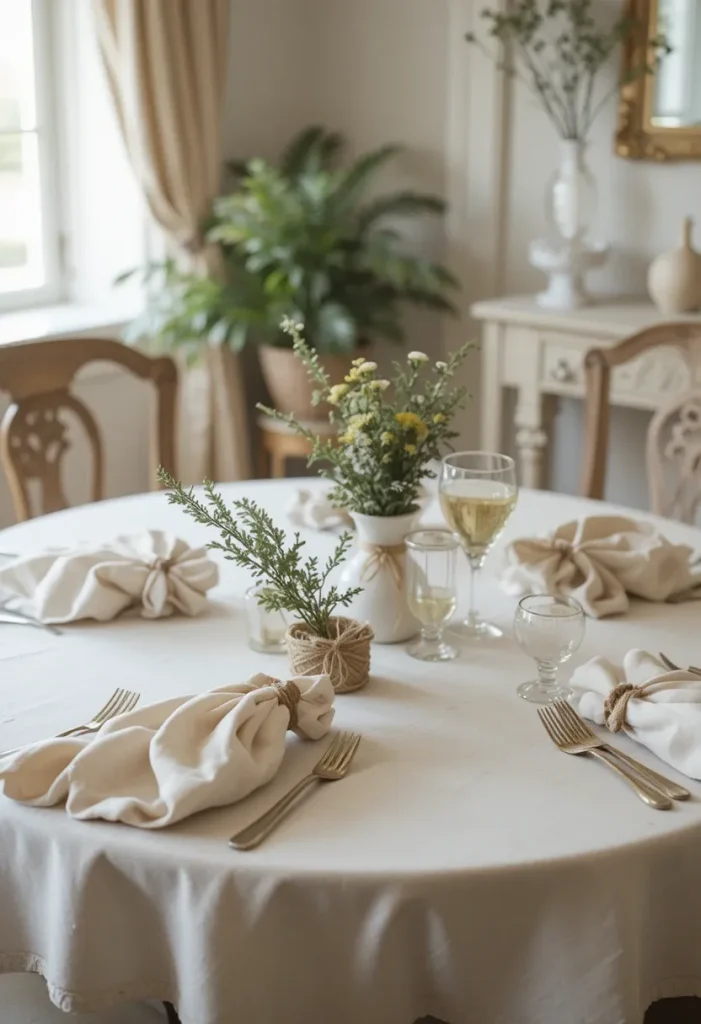
Cloth napkins are a small luxury that I notice every time I sit down, and they cost very little once you own a set. I fold mine simply — a loose roll tied with twine, or a flat fold with a sprig of rosemary tucked underneath — because fussy folds never survive the first course anyway. Linen napkins in a soft, washed colour feel wonderful in the hand, and they wash beautifully, so I never worry about a splash of gravy. I keep a set for everyday and a slightly smarter set for guests, and I iron the guest ones while the oven preheats.
How to do it: Wash and iron the napkins, fold each one into a simple rectangle or roll, and tie with twine, ribbon or a fresh herb sprig. Place one on each plate or to the left of the forks, and keep two spares folded in the sideboard drawer.
10. Style With a Lazy Susan
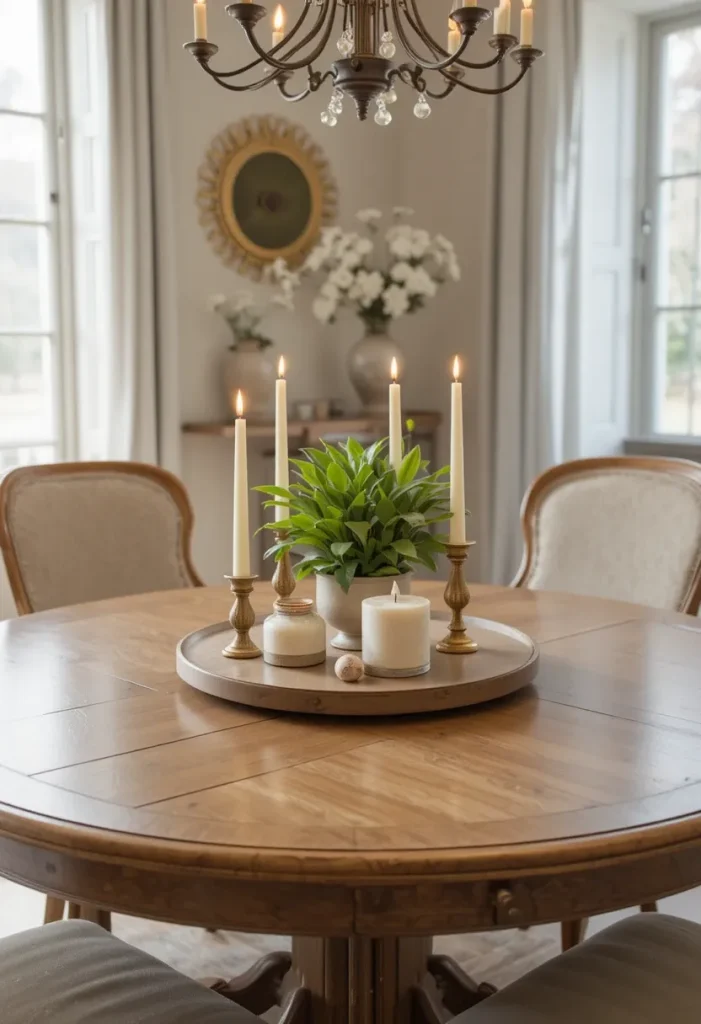
A lazy susan is the most practical thing on our round table, and I wonder why I waited so long to buy one. Because everyone sits the same distance from the centre, a gentle spin brings the salt, the salad or the bread to whoever needs it, without anyone standing up or reaching across a neighbour. I style mine with a small plant, a candle and the oil and vinegar, then clear a space in the middle when the main dishes arrive so the serving bowls can take their turn. A wooden one suits our table best, and I check that it spins smoothly before guests arrive, since a stiff bearing ruins the effect.
How to do it: Choose a lazy susan no wider than half your table, set it in the centre, and test the spin. Place everyday items on it first, keep the heaviest dish near the middle for balance, and leave the outer ring of the table free for plates.
11. Add Warm Wood Tones
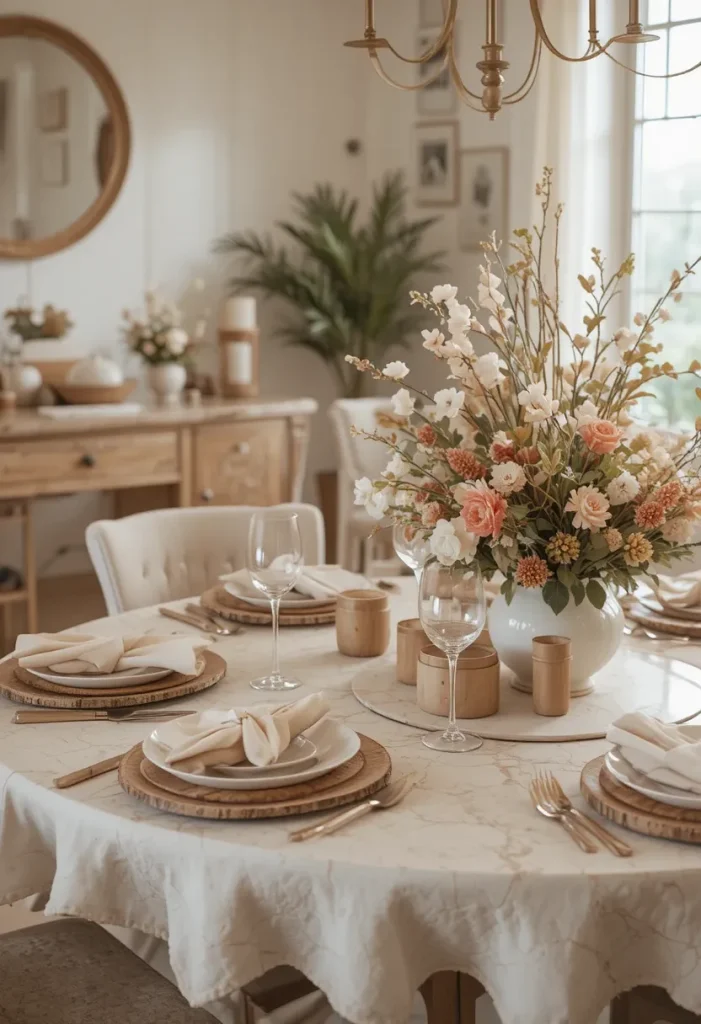
Wood is what keeps a round table feeling like a home rather than a showroom, and I bring it in through small pieces rather than big ones. Wooden chargers under cream plates, a bread board in the middle, a set of turned candle holders — each piece adds grain and warmth without competing with the food. I mix tones, too: pale oak with a darker walnut board, because matching everything exactly can look flat. I oil the boards now and then so they stay rich, and I always use a mat under hot dishes, since a scorch mark on a wooden charger is a sadness I have learned from experience.
How to do it: Pick two wood tones that already appear in your room, and repeat them in small pieces — chargers, a board, candle holders. Keep the pieces low and grouped, oil raw wood twice a year, and always use mats under hot serving dishes.
12. Keep It Simple and Minimal
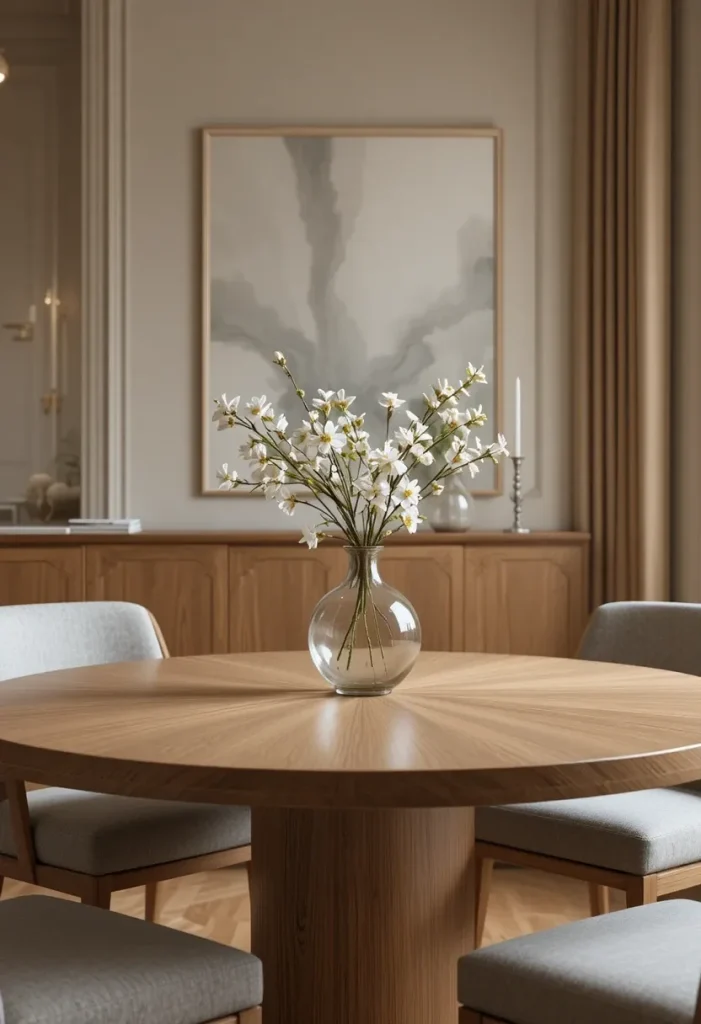
Some weeks, the most beautiful table I set is the emptiest one. A single vase with three stems, or one beautiful bowl on a bare wooden surface, gives the eye somewhere to rest and lets the shape of the round table speak for itself. I learned this after years of adding one more thing, and then one more, until the table felt crowded and nobody could find room for a glass. Now, on busy weeknights, I clear everything except one object and a pair of candlesticks, and the room feels calmer at once. Minimal does not mean bare; it means choosing one thing well and giving it space.
How to do it: Clear the table completely, then add back a single object — a vase, a bowl or a candle pair — in the centre. Step back and look from the doorway; if your eye goes straight to that one piece, stop there and set the places around it.
13. Add a Pop of Colour
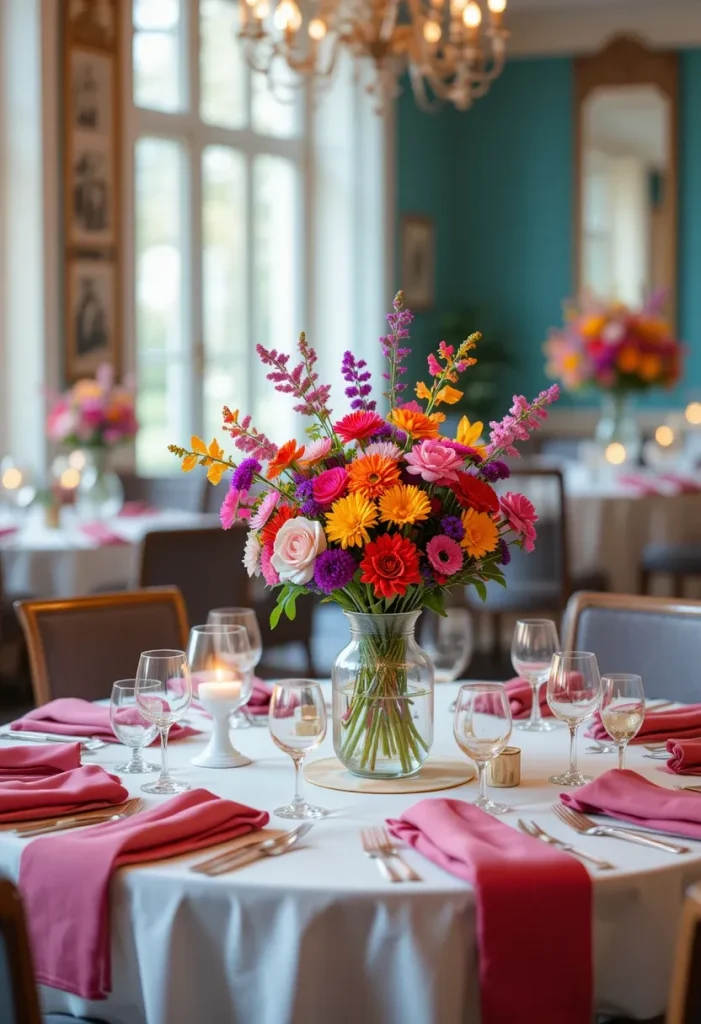
Colour is my shortcut to a happier table, especially in the grey months when the light is low. I pick one strong colour and let it do the work: coral napkins against cream plates, a cobalt jug full of yellow tulips, or deep green glasses that catch the candlelight. The rest of the table stays quiet, because two or three bright things together can start to argue. I also change the colour with the mood — bright citrus shades for a birthday lunch, deep berry tones for a winter supper — and I always test it in daylight first, since colours look very different under a pendant lamp.
How to do it: Choose one accent colour, then repeat it in exactly three places — napkins, flowers and one serving piece, for example. Keep plates, glasses and the cloth neutral, and check the combination in daylight before guests arrive.
14. Style for a Cozy Dinner
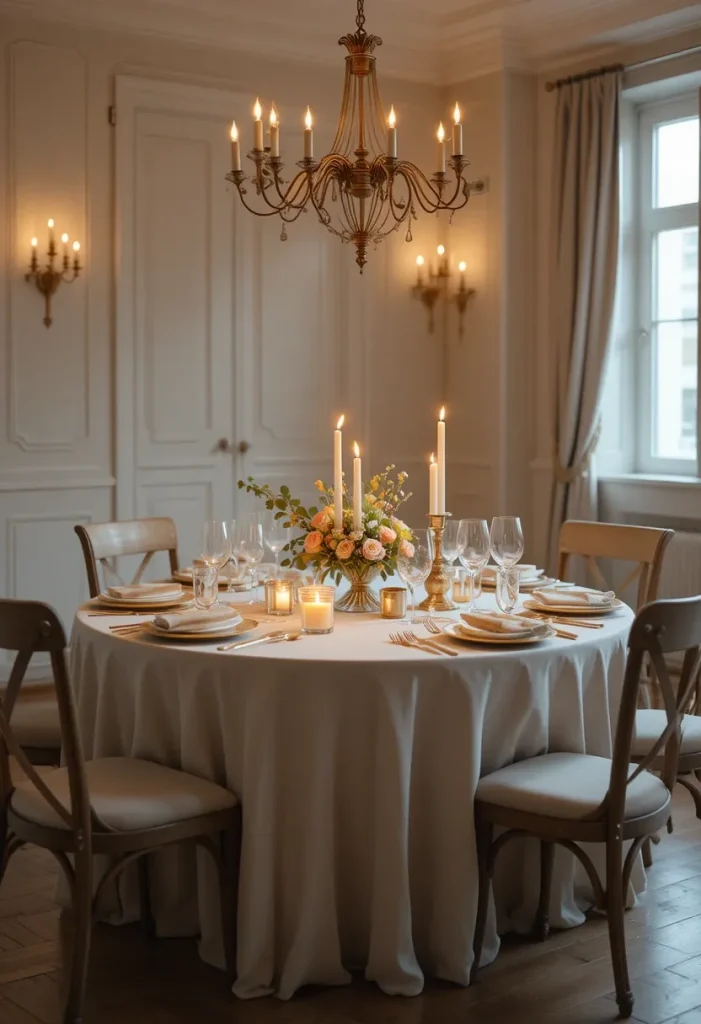
A cosy dinner on a round table is my favourite kind of evening, because the shape itself pulls everyone in close. I dim the overhead light, light the candles, and lay a soft linen cloth so the table feels warm to the touch. The menu stays simple — a pot of stew, good bread, a salad — because nobody wants to fuss over plating when the conversation is flowing. I put the serving dishes in the middle and let people help themselves, which keeps the evening relaxed, and I always leave the candles burning a little longer after pudding, just to stretch the moment.
How to do it: Dim the main light and use candles as the main glow, lay a linen cloth, and serve family-style from the centre. Keep the menu to one pot and a salad, put water and bread within easy reach, and clear the centrepiece before dessert so plates fit.
15. Add Candlesticks for Height
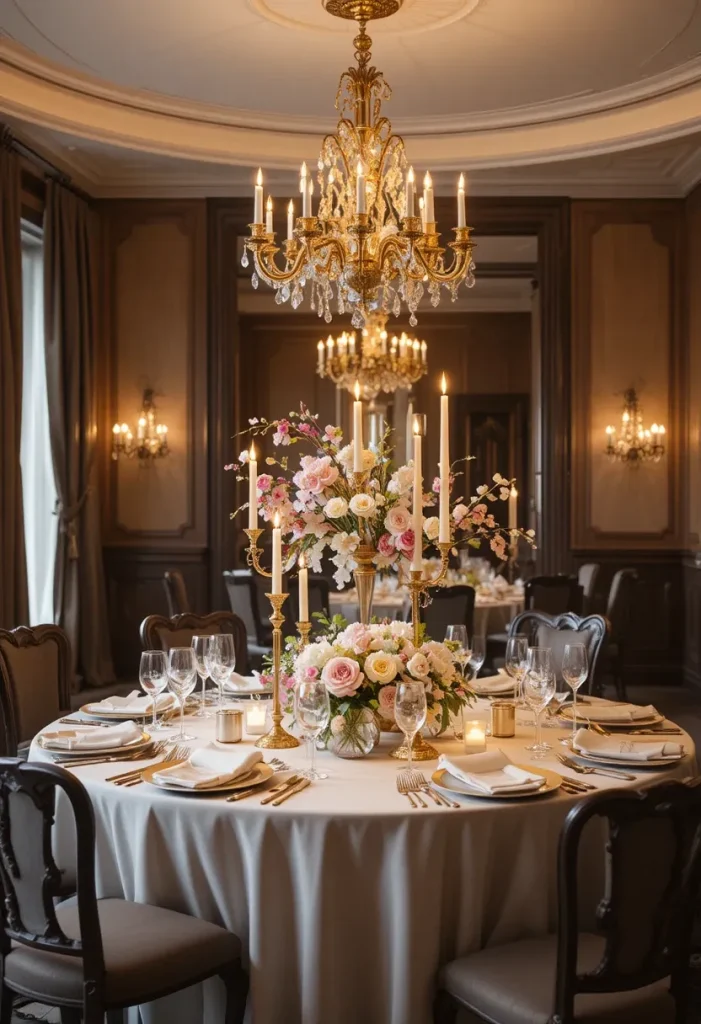
Height is what makes a round table feel dressed rather than flat, and tall candlesticks are the easiest way I know to get it. I use a pair of slim brass sticks at the back of the centrepiece, with low flowers in front of them, so the eye travels up and then settles back down to the plates. The trick is keeping the flames above eye level when we are seated, or below it — never right in someone’s line of sight. I buy tapers in cream or soft grey, because coloured wax can drip and stain, and I keep a spare pair in the drawer for the night one snaps.
How to do it: Place two candlesticks of different heights behind a low arrangement, with flames either above or below seated eye level. Sit in each chair and check the sightline, use drip-free tapers, and keep holders on a tray to catch wax.
16. Use a Pretty Bowl or Urn
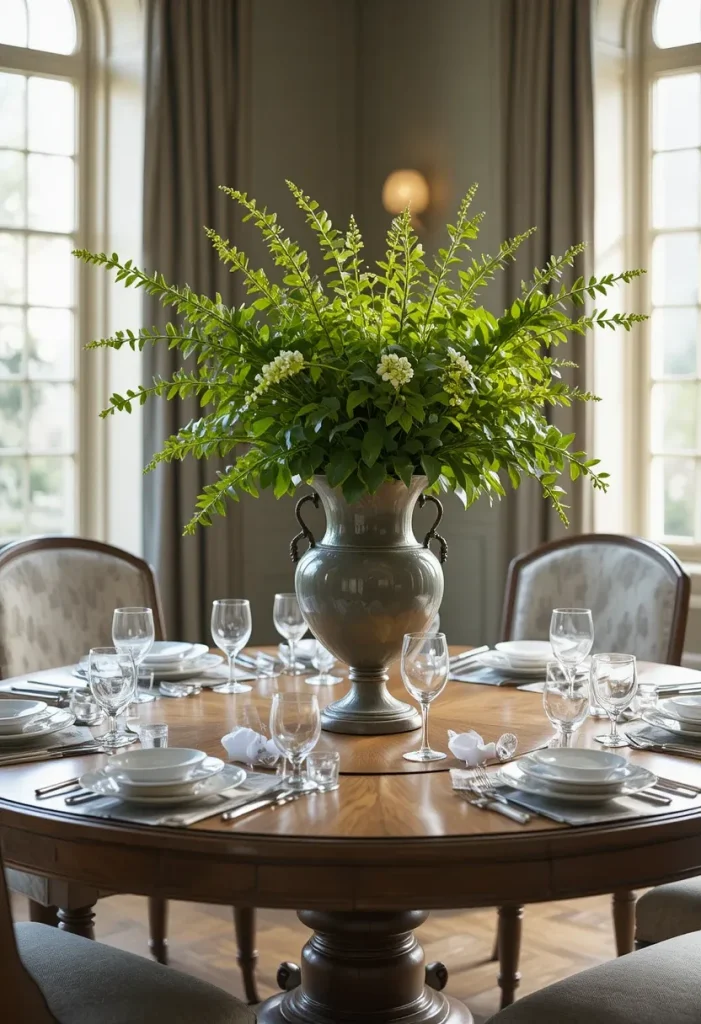
A beautiful bowl or urn is the centrepiece I turn to when I want the vessel itself to do the talking. I have a wide ceramic bowl in a soft celadon glaze that looks lovely holding anything — lemons, pine cones, a few stems of blossom — and an old brass urn that I fill with dried grasses in winter. Because the shape is generous and low, it suits a round table perfectly, filling the middle without towering over it. I choose one with a little weight to it, so it does not slide when someone reaches across, and I line it with a cloth if I am filling it with fruit.
How to do it: Choose a wide, low bowl or urn in a glaze or metal that suits your room, set it in the centre, and fill it with one thing only — blooms, fruit or greenery. Keep the filling below the rim’s widest point so the vessel’s shape stays visible.
17. Add Soft Ambient Lighting
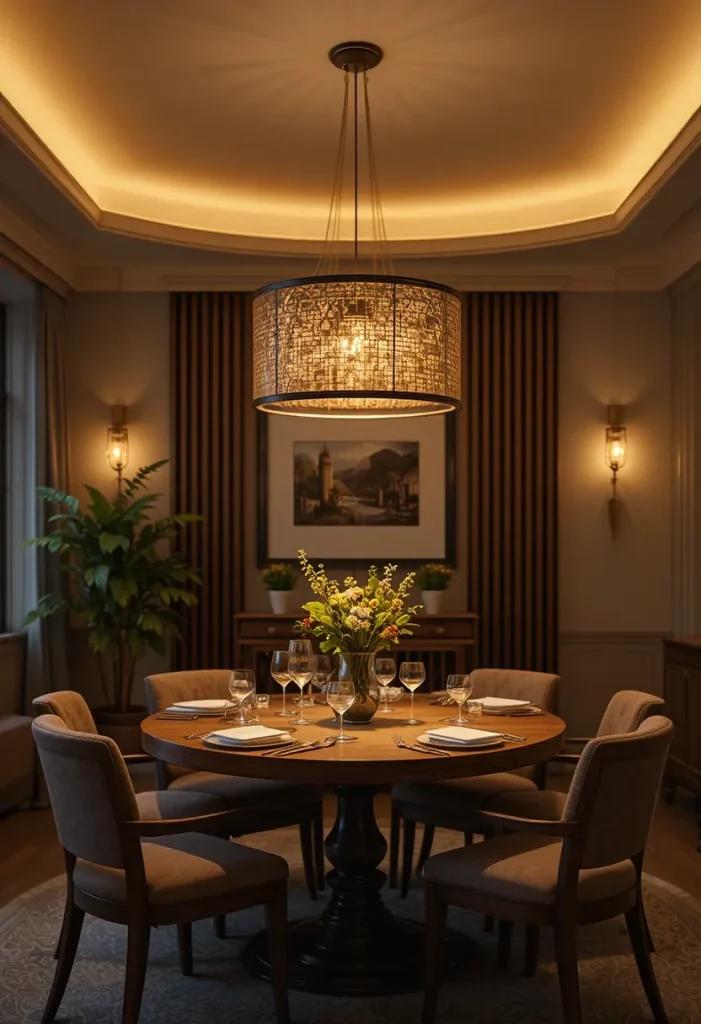
Lighting above a round table matters more than almost anything on it, because a hard white glare can undo the prettiest setting. I hung a single pendant over ours, on a dimmer, so I can turn it down to a warm glow for supper and up again for homework and board games. The pendant sits low enough to feel intimate — about 75 centimetres above the table — but high enough that nobody bumps it when they stand. On dark evenings I add a string of tiny fairy lights along the windowsill, and the whole corner of the room glows.
How to do it: Hang one pendant centred over the table, about 75 centimetres above the surface, and fit a dimmer switch. Choose a warm bulb of 2700 kelvin, test it at night with the candles lit, and add a small lamp or fairy lights nearby for a second, softer layer.
18. Style With Books or Trinkets
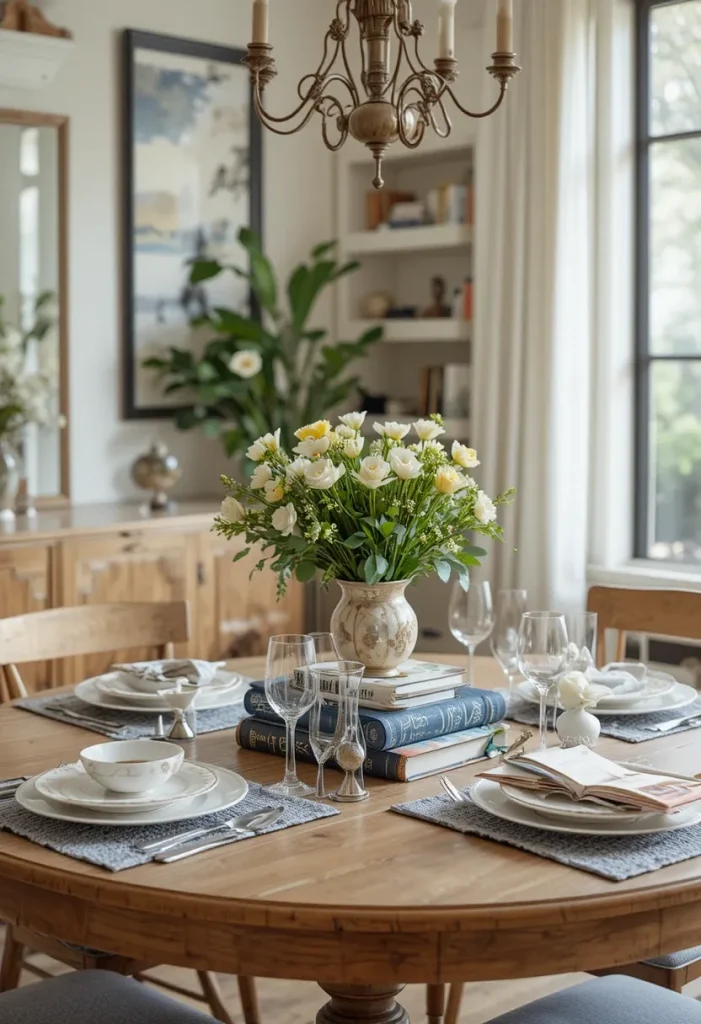
A small stack of books or a couple of trinkets is how our table tells visitors who we are. I keep a cookbook we actually use, a smooth stone the children brought home from the beach, and a tiny ceramic bird that belonged to my grandmother, grouped on a tray in the middle. The pieces are small and low, so they never get in the way of a meal, and I can lift the whole tray off when we sit down to eat. I rotate them now and then — a new book, a shell from a holiday — because a table that never changes starts to feel like a display rather than a home.
How to do it: Stack two or three books with the largest at the bottom, add one small trinket on top, and group them on a tray so they lift off easily. Keep everything under 15 centimetres tall, dust the pieces weekly, and swap one item each month to keep it feeling lived in.
19. Add Textured Linens
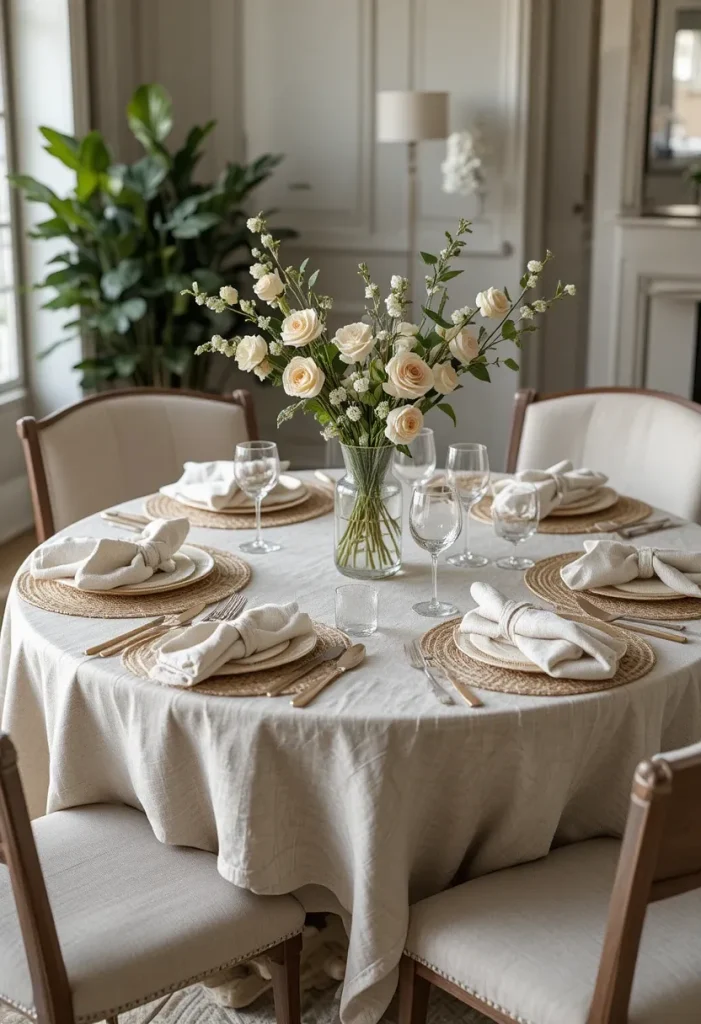
Texture is what makes a table feel inviting to sit at, and nothing does it like linen. A slubby runner, a set of waffle-weave placemats, or napkins with a soft, washed finish all catch the light differently from smooth cotton, and they feel wonderful under the hands. I mix textures rather than colours: a rough linen runner with smooth ceramic plates and a woven basket for bread. The layers make the table feel gathered over time, and because linen softens with every wash, the pieces only get better the more I use them.
How to do it: Layer two textures — a linen runner with woven placemats, for example — and keep the colours within one calm family. Wash new linen twice before first use to soften it, iron lightly while damp, and store pieces flat so creases stay soft.
20. Match Decor to Your Room
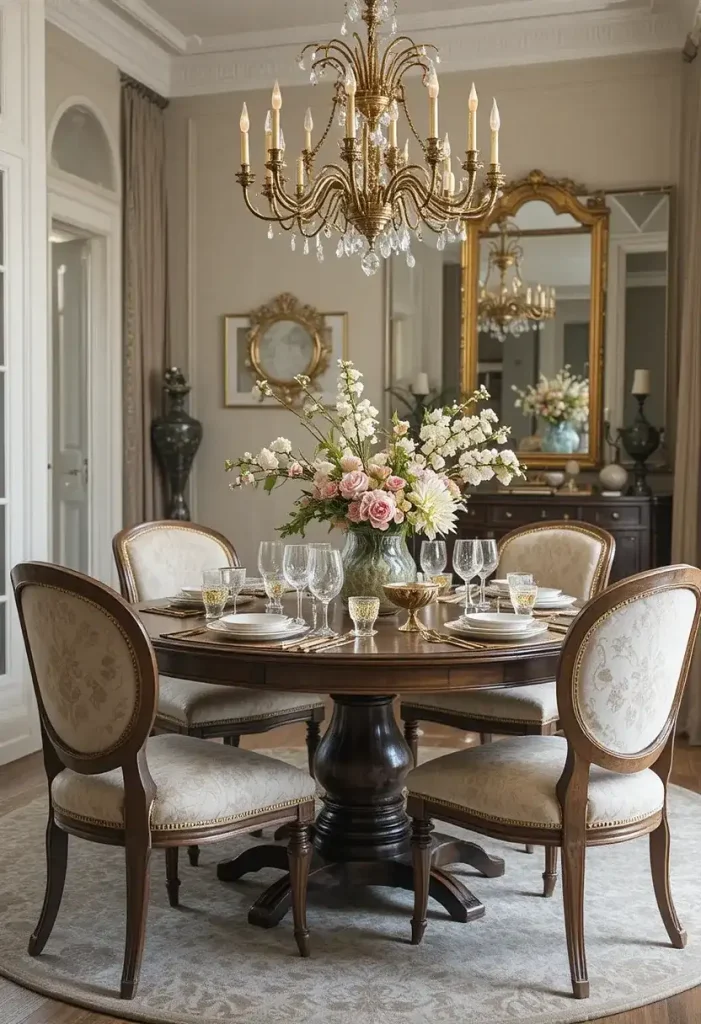
A table looks its best when it belongs to the room around it, and I always take my cue from what is already there. In our kitchen, with its pale wood and cream walls, I use linen, oak and soft green glass; in a friend’s darker, moodier dining room, deep brass and burgundy napkins feel right. I repeat one colour from the curtains or the rug in the napkins or the flowers, and I match the metal of the candle holders to the handles on the sideboard. When I am planning the wider space, I also look at kitchen layout ideas with island inspiration, because a round table and an island need to share the same calm, practical feeling.
How to do it: Pick one colour and one metal already in your room, and repeat both on the table — in napkins, flowers and candle holders. Step back to the doorway and check that the table and the room feel like one space, not two separate ones.
21. Add Fresh Herbs or Potted Plants
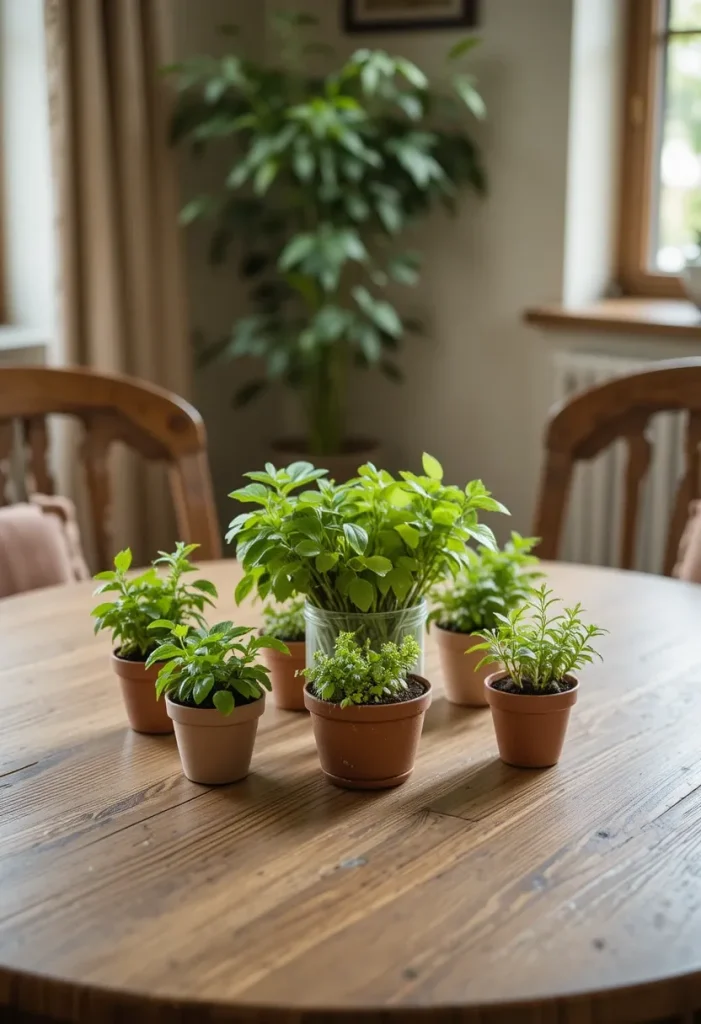
Fresh herbs are the centrepiece that earns its place twice over, because they look lovely and then they go into the cooking. I keep three small pots on the table — basil, rosemary and thyme — in matching terracotta pots on a wooden board, and I snip from them all week. The scent when you brush past rosemary is wonderful, and the plants last far longer than cut flowers if I water them little and often. Guests always comment on them, and I send a few sprigs home in a napkin when someone asks for the recipe.
How to do it: Choose three herbs you actually cook with, pot them in matching small pots, and group them on a board or tray in the centre. Water little and often, pinch the tops to keep them bushy, and snip leaves from the outside first.
22. Style for a Special Occasion
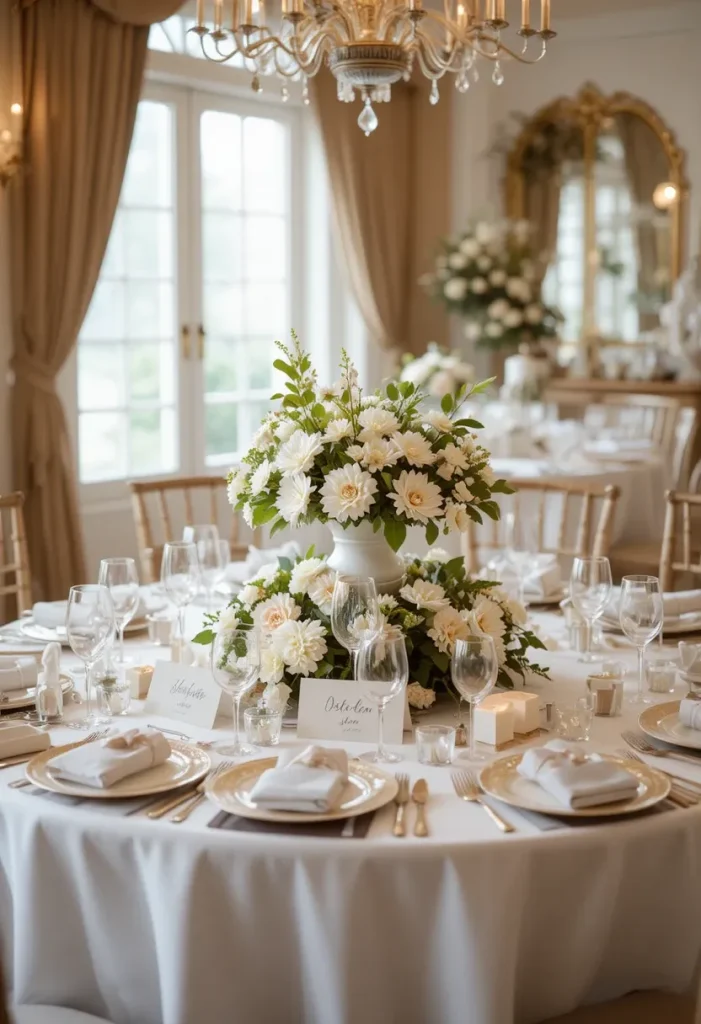
For birthdays and anniversaries, I give the round table a little extra ceremony, because the day deserves it. I start with the best cloth and the glasses we usually keep for guests, then I add place cards — simple folded card with each name handwritten — and a taller, lusher centrepiece than I would use on a weekday. A few extra candles, a scattering of petals along the runner, and a small favour at each place make everyone feel celebrated. I set the table the night before when I can, so the morning of the party is calm and I can enjoy the fuss.
How to do it: Set the table the evening before with your best cloth, glasses and plates. Add handwritten place cards, raise the centrepiece a little higher than usual, scatter petals or leaves along the runner, and light the candles just before guests arrive.
23. Keep Centerpieces Low
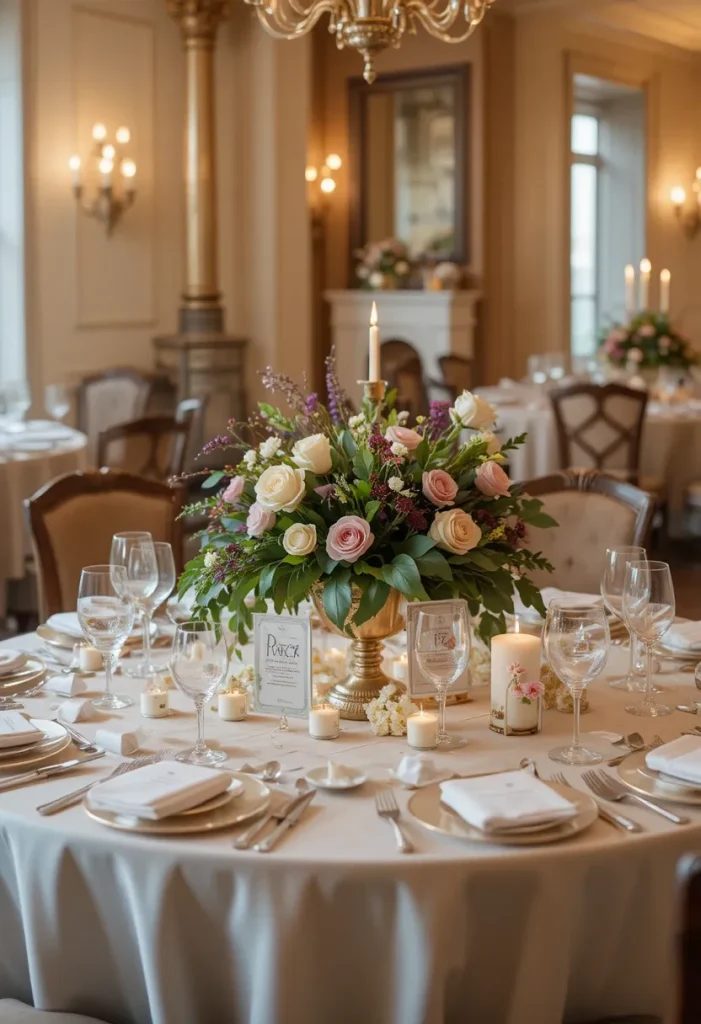
On a round table, a low centrepiece is not just pretty — it is the difference between a lively conversation and an evening of leaning sideways. Because everyone faces the middle, anything tall sits directly in somebody’s eyeline. I keep flowers, bowls and candles below about 25 centimetres, or I raise them well above eye level on tall, slim stems, with nothing in between. I test it by sitting in each chair myself, because a centrepiece that looks fine from the doorway can block a whole guest. The low arrangement also leaves room for serving dishes, which matters more than height ever will.
How to do it: Keep the whole centrepiece under 25 centimetres tall, or raise it above seated eye level on slim stems. Sit in every chair and check you can see the person opposite, then trim any stem that crosses a sightline.
24. Add a Candle and Bloom Combo
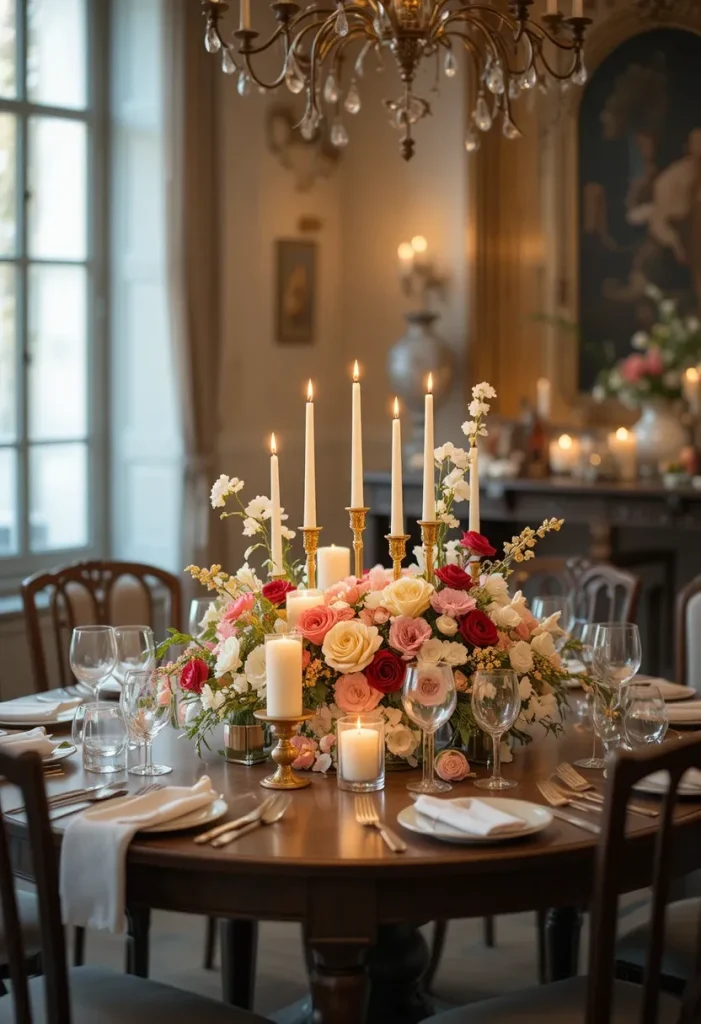
Candles and blooms together are my most reliable combination, the one I use when I want the table to look beautiful without thinking too hard. I set a low bowl of flowers in the middle, then place three pillar candles around it at different heights, so the flames flicker between the petals. The glow makes the colours richer and the whole table feels warm, even on a grey evening. I keep the candles unscented so the flowers’ own scent comes through, and I trim the blooms short so no petal droops into a flame.
How to do it: Place a low bowl of blooms in the centre, then set three unscented pillar candles around it in two heights. Keep petals and leaves at least 10 centimetres from every flame, light the candles last, and never leave them burning unattended.
25. Make It Personal and Warm
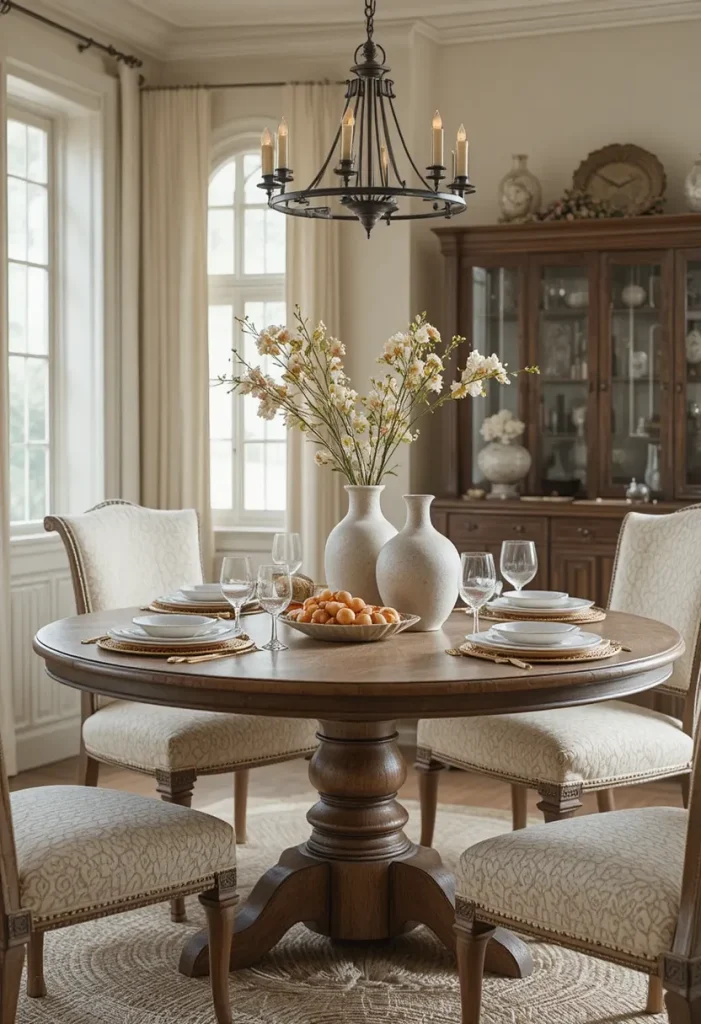
In the end, the tables I remember best are not the most polished ones, but the ones that felt like the people who set them. A vase my daughter painted, a cloth stitched by my mother, the chipped jug we bought on holiday — these are the pieces that make our table ours, and I would rather have them than a perfect display. I let one personal piece take pride of place in the centre, and I build the rest of the setting around it, simply and quietly. When guests ask about it, the story comes out naturally, and the meal becomes a memory.
How to do it: Choose one personal piece — a handmade vase, a family cloth, a holiday find — and set it in the centre as the starting point. Build a simple setting around it with plain plates and one or two candles, and let the story of the piece be the decoration.
Frequently Asked Questions
How tall should a centrepiece be on a round dining table?
Keep the main centrepiece below 25 centimetres tall, so everyone can see each other across the table without leaning sideways. Tall, slim candlesticks can rise above eye level, but avoid anything in the middle band between the table and your eyeline when seated. Before guests arrive, sit in each chair yourself and check the sightlines — a centrepiece that looks fine from the doorway can block a whole guest.
How do I style a round table for everyday meals versus a special occasion?
For everyday meals, keep it simple: one low centrepiece, cloth napkins and a tray that lifts off easily when the food arrives. For a special occasion, start from that same base and add the best cloth, handwritten place cards, taller flowers and extra candles, then set the table the night before so the day itself stays calm. The centrepiece and the linens do most of the work, so you rarely need to buy anything new.
What size table and placemat shapes work best on a round table?
Allow about 60 centimetres of table edge per person, so a 120-centimetre round table seats four comfortably and a 150-centimetre table seats six. Round or oval placemats follow the curve of the table most gracefully, while rectangular mats can jut out awkwardly at the edges. If you use a runner, let it overhang by 20 to 25 centimetres at each end, and keep the centrepiece no wider than a third of the table.
How can I protect my round table from heat, scratches and spills?
Use a cloth, runner or placemats as a first layer, then add heatproof mats or trivets under every hot dish and a tray under candles and vases. Wipe up water and wine straight away, since rings form quickly on wood, and oil wooden boards and chargers now and then so they resist stains. A clear glass top or a washable cloth is worth considering if young children eat at the table every day.
How do I decorate a small round dining table without crowding it?
Choose one low centrepiece and nothing else, and let the shape of the table do the rest. A small vase with three stems, a single bowl of fruit or a pair of slim candles is plenty on a table under 100 centimetres wide, and a tray keeps everything together so it can be lifted off for meals. If the room itself feels tight, kitchen peninsula ideas can help you plan extra serving space nearby, so the table never has to hold everything at once.
Your Round Table Decor Checklist
- ☐ Choose one low centrepiece, under 25 centimetres tall
- ☐ Sit in every chair and check you can see across the table
- ☐ Lay a cloth, runner or placemats to protect the wood
- ☐ Add heatproof mats under hot dishes and candles
- ☐ Group candles in threes on a heatproof tray
- ☐ Layer place settings: charger, plate, napkin, sprig
- ☐ Fold cloth napkins and add a fresh herb sprig
- ☐ Repeat one colour from the room in the napkins or flowers
- ☐ Keep a tray under the centrepiece so it lifts off easily
- ☐ Trim flower stems and top up the vase water
- ☐ Dim the pendant light and test the glow at night
- ☐ Clear serving space in the centre before the main course
- ☐ Add one personal piece that tells your story
- ☐ Step back to the doorway and look at the whole table
A Final Gentle Thought
A round table asks very little of us: one low centrepiece we can see over, linens that soften with use, candles lit just before we sit down, and a little room left for the serving dishes. Start with the idea that made you smile, try it at your next meal, and let the rest wait for another week. The loveliest round tables are not finished in a day — they grow slowly, one supper at a time, as we learn what our family reaches for and what makes our guests linger a little longer.
One Comment