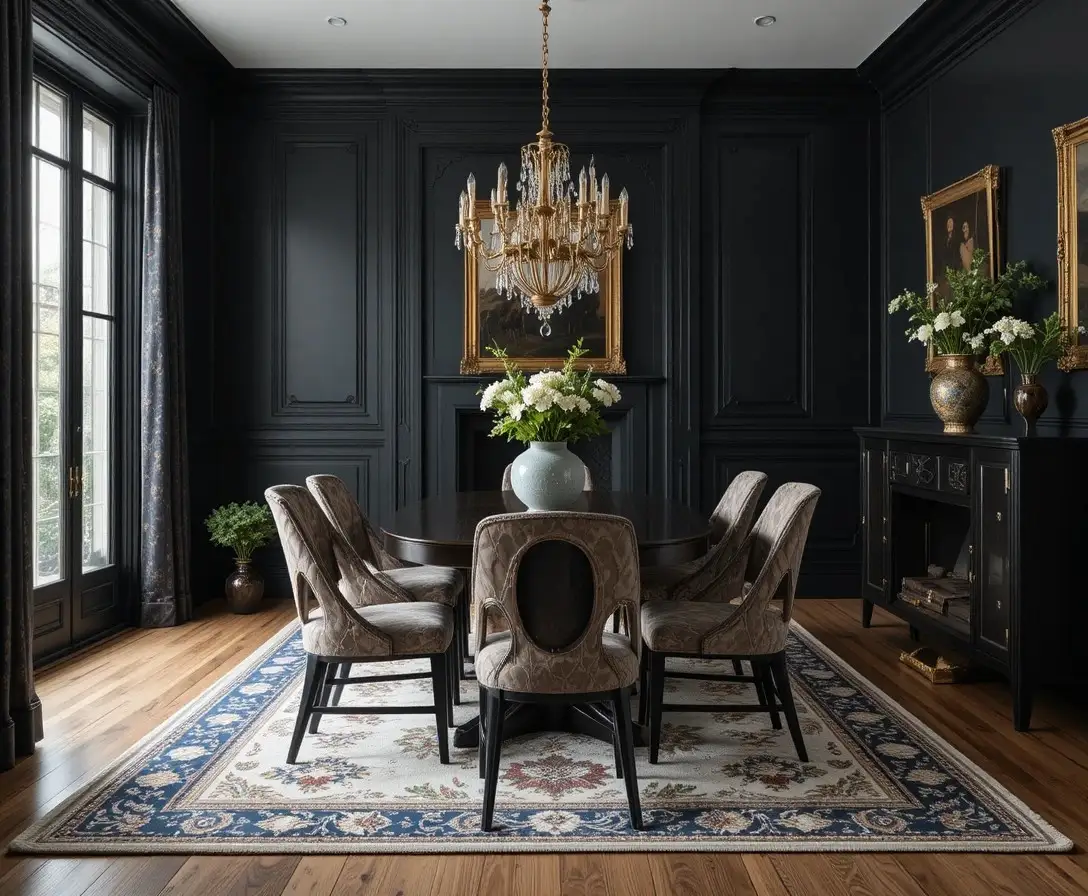
14 Black Dining Room Ideas That Feel Bold, Elegant, and Surprisingly Inviting
Ever walk into your dining room and feel like something is missing, even though everything looks “fine”? That quiet lack of impact often comes from playing it too safe with color. That’s where black dining room ideas can completely transform the mood. Dark tones don’t have to feel heavy—they can feel rich, cozy, and beautifully refined when styled the right way. With the right mix of texture, lighting, and contrast, black creates a space that feels intimate, stylish, and unforgettable. It’s bold, versatile, and surprisingly easy to make feel warm and inviting every day.
1. Black Walls with Warm Wood Furniture
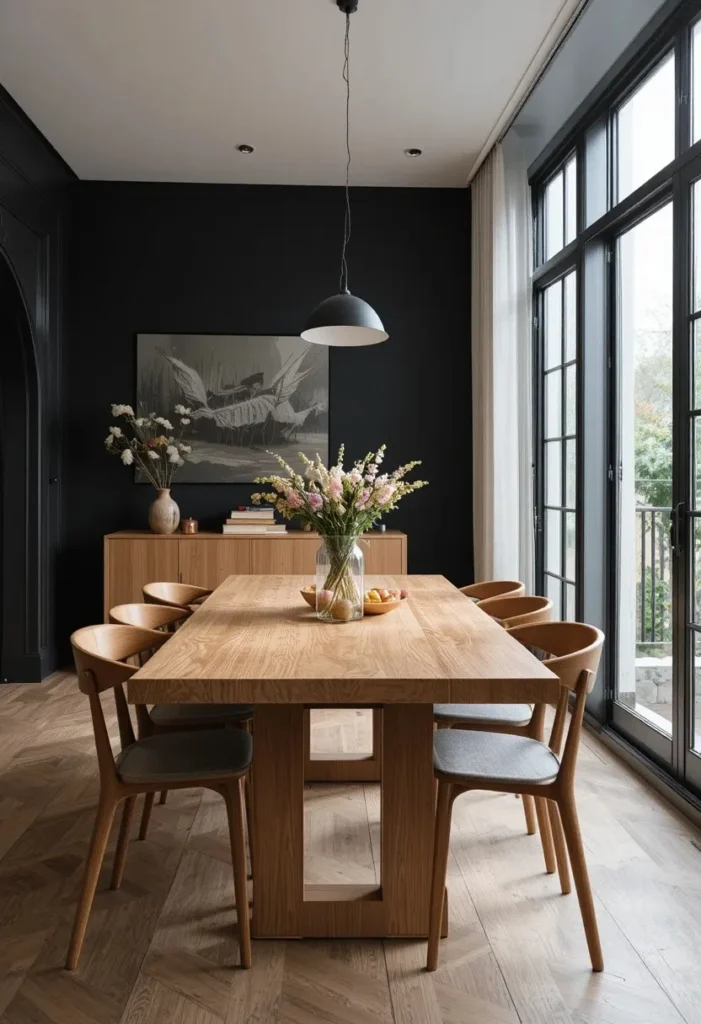
I painted our dining room walls black on a whim one weekend, and I will admit my hands shook a little as the first roller stroke went on. Then the walnut table went back against them, and the whole room made sense. The wood glowed, the grain looked richer, and the space felt like a favourite restaurant rather than a plain box. That is the magic of this pairing: black gives wood a stage, and wood gives black a heartbeat. If your room feels flat or forgettable, this is the combination I would try first, because it changes the mood in a single afternoon without a single new piece of furniture.
How to do it: Choose a matte or eggshell black, such as a soft charcoal-black, and paint the walls in two thin coats. Bring in one warm wood — walnut, oak or teak — through the table and at least one smaller piece, like a sideboard or bench. Keep the ceiling and trim a warm white so the room stays open, then add linen napkins or a woven runner to soften the edges.
2. Black Dining Room Ideas with White Contrast
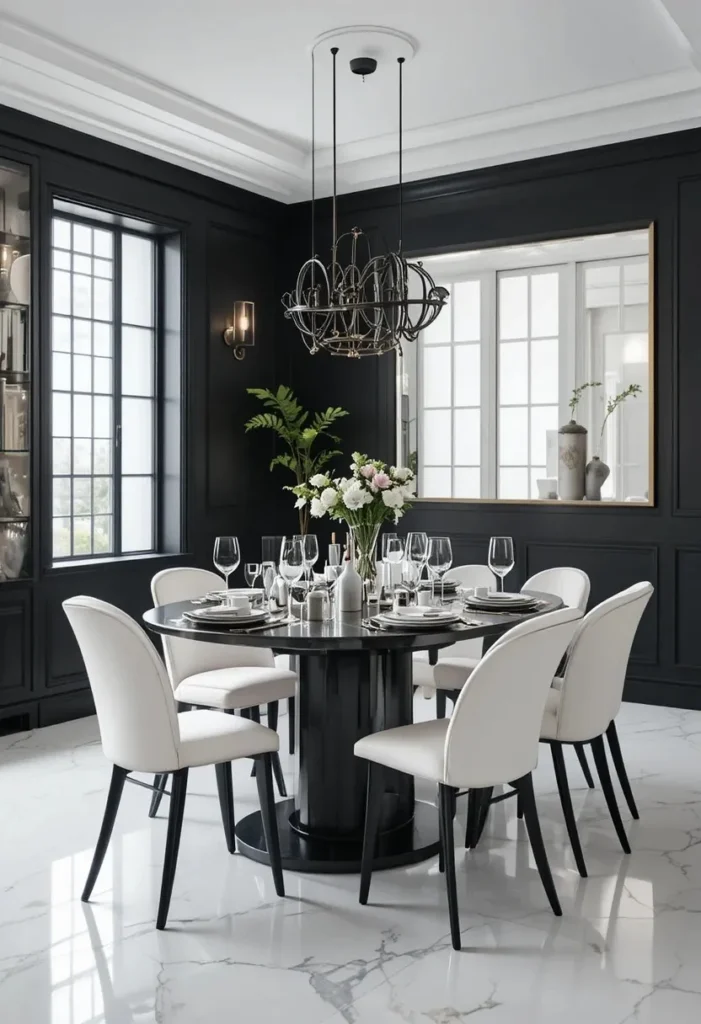
Black and white is the pairing I reach for when I want a dining room that feels crisp rather than heavy. I love how a white ceiling and pale chairs lift the black, so the room reads as graphic and calm instead of dark. The trick is balance: too much black and the room closes in, too much white and the drama disappears. I usually start with black on the lower half of the room or on one large piece, then let white do the breathing. If black and white feels too sharp for your taste, my blue dining room ideas show a softer way into a dark dining room, with the same sense of contrast and far less starkness.
How to do it: Paint one wall black or choose black chairs, then keep the ceiling, trim and at least one large surface — the table top or a sideboard — white. Use the same white on every painted surface so the finish feels deliberate, and repeat the black in two or three small touches, such as frames, a vase or candle holders.
3. Black Accent Wall for a Subtle Statement
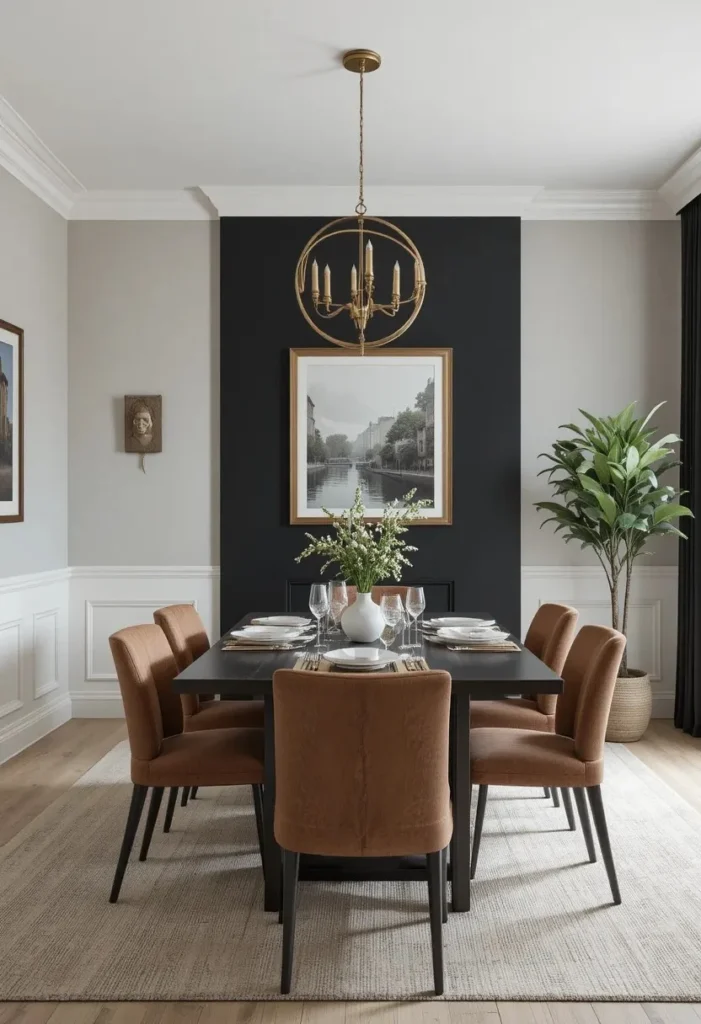
When I am nervous about a colour, I always start with one wall, and black is no exception. A single black wall behind the dining table gives you all the drama with none of the commitment, and it turns an ordinary table into a proper focal point. I chose the wall we face while eating, so the dark colour sits in view at every meal, and it made even Tuesday night pasta feel a little bit special. The rest of the room stays light, which means the black reads as a choice rather than a risk. If you have been curious about black but cautious, this is the kindest place to begin.
How to do it: Pick the wall behind the table, the one you see as you sit down, and paint it in a matte black. Leave the other walls pale and hang one piece of art, or a mirror, on the black wall to break up the surface. Live with it for a fortnight before deciding whether to take the colour further.
4. Black Dining Table for a Bold Centerpiece
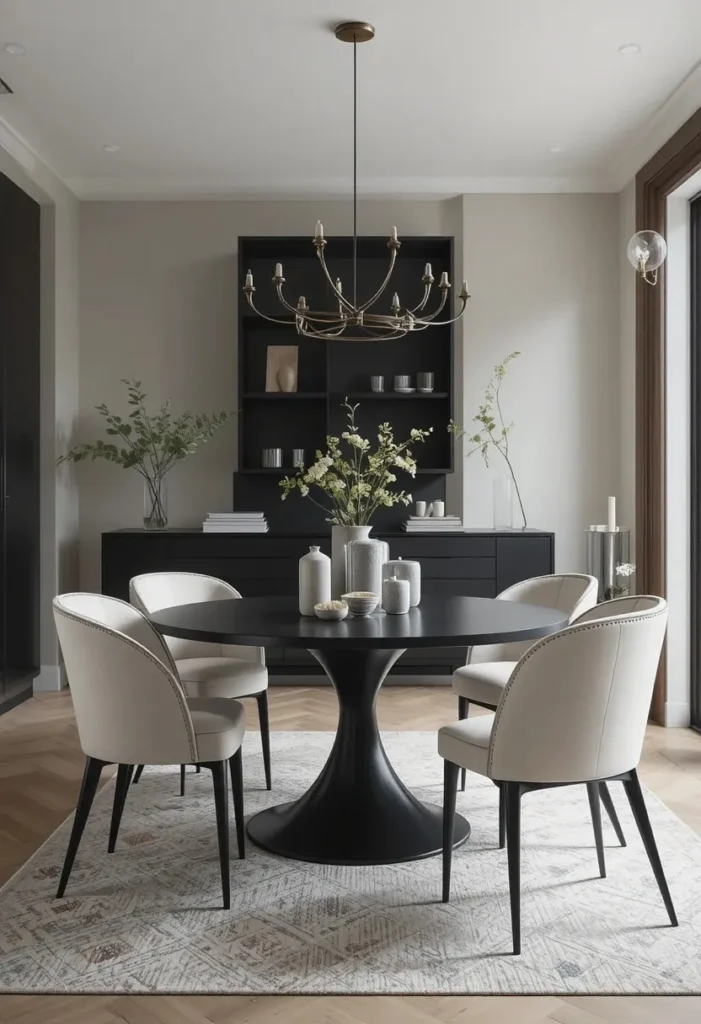
Our black dining table was the bravest piece of furniture I have ever bought, and I still remember standing in the showroom wondering whether I had lost my mind. Then it came home, and everything else in the room fell into place around it. A black table grounds the space in a way a pale one never could: chairs, lighting and tableware all look more deliberate against it. I keep the top mostly clear during the day, because the surface itself is the statement. If you are choosing a table and want help weighing shapes and sizes, my dining room table ideas will help you find one that suits how your family actually eats.
How to do it: Choose a table with a matte or satin black finish, which hides fingerprints far better than high gloss. Leave at least 75 centimetres behind each chair so people can pull out comfortably, and soften the look with a pale rug underneath or linen placemats. Keep the centrepiece low so you can see across the table.
5. Minimal Black Dining Room Ideas with Clean Lines
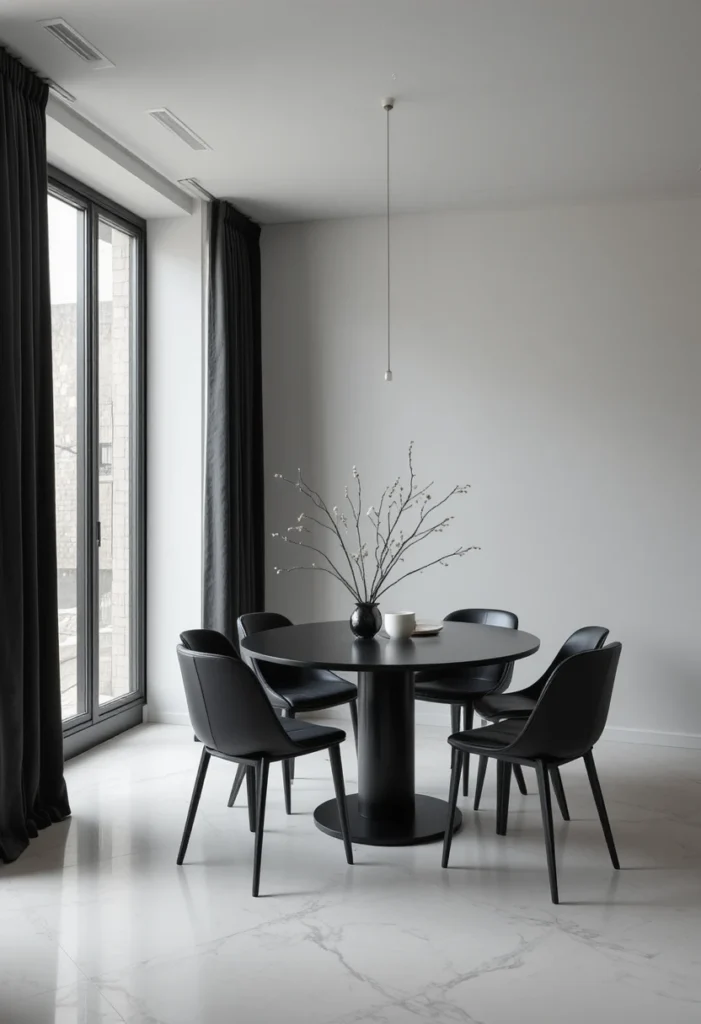
I used to think minimal meant cold, until I cleared our dining table and realised how much calmer breakfast felt. Black suits minimal rooms beautifully, because the colour itself does the work — one black sideboard or a set of black chairs is enough, and nothing else needs to shout. I keep surfaces mostly clear, with a single vase or a stack of linen napkins, and the room feels unhurried rather than empty. The secret is restraint: every piece has to earn its place. When I am tempted to add one more thing, I take something away instead, and the room almost always looks better for it.
How to do it: Pick no more than two or three materials — black, one wood and one fabric, for example — and repeat them through the room. Choose furniture with straight legs and flat surfaces, clear the table between meals, and give every everyday item a home inside a drawer or sideboard.
See More Ideas: 15 Bar Stools Kitchen Island Ideas
6. Black with Gold Accents for Elegance
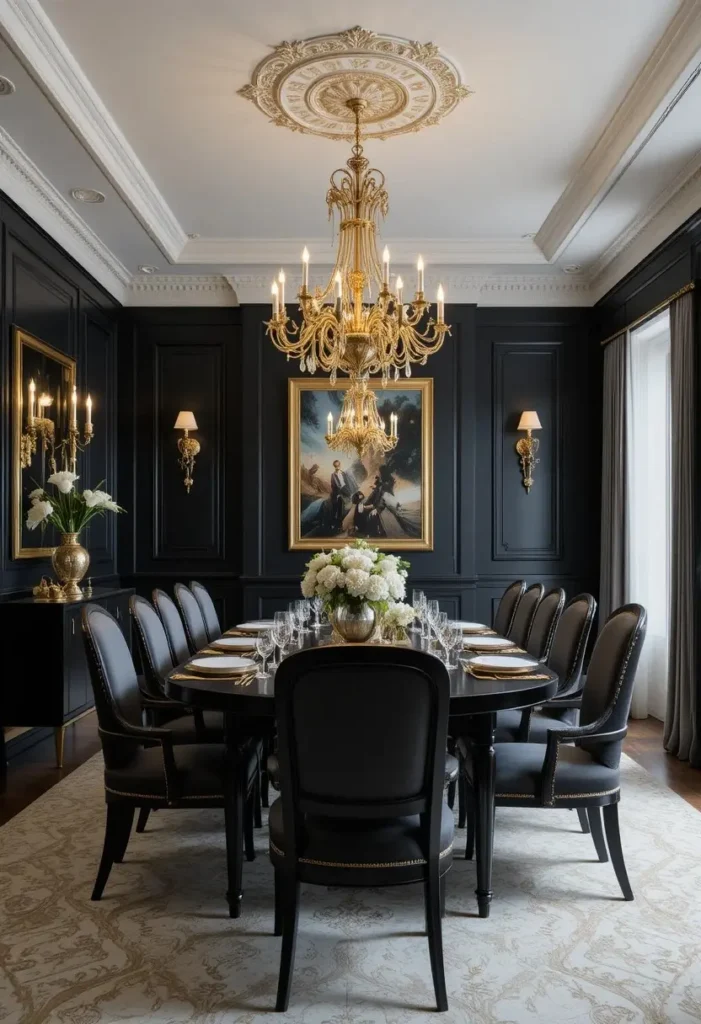
Gold was the detail that turned our black dining room from moody into magical. I started small, with brass candle holders and a single gilt frame, and the warm metal caught the evening light in a way that made the whole room glow. Black and gold have a long history together for a reason: the gold softens the black, and the black makes the gold look expensive rather than flashy. I am careful not to overdo it — a little gleam goes a long way. If you want to push the glamour further, my luxury modern dining room ideas show how to layer metallics and rich materials without the room tipping into a showroom.
How to do it: Choose one metal — brushed brass or warm gold — and repeat it in three places, such as the light fitting, the mirror frame and the cutlery. Keep the finish brushed rather than shiny for a modern feel, and let the rest of the room stay matte so the metal stands out.
7. Black Dining Chairs for a Subtle Touch
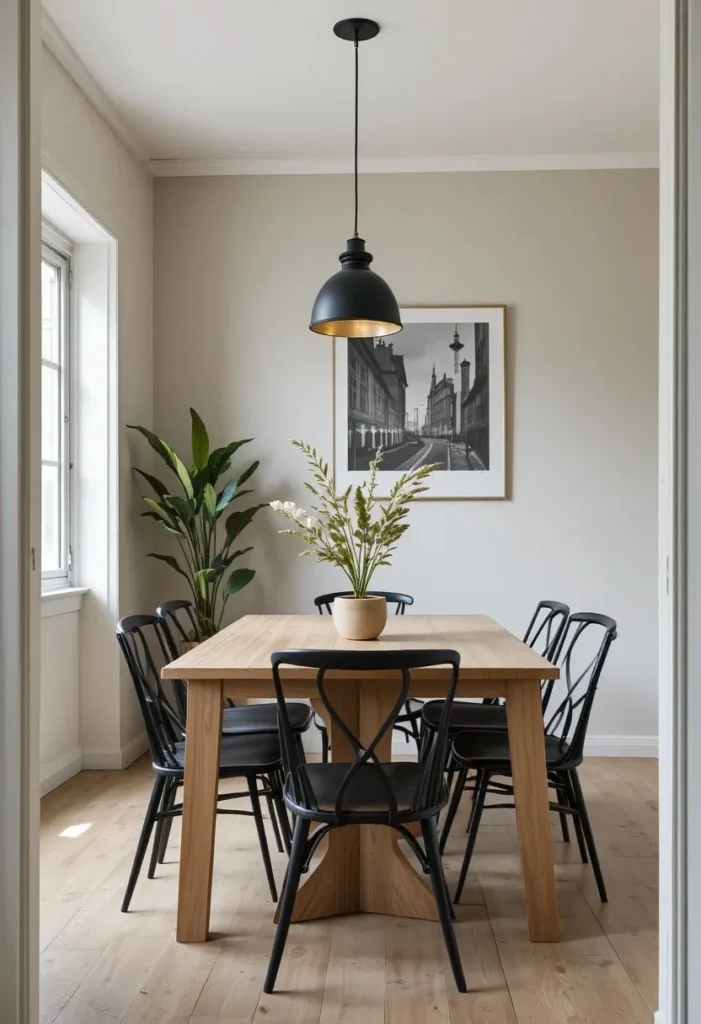
If painting a wall black feels like too much, black chairs are the gentlest way in, and they were my own first step. I swapped our pale chairs for black ones and the room changed overnight: the table suddenly had presence, and the whole space felt more pulled together. Chairs are easy to change back, easy to mix, and they let you test the colour at every meal before you commit to anything bigger. I like them with a pale or wood table, where the contrast does the talking. Add a cushion or two in linen or velvet, and they are just as comfortable as they are striking.
How to do it: Choose black chairs in a finish that suits your table — matte wood, painted timber or upholstered seats — and keep the table pale or natural wood for contrast. Sit in them for a full five minutes before buying, add washable linen cushions for comfort, and repeat the black once more in a frame or a vase.
8. Moody Black Dining Room with Soft Lighting
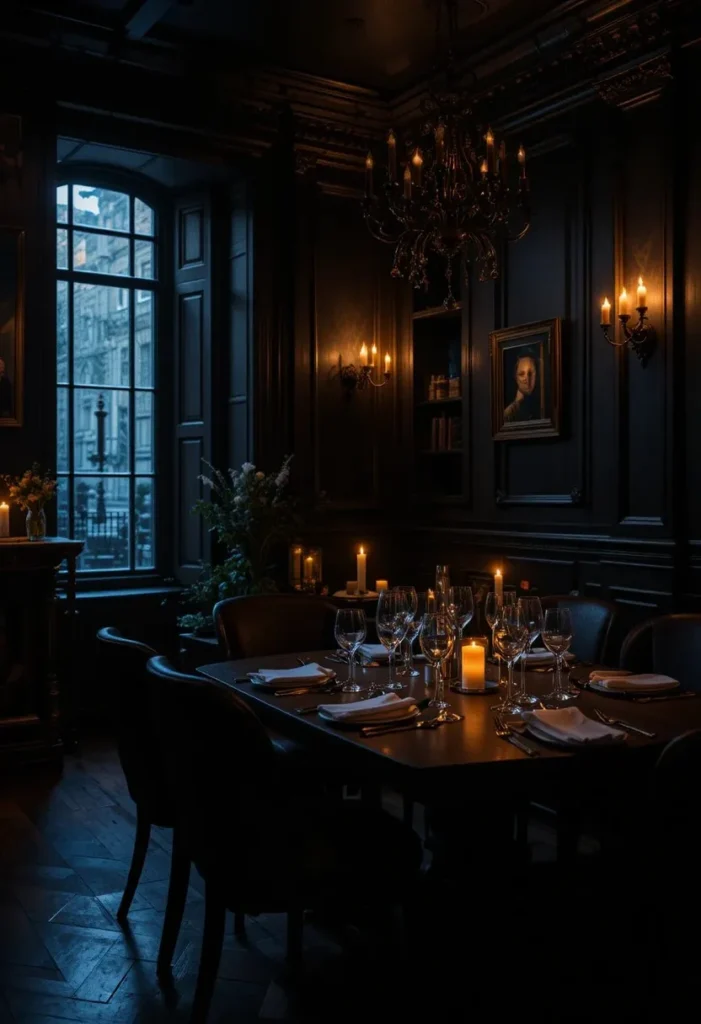
There is a particular kind of evening I love in our dining room: the overhead light off, the candles lit, and the black walls glowing softly around us. A moody black room lives or dies by its lighting, and I learned that the hard way after one too many dinners that felt more cave than cosy. Warm bulbs changed everything. They soften the black, flatter the food, and make everyone at the table look their best. I keep the light low and layered — a dimmed pendant, a pair of candles, and nothing harsh — so the room feels intimate rather than dark.
How to do it: Fit a dimmer to the pendant over the table and use warm white bulbs, around 2700 kelvin. Add candles or a small lamp on the sideboard for a second layer of light, and keep the ceiling a warm white so the glow bounces softly around the room.
9. Black and Wood Combination for Balance
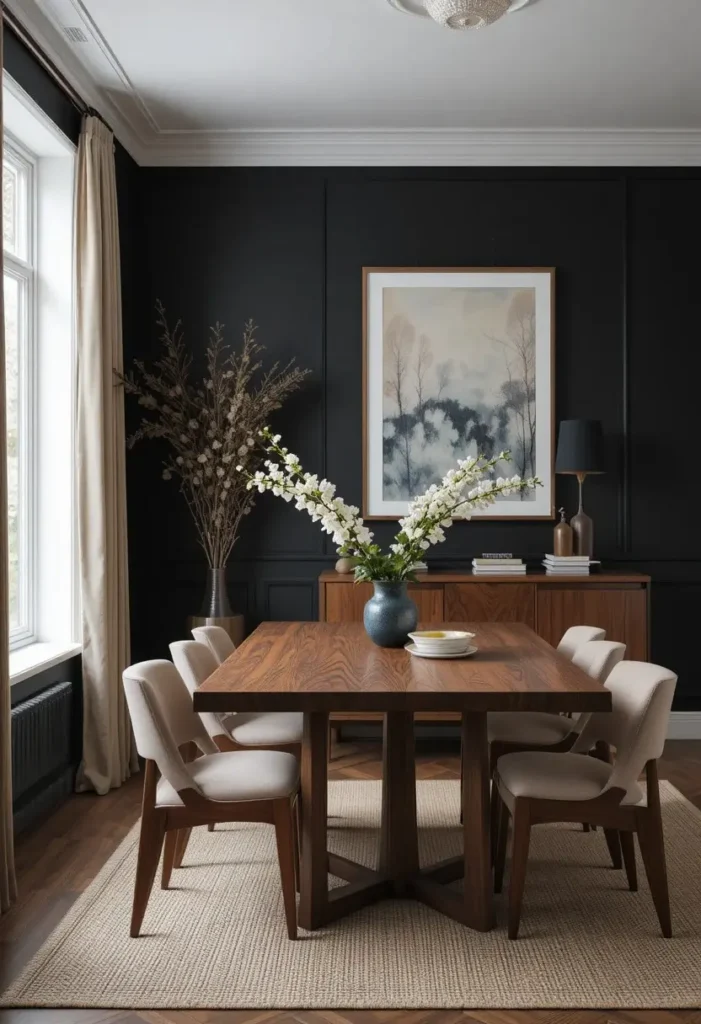
Wood is what stops a black dining room from feeling cold, and I never design one without it. I love the way oak softens black with its honey tones, while walnut deepens it into something rich and evening-like. In our room, the wooden table is the warm heart of the space, and the black walls are simply the frame around it. The two materials balance each other beautifully: black brings the drama, wood brings the warmth. My one rule is to stick to a single wood tone, because two competing woods will argue with each other all evening.
How to do it: Pick one wood — oak for a lighter feel, walnut for depth or teak for warmth — and use it for the table and at least one more piece. Repeat the black in the chairs or a sideboard, keep textiles natural, and oil the wood twice a year to keep it glowing.
10. Two-Tone Black Dining Room Walls
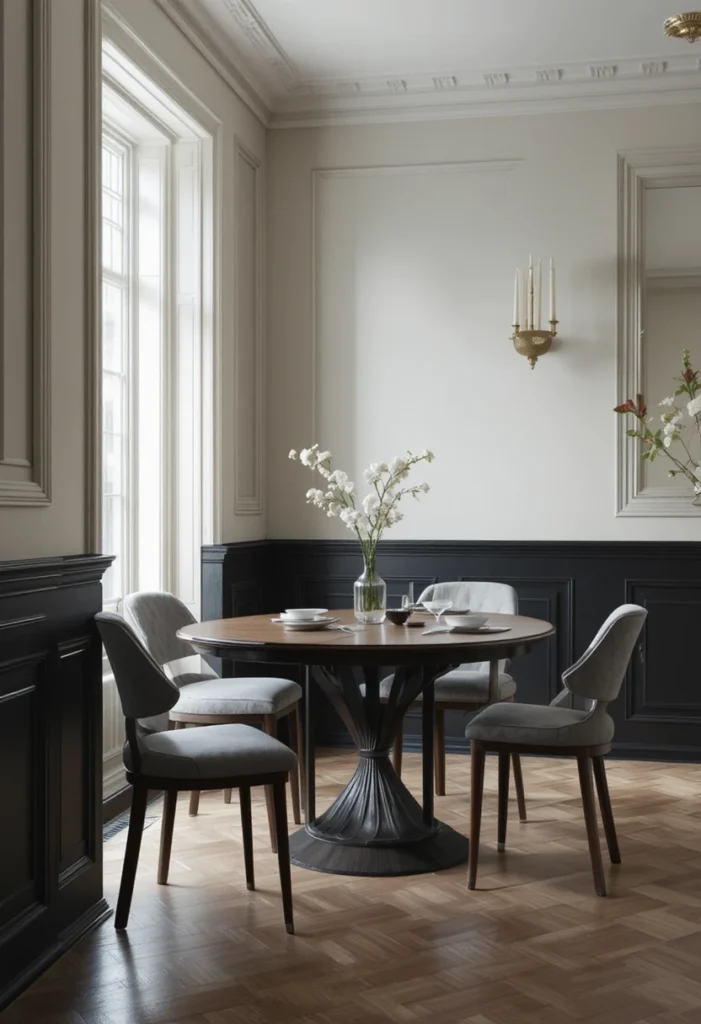
Two-tone walls were my compromise when I wanted black but worried about the room feeling smaller. Black on the lower half, with a pale shade above, gives you the depth and the drama while the top half keeps the room feeling open. I love how the dividing line creates a sense of architecture, almost like panelling, even in a plain modern room. The trick is a crisp, level line — a wobbly edge will catch your eye at every meal. Once it is done, the room feels layered and considered, as though it was designed rather than decorated.
How to do it: Mark the dividing line with a spirit level and painter’s tape, usually at chair-rail height, around 90 centimetres from the floor. Paint the lower half in matte black and the upper half in a warm white or pale greige. Add a thin picture rail or moulding along the join for a polished finish.
11. Black Built-In Cabinets for a Custom Feel
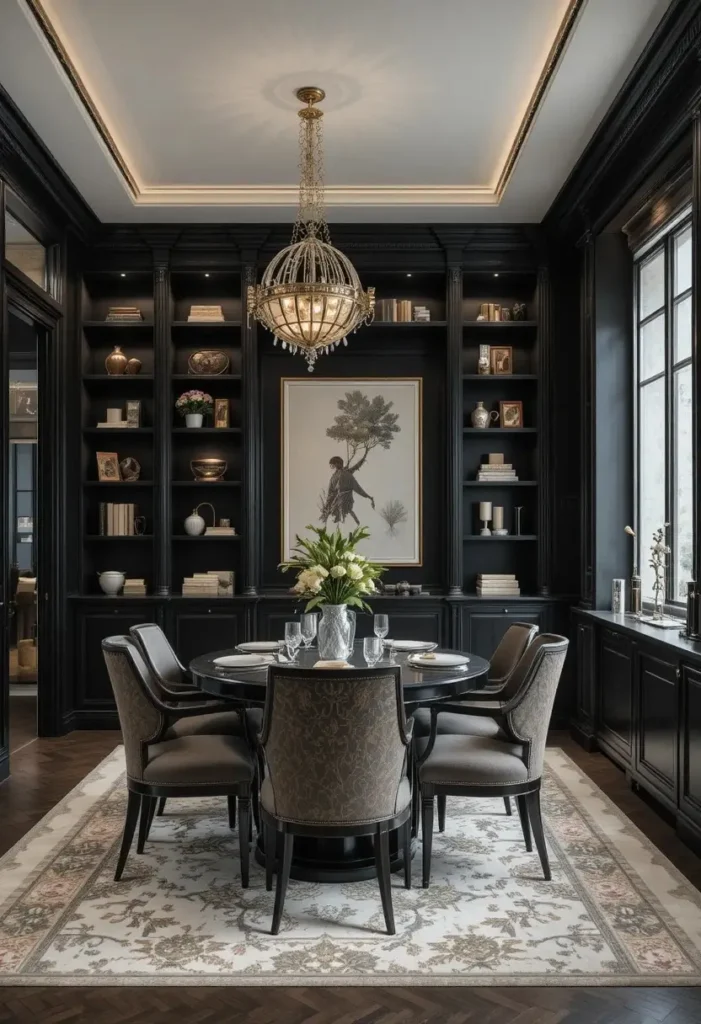
Black built-in cabinets are the smartest upgrade I have made in our dining room, because they solve two problems at once: storage and style. Before them, our tableware lived in three different cupboards and the room never quite looked finished. Now everything has a home behind those dark doors, and the cabinets themselves look like they were always part of the house. I love how the black makes the room feel tailored, almost like a good suit. They are not the cheapest idea on this list, but they are the one I would repeat without hesitation.
How to do it: Paint existing cabinets in a rich matte black, or have a carpenter fit simple units to an empty wall. Choose hardware in one metal finish, keep the shelves inside organised with baskets, and add a small light inside glass-fronted cabinets for a soft evening glow.
See More Ideas: 14 Blue Dining Room Ideas
12. Black Dining Room with Statement Lighting
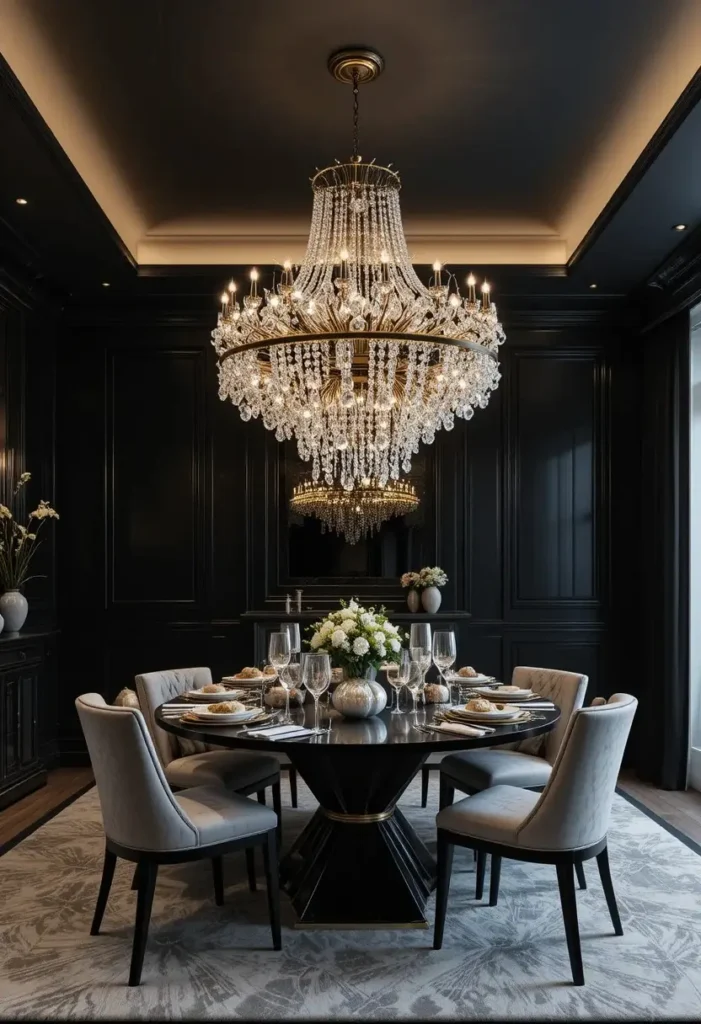
A bold light fitting is the piece of jewellery in a black dining room, and ours is the first thing guests comment on. Against dark walls, a chandelier or sculptural pendant does not just light the table — it becomes the room’s centrepiece, catching the eye the moment you walk in. I chose ours before the paint, which is backwards, but it meant every other decision followed from it. The scale matters more than the style: too small and it disappears, too large and it crowds the table. Get the size right, hang it low, and the whole room comes alive.
How to do it: Measure the table and choose a fitting about half to two-thirds its length, hung 75 to 90 centimetres above the tabletop. Centre it exactly over the middle of the table, fit a dimmer, and use warm bulbs so the light flatters the dark walls.
13. Black Curtains for a Soft Layered Look
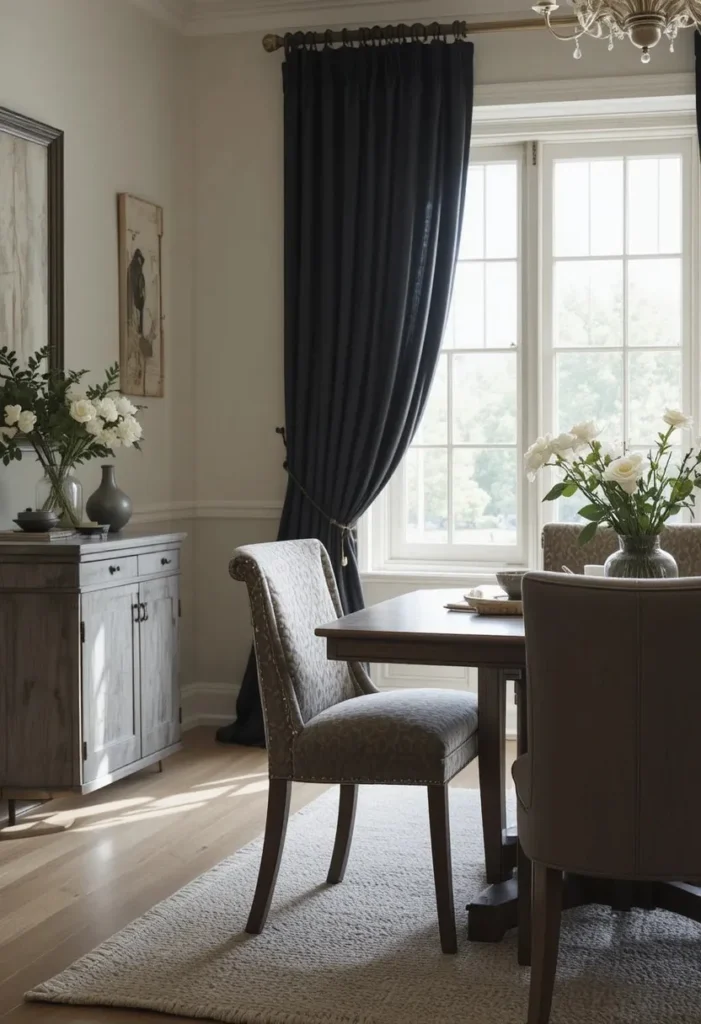
Black curtains were my answer when I wanted the drama of black without a paintbrush in sight. They soften the room in a way paint never can: the fabric moves, it catches the light, and it makes the windows feel taller and more important. I hung ours from a rail well above the window frame, and the difference was immediate — the whole wall looked longer, and the room felt more finished. Linen is my favourite fabric here, because it drapes beautifully and never looks stiff. If you rent, or you simply cannot face painting, start with the curtains.
How to do it: Hang the rail 10 to 15 centimetres above the window frame and extend it 15 to 20 centimetres beyond each side. Choose floor-length linen or velvet curtains in black, and let them pool just slightly on the floor for a relaxed, layered look.
14. Black Dining Room Ideas with Textured Elements
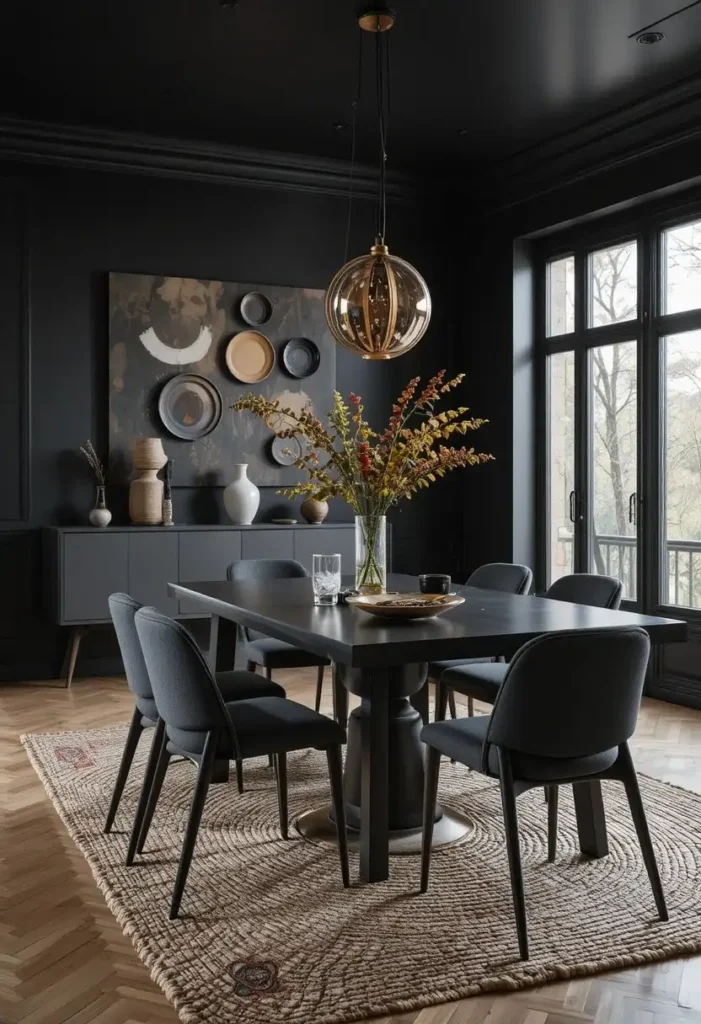
Texture is what keeps a black dining room from feeling flat, and it is the detail I notice most in rooms I love. A woven rug underfoot, a matte ceramic vase, a linen runner and a nubby cushion each catch the light differently, so the black stops being one solid block and starts to feel layered. I think of it as the difference between a photograph and a room you can actually sit in: texture is what makes it feel real. You do not need much — three textures, repeated in a couple of places each, is enough to make the whole room feel considered and warm.
How to do it: Choose at least three textures — for example woven wool, matte ceramic and natural linen — and repeat each one in two places. Layer a rug under the table, add a ceramic vase and linen placemats, and keep one surface smooth and reflective, such as glass or brass, for contrast.
Frequently Asked Questions
Does a black dining room feel too dark?
Not if you balance it well. Keep the ceiling a warm white, add warm bulbs and a dimmer, and bring in one warm material such as wood or brass to soften the black. A mirror opposite the window also helps, because it bounces daylight around the room. I would always test a large swatch first and look at it in both morning and evening light.
What colours go well with black in a dining room?
Warm white and cream keep black feeling fresh, while natural wood adds warmth and stops it feeling cold. Brass and gold bring a touch of glamour, and soft greens or deep blues sit beautifully beside black if you want a second colour. I usually pick one partner colour and repeat it in two or three small touches, so the room stays calm.
Can I use black in a small dining room?
Yes, and it can work surprisingly well, because black blurs the edges of a room and makes the boundaries harder to read. Keep the black to one wall, the table or the chairs, and let pale walls, a mirror and good lighting do the rest. A glass or pale tabletop also helps, because it keeps the centre of the room feeling light.
What finish should I choose for black walls?
I always choose matte or eggshell, because they soften the colour and hide small marks far better than gloss. A flat matte finish gives the most elegant, velvety look, while eggshell is easier to wipe clean — useful if you have children or a dog. Whichever you choose, paint two thin coats rather than one thick one for an even finish.
How do I keep a black dining room feeling warm?
Layer warm materials against the black: wood, linen, wool and brass all work beautifully. Use warm white bulbs, around 2700 kelvin, and add candles for evening meals. A woven rug and soft curtains make the biggest difference of all, because they bring texture and warmth to the hardest surfaces.
Your Black Dining Room Checklist
☐ Test a large black swatch in morning and evening light
☐ Choose your black: matte for walls, satin for furniture
☐ Keep the ceiling a warm white
☐ Add one warm material: wood, brass or linen
☐ Hang the light 75 to 90 centimetres above the table
☐ Fit a dimmer and use warm white bulbs
☐ Repeat the black in two or three small touches
☐ Layer at least three textures
☐ Hang curtains high and let them fall to the floor
☐ Add a mirror to bounce light around the room
☐ Clear the table between meals
☐ Step back to the doorway and look at the whole room at night
Conclusion
A black dining room is not about being daring for its own sake. It is about giving your meals a setting that feels considered: dark walls that make the food look better, warm wood that invites people to linger, and light that flatters everyone at the table. These fourteen ideas are not a list to follow in order, but a set of starting points — pick the one that suits your room, your light and your courage, and let the rest follow.
Start small if you feel unsure, whether that means black chairs, a single accent wall or a pair of curtains. Live with it for a few weeks, notice how the room feels at breakfast and at dinner, and then decide what comes next. The best dining rooms are not finished in a weekend; they grow one good decision at a time, and yours will be all the better for it.