
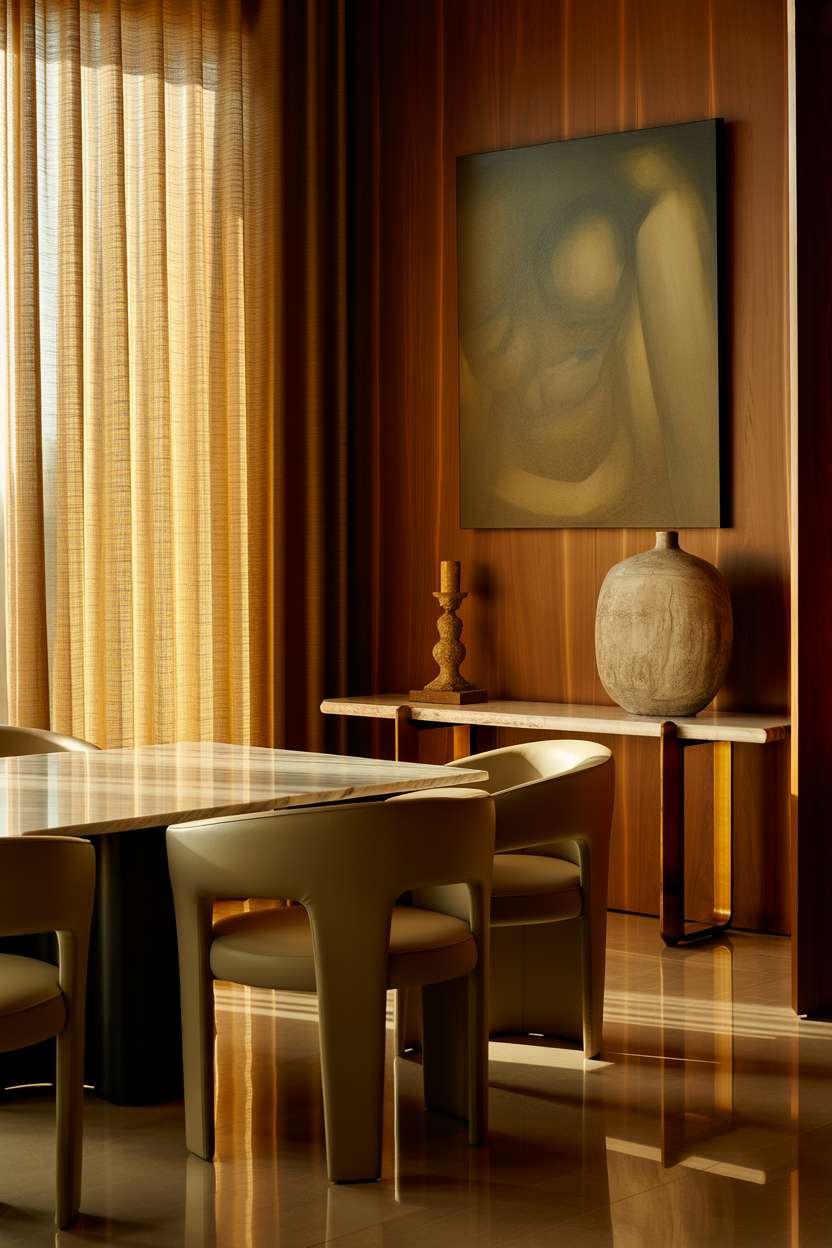
28 Luxury Modern Dining Room Ideas for an Elegant, High-End Look
There is something truly captivating about a luxury modern dining room, where sleek style and refined elegance come together in perfect harmony. It is a space designed to impress and delight, blending clean contemporary lines with rich materials and a sense of effortless sophistication. From statement tables and plush seating to dramatic lighting and beautiful finishes, every detail works to create a high end feel. With the right balance of bold and warm, your dining room can feel as elegant as a fine restaurant yet wonderfully inviting. Below are twenty eight luxury modern dining room ideas, shared with warmth and inspiration, to help you create an elegant, high end look you will love.
1. Start With a Statement Table
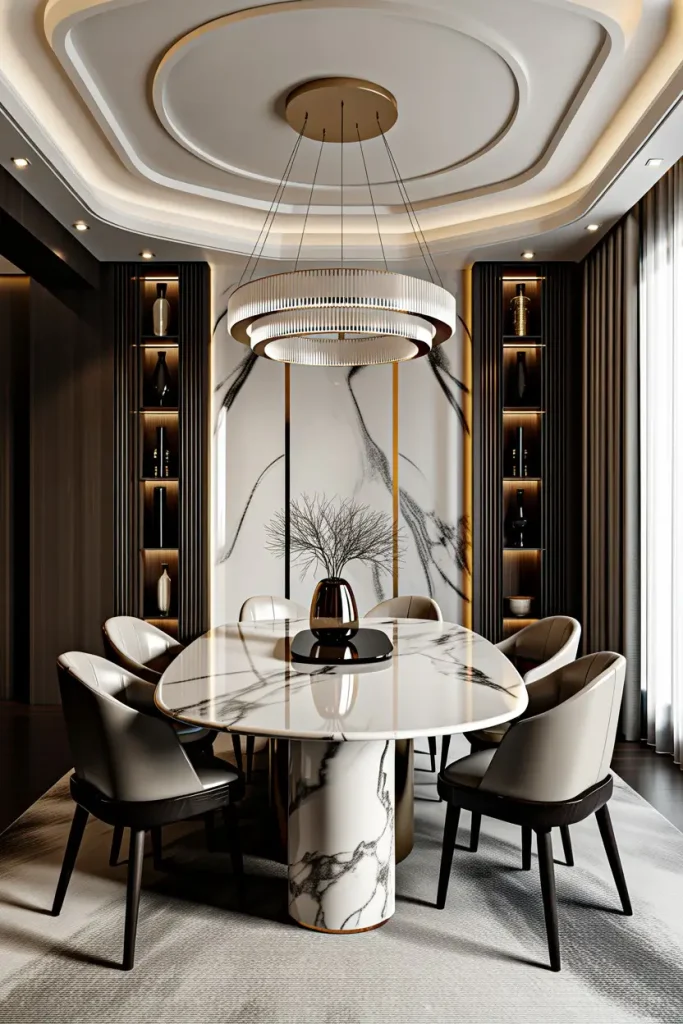
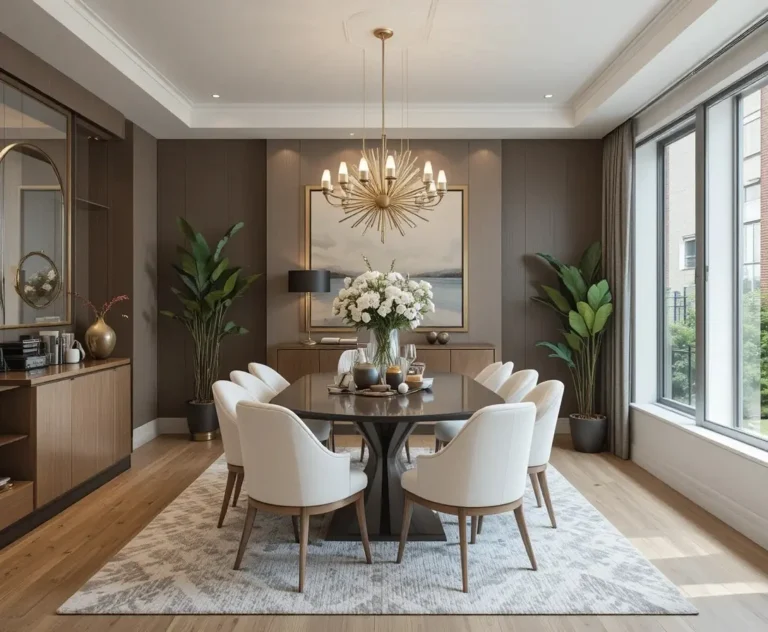
When I replaced our old table, I understood why designers always start here. A statement table does far more than hold plates; it sets the scale, the mood and the budget for everything else in the room. I look for a sculptural silhouette first — a curved pedestal base, a thick marble slab or warm walnut — and only then check whether six chairs fit without elbows knocking. The table is what guests notice first, so it deserves the largest share of your budget. A round shape works beautifully too, and my round dining table decor ideas show how to style one without losing any sense of occasion.
How to do it: Measure the room first, then choose a table that leaves at least 90 centimetres behind each chair for pulling out. Check the height — 75 centimetres suits most chairs — and sit at it in the showroom if you can. Run your hand across the surface; a good table should feel solid and smooth, with no wobble when you lean on a corner. Order the chairs only after the table arrives, so the seat heights and the overhang match in real life, not just on paper.
2. Add Plush Upholstered Chairs
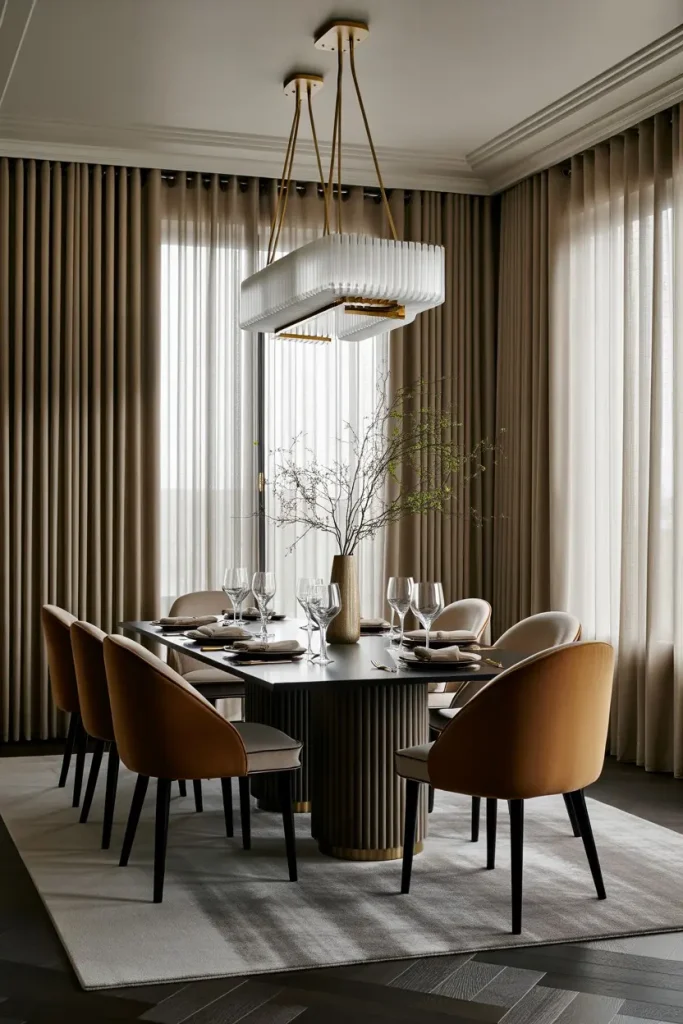
I used to think dining chairs were purely practical, until I sat through a three-hour dinner on a hard wooden seat and spent the whole evening shifting about. Comfort is the quiet luxury here. I love velvet for its soft sheen, but a good bouclé or a wipeable linen-look fabric is kinder to real life with children and red wine. Choose a seat height that lets your feet rest flat, and a back that supports you without forcing you upright like a school chair. When the chairs are comfortable, people linger, and lingering is the whole point of a dining room.
How to do it: Sit in the chair for a full five minutes before buying, with your feet flat and your elbows at table height. Choose a seat depth of about 45 centimetres and a wipeable fabric if you host often. If the chairs are new and the table is old, bring a fabric swatch home first to check the colours in your own light.
3. Hang a Dramatic Chandelier
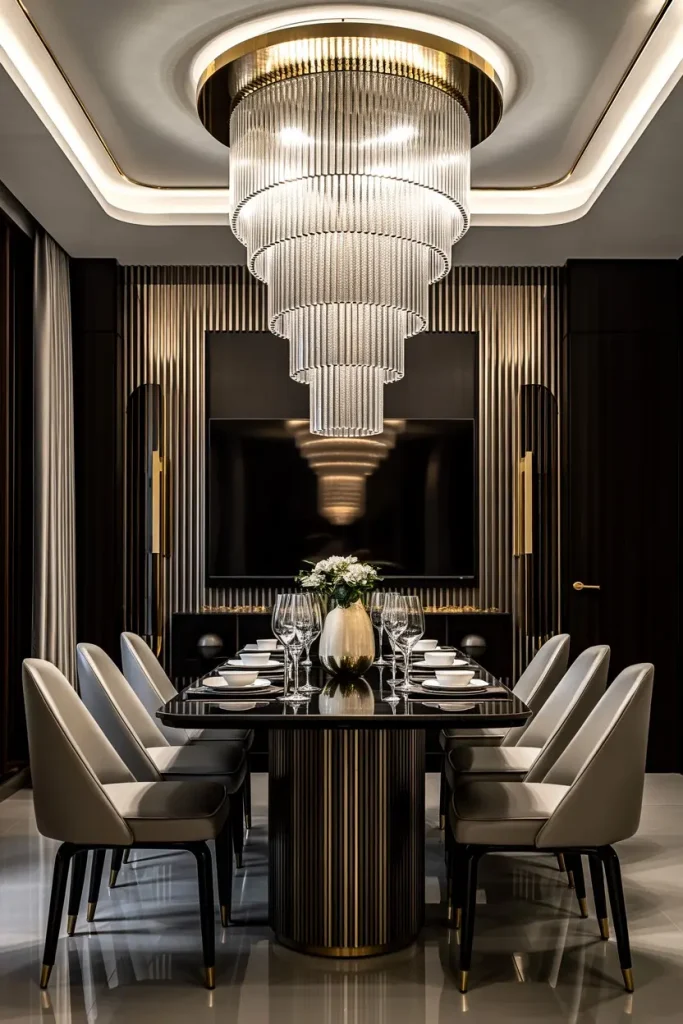
There is a moment at every dinner party when the light changes and the whole room seems to glow, and that moment usually belongs to the chandelier. I chose ours after weeks of looking, and I still catch myself glancing up at it. Scale matters more than sparkle: a fitting that is too small looks lost, while one that is too large crowds the table. I like crystal or glass for a classic room, and blackened metal or sculptural brass when the room leans modern. Dimmable, always — a chandelier at full brightness is a ceiling light, but dimmed low it is pure theatre.
How to do it: Measure the table, then choose a chandelier about half to two-thirds its width. Hang it 75 to 80 centimetres above the tabletop and centre it exactly over the middle. Fit a dimmer switch and warm bulbs, around 2700 kelvin, then test it at night with the table set — that is the light your guests will actually eat by.
4. Add Marble Accents
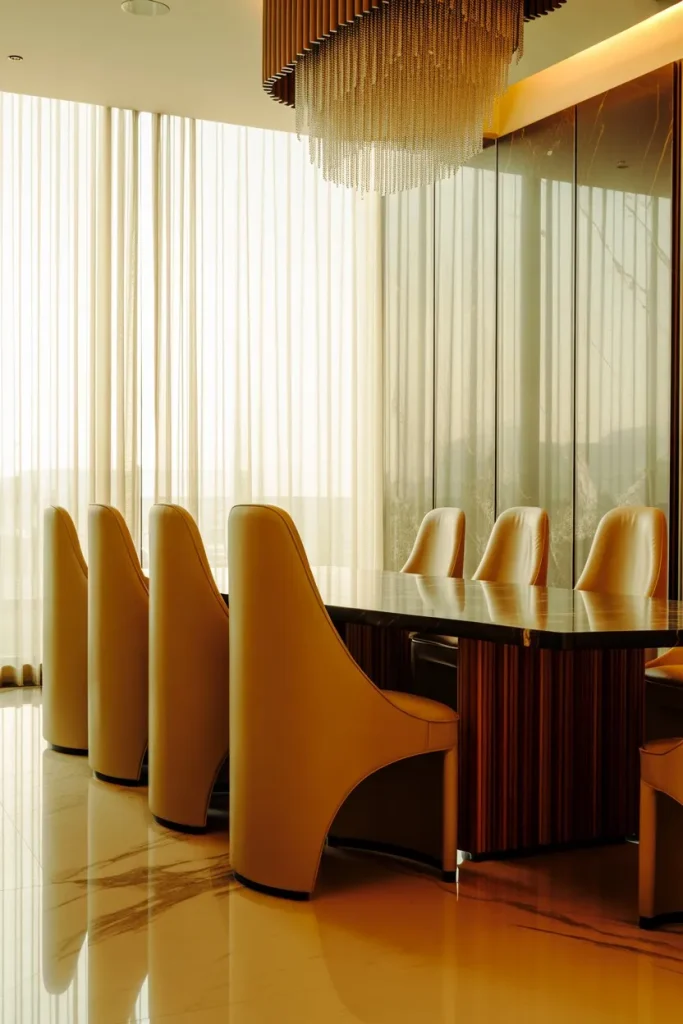
Marble was the first truly luxurious material I fell for, and it still stops me in my tracks. The veining is never repeated, so even a small piece — a serving board, a sideboard top, a pair of coasters — feels one of a kind. I keep ours to a few considered pieces rather than covering every surface, because marble needs breathing room to be noticed. White Carrara keeps a room bright, while deep green or near-black marble adds drama against pale walls. It is cool to the touch, which I love on warm evenings, and it only gets more beautiful as it ages.
How to do it: Start small with a marble serving board or tray before committing to a tabletop. Seal honed marble every six to twelve months and wipe spills, especially wine and citrus, straight away. Pair white marble with warm wood so the room stays soft, and keep the veining quiet if the room already has a bold pattern elsewhere.
5. Use a Rich, Moody Palette
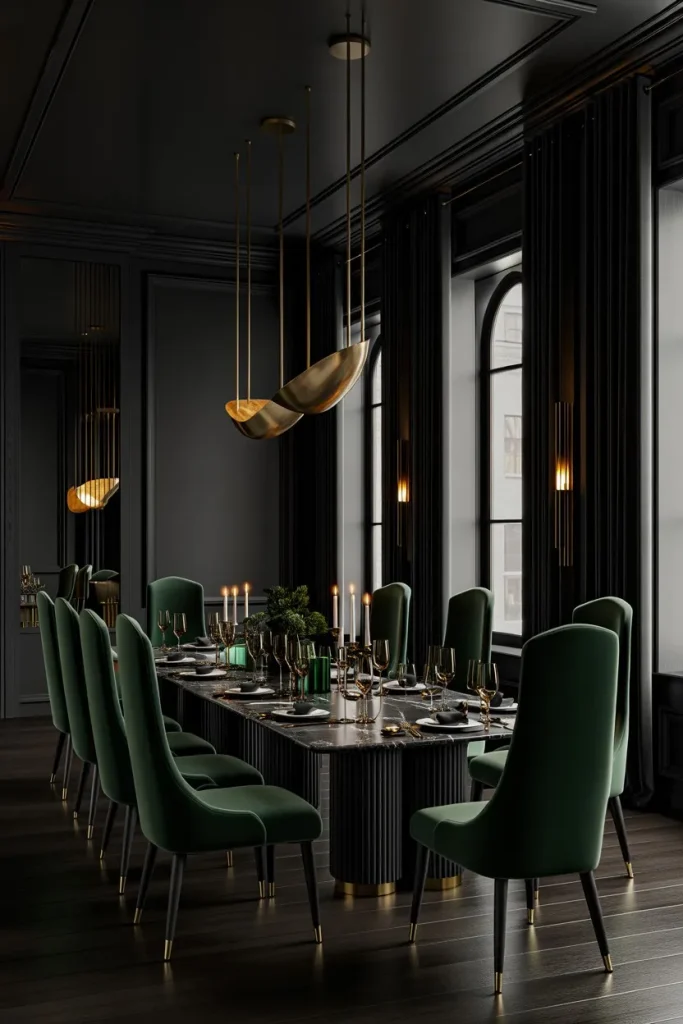
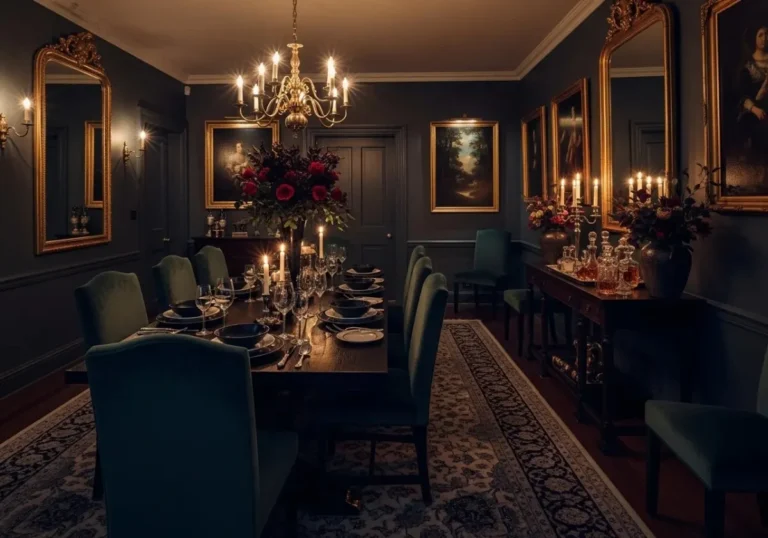
I painted our dining room a deep blue one October weekend, and I was nervous the whole time the roller was in my hand. Then the light changed, the brass caught the glow, and the room suddenly felt like a private members’ club. Dark walls make a dining room feel intimate after sunset, which is exactly when you use it most. Charcoal, navy and emerald all work, but they need warm light and something pale — a cream ceiling, light linen, a pale rug — to stop them feeling heavy. If blue is calling to you, my blue dining room ideas will help you pick the right shade for your light.
How to do it: Paint one wall first and live with it for a week before committing to the whole room. Use a matt or eggshell finish to soften the colour, and keep the ceiling pale. Add warm lighting and at least one light element — pale chairs, a cream rug or light wood — then check the room at night, when dark walls come into their own.
6. Add Metallic Touches
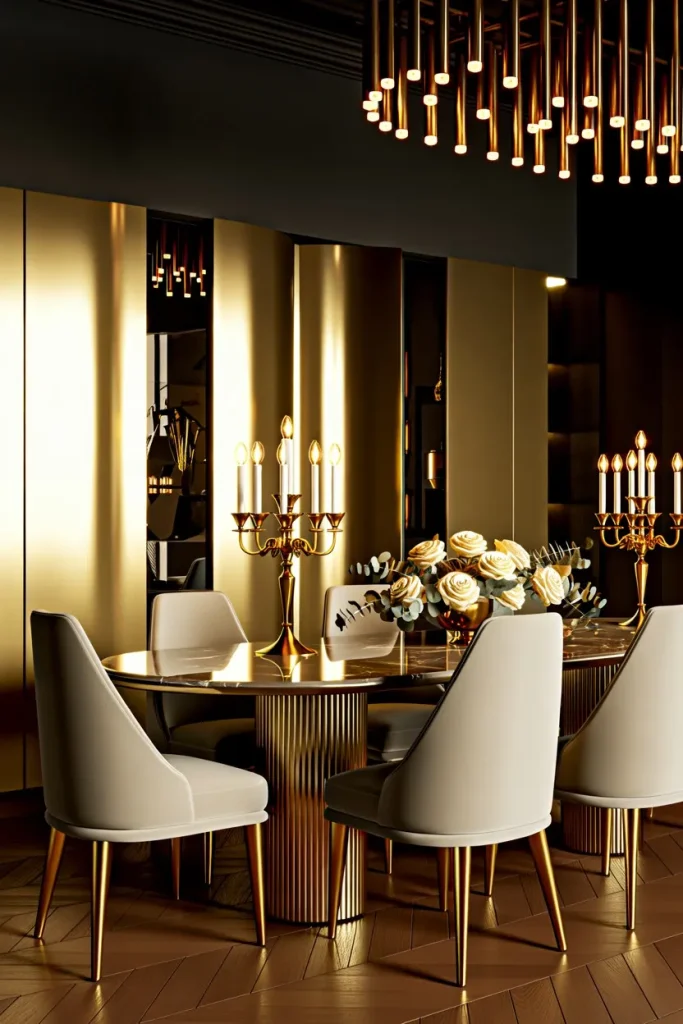
I am careful with metallics, because a little goes a long way and too much can turn a calm room into a jewellery box. My rule is one metal, repeated three times: brass handles on the sideboard, a brass picture light, a brass rim on the vase. That repetition is what makes it feel intentional rather than accidental. Warm metals like brass and copper suit candlelight and wood, while chrome and polished nickel feel crisper beside glass and stone. I also mix finishes on purpose — brushed, never shiny all over — because a little softness keeps the shine from feeling cold.
How to do it: Choose one metal and repeat it in three places, keeping the other metals out of the room. Mix brushed and polished finishes of that same metal for depth. Add metallics at eye level and on the table — handles, frames, candle holders — and step back to check that the shine reads as a warm glow, not a glare.
7. Keep Lines Clean and Sleek
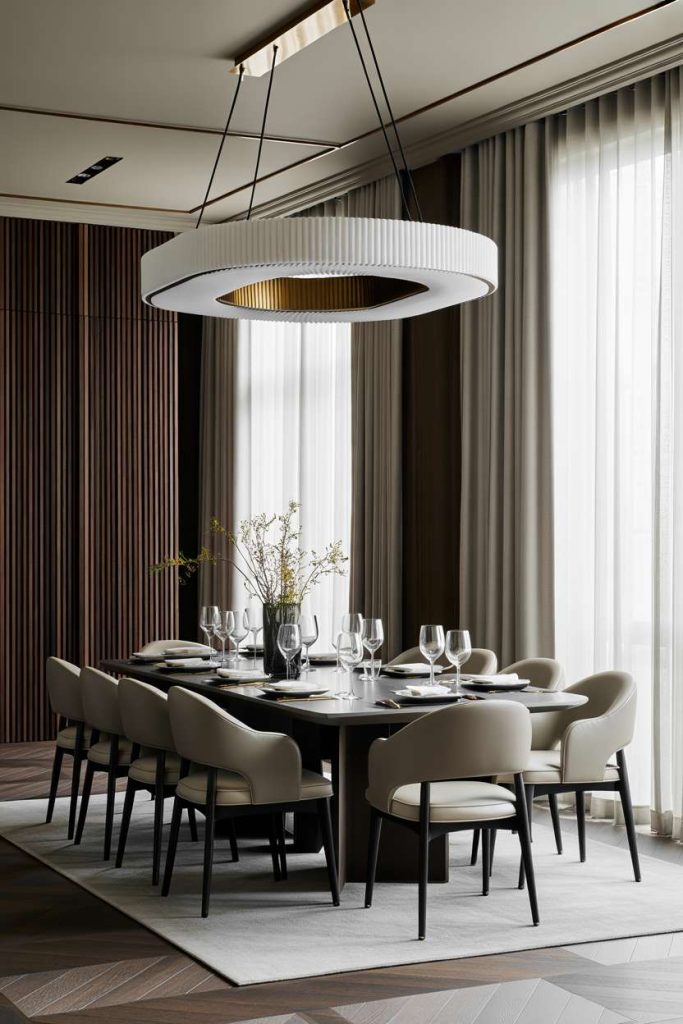
When our dining room felt crowded, I did not buy anything new — I took things away. Clean lines are less about the furniture you choose and more about the discipline of leaving space around it. A simple table, straight-backed chairs and one clear wall will always look more expensive than a room full of beautiful things competing for attention. I keep surfaces nearly bare between meals, with only the centrepiece in place, and the calm that follows is remarkable. Luxury, I have learned, is often what you choose not to add.
How to do it: Remove one piece from the room and live without it for a week — if you do not miss it, it does not belong. Keep table surfaces clear between meals and give each piece of furniture breathing room. Choose furniture with straight, simple silhouettes and hide the clutter in the sideboard, not on it.
8. Add a Statement Rug
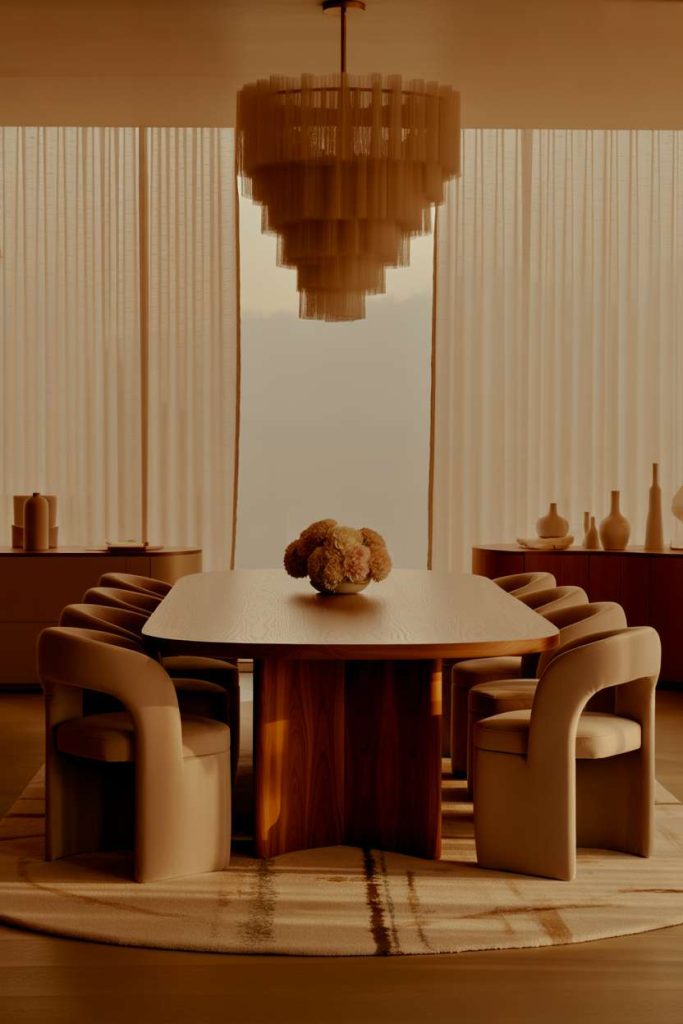
I resisted a rug under our dining table for years, convinced it would be ruined within a month. Then I found a low-pile wool rug in a soft pattern, and the room changed overnight: the chairs stopped scraping, the sound softened, and the table suddenly had a proper home. The trick is size — the rug must be wide enough that chairs stay on it even when pulled out, at least 60 centimetres beyond the table on every side. I choose flatweave or low pile so chairs glide, and a pattern forgiving enough to hide the odd crumb between cleans.
How to do it: Measure the table with the chairs pulled out, then add 60 centimetres on every side to find your rug size. Choose low pile or flatweave and a pattern that forgives crumbs. Put a non-slip underlay beneath it, and vacuum with the chairs lifted clear so the edges stay flat and the rug stays put.
9. Add Floor-to-Ceiling Curtains
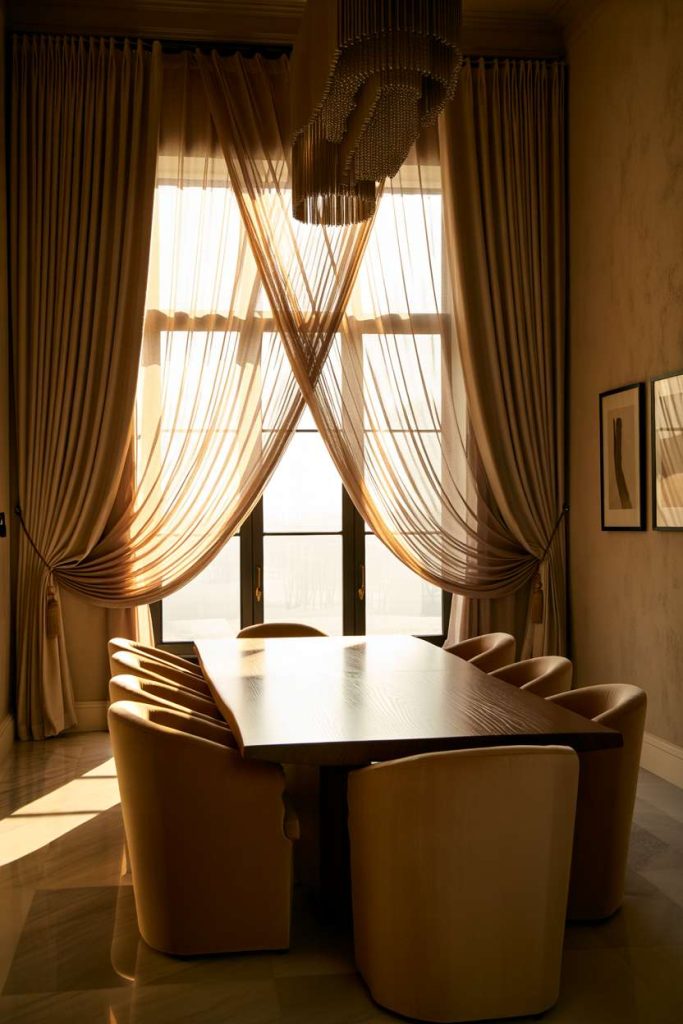
Our curtains hang from just below the ceiling to the floor, and they are the single change guests comment on most. The long drop makes the ceiling feel higher and the windows feel grander, even though the windows themselves are entirely ordinary. I choose a heavy linen or velvet that falls in soft folds, hung on a simple black or brass rod, and I let the fabric just kiss the floor. Lined curtains are worth the extra cost in a dining room, because they hang better, block the evening chill and make the whole room feel finished.
How to do it: Mount the rod 10 to 15 centimetres below the ceiling and extend it 15 to 20 centimetres beyond the window frame on each side. Measure from the rod to the floor and order the curtains to just touch it. Choose lined fabric in a colour one shade deeper than the walls, and steam the folds once hung so they fall evenly.
10. Add a Mirrored or Glass Feature
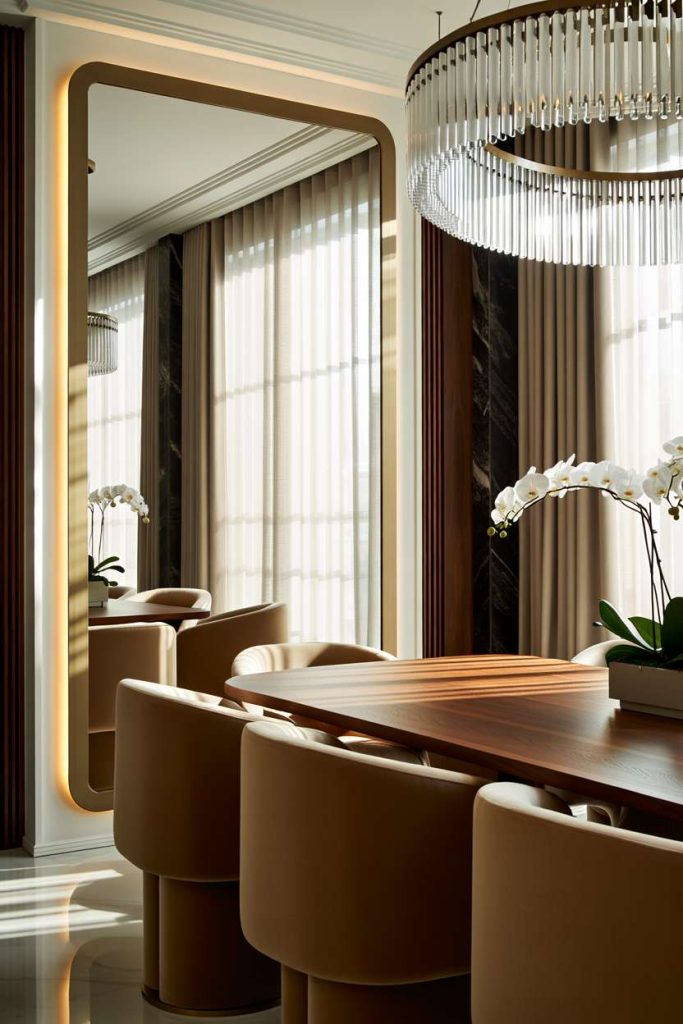
I hung a large mirror opposite our dining room window on a whim, and the difference startled me — suddenly the garden was in the room twice, and evening light bounced to corners that had always felt dim. A mirror works hardest when it reflects something worth seeing: a window, a chandelier, a vase of flowers. I keep the frame simple and generous, because a fussy frame fights with the reflection. Smoked glass or an antiqued mirror suits a moodier room, while a clear, bright mirror is perfect for a small space that needs to breathe.
How to do it: Hang the mirror where it reflects a window, the chandelier or flowers — never a blank wall or the clutter of the kitchen. Fix it securely into a stud or use proper wall anchors, as large mirrors are heavy. Keep the glass clean with a microfibre cloth, and check the reflection from every seat before you call it done.
11. Add a Sculptural Light Fixture
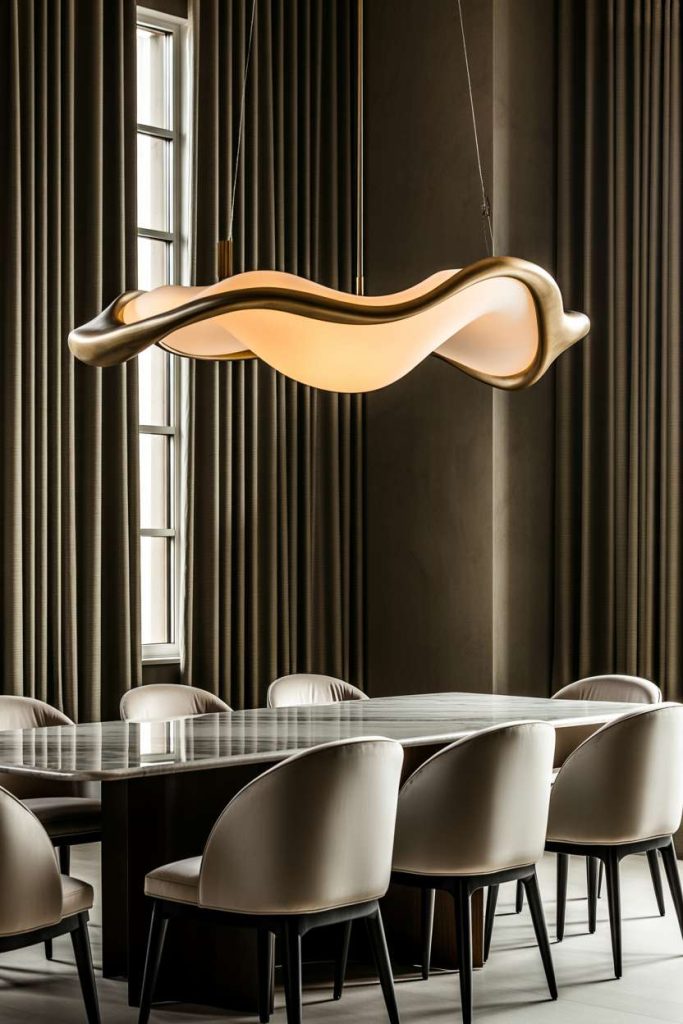
A sculptural light is the piece of art I never have to dust around or explain. Ours is a tangle of curved brass rods, and at night it throws the most wonderful shadows across the ceiling. I think of it as jewellery for the room: it should be noticed, but it should never compete with the people beneath it. The shape matters more than the brand — an interesting silhouette in a modest material beats a dull fitting in an expensive one every time. When the fixture is right, the room feels designed even before the table is set.
How to do it: Choose a fixture whose shape reads clearly from the doorway, and hang it centred over the table at 75 to 80 centimetres above the surface. Check that no bulb is visible at eye level when you sit down. Fit a dimmer, then switch it on at night to see the shadows it throws before you commit to the position.
12. Use Rich Wood Tones
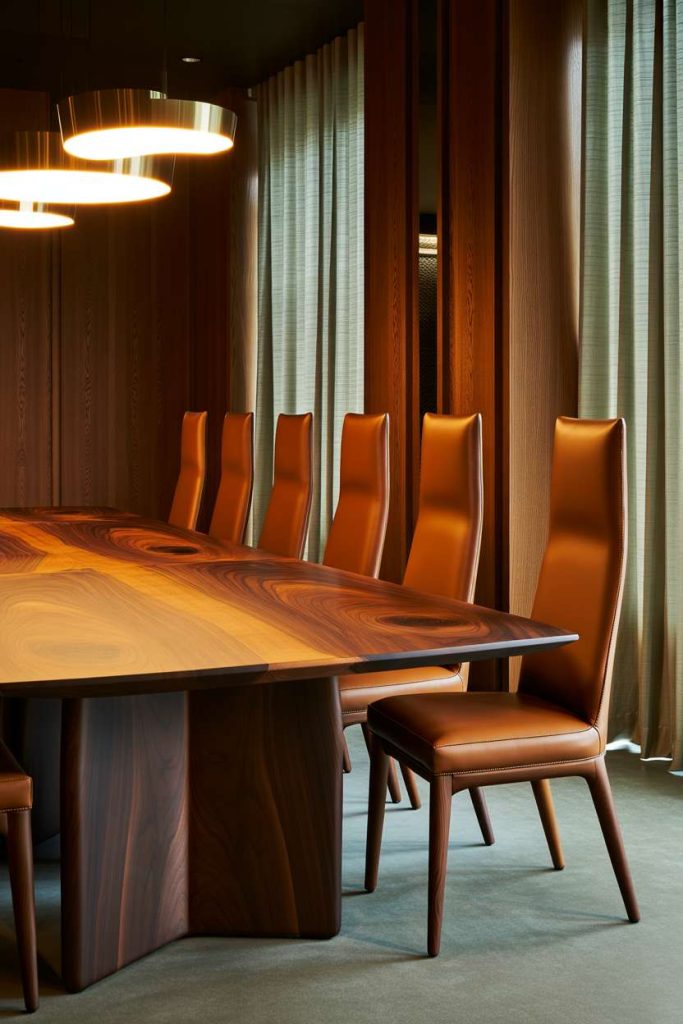
Walnut is my weakness. The first time I ran my hand along a walnut sideboard in a showroom, I understood what people mean when they talk about wood having warmth. Rich wood grounds a modern dining room and stops glass, marble and chrome from feeling cold. I mix two tones at most — a deep walnut table with lighter oak chairs, for example — and repeat each one somewhere else in the room so the pairing looks deliberate. Oiled finishes feel more alive to me than high gloss, and they are far easier to repair when life leaves its marks.
How to do it: Pick one dominant wood and one lighter accent wood, then repeat both in at least two places each. Choose oiled or matt finishes over high gloss for a softer look. Wipe wood with a barely damp cloth, feed it with oil once a year, and use coasters and mats to protect it from heat and rings.
13. Add Statement Wall Art
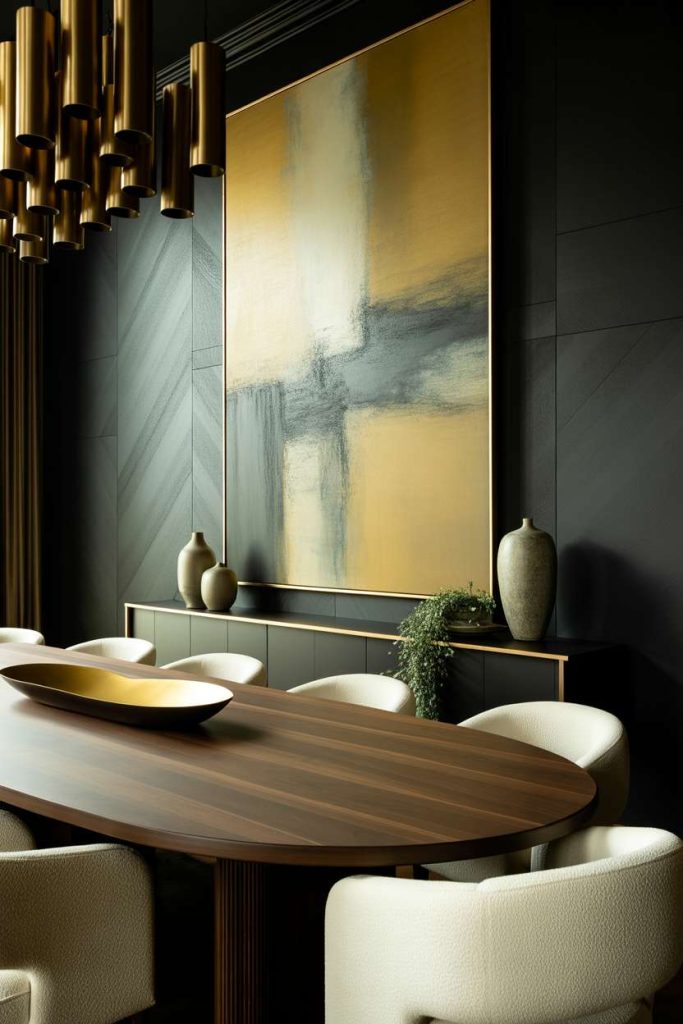
I bought our dining room artwork before I had a wall for it, which is backwards and entirely the right way round. A large piece of art gives the room its personality in a way furniture never can, and it is the thing guests ask about. I size art generously — at least two-thirds the width of the table or sideboard beneath it — and hang it so the centre sits at eye level when you are seated, around 145 centimetres from the floor. Abstract pieces in warm, muted tones suit a modern room best, and one large canvas always beats a scatter of small frames.
How to do it: Measure the wall and the furniture beneath it, then choose art at least two-thirds that width. Hang the centre at seated eye level, about 145 centimetres from the floor. Pick one colour from the art and repeat it in a cushion or the table linen, so the piece feels connected to the room rather than borrowed from a gallery.
14. Keep It Uncluttered
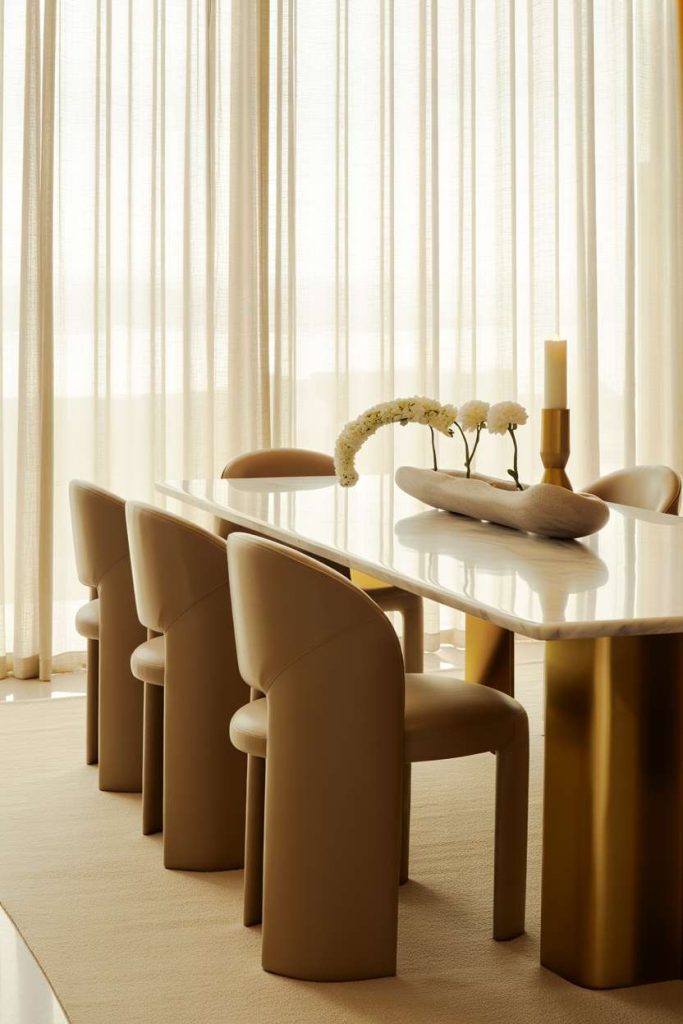
There is a particular calm in our dining room on the mornings when the table is completely clear, and I have learned to protect it. Clutter creeps in so quietly — a pile of post, a school permission slip, three candles that no longer match — and suddenly the room feels tired. I keep a beautiful box in the sideboard for the everyday bits, and every evening I clear the table back to its centrepiece. A luxury room is not an empty room; it is a room where everything left out has earned its place, and everything else has a home behind a door.
How to do it: Give every everyday item a home inside the sideboard or a drawer, and clear the table back to its centrepiece each evening. Keep one beautiful catch-all box for post and keys so they never spread. Once a month, remove anything that has sat unused for four weeks — if the room feels better without it, it stays out.
15. Add Textured Walls
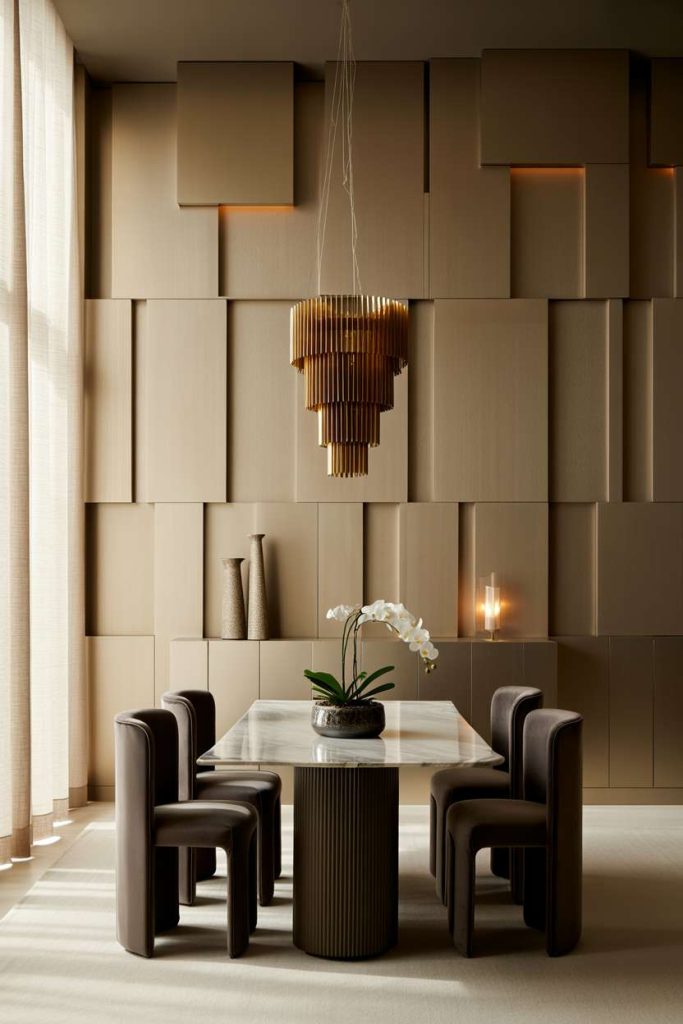
A flat painted wall can feel a little blank in a dining room, especially in the evening when the light is low. Our panelled wall changed that without a single new piece of furniture: the shadows in the moulding give the room depth, and the paint catches the light differently as the evening goes on. I love slim picture-frame moulding or vertical slats in the same colour as the wall, because the texture stays subtle and the room stays calm. It is a weekend project with a surprisingly grand result, and it photographs beautifully too.
How to do it: Choose one wall, usually the one behind the sideboard, and plan the panels on paper first. Paint the moulding and the wall the same colour for a calm effect, or one shade deeper for drama. Use a laser level to keep the lines straight, fill and sand the joints, and finish with two coats of durable eggshell paint.
16. Choose Designer-Style Chairs
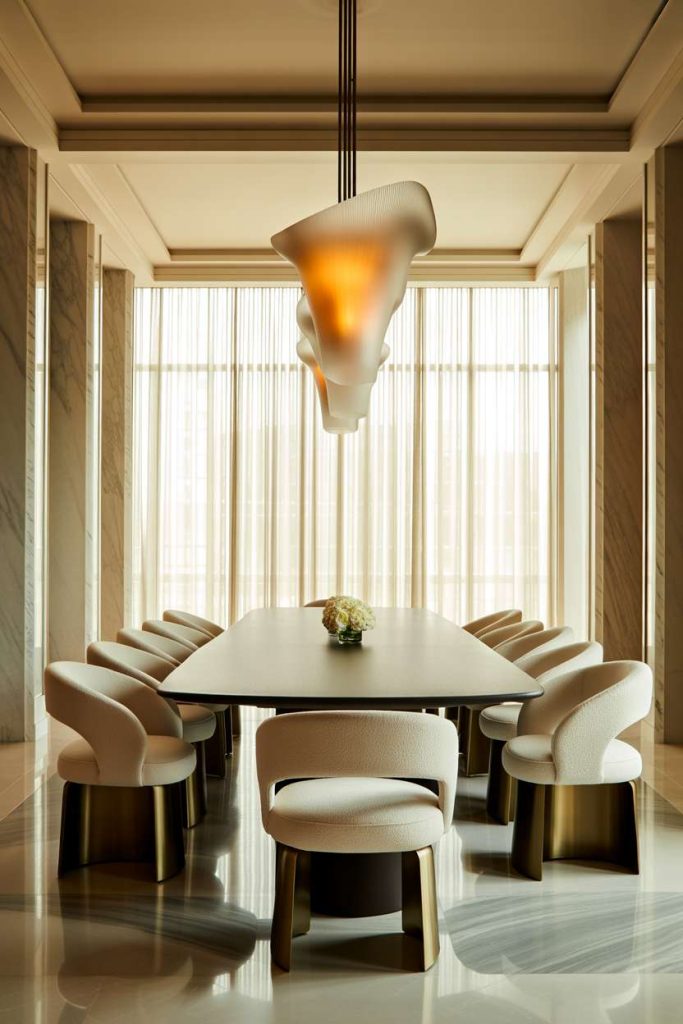
I fell for a set of sculptural chairs in a magazine years ago and spent far too long telling myself they were impractical. When I finally bought a similar pair for the ends of our table, they changed the whole room — suddenly the table looked considered, as though a designer had chosen every piece. You do not need a famous name or a frightening price; you need a strong shape and honest materials. I mix statement chairs at the heads of the table with simpler ones along the sides, which keeps the look special without turning dinner into a design exhibition.
How to do it: Use statement chairs at the two ends of the table and simpler chairs along the sides. Sit in them before buying, checking the back angle and the seat height against your table. Keep the chair material in the same family as the table — warm wood with warm wood — and add a thin cushion if the seat is hard, so style never costs you comfort.
17. Add Soft Ambient Lighting
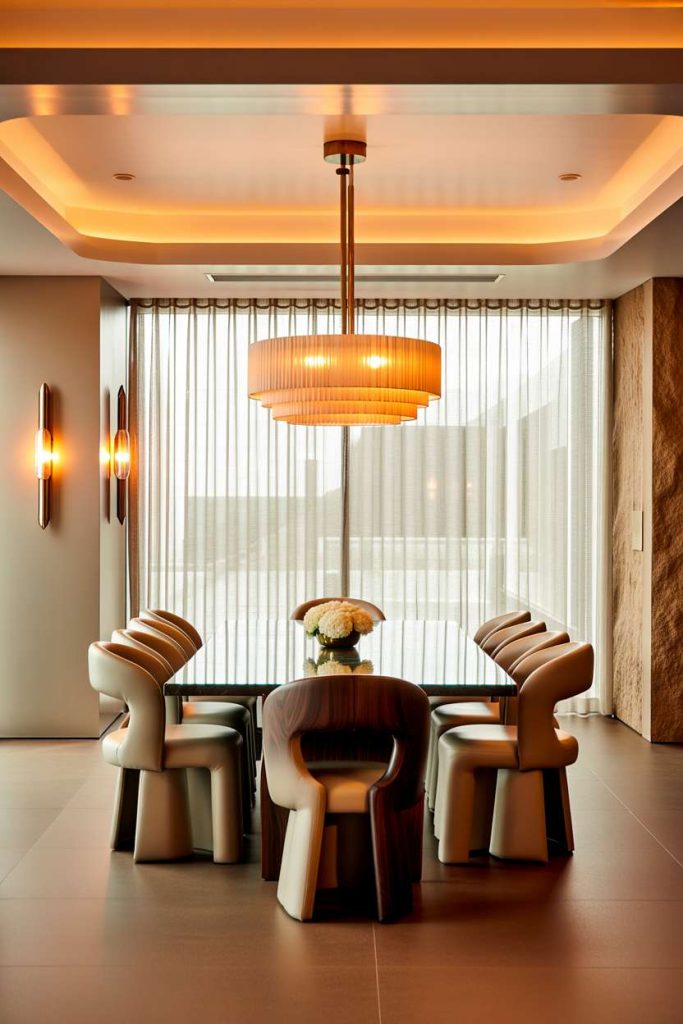
Overhead light alone makes a dining room feel like an office, and I learned that the first winter we lived here. The fix was layers: a dimmed pendant over the table, two small wall lights, and candles when we sit down to eat. Each layer is gentle on its own, and together they make the room glow. I keep every bulb warm, around 2700 kelvin, because cool white light flattens food and faces alike. The test is simple — if the room feels good at nine in the evening with the main light off, the layers are working.
How to do it: Layer three sources: a dimmed pendant over the table, wall lights or a picture light, and candles on the table. Use warm bulbs throughout, around 2700 kelvin, and put the pendant and the wall lights on separate dimmers. Test the room at night with the table set, and adjust until faces look warm and the food looks appetising.
18. Add a Statement Sideboard
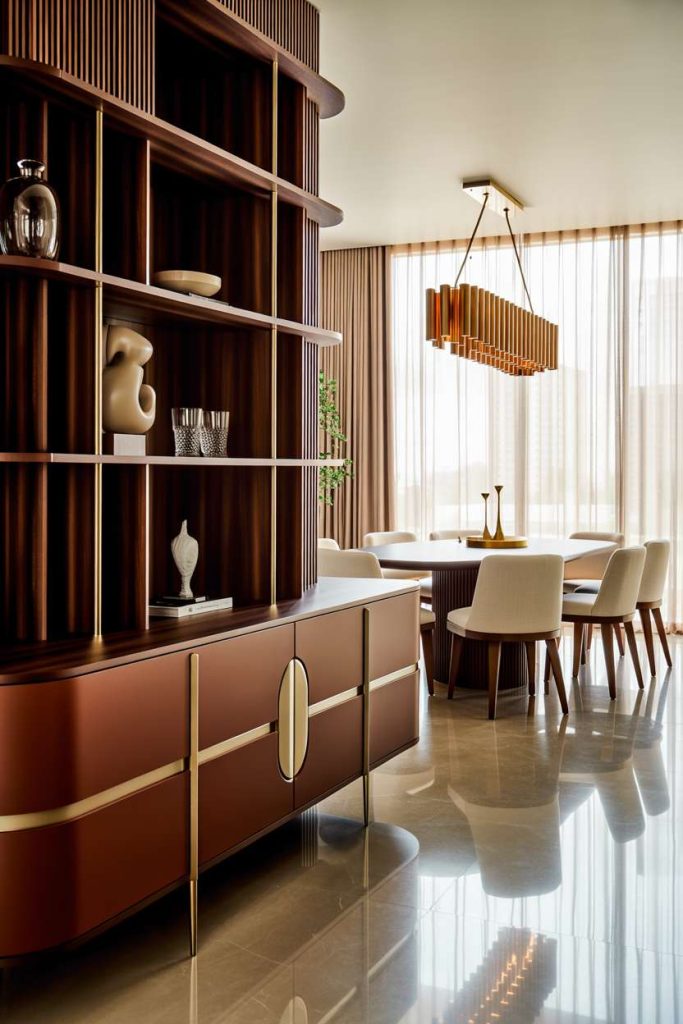
A sideboard is the hardest-working piece in our dining room, and I wish I had bought a beautiful one sooner. It hides the tablecloths, the board games and the candles I never want on display, and its top is my favourite place to style — a lamp, a vase, a stack of cookbooks, nothing more. I chose a rich walnut with slim brass legs, because it looks light against the wall while holding an enormous amount. Measure the wall before you fall in love, and leave a little space at each end so the piece can breathe.
How to do it: Measure the wall and choose a sideboard about two-thirds its length, with room to spare at each end. Check the depth — 40 to 45 centimetres holds table linen without jutting into the walkway. Style the top with three objects of different heights, and keep the inside organised with boxes so serving pieces are easy to reach.
19. Use Velvet for Glam Texture
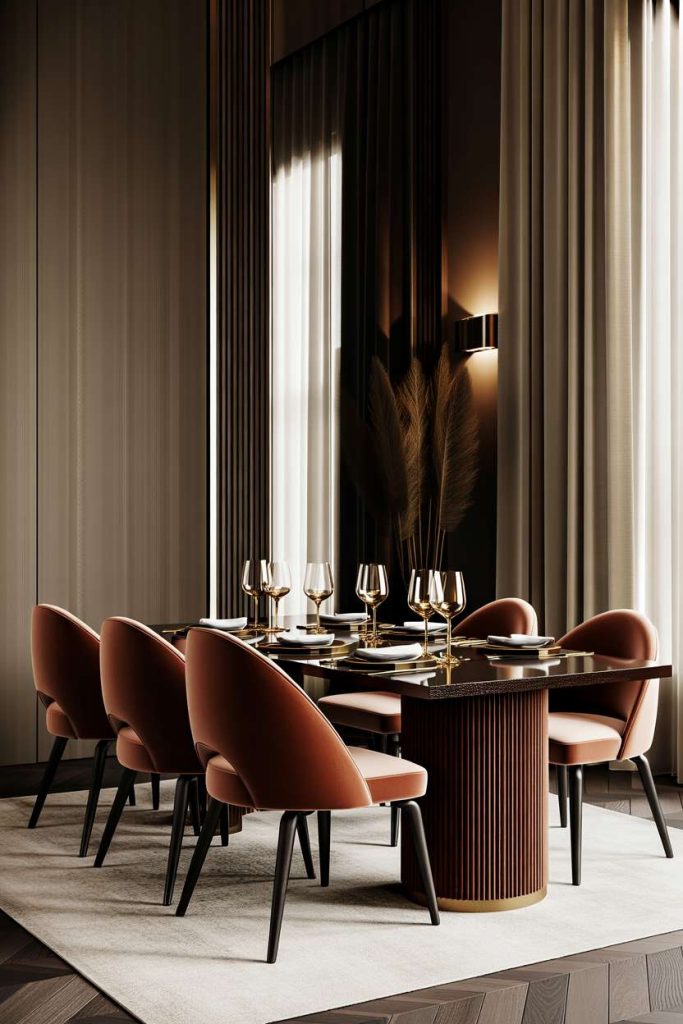
Velvet is the fabric I reach for when a room needs to feel special without a single new piece of furniture. It catches the light as you move around the table, so the chairs seem to change colour from one side of the room to the other. I love it in jewel tones — emerald, sapphire, a deep plum — against pale walls, where it becomes the colour in the room. It is softer than it looks and tougher than people expect, especially in a good quality cotton velvet. A velvet chair, a velvet cushion, even a velvet runner: a little is all it takes.
How to do it: Start with velvet on the chairs, where you will feel it every day, or on two cushions if you prefer a smaller step. Choose cotton velvet in a jewel tone and keep it away from direct sun so the colour stays rich. Brush the pile with a clothes brush after use, and blot spills at once with a clean, dry cloth.
20. Add Fresh Floral Elegance
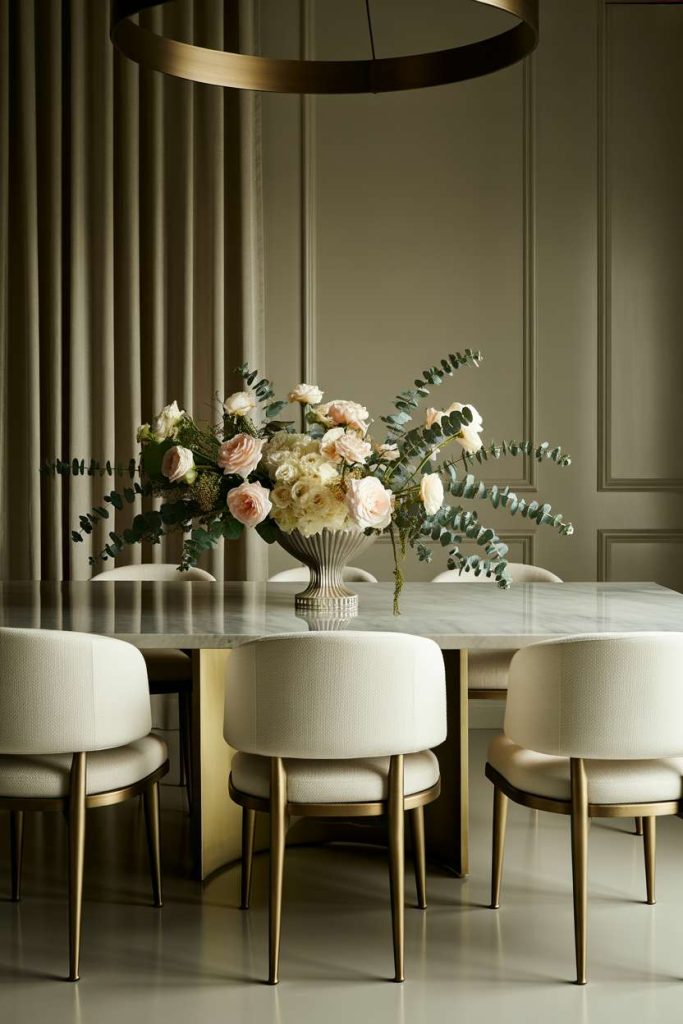
Fresh flowers are the one luxury I never feel guilty about, because they cost so little and change the table so completely. I buy whatever is in season — tulips in spring, roses in summer, branches in autumn — and keep the arrangement low enough that I can see the person opposite. A single variety in a simple vase often looks more expensive than a complicated mixed bouquet, and it is far easier to arrange. I change the water every other day, and the flowers reward me by lasting twice as long as they did when I forgot.
How to do it: Choose one seasonal variety and one simple vase, then trim the stems at an angle and strip any leaves below the waterline. Keep the arrangement under 25 centimetres tall so everyone can see across the table. Change the water every other day and re-trim the stems, and keep the vase away from the fruit bowl, which shortens the life of cut flowers.
21. Keep a Neutral Luxe Base
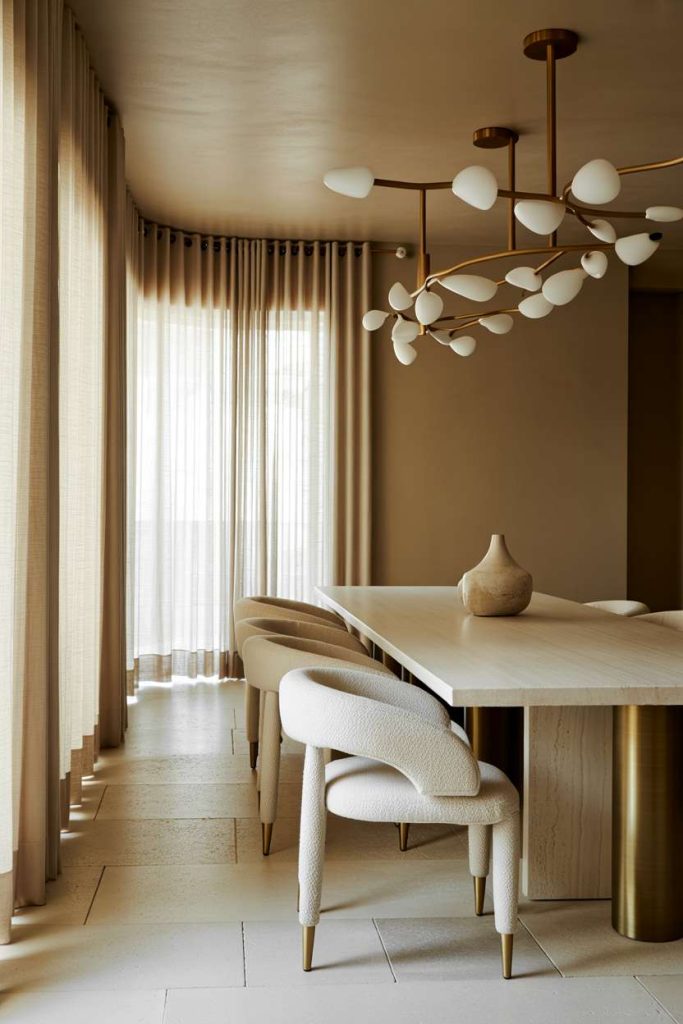
After years of bold colours in every room, I came back to neutrals in the dining room and finally understood their power. A base of greige, cream and stone does not shout, but it lets everything else — the marble, the brass, the walnut — speak more clearly. The trick is to keep the neutrals warm, never grey and flat, and to vary them: a cream wall, a stone linen cloth, greige chairs. Texture does the work that colour used to do. When the base is calm, a single vase of flowers or a bowl of lemons is enough to make the whole room feel finished.
How to do it: Paint the walls in a warm greige or soft cream and keep the ceiling a shade lighter. Layer three neutrals — wall, linen and chairs — in different textures so the room never looks flat. Add one warm accent, like brass or walnut, and one small pop of colour from flowers or fruit to stop the palette feeling cold.
22. Add a Glass Table for Lightness
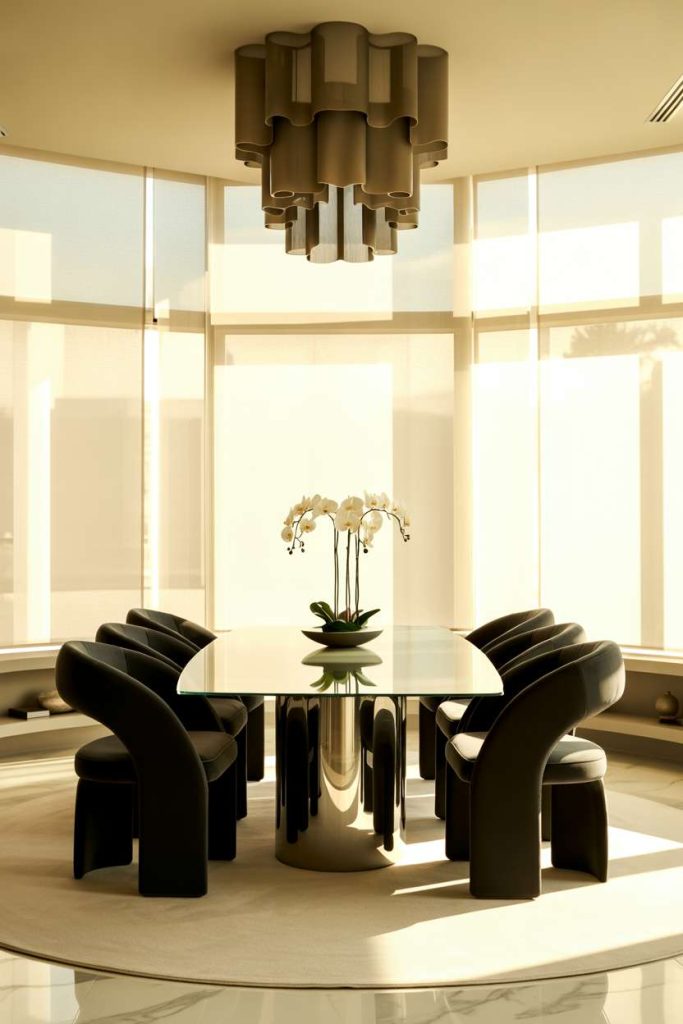
A glass table was not my first choice — I worried about fingerprints and the cold feeling of glass — but in our smaller dining space it was the right one. The room suddenly felt twice as big, because your eye travels straight through the table to the floor and the garden beyond. I paired it with bold chairs and a soft rug underneath, which stopped it feeling stark. The glass also makes the room brighter, bouncing light around in a way wood never does. It needs a wipe after every meal, I will admit, but the lightness it gives back is worth the cloth.
How to do it: Choose toughened glass at least 12 millimetres thick with polished edges, and a base that leaves legroom on every side. Pair it with a low-pile rug and bold chairs so the table does not feel stark. Wipe it with a microfibre cloth and glass cleaner after meals, and use placemats to protect the surface from hot plates and scratches.
23. Add Layered Textures
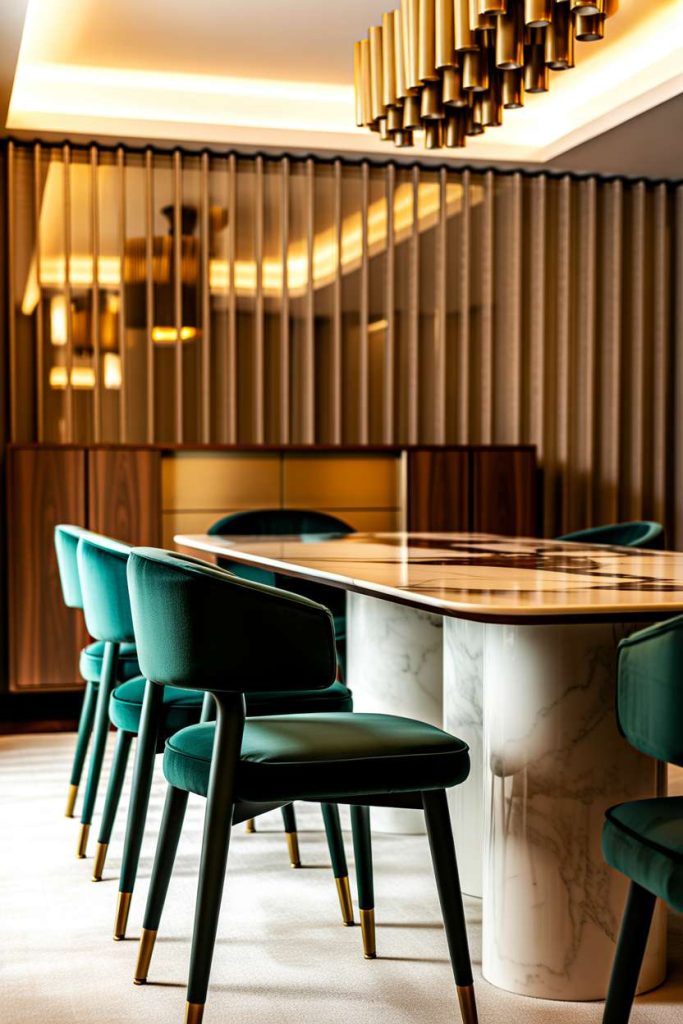
Texture is the difference between a dining room that looks luxurious in a photograph and one that feels luxurious when you sit in it. I layer marble against velvet, walnut against linen, brass against stone, and the room becomes richer with every combination. The rule I follow is three textures at least — one hard, one soft, one natural — repeated around the room so nothing feels like an accident. A linen tablecloth softens a marble top, a wool rug warms a wooden floor, and suddenly the sleek modern lines have a heartbeat. It is the layer I notice most when it is missing.
How to do it: Pick three textures — for example marble, velvet and walnut — and repeat each one in at least two places. Mix a hard surface with a soft one at every level: table, chairs and floor. Step back and run your hand across the room’s surfaces; if everything feels the same, add a contrasting texture where your eye rests first.
24. Add a Bold Accent Wall
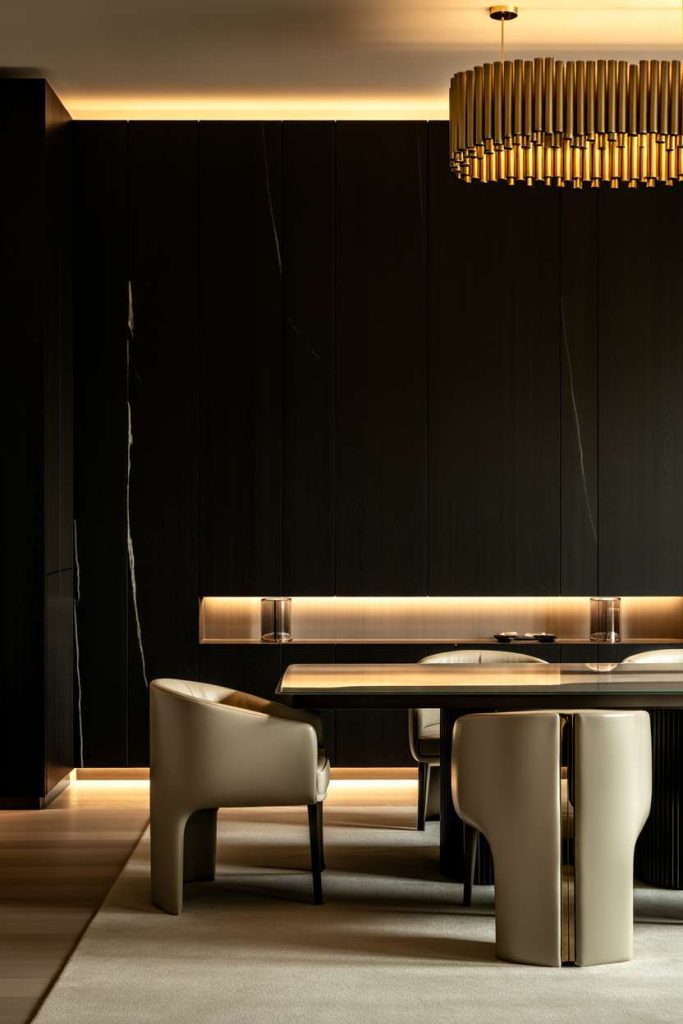
I was hesitant about a dark accent wall in a dining room, worried it would shrink the space. In practice it did the opposite: the wall receded, the table and the light stood forward, and the room gained a backdrop that made everything in front of it look more expensive. I chose a deep green with a matt finish, and the brass and the wood glow against it in the evening. One bold wall is enough — the other walls stay pale so the room keeps its light. It is the cheapest dramatic change I have made in this house, and the one I would repeat first.
How to do it: Choose the wall behind the sideboard or the table, and paint it in a deep, matt colour — green, navy or charcoal. Keep the other walls pale and the ceiling white. Test the colour at night under your dining light before committing, and finish with two coats, cutting in carefully at the edges for a sharp line.
25. Style With Fine Tableware
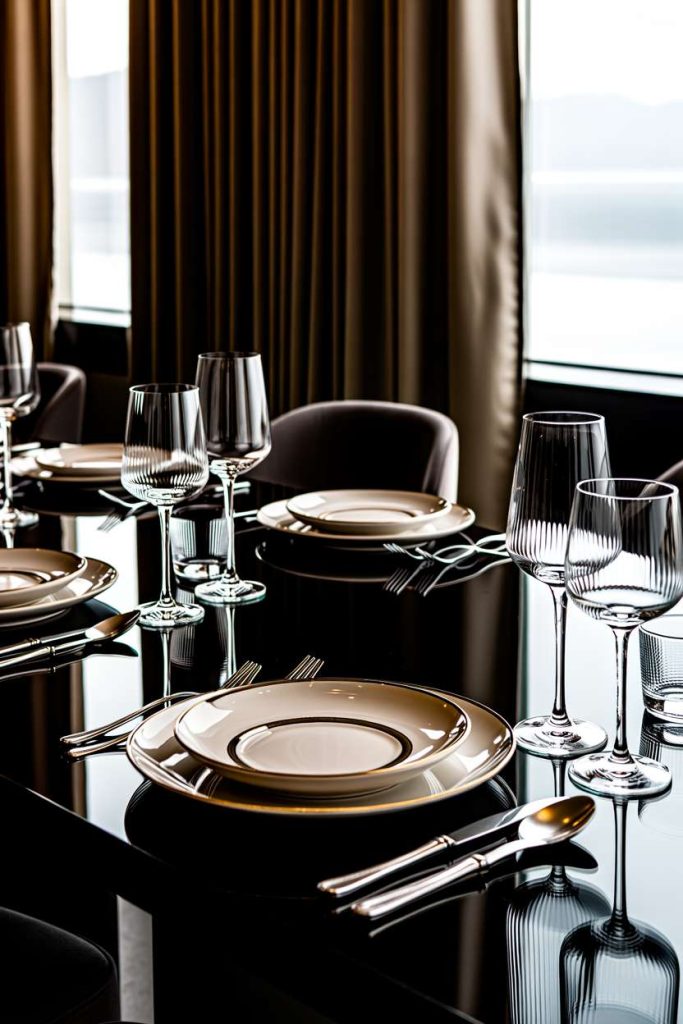
I used to save our best plates for Christmas, until I realised they were spending eleven months a year in a cupboard while we ate off chipped everyday ones. Now the good tableware comes out every Sunday, and sometimes on a Tuesday just because the light is nice. Fine plates, real glasses and proper cutlery make even a simple supper feel like an occasion, and they cost nothing extra once you own them. I mix one special set with plain white plates so nothing feels too precious to use. The table looks dressed, the meal tastes better, and nobody has ever complained.
How to do it: Set the table with a charger, a dinner plate and a side plate, then add real glasses — one for water and one for wine. Polish the cutlery and glasses with a dry cloth before guests arrive. Use the good tableware weekly, not just at Christmas, and keep it stored where you can reach it easily, or it will never come out.
26. Keep It Bright and Open
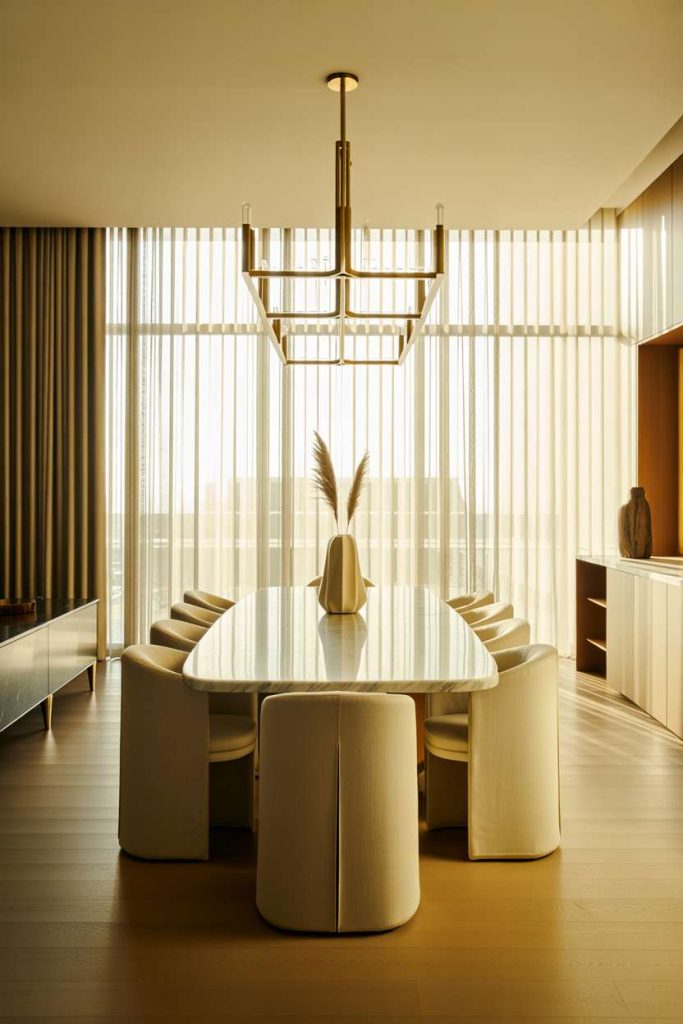
Luxury can feel heavy if you let it, all dark wood and velvet with the curtains drawn. I balance it with light: sheer linen at the windows, a pale rug, mirrors that catch the garden, and nothing tall blocking the daylight. Our dining room faces east, so mornings are bright and evenings are soft, and I plan the room around that rhythm rather than fighting it. I keep one wall entirely clear and the table centrepiece low, so the eye can travel across the room without stopping. The result is a room that feels grand and calm at the same time, which is the combination I love most.
How to do it: Keep one wall clear and the centrepiece below 25 centimetres so light and sightlines travel across the room. Choose sheer or light linen curtains that filter rather than block daylight. Add a mirror opposite a window, keep the rug pale, and remove any tall piece of furniture that stands between the window and the table.
27. Add a Touch of Greenery
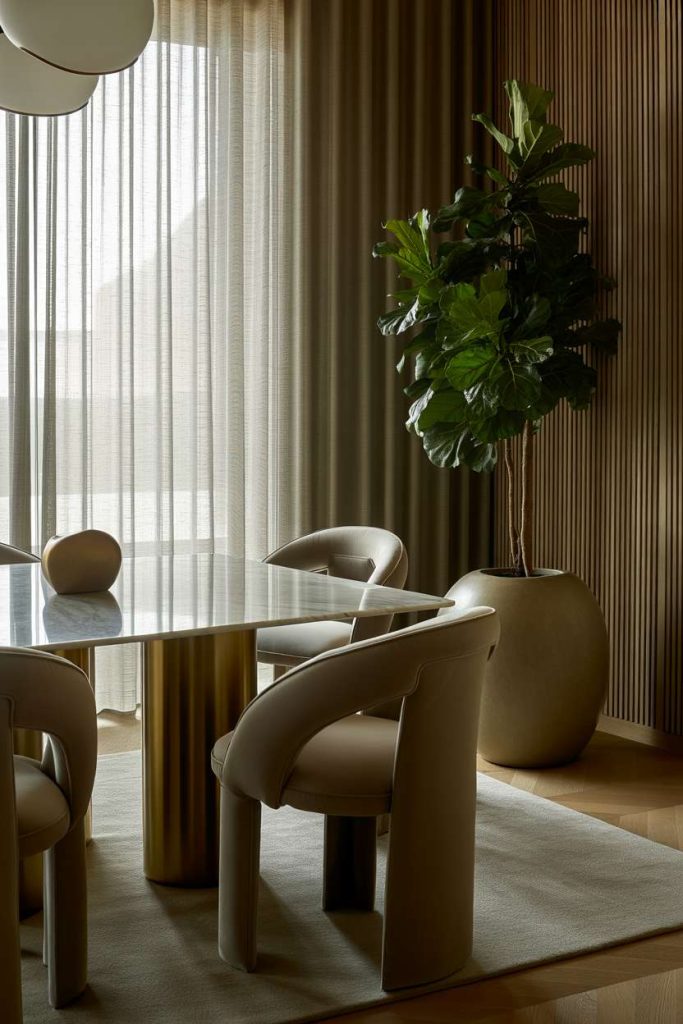
Every luxurious room I have loved has had something alive in it, and our dining room is no exception. A sculptural olive tree in the corner softens the straight lines, and a small vase of eucalyptus on the table brings a scent that no candle quite matches. Greenery is the antidote to all the polished surfaces — it moves, it grows, it forgives a little neglect. I choose plants that suit the light we actually have, not the light I wish we had, and I water them on the same morning each week so it becomes a habit rather than a chore.
How to do it: Choose one sculptural plant for a corner — an olive or fiddle-leaf fig suits most dining rooms — and one small vase of fresh greenery for the table. Check the light the spot actually gets before buying. Water on the same morning each week, wipe the leaves monthly, and keep the table arrangement low so it never blocks a face across the table.
28. Make It Personal and Refined
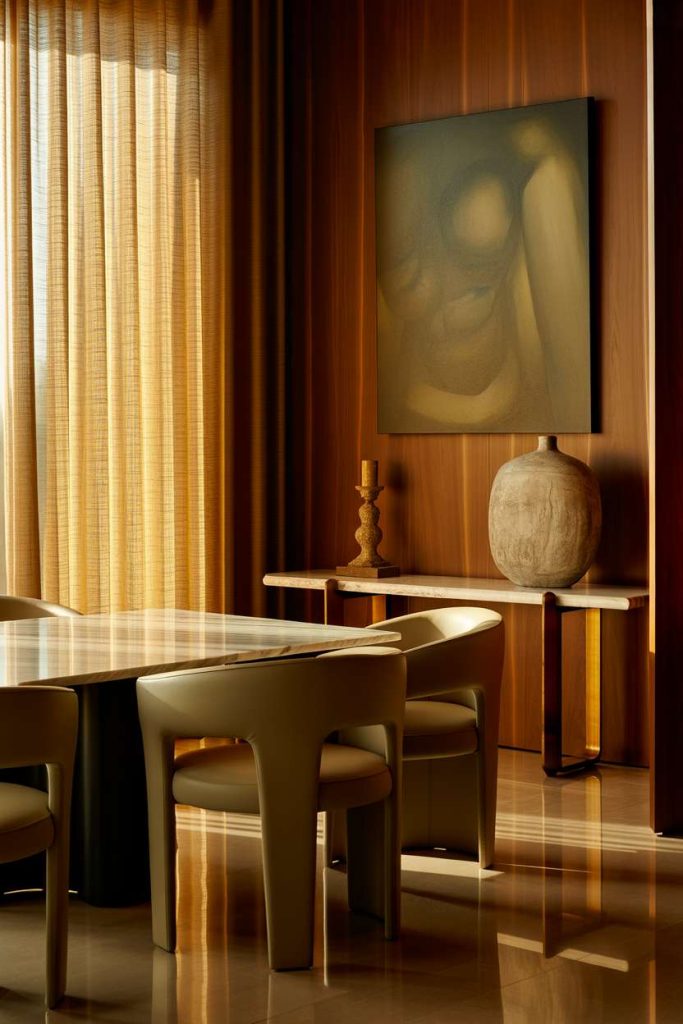
A luxury dining room should feel like yours, not like a showroom, and the difference is always in the personal pieces. Ours holds a vase my grandmother carried home from a holiday, a painting from a market, and a chipped jug for flowers. None of them cost much, and none would suit another house — which is exactly the point. I keep these pieces to three or four so the room stays calm, and I give each one space to be noticed. If your dining space opens into the lounge, borrow the same calm palette from my favourite living room aesthetics so both rooms feel like one home.
How to do it: Choose three or four personal pieces — a vase, a painting, a treasured object — and give each one a clear place with space around it. Remove anything that does not mean something to you. Live with the arrangement for a month, then swap one piece for another from elsewhere in the house to keep the room feeling fresh and genuinely yours.
Frequently Asked Questions
What makes a dining room look luxurious rather than just expensive?
Luxury comes from restraint, quality materials and good light, not from how much you spend. One well-chosen table, comfortable chairs and a dimmed pendant will always look more expensive than a room crowded with costly pieces. Choose fewer, better things, keep the palette calm, and let one or two rich materials — marble, walnut, velvet — do the talking.
How do I choose the right size dining table?
Allow about 60 centimetres of table edge per person, and leave at least 90 centimetres behind each chair so people can pull out comfortably. A table that seats six needs roughly 180 centimetres of length, while a 120-centimetre round table seats four. Always measure the room first, and mark the table’s footprint on the floor with tape before you order.
What lighting works best above a dining table?
Hang one pendant or chandelier 75 to 80 centimetres above the tabletop, centred exactly over the middle, and fit a dimmer switch. Warm bulbs around 2700 kelvin flatter both food and faces. Add wall lights or candles for a second, softer layer, and test the whole arrangement at night before you call it finished.
Can a small dining room still feel luxurious?
Yes, and sometimes more easily than a large one, because every choice shows. Keep the palette pale, use a glass table or a round table to save space, hang one large mirror to double the light, and choose a single statement piece rather than several small ones. Clear surfaces and good lighting matter more than square metres.
How do I keep a luxury dining room feeling warm and lived-in?
Layer soft textures — linen, velvet, wool — against the hard surfaces, and add one living thing, whether flowers or a plant. Use the good tableware on ordinary days, light candles at supper, and keep a few personal pieces on display. A dining room that is only admired will always feel cold; one that is used daily feels warm.
Your Luxury Modern Dining Room Checklist
☐ Choose the statement table first and measure it against the room
☐ Leave at least 90 centimetres behind each chair so people can pull out comfortably
☐ Hang the pendant or chandelier 75 to 80 centimetres above the table
☐ Pick one metal finish and repeat it three times
☐ Layer the lighting: overhead, wall lights and a soft glow from candles
☐ Add a rug at least 60 centimetres wider than the table on every side
☐ Hang curtains from just below the ceiling to the floor
☐ Mix at least three textures — wood, fabric and stone or metal
☐ Keep the table centrepiece low enough to see across
☐ Add one personal piece that tells your story
☐ Dim the lights and test the room at night before guests arrive
☐ Step back to the doorway and look at the whole room
A Final Gentle Thought
A luxury modern dining room is not built in one shopping trip. It grows from one good decision at a time: the table that feels solid under your hands, the chairs you can sit in for two hours without shifting, the light that flatters everyone at the table. Start with the piece that matters most to you, then let the layers — texture, metal, art, a little greenery — gather slowly around it. Leave room for the life that happens there too: homework spread across the table, Sunday roasts, friends who stay far too late. That is the real test of the room. When it looks beautiful and still invites you to linger, you have got it exactly right.

One Comment