
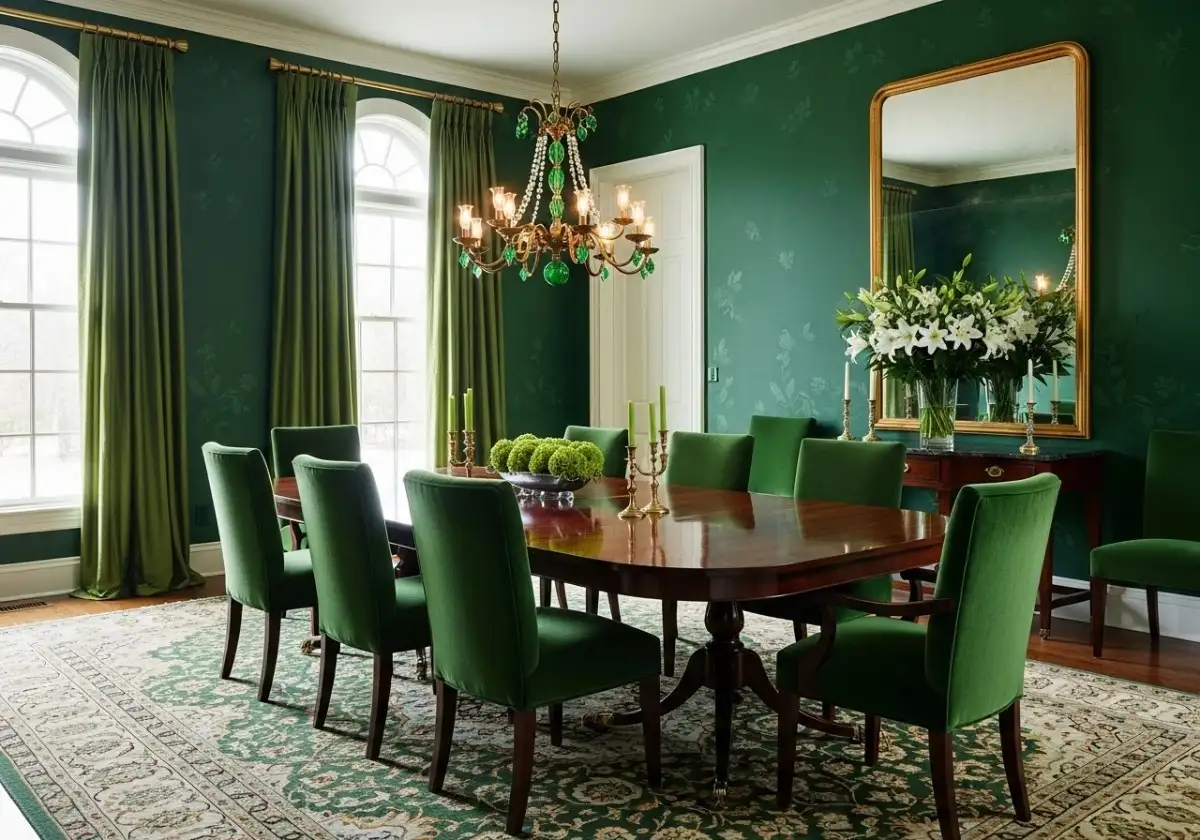
20 Green Dining Room Ideas to Create a Fresh and Inviting Space
Sometimes a dining room looks perfectly arranged, yet still feels like no one truly lives there—just visits it. The chairs are fine, the table works, but the space doesn’t invite you to slow down, talk longer, or enjoy the moment. That missing feeling is usually warmth, not furniture. The right color can change everything. These green dining room ideas bring that missing life back in—soft natural tones, deeper calming shades, and fresh accents that make your space feel grounded, cozy, and effortlessly inviting the moment you walk in.
1. Soft Sage Green Walls for a Calm Atmosphere
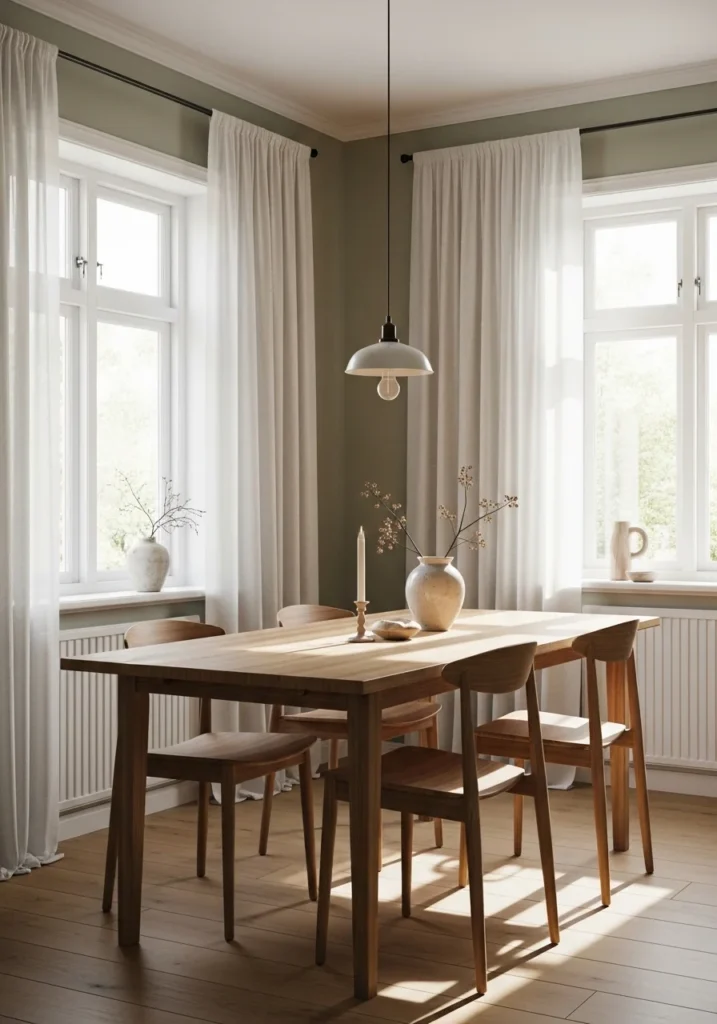
I painted our dining room sage on a whim one spring, half expecting to repaint it by autumn, and I have never looked back. There is something about this soft, grey-green that slows the whole room down: breakfast feels unhurried, and evening meals stretch a little longer. I love how it catches the morning light without glaring, and how it sits so comfortably beside oak chairs and cream linen. If your dining room feels stark or a touch cold, sage is the gentlest fix I know. It never shouts, yet the room feels completely different the moment the paint dries.
How to do it: Choose a sage with a grey or warm undertone and paint a large test patch beside your table, checking it in daylight and lamplight for two or three days. Paint the walls in a matt or eggshell finish, then add white or cream trim to keep the edges crisp. Finish with light curtains and natural wood, and step back before adding anything else — sage needs very little help.
2. Deep Emerald Accent Wall for Drama
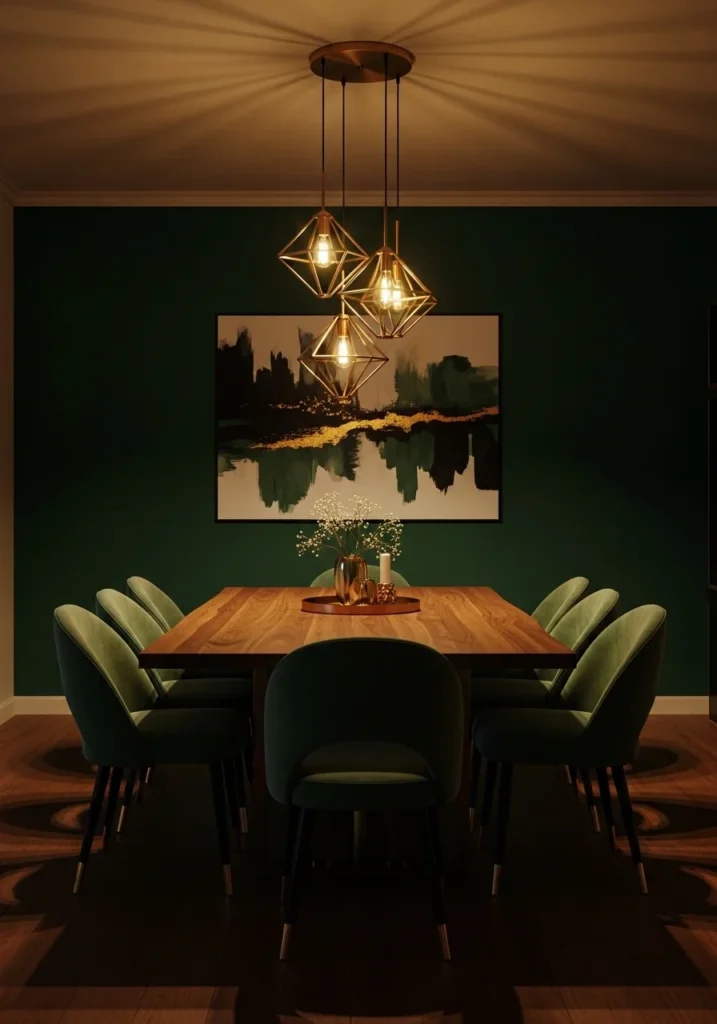
I will be honest: I stood in front of our blank dining room wall with a tester pot of emerald for a good ten minutes before I picked up the brush. But once that single wall went dark and rich, the whole room suddenly had a centre — the table looked more important, the brass pendant glowed warmer, and even weeknight suppers felt special. Emerald is dramatic without being loud, and it pairs beautifully with pale walls around it. If you are still deciding which wall deserves the drama, these dining room wall ideas helped me compare accent walls, panelling and mirrors before I picked up the brush.
How to do it: Paint the wall behind the table, not the one with the window, so the colour frames your meals. Use a matt finish to keep the emerald soft and sophisticated, and test it at night under your dining lights before committing. Add brass or gold in small doses — a pendant, picture frames, candle holders — and keep the other walls pale so the dark wall can breathe.
3. Green Velvet Dining Chairs for Luxury
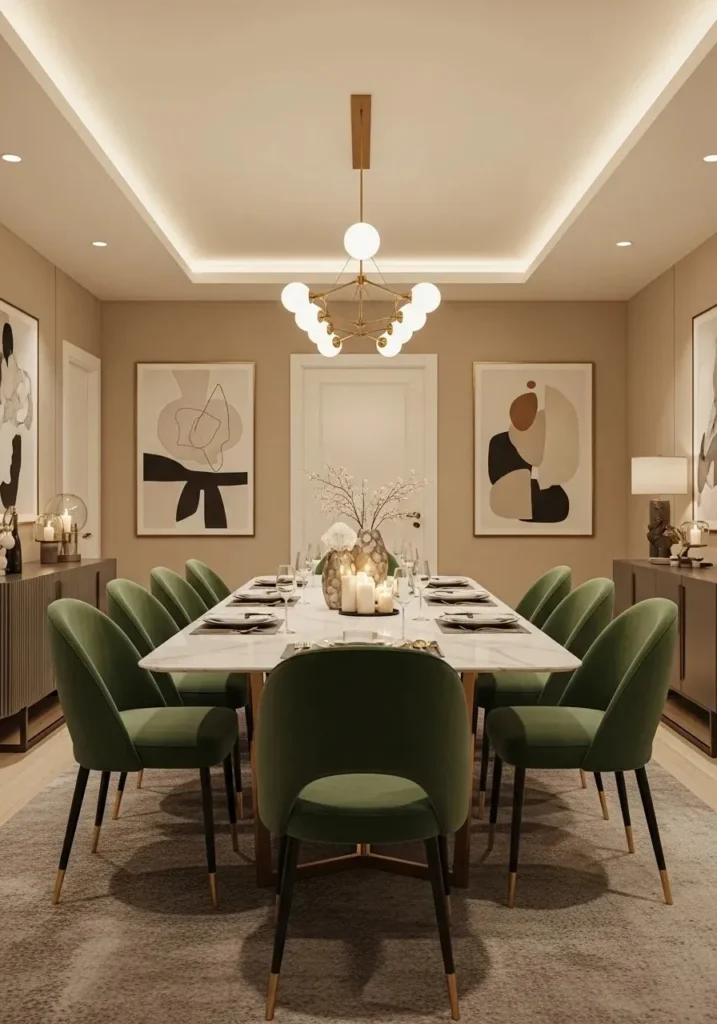
The first time I sat in a green velvet dining chair, I understood the fuss. The fabric is soft under your hands, the colour is deep enough to feel luxurious, and somehow the whole table feels more welcoming. I worried velvet would be impractical with children and red wine, but darker greens are surprisingly forgiving, and a quick brush keeps the pile looking fresh. If new chairs feel like a big step, start with two at the heads of the table. They change the room instantly, and they make lingering over pudding feel like the whole point of the evening.
How to do it: Choose forest or olive velvet for the easiest upkeep, and sit in the chairs before you buy — a beautiful chair nobody wants to sit in is no bargain. Check the legs are sturdy and the seat height suits your table. Keep a soft clothes brush nearby for crumbs and pet hair, and blot spills at once rather than rubbing them in.
4. Botanical Wallpaper for a Lively Feel
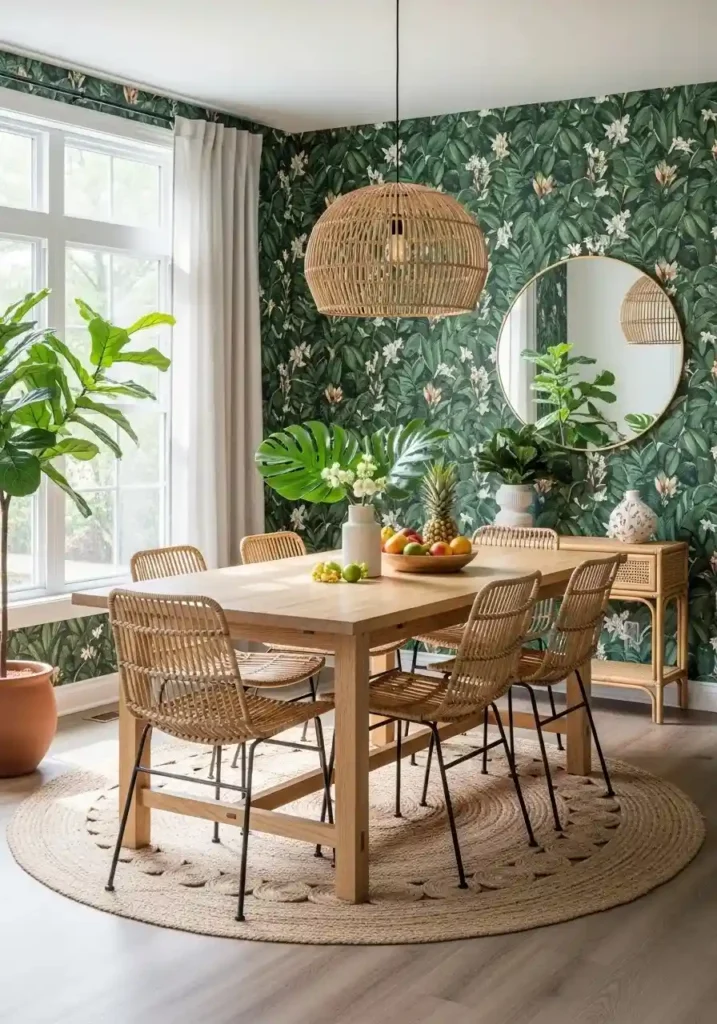
I used to think wallpaper belonged in other people’s houses, until I saw a leafy green print in a friend’s dining room and felt instantly calmer. Botanical paper brings the garden indoors in a way paint never quite manages — every meal feels a little fresher, and the room has personality even when the table is bare. I chose a print with soft, muted leaves rather than loud tropical colour, and it has never tired me. One wall is plenty. It gives you all the life and pattern you need without the room shouting at you over supper.
How to do it: Order a large sample first and pin it to the wall for a week, looking at it in morning light and lamplight. Paper one wall only — usually the one behind the table — and keep the other walls plain in a colour pulled from the print. Use paste-the-wall paper if you are new to hanging, and seal the edges well in a room where steam and spills happen.
5. Green and Wood Combination for Warmth
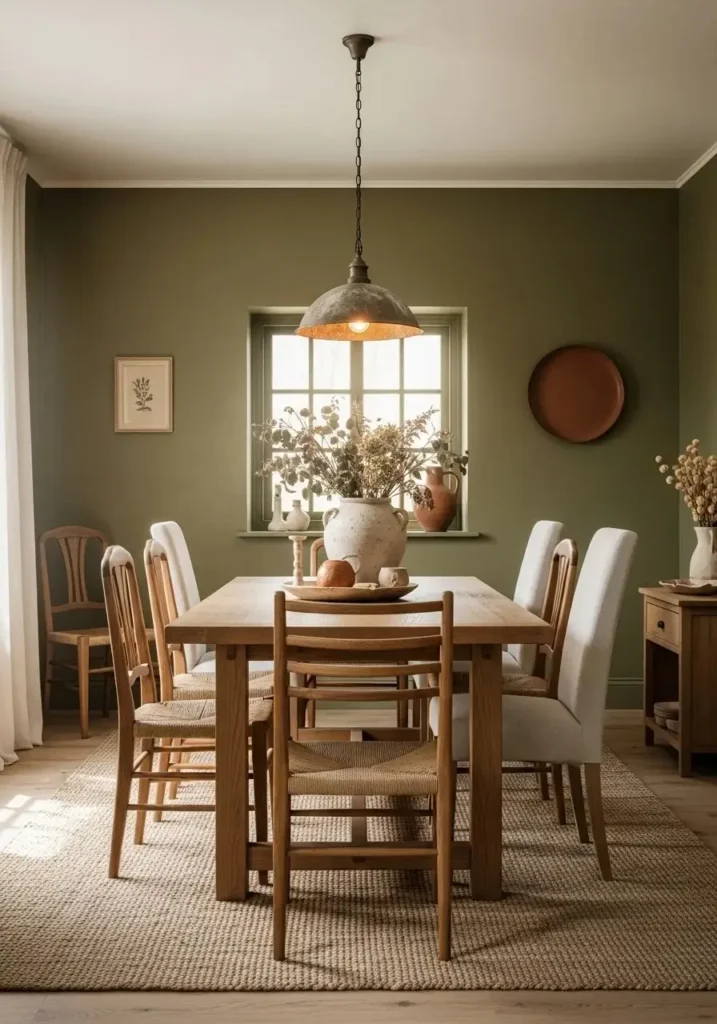
Green and wood is the pairing I come back to whenever a room feels cold or over-styled, because it never fails me. The wood warms the green, the green stops the wood feeling heavy, and together they make a dining room that feels like it has been loved for years rather than assembled last weekend. I love olive walls with a honey oak table, or deep green chairs pulled up to a weathered pine top. Add linen, a woven rug and something handmade, and the room practically invites people to sit down and stay a while.
How to do it: Start with warm woods — oak, walnut or pine — and let the green sit beside them, not on top of them. If the walls are green, keep the table top pale or mid-toned so the room stays light. Add texture through linen napkins, a jute rug or woven placemats, and repeat the wood tone once more, in a sideboard or picture frames, so the pairing feels deliberate.
These Amazing ideas Also For You:
20 Dining Room Decor Ideas to Create a Warm and Stylish Space
Black and White Countertops Kitchen Ideas: 20 Stunning Ways to Elevate Your Space
19 Kitchen With Black Countertops Ideas That Feel Stylish, Warm & Effortlessly Modern
6. Olive Green Curtains for Subtle Style
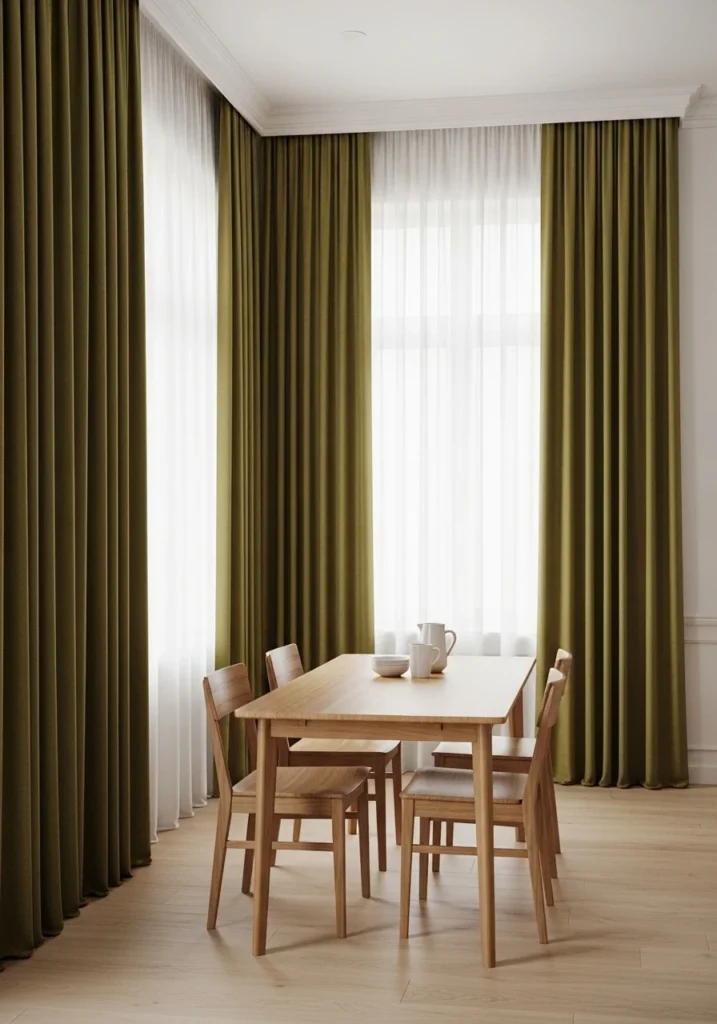
When I could not face repainting, olive curtains were my compromise, and they turned out to be one of my favourite changes. They soften the windows, warm up white walls and make the whole dining room feel dressed, even on an ordinary Tuesday. I chose a heavy linen-look fabric that falls in proper folds, because flimsy curtains never hang right and always look a little apologetic. Hung high and wide, they make the windows — and the room — feel taller. It is a small change with an outsized effect, and you can take them with you if you move.
How to do it: Hang the rod 10 to 15 centimetres above the window frame and 15 to 20 centimetres wider on each side, so the curtains frame the glass rather than covering it. Choose floor-length fabric that just kisses the floor, and line it if the room gets strong sun — lining makes the olive read richer and the curtains hang far better.
7. Two-Tone Green Walls for Depth
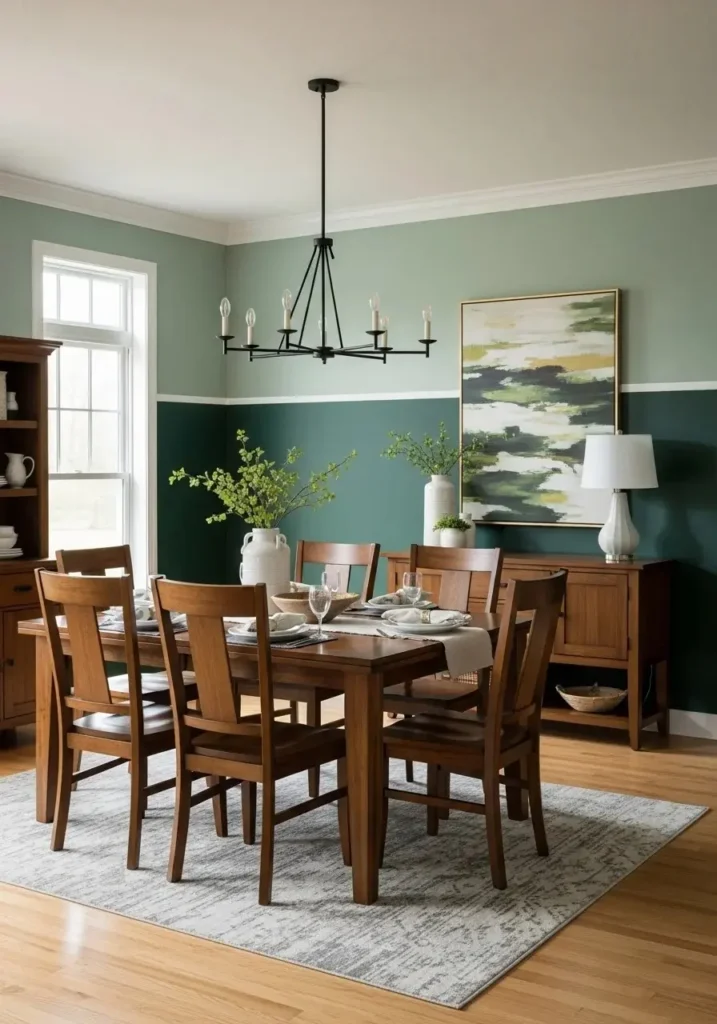
I tried two-tone walls after seeing them in a cottage dining room, and I wish I had done it years earlier. A deeper green below and a paler one above gives the room a shape it never had — the lower half feels grounded and practical, the upper half keeps everything light, and the line between them adds a quiet bit of architecture. It is especially kind to rooms with plain walls and no features to show off. My advice is to keep the two shades close cousins, not distant relatives, so the effect stays calm rather than striped.
How to do it: Fit a chair rail or a slim timber trim at about 90 centimetres from the floor, then paint below it in the deeper green and above in the paler one. Paint the rail the same colour as the lower half for a classic look, or white for a crisper line. Test both shades side by side on the wall first — colours that look close on a chart can drift far apart in lamplight.
8. Green Dining Table for a Unique Statement
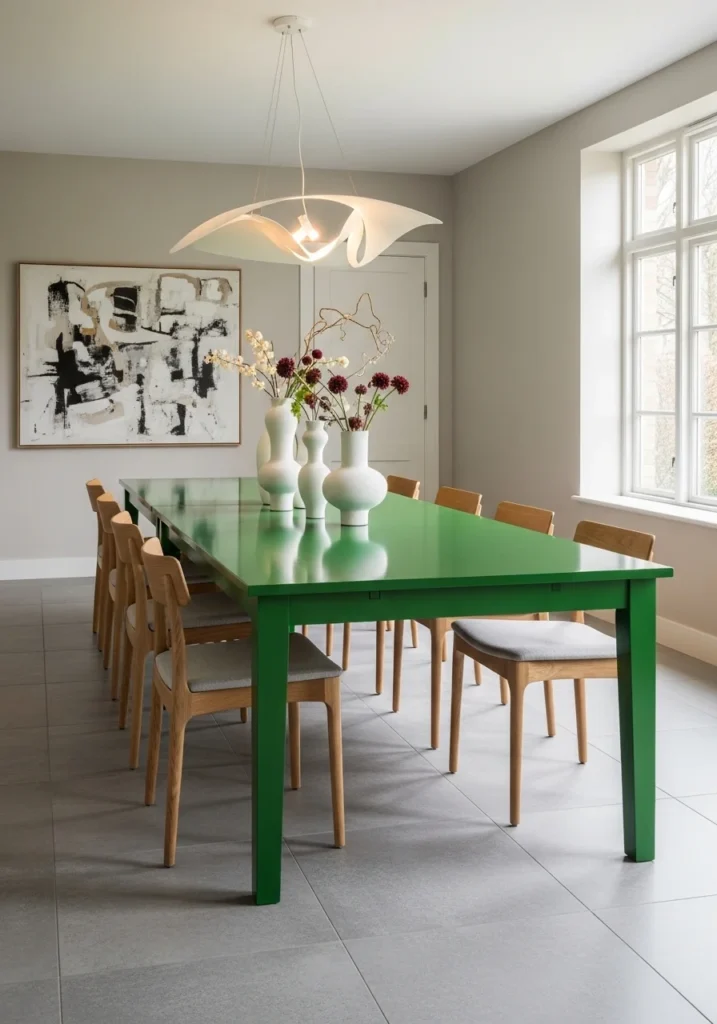
Painting our dining table green felt slightly reckless, and it is now the thing visitors comment on first. A muted sage top with pale chairs feels fresh and calm, while a deep forest green turns an ordinary table into the star of the room. I love that it cost almost nothing — a tin of furniture paint and a free weekend — yet changed the room more than any new accessory could. If your table is scratched or dated, paint is the kindest rescue: it hides the wear and gives a tired piece a whole new life.
How to do it: Sand the table lightly, wipe away the dust, and use a primer made for furniture before your first coat. Choose a durable eggshell or satin furniture paint — matt marks too easily on a table that gets daily use. Paint thin coats, letting each dry fully, and seal the top with a clear furniture wax or varnish. Pair it with neutral chairs so the table stays the star.
9. Indoor Plants for Natural Green Touches
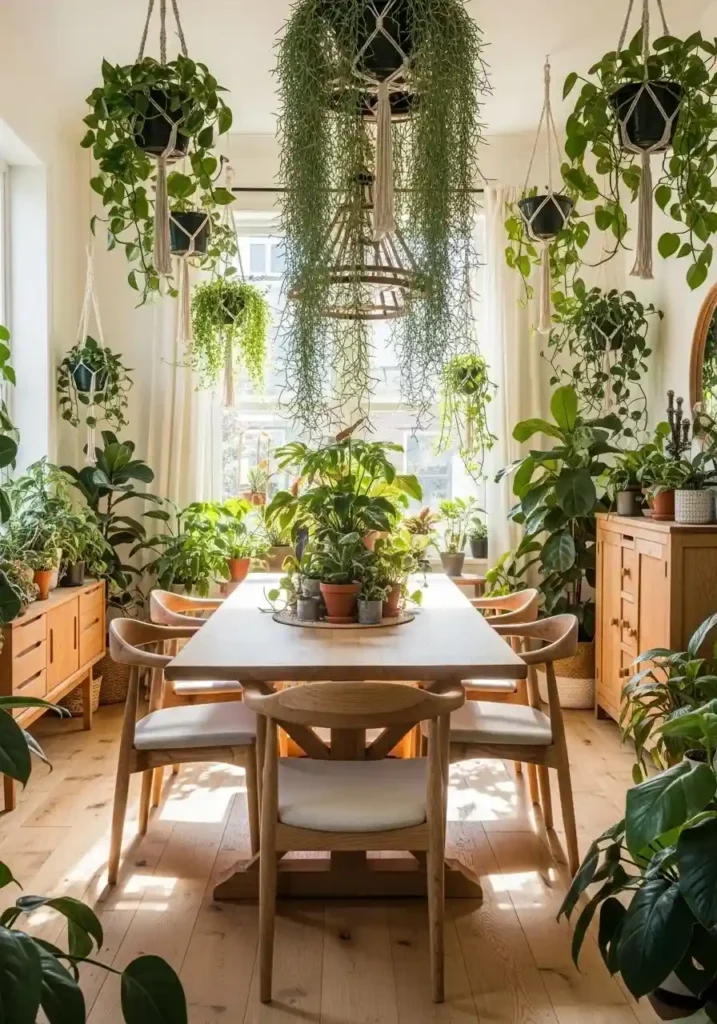
I keep a trailing pothos on our sideboard and a tall olive tree by the window, and they do more for the dining room than almost anything I have bought. Plants soften hard corners, fill empty spots without clutter and make the room feel alive — especially in winter, when everything outside is grey. I am no gardener, so I stick to forgiving plants that cope with my forgetfulness, and they reward me anyway. If you have never kept plants, start with one. Water it when the soil feels dry, and watch how quickly the room changes around it.
How to do it: Place one large plant in the brightest corner and a small trailing plant on the sideboard or table, keeping leaves clear of plates and elbows. Choose low-maintenance varieties such as snake plants, pothos or ZZ plants if you are new to plant care. Water only when the top few centimetres of soil feel dry, and rotate pots every few weeks so the plants grow evenly.
10. Green Tableware and Decor Accents
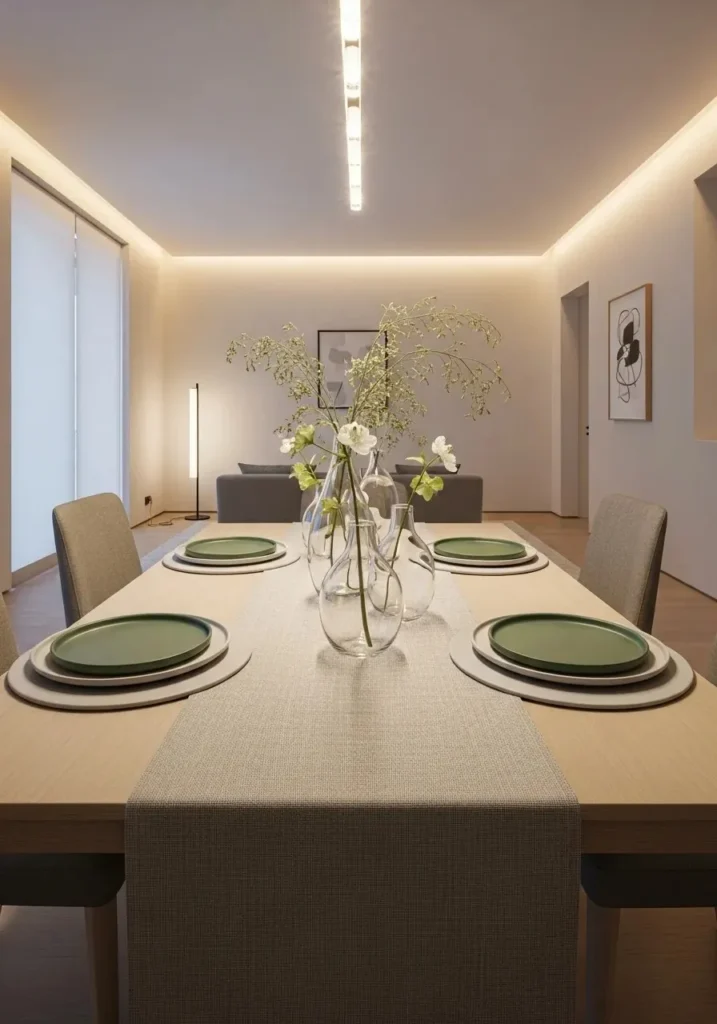
When a full redecoration is out of the question, green tableware is my quiet little shortcut. A stack of sage plates, deep green linen napkins and one handsome vase can pull a whole dining room together without a single paintbrush. I change ours with the seasons — pale mint in spring, deep forest at Christmas — and it feels like a new room every time for the price of a few pieces. The trick is restraint: pick one or two greens and repeat them, so the table looks considered rather than collected by accident.
How to do it: Start with one or two shades of green and repeat them across plates, napkins and a vase or candle holders. Mix textures — glazed ceramic, linen, glass — rather than adding more colours. Lay the table a day early for a dinner party and live with it overnight; anything that looks fussy in the morning can come straight off.
These Amazing ideas Also For You:
20 Dining Room Decor Ideas to Create a Warm and Stylish Space
Black and White Countertops Kitchen Ideas: 20 Stunning Ways to Elevate Your Space
19 Kitchen With Black Countertops Ideas That Feel Stylish, Warm & Effortlessly Modern
11. Dark Green Paneling for a Classic Look
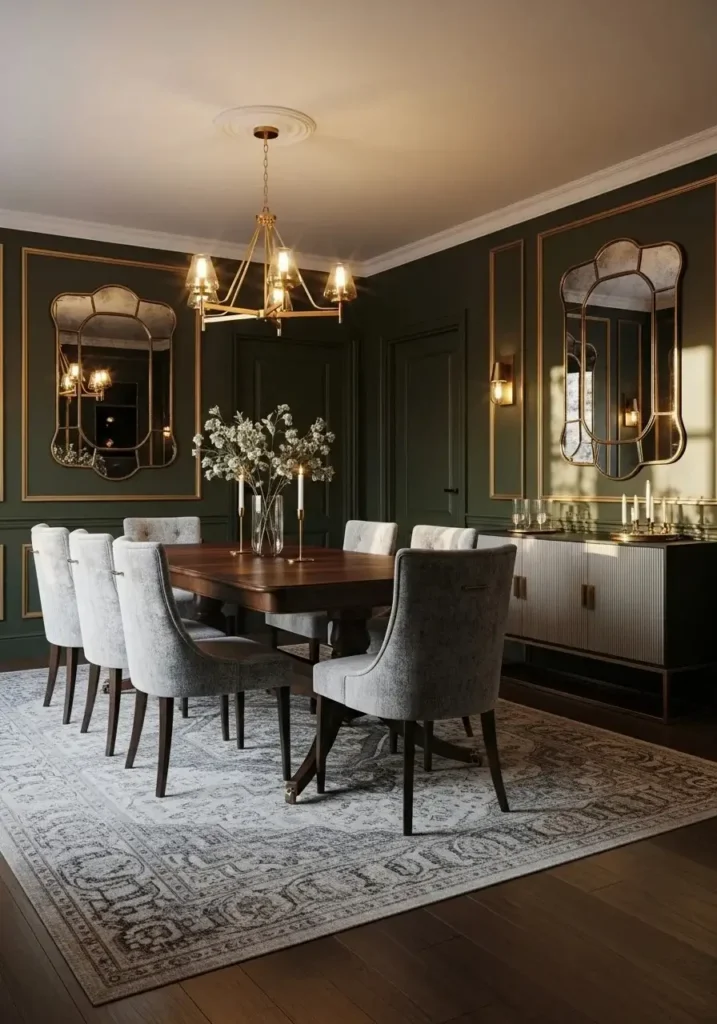
I have always loved panelled walls, and painting ours dark green was the moment our dining room finally felt grown up. The panels catch the light along their edges, the deep colour makes the room feel intimate, and suddenly even a Tuesday-night supper feels like an occasion. It sounds formal, but in practice it is wonderfully forgiving — scuffs barely show, and the room looks good in candlelight as well as daylight. I paired ours with pale art and light oak chairs, which keeps the depth from turning heavy. It is classic, but it never feels stuffy.
How to do it: Decide between full-height panelling or a half-wall design, then use moisture-resistant MDF panels fixed with adhesive and pins. Paint the panels and the wall behind them the same dark green in an eggshell finish so the joins disappear. Add pale furniture, light art or a mirror opposite the window to lift the room, and caulk every edge before painting for a crisp finish.
12. Sage Green and White Color Palette
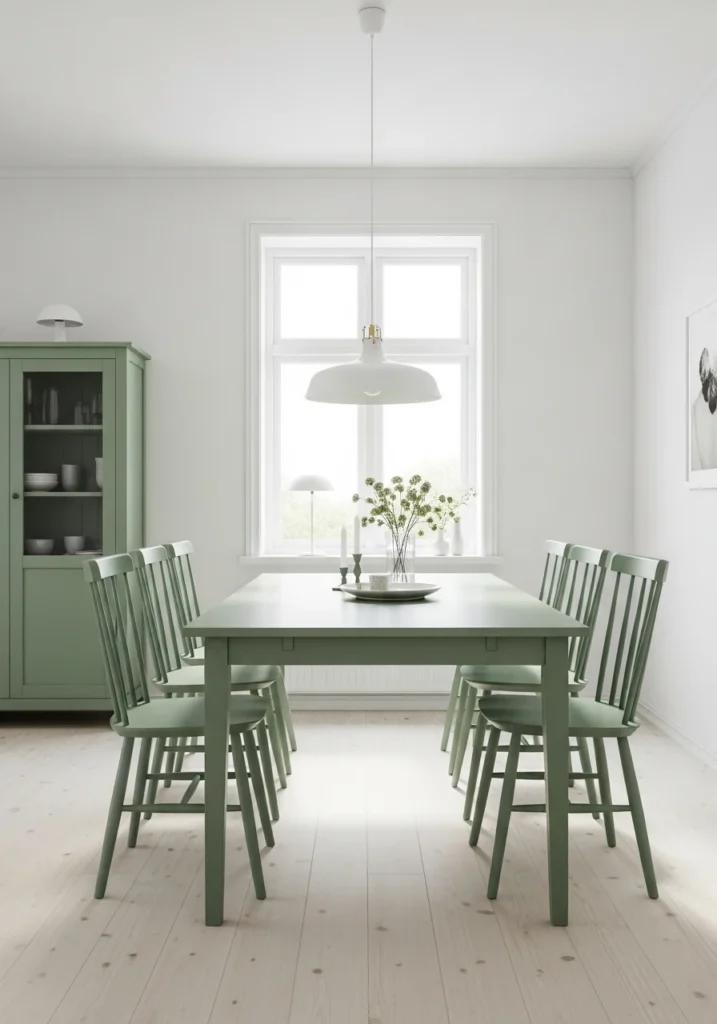
Sage and white is the combination I suggest when someone tells me they want green but are afraid of colour. White keeps the room bright and open, sage adds just enough warmth to stop it feeling clinical, and the two together make even a small dining room feel calm and generous. I used white on the walls and brought sage in through upholstered chairs and a linen runner, so I could change the balance whenever I liked. It is a gentle palette, but it has real staying power — I have lived with ours for years and never once tired of it.
How to do it: Use white on the largest surfaces — walls, ceiling or a sideboard — and bring sage in through chairs, curtains or a table runner. Keep the white warm, not brilliant, so it sits comfortably beside the green. Add one natural texture, such as oak or rattan, to stop the pale palette feeling flat, and repeat the sage in at least three places so it reads as a choice.
13. Green Ceiling for a Bold Twist
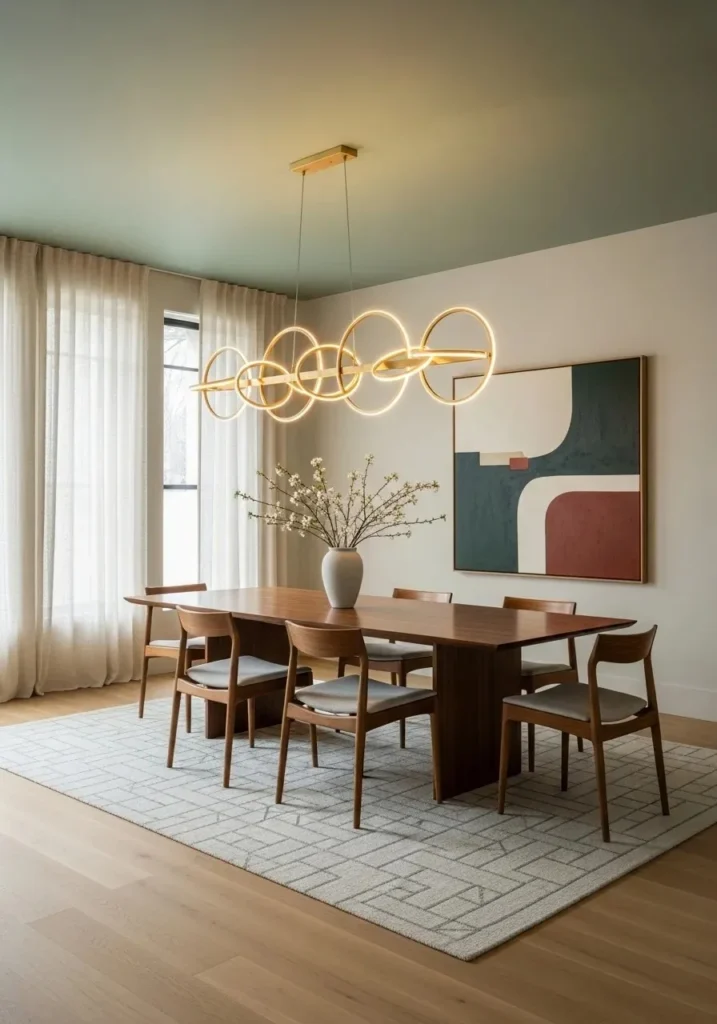
Painting the ceiling green is the bravest-sounding idea on this list, and in truth it was one of the easiest. I chose a soft, dusty green, and instead of closing the room in, it made the whole space feel more considered — as if the room had been designed rather than simply decorated. The trick is choosing a gentle shade and keeping the walls pale, so the ceiling feels like a canopy rather than a lid. If you love the idea of taking it further, these color drenched dining room ideas show how the same shade across walls, ceiling and trim can wrap a room completely.
How to do it: Choose a soft green a few shades paler than the one you would use on walls, and test it overhead — colours always read darker on a ceiling. Paint the ceiling first, cutting in carefully where it meets the walls, and use a matt finish to avoid glare. Keep the walls pale and the lighting warm, then live with it for a week before deciding whether the walls need anything at all.
14. Mint Green Accents for a Fresh Touch
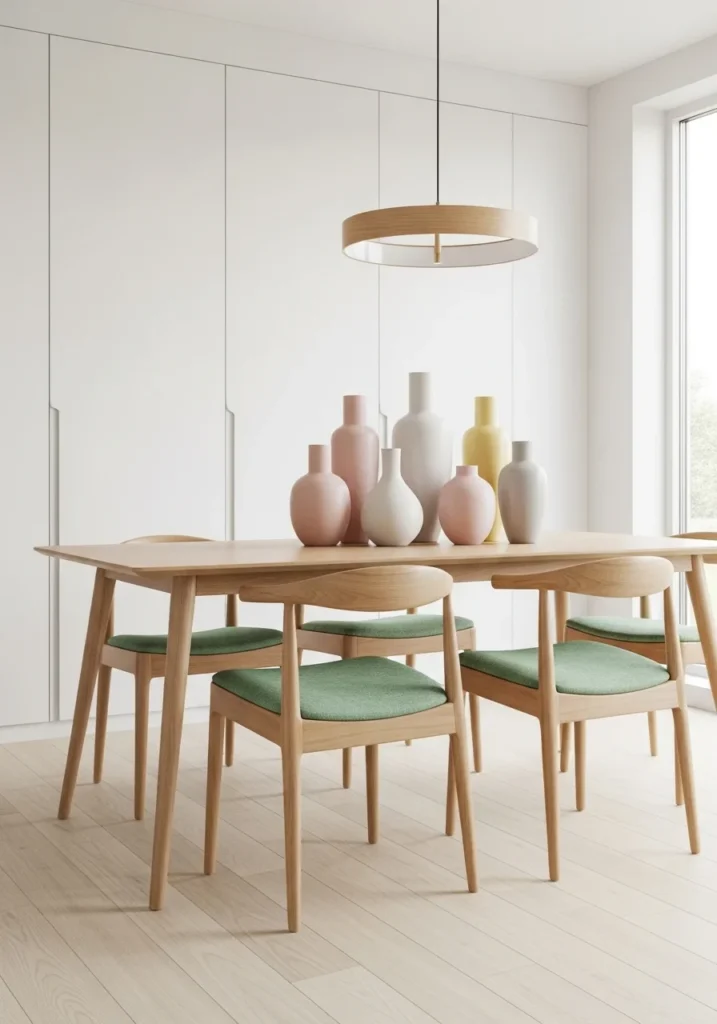
Mint green is the shade I reach for when a dining room feels heavy or a little too serious. It is light, fresh and quietly cheerful — mint cushions on oak chairs, a pale green vase on the sideboard, a print with soft mint leaves. Nothing about it shouts, yet the room feels brighter the moment it arrives. I keep mint to accents rather than walls, because its charm is in the lightness, and too much of it can turn chilly. Paired with white and pale wood, it gives the room a clean, Scandinavian ease that works all year round.
How to do it: Bring mint in through cushions, vases, artwork or a table runner, keeping the larger furniture neutral. Stick to one mint tone so the accents feel related, and balance the coolness with warm wood and soft white. If the room starts to feel chilly, add a woven texture — a rattan tray, linen napkins or a jute rug — to warm it back up.
15. Green Built-In Shelving for Style and Storage
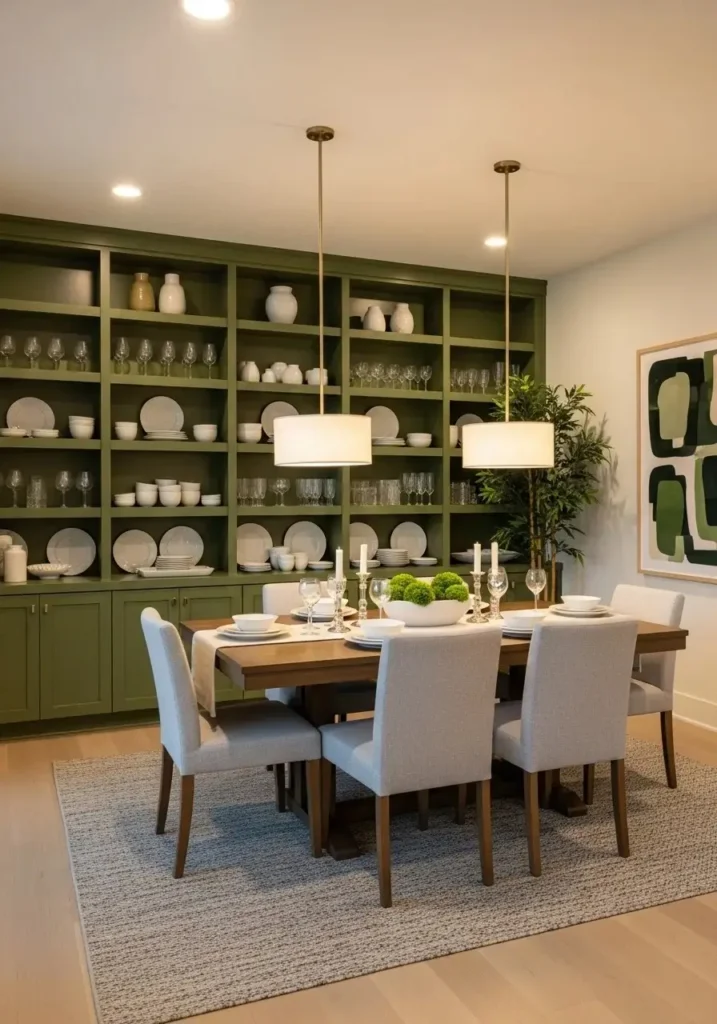
Our built-in shelves were meant to be purely practical — somewhere to keep the good plates — but painted deep green, they became the best-looking thing in the dining room. The colour turns ordinary storage into a feature, and the shelves give me a place to show off the pieces I love: my grandmother’s platters, a stack of green glass, a small trailing plant. I keep the display calm, with breathing room between objects, because crowded shelves just look like a cupboard with the doors off. Painted green, even a simple shelf feels considered and quietly proud of itself.
How to do it: Paint the shelves the same deep green inside and out, in a durable eggshell finish that wipes clean. Style them in odd-numbered groups, mixing heights and leaving a third of each shelf empty so the display can breathe. Keep the palette tight — cream, glass and one wood tone — and put everyday dishes at arm’s reach and pretty pieces up high.
These Amazing ideas Also For You:
20 Dining Room Decor Ideas to Create a Warm and Stylish Space
Black and White Countertops Kitchen Ideas: 20 Stunning Ways to Elevate Your Space
19 Kitchen With Black Countertops Ideas That Feel Stylish, Warm & Effortlessly Modern
16. Forest Green Upholstered Bench Seating
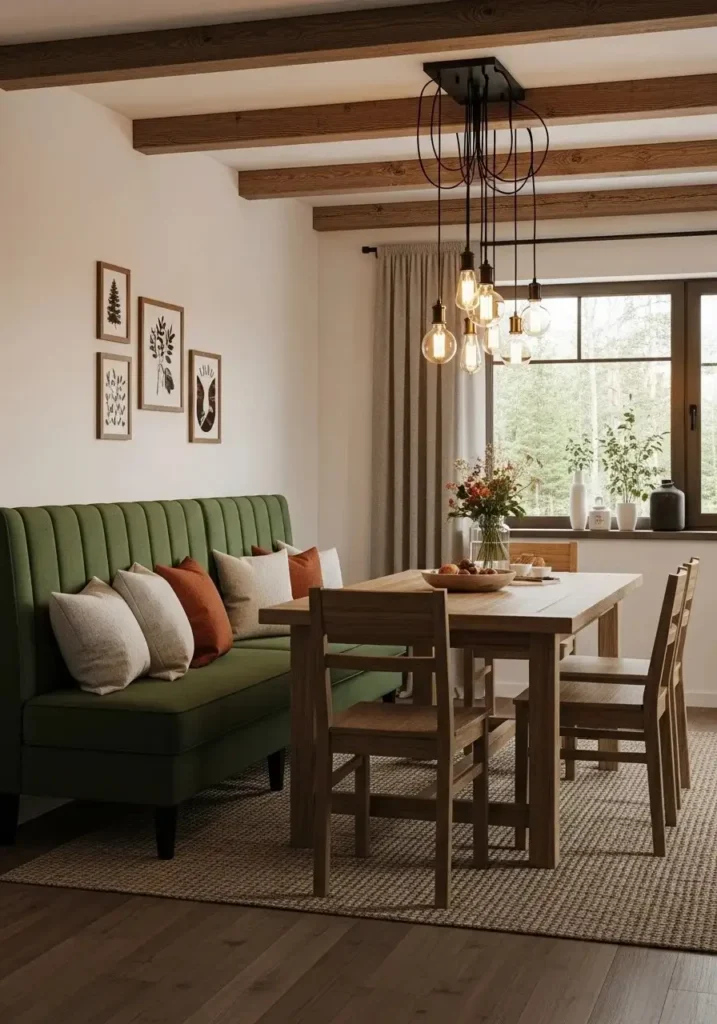
A forest green bench along one side of our table was the answer to two problems at once: the children kept stealing each other’s chairs, and the room needed something soft. Bench seating squeezes in an extra person without a fuss, it tucks neatly under the table when dinner is over, and the deep green upholstery hides a multitude of sins. I added two cream cushions and a folded throw, and it is now the seat everyone quietly competes for. It feels relaxed and a little bit country-house, which is exactly the mood I want at our table.
How to do it: Measure your table and leave at least 75 centimetres behind the bench so people can slide in and out. Choose a washable or stain-resistant fabric in forest green, and add a cushion in a contrasting cream or pattern for comfort. Push the bench fully under the table between meals to keep the room feeling open, and keep the floor beneath it clear.
17. Green Artwork as a Focal Point
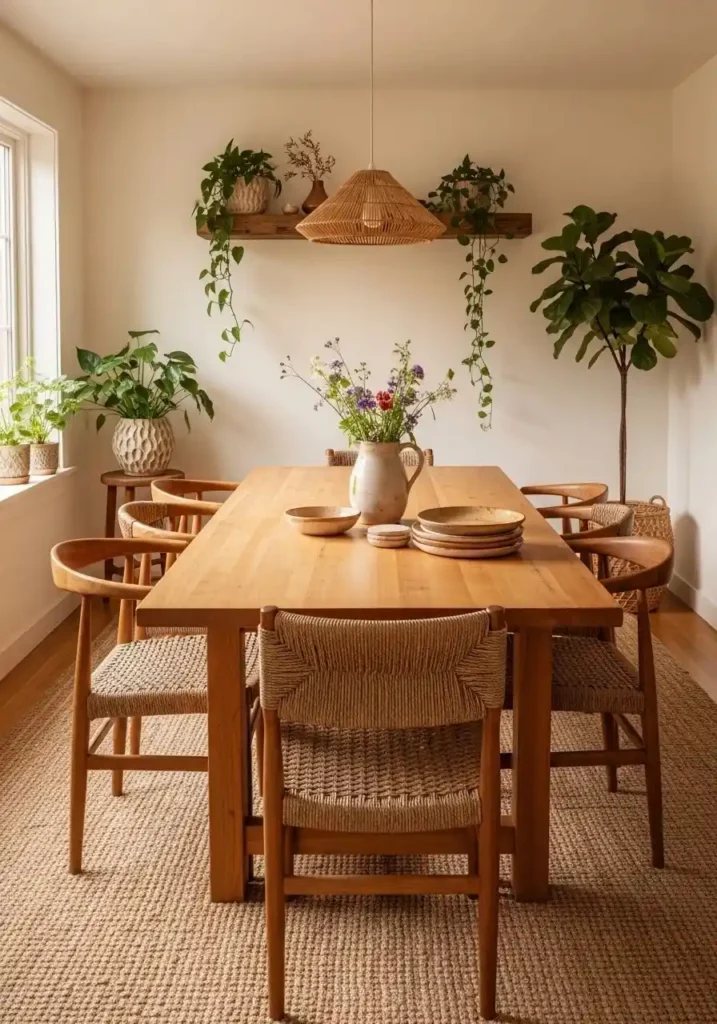
Art was the last piece of our dining room, and it made the biggest difference per pound of anything I have done. One large green landscape above the sideboard tied the sage walls, the plants and the velvet chairs together as if they had always belonged to each other. I lived with a paper template on the wall for a week before I committed, checking it from every seat, because art hangs at the eye level of people sitting down — not standing in the doorway. Choose something you love looking at over a long, slow dinner, and the room will reward you every evening.
How to do it: Choose one large piece rather than several small ones, and hang its centre about 145 centimetres from the floor — seated eye level, not standing. Pick up at least one green from the art and repeat it in a cushion or vase so the piece feels connected to the room. Live with a paper template for a week, checking it from every chair, before you drill.
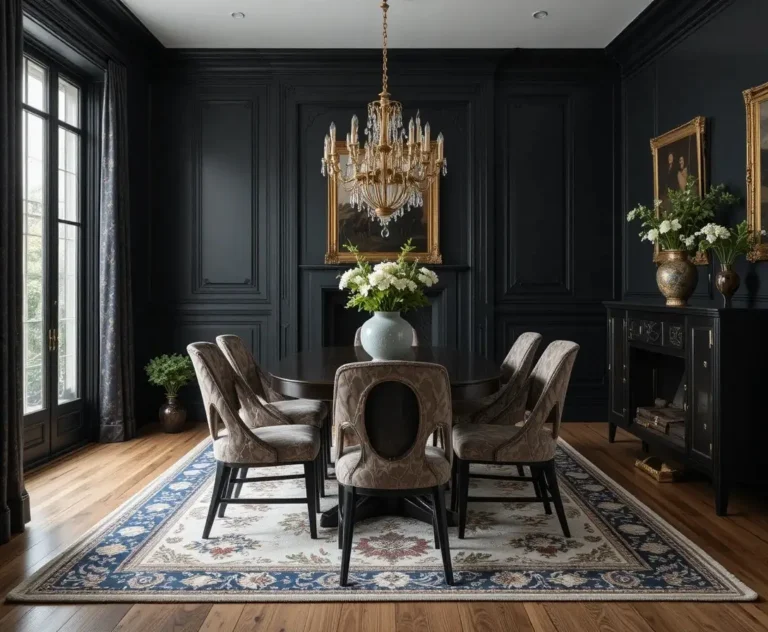
18. Green and Gold Accents for Elegance
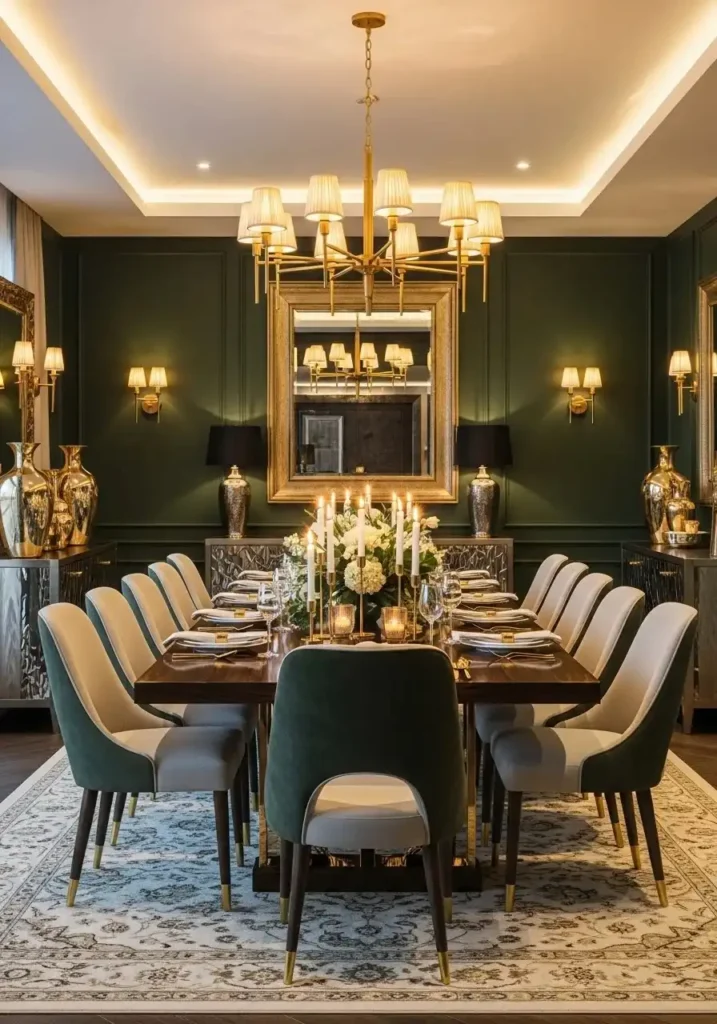
Green and gold is the combination I save for evenings, when the lamps are low and the candles are lit. The gold warms the green, the green keeps the gold from feeling flashy, and together they make an ordinary supper feel like a small celebration. I keep it restrained — a brass pendant, two gold frames, a few candlesticks — because gold is at its best in small, deliberate doses. My rule is simple: if I notice the gold before I notice the room, there is too much of it. Get the balance right and the whole dining room glows.
How to do it: Pick one hero gold piece — usually the pendant or a mirror — then repeat the metal in just two or three small spots, such as frames or candle holders. Keep the gold in a single finish, brass or antique gold, so it reads as intentional. Use warm-white bulbs so the metal glows rather than glares, and polish it before a dinner party for the full effect.
19. Layered Green Textiles for a Cozy Feel
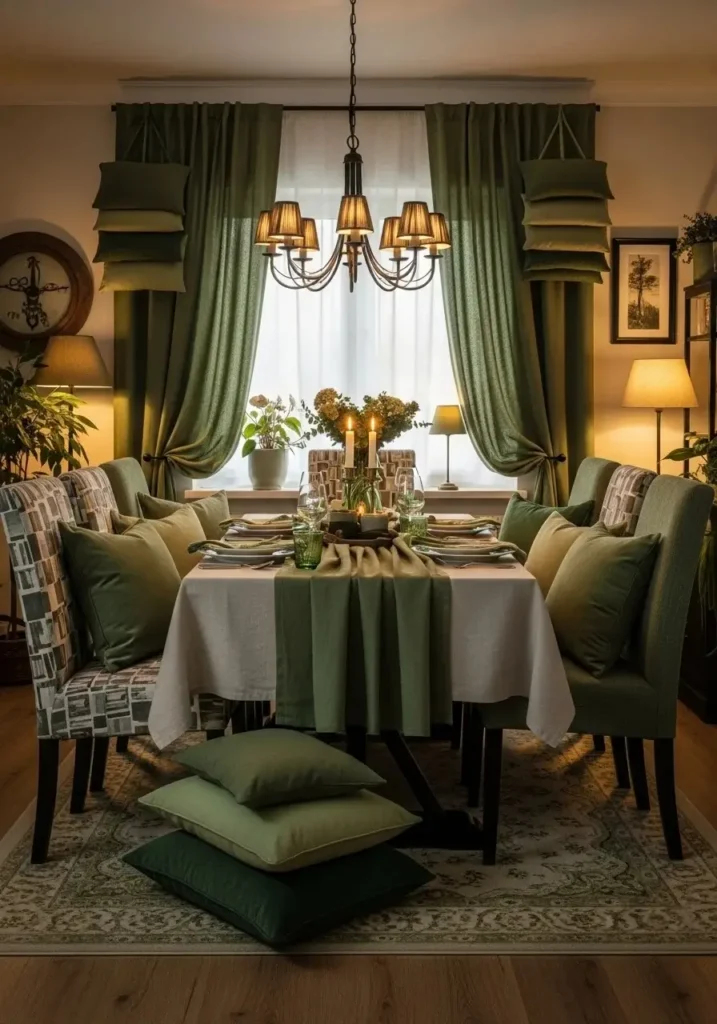
Layering green textiles is how I make our dining room feel cosy without buying a single piece of furniture. A sage runner over the table, olive cushions on the chairs, a soft green throw folded over the bench — each layer adds warmth, and together they make the room feel soft and lived in. I mix one gentle pattern with plain fabrics, because two competing patterns just argue with each other across the table. There is a relaxed, collected feel to it that reminds me of the boho dining room ideas I love — nothing matches perfectly, yet somehow everything belongs.
How to do it: Start with one patterned fabric — a runner or cushion covers — then layer plain greens around it in two or three shades. Mix textures rather than patterns: linen, velvet and cotton together feel rich without clashing. Wash everything before the first use so the colours settle, and keep a spare set of cushion covers so you can freshen the room in minutes.
20. Minimal Green Styling for a Clean Look
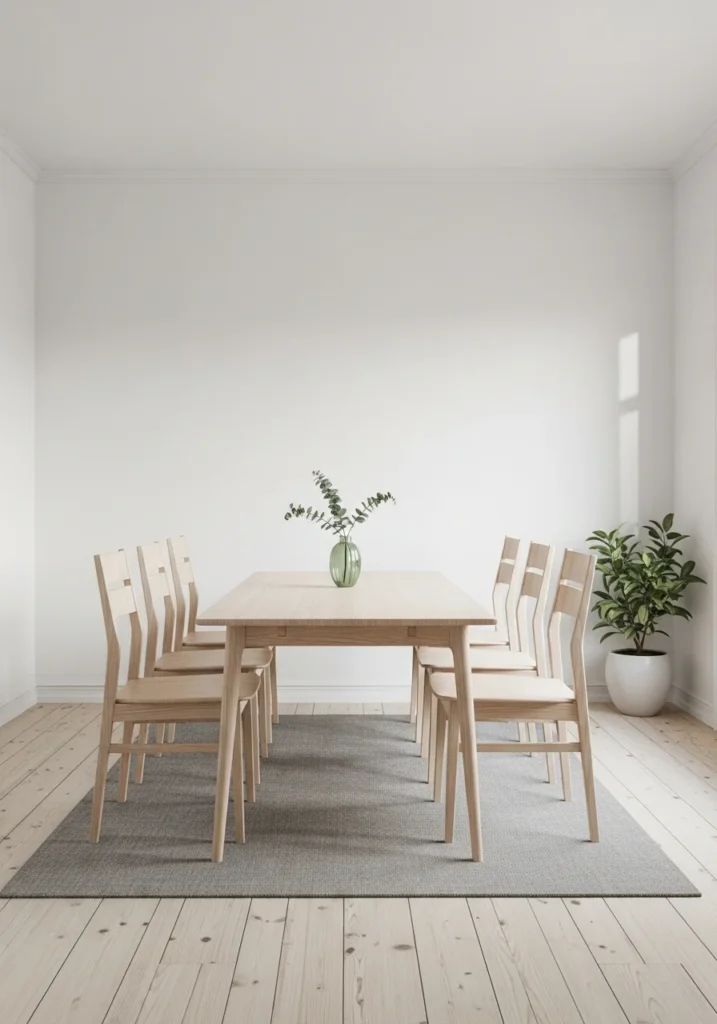
Minimal green styling suits me on the weeks when life feels busy and the house needs to breathe. One plant, one vase, one beautiful green bowl — each piece earns its place, and the empty space around them is part of the design. I find that when there is less to look at, I notice what is there far more: the grain of the table, the light through the window, the colour of the leaves. The discipline is in the editing, not the buying. Keep one shade of green, repeat it quietly in three small places, and let the calm do the talking.
How to do it: Choose one shade of green and repeat it in exactly three small places — a plant, a vase and a candle or bowl. Clear the table completely, then add back only the pieces you use or love. Step back and remove one more thing than feels comfortable; if the room still feels finished, you have edited enough.
Frequently Asked Questions
What shade of green works best in a dining room?
Sage is the safest starting point, because it is soft, light-friendly and suits almost any furniture. If you want drama, deep emerald or forest green on one wall gives you richness without overwhelming the room. Always test a large sample on the wall you face while eating, in daylight and lamplight, before you commit.
Will dark green make my dining room feel too small?
Not if you balance it. Use the dark shade on one wall, or below a chair rail, and keep the ceiling, trim and at least one wall pale. A mirror opposite the window and warm lighting will keep the room feeling open, and many small dining rooms actually feel cosier — not smaller — with one deep green wall.
What colours go with green in a dining room?
Warm neutrals are the easiest partners: cream, warm white, honey oak and natural linen all sit beautifully beside green. Brass and gold add warmth and a touch of occasion, while soft blush or terracotta bring a gentle contrast. Avoid pairing green with too many other strong colours at once, or the room can start to feel busy.
Can I use green in a dining room if I rent?
Yes, and you do not need paint at all. Curtains, cushions, a table runner, artwork and plants all bring green in without touching the walls, and removable wallpaper on one wall is another renter-friendly option. Choose pieces you can take with you, and keep the green in two or three repeatable shades so the room still feels deliberate.
How do I keep a green dining room from feeling cold?
Layer warm textures and warm light. Wood, linen, wool and brass all soften green, while warm-white bulbs and candles stop the colour reading chilly in the evening. If the room still feels cool, swap one cool green accent for a warmer olive or add a terracotta or honey-toned piece to tip the balance.
Your Green Dining Room Checklist
Tick each step off as you style your dining room.
☐ Choose your green — soft sage for calm, deep emerald for drama
☐ Paint a large test patch and live with it for a week
☐ Pick one feature wall, usually the one behind the table
☐ Repeat your green in at least three places around the room
☐ Add warm wood, linen or brass to keep the green feeling cosy
☐ Hang art and mirrors with the centre at seated eye level
☐ Layer textiles — a runner, cushions and a throw in two or three greens
☐ Add one large plant and one small trailing plant
☐ Check the colour at suppertime under your real dining lights
☐ Remove one piece, step back, and enjoy the room
Conclusion
Green has a rare gift: it can be calm and dramatic at the same time, and that is exactly what a dining room needs. Whether you paint one emerald wall, hang olive curtains or simply set the table with sage linen and a vase of fresh leaves, you are giving the room something paint charts alone cannot — a sense of being alive and welcoming. Start with the idea that made you pause, try it properly, and live with it for a week before you add anything else. The best dining rooms are not finished in a weekend; they grow slowly, one thoughtful choice at a time, until one ordinary evening you look around the table and realise everyone has stayed a little longer than they meant to.

One Comment