
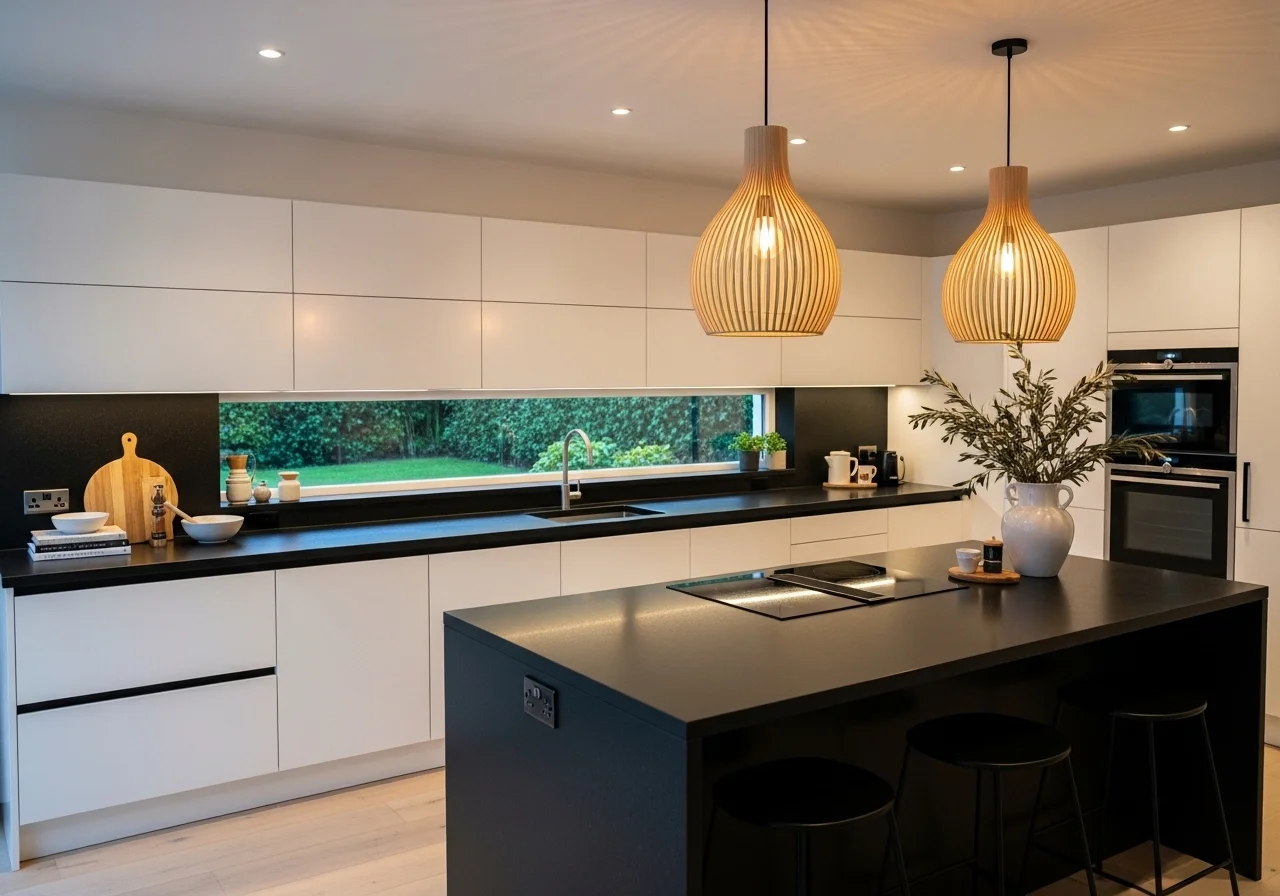
🖤 19 Kitchen With Black Countertops Ideas That Feel Stylish, Warm & Effortlessly Modern
Designing a kitchen that feels both beautiful and comfortable can sometimes feel more complicated than it should be. You might have the right cabinets, the perfect layout, and still feel like the space lacks depth or personality. That’s where a kitchen with black countertops ideas can quietly transform everything. Black surfaces add contrast, elegance, and a sense of structure that ties the whole room together. In this guide, you’ll discover simple, practical ways to style black countertops so your kitchen feels warm, balanced, and truly inviting.
1. White Cabinets for Classic Contrast
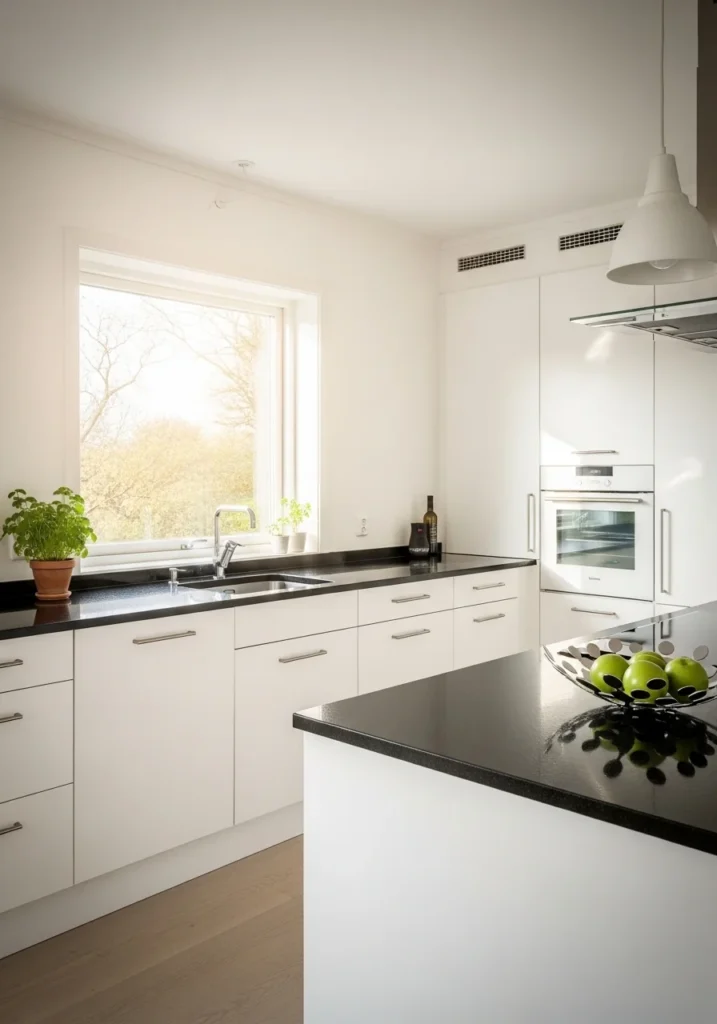
White cabinets with black countertops is still the pairing I recommend first when someone feels stuck. The white lifts the room in the morning, the black gives the worktop a sense of purpose, and together they make even an ordinary Tuesday breakfast feel a little more considered. I love how forgiving this combination is, too. A scuff on a cabinet, a mug left out, a chopping board still on the side — none of it shows up the way it would in a busier scheme. If your kitchen feels flat or tired, this is the calm, confident place to start, and it suits almost any style of home.
How to do it: Paint or choose cabinets in a warm white with a soft sheen, then let the black worktop be the darkest thing in the room. Keep the walls pale, add one wooden board or woven basket for warmth, and test your white sample against the countertop in both daylight and evening light before you commit.
2. Warm Wood Tones for Balance
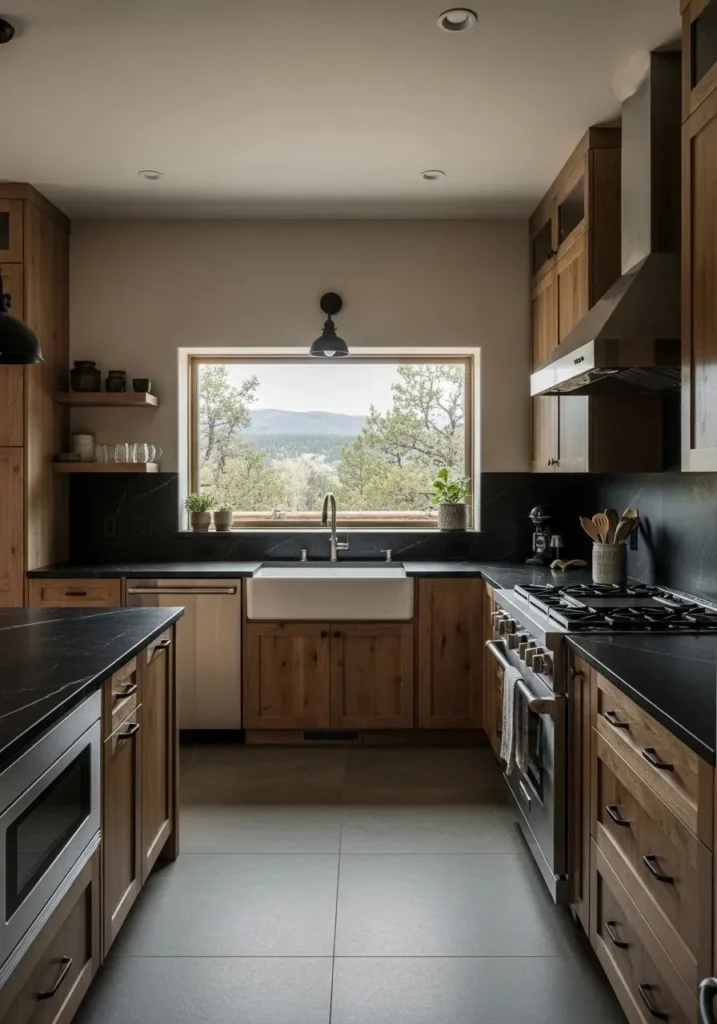
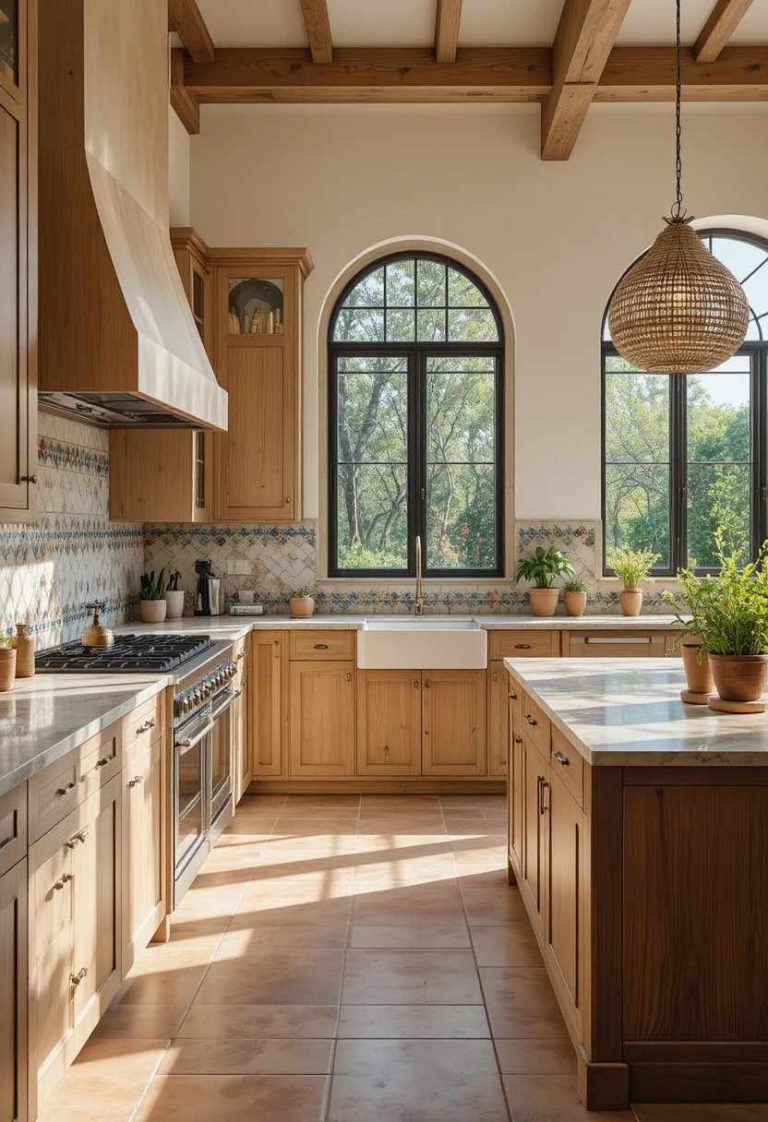
I reach for wood whenever a black worktop starts to feel too serious. Oak, walnut or pale pine brings a softness that no paint colour can quite copy, and it stops the kitchen feeling like a showroom. In our kitchen, a single oak shelf changed the whole mood: suddenly the black countertop looked like a deliberate choice rather than a cold slab, and the room felt lived in. Wood also ages gracefully, picking up small marks that add character instead of looking like damage. Mix a pale timber with a deeper one if you like, but keep the tones warm and close together so the eye rests instead of jumping around. Start with one shelf or a chopping board and see how the room softens.
How to do it: Choose one main wood tone for cabinets or shelves, then repeat it in smaller pieces such as a chopping board, a stool or a tray. Oil or wax the wood twice a year, keep it away from standing water, and pair it with black or brass fittings so the warm and dark tones talk to each other.
3. Matte Black on Black for a Bold Look
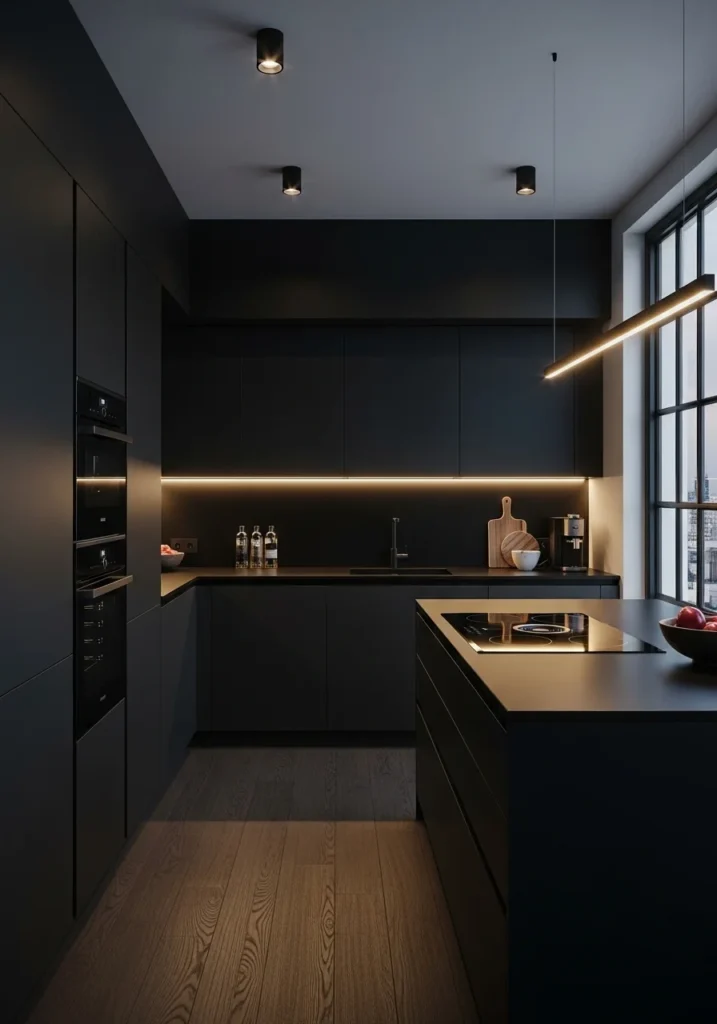
There is something wonderfully brave about going black on black, and I understand why it feels like a leap. Done well, though, it is not gloomy at all: the matte cabinets absorb light softly, the countertop holds a quiet shine, and the whole kitchen feels like a calm, grown-up space. I find the trick is texture. A flat-fronted matte door, a honed stone worktop and a woven runner underfoot give the eye plenty to notice without any colour shouting for attention. Keep the floor pale or mid-toned so the room has somewhere to breathe, and add lighting you can dim. When the evening lamps come on, this kitchen feels more like a cosy restaurant than a workspace.
How to do it: Pair matte black cabinets with a honed or leathered black worktop so the finishes differ just enough to read as layers. Add warm under-cabinet lighting, choose handles in brass or blackened steel, and keep the floor and ceiling pale so the dark surfaces feel cocooning rather than closing in.
4. Marble Backsplash for Elegance
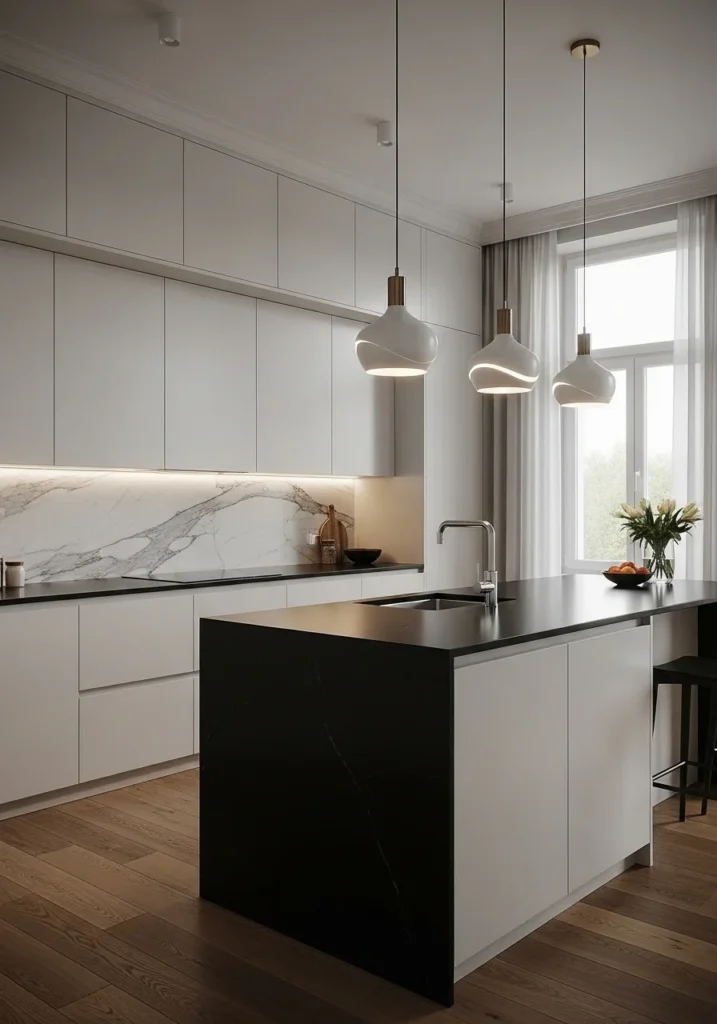
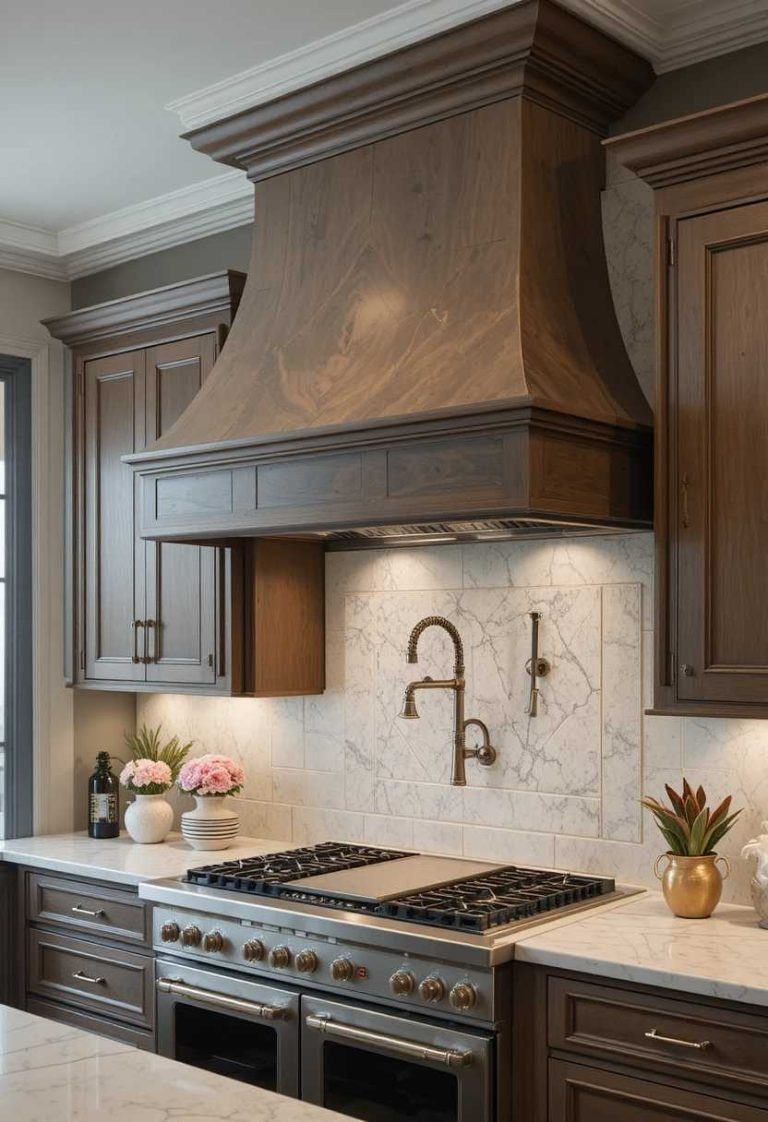
A marble backsplash was the first thing I saved for when we planned our kitchen, because I knew it would do the heavy lifting between the black worktop and the pale cabinets. The soft grey veining moves the eye gently across the wall, and the white stone stops the black from feeling too solid or severe. I love how marble changes through the day, too: bright and crisp in the morning, then warm and almost golden by lamplight. Choose a slab or tiles with quiet, fine veining rather than bold, dramatic streaks, and the look will stay elegant for years instead of dating quickly. Seal it well, wipe up spills promptly, and let the stone be the one decorative moment in an otherwise calm room.
How to do it: Take a sample of your countertop when you shop for marble, and compare the veining in daylight. Run the backsplash to the underside of the wall cabinets, or to the ceiling if you want a grander feel. Seal the stone before use and reseal it once a year.
5. Gold Hardware for a Luxe Touch
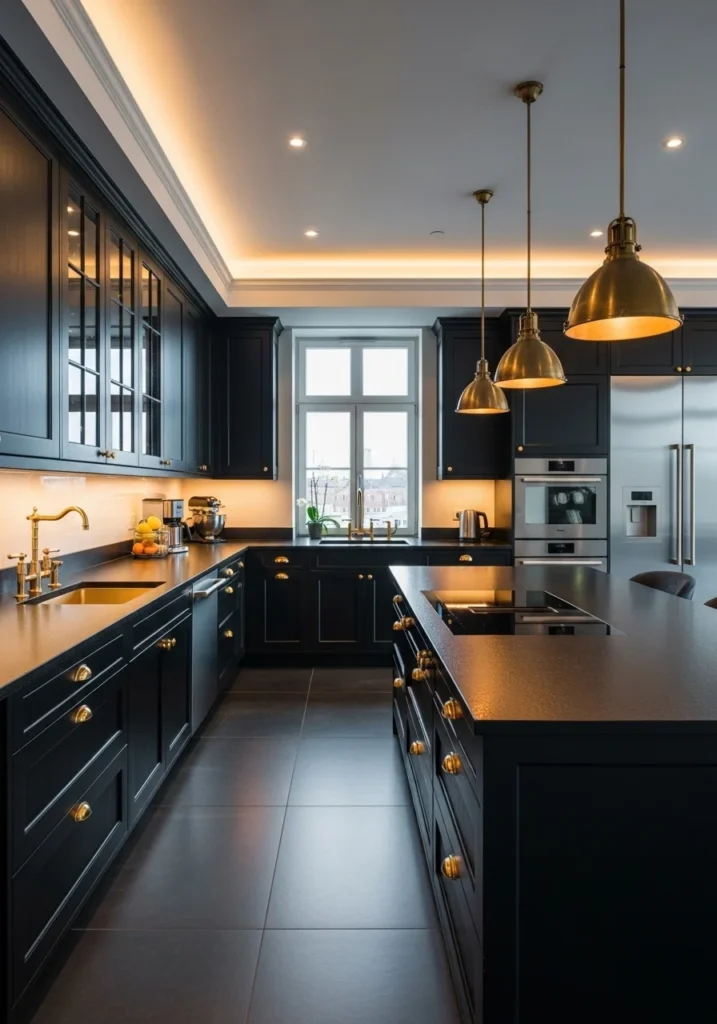
Gold hardware is my favourite small splurge in a black countertop kitchen, because it changes the whole feeling of the room for very little money. A brass tap, a row of warm gold handles or a pair of pendant lights with a golden glow makes the black worktop look rich rather than stark, and it catches the light every time you walk past. I learned to keep the finish consistent, though: one warm metal, repeated calmly, looks far more expensive than a mix of gold, chrome and black fighting for attention. Unlacquered brass will darken and mellow with use, which I happen to love, while lacquered brass stays bright. Choose the one that suits how much patina you are happy to live with.
How to do it: Pick one warm metal — brass or gold — and use it for handles, the tap and light fittings. Fit a sample handle first and live with it for a week. Clean brass with a soft cloth and avoid harsh chemicals that strip the finish.
6. Open Shelving for Airiness
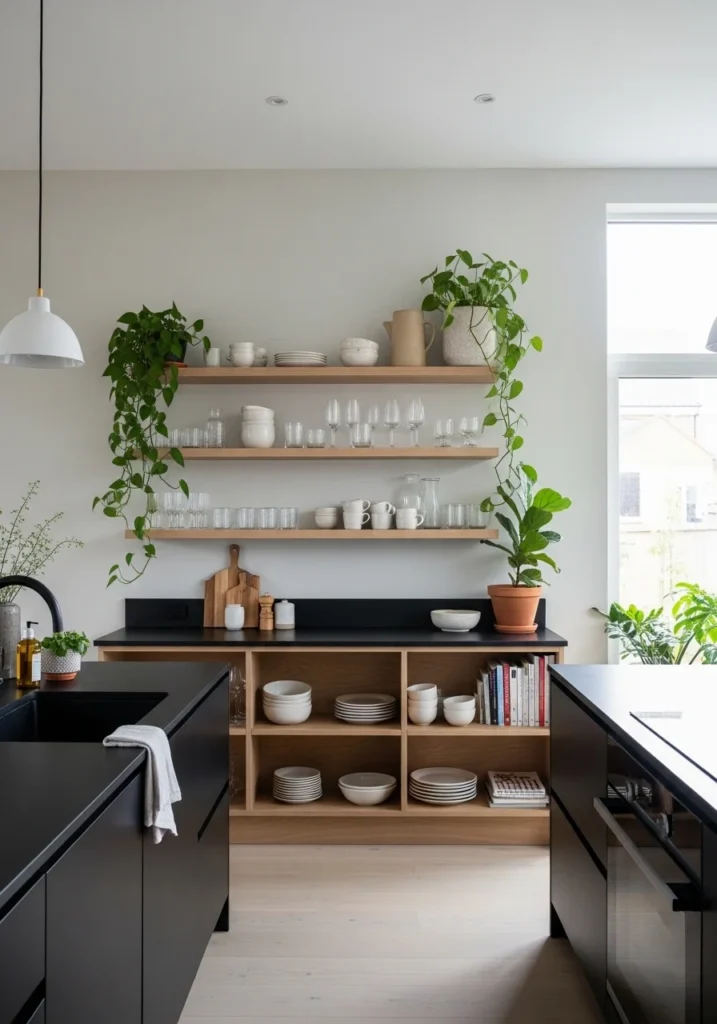
Open shelves were the change that made our kitchen feel twice as big, and I wish I had tried them sooner. Taking down one wall cabinet and replacing it with two slim wooden shelves let the light travel across the black worktop, and suddenly the room felt airy instead of boxed in. I keep the shelves honest: everyday plates and bowls I actually use, a couple of favourite mugs, a small plant, and nothing else. The trick is to edit ruthlessly, because a crowded shelf above a dark worktop looks messy fast, while a calm one looks like a magazine photograph. If you worry about dust, keep the shelves on the wall away from the cooker and choose pieces you wash often anyway.
How to do it: Remove one wall cabinet and fit two shelves in wood or painted to match the cabinets. Keep each shelf to one row of everyday dishes, a plant and a single decorative piece. Dust weekly and rotate the display with the seasons.
More Amazing Ideas Also For You: 20 Kitchen Cabinet Color Ideas That Instantly Transform Your Space
7. Subway Tile for a Clean Finish
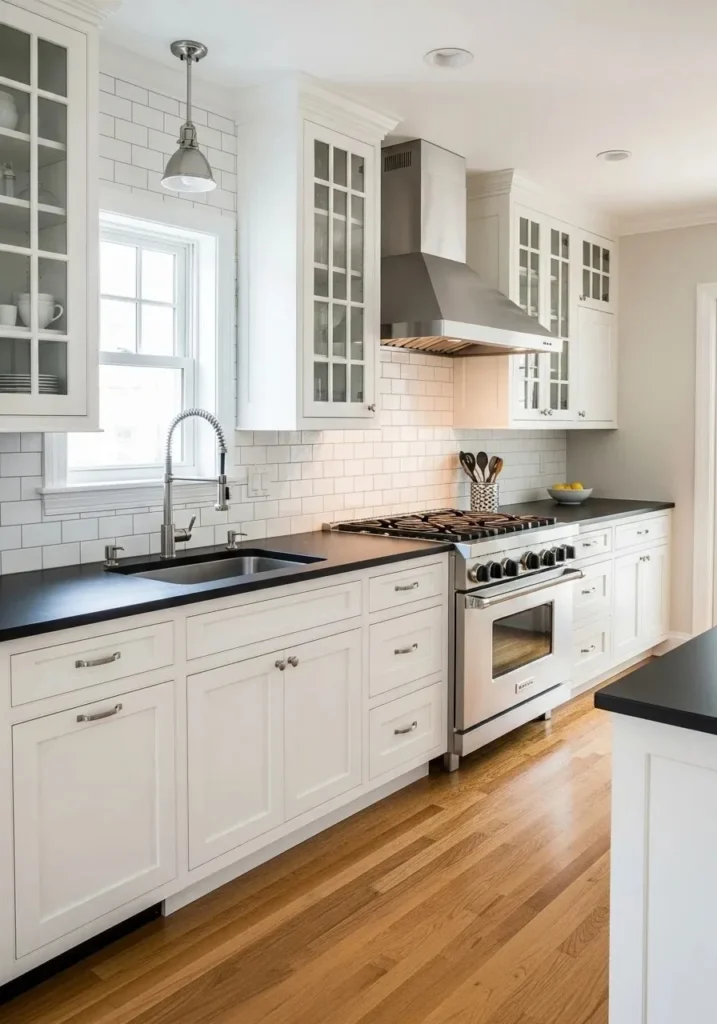
Subway tile is the quiet, dependable friend of a black countertop, and I return to it whenever a kitchen needs structure without fuss. The neat rows of white tile give the eye a rhythm to follow, the grout lines add just enough texture, and the whole wall feels fresh without competing with the worktop. I have used it in two kitchens now, and both times it made the black surface look intentional and the room feel finished. Choose a handmade-look tile with a slightly uneven glaze if you want warmth, or a crisp flat tile for a cleaner line. Dark grout gives the wall a graphic, modern edge, while pale grout keeps everything soft and calm.
How to do it: Lay white subway tiles in a brick pattern from the worktop to the wall cabinets. Choose dark grout for a modern edge or pale grout for a softer look. Seal the grout, wipe splashes as you cook, and keep the tile line straight with spacers.
8. Statement Lighting for Depth
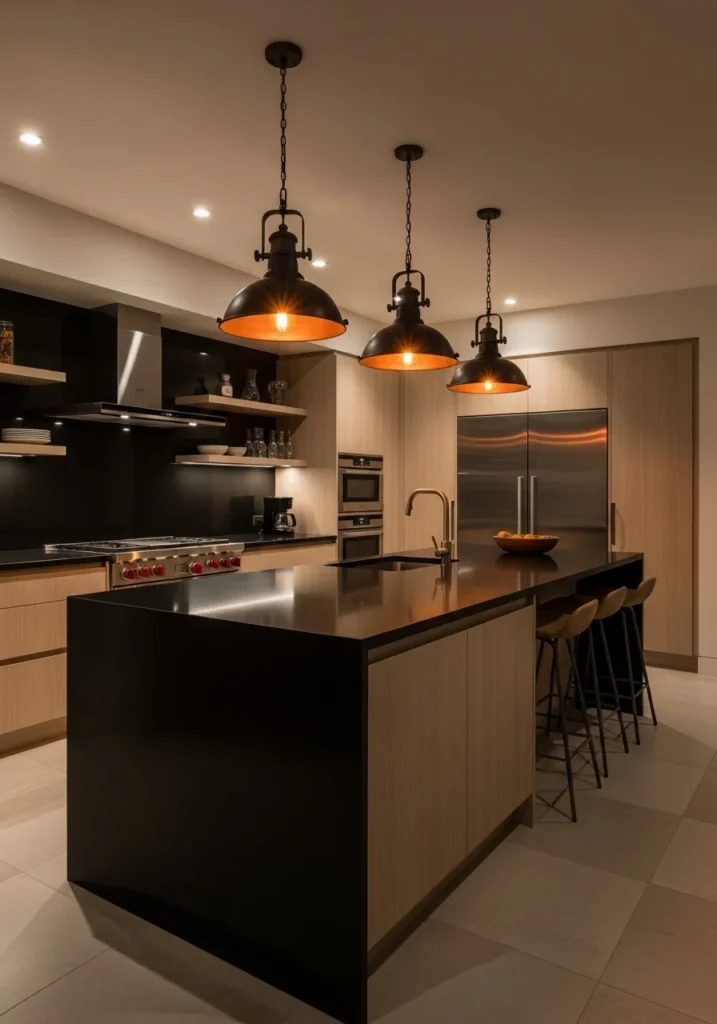
I used to think lighting was the last thing to choose, and now I know it should be one of the first. A pair of pendants over a black island changes the kitchen completely: the warm pools of light make the dark stone glow, the room feels layered, and evening cooking turns from a chore into something I actually look forward to. I chose textured glass shades with warm bulbs, and the difference at 6pm is extraordinary — the worktop looks deep and rich instead of flat and black. Hang the pendants low enough to feel intimate but high enough that nobody bumps their head, and always put them on a dimmer. Lighting is the cheapest way I know to make an expensive-looking kitchen.
How to do it: Hang two or three pendants centred over the island, about 75–90 cm above the worktop. Choose warm bulbs around 2700K, textured or smoked glass shades, and a dimmer switch so you can soften the light for evenings.
9. Minimalist Styling for a Clean Look
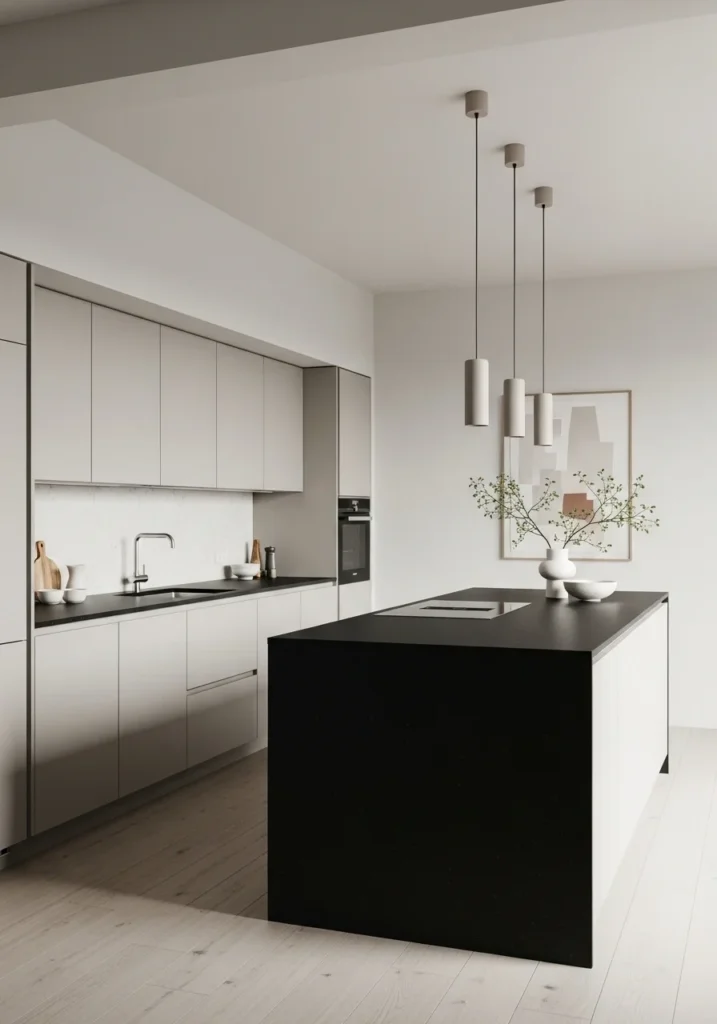
A black worktop is already a statement, so I have learned to let it do the talking and keep everything else quiet. A wooden chopping board, two or three ceramic pieces and a small plant are all the styling my countertop needs, and the kitchen feels calmer for it. When I am tempted to add more, I remember the week I cleared the counters completely: cooking felt easier, cleaning took minutes, and the room looked bigger. These kitchen organization ideas helped me give everything a proper home inside the cupboards, which is what makes a clear worktop possible in real life. Keep only what you use daily within reach, and let the black surface breathe.
How to do it: Clear the worktop completely, then return only the pieces you use every day: a chopping board, a utensil crock and one plant. Store the rest in cupboards with dividers, and do a two-minute reset each evening so the surface stays clear.
10. Greenery for a Fresh Pop
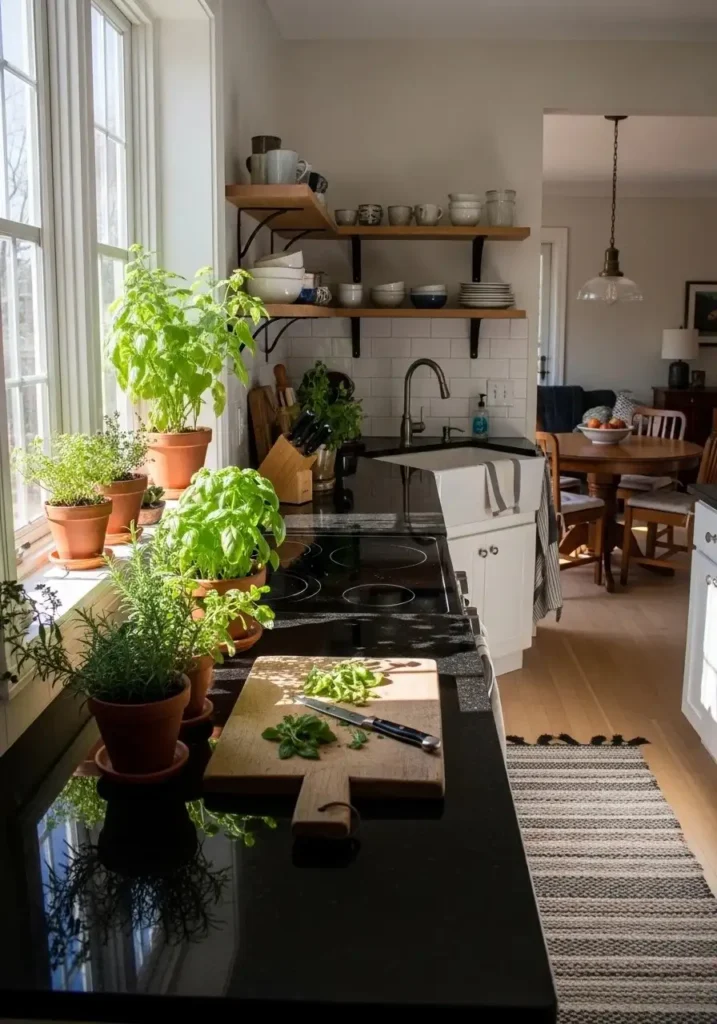
Plants are the simplest way I know to stop a black countertop kitchen feeling severe. A pot of basil on the windowsill, a trailing plant on an open shelf or a small olive tree in the corner brings a soft green that makes the black worktop look richer and the whole room feel alive. I keep herbs near the sink because I actually use them, and snipping fresh basil over pasta while the kitchen smells of garlic is one of my small daily pleasures. Green also forgives a multitude of sins: a slightly cluttered shelf looks intentional when a plant softens its edge. Choose plants that suit your light — herbs love a sunny sill, while a pothos will happily trail in a shadier spot — and water them on the same day each week.
How to do it: Place potted herbs on a sunny windowsill near the sink and a trailing plant on an open shelf. Use plain terracotta or ceramic pots, water weekly, and trim herbs regularly so they stay bushy and useful.
11. Light Grey Cabinets for a Soft Contrast
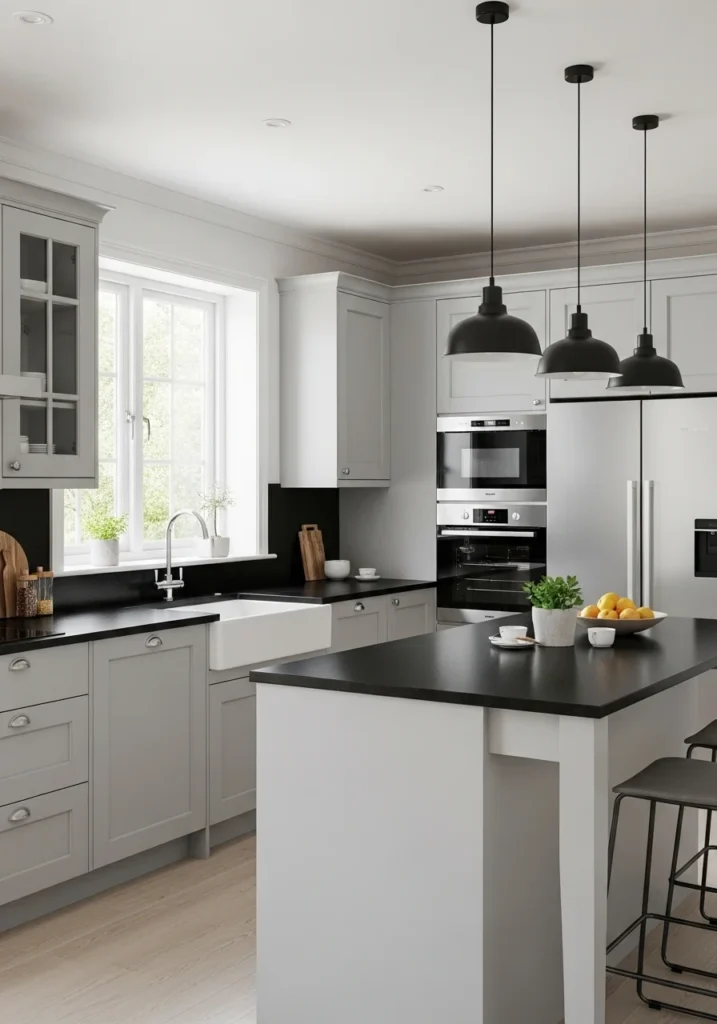
Light grey cabinets are the gentle middle ground I suggest when white feels too stark and wood feels too rustic. The soft grey lets the black worktop be the star while keeping the room light, calm and easy to live with, and it suits almost any style of home. I painted a friend’s kitchen in a warm greige last spring, and the change was remarkable: the cabinets no longer competed with the worktop, the room felt larger, and the whole space looked quietly expensive. The secret is choosing a warm grey with a hint of brown or green in it, because a cold blue-grey can make a black worktop feel chilly and flat. Test large samples on the wall and look at them in morning and evening light before you decide.
How to do it: Choose a warm grey with brown or green undertones and paint large test swatches beside the worktop. Check them in daylight and lamplight, then paint the cabinets in a durable satin finish and add black or brass handles.
12. Kitchen With Black Countertops Ideas and Waterfall Islands
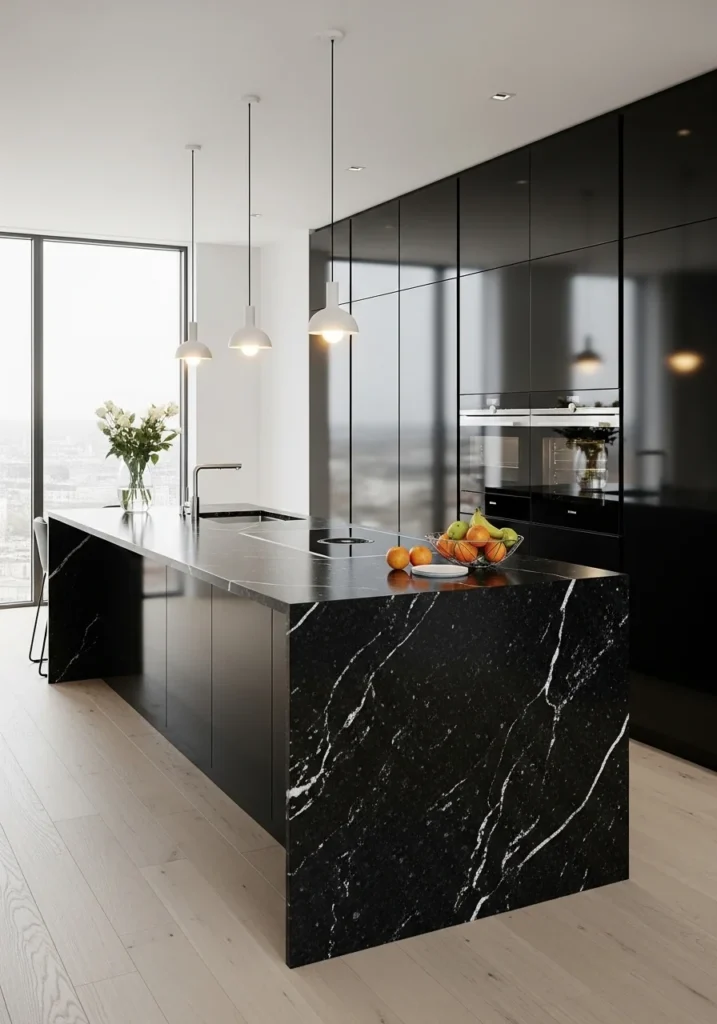
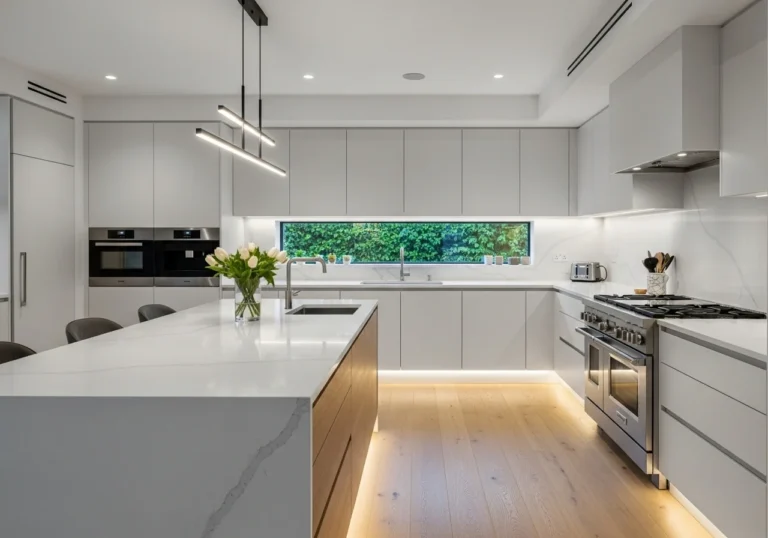
A waterfall island is the one feature that makes visitors stop and touch the worktop, and I completely understand why. The black stone flowing down the side of the island turns an ordinary kitchen into something that feels designed, almost sculptural, without a single extra ornament. I love how it hides scuffs on the island ends, too, and how the continuous surface makes even a modest kitchen feel considered. If an island feels too big for your room, these kitchen peninsula ideas show how the same waterfall edge works beautifully on a peninsula. Choose a stone with soft, subtle veining so the join at the corner looks seamless, and keep the rest of the room calm so the island can be the star.
How to do it: Order the island in the same stone as the worktop and ask the fabricator to mitre the corner for a seamless waterfall edge. Keep the island ends clear of clutter, add two stools on the seating side, and light it with pendants hung above the centre.
13. Textured Backsplash for Visual Interest
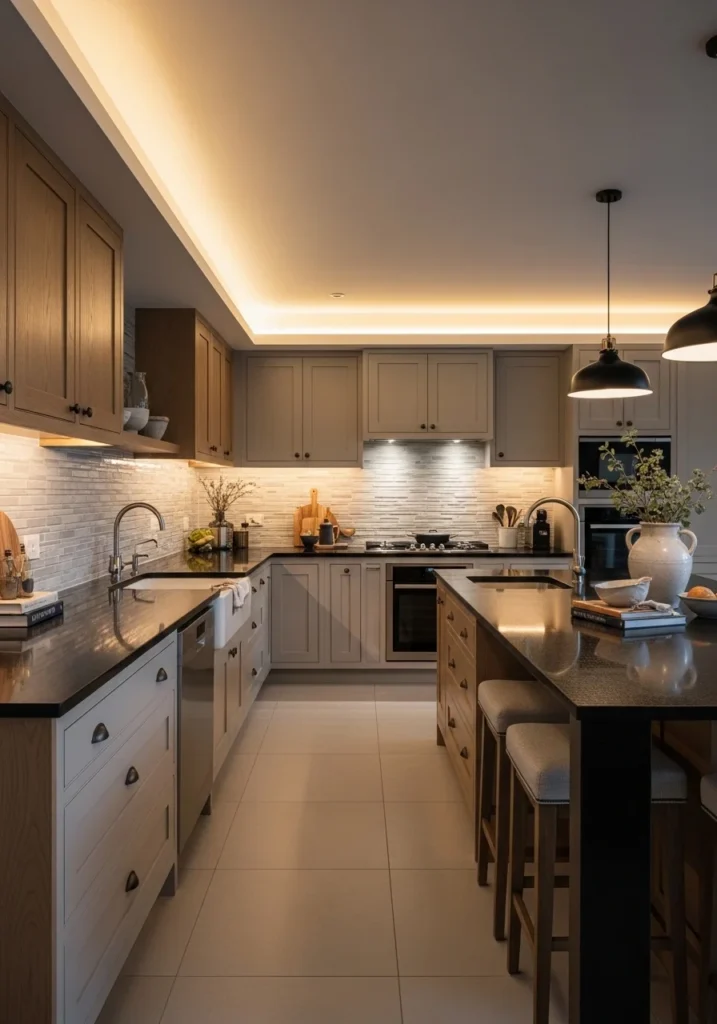
Texture is what keeps a black countertop kitchen from feeling flat, and a handmade-look backsplash brings exactly that. Zellige tiles, rough natural stone or a hand-glazed ceramic catch the light differently at every angle, so the wall seems to move as you walk past. I fell for a soft ivory zellige in a friend’s kitchen: the tiles were all slightly different, the black worktop looked richer against them, and the room felt warm without a single bold colour. Keep the palette quiet — beige, ivory or muted grey — so the texture does the talking. A textured wall also hides the odd splash far better than a flat gloss tile, which is a practical bonus in a busy kitchen.
How to do it: Choose handmade, zellige or natural stone tiles in soft beige, ivory or muted grey. Lay them from the worktop to the cabinets, seal natural stone before grouting, and wipe splashes promptly to protect the finish.
More Amazing Ideas Also For You: 20 Green Kitchen Ideas That Feel Fresh, Stylish & Truly Inviting
14. Under-Cabinet Lighting for Warmth
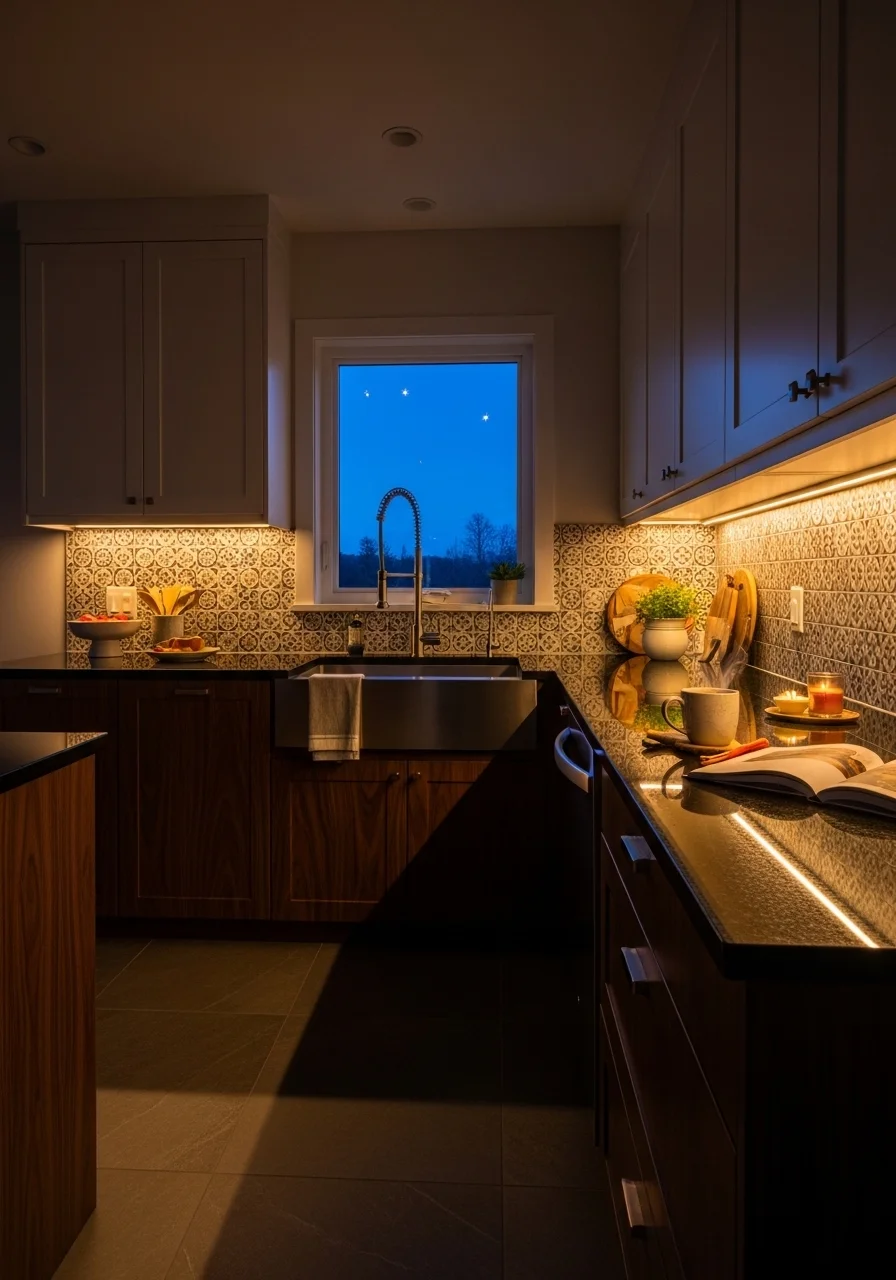
Under-cabinet lighting is the smallest change with the biggest payoff in my kitchen, and I recommend it to everyone with black worktops. A warm strip of light along the wall makes the black stone glow instead of disappearing into shadow, and it turns evening cooking into something gentle rather than glaring. I fitted dimmable LED strips on a Saturday afternoon, and that night the kitchen felt like a different room — softer, warmer, almost candlelit. The light also makes practical jobs easier: chopping, reading recipes and wiping the worktop all improve when the surface is properly lit. Choose a warm white around 2700K, hide the strip near the front edge of the cabinet, and put it on a dimmer you can reach easily.
How to do it: Fit dimmable warm LED strips under the wall cabinets, close to the front edge so the light washes the worktop. Connect them to a dimmer switch, hide the wiring behind the cabinet, and test the colour at night before fixing them permanently.
15. Stainless Steel Appliances for a Modern Edge
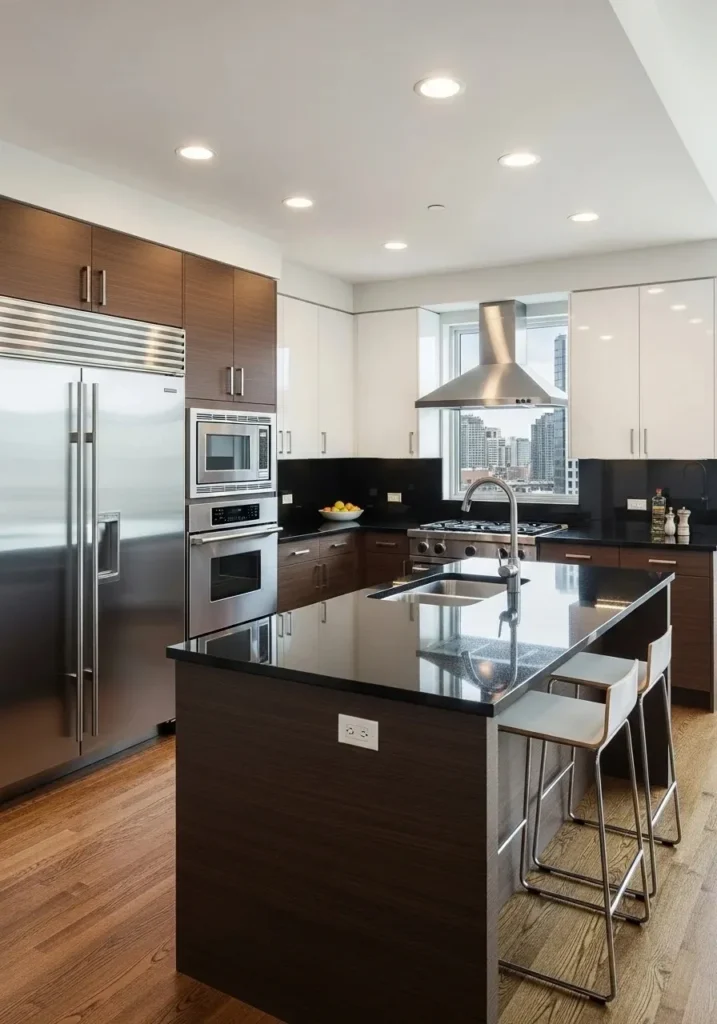
Stainless steel appliances and black countertops are a natural pair in my book, because the brushed metal brings a brightness that stops the dark stone feeling heavy. I love the way a steel fridge or cooker catches the daylight and reflects it back across the worktop, especially in a kitchen that does not get much sun. The key is to let the steel be the shine and keep everything else calm: matte cabinets, a plain backsplash and wooden boards soften the industrial edge. I chose fingerprint-resistant finishes after a week of wiping smudges off a standard fridge door, and I have never regretted it. Wipe the steel with the grain using a soft cloth, and the whole kitchen stays looking polished with very little effort.
How to do it: Choose fingerprint-resistant stainless steel for the fridge and cooker, and keep other finishes matte so the metal is the shine. Wipe with the grain using a soft, damp cloth, and avoid abrasive cleaners that scratch the surface.
16. Black Countertops With White Walls for Openness
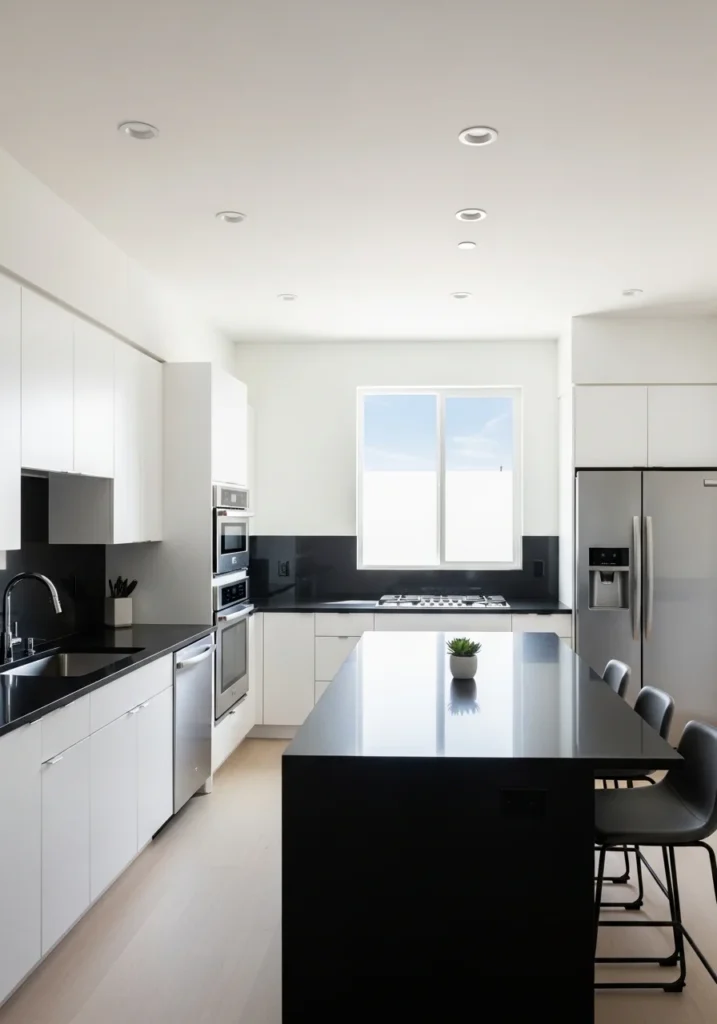
White walls are the simplest trick I know for keeping a black countertop kitchen feeling open, and they cost almost nothing. The pale walls bounce daylight around the room, the black worktop anchors the space instead of overwhelming it, and even a small kitchen feels taller and brighter. I painted our galley kitchen white after years of a warm beige, and the difference shocked me: the worktop suddenly looked like a design choice rather than a dark weight. In a compact home, these small apartment kitchen ideas show how pale walls and clever storage work together. Add a wooden board, a framed print or a linen curtain to keep the white from feeling bare, and the room stays warm.
How to do it: Paint the walls in a warm white with a washable matt or eggshell finish. Keep the worktop as the darkest element, add one wooden accent and a framed print, and let the daylight do the work of brightening the room.
17. Mixed Materials for a Layered Look
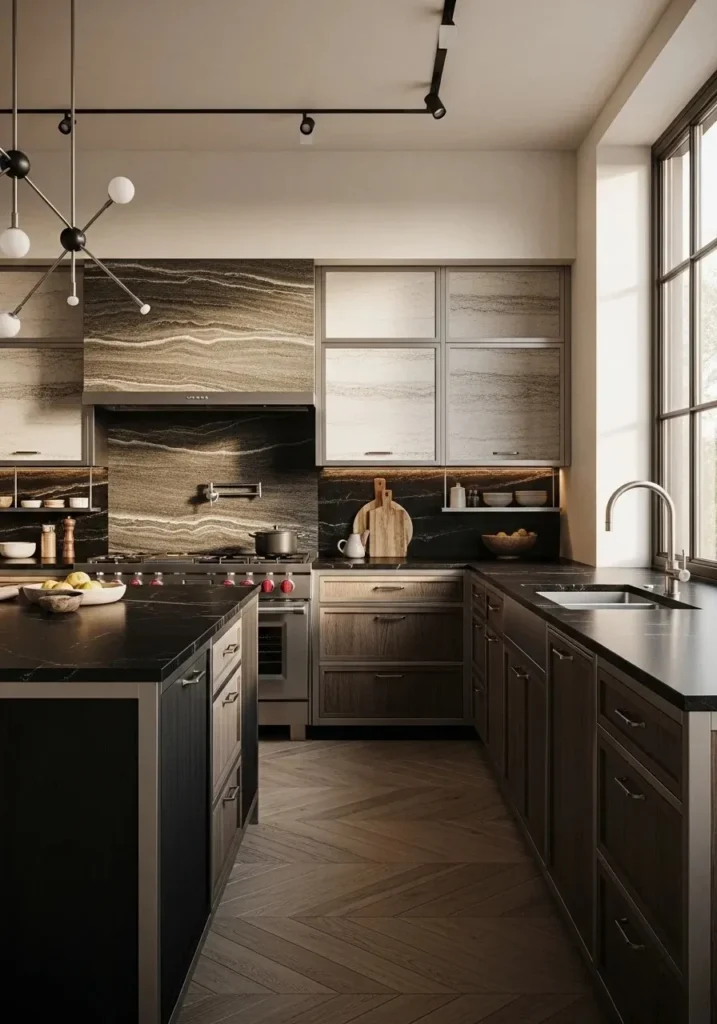
Mixing materials is how I make a kitchen feel collected rather than bought in one go, and black countertops are the perfect anchor for it. Wood brings warmth, brass brings a glow, glass brings lightness, and stone brings weight — and the black worktop holds them all together like a good host. I started with a wooden board and a brass tap, then added a glass pendant and a linen runner, and each layer made the room feel more like ours. The rule I follow is simple: two or three main materials, repeated calmly, and nothing too shiny competing with the stone. If a material does not earn its place by being useful or beautiful, it goes back to the shop. That restraint is what keeps a layered kitchen feeling calm.
How to do it: Pick two or three materials — for example wood, brass and glass — and repeat each one at least twice in the room. Keep the worktop as the anchor, balance shiny with matte, and remove anything that does not earn its place.
18. Glossy Finishes for a Reflective Touch
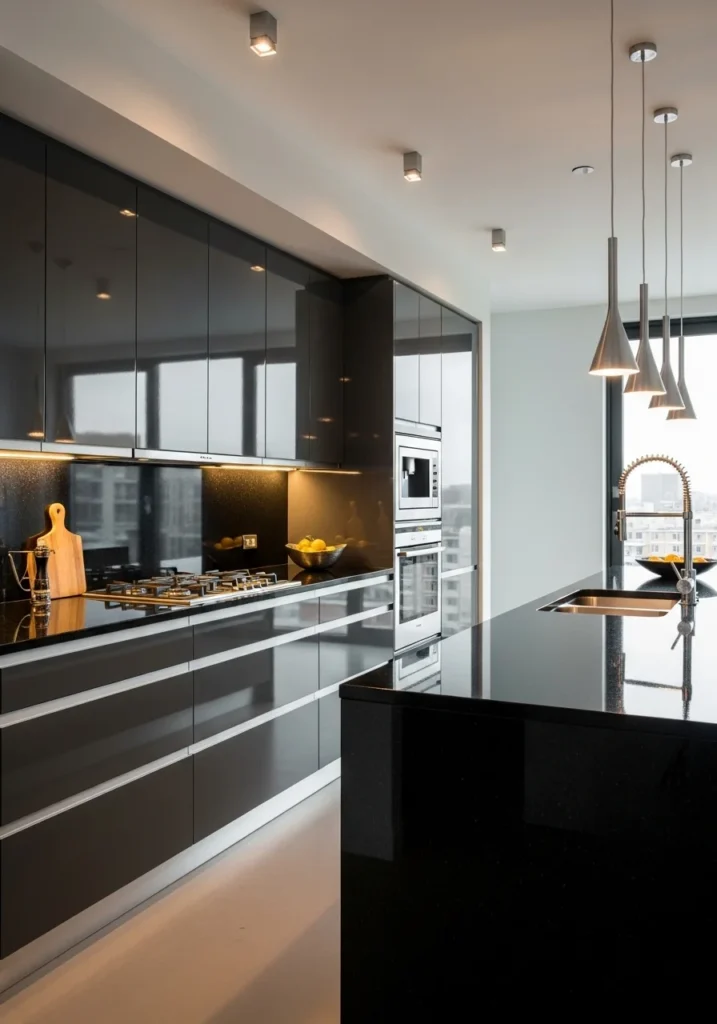
Glossy finishes are my secret weapon in a kitchen that needs more light, because they bounce daylight around the room in a way matte surfaces simply cannot. A gloss cabinet door or a glazed tile backsplash reflects the window light onto the black worktop, and the whole space feels brighter, larger and more polished. I used a gloss backsplash in a north-facing kitchen once, and the owner thought I had added a window. The trick is balance: pair the shine with matte elements — a wooden board, a linen tea towel, a honed worktop — so the room feels lively rather than slippery. Too much gloss can feel cold and show every fingerprint, so keep it to one or two surfaces and let the rest stay soft.
How to do it: Add gloss to one or two surfaces only, such as the backsplash or upper cabinets, and keep the worktop honed or matte. Wipe glossy surfaces with a soft cloth and glass cleaner, and balance the shine with wood or linen.
19. Dimmable Lighting for Mood Control
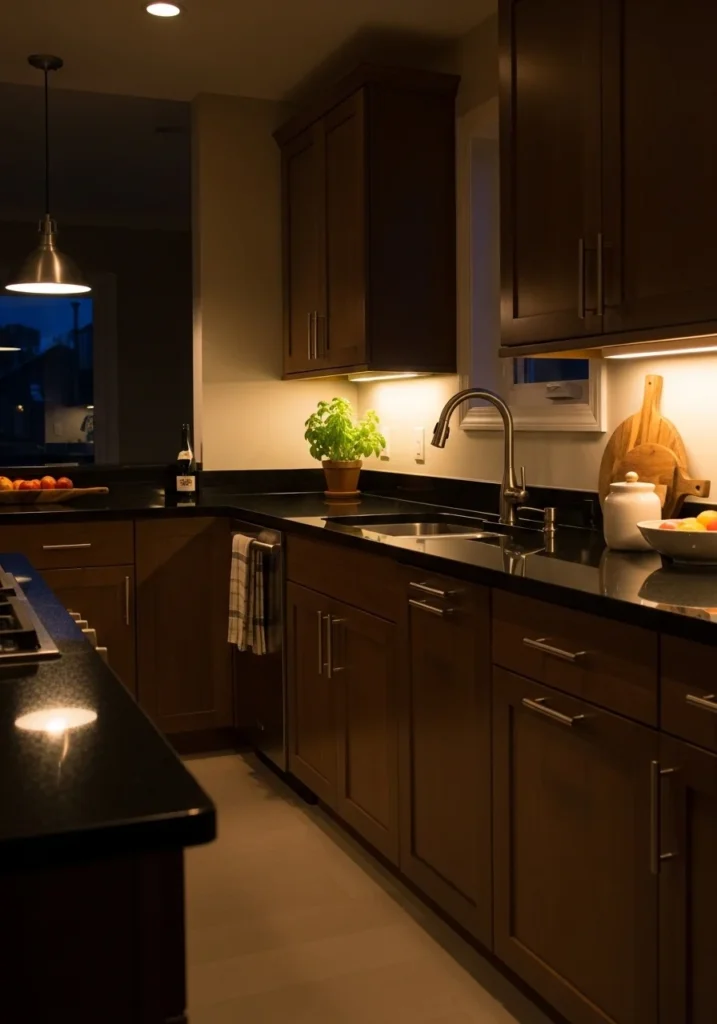
Dimmable lighting is the feature I use every single day, and the one I would miss most if it disappeared. In the morning I turn the lights up bright for cooking and school lunches, and by evening I dim them low so the black worktop glows softly and the kitchen feels like a place to linger with a glass of wine. I fitted dimmers on the pendants and the under-cabinet strips, and the whole room changed: the same kitchen now has a bright working mood and a calm evening mood, just by sliding a switch. Black surfaces can look harsh under full glare, so the ability to soften the light matters more here than in a pale kitchen. It is a small, inexpensive change, and it makes the kitchen feel twice as big in spirit.
How to do it: Fit dimmer switches on the pendants and under-cabinet lights, and choose warm bulbs around 2700K. Set the lights bright for cooking, then dim them low in the evening so the black worktop glows instead of glaring.
Frequently Asked Questions
Do black countertops make a kitchen look smaller?
Not if you balance them. Pale cabinets, white walls and good lighting keep the room feeling open, while the black worktop simply anchors the space. In a small kitchen, keep the darkest surface to the worktop alone and let everything else stay light.
What cabinet colour goes best with black countertops?
White is the classic choice and always works, while warm wood and light grey both soften the contrast beautifully. I would avoid very dark cabinets unless you add plenty of warm lighting, because the room can feel heavy. Test large samples against your worktop in daylight before deciding.
Are black countertops hard to keep clean?
They show dust, crumbs and water marks more than pale stone, so a quick daily wipe becomes part of the routine. A soft cloth and a gentle cleaner are all you need, and a honed or leathered finish hides marks better than a high gloss. Sealed quartz is the lowest-maintenance choice if you want the look without the fuss.
Which material is best for black countertops — granite, quartz or soapstone?
Quartz is the easiest to live with because it needs no sealing and resists stains, while granite offers beautiful natural variation but should be sealed regularly. Soapstone is softer and develops a patina over time, which some people love and others do not. Choose quartz for a busy family kitchen, and natural stone if you enjoy its character.
How do I stop a black countertop kitchen feeling cold or dark?
Add warmth in layers: wood on a shelf or board, brass on the handles and tap, and warm lighting under the cabinets. A plant or two softens the hard surfaces, and a pale backsplash reflects light back into the room. Start with the lighting, because warm light changes the feeling of black stone more than anything else.
Your Black Countertops Kitchen Checklist
☐ Choose warm white or light grey cabinets to balance the black worktop.
☐ Add one warm material — wood, brass or leather — in every view.
☐ Test paint and tile samples against the worktop in daylight and at night.
☐ Fit warm LED strips under the wall cabinets, on a dimmer.
☐ Keep the worktop clear with a two-minute evening reset.
☐ Wipe black surfaces daily; dust and crumbs show faster than on pale stone.
☐ Seal natural stone as the supplier advises and wipe spills up quickly.
☐ Match the metals — one finish for handles, taps and lighting.
☐ Hang pendants 75–90 cm above the island, on a dimmer.
☐ Add a plant or fresh herbs for a soft green contrast.
☐ Use a chopping board and trivets to protect the surface from heat and scratches.
☐ Step back each evening and remove one thing that does not earn its place.
🌿 Conclusion
A kitchen with black countertops does not need to feel dark or difficult — it needs warmth, light and a few honest materials around it. Start with the one idea that made you pause: perhaps the white cabinets, the wooden shelf or the dimmer switch. Change that first, live with it for a week, and let the next idea follow naturally. Black stone rewards patience: the more you cook, gather and linger around it, the more it feels like the heart of the home rather than a bold design statement. Your kitchen is already beautiful; now it can feel like yours, too.
5 Comments