New Tuscan Kitchen Ideas: 2026’s Warmest Trend in Cabinetry, Stone, and Color
Designers are calling it the biggest comeback of the decade — but it looks nothing like the espresso-and-granite Tuscan kitchens of the early 2000s. Here’s everything you need to know before you renovate.
If you’ve been on Pinterest, Houzz, or any design publication in the last six months, you’ve felt it: the all-white kitchen is over. The greige, gray-cabinet, marble-everywhere kitchen that ruled the last decade is suddenly starting to feel cold, generic, and dated. And the trend rushing in to replace it? The New Tuscan Kitchen.
But here’s the catch — and this is what trips up almost every homeowner attempting this style: the New Tuscan Kitchen is not the Tuscan kitchen you remember. The version your aunt installed in 2003, with espresso brown cabinets, faux-finished gold walls, glossy speckled granite, ornate scrollwork hardware, and grapevine borders along the ceiling? That version is exactly what designers are trying to avoid.
The 2026 version is lighter, cleaner, more architectural, and built around materials that have been beautiful in Italian farmhouses for literal centuries. It costs less than you think to get right and it ages better than almost any other kitchen style on the market today. This guide breaks down exactly how to nail it — including the cabinetry, the stone, the colors, the hardware, and the most common mistakes that turn a beautiful renovation into a regret.
What Is a New Tuscan Kitchen, Exactly?
The New Tuscan Kitchen — sometimes called “Tuscan Revival” or “Modern Tuscan” — is a refined, contemporary interpretation of traditional Italian countryside kitchen design. It keeps the warmth, texture, and soul of the original style while editing out the heavy ornamentation, dark finishes, and themed clutter that defined the early-2000s version.
Designer Colleen Bennett, quoted in multiple 2026 trend reports, attributes the comeback to the fact that Gen Z and younger Millennials who grew up with Tuscan kitchens are now designing their own homes — and they’re pulling the warmth and comfort they remember from childhood, then giving it a cleaner, more grown-up edge.
The Core Principles in One Sentence
Warm neutrals, natural stone, clean-lined cabinetry, exposed texture, and Mediterranean influence — but never excess. That’s the entire formula.
Old Tuscan vs. New Tuscan: The Honest Comparison
Old Tuscan (2000–2010): Espresso brown cabinets, speckled granite countertops, faux-finished gold or terracotta walls, ornate wrought-iron pot racks, grape and ivy borders, glossy travertine, oversized arched range hoods, and matchy-matchy themed accessories.
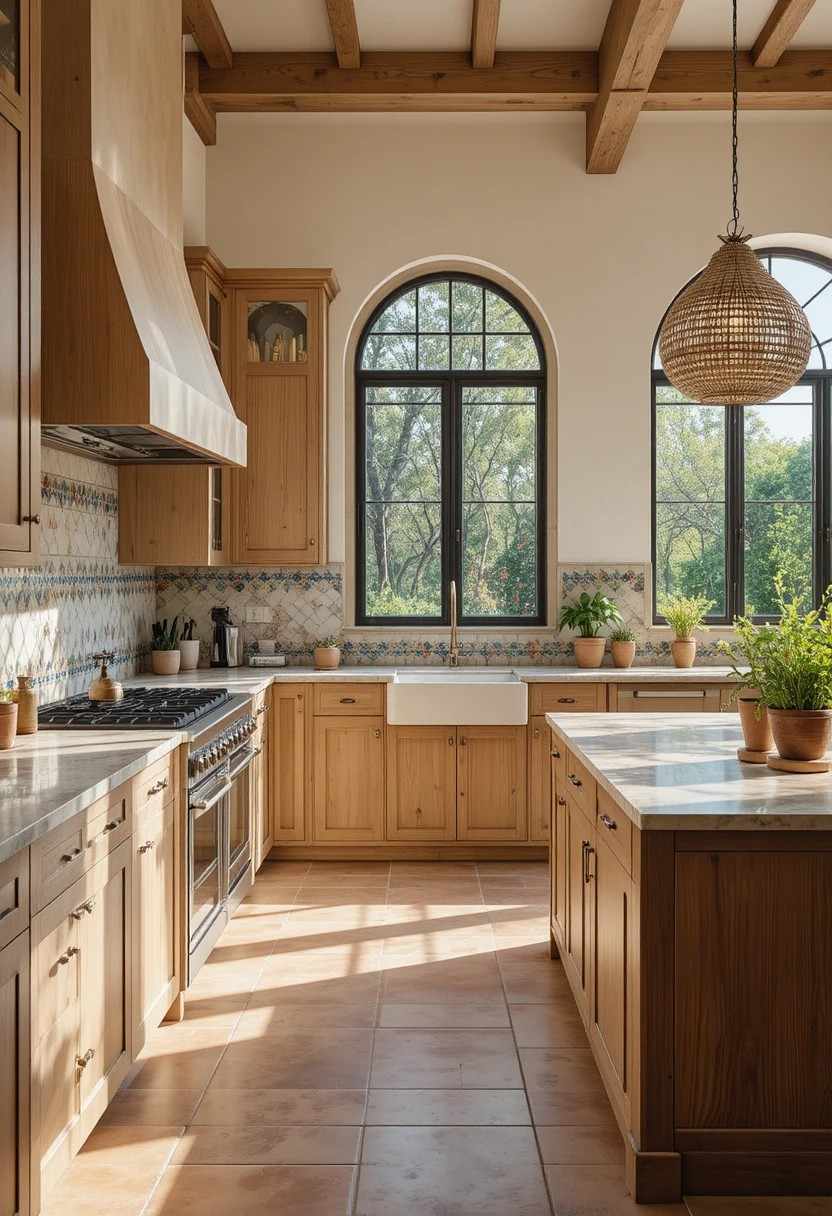
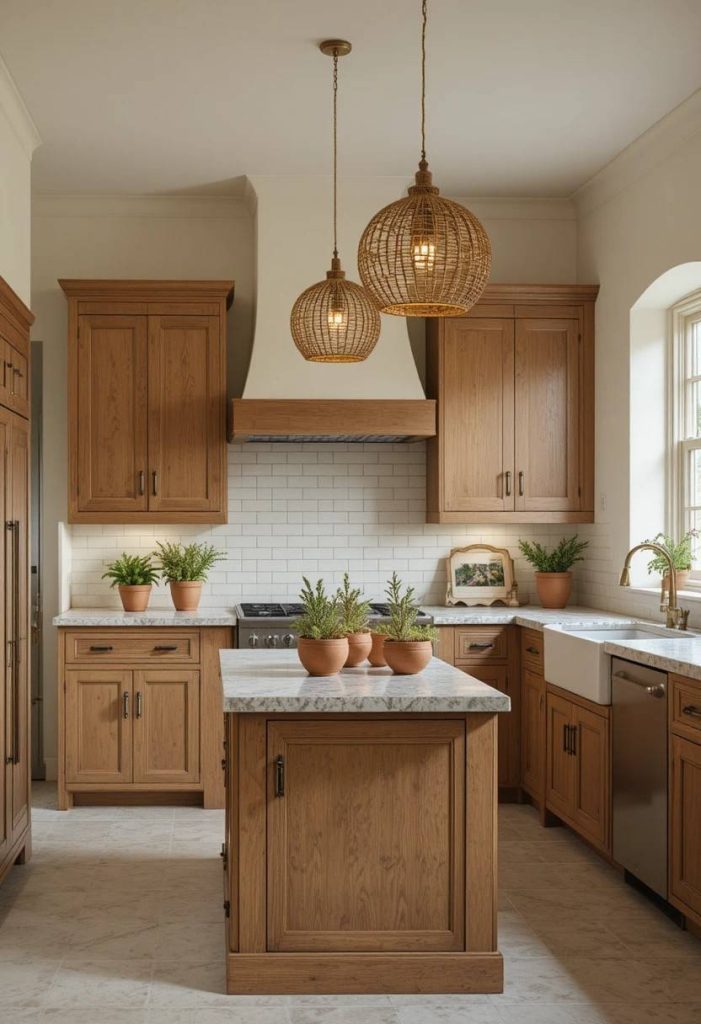
New Tuscan (2026): Warm neutral cabinetry in mushroom, putty, sage, or warm white oak; honed travertine, limestone, or soapstone countertops; lime-washed or hand-troweled plaster walls; simple wrought iron and unlacquered brass hardware; one or two hand-painted ceramic tile accents — and a lot of deliberate negative space.
The difference is the difference between a costume and a wardrobe. Old Tuscan performed Italian-ness. New Tuscan just borrows the materials, the colors, and the unhurried mood.
⚠️ Common Mistake: Most homeowners attempting this style accidentally recreate the 2000s version because they reach for the same online inspiration that’s been sitting in Pinterest since 2008. To avoid this, deliberately filter your searches for content posted in the last 12 months. The pre-2020 version of this style is the version designers are actively trying to leave behind.
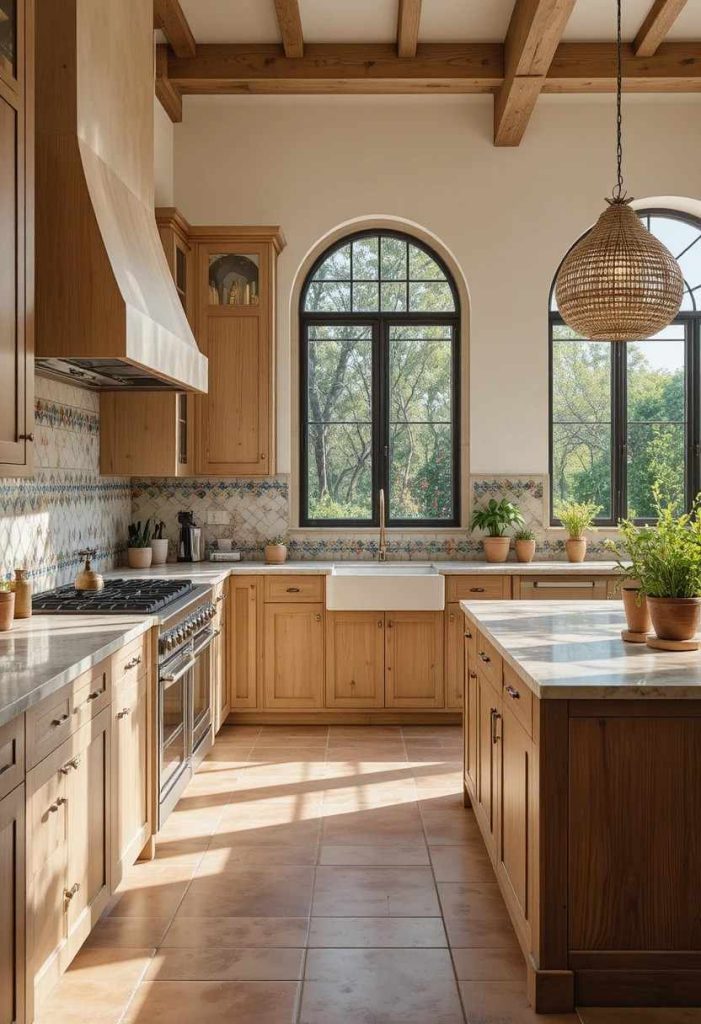
Cabinetry: The Foundation of the Look
If you only have the budget to get one thing right, make it the cabinets. They make up roughly 30–40% of a kitchen’s total visual weight, and they’re what dates a kitchen the fastest. Get the cabinets wrong and no amount of brass hardware or olive branches will save the room.
The 5 Best Cabinet Colors for a New Tuscan Kitchen
1. Warm White Oak (Natural Stained)
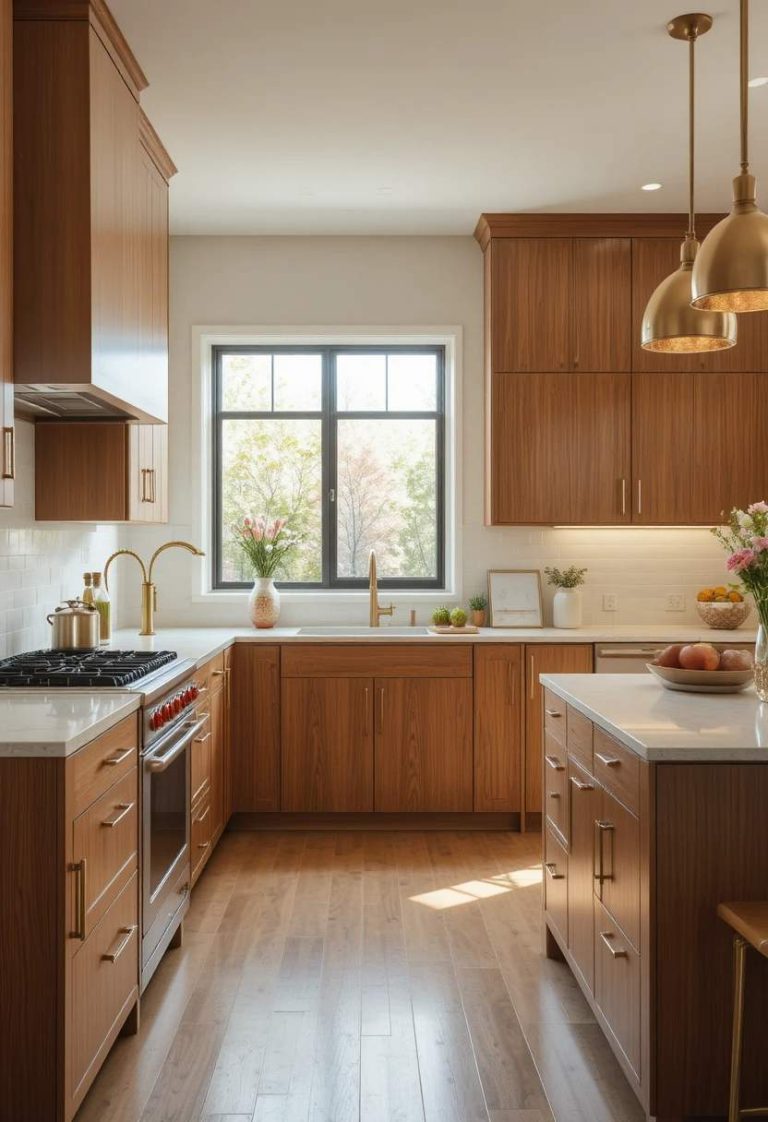
Natural white oak with a clear or warm-stained finish is the single most popular cabinet choice for the New Tuscan look in 2026. It reads warm without being heavy, shows beautiful grain, and pairs effortlessly with cream walls, honed stone, and aged brass. Look for rift-cut or quarter-sawn oak for the cleanest grain pattern.
2. Mushroom, Putty, and Stone
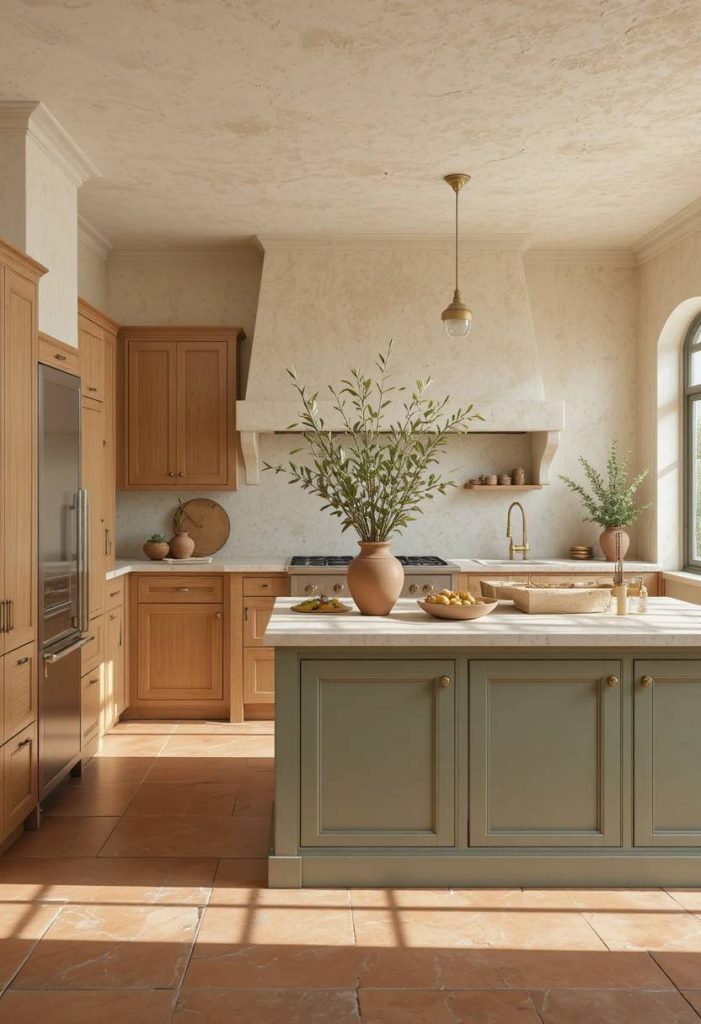
Designer Laura O’Brien of O’Brien Harris named these warm neutrals the dominant cabinet color story for 2026. Mushroom, putty, and stone all have subtle brown or green undertones that read as sophisticated and grounded — exactly the mood a New Tuscan Kitchen wants. Try Farrow & Ball’s Light Gray (No. 17), Mole’s Breath, or Benjamin Moore’s Bennington Gray for variations on this theme.
3. Sage and Olive Green
Green continues its reign as the most-searched cabinet color of 2026, but the shade has shifted. Bold emerald is out. Soft sage, eucalyptus, and a properly muted olive green are in. Farrow & Ball’s Vert de Terre (No. 234) or Lichen (No. 19) both work beautifully in a Tuscan context.
4. Warm Cream and Soft Off-White
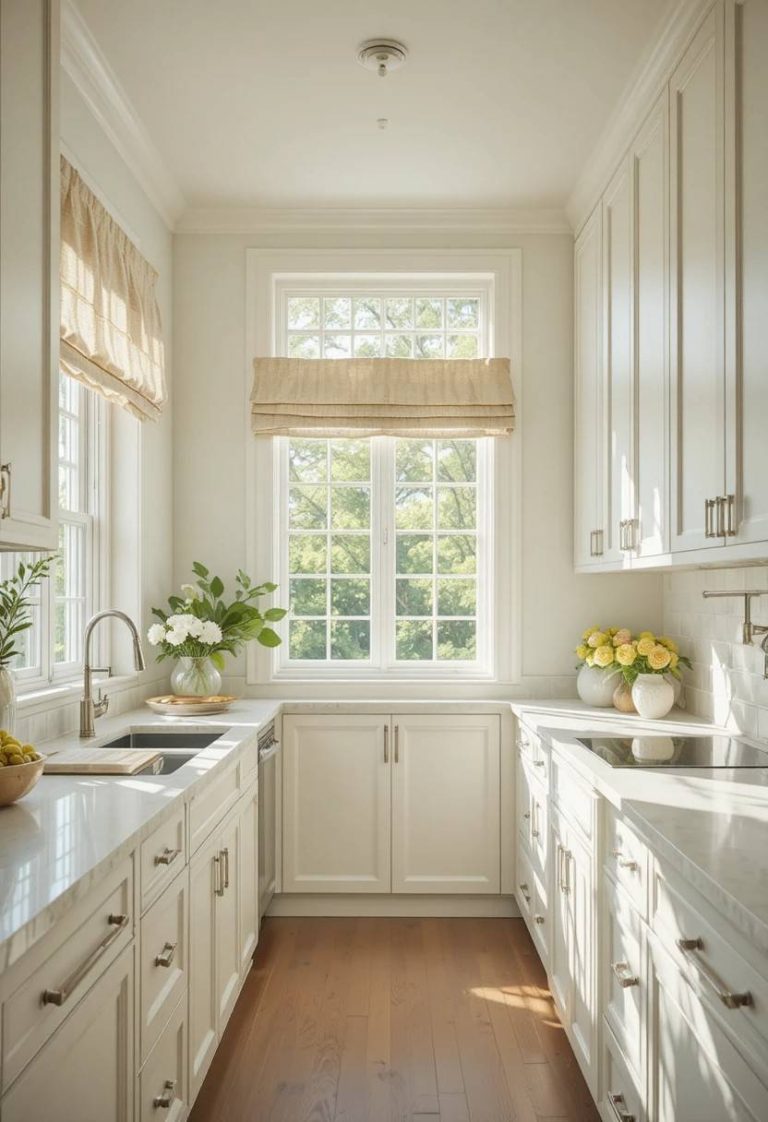
If you want the lightness of a white kitchen without the cold sterility, warm cream is your answer. Skip pure white, which fights everything else in the palette. Instead, look at Benjamin Moore’s Swiss Coffee, White Dove, or Farrow & Ball’s School House White. These read warm in every light condition.
5. Deep Aubergine or Wine (for the Brave)
For a moodier, more dramatic take on the trend, deep aubergine or wine-red cabinets paired with walnut accents and warm honed stone make a stunning statement. This works best on island cabinetry only, with lighter cabinets on the perimeter. Pair it with cream — never stark white — to avoid harsh contrast.
Cabinet Style: Keep It Simple
This is where most people overcomplicate things. The New Tuscan Kitchen calls for flat-panel or simple shaker cabinets with clean lines and minimal detailing. Skip the raised panels, the carved trim, the bullnose edges, and especially the heavy crown moldings that defined the original Tuscan kitchen.
If you want some traditional character, a simple inset shaker door with a small bevel is the sweet spot. Anything more ornate will date instantly.
💸 Budget Tip: Don’t rip out your existing cabinet boxes if they’re structurally sound. Refacing — replacing just the doors and drawer fronts — can save you 50–70% versus full replacement and gives you the same visual result. A full kitchen reface in warm oak runs roughly $4,000–$9,000, compared to $20,000–$45,000 for new custom cabinetry.
Stone: The Single Most Important Material Choice
Stone is what separates an authentic New Tuscan Kitchen from a kitchen that just kind of leans Italian. The original Tuscan style used a lot of stone too — but it was usually the wrong stone, finished the wrong way.
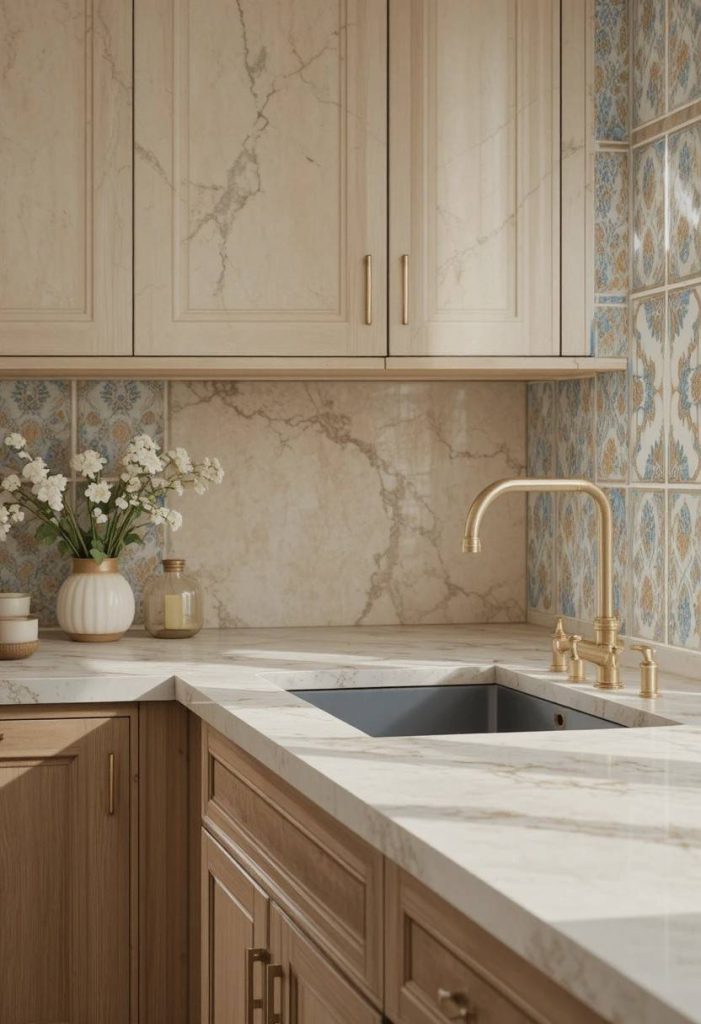
The 2026 version is much more selective. Three stones do almost all the heavy lifting: travertine, limestone, and soapstone. All three are used honed — not polished — for that matte, soft, sun-faded look.
The 4 Best Stones for a New Tuscan Kitchen
1. Honed Travertine
Travertine is the most quintessentially Italian stone, and the honed version (matte, not glossy) is having a major moment. It comes in warm cream, beige, and golden tones with subtle veining and natural texture. Use it for countertops, backsplashes, or as a single statement slab behind the range.
The catch: travertine is porous and needs to be properly sealed every 12–18 months. If you stain easily or cook with a lot of acidic ingredients, this material requires patience.
2. Limestone
Honed limestone in warm cream or sand tones is softer-looking than travertine but with a similar warm palette. It’s slightly more durable for everyday use and takes a beautiful patina over time. French limestone in particular has the perfect Tuscan look.
3. Soapstone
If you want the durability that travertine doesn’t offer, soapstone is the New Tuscan workhorse. It’s nearly non-porous, doesn’t stain, develops a beautiful patina, and ranges in color from soft warm gray to deep charcoal-green. It looks distinctly Old World without being precious.
4. Honed Quartzite (For the Lower-Maintenance Crowd)
Honed quartzite in warm cream tones (look for Taj Mahal or Perla Venata) gives you the look of travertine or marble with significantly more durability. It costs more upfront but eliminates most of the staining and etching anxiety. For families with kids or serious cooks, this is the most practical choice.
🚫 What to Avoid: Skip glossy granite of any kind — especially speckled brown and beige granite, which was the calling card of the 2000s Tuscan kitchen. Also avoid bright white Carrara marble (too cold for this palette) and engineered quartz in stark white or gray. These materials fight the warm story and will read instantly out of place.
Color: The Complete New Tuscan Palette
If you remember nothing else from this guide, save the palette. The New Tuscan Kitchen lives inside a tight color story — and the moment you stray outside it, the whole look falls apart.
The 8-Color New Tuscan Kitchen Palette
- Warm Cream — the foundational wall color (Benjamin Moore Swiss Coffee, Farrow & Ball School House White)
- Soft Putty / Mushroom — for cabinets or trim (Farrow & Ball Light Gray No. 17, Mole’s Breath)
- Warm Oak — the dominant wood tone (natural rift-cut white oak)
- Honed Travertine Beige — countertops and stone surfaces
- Sage or Muted Olive Green — accent cabinetry or single feature wall (Farrow & Ball Vert de Terre)
- Sun-Faded Terracotta — floor tile and accent pottery
- Soft Ochre — for textiles and hand-painted tile details
- Unlacquered Brass / Aged Bronze — hardware and lighting
Notice what’s missing entirely: pure white, cool gray, navy, jet black, chrome, and any bright primary color. The New Tuscan Kitchen lives in a warm-neutral lane with one or two muted accent colors — and that restraint is exactly what makes it feel elegant rather than themed.
The Wall Color Trap
This is where so many renovations go wrong. After choosing beautiful warm cabinets and stone, homeowners default to a white wall paint — and the cool undertone of standard white fights everything else in the room.
Use a warm cream paint instead. Even better, consider lime wash or a hand-troweled plaster finish for the upper walls and ceiling area. The textural variation is what gives Tuscan walls their signature glow at golden hour.
🎨 Pro Tip: Buy paint sample pots before you commit. Paint a 2×2 square on at least three walls of your kitchen and observe it across morning, afternoon, and evening light. Tuscan-style warmth depends entirely on how light interacts with your surfaces — and a color that looks perfect in the store will read completely different in your specific kitchen.
Backsplash: Where You Get to Have Fun
The backsplash is the single most expressive surface in a New Tuscan Kitchen. It’s where you introduce pattern, texture, and a touch of artisanal personality — but it’s also where homeowners overdo it most often.
The 4 Best Backsplash Options
1. Hand-Painted Ceramic Tile (Used Sparingly)
A single run of hand-painted ceramic tile in soft Mediterranean blue, ochre, and cream is the most Tuscan choice you can make. Use it only behind the range or as a focal point — not across the entire kitchen. Brands like Tabarka Studio, Ann Sacks, and Clé Tile make beautiful options.
2. Honed Stone Slab
Running your countertop stone right up the wall behind the range creates a clean, architectural look that feels both modern and Old World. Travertine and limestone slabs work beautifully here.
3. Cream Zellige Tile
Handmade Moroccan-style zellige tiles in warm cream or soft ochre give a beautiful textural variation that catches light naturally. The slight imperfections in each tile are exactly the point.
4. Hand-Troweled Plaster
For a truly authentic Old World look, take your wall plaster right down to the countertop in the backsplash area, sealed with a food-safe wax or sealer. It looks like something out of a Tuscan farmhouse — because it is.
🚫 What to Avoid: Skip glass mosaic tile, oversized subway tile, anything in cool gray or stark white, faux brick veneer, and especially the small bordered “Tuscan” tile collections sold at big-box stores. These read as the 2000s version of the trend and will date your kitchen within five years.
Hardware, Faucets, and Lighting
Hardware: Warm Metals Only
Every drawer pull, every cabinet knob, every hinge — replace anything chrome, brushed nickel, or matte black with unlacquered brass, aged bronze, or antique gold. This single swap can transform an existing kitchen for under $300.
Unlacquered brass is the most authentic choice. It will tarnish and patina over time, which is exactly the point — it ages with your kitchen instead of looking dated. Brands like Rejuvenation, Schoolhouse, and Rocky Mountain Hardware all make beautiful options at varying price points.
Faucet
Skip the pull-down chrome sprayer. Choose a bridge-style or articulating brass faucet for the most authentic Old World look. Waterworks, Newport Brass, and the Rohl Italian Brass collection are all excellent choices. For more budget-friendly options, Kingston Brass makes beautiful versions at a fraction of the price.
Lighting: Layer It Warm
Lighting is where you tie the entire room together. Aim for three layers:
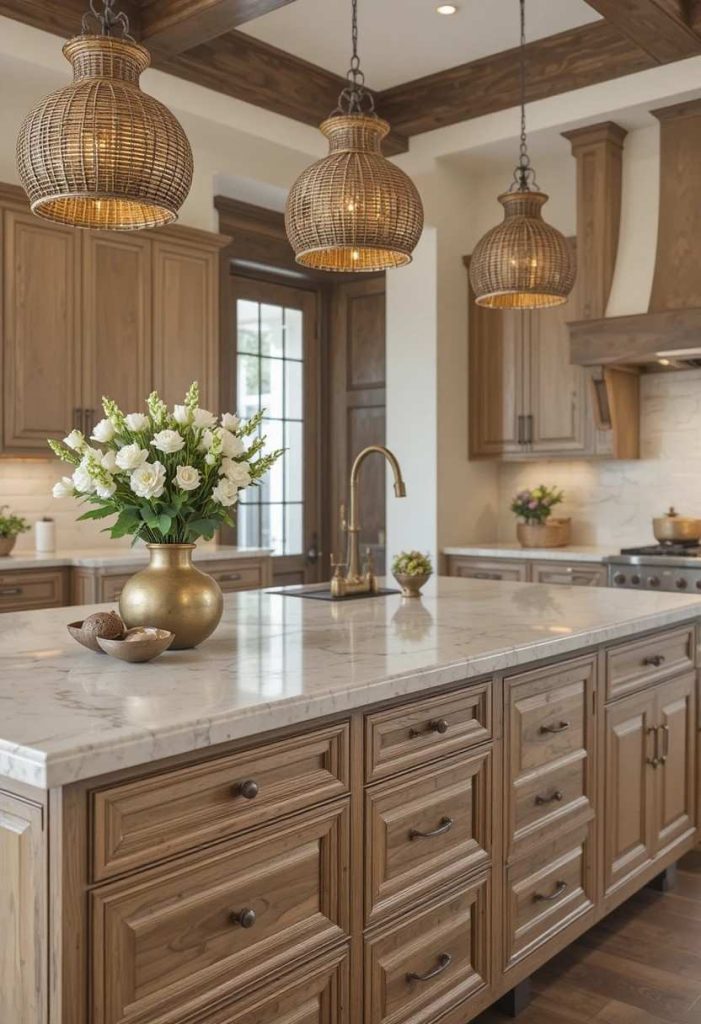
- Overhead: two or three woven rattan, aged brass, or simple wrought-iron pendants over the island
- Task: under-cabinet warm LED strips (2700K, never higher)
- Ambient: a wall sconce or two on either side of the range hood or sink window
Every bulb in the kitchen should be 2700K warm white. Cool daylight bulbs will instantly destroy the entire atmosphere you’re trying to build.
The Range Hood and Appliances
The range hood is the second-most photographed feature of any Tuscan kitchen — and it’s where the old version went catastrophically wrong with oversized, ornate plaster hoods that looked like fireplace mantels glued to the wall.
Modern Take: Plaster, Stone, or Concealed
The New Tuscan range hood is restrained. Three approaches work beautifully:
- A simple hand-troweled plaster hood with clean lines and zero ornamentation
- A stone or limestone-clad hood that matches your countertop material
- A concealed hood hidden behind an oak panel that matches your upper cabinetry
Whatever you choose, keep it simple. The hood should feel architectural — like part of the room’s structure — rather than a decorative object stuck on the wall.
Appliances: Integrated and Warm
Panel-ready appliances in warm oak to match your cabinetry are the most cohesive option, but they’re expensive. For a more budget-friendly approach, choose appliances in matte black, soft cream, or warm brushed metals from brands like Smeg, Bertazzoni, or Fisher & Paykel — all of which make ranges and refrigerators in colors and finishes that complement the Tuscan palette beautifully.
Avoid stainless steel if possible. It’s the single appliance choice that pulls a kitchen back into a cold, modern aesthetic.
The Real Cost of a New Tuscan Kitchen (And How to Save)
Here’s the honest financial picture, because nobody else is going to tell you. A full New Tuscan Kitchen renovation typically runs $35,000–$120,000 depending on your region, materials, and labor costs. Travertine alone can run $80–$200 per square foot installed. Custom oak cabinetry can hit $30,000+. Hand-painted tile backsplashes range from $40 to $300 per square foot.
But you do not need a full renovation to capture this look. The five highest-impact changes — and what they actually cost — are:
1. New paint in a warm cream — $300–$800 DIY. Single biggest visual impact for the lowest cost.
2. Swap all hardware to unlacquered brass — $200–$600. Two-hour project, transforms the entire kitchen.
3. Replace bulbs with 2700K warm LEDs — $80–$200. Changes the mood of the room instantly.
4. Add a hand-painted tile backsplash behind the range — $800–$2,500. Focal-point upgrade.
5. Reface cabinets in warm oak veneer — $4,000–$9,000. Gets you 80% of the new-cabinet look at 30% of the cost.
Tackle these in order and you’ll have a kitchen that looks like a $60,000 renovation for under $15,000.
The 7 Most Common New Tuscan Kitchen Mistakes
Every designer who works in this style has seen the same mistakes repeated again and again. Here’s what to avoid:
1. Going too dark. Espresso cabinets, dark granite, and heavy bronze fixtures make a kitchen feel cave-like. New Tuscan is about light, warmth, and breathing space.
2. Using grape, ivy, or rooster motifs. These were the calling cards of the 2000s version. Avoid them entirely — they instantly date the room.
3. Cool-toned paint. Pure white, cool gray, or anything with a blue undertone will fight every other warm element in the room.
4. Glossy finishes everywhere. Polished granite, high-gloss cabinets, glossy travertine — all wrong. Honed, matte, and hand-finished is the rule.
5. Themed accessories. Tuscan-branded canister sets, wine-themed wall art, fake grapevines on top of cabinets, decorative pasta jars in clear glass. One Tuscan element is charming. Tuscan everything is a costume.
6. Cluttered open shelving. Open shelves should be 50–60% empty. They’re not extra storage — they’re styled vignettes. Three to five intentional pieces per shelf is the rule.
7. Stainless steel everywhere. The cool tone of stainless fights the warm Mediterranean palette. Choose panel-ready appliances or warm-colored alternatives whenever possible.
Will the New Tuscan Kitchen Trend Last?
Every aesthetic has its moment, but the materials and ideas behind the New Tuscan Kitchen — natural stone, honest wood, hand-finished surfaces, warm neutral palettes — have been beautiful in Italian farmhouses for literal centuries. They didn’t suddenly become beautiful in 2026, and they won’t suddenly stop being beautiful in 2030.
This is one of those rare “trends” that’s actually a return to fundamentals. Kitchens built in this style today will age more gracefully than almost any other current option on the market. They don’t depend on a specific fad-color or a particular trendy fixture — they depend on materials and proportions that have been working for hundreds of years.
So if you’ve been waiting for the right moment to renovate, this is it. The era of cold, perfect, magazine-photo kitchens is fading. The era of warm, lived-in, slow kitchens that actually feel like home is here.
Open the windows. Pour yourself something nice. Welcome home.