Tuscan Style Home Exterior: 20 Stunning Stucco, Stone, and Tile Roof Designs
Twenty real-world Tuscan exterior ideas — plus the honest cost, maintenance, and color-undertone advice no Pinterest board will tell you. Build or renovate without the expensive regrets.
There’s a reason Tuscan-style homes are dominating Pinterest, Houzz, and luxury real estate listings in 2026. After more than a decade of cold gray modern farmhouses and stark white minimalist boxes, homeowners are returning to architecture that actually feels warm — sun-washed stucco, terracotta tile roofs, hand-laid stone, arched wooden doors, and the unmistakable glow of an Italian villa at golden hour.
But here’s the truth nobody mentions in those gorgeous inspiration photos: building or renovating a Tuscan-style exterior is full of expensive traps. Choose the wrong stucco color and your house will look pink for the next 20 years. Pick the wrong stone veneer and you’ll have an uneven, muddy facade. Install clay tile improperly and you’ll deal with leaks, breakage, and structural problems that cost more to fix than a whole new roof.
This guide gives you 20 stunning Tuscan exterior design ideas — but more importantly, it tells you exactly what to watch out for at every step. Whether you’re building from scratch, renovating an existing home, or just dreaming about your future villa, this is the article you actually need before you spend a dollar.
What Makes a Tuscan-Style Exterior?
A true Tuscan-style home exterior draws from the farmhouses and villas of central Italy — sun-baked stucco walls, low-pitched clay tile roofs, hand-stacked stone accents, arched windows and doors, exposed wooden beams, and wrought iron details. The aesthetic is built around warmth, weathering, and the kind of unhurried Old World character that takes centuries to develop naturally.
The 2026 version is slightly more refined than the McMansion-style Tuscan homes of the early 2000s. Lines are cleaner, colors are softer, ornamentation is restrained, and there’s a growing emphasis on authenticity — real stucco over synthetic, hand-laid stone over peel-and-stick veneer, and clay tile over composite alternatives.
1. Warm Cream Stucco with a Terracotta Tile Roof
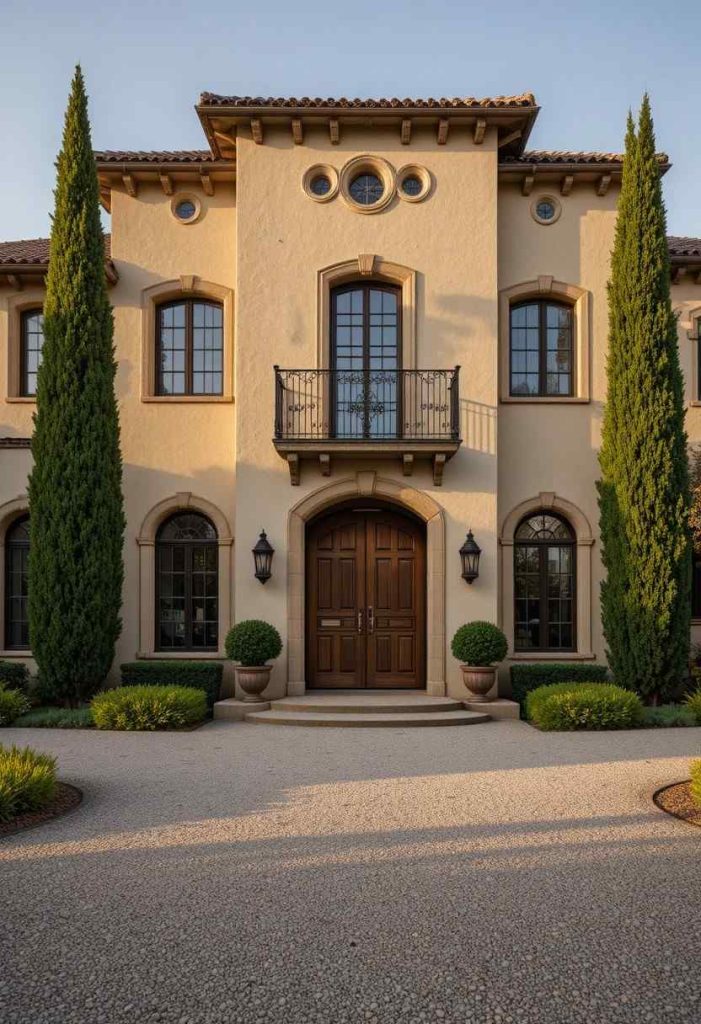
The most quintessential Tuscan combination: warm cream or off-white stucco walls topped with a barrel-tile clay roof in classic terracotta orange. This palette works in nearly every climate and ages beautifully over decades, developing the soft patina that defines authentic Italian farmhouses.
Critical detail: choose a stucco color with yellow or red undertones (warm base), never blue or gray. A cream that looks neutral on the paint chip will read distinctly pink or yellow against the warm light reflected by a red clay roof. Get your color sampled and viewed at multiple times of day before committing.
2. Soft Ochre Stucco with Wrought-Iron Balcony Detail
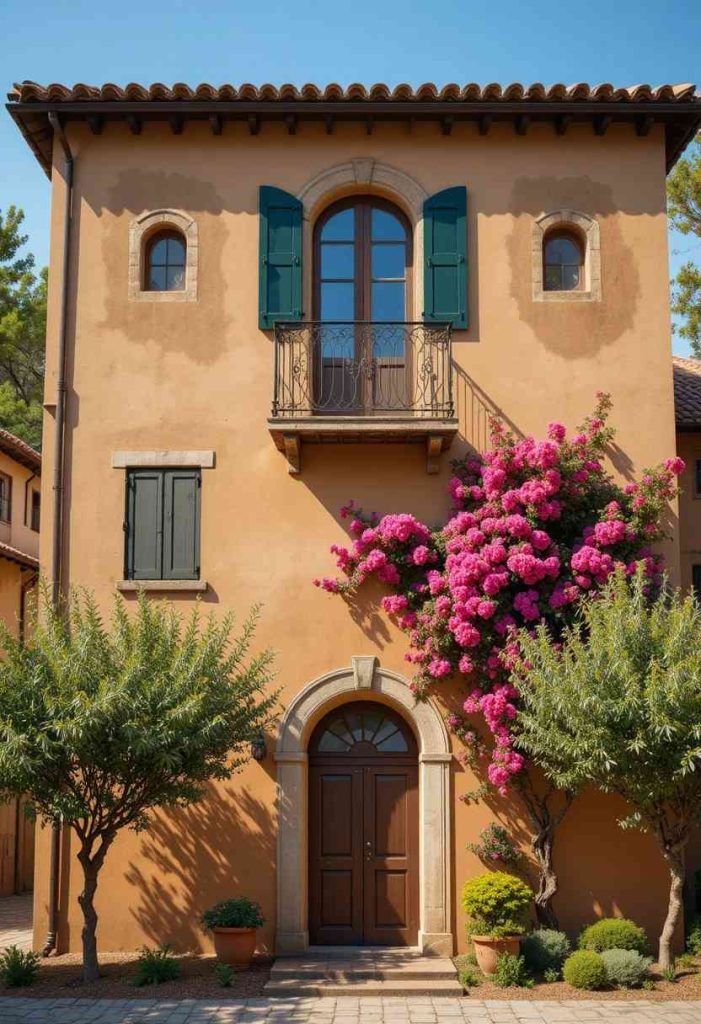
For homeowners who love color, soft ochre or muted gold stucco is the bolder Tuscan choice — and it’s making a major comeback in 2026. Pair it with small wrought-iron Juliet balconies under upper windows, dark forest green or chocolate brown shutters, and a deep terracotta roof for a facade that looks pulled directly from a Florentine hillside.
Pro tip from stucco professionals: integral-color stucco (where pigment is mixed into the cement itself) holds gold and ochre tones far better than painted stucco. Painted stucco in saturated yellows fades within 7–10 years; integral color lasts decades.
3. Hand-Stacked Limestone Facade Accent
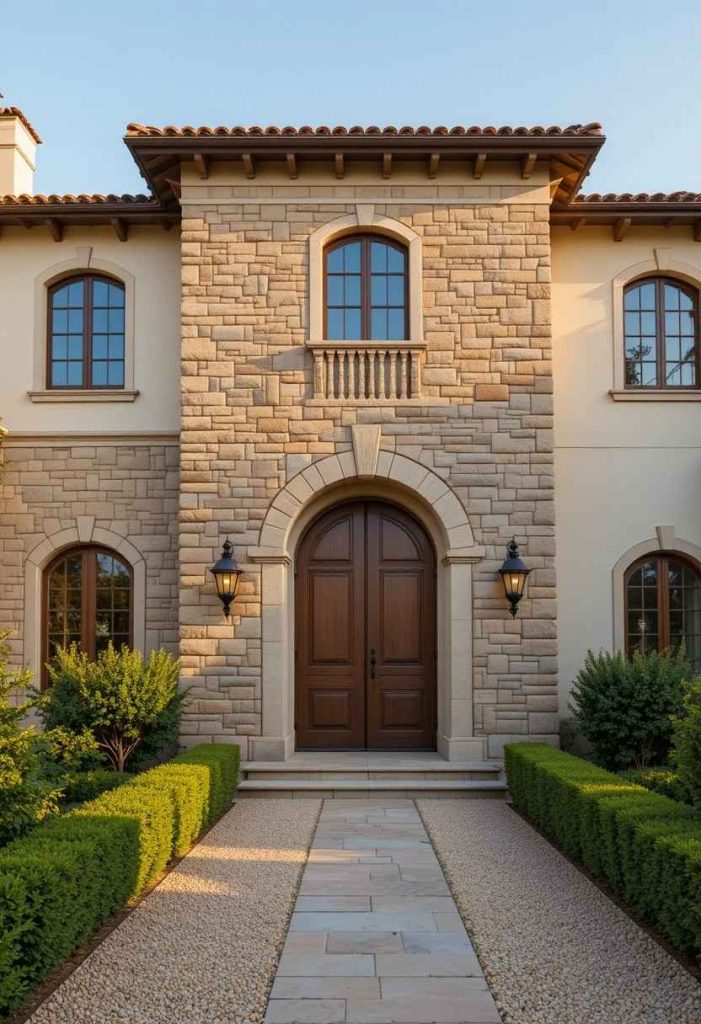
A partial stone facade — either across the entire ground floor or as a turret/tower accent — instantly elevates a Tuscan exterior from generic Mediterranean to genuinely architectural. Hand-laid limestone in warm sand, beige, and golden tones is the most authentic choice, but quality manufactured veneer like Eldorado Stone’s Cypress Ridge has gotten remarkably good.
Avoid stone veneer in cool grays or tan-and-gold blends — they fight the warm stucco palette. Look specifically for veneers with sundrenched gold, earthy brown, and faint olive undertones.
4. Arched Wooden Entry Door with Wrought-Iron Hardware
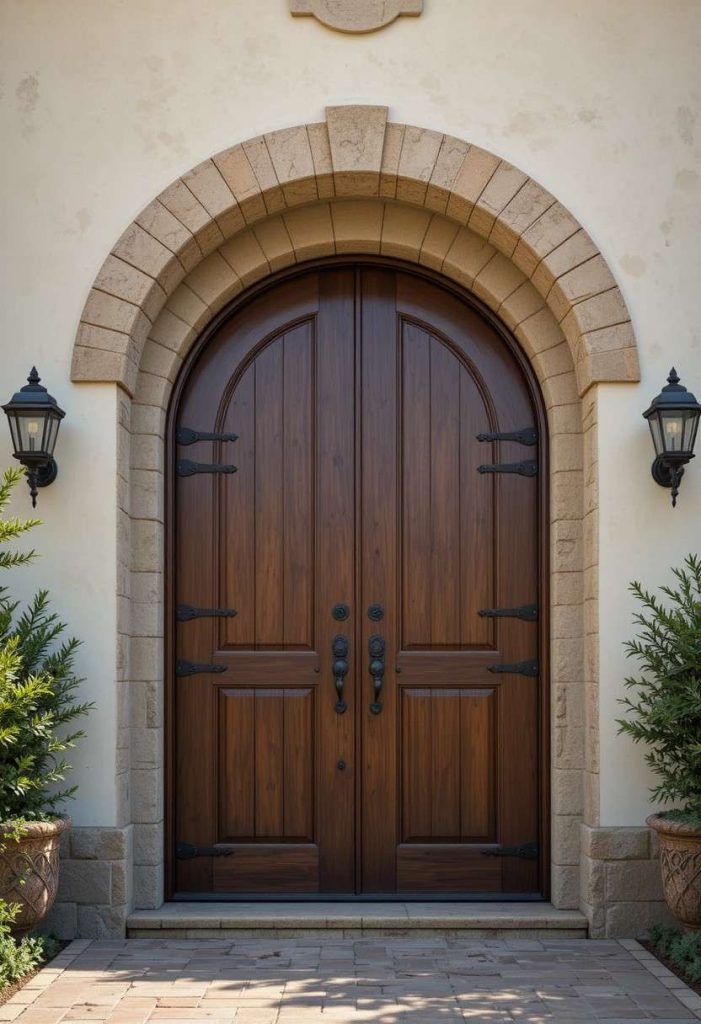
The entry door is arguably the single most important feature of a Tuscan exterior. A massive arched wooden door in deep walnut, chestnut, or aged oak — with hand-forged iron straps, a clavos pattern of decorative nails, and a heavy iron knocker — anchors the entire facade and signals “Italian villa” before anyone reads the architecture.
Custom Tuscan-style doors run $3,500–$15,000 depending on size and craftsmanship. Companies like Pinky’s Iron Doors and Borano make stunning options. For tighter budgets, a stock arched door from Simpson Door Company can be customized with iron straps for a fraction of the cost.
5. Low-Pitched Hip Roof with Exposed Rafter Tails
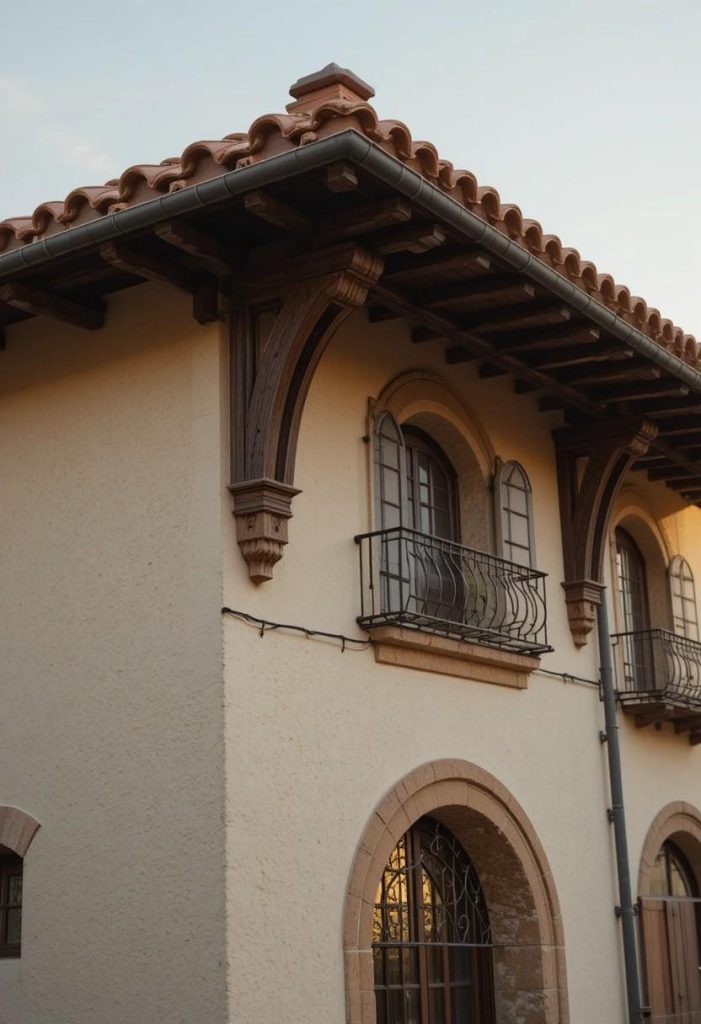
Authentic Tuscan roofs have a low pitch (usually 4:12 or shallower) with deep overhangs and exposed wooden rafter tails. The shallow pitch reflects centuries of Mediterranean climate adaptation — steep roofs aren’t needed when snow isn’t a concern, and shallow roofs handle wind and sun better.
If your existing home has a steeper Colonial or Cape Cod roofline, switching to a true Tuscan roof pitch may require significant structural work. Many homeowners compromise by keeping the existing pitch but replacing asphalt with clay tile — the result is still beautiful, but not architecturally pure.
6. Tuscan Courtyard Entry with Stone Archway
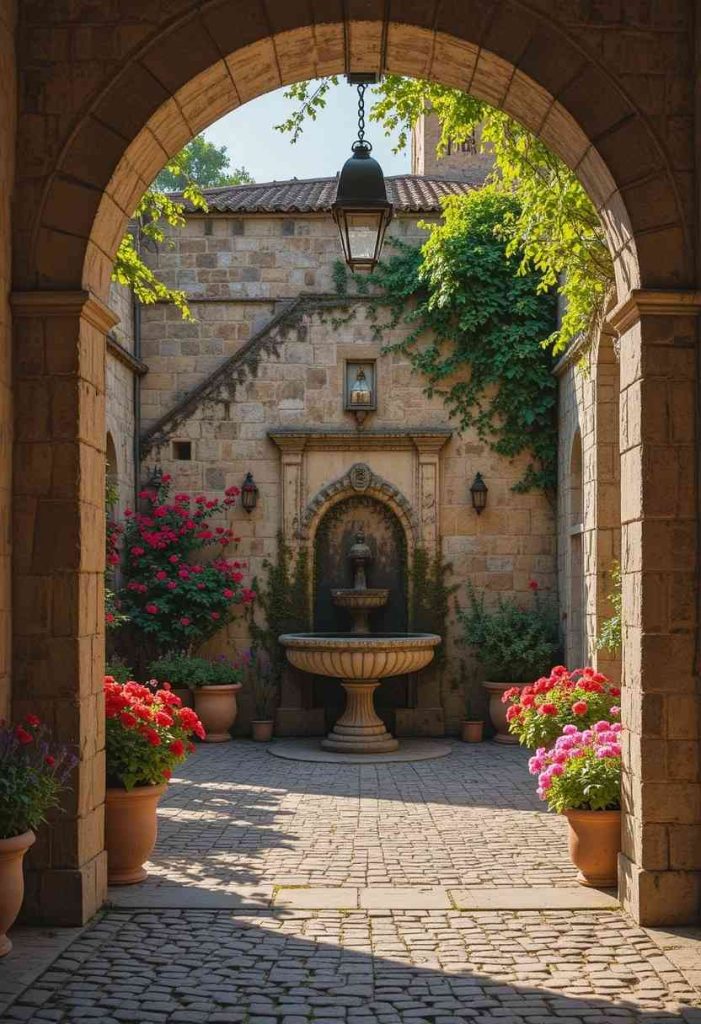
A walled courtyard entry — accessed through a stone or stucco arched gateway — is one of the most romantic features of authentic Tuscan architecture. It creates privacy, defines the entry experience, and gives you a sheltered outdoor room for fountains, pottery, and climbing plants.
Courtyards work best on flat or gently sloped lots and typically require a deeper front setback than tract homes provide. If you’re building new, advocate for this feature early in the design process — adding a courtyard later is structurally difficult and expensive.
7. Tuscan Tower Element for Vertical Drama
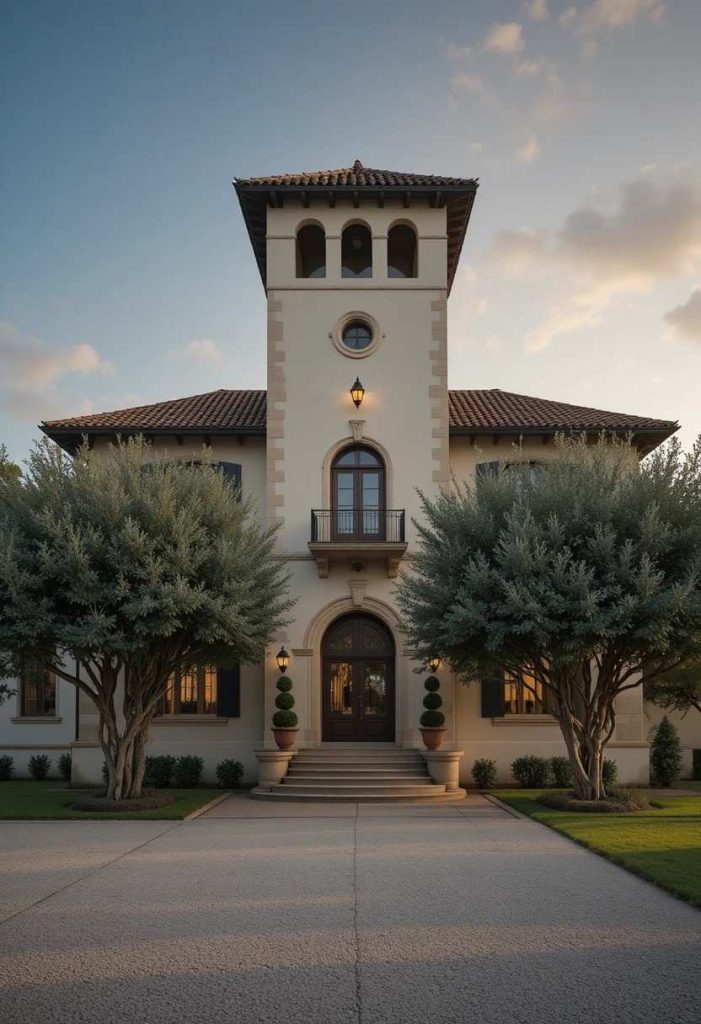
A small tower or turret element — usually two or three stories tall and capped with a low-pitched pyramidal clay tile roof — gives a Tuscan exterior asymmetry, vertical interest, and a distinctly Italian villa silhouette. Towers were originally defensive features in medieval Tuscan villages and now read as architectural drama.
The tower can house a stairwell, a small loft, a wine cellar (in the base), or even just a beautiful arched-window reading nook. Adding a tower to an existing home is expensive — budget $40,000–$120,000 — but it transforms the entire facade more than any other single change.
8. Arched Loggia or Covered Outdoor Living Space
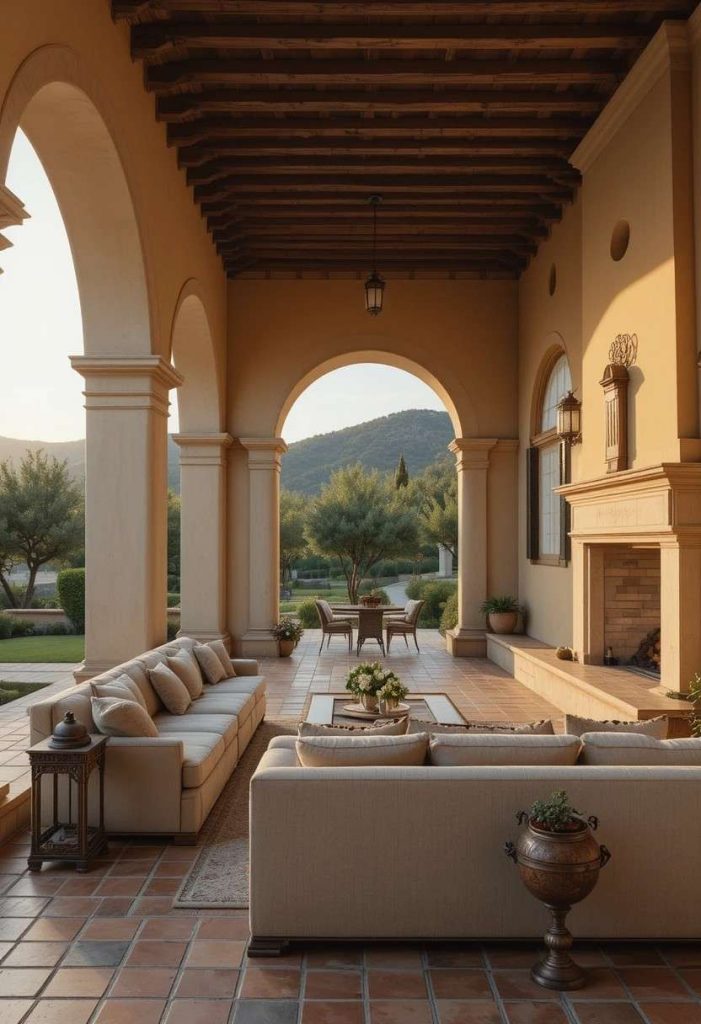
A loggia — a covered outdoor room with arched openings — is one of the most beloved features of Tuscan architecture. Whether attached to the back of the house overlooking the garden or built into a front courtyard, the loggia gives you an outdoor living space that works in sun, rain, and shoulder seasons.
Frame the loggia with three or more stucco arches supported by simple columns, top it with the same clay tile as your main roof, and floor it with terracotta tile or honed travertine. Add a wood-burning fireplace for cooler evenings and you’ve created a year-round outdoor room.
9. Wrought-Iron Window Grills (Rejas)
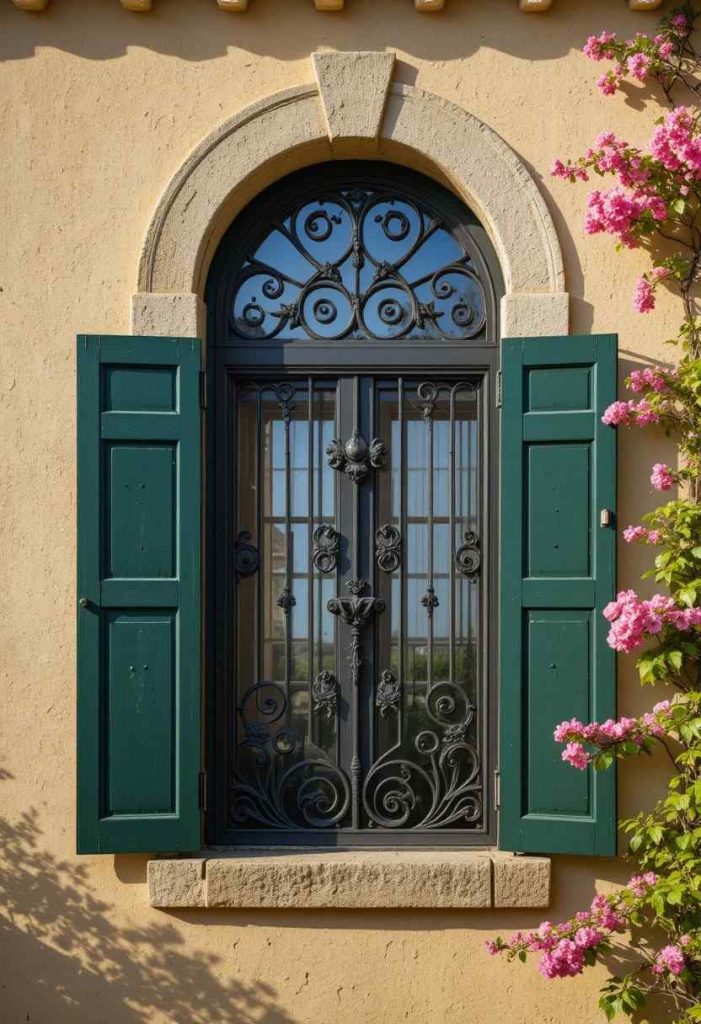
Decorative wrought-iron window grills, called rejas, are a signature Tuscan feature — originally protective, now purely architectural. The 2026 version is restrained: simple straight bars or modest scroll patterns, never the heavy ornate cages of the 2000s McMansion era.
Custom iron grills run $200–$600 per window. Pre-fabricated options from companies like First Impression Ironworks start around $80. Choose hand-forged over machine-bent when possible — the slight irregularities are exactly what gives the rejas their authentic Old World character.
10. Stone-Trimmed Arched Windows
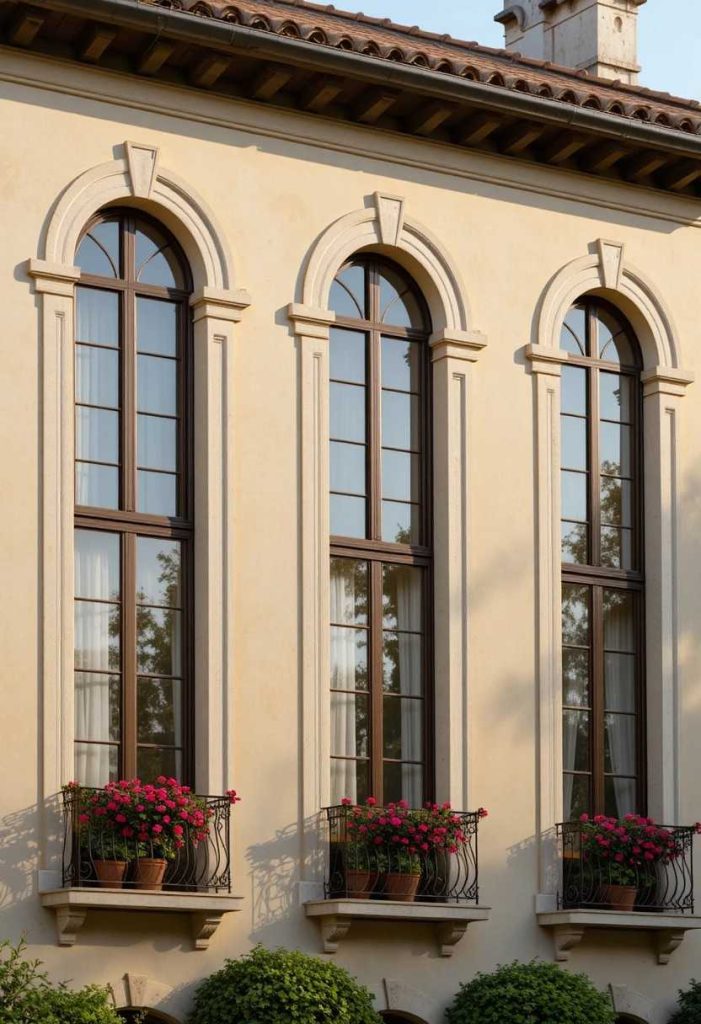
Surrounding arched windows with limestone or travertine trim — even just a thin 4-inch band — adds an architectural weight and Old World refinement that simple stucco-around-windows can’t match. The contrast between warm cream stucco and pale stone is one of the most photogenic details in all of Tuscan architecture.
Cast stone (cement formed in molds to look like limestone) is significantly cheaper than real stone and works beautifully for window trim. Real limestone trim adds $80–$200 per window in materials; cast stone trim adds $30–$70 per window.
11. Tuscan Front Garage with Hand-Carved Wooden Doors
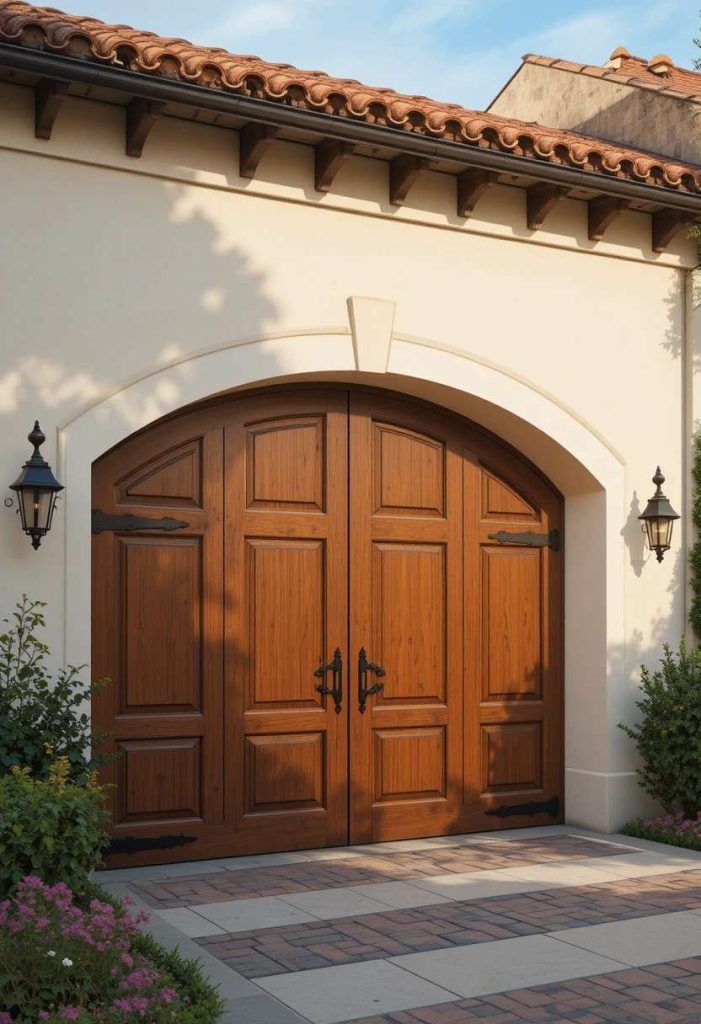
The garage is the most-overlooked element of curb appeal — and in Tuscan architecture, it’s where many homes fall apart visually. A standard white sectional garage door under a Tuscan facade looks instantly cheap and inauthentic.
Upgrade to a wooden carriage-style garage door in deep walnut or chestnut, ideally with hand-forged iron strap hardware and small decorative windows. The upgrade runs $4,000–$15,000 per door but transforms the entire front of the house. Companies like Clopay’s Reserve Collection and Bridgeport make stunning options.
12. Cypress Trees and Olive Trees as Architectural Framing
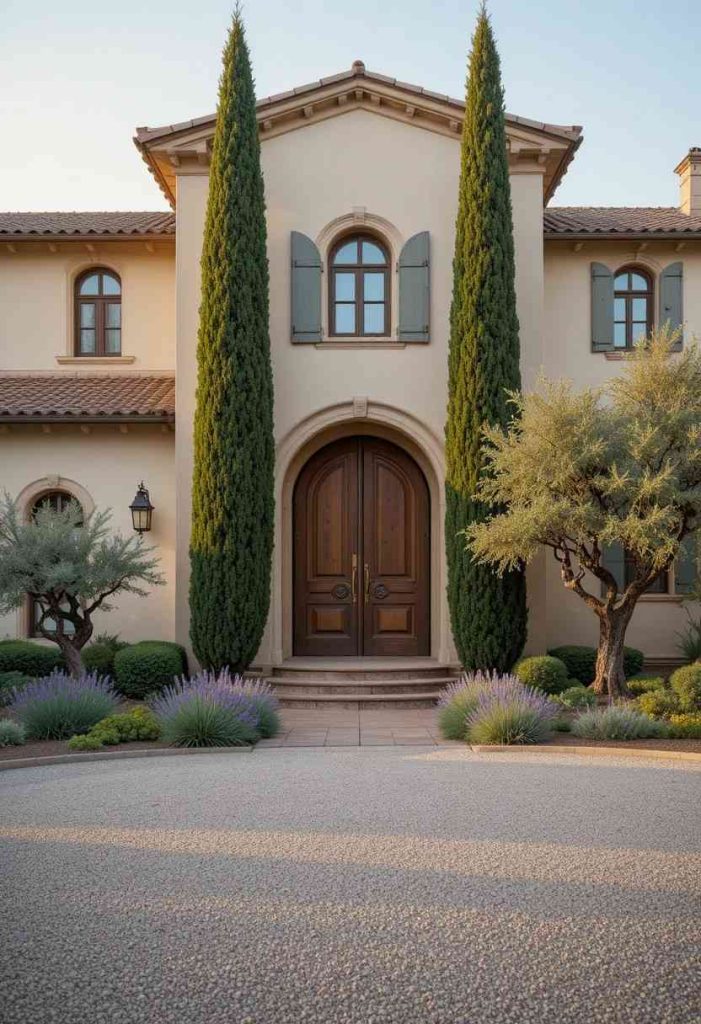
The single most overlooked element of a beautiful Tuscan exterior is the landscaping that frames it. Italian cypress trees flanking the entry, mature olive trees in the front yard, and lavender or rosemary lining the walkways do enormous emotional work — they signal “Tuscany” before anyone notices a single architectural detail.
Buy the largest Italian cypress you can afford and plant them in pairs. Mature olive trees (10+ years) can be purchased and transplanted for $800–$5,000 each. Avoid traditional American landscape choices like pine trees, ornamental Bradford pears, or lawn-heavy designs — they fight the Mediterranean aesthetic at every level.
13. Terracotta Pottery and Lavender at the Entry
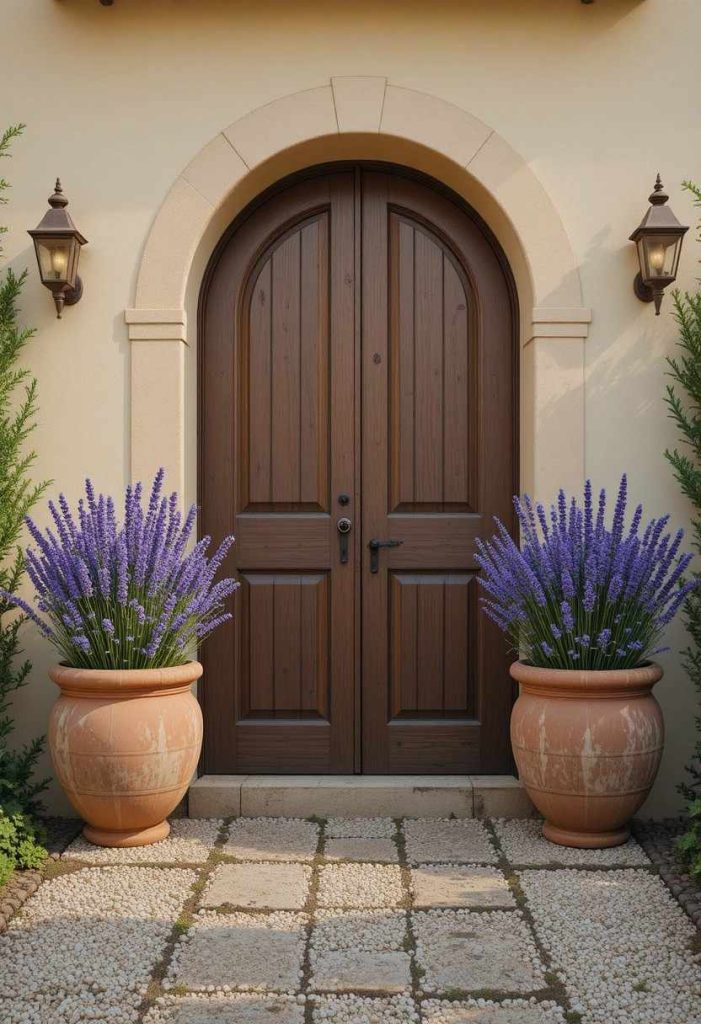
A pair of oversized weathered terracotta pots flanking the front door, planted with lavender, rosemary, or small olive trees, is the cheapest Tuscan upgrade you can make to any existing home. The contrast of clay pot and silver-green plant against warm stucco is essentially the Tuscan visual language in miniature.
Buy genuine weathered Italian terracotta when possible — Mexican and Vietnamese terracotta is cheaper but often cracks in colder climates. Brands like Seibert & Rice and Wilstone Garden Antiques import authentic Impruneta terracotta from Tuscany itself.
14. Stone Chimney as a Sculptural Exterior Feature
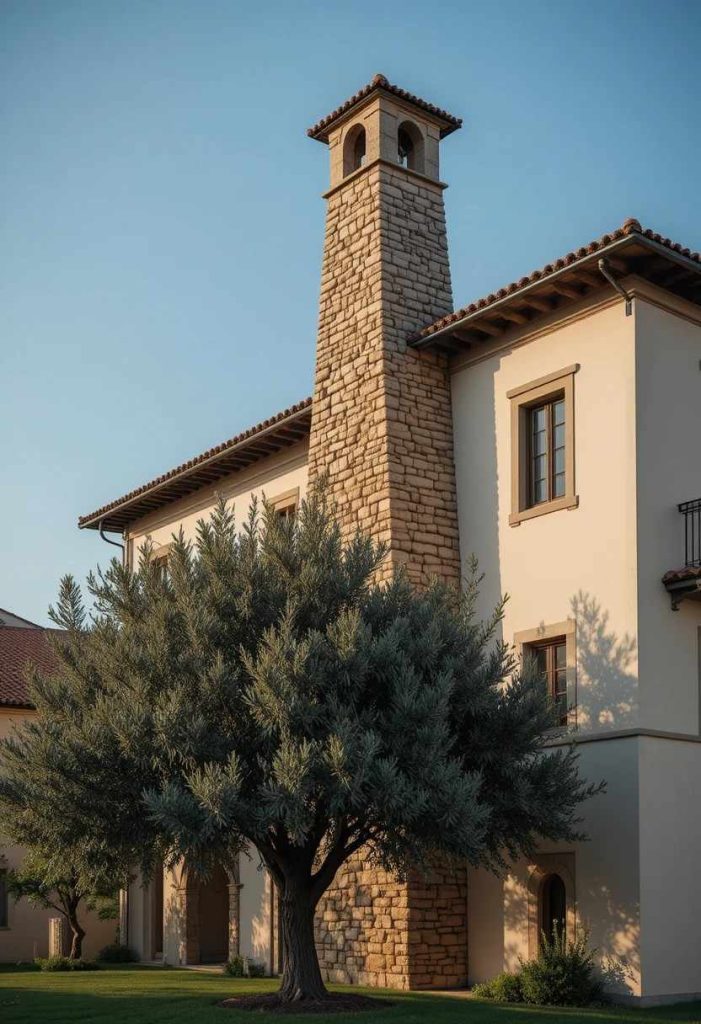
A massive hand-stacked stone chimney on the side or back of a Tuscan home — extending well above the roofline and capped with a clay tile cap — is one of the most photogenic exterior features in the entire style. It signals craftsmanship, anchors the facade visually, and provides a stunning vertical counterpoint to long horizontal stucco walls.
For new construction, plan the chimney into the design early. For renovations, an exterior stone chimney chase can be built around an existing flue for $8,000–$25,000 depending on size and stone choice.
15. Tuscan Cottage with Mixed Stucco and Stone Walls
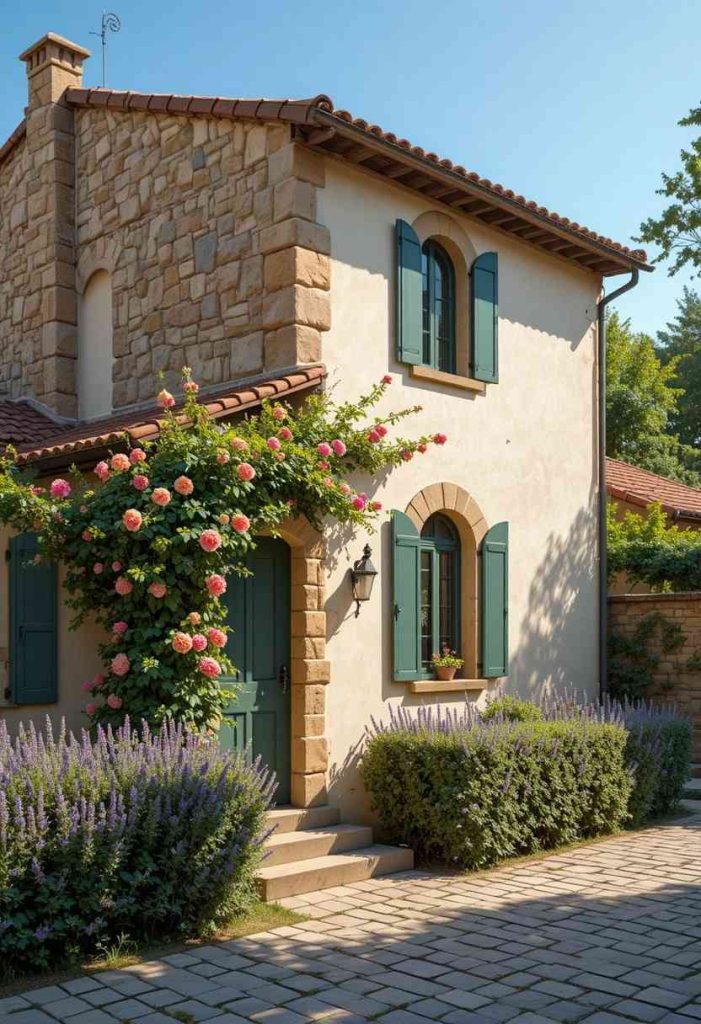
For smaller homes and cottages, alternating sections of stucco and stone — a stone gable end, stucco walls elsewhere, a stone half-wall around an entry — creates the kind of layered, evolved-over-time facade that defines authentic Italian villages. Avoid the temptation to apply stone uniformly across the whole house; the magic is in the irregularity.
This approach is also forgiving for renovations where the existing facade has different materials. Embrace the variation rather than fighting it with paint and overlay.
16. Pergola or Vine-Covered Trellis on the Facade
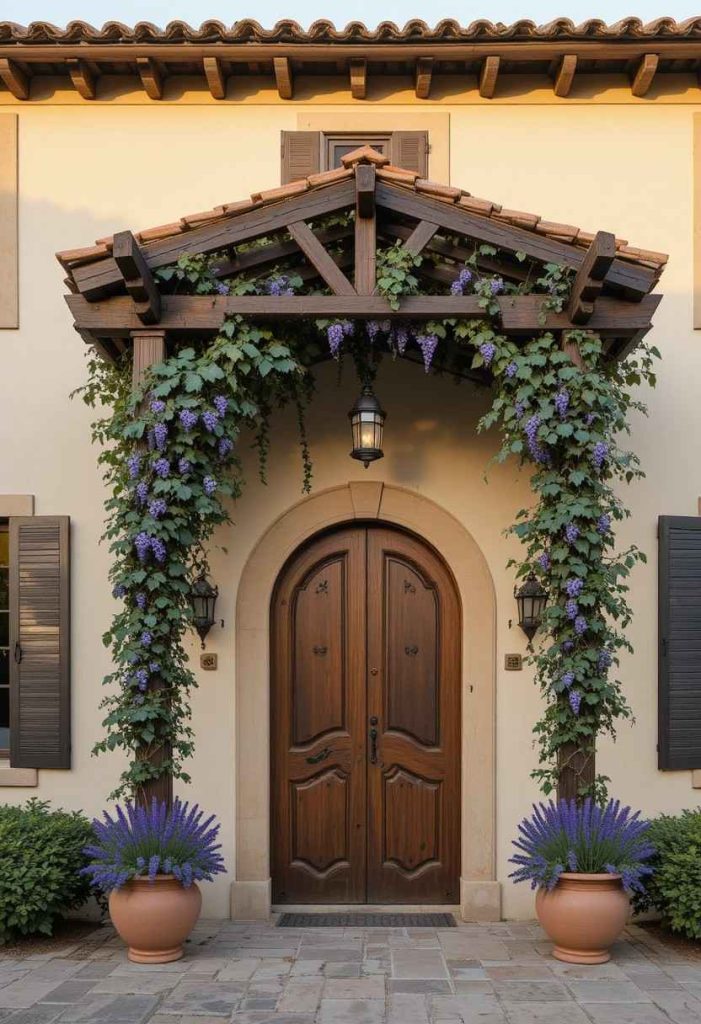
A simple wooden pergola attached to the facade — over the entry, along a side wall, or across a back patio — draped in grape vines, wisteria, or climbing roses adds the kind of soft, weathered Italian charm that no amount of fresh paint can replicate. The vines also provide natural shading and reduce summer cooling costs.
Choose heavy timber for the pergola, not lightweight pressure-treated 2x6s. The structure should look substantial and ancient, like it could have been there for 80 years. Brown stain or natural weathered finish is far more authentic than fresh-looking paint.
17. Tuscan Pool House or Detached Casita
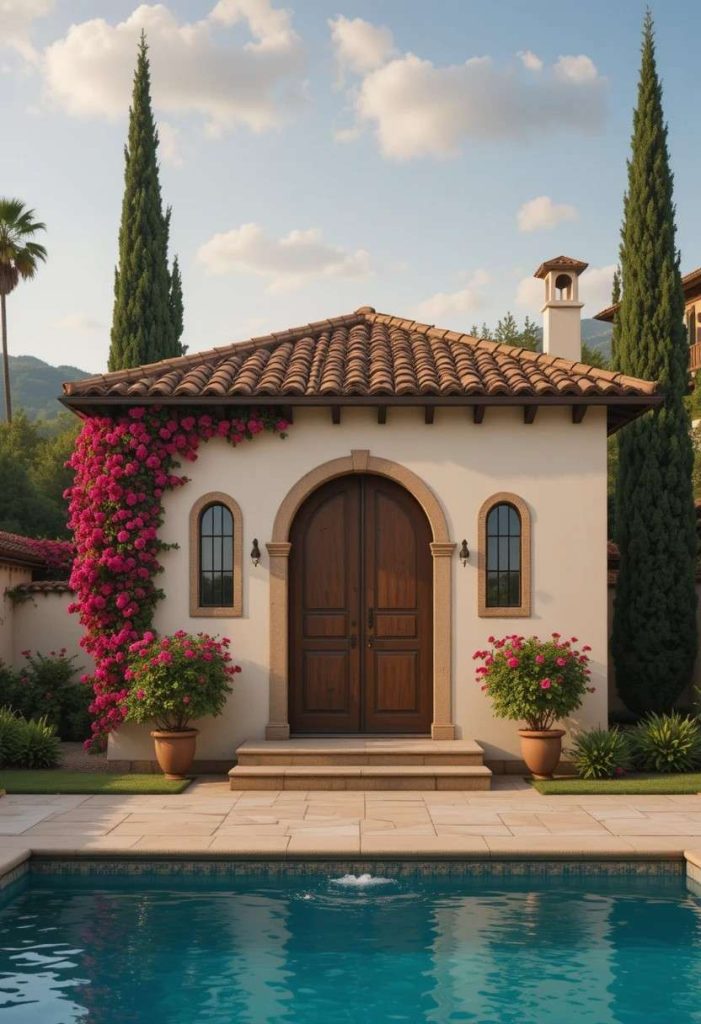
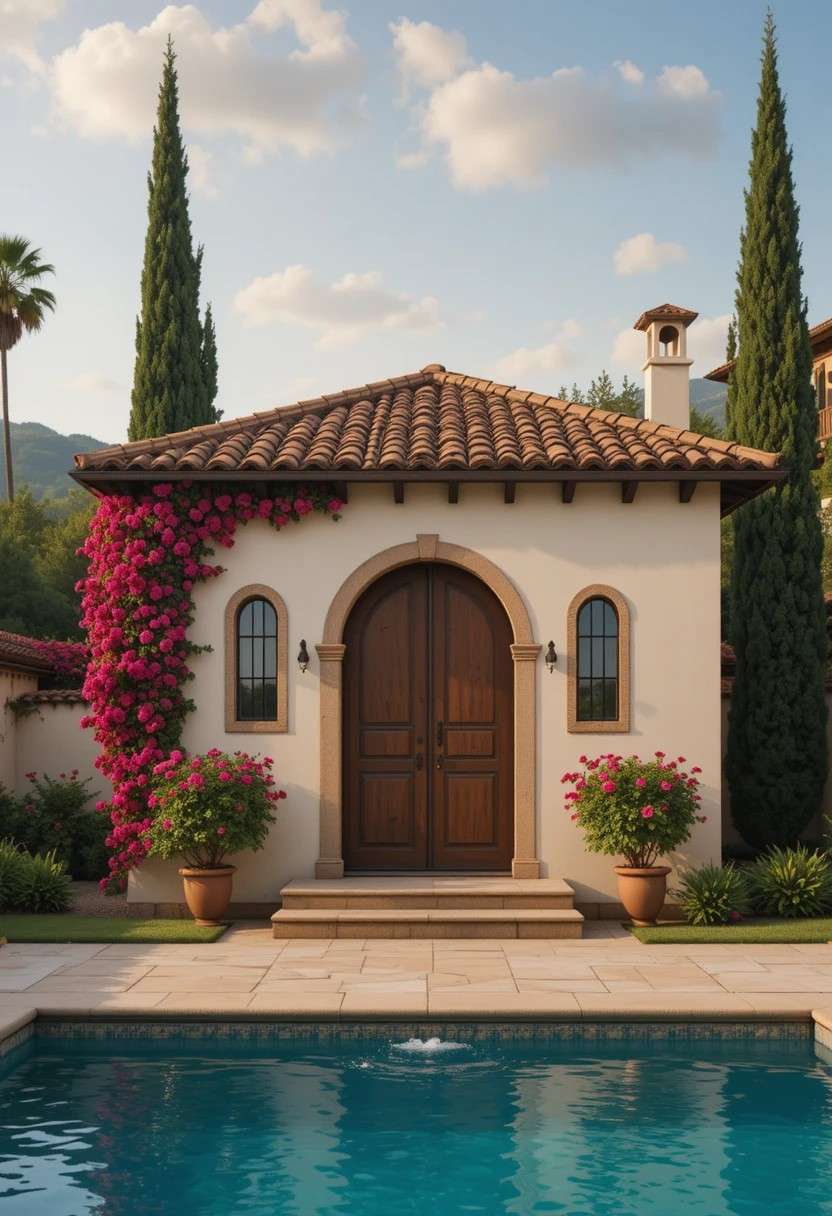
A small Tuscan-style outbuilding — pool house, casita, guest cottage, or garden shed — multiplied across a property creates the visual rhythm of an actual Italian estate. Even a tiny 200-square-foot pool house designed in matching cream stucco with a clay tile roof transforms a modest backyard into a destination.
Detached structures are often easier to build than additions because they avoid the complications of tying into existing rooflines and foundations. Budget $200–$400 per square foot for a quality Tuscan-style outbuilding.
18. Hand-Painted Tile House Number Plaque
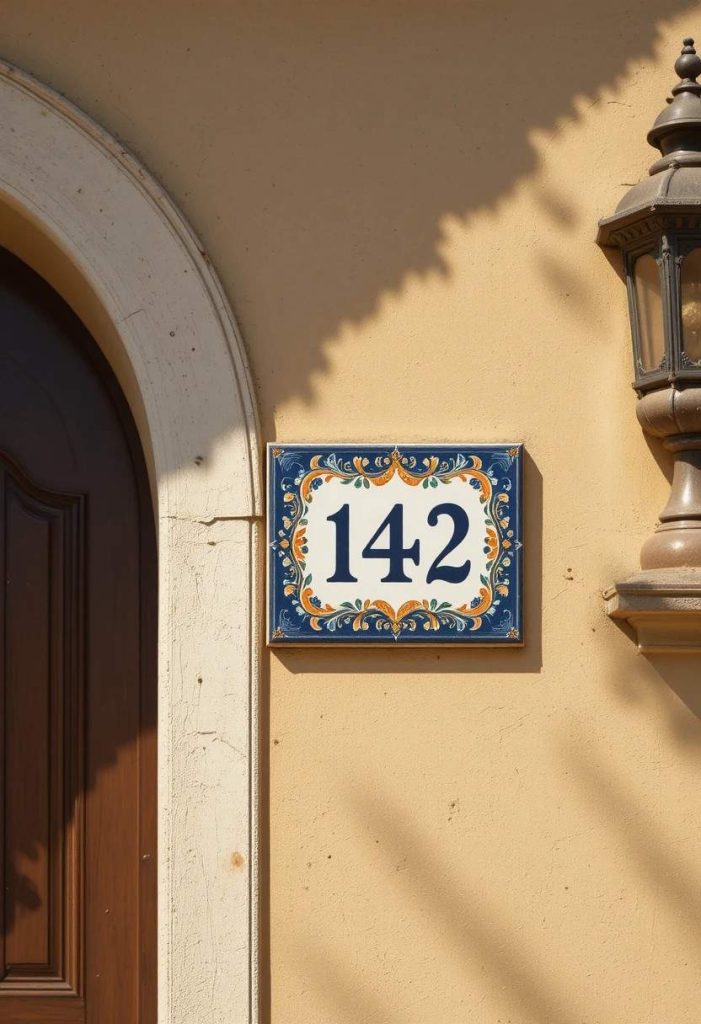
The house number is one of those small details that can make or break a Tuscan facade. Skip the modern brushed-metal address numbers and install a hand-painted ceramic tile plaque — typically Italian or Spanish — beside the entry door or set into the stucco itself.
Custom hand-painted tile plaques run $80–$300. Tabarka Studio, Tierra y Fuego, and many Etsy artisans create beautiful options. This is a small change with disproportionate impact on perceived authenticity.
19. Outdoor Wood-Fired Pizza Oven as Facade Feature
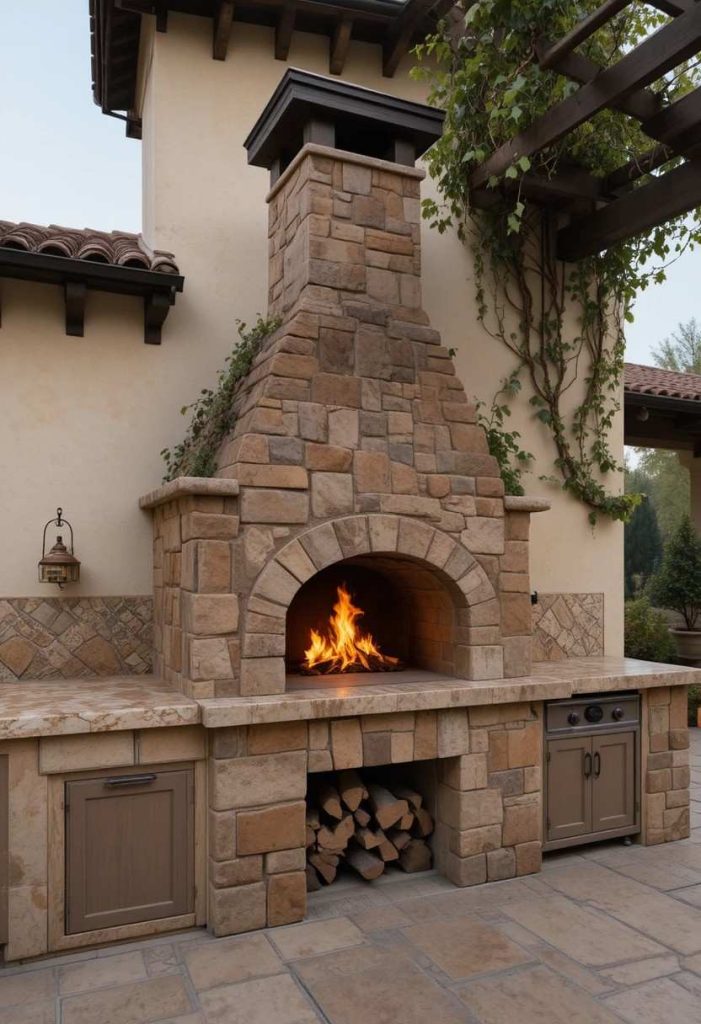
An exterior wood-fired pizza oven, clad in stone or stucco and incorporated into the facade of an outdoor kitchen or back patio, has become a signature feature of high-end Tuscan homes in 2026. Beyond the obvious functional appeal, the oven adds architectural mass, warmth, and a distinct Italian-villa character.
Pre-fab pizza oven kits from companies like Forno Bravo or Mugnaini start around $3,500. Full custom installations with stone cladding and stucco finishing typically run $8,000–$25,000.
20. Lighting: Copper Sconces and Iron Lanterns
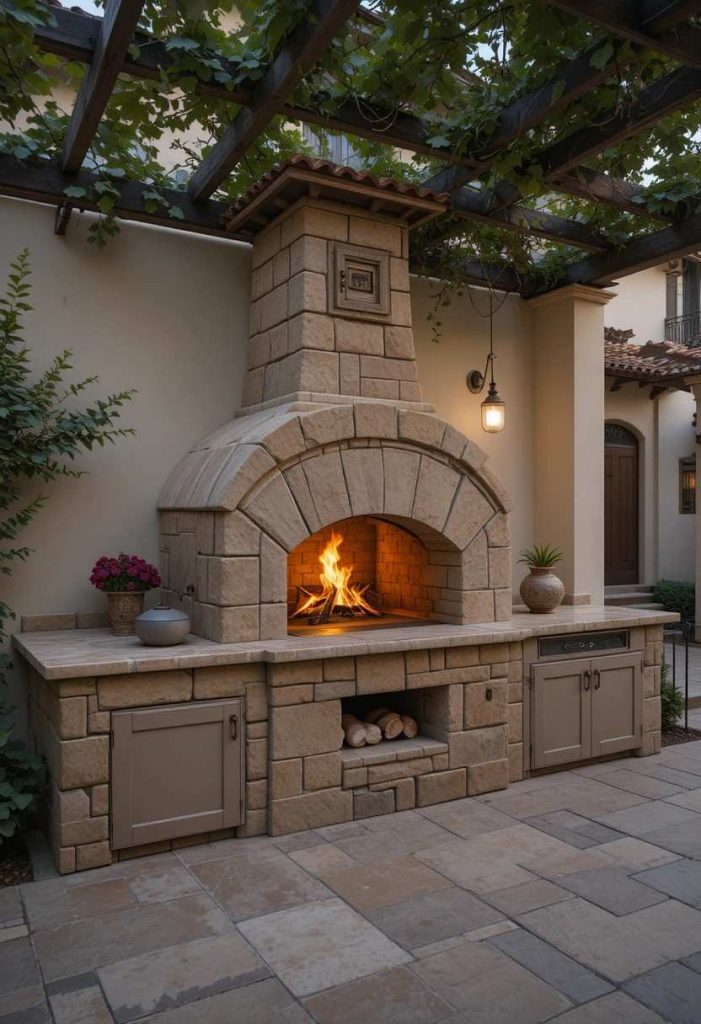
Exterior lighting is the final 10% that pushes a Tuscan facade from beautiful to magazine-worthy. Skip every modern brushed-aluminum or LED-strip option. Choose copper sconces (which patina to a beautiful aged green over time), wrought-iron lanterns, or aged-bronze fixtures with warm amber bulbs.
Place sconces on either side of the front door, beside garage doors, at corners of the house to wash the stucco walls, and as path lights along the entry walkway. Always use 2700K warm bulbs — cool 4000K+ lighting will instantly destroy the warm Tuscan glow you’ve spent the entire renovation building.
Tuscan Exterior Pain Points: What Pinterest Won’t Tell You
Before you commit a dollar to a Tuscan exterior renovation or build, understand these five common (and expensive) traps. Every designer who works in this style has watched homeowners fall into them — and they’re all completely avoidable.
1. The Stucco Color Undertone Trap
This is the single most expensive mistake homeowners make. Stucco color looks dramatically different on a paint chip than it does on an actual wall — especially under the warm light reflected from a terracotta roof. A cream that looks neutral in the showroom can read distinctly pink, yellow, or peach once it’s on your house.
Stucco professionals advise: always sample at least three colors on actual walls of your home and view them at morning, midday, and evening before committing. Stucco color, once mixed and applied, is essentially permanent — you’d need to repaint the entire house to change it.
2. Integral Color vs. Painted Stucco
There are two ways to color stucco: integral color (pigment mixed into the cement itself) and painted stucco (raw stucco coated with exterior paint). Integral color is significantly more expensive upfront but lasts decades without maintenance. Painted stucco is cheaper but requires repainting every 5–10 years and chips reveal the raw gray cement underneath.
For Tuscan exteriors with warm earth-tone colors (cream, ochre, terracotta), integral color is the better long-term investment. Dark or saturated colors are almost impossible to maintain in cement stucco — they fade and chalk under intense sun within 3–5 years.
3. Clay Tile Roof Reality Check
Authentic clay barrel tile is the gold standard for Tuscan roofs. It lasts 50–100 years, has a Class A fire rating (critical in wildfire-prone areas), resists insects and rot, and develops a beautiful natural patina over decades. But it’s heavy.
Real clay tile weighs 600–1,200 pounds per 100 square feet — three to four times more than asphalt shingles. Most existing homes built for asphalt cannot support clay tile without structural reinforcement, which can cost $5,000–$20,000 on its own.
If your existing roof structure won’t support real clay, composite clay alternatives (like Brava or DaVinci) weigh roughly the same as asphalt, look nearly identical from the ground, and don’t require reinforcement. They cost more than asphalt but less than real clay.
4. Stucco Cracking and Water Intrusion
Stucco cracks. That’s not a defect — it’s the natural behavior of a rigid cement-based material on a flexing wood-framed house. Hairline cracks are normal and don’t compromise the wall. Larger cracks, however, can let water into the wall system, where it causes rot, mold, and structural damage.
Inspect your stucco annually for cracks wider than a credit card. Seal them promptly with a stucco-specific elastomeric caulk. According to HomeAdvisor, stucco repair runs $60–$120 per square foot — but catching damage early can save tens of thousands in eventual remediation.
5. The Cleaning Mistake That Ruins Stucco
Never pressure-wash a stucco home. The high-pressure water strips the smooth “cream” finish off the cement surface, exposing the rougher aggregate beneath and permanently dulling the appearance. The house will look weathered in all the wrong ways.
Instead, wash stucco annually with a low-pressure garden hose and a soft brush. For stained areas, use a diluted oxygen-bleach solution and let it dwell before rinsing gently. This is the single most important maintenance habit for keeping a Tuscan exterior looking authentic for decades.
Real Tuscan Exterior Costs (2026)
Here’s the honest math, because nobody else will give it to you straight. These are 2026 national averages — your region will vary.
Stucco (whole house): $7–$12 per square foot installed. A 2,500 sq ft home with 4,000 sq ft of wall area runs $28,000–$48,000 for new stucco.
Re-stucco (existing house): $5,000 per elevation for full replacement; $500–$2,000 for crack patching and color refresh.
Clay tile roof: $10–$25 per sq ft installed (real clay) or $7–$15 (composite alternatives). A typical roof runs $25,000–$60,000.
Stone veneer accent walls: $20–$50 per sq ft installed (manufactured); $40–$80 per sq ft (real stone).
Arched wooden front door: $3,500–$15,000 custom; $1,200–$3,500 semi-custom.
Wrought-iron window grills: $200–$600 per window custom; $80–$200 pre-fabricated.
Wooden carriage garage doors: $4,000–$15,000 per door.
Italian cypress trees (mature): $300–$1,500 each.
Mature olive trees: $800–$5,000 each transplanted.
Outdoor pizza oven (custom): $8,000–$25,000.
Budget Priority: Where to Spend If You Can’t Do It All
If you have to phase your Tuscan exterior project, tackle improvements in this order for maximum visual impact per dollar:
Phase 1 ($2,000–$8,000) — Repaint stucco in the right warm cream or ochre, swap front door hardware for hand-forged iron, install copper or iron sconces on either side of the entry, add weathered terracotta pots with lavender at the door, swap all exterior light bulbs to 2700K warm white.
Phase 2 ($8,000–$25,000) — Replace front door with a custom arched wooden door, add wrought-iron Juliet balconies under upper windows, plant mature Italian cypress and olive trees, upgrade landscaping with gravel pathways and Mediterranean plants.
Phase 3 ($25,000–$80,000) — Replace garage doors with carriage-style wooden versions, add stone veneer accent walls or partial facade, install or upgrade exterior lighting throughout, build a back loggia or covered outdoor living space.
Phase 4 ($60,000–$200,000+) — Re-stucco entire home with proper integral color, replace roof with real clay tile, add architectural features (tower, courtyard, pizza oven), structural changes to roofline if needed.
The Honest Truth About Tuscan Exteriors
A Tuscan-style home exterior is one of the most expensive aesthetic choices in residential architecture. There’s no cheap version of real stucco, real clay tile, real stone, and real hand-forged iron. The materials cost what they cost, and skipping quality at any layer shows immediately in the final result.
But here’s the trade-off: a well-built Tuscan exterior also has one of the longest design lifespans of any architectural style. The materials and forms used today have been beautiful in Italy for literal centuries. Your home won’t look dated in 15 years the way modern farmhouses already are. It will look more beautiful as it weathers, settles, and develops the patina that real Tuscan homes earn over decades.
Build it once, build it right, and your Italian villa moment lasts a lifetime. Open the shutters. Plant the olive trees. Pour something nice. Welcome home.