
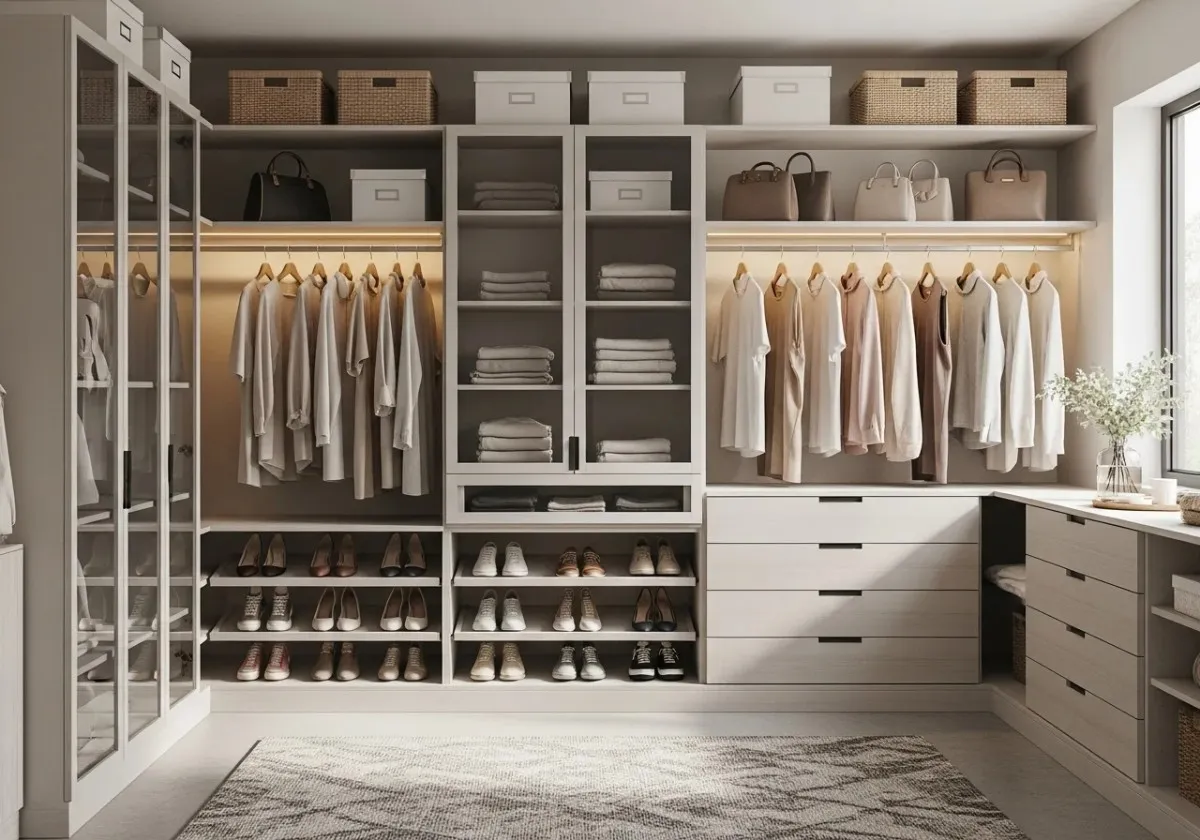
25 Closet Organization Ideas That Make Your Space Feel Calm, Clean & Beautiful
What if your closet could instantly make you feel calm instead of overwhelmed the moment you open it? Right now, it might feel crowded, messy, and impossible to keep in order no matter how hard you try. That constant frustration can quietly affect your mood every single day. But here’s the shift—you don’t need more space, you need a better system. With the right closet organization ideas, you can create a space that feels light, effortless, and beautifully put together, making your daily routine smoother, simpler, and surprisingly enjoyable.
1. Use Matching Hangers for a Clean Look
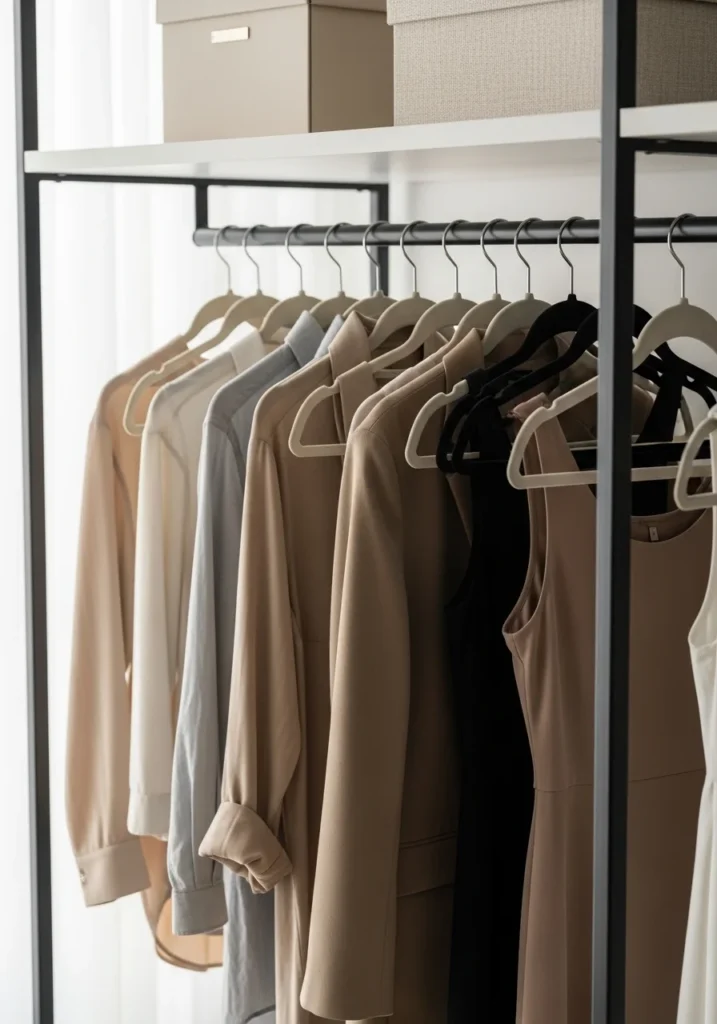
I used to think hangers were just hangers, until I swapped the mismatched jumble in my own closet for one slim matching set. Plastic, wire and chunky wooden hangers had been fighting each other for years, making even tidy clothes look untidy. Slim velvet hangers in one soft neutral — I chose a warm beige — give every garment the same slim shoulder, so shirts hang evenly and nothing slips off overnight. The rail suddenly looks calm, and I can see each piece clearly instead of hunting through a tangle. It is a small, inexpensive change, yet it sets the tone for everything else in the closet, and it makes getting dressed feel calmer from the very first morning.
How to do it: Take every garment off the rail, then sort your hangers and keep only one matching set. Choose slim, non-slip velvet hangers in black, beige or soft grey, hang clothes by type, and leave a finger-width gap between hangers so nothing creases.
2. Add Soft LED Closet Lighting
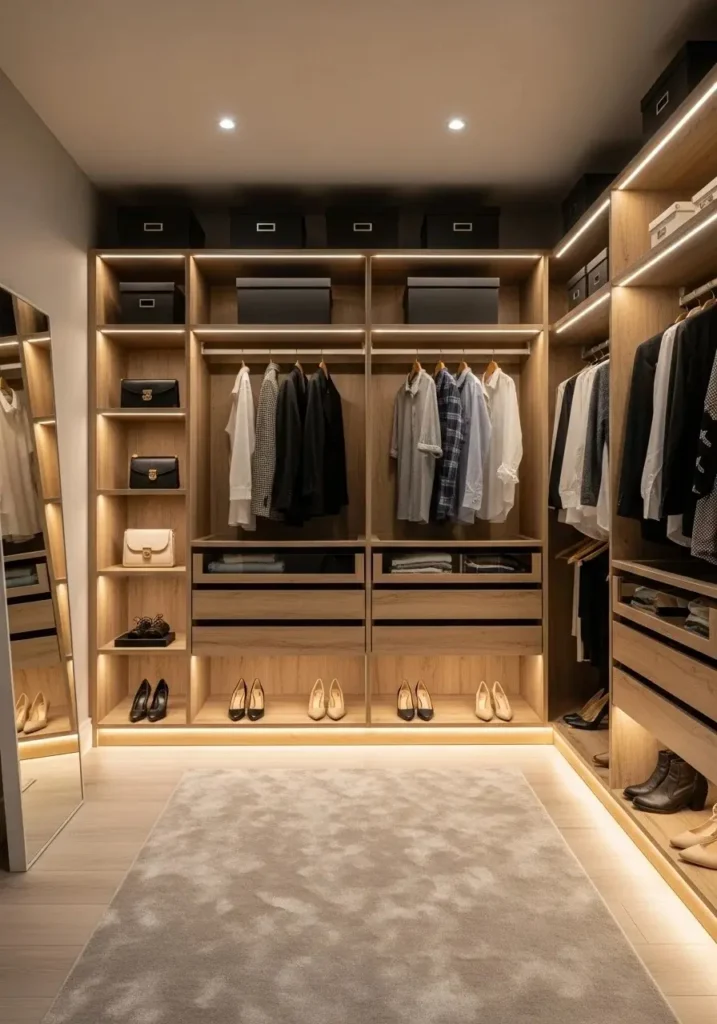
My closet used to sit in the darkest corner of the bedroom, and I would drag clothes out into better light just to see their true colours. Warm LED strips changed that completely, and now the whole space glows softly when I open the door. I fitted them under the shelves and along the top of the rail, choosing a warm white tone so nothing looks harsh or blue. Suddenly I can tell navy from black, spot a stain before I leave the house, and enjoy the quiet, boutique-like feeling as I choose an outfit. Good lighting does not just help you see; it makes the closet a place you actually want to step into each morning.
How to do it: Measure the shelves and rail, then buy warm-white LED strips with a motion sensor. Stick them under each shelf and along the rail, hide the wires behind the shelf edge, and test the glow at night before fixing them permanently.
3. Organize Clothes by Color
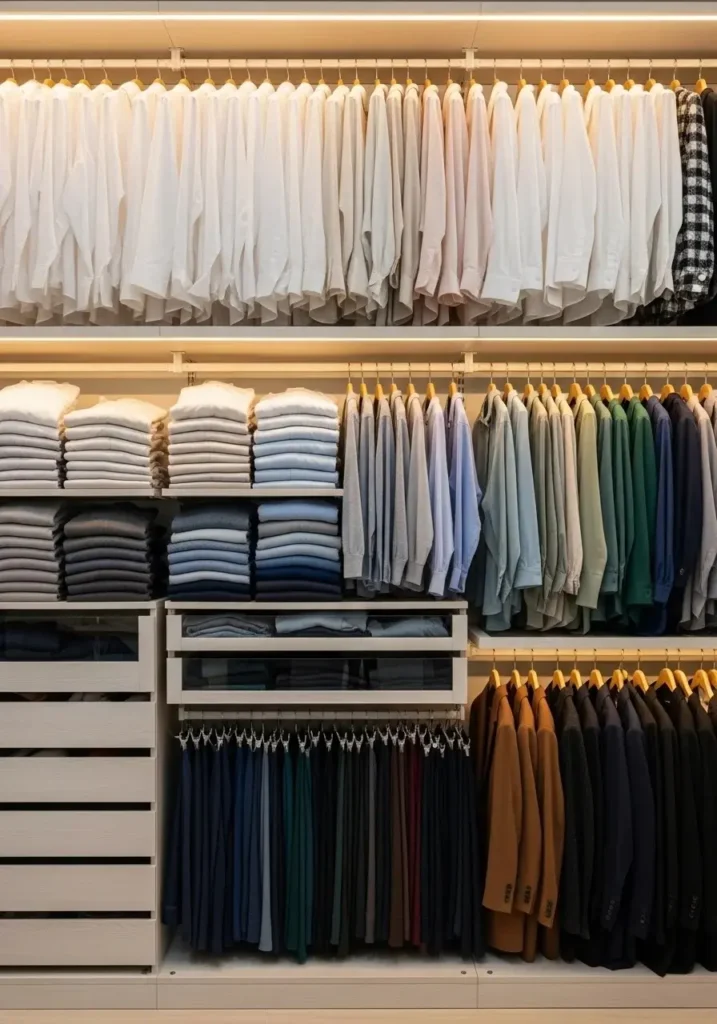
I used to hang clothes in the order I washed them, so my rail looked like a jumble sale and finding a particular top took far too long. Sorting by colour changed everything, and it costs nothing at all. I start with whites and creams, move through pastels and mid-tones, and finish with navy and black, keeping neutrals together at one end. The smooth gradient makes the closet look instantly calmer, even on a busy rail, and I can spot the shade I want in seconds. Outfit planning feels easier too, because pieces that go together are already sitting side by side.
How to do it: Empty the rail completely, then sort clothes into colour piles from light to dark. Hang whites and creams first, group pastels, brights and darks separately, and keep the same order after laundry so the system lasts.
4. Use Clear Storage Bins
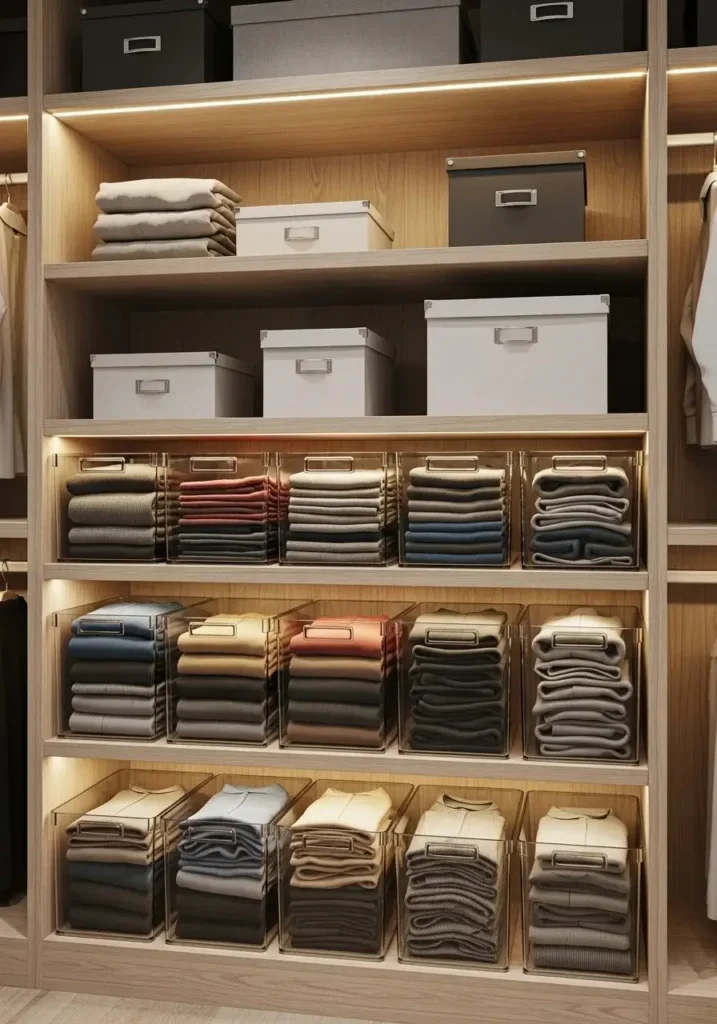
I kept losing scarves, belts and out-of-season tops in opaque boxes, and I would buy duplicates because I had forgotten what I already owned. Clear bins stopped that wasteful cycle for me. I can see exactly what is inside each one without lifting a lid, which means I reach for things I had forgotten and put them back in the right place. On the shelves they look light and tidy, far less heavy than solid boxes, and a simple label on the front keeps categories clear. They are especially useful up high, where I would otherwise have to pull a box down just to check its contents.
How to do it: Measure your shelves, then choose clear bins that fit with a little room to spare. Group similar items together, label each bin on the front, and keep everyday items at eye level with seasonal things stored higher up.
5. Create a Shoe Display Section
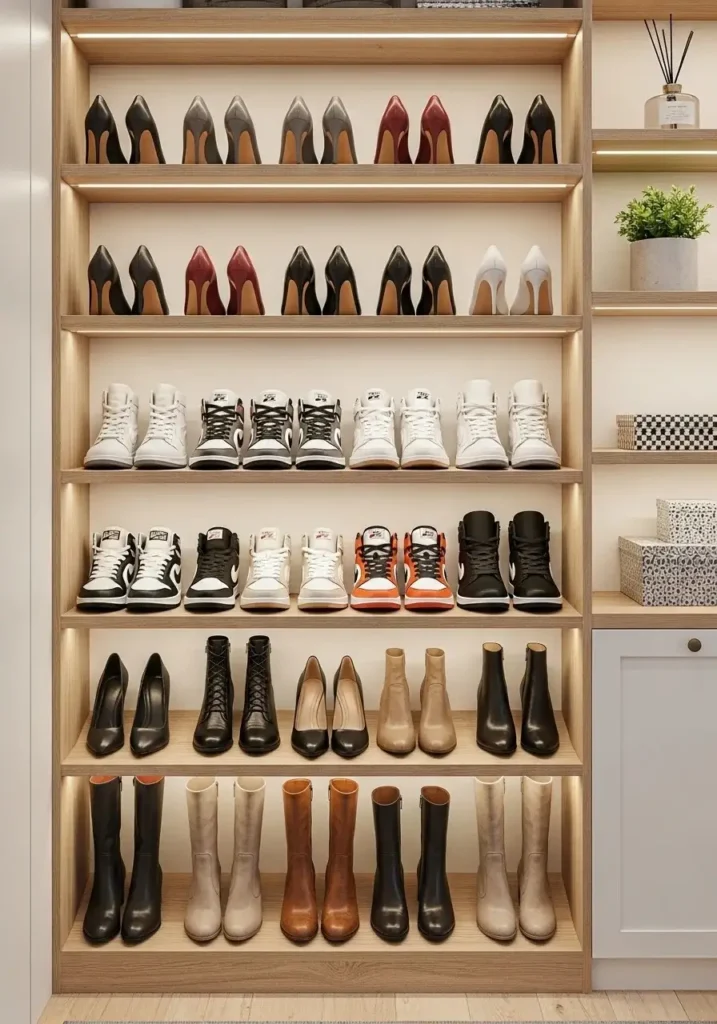
My shoes used to live in a heap on the closet floor, which meant I wore the same two pairs on repeat and forgot the rest entirely. Giving them a proper display changed my habits completely. Open shelves or a low rack let me see every pair at a glance, so I choose shoes to suit the outfit instead of grabbing whatever is on top. Pairs stay in shape, scuffs are easier to spot, and the closet floor stays clear for the vacuum. I arrange mine by type first — trainers, boots, heels — then by colour, and the tidy rows make the whole closet feel more considered.
How to do it: Clear the closet floor, then fit open shelves or a low rack at a height that suits your tallest boots. Place daily shoes at eye level, group pairs by type and colour, and keep one empty space so new pairs have a home.
6. Install Double Hanging Rods
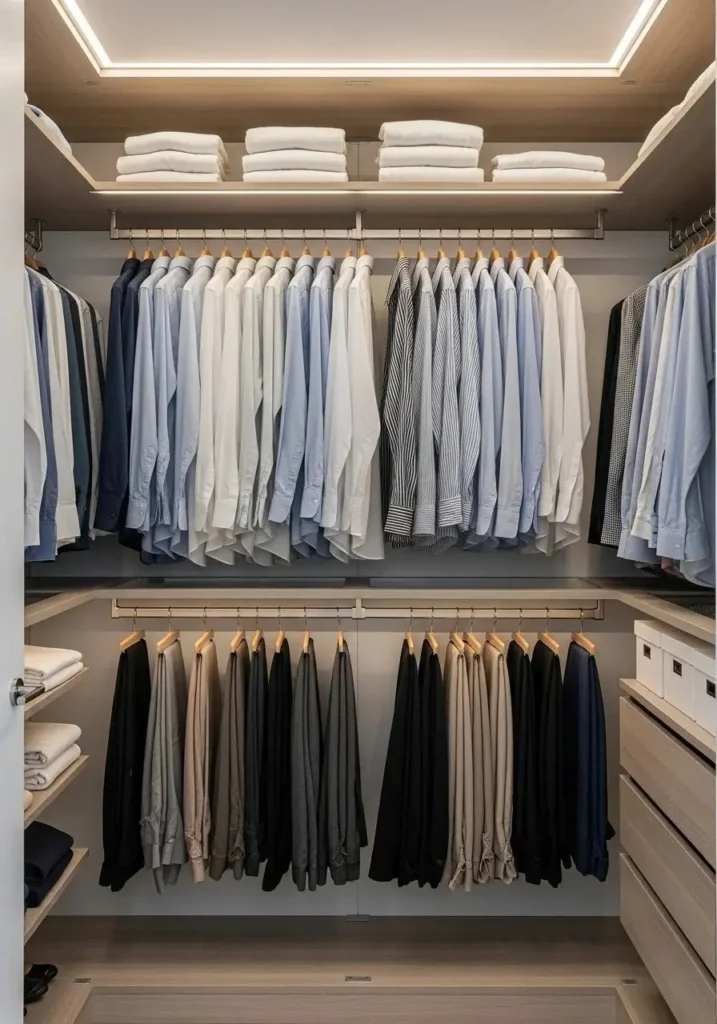
Adding a second rod was the single change that gave me the most extra space, and I still wish I had done it years earlier. My closet had a whole stretch of empty air beneath my shirts, doing nothing at all, while folded piles grew taller on the shelves. A lower rod turned that wasted height into room for shirts, skirts and trousers, doubling what the rail could hold without a single extra centimetre of floor space. I kept one end full-length for dresses and coats, and the difference on busy mornings is remarkable. Everything hangs where I can reach it, and nothing is buried any more.
How to do it: Measure the drop of your longest short garment, then fix the upper rod high enough to leave room below. Fit a second rod underneath with sturdy brackets, keep dresses on the full-length side, and hang shirts and trousers on the double section.
7. Add Woven Baskets for Warmth
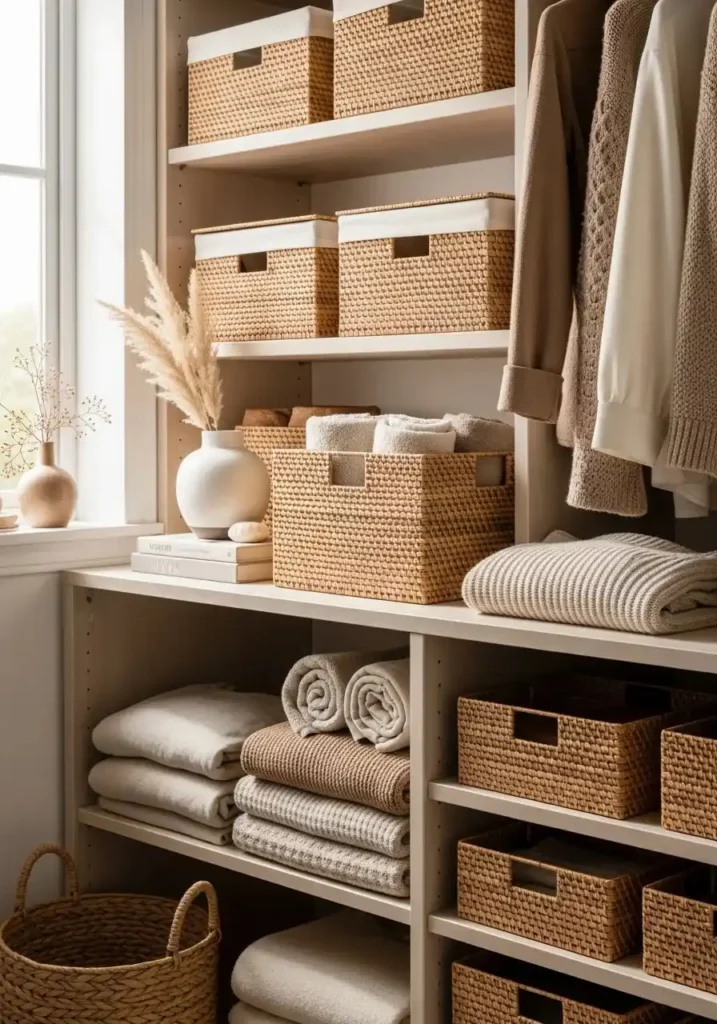
Plastic boxes kept my closet tidy, but they also made it feel cold and a little soulless, like a stockroom rather than part of my home. Woven baskets softened everything. Rattan and seagrass bring a warm, natural texture that sits beautifully beside wood and linen, and they hide the less pretty things — spare blankets, bags, out-of-season clothes — without looking like storage at all. I use them on open shelves and on the floor, and I love how they make the closet feel finished rather than merely functional. Choose sturdy ones with handles, and they are as practical as they are pretty.
How to do it: Measure each shelf opening, then choose baskets about two centimetres smaller in every direction. Label the front if you like, keep heavier items low, and reserve one basket for things you are still deciding about.
Also More Amazing In the Below For You More:
Burnt Orange Living Room Ideas: 20 Warm and Stylish Ways to Transform Your Space
21 Japandi Living Room Ideas That Feel Calm, Minimal & Beautifully Balanced
15 Living Room TV Wall Ideas to Make Your Space Feel Bold and Beautiful
20 Small Bedroom Ideas That Make Your Space Feel Cozy & Beautiful
Wallpaper Bedroom Ideas: 20 Stunning Ways to Transform Your Space
8. Use Drawer Dividers for Small Items
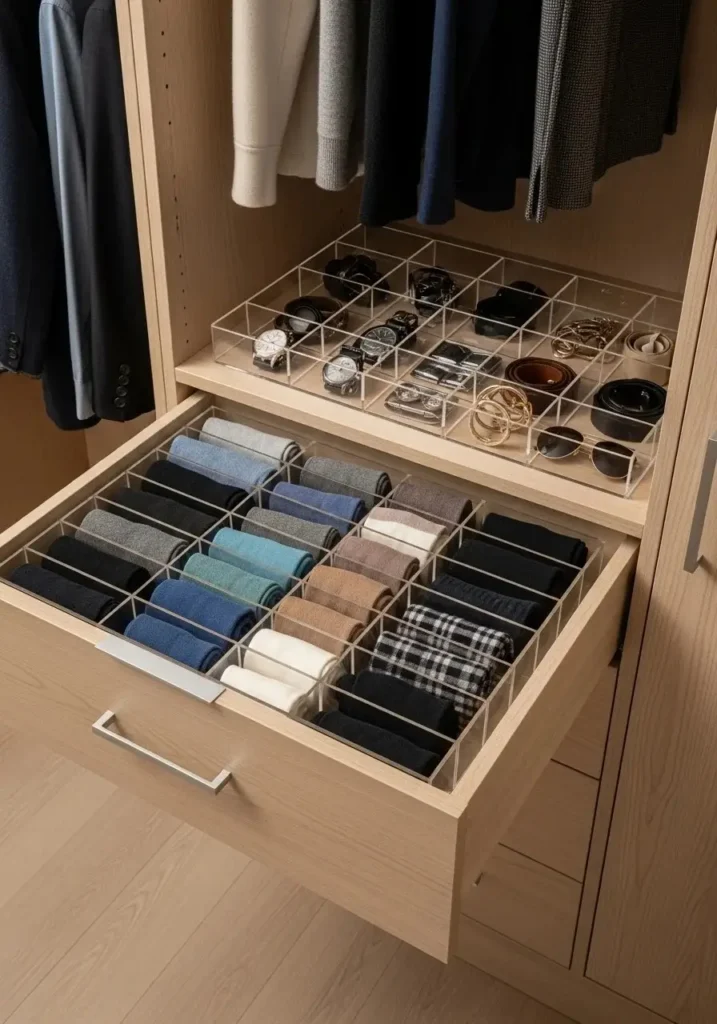
My drawers used to be a tangle of socks, tights and small accessories, and I would rummage every morning while the clock ticked. Dividers ended that daily scramble. Each small item now has its own compartment, so I can see everything at a glance and grab what I need without disturbing the rest. I particularly love them for jewellery, belts and scarves, which used to knot together in one messy pile. The drawers look calmer, clothes stay folded instead of being shoved aside, and putting laundry away takes minutes rather than a full reorganisation.
How to do it: Empty the drawer completely, then measure its length and width. Choose adjustable dividers that fit snugly, give each category its own section, and fold small items upright so you can see them all.
9. Add a Full-Length Mirror
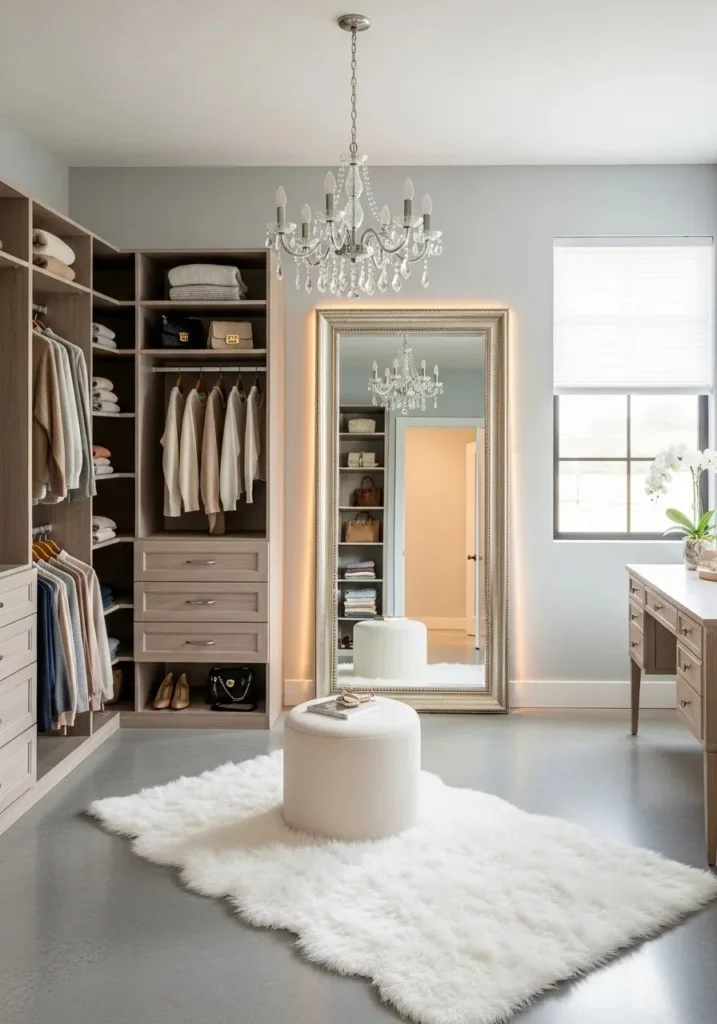
I had no mirror in my closet for years, so I would choose an outfit, walk to the bedroom mirror, walk back to change, and repeat the whole dance. A full-length mirror inside the closet ended that. It bounces light around the space, making even a small closet feel brighter and more open, and it turns getting dressed into a proper little ritual rather than a rushed guess. I check the whole outfit — shoes, proportions, layers — before I step out, which saves me from those mid-morning regrets. Lean it against the wall or fix it to the door, whichever suits your space.
How to do it: Choose a mirror tall enough to show you from head to toe, then place it where it catches natural light. Fix it securely to the wall or door, leave floor space in front of it, and keep the glass clean for a clear reflection.
10. Keep a Neutral Color Palette
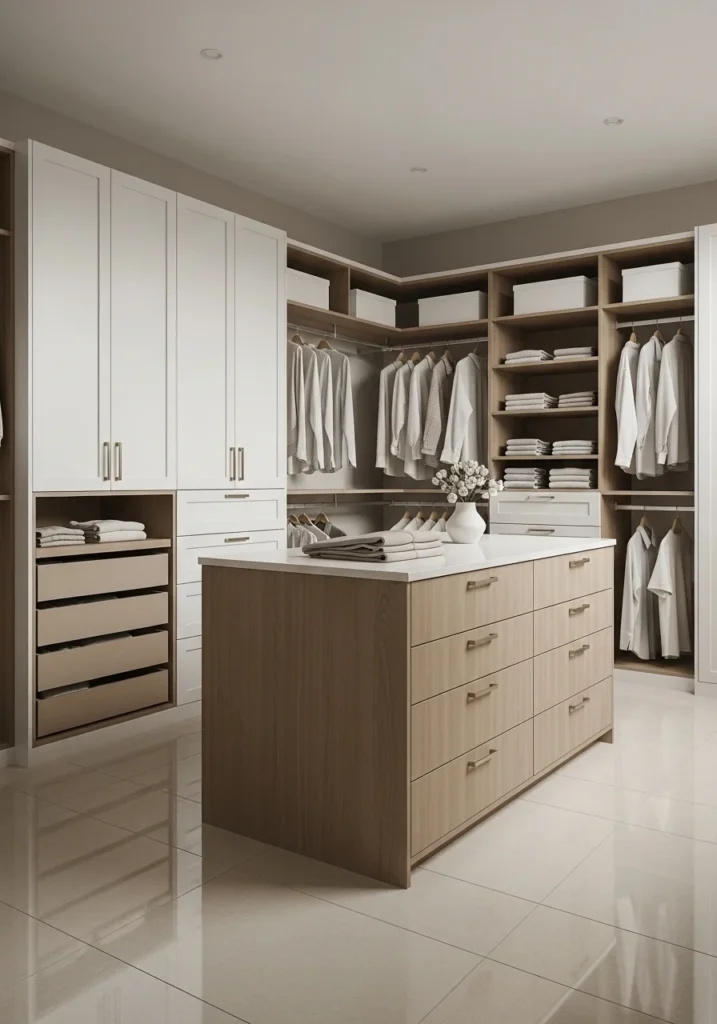
My closet used to be a riot of competing colours — bright boxes, patterned bags, clothes in every shade — and it left me feeling jangled before the day had even begun. Keeping the background neutral changed the mood completely. White, beige, soft grey and pale wood let my clothes provide the colour, so the space feels calm and cohesive instead of noisy. Matching boxes and hangers in the same quiet tones help too, and the whole closet suddenly looks more considered, almost like a shop display. It is a gentle backdrop that makes everything else in the room feel easier on the eye.
How to do it: Pick two or three neutral tones, such as white, beige and soft grey, then use them for boxes, baskets and hangers. Keep brighter colours for clothes only, and repaint or cover any clashing shelf in a matching neutral.
11. Rotate Seasonal Clothing
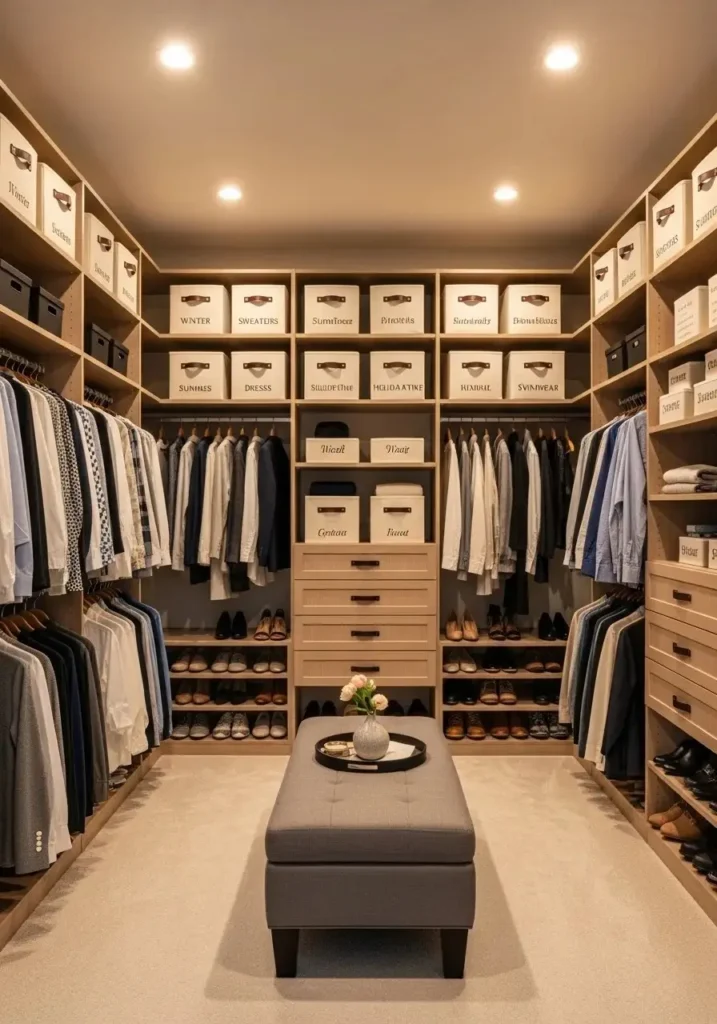
I used to keep every season’s clothes on the rail at once, which meant my winter coats crowded my summer dresses and I could never find what I actually needed. Rotating by season freed up so much space. Now only the current season hangs at eye level, while everything else waits in labelled bins on the top shelf, and getting dressed takes half the time. I do the swap twice a year, trying things on as I go and letting go of anything that no longer fits or flatters. If you are sorting a child’s wardrobe too, these kids closet organization ideas show how to scale the same rotation down for smaller clothes and faster growth.
How to do it: At the start of each season, empty the rail and try on anything you are unsure about. Store off-season clothes in labelled bins or vacuum bags, keep current clothes at eye level, and donate anything unworn for a year.
12. Add Hooks for Quick Storage
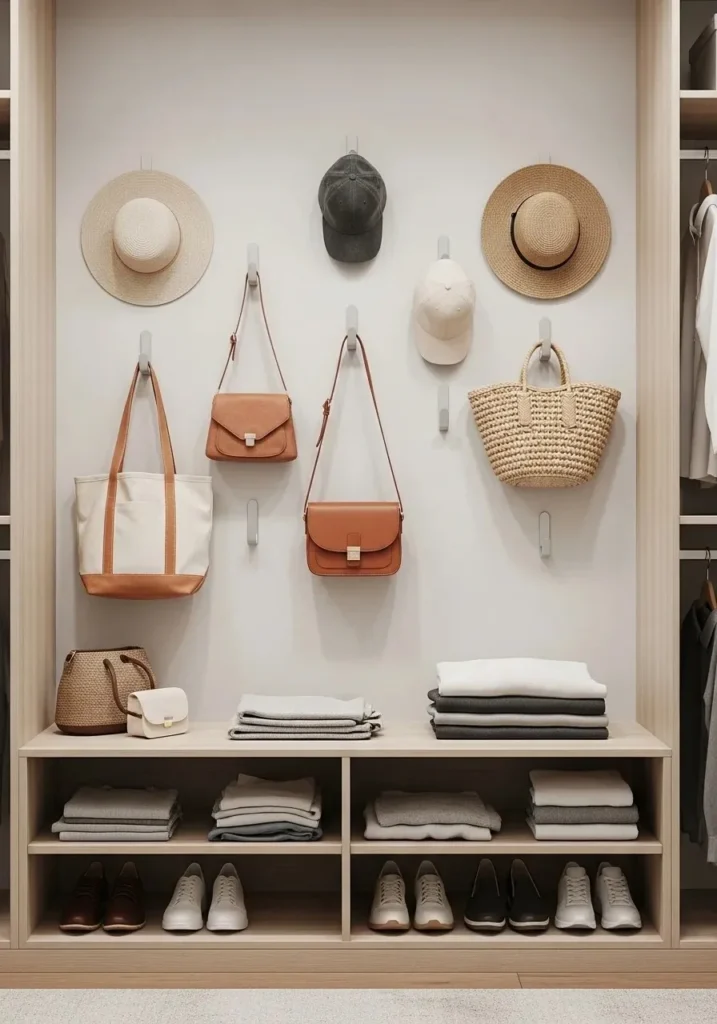
Hooks are the smallest change in this whole list, and one of the ones I reach for most. Bags, hats, scarves and tomorrow’s outfit all have a place to hang now, instead of landing on a chair or the closet floor. I fitted a row inside the door and another on a bare stretch of wall, and they keep everyday things visible and easy to grab on the way out. Because nothing is piled up, the floor stays clear and the closet looks tidier with almost no effort. Choose a finish that matches your rail — matte black or brass both look lovely — and space them so bags do not crowd each other.
How to do it: Find a clear stretch of wall or the inside of the door, then mark hook positions at even intervals. Fix sturdy hooks into studs or with proper plugs, hang daily items at easy reach, and keep one hook free for tomorrow’s outfit.
13. Use Shelf Risers to Double Space
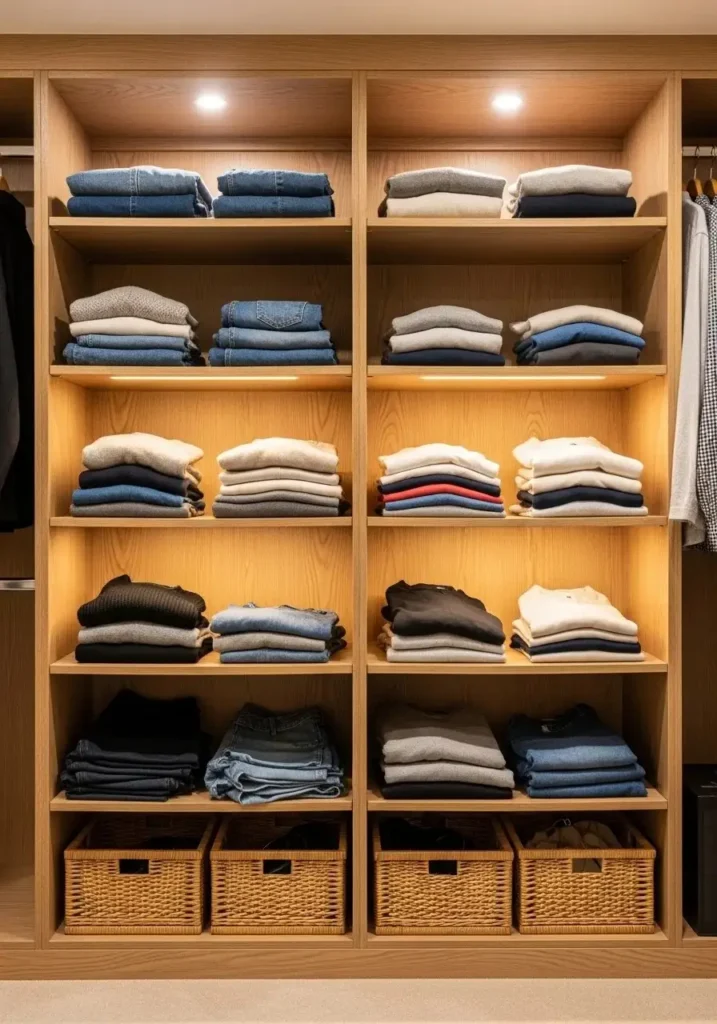
Shelf risers are one of those small additions that make a surprising difference, and I noticed it the first week I tried them. My shelves had a whole layer of empty air above every folded pile, wasted space that risers turned into a second, usable level. Now jumpers sit on one tier and jeans on the next, each stack low enough to stay neat, and I can see everything without pulling a pile apart. Clear or white risers keep the look light, and because nothing needs building in, I could move them around until the layout felt right. It is a simple, renter-friendly way to gain space.
How to do it: Measure the shelf height and depth, then choose clear or white risers that fit comfortably. Place folded clothes on both levels, keep stacks low, and leave a little space at the front so you can lift items out easily.
Also More Amazing In the Below For You More:
Burnt Orange Living Room Ideas: 20 Warm and Stylish Ways to Transform Your Space
21 Japandi Living Room Ideas That Feel Calm, Minimal & Beautifully Balanced
15 Living Room TV Wall Ideas to Make Your Space Feel Bold and Beautiful
20 Small Bedroom Ideas That Make Your Space Feel Cozy & Beautiful
Wallpaper Bedroom Ideas: 20 Stunning Ways to Transform Your Space
14. Add a Small Seating Area
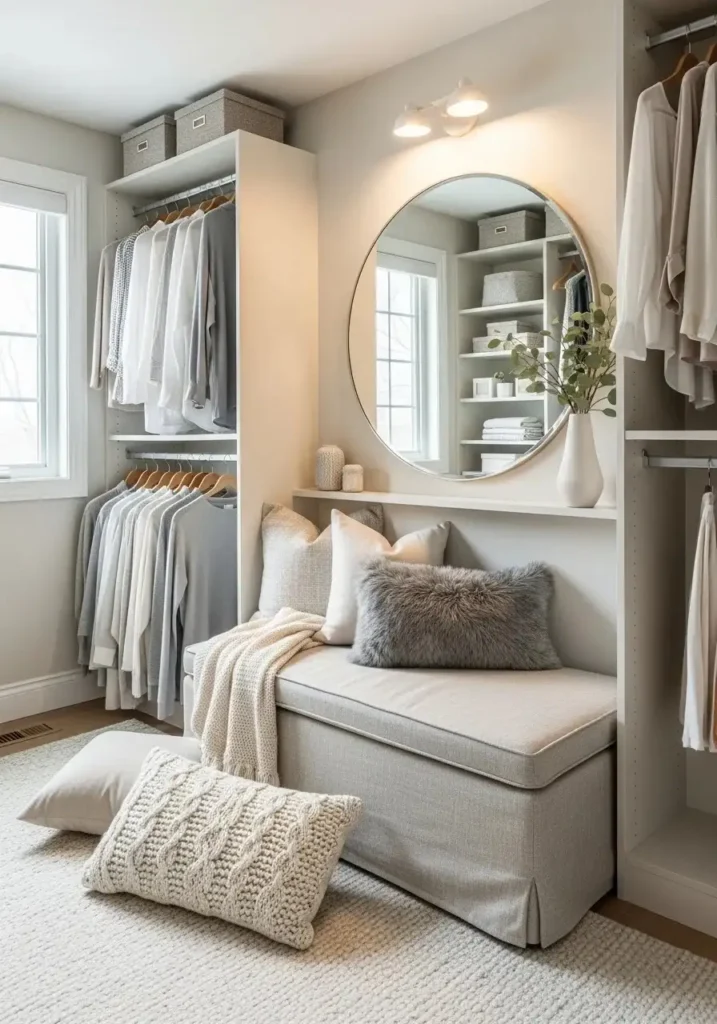
If you have even a little spare space, a small stool or bench turns getting dressed from a chore into a quiet moment for yourself. I chose a cushioned seat in a soft neutral fabric, and I sit there to put on shoes, sort jewellery or simply pause before a busy day. It makes the closet feel like a proper dressing area rather than a cupboard you hurry through, and the soft texture warms up all the hard shelves and rails. A seat with hidden storage inside is even better, giving you a home for spare bags or seasonal accessories. Just be sure it leaves room to open drawers and doors.
How to do it: Measure the free corner, leaving room to open nearby drawers, then choose a slim stool or bench in a neutral fabric. Add a small cushion if you like, use any hidden storage for spare items, and keep the seat clear so it stays inviting.
15. Use Slim Storage Boxes on Top Shelves
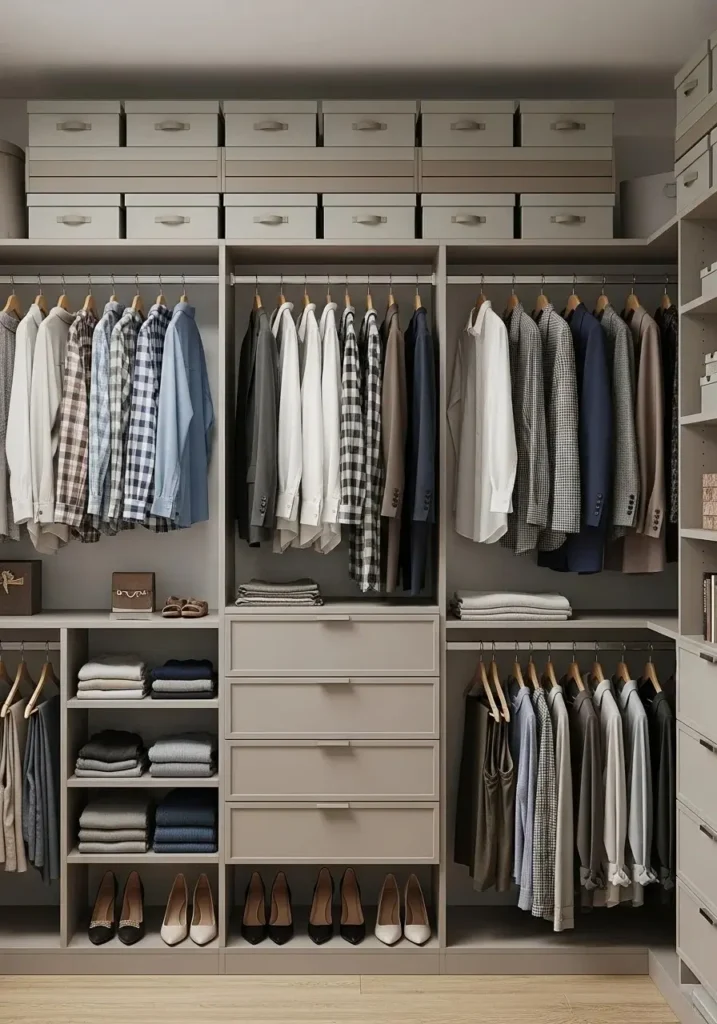
My top shelves used to be the place where things went to be forgotten — a jumble of odd boxes, spare bedding and items I could not quite place. Slim, matching boxes changed that completely. They use the full height of the shelf without towering over it, and because they all match, the upper layer of the closet looks calm and deliberate instead of chaotic. I keep rarely used things up there — spare linens, memory boxes, out-of-season accessories — each one labelled on the front so I never have to pull down three boxes to find the right one.
How to do it: Measure the top shelf, then choose slim boxes that fit side by side with a little room to spare. Label each box clearly on the front, keep heavier boxes low, and store only things you need a few times a year up high.
16. Install a Pull-Out Accessory Tray
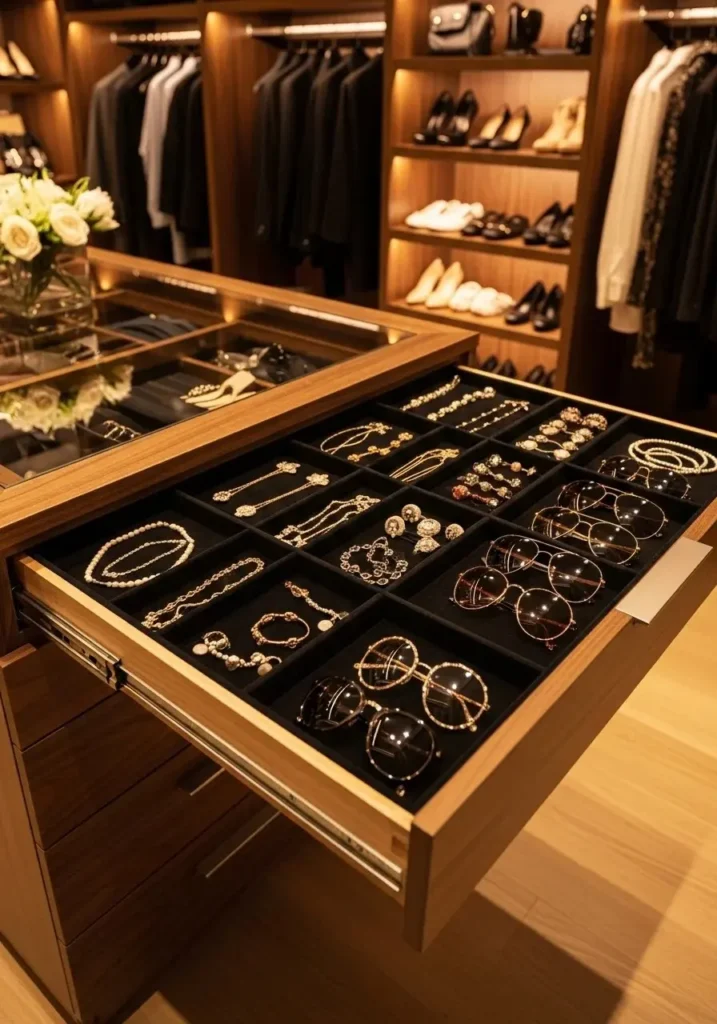
My jewellery used to live in a tangle at the bottom of a drawer, and I wore the same earrings every day simply because I could not find the others. A pull-out tray changed that habit entirely. Necklaces, watches and sunglasses each have their own compartment now, protected from scratches and visible the moment I slide the tray open. It feels like a small luxury, the kind of detail you find in a boutique, and it means I actually wear the pieces I already own. Line the tray with soft fabric, and delicate items stay safe while the closet gains a beautifully finished touch.
How to do it: Measure a drawer or shelf, then choose a tray that slides out smoothly and fits the space. Line it with soft fabric, give each type of accessory its own section, and keep everyday pieces at the front.
17. Keep Everyday Items at Eye Level
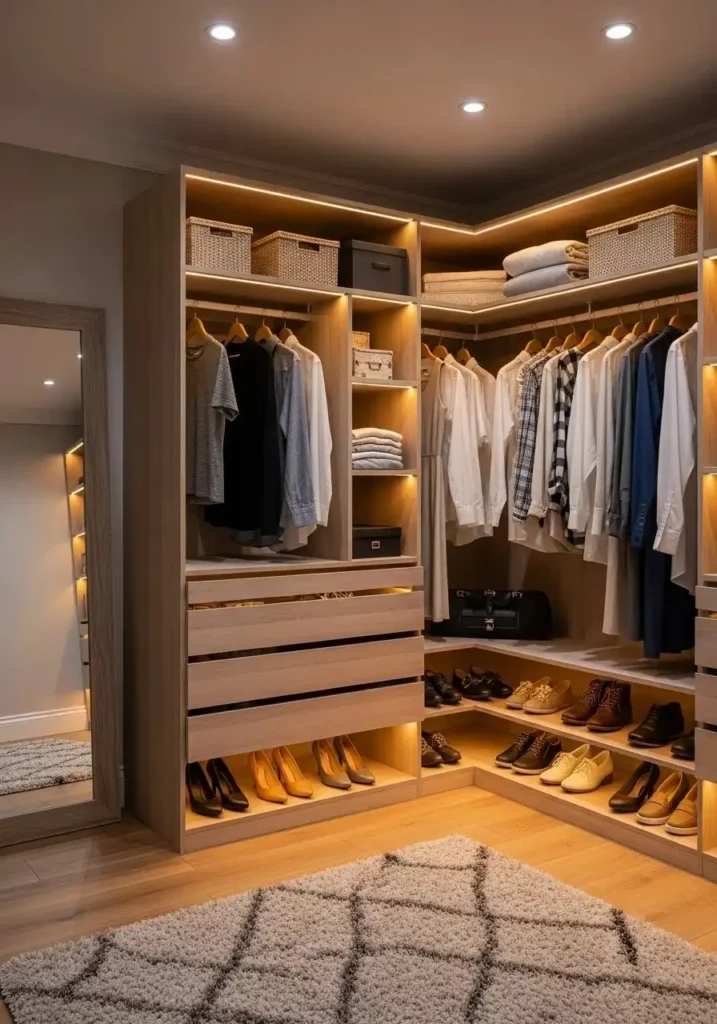
I used to store my favourite outfits on the highest shelf, which meant I reached for whatever was easiest instead of what I actually wanted to wear. Moving everyday items to eye level fixed that in a single afternoon. My most-worn clothes, my everyday bag and my daily essentials now sit exactly where my hands fall, so getting dressed is quicker and far less frustrating. Less-used things moved up high or down low, where they wait patiently without getting in the way. It sounds obvious, but organising by how often you reach for something is the most practical rule I know.
How to do it: Take everything out, then sort items by how often you wear them. Place daily clothes and bags at eye level, move occasional pieces to higher or lower shelves, and review the arrangement every few months.
18. Add Glass or Acrylic Storage for Accessories
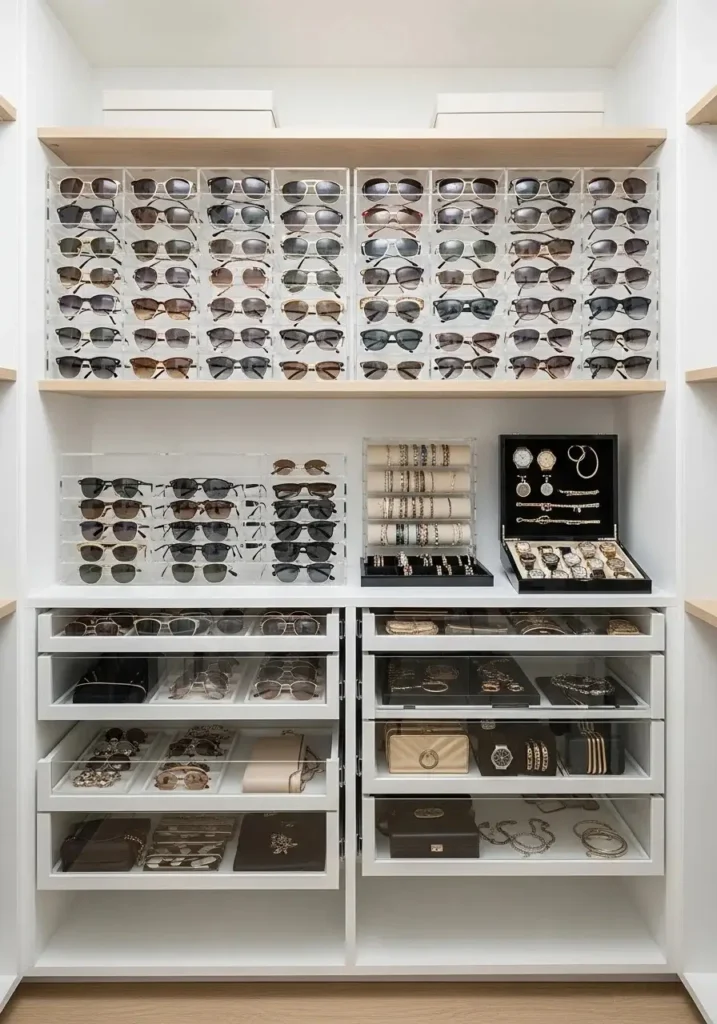
I love being able to see my accessories, but open piles of sunglasses and belts always looked messy, and closed boxes meant I forgot what I owned. Clear acrylic storage solved both problems at once. Sunglasses, belts and small accessories sit in neat, visible compartments, so I can choose in seconds and everything stays dust-free. The clear material keeps the closet feeling light and modern, and stackable designs mean I can build upwards without crowding the shelf. It is a small, polished detail that makes the whole space feel more intentional and far easier to keep tidy.
How to do it: Choose stackable acrylic boxes that fit your shelf, then group accessories by type. Keep everyday items at the front, store delicate pieces separately, and wipe the boxes clean when they start to look dusty.
19. Use Vertical Dividers for Bags
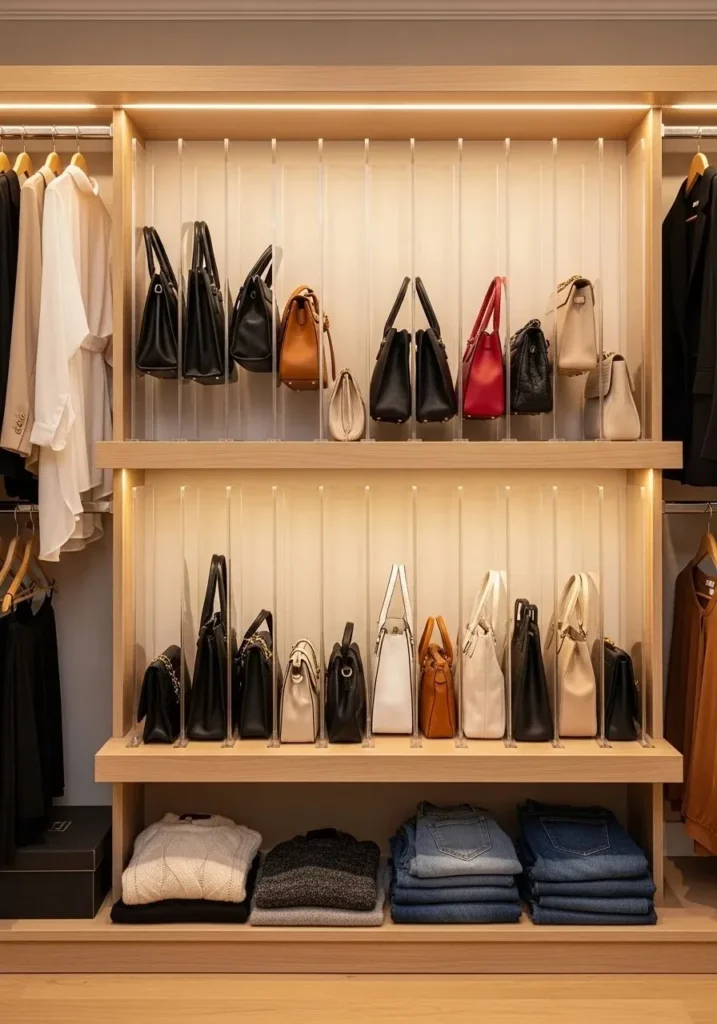
My handbags used to lean against each other in a sad, slumped pile, losing their shape and hiding the one I wanted at the bottom. Vertical dividers gave each bag its own upright home, and the difference is remarkable. I can slide one out without disturbing the rest, the bags keep their shape, and the shelf looks like a tidy little boutique display. I group mine by size first, then by colour, keeping everyday bags at easy reach and special-occasion ones a little higher. It is a simple fix, but it protects bags I love and makes choosing one a pleasure rather than a rummage.
How to do it: Measure the shelf, then fit vertical dividers with enough space for your widest bag. Stand each bag upright, group them by size or colour, and stuff softer bags lightly so they hold their shape.
Also More Amazing In the Below For You More:
Burnt Orange Living Room Ideas: 20 Warm and Stylish Ways to Transform Your Space
21 Japandi Living Room Ideas That Feel Calm, Minimal & Beautifully Balanced
15 Living Room TV Wall Ideas to Make Your Space Feel Bold and Beautiful
20 Small Bedroom Ideas That Make Your Space Feel Cozy & Beautiful
Wallpaper Bedroom Ideas: 20 Stunning Ways to Transform Your Space
20. Create a Capsule Wardrobe Section
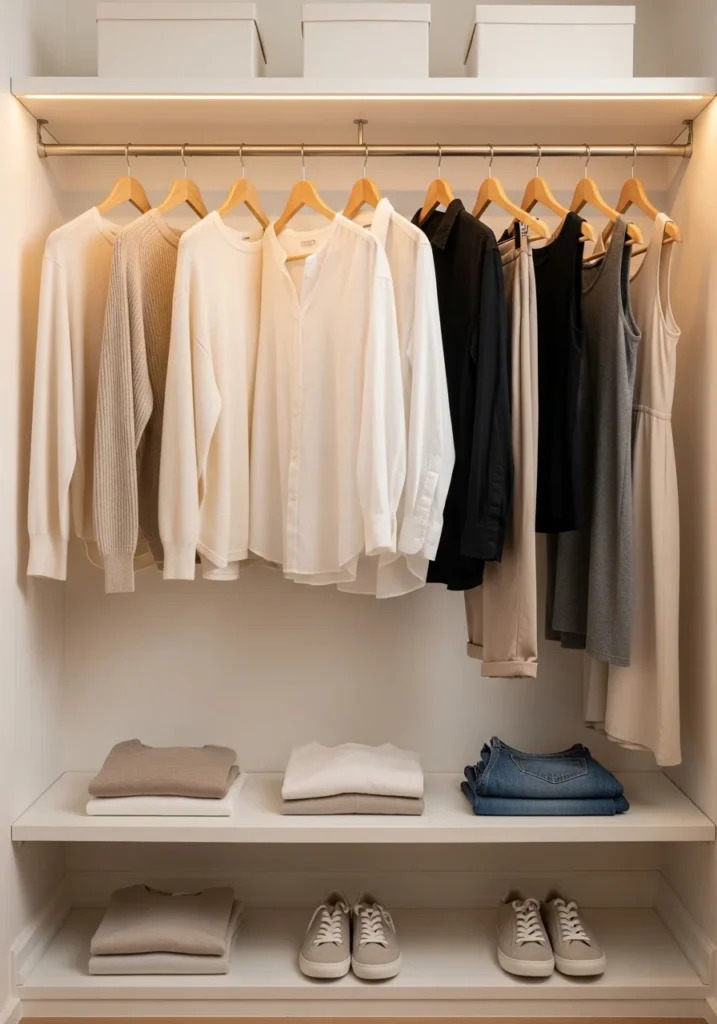
Decision fatigue used to hit me at seven in the morning, standing in front of a full closet with nothing to wear. A small capsule section changed my mornings completely. I chose my most-worn, most versatile pieces — neutral tops, good trousers, a couple of dresses that always work — and gave them their own stretch of rail. Now I can build an outfit in minutes, because everything in that section goes with everything else. The rest of the closet stays for seasonal and special pieces, but the capsule is where I start most days, and it keeps the whole space feeling calm and curated.
How to do it: Pull out your most-worn, versatile pieces in neutral tones, then give them one section of rail. Limit the section to about twenty to thirty pieces, hang them by type and colour, and refresh it at the start of each season.
21. Add a Statement Rug for Warmth
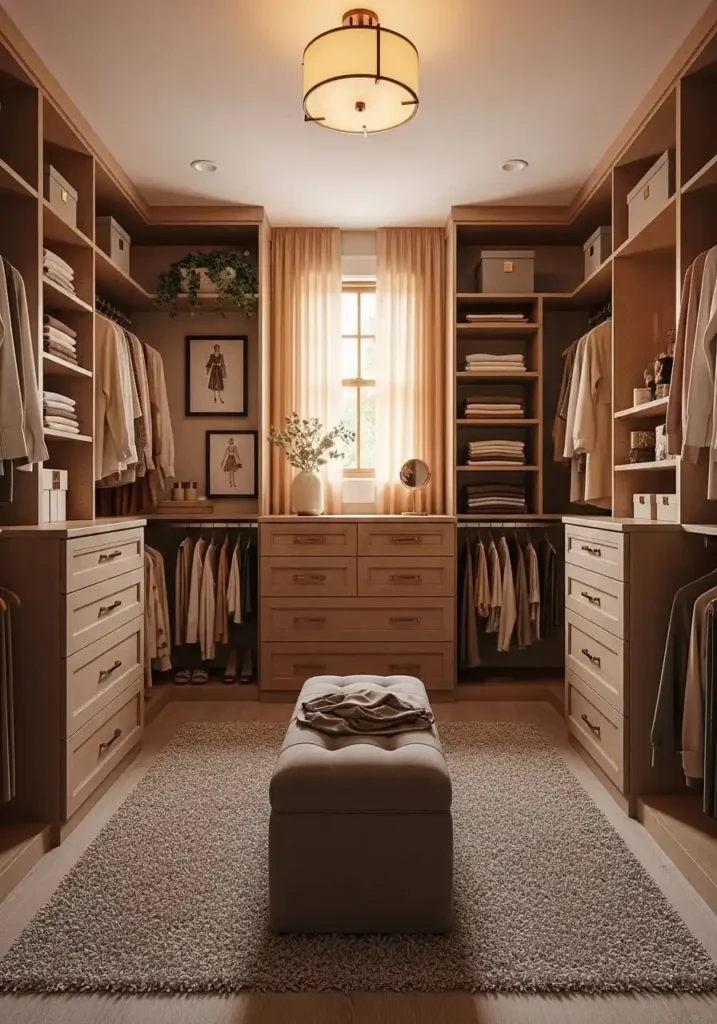
A soft rug underfoot completely changed how my closet feels, and I had not expected such a small addition to matter so much. The hard floor used to make the space feel cold and echoey, but a plush rug in a soft neutral warms it up instantly and makes getting dressed feel like stepping into a cosy room. I chose a washable one, because closet floors do get dusty, and a subtle pattern that hides the odd mark. It also defines the dressing area, softens the sound of the door, and adds a layer of texture that ties the shelves and baskets together beautifully.
How to do it: Measure the closet floor, then choose a washable rug slightly smaller than the space. Lay it flat so it does not catch the door, keep heavy furniture off its edges, and shake it out or wash it regularly.
22. Use Over-the-Door Storage
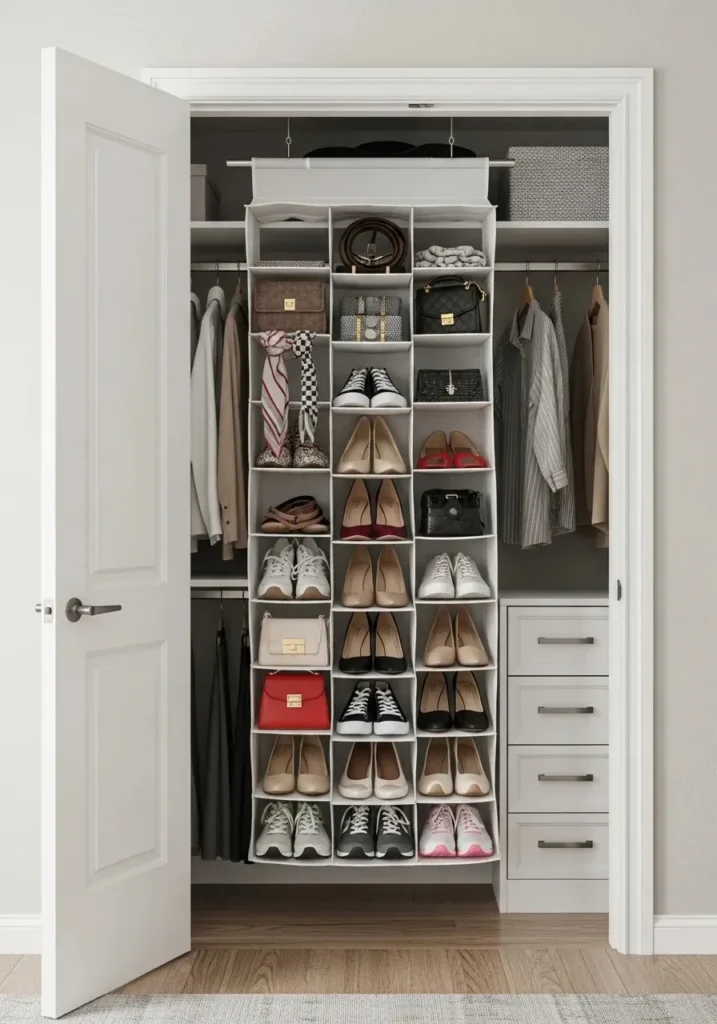
The back of my closet door was blank, wasted space for years, until I hung an organiser there and wondered why I had waited so long. Shoes, accessories and folded items now have a home that takes up no floor or shelf space at all, which is a gift in a small closet. I keep everyday things at easy reach and lighter items higher up, choosing a neutral fabric organiser so it blends in rather than shouting for attention. If your closet feels tight, these small walk in closet ideas show how the same thinking — using every spare inch — can make a compact space work much harder.
How to do it: Measure the inside of the door, then choose a fabric organiser that fits without blocking the handle. Hang it over the door, fill the pockets by category, and keep heavier items low so the door swings freely.
23. Incorporate Closed Cabinets for a Clean Look
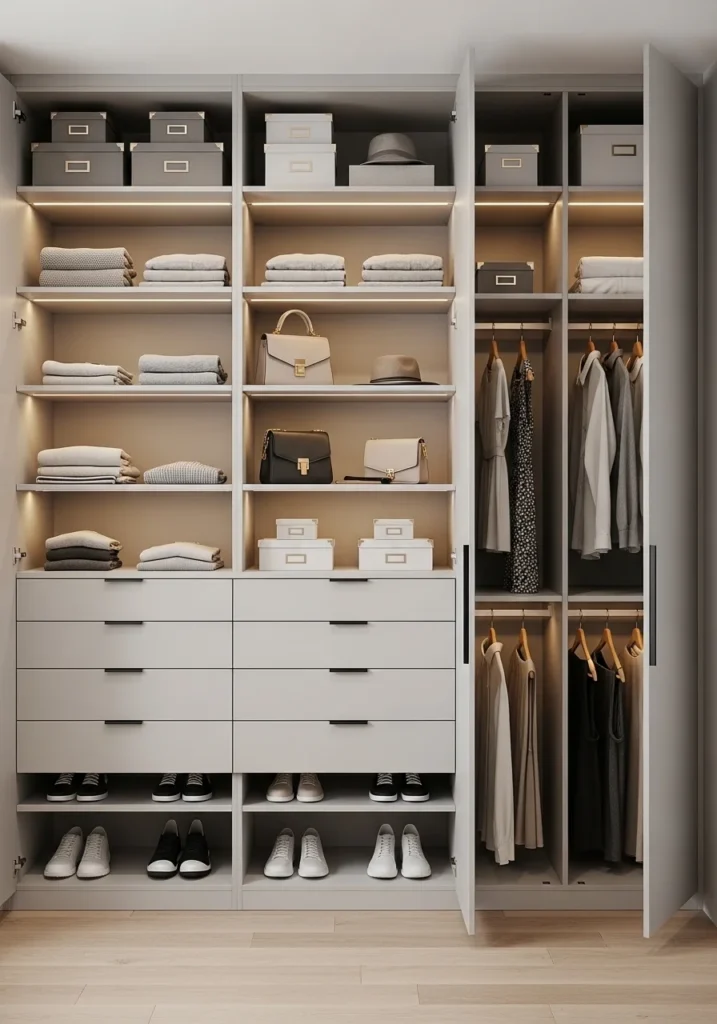
Open shelves show everything, which is lovely until the less pretty things — spare bedding, bulky jumpers, cleaning bits — are on display too. Mixing in closed cabinets gave me the best of both worlds. The things I love to see stay out in the open, while everything else hides behind a calm, clean door front, and the closet feels organised without feeling overwhelming. I store bulky or less attractive items inside, keep the cabinet fronts in the same neutral as the shelves, and the whole space looks more polished and far more grown-up. If you would rather go the other way and leave everything visible, these open concept closet ideas show how to make an open layout look just as calm.
How to do it: Plan which shelves stay open and which become cabinets, then fit doors in a matching neutral finish. Store bulky or less attractive items inside, keep daily pieces on open shelves, and add soft-close hinges for a quiet finish.
24. Add Personal Touches and Decor
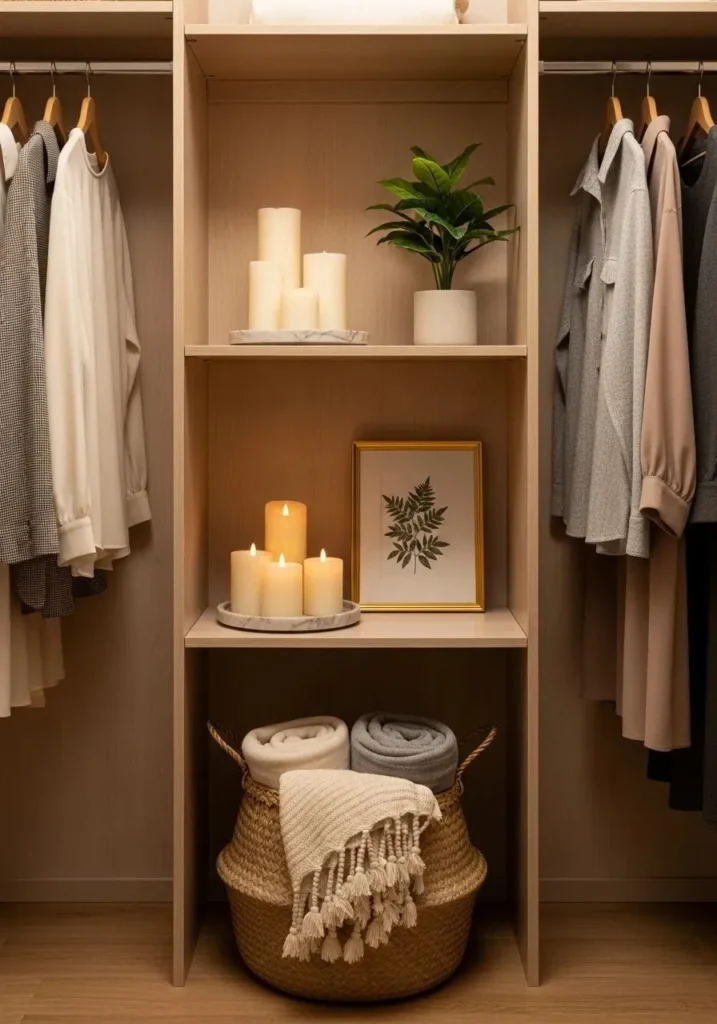
My closet used to feel like storage and nothing more, a place I hurried through without ever really looking at it. A few small, personal touches changed how I feel about it entirely. A framed print I love, a small plant on the top shelf and a candle I light while I get ready make the space feel like part of my home, not just a cupboard. I keep the decor minimal — three or four pieces at most — so it enhances the calm rather than adding clutter. It is a gentle reminder that even practical spaces deserve a little beauty, and I smile every time I open the door.
How to do it: Choose one shelf for decoration, then add three or four small pieces such as a framed print, a trailing plant or a candle. Keep the rest of the shelf clear, avoid anything fragile near the door, and change one piece with the seasons if you like.
25. Maintain a Weekly Reset Routine
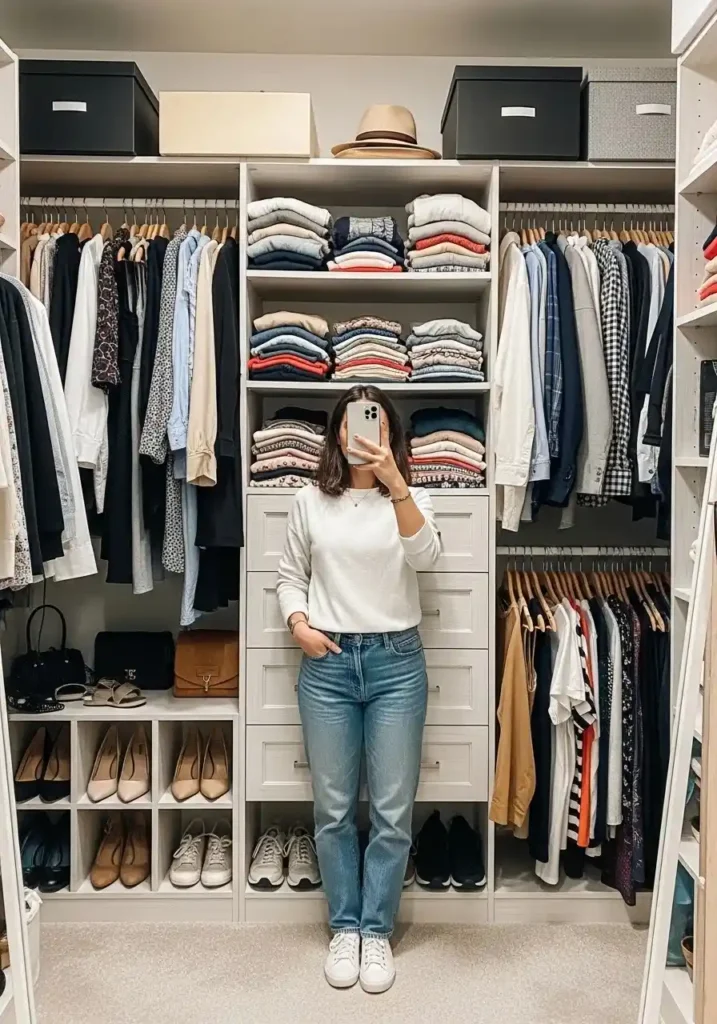
Even the most beautifully organised closet drifts back towards chaos if nobody tends it, and mine certainly did. A ten-minute weekly reset keeps it feeling fresh without ever becoming a big job. I choose the same quiet moment each week — Sunday evening, usually — and put stray items back in their homes, refold anything that has slumped, and check that hangers are facing the same way. It is a small, steady habit, and it stops clutter from building up again. The closet stays calm, I start Monday feeling organised, and I never again face the dreaded full-day sort-out.
How to do it: Pick a regular ten-minute slot each week, then return stray items to their homes, refold slumped piles and straighten hangers. Check for anything to donate, wipe one shelf, and note anything that needs replacing.
Frequently Asked Questions
How do I start organising a closet that feels completely overwhelming?
Start with one small section, not the whole closet. Empty a single shelf or one stretch of rail, sort everything into keep, donate and move elsewhere, and put only the keepers back in their new homes. Once that first section looks calm, the next one feels far less daunting, and you can work through the rest in short sessions over a few days.
How often should I declutter my closet?
Twice a year is enough for most people, at the seasonal change when you rotate clothes anyway. Try everything on as you swap seasons, and let go of anything unworn for a year, anything that no longer fits, and anything you keep out of guilt rather than love. A short weekly reset in between stops clutter from creeping back.
What is the best way to organise a small closet?
Use the height first: add a second rod, run shelves to the ceiling and use the back of the door. Choose slim hangers, keep only the current season at eye level, and give every category one fixed home. A small closet stays tidy when it holds less, so edit ruthlessly before you buy any storage.
Do matching hangers really make a difference?
Yes, more than most people expect. One matching set removes visual clutter, lets clothes hang evenly, and frees up surprising amounts of rail space because slim hangers take up less room. Choose non-slip velvet hangers in a single neutral colour, and keep a few spares so new clothes can join the same set.
How can I organise my closet without spending much money?
Start by editing and rearranging what you already own: sort by colour, move everyday items to eye level, and use boxes and baskets you already have. Add one inexpensive change at a time, such as matching hangers or a second rod, and only buy storage once you know exactly what needs a home.
If your January reset could use a little structure, my January Home Reset Planner walks you through the whole house in 31 days — decluttering checklists, deep-clean routines and one calm page per room — so you can work through each space step by step instead of trying to hold it all in your head.
Your Closet Organization Checklist
Work through this list one step at a time, then tick each item off as you finish it.
☐ Empty one section at a time and sort clothes into keep, donate and move elsewhere
☐ Swap to slim, matching, non-slip hangers in one neutral colour
☐ Group hanging clothes by type, then by colour from light to dark
☐ Fit a second hanging rod, keeping one full-length section for dresses
☐ Add warm LED lighting with a motion sensor
☐ Label clear bins and slim boxes for seasonal and rarely used items
☐ Give shoes open shelving at eye level, grouped by type and colour
☐ Add hooks inside the door for bags, scarves and tomorrow’s outfit
☐ Keep everyday clothes and bags at eye level
☐ Add woven baskets for softness and hidden storage
☐ Fit a full-length mirror where it catches natural light
☐ Leave one shelf partly empty for breathing space
☐ Reset the closet for ten minutes every week
Conclusion
A calm closet is not about owning less for the sake of it, or about chasing a perfect photograph. It is about opening the door in the morning and finding a space that supports you — clothes you love, hanging where you can reach them, in light that lets you see them properly. The ideas in this list work best when you choose the ones that solve your own frustrations first, whether that is a dark corner, a crowded rail or shoes you can never find.
Start with one change this weekend, even if it is only swapping the hangers or adding a row of hooks, and let the difference encourage you to try the next one. Little by little, your closet will stop being a source of stress and become a quiet, beautiful part of your home — a place that makes getting dressed feel easy, peaceful and truly yours, every single day.


One Comment