
27 Winter Entryway Ideas That Make Coming Home Feel Warm All Season
There is a particular kind of cold that only January knows — the kind that follows you through the front door and settles in your shoulders until you have hung up your coat and kicked off your boots. Our entryway used to make it worse: bare floor, a cold wall, nowhere to sit, and a pile of scarves sliding off a single hook. So over the last few winters I rebuilt it slowly, one warm layer at a time, until walking in the door started to feel like the house was glad to see me. These are my twenty-seven winter entryway ideas, every one of them tried in a real hallway, from the chunky throw on the bench to the lanterns that glow at four in the afternoon when the light has already gone. Nothing here needs a renovation, and most of it costs less than a weekly shop.
This post may contain affiliate links. As an Amazon Associate I earn from qualifying purchases, at no extra cost to you.
Start Here: Find Your Entryway in 30 Seconds
Not all 27 ideas fit every hallway, and you do not need all 27. Find your entryway below, then start with its ideas first:
- Tiny hallway, no room to spare: Ideas 4, 5, 8, 9, 21 — hooks, a mirror, a slim console, a boot tray and a shoe cabinet that hugs the wall
- A proper entryway with space to play: Ideas 1, 2, 3, 7, 13, 22 — bench, baskets, rug, reading nook and a window seat
- Dark hallway, little daylight: Ideas 5, 6, 14, 18, 27 — mirror, lanterns, pendant light, candles and the final glow layer
- Family hallway, constant chaos: Ideas 4, 9, 15, 21, 24, 26 — hooks, trays, crates, cabinets, a tough doormat and a pouf for shoe duty
- Pretty first, practical second: Ideas 10, 11, 12, 17, 20, 25 — runner, photos, pampas, wreath, wallpaper and winter prints
If your entryway still wears its Christmas layers, my 25 Christmas entryway ideas will help you strip it back gracefully, and my 26 Christmas hallway decor ideas carry the same warmth down the hall. For the room beyond the door, 27 Christmas living room ideas keep the cosy feeling going.
1. A Chunky Knit Throw Draped Over the Entryway Bench
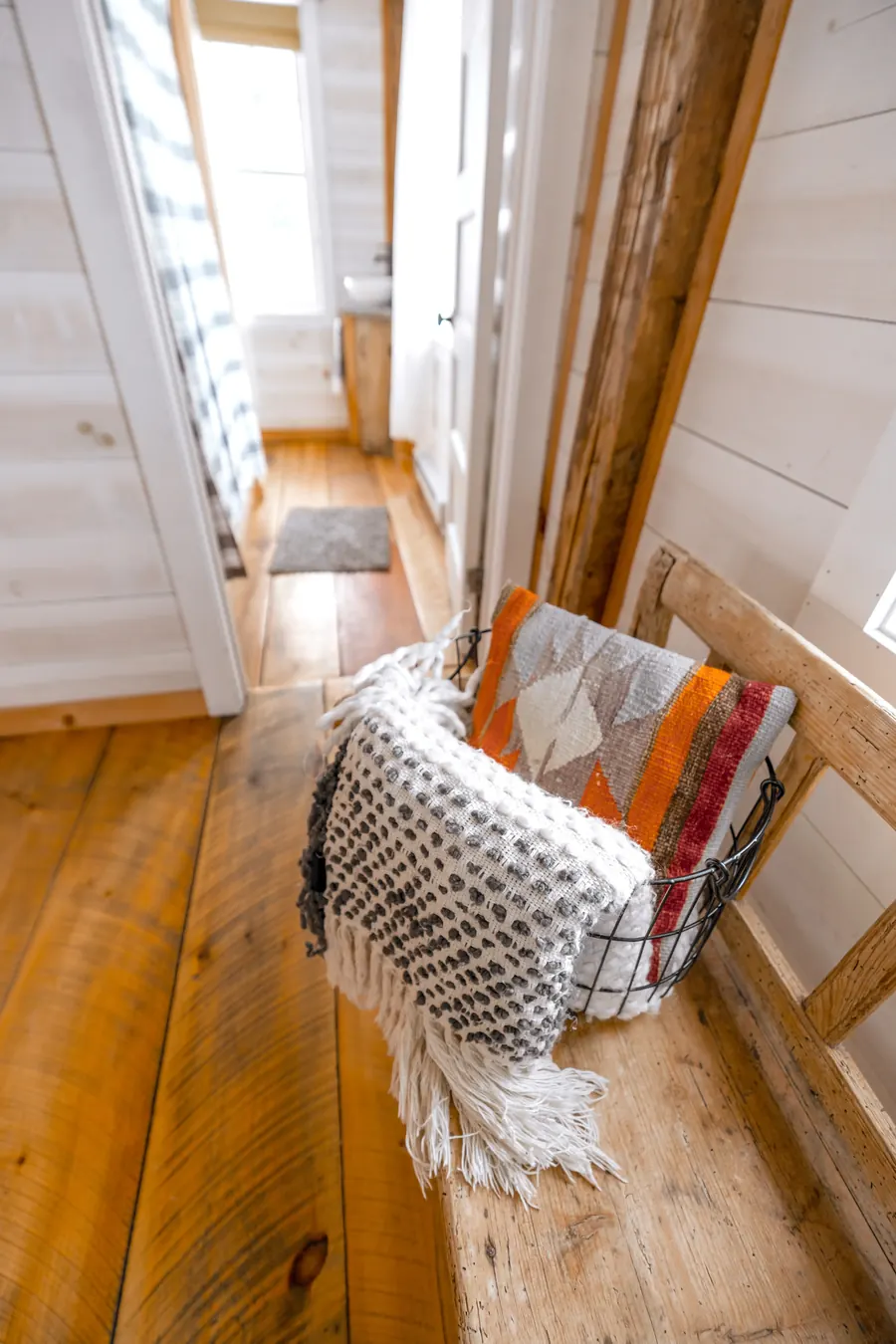
The first thing I changed in our entryway was also the simplest: a bench piled with folded blankets in bright colours, and suddenly the whole space stopped looking like a corridor and started looking like a room somebody loved. I keep a chunky knit in warm oatmeal because it catches the light from the door and makes the bench wood look richer, and on the coldest mornings I wrap it around my shoulders while I lace my boots. Choose a knit that feels heavy, not thin and scratchy, and fold it in thirds so the texture shows. It is the cheapest warmth you can buy for a hallway.
How to do it: Choose a chunky knit throw blanket in a colour that suits your bench and your wall, fold it lengthways in thirds and drape it over the back or one arm of the bench, and let one corner puddle slightly so it looks lived-in rather than staged. Wash it once before you display it so the knit relaxes. Check the latest price on Amazon before you buy.
2. A Warm Woven Bench for Coats, Hats and Boots
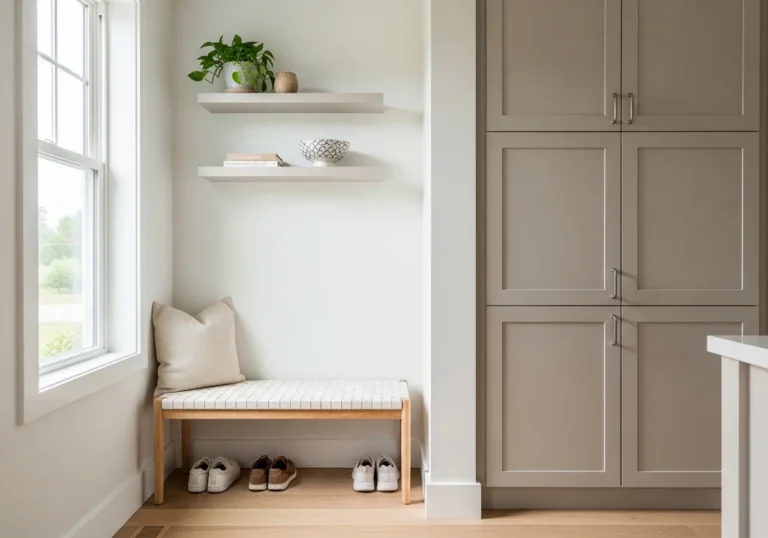
Every entryway needs somewhere to sit and somewhere to hang things, and a woven bench does both jobs in the footprint of one piece of furniture. The photo shows the kind of entryway I mean: a warm, rustic corner with coats, hats and boots arranged around a woven bench, everything in reach and nothing on the floor. I keep a folded blanket on ours and a basket beside it for gloves and the dog’s leads, so the morning glove hunt has almost disappeared. Measure first: the bench should leave at least a comfortable stride of walking room.
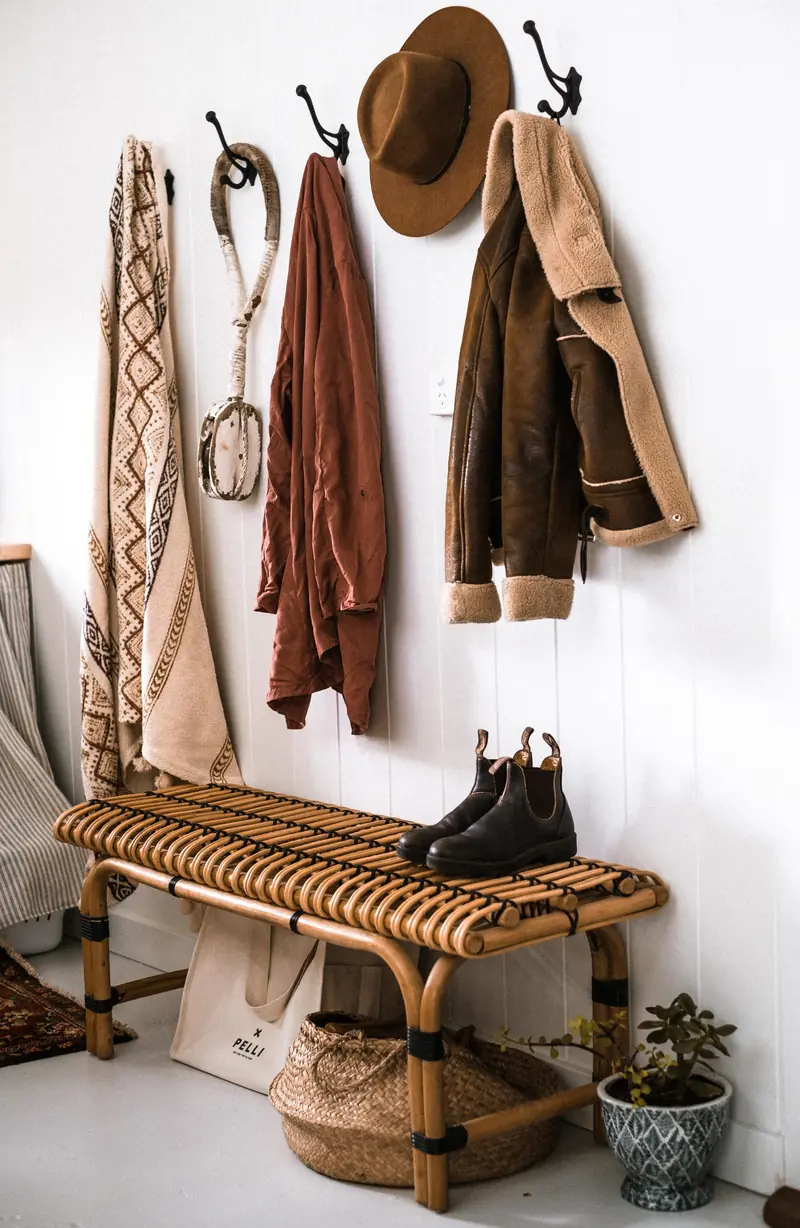
How to do it: Pick a wooden entryway bench with storage that fits your wall with room to walk past, then slide a woven basket beside it for gloves and one for the bits that never have a home. Label the baskets with a luggage tag if your household needs the hint. Check the latest price on Amazon before you buy.
3. A Faux-Fur Rug That Greets Bare Feet
Winter mornings start with bare feet on a cold floor, and the small luxury of a soft rug by the door changes the whole feeling of coming home. I bought our faux-fur rug on a whim, slightly worried it would look like a ski lodge, but the soft, fluffy pile reads as calm and warm, and the photo shows exactly how it feels underfoot — a pair of fuzzy slippers standing on sheepskin, the first warm step after coming in from the cold. It also catches grit and damp from boots before they travel into the house, which saves the wood floor further in. Shake it outside once a week and it stays fluffy.
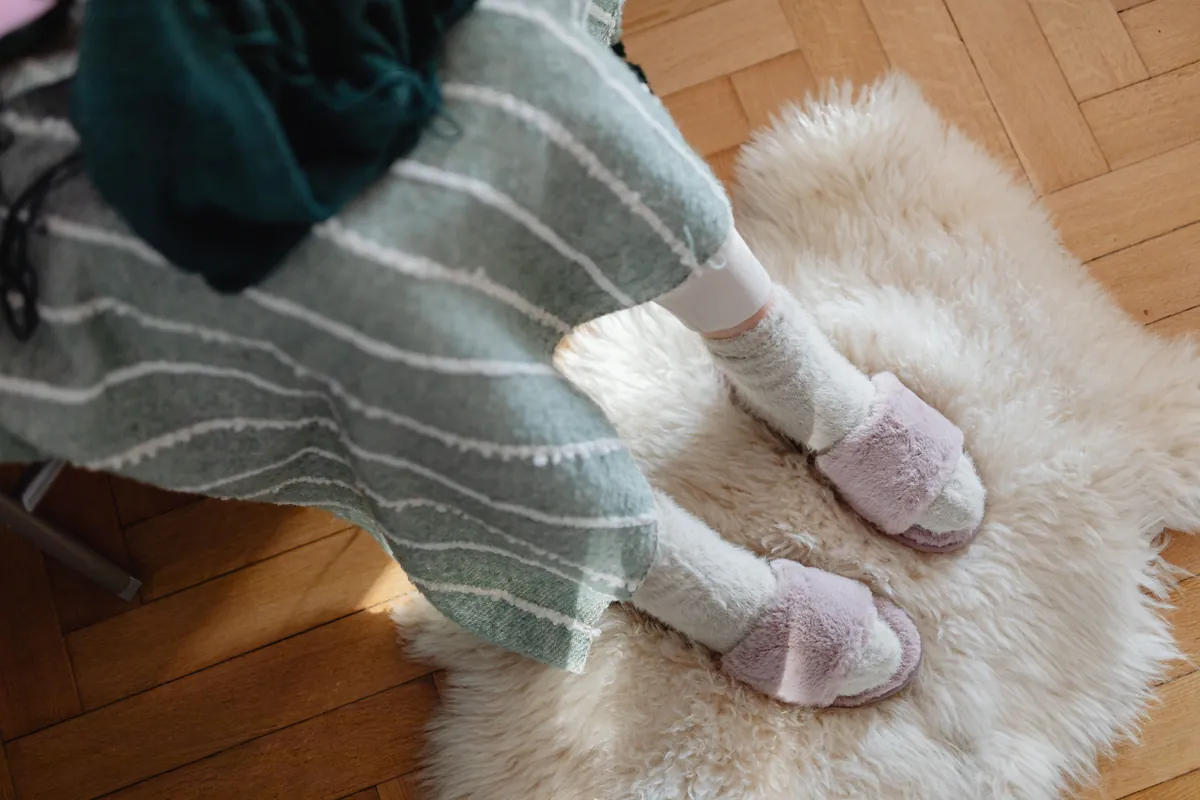
How to do it: Lay a faux fur area rug just inside the door where your feet naturally land, in cream or warm grey so it brightens a dark hallway, and put a thin rug pad underneath so it does not slide on wood or tile. Keep it a little smaller than the bench so the edges do not curl underfoot. Check the latest price on Amazon before you buy.
4. A Row of Hooks with Wool Scarves and Beanies
Coat hooks are the hardest-working thing in a winter entryway, and a row of them hung at two heights turns a bare wall into the most useful spot in the house. I hung ours in a staggered line — the higher row for coats, the lower for the children’s things and the dog lead — and the wool scarves hanging there do double duty as decoration, all that colour and texture against the wall. Give every person one hook of their own, so nobody’s coat ends up on the floor, and leave one hook empty for guests. Wooden pegs warm the look up; black metal keeps it crisp and modern.
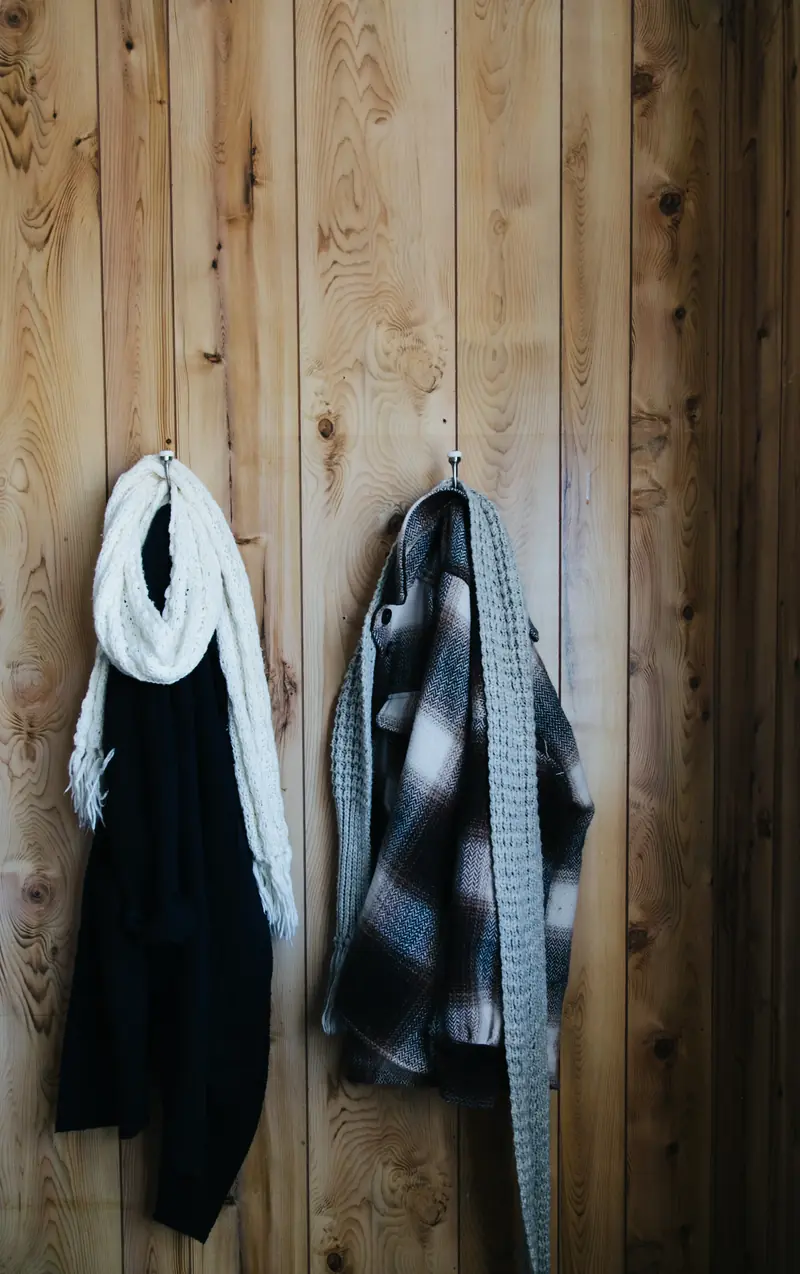
How to do it: Fix a row of wall mounted coat hooks at about shoulder height for adults and a second lower row for children, spacing them a hand’s width apart so coats do not bunch, then hang one scarf and one beanie per hook so the wall looks full but never crowded. Screw into a stud or use proper wall anchors — winter coats are heavy. Check the latest price on Amazon before you buy.
5. A Big Round Mirror That Bounces the Winter Light
January light is low and brief, and a big round mirror is the kindest way to steal a little more of it for a dark hallway. I hung ours opposite the front door’s glass panel, and on bright mornings it throws a soft glow down the hall that no lamp can imitate. The round shape matters too — in a hallway full of straight lines and rectangles, a circle softens everything and makes the space feel wider than it is. Hang it at eye level so you catch your reflection on the way out, give your scarf one last check, and walk out feeling put together. A thin brass or black frame keeps it simple.
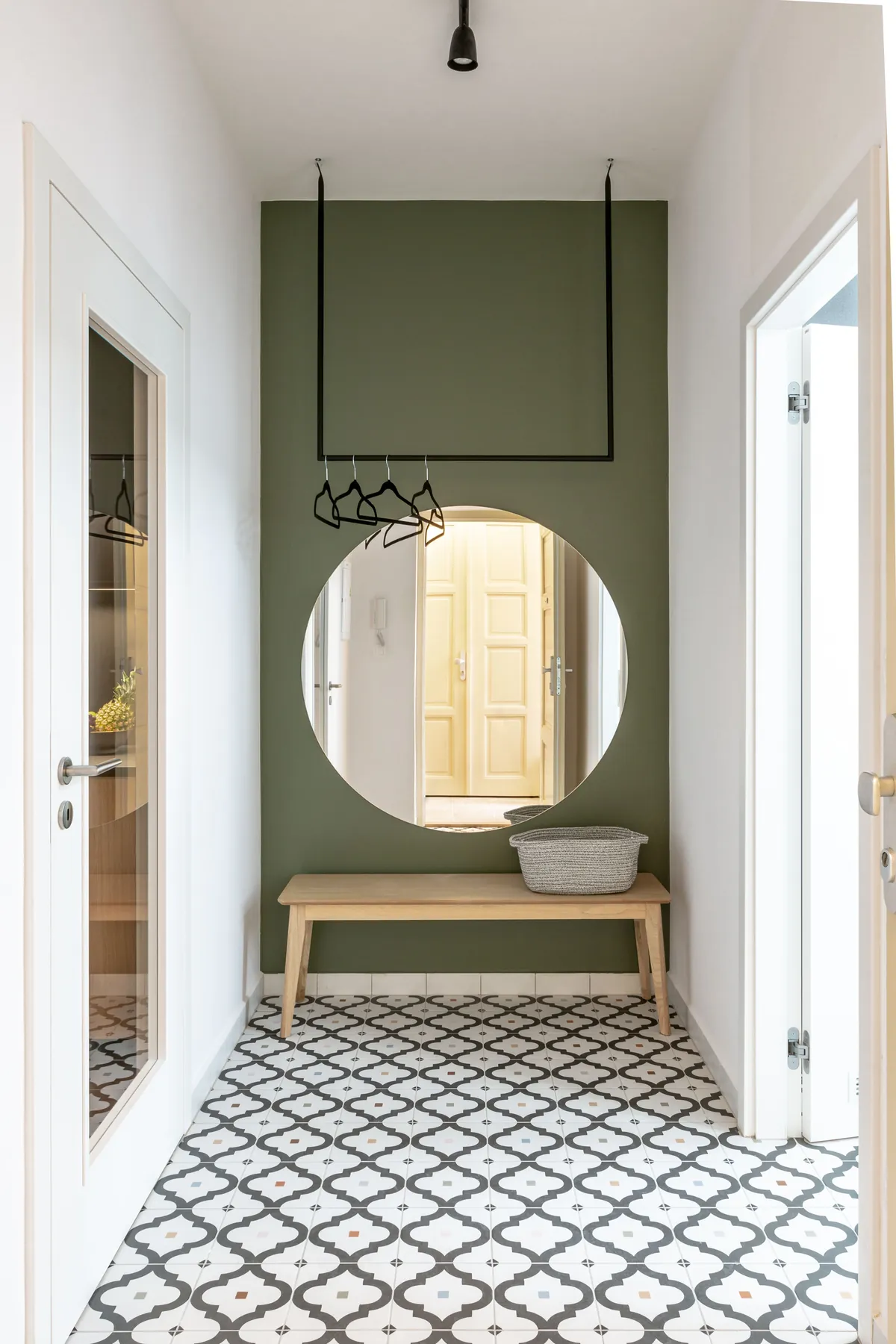
How to do it: Hang a round wall mirror for entryway on the wall opposite your door or window, at eye level, using a proper picture hook rated for its weight. Step back and check what it reflects — a lamp, a window or a pretty corner, never a blank wall or the clutter by the door. Check the latest price on Amazon before you buy.
6. A Row of Lanterns Glowing on the Entryway Wall
By four o’clock in January our hallway is already dark, and the lanterns on the wall make coming home feel like arriving somewhere, not just getting out of the cold. The photo shows rustic lantern sconces glowing warmly, their light softer than any ceiling bulb — a golden edge that makes the entryway feel held. I use battery candles inside mine, so there is no worry about an open flame near coats and scarves, and they switch on at dusk. Wall lanterns are also the easiest glow to move — unhook one for the bench at a dinner party, or set it outside by the door on a snowy evening.
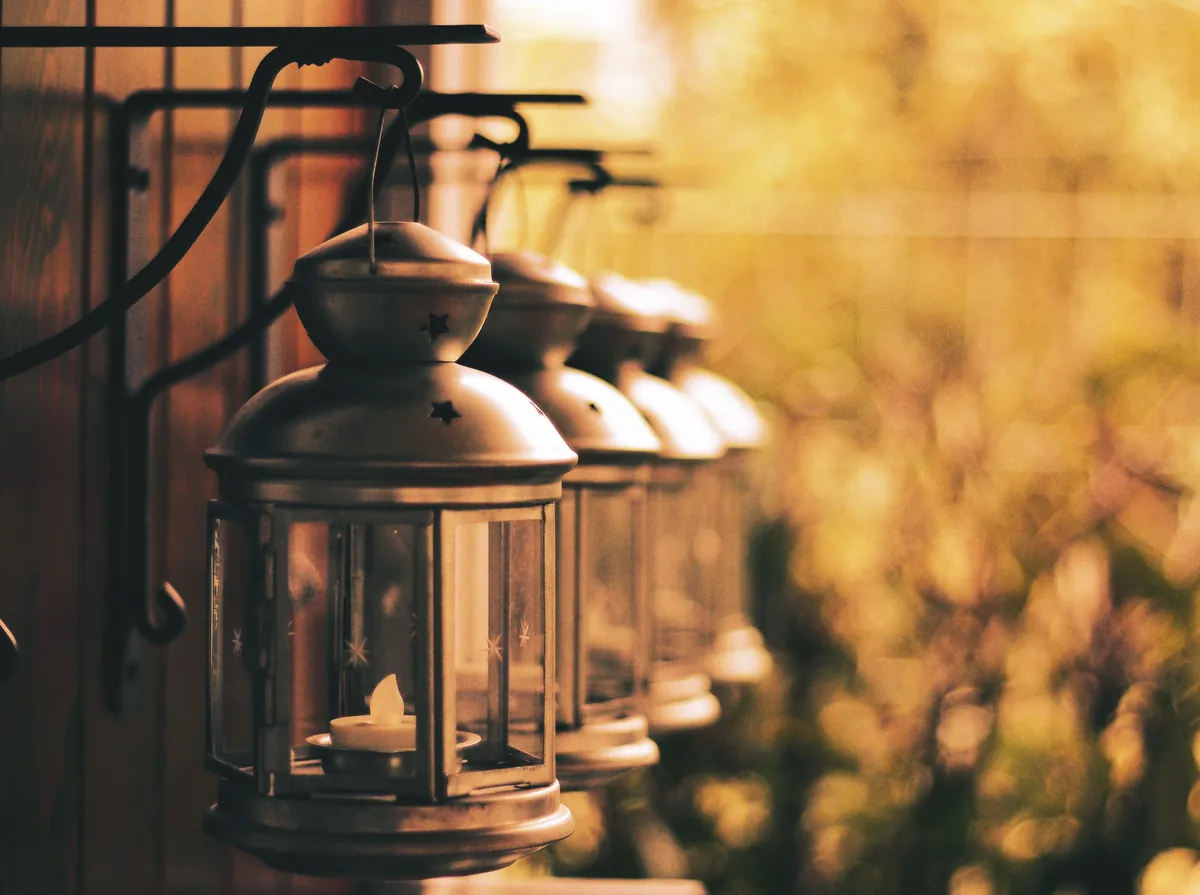
How to do it: Mount a lantern set for home decor in a row on the entryway wall, place a flameless candle in each, and tuck a sprig of evergreen or dried eucalyptus beside them. Set them on a timer so they switch on at dusk and you walk into a lit hallway every evening. Check the latest price on Amazon before you buy.
7. A Woven Basket Full of Folded Blankets
There is something deeply reassuring about a basket of blankets waiting near the front door, and I keep one there all winter because the living room is two steps away and nobody wants to walk back for a blanket once they have sat down. The photo shows a wicker basket of soft blankets folded in neat stacks — folded, they fit neatly and the colours show, and grabbing one feels like choosing from a shop. I use a tall seagrass basket that holds four or five, in cream, rust and forest green, and guests reach for it without asking. Keep it beside the bench, not in the walkway.
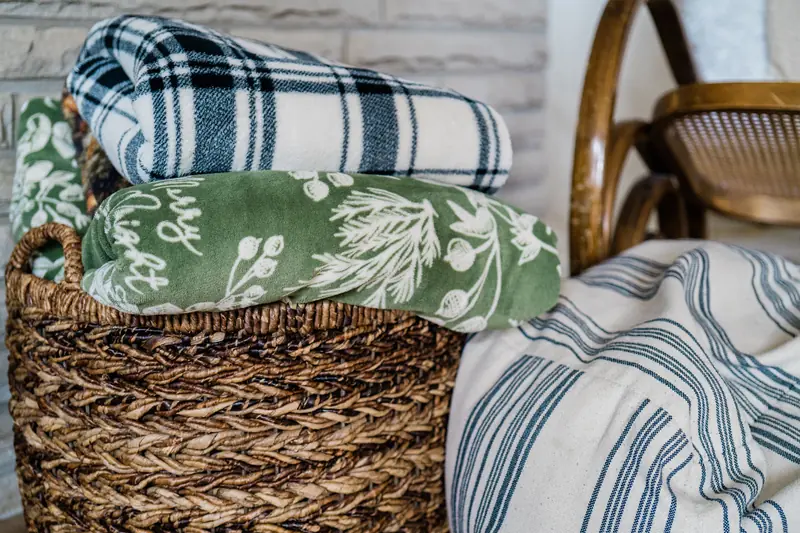
How to do it: Choose a tall large seagrass basket for blankets that stands steady on the floor, fold four or five throws in complementary colours and stack them inside, then tuck the basket beside the bench or console where it is easy to reach but out of the path. Wash the blankets before they go in so the basket smells fresh. Check the latest price on Amazon before you buy.
8. A Slim Console Table with a Winter Vignette
A narrow hallway still deserves something beautiful, and a slim console table is the answer — just deep enough for a lamp, a vase and a stack of books, and shallow enough to walk past with an armful of shopping. Mine is barely twenty-five centimetres deep, and the little scene on top changes with the month: a vase of pine branches in January, dried oranges in February, a bowl of pinecones whenever I collect them. Keep the top to three things at most, or the narrow table starts to look cluttered, and leave the wall above it for one framed print or a small mirror so the whole arrangement feels finished.
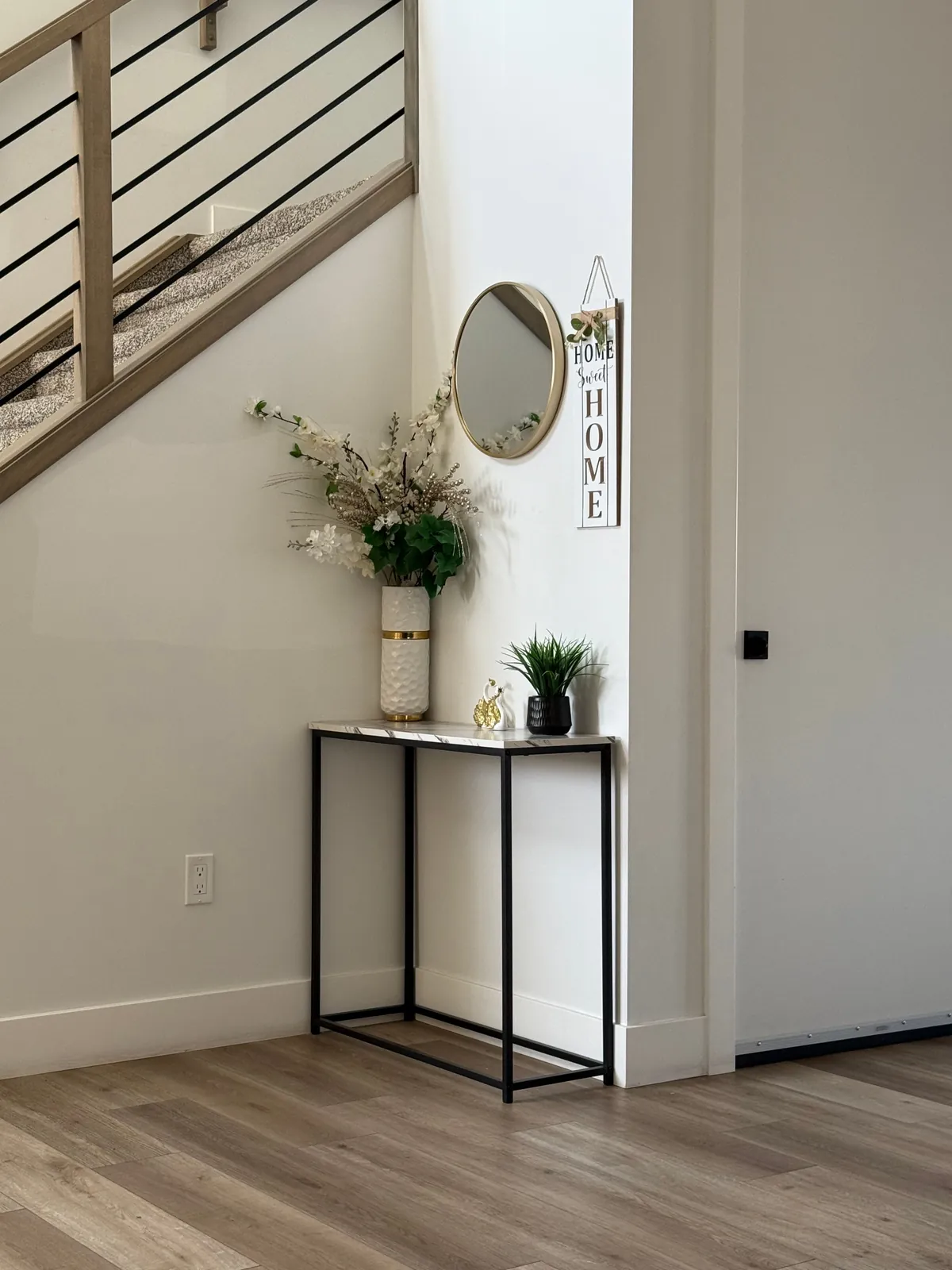
How to do it: Choose a slim console table for entryway no deeper than thirty centimetres, anchor it to the wall if you have small children, then build a three-piece vignette on top — a lamp or lantern, a vase with branches, and one small personal object. Leave breathing room between the pieces. Check the latest price on Amazon before you buy.
9. A Boot Tray — or a Good Mat — by the Door
Winter boots bring the outside in — slush, grit, road salt — and for years our hallway floor paid for it, until I gave shoes a place by the door. The photo shows the simplest version: shoes resting on a mat by the front door, out of the walkway. A tray does the same job better, catching the drips a mat lets through — choose one in a material you would happily display: dark metal, wood lined with pebbles, or woven with a waterproof insert. I keep ours just inside the door, and the rule is simple: boots live on the tray, never beside it. Empty it weekly and the salt never marks the floor.
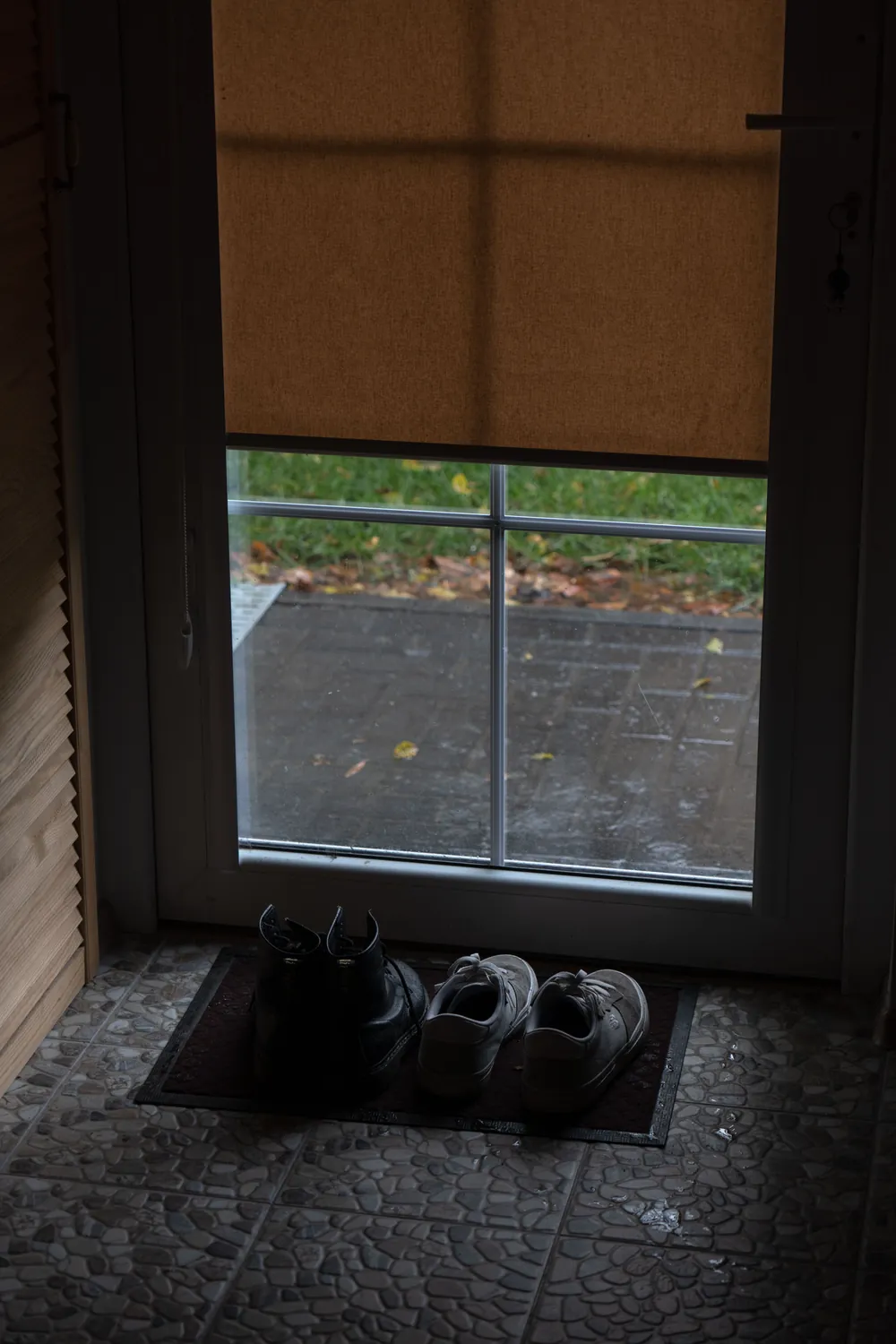
How to do it: Place a boot tray for entryway indoor just inside the door, sized for two pairs of boots side by side, and line it with a coir mat or pebbles if you want the drainage to look intentional. Put a small towel on the tray’s edge for quick wipes, and empty any standing water the same evening. Check the latest price on Amazon before you buy.
10. A Plaid Runner Down the Hallway
A hallway runner does three quiet jobs at once: it warms cold floorboards, softens footsteps, and pulls the eye down the hall so a narrow space feels longer. The photo shows a bold checkered carpet running down a long corridor, and that is exactly what a runner does in a home hallway: a checked pattern hides winter dirt far better than a plain rug, and it gives the hallway a personality a bare floor never had. Lay it so it starts just inside the door and ends before the last doorway, with a little floor showing at each end, and use a rug pad underneath — without one it creeps.
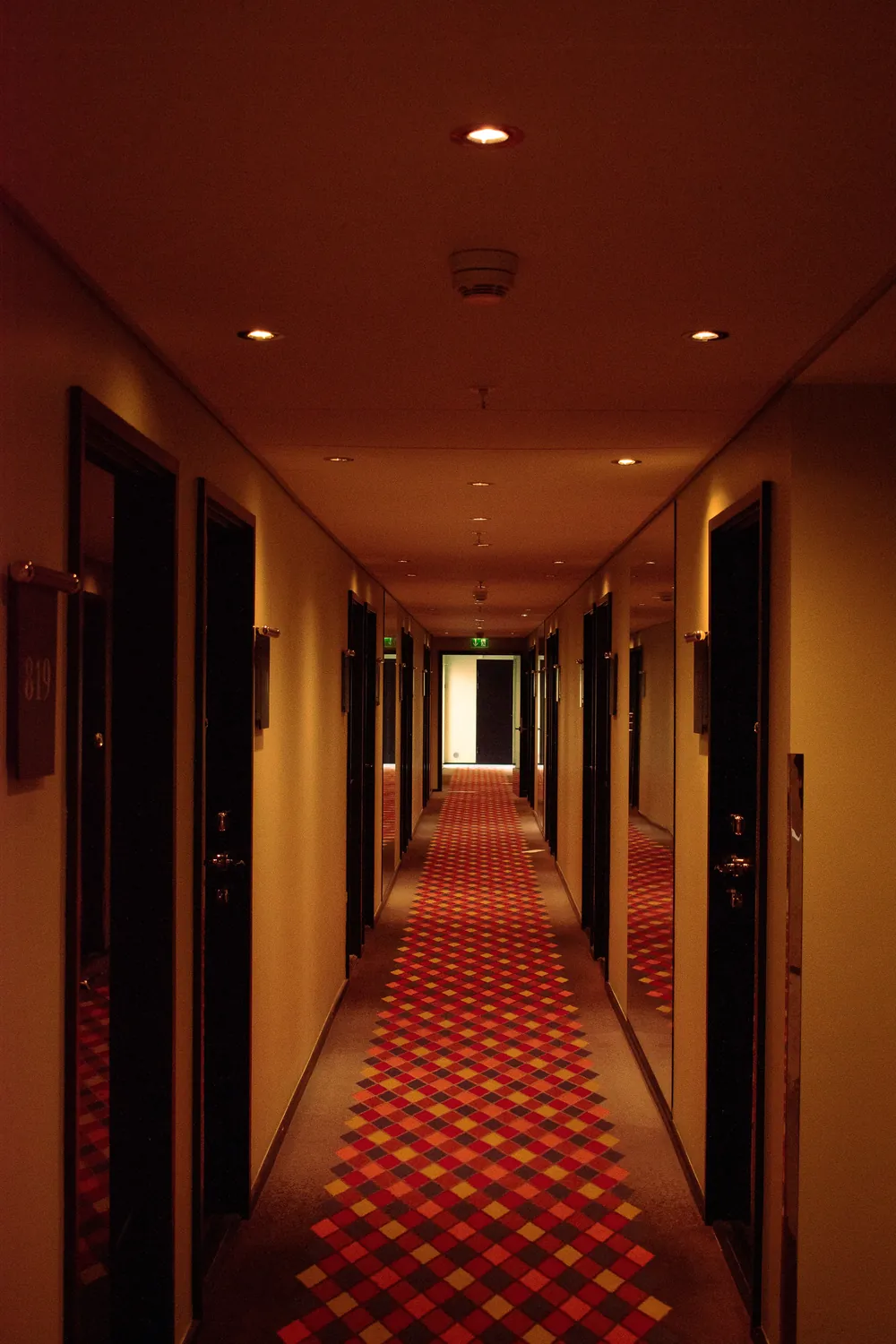
How to do it: Measure your hallway and choose a plaid runner rug for hallway about fifteen centimetres narrower than the floor on each side, lay a non-slip rug pad beneath it, and centre it so the same amount of floor shows on both sides. Vacuum it twice a week in winter — it catches everything the boots bring in. Check the latest price on Amazon before you buy.
11. A Wall of Family Photos in Warm Wood Frames
The entryway is the first wall guests see and the last one we pass every morning, so it is the right place for the photographs that make the house feel like ours. I built our gallery slowly, one frame at a time, mixing black-and-white prints with colour photographs of the people we love, all in warm wood frames so the wall feels collected rather than bought in one go. Start with the largest frame at eye level in the centre and work outwards, keeping the gaps about the width of two fingers so the arrangement holds together. A hallway gallery is wonderfully forgiving — a slightly crooked frame just looks like home.
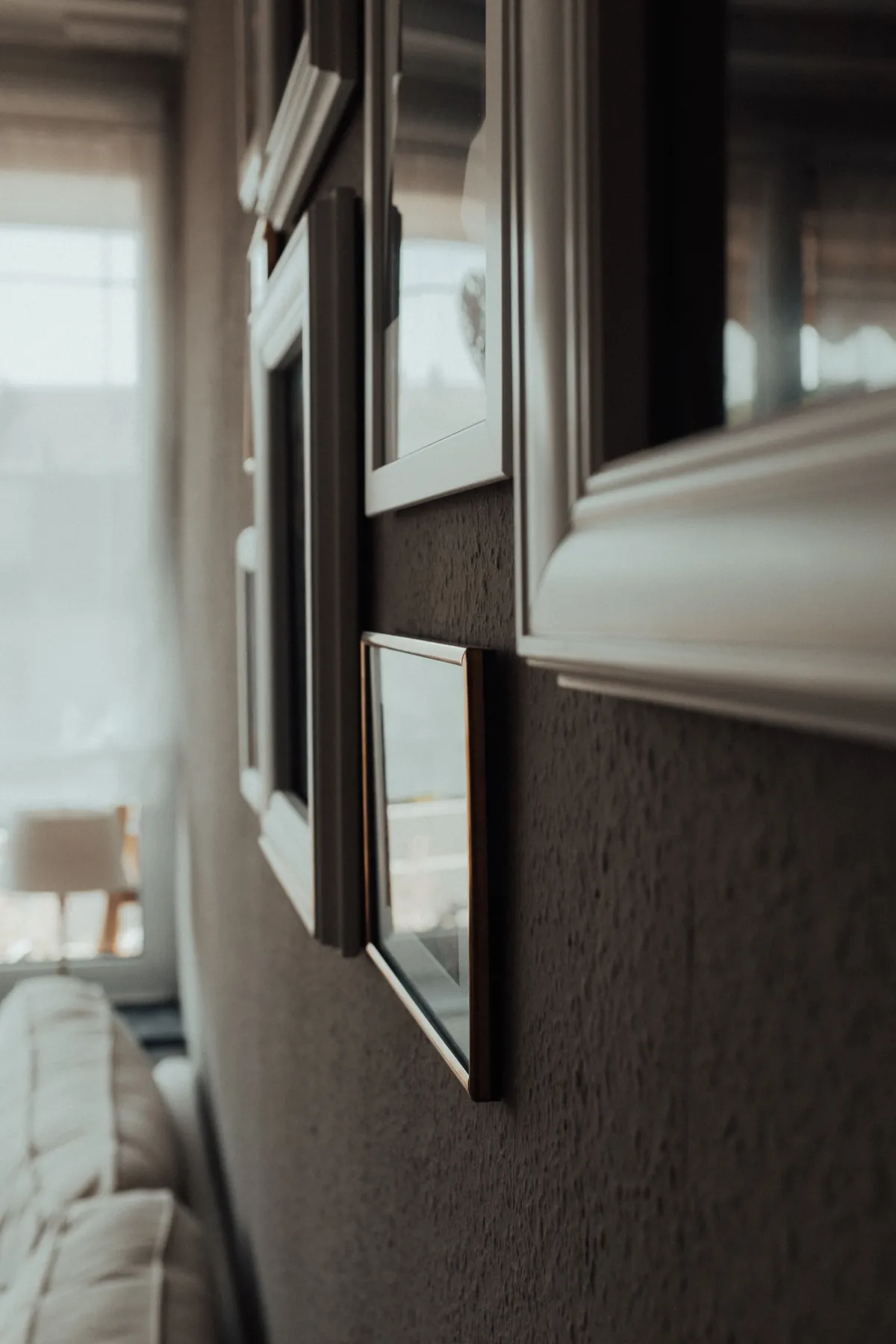
How to do it: Pick a wood picture frames set for gallery wall in one warm wood tone, lay the arrangement on the floor first and photograph it, then hang it starting from the centre frame at eye level. Use picture-hanging strips for light frames so you can move them without new holes. Check the latest price on Amazon before you buy.
12. A Ceramic Vase of Dried Pampas and Winter Branches
Fresh flowers in January feel like a small rebellion against the season, but dried stems are the practical version — they last all winter, they need no water, and they look better the longer they sit there. I keep a tall white vase of dried pampas on the console, and the soft feathery plumes catch the light in a way that makes the whole corner feel gentle. The trick is scale: the vase should be about a third of the total height, and the stems should arc out rather than stand straight up like a broom. A little hairspray on the pampas keeps the shedding down to almost nothing.
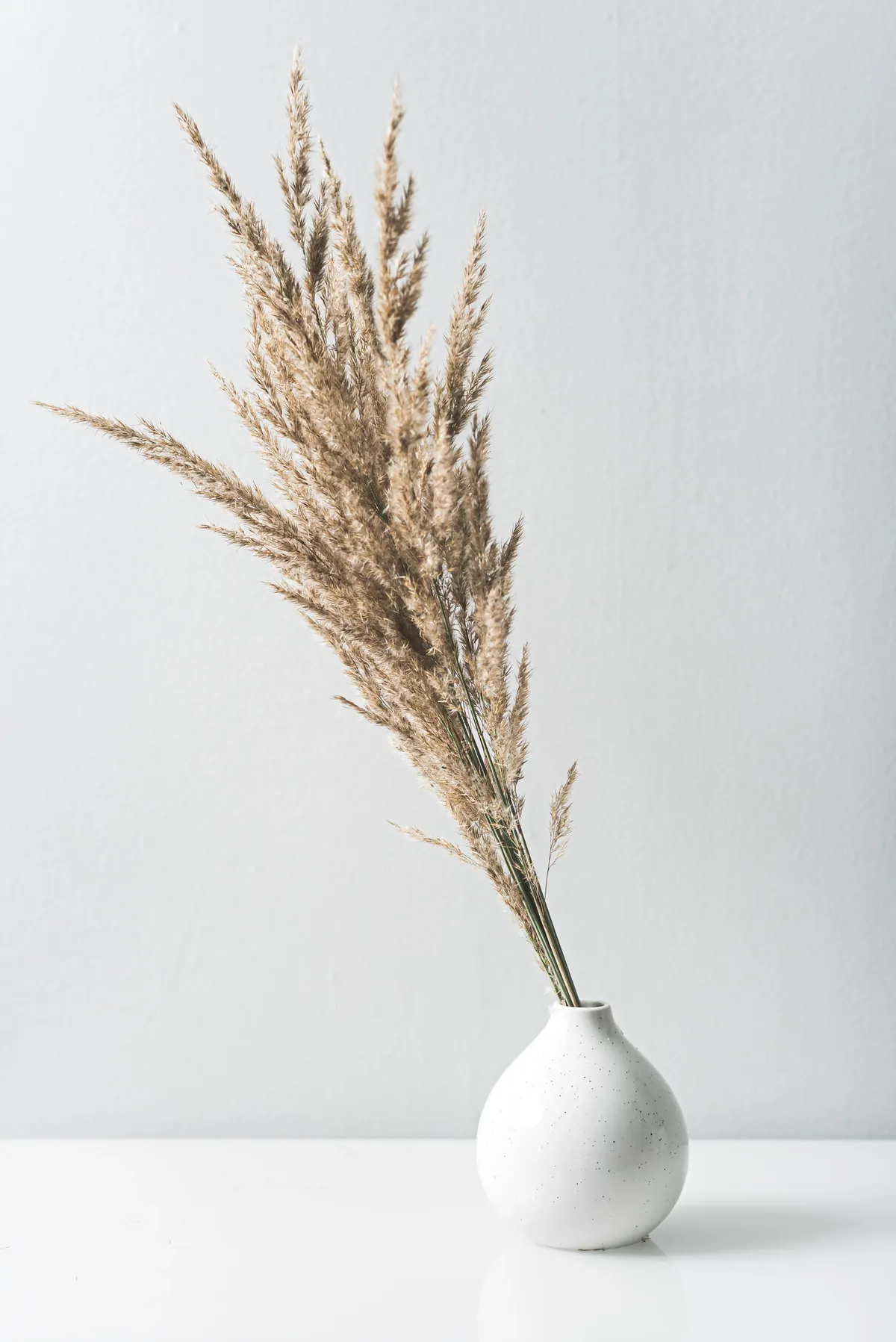
How to do it: Fill a tall ceramic vase with a bunch of dried pampas grass decor and two or three bare winter branches, trimming the stems so the arrangement is about one and a half times the height of the vase. Mist the pampas lightly with hairspray to stop shedding, and keep it away from the door draught so the plumes do not scatter. Check the latest price on Amazon before you buy.
13. A Cosy Reading Nook in the Entryway Corner
Our entryway has a wide corner that once held only a plant stand, and turning it into a reading nook was the best use of that space. The photo shows the corner I mean: a chair, bookshelves and a lit lamp beside a window. A small armchair, a folded throw and a cushion, and suddenly there is somewhere to sit with tea while the children find shoes. The chair should be small enough to leave the walkway clear and comfortable enough to actually sit in — I once tried a beautiful one nobody could sit in for five minutes, and it went back to the shop. Add a tiny side table for the mug.
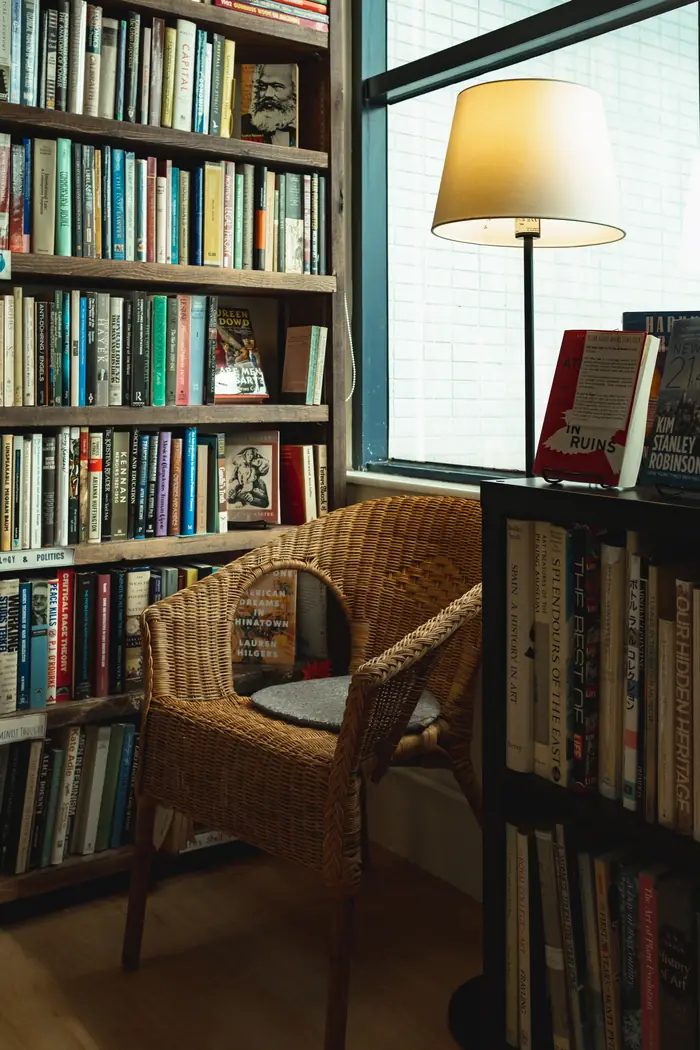
How to do it: Tuck a small accent chair into the widest corner of your entryway with a folded throw over one arm and a cushion behind your back, then add a stack of three books on a tiny side table beside it. Keep the chair angled slightly towards the door so the nook feels open, not boxed in. Check the latest price on Amazon before you buy.
14. A Statement Pendant Light in Warm Brass
Most hallways are lit by one sad ceiling bulb, and swapping it for a pendant light is the fastest way to make the entryway feel designed rather than leftover. I chose a warm brass pendant with a linen shade, and its light is soft and golden instead of the cold white glare we had before — it makes the wood tones richer and the space feel taller, because your eye follows the drop of the light. Hang it so the bottom of the shade sits well above head height, about two metres from the floor, and put it on a dimmer if you can, so the evening glow can be as soft as you like.
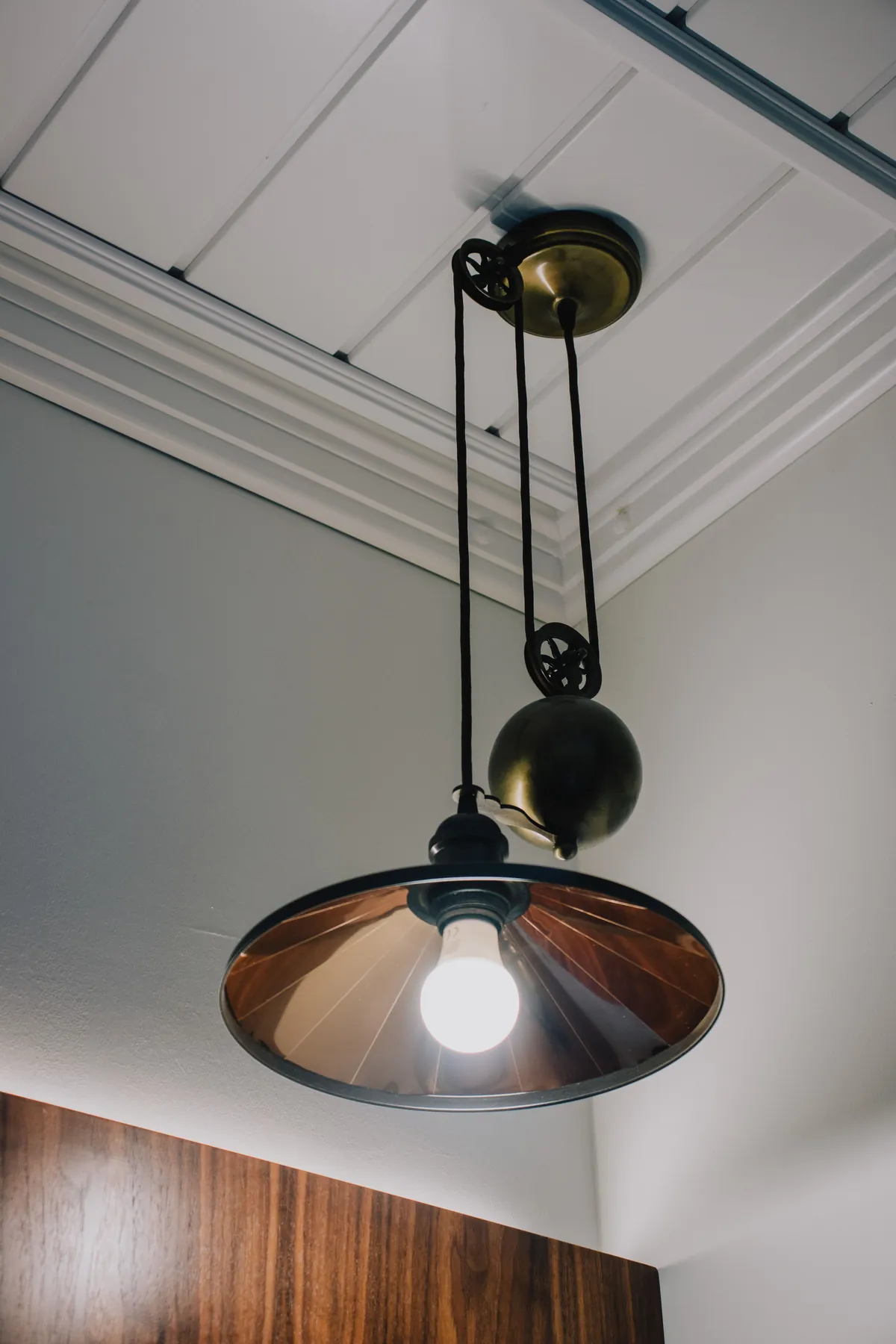
How to do it: Swap your ceiling light for a brass pendant light fixture with a warm bulb, hanging it so the shade clears the tallest person in the house by a comfortable margin. If you rent, choose a plug-in swag version that hooks over the existing fitting instead of rewiring anything. Check the latest price on Amazon before you buy.
15. A Vintage Wooden Crate for Shoes and Boots
Shoes are the entryway’s eternal problem, and a vintage wooden crate is my favourite solution because it looks like it has always belonged there. The photo shows brown leather boots displayed on top of an old ginger ale crate, and that is the spirit of it — a crate gives boots a proper home instead of a pile on the floor. The worn wood suits winter perfectly, and because the crate is open at the top you can see at a glance what is inside. If you have more shoes than one crate holds, stack a second beside it rather than buying a closed cupboard nobody opens.
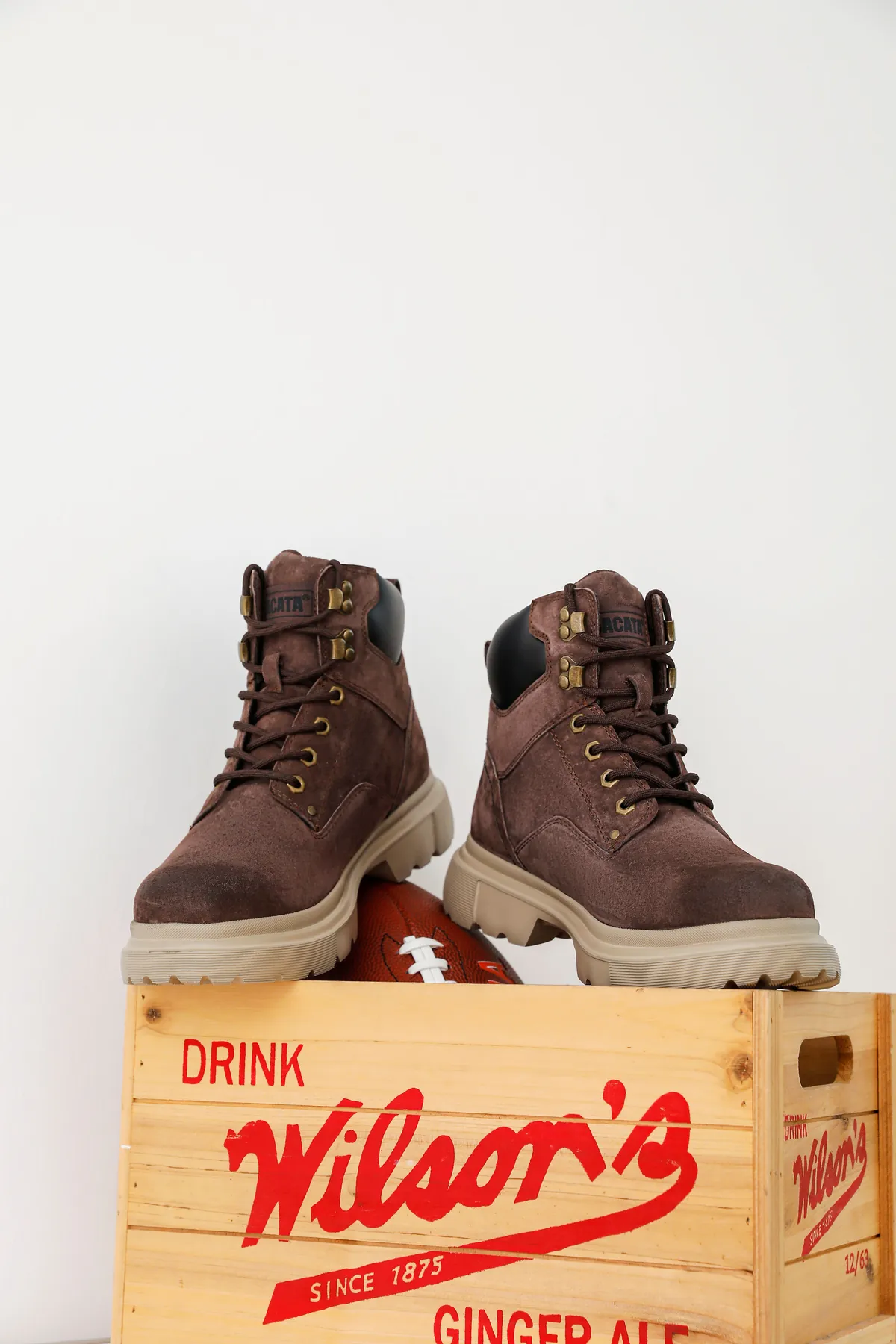
How to do it: Find a sturdy wooden storage crate decorative large enough for your bulkiest boots, line the bottom with a cut-to-fit coir mat, and stand it against the wall beside the bench with the opening facing out — boots on top or tucked inside. Sand any rough edges before the first pair of boots goes in. Check the latest price on Amazon before you buy.
16. A Soft Neutral Paint Refresh for Dark Winter Days
When the light is weak and the days are short, the colour on your hallway walls works harder than at any other time of year, and a soft neutral repaint is the most effective change I have made to our entryway. I chose a warm white with the faintest hint of cream — not stark white, which can feel cold in January, and not yellow, which turns muddy in lamplight — and the hallway immediately looked brighter and larger. Paint only the entryway and you can finish it in a weekend, and the fresh walls make every other idea in this list look better. Keep a little paint aside for scuffs.
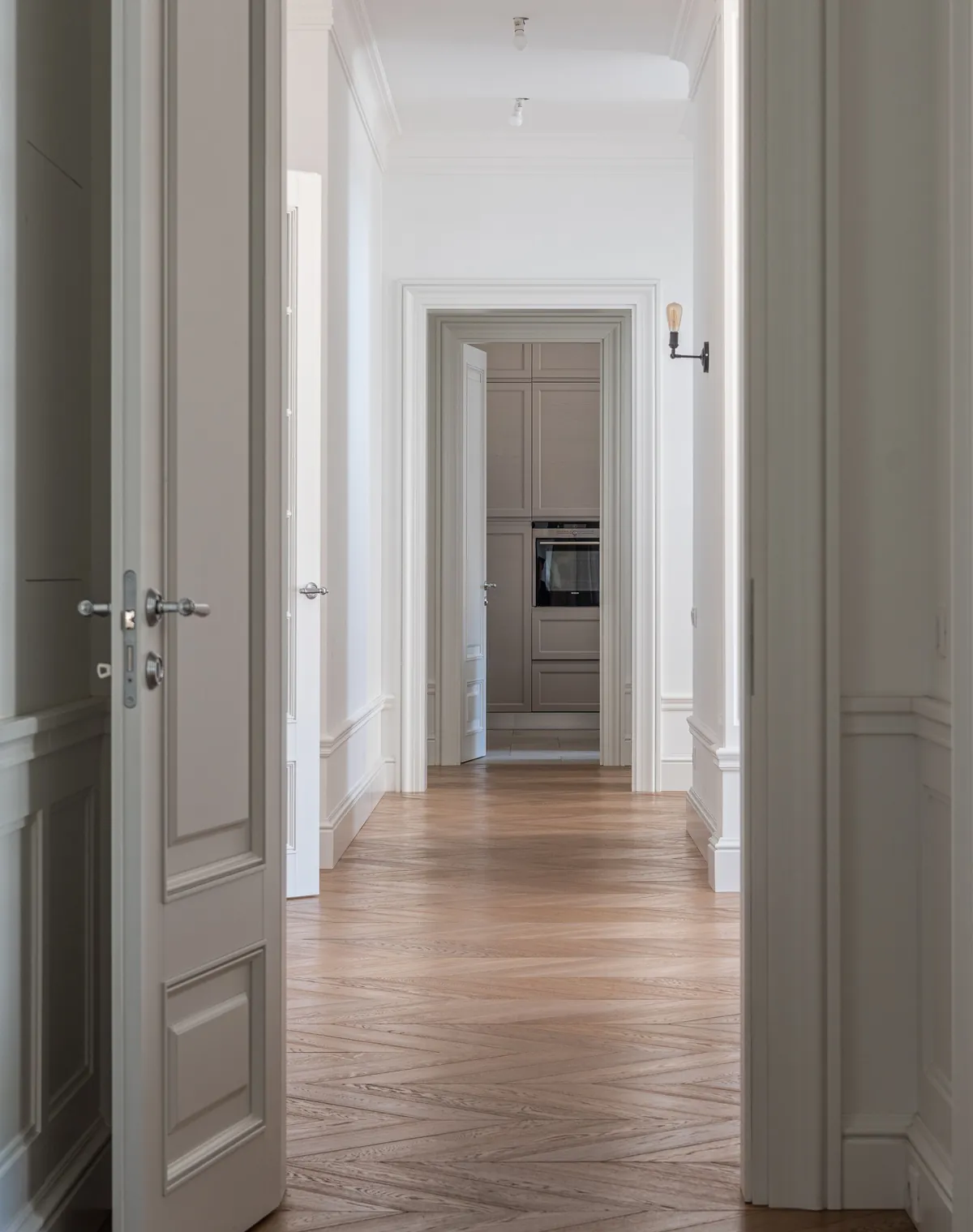
How to do it: Test a warm white interior paint swatch on the darkest wall first and look at it in morning light and lamplight before you commit, then paint the entryway in a durable eggshell or satin finish that wipes clean. Do two thin coats rather than one thick one, and keep the leftover paint for touch-ups. Check the latest price on Amazon before you buy.
17. A Wreath of Dried Orange Slices and Cinnamon
A wreath does not have to belong to Christmas: the dried-orange-and-cinnamon one on our door stays up long after the tree comes down because it smells like winter, not one holiday. The photo shows one laid flat on a table, mid-making. I make mine on a grapevine base with dried orange slices, cinnamon sticks and dried eucalyptus, and it costs less than a takeaway and lasts until March if it stays dry. Hang it inside the front door, and every time the door opens the cinnamon catches the air. It is a lovely thing to make on a grey Sunday afternoon with a cup of tea.

How to do it: Start with a plain grapevine wreath base, then wire on a dried orange slices for crafts in a loose circle, tuck cinnamon sticks between them, and finish with a few eucalyptus sprigs. Hang it on the inside of the door with a removable hook so it comes down without a mark. Check the latest price on Amazon before you buy.
18. A Candle Station on the Entryway Shelf
A small shelf in our hallway used to hold nothing but keys and unopened post, and turning it into a candle station gave the whole entryway a reason to smell wonderful. I keep a row of candles there in different heights — tall pillars, glass jars and little tins — in seasonal scents like cedar, amber and orange, and I light one every evening. The glow on the wall behind them is soft and golden, and the scent reaches the living room before I do. Use a tray underneath to catch wax, and keep the matches in a little jar beside them so the ritual takes ten seconds.
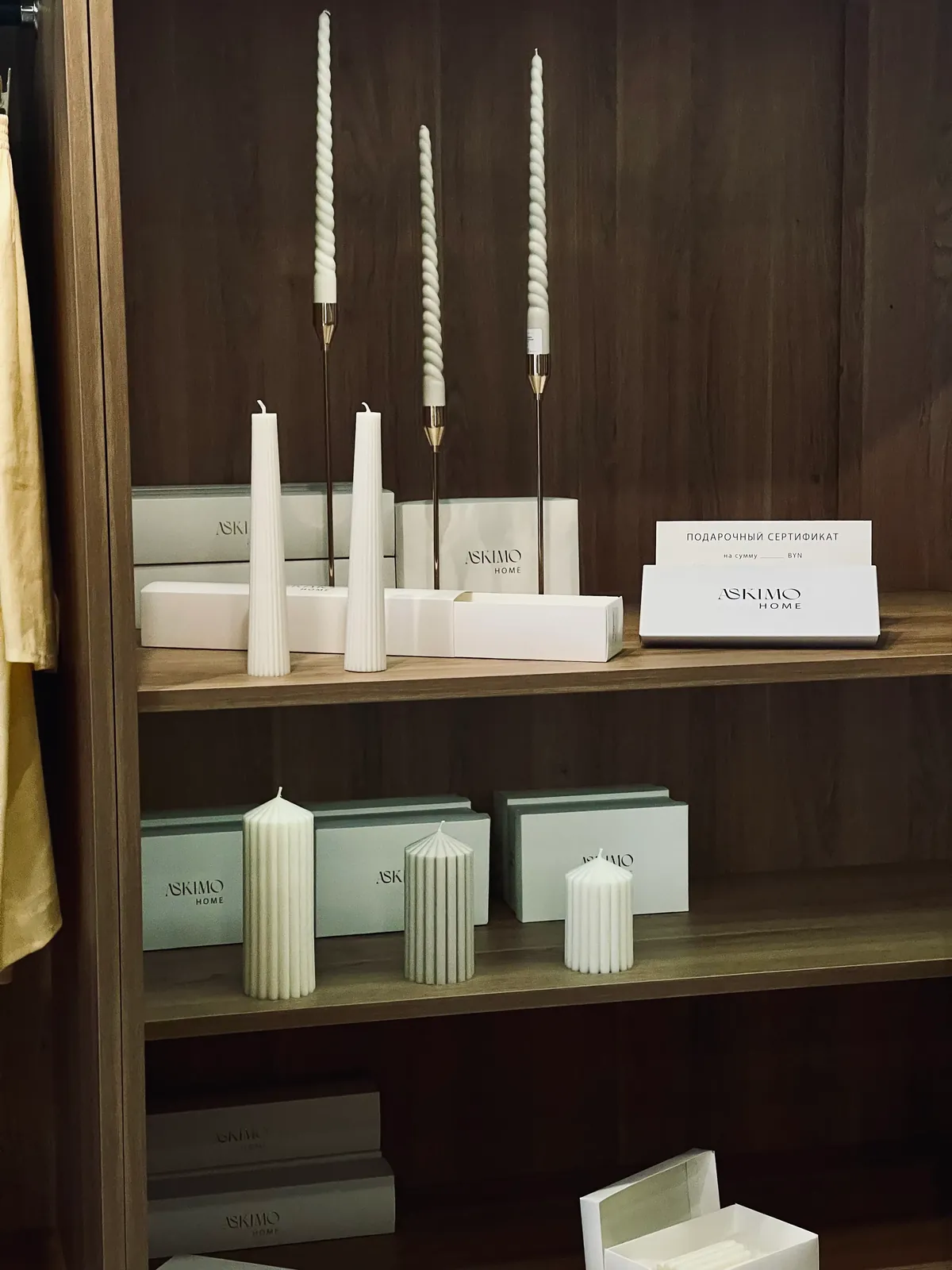
How to do it: Set a small tray on your entryway shelf, arrange a scented candles set for home of three different heights on it, and keep a jar of matches and a little snuffer beside them. Light one when you come home and blow it out before bed — never leave a lit candle by the door unattended. Check the latest price on Amazon before you buy.
19. A Personalised Wooden Sign with a Warm Welcome
A wooden sign by the front door is the first thing that makes the house feel like ours. The photo shows a simple rustic Welcome sign on a plank wall — even without a family name, a wooden sign makes a door feel like home. I had ours made from reclaimed wood with the lettering carved rather than printed, so it ages well, and I hung it at eye level beside the door. A personalised sign is also a kind housewarming gift: it turns a new house into a home on the day it arrives. Keep the words short — a name, a date, one warm line — and let the wood do the talking.

How to do it: Order a personalized wooden welcome sign for front door with your family name and a short line, in a wood tone that matches your bench or frames, and hang it at eye level beside the door with a single sturdy hook. Seal the wood with a clear wax if it will sit near a damp coat. Check the latest price on Amazon before you buy.
20. A Textured Wallpaper Accent Wall
The photo shows a living room transformed by a single patterned wall, and our hallway was the dullest room in the house until I borrowed the trick and papered one wall in a subtle grasscloth texture — guests now comment on the hallway before the living room. Texture is the secret: a flat wall in a dark hallway swallows light, but a woven paper catches it and gives the wall a depth paint cannot. I chose a warm neutral with a faint woven pattern, papered only the wall behind the bench, and left the other walls plain so the texture stays a feature, not a shout. Peel-and-stick versions are entirely renter-friendly.
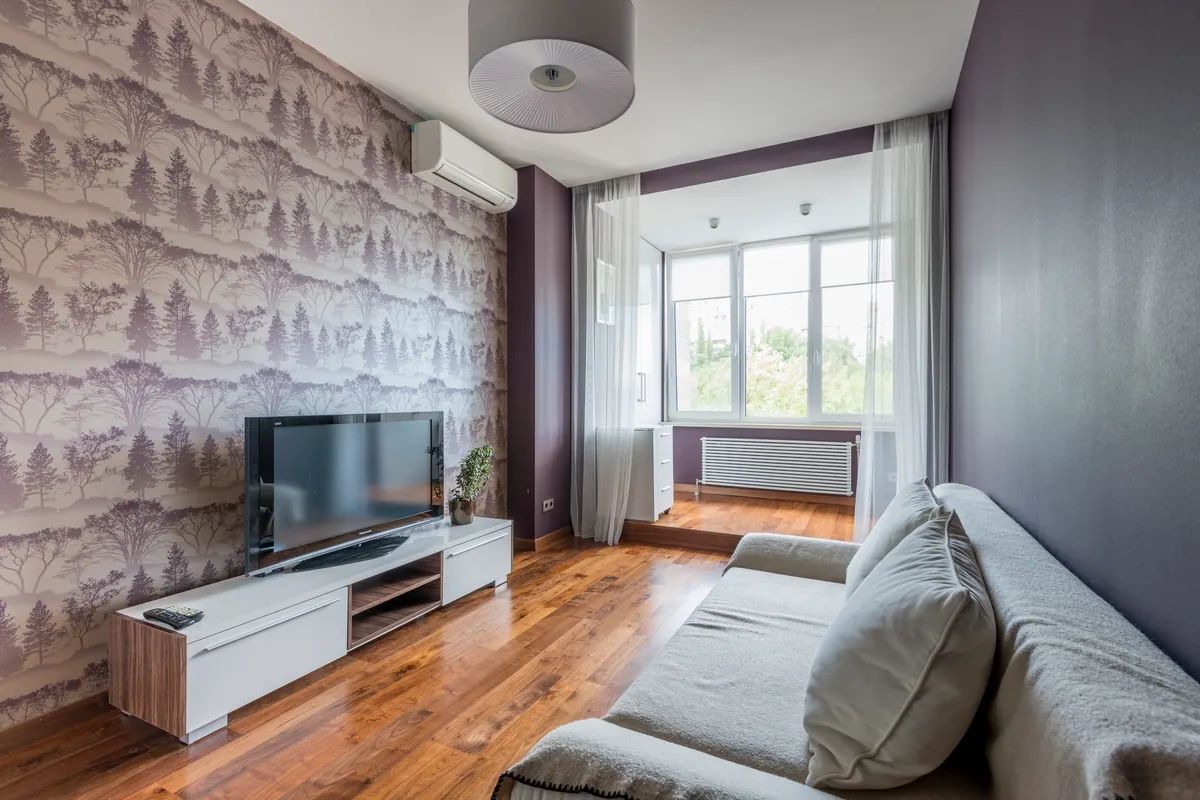
How to do it: Choose a peel and stick textured wallpaper in a warm neutral, paper the single wall behind your bench or console, and line the first strip up carefully with a spirit level so the pattern stays straight. Smooth each strip from the centre outwards to push out air bubbles. Check the latest price on Amazon before you buy.
21. A Slim Storage Cabinet That Looks Like Furniture
There comes a point when open storage starts looking like a shoe shop, and a slim cabinet earns its place. The photo shows a tall, slim wooden cabinet with glass doors in a minimalist hallway — and that silhouette is the point: it looks like furniture, not storage. Mine has solid tilt-out doors so the shoes stay hidden, holds three pairs a shelf, and the hallway reads as tidy even when everyone is running late. Choose one with ventilation, or the shoes inside will smell like a gym bag by February, and keep everyday shoes on the boot tray so it is not opened ten times a day. Top it with a lamp and it disappears into the decor.
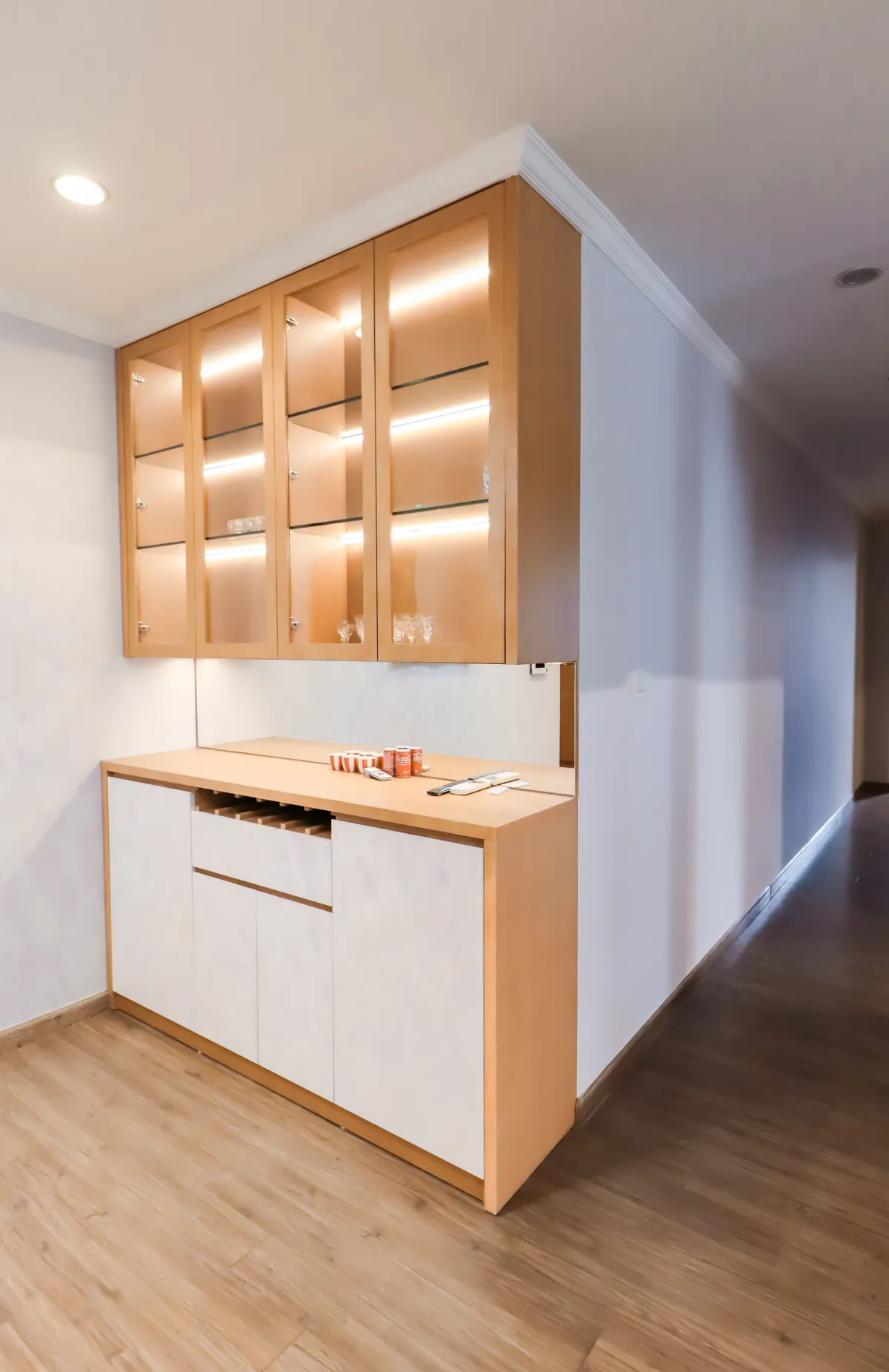
How to do it: Measure your wall and choose a slim shoe cabinet for entryway that leaves a clear walking path, anchor it to the wall, and assign one shelf per person so the inside stays organised. Slip a small sachet of baking soda inside each compartment to keep the air fresh. Check the latest price on Amazon before you buy.
22. A Cosy Window Seat by the Entryway Window
If your entryway has a window, you have the makings of the cosiest seat in the house, and I built ours from a low bench, a thick cushion and pillows in winter colours. It is where the children sit to watch the world go by, where I put my boots on, and where the cat has claimed the sunny corner as her throne. A window seat needs three things: a cushion thick enough to sit on properly, a throw within reach, and a basket underneath for the shoes that would otherwise pile up beside it. If the window is draughty, a heavy curtain on either side turns the seat into a warm nook.
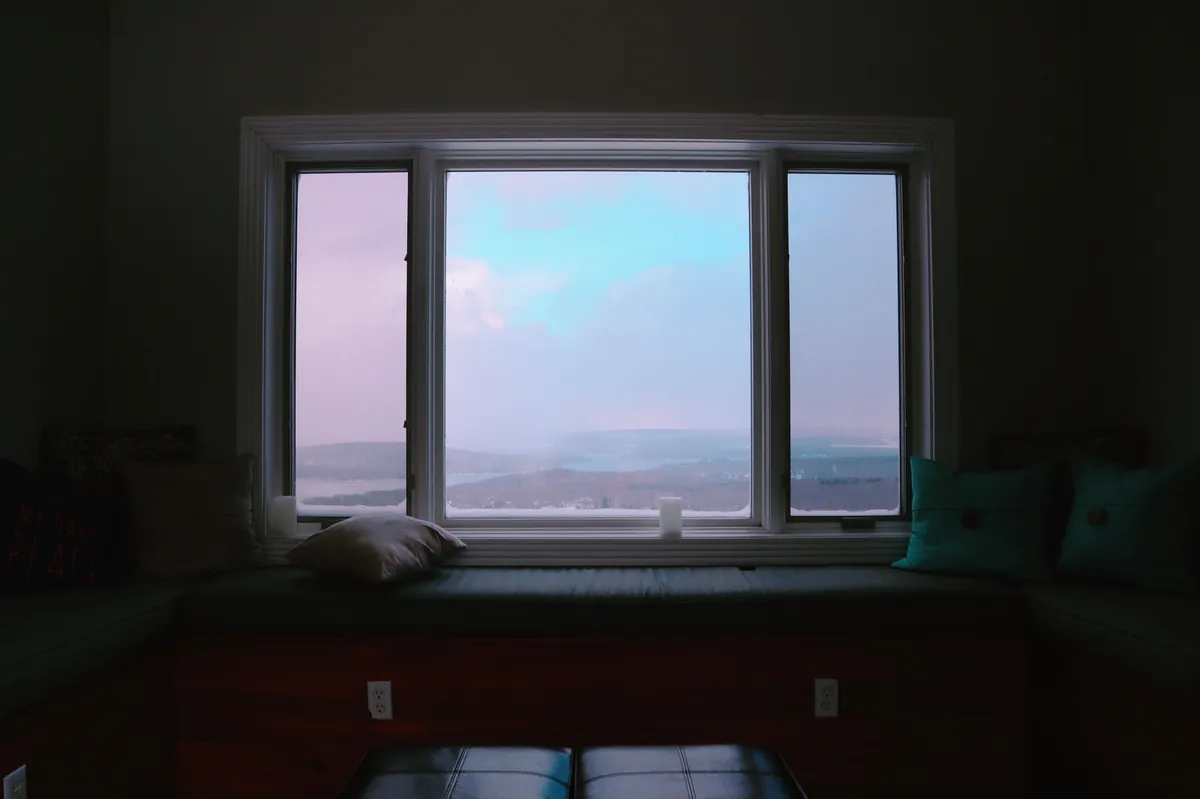
How to do it: Place a low bench beneath your entryway window, top it with a thick bench cushion for window seat cut to fit, and layer two or three cushions in warm winter colours along the back. Slide a basket underneath for shoes, and hang a heavy curtain panel on each side if the window lets in a draught. Check the latest price on Amazon before you buy.
23. A Bowl of Pinecones and Evergreen on the Table
Some of the best winter decoration costs nothing at all, and the bowl on our console table proves it — pinecones from a November walk, a few sprigs of evergreen from the garden, and a handful of red berries, all in a wide wooden bowl that cost less than lunch. It is the kind of arrangement that looks different every time you pass it because the light catches a different cone, and it smells faintly of the woods every time you open the front door. Refresh the evergreen every couple of weeks so it stays green, and keep the bowl shallow and wide so the arrangement reads as a landscape rather than a pile.
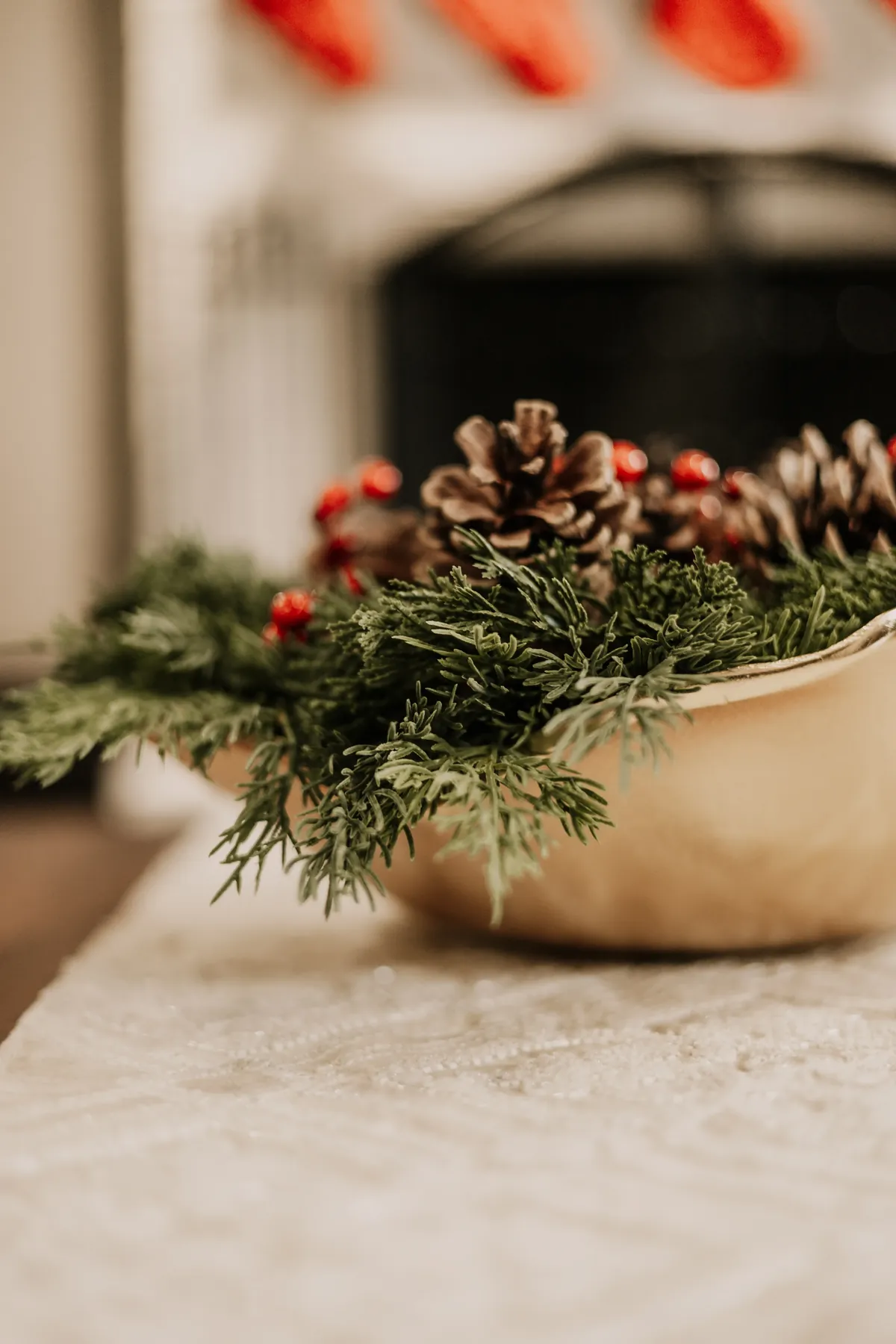
How to do it: Fill a wide, shallow wooden decorative bowl for table with pinecones you have collected and dried, tuck in sprigs of evergreen and a few dried orange slices, and set it in the centre of your console table where the door light falls on it. Replace the evergreen when it starts to dry out. Check the latest price on Amazon before you buy.
24. A Doormat That Can Handle Snowy Boots
The doormat is the least loved object in the entryway, and a good one earns its place by surviving everything winter throws at it. I swapped our thin decorative mat for a thick coir mat with a rubber backing, and the difference was immediate — mud, leaves and grit stay on the mat instead of travelling into the house, and it does not slide around when someone wipes their boots. Choose one with a deep texture so it scrapes boots clean, and a dark colour or a busy pattern so the winter dirt does not show. Shake it out every few days and it will last for years.
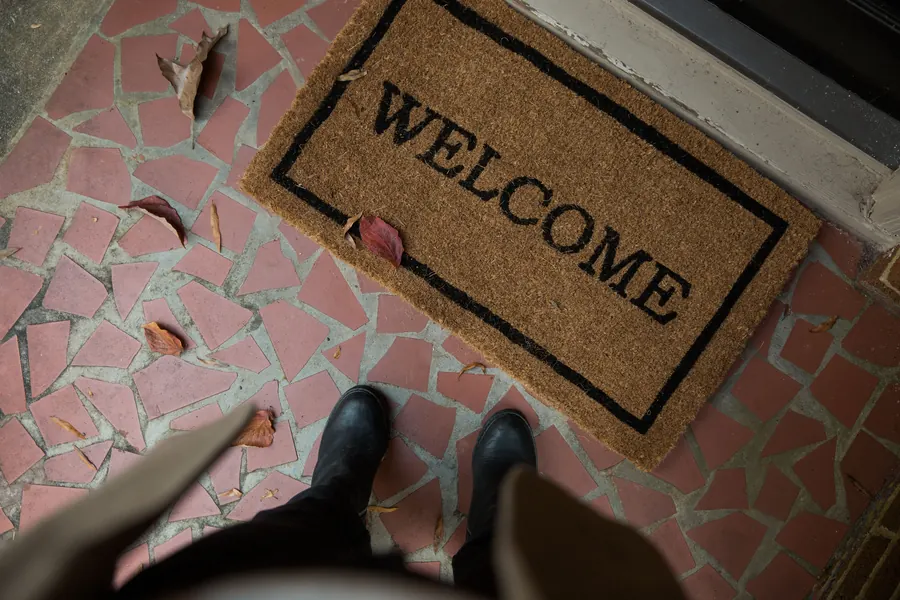
How to do it: Lay a thick coir doormat heavy duty outdoor outside the front door with a rubber backing so it stays put, and put a second smaller absorbent mat just inside for the damp that gets past it. Shake the outdoor mat out twice a week and the indoor one goes in the wash. Check the latest price on Amazon before you buy.
25. A Gallery of Winter Landscape Prints
When the view outside the door is grey slush, a wall of winter landscape prints gives the hallway its own weather. The photo shows a wall of black-framed landscape prints arranged as a gallery, and that is the look I copied: three prints of snowy forests and frozen lakes above the bench, the cool blues and whites against the warm wood making the entryway feel balanced — cold outside, warm inside, both beautiful. Choose prints with a little warmth in them, a low sun or a lit cabin window, so the wall does not feel icy, and keep the frames identical. It is the cheapest art that ever changed a room.
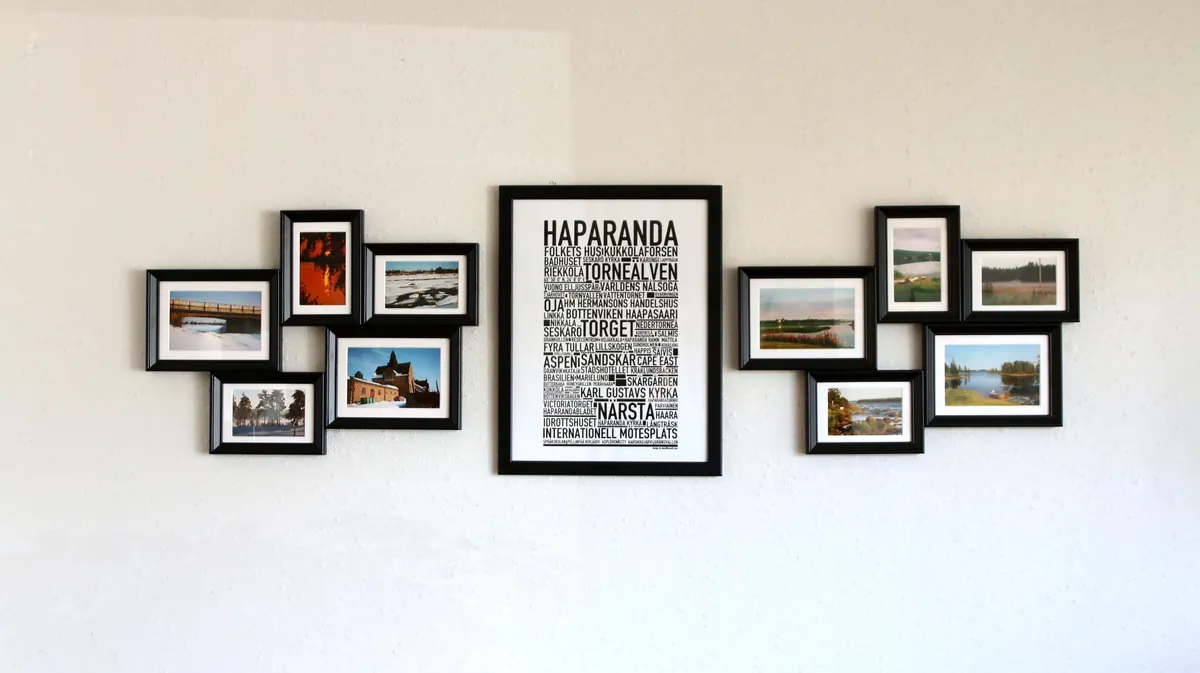
How to do it: Choose three winter landscape wall art prints in the same size with a little warm light in each scene, frame them in identical simple frames, and hang them in a row above the bench with equal gaps between them. Keep the centre of the row at eye level. Check the latest price on Amazon before you buy.
26. A Chunky Knit Pouf for Sitting to Put Shoes On
Putting boots on standing up is a balancing act nobody enjoys, and a chunky knit pouf by the door is the softest solution I have found. The photo shows round knitted poufs in a bohemian corner, and the shape is exactly right — low enough to sit on and sturdy enough to stand on for the top hook. The children use it as a step to hang their coats, the dog uses it as a pillow, and I use it every morning. Choose one filled firmly, or it will sag into a pancake by February, and keep it close to the boot tray so the shoe routine happens in one spot.
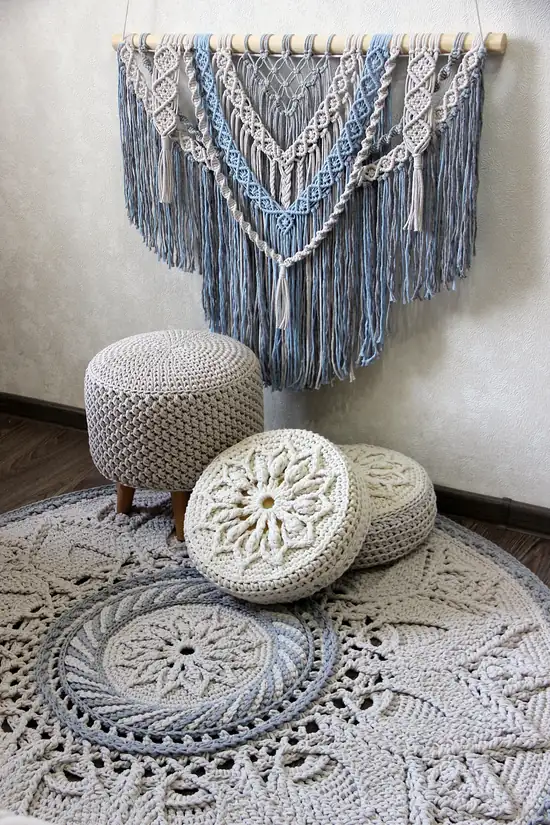
How to do it: Place a firmly filled knitted pouf ottoman for living room beside the boot tray, in a colour that matches your throw or rug, and test it by sitting on it before you commit — it should hold its shape under your weight. Fluff it once a week so the knit stays even. Check the latest price on Amazon before you buy.
27. A Final Layer: Scent, Soft Light and a Warm Welcome
The last idea is not a thing you buy but a habit you keep, and it ties all twenty-six others together: scent, soft light and a warm welcome. Every evening I light the lanterns, the candle on the shelf glows, and the diffuser breathes out cedar and orange. The photo shows the heart of it: candles glowing in a glass jar beside a door, and anyone walking in steps into warmth before taking their coat off. It takes thirty seconds. A home that smells warm and glows softly at the door is a home people want to come back to — and that is what a winter entryway is for.
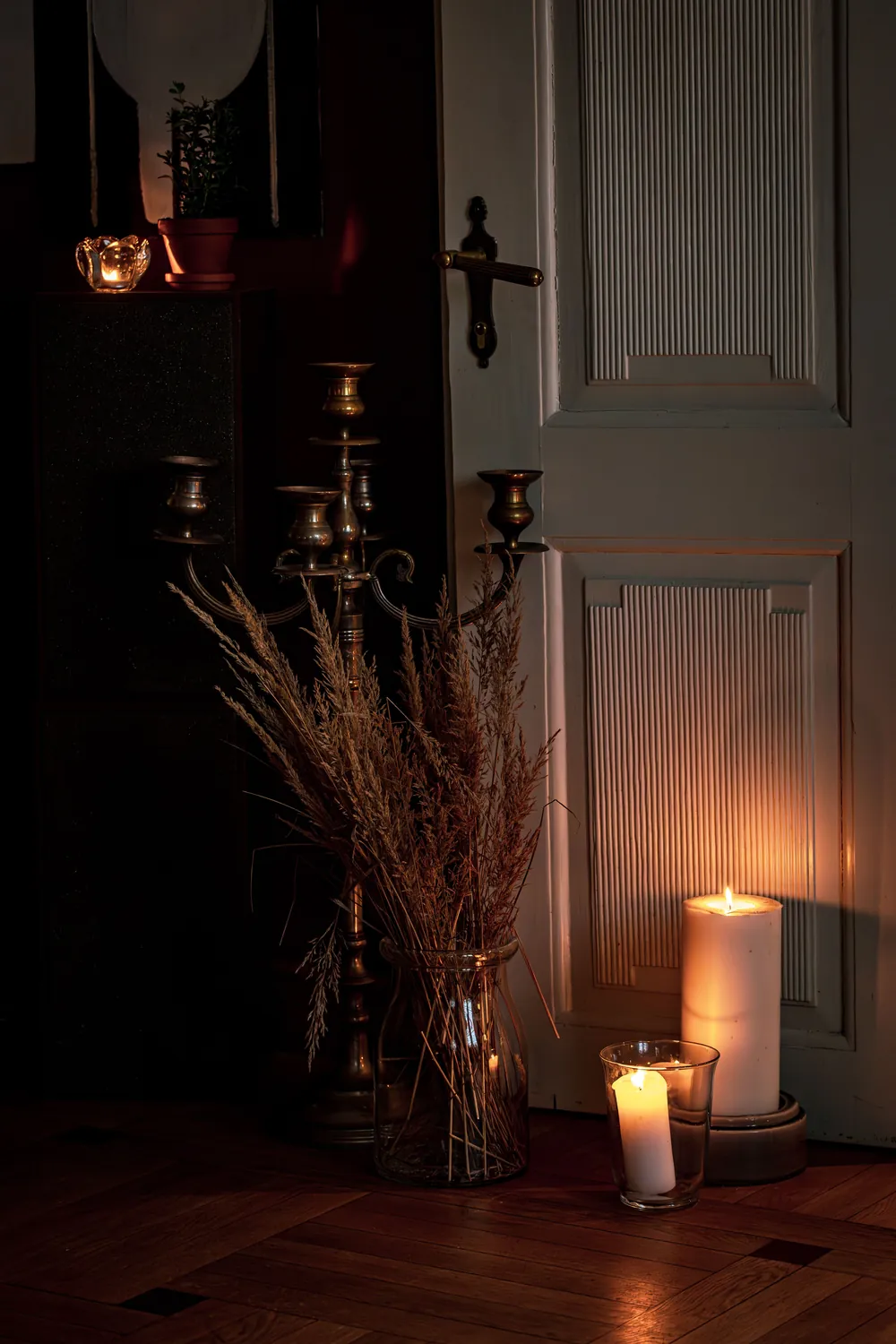
How to do it: Set a reed diffuser set for home on the console near the door in a warm winter scent, flip the reeds once a week, and make the evening light-up part of your coming-home routine — lanterns on, candle lit, diffuser doing its quiet work. Keep the diffuser away from the draught so the scent lingers. Check the latest price on Amazon before you buy.
Copy the Look: The 5-Layer Winter Entryway Formula
If you want the whole room to come together without buying twenty-seven things, use my five-layer formula — one piece from each layer and the entryway is done:
- Layer 1 — Something to sit on: a bench, a pouf or a window seat (Ideas 1, 2, 22, 26)
- Layer 2 — Something soft underfoot: a rug, a runner or a faux-fur mat (Ideas 3, 10)
- Layer 3 — Something that glows: lanterns, a pendant, candles or a mirror catching the light (Ideas 5, 6, 14, 18)
- Layer 4 — Something that holds the clutter: hooks, baskets, a tray, a crate or a cabinet (Ideas 4, 7, 9, 15, 21)
- Layer 5 — Something that makes it yours: photos, prints, a wreath, a sign or a bowl of pinecones (Ideas 11, 17, 19, 23, 25)
Pick one layer to start with this weekend and add the next one the following week — by the end of the month the entryway will have all five, and you will have spent less than a single shopping trip.
What It Costs: Honest Budget Ranges
Here is what I actually spent, so you can plan honestly. A soft layer — throw, rug or runner — runs about $20 to $60 depending on size. Hooks, trays and baskets are the cheapest wins, usually $15 to $40 each. A bench, console table or shoe cabinet is the biggest single purchase at $80 to $250, though second-hand finds cut that in half. Lanterns, candles and a mirror together come in around $40 to $90. Paint and peel-and-stick wallpaper are the best value per pound in this whole list: a tin of warm white paint is about $30 and transforms the room in a weekend. Most ideas here take under an hour to put in place; only the paint refresh and the wallpaper wall need a free afternoon.
Winter Entryway Mistakes I See Every Year
The most common mistake is buying everything at once and ending up with a hallway that looks like a shop display rather than a home — buy one layer, live with it for a week, then add the next. The second is choosing a rug that is too small, which makes the whole entryway look unfinished; measure first, always. The third is putting all the storage at adult height and then wondering why the children’s coats live on the floor — a low hook for every child fixes it in an afternoon. And the fourth is forgetting the smell: a beautiful entryway that smells of damp boots undoes all the work, so keep the boot tray emptied and the diffuser filled.
Renter-Friendly Winter Entryway Notes
Almost everything in this list works in a rented home. Hooks go up with removable adhesive strips rated for the weight, the wallpaper in Idea 20 is peel-and-stick, the pendant in Idea 14 has a plug-in version that needs no rewiring, and the paint refresh in Idea 16 can be swapped for a large framed print or a fabric wall hanging if your landlord says no. The bench, baskets, rug, lanterns and pouf need no permission at all, and they all move with you when you go. The only idea I would skip as a renter is drilling for a heavy mirror — use a leaning floor mirror instead, and it looks just as good.
The 15-Minute Winter Entryway Reset
When the hallway has slipped back into chaos, this is the reset I do on a Sunday evening: first, everything that does not belong in the entryway goes back to its room. Second, boots into the tray and shoes into the cabinet or crate. Third, shake the doormat outside and give the rug a quick brush. Fourth, fold the throw, fluff the pouf and straighten the cushions. Fifth, light the lanterns, flip the diffuser reeds and put a fresh sprig of evergreen in the vase. Fifteen minutes, five steps, and the entryway is warm and welcoming again — do it every Sunday and it never gets out of hand.
Your Winter Entryway Checklist — Print This
Tick off each step as you go, and your entryway will be warm, tidy and welcoming for the whole season:
☐ Clear everything out of the entryway that does not belong there
☐ Measure the wall and floor before you buy anything
☐ Hang the hooks — one per person, plus one spare for guests
☐ Put the bench or pouf where you naturally sit to put shoes on
☐ Lay the rug or runner with a non-slip pad underneath
☐ Set the boot tray just inside the door and keep it emptied
☐ Fill the baskets — one for gloves, one for hats, one for the bits
☐ Hang the mirror where it catches the window or door light
☐ Place the lanterns and set them on a dusk timer
☐ Build the console vignette — lamp, vase, one personal object
☐ Hang the photos, prints or wreath at eye level
☐ Put the diffuser by the door and flip the reeds
☐ Fold the throw over the bench and fluff the cushions
☐ Shake the doormat and brush the rug once a week
☐ Light the lanterns every evening and enjoy coming home
Winter Entryway Ideas — FAQs
How do I make a small entryway feel warm in winter?
Start with texture and light, not furniture. A soft rug underfoot, a throw over a hook, a mirror to catch the daylight and one warm light source will make a tiny hallway feel cosy without taking up any floor space. Add hooks at two heights and a slim boot tray, and the small space will feel organised as well as warm.
What colours work best in a winter entryway?
Warm neutrals are the safest base — cream, oatmeal, warm white and soft grey — with one or two deep winter accents like forest green, rust or burgundy in the throw, the runner or the cushions. Avoid stark white in a dark hallway, as it can feel cold in January light, and avoid too many colours competing at once.
How do I keep a winter entryway tidy with a family?
Give every person one hook, one basket and one shelf, and keep the rule simple: boots in the tray, coats on the hook, everything else in its basket. Do the fifteen-minute reset every Sunday evening, and empty the boot tray whenever you notice standing water. Children keep to the system when their hook is at their height.
Can I decorate a winter entryway without Christmas decorations?
Yes — that is exactly what this list is for. Dried oranges, pinecones, evergreen, lanterns, knit textures and warm light all read as winter rather than Christmas, so the entryway stays beautiful from January through March without a single bauble.
What is the cheapest way to warm up a cold entryway?
A throw over the bench, a rug by the door and a set of battery lanterns will transform the feeling of a hallway for under $60 altogether. If you can stretch to one more thing, a tin of warm white paint is the best value change you can make to a dark winter hallway.
Winter will keep knocking on the door for a few more months yet, and I would rather meet it with a warm hallway than a cold one. Start with the layer that calls to you — the throw, the lanterns, the hooks — and let the entryway grow around it. The best compliment my hallway ever got was from a friend who walked in out of the snow, stopped just inside the door, and said it smelled like home. That is the whole point of all twenty-seven ideas: not a perfect entryway, but one that is glad you are home.

One Comment