18 Natural Aquarium and Paludarium Ideas That Look Like a Slice of the Rainforest
Save this pin — your future jaw-dropping nature aquarium starts here.
There’s something almost magical about a really well-done natural aquarium or paludarium. It’s not just a fish tank — it’s a tiny ecosystem in your living room, complete with mossy driftwood, real plants reaching above the water, and fish darting through dappled light. The kind of setup that makes guests forget what they were saying mid-sentence.
If you’ve been deep in the YouTube rabbit hole of Takashi Amano-style aquascapes and lush paludariums and you’re ready to build your own, you’re in the right place. This list pulls together 18 of the most beautiful natural aquarium and paludarium ideas — from beginner-friendly nano tanks to wild jungle paludariums you’ll want to stare at for hours.
Quick Note: Paludarium vs Aquarium vs Riparium
Before we dive in, let’s clear up the terms because Pinterest mixes them constantly:
- Aquarium — fully submerged. Plants and fish live underwater. Top of the tank is air, but no land.
- Paludarium — part water, part land. Half submerged habitat with plants growing both under and above the waterline. Often includes mosses, ferns, and sometimes amphibians or small reptiles.
- Riparium — mostly water with a few plants emerging above the surface, mimicking a river bank. Lighter on the land than a paludarium.
All three count as “natural” setups when they use real plants, driftwood, stones, and a planted substrate instead of plastic decor. Most of the ideas below work for either an aquarium or a paludarium — just adjust the water level.
1. The Classic Iwagumi Stone Aquascape
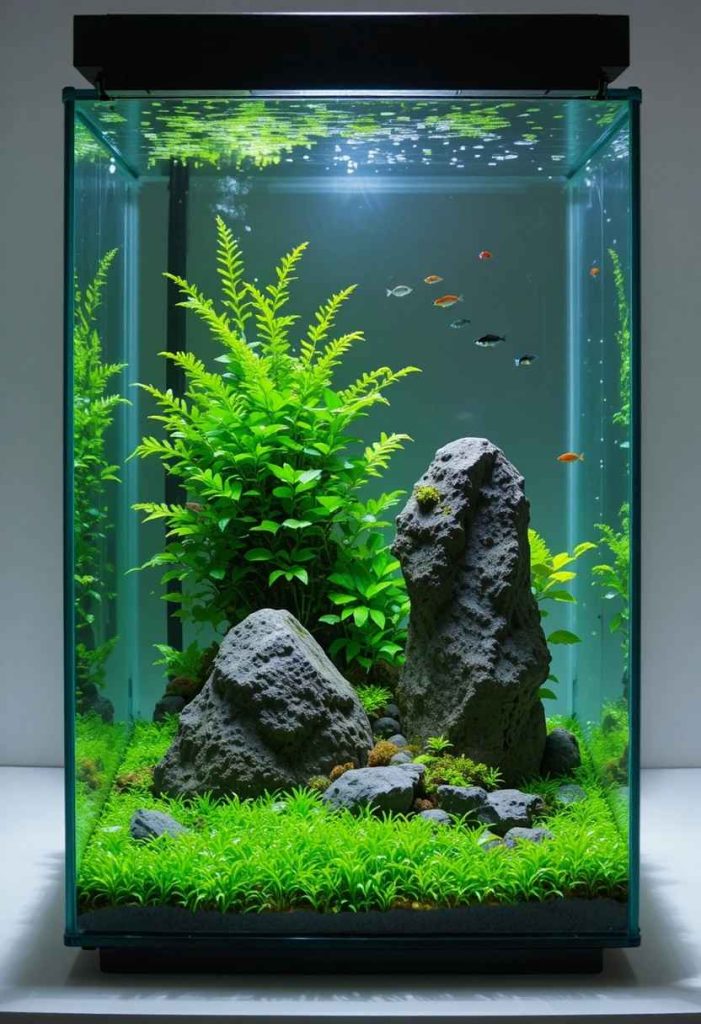
The Iwagumi style uses an odd number of stones (usually 3, 5, or 7) arranged in a deliberate composition, with a clean carpet of dwarf hairgrass or Monte Carlo plant covering the substrate. It’s the most minimalist, zen-like aquascape style out there — and one of the hardest to master. The discipline pays off in a tank that looks like a serene mountain landscape underwater.
2. Driftwood Jungle With Moss Everywhere
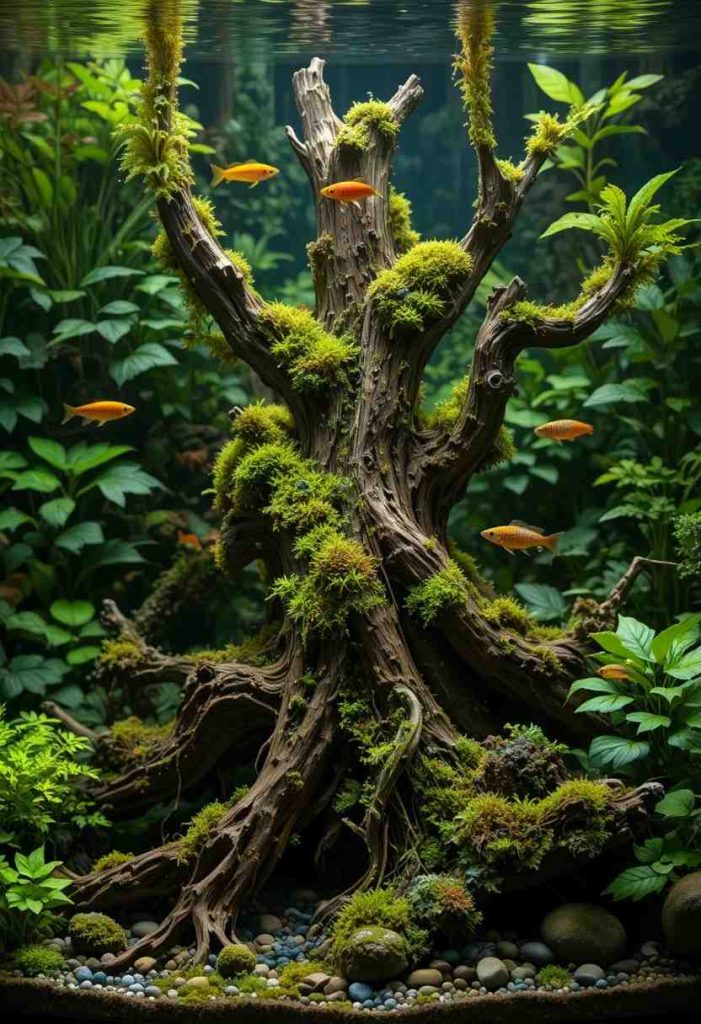
Take a big piece of spider wood or Manzanita driftwood, tie Java moss or Christmas moss all over it, and let it grow wild. Add some background stem plants and a few small fish like ember tetras or chili rasboras. Within a few months, the moss takes over and you’ve got a tank that looks like an old, mossy forest creek.
3. Mountain Range Aquascape With Layered Stones
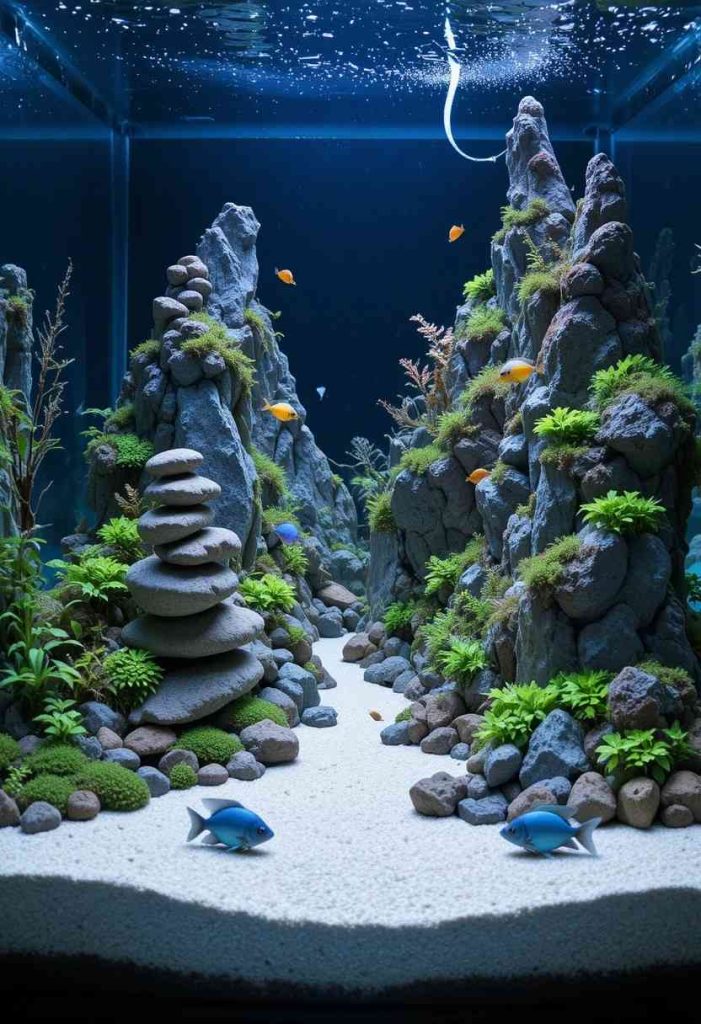
Stack flat, layered rocks like Seiryu or Frodo stone to create the illusion of a tiny mountain range receding into the background. Add fine sand or gravel in the foreground, a few buce or Anubias plants tucked into crevices, and small schooling fish. It’s an aquascape that genuinely tricks the eye into feeling huge.
4. Blackwater Biotope With Botanicals
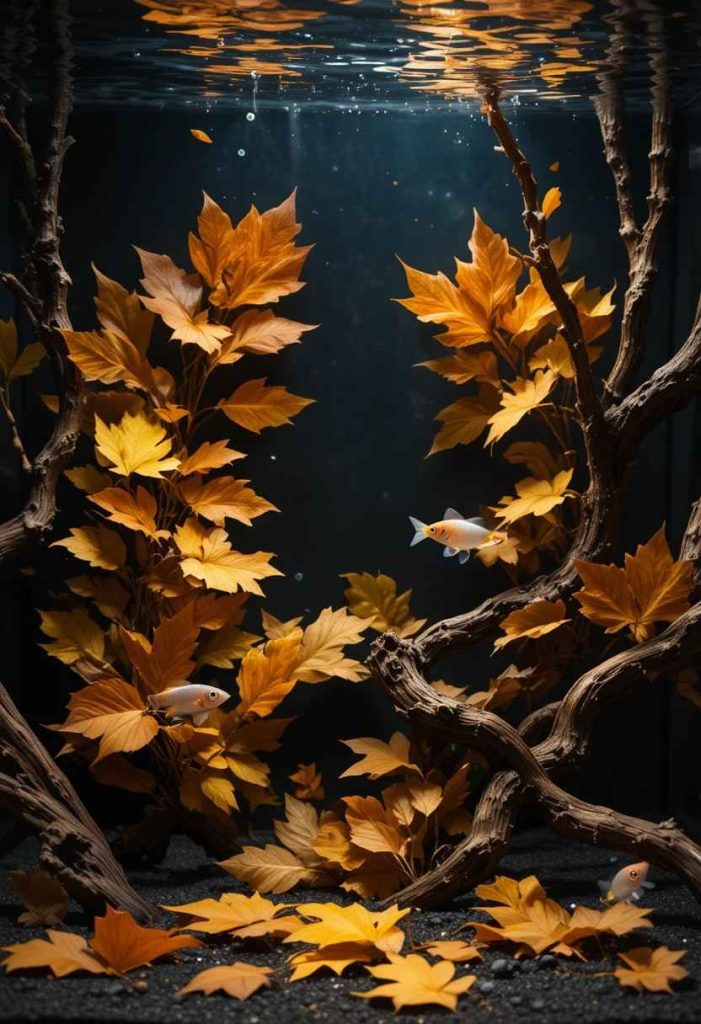
Recreate a slice of the Amazon by adding catappa leaves, alder cones, and natural botanicals to tannin-stained water. The tea-colored water, dim lighting, and dark substrate make colorful fish like cardinal tetras and apistogrammas absolutely glow. It’s lower maintenance than a high-tech planted tank and feels wild and authentic.
5. Nano Tank Paradise (Under 10 Gallons)
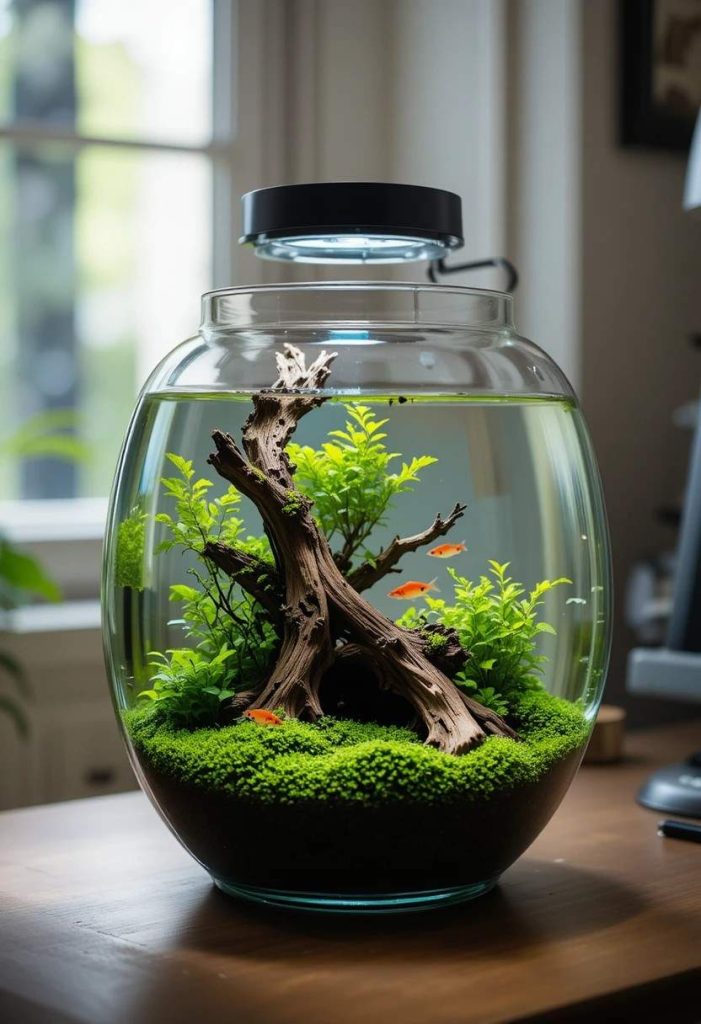
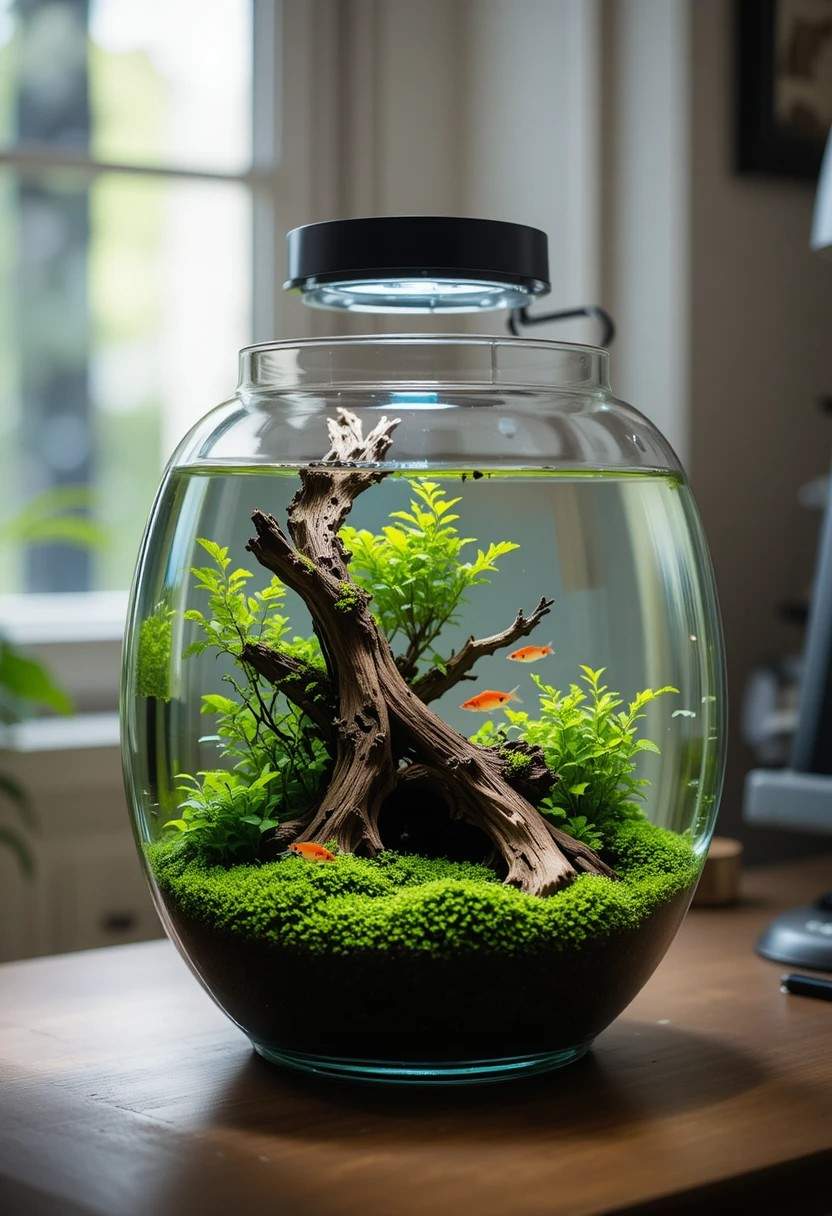
You don’t need a 75-gallon to make something stunning. A 5 or 10 gallon nano tank with a single nice piece of driftwood, a moss carpet, and a tiny school of chili rasboras or a single betta is hands-down one of the most peaceful things to keep on a desk or shelf.
6. Full Paludarium With Waterfall
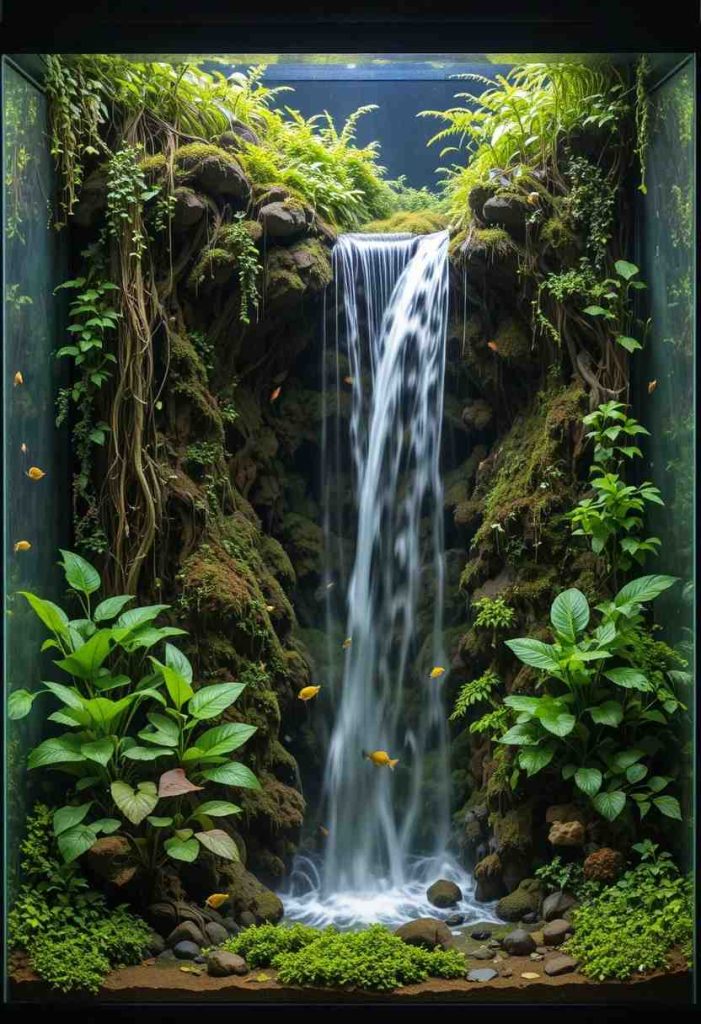
This is the dream setup. A tall tank divided into a land section (mossy, planted, with cascading vines) and a water section (planted aquarium with small fish), connected by a flowing waterfall. It takes more work to build, but the result is basically a rainforest diorama in your home. Add tropical frogs, geckos, or shrimp depending on the vibe.
7. Dutch Style Planted Aquarium
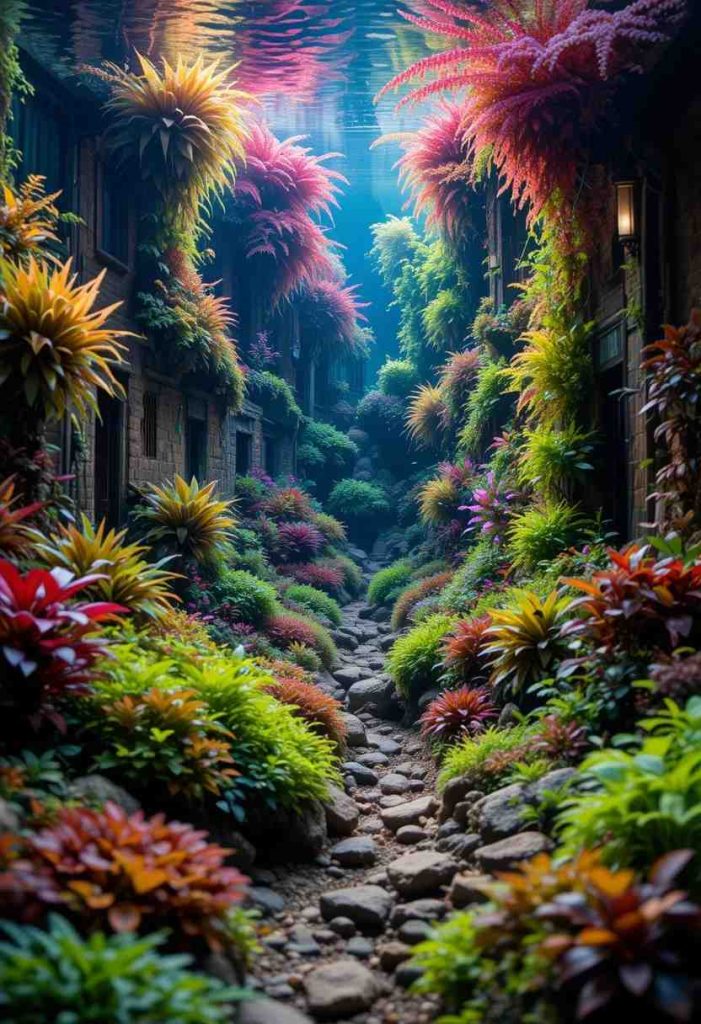
Dutch aquascaping is the colorful, painterly cousin of Iwagumi. Plants are arranged in dense “streets” of varying heights, colors, and leaf textures — reds, greens, purples — like an underwater garden. No rocks or driftwood needed. Just plants, plants, and more plants.
8. Tropical Paludarium With Live Mosses and Bromeliads
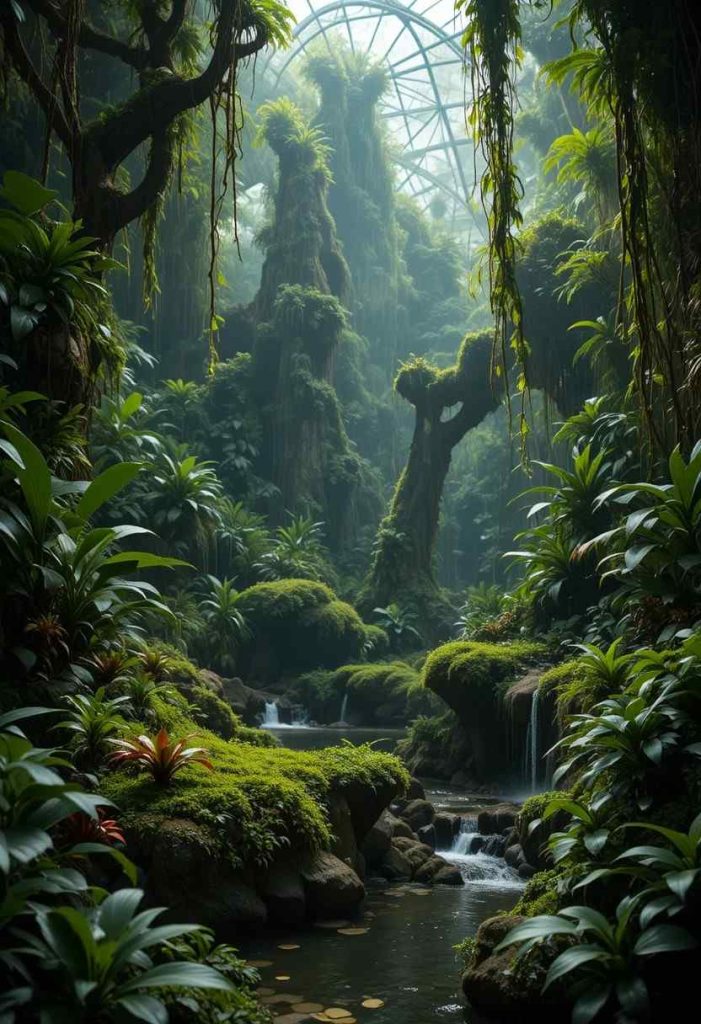
A paludarium where the land section becomes a mini tropical jungle. Cover everything with live mosses (Java moss, pillow moss, sheet moss), tuck small bromeliads and pothos into the hardscape, and let vines drape over the water section. Add a small misting system to keep humidity high.
9. White Sand Beach Aquascape
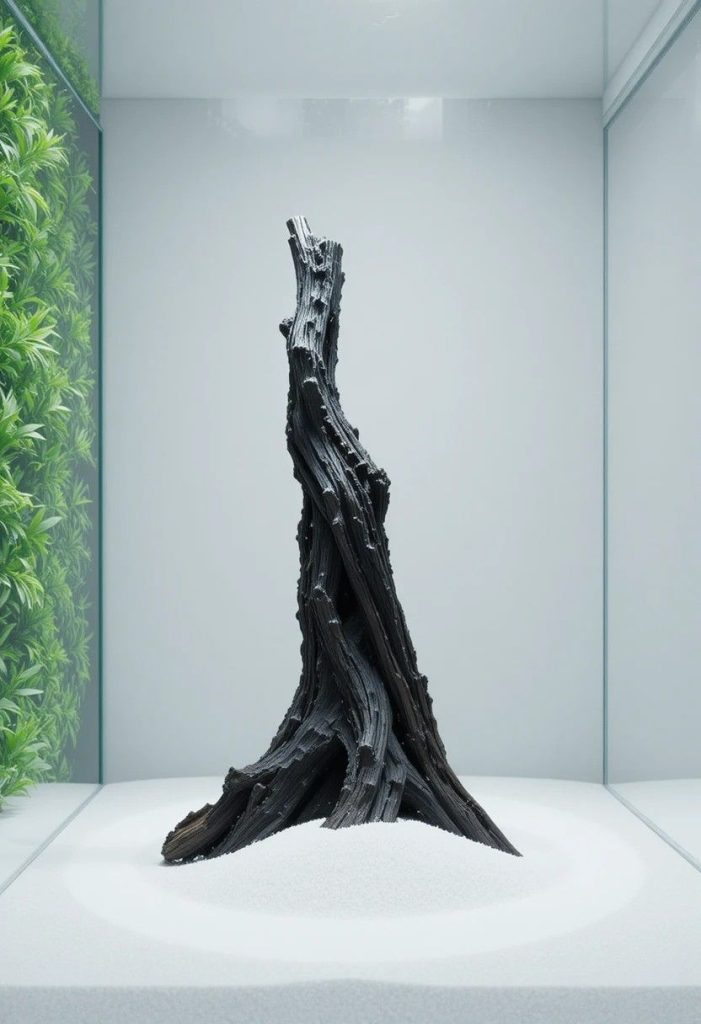
A super clean look: bright white silica sand foreground, a single sculptural piece of wood rising from the sand, and a wall of green plants in the back. The contrast between bright sand and dark wood creates serious depth and feels almost like a beach scene underwater.
10. Riparium With Emergent Plants
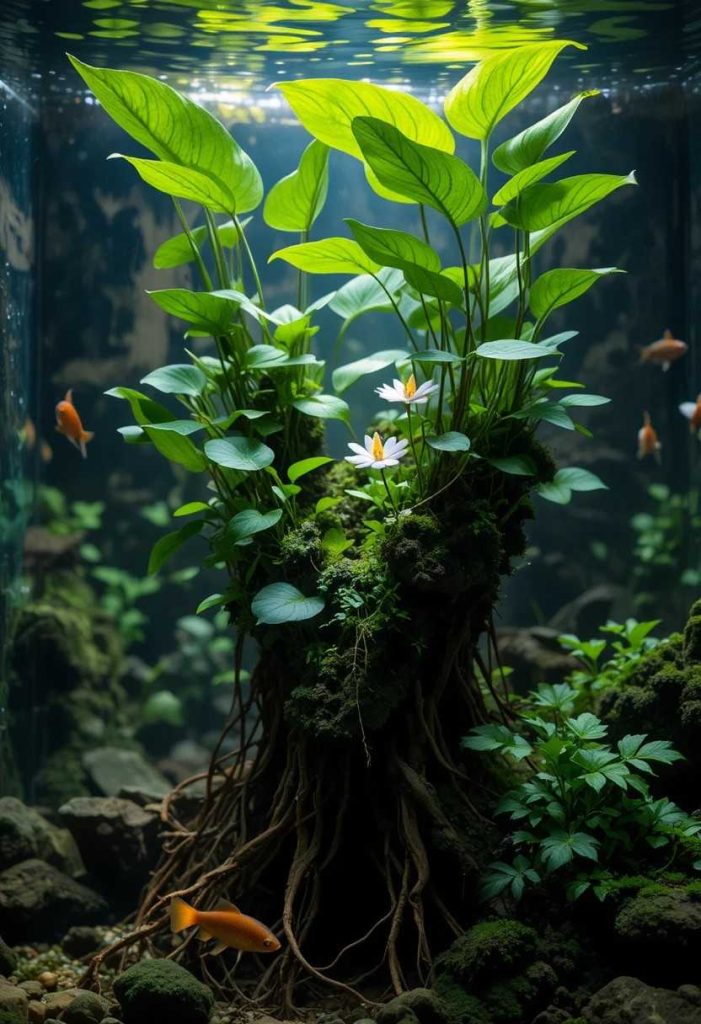
Use plant hangers or floating planters to grow plants like pothos, peace lily, anubias, or spider plant with their roots in the aquarium water and leaves above the surface. The roots act as natural filtration, the leaves clean the air, and the whole thing looks like a wild riverbank.
11. Asian Stream Biotope
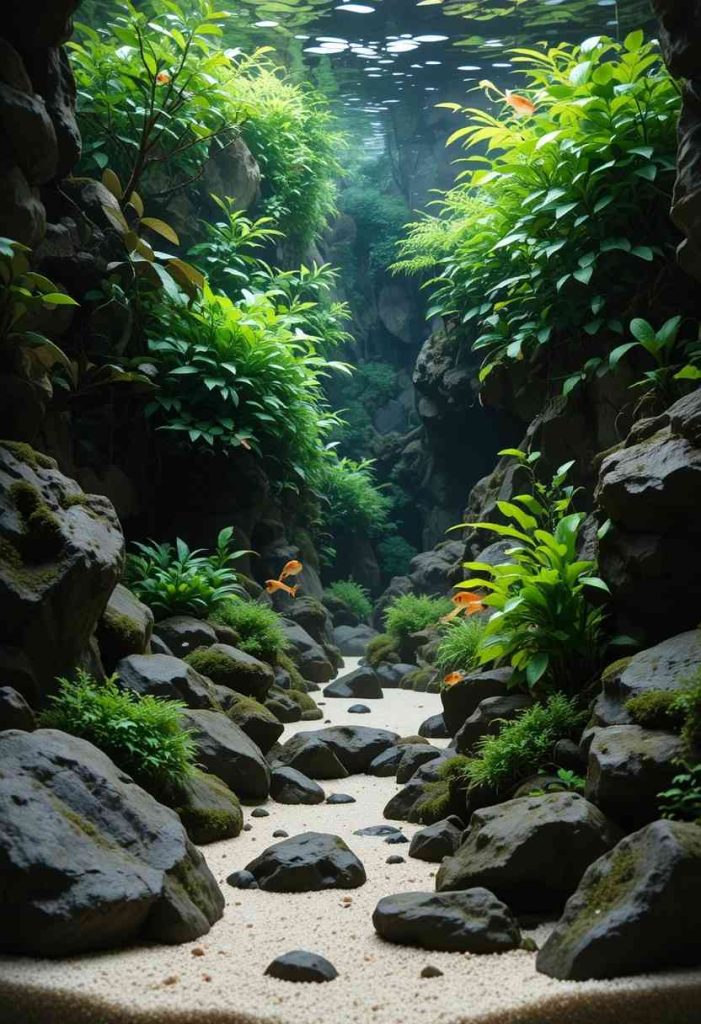
Recreate a Southeast Asian forest stream with smooth river rocks, pieces of driftwood, a sandy substrate, and species native to those waters — like white cloud mountain minnows, kuhli loaches, or harlequin rasboras. Add a few floating plants like frogbit on top for shaded, dappled light.
12. Bonsai Tree Aquascape
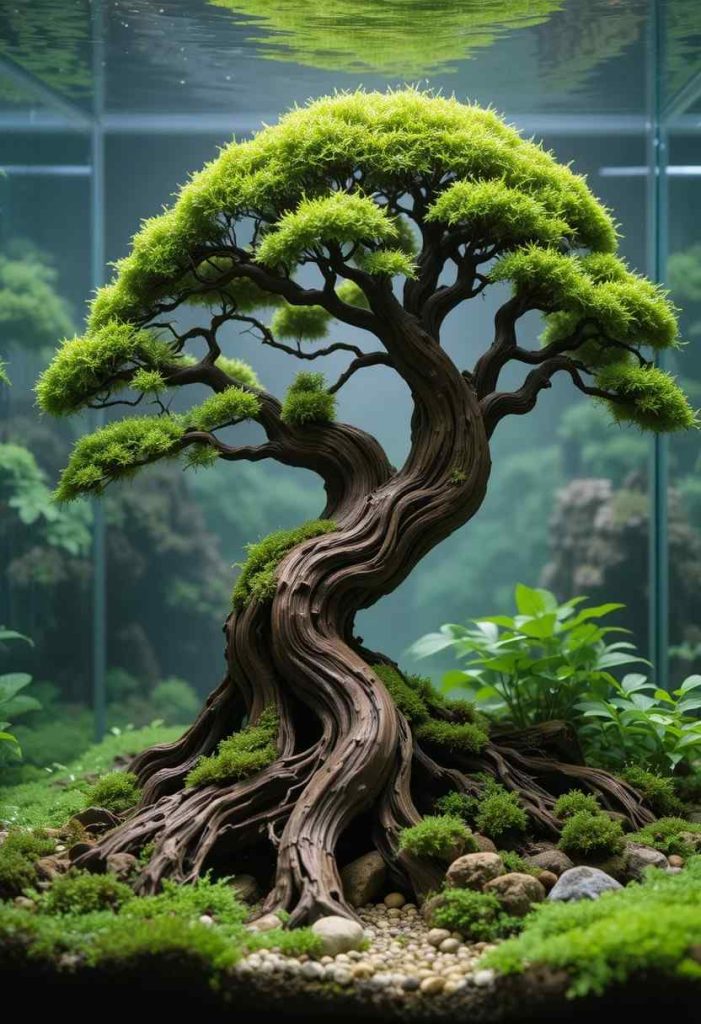
Build a tiny tree out of driftwood (using two pieces glued and zip-tied together), then attach moss to the “branches” to create the illusion of foliage. A bonsai tree growing underwater is one of the coolest visual tricks in aquascaping — and surprisingly approachable for beginners.
13. Dark Stone and Red Plant Drama
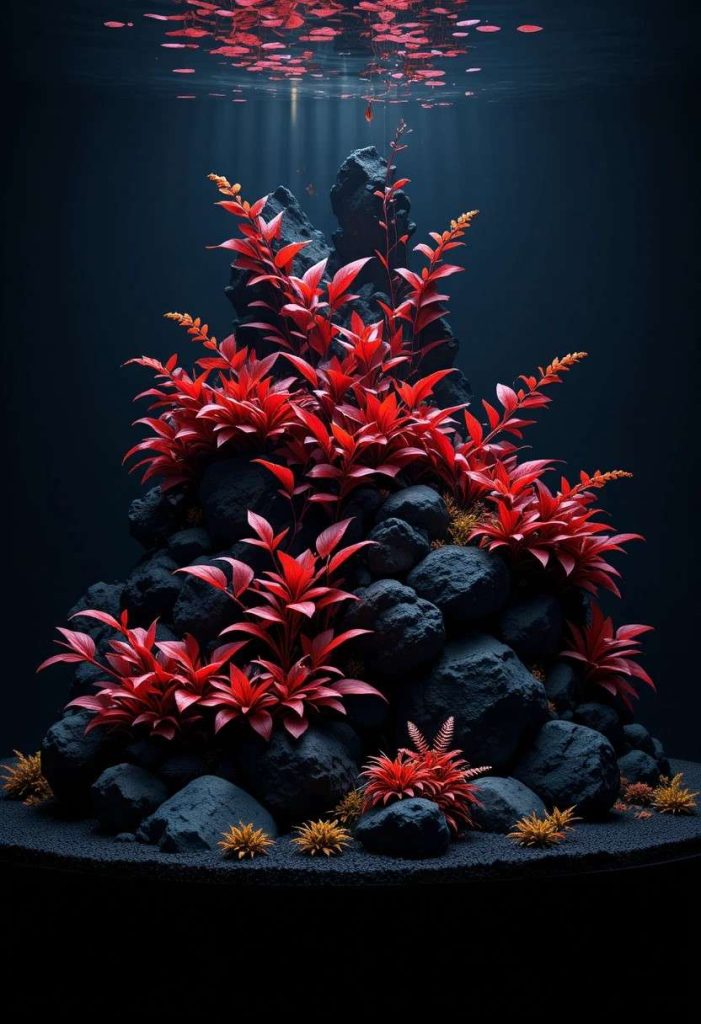
Pair dark, dramatic Seiryu or black lava stones with a few high-impact red aquatic plants — Ludwigia super red, Rotala macrandra, or Alternanthera reineckii. The deep contrast between dark rock and glowing red foliage is moody, modern, and unforgettable.
14. Tank for Dart Frogs or Tropical Geckos
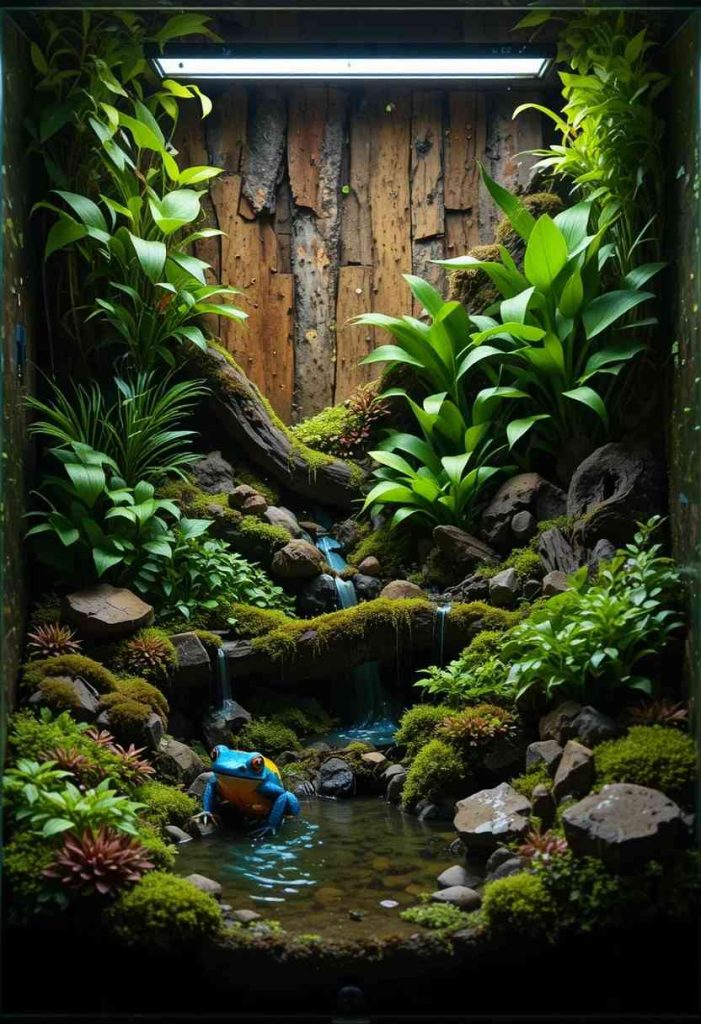
If you want animals on the land portion of your paludarium, dart frogs or crested geckos are stunning options. Build a lush, humid environment with live plants, lots of hiding spots, a small water feature, and naturalistic backgrounds. You get all the beauty of a planted vivarium plus colorful, active inhabitants.
15. Floating Forest (Tank Full of Floaters)
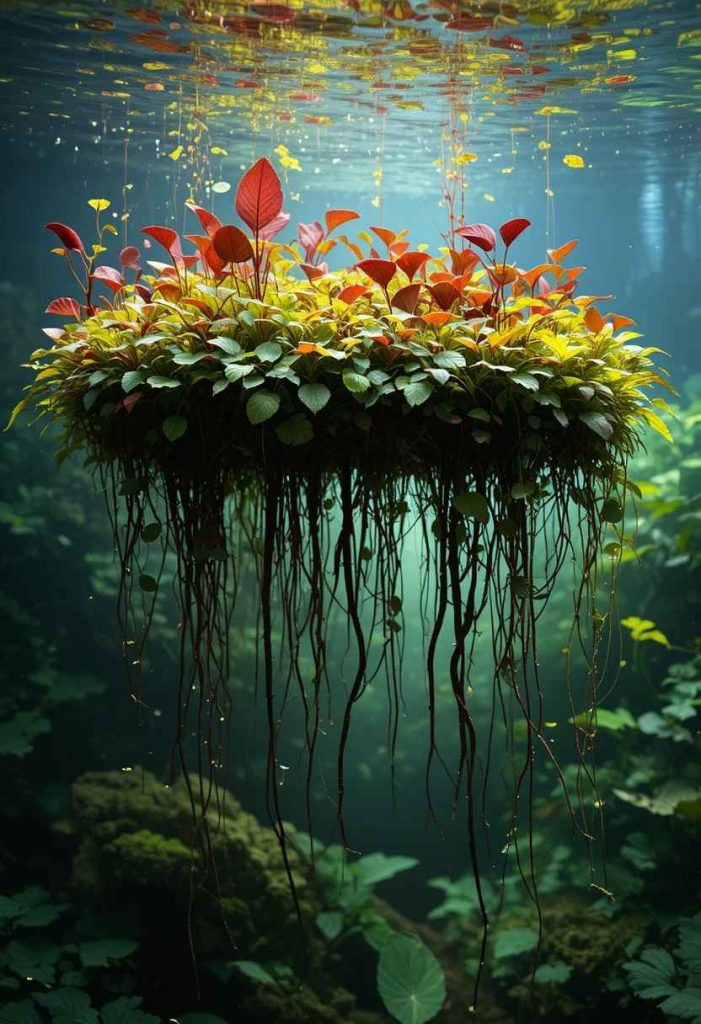
Cover the water surface with floating plants like red root floaters, frogbit, Salvinia, or dwarf water lettuce. The trailing roots hanging down create gorgeous filtered light below, give fish places to hide, and look incredible from the side. Bonus: floating plants are some of the easiest aquarium plants to grow.
16. Cube Tank Centerpiece (Small But Impactful)
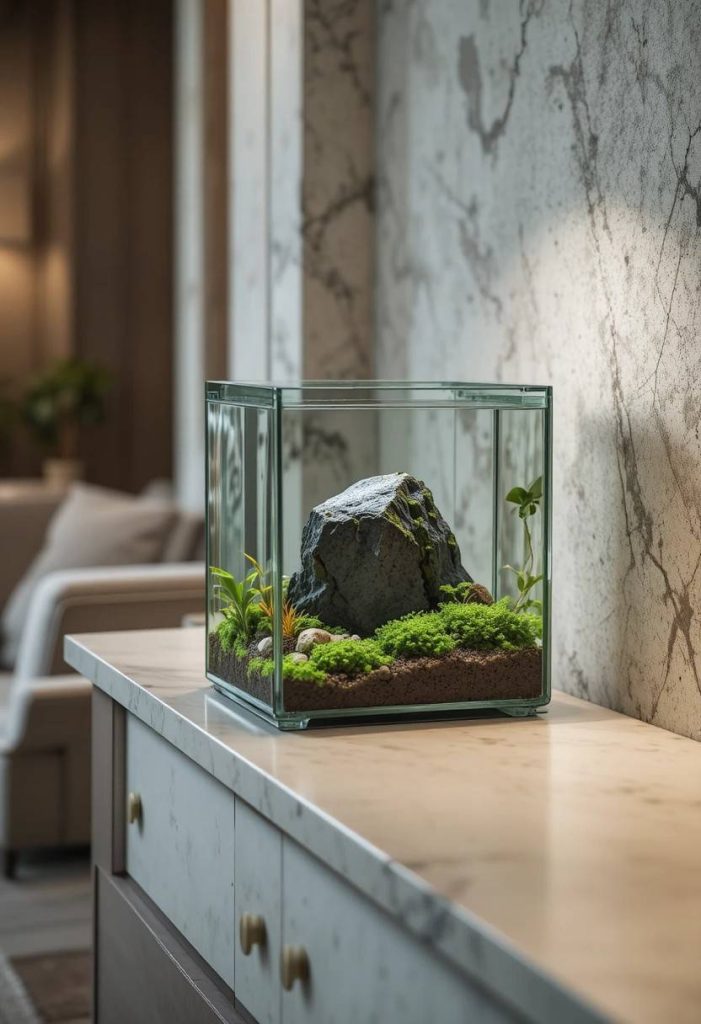
A small cube tank (think 30cm or 12-inch cube) holding one beautifully aquascaped centerpiece — a single rock and moss composition, a tiny iwagumi, or a moss-covered driftwood island. Place it as a focal point on a console table or desk and watch it become the most stared-at object in the room.
17. Wabi Kusa Bowl
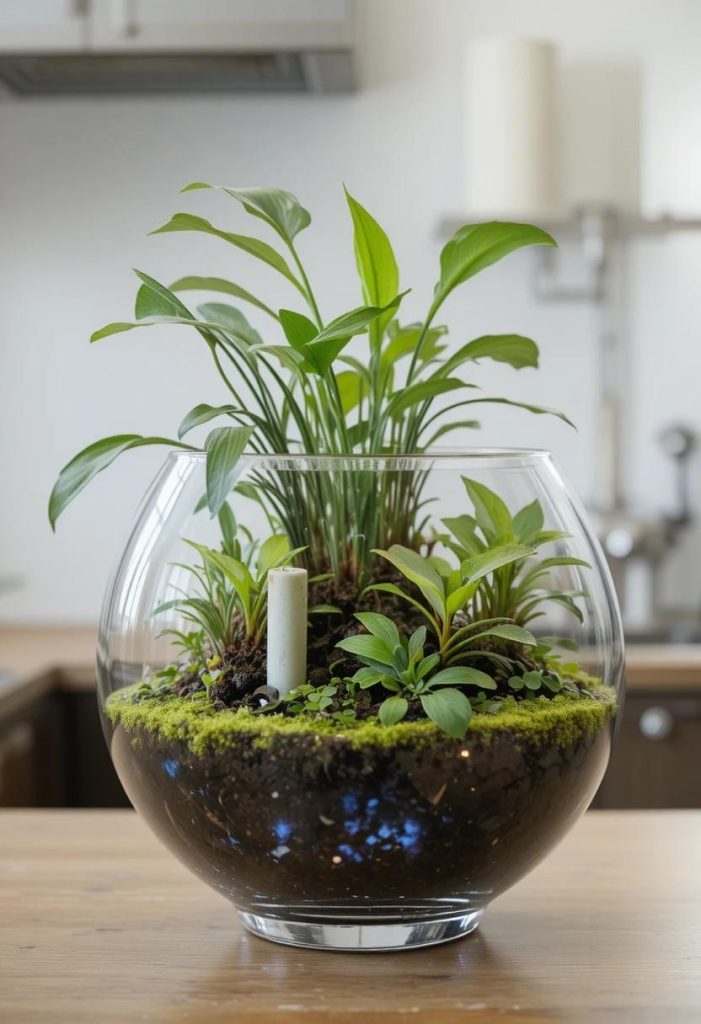
Not technically an aquarium, but it deserves a spot here. A Wabi Kusa is a small open bowl or vase with aquatic and bog plants growing emergent (above water). Low maintenance, gorgeous on a kitchen counter or shelf, and a great gateway into the natural aquarium world if a full tank feels like too much.
18. Wall-Mounted Picture Frame Aquarium
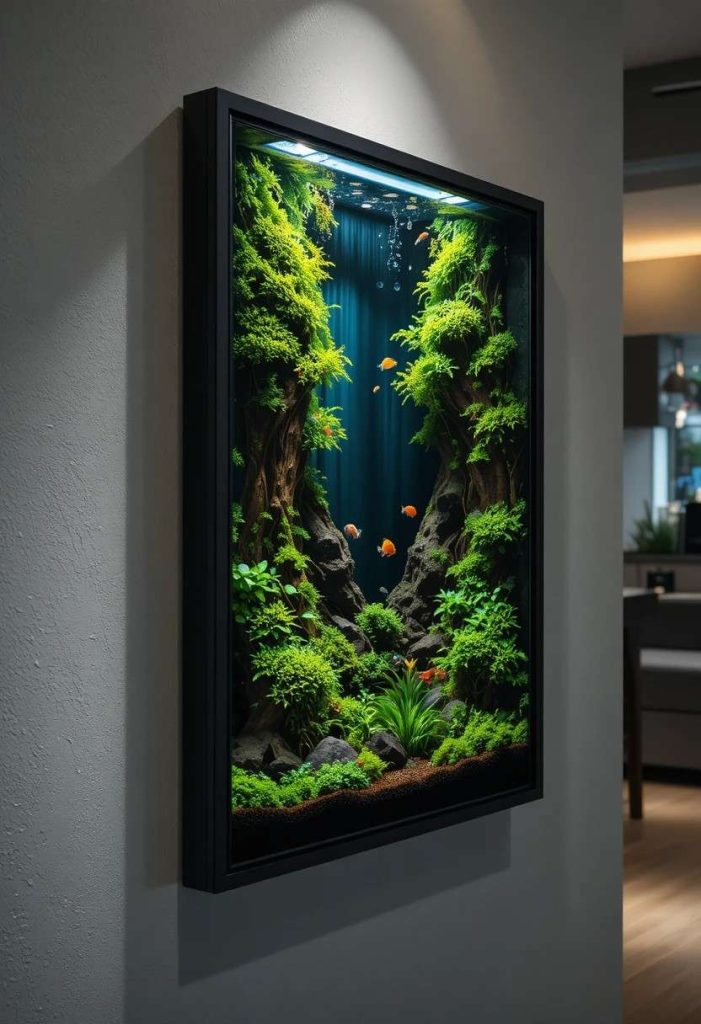
If you have a small space, a slim wall-mounted aquarium that looks like a living picture frame is genuinely showstopping. Aquascape it simply — a few stones, a moss wall, some small fish — and it becomes living wall art that changes every day as plants grow.
How to Start Your First Natural Aquarium or Paludarium
If you’re new to this hobby, don’t worry — it looks more complicated than it actually is. Here’s the quick start:
- Pick your tank size. Beginners do best with a 10 to 20 gallon. Big enough to be stable, small enough to not break the bank.
- Choose your substrate. Aquasoil (like ADA Amazonia or Fluval Stratum) is the gold standard for planted tanks. For paludariums, use a drainage layer with substrate above.
- Plan your hardscape FIRST. Lay out your stones and driftwood before any plants. The hardscape is the bones of your aquascape.
- Start with easy plants. Java fern, Anubias, mosses, and Vallisneria are nearly impossible to kill. Save the hairgrass carpets and red plants for round two.
- Cycle the tank. Let it run for 3 to 4 weeks before adding fish so the beneficial bacteria can establish.
- Add fish slowly. A small school of 6 to 10 tetras or rasboras is plenty to start. Let the tank stabilize before adding more.
Common Natural Aquarium Mistakes to Avoid
Some quick traps that catch most beginners:
- Buying plastic decor instead of real plants and natural wood (kills the natural vibe instantly).
- Overstocking with too many fish too fast (causes algae and ammonia spikes).
- Using rocks or wood from outside without sterilizing them properly.
- Skipping the cycle — this is the #1 reason beginner tanks fail.
- Not enough light for plants, or way too much (causes algae).
- Overcomplicating the design — restraint is what makes nature aquariums beautiful.
Natural Aquarium and Paludarium FAQ
Are paludariums hard to maintain?
Paludariums are actually a bit easier than most people think once they’re set up. The land plants help filter the water, and the closed environment retains humidity well. The trickiest part is initial setup — getting the water and land sections balanced and choosing the right plants for each zone.
Do I need CO2 for a natural aquarium?
Not necessarily. Many beautiful natural aquariums run without CO2 injection using low-tech plants like Java fern, Anubias, mosses, crypts, and floating plants. CO2 is helpful for high-tech carpets and demanding red plants, but it’s not required for a stunning tank.
What animals can live in a paludarium?
Lots of options. In the water: small fish (tetras, rasboras, guppies), shrimp, and snails. On land: dart frogs, mossy frogs, tree frogs, fire-bellied newts, anoles, or crested geckos. Always research the specific care requirements before adding any animal.
How much does a natural aquarium cost to set up?
A basic 10-gallon planted setup can be done for around $150 to $250 including tank, substrate, light, filter, plants, and starter fish. A high-end aquascape with CO2, premium lighting, and specialty plants can easily run $1,000 or more. Paludariums tend to cost a bit more due to the misting systems and land plants.
Can fish and live plants live together long term?
Absolutely — that’s the whole point of natural aquariums. Fish provide nutrients for plants through their waste, and plants help filter water, oxygenate it, and reduce algae. It’s a self-sustaining mini ecosystem when balanced correctly.
Final Thoughts on Building Your Own Slice of Nature
Here’s the truth about natural aquariums and paludariums: they’re not really about the fish. They’re about creating a tiny, living window into nature inside your home. A spot you can stare at for twenty minutes and feel calmer without knowing why. A piece of green, moving, breathing art that grows and changes every week.
Pick the idea that makes your jaw drop, save it, and start small. A nano tank with one good piece of driftwood and some moss is enough to fall completely in love with this hobby. From there, it tends to take over your life in the best possible way.
If this inspired you, save the post to your aquascape or aquarium ideas board so you can come back to it when you’re ready to build. Happy aquascaping.