
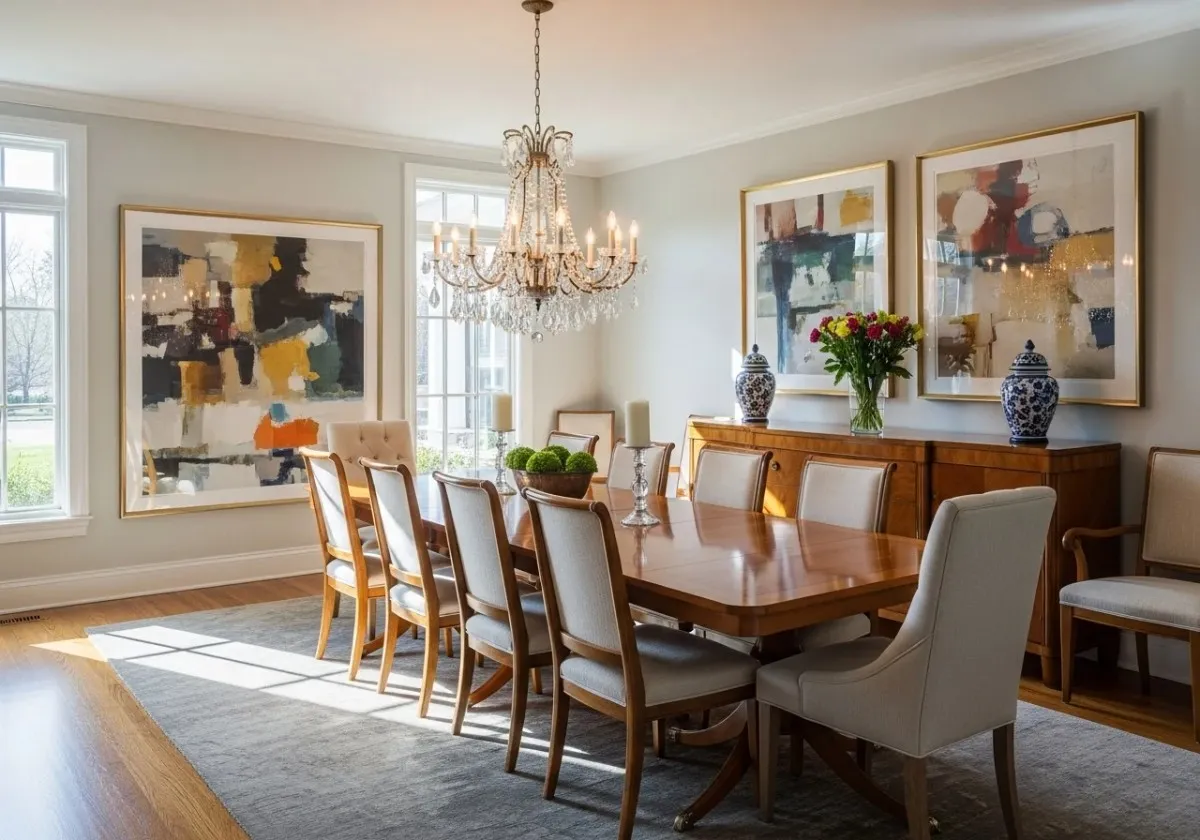
20 Dining Room Decor Ideas to Create a Warm and Stylish Space
It’s surprising how a room meant for gathering can sometimes feel the least inviting in your home. The table is set, the chairs are in place, yet something still feels off. If your space lacks warmth or personality, you’re not alone. The good news is, with the right dining room decor ideas, you can easily transform it into a cozy, inviting space where every meal feels a little more special.
1. Layered Lighting for a Cozy Glow
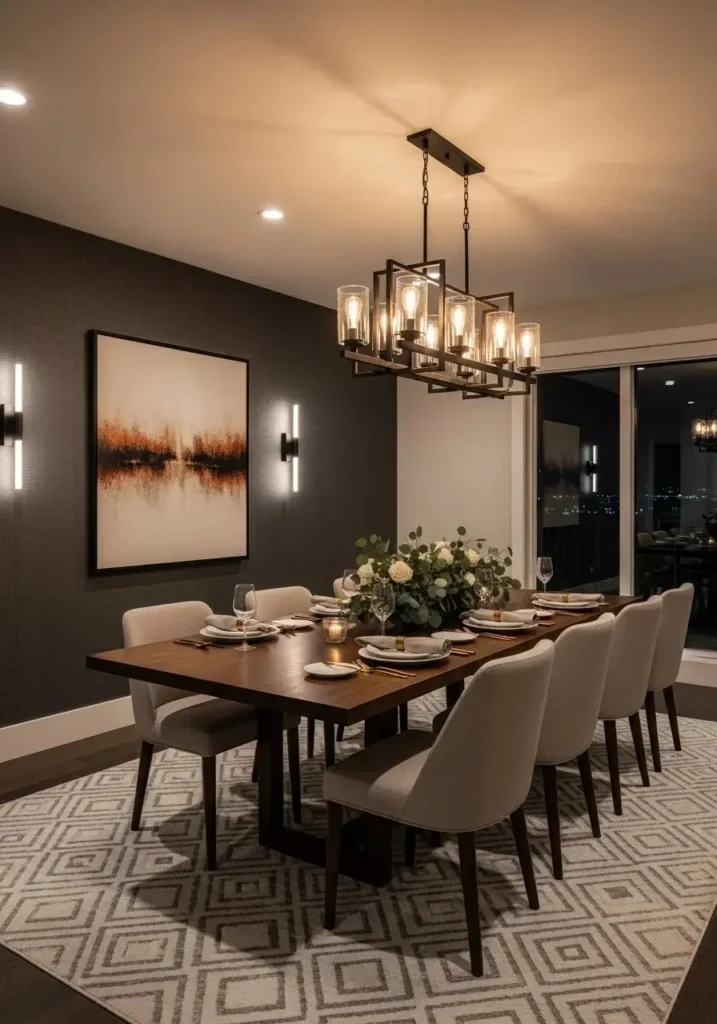
I used to rely on a single ceiling light in our dining room, and every evening meal felt a little flat, no matter how lovely the food was. Once I layered the light, the room changed. Now a warm pendant hangs low over the table, a small lamp glows on the sideboard, and candles appear whenever we sit down for longer than ten minutes. The effect is softer, kinder, and far more flattering, especially on tired faces at the end of the day. I love how the room can shift from bright and practical for homework to gentle and cosy for supper, by switching one light off and another on.
How to do it: Hang a pendant about 75 centimetres above the table, then add a lamp on a sideboard or shelf and a pair of candles for the centre. Choose warm-white bulbs at about 2700K, put the main light on a dimmer, and test the glow at supper time before you settle on a bulb.
2. Statement Dining Table Centerpiece
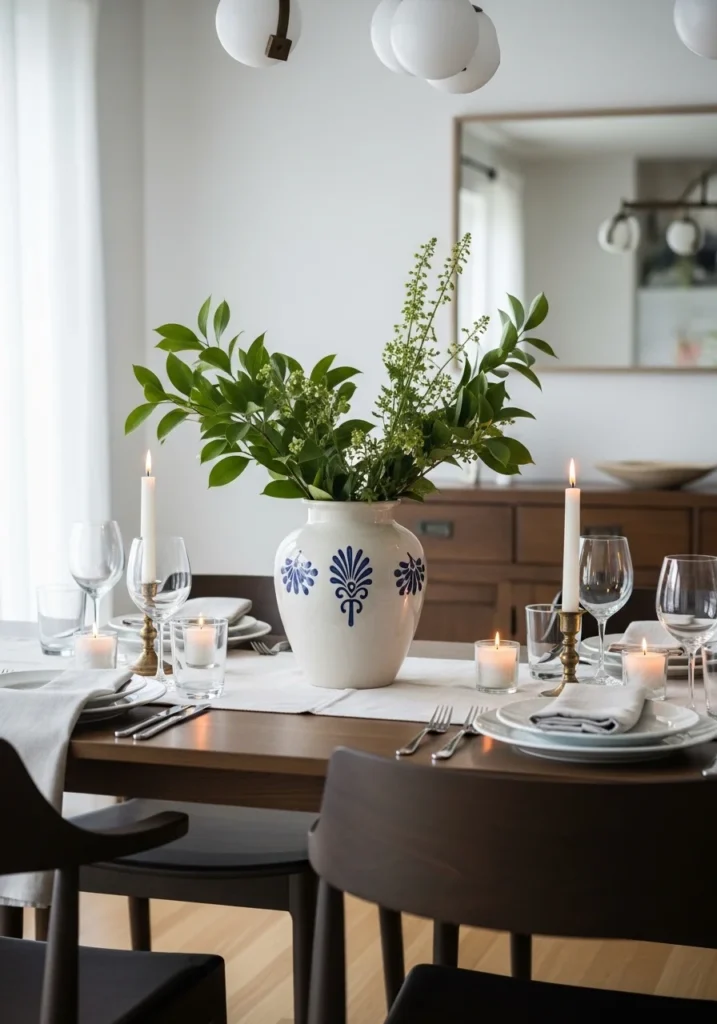
Our table used to look bare between meals, even when the room around it was tidy. A centrepiece changed that, and it did not need to be grand or expensive. I started with a ceramic vase, a few stems from the garden, and a wooden board I already owned, then added candles when friends came for supper. The arrangement gives the table a purpose when nobody is eating, and it stops the room from feeling like a waiting area. I change the stems with the seasons, swap the candles for pine cones in December, and keep everything low enough that I can still see the person opposite me.
How to do it: Choose one vase, bowl, or board as your base, then add fresh stems, a candle or two, and one natural texture such as linen or wood. Keep the tallest point under 30 centimetres, leave space for plates and glasses, and refresh the stems every few days.
3. Mix and Match Dining Chairs
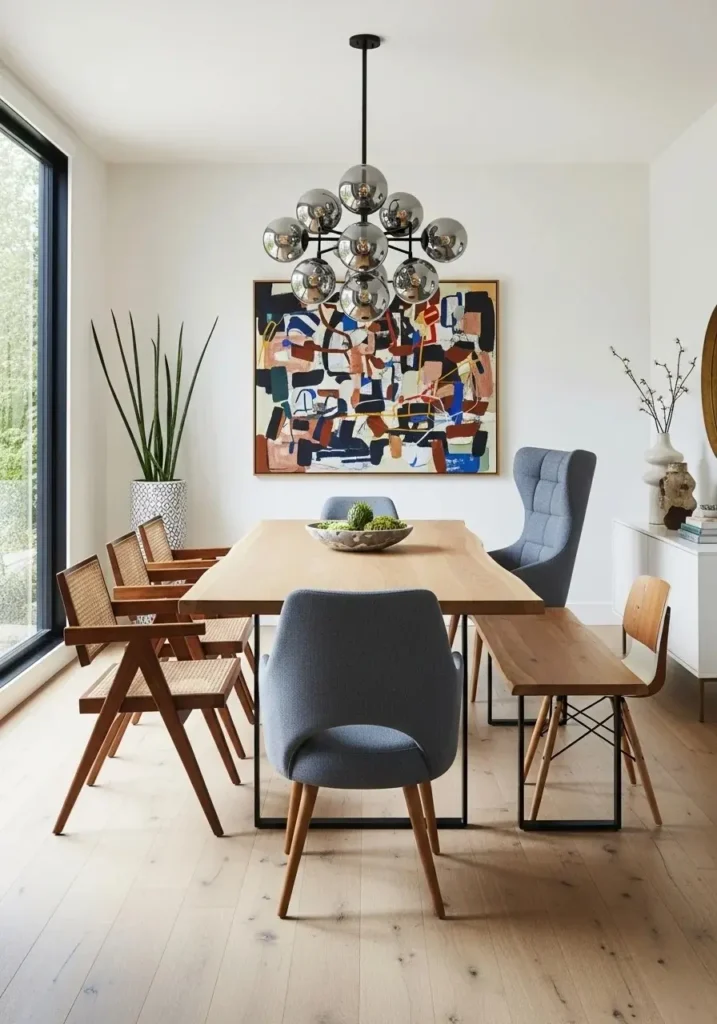
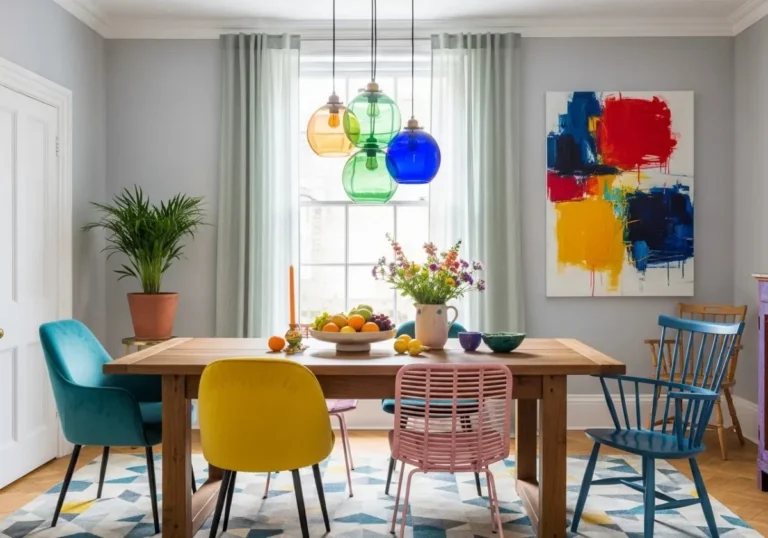
Matching chairs always felt a little too formal for our house, where meals are noisy, chairs get pulled in from other rooms, and nobody sits in the same place twice. Mixing chairs let me keep the table I loved while giving the room a more collected, lived-in feel. I paired two upholstered chairs at the ends with simpler wooden ones along the sides, and the contrast makes the setting look considered rather than accidental. The trick, I found, is a shared thread: the same wood tone, a repeated fabric, or a colour that appears in the rug. Once that thread is there, the differences feel deliberate and welcoming.
How to do it: Pick a shared thread first, such as wood tone, fabric, or colour, then mix two chair styles around it. Put the tallest or most upholstered chairs at the ends, check every chair is the same seat height, and sit in each one before you commit.
4. Add a Textured Area Rug
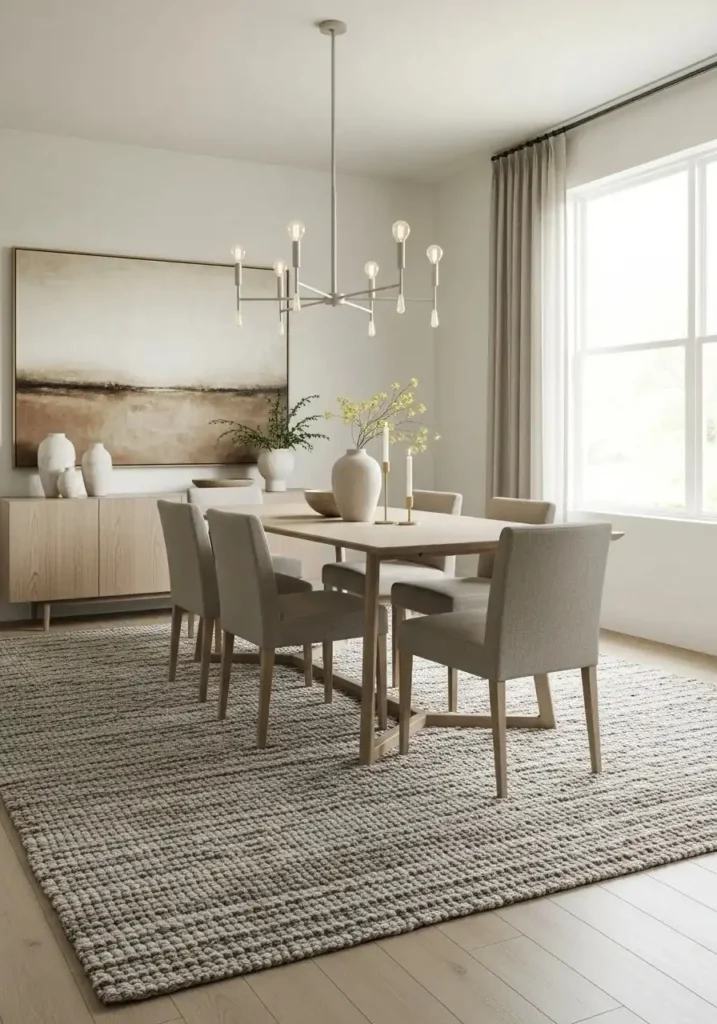
I resisted a rug under our dining table for years, convinced it would be a nightmare with crumbs, yet it is the change that made the room feel finished. The texture softens the hard floor, quiets the scrape of chairs, and marks out the eating area in our open-plan room. I chose a low, flat weave in a warm, muted pattern, because anything too plush would have trapped food and made the chairs wobble. Now the table feels anchored, the room feels calmer, and the corner reads as a place for lingering, not just eating quickly.
How to do it: Measure the table, then choose a rug at least 60 centimetres wider on every side so chairs stay on it when pulled out. Pick a low, flat weave that is easy to vacuum, test it under the table, and use a non-slip pad underneath.
5. Create a Gallery Wall
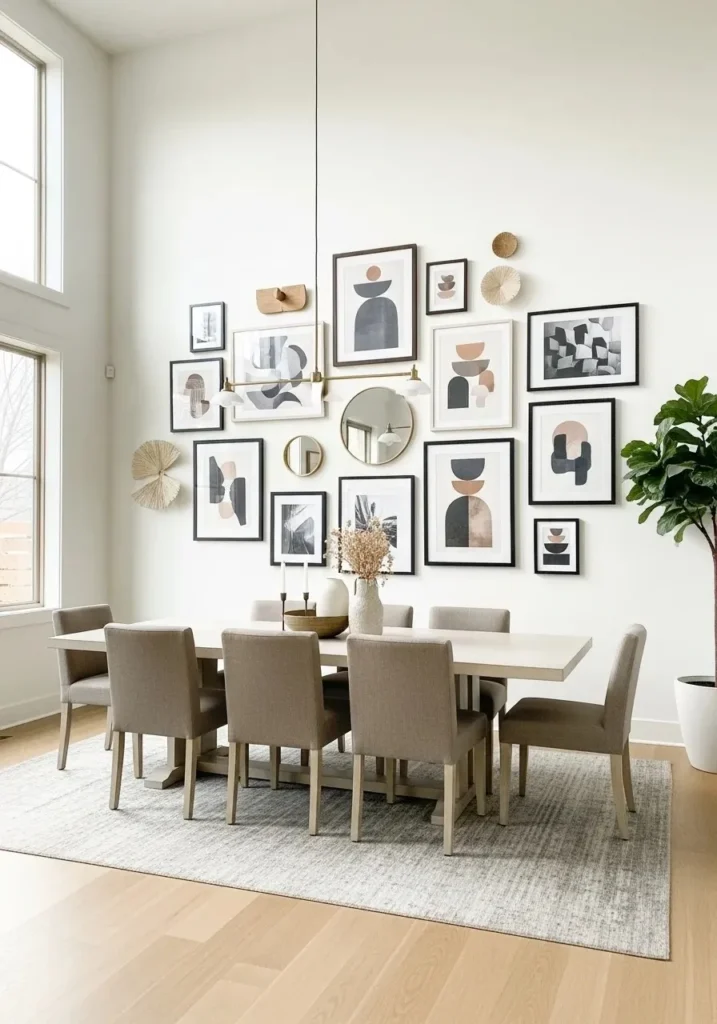
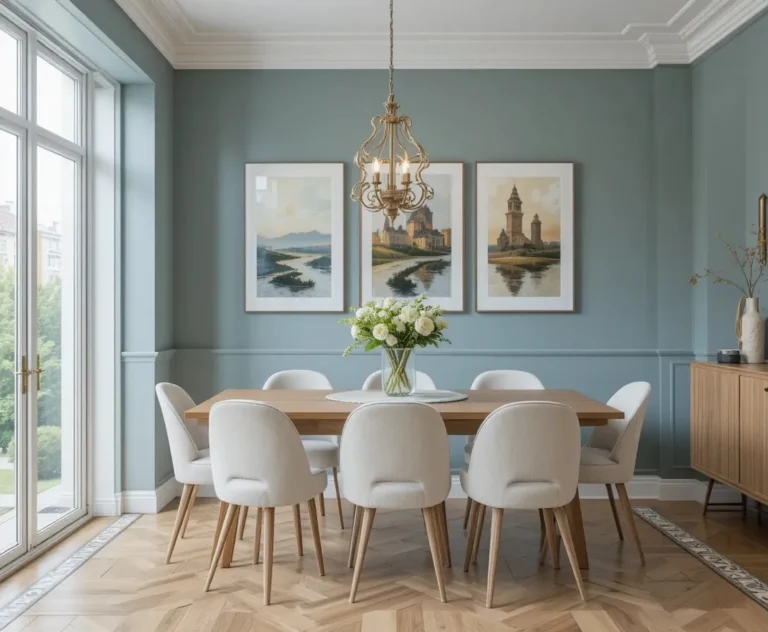
Our dining room wall stayed blank for months because I could not decide on one large picture, and the empty space made every meal feel a little stark. A gallery wall solved the indecision, because I could start small and add pieces as I found them. I mixed family photographs, a watercolour from a holiday, and a print I had loved for years, keeping the frames in warm wood and black for a calm, collected look. If you want more wall inspiration before you start, these dining room wall ideas show how a single wall can carry the whole room.
How to do it: Lay the frames on the floor first, leaving 5 to 8 centimetres between them, and photograph the layout you like. Hang the centre of the group at seated eye level, about 145 centimetres from the floor, starting with the largest piece.
See More Ideas:
19 Kitchen With Black Countertops Ideas
Black and White Countertops Kitchen Ideas
20 Green Kitchen Ideas That Feel Fresh, Calm, and Full of Life
20 Kitchen Cabinet Color Ideas That Make Your Kitchen Look Stunning
6. Use Soft Neutral Color Palettes
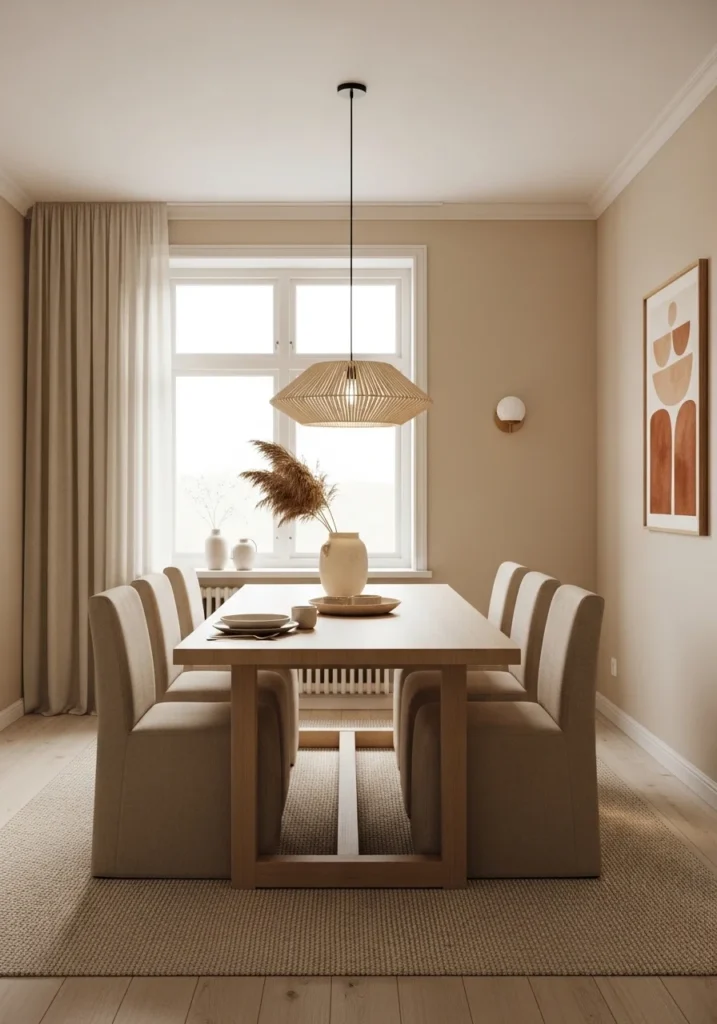
I once thought neutral rooms would feel bland, until I lived with soft beige, warm white, and wood for a winter and realised how restful they are. The dining room stopped shouting for attention and started feeling like a calm place to sit, talk, and eat slowly. What I love about it is layering: a cream wall, a wooden table, linen napkins, and a rug with a faint pattern, all in shades that sit comfortably together. I add warmth with brass, woven baskets, and a bowl of fruit, so the room never feels cold or empty. It is a palette I can change with the seasons by swapping cushions or flowers.
How to do it: Choose three neutrals with warm undertones — a wall colour, a wood tone, and a fabric — and test them beside the table in daylight and lamplight. Layer the shades across walls, textiles, and wood, then add one warm metal or woven texture.
7. Add a Stylish Sideboard
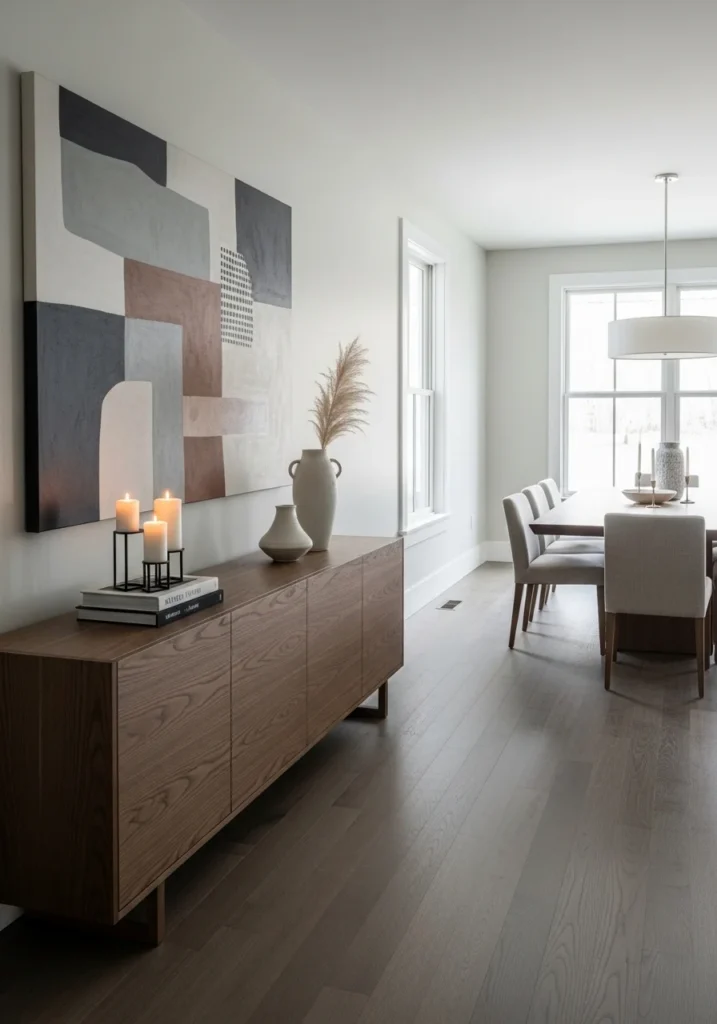
Our sideboard is the hardest-working piece in the dining room, and I only realised how much I relied on it when we moved it for a party and the room felt lost. It holds spare plates, table linen, and the board games that come out after pudding, while the top gives me a place to style a lamp, a vase, and a small stack of books. I keep the surface clear, because a crowded sideboard makes the room feel busy, and I change the display when the seasons turn. A simple wooden board, a tall vase, and a candle are usually enough, and the room feels both practical and elegant.
How to do it: Place the sideboard against the longest free wall, leaving room to open its doors fully. Style the top in groups of three, with one tall piece, one low piece, and one natural texture, and leave empty space between the groups.
8. Bring in Natural Elements
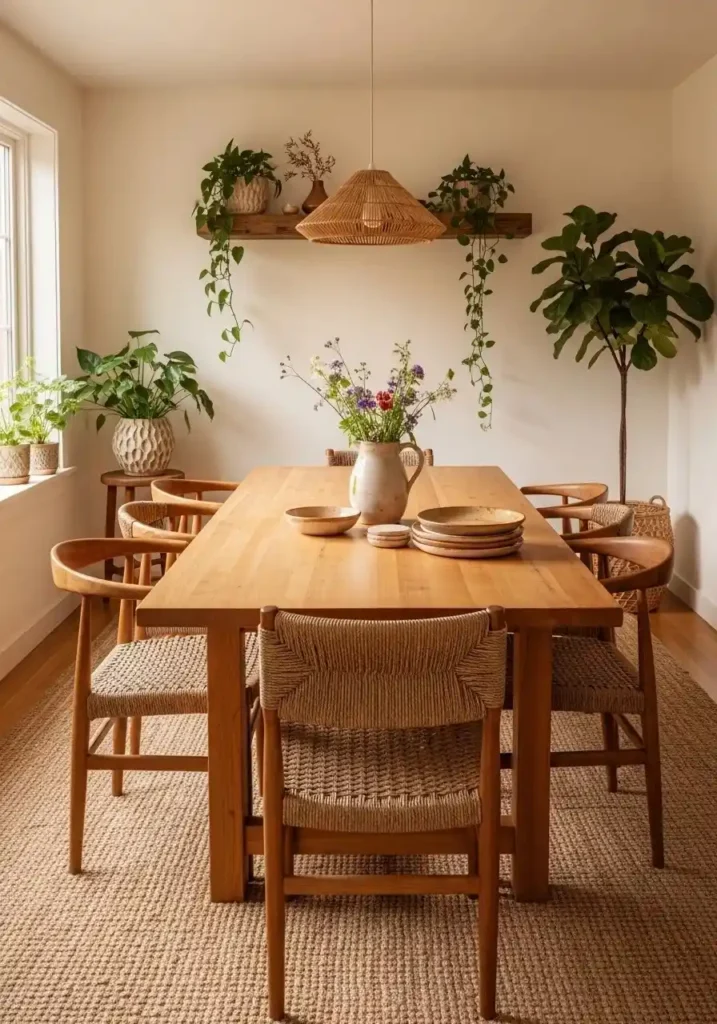
I bring nature into the dining room whenever the room starts to feel too polished, because wood, greenery, and stone soften everything around them. A wooden table already does much of the work, so I add a trailing plant on the sideboard, a bowl of lemons, and a linen runner that creases in a friendly, lived-in way. The green against warm wood is the combination I return to most, especially in winter when the garden looks bare. If you love that relaxed, collected feeling, these boho dining room ideas show how natural textures can carry a whole dining room.
How to do it: Start with one large plant in a bright corner and a wooden or stone piece on the table. Add linen, a bowl of fruit, and one woven texture, then check that the plants get enough light and that the table still has room for plates.
9. Hang a Bold Light Fixture
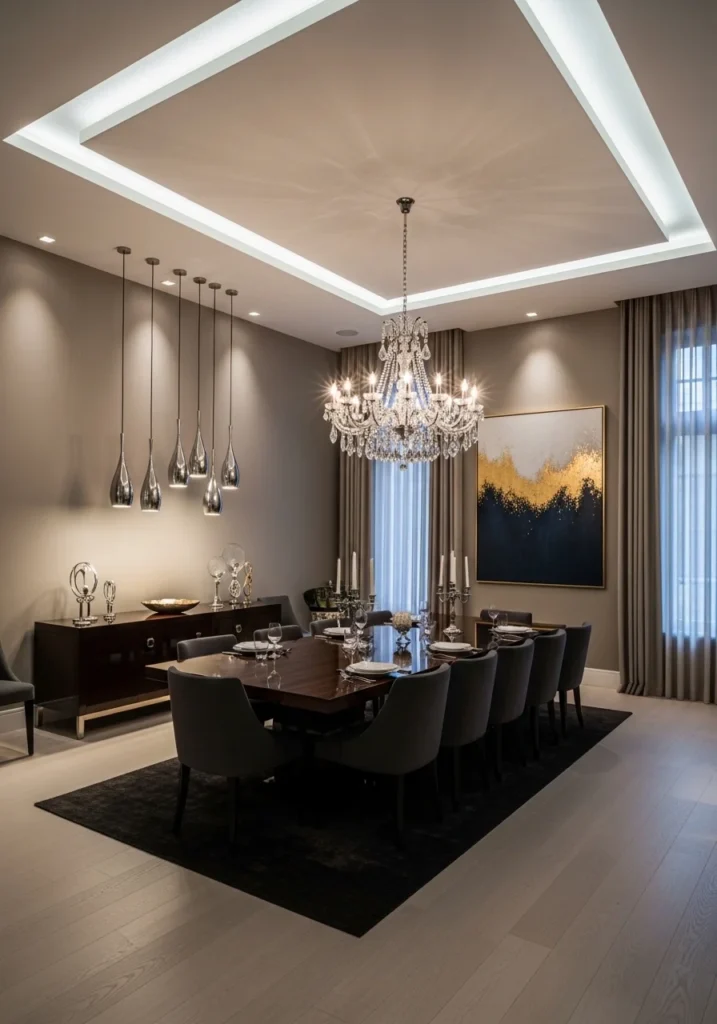
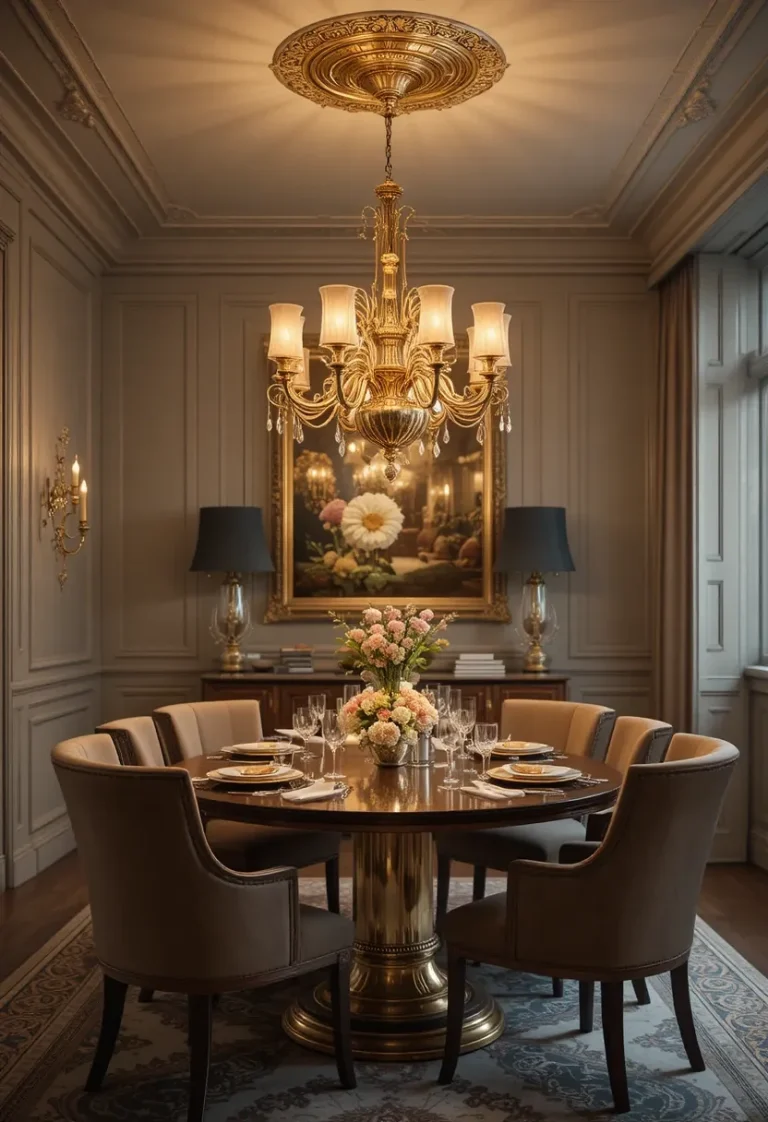
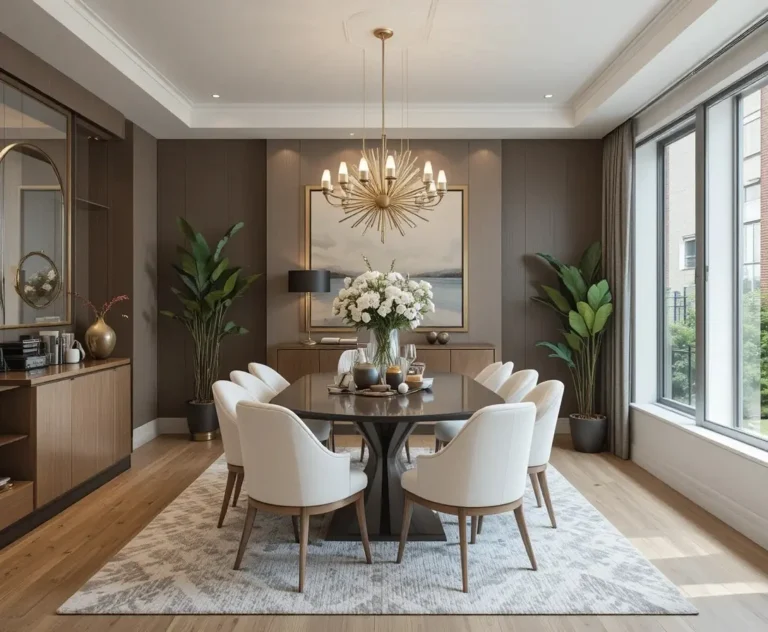
A bold light was the bravest change I made in our dining room, and I stood in the shop for ages wondering whether a large chandelier would overwhelm the table. It did the opposite. The fixture now anchors the room, draws the eye to the centre, and makes even a plain Tuesday supper feel a little special. I chose a warm brass frame with simple glass shades, because I wanted presence without fuss, and I love how it casts a soft pool of light over the table. In the evening, when the rest of the room falls into shadow, that glow is what makes the room feel cosy and finished.
How to do it: Measure the table, then choose a fixture about half to two-thirds as wide as the table. Hang it about 75 centimetres above the tabletop, centre it carefully, and fit warm-white bulbs on a dimmer.
10. Style with Seasonal Decor
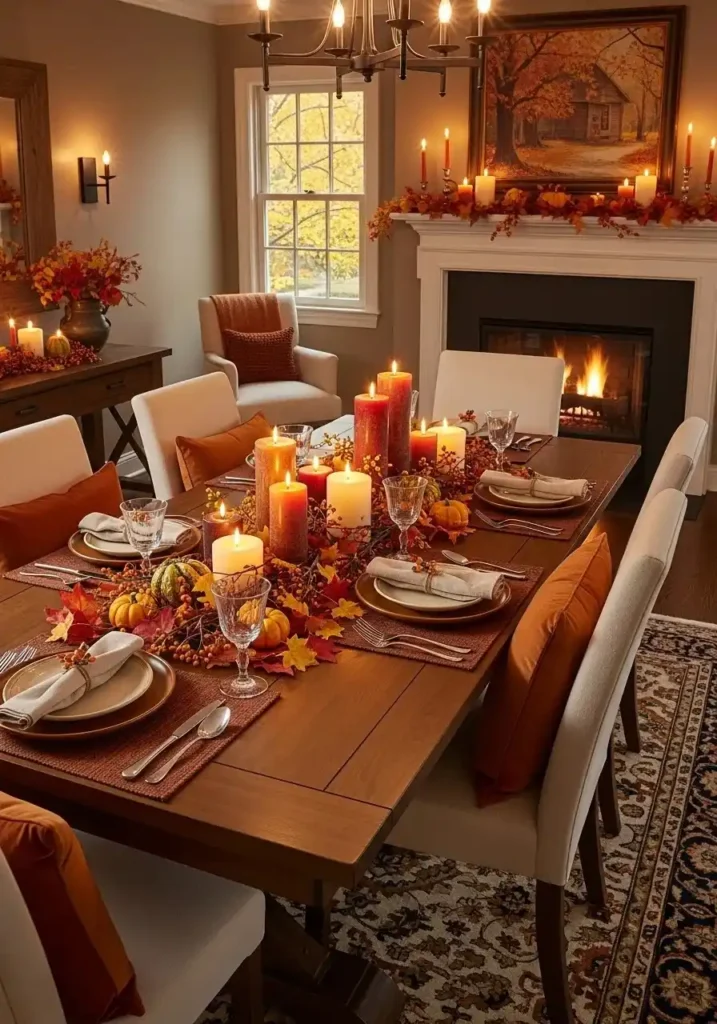
I used to leave the same centrepiece up all year, and by February the dining room felt tired, even though nothing had changed. Swapping a few small things with the seasons keeps the room feeling alive without a big overhaul. In spring I use fresh tulips and pale linen, in summer a bowl of citrus and greenery, in autumn dried leaves and warm candles, and in December pine, oranges, and fairy lights. The table is the easiest place to start, because a centrepiece takes ten minutes to change. I keep a small box for each season, labelled and ready, so the swap feels like a pleasure rather than a chore.
How to do it: Keep one labelled box for each season with a runner, candles, and a centrepiece. Swap only the table and sideboard displays, keep the larger furniture the same, and store each box where you can reach it easily.
See More Ideas:
19 Kitchen With Black Countertops Ideas
Black and White Countertops Kitchen Ideas
20 Green Kitchen Ideas That Feel Fresh, Calm, and Full of Life
20 Kitchen Cabinet Color Ideas That Make Your Kitchen Look Stunning
11. Add Floor-Length Curtains for Elegance
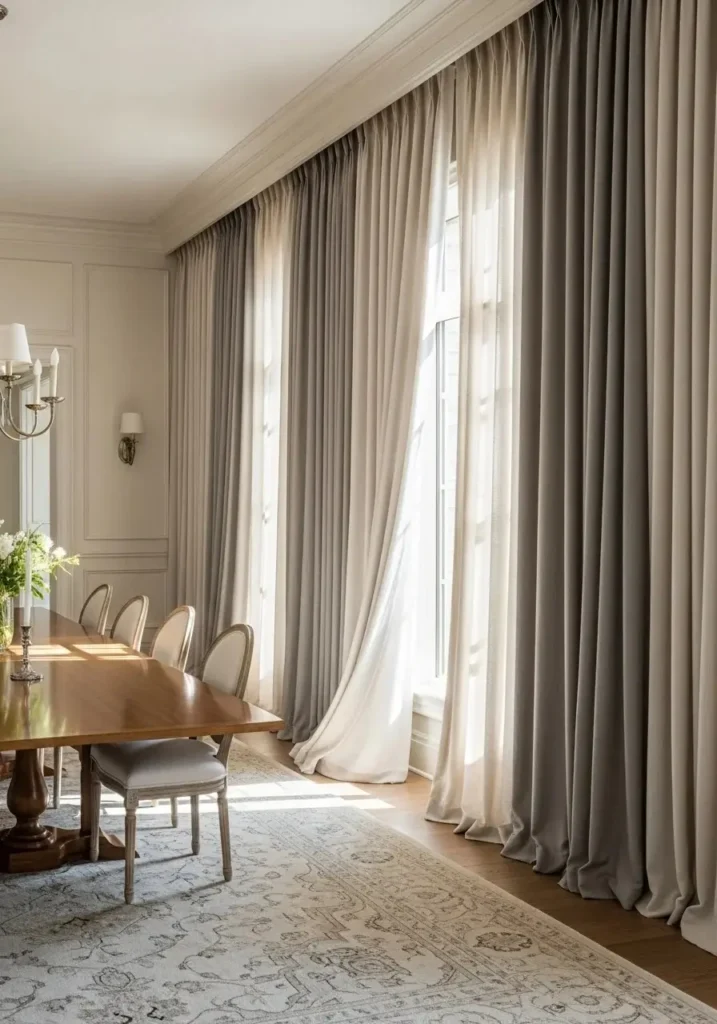
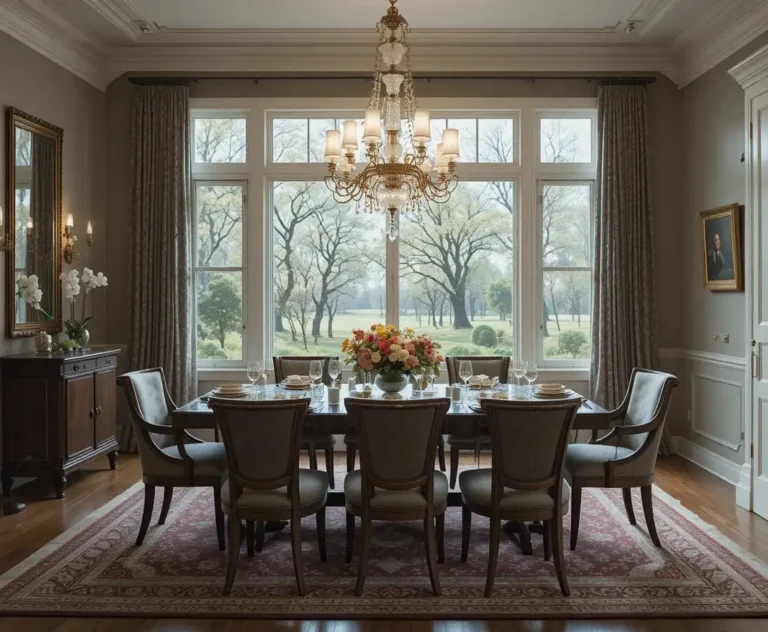
Our dining room windows are not particularly large, yet floor-length curtains made them feel taller and the room feel more elegant. I hung the rod close to the ceiling and let the fabric fall just to the floor, and the effect was immediate: the walls looked longer, the light felt softer, and the room gained a gentle, finished frame. I chose a soft linen in a warm white, because heavy patterns would have crowded the small room, and I love how the fabric moves when the door opens. In the evening I draw them closed, and the room feels private, cosy, and ready for a long supper.
How to do it: Mount the rod 10 to 15 centimetres above the window frame and 15 to 20 centimetres wider on each side. Choose curtains that just touch the floor, hang them in soft folds, and check they clear the chairs when pulled back.
12. Incorporate a Mirror to Reflect Light
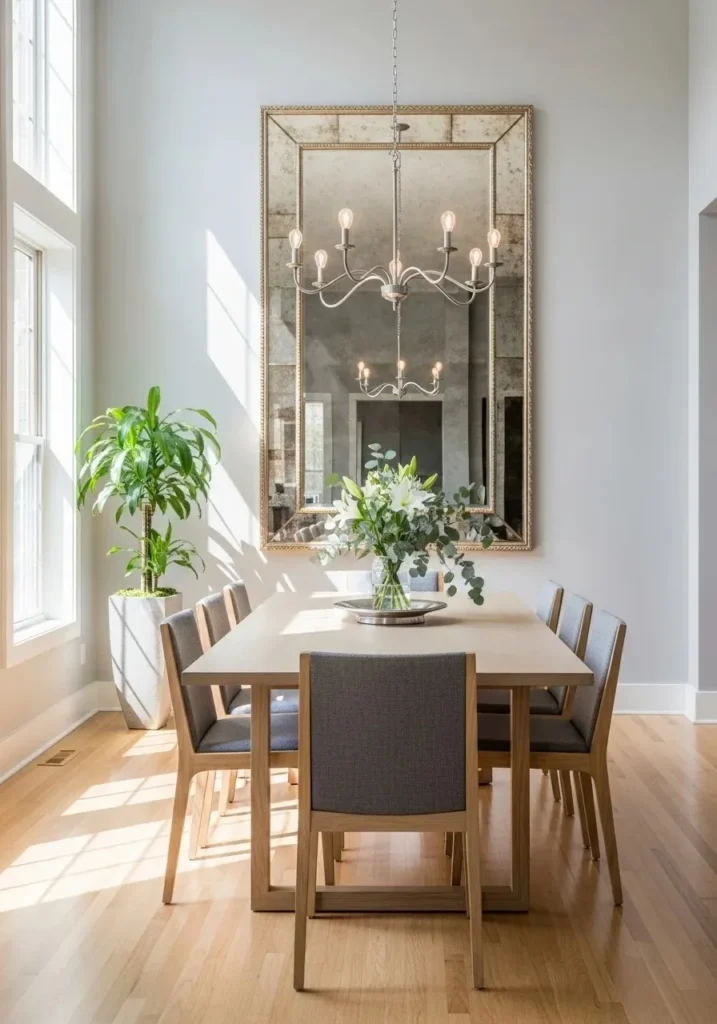
The darkest corner of our dining room used to swallow the afternoon light, until I hung a large mirror opposite the window and watched the room brighten. It was the simplest change I made, and also one of the most effective. The mirror reflects the garden, the table, and the pendant light, so the room feels larger and more open without moving a single piece of furniture. I chose a simple frame in a warm wood tone, because I wanted the reflection, not the frame, to do the talking. Now, when I sit down to eat, I catch glimpses of green and sky that I would otherwise have missed.
How to do it: Hang a mirror opposite a window or beside the table, with its centre at seated eye level, about 145 centimetres from the floor. Choose one large mirror rather than several small ones, and check the reflection from every seat.
13. Play with Contrast in Colors
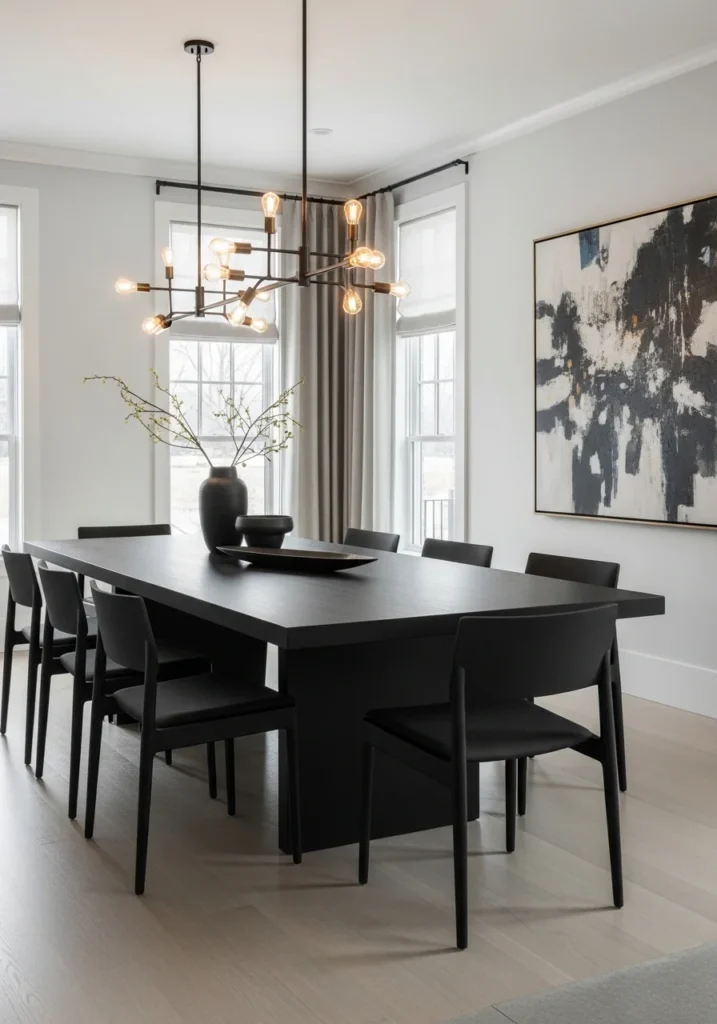
For a long time our dining room was all soft neutrals, and although it was calm, it started to feel a little sleepy. Adding contrast woke it up. I painted one chair a deep green, added dark cushions to a pale bench, and let a black-framed picture sit against a cream wall, and suddenly the neutrals looked richer, not duller. The key, I learned, is balance: one strong colour, repeated in two or three small places, against a calm background. Too much contrast would have felt restless, but a little gives the room energy, depth, and a sense of intention that the plain palette was missing.
How to do it: Pick one strong colour and one calm background, then repeat the strong colour in two or three small places, such as cushions, a chair, or art. Test the pairing in daylight, and keep the largest surfaces pale.
14. Add Upholstered Dining Chairs
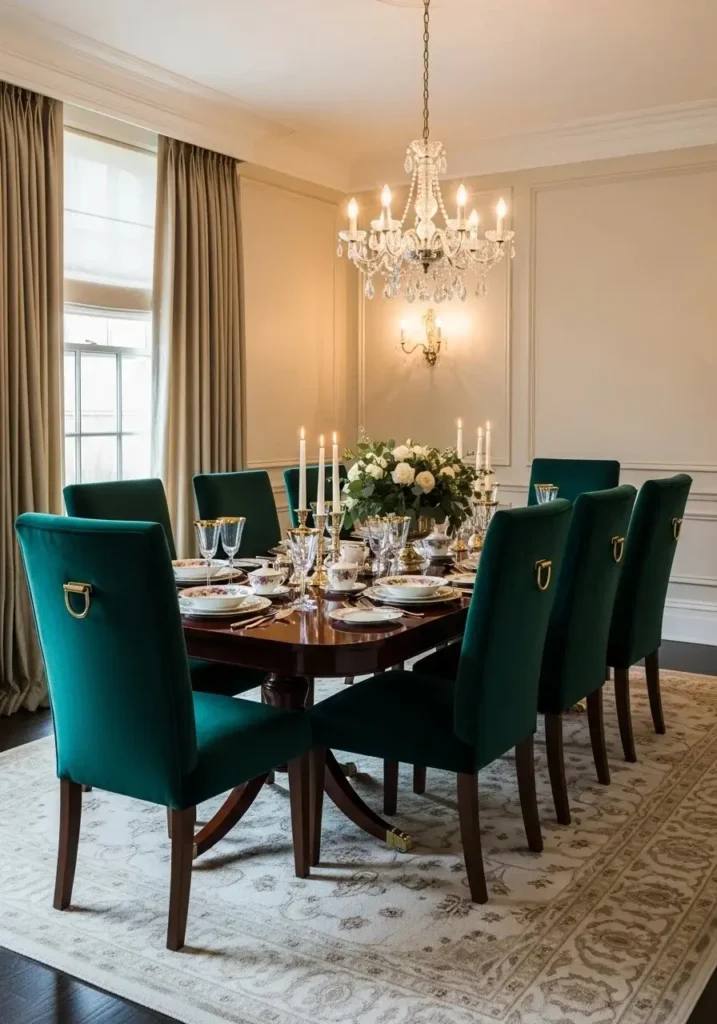
I bought our upholstered chairs after a long lunch where my back ached on a hard wooden seat, and I have never regretted the comfort. The soft seats invite people to stay at the table, which means conversations last longer and nobody rushes away to the sofa. I chose a warm, textured fabric in a muted tone, with a stain-resistant finish, because this is a room for real meals, red wine, and small children with sticky hands. The chairs also soften the hard lines of the table and add a quiet touch of luxury. When they need a clean, I vacuum them weekly and blot spills straight away.
How to do it: Choose a stain-resistant fabric in a muted, warm tone, and check the seat height matches your table, usually about 45 centimetres. Sit in each chair for a few minutes, then vacuum weekly and blot spills straight away.
See More Ideas:
19 Kitchen With Black Countertops Ideas
Black and White Countertops Kitchen Ideas
20 Green Kitchen Ideas That Feel Fresh, Calm, and Full of Life
20 Kitchen Cabinet Color Ideas That Make Your Kitchen Look Stunning
15. Use Open Shelving for Display
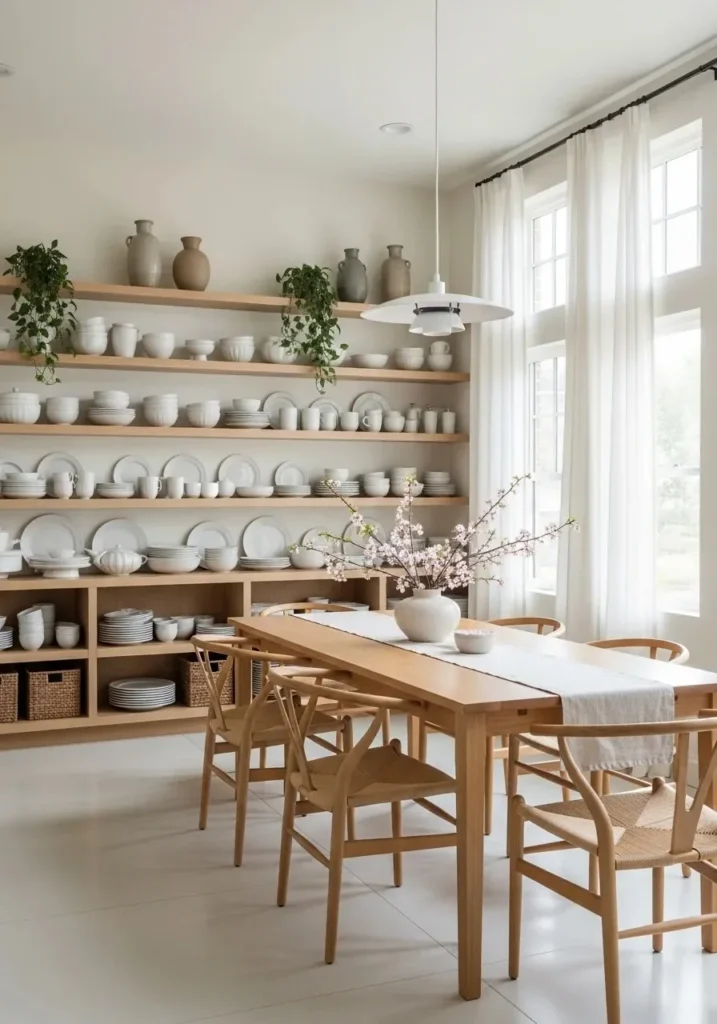
Open shelves were my answer to a dining room that needed storage but could not take another large piece of furniture. I fixed two wooden shelves on the wall beside the table, and they now hold the plates, bowls, and glasses I reach for most, along with a small vase and a stack of cookbooks. Everything is easy to find, and the shelves make the room feel lighter than a closed cupboard would. I am careful not to overload them, because a crowded shelf quickly looks untidy, and I leave a little empty space between groups. The result is storage that feels like styling, and styling that is genuinely useful.
How to do it: Fix shelves into studs or solid wall plugs, about 35 to 45 centimetres apart, and keep the lowest shelf within easy reach. Group plates, glasses, and one decorative piece per shelf, and leave empty space between groups.
16. Introduce Metallic Accents
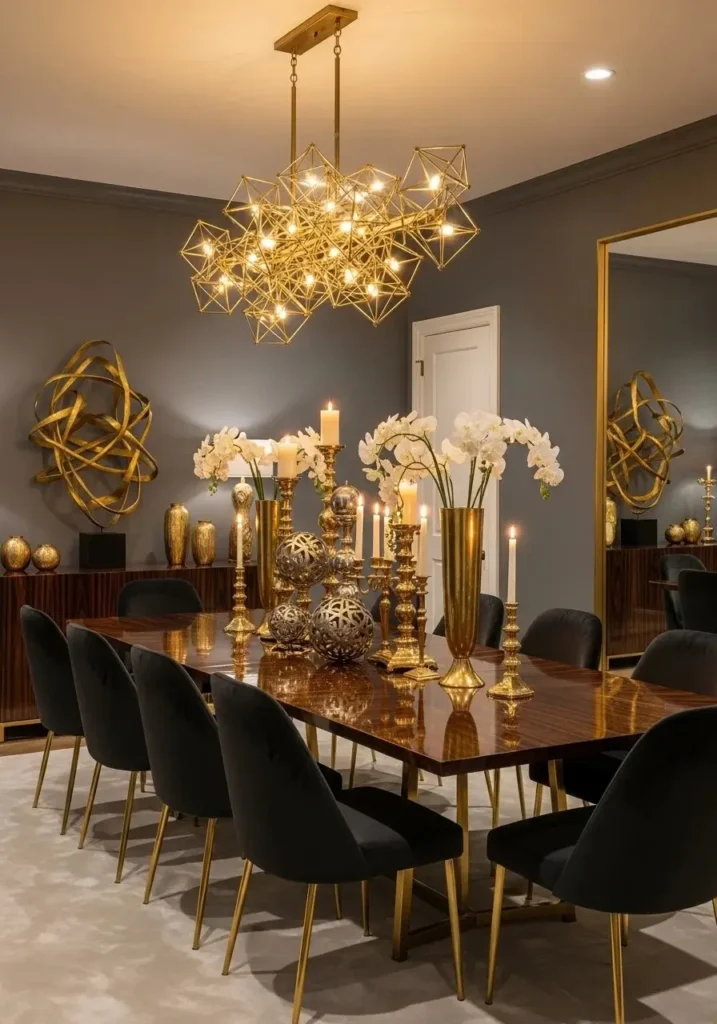
Metallic accents are the jewellery of our dining room: a little goes a long way, and the right amount makes everything else look more polished. I started with brass candlesticks on the table, then repeated the finish in the pendant light and a picture frame, so the shine feels intentional rather than random. In the evening, when the candles are lit, the metal catches the light and the table glows. I keep the finish to one metal, because mixing gold, silver, and copper in one small room felt restless to me. A few well-chosen pieces, in the same warm tone, are all the room needs.
How to do it: Choose one metal finish, such as brass or matte black, and repeat it in three places: the light, the table, and one frame or handle. Keep the pieces small, polish them occasionally, and stop before the shine takes over.
17. Create a Cozy Corner Nook
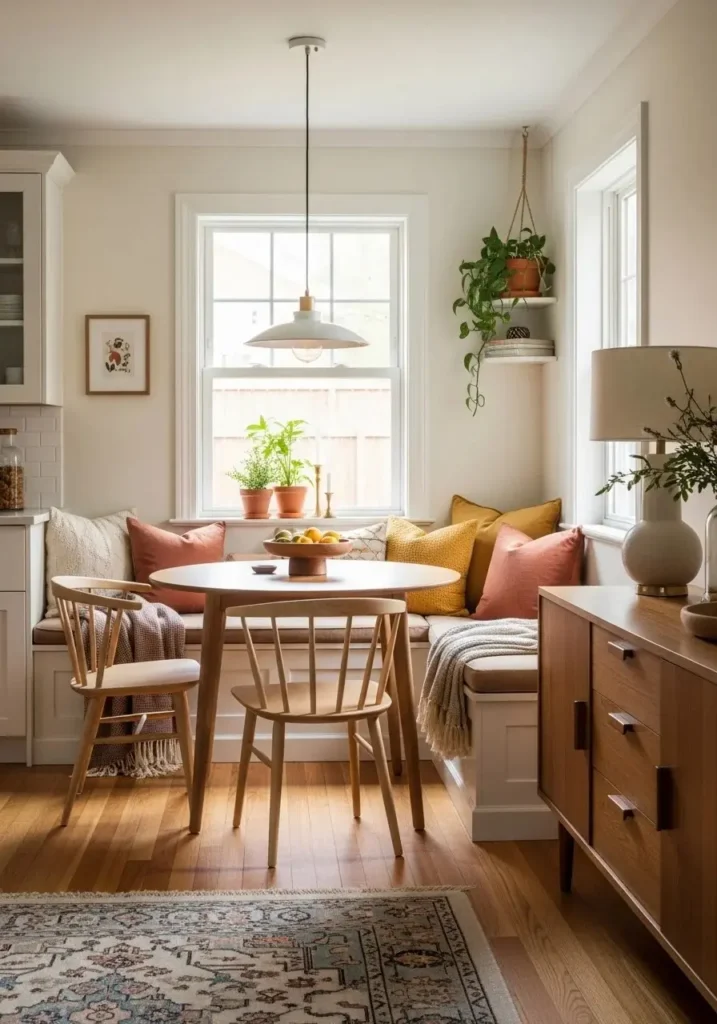
The corner by our window was wasted space for years, a place where bags landed and nothing ever quite belonged. Turning it into a small nook changed how we use the dining room. A bench with storage underneath, two soft cushions, and a small round table now make it the spot for morning coffee, homework, and quiet reading. It feels sheltered and cosy, especially with a throw draped over the bench and a lamp nearby. I love that it gives the room a second purpose, and that the children claim it first every morning. It is proof that a corner, however small, can earn its keep.
How to do it: Fit a bench along the wall with storage underneath, add a compact table and two chairs, and layer cushions and a throw for comfort. Hang a small shelf above the bench, and keep the nook clear enough to sit in every day.
18. Add Wall Paneling or Texture
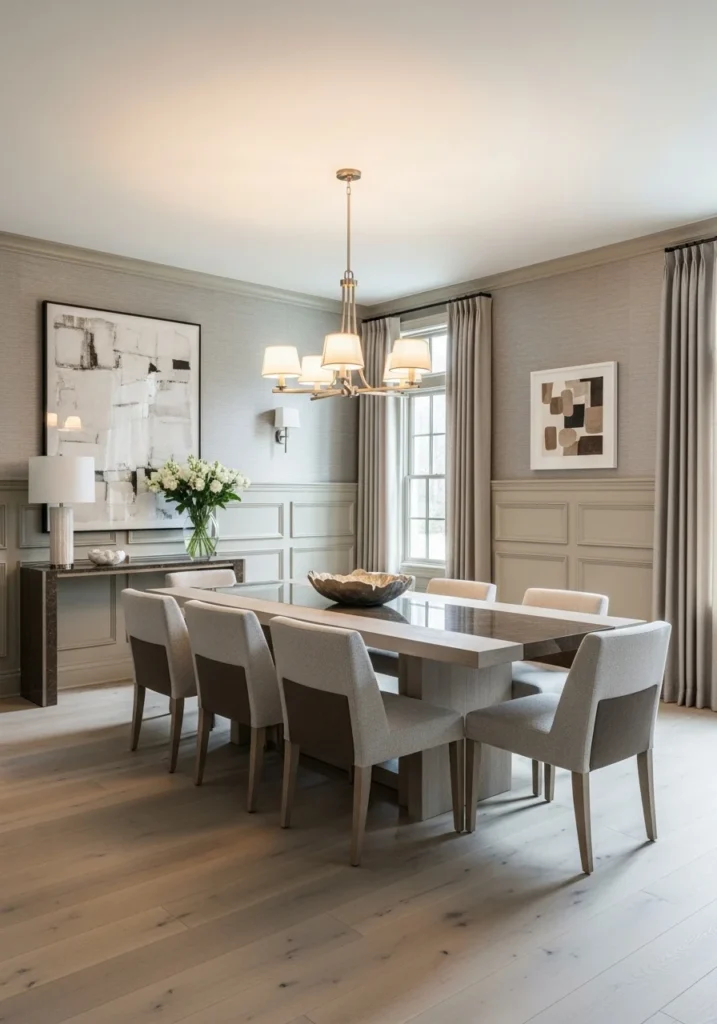
Our dining room walls were flat and a little dull, and paint alone never quite gave them the depth I wanted. Paneling changed the room in a weekend, and it is still the change visitors notice first. I chose simple rectangular panels painted in the same warm white as the wall, so the texture is subtle rather than shouty, and the light catches the edges beautifully in the afternoon. The panels make the room feel more considered, more finished, and a little more elegant, without changing the furniture at all. If you are nervous about commitment, try one wall first; you can always add more later.
How to do it: Plan rectangular panels with even spacing, keeping them clear of switches and skirting. Use lightweight moulding, paint it in the same colour as the wall, and check the layout with masking tape before you fix anything.
19. Use a Round Dining Table for Flow
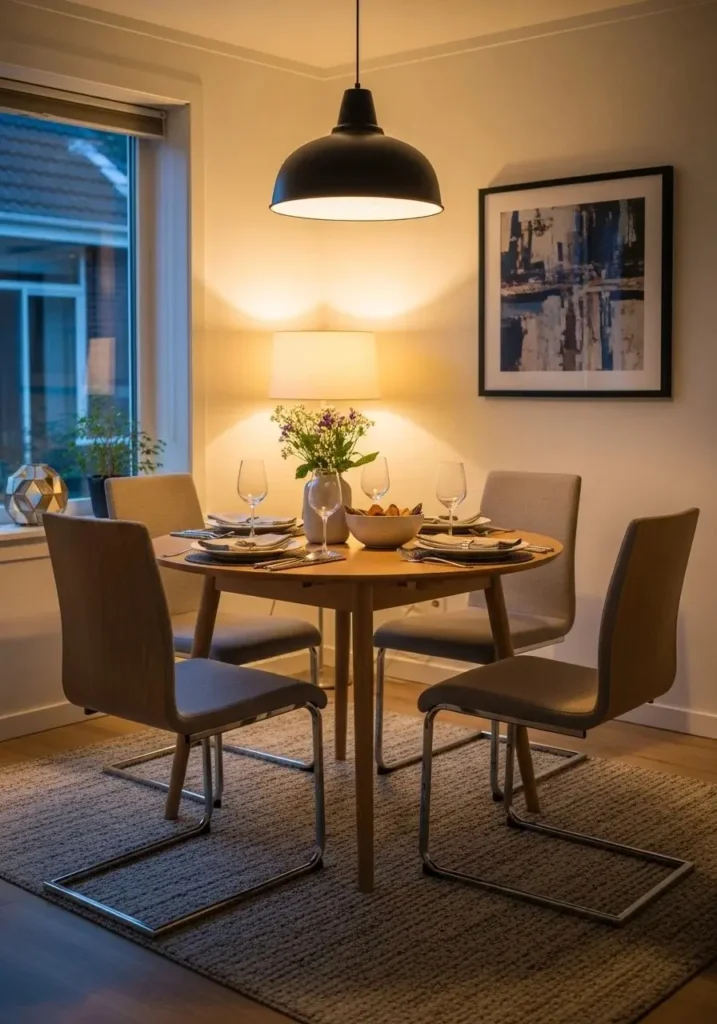
A round table changed how we eat together, because nobody sits at the head and nobody is tucked into a corner. Conversations flow more easily, plates are simpler to pass, and the room feels softer without sharp corners to navigate around. I chose a solid wood top with a pedestal base, which leaves more legroom and makes it easier to squeeze in an extra chair when friends drop by. If you are weighing shapes and sizes, these dining room table ideas helped me compare round, oval, and rectangular tables before I committed. Our table seats six comfortably, and it is where the best, longest meals in our house happen.
How to do it: Measure the room and leave at least 75 centimetres behind each chair. Choose a table about 120 centimetres wide for four people, centre it under the light, and keep the centrepiece low so everyone can see across.
20. Keep It Simple and Intentional
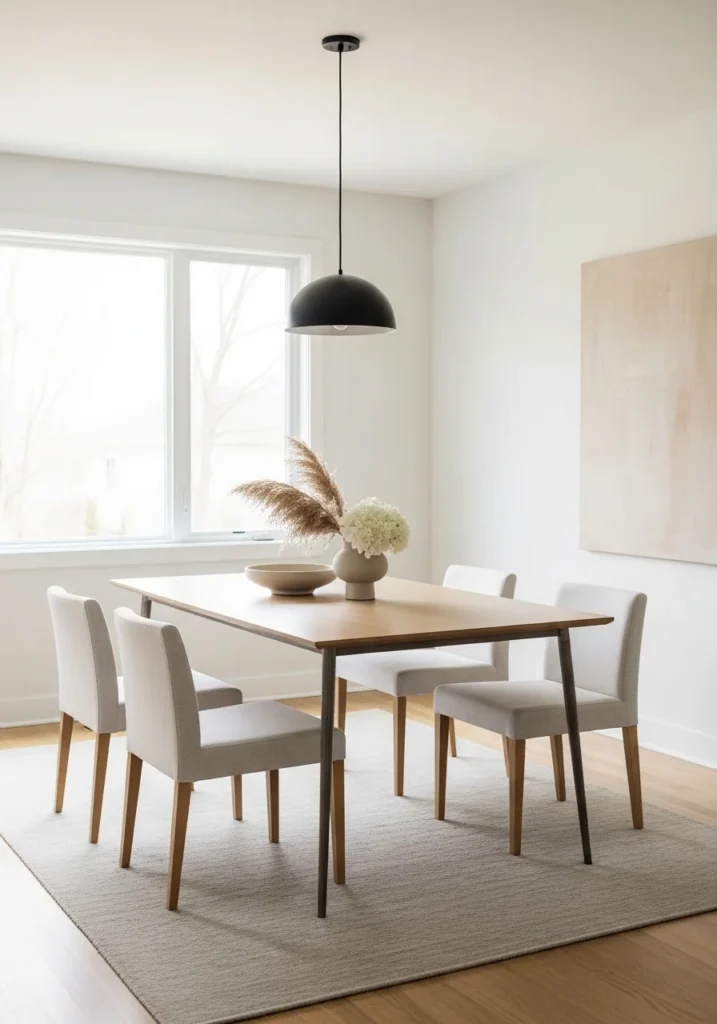
After trying every idea in this list, the lesson I keep returning to is restraint. A dining room does not need every surface filled, every wall covered, and every trend tried at once. I now choose one or two pieces I love, give them room to breathe, and remove anything that does not earn its place. The room feels calmer, easier to clean, and more welcoming, and I notice the pieces I kept more than I ever noticed a crowded shelf. Editing is not about having less for its own sake; it is about leaving space for the people, the food, and the conversations that make the room matter.
How to do it: Step back to the doorway and look at the whole room. Remove one piece at a time until the table, light, and chairs can breathe, then live with the edited room for a week before adding anything back.
Frequently Asked Questions
How can I make my dining room feel warmer without redecorating?
Start with light and texture, because those two changes cost the least and show the fastest. Swap in warm-white bulbs, add a linen runner or cushions, and light a candle at supper time. A rug under the table and a plant in the corner will also soften the room in an afternoon.
What size rug should I use under a dining table?
Choose a rug at least 60 centimetres wider than the table on every side, so chairs stay on the rug when they are pulled out. A low, flat weave is easiest to clean and stops chairs from wobbling. If you are between sizes, go larger rather than smaller.
How low should a light hang above a dining table?
Hang a pendant or chandelier about 75 centimetres above the tabletop, with its centre directly over the middle of the table. That height lights the food without shining in anyone’s eyes. For a very long table, use two smaller pendants spaced evenly instead of one large one.
Can I mix dining chairs, or should they match?
Yes, mixed chairs often look more collected and personal than a matching set. Keep one shared thread, such as the same wood tone, fabric, or colour, so the mix looks deliberate. Put the tallest or most upholstered chairs at the ends of the table.
How do I keep a dining room from feeling cluttered?
Give every piece a clear purpose and leave empty space on the table, shelves, and sideboard. Edit regularly, removing one piece at a time until the room can breathe. Clearing the table between meals also makes a surprising difference.
Your Dining Room Decor Checklist
Tick each step off as you style your dining room.
☐ Choose one focal point, usually the table or the light above it.
☐ Layer warm lighting with a pendant, a lamp, and candles.
☐ Keep the centrepiece low, under 30 centimetres.
☐ Choose a rug at least 60 centimetres wider than the table on every side.
☐ Mix chairs around one shared wood tone, fabric, or colour.
☐ Add one natural texture: wood, linen, or greenery.
☐ Hang art and mirrors with the centre at seated eye level.
☐ Hang the light about 75 centimetres above the table.
☐ Use one metal finish and repeat it in three places.
☐ Swap the centrepiece with the seasons.
☐ Clear the table between meals.
☐ Step back, remove one piece, and enjoy the room.
Conclusion
Creating a warm, stylish dining room does not need a full renovation or a large budget. It needs a table that invites people to sit, light that flatters the evening, and a few pieces you genuinely love, given room to breathe. Start with the idea that speaks to you most, whether that is layered lighting, a rug under the table, or a quieter, simpler room, and try it this weekend. Live with the change for a week, notice how the room feels at breakfast and at supper, and then add the next idea. A dining room grows warmer one small, thoughtful choice at a time, and the meals shared in it are what will make it feel like home.
One Comment