20 Green Kitchen Ideas That Feel Fresh, Stylish & Truly Inviting
Is your kitchen feeling flat, lifeless, or missing that spark you see in beautiful homes online? You’re not alone. Many kitchens look functional but lack warmth, personality, and that “wow” feeling. The good news? You don’t need a full renovation to fix it. With the right green kitchen ideas, you can turn your space into a calm, stylish, and inviting place you actually enjoy spending time in. From soft, soothing tones to bold statement shades, green has the power to completely transform your kitchen’s mood and energy.
1. Soft Sage Green Cabinets for a Calm Look
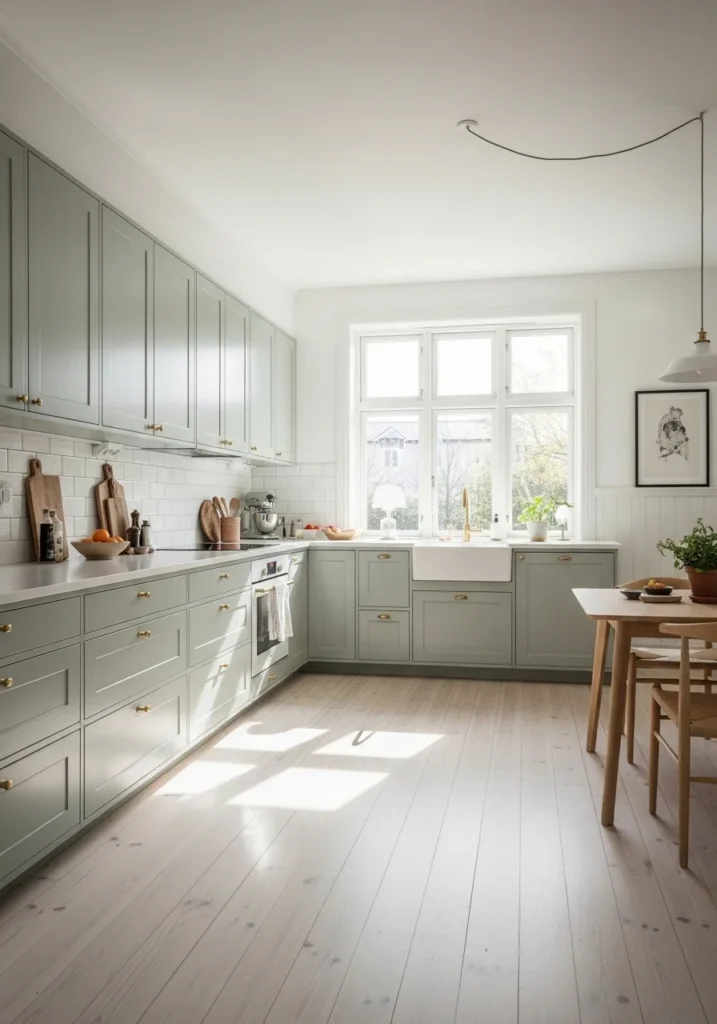
I fell for sage the first time I saw it in a friend’s cottage kitchen, where the cabinets looked soft in the morning light and the whole room felt slower, kinder, and easier to be in. I love how this muted green sits between grey and leaf-green, so it never shouts, yet still gives white walls and pale wood floors something gentle to lean against. In my own kitchen I would pair it with simple white crockery, a linen tea towel, and very little clutter, because sage does its best work when the surfaces around it can breathe. It suits small rooms too, holding light without glare and making a narrow galley feel calm rather than cramped.
How to do it: Order two or three sage sample pots and paint large cards, not just tiny swatches, then move them around the room in morning and evening light. Paint the lower cabinets first if you are nervous, keep the uppers white, and fit brushed brass or matte gold handles for a warm, modern touch. Finish with pale wood open shelving and a simple white worktop.
2. Dark Green Cabinets for a Bold, Elegant Statement
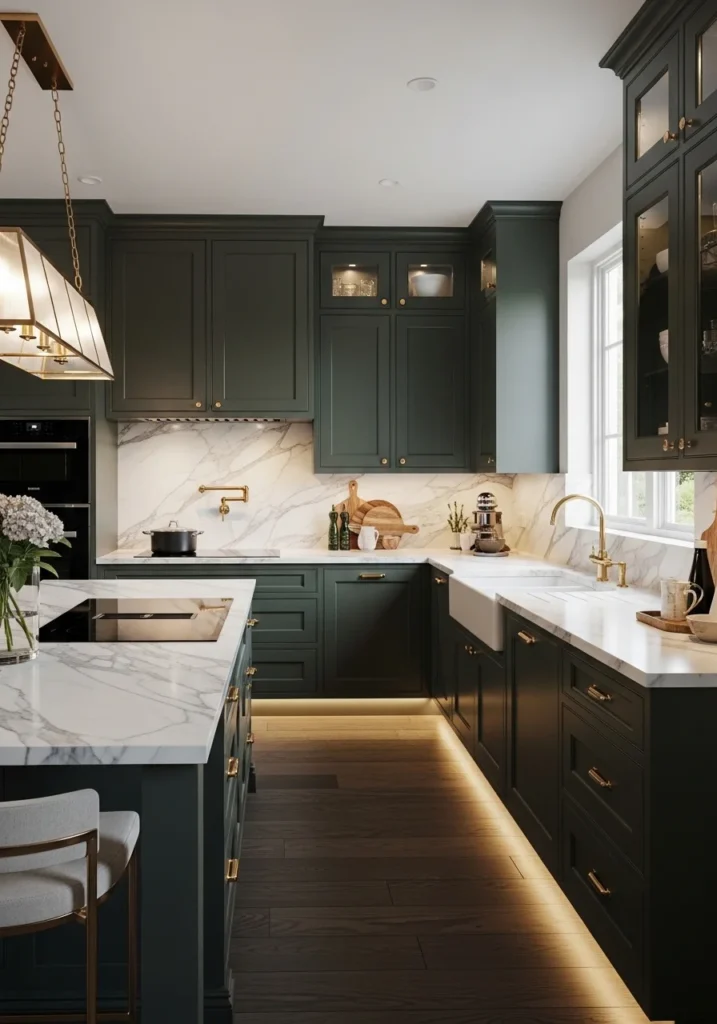
Deep green cabinets, in emerald or forest tones, are the choice I reach for when a kitchen needs drama without feeling cold or theatrical. I have seen a plain, boxy room turn into the most-loved spot in the house once the cabinets went dark, especially against marble and warm brass. The trick is balance: keep the walls pale, let in as much daylight as you can, and leave one surface light, usually the worktop or the splashback. At night, with low lamps on, dark green feels cocooning rather than heavy, like a favourite restaurant corner you never want to leave.
How to do it: Paint a single tall unit or one run of cabinets first and live with it for a week before committing to the whole room. Fit warm under-cabinet lighting to lift the darkness, choose a pale marble or quartz worktop, and add brass handles and a matching tap. Keep the ceiling and walls warm white so the green reads rich, not gloomy.
3. Two-Tone Green and White Cabinets
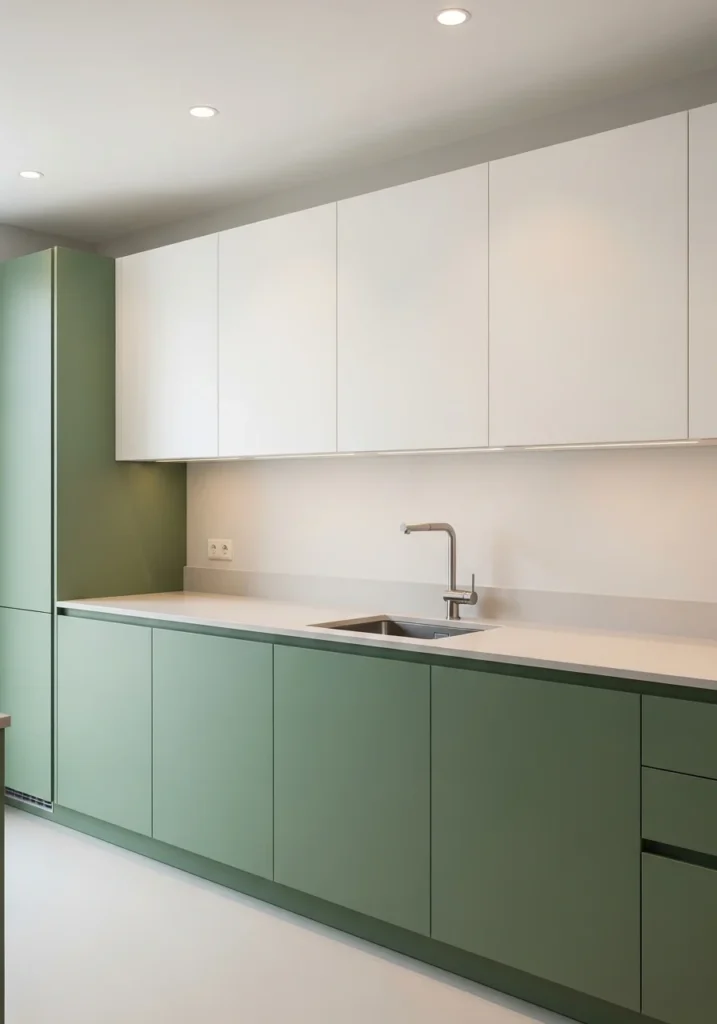
Two-tone cabinets are my favourite compromise when I love green but do not want it on every wall. Green below and white above grounds the room beautifully: your eye travels up to the lighter cabinets, the ceiling feels higher, and the floor feels anchored rather than busy. I have used this in a small galley kitchen and in a large family kitchen, and it works in both, because the white keeps the scheme airy while the green still gives it personality. Choose one green and stick to it, then let the worktop, floor, and handles quietly tie the two halves together.
How to do it: Paint the lower cabinets in your chosen green and the uppers in a warm, not blue, white. Keep the worktop neutral, in pale stone or light wood, so it connects both colours. Use the same handle finish on every cabinet, and repeat the green once more in a small way, such as a plant pot, a tea towel, or a painted stool.
4. Olive Green Cabinets with Natural Wood Elements
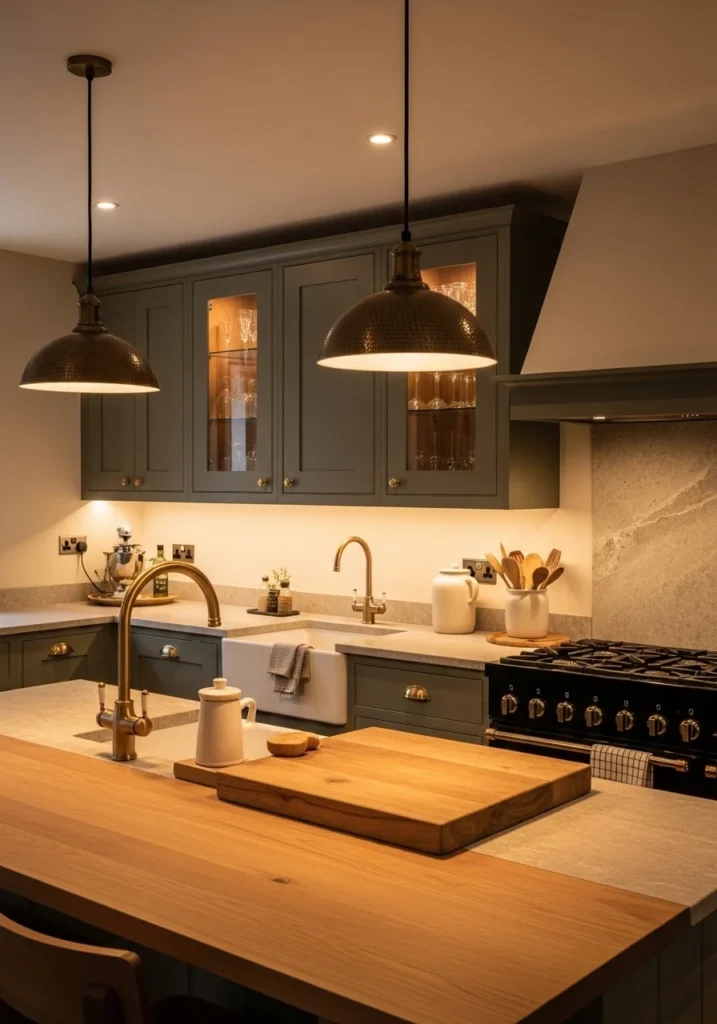
Olive green with warm wood is the combination I suggest when someone wants a kitchen that feels earthy, lived-in, and a little bit rustic without going full farmhouse. Olive has a yellow, sun-warmed undertone, so it sits happily next to oak, walnut, and butcher block, and the wood stops the green from feeling flat or cold. I love this pairing with woven baskets, a wooden chopping board left out on the worktop, and soft, warm lighting in the evening. It is a forgiving palette too: crumbs, fingerprints, and everyday clutter show far less than they do on stark white.
How to do it: Choose an olive with a warm undertone and test it beside your wood samples, not on its own. Add a butcher-block worktop or oak open shelves, wooden stools, and warm-toned bulbs. Use soft, warm lighting under the cabinets to bring out the richness of both the green and the wood, and keep metals muted, in aged brass or black.
5. Mint Green Cabinets for a Fresh, Bright Feel
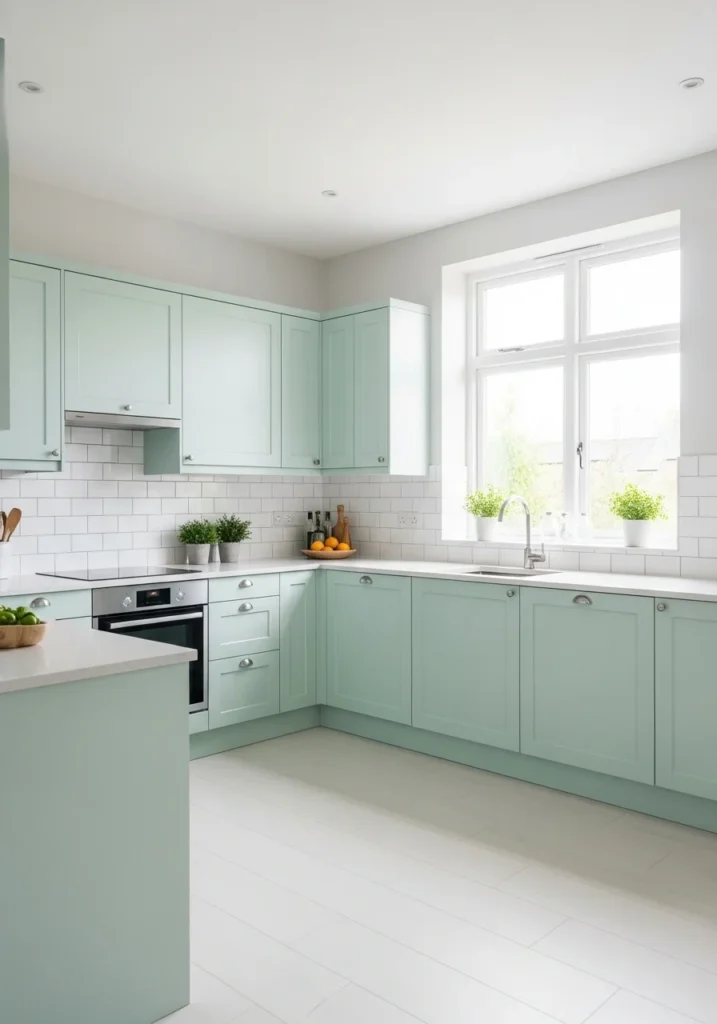
Mint green always makes me think of spring mornings, open windows, and a kitchen that smells faintly of fresh herbs. It is light, cheerful, and wonderfully forgiving in a small or north-facing room, because it bounces light around instead of soaking it up. I would keep the rest of the room quiet — white tiles, a pale floor, simple chrome or nickel handles — and let the mint do the talking. A pot of basil on the sill, a bowl of lemons on the worktop, and a pale linen blind are all it needs. Too many pastels beside it would turn sweet into sugary, so I keep the supporting colours calm.
How to do it: Paint the cabinets in a soft mint with a hint of grey, so it stays fresh rather than icy. Pair them with white subway tiles and a light worktop, then add small potted herbs on the windowsill to strengthen the fresh, lively feeling. Keep the floor pale and the accessories white, wood, or glass.
6. Forest Green Kitchen Island as a Statement Piece
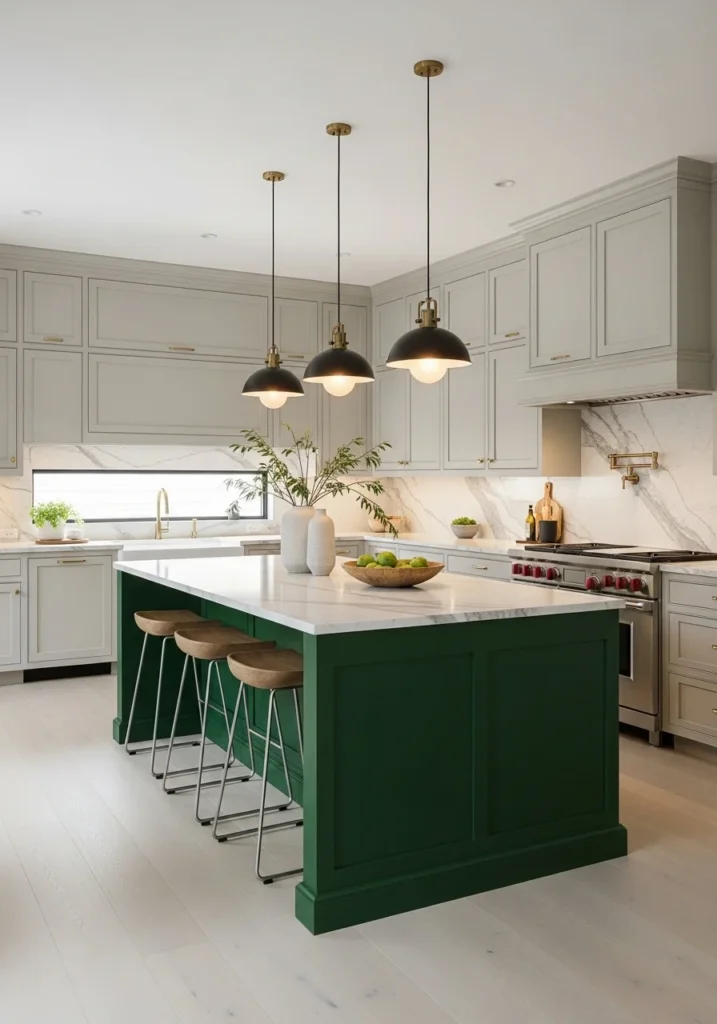
A forest green island is, for me, the easiest bold move in a kitchen. You get all the drama of dark green in one place, while the rest of the room stays pale and calm, so nothing feels overwhelmed. I love how an island in this shade becomes the natural gathering point: people lean on it, children do homework at it, and guests drift towards it with a glass in hand. Keep the surrounding cabinets cream or white, choose a light worktop with a gentle overhang for seating, and hang two simple pendants above it. If an island will not fit your layout, these kitchen peninsula ideas show a slimmer way to get the same sociable, anchored feeling.
How to do it: Paint the island forest green and leave the perimeter cabinets neutral. Fit a light worktop, such as pale quartz or butcher block, with enough overhang for two stools. Hang pendant lights at eye level when seated, add a vase of eucalyptus or a wooden fruit bowl, and keep the island top mostly clear so the colour stays the star.
7. Green Tile Backsplash for Subtle Color
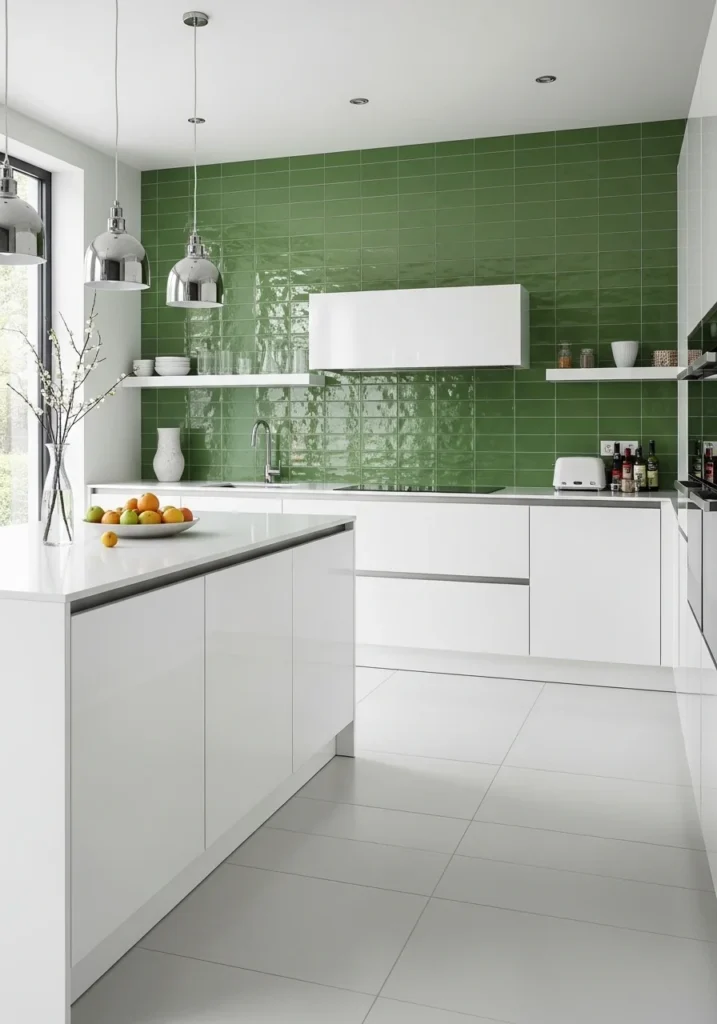
A green tile backsplash is the low-commitment route I recommend to anyone who is curious about green but not ready to paint a single cabinet. It brings colour exactly where your eye lands when you cook, it is easy to wipe clean, and it can be changed far more cheaply than cabinetry. I love glossy handmade-look tiles here, because their uneven surface catches the light and makes even a plain white kitchen feel considered. Try a deep emerald for drama, or a soft sage for a gentler effect, and let the grout do some of the work: pale grout feels crisp, while a mid-tone grout hides splashes.
How to do it: Order sample tiles in two or three shades of green and tape them to the wall for a few days. Choose a tile with slight variation in colour for a handmade, lively finish, pick a grout that will not show every splash, and run the tiles to the underside of the cabinets in a straight stack or simple brick pattern. Seal natural stone tiles before grouting.
8. Matte Green Cabinets for a Modern Finish
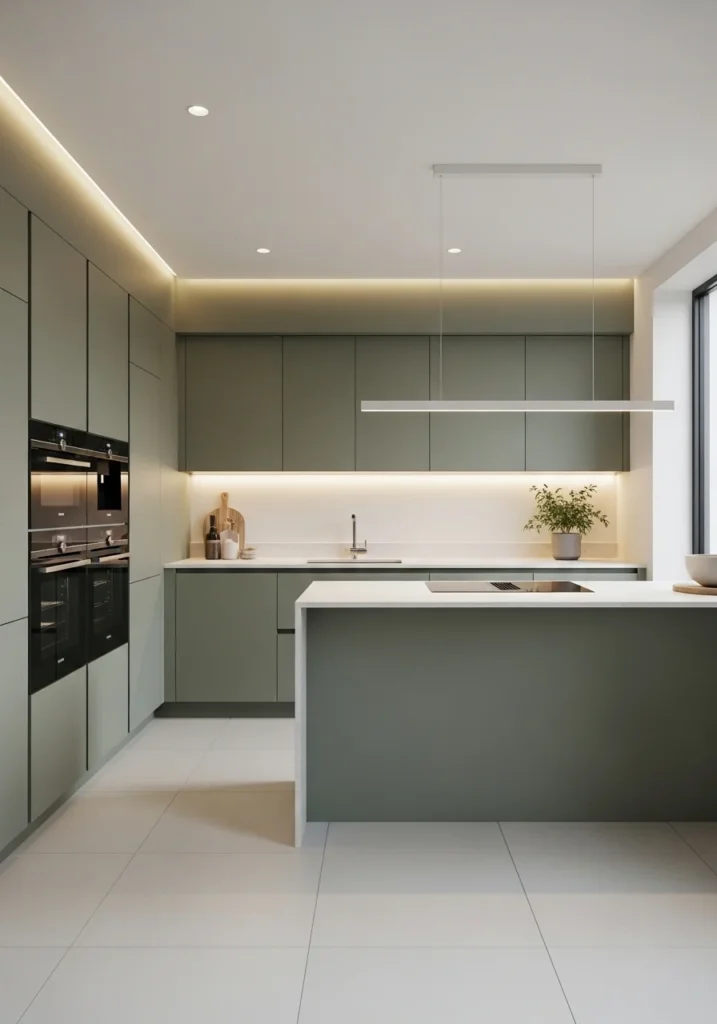
Matte green cabinets have a quiet, velvety quality that gloss can never quite match, and I reach for this finish in modern kitchens where I want texture rather than shine. The colour looks deeper and softer at the same time, fingerprints show less than you might expect on a mid-tone green, and the whole room feels calm and grown-up. I keep the styling around matte cabinets deliberately simple: handleless doors or slim bar handles, a plain worktop, and one or two beautiful objects on display, rather than a crowded shelf. It is a look that rewards restraint, and it photographs beautifully too.
How to do it: Choose a matte or eggshell paint made for cabinetry and test it on a door, checking for marks after a day of normal use. Fit handleless doors or slim, matching handles, keep the worktop plain and the decor minimal so the cabinet colour remains the focus, and wipe the doors with a soft, damp cloth rather than a harsh cleaner.
9. Green Cabinets Paired with Gold Hardware
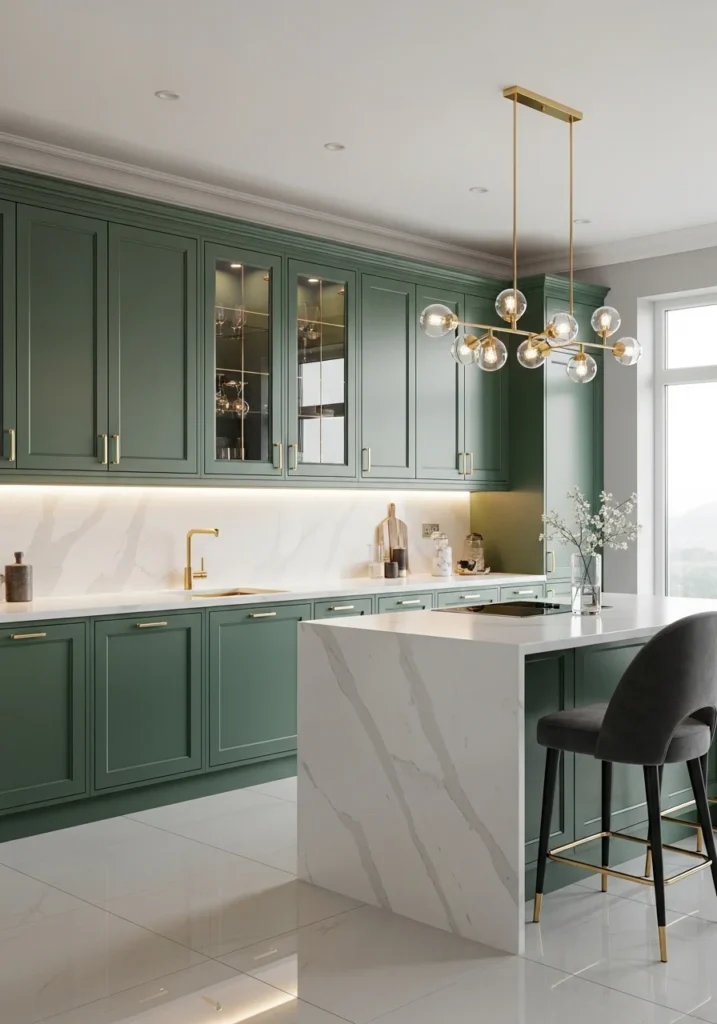
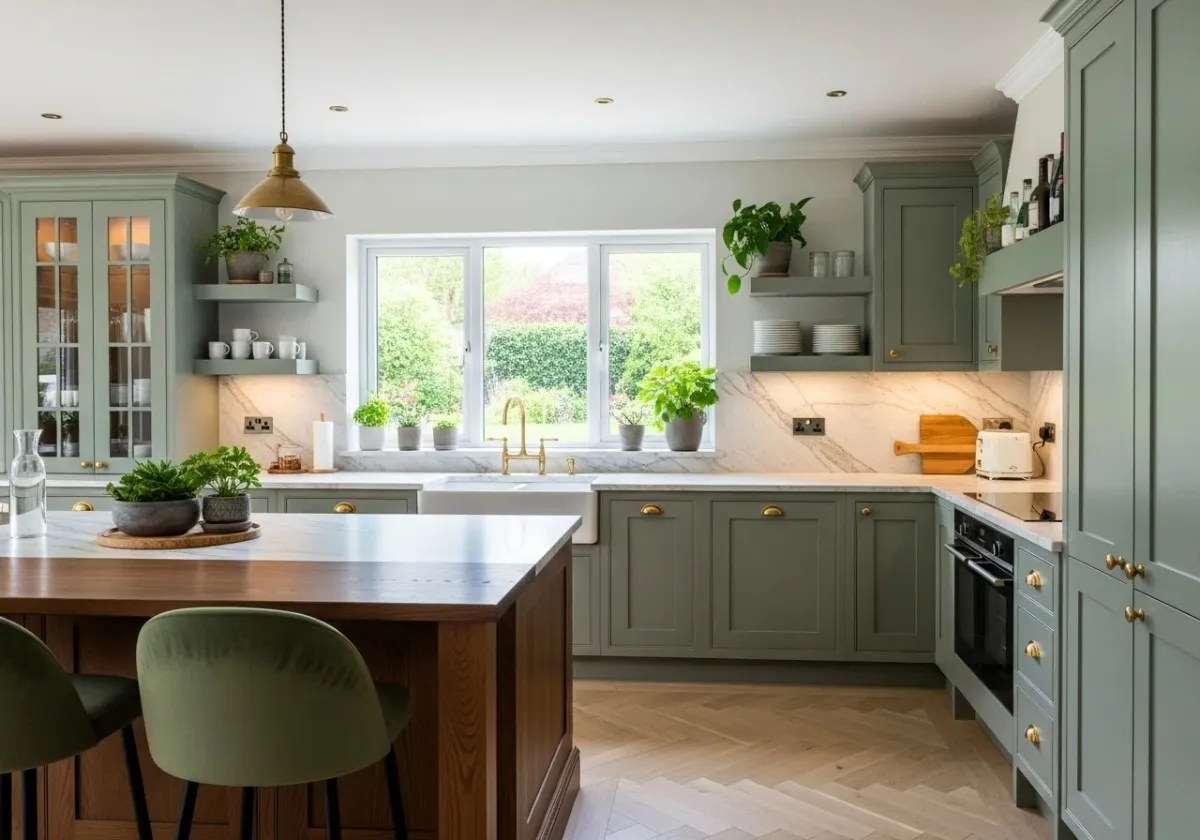
Green and gold is a pairing I never tire of, because the warmth of brass lifts green out of the purely natural and into something a little more elegant. On sage it feels soft and pretty; on dark emerald it feels properly luxurious, like a boutique hotel kitchen. My rule is to commit to one metal and repeat it: the same brass on the handles, the tap, and the pendant lights, so the room feels intentional rather than assembled from leftovers. Unlacquered brass will develop a soft patina over time, which I actually like, but if you prefer a steady shine, choose a lacquered finish instead.
How to do it: Hold brass, brushed gold, and aged brass samples against your green cabinet door in daylight before buying. Match the tap and light fittings to the same finish, fit slim bar pulls on drawers and knobs on doors, and keep other metals out of the room so the gold stays the single warm accent.
10. Light Green Walls with Neutral Cabinets
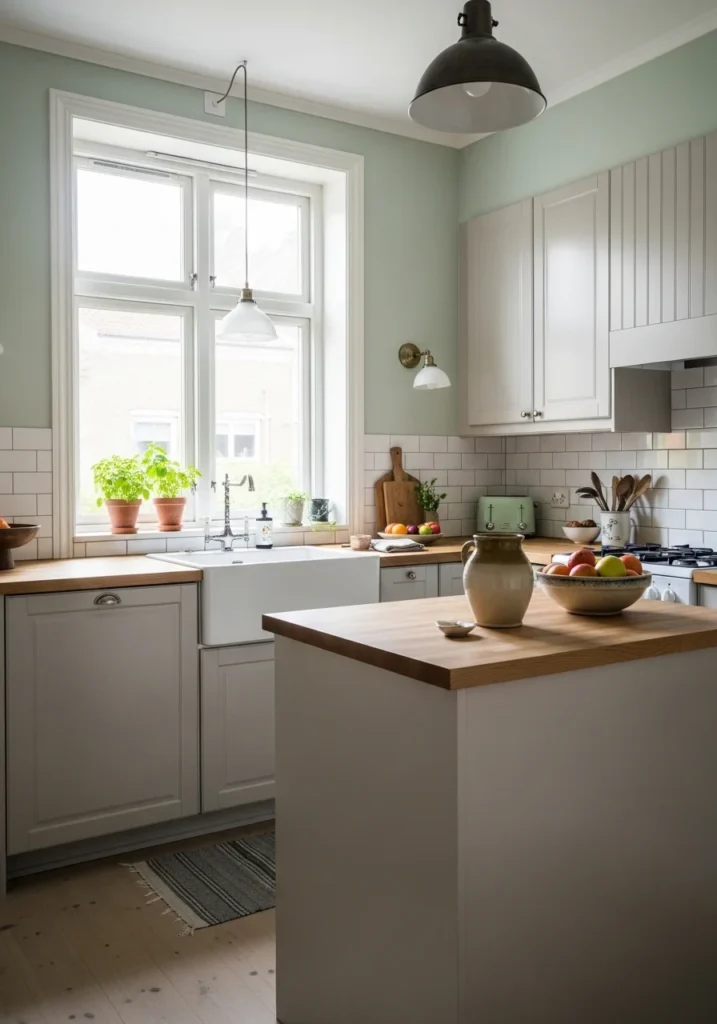
If painting cabinets feels like too big a step, light green walls are the gentlest way in, and honestly, they are the change I suggest most often to renters and to anyone on a tight budget. A pale, grey-green on the walls freshens cream or white cabinets, softens harsh daylight, and makes a plain kitchen feel like a room someone has actually thought about. I would keep the trim and ceiling crisp white, so the green reads clean, and choose a washable satin or eggshell finish, because kitchen walls earn their keep. If you tire of the colour later, a weekend and one tin of paint put it right.
How to do it: Paint large test patches on two walls, one in sun and one in shade, and look at them morning and evening. Choose a satin or eggshell finish for durability and a soft glow, paint the ceiling and trim warm white, and keep the cabinets neutral so you can change the wall colour again easily in future.
11. Green Kitchen Ideas with Open Shelving
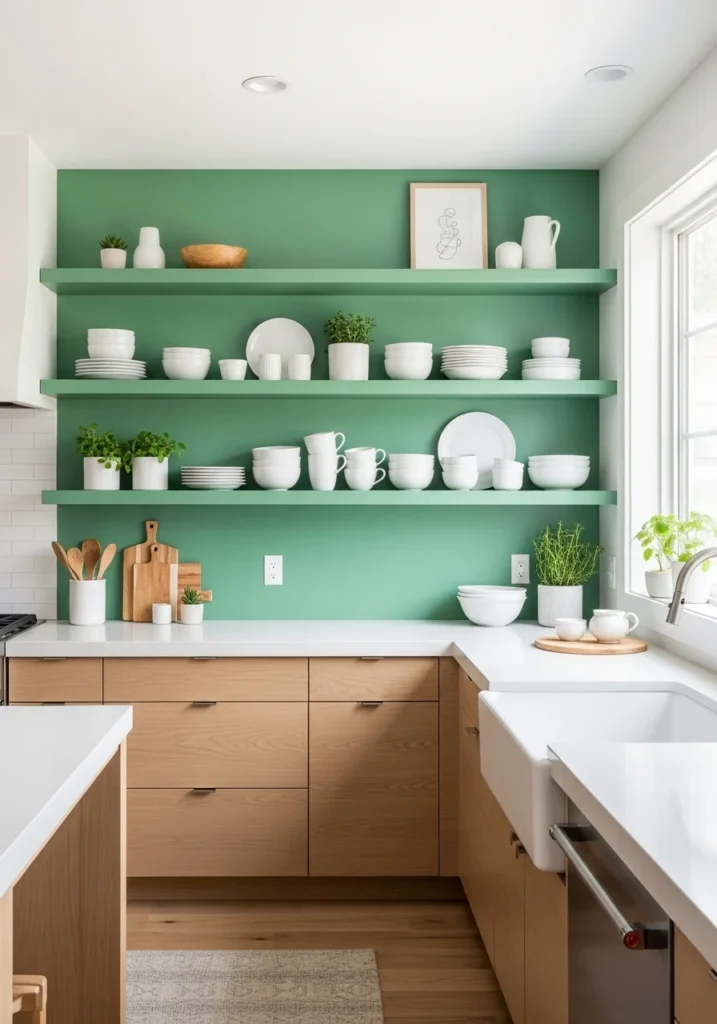
Open shelving painted green is a small change with an outsized effect: it breaks up a long run of cabinets, gives you somewhere to show the pretty things, and makes a kitchen feel more open and airy. I keep my everyday plates and bowls on the lowest shelf, where I can reach them without a step stool, and reserve the higher shelves for the pieces I love looking at — a stack of white bowls, a couple of glass jars, one trailing plant. The secret is editing. If every shelf is full, the green disappears behind the clutter, so I leave breathing space and rotate a few items with the seasons.
How to do it: Replace one pair of wall cabinets with two or three green shelves, or paint existing shelves to match your cabinets. Fix them firmly into studs or with proper wall plugs, keep everyday items low and display pieces high, and style with neutral dishes and a few plants, leaving empty space on every shelf.
12. Pistachio Green Cabinets for a Soft Modern Touch
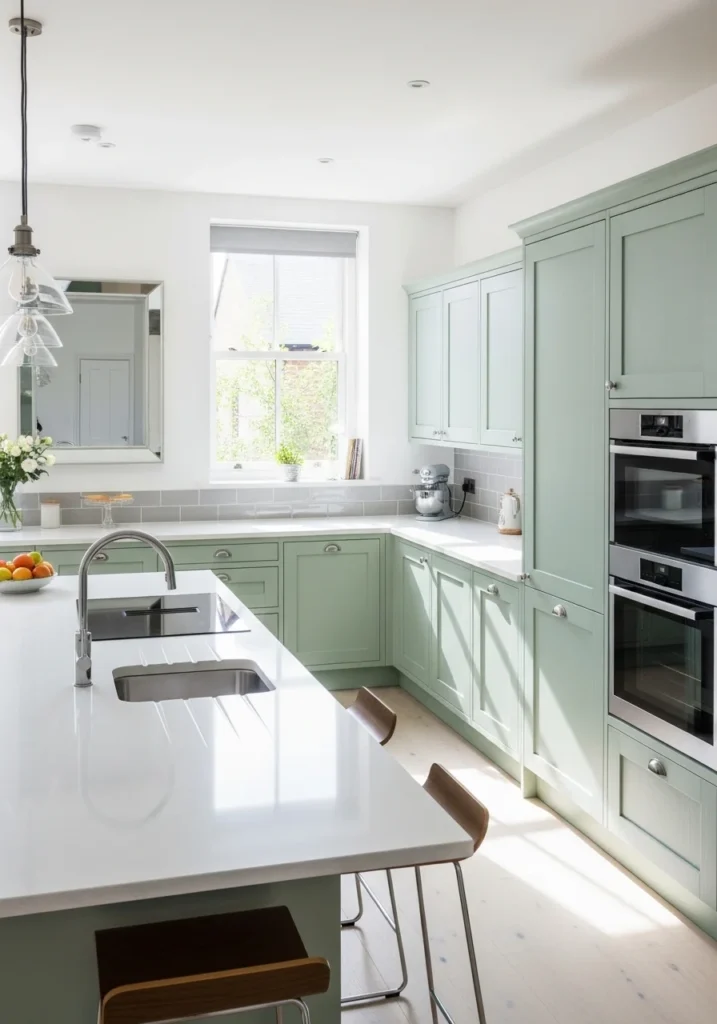
Pistachio green sits in that lovely middle ground between pale mint and soft sage, and I love it for modern kitchens that want colour without a strong statement. It feels fresh and a little bit unusual, yet it is pale enough to keep the room light and inviting, even in a flat with modest windows. I pair it with white quartz, pale oak, and slim brass handles, and I keep the splashback very plain, because pistachio has enough personality on its own. It also ages well: it is a gentle, food-friendly colour that does not shout “trend” the way brighter greens can.
How to do it: Choose a pistachio with a warm, creamy undertone and test it beside your worktop sample. Pair it with white quartz countertops for a clean, elegant finish, add pale oak flooring or stools, and use slim brass or brushed nickel handles. Keep the splashback plain white or pale stone.
13. Green and Black Contrast for a Dramatic Look
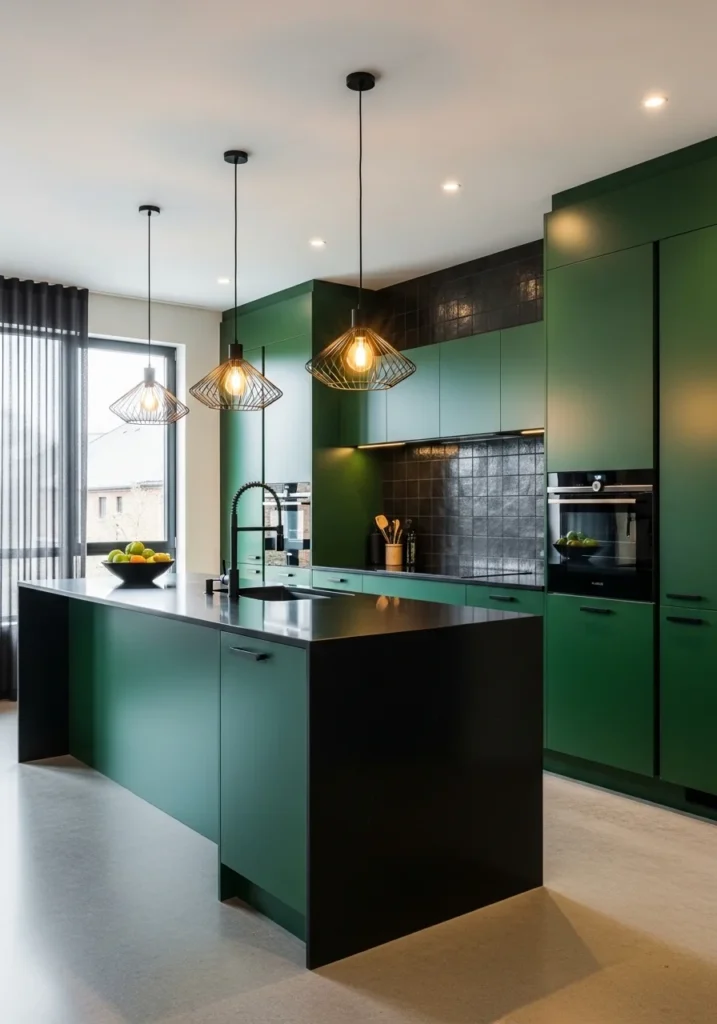
Green with black is the boldest pairing in this list, and I love it precisely because the contrast makes both colours look more deliberate. Black handles, a black tap, and black-framed pendants give green cabinets structure and a modern edge, while the green stops the black from feeling stark. The balance matters most here: keep the floor pale, the worktop light, and at least one wall white, so the dark accents read as punctuation rather than a heavy blanket. If you love the dark side of this look, these kitchen ideas with black countertops show how to carry black through the worktop as well, without losing light.
How to do it: Start with black handles, a black tap, and one black light fitting, then step back and judge the balance before adding more. Balance the darkness with lighter flooring or countertops, keep the walls pale, and use black in the same finish throughout, so matte sits with matte and gloss with gloss.
14. Pale Green Cabinets for a Soft Classic Style
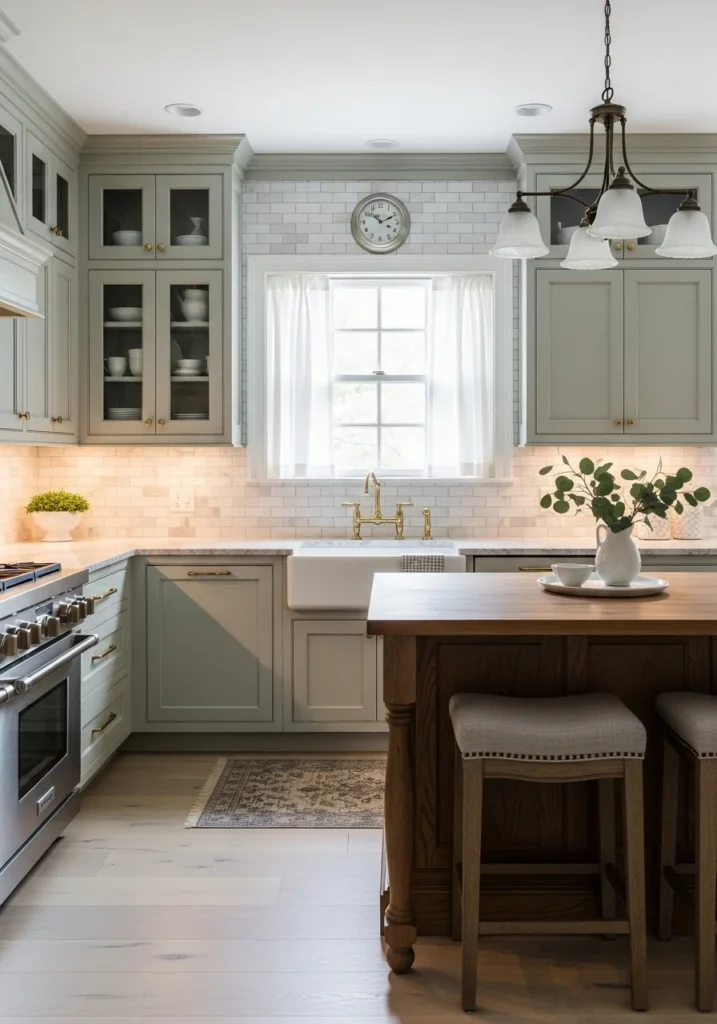
Pale green cabinets have a timeless, almost vintage feel that suits Shaker doors, cottage kitchens, and period homes beautifully. The shade is soft enough to behave almost like a neutral, yet it still gives the room a gentle lift that plain cream never quite manages. I love this look with a Belfast sink, a simple wooden worktop, and a vase of garden flowers on the sill — nothing fussy, nothing trying too hard. It is also a kind colour for older kitchens: it hides small marks, suits both modern appliances and antique finds, and feels calm at any time of day.
How to do it: Choose a pale green with a warm undertone and Shaker-style doors if your home leans classic. Add ceramic knobs or brushed nickel handles for a charming, traditional finish, pair the cabinets with a light wood or pale stone worktop, and keep the splashback in white or soft cream tiles.
15. Green Cabinets with Marble Countertops
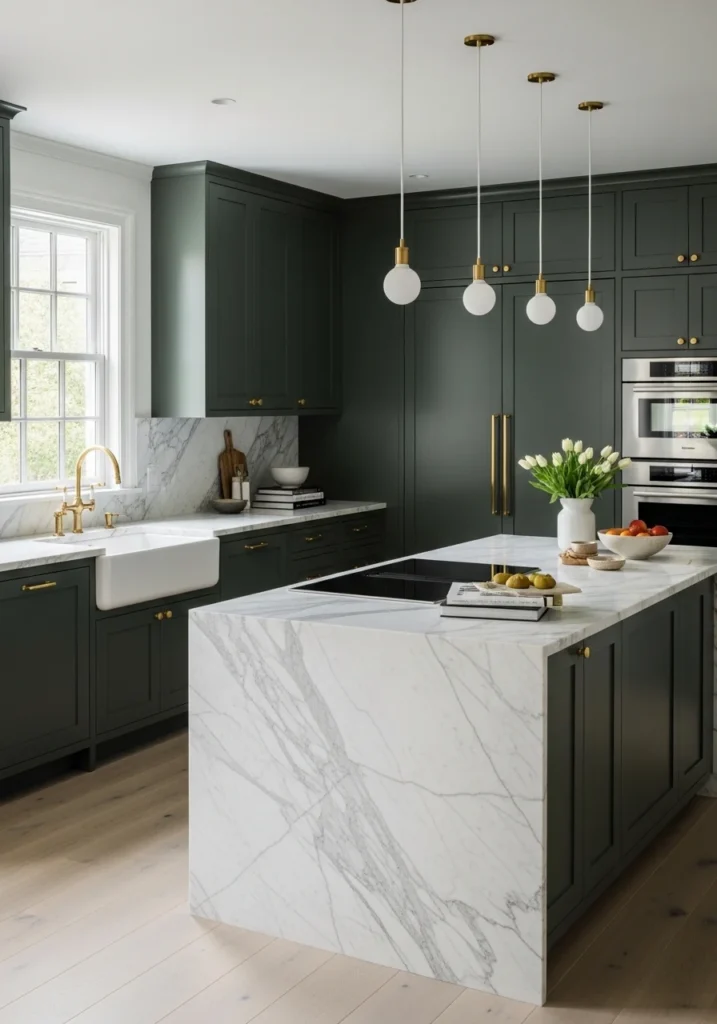
Green cabinets with marble worktops are my go-to when a kitchen needs to feel luxurious without becoming formal or untouchable. The cool white of the marble, with its soft grey veining, lifts dark green and gives pale green a crisp, clean edge, while the natural pattern means no two kitchens look quite the same. I would keep the veining subtle rather than dramatic, because the green is already doing the talking, and I would seal real marble properly and accept that it will develop a gentle patina. A marble-look quartz is the practical alternative if you cook a lot and want the look without the upkeep.
How to do it: Hold a marble sample against your green cabinet door and look at it in daylight, checking that the veining is subtle rather than busy. Choose a pale marble or marble-look quartz, seal real marble on installation and once a year after, and keep the splashback plain so the worktop pattern stays the hero.
16. Earthy Green with Beige and Cream Tones
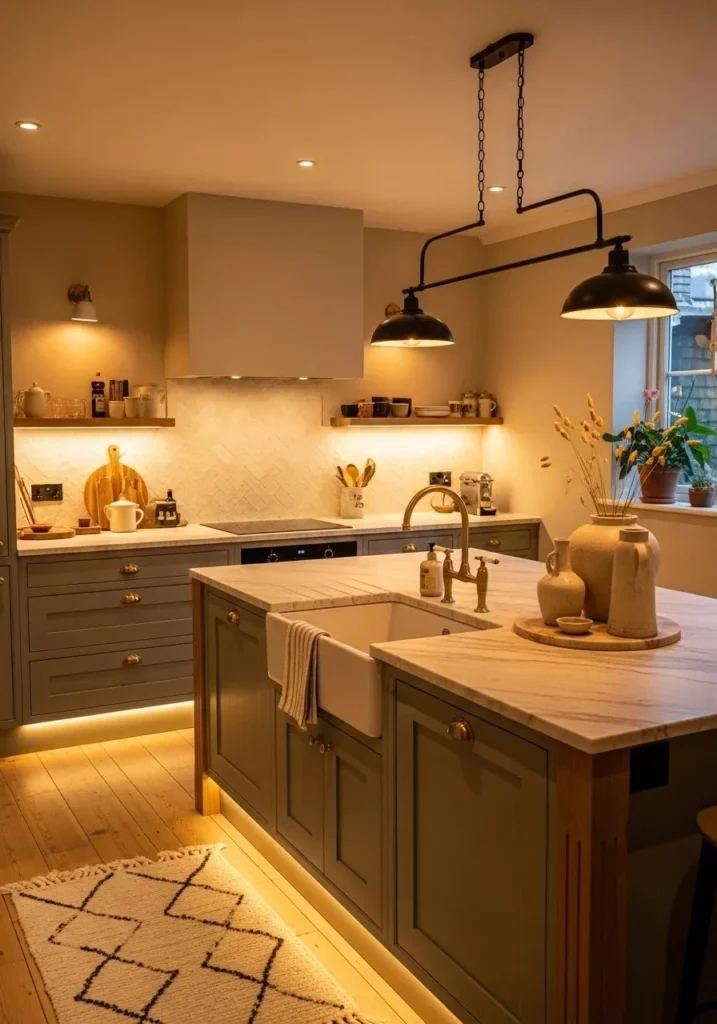
Earthy green with beige and cream is the palette I choose when I want a kitchen to feel warm, grounded, and quietly welcoming, especially in a home with lots of natural textures. The cream softens the green, the beige adds warmth, and together they make a room that feels like a deep breath at the end of a long day. I layer this look with linen, rattan, and warm wood: a linen blind, a woven basket for onions, a wooden bowl on the table. Nothing here needs to match perfectly, which is part of its charm — the small variations in tone are what make it feel collected rather than decorated.
How to do it: Paint the cabinets in a muted, earthy green and keep the walls warm cream. Add beige through a linen blind or curtains, a textured rug runner, and woven storage baskets. Use warm wood for the worktop or stools, and keep metals soft, in aged brass or bronze, so nothing jars against the gentle palette.
17. Glossy Green Cabinets for a Bright, Reflective Space
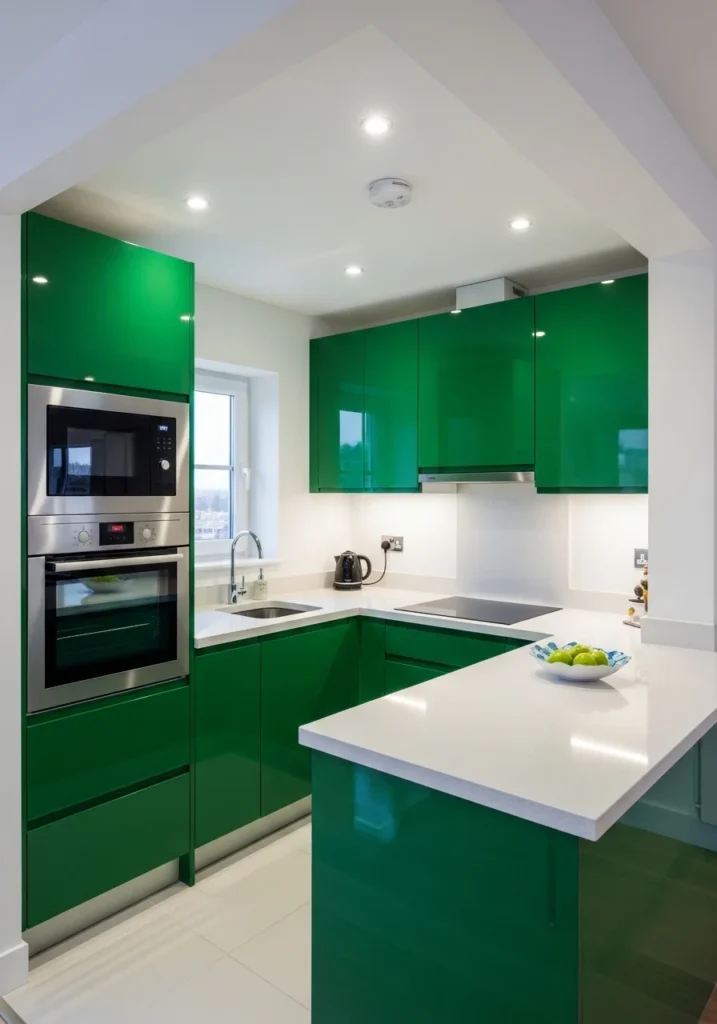
Glossy green cabinets are a clever trick for a small or dark kitchen, because the shine bounces light around the room and makes the space feel brighter and larger than it is. I love a high-gloss emerald or teal in a compact flat, where the reflection almost acts like a mirror, doubling the sense of space. The trade-off is honesty: gloss shows fingerprints and splashes, so this is a finish for someone who does not mind a quick wipe-down, or who keeps the worktops clear. Keep the rest of the room simple and let the light do the decorating.
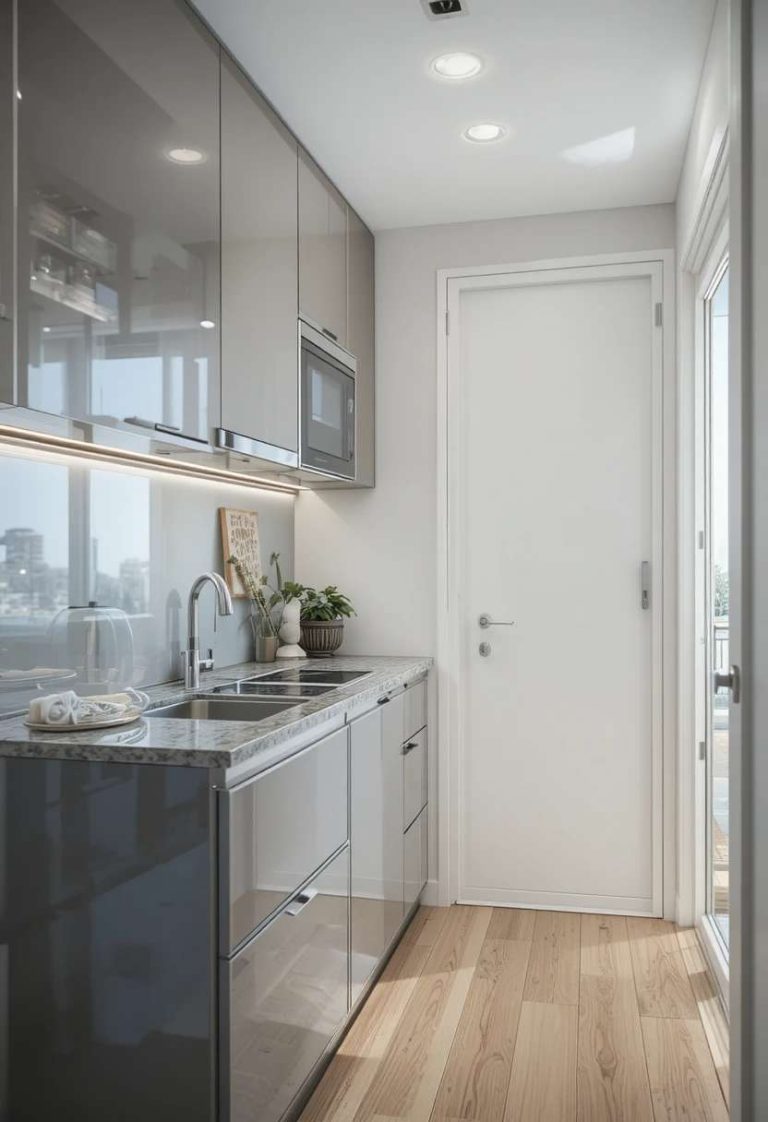
How to do it: Choose a high-gloss finish in a mid to deep green and test a sample door in your light, checking reflections at different times of day. Keep surfaces clean and clutter-free to maintain the sleek, polished look, use a soft microfibre cloth for daily wiping, and pair gloss cabinets with a plain, matte worktop for contrast.
18. Green Kitchen with Indoor Plants for a Natural Feel
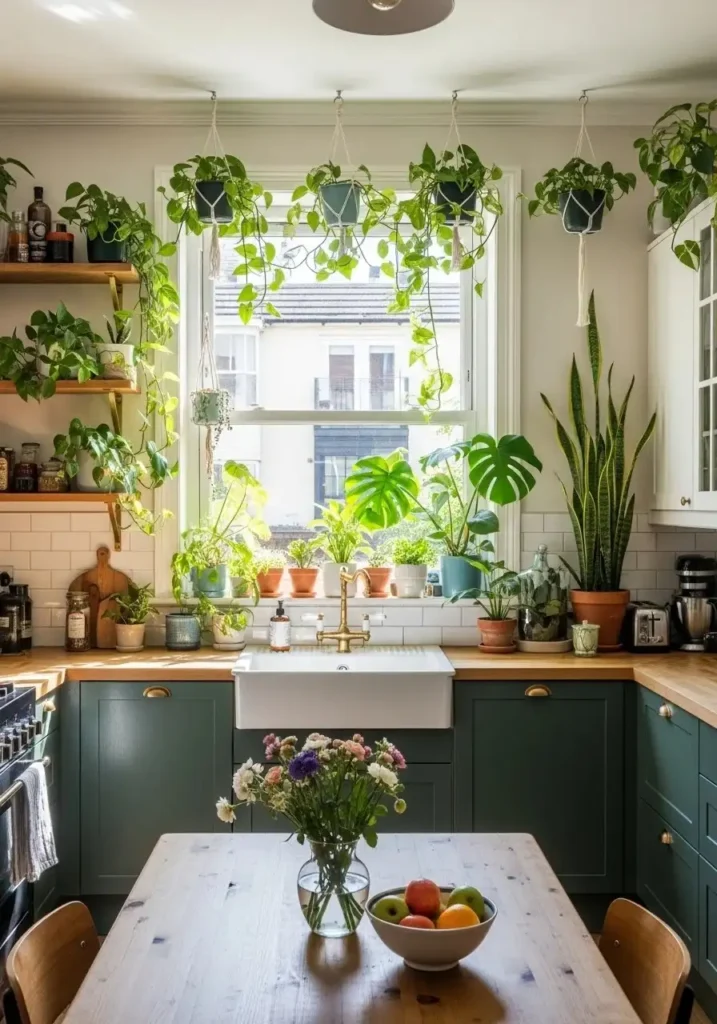
Plants are the one green I would add to any kitchen, whatever shade is on the cabinets, because living green changes a room in a way paint alone cannot. A trailing pothos on top of a cabinet, a pot of basil by the sink, and a small olive tree in the corner layer different shades and textures, and suddenly the whole kitchen feels alive. I keep it practical: herbs I actually cook with near the window, where they get sun and I can snip them while I stir, and tougher plants, such as snake plants, in the spots I forget to water. Terracotta pots warm the scheme up beautifully against any green.
How to do it: Place herbs near a window so they get sunlight and stay fresh for daily use, and put a trailing plant on top of a cabinet or shelf. Choose terracotta or cream pots to warm the green, group plants in odd numbers, and pick one low-maintenance plant for the darker corners so the display still looks good between waterings.
19. Green Cabinets with Warm Wooden Flooring
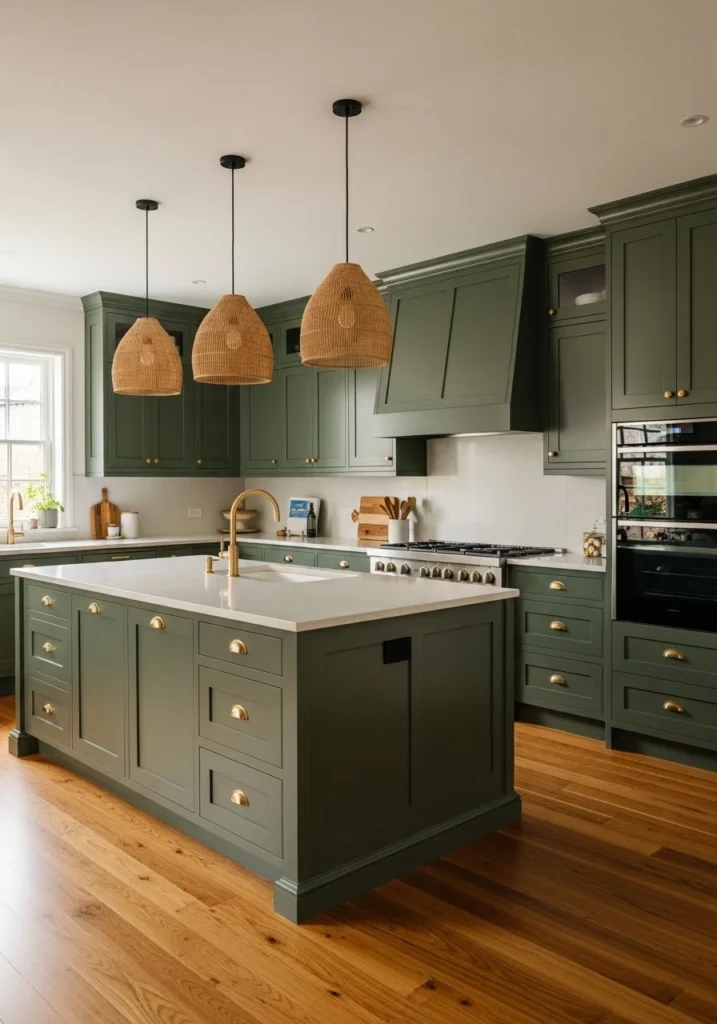
Green cabinets with warm wooden floors are, for me, the most welcoming combination in this whole list, because wood brings a softness underfoot that balances the colour above it. I love a medium oak or warm walnut floor with sage or forest green, and a woven runner down the middle of a galley kitchen to soften the sound and the look. Wood also forgives a lot: it warms up pale greens, it grounds dark greens, and it makes the whole room feel like it has been there for years, in the best sense. Keep the floor tone consistent through to the next room if you can, so the kitchen feels connected, not cut off.
How to do it: Choose medium-tone wood floors to keep contrast with the green without overpowering it, and test floor samples beside your cabinet colour. Add a washable runner in a warm, muted pattern, use wooden stools or a butcher-block detail to echo the floor, and seal the floor well around the sink and dishwasher.
20. Minimalist Green Kitchen Ideas for a Clean Look
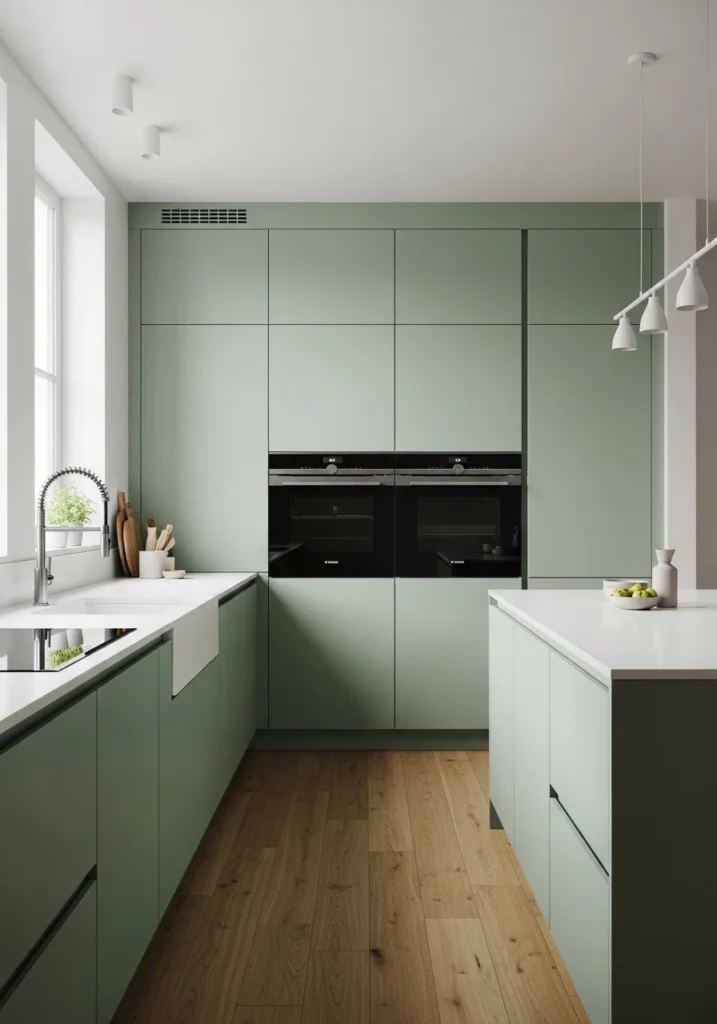
A minimalist green kitchen is not about owning less for its own sake; it is about giving one beautiful colour the space to be noticed. I keep the lines clean, the worktops clear, and the storage hidden, so the green reads as a calm backdrop rather than one more thing competing for attention. Handleless cabinets, integrated appliances, and a single open shelf with three or four favourite pieces are enough. This is also where good storage earns its keep: when everything has a home behind a door, the room stays serene without daily effort. These kitchen organization ideas are a good place to start if you want the minimalist look to last past the first week.
How to do it: Use handleless cabinets or integrated handles for a sleek, modern finish, and hide small appliances in a tall larder cupboard. Give every item a fixed home, keep only the kettle and one chopping board on the worktop, and follow a one-in, one-out rule for new kitchen gadgets.
Frequently Asked Questions
What shade of green is best for a small kitchen?
Sage, mint, and pale green are the safest choices for a small kitchen, because they reflect light and keep the room feeling open. If you love a darker shade, use it on one feature only, such as the island or the lower cabinets, and keep the walls, worktop, and floor pale. A glossy finish can help too, as it bounces light around the room.
Will dark green cabinets make my kitchen look smaller?
Not necessarily. Dark green can make a kitchen feel cosy and grounded rather than small, provided you balance it with pale worktops, warm white walls, and good lighting. Under-cabinet lights, a light floor, and a mirror or glossy splashback all help. In a very dark, windowless kitchen, I would keep dark green to the lower cabinets or the island.
What worktop goes best with green cabinets?
White marble or quartz is the classic pairing, as it lightens both pale and dark greens and suits almost any style. Warm wood works beautifully with olive, sage, and earthy greens, while black worktops suit a bold, modern scheme with green and black accents. Always hold a worktop sample against your cabinet colour in daylight before you order.
Is a green kitchen a trend that will date quickly?
Classic greens such as sage, olive, forest, and pale Shaker green have been used in kitchens for decades, so they are far less likely to date than a bright fashion colour. The shades that age fastest are very vivid or neon greens, especially across a whole room. If you want longevity, choose a muted green, keep the hardware and worktop timeless, and save brighter greens for paint, tiles, or accessories you can change easily.
Can I bring green into my kitchen without painting the cabinets?
Yes, and this is often the best place to start. Paint one wall, fit a green tile backsplash, paint an island or a dresser, or paint open shelves green. Plants, linen, ceramics, and a painted door can also bring in plenty of green for very little cost. Live with the colour for a few months, and if you still love it, then consider painting the cabinets.
Your Green Kitchen Checklist
☐ Choose one green shade and test large samples in morning and evening light
☐ Decide where the green will go: cabinets, island, walls, or backsplash
☐ Pair the green with a pale worktop and warm white walls
☐ Pick one metal finish and repeat it on handles, tap, and lights
☐ Fit warm under-cabinet lighting, especially with dark green
☐ Add a green tile backsplash or paint open shelves for a low-cost trial
☐ Bring in wood, linen, and plants to soften the colour
☐ Give every item a home so the green stays the focus, not the clutter
🌿 Conclusion
A green kitchen works best when the shade feels like you, not like a showroom. Start with the green that makes you pause — soft sage if you want calm, deep forest if you want drama, pale green if you want a classic, easy room — and test it properly in your own light before you commit. Try it first on an island, a backsplash, or a single wall, then build the rest of the room around it with pale worktops, warm wood, and one metal finish repeated with care. Green is a forgiving, living colour: it suits morning coffee, busy family dinners, and quiet evenings alike, and it only gets better as plants grow, wood mellows, and the room gathers your life around it.