
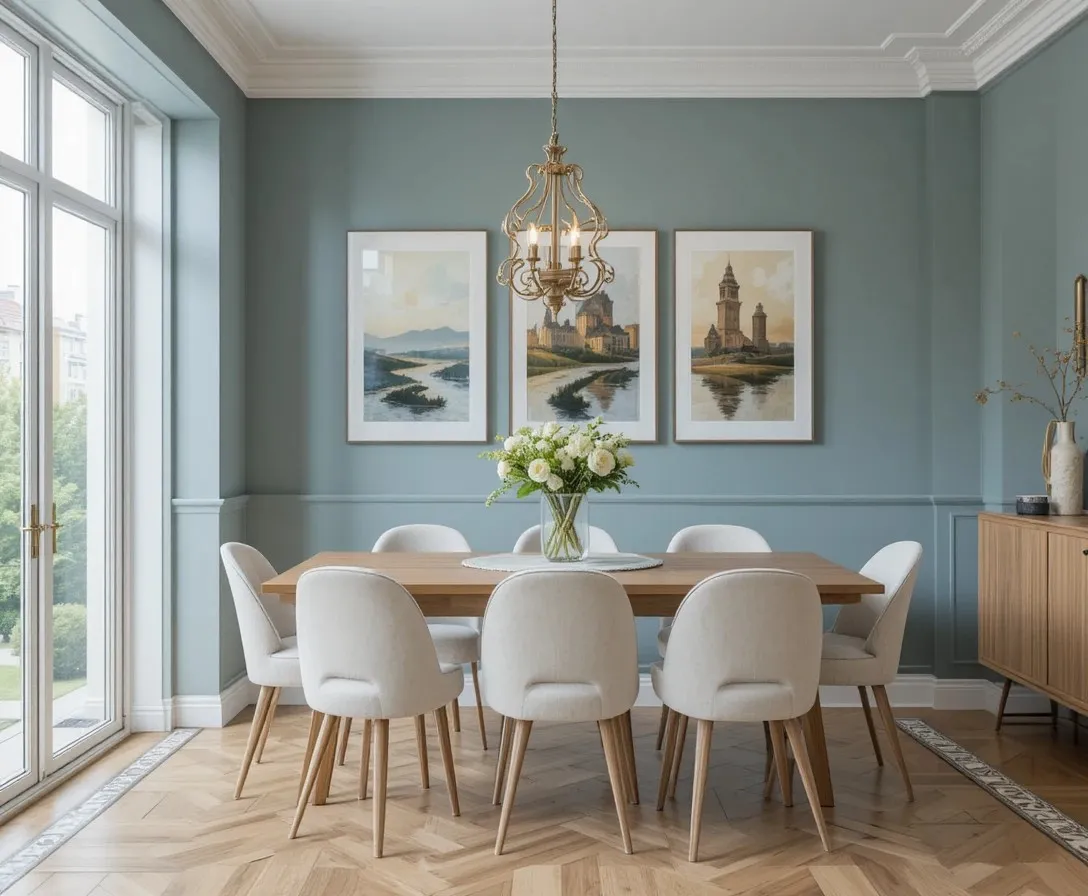
14 Dining Room Wall Ideas That Make Your Space Feel Stylish, Warm, and Full of Personality
Sometimes a dining room can feel oddly unfinished, even with a beautiful table and perfectly styled chairs. The walls sit empty, cold, or disconnected from the rest of the space, making the entire room feel flat. That’s why the right dining room wall ideas can completely transform the atmosphere. A thoughtfully styled wall adds warmth, texture, depth, and personality that instantly makes the room feel more welcoming. Whether your style leans modern, rustic, minimal, or cozy, the right wall design can turn everyday dining into something that feels far more intentional and inviting.
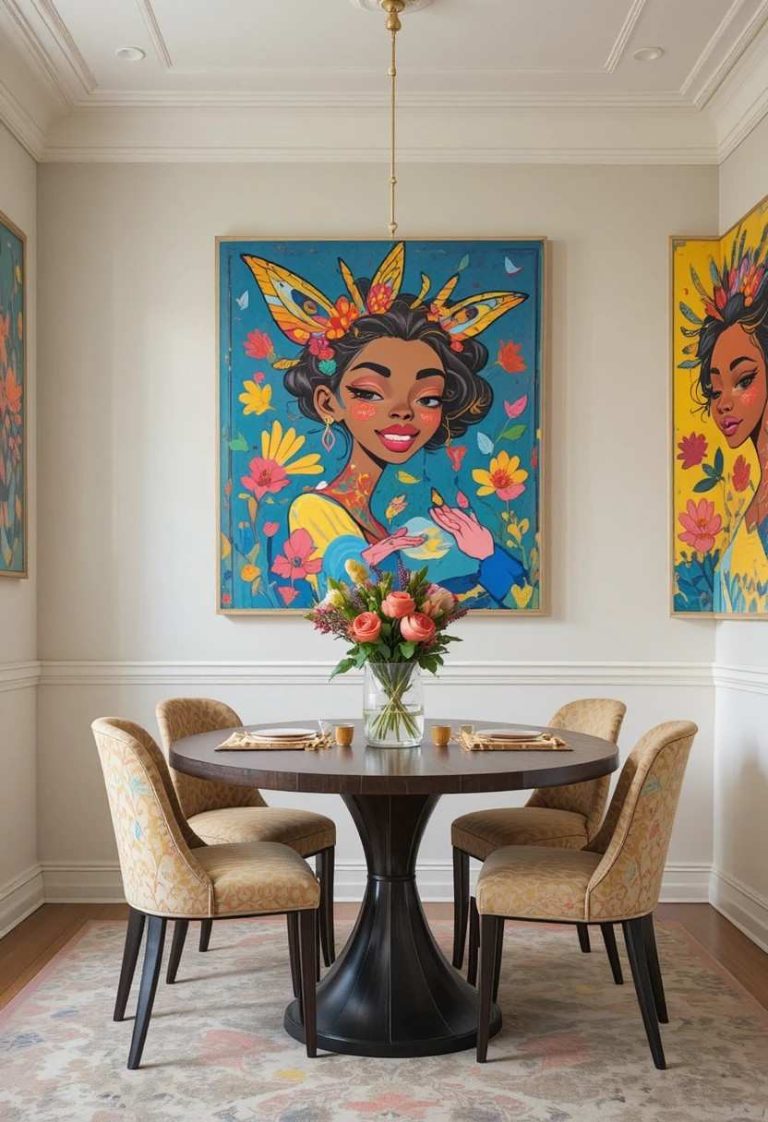
1. Large Abstract Artwork for a Modern Statement
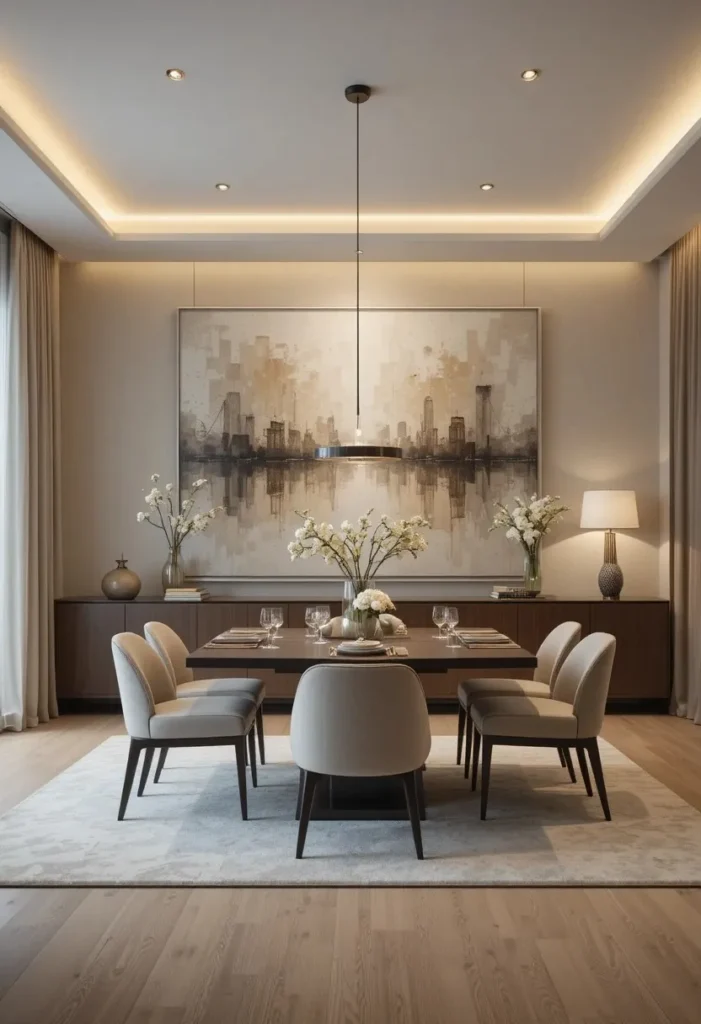
I hung our first oversized abstract piece on a rainy Saturday, half expecting it to feel too bold for our quiet dining room, and instead it settled the whole space. Soft neutral brushstrokes, earthy ochre and a whisper of black pull the chairs, rug and table together without shouting for attention. I like art that repeats a colour I already live with, so the wall feels connected rather than borrowed from a gallery. Give it breathing room, hang it low enough to enjoy from your seat, and let the empty wall around it do some of the work. In lamplight, it glows gently.
How to do it: Measure the wall first, then choose a canvas about two-thirds as wide as the table below it. Hang the centre at seated eye level, roughly 145 centimetres from the floor, and leave at least 15 centimetres clear on each side. Pick out one colour from the art and repeat it in a cushion, a vase, or the rug so the room feels joined up.
2. Dining Room Wall Ideas with Wooden Paneling
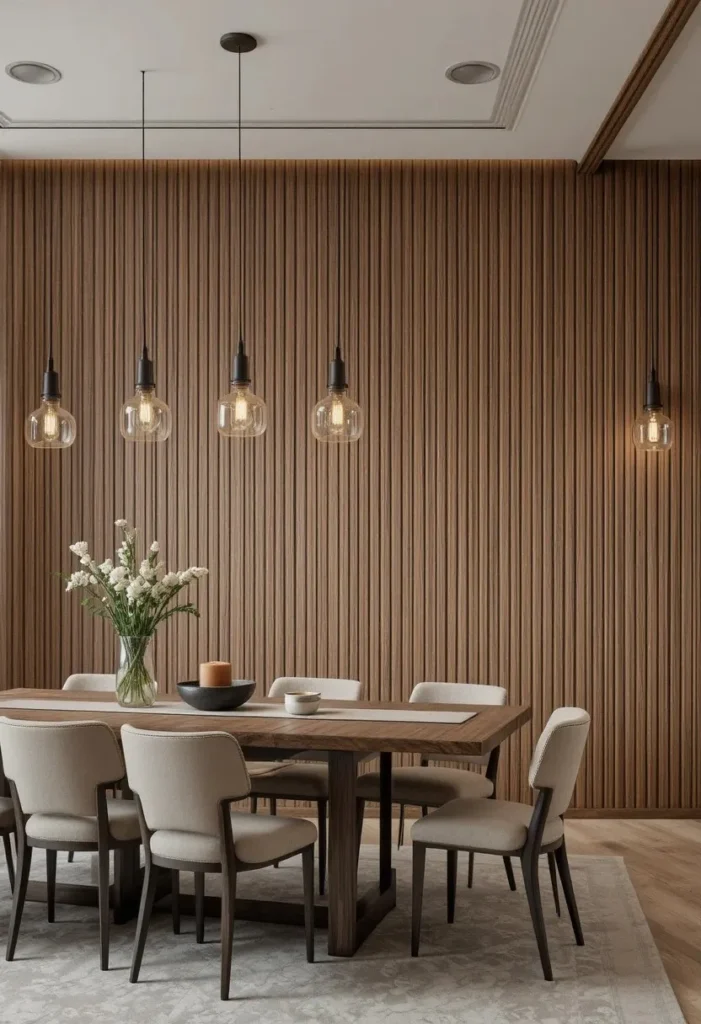
Wood was the change that finally made our dining room feel finished, and I still run my hand along the slats when I pass. Light oak keeps a small room feeling airy, while reclaimed boards or soft walnut bring the sort of depth that makes evening meals feel slower and more special. When I was choosing the table to sit against the panelling, these dining room table ideas helped me settle on a warm wood finish that echoes the slats rather than fighting them. I love how the grain softens hard chair backs and a cool tabletop, and how warm lamplight catches the ridges after dark.
How to do it: Choose light oak for a small or dark room, walnut for depth, or reclaimed boards for character, and order a sample to check the tone beside your table. Fit vertical slats with even spacing, starting from the centre and working outwards, and finish the edges with a slim trim. Seal the wood lightly so it stays easy to wipe after supper.
3. Gallery Wall with Mixed Frame Styles
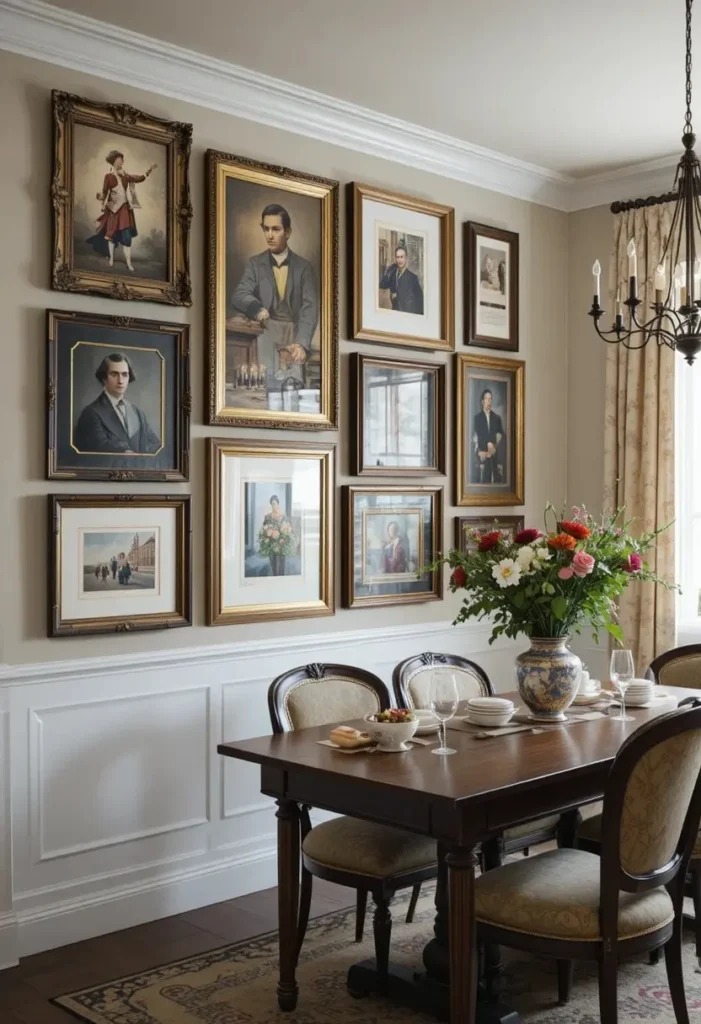
Our gallery wall started with three frames and a fair amount of dithering, and it is still my favourite corner of the house. I mixed black frames with warm wood and one slim gold frame, then added family photographs, a small sketch from a holiday, and a print I had kept rolled up for far too long. Nothing matches exactly, and that is the point — the wall feels collected over time rather than bought in one afternoon. I laid everything on the floor first, shuffled the pieces until the spacing felt even, and only then picked up the hammer.
How to do it: Lay all the frames on the floor and arrange them with 5 to 8 centimetres between each one. Start with the largest piece slightly off-centre, build outwards, and use paper templates taped to the wall before you hang anything. Step back to the doorway to check the balance before the final nail goes in.
4. Oversized Mirror for Light and Depth
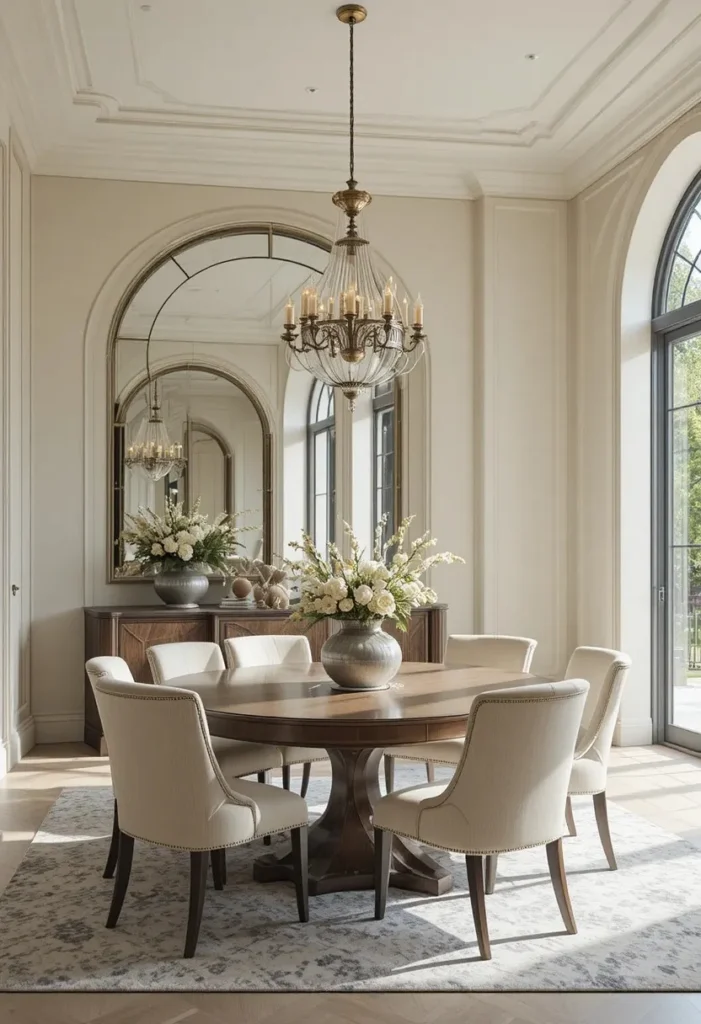
I was sceptical about a large mirror in our dining room, worried it would feel cold or show every crumb, but it changed the light in a way nothing else had. On bright mornings it throws sunlight across the table, and in the evening it doubles the glow from the lamps so the room feels twice as warm. I chose a slim black frame because it suits our chairs, though soft arched shapes and antique gold are just as lovely against pale walls. The trick is placement: hang it where it reflects a window, a lamp, or the prettiest corner of the room.
How to do it: Choose a mirror about two-thirds as wide as the table or sideboard below it, and hang the centre at seated eye level. Place it opposite or beside a window so it catches daylight, and check the reflection from your usual seat before fixing it. Fix it into a stud or a proper wall anchor, because large mirrors are heavier than they look.
5. Dining Room Wall Ideas with Floating Shelves
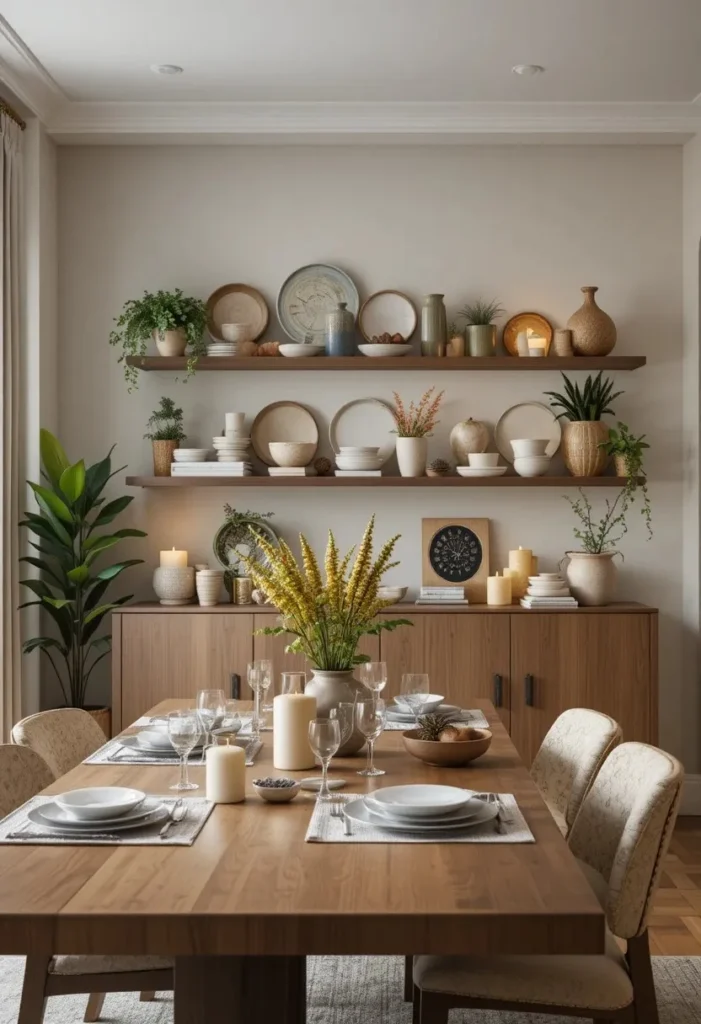
Floating shelves were my answer to a wall that felt bare but did not need another large picture. I started with two slim oak shelves, then added a stack of favourite cookbooks, a small trailing plant, a pair of handmade mugs, and a candle I actually light. I keep breathing room between pieces, because a shelf crammed edge to edge looks like storage, not styling. Group things in threes, vary the heights, and leave one shelf a little emptier than feels natural — that gap is what makes the rest look deliberate.
How to do it: Fix shelves into studs or solid wall plugs at about 150 centimetres from the floor, leaving 35 to 45 centimetres between shelves. Style from the largest piece downwards, leave small empty gaps between groups, and keep anything you use daily within easy reach. Step back often and remove one item before you call it finished.
6. Moody Dark Accent Wall for Drama
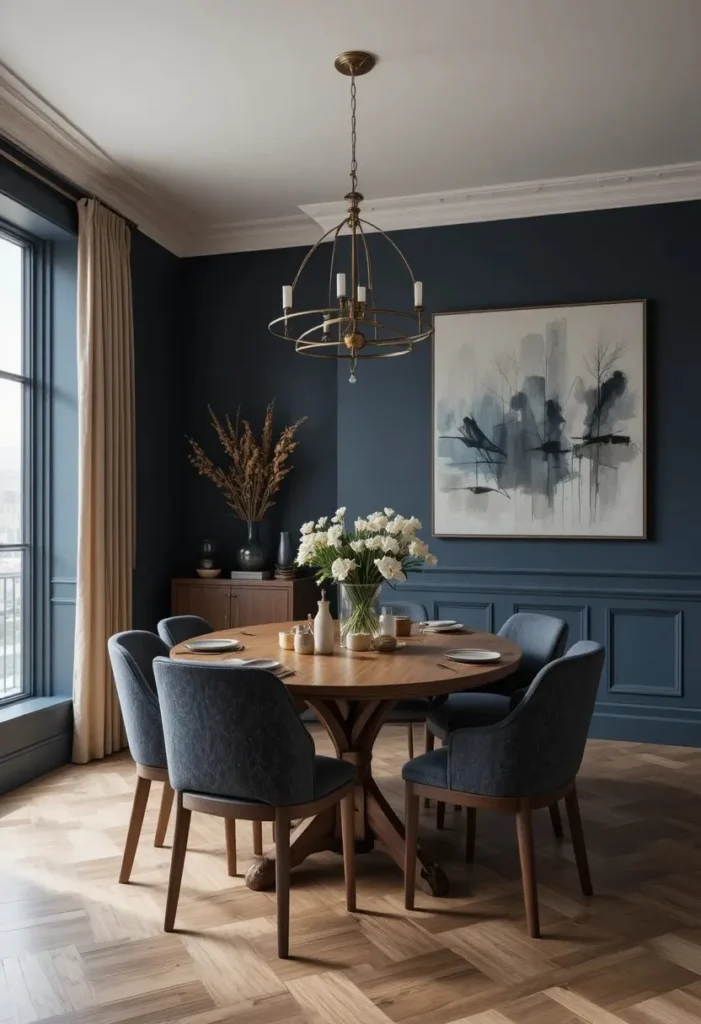
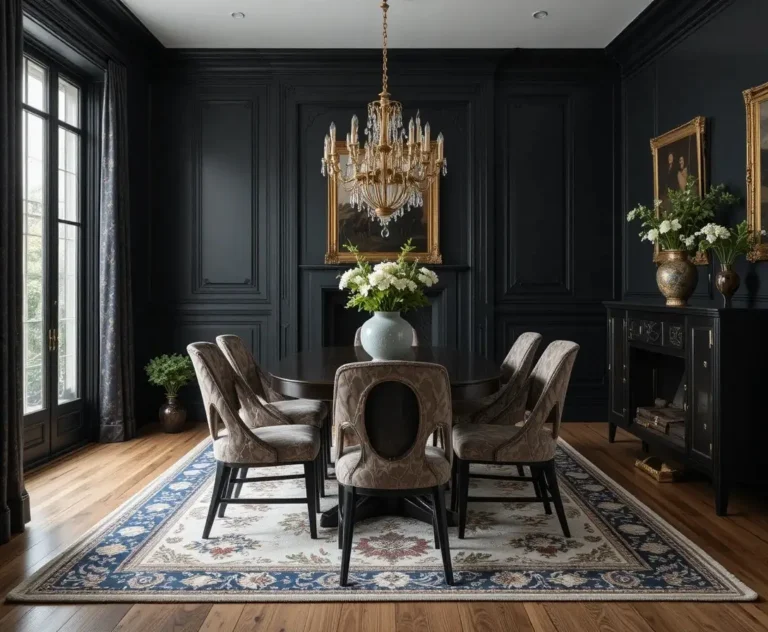
Painting one wall deep green felt like a gamble, and I stood with the brush in my hand for a good ten minutes before I started. By suppertime, though, the room had changed completely: the dark wall made the wood table glow, the candles looked brighter, and everyone lingered longer over pudding. Charcoal, forest green, and navy all work, provided the rest of the room stays warm — pale linen, brass, and soft lamplight stop the colour from feeling heavy. I kept the other walls pale and hung one light-framed print on the dark wall to lift it.
How to do it: Paint the wall behind the table, not the one with the window, so the colour frames your meals. Test two or three dark shades on large boards and live with them for a weekend, checking them at suppertime. Pair the dark wall with lighter artwork or a mirror, warm wood, and dimmable lamps to keep the room cosy rather than gloomy.
See More Ideas: 15 Boho Dining Room Ideas That Make Your Space Feel Warm, Relaxed, and Effortlessly Stylish
7. Minimal Neutral Wall Styling
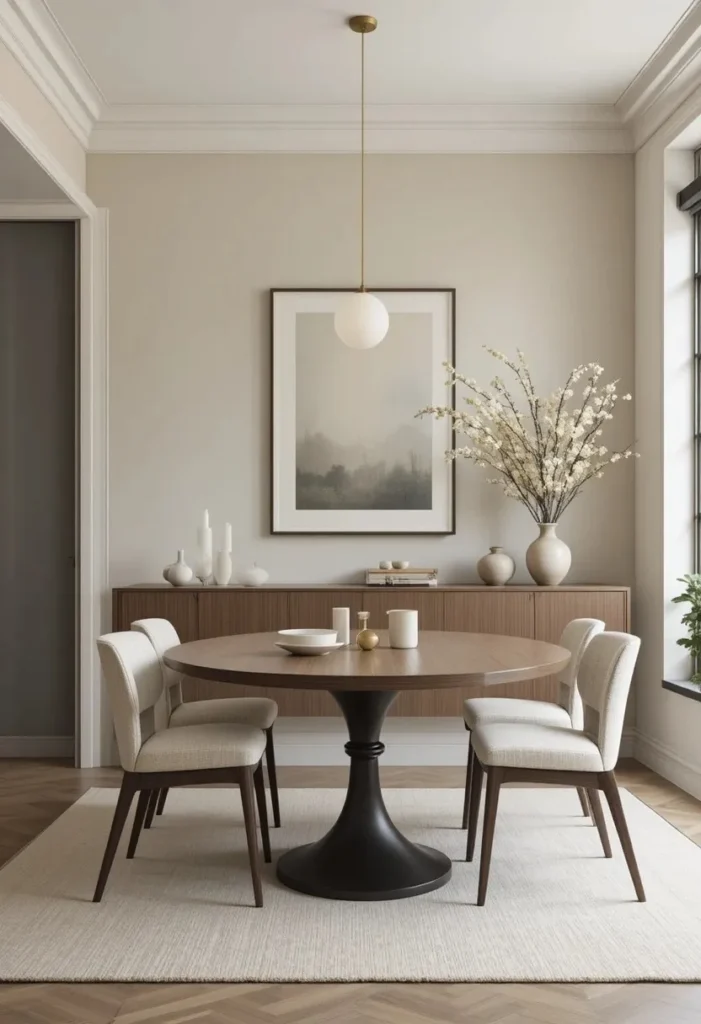
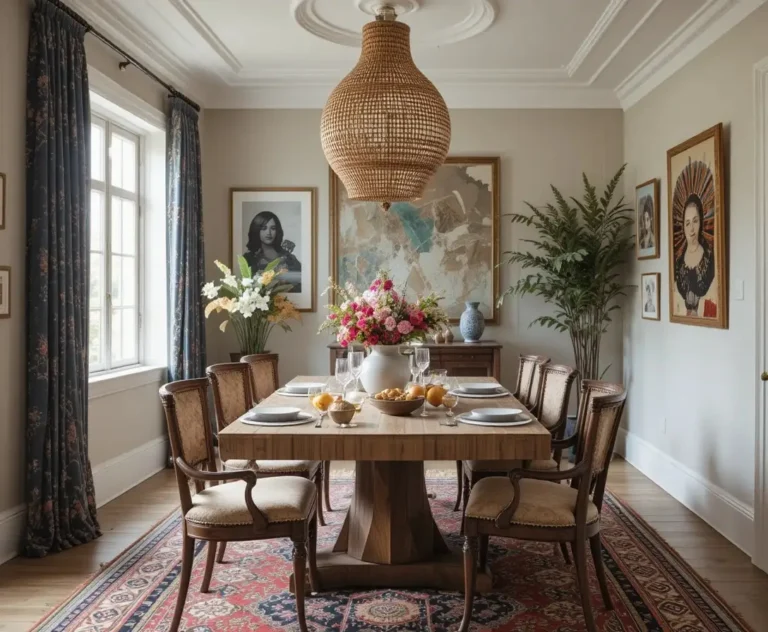
There was a time I thought neutral walls would feel boring, until I lived with soft beige and warm white for a month and realised how calm our meals had become. Nothing shouts, nothing competes with the food or the conversation, and the room feels open even when eight of us squeeze around the table. The secret is texture: a linen wall hanging, a woven basket, a plaster vase, or a pale wood frame stops the wall from looking flat. I keep the palette to two or three warm tones and let one piece — a simple print or a sculptural light — do the talking.
How to do it: Choose a warm white, soft beige, or muted taupe with a warm undertone and test it beside your table wood. Add texture through linen, woven decor, or a single simple artwork, and keep frames and lighting in the same warm family. Leave generous empty space around each piece so the calm has room to breathe.
8. Dining Room Wall Ideas with Vintage Wall Decor
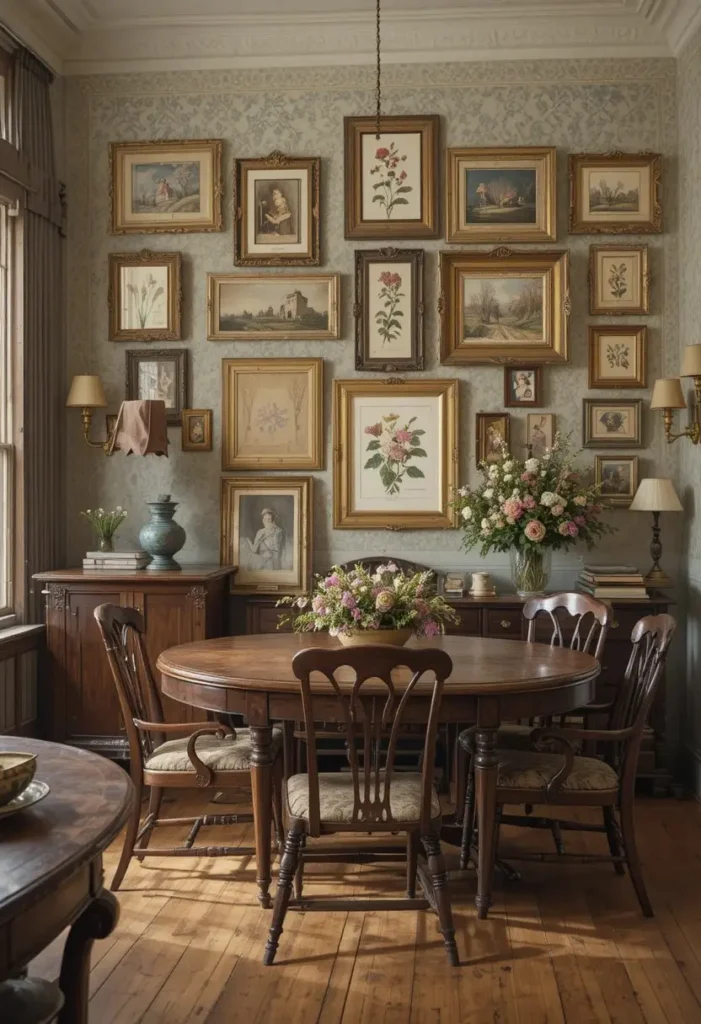
I found our vintage clock at a flea market on a wet Sunday, and it still makes me smile every time I glance up from the table. That is the charm of vintage wall decor: each piece carries a small story, whether it is an old botanical print, a distressed frame, or a mirror with a slightly foxed edge. I limit myself to two or three finishes — aged brass, dark wood, and faded paper — so the wall feels collected rather than cluttered. Soft lamplight and natural wood furniture do the rest, warming the old pieces until the room feels lived in rather than staged.
How to do it: Choose one hero piece, such as an antique frame or vintage clock, and hang it at seated eye level. Add two or three smaller vintage pieces in matching finishes, keeping the spacing even. Mix in one plain modern frame to stop the arrangement feeling like a museum, and check the whole wall from the doorway.
9. Textured Wallpaper for Soft Dimension
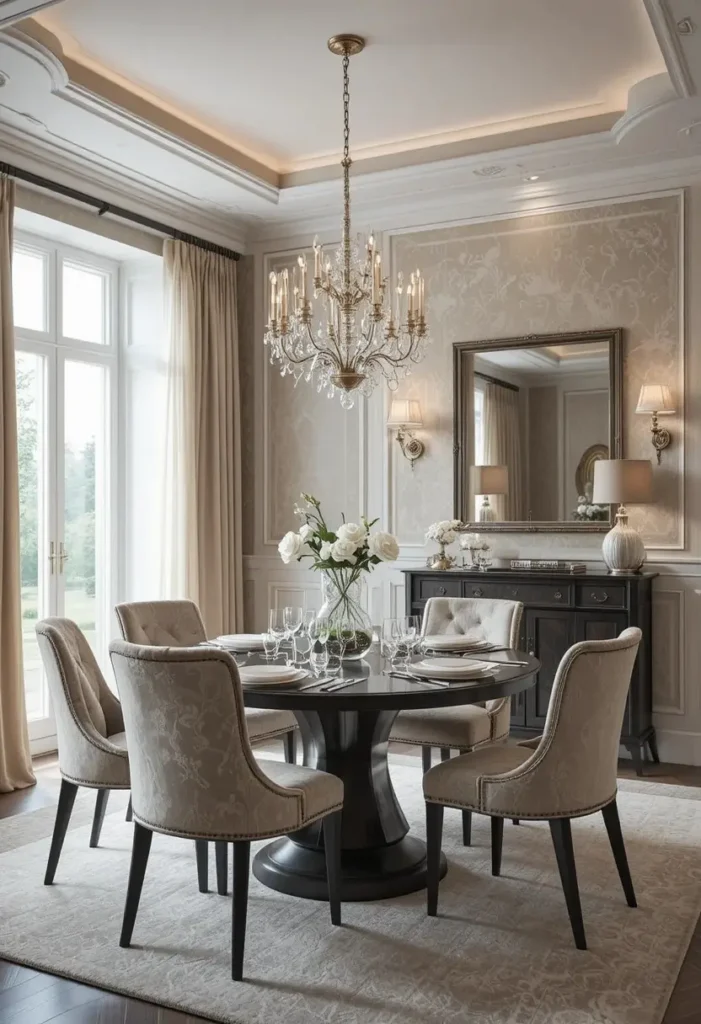
Textured wallpaper is the wall I recommend when someone wants depth without a bold pattern shouting across the room. Grasscloth, linen-look, and soft geometric papers catch the light as the day changes, so the wall never looks quite the same at breakfast and at suppertime. I chose a warm neutral tone because our chairs already carry colour, and the paper quietly ties the wood, the linen, and the brass together. If you are weighing patterns and finishes, these dining room wallpaper ideas helped me compare textures before I committed to a roll.
How to do it: Order a large sample and pin it to the wall for a week, checking it in morning light and lamplight. Choose a neutral tone if your furniture already has strong colours, and buy all rolls from the same batch. Paper the wall behind the table first, match the pattern carefully, and seal the edges for a clean finish.
10. Dining Room Wall Ideas with Wall Molding
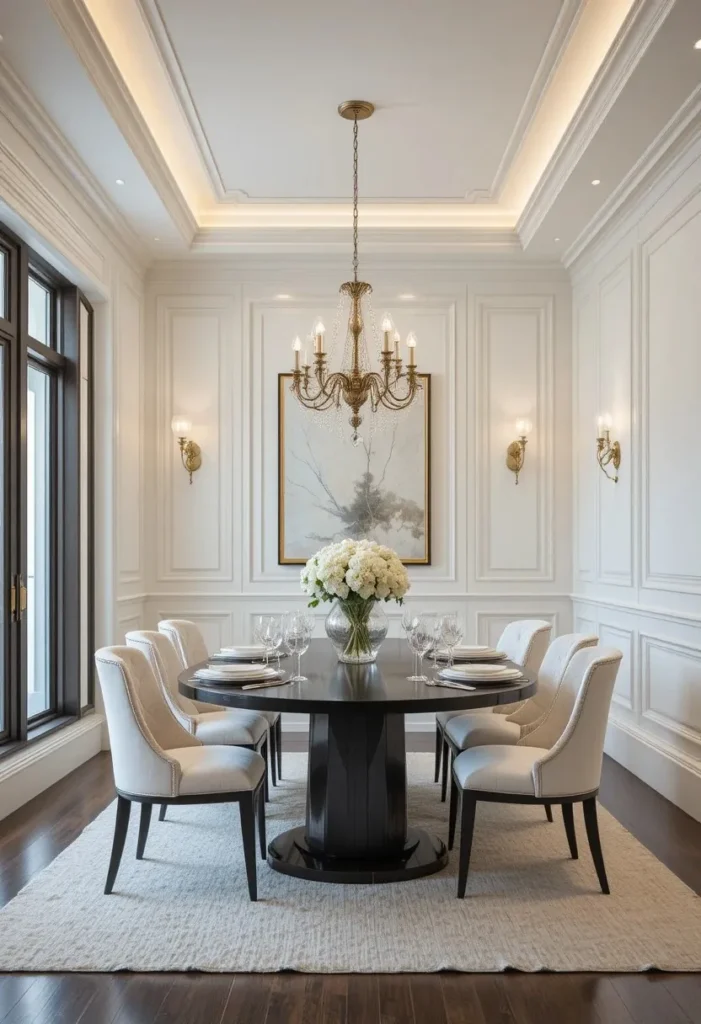
Wall molding was the most surprising upgrade in our dining room, because it cost so little and changed the room so much. Simple rectangular frames in soft white, greige, or muted sage give the wall a quiet structure that makes even a plain sideboard look considered. I painted the molding the same colour as the wall, which keeps the effect modern rather than formal, and let the shadows do the decorating. Measure twice, keep the rectangles evenly spaced, and step back often — straight lines are unforgiving, but when they are right, the whole room feels tailored.
How to do it: Plan rectangular panels with even spacing, keeping them clear of switches and skirting. Use lightweight molding and a good adhesive or pins, mitre the corners neatly, and fill any gaps before painting. Paint molding the same colour as the wall for a soft modern look, or one shade deeper for gentle contrast.
11. Woven Baskets for Organic Texture
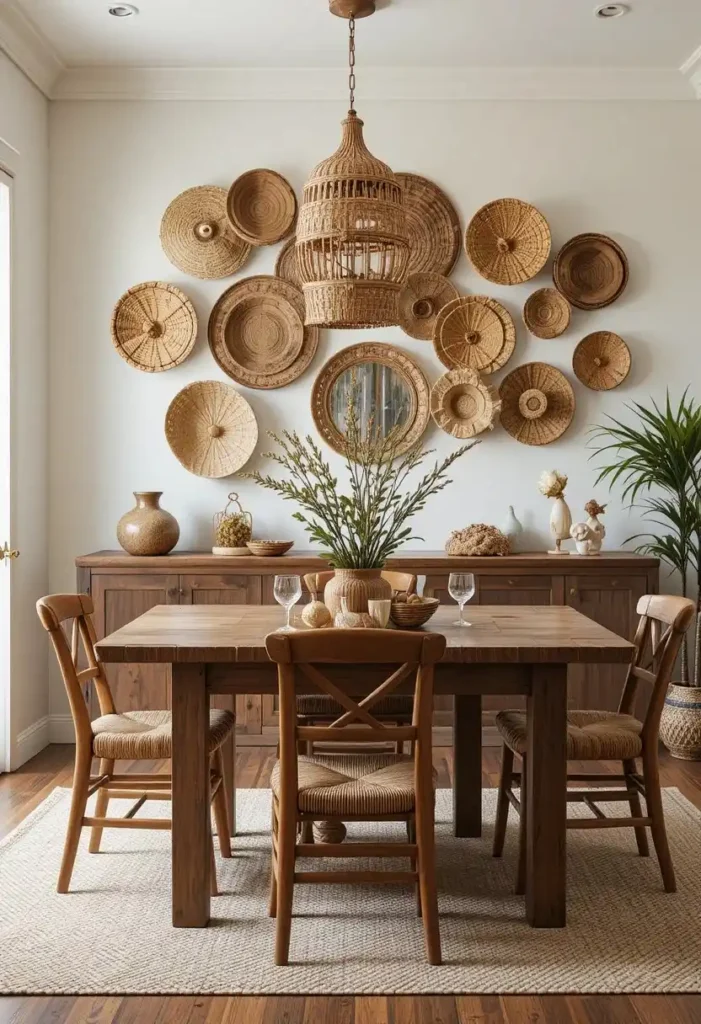
I started our basket wall with three flat baskets I had tucked in a cupboard, and it grew into the warmest corner of the dining room. Different sizes and earthy tones — straw, seagrass, and a touch of dark rattan — add texture without a single nail hole for a picture frame. I kept to similar natural tones so the arrangement feels calm, and I left the largest basket slightly off-centre so the wall does not look too tidy. It is wonderfully forgiving: if a basket does not sit right, I move it in seconds.
How to do it: Collect baskets in similar natural tones and a mix of sizes, with one large piece to anchor the arrangement. Lay them on the floor first, then hang the largest slightly off-centre and build outwards with 5 to 8 centimetres between pieces. Use small picture hooks so you can move a basket easily, and dust them with a dry cloth now and then.
See More Ideas: 20 Dining Room Decor Ideas to Create a Warm and Stylish Space
12. Dining Room Wall Ideas with Sculptural Lighting
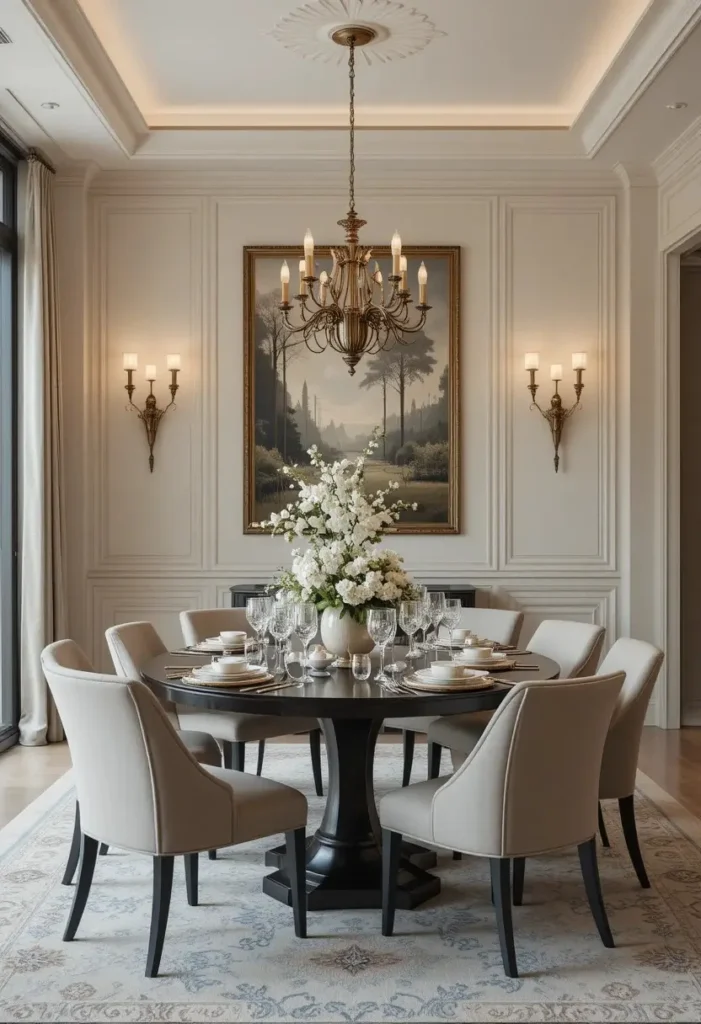
Sconces were the finishing touch our dining wall needed, and I wish I had added them sooner. Warm brass, matte black, and frosted glass shapes throw a soft pool of light across the wall in the evening, so the room feels intimate long before the candles are lit. I chose warm-white bulbs, because cool light made the whole room feel like a showroom, and I put the sconces on a dimmer so breakfast feels bright and supper feels low and golden. If you are choosing a fitting to hang above the table itself, these dining room lighting over the table ideas are a useful place to compare sizes and heights.
How to do it: Choose sconces in a finish already used in the room, such as brass or matte black, and fit warm-white bulbs at 2700K to 3000K. Hang them at about 150 to 160 centimetres from the floor, flanking the artwork or mirror. Put them on a dimmer, and check the glow from every seat at night before you fix the positions.
13. Botanical Wall Art for a Fresh Relaxed Feel
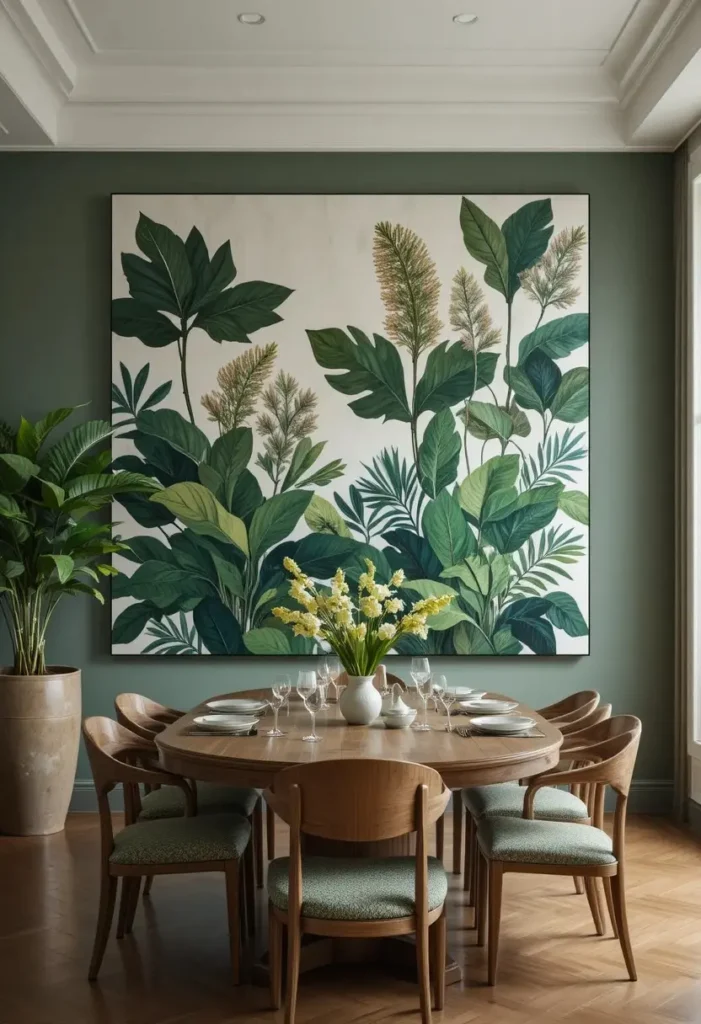
Botanical prints are my reset button when the dining room starts to feel too formal. Soft greens, earthy neutrals, and loose leafy shapes bring the garden in without a single plant to water, and the room instantly feels calmer. I chose two oversized prints in light wood frames rather than a crowd of small ones, because the larger scale looks cleaner and lets each leaf breathe. A woven placemat or a linen runner picks up the same greens at the table, so the wall and the table feel like one thought.
How to do it: Choose oversized botanical prints for a cleaner modern look, rather than many small pieces. Hang them in light wood frames at seated eye level, with 8 to 10 centimetres between frames. Repeat one green from the prints in a runner, placemats, or a small vase of greenery on the table.
14. Floor-to-Ceiling Built-In Wall Storage
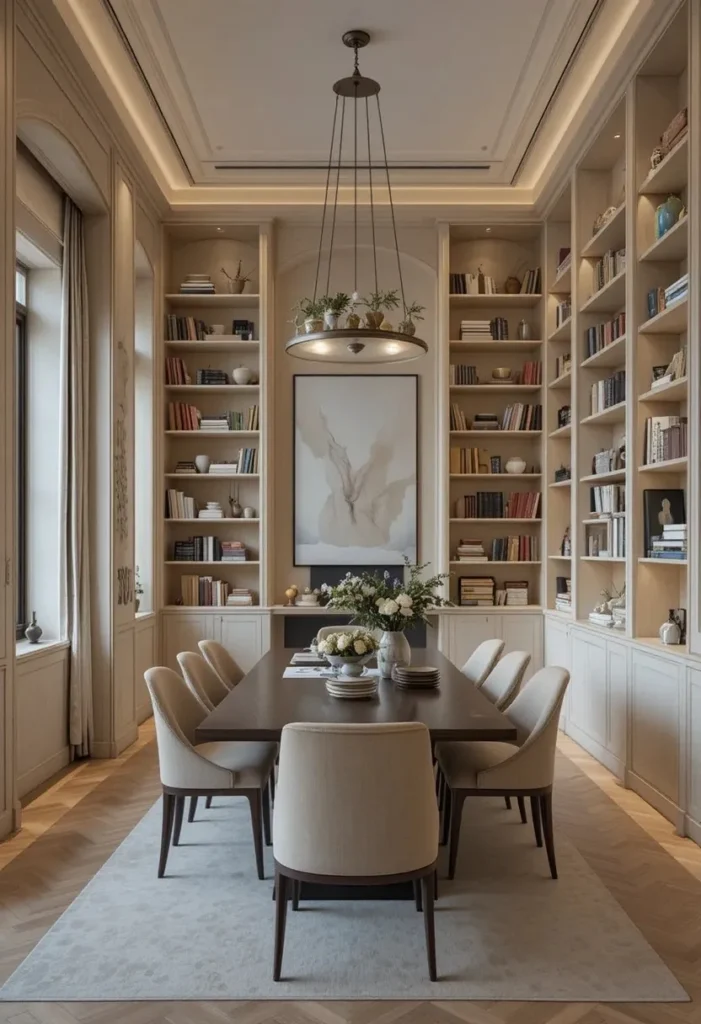
Built-in storage was the grown-up decision in our dining room, and it is the one I would make again first. Floor-to-ceiling cabinets hide the board games, the spare plates, and the tablecloths I never quite fold properly, while open shelves show off the ceramics, books, and glassware I actually love. The wall finally looks intentional instead of like an afterthought, and the room feels more polished without feeling stiff. I added a strip of warm light inside the shelves, which makes the whole wall glow in the evening and turns an ordinary Tuesday supper into something a little special.
How to do it: Measure the wall and the chairs pulled out, leaving at least 75 centimetres behind each chair. Mix closed cabinets below for clutter with open shelves above for ceramics and glassware. Add subtle lighting inside the shelves, keep the styling to a few favourite pieces, and leave one shelf partly empty so the display can breathe.
Frequently Asked Questions
What is the best dining room wall idea for a small room?
Start with a large mirror or pale, textured wallpaper, because both bounce light and make the walls feel further away. Keep the display to one strong idea — a mirror, one large print, or a single shelf — rather than crowding a small wall. Hang the piece low enough to enjoy from your seat, and leave generous empty space around it so the room can breathe.
How high should I hang artwork or a mirror in a dining room?
Hang the centre of the piece at seated eye level, about 145 centimetres from the floor, so you can enjoy it from the table rather than only standing up. A large artwork should sit about 15 to 20 centimetres above a sideboard, and a mirror should reflect a window or a lamp, not a blank wall. Always sit down and check the view from your usual chair before you fix the final hook.
Can I mix different wall ideas in one dining room?
Yes, and most of the rooms I love most do exactly that — a dark accent wall behind the table, a gallery wall on the side wall, and a pair of sconces to tie them together. Keep one element consistent, such as the frame colour, the wood tone, or a repeated colour, so the mix feels deliberate. If the room starts to feel busy, remove one piece rather than adding another.
How do I stop a dining room wall from looking cluttered?
Give every piece breathing room, leave small empty gaps between frames and shelf objects, and step back to the doorway often while you arrange things. Choose one focal wall and keep the others calmer, with a single print or a simple molding panel. Edit ruthlessly: a wall with three pieces you love will always look better than a wall with ten you merely like.
What wall idea works best if I rent or do not want to paint?
Try woven baskets, a gallery wall with a few small picture hooks, floating shelves, or a large leaning mirror — all of them come down without a major repair. Removable textured wallpaper is another good option, provided you test a sample first and follow the maker’s instructions. Choose pieces you can move between rooms, so nothing is wasted if you redecorate later.
Your Dining Room Wall Checklist
☐ Choose one focal wall, usually the one behind the table.
☐ Measure the wall and the table before buying anything.
☐ Hang art and mirrors with the centre at seated eye level.
☐ Test paint and wallpaper samples in daylight and lamplight.
☐ Repeat one colour, wood tone, or metal finish across the room.
☐ Leave breathing room between frames, baskets, and shelf pieces.
☐ Put wall lights on a dimmer for softer evening meals.
☐ Check the wall from every seat, not just the doorway.
☐ Remove one piece if the wall starts to feel crowded.
☐ Step back, live with it for a week, then adjust once.
Conclusion
The wall you choose will shape far more than the background of your meals. It decides whether the room feels calm or lively at breakfast, whether guests linger after pudding, and whether an ordinary Tuesday supper feels a little bit special. Start with the wall you notice first when you walk in, choose the idea that suits your light and your table, and give it a week before you judge it. Walls reward patience: a frame moved a few centimetres, a dimmer turned down, or a basket swapped for a print can change everything. Pick one idea from this list, hang it well, and let your dining room walls do what they do best — make people want to stay at the table a little longer.

3 Comments