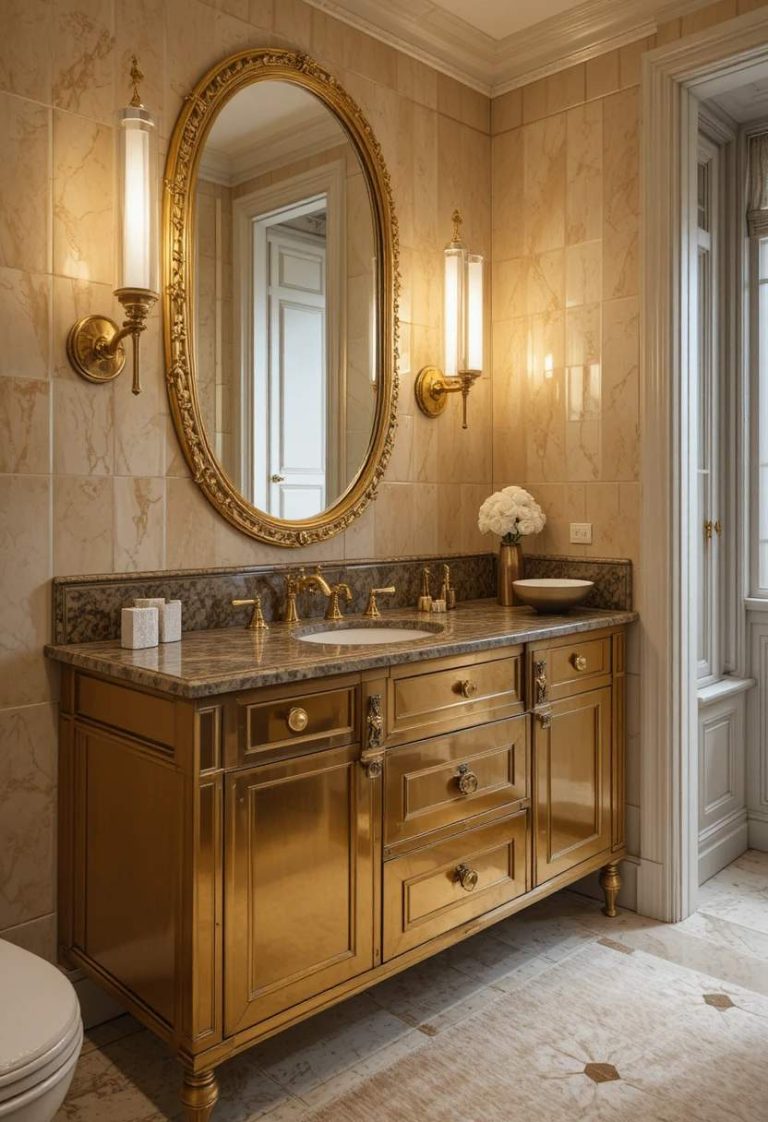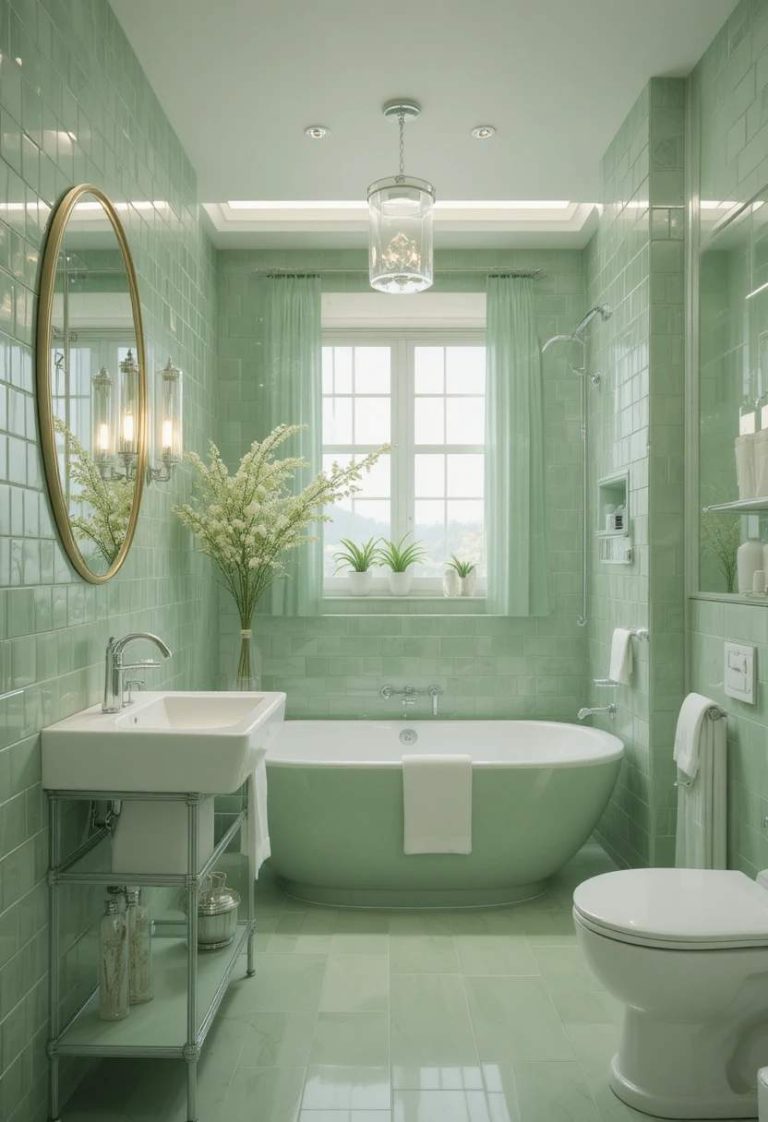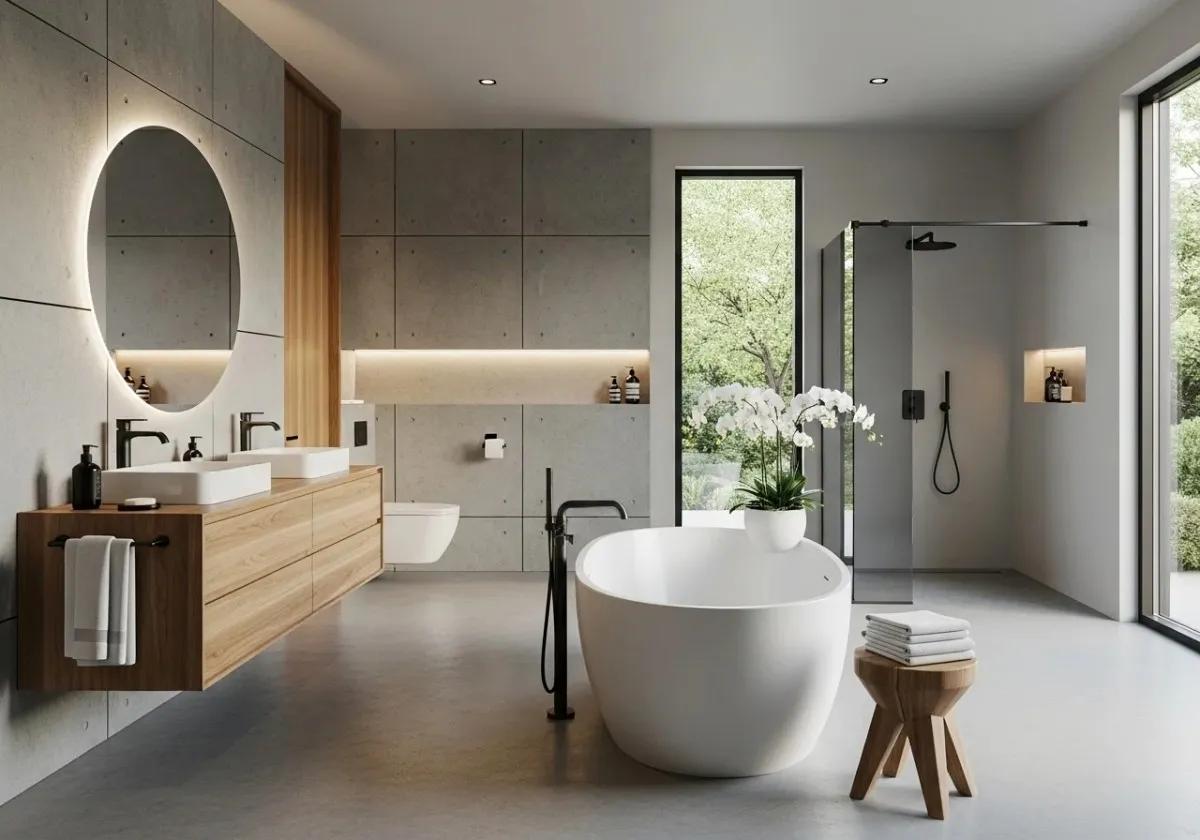
19 Bathroom Ideas to Turn Your Space into a Calm, Stylish Retreat
Tired of a bathroom that never feels quite right—no matter how much you clean or organize it? Sometimes the issue isn’t mess, it’s the lack of thoughtful design. When a space doesn’t feel good, you notice it every day. That’s where the right bathroom ideas come in. With a few simple but intentional changes, you can turn your bathroom into a space that feels lighter, calmer, and more put together—without starting from scratch.
1. Soft Neutral Color Palette for a Calm Feel
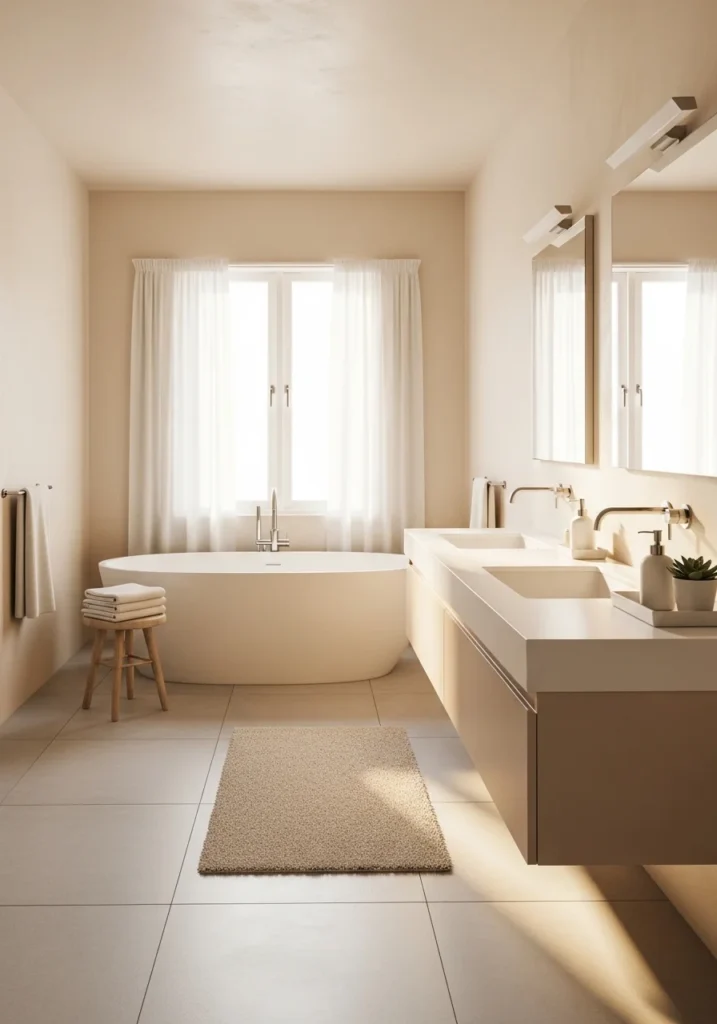
I repainted our bathroom in a warm, chalky beige one grey February weekend, and the change surprised even me. The room had always felt cold and a little stark, all white tiles and hard edges, but a soft wash of colour on the walls made it feel like a different place entirely. Mornings are gentler now. I layer the base shade with cream towels, a stone-coloured bath mat and a pale wooden stool, so nothing matches exactly and everything sits comfortably together. Neutrals also forgive a lot: a busy morning, a towel left over the rail. If you are nervous about colour, this is the kindest place to start, because you can build it up one soft layer at a time.
How to do it: Choose three neutrals in the same warm or cool family, for example warm beige, cream and soft stone. Paint the walls the lightest shade, then layer the deeper tones through towels, a bath mat and a woven basket. Test paint samples on the wall for a few days, checking them in morning and evening light before you commit.
2. Floating Vanity for a Modern Look
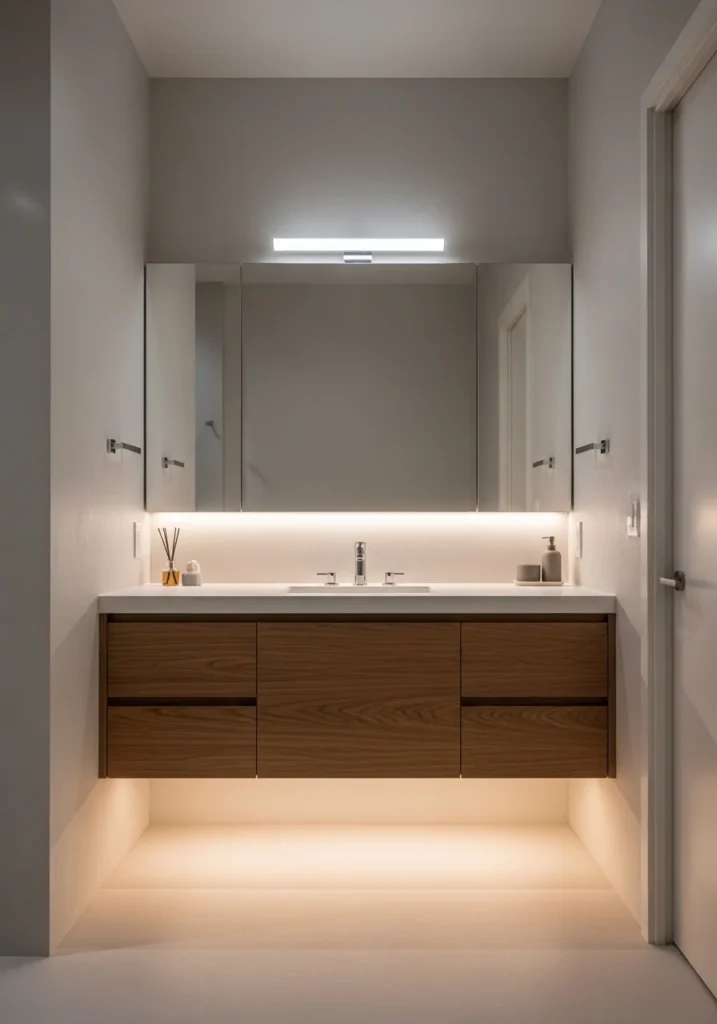
Our old vanity sat heavily on the floor and made the room feel smaller than it was, so swapping it for a floating one was the single best change we made. Suddenly I could see the floor running underneath, the room looked wider, and mopping stopped being a battle with plinth edges and dust traps. I chose a pale oak unit with deep drawers, because open shelves at knee height only collect clutter in our house, and fitted a slim LED strip beneath it for a soft evening glow. If you are weighing up styles, these bathroom vanity ideas cover the shapes and sizes that work in real bathrooms, from compact cloakrooms to generous family rooms. Measure twice, though: a vanity that is too deep will crowd the room, however pretty it looks in the showroom.
How to do it: Measure the wall and choose a wall-hung unit that leaves at least 15 cm of clear floor beneath it. Fix it to a solid wall or a reinforced stud, with the basin rim 80 to 90 cm from the floor. Fit a slim LED strip underneath and leave the floor beneath clear, so the floating effect stays visible.
3. Statement Mirror That Elevates the Space
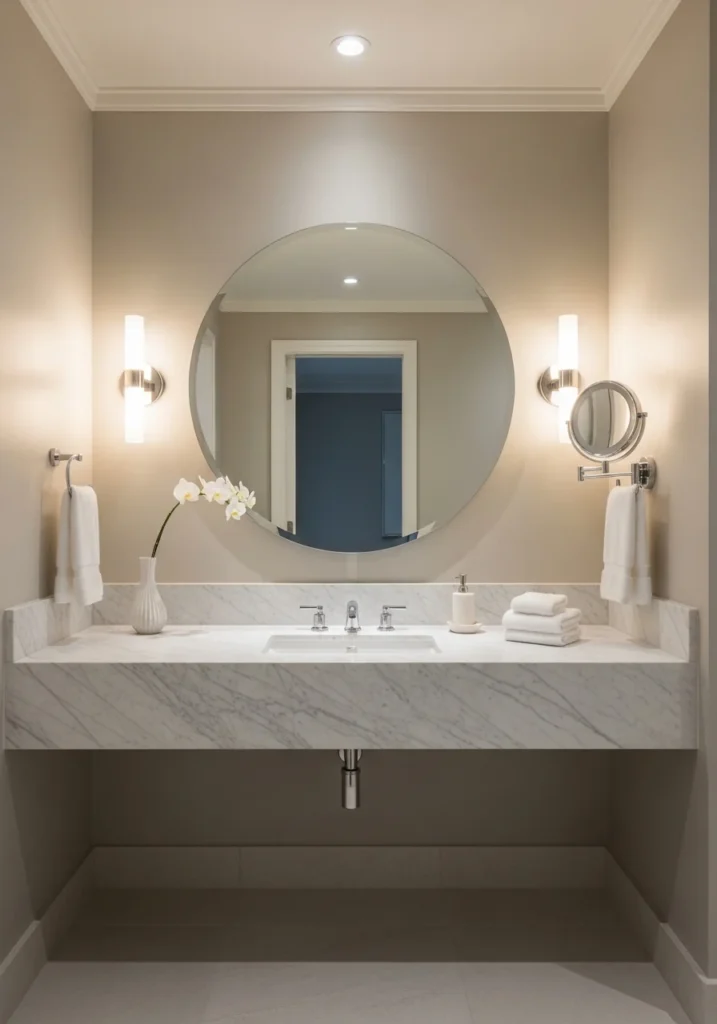
The mirror was the last thing I changed and the first thing guests comment on, which tells you how much difference one good piece makes. Ours is arched, with a slim brass frame, and it catches the morning light from the window and throws it right across the room. I hung it a little higher than I first planned, so it reflects the tiled wall rather than the clutter on the sill, and that one small decision made the whole room feel considered. A mirror also lets you be brave elsewhere: with something beautiful above the basin, the rest of the room can stay quiet. Choose a shape that argues gently with your vanity, a round mirror over a square unit or an arch over a straight one, and the bathroom will feel designed rather than assembled.
How to do it: Measure the vanity and choose a mirror about two-thirds of its width. Hang it so the centre is at eye level, roughly 150 to 160 cm from the floor. Fix it to a solid wall with fixings rated for its weight, and angle it to catch the window light rather than the clutter on the sill.
4. Warm Lighting for a Cozy Ambiance
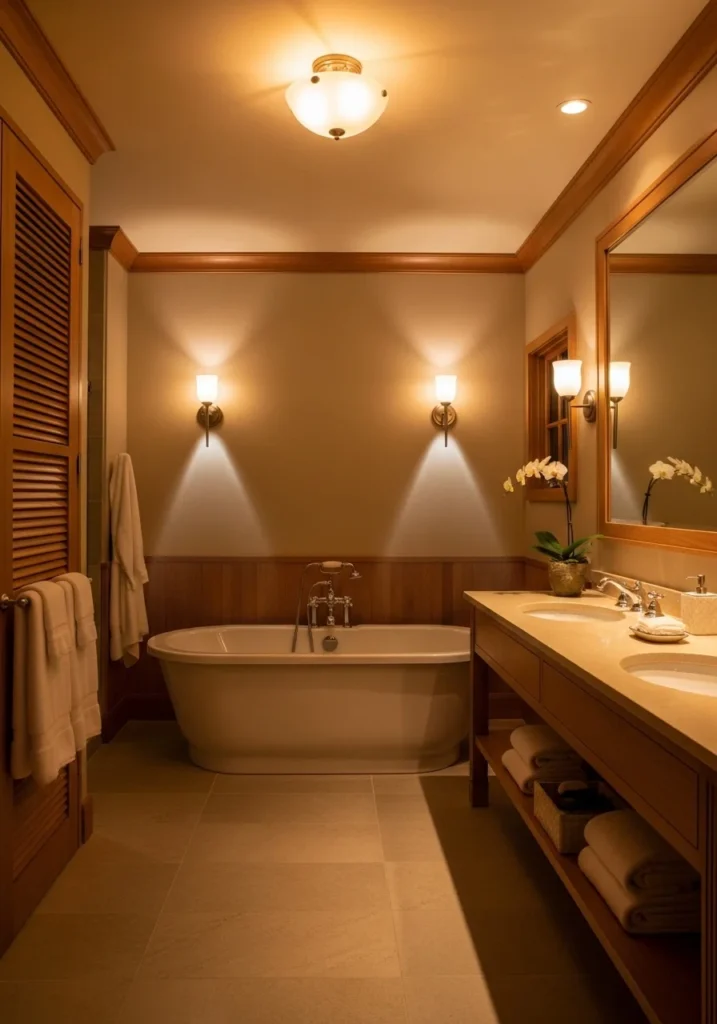
For years our bathroom was lit by a single cold ceiling bulb that made everyone look tired, and I never questioned it until I stayed in a hotel where the bathroom glowed. The fix was embarrassingly simple: warm 2700K bulbs, a dimmer switch, and two small sconces either side of the mirror. Evenings now feel like a proper wind-down, and early mornings are far kinder on sleepy eyes. If you want to go further, these bathroom lighting ideas walk through layering task, ambient and accent light so the room works at every hour. Start with the bulbs, though. It costs very little, takes an afternoon, and changes the mood of the room more than any new tile ever could.
How to do it: Replace any bulb above 3000K with a warm 2700K LED, then add a dimmer switch on the main circuit. Fit a sconce on each side of the mirror at eye level, or a slim bar light above it. Test the lowest dimmer setting for flicker before you finish.
5. Add Texture with Natural Materials
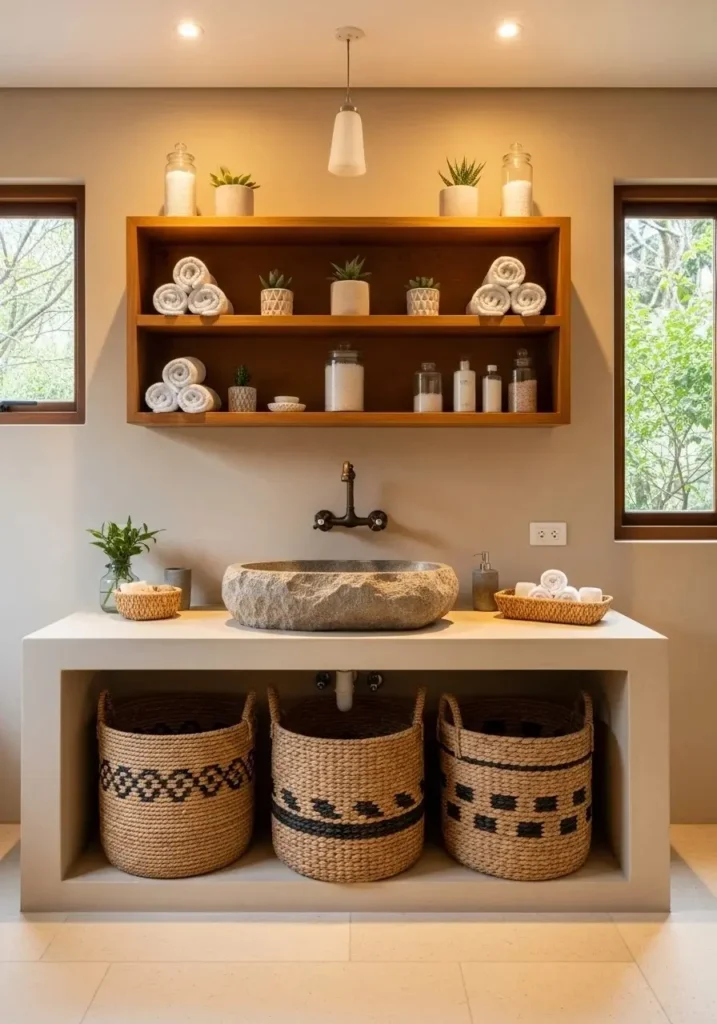
Our bathroom used to be all smooth, hard surfaces, tile, glass and chrome, and it felt more like a showroom than a room anyone lived in. Bringing in wood, stone and woven fibres changed that overnight. There is a teak stool beside the bath now, a rough stone tray holding the soap, and a rattan basket for rolled towels, and my hand reaches for those textures without thinking. Natural materials also age gracefully: a little water mark on oak or a softened edge on stone only makes them look more at home. I would start with one piece you touch every day, a wooden bath mat or a stone soap dish, and let the room grow warmer from there.
How to do it: Pick one wood tone and one stone, and repeat them in at least three places, such as a stool, a tray and a basket. Choose moisture-resistant finishes, teak or oak sealed with bathroom oil, and a stone soap dish with a draining base. Keep chrome or painted surfaces to a single accent so the natural textures lead.
6. Minimalist Storage for a Clean Look
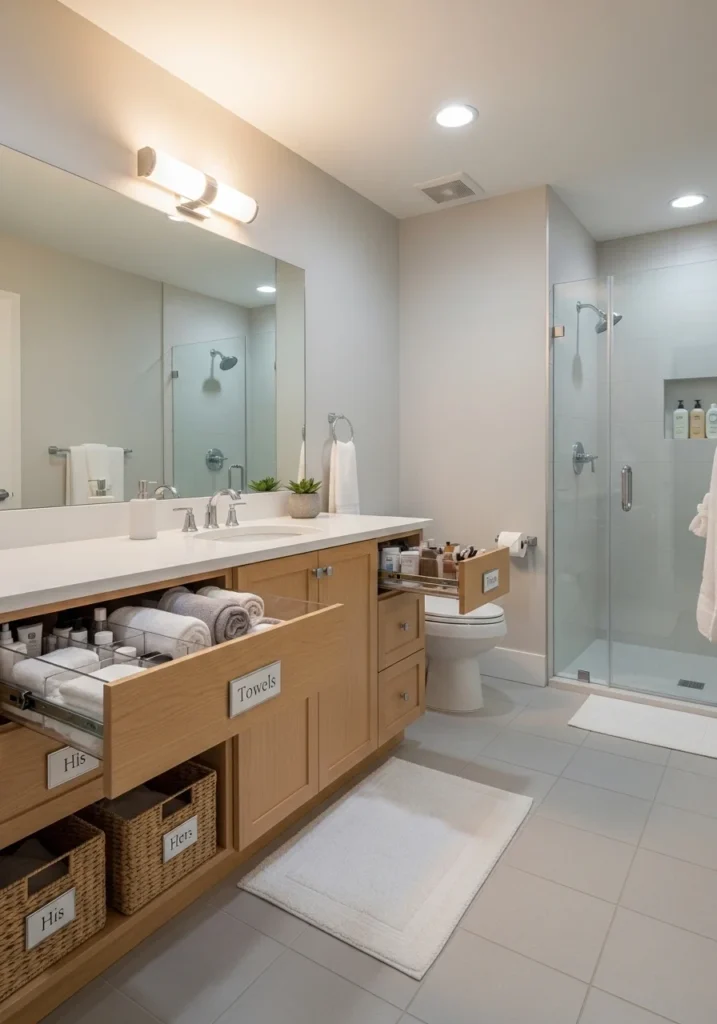
I used to keep every bottle, brush and half-used jar on the worktop, and the bathroom always looked busy no matter how often I cleaned it. The turning point was a ruthless clear-out followed by one simple rule: only the things we use daily earn a place in sight, and everything else lives behind a door. Deep drawers with dividers did the heavy lifting, and decanting shampoo into matching bottles stopped the visual noise of labels. Now the counter holds a tray with three items and nothing else, and cleaning takes minutes. It sounds severe, but a calm bathroom is mostly a bathroom with somewhere sensible for everything to go.
How to do it: Take everything out of the bathroom and return only what you use weekly. Fit deep drawers with dividers for bottles and brushes, and decant daily products into matching refillable bottles. Keep a single tray on the counter for the three items you use every morning, and store the rest behind closed doors.
7. Accent Wall for a Subtle Pop
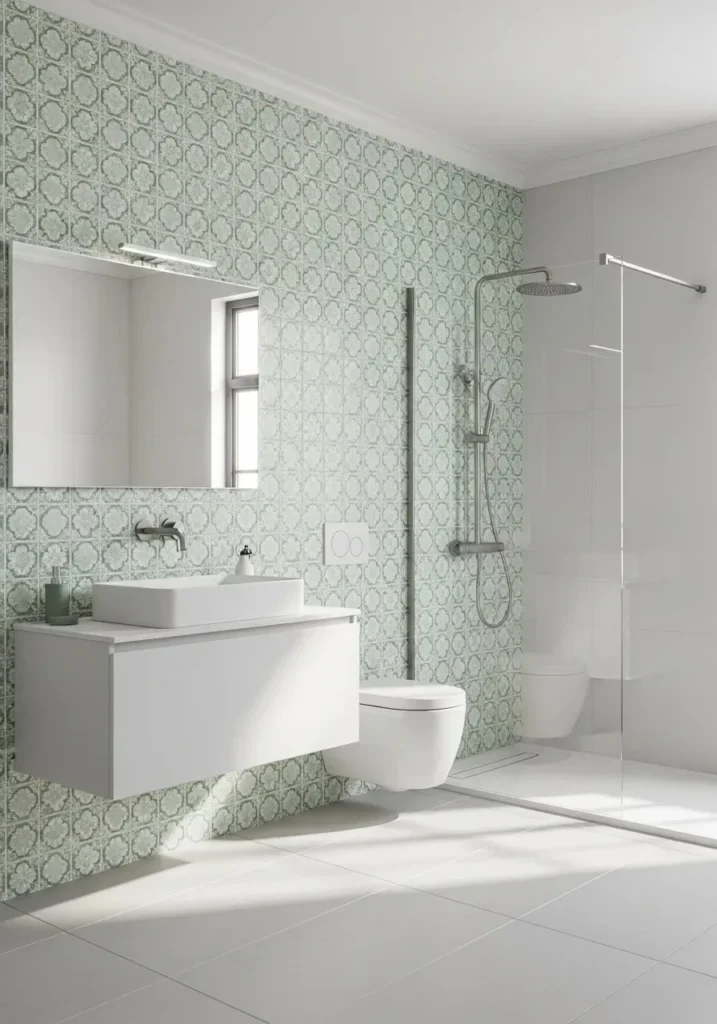
I was nervous about an accent wall in such a small room, convinced it would shrink the space, so I started with the wall behind the bath and kept the other three plain. A deep sage paint went on first, then I lived with it for a month before committing to anything bolder. The result is a room with a clear focal point and a lot of quiet around it, which is exactly the balance a bathroom needs. If tiles tempt you more than paint, these zellige tile bathroom ideas show how handmade glazed tiles can give one wall an artisan, textured finish that paint never quite manages. Whatever you choose, keep it to one wall and one idea, and the room will feel deliberate rather than busy.
How to do it: Pick the wall you see first when you walk in, usually behind the bath or opposite the door. If you paint, use a moisture-resistant bathroom paint in two coats; if you tile, choose a moisture-proof adhesive and grout. Keep the other walls plain and repeat one colour from the accent wall in a towel or accessory.
8. Greenery for a Fresh, Lively Touch
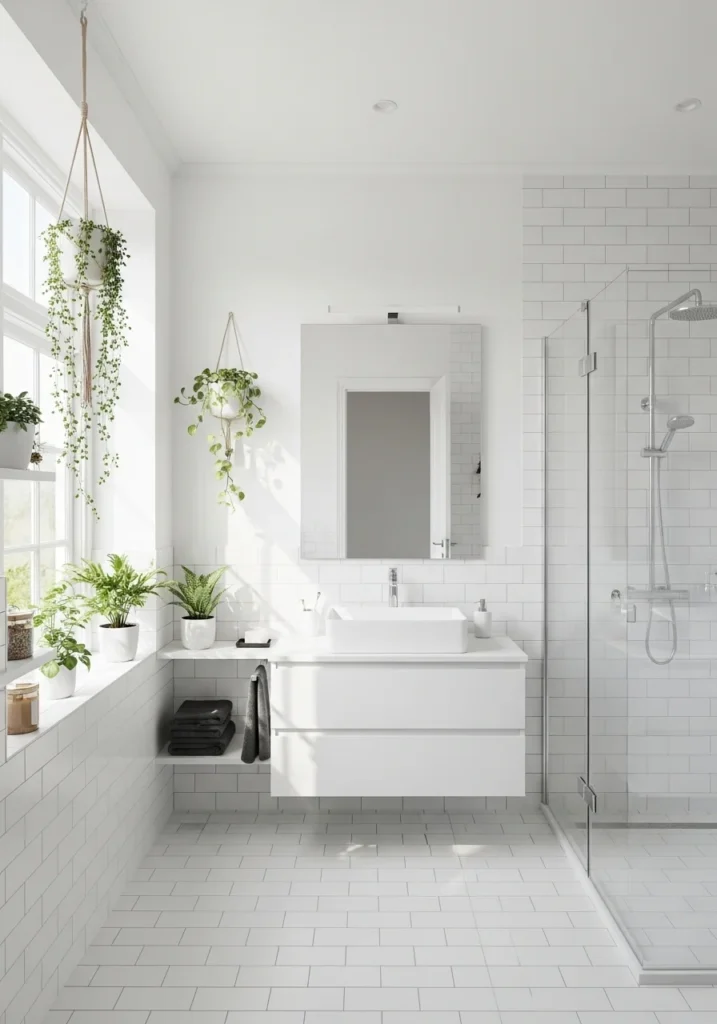
The first plant I put in the bathroom was a trailing pothos on the windowsill, mostly because it had nowhere else to go, and it is still there two years later, longer and happier than any of my other houseplants. Bathrooms suit plants: the steam, the warmth, the humidity. I have added a small fern on the shelf and a sprig of eucalyptus tied to the shower head, which smells wonderful when the hot water runs. Green softens all the hard surfaces and gives the eye somewhere gentle to rest. If you are forgetful with watering, choose plants that forgive you, pothos, philodendron or a hardy fern, and keep them in pots with proper drainage.
How to do it: Choose humidity-loving plants such as pothos, philodendron or a small fern, and place them where they get indirect light. Use pots with drainage holes and a saucer, and water only when the top 2 cm of soil feels dry. Hang a trailing plant from a shelf or hook to keep the counter clear.
9. Spa-Like Accessories for Relaxation
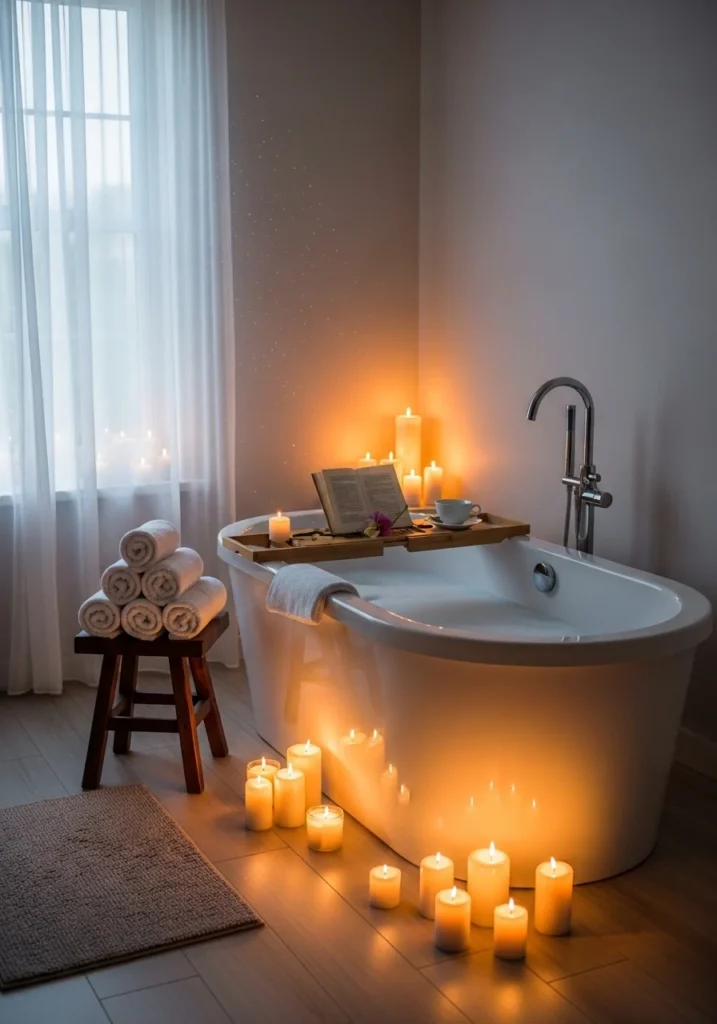
A bathroom starts to feel like a retreat the moment you treat it like one, and for me that meant a handful of small rituals rather than a renovation. Thick towels, rolled instead of folded, live in a basket by the bath. A wooden tray holds a candle, a book and a cup of tea on slow Sunday evenings. Glass jars keep cotton wool and bath salts tidy and, unexpectedly, rather beautiful. None of it was expensive, and none of it took more than an afternoon to arrange, yet the room feels entirely different to step into. The trick is consistency: choose one calm colour for your towels and accessories and repeat it, so the little details look like a plan rather than a pile.
How to do it: Roll thick towels in one calm colour and store them in a basket or on an open shelf. Add a wooden bath tray, a candle in a sturdy glass holder, and two matching glass jars for cotton wool and bath salts. Keep the palette to one or two colours so the accessories look considered rather than collected at random.
10. Bathroom Ideas with Open Shelving
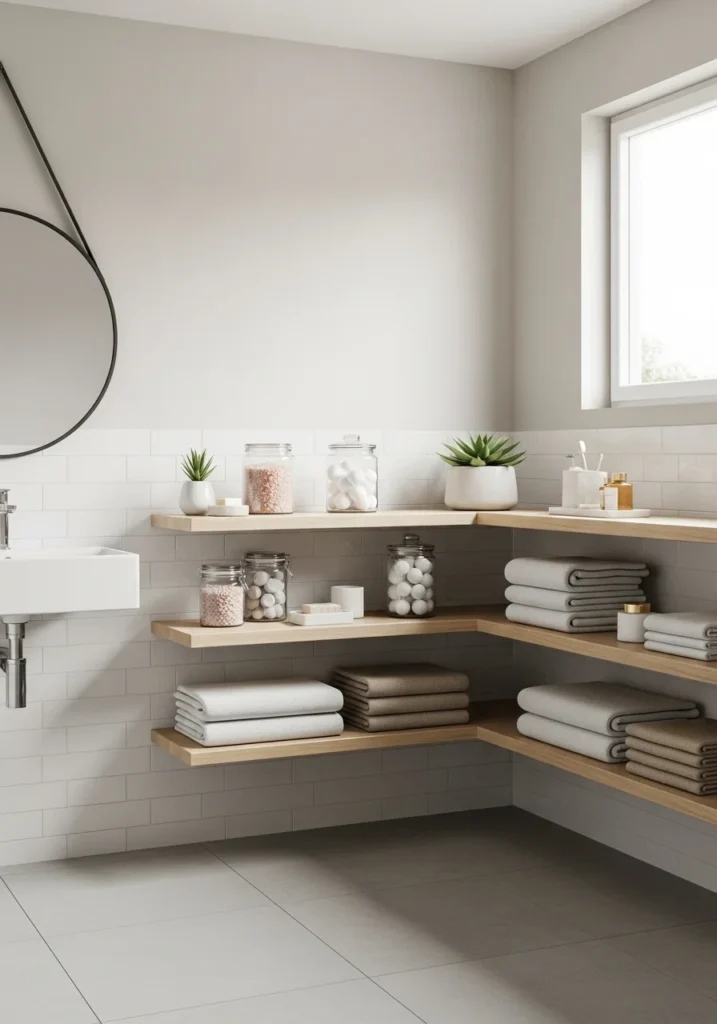
Open shelves were the idea I resisted longest, because I imagined them gathering dust and displaying all my clutter, but they have become the hardest-working part of our bathroom. Two slim oak shelves hold rolled towels, a jar of bath salts and a small plant, and because everything is visible, I actually put things back where they belong. The secret is leaving space: a shelf that is two-thirds full looks styled, while a shelf crammed edge to edge looks like a cupboard that lost its doors. I keep everyday items in matching jars and baskets so the open storage reads as calm rather than chaotic, and I wipe the shelves down each Sunday, which takes all of three minutes.
How to do it: Fix two slim shelves above the basin or beside the bath, using fixings suited to your wall type. Style each shelf with no more than three groups, rolled towels, a jar and a small plant, leaving a third of the shelf empty. Keep daily items in matching containers and wipe the shelves weekly.
11. Glass Shower Enclosure for an Open Feel
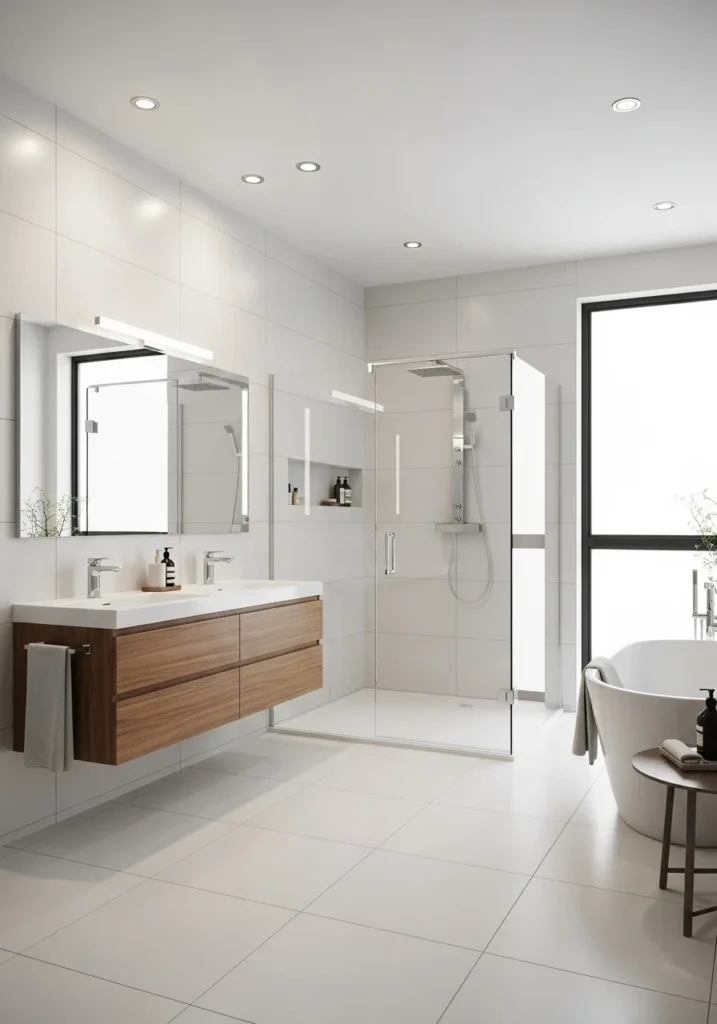
Our old shower curtain clung, billowed and always looked slightly damp, and replacing it with a frameless glass panel was the moment the bathroom finally felt like a grown-up room. The shower is no longer a separate, gloomy corner: light travels across the whole space, the tiles show properly, and the room looks noticeably bigger. I was worried about water spots, honestly, but a squeegee hung on a hook inside the shower and a thirty-second wipe after each use keeps the glass clear. If a full panel is beyond budget, even a fixed glass screen in place of the curtain gives you most of the effect for a fraction of the cost.
How to do it: Measure the shower opening and order a frameless glass panel or a fixed screen with a small gap for air. Have it fitted by a professional with the correct seals and a slight fall towards the drain. Hang a squeegee inside the shower and wipe the glass after each use to prevent water spots.
12. Matte Black Fixtures for a Bold Contrast
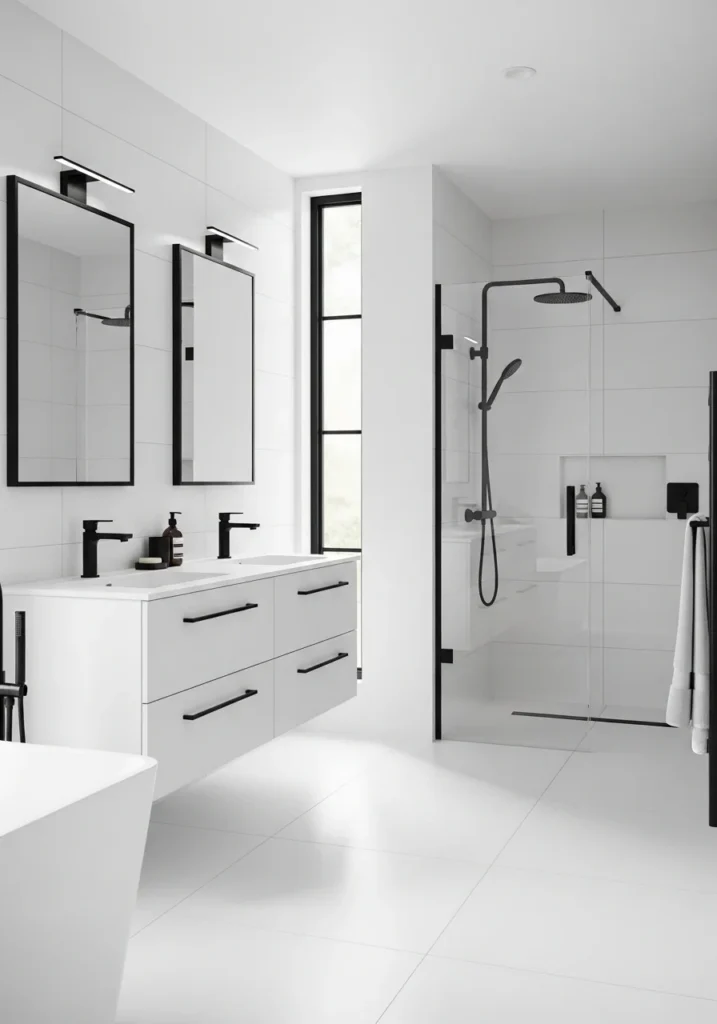
I swapped our chrome taps for matte black ones on a whim, half expecting to regret it, and they are still my favourite detail in the room. Against pale tiles and a white basin, the dark finish draws the eye exactly where you want it, and it gives a plain bathroom the backbone it was missing. Black also hides water spots far better than chrome ever did, which is a practical bonus nobody mentions in the showroom. The one thing I would do differently is commit fully: matching the taps, shower, towel rail and handles in the same finish makes the look feel intentional, while mixing black with chrome just looks unfinished.
How to do it: Choose one matte black finish and match it across taps, shower fittings, towel rail and cabinet handles. Order a sample first and hold it against your tiles in daylight. Clean with a soft cloth and mild soap only, avoiding abrasive pads that can mark the coating.
13. Large Format Tiles for a Seamless Look
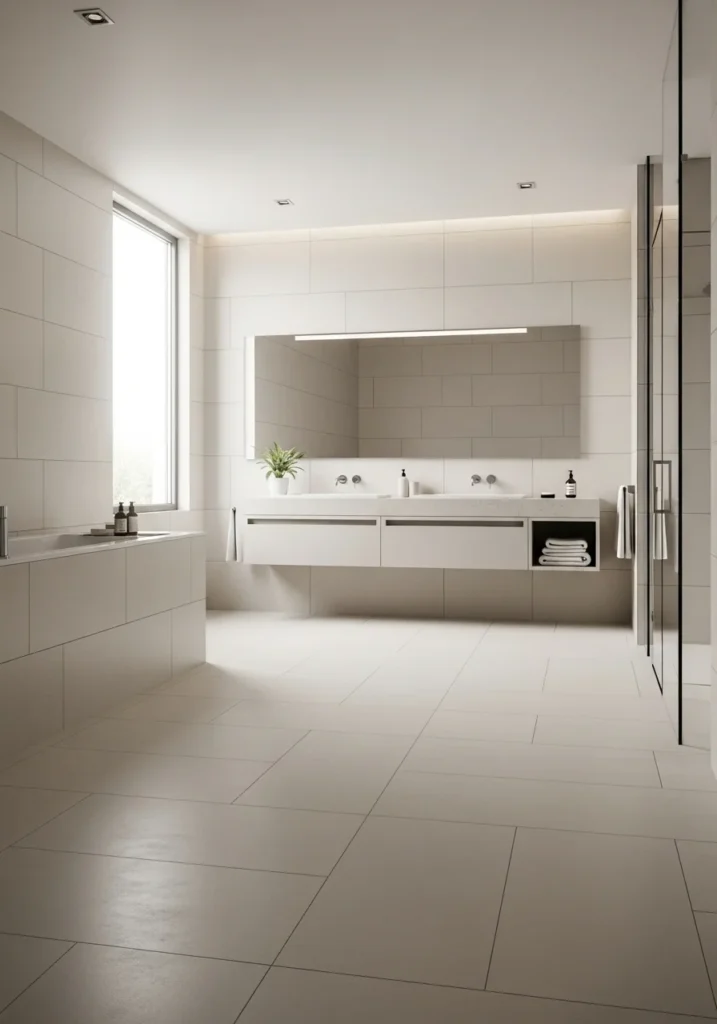
Grout lines were the thing I never noticed until I stopped seeing them. When we retiled with large-format tiles, sixty by sixty on the floor and big rectangles on the walls, the room suddenly looked calmer, almost seamless, as if the surfaces had been poured rather than pieced together. Fewer grout lines also means less scrubbing, which is the kind of benefit you appreciate every single week. I chose a pale, warm grey with a soft matte finish and rectified edges, so the joints are tight and the surface reads as one continuous plane. If your bathroom is small, light-coloured large tiles are one of the kindest tricks there is: the floor seems to stretch, and the walls stop closing in.
How to do it: Choose rectified large-format tiles, at least 60 by 60 cm for floors, in a pale colour with a matte or soft-sheen finish. Ask your tiler to lay them with 2 to 3 mm joints and to level the floor first, since large tiles show any unevenness. Seal natural stone tiles before grouting.
14. Built-In Niches for Smart Storage
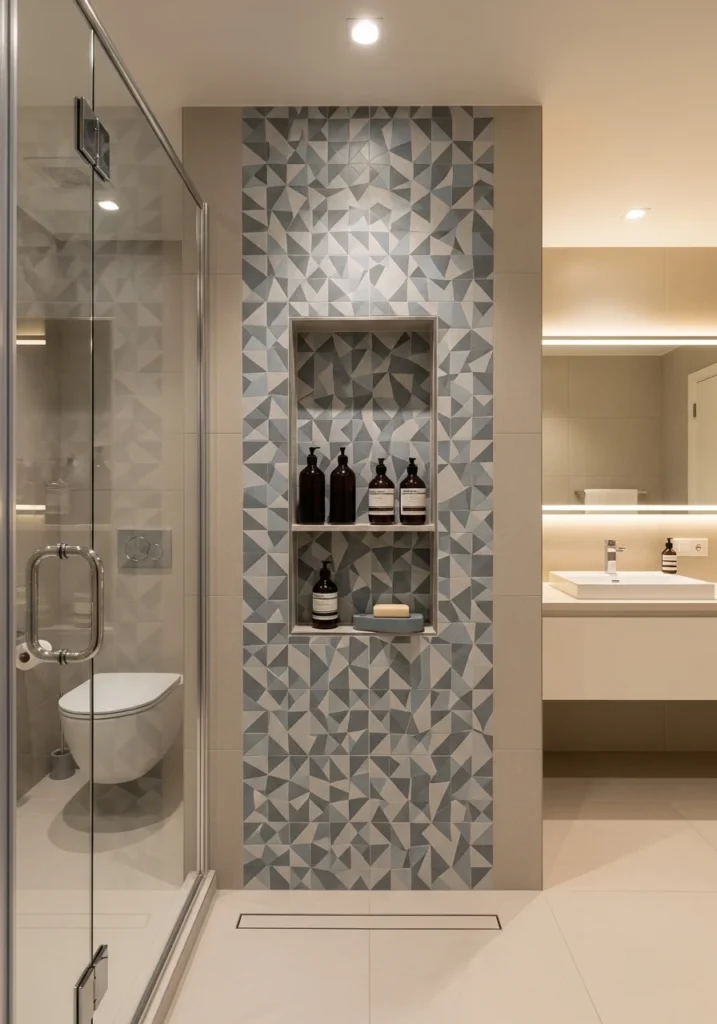
Shower bottles used to live in a rusting caddy that hung over the shower head and rattled every time anyone moved, so a built-in niche felt like a small luxury when we tiled. It is simply a recessed shelf in the shower wall, but it changed the room: no more clutter on the bath edge, no more bottles lined up on the floor, and everything within reach while you are actually showering. We tiled the back of the niche in a slightly deeper shade than the surrounding wall, which makes it look deliberate rather than an afterthought. Plan the height for the tallest bottle you own, slope the base a fraction so water drains, and you will wonder why every shower is not built this way.
How to do it: Plan the niche while tiling, choosing a height that fits your tallest bottle and a width of at least 30 cm. Line it with the same tiles as the wall, or a deeper shade for contrast. Slope the base slightly towards the shower so water drains, and seal the edges thoroughly before grouting.
These Below Ideas Also For You:
15. Soft Pastel Accents for a Gentle Touch
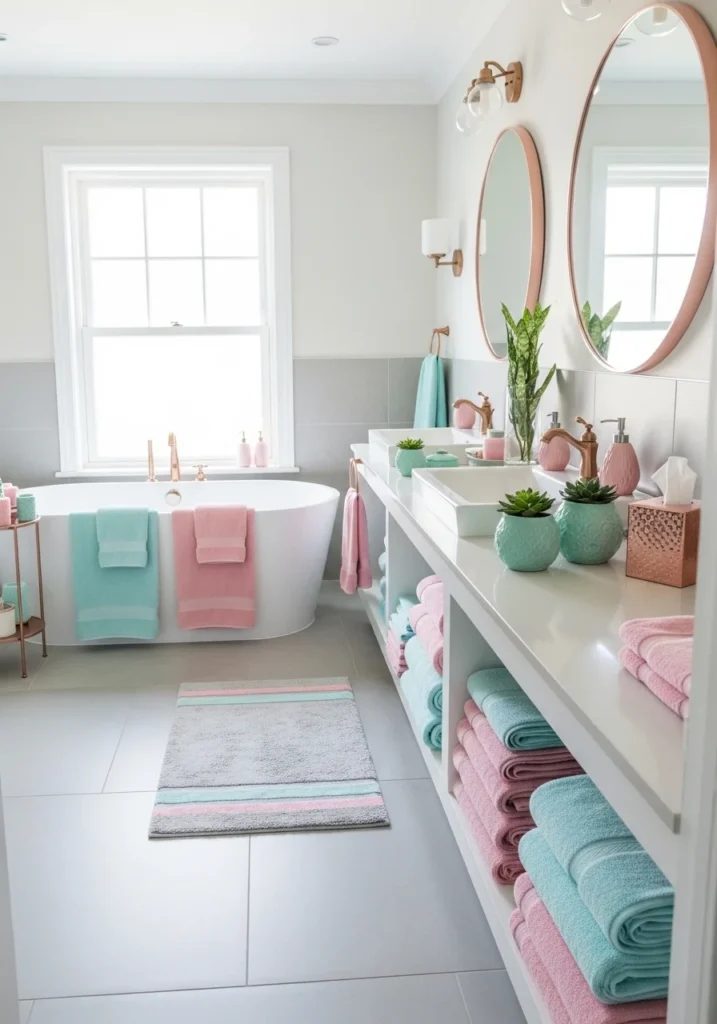
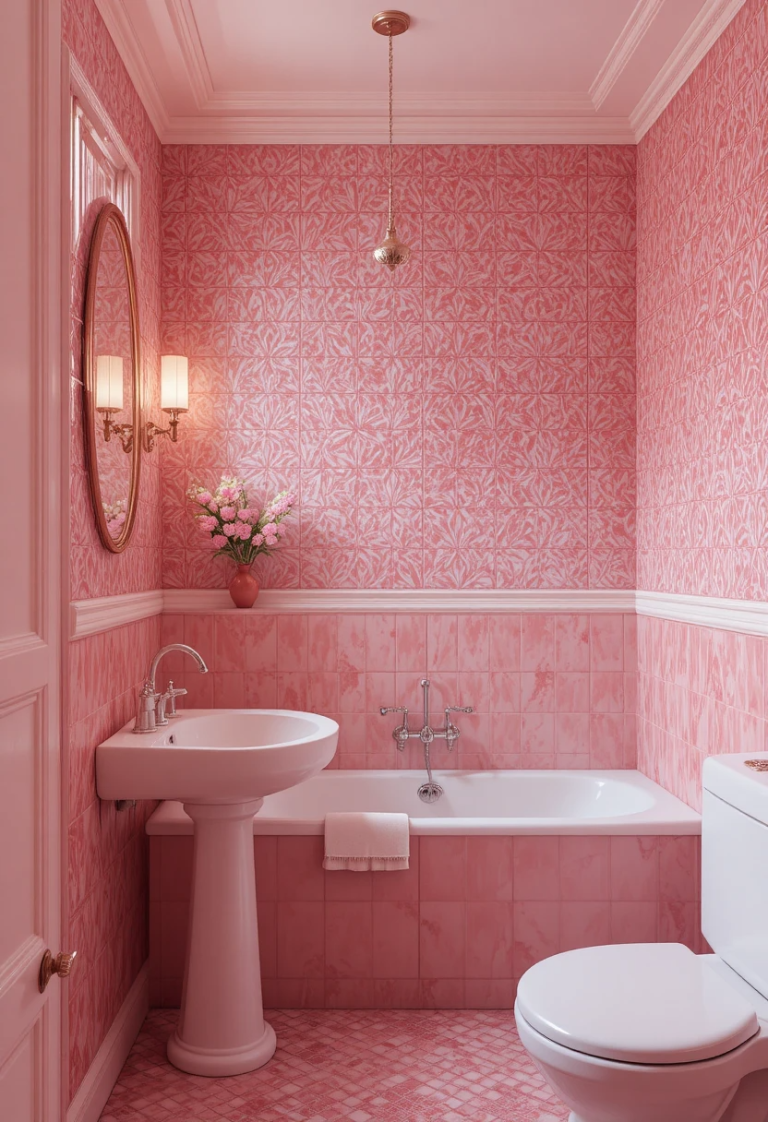
Pastels were my answer to a bathroom that felt too serious. I did not want a bold colour on the walls, and I certainly did not want to retile, so I started with towels in a soft blush and a mint-green bath mat, and the room immediately felt gentler. The beauty of pastels is that they are easy to change: when I fancy a different mood, I swap the towels and the soap dish rather than anything fixed. I keep the rest of the room white and warm, so the soft colours read as calm rather than sweet, and I limit myself to one pastel family at a time. It is a small, reversible change with a surprisingly large effect on how the room feels first thing in the morning.
How to do it: Choose one pastel family, such as blush, mint or powder blue, and introduce it through towels, a bath mat and a soap dish. Keep walls, tiles and the vanity white or warm neutral so the pastels stay soft. Swap the textiles seasonally if you want a fresh look without redecorating.
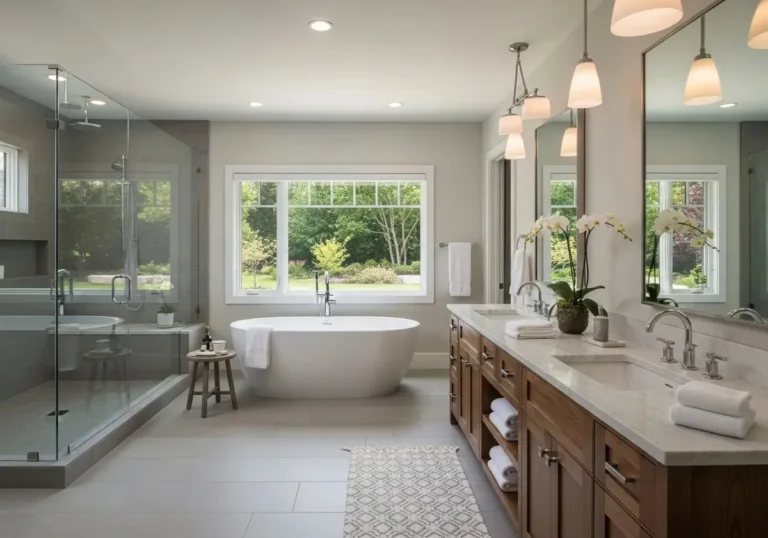
16. Freestanding Bathtub for a Luxurious Feel
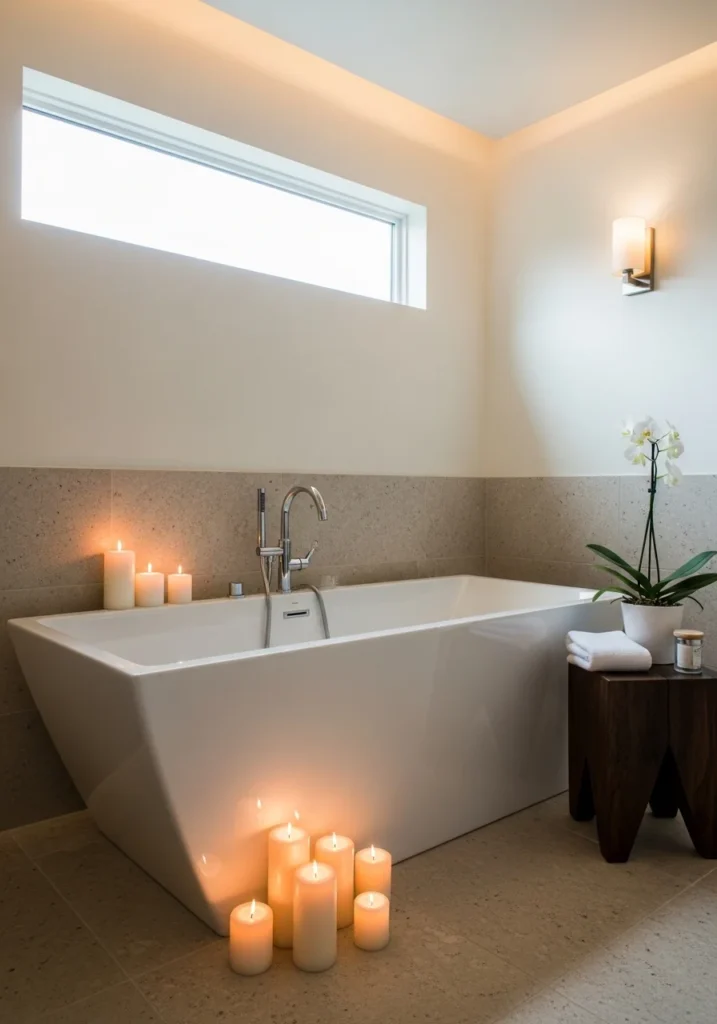
There is a particular kind of quiet that only a long soak in a freestanding bath provides, and I did not understand it until we fitted ours. Unlike a built-in tub, it stands in the room like a piece of furniture, and the space around it makes the whole bathroom feel more generous. I placed it beneath the window, with a small wooden stool alongside for a book, a candle and a cup of tea, and bath time became something I actually look forward to instead of a rushed chore. It does need room to breathe, so measure carefully and leave enough space to clean around it. But if your bathroom can take one, a freestanding tub is the closest thing to bringing the spa home.
How to do it: Measure the room and leave at least 60 cm of clear space around the tub for cleaning and access. Position it near a window or a wall, with the floor waste and supplies planned before you order. Add a small stool or side table for candles and a book, and choose a freestanding tap to match.
17. Mirrors with Built-In Lighting
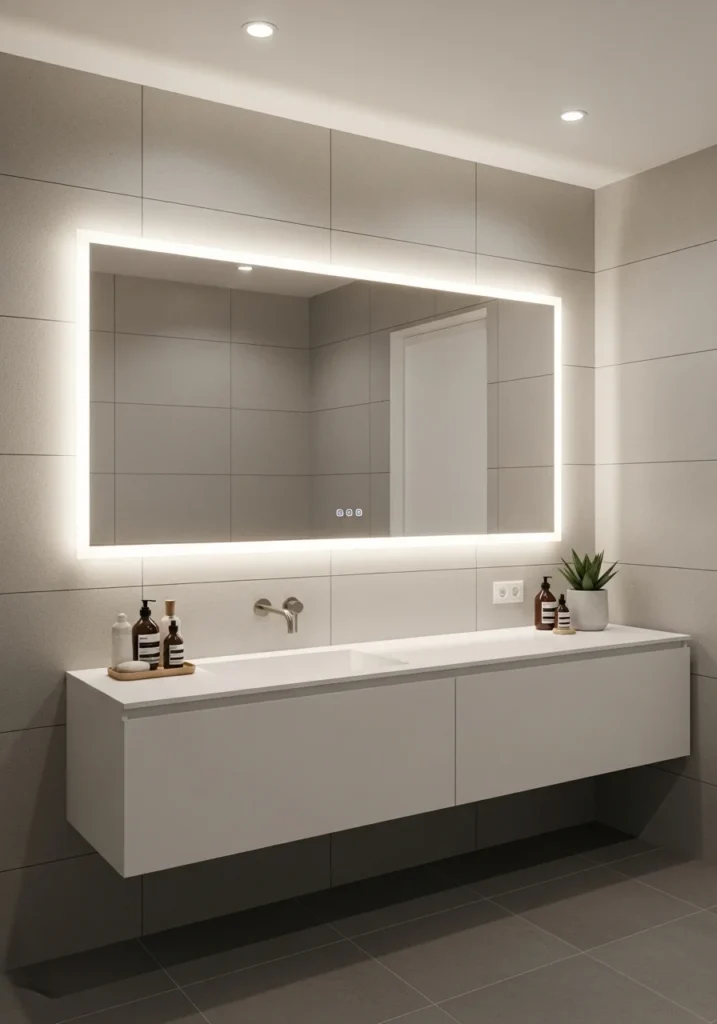
Our old mirror left my face half in shadow every morning, which made everything from shaving to make-up a guessing game, so a mirror with built-in lighting felt like a practical upgrade rather than a luxury. The difference is immediate: even, shadow-free light that flatters rather than interrogates, plus a demister pad that means I am not wiping steam away with a towel. I chose one with adjustable warmth, bright and cool for mornings, soft and warm for evenings, and the bathroom feels properly finished now. Fit it so the centre sits at eye level, about 150 to 160 centimetres from the floor, and keep the frame slim so the light, not the fitting, is the star.
How to do it: Choose a mirror about two-thirds the width of your vanity, with built-in LED lighting, a demister pad and adjustable colour temperature. Have a qualified electrician connect it, and mount it so the centre is at eye level, roughly 150 to 160 cm from the floor. Test the warm and cool settings before fixing the frame.
18. Patterned Floor Tiles for Character
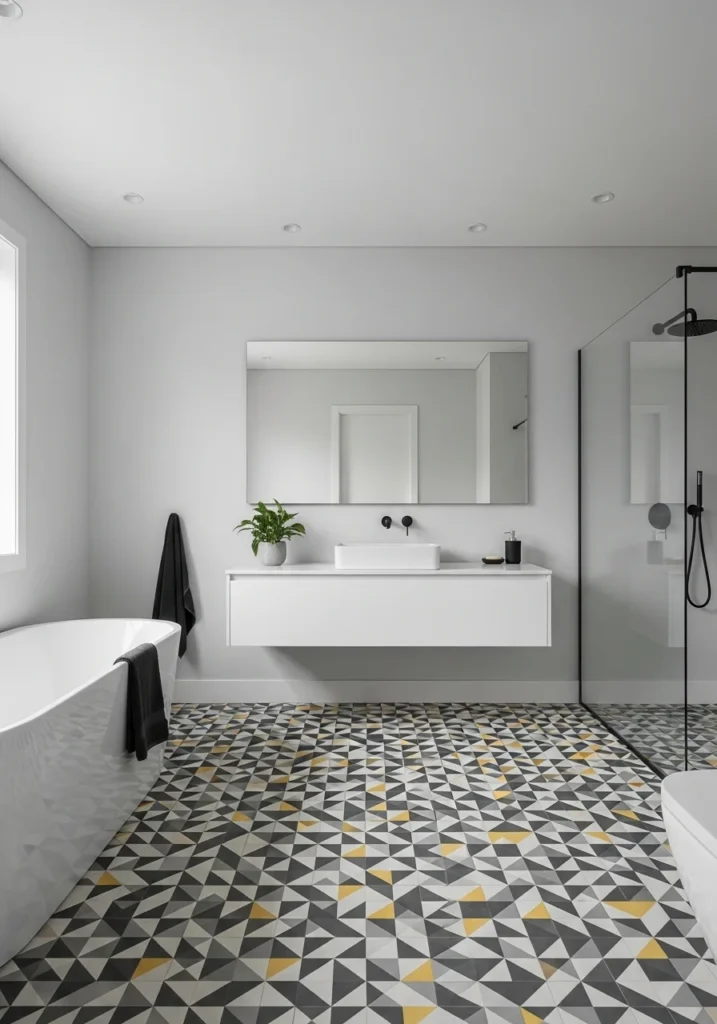
The floor was the last surface I thought about, and it turned out to be the one with the most personality. I chose a soft geometric pattern in muted blues and creams, laid across the whole floor, and the room suddenly had a focal point that needed nothing else. Patterned floors work because everything else can stay quiet: plain walls, a simple vanity, white towels, and the floor does the talking. I would order a few extra tiles and lay a test section first, because patterns can look very different across a whole room than they do on a single sample. Keep the grout pale and the walls plain, and a patterned floor will feel charming rather than chaotic.
How to do it: Order samples and lay a test section of at least four tiles to see how the pattern repeats. Choose a muted pattern and keep walls, vanity and towels plain so the floor leads. Use a pale grout and a slip-resistant finish, and order 10 per cent extra tiles for cuts and spares.
19. Minimal Decor with Thoughtful Details
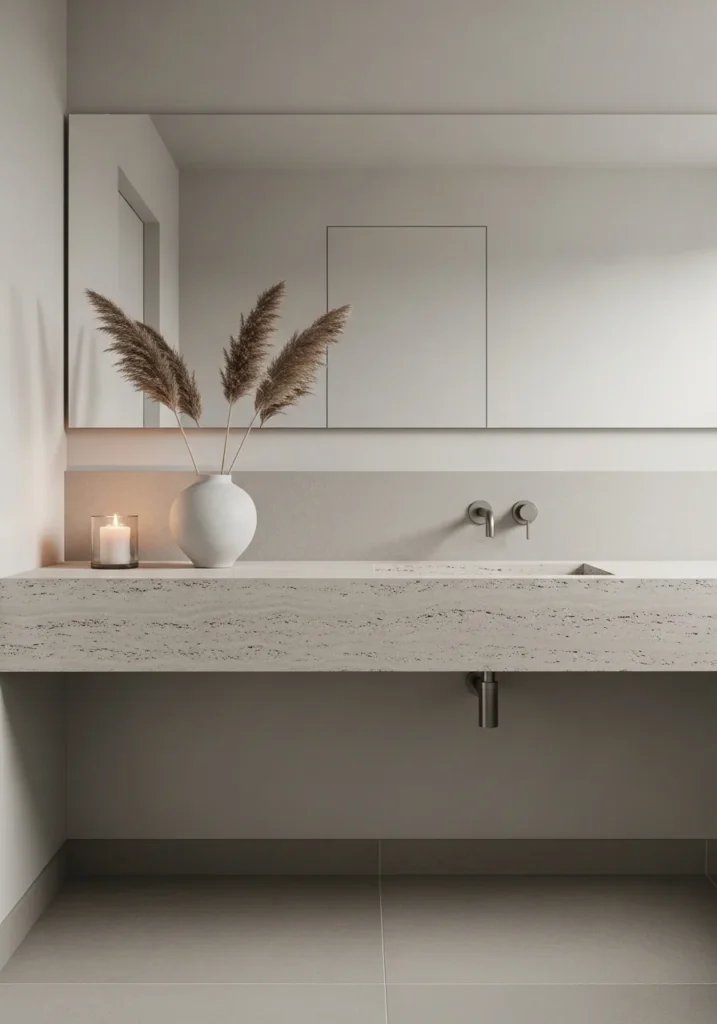
After years of adding things to our bathroom, the calmest it has ever felt is now, when it holds the fewest things. A ceramic vase with a single stem sits on the windowsill, a candle waits on the bath edge, and a small wooden tray corrals the soap and hand cream by the basin. That is the whole decoration, and it works because every piece earns its place. I edit ruthlessly now: if something does not get used or genuinely loved, it goes to another room. The result is a bathroom that is quick to clean, easy to look at, and quietly elegant. Restraint sounds dull, but it is the most reliable way I know to make a small room feel peaceful.
How to do it: Remove everything from the bathroom surfaces, then return only three decorative items, such as a vase, a candle and a tray. Choose pieces in one calm palette and give each a clear home. Repeat the edit monthly, removing anything that has crept back onto the counter.
Frequently Asked Questions
What is the easiest way to make a bathroom feel calmer?
Start with colour and clutter, because those two changes cost the least and show the fastest. Paint the walls a soft warm neutral, clear the counter down to three daily items, and swap harsh bulbs for warm 2700K LEDs. You will feel the difference the same day, and you can build from there one idea at a time.
Which colours make a small bathroom look bigger?
Pale, warm neutrals such as cream, soft beige and light stone make a small bathroom feel larger, because they reflect light and blur the edges of the room. Pair them with large-format tiles and a single darker accent, such as matte black taps, so the room has depth without feeling busy. Avoid too many competing colours in a small space.
How can I make my bathroom feel like a spa without a renovation?
Thick towels in one calm colour, a wooden bath tray, a candle and a small plant will do more than you expect. Add warm lighting on a dimmer and keep the counter clear, and the room will feel like a retreat rather than a washroom. Most of these changes cost very little and take a single afternoon.
How much does it cost to refresh a bathroom with these ideas?
A soft refresh can cost very little: a tin of paint, warm LED bulbs, new towels and a few accessories often come to well under a few hundred pounds. Bigger changes such as a floating vanity, a glass shower enclosure or a freestanding tub cost considerably more and may need a professional. Start with the small changes and save the larger ones for when the budget allows.
How do I keep a calm bathroom looking calm?
Give everything a home behind a door or in a drawer, and keep only three daily items on the counter in a single tray. Wipe surfaces weekly, edit the shelves once a month, and remove anything that has crept back onto the counter. A calm bathroom is less about what you buy and more about the small habits that keep it clear.
Your Calm Bathroom Retreat Checklist
Work through this list one step at a time, and tick each one off as your bathroom becomes the calm, stylish retreat you want it to be.
- ☐ Choose a soft neutral palette of three warm or cool tones
- ☐ Swap harsh bulbs for warm 2700K LEDs and add a dimmer
- ☐ Clear the counter and give every item a home behind a door or in a drawer
- ☐ Add one natural texture, such as wood, stone or rattan
- ☐ Hang a statement mirror at eye level, about 150 to 160 cm from the floor
- ☐ Roll towels in one calm colour and store them in a basket or on a shelf
- ☐ Add a plant that loves humidity, such as pothos or a fern
- ☐ Fit a built-in niche or a tidy shelf for shower bottles
- ☐ Choose one accent wall and keep the other walls plain
- ☐ Match your fixtures in a single finish, such as matte black or brass
- ☐ Lay large-format tiles or a patterned floor to suit your room
- ☐ Add a bath tray, candle and glass jars for a spa-like finish
- ☐ Keep surfaces clear with a single tray for daily essentials
- ☐ Step back, edit ruthlessly, and enjoy your calmer bathroom
Conclusion
You do not need a full renovation, a large budget or a designer to make your bathroom feel like a retreat. A warm palette, softer light, one or two natural textures and a little ruthless editing will carry you most of the way there, and the smaller changes, a new bulb, a rolled towel, a plant on the sill, are often the ones you notice every single day.
Start with the idea that appeals to you most, live with it for a week, and then add the next. A calm bathroom is not finished in a weekend; it grows one thoughtful choice at a time, until the room you hurry through in the morning becomes the room you look forward to at the end of the day.