
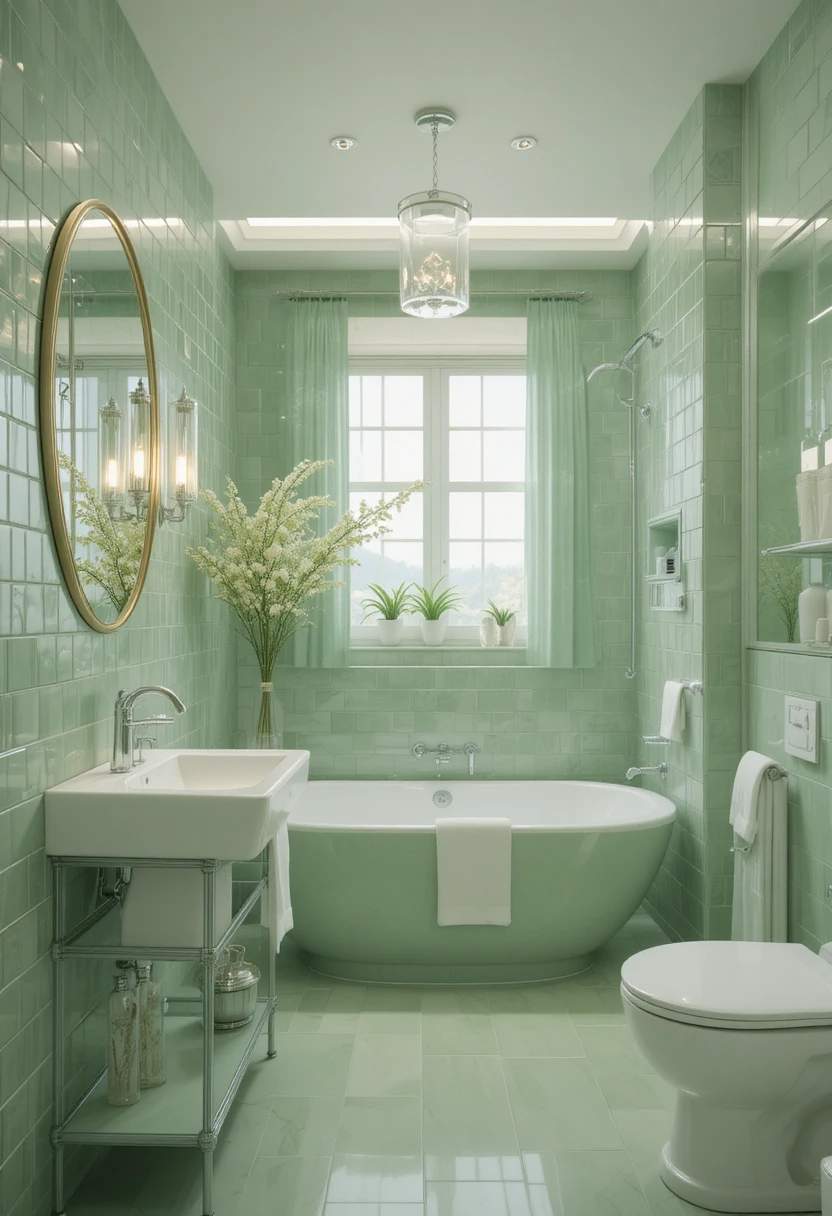
26 Sage Green Bathroom Ideas for a Fresh, Calming, Natural Space
There is something wonderfully soothing about a sage green bathroom, where the soft, earthy tone brings calm and freshness to the space. Sage has a gentle way of feeling both natural and elegant, like a quiet moment in a leafy garden. It pairs beautifully with so much, from warm wood and brass to crisp white and soft stone, making it endlessly versatile. With the right textures and touches, a sage green bathroom feels like a serene, spa like retreat you never want to leave. Below are twenty six sage green bathroom ideas, shared with warmth and inspiration, to help you create a fresh, calming, natural space you will love.
1. Start With Soft Sage Walls
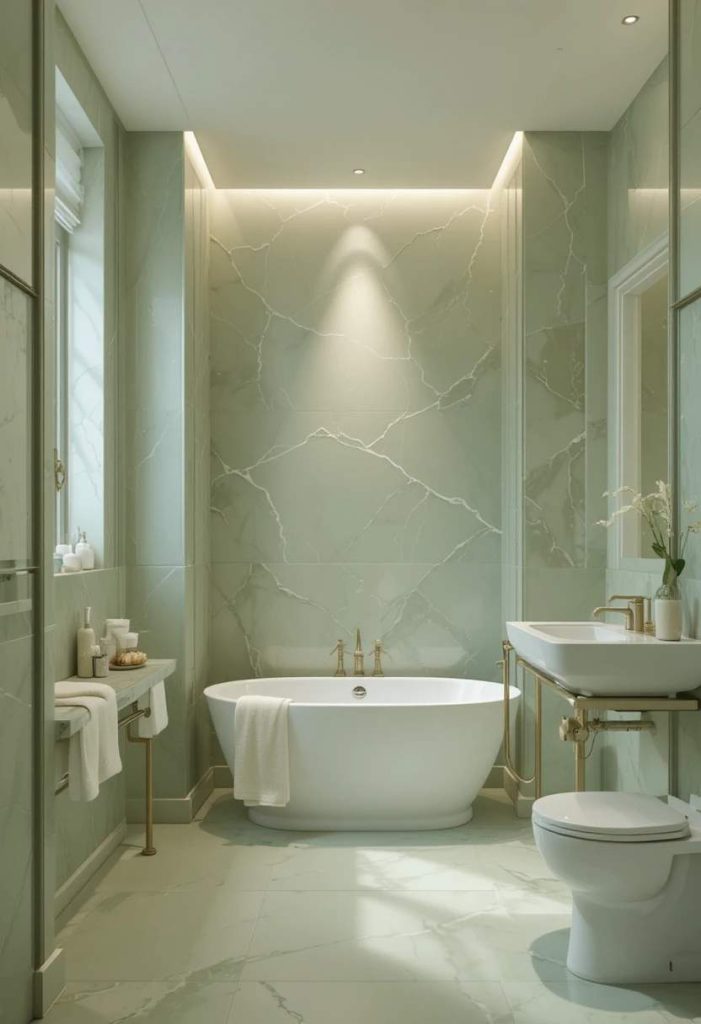
I painted our bathroom walls sage after months of staring at tired white plaster, and the change still makes me smile every morning. I chose a soft, muted sage with a grey undertone and a durable eggshell finish, so steam and splashes wipe away easily. In our north-facing room I painted all four walls the same shade, which stopped the small space feeling chopped up, and I kept the ceiling bright white to lift it. Before you commit, paint a large tester patch beside the mirror and live with it for a few days, checking it in morning light and again in the evening, because sage can turn greener or greyer as the light changes.
How to do it: Clean the walls, fill any cracks and apply a stain-blocking primer. Paint a large tester patch first, then roll two thin coats of sage eggshell, cutting in carefully around the bath and mirror. Leave each coat to dry fully, and keep the ceiling and woodwork bright white for contrast.
2. Pair Sage With Crisp White
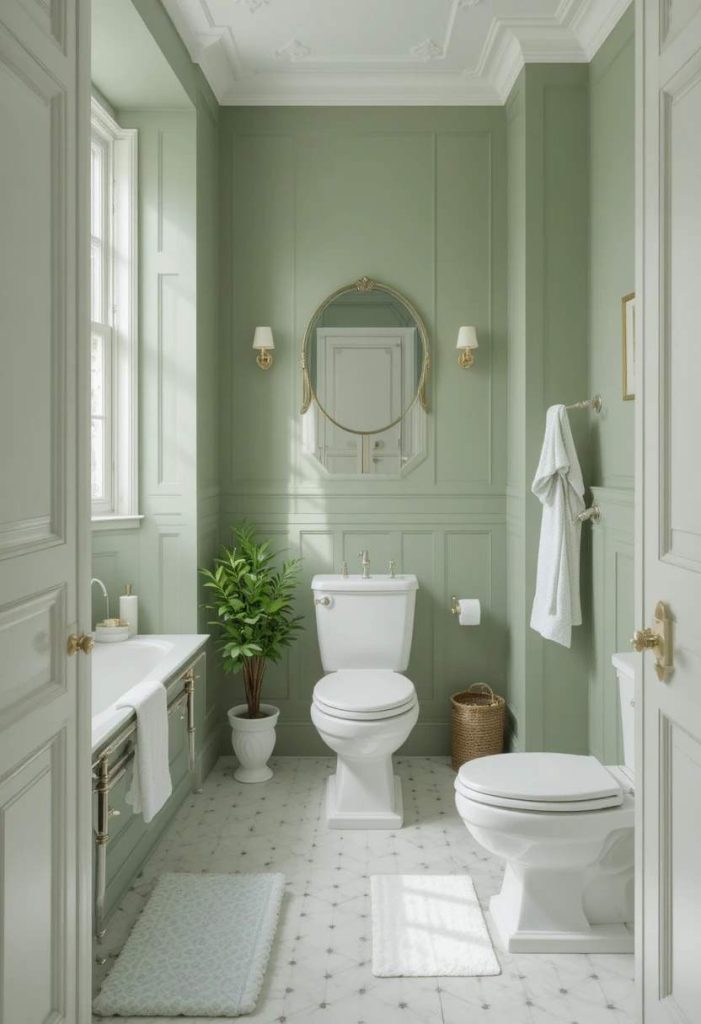
White is the easiest partner for sage, and I lean on it heavily in our bathroom because it keeps the green feeling fresh instead of heavy. I kept the bath, basin and loo in bright white, then added white towels with a thin sage stripe and a white-painted window frame, so the contrast feels deliberate rather than accidental. In a small room, white does the heavy lifting: it bounces light around, stops the sage closing in and makes the whole space feel cleaner. I avoid cream-white here, because its yellow undertone can clash with sage’s grey-green, and I keep the white consistent across fixtures and linen so the room reads as calm, not busy.
How to do it: Start with white fixtures and a white ceiling, then layer white towels, a white bath mat and white-painted trim. Keep every white the same tone — bright, clean white rather than cream — and add one sage accent, such as a soap dish or hand towel, to tie the two colours together.
3. Add Warm Wood Tones
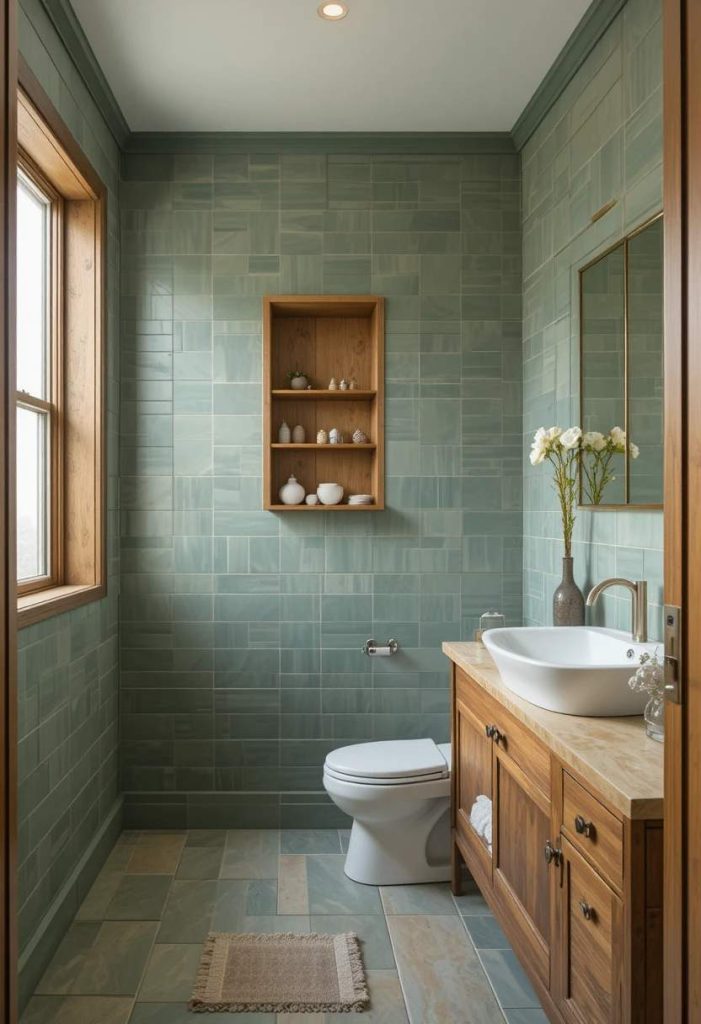
Wood is what stops sage from feeling cold, and I reach for it whenever a bathroom starts to look too polished. I added a teak bath mat, a small oak stool beside the bath and a wooden tray on the vanity, and the grain immediately warmed the green up. I choose mid-toned woods with visible grain — oak, teak and walnut all work — and I keep them oiled rather than varnished, because a matte, natural finish sits better with sage than anything glossy. In a damp room, I avoid raw untreated pine on the floor, and I make sure wooden pieces can dry out between showers, so they stay beautiful instead of going grey or spotty.
How to do it: Add one larger wooden piece, such as a stool or bath mat, plus one small one, like a tray or soap dish. Choose warm mid-toned wood, oil it to protect it from steam, and keep it away from standing water so it dries between uses.
4. Try Sage Green Tiles
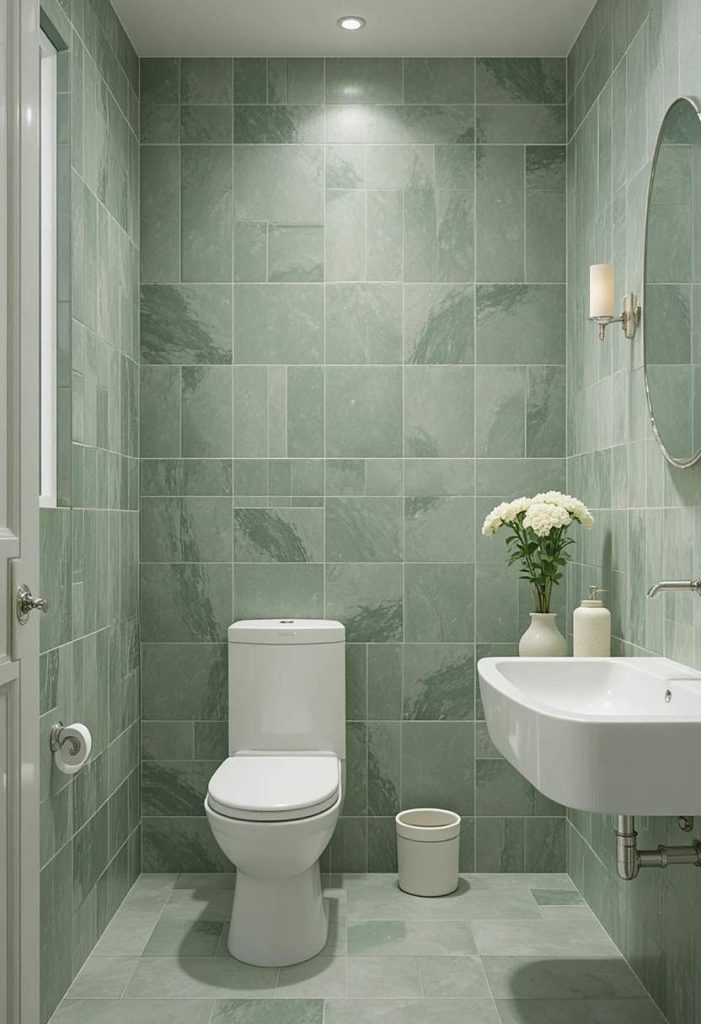
I love sage tiles because they bring colour and texture in one go, and they survive steam and splashes far better than paint. In our shower I used glossy sage rectangles in a brick pattern, and the glaze catches the light beautifully, while zellige-style tiles give the same look with a handmade, slightly uneven finish that feels artisan rather than flat. I keep the grout a soft pale grey — bright white grout can look harsh against sage, and it shows every mark. If you are tiling a whole wall, order a spare box, because handmade-look tiles vary in tone from batch to batch and you will want spares for repairs.
How to do it: Measure the wall, order tiles plus ten per cent extra for cuts, and dry-lay a row first to check the pattern. Fix the tiles with a suitable adhesive, use tile spacers for even joints, grout in pale grey and seal natural stone-look tiles once the grout has cured.
5. Add Lush Greenery
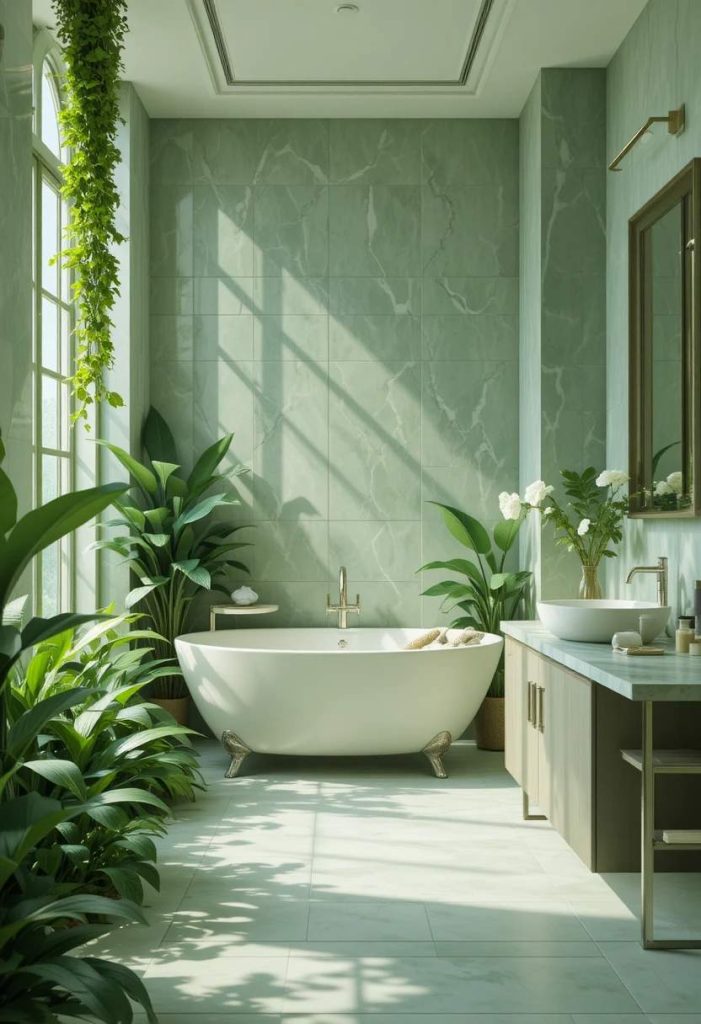
I keep plants in our bathroom because they make sage feel alive rather than painted on, and the humidity suits them beautifully. I have a trailing pothos on a high shelf, a small fern on the windowsill and a sprig of eucalyptus in a vase by the basin, and together they echo the wall colour without matching it exactly. I choose plants that love moisture and low light, and I keep them in simple ceramic or terracotta pots so the greenery, not the container, does the talking. If your bathroom has no window, a good-quality faux eucalyptus stem in a vase gives the same soft, leafy effect with no watering at all.
How to do it: Pick two or three humidity-loving plants, such as pothos, ferns or eucalyptus, and place them at different heights. Use pots with drainage, water sparingly in winter, and wipe the leaves now and then so dust does not dull the green.
6. Add Brass or Gold Fixtures
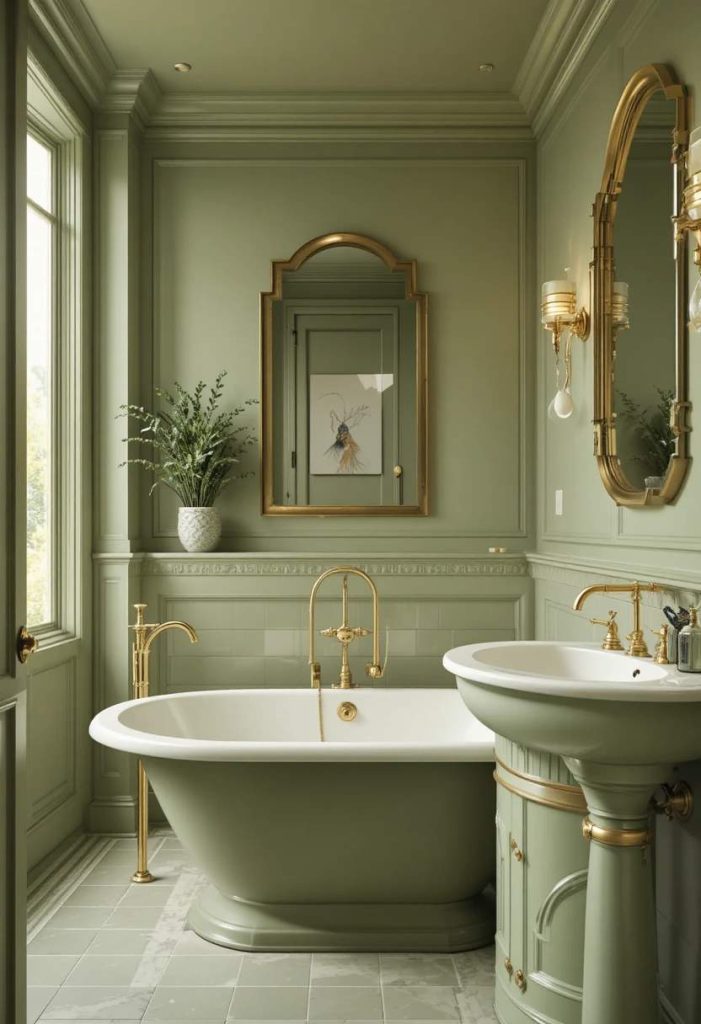
Brass is my favourite way to warm sage up, because the metal’s golden glow plays beautifully against the green’s cool, grey undertone. I chose brushed brass taps and a matching towel ring, and I deliberately avoided mixing in chrome or nickel, because one consistent metal reads as intentional while a jumble of finishes looks accidental. Brushed finishes suit a calm, modern bathroom and hide water marks far better than polished gold, which I save for a mirror frame or a light fitting where it can shine without constant splashes. I also keep the brass to a few key pieces, so it stays a highlight rather than taking over.
How to do it: Choose one metal finish — brushed brass for a soft look or polished gold for glamour — and use it for taps, towel rings and cabinet handles. Clean it with a soft cloth and mild soap, and avoid harsh descalers that can strip the finish.
7. Add a Sage Green Vanity
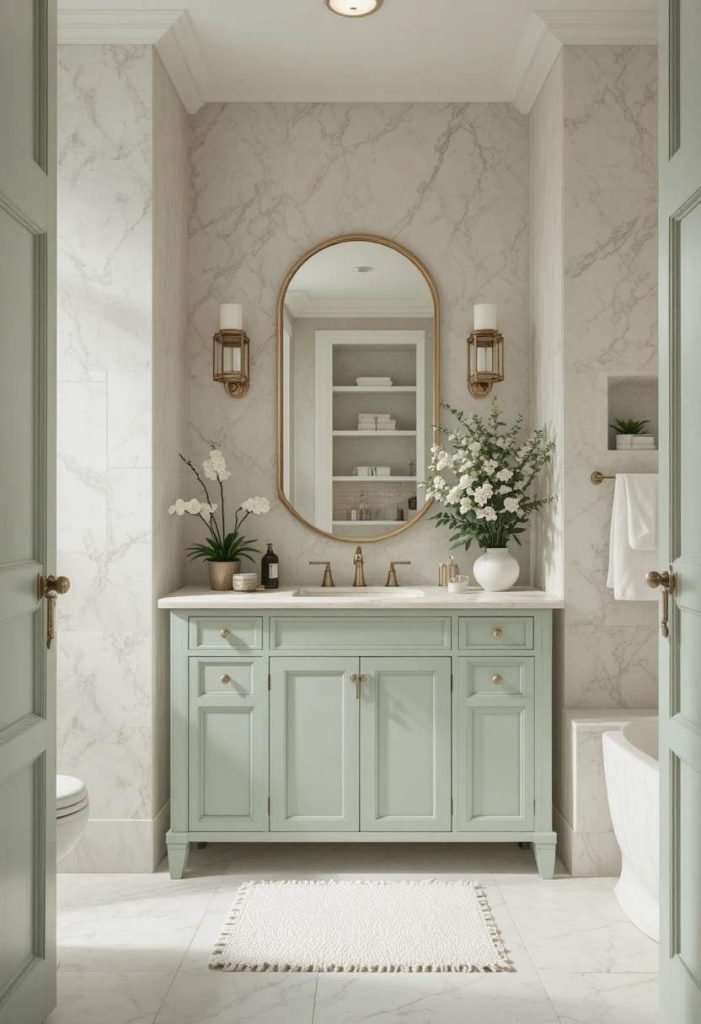
A sage vanity is the gentlest way to bring the colour into a bathroom, and it is the route I recommend if painting all the walls feels like too much. I painted our old oak vanity in a soft sage eggshell, added a white worktop and simple brass cup handles, and suddenly the whole room had a focal point. Painting a vanity is forgiving: you can sand and prime a tired unit in an afternoon, and if the shade is not quite right, you can repaint a single piece far more easily than four walls. I keep the worktop white or pale stone, because a dark top can make a sage unit look heavy.
How to do it: Remove the doors and handles, clean and lightly sand the vanity, then apply a bonding primer. Paint two thin coats of sage furniture paint, let each coat dry fully, and refit with new brass or wooden handles and a white or pale stone worktop.
8. Keep It Bright and Airy
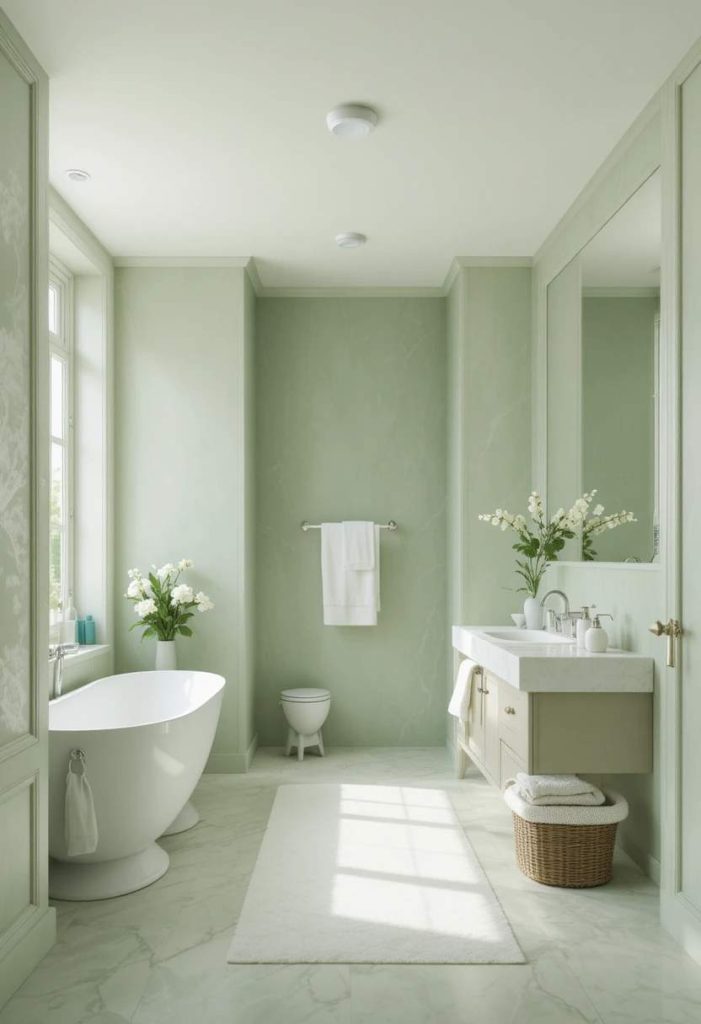
Sage can feel heavy in a dark room, so I work hard to keep light moving through ours. I use sheer linen on the window instead of a blind, keep the ceiling and woodwork white, and choose a large mirror that bounces daylight across the sage walls. I also keep surfaces clear — a cluttered sill or crowded shelf blocks light and makes a small bathroom feel smaller. If your bathroom has no window, a daylight bulb in the ceiling light and a second light by the mirror make a real difference, and pale sage on the walls reflects far more light than a deep green would.
How to do it: Keep the ceiling and trim white, hang sheer curtains and place a large mirror opposite the window. Clear the windowsill, use daylight bulbs where there is no natural light, and choose a pale sage so the walls reflect rather than absorb light.
9. Add Natural Stone
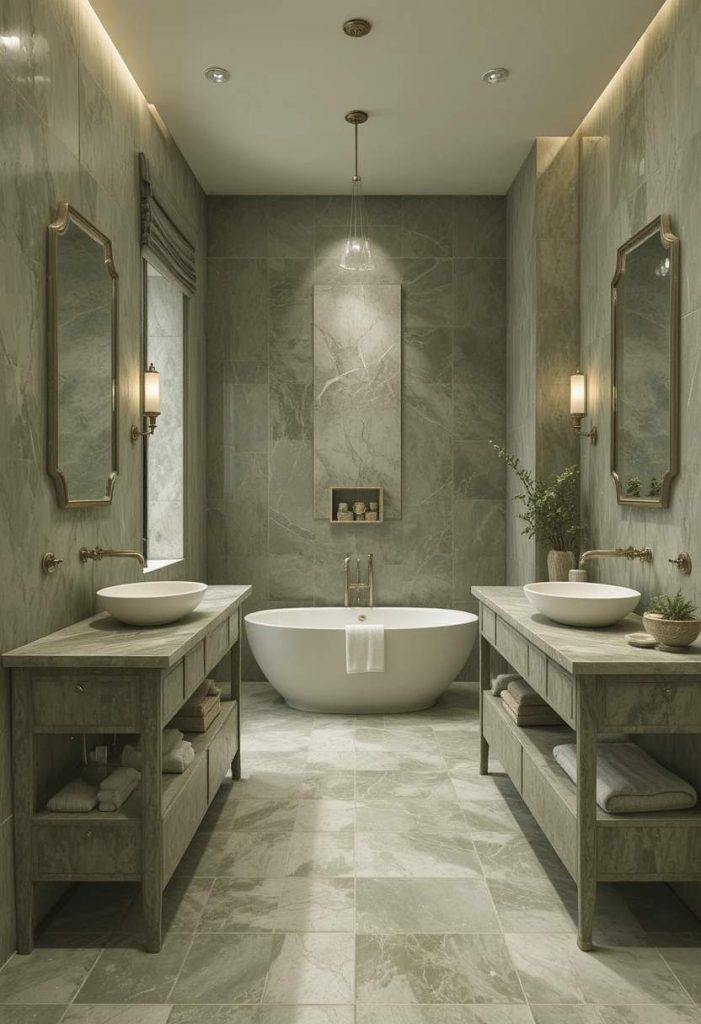
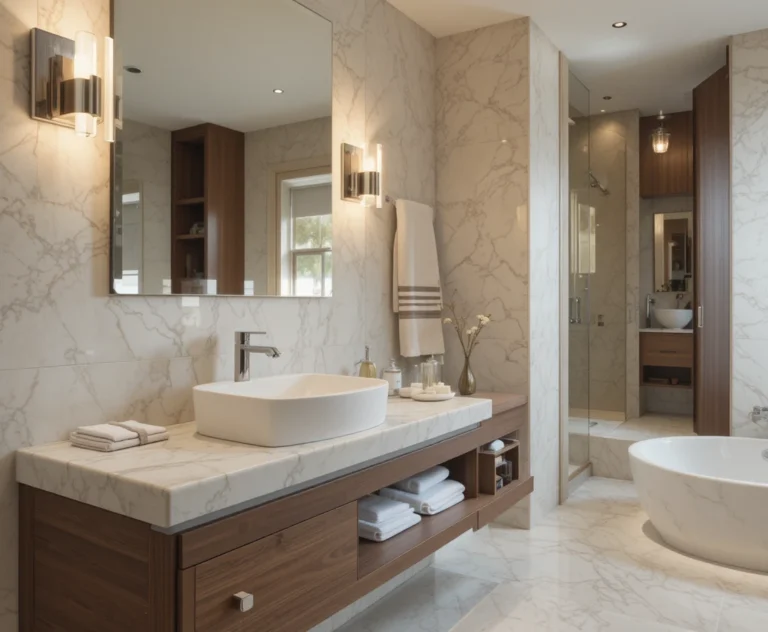
Stone is the material that makes a sage bathroom feel grown-up and grounded, and I love how its cool, earthy surface sits beside the green. I chose a pale travertine shelf above the basin and a marble-look worktop, and the veining picks up the grey in the sage without competing with it. I keep stone honed rather than polished — a matte finish feels softer and shows fewer water marks — and I seal it properly, because bathroom stone soaks up splashes and products if left unprotected. Slate works well too if you prefer a darker, moodier contrast, but I would use it sparingly so the room stays light.
How to do it: Choose one stone, such as travertine, marble or slate, for a shelf, worktop or bath surround. Seal it before use and reseal once a year, keep it honed for a softer finish, and pair it with wood and brass for a layered, natural feel.
10. Add Soft Textiles
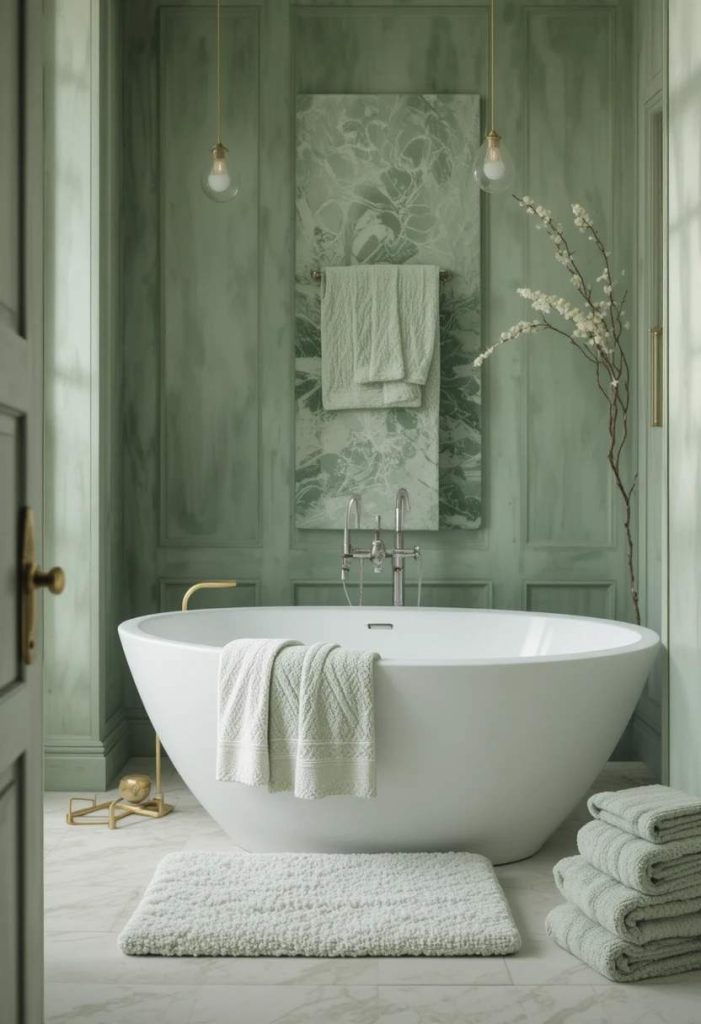
Towels are the easiest place to add sage, and I treat them as part of the colour scheme rather than an afterthought. I layer a waffle-weave towel in sage over a fluffy white one on the rail, add a sage bath mat that I can wash weekly, and keep a folded hand towel on the vanity for guests. I choose cotton or bamboo towels because they dry properly between uses — damp, synthetic towels stay musty in a sage bathroom — and I wash them without fabric softener, which coats the fibres and makes them less absorbent. A small stack of rolled towels in a basket looks spa-like and costs almost nothing.
How to do it: Layer a sage waffle towel over a white fluffy towel, add a washable sage bath mat and a folded hand towel for guests. Choose cotton or bamboo, wash without fabric softener, and roll spare towels in a basket for a spa-like finish.
11. Create a Spa-Like Retreat
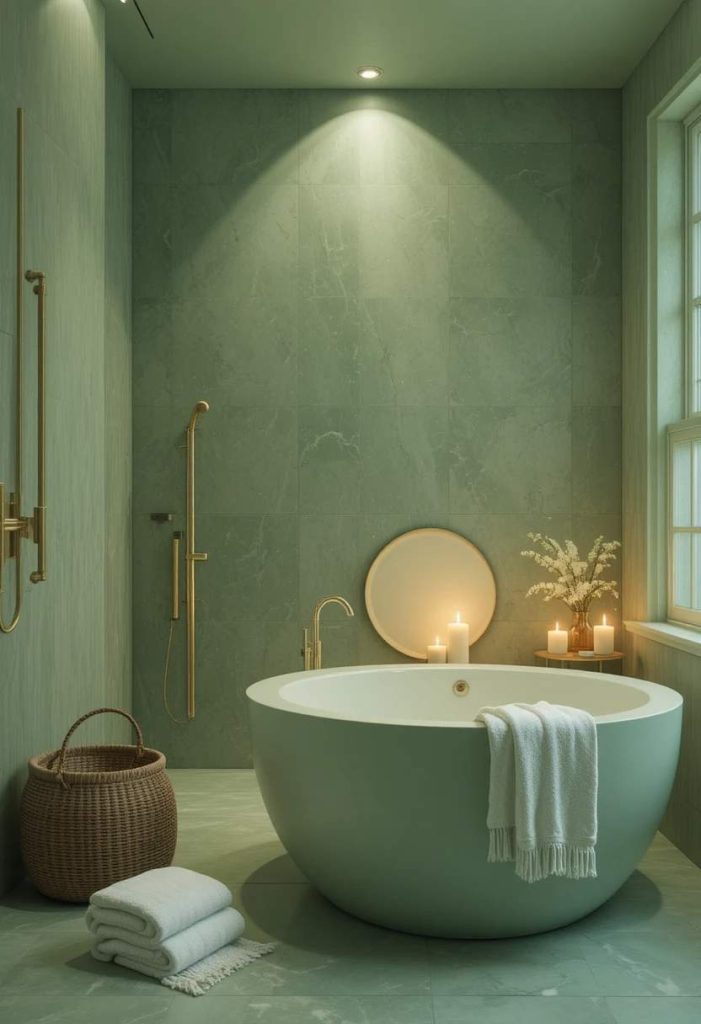
I treat our bathroom as a small spa, and sage is the colour that sets that mood before I add anything else. I light a eucalyptus candle on the bath edge, fold a thick towel over the rail and keep a wooden bath tray ready with a book and a glass of water, so a normal bath feels like an occasion. I keep the surfaces calm — one candle, one plant, one tray — because a spa feeling comes from space and quiet, not from lots of things. I also use a soft, warm light in the evening and a gentle, natural scent, and I put my phone outside the room, because the ritual only works if I actually slow down for it.
How to do it: Clear the surfaces, then add a candle, a folded plush towel and a wooden bath tray. Use warm, dim light in the evening, choose a gentle natural scent such as eucalyptus, and keep the room uncluttered so the calm has room to work.
12. Add Patterned Tiles
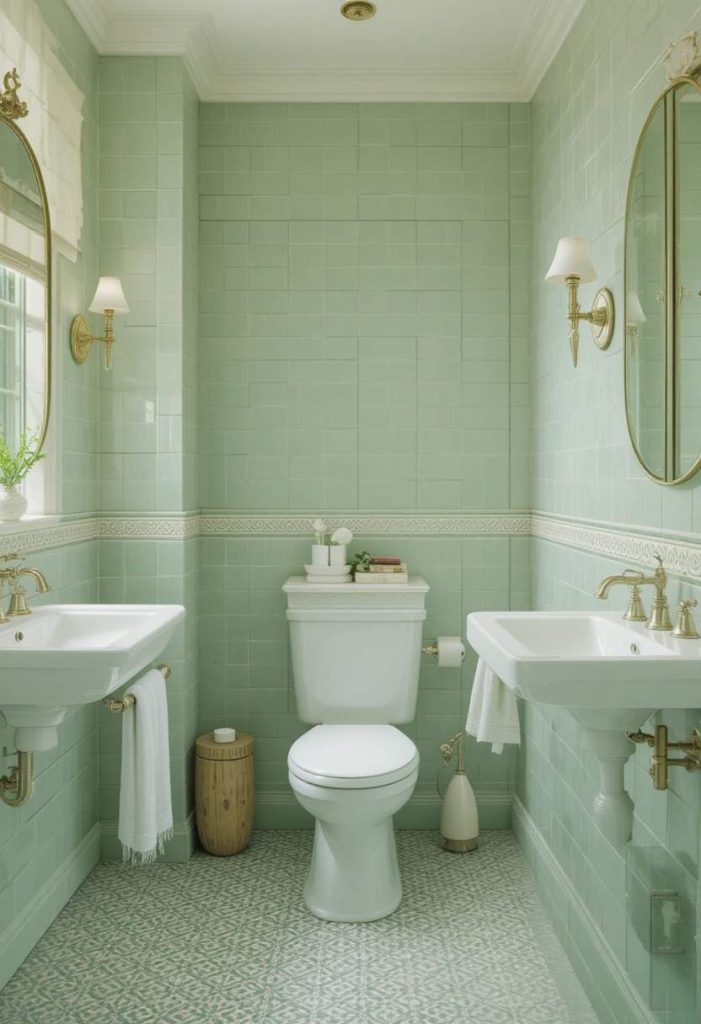
I save patterned tiles for one feature area, because a little pattern goes a long way beside sage. I used sage-and-white geometric tiles on the floor of the shower area only, and the design draws your eye in without making the room feel busy. I choose patterns with plenty of white in them and a small repeat, so they read as fresh rather than fussy, and I keep the rest of the room plain — plain walls, plain towels — so the tiles get to shine. Before ordering, I lay a few tiles out on the floor and step back, because a pattern that looks pretty in a single tile can feel overwhelming across a whole wall.
How to do it: Choose a sage-and-white pattern with a small repeat and use it on one feature wall or floor area only. Dry-lay the tiles first to check the pattern, keep the rest of the room plain, and grout in a tone that matches the lightest tile.
13. Add a Statement Mirror
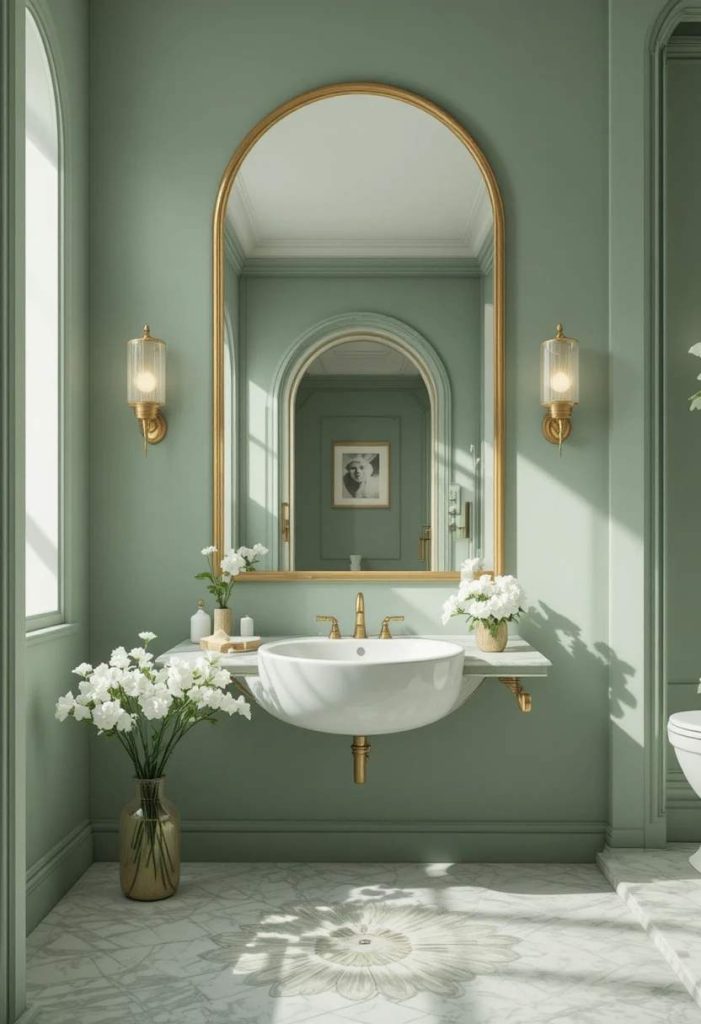
A beautiful framed mirror is the piece that pulls a sage bathroom together, and I never treat it as an afterthought. I chose a round brass-framed mirror above our vanity, because the curve softens all the straight lines of the tiles and the brass picks up the taps. I hang it so it reflects the window or a plant, never the loo, and I keep it large enough to use properly — a mirror that is too small makes the whole vanity look unfinished. I have gathered more vanity mirror ideas for bathrooms, and an arched or round shape is my starting point there too, because it suits sage’s soft, natural mood better than a sharp rectangle.
How to do it: Measure the vanity and choose a mirror about two-thirds its width, in a round or arched shape. Hang it at eye level, centred over the basin, and check that it reflects light or greenery rather than clutter.
14. Mix Shades of Green
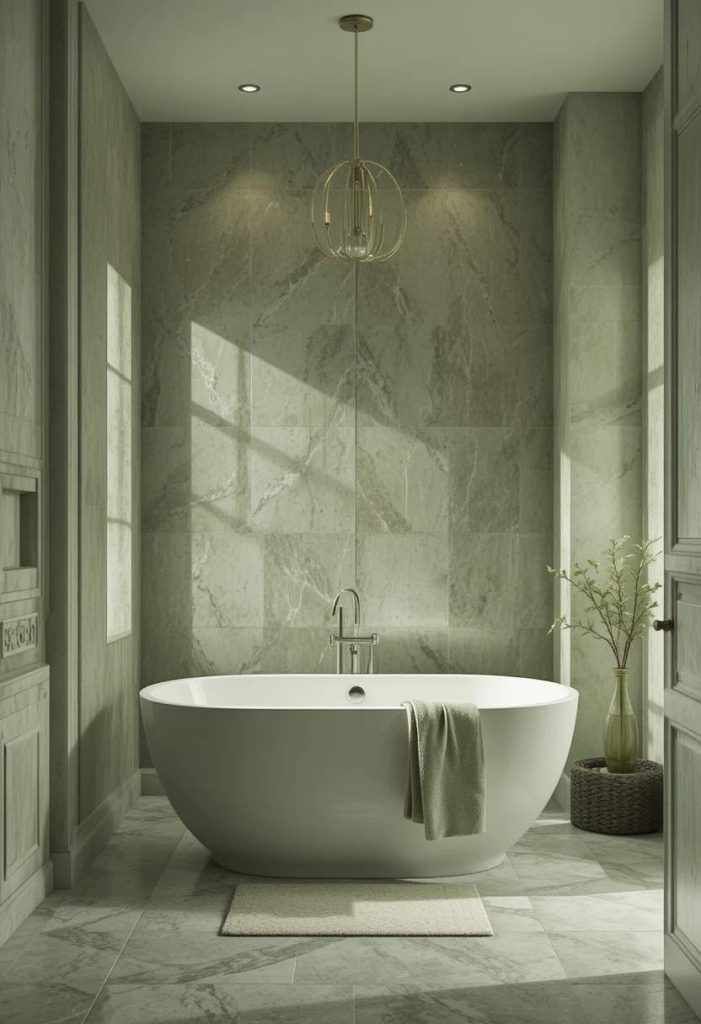
I layer greens the way I layer neutrals — in small steps, so the room feels deep rather than flat. I keep sage as the main colour, then add a deeper olive in the towels and a soft eucalyptus green in a plant pot, so the tones sit beside each other without fighting. I always test the shades together in daylight, because two greens that look close on a paint chart can clash once they are on the wall. I keep the deepest green to the smallest area, such as a towel or a vase, and I let white and wood break the greens up, so the bathroom stays calm and the layers feel deliberate.
How to do it: Keep sage as the main shade, then add one deeper green, such as olive, in towels or accessories. Test the shades together in daylight, keep the darkest green to small accents, and use white and wood to separate the greens.
15. Add Natural Textures
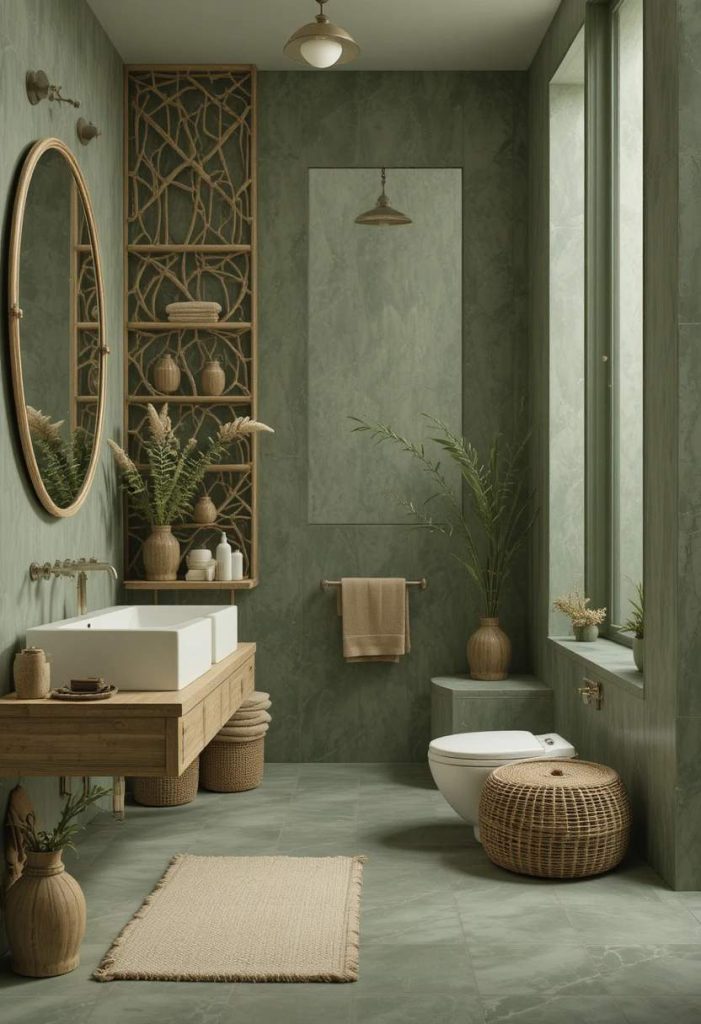
I layer textures the way I layer colours, because sage on its own can look flat against smooth tiles and porcelain. I added a rattan basket for rolled towels, a linen hand towel and a small jute rug by the bath, and the room instantly felt softer and more lived-in. I keep the textures natural and undyed — rattan, jute, linen and cotton in their own warm tones — so they sit quietly beside the green instead of competing with it. I avoid anything too shiny here, and I choose pieces I can wash or shake out easily, because bathroom textures need to cope with steam and the odd splash.
How to do it: Add one woven piece, such as a rattan basket, one linen towel and one jute rug. Keep the textures natural and undyed, choose pieces that are easy to wash or shake out, and avoid shiny finishes that fight the sage.
16. Add Warm Lighting
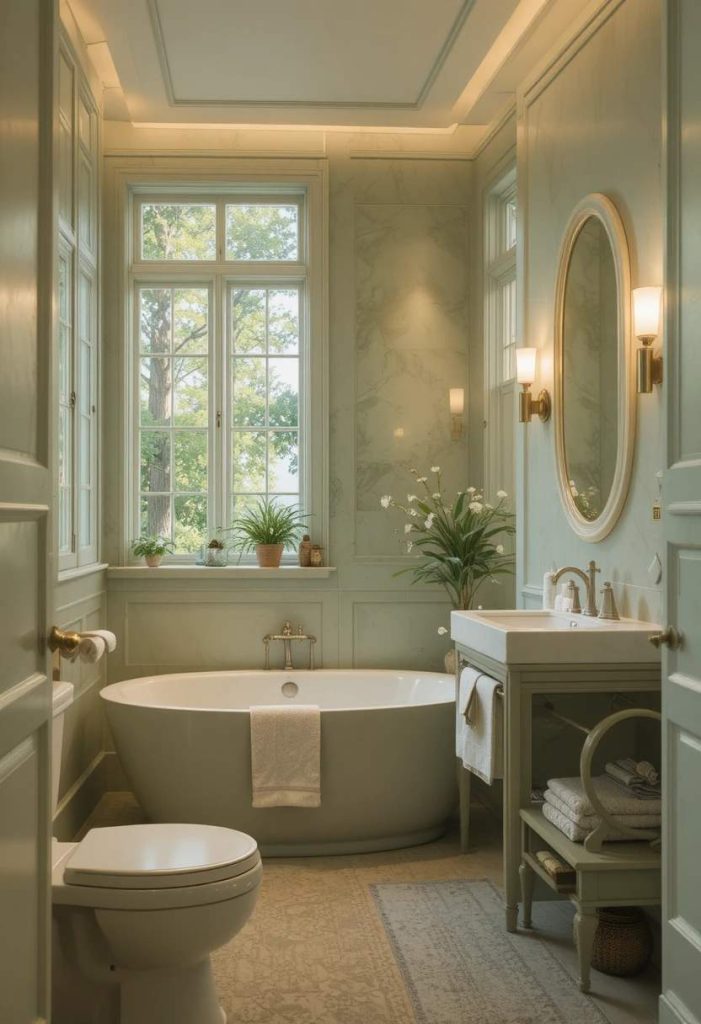
Lighting changes sage more than almost anything else, and I learned that the hard way when a cool white bulb made our walls look grey and flat. I switched to warm bulbs around 2700K, added a pair of sconces beside the mirror and a small candle on the vanity, and the green suddenly glowed. I use dimmers wherever I can, because bright overhead light at night kills the calm, and I keep the mirror lights at face height so I can actually see properly. I avoid cool daylight bulbs in here entirely — they fight the warmth that makes sage feel inviting.
How to do it: Fit warm bulbs around 2700K, add sconces or a wall light beside the mirror, and put the main light on a dimmer. Keep mirror lighting at face height, add a candle for evening baths, and avoid cool white bulbs that make sage look grey.
17. Add a Sage Accent Wall
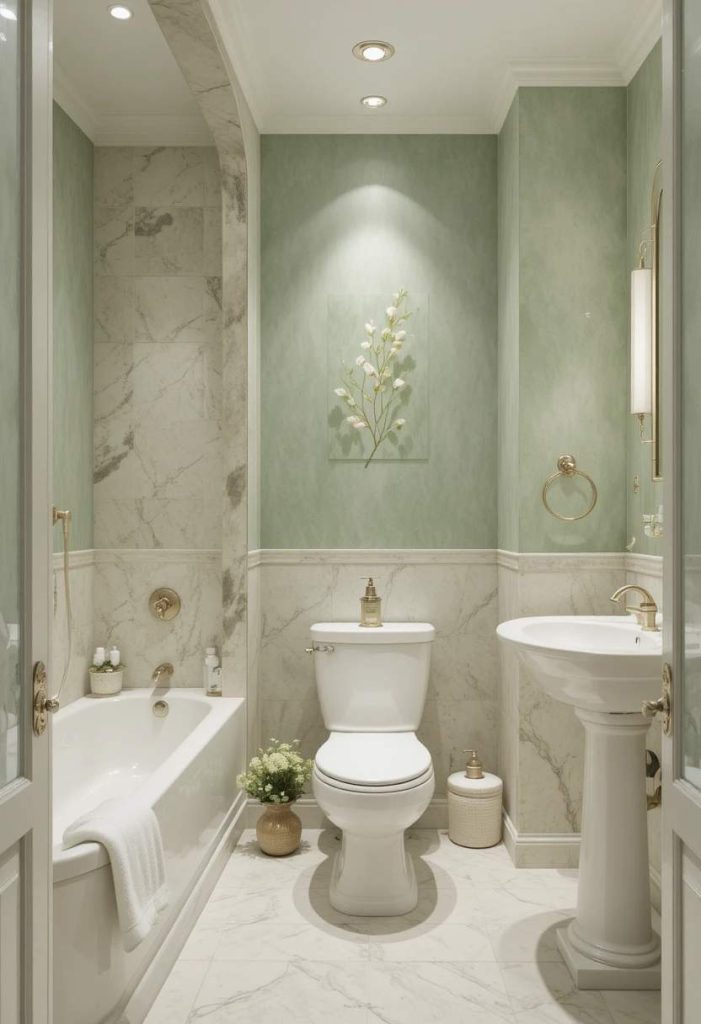
One sage wall is often all a bathroom needs, and I prefer it to painting the whole room when the space is small or the light is limited. I painted the wall behind our vanity sage and left the other three white, so the colour frames the mirror and basin like a backdrop. I choose the wall you see first when you walk in, or the one behind the bath, and I keep the rest of the room pale so the accent stays the star. I also paint the skirting on that wall the same sage, because a white skirting line across a green wall can chop the colour in half.
How to do it: Pick the wall behind the vanity or bath, or the first wall you see on entering. Paint it sage in a durable eggshell finish, paint the skirting the same shade, and keep the other walls white or very pale.
18. Pair Sage With Soft Cream
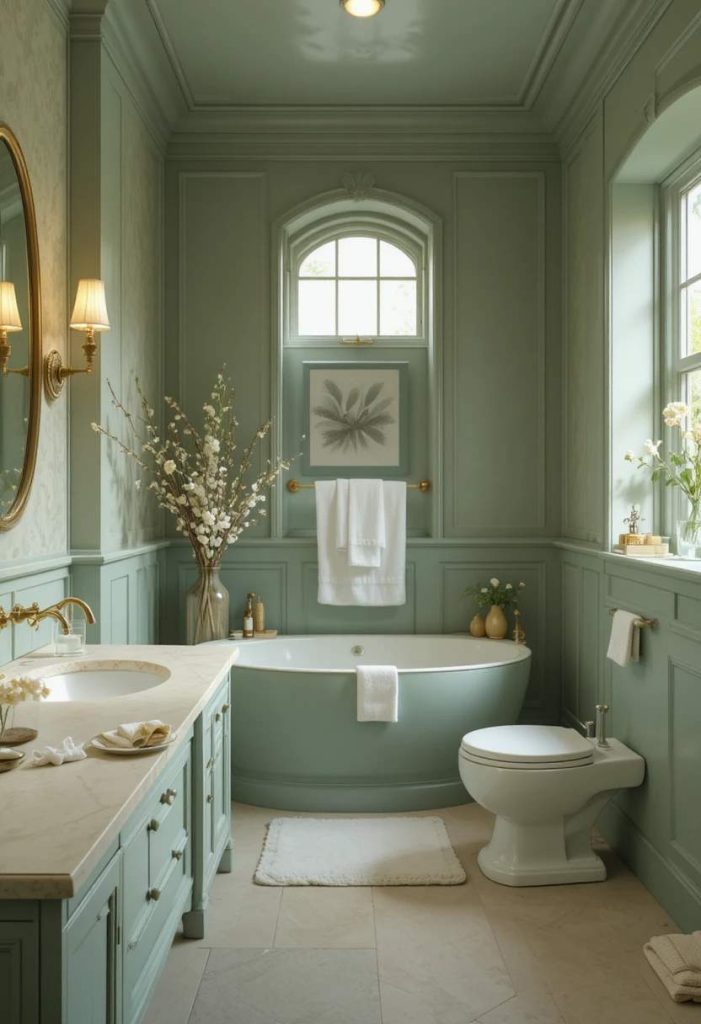
Cream is my softer alternative to white when sage needs warming rather than brightening. I use cream towels, a cream bath mat and a warm cream-painted cabinet, and the room feels cosy without losing its freshness. I keep the cream warm and yellow-based, because a cool, grey cream can look grubby next to sage, and I use it in textiles and paint rather than on the fixtures, so the white bath and basin still give the room a clean edge. I also repeat the cream in at least two places, so it reads as a deliberate pairing rather than a single stray towel.
How to do it: Swap white towels and the bath mat for warm, yellow-based cream versions, and paint a cabinet or stool in cream. Repeat the cream in at least two places, keep the bath and basin white, and avoid cool grey creams.
19. Keep Fixtures Sleek and White
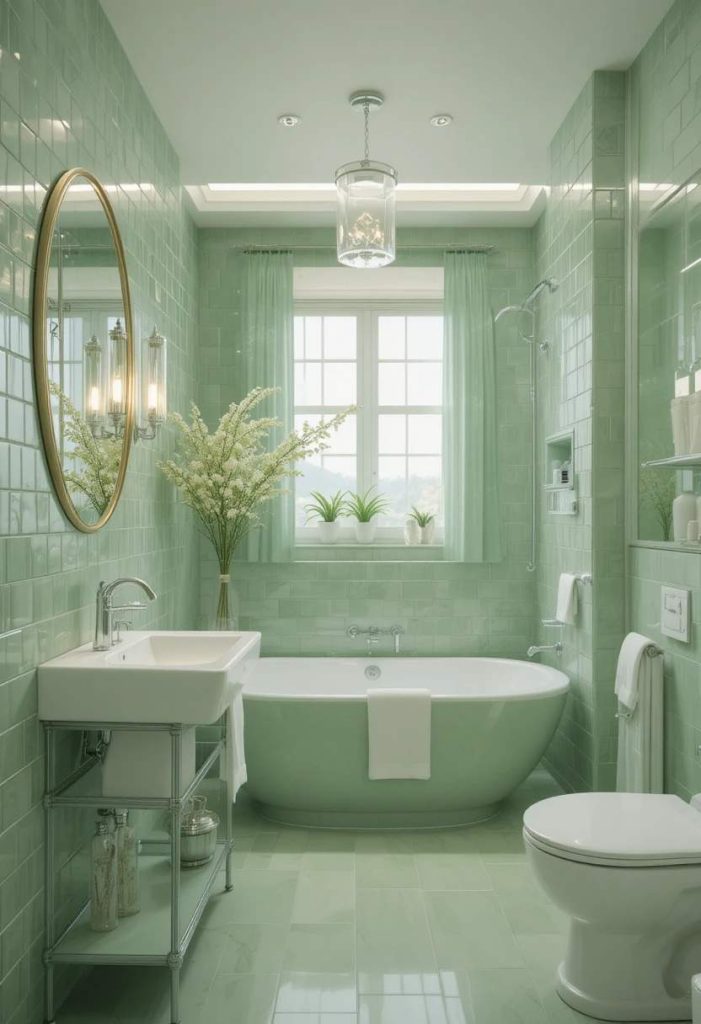
I keep the fixtures themselves deliberately simple, because sage does the decorating and the bath, basin and loo just need to do their jobs well. I chose clean-lined white pieces with no fussy detailing, and the contrast with the green makes the room feel fresh rather than old-fashioned. I look for a rimless loo and a wall-hung basin where I can, because fewer ledges and joins mean less cleaning and a neater look, and I match the white of the fixtures to the white of the towels so nothing clashes. In a small bathroom, streamlined fixtures also free up visual space, which matters more than any decorative detail.
How to do it: Choose clean-lined white fixtures with simple shapes and no fussy detailing. Match their white to your towels and trim, prefer wall-hung pieces to free up floor space, and keep seals and grout clean so the white stays bright.
20. Add Wooden Accessories
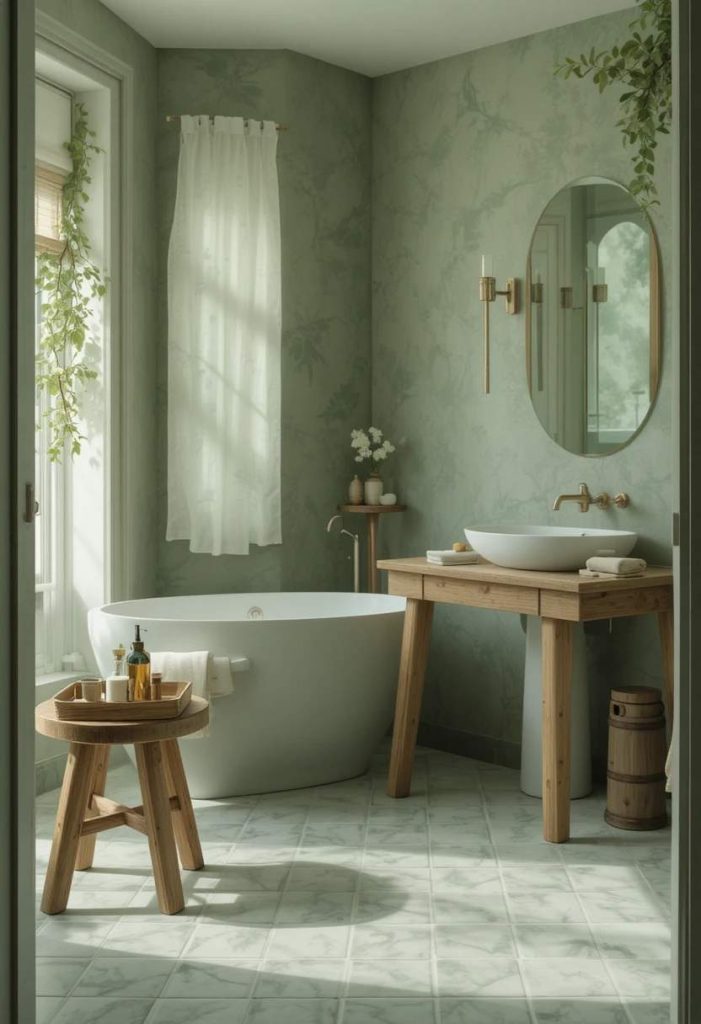
I use wooden accessories as the finishing layer, because they add warmth without adding another colour. I keep an oak tray on the vanity for perfume bottles, a teak stool beside the bath for a folded towel and a book, and a small wooden soap dish by the basin, and each piece earns its place. I choose simple, unfussy shapes in oak or teak, and I keep the wood tones close to each other, because mixing pale ash with dark walnut in one small room can look restless. I oil the pieces now and then, and I never leave a wooden tray sitting in a puddle, because water marks are the quickest way to spoil it.
How to do it: Add a wooden tray on the vanity, a stool beside the bath and a soap dish by the basin. Keep the wood tones close, choose simple oak or teak shapes, oil them now and then and keep them out of standing water.
21. Add Soft Sheer Curtains
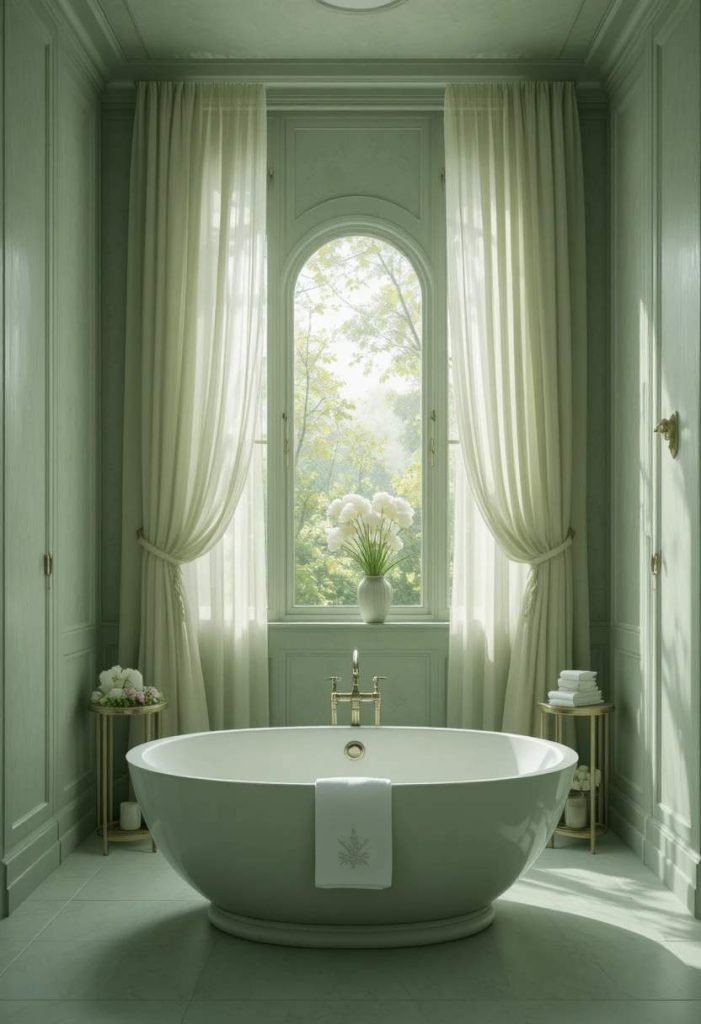
I hang sheer curtains because they give privacy without stealing the light, and in a sage bathroom light is everything. I chose a soft white linen sheer that filters the sun into a gentle glow, and I keep it long enough to skim the sill so it moves slightly when the window is open. I avoid heavy curtains and dark linings here, because they close a small bathroom in and hide the sage, and I keep the rail simple — a slim brass rod that matches the taps. If the window faces the street, a sheer with a slightly tighter weave still lets light through while keeping the room private.
How to do it: Hang a white or pale sage sheer linen curtain on a slim rod, long enough to skim the sill. Choose a weave that filters light but keeps privacy, avoid heavy dark linings, and keep the rod in a finish that matches your taps.
22. Add Marble With Green Veining
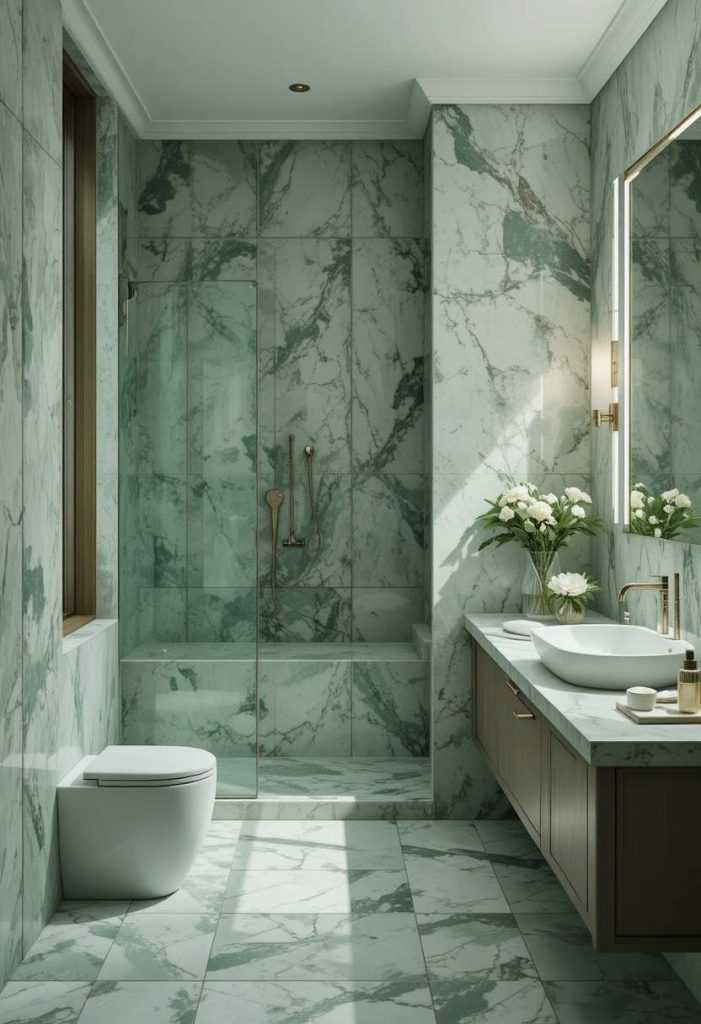
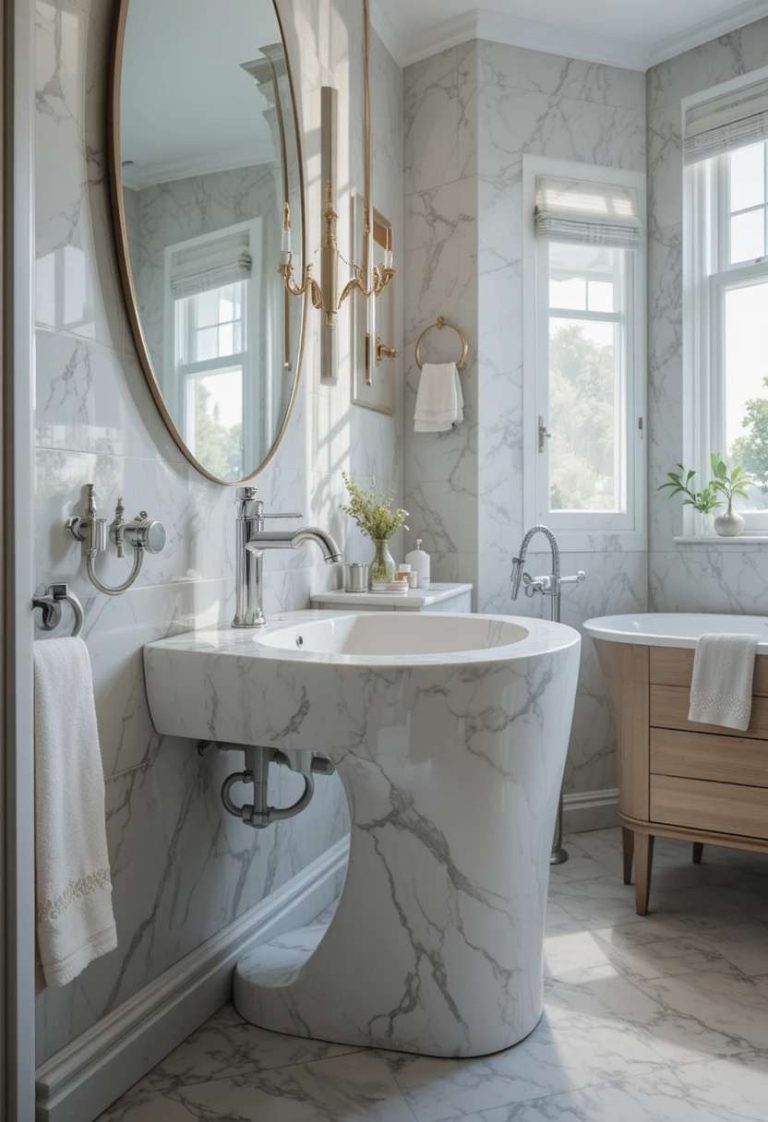
Marble with green veining is the stone that looks as though it was made for sage, and I use it wherever I want the bathroom to feel a little more special. I chose a marble-look worktop with soft green-grey veins for the vanity, and the veining picks up the wall colour so the two feel connected rather than separate. I keep the marble to one surface — a worktop or a bath surround — because too much veined stone can overwhelm a small room, and I seal it well, since marble stains easily in a bathroom. I pair it with plain white walls and simple brass taps, so the stone stays the quiet luxury in the room.
How to do it: Choose marble or marble-look stone with soft green or grey veining for one surface, such as the worktop or bath surround. Seal it before use, keep the surrounding walls plain, and pair it with simple brass taps.
23. Style With Coastal or Botanical Accents
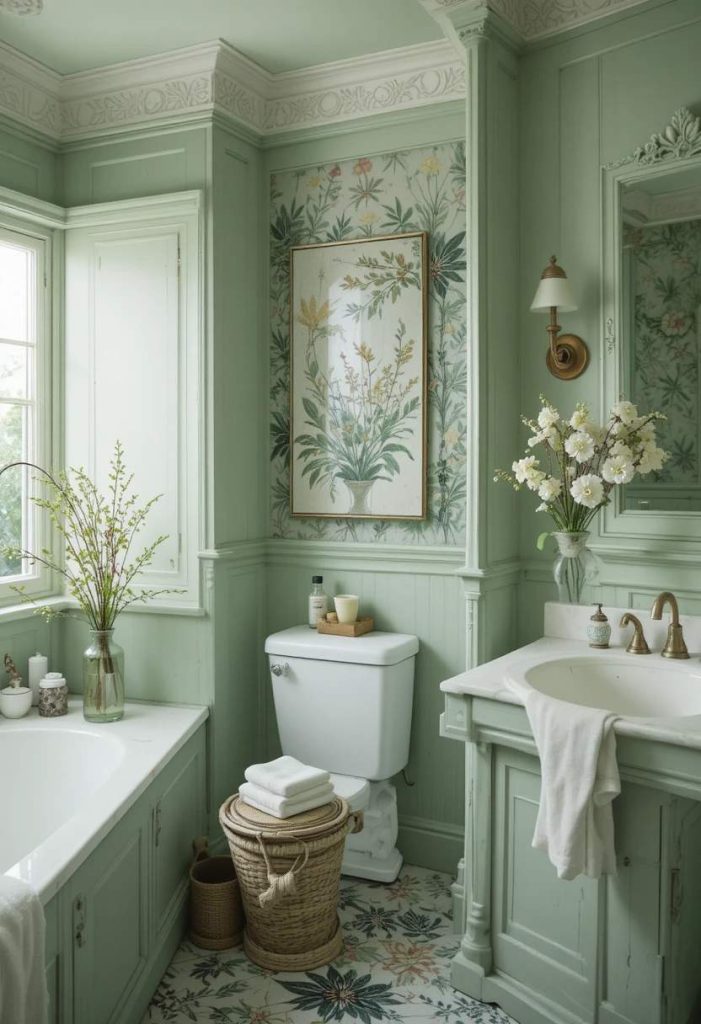
I keep botanical touches simple, because sage already brings the garden indoors and the accents only need to echo it. I hung two framed leaf prints above the loo, added a woven seagrass basket for spare towels and a small shell on the windowsill, and the room gained personality without losing its calm. I choose prints with plenty of white space and soft green leaves, and I frame them in light wood or white so they blend in rather than shout. I avoid busy floral wallpaper and too many small ornaments here — one or two well-chosen pieces feel far more considered than a crowded shelf.
How to do it: Hang one or two framed botanical prints with plenty of white space, add a woven basket and one small natural accent. Frame prints in light wood or white, and keep the display to a few pieces so the calm survives.
24. Pair Sage With Black Accents
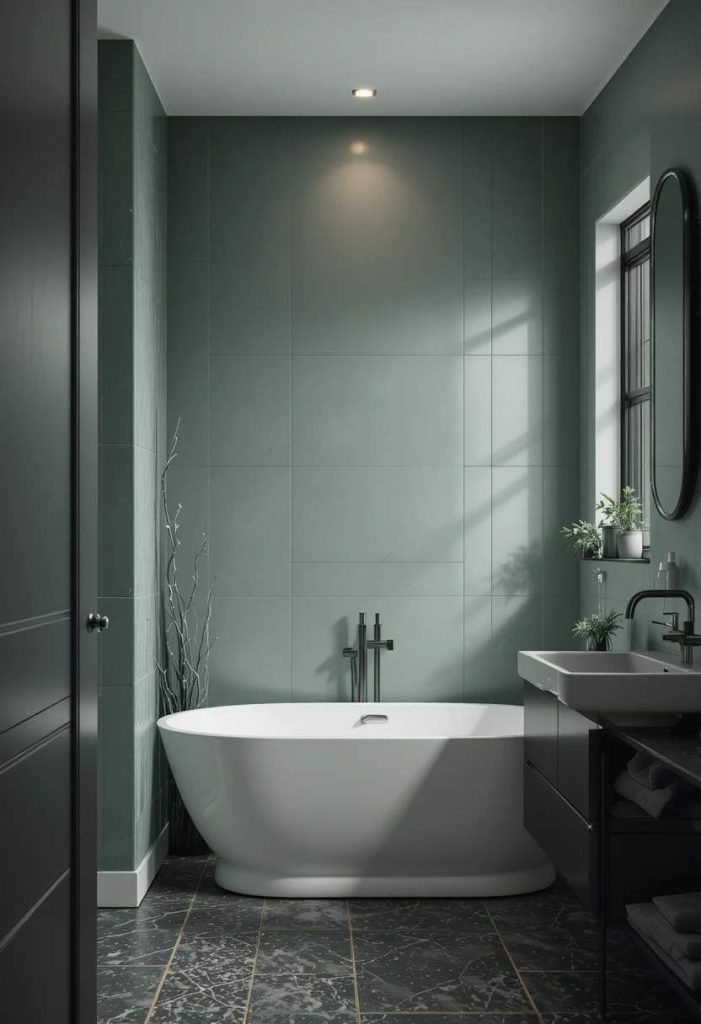
Matte black is the contrast that stops sage from feeling too sweet, and I use it sparingly for exactly that reason. I chose matte black taps, a slim black frame for the mirror and black cabinet handles, and the dark lines give the green a modern, intentional edge. I keep the black to hardware and frames only — never on large surfaces — because too much of it would overpower the softness I want from sage. I also keep every black piece the same matte finish, because mixing matte and gloss black in one room looks untidy, and I clean the taps with a soft cloth so water marks do not dull the finish.
How to do it: Add matte black taps, a black mirror frame or black cabinet handles, and keep the black to hardware and frames only. Use one consistent matte finish, avoid large black surfaces, and wipe taps dry so water marks do not show.
25. Match Sage to Your Style
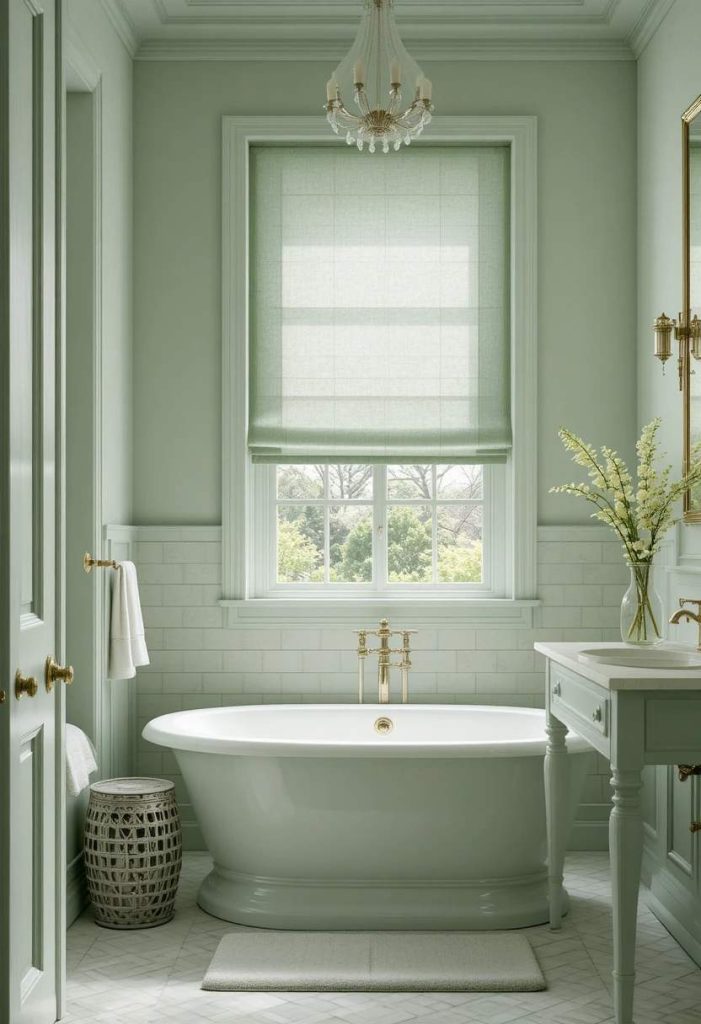
I always test sage shades in the actual bathroom before I commit, because the same paint can look completely different under your light. I paint large tester patches of two or three shades — one pale, one mid-tone, one deeper — and live with them for a few days, checking them in the morning and again in lamplight. I choose the shade that still feels calm at night, not just in bright daylight, and I match it to the room’s style: a pale, grey sage for a modern look, a deeper, warmer one for a traditional bathroom. I also test it against the tiles and the floor, because sage has to sit happily with everything else in the room.
How to do it: Paint large tester patches of two or three sage shades on the wall and live with them for a few days. Check them in morning light and lamplight, choose the one that stays calm at night, and test it against your tiles and floor.
26. Make It Natural and Personal
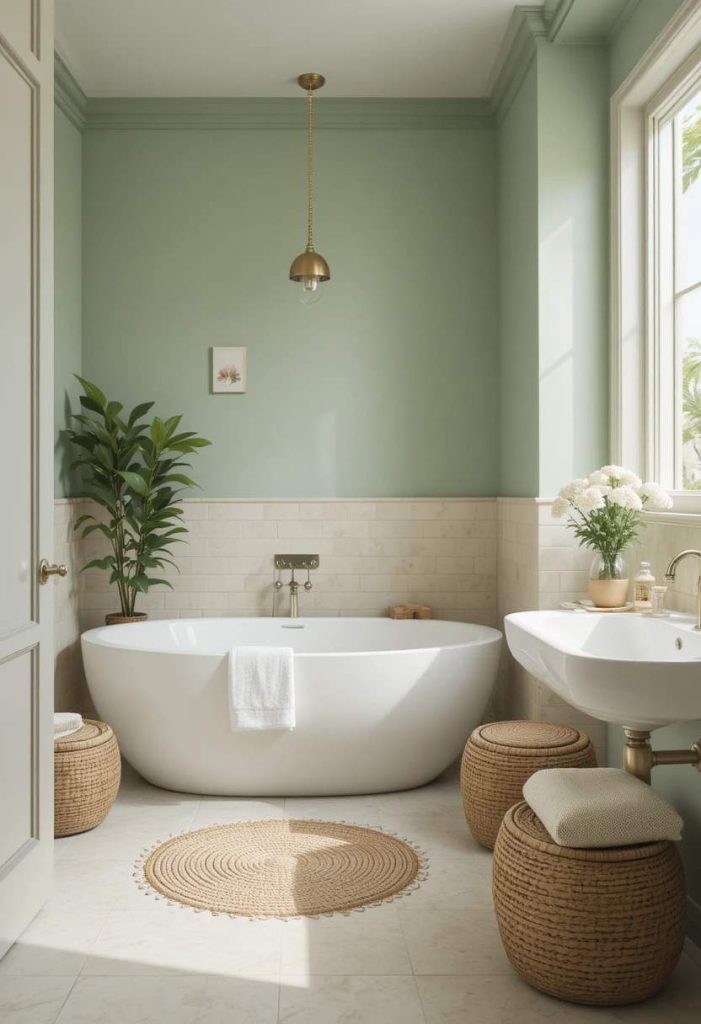
I finish a sage bathroom with the pieces that make it ours, because a room only feels calming when it feels like you. I keep a framed photo from a walk we loved on the wall, a small handmade vase on the vanity and my favourite plant on the windowsill, and those three things do more than any new purchase could. I choose personal touches that can live with steam — framed prints behind glass, ceramic and wood rather than paper or fabric that will spot — and I keep them to a few, so the room stays serene. I move things around when they stop making me smile, because a bathroom should grow with you.
How to do it: Add two or three personal pieces, such as a framed photo, a handmade vase or a favourite plant. Choose items that cope with steam, keep the display small, and swap pieces when they stop making you smile.
Frequently Asked Questions
What colours go best with sage green in a bathroom?
White, cream and warm wood are my first choices, because they keep sage feeling fresh and stop it looking flat. Brass or gold adds warmth, while matte black gives a modern edge if you use it sparingly. I would avoid cool greys and bright, saturated colours beside sage, as they can clash with its soft, grey-green tone.
Does sage green work in a small bathroom?
Yes, sage works beautifully in a small bathroom, especially in a pale shade with a grey undertone. I keep the ceiling and woodwork white, use a large mirror to bounce light around, and choose one sage feature — a painted vanity or one accent wall — rather than painting every surface. Pale sage reflects far more light than a deep green, so the room feels calm and open instead of closed in.
Should I use sage tiles or sage paint in my bathroom?
It depends on the spot. I use tiles in the shower and around the bath, because they cope with constant splashes far better than paint, and I use paint on the other walls, where it is easier and cheaper to change later. For a handmade, textured finish, my zellige tile bathroom ideas show how artisan tiles look beside sage. Whichever you choose, keep the grout pale grey and the paint in a durable eggshell finish so both stay looking fresh.
How do I keep a sage green bathroom from feeling cold?
Warmth comes from the materials and the light, not from the paint alone. I add wood, brass and soft textiles, choose warm bulbs around 2700K, and use cream towels instead of stark white ones. A plant or two also helps, because living green softens the room. If the sage still feels chilly, try a slightly warmer, deeper shade on one wall and keep the ceiling bright white.
Does sage green go with brass, black or chrome?
All three can work, but I would pick one and use it consistently. Brushed brass is my favourite with sage, because it adds warmth, while matte black gives a crisp, modern contrast. Chrome feels cooler and more clinical, so I use it only if the bathroom already has chrome fittings I cannot change. Mixing metals usually looks accidental, so I keep one finish for taps, handles and the mirror frame.
Your Sage Green Bathroom Checklist
- ☐ Choose your sage shade and test it in daylight and lamplight
- ☐ Pick a durable eggshell or satin finish for the walls
- ☐ Decide: sage on all walls, or one accent wall
- ☐ Keep the white bright, not cream, for fixtures and trim
- ☐ Choose one metal finish and use it throughout
- ☐ Plan your tiles, with pale grey grout
- ☐ Add warm wood in one or two tones
- ☐ Bring in plants that love humidity
- ☐ Layer sage and white towels, plus a washable bath mat
- ☐ Hang a round or arched mirror at eye level
- ☐ Fit warm bulbs (around 2700K) and a dimmer
- ☐ Add a wooden tray, stool or basket for storage
- ☐ Keep surfaces clear for a calm, spa-like feel
- ☐ Add two or three personal touches that make it yours
A Final Gentle Thought
I hope these ideas help you see sage as more than a paint colour — it is a way to make the first and last room of your day feel calmer. I started with a single tester patch and a brass tap, and our bathroom slowly became the quietest corner of the house. Pick the one change that excites you most, whether that is sage tiles, a painted vanity or simply a stack of soft green towels, and start there. Small steps add up, and a bathroom that feels fresh, warm and truly yours is worth taking slowly. Enjoy making it your own.
5 Comments