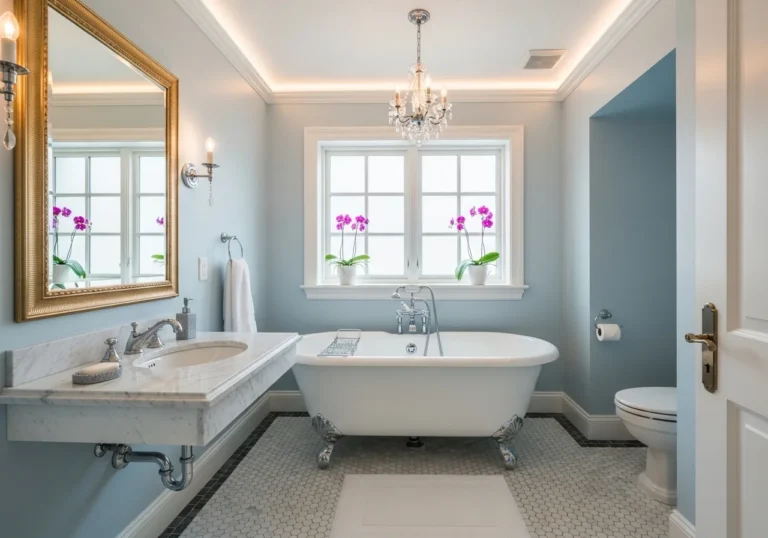
Primary Bathroom Ideas: 18 Beautiful Ways to Transform Your Space
You use your bathroom every single day, yet it’s often the last place you think about upgrading. It works, it’s functional—but it doesn’t feel relaxing, inspiring, or personal. Instead of being a place to unwind, it feels rushed and purely routine. That’s where thoughtful design makes all the difference. With the right primary bathroom ideas, you can turn your space into something calm, stylish, and refreshing—a place that helps you slow down, reset, and actually enjoy your daily routine.
1. Soft Neutral Color Palette for a Spa Feel
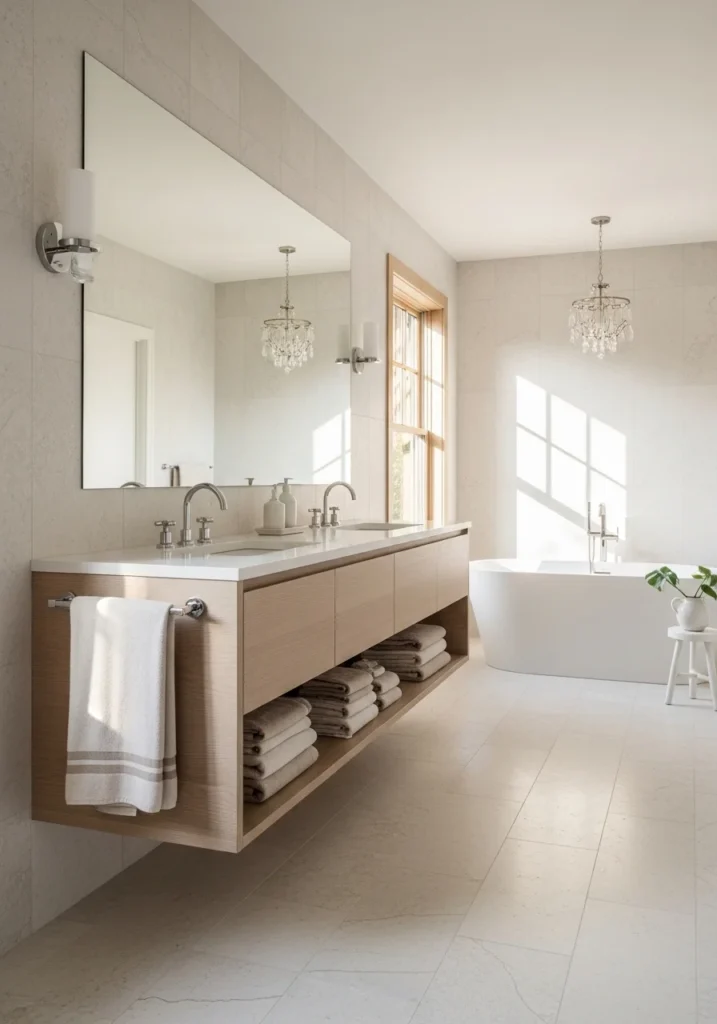
I will never forget the first morning I walked into our bathroom after painting the walls warm white and swapping in oatmeal linen towels. The whole room seemed to exhale. Soft neutrals do that — they quiet the visual noise before you have even had your coffee. I layer warm white with beige, pale stone and a little taupe so nothing feels flat or stark, then I add texture through a woven basket, a linen hand towel and a wooden stool. The light bounces gently, the room feels larger, and getting ready stops feeling like a chore. If your mornings feel rushed, this palette is the kindest place to start.
How to do it: Paint the walls warm white or pale greige, then bring in beige tiles, stone accessories and linen towels in two or three close tones. Add one woven basket and a timber stool for texture, keep metals soft — brushed nickel or pale brass — and stand back: if one shade jars, swap it for something a touch warmer.
2. Double Vanity for Function and Style
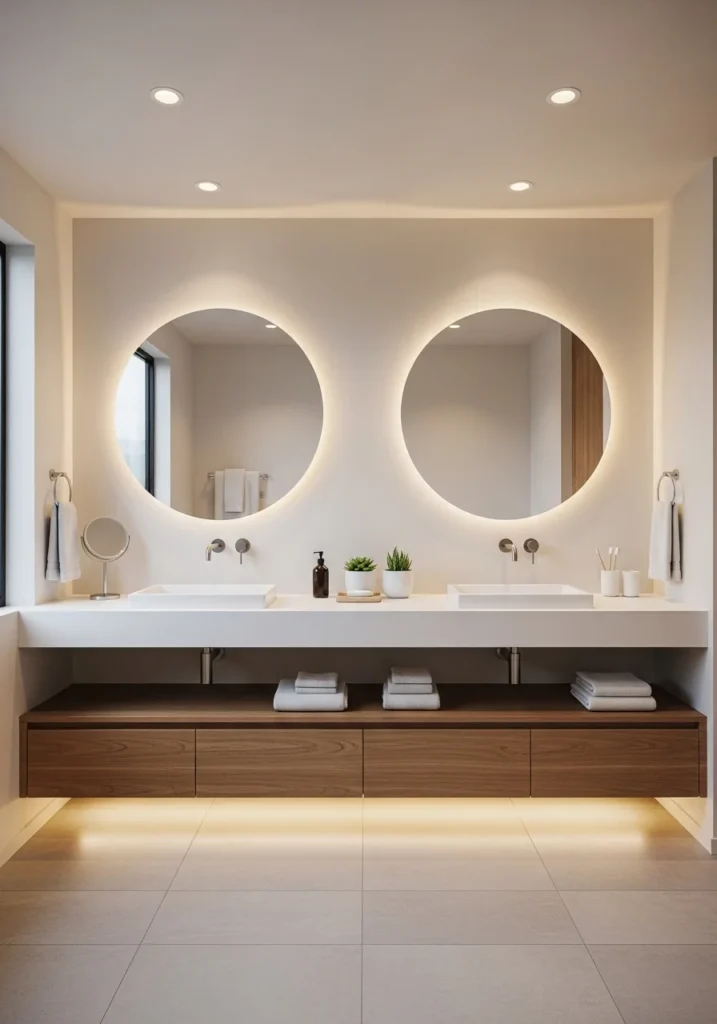
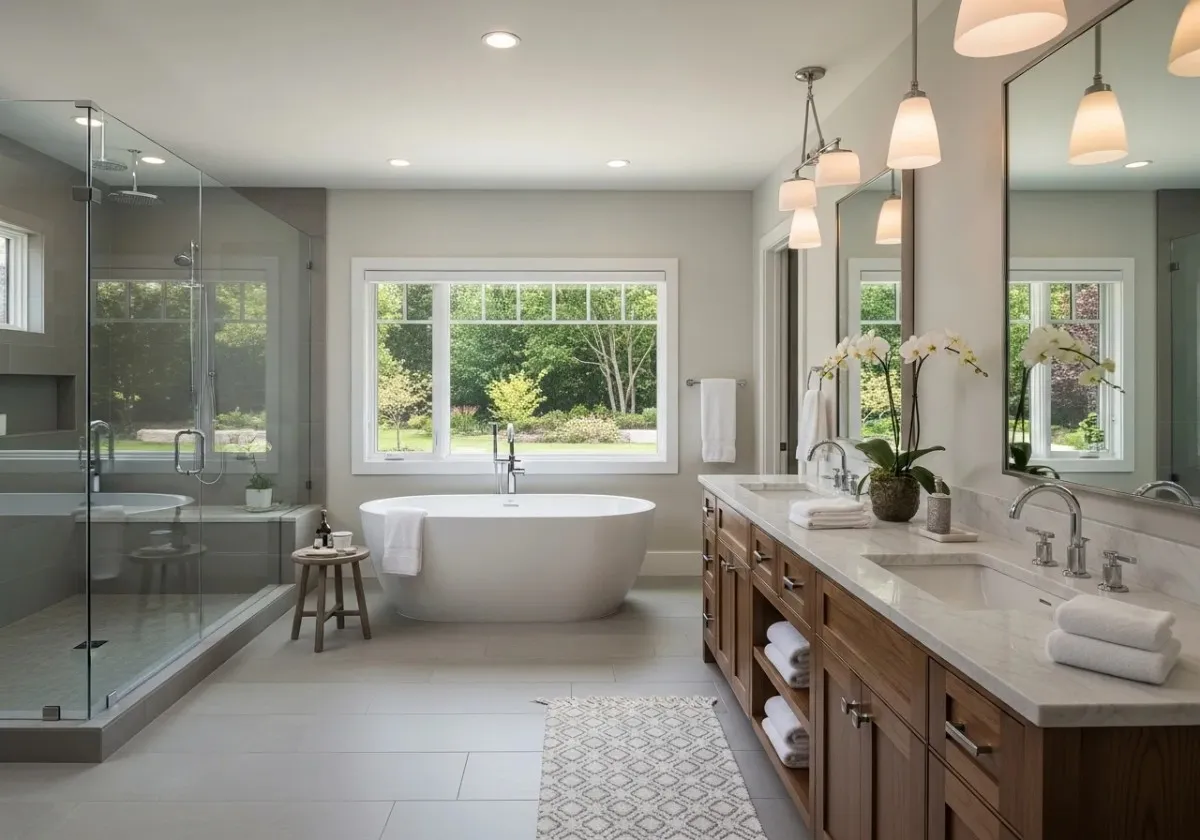
Sharing a bathroom used to mean elbowing each other for the mirror, until we fitted a double vanity and our mornings finally found their rhythm. I love having my own basin, my own stretch of worktop and a drawer that nobody else raids. The symmetry looks calm and considered, too, especially with two matching mirrors above. Before you commit, measure honestly — you need enough width for two people to stand comfortably — and think about storage, because two sets of toiletries fill a drawer fast. If you are still choosing the unit, my bathroom vanity ideas gather the styles I compared, from floating designs to classic furniture pieces.
How to do it: Measure the wall and allow at least 150 cm for two basins, then choose a unit with deep drawers and a worktop that resists water marks. Hang two matching mirrors centred over each basin, fit a light above or beside each one, and give each person a drawer so the counter stays clear.
3. Walk-In Shower with Glass Panels
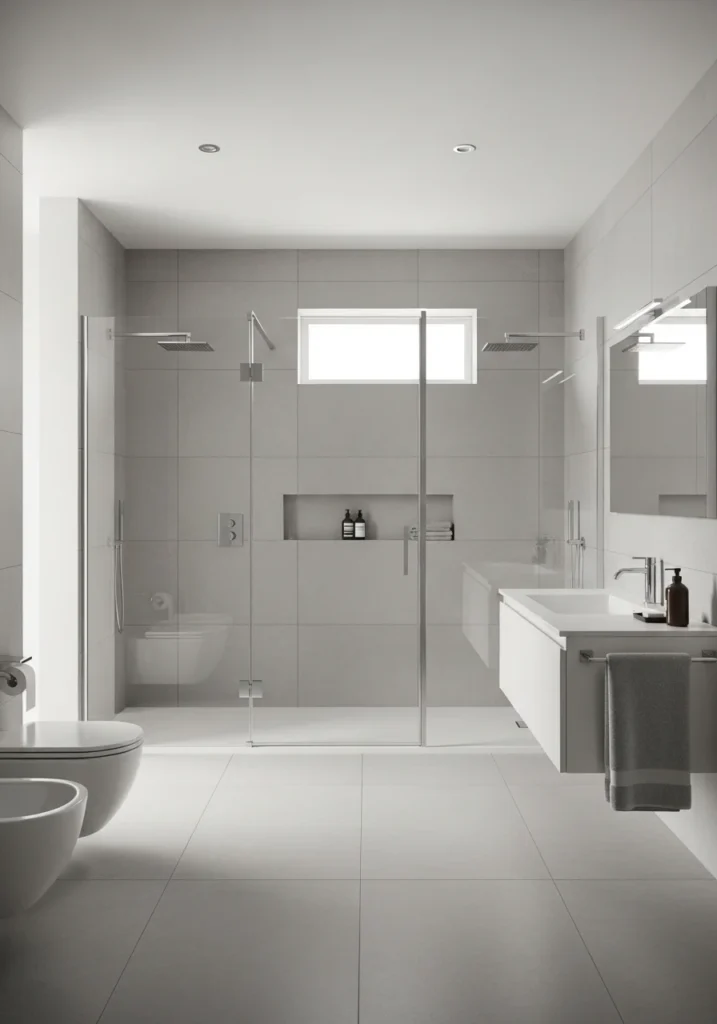
Our old shower curtain always stuck to my legs and made the room feel smaller than it was, so replacing it with a walk-in shower and a clear glass panel was one of the best changes we made. Suddenly the whole bathroom read as one open space, and the tiles I had chosen finally showed properly. I kept the glass frameless and the grout lines minimal, which makes cleaning quicker than I expected. A built-in niche holds shampoo and soap, so nothing sits on the floor. If you love a long, slow shower at the end of the day, this is the upgrade that gives it room to breathe.
How to do it: Remove the bath or cubicle, tank the walls properly, and fit a frameless glass panel with a slim channel. Choose large-format tiles to cut down grout lines, add a recessed niche at shoulder height, and fit a rainfall head with a separate hand shower for rinsing the screen.
4. Freestanding Bathtub for a Luxury Touch
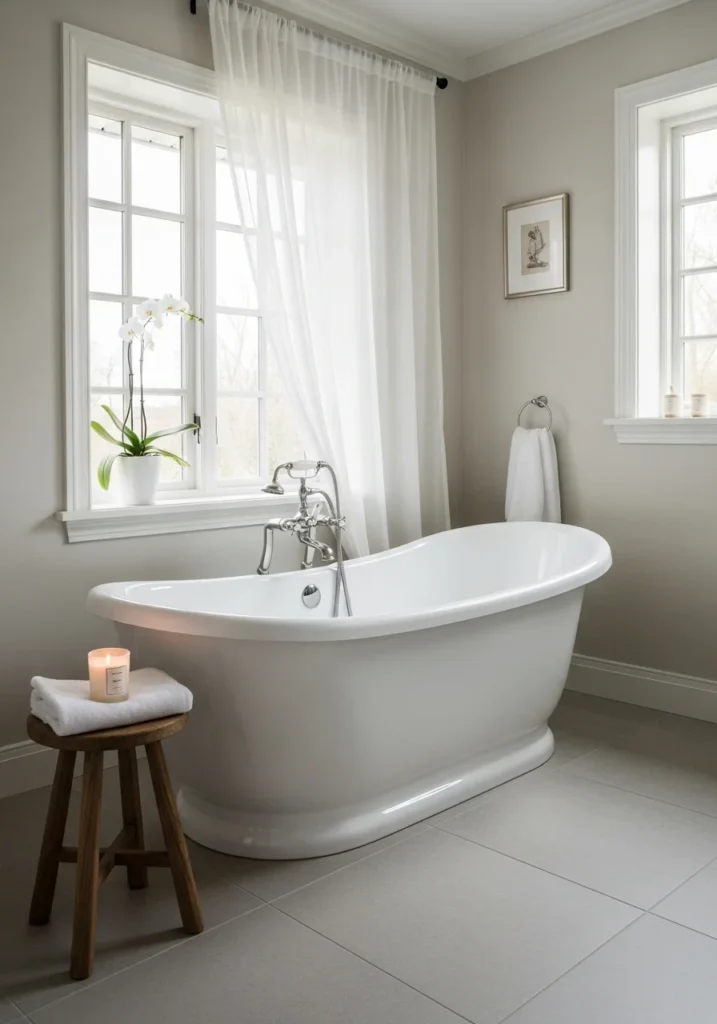
I used to think a freestanding bath was only for grand houses, until I stood in front of one in a showroom and realised how little space the right shape actually needs. Ours sits near the window now, and it has turned ordinary evenings into something I genuinely look forward to — a book, a candle, twenty quiet minutes. The trick is giving it breathing room: a cluttered surround ruins the effect. I keep a small stool nearby for a towel and a book, and nothing else. Choose a shape that suits the room — oval feels softer, rectangular reads more modern — and check the floor can take the weight when full.
How to do it: Check floor loading and plumbing access first, then position the bath as a focal point, ideally near a window. Fit a floor-mounted or wall-mounted filler, leave at least 30 cm of clear space around it, and keep the surround bare apart from one stool or a folded towel.
5. Warm Wood Accents for Natural Charm
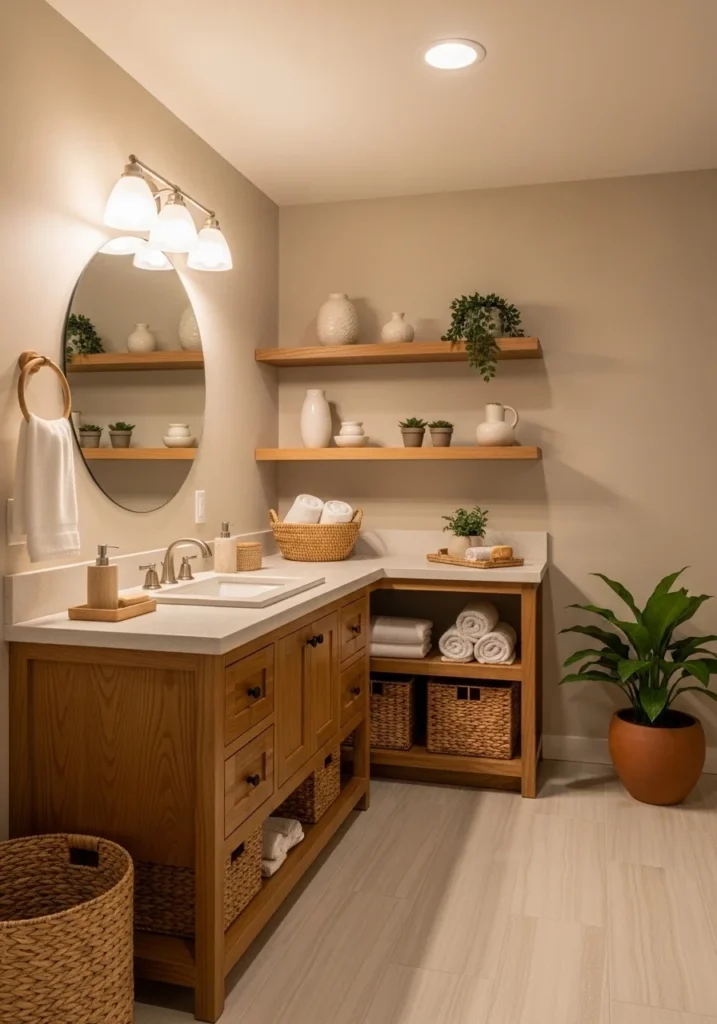
Bathrooms can feel cold when every surface is tile and glass, and that is exactly why I keep coming back to warm wood. A pale oak vanity softened our whole room, and a small walnut stool by the bath made it feel like somewhere to linger rather than rush through. Wood brings a natural, lived-in warmth that paint alone cannot manage. The key is choosing the right finish — sealed and water-resistant — and placing it where it will not sit in standing water. I also repeat the tone once or twice, in a shelf or a mirror frame, so it feels intentional rather than accidental.
How to do it: Choose oak or walnut with a sealed, water-resistant finish for the vanity, shelves or a stool. Keep wood away from direct splashes, repeat the same tone in a mirror frame or shelf, and wipe up standing water so the finish stays beautiful for years.
6. Statement Lighting as a Focal Point
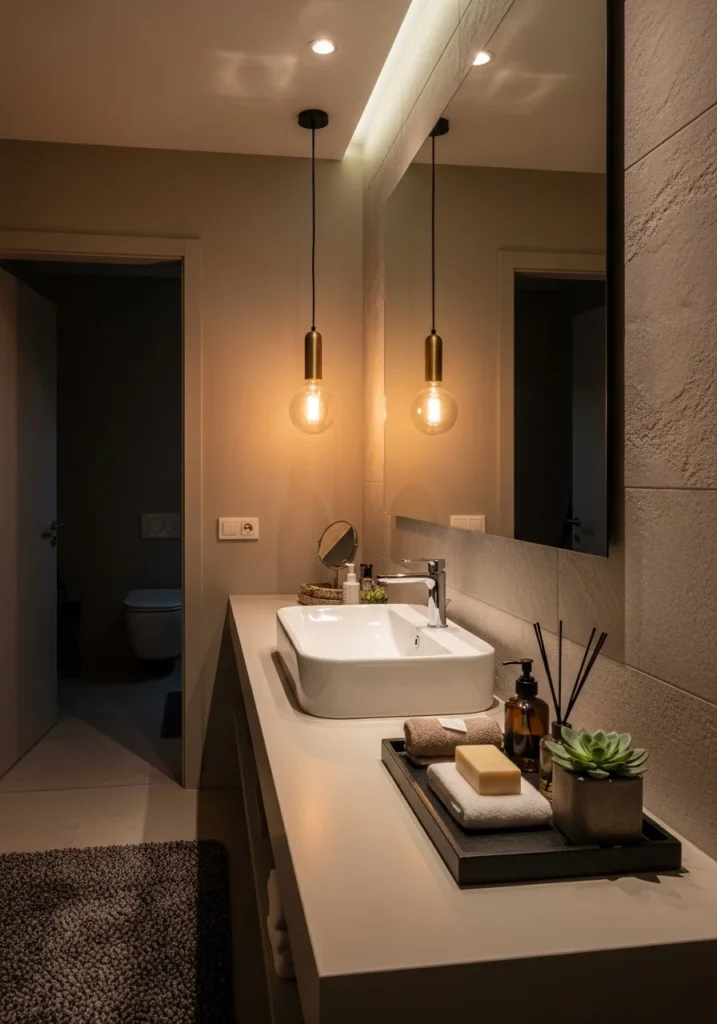
Lighting changed our bathroom more than any single purchase, and I only realised it once I swapped the single harsh ceiling light for a layered scheme. Now a pair of sconces flanks the mirror, a soft pendant hangs over the bath, and everything feels warm rather than clinical. I notice the difference most in the evening, when the room glows instead of glaring. Warm bulbs around 2700K flatter skin and make the space feel restful, and a dimmer means I can soften everything for a bath. If you want the full picture, my bathroom lighting ideas cover sconce positions, pendants and dimmers in detail.
How to do it: Fit sconces at eye level on either side of the mirror, add a dimmable ceiling light or pendant, and choose warm bulbs at about 2700K. Put the mirror lights on their own switch so you can brighten them for getting ready and dim everything else for a bath.
7. Large Mirrors to Open Up the Space
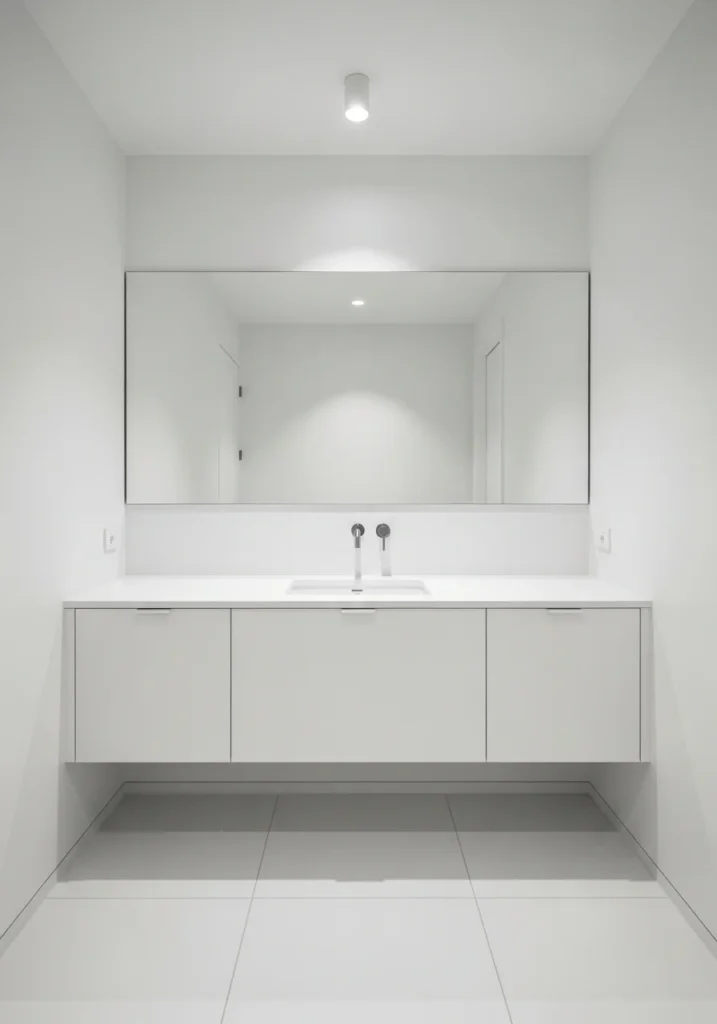
I hung the largest mirror our wall would take above the vanity, and the effect still surprises me every morning. The room looks twice as deep, the window light bounces further, and even getting ready feels less cramped. A big mirror works hardest in a small bathroom, where it borrows light from the window and gives the eye somewhere to travel. I chose a slim frame that matches our taps so it feels part of the design rather than an afterthought. If you share the vanity, my double sink bathroom ideas show how two mirrors and two lights can give each person their own comfortable spot.
How to do it: Measure the vanity width and choose a mirror nearly as wide, hung with its centre at eye level, about 150 cm from the floor. Fix it securely to the wall, keep the frame in the same finish as your taps, and clean it with a streak-free cloth so the light stays bright.
8. Marble Finishes for a Timeless Look
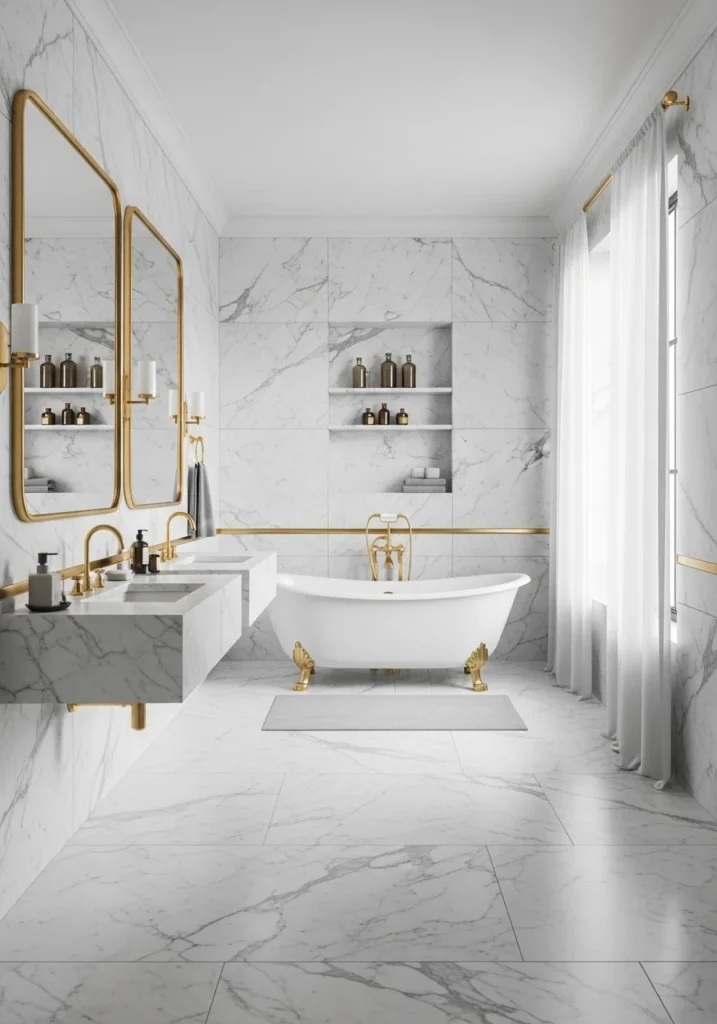
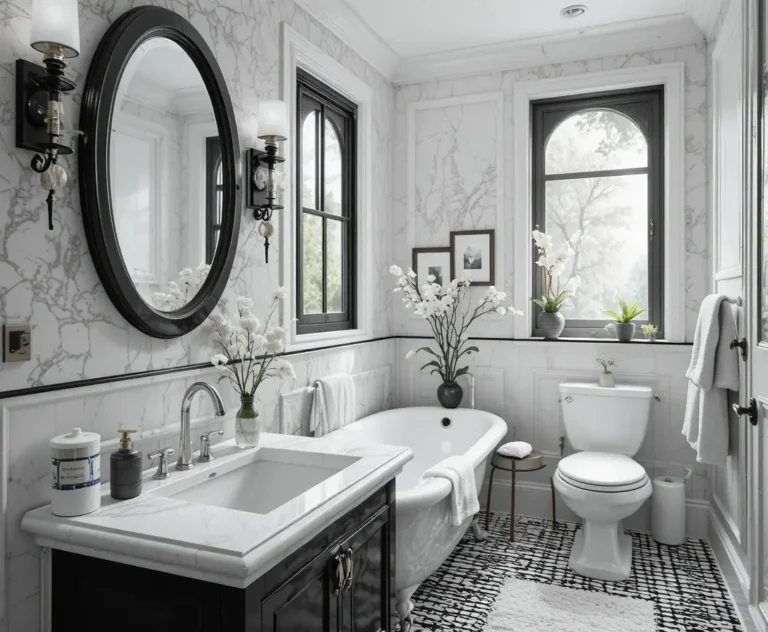
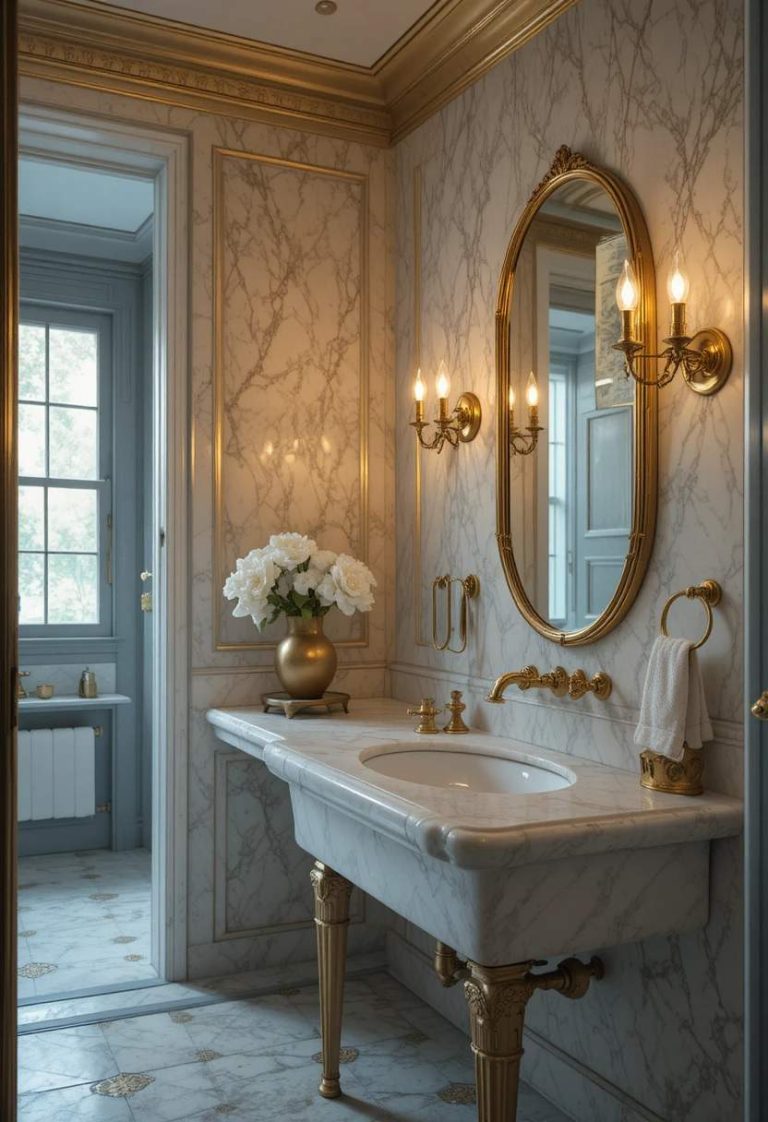
There is a reason marble never really goes out of fashion. The first time I saw soft grey veining against white in a friend’s bathroom, I understood — it feels luxurious without shouting, and it suits almost any style. I used it on our vanity top and as a splash of tile behind the basin, and the room gained a quiet elegance overnight. Real marble needs sealing and a little care, so I keep acidic cleaners away from it. If the budget is tight, a good marble-effect porcelain gives you the look with far less maintenance, and honestly, most visitors cannot tell the difference.
How to do it: Choose marble or marble-effect porcelain with soft grey veining for the worktop or one feature wall. Seal natural stone before use and reseal yearly, use pH-neutral cleaner only, and pair it with plain tiles elsewhere so the veining stays the star.
9. Built-In Storage to Keep It Organized
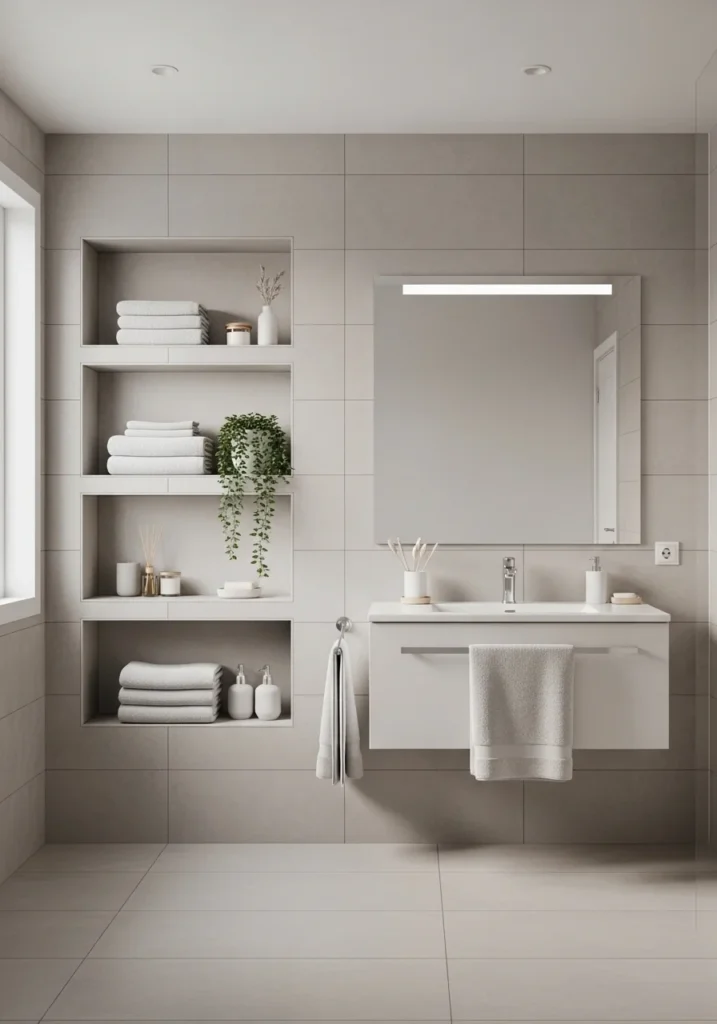
Clutter was my bathroom’s biggest problem — bottles on every surface, towels with nowhere to go. Built-in storage fixed it without adding a single bulky cabinet. A recessed niche in the shower holds everything at hand, and shallow shelves beside the vanity swallow the things I use daily. Because the storage sits inside the wall, the room still feels open. I planned it around what I actually own rather than what looks tidy in a photograph, which means the hairdryer, the spare towels and the cleaning spray each have a proper home. Measure your bottles first; niches are only useful if things fit.
How to do it: Plan niches and shelves around the items you own, measuring tall bottles first. Build recessed niches into stud walls or shower walls, line them with the same tile as the room, and add shallow shelves beside the vanity for daily essentials.
10. Soft Textiles for Warmth and Comfort
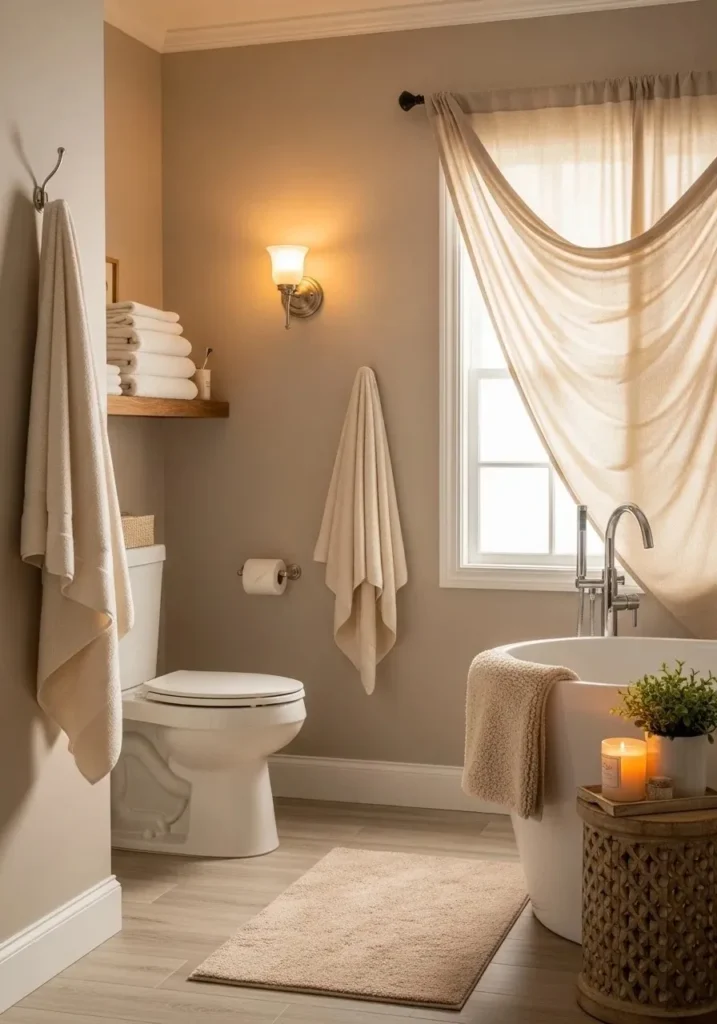
I underestimated towels until I bought proper thick ones, and now I think of textiles as the bathroom’s soft furnishings. A plush bath mat underfoot, waffle-weave towels on the rail and a linen shower curtain changed the room from hard and echoing to warm and welcoming. I stick to warm neutrals with one deeper tone — sage or soft clay — so everything still feels calm. The trick is layering: mix cotton, waffle and linen rather than buying everything in one flat fabric. Wash new towels before use so they fluff up properly, and keep a spare set rolled in a basket.
How to do it: Choose thick cotton towels, a waffle-weave hand towel and a soft bath mat in warm neutrals. Layer two or three textures, roll spare towels in a basket, and wash new towels first so they soften and fluff up.
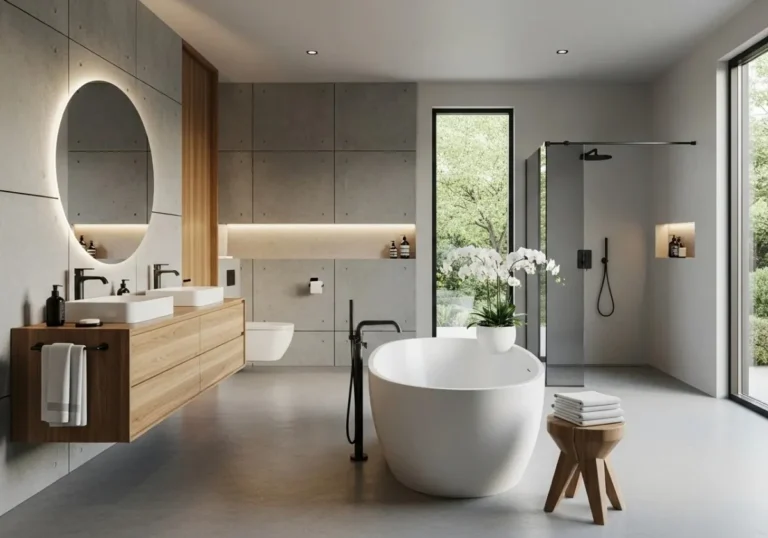
11. Minimalist Design for a Clean, Calm Feel
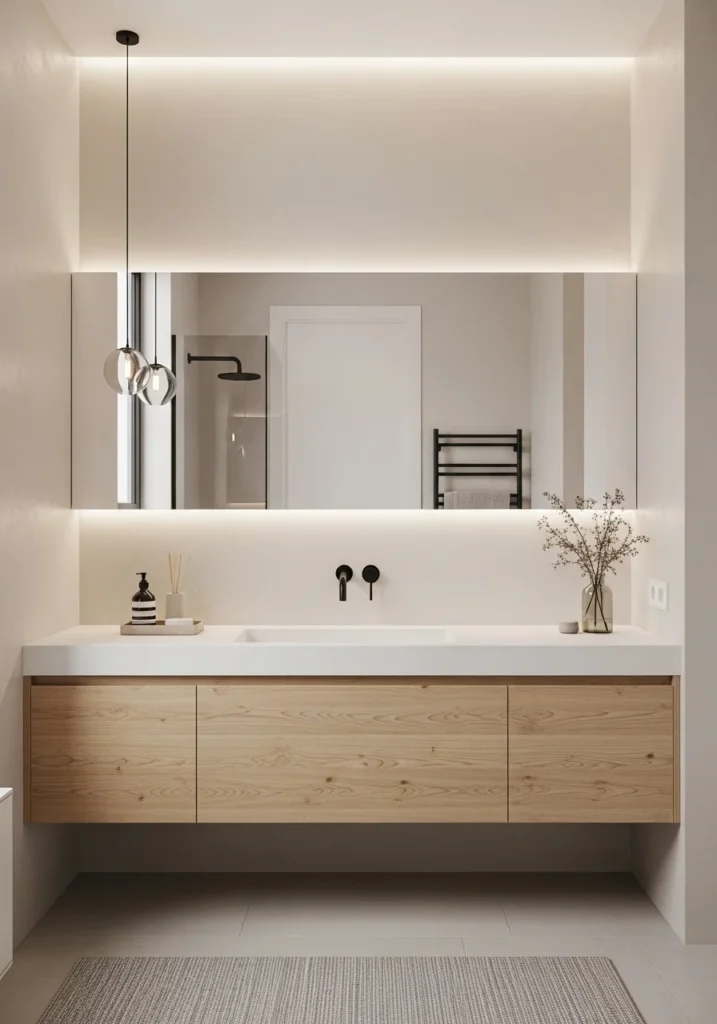
I used to fill every surface, convinced an empty shelf meant an unfinished room. Then I tried the opposite — floating vanity, handleless drawers, one small vase — and the calm was immediate. A minimalist bathroom gives your eyes somewhere to rest, and it makes cleaning wonderfully quick. The secret is not owning less, it is hiding the rest: deep drawers swallow the clutter, and only the things I use every day stay visible. I keep the palette to soft white, grey and one natural material, and I choose each object as though it has to earn its place. It does, or it goes in a drawer.
How to do it: Choose a floating vanity with deep drawers, handleless fronts and a limited palette of soft white, grey and one natural material. Keep only daily essentials visible, store the rest inside drawers, and leave one clear surface completely empty.
12. Black Accents for a Modern Contrast
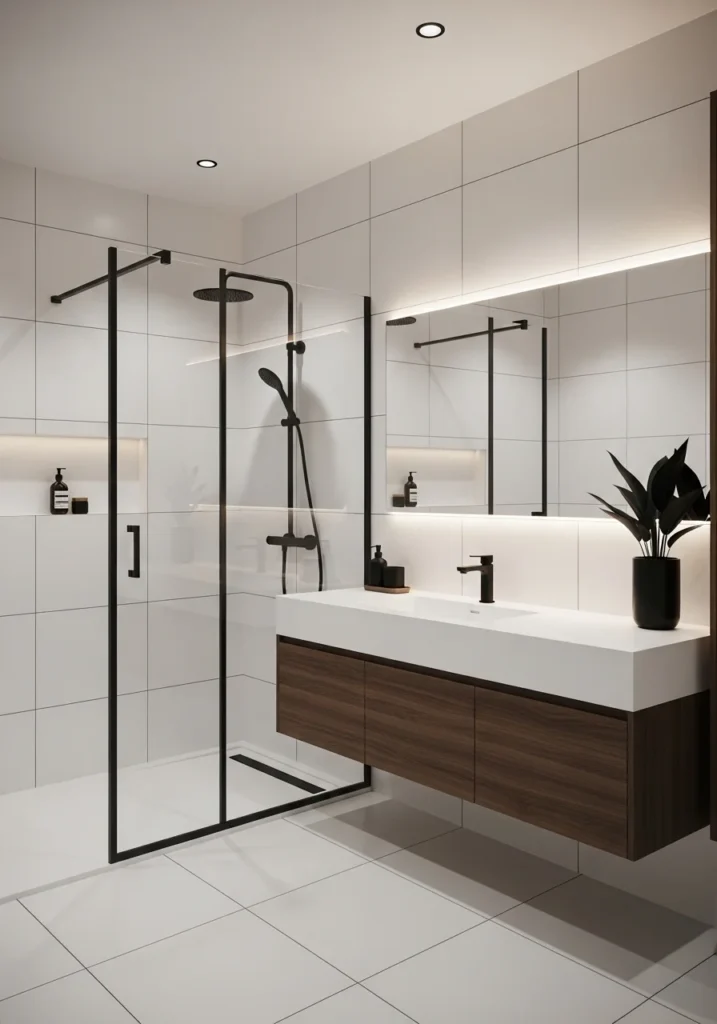
Black was the detail I hesitated over longest, worried it would feel harsh. In the end, matte black taps and a slim-framed shower screen gave our pale bathroom exactly the definition it was missing. The contrast sharpens everything — the white tiles look brighter, the mirror looks more deliberate. I use black sparingly, repeated in three or four small places, so it reads as a thread rather than a block. One caution: black shows water marks, so I wipe the taps after the morning rush and chose a finish that hides them well. Done lightly, it feels modern without ever feeling cold.
How to do it: Choose matte black taps, handles and a shower frame, repeating the finish in three or four small places. Pair them with white or pale tiles, wipe taps dry to avoid water marks, and keep the black to accents rather than large surfaces.
13. Open Shelving for Style and Function
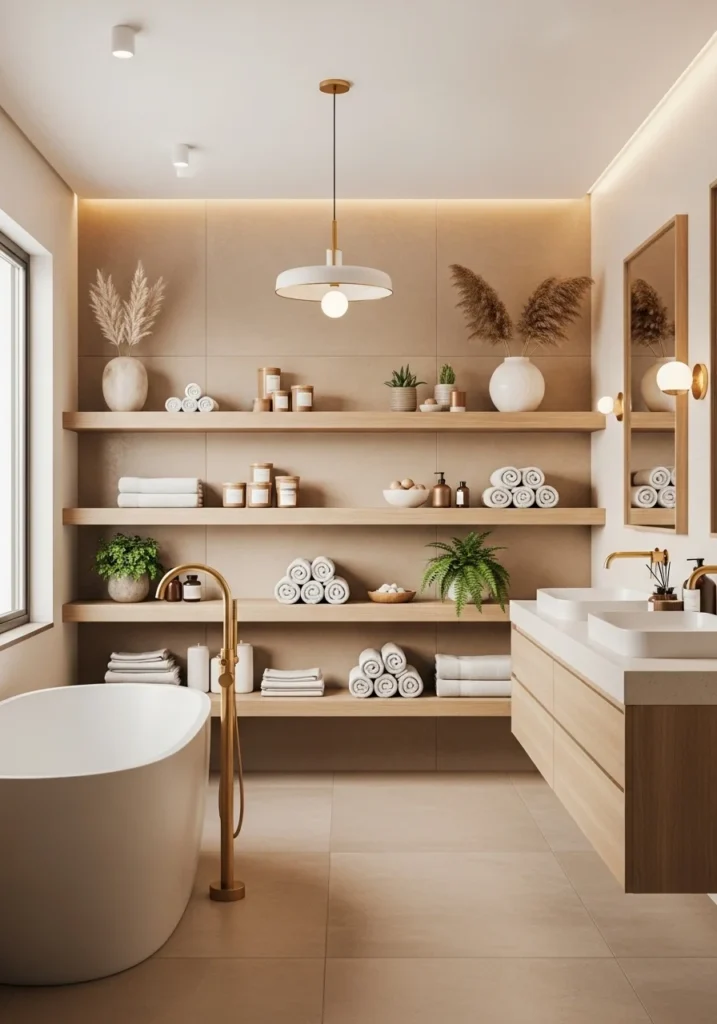
Open shelves were my compromise between pretty and practical. I wanted the rolled towels and the little plant on display, but I also needed the everyday things within reach. Two oak shelves above the towel rail hold exactly that — towels below, a candle and a small jar above — and the room feels lighter than it did with a closed cabinet. The discipline is in the editing: if a shelf holds more than a handful of things, it starts to look messy. I style in odd numbers, mix one decorative piece with two useful ones, and I leave breathing room around each group.
How to do it: Fit two floating shelves in oak or painted timber above the towel rail, fixed to solid wall plugs. Style each shelf with rolled towels, one plant or candle and a jar, keep groups small, and leave empty space so the shelves read as calm, not crowded.
14. Indoor Plants for a Fresh Feel
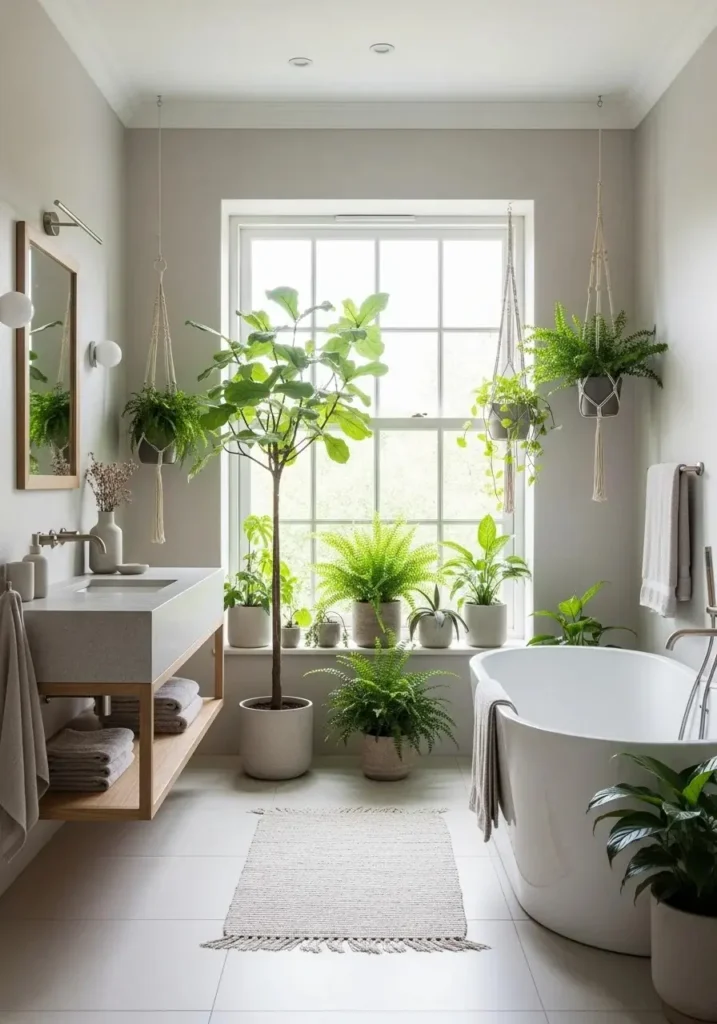
Our bathroom felt finished but somehow flat until I put a trailing pothos on the top shelf. Plants bring a softness that no tile or towel can match, and they seem to love the humidity after a shower. I started with a snake plant on the floor and a fern near the window, both forgiving if I forget to water them for a week. The green against pale tiles is quietly joyful, and the room smells fresher somehow. Choose varieties that suit your light — low-light plants for windowless rooms, ferns and pothos where there is bright, indirect sun — and use pots with drainage so roots never sit in water.
How to do it: Choose humidity-loving plants such as pothos, ferns or snake plants to suit your light levels. Pot them in containers with drainage, hang a trailing plant from a shelf, and water sparingly — most bathroom plants prefer drying out between waterings.
Browse smart bathroom storage ideas to keep your space tidy.
15. Textured Tiles for Depth and Interest
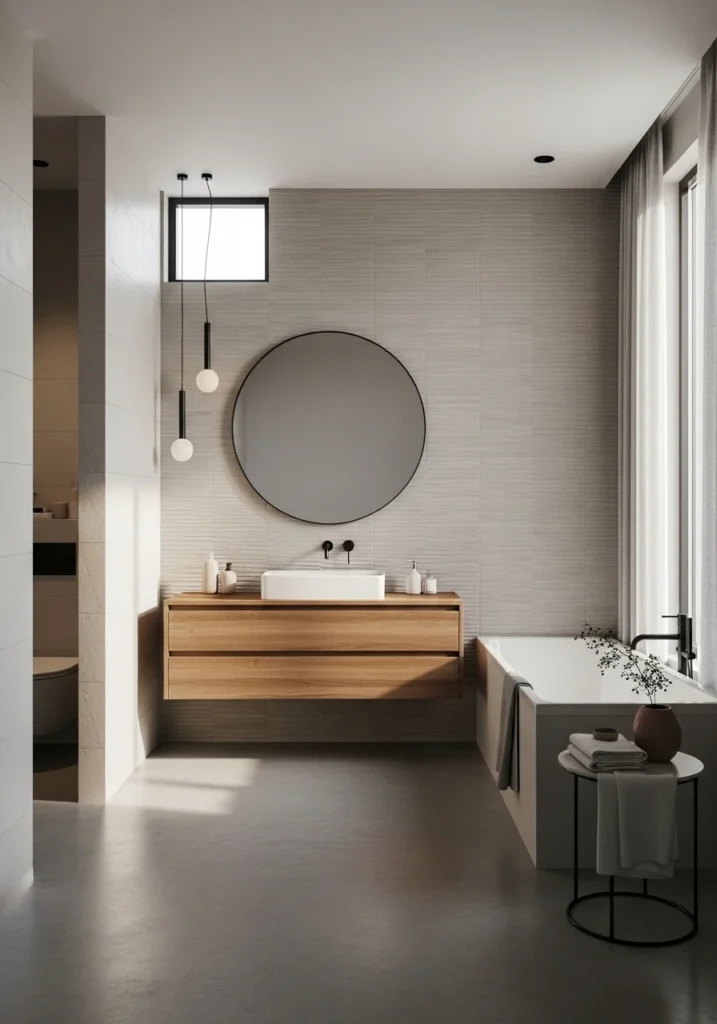
Plain white tiles left our walls looking flat, so I tried a subtly ridged tile on the shower wall and the change was out of all proportion to the effort. The texture catches the light as the day moves, throwing soft shadows that make the whole room feel layered and considered. I kept the colour pale so the effect stays gentle, and I used the textured tile on one wall only — the shower — with plain tiles elsewhere. That restraint is what makes it work. Run your hand over samples in the shop; the ones that feel good under your fingers are usually the ones that look best on the wall.
How to do it: Choose a subtly ridged or geometric tile in a pale tone for one feature wall or the shower. Pair it with plain tiles elsewhere, check samples in daylight as well as shop light, and seal grout so the texture stays easy to clean.
16. Warm Lighting to Create a Cozy Mood
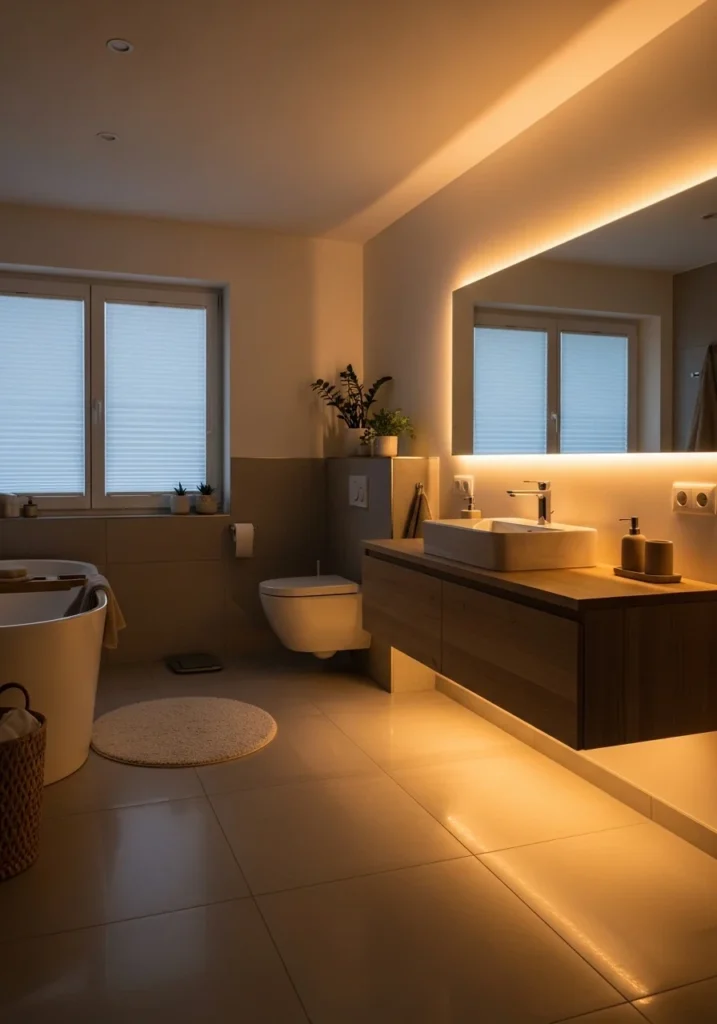
Evenings are when I notice warm lighting most. I come in tired, flick the dimmer down, and the whole room softens — the pale tiles glow, the mirror light flatters, and the day’s rush seems to slow. Harsh white light used to make our bathroom feel like a clinic; warm light makes it feel like a retreat. I layer it: gentle ceiling light for cleaning, sconces for the mirror, and a small low light I can leave on at night. A dimmer is non-negotiable for me now. It costs little, an electrician fits it in under an hour, and it changes how the room feels after dark.
How to do it: Fit a dimmer switch on the main light and choose warm bulbs at about 2700K. Layer ceiling light with mirror sconces and a low night light, then test the brightness at dusk so the room feels cosy rather than glaring.
17. Statement Mirror as a Focal Point
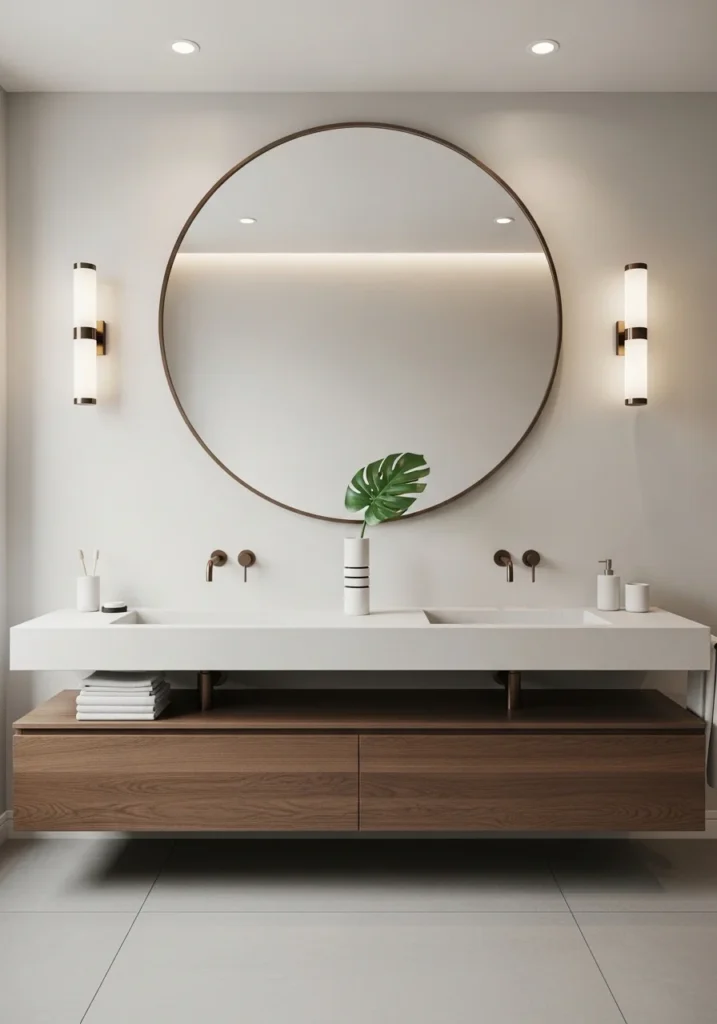
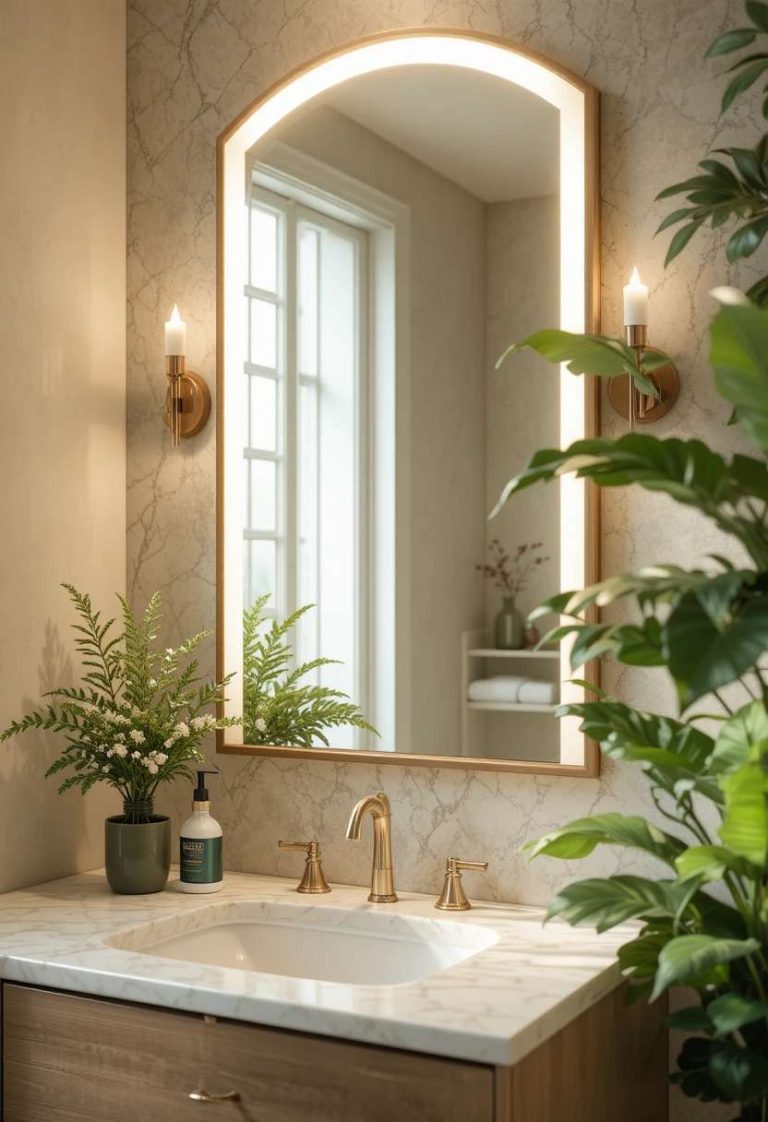
I found our arched mirror at a flea market, and it has become the piece everyone comments on. A statement mirror does the work of a picture, a focal point and a light-bouncer all at once, and it costs far less than most renovations. The arch softens our straight lines, and its brass frame picks up the warmth of the wood. I kept everything around it simple so it could hold the eye — plain tiles, a quiet vanity, one small vase. When choosing, contrast is your friend: a round or arched mirror above a rectangular vanity feels deliberate, while a matching rectangle can disappear.
How to do it: Choose a round or arched mirror that contrasts with your vanity shape, with a frame that echoes your taps or wood tones. Hang it centred over the basin at eye level, keep the surrounding wall plain, and let it be the room’s one bold moment.
18. Layered Decor for a Personal Touch
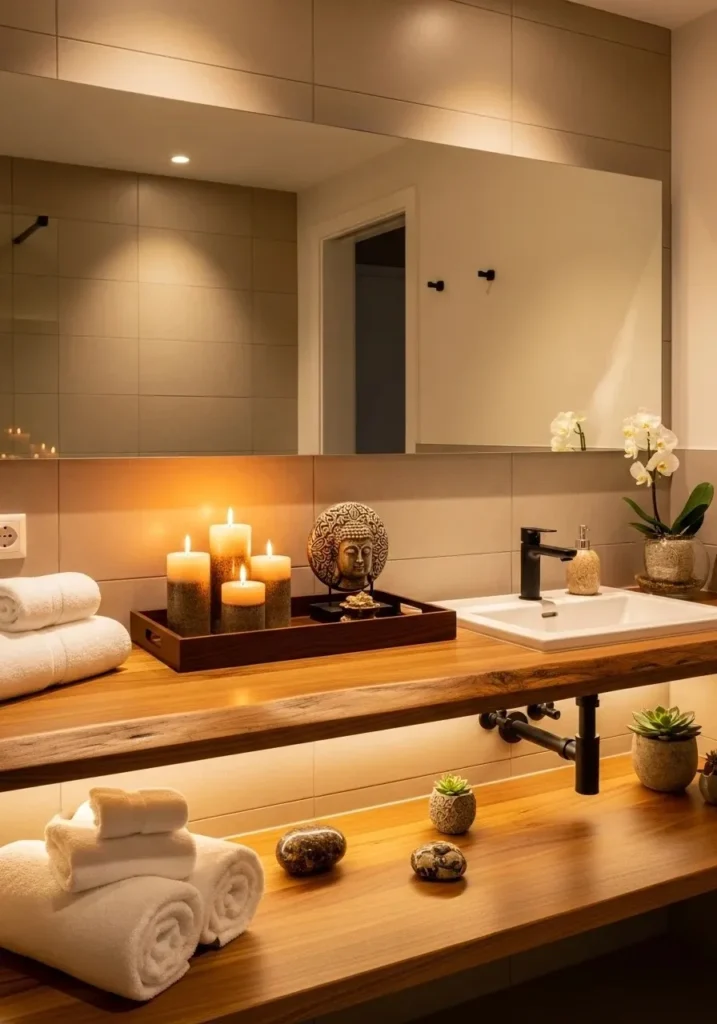
Layering is what finally made our bathroom feel like ours rather than a showroom. A tray on the vanity holds a candle and a small bottle, a framed print leans against the wall, and folded towels sit in a basket by the bath. None of it is grand, but together it tells you someone lives here and loves the room. I keep to one colour family so the layers feel collected rather than random, and I change one small thing with the seasons — a sprig of eucalyptus in winter, a shell in summer. The rule I follow is simple: if it does not earn its place by being useful or beautiful, it does not stay.
How to do it: Gather a tray, a candle, one small framed print and a basket of folded towels in a single colour family. Arrange them in small groups on the vanity and shelves, leave some surfaces bare, and swap one small seasonal piece to keep the room feeling fresh.
Frequently Asked Questions
What is the best colour for a primary bathroom?
Soft, warm neutrals such as warm white, beige, pale stone and soft grey suit most primary bathrooms, because they reflect light and stay restful over time. If you love colour, use it in towels, art or one painted wall so it is easy to change later. Always test paint in your own light, since bathroom light can make cool shades look grey.
How can I make a small primary bathroom feel bigger?
A large mirror, clear glass shower panels and a pale palette are the three quickest wins, since they borrow light and remove visual barriers. A floating vanity shows more floor, which also helps the room feel larger. Keep surfaces clear and choose large tiles, because fewer grout lines make walls read as one calm surface.
Is a freestanding bath worth it in a primary bathroom?
Yes, if you enjoy baths and have room to give it breathing space — it becomes a genuine focal point and a place to unwind. Check the floor can support the weight when full and that plumbing access is straightforward. If space is tight, a deep walk-in shower usually gives you more daily value.
How much should I budget for a primary bathroom refresh?
A cosmetic refresh of paint, lighting, textiles, mirrors and accessories can be done for a modest sum, especially if you keep the layout and plumbing where they are. Moving plumbing, retiling or fitting a new suite raises the cost sharply, so get two or three quotes before committing. Spend most on the things you touch daily — taps, the vanity and lighting — and save on decor.
What lighting works best in a primary bathroom?
Layered, warm lighting works best: sconces at eye level beside the mirror for getting ready, a dimmable ceiling light for general use and a low light for night-time. Choose bulbs around 2700K for a warm, flattering glow and put the mirror lights on their own switch. Avoid a single harsh overhead light, which flattens faces and makes the room feel clinical.
Your Primary Bathroom Checklist
Use this checklist while you plan, shop and style your primary bathroom.
☐ Choose a warm neutral palette and test paint in your own light
☐ Measure the vanity wall — allow at least 150 cm for two basins
☐ Plan a mirror and a light for each person at the vanity
☐ Decide between a walk-in shower, a freestanding bath or both
☐ Choose sealed, water-resistant finishes for wood and stone
☐ Layer warm lighting at about 2700K, with a dimmer
☐ Add built-in niches and drawers so surfaces stay clear
☐ Pick soft textiles in two or three layered textures
☐ Add one or two humidity-loving plants
☐ Keep black accents and decor to small, repeated touches
☐ Do a final check: clear surfaces, warm light, one focal point
Conclusion
Your primary bathroom does not need a full renovation to feel like a retreat — it needs a few honest decisions made well. Start with the change that would make your mornings easier, whether that is a double vanity, better light or simply a calmer palette, and let the rest follow in its own time. Choose materials you love to touch, keep surfaces clear enough to breathe, and leave room for the small details that make the space yours. A bathroom that supports your routine and gives you a quiet moment at the end of the day is worth every bit of thought you put into it. Pick one idea from this list, try it this weekend, and notice how different the room feels on Monday morning.