
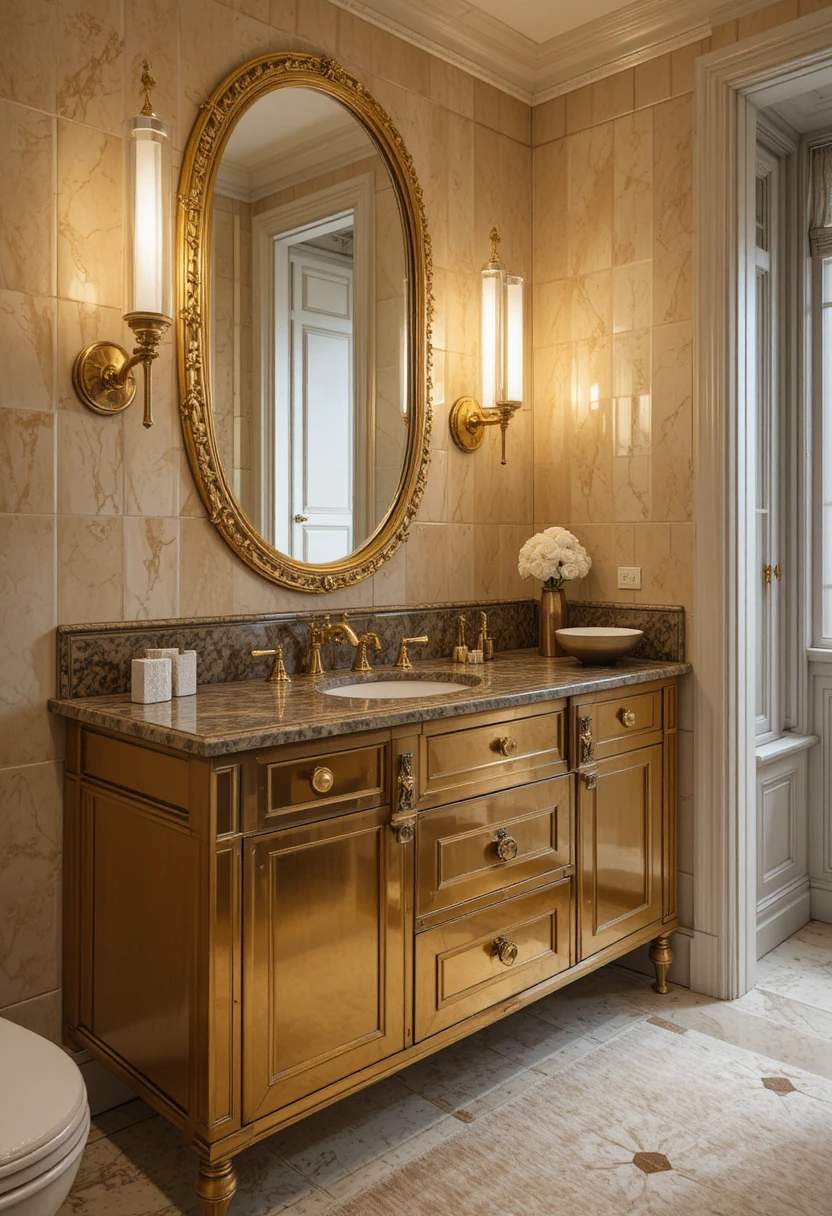
27 Bathroom Vanity Ideas for a Stylish and Functional Space
There is something special about a beautiful bathroom vanity, the piece that so often becomes the heart of the room. Whether you love a sleek, modern look or something warm and timeless, the right vanity sets the tone for the whole bathroom. It is where your mornings begin and your evenings slow down, so it deserves both beauty and clever design. From floating vanities and marble tops to vintage charm and bold colours, these 27 ideas will help you find a vanity that feels perfectly yours.
1. Try a Floating Vanity
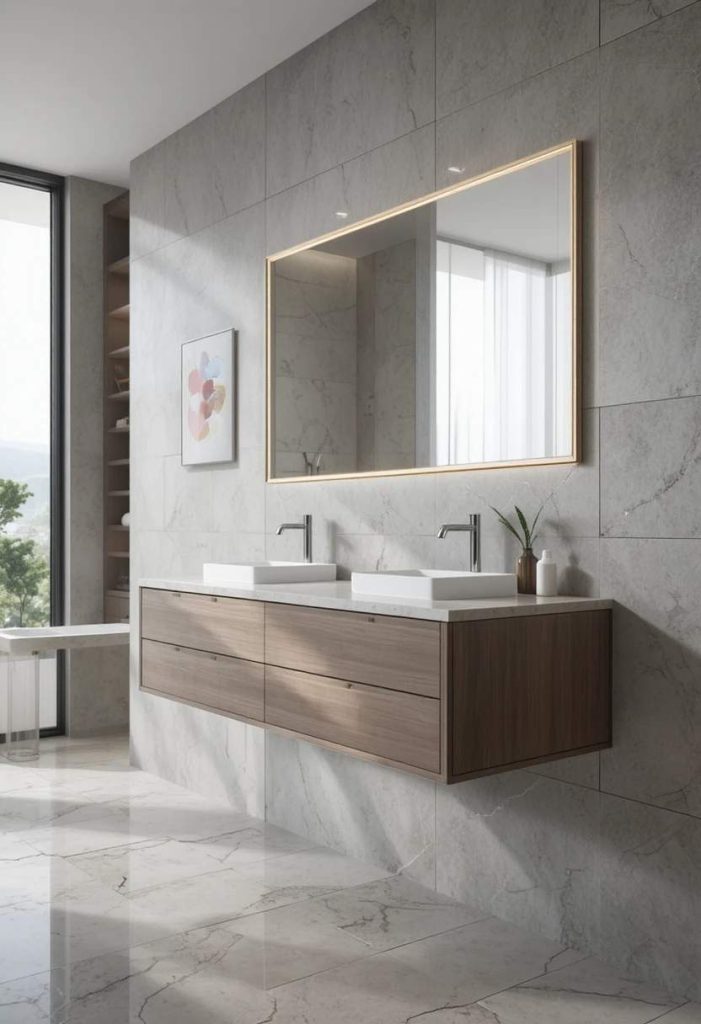
A wall-mounted floating vanity was the first thing I suggested when my sister complained her bathroom felt cramped, and the change still surprises me every time I visit. With the floor left clear underneath, you can see the tiles run right to the wall, which tricks the eye into thinking the room is much bigger than it is. I love how easy it makes cleaning, too, because there is no plinth to mop around and no dark corners for dust to gather in. It suits a modern scheme beautifully, especially with a slim drawer unit and a vessel or undermount basin on top. If your walls are solid, or you can add proper blocking inside a stud wall, the fixing is straightforward, and the airy result is worth every bit of the planning.
How to do it: Choose a wall-hung unit sized to your wall, leaving at least 75 cm of clear floor in front of it. Fix a sturdy timber batten or blocking inside the wall at the mounting height, usually around 80 to 85 cm from the floor to the top of the basin. Hang the unit level, seal the joint where it meets the wall, and keep the area beneath clear so the floating effect stays visible.
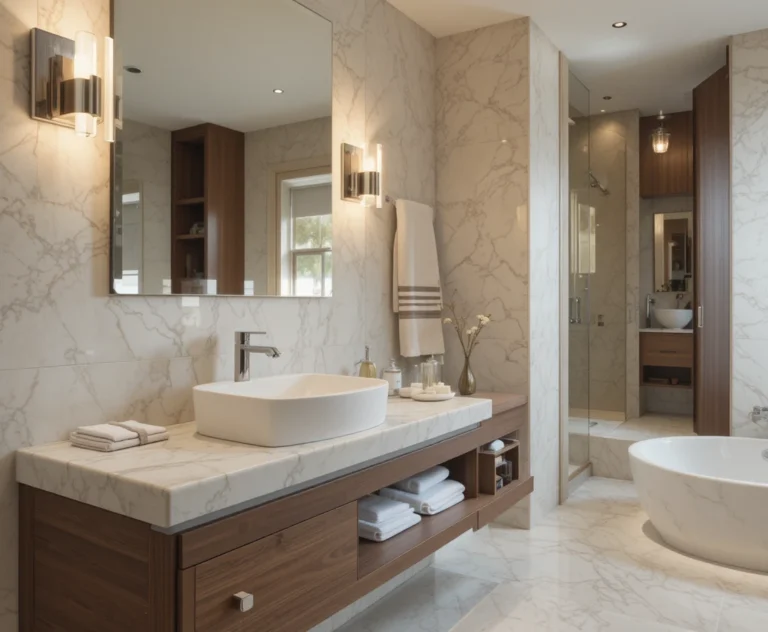
2. Add a Marble Countertop
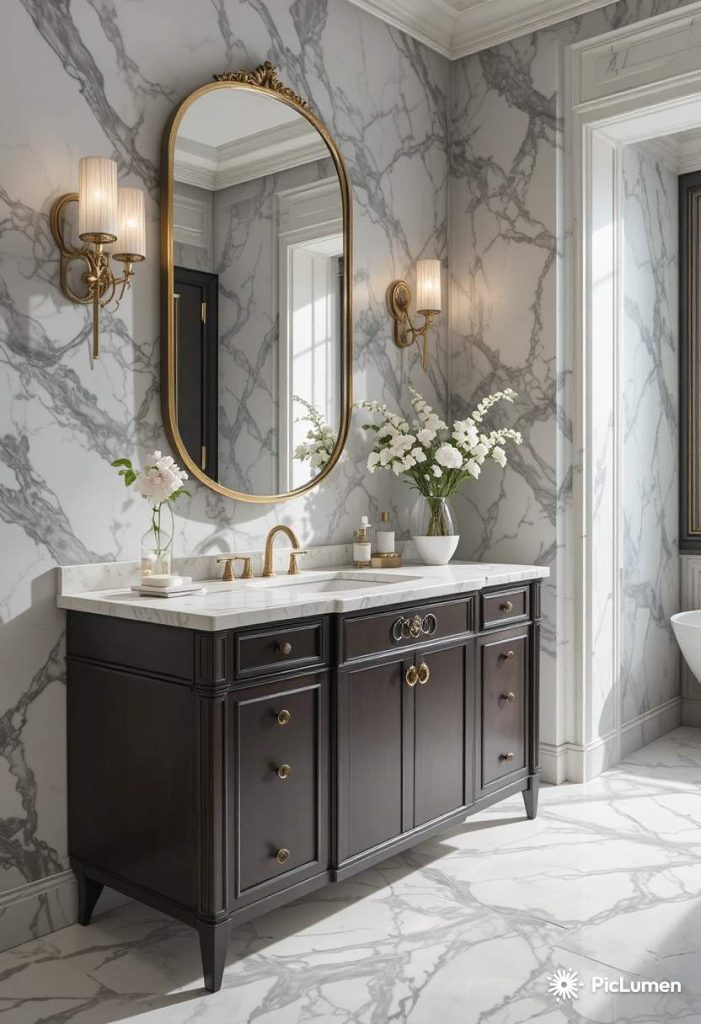
Marble has a way of making even an ordinary bathroom feel like a little boutique hotel, and I fell for it the moment I saw soft grey veining against pale cabinetry in a friend’s cottage. The stone stays cool to the touch, which feels lovely on warm mornings, and every slab is slightly different, so your vanity top is genuinely one of a kind. I would choose a honed finish rather than polished if you worry about water marks, and I always seal the surface twice a year because marble can stain if a bottle of fake tan or hair dye sits on it. Pair it with simple brass taps and a plain basin so the stone does the talking, and wipe up splashes as you go.
How to do it: Measure the vanity carcass and order the slab with a small overhang of about 2 cm on each side. Ask the supplier to cut the tap holes and basin opening before delivery. Seal the marble before fitting, bed it on silicone, and reseal every six months to protect it from water and cosmetics.
3. Choose a Bold Coloured Vanity
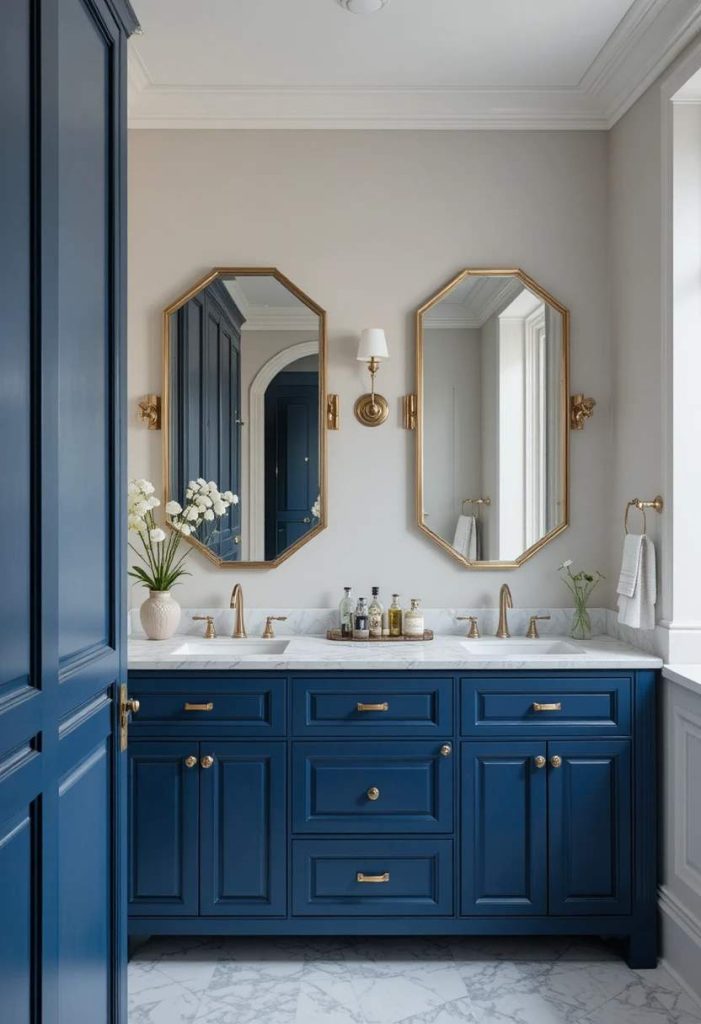
I painted our spare-room vanity a deep inky blue one weekend, half expecting to regret it, and it is still the thing visitors comment on first. A bold colour turns the vanity into the focal point of the room, which means the rest of the bathroom can stay calm and simple, with plain tiles, a quiet mirror and soft towels. I find deep green works beautifully with brass, navy loves marble, and a warm terracotta flatters a bathroom with lots of natural light. Before you commit, paint a large piece of card and live with it on the wall for a few days, because bathroom light changes so much from morning to evening.
How to do it: Pick two or three paint samples and test them on card in the bathroom for a few days. Clean and lightly sand the vanity, apply a shellac-based primer, then two coats of moisture-resistant cabinet paint. Finish with a clear topcoat on the most-used edges, and swap the handles for a metal that suits the new colour.
4. Add a Double Vanity
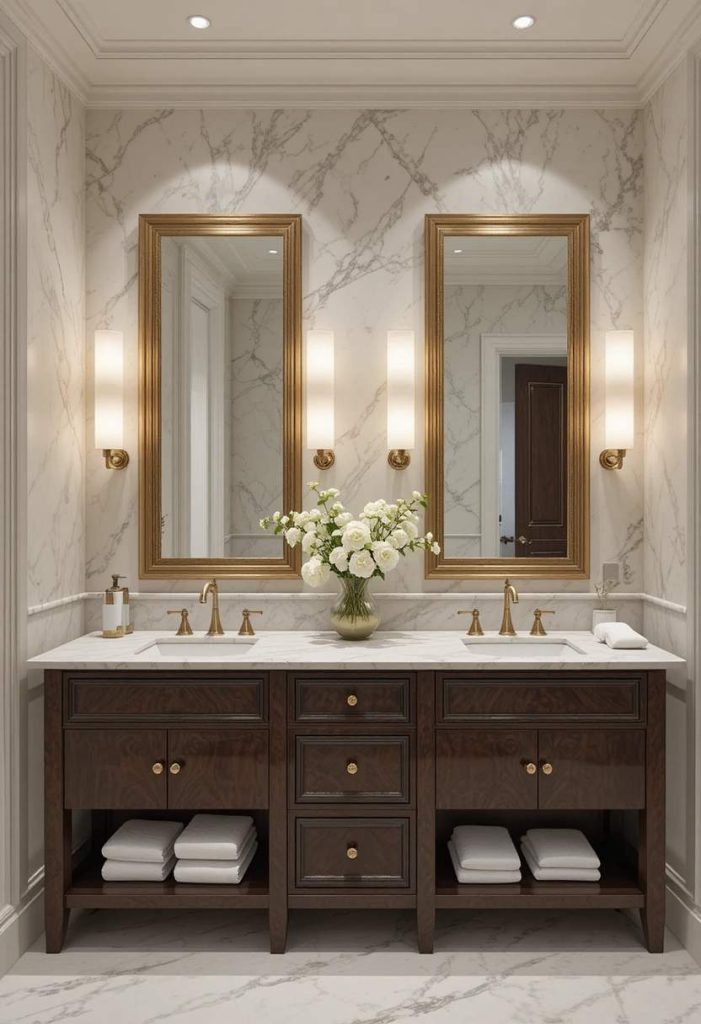
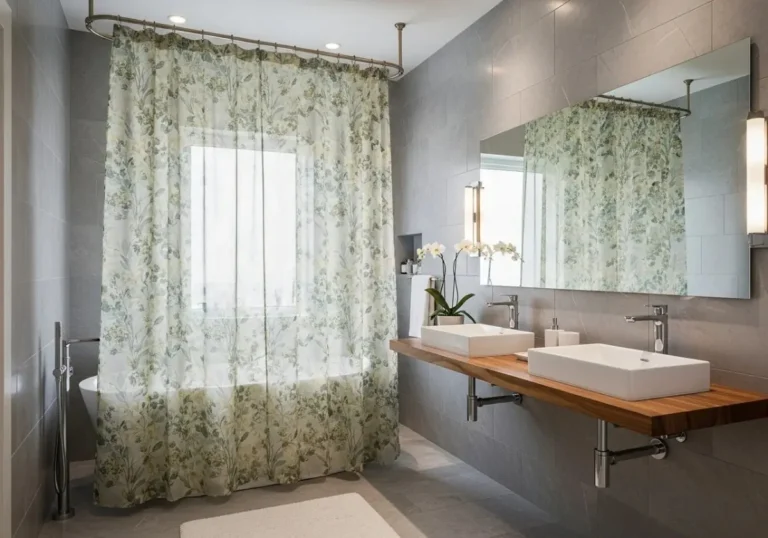
Sharing a bathroom used to mean queuing for the mirror in our house, until we fitted a double vanity, and honestly it has done more for our mornings than any other change. Two sinks mean no one is hovering with a toothbrush while the other finishes, and each side can have its own little zone, one for getting ready and one for the children’s splashy handwashing. I would allow at least 150 cm of width so neither person feels squeezed, and I always recommend two mirrors rather than one long one, because it makes the arrangement feel deliberate. Add a drawer each, and the bickering over counter space quietly disappears.
How to do it: Measure your wall and allow at least 75 cm of width per sink, with 150 cm or more in total. Plan two sets of supply and waste pipes before ordering, and centre a mirror over each basin. Give each person a drawer and a small tray so their essentials stay on their own side.
5. Try a Vessel Sink
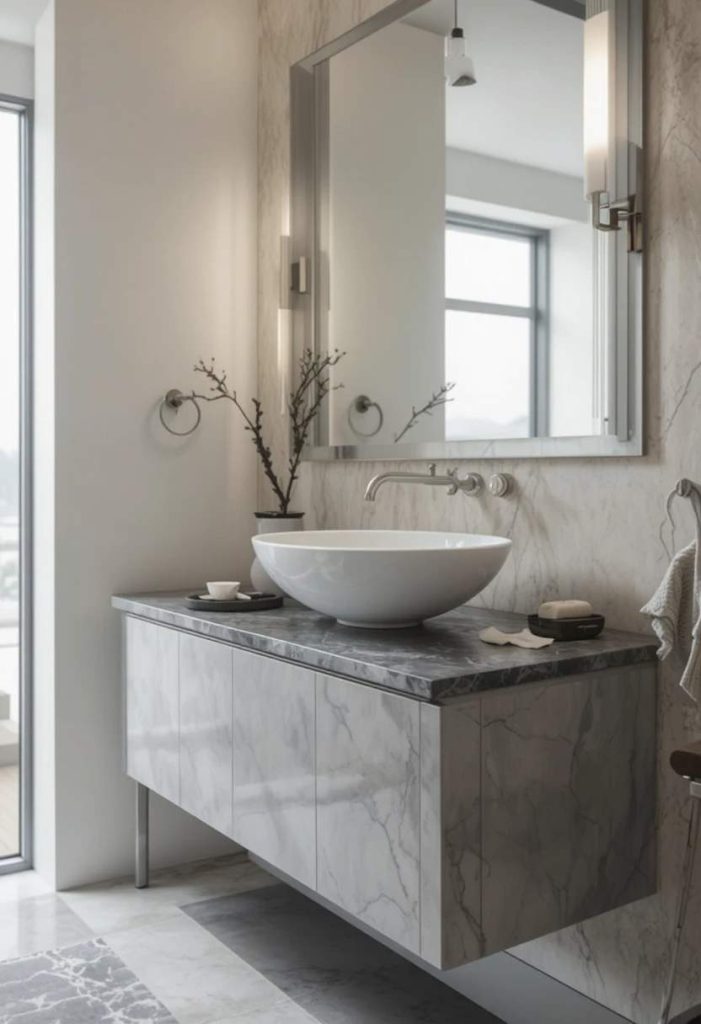
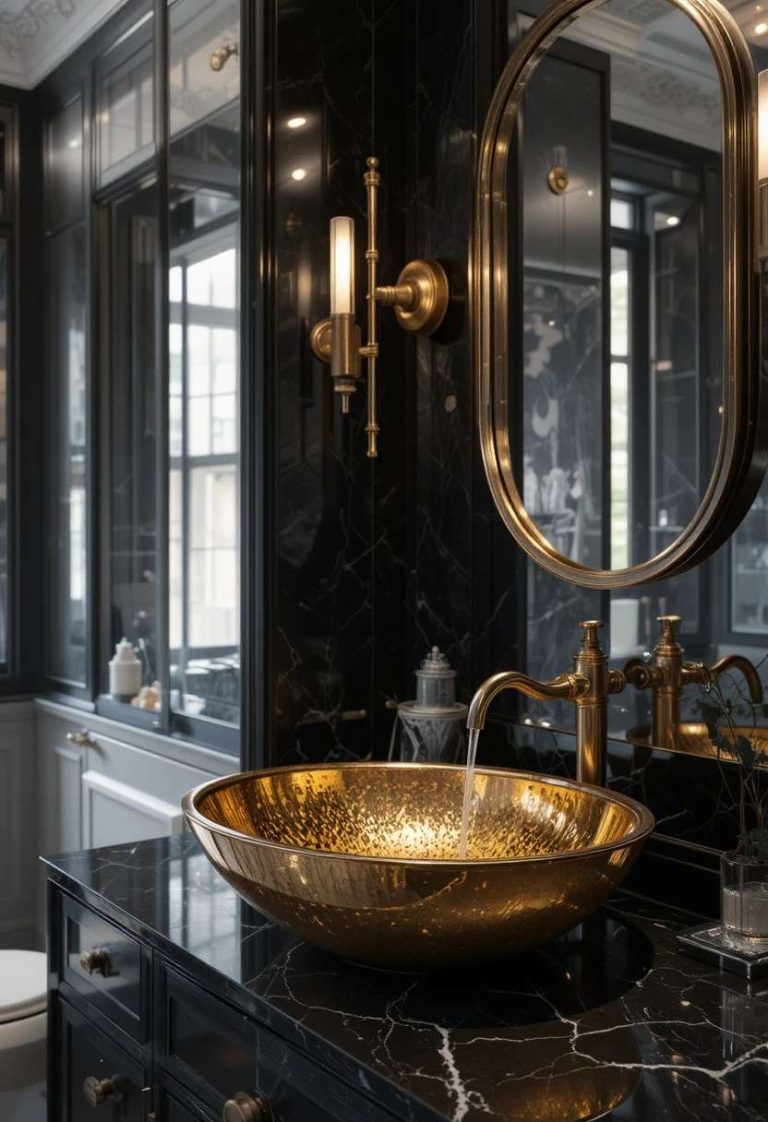
A vessel sink sits proudly on top of the vanity like a bowl on a table, and I love the sculptural quality it brings, because it turns washing your hands into something rather elegant. The raised basin also lets you choose a lower vanity unit, which can be handy in a room with a sloping ceiling or a window at an awkward height. I have learned to check the height carefully, though, because the rim should sit around 85 to 90 cm from the floor, so a tall vessel needs a shorter cabinet beneath it. Stone, ceramic and hammered copper all look wonderful, and a simple wall-mounted tap keeps the look clean.
How to do it: Choose a vessel that suits the vanity width, leaving at least 10 cm of counter on each side. Set the cabinet height so the basin rim lands at 85 to 90 cm from the floor. Drill the waste hole, fit a tall or wall-mounted tap, and seal around the base with clear silicone.
6. Add Warm Wood Tones
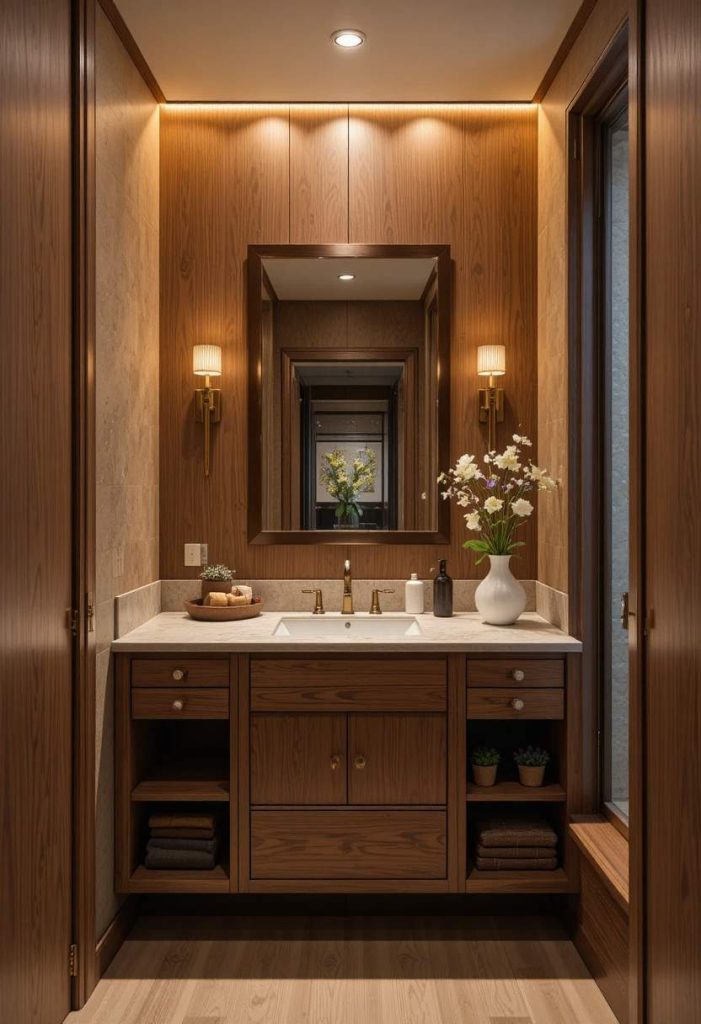
There is a warmth to a wooden vanity that painted cabinets never quite manage, and ours is the piece that makes our white-tiled bathroom feel like a home rather than a showroom. I love the way the grain shows through a pale oak finish, and the honey tones pick up the morning light beautifully. If you are worried about water, choose a properly sealed hardwood or a good quality wood-effect finish, and wipe up splashes rather than letting puddles sit. I keep the rest of the room simple, with cream towels, a woven basket and one small plant, so the timber stays the star.
How to do it: Choose oak, walnut or teak with a waterproof lacquer or oil finish made for bathrooms. Check the grain direction runs horizontally for a calmer look. Seal all cut edges, wipe splashes promptly, and re-oil a natural timber top once a year to keep it protected.
7. Pair With a Statement Mirror
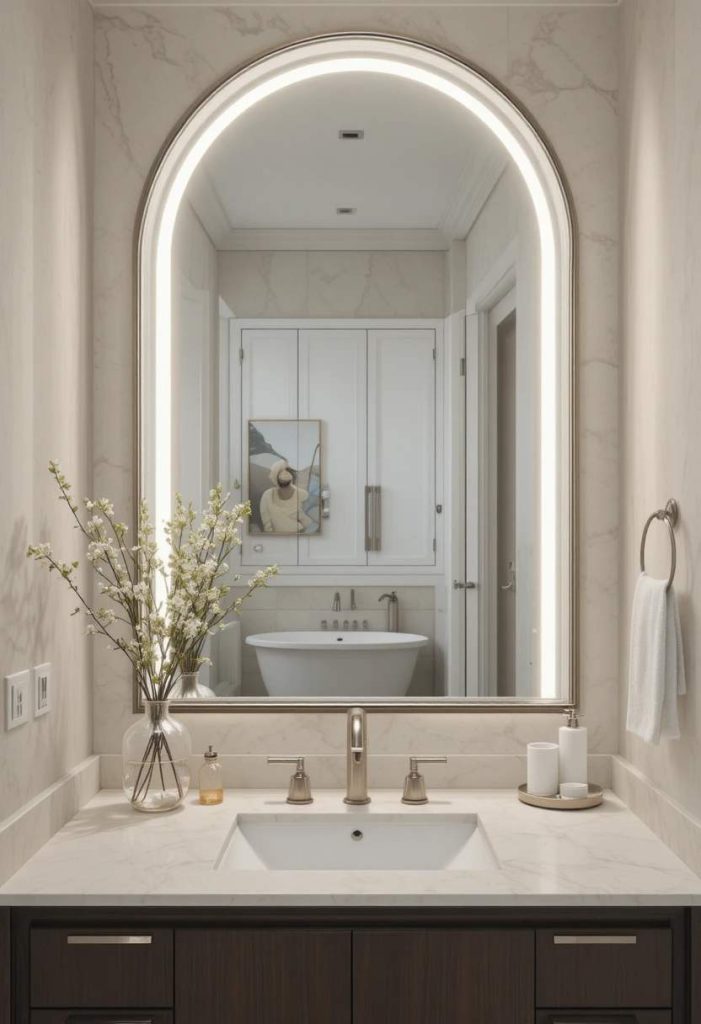
The mirror above the vanity is where I always start when a bathroom feels flat, because the right shape changes the whole wall. A round mirror softens all the straight lines of tiles and cabinetry, while an arched one adds a gentle, almost romantic curve that I find works beautifully in both modern and traditional rooms. I like to size the mirror to about two-thirds of the vanity width, and I hang it so the centre sits at eye level for whoever uses the room most. If you want more inspiration for shapes, frames and lighting, these bathroom vanity mirror ideas will give you plenty to consider.
How to do it: Measure the vanity and choose a mirror about two-thirds of its width. Hang it so the centre is at eye level, roughly 150 to 160 cm from the floor. Fix it with screws into solid wall or proper plasterboard fixings, and check the reflection catches light rather than a blank wall.
8. Add Gold or Brass Fixtures
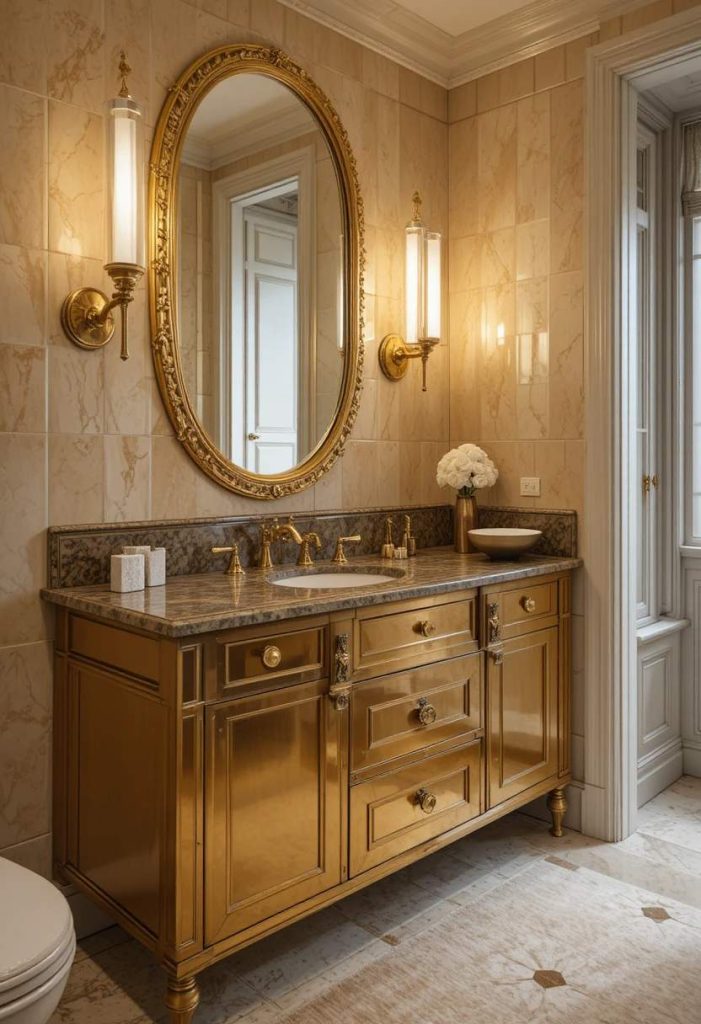
Swapping our chrome taps for unlacquered brass was a small change with an unexpectedly big effect, because suddenly the whole vanity looked considered, as if someone had actually designed it rather than just fitted it. Warm metals glow against marble, deep green paint and pale wood alike, and they age gracefully, developing a soft patina that I find rather charming. I match the taps to the drawer handles and the mirror frame so the metals feel deliberate, and I keep the rest of the palette quiet. A word of caution from experience: unlacquered brass needs an occasional polish if you like it bright, so choose lacquered if you prefer zero upkeep.
How to do it: Choose one warm metal, such as brass or brushed gold, and use it for taps, handles and the mirror frame. Check the tap height suits your basin, and buy the matching waste and bottle trap. Fit the taps before the basin is sealed in, and polish unlacquered brass occasionally to keep it bright.
9. Choose a Floating Wood Slab
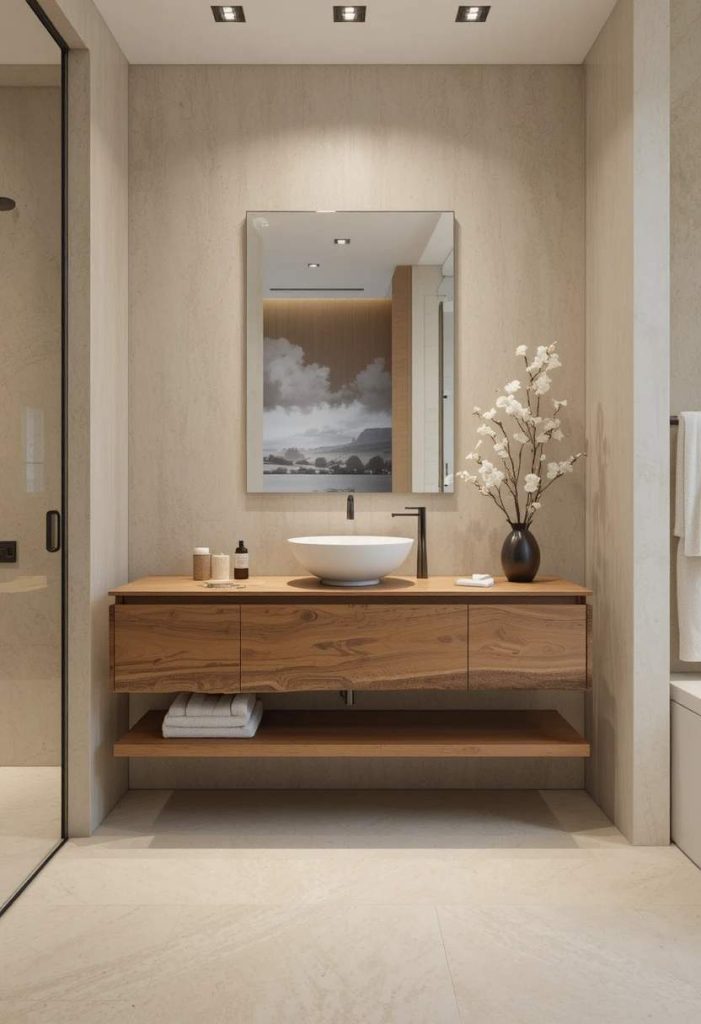
A thick floating slab of wood with a vessel basin on top is one of the simplest vanity ideas I know, and in a small bathroom it feels wonderfully uncluttered. There is no cabinet at all, just a beautiful piece of timber and the wall beneath it, which makes the room feel open and calm. I would choose a slab at least 4 cm thick so it looks substantial rather than flimsy, and I always fit a discreet bracket or steel rod into the wall so it can hold the weight safely. Storage is the trade-off, so I add a basket underneath for spare towels and a small shelf for the everyday bottles.
How to do it: Choose a hardwood slab at least 4 cm thick and 50 to 55 cm deep. Fix concealed steel brackets or rods into solid wall or blocking, checking they are perfectly level. Seal the timber on all sides, fit the vessel basin and a wall-mounted tap, and slide a basket beneath for towels.
10. Add a Vintage-Style Vanity
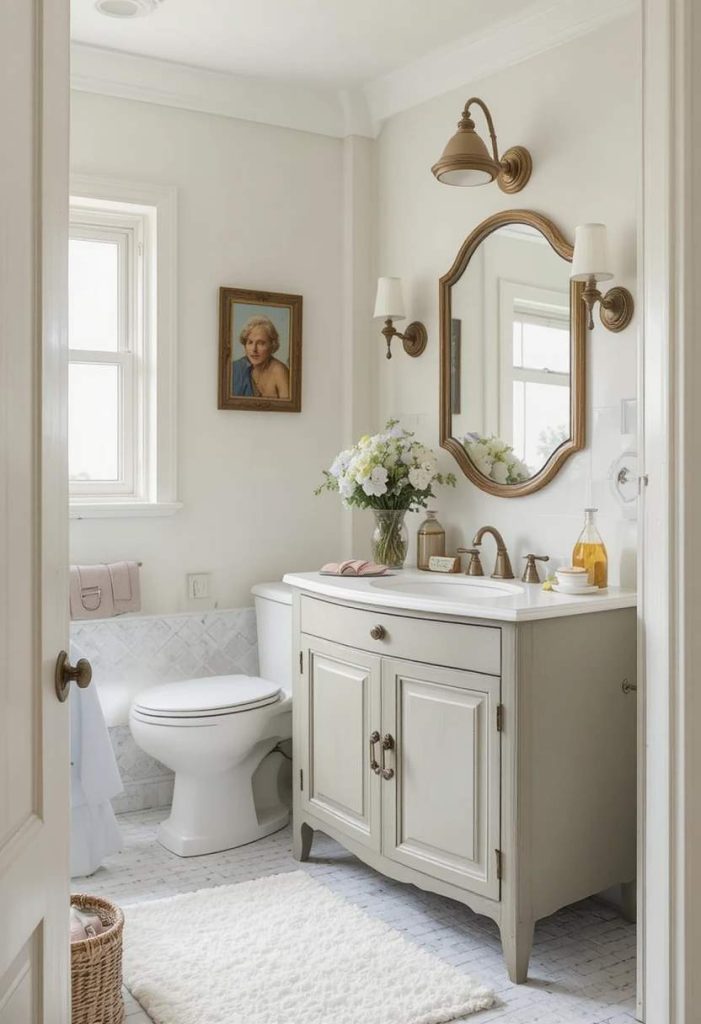
Our vintage-style vanity started life as an old oak washstand I found at a flea market, and converting it was one of my favourite weekend projects. A repurposed piece brings a story no flat-pack can match, with worn edges, dovetailed drawers and the sense that it has already lived a good life. I sealed the top thoroughly, fitted a ceramic basin into the old marble insert, and added a small shelf inside for cleaning products. If you go down this route, measure twice, because old furniture rarely matches modern plumbing, so allow room for the waste pipe and a little patience with the fitting.
How to do it: Find a sturdy vintage table, washstand or chest with a top at least 50 cm deep. Seal the timber and any stone top thoroughly. Cut or adapt the back of the drawers to fit around the waste pipe, fit the basin and taps, and check the finished height is comfortable to use.
11. Keep It Sleek and Handle-Free
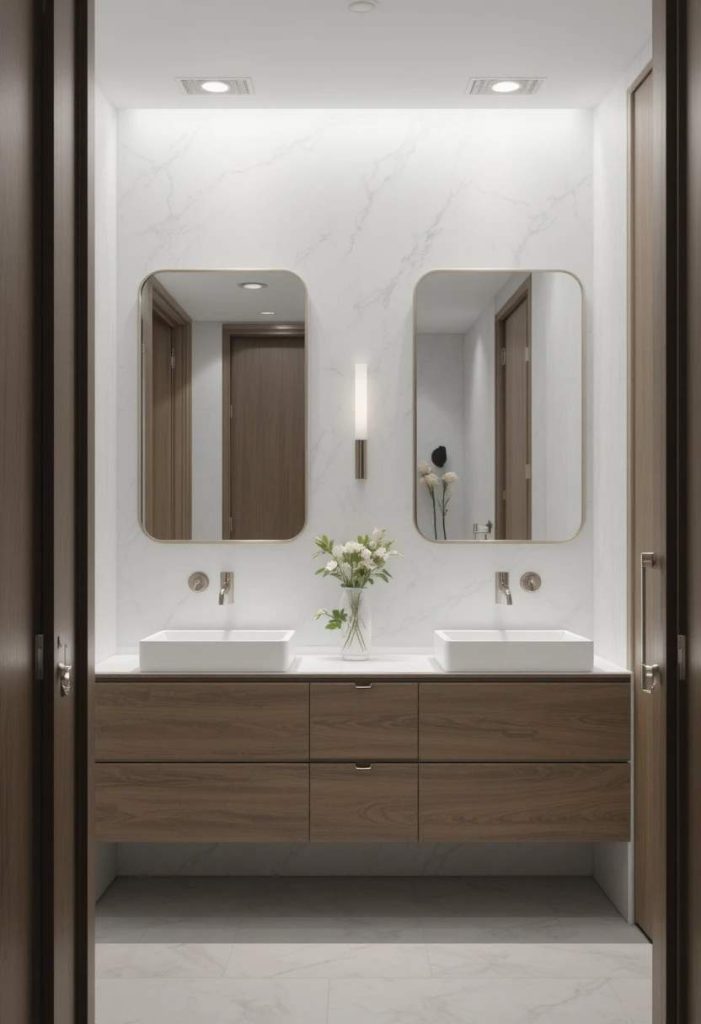
I was sceptical about handle-free vanities until I lived with one, because I assumed the doors would be fiddly, but the push-to-open mechanism is so smooth that I now find handles look fussy by comparison. The flat, unbroken fronts make a small bathroom feel calm and much larger, and there is nothing for towels or dressing-gown cords to catch on. I do keep a microfibre cloth in the top drawer, because the glossy fronts show fingerprints more than a traditional door would. Choose a push latch that is rated for bathroom use, and ask the supplier for a soft-close mechanism so the doors never slam.
How to do it: Choose flat-fronted doors or drawers with a push-to-open or recessed channel handle. Fit soft-close runners so drawers glide shut. Keep a microfibre cloth in the top drawer for fingerprints, and check the push latches are rated for humid rooms.
12. Add a Stone or Concrete Top
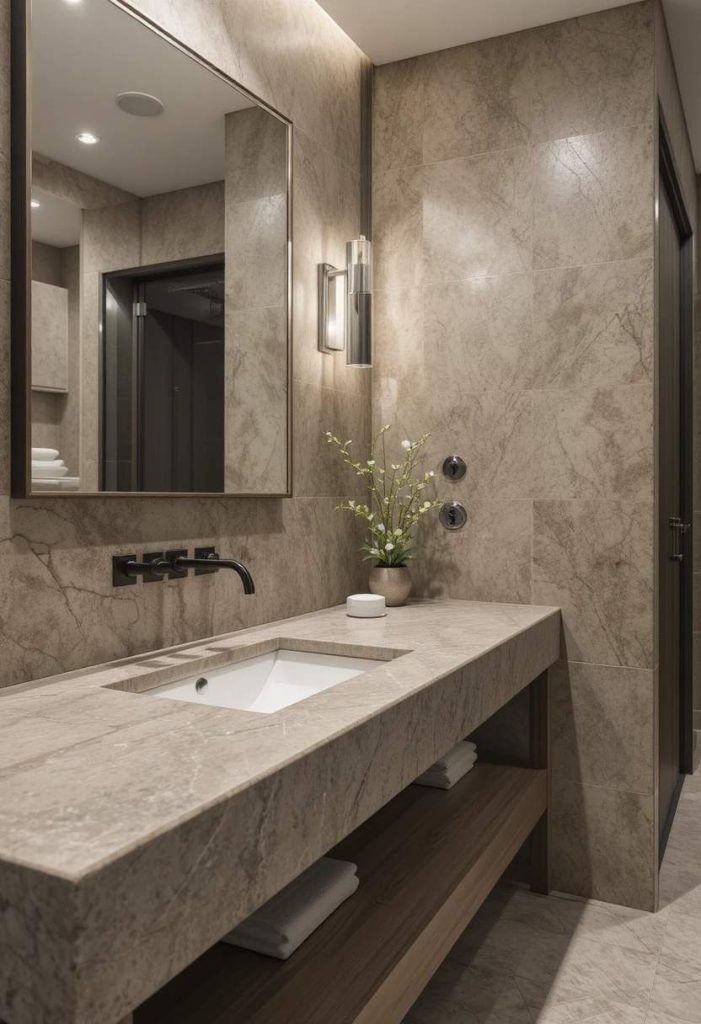
A concrete or stone top gives a vanity a grounded, artisan feel that I find very calming first thing in the morning. The surface is cool and solid, the subtle texture catches the light, and it pairs beautifully with both pale oak and dark painted cabinetry. I would always choose a sealed finish, because raw concrete marks easily, and a good penetrating sealer keeps tea rings and toothpaste at bay. It is also heavy, so check the cabinet is built to carry it, and ask the maker to round the front edge slightly, which is kinder to hips and small children alike.
How to do it: Order the top to your cabinet size with a 2 cm overhang and a softly rounded front edge. Check the cabinet can carry the weight, and seal the surface before fitting. Bed it on silicone, wipe up spills promptly, and reseal once a year to keep stains away.
13. Try a Two-Tone Vanity
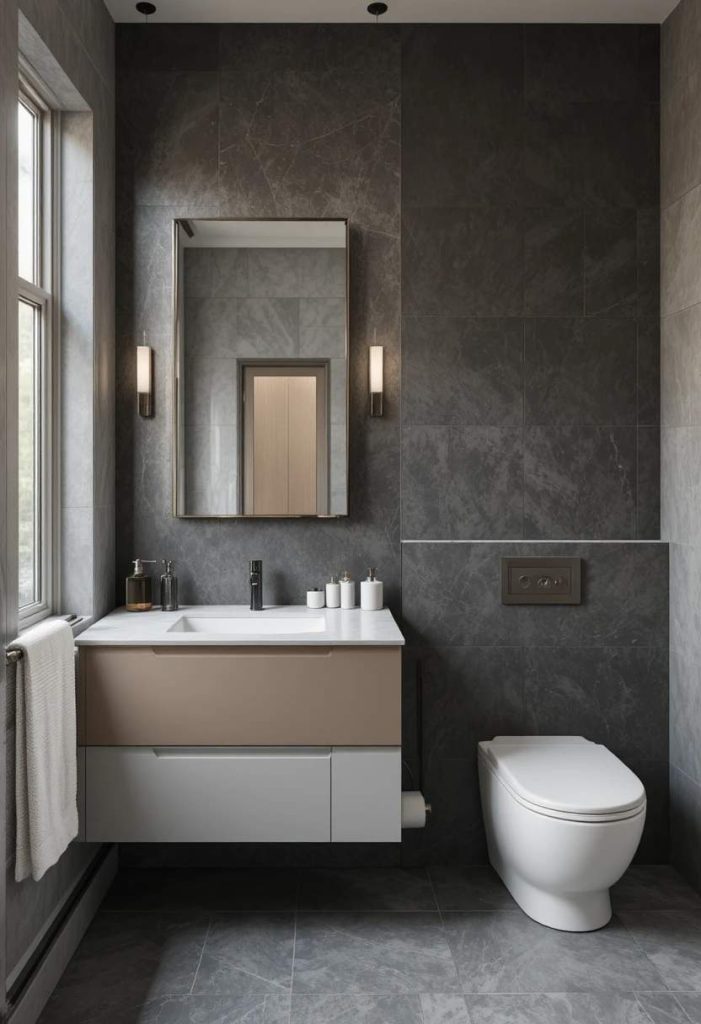
Two tones on one vanity sound daring, but it is one of the easiest ways to make a plain bathroom feel designed. I love a deep green or navy base with a pale oak top, or soft grey doors with a darker plinth that grounds the whole piece. The trick, I have found, is to let one tone lead and the other support: the darker colour on the cabinet, the lighter one on the worktop or the open shelf. Keep the walls quiet and repeat one of the two tones in a small detail, such as the towels or the mirror frame, so the pairing feels intentional rather than accidental.
How to do it: Choose two tones that share a warm or cool undertone so they sit happily together. Paint or order the cabinet in the darker tone and the top or shelf in the lighter one. Repeat one tone in the towels or mirror frame, and step back to check the balance before finishing.
14. Add Open Shelving Below
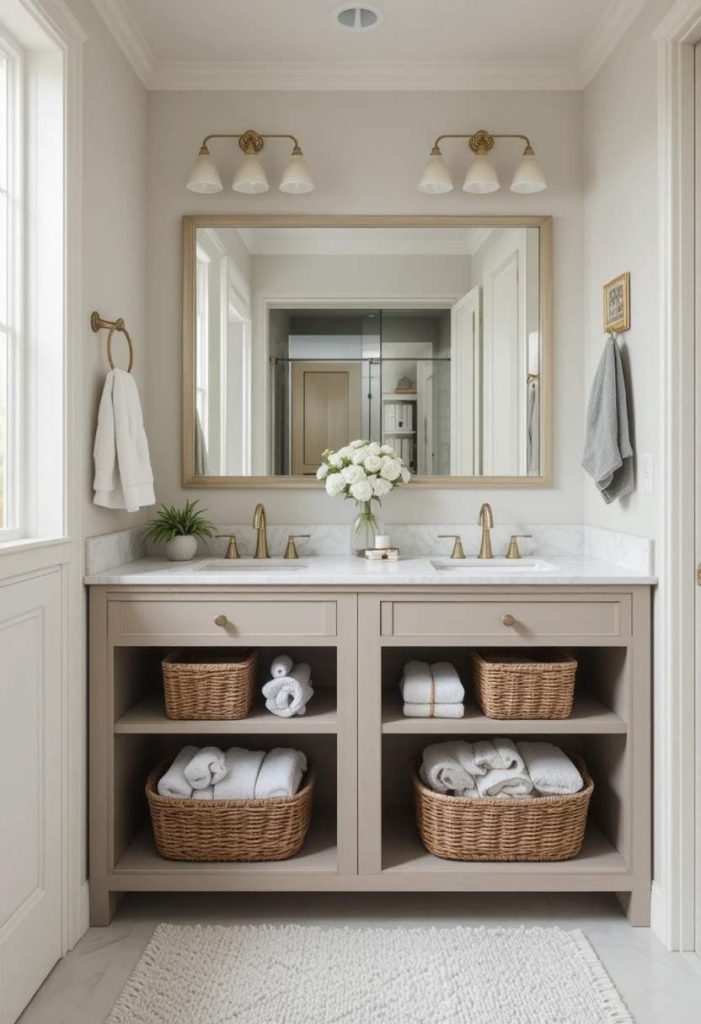
Open shelves under a vanity changed how our family bathroom works, because everything we reach for daily is suddenly visible and easy to grab. Rolled towels in a neat stack, a basket for the hairdryer, a small tray for the children’s wash things, it all stays tidy because there is no door to hide the mess behind. I am honest about the upkeep, though: open shelves need a quick straighten every few days, so I use matching baskets to keep the look calm. It also keeps the room feeling airy, which is a gift in a bathroom with no window.
How to do it: Plan two or three open shelves beneath the vanity, sized for rolled towels and baskets. Use matching baskets to hide clutter and keep the display calm. Leave a gap at the bottom for the mop, and wipe the shelves weekly so dust never settles.
15. Choose a Compact Vanity for Small Spaces
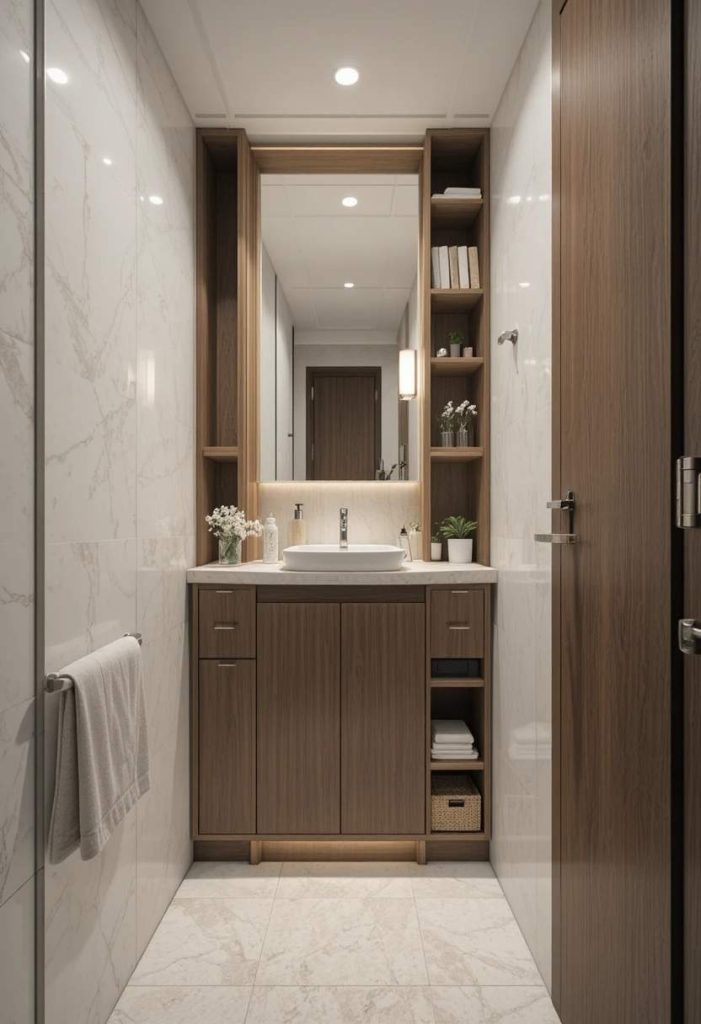
Our cloakroom is barely bigger than a cupboard, so choosing a compact vanity felt like solving a puzzle, and the slim unit we found proves that small can still be beautiful. At just 40 cm deep it tucks neatly against the wall, yet the drawer holds everything we need and the little ceramic basin is perfectly comfortable to use. I chose a wall-hung design so the floor shows beneath it, and a round mirror above to soften the corners. The lesson I took away is to measure the door swing and the space in front of the basin before ordering, because a vanity that blocks the door is no bargain at any price.
How to do it: Measure the room carefully, including the door swing and the space in front of the basin. Choose a wall-hung unit 40 to 45 cm deep with a drawer rather than doors. Fit a slim basin, centre a round mirror above, and keep the worktop clear so the small space feels generous.
16. Add a Pop of Pattern
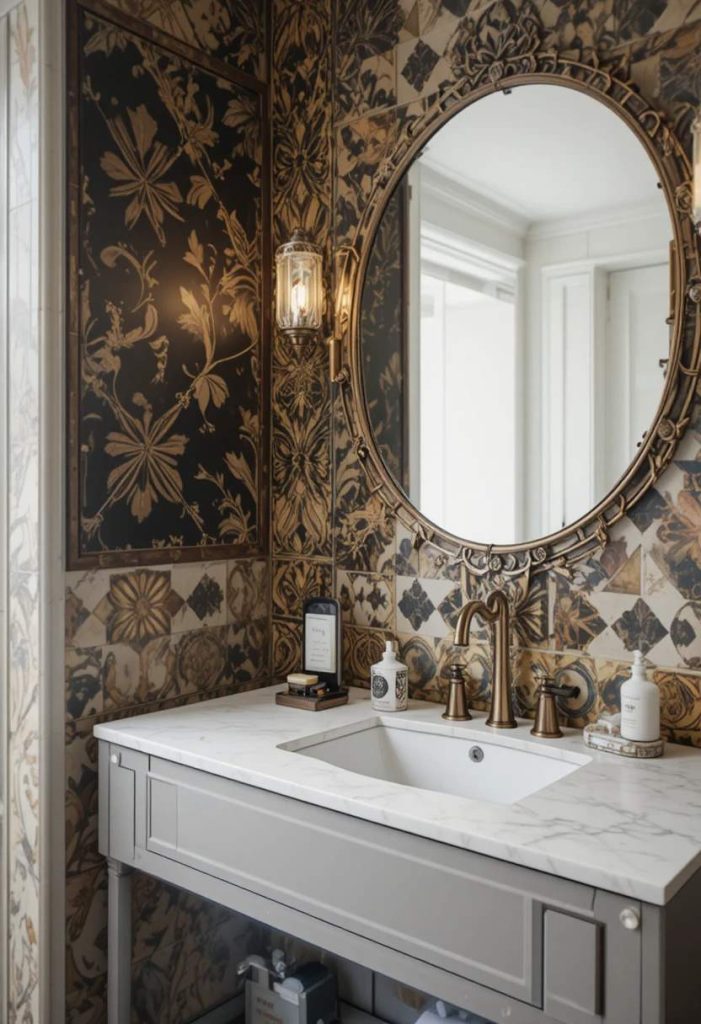
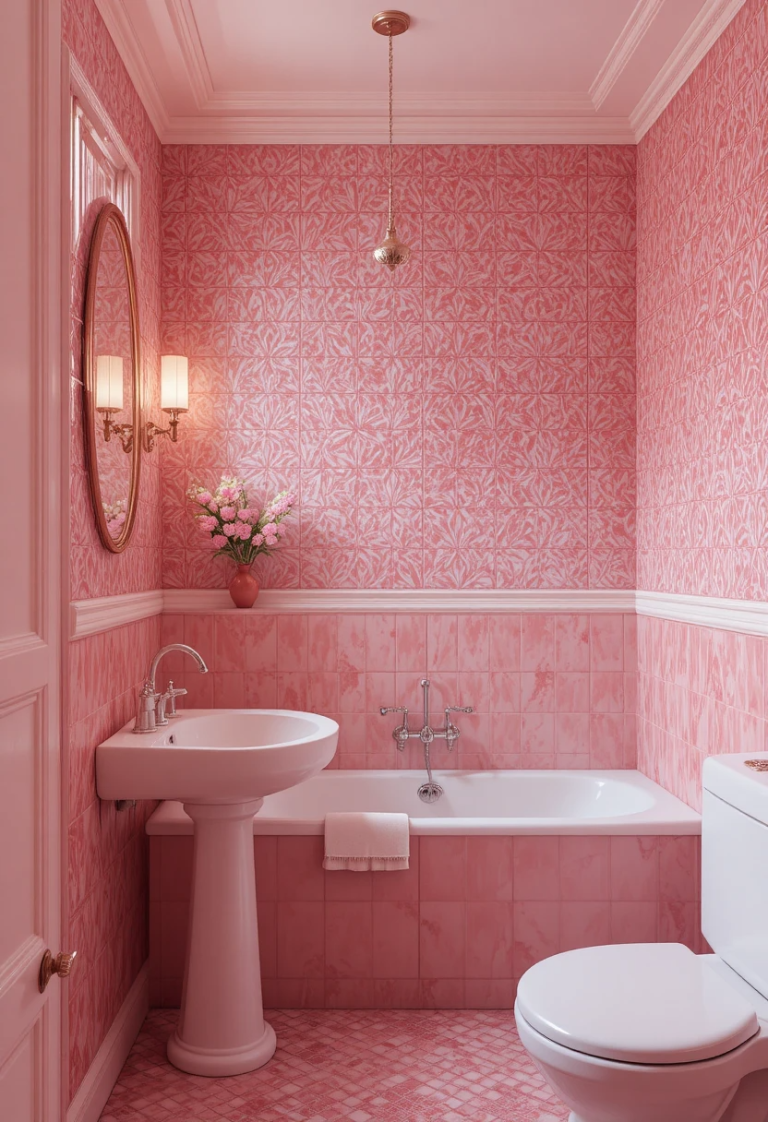
A touch of pattern behind a vanity brings personality without committing the whole room to a bold scheme. A band of patterned tiles or a strip of wallpaper above the splashback turns a plain vanity into a feature, and because the area is small, you can afford the tiles you really love. I chose a soft blue and white pattern in our bathroom and kept the vanity itself plain pale wood, so the pattern feels joyful rather than busy. If you use wallpaper, pick a vinyl or specially coated one made for humid rooms, and seal the edges well.
How to do it: Choose a patterned tile or moisture-resistant wallpaper for the wall behind the vanity. Tile or paper just the vanity wall to keep the pattern focused. Seal grout and wallpaper edges against steam, and keep the vanity and towels plain so the pattern leads.
17. Add Vanity Lighting
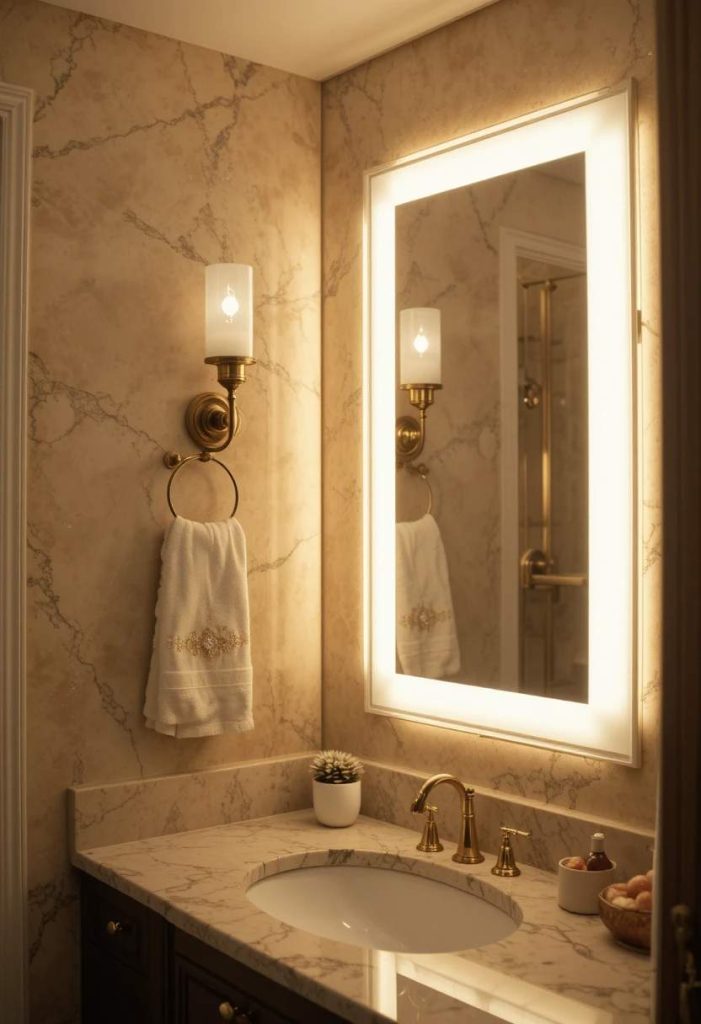
Good lighting at the vanity is the difference between a bathroom that flatters you and one that leaves you squinting, and it took me years to learn that the light should come from the sides, not just from above. A pair of sconces at eye level, or a backlit mirror, washes your face with soft, even light and makes the whole room feel warm in the evening. I choose warm white bulbs, around 2700K, because cooler light feels clinical in a bathroom. If you can, put the vanity lights on a separate switch or a dimmer, so early mornings can be gentle and evenings can feel like a small spa.
How to do it: Mount sconces on either side of the mirror at eye level, about 150 to 160 cm from the floor, or choose a backlit mirror. Use warm white bulbs of around 2700K for a flattering glow. Ask an electrician to wire them on a separate switch or dimmer, and keep them clear of direct splashes.
18. Try a Pedestal-Style Look
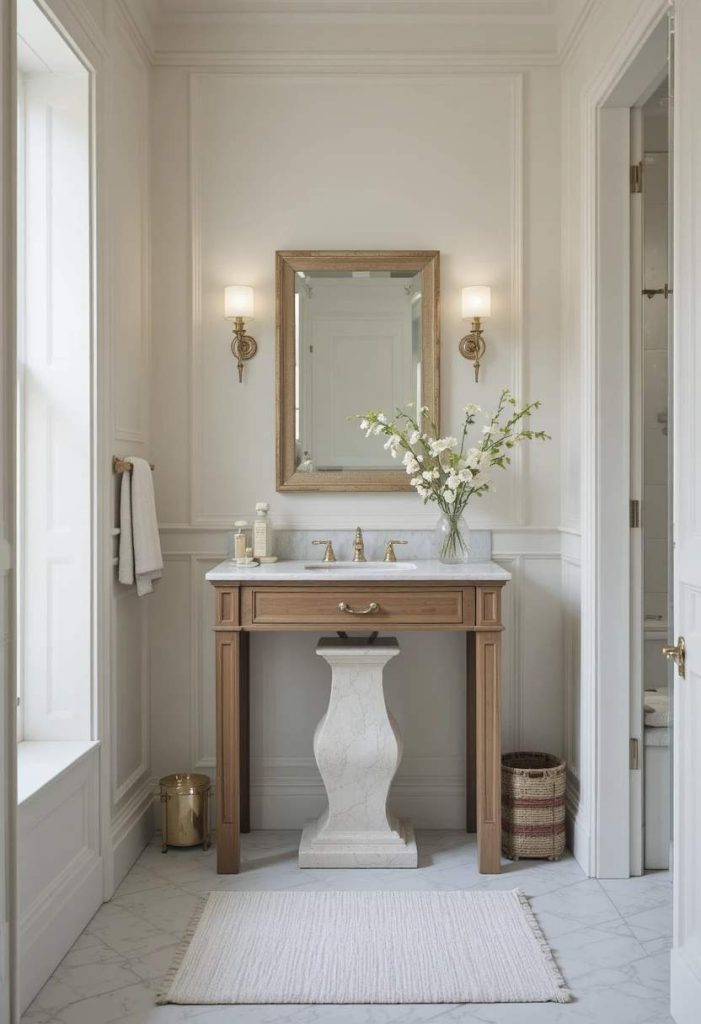
A slim pedestal or console vanity has an elegance that suits older houses so well, because it feels light and graceful, and it leaves the floor and the skirting boards on show, which I love in a period bathroom. The trade-off is storage, so I treat this style as a chance to be selective: a beautiful tray for the soap and toothbrushes, a basket below for spare towels, and nothing else on show. It works best in a guest bathroom or a room where the main storage lives elsewhere, and I always check the basin height suits the tallest person in the house.
How to do it: Choose a console or pedestal vanity with legs and a slim basin, sized for the wall. Fix it securely to the wall as well as the floor. Add a small tray for daily essentials and a basket beneath for towels, and keep the surface nearly clear.
19. Add Drawers for Easy Storage
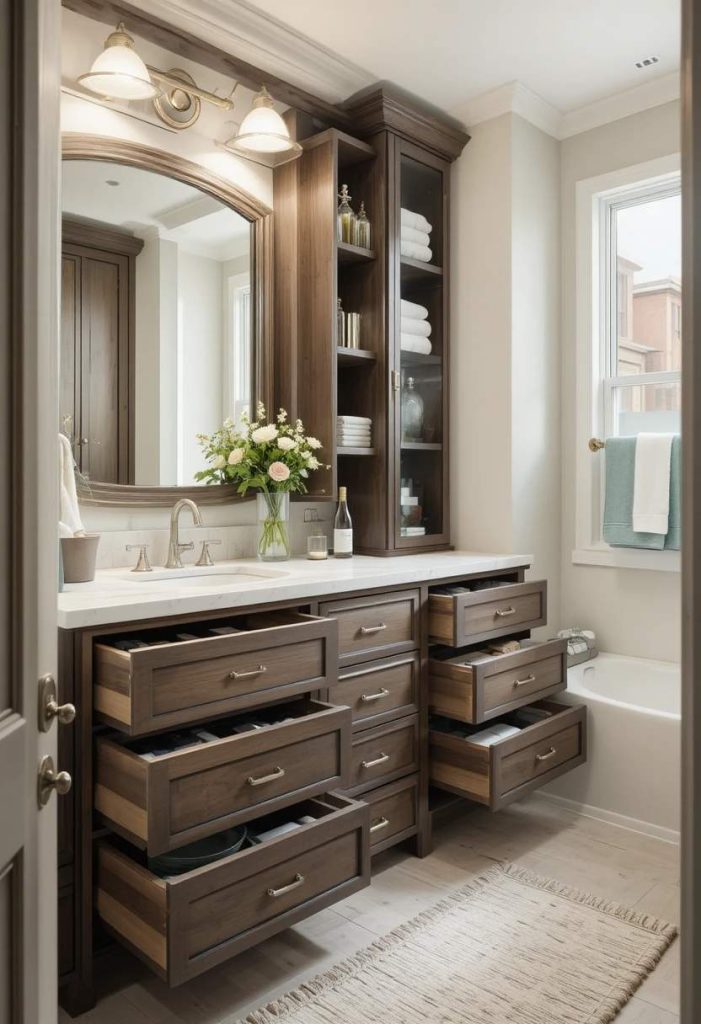
Deep drawers were the single best storage decision I made for our vanity, because they end the daily rummage through a dark cupboard. Everything sits where I can see it, with the hairdryer in one, skincare in another, and the children’s bits in a shallow top drawer that keeps them from migrating everywhere. I fitted slim dividers and a non-slip liner, which stops bottles toppling every time a drawer opens. If your drawers are still a jumble, these bathroom drawer organisation ideas will help you give every bottle and brush a proper home.
How to do it: Choose a vanity with at least two deep drawers and one shallow top drawer. Fit adjustable dividers and a non-slip liner in each one. Sort items by use, keep daily essentials in the top drawer, and leave a little spare space so drawers always close easily.
20. Choose a Soft Painted Finish
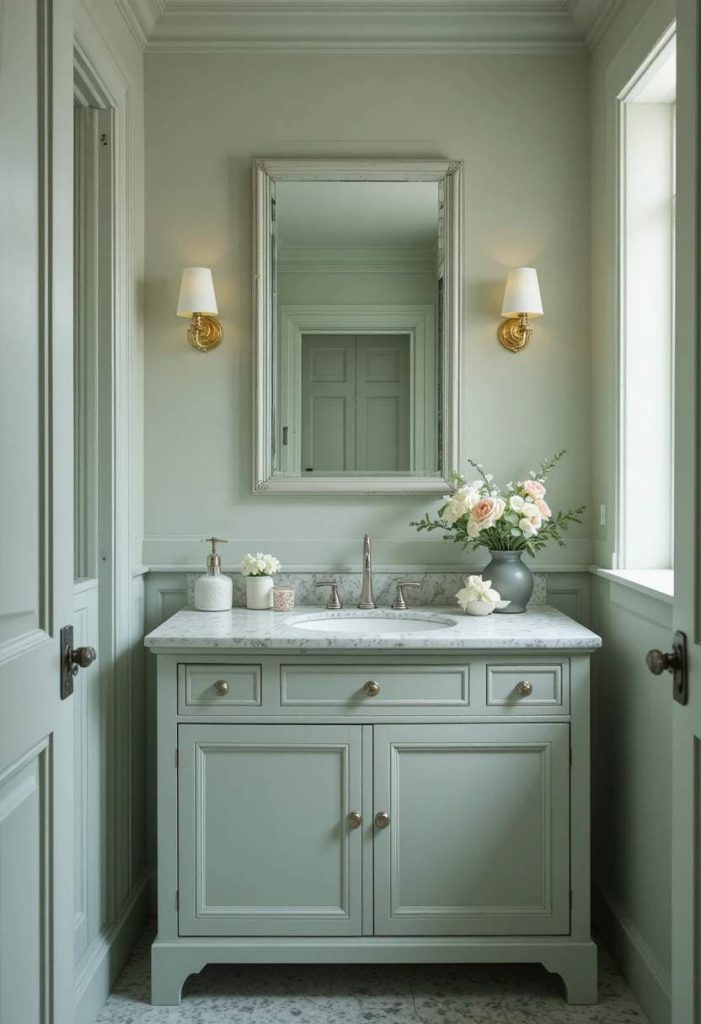
A soft painted finish is the gentlest way to bring colour into a bathroom, and I am very fond of the pale sage we used on ours, because it changes with the light, looking grey in the morning and green by afternoon. Blush, powder blue and soft grey work just as well, and they are forgiving with water marks and small scuffs. I always use a paint made for kitchens and bathrooms, because ordinary emulsion softens in the steam. Pair the colour with simple chrome or brushed nickel, and let a wooden worktop warm it up.
How to do it: Choose a soft shade such as sage, blush or powder blue, and test it on card in the room. Use a moisture-resistant cabinet paint over a shellac-based primer, with two coats for a durable finish. Pair it with pale wood or marble, and touch up scuffs promptly.
21. Add a Floating Shelf Above
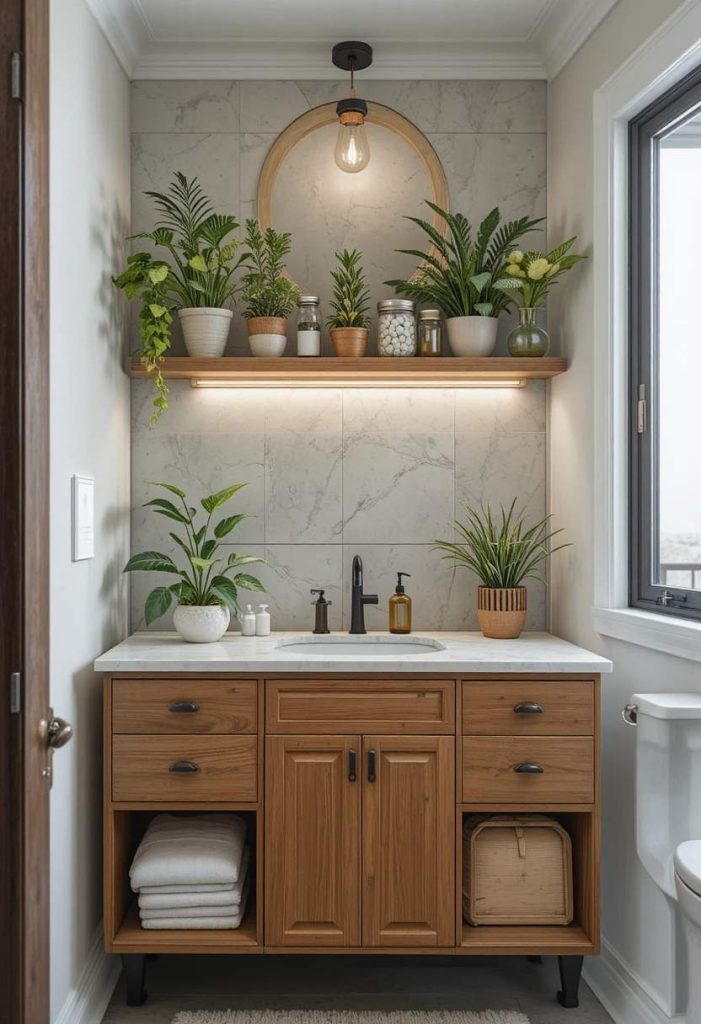
A slim floating shelf above the vanity is where I keep the pretty things, a small vase with eucalyptus, a jar of cotton pads and a candle for evening baths, and it adds so much character for so little effort. The key is restraint: one shelf, a few objects and plenty of breathing space, so it reads as styled rather than cluttered. I fitted ours at a height where I can reach it without stretching, and I used proper fixings into the wall because even a light shelf can pull away in a steamy room. A trailing plant softens the edge beautifully.
How to do it: Fix a slim shelf 30 to 40 cm above the splashback, using fixings suited to your wall type. Style it with just three or four objects, such as a plant, a jar and a small tray. Keep daily items off it so it stays decorative, and dust it weekly.
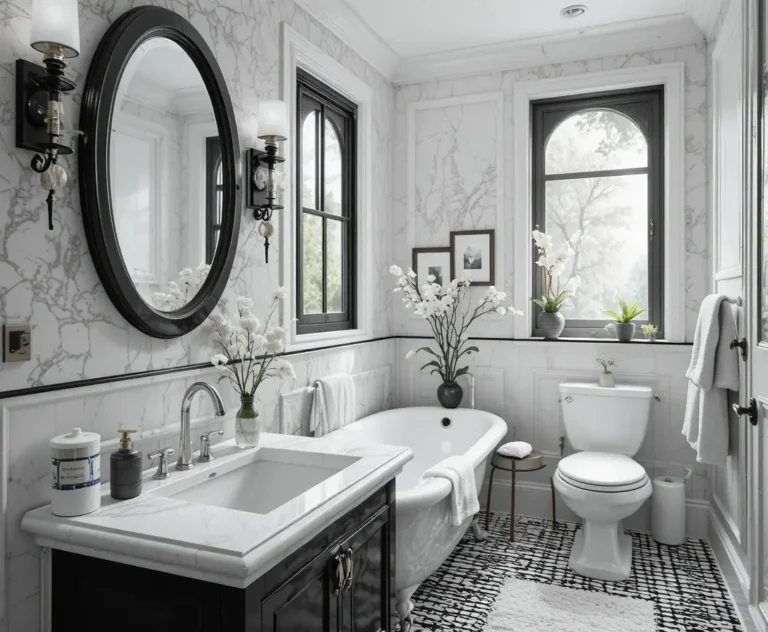
22. Try a Modern Black Vanity
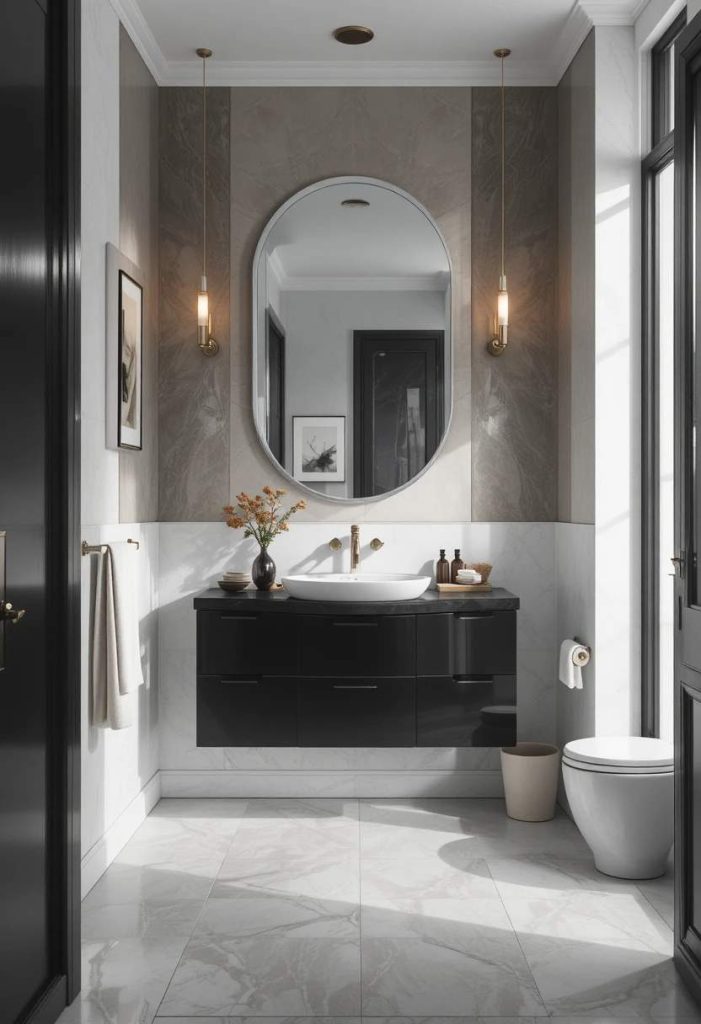
A black vanity sounds dramatic, and it is, in the best way. Ours anchors the whole bathroom, and against pale tiles and a white basin the contrast feels crisp and very modern. I have learned that black shows water marks and dust more than paler finishes, so I keep a microfibre cloth in the drawer and wipe the top after the morning rush. Matte black is more forgiving than gloss, and it pairs beautifully with brass taps and a warm wood shelf. If your bathroom is small, balance the dark cabinet with a large mirror and pale walls so the room still feels light.
How to do it: Choose a matte black vanity with a pale worktop for contrast. Pair it with brass or brushed gold taps and a large mirror to keep the room light. Wipe the surface with a microfibre cloth after use, and keep the walls pale so the dark cabinet feels deliberate.
23. Add a Stone Vessel or Basin
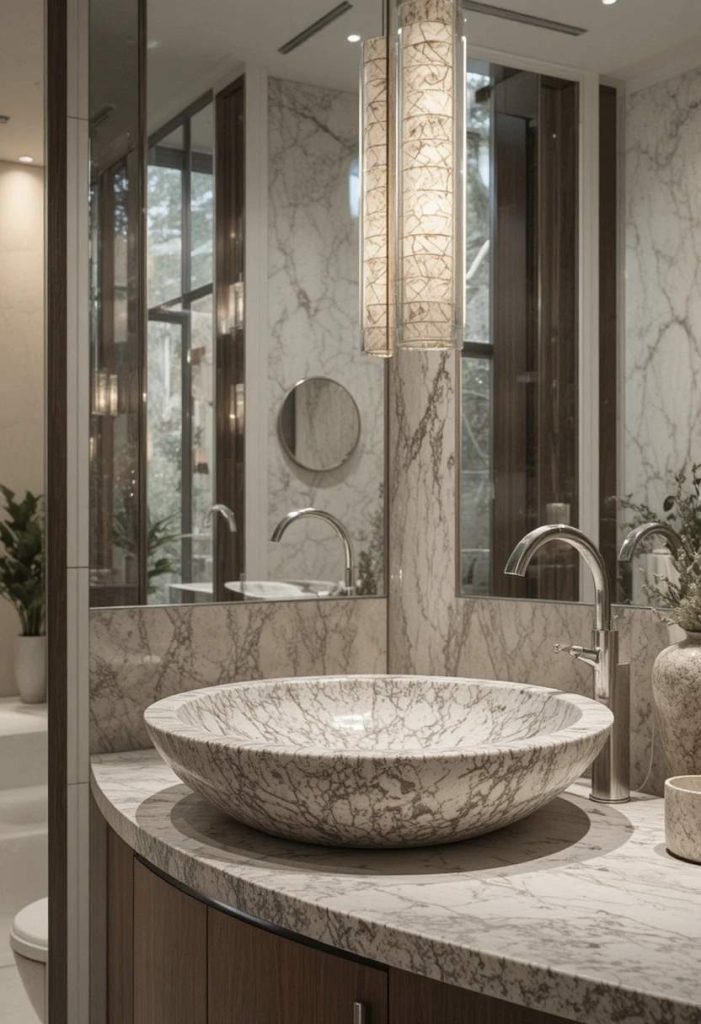
A basin carved from natural stone is the most tactile thing in our bathroom, because the surface is cool, slightly rough, and every piece has its own pattern, so it feels like a little piece of sculpture. I love how it sits on a simple wooden vanity, because the contrast between the rough stone and the smooth timber is what makes the whole arrangement work. Stone does need care: I seal ours every few months and I never leave coloured products sitting on it. It suits a calm, earthy bathroom, and I keep the taps simple so nothing competes with the basin itself.
How to do it: Choose a stone basin sized for the vanity, leaving counter space on each side. Seal the stone before fitting and reseal every few months. Fit a tall or wall-mounted tap, check the waste fits the basin depth, and keep coloured cosmetics off the surface.
24. Keep the Counter Clutter-Free
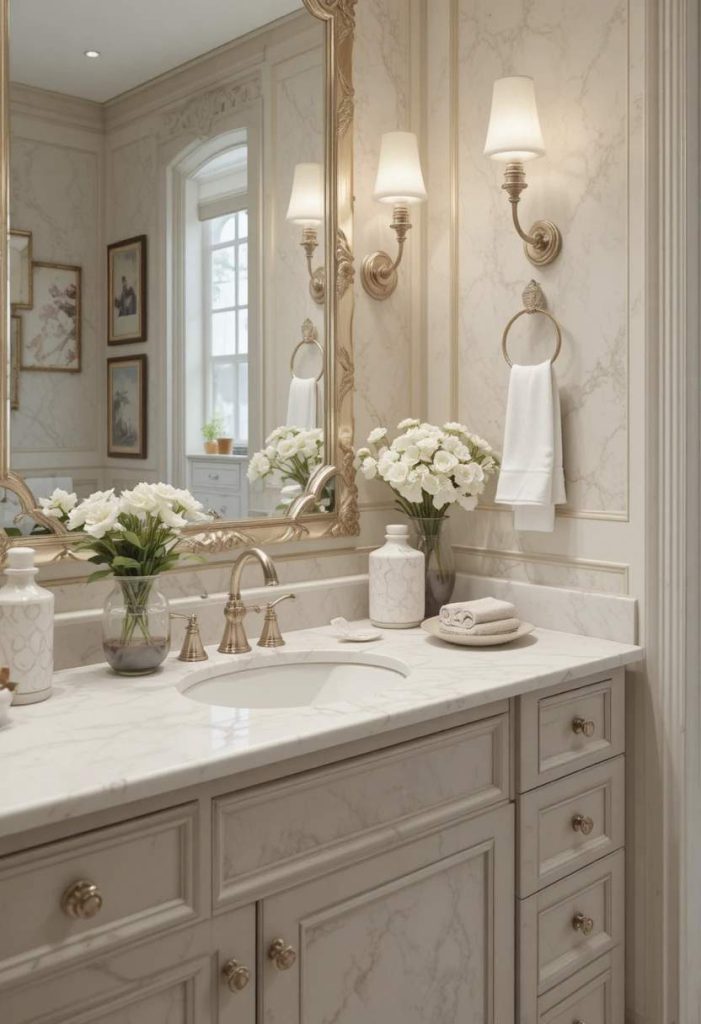
Keeping the vanity counter clear is less about discipline and more about giving everything a home elsewhere, which is why I finally added a drawer organiser and a single tray for the three things I use every morning. The clear surface makes the whole bathroom feel calmer and, oddly, bigger, and cleaning takes about thirty seconds instead of ten minutes of moving bottles around. I keep a small vase with one stem on the tray so the space still feels loved, and everything else lives in the drawers. Once you live with a clear counter for a week, you will not want to go back.
How to do it: Take everything off the counter and return only the three items you use daily, on a single tray. Move everything else into drawers or a cabinet with dividers. Wipe the surface each morning, and do a two-minute reset every Sunday so clutter never creeps back.
25. Match the Vanity to Your Style
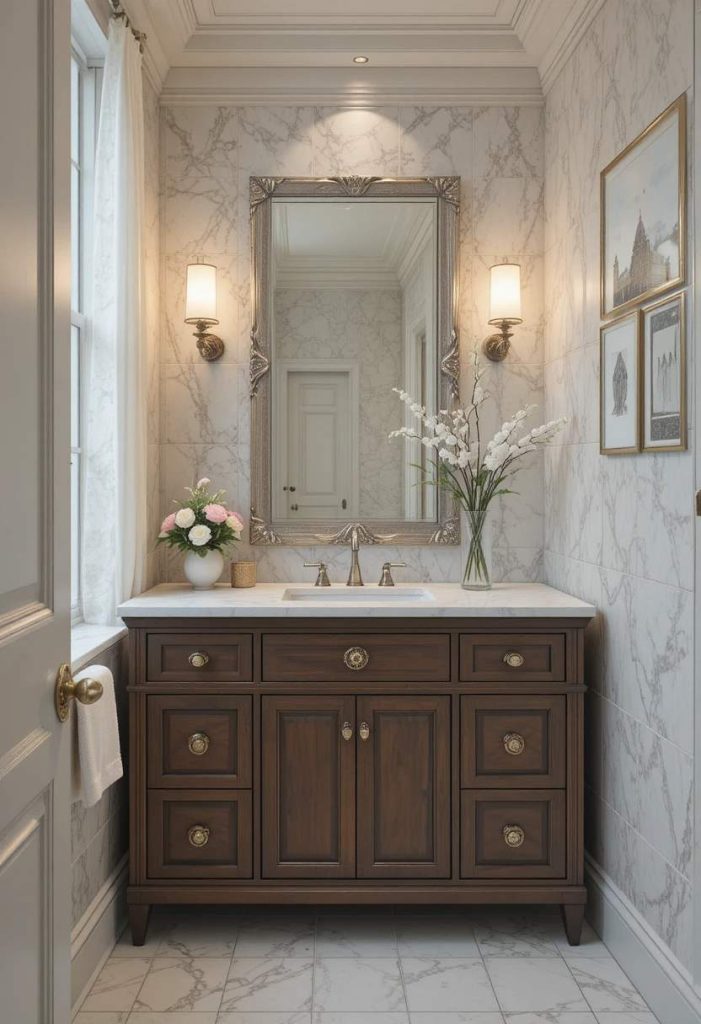
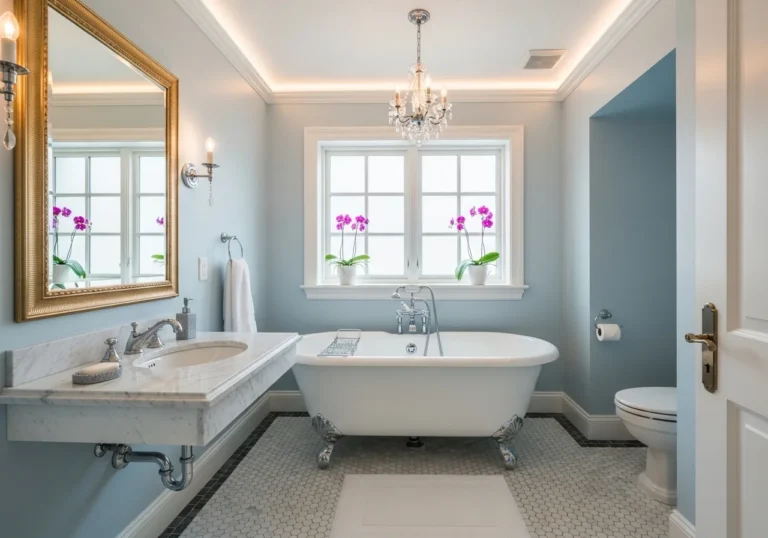
Choosing a vanity that matches the style of the rest of the bathroom sounds obvious, but it is the step I see skipped most often, a rustic vanity in a sleek modern room, or a glossy white unit in a cottage bathroom, and the whole space feels slightly off. I start by naming our style in three words, such as calm, warm and modern, and I check every choice against them. A traditional room wants panelled doors and a marble top, while a modern one wants flat fronts and clean lines. When the vanity speaks the same language as the tiles, the mirror and the taps, the bathroom finally feels finished.
How to do it: Name your bathroom style in three words, such as calm, warm and modern. Choose a vanity shape, finish and hardware that match those words. Check it against the tiles, mirror and taps, and change one mismatched element rather than living with a clash.
26. Add a Furniture-Style Vanity
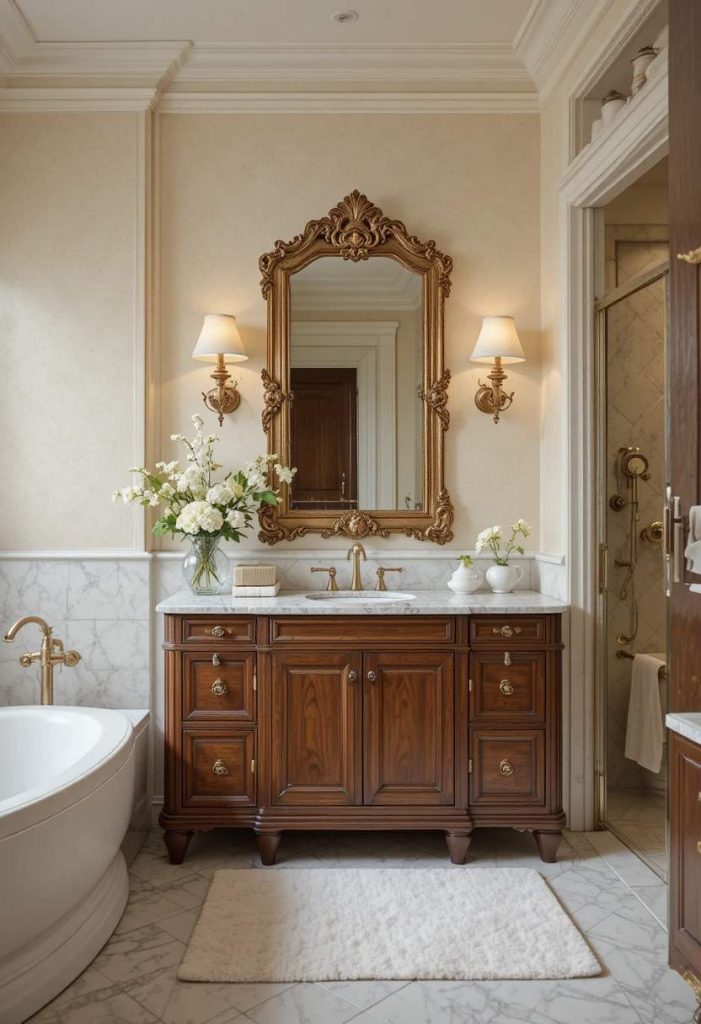
A vanity that looks like a proper piece of furniture brings a warmth that fitted units rarely manage, because ours has turned legs, panelled doors and a marble top, and guests often assume it was in the house long before the bathroom was. I love the way it softens all the hard surfaces around it, and the drawers are deep enough for everything from towels to the hairdryer. Because it stands on legs, I can mop underneath it easily, and the furniture look means it would not feel out of place in a bedroom. Choose a piece with a sealed top and a sturdy frame, and it will age gracefully.
How to do it: Choose a freestanding vanity with legs and panelled doors, and check the top is sealed against water. Measure the room so the legs clear the skirting boards. Fit the basin and taps, allow space for the waste pipe, and mop beneath the legs weekly.
27. Make It Personal and Functional
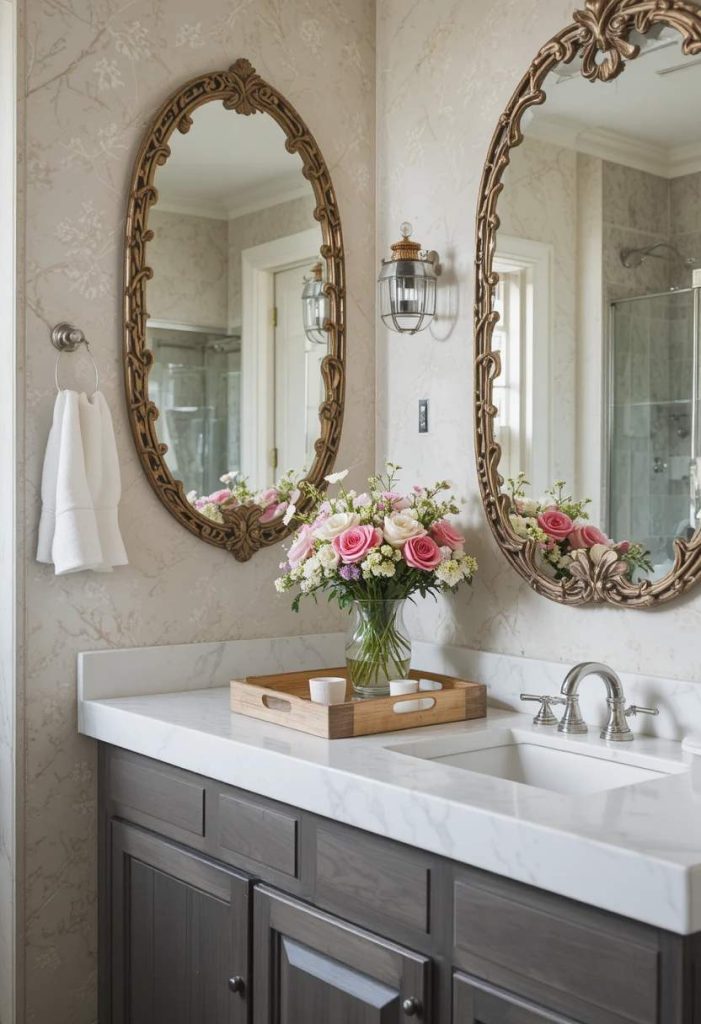
The last idea is really the point of all the others: a vanity should work beautifully and feel unmistakably yours. Mine has a small brass tray for my rings, a framed photograph tucked beside the mirror, and the hand towel my daughter embroidered, tiny things, but they are what I notice every morning. I keep the practical side honest, too: the drawer dividers stay in place, the spare towels live within reach, and the counter holds only what I use daily. Start with one personal touch, live with it for a week, and add another only if the vanity still feels like it is missing something.
How to do it: Choose one personal touch, such as a favourite tray, a small plant or a framed photograph, and add it to the vanity. Keep daily essentials in the top drawer and spares within reach. Live with the arrangement for a week, then adjust one thing at a time until it feels right.
Frequently Asked Questions
Should I choose a floating or a freestanding vanity?
A floating vanity suits small or modern bathrooms, because the visible floor makes the room feel larger and cleaning is easier. A freestanding vanity offers more storage and suits traditional or family bathrooms, where drawers and cupboards earn their keep. If your walls are solid or you can add blocking, floating is straightforward to fit, while a freestanding unit is the simpler choice when the wall cannot take the weight. Think about who uses the room and how much storage you truly need before deciding.
What are the standard depths and heights for a bathroom vanity?
Most vanities are 45 to 60 cm deep and 80 to 90 cm high to the top of the basin, which suits most adults. A compact vanity for a cloakroom can be as shallow as 35 to 40 cm, while a generous family vanity may run to 60 cm deep. The basin rim is the measurement that matters most, so check it against the people who will use it daily. If anyone in the household is much taller or shorter than average, adjust the height by a few centimetres for comfort.
How can I get enough storage from a vanity in a small bathroom?
Choose a vanity with deep drawers rather than cupboards, because drawers let you see everything without rummaging. Add dividers and a non-slip liner so bottles stay upright, and use the wall above for a slim shelf or a mirrored cabinet. Keep only daily essentials on the counter, and move spares and cleaning products elsewhere. A weekly two-minute tidy keeps the drawers working well long after the first sort-out.
Which worktop and basin should I choose?
A stone or marble top brings timeless elegance, while concrete or quartz suits a modern bathroom and copes well with daily splashes. A vessel basin makes a sculptural statement and pairs well with a wall-mounted tap, whereas an undermount basin is easier to wipe clean. Check that the basin and taps suit each other before ordering, and seal natural stone twice a year. If you have young children, a rounded front edge and a wipe-clean surface will make life noticeably easier.
How much does a new bathroom vanity cost?
A simple ready-made vanity can cost a few hundred pounds, while a bespoke or stone-topped piece can run into the low thousands, depending on size and materials. Fitting, plumbing and new taps add to the total, so ask for an itemised quote before committing. Refacing or repainting an existing vanity is the kindest option for a tight budget and can look remarkably fresh. Whatever you spend, measure carefully first, because a vanity that fits properly is worth more than a costly one that does not.
Your Bathroom Vanity Checklist
Print this list and tick each step off as you plan your vanity.
☐ Measure the wall width, depth and door swing
☐ Note the position of the waste pipe and water supplies
☐ Choose floating or freestanding to suit your walls and storage needs
☐ Check the basin rim will sit 80 to 90 cm from the floor
☐ Pick a worktop that suits your budget and cleaning habits
☐ Match the taps and basin before ordering
☐ Choose a mirror about two-thirds of the vanity width
☐ Plan warm lighting at eye level, not just from above
☐ Add deep drawers with dividers for everyday essentials
☐ Seal stone, marble and timber tops before use
☐ Keep the counter clear with a single tray for daily items
☐ Check fixings are rated for the weight of the vanity and mirror
☐ Wipe the worktop and fronts weekly with a microfibre cloth
☐ Step back and check the whole vanity together before finishing
A Final Gentle Thought
Whichever ideas inspire you most, the right vanity brings both beauty and function to the heart of your bathroom. Start with a style and finish you love, choose a countertop and sink that suit your space, then add the personal touches that make it feel like home. In time, your vanity will become a stylish, hardworking centrepiece you enjoy every single day. May your bathroom always feel calm, beautiful, and perfectly suited to you.
8 Comments