29 Bathroom Cabinet Ideas for Stylish Storage and a Clutter-Free Space
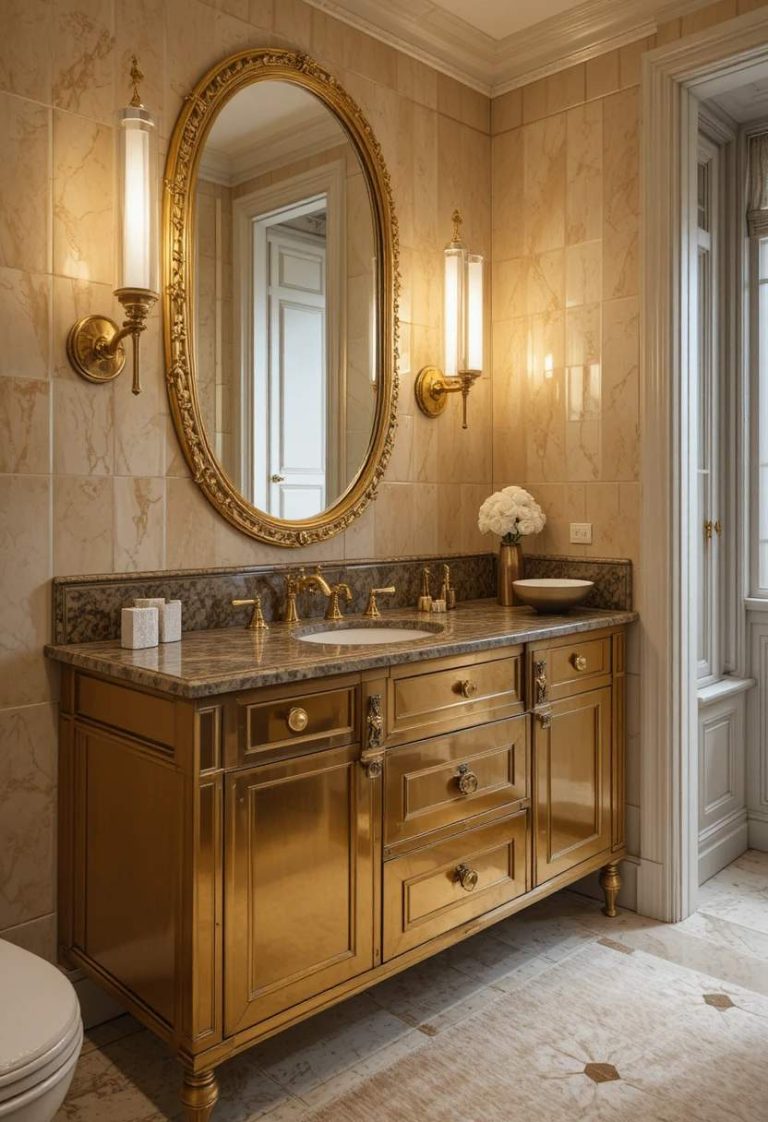
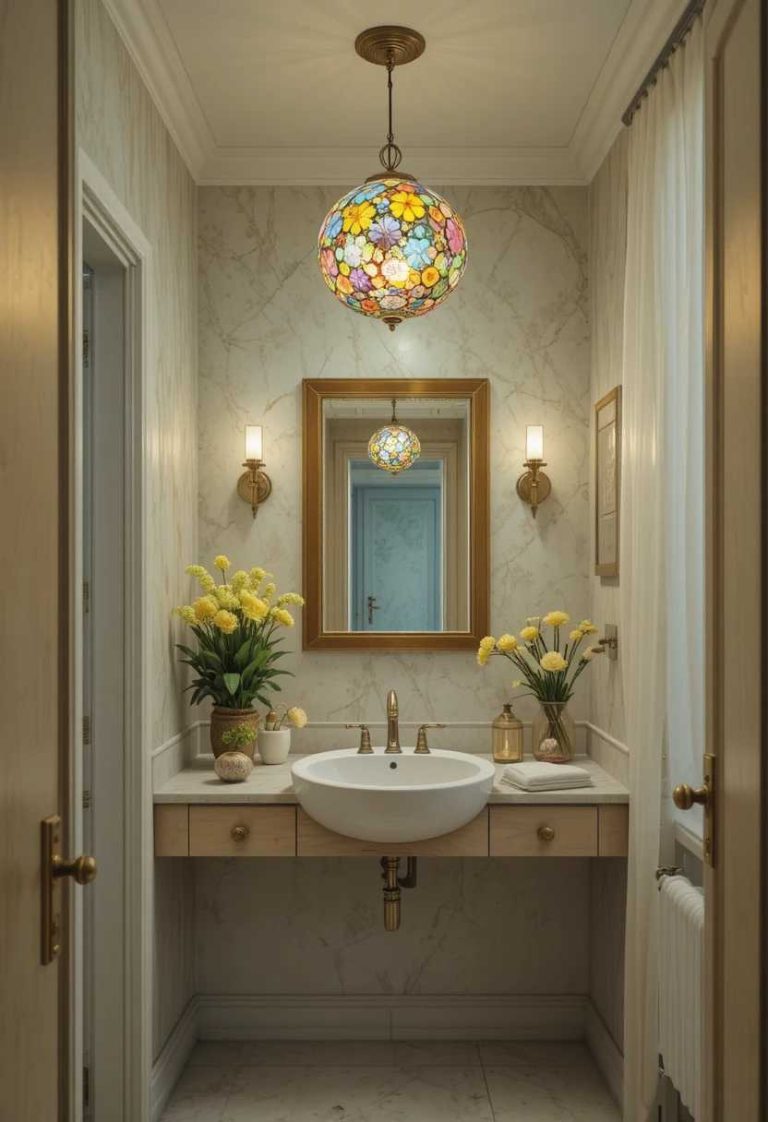
There is a quiet joy in a bathroom where everything has its place and the surfaces are calm and clear. The right cabinets do more than store your bits and pieces, because they shape the whole feel of the room and keep daily life running smoothly. Beautiful, well planned storage turns a cluttered, busy bathroom into a serene and tidy little sanctuary. Whether your space is grand or tiny, there is a cabinet idea ready to bring both style and order to your room. Below are twenty nine bathroom cabinet ideas, shared with warmth and practical wisdom, to help you create stylish storage and a wonderfully clutter free space.
1. Add a Mirror Cabinet
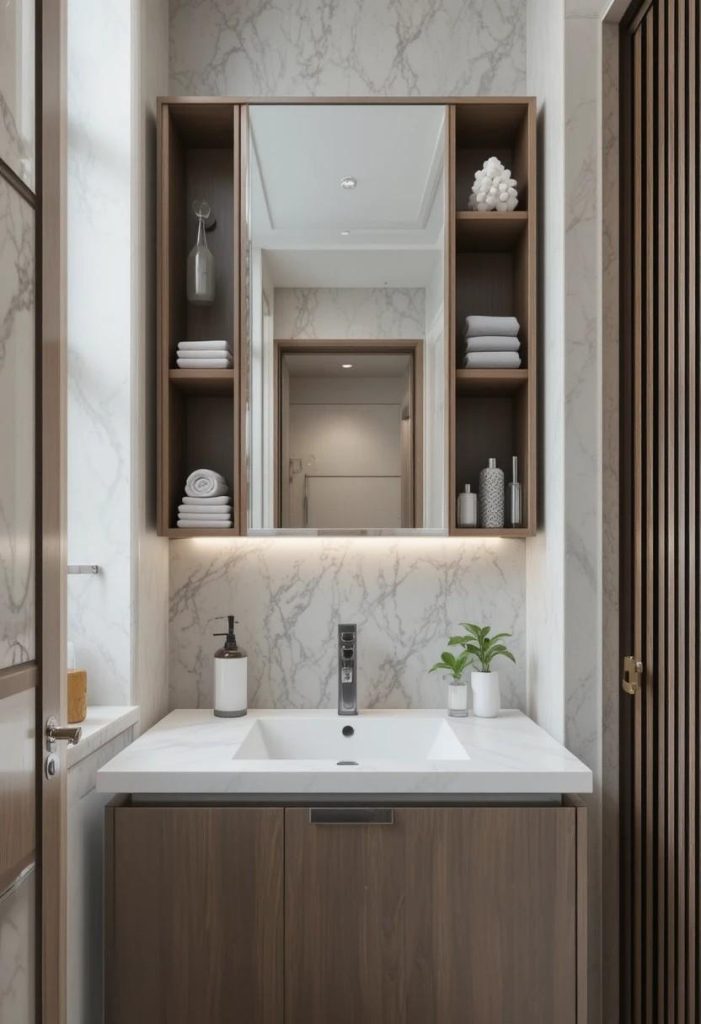
I still remember the first morning I opened our new mirror cabinet and found my moisturiser, toothbrush and lip balm all waiting in neat rows, instead of crowding the basin edge. That small change made the whole room feel calmer, because I was no longer hunting for things with wet hands while the kettle boiled downstairs. A mirrored front also bounces light around, which helps a smaller bathroom feel brighter and less boxed in. I keep daily essentials at eye level, spares on the top shelf, and a small tray for earrings and hair grips at the bottom. It is quiet luxury that works hard every day.
How to do it: Measure the wall above your basin, then choose a cabinet that leaves at least 10 cm clear on each side. Fix it so the centre sits at eye level, about 150 cm from the floor. Add small shelf risers inside, group items by use, and keep the mirror clean with a microfibre cloth.
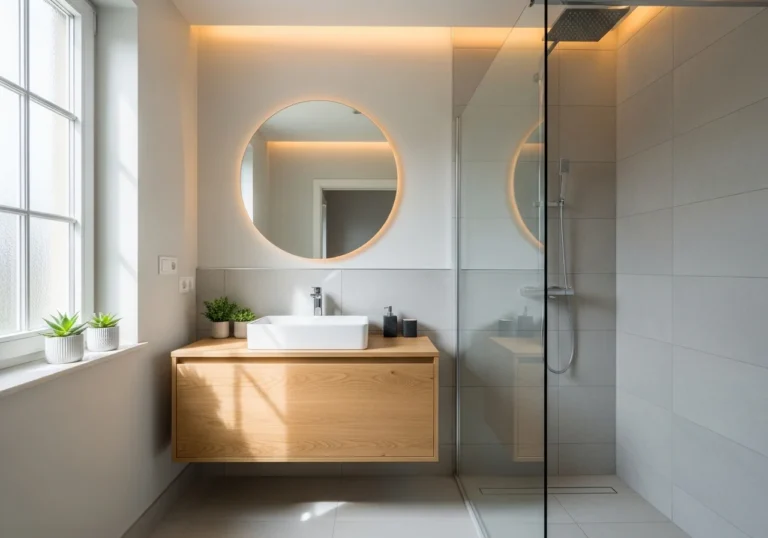
2. Choose a Floating Vanity
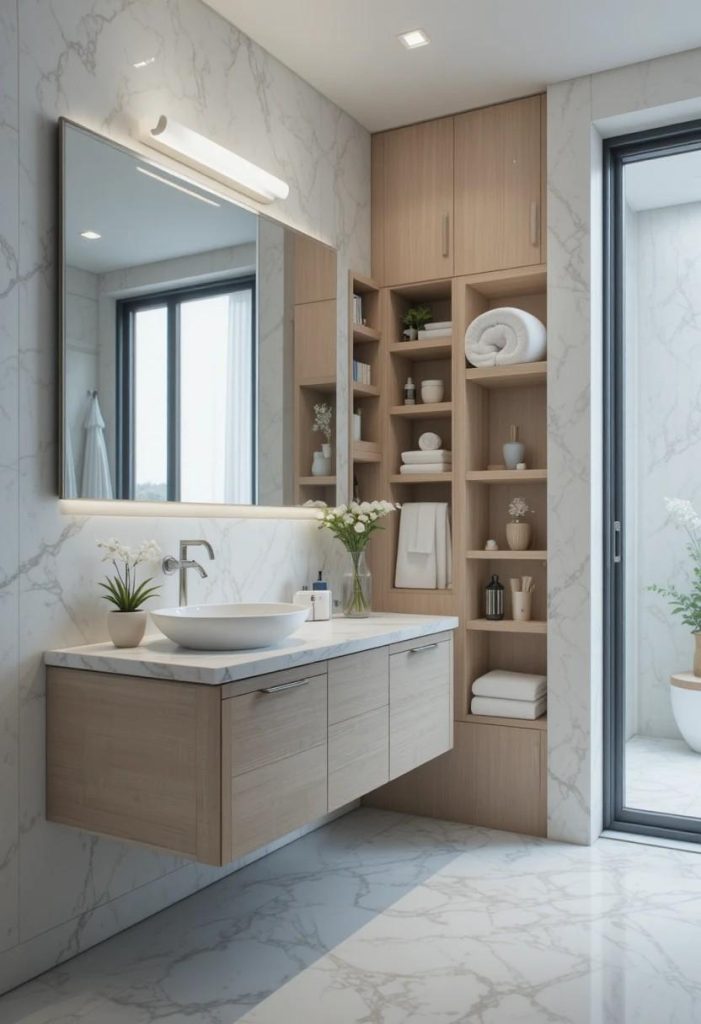
Our old vanity sat heavily on the floor, and the dark shadow underneath always made the room feel smaller than it was. When we swapped it for a floating one, I could suddenly see the tiles running underneath, and the whole bathroom seemed to breathe again. Cleaning became far easier too, because I can sweep and mop straight underneath without crouching around a plinth. I chose a unit with two deep drawers, so towels, spare toilet rolls and cleaning cloths all have a proper home out of sight. A pale oak front keeps it feeling warm, while a light stone top reflects the morning light beautifully.
How to do it: Measure the wall and allow at least 75 cm of clear floor in front of the vanity. Fix the unit into studs or solid wall fixings rated for its weight, with the basin rim 80 to 90 cm from the floor. Seal the top edge with silicone, then add drawer dividers for daily essentials.
3. Add Open Shelving
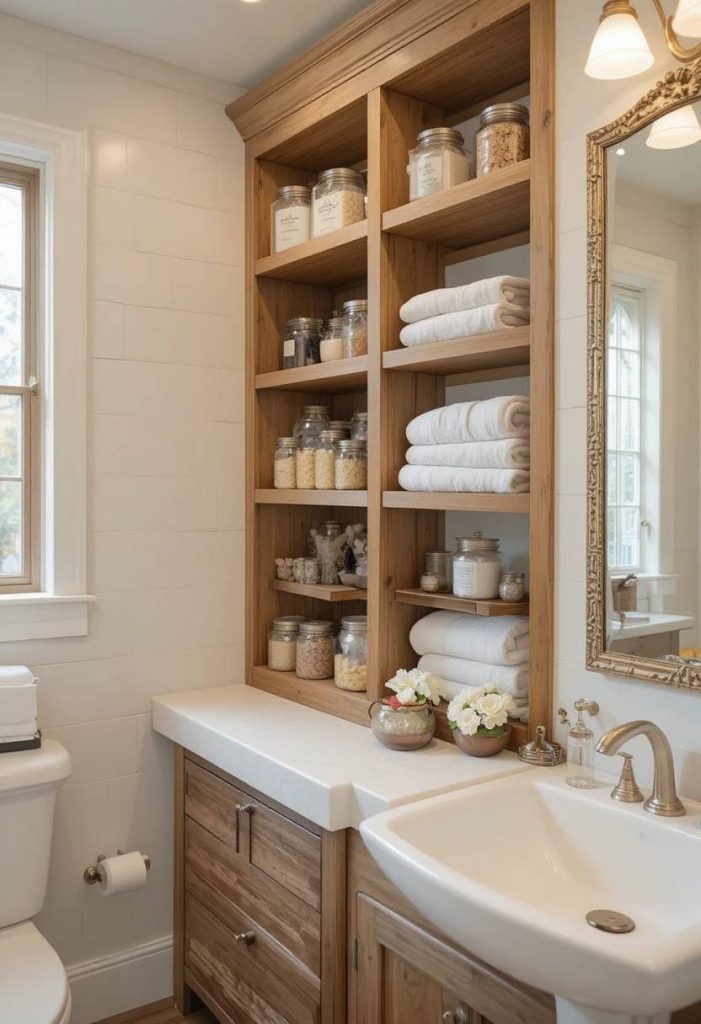
I was nervous about open shelves at first, because I imagined them gathering dust and looking messy within a week. In practice, they have made me tidier, because everything is visible and I notice at once when something is out of place. I roll soft white towels into neat cylinders, add a glass jar of cotton pads, and leave one shelf almost empty so the display can breathe. A small trailing plant softens the hard tiles, and a favourite scented candle makes the room feel cared for rather than simply stored in. Keep the prettiest things on show and hide the rest, and the shelves will earn their keep.
How to do it: Fix shelves 30 to 35 cm apart, using fixings suited to your wall type, and leave a finger’s width at each end for cleaning. Style each shelf with one tall item, one low item and a little empty space. Keep daily items within easy reach and move spares elsewhere.
4. Use Tall Cabinets for Vertical Storage
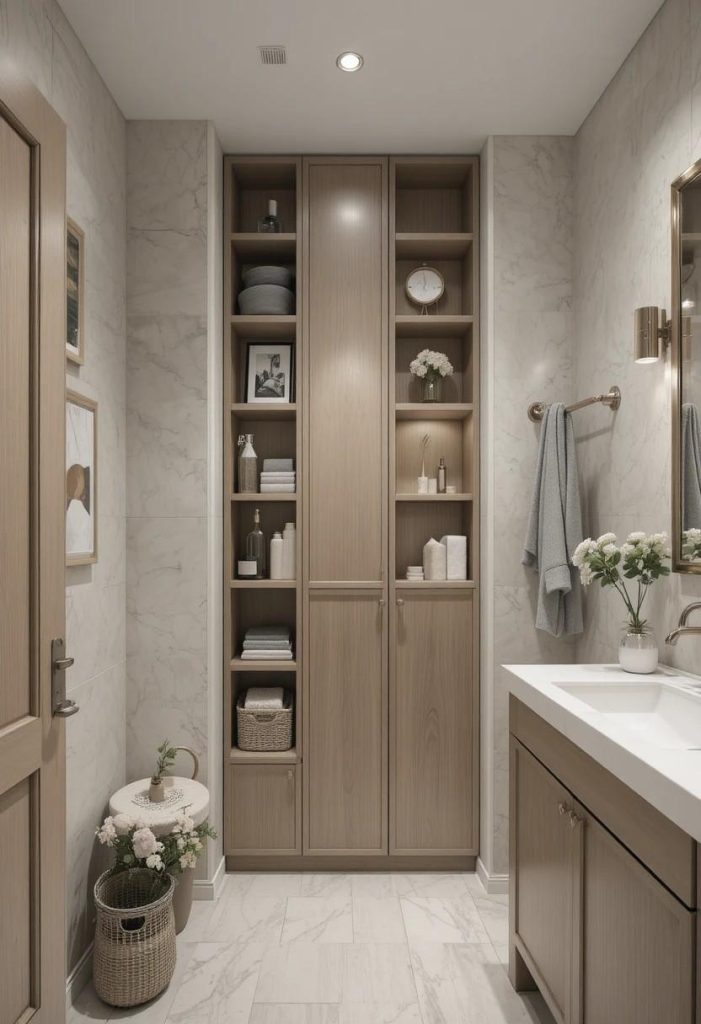
The tall cabinet in the corner of our bathroom holds more than I ever expected, from spare towels and cleaning products to the hairdryer and a stack of flannels. It uses the height of the room, which is the one dimension most small bathrooms waste, and it leaves the floor wonderfully clear. I gave each shelf a job: daily essentials at eye level, towels in the middle, and bulky spares at the top where I only reach once a week. For more ideas that squeeze storage into tight corners, see these bathroom storage ideas for small spaces before you choose a size.
How to do it: Measure the height, width and depth of the space, checking the door swing and any skirting boards. Choose a cabinet no deeper than 35 cm for a narrow room, fix it securely to the wall, and label each shelf so everyone puts things back in the right place.
5. Add Drawers for Easy Organizing
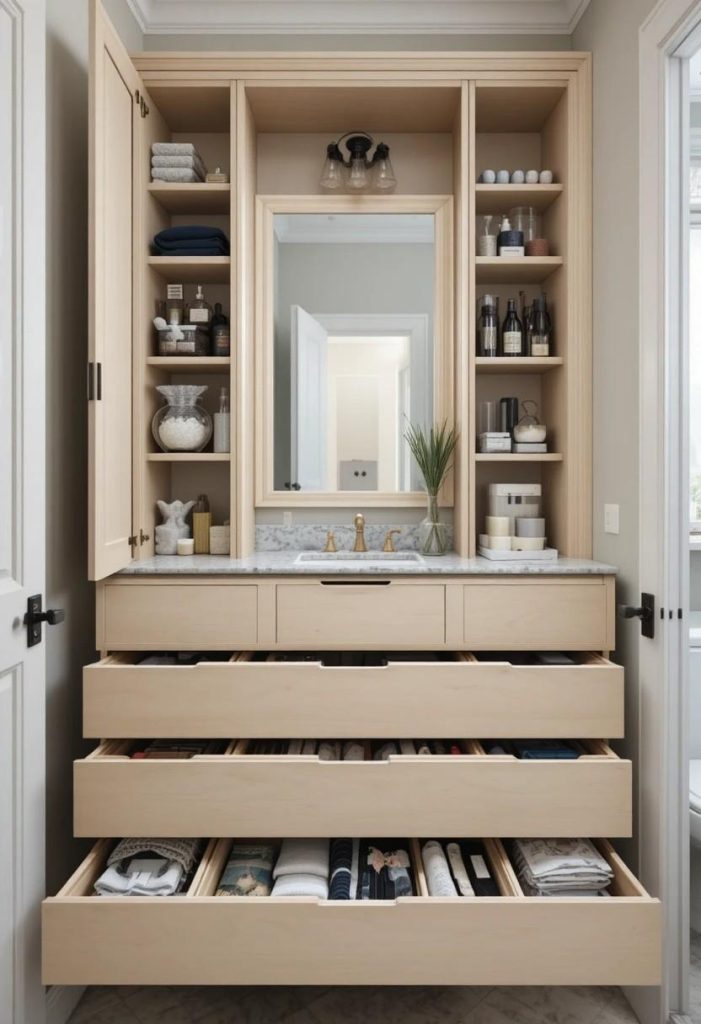
Deep drawers changed our mornings more than any other single change, because I can finally see everything at a glance instead of reaching blindly into a dark cupboard. Our top drawer holds the things I reach for before my eyes are properly open: moisturiser, toothpaste, a hairbrush and my everyday earrings. Below it, a deeper drawer stores the hairdryer, straighteners and spare bottles, each in its own compartment so cords never tangle. If your drawers still feel like a jumble, these bathroom drawer organization ideas will help you give every bottle and brush a proper home. Soft-close runners are worth every penny when you are half asleep.
How to do it: Empty each drawer completely, then measure the inside before buying dividers or inserts. Group items by use, put daily essentials at the front, and keep spares at the back. Wipe the drawer bases and add a non-slip liner before you put anything back.
6. Try a Recessed Wall Cabinet
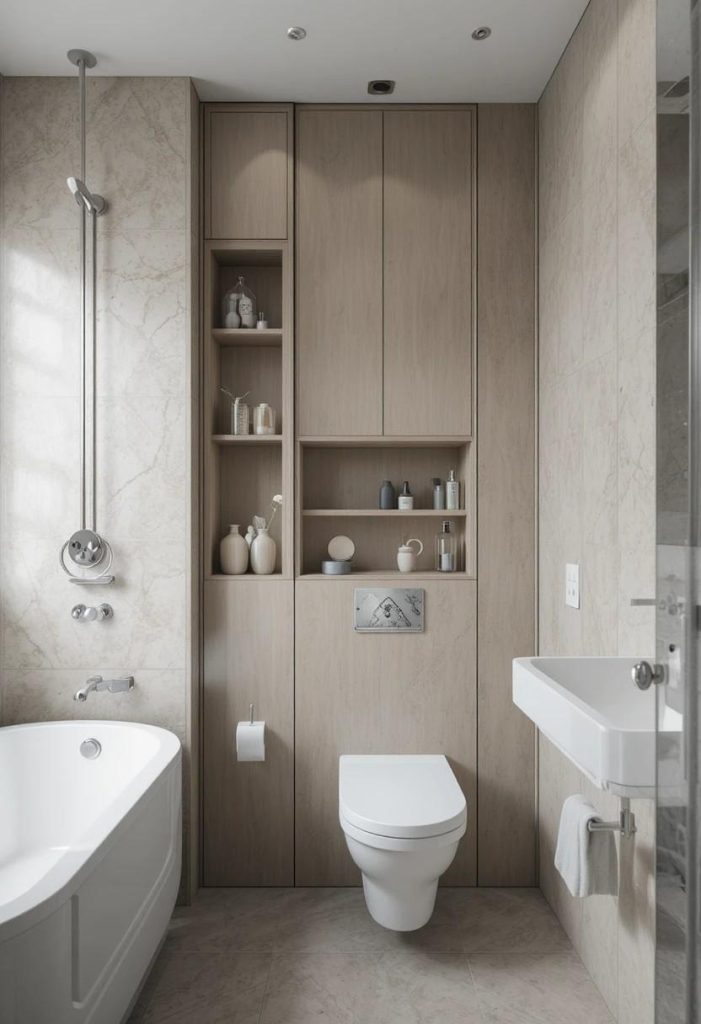
A recessed cabinet feels almost like magic, because it gives you proper storage without taking a single centimetre from the room itself. Ours sits flush with the tiles above the basin, and visitors often assume the mirror is simply a mirror until I open it. Inside, I keep a small first-aid kit, contact lens supplies and the medicines we reach for most, all at eye level and out of the children’s reach. Because the cabinet is set into the wall, the basin area stays clear, and I can lean in close to the mirror without bumping my elbows. It is a calm, unobtrusive solution for a slim bathroom.
How to do it: Check the wall for pipes and wiring before you cut anything, and choose a spot between studs. Fit the cabinet carcass level, seal the edges with silicone, and add a mirrored door with soft-close hinges. Keep heavy glass bottles on the lowest shelf.
7. Add Under-Sink Storage
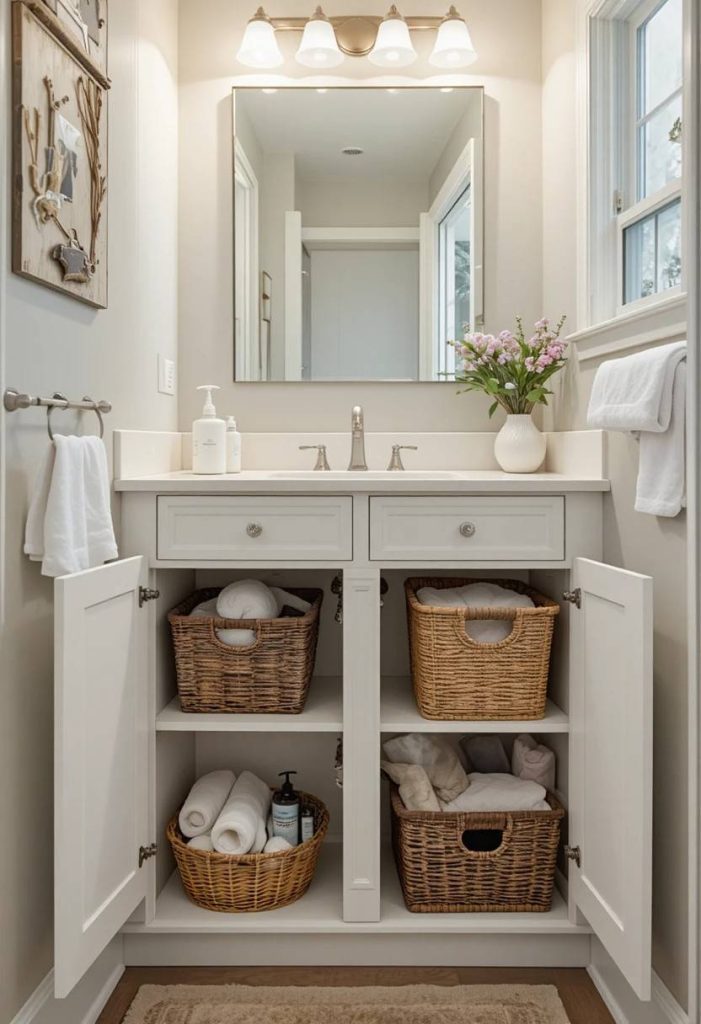
The cupboard under our sink used to be the place where bottles went to be forgotten, and I dreaded opening it in case something toppled out. A pull-out tray changed all that, because now I slide the whole shelf towards me and choose what I need without kneeling on the cold tiles. I keep cleaning products in one labelled box, spare toilet rolls in another, and a small caddy for cloths and sponges that I can lift out in one go. Measuring around the pipes first saved me from buying a tray that would never have fitted, so do that before you order anything.
How to do it: Empty the cupboard and measure carefully around the waste pipe and water supplies. Fit a pull-out tray or a U-shaped organiser that leaves the pipes clear. Group cleaning products in a lidded box, wipe up any leaks at once, and check the seals every few months.
8. Choose a Colourful Vanity
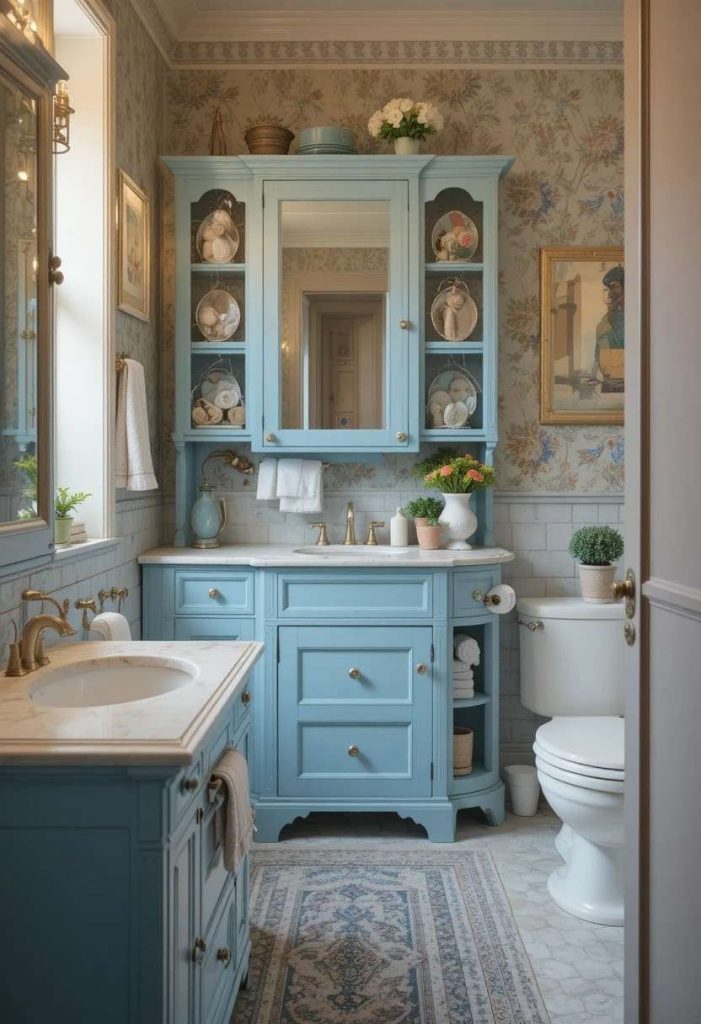
I painted our spare-room vanity a soft sage green one spring weekend, half expecting to regret it, and three years later it still makes me smile every morning. Colour gives a plain bathroom a personality of its own, and it can lift tired tiles and plain walls without a full renovation. I kept the rest of the room calm, with white towels, a pale stone top and simple brass handles, so the colour feels considered rather than loud. If you are choosing a whole new vanity, these bathroom vanity ideas will help you match the shape, finish and storage to your room.
How to do it: Test two or three paint samples on card in the bathroom for a few days, checking them in morning and evening light. Clean the vanity, sand it lightly and use a moisture-resistant primer and paint. Finish with new handles and a clear seal on the top edge.
9. Add a Linen Cabinet
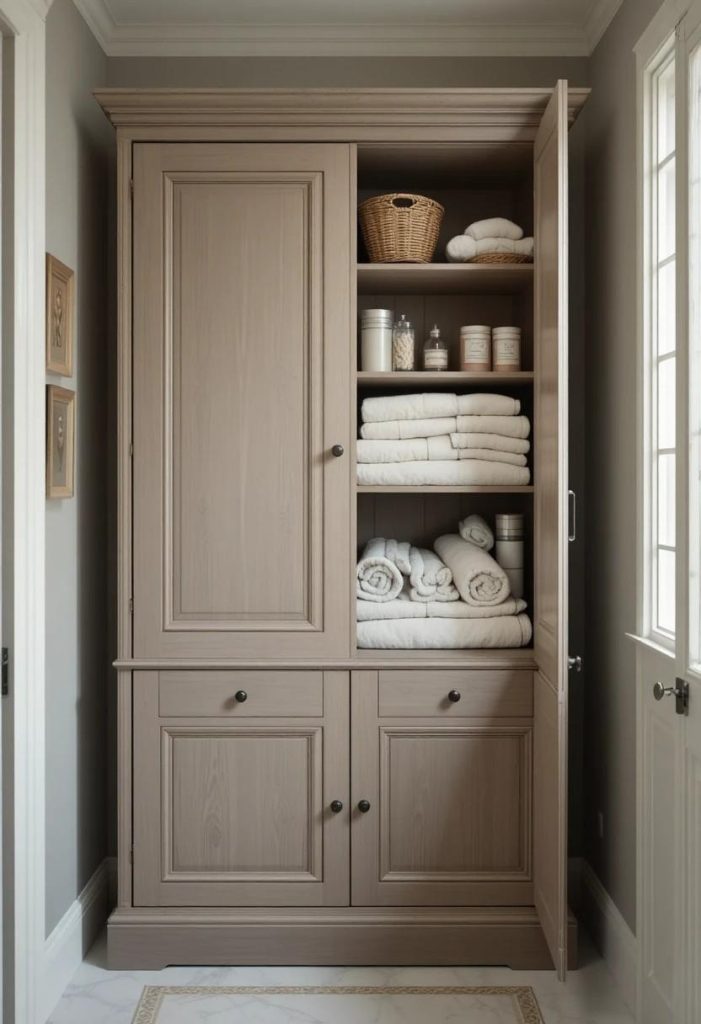
There is a particular pleasure in opening a linen cabinet and finding soft, freshly laundered towels folded in tidy stacks, ready for a guest or a long bath. Ours stands in the hallway just outside the bathroom, which keeps damp towels away from the steam and means the bathroom itself stays uncluttered. I fold towels in thirds so they stack evenly, keep flannels in a small basket on the middle shelf, and store spare bedding on the top shelf in labelled bags. A lavender sachet on each shelf keeps everything smelling fresh, and I air the cabinet for a few minutes whenever I change the towels.
How to do it: Choose a tall, narrow cabinet with adjustable shelves and good ventilation. Fold towels in thirds, store flannels in a basket, and keep spare bedding in labelled bags on the top shelf. Air the cabinet weekly and add a lavender sachet to each shelf.
10. Use Baskets Inside Cabinets
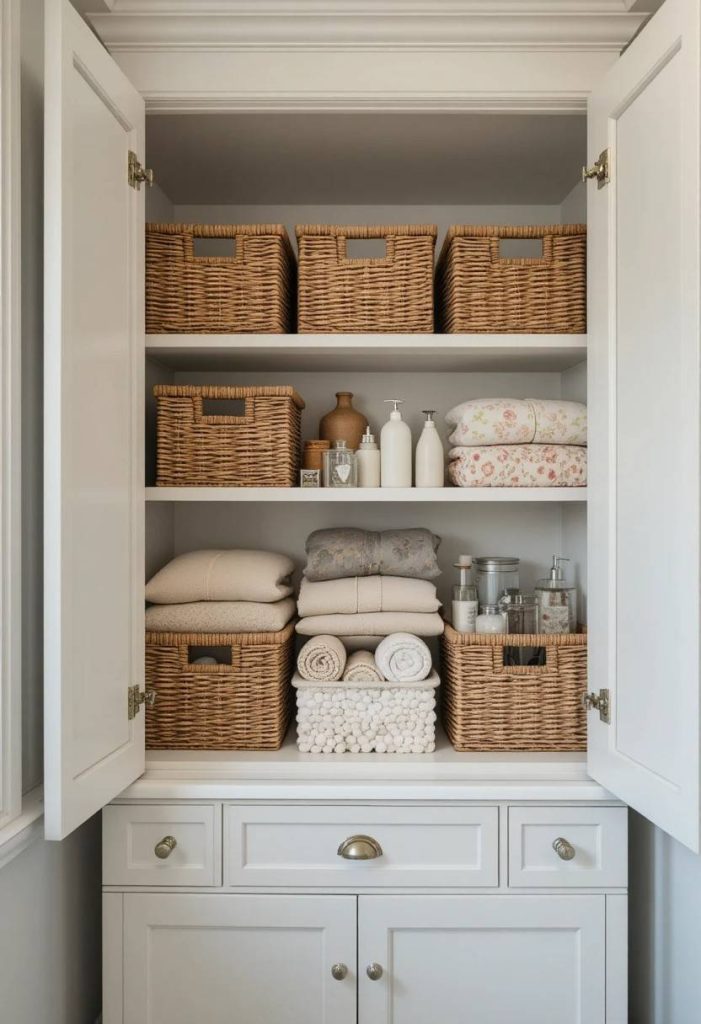
Baskets are the unsung heroes of our bathroom cabinets, because they turn a jumble of bottles and packets into neat groups I can lift out in one go. I use woven seagrass for towels, because it feels warm against the tiles, and wipeable plastic bins for cleaning products and spare toiletries. Each basket has a job, and I labelled them with small wooden tags when the children were younger, so everyone knew where the plasters and the spare toothpaste lived. Measure your shelves before you buy, because a basket that is a centimetre too wide is surprisingly annoying every single day.
How to do it: Measure each shelf, then choose baskets that leave a finger’s width on each side. Give each basket one category, such as hair, dental or cleaning, and label it clearly. Pull the basket out to find things, rather than reaching over everything else.
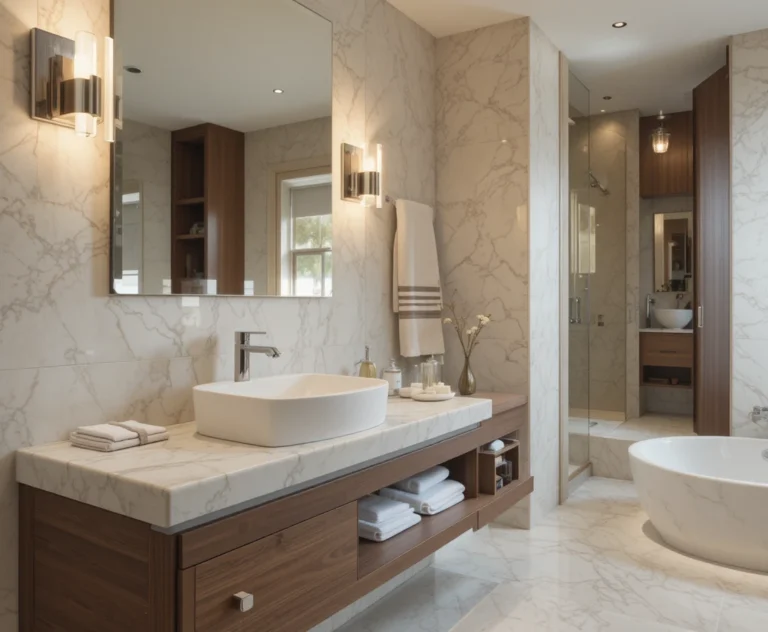
11. Add a Vanity With a Marble Top
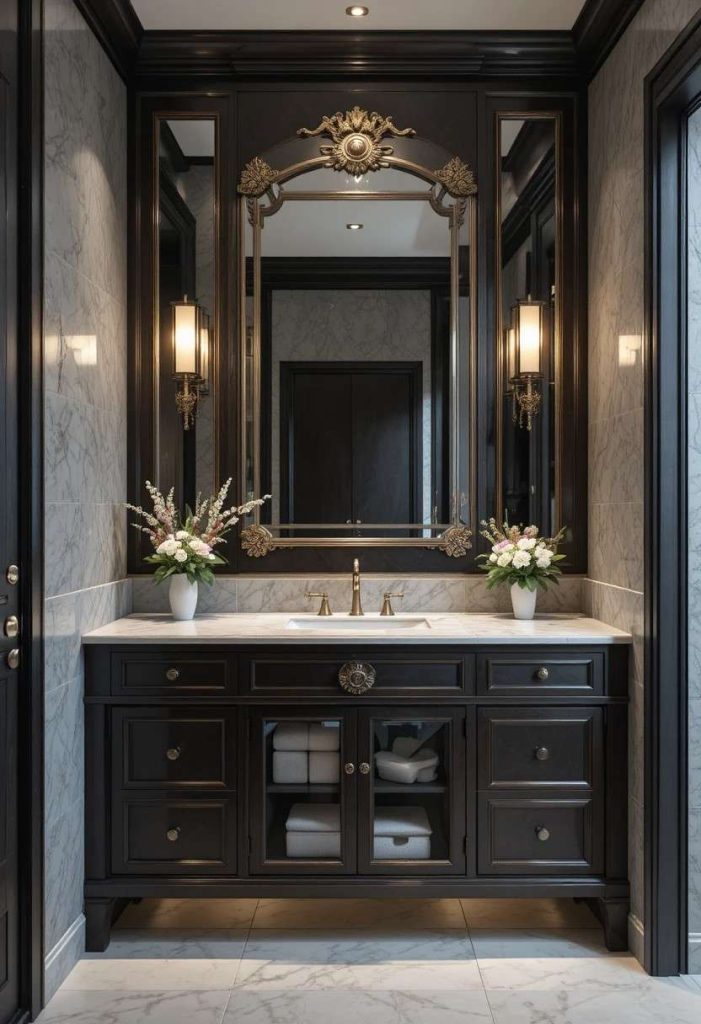
A marble-topped vanity was the one indulgence I allowed myself when we refreshed our bathroom, and I have never regretted the quiet elegance it brings. The pale grey veining softens the white tiles, and the cool stone feels wonderful under my hands on a warm summer morning. I keep the top deliberately simple, with a small tray for my daily skincare, a vase of eucalyptus and nothing else, so the stone itself can shine. Marble does need a little care, so I wipe up water and toothpaste straight away and never leave a coloured bottle sitting in a damp ring.
How to do it: Order the top to your cabinet size with a small overhang of about 2 cm on each side. Seal the stone before use and again every year, using a sealer made for marble. Wipe spills at once, avoid harsh cleaners, and use a tray under bottles.
12. Try Glass-Front Cabinets
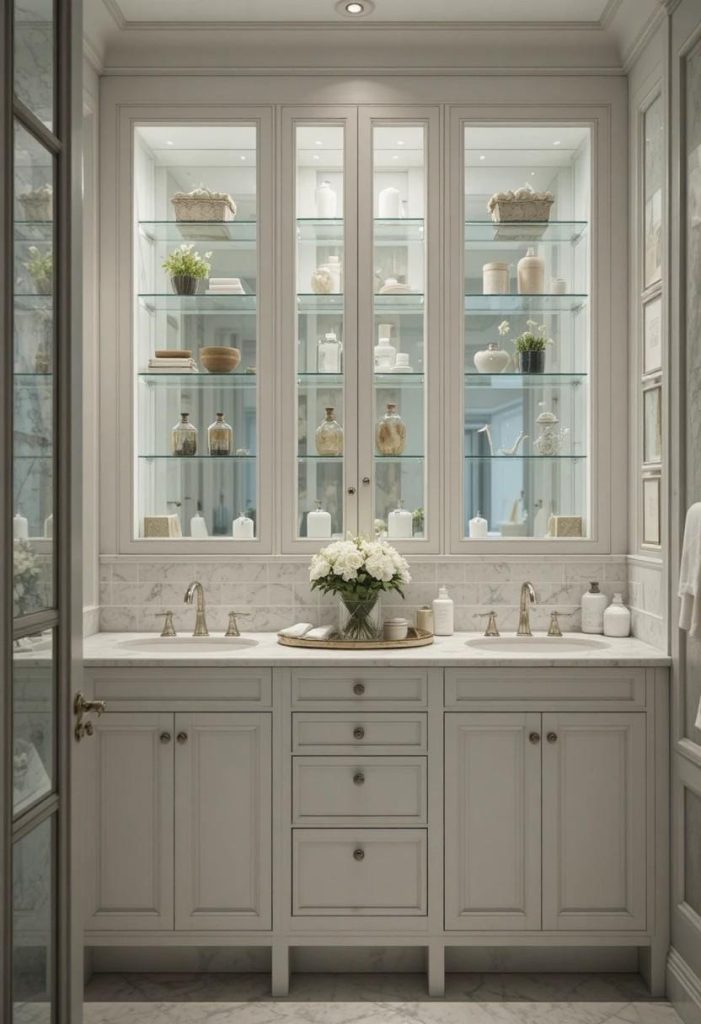
Glass-fronted cabinets keep me honest, because everything inside is on show, and that gentle pressure means I tidy them far more often than I used to. I fill ours with the prettiest things we own: folded white towels, amber glass bottles and a small stack of linen-bound books that no one ever reads in the bath. Frosted glass is a kinder choice if you would rather hide the everyday clutter, and it still lets the light through beautifully. A quick wipe with glass cleaner once a week keeps the fronts sparkling, and matching jars inside make the whole cabinet look calm and considered.
How to do it: Choose clear glass for display items and frosted glass for everyday clutter. Decant products into matching jars and bottles, fold towels evenly, and leave a little space between groups. Wipe the glass weekly with a microfibre cloth and glass cleaner.
13. Add Corner Cabinets
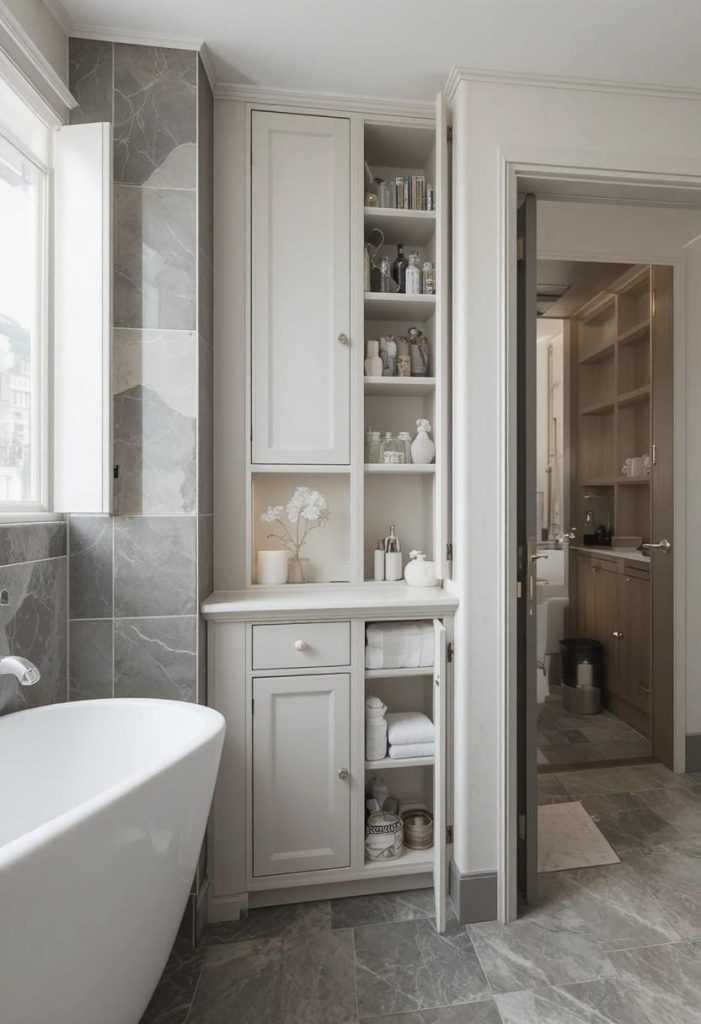
The corner of our bathroom sat empty for years, a strange dead space that collected dust and the occasional lost hair grip, until we fitted a cabinet made for the angle. Now it holds spare toilet rolls, cleaning cloths and the first-aid kit, all within reach of the basin but completely out of the way. A triangular shelf inside makes the most of the awkward shape, and a lazy Susan on the middle shelf means nothing hides at the back. Measure the corner at two heights before you order, because walls are rarely as straight as they look, and a cabinet that fits snugly will feel built in.
How to do it: Measure the corner at floor and shelf height, then choose a triangular or angled cabinet that fits both. Fix it securely into the wall, add a lazy Susan or a triangular tray inside, and keep heavy items low so the cabinet stays stable.
14. Use Pull-Out Organizers
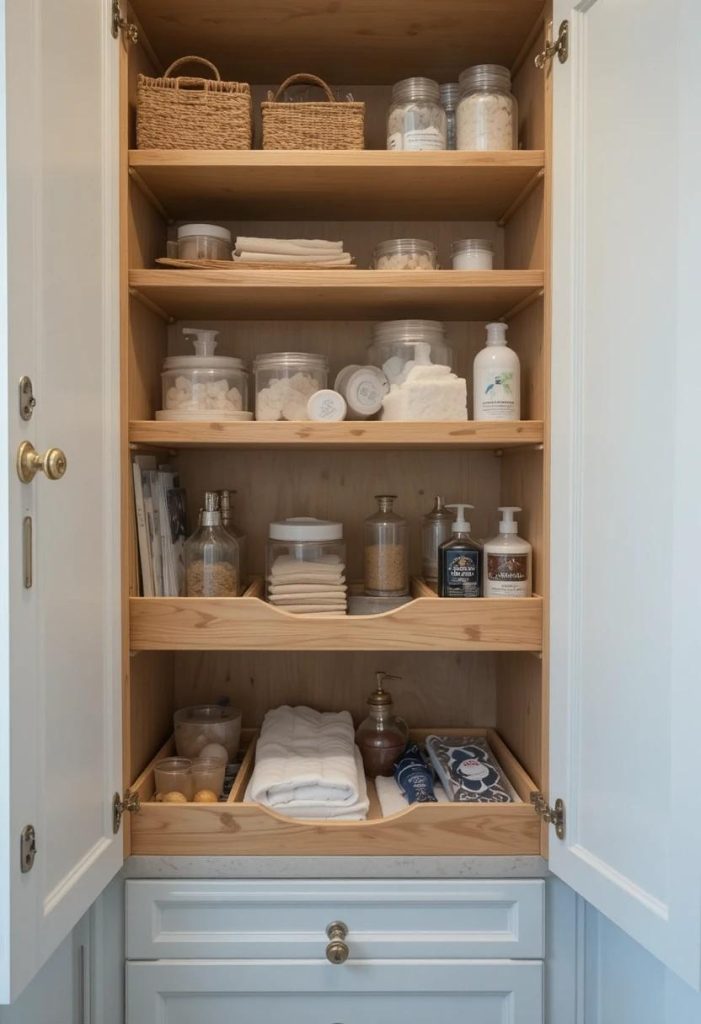
Pull-out organisers are the closest thing I have found to a magic trick in the bathroom, because a whole shelf glides towards me instead of hiding at the back. I fitted one beside the sink for hair products, and another under the basin for cleaning supplies, and both have stopped the daily rummage that used to drive me mad. Each tray has low sides, so tall bottles stay upright, and a non-slip mat stops everything sliding when I pull the tray out with one hand. They are especially kind to stiff knees and bad backs, which matters more to me every year.
How to do it: Measure the inside of the cabinet, including its depth and any pipes, before you buy. Choose full-extension runners so the tray comes right out, fix them level, and add a non-slip mat. Group items by use and keep the heaviest bottles at the back.
15. Add a Statement Vanity
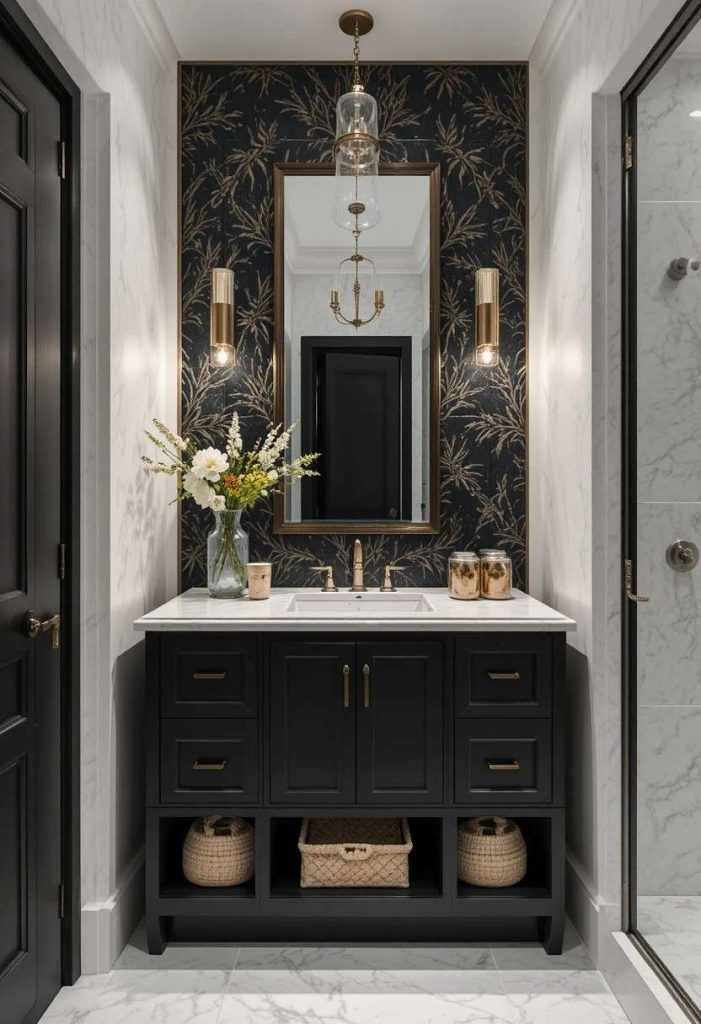
Our statement vanity is the first thing guests notice when they use our bathroom, and I love that it makes an ordinary room feel like a small boutique hotel. It is a deep green cabinet with brass handles and a pale stone top, and the contrast with the white tiles gives the whole room a focal point. I kept everything else deliberately quiet, with plain towels and a simple mirror, so the vanity can do the talking without the room feeling busy. Choose a style you will still love in five years, not one that photographs well today, and check the storage inside is as good as the front.
How to do it: Name your bathroom style in three words, such as calm, warm and modern, then choose a vanity that matches them. Check the drawers and cupboards open fully, the basin sits at a comfortable height, and the finish is sealed against water.
16. Keep Cabinets Light and Bright
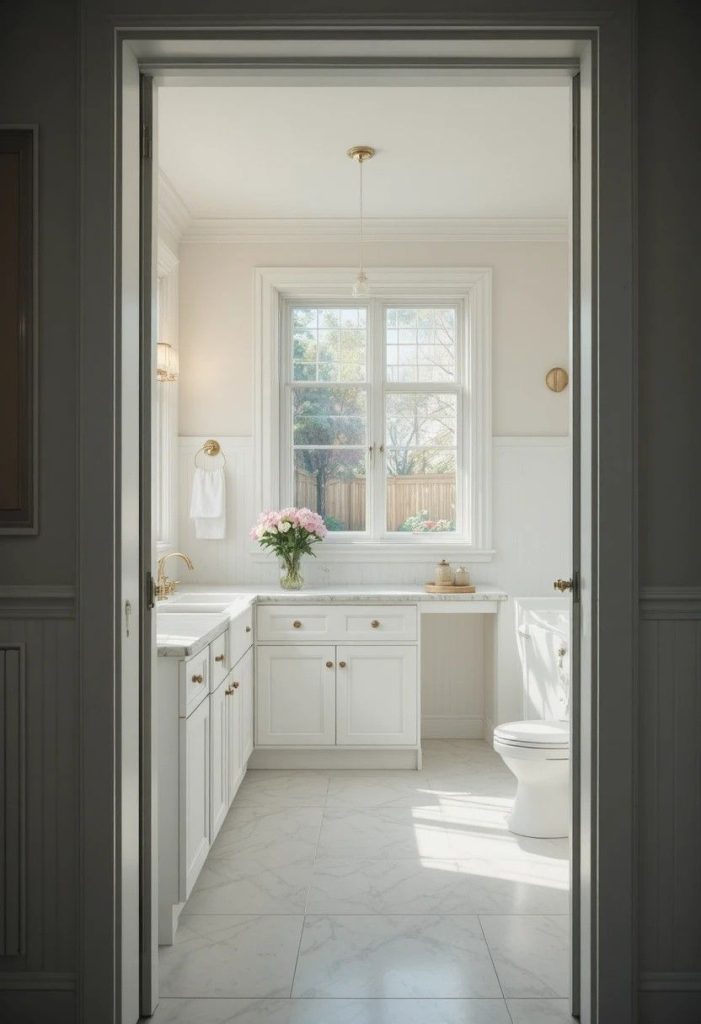
White cabinets were my choice for our windowless bathroom, and they have made the room feel far larger and fresher than the pale grey tiles alone ever could. Light fronts reflect whatever daylight comes through the door, and they show up dust quickly, which sounds like a drawback until you realise it keeps you tidying little and often. I warmed the white with pale oak shelves, a woven basket and brass handles, so the room feels fresh rather than clinical or cold. A soft white or pale grey paint is kinder than a brilliant white, which can look harsh under bathroom lights in the evening.
How to do it: Choose a soft white, pale grey or pale sage finish and test it on card in the room. Pair light cabinets with warm wood, brass or woven textures so the room feels fresh, not clinical. Wipe the fronts weekly with a damp microfibre cloth.
17. Add Cabinet Lighting
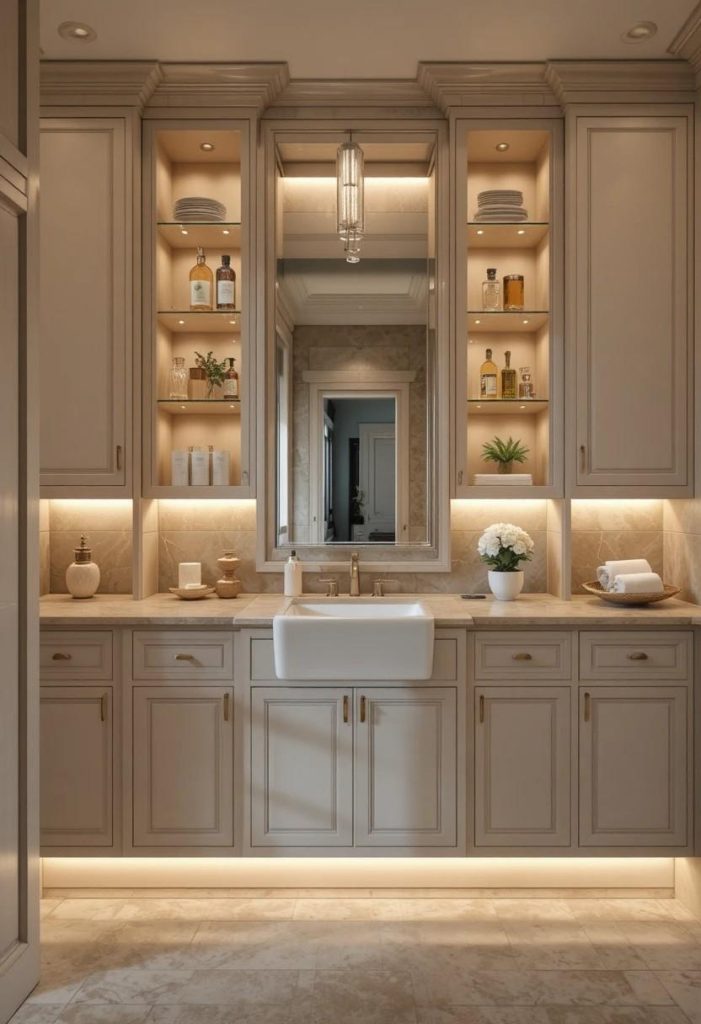
I added a small LED strip inside our bathroom cabinet on a whim, and the soft glow still makes me smile every time I open the door in the early morning. Before that, I used to fumble for the right bottle in the dark, holding my phone torch between my teeth, which was neither dignified nor practical. Warm white light suits a bathroom best, because it flatters skin tones and makes the room feel calm, while a cool white can feel harsh at six in the morning. A motion sensor means the light switches itself off, and a battery pack means no electrician was needed for our simple version.
How to do it: Choose warm-white LED strips, battery-powered with a motion sensor if you want to avoid wiring. Clean the inside of the cabinet, stick the strip along the top edge, and test the sensor before you load the shelves. Replace batteries when the light dims.
18. Use a Two-Tone Vanity
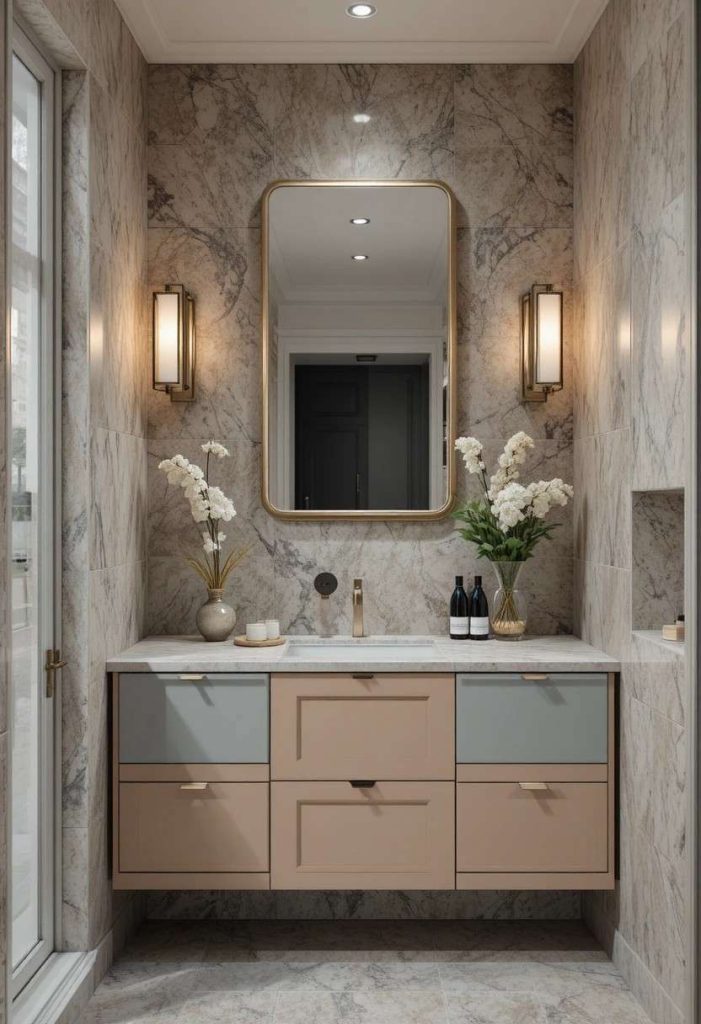
Two tones on one vanity sounded daring when our joiner suggested it, but the result is one of my favourite things in the house, because it feels both calm and characterful. We paired a deep navy base with a pale oak top, and the darker colour grounds the room while the wood keeps it feeling warm and welcoming. I repeated the navy in a small towel and a soap dish, which ties the room together without making the vanity feel like a separate piece of furniture. Keep two tones in the same family, warm with warm or cool with cool, and the combination will feel settled rather than accidental.
How to do it: Choose two tones that share a warm or cool undertone, then paint or order the base in the darker tone and the top or drawers in the lighter one. Test both together in the room, repeat the darker tone in one small accessory, and seal painted surfaces well.
19. Add Hidden Storage Behind Mirrors
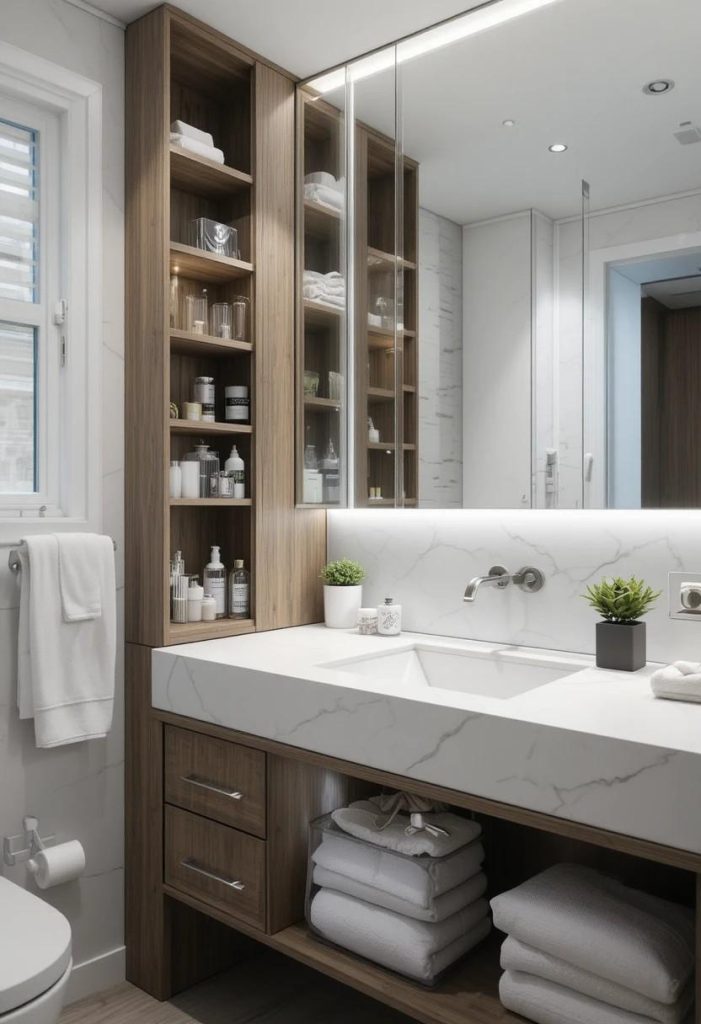
A large mirror that opens to reveal shelves feels like a small secret, and it is the reason our bathroom surfaces stay clear even on the busiest school mornings. Behind ours, I keep the things I use every day but never want on show: contact lens solution, a spare toothbrush, plasters and my everyday skincare. The mirror itself is large enough to reflect the window, which brings more light into the room, and the shelves inside are shallow enough that nothing hides at the back. I wipe the mirror with a microfibre cloth after my shower, while steam is still softening the marks, and it takes less than a minute.
How to do it: Measure the wall above the basin and choose a mirror cabinet that fits it, with the centre at eye level. Fix it securely into studs or solid fixings, add adjustable shelves inside, and keep daily items at the front. Clean the mirror weekly with a microfibre cloth.
20. Choose a Vanity With Open and Closed Storage
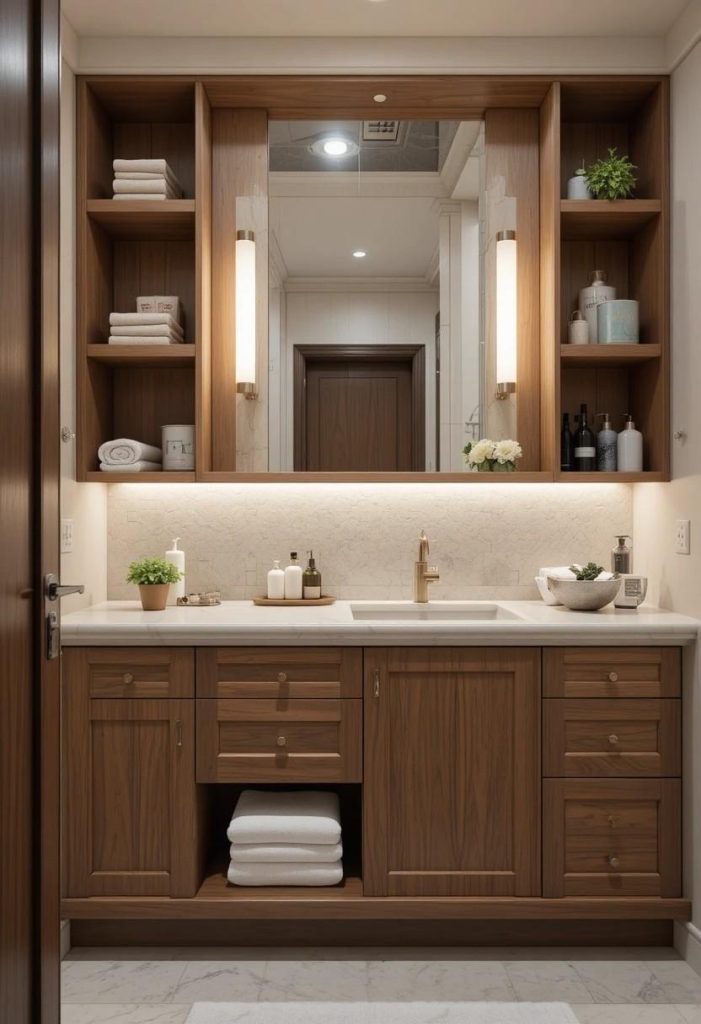
A vanity with both open shelves and closed cupboards gives me the best of both worlds, because I can display the pretty things and hide the rest without a second thought. On the open shelf, I keep rolled towels, a small plant and a glass jar of bath salts, while the cupboard below holds cleaning products, spare bottles and the hairdryer. The rule I follow is simple: if it is beautiful or used every day, it can live on show, and if it is bulky or rarely used, it goes behind a door. That habit keeps the vanity looking calm, even when life behind the doors is rather less tidy.
How to do it: Plan one open shelf for display and one closed cupboard for clutter, then style the shelf with a rolled towel, a plant and a jar. Put cleaning products and spares behind the door, label the inside if it helps, and wipe the open shelf weekly.
21. Add a Slim Cabinet Beside the Sink
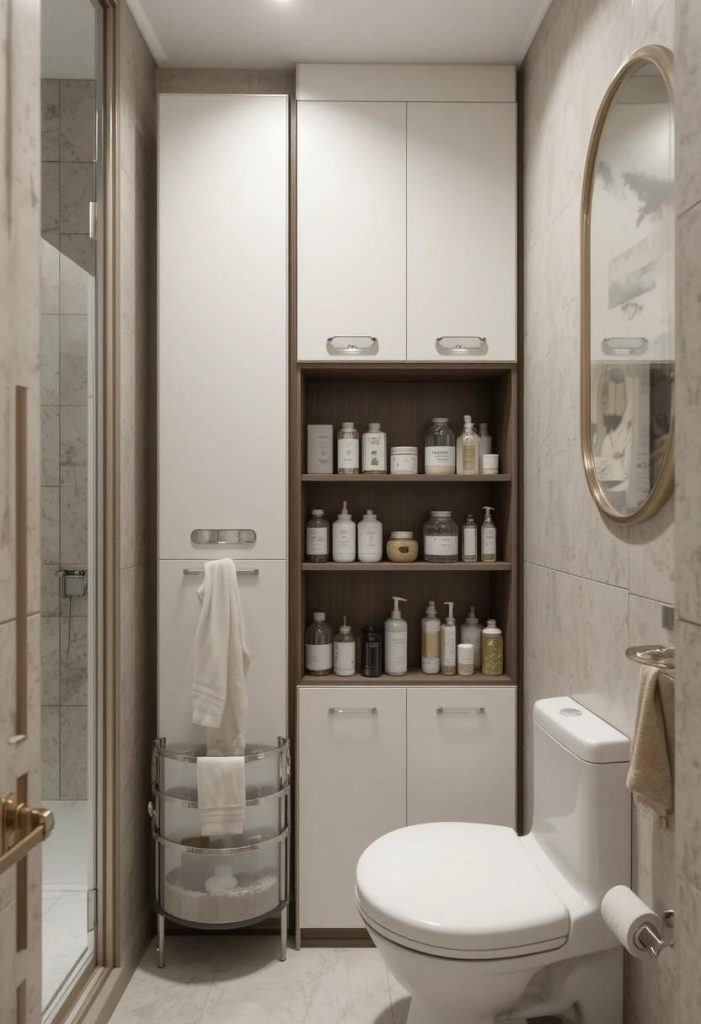
The gap beside our sink is barely wider than a book, and for years it collected dust and the odd dropped cotton pad, until we fitted a slim cabinet made for that very space. Now it holds the things I reach for without thinking: cotton pads, a spare toothbrush, nail scissors and the small bottle of hand cream I use after washing up. Because it is so narrow, everything inside is visible at a glance, and nothing can hide at the back to be forgotten for months. Measure the gap, including the skirting board, and leave a couple of millimetres spare so the cabinet slides in without scraping the tiles.
How to do it: Measure the gap at floor and worktop height, including skirting boards, then choose a cabinet at least 2 cm narrower than the smallest measurement. Fix it to the wall if it is tall, add small baskets inside, and keep only daily essentials there.
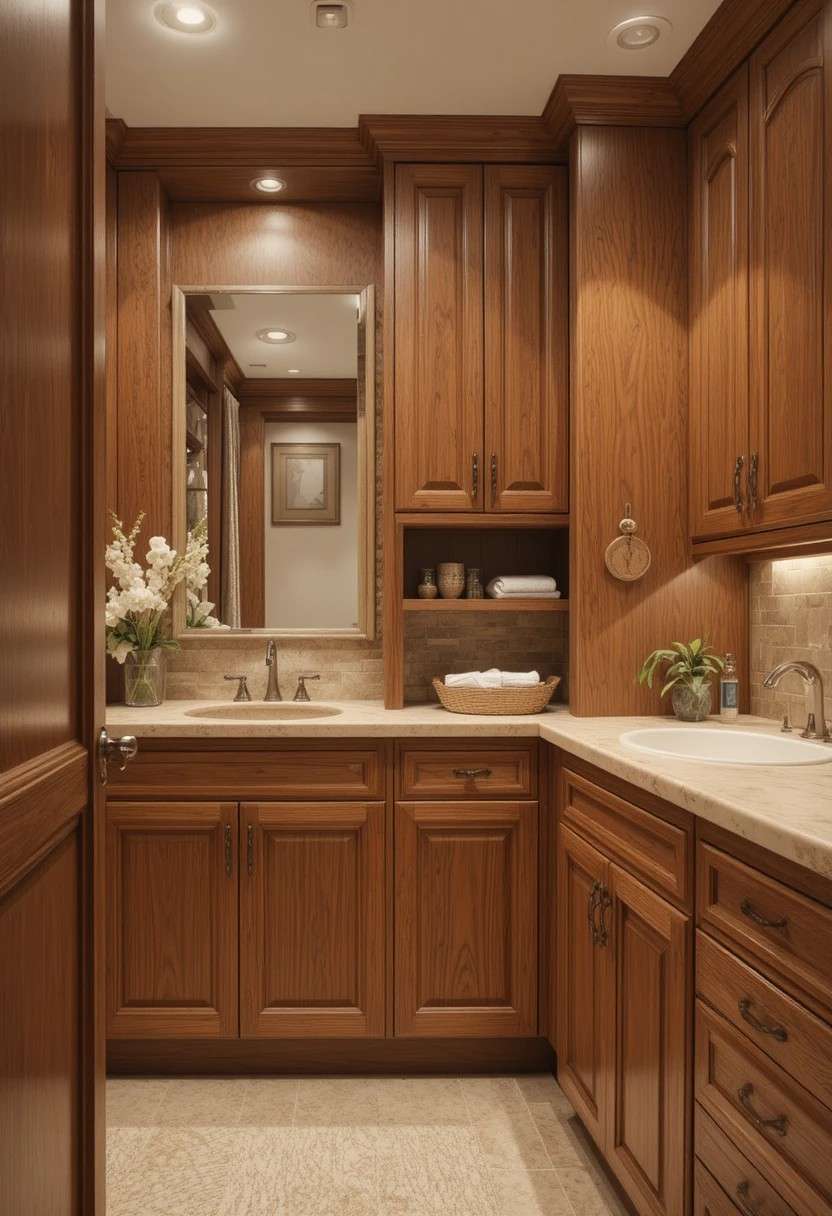
22. Use Wood for Warmth
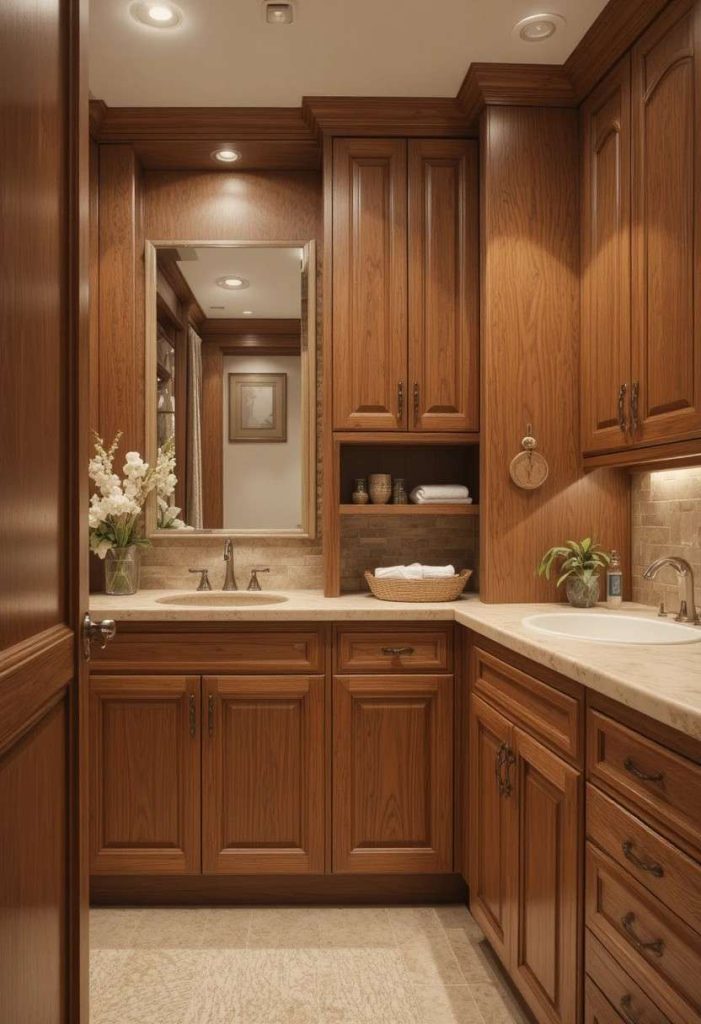
Warm wood was the change that finally made our bathroom feel like a room to linger in, rather than a cold, tiled space I hurried through each morning. The oak grain on our cabinet softens the white tiles and the chrome taps, and it picks up the warmth of the wooden bath mat and the woven basket by the door. I sealed the wood properly before it went in, and I wipe up splashes straight away, which has kept the surface looking beautiful for years. Choose a warm oak, walnut or teak, and repeat the tone in one or two small accessories so the wood feels part of the room.
How to do it: Choose oak, walnut or teak with a waterproof lacquer or oil finish made for bathrooms. Check the grain runs in the same direction on doors and drawers, seal cut edges well, and wipe splashes away promptly to keep the wood looking warm.
23. Add a Ladder Shelf for Extra Storage
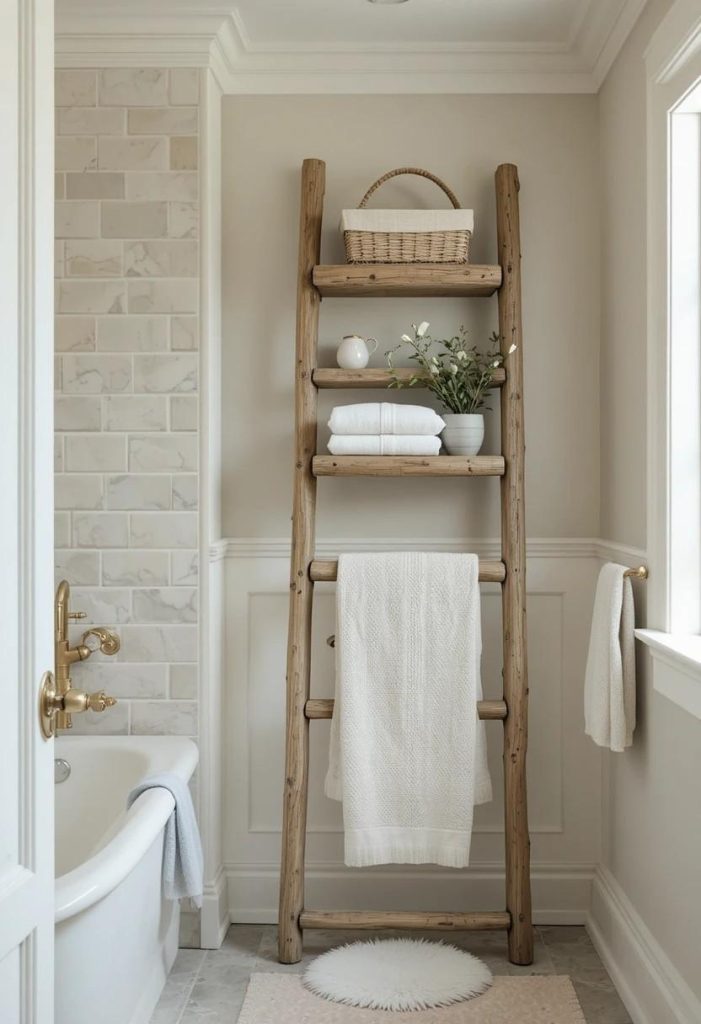
Our ladder shelf leans against the wall beside the bath, and it has become one of my favourite spots in the room, because it holds towels within reach without taking up floor space. I roll towels on the lower rungs, keep a small basket of flannels on the middle one, and leave the top rung for a plant and a favourite candle. Because the shelf leans rather than standing on legs, I can lift it away in a moment to clean behind it, which keeps the floor underneath surprisingly dust-free. Check the feet are steady on your floor, and keep heavy items low so the shelf never feels top-heavy.
How to do it: Choose a ladder shelf with a wide, stable base and non-slip feet, in a light wood or white finish. Lean it against a sound wall, keep heavy towels low, and leave the top rung for light decoration. Move it aside weekly to clean behind it.
24. Keep Cabinet Fronts Sleek
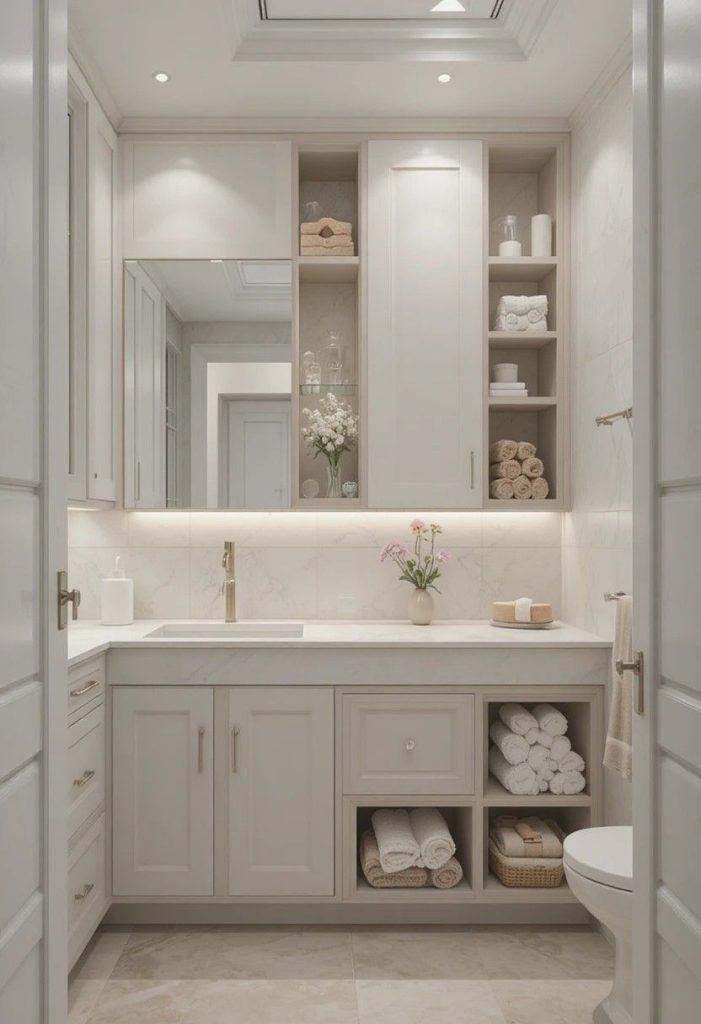
Smooth, handle-free cabinet fronts give our bathroom a calm, uncluttered feel that I notice most on busy mornings, when everything else in the house feels rushed. There are no handles to catch on a towel or a dressing gown, and the flat surfaces wipe clean in a moment with a damp cloth. I chose a soft matte finish rather than a high gloss, because it shows fewer fingerprints and feels warmer to the touch, especially in the winter. Push-to-open doors work well for most people, but a small recessed channel is kinder if you have long nails or little hands in the house.
How to do it: Choose flat-fronted doors or drawers with push-to-open fittings or a recessed channel handle. Fit soft-close hinges so doors never slam, wipe the fronts weekly with a damp microfibre cloth, and keep the finish free of harsh cleaners.
25. Add a Vintage-Style Cabinet
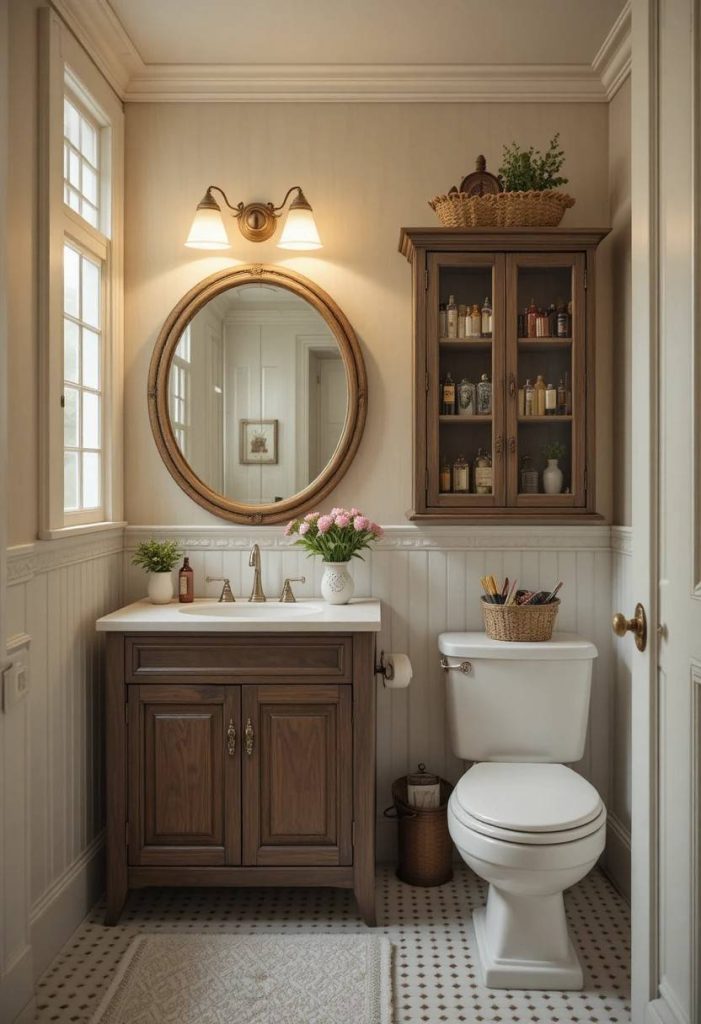
Our vintage-style cabinet started life as an old oak washstand I found at a flea market, and converting it into a vanity is still one of my favourite projects. The worn wood, the little brass knobs and the slightly uneven doors give the bathroom a story that a brand-new unit could never match. I sealed the top carefully, because old wood and bathroom steam are not natural friends, and I keep a tray under the soap and toothpaste to catch drips. Look for a sturdy piece with a top at least 50 cm deep, check the drawers still run smoothly, and let its imperfections show rather than hiding them.
How to do it: Find a sturdy vintage table, washstand or chest with a top at least 50 cm deep. Seal the timber and the top against water, fit a basin that suits the piece, and keep the original handles if they are sound. Use a tray to protect the surface from drips.
26. Use Drawer Dividers
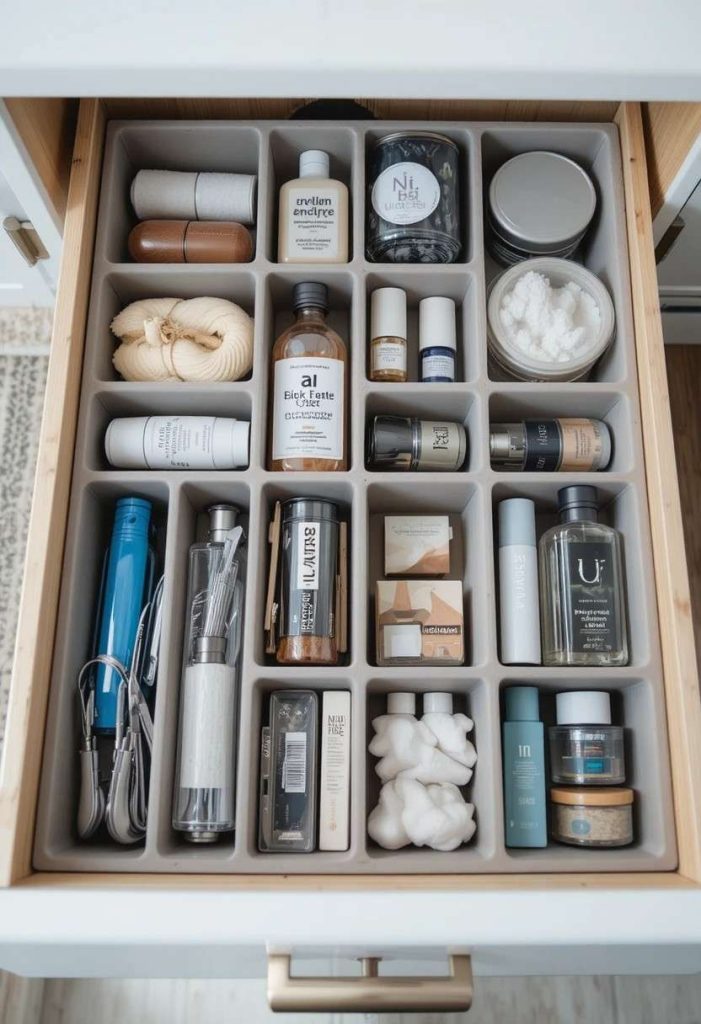
Drawer dividers sound like a small thing, until you live with them for a week and realise how much calmer your mornings have become. Before I fitted them, our top drawer was a tangle of hair grips, lip balms, cotton buds and the odd battery, and I wasted minutes every day hunting for the right thing. Now each item has its own compartment, and I can see at a glance whether we are running low on toothpaste or cotton pads before I start the weekly shop. Bamboo dividers suit our wooden drawers beautifully, and they wipe clean with a damp cloth when a bottle leaks.
How to do it: Measure the inside of each drawer, then choose adjustable bamboo or plastic dividers that fit snugly without forcing. Give each compartment one category, keep daily items at the front, and wipe the dividers weekly when you do the bathroom.
27. Add a Cabinet With a Built-In Hamper
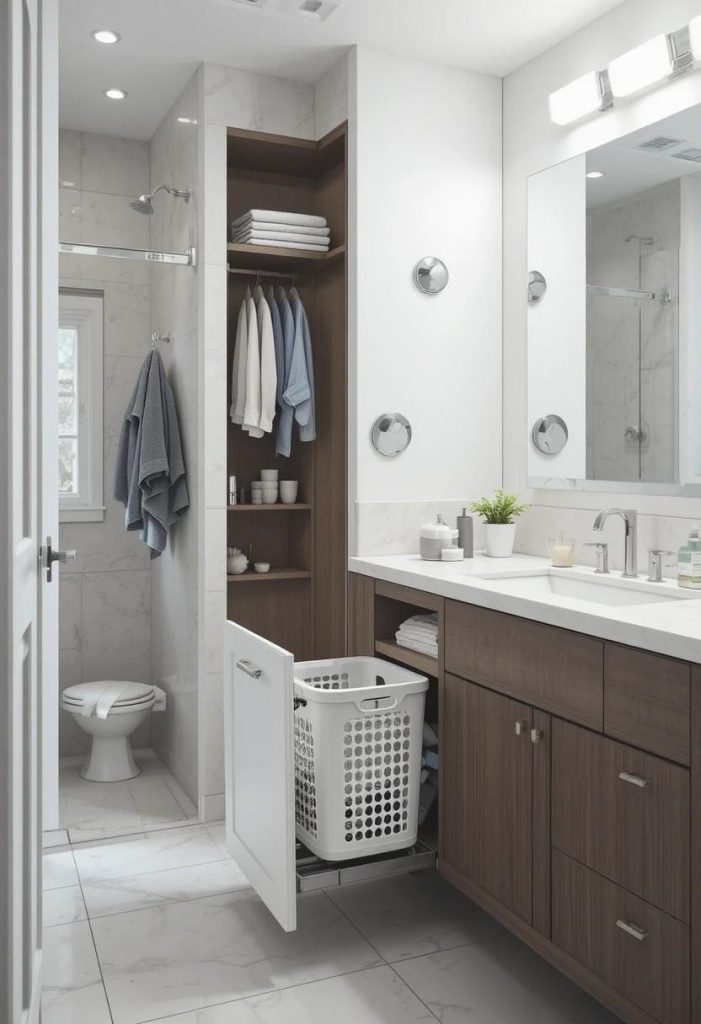
A built-in hamper inside our vanity is the quietest luxury in our bathroom, because dirty laundry disappears behind a door instead of piling up on the floor. I chose a tilt-out hamper with a removable linen bag, so I can lift the whole bag out on wash day without dragging clothes through the house. Air holes in the door keep the laundry from smelling damp, and I wash the bag itself every few weeks so the hamper stays fresh. It works best for a family bathroom, where the laundry basket used to live in the hallway and trip everyone up at least once a day.
How to do it: Choose a vanity with a tilt-out or pull-out hamper and a removable, washable linen bag. Keep the hamper ventilated, wash the bag every few weeks, and empty it before it overflows so clothes stay fresh and the door closes easily.
28. Match Cabinets to Your Style
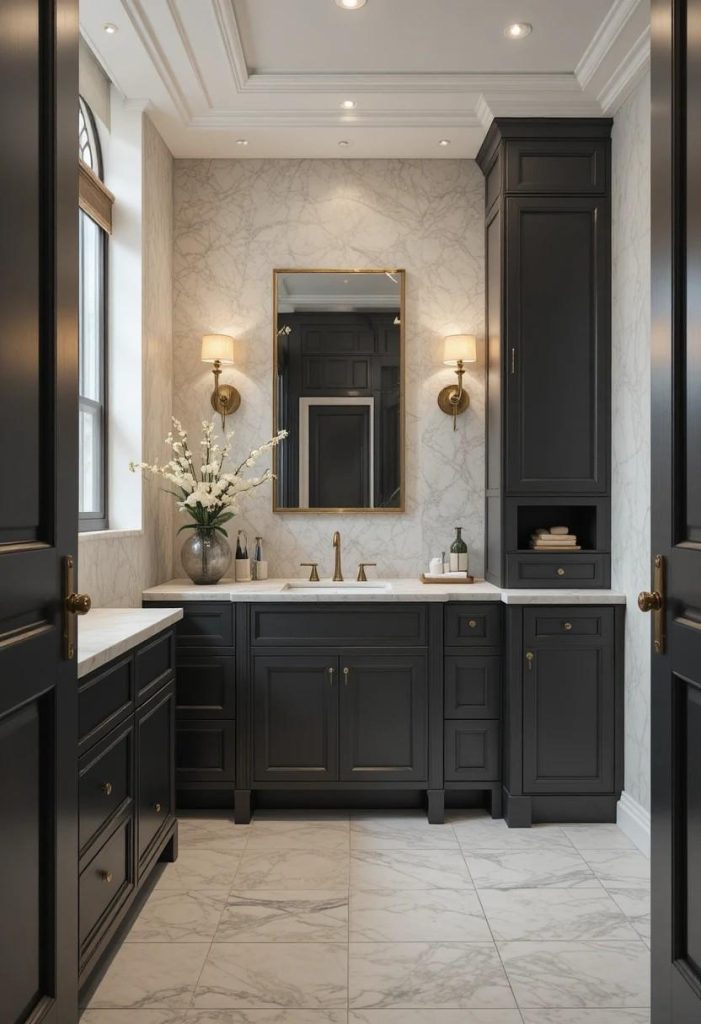
Choosing cabinets that suit the rest of the bathroom sounds obvious, but it is the step I see skipped most often, and it is the one that makes a room feel finished. Our bathroom is calm and traditional, so I chose panelled doors, soft white paint and brass handles, and the cabinets feel like they have always belonged there. In a modern bathroom, I would choose flat fronts, a dark finish and simple chrome handles instead, because the same cabinet in the wrong style can look out of place. Name your style in three words before you shop, and test every choice against those words.
How to do it: Name your bathroom style in three words, such as calm, traditional and warm. Choose cabinet doors, handles and finishes that match those words, repeat one finish in the mirror frame or taps, and step back to check the whole room together.
29. Keep It Personal and Tidy
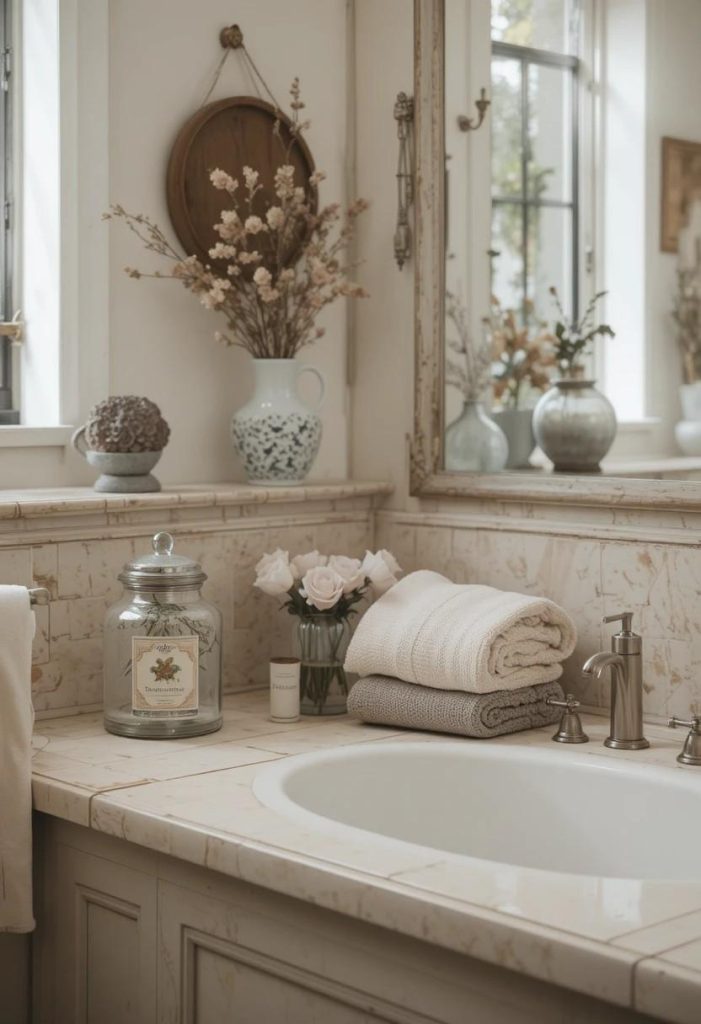
The last idea on this list is really the point of all the others, because a bathroom that works beautifully should also feel unmistakably yours. I keep a small vase with eucalyptus on the vanity, a favourite framed photograph on the shelf, and a pretty glass jar for cotton pads that I refill each week. Those small touches cost almost nothing, yet they are the reason the room feels like home rather than a showroom, and they make the daily routine feel a little kinder. Keep it simple, though, because a crowded surface soon becomes clutter again, and one or two personal touches are always enough.
How to do it: Choose one or two personal touches, such as a favourite tray, a small plant or a framed photograph, and add them to the vanity or a shelf. Keep the rest of the surface clear, wipe the tray weekly, and swap the plant or photograph with the seasons if you like.
Frequently Asked Questions
What size bathroom cabinet should I choose?
Measure the wall, the door swing and the space in front of the basin before you buy. Leave at least 75 cm clear in front of a vanity, and choose a tall cabinet no deeper than 35 cm for a narrow room. A cabinet that fits the room will always look better than a larger one squeezed into place.
How do I keep bathroom cabinets tidy?
Give every item one fixed home, and put it back there straight after use. Use baskets, dividers and pull-out trays so small things cannot drift into a jumble at the back. A two-minute tidy each evening and a fuller clear-out each season will keep the system working.
Which cabinet material is best for a steamy bathroom?
Choose moisture-resistant MDF, sealed solid wood or a good-quality laminate, and make sure every cut edge is sealed. Marble and stone tops need sealing before use and again each year. Avoid unsealed raw wood, which can swell and warp in steam.
Can I add cabinet storage to a small bathroom without a renovation?
Yes. A tall slim cabinet, a mirror cabinet, a slim cabinet beside the sink and a ladder shelf all add storage without moving plumbing. Over-door hooks and stackable drawer units inside an existing cupboard help too. Start with one change, live with it for a week, then add the next.
How often should I declutter my bathroom cabinets?
Do a quick check every month, binning empty, dried-up and out-of-date products. A fuller clear-out every three months is ideal, especially for medicines and first-aid supplies. Checking expiry dates regularly also keeps the cabinet safe for the whole family.
Your Bathroom Cabinet Checklist
Work through this list one step at a time, and tick each item off as you go.
- ☐ Empty every cabinet and drawer and sort items into keep, bin and pass-on piles
- ☐ Bin expired, empty and dried-up products
- ☐ Wipe cabinet interiors and drawer bases and let them dry fully
- ☐ Measure the wall, door swing and under-sink space before buying anything
- ☐ Choose a mirror cabinet, tall cabinet or slim cabinet to suit your room
- ☐ Fit dividers, baskets or pull-out trays so every group has a home
- ☐ Put daily essentials at eye level and spares up high or at the back
- ☐ Label baskets and drawers so everyone puts things back correctly
- ☐ Add warm lighting inside cabinets or beneath the vanity
- ☐ Seal wood, marble and stone surfaces before use
- ☐ Keep only daily items on show and move the rest behind doors
- ☐ Check fixings, hinges and runners are secure and soft-close
- ☐ Do a two-minute tidy every evening and a full clear-out each season
- ☐ Step back and check the whole bathroom feels calm, not crowded
A Final Gentle Thought
Whichever ideas you choose, let your cabinets do the quiet work of the room: holding the everyday things out of sight, keeping the surfaces calm, and leaving you a little more time and space in the morning. Start with the change that would make tomorrow easier, whether that is a mirror cabinet, a set of dividers or a tall cabinet in a wasted corner. Add one thoughtful touch of your own, keep the rest simple, and your bathroom will feel less like a storage problem and more like a small sanctuary you enjoy using every day.