
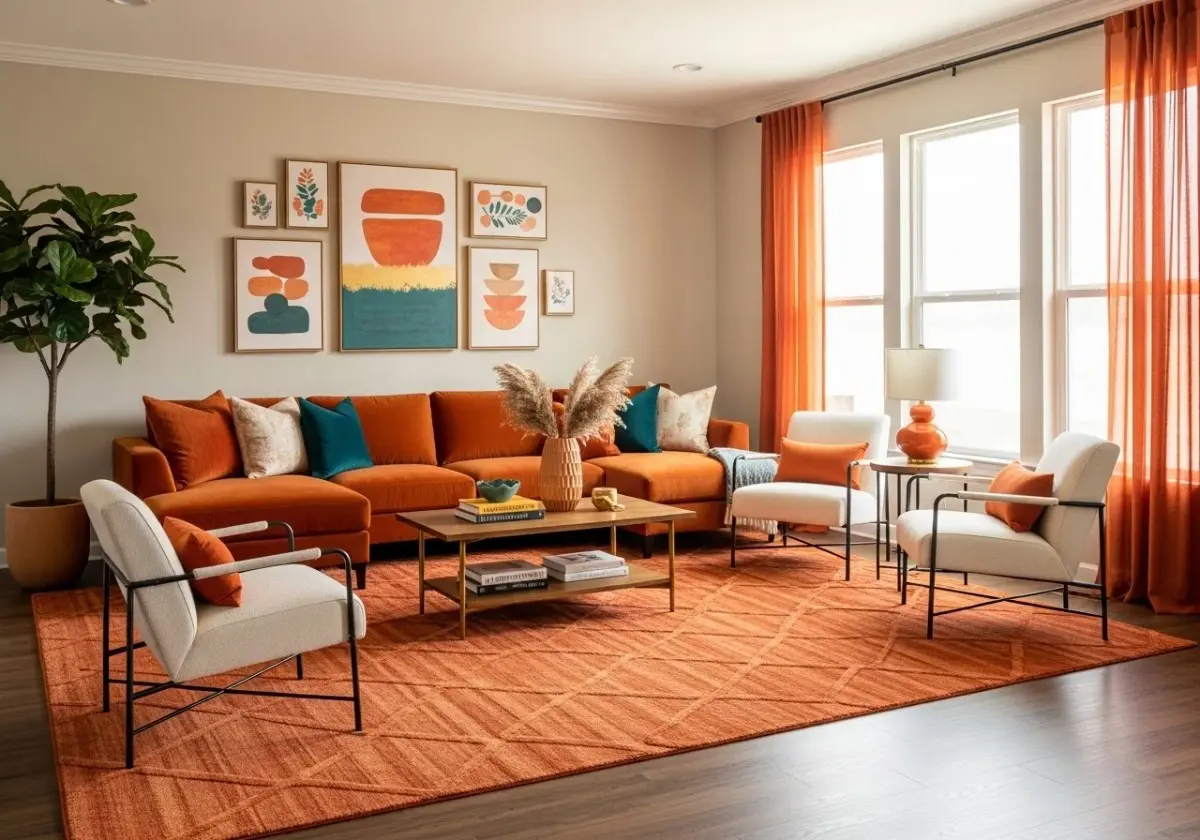
Burnt Orange Living Room Ideas: 20 Warm and Stylish Ways to Transform Your Space
Have you ever stepped into your living room and thought, “It looks nice but why doesn’t it feel nice?” That quiet gap between appearance and comfort is more common than you think. A space can be perfectly styled and still feel emotionally empty. The missing piece is often warmth and character. That’s exactly what burnt orange brings in. With the right Burnt Orange Living Room ideas, you can completely shift the mood of your space into something soft, welcoming, and deeply comforting.
1. Create a Burnt Orange Accent Wall
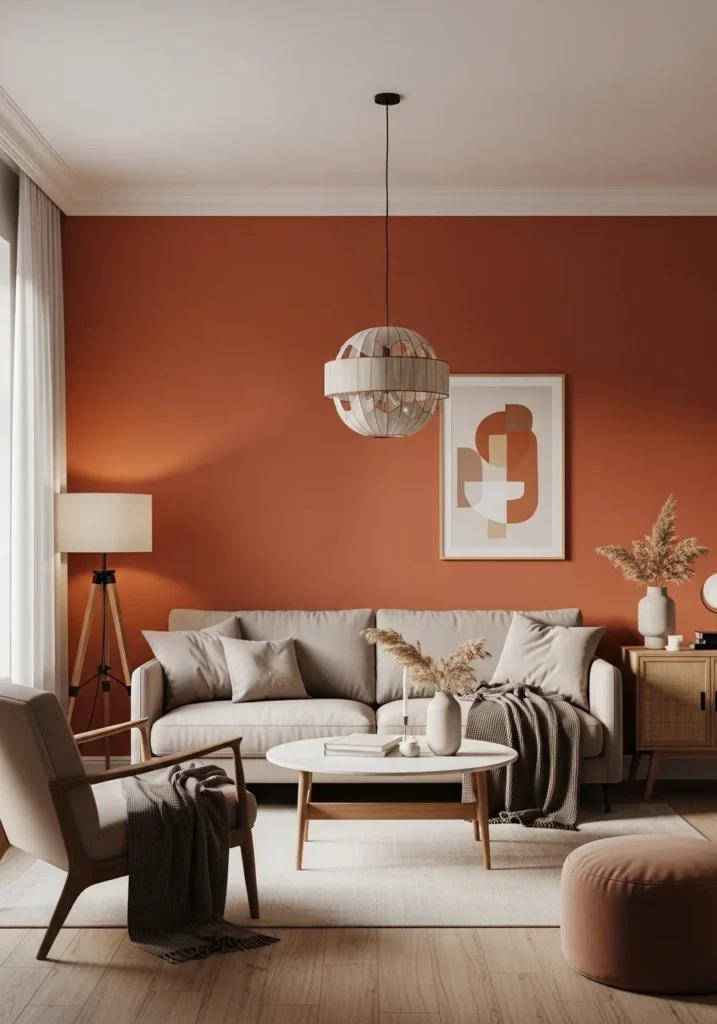
I painted one wall burnt orange in our living room, and the whole room suddenly felt as if someone had switched the lamps on. It was not a large change, yet evenings felt warmer, conversations lasted longer, and the sofa became the place everyone drifted towards. A single bold wall gives the colour room to breathe, while the other walls stay calm and quiet around it. I chose the wall behind the sofa, because that is where my eyes rest first, and it made the whole seating area feel pulled together. If your room feels flat, these accent walls in living room ideas are the place I would start.
How to do it: Pick the wall you see first when you walk in, usually behind the sofa or opposite the door. Clean it, fill any holes, and paint two coats of a warm burnt-orange matt emulsion, letting the first coat dry fully. Keep the other walls cream or warm white, then step back in daylight and again in the evening before you add pictures or shelves.
2. Add a Burnt Orange Sofa for Bold Comfort
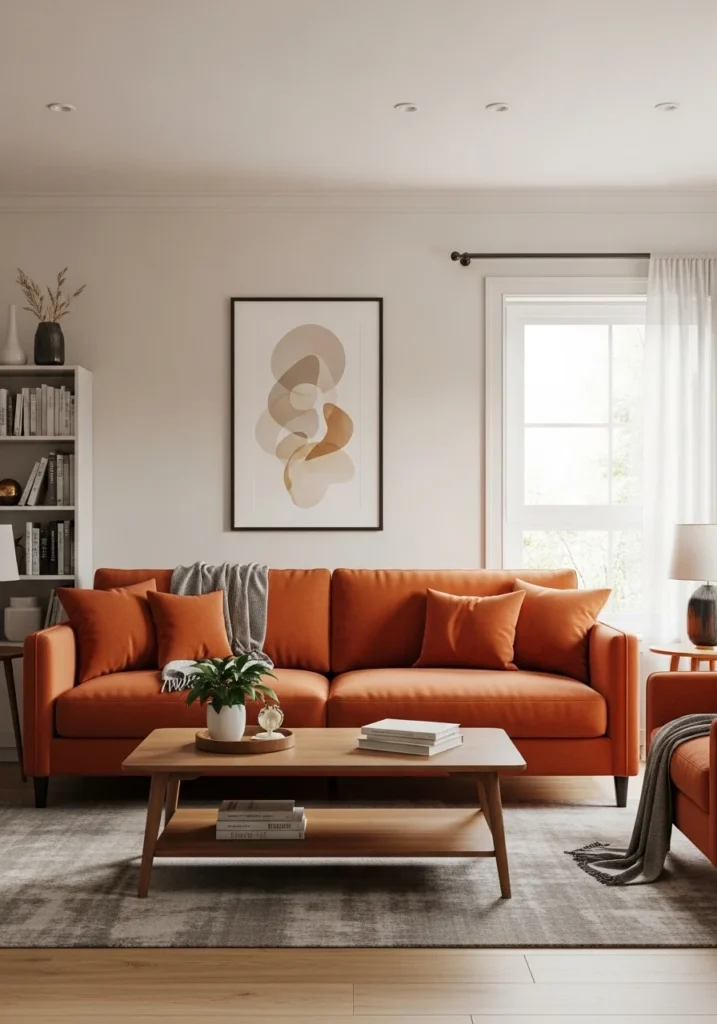
Our burnt-orange sofa arrived on a rainy Saturday, and I remember worrying all morning that I had chosen a colour too brave for everyday life. By supper, though, the room felt completely different, as if the sofa had pulled the rug, the cushions, and the lamplight into one warm story. A sofa in this shade does the heavy lifting, so you do not need much else in the same colour to make the room feel finished. I keep the cushions pale and let the orange sit against cream walls, which stops the whole room from feeling too hot or too loud.
How to do it: Measure your room first, then choose a sofa in a solid burnt-orange fabric with removable, washable covers if you can. Place it against a pale wall, add cream or oatmeal cushions, and keep the rug neutral so the sofa stays the clear focal point. Live with it for a week before adding more orange elsewhere.
3. Use Layered Burnt Orange Throw Pillows
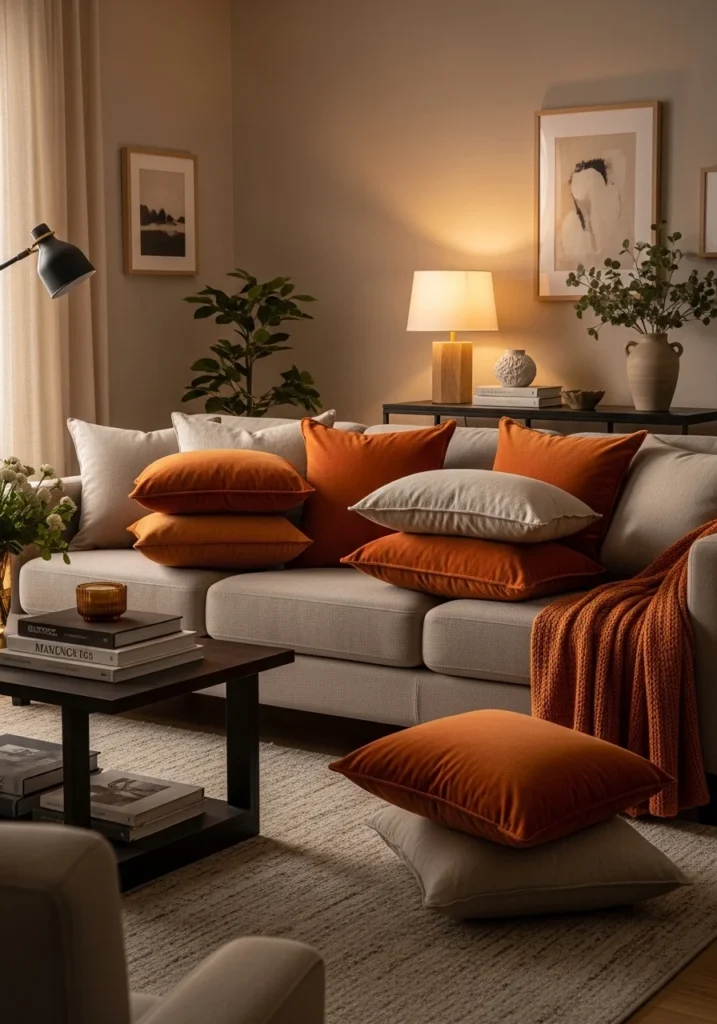
Throw pillows were how I first tested burnt orange, because a cushion costs little, takes seconds to change, and can be moved from sofa to chair in a moment. I started with two in a deep rust velvet, then added one in a softer terracotta linen, and the mix stopped the colour from looking flat or one-note. Different textures matter here, because velvet catches the light while linen softens it, and together they make a plain sofa look considered rather than thrown together. Swap the covers with the seasons if you like; I keep the rust ones for autumn and bring in paler ones when the light turns brighter.
How to do it: Choose three pillows in two or three burnt-orange shades, mixing velvet, linen, and a knitted texture. Place the largest at each end of the sofa and the smallest in the middle, then add one cream pillow to break up the colour. Fluff them daily and rotate them so the fabric wears evenly.
4. Bring Warmth with Burnt Orange Curtains
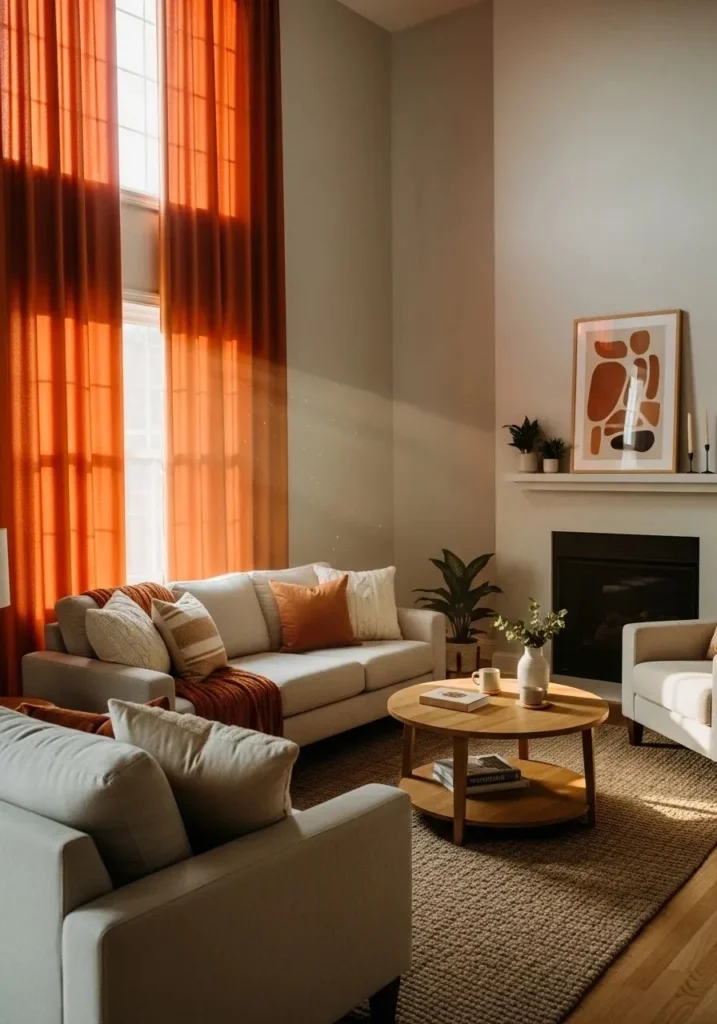
I hung burnt-orange curtains on a whim one spring, and I was surprised by how much they changed the light in the room, especially in the late afternoon. The fabric glows when the sun passes through it, so the whole room takes on a honeyed warmth that no lamp can quite copy. I chose a light linen that still lets daylight through, because heavy curtains in this colour can make a small room feel closed in. Hang them high and wide, let them brush the floor, and keep the walls pale so the colour feels like sunshine rather than a solid block.
How to do it: Mount the curtain rod 10 to 15 centimetres above the window frame and wider than the window on both sides. Hang light linen or cotton curtains in burnt orange so they pool just at the floor, then tie them back during the day to let the light through. Wash them on a gentle cycle and steam out creases before rehanging.
5. Balance with Neutral Foundations
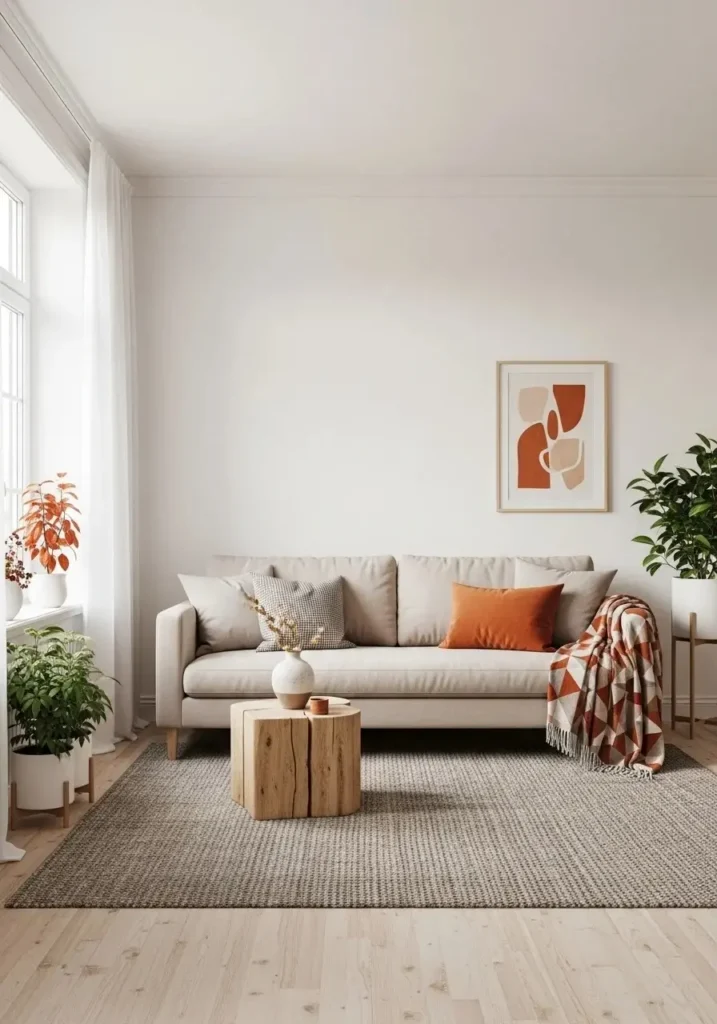
Burnt orange needs quiet company, and I learned that the hard way after pairing it with too many strong colours at once and watching the room turn noisy. Cream walls, a pale rug, and soft grey or beige seating give the orange somewhere calm to sit, and suddenly it looks rich instead of restless. I think of neutrals as the frame around a picture: they do not compete, they simply let the warm colour hold your attention for longer. If you are choosing the wider palette first, these living room color scheme ideas will help you keep the balance soft and warm.
How to do it: Start with cream or warm-white walls, a pale rug, and neutral seating in beige, grey, or soft taupe. Add burnt orange in three places only at first, such as cushions, a throw, and a vase, then step back and check the balance. If the orange still shouts, swap one piece for a neutral and let the other two do the work.
6. Lay Down a Burnt Orange Rug
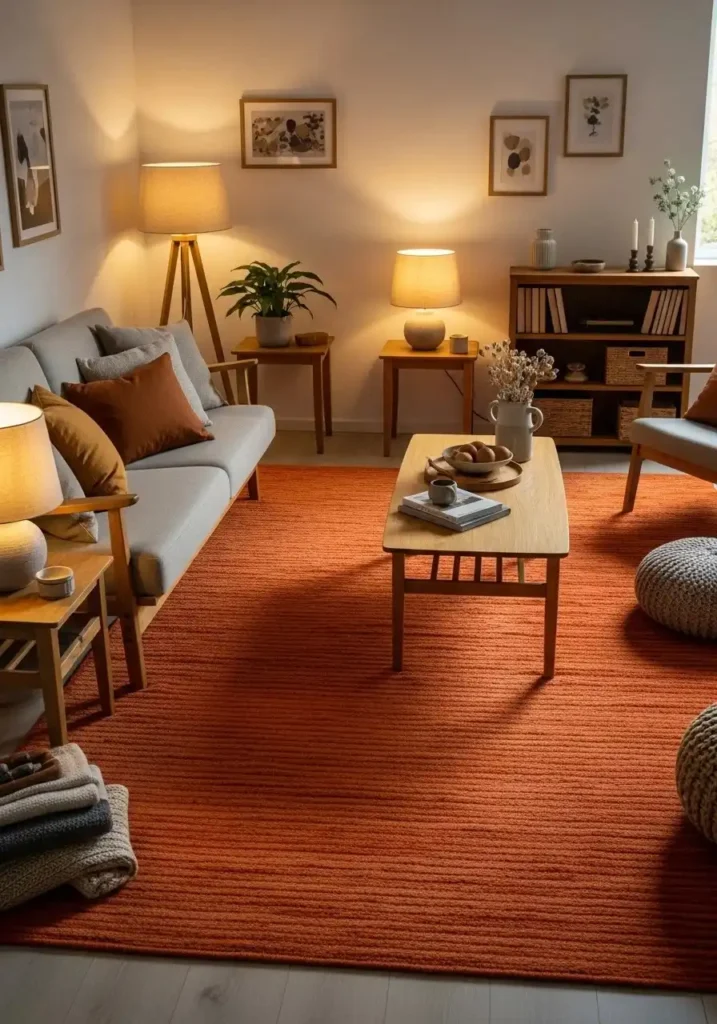
A burnt-orange rug was the piece that finally tied our living room together, because it gave the sofa, the chairs, and the coffee table a shared patch of colour to stand on. I chose a pattern with rust, cream, and a little charcoal, so the rug feels warm without shouting, and it hides everyday crumbs far better than a plain cream one. It also softens the floor under bare feet on cold mornings, which is a small comfort I notice every single day. Leave a border of bare floor around it, so the room still feels spacious and the rug looks placed, not squeezed in.
How to do it: Choose a rug large enough for the front legs of the sofa and chairs to sit on it, with at least 20 centimetres of bare floor showing around the edges. Lay it flat, let it relax for a day, then vacuum it weekly and blot spills at once. Turn it every few months so the colour fades evenly in sunlight.
7. Pair Burnt Orange with Wood Tones
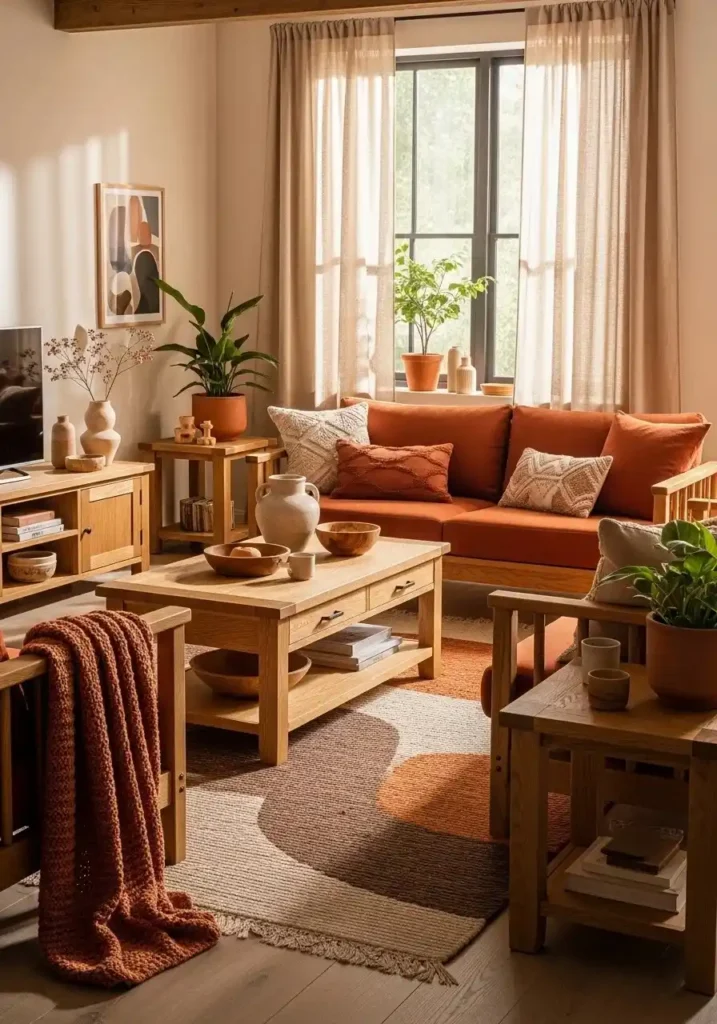
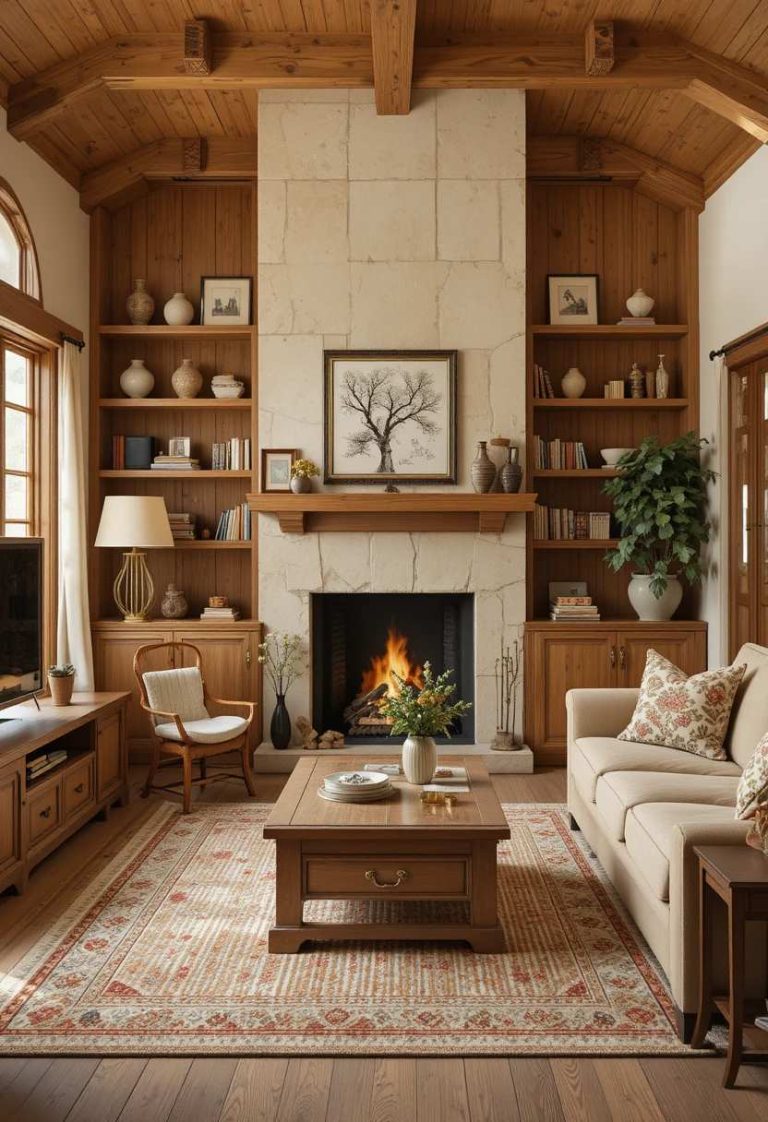
Wood and burnt orange are old friends in my house, because the grain in oak and walnut picks up the same honeyed tones and makes the colour feel natural, not painted on. I kept our wooden coffee table and sideboard, then added a burnt-orange throw and a couple of cushions, and suddenly the whole corner looked warmer and more settled. Pale woods keep the look light, while darker walnut gives it depth, so choose the tone that matches the amount of daylight your room gets. A few wooden bowls or a tray on the table will echo the furniture and stop the orange from feeling like an afterthought.
How to do it: Keep your wooden furniture as the base, then add burnt orange in soft pieces such as a throw, cushions, or a lampshade. Mix one pale wood with one darker wood at most, and repeat the orange in at least two places so it looks deliberate. Polish the wood regularly so its grain stays warm and visible.
Below Amazing Ideas Also See:
20 Farmhouse Living Room Ideas That Feel Warm, Cozy, and Timeless
21 Japandi Living Room Ideas for a Calm and Stylish Space
15 Living Room Wall Shelf Ideas That Add Style and Storage
16 Apartment Living Room Ideas to Maximize Style in Small Spaces
8. Choose Burnt Orange Wall Art
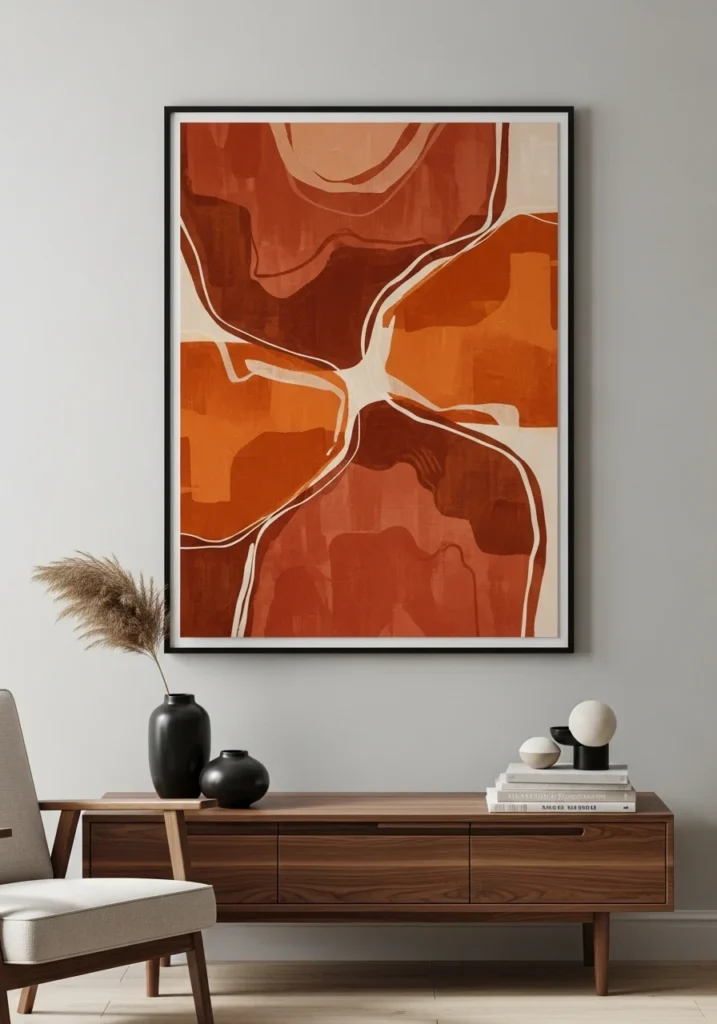
Art was my low-risk way into burnt orange, because a print can be hung in ten minutes, swapped in a season, and taken down without any paint or fuss. I picked a large abstract print with rust, ochre, and cream, and hung it above the sofa where the wall had felt bare for months. The picture now anchors the seating area, and I notice how the orange in the print pulls the cushions and the throw into the same warm family. Keep the frame simple, in black or natural wood, so the artwork, not the frame, is what your eye finds first.
How to do it: Hang one large print, about two-thirds the width of the sofa, with its centre at eye level when you are seated. Use a simple black or natural-wood frame and a sturdy picture hook, then add one cushion in a colour taken from the print. Step back from the doorway to check that the art, sofa, and cushions read as one group.
9. Add Burnt Orange Textiles and Throws
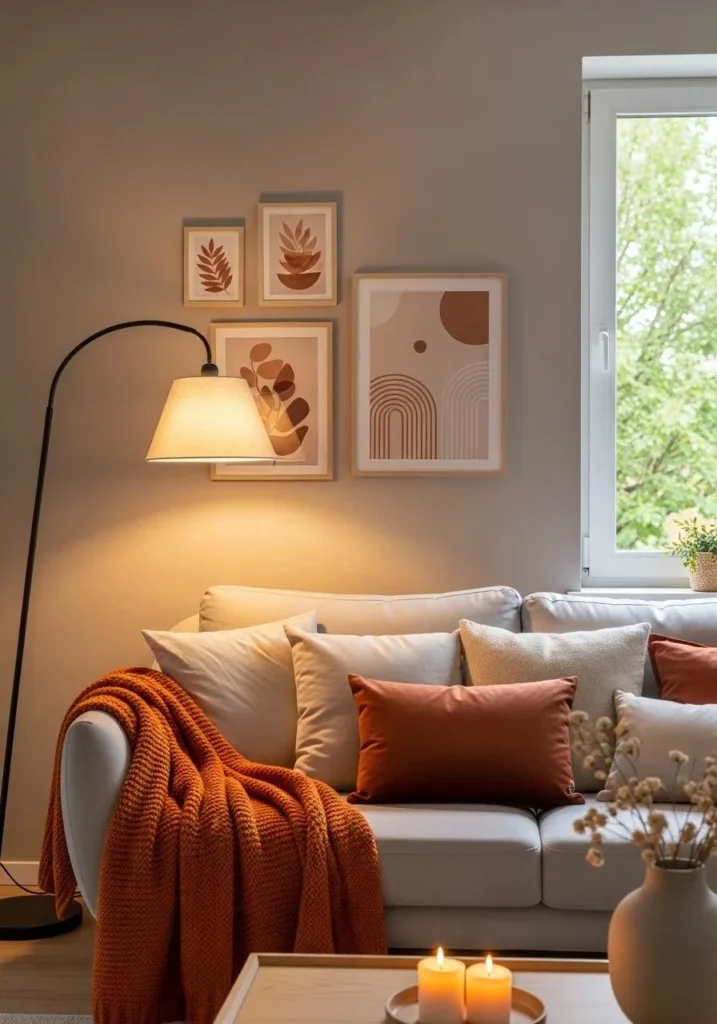
When the evenings turn cold, I reach for burnt-orange textiles first, because a soft throw or a knitted cushion cover changes the mood of the room in seconds. I drape a wool throw over the arm of the sofa, fold another across the foot of the chair, and the room immediately feels like a place to linger. Mixing textures is the trick I come back to: smooth cotton, chunky knit, and soft velvet all in the same warm shade, so nothing looks flat. Wash the throws regularly, keep a spare folded in a basket, and the room will always feel cared for, even on busy weeks.
How to do it: Drape a wool or cotton throw over one sofa arm, fold a second throw neatly over a chair, and add one knitted cushion cover in the same shade. Keep the basket of spare throws near the sofa so they are easy to reach on cold evenings. Wash them on a gentle cycle and air-dry them to keep the colour rich.
10. Mix Burnt Orange with Dark Accents
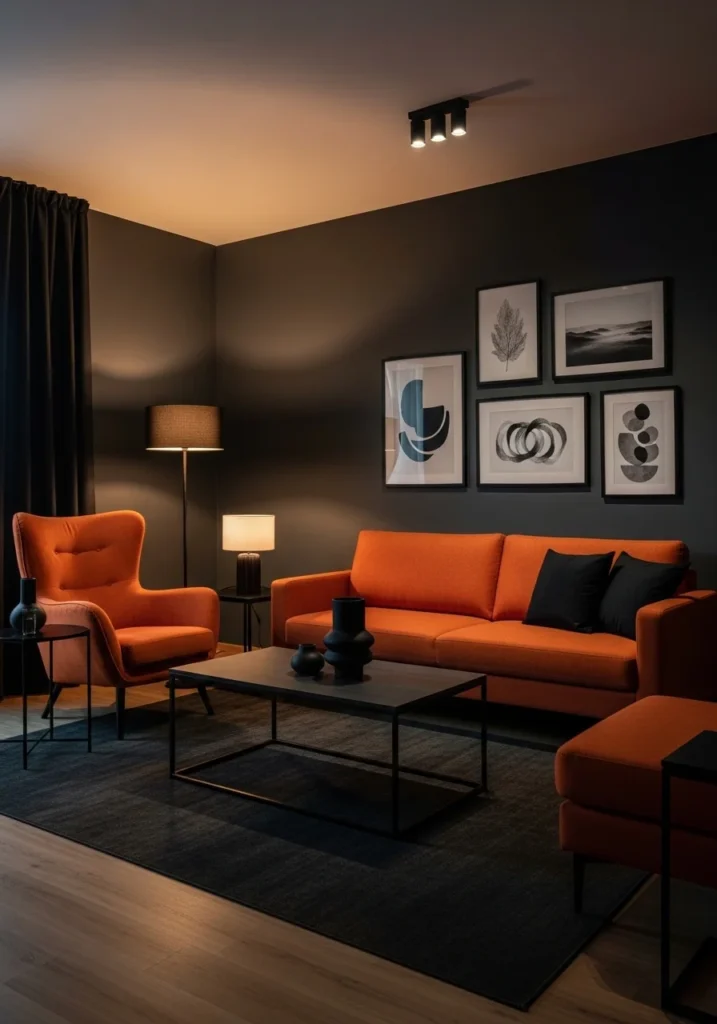
I used to think burnt orange needed only pale colours beside it, until I tried it against charcoal and black and saw how much richer it looked. A dark console, black picture frames, or a charcoal cushion give the orange a sharp edge, and the contrast makes the whole room feel more grown-up. The trick is balance: keep the dark pieces slim and few, so they frame the warmth instead of swallowing it, and let the orange stay the star. I added black metal lamp bases and one charcoal cushion, then stopped, because a little darkness goes a long way in a warm room.
How to do it: Add one or two dark pieces only, such as black lamp bases, a charcoal cushion, or slim black frames. Place them near the orange, not scattered around the room, so the contrast reads as deliberate. If the room starts to feel heavy, swap one dark piece for a cream one and reassess in daylight.
11. Style a Burnt Orange Accent Chair
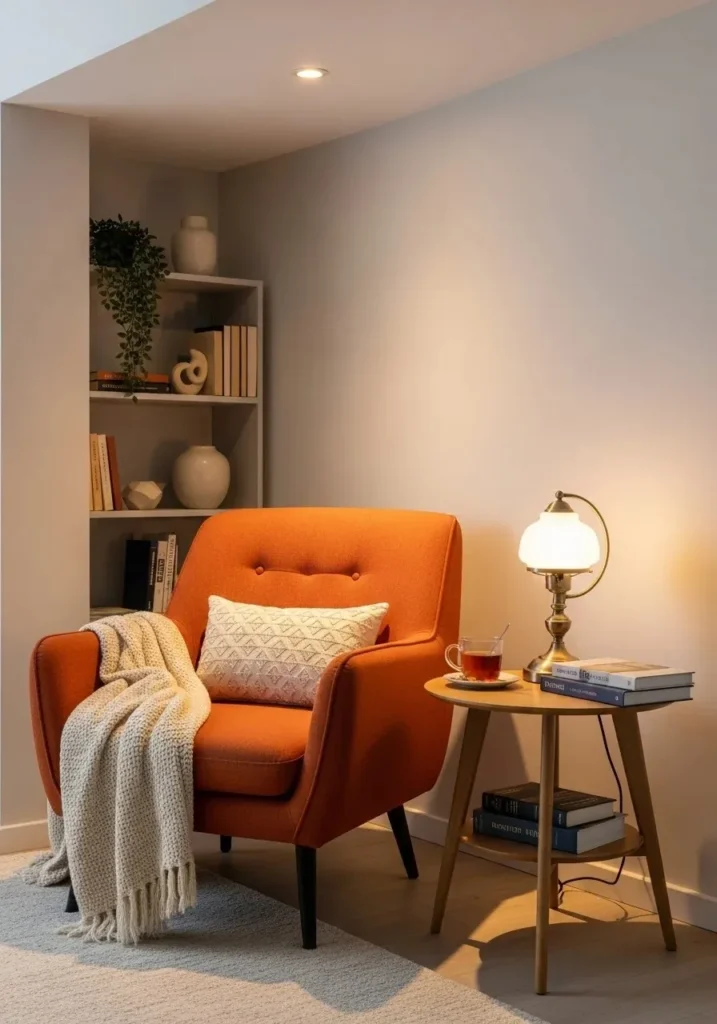
A burnt-orange accent chair is my favourite small commitment to the colour, because one chair can change the mood of a whole corner. I placed ours by the window with a small side table and a lamp, and it quickly became my reading spot, the place I sit with coffee in the morning. Choose a chair with a shape you love, in velvet or a sturdy woven fabric, and keep the rest of the corner calm so the chair can stand out. Add a cream cushion and a folded throw, and the chair will look inviting rather than like a showpiece nobody is allowed to use.
How to do it: Place the chair in a corner with good light, beside a small side table and a reading lamp. Add a cream cushion and a folded throw, then sit in it yourself and check the view across the room. If the chair feels isolated, pull a small rug or a plant beside it to tie the corner into the rest of the room.
12. Make a Statement with Burnt Orange Wall Art
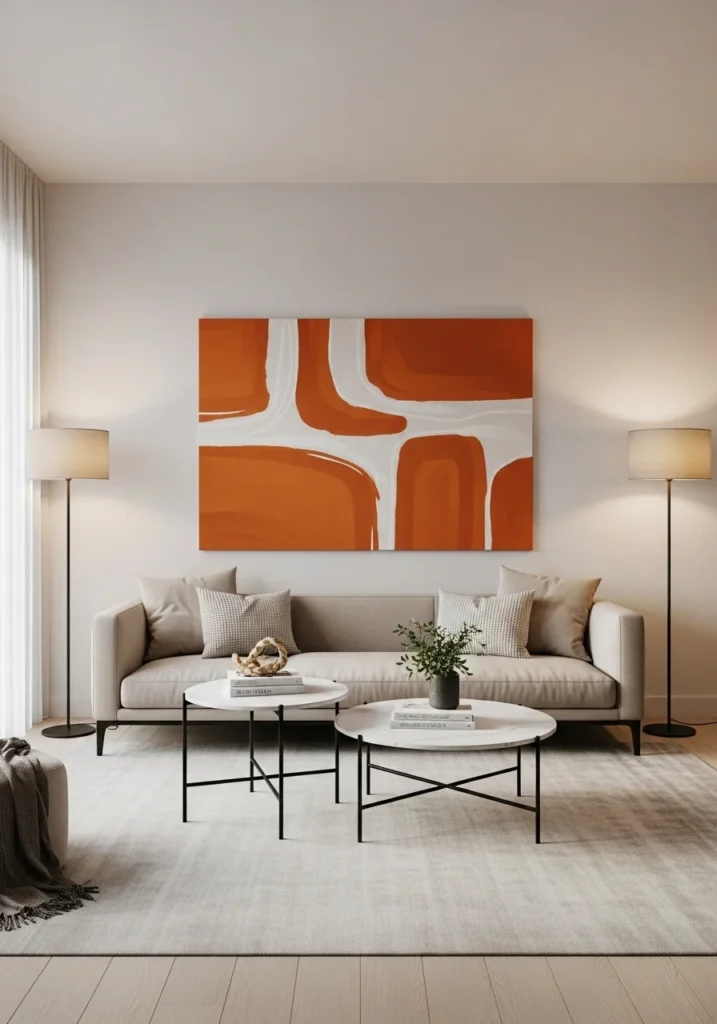
If one print feels too quiet for your wall, a statement piece in burnt orange can do the talking, and I learned to let it take up more space. I hung a large canvas with sweeping rust shapes above the fireplace, and the room suddenly had a centre, a place for the eye to land when you walk in. Keep the wall around it plain, give the picture breathing room, and let the other decorations stay quiet so they do not compete with it. A bold piece like this works best when the sofa and rug are calm, so the art feels like the heartbeat of the room.
How to do it: Choose one large canvas or framed print in burnt orange, at least 80 centimetres wide for a main wall. Hang it above the sofa or fireplace with its centre at eye level, using two hooks for a heavy piece. Keep the surrounding wall bare and the nearby cushions plain, so the art holds the attention on its own.
13. Use Warm Lighting to Enhance the Colour
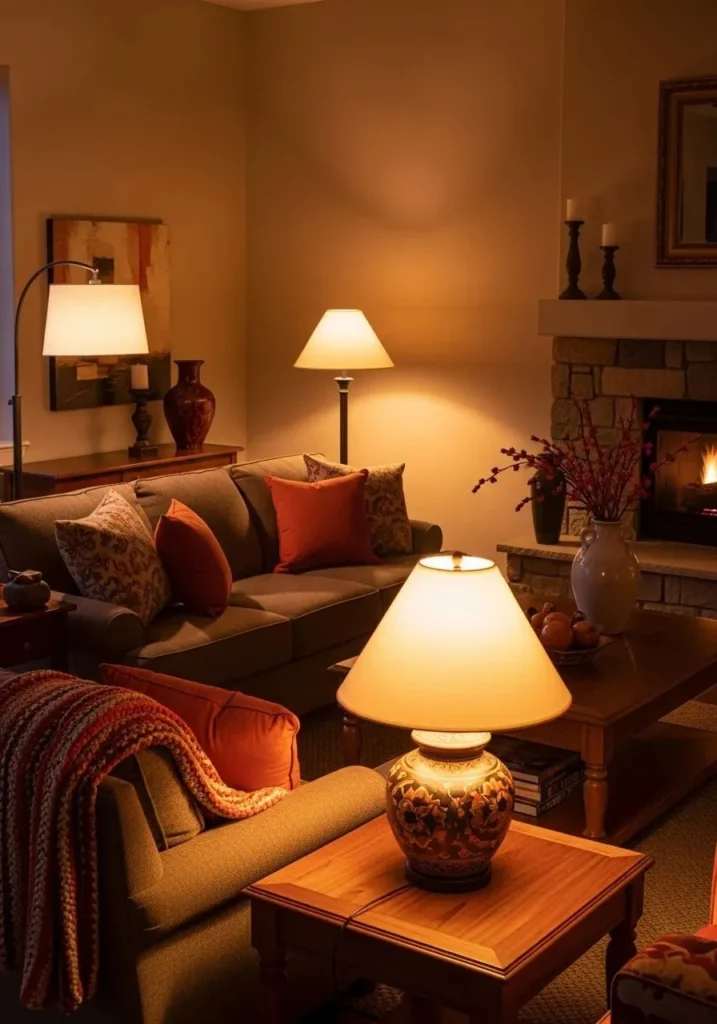
Burnt orange looks different as the light changes, and I first noticed this on a winter evening when the lamps came on and the walls seemed to glow. Warm bulbs, at about 2700 kelvin, bring out the honey in the colour, while cool white light can make it look flat and a little harsh. I use a floor lamp in one corner and a table lamp by the sofa, so the warmth travels through the room instead of stopping at one lamp. Dim the lights a little in the evening, and the orange deepens, the shadows soften, and the whole room feels ready for a slow night in.
How to do it: Swap cool-white bulbs for warm-white bulbs at about 2700 kelvin in every living-room lamp. Place a floor lamp in a dark corner and a table lamp beside the sofa, then add a dimmer if you can. Test the light in the evening, when burnt orange shows its warmest side, and adjust the lamps until the colour glows without glaring.
14. Mix Burnt Orange with Neutral Sofas
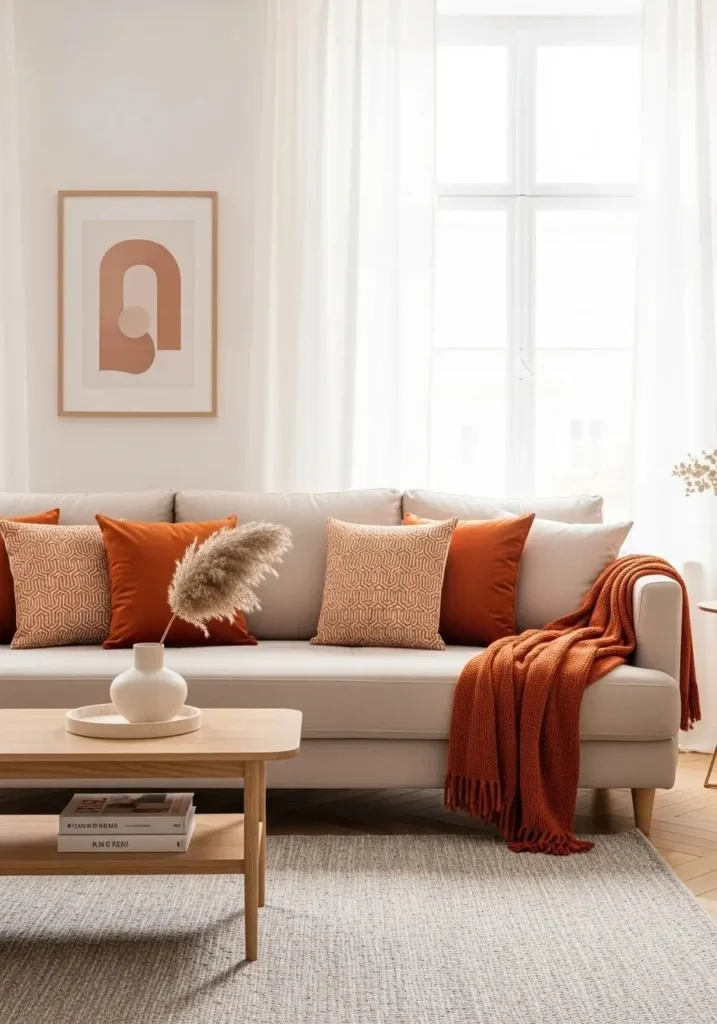
A neutral sofa is the easiest starting point I know, because it lets you bring in burnt orange through cushions and throws without repainting or replacing anything large. I styled our cream sofa with two rust cushions, a burnt-orange throw folded over one arm, and a terracotta vase, and the balance felt just right. The pale fabric keeps the room light, while the orange stops it from feeling plain, and I can swap the cushions in an afternoon. If your sofa is brown rather than cream, these brown couch living room ideas will show you how the same warm accents sit against deeper wood and leather tones.
How to do it: Start with a cream, beige, or grey sofa, then add two burnt-orange cushions and one throw in a matching shade. Place a terracotta vase or a rust book on the coffee table to repeat the colour at a lower level. Stand back and check that the orange appears in three places, no more, so the sofa still feels calm.
15. Add a Textured Burnt Orange Rug
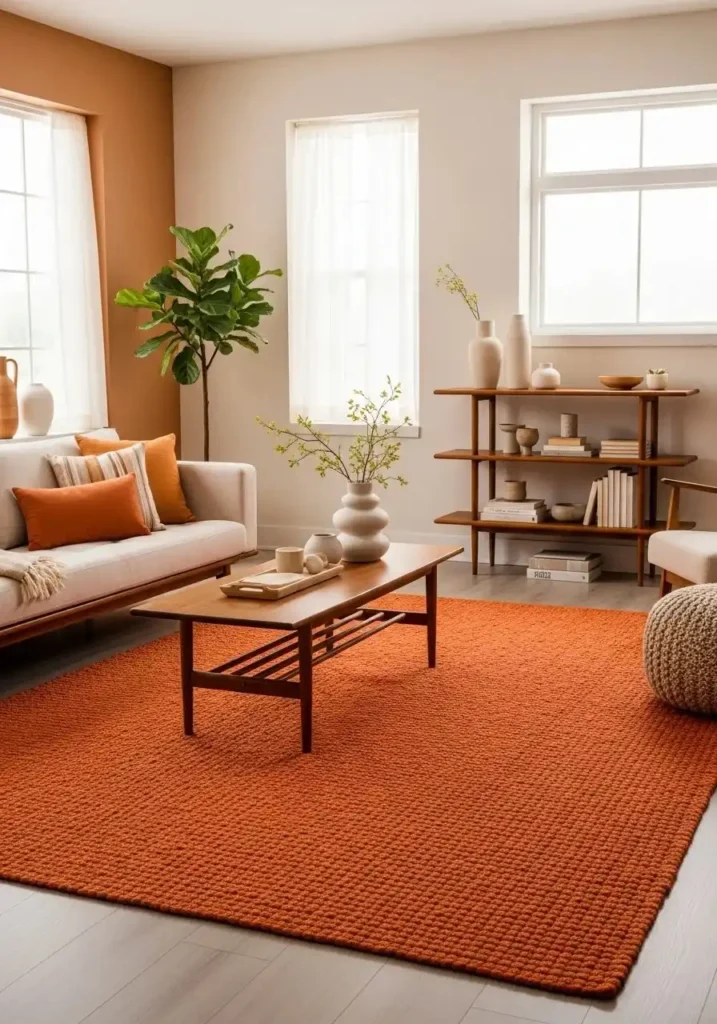
A textured rug does more than warm your feet, because the pile, the weave, and the pattern give burnt orange a depth that a flat colour on a wall cannot match. I chose a high-pile rug in rust with flecks of cream and charcoal, and it softens the sound in the room as well as the look, which I had not expected. Place it under the coffee table, let the front legs of the sofa rest on it, and the seating area will feel like one room within the room. Vacuum it often, shake it outside when you can, and it will keep its colour and its softness for years.
How to do it: Choose a high-pile or hand-woven rug in rust with cream or charcoal flecks, large enough for the sofa’s front legs to rest on. Place it under the coffee table, centred on the seating area, and use a non-slip pad underneath. Vacuum it twice a week and take it outside for a good shake once a month.
Below Amazing Ideas Also See:
20 Farmhouse Living Room Ideas That Feel Warm, Cozy, and Timeless
21 Japandi Living Room Ideas for a Calm and Stylish Space
15 Living Room Wall Shelf Ideas That Add Style and Storage
16 Apartment Living Room Ideas to Maximize Style in Small Spaces
16. Combine Burnt Orange with Green Accents
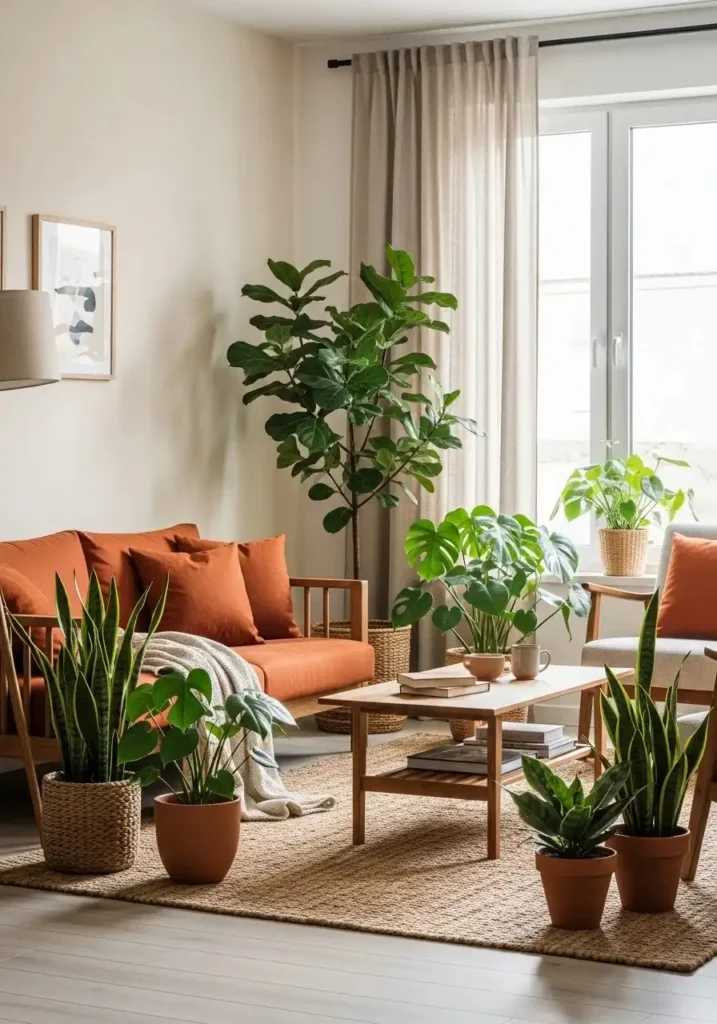
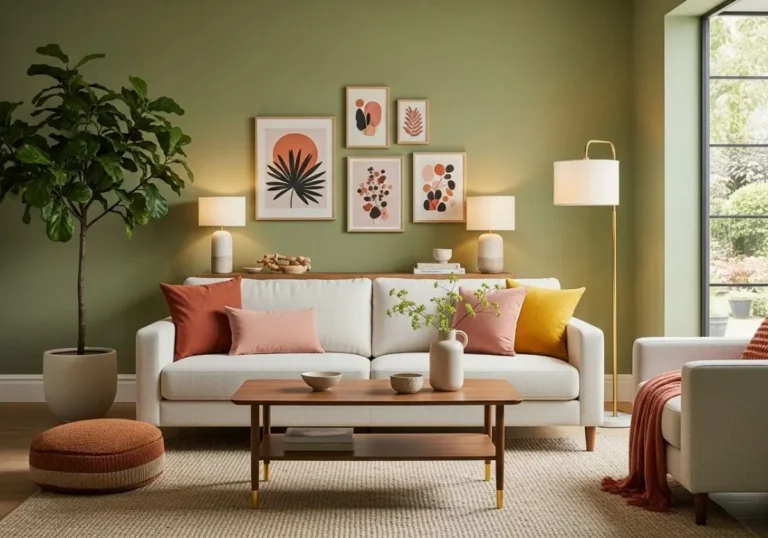
Green was the partner I did not expect for burnt orange, until I placed a sage cushion beside a rust one and saw how calm and natural the pair looked together. Olive, sage, and deep forest green all sit well with rust, because they borrow from the same autumn palette, and they stop the orange from feeling too hot. I add green through plants first, then through a cushion or a throw, so the room feels alive as well as warm. Keep the greens muted, not bright, and let one plant in a terracotta pot do the work of tying the two colours together.
How to do it: Place a green plant in a terracotta pot near the sofa, then add one sage or olive cushion in a muted tone. Keep the green to two or three pieces, and let the plant’s leaves repeat the colour at a different height. Water the plant weekly and wipe its leaves so it stays healthy and bright.
17. Use Burnt Orange Decorative Accents
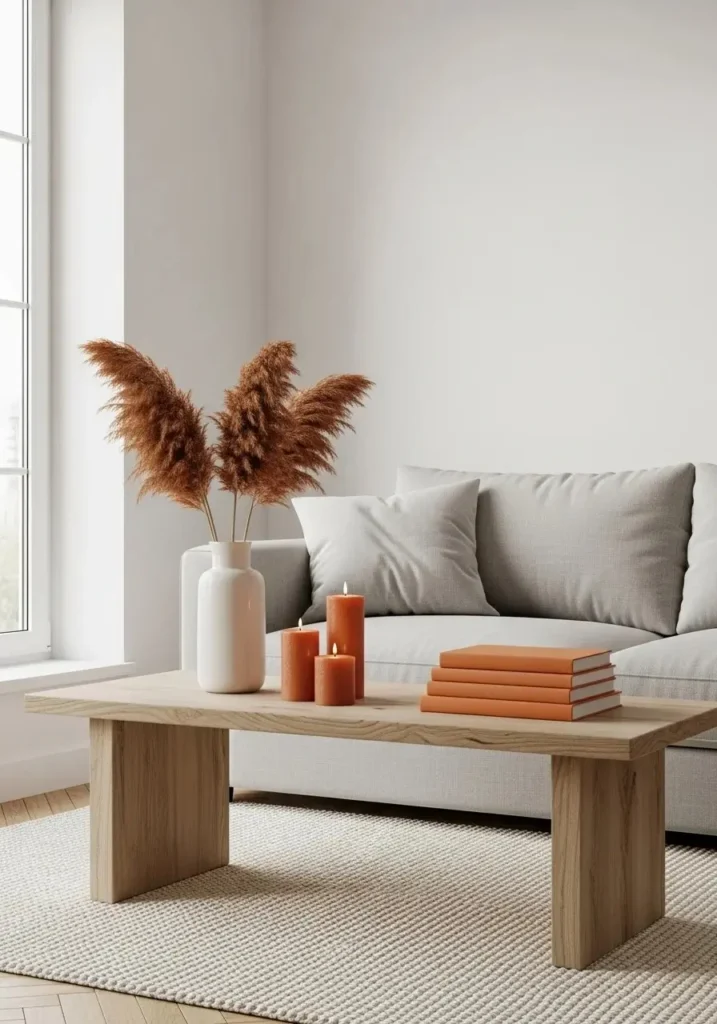
Not every room needs a big burnt-orange moment, and in our smaller sitting area I kept the colour to small, thoughtful touches that you notice slowly. A terracotta vase on the shelf, a rust book spine, a small bowl on the coffee table, and a single cushion are enough to warm the room without changing it. I like this approach for rented homes and for rooms where you want the colour to whisper, because every piece can be moved, swapped, or packed away. Spread the small touches around the room, repeat the same shade twice or three times, and the colour will feel intentional rather than accidental.
How to do it: Gather three small burnt-orange pieces, such as a vase, a bowl, and a cushion, all in the same shade. Place one on the shelf, one on the coffee table, and one on the sofa, then step back and check that they read as a group. If one piece feels out of place, move it closer to another orange piece until the room feels balanced.
18. Hang Burnt Orange Sheer Curtains
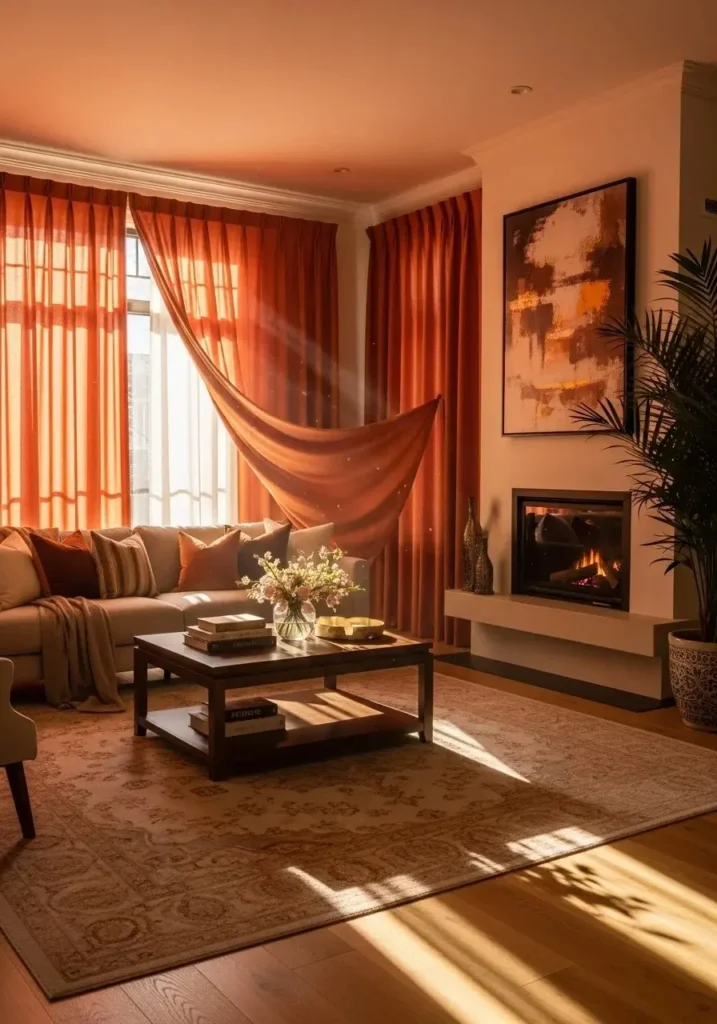
Sheer burnt-orange curtains were a gentler version of the heavier ones I had tried, and they suit our bright living room far better, because they filter the light. In the morning the room glows softly, the furniture keeps its pale colours, and the orange feels like a warm haze rather than a curtain of solid colour. I hang them on their own in summer, and layer them behind a heavier curtain in winter, so I can change the warmth of the room with the season. Choose a voile or a fine linen, keep the hem just above the floor, and the room will stay light, airy, and warm at once.
How to do it: Hang sheer burnt-orange voile or fine linen on a slim rod, with the hem just above the floor. In summer, use them on their own; in winter, layer them behind a heavier cream curtain for extra warmth. Wash them gently, hang them while still slightly damp, and let them dry in place to avoid creases.
19. Create a Burnt Orange Gallery Wall
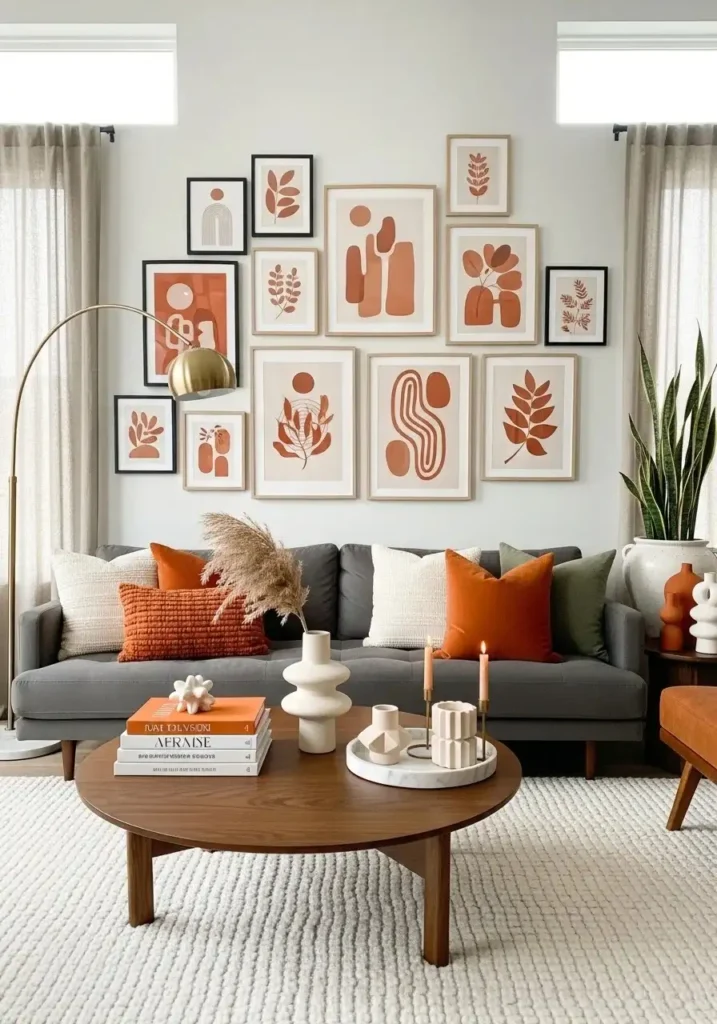
A gallery wall let me use burnt orange in small doses across several pictures, instead of one large piece, and I love how the eye travels from frame to frame. I mixed rust prints, a black-and-white photograph, a small mirror, and a pressed-leaf print, and the orange threads through them like a warm ribbon. Lay the frames on the floor first, leave even gaps of about five centimetres, and hang the largest piece at eye level in the centre. Keep the frames in two finishes only, black and natural wood, so the collection looks collected over time, not bought in one afternoon.
How to do it: Lay your frames on the floor and arrange them with gaps of about five centimetres, putting the largest piece in the centre. Trace the layout on paper, tape the paper to the wall, and hang each frame through the paper. Start with the centre piece at eye level, then work outwards, checking the balance from the doorway as you go.
20. Mix Burnt Orange with Timeless Pieces
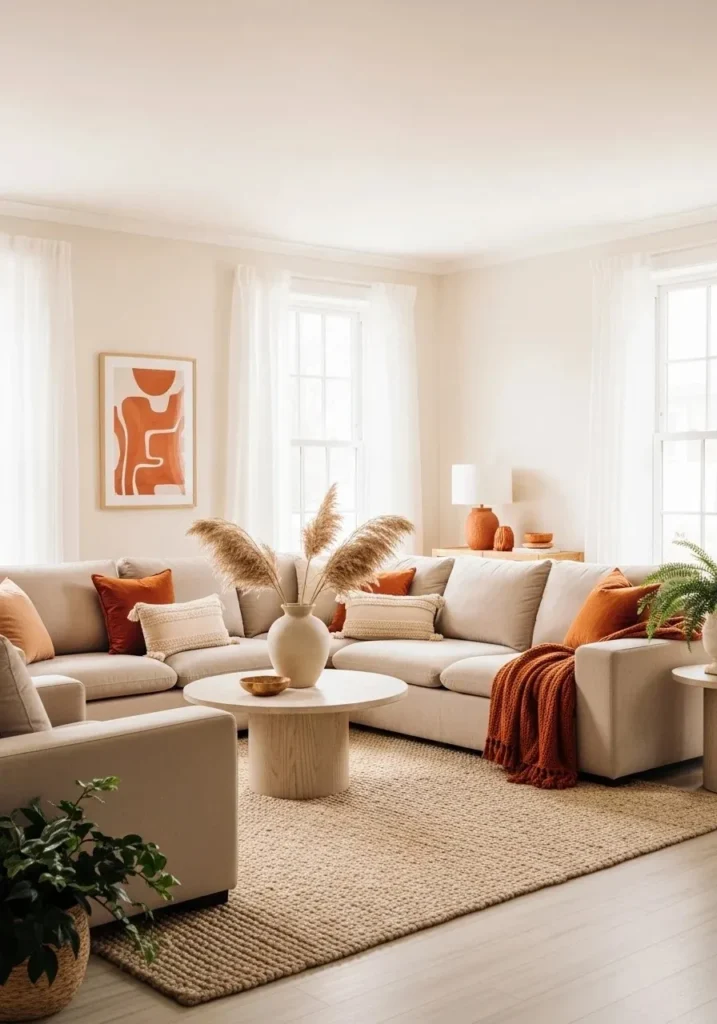
The room I love most is the one where burnt orange sits beside timeless pieces, because the colour feels fresh today and will still feel right in five years. A good sofa, a solid wooden table, a plain rug, and one or two orange cushions will outlast any trend, and they are easier to live with every day. I avoid matching sets and instead choose pieces I would keep even if the orange went, which is my test for whether a room is truly timeless. Start with pieces you already own, add the orange slowly, and let the room grow into its warmth rather than forcing it.
How to do it: Keep your best timeless pieces, such as a good sofa, a wooden table, and a plain rug, then add burnt orange in cushions and a throw only. Choose pieces you would keep even without the orange, and avoid matching sets that date quickly. Add one orange piece at a time, living with each change for a week before adding the next.
Frequently Asked Questions
Does burnt orange work in a small living room?
Yes, it works well if you keep it to one or two places, such as cushions, a throw, or a single accent chair. Pale walls and a light rug will keep the room feeling open, while the orange adds the warmth a small room often lacks. Avoid painting all four walls in a small room, as that can make the space feel closed in.
What colours go best with burnt orange in a living room?
Cream, warm white, beige, and soft grey are the safest partners, because they let the orange stay warm without competing with it. Sage and olive green add a natural, autumn feel, while charcoal and black give the colour a sharper, more modern edge. Wood tones in oak and walnut also sit beautifully beside burnt orange.
Will a burnt orange sofa date quickly?
A burnt-orange sofa in a simple, classic shape should last well, because the colour is warm and earthy rather than a bright fashion shade. Keep the cushions and rug neutral so you can refresh the look cheaply, and choose a washable fabric if you can. If you are nervous, try the colour in cushions and a throw for a season first.
How much burnt orange should I use in one room?
Start with three touches, such as cushions, a throw, and a vase, and live with them for a week before adding more. One large feature, such as an accent wall or a sofa, plus two or three smaller touches is usually enough. If the room starts to feel hot or heavy, swap one orange piece for a neutral and the balance should return.
Can I use burnt orange in a rented living room?
Yes, and it is one of the easiest colours to use in a rental, because you do not need to paint anything. Cushions, throws, curtains, art, and a rug can all be taken with you when you move. Use removable hooks for art, keep the walls pale, and every orange piece can be packed away without leaving a mark.
Your Burnt Orange Living Room Checklist
☐ Choose one main burnt-orange feature, such as a wall, a sofa, or a rug.
☐ Keep walls, rugs, and large seating in calm neutrals.
☐ Repeat burnt orange in three places, no more at first.
☐ Mix velvet, linen, and knit textures in the same warm shade.
☐ Swap cool-white bulbs for warm-white bulbs at about 2700 kelvin.
☐ Hang curtains high, wide, and just brushing the floor.
☐ Add one dark accent, such as black frames or a charcoal cushion.
☐ Bring in wood tones and a green plant to soften the orange.
☐ Hang art at eye level, about two-thirds the width of the sofa.
☐ Test paint and fabric swatches in daylight and lamplight.
☐ Keep a spare throw folded in a basket for cold evenings.
☐ Step back from the doorway and check the balance before adding more.
Conclusion
Burnt orange has changed how our living room feels, not just how it looks, and that is why I keep coming back to it. It turns a plain evening into a warm one, it makes a cream sofa feel considered, and it gives a bare wall a reason to be noticed. Start small if you need to, with a cushion or a throw, or be brave and paint the wall behind the sofa. Either way, keep the neutrals calm, let the light stay warm, and give the colour room to breathe. Choose the one idea that made you smile as you read, try it this weekend, and let your living room grow warmer, one thoughtful touch at a time.
One Comment