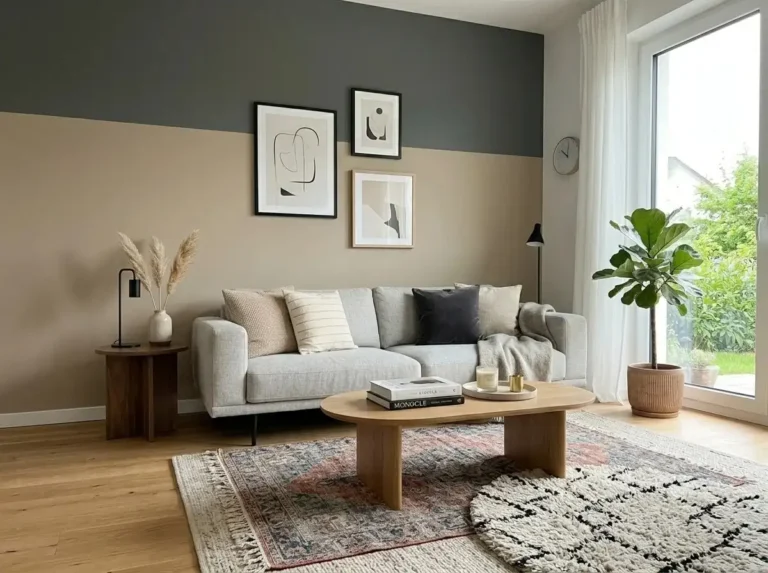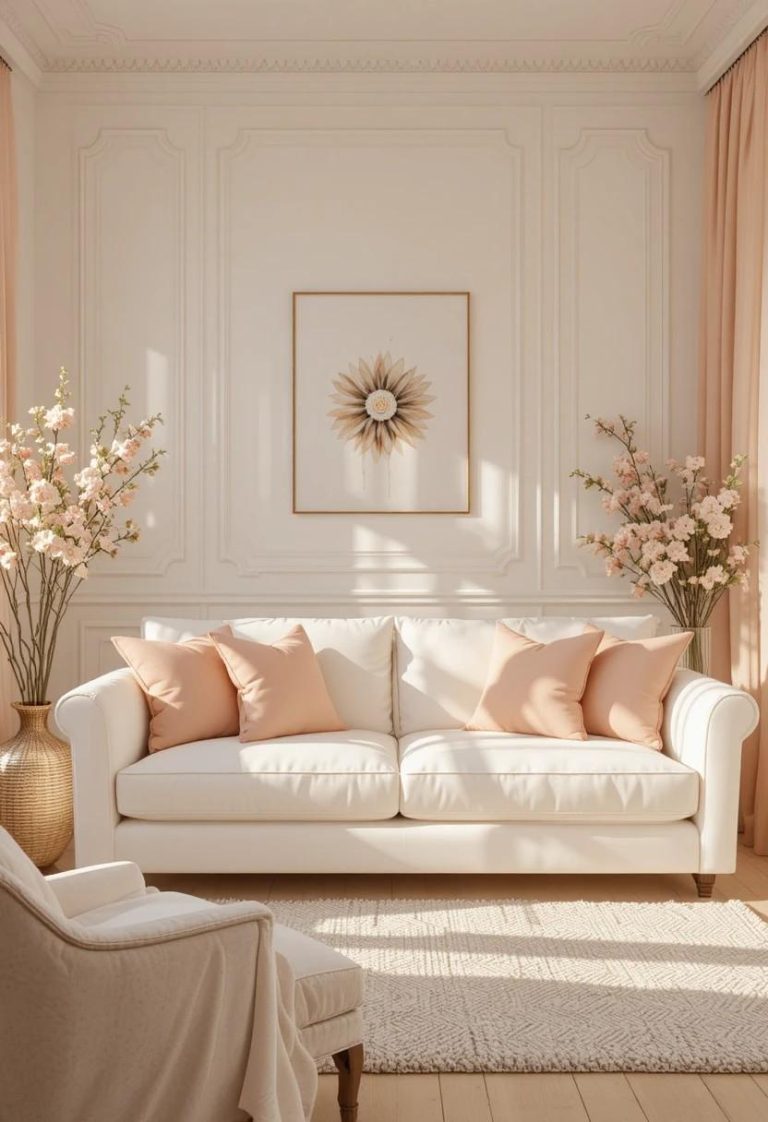
Grey Couch Living Room Ideas: 19 Stylish Ways to Transform Your Space
You’ve styled your living room, arranged the cushions, maybe even added a rug—but somehow, it still feels a little… off. Not bad, just not right. A grey couch can sometimes do that. It blends in so well that the whole room starts to feel muted and forgettable. But the issue isn’t the couch itself—it’s what’s missing around it. With the right grey couch living room ideas, you can bring back warmth, contrast, and personality, turning your space into something that finally feels complete.
1. Layer with Soft Neutral Tones
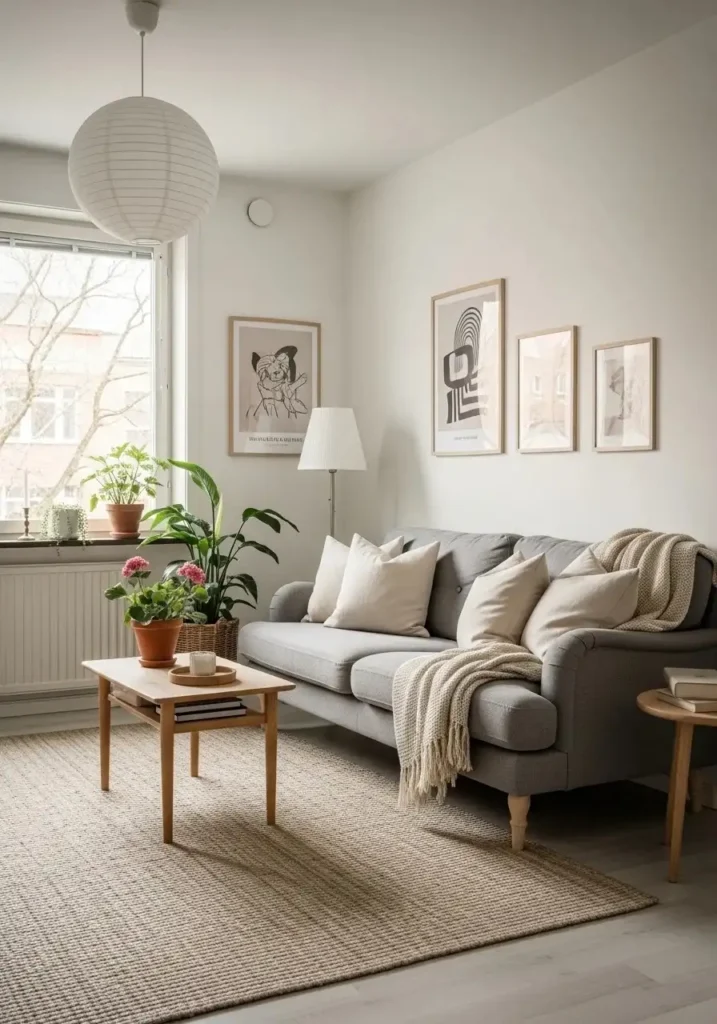
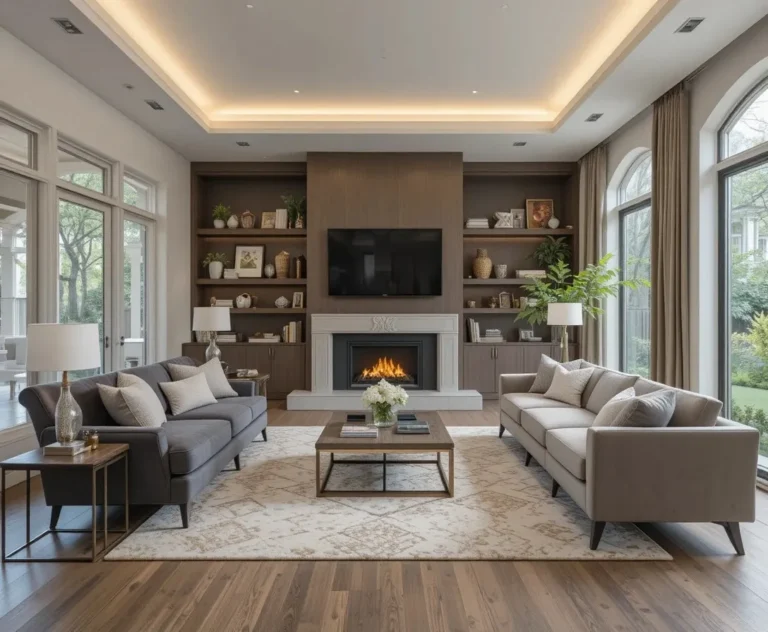
My grey couch finally started to feel like mine the day I stopped fighting its cool tone and layered soft neutrals around it instead. I began with cream cushions in washed linen, then added a warm-white throw I had folded and refolded a dozen times before it landed just right. A pale rug underneath tied the seating area together, and suddenly the room looked lighter, calmer, and far more considered. What surprised me most was how much depth those quiet shades created — nothing shouted, yet nothing felt flat either. In a smaller room, this layering is especially kind, because pale tones bounce the light around rather than swallowing it.
How to do it: Start with two large cushions in cream or oatmeal linen at each end of the couch, then add a smaller textured cushion in beige between them. Drape a warm-white wool throw over one arm, lay a pale rug so the front legs of the couch sit on it, and finish with a cream ceramic vase or candle on the coffee table to repeat the lightest tone.
2. Add Warm Wood Elements
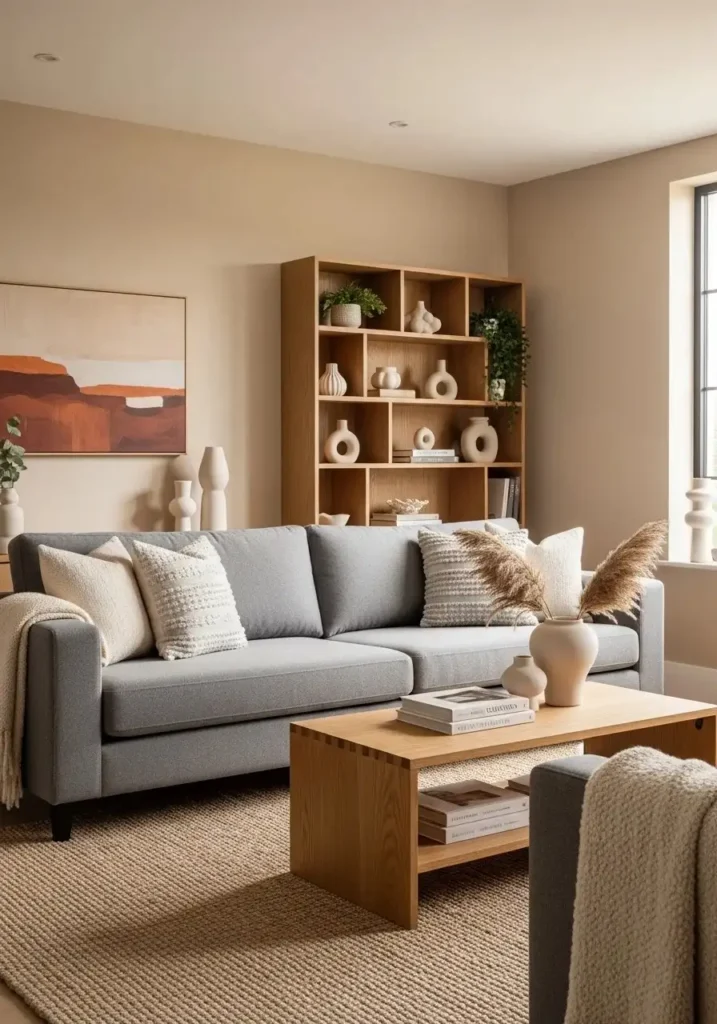
I used to think wood and grey would clash, until I brought home a honeyed oak coffee table and watched the whole room soften. The grain gave my grey couch something warm to sit against, and suddenly the sofa looked intentional rather than just practical. I added a walnut side table, then open shelving in the same tone, and the balance felt right straight away. Oak, walnut, and teak all work here, though I pick one dominant tone and let the rest play a quieter role. I use the same warm-wood trick in my brown couch living room ideas, where honeyed oak stops a dark sofa feeling heavy.
How to do it: Place an oak coffee table about 45 cm from the couch, then add a side table in the same wood on one side. Repeat that wood tone once more — in a shelf, a picture frame, or a tray — so the eye reads it as deliberate. Keep other woods to small accents, and let the grey upholstery stay the cool counterpoint.
3. Use Burnt Orange Accents
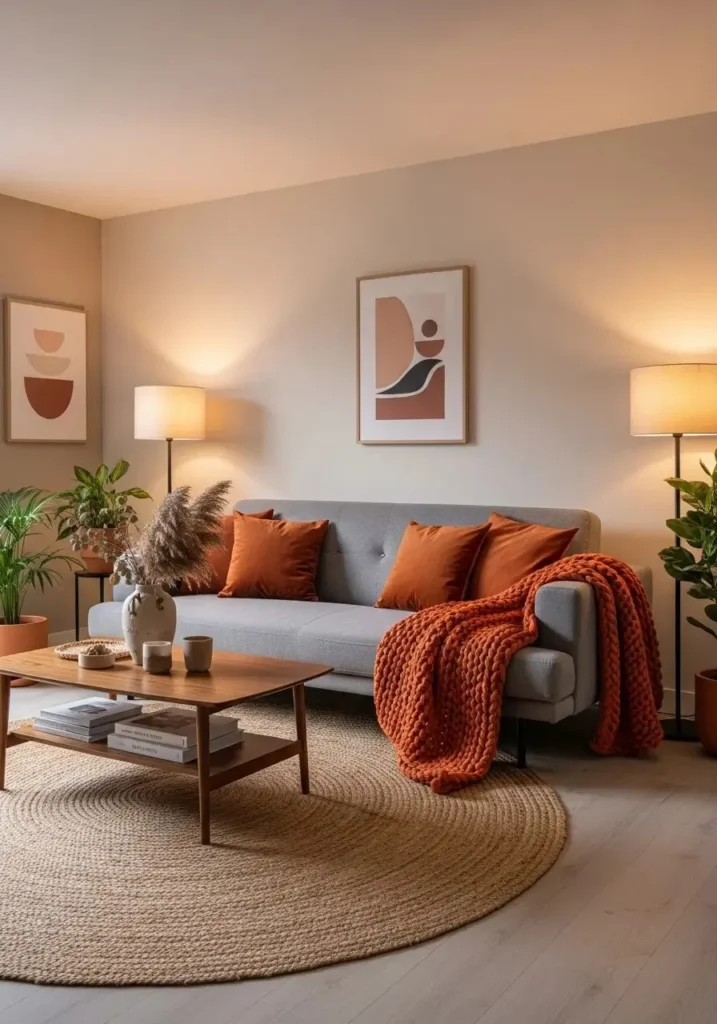
Burnt orange was the colour I reached for when my grey couch felt too polite, and it changed the room in an afternoon. I started with two rust-orange cushions, then a small terracotta vase on the coffee table, and the sofa suddenly had warmth and personality. The earthy tone sits beautifully against cool grey, like autumn light coming through the window, and it never feels as shouty as brighter orange can. I love how it works in every season too: cosy and grounding in winter, then fresh and sun-warmed in summer when I swap in lighter linen.
How to do it: Choose two burnt-orange cushions and one smaller accent, such as a terracotta vase or a candle, and spread them across the room rather than bunching them on the couch. Keep the rest of the palette calm — cream, beige, and grey — so the orange reads as warmth, not clutter. Add more only if the room still feels cool.
4. Create Contrast with Black Details
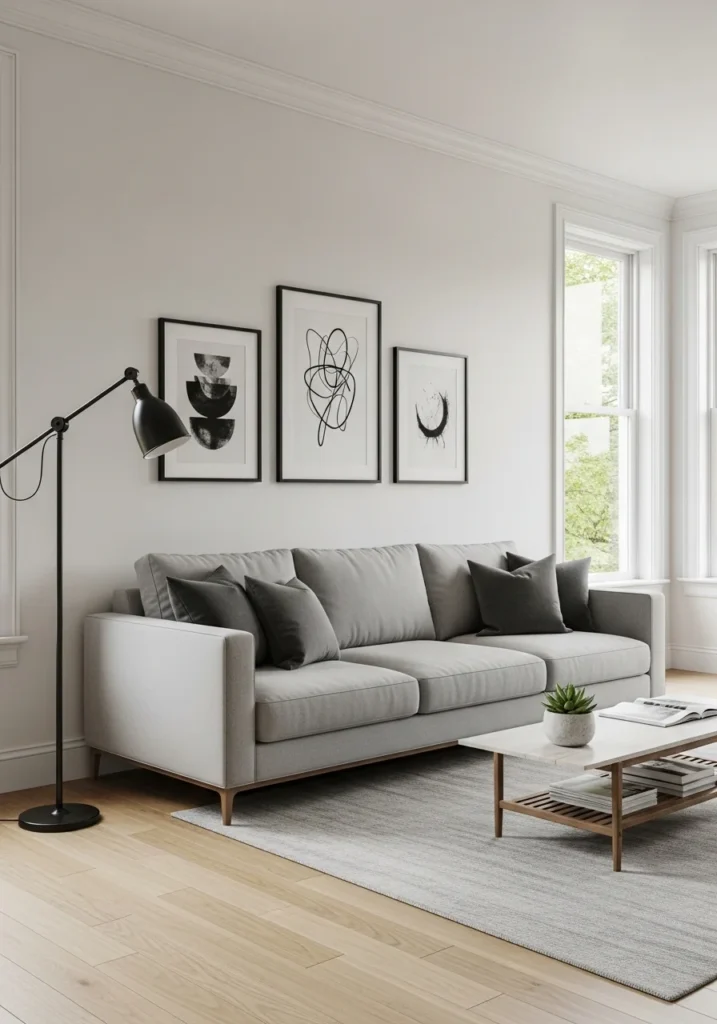
Black was the last colour I expected to love with grey, yet a few dark details gave my living room the definition it had been missing. I swapped in slim black picture frames, a matte metal lamp, and a sleek coffee table, and the couch stopped blending into the walls. The contrast made the grey look softer by comparison, and the whole seating area felt framed and finished. I keep the black deliberately small, though, because too much of it can turn a calm grey room heavy and a little gloomy. Three or four pieces, repeated at different heights, is my sweet spot.
How to do it: Pick three black pieces in different sizes — a picture frame, a floor or table lamp, and a tray or coffee-table leg — and place them at opposite ends of the room so the contrast is balanced. Keep the rest of the scheme pale and warm, and step back to check that the black frames the couch rather than dominating it.
5. Style with Cozy Textiles
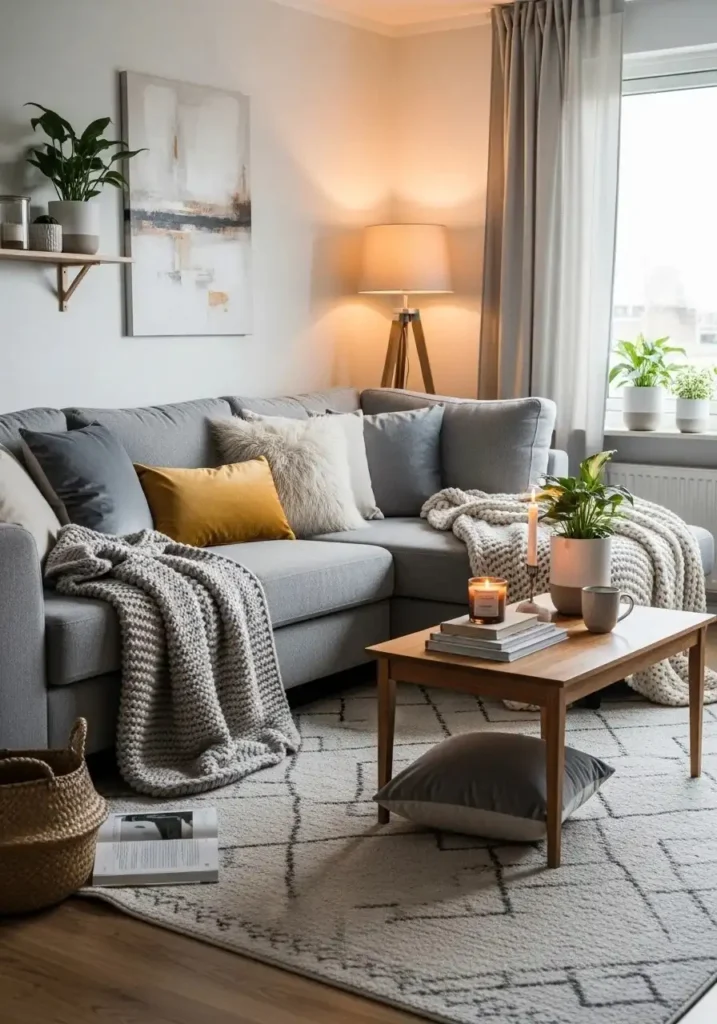
My grey couch only started inviting people to sit down properly once I piled it with textiles. I began with a chunky knit throw over one arm, then added velvet cushions, a soft cotton one, and a faux-fur cushion I still reach for on cold evenings. Each layer made the sofa look less like a showroom piece and more like somewhere to curl up with a book. Texture matters more than colour here, I find, because grey can look flat when everything is smooth. Mixing nubby, smooth, and fluffy fabrics gives the eye something to linger on, and the room feels warmer before you have even lit a candle.
How to do it: Layer three textures at once: a chunky knit throw draped over one arm, two velvet or linen cushions at each end, and one faux-fur or bouclé cushion in the middle. Mix warm and cool greys in the fabrics, fluff the cushions daily so they keep their shape, and store a spare throw in a basket beside the couch.
6. Add a Statement Rug
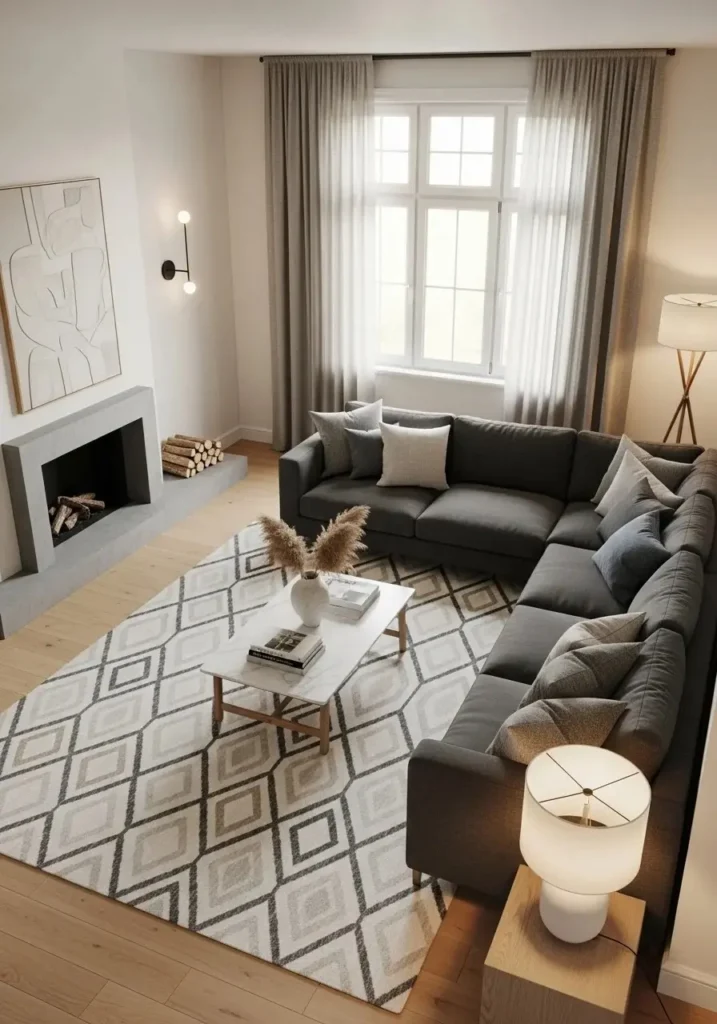
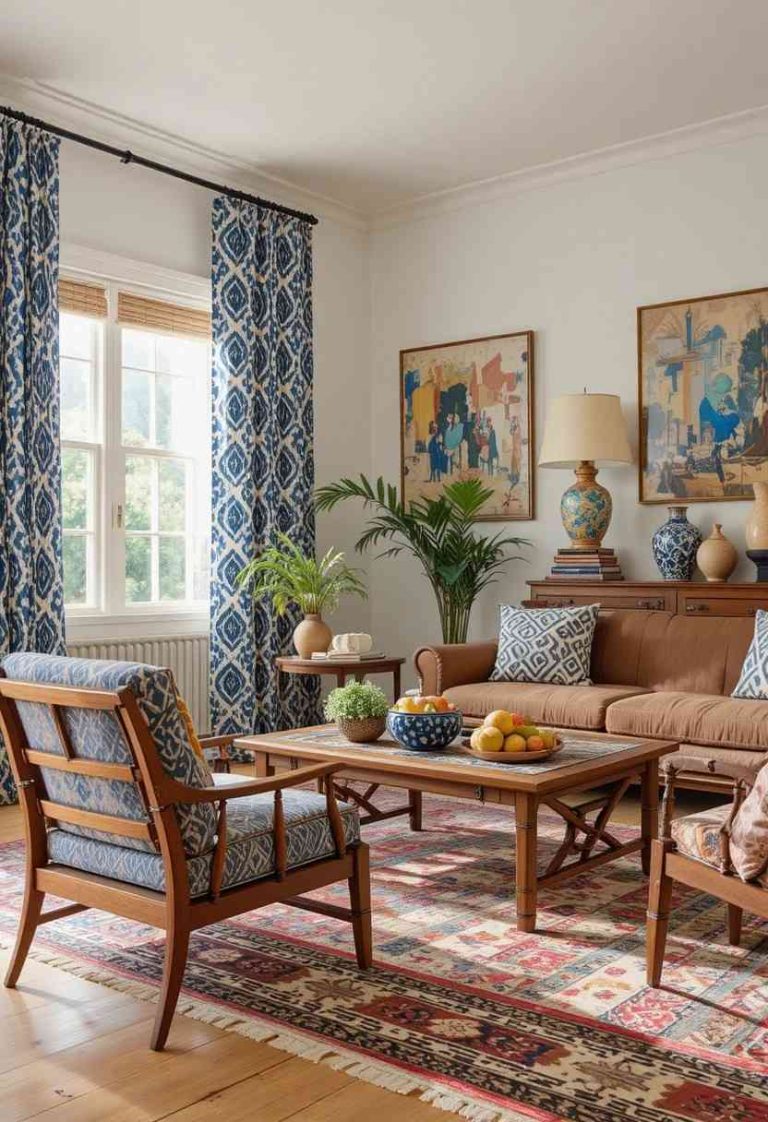
I underestimated rugs for years, until a patterned one landed under my grey couch and the whole room finally made sense. Before that, the sofa seemed to float in the middle of the floor, unconnected to anything else. The rug anchored it, defined where we sit and talk, and pulled the cushions, the coffee table, and the curtains into one conversation. I chose a soft pattern in muted tones so it added interest without competing with the grey, and I made sure it was large enough for the front legs of the couch and chairs to sit on it.
How to do it: Measure the seating area, then choose a rug at least 20 cm wider than the couch on each side, in a soft pattern or muted colour. Lay it so the front legs of the couch and any armchairs sit on it, centre the coffee table on top, and live with it for a week before deciding whether the pattern is right.
7. Bring in Greenery

Plants did more for my grey couch than any cushion, because they gave a cool, flat palette something alive to look at. I started with one olive tree in the corner beside the sofa, then added a small plant on the coffee table. The green softened the grey, and the room felt fresher the moment I watered them. I am not a natural gardener, so I chose forgiving plants and ceramic pots, and I keep a woven basket for the one so it feels like part of the furniture. I use the same trick in my green leather couch living room ideas, where plants stop rich leather feeling heavy.
How to do it: Place one tall plant, such as an olive tree or fiddle-leaf fig, in the corner beside the couch, in a ceramic or woven pot. Add one small plant on the coffee table or shelf, water weekly, and wipe the leaves monthly so they stay glossy against the grey.
More Amazing ideas in the Below Also For You:
21 Japandi Living Room Ideas That Feel Calm, Minimal & Beautifully Balanced
20 Farmhouse Living Room Ideas That Feel Cozy, Warm & Effortlessly Beautiful
Burnt Orange Living Room Ideas: 20 Warm and Stylish Ways to Transform Your Space
16 Apartment Living Room Ideas That Make Your Space Feel Bigger, Warmer & Truly Yours
15 Living Room Wall Shelf Ideas to Style Your Space with Personality
8. Use Layered Lighting
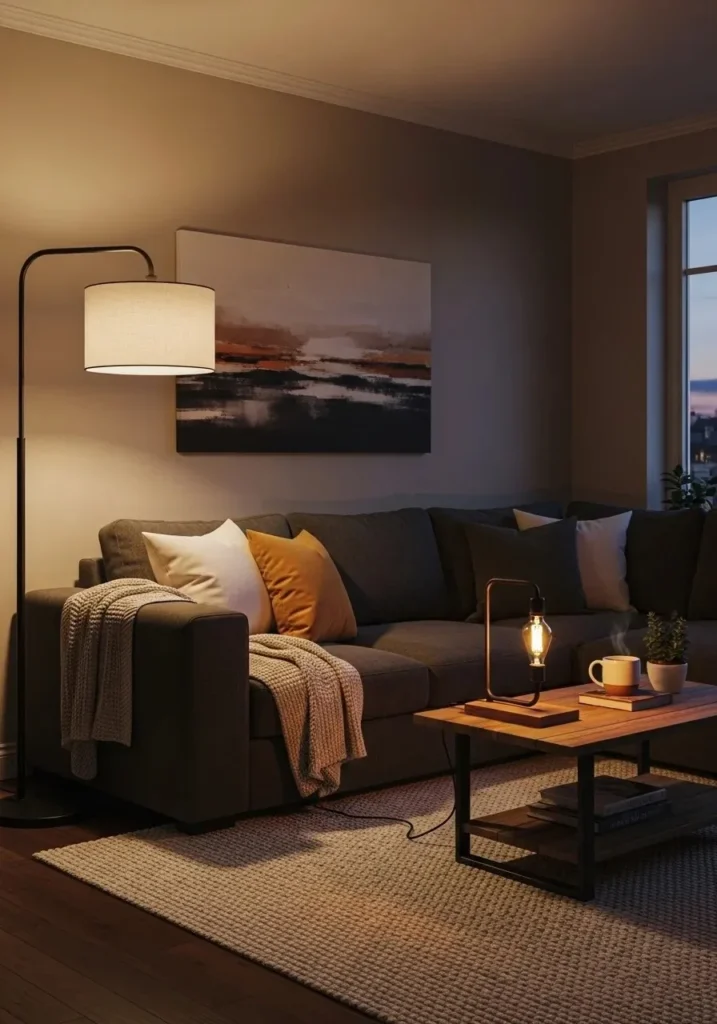
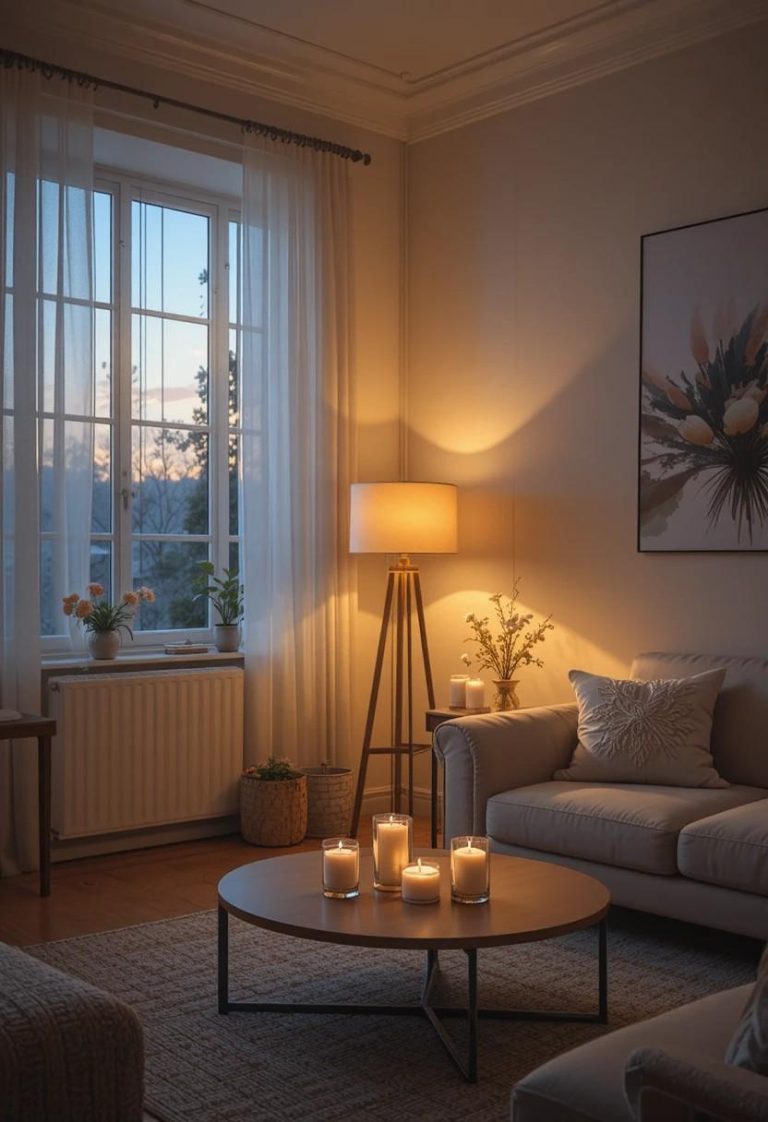
Lighting changed my grey couch more than any cushion, because grey can look flat and a little cold under a single ceiling light. I added a floor lamp behind one end of the sofa, a small table lamp at the other, and a candle on the coffee table for evenings. The warm pools of light made the fabric look softer and the whole room feel like somewhere to settle in. I fit warm-white bulbs of around 2700K everywhere, and I avoid harsh white light completely now — it made the grey look almost blue, which nobody wants.
How to do it: Place a floor lamp behind one end of the couch and a table lamp at the other, both fitted with warm-white bulbs of around 2700K. Add a dimmer switch if you can, keep candles on the coffee table for evenings, and avoid cool white bulbs, which can make grey look blue.
9. Add Metallic Accents

I was wary of metallics at first, worried they would make my grey couch look formal, but a little brass went a long way. I started with a slim brass floor lamp, then added a small gold tray on the coffee table and a copper candle holder on the shelf. The shine caught the light and warmed the grey, and the room felt more finished without feeling dressed up. My rule now is to stick to one metal and repeat it three times, so the eye reads it as a choice rather than a collection of random pieces.
How to do it: Choose one metal — brass, gold, or copper — and buy three small pieces in it, such as a lamp, a tray, and a picture frame. Place them at different heights around the couch, keep the finishes matching, and step back to check that the shine lifts the grey rather than competing with it.
10. Create a Gallery Wall

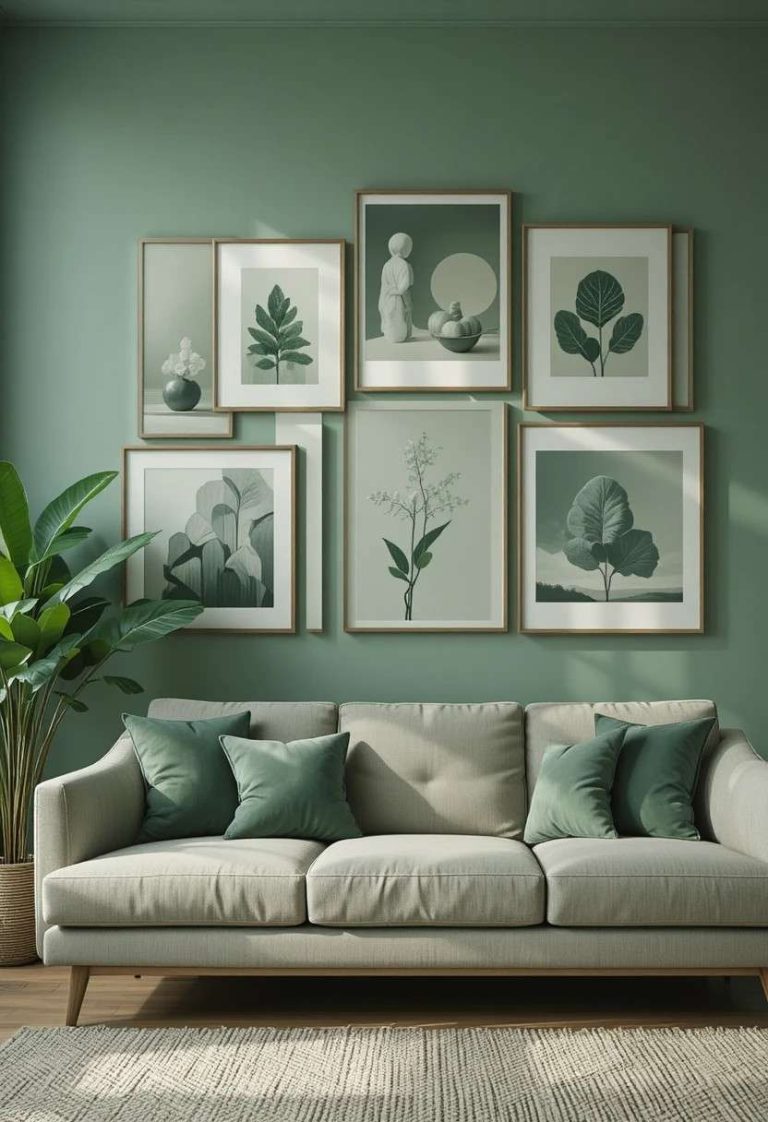
My gallery wall started as a way to hide a blank stretch of wall above the grey couch, and it became the part of the room I love most. I mixed family photographs, a small landscape print, and two pieces of abstract art in different sizes, all in slim frames that share a similar tone. Laying everything out on the floor first saved me from a dozen extra nail holes, and it let me see the balance before anything went up. The wall gives the couch a focal point, so the sofa no longer looks like it is waiting for something.
How to do it: Lay your frames on the floor first and arrange them with even gaps, keeping the largest piece at eye level above the centre of the couch. Hang the whole arrangement so its centre sits about 15 cm above the back of the sofa, use one frame tone throughout, and leave a small gap for a future piece.
11. Add a Pop of Mustard Yellow

Mustard yellow is the brave little accent I reach for when my grey couch needs energy but I do not want a whole new colour scheme. I started with two mustard cushions and a small throw, and the room brightened immediately, like a patch of late sun on a grey afternoon. The warm undertone of mustard sits happily against cool grey, and it pairs beautifully with the wood and brass I already had. I keep it to two or three pieces, though, because mustard is a strong flavour and too much of it can take over the room.
How to do it: Add two mustard cushions in different textures — one velvet, one linen — at opposite ends of the couch, then a small mustard throw over one arm. Keep the rest of the room calm and neutral, and remove one mustard piece if the room starts to feel busy rather than bright.
12. Incorporate Soft Blue Tones
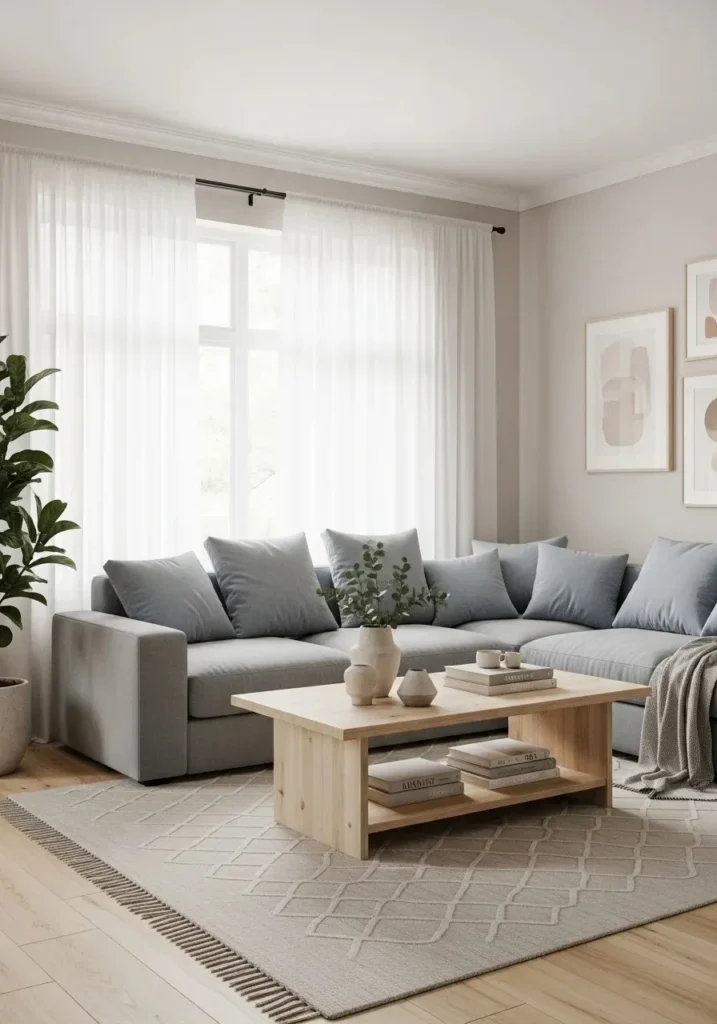
Soft blue was a quiet surprise for me, because I had always thought of blue and grey as too similar to work together. In practice, powder blue cushions and a muted navy throw gave my couch depth without adding a loud new colour. The two tones share cool undertones, so they blend gently, yet the blue still reads as a colour in its own right. I added a small blue vase and a piece of artwork with blue in it, and the room felt calmer and more considered. I stick to muted blues, though — a bright royal blue would shout, while powder blue and soft navy whisper.
How to do it: Choose muted blues — powder blue, dusty blue, or soft navy — and add them through two cushions and one throw or rug. Repeat the blue once more in artwork or a vase, keep the walls pale, and avoid bright blues, which can overpower a grey couch.
13. Style with Minimalist Decor
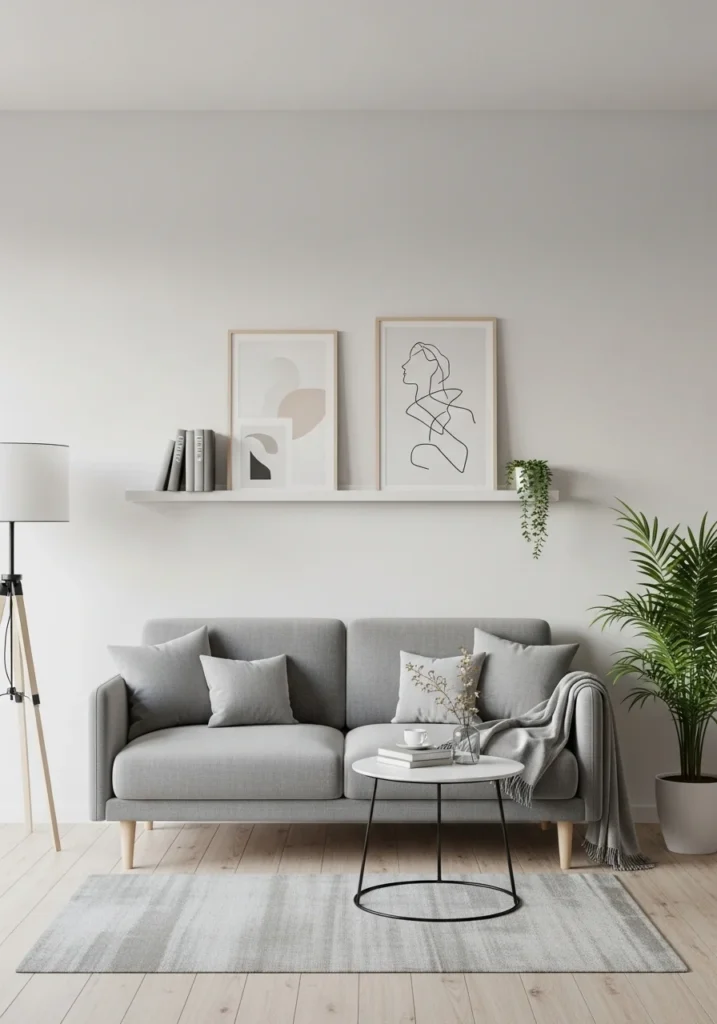
I love a calm, uncluttered room, and my grey couch is at its best when I let it breathe. I cleared the coffee table down to a single book and a small plant, kept one floor lamp, and chose just two cushions in the same soft grey. At first the room felt almost too empty, and then I realised that was the point — the couch could finally stand out, and the quiet made the whole space feel more expensive. Minimalism works for me when I choose quality over quantity: one beautiful lamp instead of three ordinary ones, one plant I actually look after.
How to do it: Remove everything from the coffee table and shelves, then add back only a lamp, one plant, and two cushions in soft grey or cream. Keep surfaces mostly clear, choose one beautiful object rather than several small ones, and leave empty space around the couch so it can stand out.
14. Add a Textured Accent Wall

A textured wall behind my grey couch was the change I kept putting off, and I wish I had done it first. I chose subtle wood panelling in a pale, warm tone, and the moment it went up, the sofa looked anchored instead of floating against a flat wall. The texture added depth without any bold colour, which suited me perfectly, because I wanted interest without committing to a dark paint. Plaster, limewash, and quiet wallpaper all give a similar effect, and I would keep the tone neutral so the wall supports the couch rather than competing with it.
How to do it: Choose one wall behind the couch and fit pale wood panelling, limewash, or a subtle textured wallpaper in a warm neutral. Keep the rest of the walls plain, hang the couch about 10 cm from the wall so the texture shows, and repeat the wall tone in one cushion or throw.
More Amazing ideas in the Below Also For You:
21 Japandi Living Room Ideas That Feel Calm, Minimal & Beautifully Balanced
20 Farmhouse Living Room Ideas That Feel Cozy, Warm & Effortlessly Beautiful
Burnt Orange Living Room Ideas: 20 Warm and Stylish Ways to Transform Your Space
16 Apartment Living Room Ideas That Make Your Space Feel Bigger, Warmer & Truly Yours
15 Living Room Wall Shelf Ideas to Style Your Space with Personality
15. Mix in Patterned Cushions
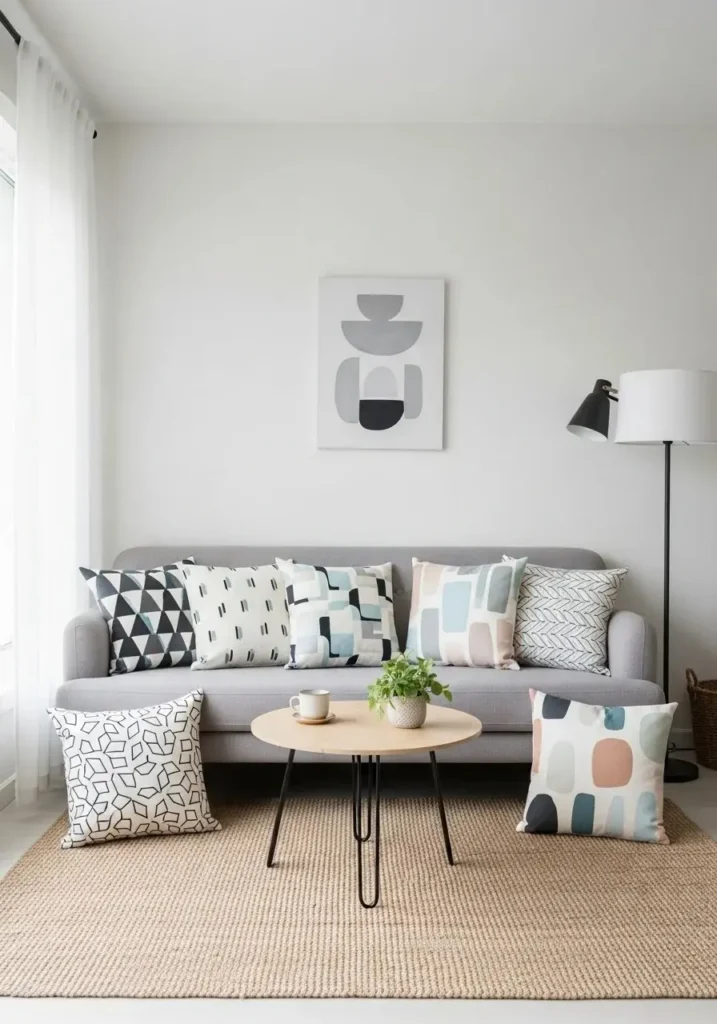
Patterned cushions are my favourite low-commitment way to give a grey couch personality, because I can change them in five minutes. I started with a soft geometric print in grey and cream, then added a fine stripe and a faded floral, all sharing the same muted palette. The mix stopped the sofa looking like a solid block, and the patterns gave the room a gentle sense of movement. My rule is to keep two or three patterns at most, and to make sure they share at least one colour, so they feel like a family rather than a jumble.
How to do it: Pick two or three patterns — a geometric, a stripe, and a soft floral — in colours that share one muted tone with the couch. Place the largest pattern at each end, the smallest in the middle, and keep the throw plain so the patterns have room to breathe.
16. Use a Cozy Throw Blanket
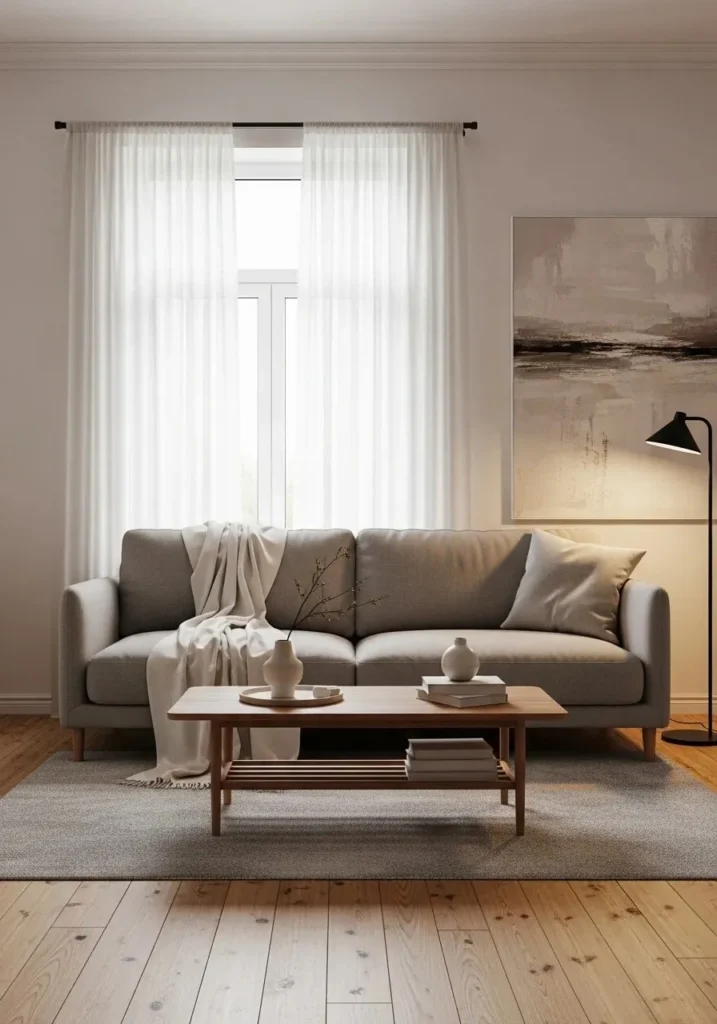
A throw blanket is the smallest change on this list, and the one my family notices most, because it is the first thing anyone reaches for. I drape a soft wool throw over one arm of the grey couch, never folded too neatly, so the sofa looks lived in rather than arranged. In winter I choose a chunky knit in warm cream; in summer I swap it for a light cotton one in pale grey. The colour matters less than the texture, I find, because a soft layer against smooth upholstery is what makes people settle in.
How to do it: Choose a wool or knit throw in warm cream or pale grey and drape it casually over one arm or across the back, letting one end fall unevenly. Keep a spare folded in a basket beside the couch, wash it regularly so it stays soft, and swap to light cotton in summer.
17. Add a Stylish Coffee Table Setup
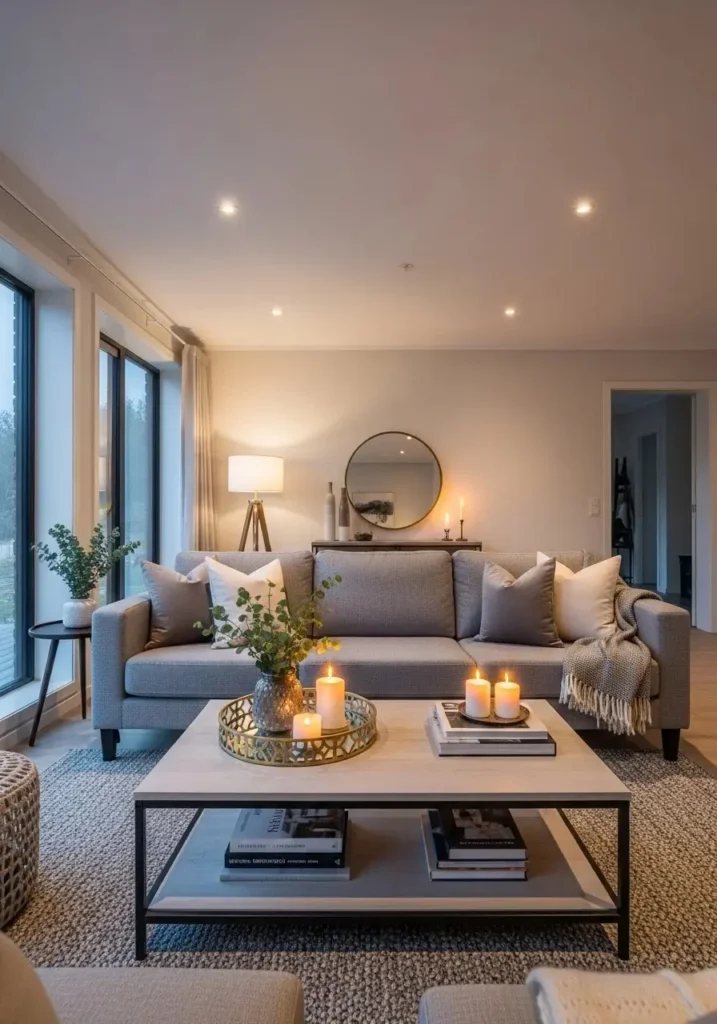
My coffee table used to be a dumping ground for remote controls and unread post, until I styled it properly and realised it was framing my grey couch all along. I started with a wooden tray to gather the small things, then added a stack of two books, a candle, and a tiny vase with a stem of greenery. Grouping things in odd numbers made the arrangement look natural rather than staged, and leaving some empty space mattered just as much as what I put down. I change the books with the seasons and swap the candle scent, so the table feels fresh without any real effort.
How to do it: Clear the table completely, then place a tray on one side and a stack of two books on the other. Add a candle and a small vase with one stem of greenery, group the pieces in odd numbers, and leave at least a third of the surface empty for cups and everyday use.
18. Incorporate Sheer Curtains
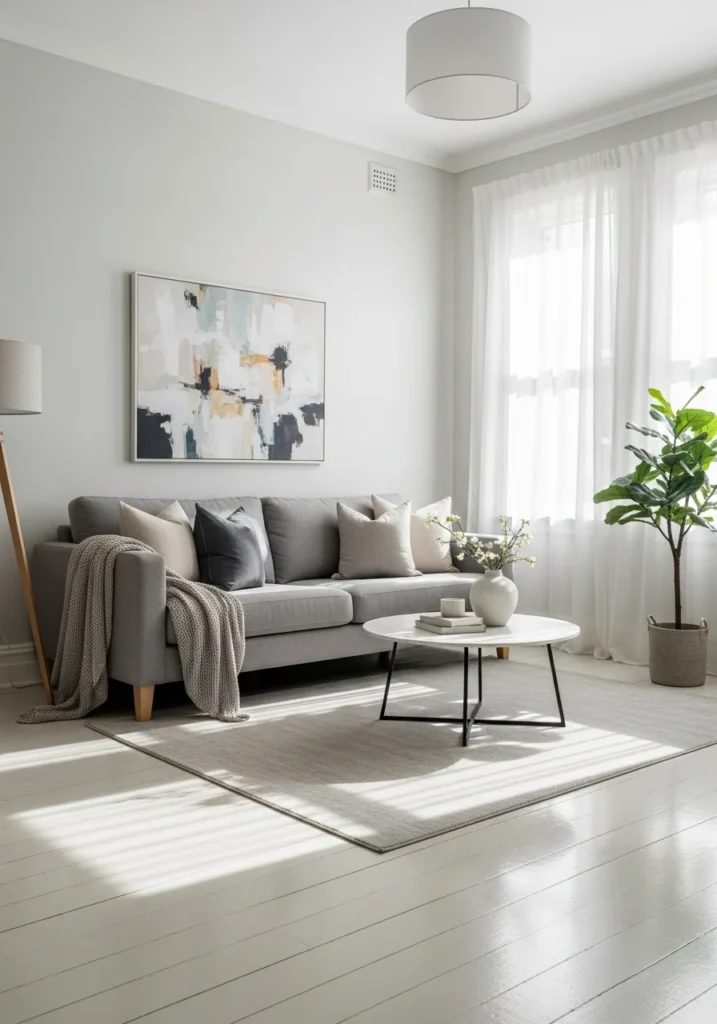
Sheer curtains were the last thing I thought about and one of the first I noticed once they were up. My grey couch had always looked a little heavy against bare windows, but a soft white voile let the daylight in while still giving the room privacy. The fabric moved gently in the breeze, and the whole space felt lighter, taller, and more relaxed. I chose floor-length curtains hung high and wide, so the windows looked bigger and the ceiling felt higher. Linen-look voile is my favourite, because it filters the light without looking flimsy. If your grey room feels dark by mid-afternoon, try sheers before you repaint anything.
How to do it: Hang a curtain pole 15 to 20 cm above the window frame and at least 15 cm wider on each side. Choose floor-length sheer or linen-look curtains in white or warm ivory, let them pool just above the floor, and pair them with a simple blind if you need privacy at night.
19. Balance with Soft Neutral Backdrops
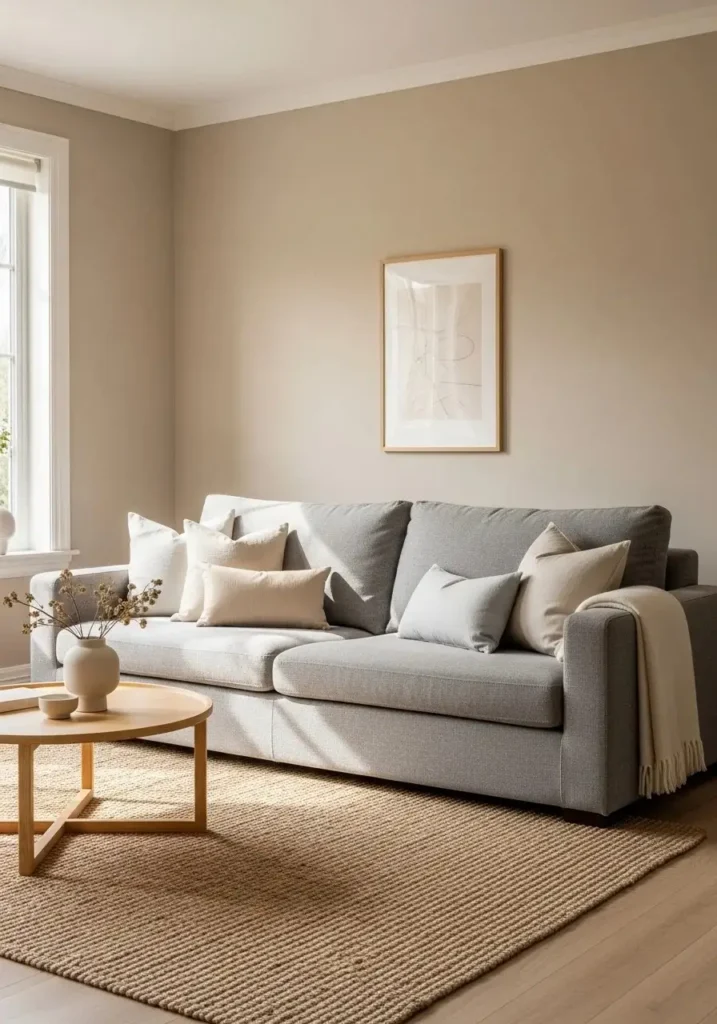
I used to paint every wall a different colour, until I learned that a calm backdrop lets a grey couch do the talking. I painted the walls warm off-white with a hint of beige, and the sofa suddenly looked softer, richer, and more deliberate. The neutral backdrop also made it easier to change cushions and art, because almost anything I brought home sat happily against it. I avoid cold, blue-based whites now, because they can make grey look chilly, and I choose slightly warmer neutrals instead. If you are choosing a palette and feeling stuck, my living room color scheme ideas are a good place to start.
How to do it: Paint the walls a warm off-white, beige, or light taupe, using the same shade on the skirting boards for a seamless look. Test two or three samples in morning and evening light, keep the ceiling pale, and add one warm accent — a cushion, a throw, or art — so the neutral backdrop never feels flat.
Frequently Asked Questions
What colours go best with a grey couch?
Cream, beige, and warm white are the safest partners, because they lift a grey couch without competing with it. Burnt orange, mustard, and soft blue add warmth and personality, while black and brass give the room definition. I usually start with a pale neutral base, then add one warm accent colour in three places so the room feels balanced.
How do I stop a grey couch from making my living room look cold?
Add warmth in layers: warm wood, textured throws, and warm-white lighting at both ends of the couch. Avoid cool white bulbs and cold blue-based wall paint, which can make grey look chilly. A plant and a rug in a warm tone usually make the biggest difference in the first afternoon.
What rug colour works best with a grey couch?
Cream, ivory, oatmeal, and pale beige rugs work best, because they frame a grey sofa and define the seating area. A soft pattern in muted tones adds interest without competing with the couch. Choose a rug large enough for the front legs of the couch to sit on it, or the room can feel smaller than it is.
Does a grey couch work in a small living room?
Yes, and it can anchor a small room beautifully if you balance it carefully. Choose a low-profile couch, keep the walls pale, and use a light rug and layered lighting so the room feels open. Avoid too many dark accessories, and let one warm accent colour do most of the work.
How do I clean and care for a grey fabric couch?
Vacuum it weekly with an upholstery attachment, and blot spills straight away with a clean, damp cloth rather than rubbing them. Check the care label before using any cleaner, and test it first on a hidden corner. Fluff and rotate the cushions regularly so the grey wears evenly and keeps its shape.
Your Grey Couch Living Room Checklist
Tick each step off as you style your grey couch living room.
☐ Layer cream, beige and warm-white textiles in at least three textures
☐ Add one warm wood piece, such as an oak coffee table
☐ Repeat black in three small accents only
☐ Lay a rug large enough for the front legs of the couch
☐ Place one tall plant beside the couch
☐ Fit warm-white bulbs and layer lamps at two heights
☐ Repeat one metal, brass or gold, in three small pieces
☐ Hang one large piece of art or a gallery wall above the couch
☐ Add two or three warm accents, such as burnt orange or mustard
☐ Hang sheer curtains high and wide
☐ Step back, remove one thing, and check the room from your usual seat
Conclusion
A grey couch never needed to be the problem — it needed the right company. Warm wood, soft textiles, a little colour, and light that flatters it are all it takes to turn a cool, quiet sofa into the heart of the room. Start with the change that feels easiest, whether that is a rug, a plant, or two new cushions, and live with it for a week before you add the next one. Your living room does not need to look finished in a day; it needs to feel like yours, one thoughtful layer at a time, every time you sit down.