
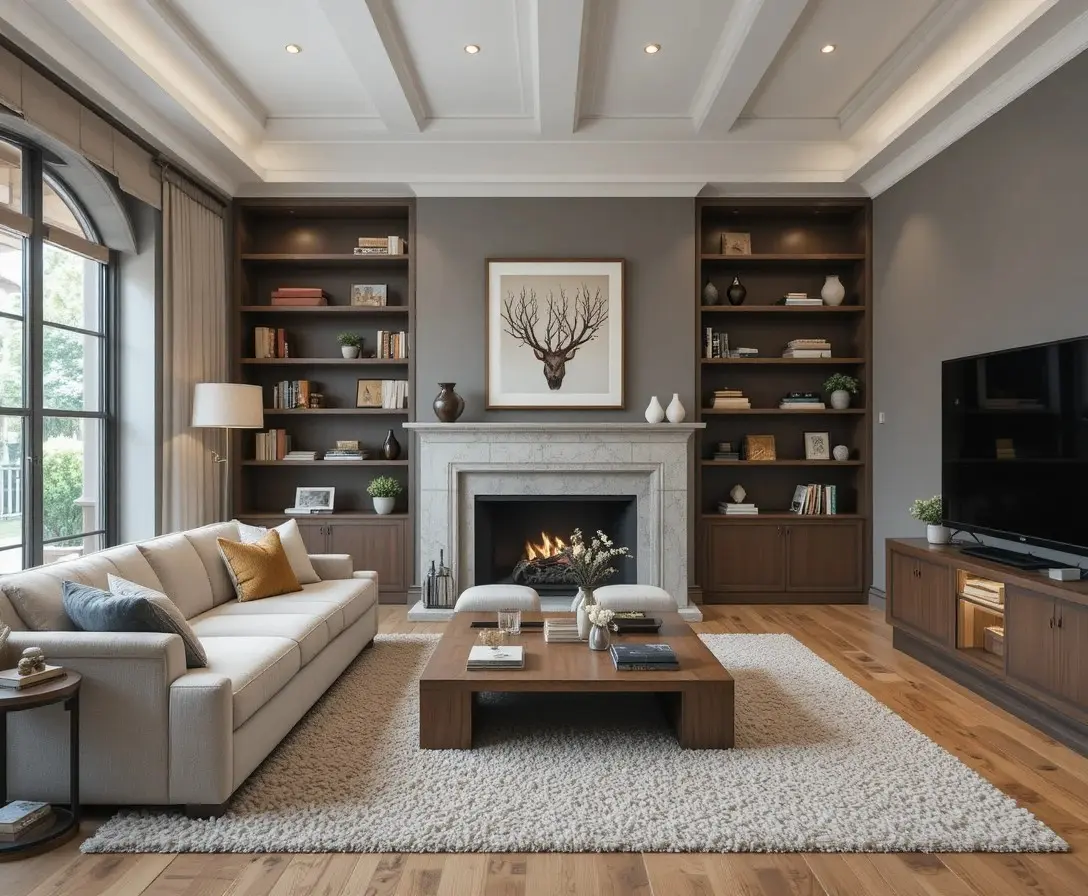
14 Built In Shelves Living Room Ideas That Make Your Space Feel Styled and Functional
Does your living room feel cluttered, unfinished, or like something is always missing no matter how much you decorate? It’s frustrating when nothing seems to tie the space together. The truth is, it’s not always about adding more—it’s about designing smarter. That’s where built in shelves living room ideas come in. They don’t just store your things—they shape your space, add personality, and create a calm, organized look that feels both stylish and effortless every single day.
1. Floor-to-Ceiling Built-In Shelves for a Grand Look
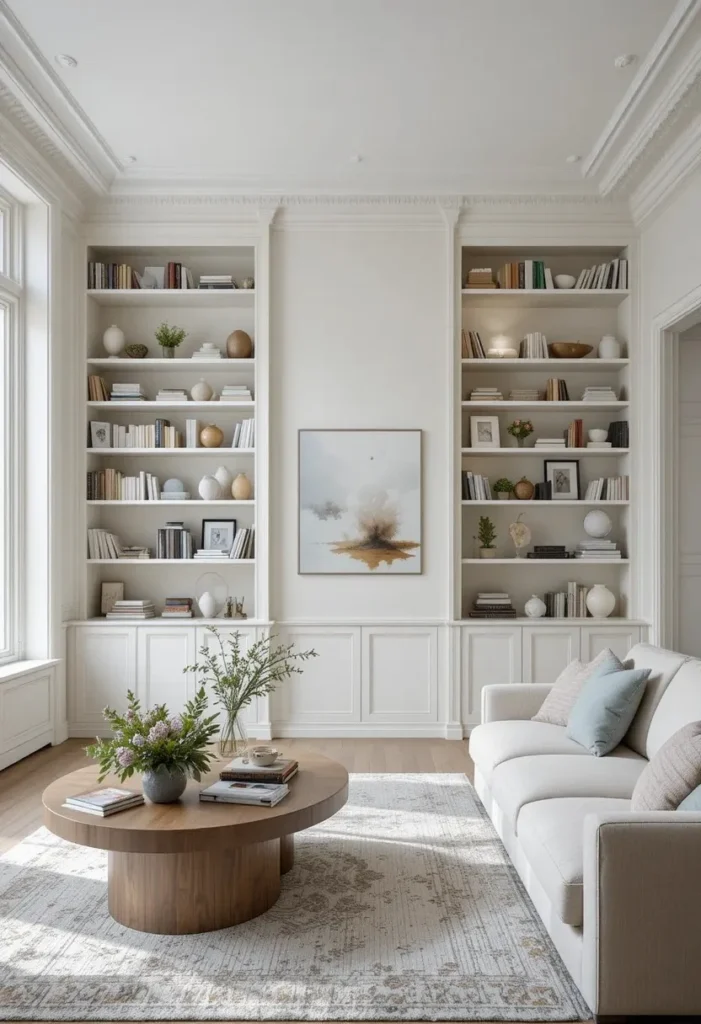
I have always loved how floor-to-ceiling shelves change the whole feeling of a living room. In my own home, the tall shelves beside the sofa hold the books we reach for, a few framed photographs, and one vase of fresh stems. Painted in soft white, warm beige, or pale grey, they blend into the wall instead of shouting for attention, so the eye travels upward and the ceiling feels higher. I keep the top shelves light, with just one or two taller pieces, and save the lower shelves for heavier books and baskets. The result is storage that looks like architecture, not furniture squeezed into a corner.
How to do it: Measure the wall from floor to ceiling and mark the shelf positions on painter’s tape first. Build or order the unit in two or three stacked sections so it fits through doorways, then fix it to wall studs and fill the gaps with caulk before painting. Style the middle shelves at eye level and leave the top shelf nearly empty so the room still breathes.
2. Built-In Shelves Around the TV
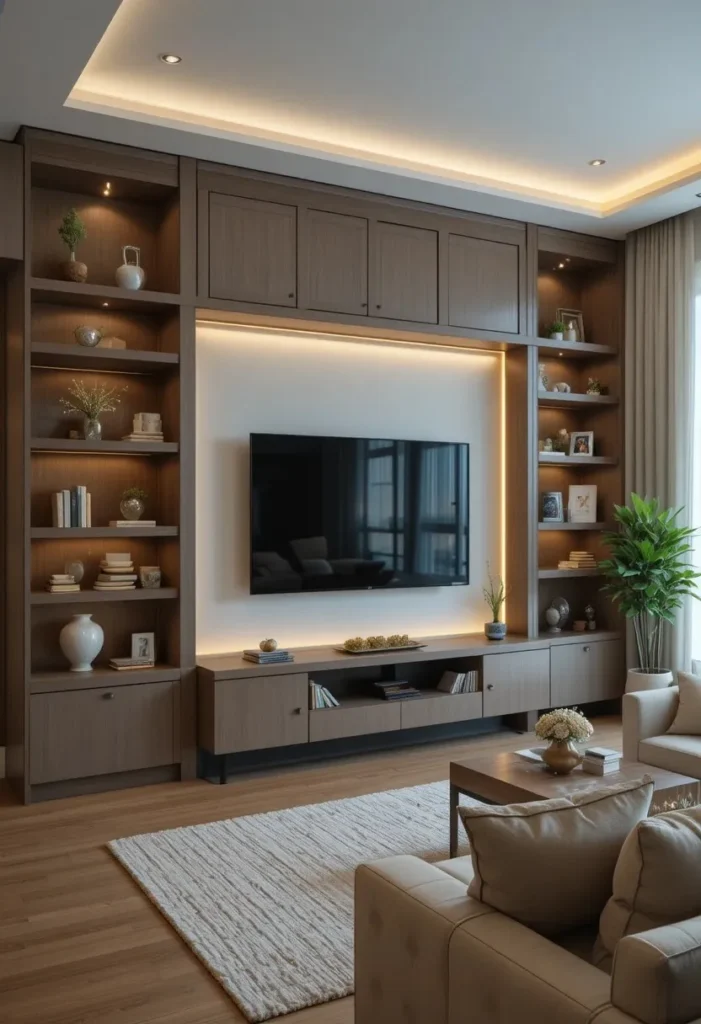
Framing the television with built-in shelves made our evenings feel calmer, because the black screen no longer dominates the room when it is switched off. I flanked ours with shelves the same depth as the television unit, so the whole wall reads as one piece of furniture rather than a screen bolted onto plaster. Books, a low stack of board games, and one tall vase soften the edges, while lower cabinets hide cables, remotes, and chargers. I keep the shelves beside the screen shallow enough that nothing blocks the view, and I leave one shelf almost empty on purpose. For a lighter look, see my living room wall shelf ideas
How to do it: Measure the television first, then leave at least 15 centimetres of clearance on each side for ventilation and cables. Build the shelving to the same depth as the television, with a deeper cabinet below for the box and consoles. Cut a discreet channel at the back for cables and add a power socket inside the cabinet. Keep the shelves nearest the screen shallow and uncluttered so nothing distracts from the picture.
3. Neutral-Toned Built-In Shelves for a Calm Space
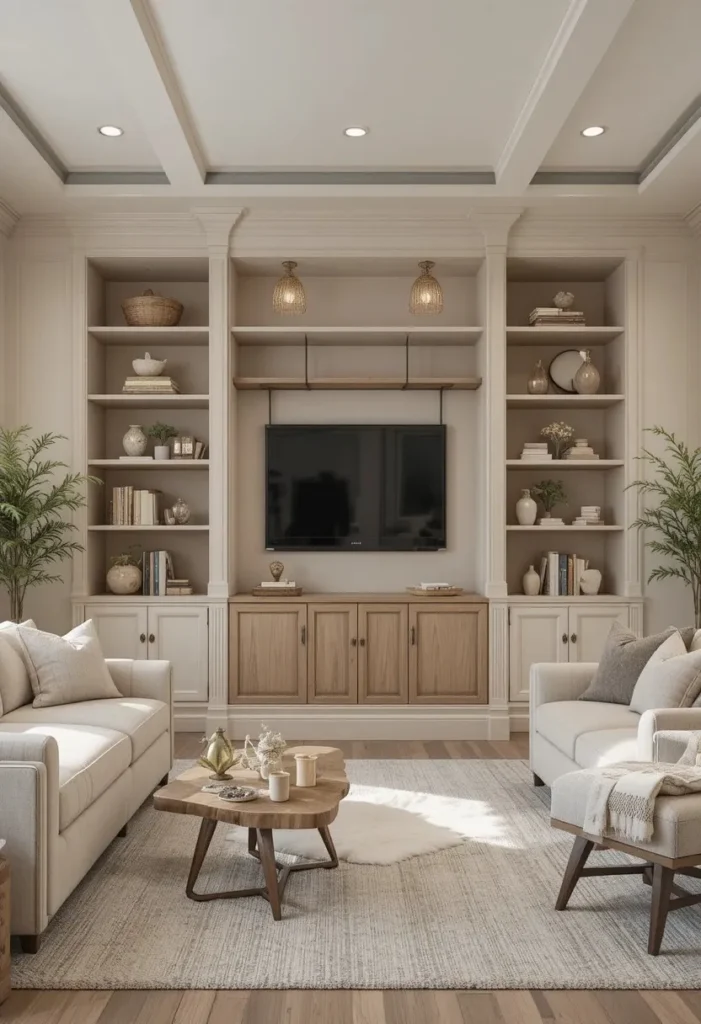
Soft neutral shelves are the quietest choice here, and the easiest to live with. Cream, taupe, and pale grey let the objects on the shelves do the talking, so I can change a vase or a stack of books with the seasons without repainting anything. I paint the shelves the same colour as the wall, which makes the joinery look built in rather than added on, and I keep the palette to three tones at most. A linen cushion, a pale ceramic bowl, and one piece of pale wood give me all the contrast I need. The room feels calm, and the same palette runs through my living room aesthetics
How to do it: Choose one neutral for the shelves and walls, one slightly deeper tone for the back panels if you want definition, and one pale wood or linen accent. Paint a large sample card first and check it in morning and evening light. Keep every object on the shelves within the same three tones, and add texture through linen, ceramic, and pale wood rather than through colour.
4. Dark Built-In Shelves for Depth and Drama
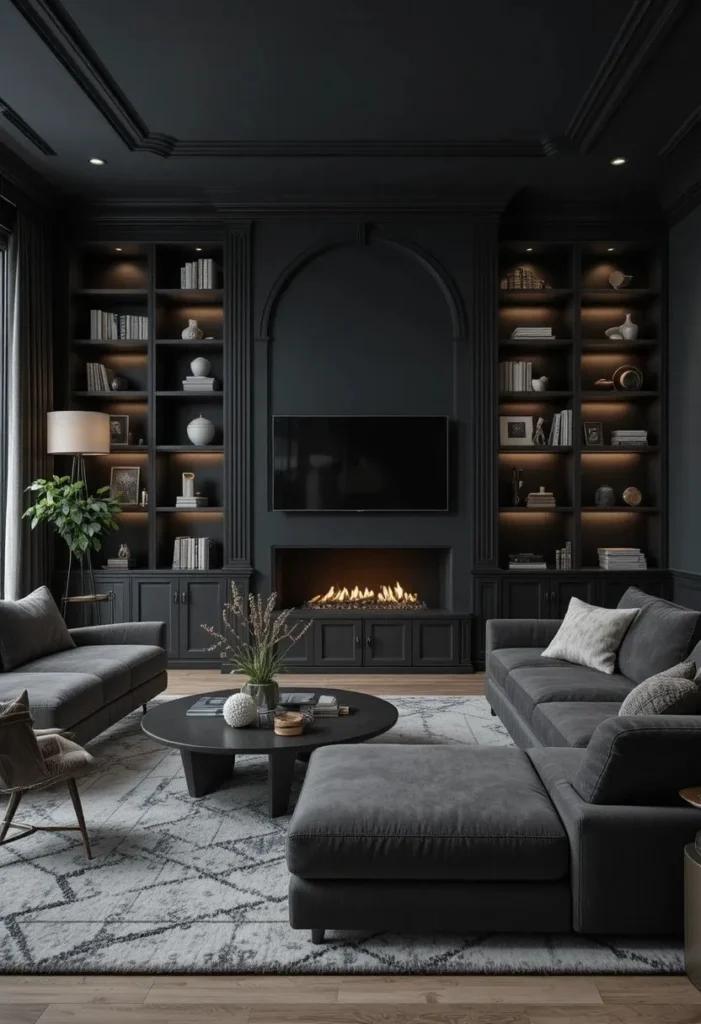
Dark shelves were the bravest choice I made, and the one I would repeat first. Charcoal, navy, or near-black makes books, pale ceramics, and brass look richer, and the shelves read as a deliberate feature instead of storage trying to hide. I painted ours the same dark tone as the wall behind them, which stops the edges looking fussy, and I added warm lighting so the room never feels gloomy. A pale sofa and light rug keep the balance, because the shelves are the darkest thing in the room. If your room gets little sun, test the colour on a board first and live with it for a week.
How to do it: Paint a sample board in your chosen dark tone and prop it against the wall for a few days, checking it in daylight and lamplight. Paint the shelves, back panels, and surrounding wall the same colour for a seamless look. Add warm white LED strips under each shelf and a pale rug and sofa to keep the room balanced.
5. Built-In Shelves with Cabinet Storage Below
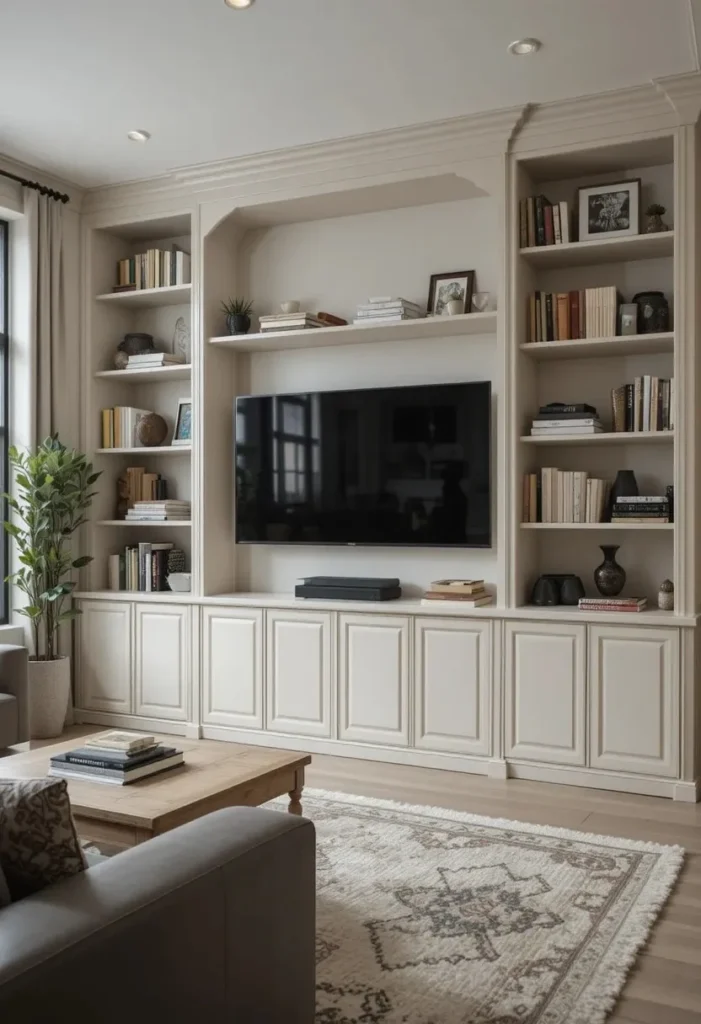
Open shelves above closed cabinets are the combination I recommend most to friends, because it gives you display space and hiding space together. The shelves hold the books, photographs, and pieces we love to see every day, while the cabinets swallow board games, chargers, spare throws, and everything else that makes a living room look untidy by evening. I chose plain, handleless doors so the lower half reads as calm panelling, and I made the cabinets deep enough for a board game box laid flat. The shelves above stay light because the heavy, awkward things have a proper home below, and the room feels finished rather than constantly mid-tidy.
How to do it: Plan the cabinet depth first, at least 35 centimetres for games and throws, then set the open shelves above at eye level. Choose handleless doors or simple recessed pulls and paint them the same colour as the shelves. Add a shelf or two inside each cabinet, and leave one open shelf near the top for the pieces you reach for daily.
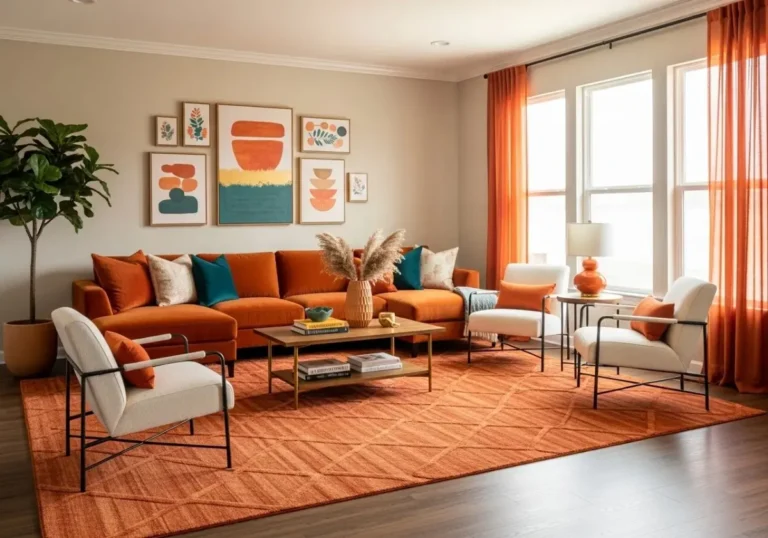
See More Amazing Ideas: Burnt Orange Living Room Ideas: 20 Warm and Stylish Ways to Transform Your Space
6. Minimal Built-In Shelves with Clean Lines
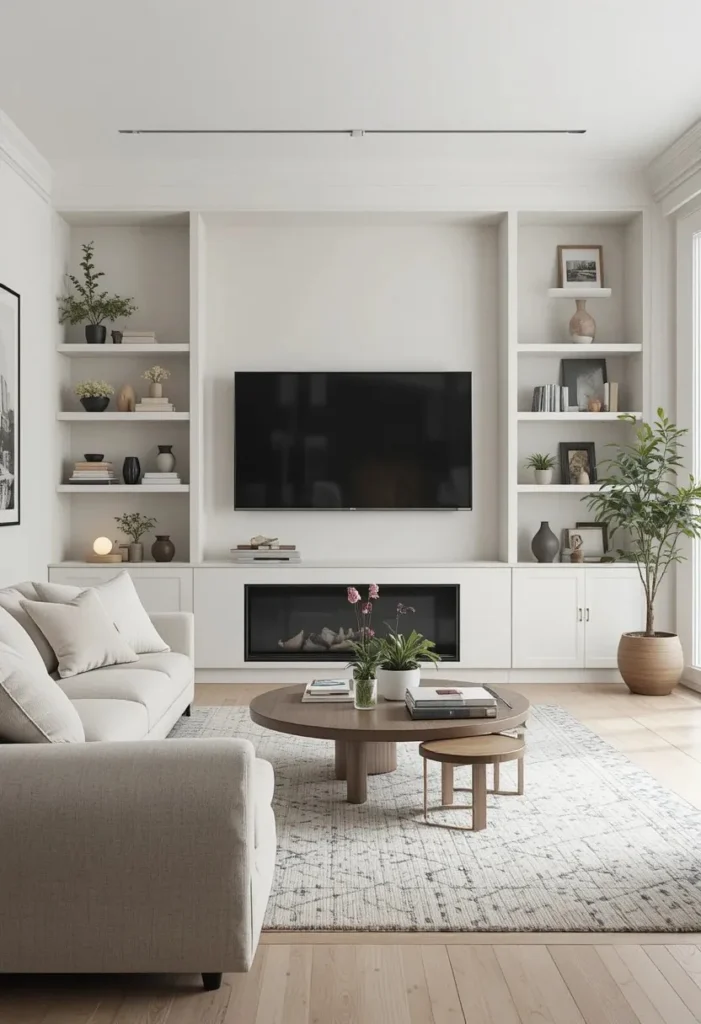
Minimal shelves suit me on days when the room has had too much going on, and they are surprisingly hard to get right because every object shows. I keep the lines straight, the shelf thickness slim, and the spacing even, then I leave at least one shelf in three completely empty. The objects that stay have to earn their place: a stack of three books, one vase, a small framed print. When I am tempted to add one more thing, I take something away first, which sounds strict and works beautifully. The room feels larger with less in it, and dusting takes five minutes instead of half an hour, which is a quieter kind of luxury.
How to do it: Choose slim shelves with straight edges and fix them at even intervals, measuring from the ceiling down so the gaps match. Style with a rule of three, one tall object, one low stack, and one empty stretch, and leave a third of the shelves bare. Step back after styling and remove one object before you call it done.
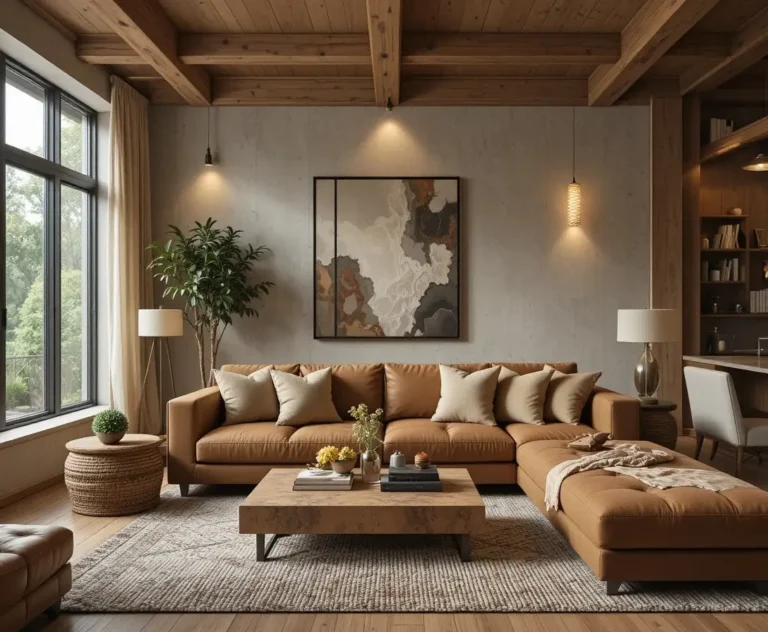
7. Built-In Shelves with Warm Wood Accents
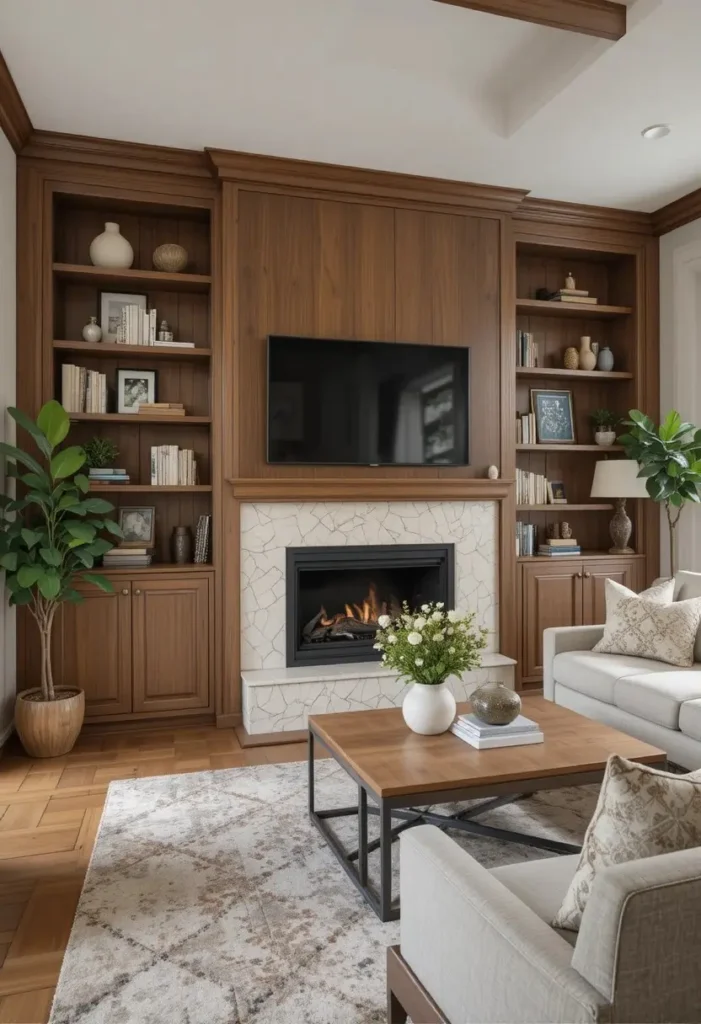
Warm wood changed our living room from a room we sat in to a room we wanted to stay in. Oak and walnut bring a honeyed tone that soft white paint alone cannot, and the grain gives the eye something to rest on between books and objects. I used wooden shelves with a painted white frame, so the wood feels like a warm accent rather than a whole wall of timber, and I repeated the same wood on the coffee table and one picture frame. The trick is matching the undertone, not the exact shade: warm woods together, cool woods together. Once the wood is in, I keep the styling simple, because the shelves themselves are already doing the decorating.
How to do it: Choose one wood, oak for a light look or walnut for a richer one, and use it for the shelves and one other piece in the room. Seal the wood with a matte finish so fingerprints do not show. Pair it with painted frames in soft white and repeat the wood tone in a tray, a frame, or the coffee table.
8. Asymmetrical Built-In Shelves for a Modern Twist
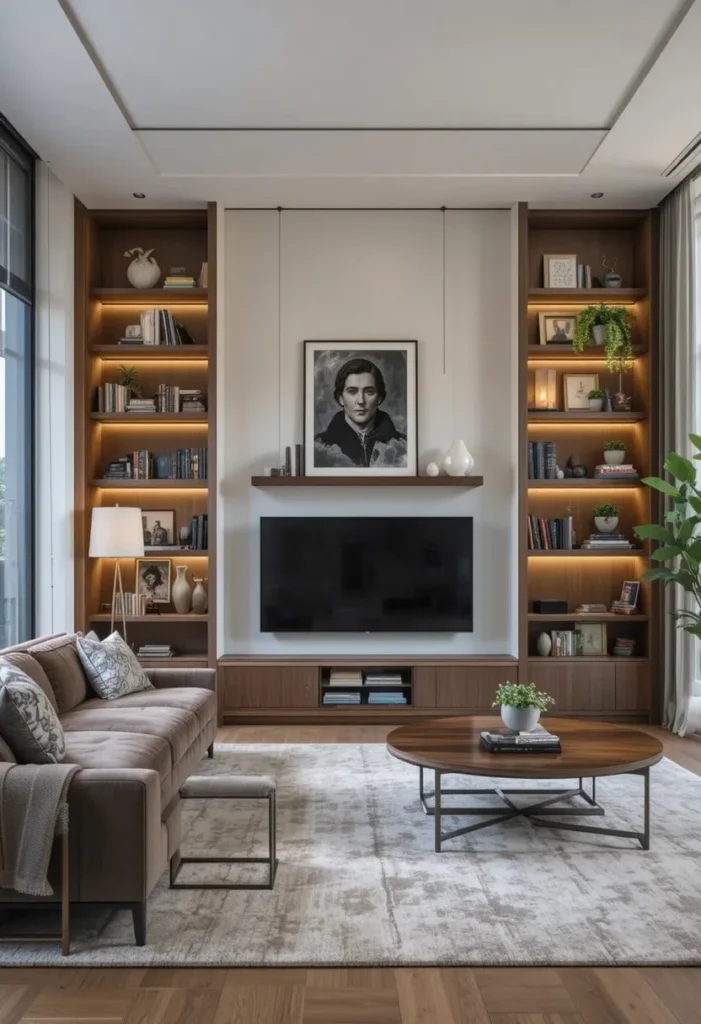
Asymmetrical shelves are the idea I suggest when a room feels too polite, because a staggered layout gives the eye somewhere interesting to land. I sketched ours on paper first, with one tall column, one short stack, and a shelf that runs longer than the rest, then I lived with the drawing on the fridge for a week before anyone drilled a hole. The secret is repeating something, so I use the same wood tone on every shelf and the same pale ceramics in two or three places, which stops the arrangement from feeling random. It looks playful from the sofa and surprisingly calm once you sit with it, because the repetition holds everything together.
How to do it: Sketch the layout on paper first, mixing one tall column, one short stack, and one long shelf. Keep the shelf material and colour identical throughout so the layout, not the finish, provides the contrast. Repeat one object or colour in three places, then stand back and check the balance from the sofa before fixing anything permanently.
9. Built-In Shelves with Integrated Lighting
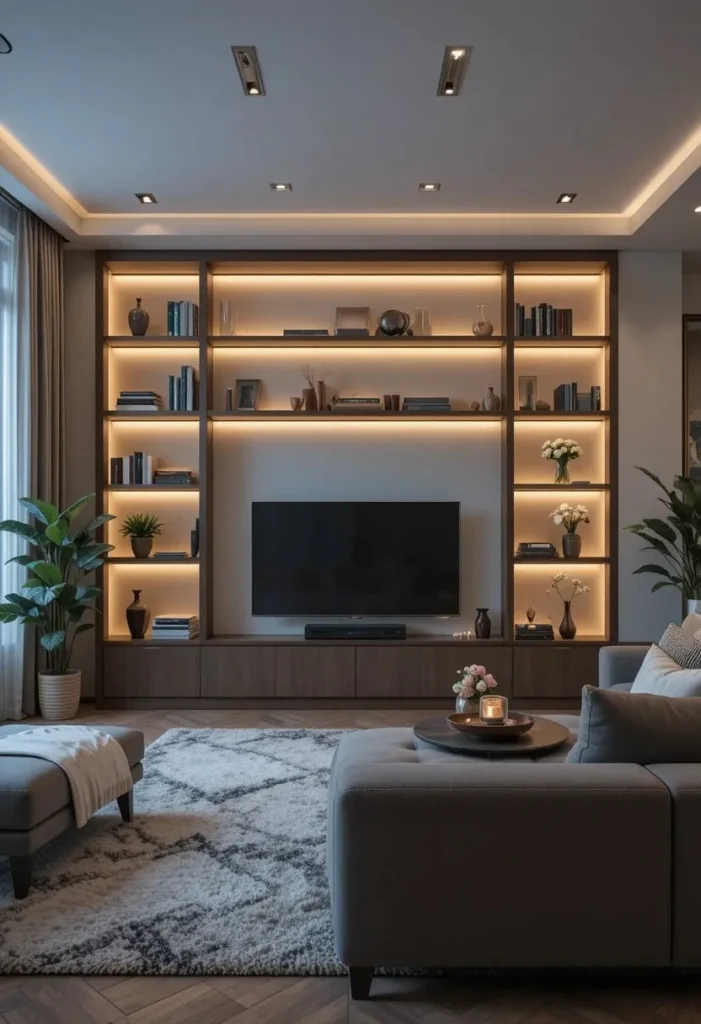
Lighting is what turns built-in shelves from daytime storage into the warmest corner of the room at night. I fitted warm white LED strips under each shelf in ours, and the glow falls softly over the books and ceramics without glaring into the room. The shelves look deeper, the colours look richer, and the room feels finished even when the main ceiling light is off, which is most evenings in our house. I put the strips on a dimmer, because full brightness is wonderful for finding a book and far too much for a film. If you are choosing between more shelves and better light, choose the light every time.
How to do it: Fit warm white LED strips, around 2700 kelvin, to the underside of each shelf, set back from the front edge so the strip itself is hidden. Wire them to a dimmer switch and test them at night before fixing the shelves permanently. Add one small picture light above a favourite framed print for a gallery feel.
10. Corner Built-In Shelves for Small Spaces
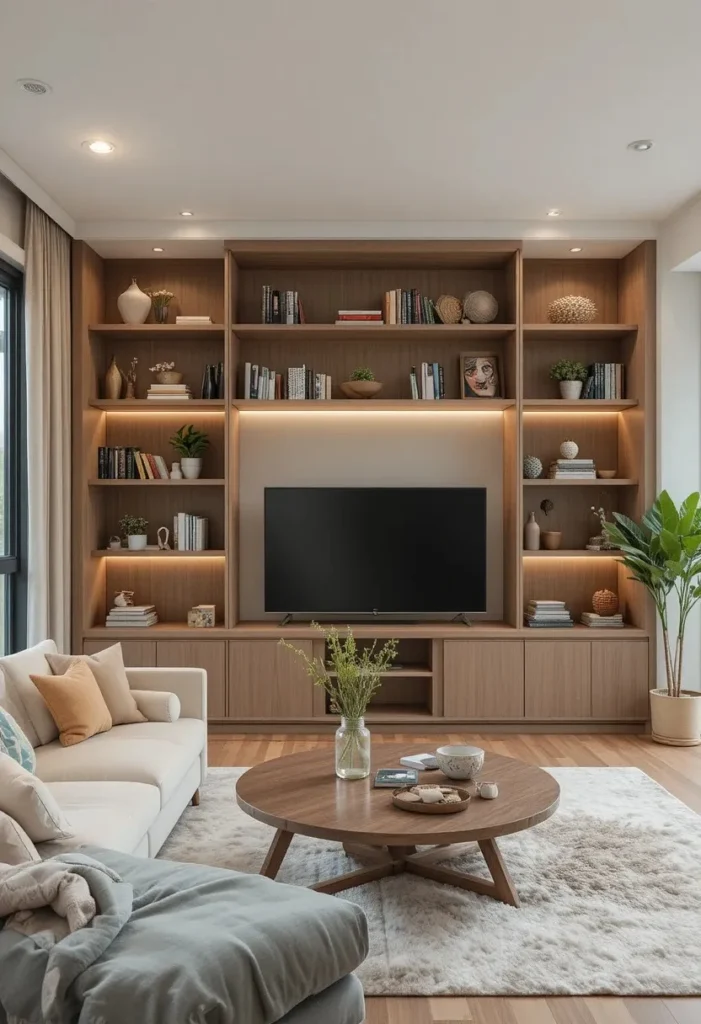
Corner shelves are my answer for the awkward angle in a living room that no sofa quite fits, and they turn dead space into the most useful spot in the room. I use ours for the books we are reading now, a small plant that likes the light from the side window, and a basket for the throws that migrate around the house. Because the shelves wrap around the corner, they feel generous without taking any floor space, and the room suddenly has a place for the things that used to pile on the arm of the sofa. Keep the styling light, though, because a corner fills up faster than a flat wall and starts to look crowded before you notice.
How to do it: Measure both walls of the corner and cut the shelves to meet neatly in the angle, with a small support bracket hidden underneath. Keep the shelves shallower than a flat wall, about 25 centimetres, and style them lightly with books, one plant, and one basket. Leave the lowest shelf for a basket so the corner stays tidy.
11. Built-In Shelves with a Pop of Color
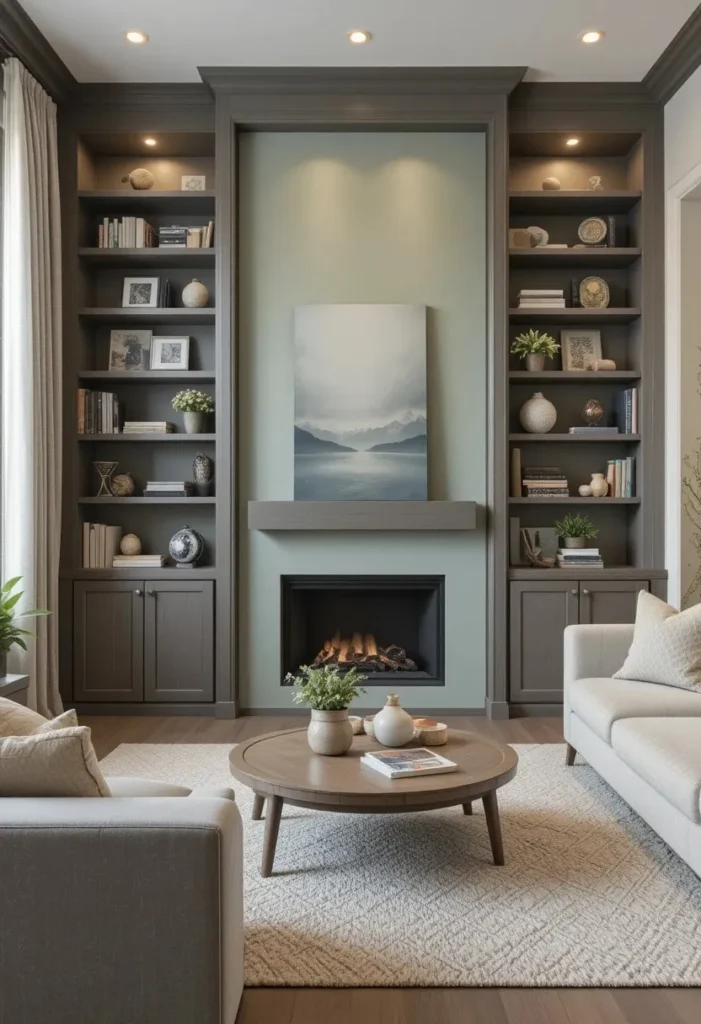
A painted back panel is the gentlest way I know to bring colour into a living room without committing to a coloured sofa or wall. Sage green, dusty blue, or warm beige on the back of the shelves makes the objects in front of it look more considered, and the colour only shows where the shelves are, so it never overwhelms the room. I painted ours sage, then repeated the same green in two cushions and a throw, which ties the whole room together for the price of a tester pot. If the colour starts to feel tired, one afternoon of repainting changes everything, like my country living room ideas
How to do it: Paint only the back panels in a muted tone, sage, dusty blue, or warm beige, and leave the shelf edges and frame in soft white. Test the colour on one panel first and check it against your cushions and rug. Repeat the colour in two small accessories elsewhere in the room so the shelves feel connected to it.
See More Amazing Ideas: 16 Apartment Living Room Ideas That Make Your Space Feel Bigger, Warmer & Truly Yours
12. Built-In Shelves Styled with Books and Decor
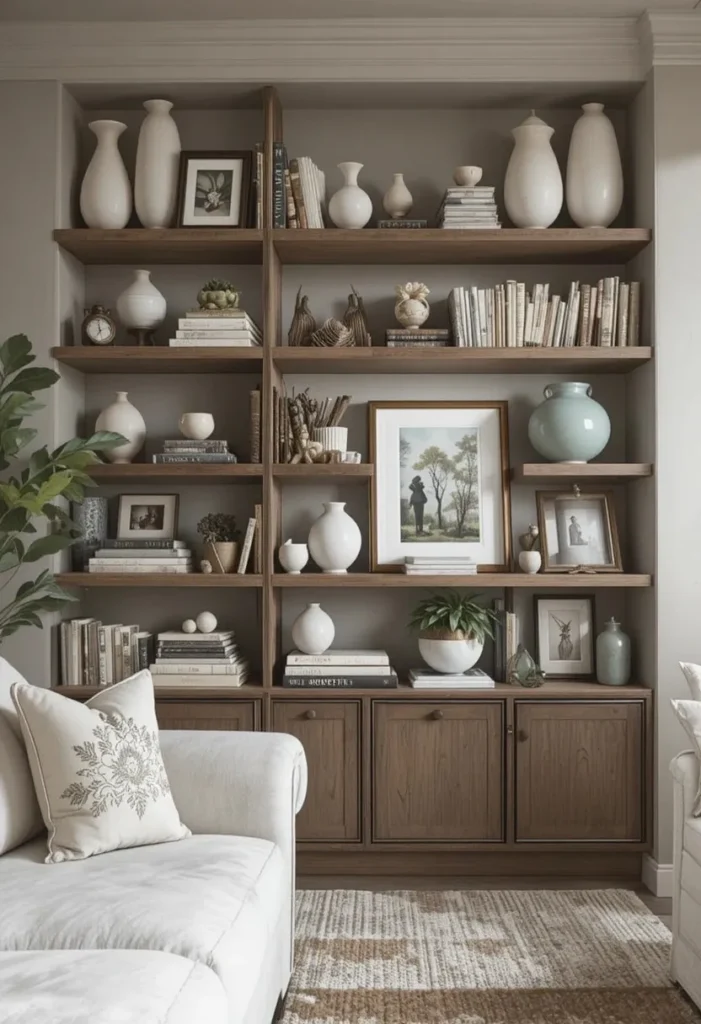
Styling shelves with books and decor is the part I enjoy most, because it is where a room stops looking like a showroom and starts looking like ours. I mix books, vases, framed art, and small pieces we picked up on trips, and I group them in odd numbers so the shelves feel collected rather than arranged. Some books stand upright, some lie flat with a small object on top, and I leave gaps of plain shelf between the groups so the eye can rest. The pieces that stay are the ones with a story, not the ones that simply filled a space in a shop. When a shelf starts to feel busy, I take away the newest thing first, and the room usually breathes again.
How to do it: Sort your books by size and colour, then mix upright rows with flat stacks topped by one small object. Add framed art leaning against the back panel and one vase or bowl per shelf group. Leave a hand’s width of empty shelf between groups and step back to check the balance.
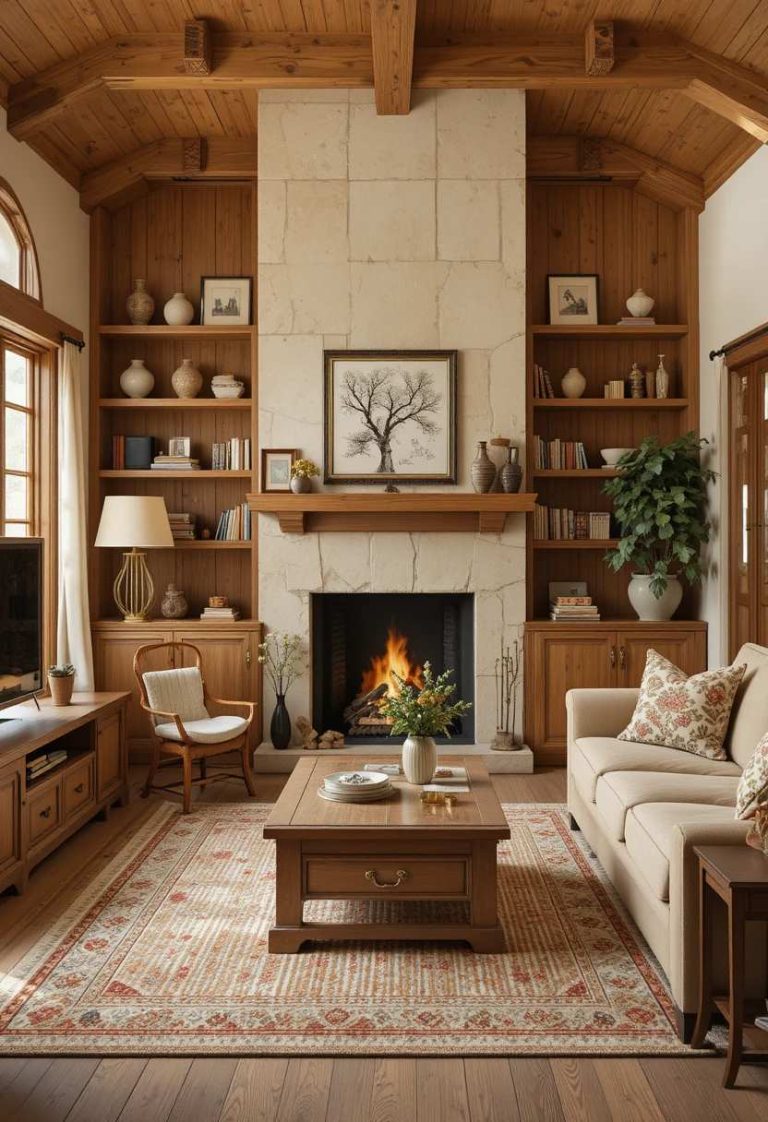
13. Symmetrical Built-In Shelves for a Balanced Look
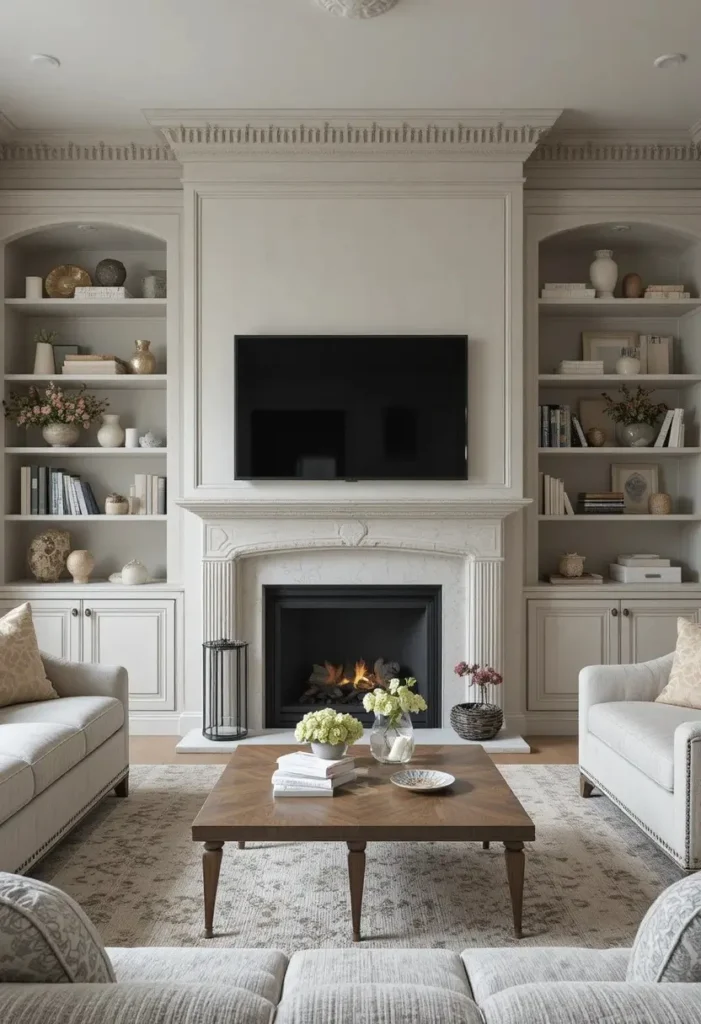
Symmetrical shelves on either side of a fireplace or television give a living room a sense of order that I find deeply restful. I styled ours as near-mirror images, with the same number of shelves and similar shapes on each side, but not identical objects, because exact twins look like a shop display. A tall vase on the left balances a stack of books on the right, and the same pale ceramics appear on both sides to hold the pair together. The fireplace sits in the middle like a full stop, and the whole wall feels settled. It is the look I choose when a room has to work hard, because symmetry forgives a lot of everyday mess.
How to do it: Measure from the centre of the fireplace or television outward so both units are identical in width and shelf spacing. Style them as near-mirror images, matching shapes and heights rather than identical objects. Repeat one colour or material on both sides to tie the pair together.
14. Floating Built-In Shelves for a Light Feel
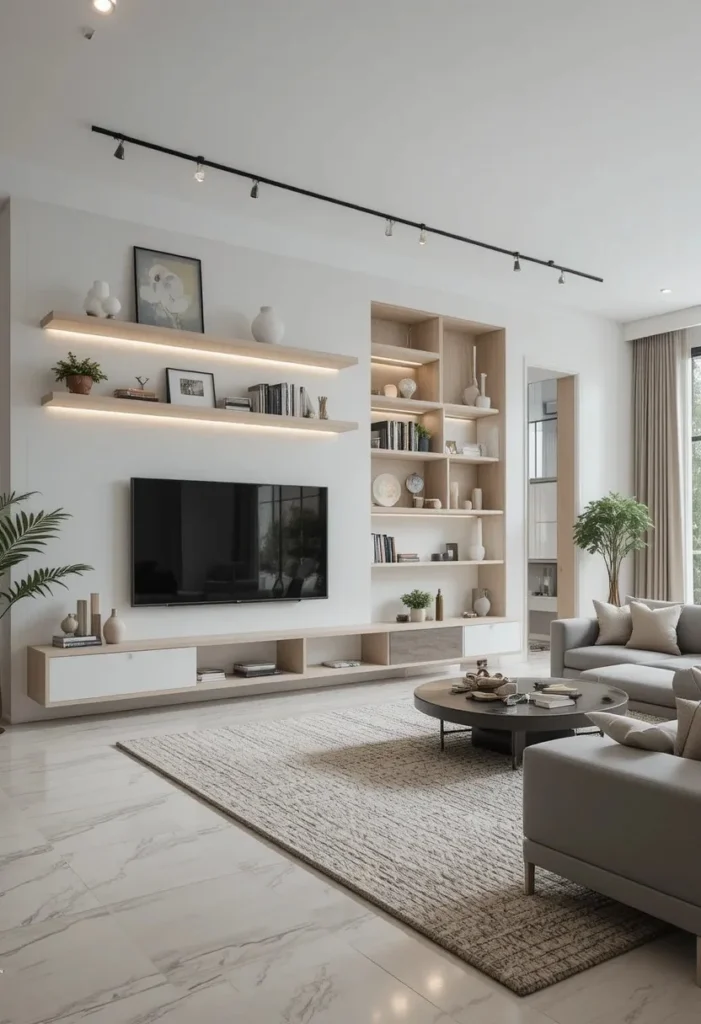
Floating shelves are the lightest look in this list, and I reach for them when a room already has heavy furniture and needs breathing space. Without visible brackets, the shelves seem to hover, and the wall below stays clear for a low cabinet, a plant, or simply empty floor, which makes a small room feel larger. I use ours for a few favourite books and one beautiful object per shelf, because floating shelves show everything and forgive nothing. The fixings matter more than the styling here: solid wall plugs, a level, and shelves rated for the weight you actually plan to put on them. Done well, they look effortless, which is the point.
How to do it: Choose floating shelves with hidden metal rods and fix them into wall studs or use heavy-duty wall plugs rated for the load. Use a long spirit level and mark every fixing before drilling. Keep the load light, one row of books and one object per shelf, and check the level again once the shelves are loaded.
Frequently Asked Questions
How much do built-in shelves cost for a living room?
A simple painted MDF run fitted by a local joiner often costs a few hundred pounds, while a bespoke hardwood wall with cabinets and lighting can run into several thousand. The price depends on the size of the wall, the material, and whether you need electrics for lighting. I always suggest getting two or three quotes and asking exactly what is included, from painting to fixing, so you can compare like with like.
Are built-in shelves worth it in a living room?
Yes, if you plan to stay put for a while, because they use awkward walls well, hide clutter behind closed cabinets, and make a room feel finished in a way a freestanding bookcase rarely does. They can also help a home feel more considered to buyers, although you will not always recover the full cost. For me, the daily pleasure of a calm, tidy room is worth more than the resale maths.
What should I put on built-in living room shelves?
Start with the books you actually read, then add a few things you love looking at, such as a vase, a framed print, or a small plant. Leave about a third of each shelf empty so the display can breathe, and group objects in odd numbers rather than lining everything up in a row. Keep everyday clutter, chargers, and remote controls in the cabinets below, out of sight.
How deep should built-in living room shelves be?
Most living room shelves work well at 25 to 30 centimetres deep, which fits most books and ornaments without swallowing them. Go deeper, around 35 to 40 centimetres, only for the bottom shelf or for large baskets and board games. Shallower shelves, about 20 centimetres, suit display-only runs and small rooms because they keep the wall feeling light.
Can I add built-in shelves to a small living room?
Yes, small rooms often benefit most, because built-ins use corners, alcoves, and the wall above a sofa that would otherwise go to waste. Choose a light colour that matches the wall, keep the shelves shallow, and leave some empty space so the wall does not feel heavy. A pair of floating shelves or a single alcove run is often enough to change how the room feels.
Your Built-In Shelves Checklist
☐ Measure the wall, including skirting boards, sockets, and the television
☐ Decide what will be displayed and what must be hidden away
☐ Choose one main material and one finish for the whole run
☐ Plan lighting before the shelves are fixed, not after
☐ Leave a third of every shelf empty
☐ Style slowly, one shelf at a time, and live with it for a week
Conclusion
Built-in shelves do their best work quietly. They hold the books you reach for, hide the clutter you do not want to see, and give a living room a finished, settled feeling that no freestanding bookcase quite manages. Start with the wall you look at most, measure it honestly, and choose the idea from this list that fits the way you actually live, whether that is a grand floor-to-ceiling wall, a calm neutral run, or a pair of floating shelves. Style them slowly, leave room to breathe, and let the room grow into them. The shelves will do the rest.
One Comment