27 Family Room Ideas for a Cozy, Comfortable and Functional Space
There is no room in my home quite as loved and lived in as the family room, where we gather at the end of every busy day. It is the place for movie nights, board games, lazy Sunday mornings, and all the happy chaos of family life. Over the years I have learned that a family room needs to be more than pretty, it has to be cozy, comfortable, and truly functional. With soft seating, smart storage, and warm little touches, this hardworking room can be both beautiful and wonderfully welcoming. Below are twenty seven family room ideas, shared with warmth and a few lessons from my own home, to help you create a cozy, comfortable, and functional space you will love.
1. Start With a Deep, Comfy Sofa
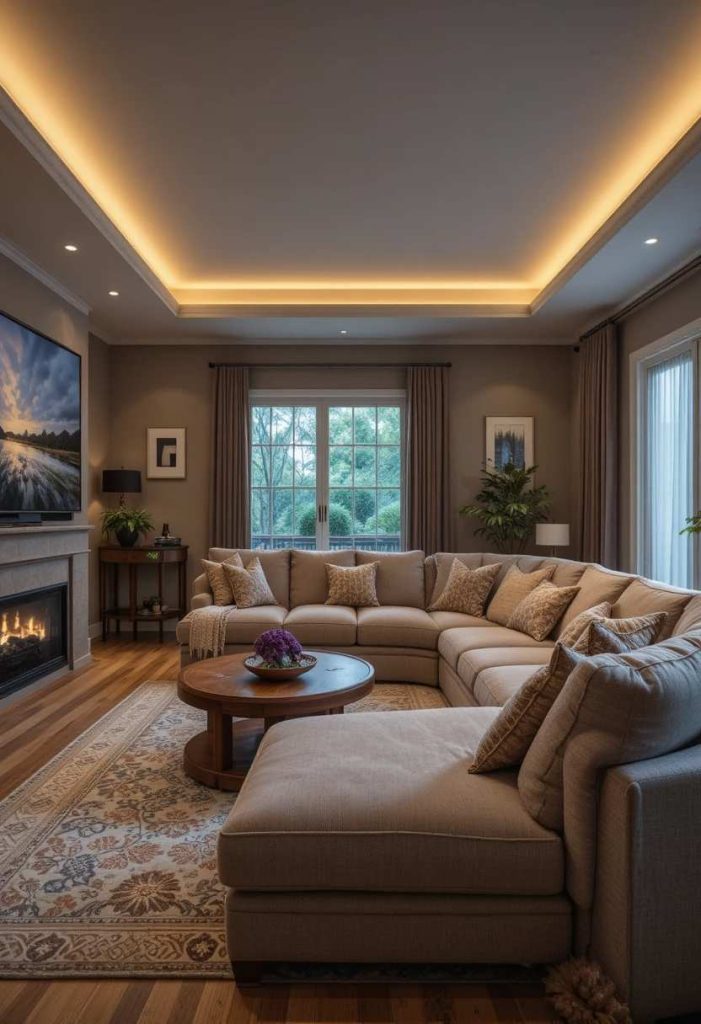
A big, soft sofa is the heart of our family room, and I chose ours the way I would choose a bed, by sitting on it properly, not just perching on the edge. Deep seats let my husband stretch out with a book, the children pile in for a film, and our dog claim the middle cushion without complaint. I looked for a sturdy hardwood frame, cushions that bounce back, and a low back made for leaning. A washable slipcover was non-negotiable, and a mid-tone fabric hides the odd biscuit crumb between washes. Measure your wall, leave room to walk past, and choose the sofa before anything else, because everything else gathers around it.
How to do it: Measure the wall and the doorways the sofa must travel through, then choose a seat at least 60 centimetres deep with removable, washable covers. Sit on it for ten minutes in the shop, lie down if you can, and check that the frame feels solid and the cushions spring back. Place it facing the television or the fireplace, leave 75 centimetres of walkway behind it, and soften the corners with a throw and two cushions.
2. Choose Durable, Washable Fabrics
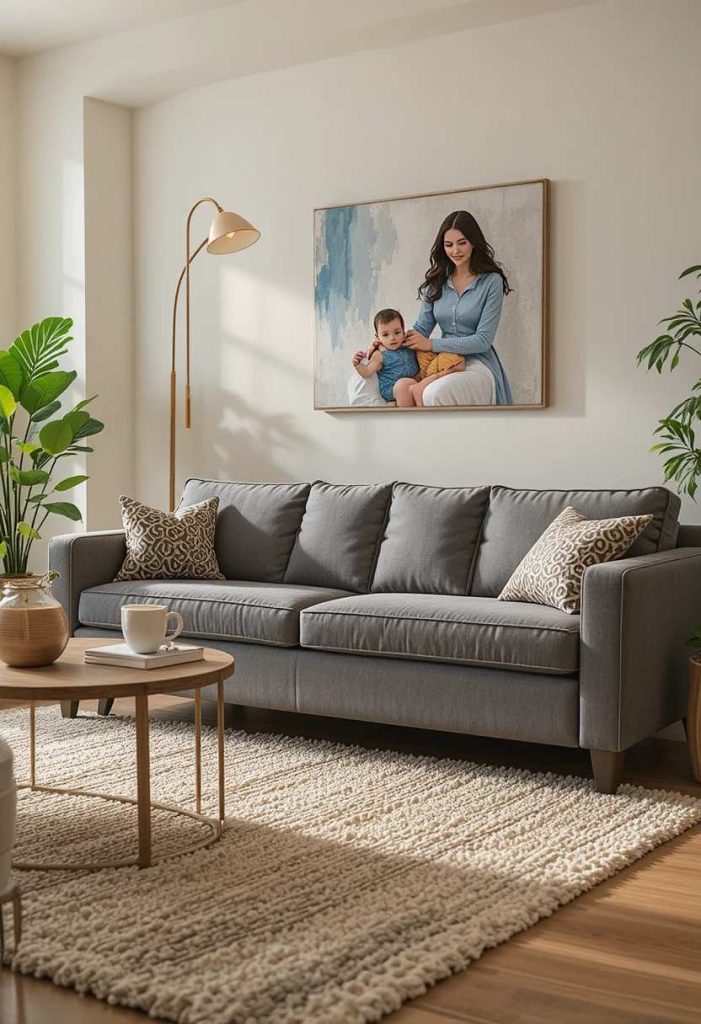
With children and snacks around, wipeable or washable covers are a lifesaver. Performance fabrics handle spills without fuss, and our sofa has survived countless juice cups and chocolate fingers. I look for removable covers I can wash on a cool cycle, then hang to dry, and I keep a spare set for the week the covers are in the wash. Stain-resistant treatments help, but a simple house rule helps more: drinks stay on trays, and muddy shoes stay by the door. Before I commit, I order a swatch, spill a little tea on it, and wash it twice. If it still looks good, it earns its place.
How to do it: Order fabric swatches before you buy, then spill tea, ketchup, and a little mud on each one and wash it twice. Choose removable, washable covers in a mid-tone that hides marks, and keep a spare set ready. Treat new fabric once a year, keep a small cleaning kit in the sideboard, and wash covers on a cool cycle so they keep their shape.
3. Add Plenty of Soft Throws
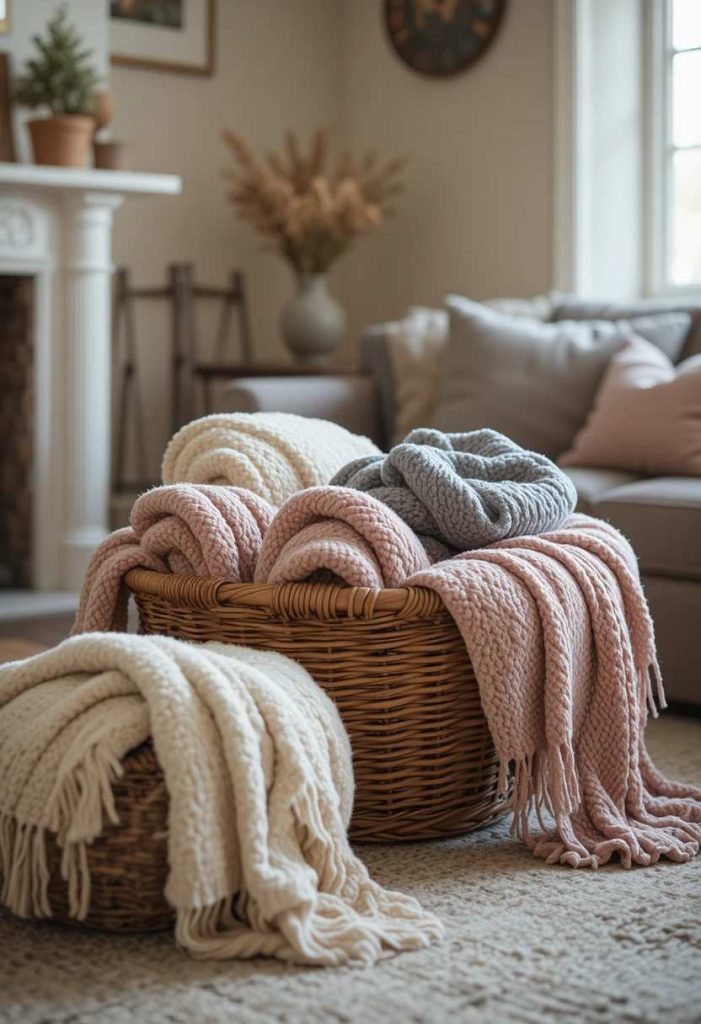
A basket of cozy blankets makes the room instantly inviting. Everyone can grab their own for chilly evenings, and a soft throw draped over the sofa arm is my favourite way to make the room look loved. I keep three or four in rotation: a chunky knit for winter, a light cotton one for summer, and a washable fleece the children can drag to their fort. Fold them loosely rather than perfectly, mix textures instead of matching sets, and choose colours that pick up the cushions. A basket by the sofa keeps them tidy, and on cold nights I warm one by the radiator before film time.
How to do it: Choose three or four throws in different textures, one chunky knit, one light cotton, and one washable fleece. Fold each one in thirds, drape one over the sofa arm, and keep the rest in a basket beside the sofa. Wash them monthly, rotate them with the seasons, and swap in a festive colour for Christmas and a fresh linen one for spring.
4. Build in Smart Storage
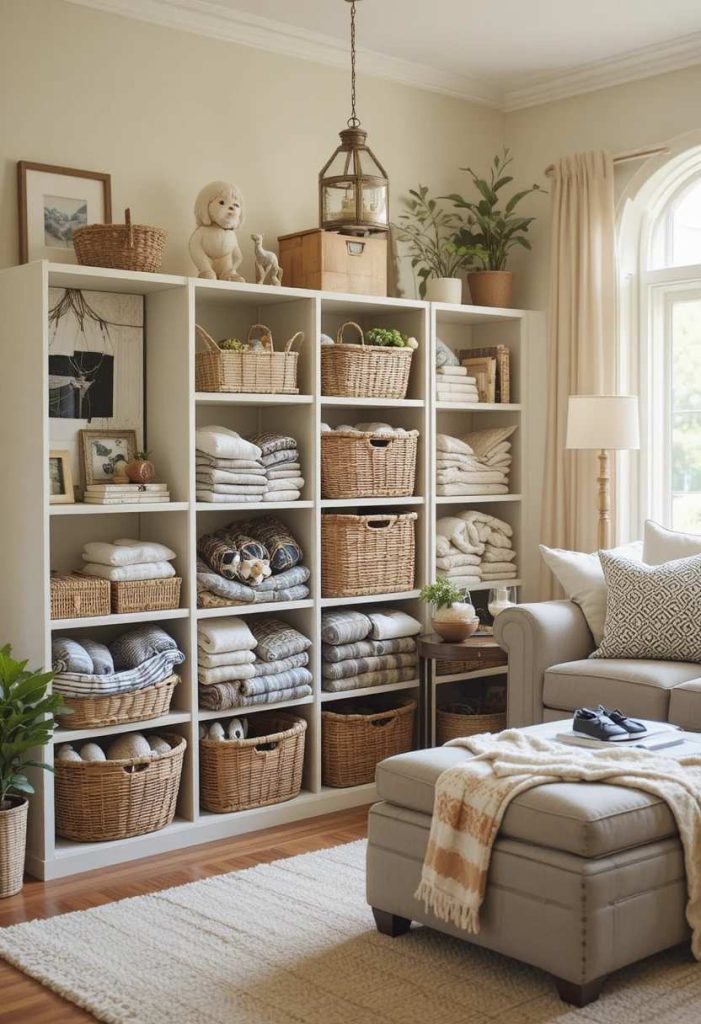
Baskets, ottomans, and cabinets tame the endless toys, remotes, and blankets. Hidden storage keeps the room looking calm while everything still has a place. I gave every category its own home: one basket for building blocks, one ottoman for blankets, and a low cabinet for board games and chargers. Open baskets work best for things children fetch daily, while closed cupboards hide the visual noise. Label the baskets with pictures for little readers, keep the everyday things low enough for children to reach, and leave one empty basket on purpose, because a new toy always arrives. A ten-minute tidy each evening keeps the system honest.
How to do it: Sort everything in the room into piles first, then give each pile its own basket, ottoman, or cupboard shelf. Put daily toys in open baskets at child height, hide clutter behind closed doors, and label each basket with a picture or a word. Keep one basket empty for new arrivals, and run a ten-minute family tidy every evening before baths.
5. Add a Sturdy Coffee Table
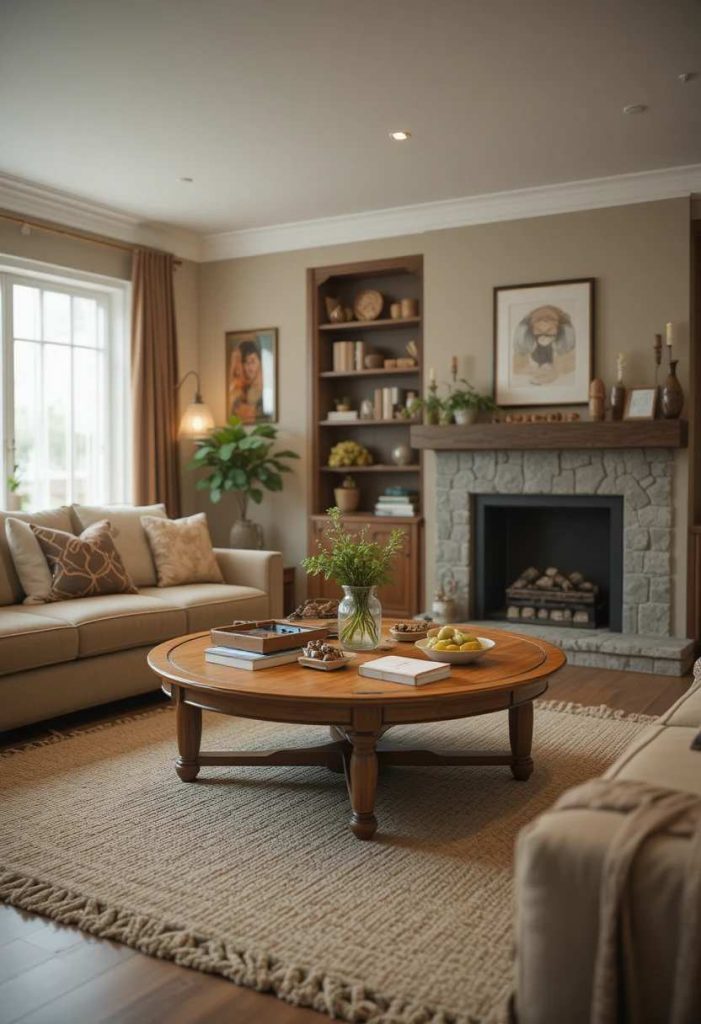
A solid coffee table anchors the seating and holds snacks, games, and feet. Rounded corners are kinder to small heads, and I learned that lesson the week my youngest learned to walk. I chose a heavy oak table that does not wobble when someone leans on it, with a lower shelf for books and a wipeable top for craft projects. A tray on top keeps drinks steady and gives the table a finished look, while a soft ottoman beside it doubles as extra seating. Measure the gap between sofa and table, about 45 centimetres, so legs fit comfortably, and skip glass tops in a house full of children.
How to do it: Choose a heavy table with rounded corners and a wipeable top, then set it about 45 centimetres from the sofa so legs fit underneath. Add a tray to corral drinks and remotes, use the lower shelf for books and games, and place a soft ottoman beside it for extra seats. Test the height against your sofa arm before you buy, and avoid glass tops while the children are small.
6. Layer in Cozy Lighting
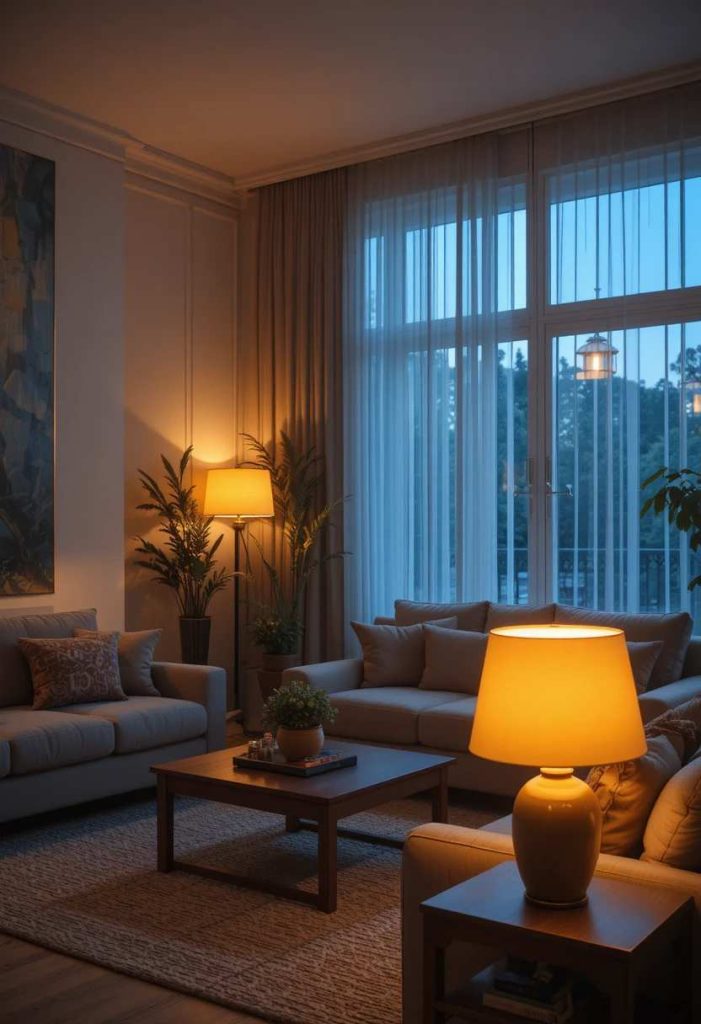
Soft lamps and warm bulbs make the room feel welcoming at night. Harsh overhead light never suits a family room, so I layer three kinds of light instead: a floor lamp beside the sofa for reading, a table lamp on the sideboard for a soft evening glow, and a dimmer on the ceiling light for film nights. Warm white bulbs, around 2700 kelvin, keep the room golden rather than clinical, and a few candles on the mantel add flicker on dark winter evenings. I keep a small lamp low enough for children to switch on themselves, and I always choose shades that throw light downwards, so nobody squints.
How to do it: Place a floor lamp beside the sofa, a table lamp on the sideboard, and a dimmer switch on the ceiling light. Fit warm white bulbs at 2700 kelvin, add candles on the mantel for winter evenings, and keep one lamp low enough for children to switch on. Test the light at night before you settle, and swap any bulb that feels cold or harsh.
7. Add a Big, Soft Rug
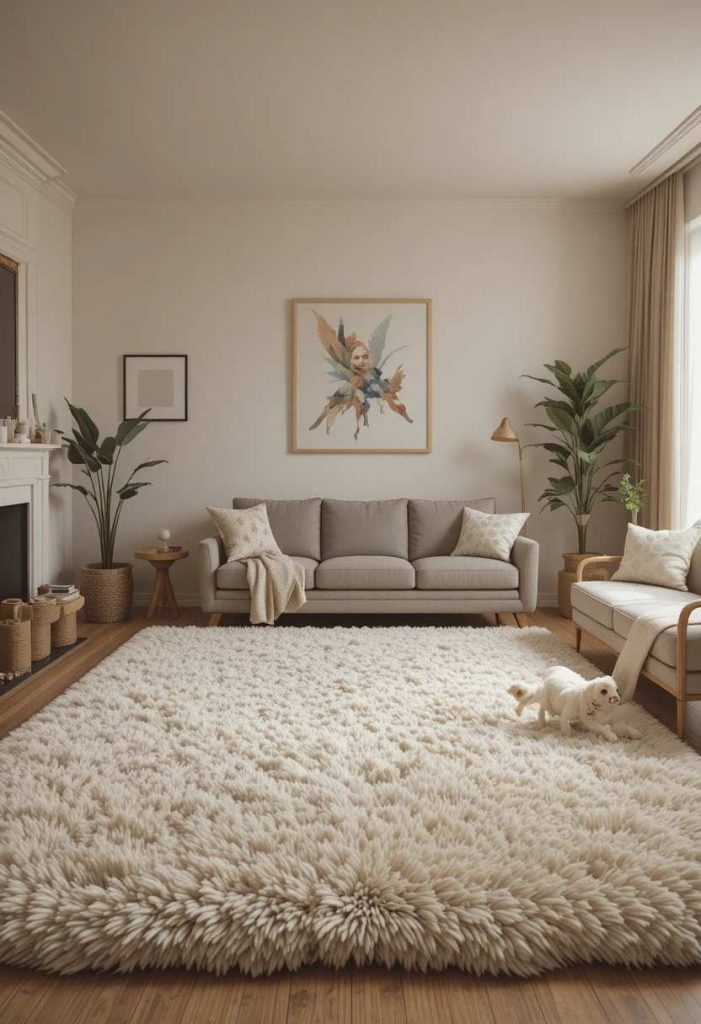
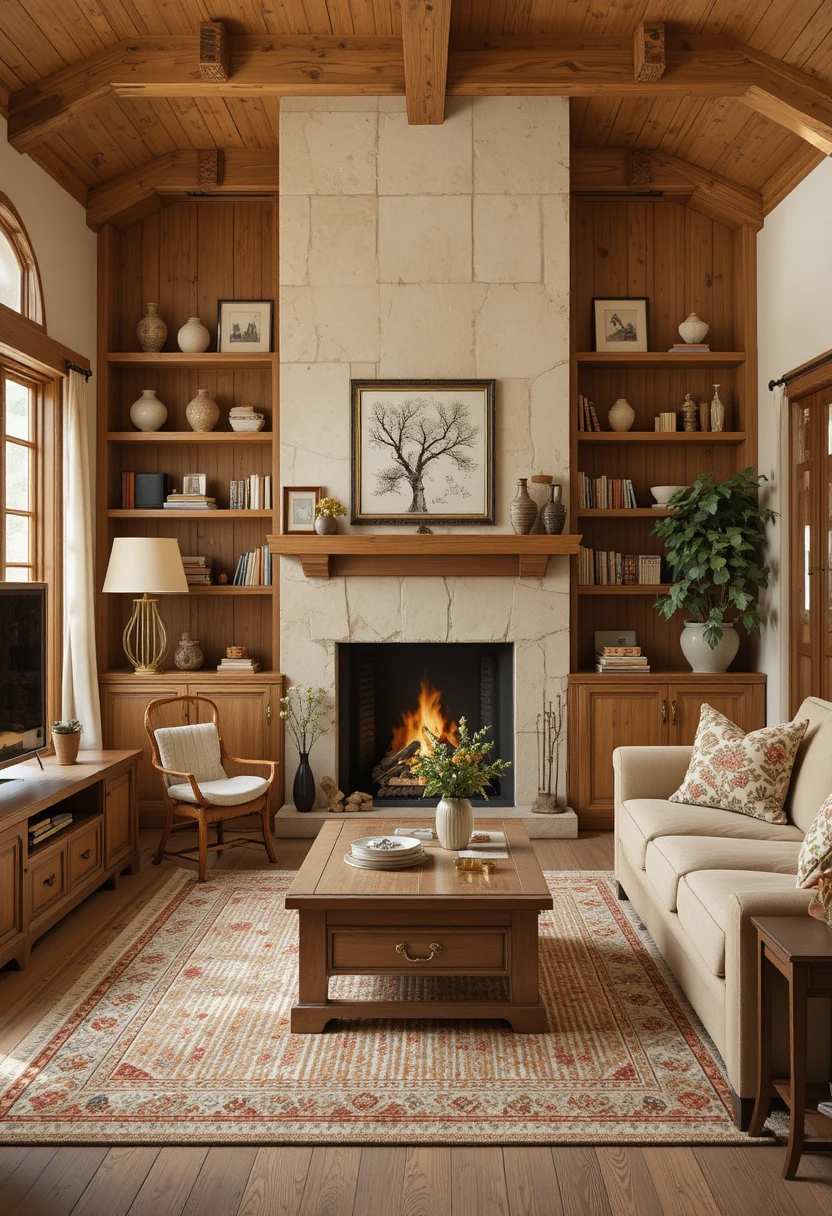
A large plush rug makes the floor a comfy spot for play and lounging. It adds warmth, softness, and a little luxury underfoot, and it protects the floor from toy cars and toppled drinks. I chose a low-pile, washable rug in a faded pattern, much like the ones in these country living room ideas, because the pattern hides crumbs and the whole rug fits in the washing machine. It should be big enough for the front legs of the sofa and chairs to sit on it, which pulls the seating together. A non-slip pad underneath stops it creeping, and I shake it outside every Saturday morning.
How to do it: Measure the seating area and choose a rug the front legs of the sofa and chairs can sit on, leaving at least 15 centimetres of floor showing around the edges. Pick a low-pile, washable rug in a forgiving pattern, lay a non-slip pad beneath it, and vacuum it twice a week. Shake it outside on Saturdays, and wash it every couple of months to keep it fresh.
8. Create a Media Zone
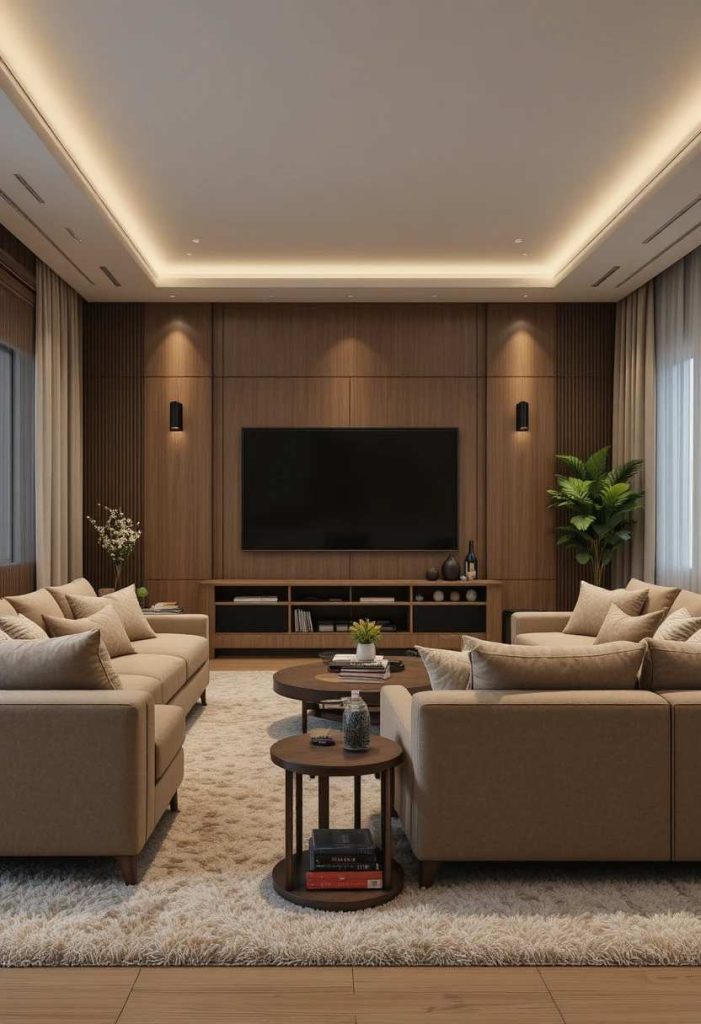
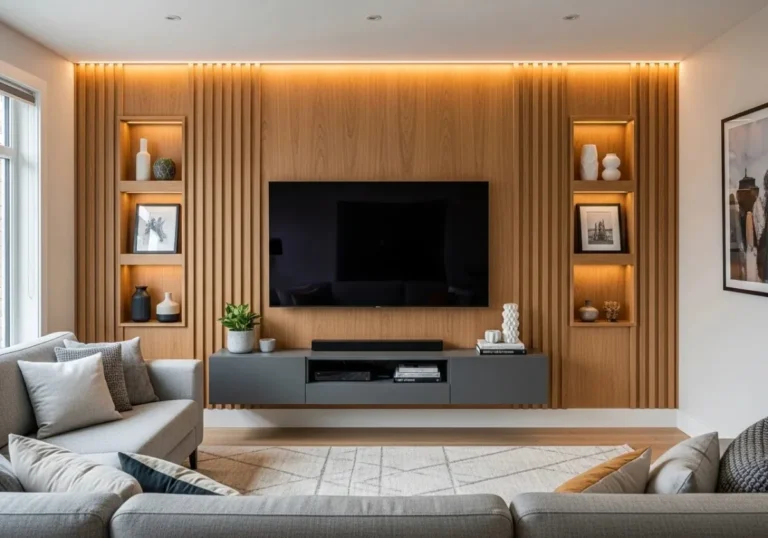
Arranging seating around the TV makes movie nights easy and comfortable. A tidy media unit hides cables and consoles, and I mounted our television at eye level from the sofa so nobody cranes their neck. The sound bar sits underneath, the games console lives behind a closed door, and a basket beside the unit holds controllers and remotes so they never vanish between cushions. We keep the volume reasonable after eight, and the television switches off for one screen-free evening a week, when the room becomes a board game den instead. A soft lamp behind the television cuts the glare, which makes late films much easier on tired eyes.
How to do it: Mount the television at eye level from the sofa, about 105 centimetres from the floor to the centre of the screen. Hide cables in trunking or behind the media unit, keep controllers in a basket beside it, and add a sound bar underneath for clearer dialogue. Place a small lamp behind the television to soften glare, and agree one screen-free evening a week.
9. Add Extra Seating
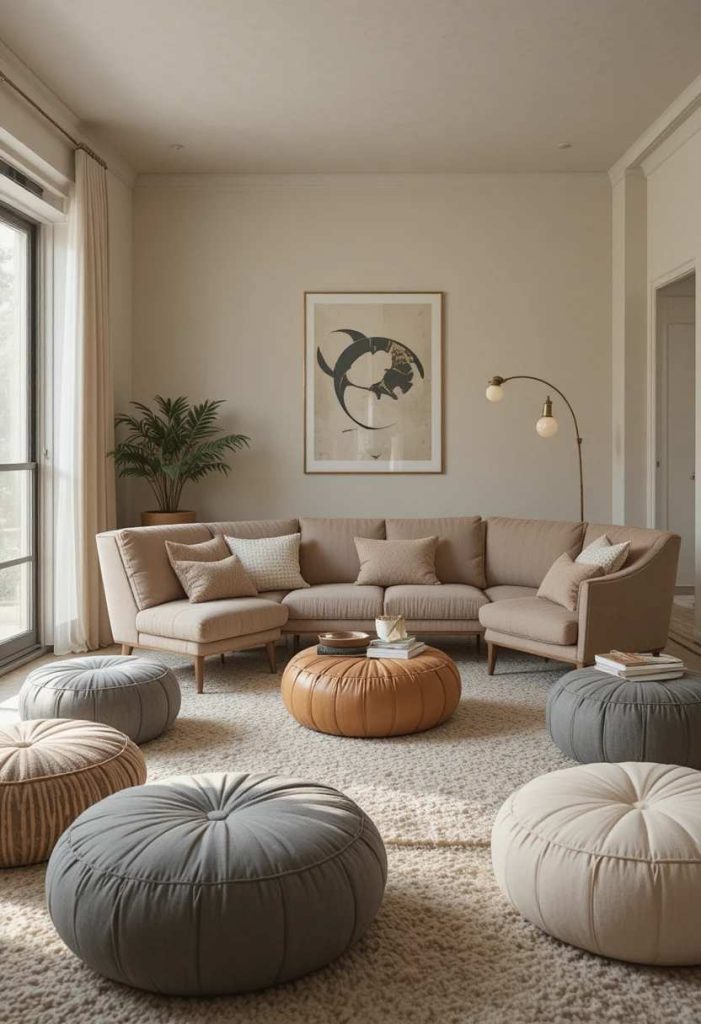
Poufs, floor cushions, and a comfy armchair give everyone a spot. Flexible seating adapts to guests, sleepovers, and sprawling teenagers, and I love how a room full of options feels instantly welcoming. Our armchair sits by the window for morning coffee, two poufs tuck under the side table when they are not needed, and a stack of floor cushions lives in a basket for film nights. Choose pieces light enough for a child to drag, in fabrics you can wipe or wash, and in colours that tie the room together. When friends drop by, nobody perches on an armrest, because there is always a proper seat waiting.
How to do it: Add one armchair by the window, two poufs that tuck under a side table, and a basket of floor cushions for film nights. Pick pieces light enough for a child to drag, in wipeable fabrics that match the room, and keep one seat free for unexpected guests. Rotate the cushions monthly so they wear evenly, and fluff the poufs weekly to keep their shape.
10. Keep It Kid-Friendly
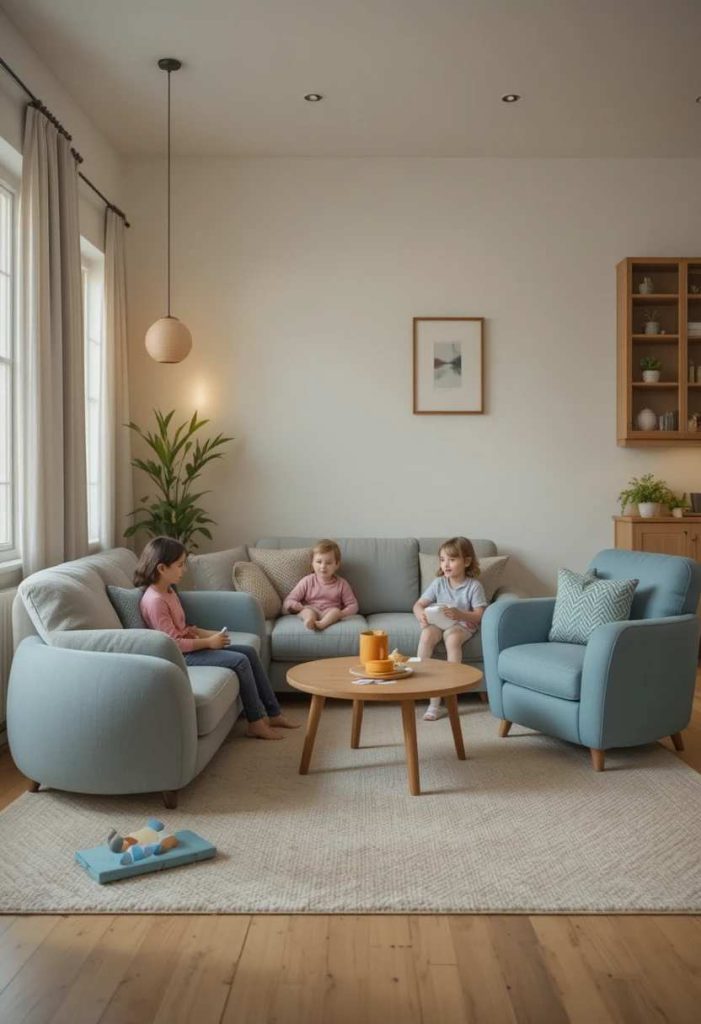
Rounded furniture, sturdy pieces, and washable surfaces make life easier with little ones. A safe, relaxed room lets children play freely while parents stop worrying about every bump. I chose a sofa with rounded arms, a coffee table with soft corners, and shelves fixed firmly to the wall so nothing can topple. Washable paint on the lower half of the walls wipes clean after crayon experiments, and a low basket holds the toys of the moment. I keep breakables up high, cords tucked away, and a small step stool by the sink so little hands can reach. Safety first, then comfort, then style.
How to do it: Swap sharp corners for rounded furniture, fix tall shelves and the television to the wall, and choose washable paint for the lower walls. Keep breakables and cords out of reach, put a low basket of toys at child height, and add a step stool by the sink. Walk the room at toddler height once a month to spot new hazards.
11. Add Personal Photos
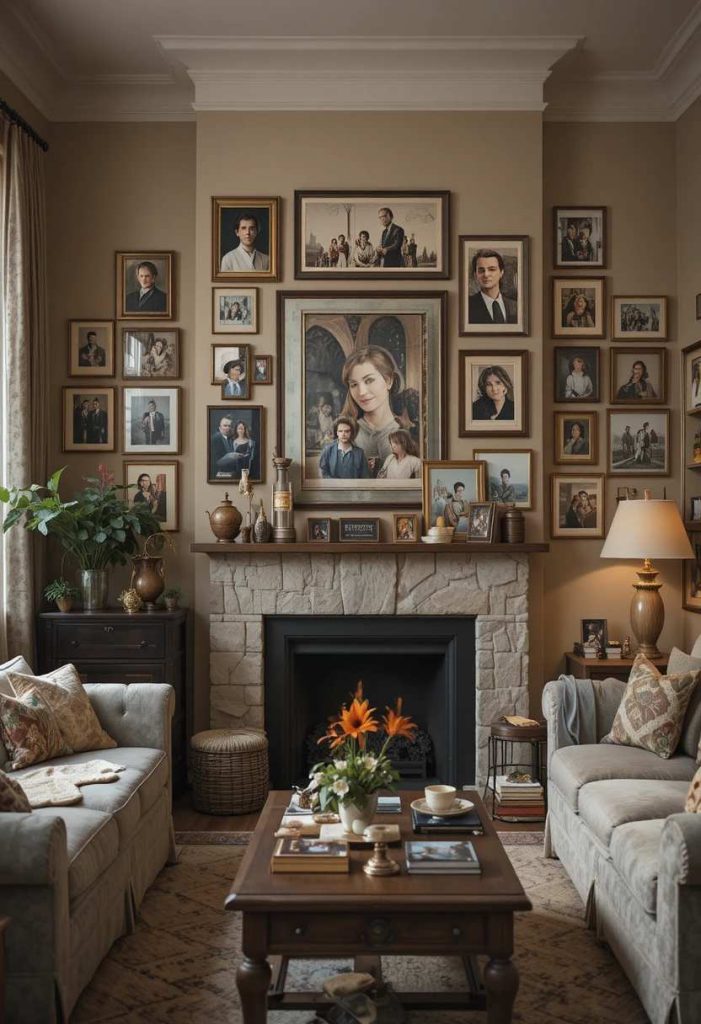
Family photos on the walls fill the room with warmth and memories. They make the space feel truly yours, and every picture tells a story children ask about again and again. I mixed large framed prints of our favourite holidays with small candid shots, all in simple black frames so the pictures, not the frames, take the attention. A gallery wall above the sofa anchors the room, and I leave one frame empty on purpose, ready for the next adventure. For more ways to make the walls feel personal, these home sweet home decor ideas are full of gentle, welcoming touches. Swap one photo each season to keep the wall feeling alive.
How to do it: Print your favourite photos in two sizes, then frame them in simple matching frames so the pictures take the attention. Lay the arrangement on the floor first, hang the gallery above the sofa at eye level, and leave one frame empty for the next adventure. Swap one photo each season, and dust the frames monthly so the glass stays clear.
12. Include a Games Corner
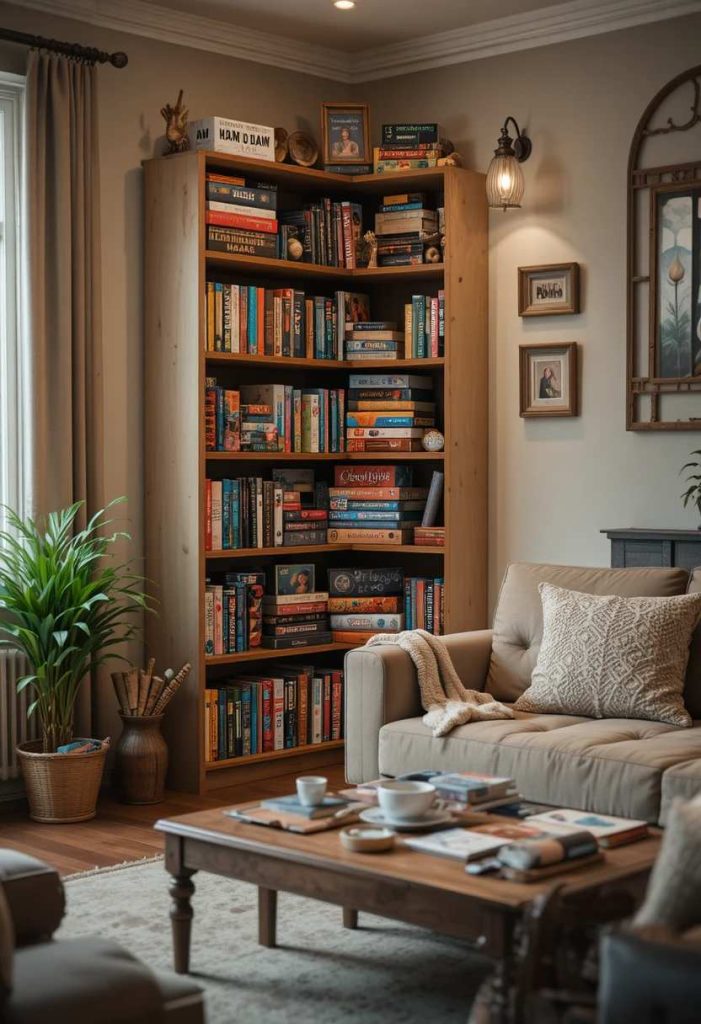
A shelf or basket of board games invites everyone to play together. Keeping them handy means more spontaneous fun, and I keep ours on a low shelf the children can reach without asking. A small table beside the shelf holds the current jigsaw, and a basket underneath catches dice, cards, and counters before they migrate under the sofa. We play something together every Sunday afternoon, from quick card games to long, laughing rounds of our favourite board game. Choose games for every age, rotate the shelf monthly so old favourites feel fresh, and keep a notepad nearby for keeping score.
How to do it: Put a low shelf or basket of board games where children can reach it, and keep a small table beside it for jigsaws and card games. Sort games by age, store small pieces in labelled boxes, and rotate the shelf monthly. Set a regular games time, keep score in a notepad, and pack everything away together when you finish.
13. Add Warm, Inviting Colours
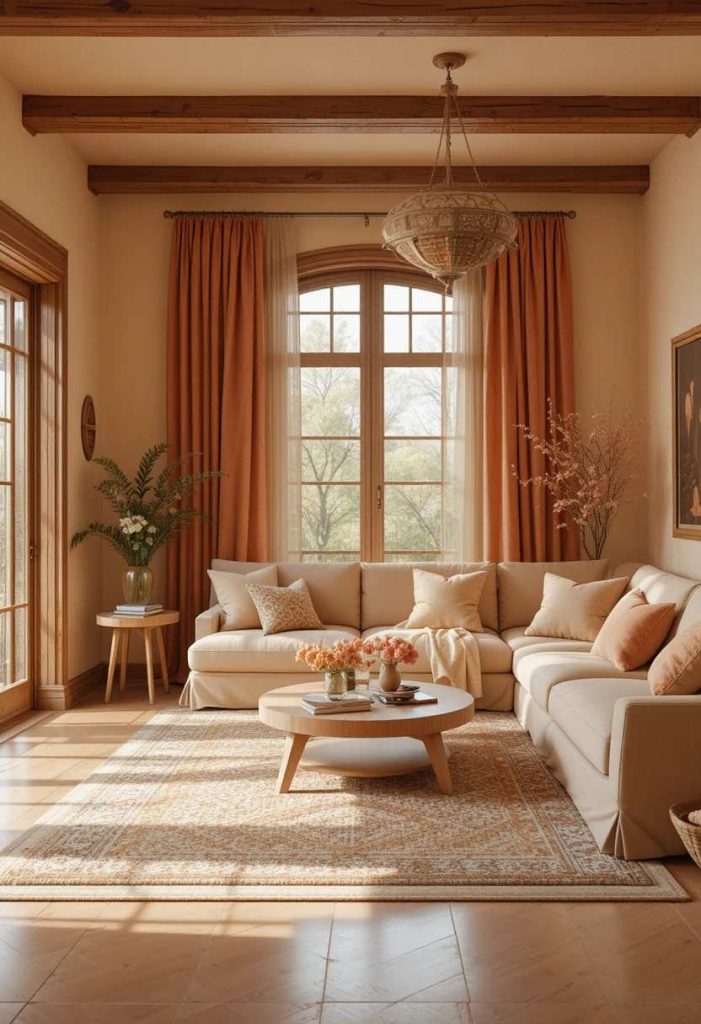
Soft, warm tones make a family room feel cozy and welcoming. Earthy hues suit relaxed family living, and I built our palette around warm cream walls, a sage green sofa, and terracotta cushions that echo the garden outside. The colours remind me of the soft, lived-in palette at the heart of these country living room ideas, and they hide everyday marks far better than stark white. I test paint on the wall first, living with it for a week in morning and evening light. Keep the biggest surfaces calm, add stronger colour in cushions and throws, and repeat each accent colour at least three times around the room.
How to do it: Choose three colours, one calm neutral for the walls, one soft main colour for the sofa, and one warm accent for cushions and throws. Paint a test patch and live with it for a week in morning and evening light. Repeat each accent colour at least three times around the room, and keep the biggest surfaces calm so the room stays restful.
14. Make Room for Reading
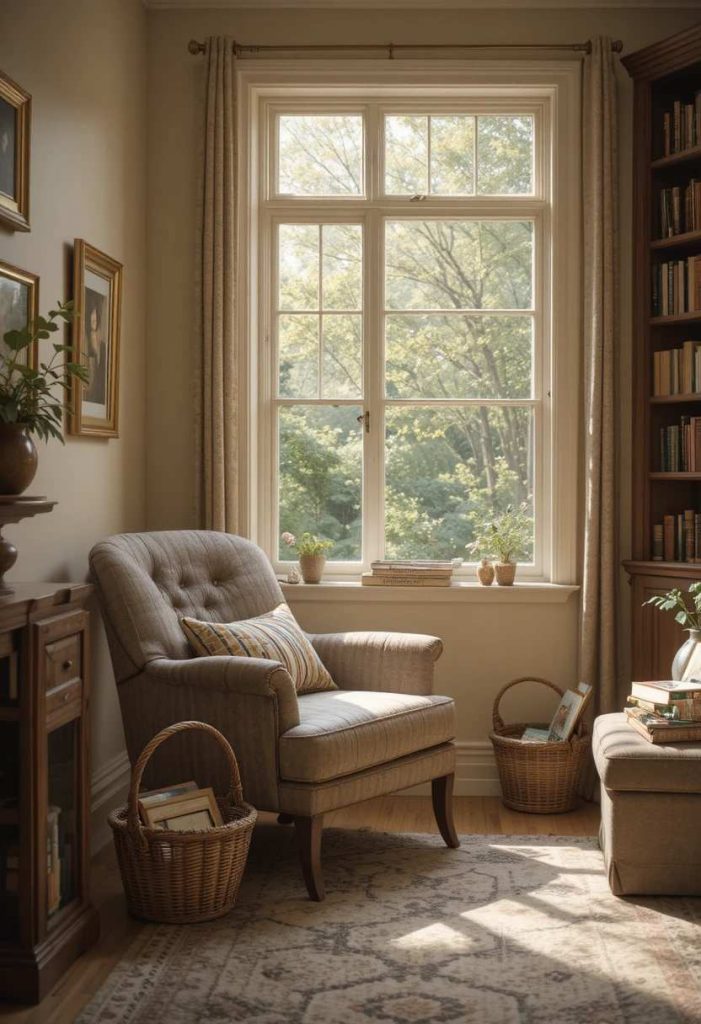
A comfy chair and a little book nook encourage quiet moments. A basket of books invites everyone to slow down, and I set ours by the brightest window, where the afternoon light falls across the pages. A soft armchair, a small side table for tea, and a basket of books at arm’s reach are all it takes. I rotate the basket monthly: picture books for the youngest, novels for my husband, and a magazine or two for me. A clip-on reading light keeps the corner useful after dark, and a folded throw over the chair arm means nobody leaves for a blanket mid-chapter.
How to do it: Place a soft armchair by the brightest window, add a small side table for tea, and keep a basket of books at arm’s reach. Fit a clip-on reading light for evenings, fold a throw over the chair arm, and rotate the books monthly so the corner feels fresh. Keep the nook free of toys so it stays a quiet spot.
15. Add Cushions Generously
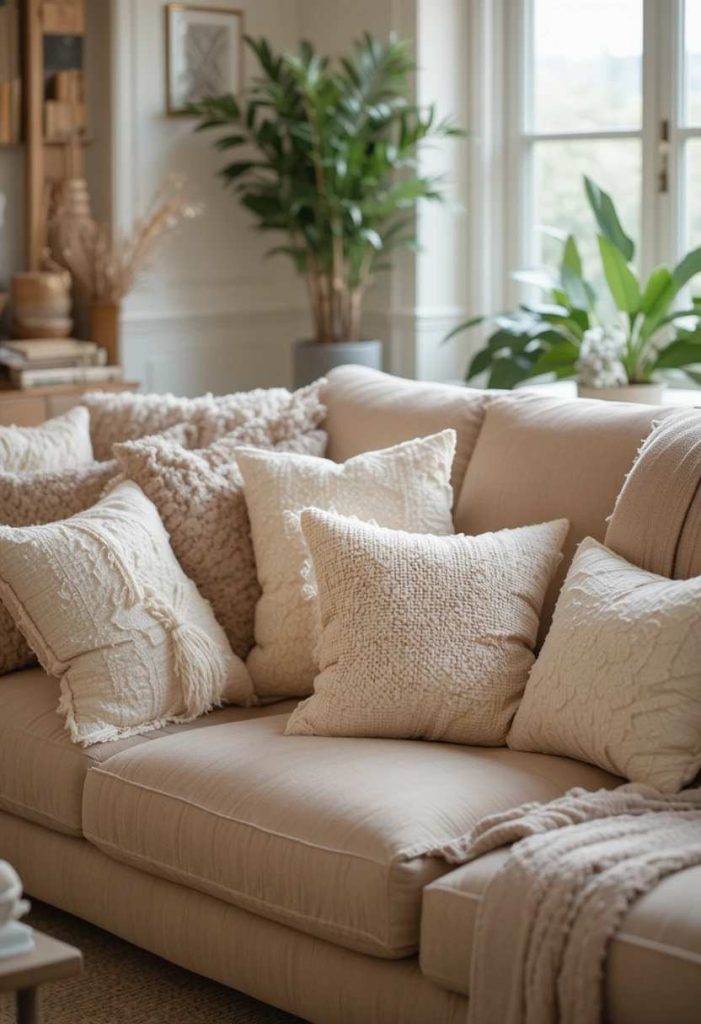
A generous pile of cushions makes seating cozy and fun. They are perfect for lounging, propping, and pillow fights, and I treat cushions the way other people treat art: collected slowly, chosen for colour and texture, never bought in a matching set. I mix linen, velvet, and a knitted one my mother made, in sizes from small squares to one big floor cushion the children fight over. Two or three per sofa seat is plenty, and I store the spares in a basket when the room needs breathing space. Wash the covers monthly, plump them every evening, and swap one or two with the seasons.
How to do it: Choose two or three cushions per sofa seat in mixed textures, linen, velvet, and one knitted or handmade piece. Mix sizes from small squares to one big floor cushion, and keep the colours tied to the room’s palette. Wash the covers monthly, plump them every evening, and store spares in a basket when the room needs breathing space.
16. Keep Pathways Clear
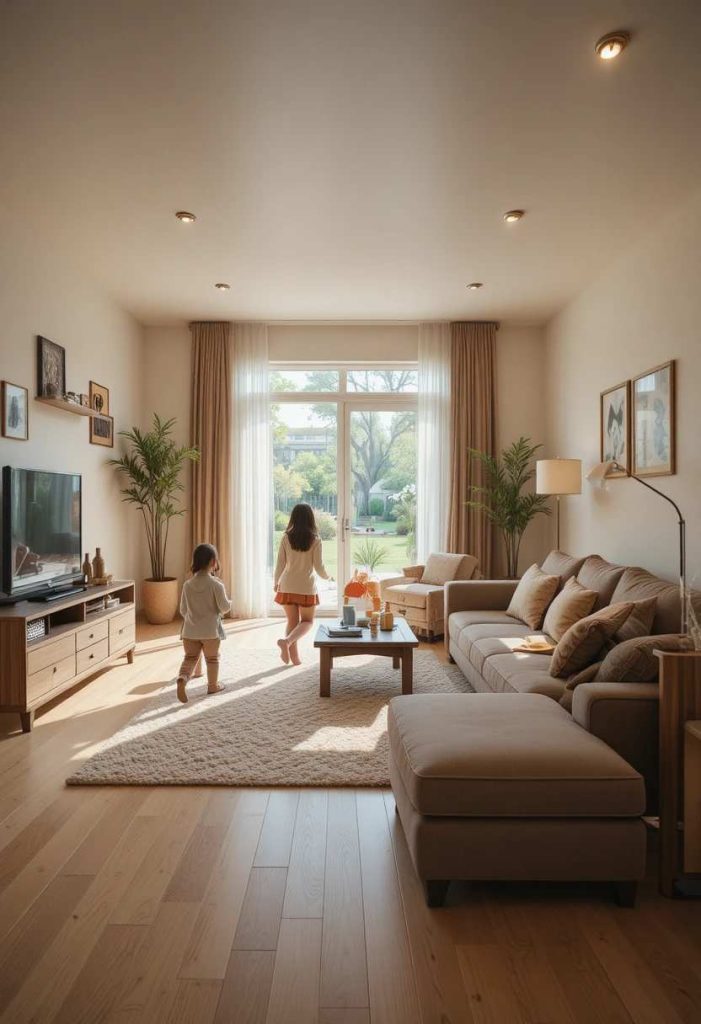
Leaving room to move keeps a busy family room feeling calm and safe. Clear paths matter with kids and pets rushing through, and I learned to leave a wide lane from the door to the sofa, then another to the kitchen. Toy baskets live against the walls, never in the middle of the floor, and the coffee table sits far enough from the sofa for little legs to pass. Every evening we do a quick sweep: shoes to the rack, toys to their baskets, and cushions back on the sofa. A room you can cross without tripping feels bigger, calmer, and much easier to love.
How to do it: Leave a clear lane from the door to the sofa and another to the kitchen, at least 75 centimetres wide. Push toy baskets against the walls, keep the coffee table far enough from the sofa for little legs to pass, and run a quick evening sweep: shoes to the rack, toys to their baskets, cushions back on the sofa. Check the paths at child height once a week.
17. Add a Cozy Blanket Ladder
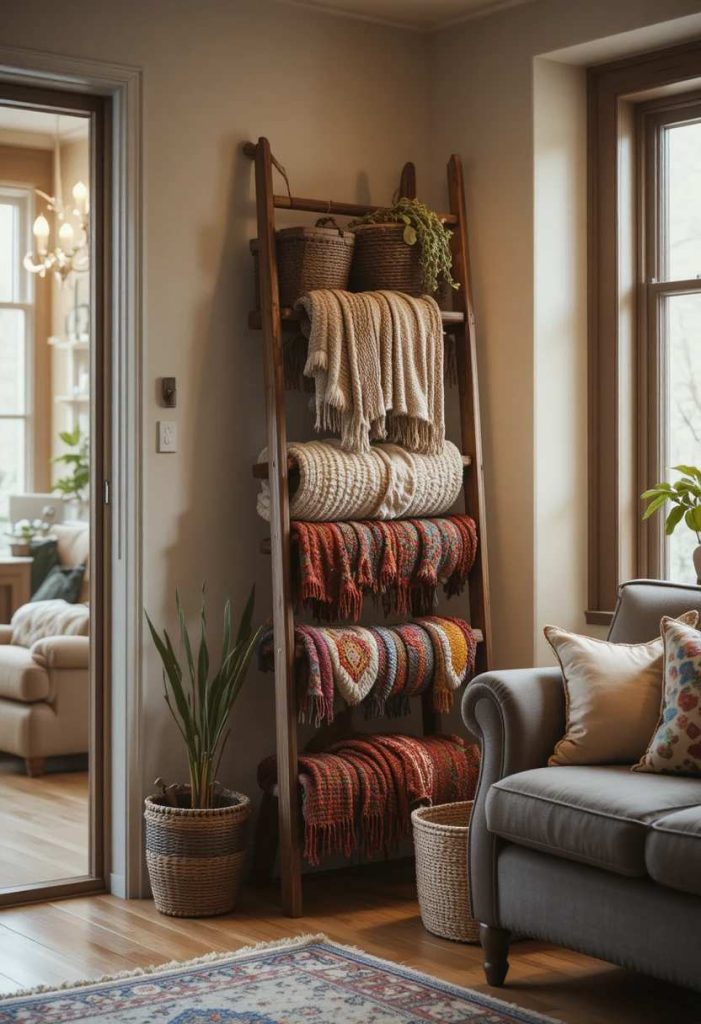
A leaning ladder keeps throws handy and looks charming too. It adds vertical interest and cozy character to a plain wall, and mine leans in the corner beside the sofa, holding three throws at different heights. I chose a slim wooden ladder that matches the coffee table, and I fold each throw in thirds so the rungs stay neat. The children’s favourite fleece lives on the lowest rung, where small hands can reach it, and a heavier wool throw waits on the top rung for cold nights. It takes up almost no floor space, costs very little, and makes the room feel layered and loved.
How to do it: Choose a slim wooden ladder that matches your coffee table, lean it against the wall beside the sofa, and fix the top to the wall with a small bracket if children climb. Fold each throw in thirds, hang the children’s favourite on the lowest rung, and keep the heaviest wool throw on top for cold nights. Wash the throws monthly so the ladder always looks fresh.
18. Include Nature and Greenery
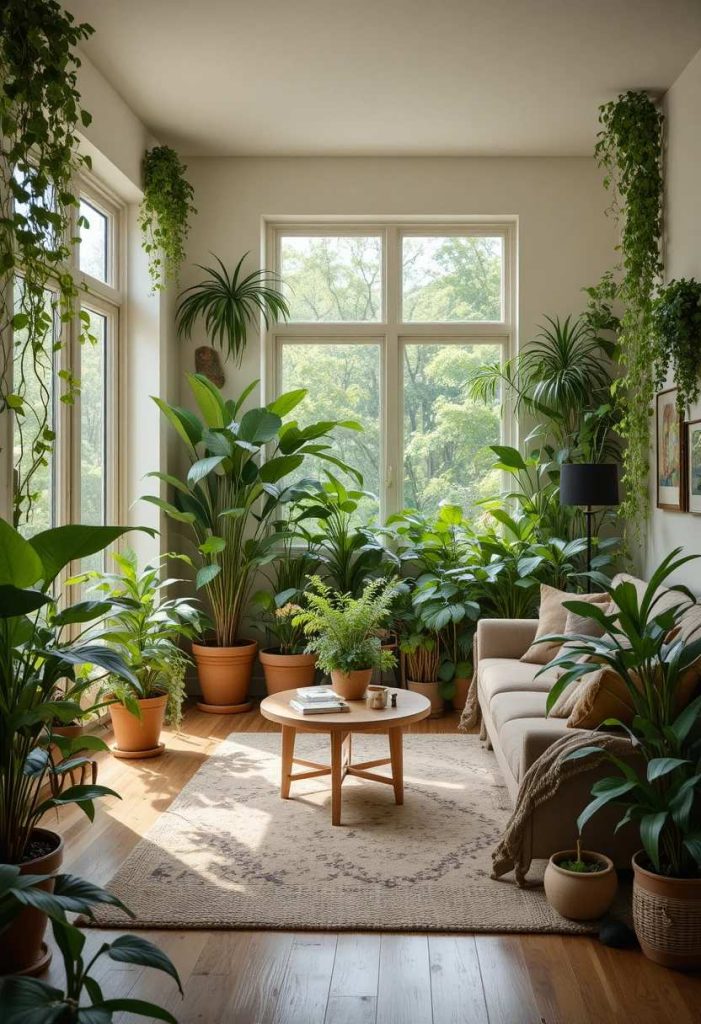
A few sturdy plants bring fresh life and calm to the room. Choose hardy varieties that survive busy hands and the occasional football, and I keep a snake plant by the window, a pothos trailing from the shelf, and a small herb pot on the side table. Plants soften hard corners, clean the air a little, and give children something living to care for. I water on Sundays, wipe the leaves monthly, and keep the pots heavy enough that they cannot topple. If real plants feel risky, a good faux olive branch in a tall vase gives the same fresh feeling without the watering can.
How to do it: Choose hardy plants like snake plants and pothos, and place them out of the main walkway in heavy pots. Water once a week, wipe the leaves monthly, and let children help with watering so they learn to care for them. If real plants feel risky, use a good faux olive branch in a tall vase instead, and dust it weekly.
19. Add a Snack-Friendly Setup
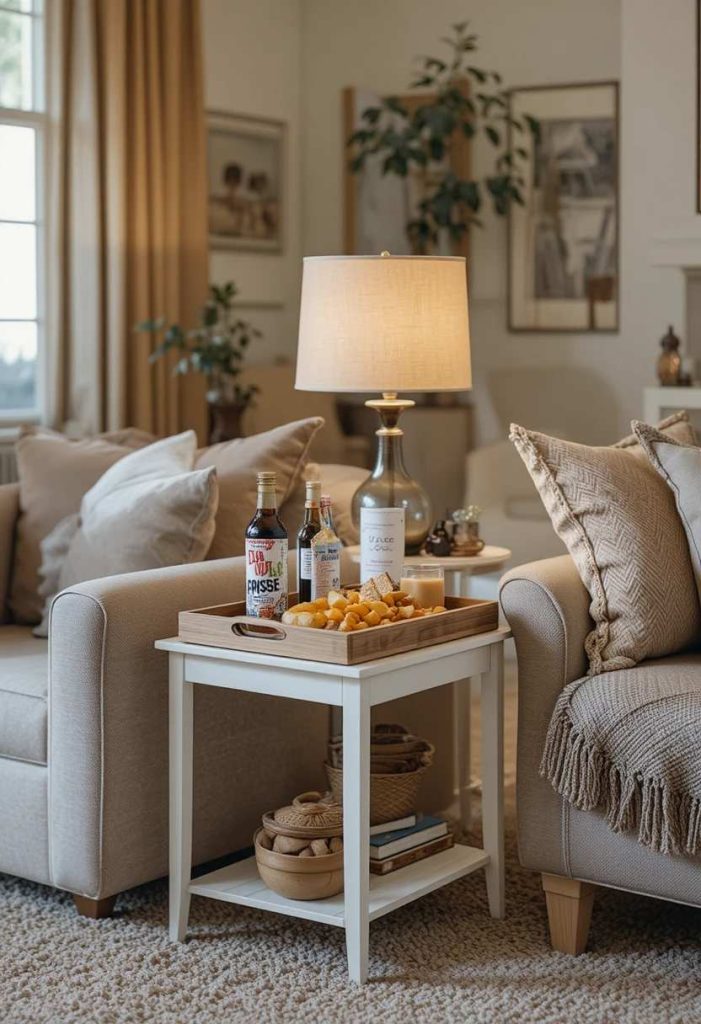
A side table or tray station makes snacks and drinks easy during movie nights. Coasters and wipeable surfaces keep the mess in check, and I set a small tray on the coffee table every Friday, with popcorn bowls, two drinks, and a stack of coasters. A low side table beside each sofa end means nobody balances a mug on the armrest, and a wipeable tray catches the inevitable drips. We keep a mini basket of napkins nearby, and the children know the rule: snacks stay on the tray, and the tray stays on the table. It keeps the sofa crumb-free and film night feeling like a small celebration.
How to do it: Place a low side table at each end of the sofa and keep a wipeable tray on the coffee table. Set the tray with bowls, drinks, coasters, and a small basket of napkins before film night, and teach everyone the rule that snacks stay on the tray. Wipe the tray after each use, and keep spare coasters in the sideboard drawer.
20. Create Cozy Corners
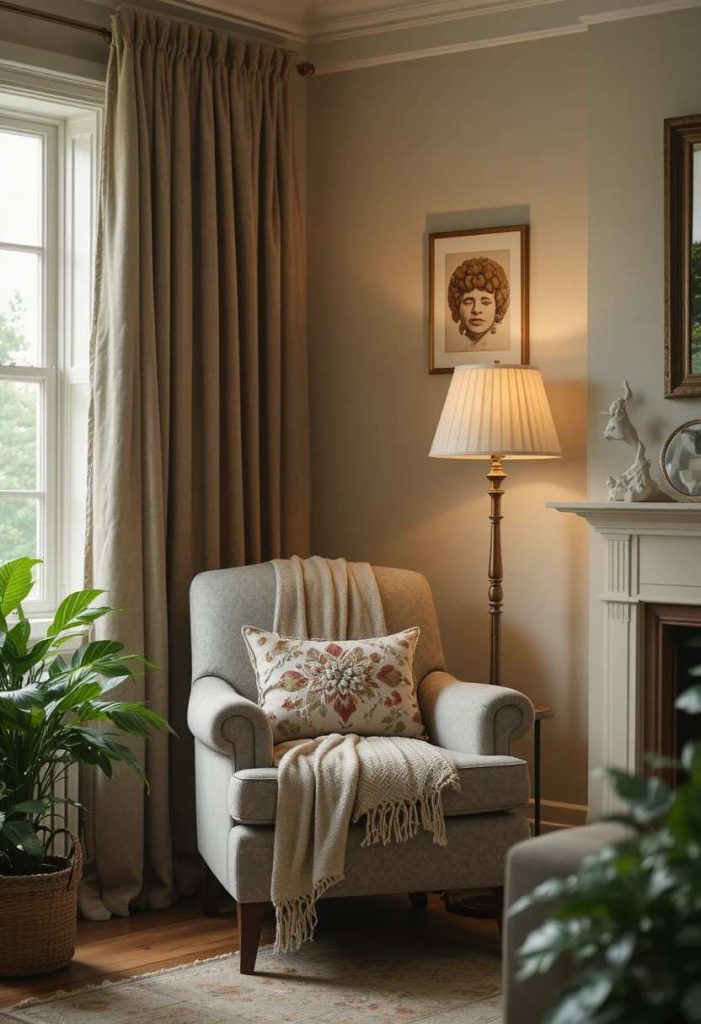
A soft chair with a lamp and blanket makes a little retreat within the room. These snug spots are perfect for reading, resting, and a quiet cup of tea while the rest of the house hums. I built ours in the bay window: a deep armchair turned slightly towards the light, a small table for a mug, a reading lamp, and a basket of books beneath. A sheepskin over the chair back adds softness, and a heavy curtain behind keeps the draught out. Everyone claims the corner at different hours, my husband with the paper, my daughter with her sketchbook, and me with a novel after bedtime.
How to do it: Pick a quiet corner by a window and place a deep armchair turned slightly towards the light. Add a small table for a mug, a reading lamp, a basket of books beneath, and a sheepskin over the chair back. Hang a heavy curtain behind the chair to block draughts, and keep the corner free of toys so it stays restful.
21. Add Warm Wood Tones
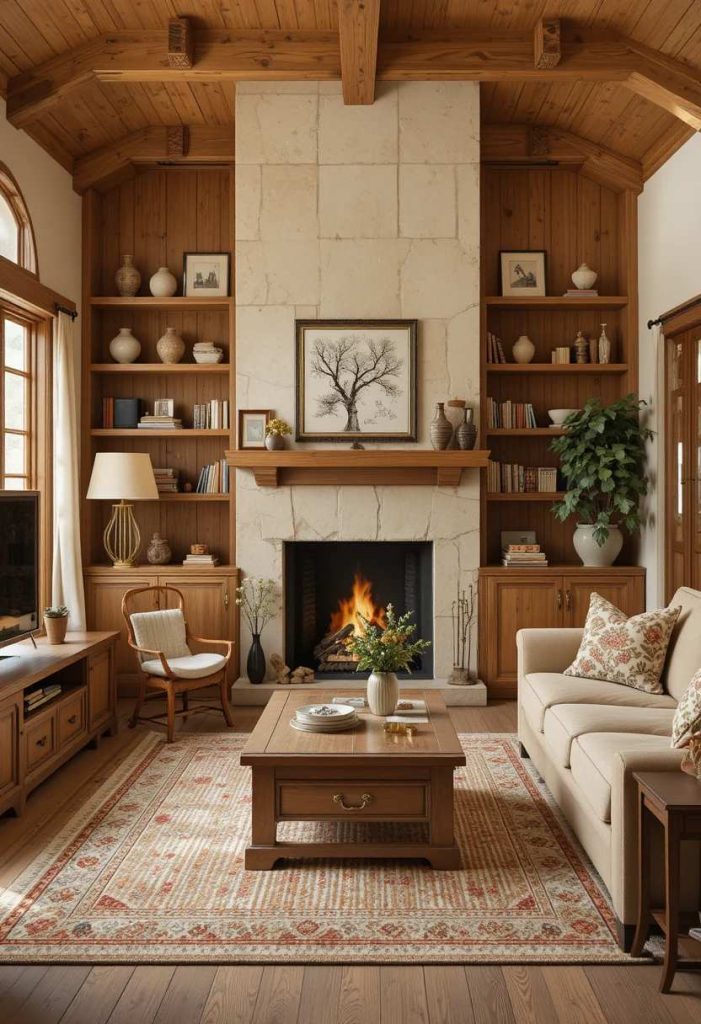
Wooden furniture and accents bring natural, homey warmth. The grain feels grounding and welcoming, and I let the oak coffee table, the pine bookshelf, and a walnut tray share the room without matching exactly. Mixing wood tones works when one tone leads: ours is warm oak, with darker walnut as an accent and pale pine on the shelves. I keep the wood oiled twice a year, which deepens the colour, and I use felt pads under every leg so the floor stays unmarked. A wooden bowl of pinecones on the coffee table and a turned-wood lamp base tie the whole palette together without any fuss.
How to do it: Choose one leading wood tone, such as warm oak, and add darker walnut and pale pine as accents. Oil the wood twice a year to deepen the colour, fit felt pads under every leg, and tie the palette together with a wooden bowl, a tray, and a turned-wood lamp base. Keep the tones warm and avoid mixing in cold grey woods.
22. Keep It Easy to Tidy
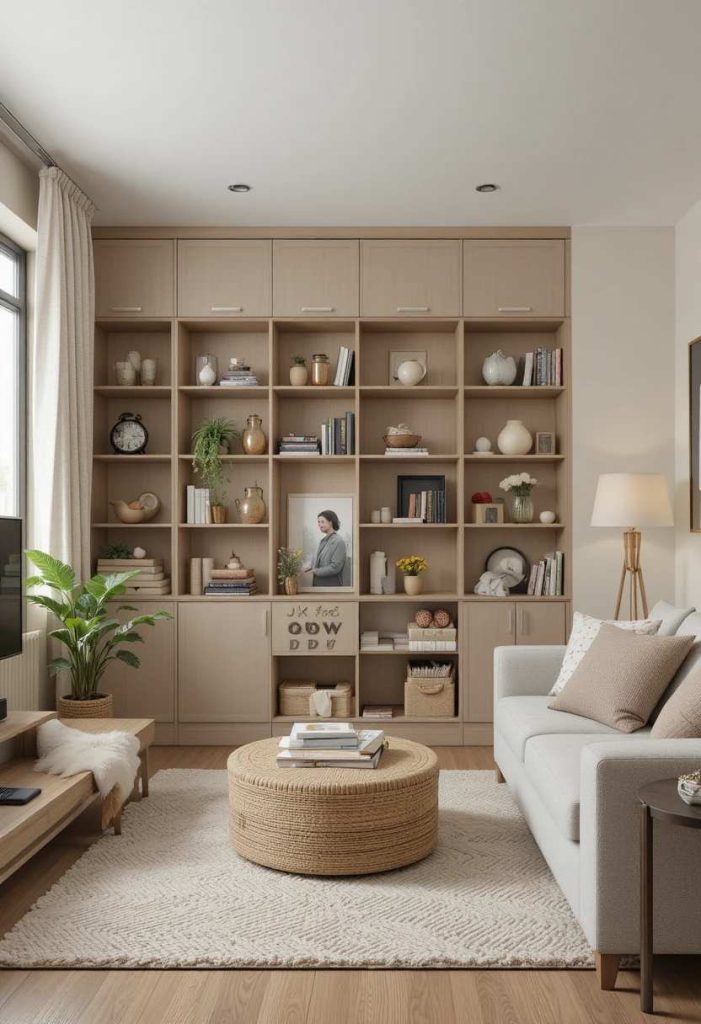
Choosing furniture and storage that make cleaning up quick keeps the room functional. A ten-minute tidy should be all it takes to reset the room, so every toy, book, and blanket needs a home a child can reach. I use open baskets for daily toys, a lidded ottoman for blankets, and one deep drawer for the bits and pieces that never seem to belong anywhere. Low shelves let children put things back themselves, which matters more than any pretty label. We tidy together before baths, racing the timer, and the winner chooses tomorrow’s film. A room that resets quickly gets used more and resented less.
How to do it: Give every toy, book, and blanket a home a child can reach, using open baskets for daily toys and a lidded ottoman for blankets. Put low shelves at child height, keep one deep drawer for odds and ends, and run a ten-minute family tidy before baths each evening. Race a timer to make it fun, and let the winner choose the next film.
23. Add Soft Window Coverings
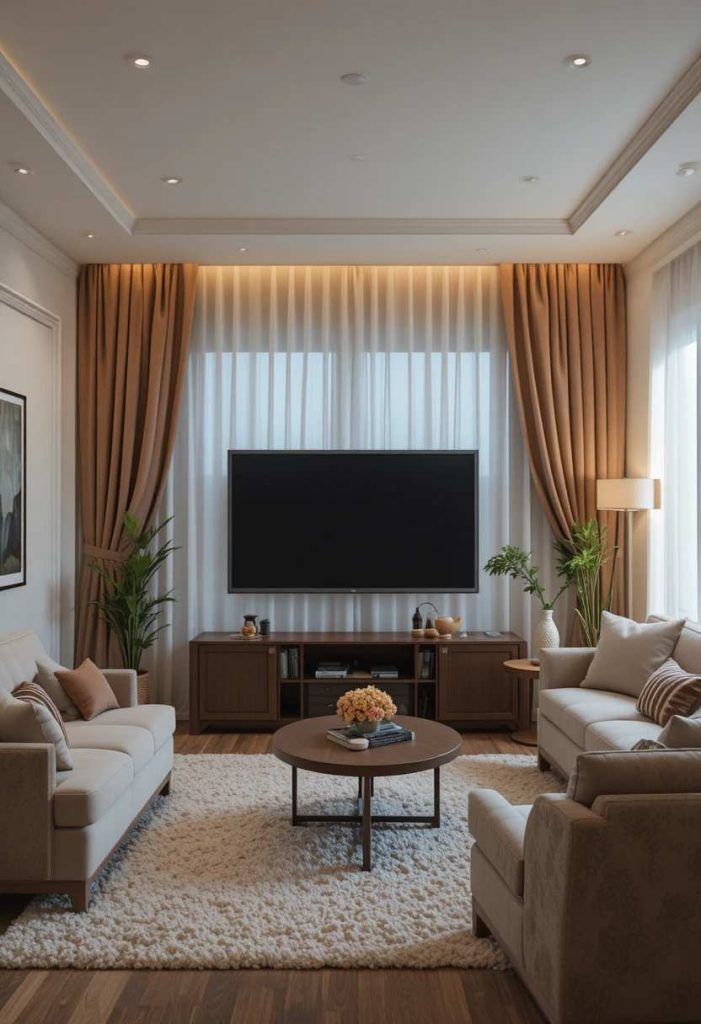
Curtains or soft blinds add warmth, privacy, and cozy comfort. They soften the room and control the light, and I chose lined linen curtains in a warm cream that pool just slightly on the floor. Blackout lining behind them means lazy Sunday lie-ins and better film nights, while sheer panels underneath let the daylight in on bright mornings. I hung the rod high and wide so the window looks bigger and the curtains never block the light when open. Wash them twice a year, steam out the creases, and tie them back with simple cotton ties the children cannot tangle.
How to do it: Hang the curtain rod high and wide so the window looks bigger, then choose lined linen curtains in a warm cream with blackout lining behind. Add sheer panels underneath for bright mornings, wash the curtains twice a year, and tie them back with simple cotton ties. Check that the cords are short and out of children’s reach, or choose cordless blinds.
24. Display Kids’ Artwork
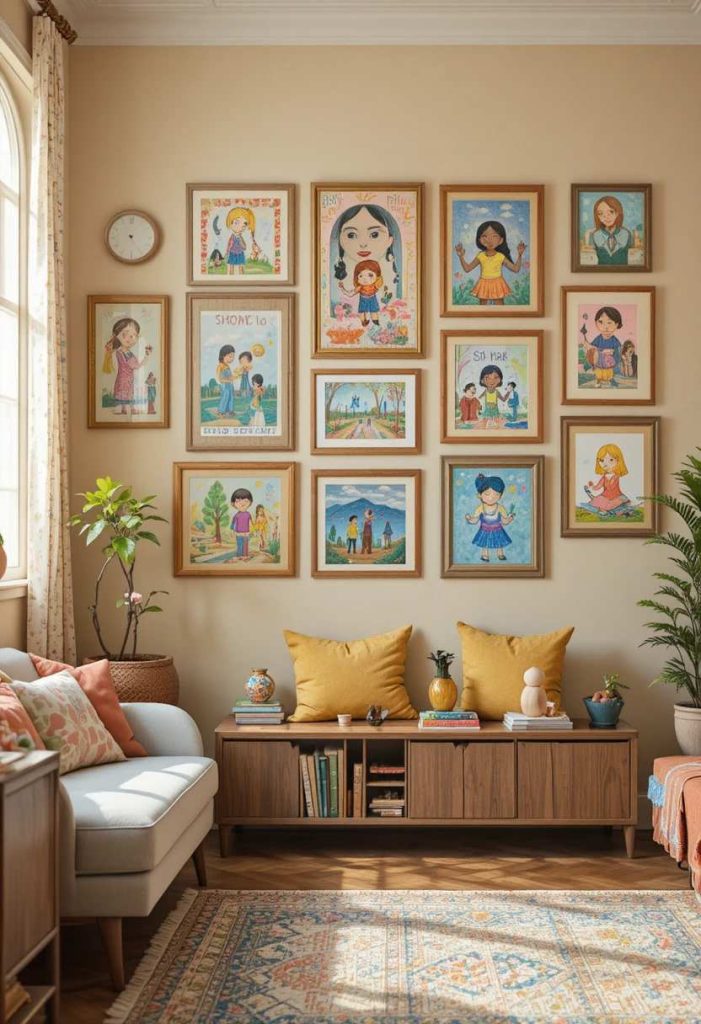
Framing children’s drawings adds joy, colour, and personality. It makes little ones feel proud and turns the family room into a gallery of your children’s creativity. I hang a rotating display on one wall: three simple frames where the newest masterpieces go, swapped every month so the wall never feels stale. A clip rail in the play corner holds the works in progress, and the children’s absolute favourites earn a proper frame in the hallway. I photograph each drawing before it comes down, so the art lives on even after the paper fades. It costs almost nothing, and it makes the room unmistakably ours.
How to do it: Hang three simple matching frames on one wall and rotate the newest drawings through them every month. Add a clip rail in the play corner for works in progress, and give absolute favourites a proper frame in the hallway. Photograph each drawing before it comes down, and date the back so you can remember when it was made.
25. Add a Statement of Comfort
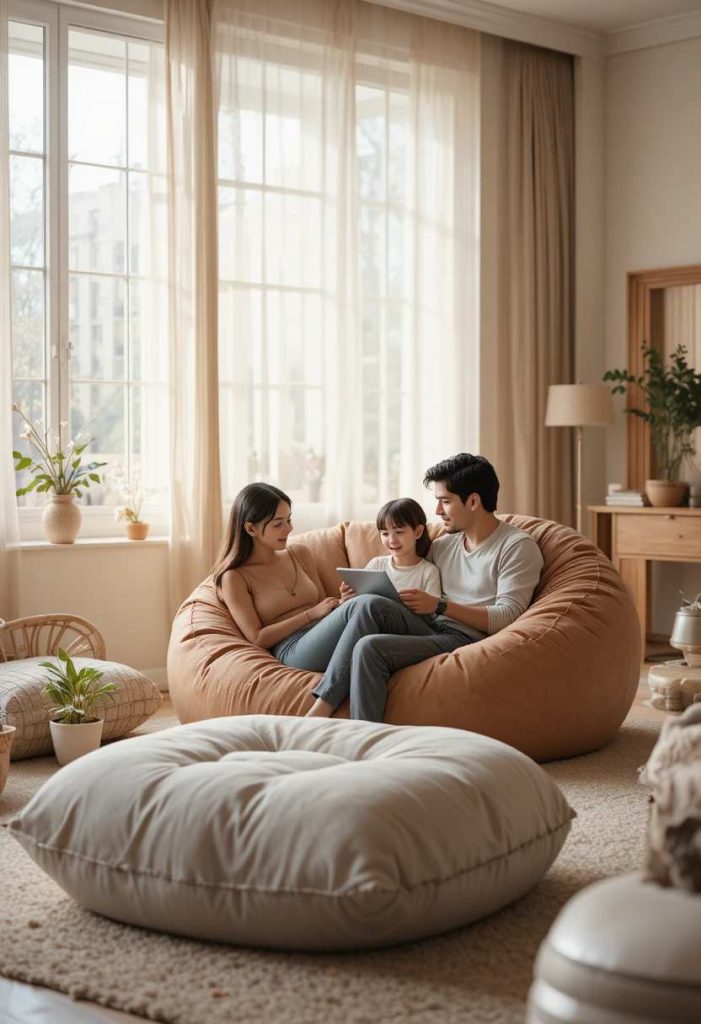
A big beanbag, a cozy daybed, or an oversized floor cushion invites deep relaxation. These comfy pieces become everyone’s favourite spot, and our giant beanbag has hosted reading marathons, sleepy Sunday naps, and more than one homework session. I chose a beanbag with a washable cover in a deep, forgiving green, big enough for two children or one sprawling adult. A daybed works just as well, dressed with a soft mattress, a pile of cushions, and a folded throw. Keep it near the window for reading light, and fluff or shake it weekly so it keeps its shape.
How to do it: Choose a beanbag, daybed, or oversized floor cushion with a washable cover in a deep, forgiving colour. Place it near the window for reading light, dress it with cushions and a folded throw, and keep it big enough for two children or one sprawling adult. Fluff or shake it weekly, wash the cover monthly, and rotate it so it wears evenly.
26. Make It Adaptable
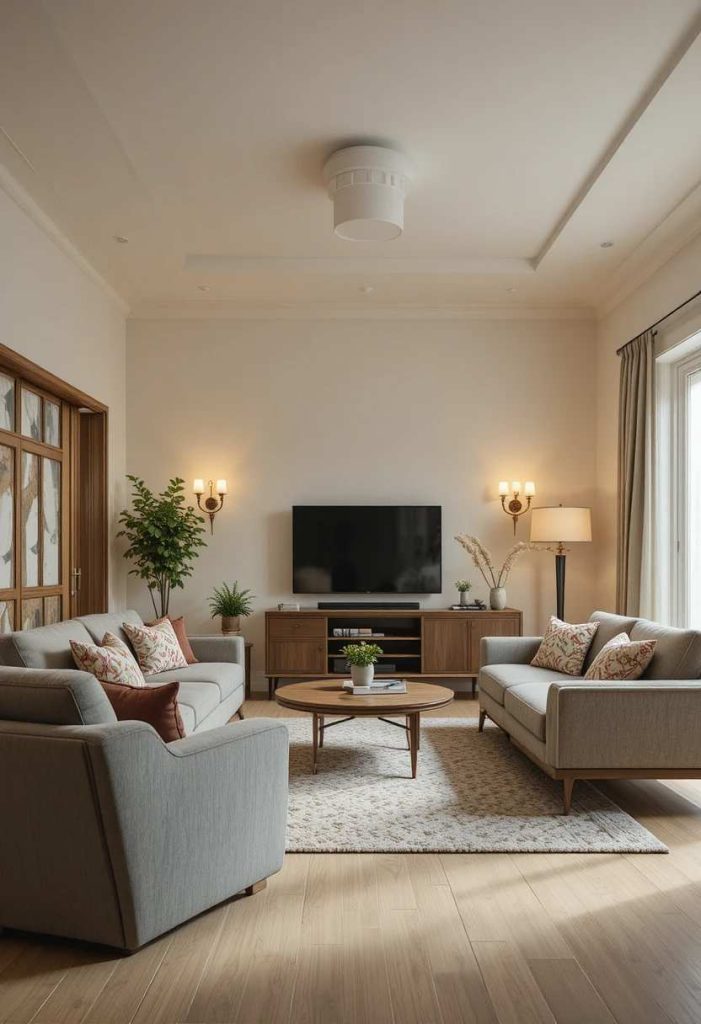
Choosing flexible, movable pieces lets the room change with your family’s needs. Furniture that shifts easily keeps the room working as children grow, and our lightweight armchair has lived in four corners of this room already. Nesting tables pull apart for homework and tuck away for film nights, poufs move where the guests are, and the rug rolls up when the floor becomes a dance floor. I avoid heavy, fixed pieces in the family room, because the room that adapts gets used in more ways. Measure doorways before buying anything large, and choose pieces two people can lift without a struggle.
How to do it: Choose lightweight, movable pieces, nesting tables, poufs, and an armchair two people can lift. Keep the rug easy to roll up, avoid heavy fixed furniture, and measure doorways before buying anything large. Rearrange the room with the seasons, and let the children help decide where things go so the space suits them too.
27. Fill It With Love
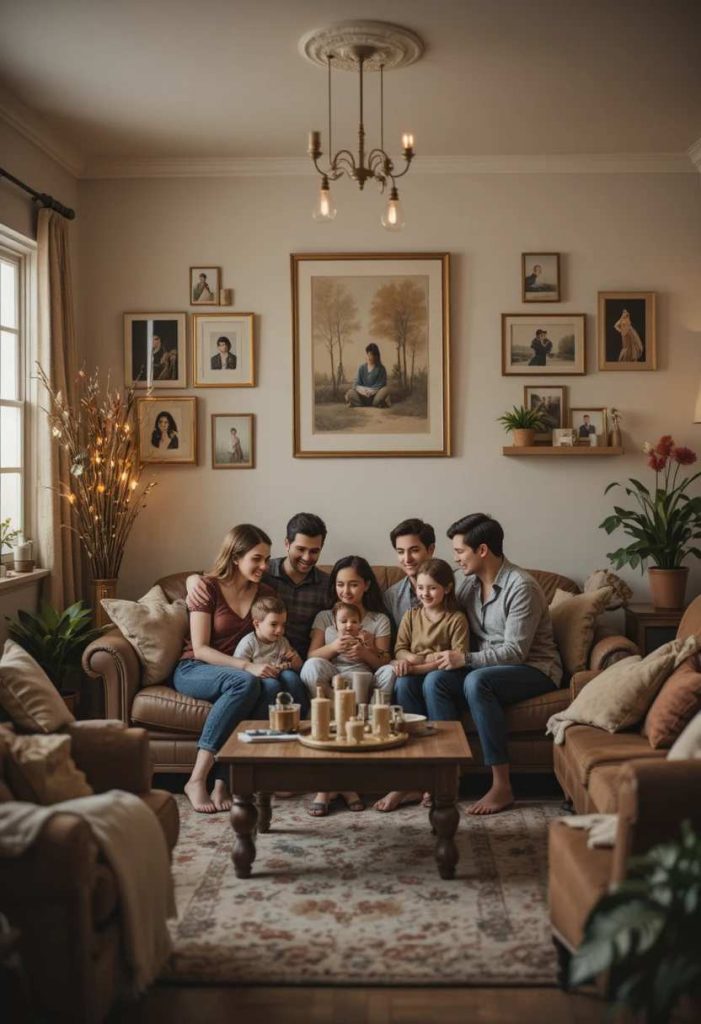
Finally, the very best family room is filled with the things and people you love most. Cozy textures, warm light, and personal touches make it feel like home, and I believe a family room should show the life lived in it. Our walls hold the children’s art, the shelves hold books with broken spines, and the sofa holds the dent where my husband always sits. Nothing matches perfectly, and that is exactly the point. A family room earns its comfort over years of film nights, homework, laughter, and quiet mornings. Start with one corner, add what you love, and let the room grow with your family.
How to do it: Start with one corner and add what you love most, a piece of children’s art, a well-loved book, a throw that has seen a hundred film nights. Let the room collect memories instead of matching sets, and add one personal touch each season. Sit in the room every evening for a week, notice what is missing, and fix that one thing first.
Frequently Asked Questions
What is the difference between a family room and a living room?
A family room is the relaxed, everyday heart of the home, where children play, films are watched, and feet go up on the sofa. A living room is usually the more formal space near the front of the house, kept tidier for guests and conversation. In many homes the two rooms blend together, so choose the layout that suits how your family actually lives, not the label on the floor plan.
What are the best kid-proof fabrics for a family room?
Performance fabrics, washable slipcovers, and tightly woven linen blends are the safest choices, because they resist stains and survive repeated washing. Look for removable covers you can wash on a cool cycle, and choose mid-tone colours and small patterns that hide everyday marks. Leather and faux leather also wipe clean easily, though they can feel cold in winter, so add a soft throw to warm them up.
How can I store toys in a family room without it looking messy?
Give every toy a home at child height, using open baskets for daily favourites and closed cupboards or ottomans for the rest. Label baskets with pictures so little ones can tidy up themselves, and keep one basket empty for new arrivals. A ten-minute family tidy each evening, before baths, keeps the room calm without anyone feeling policed.
Where should I put the TV in a family room?
Mount the television at eye level from the sofa, with the centre of the screen about 105 centimetres from the floor, and angle the seating towards it. Keep it away from bright windows to avoid glare, hide the cables behind the media unit, and store controllers in a basket beside it. If the television dominates the room, balance it with a gallery wall or a fireplace focal point on the opposite wall.
How do I make a small family room feel cozy and functional?
Choose a few pieces that work twice as hard, such as an ottoman with storage, nesting tables, and a sofa with washable covers. Keep the palette light and calm, use one large rug to anchor the seating, and let the furniture float a little away from the walls so the room breathes. Add layered lighting and one personal touch per person, and the room will feel generous even when the floor space is small.
Your Family Room Checklist
Print this list and tick off each step as you style your family room.
☐ Choose a deep, comfortable sofa with washable covers.
☐ Pick durable, kid-friendly fabrics for seating.
☐ Layer soft throws and cushions for instant coziness.
☐ Give every toy a basket, ottoman, or cupboard home.
☐ Add a sturdy coffee table with rounded corners.
☐ Lay a large, washable rug under the seating.
☐ Layer three kinds of light: a floor lamp, a table lamp, and a dimmer.
☐ Set the television at eye level and hide the cables.
☐ Create a reading corner with a chair, lamp, and books.
☐ Hang blackout curtains or soft blinds for privacy.
☐ Add plants or greenery in heavy, sturdy pots.
☐ Display family photos and children’s artwork.
☐ Keep a tray station ready for snacks and film nights.
☐ Run a ten-minute family tidy every evening.
A Final Gentle Thought
Start with the sofa your family actually lives on, then add the storage that keeps the toys in check and the light that makes evenings feel golden. A family room does not need to be perfect or finished; it needs to be ready for a film night, a board game, a quiet cup of tea, and a child who has had a long day. Keep the fabrics washable, the paths clear, and the things you love within reach. Then let the room collect the small, happy evidence of your family: the dent in the favourite cushion, the drawing on the wall, the blanket that is always slightly unfolded. That is what makes a family room feel like home.