25 Scandinavian White Living Room Ideas That Feel Warm, Not Cold
Why Most White Living Rooms Feel Cold (And How to Fix It)
I will be honest with you. The first time I tried to design a Scandinavian white living room, it ended up looking like a dentist’s waiting room. Sterile. Cold. The kind of space where you find yourself whispering instead of laughing. I had followed every Pinterest tip, picked the cleanest white paint I could find, bought a white sofa, and somehow the result felt nothing like the dreamy Nordic interiors I had been saving.
Here is what nobody tells you. The warmth in a Scandinavian white living room does not come from the color white itself. It comes from everything you layer on top of the white. The wood tones. The texture combinations. The soft lighting at multiple heights. The lived-in details that signal a real human lives there. White is just the backdrop. The magic is in the layering.
Section 1: Start With the Right Foundation (Paint and Walls)
Before you buy a single piece of furniture, get the paint right. The first three ideas in this guide cover the foundational choices that will make or break every other decorating decision you make. Most cold-looking white rooms have a paint problem, not a styling problem.
1. Choose a Warm White Paint, Not a Cool One
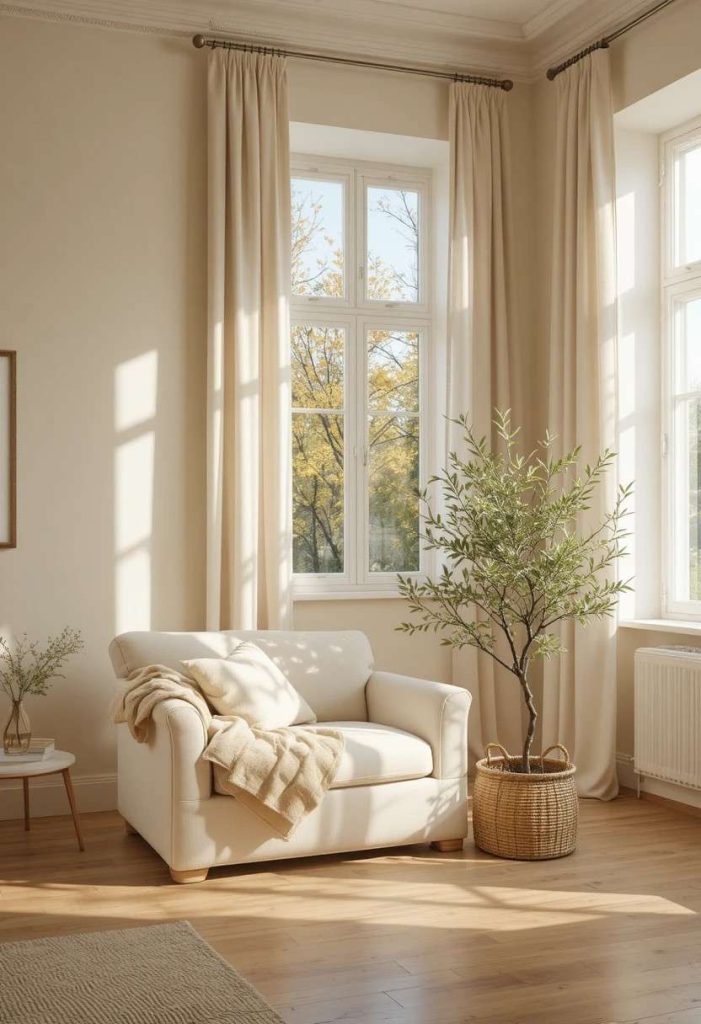
This is the single most important decision you will make. Cool whites (the ones with grey, blue, or violet undertones) are what give white rooms that hospital-lobby feeling everyone is trying to escape. Warm whites have soft hints of cream, beige, or yellow that read as inviting under both daylight and lamp light. Some of the most reliable warm whites for Scandinavian-style living rooms are Benjamin Moore’s White Dove, Farrow and Ball’s Wevet, Sherwin-Williams’ Alabaster, and Behr’s Swiss Coffee. Buy sample pots first and paint large swatches on different walls. Look at them in morning light, afternoon light, and lamp light before you commit.
2. Paint the Ceiling One Shade Lighter Than the Walls
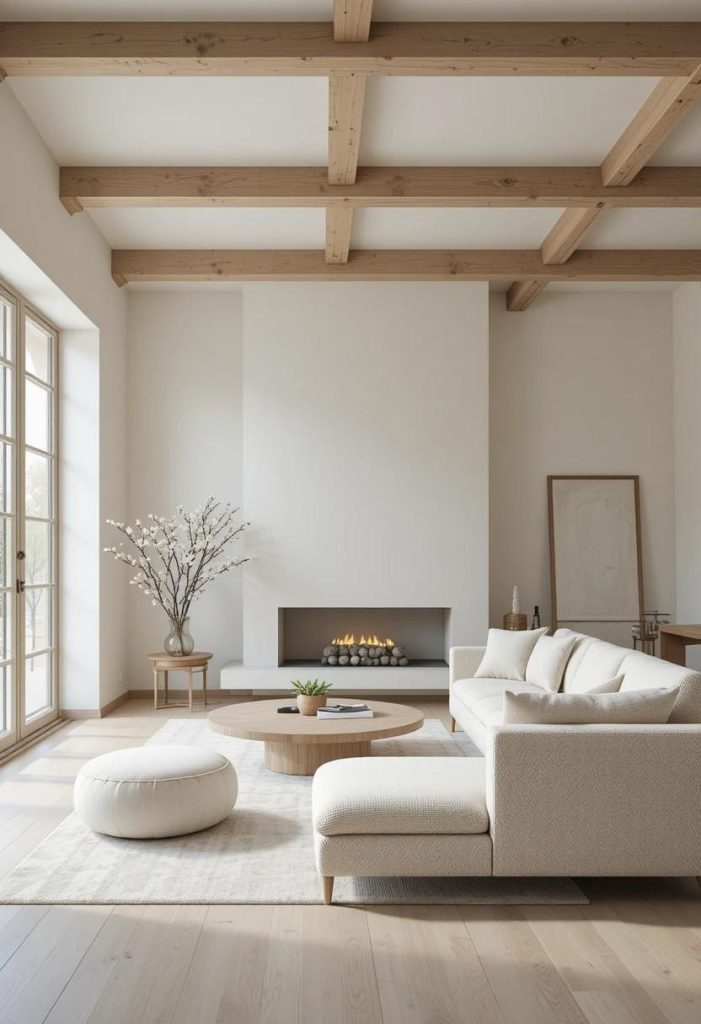
Most people paint the ceiling the exact same color as the walls or default to the standard bright white ceiling paint. Both choices flatten the room. Painting the ceiling just one shade lighter than your wall color (or using the same color cut by 25 percent with white) creates subtle vertical lift. The eye does not register the difference consciously, but the room feels taller and more breathable. This trick is especially powerful in homes with standard 8-foot ceilings.
3. Skip Bright White Trim with Warm White Walls
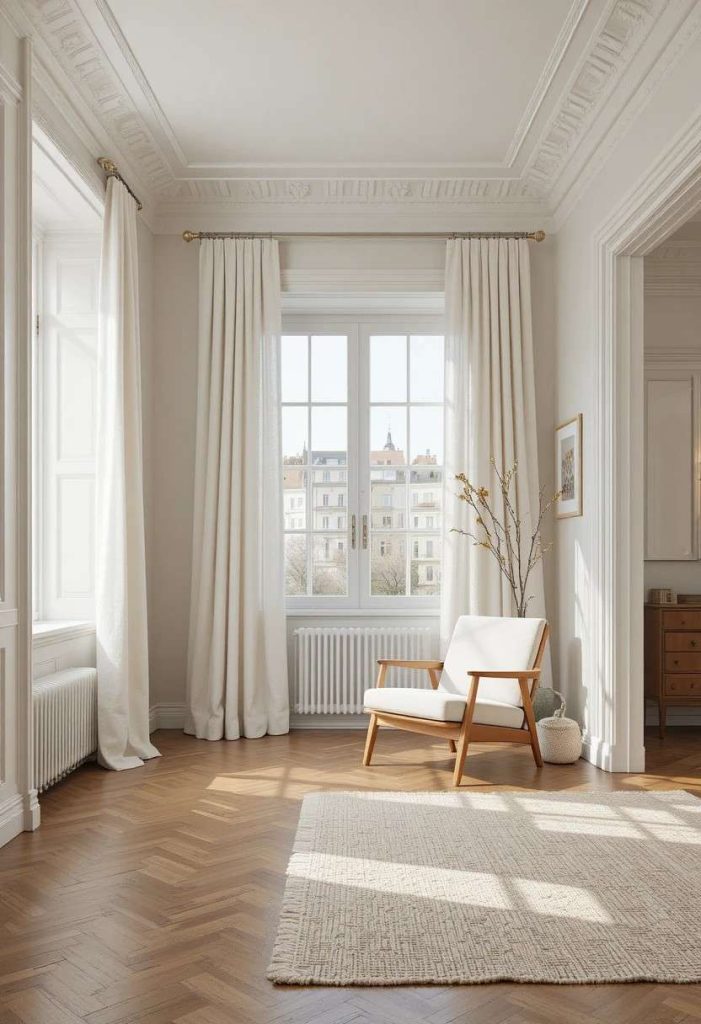
Stark bright white trim against warm white walls creates a jarring visual disconnect that reads as unfinished rather than intentional. Match your trim and baseboards to your wall color, or use a trim color that is only slightly brighter (no more than one or two shades). This unified approach lets the architecture recede so the texture and furniture become the focal point, which is the whole philosophy behind Scandinavian design.
Section 2: Bring in Natural Wood for Instant Warmth
Wood is the secret weapon of every successful Scandinavian interior. It is the single fastest way to inject warmth into a white space without disrupting the airy, light-filled feeling you are working toward. These four ideas cover the most impactful wood elements to introduce.
4. Anchor the Room with a Light Oak Coffee Table
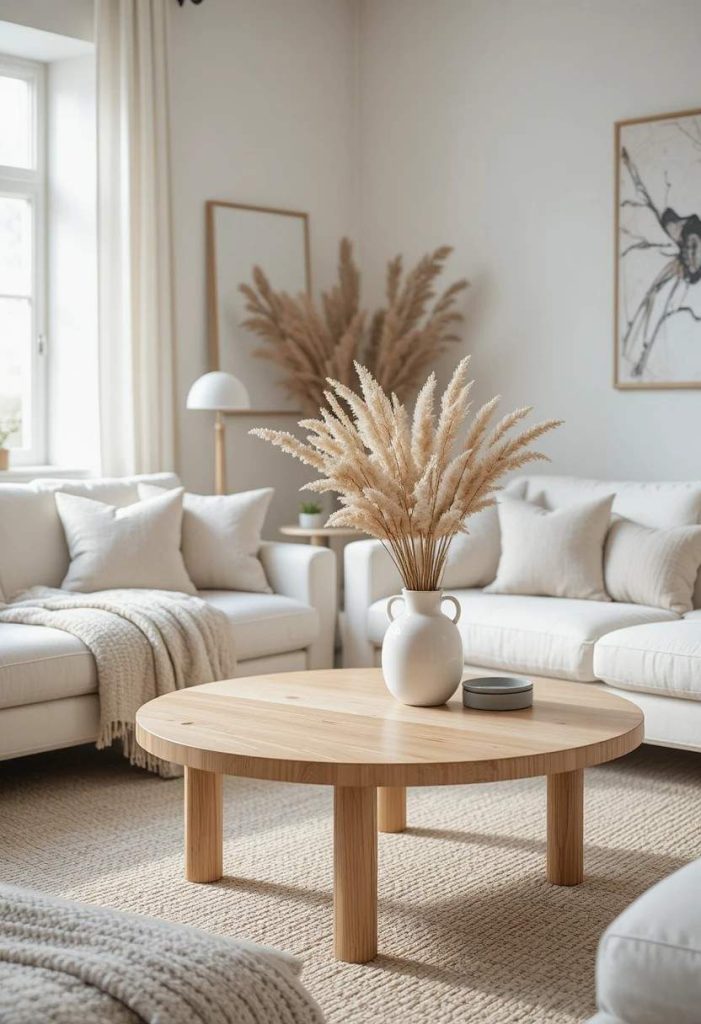
If you only add one wood element to your white living room, make it a light oak coffee table. Light honey-toned oak is the unofficial mascot of Scandinavian interiors because it adds warmth without competing with the white palette. Avoid coffee tables in dark walnut or orange-toned pine. Look for clean rectangular or round silhouettes with visible grain. A solid wood piece will outlast trends and become more beautiful with age.
5. Lay Down Pale Wood Flooring for Foundational Warmth
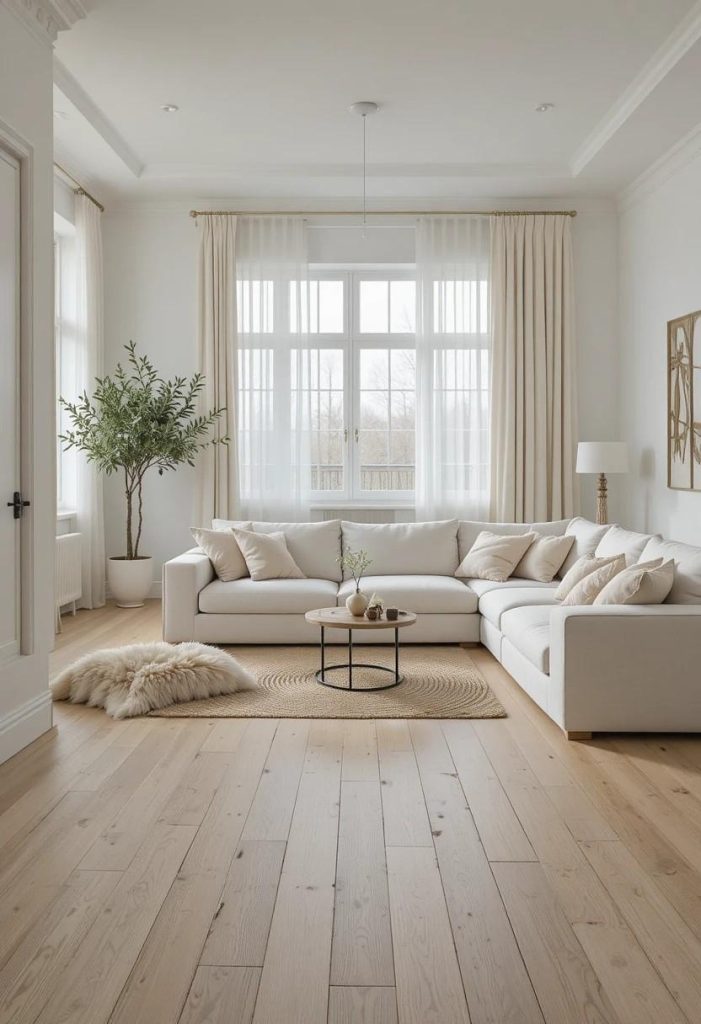
Pale wood floors (whitewashed oak, natural ash, or light engineered hardwood) ground a white room in warmth from the very bottom. If replacing your floors is not on the table, a large natural-fiber rug like jute or sisal can mimic the effect by covering most of the visible floor space. Avoid dark wood floors in a white Scandinavian room. They create too much contrast and undercut the airy, light-filled feeling you are working toward.
6. Float a Slim Wood Console Behind Your Sofa
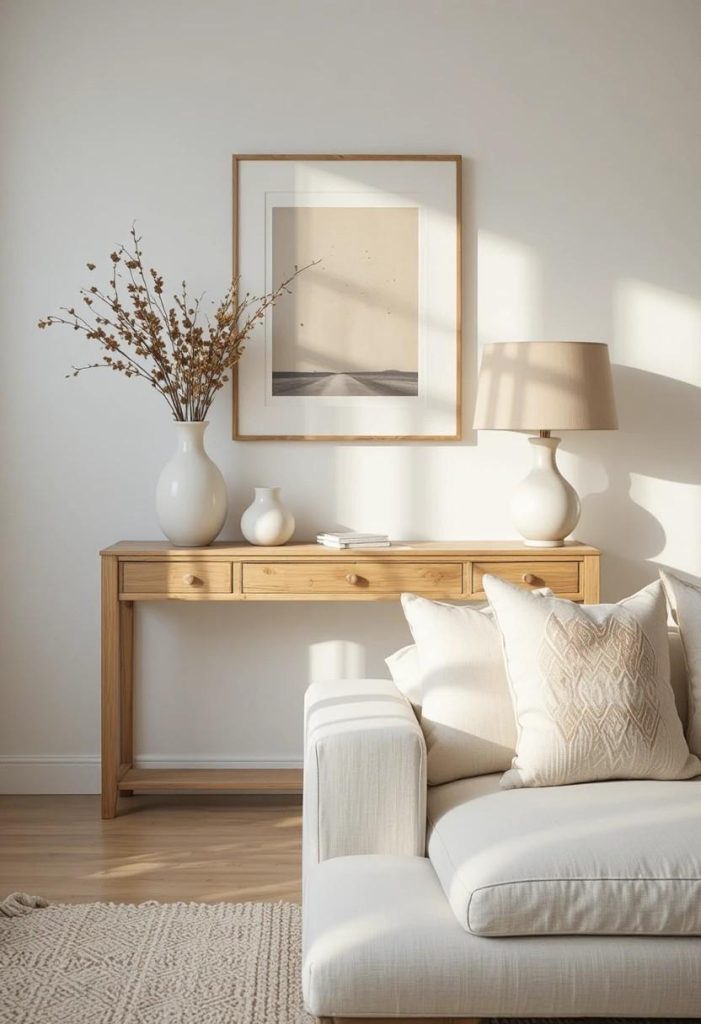
The wall behind a sofa is often where a white room feels emptiest. A slim wood console table (about one-third the depth of a regular console) breaks up that wall of white at exactly the right height and adds a horizontal surface for styling. Top it with a pair of ceramic vases, a small lamp, and a stack of books. The console becomes a quiet sculpture rather than just furniture.
7. Hang an Oversized Wood-Framed Mirror
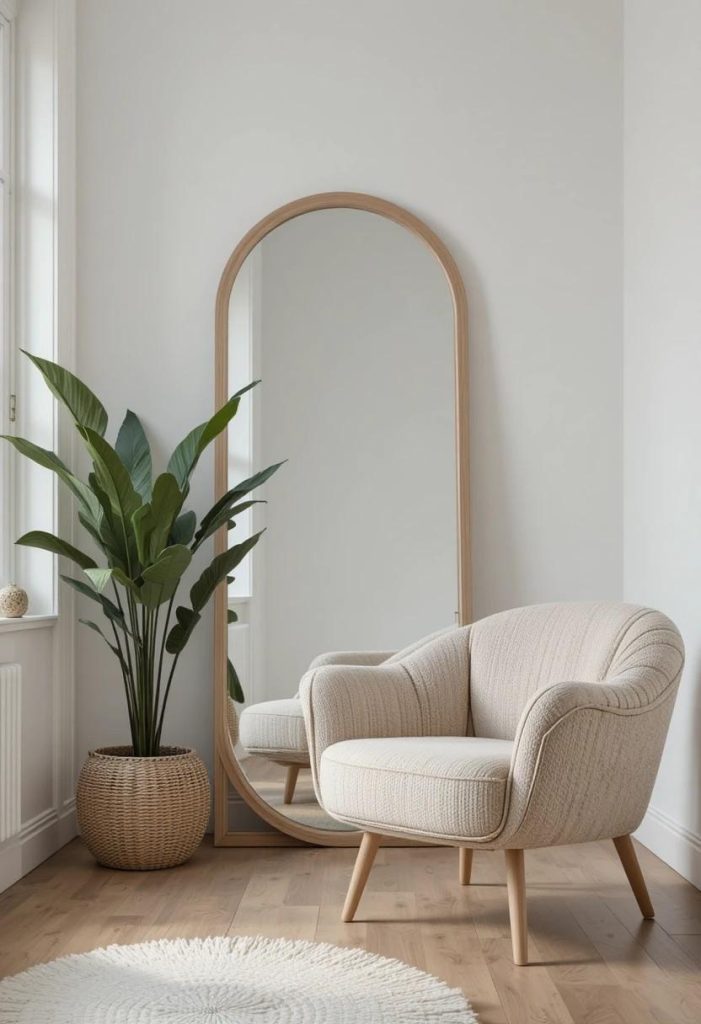
Forget gold and silver framed mirrors for a Scandinavian space. A simple wood-framed mirror (whether oak, ash, or even painted wood in a soft natural tone) adds texture, bounces natural light around the room, and ties back to your other wood elements. The trick is to go big. A small mirror gets lost on a white wall. An oversized mirror leaned casually against the wall or hung above the sofa anchors the space.
Section 3: Layer Textures for Depth and Comfort
If your white living room feels flat, the problem is almost always texture, not color. Texture is what your hand feels and your eye reads as comfort. The next five ideas show you exactly how to layer different materials to create depth and softness without adding clutter.
8. Layer at Least Three Different Textures

This is the rule that quietly does the most work in a white room. If your sofa, rug, and pillows are all smooth fabrics, the room will feel flat no matter what color it is. Combine bouclé, linen, wool, knit, leather, and sheepskin. Touch matters as much as sight. A boucle sofa with a chunky knit throw, linen pillows, and a wool rug creates depth that pure color choices never could.
9. Drape a Chunky Knit Throw Over an Armchair
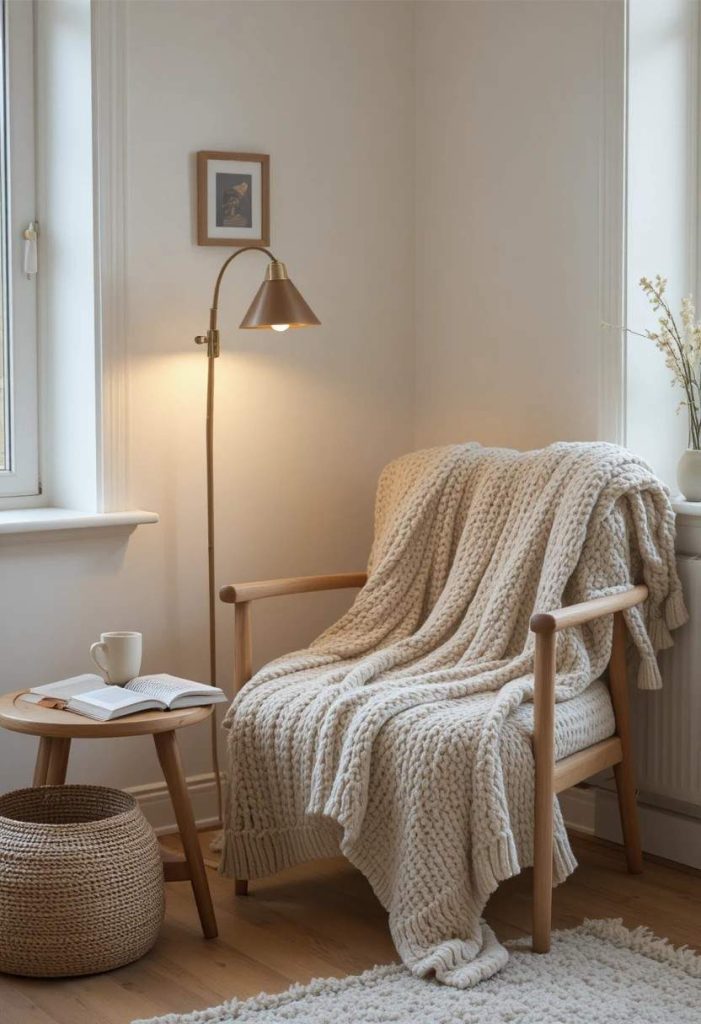
A heavy cream, oatmeal, or undyed wool chunky knit throw casually draped over an armchair is the textile equivalent of a deep exhale. It immediately signals comfort and invites people to sit down. Look for chunky knits in undyed natural wool or merino blends. Avoid synthetic blends that look stiff and overly perfect. A real knit gets better with age.
10. Add Sheepskin or Faux Fur for Instant Hygge
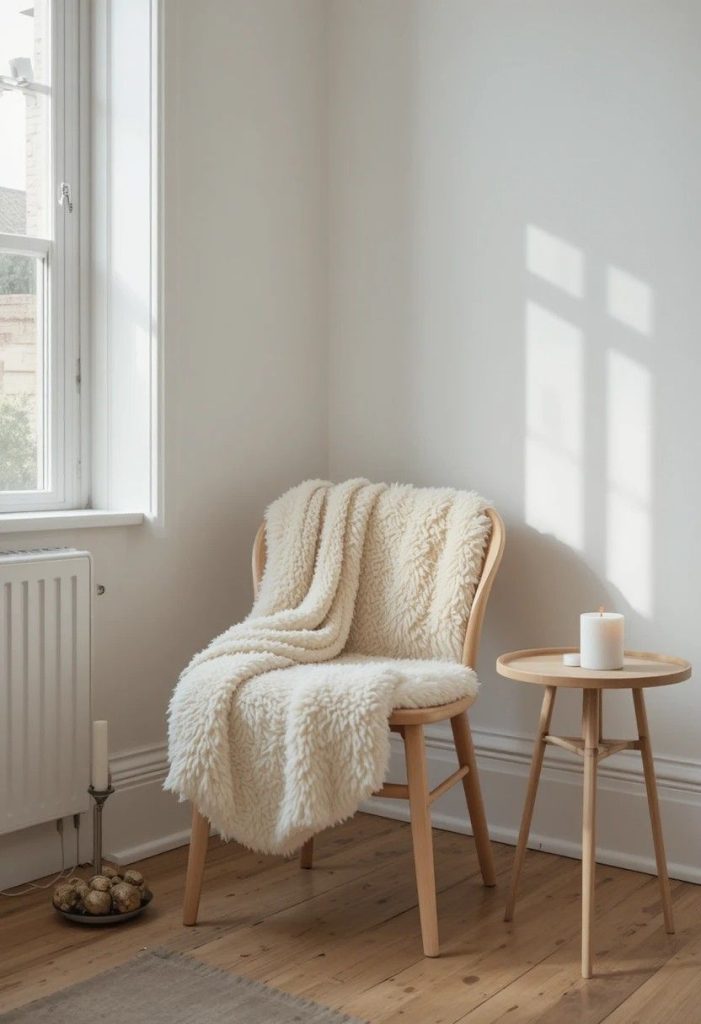
A sheepskin (real or faux) tossed over a chair, layered on a bench, or used as a small accent rug reads as hygge without you having to overthink it. It is one of the easiest and most affordable texture upgrades. White or cream sheepskin works for a true monochrome white room, while smoky grey or warm caramel options add subtle tonal contrast.
11. Hang Linen Curtains in a Soft Off-White
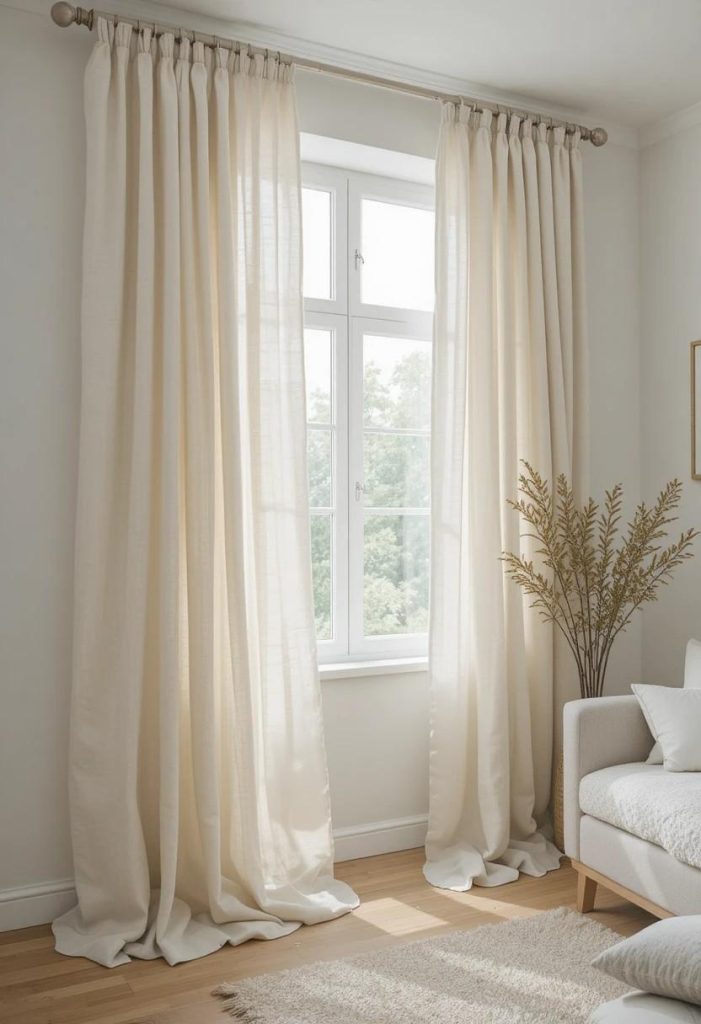
Linen has natural slubs and irregularities that catch and filter light beautifully. Cotton curtains look flat and synthetic next to linen. Choose floor-length linen panels in a creamy off-white that puddles slightly on the floor for that effortless, lived-in feel. Hang the rod high (close to the ceiling) and wide (extending past the window frame) to make the windows look taller and the room more dramatic.
12. Choose a Rug With Visible Texture or Pattern
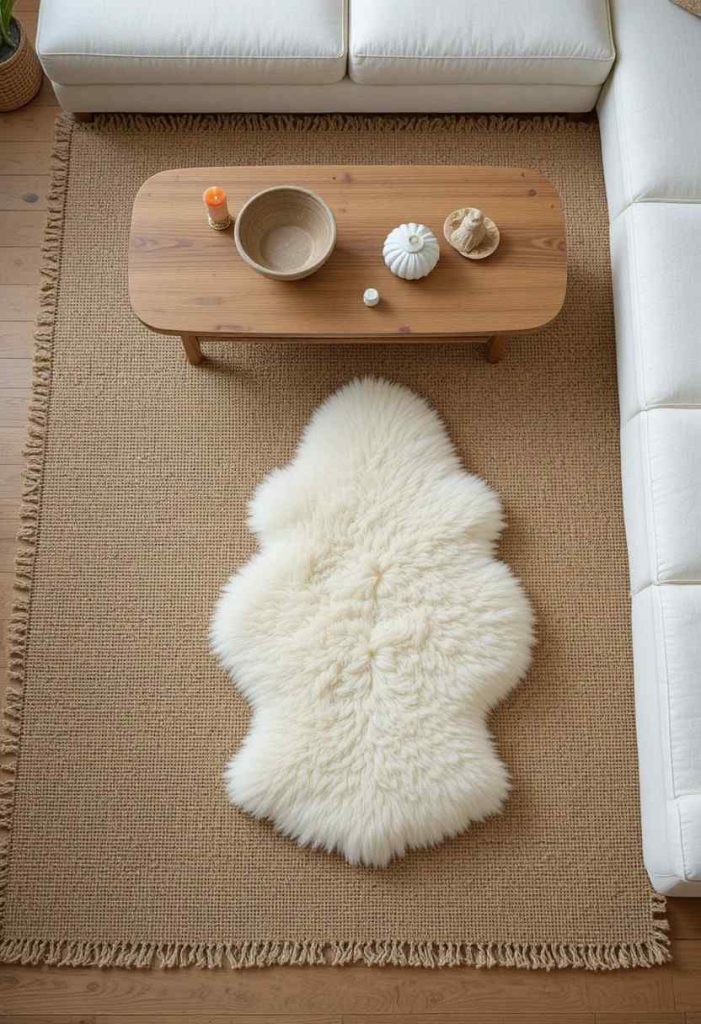
A flat smooth rug disappears in a white room. Choose a rug with visible texture (think low-pile Berber, chunky weave, or natural fibers) or a subtle tone-on-tone pattern. A jute rug layered with a smaller wool or sheepskin on top creates depth without bringing in distracting color. The rug is one of the largest surfaces in the room, so this single choice has outsized impact.
Section 4: Light the Room Like a Scandinavian
Lighting is the single most overlooked factor in white living rooms. Scandinavians treat lighting like furniture. They invest in multiple lamps at different heights instead of relying on harsh overhead lighting. These four ideas will transform how your room feels at every hour of the day.
13. Use Multiple Lamps Instead of Overhead Lighting
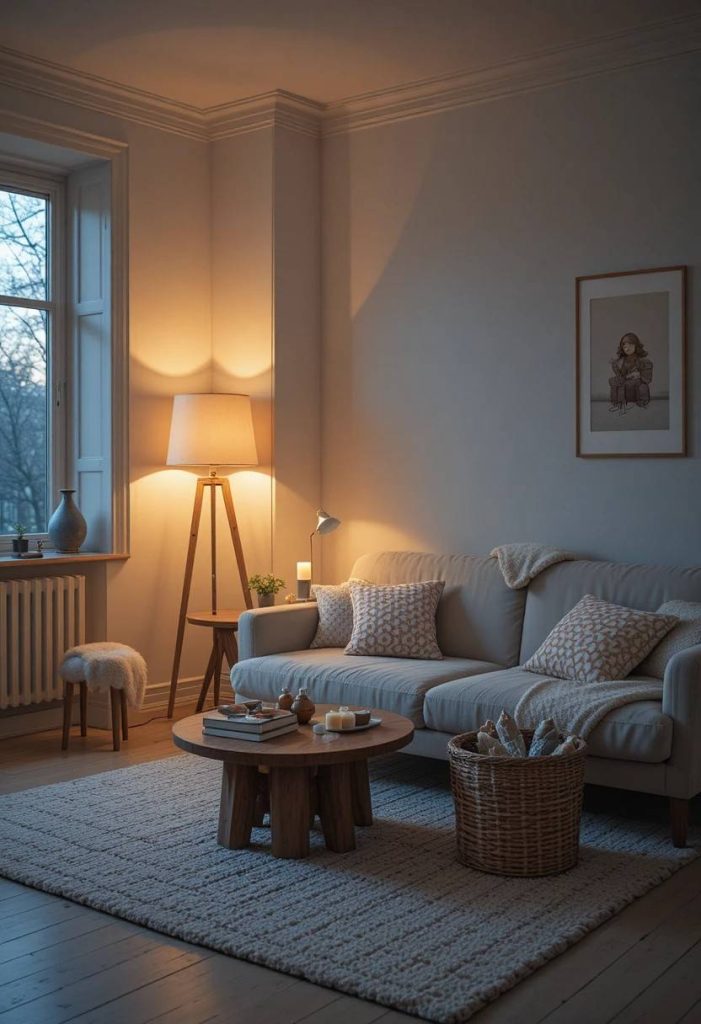
Scandinavians treat lighting like furniture. They use multiple lamps at different heights (floor lamps, table lamps, sconces, pendants) instead of relying on one harsh overhead light. This is the single biggest move that takes a white room from feeling like an office to feeling like a home. Aim for at least five separate light sources in the room. Each one is a small pool of warmth.
14. Switch to Warm Bulbs at 2700K or Lower
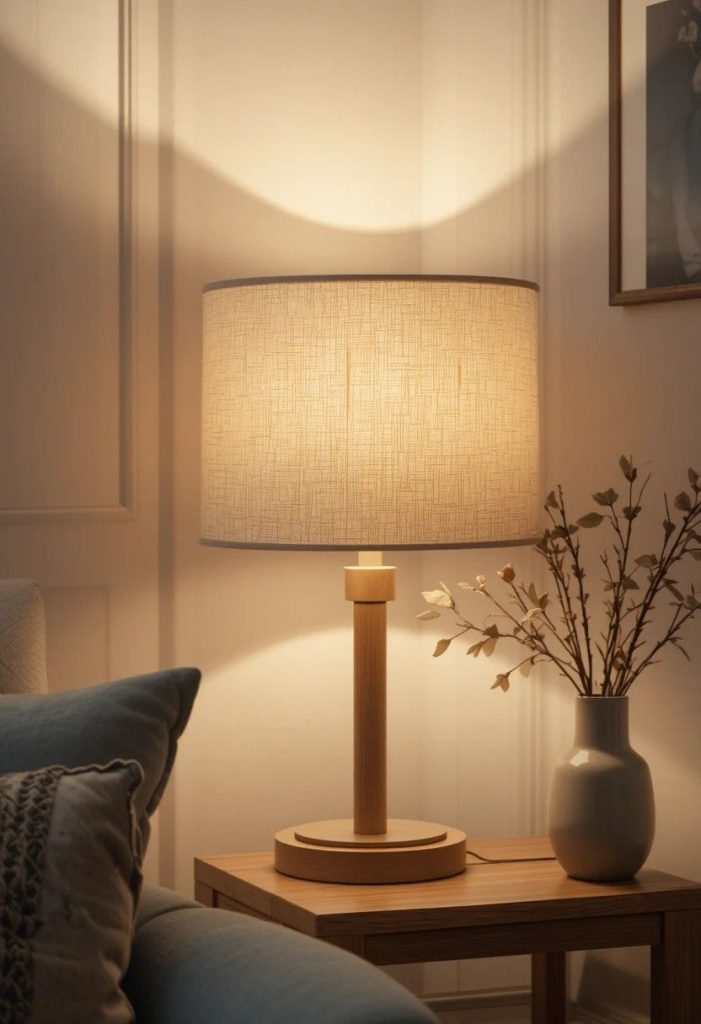
Bulb color temperature is the secret variable nobody talks about. Cool white bulbs (4000K or higher) will undo all your warm white paint work and make the room feel like a refrigerator. Replace every bulb in the room with 2700K warm white, or go even lower to 2400K for that golden evening glow. The investment is small. The atmospheric change is enormous.
15. Add a Paper Lantern Pendant for Sculptural Light
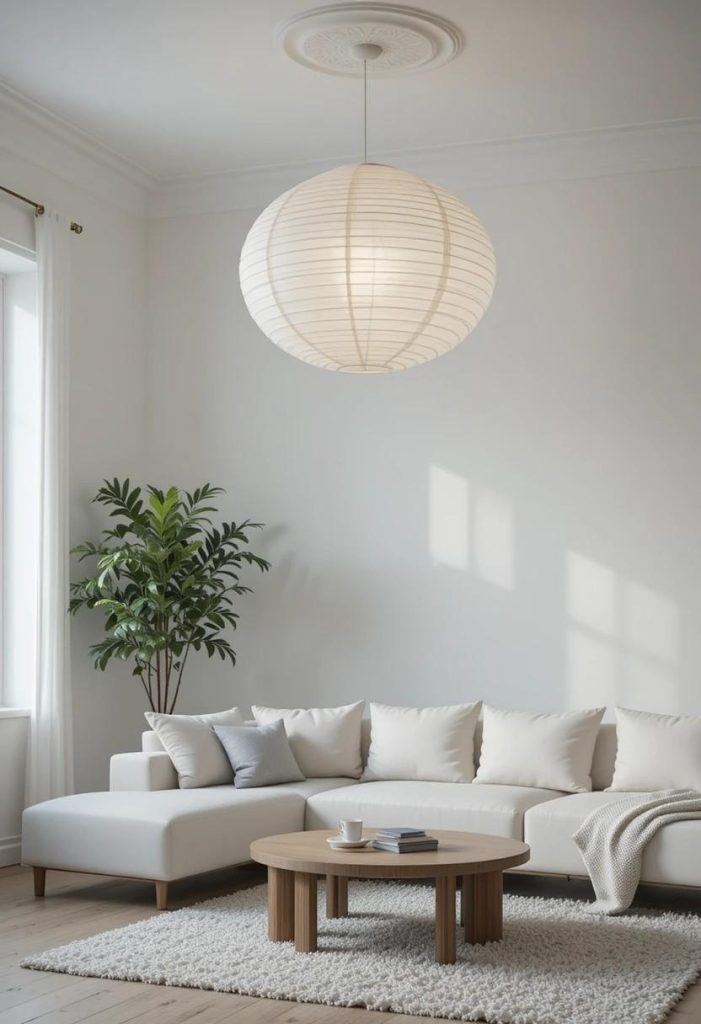
The classic round paper lantern pendant is iconic Scandinavian lighting for a reason. It diffuses light softly, doubles as a sculptural element, and somehow makes any room look more considered. Look for traditional rice paper Noguchi-style lanterns or modern interpretations in linen or rattan. Hang one in the center of the room or off-center over a reading chair.
16. Cluster Unscented Pillar Candles for Real Flicker
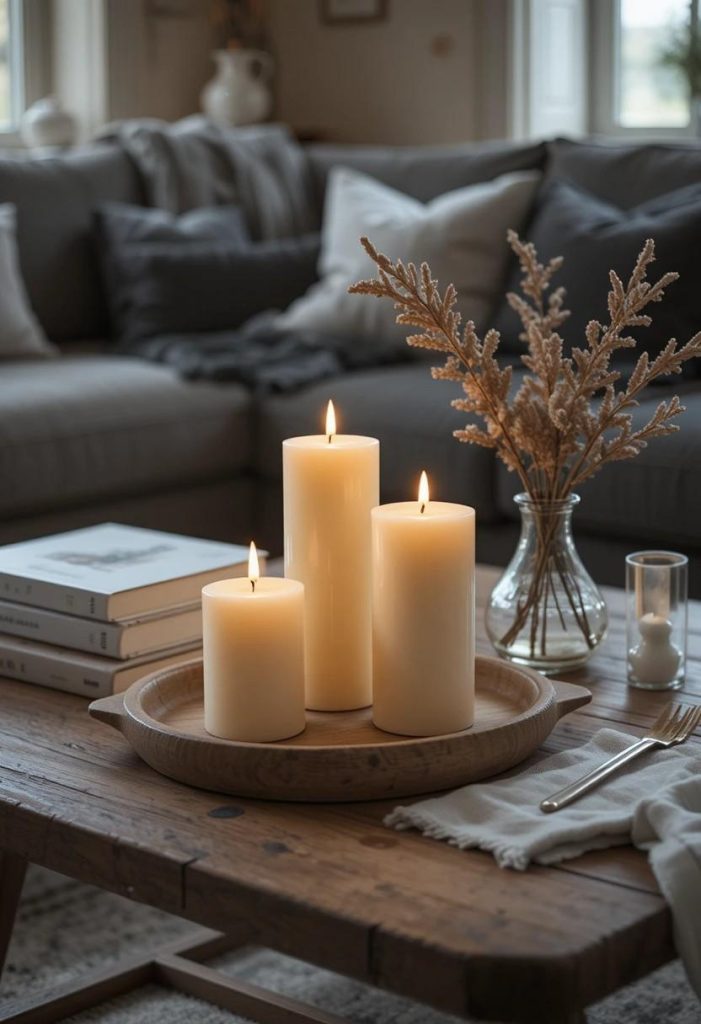
A cluster of three to five unscented pillar candles on the coffee table genuinely transforms the mood of a white room at night. Real flames, not flameless. The flicker is the point. Choose cream, ivory, or undyed beeswax candles in varying heights for visual interest. Light them in the evening before guests arrive or just for yourself. This is hygge in its simplest form.
Section 5: Add Life and Soft Styling Details
A room without life feels like a showroom. Plants, baskets, and thoughtfully styled surfaces breathe energy into a white space. The next three ideas cover the styling details that make a white room feel lived in without feeling cluttered.
17. Bring in One Large Statement Plant
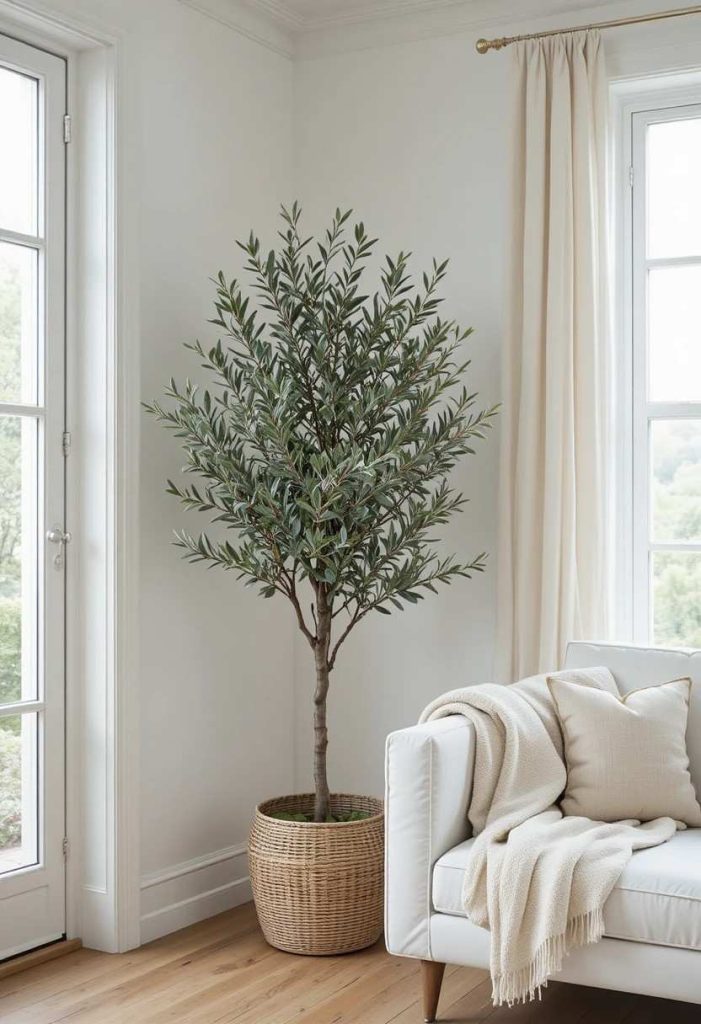
A single big plant breaks up the visual flatness of a white room better than five small ones scattered around. Fiddle leaf figs, olive trees, snake plants, and bird of paradise all work beautifully in Scandinavian spaces. The principle is simple: go big or skip it. A tiny succulent on a console will not move the needle. A six-foot olive tree in the corner absolutely will.
18. Use Woven Baskets Instead of White Ceramic Pots
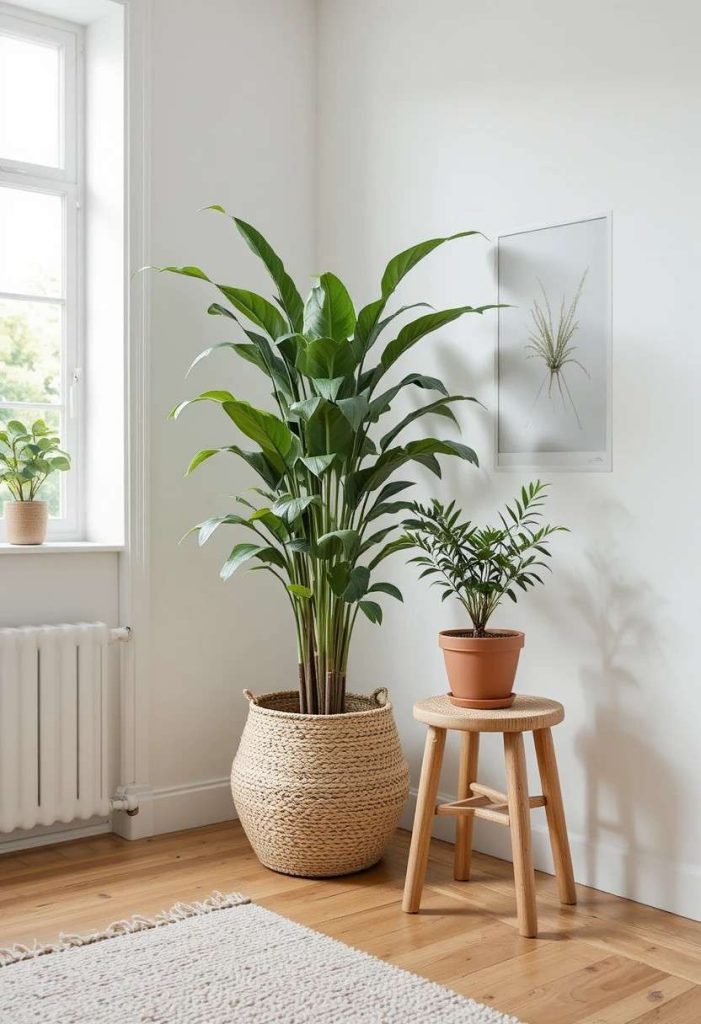
White ceramic pots disappear against white walls. A woven basket or natural terracotta pot adds another texture and another warm tone exactly where you need it. Use baskets for floor plants, small woven planters for tabletop greenery, and even baskets for blanket storage. This single substitution makes a white room feel more layered without adding any color.
19. Style the Coffee Table With the Rule of Three
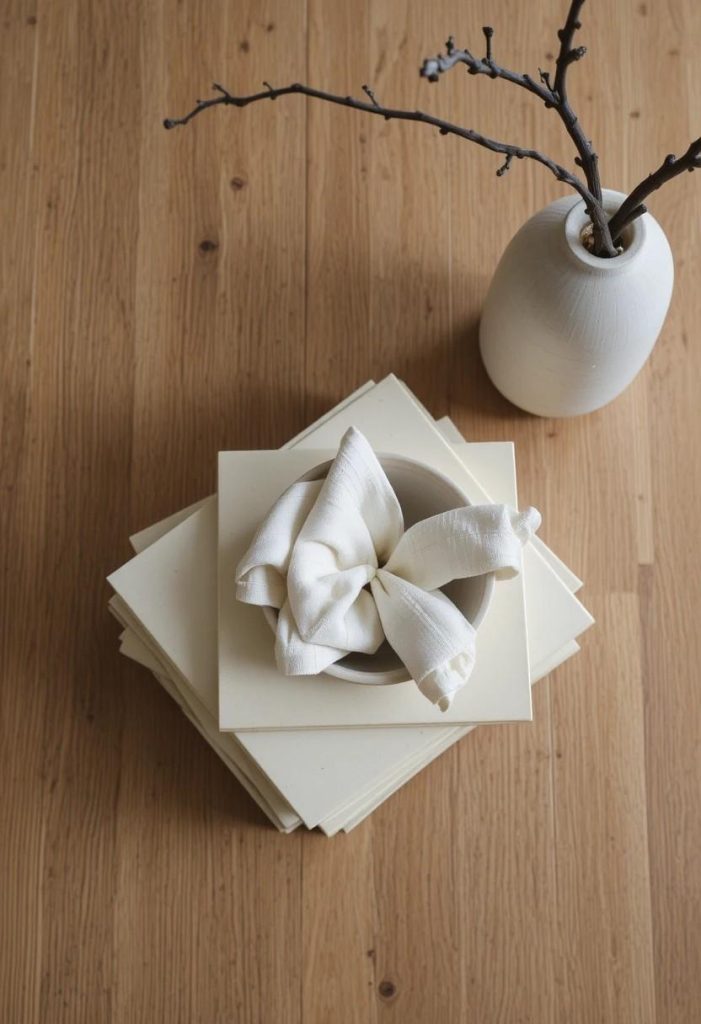
Do not leave the coffee table empty and do not over-style it. Three objects of varying heights and organic shapes is the sweet spot. A small stack of books, a ceramic bowl, and a candle. Or a wooden tray, a vase with a single branch, and a small sculpture. The rule of three works because it creates visual rhythm without clutter. Curated but not styled to death.
Section 6: Use Soft Contrast to Add Definition
Pure all-white can feel weightless in the wrong way. A few carefully chosen contrast elements give the eye something to land on without disrupting the calm Scandinavian palette. These three ideas show how to add quiet definition.
20. Ground the Room with Muted Black Accents
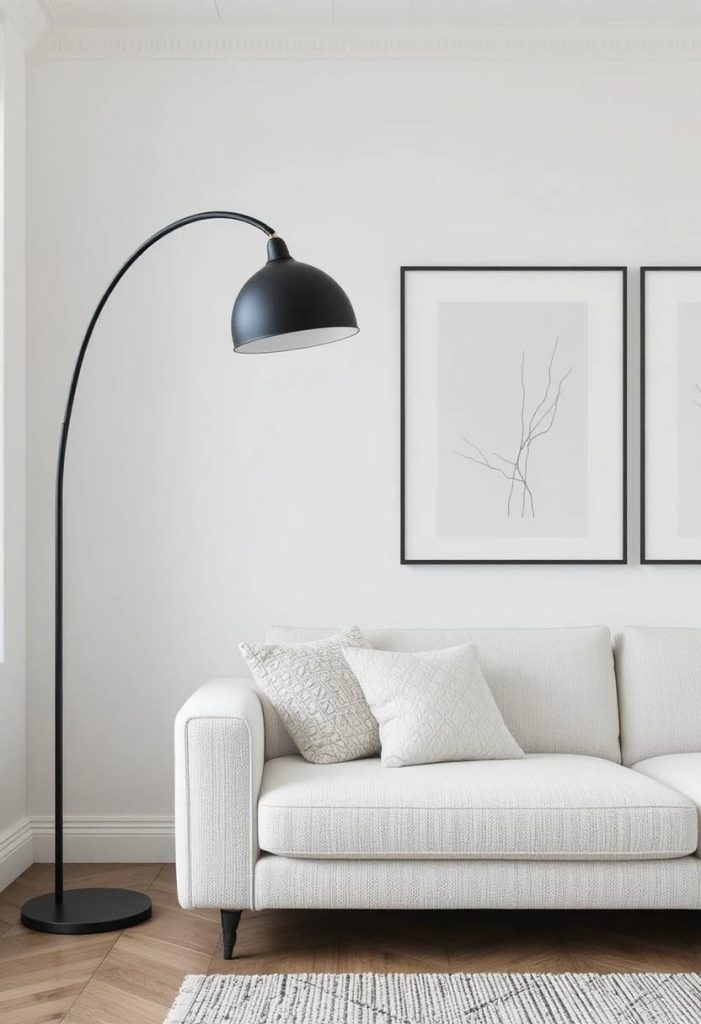
A few small black accents (a floor lamp, picture frames, a single candleholder, or a graphic line drawing) ground a white room without making it feel cold. The keyword is muted. Choose matte black, never glossy. The black acts like punctuation in a sentence. It defines the white instead of competing with it. Limit yourself to three or four black elements total in the room.
21. Choose Art With Negative Space and Soft Tones
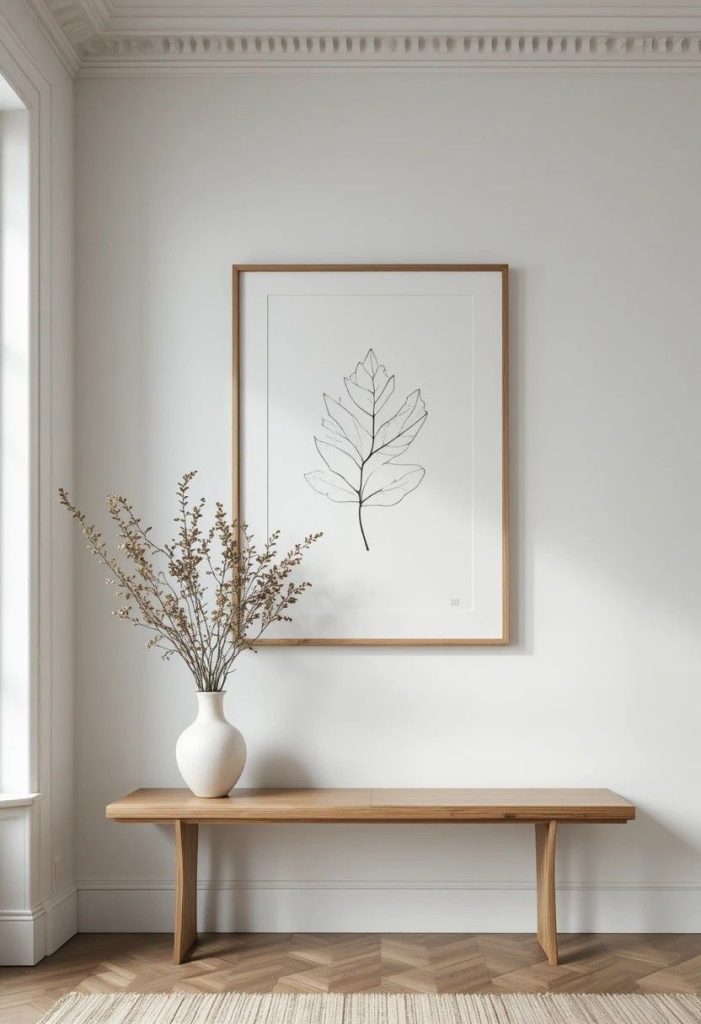
Skip busy gallery walls and oversaturated prints. One or two large pieces of art with generous negative space and minimal color reinforce the airy feeling of a white room. Think single botanical line drawings, abstract pencil sketches, soft landscape photography, or undyed linen wall hangings. The art should feel like a quiet pause, not a competing voice in the room.
22. Soften with a Putty or Warm Beige Pillow
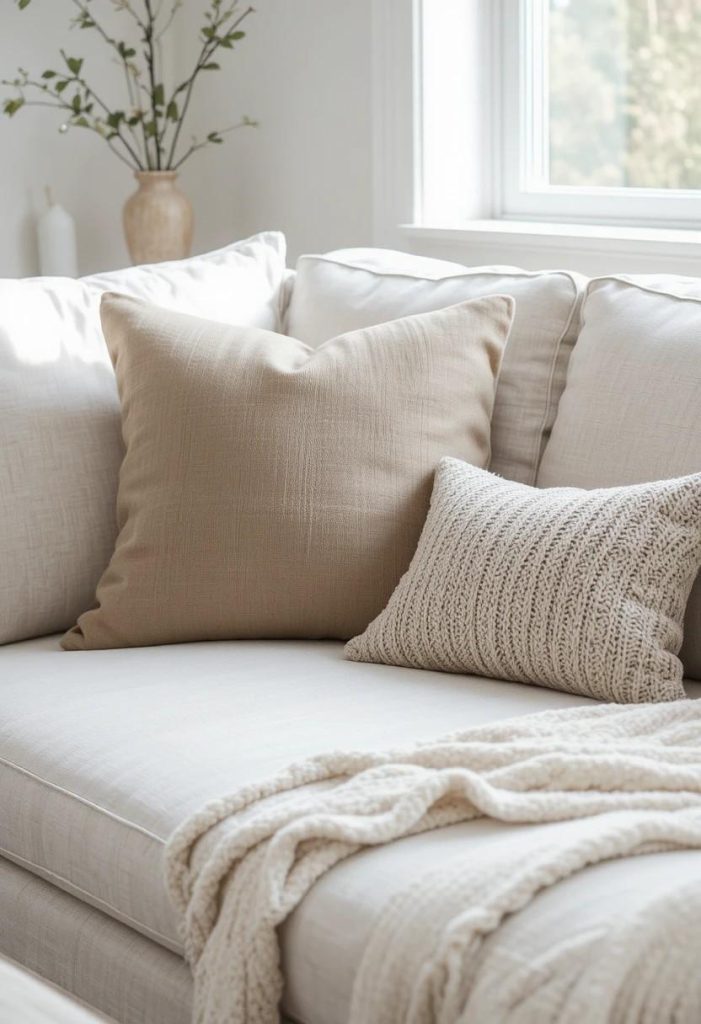
If pure white feels too stark, introduce a single pillow in a warm neutral like putty, taupe, oatmeal, or soft beige. This tonal middle ground bridges the white with the wood elements and immediately makes the sofa look more inviting. Stick to one tonal accent color across the room for cohesion. Too many different beiges look indecisive.
Section 7: Make It Feel Lived In, Not Staged
The final touches separate a magazine showroom from a real home. The last three ideas are the human details that turn a beautifully designed white living room into a space you actually want to spend time in.
23. Leave Small Imperfections on Purpose
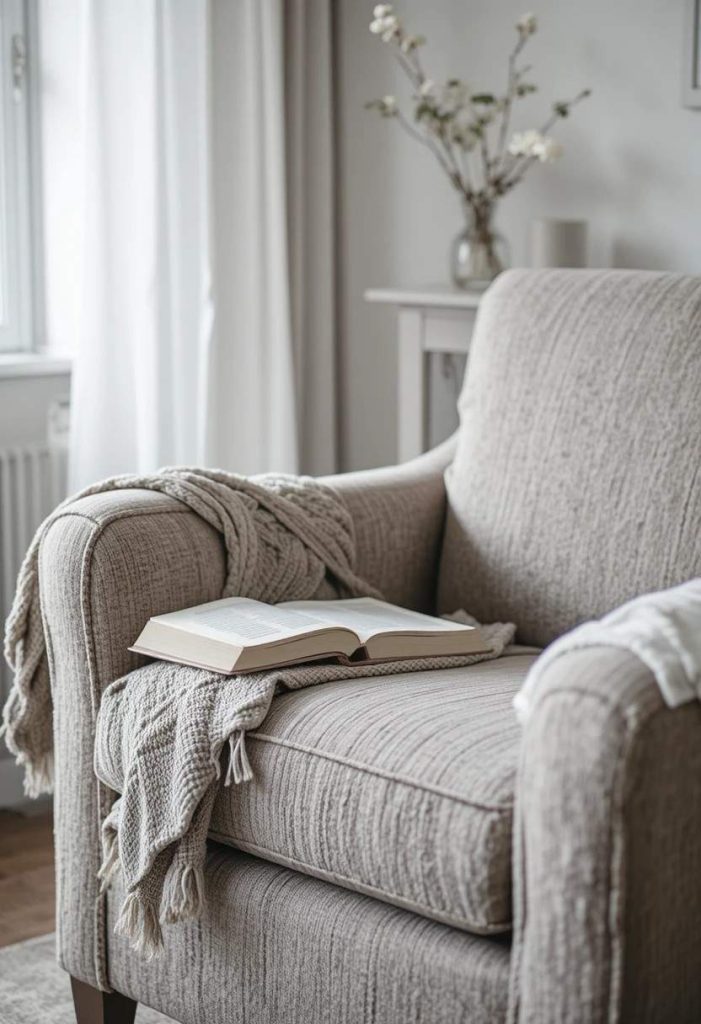
A perfectly styled white living room is the fastest way to make it feel cold and uninviting. Leave a folded blanket slightly askew. An open book on the arm of the chair. A coffee mug on the side table. These small lived-in details signal that the space is loved and used. They are the difference between a magazine showroom and an actual home.
24. Add a Warm Scent to Complete the Atmosphere
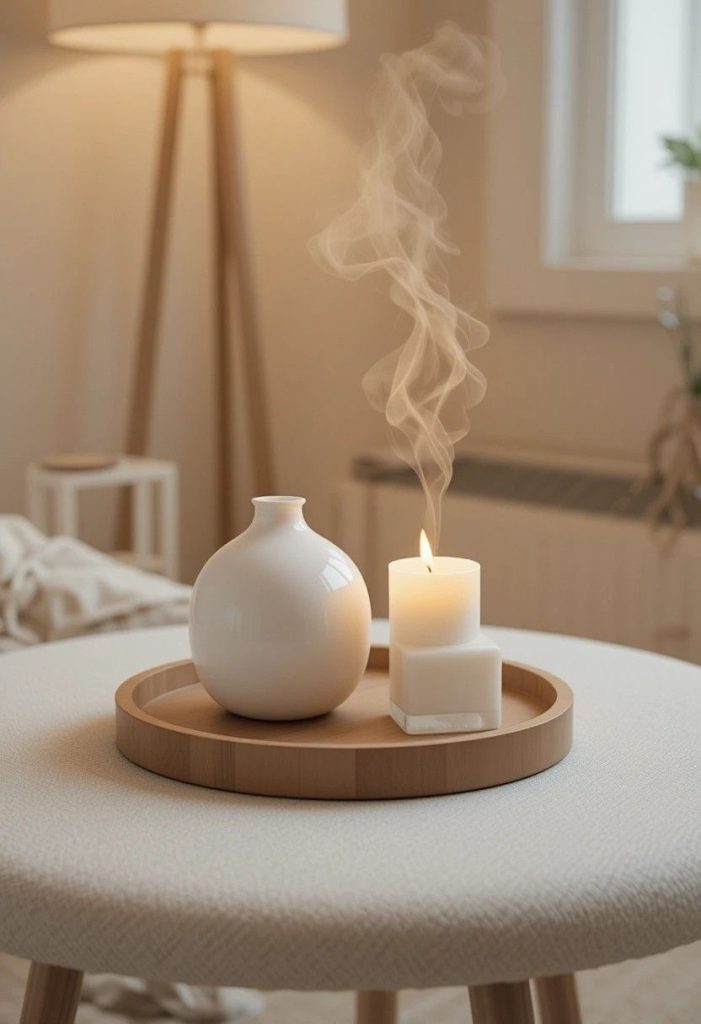
Decor is visual, but home is sensory. A candle or diffuser with notes of cedar, vanilla, fresh laundry, or soft amber makes a white room feel warm in a way no design choice can replicate. Scent is the invisible layer most people forget. It is also one of the cheapest upgrades you can make. Choose one signature scent for the living room and stick with it.
25. Trust the Negative Space and Resist Overfilling
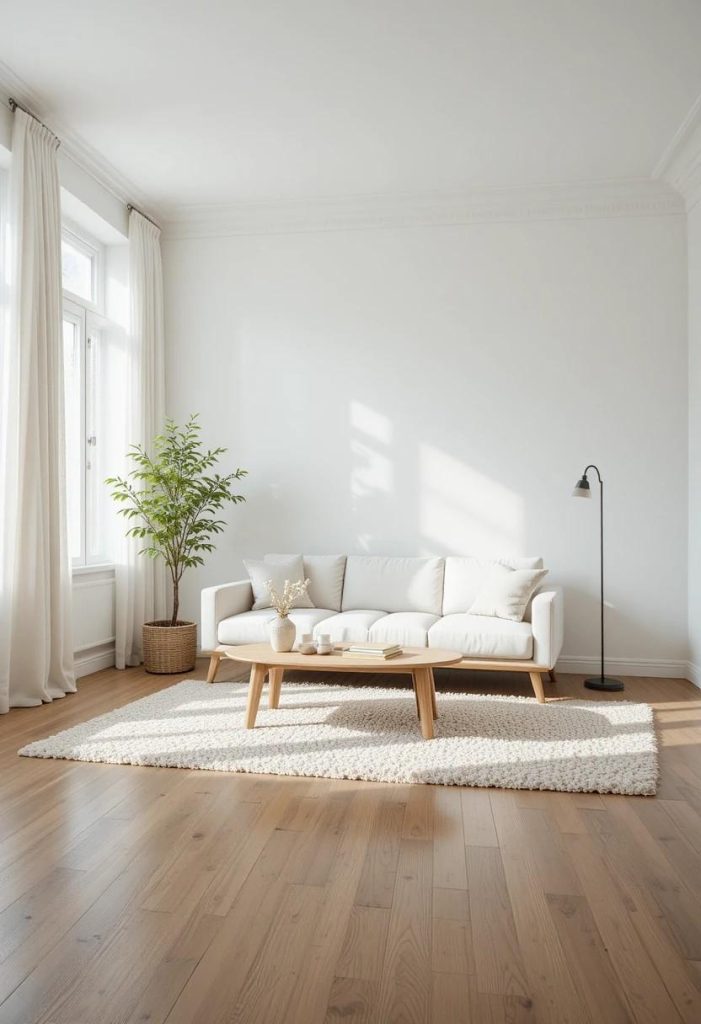
The hardest lesson with Scandinavian design is knowing when to stop. Empty space is not a problem to solve. It is the feature. Resist the urge to fill every corner, every wall, every surface. A white living room earns its calm by letting the eye rest. If the room feels almost-but-not-quite finished, you are probably exactly where you should be.
Frequently Asked Questions
How do I make a white living room feel cozy?
Focus on three things: warm white paint instead of cool white, layered textures (boucle, linen, wool, knit) on the sofa and rug, and multiple warm light sources at different heights. These three changes alone will transform a cold white room into a cozy one.
What is the best paint color for a Scandinavian living room?
Warm whites with creamy or beige undertones work best. Benjamin Moore’s White Dove, Farrow and Ball’s Wevet, Sherwin-Williams’ Alabaster, and Behr’s Swiss Coffee are all proven choices. Always test sample pots in your actual room before committing to a full gallon.
Do all-white living rooms still work in 2026?
Yes, but the trend has shifted toward warmer, more textured all-white spaces rather than the cool minimalist look that was popular years ago. Today’s Scandinavian white living rooms emphasize hygge through warm wood tones, organic textures, and lived-in styling rather than stark monochrome perfection.
How many wood elements should I add to a white room?
Aim for at least three wood elements in different scales: one large piece (coffee table or console), one medium piece (mirror frame or shelving), and smaller accents (picture frames, trays, or styling objects). Stick to the same wood tone family for cohesion.
What is the difference between Scandinavian and Japandi white living rooms?
Scandinavian style emphasizes warmth, hygge, and layered textures with light oak wood. Japandi blends Scandinavian minimalism with Japanese wabi-sabi, using darker wood accents, lower furniture profiles, and even more restrained styling. Scandinavian feels cozy, Japandi feels contemplative.
Final Thoughts: Trust the Process
A white living room does not have to feel cold. It just has to feel intentional. Every warm element you add (the right paint, the wood, the texture, the soft lighting, the small imperfect human details) is a vote against sterility and a vote for comfort.
Start with the right warm white paint. Bring in light oak wood pieces. Layer at least three different textures. Light the room with multiple warm lamps. Add one statement plant and style with the rule of three. That is the entire Scandinavian secret. The rest is just patience and a little bit of trust that less, done well, really is more.
Save this guide, bookmark the AI image prompts that match your dream room, and start with whichever idea feels most doable today. Which of these 25 ideas are you trying first?