20 Japandi White Bedroom Ideas with Warm Wood and Soft Texture
Japandi is the slow, intentional cousin of Scandinavian design. It takes the warmth, light woods, and hygge sensibility of Scandi style and fuses it with the wabi-sabi principles of Japanese design: imperfection, restraint, and a deep respect for natural materials. The result is a bedroom that feels both cozy and contemplative. Less stuff, more soul.
Most people who attempt a Japandi white bedroom run into the same trap. They strip everything back to bare walls and pale wood, expecting calm, and end up with a room that feels cold and unfinished. The secret is what gets added back in carefully: warm wood tones in two different shades, layered linen and bouclé textures, sculptural ceramic objects with visible imperfections, and lighting that glows rather than glares.
Section 1: Get the Foundation Right (Walls and Bed)
Japandi succeeds or fails at the foundation. The wall color and the bed itself set the tone for every other choice. These first five ideas cover the structural decisions that will make every later styling moment work harder.
1. Choose a Soft Warm White, Never Stark White
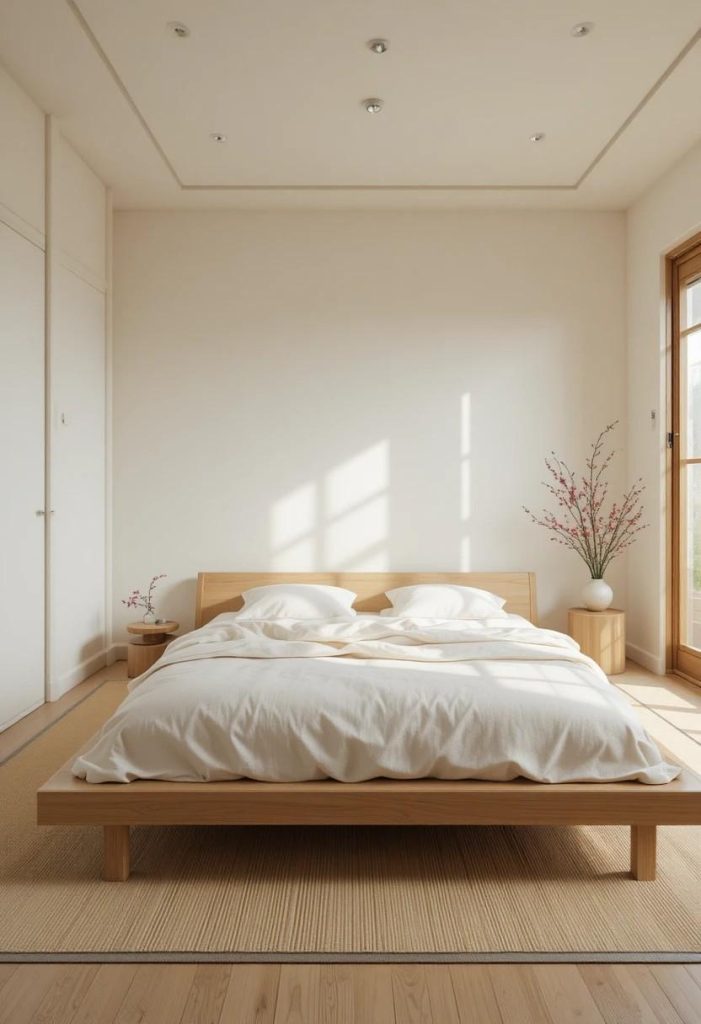
Japandi is built on quiet warmth, so your wall color sets the entire tone. Stark cool whites feel clinical and undercut the whole philosophy. Look for soft warm whites with the gentlest cream or putty undertones. Benjamin Moore’s Simply White, Farrow and Ball’s Slipper Satin, and Sherwin-Williams’ Greek Villa are excellent starting points. Test sample swatches in morning, afternoon, and evening light before committing. The right white should feel like fresh linen, not like a fluorescent bulb.
2. Choose a Low-Profile Platform Bed in Light Oak
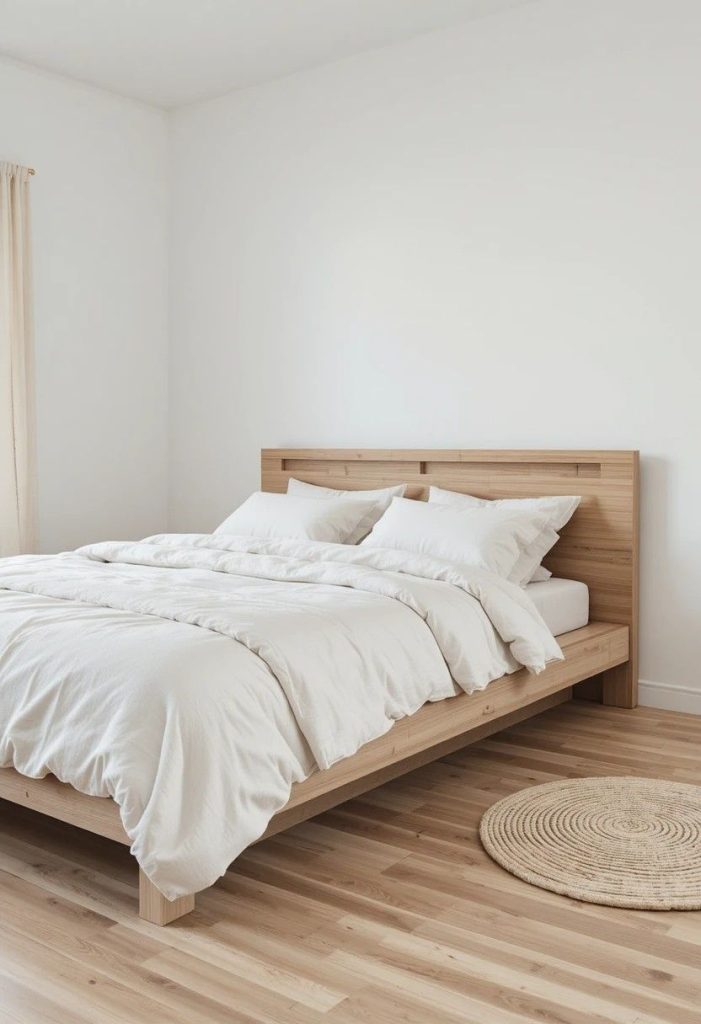
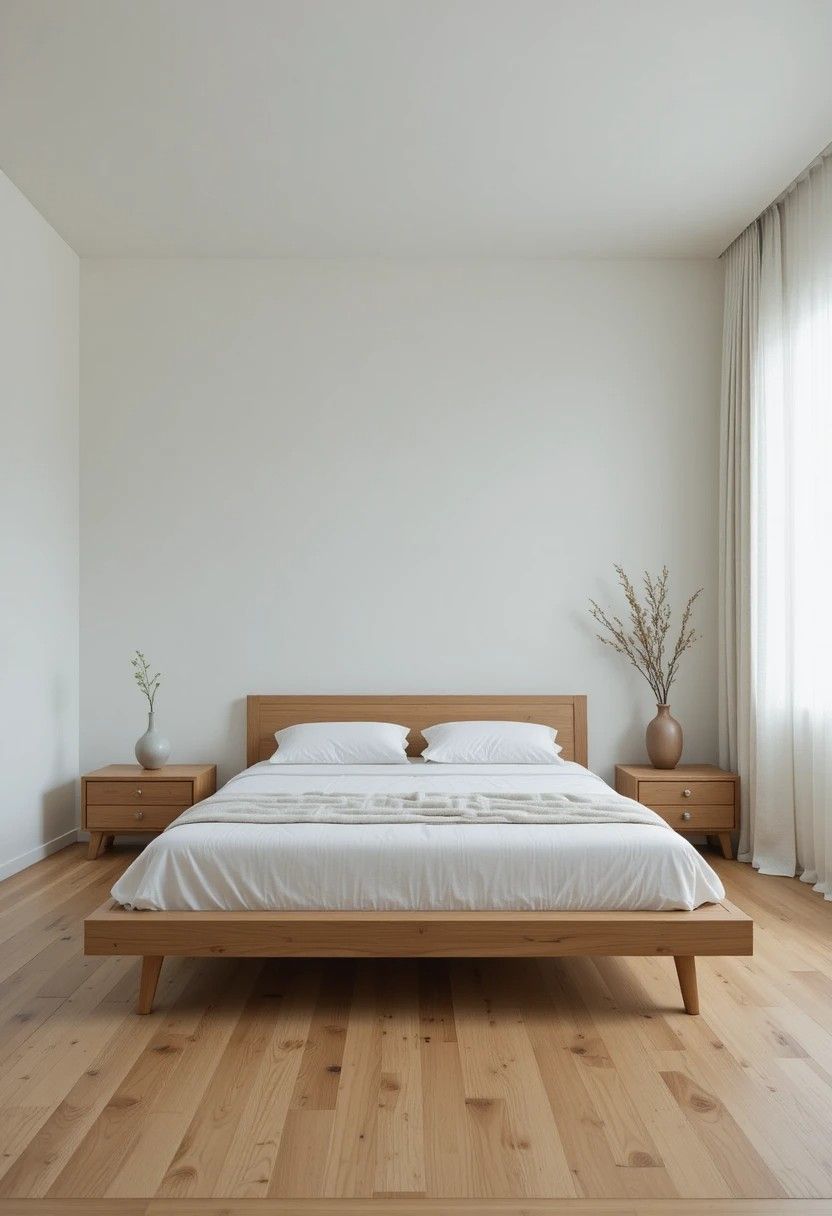
The bed is the single most defining furniture choice in any bedroom, and in Japandi it should sit low and grounded. A low-profile platform bed in honey-toned oak or pale ash brings instant warmth to a white room and references Japanese floor-level living without going full futon. Skip headboards with intricate detailing. Choose clean horizontal lines, exposed grain, and minimal hardware. The bed should feel like a quiet anchor, not a statement piece.
3. Layer Washed Linen Bedding in Cream and Oatmeal

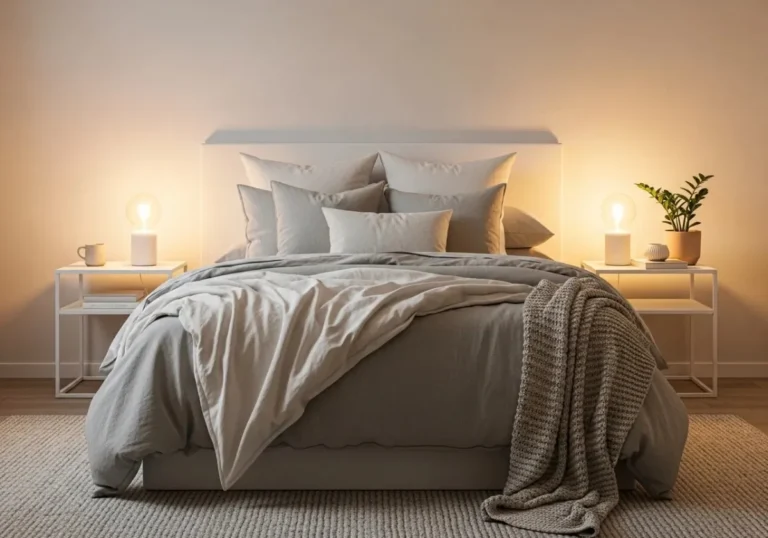
Bedding is where Japandi softness lives. Crisp cotton sheets feel too formal and synthetic blends look flat next to natural wood. Choose washed linen bedding in cream, oatmeal, or undyed flax tones. The slight wrinkles and tonal irregularities of real linen create texture that catches morning light beautifully. Layer a fitted sheet, flat sheet, lightweight duvet, and a single soft blanket folded at the foot of the bed. Avoid bright white sheets, which fight the warm wall color.
4. Add a Slatted Wood Headboard for Subtle Texture
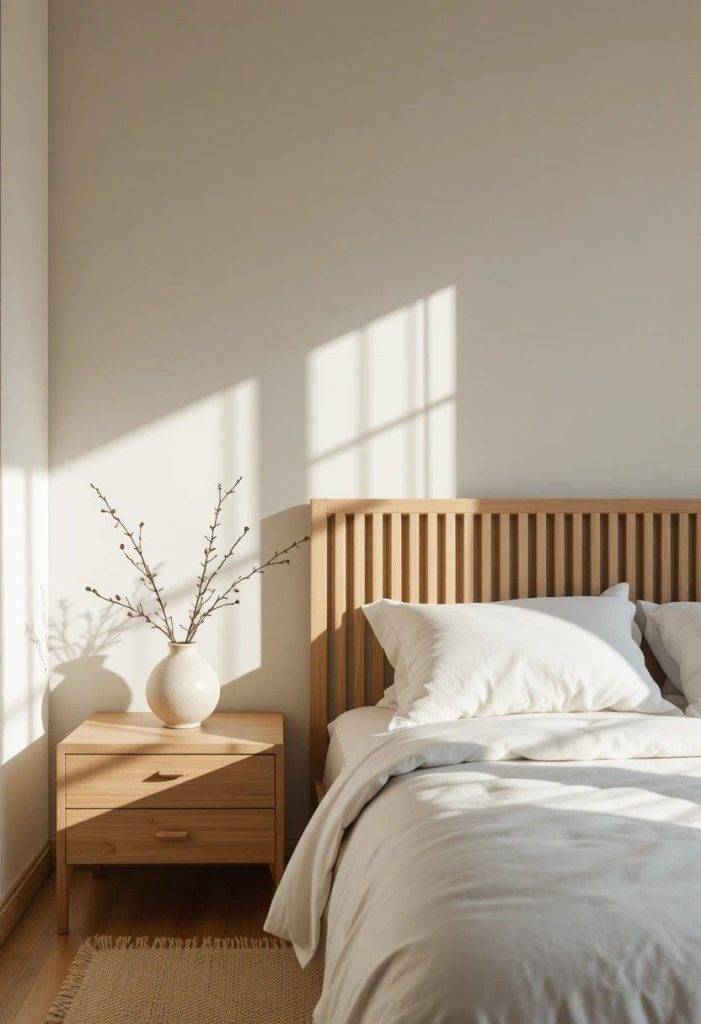
If you want a headboard, choose one that adds texture without visual weight. A slatted wood headboard in light oak, ash, or pale walnut introduces vertical lines that echo Japanese architecture while keeping the room feeling open. The shadows between the slats add depth without color. Keep the headboard low (no taller than mid-wall) so it does not dominate the room. This single piece can elevate an otherwise simple bed into something quietly sculptural.
5. Use Warm White Plaster or Limewash Walls for Depth
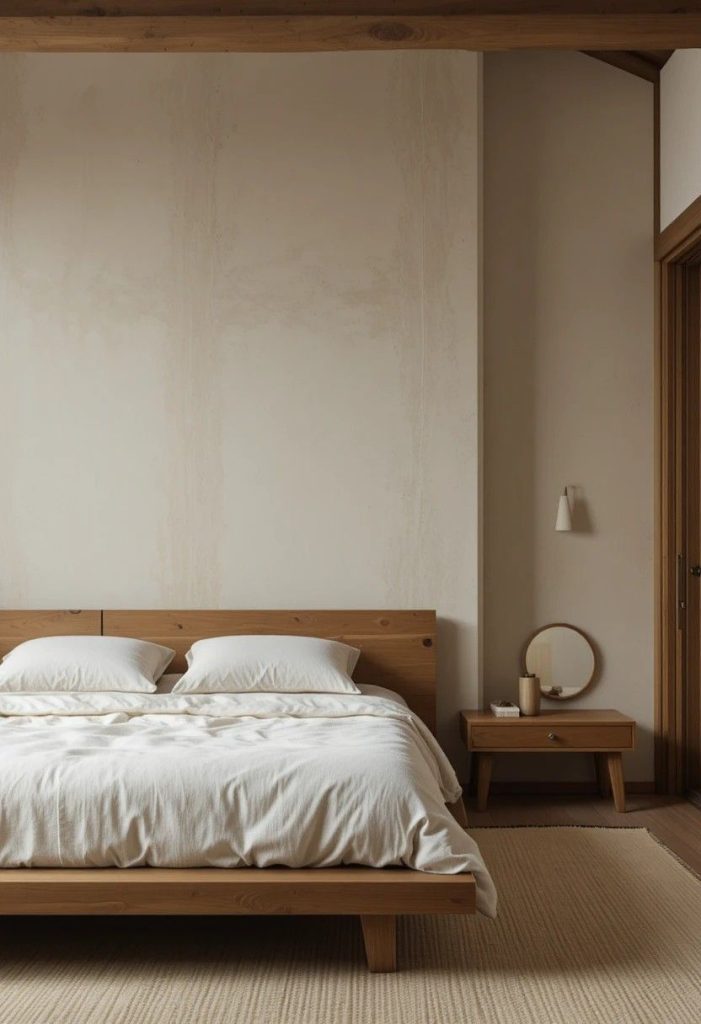
Flat painted walls are fine, but plaster and limewash finishes add the wabi-sabi imperfection that Japandi celebrates. Limewash creates subtle tonal variation that catches and reflects light differently throughout the day. Plaster brings a slight surface texture that reads as artisanal rather than industrial. Both finishes elevate a white bedroom from looking decorated to looking considered. If full walls feel like commitment, try one accent wall behind the bed first.
Section 2: Build the Wood Story
Wood is the heart of every Japandi room. The way you combine wood tones, choose flooring elements, and balance light against dark is what separates a real Japandi bedroom from a generic minimalist one. These four ideas cover the wood decisions that matter most.
6. Bring in a Tatami-Style Rug or Natural Fiber Mat
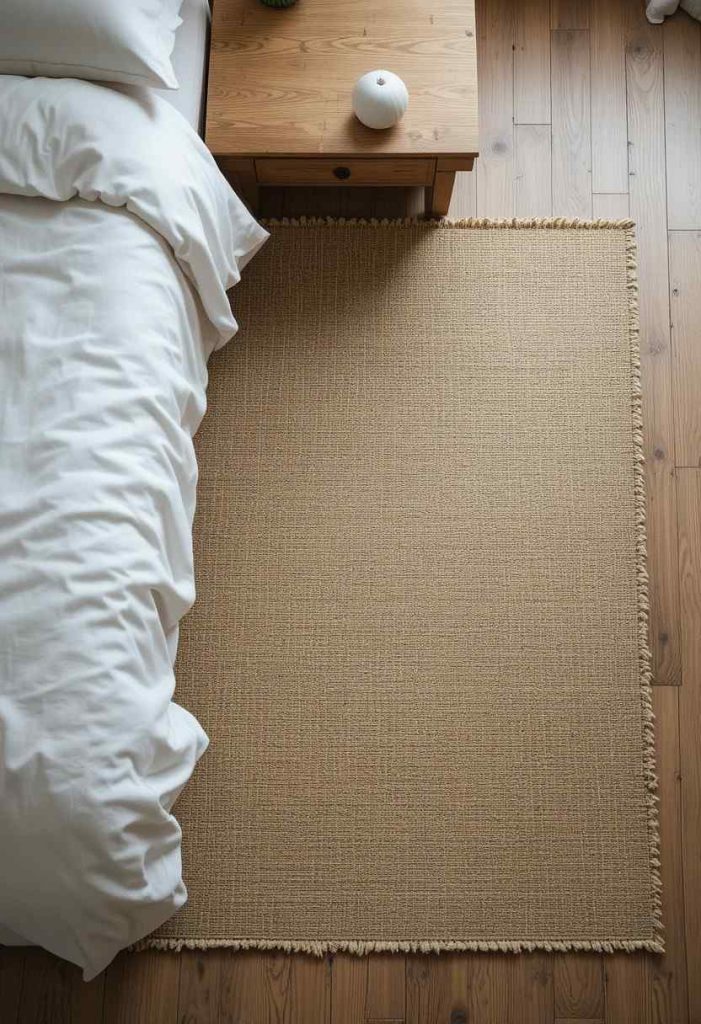
Flooring is often overlooked in bedroom design, but it does enormous work in a Japandi space. A tatami-style rug, a flat-weave seagrass mat, or a low-pile wool rug in undyed neutral tones grounds the room and references the floor-level living of traditional Japanese homes. Place the rug so it extends at least 18 inches on each side of the bed. Avoid plush high-pile rugs, which feel too maximalist for the Japandi aesthetic.
7. Pair Light and Dark Wood Tones Intentionally
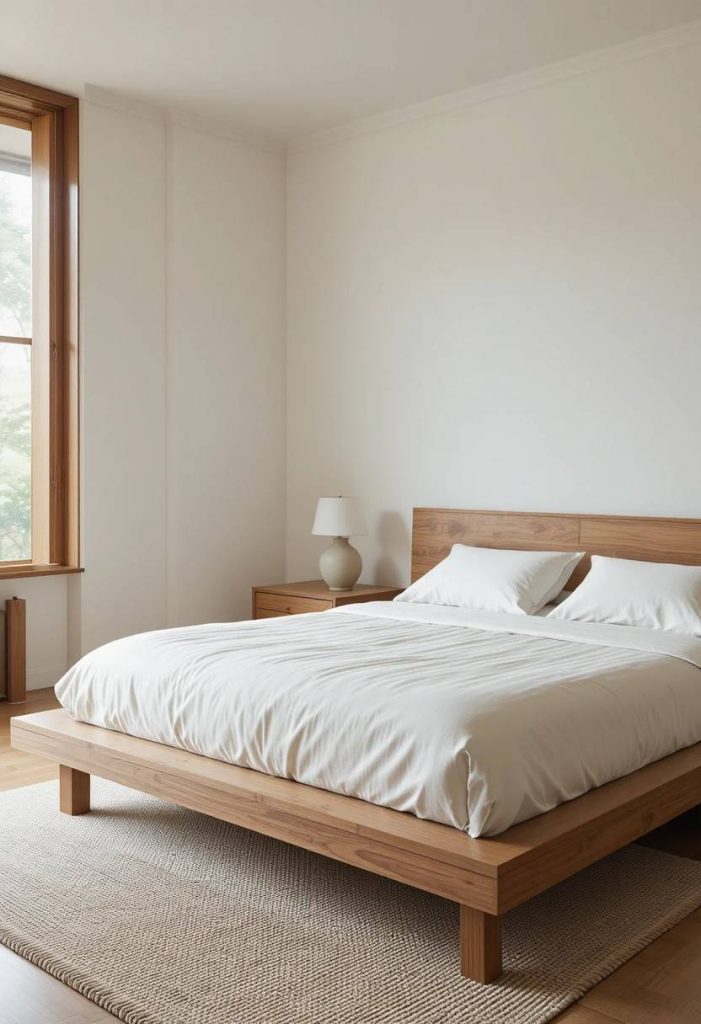
True Japandi balances the pale woods of Scandinavian design with the darker, richer woods of Japanese tradition. Use light oak or ash as your dominant wood (bed, flooring, headboard) and introduce smaller pieces in warm walnut, smoked oak, or charred wood for contrast. A single dark wood nightstand or stool against pale wood and white walls creates the tension that defines Japandi. Limit yourself to two wood tones total. Three or more becomes chaotic.
8. Choose Paper Lantern or Shoji-Inspired Lighting
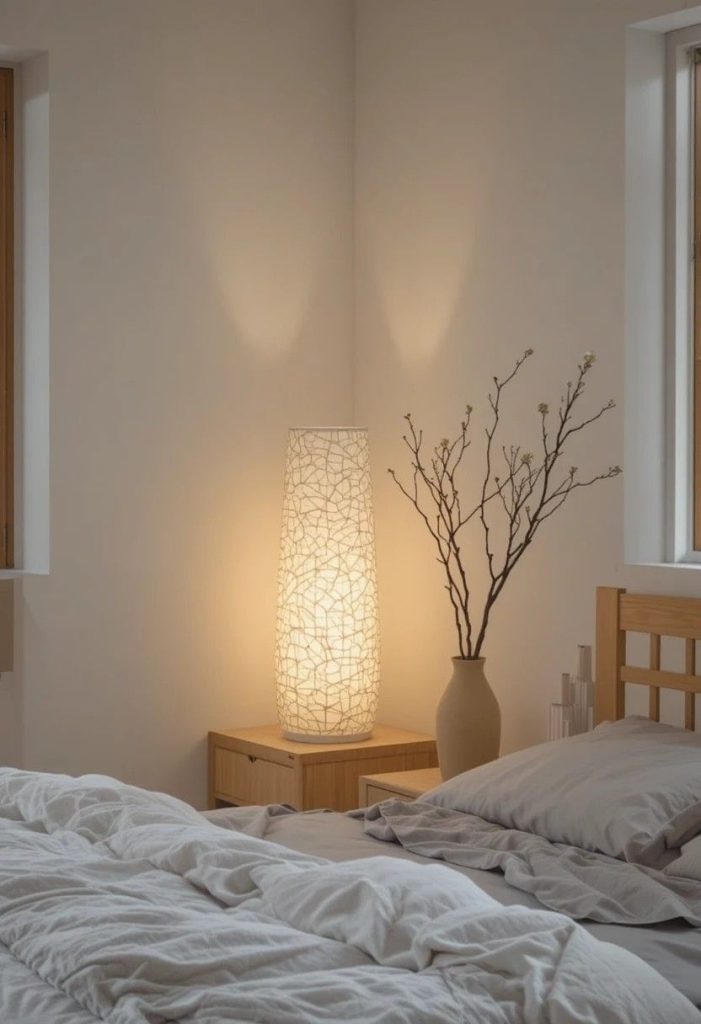
Lighting in Japandi should diffuse softly, never glare. Paper lantern pendants (Noguchi-style is iconic for a reason), rice paper floor lamps, and shoji-screen-inspired sconces all create the soft ambient glow that defines the aesthetic. Avoid exposed bulbs, brass finishes, and harsh modern fixtures. Stick to white paper, natural linen shades, or matte black for contrast. Use 2700K warm bulbs throughout so the light reads golden, not blue.
9. Style a Single Branch or Ikebana Arrangement
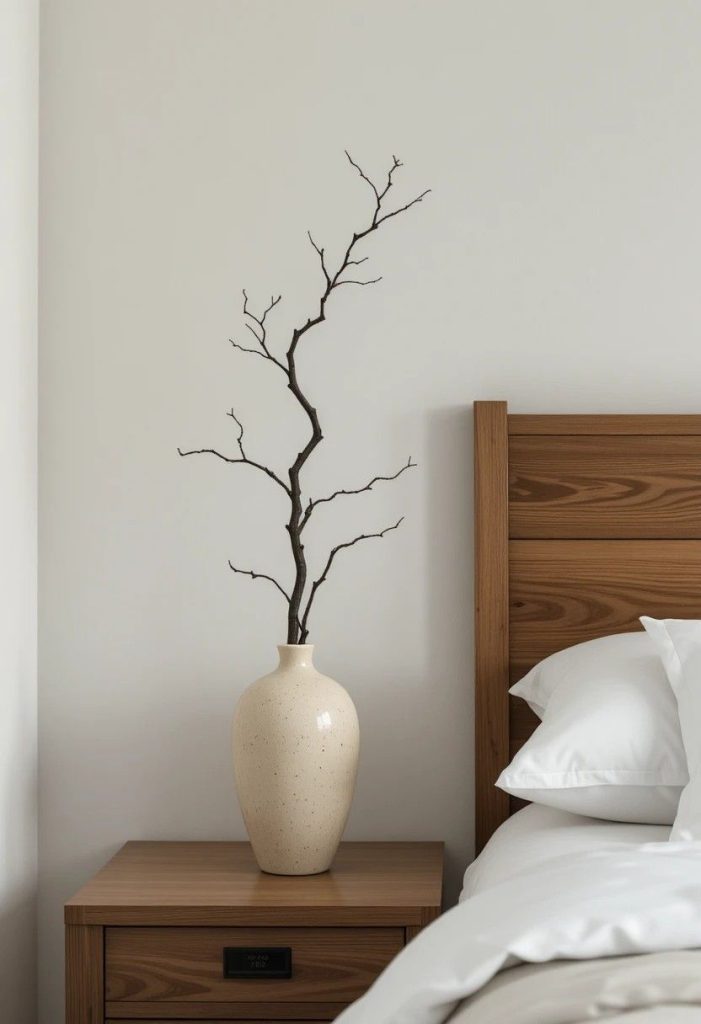
Japandi rejects overflowing floral arrangements in favor of restraint. A single curving branch in a ceramic vase, a small ikebana-style arrangement, or one stem of dried pampas in a stoneware vessel makes more impact than an entire bouquet. The negative space around the branch is part of the composition. Place the arrangement on a nightstand, a dresser, or a small floor stool. Less always wins in Japandi styling.
Section 3: Add Wabi-Sabi Objects and Sculptural Pieces
Japandi celebrates objects with character. Hand-thrown ceramics, sculptural stools, and single branches in vases all bring quiet personality without filling the room with clutter. These four ideas show how to add wabi-sabi soul without losing the calm.
10. Embrace Wabi-Sabi Ceramics With Visible Imperfections
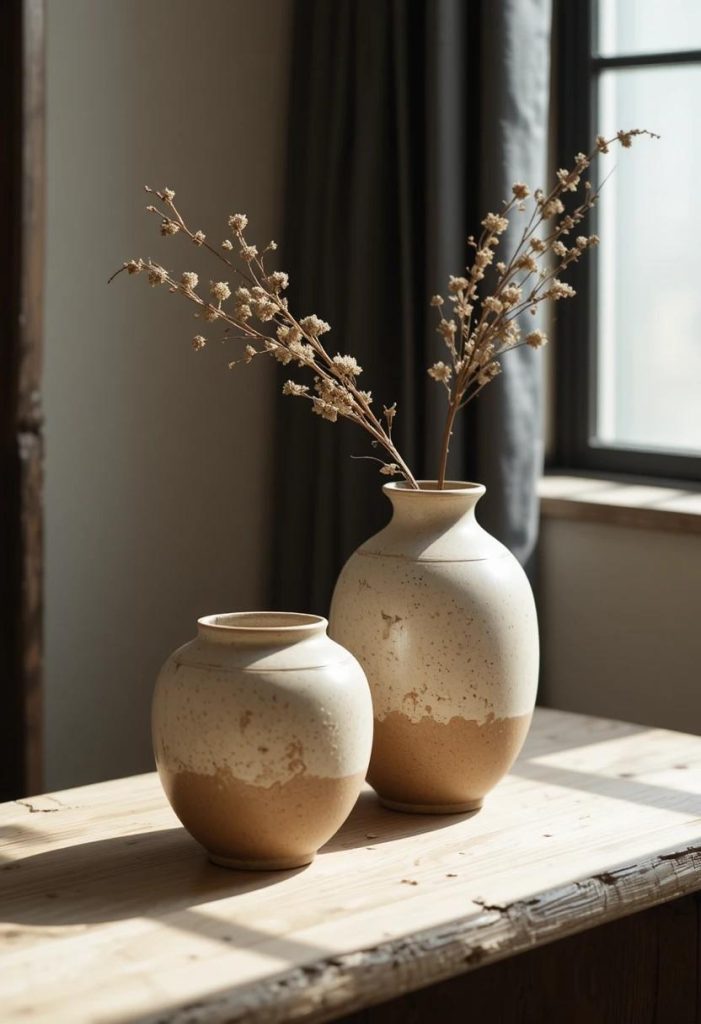
Mass-produced glossy ceramics feel wrong in a Japandi room. Choose hand-thrown stoneware vases, raku-fired bowls, and matte ceramics with visible texture, irregular glazing, or small intentional imperfections. These pieces embody wabi-sabi, the Japanese appreciation of beauty in imperfection. A single hand-thrown vase on a nightstand or a small ceramic bowl on a dresser does more for the room’s authenticity than three perfectly matched pieces.
11. Add a Low Wooden Bench at the Foot of the Bed
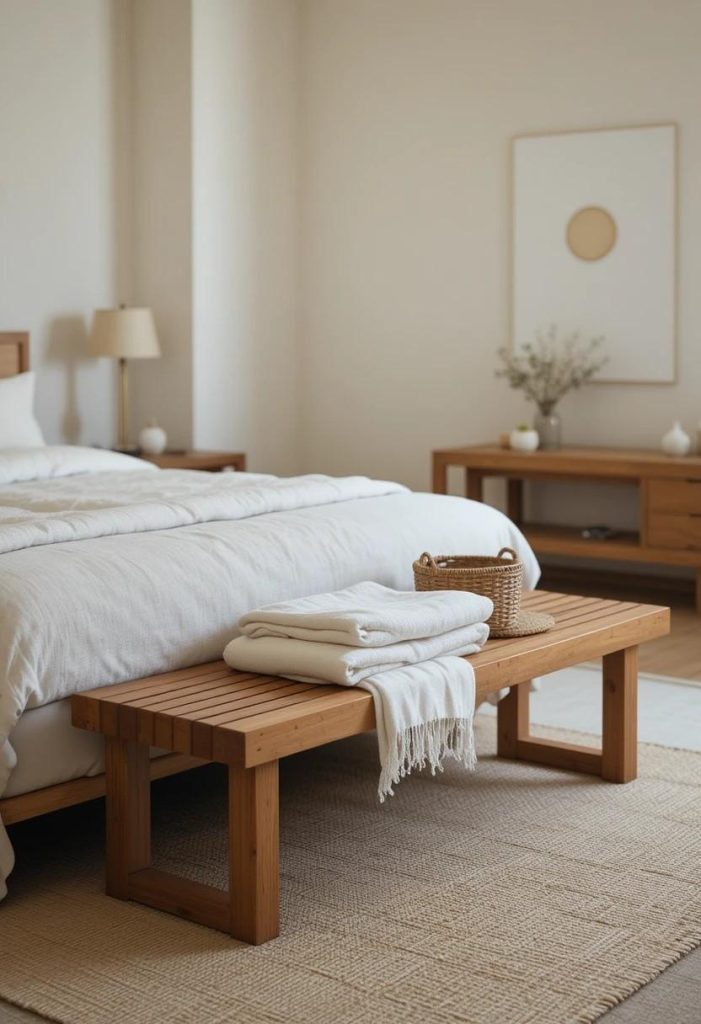
A low wooden bench at the foot of the bed is one of the most quintessentially Japandi pieces you can add. It serves as a place to sit while dressing, a styling surface for a folded throw or basket, and a horizontal anchor that grounds the bed visually. Choose a simple slatted bench in oak, ash, or smoked wood with clean lines and no upholstery. The bench should feel like furniture from a tea house, not a hotel.
12. Use Linen Floor-Length Curtains in Soft Off-White
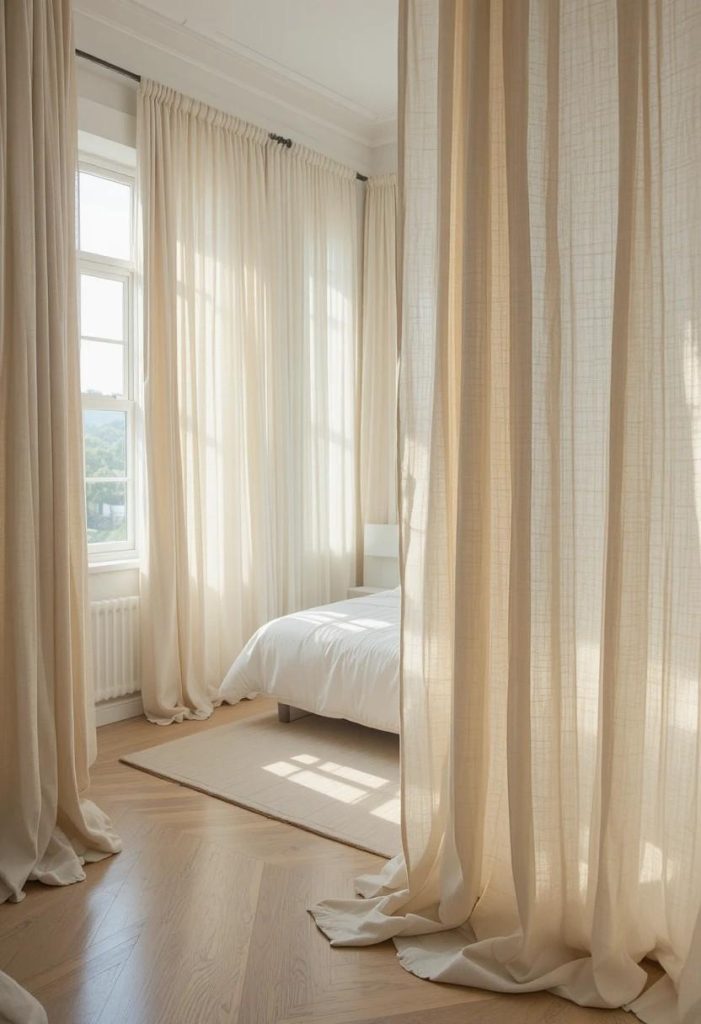
Curtains in a Japandi bedroom should whisper, not shout. Choose floor-length linen panels in soft cream or off-white that pool slightly on the floor for that effortless lived-in look. Skip blackout curtains with heavy lining unless you absolutely need them; if you do, layer a sheer linen panel in front. Hang the rod high (close to the ceiling) and slightly wider than the window so the panels frame the view rather than crowd it.
13. Add One Sculptural Element for Quiet Drama
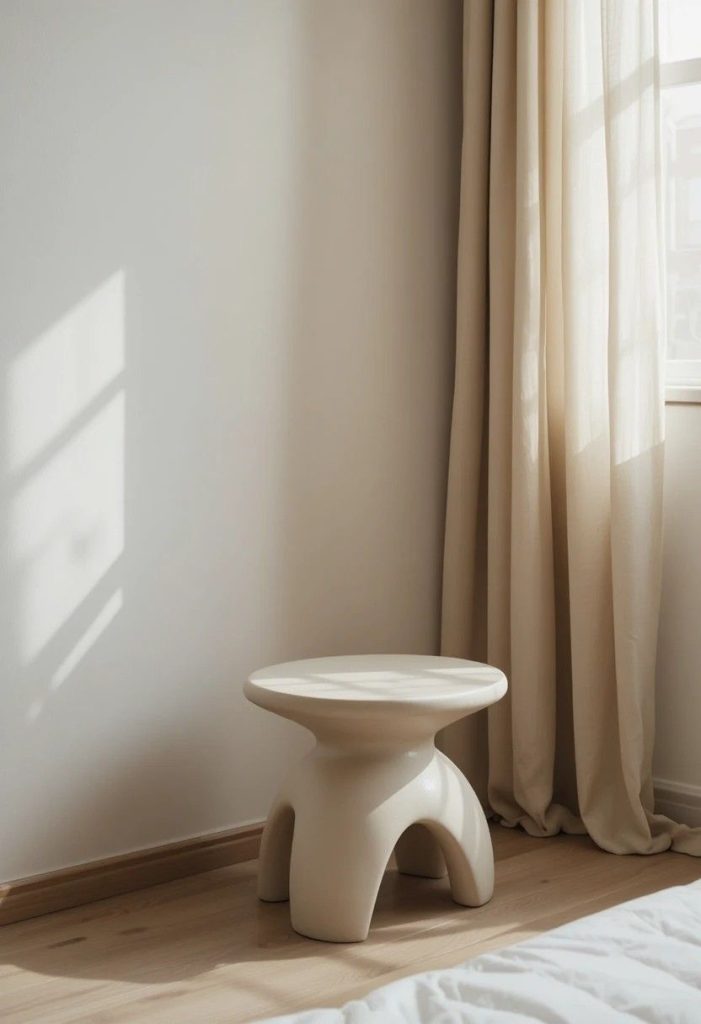
Japandi is minimal but not boring. One sculptural object (a curved ceramic stool, a sculptural wooden bowl, a raw stone sculpture, or a piece of driftwood) creates a focal point without disrupting the calm. The object should feel organic, hand-made, or naturally formed rather than mass-produced. Place it on the floor, on a dresser, or in a corner where the eye can rest on it. One is the limit. Two sculptural pieces compete; one anchors.
Section 4: Layer Texture for Softness and Warmth
A minimalist room without texture feels austere. Japandi gets its warmth from the careful layering of linen, bouclé, wool, and natural fibers. These three ideas show you exactly which textures to bring in and how to combine them.
14. Choose a Low Wooden Nightstand With Clean Lines
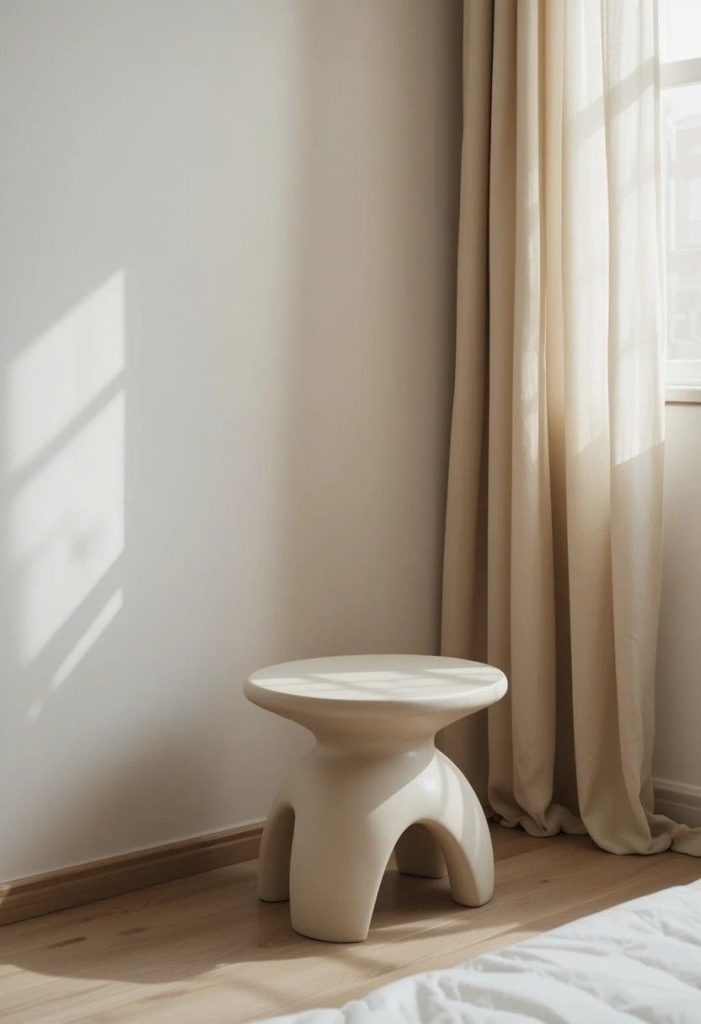
Tall ornate nightstands look out of place in a Japandi bedroom. Choose low nightstands that sit close to the level of the mattress, with clean horizontal lines and no decorative hardware. A simple oak or walnut block with a single drawer, or even a small wooden stool repurposed as a nightstand, works perfectly. Keep the surface nearly bare: one lamp, one book, one small ceramic vessel. That is enough.
15. Bring in Soft Bouclé or Wool Texture for Warmth

Japandi is not all hard lines and smooth wood. Soft texture is essential to keep the room feeling inviting rather than austere. Add a bouclé or wool throw at the foot of the bed, a sheepskin draped over a wooden bench, or a small wool floor cushion for sitting. These soft layers create the tactile contrast that makes a minimalist room feel like a home rather than a gallery. Stick to undyed wool, oatmeal bouclé, or natural sheepskin tones.
16. Style With Negative Space, Not Empty Space
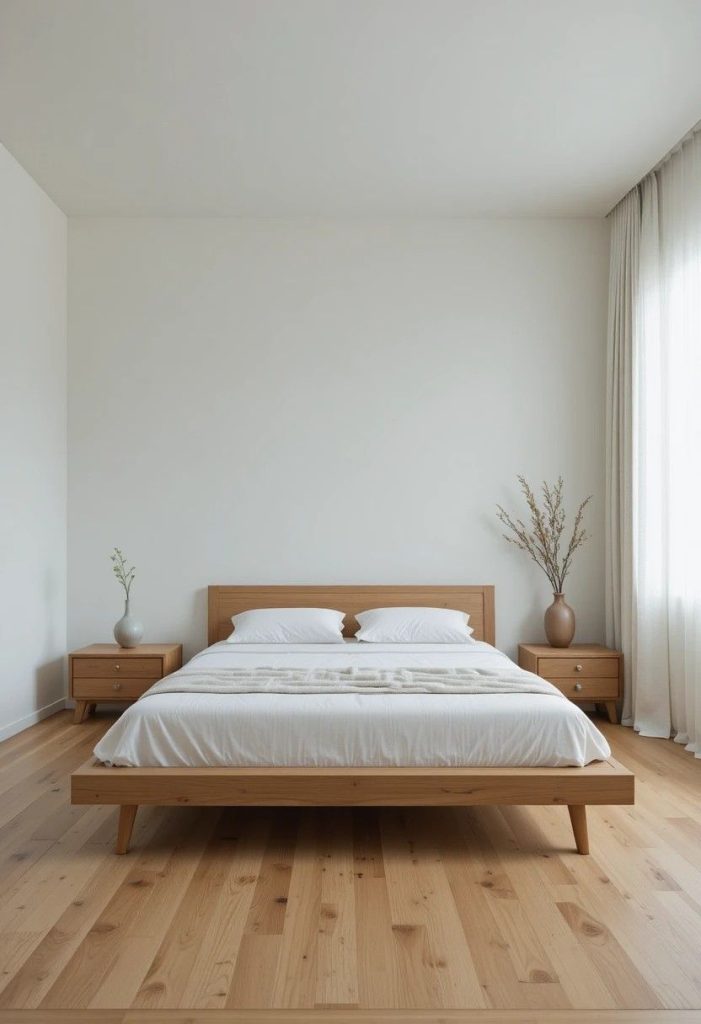
There is a difference between an empty room and a room with intentional negative space. Negative space is the breathing room around carefully chosen objects. Resist the urge to fill every wall, corner, and surface. A blank wall above the bed, a clear stretch of floor next to the dresser, an empty top shelf, all of these are features, not flaws. The objects in a Japandi room get their power from the quiet space around them.
Section 5: Use Negative Space and Natural Materials
The final layer of a Japandi bedroom is about restraint. What you choose not to add matters as much as what you do. These two ideas cover negative space and the use of stone or concrete to add visual weight.
17. Use Natural Stone or Concrete for Quiet Contrast
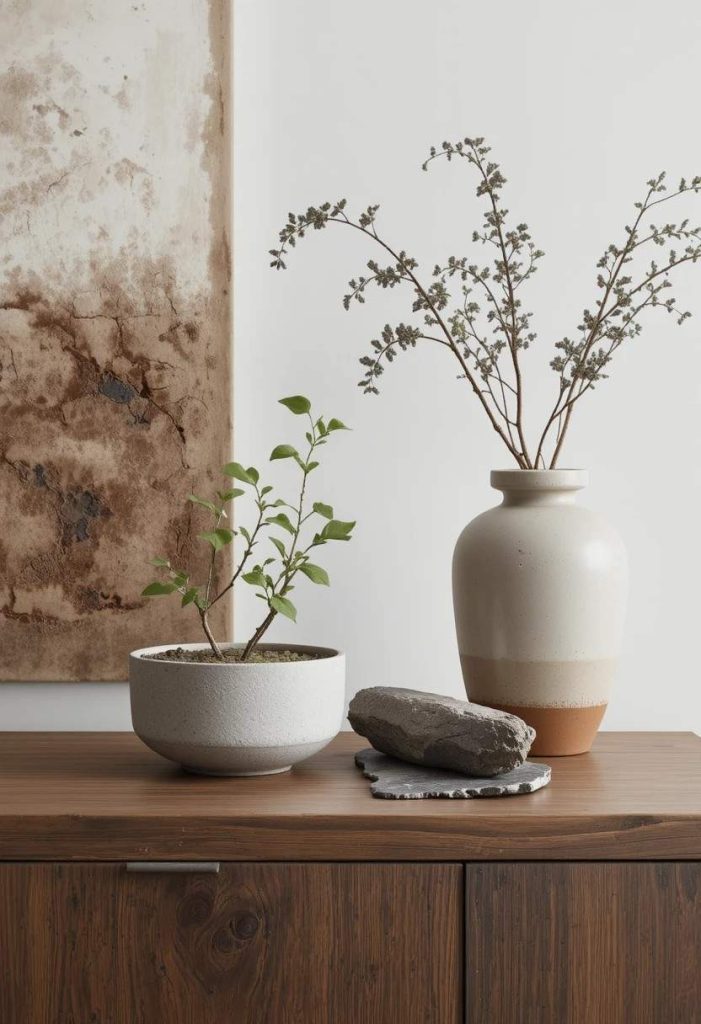
A single natural stone or raw concrete element introduces a different material weight to balance the wood and textile dominance. A small concrete planter, a raw stone candle holder, a smooth river stone used as a paperweight, or a marble tray on a dresser. These pieces add visual coolness that prevents the room from feeling overly warm. Use stone sparingly: one or two pieces is plenty.
Section 6: Finish With Art, Storage, and Scent
The final layer is about completing the sensory experience. One piece of quiet art, a single woven basket for soft storage, and a grounding scent that engages the nose. These last three ideas complete the Japandi bedroom.
18. Display a Single Piece of Quiet Wall Art
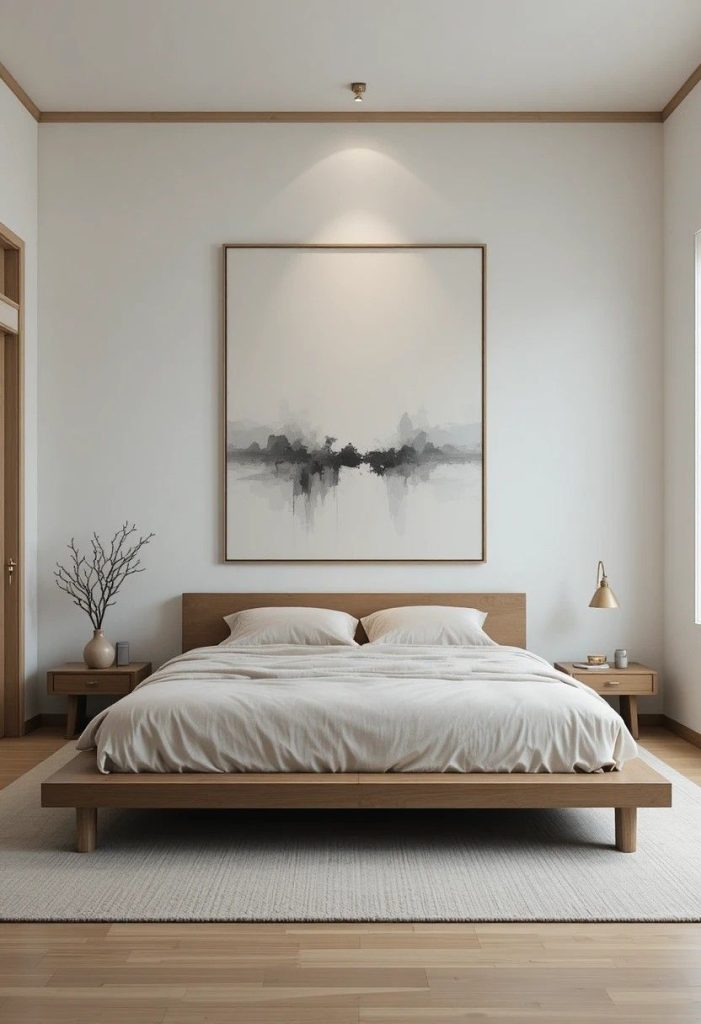
Gallery walls and busy prints disrupt the calm of a Japandi bedroom. Choose one piece of quiet wall art: a single ink wash painting, a minimalist line drawing, a soft abstract canvas in neutral tones, or even a piece of undyed linen mounted as wall textile. Hang it above the bed or on the wall opposite the bed so it becomes a focal point worth pausing on. Frame it simply in oak, ash, or thin black metal.
19. Add a Woven Basket for Soft Storage
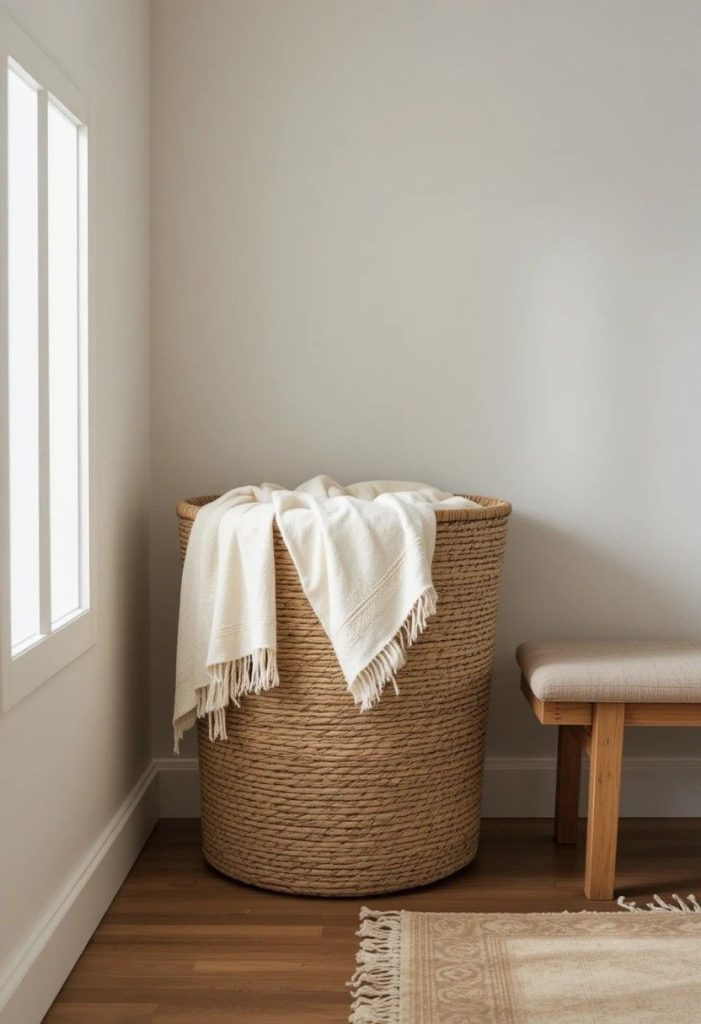
Open storage in Japandi is functional and beautiful. A large woven basket (seagrass, rattan, or jute) at the foot of the bed or beside a chair stores extra blankets, magazines, or laundry while adding natural texture. Choose baskets with simple silhouettes and visible weave patterns. Avoid baskets with handles, decorative trims, or printed liners. The basket should look like a quiet companion to the room, not a styled accessory.
20. End With Scent: Cedar, Sandalwood, or Hinoki
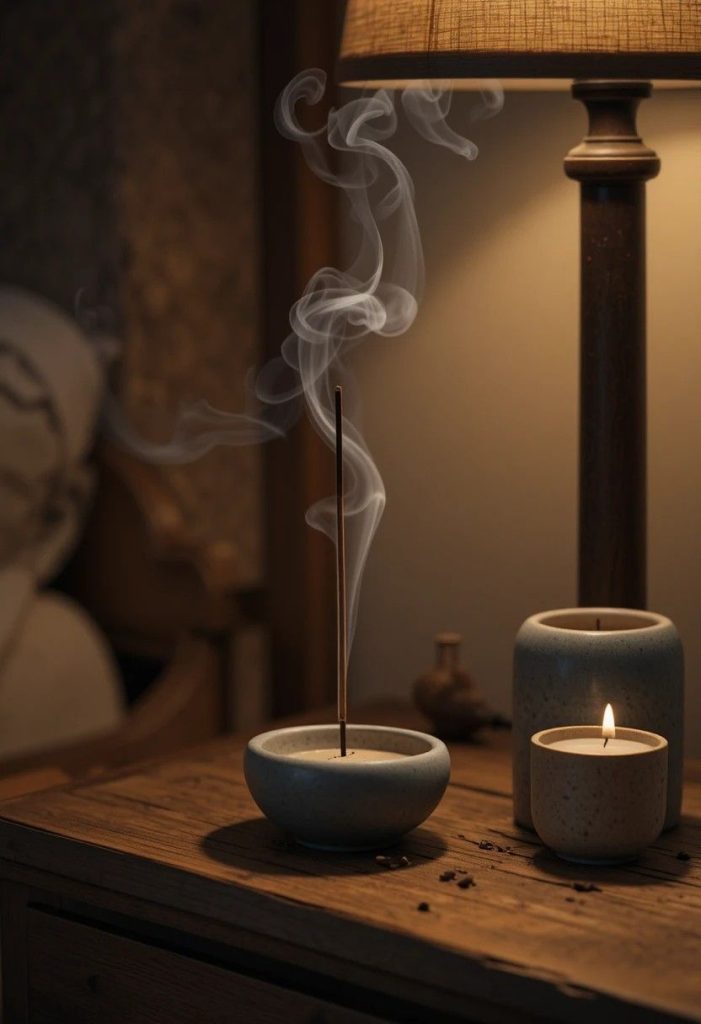
Decor is visual, but a true Japandi room engages every sense. The right scent completes the atmosphere in a way no design choice can. Choose grounding, woody scents: cedarwood, sandalwood, hinoki (Japanese cypress), or soft incense. A small ceramic diffuser, a hand-poured candle in a stoneware vessel, or a single stick of high-quality incense burning briefly before bed transforms the room. Avoid sweet or floral scents, which feel out of place in this aesthetic.
Frequently Asked Questions About Japandi White Bedrooms
What is Japandi style?
Japandi is a hybrid interior design style that combines Scandinavian hygge with Japanese wabi-sabi. It emphasizes natural materials, neutral palettes, functional minimalism, and the appreciation of imperfection. A Japandi white bedroom uses warm white walls, light and dark wood combinations, hand-thrown ceramics, linen textiles, and soft diffused lighting.
What colors work in a Japandi bedroom?
Stick to a warm neutral palette: soft warm whites, oatmeal, cream, taupe, and putty for the base tones, with accent tones in light oak, walnut, charred wood, and natural stone. Avoid bright colors, pastels, or bold patterns. The whole palette should feel like a cup of warm tea.
How do I make my bedroom feel Japandi on a budget?
Start with paint and bedding. Repaint walls in a warm white, swap synthetic bedding for washed linen in cream or oatmeal, and add one hand-thrown ceramic vase with a single branch. Replace bright bulbs with 2700K warm bulbs throughout. These four changes alone create a strong Japandi base for under 300 dollars.
What is the difference between Scandinavian and Japandi style?
Scandinavian style is cozy, layered, and warm with light oak as the dominant wood. Japandi is more contemplative, uses both light and dark wood tones in tension, leans into wabi-sabi imperfection, and emphasizes negative space more aggressively. Scandinavian feels like a hug. Japandi feels like a quiet exhale.
Can I have a Japandi bedroom in a small space?
Yes, Japandi is actually ideal for small bedrooms. The low-profile furniture, restrained styling, and emphasis on negative space all visually expand a small room. Stick to one strong wood tone, keep the bed low to the ground, and resist adding extra furniture pieces. Small Japandi bedrooms often feel larger than their square footage.
Final Thoughts: The Japandi Mindset
A Japandi white bedroom is less about following a checklist and more about adopting a mindset. Slow down. Choose objects with care. Pay attention to materials. Let imperfection in. Trust that empty space is part of the design rather than a problem to fix.
Start with the warm white paint and the low oak bed. Add washed linen bedding and one piece of slatted wood. Bring in a single hand-thrown ceramic and one branch. Layer in soft bouclé or wool for tactile contrast. Light the room with 2700K warm bulbs and one paper lantern. Finish with cedar incense. That sequence alone will transform any bedroom into a quiet Japandi sanctuary.
Save this guide, bookmark the AI image prompts that match your dream room, and start with whichever idea feels most doable today. Which of these 20 Japandi ideas are you trying first?