Tuscan Living Room Ideas: 22 Warm, Inviting Spaces for 2026
From sun-faded plaster walls to reclaimed-wood beams, here are 22 living room ideas that bring the soul of the Italian countryside into a modern home — without a single grape border in sight.
There’s a reason Tuscan living rooms are blowing up on Pinterest right now. After more than a decade of cold gray sofas, all-white walls, and minimalist rooms that felt more like dental offices than homes, people are craving warmth again. They want spaces that smell like rosemary, glow at golden hour, and feel like someone actually lives there.
The good news: the 2026 version of Tuscan style is nothing like the heavy, dated rooms you remember from the early 2000s. Today’s Tuscan living room is lighter, softer, and more architectural — built around lime-washed walls, honed travertine, warm white oak, layered linen, and the kind of unhurried Italian elegance that never goes out of style.
Whether you’re planning a full living room renovation, refreshing one or two key pieces, or just looking for that one Pinterest-worthy corner to anchor the whole space, these 22 ideas will give you everything you need to start. Let’s dive in.
1. Lime-Washed Cream Walls as Your Foundation
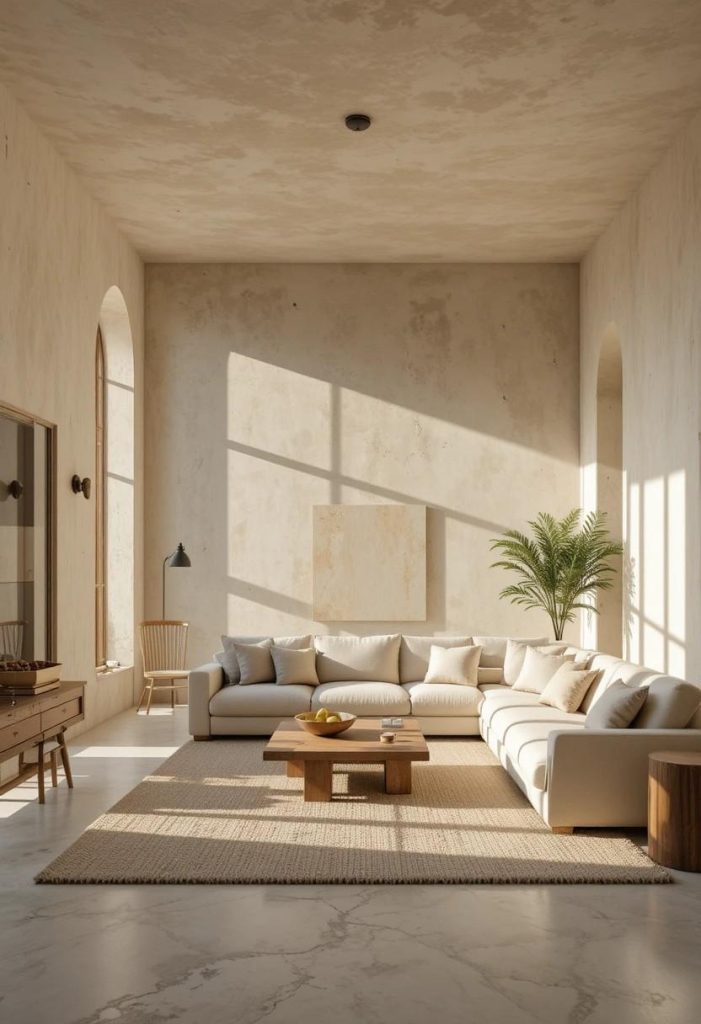
Before you buy a single piece of furniture, get the walls right. Lime wash is the single most important upgrade for any Tuscan living room — it creates that soft, cloudy, sun-faded finish that flat paint simply cannot replicate. Stick to warm cream or oat tones, and let the natural variation in the finish do the heavy lifting.
If lime wash feels like too much commitment, a high-quality matte paint in a warm cream like Farrow & Ball’s School House White or Benjamin Moore’s Swiss Coffee will get you 80% of the way there.
2. A Stone or Stucco Fireplace as the Hero
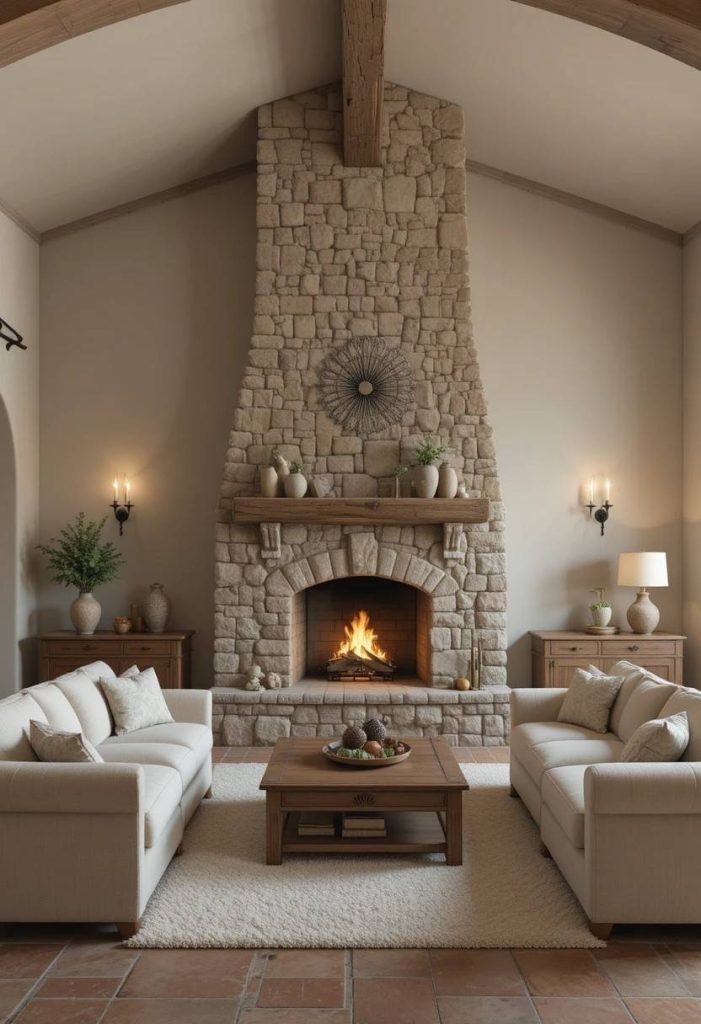
Every great Tuscan living room is built around a fireplace, and the fireplace is built around natural stone or hand-troweled stucco. Skip the formal mantel and choose a simple reclaimed wood beam or a chunky slab of travertine instead.
Even in homes without a working fireplace, a stone-clad feature wall with a built-in niche for candles or firewood creates the same gravitational pull in the room.
3. Exposed Wooden Ceiling Beams
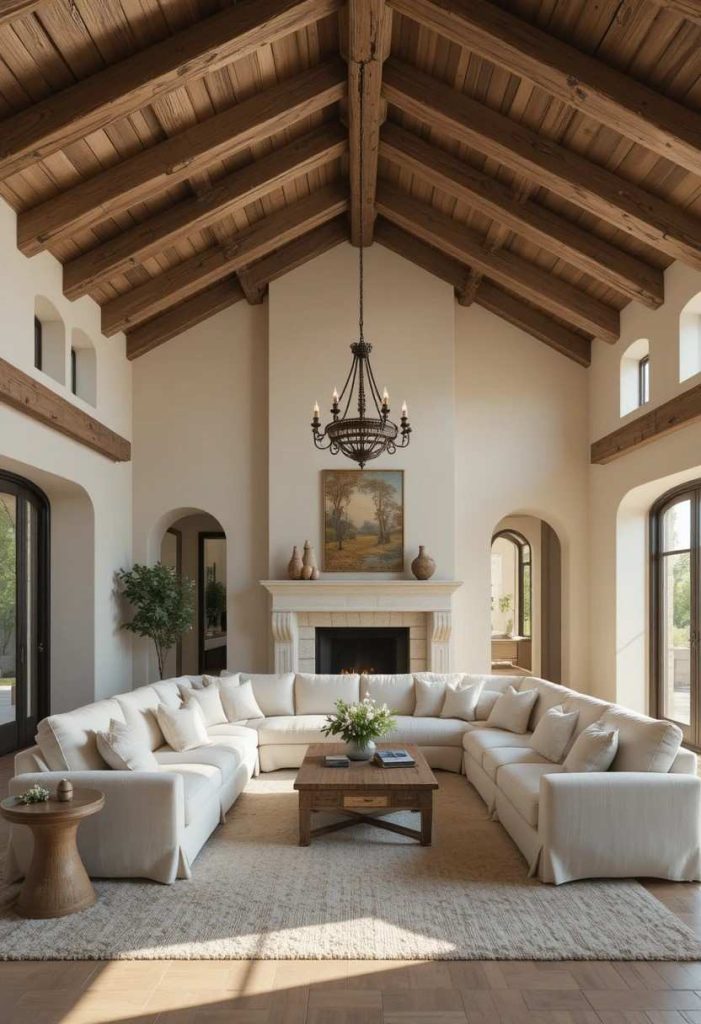
Nothing says “Italian villa” quite like exposed wood beams overhead. The modern Tuscan version uses lighter, less varnished wood — think weathered oak or pale chestnut rather than dark espresso.
If your ceiling can’t support real beams, faux beams made from hollow reclaimed-look wood are widely available and install in an afternoon. They add instant architectural character to even the plainest box of a room.
4. An Oversized Linen Slipcovered Sofa
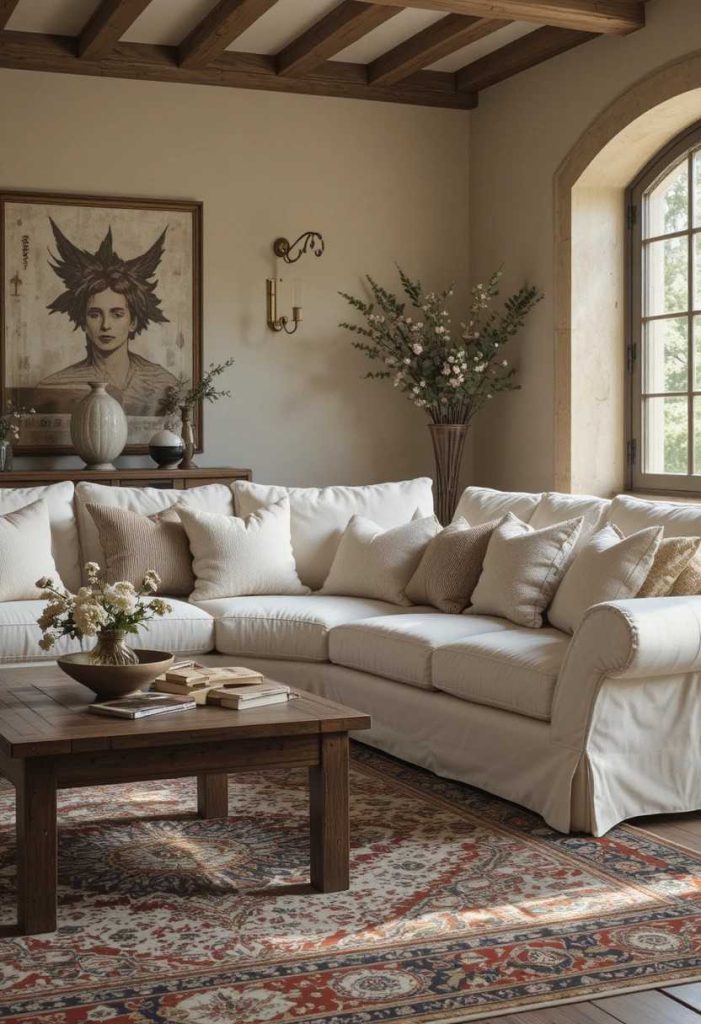
The Tuscan living room sofa is the opposite of sleek. It’s deep, soft, slightly rumpled, and almost always slipcovered in unbleached linen or heavy cotton. The slipcover matters — it gives the room that lived-in, just-washed-the-cushions look that’s central to the aesthetic.
Choose oversized over tailored. The sofa should look like it’s been there for years and welcomes long Sunday naps.
5. Layered Vintage Persian or Turkish Rugs
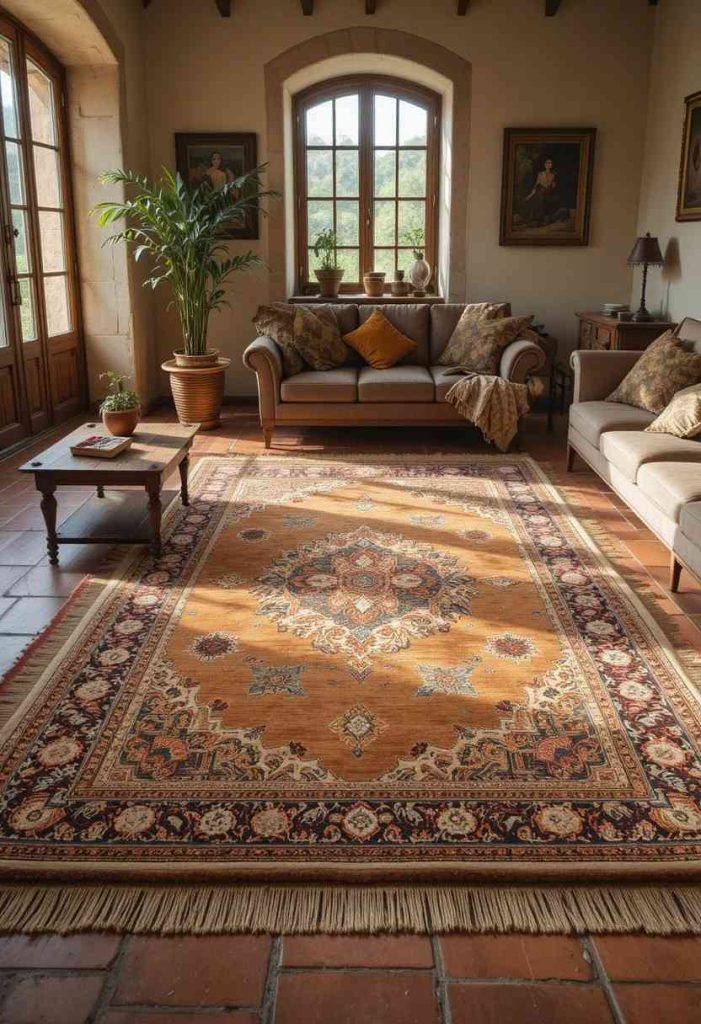
Skip the modern abstract rug. A faded vintage Persian or Turkish rug in warm reds, golds, and burnt oranges is the single fastest way to make a living room feel authentically Tuscan.
For larger rooms, layer two rugs — a flat-woven jute base with a smaller vintage rug on top — to add texture and warmth without overcrowding the space.
6. Arched Doorways and Window Niches
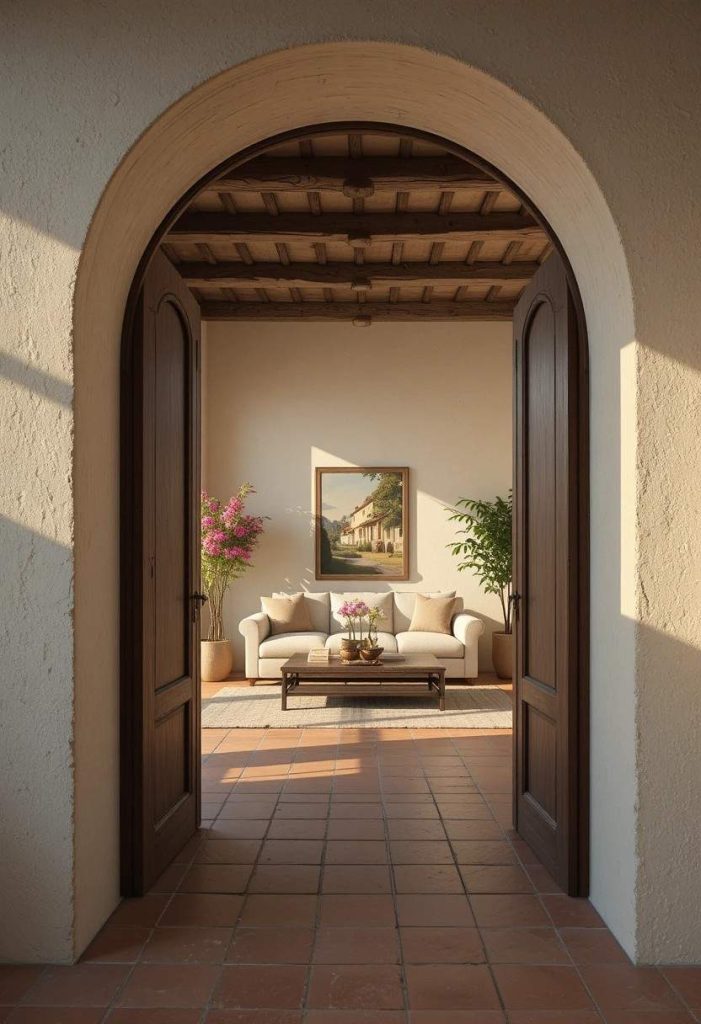
The Roman arch is the single most recognizable shape in Tuscan architecture. Even a single arched doorway between the living room and the entry can transform the entire vibe of the space.
Can’t change the architecture? Hang a large arched mirror above the sofa or fireplace. The visual effect is nearly identical.
7. A Wrought Iron Chandelier (But Keep It Simple)
Wrought iron is still very much part of the Tuscan playbook — it’s just lighter and less ornate than the 2000s version. Look for chandeliers with clean, almost medieval-modern lines. No grape clusters, no excessive scrollwork.
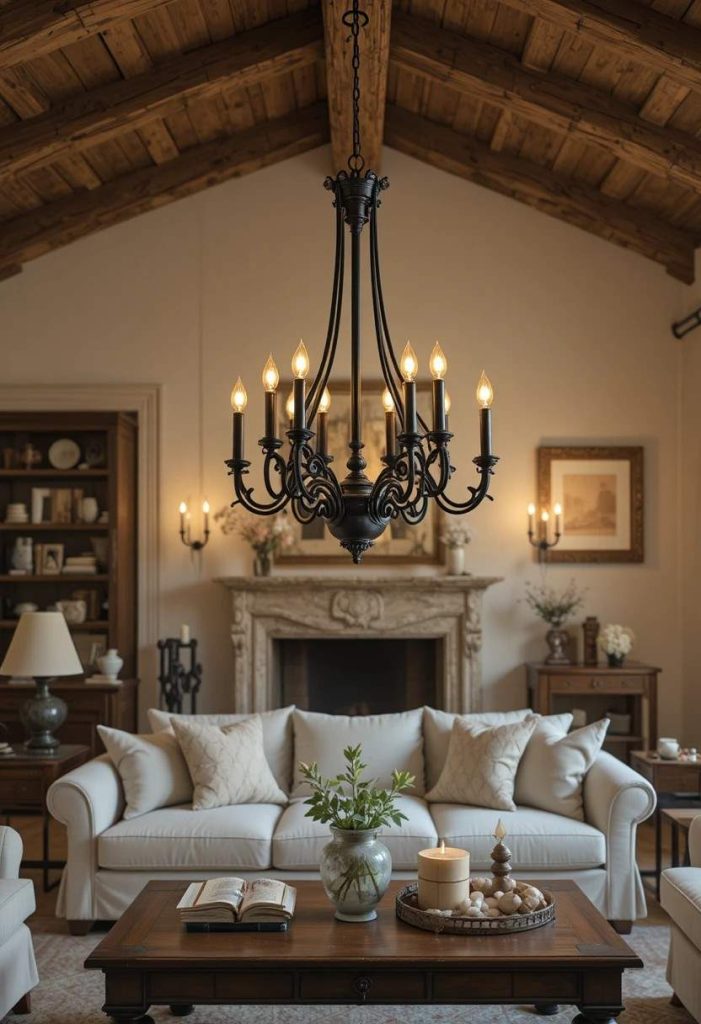
A black or aged-bronze iron chandelier with simple candle-style bulbs hung over the coffee table gives the room its anchor moment.
8. Terracotta Tile or Wide-Plank Wood Floors
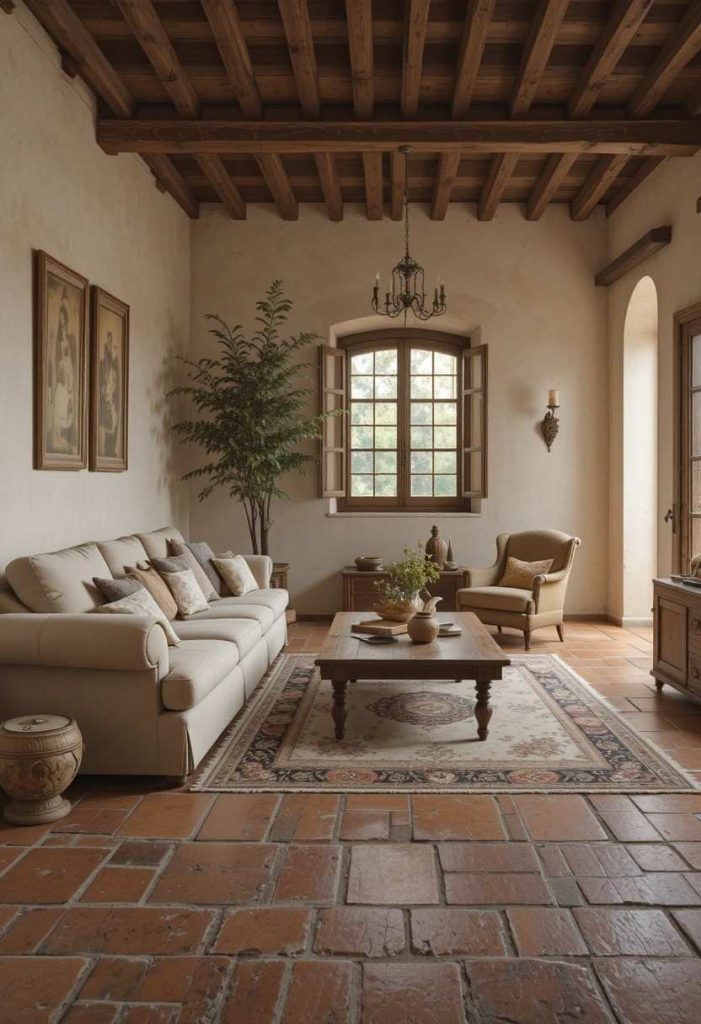
The floor underfoot does enormous emotional work in a Tuscan room. Reclaimed terracotta tiles in warm clay tones are the most authentic option, but wide-plank oak or reclaimed pine in warm honey tones works beautifully too.
Avoid cool gray flooring at all costs. The whole palette depends on a warm-toned floor as its base.
9. Honed Travertine or Reclaimed Wood Coffee Table
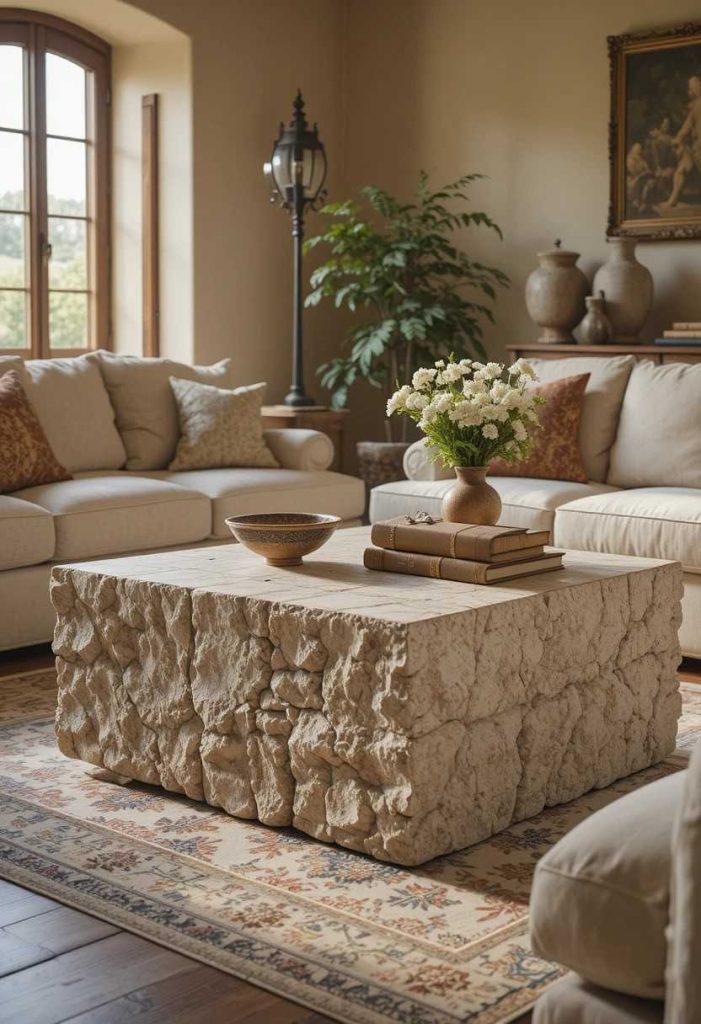
Coffee tables in Tuscan living rooms are heavy, honest, and made of natural materials. A single block of honed travertine, a reclaimed wood trunk, or a chunky stone-and-wood combination all work beautifully.
Skip glass, chrome, and acrylic entirely. The coffee table should feel like it was carved or salvaged, not manufactured.
10. An Olive Green Accent Wall or Built-In
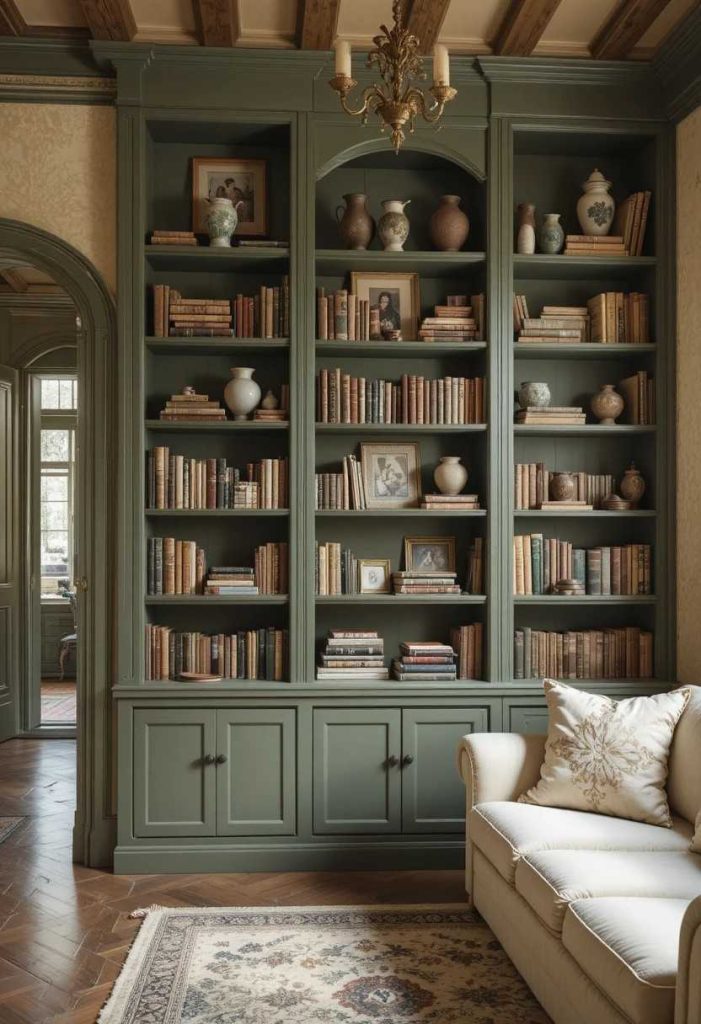
If you want to introduce color beyond the neutral palette, olive green is the Tuscan accent color of 2026. Use it on a single built-in bookcase, an alcove, or the back of a shelving unit.
Olive plays beautifully against cream walls and warm wood without ever feeling loud or trendy.
11. Unlined Linen Curtains That Puddle on the Floor
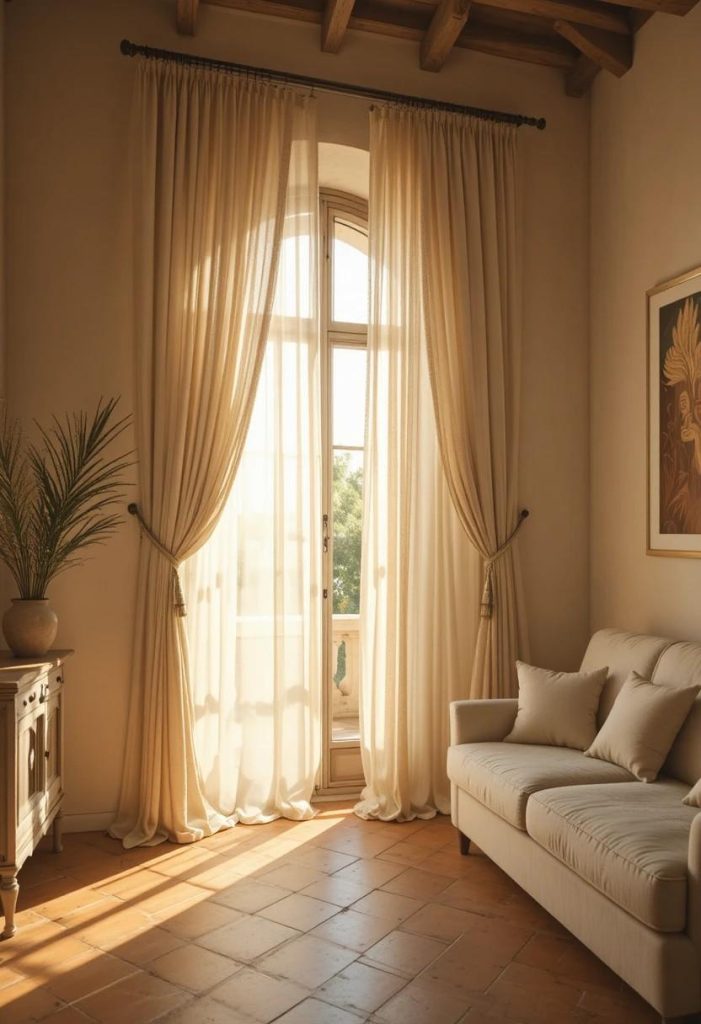
Curtain choice is one of the most underrated decisions in Tuscan design. Skip blackout panels, tab tops, and anything tailored. Long, unlined linen curtains in cream or oat that puddle slightly on the floor filter light beautifully and add a soft, romantic edge to the whole room.
Hang the rod 6 inches above the window frame and let the panels extend 4 inches past either side to make the windows look larger and grander than they are.
12. Antique Wood Side Tables and Trunks
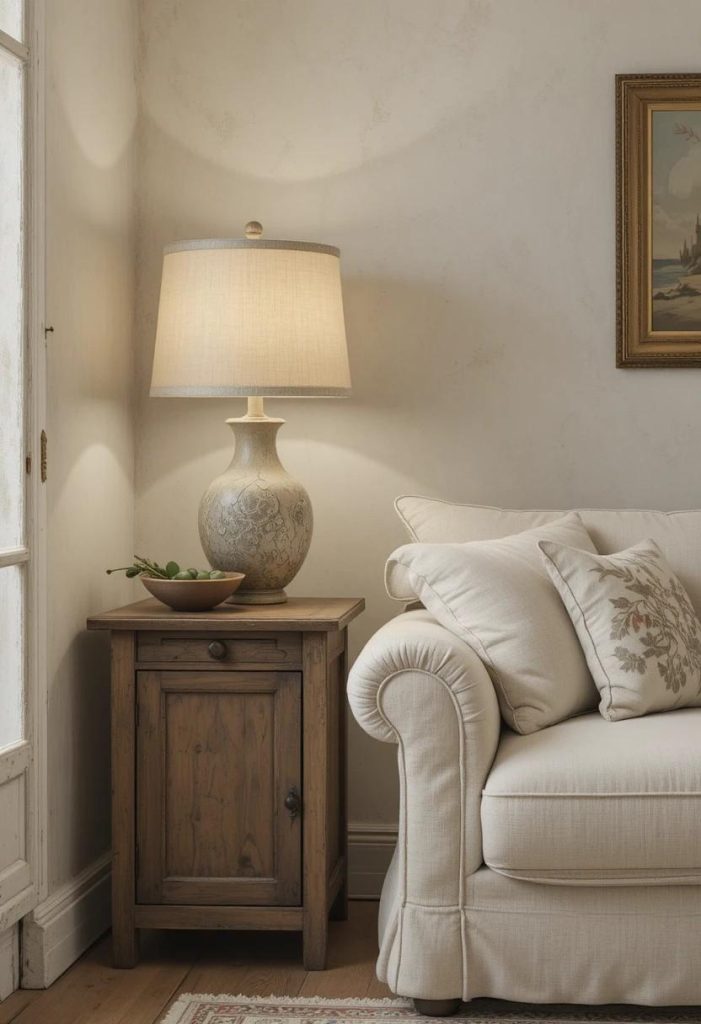
Side tables and accent pieces should look like they have history. Antique wood side tables, small olive-wood stools, or even a vintage steamer trunk used as an end table all add character.
Hit estate sales, flea markets, and Facebook Marketplace for these pieces — the more weathered and patinated, the better.
13. Layered Boucle, Linen, and Aged Leather Pillows
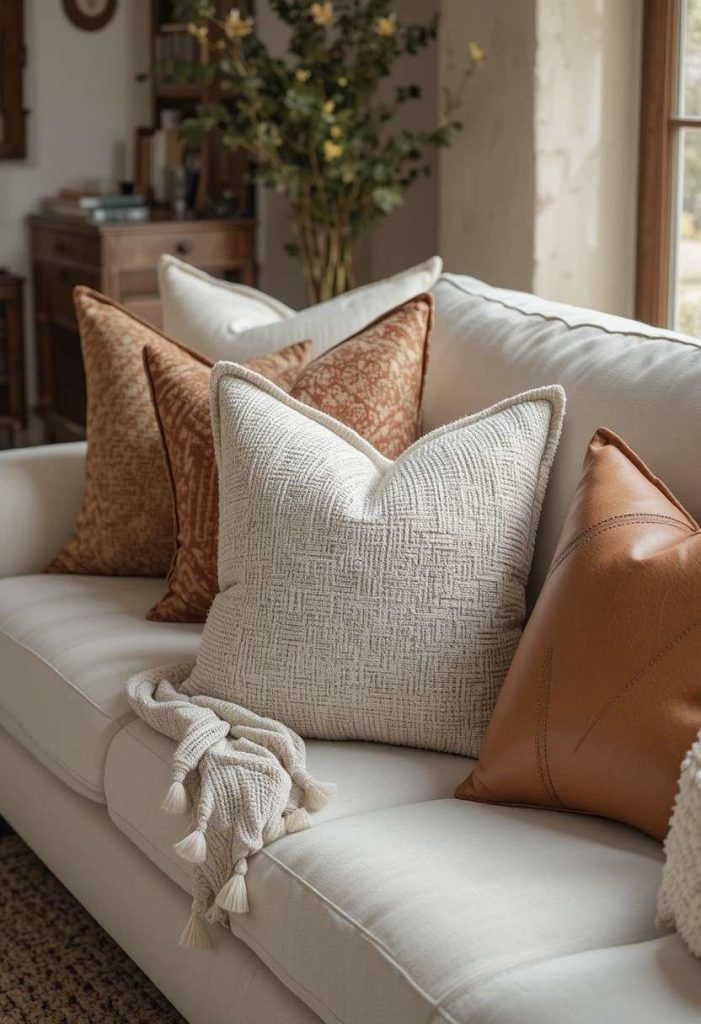
Throw pillows are where you build texture. Mix unbleached linen, soft boucle, vintage kilim, and one or two aged-leather pieces. Stay within the warm neutral palette — cream, oat, sand, terracotta, and burnt sienna only.
Three to five pillows on a sofa is plenty. Tuscan style is layered, not cluttered.
14. Open Wooden Shelving Styled with Pottery
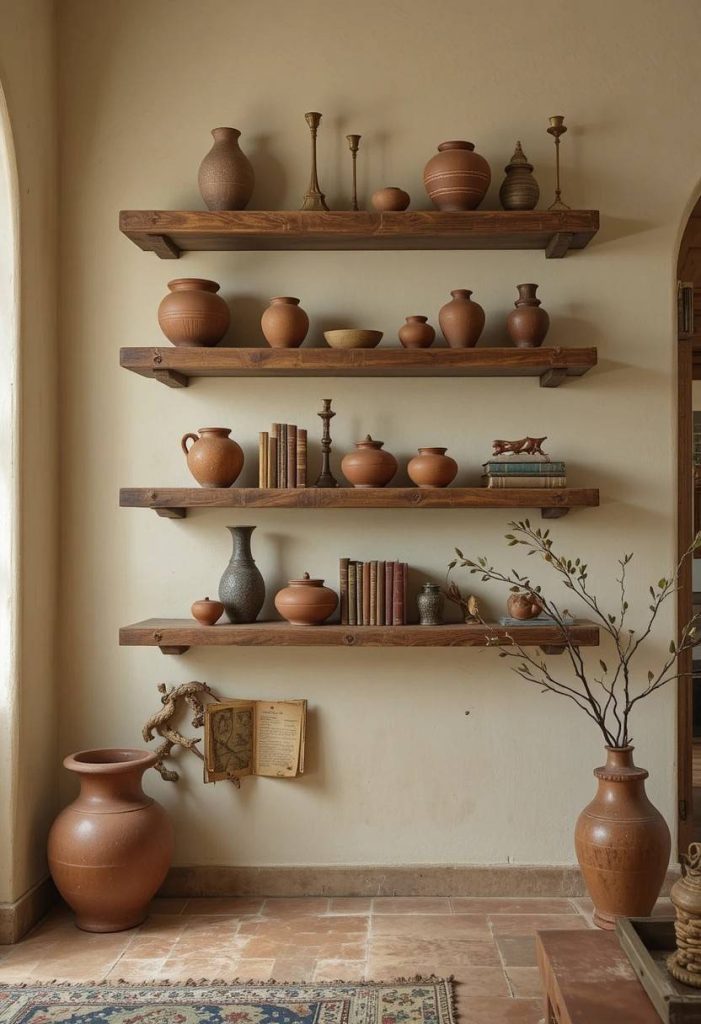
Open shelves in reclaimed wood, styled with hand-thrown pottery, antique books, brass candlesticks, and a few sculptural ceramic vessels, are pure Tuscan magic. Skip matching sets — the shelves should look collected over time, not bought at once.
Aim for 60% empty space on each shelf. Tuscan styling breathes.
15. A Single Oversized Piece of Aged Wall Art
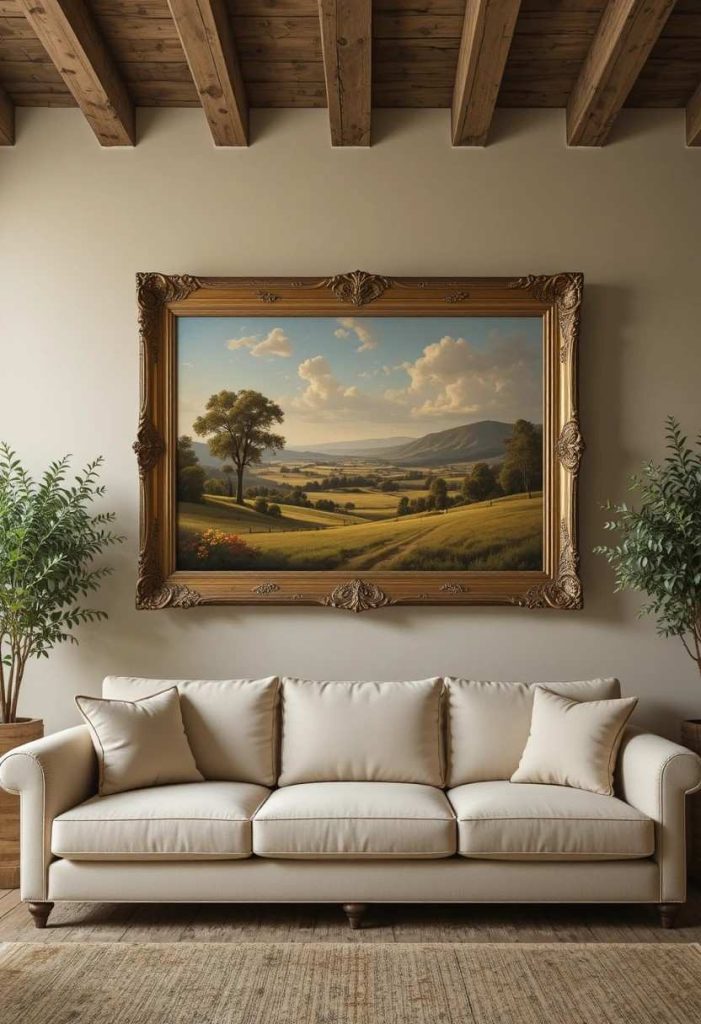
Forget gallery walls. The Tuscan living room is anchored by one oversized piece of art — a pastoral landscape, a faded tapestry, an antique-framed mirror, or a large abstract in warm earth tones.
Hang it above the sofa or the fireplace. Let it be the only thing on that wall. The empty space around it is part of the design.
lighting, photorealistic interior photography, museum-quality, 4K
16. Brass and Aged Bronze Hardware Throughout
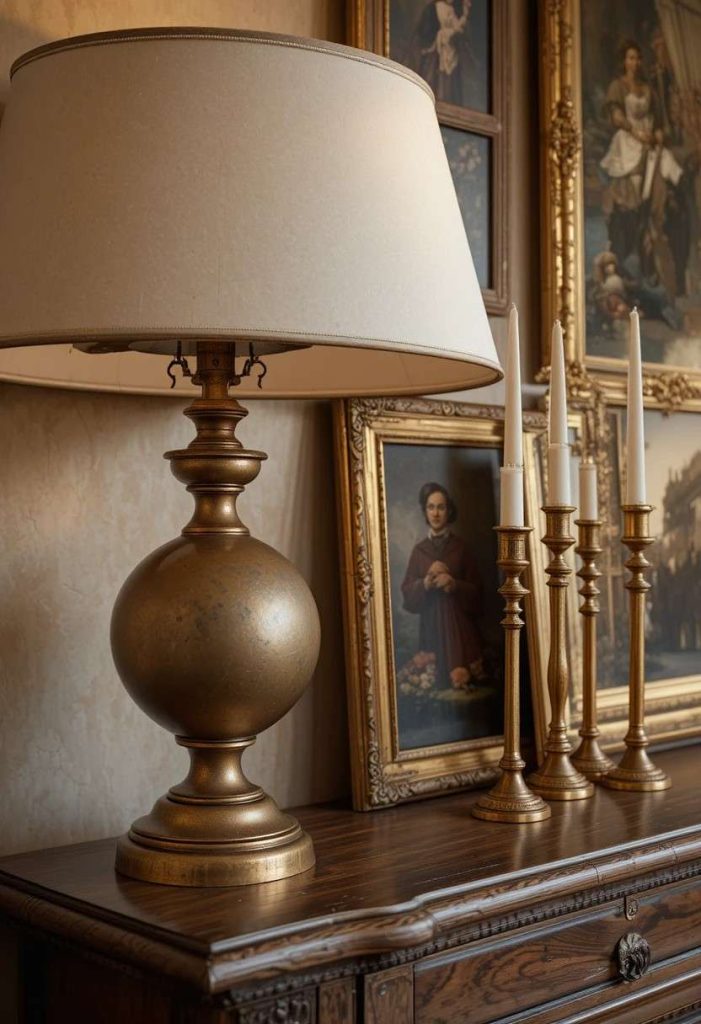
Metals matter. Swap out any chrome, brushed nickel, or matte black hardware for unlacquered brass, aged bronze, or antique gold. This includes lamp bases, picture frames, drawer pulls on built-ins, and even the small hooks holding curtains.
Mixed metals are fine as long as they all live in the warm family. Cool metals will fight the rest of the room.
17. Terracotta Pots with Olive Branches or Eucalyptus
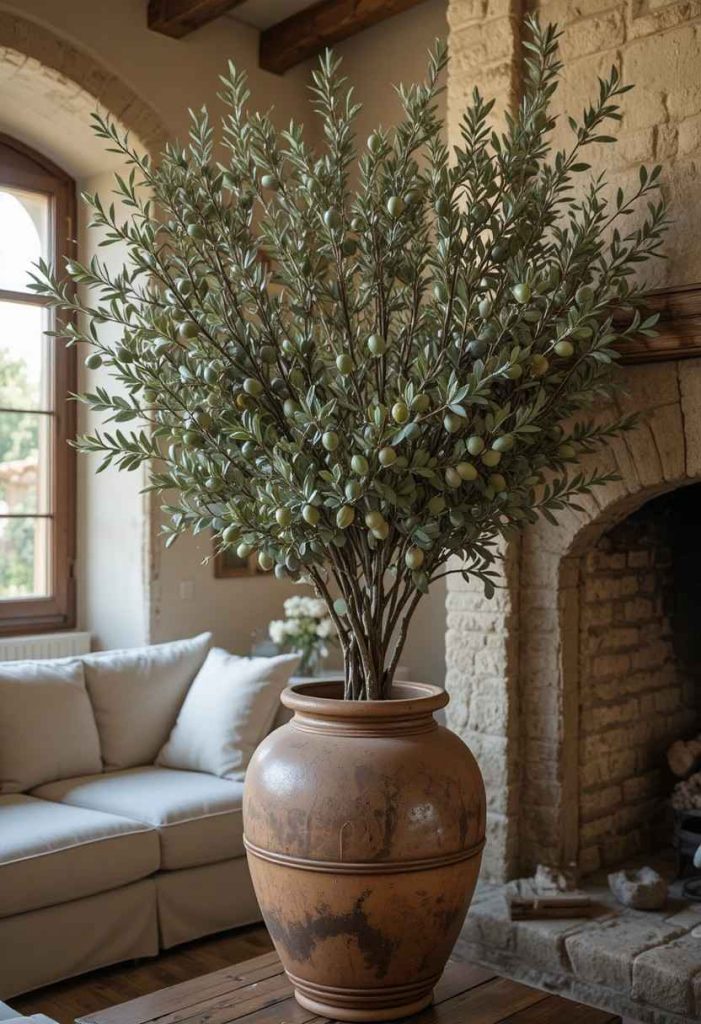
Skip silk florals and oversized green houseplants. The Tuscan living room uses live olive branches, eucalyptus, or fresh rosemary in simple terracotta pots or hand-thrown clay vessels.
One large branch in a tall clay vase by the fireplace can hold an entire corner of the room together.
18. A Reading Nook in an Arched Alcove
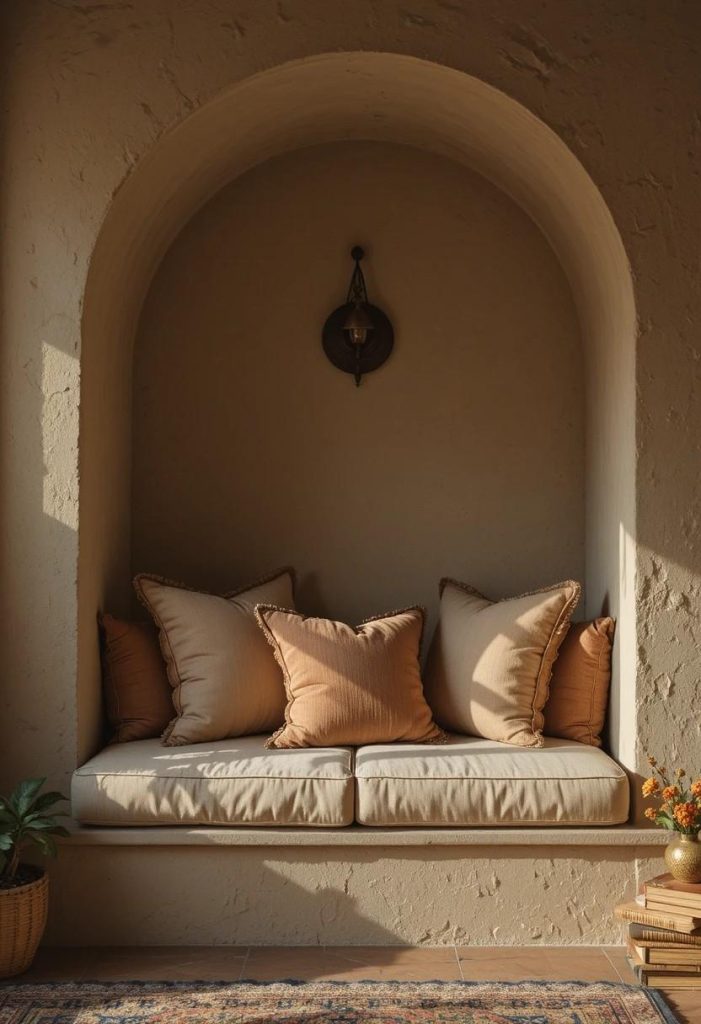
If your living room has an alcove, a window seat, or even just a deep corner, turn it into a small reading nook. A built-in bench cushion in linen, two or three pillows, a stack of books, a single sconce in aged brass — that’s the entire formula.
These tucked-away spaces are quintessentially Tuscan and deeply photogenic.
19. Warm 2700K Lighting (Never Cool White)
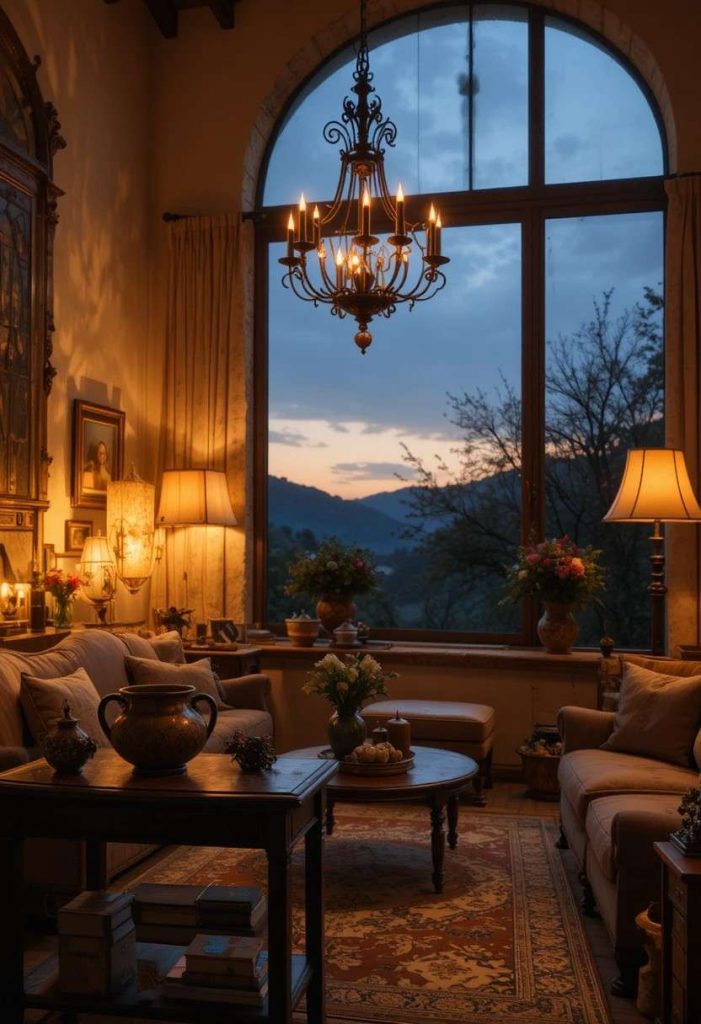
This single change costs almost nothing and transforms any room. Swap every bulb in your living room for warm 2700K LEDs. Avoid daylight, cool white, or anything labeled 4000K and above.
Layer your lighting in threes: overhead chandelier, a pair of table lamps, and at least one floor lamp in a corner. Never rely on overhead lighting alone.
20. A Stone-Topped Console Behind the Sofa
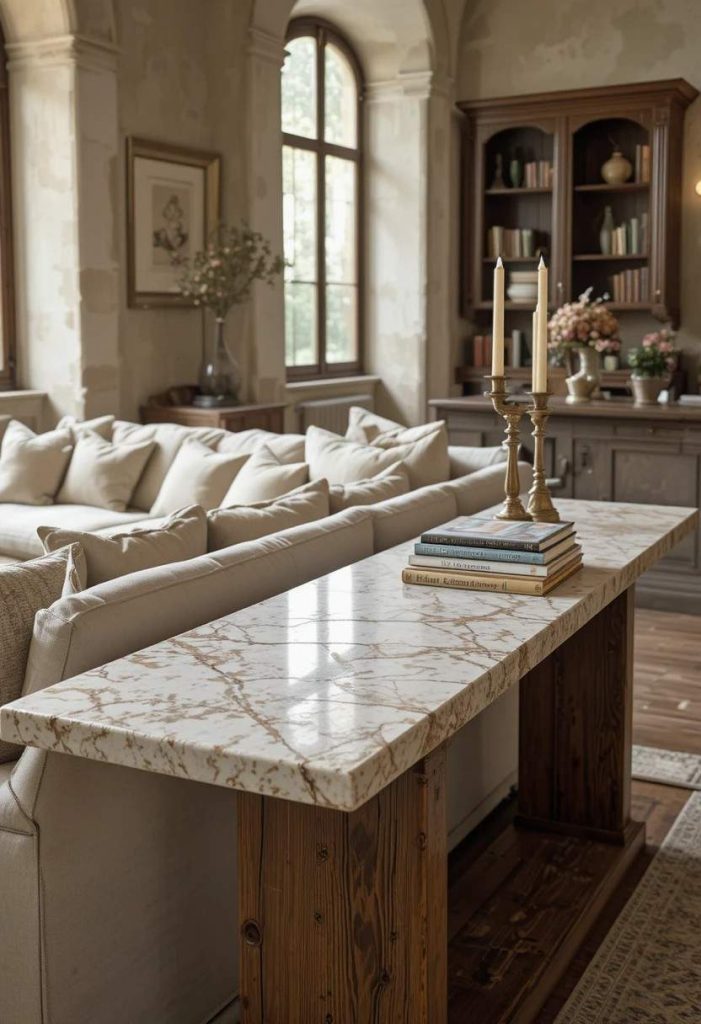
A long console table behind the sofa, topped with travertine or natural stone, gives the room a second styling moment. Use it to display a pair of brass candlesticks, a small piece of art on an easel, and a stack of large coffee table books.
This trick also works brilliantly in open-plan rooms to subtly separate the living area from the rest of the space.
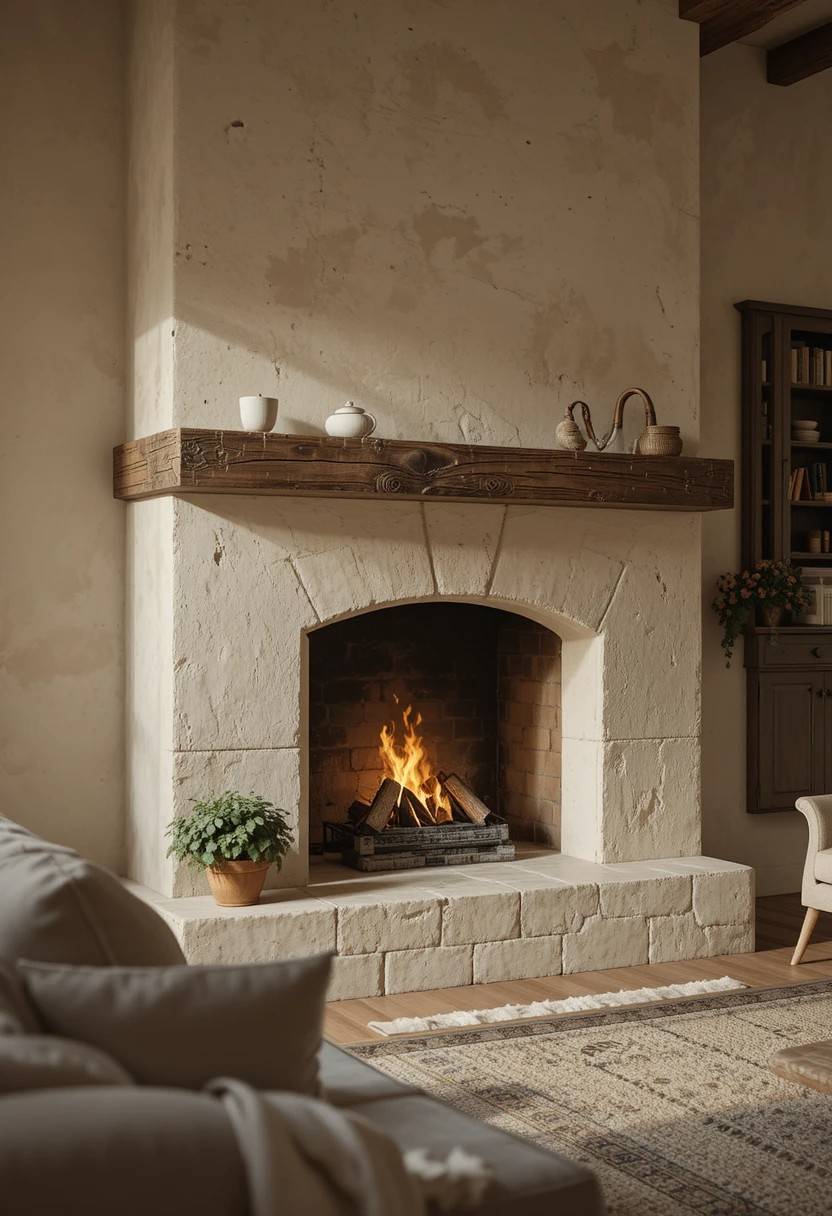
21. Hand-Troweled Plaster Around the Fireplace
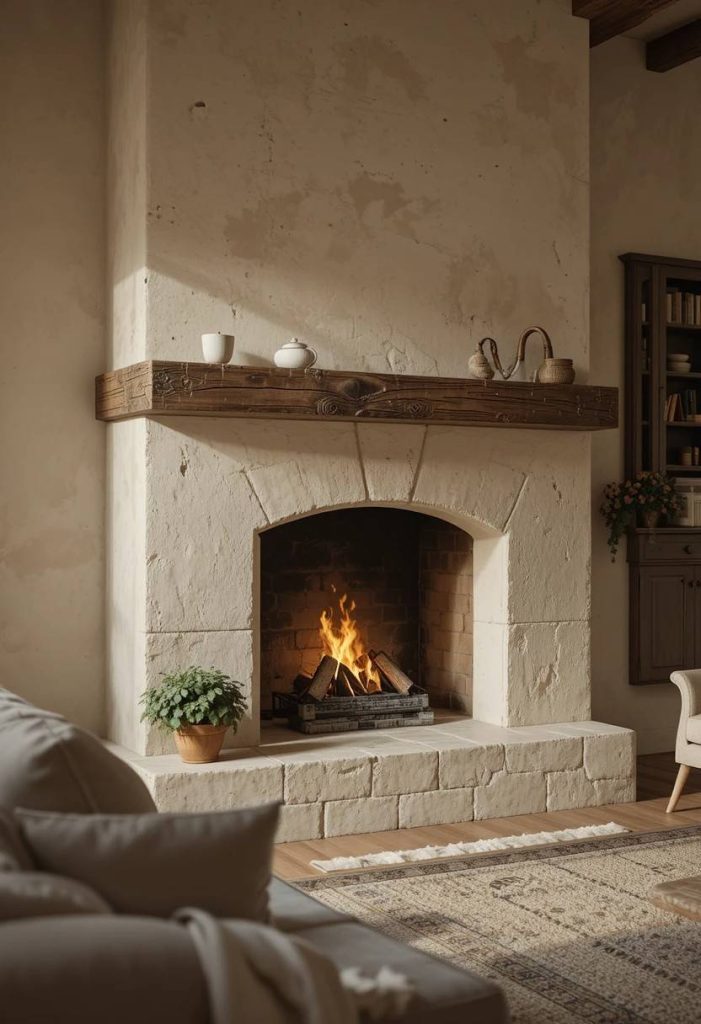
If a full stone fireplace surround isn’t in the budget, hand-troweled plaster is an incredibly affordable alternative that delivers a similar Old World feeling. A skilled plasterer (or a DIY weekend with the right kit) can transform a basic drywall fireplace into a feature that looks centuries old.
Pair it with a simple chunky wood mantel and you have the heart of a Tuscan living room for a fraction of the cost.
22. An Edited, Breathing Space Around Everything
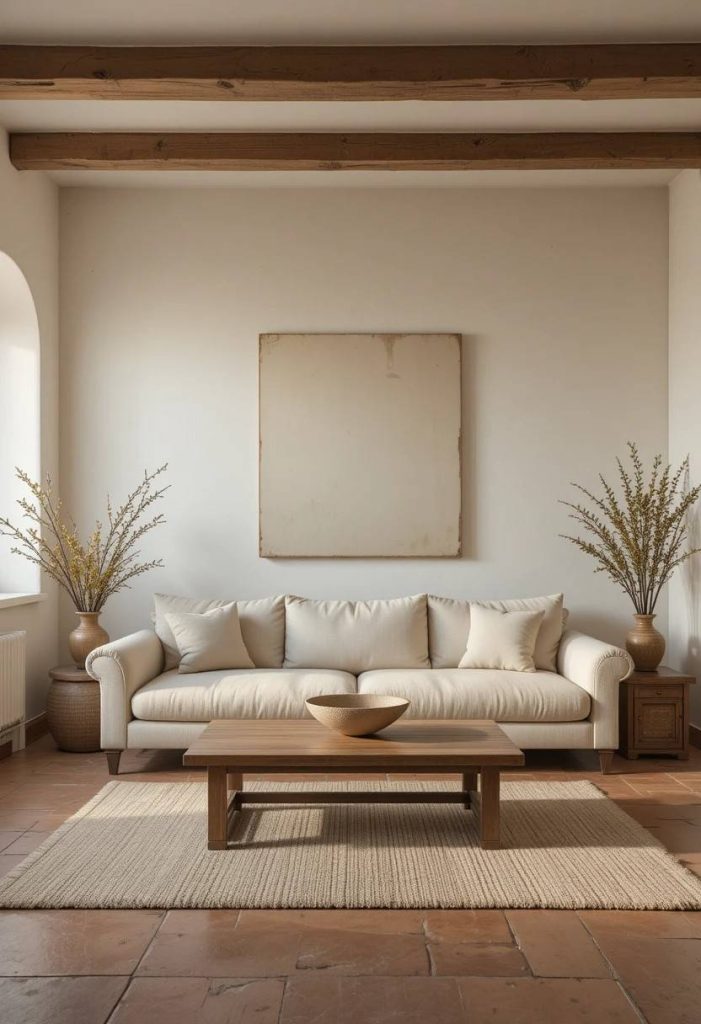
The single biggest mistake people make with Tuscan style is overdoing it. The original 2000s version was cluttered with grape borders, fake ivy, oversized scrollwork, and themed accessories on every surface. The 2026 version is the opposite.
For every five things you want to add to your Tuscan living room, put two back. Empty wall space, bare countertops, and breathing room around each object are features, not flaws. The most beautiful Tuscan rooms feel collected, not crammed.
Bringing It All Together
You don’t need to use all 22 of these ideas. Pick the five or six that speak to you, get the foundation right (walls, floors, sofa, lighting), and let the rest layer in slowly over time. Tuscan style is built around the idea that a home is never really finished — it’s collected, lived in, weathered, and loved over years and decades.
Start with paint. Then a vintage rug. Then swap your light bulbs to warm white. Then save up for the travertine coffee table. Each small decision compounds, and within a season your living room will feel like a different place entirely.
Open a window. Pour something nice into a clay cup. Light the candles. Your Italian villa moment starts now.