Modern Tuscan Style Home: The 2026 Revival Guide That’s Replacing Beige Minimalism
How a softer, lighter take on Old World warmth became the most-searched home aesthetic of the year — and how to bring it into your space without the espresso-brown cliches.
For nearly a decade, beige minimalism ran the show. Every kitchen looked like a showroom, every living room felt like a hotel lobby, and every Pinterest board started to blur together in a haze of greige sofas and white quartz countertops. Then, almost overnight, the algorithm shifted. Search interest in warm, lived-in, sun-soaked interiors started climbing, and one phrase kept surfacing again and again: modern Tuscan style home.
This isn’t your aunt’s 2003 kitchen with its grape-vine borders and ornate wrought-iron pot rack. The 2026 Tuscan revival is something altogether different — softer, lighter, more architectural, and deeply rooted in the actual textures of the Italian countryside rather than a costume version of it. If you’ve been craving a home that feels grounded, warm, and a little bit romantic without sliding into theme-park territory, this is the trend to understand.
Below is the complete guide to what modern Tuscan style is, why it’s exploding right now, and exactly how to bring it into every room of your home.
What Is a Modern Tuscan Style Home?
A modern Tuscan style home is a refined, contemporary interpretation of traditional Tuscan architecture and interior design. It keeps the soul of the original — natural materials, earthy color palettes, hand-troweled walls, sun-washed warmth — while stripping away the heavy ornamentation, dark espresso finishes, and faux-finish overload that defined the early-2000s version.
Think of it as Tuscan style filtered through a calmer, more architectural sensibility. The wrought iron is lighter. The wood tones are warmer and less reddish. The walls breathe instead of shouting. And the spaces feel like they were built to be lived in slowly — not photographed once and forgotten.
Old Tuscan vs. New Tuscan: The Quick Comparison
Old Tuscan (2000–2010): Heavy granite countertops, dark espresso cabinets, faux-finished gold walls, ornate grape motifs, oversized scrollwork, deep red accent walls, glossy travertine, and lots of fake distressing.
New Tuscan (2026): Lime-washed walls in warm cream and oat tones, lighter natural wood, honed (not polished) stone, soft linen and boucle textiles, simple wrought iron, hand-painted tile used sparingly, and a deep respect for negative space.
The difference is essentially the difference between a costume and a wardrobe. The old version performed Italian-ness. The new version simply borrows the climate, the materials, and the unhurried mood.
Why Tuscan Style Is Trending Hard in 2026
Pinterest’s own trend data and major design publications are all pointing in the same direction: people are exhausted by cold minimalism and ready for warmth. There are a few reasons this particular revival is hitting so hard right now.
1. The End of the All-White Era
After ten years of all-white kitchens, gray walls, and Scandinavian restraint, the pendulum has swung. Homeowners want color, texture, and emotional warmth — and Tuscan style delivers all three without requiring a complete personality transplant.
2. Nostalgia for Gen Z and Younger Millennials
The generation that grew up running through Tuscan kitchens in the early 2000s is now buying and decorating their first homes. They’re not recreating those kitchens exactly — they’re pulling the warmth and comfort they remember and giving it a cleaner, more grown-up edge.
3. The Slow Living Movement
Tuscan style has always been about long dinners, open windows, herbs on the sill, and the kind of unhurried domestic life that feels increasingly rare. As burnout culture peaks, an aesthetic that visually whispers “slow down” is exactly what people are searching for.
4. The Materials Are Genuinely Better Now
Lime wash, micro-cement, honed travertine, reclaimed wood, and hand-glazed tile are all widely available at price points that were unthinkable fifteen years ago. The 2026 Tuscan home benefits from a material palette the original trend simply didn’t have access to.
The 7 Defining Elements of a Modern Tuscan Home
If you want to translate this style into your own space, these are the seven foundational elements every modern Tuscan interior shares. Get these right and the rest falls into place naturally.
1. A Warm Earthy Color Palette
The color story is everything. Modern Tuscan homes work within a tight palette of sun-baked neutrals: warm cream, oat, sand, terracotta, olive green, soft ochre, and aged plaster. There is no cool gray, no stark white, and almost no high-contrast black. Even the deepest accent color — usually a wine red or burnt sienna — feels muted and lived-in.
2. Lime-Washed or Plaster Walls
Forget flat eggshell paint. Modern Tuscan walls have texture and movement. Lime wash creates that signature cloudy, sun-faded finish, while micro-cement or Venetian plaster gives walls a slightly luminous, hand-finished quality. This single change does more to evoke Tuscany than any decor item you could buy.
3. Natural Stone Used Honestly
Travertine, limestone, and tumbled marble are everywhere — but always honed, never polished. The goal is a soft, matte surface that shows its character. Use it on countertops, fireplace surrounds, bathroom vanities, and flooring.
4. Reclaimed and Lighter Wood Tones
Heavy cherry and espresso wood are out. In their place: warm white oak, lightly reclaimed pine, weathered olive wood, and pale chestnut. Exposed ceiling beams are still very much a feature — just lighter and less varnished than the original Tuscan playbook called for.
5. Wrought Iron, Used Sparingly
Iron is still part of the look, but it’s restrained. A simple iron chandelier, a slim stair railing, a curtain rod with a hand-forged finial. The ornate scrollwork of the early-2000s version has been replaced with clean, almost medieval-modern lines.
6. Arched Architecture
Arched doorways, arched windows, arched mirrors, arched alcoves — the Roman arch is the single most recognizable shape in modern Tuscan design. Even one well-placed arch in a hallway or above a bed can transform an otherwise plain room.
7. Layered, Tactile Textiles
Linen, raw cotton, boucle, jute, and aged leather. Modern Tuscan rooms are layered with soft, natural fabrics in undyed or naturally-dyed tones. Curtains are usually unlined linen that filters light beautifully. Sofas are oversized and slipcovered. Rugs are flat-woven jute or vintage Persian in faded reds and golds.
Room-by-Room: How to Get the Modern Tuscan Look
The Modern Tuscan Kitchen
The kitchen is where this trend is hitting hardest, and for good reason — it’s the room that was most damaged by the original Tuscan boom, and the one most ready for a redemption arc.
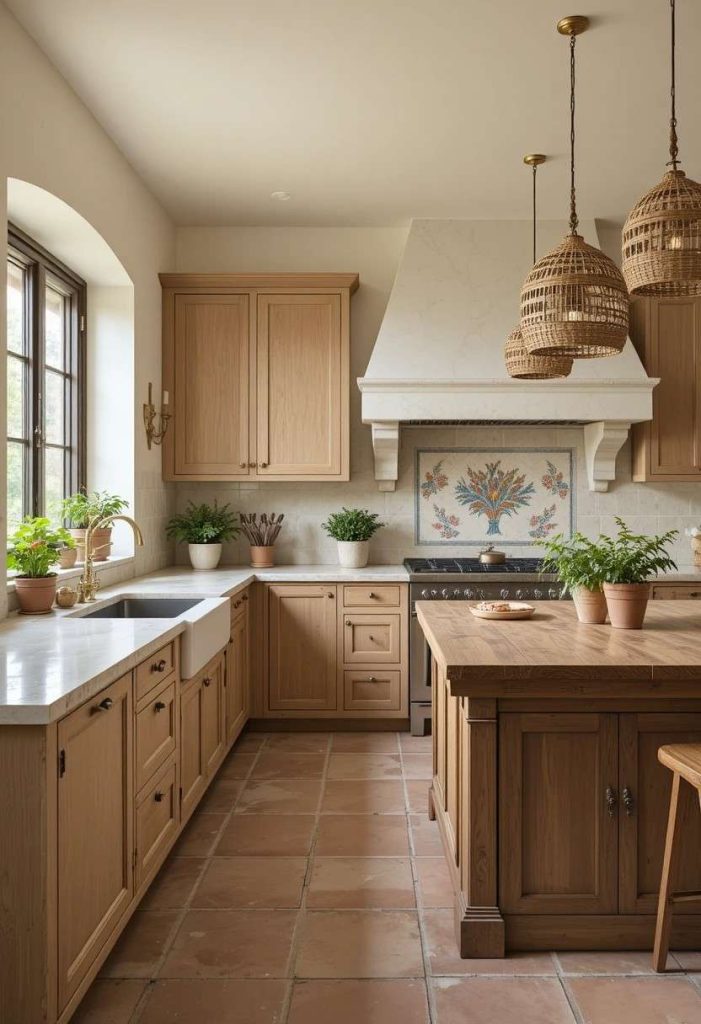
Start with the cabinets. Replace dark espresso with warm white oak, soft cream, or hand-painted olive green. Keep the doors simple — flat-panel or basic shaker — and skip the carved details. For countertops, honed travertine or soapstone replaces glossy granite. The backsplash is where you can have fun: a single run of hand-painted ceramic tile, zellige in warm cream, or even an old-world stucco finish all work beautifully.
Anchor the room with a large reclaimed wood island, hang two or three woven rattan or aged-brass pendants over it, and add a freestanding range with a stone surround. Finish with open shelving holding earthenware, a few copper pots, and fresh herbs in clay pots.
The Modern Tuscan Living Room
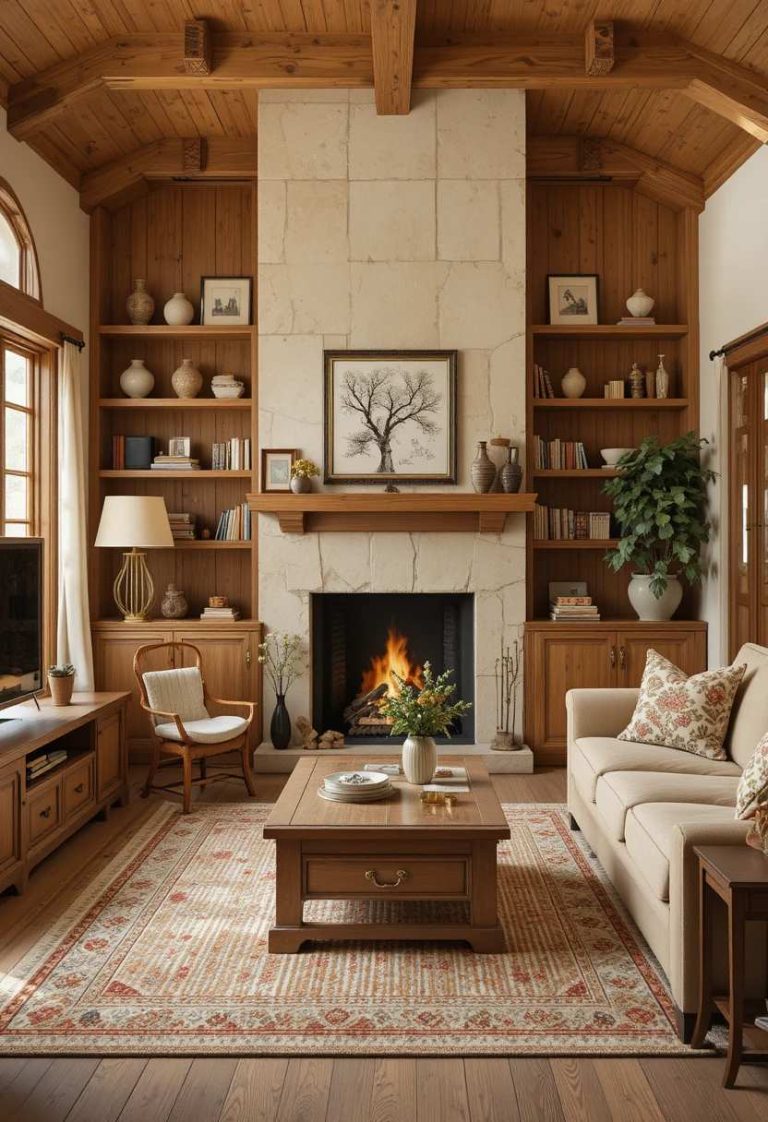
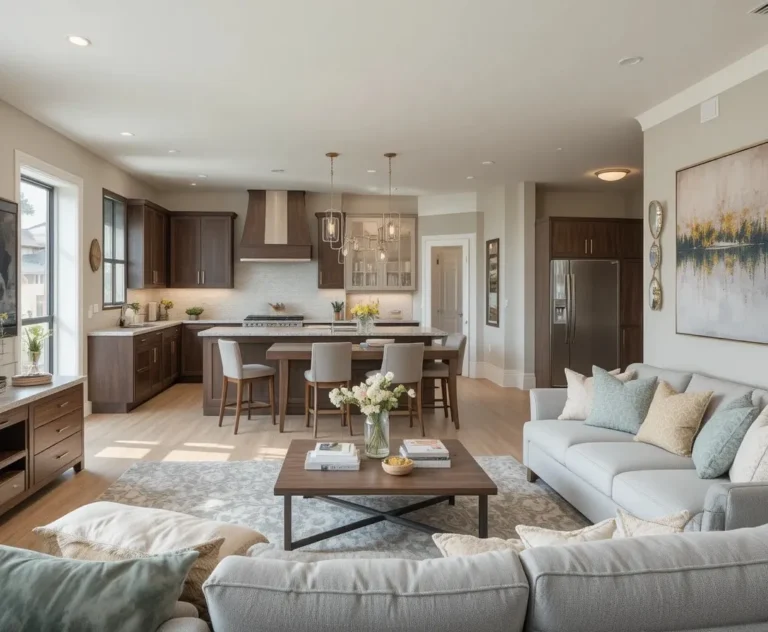
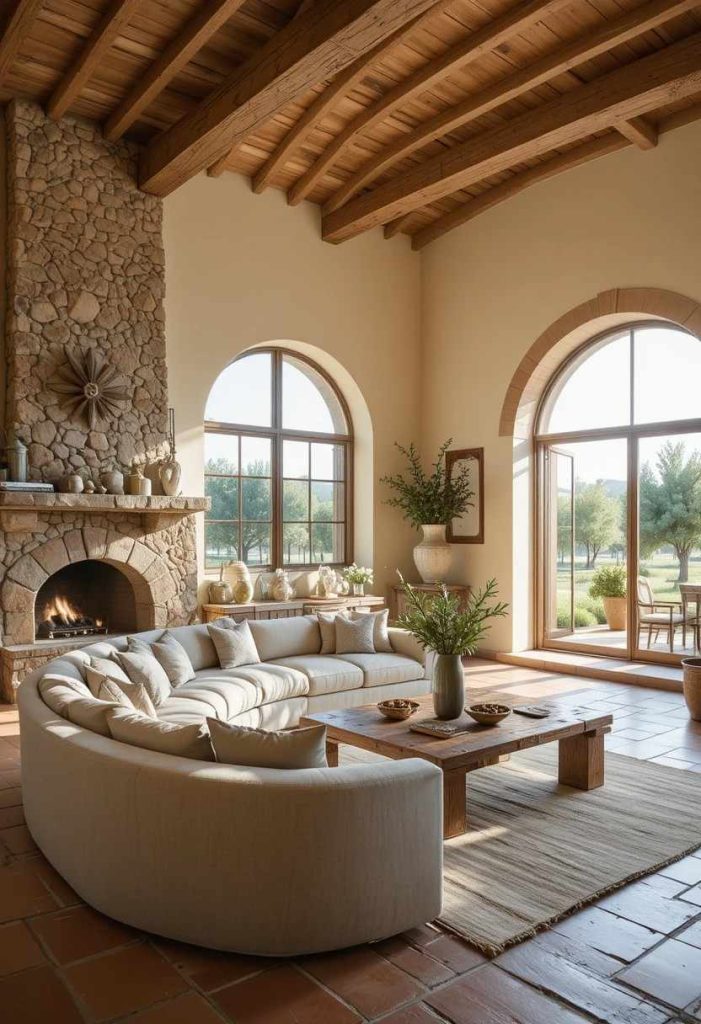
The modern Tuscan living room is built around a stone or stucco fireplace, ideally with a simple reclaimed wood mantel. Walls are lime-washed in warm cream or soft oat. The sofa is oversized, slipcovered in natural linen, and layered with a few boucle and aged-leather throw pillows.
Coffee tables are made of reclaimed wood, stone, or even a single travertine block. Lighting is layered and warm — a wrought-iron chandelier overhead, table lamps with linen shades, and at least one antique-style floor lamp in a corner. Add an oversized vintage Persian rug in faded reds and golds to ground the space.
The Modern Tuscan Bedroom
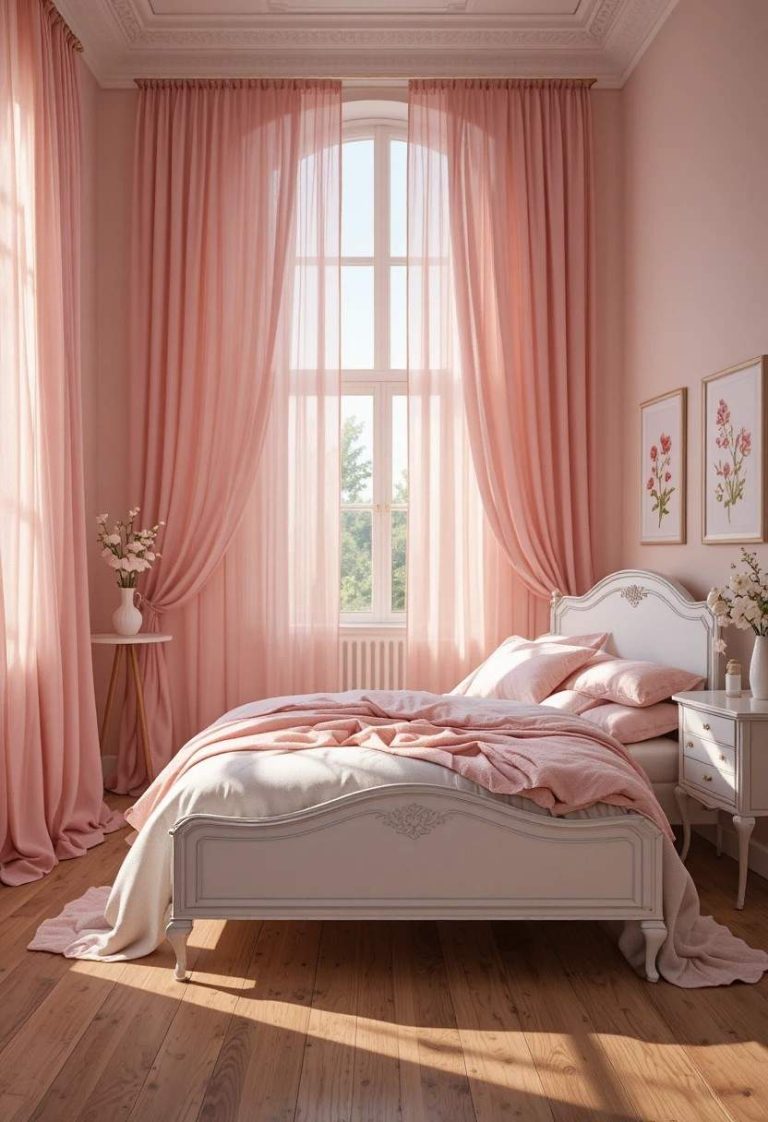
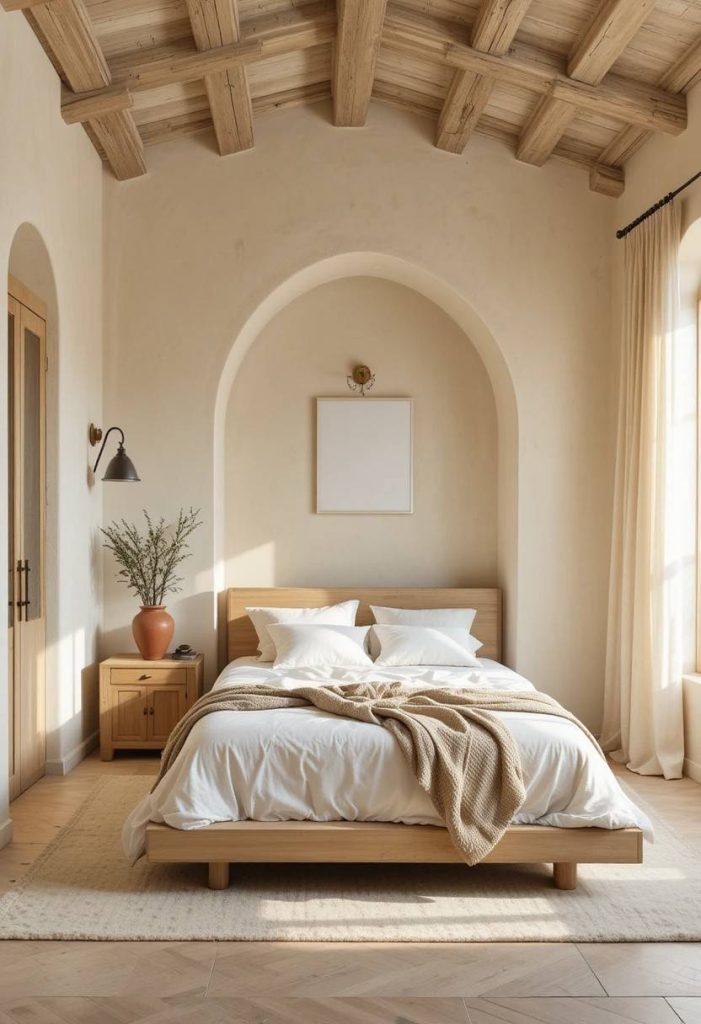
Bedrooms in this style are deeply calming. The bed is the hero: low-profile, dressed in white or oatmeal linen, with an arched wooden or upholstered headboard. Walls are plaster or lime-wash, and ceilings often feature exposed wood beams.
Nightstands are vintage or reclaimed wood, topped with a simple iron or ceramic lamp. Hang a single oversized piece of art — a pastoral landscape, an aged tapestry, or even just a beautifully framed antique mirror. Keep the floor warm with a vintage rug and add long linen curtains that puddle slightly on the floor.
The Modern Tuscan Bathroom
This is where you can really lean into the spa-villa feeling. A freestanding stone or cast-iron tub under an arched window. Travertine or limestone floors and walls. An aged-brass faucet. A wooden vanity with a vessel sink carved from stone. An arched mirror above. Sconces in antiqued brass on either side.
For smaller bathrooms, the same effect can be achieved with hand-troweled wall finishes, terracotta floor tile, and a single arched mirror over a simple wood vanity. The look scales down beautifully.
The Modern Tuscan Exterior
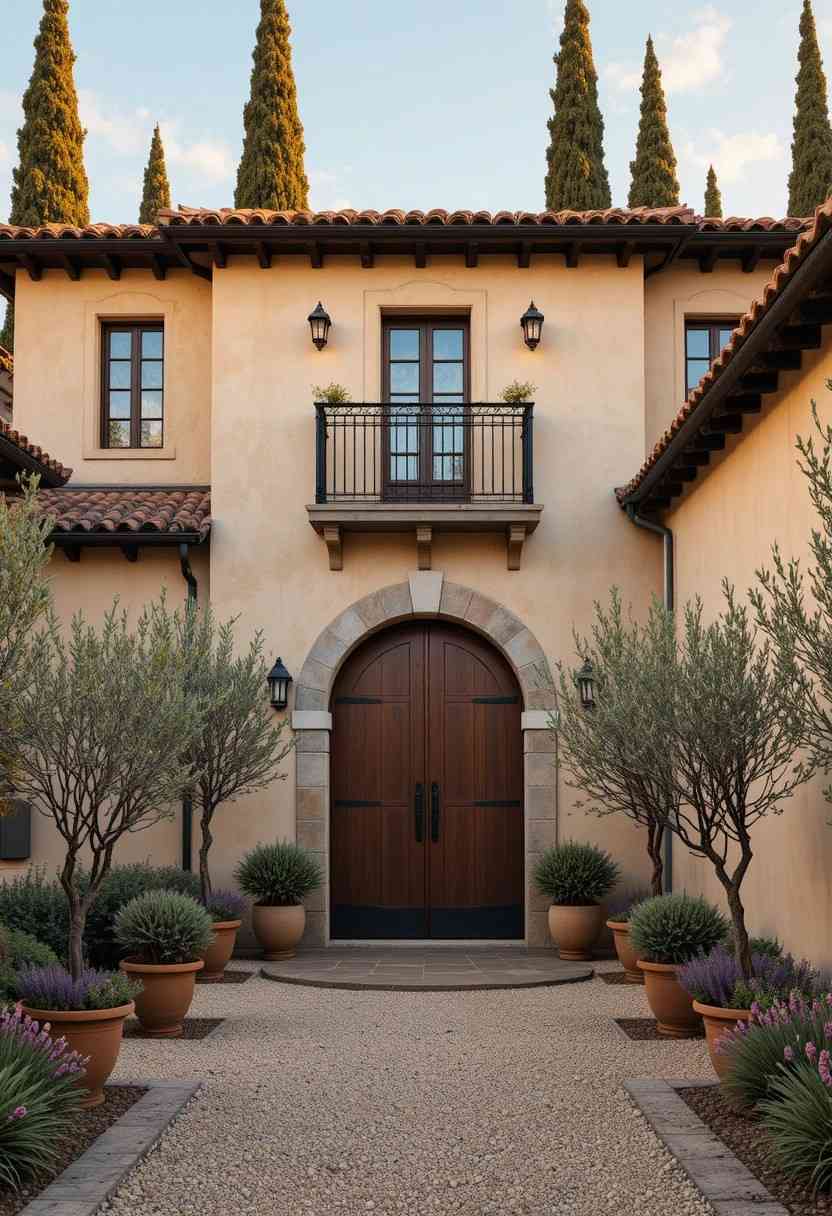
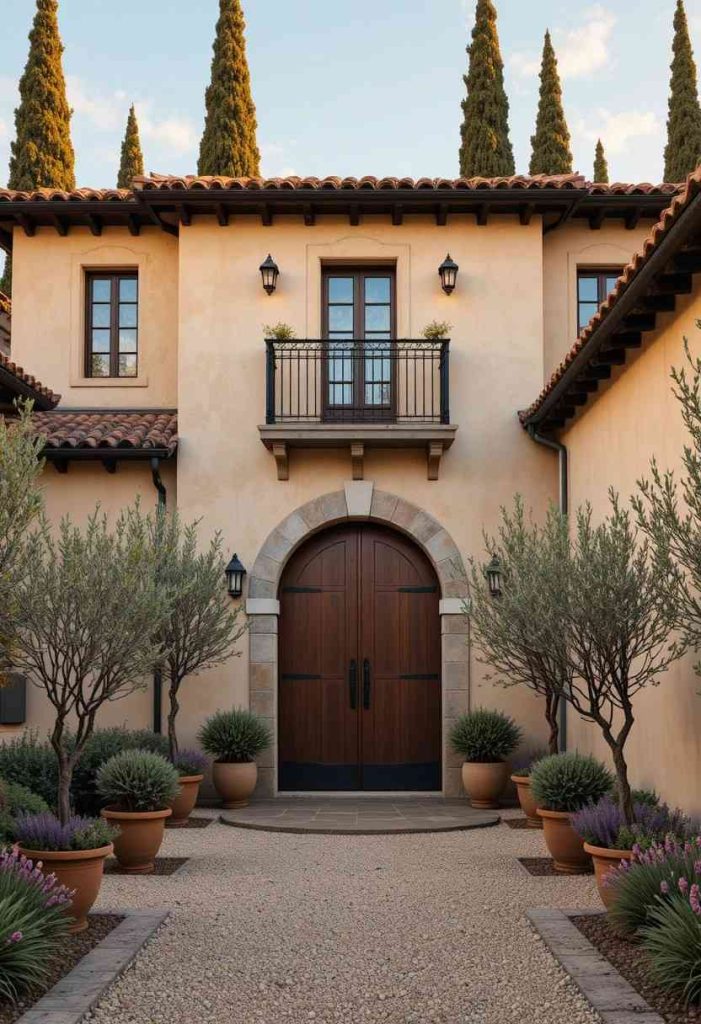
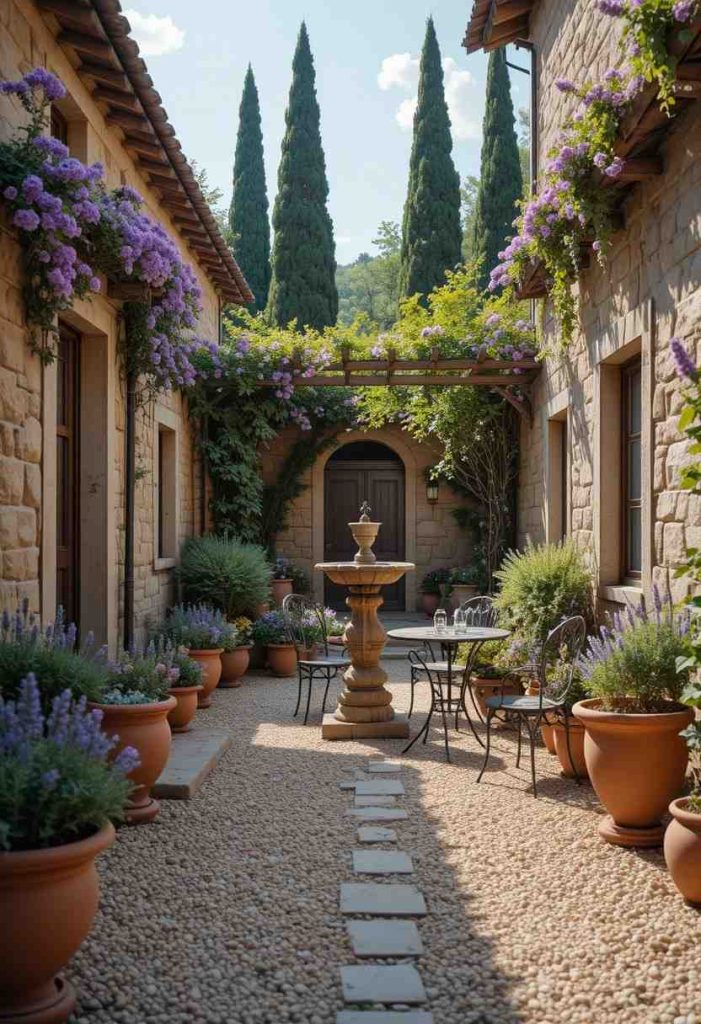
On the outside, modern Tuscan homes lean architectural rather than ornamental. Warm stucco in soft cream, warm beige, or sun-faded ochre. Clay barrel-tile roofs. Arched wooden entry doors with simple iron hardware. Small wrought-iron balconies. Terracotta planters with olive trees, lavender, or rosemary flanking the entry. Stone or gravel pathways instead of poured concrete.
The goal is a facade that looks like it has been weathered by a few hundred Tuscan summers — even if it was built last year.
The Modern Tuscan Color Palette (Save This)
If you remember nothing else from this guide, remember the palette. Get the colors right and the rest is almost automatic. Here are the eight hues that define the 2026 modern Tuscan home:
- Warm Cream — the foundational wall color, soft and slightly yellow, never stark white
- Oat & Sand — for upholstery, curtains, and large soft surfaces
- Sun-Faded Terracotta — for tile, pottery, and accent pieces
- Olive Green — used sparingly on cabinetry, doors, or a single accent wall
- Soft Ochre — for textiles, art, and subtle warmth in lighting
- Aged Plaster — a slightly mottled, neutral wall tone with depth
- Burnt Sienna — for vintage rugs and small accent pieces
- Warm White Oak — the dominant wood tone throughout
Notice what’s missing: pure white, cool gray, black, navy, and bright red. Modern Tuscan style stays inside a strict warm-neutral lane, which is exactly what gives it such a cohesive, restful feeling.
How to Get the Modern Tuscan Look on a Budget
You do not need a renovation budget to start moving your home in this direction. Some of the most impactful changes are surprisingly affordable:
- Repaint walls in a warm cream or oat tone — a single weekend project that shifts the entire mood
- Swap out cool-toned light bulbs for warm 2700K bulbs across the whole house
- Add a single arched mirror in your entry, bathroom, or above your bed
- Replace one set of curtains with unlined linen panels
- Drape a linen slipcover over an existing sofa
- Add a vintage Persian-style rug in faded reds and golds
- Bring in terracotta pots with olive branches, lavender, or rosemary
- Replace a chrome or black faucet with one in antique or unlacquered brass
- Hang a single oversized vintage tapestry or landscape painting
Pick three or four of these to start. The look layers in beautifully over time, which is part of its charm — a modern Tuscan home is never finished, only slowly perfected.
Modern Tuscan Style Mistakes to Avoid
Because this trend is so closely tied to a previous version of itself that aged badly, it’s worth knowing exactly what to avoid:
Skip the grape and vine motifs. They were the calling card of the 2000s version and read instantly dated. If you want greenery, use real olive branches or eucalyptus.
Avoid heavy faux finishes. Sponged, ragged, and Venetian-fake walls are out. Real lime wash or plaster is in. If you can’t afford the real thing, use a high-quality flat paint in a warm cream and skip the texture entirely.
Don’t go too dark. The original Tuscan style leaned heavily on espresso wood and dark granite, which made rooms feel cave-like. Modern Tuscan keeps wood tones warm but light, and stone tones soft and matte.
Edit ruthlessly. Old Tuscan rooms were maximalist to the point of clutter. Modern Tuscan rooms breathe. For every five Tuscan-coded items you want to add, put two back. The empty wall, the bare countertop, the uncluttered shelf — these are features, not bugs.
Skip themed everything. One Tuscan element is charming. Tuscan everything — Tuscan towels, Tuscan signs, Tuscan canister sets, Tuscan wall borders — is the trap. Treat it as an atmosphere, not a costume.
Modern Tuscan vs. Other Warm Aesthetics
Modern Tuscan style sits inside a broader family of warm, earthy aesthetics, but it has a distinct personality. Here’s how it compares:
vs. Modern Farmhouse: Farmhouse leans whiter, cooler, and more rustic-American. Tuscan leans warmer, more Mediterranean, and more architectural.
vs. Mediterranean: Mediterranean is the broader umbrella — it includes Spanish, Greek, and Moroccan influences. Tuscan is the specifically Italian, specifically central-Italian dialect of that language.
vs. Spanish Colonial: Spanish Colonial uses more contrast, deeper jewel tones, and heavier ironwork. Tuscan is softer, sun-faded, and lighter on its feet.
vs. Provence / French Country: French Country is more romantic and floral, with more pastels and softer blues. Tuscan stays warmer, more earthy, and less feminine.
Is Modern Tuscan Style Here to Stay?
Every aesthetic has its moment, but some moments outlast others. Mid-century modern was supposed to be a fad in 2010 and is now a permanent fixture. Modern Tuscan style has a similar quality: it’s built on materials and ideas that have been beautiful for literally a thousand years.
The trend cycle will move on eventually — something always replaces what came before. But homes built or decorated in the modern Tuscan style today will age beautifully precisely because they’re not chasing a trend. They’re returning to a kind of timeless warmth that humans have been responding to since the Renaissance.
So if you’ve been waiting for permission to paint over your gray walls, swap your chrome faucets for brass, and bring some actual warmth back into your home — this is it. The era of cold minimalism is over. The era of slow, sun-soaked, lived-in beauty is here.
Open a window. Light a candle. Pour something nice into a clay cup. Welcome home.
✨ Save this guide and start with one room. ✨