

14 Beach Bedroom Ideas That Make Your Space Feel Calm and Coastal
Your bedroom should feel like an escape from stress, not another busy room filled with clutter and harsh colors. But many bedrooms end up feeling heavy, dark, or simply uninspiring. That’s why beach bedroom ideas are so loved right now. They bring soft colors, natural textures, and peaceful energy into your home without feeling overly themed. Whether you live near the ocean or nowhere close to it, these ideas can help you create a bedroom that feels airy, relaxing, and beautifully connected to the calm feeling of the coast every single day.
1. Use Soft Blue and White Layers

I start every coastal bedroom with blue and white, because nothing else calms a room quite so quickly. In my bedroom, I layered crisp white linen sheets with a pale blue throw I found on a seaside holiday, then added two striped cushions. The combination felt fresh, without looking like a themed holiday cottage. I keep the blue soft rather than bright, so the room still feels restful on grey mornings, and I let the white do most of the work around the bed. If you ever fancy a moodier version for winter, my dark gray bedroom ideas keep the same calm feeling with deeper tones.
How to do it: Start with white bedding, then add one pale blue throw and two cushions in different blues. Hang white or pale blue curtains, keep the walls white, and step back before adding anything else. If the room still feels flat, add a single striped cushion rather than another colour.
2. Add Natural Wood Furniture

I love the warmth wood brings to a coastal room, especially when everything else feels pale and cool. My light oak dresser was the first piece I chose, and I still notice how it softens the white walls every morning. Rattan nightstands do the same job on a smaller scale, adding texture without taking up much visual space. I look for simple shapes and pale finishes, because heavy, dark wood can pull a beach bedroom back towards a lodge. A driftwood-style frame, a woven basket by the bed, and one wooden tray on the dresser are usually enough for me.
How to do it: Choose one main wooden piece, such as a light oak dresser or bed frame, then add smaller rattan or cane accents. Keep finishes pale and matte, leave the wood uncluttered, and pair it with white bedding so the grain stays visible.
3. Try Sheer White Curtains
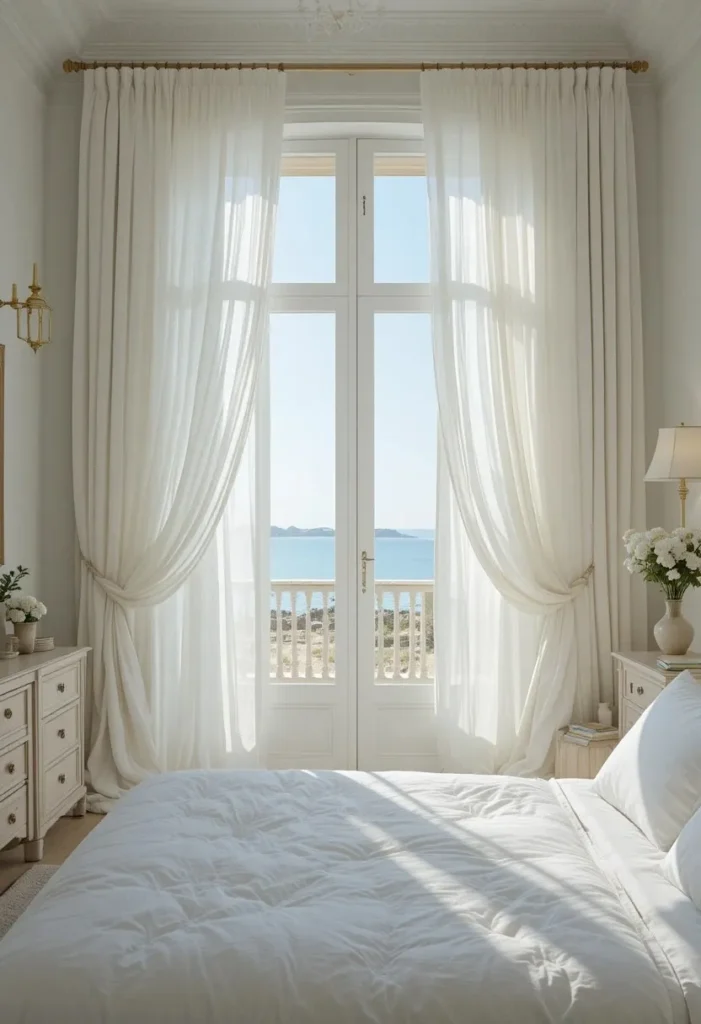
Heavy curtains were the first thing I changed in my bedroom, because they made the room feel closed in even on sunny days. Sheer white curtains changed that completely. Light still comes through, but it arrives softly, and the fabric moves a little whenever the window is open, which I find oddly soothing. I hang mine high and wide, so the window looks taller and the fabric pools just above the floor. In the evening, I close a second, heavier layer behind them for privacy, then open everything again first thing in the morning.
How to do it: Measure the window, then buy sheer panels at least one and a half times its width. Hang the rod 10-15 cm above the frame and wider than the window, and let the panels skim the floor.
4. Use Woven and Rattan Decor
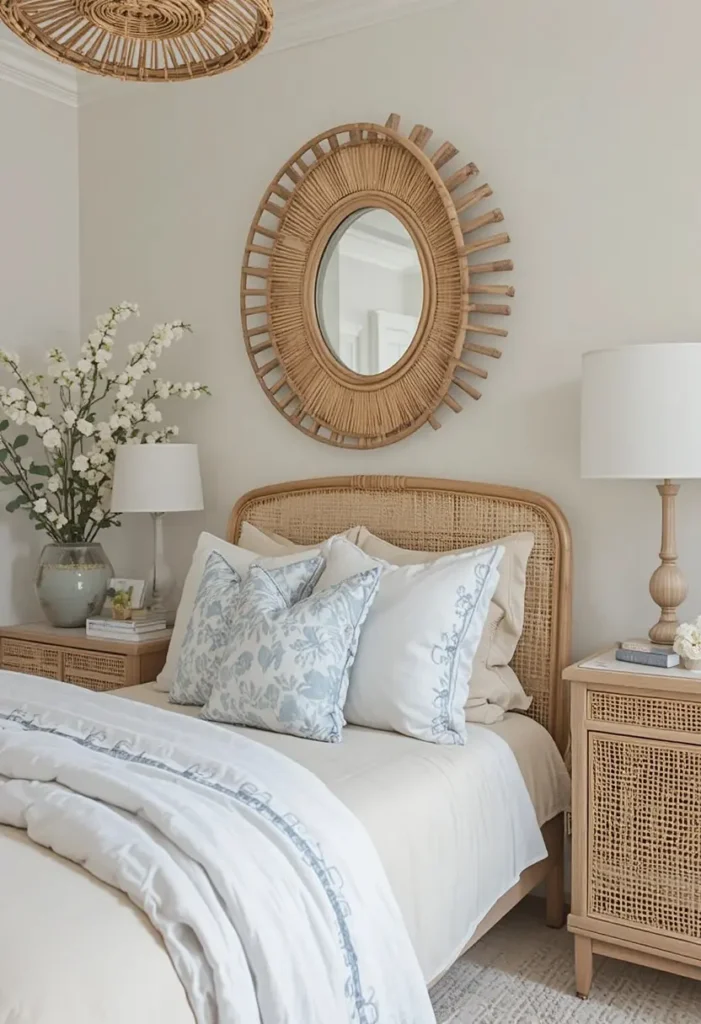
Rattan is the texture I reach for when a beach bedroom starts to feel too smooth and flat. A woven mirror above my dresser was a small change, yet it gave the whole wall a warmer, more handmade feeling. I also keep a wicker basket beside the bed for extra throws, and a cane tray on the nightstand for my book and a glass of water. The trick, I have learned, is restraint. Two or three woven pieces feel coastal and collected, while six or seven can make the room look like a shop display. I balance them with smooth linen and plain cotton, so nothing competes for attention.
How to do it: Pick two or three woven pieces, such as a rattan mirror, a basket and a lampshade. Spread them around the room, mix them with smooth fabrics, and remove one piece if the room starts to feel busy.
5. Create a Neutral Sandy Color Palette
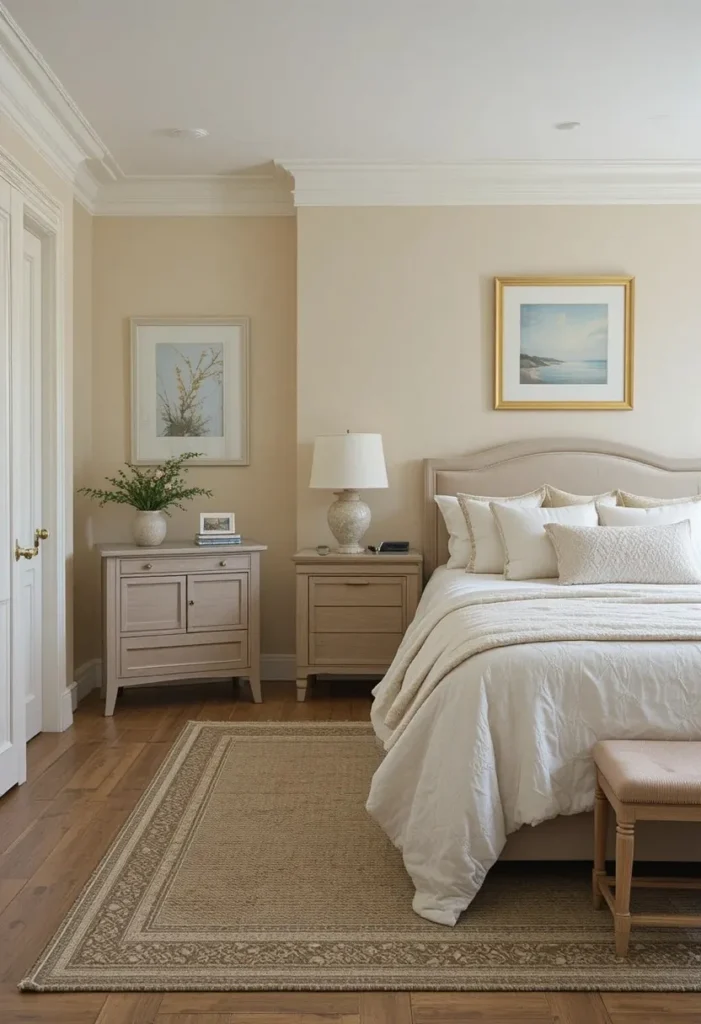
Not every beach bedroom needs blue, and mine proves it on the days I want something quieter. Sandy beige, cream, ivory and warm taupe remind me of early mornings on an empty beach, before the crowds arrive. I use the palest shade on the walls, a slightly deeper tone on the bedding, and the warmest taupe in a throw or cushion, so the layers feel deliberate rather than washed out. Texture does the heavy lifting here. A nubby rug, crinkled linen and a woven basket stop the neutrals from looking flat, and they make the room feel soft underfoot as well as soft to look at.
How to do it: Paint the walls ivory or pale beige, then layer cream bedding with taupe cushions and a sandy rug. Add texture through linen, wool and rattan, and check the room in daylight before adding any extra colour.
See More Ideas: 16 Green and Orange Bedroom Ideas That Make Your Space Feel Vibrant, Cozy, and Unexpectedly Beautiful
6. Add Ocean-Inspired Wall Art

I am quite picky about wall art, because the wrong print can turn a calm bedroom into a souvenir shop. The pieces I love most are soft and quiet: a watercolour wash of waves, a pale photograph of the sea at dawn, or an abstract print in sea-glass greens. I hung one large print above my bed instead of a row of small frames, and the room instantly felt calmer and more grown up. I keep the frame simple, usually pale wood or white, so the picture, not the frame, holds the attention. If a print feels too bright or too literal, I move it to another room.
How to do it: Choose one large, soft-toned coastal print and hang it at eye level above the bed or dresser. Keep the frame pale and plain, leave empty wall space around it, and avoid mixing several small beach prints together.
7. Layer Cozy Linen Bedding

Linen is the fabric that finally made my bed feel like a place to sink into, rather than a display. I wash it, let it dry naturally, and put it back on slightly crumpled, because that relaxed finish is exactly the point. White linen sheets, an oatmeal duvet and a pale blue throw give me layers I can pull up or push aside through the night. In summer, I sleep with just the top sheet and a light throw at the foot of the bed. In winter, I add a heavier wool blanket underneath the linen, so the bed still looks light even when it feels wonderfully warm.
How to do it: Dress the bed in white or oatmeal linen sheets, add a duvet in a slightly deeper neutral, then fold a pale throw across the foot. Mix two textures, smooth out the top layer by hand, and leave the edges relaxed.
8. Add a Driftwood-Inspired Headboard

A headboard can change the whole feeling of a bed, and a driftwood-style one does it without shouting. Mine has a weathered, silvery-grey finish that reminds me of timber washed up after a storm, and it works beautifully against plain white bedding. I chose a pale tone on purpose, because darker wood would have made my small room feel heavier. If you love a bed that makes a statement, my canopy bed ideas offer another option for giving the bed presence, though driftwood feels quieter and easier to live with. I keep the wall behind it bare, so the texture itself becomes the decoration.
How to do it: Measure the bed width, then choose a driftwood or weathered-wood headboard a few centimetres wider. Fix it securely to the wall or bed frame, keep bedding plain white, and add one woven cushion for contrast.
9. Bring in Coastal Greenery

Greenery was the missing piece in my bedroom for a long time, and I did not realise it until a friend brought me a small olive tree. The pale walls and sandy bedding had something living to balance them. I now keep that tree in a woven basket by the window, with a trailing plant on the dresser and a few palm leaves in a vase when I want a fuller look. I choose plants I can keep alive, because a drooping plant does the opposite of relaxing me. Low light, irregular watering and a busy week are all part of my life, so hardy plants win every time.
How to do it: Place one larger plant, such as an olive tree, by the window in a woven basket. Add a small plant on the dresser, water sparingly, and choose low-maintenance varieties if your room gets little direct sun.
10. Use Light Wood Flooring

Light flooring changed my bedroom more than any piece of furniture, because it set the tone for everything else. My pale oak boards catch the morning sun and bounce it around the room, so even a cloudy day feels a little brighter. I chose a matte, whitewashed finish, which hides dust far better than the glossy floor I had before. A soft rug beside the bed adds warmth underfoot, and I can change it with the seasons without committing to a new floor. If you are renting, a large pale rug over a darker floor gives you much of the same lift, with none of the permanence.
How to do it: Choose pale oak or whitewashed boards with a matte finish. Lay a textured rug beside the bed and another at the foot, keep the floor clear of clutter, and let the pale surface reflect as much daylight as possible.
See More Ideas: 13 Black and Brown Bedroom Ideas That Feel Cozy, Rich, and Timeless
11. Add Soft Coastal Lighting

Evening is when my bedroom either feels like a retreat or just another room, and lighting makes the difference. I use warm bedside lamps with linen shades, a woven pendant over the corner chair, and a small wall light near the wardrobe, so I never need the bright ceiling light after dark. The glow is soft enough to read by, but gentle enough to help me unwind. I learned to check the bulb colour before buying, because cool white bulbs turned my sandy walls grey and undid all the warmth I had created. Warm white, dimmable where possible, is now my rule for every coastal room.
How to do it: Swap cool bulbs for warm white, dimmable ones. Add a linen-shaded lamp on each bedside table, hang a woven pendant if you have the height, and keep the ceiling light off in the evening.
12. Keep the Decor Minimal
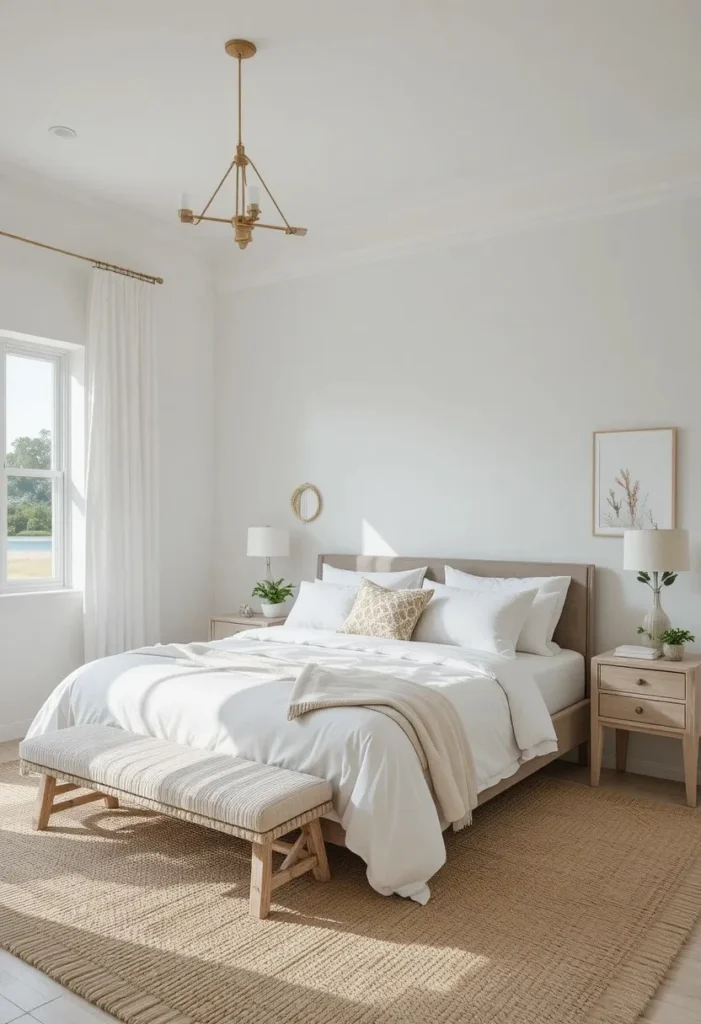
I used to fill every surface, thinking more decoration meant more style, and my bedroom felt busier, not prettier. Now I leave clear space on my nightstand, my dresser and the windowsill, and the room feels calmer the moment I walk in. I choose a few pieces I love — a woven tray, one framed print, a vase — and I let them breathe. If something does not earn its place, it goes into a drawer or another room. I also keep one corner free for a small dressing table, and these vanity ideas for the bedroom helped me choose a slim design that fits without crowding the room.
How to do it: Remove everything from one surface, then put back only three items you love. Repeat on the next surface, store the rest out of sight, and leave at least one empty surface in the room.
13. Add Striped Coastal Patterns
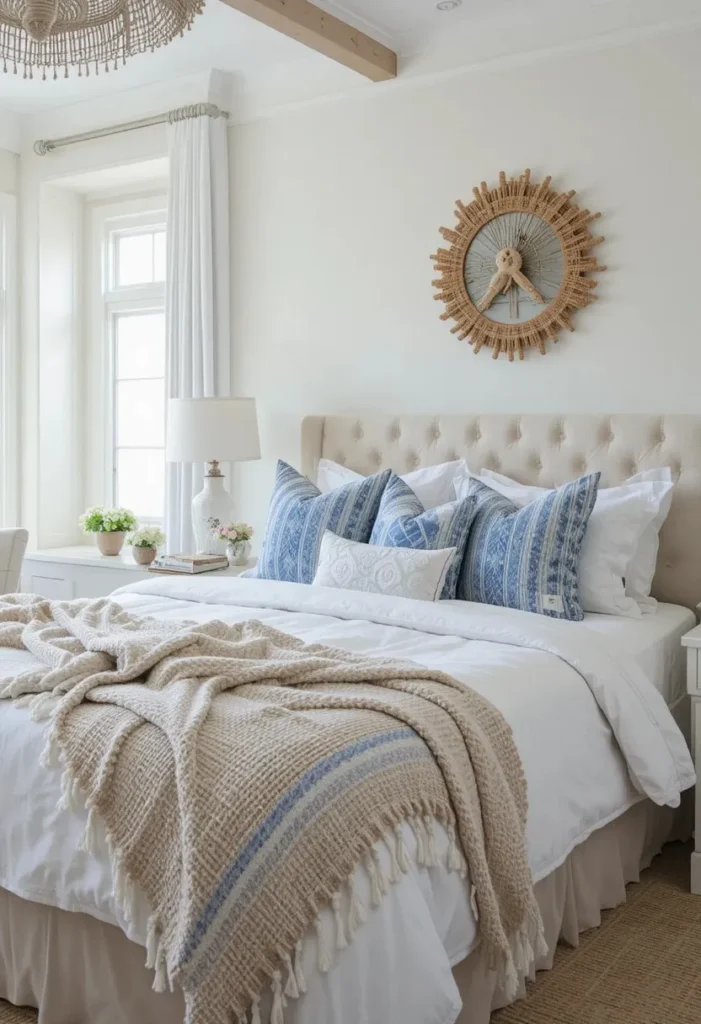
Stripes give my bedroom a seaside note without filling the room with shells or anchors. I started with two blue-and-white cushions on the bed, then added a beige striped throw that I fold over the foot when I make the bed. The pattern adds movement, which a plain neutral room can lack, yet it still feels calm because the colours stay soft. I keep the stripes thin and the background pale, and I never mix more than one striped pattern in the same room. A striped rug can work too, though I prefer stripes up high, on cushions and throws, where they catch the light.
How to do it: Choose one striped item, such as cushions or a throw, in blue and white or beige and white. Keep the stripes thin, pair them with plain bedding, and avoid adding a second striped pattern in the same room.
14. Create a Bright and Airy Layout

Layout is the least glamorous part of decorating, and also the one that changed my bedroom most. I pulled the bed away from the wall by a few centimetres, moved a bulky chair out of the room entirely, and suddenly I could walk around the bed without turning sideways. Light from the window now reaches the far corner, and a mirror opposite the window bounces it back across the room. I keep the tallest furniture against the longest wall, leave the window clear, and check the room from the doorway, because that is the view I see every time I come home.
How to do it: Push the bed a few centimetres from the wall, remove any oversized piece that blocks the window or the walkway, and hang a mirror opposite the window. Leave clear paths around the bed and test the view from the doorway.
Frequently Asked Questions
How can I make a beach bedroom feel coastal without it looking themed?
Start with colour, texture and light rather than seaside ornaments. Soft blues, sandy neutrals, linen, rattan and pale wood suggest the coast without spelling it out. Keep shells, anchors and signs to one small accent, if you use them at all, and let the materials do the work.
What colours work best in a beach bedroom?
White, pale blue, sea-glass green, sandy beige, cream and warm taupe work best, because they reflect light and feel calm together. Choose one main colour, one supporting colour and a neutral, then repeat them across bedding, curtains and cushions. Avoid bright turquoise or navy over large areas, as both can make a small room feel heavy.
Can I create a beach bedroom in a small or dark room?
Yes, and pale colours help most in a small or dark room. Use white walls, sheer curtains, a mirror opposite the window and light wood or a pale rug to bounce the light you do have. Keep furniture low and slim, leave clear floor space, and choose one focal piece rather than several large ones.
What bedding is best for a relaxed coastal look?
Washed linen or soft cotton in white, oatmeal or pale blue gives the most relaxed coastal look. Layer a duvet with a folded throw and two or three cushions in different textures, rather than matching sets. The slightly crumpled finish of linen is part of its charm, so do not iron it flat.
How do I keep a beach bedroom feeling calm rather than cluttered?
Give every item a home and leave at least one surface empty in the room. Limit yourself to two or three woven or coastal pieces, store spare bedding and out-of-season items out of sight, and do a quick five-minute tidy each evening. A calm beach bedroom is usually the result of what you remove, not what you add.
Your Beach Bedroom Checklist
Tick each step off as you go, and stop when the room feels calm and finished.
☐ Choose a soft blue, white or sandy base palette
☐ Layer white linen bedding with a pale blue throw
☐ Add one natural wood or rattan piece
☐ Hang sheer white curtains high and wide
☐ Add two or three woven accents, then stop
☐ Hang one large, soft-toned coastal print
☐ Place one hardy plant by the window
☐ Use light wood flooring or a large pale rug
☐ Swap cool bulbs for warm white, dimmable ones
☐ Leave at least one surface clear
☐ Use stripes on cushions or a throw only
☐ Keep a clear path around the bed
☐ Step back and check the room in daylight
☐ Remove one item that does not earn its place
Conclusion
My beach bedroom is now the room I head for when I need to slow down, and that feeling is the whole point of the changes above. I did not buy everything at once. I started with pale bedding and sheer curtains, then added wood, texture and light one piece at a time, checking after each change whether the room felt calmer. You can do the same, in whatever order suits your home and your budget. Choose the idea that appeals to you most, try it this weekend, and let the coast come to you, one soft layer at a time.


One Comment