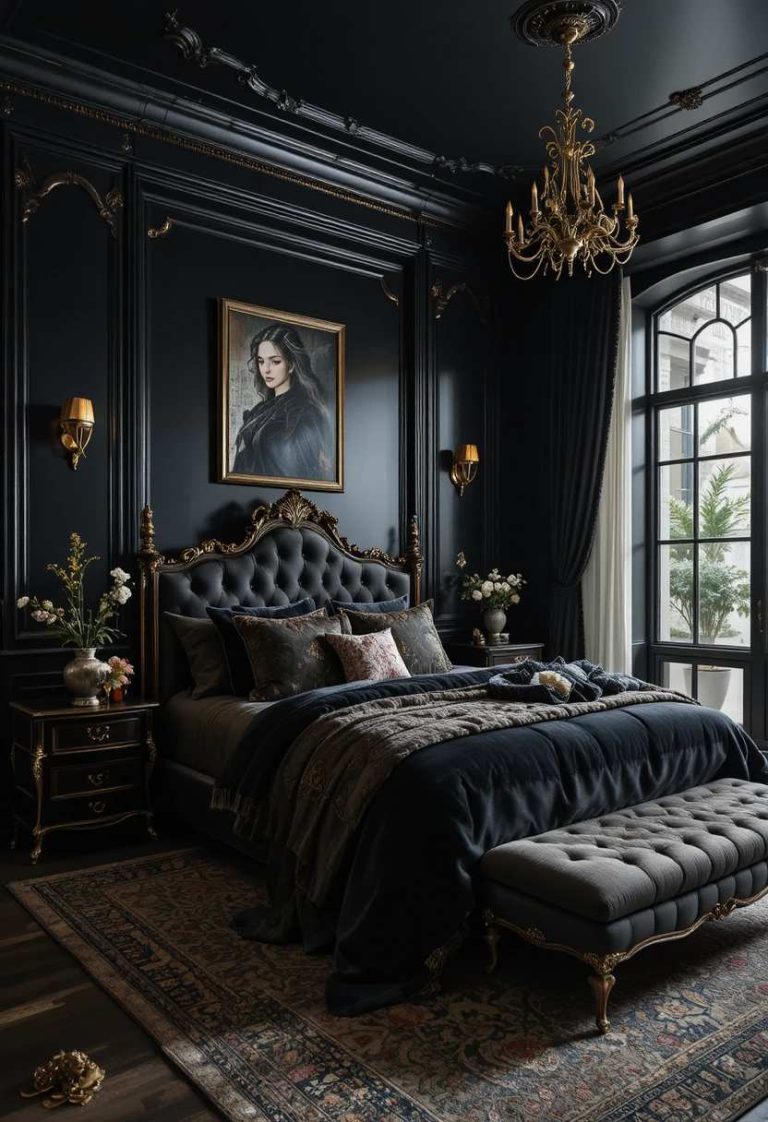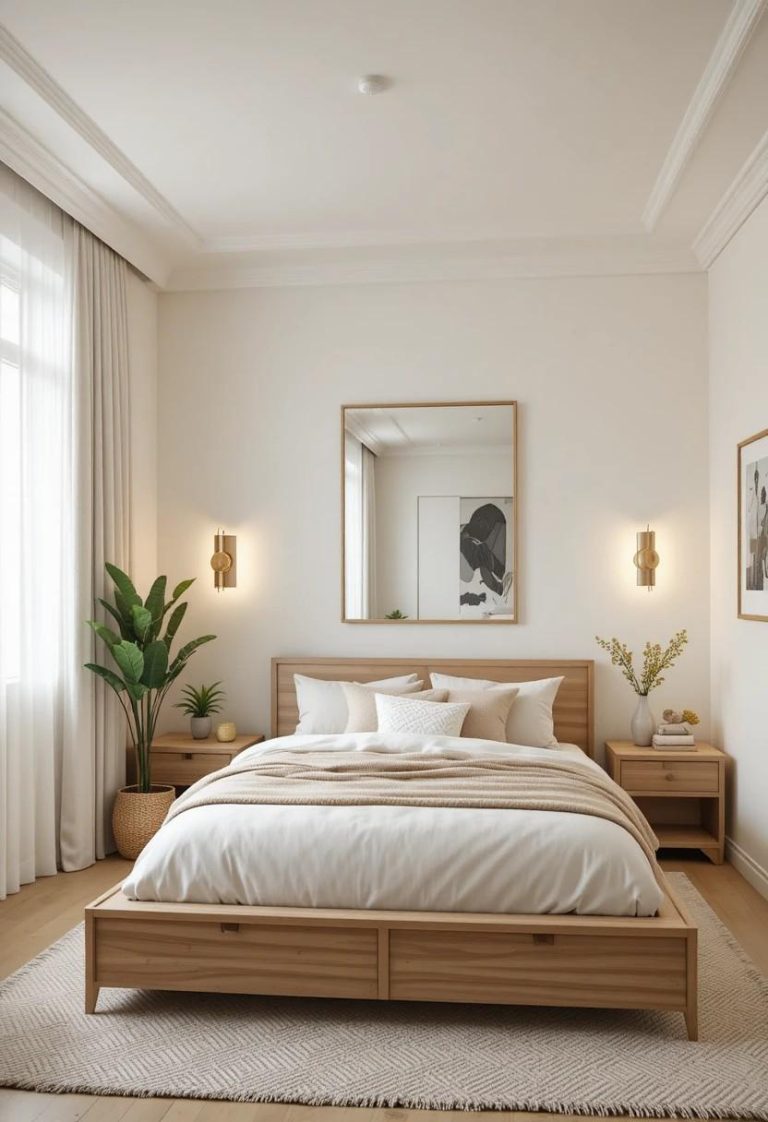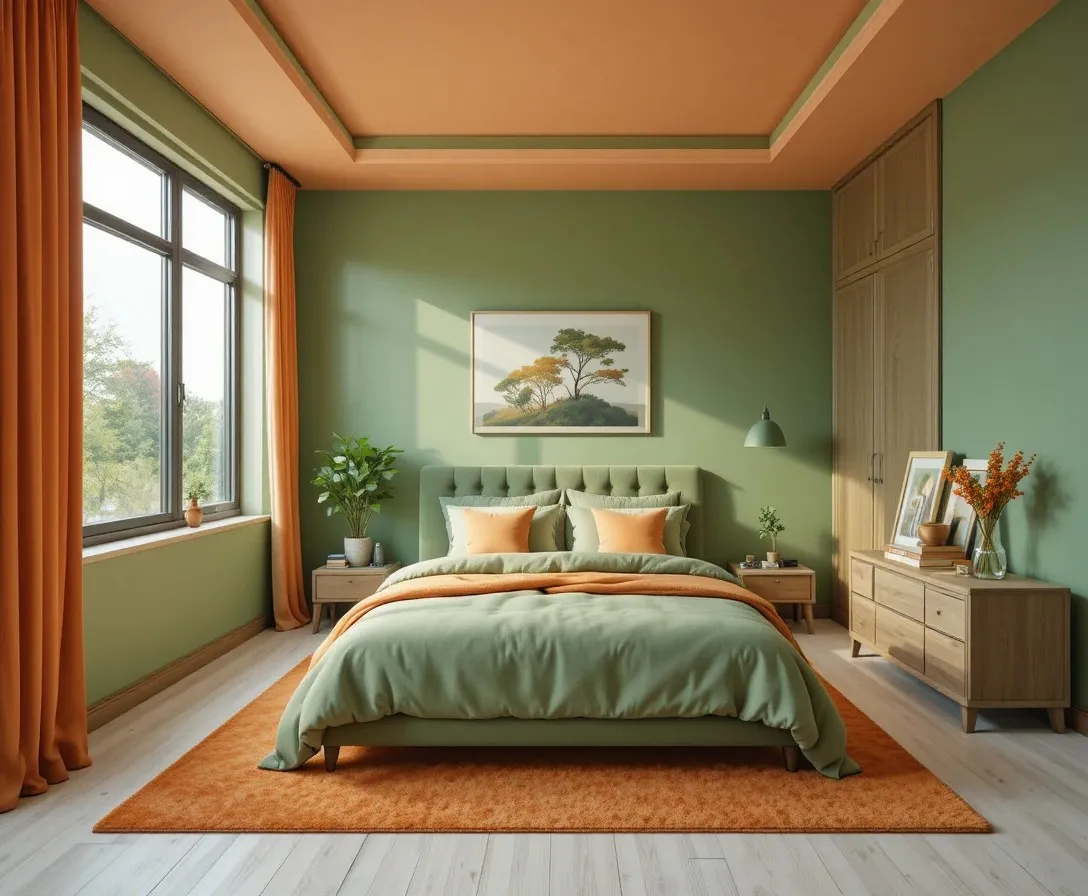
16 Green and Orange Bedroom Ideas That Make Your Space Feel Vibrant, Cozy, and Unexpectedly Beautiful
A bedroom doesn’t have to be filled with beige and soft gray to feel relaxing. Sometimes, the spaces that feel the most memorable are the ones brave enough to use color with personality. Green and orange bedroom ideas bring together the freshness of nature and the warmth of sunset tones in a way that feels energetic yet comforting. The contrast creates depth, character, and emotion without feeling chaotic. Whether you love earthy interiors, playful modern spaces, or cozy boho styling, this color combination can completely transform how your bedroom feels every day.
1. Olive Green Walls with Burnt Orange Bedding
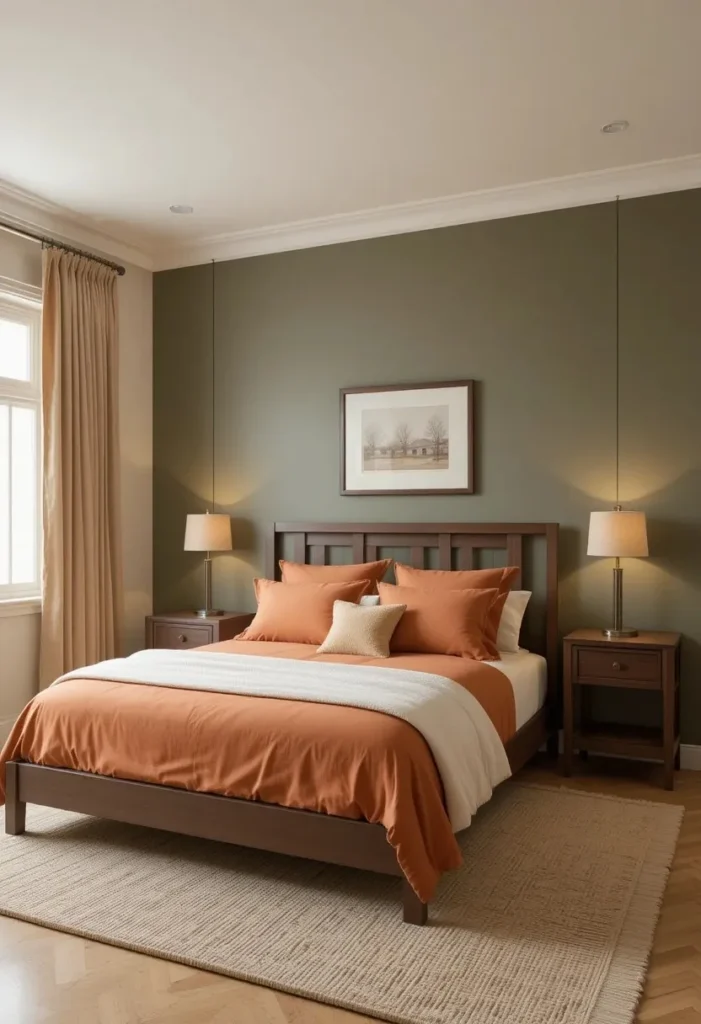
I was nervous the first time I painted a bedroom olive green, because it can look muddy if you get the tone wrong, yet the moment the burnt-orange bedding went on, the whole room seemed to settle. The green feels calm and earthy, almost like bringing a quiet garden indoors, while the orange adds the warmth of late-afternoon sun. I love how walnut furniture and a woven throw soften the contrast, and how beige curtains stop either colour from shouting. In the evening, with the lamps on low, both shades glow, and the room feels grounded, restful and quietly confident rather than decorated for show.
How to do it: Paint the walls in a matt olive green, testing a large swatch in daylight and lamplight first. Dress the bed in burnt-orange linen or cotton bedding, add cream or beige cushions, and hang soft beige curtains. Bring in walnut furniture and a woven throw, then finish with warm-white bulbs so both colours glow in the evening.
2. Green and Orange Bedroom Ideas with Velvet Accents
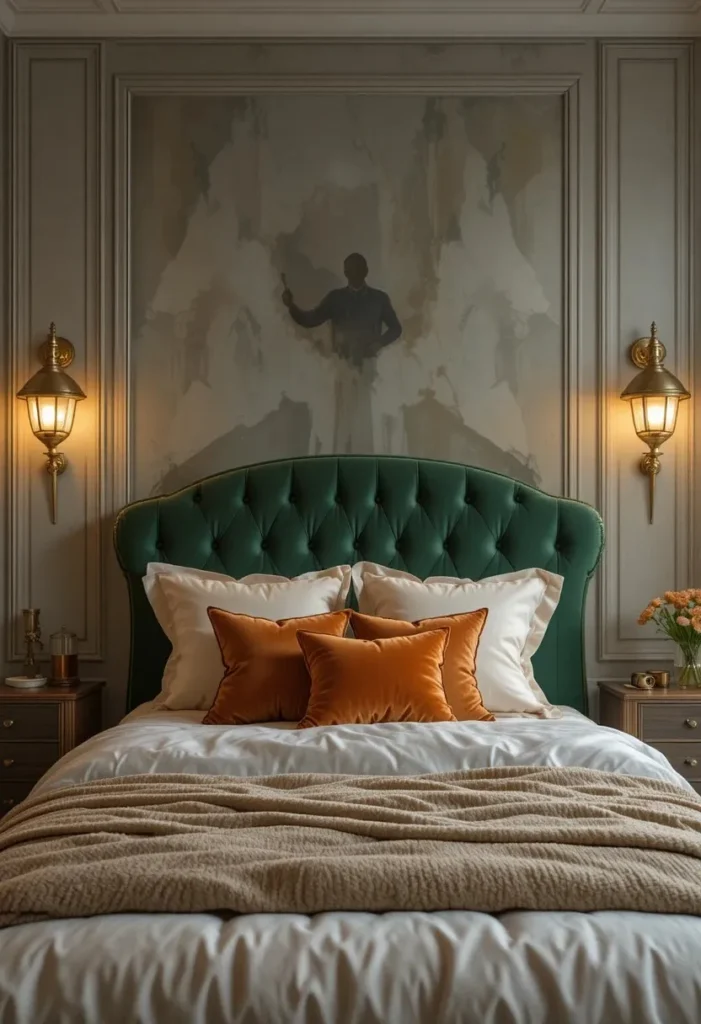
I still remember running my hand along a forest-green velvet headboard in a shop and realising our bedroom was missing that softness. Velvet catches the light in a way flat paint never does, so green and rust orange feel rich rather than loud, and the room gains a hotel-like luxury. I keep the bedding cream so the colours have somewhere to breathe, and I let one brass lamp do the evening work. Two velvet pieces are plenty — a headboard and a pair of cushions, say — because any more starts to feel heavy. It is the texture, more than the colour, that makes this room feel special.
How to do it: Choose a forest-green velvet headboard, or start with two rust-orange velvet cushions if you prefer a smaller change. Keep the bedding cream and the lighting warm and gold-toned. Limit velvet to two main pieces so the room stays balanced and breathable.
3. Sage Green and Terracotta Minimal Bedroom
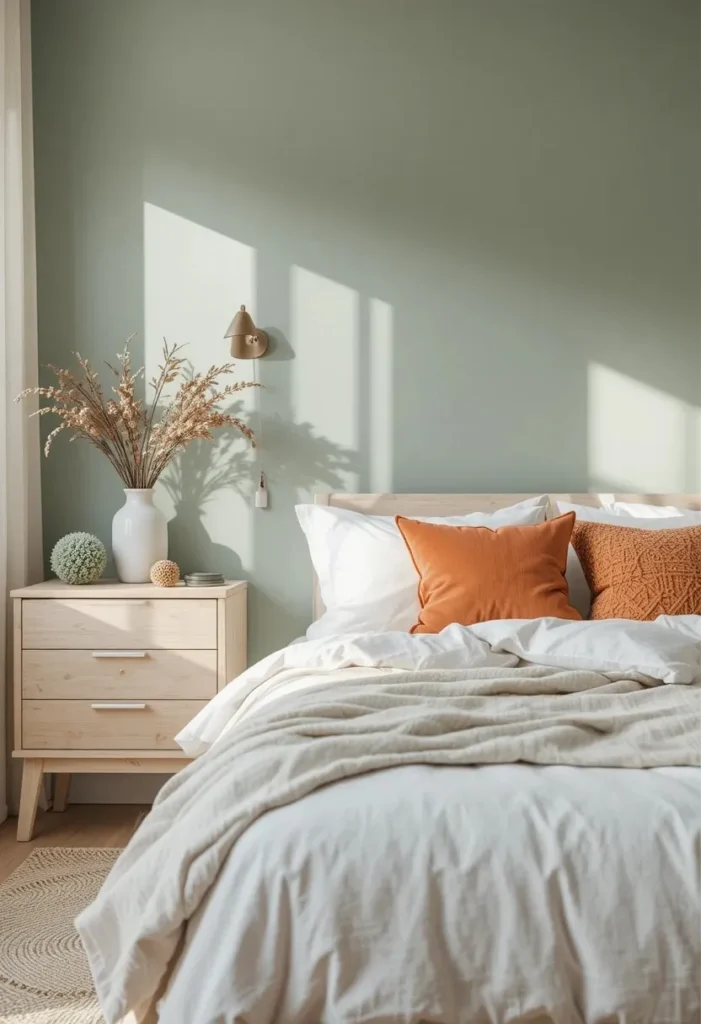
Sage green is the colour I reach for when I want calm without coldness, and terracotta is what keeps it from feeling flat. Together they soften the bolder green-and-orange pairing for slow mornings and uncluttered surfaces. I painted our walls sage, then added terracotta through a lamp, a clay-toned throw and a couple of cushions, leaving the linen bedding so the room could breathe. Warm wood does most of the remaining work, and a touch of black — a frame, a lamp base — gives the softness an edge. Nothing here shouts, yet the room never feels dull, and that balance is why I keep coming back to this palette.
How to do it: Paint the walls sage green in a matt finish and add terracotta through a lamp, a clay-toned throw and cushions. Choose linen bedding and warm wood furniture, then add black sparingly — a frame or a lamp base — for a little modern contrast.
4. Green and Orange Bedroom Ideas with Botanical Decor
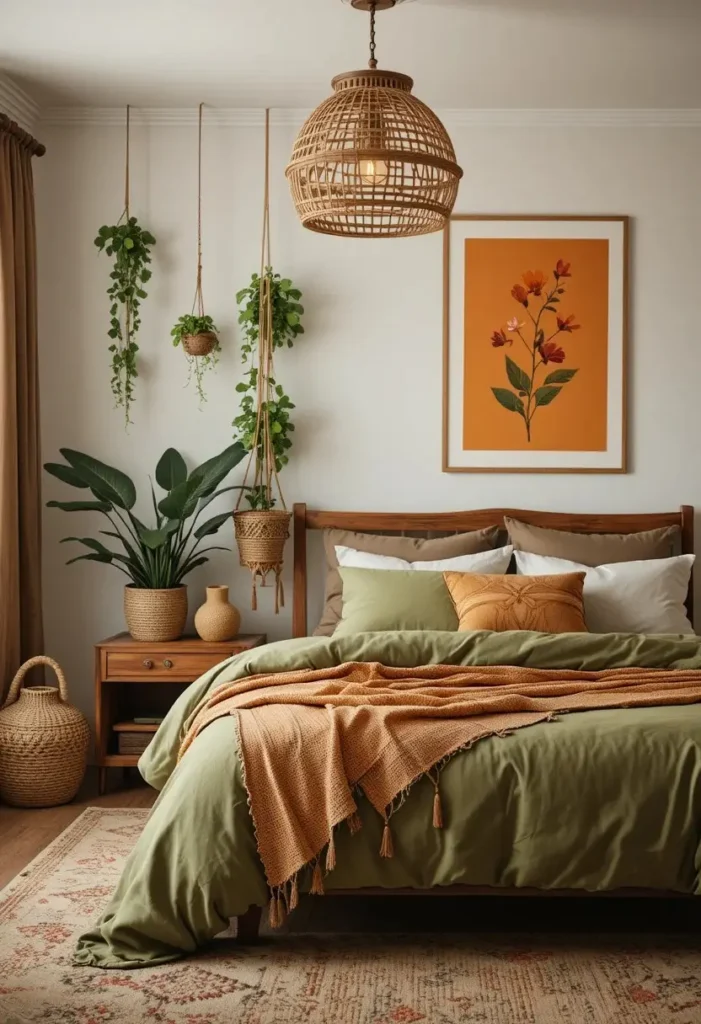
Plants were what made green and orange feel natural together in our bedroom, rather than like two colours I had forced into the same room. A leafy print above the bed, green bedding, a rust-orange ceramic vase and a plant on the windowsill tie the palette to the garden outside, and suddenly nothing needs explaining. Rattan lighting and a woven rug add warmth without adding clutter, which matters in a room meant for rest. I keep the artwork simple — one botanical print, not a gallery — and let the plants do the talking. When the leaves catch the morning light, the scheme feels alive, earthy and unforced.
How to do it: Hang one botanical print above the bed and dress the bed in green bedding with rust-orange artwork or ceramics. Place a real plant near the window, add rattan lighting and a woven rug, and keep the rest of the decor simple so the plants lead.
5. Dark Green Walls with Orange Ambient Lighting
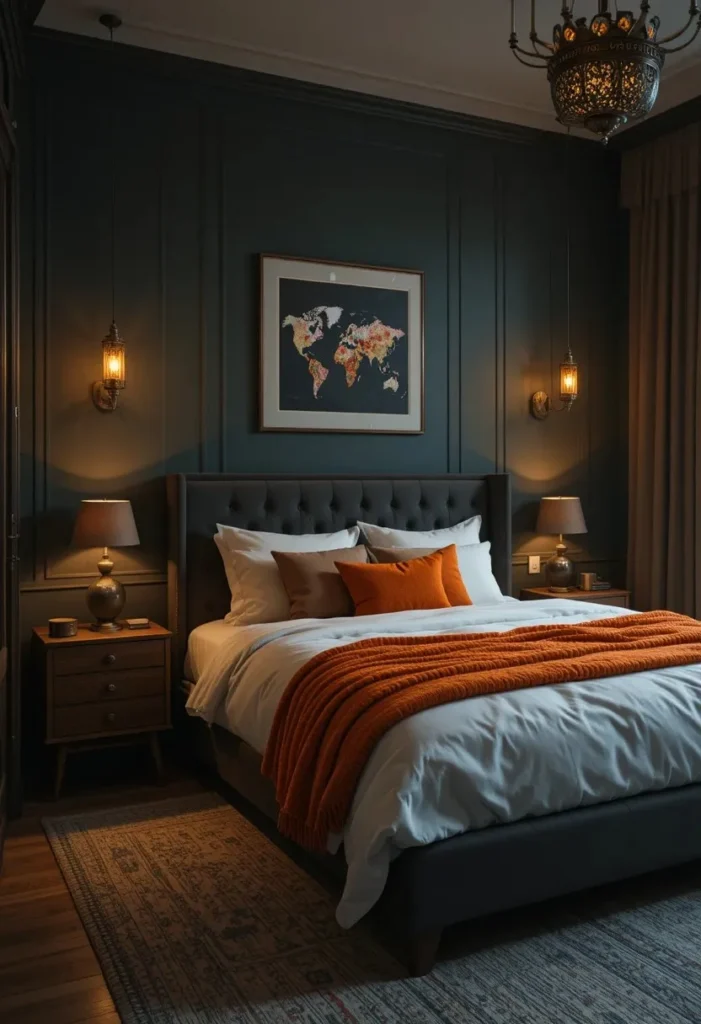
Dark green walls were the bravest choice I made in our bedroom, and orange light is what saved them from feeling gloomy. By day the green feels deep and cocooning; by evening, amber lamps and warm LED strips make the room glow like embers, and the burnt-orange textiles catch that light beautifully. I learned to layer several small lights instead of relying on one bright ceiling fitting, because pools of warm light keep the corners soft. If you love this moody side of green, these dark green bedroom ideas will help you balance depth with warmth. It is dramatic, yes, but it is also the room where I sleep best.
How to do it: Paint the walls deep green in a matt finish, then layer amber bedside lamps, warm LED strips and one low light source instead of a single bright ceiling fitting. Add burnt-orange textiles and swap in warm-white bulbs so the green never feels cold.
See More Ideas: 14 Dark Gray Bedroom Ideas That Feel Cozy, Elegant, and Effortlessly Stylish
6. Mid-Century Modern Green and Orange Bedroom
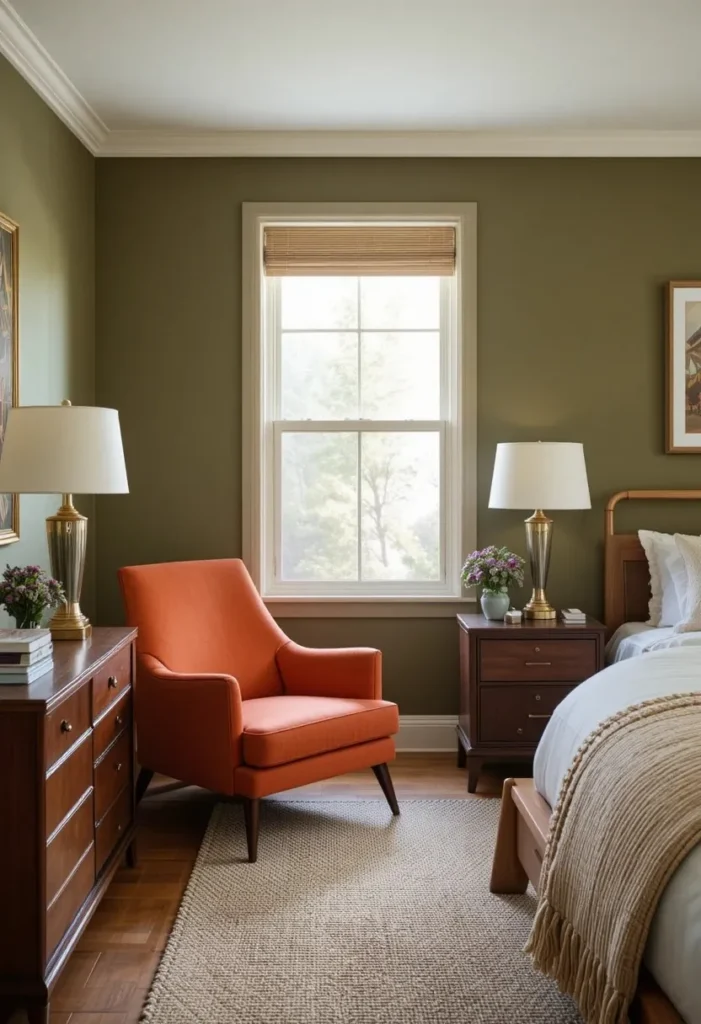
Mid-century furniture was made for this palette, or so it felt the day I paired an olive wall with a rust-orange chair. The walnut, the clean lines and the geometric art all belong to the same era, so the colours look intentional rather than experimental, and brass lighting adds a polish that stops the retro touches feeling like a costume. I keep larger pieces simple — a plain bed frame, unfussy bedside tables — so the green and orange can carry the personality. A single bold artwork above the bed is enough. What I love most is how timeless it feels: familiar and playful, without ever tipping into kitsch.
How to do it: Paint the walls olive green and add a rust-orange accent chair with walnut furniture. Hang one geometric artwork and add brass lighting. Keep larger furniture simple and unfussy so the bold colours stay the focus.
7. Green and Orange Bedroom Ideas with Layered Textiles
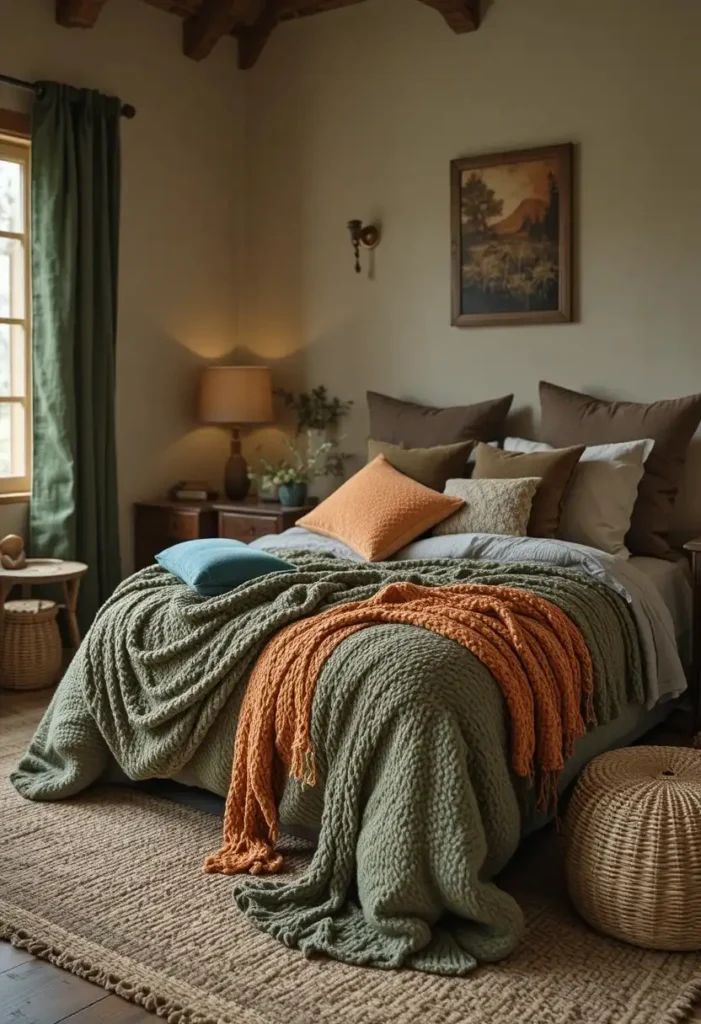
I am a firm believer that texture can carry a colour scheme further than paint will, and this room proved it. Knit throws, linen, cushions and a soft rug let olive, sage, terracotta and rust sit side by side without competing, because each fabric catches the light differently. I build the bed in layers — linen sheets, a duvet, a folded throw, then cushions in shades — and I mix light and dark tones of both colours so nothing feels flat. On cold evenings one more throw makes the room feel warmer, though nothing has changed colour at all — the most forgiving way I know to use bold colours.
How to do it: Build the bed in layers: linen sheets, a duvet, a folded knit throw, then cushions in light and dark shades of olive, sage, terracotta and rust. Add a soft rug and mix textures — knit, linen and wool — so the colours feel cosy rather than bold.
8. Emerald Green and Burnt Orange Luxury Bedroom
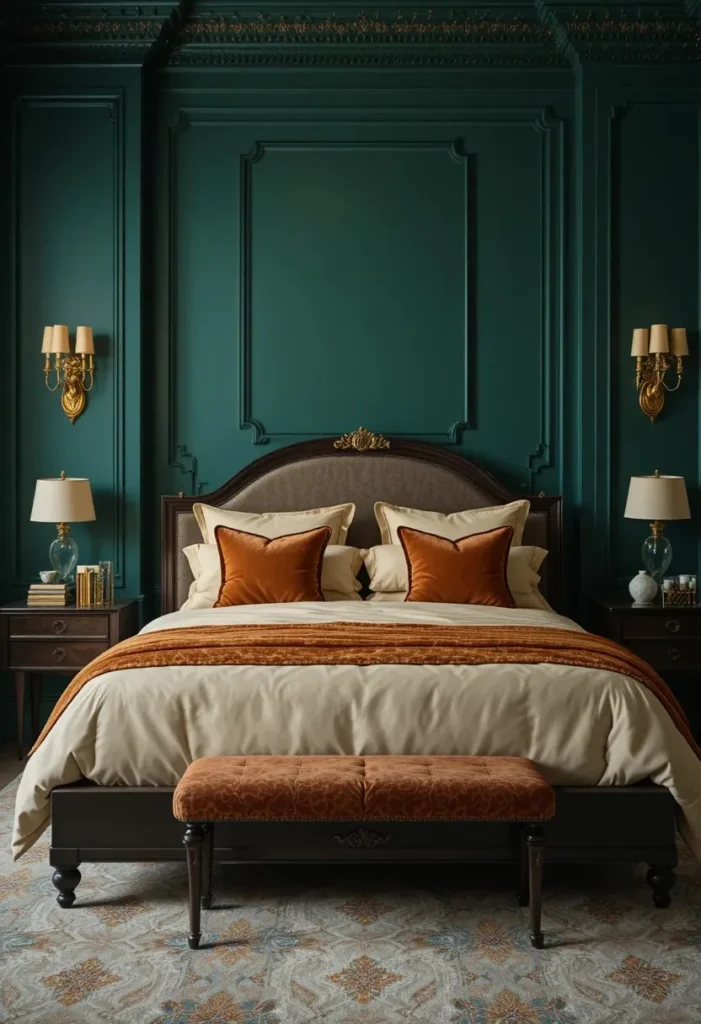
Emerald green is the shade I choose when I want a bedroom to feel like a retreat, and burnt orange is what keeps it from feeling too formal. Velvet orange cushions against deep green walls, dark wood and a touch of brass make the room glow, while cream bedding gives your eyes somewhere pale to rest. I learned the hard way that gold needs restraint — two or three metallic touches, not a collection — or the luxury tips into fussiness. If orange is the colour you keep coming back to, these orange bedroom ideas are a good next stop. Done gently, this pairing feels rich, restful and grown-up.
How to do it: Paint the walls emerald green and dress the bed in cream bedding with burnt-orange velvet cushions. Add dark wood furniture and two or three brass or gold touches, such as lamps or drawer handles, keeping the metallics warm and restrained.
See More Ideas: 15 Pink and Black Bedroom Ideas That Feel Bold, Cozy, and Beautiful
9. Green and Orange Bedroom Ideas with Boho Styling
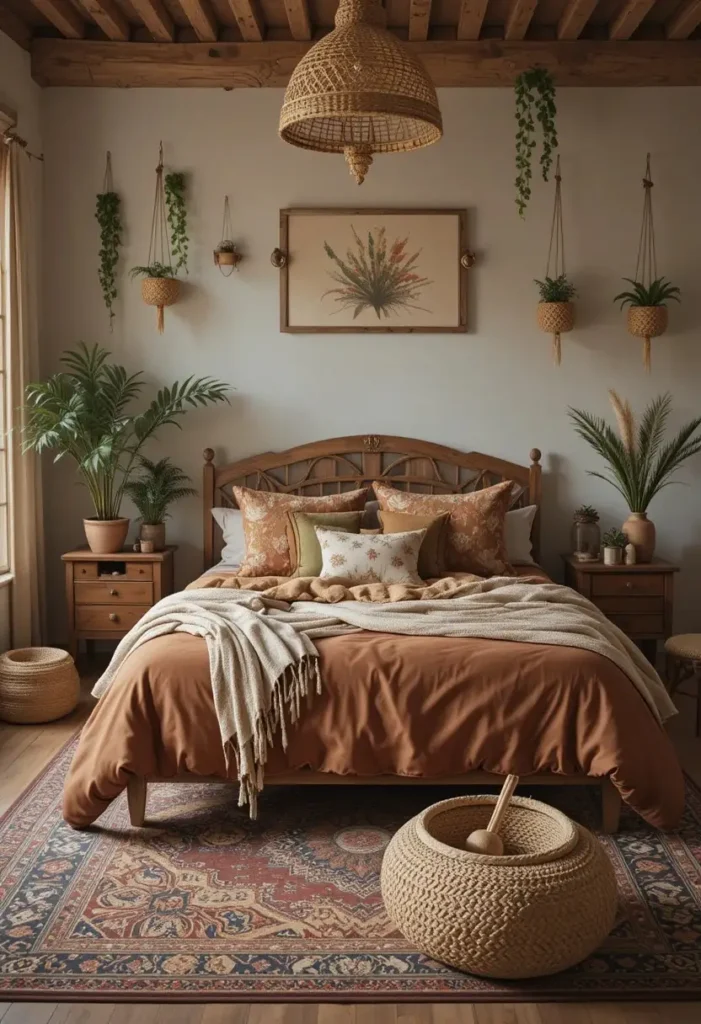
Boho is where green and orange feel at home, because nothing here has to match perfectly. I layered terracotta bedding with olive cushions, a patterned rug and a few woven baskets, and the room took on that collected, travelled feeling I had been hoping for. Pale wood and hanging plants soften the edges, while neutral walls let the warmer colours do the talking instead of competing with them. My rule is to add things — one basket, one textile at a time — so the room feels gathered rather than stuffed. It is relaxed, personal and messy in the best way, and I would not tidy it into something sleeker.
How to do it: Keep the walls soft and neutral, then layer terracotta bedding, olive cushions, a patterned rug and woven baskets. Add pale wood furniture and a hanging plant, introducing new pieces one at a time so the room feels gathered rather than crowded.
10. Soft Mint Green with Peachy Orange Accents
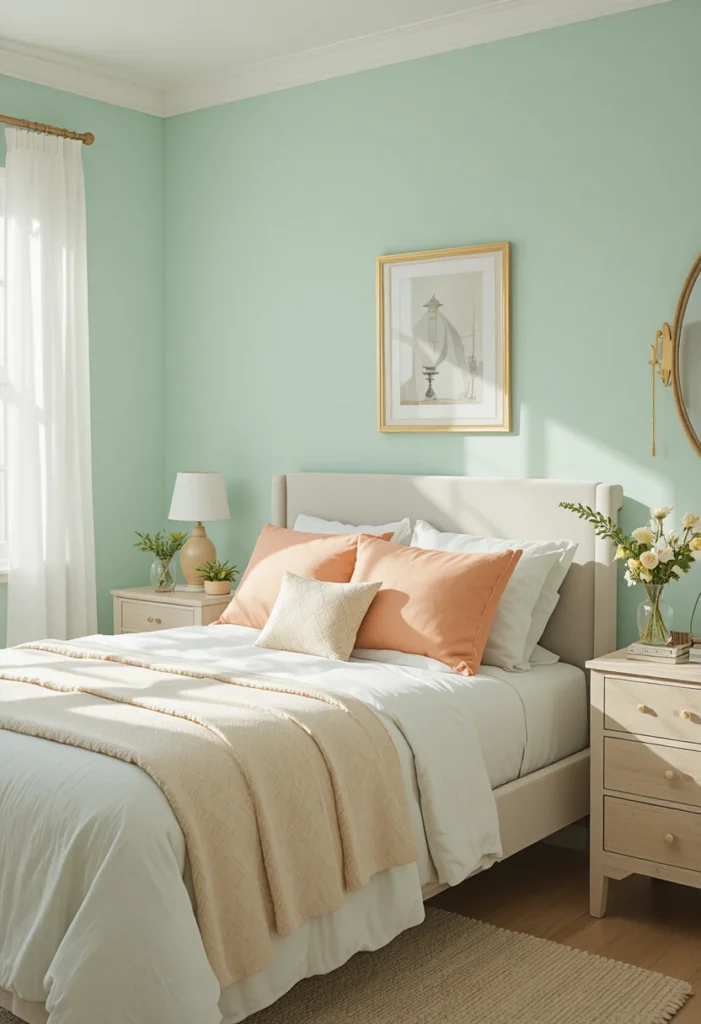
Mint green and peachy orange is the version of this pairing I suggest when friends tell me they love colour but fear it. The mint keeps the room feeling fresh and airy, the peach adds warmth without drama, and white curtains with pale wood make everything feel brighter. I keep fabrics soft and matt, because anything shiny makes pastels feel childish, and I let one peach cushion carry the orange. If you enjoy soft, pretty pairings, these teal and pink bedroom ideas use the same gentle contrast in different colours. It is cheerful, calm and easy to live with — a bedroom that never tries too hard.
How to do it: Paint the walls mint green in a matt finish and dress the bed in peach-orange bedding with white or cream sheets. Hang white sheer curtains, choose pale wood furniture, and use soft matt fabrics so the pastels feel cosy rather than childish.
11. Green and Orange Bedroom Ideas with Vintage Charm
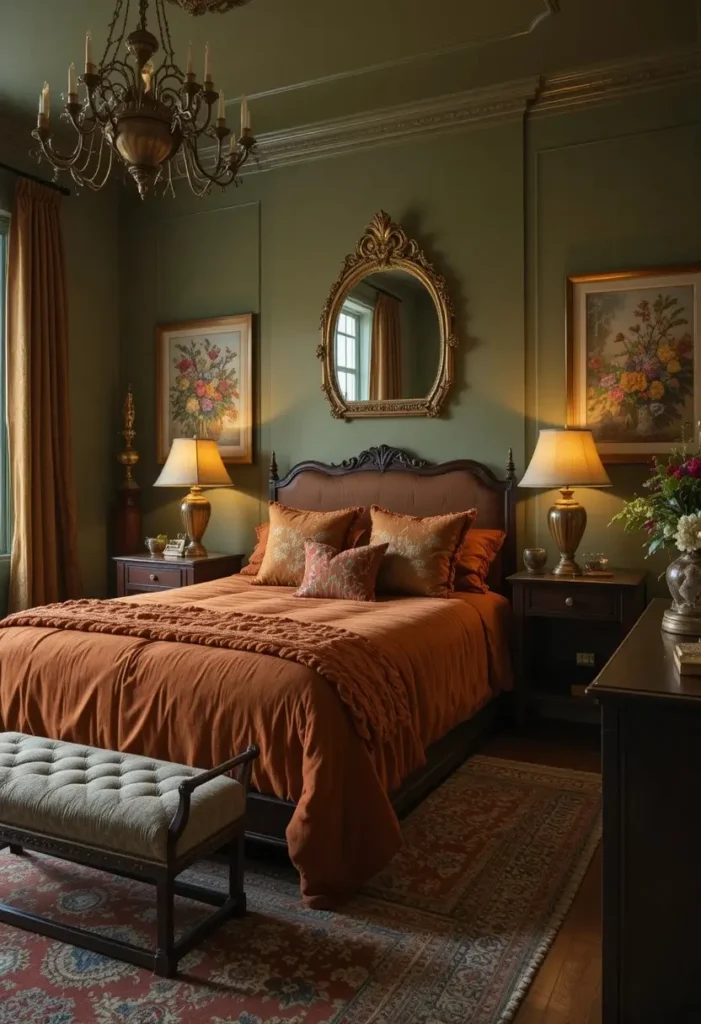
I collect vintage pieces, and moss green with burnt orange has become my favourite backdrop for them. An antique mirror, a brass lamp and a floral print look as if they have belonged together against green walls, while warm wood and evening light make the room feel nostalgic without feeling old-fashioned. My mistake was adding too much at once, so now I bring in one piece, live with it for a week, and only then choose the next. Burnt-orange textiles — a throw or cushion — are what tie the old and the new together. The result feels storied and personal, and I love that about it.
How to do it: Paint the walls moss green and add burnt-orange textiles — a throw, cushions or a lampshade. Bring in one vintage piece at a time, such as an antique mirror or brass lamp, and finish with warm wood furniture and soft evening lighting.
12. Minimal Green and Orange Bedroom Design
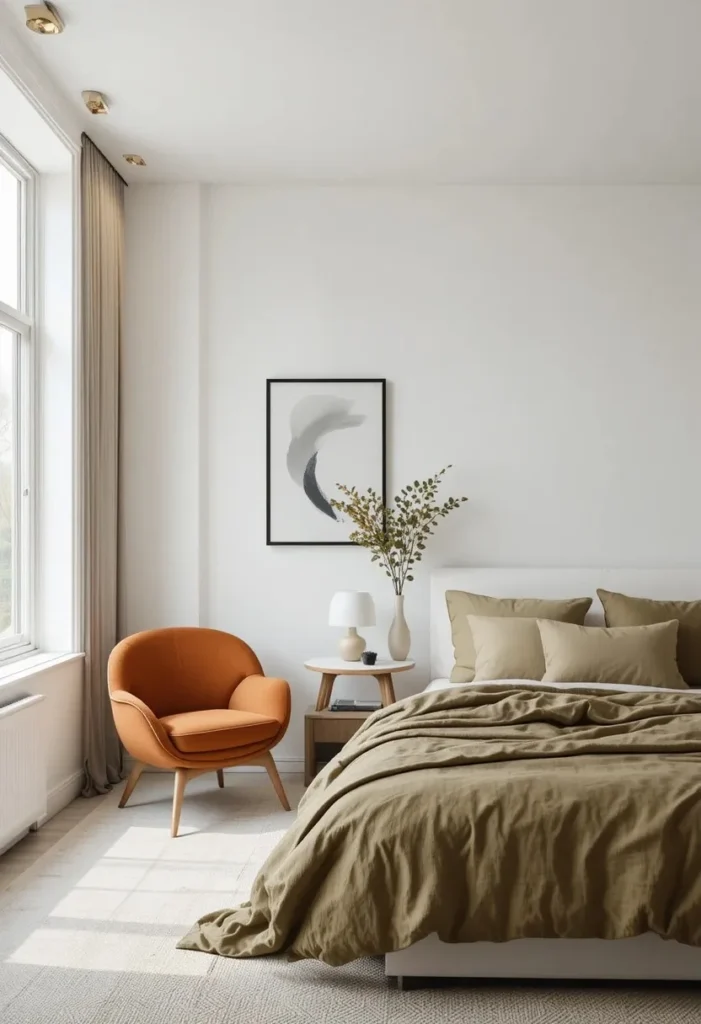
Minimalism taught me that one confident colour choice beats ten small ones, and this room is my proof. White walls, olive bedding and a single rust-orange chair give the eye exactly three things to notice, and the calm that follows is the whole point. I keep furniture simple and surfaces clear, because every extra object dilutes the palette a little, and I let soft lighting do the decorating that clutter used to do. A pale rug and one framed print are all the decoration this room needs. It feels airy, intentional and surprisingly warm for such a pared-back space — proof that minimal does not have to mean cold.
How to do it: Keep the walls white and dress the bed in olive bedding, adding one rust-orange chair as the single bold accent. Choose simple furniture, a pale rug and one framed print, and leave surfaces clear so the colour palette stays clean and intentional.
See More Ideas: 15 Vanity Ideas Bedroom That Turn Your Space Into a Chic, Functional Glow-Up Zone
13. Forest Green Headboard with Orange Linen Bedding
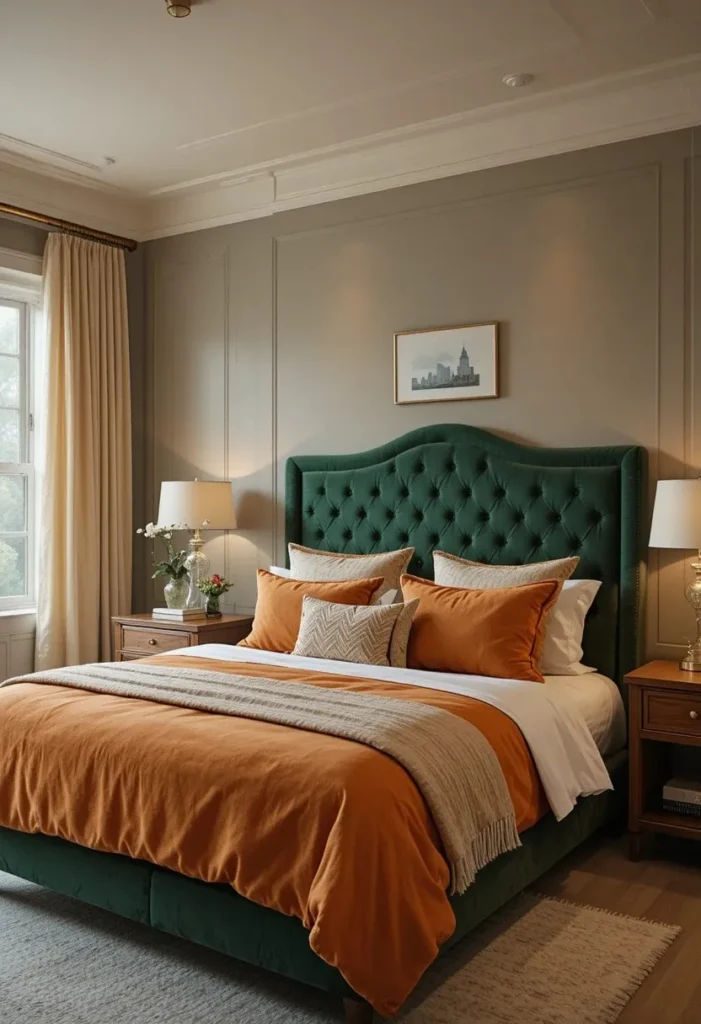
A forest-green headboard was the first change I made in our bedroom, because it anchors the whole bed without touching the walls. Orange linen bedding softens it beautifully — linen always looks a little rumpled in the best way — while cream curtains and pale wood nightstands keep the stronger colours from taking over. I layer lighter pillows in front of the darker ones, which breaks up the green gently and makes the bed look inviting rather than severe. A neutral rug underneath ties everything together. It is earthy and elegant at once, and it is also wonderfully forgiving: linen hides a multitude of sins, including my famously unmade bed.
How to do it: Choose a forest-green upholstered headboard and dress the bed in orange linen bedding with cream sheets. Layer lighter pillows in front of darker ones, add wood nightstands, cream curtains and a neutral rug to balance the stronger colours.
14. Green and Orange Bedroom Ideas with Botanical Wallpaper
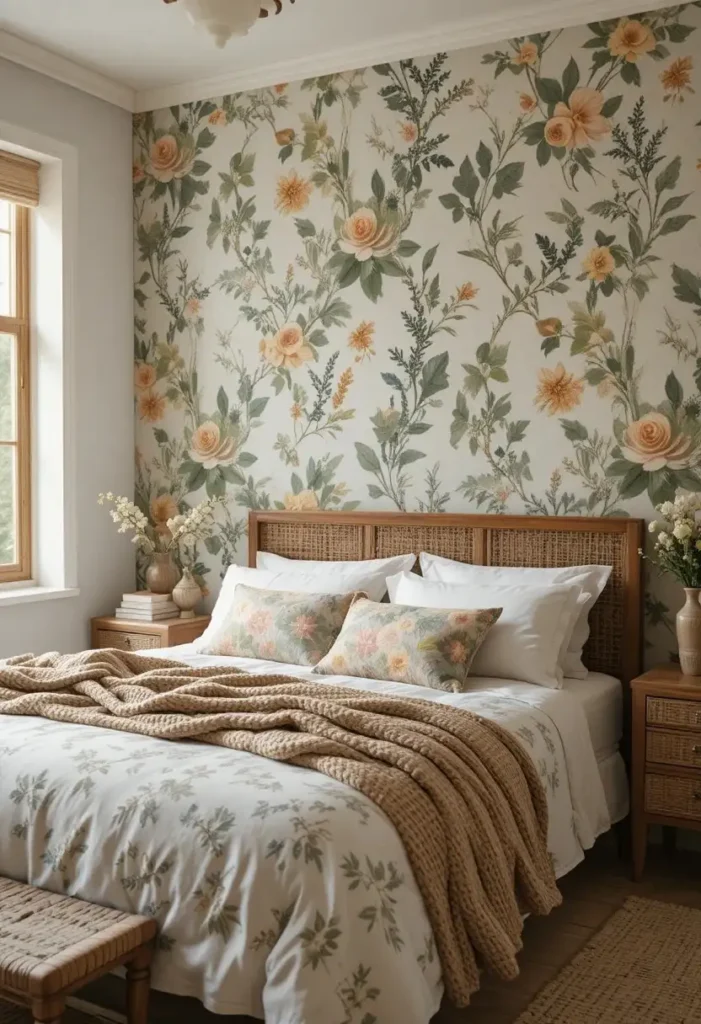
Botanical wallpaper was the change that made our bedroom feel finished, as if the walls had joined in. Green leaves and orange flowers add movement without shouting, and the pattern does so much of the work that the rest of the room can stay simple — linen bedding, woven textures, warm wood. I chose muted tones rather than bright ones, because a bedroom should soothe you, not wake you up, and I kept the wallpaper to the wall behind the bed so it frames the room instead of overwhelming it. Morning light keeps it fresh, lamplight warm. It is like bringing a garden indoors, and I smile at it.
How to do it: Paper the wall behind the bed in botanical wallpaper with soft green leaves and muted orange flowers, keeping the other walls plain. Dress the bed in linen bedding, add woven textures and warm wood furniture, and choose earthy tones over bright patterns.
15. Dark Green Walls with Burnt Orange Velvet Accents
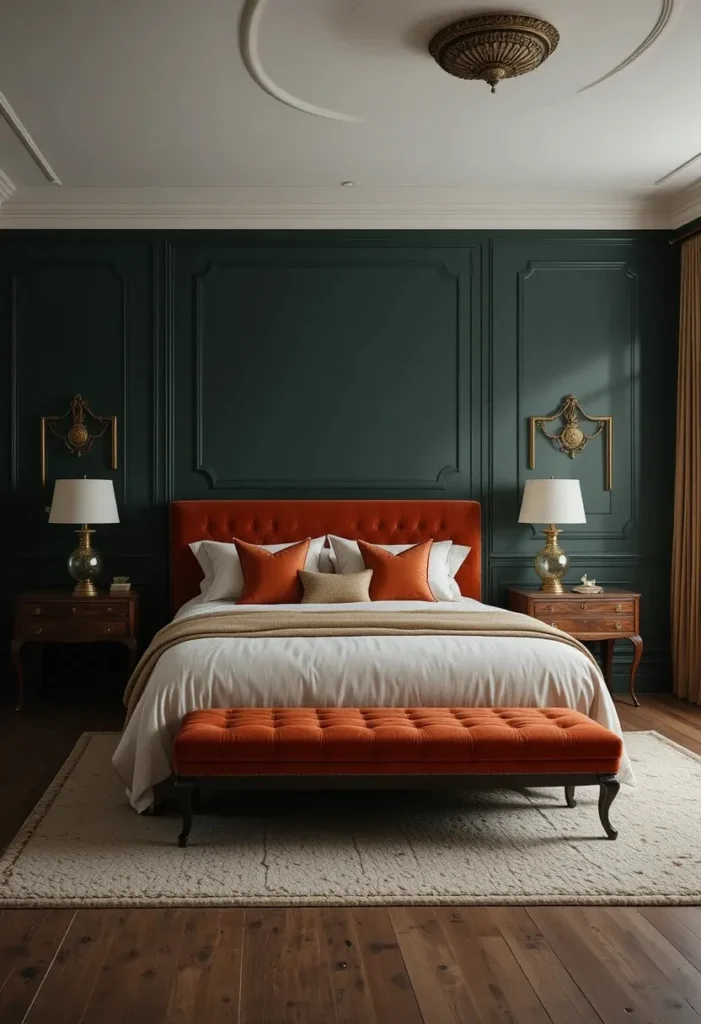
This is the richest version of green and orange, and it is the one I reach for when I want the bedroom to feel like a cocoon. Green walls make burnt-orange velvet glow — cushions, a bench, heavy curtains — while brass lighting and walnut furniture add the warmth that stops the room feeling heavy. I balance it with cream bedding and a lighter rug, because a pale layer keeps the dark palette breathable. It feels moody and elegant, the kind of room for lingering over a book. If you love drama, this is it, but keep one pale surface in sight and it will never feel oppressive.
How to do it: Paint the walls deep forest green in a matt finish and add burnt-orange velvet through cushions, a bench or heavy curtains. Add cream bedding, a lighter rug, brass lighting and walnut furniture so the dark palette stays warm and breathable.
16. Soft Sage and Peach Orange Minimal Bedroom
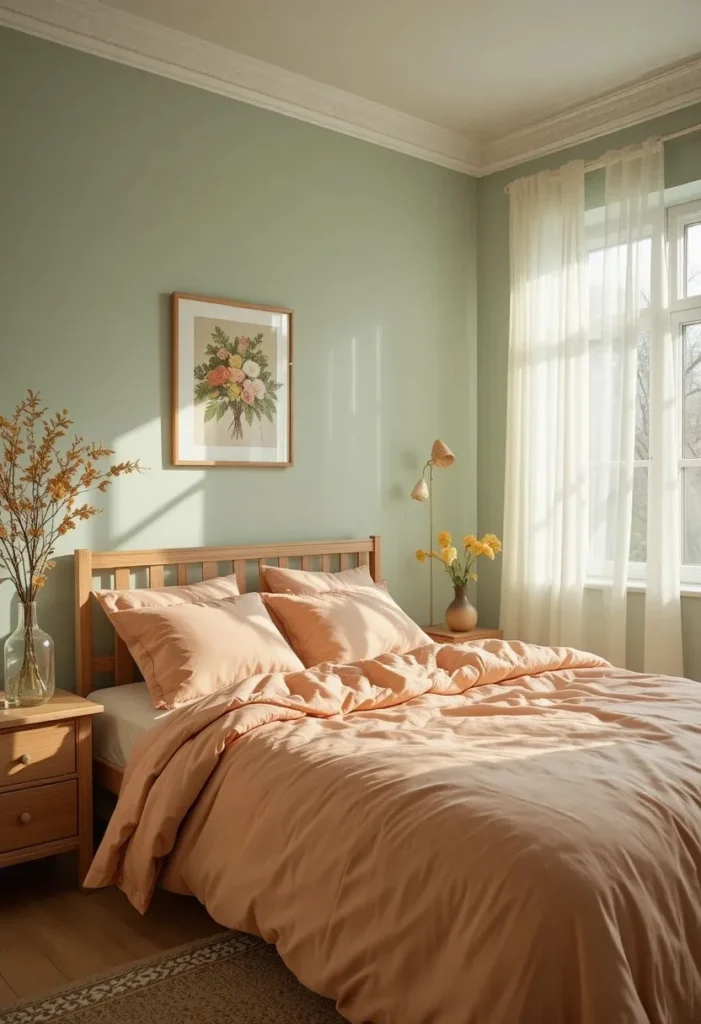
Sage and peach is the pairing I suggest to friends who want colour without commitment, because it asks little of you. Pale green walls, peach-toned bedding and oak keep the room bright, while sheer curtains let the daylight soften everything further — the palette changes gently as the sun moves, which I find lovely. I keep the decor simple and the textures soft, so the room feels calm rather than styled, and I add warmth through the bedding rather than the walls. It is modern, relaxed and easy to wake up in. If your bedroom needs light more than drama, start here, and let the colours do their work.
How to do it: Paint the walls pale sage green and dress the bed in peach-toned bedding with natural oak furniture. Hang sheer curtains high and wide so daylight softens the colours, and keep decor simple with soft textures and one or two warm accents.
Frequently Asked Questions
Do green and orange go together in a bedroom?
Yes, they work beautifully together because green is naturally calming while orange adds warmth and energy. The key is balance: let one colour lead and use the other as an accent, with plenty of cream, white or pale wood in between. Muted shades such as sage, olive, terracotta and peach are the easiest place to start.
What shade of orange works best with green walls?
Burnt orange and terracotta are the safest choices beside green walls, because their earthy tones sit naturally next to olive, sage and forest green. Peach works well with paler greens such as mint and sage, where it adds warmth without drama. Avoid bright, saturated orange on large areas, and test a swatch in both daylight and lamplight before committing.
Will a green and orange bedroom feel too dark or too bright?
It should not, if you keep one pale surface in the room — usually the ceiling, the bedding or the curtains. Dark greens need warm lighting and cream bedding to stay cosy rather than gloomy, while bright oranges need pale neutrals around them to stay calm. Start with bedding and cushions, live with them for a week, and add paint only when you are sure.
Can I use green and orange in a small bedroom?
Yes, and it can work very well. Choose pale sage or mint on the walls, keep the orange to bedding, cushions or one chair, and use a mirror or sheer curtains to keep the light moving. In a small room, one bold accent is usually more effective than painting every wall.
What colours go with green and orange in a bedroom?
Cream, warm white, beige and pale wood are the easiest partners, and they keep the scheme feeling calm and liveable. Brass and gold add warmth beside deeper greens, while a little black can sharpen a soft sage-and-terracotta room. Avoid cool greys and silver tones, which can make the orange look harsh.
Your Green and Orange Bedroom Checklist
Tick off each step as you bring your green and orange bedroom together.
☐ Choose your green — olive, sage, forest or emerald — and test it in daylight and lamplight
☐ Choose your orange — burnt orange, terracotta or peach — to match the green
☐ Decide where the colour goes: walls, bedding, or small accents only
☐ Keep the ceiling and the bedding pale
☐ Paint in a matt finish and test a large swatch first
☐ Dress the bed in layers: sheets, duvet, throw and cushions
☐ Mix textures — velvet, linen, wool and woven fibres
☐ Add warm-white bulbs and a lamp on each bedside table
☐ Add two or three brass or gold touches, no more
☐ Bring in warm wood and repeat the tone once
☐ Add one real plant near the window
☐ Hang curtains high, wide and floor-length
☐ Add a soft rug that extends beyond the sides of the bed
☐ Step back, live with it for a week, and adjust one thing at a time
A Final Gentle Thought
Green and orange ask a little courage, and they repay it generously. Start with the shade that feels most like you — a soft sage, a deep forest green, a warm terracotta — and let the other colour follow in small, confident steps. Live with each change for a week before you add the next, and trust what the room tells you in the morning light. Done that way, this bold pairing stops feeling like a risk and starts feeling like home: vibrant when you want energy, cosy when you want rest, and unmistakably yours.