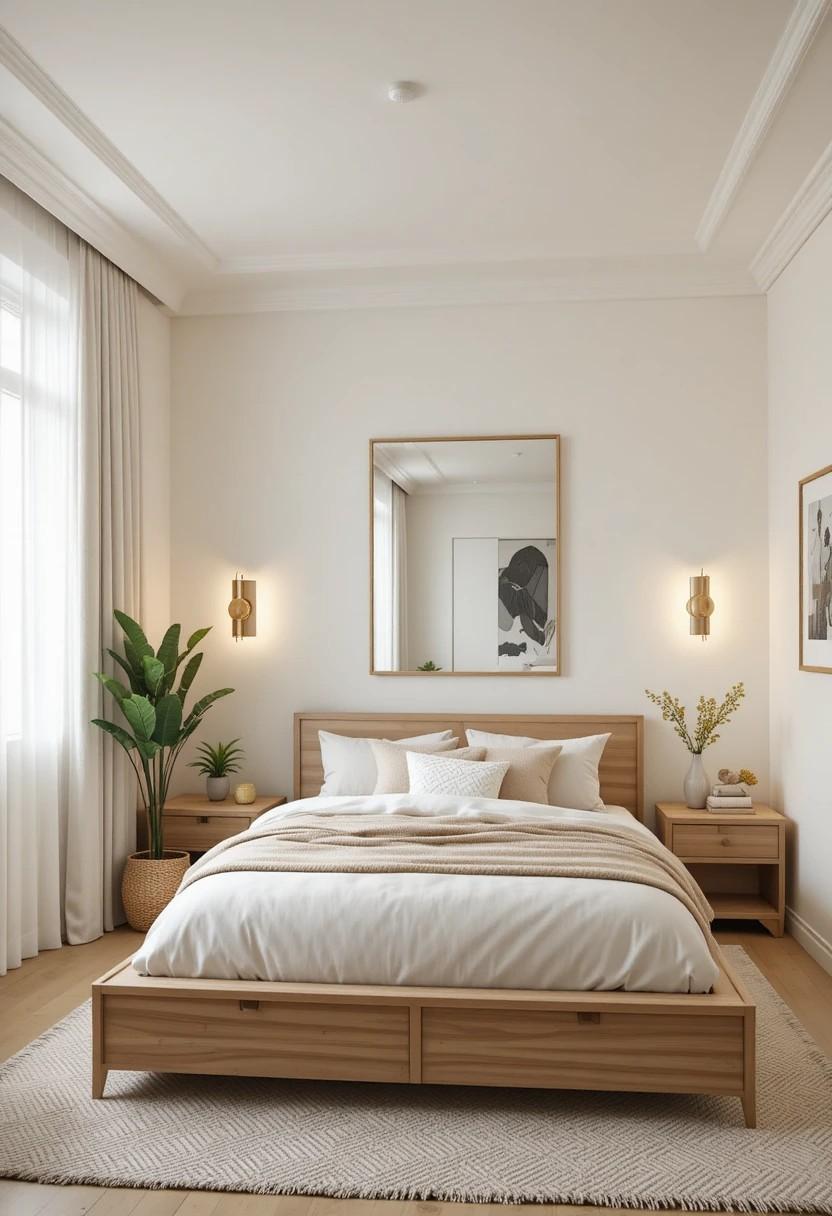
30 Genius Bedroom Ideas for Small Room That Make Every Inch Feel Bigger
The Ultimate Guide to Small Bedroom Design Designer Tips, Space-Saving Ideas, Storage Hacks, Lighting Tricks & Decor Inspiration
Why Your Small Bedroom Deserves More Credit and How to Give It to It
Small bedrooms get a bad reputation. Described as ‘challenging’, ‘compromised’, and ‘limiting’ by the kind of design content that treats square footage as the primary measure of a room’s worth, they are too often approached as design problems to be managed rather than spaces with their own specific qualities, opportunities, and potential for genuine beauty.
The designers and decorators who understand small bedrooms best take the opposite view. They know that a small bedroom’s constraints the limited floor area, the compressed proportions, the requirement for disciplined curation and intelligent spatial decision-making are not obstacles to good design but the conditions that produce it. Some of the most beautiful bedrooms in the world are small bedrooms: hotel rooms that feel like jewel boxes, studio apartment bedrooms that distil the essence of a personal aesthetic into a few carefully considered square metres, children’s bedrooms that pack enormous character and comfort into rooms that would barely accommodate a large sofa.
The 5 Foundational Principles of Small Bedroom Design
1. Visual coherence above everything
A small bedroom feels larger when every element every colour, material, form, and texture is clearly part of the same considered vision. Coherence is not achieved by matching everything (which feels sterile) but by ensuring that everything references the same palette and responds to the same design language.
2. Vertical space is free space
The floor area of a small bedroom is fixed. The vertical space above head height is almost always available and almost always unused. Every strategy that draws the eye upward tall curtains, floor-to-ceiling shelving, vertical stripes, tall plants adds apparent height at zero structural cost.
3. Visual weight is as important as physical size
A piece of furniture with slim legs, a transparent material, or an open structure occupies the same physical footprint as an equivalent solid piece but contributes far less to the room’s apparent density. Choosing visually light furniture is as important as choosing appropriately sized furniture.
4. Light is the great multiplier
Natural light maximised and artificial light layered warmly are the two most powerful spatial tools available for a small bedroom. A light-filled room appears larger than a dark one of identical dimensions, and warm layered evening light creates an ambiguity of the room’s peripheral boundaries that makes it feel boundless rather than contained.
5. Restraint is the most generous gift you can give a small room
Every additional object reduces the apparent spaciousness of a small bedroom. The most beautiful small bedrooms are not fully furnished they are curated: a smaller number of better-chosen objects, displayed with space around them, that together communicate a clear aesthetic vision.
The 30 Genius Small Bedroom Ideas
1. Paint the Walls, Ceiling, and Trim the Same Soft Neutral. The Tone-on-Tone Trick
Category: Colour & Paint
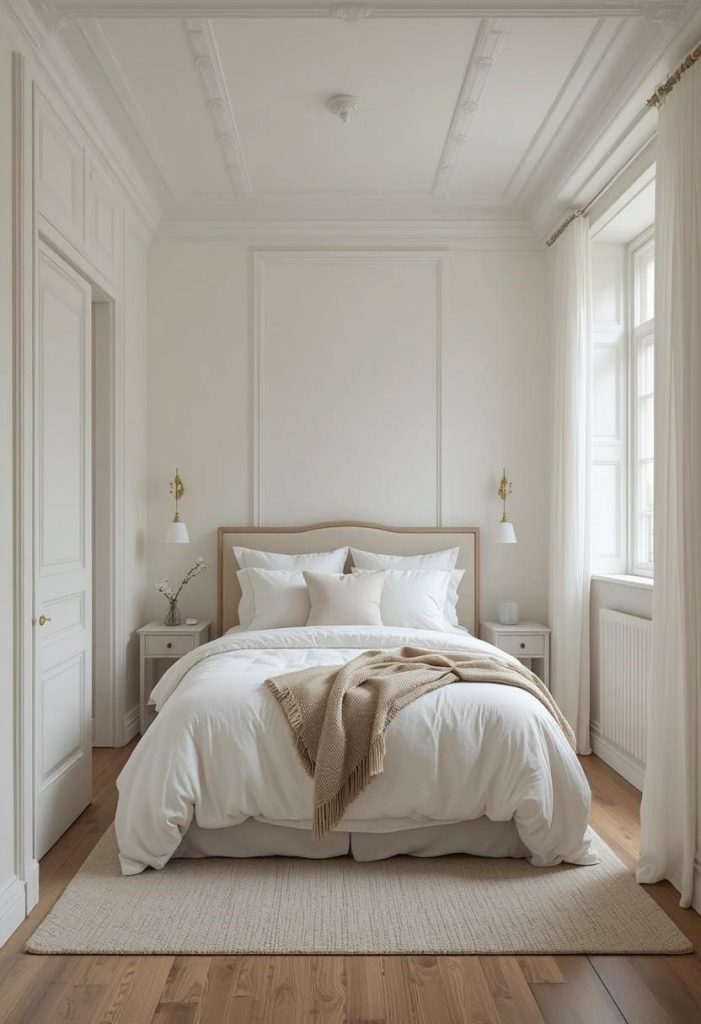
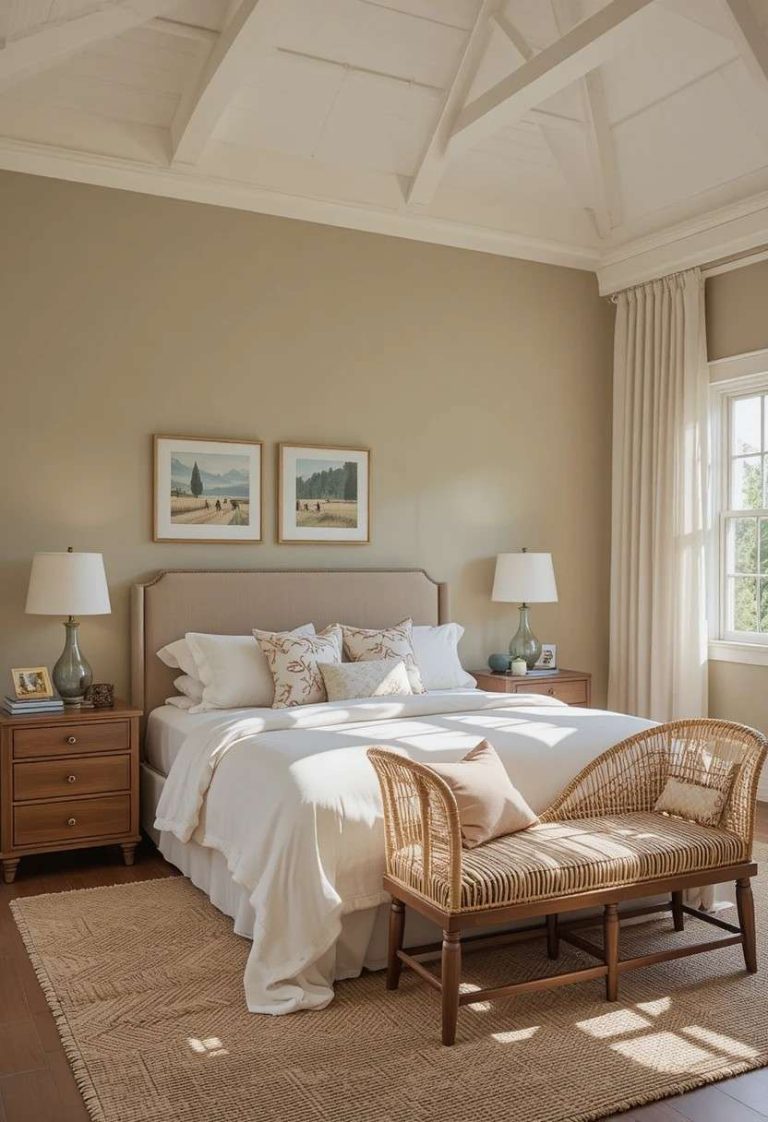
The single most impactful paint decision you can make in a small bedroom is not the specific colour you choose but the consistency with which you apply it. The tone-on-tone technique painting the walls, ceiling, coving, and skirting boards all in the same soft neutral colour or in closely related tones from the same palette is one of the most consistently praised designer tricks for making a small bedroom feel genuinely larger. The reason is straightforward: when the eye cannot find a clear boundary between wall and ceiling, the room’s vertical limits become ambiguous, and the space reads as more generous than its actual dimensions suggest.
Style tip: When testing tone-on-tone paint for a small bedroom, paint a large sample board (at least A1 size) and hold it in the corner of the room where two walls meet the corner is where the tone-on-tone effect is most critical and most visible, and seeing the sample in situ at this junction is the best way to assess whether the tones are close enough to achieve the desired blending effect.
2. Hang Curtains at Ceiling Height: The Trick That Makes Any Small Bedroom Look Taller
Category: Window Treatment
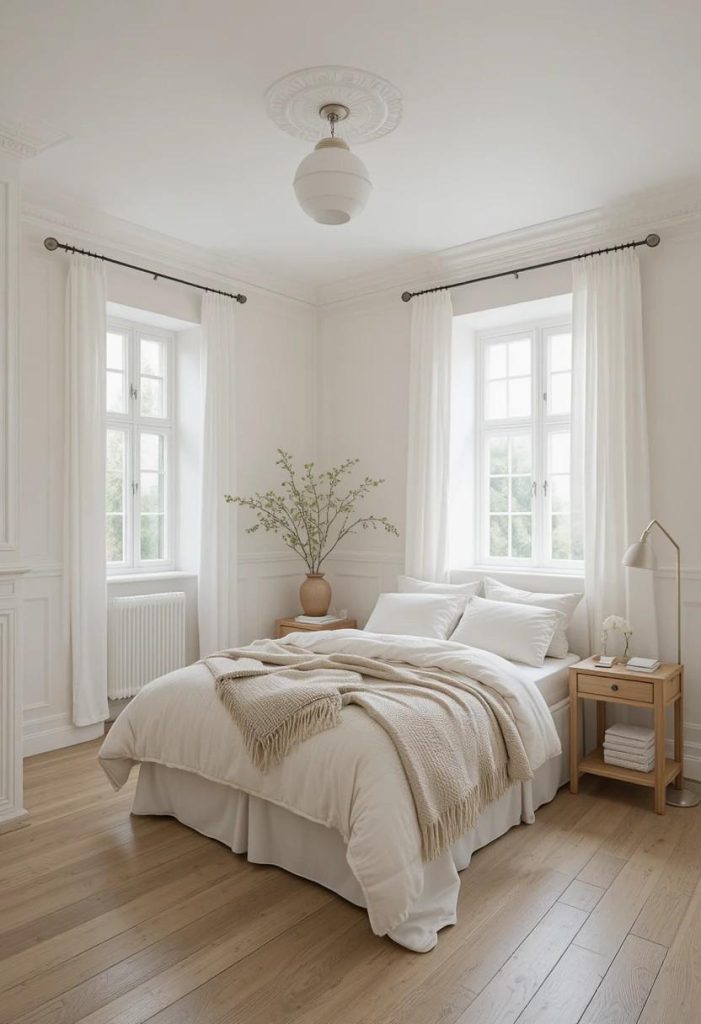
The curtain rod height mistake mounting the rod at window height rather than at ceiling height is the single most common and most damaging small bedroom decorating error, and it costs nothing to correct beyond the price of new curtain rod brackets and patience. When curtains are hung from a rod positioned close to the ceiling and allowed to fall to the floor in a continuous vertical line, the eye is drawn upward from floor to ceiling without interruption, creating the powerful optical impression of a room whose height far exceeds its actual measurements. The effect is immediate, dramatic, and universally applicable regardless of the room’s dimensions or the style of the curtains.
Style tip: In a small bedroom, choose curtain fabric in the same tone as the walls or just one shade lighter for the maximum height-enhancing effect. When the curtain fabric blends with the wall colour, the vertical line of the fabric continues the visual logic of the wall surface upward, amplifying the room-height effect considerably.
3. Choose a Platform Bed With Exposed Legs: Visible Floor Space Is Everything
Category: Furniture
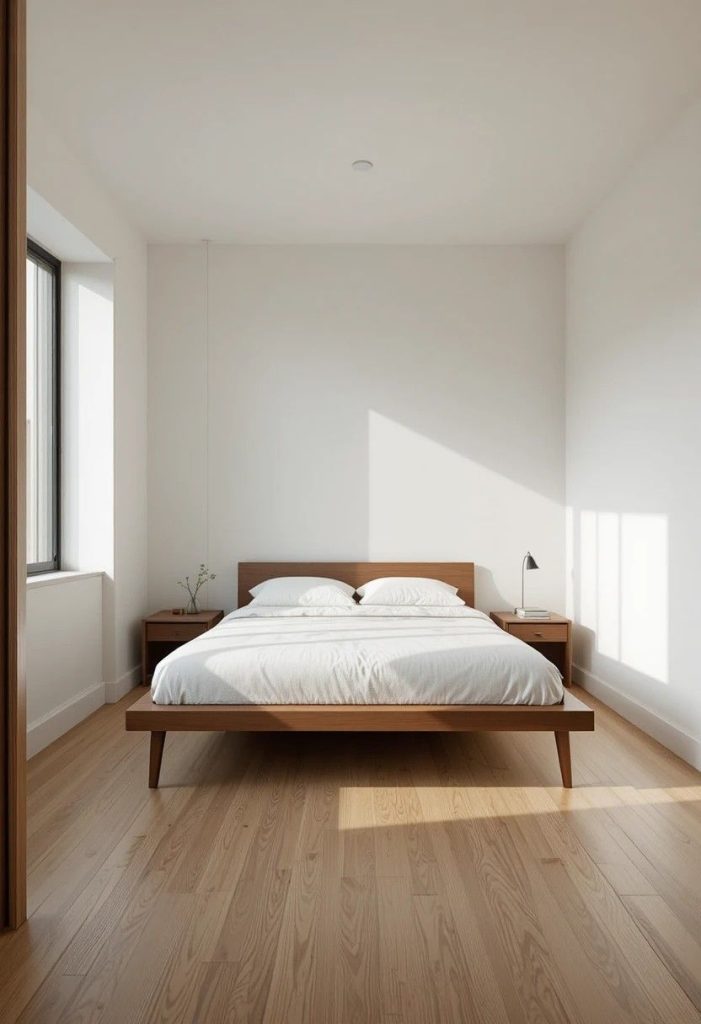
The amount of visible floor space in a small bedroom has a direct and measurable effect on how large the room appears to its occupants. A bed that sits directly on the floor or on a solid base that extends to the floor with no visible gap beneath it eliminates the floor plane entirely from the room’s visual field, creating the impression of a room that is occupied entirely by the bed with no breathing room remaining. Conversely, a bed frame with legs that create a clear gap between the mattress and the floor allows the eye to travel across the uninterrupted floor surface beneath the bed, significantly increasing the apparent floor area of the room and making it feel considerably more spacious.
Style tip: Choose under-bed storage containers in the same colour as the floor surface natural wood or white for light floors, dark tones for dark floors so that they become visually invisible from standing height and do not interrupt the clean floor plane that creates the spacious effect.
4. Use a Large Mirror Strategically: Doubling the Room Instantly
Category: Mirrors & Light
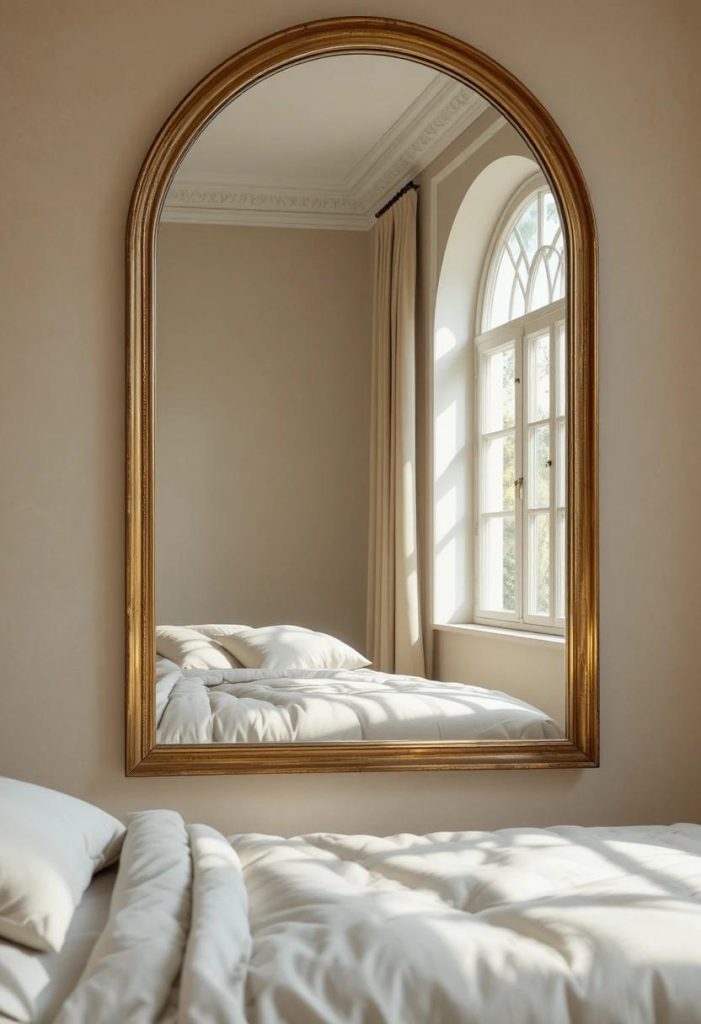
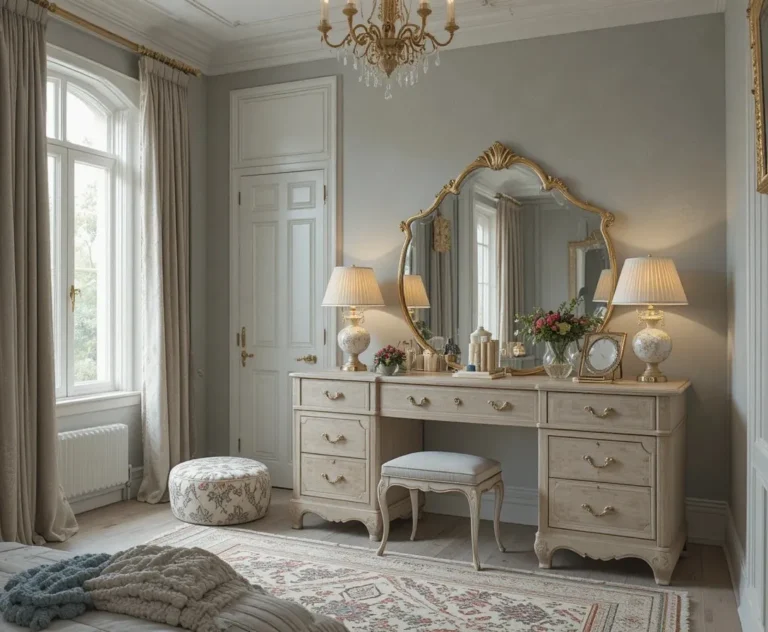
The mirror is the small bedroom’s most powerful optical illusion tool a single object that, correctly positioned, genuinely doubles the apparent size of the room by reflecting its interior content back into itself, creating the impression of a room that continues beyond the reflective surface into an identical space on the other side. In a small bedroom where every square centimetre of visual space matters, the strategic placement of a large mirror is one of the highest-return interventions available more effective than many furniture changes, more immediate than paint, and applicable to any aesthetic without stylistic compromise.
Style tip: Position a large mirror to reflect the most beautiful part of the bedroom the window, a piece of artwork, or the bed dressed in attractive bedding. The mirror amplifies whatever it reflects, so directing its gaze toward beauty rather than clutter is a critical consideration that transforms its contribution to the room.
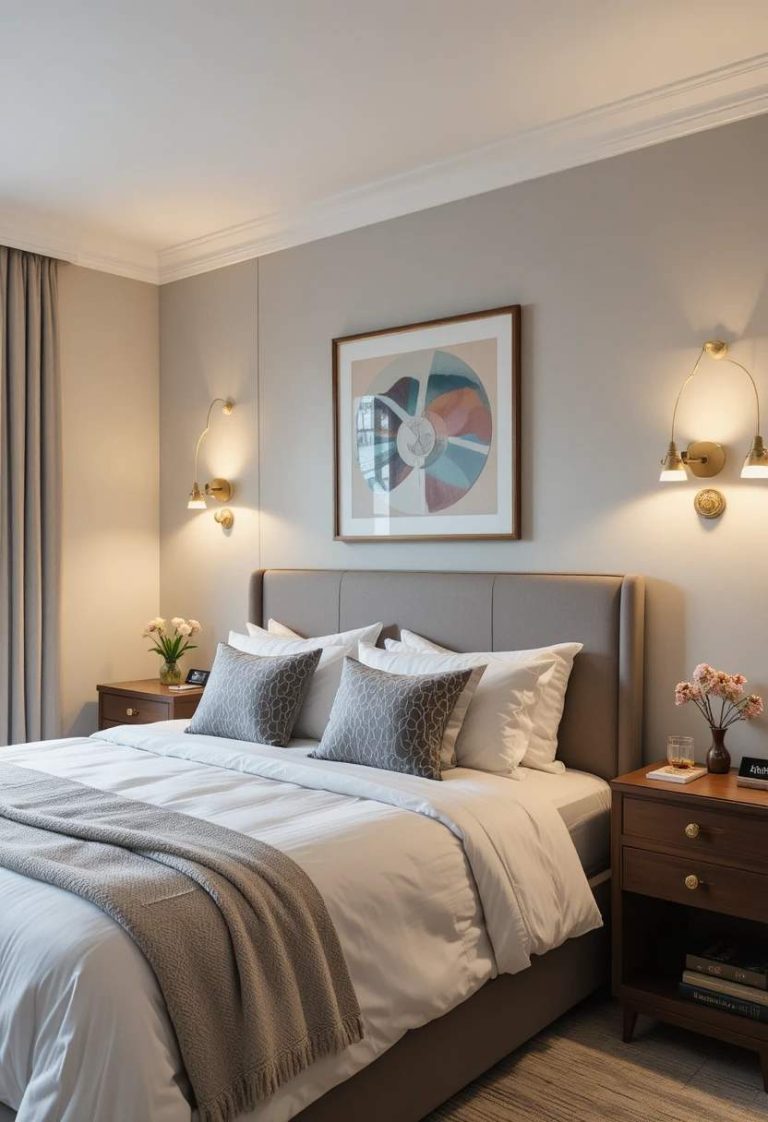
5. Install Wall Sconces Instead of Bedside Table Lamps: Free Up Every Surface
Category: Lighting
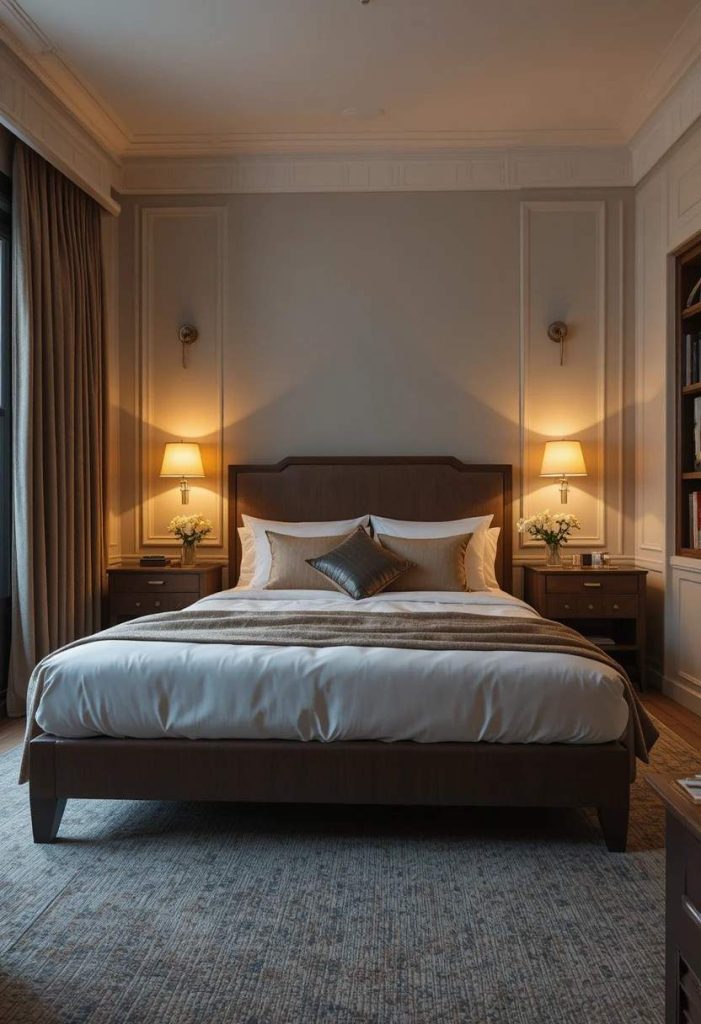
The bedside table lamp is such a universal bedroom fixture that its presence is rarely questioned but in a small bedroom, every surface area is precious, and a bedside table occupied by a lamp base and shade loses the majority of its usable surface to the lighting fixture it supports. Replacing bedside table lamps with wall-mounted sconces removes this problem entirely: the light source moves from the table surface to the wall above the bed, freeing the entire bedside table surface for books, a glass of water, a phone, or simply the clear, uncluttered breathing space that makes small rooms feel more generous.
Style tip: When installing wall sconces in a small bedroom, position them at exactly the same height on both sides of the bed and ensure the arm or shade extends the same distance from the wall on each side perfect symmetry in the lighting arrangement gives the small bedroom a hotel-like quality that makes it feel both designed and spacious.
6. Choose Multi-Functional Furniture: Every Piece Must Earn Its Place Twice
Category: Furniture
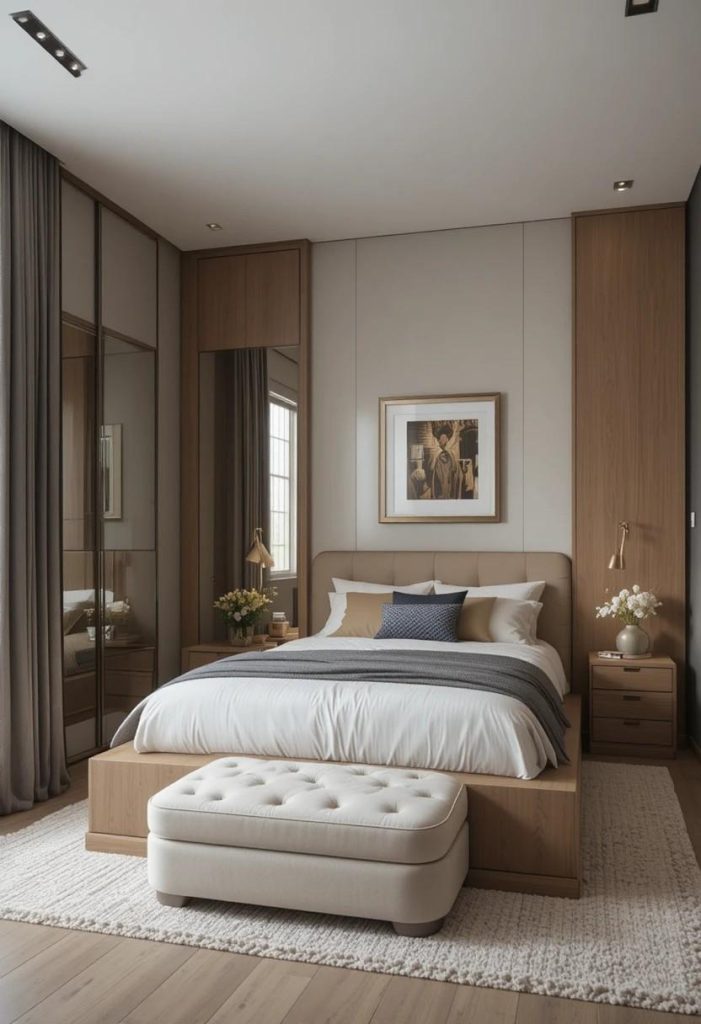
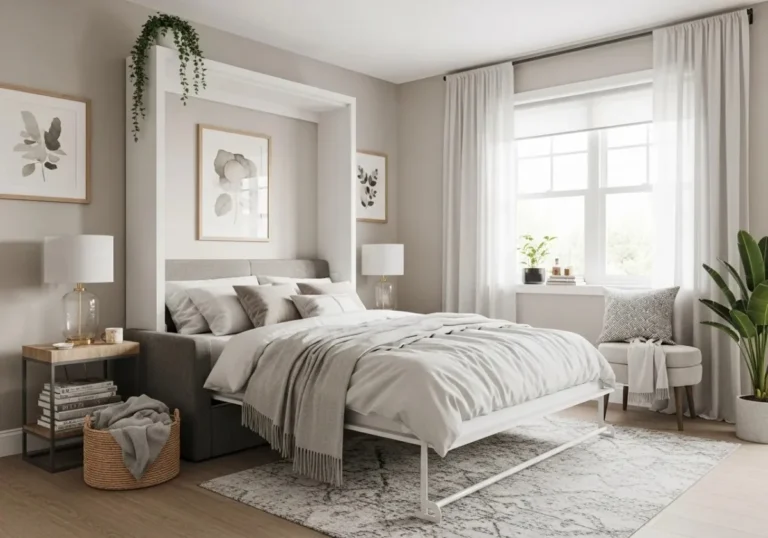
In a small bedroom, the discipline of multi-functionality is not merely a space-saving strategy but a fundamental design philosophy: every piece of furniture that enters the room should perform at least two functions simultaneously. A bed with storage drawers built into the base provides sleeping and storage in a single footprint. An ottoman at the foot of the bed provides seating, storage, and the visual softening of an upholstered end to the bed arrangement. A headboard with integrated shelves provides both the structural definition of the bed’s head and the practical surface of bedside tables without the floor area cost of separate bedside tables on either side.
Style tip: Before purchasing any piece of furniture for a small bedroom, ask: does this piece perform at least two distinct functions? If it performs only one function if the bedside table simply holds a lamp without any drawer or shelf storage consider whether a multi-functional alternative exists that would serve both the same primary function and at least one additional use.
7. Go Vertical With Storage: Floor-to-Ceiling Shelving Changes Everything
Category: Storage
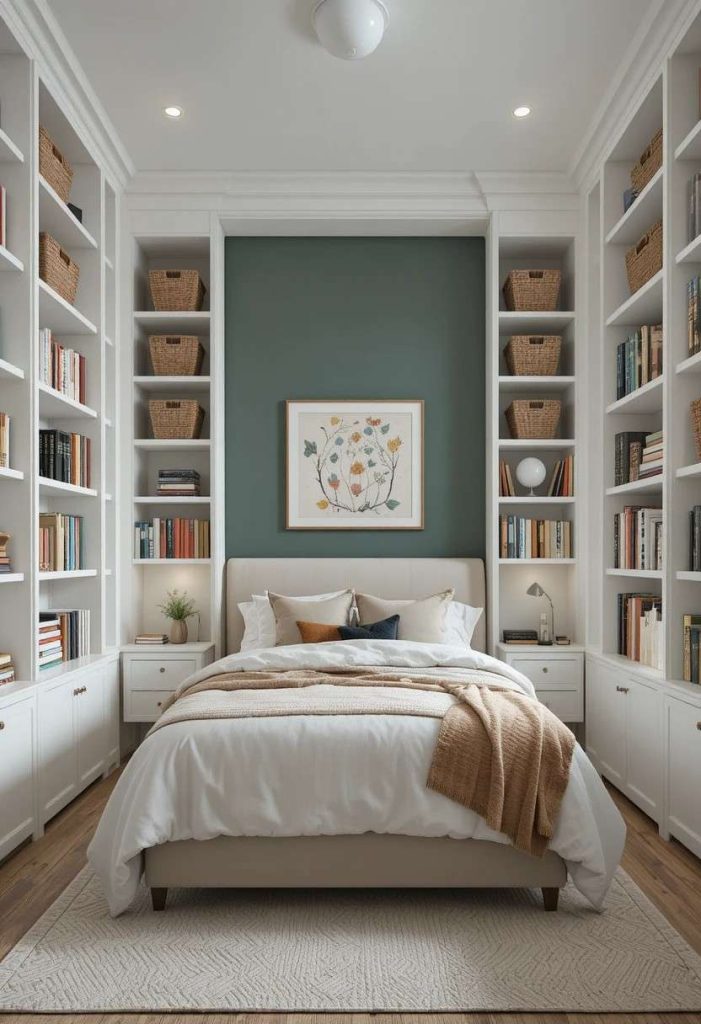
The single most underutilised resource in any small bedroom is the vertical space above head height. Most bedroom storage furniture wardrobes, chests of drawers, bedside tables operates within the lower two-thirds of the room’s height, leaving the upper third of the wall surface empty and unused. In a small bedroom where horizontal floor area is constrained, this vertical space above head height represents a significant storage resource that, when used effectively, can entirely resolve the storage problem of a small room without requiring any additional floor area.
8. Use Under-Bed Storage Cleverly: Three Square Metres of Hidden Space
Category: Storage
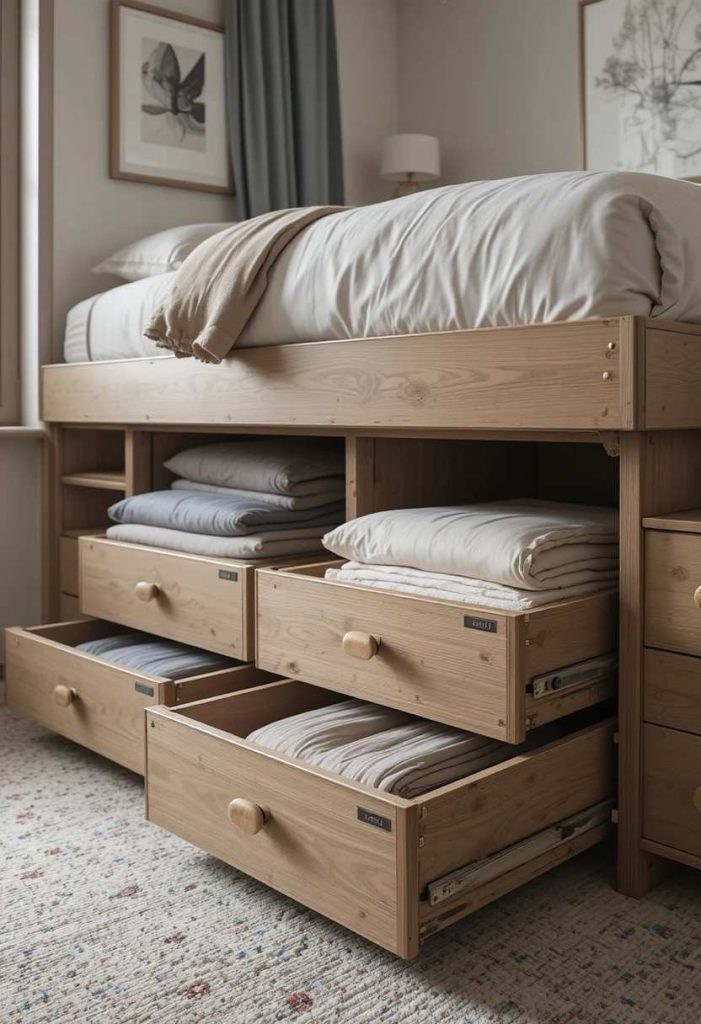
The space beneath the bed is the most consistently wasted storage area in the average small bedroom, and its proper utilisation can single-handedly resolve the storage deficit that makes small bedrooms feel cluttered and compromised. A standard double bed provides approximately three square metres of under-mattress storage area more than the floor area of a small bathroom. Used intelligently, this space can accommodate an entire wardrobe’s worth of out-of-season clothing, spare bedding sets, shoe collections, sports equipment, and any of the dozens of categories of belongings that small bedrooms must absorb without visible clutter.
Style tip: Divide under-bed storage by season: all winter items in one set of storage containers, all summer items in another, and rotate at the beginning of each season. This system prevents the under-bed storage from becoming an undifferentiated repository of random items and ensures that everything stored beneath the bed is genuinely useful for the current season.
9. Create a Focal Point With a Statement Headboard: Give the Room an Identity
Category: Focal Point
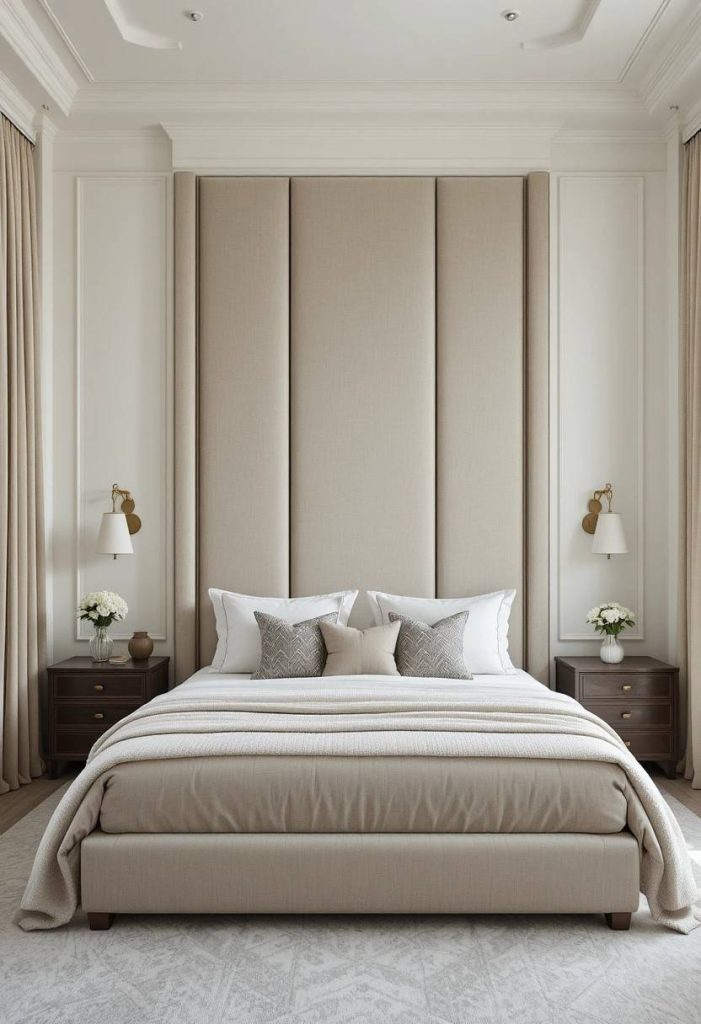
The headboard is the visual anchor of the small bedroom the single piece that most immediately communicates the room’s aesthetic identity and personality. A strong, confident headboard gives the small bedroom a centre of gravity that prevents it from feeling like a room without a purpose or a character, and the visual weight of a well-chosen headboard anchors the entire room’s composition in a way that makes the space feel more resolved, more considered, and ultimately more spacious because resolved, well-designed spaces read as larger than equivalent spaces that feel aesthetically unfinished.
Style tip: For maximum visual impact in a small bedroom, choose a headboard that extends at least twenty centimetres above the top of the sleeping pillows when stacked. This height ensures the headboard reads as a genuine architectural feature rather than a simple bed component, giving the bedroom a confidence and presence that makes the space feel designed rather than furnished.
10. Maximise Natural Light: The Most Powerful Small Room Enlarger Available
Category: Light
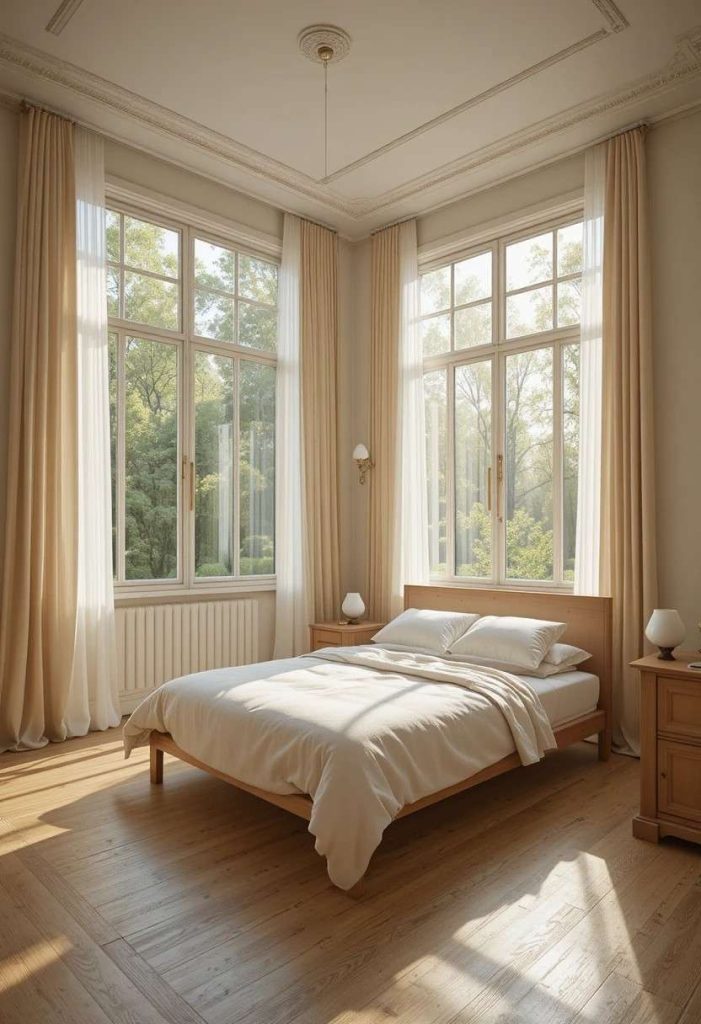
Natural light is the single most powerful tool available for making a small bedroom feel larger more effective than any paint colour, any furniture choice, or any spatial arrangement. A small bedroom flooded with natural light feels airy, open, and expansive in a way that the same room in poor natural light never achieves, regardless of the quality of the decoration. Maximising the quantity and quality of natural light entering the room is therefore the highest-priority intervention available for making a small bedroom feel bigger, and it is frequently achievable at minimal cost through changes to the window treatment alone.
Style tip: Clean your bedroom windows regularly this costs nothing and makes a surprisingly significant difference to the quantity of light entering the room. A window with a film of dust and condensation residue transmits considerably less light than a clean one, and a clean window can noticeably improve the brightness of a small bedroom.
11. Incorporate Vertical Stripes: The Classic Height-Enhancing Trick
Category: Colour & Pattern
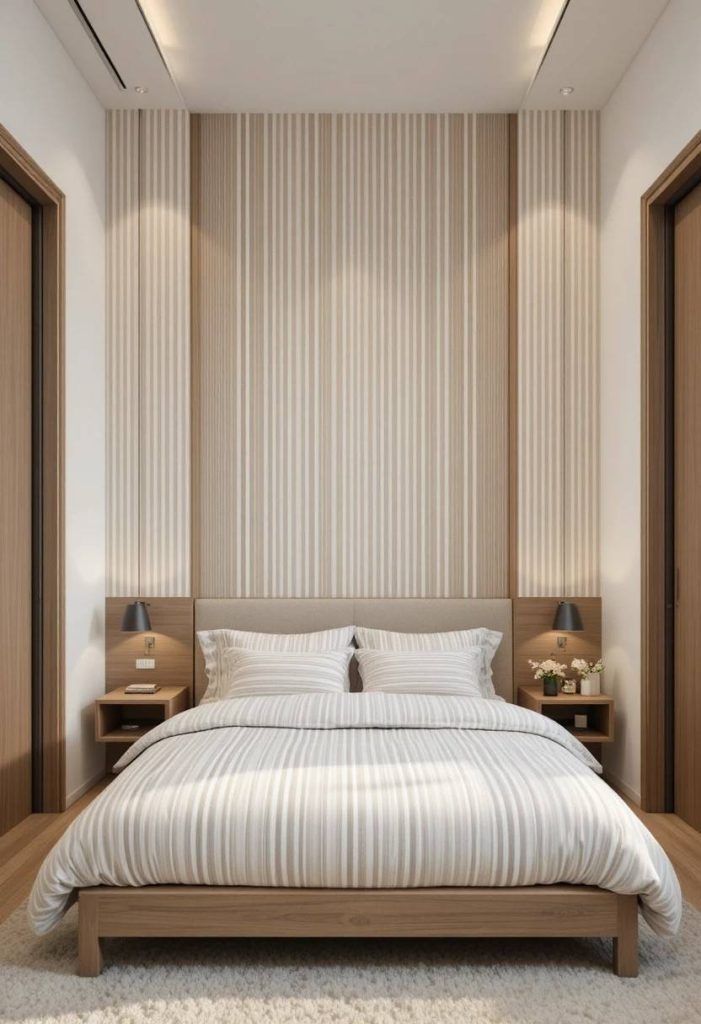
Vertical stripes are one of the oldest and most reliably effective visual tricks in interior design their ability to draw the eye upward and create the impression of greater room height has been understood and applied by designers for centuries. In a small bedroom specifically, vertical stripes applied to the walls, the curtains, the bedding, or the headboard create an upward visual movement that reinforces the room’s height and counteracts the tendency of low or standard ceilings to make small rooms feel compressed. Interior design guidance confirms this approach: ‘Incorporating bedding with a vertical stripe is a wonderful way to make a small bedroom seem bigger.’
Style tip: Choose vertical stripes with a width that is proportionate to the room wider stripes (fifteen to twenty-five centimetres) work best in rooms with higher ceilings, while narrower stripes (five to ten centimetres) are more effective in rooms with lower ceilings where a very wide stripe might make the ceiling feel lower rather than higher.
12. Use Floating Nightstands Instead of Freestanding Bedside Tables
Category: Furniture & Space
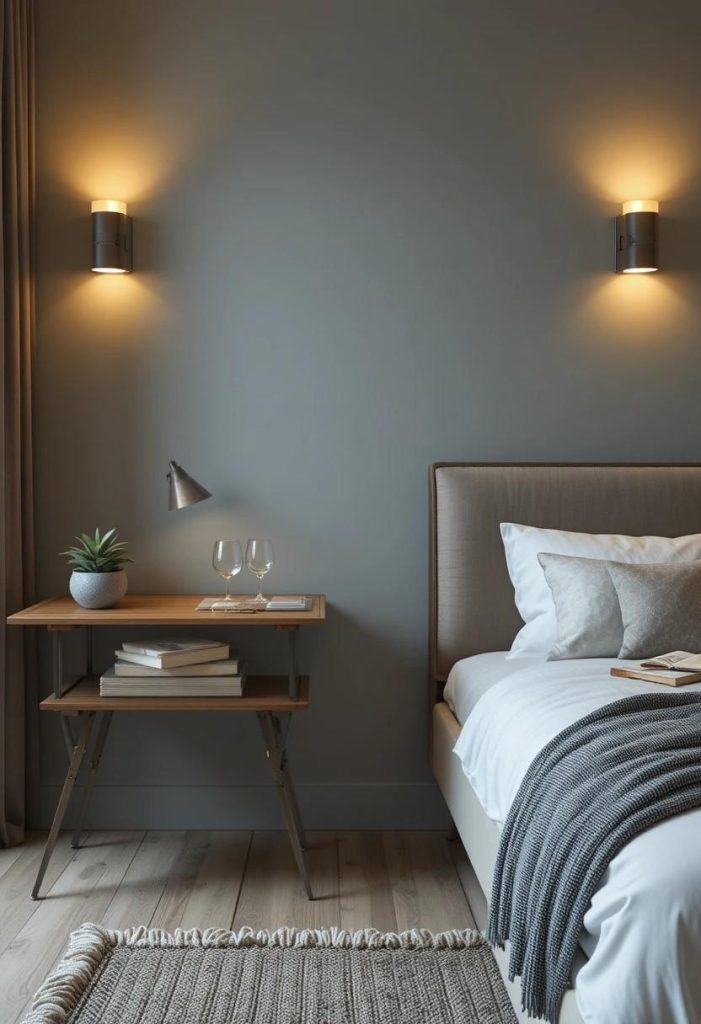
The conventional bedside table a freestanding piece of furniture positioned beside the bed on the floor is one of the most space-consuming pieces of furniture in the small bedroom relative to its functional contribution. A standard bedside table occupies forty to sixty centimetres of wall space and thirty to forty centimetres of floor depth beside the bed, contributing two legs and a base to the visual clutter of the floor plane reducing the amount of visible floor area that creates the impression of space. Replacing freestanding bedside tables with floating wall-mounted alternatives resolves all of these problems simultaneously at very low cost.
Style tip: When installing floating nightstands, position them at a height where the surface is level with the top of the mattress, not above it this makes accessing objects on the nightstand comfortable from a lying position and ensures the visual line of the nightstand reads as an extension of the bed’s horizontal plane rather than a separate element interrupting the wall above it.
13. Choose Light-Coloured Bedding in Natural Fabrics: The Foundation of a Spacious Bedroom
Category: Textiles
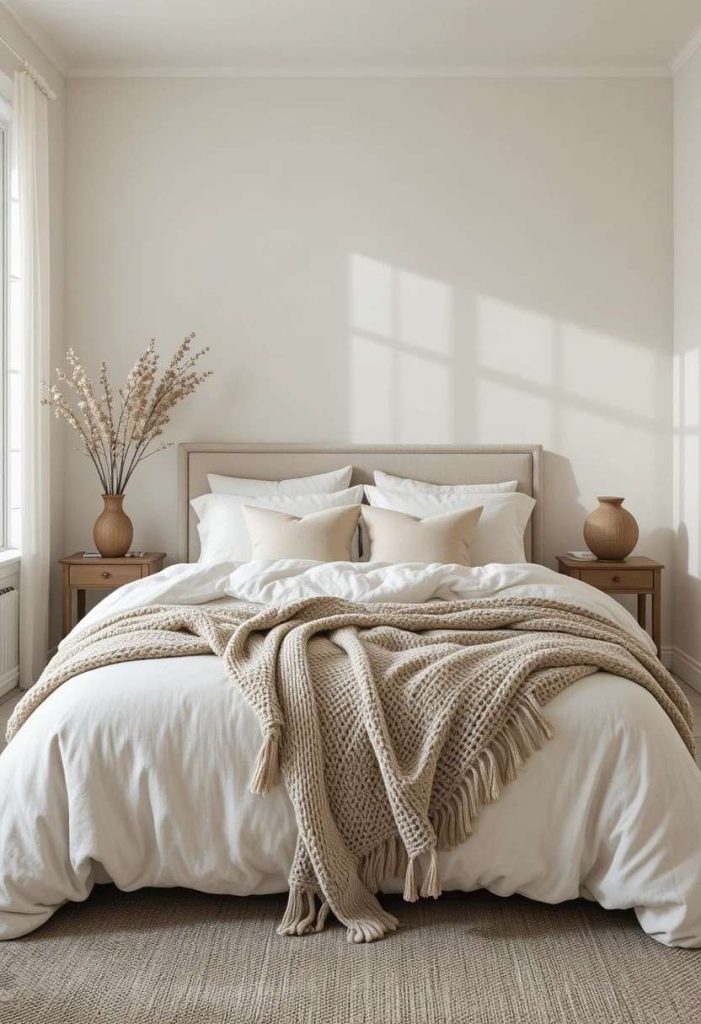
The bedding in a small bedroom covers the single largest horizontal surface in the room the top of the bed and its colour, texture, and style therefore exert an outsized influence on the room’s overall visual character and apparent size. Dark, heavily patterned, or visually busy bedding in a small bedroom tends to make the bed feel like a dominant, space-consuming object that the room exists to contain. Light, simply styled bedding in natural fabrics, by contrast, makes the bed recede into the room’s overall palette and feel like part of a coherent, breathing whole a contribution to the room’s spaciousness rather than a challenge to it.
Style tip: Invest in quality linen bedding over any other bedding category linen’s natural crumple and texture looks intentionally casual when not perfectly pressed, removing the maintenance burden of keeping bedding smooth while adding the kind of relaxed, lived-in quality that makes a small bedroom feel genuinely comfortable rather than decoratively staged.
14. Create Built-In Wardrobe Alcoves: Transforming Dead Space Into Designed Storage
Category: Storage
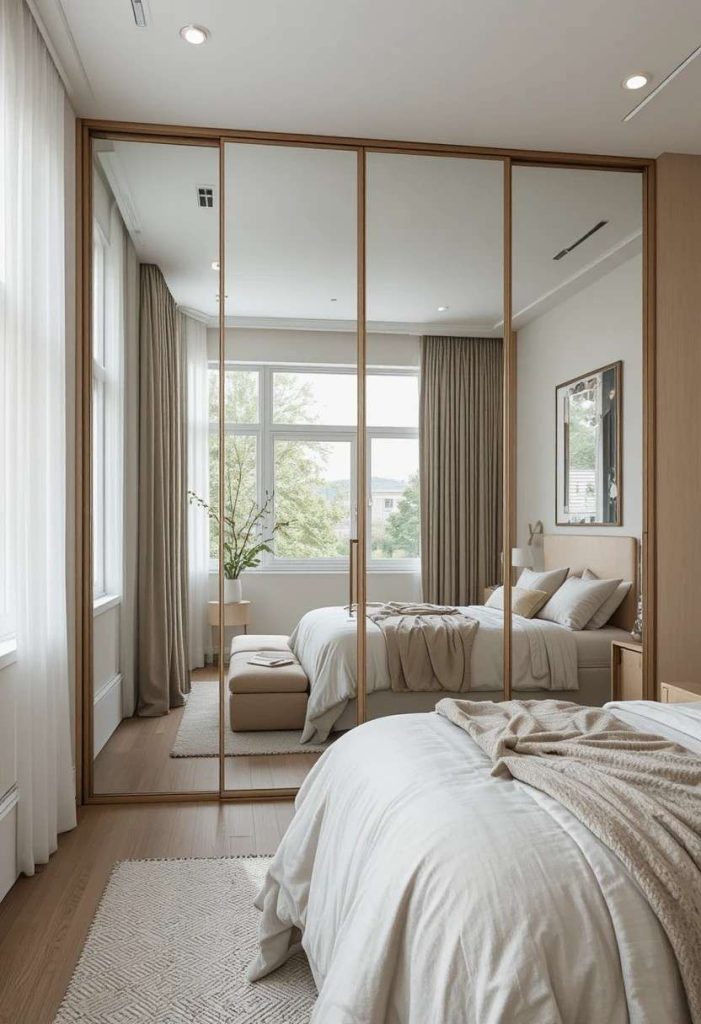
The alcoves on either side of a chimney breast, the recessed area beside a doorway, or the space at either end of a bedroom wall often represent dead architectural space areas that are too small and awkwardly shaped for freestanding furniture but too large to be ignored. In a small bedroom, converting these alcoves into built-in or semi-built-in wardrobe storage is one of the most effective and most permanent ways to dramatically increase the room’s storage capacity while simultaneously improving its visual quality. Built-in storage that uses every available centimetre of a room’s alcoves and recesses is, per unit of storage provided, the most space-efficient intervention available.
Style tip: Choose mirrored sliding doors for a full-wall built-in wardrobe in a small bedroom the mirrored surface performs the double function of wardrobe door and wall mirror simultaneously, providing the space-expanding reflective quality of a large mirror without requiring any additional floor or wall area for a separate mirror.
15. Keep the Floor Mostly Clear: Visual Breathing Room Is Spatial Luxury
Category: Decluttering
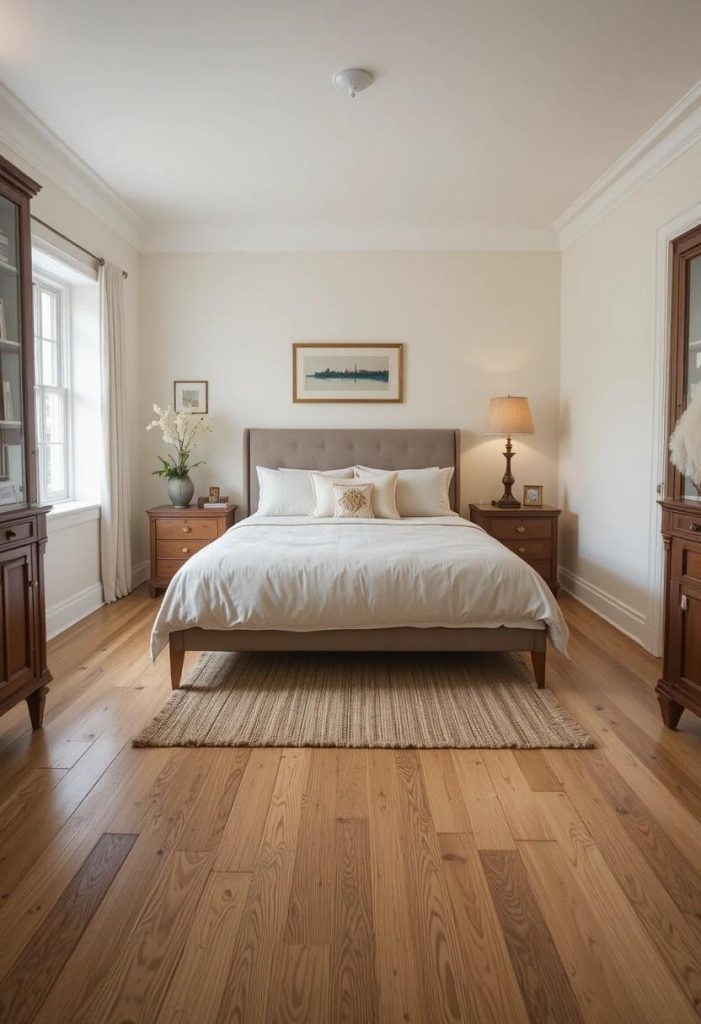
The floor is the single most important surface in a small bedroom’s spatial perception more important than any wall, more critical than the ceiling, and more immediately responsible for whether the room reads as cramped or spacious than any other element. The reason is direct: when the floor is clear, the eye can travel across it freely in every direction, assessing the room’s full horizontal dimensions and communicating a sense of spaciousness to the brain. When the floor is broken up by furniture legs, piles of clothing, bags, and boxes, the eye cannot complete this assessment it encounters obstacles and stops, and the room reads as a series of crowded partial spaces rather than a single, continuous, generous one.
Style tip: Conduct a floor audit of your small bedroom once a week: anything that has been on the floor for more than three consecutive days requires a permanent home. The weekly audit prevents the gradual accumulation of floor clutter that transforms a clear, spacious-feeling room into a compromised one over a period of weeks.
16. Add a Window Seat With Hidden Storage: Every Alcove Is an Opportunity
Category: Storage & Seating
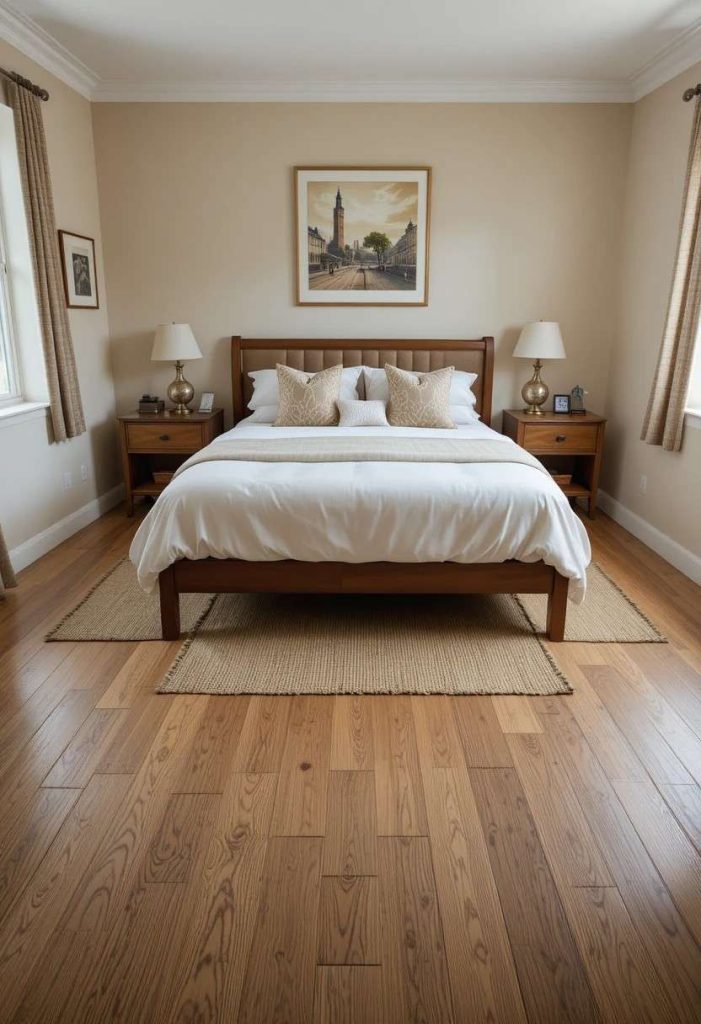
The window alcove the area beneath or around a window, particularly in older buildings with deep window reveals is one of the most consistently underused spaces in a small bedroom. A window seat built into this alcove transforms it from dead space into the most characterful and most practically valuable feature in the room: a comfortable reading seat with a view, additional seating for occasional guests, a beautiful decorative vignette when dressed with cushions and throws, and most valuably for a small bedroom a generous storage area concealed beneath its hinged lid.
Style tip: Dress the window seat with cushions in the same fabric family as the bedroom’s curtains this visual connection between the window dressing and the seat dressing creates a sense of designed intentionality that makes the window seat look like a genuine architectural feature rather than an afterthought.
17. Use the Back of the Bedroom Door: Invisible Storage Territory
Category: Storage
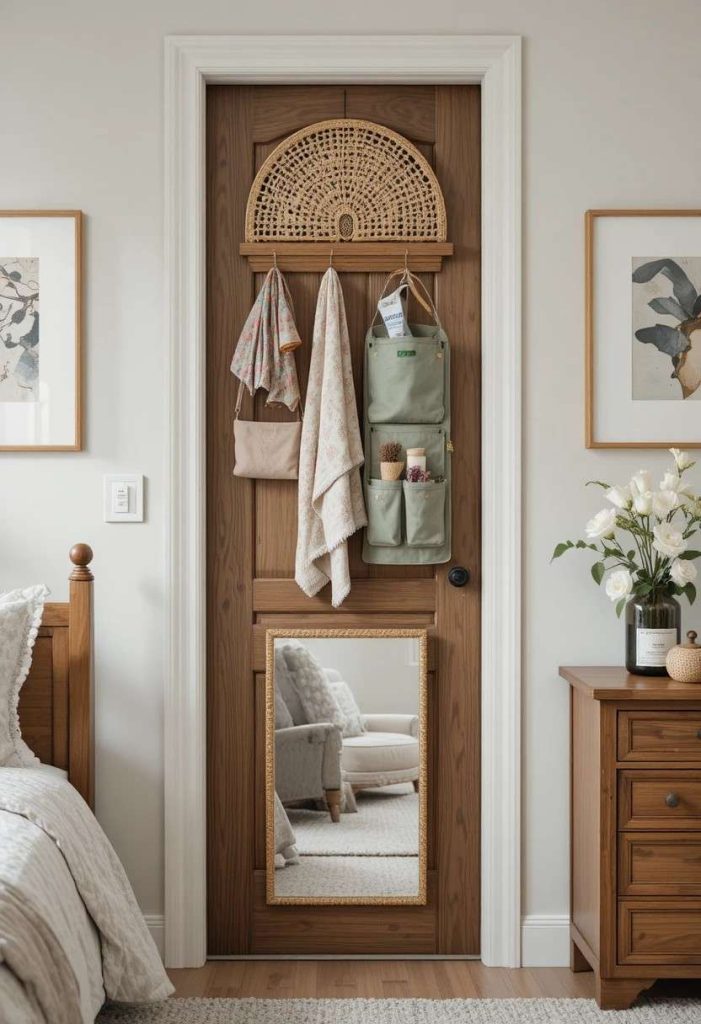
The back of the bedroom door is one of the most consistently overlooked storage territories in any room, and in a small bedroom where every available surface is precious, it represents a storage resource that should never be left idle. A single over-door hook rack, available for under five dollars, provides hanging storage for bags, coats, scarves, and accessories on a surface that is invisible when the door is open and faces the interior of the room rather than the wall when closed meaning it contributes storage without occupying any wall space visible from the primary positions in the room.
Style tip: Limit the back-of-door storage to items used daily or near-daily jackets worn most mornings, the bag used for work, the accessories worn most frequently. Over-loading the back of the door with items that are rarely used creates a cluttered-looking storage area that undermines the door’s value as a functional, quick-access storage point.
18. Embrace a Minimal Colour Palette: Three Colours Maximum
Category: Colour & Design
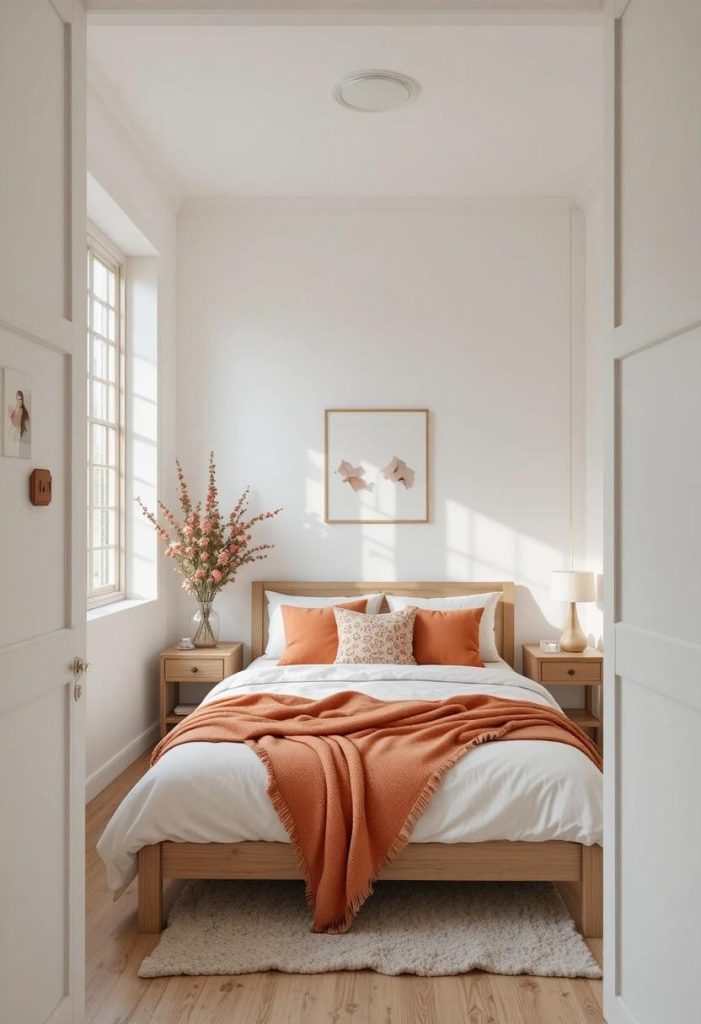
The discipline of limiting a small bedroom’s colour palette to a maximum of three colours one dominant, one secondary, and one accent is one of the most powerful and most consistently transformative design decisions available for compact spaces. A room that contains too many competing colours reads as visually busy and congested, which psychological research confirms translates directly into the perception of a smaller, more cramped space. A room whose every element walls, textiles, accessories, furniture is drawn from the same three-colour family reads as calm, resolved, and spacious regardless of its actual dimensions.
Style tip: Take a photograph of your bedroom and assess the colour palette objectively: count the distinct colours visible in the image. If there are more than four or five visually distinct colours, identify the ones that are creating the most visual competition and remove or replace them with items in the existing palette. The photograph perspective often reveals colour conflicts that are not apparent when standing in the room.
19. Use Transparent and Glass Furniture Pieces: Visual Lightness is Physical Spaciousness
Category: Furniture
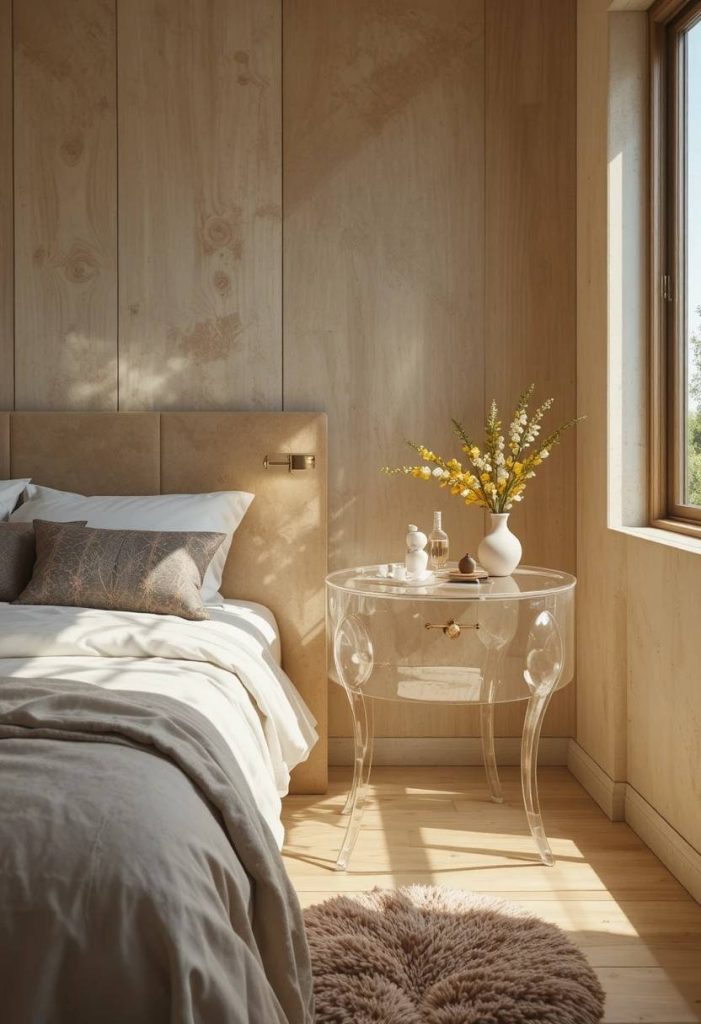
Transparent and glass furniture pieces are one of the small bedroom designer’s most effective and most underused tools. A bedside table in clear acrylic or glass occupies exactly the same physical floor space as an equivalent solid wood piece but its visual contribution to the room is radically different. The clear material allows the eye to pass through it to the floor and wall surfaces beyond, creating no visual barrier and adding no visual bulk to the room. The result is a piece of furniture that reads as almost invisible from across the room as if the objects placed on it are floating in mid-air and this visual lightness translates directly into the impression of a more spacious, less cluttered bedroom.
Style tip: Place a clear acrylic bedside table on the more visually constrained side of the bed typically the side between the bed and a wall to maintain the illusion of space in the tightest area of the room. The transparent material allows the confined space between the bed and the wall to read as open rather than blocked.
20. Add Vertical Interest With Tall Plants or Sculptures
Category: Accessories
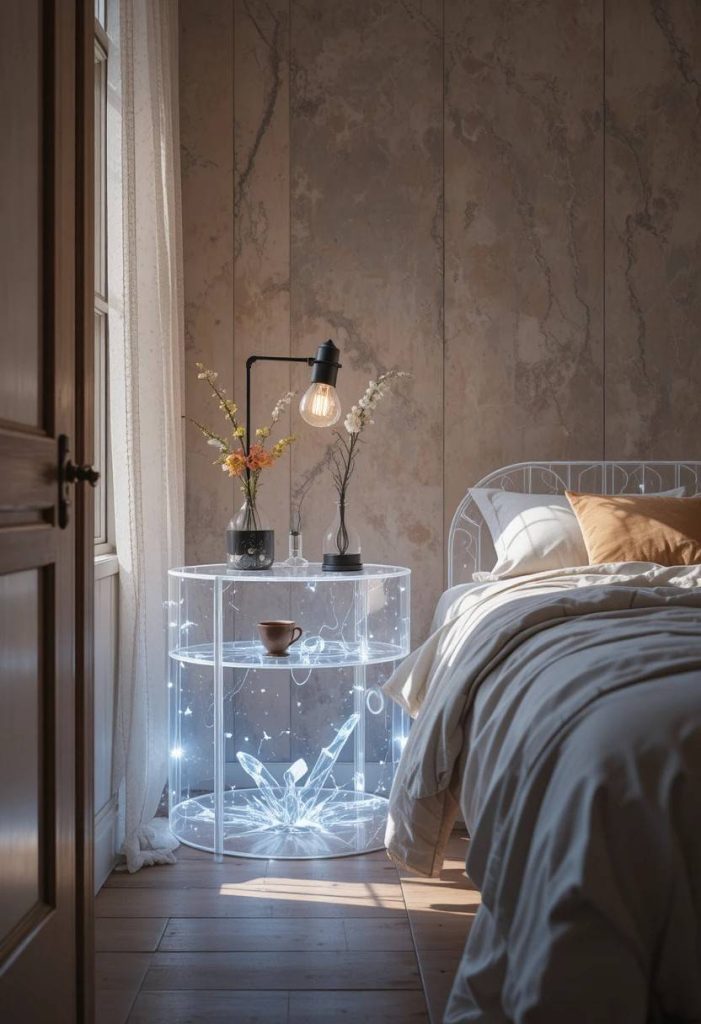
The vertical dimension of a small bedroom is its most available and most underutilised design resource, and any element that draws the eye upward reinforcing the room’s vertical axis and creating visual interest in the upper register of the space contributes to the impression of a taller, more spacious room. Tall plants and sculptural vertical objects are the most elegant and most budget-accessible tools for achieving this vertical interest: a tall snake plant, a branching olive tree, or a dramatic arrangement of dried bamboo in a tall ceramic vase creates a vertical element that extends from floor to near-ceiling height, filling the room’s vertical dimension with organic, living form.
Style tip: Position tall vertical elements plants, lamps, or sculptures in the corners and periphery of the small bedroom rather than beside the bed, where they would compete visually with the headboard for focal point status. Vertical interest at the room’s edges frames the central composition of the bed without disrupting it.
21. Layer Rugs to Define the Space Without Adding Visual Weight
Category: Rugs & Flooring
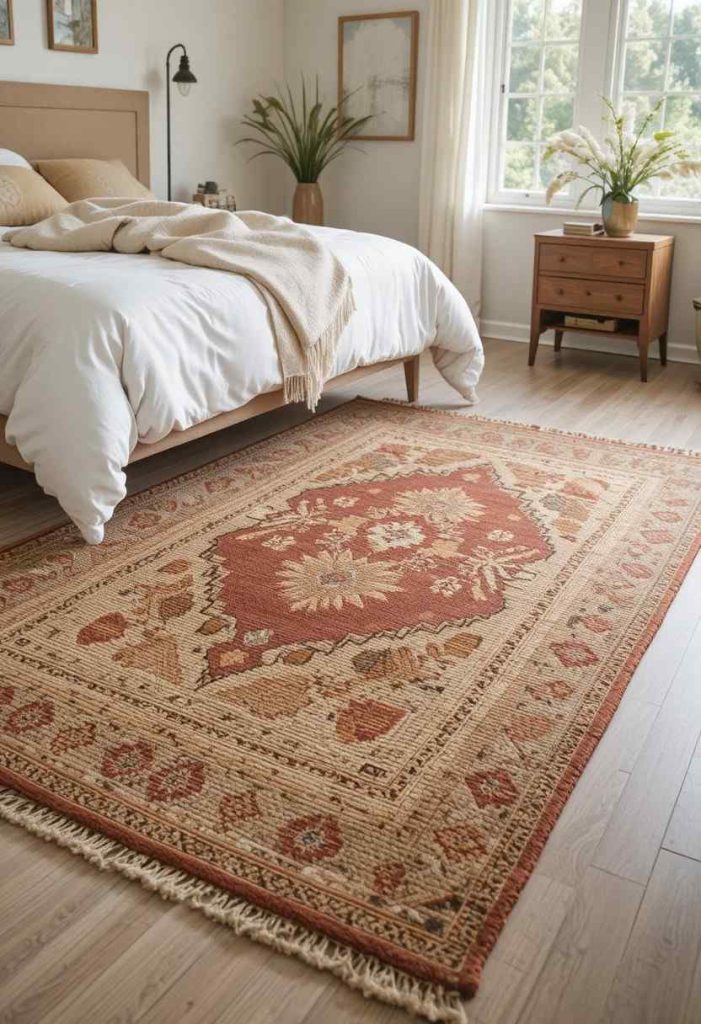
The layered rug technique placing a smaller, more decorative rug on top of a larger, plainer base rug is a particularly effective approach in a small bedroom because it provides the benefits of a decorated, characterful floor surface while keeping the dominant colour impression of the floor light and recessive. The base rug, in a neutral natural fibre like jute or sisal, maintains the pale, reflective floor surface that makes small rooms feel larger. The smaller top rug, in a more interesting pattern or colour, provides the personality and design interest that a completely plain floor surface lacks but because it covers only a portion of the base rug, its tonal impact on the room is proportionately reduced.
Style tip: Angle the top rug slightly diagonal to the base rug rather than placing it parallel even a five-degree rotation creates a relaxed, deliberately casual styling effect that looks more artfully arranged than a perfectly aligned stacking of two parallel rugs.
22. Use a Pegboard or Slatwall System: Wall-Based Organisation That Looks Intentional
Category: Storage
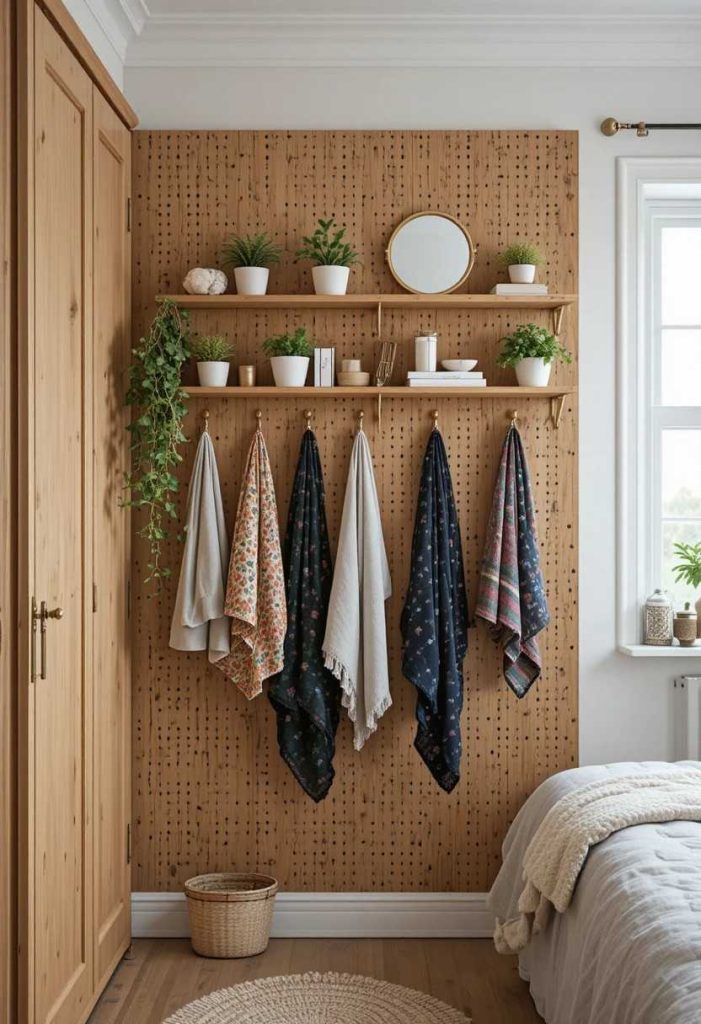
The pegboard a perforated panel system that accepts hooks, shelves, baskets, and accessories in an infinitely configurable arrangement has moved from its traditional home in the garage workshop into the domestic interior, and nowhere has it been more enthusiastically adopted than in small bedrooms where wall space must perform double duty as both storage and display surface. A pegboard panel mounted on the wall beside the wardrobe or above a narrow desk area organises accessories, small items, and daily-use objects in a way that keeps them visible, accessible, and beautifully arranged.
Style tip: Resist the temptation to fill every hole in a pegboard the pegboard looks most intentional and most design-forward when approximately forty percent of its available positions are deliberately left empty, creating breathing space around the displayed and stored items that makes the arrangement read as curated rather than utilitarian.
23. Create a Reading Nook in Any Spare Corner: Turning Dead Space Into a Destination
Category: Comfort & Function
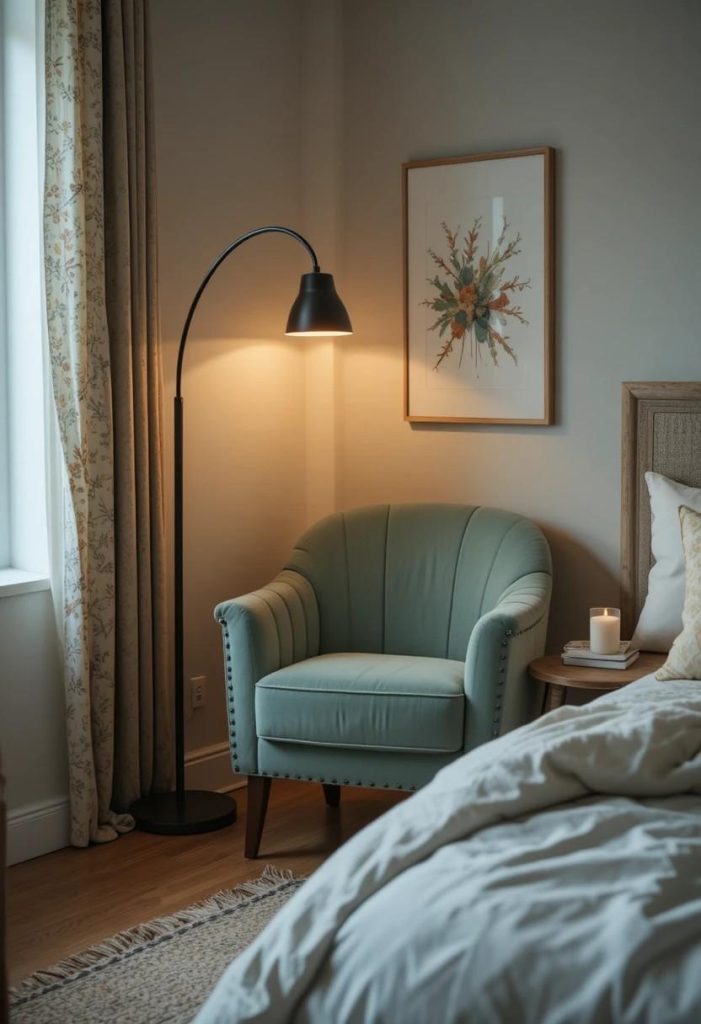
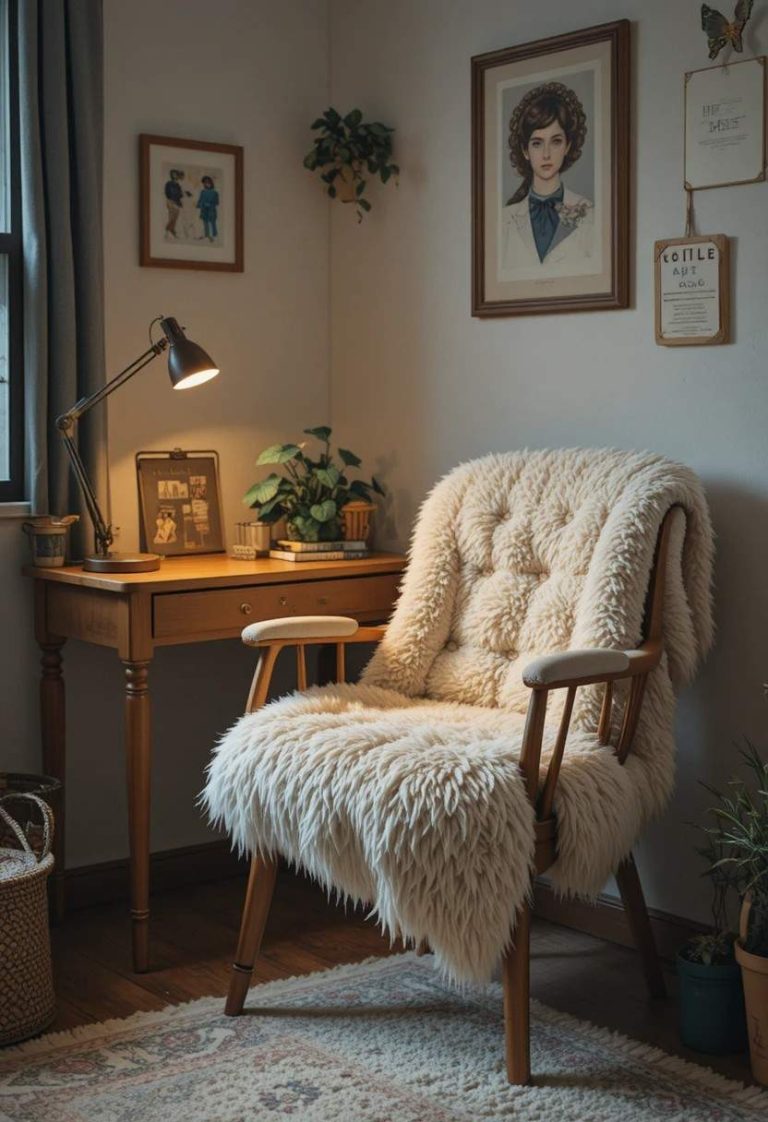
A small bedroom that contains only a bed, a wardrobe, and bedside tables is functional but lacks the quality of genuine liveability that makes a bedroom a destination rather than merely a sleeping room. The reading nook even the most minimal version, in the smallest available corner of the room adds this quality of liveability immediately. A single comfortable chair or a floor cushion in a corner, with a small side table and a lamp, creates a defined area within the bedroom that has a specific, attractive purpose reading, quiet thinking, morning coffee and whose existence transforms the room’s character from purely functional to genuinely inhabitable.
Style tip: The reading nook in a small bedroom is most successful when it is visually distinguished from the rest of the room by at least one specific design element a different floor covering, a different wall colour or panel, or a canopy or curtain that creates a sense of enclosure. The visual distinction reinforces the nook’s identity as a separate, defined zone within the room.
24. Mount the Television on the Wall: Free the Furniture, Clear the Floor
Category: Technology & Space
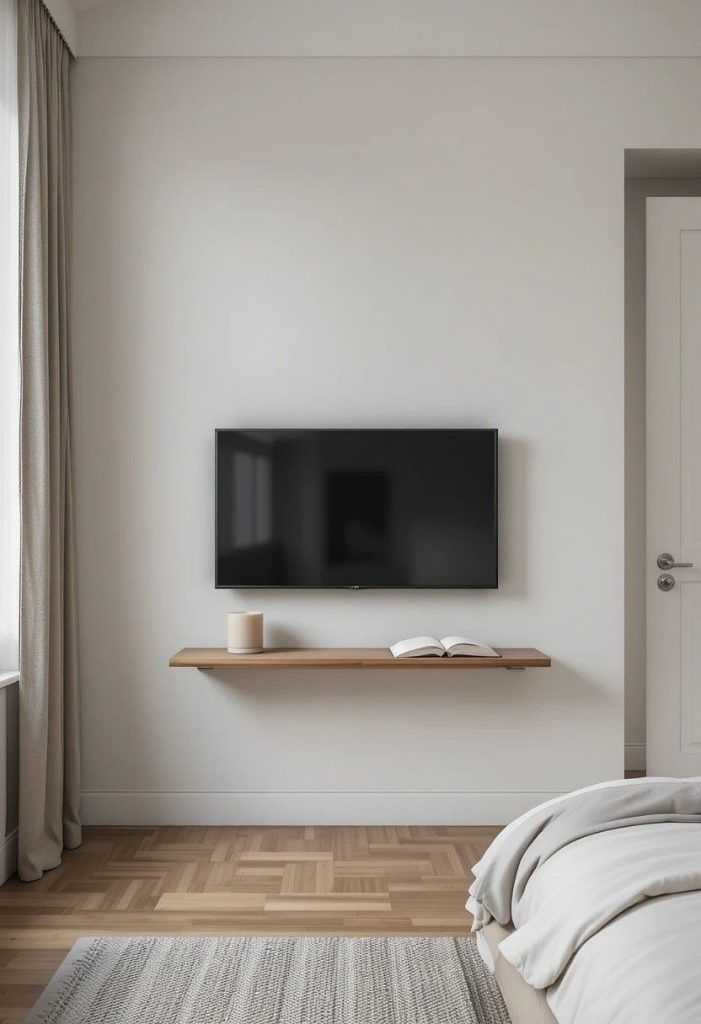
A television positioned on a piece of furniture a chest of drawers, a dedicated TV unit, a bookcase shelf occupies that piece of furniture entirely and adds visual bulk to the floor plan of a small bedroom. Wall-mounting the television resolves all of these problems simultaneously: the furniture previously used to support the television becomes available for other uses (or can be removed from the room entirely, freeing its floor footprint), the television itself occupies no floor area, and the wall space below the mounted television becomes an open, clear surface that creates the visual breathing room so critical in a compact bedroom.
Style tip: Create a simple floating shelving arrangement on the wall below the wall-mounted television one or two floating shelves in natural wood holding a plant, a few books, and a simple decorative object create a styled vignette beneath the screen that makes the television wall look deliberately composed rather than simply utilitarian.
25. Use Artwork to Create Depth and Draw the Eye
Category: Art & Walls
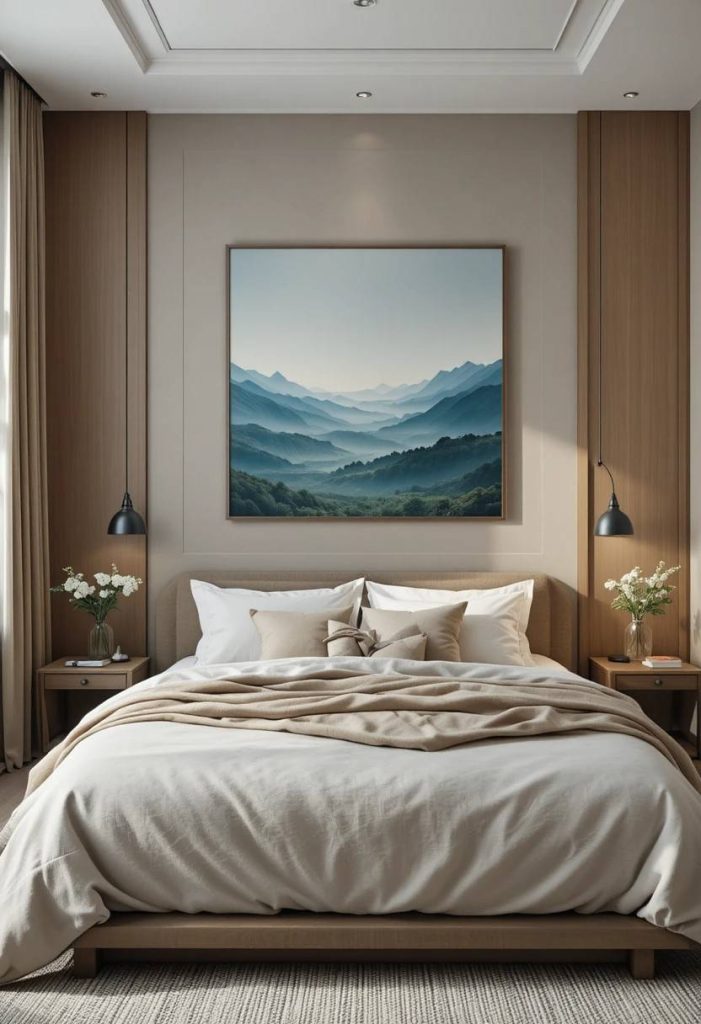
Artwork in a small bedroom performs two roles simultaneously: it adds personality, beauty, and visual narrative to a space that would otherwise read as purely functional, and when chosen and positioned thoughtfully, it creates the optical illusion of depth making the wall on which it hangs appear to recede, and therefore making the room appear larger than its actual boundaries. The specific artworks and arrangements that achieve this depth effect in a small bedroom are those that create a sense of visual recession: landscape or interior images with a clear perspectival vanishing point that implies space beyond the canvas, cool-toned abstracts whose recessive colour quality makes the wall feel further away than a warm-toned piece would, and vertically oriented prints whose format reinforces the room’s height.
Style tip: Choose artwork in cool tones blues, greens, grey-greens, and blue-greys for the main wall of a small bedroom. Cool-toned artwork makes the wall appear to recede, increasing the apparent depth of the room, while warm-toned artwork advances toward the viewer and makes the wall feel closer.
26. Add a Canopy Above the Bed: Enclosure That Creates Spaciousness
Category: Drama & Atmosphere
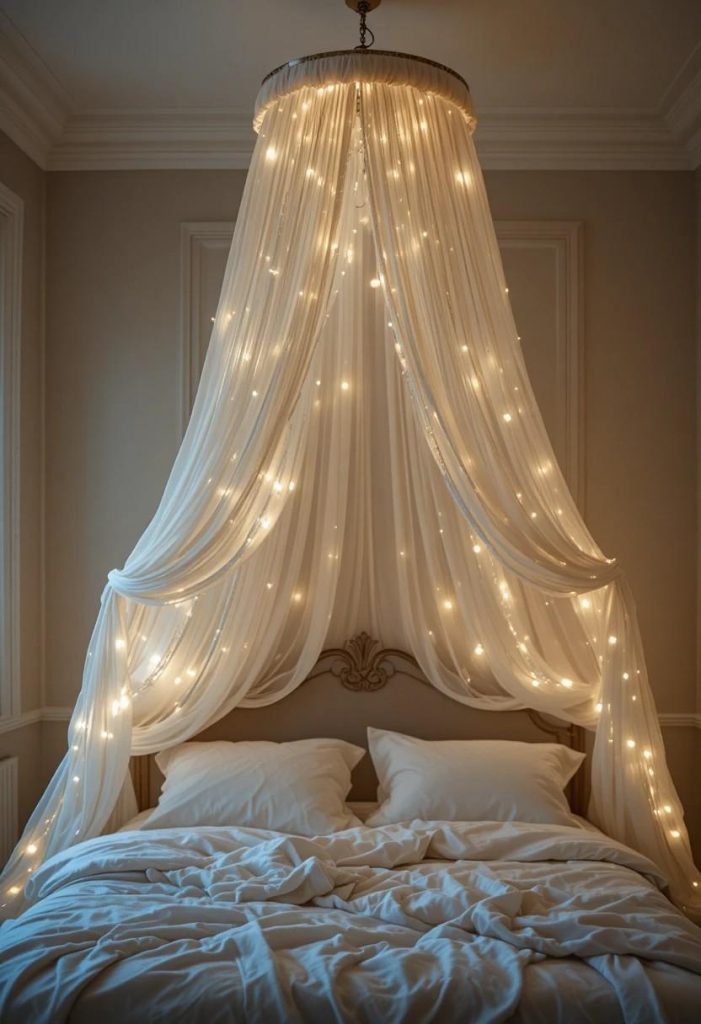
The bedroom canopy appears, intuitively, to be a device for making a small bedroom feel smaller it adds a layer of fabric above the sleeping area that creates an impression of enclosure and reduced headroom. In practice, the opposite effect is achieved when the canopy is executed correctly. A canopy that is hung from a single ceiling point above the bed a fabric gathered at a central hook that falls in billowing folds on either side of the headboard draws the eye directly upward to the ceiling fixing point, reinforcing the room’s vertical axis and creating a focal point at ceiling height that makes the room feel taller. The folds of fabric on either side frame the bed and create a sense of theatrical definition without filling or blocking any of the room’s actual floor space.
Style tip: Choose a canopy fabric in exactly the same colour as the bedroom walls if the walls are warm white, use warm white voile; if they are pale blush, use pale blush sheer. The colour matching makes the canopy appear to grow organically from the wall and ceiling, reinforcing the tone-on-tone spaciousness effect described in Idea 1.
27. Use Tonal Bedding Layers Instead of Bold Patterns: Calm, Cohesive, Spacious
Category: Textiles
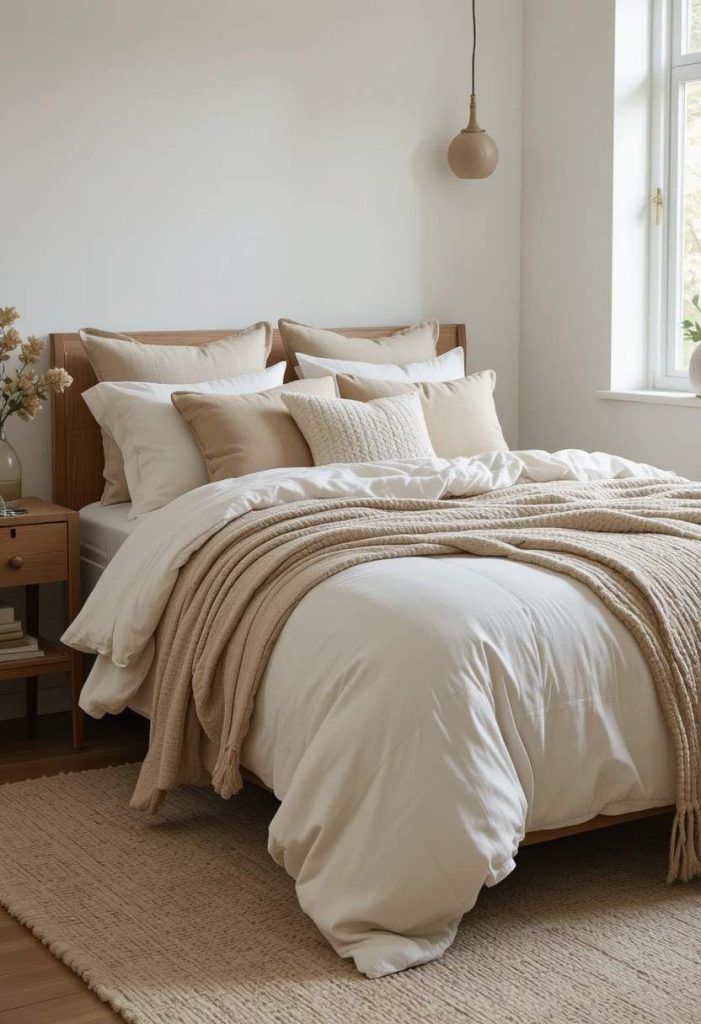
The bedding arrangement is the single most visually prominent styling decision in the small bedroom the bed covers the largest single horizontal surface in the room, and whatever appears on that surface dominates the room’s visual character when viewed from the entrance. Bold, contrasting patterns on the duvet cover large-scale florals in multiple colours, graphic geometric prints in high contrast, or richly coloured jacquard weaves create a bed that asserts its visual presence aggressively, drawing attention to itself and, by doing so, drawing attention to the room’s limited floor space around it. Tonal bedding layers multiple textures and subtle tonal variations within a single colour family create a bed that settles harmoniously into the room’s broader palette, contributing visual richness through texture rather than through colour contrast.
Style tip: When building a tonal bedding arrangement, work from light to dark from bottom to top: the fitted sheet lightest (closest to white), the duvet cover slightly deeper, the blanket deeper still, and the throw the deepest tone in the palette. This gradation from light beneath to slightly richer above creates a sense of visual depth that adds apparent size to the bed and the room.
28. Hack Your Lighting: Warm, Layered Light Makes Small Rooms Feel Larger
Category: Lighting
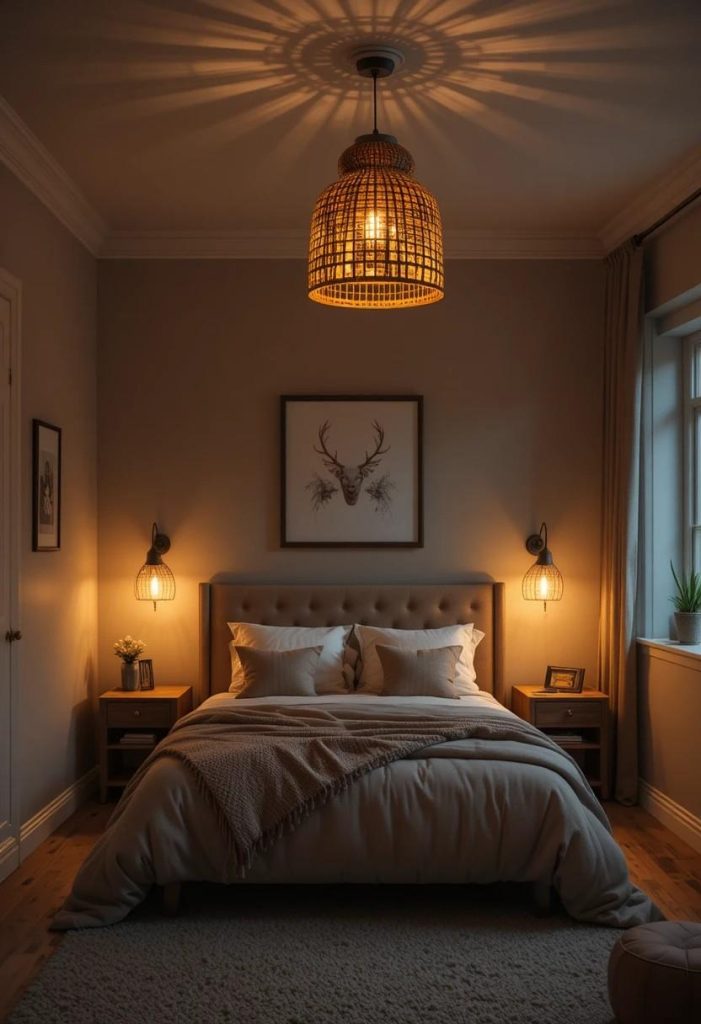
The quality of artificial lighting in a small bedroom is directly and measurably linked to how large the room appears and the relationship is not what most people expect. Bright, even, overhead lighting the kind produced by a single ceiling light at full power reveals the room’s full dimensions clearly, making its boundaries and limitations apparent. Warm, dimmed, layered lighting from multiple lower-level sources the kind produced by two or three table and floor lamps at evening brightness creates pools of warm light that define intimate zones within the room and leave the room’s peripheral boundaries in soft shadow, which makes the room feel less bounded and therefore larger.
Style tip: Install dimmer switches on every lighting circuit in the small bedroom the ability to reduce the overhead lighting to ten or twenty percent of its maximum output while the bedside lamps provide the primary illumination transforms the evening atmosphere of the room from functional to genuinely beautiful, at no additional fixture cost.
29. Declutter Aggressively and Display Intentionally: Less Is Always More in Small Spaces
Category: Curation
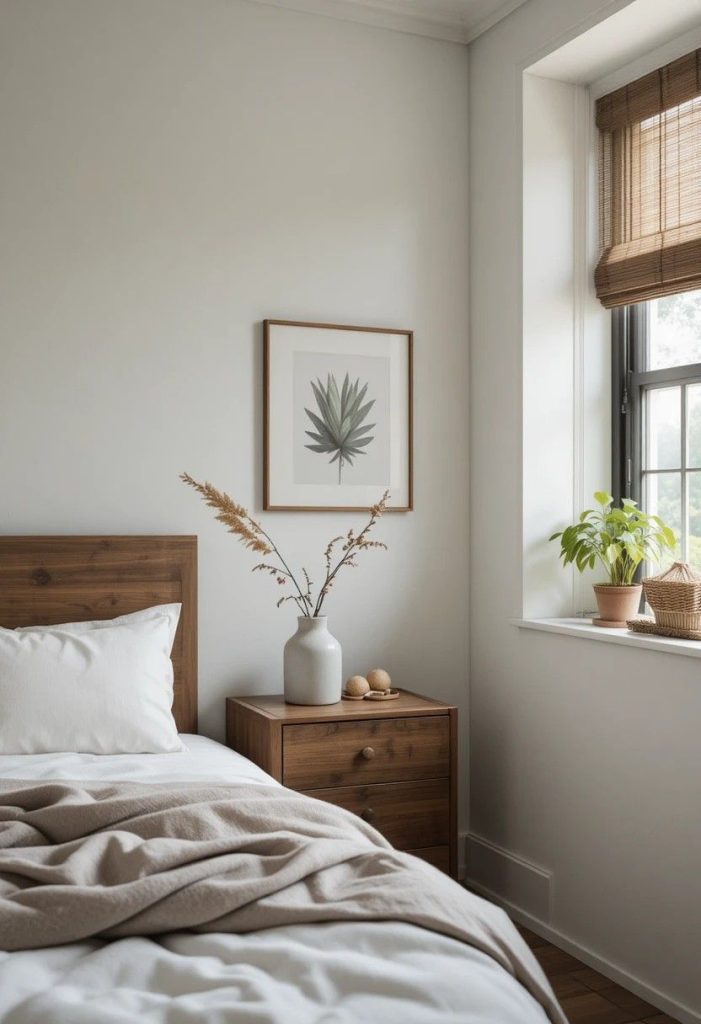
The most fundamentally important principle of making a small bedroom feel larger is also the simplest, the most difficult, and the most free: remove everything from the room that does not pass the test of genuine beauty, genuine meaning, or genuine daily function. Every additional object in a small room reduces its apparent spaciousness not by a catastrophic amount, but by a small, cumulative increment that adds up, over the dozens of objects that typically populate a bedroom, to a significant compression of the room’s perceived dimensions. The discipline of aggressive curation of asking, of every object in the room, why it deserves the space it occupies is the foundation on which every other space-making strategy in this guide rests.
Style tip: Challenge yourself to remove one object from the bedroom every week for a month. At the end of the month, assess whether the room feels better or worse with the reduced number of objects. In almost every case, the removal of objects improves the room’s quality confirming that the initial curation was insufficiently rigorous and that further editing will continue to improve the space.
30. Design the Complete Small Bedroom: Bringing All 30 Ideas Together
Category: Complete Design
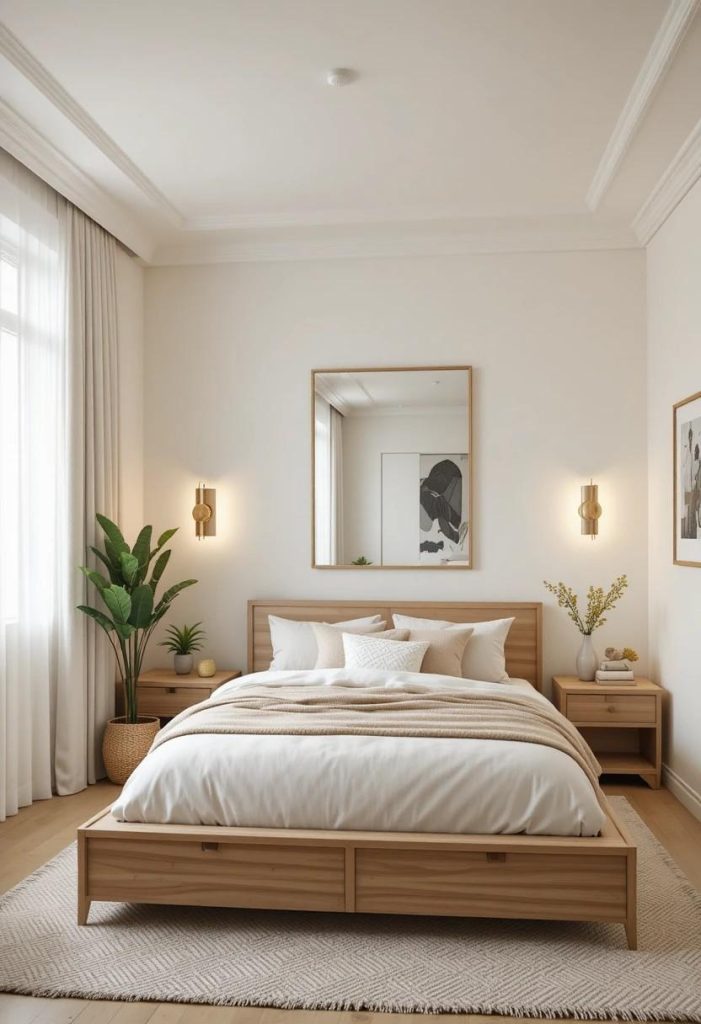
Each of the twenty-nine ideas in this guide addresses a specific aspect of the small bedroom’s spatial and visual quality its colour palette, its lighting scheme, its storage strategy, its furniture selection, its textile layering. Applied individually, each produces a meaningful improvement. Applied in thoughtful combination with the coherence and discipline that comes from a clear design vision applied consistently across every decision they produce a small bedroom that is genuinely, verifiably beautiful: a room that reads as spacious, considered, personal, and deeply restful regardless of the number of square metres it contains.
Style tip: Before finalising any element of your small bedroom design, photograph the room from each of the three primary viewpoints: from the doorway, from the foot of the bed, and from the side with the window. These three photographs collectively reveal how every element reads in relationship to every other element and will quickly identify any decisions that disrupt the room’s visual coherence.
Frequently Asked Questions About Small Bedroom Design
What is the single most impactful change I can make to a small bedroom?
The most impactful single change in terms of the ratio of visual impact to cost and effort is hanging floor-to-ceiling curtains from a rod positioned close to the ceiling. This change makes the ceiling appear higher, the window appear larger, and the room appear more spacious through the creation of an unbroken vertical line from ceiling to floor that implies a room considerably larger than the actual one. It costs under fifty dollars and takes under an hour to implement.
Does dark paint really make a small bedroom feel smaller?
Not necessarily and the conventional wisdom that small rooms must use light colours is significantly overstated. A small bedroom painted entirely in a single deep, rich colour using the tone-on-tone technique described in Idea 1 but in a deeper tone can feel intimate and jewel-like rather than cramped. What makes a small bedroom feel smaller is not darkness per se but the contrast created by dark walls against lighter ceilings and trim. A fully dark-drenched room, where every surface is the same deep tone, often feels more spacious than the same room with dark walls and a white ceiling.
What furniture should I avoid in a small bedroom?
The furniture types most damaging to the apparent size of a small bedroom are: oversized sectional or sofa-style beds that eliminate all visible floor around them; chests of drawers that are taller than eye level from a seated position and block the room’s vertical space; freestanding wardrobes with solid doors that take up significant wall surface without providing any spatial benefit; and any piece of furniture with multiple visible legs that crowds the floor plane with visual obstacles.
How do I make a small bedroom look good on a budget?
The highest-impact budget interventions for a small bedroom are, in order: (1) free rearrange furniture so the bed is the focal point and nothing blocks the main sightlines; (2) cheap repaint in a warm neutral using the tone-on-tone technique; (3) affordable rehang curtains at ceiling height; (4) low cost replace the ceiling light with a pendant and add bedside lamps; (5) budget change cushion covers and add a throw to refresh the bedding palette. These five changes collectively transform a small bedroom for under one hundred dollars.
How do I choose the right bed size for a small bedroom?
The bed should occupy no more than sixty to sixty-five percent of the room’s floor area to allow sufficient clearance around three accessible sides. Measure the room carefully and subtract sixty centimetres of clearance from each accessible side to calculate the maximum bed dimensions the space can accommodate while maintaining the clear floor presence that makes small rooms feel spacious. In rooms smaller than nine square metres, a full or double bed is almost always more appropriate than a king, regardless of the occupants’ preference the clearance around a king bed in a very small room is too constrained to feel comfortable.
Conclusion: Your Small Bedroom Is Ready to Become Your Favorite Room
The small bedroom does not need more space. It needs more intentionality: clearer decisions about colour, smarter choices about furniture, a more disciplined approach to what is displayed and what is stored, and the confidence to apply the specific optical and psychological principles that transform compact spaces from liabilities into genuine assets.
The thirty ideas in this guide represent the most complete and most practically actionable small bedroom design resource available. Apply them in combination starting with the foundational decisions about colour, lighting, and furniture, building through the storage and space strategies, and completing with the accessory, textile, and atmospheric layers and the small bedroom you have will become the beautiful, genuinely spacious-feeling personal sanctuary you have always wanted it to be.
Small room. Brilliant design. Big life.