Apartment Living Room Ideas on a Budget Under $200
The Apartment Renter’s Decorating Dilemma and Its Solution
Renting an apartment should not mean accepting a living room that looks like a waiting room. And yet for millions of renters, that is the daily reality: landlord-beige walls that cannot be painted, ugly laminate floors that cannot be replaced, harsh ceiling lights that cannot be rewired, and a collection of functional but aesthetically dispiriting furniture that cannot be removed. The lease agreement with its prohibitions on nails, paint, permanent installations, and structural modifications reads, to the design minded renter, as a comprehensive list of the most effective decorating tools, all of them forbidden.
This guide exists to demonstrate, with eighteen specific and fully renter-safe strategies, that none of those restrictions actually prevent the creation of a beautiful, personal, character-filled apartment living room. Every wall treatment, every lighting improvement, every furniture transformation, and every spatial intervention described in these pages is 100% reversible, leaves zero permanent wall damage, requires no landlord permission, and costs between nothing and two hundred dollars in total combination. The apartment you return to your landlord at the end of the tenancy will be in precisely the condition in which you received it. The apartment you lived in in the meantime will have been genuinely, memorably beautiful.
Know Your Rights: What Apartment Renters Can and Cannot Do
Before beginning any apartment decorating project, understanding the specific permissions granted by your lease agreement is essential. The following general principles apply in most residential tenancy agreements, but always check your specific lease:
- You CAN place free-standing furniture, rugs, plants, and portable accessories anywhere without permission
- You CAN hang items using Command strips, adhesive hooks, and other damage-free mounting systems on smooth painted walls
- You CAN use peel-and-stick wallpaper on smooth surfaces without landlord permission in most jurisdictions (confirm with your specific lease)
- You CAN use tension rods and spring-loaded systems that apply pressure without penetrating surfaces
- You CANNOT drill holes, install permanent fixtures, or make structural modifications without explicit written landlord permission
- You CANNOT paint walls without explicit written permission in most standard tenancy agreements
- You CANNOT modify electrical installations, plumbing, or heating systems under any circumstances without a licensed professional and landlord permission
- When in doubt, ask most landlords are receptive to well-presented requests for cosmetic improvements that will enhance the property’s value
The $200 Apartment Living Room Transformation: Budget Breakdown
Allocating a $200 budget across the eighteen strategies in priority order of visual impact:
- FREE: Furniture rearrangement + natural light maximisation — $0
- Correctly sized area rug — $40–60
- Peel-and-stick accent wall wallpaper — $30–50
- Tension rod curtain upgrade — $25–35
- Cushion covers + throw blanket for sofa — $35–50
- Indoor plants + terracotta pots — $20–30
- LED strip lighting + pendant light swap — $30–45
- Dried botanicals + candles for styling — $15–25
- Command strip gallery wall frames + prints — $15–25
- Remaining: mirrors, wall hanging, accessories — balance of budget
- TOTAL: Approximately $210–$320 for all 18 strategies — select 10–12 within $200
The 18 Renter-Friendly Apartment Living Room Transformations
1. Peel-and-Stick Wallpaper Accent Wall: Maximum Drama, Zero Damage
Budget: $30–$70 | Renter Note: 100% renter-safe fully removable, leaves zero wall damage
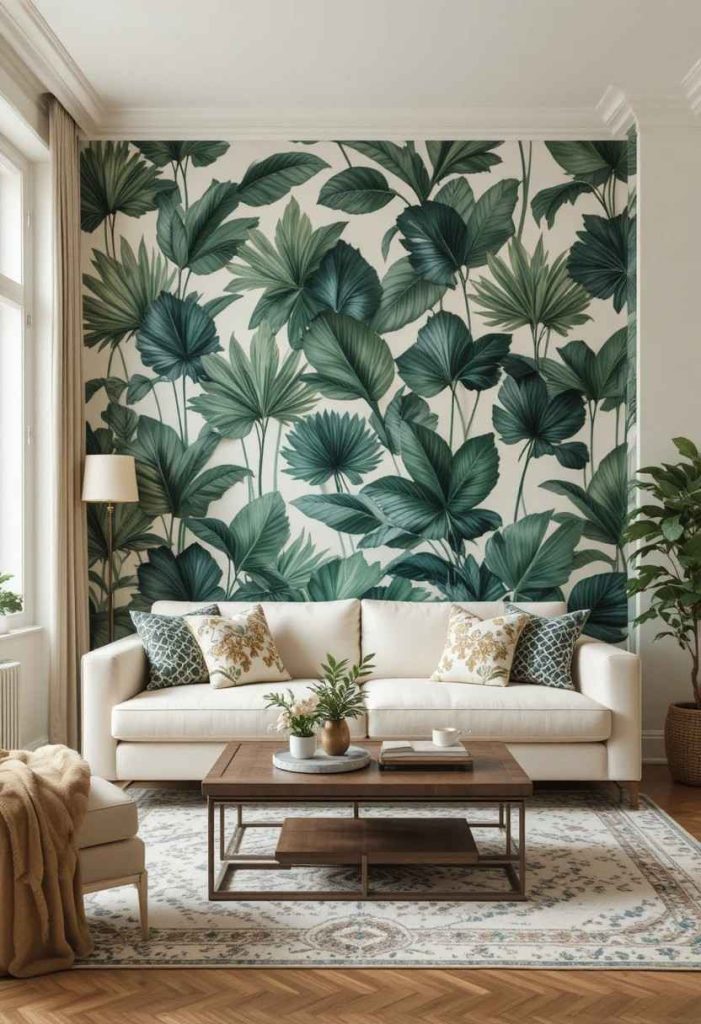
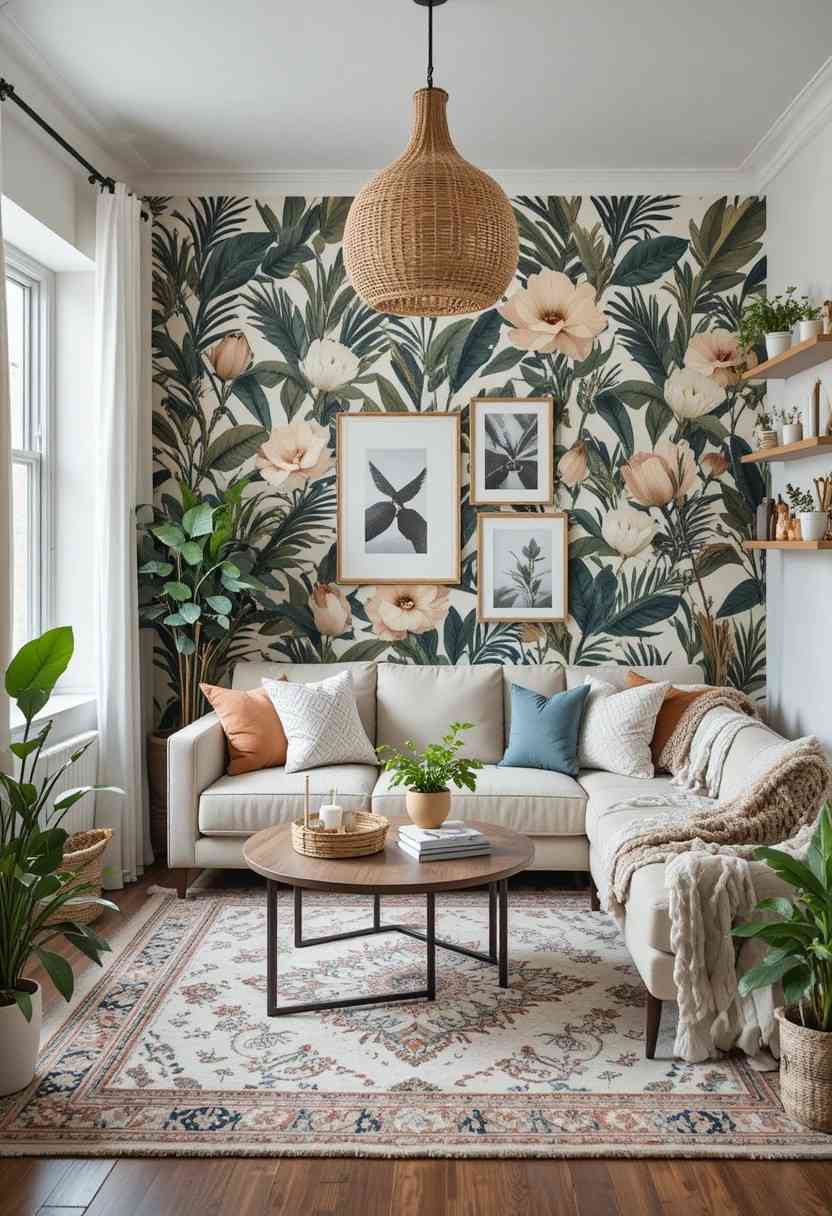
Peel-and-stick wallpaper is the single most transformative renter-friendly living room tool available, and it has improved so dramatically in print quality and adhesion over the past few years that the best versions are genuinely indistinguishable from traditional paste wallpaper at normal room distance. Applied to one feature wall the wall behind the sofa, the most visually prominent surface in any living room peel-and-stick wallpaper instantly establishes the room’s aesthetic identity, adds enormous visual character, and communicates a level of design intention that bare painted walls can never achieve. When the lease ends, it peels away cleanly in minutes without leaving so much as a mark.
Style tip: Apply peel-and-stick wallpaper not just to the feature wall but to the inside back panels of open shelving units for unexpected bursts of pattern that look considered and expensive at minimal additional cost.
2. Command Strip Gallery Wall: Personalised Art Museum With No Nails
Budget: $20–$50 | Renter Note: 100% renter-safe adhesive strips leave no wall damage on smooth surfaces
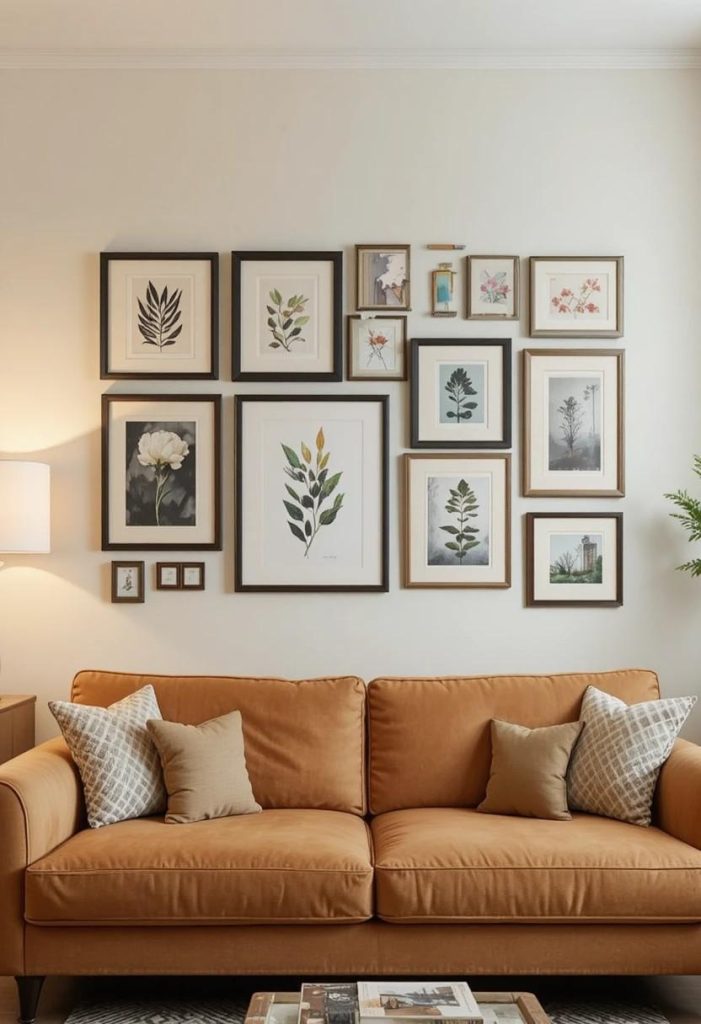
The gallery wall is the living room makeover’s most powerful personalisation tool, and Command strips the adhesive wall mounting system specifically designed for damage free hanging make it fully accessible to renters without compromising on the quality or ambition of the installation. Command picture hanging strips hold frames of up to two and a half kilograms per pair, which covers the vast majority of standard frame sizes up to approximately fifty by seventy centimetres. For heavier statement pieces, multiple pairs of strips applied to the frame provide additional holding capacity. The strips bond to smooth painted surfaces without adhesive residue and peel away cleanly when pressed firmly in the removal sequence described in the manufacturer’s instructions.
Style tip: Standardise frame widths within your gallery wall even if sizes vary if every frame shares the same slim profile (2cm width), the collection reads as cohesive regardless of the variety of sizes, materials, and content it contains.
3. Floating Shelves With Tension Rod System: Storage That Doesn’t Touch the Walls
Budget: $35–$65 | Renter Note: Tension rod systems require zero drilling spring-loaded pressure holds everything in place
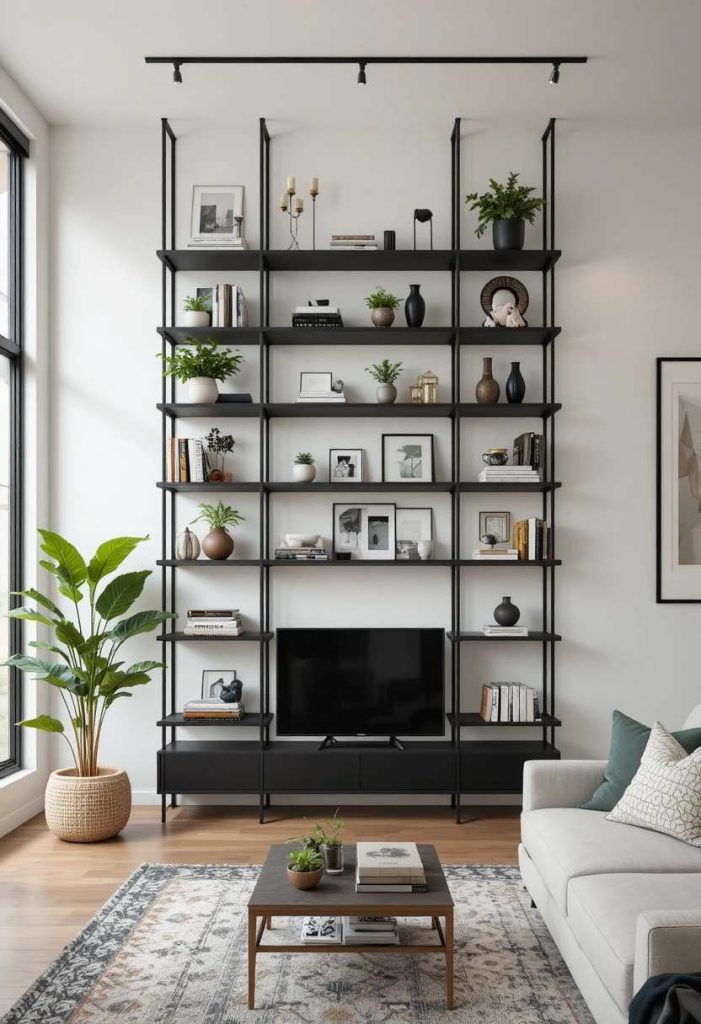
The standard floating shelf requires drilling into walls an activity explicitly prohibited in most apartment leases and, even where technically permitted, risky without knowledge of the wall’s internal structure. The tension rod shelf system offers a genuinely elegant alternative: floor-to-ceiling tension rods (spring loaded poles that press against floor and ceiling under spring pressure, requiring zero fixings) provide the vertical support for horizontal shelf brackets that hold genuine wooden shelving. The result looks architecturally integrated a built-in-style shelving unit but can be disassembled and removed in under fifteen minutes without leaving any trace of its presence.
Style tip: Paint or cover the back wall section between the tension rod poles with a rectangle of peel-and-stick wallpaper in a complementary colour or pattern the wallpaper panel creates the appearance of a built-in shelving unit’s back panel and makes the tension rod system read as a genuinely designed piece of furniture.
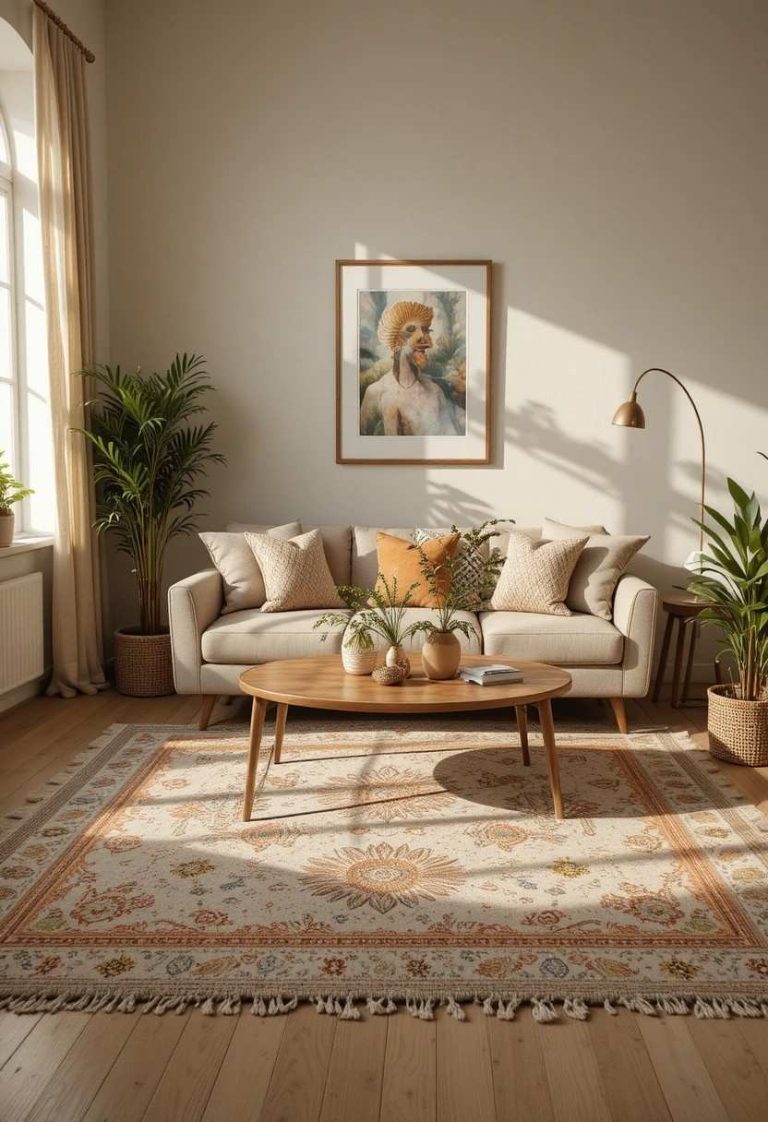
4. The Large Rug Strategy: Anchoring a Rental Living Room to Feel Like a Home
Budget: $40–$90 | Renter Note: Fully removable takes the rug when you leave and the floor is unchanged
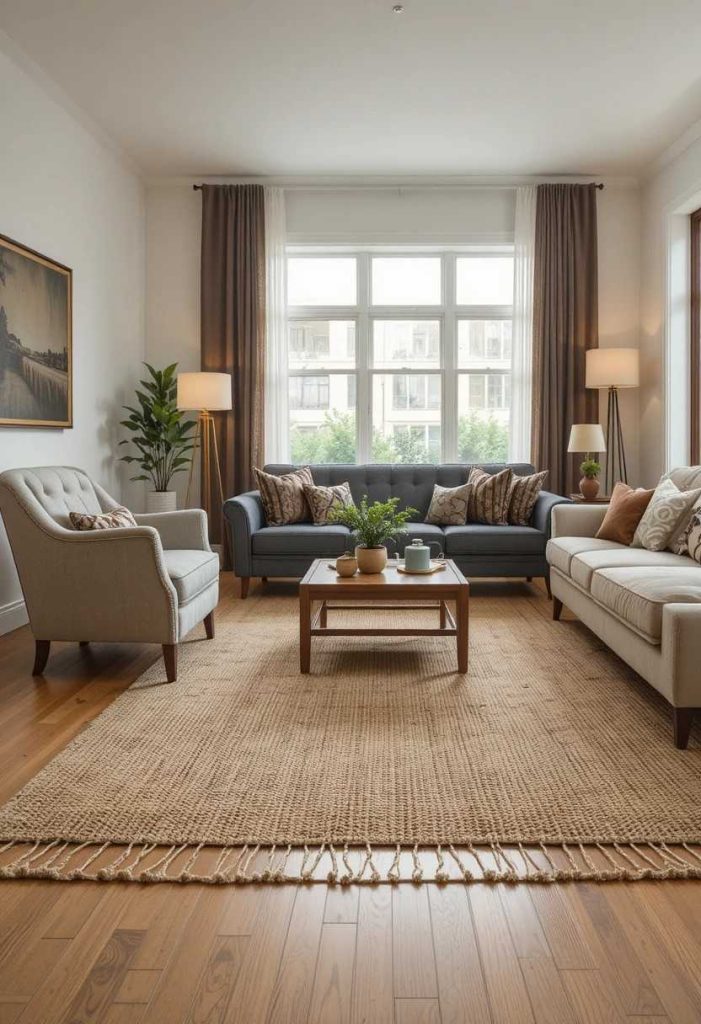
The rug is the most transformative single purchase available for an apartment living room, and the most common apartment decorating mistake is choosing one that is too small. In a rental apartment with laminate, vinyl, or uninspiring tile flooring the standard finishes in the majority of rental properties a correctly sized rug not only warms the floor visually and acoustically but creates a defined living zone within the open floor plan that fundamentally changes how the room feels to inhabit. A rug that is large enough for all sofa legs to sit on it, or at minimum for the front legs of all seating to sit on it, transforms a collection of furniture pieces into a composed, gathered, room-within-a-room arrangement.
Style tip: In an apartment with a small living room, choose a rug in a warm neutral tone natural jute, warm oatmeal, or pale terracotta rather than a bold pattern, which can make a small space feel visually busier. Reserve pattern for the cushions and throws on top of the rug’s anchoring neutrality.
5. Curtain Height Hack on a Rental Budget: Ceiling-High Drama for Under $40
Budget: $25–$50 | Renter Note: Tension curtain rods require no drilling spring pressure holds them in window frame
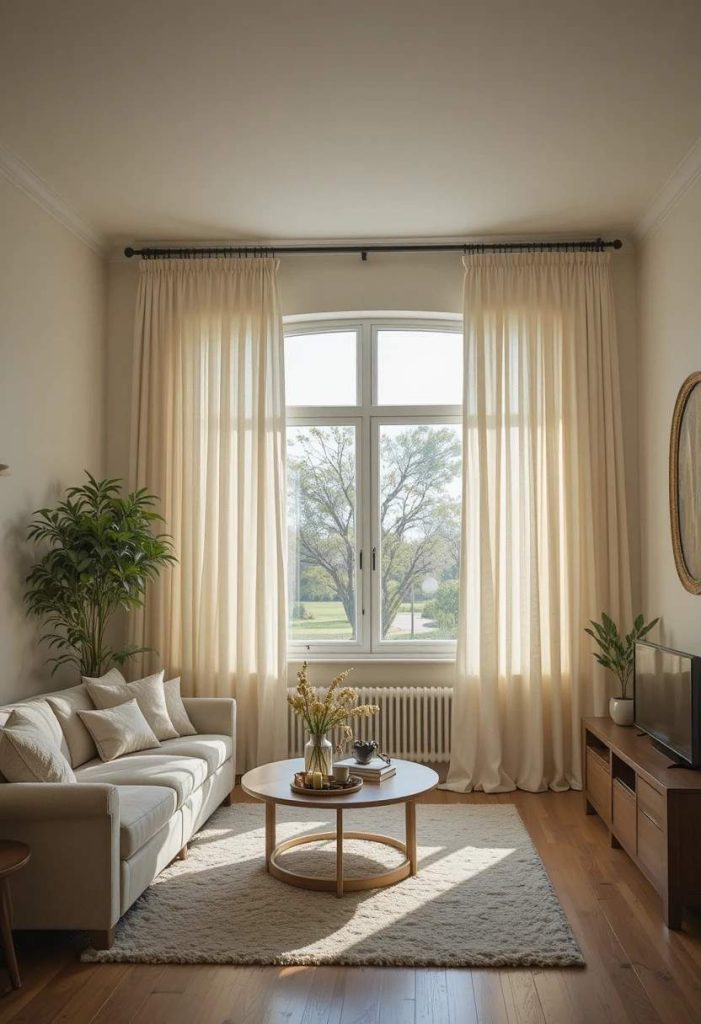
The curtain height hack is one of the most impactful and most budget-accessible visual transformations available for an apartment living room, and the tension curtain rod makes it available to renters without any wall modification. A tension rod a spring-loaded pole that presses outward against the window frame or surrounding wall surfaces under spring pressure holds the curtain rod in place without a single screw, nail, or adhesive anchor. The rod can be positioned at any height within the spring’s extension range, including significantly above the window frame, and removed in seconds without leaving any mark on the frame or wall surface.
Style tip: In an apartment with a small window in proportion to the wall, extend the tension rod well beyond the window frame on each side as far as twenty-five to thirty centimetres so that the curtains, when open, reveal the full window and hang entirely on the wall beside it. This makes the window appear significantly wider than its actual frame.
6. Sofa Refresh With Budget Covers and Cushions: Transforming the Room’s Centrepiece
Budget: $45–$85 | Renter Note: Completely portable — takes everything when moving, nothing left behind
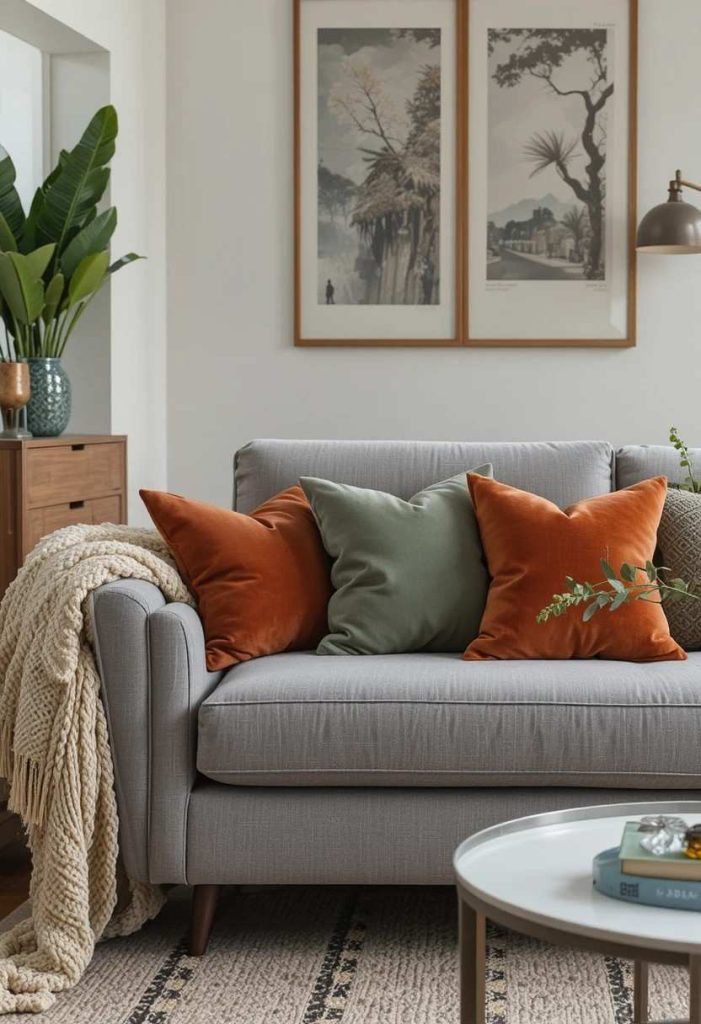
The sofa is the visual centrepiece of the living room and the object most responsible for the overall aesthetic quality of the space. In a furnished apartment where the landlord’s sofa is frequently a perfectly functional but visually uninspiring piece in a neutral or slightly unfortunate colour the budget cushion and cover transformation described in the previous article in this series (the $50 Cushion Cover Swap) becomes even more critical. It is the primary tool available to a renter who cannot replace the sofa and must work with whatever has been provided.
Style tip: For furnished apartments with a landlord sofa that cannot be replaced, choose one dominant cushion colour that strongly contrasts with the sofa’s existing colour if the sofa is grey, use deep terracotta or teal. The contrast draws the eye to the cushions rather than the sofa fabric, effectively redefining the sofa’s visual identity.
7. Plant-Forward Living: A Rental Apartment Transformed by Nature
Budget: $25–$55 | Renter Note: All plants are in pots fully portable, leave no trace, move with you
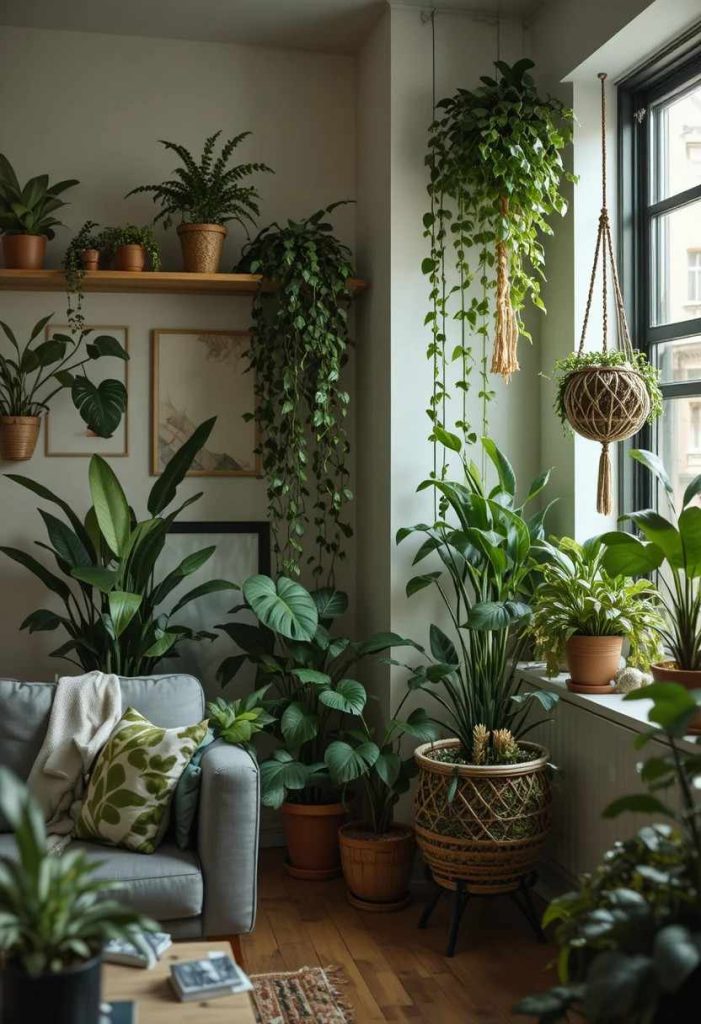
Indoor plants are the apartment renter’s most powerful and most versatile decorating tool. They require no wall modifications, no permanent installations, and no landlord permission. They are entirely portable every plant moves with the renter from apartment to apartment, growing and improving with each successive home. They add organic colour, natural texture, and living presence to any room regardless of its existing aesthetic. And they provide genuine wellbeing benefits improved air quality, reduced stress levels, and enhanced cognitive restoration that no purely decorative accessory can match.
Style tip: Group plants in front of a mirror to visually double the plant collection without doubling the cost the reflection creates the impression of twice as many plants occupying the space, and the additional light reflected by the mirror benefits the plants’ growth simultaneously.
8. Mirror Magic in a Small Apartment: Light, Space, and Character for Under $30
Budget: $15–$40 | Renter Note: Command strips hold mirrors up to 5kg no drilling required
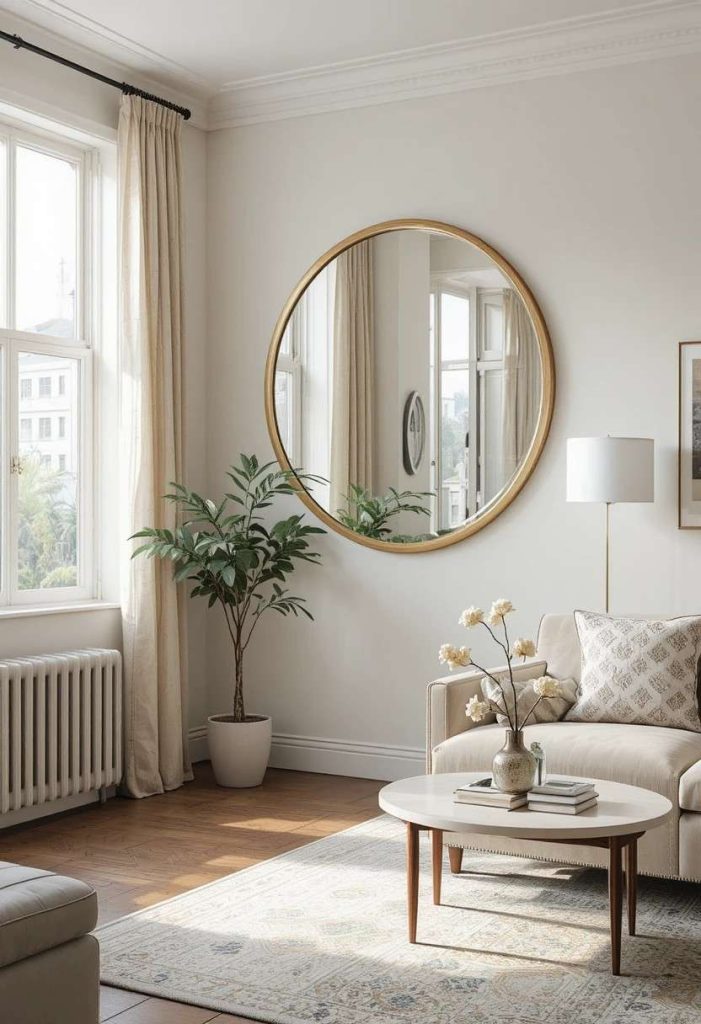
The mirror is the apartment renter’s most effective optical tool an object that creates the impression of more space, more light, and more visual interest in a small apartment living room through simple physics, at a cost that is accessible on almost any budget. In a small apartment living room specifically where ceiling heights are modest, natural light is often limited by the orientation of the apartment or the proximity of adjacent buildings, and floor area is at a premium a large mirror positioned opposite or adjacent to the primary light source can genuinely transform the room’s apparent dimensions and light quality in ways that no paint colour, no furniture choice, and no amount of accessory styling can replicate.
Style tip: Use Command picture hanging strips for mirrors up to approximately five kilograms check the weight of the mirror before selecting the strip rating and always use the maximum number of strips recommended for that weight. Mirrors hung with correct-specification Command strips are secure and reliable.
9. Temporary Fabric Curtain Room Divider: Creating Zones in an Open Plan Apartment
Budget: $30–$60 | Renter Note: Tension rod installation — no drilling, no wall damage, removes in minutes
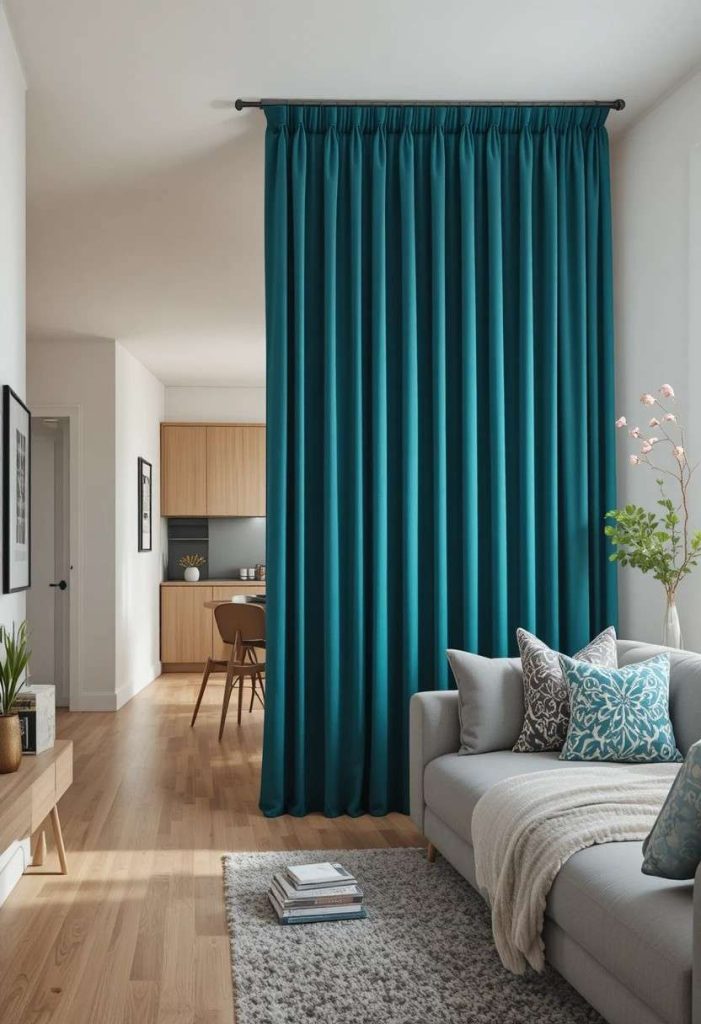
Many modern apartment living rooms are open plan connected to the kitchen, the dining area, or a home working corner in a single continuous space that provides excellent light and social connection but little sense of zone definition or room identity. In a rental apartment, the creation of zones through architectural intervention is impossible, but the same effect can be achieved through textile based zone definition: a floor length curtain panel on a ceiling-mounted tension rod creates a soft visual boundary between the living area and the kitchen or workspace behind it, providing both zone definition and the option of visual separation when required.
Style tip: Choose a curtain colour for your room divider that echoes the dominant colour in your living area’s cushion or rug palette this creates a visual connection between the divider and the rest of the room’s decoration that makes it read as a deliberate design element rather than a practical afterthought.
10. Washi Tape Geometric Floor Design: Transforming an Ugly Rental Floor for $15
Budget: $10–$20 | Renter Note: Washi tape removes cleanly from most hard floor surfaces without residue
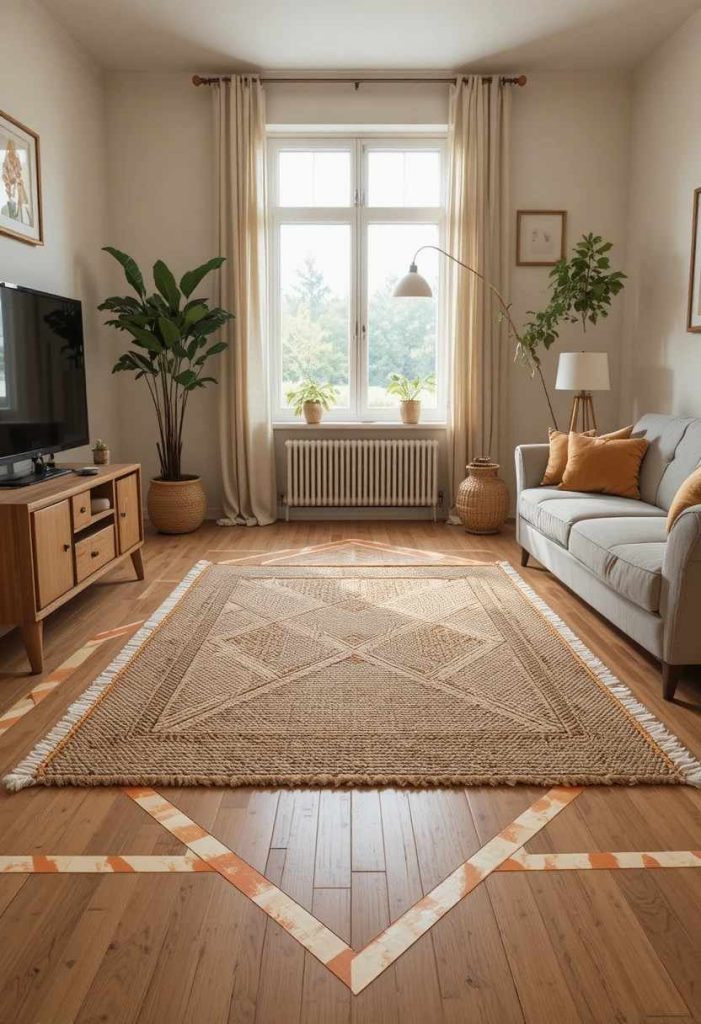
The rental apartment floor is frequently one of the most visually problematic elements in an apartment living room laminate in an uninspiring wood effect, vinyl in a dated pattern, or tile in a colour that clashes with every decorating choice the renter attempts. Beyond the rug solution (which covers the problem without addressing the underlying surface), the washi tape geometric floor design offers a genuinely playful and genuinely renter-safe alternative for creating pattern and visual interest on hard floor surfaces. Applied in geometric patterns diamond grids, herringbone lines, large scale chevrons, or simple parallel stripe arrangements washi tape transforms a flat, boring floor surface into a decorative feature of considerable visual character.
Style tip: Test washi tape removal on a small, inconspicuous section of your specific floor surface before applying the full design washi tape is removable from most hard floor surfaces, but aged or textured vinyl can occasionally retain a slight adhesive residue. Testing first prevents an unwelcome surprise at move-out.
11. Battery-Powered LED Strip Lighting: Architectural Drama Without Electrician
Budget: $15–$35 | Renter Note: No electrical work required — battery or USB powered, adhesive backing removes cleanly
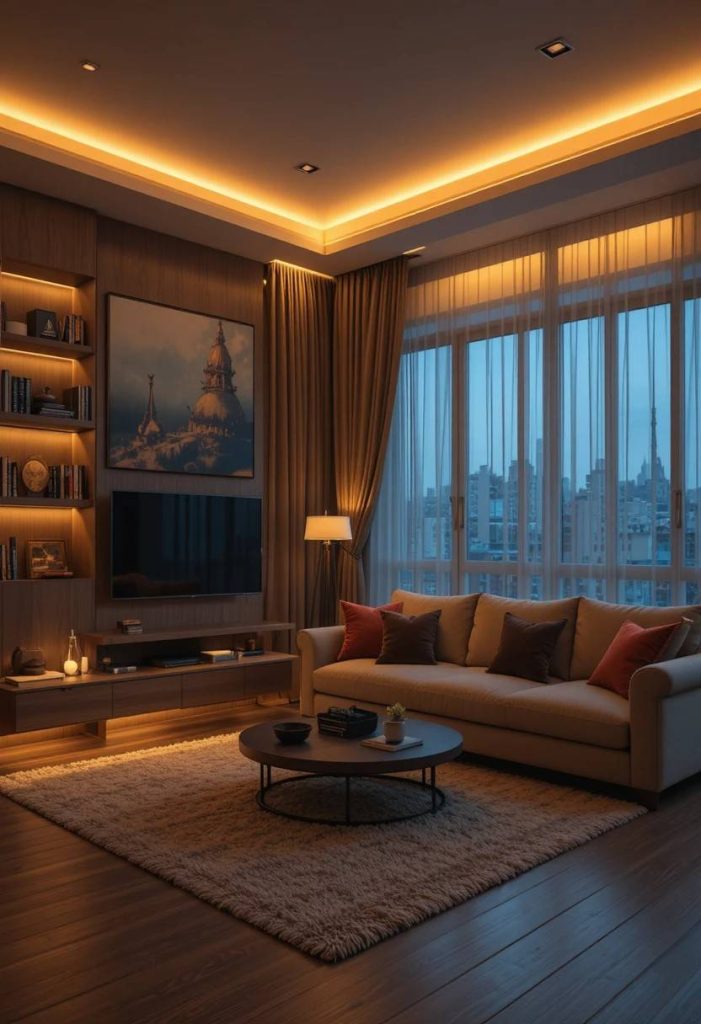
LED strip lighting flexible adhesive backed strips of small LED lights that can be applied to any surface has transformed from a gimmicky novelty into a genuinely sophisticated interior design tool over the past several years, and battery powered and USB powered versions make it fully accessible to apartment renters without any electrical installation work. Applied to the underside of shelving units (creating a floating glow that illuminates the shelf contents from below), along the top of a bookcase or media unit (creating architectural uplighting that draws the eye to the ceiling), behind a mirror (creating a soft halo glow), or behind a sofa (creating a warm ambient backlight to the seating area), LED strip lights add a layer of architectural lighting that transforms the evening atmosphere of an apartment living room.
Style tip: Apply LED strip lighting to the back of the television unit behind the TV on the wall to create the warm ambient backlight that reduces eye strain during evening viewing and adds a sophisticated, architectural quality to the media area of the living room.
12. Furniture Upcycle With Chalk Paint: Transforming Ugly Landlord Pieces for Under $25
Budget: $15–$35 | Renter Note: Check lease most furnished apartment agreements allow cosmetic furniture changes if reversible. Chalk paint can be painted over with the original colour if required.
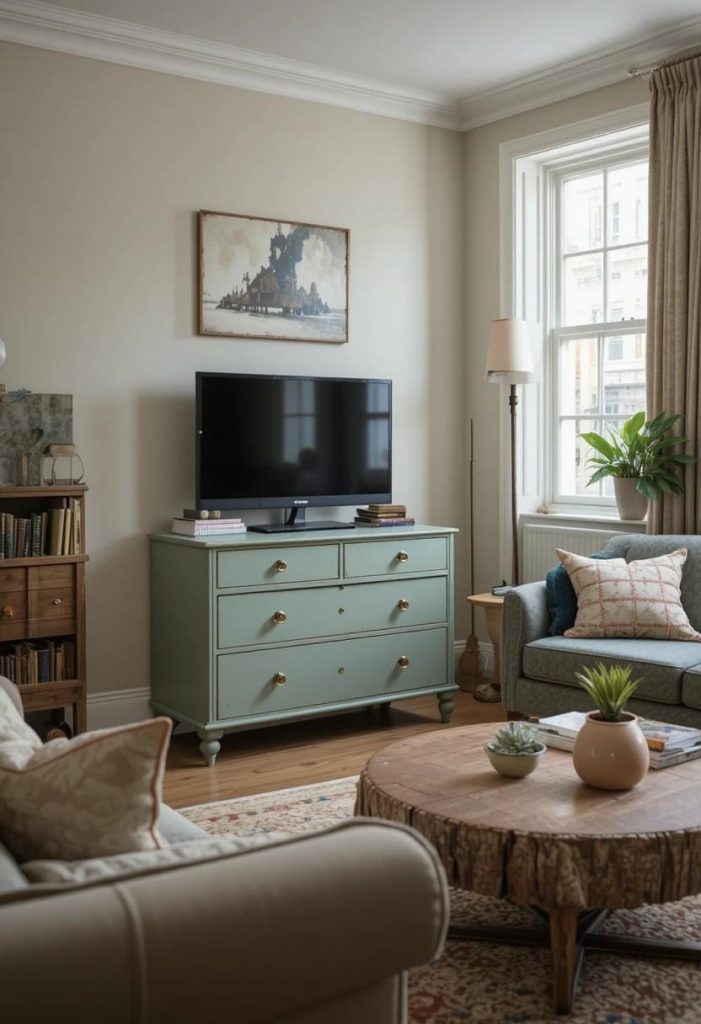
Furnished apartment renters frequently face the challenge of living with furniture chosen by the landlord for durability and cost-efficiency rather than aesthetic quality pieces in dated colours, uninspiring finishes, and generic forms that undermine every decorating effort the renter makes. Where the lease agreement permits cosmetic changes to furnished pieces (which many do, particularly for minor refinishing that can be reversed), chalk paint offers a straightforward and inexpensive solution. A chest of drawers in orange-toned pine, painted in sage green chalk paint, becomes a characterful vintage-inspired piece. A basic wooden coffee table in dark varnish, painted in warm oatmeal chalk paint, becomes a clean, contemporary surface that works with every interior style.
Style tip: When chalk painting furniture in a furnished apartment, choose a colour that works specifically with the existing landlord furniture pieces the goal is to create visual harmony between the painted pieces and the existing ones, not to create a contrast that draws attention to the disparity between them.
13. Textile Wall Hanging: Covering Damaged Walls and Adding Art Simultaneously
Budget: $20–$45 | Renter Note: Command hooks hold the hanging rod no nails or drilling required
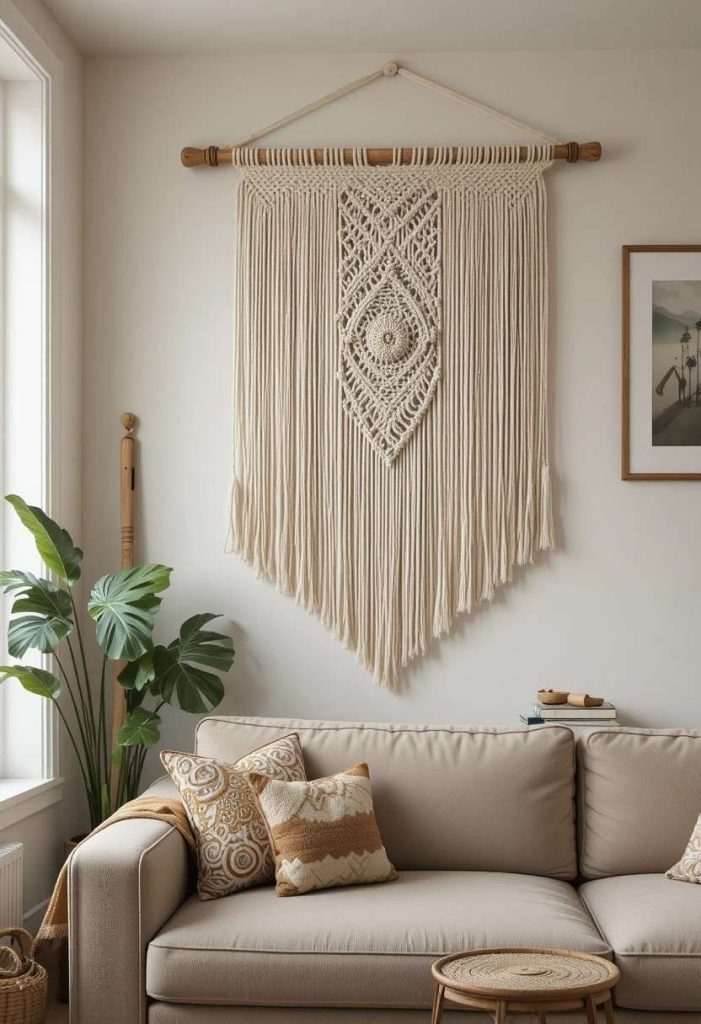
The textile wall hanging performs a uniquely valuable double function in the apartment living room: it adds genuine visual character and warmth to an otherwise blank or damaged wall while simultaneously concealing the wall surface beneath it the scuff marks, the previous tenant’s picture holes, the slightly off beige colour of a wall that has been touched up with the wrong paint shade. For the renter, the ability to improve a wall aesthetically while concealing its imperfections is extraordinarily useful, and the textile wall hanging achieves both goals simultaneously without touching the wall itself in any permanent way.
Style tip: Position the textile wall hanging at a height where its lower edge is at the same level as the top of the sofa about 80 90cm from the floor. This creates a visual relationship between the hanging and the sofa beneath it that reads as intentionally designed and architecturally considered.
14. Bookcase Backdrop Trick: Making a Rental Bookshelf Look Like Bespoke Built-Ins
Budget: $20–$40 | Renter Note: Peel-and-stick wallpaper on bookcase back panel easily removed from furniture surfaces
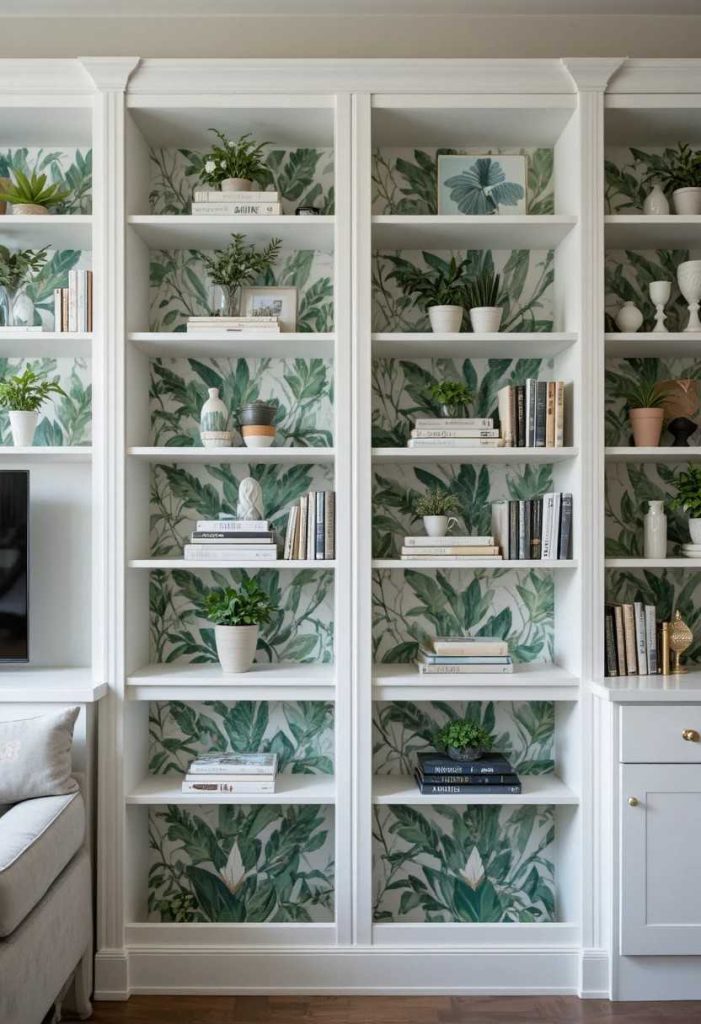
A freestanding bookcase whether owned by the renter or provided by the landlord is one of the most valuable pieces of furniture in a small apartment living room, providing both storage and display surface in a single footprint. The standard flat-pack or affordable bookcase, however, typically has a plain white or light beige MDF back panel that, visible between the shelved objects, creates a flat, clinical backdrop that diminishes the visual quality of the shelf display. The bookcase backdrop trick applying a rectangle of peel and stick wallpaper to the back panel of each shelf transforms this flat background into a richly patterned or coloured surface that makes the shelf display read as a designed, curated installation rather than simply a storage unit with objects on it.
Style tip: After applying the bookcase backdrop wallpaper, step back and reassess the shelf styling the new patterned or coloured background changes which objects read well against it. Objects that previously looked strong against a white background may need to be replaced by pieces in contrasting colours that show more clearly against the new backdrop.
15. Portable Room Scent Strategy: The Invisible Makeover That Everyone Notices
Budget: $15–$30 | Renter Note: Fully portable candles, diffusers, and wax melts leave no trace in the apartment
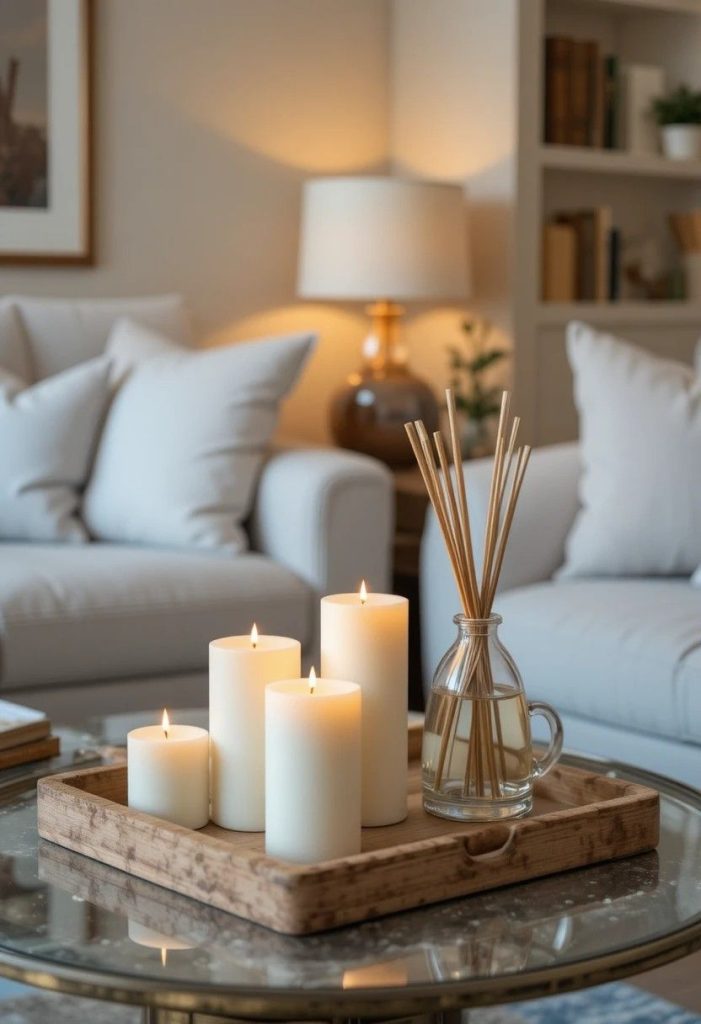
The scent of a room is the most immediately and most subliminally perceived element of any interior entering a room that smells of warm spices and beeswax creates a completely different emotional response from entering an identical room with no scent at all, regardless of any visual difference between them. For an apartment renter, room scent represents a genuinely powerful makeover tool that requires no visual element whatsoever: it changes the perceived quality and character of a space through an entirely non-visual channel that operates below the threshold of conscious analysis. A rental apartment living room that smells of warm amber and sandalwood, fresh linen and light florals, or cedar and woodsmoke reads, to every visitor, as a room that has been cared for and made deliberately comfortable regardless of what it looks like.
Style tip: Place a reed diffuser in the hallway or entrance area of the apartment, not just the living room this creates a scent welcome that primes visitors for the room before they enter it, amplifying the positive first impression of the living space.
16. Budget Sofa Table Behind the Sofa: Creating a Functional Zone Without Furniture Shopping
Budget: $0 (using existing furniture) to $40 | Renter Note: Free-standing furniture no installation, completely portable
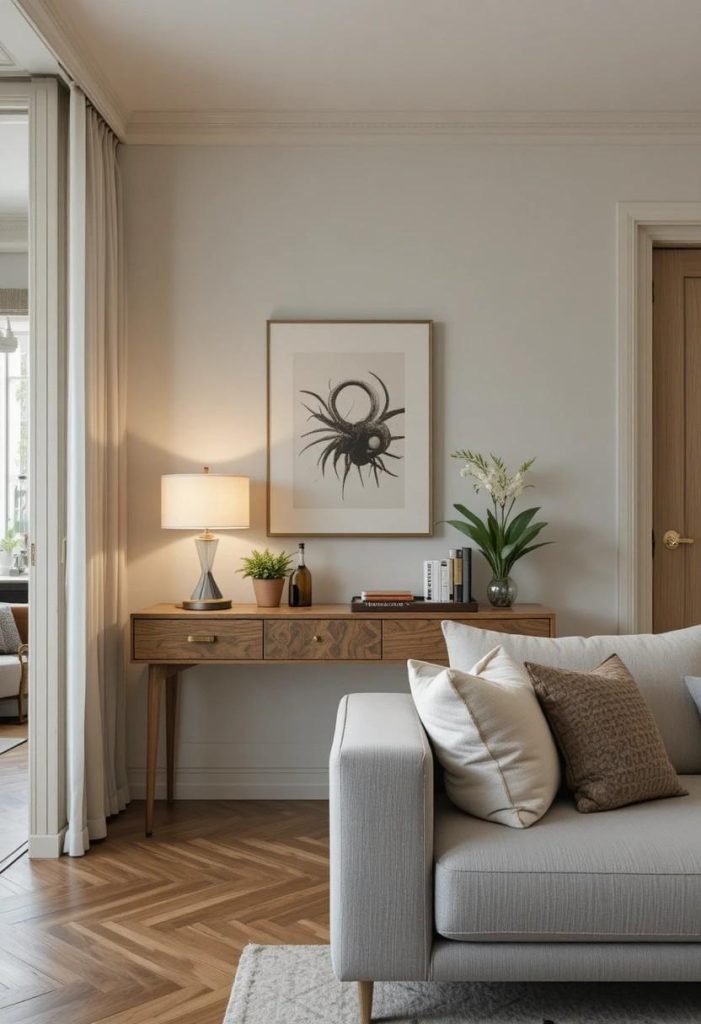
The sofa table a long, relatively narrow table positioned behind the sofa and running along its full length is one of the most practically valuable and most visually effective furniture additions available for a floating sofa arrangement in an apartment living room. It performs several functions simultaneously: it creates a visual ‘back wall’ for the floating sofa arrangement, giving the seating area a sense of definition and enclosure; it provides a surface for lamps, plants, and accessories that addresses the problem of the blank space behind a floating sofa; and it creates a secondary function zone a console area or home bar that adds spatial complexity and life to what would otherwise be the back of the sofa.
Style tip: Use the sofa table as a mini home bar or drinks trolley area a tray with a few bottles, simple glasses, and a small plant creates the impression of a deliberately designed entertaining zone that adds sophistication and adult character to the apartment living room.
17. Maximising Natural Light in a Dark Rental Apartment: Free and Low-Cost Strategies
Budget: $0–$25 | Renter Note: All strategies are non-permanent and fully reversible
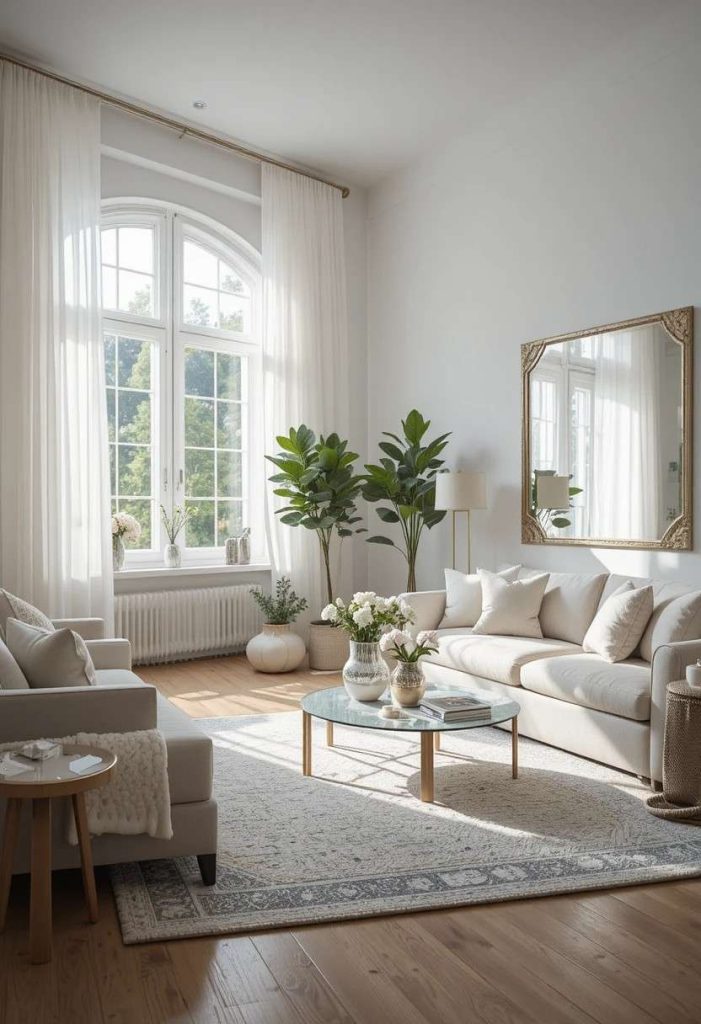
Many rental apartments particularly those in urban locations, ground floor units, and north facing living rooms suffer from inadequate natural light that makes the space feel gloomy, smaller, and less welcoming regardless of the quality of the decoration. Maximising the natural light available in a dark apartment living room is the single most impactful and most cost-effective makeover available for these spaces, and the strategies for doing so range from entirely free to very low cost and all are fully reversible at the end of the tenancy.
Style tip: Keep the floor surface in the area between the window and the seating arrangement as clear as possible furniture and rugs positioned between the window and the seating area block the natural light’s path into the room. Allow light to travel across the floor unobstructed to maximise its depth of penetration into the space.
18. The Complete Apartment Living Room Transformation Under $200: The Full Strategy
Budget: $150–$200 for complete transformation | Renter Note: Every element is renter-safe all strategies are 100% reversible and leave zero damage
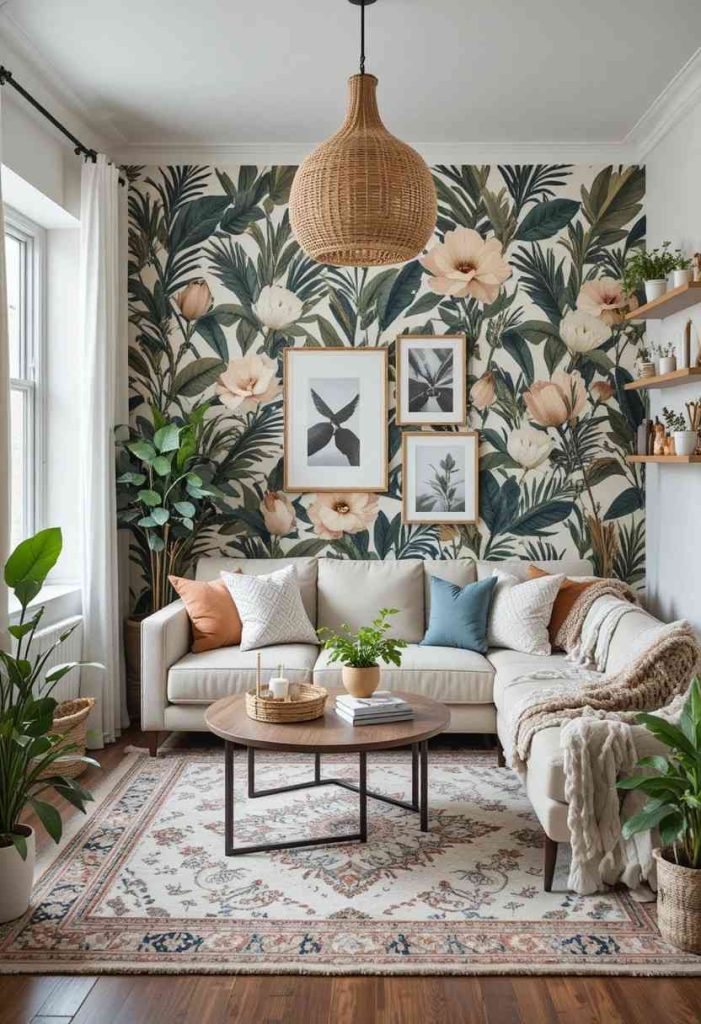
The seventeen individual strategies described in this guide each address a specific aspect of the apartment living room’s visual and functional quality. Applied individually, each produces a meaningful improvement. Applied in combination with a coherent colour palette and a clear design vision unifying every decision they produce a complete transformation of genuinely impressive quality for a total investment of between one hundred and fifty and two hundred dollars. For renters who have been living with a compromised, under-invested apartment living room and are ready to address it properly, this combined strategy represents the most cost-effective and most immediately achievable path to a genuinely beautiful space.
Style tip: Before implementing any element of the complete apartment transformation, spend one hour creating a mood board a collection of images, colour samples, and material references that define the room’s intended aesthetic. Every subsequent purchasing decision should be tested against the mood board. This single hour of planning investment saves a disproportionate amount of money and regret.
Move-Out Guide: Removing Everything Cleanly and Getting Your Deposit Back
When the tenancy ends, each element of your apartment living room transformation reverses quickly and cleanly:
- Peel-and-stick wallpaper: Peel from a corner in slow, deliberate strips. Use a hair dryer on low heat for stubborn sections. Wipe any minimal residue with a damp cloth.
- Command strips: Press the tab firmly and pull slowly downward at a 45-degree angle to the wall. Never pull outward. If a strip tears, use dental floss to slide behind the adhesive patch.
- Tension rods: Release the spring pressure by twisting the rod to shorten it. No marks, no residue.
- Peel-and-stick items on furniture: Warm with a hair dryer and peel slowly. Wipe furniture surface with a damp cloth to remove any adhesive residue.
- LED strips: Warm the adhesive backing slightly with a hair dryer and peel slowly. Any residue removes with isopropyl alcohol.
- Plants, rugs, art, cushions, throws: Simply remove them they leave no trace.
- Washi tape on floors: Peel slowly at room temperature. Most washi tape removes from hard floors without any residue test first as noted in the relevant section.
Frequently Asked Questions About Apartment Decorating on a Budget
Can I really hang pictures without nails in an apartment?
Yes Command picture hanging strips hold frames up to approximately 2.5kg per pair of strips, which covers the majority of standard framed prints and small artworks. For heavier pieces, use multiple pairs of strips distributed across the back of the frame. Always follow the manufacturer’s weight specifications and application instructions strips applied to clean, smooth, painted surfaces according to instructions are genuinely secure and reliable.
Will peel-and-stick wallpaper damage my rental apartment walls?
High-quality peel-and-stick wallpaper from reputable suppliers (Chasing Paper, Tempaper, Walls Need Love, and others) removes cleanly from smooth painted walls without damaging the paint or leaving adhesive residue when applied and removed according to the manufacturer’s instructions. The critical requirements are a smooth, clean wall surface (textured walls may retain adhesive), application at room temperature, and slow removal with a hair dryer used on stubborn sections. Always test a small section in an inconspicuous area before full application.
What if my apartment comes furnished with furniture I cannot change?
Furnished apartments are decorated most effectively through layering over the existing furniture rather than attempting to replace or hide it. New cushion covers, throw blankets, and a sofa cover transform a landlord sofa. A correctly sized rug transforms the floor arrangement. New ceiling and table lamp fittings transform the lighting. Plants, accessories, and a gallery wall transform the walls and surfaces. These additions are powerful enough to overcome even the most uninspiring landlord furniture and at move-out, they all come with you.
How do I decorate an apartment I’ll only be in for six months?
Short tenancy decorating should prioritise the highest-impact, lowest-cost, most portable interventions: a large rug (goes with you), cushion covers and a throw (goes with you), plants (goes with you), a few Command strip artworks (comes down in minutes), candles and scent accessories (completely portable). Even a six-month apartment benefits enormously from these low-investment additions the quality of daily life in a beautiful space versus a bare one is significant enough to justify the minimal effort of installation and removal.
How do I find the right colour palette for my apartment living room?
The most reliable approach is to choose one colour you genuinely love and build a three-colour palette around it: the chosen colour as the dominant (walls via peel-and-stick or the rug), a warm neutral as the secondary (sofa, curtains, larger furniture), and a contrasting accent as the third (cushions, botanicals, smaller accessories). Apply these three colours consistently across every decision and the room will read as cohesive and professionally designed regardless of the individual cost of its components.
Conclusion: Your Apartment, Your Home Regardless of the Lease
The lease agreement that prohibits you from drilling holes, painting walls, or making permanent modifications does not prohibit you from creating a genuinely beautiful home. It prohibits the tools of a previous generation of interior design the permanent, the invasive, the irreversible. It does not prohibit the better tools of the current one: the peel-and-stick, the tension rod, the Command strip, the correctly sized rug, the floor-length curtain, the warm rattan pendant on a pendant adaptor, the plant, the candle, the woven textile, the gallery wall of personally meaningful art.
The eighteen strategies in this guide, applied in combination with a clear colour palette and the confidence to make considered choices within constraints, produce a living room that reads as genuinely designed, genuinely personal, and genuinely beautiful. The investment is under two hundred dollars. The impact on the daily quality of life of the people who live there is immeasurable. And at the end of the tenancy, every trace of the transformation is removed in an afternoon, the apartment is returned in perfect condition, and the full deposit is returned with it.
Rent the apartment. Own the home.