
27 Space Saving Furniture Ideas for Small Homes and Rental Apartments
Living in a small home or a rental apartment has a real charm of its own. It feels cozy, easy to care for, and gently encourages you to keep only the things you truly love. The one little challenge is space, and that is exactly where smart furniture comes to the rescue.
The wonderful thing about space saving furniture is that it works hard without making your home feel crowded. A bed can hide storage underneath, a table can fold away when you are done, and a single piece can quietly do the job of three. The best of it looks beautiful too, so you never have to choose between style and function.
Below you will find 27 space saving furniture ideas made especially for small homes and rental apartments.
1. Storage Bed With Drawers Underneath
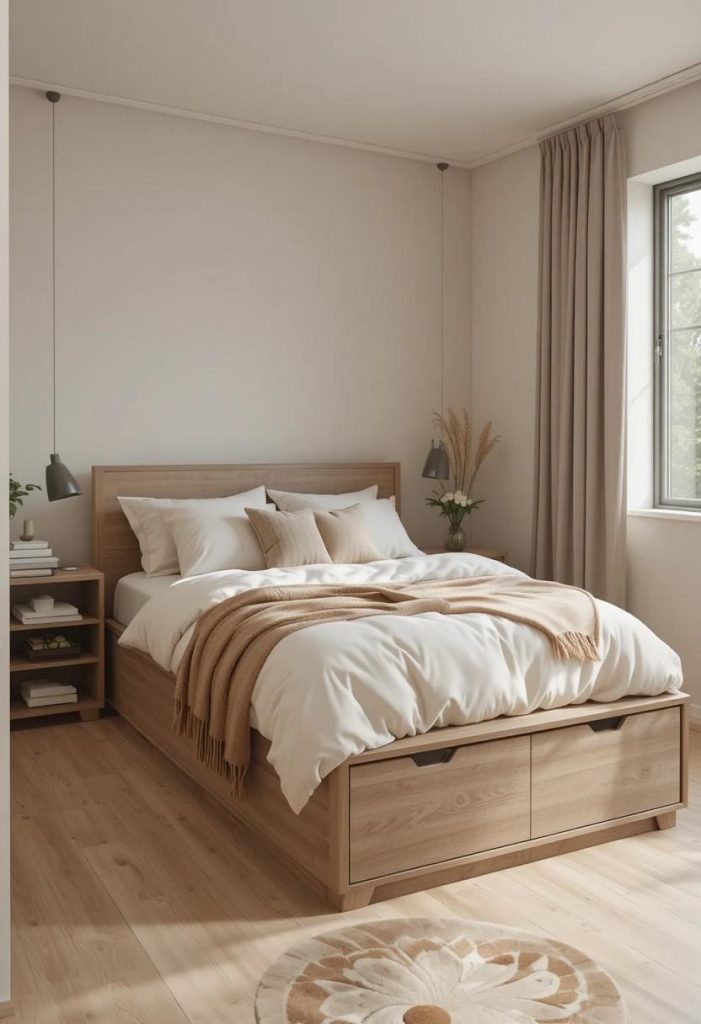
My old spare bedding lived in a wobbly chest that blocked half the bedroom door, and I only noticed how much floor I was losing when I tried a bed with drawers in its base. Suddenly, seasonal clothes, spare duvets and photograph boxes had a proper home beneath the mattress, and the room felt calmer that same evening. From the doorway, nothing looks like storage at all. It is simply a comfortable, good-looking bed, yet each drawer slides out smoothly when I need a heavier coat or fresh bedding. I keep everyday items nearest my pillow and out-of-season clothes in the far drawer, so I never hunt for anything.
How to do it: Measure the clearance beside your bed, choose a frame with deep, full-extension drawers, and sort contents by season before you load them. Put bedding you use weekly in the top drawer, label the others, and leave a small gap at the head end so drawers open freely.
2. Fold Down Wall Mounted Desk
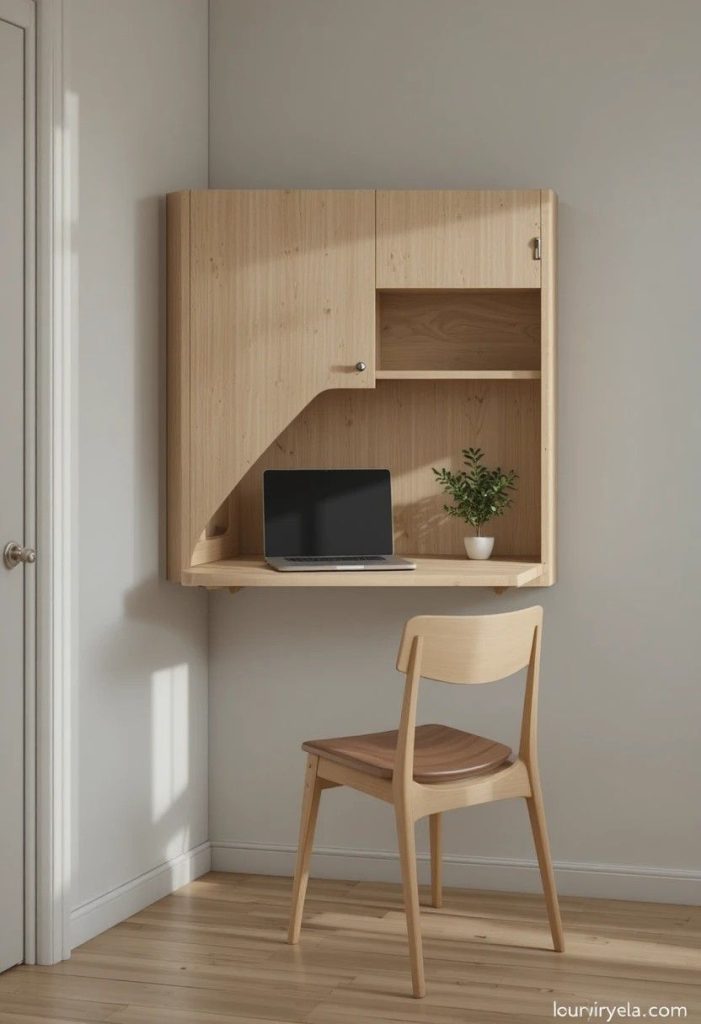
I worked from a kitchen chair for months, with my laptop balanced beside a fruit bowl, until a fold-down desk gave me a proper place to sit down and think. When it is open, I have a calm surface for my notebook, a lamp and a cup of tea. When I fold it away, the wall looks tidy again and the room belongs to the evening. I love that rhythm, because it helps me switch off properly. My desk holds a small tray for pens and a hook underneath for headphones, so nothing drifts around the flat. It feels like a tiny office that appears only when I need it.
How to do it: Pick a solid wall near a socket, fix the desk at elbow height when seated, and add a slim shelf above for books. Keep only a laptop, lamp and pen tray on the surface, and fold it up each evening to reset the room.
3. Sofa Bed for Living and Sleeping
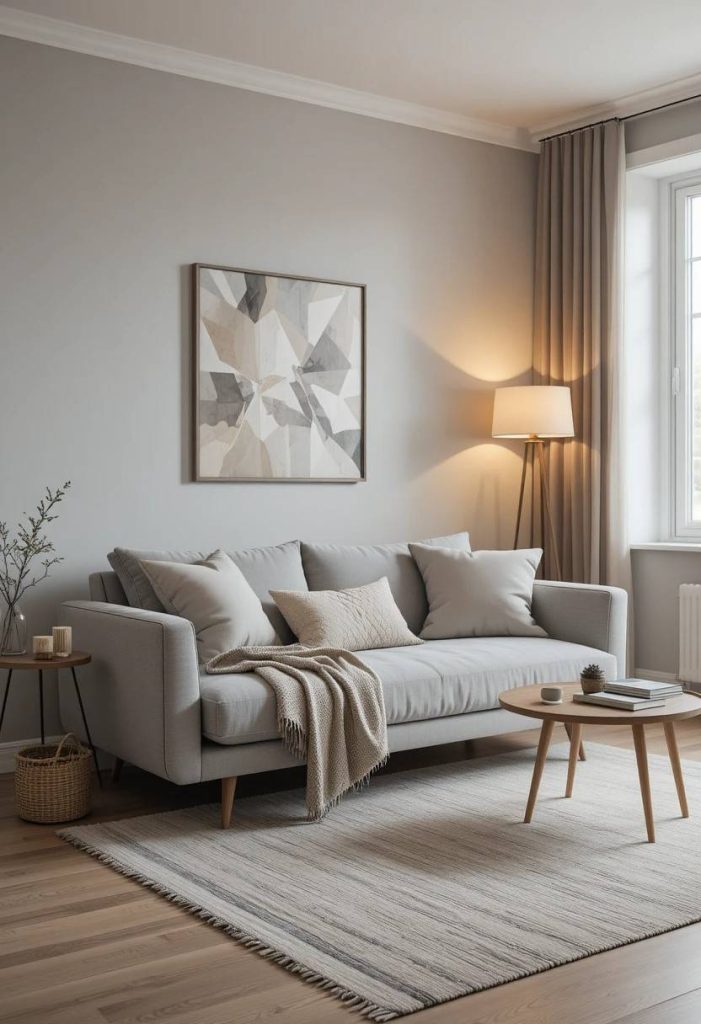
A good sofa bed changed how I welcome overnight guests, because I no longer apologise for a lumpy spare mattress or clear a whole room before they arrive. By day it is the sofa where I read, eat toast and chat with friends. By night it opens into a proper bed, with clean sheets and a pillow that actually supports a head. I test the mechanism in the shop now, after once buying a model that fought me every time. Look for a smooth pull-out, a mattress at least ten centimetres thick, and storage for bedding underneath if you can find it.
How to do it: Measure the sofa both folded and open, allowing space to walk around the bed, and choose a washable cover in a calm colour. Keep a folded duvet and pillow in a nearby ottoman or cupboard, so making up the bed takes five minutes.
4. Nesting Tables That Tuck Together
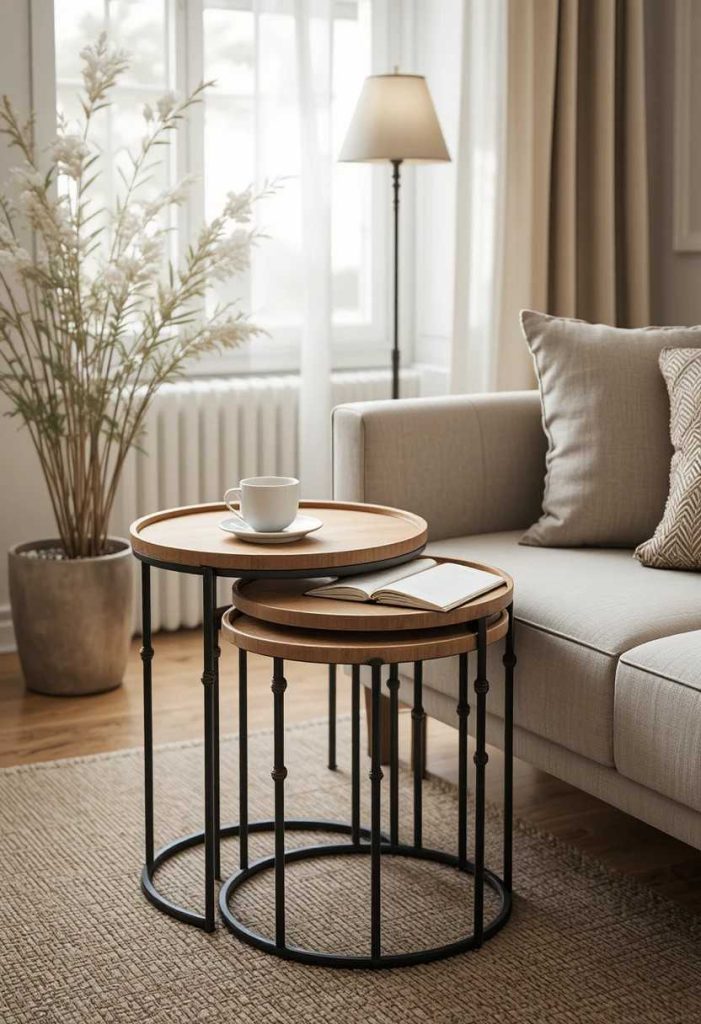
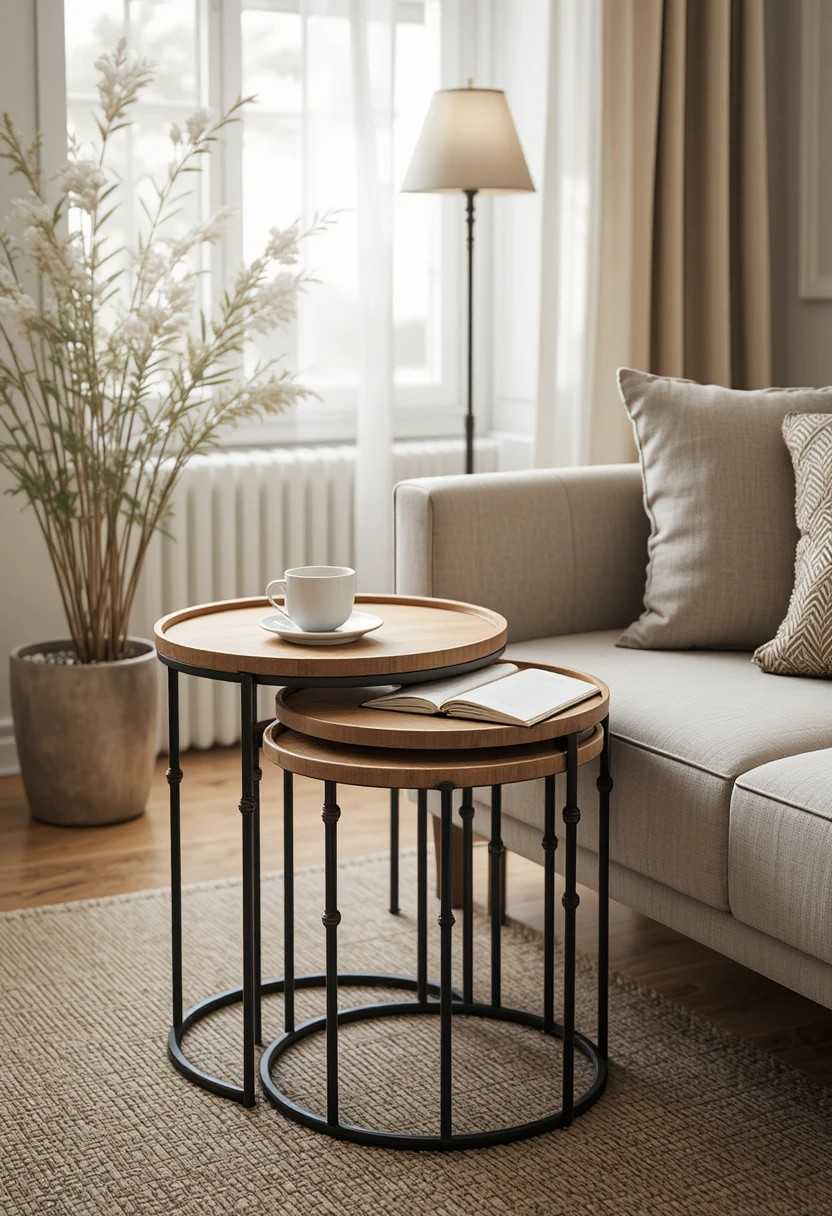
I used to carry mugs and plates from the kitchen to the sofa in two careful trips, until a set of nesting tables gave me a surface exactly where I needed it. Most days they sit tucked together beside my armchair, looking like one neat little table. When friends come round, I pull the smaller ones out for drinks, snacks and a vase of flowers, then slide them back when everyone leaves. I chose light wood with rounded corners, because sharp edges and a small room do not mix well. They also work beside a bed, in a hallway, or as a plant stand by a window.
How to do it: Choose a set of two or three tables in the same finish, place the largest beside your usual seat, and keep the smaller ones nested beneath it. Pull one out for guests, meals or work, then tuck it back to free the floor.
5. Ottoman With Hidden Storage
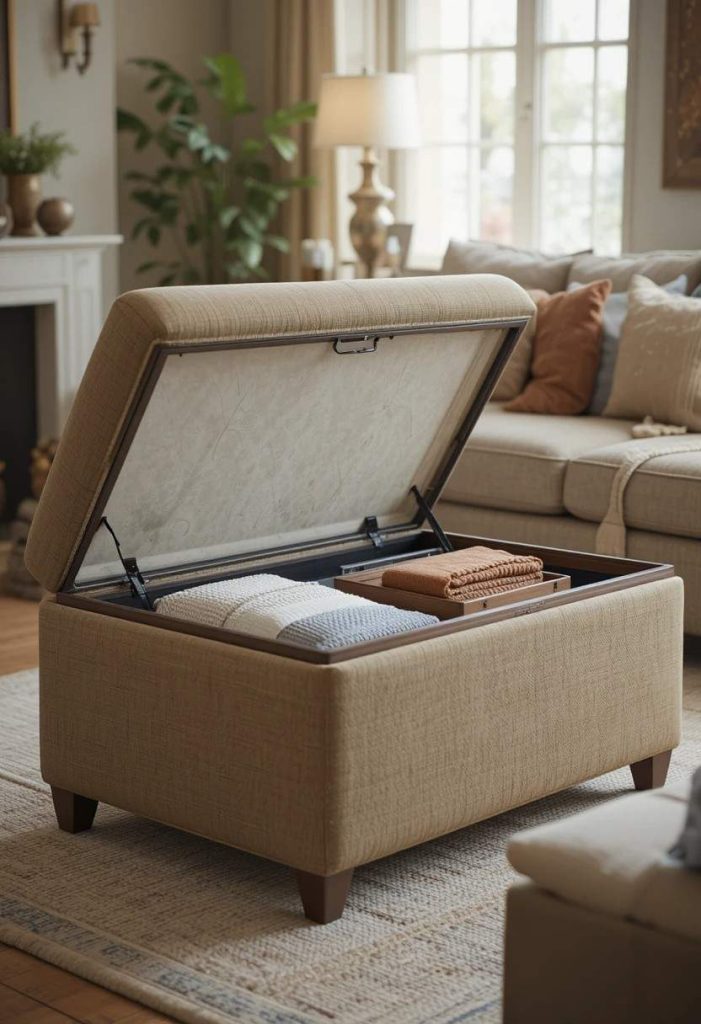
My ottoman is the hardest-working piece in my living room, and visitors rarely guess that it hides anything at all. I put my feet up on it after a long day, use it as an extra seat when friends drop in, and lift the lid to find throws, magazines and the remote controls that used to vanish down the side of the sofa. It keeps the room looking calm, because clutter has a place to go in seconds. I picked a soft, wipeable fabric in a warm neutral, so it suits the sofa without matching it exactly. For more seating and layout inspiration, these apartment living room ideas show how one flexible piece can anchor a small room.
How to do it: Choose an ottoman wide enough for your feet and deep enough for a folded throw, then sort its contents into a small tray for remotes and a cloth bag for magazines. Place it within reach of the sofa, and clear it each night so it stays useful.
6. Wall Mounted Floating Shelves
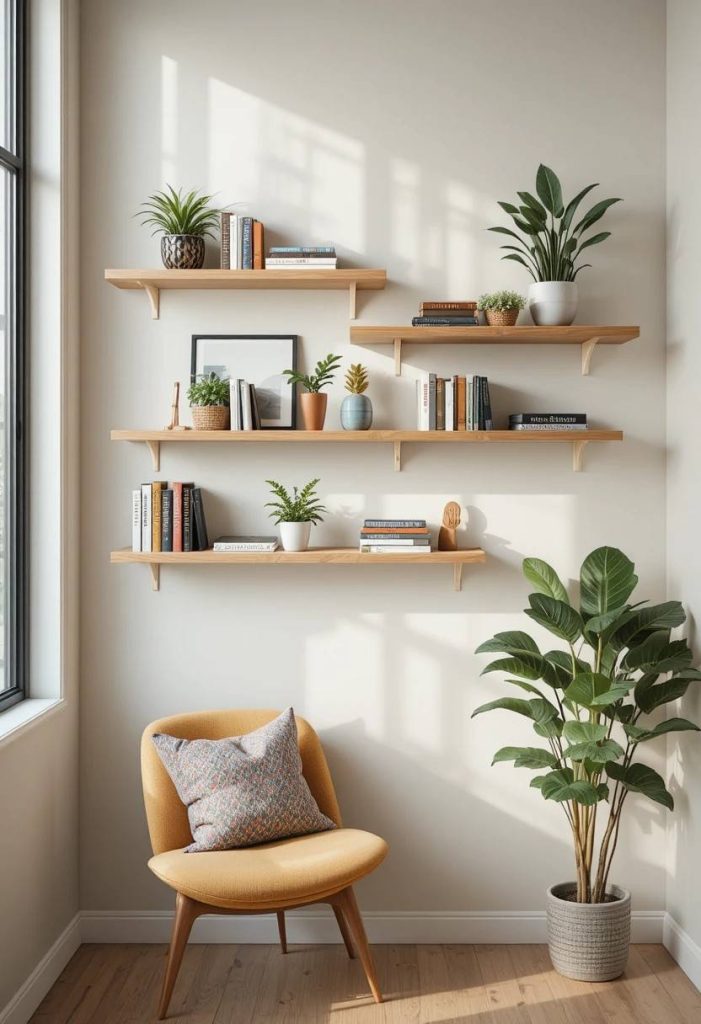
When my floor was full, I finally looked up, and a row of floating shelves gave my books, plants and favourite pottery a home without taking a single step of floor space. I love how they draw the eye upwards, which makes a low ceiling feel a little taller and a narrow room feel less boxed in. I keep everyday cookbooks on the kitchen shelves, novels beside my reading chair, and one small plant on each shelf so the display never feels crowded. The trick, I have learned, is to leave breathing room between objects. A shelf packed edge to edge looks busy, while a few well-chosen pieces look calm and intentional.
How to do it: Fix shelves into studs or use strong plasterboard fixings, stagger them at different heights, and group items in threes. Put heavy books low, lighter objects high, and leave at least a third of each shelf empty.
7. Drop Leaf Dining Table
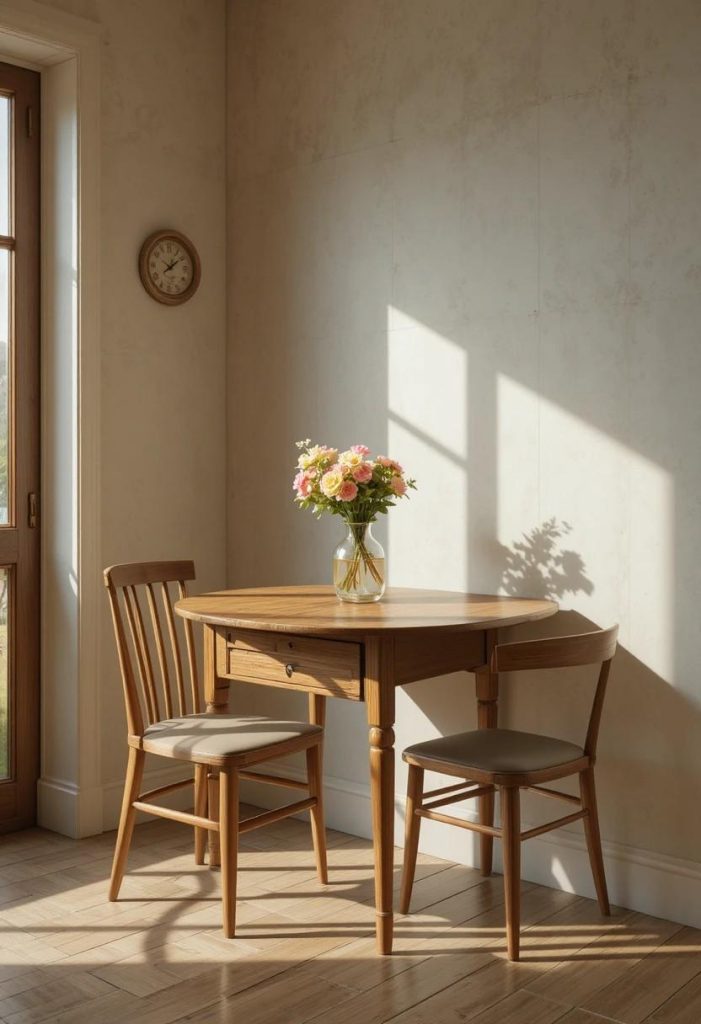
My drop-leaf table sits slim against the kitchen wall most days, just wide enough for my morning coffee and a notebook. When my sister visits, I lift both leaves, pull out two extra chairs, and suddenly we have a proper dinner table for four. I love that it never asks me to choose between a clear walkway and a place to eat together. I keep a folded tablecloth and two placemats in the drawer beside it, so setting the table feels easy rather than a production. Choose a sturdy hinge and a wipe-clean top, because this is a table you will open and close often.
How to do it: Place the table against a wall with chairs stacked nearby, test both leaves before you buy, and keep placemats and cutlery within arm’s reach. Fold one leaf for solo meals and both down when you need the floor clear.
8. Loft Bed With Space Below
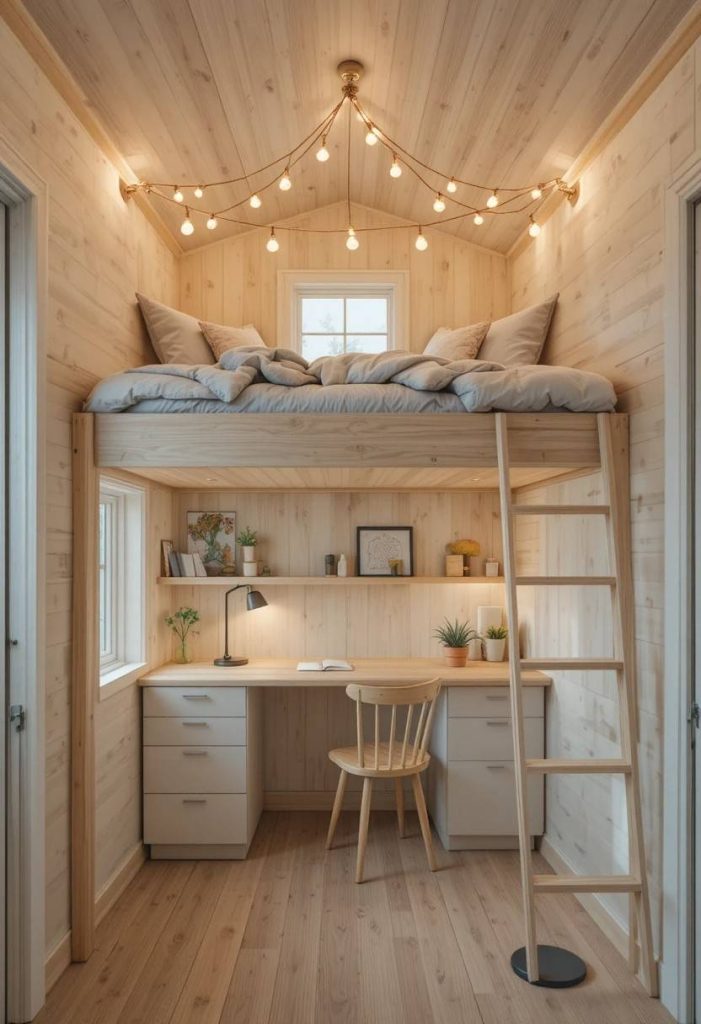
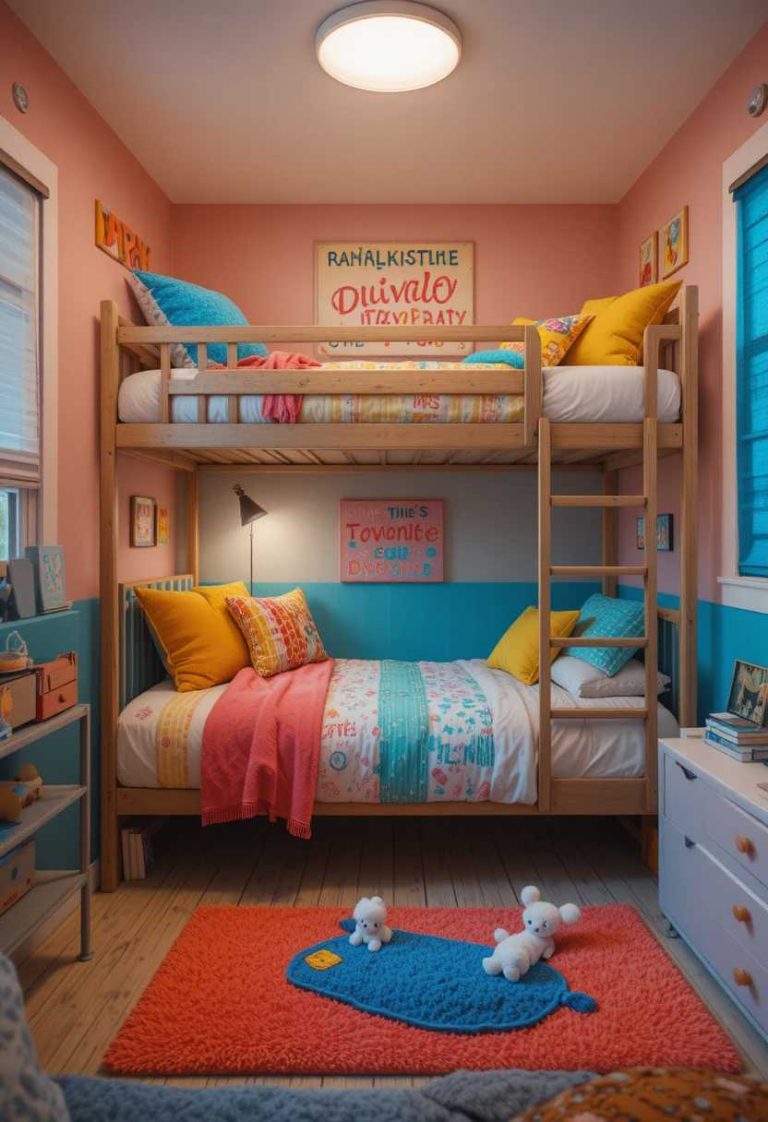
Lifting the bed up high felt daring at first, but the space it freed underneath changed my whole studio. I now have a desk, a reading chair and a small bookcase in the footprint where my bed used to sit, and the room finally has separate places for sleeping, working and resting. A sturdy ladder, a guard rail and a small shelf for a book and a glass of water make the climb feel safe and cosy rather than awkward. These studio apartment layout ideas helped me plan the zones underneath, so the desk catches daylight and the chair sits near a lamp.
How to do it: Check your ceiling height first, allowing at least 75 centimetres above the mattress to sit up, then choose a solid frame with a guard rail and wide ladder rungs. Place a desk under the window side and a rug below to define the lower zone.
9. Slim Console Table Behind the Sofa
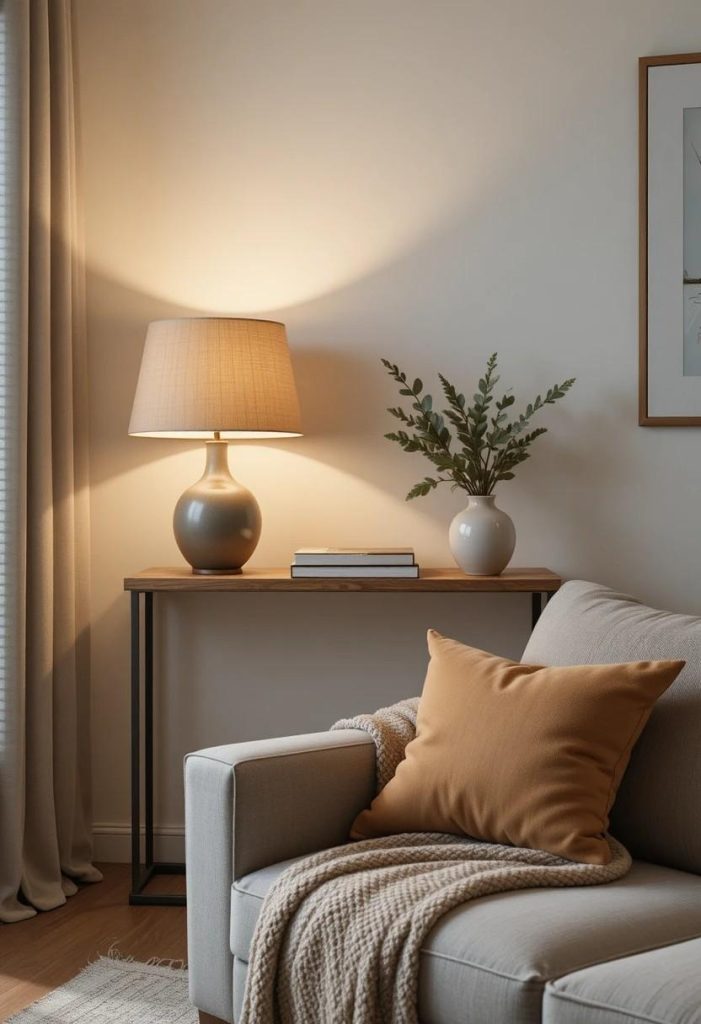
The narrow gap behind my sofa was wasted for years, collecting dust and the odd lost sock, until a slim console table turned it into one of my favourite spots. It holds a lamp that throws a warm glow over the room in the evening, a small stack of books, and a tray for keys and post when I come home. I like that it creates a gentle boundary between the living area and the rest of the flat without blocking light or conversation. Keep the surface simple, because a console crowded with ornaments soon feels like clutter. One lamp, one plant and a book are plenty.
How to do it: Measure the gap behind your sofa, choose a table 25 to 30 centimetres deep, and anchor it so it cannot tip. Add a lamp, a small tray for keys, and one book stack, then leave the rest of the surface clear.
10. Over the Door Organizers
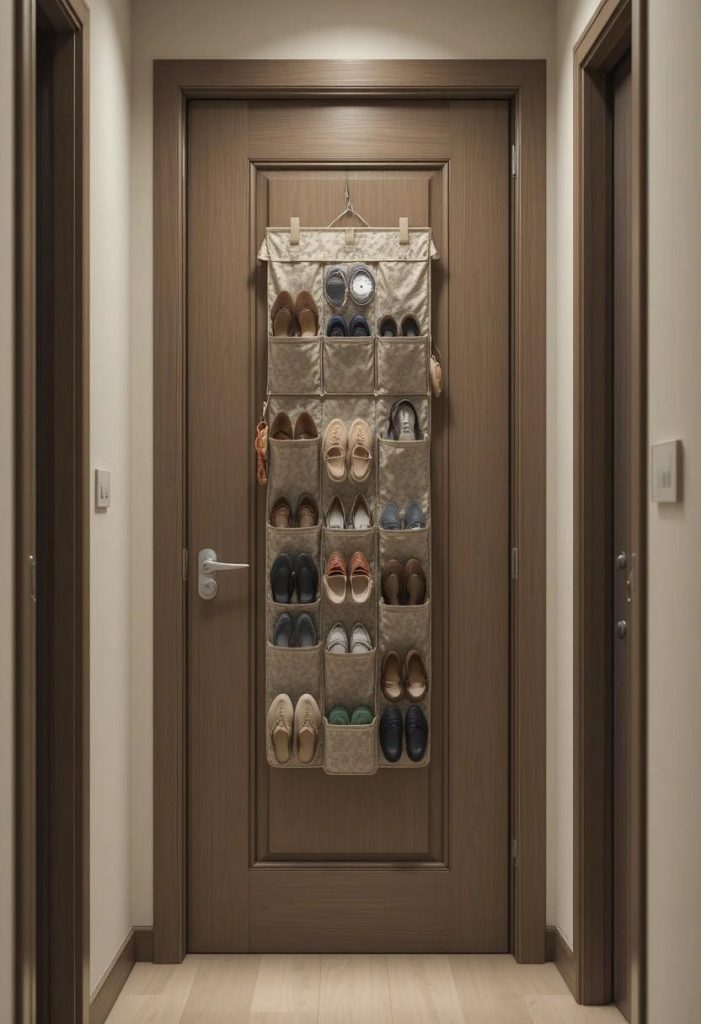
The back of a door is easy to overlook, yet mine now holds shoes, scarves, cleaning sprays and the spare batteries I used to lose in a drawer. A hanging organiser turns that flat surface into tidy pockets, and because nothing is drilled or screwed in, it suits a rental perfectly. I have one on the bedroom door for accessories and a smaller one inside the pantry door for foil, wraps and spice packets. The key is to label the pockets and empty them every few months, because a door organiser can quietly become a hiding place for things you no longer need.
How to do it: Choose a hook that fits over your door without scratching it, hang the organiser at a height you can reach easily, and sort items by how often you use them. Put daily items at eye level and seasonal things at the bottom.
11. Murphy Bed That Folds Into the Wall
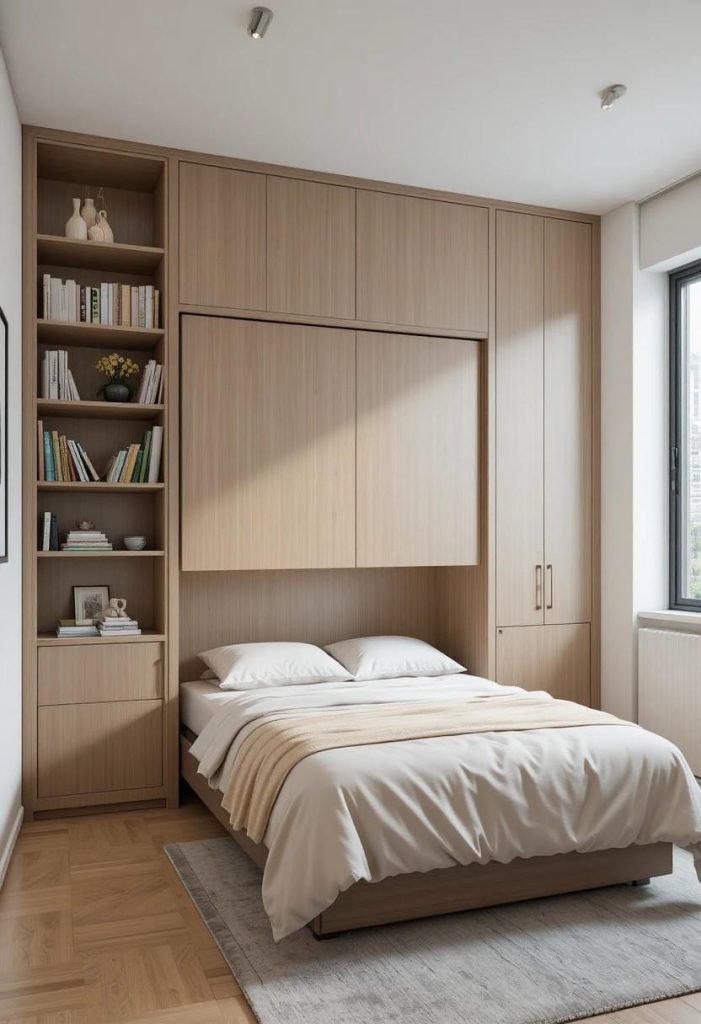
A Murphy bed still feels a little magical to me, even after months of using one. In the morning I fold it up into its cabinet, straighten the cushions, and my bedroom becomes a living room, a yoga space or a home office. At night I pull it down, and the mattress is already made up with proper bedding. I chose a model with side shelves and a fold-down desk on the front, so the cabinet earns its place even when the bed is hidden. If you are weighing designs and sizes, these Murphy bed ideas show how different cabinets suit different rooms and budgets.
How to do it: Measure the wall and the floor space needed when the bed is down, check that the mechanism locks safely, and choose a cabinet with shelves or a desk on its face. Make the bed with lightweight bedding, and practise folding it until the motion feels smooth.
12. Bar Cart on Wheels
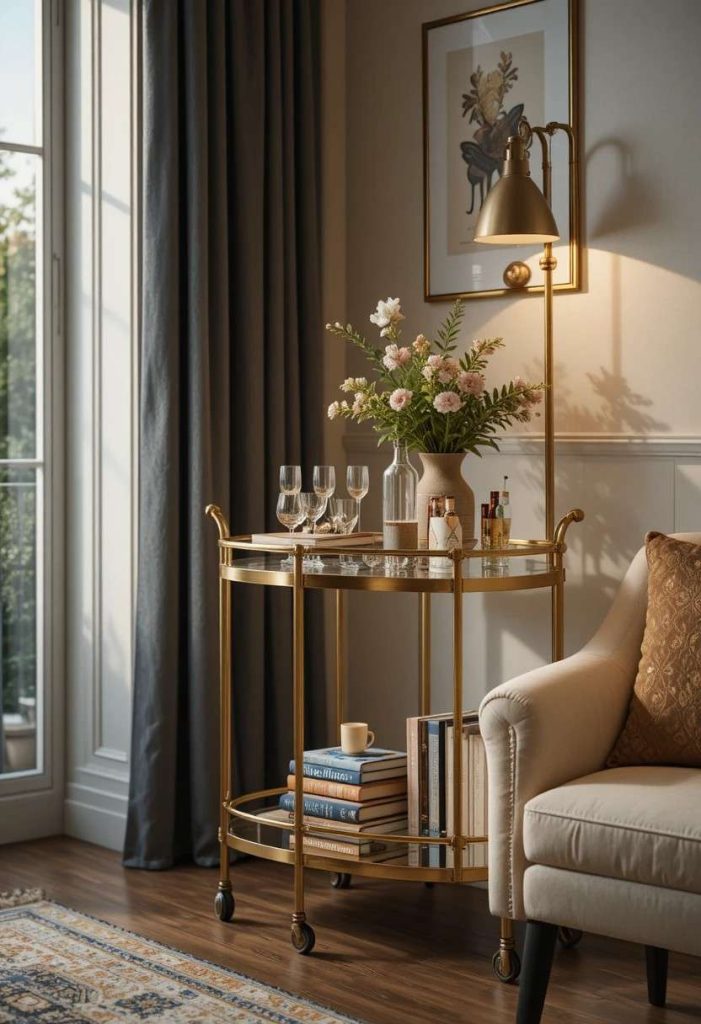
My bar cart earns its keep far beyond drinks, and I wheel it wherever the flat needs a little help. In the living room it holds glasses and a small vase; in the kitchen it becomes extra counter space for baking; in the bathroom it stores towels and toiletries for guests. I love pieces that move with the day instead of anchoring one corner forever. Choose a cart with a lip around each shelf, so bottles and jars do not slide off when you move it, and lockable wheels, so it stays put once you park it. A tray on top keeps everything tidy and easy to lift off.
How to do it: Pick a two-tier cart with lockable castors, place heavier items on the lower shelf, and keep a tray on top for glasses or jars. Wheel it to where you need it, lock the wheels, and return it to its home spot each evening.
13. Stackable Chairs and Stools
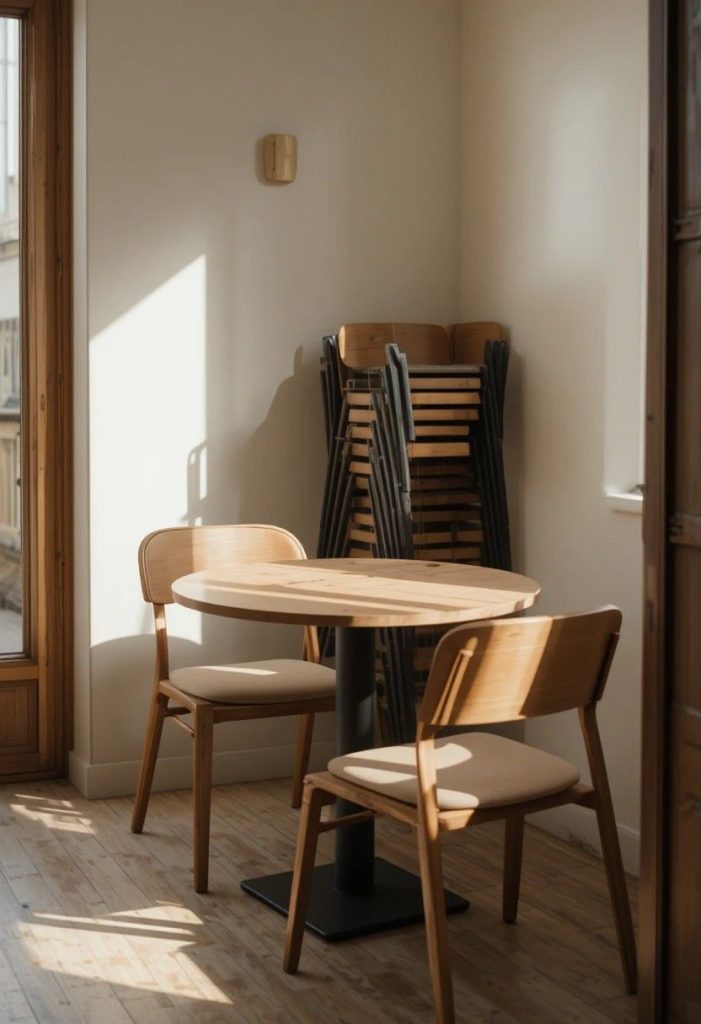
Stackable chairs saved my last dinner party, because I could seat eight people without owning eight chairs all year round. I keep two out for everyday meals and stack the rest in a corner of the hallway, where they take up no more floor than a single chair. When friends arrive, I unstack them in a minute and add a cushion to each seat. I look for chairs that stack neatly without scratching each other, with a wipe-clean seat for spills. Stools work just as well, and they tuck under a table or a counter when they are not needed.
How to do it: Count how many guests you usually host, buy that many stackable chairs in one colour, and store the stack in a dry corner. Add a thin cushion to each seat, and test that the stack stays stable before you lean it against a wall.
14. Vertical Shoe Storage Cabinet
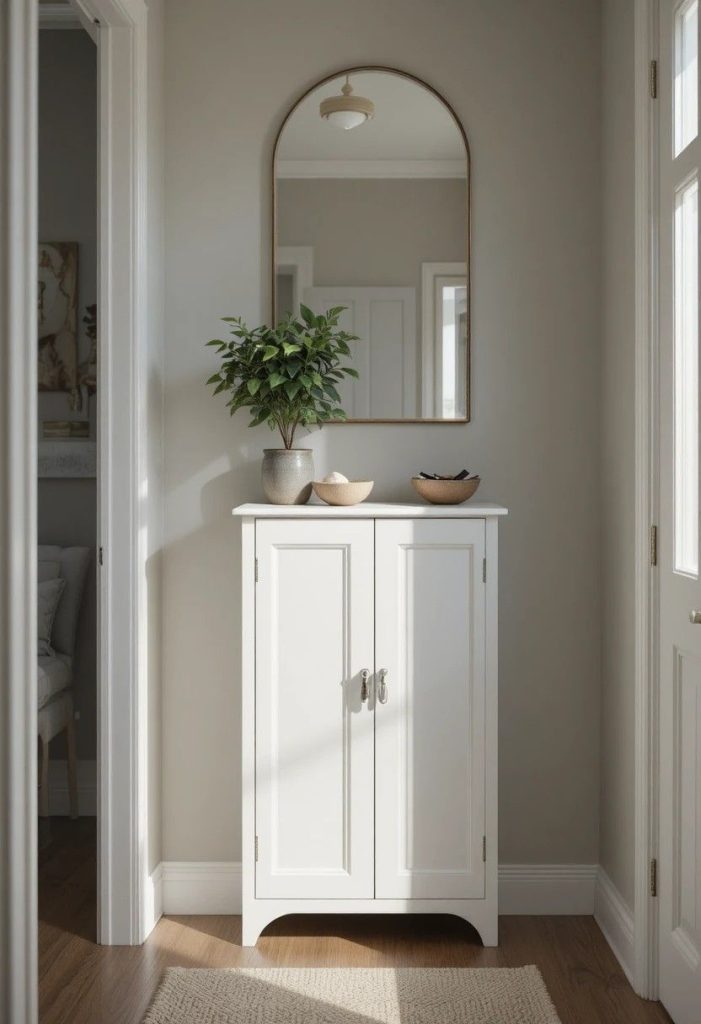
Shoes used to greet me in a jumbled pile by the front door, and I tripped over them more often than I care to admit. A slim, tall cabinet changed that in an afternoon. Each pair has its own tilted shelf, the doors close on the clutter, and the hallway finally feels like an entrance rather than a storage cupboard. I keep the shoes I wear most at waist height, wellies and boots at the bottom, and a small tray on top for keys and sunglasses. The cabinet is only about fifteen centimetres deep, so it fits even in a narrow hallway without blocking the door.
How to do it: Measure your hallway depth and door swing, choose a cabinet with tilted shelves for taller boots, and sort shoes by season before you load it. Keep daily pairs at waist height and rotate out-of-season shoes to a box elsewhere.
15. Corner Desk for Awkward Spaces
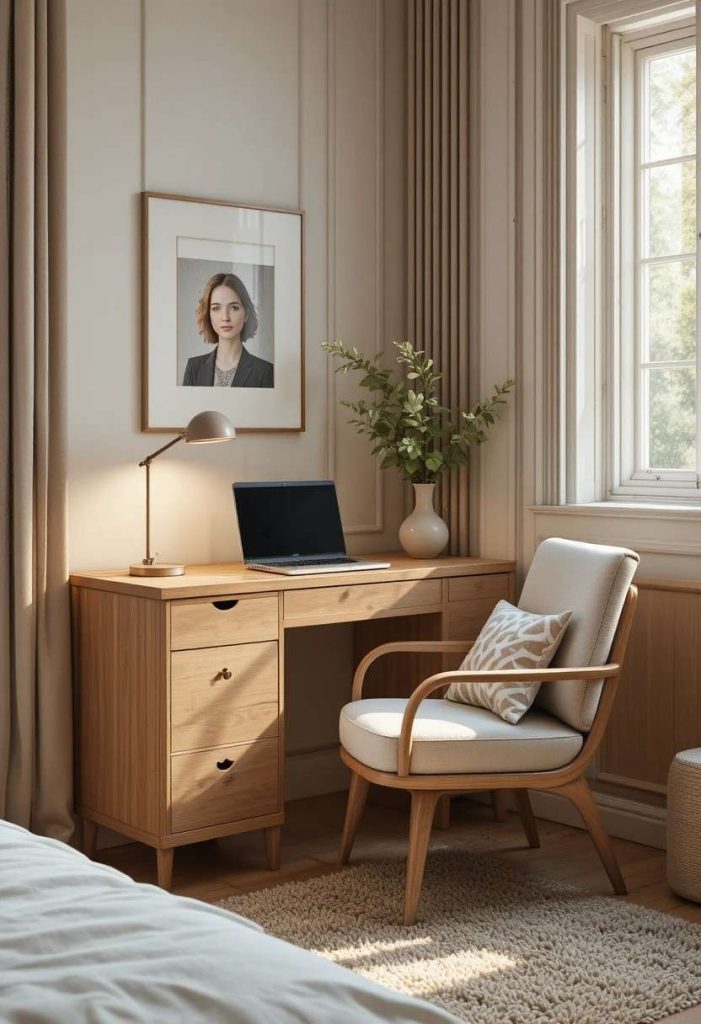
The corner of my bedroom was a dead space for years, too small for a wardrobe and too awkward for a chair, until a corner desk turned it into my favourite place to work. The triangular top fits snugly into the angle of the walls, leaving the rest of the room free, and the shelves above hold notebooks, a plant and a jar of pens. I like sitting with a wall on each side, because it feels focused and a little bit cocooned. Add a comfortable chair that tucks right in, a lamp that does not glare on the screen, and a cable tidy so wires do not trail across the floor.
How to do it: Measure both walls of the corner, choose a desk deep enough for a laptop and a notebook, and add a shelf above for books. Position a lamp on the side away from your dominant hand, and tuck cables into a clip under the desk.
16. Floating Wall Mounted Nightstand
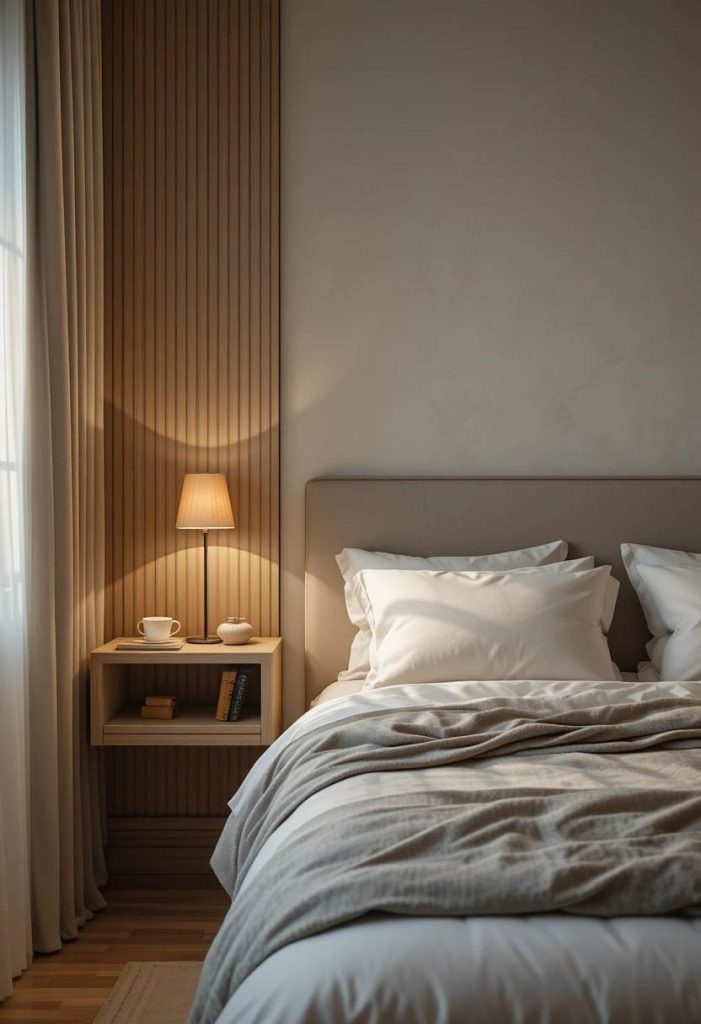
A floating nightstand made my small bedroom feel lighter overnight, because the floor beneath it is now clear and the eye travels straight to the wall. I keep a book, a glass of water and my phone on top, and a drawer underneath for a notebook, lip balm and the charger I used to lose behind the bed. The shelf feels generous without a bulky cabinet taking up floor space, and cleaning underneath takes seconds with a quick sweep. I chose a finish that matches the bed frame, so the two pieces look like a set even though I bought them separately. It is a small change with a surprisingly big effect.
How to do it: Fix the nightstand at mattress height, using solid fixings, and choose a model with one drawer and a small open shelf. Keep only a book, water and phone on top, and store chargers in the drawer to keep cables out of sight.
17. Expandable Coffee Table
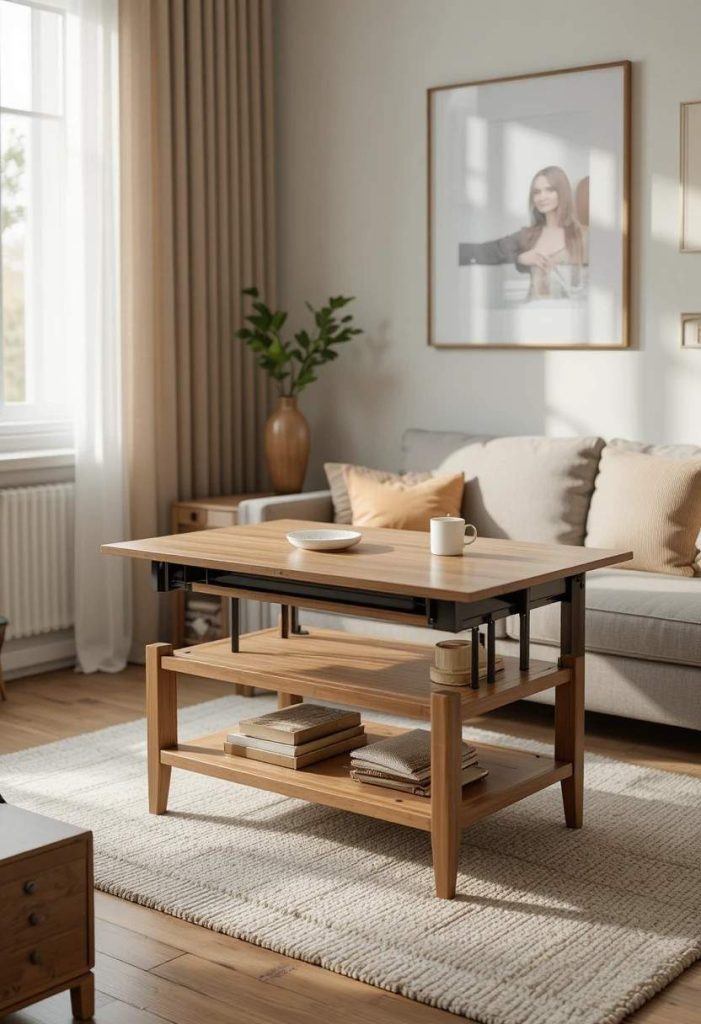
An expandable coffee table is the piece I reach for when the living room needs to change shape. Low and compact, it holds my morning coffee and the newspaper. Lifted and extended, it becomes a proper table for working on my laptop or eating dinner in front of a film. I was wary of wobbly mechanisms, so I tested the lift in the shop and chose a model with a smooth, locking action. Look for a top that stays level when raised, storage underneath for remote controls, and a finish that forgives the odd coffee ring. It has replaced both a side table and a laptop tray for me.
How to do it: Choose a lift-top table with a locking mechanism, test it fully loaded before you buy, and keep a tray on the surface for mugs. Raise it for meals or laptop work, then lower it again to restore the room’s calm.
18. Under Bed Storage Bins
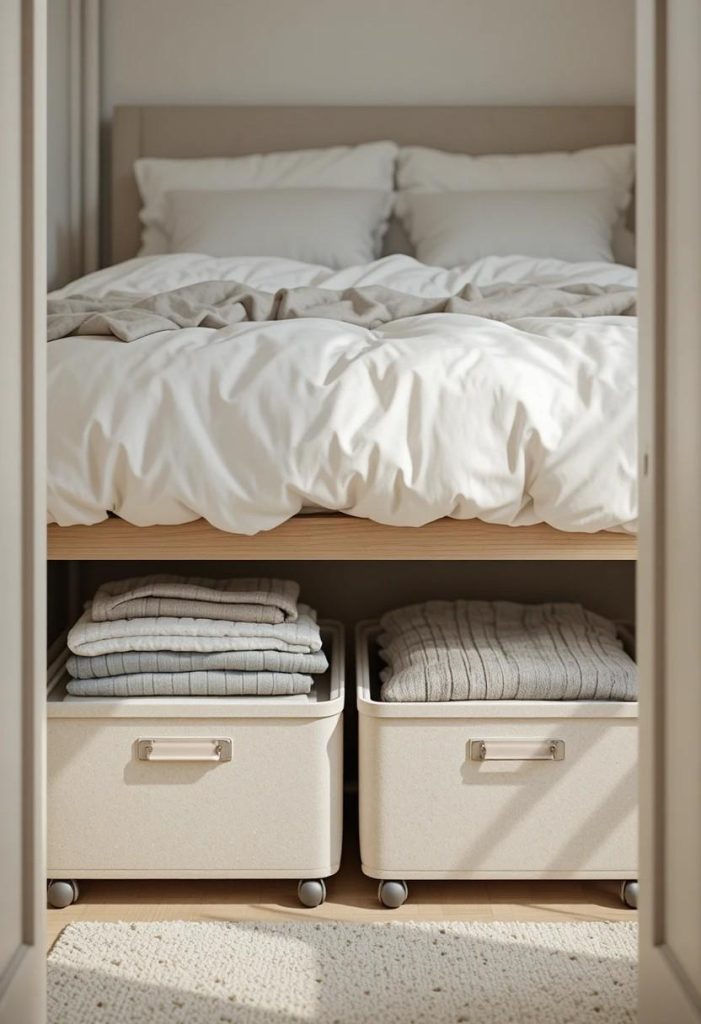
Under-bed bins are the simplest storage win I know, and they cost far less than a new piece of furniture. I slide low, wheeled bins under my bed for spare bedding, winter jumpers and the wrapping paper that used to live on top of the wardrobe. Clear bins help me see what is inside at a glance, while fabric bins with a lid keep dust off clothes. I label each one with a small tag, because an unlabelled bin is just a box I have to open and check. Measure the height under your bed first, and choose bins that roll out smoothly without catching on the rug.
How to do it: Measure the clearance under your bed, buy low bins on wheels that fit with a little room to spare, and label each one by contents and season. Store heavy items near the head end, and pull bins out fully before you lift anything heavy.
19. Tension Rod Room Divider
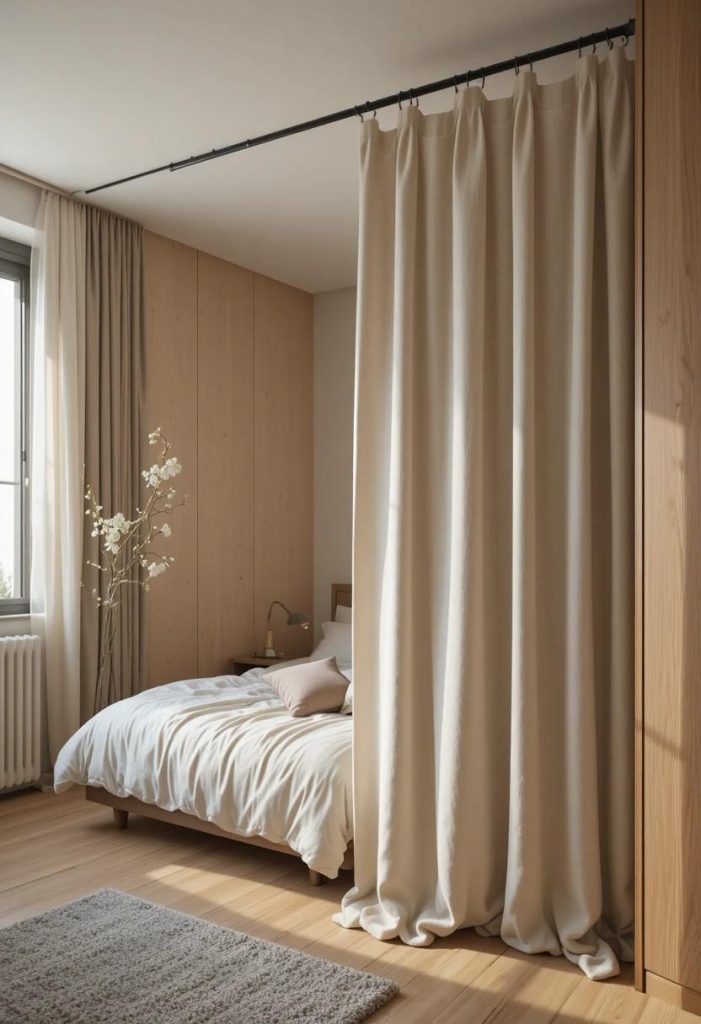
A tension rod and a soft curtain gave my studio a bedroom that feels separate without a single hole in the wall. I hang a light, linen-look curtain from a rod wedged between two walls, and in the evening I draw it across to signal that the day is done. During the day I tie it back, and light flows through the whole flat again. I love that I can take it down in minutes when I move out, and that the fabric softens the room in a way a folding screen never did. Choose a curtain that lets some light through, and a rod rated for the width you need.
How to do it: Measure the gap between the two walls, choose a tension rod slightly longer than the span, and hang a light curtain on rings so it slides easily. Tie it back by day, draw it across at night, and check the rod’s grip monthly.
20. Wall Mounted Folding Dining Table
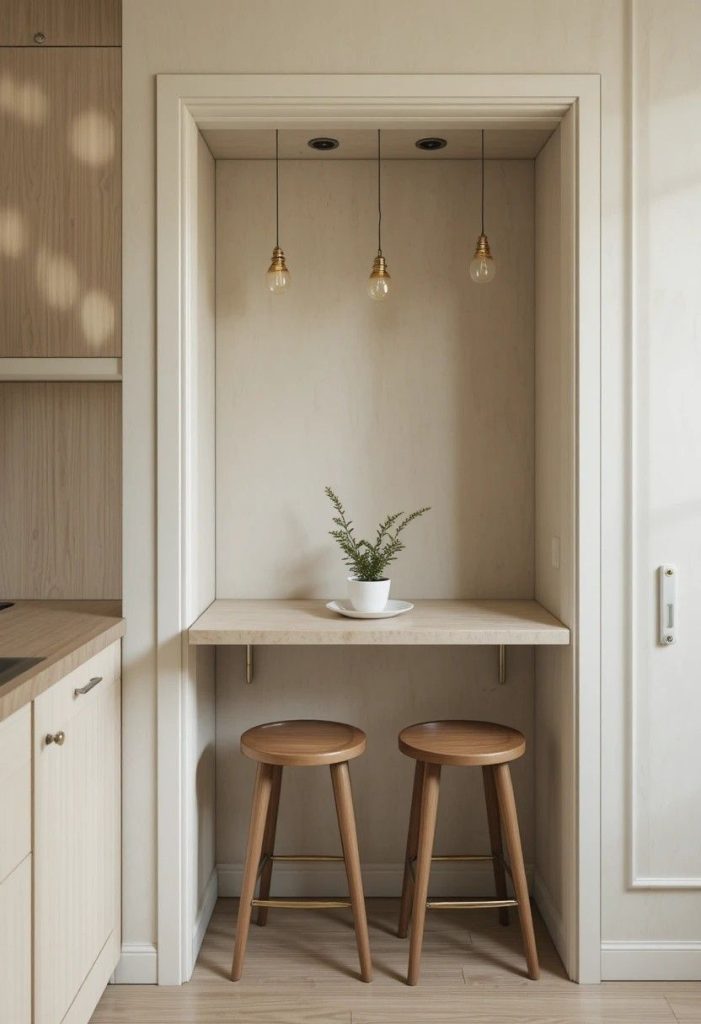
A wall-mounted folding table gave me a dining spot in a kitchen that supposedly had no room for one. Folded down, it is barely a ledge, holding a small plant and a candle. Folded up, it seats two comfortably for dinner, with folding chairs that hang on hooks beside it. I eat there most evenings now, because sitting at a table, even a small one, makes a meal feel like an occasion rather than a snack on the sofa. Make sure the bracket locks firmly when open, and choose a top that wipes clean after a tomato sauce spill, because that will happen.
How to do it: Fix the bracket into studs or strong wall fixings at table height, hang two folding chairs on hooks nearby, and keep placemats in a drawer below. Fold the table down after meals to keep the kitchen walkway clear.
21. Hanging Wall Planters
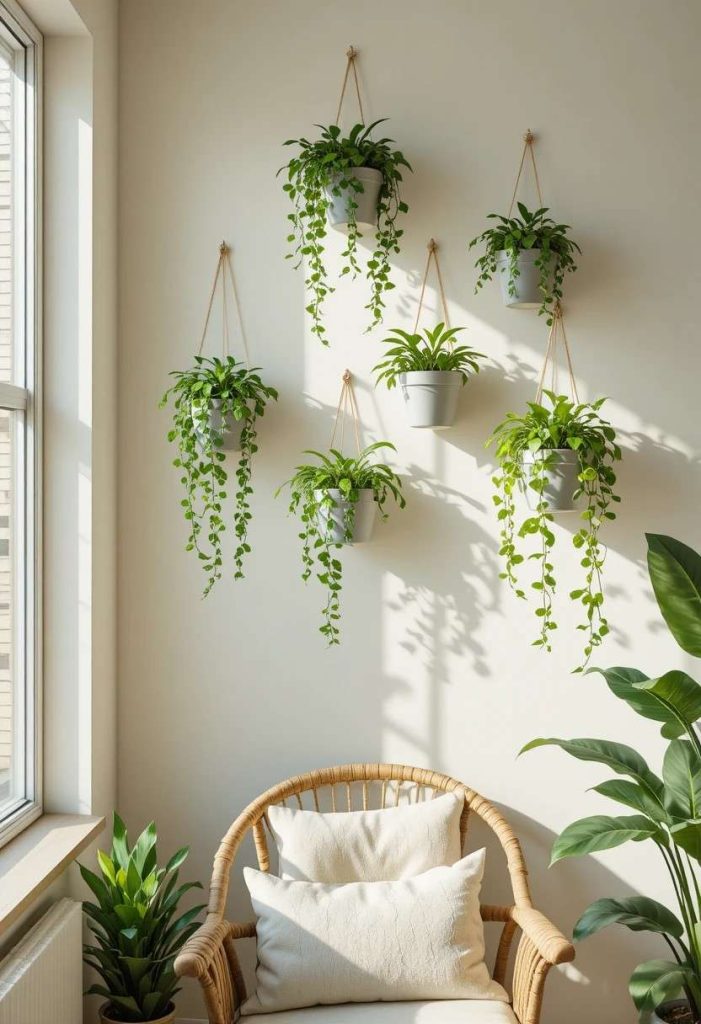
Plants make my flat feel alive, but pots on every surface made it feel crowded, so I moved the greenery up the wall. Hanging planters now hold trailing pothos by the window, herbs in the kitchen, and a small fern in the bathroom, where it loves the steam. I water them over the sink once a week, and the empty surfaces below stay clear for cooking, reading and resting. Choose planters with a drainage tray or a liner, because drips on a wall are no fun to clean. Start with one or two easy plants, and add more only when you know you enjoy caring for them.
How to do it: Hang planters near natural light, using hooks rated for the weight when watered, and choose trailing plants for high spots and herbs for the kitchen. Water over the sink, let them drain, and rotate them every few weeks for even growth.
22. Bench With Built In Storage
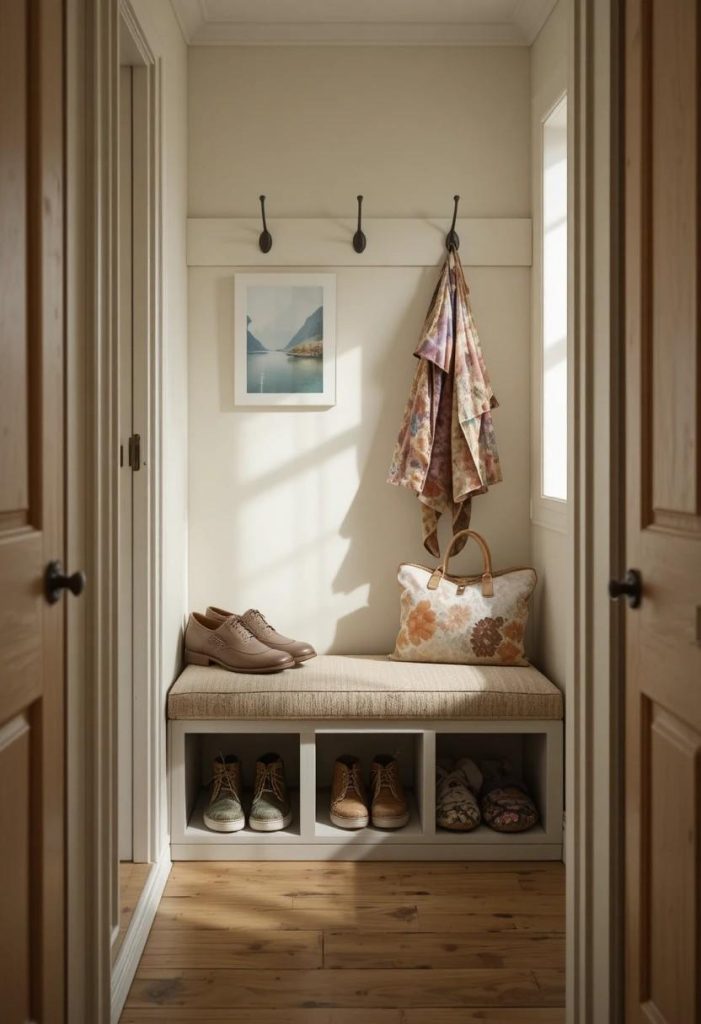
A storage bench by my front door has ended the morning scramble for shoes, bags and the umbrella I always forgot. I sit down to put my boots on, lift the lid, and everything I need for the day is waiting inside: my tote, a spare scarf and the dog lead. At the foot of the bed, the same kind of bench holds spare bedding and out-of-season clothes. I chose a bench with a hinged lid that stays open on its own, so I am not holding it up with one hand while I rummage with the other. A cushion on top makes it comfortable, and a basket underneath catches gloves and hats.
How to do it: Measure your entryway or bed end, choose a bench with a stay-open lid and a cushion, and sort its contents into daily items on top and spare items below. Sit to put shoes on, store bags inside, and clear it weekly.
23. Slim Rolling Kitchen Cart
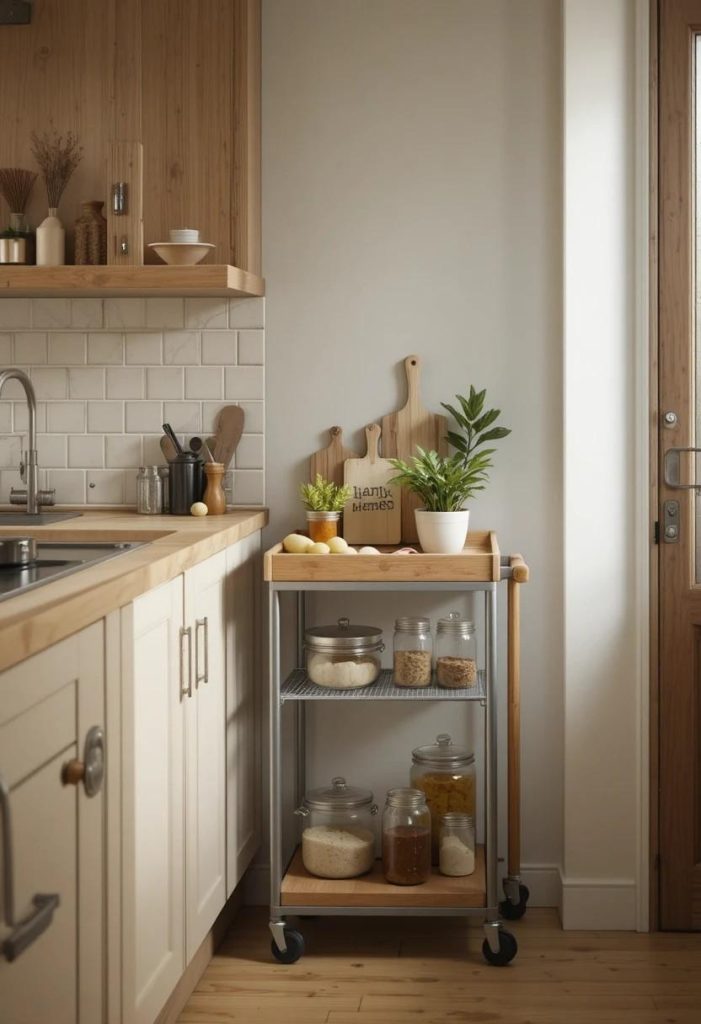
Every small kitchen has a gap nobody planned for, and mine was the ten-centimetre strip between the fridge and the wall. A slim rolling cart slides into that gap and holds oils, spices and tins I used to stack precariously on top of the cupboards. When I cook, I pull it out like a drawer, take what I need, and slide it back. The top shelf works as extra counter space for chopping, and the wheels lock so it does not wander while I work. Measure the gap carefully, because a cart even a centimetre too wide will not fit, and a cart too narrow will rattle.
How to do it: Measure the gap’s width, depth and height, choose a cart a centimetre narrower than the gap, and load heavy tins low and oils at the top. Pull it out to cook, lock the wheels, and slide it back when the kitchen is tidy.
24. Mirrored Cabinet to Open Up the Room
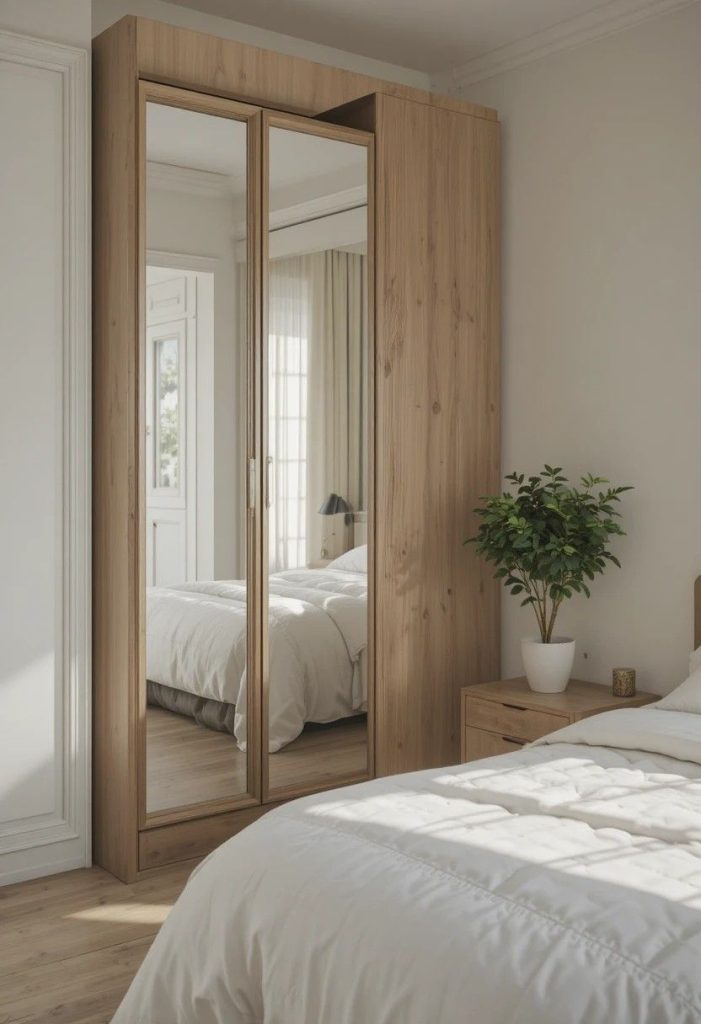
A mirrored cabinet in my bathroom does two jobs at once, and I notice the difference every morning. Behind the mirror, shelves hold medicines, skincare and the spare toothbrushes that used to crowd the sink. In front, the mirror bounces light around the room and makes the small space feel wider and brighter. I chose a cabinet deep enough for bottles to stand upright, with a soft-close door so it never slams at six in the morning. Keep the front clean with a quick wipe, and sort the inside every few months so expired creams do not linger. It is storage that looks like decoration.
How to do it: Choose a cabinet deep enough for your tallest bottle, fix it at eye level above the sink, and sort contents by daily use at the front. Wipe the mirror weekly, and check expiry dates every few months.
25. Ladder Shelf for Vertical Storage
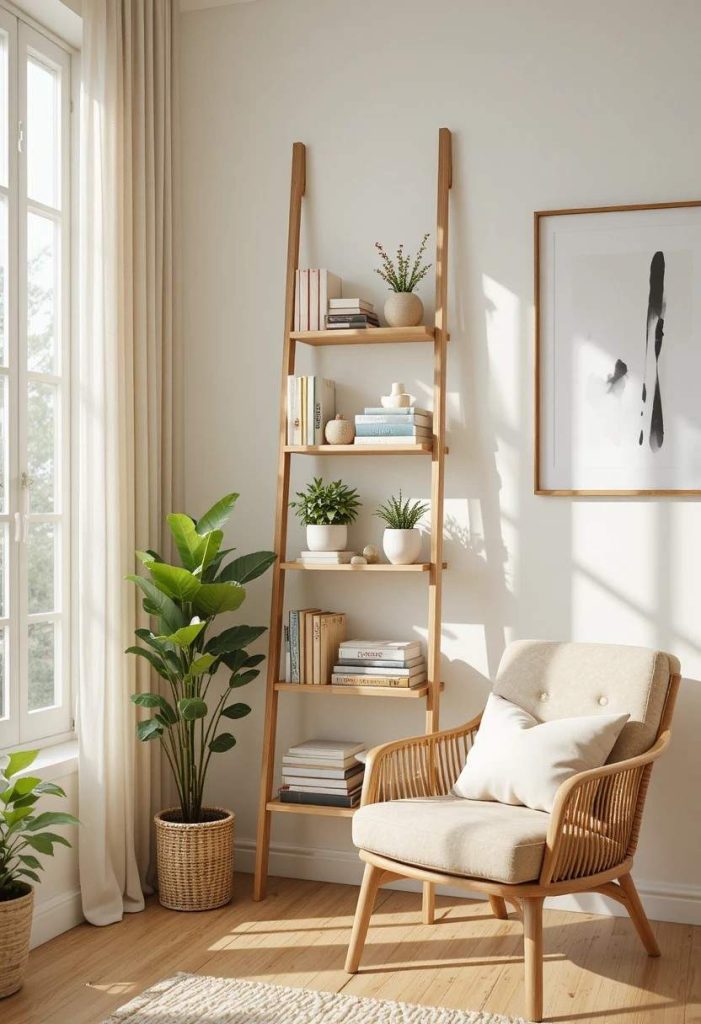
A leaning ladder shelf is a renter’s friend, because it needs no screws in the wall and moves easily when I rearrange the room. Its tiered shelves hold books at the bottom, plants in the middle and a framed print at the top, where it catches the light. I love the open, airy look, which suits a small room far better than a solid bookcase that blocks light. The trick is to keep heavier items low, so the shelf stays stable, and to leave some space on each tier. I anchor the top to the wall with a removable strip for extra safety, especially if children or pets visit.
How to do it: Lean the shelf against a flat wall, place heavy books on the lowest tier and lighter objects higher, and secure the top with a removable adhesive strip. Leave a third of each shelf empty, and dust the tiers weekly.
26. Convertible Console to Dining Table
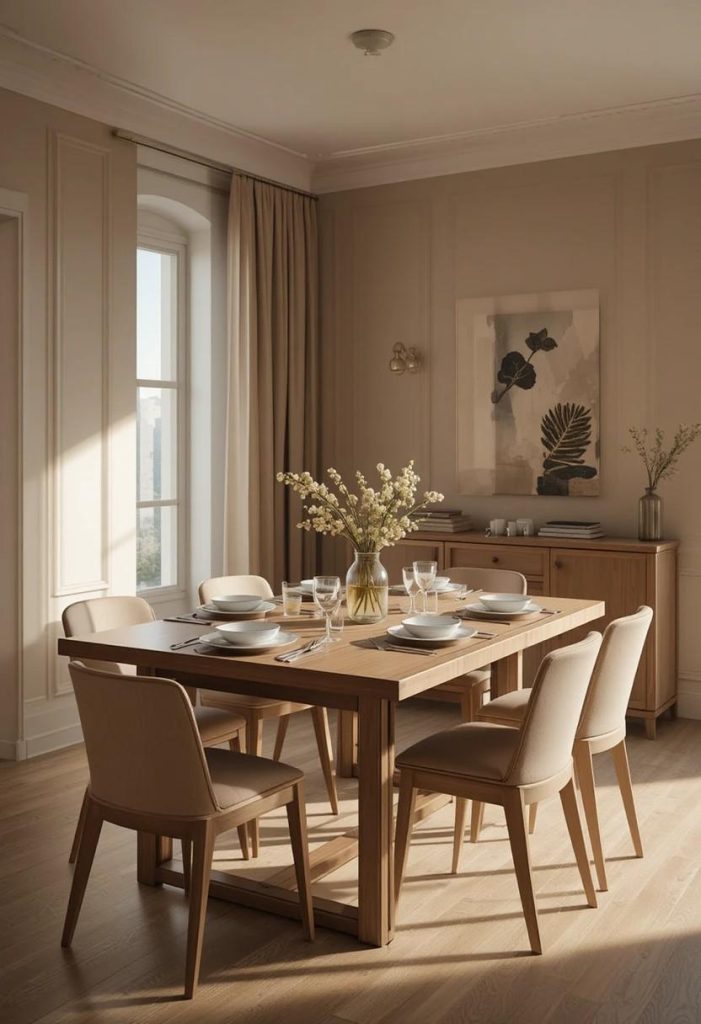
A console that unfolds into a dining table still impresses my guests, and it impresses me every time I use it. Most days it is a slim hallway table, holding a lamp, a bowl for keys and a small vase. When six people come for dinner, I pull it out, unfold the leaves, add the extension panels, and suddenly we have a full table with room for plates, glasses and a proper centrepiece. It takes a few minutes to convert, so I practise the motion before guests arrive and keep the extension panels stored flat nearby. Choose a model with sturdy legs that lock into place.
How to do it: Keep the console against a wall with its extension panels stored flat nearby, practise unfolding it once before guests arrive, and lock each leg firmly. Set the table after it is fully open, and fold it back the same evening.
27. Pegboard Wall for Flexible Storage
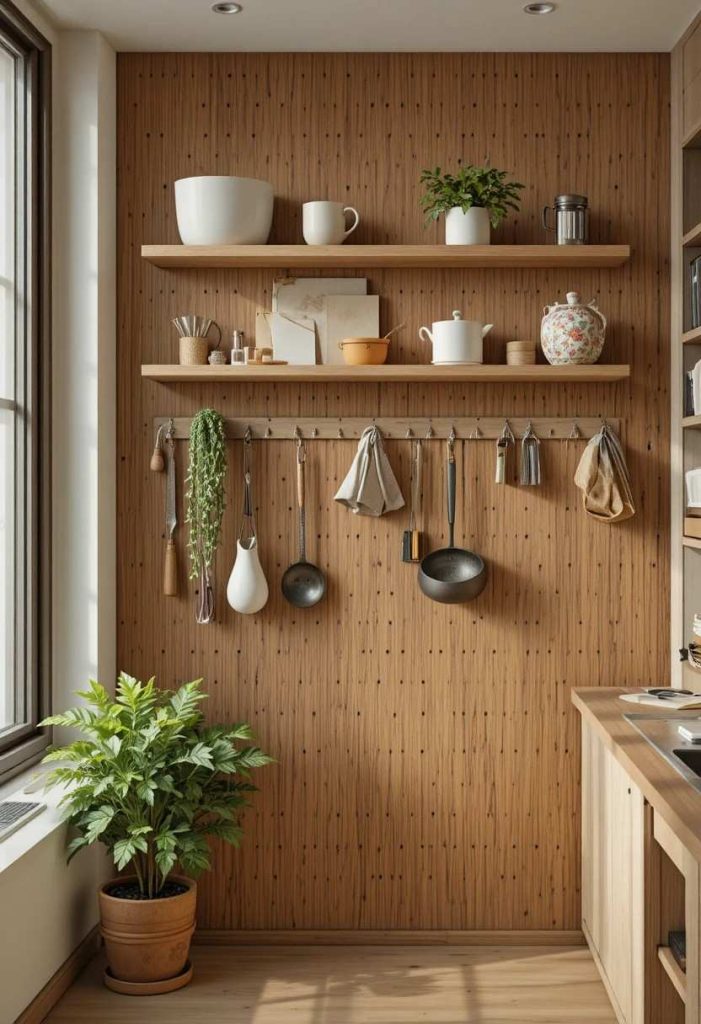
A pegboard wall is the most flexible storage I own, because I can move the hooks and little shelves whenever my needs change. In my kitchen it holds pans, measuring cups and a small shelf for spices. In my craft corner it holds scissors, ribbons and jars of buttons, all visible at a glance. I paint my pegboard the same colour as the wall, so it blends in rather than shouting for attention, and I group similar items together so I can find them without thinking. When a new hobby arrives, I simply rearrange the hooks instead of buying another piece of furniture.
How to do it: Fix the pegboard with spacers so hooks fit behind it, paint it to match the wall, and group hooks by task. Hang daily tools at eye level, add small shelves for jars, and rearrange the layout when your routine changes.
Frequently Asked Questions
What is the best space-saving furniture for a small rental?
Start with pieces that need no drilling and do more than one job, such as a storage ottoman, a ladder shelf, under-bed bins or a tension-rod divider. They give you storage and seating without permanent changes, and you can take them with you when you move. Add a fold-down desk or a sofa bed only once the basics are working well.
Do I need to drill holes for space-saving furniture?
Not always. Many of the ideas here, including storage benches, nesting tables, rolling carts and pegboards on a freestanding frame, need no drilling at all. For wall-mounted pieces, ask your landlord first, use the correct fixings for your wall type, and consider removable adhesive strips for lighter items.
Is a Murphy bed or a sofa bed better for a studio flat?
A Murphy bed frees the whole floor during the day and suits a studio where you want a clear living area, while a sofa bed is simpler, cheaper and gives you seating as well as a bed. Choose a Murphy bed if you have a suitable wall and want a full-size mattress, and a sofa bed if you host guests only occasionally.
How can I add storage without making a small room feel crowded?
Use the walls and the space under furniture first, keep closed storage for clutter and open shelves for a few favourite objects, and leave empty space on every shelf. Choose slim, light-coloured pieces, keep the floor as clear as you can, and let one mirror or a pale wall colour bounce light around the room.
How much should I spend on space-saving furniture?
Spend the most on the piece you will use every day, such as a good sofa bed or a sturdy storage bed, and save on simpler items such as bins, organisers and nesting tables. Measure first, buy one piece at a time, and live with it for a few weeks before you buy the next, so you do not fill the room twice.
Your Space Saving Furniture Checklist
Work through this list one room at a time, and tick off each step as you choose pieces that truly earn their place.
☐ Measure every wall, doorway and gap before you buy anything.
☐ List your biggest daily frustration: storage, seating, sleep or work.
☐ Choose one multi-purpose piece for each problem area first.
☐ Pick a storage bed, under-bed bins or a bench for hidden storage.
☐ Add a fold-down desk, corner desk or loft bed for a work zone.
☐ Choose a sofa bed or Murphy bed for guests and small bedrooms.
☐ Use floating shelves, a ladder shelf or a pegboard for vertical storage.
☐ Add nesting tables, an ottoman or a lift-top coffee table for the living room.
☐ Fit a slim shoe cabinet, console table or over-door organiser by the entrance.
☐ Use a drop-leaf or folding dining table for meals.
☐ Keep a rolling cart or bar cart for flexible kitchen and living-room storage.
☐ Check fixings, locks and weight limits, and leave space to move around each piece.
Bringing It All Together
Space-saving furniture works best when each piece solves a real, everyday problem, rather than simply filling a corner. A storage bed that hides winter bedding, a table that folds away after dinner, or a bench that holds shoes by the door will change how your home feels far more than a room full of clever gadgets. Choose the one change that would make tomorrow morning easier, measure carefully, and live with it for a few weeks before you add the next piece.
Small homes reward patience and honest choices. Keep the pieces you reach for daily, let go of the ones that only look useful, and leave a little empty space on every shelf and floor. That breathing room is what makes a compact flat feel calm, open and completely yours, and it is the best test of whether a piece of furniture has truly earned its place.
One Comment