
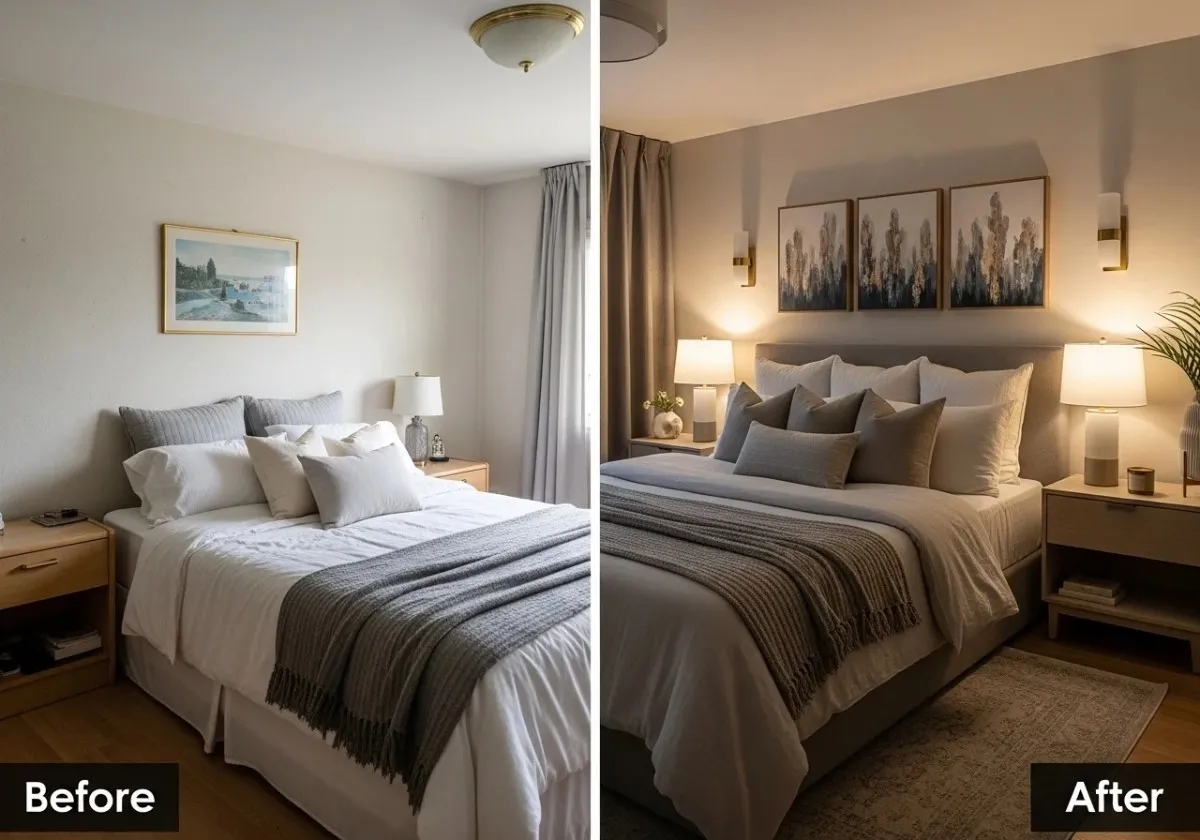
16 Master Bedrooms Ideas That Feel Like Your Own Private Retreat
Your bedroom should feel like an escape—but sometimes it just feels… unfinished. Maybe it’s cluttered, maybe it lacks personality, or maybe it simply doesn’t give you that calm, exhale moment at the end of a long day. The good news? You don’t need a full renovation to change that. The right master bedrooms ideas can completely shift how your space looks and feels, turning it into a place that’s not only beautiful—but deeply restful and truly yours.
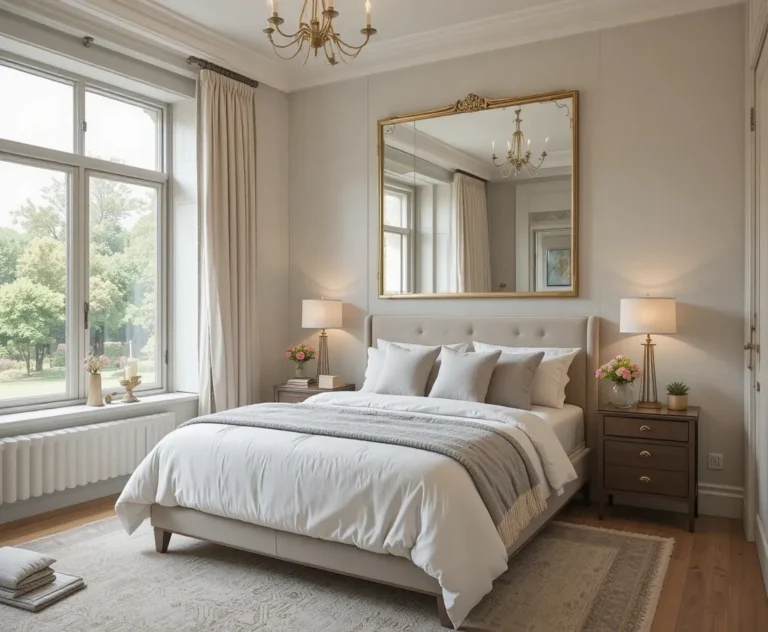
1. Soft Neutral Sanctuary
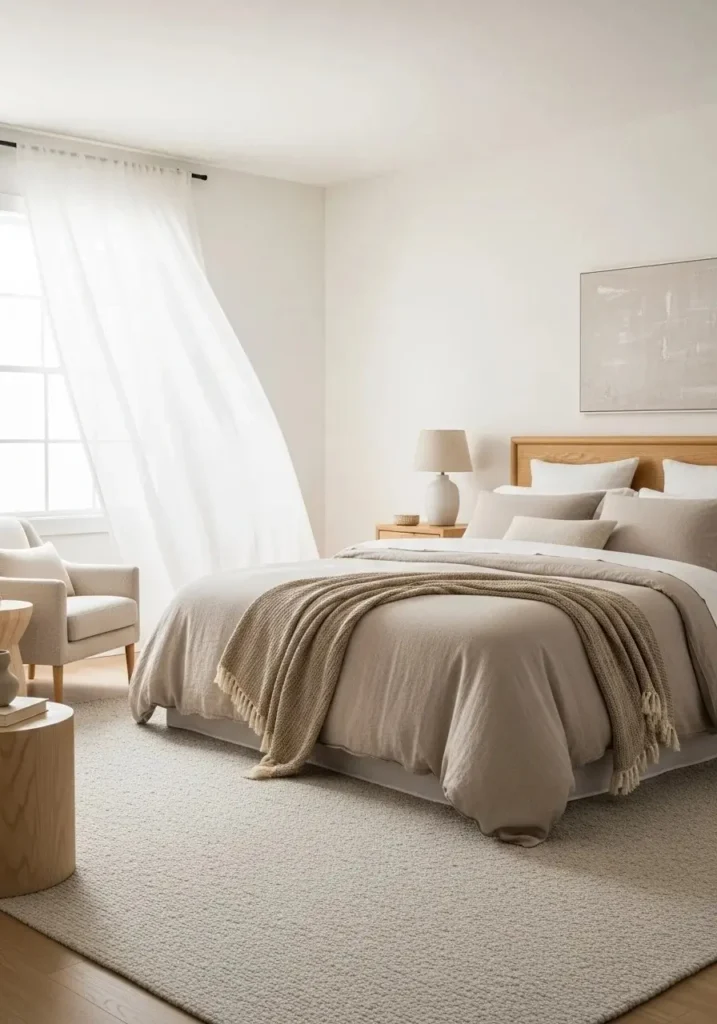
I fell for soft neutrals the winter our bedroom felt cold no matter how high I turned the heating up. Nothing was actually wrong — the bed was comfortable and the curtains did their job — yet every evening the room greeted me with a faint chill. Warm whites, beige, taupe and pale grey changed that within a weekend. I started with the bedding, then carried the same tones through the curtains and a rug I already owned, and suddenly the room felt like somewhere to exhale. The trick is texture: linen that wrinkles softly, a wool throw at the foot of the bed, cotton cushions to lean against. Nothing shouts here, and that is the point — the calm builds quietly until the whole room feels like a deep breath.
How to do it: Pick three neutrals in the same warm or cool family, then dress the bed, window and floor in them. Layer linen, cotton and wool so the palette never feels flat, keep the darkest tone for cushions or a throw, and leave one surface — a nightstand or a picture ledge — deliberately bare so the eye can rest.
2. Statement Headboard Focus
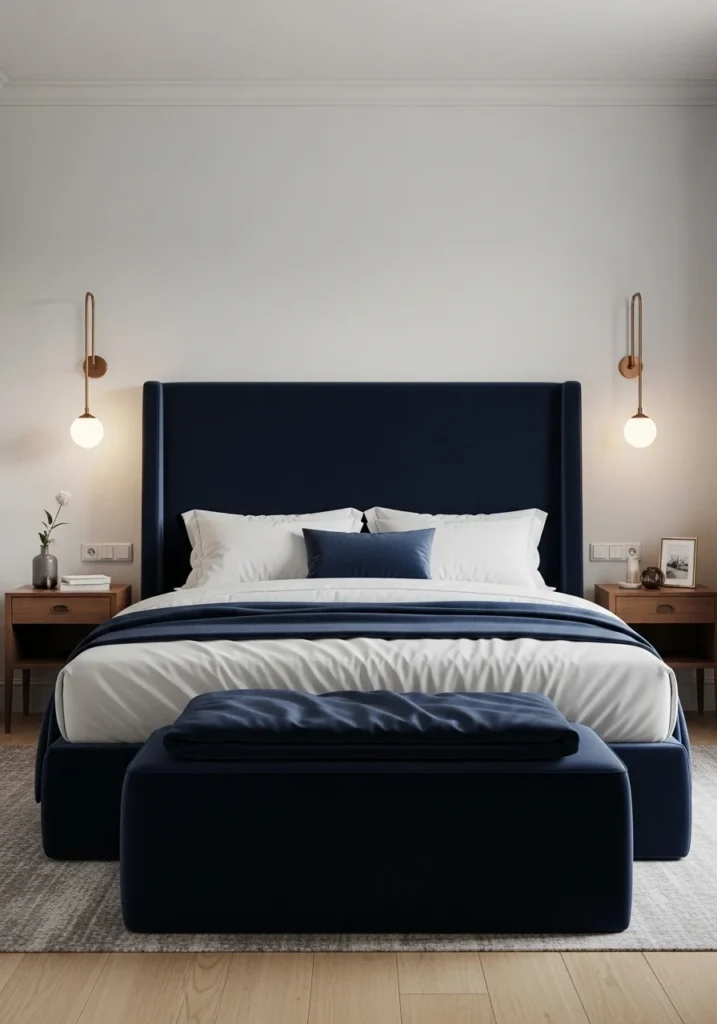
Our bedroom looked finished on paper — tidy bedding, matching lamps, a rug that fitted — but it still felt like a room waiting for someone to move in. The headboard changed that in an afternoon. I chose a tall upholstered one in deep teal velvet, and the moment it went up the bed finally had a presence; everything else seemed to arrange itself around it. A headboard does the decorating for you, really: it gives the eye somewhere to land and the room a clear centre. I kept the bedding pale so the colour could breathe, and added just two cushions in the same velvet. Friends now ask whether we redecorated the whole room. We did not — we simply gave it a focal point, and the rest followed.
How to do it: Measure the bed width and choose a headboard a few centimetres wider, tall enough to clear the pillows by at least 30 cm. Fix it firmly to the bed frame or wall, keep the bedding and wall behind it plain, and echo its colour once — in a cushion, a throw or a lamp base — so it feels deliberate rather than dropped in.
3. Layered Lighting for Mood
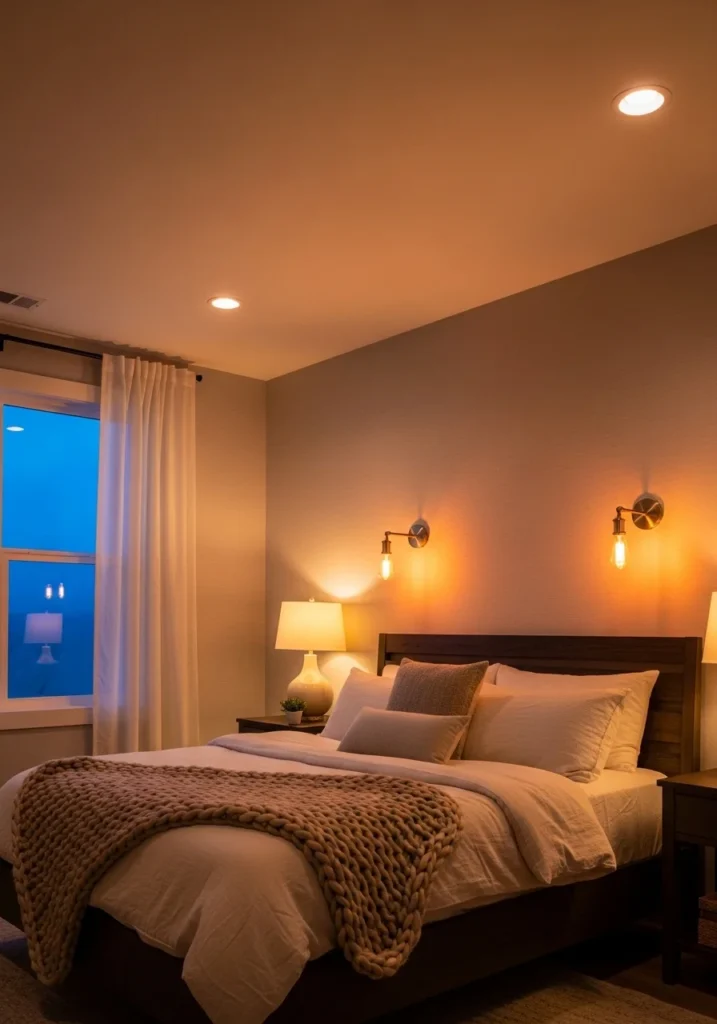
I used to switch on the big ceiling light, wince, and switch it straight off again — our bedroom had exactly two moods, glaring or dark. Layering the light fixed that, and it cost far less than I expected. I kept the ceiling fitting but added a warm lamp on each nightstand and a small wall sconce near the reading chair, all on dimmers where I could. Now mornings are bright enough to dress by, and evenings settle into a soft amber pool around the bed. If you want the glow to feel a little grander, these bedroom chandelier ideas helped me choose a centrepiece that suits a low ceiling without dazzling anyone. Light, I have learned, is less about brightness and more about where it falls — and who it flatters.
How to do it: Start with one overhead light on a dimmer, then add a lamp on each nightstand and one low light near a chair or mirror. Choose warm-white bulbs around 2700K, keep the brightest source behind you when reading, and test the room at night before fixing anything in place.
4. Minimalist Master Bedrooms Ideas
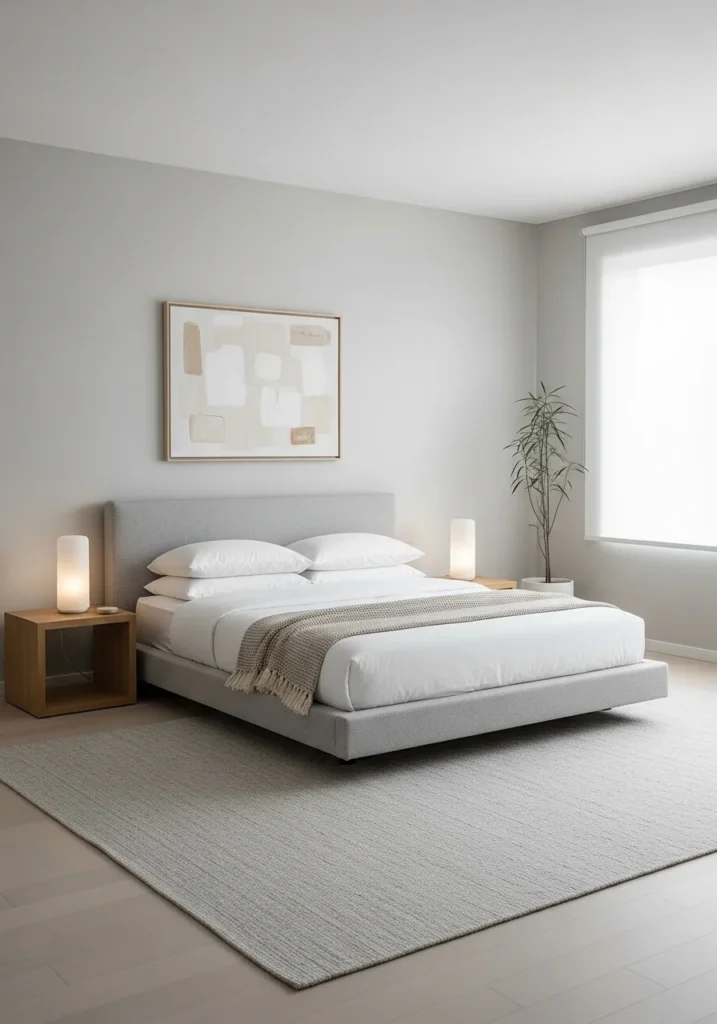
There was a month when our bedroom doubled as a dumping ground — clean laundry on the chair, books stacked on the floor, a drawer that would not quite shut. I felt it every night: my mind stayed busy long after my body had given up. Going minimalist was less a style choice than an act of self-defence. I removed one thing a day for a fortnight — a spare cushion, a fussy ornament, the chair that collected clothes — until only what I used or loved remained. The room did not feel empty; it felt honest. Now I notice the light on the wall in the morning, and I fall asleep faster. Less, in this room at least, turned out to be a genuine kindness to myself.
How to do it: Clear every surface, then return only what you use weekly or truly love. Keep furniture to the bed, two nightstands and one storage piece, choose a single neutral palette, and follow a one-in, one-out rule for anything new so the calm you have created actually lasts.
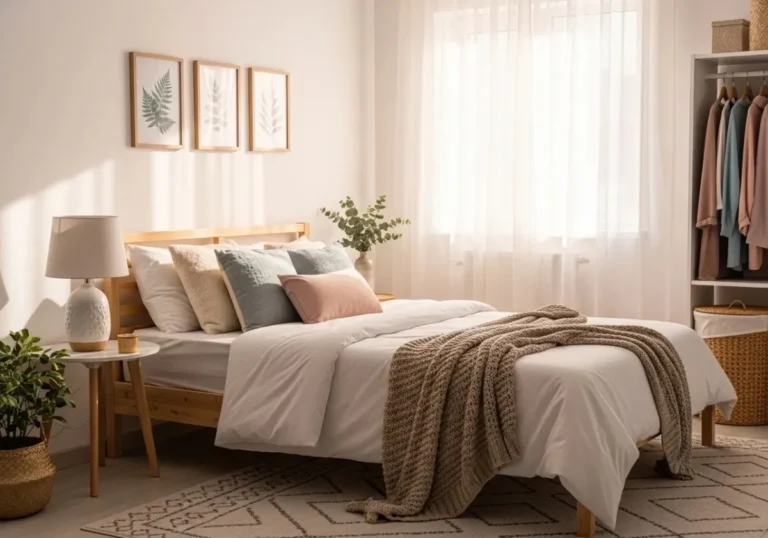
5. Cozy Layered Bedding Look

I am a cold sleeper married to a warm one, which makes our bed a nightly negotiation — and layered bedding is the treaty that finally held. Crisp cotton sheets go on first, then a light duvet, then a knitted throw folded across the foot for my side of the bed and a single linen cushion each. It looks generous without looking fussy, and the best part is how it adapts: a layer comes off in summer, another goes on in January. I keep the colours close — cream, oat and a whisper of sage — so the layers read as one calm invitation rather than a jumble. Climbing in now feels like being tucked in properly, the way a good hotel bed does, except this one is mine.
How to do it: Start with crisp fitted and flat sheets, add a duvet one tog heavier than you think you need, then fold a throw across the foot and finish with two sleeping pillows and one decorative cushion each. Mix cotton, knit and velvet in one colour family, and smooth the top layer each morning so the bed invites you back at night.
6. Accent Wall Behind the Bed
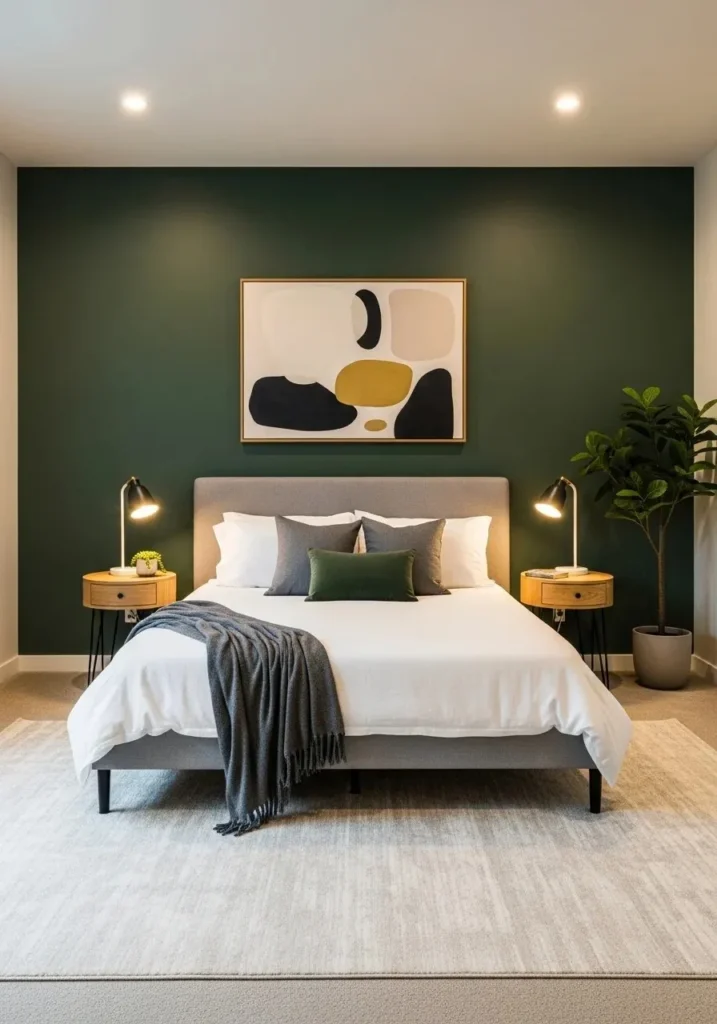
I painted our accent wall on a whim, one rainy Saturday, and spent the first hour convinced I had ruined the room. The deep green looked almost black in the tin. By evening, though, with the bed pushed back against it and the lamps on, the whole room had a spine it never had before. An accent wall is the bravest small change I know: one wall, one tin of paint or a roll of paper, and the bed suddenly has a backdrop worthy of it. The trick is restraint everywhere else — pale bedding, plain curtains, quiet art — so the wall can do its one job beautifully. It still makes me smile every time I walk in, which is a lot to ask of a single wall.
How to do it: Choose the wall behind the bed, then paint it two or three shades deeper than the other walls, or hang one bold wallpaper. Keep bedding and curtains plain, add one picture or a pair of sconces to balance the colour, and live with it for a week before deciding whether it needs softening.
Also More Amazing In the Below For You More:
20 Guest Room Ideas to Make Your Space Cozy and Inviting
15 Attic Bedroom Ideas That Turn Awkward Spaces Into Dreamy Retreats
19 Bedroom Lamp Ideas That Instantly Make Your Space Feel Cozy & Beautiful
16 Teal & Pink Bedroom Ideas That Feel Stylish, Cozy, and Totally You
7. Natural Wood Warmth
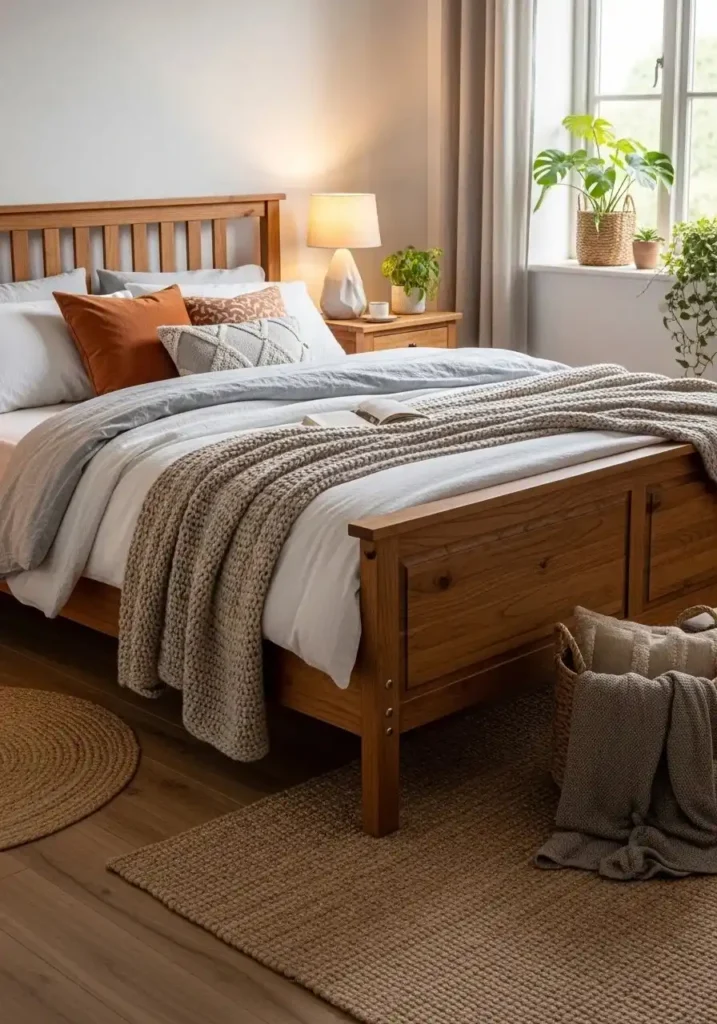
Our bedroom used to feel a little like a showroom — pale, polished and faintly cold — until I brought in a second-hand oak nightstand with a scratch on one corner. That small imperfection changed the room’s whole manner. Wood does something no paint can: it carries a history you can feel, and it softens every hard edge around it. I added a wooden bed frame the following year, then a simple beamed look above the window, and the room grew warmer with each piece. I keep the tones close — honey oak and a darker walnut, nothing more — and let soft linen and wool do the cushioning. The result feels grounded rather than decorated, as if the room had grown that way on its own.
How to do it: Choose one dominant wood tone for the bed frame, then repeat it in a nightstand or bench and keep a second tone to a single accent. Pair wood with linen bedding and a wool rug, leave the grain visible rather than painting over it, and oil the surfaces once a year to keep them glowing.
8. Hotel-Inspired Master Bedrooms Ideas
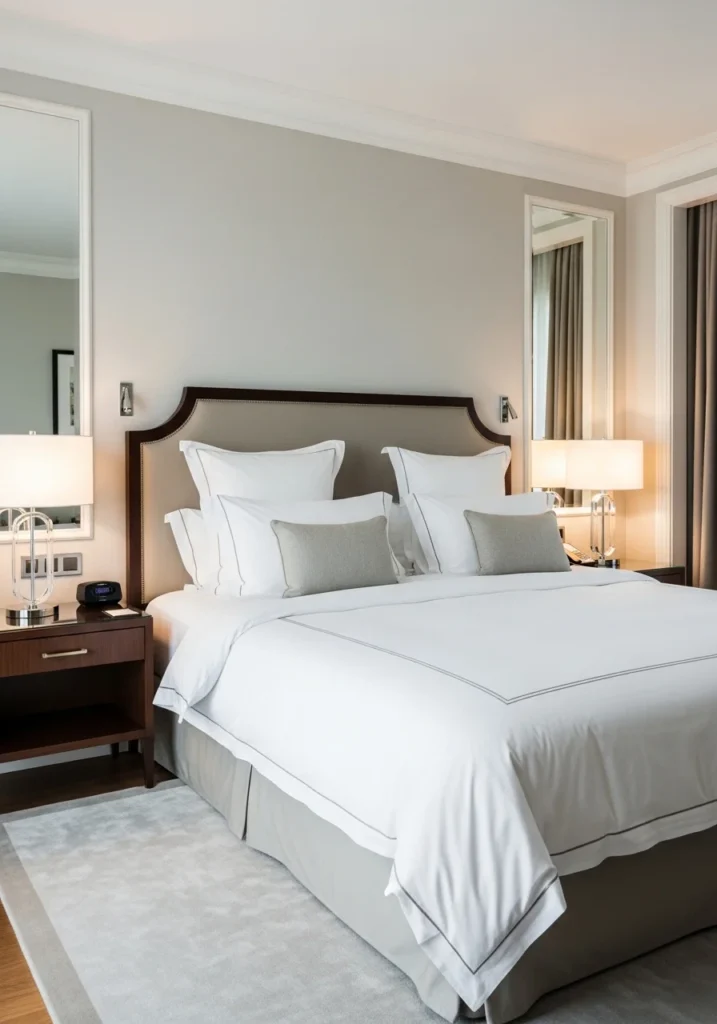
I still think about a hotel room in Bath where I slept better than I had in months, and I spent a year trying to work out why. It was not the size — our bedroom is bigger — it was the sameness: identical lamps, identical nightstands, white bedding folded with military precision, and absolutely nothing left lying around. I copied the formula at home: matching nightstands, crisp white linen, two plump pillows each, and a small vase with a single stem. I even considered a four-poster frame — these canopy bed ideas show how a simple canopy can give a plain room that same suite feeling without swallowing it. The effect is oddly freeing: with everything in its place, my mind finally stops tidying and starts resting.
How to do it: Match your nightstands and lamps exactly, dress the bed in crisp white linen with the top sheet folded back, and clear every surface except one small vase or book. Add a bench at the foot of the bed, keep the palette to white and one soft neutral, and make the bed properly each morning — that one habit carries half the hotel feeling.
9. Earthy Boho Retreat
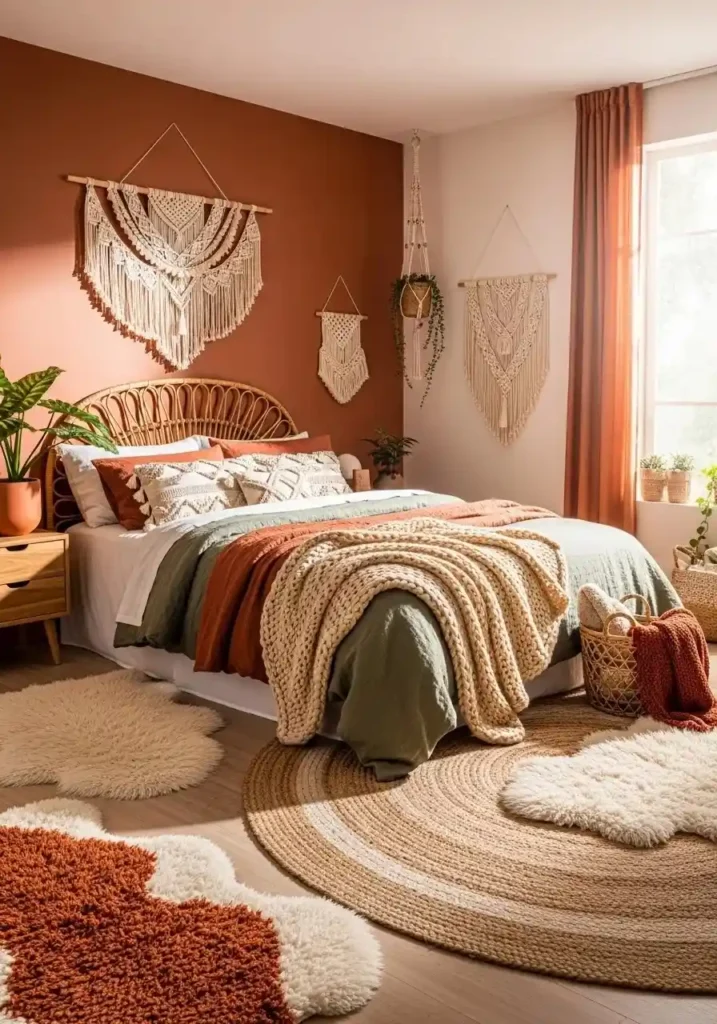
Boho found me by accident, in a market stall piled with woven baskets I had no plan for. I bought one, then another, and by the end of the month our bedroom had gone terracotta, olive and cream without my quite noticing. It suits me better than any look I have planned deliberately, because it forgives everything: the slightly wonky macramé I made on a course, the rug that is a shade too small, the stack of books by the bed. The warmth comes from the mix itself — clay tones against creamy whites, rough jute beside soft cotton — and the room feels collected rather than bought. It is the least formal room in our house, and the one I reach for first at the end of a long day.
How to do it: Start with a warm base of cream and terracotta, then layer woven baskets, a macramé hanging and a textured rug. Mix three natural materials — rattan, jute and cotton — keep the palette to four earthy tones, and leave one wall plain so the textures can breathe.
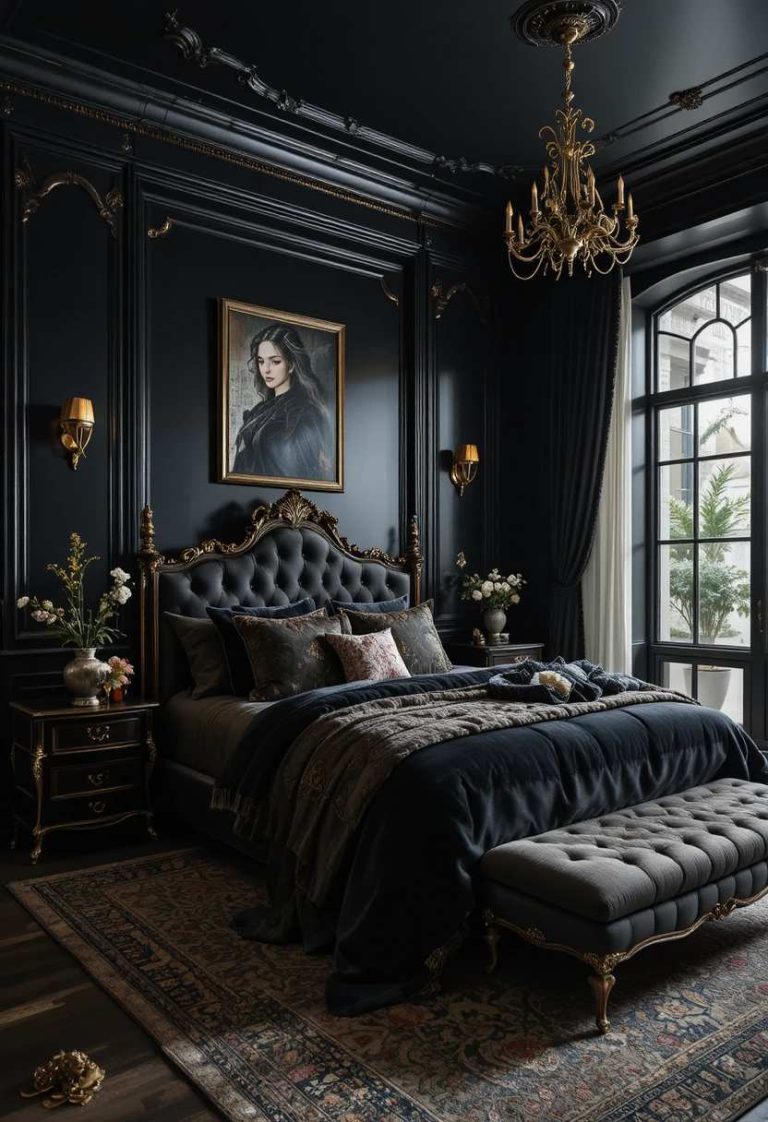
10. Moody Dark Bedroom
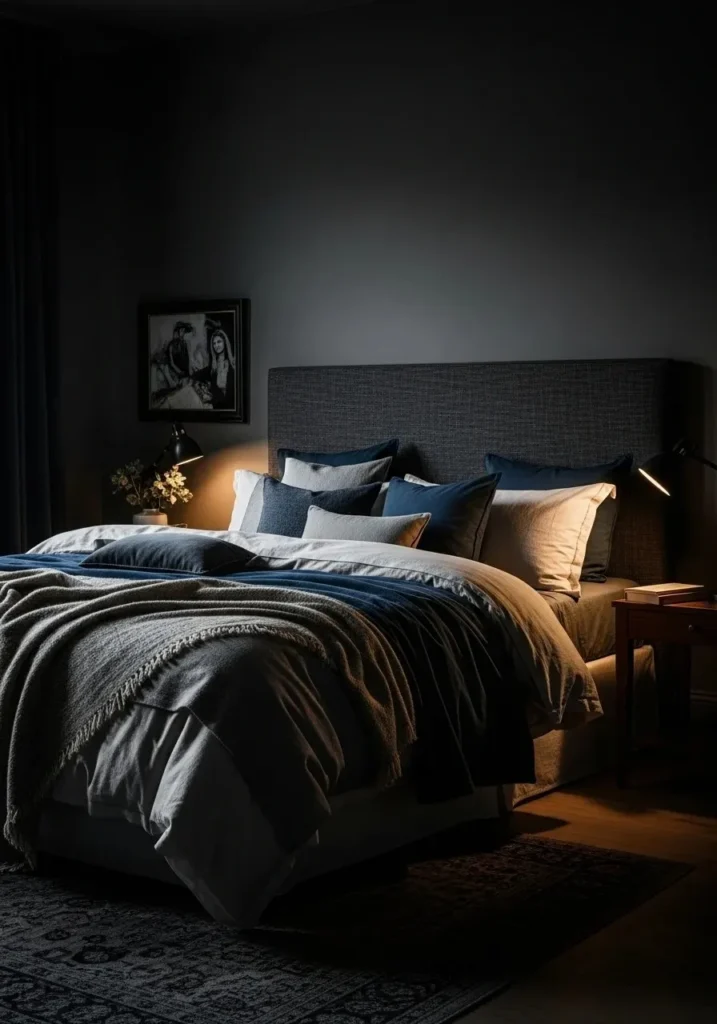
I resisted dark walls for years, convinced they would shrink our bedroom into a cave. Then a friend painted her box room charcoal and it looked like a jewel box, so I tried it — just the wall behind the bed, at first, in a deep inky green. The effect startled me: instead of closing in, the room felt deeper, quieter, almost velvety, and the pale bedding glowed against it like moonlight. If charcoal feels too stark, these dark gray bedroom ideas strike a softer balance, keeping the drama while letting the daylight in. The secret is the lighting — a warm lamp on each side, a candle on the sill — and one metallic accent to catch it. I sleep better in the dark now, in every sense.
How to do it: Paint the wall behind the bed in charcoal, navy or forest green, then balance it with pale bedding and one metallic accent. Layer warm lamps on both sides so the corners never go black, keep the ceiling and trim white for height, and test a sample at night before committing to the whole wall.
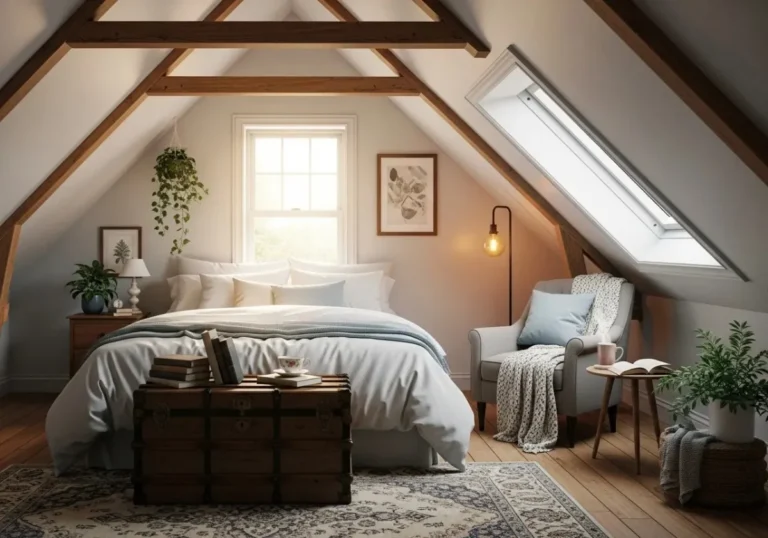
11. Master Bedrooms Ideas with Sitting Area
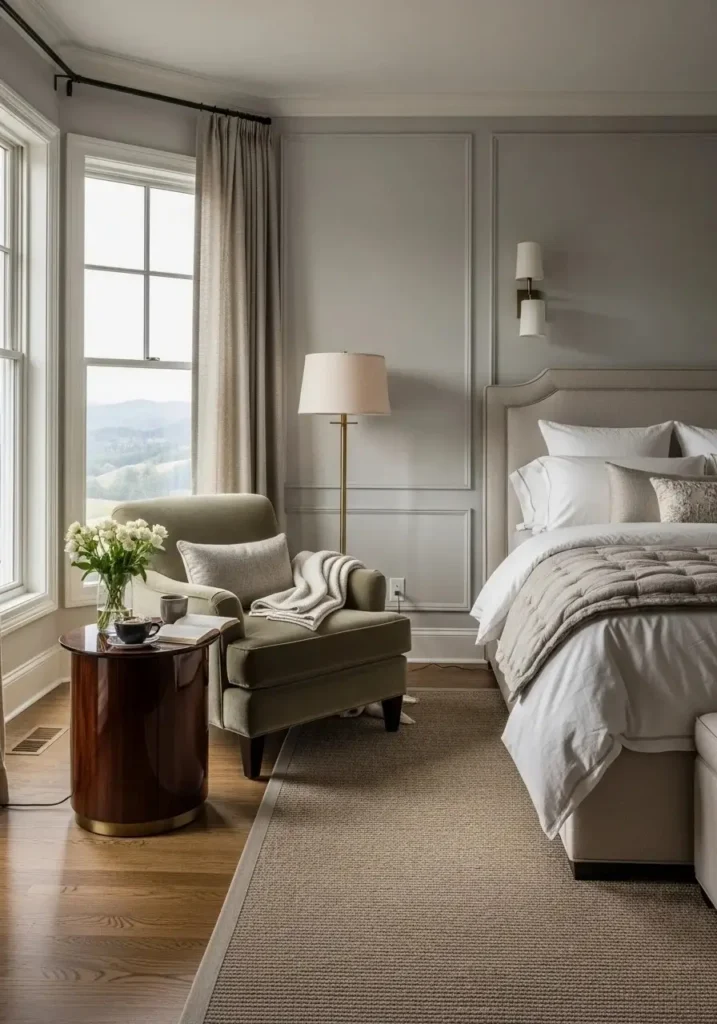
For years the only place to sit in our bedroom was the edge of the bed, which meant every quiet cup of tea ended with me perched like a guest in my own room. The armchair changed that — a small, slightly battered velvet chair by the window, with a reading lamp and a basket for the book I am always halfway through. Now the room has two moods: the bed for sleeping and the chair for waking up slowly, and keeping them separate has made both feel more deliberate. I chose a chair I could curl up in rather than one that merely looked good, and dressed it in the same soft tones as the bedding so it belongs. It is a small luxury, but it is the one I would miss most.
How to do it: Place a comfortable chair or small loveseat near a window, add a floor lamp and a side table within reach, and choose soft fabrics in the same tones as your bedding. Keep the seat clear of laundry and chargers, add a throw and one cushion, and treat the corner as a room of its own when you arrange it.
Also More Amazing In the Below For You More:
20 Guest Room Ideas to Make Your Space Cozy and Inviting
15 Attic Bedroom Ideas That Turn Awkward Spaces Into Dreamy Retreats
19 Bedroom Lamp Ideas That Instantly Make Your Space Feel Cozy & Beautiful
16 Teal & Pink Bedroom Ideas That Feel Stylish, Cozy, and Totally You
12. Statement Ceiling Design

I only noticed our ceiling when I lay in bed with a cold and stared at it for three days — flat, white and entirely forgettable. That boredom became a project: slim wooden beams, painted the same soft white as the walls so they added shape without shouting, and a simple pendant in the middle. Looking up now feels like looking at a finished room rather than an afterthought, and the beams draw the eye across the space instead of letting it drop straight to the floor. It cost less than a new headboard and changed the room just as much. The ceiling, I have learned, is the one surface guests never expect you to have decorated — which makes it the most satisfying one to get right.
How to do it: Add slim beams, tongue-and-groove panelling or a soft paint colour two shades deeper than the walls. Keep the beams pale if the ceiling is low, centre the light fitting over the bed, and leave the walls calm so the ceiling can be the room’s quiet surprise.
13. Soft Pastel Palette
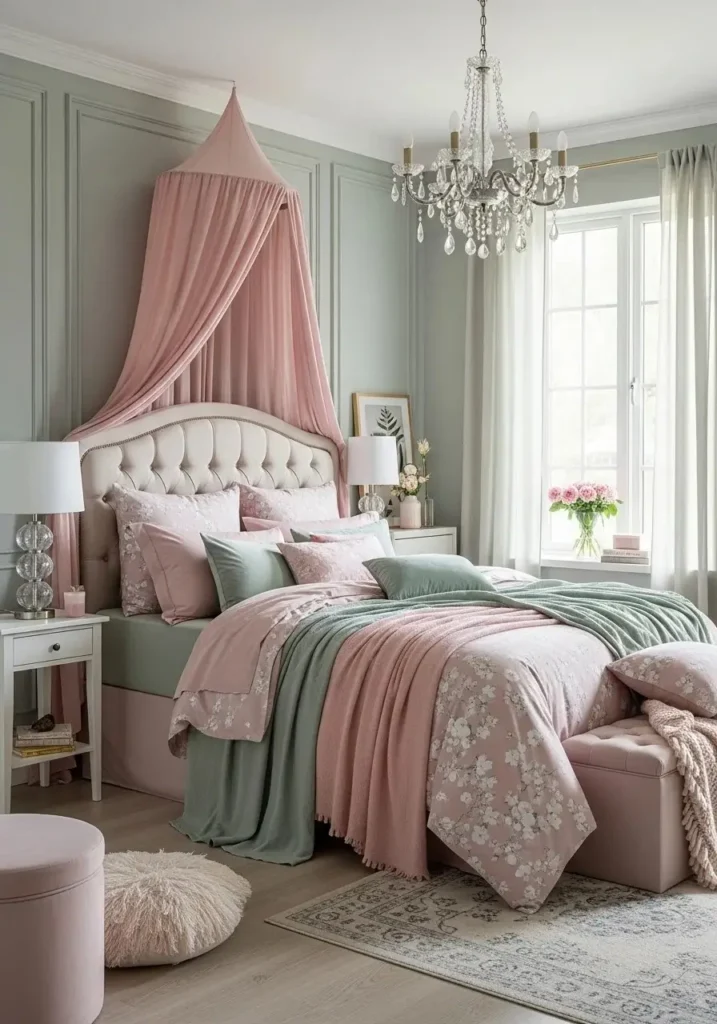
Pastels scared me a little — I worried the room would end up looking like a nursery — until I saw a blush and sage bedroom that felt entirely grown-up. The secret, I discovered, is to treat pastels like neutrals with a whisper of colour, not like sweets. I chose sage for the bedding and a blush cushion or two, kept the walls a warm white, and let the wood tones do the grounding. The room feels gentle in the morning light and never saccharine; it is the colour equivalent of speaking softly. Friends describe it as restful before they can say why, and that is the highest praise a bedroom can earn.
How to do it: Choose two pastels — blush with sage, or powder blue with cream — and use the paler one for the walls or bedding. Keep wood and white as anchors, limit the stronger pastel to cushions and a throw, and step back in daylight to check the balance before adding anything else.
14. Built-In Storage Wall
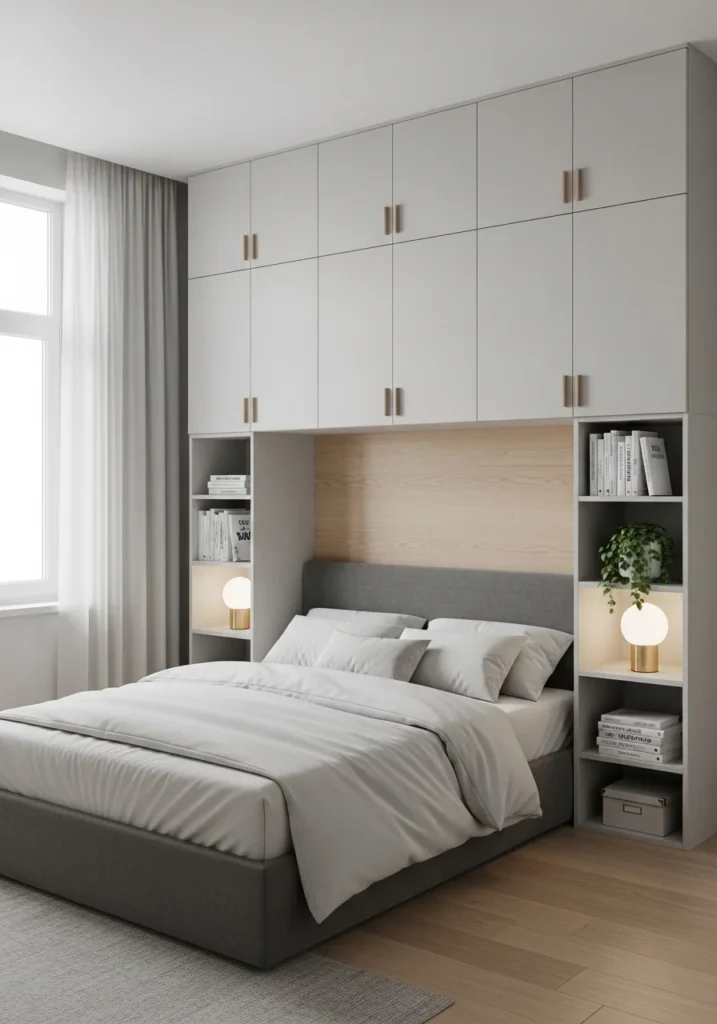
Our bedroom’s clutter had a hiding place problem, not a tidiness problem: there was simply nowhere for anything to live. The built-in wall around the bed solved it in one stroke — cupboards on either side, a shelf for books, a drawer for the things I never want to see. Everything vanished behind doors painted the same colour as the wall, and the room looked twice as big overnight. I was nervous it would feel like a fitted office, but with soft handles and warm wood inside, it feels more like a well-tailored wardrobe. The calm it brought was immediate: I stopped tidying every evening because there was nothing left out to tidy.
How to do it: Measure the wall around the bed and plan cupboards to the ceiling, with closed storage at eye level and open shelves only above it. Match the doors to the wall colour, add soft-close hinges and one warm handle finish, and leave a gap of at least 60 cm on each side of the bed for easy movement.
15. Textured Wall Panels
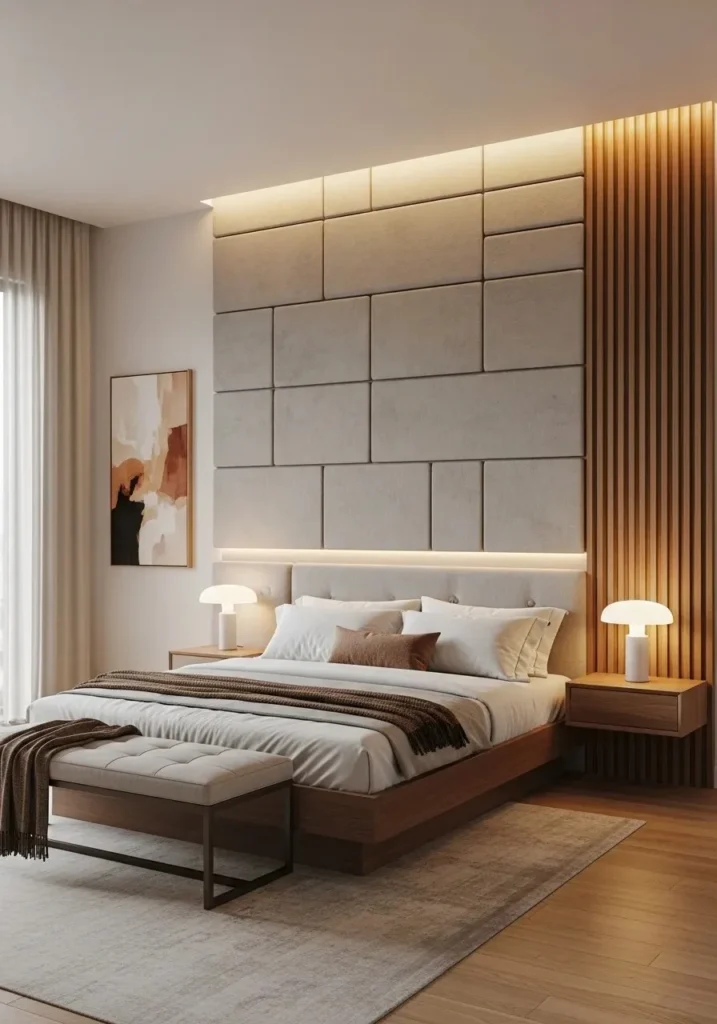
I ran my hand along a slatted wood wall in a friend’s house and immediately wanted one behind our bed — it felt like corduroy for a room. We fitted slim oak slats on the wall behind the headboard over a weekend, and the change was out of all proportion to the effort: the flat wall gained rhythm, the bed gained a backdrop, and the whole room felt tailored. Texture does the work colour often gets asked to do, and it does it more quietly. In the evening, with the lamps on, the slats throw the softest shadows, and the room feels layered even when the bedding is plain. It is the closest thing to wallpaper I have ever loved, and it never once feels busy.
How to do it: Fit slim wood slats, fabric panels or a geometric design on the wall behind the bed, keeping the tone close to the wall colour for a calm effect. Add a wall light or two to throw soft shadows across the texture at night, and keep the bedding plain so the panels stay the star.
16. Light and Airy Curtains
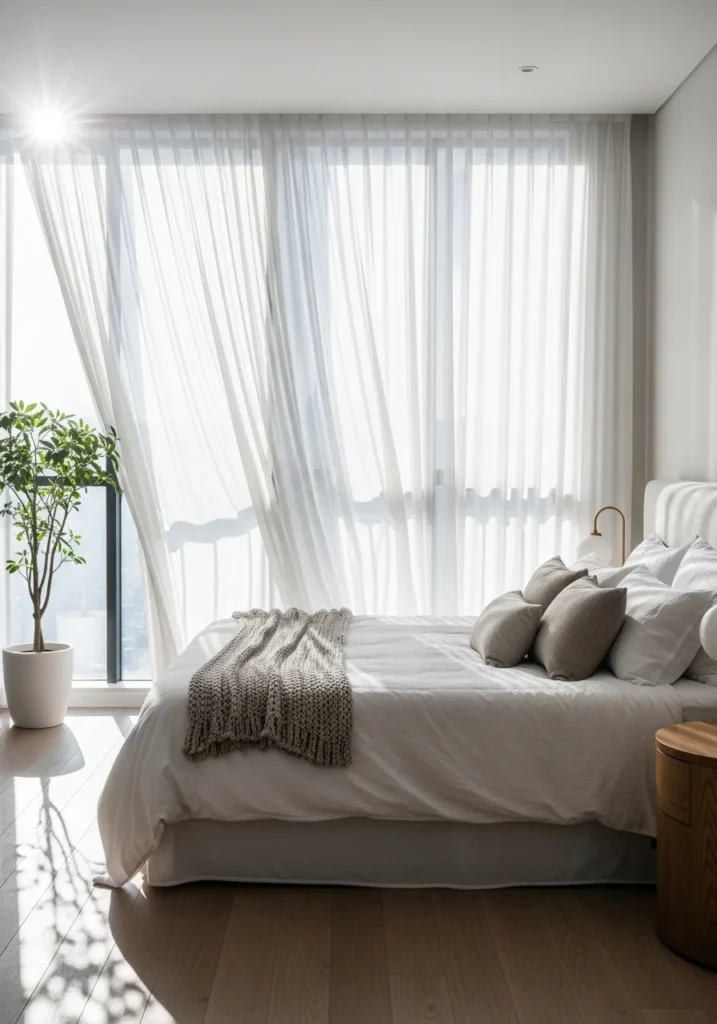
I hung our curtains wrong for years — short, stiff and exactly the width of the window, like a pair of eyebrows raised in surprise. Then I tried floor-length linen, hung high and wide, and the room seemed to grow taller overnight. The fabric moves when the window is open, the morning light comes through softened, and the whole wall feels dressed rather than merely covered. Sheer voile behind the linen gives privacy without losing the glow, and in the evening the closed curtains make the room feel cocooned. It is a small change with a daily reward: every morning the light arrives the way I actually want it to.
How to do it: Hang the rod 15–20 cm above the window frame and 10–15 cm wider on each side, then choose floor-length linen or sheer fabric that just brushes the floor. Layer a sheer voile behind a heavier linen, keep the colour white or a soft neutral, and steam the panels once so they fall in clean, even folds.
Frequently Asked Questions
How can I make my master bedroom feel like a retreat without renovating?
Start with the senses: soft layered bedding, warm dimmable light and one calming colour repeated through the room. Clear a single surface, add a chair or a plant, and let the bed be the focus. Most retreats are made from five or six small, deliberate changes, not from knocking down walls.
What colours work best in a master bedroom?
Warm neutrals, soft pastels and deep greens or charcoals all work, because they lower visual noise and help you unwind. Choose one main colour, one supporting tone and one accent, then repeat them in the bedding, curtains and art. If a colour feels restful to you at 10 pm, it is the right one.
How do I choose the right size headboard?
Measure the bed first: the headboard should be a few centimetres wider than the mattress and tall enough to clear the pillows by at least 30 cm. A low ceiling suits a shorter, wider shape, while a tall room can carry a dramatic upholstered panel. Always check it fits through the door before you order it.
Is a dark bedroom a good idea for sleep?
Yes, for many people — deep tones create a cocooned feeling that suits winding down, and they make pale bedding glow. Balance the darkness with warm lamps on both sides of the bed and a white ceiling, so the room feels cosy rather than heavy. If you are unsure, paint just the wall behind the bed first.
What is the easiest first change to make in a master bedroom?
Change the bedding and the lighting. Fresh layered bedding and two warm lamps transform how a room feels in a single evening, for very little money. Once those are right, add one larger idea — an accent wall, a headboard or a sitting chair — and let the room grow from there.
Your Master Bedroom Checklist
☐ Choose one calming palette and repeat it through bedding, curtains and art
☐ Layer linen, cotton and wool so neutrals never feel flat
☐ Pick a headboard a few centimetres wider than the bed
☐ Add a lamp on each nightstand with warm-white bulbs
☐ Fit dimmers or use low-wattage bulbs for evenings
☐ Dress the bed in layers you can add or remove with the seasons
☐ Paint or paper one accent wall behind the bed
☐ Bring in one natural wood tone and repeat it once
☐ Clear a corner for a chair, a lamp and a book
☐ Hang curtains high, wide and floor-length
☐ Add closed storage so clutter has a home
☐ Test paint and lighting at night before committing
☐ Keep one surface deliberately clear
☐ Step back, look at the room in daylight, and enjoy it
Conclusion
A master bedroom earns its keep in the small hours — the slow morning, the book finished at midnight, the ten minutes of quiet before sleep — and every idea here is really a way of protecting those moments. You do not need all sixteen, and you certainly do not need them at once. Pick the one that answers the thing that bothers you most, whether that is the light, the clutter or the cold corner by the window, and start there.
When it feels right, you will know: the bed will invite you in earlier, the room will ask less of you, and the day will end the way it should — in a space that is unmistakably yours. That is the whole point of a private retreat, and it is closer than it looks — sometimes as close as a tin of paint, a new lamp, or a properly made bed.

2 Comments