26 Baby Boy Nursery Ideas for a Sweet, Cozy and Adorable Space
There is something truly special about creating a nursery for a little boy, a cozy first room filled with love before he even arrives. It is a space for sleepy cuddles, gentle lullabies, and all the tender early days of babyhood. Planning my own little one’s nursery was one of the sweetest joys of waiting, dreaming up every soft detail. With calming colours, cozy textures, and a few adorable touches, you can create a room that feels sweet, snug, and full of charm. Below are twenty six baby boy nursery ideas, shared with warmth and a little heartfelt inspiration, to help you create a sweet, cozy, and adorable space you will treasure.
1. Choose a Calming Colour Palette
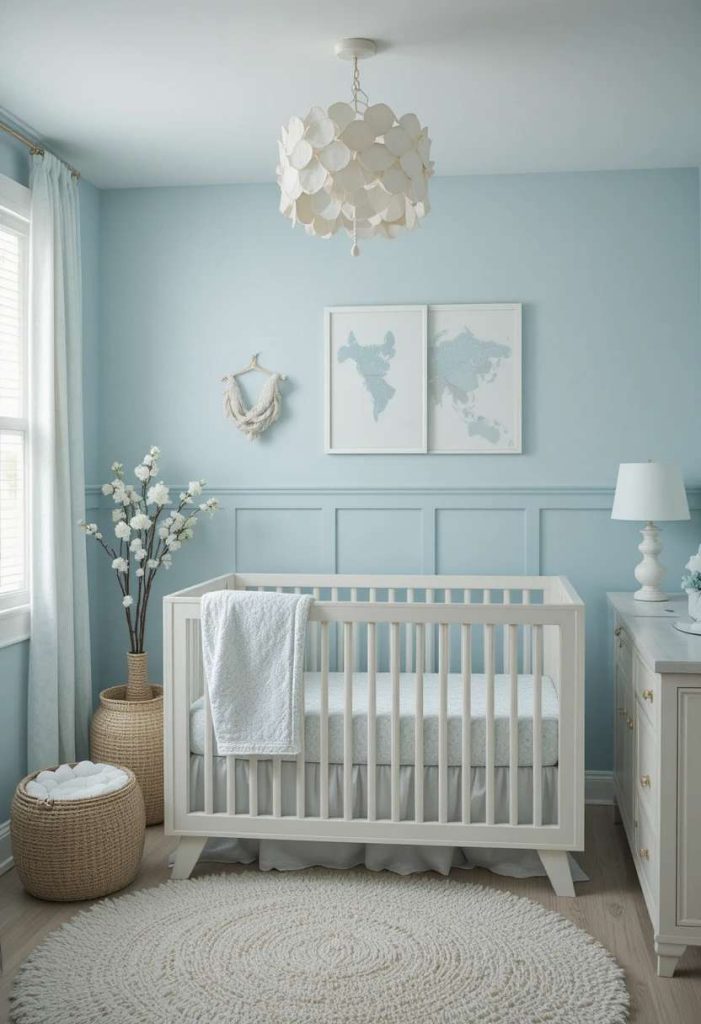
I started with colour because it sets the mood for everything else, and in our nursery a soft blue-grey on the main wall, with warm white on the others, made the whole room feel calmer the moment the paint dried. I kept the deepest shade low, on the wall behind the cot, so the cot area felt snug rather than gloomy, and I let bedding, a cushion and a small framed print carry the stronger blues. Before committing, I painted large tester patches and lived with them for a few days, checking them in morning light and again at night under the lamp. That slow test saved me from a shade that looked lovely in the shop but far too cold at home.
How to do it: Pick three tester pots in soft blue, sage and warm grey. Paint a large patch of each on the wall and live with them for three days. Check the patches in morning light and lamplight, then paint the main wall in the winner and keep the rest warm white.
2. Add a Cozy Crib
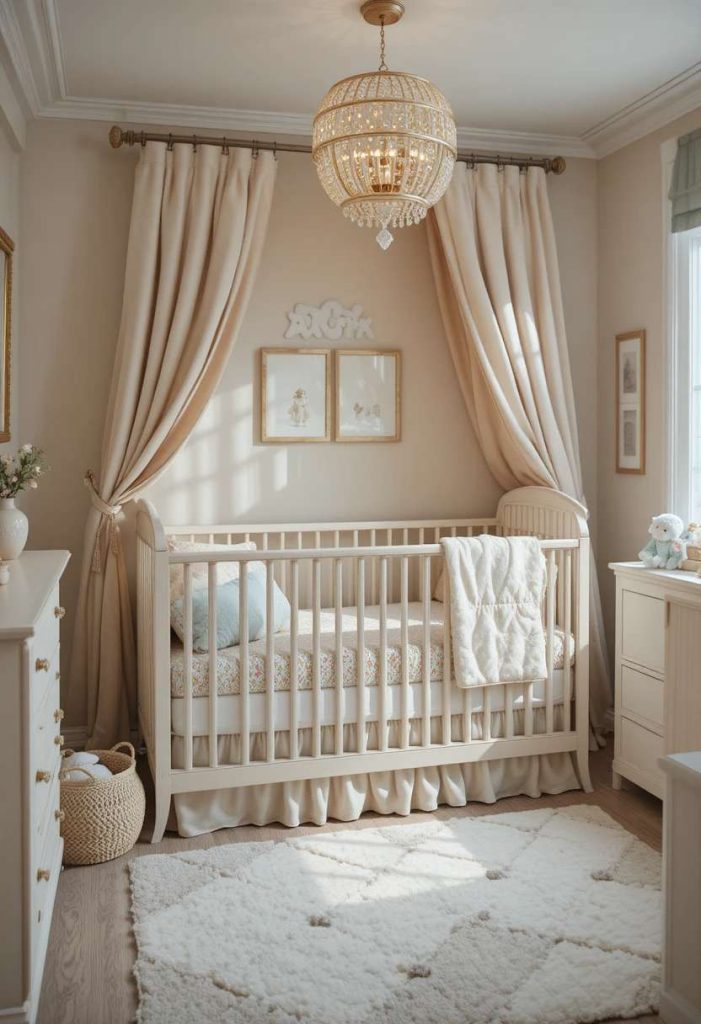
Our cot was the first big decision, and I chose a simple white one with clean lines because it suited the room without shouting for attention. I looked for solid slats, a firm flat mattress that fitted with no gaps, and a height I could lower as our boy learned to pull himself up. I dressed it in a fitted sheet and a light cellular blanket, tucked in low, and kept pillows, bumpers and soft toys out entirely. At night I love how the white frame catches the lamplight, and by day it sits quietly against the wall, leaving the rest of the room free for play.
How to do it: Measure the cot space first, leaving room to walk around it. Choose a cot that meets current safety standards and check the mattress fits snugly with no gaps. Set the base at the highest level for a newborn, then lower it once your baby can sit up. Dress the cot with a fitted sheet only, and keep the area around it clear.
3. Add a Comfy Nursing Chair
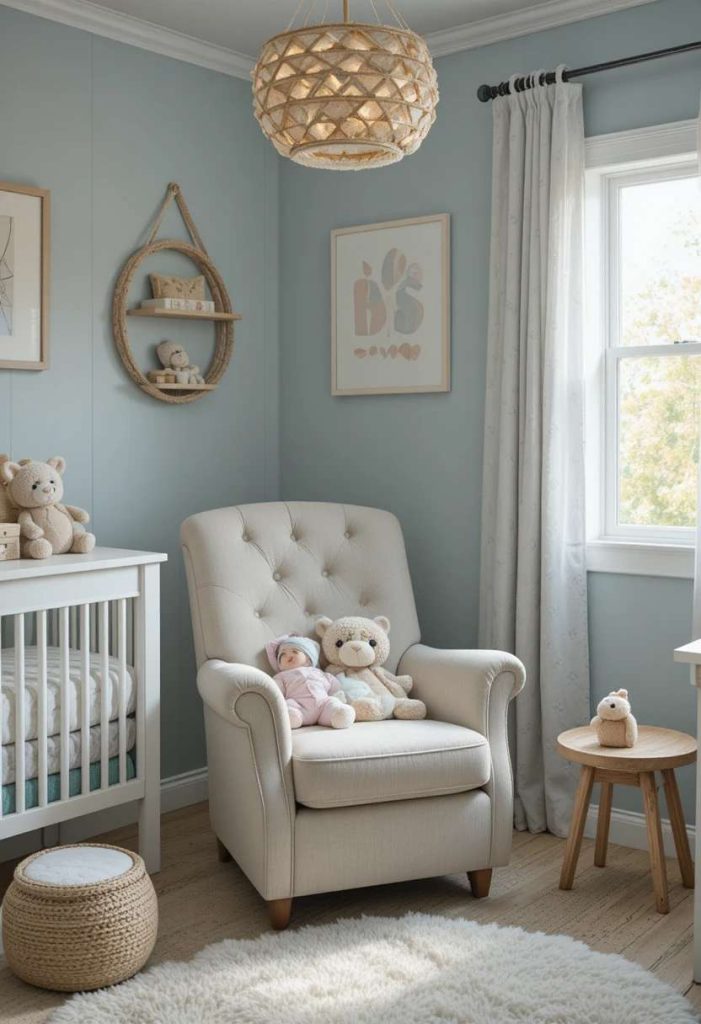
I learned very quickly that the chair matters more than almost anything else in the room, because you will sit in it at 2 a.m. with a sleepy baby and a cold cup of tea. I chose a glider with a high back, wide arms and a footstool, in a washable cream fabric that hides the odd milk stain. Beside it I keep a small side table for a bottle, a muslin and my phone, and a soft throw for chilly nights. I tried three chairs in the shop before choosing, sitting in each for a full five minutes, and I am glad I did, because the prettiest one was the least comfortable by far.
How to do it: Sit in the chair before you buy it, checking the back height and arm width. Choose a glider or rocker with a washable cover. Place it near the cot with a small table beside it. Add a footstool, a soft throw and a dim lamp within reach.
4. Add Soft, Warm Lighting

Soft light changed our nursery from a plain bedroom into a calm, sleepy place, and it cost far less than I expected. I kept the ceiling light on a dimmer for daytime and added a small warm lamp on the dresser for feeds, plus a tiny plug-in night light by the door so I never had to switch on the big light at night. I chose warm white bulbs throughout, because cool white felt harsh against the pale walls. The lamp shade is a simple linen one that throws a gentle glow, and I keep a spare bulb in the dresser drawer so a blown bulb never leaves us in the dark.
How to do it: Fit a dimmer switch on the ceiling light if you can. Place a warm lamp on the dresser for feeds and a tiny night light by the door. Use warm white bulbs throughout, and keep a spare bulb in the dresser drawer.
5. Add a Sweet Theme
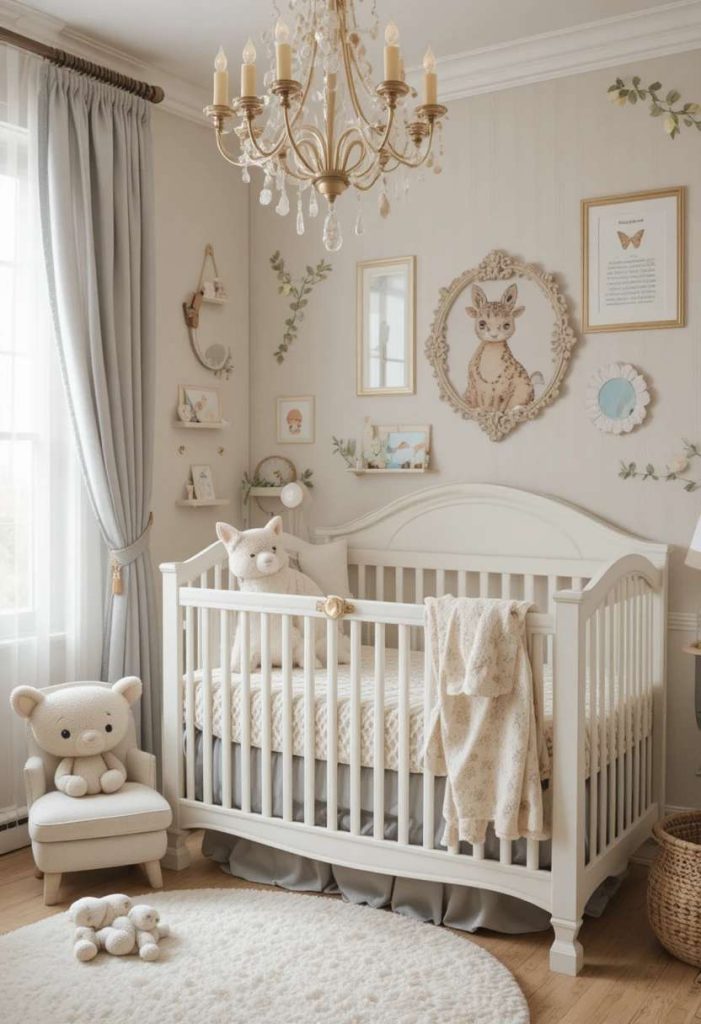
A gentle theme gave our nursery a story without turning it into a fancy-dress shop, and I chose soft woodland animals because they felt calm and timeless. I repeated the theme in just three places: a framed print above the cot, the mobile, and a small wooden fox on the shelf, then let the rest of the room stay plain. I avoided anything too loud or too literal, because a theme should whisper, not shout. The bedding is plain cream with a tiny leaf print, so when our boy outgrows the animals I can swap the print and the mobile and the whole room grows with him.
How to do it: Choose one gentle theme, such as woodland animals or stars. Repeat it in three places only, such as a print, the mobile and one shelf piece. Keep bedding and walls plain, so the theme can change easily as your baby grows.
6. Add Cozy Textures

Texture is what makes a nursery feel snug rather than simply decorated, and I layered it slowly until the room felt soft everywhere I touched it. A chunky knit throw drapes over the chair arm, a wool rug cushions the floor by the cot, and the cot bedding is washed cotton that gets softer with every wash. I mixed smooth wood, soft wool and crinkly linen, because one texture alone can feel flat. My tip is to buy the rug first and build from there, since its colour and pile set the tone for every blanket and cushion that follows.
How to do it: Buy the rug first and build the room around it. Choose a low-pile, washable rug large enough for tummy time, with a non-slip pad underneath. Layer a chunky knit throw on the chair and washed cotton bedding on the cot, mixing wool, wood and linen for a soft, lived-in feel.
7. Hang Adorable Wall Art
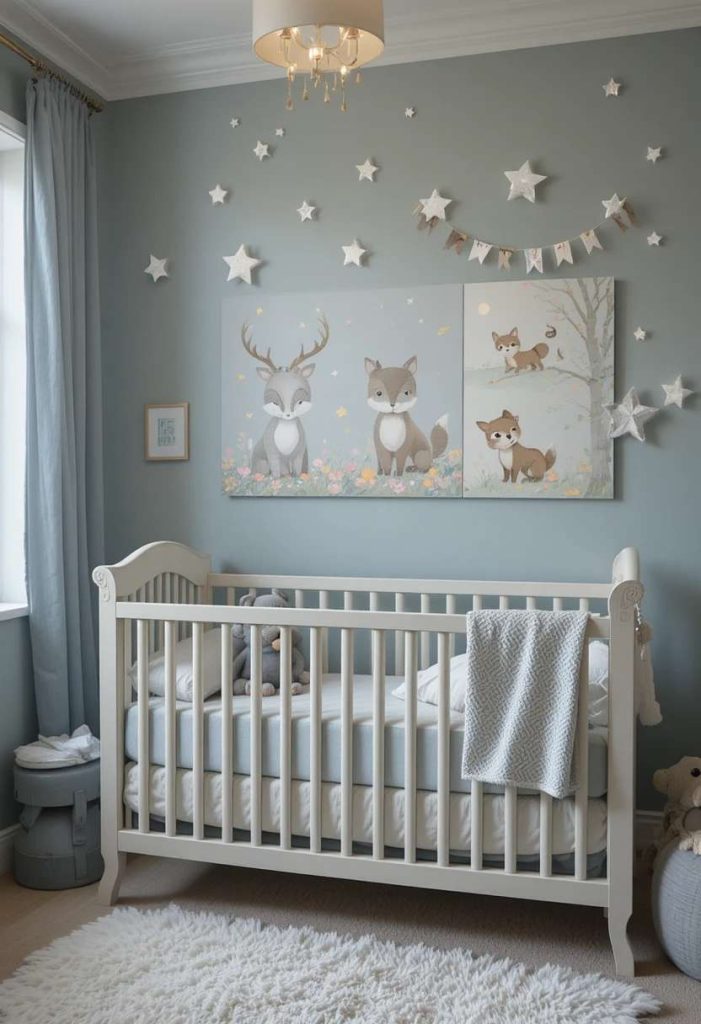
Wall art was where I let the room show a little personality, and I kept it gentle so the walls felt sweet rather than busy. I framed three small prints in matching light wood frames, one of a sleepy bear, one of stars, and one with our boy’s name, and hung them in a row above the dresser where I see them every morning. I hung them at my eye level, not high on the wall, and used proper picture hooks so nothing could fall. A small shelf underneath holds a tiny wooden toy, and I change one print with the seasons, which keeps the wall feeling fresh without a full redecoration.
How to do it: Choose three small prints in matching frames and hang them in a row above the dresser at eye level. Use proper picture hooks and keep the frames light. Add one small shelf piece below, and swap one print with the seasons to keep the wall fresh.
8. Add Practical Storage
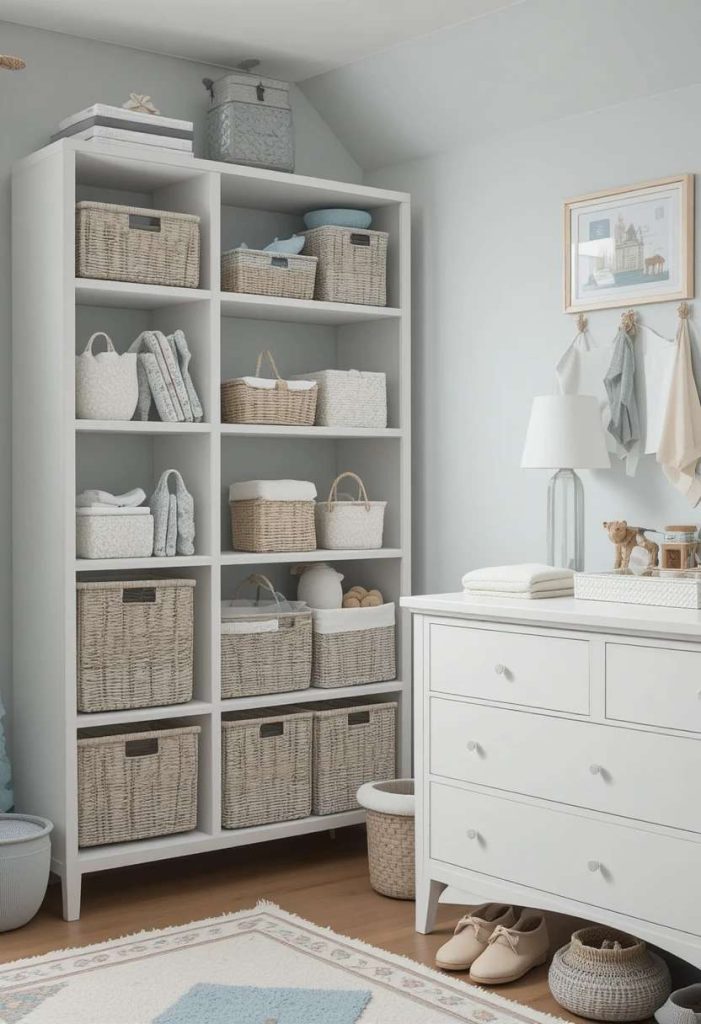
Good storage is the quiet hero of a baby boy’s nursery, because tiny clothes, nappies and blankets multiply faster than any parent expects. I gave everything a home: labelled baskets on the shelves for vests and socks, a dresser drawer for sleep suits, and a low open basket for the muslins I grab ten times a day. I kept the everyday things at arm height and the spare bedding up high, and I labelled each basket so anyone helping at bath time could find things. For the wardrobe itself, my baby closet organization ideas keep the rail tidy by size, so dressing him never starts with a hunt.
How to do it: Give every category its own labelled basket, with everyday things at arm height and spares up high. Sort the wardrobe by size, smallest at the front, and keep a low open basket for muslins. Restock the baskets when you put the washing away, so the system never drifts.
9. Create a Changing Station
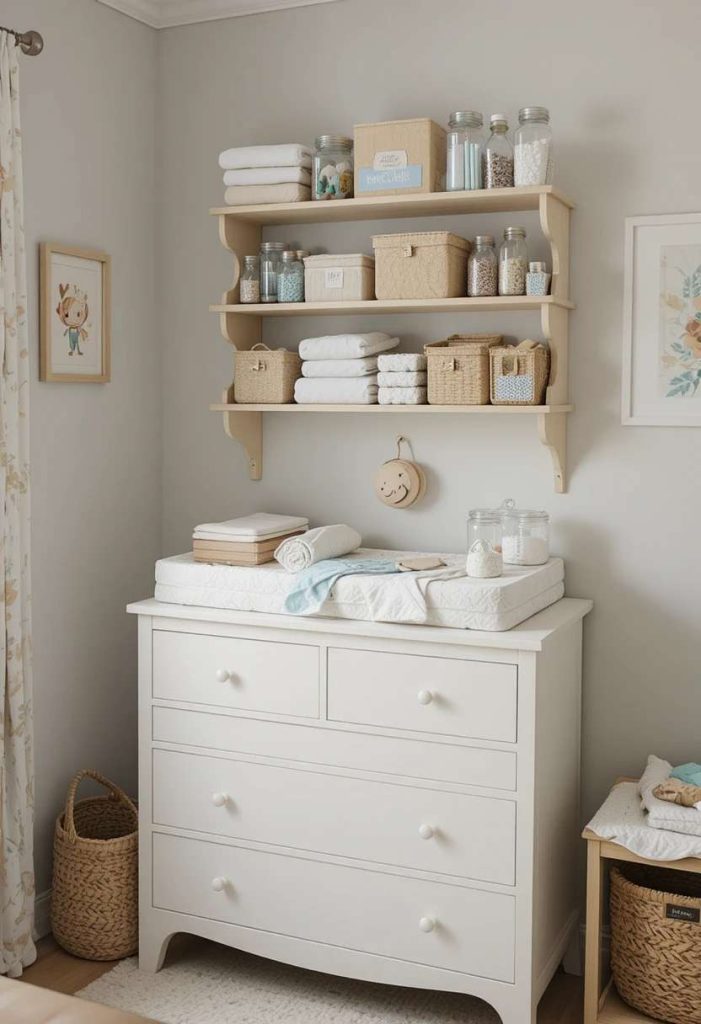
Our changing station lives on top of the dresser, and I set it up so I never have to leave a wriggly baby alone to fetch anything. A contoured changing pad sits on a non-slip mat in the middle, with nappies, wipes and cream in a small caddy to the right and a clean sleep suit folded to the left. I keep a spare muslin under the pad for accidents and a tiny bin beside the dresser for used wipes. Everything is within one arm’s reach, and I restock the caddy every evening, because a 3 a.m. change is the wrong moment to discover the wipes have run out.
How to do it: Set the changing pad on a non-slip mat on the dresser, with a caddy of nappies, wipes and cream on one side and a clean sleep suit on the other. Keep a spare muslin under the pad and a small bin beside the dresser. Restock the caddy every evening.
10. Add a Soft Rug
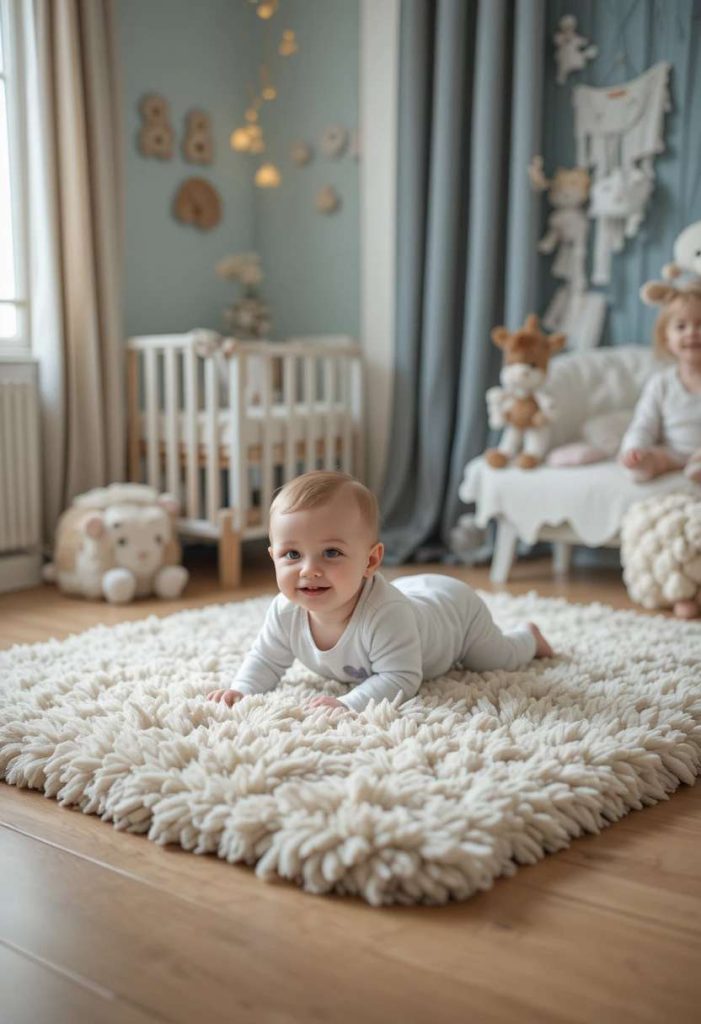
A soft rug was the first thing our baby’s feet and knees met, so I chose it as carefully as the cot. I picked a large, low-pile wool rug in warm cream that covers the floor between the cot and the chair, big enough for tummy time and later for sitting up with books. Low pile matters, because high pile traps crumbs and is harder to clean, and I chose a washable one with a non-slip pad underneath so it never bunches under the chair legs. I vacuum it twice a week and shake it outside on dry days, which keeps it feeling fresh under bare feet.
How to do it: Measure the space between the cot and the chair, then choose a rug that covers it with room to spare. Pick a low-pile, washable rug with a non-slip pad underneath. Vacuum it twice a week and shake it outside on dry days to keep it fresh.
11. Add Sweet Bunting or Garland
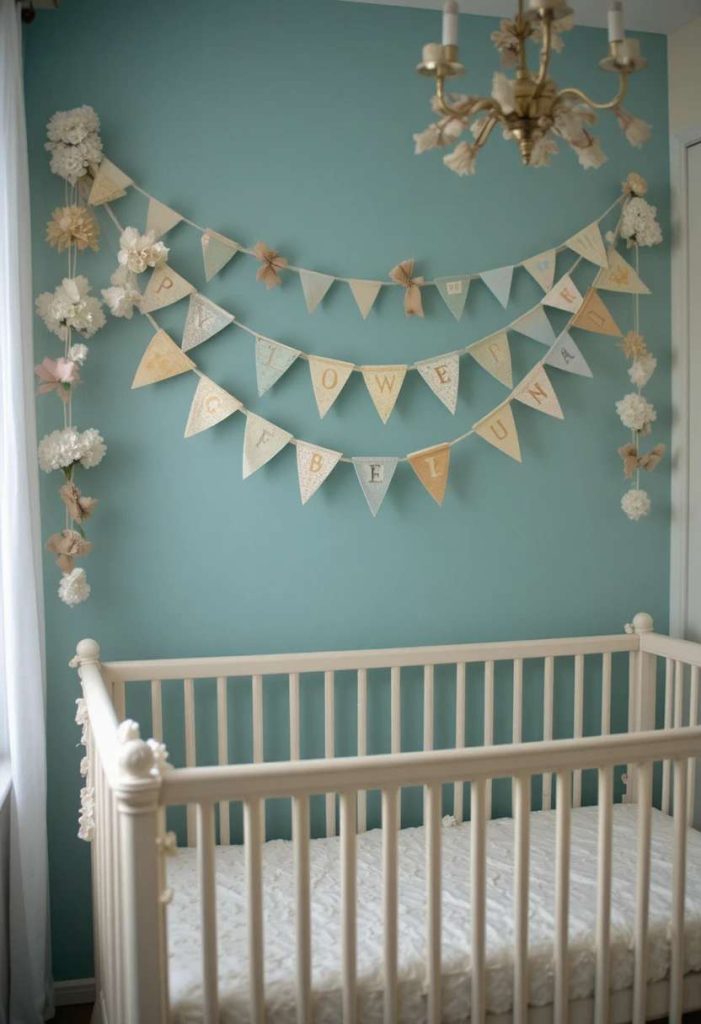
A little bunting was the cheapest decoration in the whole nursery and the one that made it feel like a celebration. I strung soft fabric triangles in cream, sage and pale blue along the wall above the cot, choosing fabric over paper because it does not tear and can be washed. I fixed it with small removable hooks rather than pins, so the paint stayed perfect, and I hung it high enough that little hands could not reach it. On his first birthday I plan to move the same bunting to the party table, so one small decoration can be part of his day all over again.
How to do it: Cut fabric triangles in three soft colours and sew or glue them onto a ribbon. Fix the bunting with removable hooks above the cot, high enough that little hands cannot reach it. Choose fabric over paper so it can be washed and reused.
12. Choose Blackout Curtains
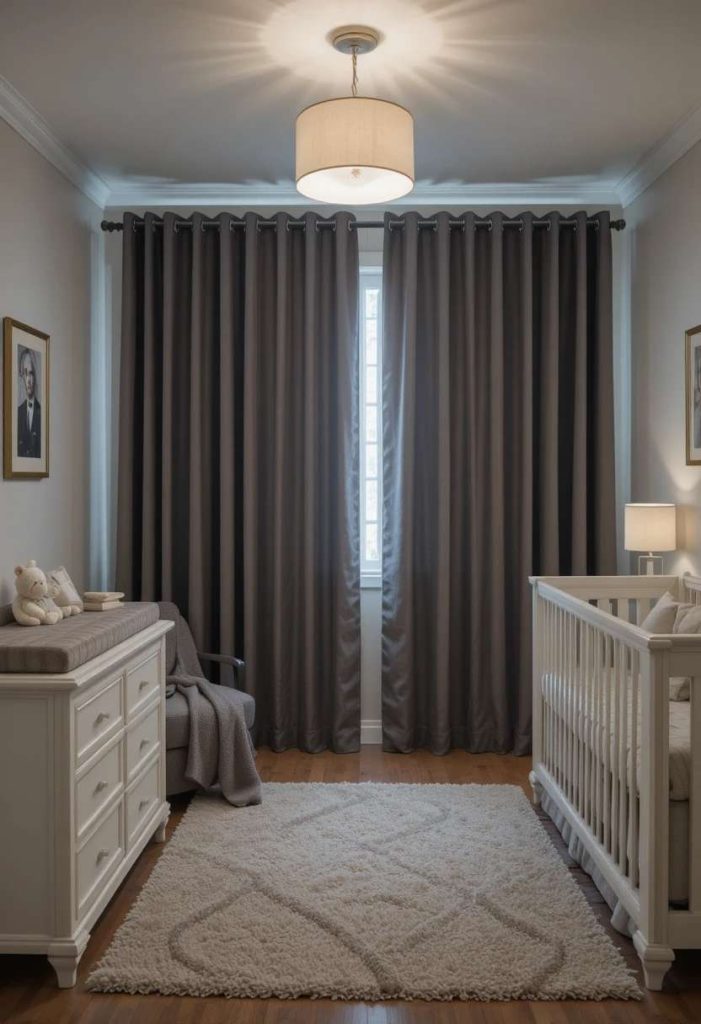
Blackout curtains were the single best sleep investment I made, because they turned bright summer mornings into a soft, dark room that let our boy sleep past sunrise. I chose full-length curtains in a warm cream linen look with a proper blackout lining, hung on a rod that extends past the window frame so no light leaks around the edges. I keep them closed for naps and open them wide each morning, which also helps him learn the difference between day and night. The lining adds a little warmth in winter too, and the cream fabric keeps the room feeling light rather than cave-like.
How to do it: Choose full-length blackout curtains with a proper lining, on a rod that extends past the window frame so no light leaks around the edges. Close them for naps and open them wide each morning to help your baby learn day from night.
13. Add a Mobile Above the Crib

Our mobile hangs above the cot, just out of reach, and it is the first thing our boy looks at when he wakes. I chose a wooden mobile with soft felt stars and clouds in cream and pale blue, because it turns gently in the slightest draught and never plays tinny music. I hung it from a ceiling hook with a short cord, checking that it sat well above his reach and that nothing could fall into the cot. At bedtime I give it a gentle spin and it catches the lamplight, and I love that such a small, quiet object can hold a baby’s attention so completely.
How to do it: Hang the mobile from a ceiling hook above the cot, well out of your baby’s reach, with a short cord. Choose a light wooden mobile that turns gently and makes no sound. Check every week that the hook and cord are secure.
14. Add Soft Neutral Tones
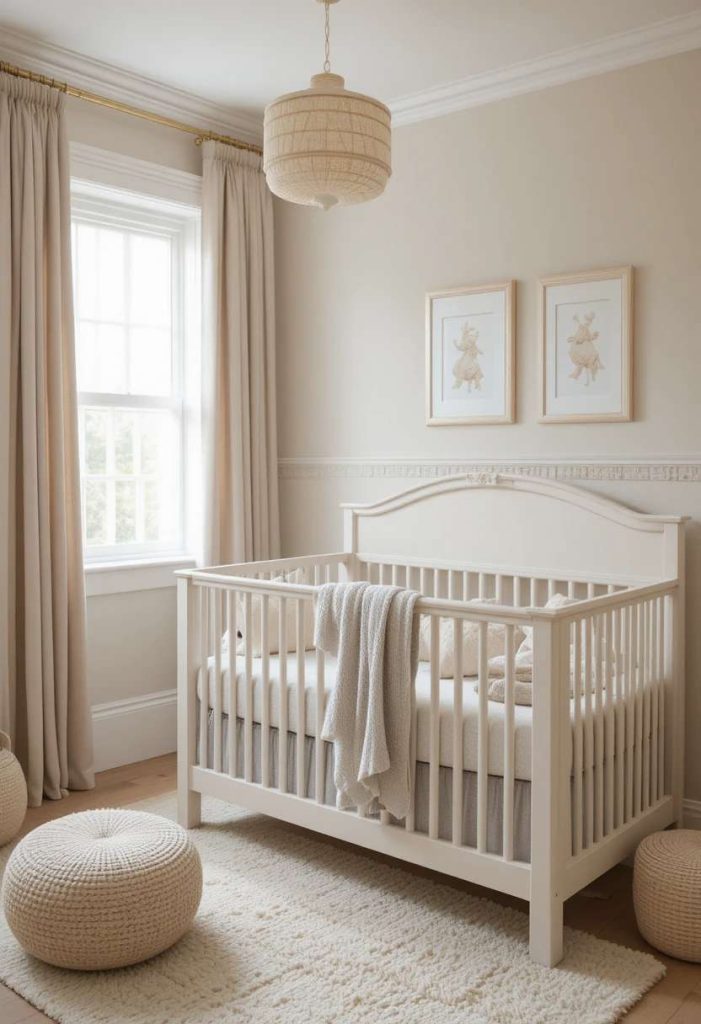
Soft neutrals are the quiet backbone of our nursery, and they are what stop the blue from feeling cold or the room from feeling like a theme park. I used warm cream on the walls, greige on the dresser, and soft grey in the rug and the chair fabric, then let the blue appear only in small touches like the bedding and a cushion. The neutrals also mean I can change the accent colour later without repainting anything. When friends ask what colour the nursery is, I always say cream first, because the calm background is what makes the whole room feel restful.
How to do it: Paint the walls warm cream and choose greige or soft grey for the dresser and chair. Add blue only in small touches, such as bedding and a cushion. Step back and check that the room feels calm, not cold, before adding anything else.
15. Add a Bookshelf for Storytime
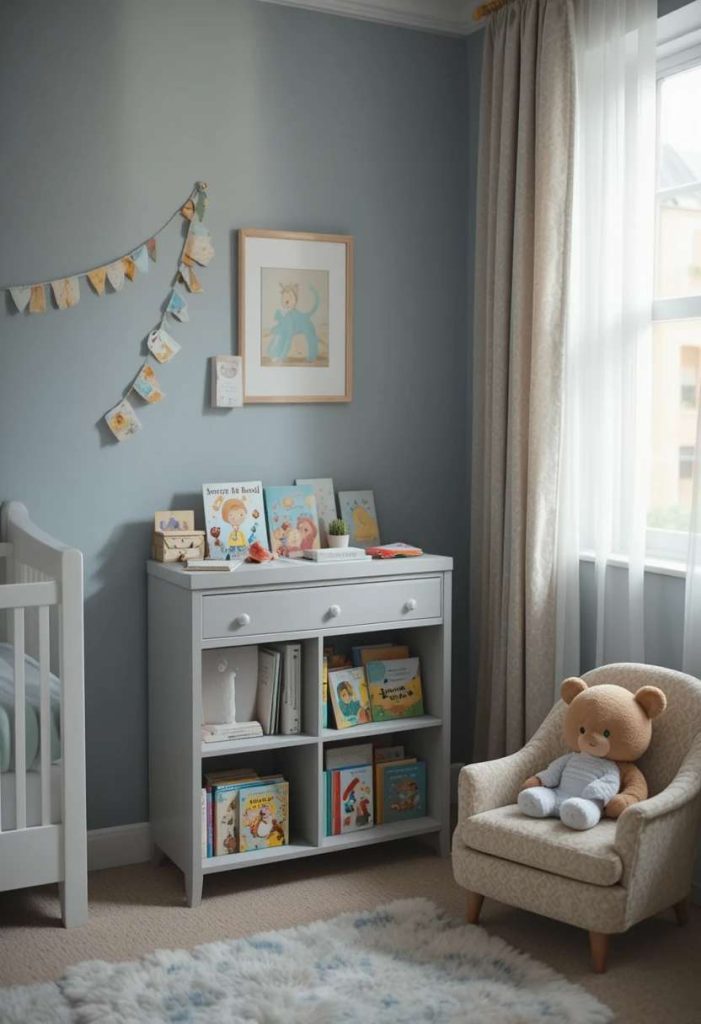
A low bookshelf turned our nursery into a storytime room, and it is the corner I look forward to most each evening. I chose a shallow, forward-facing shelf at floor level so our boy can see the picture-book covers and choose his own, with just eight books on display at a time and the rest stored in a basket below. I keep the books in a mix of soft cloth books for now and sturdy board books for later, and I rotate them every few weeks so the shelf always feels new. Reading two books in the chair before bed has become our ritual, and the shelf means the books are always within reach.
How to do it: Fix a shallow, forward-facing shelf at floor level so your baby can see the book covers. Display eight books at a time and store the rest in a basket below. Rotate the books every few weeks and keep a chair nearby for storytime.
16. Add Personal Keepsakes
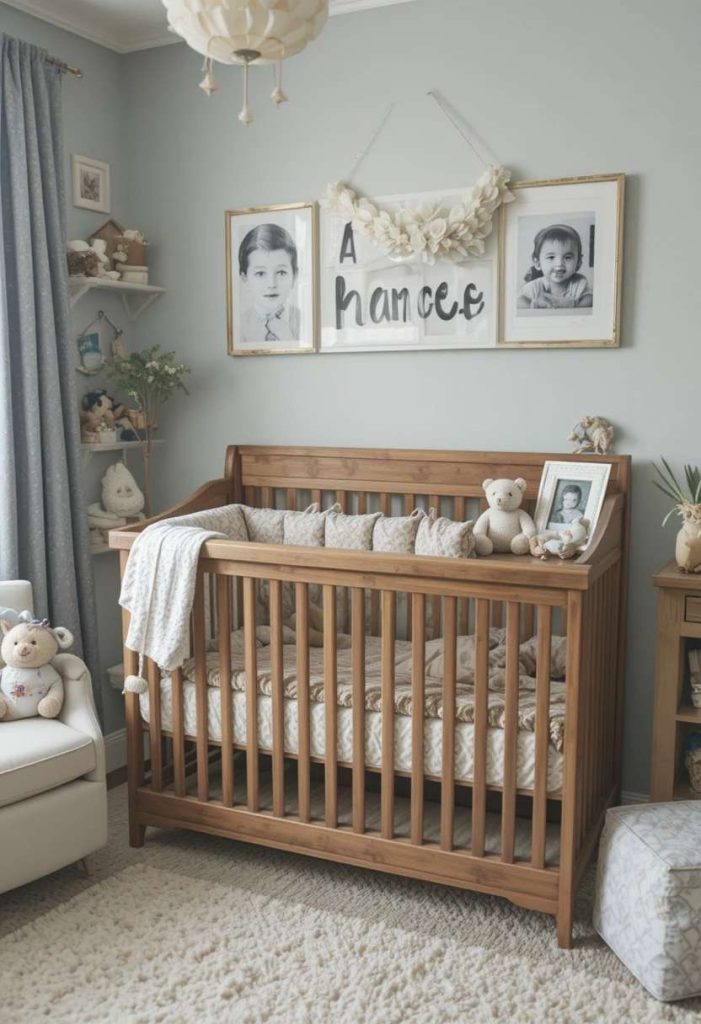
Personal keepsakes are what make a nursery feel like ours rather than a showroom, and I chose just a few so the room stayed calm. Above the dresser hangs a framed photo of our boy’s first day home, beside it a small wooden name sign his grandfather carved, and on the shelf sits the knitted blanket my mum made before he was born. I keep the first sleep suit and his hospital bracelet in a small labelled box in the wardrobe, safe from dust and little hands. Each piece has a story I can tell him one day, and together they give the room a warmth no shop-bought decoration could match.
How to do it: Choose three keepsakes only, such as a framed photo, a name sign and a handmade blanket. Keep the first sleep suit and hospital bracelet in a small labelled box in the wardrobe. Let each piece have a story, and keep the rest of the room plain.
17. Add Greenery
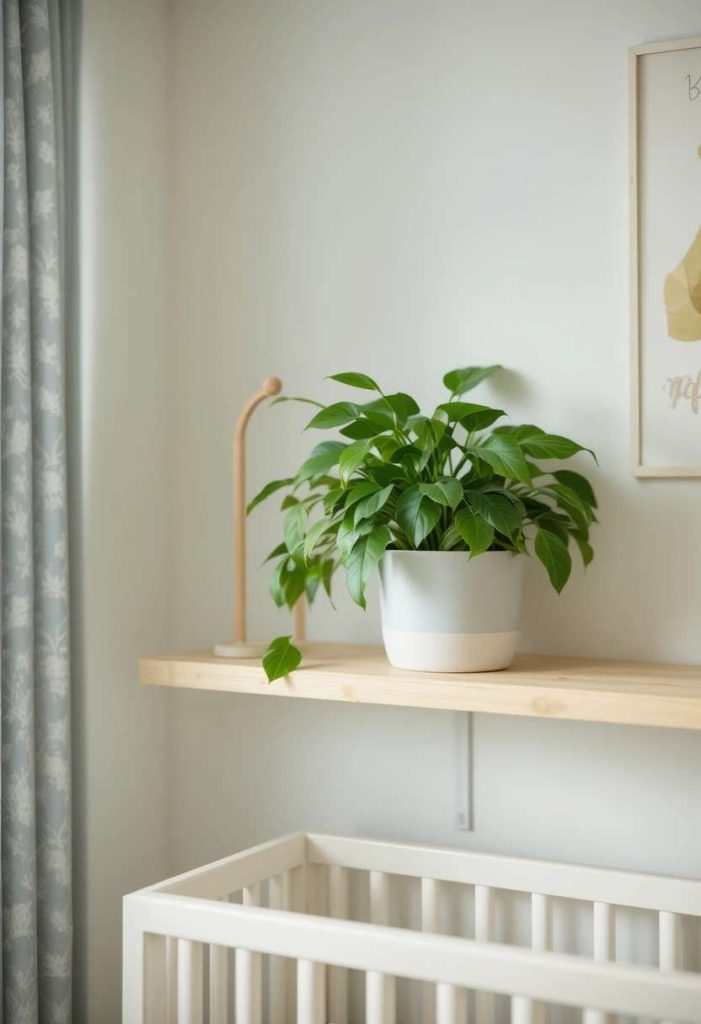
A little greenery brought the nursery alive, and I chose a hardy faux olive tree in a woven basket for the corner by the window, because a real plant and a curious baby are a risky mix. It adds height and a soft green note that balances all the cream and blue, and it never drops leaves onto the rug. I dust the leaves once a fortnight with a damp cloth, and I keep the basket weighted with a few stones inside so it cannot tip. If you prefer a real plant, a small trailing plant on a high shelf, well out of reach, gives the same fresh feeling without any worry.
How to do it: Place a faux olive tree in a weighted woven basket in the corner by the window. Dust the leaves once a fortnight with a damp cloth. If you prefer a real plant, choose a small trailing plant for a high shelf, well out of reach.
18. Add a Star or Cloud Motif
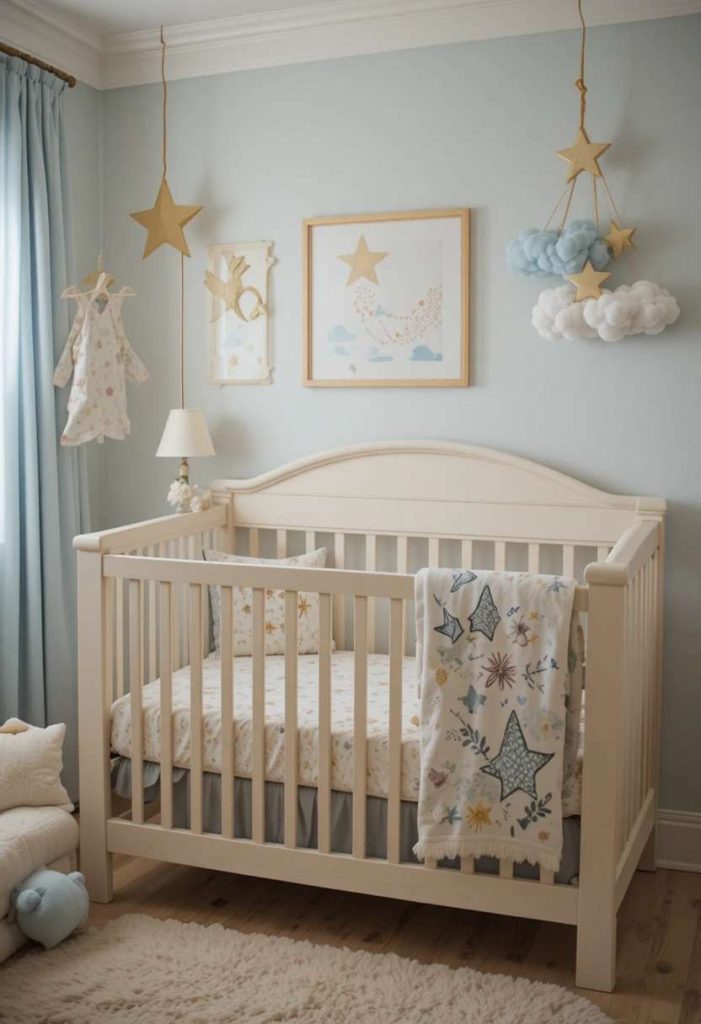
Stars and clouds are a gentle motif that suits a baby boy’s room without feeling babyish, and I used them sparingly so they felt dreamy rather than busy. A soft star garland hangs above the cot, a cloud-shaped cushion sits in the chair, and the ceiling light has a small star cut-out that throws soft shapes on the wall at night. I kept the motif to those three places and chose cream and pale grey, because repeating it on every surface would have been too much. At night, when the room is dark and the stars glow softly, the whole nursery feels like a quiet little sky.
How to do it: Choose the star and cloud motif for three places only, such as a garland, a cushion and the ceiling light. Keep the colours cream and pale grey so the motif feels dreamy, not busy. Leave the rest of the room plain so the motif can change easily later.
19. Keep It Safe and Simple
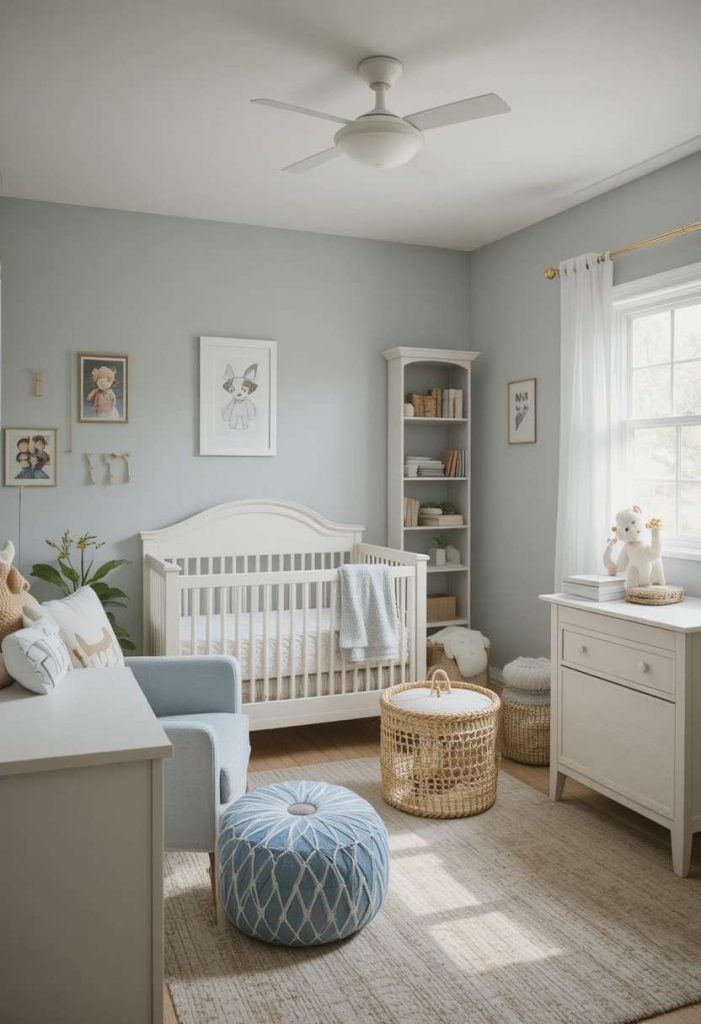
Safety came before decoration in our nursery, and I am glad I planned it first rather than adding it as an afterthought. I anchored the dresser and bookshelf to wall studs with proper straps, kept the cot clear of cords, blinds and anything climbable, and chose a firm mattress with a fitted sheet and nothing loose in the cot. I fitted socket covers, kept small items and medicines in a high cupboard, and checked that the paint and the rug were low in chemicals. A simple room is a safe room, and knowing every piece of furniture is fixed firmly means I can relax and enjoy the space.
How to do it: Anchor the dresser and bookshelf to wall studs with proper straps before you decorate. Keep the cot clear of cords and blinds, use a firm mattress with a fitted sheet, and store small items and medicines in a high cupboard. Check every fixing once a month.
20. Add a Pop of Colour
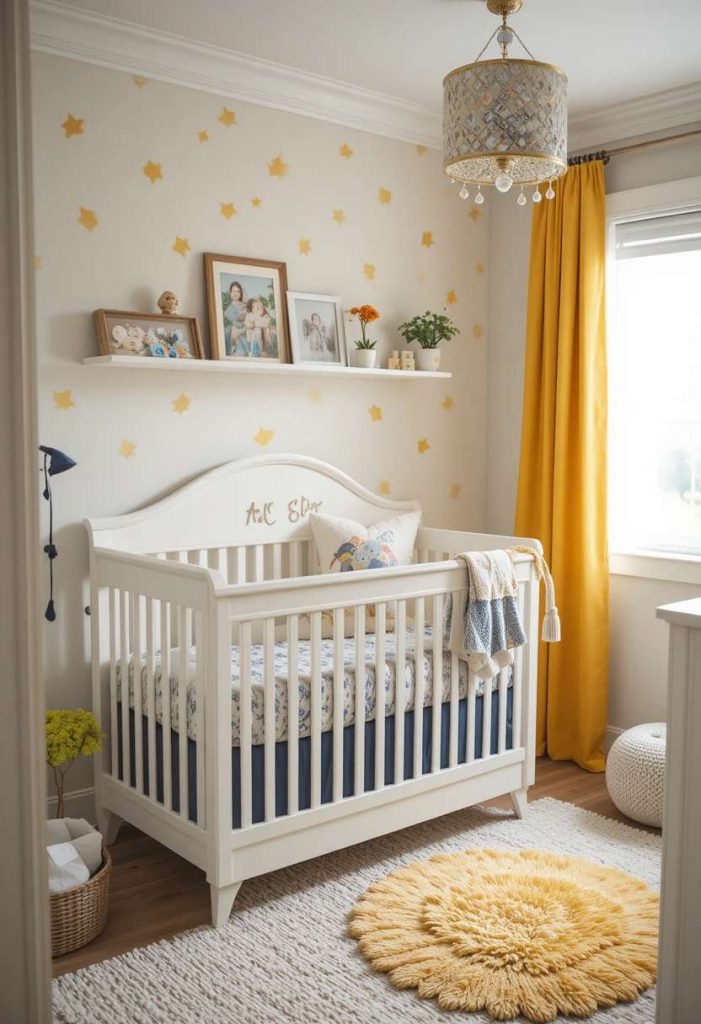
A pop of colour keeps the nursery from feeling washed out, and I added mine in small, swappable doses. A mustard cushion on the chair, a navy storage basket by the cot and a soft green print above the dresser lift the whole palette without repainting a wall. I chose one strong colour and one soft one, and repeated them in at least two places each so they felt deliberate rather than random. Because they are cushions and baskets, not paint, I can change them in an afternoon when I fancy a different mood, and the calm cream background means almost any colour works.
How to do it: Pick one strong colour and one soft one, then repeat each in at least two places, such as a cushion, a basket and a print. Keep the background cream so the colours lift the room without overwhelming it. Swap cushions and baskets when you fancy a change.
21. Add Soft Muslin and Blankets
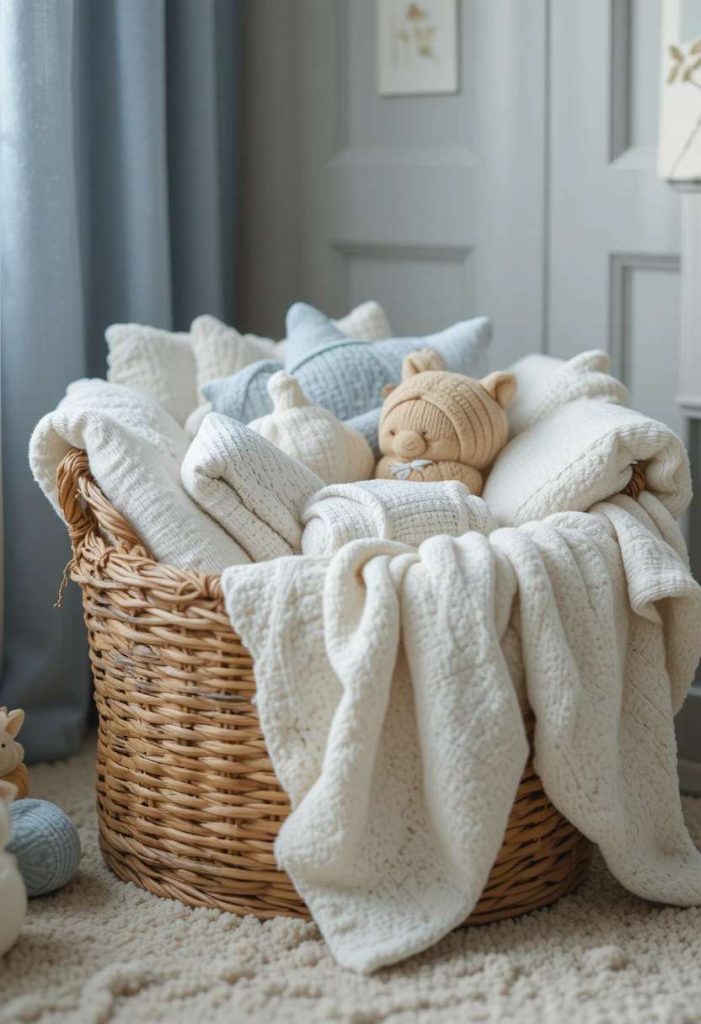
Soft muslins and blankets are the nursery workhorses, and I keep a generous basket of them by the chair so one is always within reach. I chose plain cream and pale blue muslins in breathable cotton, rolled rather than folded so I can see them all at a glance, with two thicker knitted blankets on top for colder nights. I wash them in a gentle, fragrance-free detergent and keep the spares in the dresser drawer, restocking the basket every morning. A muslin has served as a burp cloth, a shade, a comforter and a clean surface, often all in one day.
How to do it: Keep a basket of plain cotton muslins by the chair, rolled so you can see them all, with two thicker knitted blankets on top. Wash them in a gentle, fragrance-free detergent and keep spares in the dresser drawer. Restock the basket every morning.
22. Create a Cozy Corner
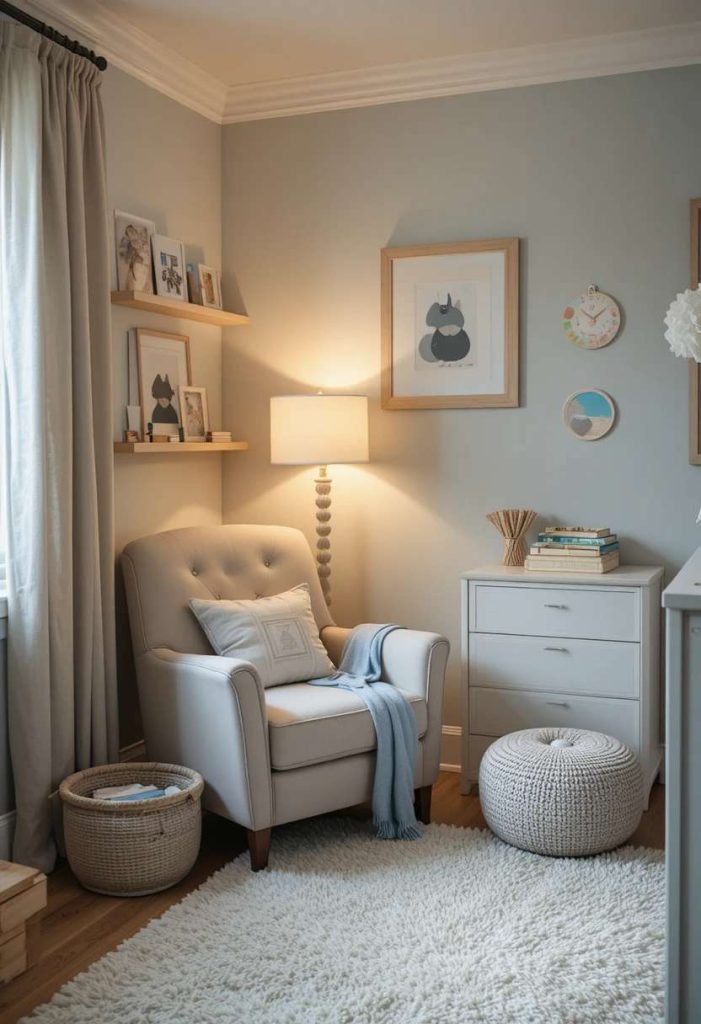
Our cozy corner is a small armchair in the sunniest spot by the window, and it has become the place where the day slows down. I tucked a floor cushion and a low basket of board books beside the chair, with a soft throw over the arm and a small lamp for grey afternoons. It is where we read before naps, where I sit with a cup of tea while our boy plays on the rug, and where visitors naturally settle when they come to see him. I kept it separate from the cot area on purpose, so the corner feels like a snug little sitting room inside the nursery.
How to do it: Place a small armchair in the sunniest spot by the window, with a floor cushion and a low basket of board books beside it. Add a soft throw over the arm and a small lamp for grey afternoons. Keep this corner separate from the cot area so it feels like a snug sitting room.
23. Add Warm Wood Touches
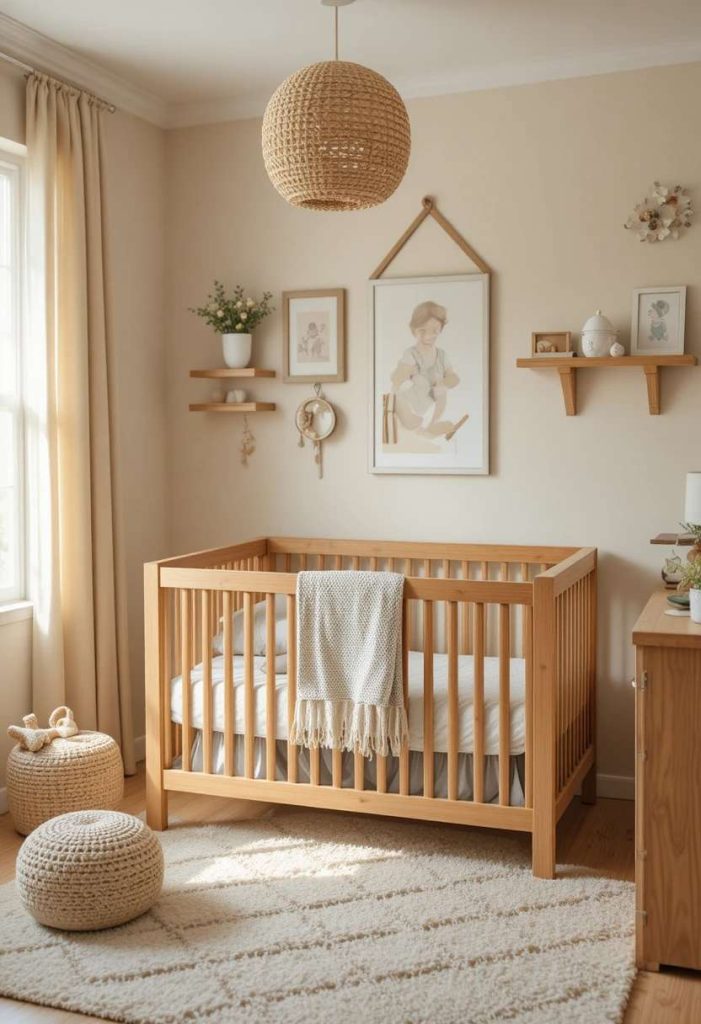
Warm wood brought a natural, homey feeling into our nursery that paint alone never could. I chose a light oak dresser and a small beech shelf, and I left the wood grain visible rather than painting over it, because the grain itself is the decoration. A wooden toy basket, a beech teething ring and the oak frame of the mirror repeat the same honey tone in small doses, so the wood feels connected rather than random. I oiled the dresser top with a baby-safe finish, which deepened the colour slightly and protects it from milk spills and sticky hands.
How to do it: Choose a light oak dresser and a small beech shelf, leaving the wood grain visible. Repeat the same honey tone in a toy basket and a mirror frame. Finish the dresser top with a baby-safe oil so it resists milk spills and sticky hands.
24. Add Gentle Patterns
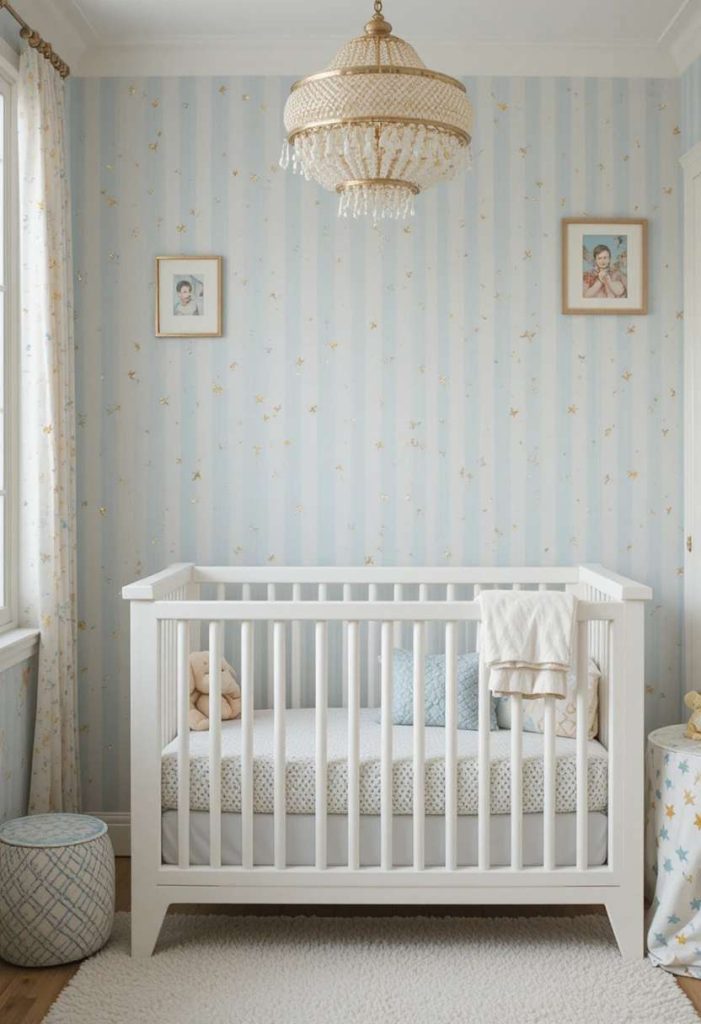
Gentle patterns stop a nursery from feeling flat, and I used them like seasoning, a little in several places rather than a lot in one. The cot sheet has tiny grey stars, the rug has a soft stripe border, and the cushion in the chair has a small gingham check in pale blue. I kept the scale small and the colours within the same cream and blue family, so the patterns sit happily side by side instead of fighting. My rule was simple: if a pattern made me squint, it was too bold, and if two patterns shared a colour, they could live together.
How to do it: Use small-scale patterns in the same cream and blue family, such as tiny stars on the cot sheet, a stripe border on the rug and a gingham check on the chair cushion. Keep each pattern small and share a colour between them so they sit happily together.
25. Make Room to Grow
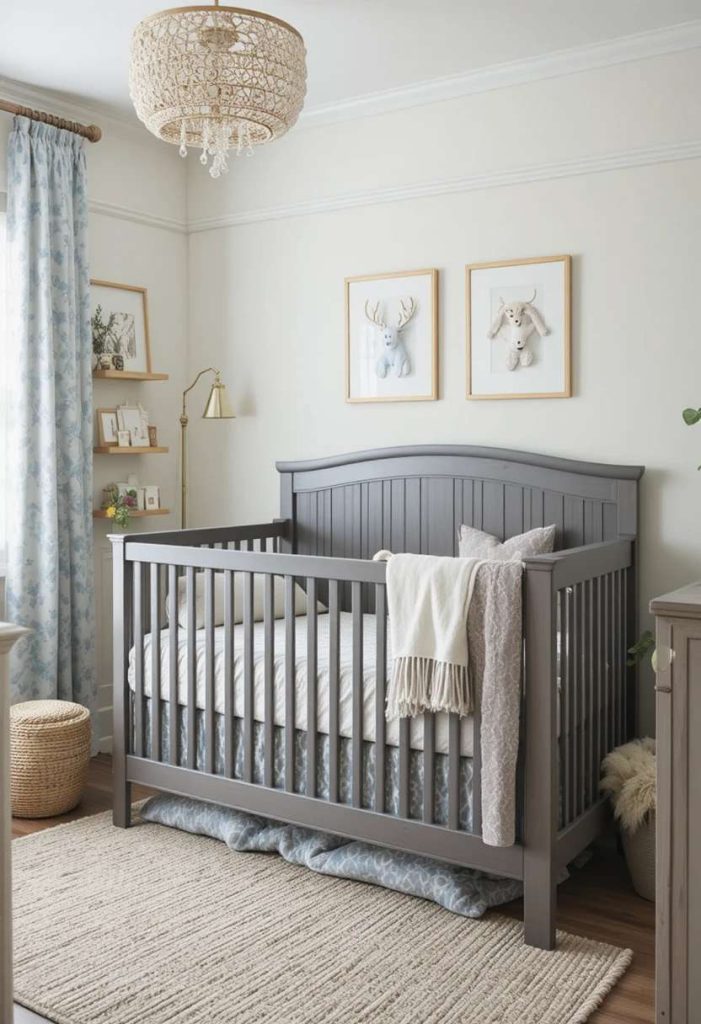
Choosing pieces that grow with our boy was the most practical decision I made, because babies outgrow furniture faster than they outgrow clothes. Our cot converts to a toddler bed, the dresser has a removable changing tray that leaves a plain chest of drawers, and the bookshelf is a standard low shelf that will hold toys and then school books. I left one wall blank and the floor space flexible, so a small desk or a bedside table can join the room later without a reshuffle. For a bigger boy’s room later, these bunk bed ideas for small rooms show how the same careful planning saves space as children grow.
How to do it: Choose a cot that converts to a toddler bed and a dresser with a removable changing tray. Leave one wall blank and the floor space flexible so a small desk or bedside table can join the room later. Plan the layout now for the boy he will become.
26. Fill It With Love
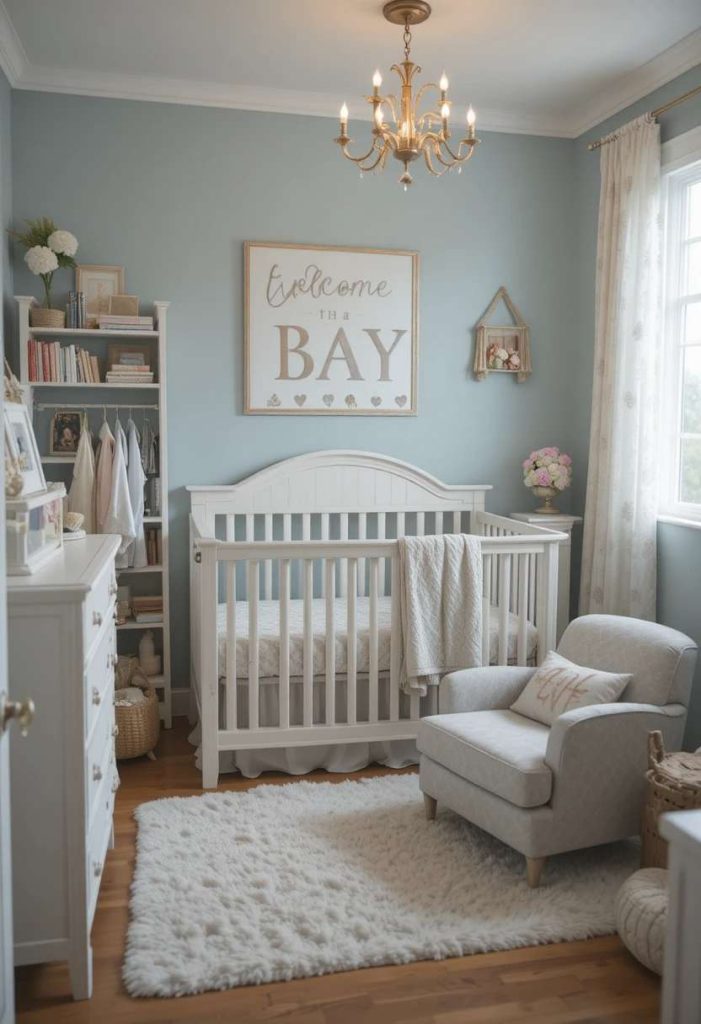
Finally, the sweetest nursery is the one that holds the small, ordinary moments of loving a baby: the last feed of the day, the sleepy smile when he wakes, the handprint I pressed into clay on his first month. I framed that handprint and hung it beside the cot, I keep a notebook in the chair where I jot down the funny things he does, and I chose the softest blanket I could find for the chair, because that is where I hold him most. A nursery does not need to be perfect or expensive; it needs to feel like home to the little boy who sleeps in it.
How to do it: Frame one small keepsake, such as a handprint or a first photo, and hang it beside the cot. Keep a notebook in the chair for the funny things your baby does. Choose the softest blanket you can find for the chair, because that is where you will hold him most.
Frequently Asked Questions
Do I have to use blue in a baby boy’s nursery?
No, blue is a lovely choice, but it is far from the only one. Sage green, warm grey, soft cream and gentle navy all suit a baby boy’s room beautifully, and they pair well with natural wood and white furniture. I suggest choosing a calm base colour you love, then adding blue only in small touches, such as bedding or a cushion, so the room feels personal rather than predictable.
How should I set up the cot for safe sleep?
Use a firm, flat mattress that fits the cot with no gaps, and dress it with a fitted sheet only. Keep pillows, bumpers, soft toys and loose blankets out of the cot, and place the cot away from cords, blinds and anything your baby could pull. Keep the room at a comfortable temperature, around 16 to 20 degrees, and always place your baby on their back to sleep.
What lighting works best for night feeds?
A dim, warm lamp beside the nursing chair is ideal, because it gives you enough light to see without waking your baby fully. Blackout curtains help enormously, as they keep the room dark for naps and for those early-morning feeds, and a tiny night light by the door means you never need the bright ceiling light. I keep the ceiling light on a dimmer for daytime, so the room is never harsh.
How can I keep a small nursery tidy?
Give every category its own labelled basket, keep everyday things at arm height and spares up high, and sort the wardrobe by size so dressing your baby never starts with a hunt. A dresser with deep drawers, a low open basket for muslins and a small caddy on the changing station cover most of the daily clutter. For the wardrobe itself, these baby closet organization ideas show a simple system that keeps even a small nursery feeling calm.
How can I plan the nursery so it grows into a toddler room?
Choose a cot that converts to a toddler bed, a dresser with a removable changing tray, and furniture in plain, timeless finishes that will suit a bigger boy. Leave one wall blank and the floor space flexible, so a small desk, a bedside table or a bigger bed can join the room later without a reshuffle. Small choices made now, such as plain walls and classic furniture, save you a full redecoration in two years’ time.
Your Baby Boy Nursery Checklist
☐ Choose a calming colour palette and test paint patches in daylight and lamplight.
☐ Pick a safe cot with a firm, flat mattress and a fitted sheet.
☐ Set up a comfortable nursing chair with a side table, lamp and footstool.
☐ Add soft, warm lighting and a dim night light for night feeds.
☐ Hang blackout curtains so the room stays dark for naps.
☐ Fit a changing station with nappies, wipes and cream within reach.
☐ Add labelled baskets and storage for clothes, socks and muslins.
☐ Lay a soft, washable rug for tummy time and play.
☐ Hang wall art and a mobile safely out of reach above the cot.
☐ Keep a low shelf of board books ready for storytime.
☐ Anchor all furniture to the wall and check the cot for cords and loose items.
☐ Stock up on soft muslins and blankets in breathable cotton.
☐ Add a few personal keepsakes and a family photo.
☐ Leave space for your baby to grow into a toddler.
A Final Gentle Thought
Whichever ideas inspire you most, a baby boy’s nursery is really about creating a warm, loving space where he can sleep safely, play happily and grow into a curious little boy. Start with the cot and the chair, add the storage and the light, and let the personal touches come last, because those are the ones that make the room truly yours. Pick two or three ideas from this list, try them this weekend, and enjoy the quiet joy of a room made just for him. Small changes, made with care, are what turn a plain bedroom into a nursery he will love.