
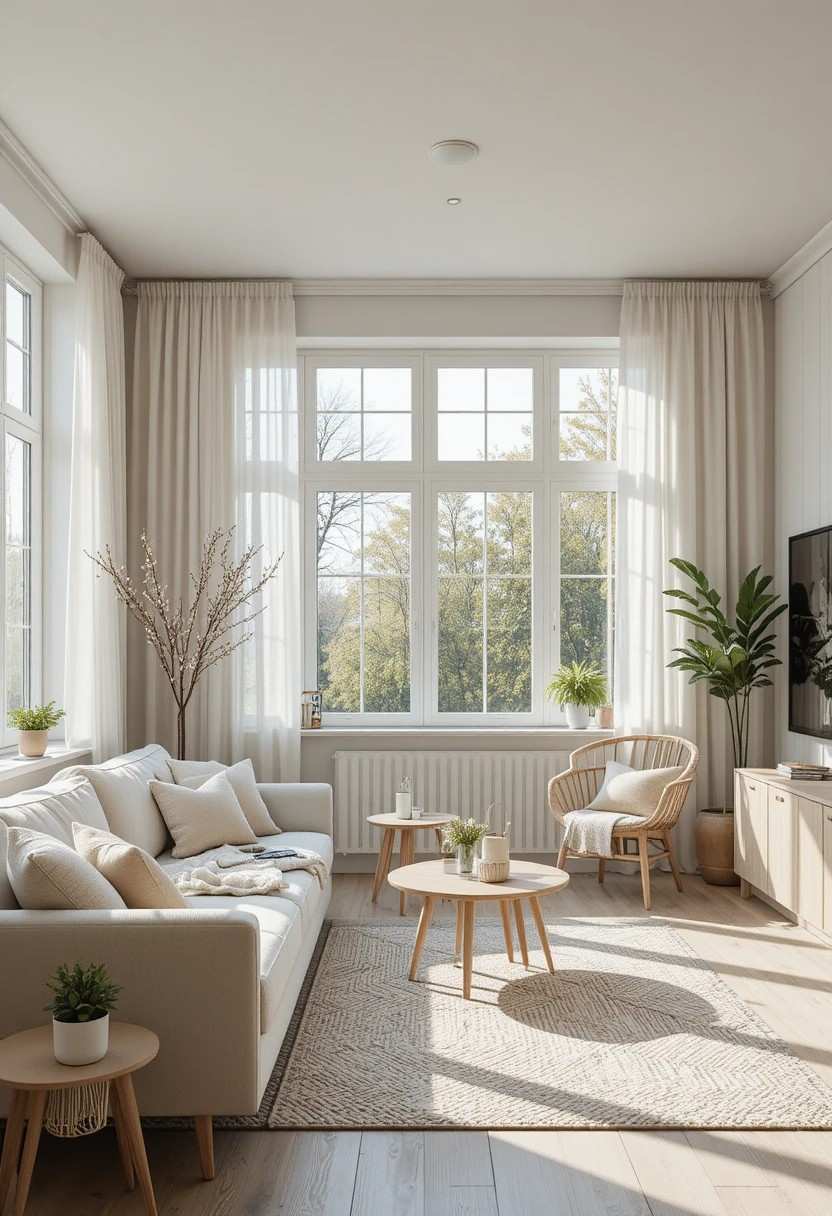
27 Scandinavian Living Room Ideas for a Bright, Cozy, Minimalist Space
There is a gentle, soothing beauty to a Scandinavian living room, where light, simplicity, and cosiness come together in perfect harmony. Born in the Nordic countries, this style celebrates bright spaces, natural materials, and the warm, hugging feeling the Danes call hygge. It is a look that feels calm and uncluttered yet wonderfully welcoming, never cold or stark. With pale woods, soft textiles, and a few thoughtful touches, you can fill your home with that airy, restful charm. Below are twenty seven Scandinavian living room ideas, shared with warmth and inspiration, to help you create a bright, cozy, minimalist space you will love.
1. Start With a Light, Neutral Palette
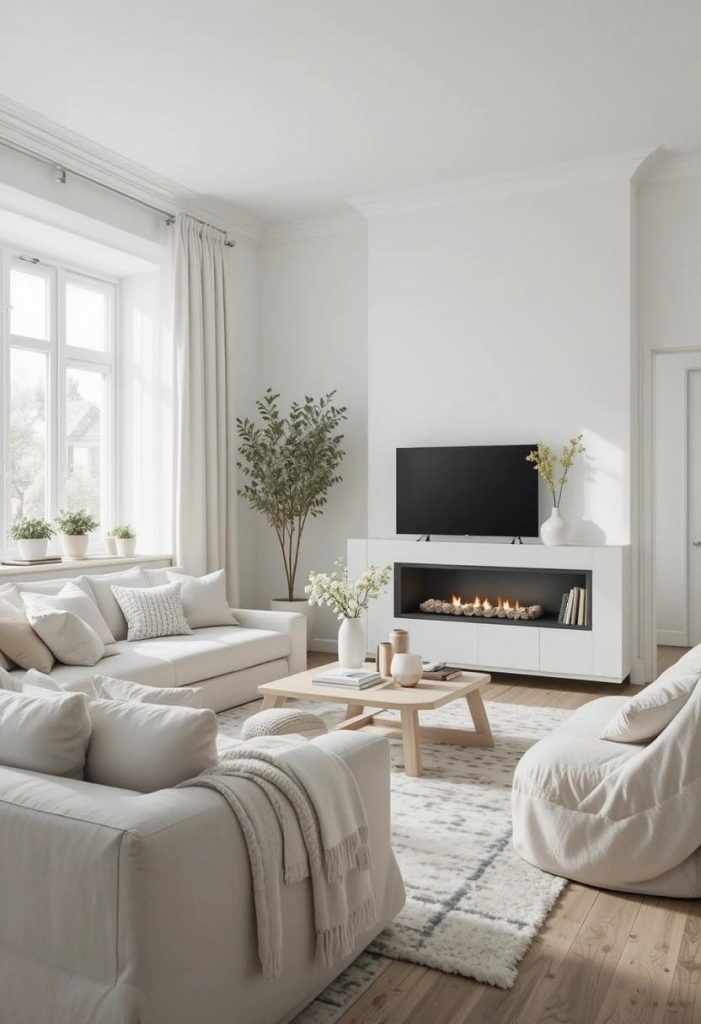
I always start with the walls, because the palette sets the mood for everything else in the room. In my own living room I chose a soft white with the faintest warm undertone, then layered pale grey on the sofa and a whisper of beige in the rug and cushions. Nothing shouts, and that is the point: quiet colours let the daylight do the work, bouncing gently from wall to wall. If your room faces north or gets little sun, keep the whites warm rather than blue-white, and test a swatch at different times of day before you commit to a wall.
How to do it: Choose a soft white, pale grey and one warm beige, then paint the walls white and use the grey and beige on larger pieces. Test swatches in morning and evening light, keep the whites warm, and repeat one accent colour in at least two places.
2. Add Light Wood Tones
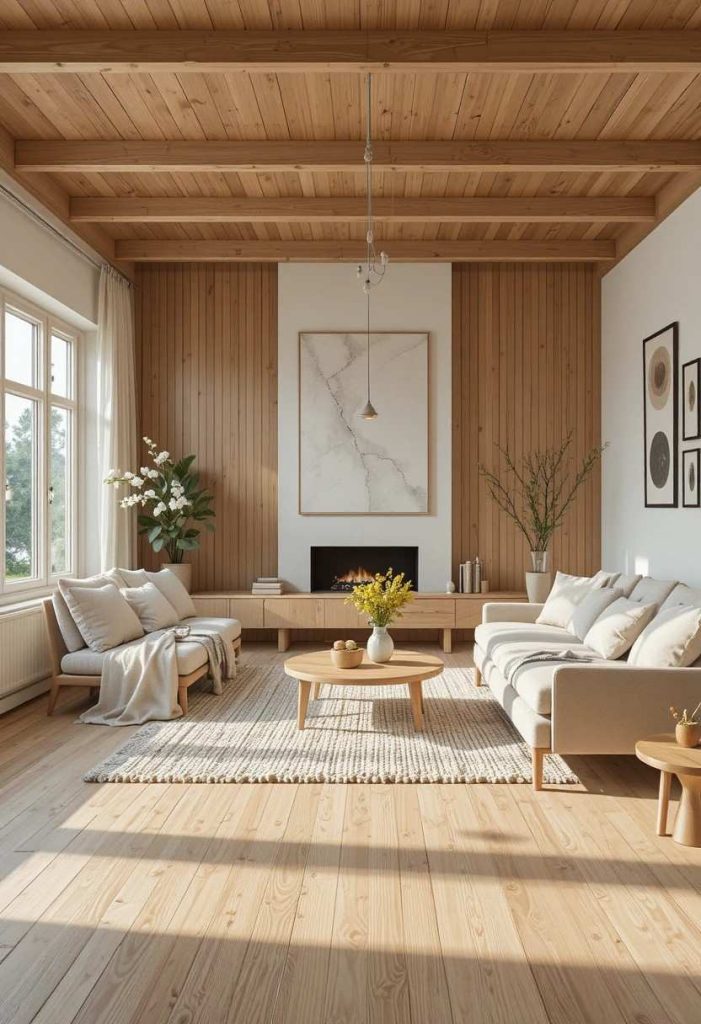
Birch, ash and pale oak are the woods I reach for, because their light grain warms a room without weighing it down. My coffee table is ash, and I love how it catches the light and stops the white walls feeling stark. I keep the wood tones in one family so the room feels calm rather than busy, mixing a pale floor with a deeper oak shelf for contrast. If you are buying new, run your hand over the grain and choose the piece that feels smooth and honest. Second-hand pale wood is the best value, and a light sanding and oiling can bring a tired table back to life.
How to do it: Pick one pale wood, such as birch, ash or oak, and repeat it in the floor, table and shelving. Mix a deeper oak piece for contrast, keep finishes matte, and oil second-hand wood to revive it.
3. Embrace Cozy Hygge Textiles
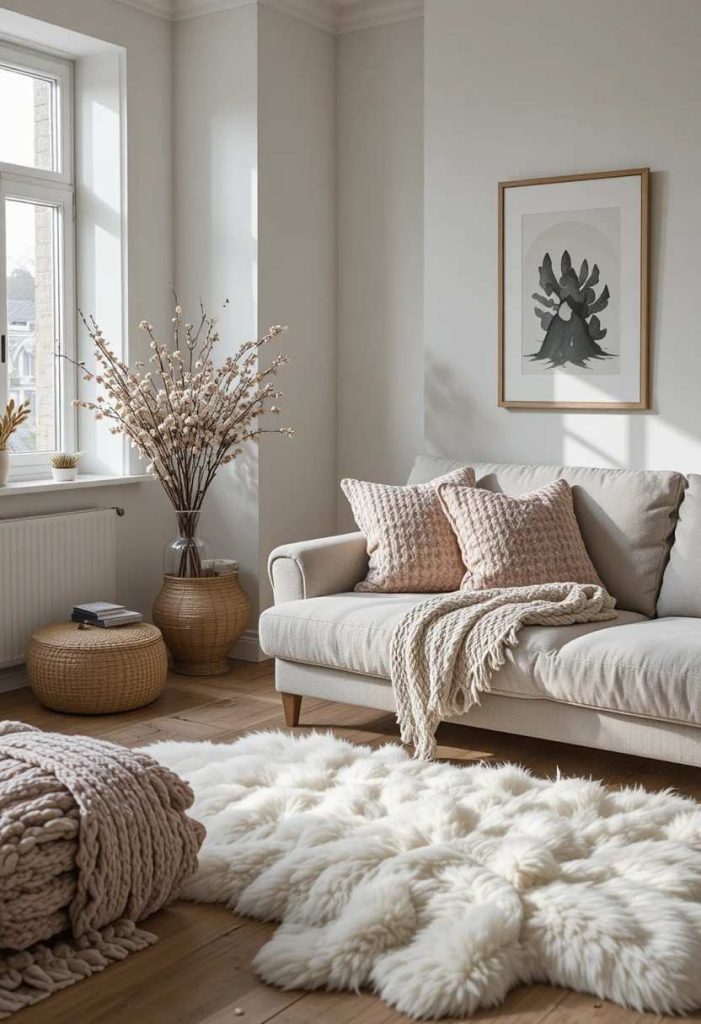
Soft throws, chunky knits and sheepskin rugs are how I bring hygge into my living room. I layer a wool throw over the sofa arm, tuck a knit cushion into the corner, and keep a sheepskin folded over the reading chair. The trick is mixing textures rather than matching them: smooth linen, nubby wool and soft fur side by side feel cosier than one flat fabric. If you love this soft, layered feeling, my cottagecore home decor ideas use the same cosy layering in a more romantic, floral way. Start with two throws and three cushions, adding more only if the sofa feels bare.
How to do it: Layer a wool throw over the sofa arm, add two knit cushions and a sheepskin on the reading chair. Mix linen, wool and fur textures, and keep one spare throw in a basket by the sofa.
4. Keep It Clutter-Free
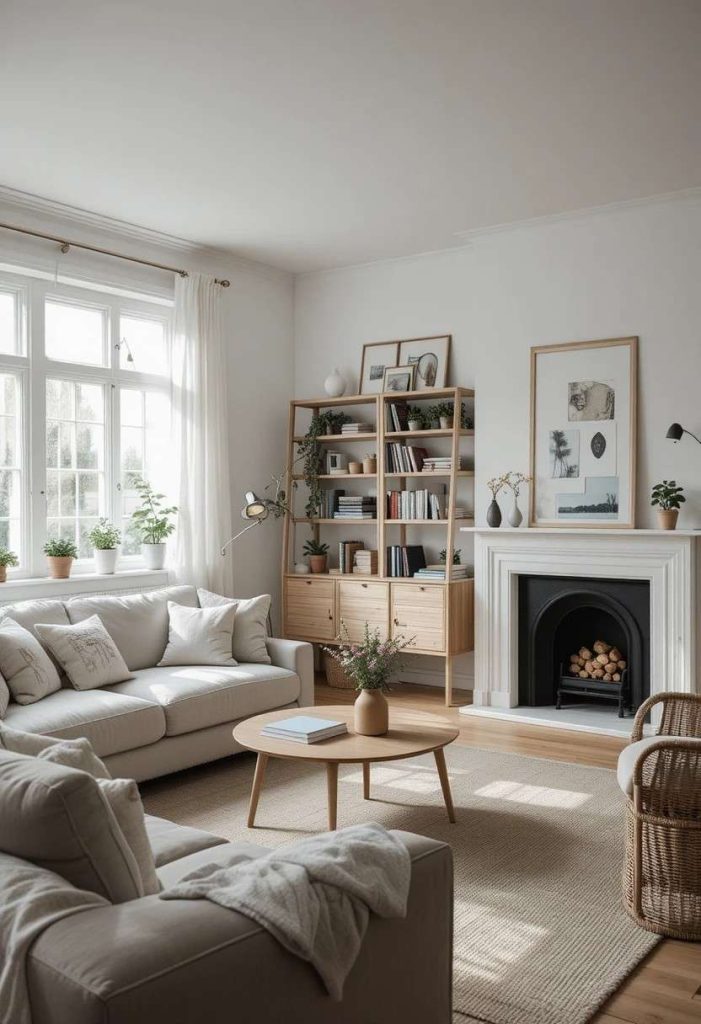
Clear surfaces are what make my living room feel calm, and I notice the difference when the coffee table is clear. I keep only three things on it: a candle, a stack of books and a tiny vase, and everything else lives in a cupboard or a basket. The rule that works for me is one thing in, one thing out, which stops ornaments creeping back onto every shelf. Each evening I spend two minutes putting things away, and that small habit keeps the room feeling peaceful all week. If a surface keeps gathering clutter, the storage nearby is not working, so I fix that first.
How to do it: Clear every surface, then return only three useful or beautiful items to the coffee table. Give everything else a closed home in a cupboard or basket, and spend two minutes tidying each evening.
5. Add Plenty of Natural Light
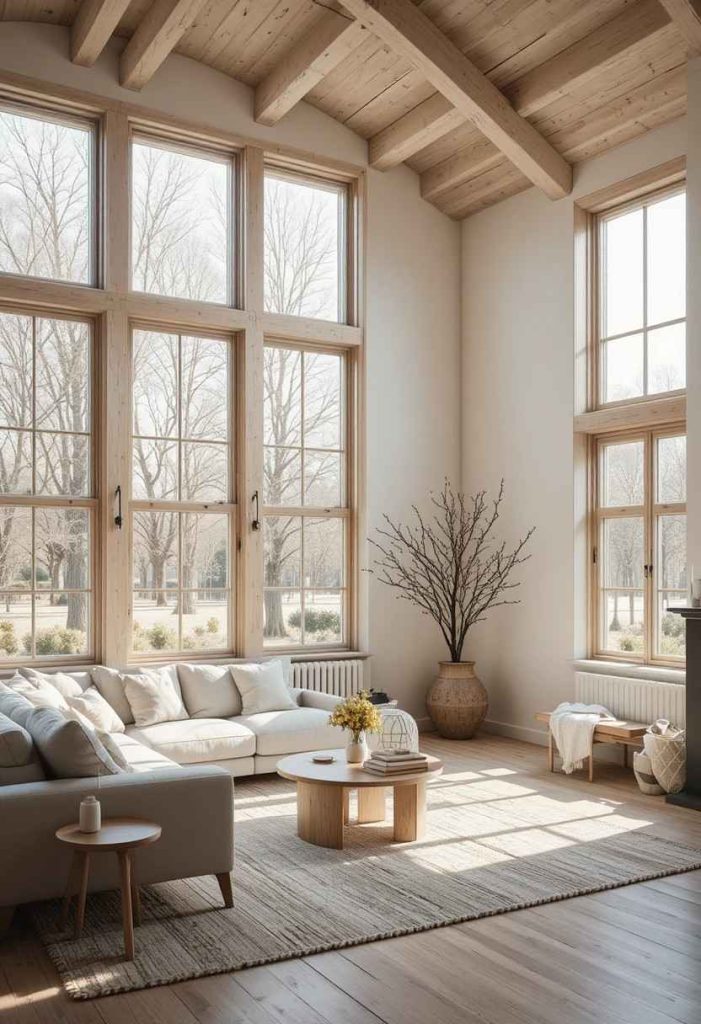
Daylight is the cheapest decorating tool I own, and I plan the whole room around it. I keep the windows bare or dressed in sheer linen, and I never place a bookcase against the window wall where it would steal the light. A mirror opposite the window doubles what comes in, bouncing brightness into the corner, and I angle it so it reflects the garden rather than the ceiling. On grey days I switch on the lamps early rather than sitting in gloom, because a bright room lifts my mood when the sky does not. If your windows are small, paint the frames white so every ray counts.
How to do it: Leave windows bare or dress them in sheer linen, and keep tall furniture off the window wall. Hang a mirror opposite the window, paint frames white, and switch lamps on early on grey days.
6. Add Greenery for Freshness
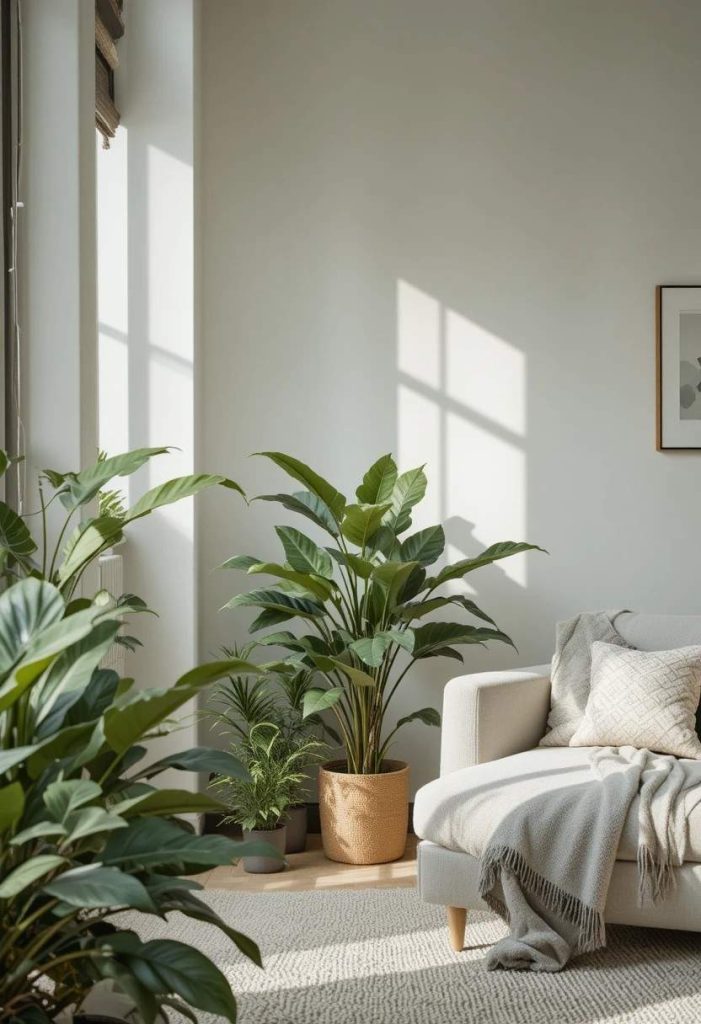
A few plants are the freshest thing in my living room, and their green is the one colour I never tire of against pale walls. I keep a trailing pothos on the shelf, an olive tree by the window and a eucalyptus stem in a jug, which gives me green at three different heights. Plants soften hard edges and make a minimal room feel lived in rather than staged, and I find watering them on Sunday mornings oddly calming. If you kill plants, start with a snake plant or a pothos, and keep them out of cold draughts. A terracotta pot makes even a supermarket plant look considered.
How to do it: Place one tall plant by the window, one trailing plant on a shelf and a small stem in a jug. Choose easy plants such as pothos or a snake plant, water weekly, and keep them out of cold draughts.
7. Choose Simple, Functional Furniture
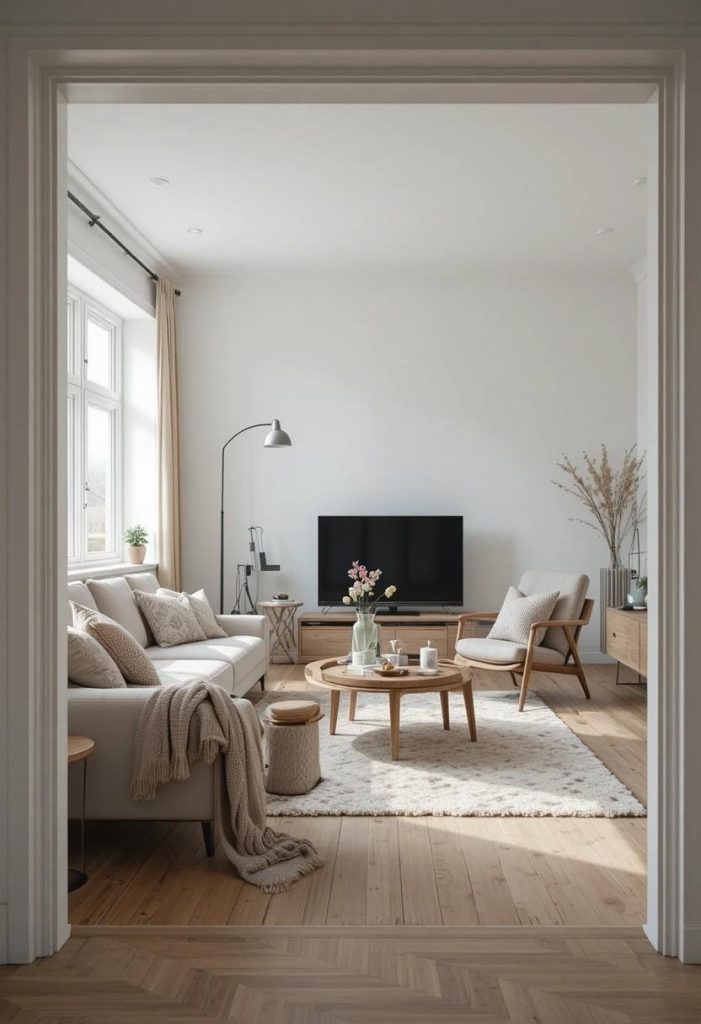
Every piece has to earn its place, so I ask two questions before anything comes home: is it comfortable, and does it do more than one job? My sofa is deep, the coffee table has a shelf for books, and the side table doubles as a laptop perch. Clean lines keep the room calm, so I avoid fussy carvings and shiny finishes, choosing pale wood and soft fabric instead. When I am tempted by a pretty piece that serves no purpose, I leave it in the shop for a week. More often than not, I find I did not need it after all.
How to do it: Measure the room first, then choose pieces with clean lines that do more than one job. Pick a deep sofa, a table with storage and a side table you can move, and leave one piece out rather than crowding the room.
8. Add Soft Layered Lighting
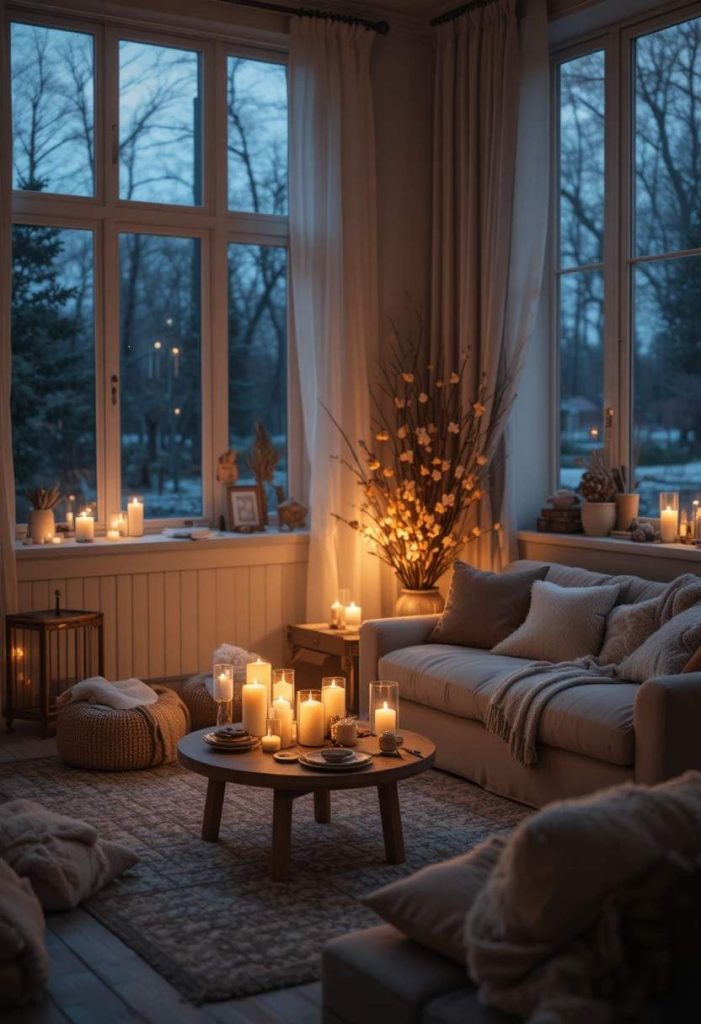
As the daylight fades, layered lighting is what keeps my living room feeling warm instead of flat. I use three levels: a dimmable pendant overhead, a table lamp beside the sofa, and candles on the mantel. Warm white bulbs matter more than the fittings themselves, because a cool white glow can undo the cosiest room in seconds. I keep the overhead light low in the evening and let the lamps do the talking, which makes the corners feel soft rather than shadowy. If you only change one thing, put your main light on a dimmer, since it costs little and changes the whole mood.
How to do it: Use three levels of light: a dimmable pendant overhead, a table lamp by the sofa and candles on the mantel. Choose warm white bulbs, put the main light on a dimmer, and keep the overhead low in the evening.
9. Add a Cozy Knit Pouf
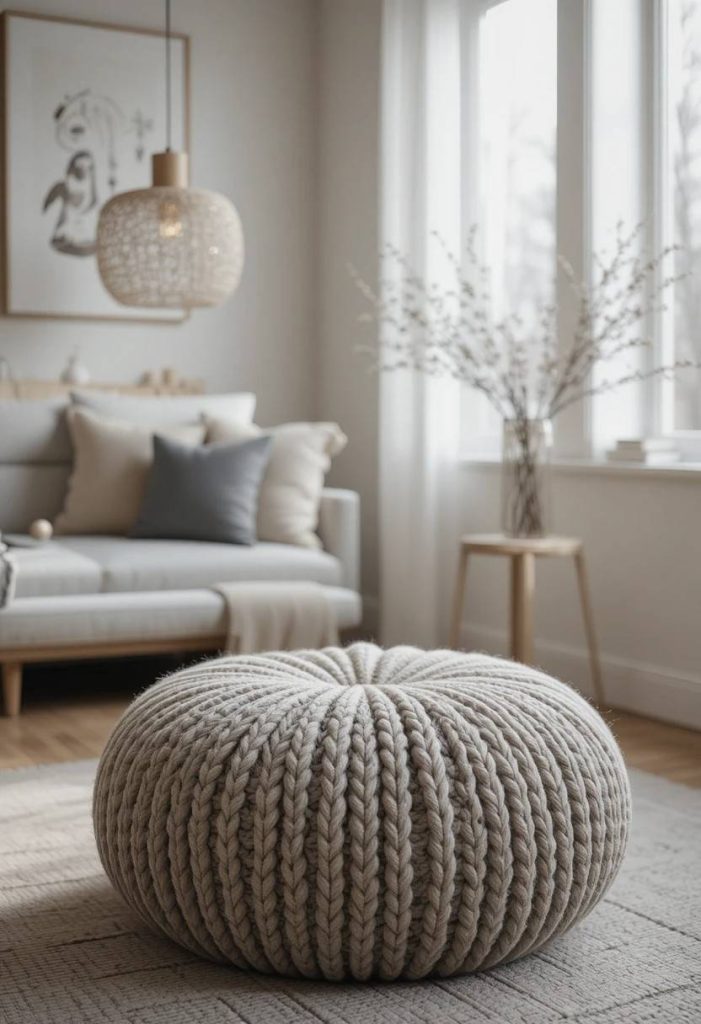
My knit pouf is the hardest-working piece in the room, and it is also the one guests fight over. It is a footrest during films, an extra seat when friends drop in, and a side table when I need one. I chose a cream wool that matches the sofa, so it blends in, and the soft shape stops the room feeling boxy. Wool is warmer under bare feet than leather or wood, which matters on cold mornings when I pad across the floor. If you are short on space, a pouf beats an ottoman, because you can tuck it away when it is not needed.
How to do it: Choose a chunky wool pouf in a neutral that matches the sofa. Use it as a footrest, extra seat or side table, and tuck it under a console or into a corner when it is not needed.
10. Use Soft, Muted Accents
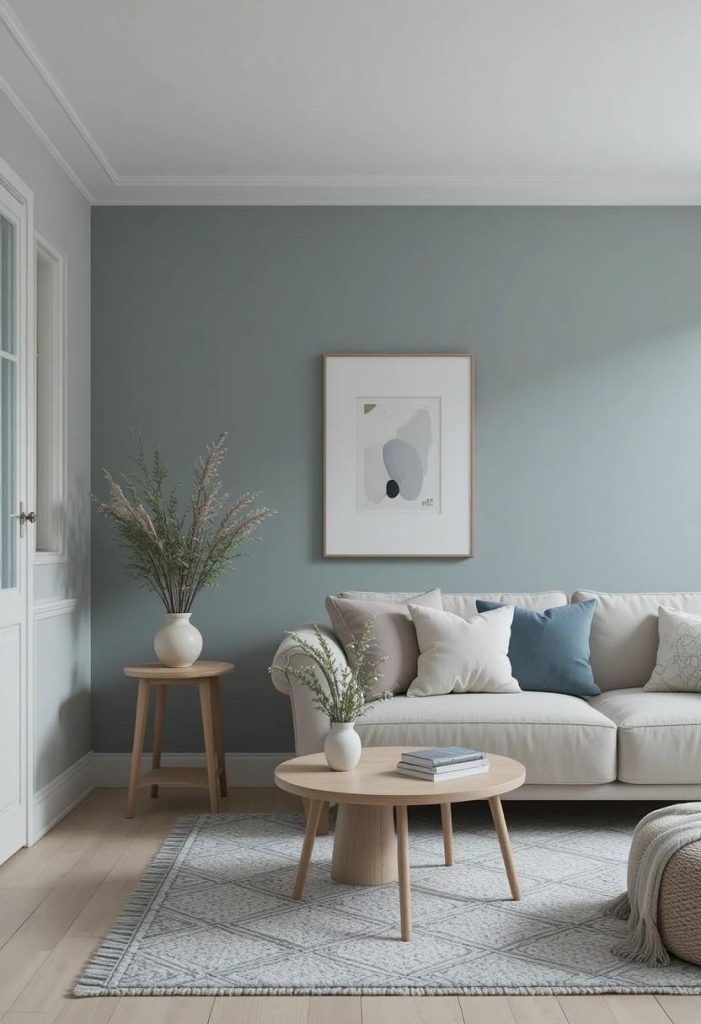
Dusty blue, sage and blush are the accents I trust most, because they add colour without ever shouting. I keep them to small touches, a sage cushion, a blush vase and a dusty blue throw, so the pale base still does the talking. Muted tones are forgiving in changing light, which is why they suit north-facing rooms so well, and they sit happily beside pale wood and linen. If you are nervous about colour, start with one cushion in your chosen shade and live with it for a fortnight before buying more. When it still makes you smile after two weeks, repeat it in two more small places.
How to do it: Pick one muted accent, such as sage, dusty blue or blush, and repeat it in a cushion, a vase and a throw. Keep the base pale, test one cushion first, and add more only if it still makes you smile.
11. Add a Sheepskin Throw
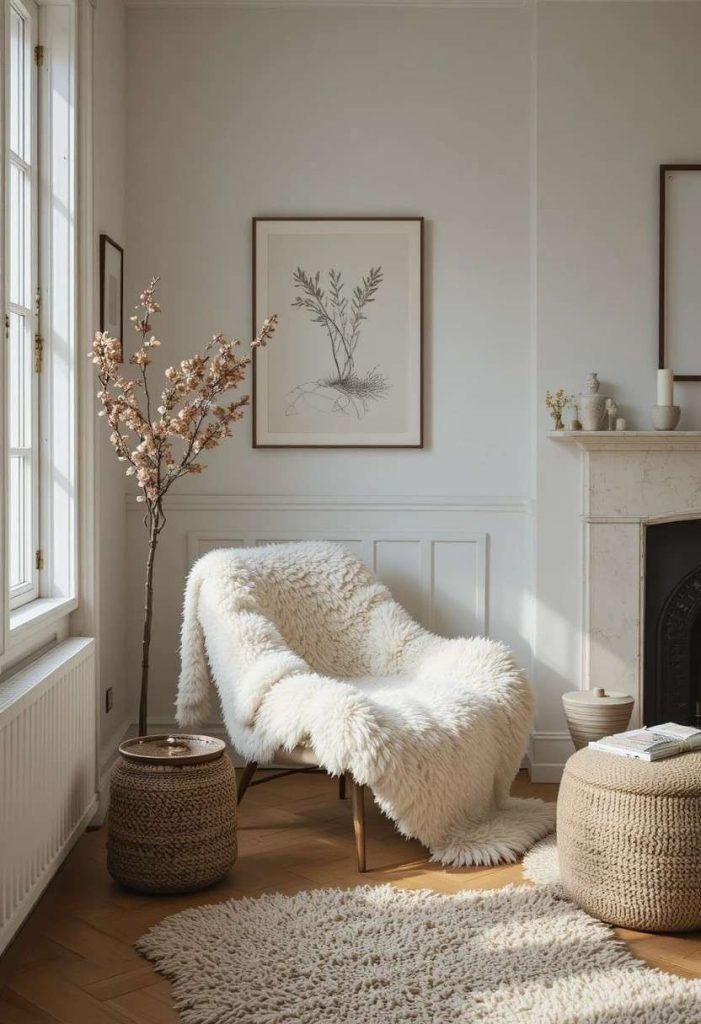
A sheepskin draped over the arm of my sofa is the fastest way I know to make the room feel warmer. The texture is soft under your hand, it catches the light beautifully, and it softens the straight lines of modern furniture. I use a genuine one on the reading chair and a faux version on the sofa, because the sofa gets far more wear. In summer I fold it away, and in October it comes back out like an old friend. If you buy one, check the backing is thick and the pile dense, since a thin one sheds within weeks.
How to do it: Drape a sheepskin over the arm of the sofa or reading chair, letting one corner fold naturally. Choose a dense pile and thick backing, wash faux versions regularly, and fold it away in summer.
12. Keep Walls Simple and Bright
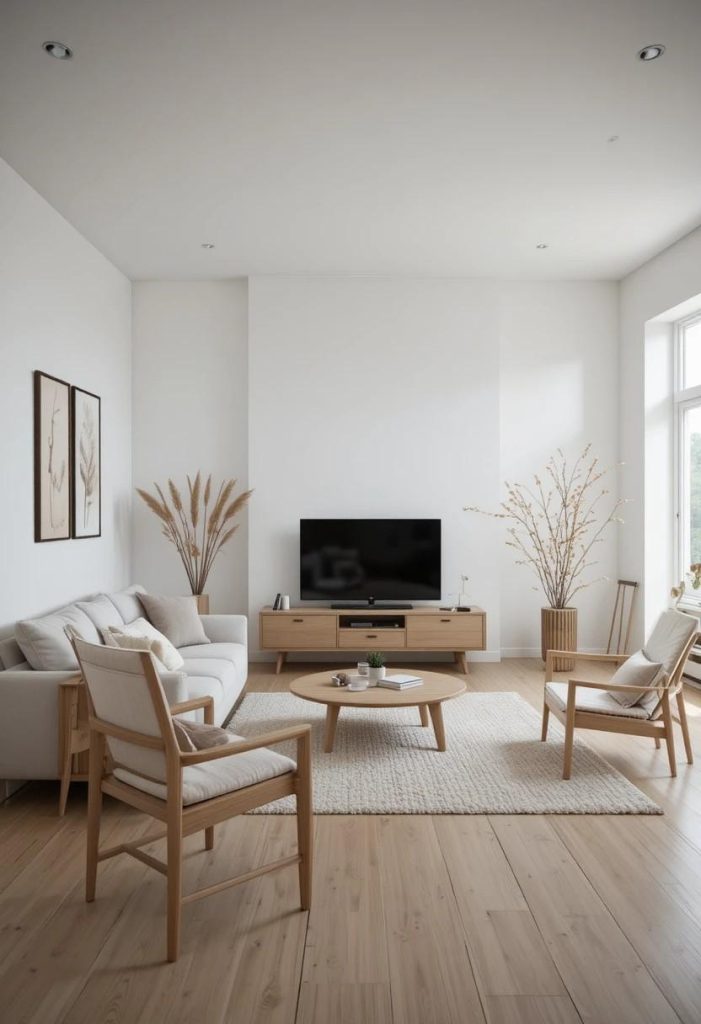
Crisp white walls are the backdrop my whole room depends on, and I keep them free of busy patterns so the furniture and textiles can shine. A soft white with a warm undertone suits most rooms, while a cool white can feel stark, so I test a large swatch first. I paint the skirting and the ceiling the same white to blur the edges, which makes the room feel taller and calmer. One large mirror or a single framed print is all the wall needs, hung at eye level. If your walls feel flat, a limewash finish adds gentle movement without adding colour.
How to do it: Paint walls, skirting and ceiling in the same soft white with a warm undertone. Test a large swatch first, hang one mirror or framed print at eye level, and leave the rest of the wall clear.
13. Add Natural Materials
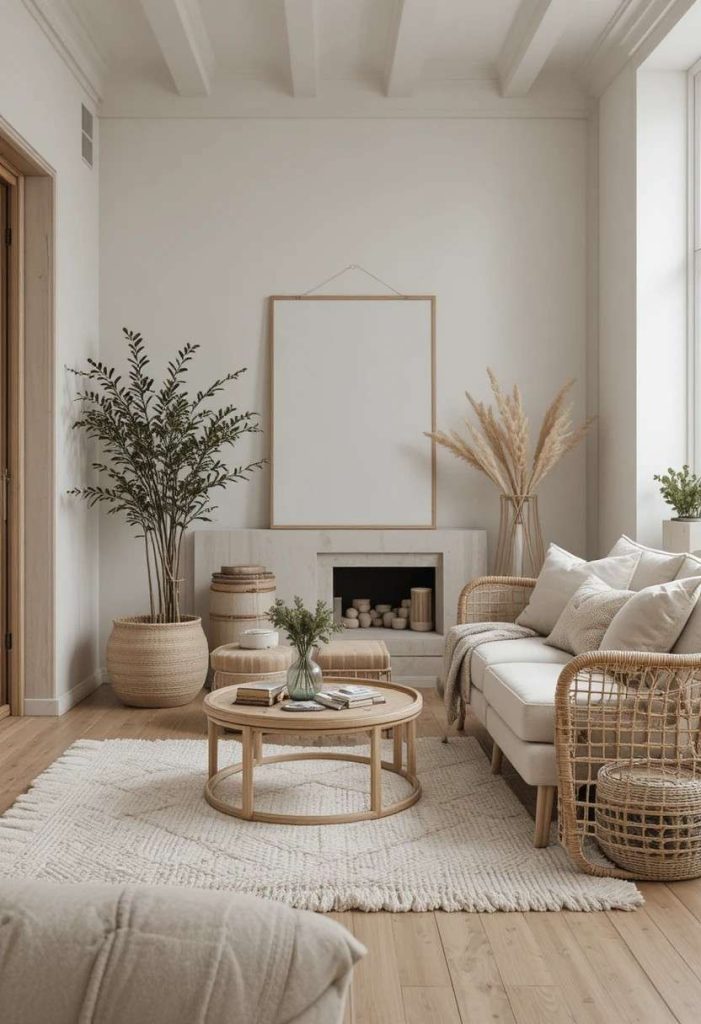
Wood, wool, linen and rattan are the materials I build a Scandinavian room from, because they bring warmth nothing synthetic can match. I mix them deliberately: a linen sofa, a wool throw, a rattan basket and a pale wood table, so every surface offers a different touch. Natural materials age gracefully, picking up a soft patina instead of looking worn out, and that honesty is what makes the style feel calm rather than precious. If you are on a budget, start with linen cushion covers and a wool throw, since they change a room for very little money. Avoid shiny faux finishes, and let the grain and weave show.
How to do it: Mix four natural materials, such as linen, wool, rattan and pale wood, across the sofa, throws, baskets and tables. Start with linen covers and a wool throw, avoid shiny faux finishes, and let grain and weave show.
14. Display a Few Meaningful Pieces
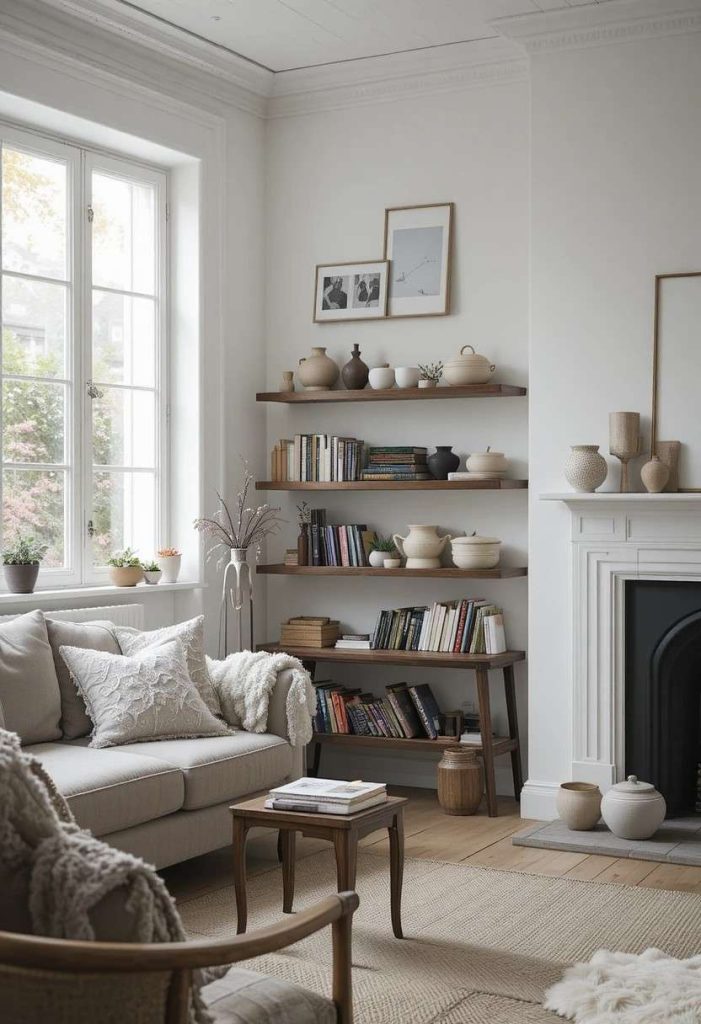
A handful of objects I truly love does more for my living room than a shelf full of ornaments ever could. On my mantel sit a ceramic vase from a holiday in Cornwall, a stack of two books, and a small framed sketch my daughter drew, and each one makes me smile. I give every piece breathing room, because a single object with space around it feels intentional, while five crowded together just look like clutter. When something stops meaning anything to me, I move it on. Choose slowly, and let the collection grow one loved piece at a time.
How to do it: Choose three objects you love, such as a vase, books and a framed sketch, and give each one space on the mantel or shelf. Remove anything that means nothing to you, and add new pieces one at a time.
15. Add a Soft Area Rug
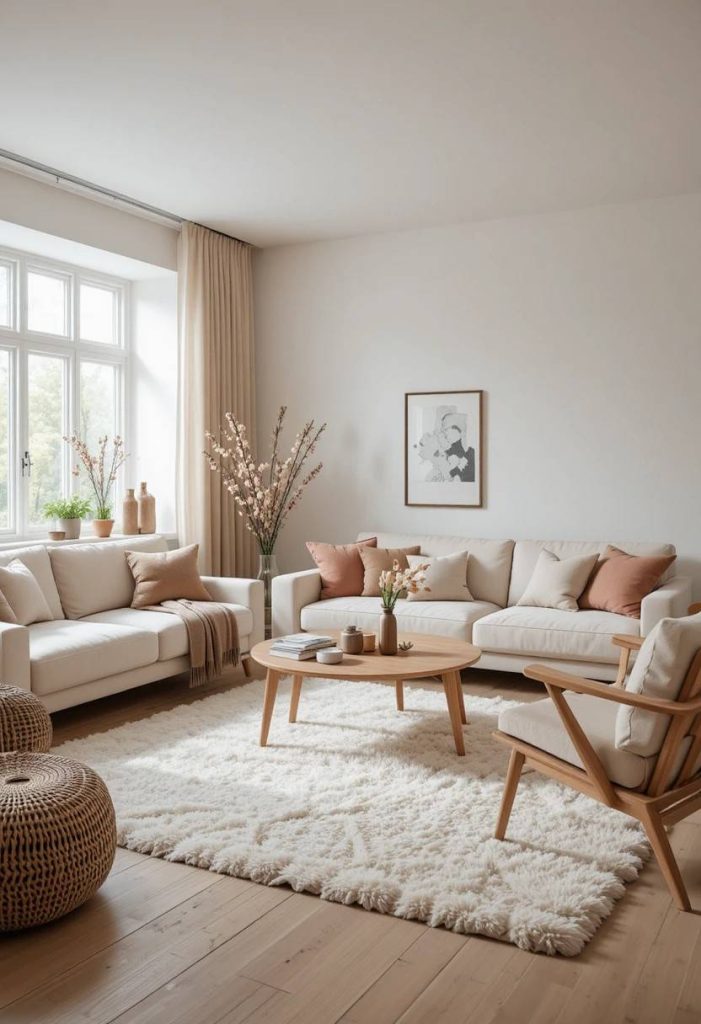
A soft rug is what pulls my seating together, and bare floorboards without one always feel unfinished to me. I chose a pale wool rug with a faint pattern, large enough for the front legs of the sofa and armchair to sit on. The rug softens footsteps, warms cold mornings, and gives the dog a favourite napping spot, so it earns its keep every single day. If you are choosing a size, go bigger than you think, since a rug that is too small shrinks the whole seating area. A low pile is easiest to clean, and a rug pad stops it sliding.
How to do it: Measure the seating area, then choose a pale wool rug large enough for the front legs of the sofa and chairs. Add a rug pad underneath, keep the pile low for easy cleaning, and vacuum weekly.
16. Keep Decor Minimal but Warm
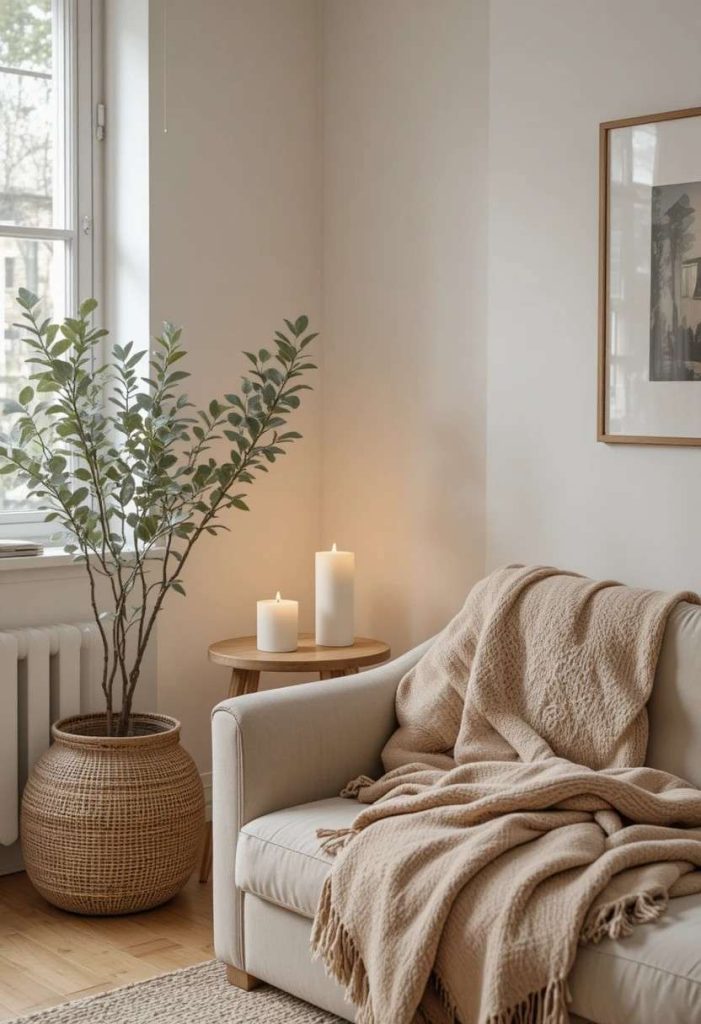
Minimal and warm can live happily together, and my living room is proof, because I keep the surfaces clear but never bare. A candle, a plant and a favourite mug on the coffee table are enough, and each one is something I actually use. I choose a few beloved pieces rather than many pretty ones, since a room with space around its objects feels calm and personal at once. If you want the same calm with more pattern and warmth, my country living room ideas show how florals can sit beside a simple Scandinavian base. Edit often, and remove one thing every month.
How to do it: Keep three useful, beautiful items on the coffee table, such as a candle, a plant and a mug. Remove one thing every month, and choose a few beloved pieces rather than many pretty ones.
17. Add a Statement Pendant Light
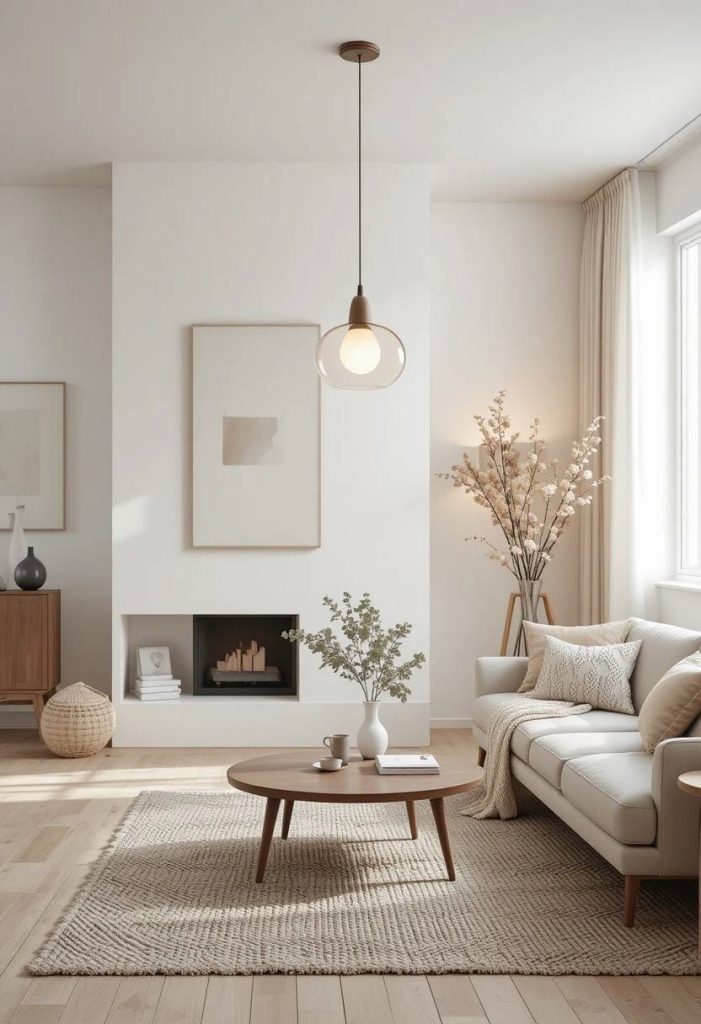
A sculptural pendant is the jewellery of my living room, and it earns its place even when it is switched off. I chose a paper lantern shape in warm white, hung low enough to feel intimate but high enough that nobody bumps their head. Its soft glow pools over the seating in the evening, while by day its clean silhouette adds quiet interest to a plain ceiling. I keep the bulb warm white and dimmable, because a harsh bulb would ruin the effect entirely. If your ceiling is low, choose a flush or semi-flush design instead, since a pendant that hangs too low makes a room feel cramped.
How to do it: Hang a simple sculptural pendant over the coffee table, low enough to feel intimate but high enough to clear heads. Choose a warm white dimmable bulb, and pick a flush design if the ceiling is low.
18. Layer Soft Cushions
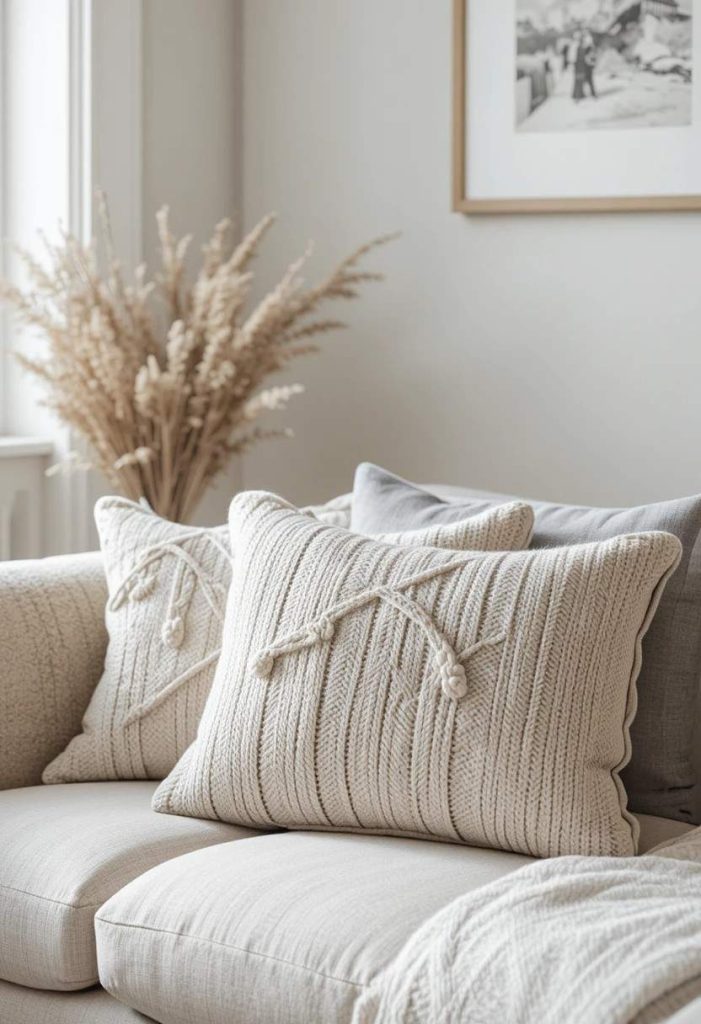
Cushions are my favourite way to change a room with the seasons, because they are cheap, quick to swap, and instantly cosy. I mix knits and linens in soft neutrals, two large at the corners, two smaller in front, and one in gentle sage for a whisper of colour. Different textures matter more than matching patterns, so I pair a nubby wool with smooth linen and a soft velvet for contrast. I plump them every morning, which takes thirty seconds and makes the sofa look cared for all day. If cushions keep sliding, a firmer insert usually fixes it, and I always buy covers I can wash.
How to do it: Mix two large cushions at the corners, two smaller ones in front and one muted accent. Pair nubby wool with smooth linen, plump them each morning, and buy washable covers.
19. Add a Cozy Reading Corner
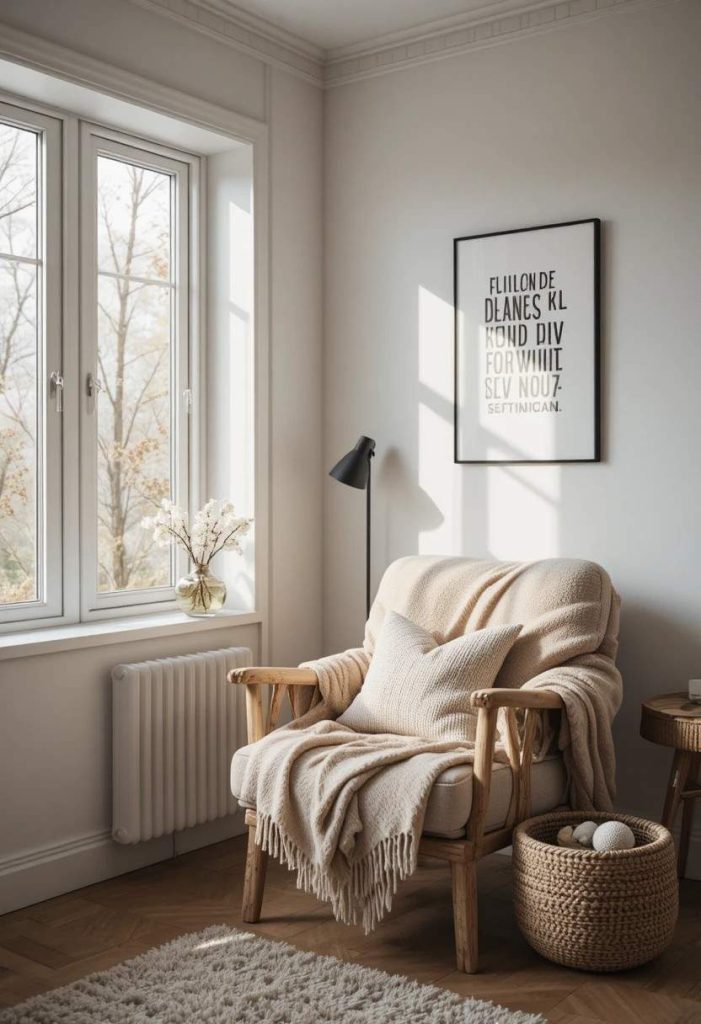
My reading corner is an armchair pulled close to the window, and it is the spot I head for first on a rainy afternoon. A soft throw lives on its arm, a small table holds my tea and the book, and a floor lamp stands behind the chair so the light falls over my shoulder. The corner feels separate from the main seating, which makes it feel like a small room of its own. If space is tight, even a single chair and a wall light can make a nook, and a basket for books beside it finishes the job.
How to do it: Place a comfortable armchair near a window, add a floor lamp behind it and a small table beside it. Keep a throw on the arm and a basket of books nearby, and leave the corner free of clutter.
20. Keep the Floor Light
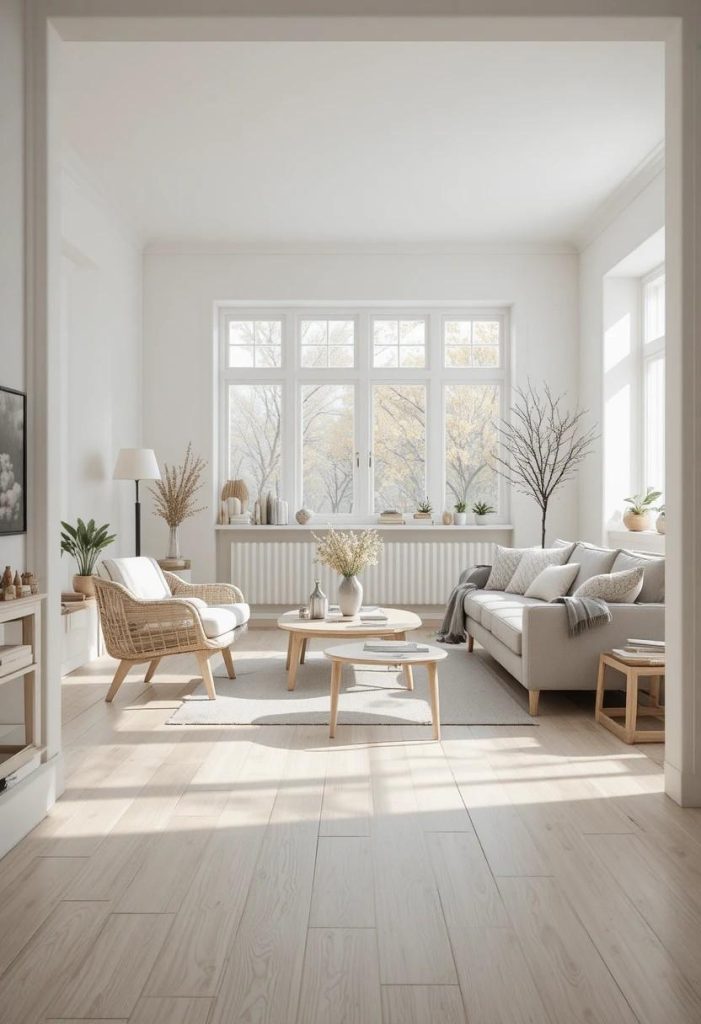
Pale wood floors are the foundation of my Scandinavian room, and they bounce light around in a way dark floors never do. My boards are a washed oak, and I keep them mostly bare, with one large rug under the seating, so the pale ground shows at the edges. Light floors show dust more quickly, which is the honest trade-off, so I run a soft broom over them most mornings and mop once a week. If your floors are dark, a pale rug and white walls can lift the room a surprising amount, and light curtains help too. When refinishing, choose a matte oil rather than a glossy varnish, since shine fights the calm Nordic look.
How to do it: Keep pale wood floors mostly bare with one large rug under the seating. Sweep most mornings, mop weekly, and choose a matte oil finish if you refinish, since gloss fights the calm look.
21. Add Candles for Hygge
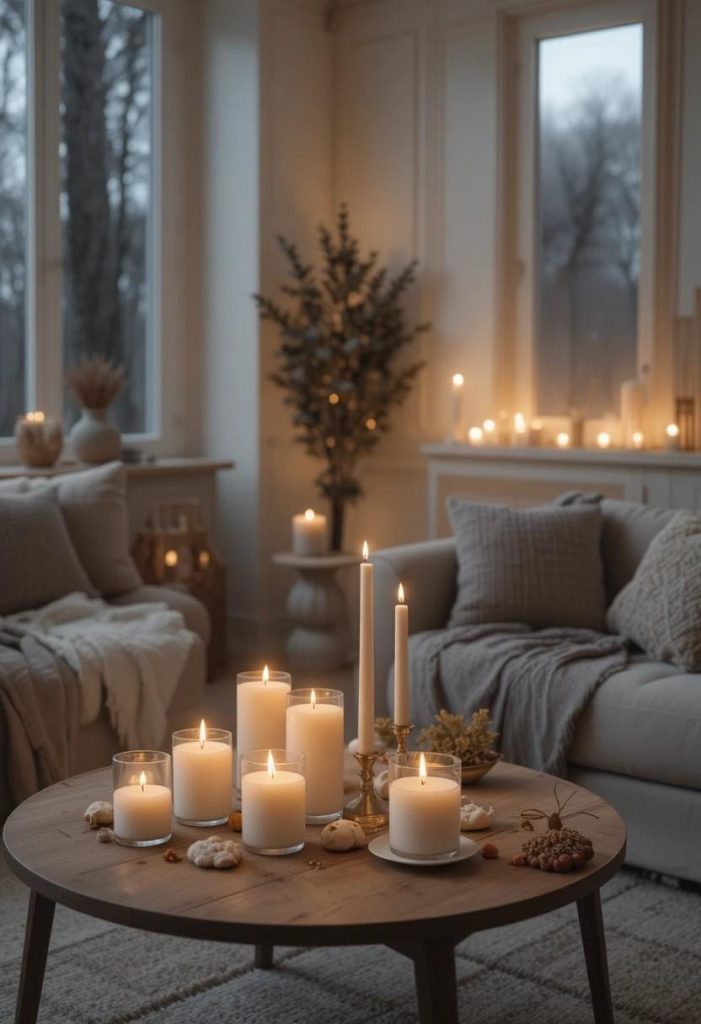
Candles are my evening ritual, and lighting them is how I tell the day to slow down. I group them in threes on the coffee table and the mantel, mixing tall tapers with squat jars, and I choose unscented or beeswax. Their flicker softens every hard edge, and on dark winter afternoons they make the pale room glow in a way no bulb can match. I keep a box of long matches in a ceramic pot beside them, which stops the hunt for a lighter. If you have children or pets, use LED candles inside lanterns, since they give the same warm flicker without the worry.
How to do it: Group candles in threes on the coffee table and mantel, mixing tall tapers with squat jars. Choose unscented or beeswax, keep matches in a ceramic pot nearby, and use LED candles in lanterns around children or pets.
22. Use Simple Window Treatments
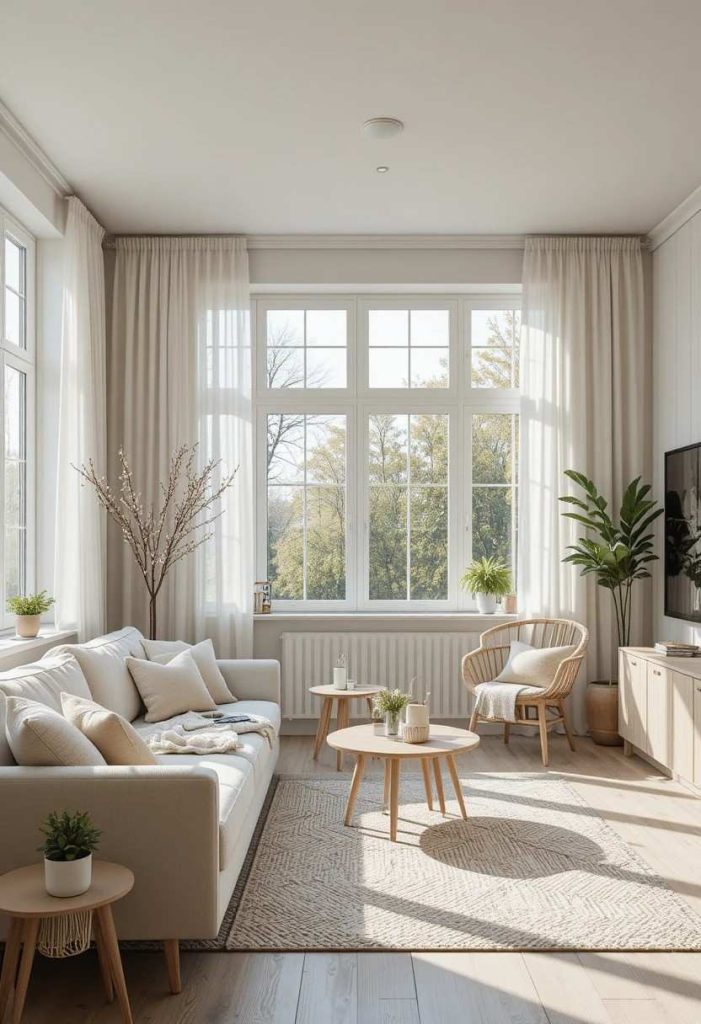
My windows wear almost nothing, and that is deliberate, because bare glass lets in the most light. Where I need privacy, I hang sheer linen panels on a rod, high and wide, so they frame the window without covering it, and they soften the daylight into a gentle glow. Heavy curtains would swallow the light, so I avoid them entirely, and I keep the sills clear so nothing blocks the glass. In bedrooms I use the same linen with a simple roller blind behind it for dark mornings. If your windows face the street, a sheer panel gives privacy by day, and a blind gives it back at night.
How to do it: Hang sheer linen panels on a slim rod, high and wide, so they frame the window without covering it. Add a roller blind behind them for dark mornings, and keep the sills clear.
23. Add Woven Baskets for Storage
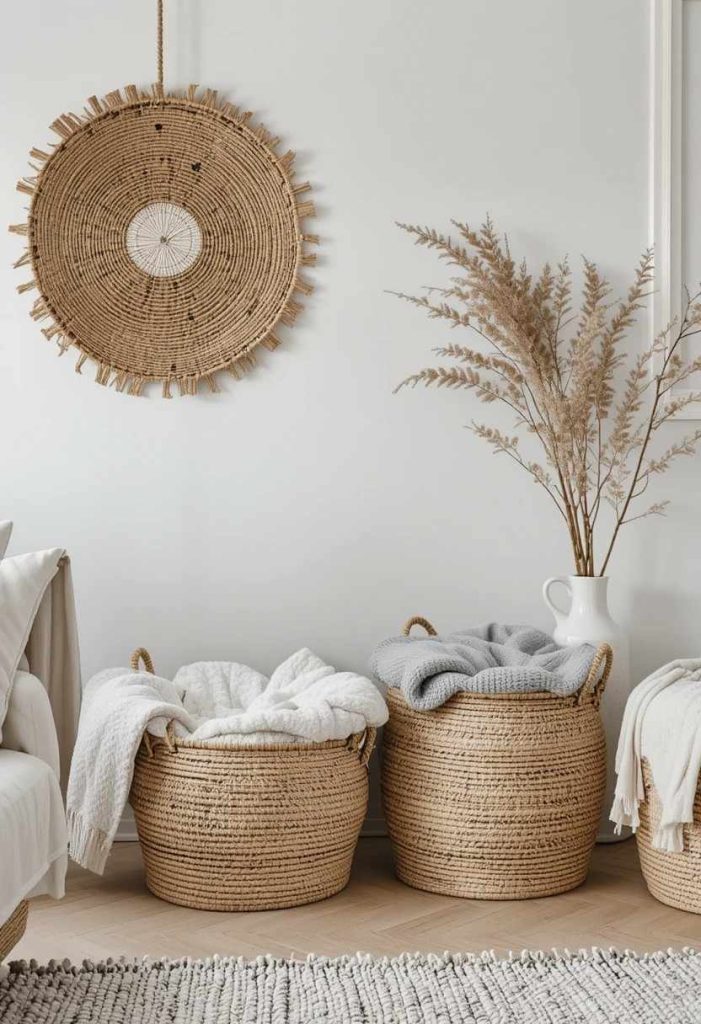
Woven baskets are the heroes of my tidy living room, because they hide the mess without hiding the style. One seagrass basket holds the spare throws by the sofa, a smaller one corrals the children’s toys, and a lidded basket by the door swallows shoes and scarves. I choose natural fibres in warm honey tones, since they add texture while blending with pale wood, and sturdy handles matter when a basket is full. Every few weeks I empty each one and put back only what belongs, which stops them becoming junk drawers. If you buy new, check the weave is tight and even, since a loose basket snags throws.
How to do it: Place one large basket by the sofa for throws, one smaller basket for toys or bits, and one lidded basket by the door. Choose natural fibres with sturdy handles, and empty each basket every few weeks.
24. Mix Textures for Warmth
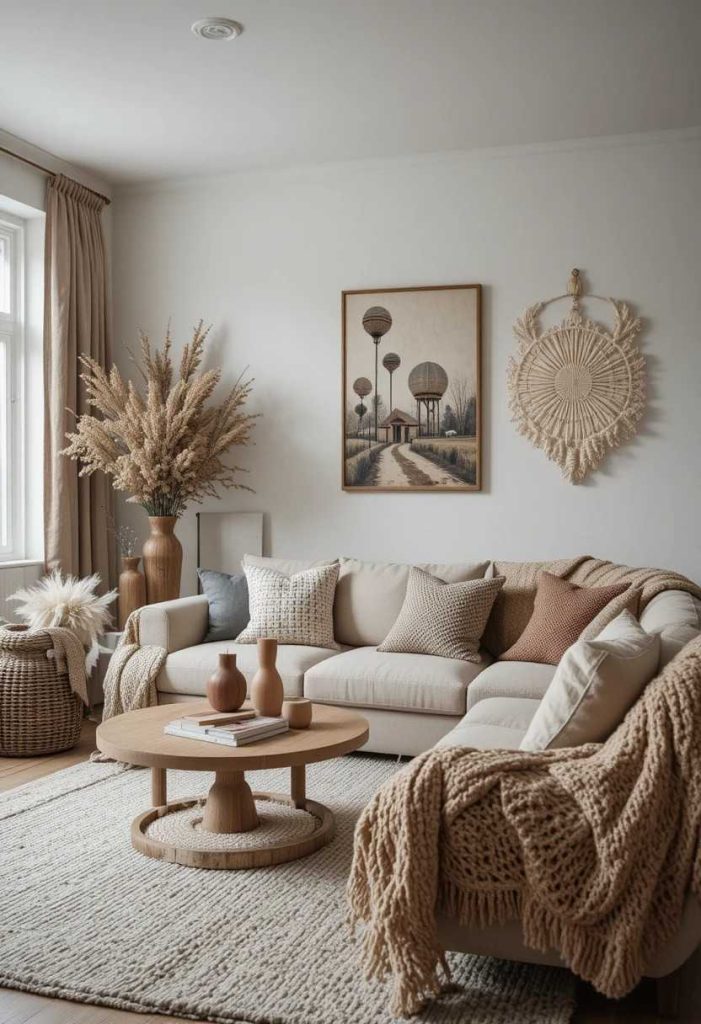
A minimal room can feel flat if everything is smooth, so I mix textures the way a cook seasons a dish: a little of each. Knits, wool, linen and pale wood sit side by side in my living room, and the contrast is what makes the pale palette feel rich rather than cold. I start with the biggest surface, usually the sofa in linen, then add a wool throw, a rattan basket and a wooden tray. If a corner still feels bare, a sheepskin or a woven cushion usually finishes it, and I stop there before the room tips into clutter.
How to do it: Start with the sofa in linen, then add a wool throw, a rattan basket and a wooden tray, so no two neighbouring textures match. Stop when the room feels rich, before it tips into clutter.
25. Add Gentle Wall Art
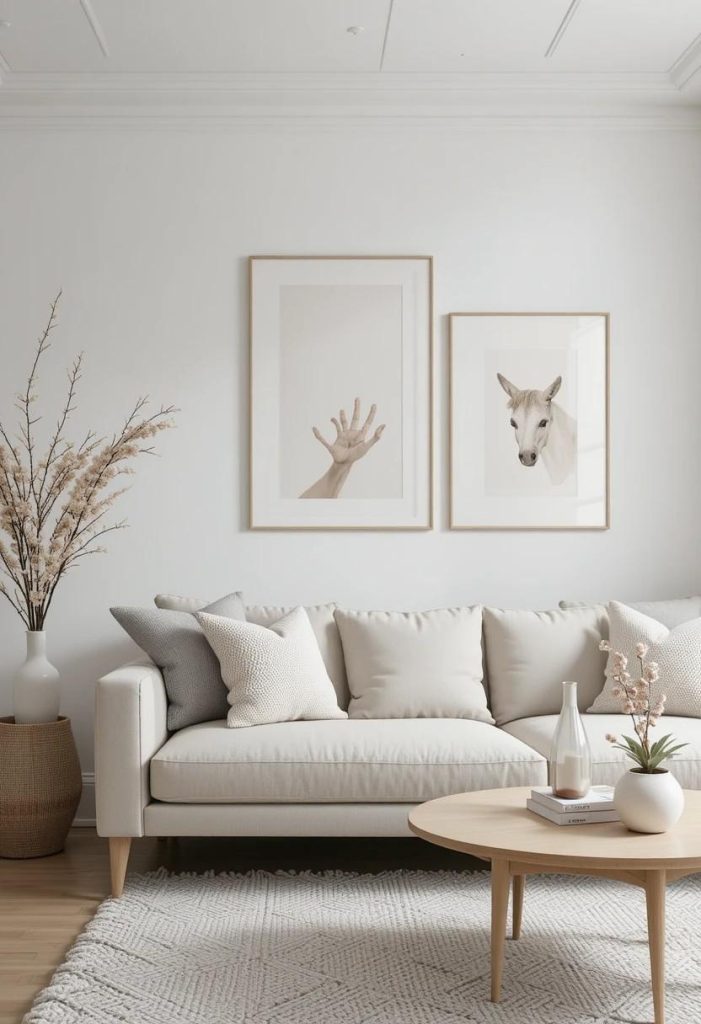
My walls carry very little art, and what hangs there I chose slowly, because one calm print does more than a crowded gallery wall. A framed landscape in soft greens hangs above the sofa, and a small botanical print sits by the reading chair, both in pale wood frames. I hang each frame at eye level, about 145 cm from the floor, and leave generous white space around it. If you are unsure what suits the room, start with a landscape or a botanical, since both bring the outdoors in without adding noise. Avoid glossy frames and bright colours, which fight the soft Nordic palette.
How to do it: Hang one framed landscape above the sofa and one small botanical print by the reading chair, both in pale wood frames. Centre each frame about 145 cm from the floor, and leave generous white space around it.
26. Keep a Calm, Open Layout
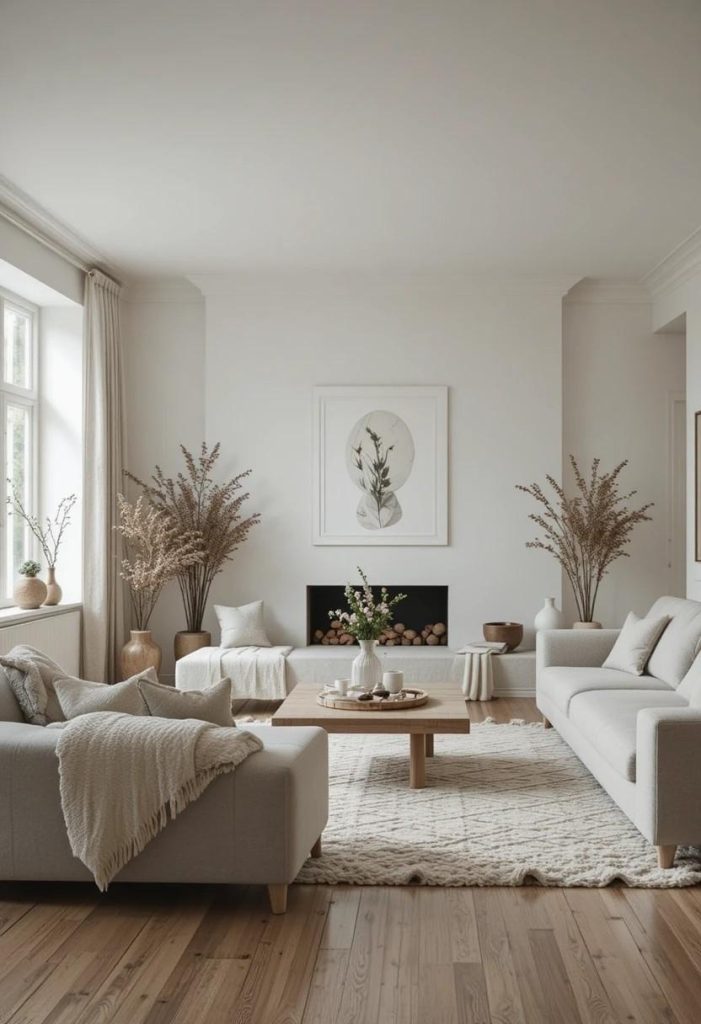
I arrange my furniture with breathing room, because a Scandinavian living room should feel like it has air in it. The sofa floats a little away from the wall, the coffee table leaves a clear path to the window, and nothing blocks the light. I measure the walkways as I arrange, keeping 75 cm clear, so nobody has to shuffle sideways past the furniture. If your room sits a step lower than the rest of the house, my sunken living room ideas show how a lowered floor can still feel calm and open. Step back to the doorway often, since the room should look peaceful from the entrance.
How to do it: Float the sofa a little from the wall, leave about 75 cm of walkway clear, and keep paths to the window open. Step back to the doorway to check the layout, and move one piece at a time until it feels calm.
27. Make It Cozy and Personal
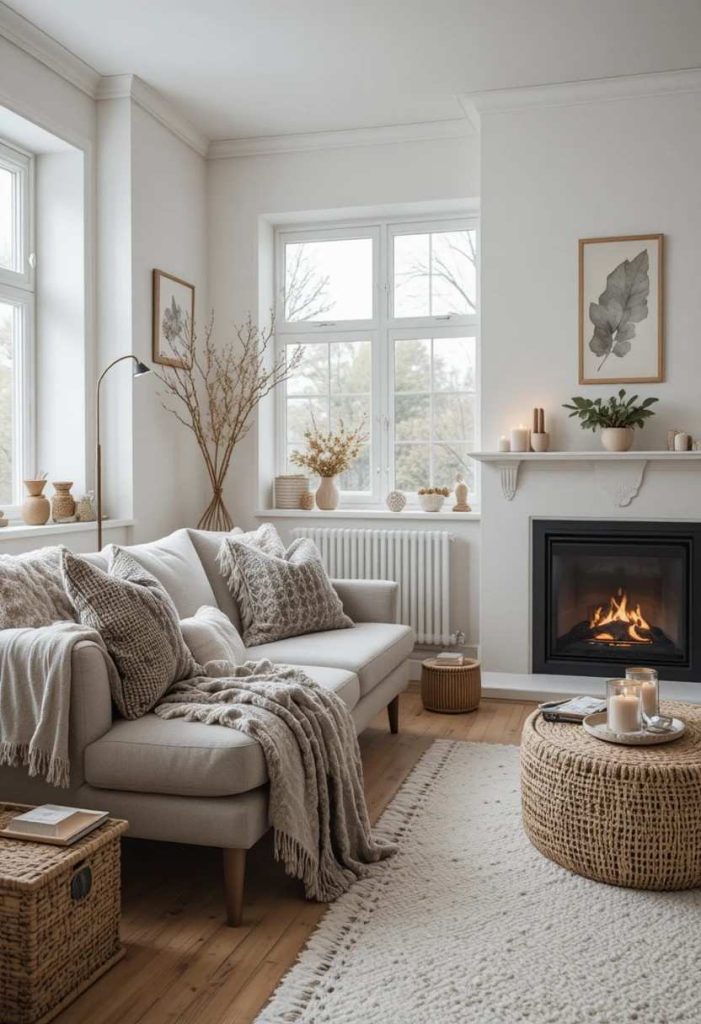
Finally, the room becomes truly mine when I add the small things that no shop could choose for me. A favourite blanket folded over the sofa arm, a candle that smells of pine, and a photograph of my family on the shelf are the details I notice every day. These personal touches are what turn a bright, minimal space into a home, and I add them one at a time. If a new piece does not mean anything to you yet, leave it out, since meaning grows with time and use. A Scandinavian living room is never finished, and that is the joy of it.
How to do it: Add one personal touch at a time, such as a favourite blanket, a meaningful photograph or a candle with a memory. Leave out anything that means nothing yet, and let the room grow with you season by season.
Frequently Asked Questions
How do I keep a Scandinavian living room from feeling cold?
Layer warmth into the pale base. Add wool throws, a sheepskin, warm wood tones and layered lighting, and the room will feel cosy rather than stark. A rug underfoot and candles in the evening make the biggest difference for very little money.
What colours work best in a Scandinavian living room?
Soft white, pale grey and warm beige form the base, with muted accents such as sage, dusty blue or blush used sparingly. Keep the palette to three or four colours and repeat each one at least twice, so the room feels calm and pulled together.
Can Scandinavian style work in a small living room?
Yes, it suits small rooms beautifully, because pale colours, mirrors and clear surfaces make a space feel larger. Choose a compact sofa, keep walkways clear and use one large rug rather than several small ones, so the floor reads as one open area.
How do I add hygge to my living room on a budget?
Start with the cheapest changes: a wool throw, a few candles and a plant. Thrifted pale wood, linen cushion covers and a second-hand sheepskin add warmth for very little money, and you can build the look one piece at a time.
How much decor is too much in a Scandinavian living room?
If a surface holds more than three items, or you cannot see the wall behind a shelf, it is probably too much. Keep one or two meaningful pieces per surface, give each one breathing room, and remove one thing every month to keep the calm.
Your Scandinavian Living Room Checklist
Print this list and tick each step off as you style your Scandinavian living room.
☐ Paint the walls a soft, warm white
☐ Choose one pale wood and repeat it in three places
☐ Layer a wool throw, two knit cushions and a sheepskin
☐ Clear every surface and keep only three items on the coffee table
☐ Leave windows bare or hang sheer linen panels
☐ Add one tall plant, one trailing plant and one small stem
☐ Pick a deep, comfortable sofa with clean lines
☐ Layer three kinds of light: pendant, table lamp and candles
☐ Choose one muted accent and repeat it in three places
☐ Add a pale wool rug large enough for the front sofa legs
☐ Place woven baskets by the sofa and the door
☐ Hang one framed print at eye level, about 145 cm from the floor
☐ Leave 75 cm of walkway clear around the seating
☐ Add one personal touch that means something to you
A Final Gentle Thought
Scandinavian living rooms are not about owning less for the sake of it; they are about keeping only what brings light, warmth and calm into the room. Start with the palette and the daylight, then add wood, wool and linen one layer at a time, and let the room grow slowly around the way you actually live. Light a candle, fold a throw over the sofa arm, and sit in the room for a while before you buy anything else. The cosiest Nordic rooms are the ones that were styled gently, over time, by the people who live in them.
3 Comments