
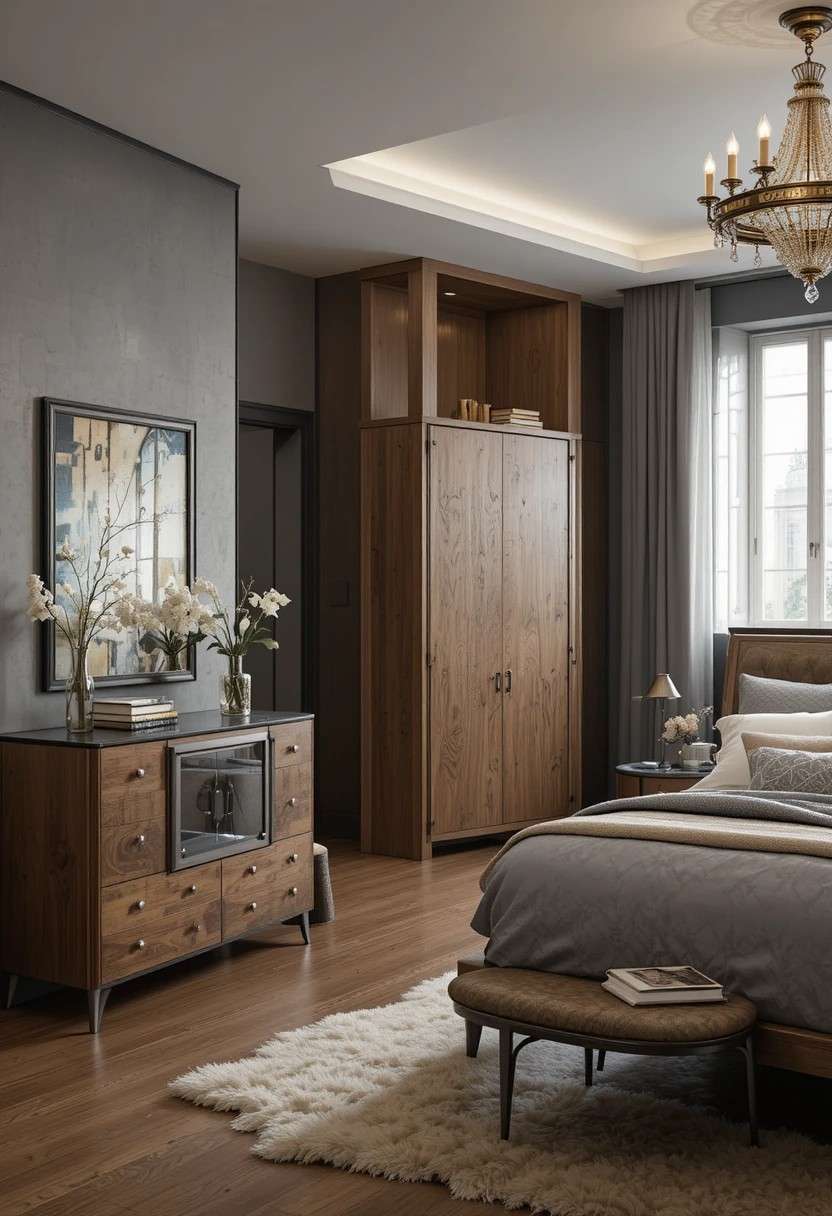
25 Bedroom Furniture Set Ideas for a Beautifully Coordinated Space
There is something deeply satisfying about a bedroom where every piece of furniture feels like it belongs together. A well coordinated furniture set brings a sense of calm, harmony, and effortless style to your most personal space. From the bed and nightstands to the dresser and bench, matching pieces create a polished, restful look with ease. Whether your taste is sleek and modern, soft and romantic, or warm and rustic, there is a coordinated set to suit your dream bedroom. Below are twenty five bedroom furniture set ideas, shared with warmth and inspiration, to help you create a beautifully coordinated space you will love to wake up in.
1. Start With a Matching Bed and Nightstands
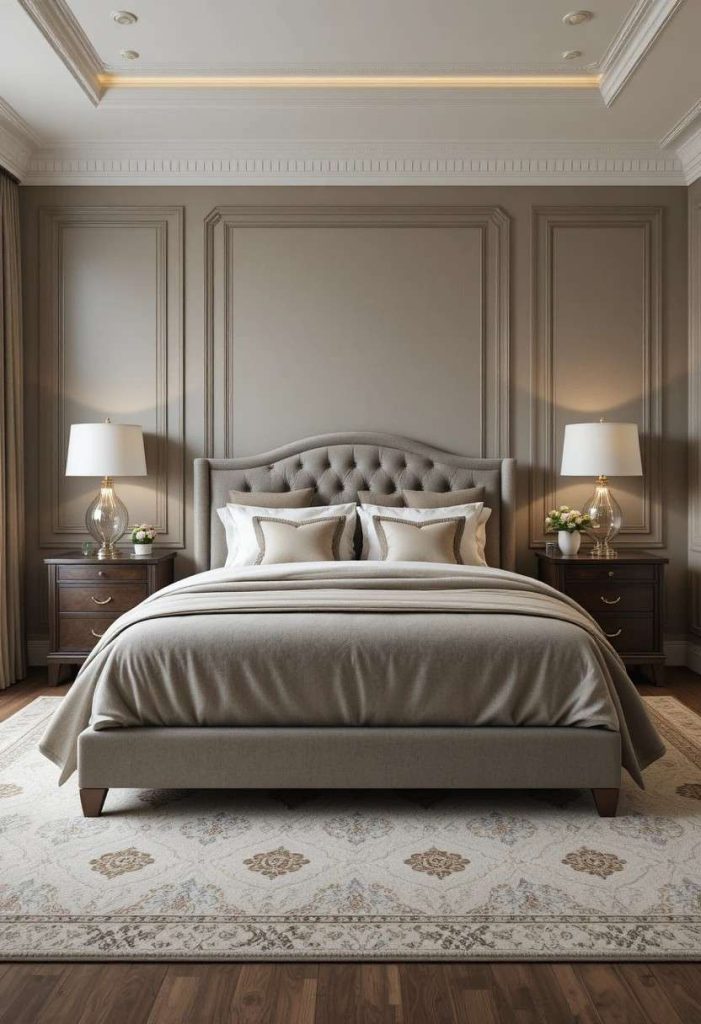
A bed flanked by two matching nightstands is the heart of a coordinated bedroom, and honestly, it is where I always tell friends to begin. The symmetry feels instantly calming, like the room took a deep breath, and it gives each side of the bed its own little station for a book, a glass of water, and a lamp. I like nightstands with at least one drawer so clutter has somewhere to go, and I always check that the top sits a few inches above the mattress top so reaching for things feels natural. Keep the lamps matching too, and suddenly the whole room looks intentional without trying too hard.
How to do it: Measure your bed frame first, then choose nightstands that sit 2–4 inches above the mattress top and leave at least 24 inches of walking space on each side. Match the finish to your bed frame, keep the drawer count the same on both sides, and top each one with an identical lamp and a small personal touch, like a framed photo or a tiny vase.
2. Add a Coordinating Dresser
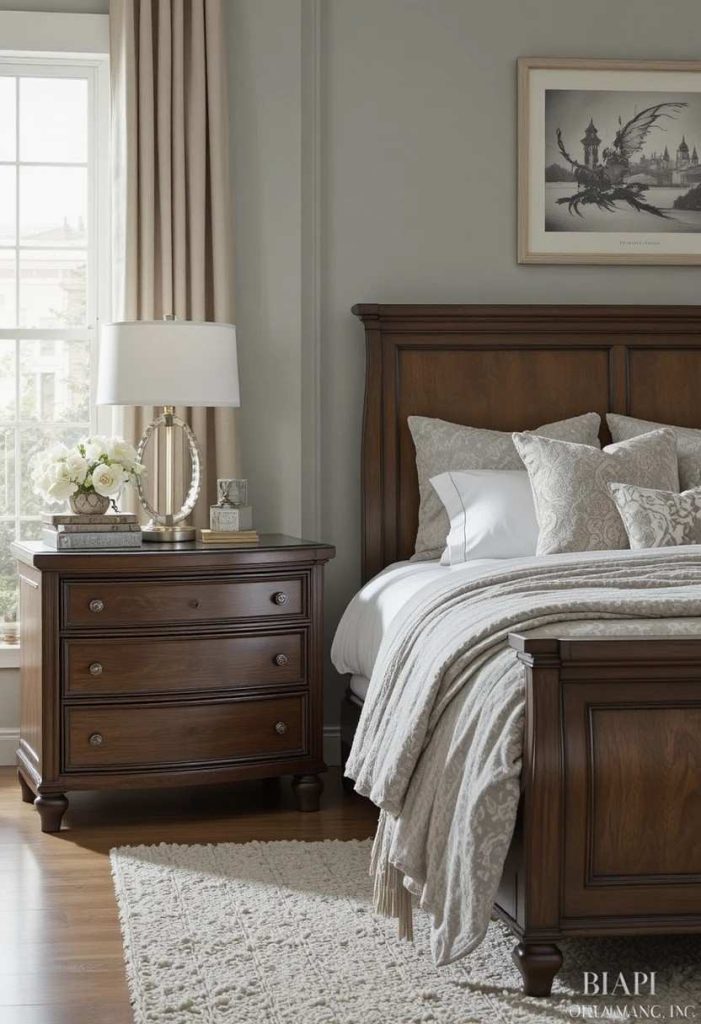
A dresser that matches the bed and nightstands completes the set in the most satisfying way, and it is the piece I notice every single morning. The shared finish and matching hardware tie the whole room together, so nothing looks like an afterthought, and I finally have one proper home for folded clothes, spare bedding, and all the bits that used to live in piles. I look for a dresser with deep drawers that glide smoothly and a top wide enough for a lamp and a small tray for jewellery. Keep the top mostly clear, and the dresser becomes the calm, hardworking heart of the room.
How to do it: Measure the wall where the dresser will stand, then choose a dresser that leaves at least 30 inches of clear floor in front so the drawers open fully. Match the wood tone and hardware to the bed and nightstands, anchor it to the wall if you have small children, and keep the top styled with just a lamp, a tray, and one piece you love.
3. Choose a Warm Wood Set
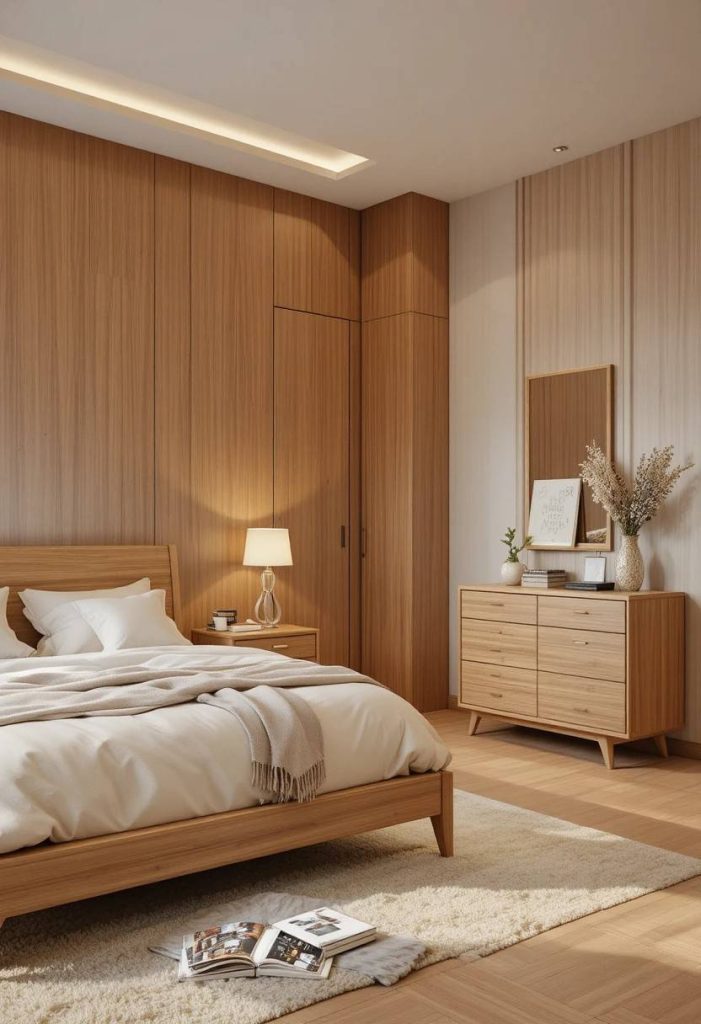
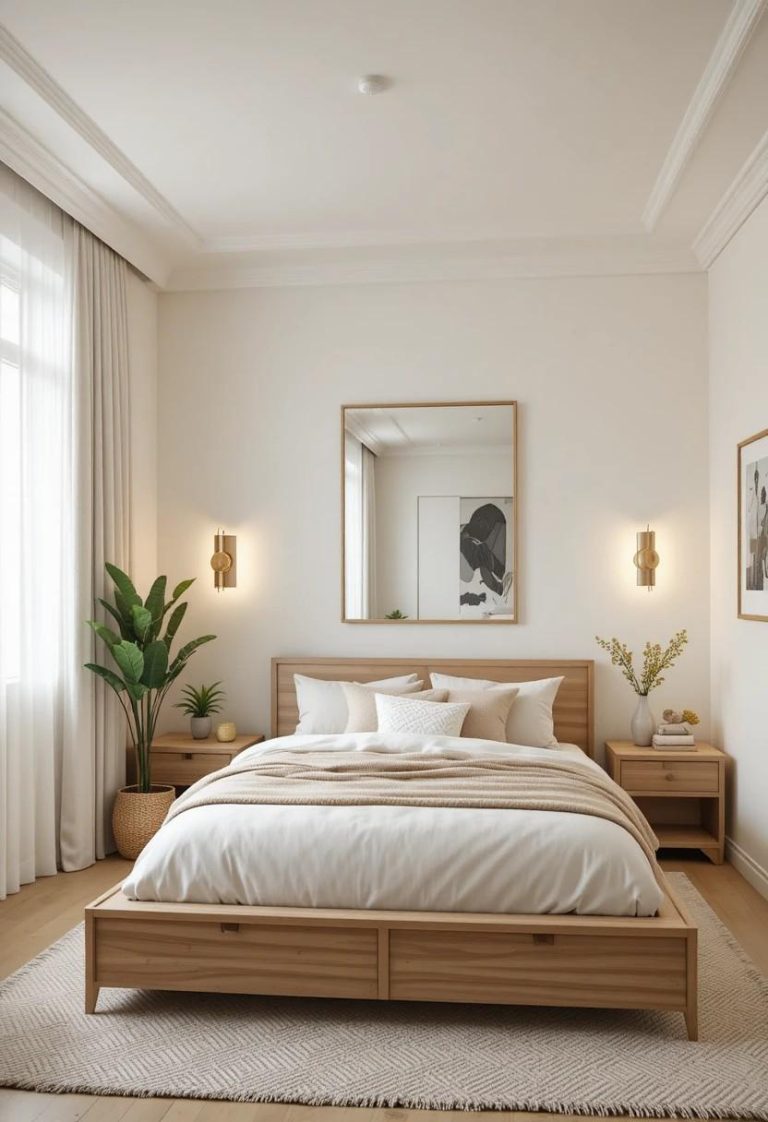
Warm wood is my way to make a bedroom feel grounded and welcoming, and a matching set in oak, walnut, or honey-toned pine does the work beautifully. The grain running through the bed, nightstands, and dresser ties everything together without a single extra accessory, and the honeyed tones make even a plain white wall feel soft and lived in. I always check the grain in daylight before buying, because stain can look different under shop lights, and I love a satin finish that shows the wood without shouting. A warm wood set ages gracefully, picking up character instead of looking tired, and it pairs happily with linen bedding and a rug underfoot.
How to do it: Pick one wood species and one stain, then check every piece in the same light before you commit. Keep the undertones consistent — all warm or all cool — and repeat the wood in at least three pieces so the set reads as deliberate. Add linen bedding and a soft rug to warm it up further.
4. Try a Sleek Modern Set
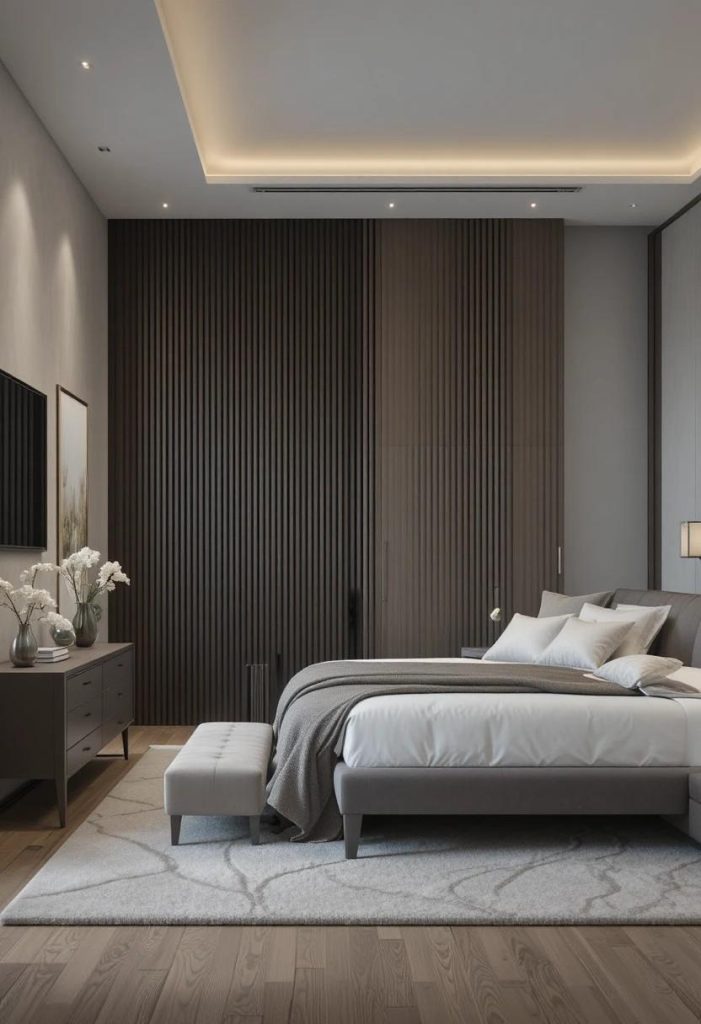
A sleek modern set is my pick when I want the bedroom to feel calm, uncluttered, and expensive, and the magic is in the clean lines. Flat-front drawers, a low headboard with no fussy carving, and a smooth matte or lacquered finish make the room feel bigger because nothing competes for attention. I keep the palette simple — warm white walls, one dark accent, and chrome or black hardware — and let texture do the talking with a chunky knit throw and a sculptural vase. Modern sets are wonderfully easy to live with too: surfaces wipe clean in seconds, and the lack of ornament means dust has nowhere to hide.
How to do it: Choose pieces with flat fronts, straight edges, and no visible ornament, all in the same matte or lacquered finish. Keep the hardware minimal and identical across the set, limit the palette to two neutrals plus one accent, and leave surfaces mostly clear so the clean lines can shine.
5. Add an Upholstered Bed Frame
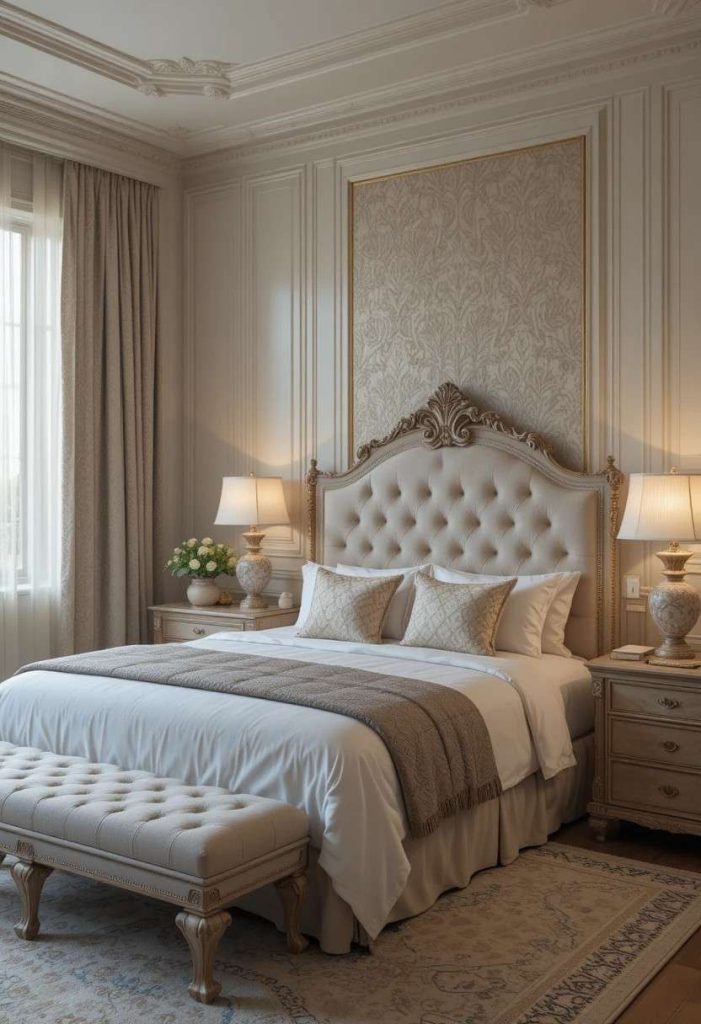
An upholstered bed frame brings a softness that wood alone never manages, and it is the first thing I notice in a room that has one. The padded headboard is wonderful for reading in bed — no more cold wood or pillows slipping down the gap — and when the nightstands and dresser share the same fabric or a matching tone, the whole set feels calm and considered. I choose a stain-resistant fabric in a mid-tone, because very pale linen shows every mark and very dark velvet shows every speck of dust, and I vacuum the headboard with the brush attachment once a month to keep it fresh.
How to do it: Choose your upholstery fabric first — a stain-resistant weave in a mid-tone hides marks best — then match the nightstands and dresser to its colour or choose a complementary wood. Check the headboard height against your pillows, leave a small gap behind the bed for the fabric to breathe, and vacuum the headboard monthly.
6. Choose a White or Light Set
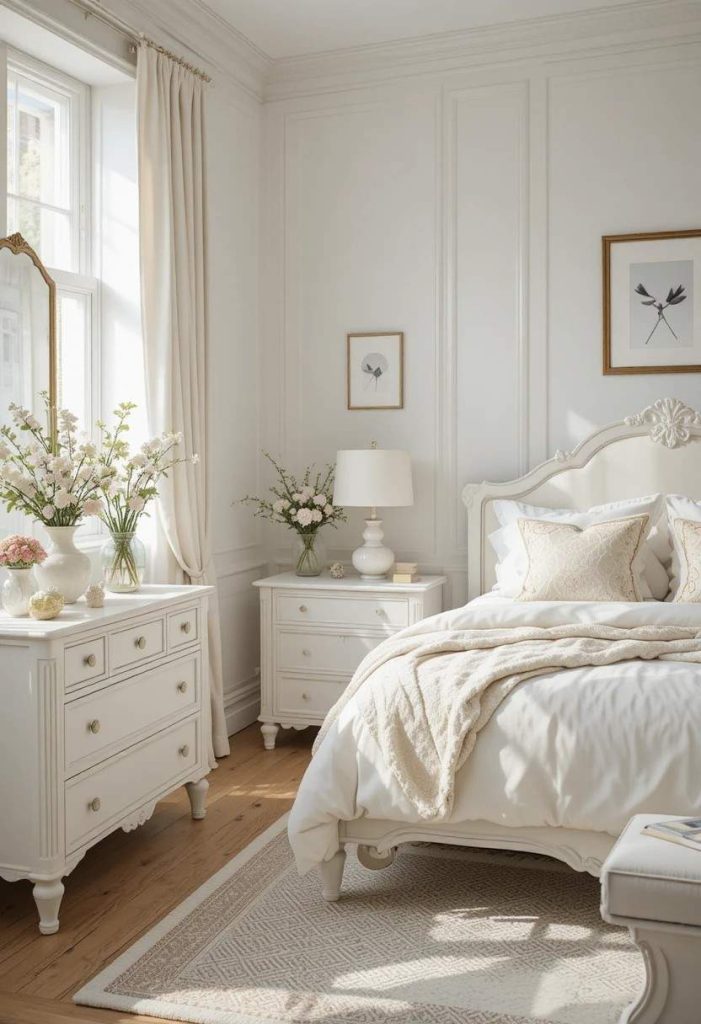
A white or light furniture set is the easiest way I know to make a bedroom feel fresh, airy, and bigger than it is, and it forgives a dark or small room. Pale pieces bounce the light around instead of soaking it up, so even a north-facing bedroom feels bright in the morning, and they pair with everything — grey bedding, sage green cushions, or a warm wooden tray on the dresser. I keep a cloth handy, because white shows dust and scuffs sooner than wood tones, but a weekly wipe keeps it looking crisp. If you love a calm, clean look that never dates, this is the set to choose.
How to do it: Choose pieces in the same white or pale tone so the set reads as one, then add warmth with wood, linen, and soft texture so it never feels clinical. Wipe surfaces weekly with a soft cloth, touch up scuffs with matching paint, and keep the bedding light to let the furniture shine.
7. Add a Bench at the Foot of the Bed
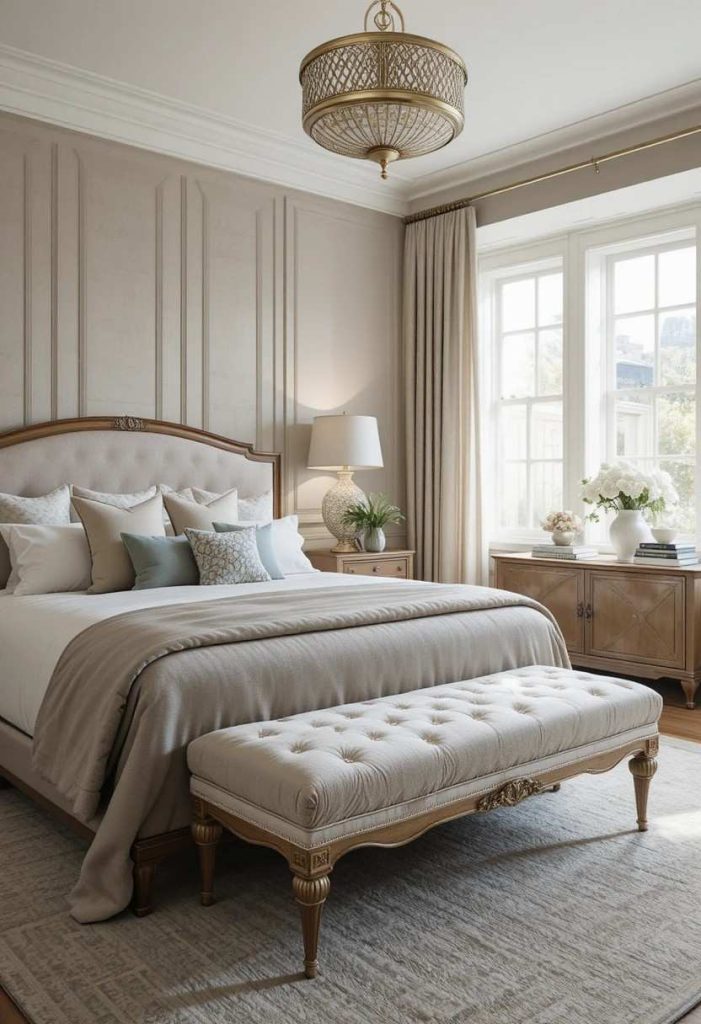
A bench at the foot of the bed is one of those small additions that changes how the whole room works, and I would not be without mine. It gives me somewhere to sit while I put on shoes, a place to lay out tomorrow’s clothes, and a perch for a throw or a few books. When the bench matches the bed frame — same wood, same fabric, or same colour — it ties the set together instead of looking added on. I measure first, because a bench that is too wide blocks the walkway, and I keep the top clear so it stays useful rather than becoming another surface for clutter.
How to do it: Measure the width of your bed, then choose a bench a few inches narrower so it never sticks out past the frame. Match the bench to the bed’s wood or fabric, keep the height at or below the top of the mattress, and leave at least 24 inches of clear floor in front of it.
8. Try a Rustic Farmhouse Set
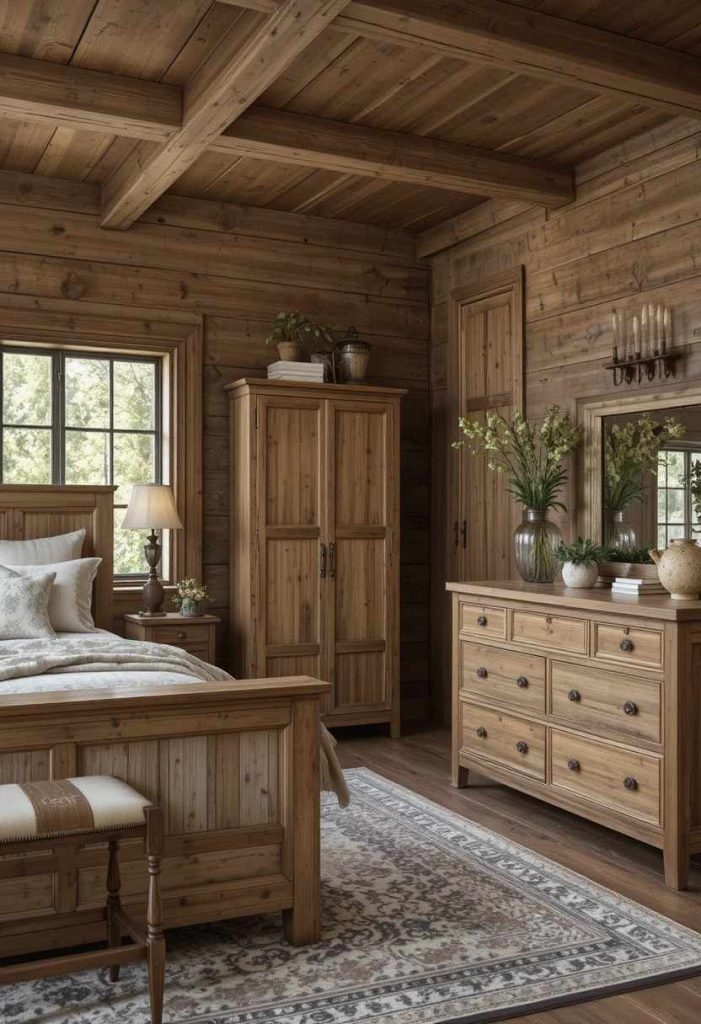
There is a special kind of comfort in a rustic farmhouse set, and it comes from the wood looking like it has a history. Weathered finishes, visible grain, and sturdy, honest shapes make the bedroom feel warm and lived in from the very first night, and the matching pieces keep it from tipping into clutter. I love pairing a weathered wood set with soft white bedding, a chunky knit throw, and a woven basket or two, because the textures do the decorating for me. Farmhouse sets are forgiving too — a small scratch or a water ring barely shows on distressed wood, which suits a real, busy bedroom.
How to do it: Look for weathered or distressed wood in one consistent tone across the bed, nightstands, and dresser. Add soft white or cream bedding, a chunky knit throw, and woven baskets for texture. Keep the hardware simple and dark, and leave a little breathing room between pieces so the room feels relaxed, not crowded.
9. Add a Coordinating Wardrobe
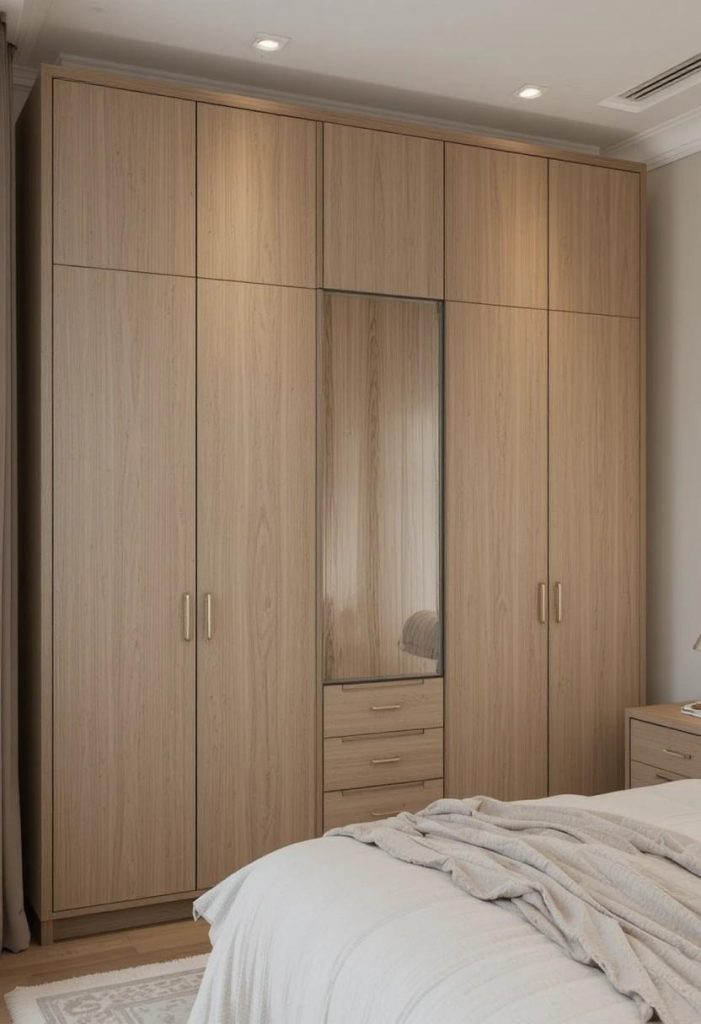
A wardrobe that matches the set adds storage and a cohesive look, and I have learned the hard way that a wardrobe you love is worth planning around. Before you buy, measure the width and depth of the wall it will stand against, check the door swing and drawer clearance, and leave a few inches of breathing room on each side so the room never feels cramped. If you need more inspiration, these wardrobe design ideas will help you plan storage that fits your life. A matching wardrobe keeps everything from coats to extra bedding in one calm, tidy place, and it makes getting dressed feel like a daily pleasure.
How to do it: Measure the wall width, ceiling height, and door swing before you shop, then choose a wardrobe in the same finish as the bed and dresser. Check that the interior fits your hanging clothes and folded items, add matching handles, and keep the top clear so the wardrobe reads as part of the set.
10. Choose a Dark, Dramatic Set
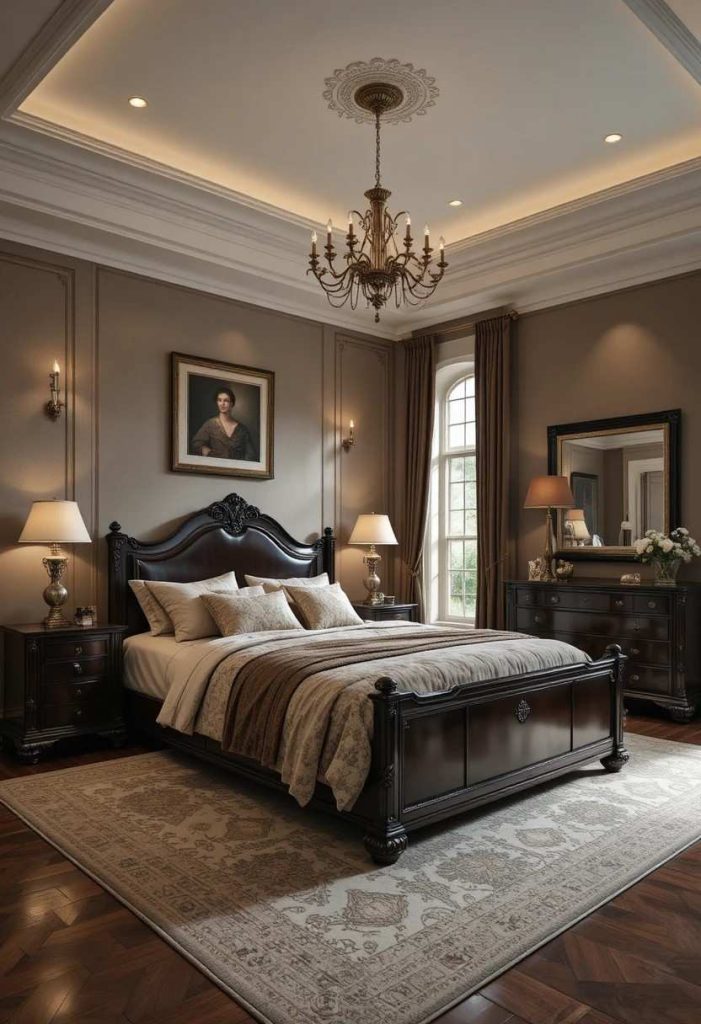
A deep espresso or charcoal set brings drama, and it makes a bedroom feel like a cocoon at night. The dark tones ground the room and make everything else — pale bedding, brass lamps, a cream rug — glow brighter by contrast. I was nervous the first time I chose a dark set for a smaller room, but with light walls and one mirror it felt cosy rather than cramped. Dark wood does ask for a little care: dust shows more on dark surfaces, so I wipe the tops often, and I keep the bedding light so the room stays balanced. If you love a moody bedroom, this is your set.
How to do it: Pair dark pieces with light walls and pale bedding so the room stays balanced, and add one mirror to bounce light around. Keep the hardware warm — brass or gold — dust the tops weekly, and let one dark accent, like a throw or cushion, echo the furniture.
11. Add Matching Lamps
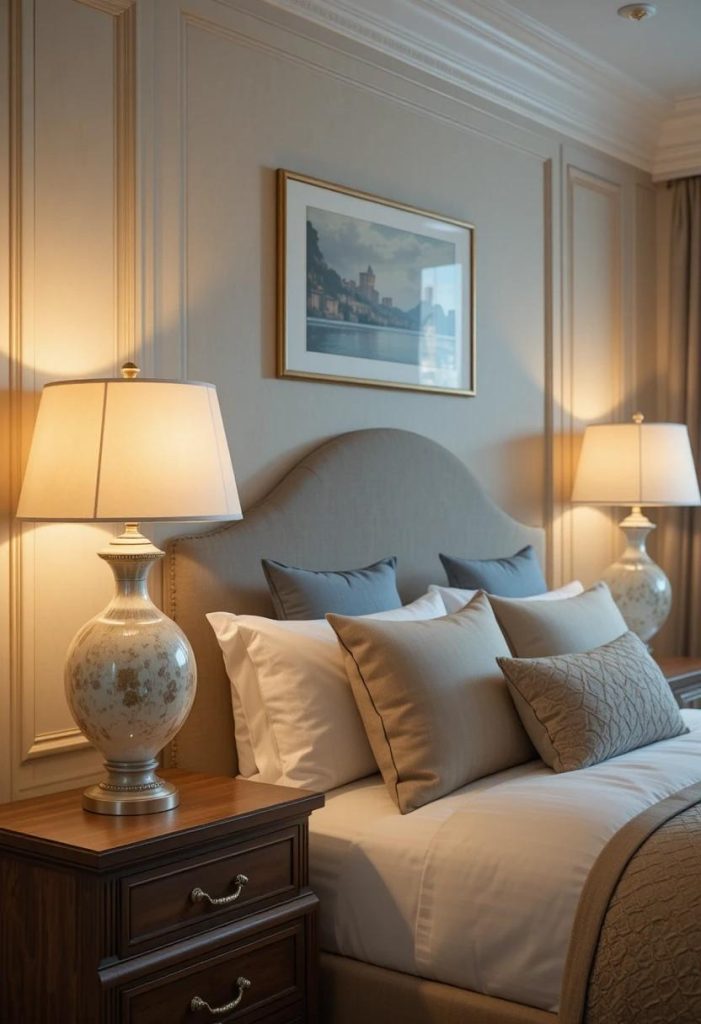
Coordinating bedside lamps are the jewellery of a matching set, and they do more work than I ever expected. The same lamp on each nightstand makes the whole room feel symmetrical and calm, and the matched glow is flattering in a way a single overhead light never is. I like lamps with the same base and the same shade shape, even if the heights differ slightly, and I keep the bulbs warm white so the light feels soft at night. A dimmer or a small smart bulb is worth the tiny extra cost, because being able to soften the light at bedtime changes how restful the room feels.
How to do it: Choose identical lamps for both nightstands — same base, same shade shape, same height if you can. Fit warm white bulbs, keep the shades level with your eyeline when you sit up in bed, and add a dimmer so you can soften the light at night.
12. Try a Soft Romantic Set
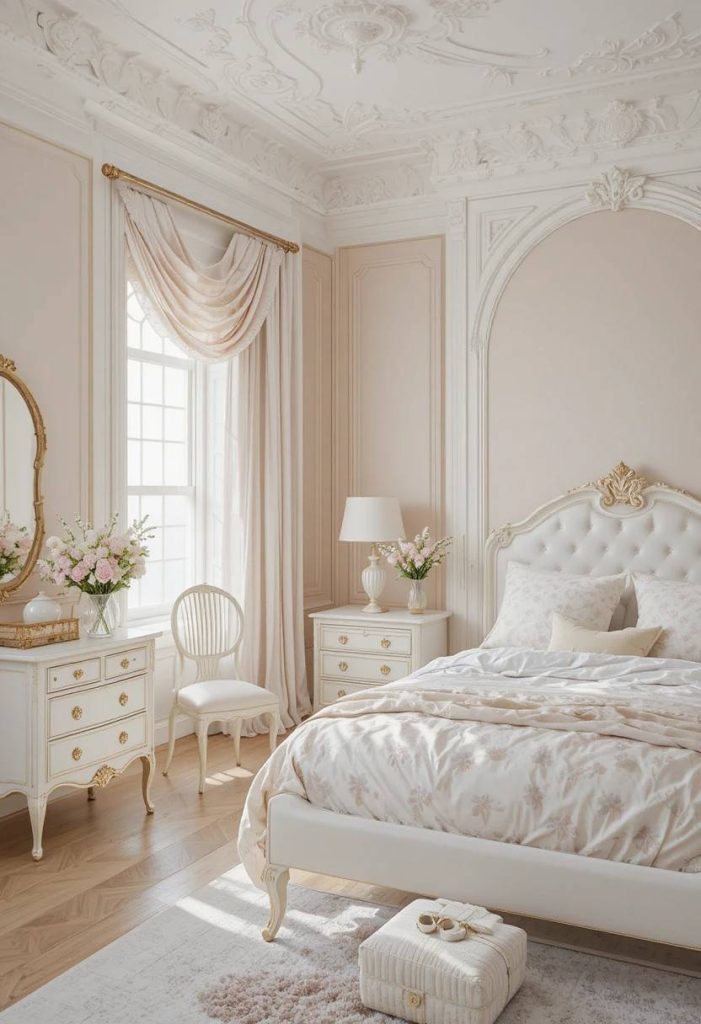
A set with curved lines, soft tones, or carved details brings a kind of romance that feels gentle rather than grand, and it suits a bedroom made for slowing down. The soft palette — blush, cream, pale grey — makes mornings feel unhurried, and the curved headboard and carved drawer fronts give the room a handcrafted feel without any fuss. I keep the bedding soft and layered, with a light throw across the foot of the bed, and I choose lamps with warm shades so the evenings feel just as tender as the mornings. Romantic sets suit smaller rooms too, because the curves soften the edges of the space.
How to do it: Choose pieces with curved lines, carved details, or soft arched shapes in a pale, gentle tone. Layer soft bedding and a light throw, keep the lamps warm-toned, and add one romantic touch — a small vase of flowers or a framed print — to finish the look.
13. Mix Finishes Thoughtfully
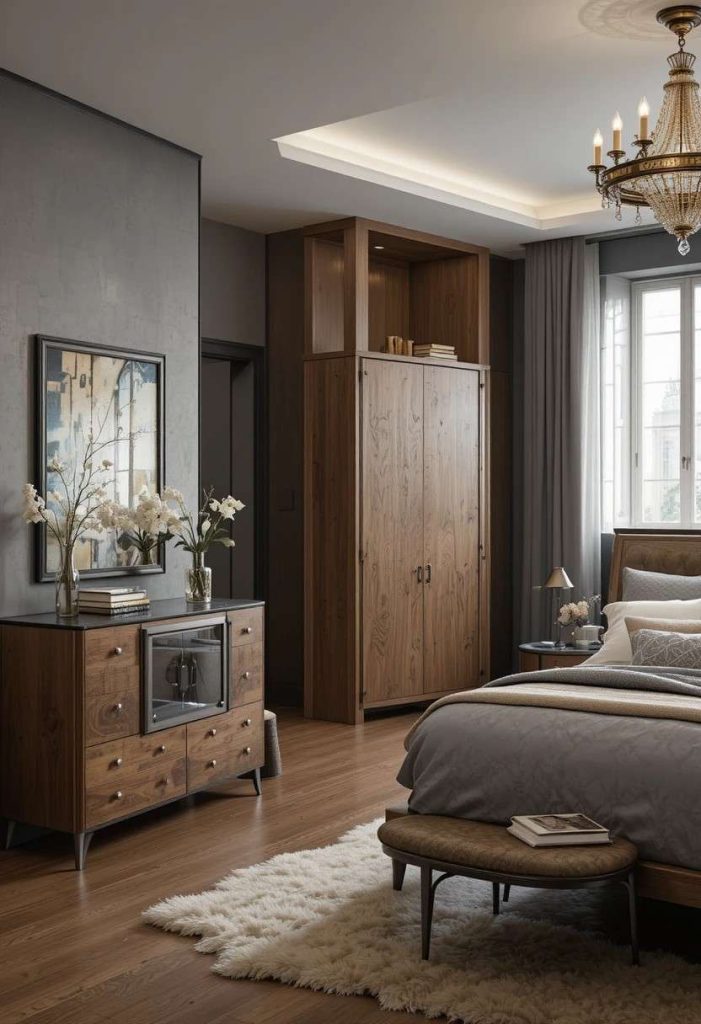
A coordinated set does not have to mean one finish, and mixing wood with metal adds interest without losing the match. Keep one finish dominant — the wood on the bed and dresser, say — and let the metal appear in small doses, in the lamp bases, drawer pulls, and mirror frame. I keep the tones in one family, warm wood with brass or cool oak with black metal, so the mix feels deliberate, not accidental. The result is a room that reads as a set but has more personality, and it is forgiving if you fall in love with a lamp that is not a match.
How to do it: Pick one dominant finish for the biggest pieces, then add a second finish in small, repeated touches like handles and lamp bases. Keep both finishes in the same warm or cool family, repeat each one at least three times, and step back to check the mix reads as intentional.
14. Add a Coordinating Vanity
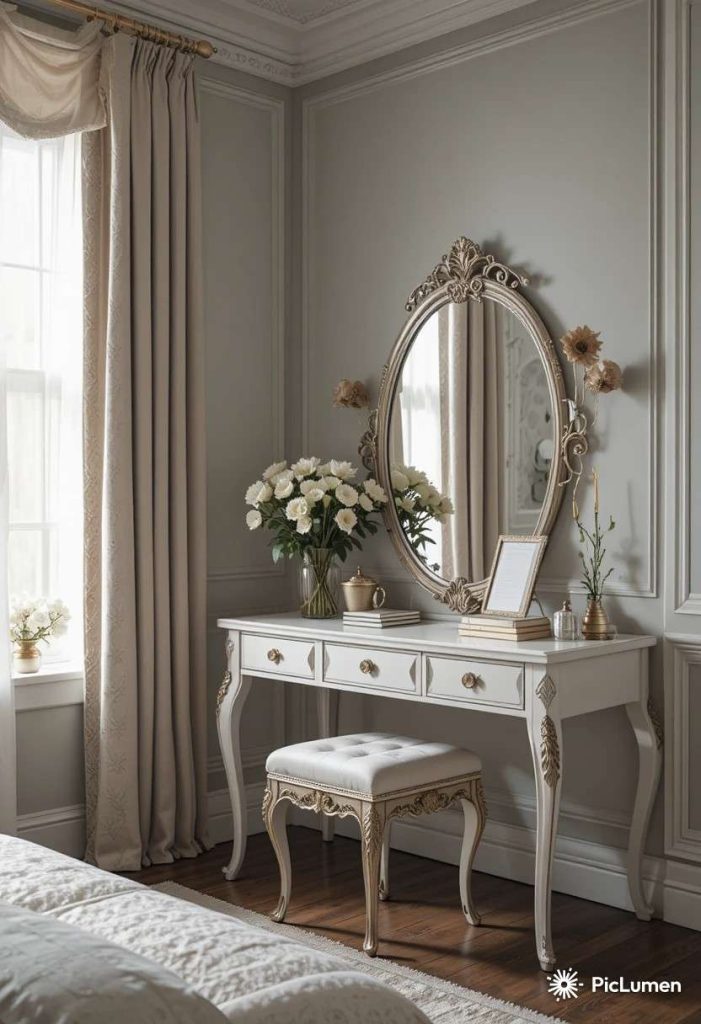
A matching vanity or dressing table adds a touch of elegance and function, and it creates a spot to get ready in the morning. I keep mine near a window so the daylight does the flattering work, and I love how the coordinated finish makes the vanity feel like part of the room rather than an extra piece squeezed in. A stool that tucks underneath keeps the floor clear, and a tray on top corrals perfume, brushes, and jewellery into one tidy place. If you are short on space, a narrow vanity still earns its keep — even a small one gives you a spot to start the day slowly.
How to do it: Place the vanity near a window for natural light, in the same finish as the rest of the set. Choose a stool that tucks fully underneath, keep the top to a tray with your daily essentials, and add a small mirror that matches the set’s frame.
15. Choose a Neutral, Timeless Set
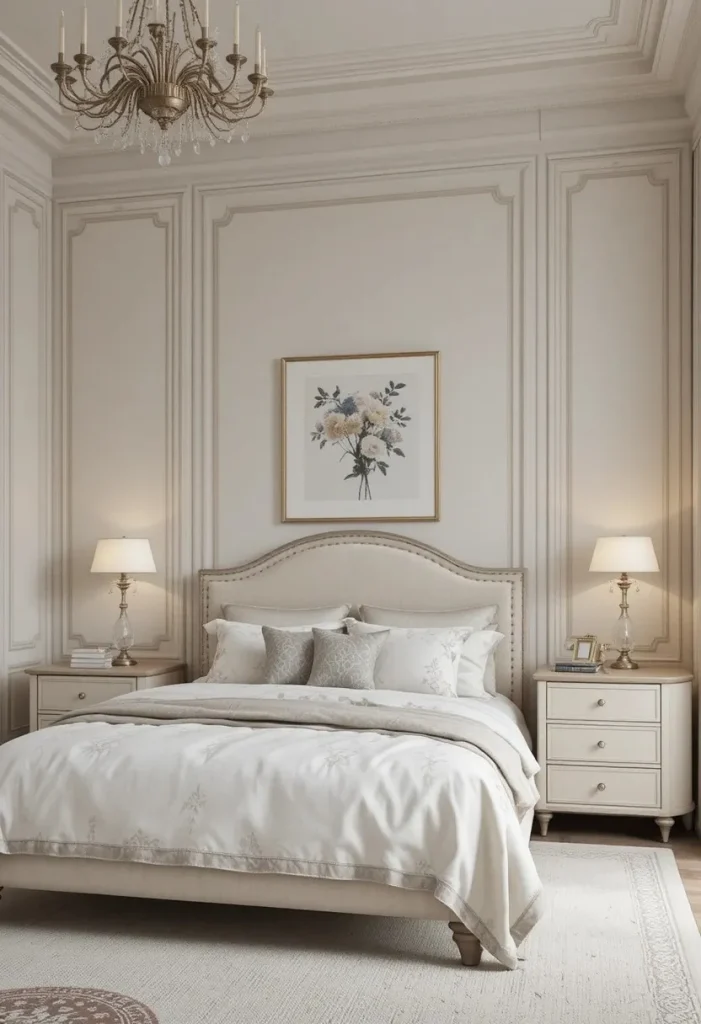
A set in soft neutral tones feels calm, elegant, and versatile, and it is the one I recommend when someone asks for a bedroom that will never date. The gentle palette — warm white, grey, a touch of beige — suits a range of styles, from modern to country, and it makes changing the look as simple as swapping the cushions. I have kept the same neutral set through three bedding changes, and each time the room felt brand new. Neutral pieces also hide dust better than dark ones and brighten a small room without trying, which is why they remain my safe, beautiful choice for a guest room too.
How to do it: Choose warm white, soft grey, or beige across the whole set, keeping the undertones consistent. Change the look cheaply with cushions and throws, add one wood or brass accent for warmth, and keep the bedding in the same neutral family so the room feels calm.
16. Add Coordinating Mirrors
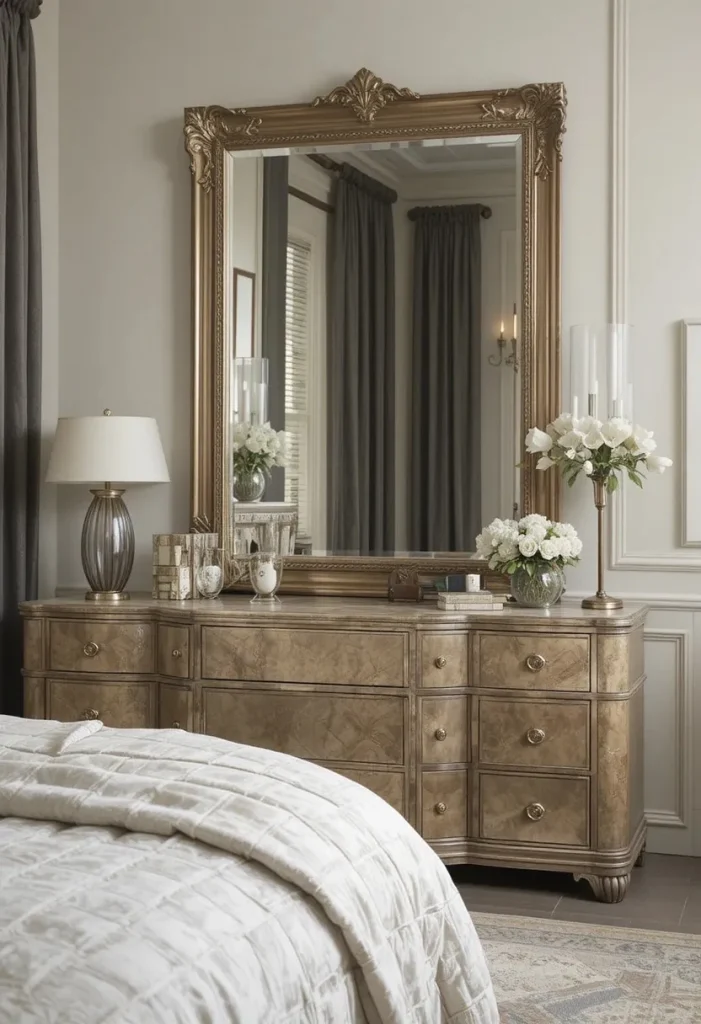
A mirror that matches the set adds light, space, and a polished finish, and it is the trick I reach for in any bedroom that feels dark or small. It reflects the room and makes it feel larger, and when the frame matches the furniture — same wood, same finish — it ties the pieces together instead of looking like an afterthought. I hang one above the dresser, where it doubles as a getting-ready spot, and I keep the glass clean with a weekly wipe so the reflection stays bright. A matching mirror is one piece with an outsized effect, and it costs far less than new furniture.
How to do it: Hang a mirror with a frame that matches the set’s wood and finish above the dresser or on the wall opposite a window. Check the height so it reflects light, not clutter, keep the glass clean, and match the frame’s tone to the furniture.
17. Try a Low-Profile Modern Set
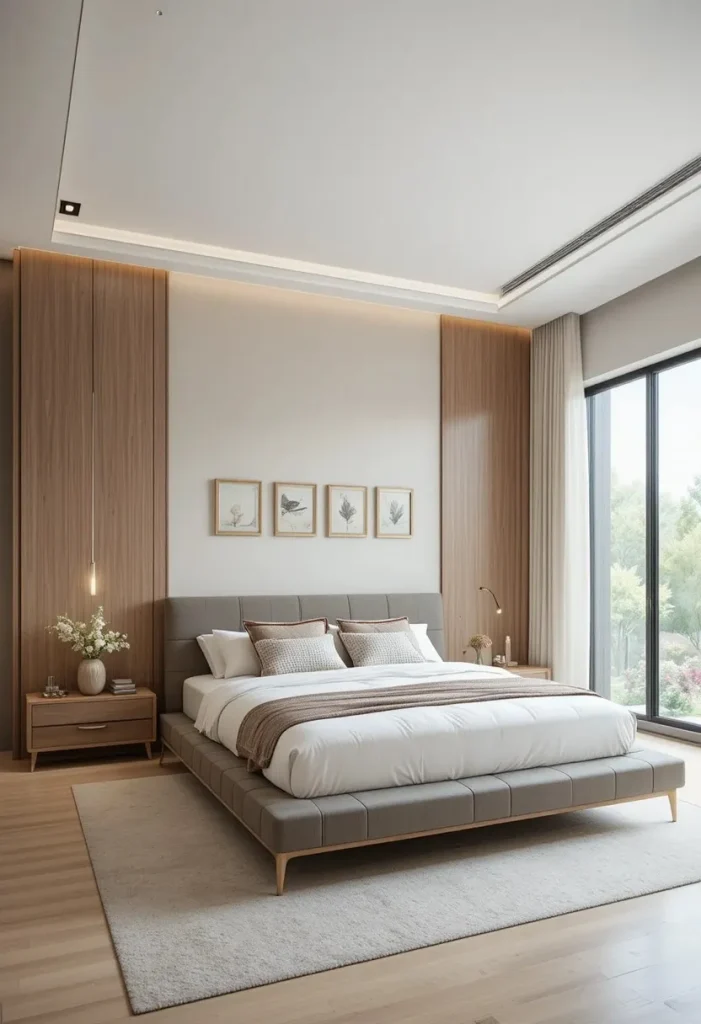
A low platform bed and matching low pieces feel sleek and serene, and the lower lines make the room feel spacious and modern in a way tall furniture never does. I love how a low bed changes the proportions of the room — the ceiling feels higher, the windows feel bigger, and the whole space breathes a little more. Low pieces suit a calm, minimalist style, but they do ask for a little bending to reach the drawers, so I keep the most-used things in the top drawers. If you love a clean, uncluttered look and you do not mind the low height, this set feels like a deep breath.
How to do it: Choose a platform bed and matching pieces with low, clean lines and the same finish. Keep the bedding simple and the floor clear, store everyday items in the top drawers, and let the low profile make the ceiling and windows feel taller.
18. Add Storage-Friendly Pieces
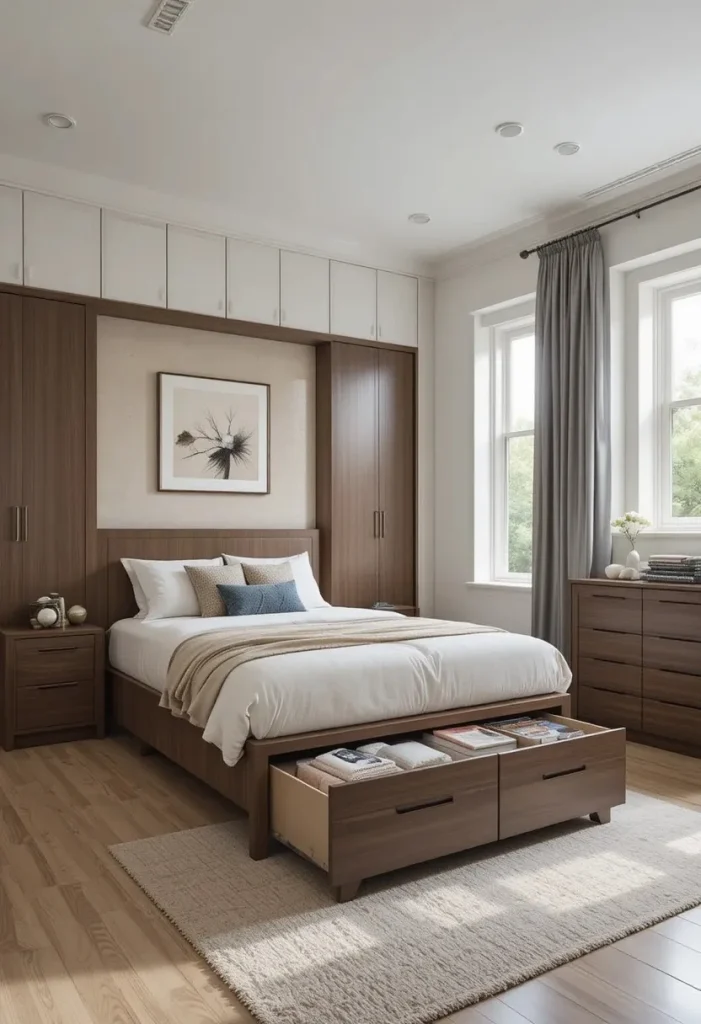
A set with built-in storage, like a bed with drawers or a nightstand with deep cubbies, keeps the room tidy and cohesive in a way a pretty set alone never does. The clever pieces hide clutter while keeping essentials close, so the surface of the dresser stays clear and the floor stays easy to walk across. I keep spare bedding in the bed drawers, chargers and books in the nightstand, and out-of-season clothes in the ottoman at the foot of the bed. Storage that matches the set means nothing looks like a plastic bin shoved in a corner, and the room stays calm even on a busy morning.
How to do it: Choose a bed with drawers, a nightstand with deep storage, or an ottoman that opens, all in the set’s finish. Measure the drawers against what you will store, keep heavy items low, and clear the tops weekly so the storage does its quiet work.
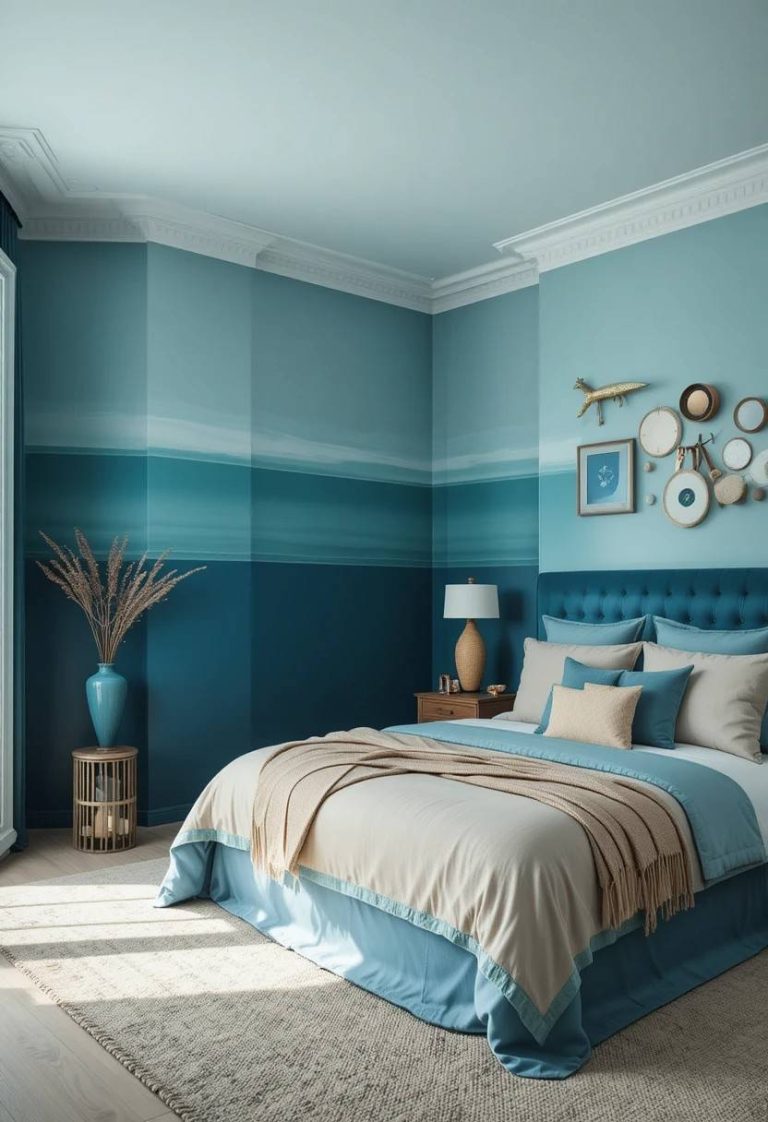
19. Choose a Coastal-Style Set
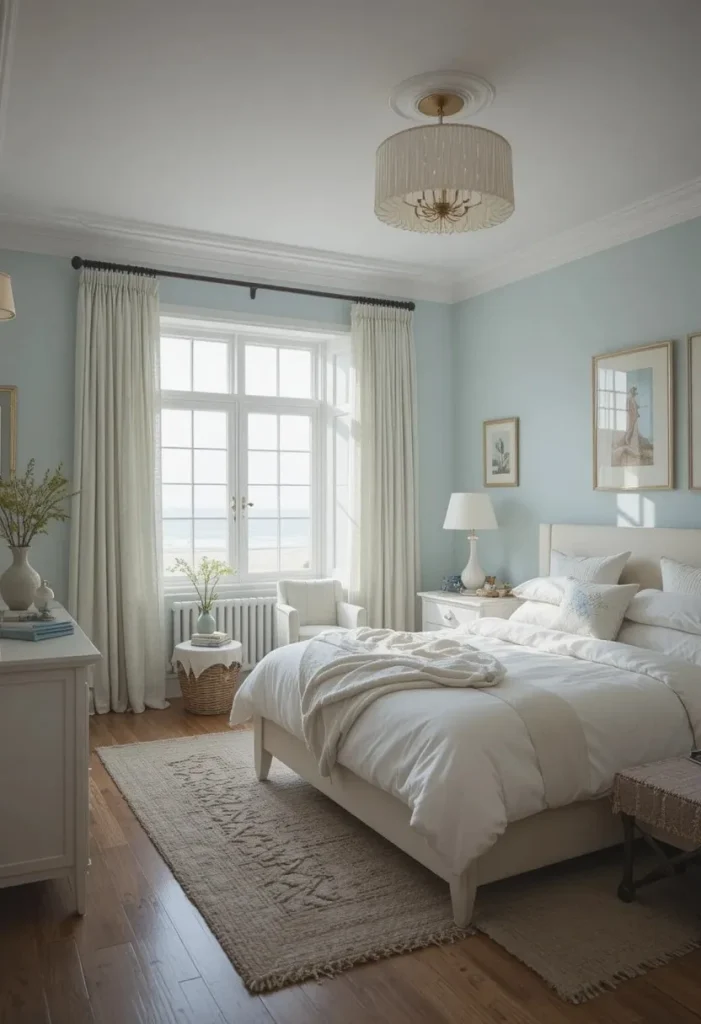
A set in light wood or painted finishes brings fresh, breezy coastal charm, and it is the closest thing to bringing a seaside holiday home. The airy pieces feel relaxed and sunny, and the light tones pair well with soft blues and whites, so the room feels like a deep breath even on a grey day. I add texture with a woven rug, linen bedding, and a piece of driftwood or a shell on the dresser, because coastal style lives in the natural details. A coastal set suits a bright room best, but even a smaller bedroom feels lighter with pale wood and a mirror to catch the light.
How to do it: Choose pale wood or white-painted pieces with a light, airy feel, then pair them with soft blue and white bedding. Add natural texture with a woven rug and linen, hang a mirror to catch the light, and keep the surfaces clear so the room stays breezy.
20. Add a Matching Headboard Feature
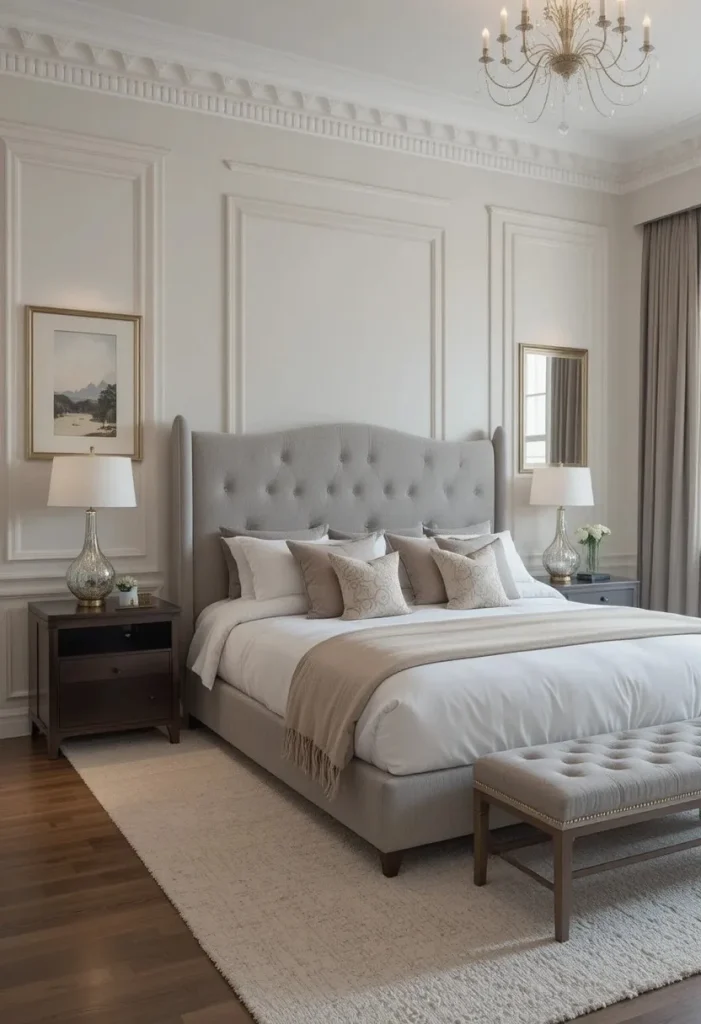
A statement headboard that coordinates with the set anchors the room beautifully, and it is the piece guests always comment on first. Whether tall, tufted, or wooden, it becomes the focal point, and the matching pieces around it create a harmony that makes the whole room feel designed rather than assembled. I choose a headboard that is tall enough to read well against the wall but not so tall that it crowds the ceiling, and I keep the bedding simple so the headboard stays the star. A matching headboard also hides a multitude of sins — scuffed paint behind the bed simply disappears behind it.
How to do it: Choose a headboard in the set’s finish that is tall enough to read against the wall without crowding the ceiling. Keep the bedding simple so the headboard stays the focal point, match the nightstands to its height, and anchor it firmly to the bed frame or the wall.
21. Keep Hardware Consistent
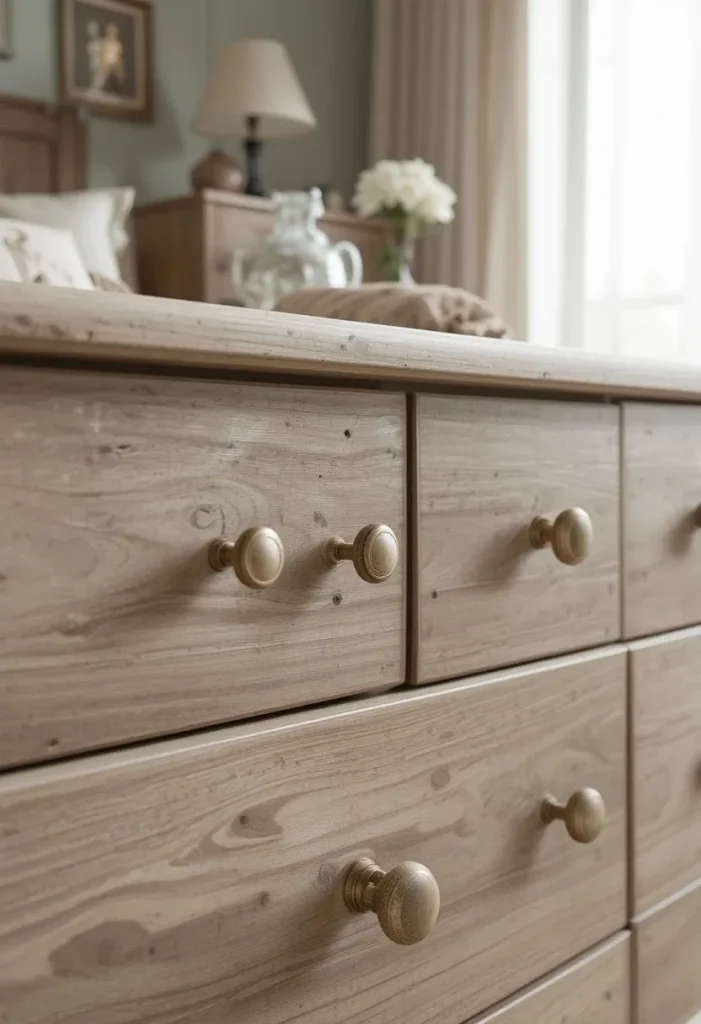
Matching handles and knobs across the set create a polished feel, and it is the detail I notice most once a room is finished. The consistent hardware keeps the room looking neat and intentional, because the eye stops catching on mismatched pulls and starts seeing the whole set as one piece. I choose one metal and one shape — brushed brass knobs, say — and repeat them on the dresser, the nightstands, and the wardrobe, and I keep a spare or two in a drawer for the day one loosens. Hardware is the cheapest way to make a set feel considered, and changing it is the quickest refresh I know.
How to do it: Pick one metal and one knob or pull shape, then fit the same hardware to every drawer and door in the set. Measure the screw spacing before you buy, keep a spare or two in a drawer, and tighten the screws every few months so nothing wobbles.
22. Add a Coordinating Chest
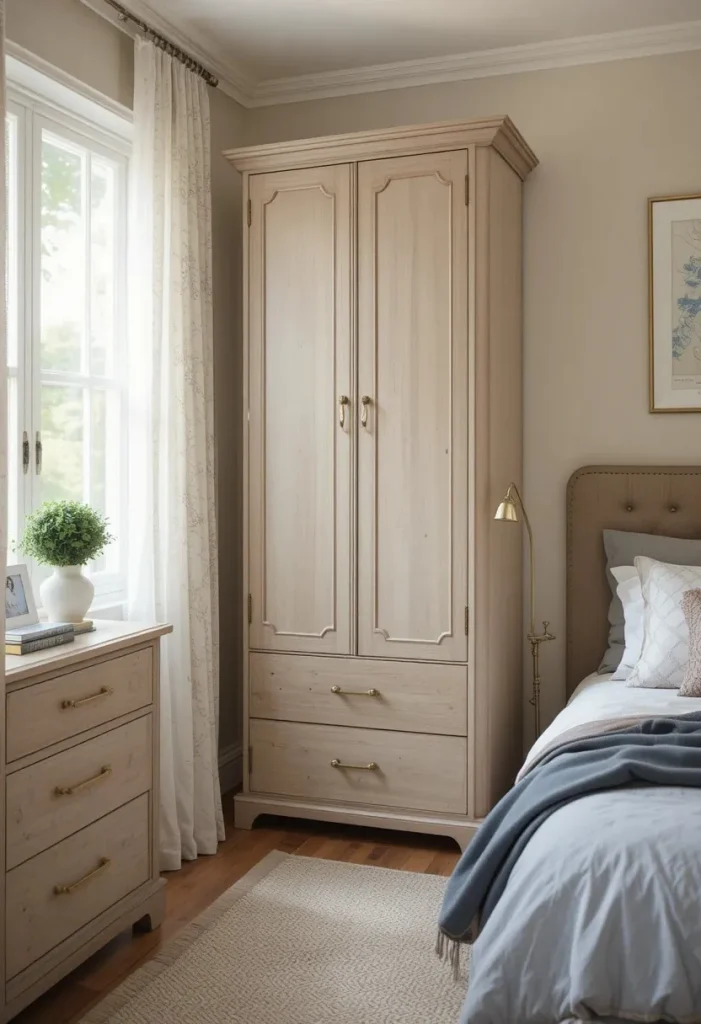
A tall chest of drawers matching the set adds vertical storage and balance, and it is the piece that stops a bedroom feeling top-heavy with a big bed. The shared style keeps the room cohesive and organised, and the tall shape draws the eye upward, which makes a small room feel taller than it is. I use the top drawers for everyday clothes, the middle ones for folded knits, and the bottom drawer for the things I reach for least, and I keep the top clear except for a lamp and one small tray. A chest also gives you a home for the folded laundry that never seems to find one.
How to do it: Place the chest against a wall where its height balances the bed, in the same finish as the rest of the set. Keep the top to a lamp and one tray, use the top drawers for everyday clothes, and anchor the chest to the wall for safety.
23. Choose a Soft-Toned Painted Set
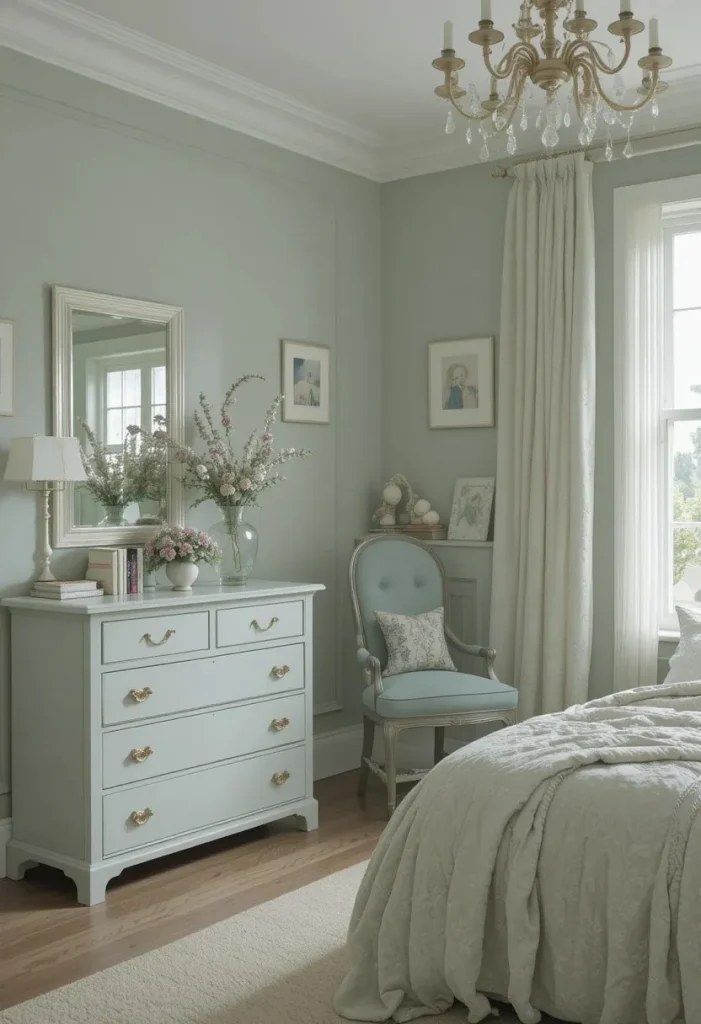
A painted set in soft sage, blue, or grey brings colour and charm, and it adds personality without committing to a bold statement. The matching pieces feel calm and coordinated, and the painted finish hides scratches and wear far better than a stain, which suits a bedroom. I love a sage set with cream bedding and a rug, or a blue set with white linen and a touch of brass, because the colour does the decorating while the furniture stays simple. Painted sets are easy to refresh too — a new tin of paint in a few years gives the whole room a different mood.
How to do it: Choose a soft painted finish — sage, blue, or grey — across the whole set, and keep the undertones consistent. Pair it with cream or white bedding, add brass or wood accents for warmth, and keep a small tin of matching paint for touch-ups.
24. Balance the Room With Symmetry
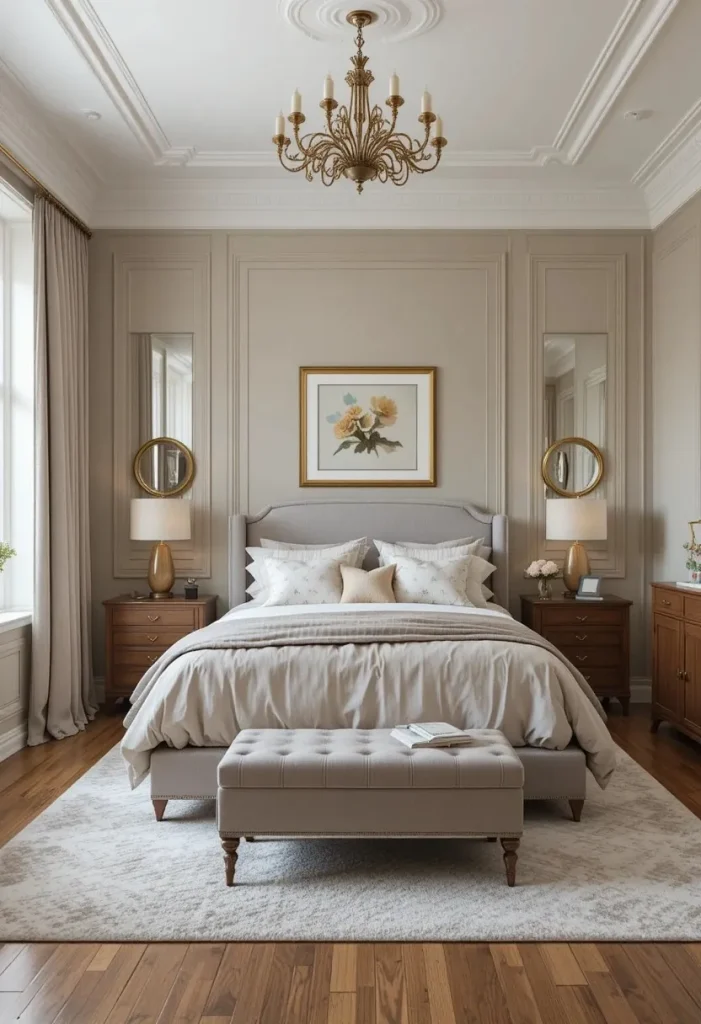
Arranging the coordinated set symmetrically, with balanced pieces on each side, feels calm and restful in a way few other layouts manage. The even layout makes the room feel harmonious, and the symmetry gives your eyes somewhere restful to land, which is what a bedroom should do at the end of the day. I place matching nightstands on either side of the bed, hang the same lamps on both sides, and keep the dresser centred on the opposite wall. Symmetry does not have to mean identical — a pair of different lamps in the same colour still reads as balanced — but the mirrored feeling is what makes the room feel settled.
How to do it: Place matching nightstands on either side of the bed, then mirror the lamps, art, and cushions from one side to the other. Centre the dresser on the opposite wall, keep the pairs identical in height, and step back to check the room feels balanced.
25. Make It Personal and Cozy
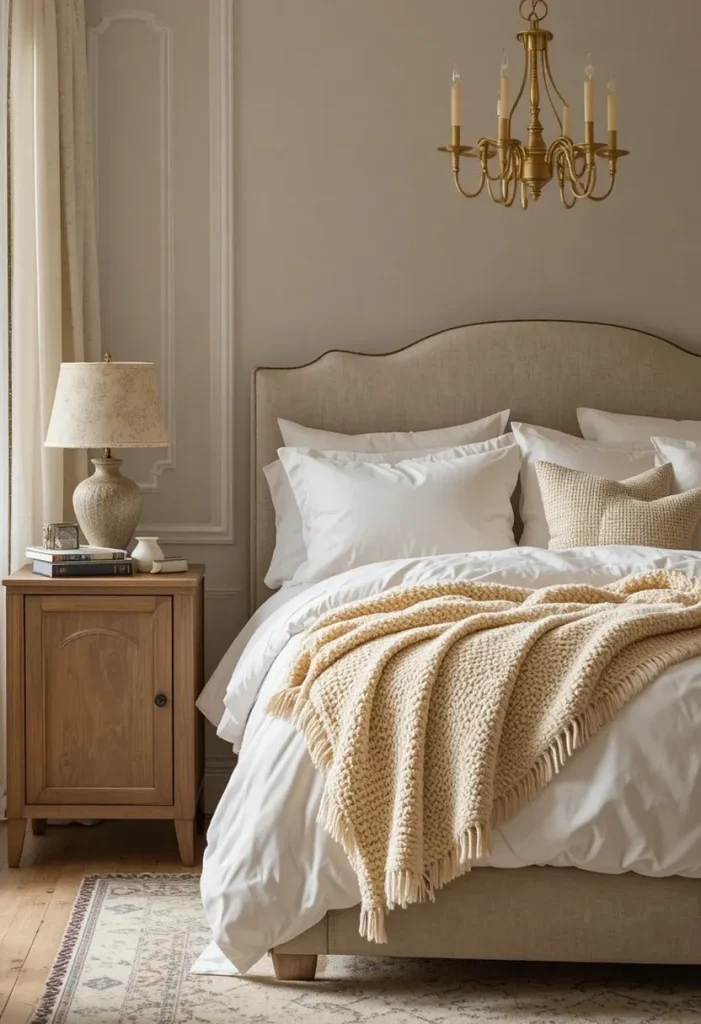
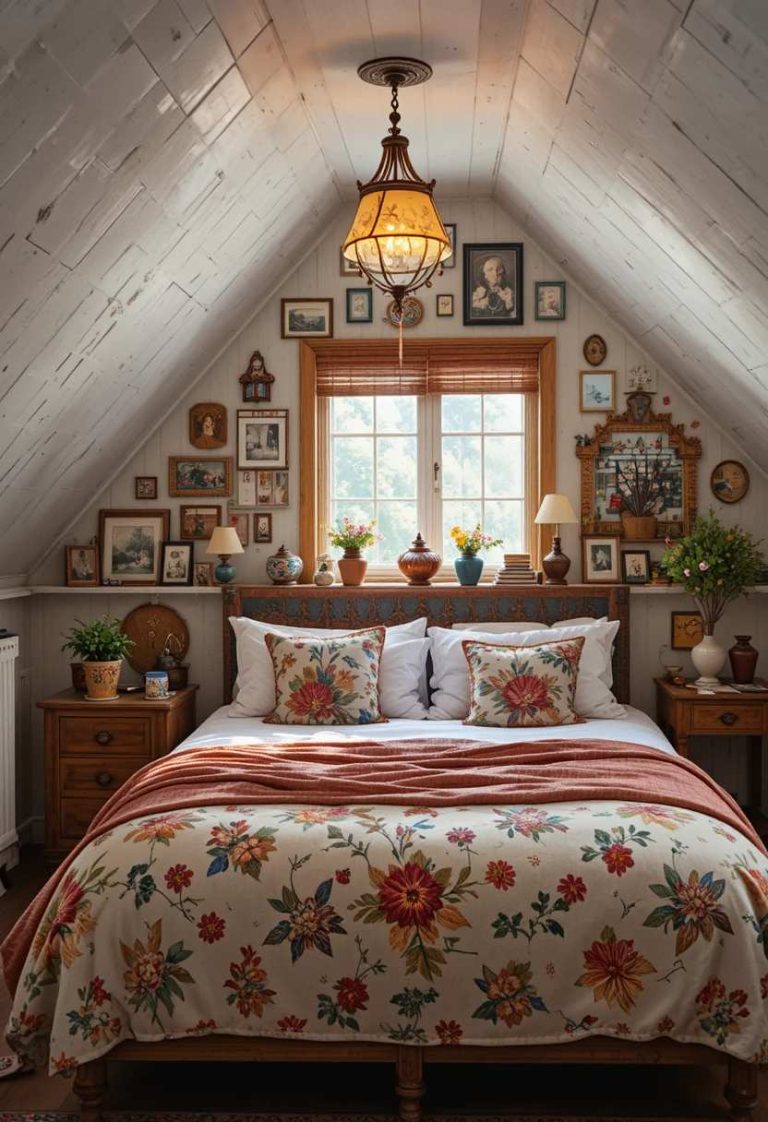
Finally, a few personal touches make a coordinated bedroom feel like home, and this is the part no shop can choose for you. Soft bedding, a photo, or a keepsake add warmth and personality, and the details make the room yours. I love borrowing ideas from the cosiest corners of the home, and these attic bedroom ideas are full of ways to make a small bedroom feel like a retreat. Keep the personal pieces few and meaningful — a stack of books, one framed photo, a plant — so they read as chosen rather than cluttered, and let the set do the work of holding it all together.
How to do it: Choose three personal pieces that mean something to you — a photo, a keepsake, a plant — and give each one a clear spot on the dresser or nightstand. Keep the rest of the surfaces clear, rotate the pieces with the seasons, and let the matching set frame them.
Frequently Asked Questions
Is it better to buy a matching bedroom furniture set or mix and match pieces?
A matching set is the easiest route to a calm, coordinated room, because the finish, proportions, and hardware already work together. Mix-and-match can feel more personal, but it takes a careful eye to keep the pieces from clashing. If you love the look of a set but want personality, start with the matching bed, nightstands, and dresser, then add your own lamps, art, and bedding.
Which pieces of a bedroom furniture set matter most?
Start with the bed and the nightstands, because they set the tone and the symmetry of the room. A dresser comes next, since it holds most of your folded clothes and anchors the wall opposite the bed. A wardrobe, bench, or vanity is lovely to add later, but the bed, nightstands, and dresser are the core of the set.
How do I measure my bedroom for a furniture set and check it will fit through the door?
Measure the length and width of the room, then mark out each piece on the floor with painter’s tape, leaving at least 24 inches of walking space around the bed. Measure every doorway, hallway turn, and stairwell the furniture must pass through, and compare those numbers with the largest piece — usually the bed frame or wardrobe. If a piece is too big for the door, check whether the legs or headboard come off for delivery.
What materials are best for a durable bedroom furniture set?
Solid wood and wood veneer over a sturdy core are the most durable choices, and they age well with a little care. Avoid very thin particleboard for pieces you use every day, like the dresser and nightstands, since the drawers wear out first. For upholstered pieces, choose a stain-resistant fabric in a mid-tone, and check that the frame is solid wood rather than softwood.
Will a matching furniture set work in a small bedroom?
Yes — a matching set often works better in a small bedroom, because the consistent finish makes the room feel calm instead of cluttered. Choose low-profile pieces, a bed with built-in storage, and a wardrobe instead of a wide dresser to save floor space. Keep the palette light, add a mirror to bounce light around, and leave at least 24 inches of clear walking space around the bed. For more ideas, see these attic bedroom ideas for making a small or awkward room feel cosy.
Your Bedroom Furniture Set Checklist
Print this list and tick each step off as you plan your bedroom furniture set:
☐ Measure the room’s length, width, and ceiling height
☐ Mark out each piece on the floor with painter’s tape
☐ Measure every doorway, hallway, and stairwell for delivery
☐ Choose the bed size that fits the room with 24 inches of walking space
☐ Match the nightstands to the bed frame’s finish
☐ Check that the nightstand tops sit 2–4 inches above the mattress
☐ Pick a dresser with deep, smooth-gliding drawers
☐ Add a wardrobe or chest for extra storage
☐ Match the lamps, hardware, and mirror frames to the set
☐ Test the mattress and headboard height before you buy
☐ Choose durable materials — solid wood or good veneer
☐ Anchor tall pieces like the dresser and chest to the wall
☐ Add soft bedding, a throw, and a rug to warm the room
☐ Leave one personal touch — a photo, a plant, or a keepsake
A Final Gentle Thought
Whichever of these 25 ideas caught your eye, the secret to a beautifully coordinated bedroom is simple: choose the bed first, match the nightstands and dresser to it, and let the finish do the unifying work. Measure twice, leave room to walk, and add storage that actually fits your life — a wardrobe that holds everything, a bench that earns its place, and a mirror that bounces the light around. Then finish with the pieces only you can choose: soft bedding, a favourite photo, and a lamp that makes the evenings glow. A matching set is not about everything looking the same; it is about every piece belonging together, so the room feels calm, restful, and unmistakably yours.

2 Comments