
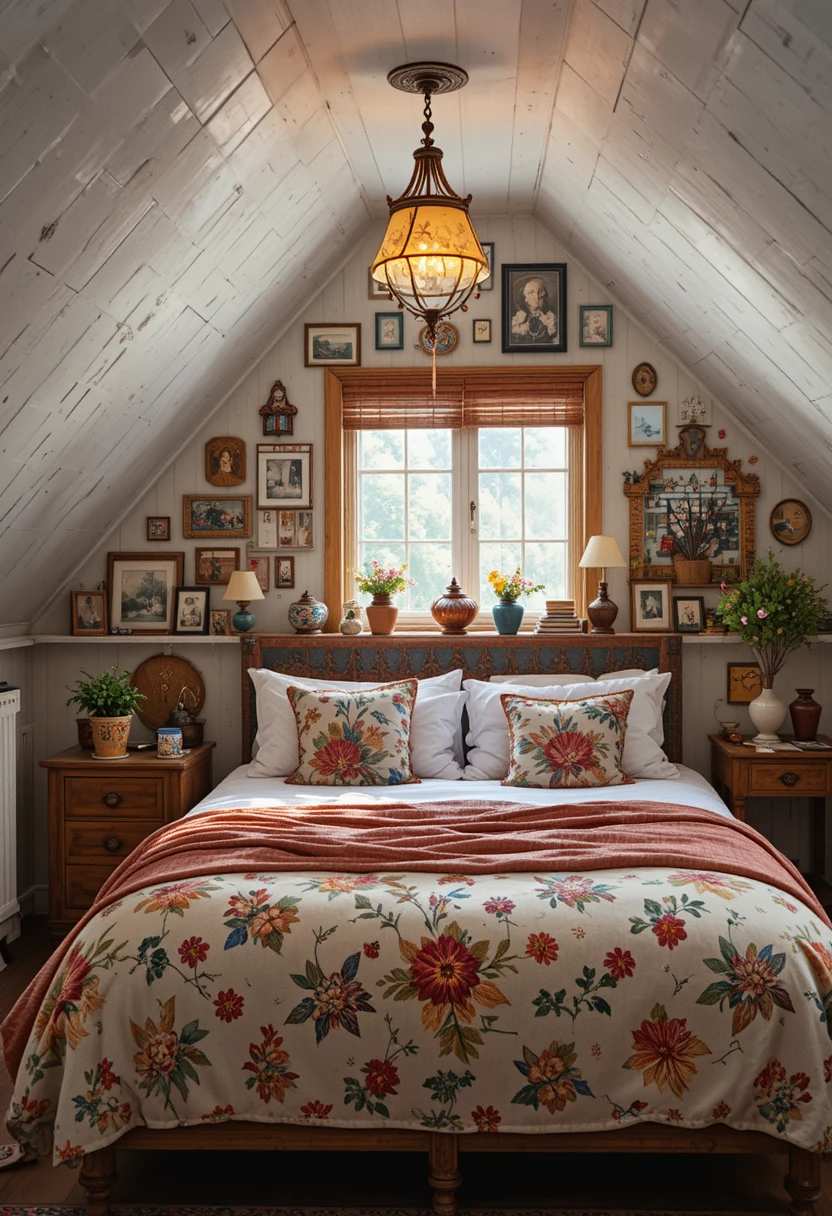
26 Slanted Ceiling Bedroom Ideas to Make the Most of the Angles
A slanted ceiling gives a bedroom a unique, cozy character, but its angles can feel tricky to work with until you learn to embrace them. Handled well, those sloping lines become a charming feature that adds warmth, intimacy, and architectural interest. In my own home, working with the slanted ceiling turned an awkward room into a snug, dreamy retreat. With clever layout, smart storage, and cozy touches, the angles become a real asset. Below are twenty six slanted ceiling bedroom ideas, shared with warmth and a few lessons from my own home, along with simple steps to help you bring each one to life.
Key Takeaways
• Work with the angles: Embrace the sloping ceiling as a cozy feature rather than fighting it.
• Place the bed under the slope: Position the bed where you do not need standing height to use the space well.
• Use the low walls for storage: Turn awkward low areas into built-in storage or seating.
• Keep it light and airy: Light colours and good light stop the angles feeling closed in.
• Add cozy touches: Soft textures and warm lighting enhance the snug, characterful feel.
1. Embrace the Slope
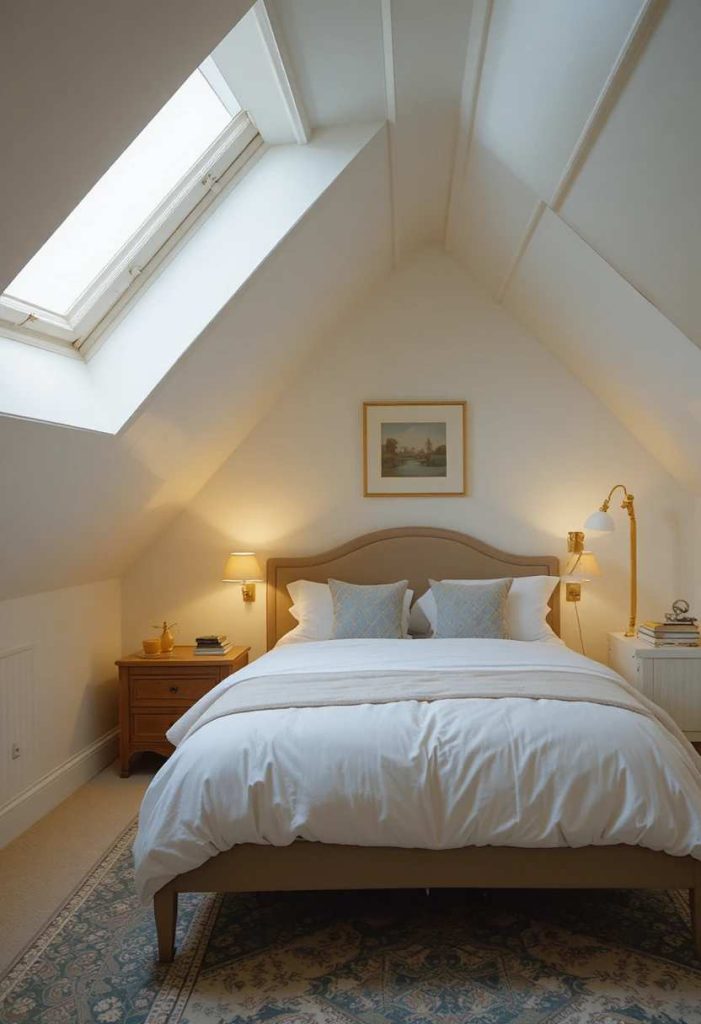
When I first moved into our slanted-ceiling bedroom, I spent weeks trying to hide the slope, until I realized the angle was the best thing about the room. Now I treat it as the feature, not the flaw: I painted the slope the same soft white as the walls so it reads as one sweeping line, and I hung a print where the ceiling meets the wall to draw the eye along it. The low side holds a low dresser and a stack of books, while the tall side carries the bed and a reading lamp. At night the slope makes the room feel like a cocoon, especially in warm lamplight.
How to do it:
Stand in the doorway and note where the ceiling is too low to stand. Paint the slope and the wall beneath it the same soft white so the line disappears, then tuck low furniture, a dresser or a stack of books, under the lowest point and keep the tall side clear for the bed. Aim a warm lamp up the slope so the angle glows in the evening.
2. Place the Bed Under the Slope
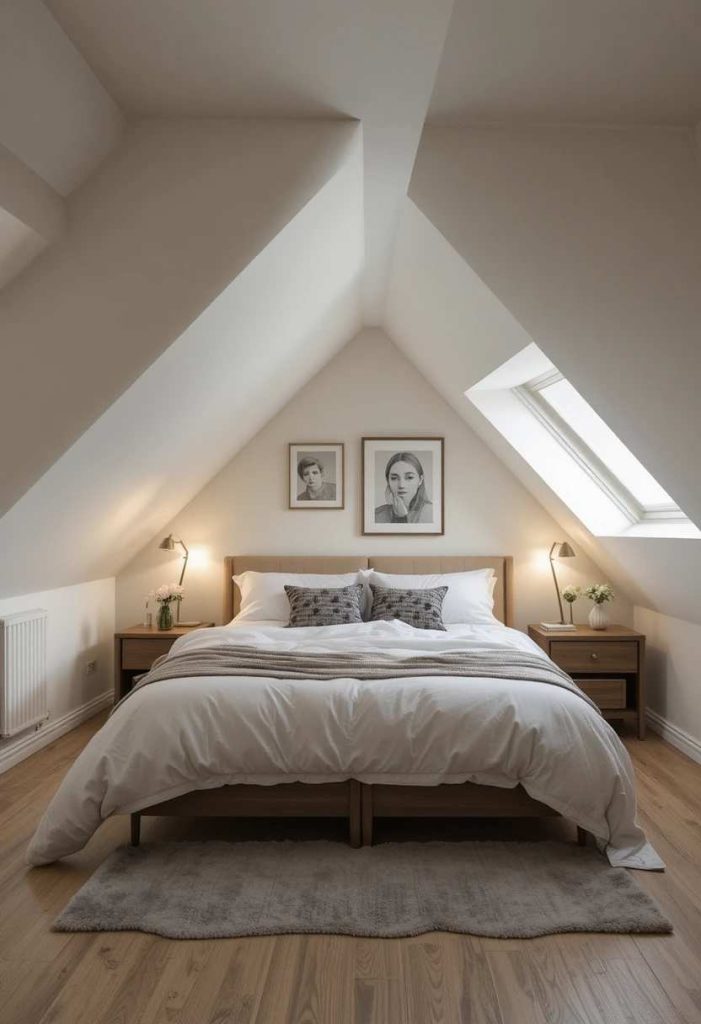
I sleep best when the bed sits right under the slope, and after trying every wall I can tell you it is the smartest use of the angle. The low ceiling over the pillows feels like a canopy, and because you only lie there, you never notice the missing headroom. I keep a slim wall light above each pillow instead of a table lamp, and a throw folded at the foot for cold mornings. Standing room stays free on the tall side for the wardrobe and the morning rush. If you are weighing layouts, my attic bedroom ideas gather more low-ceiling bed placements that work the same way.
How to do it:
Measure the headroom above the mattress first: sit up in bed and check you can sit comfortably without ducking. Push the headboard tight to the low wall and centre the bed on the slope so both sides feel even. Mount a slim reading light above each pillow, keep the bedding low and flat, and leave the tall side of the room open for dressing and the wardrobe.
3. Use the Low Walls for Storage
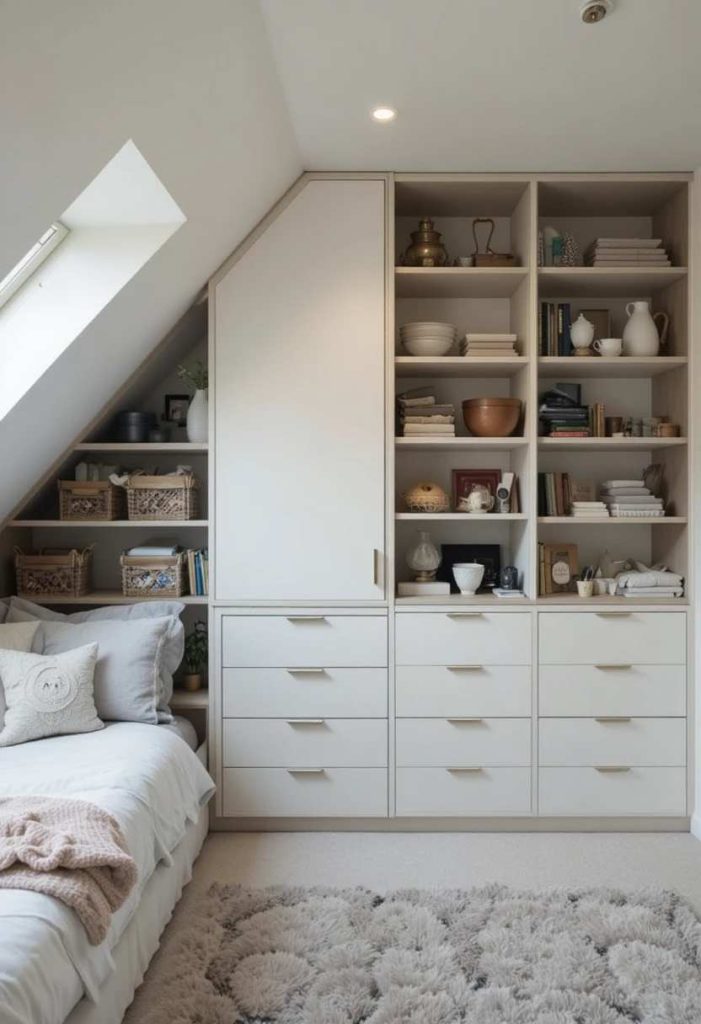
Our low walls used to collect nothing but dust and the odd lost sock, so I had a carpenter build drawers that follow the slope, and they changed how the whole room works. The deepest drawer holds jumpers and jeans, the shallow ones hold scarves, belts and the bits that usually end up on the floor. I painted the drawer fronts the same colour as the wall, so the storage reads as part of the architecture instead of a bulky add-on. Pull-out trays beat deep cupboards here, because you can actually reach the back without crawling. Measure twice before you order anything, and leave a finger-width gap at the top so the drawers clear the sloping ceiling.
How to do it:
Measure the height of the low wall at several points along the slope, since it changes every few inches. Order or build drawers that step down with the angle, with the deepest storage at the tall end. Paint the fronts to match the wall, fit smooth runners, and label the inside of each drawer so the system stays tidy.
4. Paint Ceiling and Walls the Same
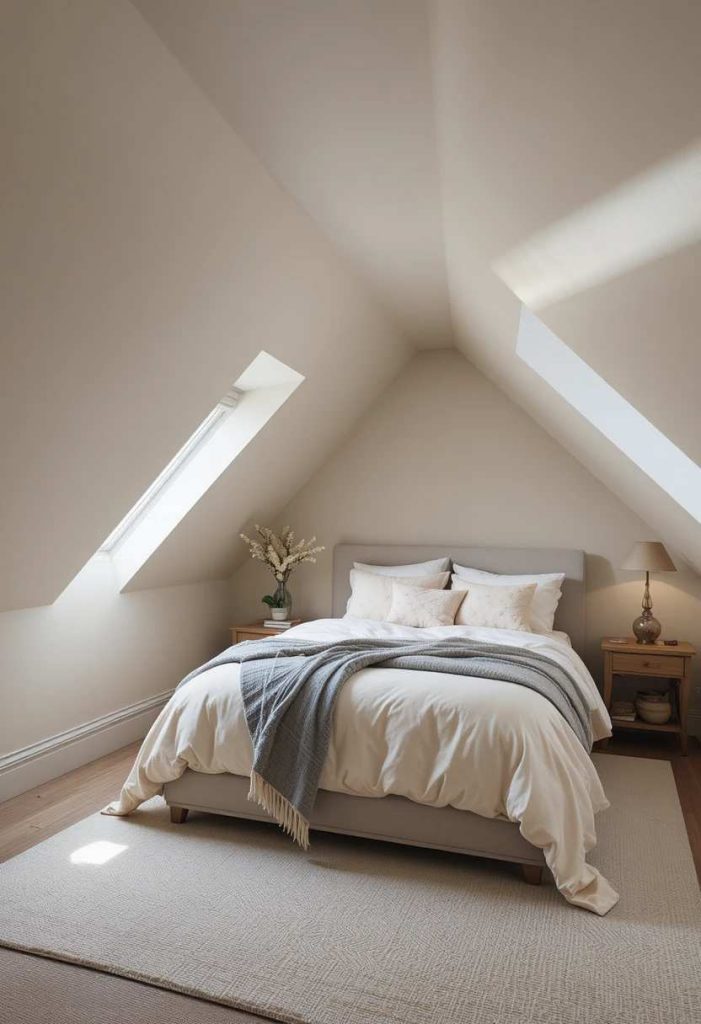
I used to think a slanted ceiling needed a contrast colour to show it off, but painting the slope and walls in one soft shade was the single change that made our room feel bigger. The eye travels up the wall and over the ceiling without stopping, so the angles soften and the room reads as one calm shell. I chose a warm white with the faintest hint of cream, in a matte finish that forgives the uneven plaster. The skirting and the slope meet without a hard line, and the bedding and wood tones do the talking instead. If your room feels chopped up, one colour is the fastest fix I know.
How to do it:
Pick one soft, warm shade and buy enough for the walls and the slope, since the two areas drink up paint differently. Cut in carefully where the slope meets the wall, roll the slope first, then the walls, and use a matte finish to hide bumps. Keep the woodwork the same colour or one shade lighter for a seamless join.
5. Add a Skylight
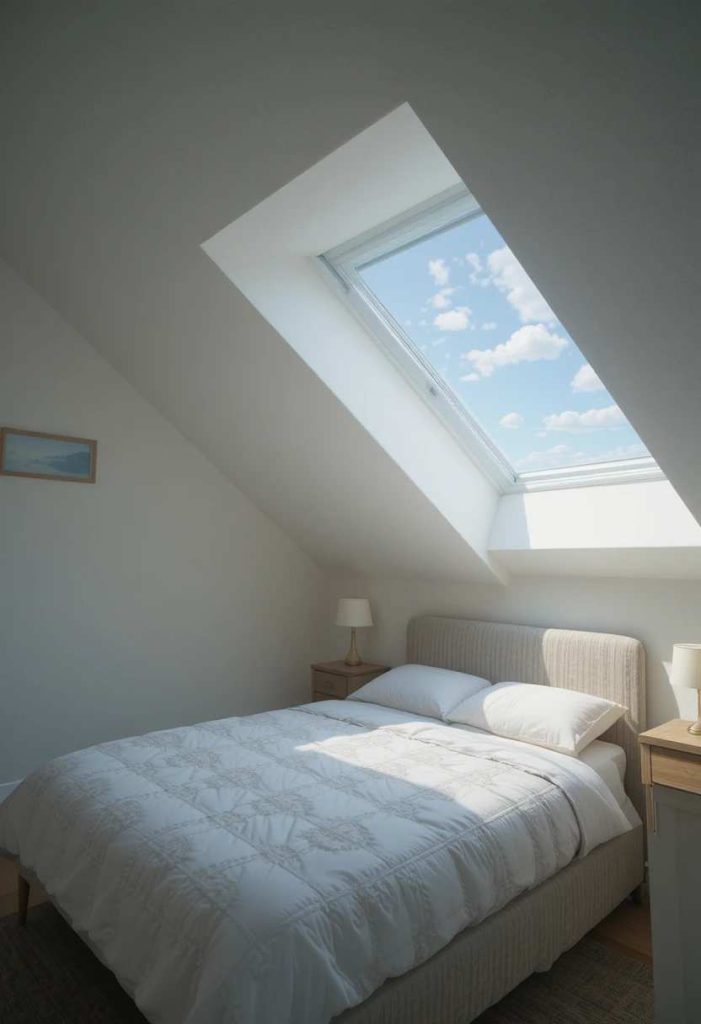
The skylight was the best money we spent on this room, and I only wish we had done it before choosing the paint. Morning light pours down the slope now, and on clear nights I can watch the stars from bed, which still feels like a small miracle. I added a blackout blind on a long cord, because summer sunrises arrive far too early, and a slim sill underneath for a tiny plant that loves the light. If a full skylight is out of reach, a sun tunnel gives a surprising amount of daylight for a fraction of the cost. Either way, light from above suits a sloped ceiling better than any lamp.
How to do it:
Choose the spot on the slope that faces the most sky, ideally above the bed or the dressing area. Have a roofer fit a proper flashing kit so it never leaks, and add a blackout blind for early mornings. Keep the reveal painted white to bounce the light, and add a small plant on the sill.
6. Keep the Palette Light
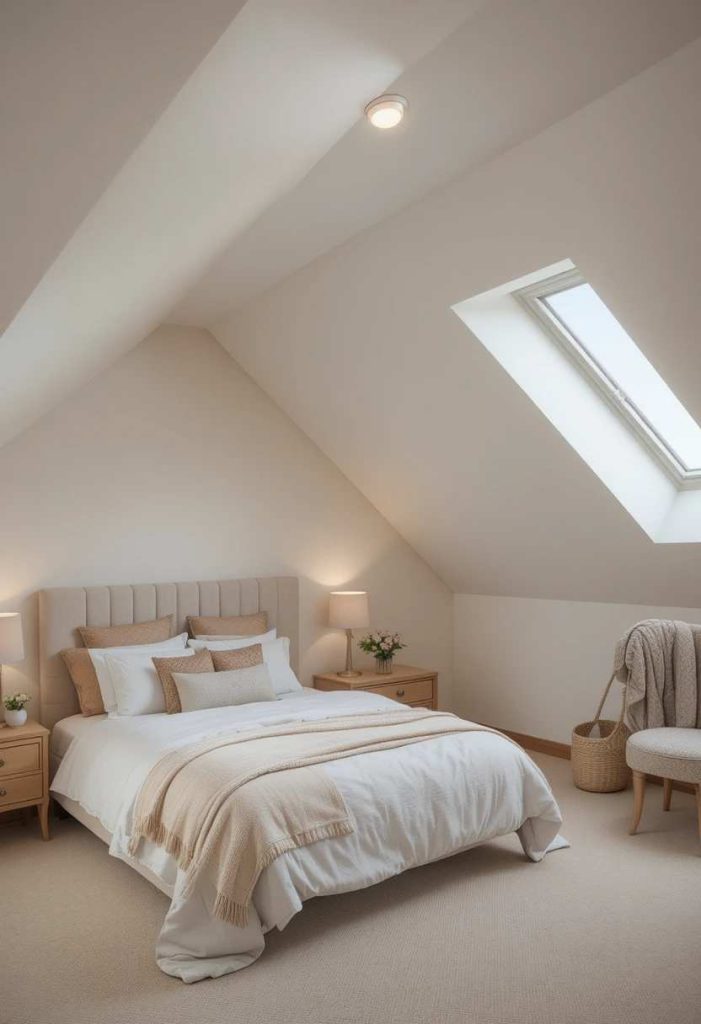
I learned the hard way that a dark colour on a slope makes the ceiling feel as if it is leaning on you, so our room now lives in pale, warm neutrals. The walls are a soft white, the bedding is oatmeal and stone, and the only deeper notes come from a walnut bedside table and a framed print. Because the palette stays quiet, the angles become a gentle backdrop instead of the main event, and the room feels twice as tall as it is. I still add colour, but through things I can swap: a sage throw in spring, a rust cushion in autumn. The bones stay light all year.
How to do it:
Choose one pale base colour for the walls and slope, then layer in two or three soft neutrals through bedding, rugs and curtains. Add a single deeper accent, like walnut or charcoal, in small doses for contrast. Swap coloured throws and cushions with the seasons so the room never feels flat.
7. Add a Low Bed Frame
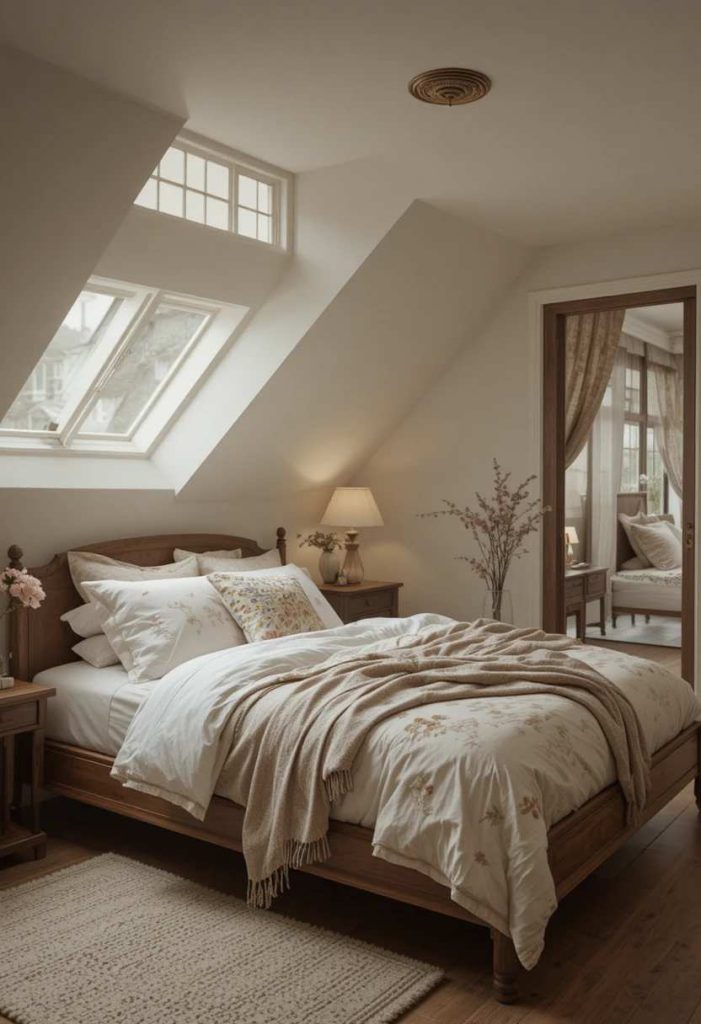
A low platform bed was the piece that finally made our sloped ceiling feel intentional instead of awkward. With only a few inches between the mattress and the floor, the headroom above the pillows opens up, and the whole room feels calmer and more grounded. I chose a simple oak frame with no headboard, which would have fought the slope, and I keep the bedding flat and unfussy so the low line stays clean. Getting in and out takes a day to get used to, and then you forget entirely. If your ceiling is very low, skip the box spring and lay the mattress straight on the slats.
How to do it:
Measure from the floor to the slope above the bed and subtract the mattress depth to check your sitting headroom. Choose a low platform frame with no tall headboard, and keep the bedding flat and low. Add a slim wall light above each pillow instead of a bedside lamp.
8. Add a Window Seat Under the Slope
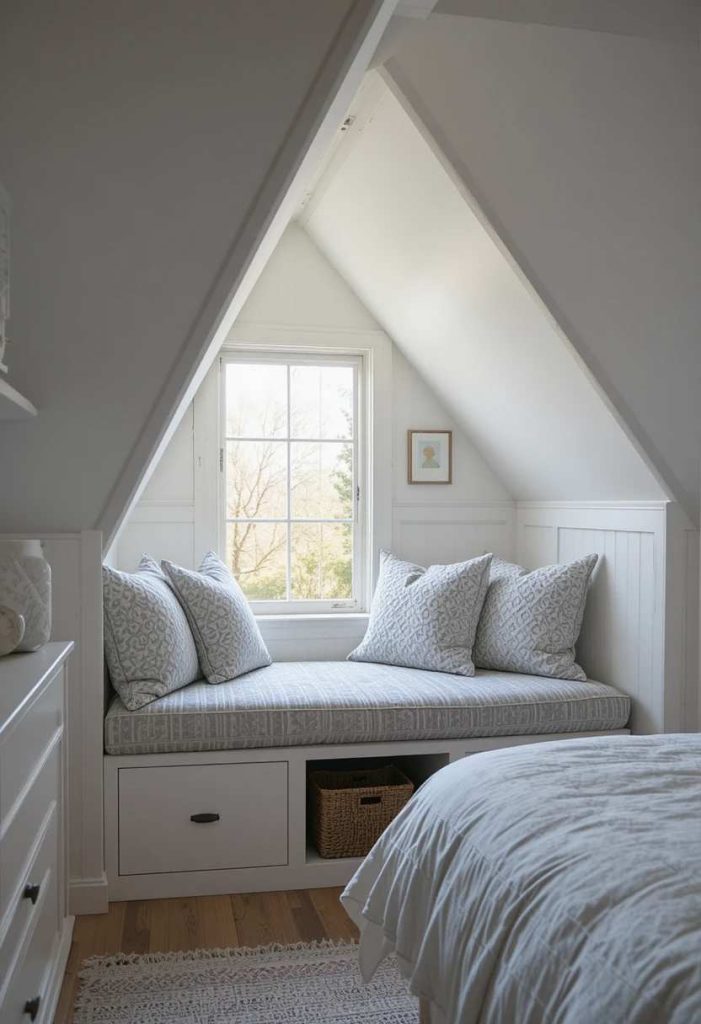
The window seat tucked under our slope is the spot everyone in the house fights over, and it started as a way to use a corner that was too low for anything else. I had a simple bench built to the exact width of the window, with a thick cushion in a washable fabric and a hinged lid that hides blankets and board games. A stack of books and a small lamp live at one end, and the cushion is deep enough to curl up on with a cup of tea. The trick is to keep the seat low and the cushion firm, so you can sit for an hour without sliding off. It turned dead space into the cosiest corner of the house.
How to do it:
Measure the window width and the headroom at the seat height, then build or buy a bench that fits snugly beneath the slope. Add a hinged lid for hidden storage and a firm, washable cushion. Finish with a small lamp and a basket for books at one end.
9. Add Warm Lighting
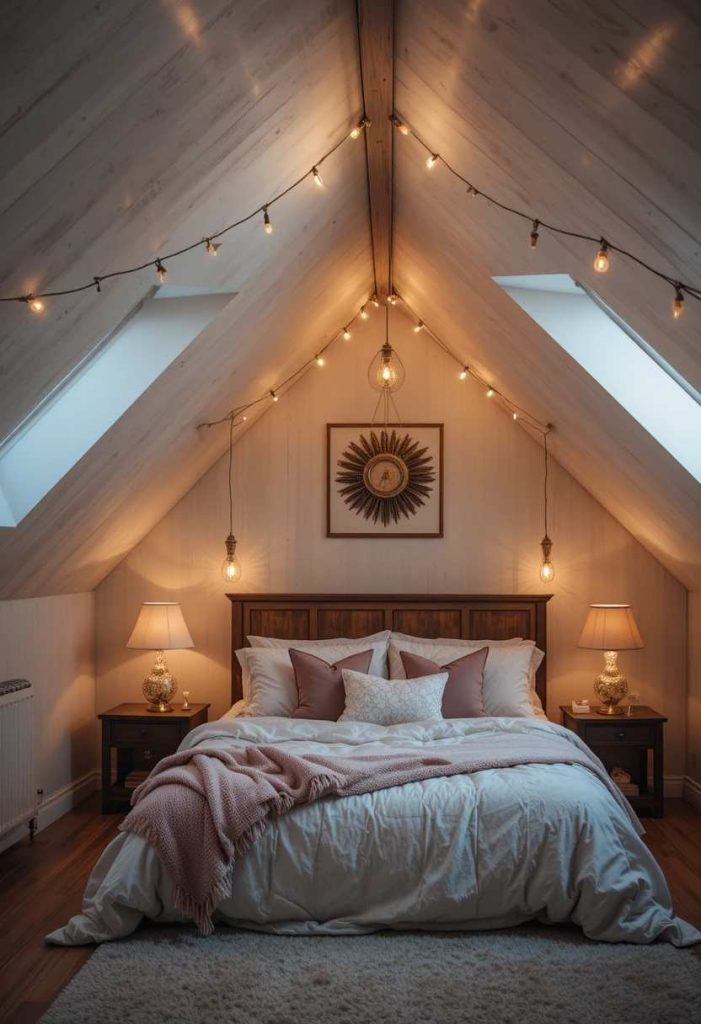
I used to rely on one harsh ceiling light, and it made the slope look like a cave; layering warm light changed the room completely. Now there is a dimmable wall light over the bed, a small lamp on the low dresser, and a string of warm fairy lights along the beam that I switch on at dusk. The slope catches the glow and throws it softly back into the room, which is the closest thing to candlelight I have found. I keep every bulb warm white, around 2700K, because anything cooler turns the angles grey and flat. A dimmer is worth every penny here, since the mood shifts so much between morning and night.
How to do it:
Layer three warm light sources: a reading light over the bed, a lamp on the low furniture, and a soft glow along the slope or beam. Choose warm white bulbs around 2700K and put the main light on a dimmer. Avoid a single harsh ceiling light, which flattens the angles.
10. Add Beams as a Feature
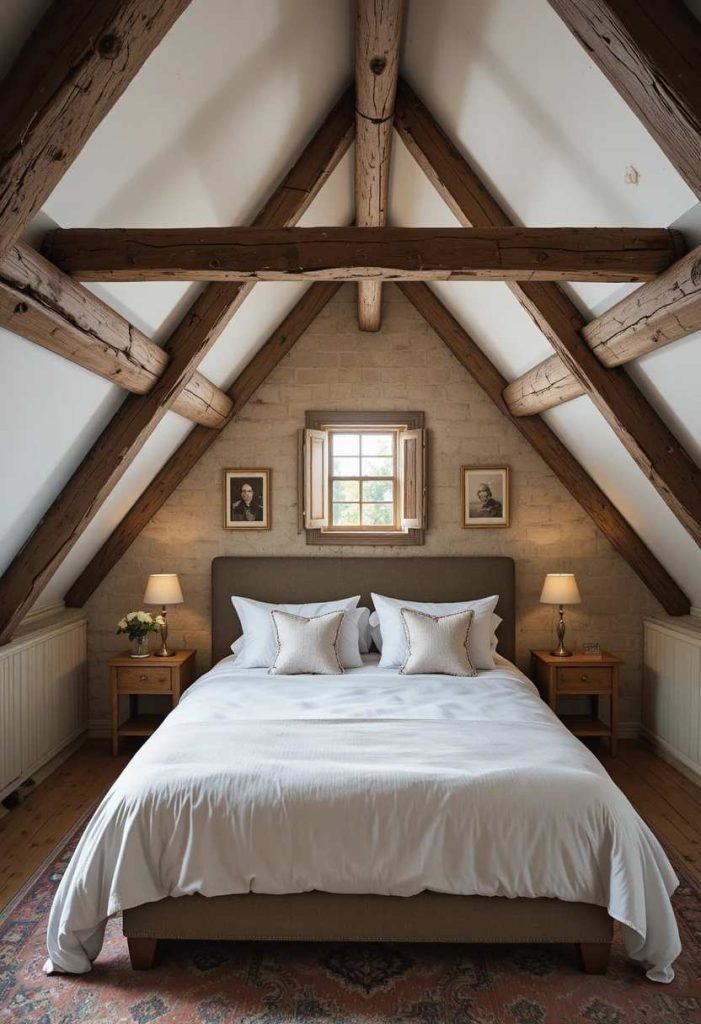
When we stripped back the plaster and found the old beams, I nearly cried, because they gave the room the character I had been trying to buy with furniture. The dark wood cuts across the pale slope and makes the ceiling feel crafted rather than awkward, and it anchors the bed beautifully. I left the beams their natural colour and kept everything else quiet, so the wood does the talking. If your beams are new, a mid-tone stain looks more honest than a very dark one, and a beeswax finish keeps them soft to the eye. Even a single beam across the tall wall is enough to change the feel of the room.
How to do it:
Check whether your beams are structural before you touch them, and clean them gently with a dry brush. Leave natural timber unstained or use a mid-tone stain and beeswax finish. Keep the walls pale and the bedding simple so the beams stay the feature.
11. Add Cozy Layered Bedding
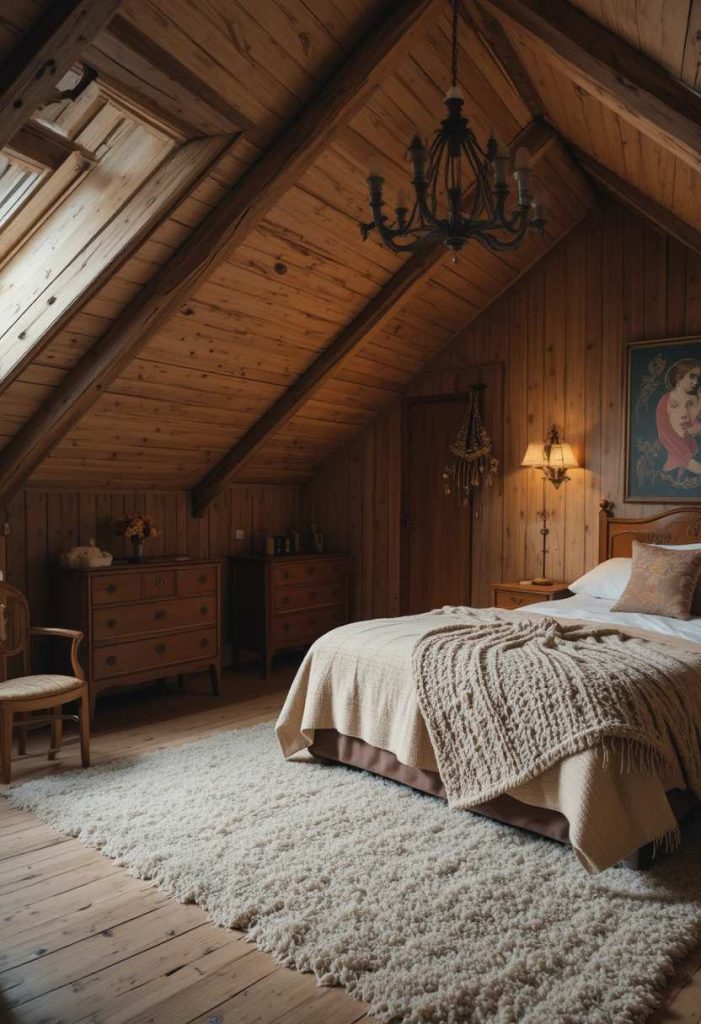
Our bed is the warmest spot in the house, and layering is the reason: a crisp cotton sheet, a light duvet, a knitted throw folded across the foot, and two sleeping pillows plus one soft cushion each. The layers matter more under a slope, because the low ceiling makes the bed the visual centre of the room, and a flat, bare bed looks lost. I mix textures rather than patterns, linen, wool and cotton, in oatmeal, cream and one soft sage. Making the bed takes two minutes, and climbing into it at night feels like being tucked in. Wash the throw often; it is the piece that gets the most use.
How to do it:
Start with a crisp cotton sheet and a light duvet, then fold a knitted throw across the foot of the bed. Mix textures like linen, wool and cotton in two or three soft neutrals. Keep one spare throw in the under-bed drawer for cold nights.
12. Add a Reading Nook
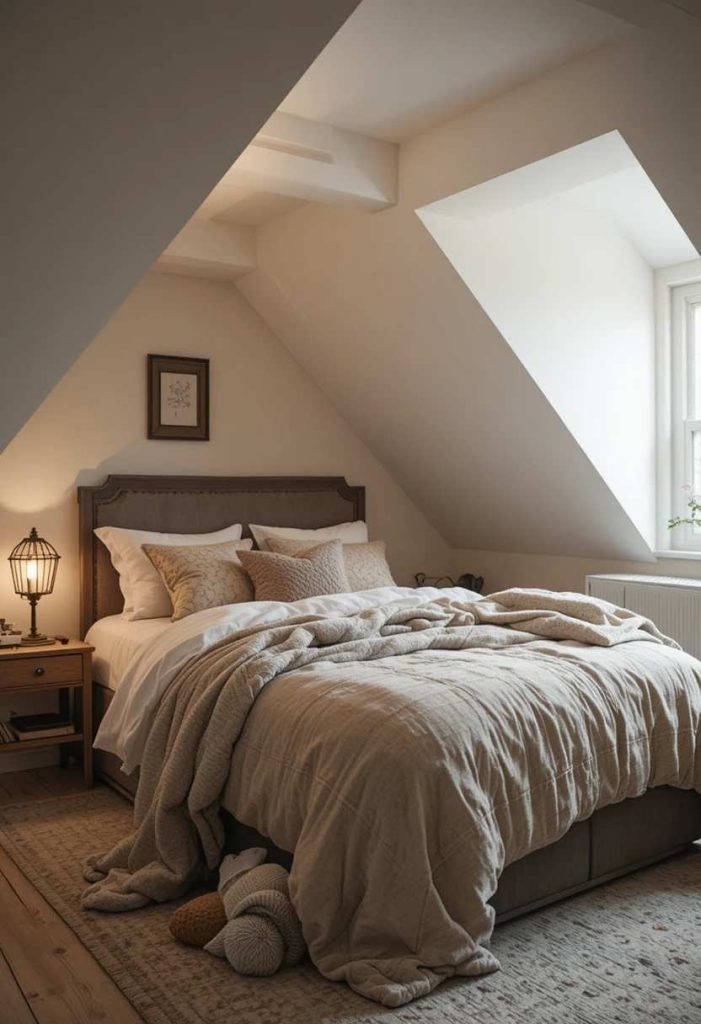
I carved our reading nook out of the lowest corner, the one everyone said was useless, and it is now where I finish every day. A low armchair that fits under the slope, a small side table for tea, and a warm wall light are all it took, plus a basket of books within arm’s reach. The slope overhead makes it feel like a hideaway, and I hung a short curtain on one side for the evenings when I want to shut the world out. The chair has to be low and deep, or you will bump your head standing up from it. If space is tight, a floor cushion and a pile of books work just as well.
How to do it:
Pick the lowest corner and check the sitting headroom before you buy anything. Choose a low, deep armchair, add a small side table and a warm wall light, and keep a basket of books beside it. Hang a short curtain on one side if you want the nook to feel enclosed.
13. Add Built-In Shelving in Nooks
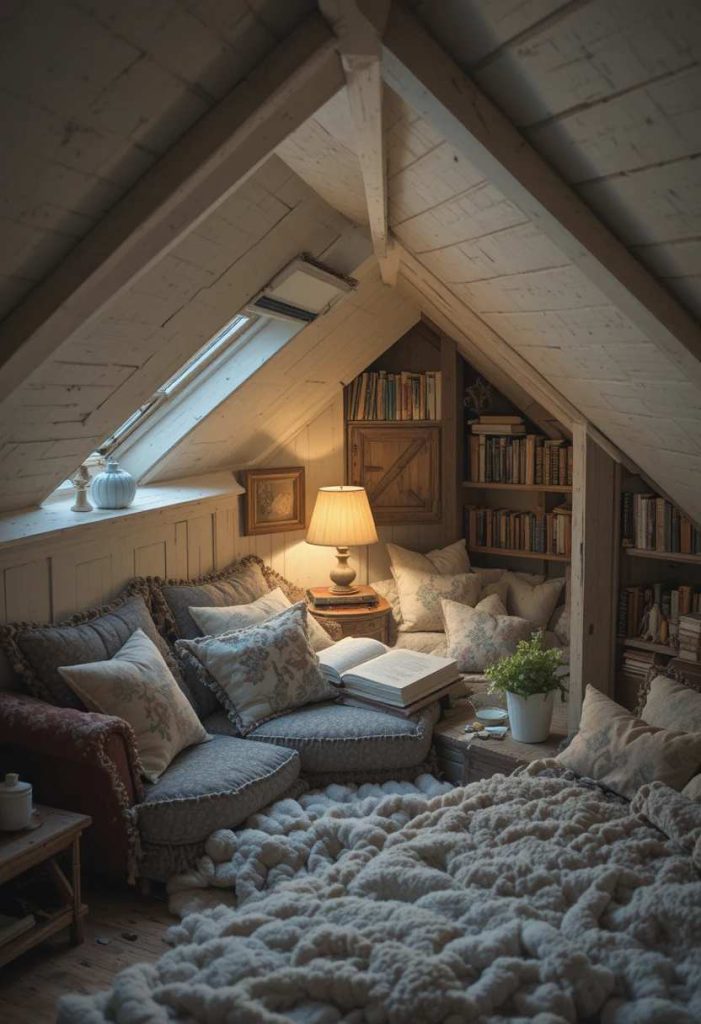
The nooks in our room used to swallow clutter, so I fitted shallow shelves into the two deepest ones, and they hold more than a whole bookcase. Books stand upright on the lower shelves, while the top shelf, where the slope pinches in, holds small baskets for the things I want out of sight. I painted the shelves the same white as the walls, which makes them look built in rather than added on, and I left one shelf deliberately empty so the display can breathe. My rule is that every shelf earns its place: if I have not touched it in a season, it goes. For more nook storage that follows a slope, my attic bedroom ideas show the same trick in a smaller room.
How to do it:
Measure each nook at several heights, since the slope changes the depth as it rises. Fit shallow shelves that follow the angle, painting them the same colour as the wall. Use baskets on the top shelf where headroom pinches in, and anchor every shelf into a stud.
14. Add Warm Wood Touches
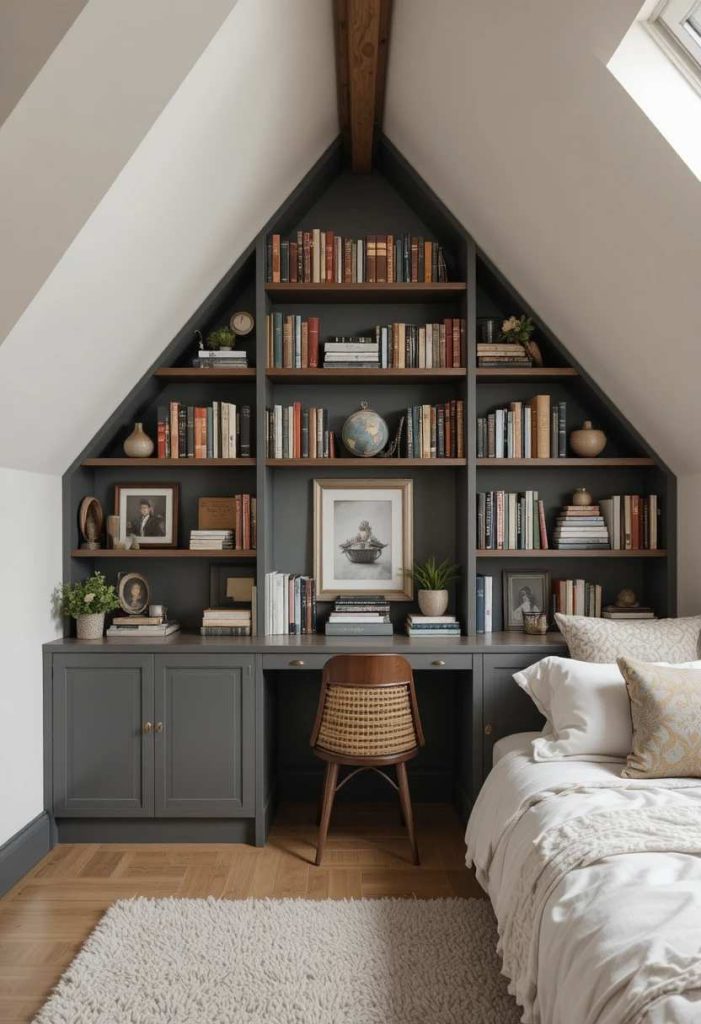
I bring wood into this room wherever I can, because it warms up the pale slope in a way paint never will. The bedside tables are oak, the mirror frame is walnut, and a woven basket holds spare blankets by the door. The grain gives the eye something to rest on, and the warm tones stop the white ceiling feeling cold. I keep the wood tones close to each other, no more than two or three, so the room stays calm rather than busy. A single wooden tray on the bed or a small stool by the window is enough to start with. If you are buying new, choose solid wood over veneer; it ages far better in a room that gets daily use.
How to do it:
Choose two or three wood tones that sit close together, such as oak and walnut, and repeat them across furniture and accessories. Add a woven basket for texture and a wooden tray or stool as a starting point. Keep the walls pale so the grain stands out.
15. Maximize Natural Light
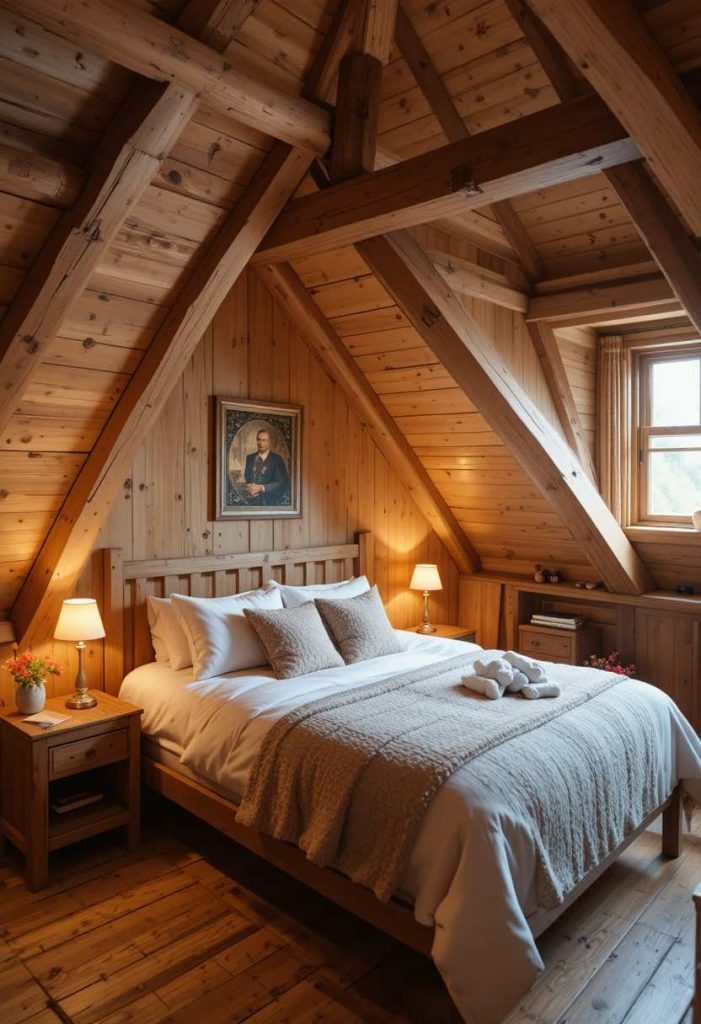
Our room faces the morning sun, and I have learned to get out of its way: the curtains are sheer, the mirror sits opposite the window, and nothing tall blocks the light’s path across the slope. The slope itself helps, because light bounces down it and spreads further than it would off a flat ceiling. I wash the windows more often than I would like to admit, since even a thin film of dust dulls the room, and I keep the sill clear apart from one small plant. On grey days the room still feels bright, which is the real test. Light is the cheapest way to make a slanted ceiling feel generous, so protect it fiercely.
How to do it:
Hang sheer curtains that filter rather than block the light, and place a mirror opposite the window to bounce daylight across the slope. Keep tall furniture away from the window wall and the sill clear. Wash the glass often, since dust dulls a sloped room quickly.
16. Add a Soft Rug
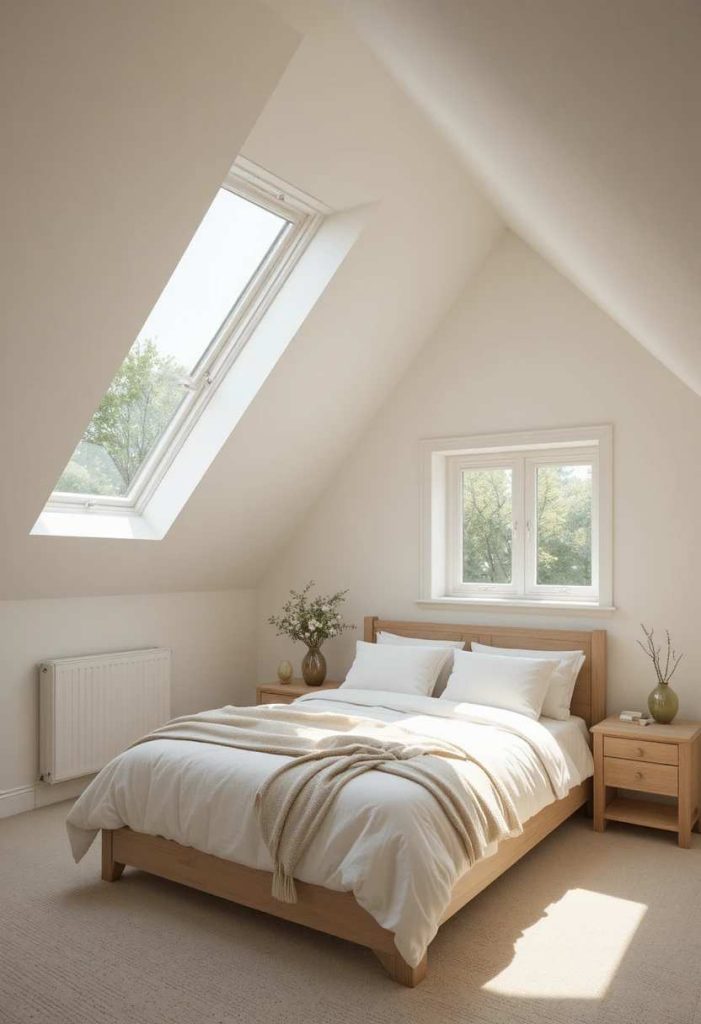
The rug under our bed is the first thing my feet touch in the morning, and choosing a plush one was the kindest upgrade I made to this room. The floor is wood, which looks beautiful but feels cold against a sloped ceiling, so a thick wool rug softens both the sound and the chill. I sized it to run past the bed on both sides, so there is no cold strip to step onto, and I chose a quiet pattern that does not fight the angles. A non-slip pad underneath stops it creeping, which matters on a smooth floor. If a full rug is too much, a runner along the tall side gives you the same warm landing for less.
How to do it:
Measure the bed and choose a rug that extends past it on both sides so your feet never land on cold floor. Pick a thick wool or high-pile rug in a quiet tone, and lay a non-slip pad underneath. A runner along the tall side works if a full rug is too large.
17. Add Under-Bed Storage
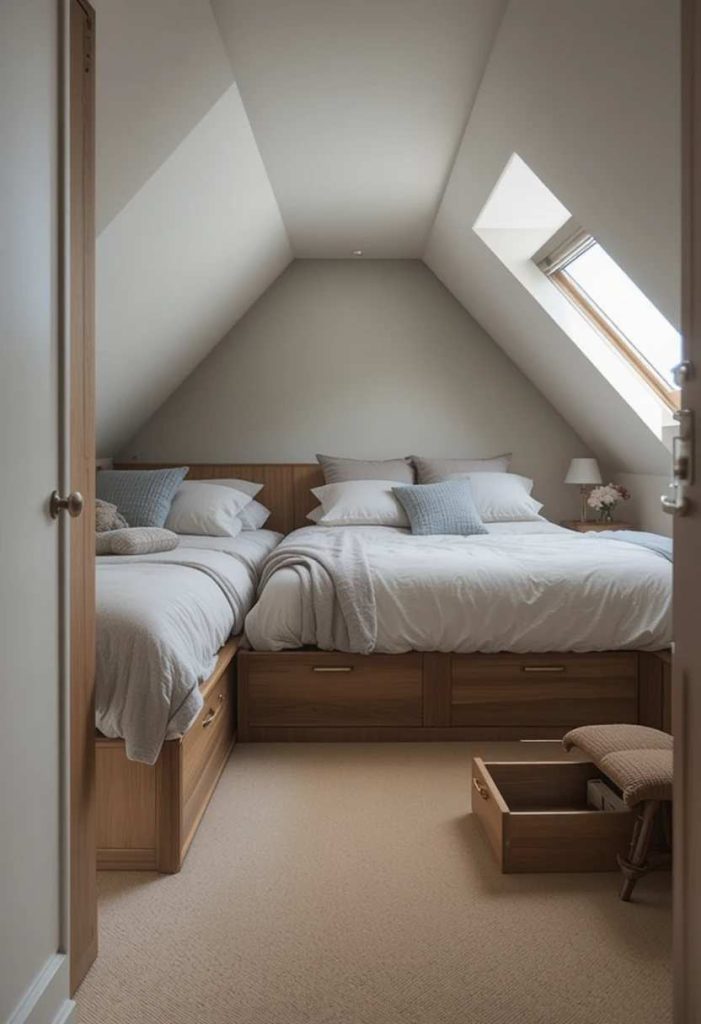
Under-bed storage is the quiet hero of our sloped room, because the low ceiling leaves so little standing space for wardrobes. I use flat rolling boxes for out-of-season clothes, a shallow drawer for spare bedding, and a slim box for the things I only need twice a year. Everything is labelled on the end I can see, so I never have to drag a box out to find one jumper. The trick is to keep the boxes low and smooth-running, and to leave a hand’s width of clearance so they slide without catching the rug. Twice a year I pull them all out, and anything I have not used goes straight to charity.
How to do it:
Measure the clearance under the bed, then choose flat rolling boxes or shallow drawers that slide out easily. Label the visible end of each box and keep spare bedding in one and out-of-season clothes in another. Leave a hand’s width of clearance so boxes clear the rug.
18. Add a Gentle Colour
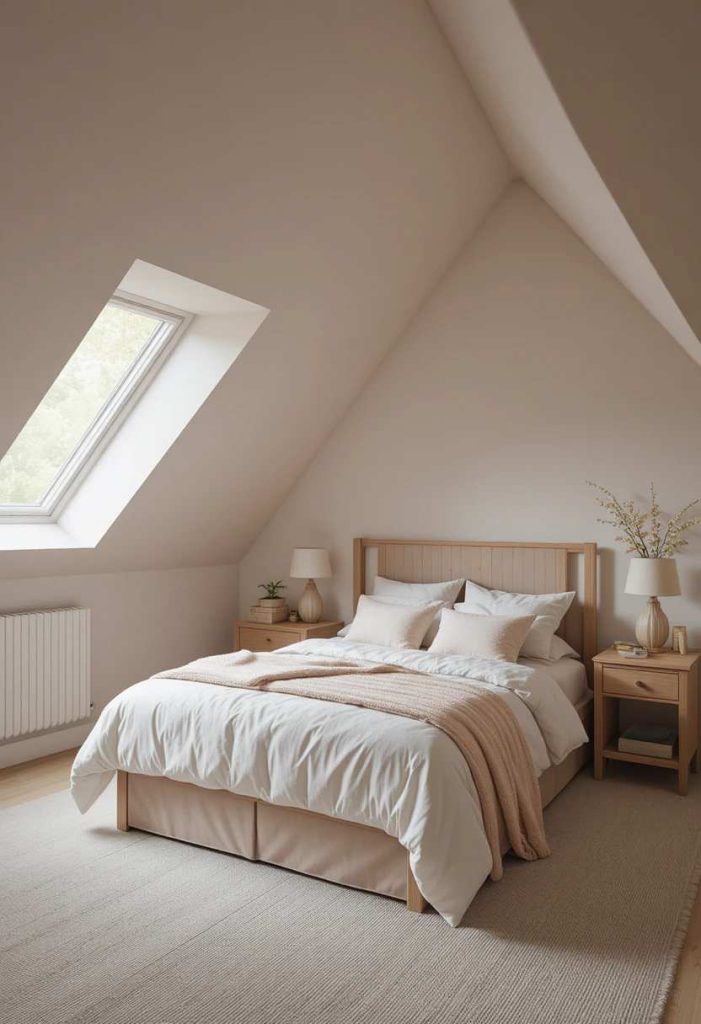
I was nervous about colour on a slope, in case it made the ceiling feel heavy, but one soft sage accent wall turned out to be the making of the room. The colour sits on the tall wall behind the bed, where the slope meets it, and it draws the eye up instead of pressing down. Everything else stays pale, so the sage feels like a gentle note rather than a shout, and I repeat it in a cushion and a throw so the room feels considered. The lesson was to test the paint on the slope itself, in morning and evening light, because the angle changes the colour completely. Start with one wall; you can always add more.
How to do it:
Pick one soft accent shade and test it on the slope itself in morning and evening light, since the angle changes the colour. Paint the tall wall behind the bed, keep the rest pale, and repeat the accent in a cushion and a throw. Start with one wall and add more only if it feels right.
19. Add Sheer Curtains
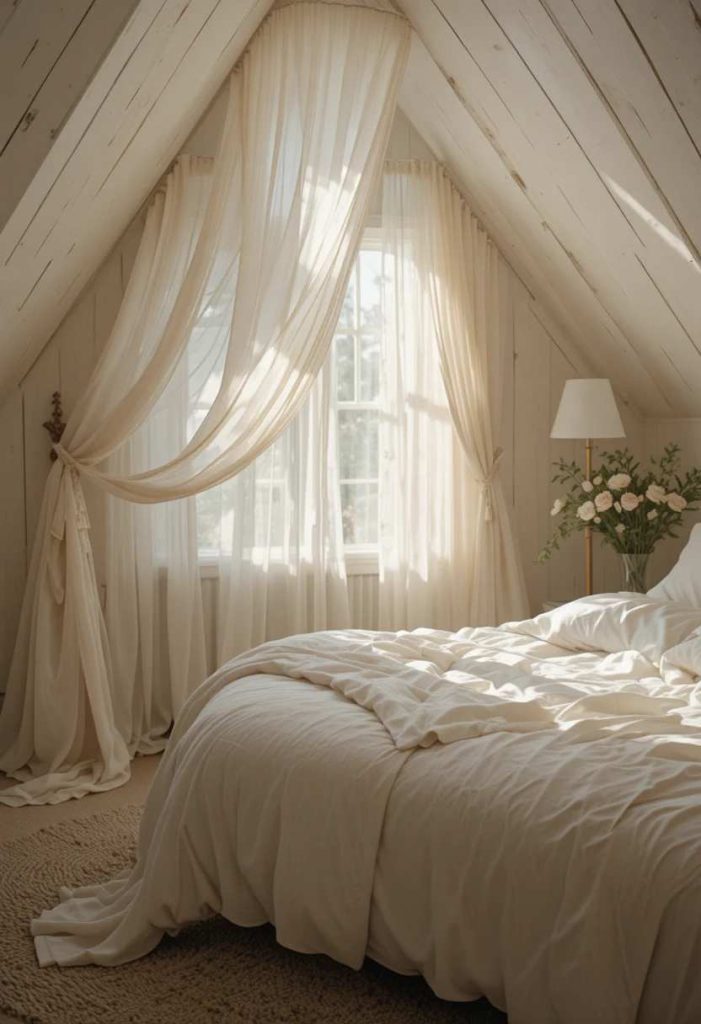
Sheer curtains were the answer to our odd-shaped windows, which sit half under the slope and never suited a heavy curtain. The light fabric filters the morning sun into a soft glow and lets the shape of the window show through, which is half the charm. I hung them on a slim rod that follows the angle of the wall, with the fabric pooling just slightly on the sill. They give privacy without shutting out the sky, and on a breezy day they move gently, which makes the whole room feel alive. Wash them twice a year; they collect dust faster than you would think.
How to do it:
Choose a light, washable sheer fabric and a slim rod that follows the angle of the window wall. Hang the curtains so they just brush the sill, and keep the fabric plain so the window shape shows through. Wash them twice a year to keep them bright.
20. Add Space-Saving Furniture
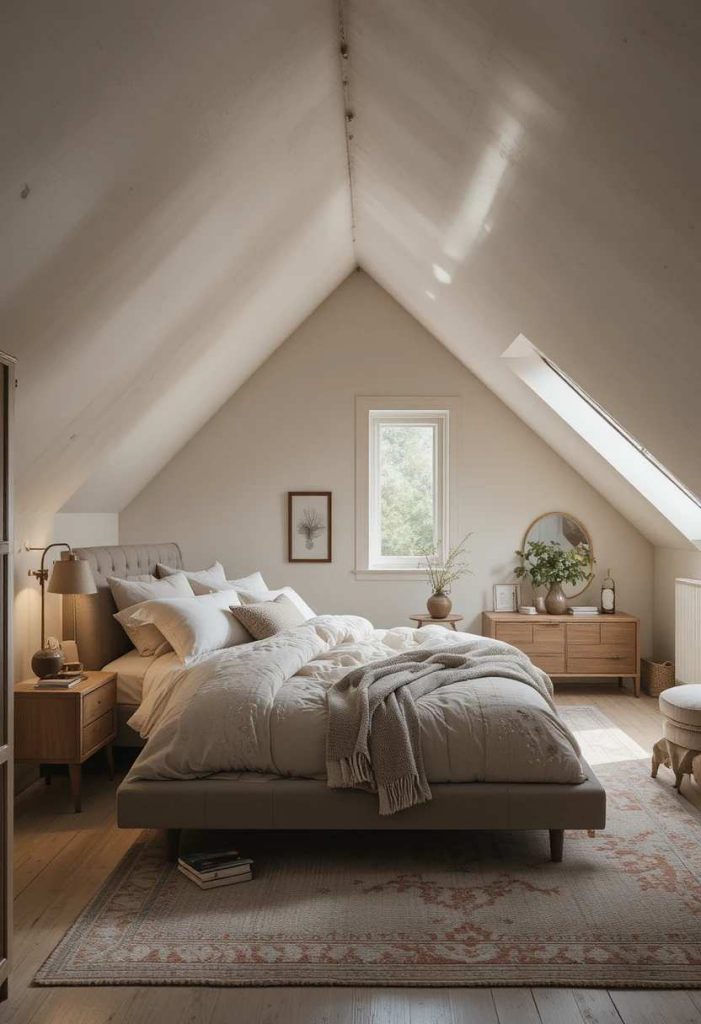
Every piece of furniture in this room has to earn its floor space, so I chose low, streamlined pieces that slide under the slope instead of fighting it. The dresser is wide rather than tall, the bedside tables are wall-hung, and a slim bench at the foot of the bed doubles as a seat and a place to lay out tomorrow’s clothes. Because nothing is bulky, the room feels open even though the ceiling is low, and cleaning takes half the time it used to. My rule is one in, one out: if a new piece arrives, an old one leaves. For more ideas on fitting a lot into a small footprint, my loft bedroom ideas use the same low, multi-purpose thinking in a raised room.
How to do it:
Choose wide, low furniture that fits under the slope, and wall-hang bedside tables to free the floor. Pick pieces that do two jobs, like a bench that stores bedding and seats you while you dress. Follow one in, one out so the room never creeps back to cluttered.
21. Keep It Uncluttered
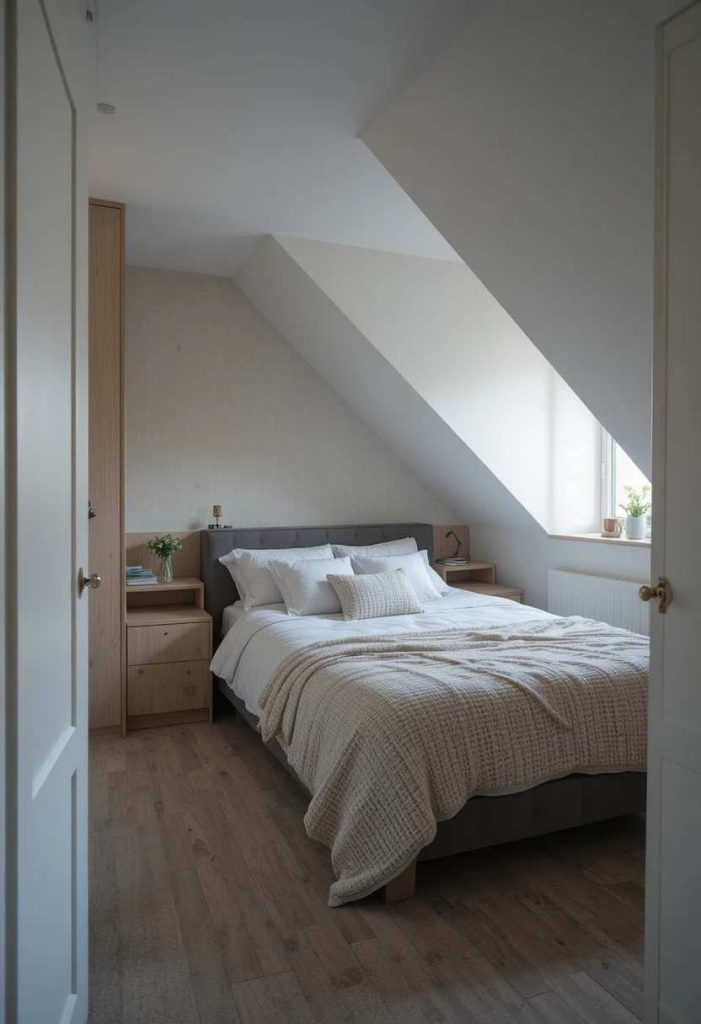
I keep this room deliberately spare, because a sloped ceiling shows clutter faster than any other room in the house. Every surface has one job: the dresser holds a lamp and a book, the windowsill holds a plant, and everything else lives behind a door or in a drawer. It took a month of small daily clear-outs to get here, and the habit that stuck was a five-minute tidy before bed, which means I wake up to calm instead of chaos. The room feels bigger for it, and I sleep better. If you do nothing else on this list, clear one surface tonight and notice how the room changes by morning.
How to do it:
Give every surface one job and move everything else behind a door or into a drawer. Spend five minutes tidying before bed so you wake to calm, and clear one surface completely each week. If something has no home, it does not live in this room.
22. Add a Statement Light in the Tall Spot
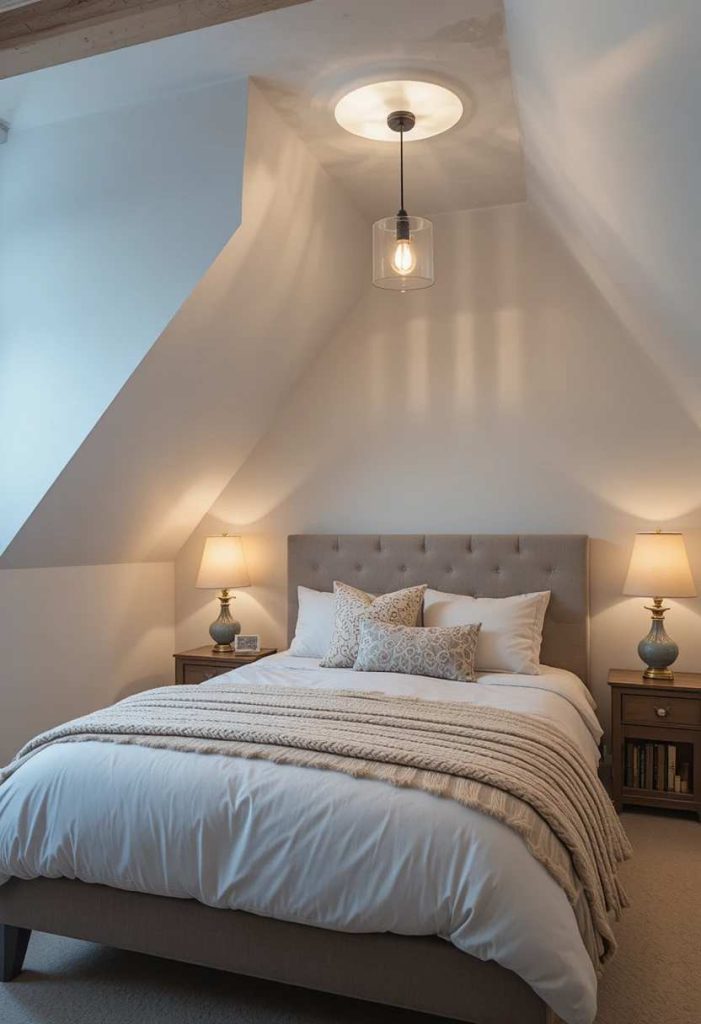
The pendant in the tall corner is the piece guests always ask about, and it works because it fills the one spot where the ceiling gives us real height. I chose a warm brass pendant with a linen shade, hung low enough to feel intimate over the reading chair but high enough to walk under safely. In the evening it throws a pool of light downwards and a soft glow up the slope, which makes the angles look sculpted. The trick is to measure twice: the drop has to suit the tallest point, not the average. A dimmer lets it be a night light or a proper reading light, depending on the hour.
How to do it:
Find the tallest point in the room and hang a pendant there, measuring the drop so you can walk beneath it safely. Choose a warm bulb and a linen or rattan shade for a soft glow, and put it on a dimmer. Keep the rest of the lighting low and warm so the pendant stays the star.
23. Add Soft Textures
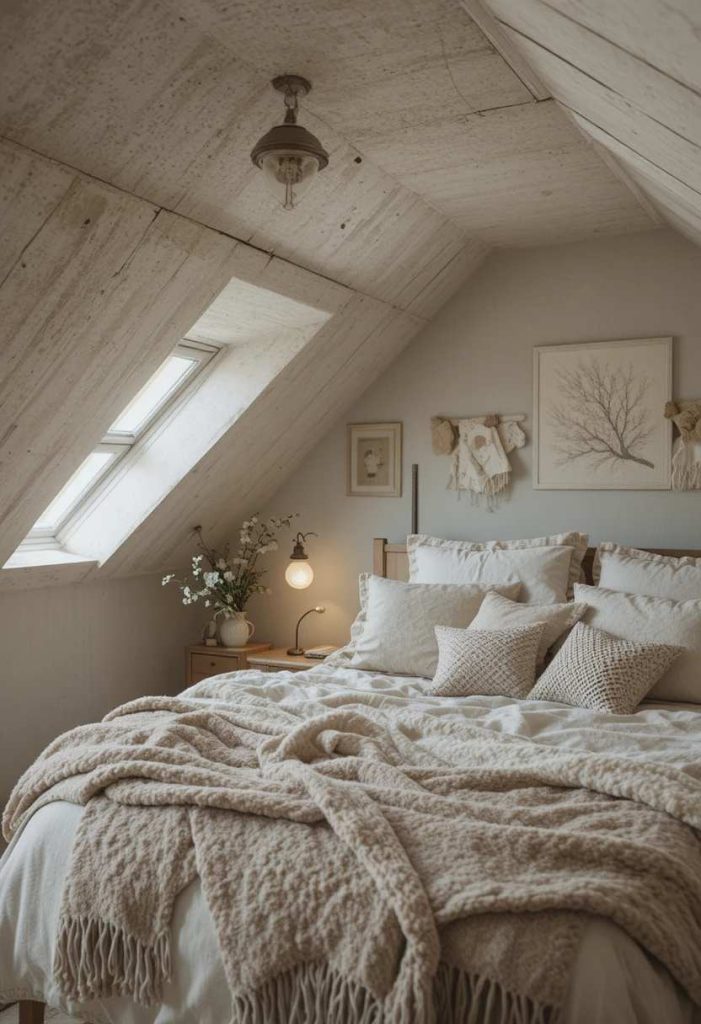
Texture is what makes this room feel like a nest rather than a box, and I layer it everywhere the eye lands. There is a chunky knit throw on the bed, a linen cushion on the chair, a wool rug underfoot, and a soft cotton curtain at the window, all in cream, oatmeal and sage. Because the palette stays quiet, the textures do the decorating, and the slope overhead makes the layers feel sheltering rather than heavy. I change the throw with the seasons, lighter linen in summer, heavier wool in winter, and the room feels new each time. Touch matters here: if a fabric does not feel good against your skin, it does not belong in the room.
How to do it:
Layer four textures in one quiet palette: a knit throw, a linen cushion, a wool rug and a cotton curtain. Change the throw with the seasons, lighter in summer and heavier in winter. Choose only fabrics that feel good against the skin.
24. Add Personal Touches
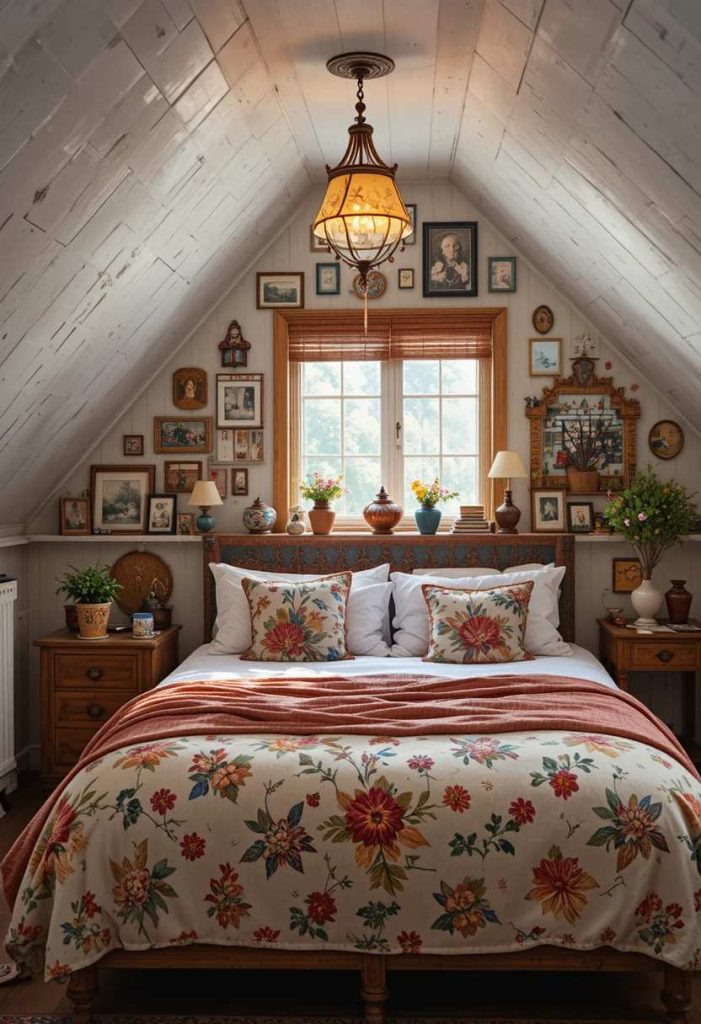
This room finally felt like ours when I stopped buying generic decor and put up the things that actually mean something: the framed print from our first trip, my grandmother’s small mirror, and a shelf of books I have read more than once. The slope makes a natural frame for them, and because the room is small, each piece gets noticed. I keep the display to a few loved things rather than a crowd, and I move them around when the room starts to feel stale. The rule I follow is simple: if it does not hold a memory or make me smile, it lives somewhere else. Your room should tell your story, not a shop’s.
How to do it:
Choose three or four loved objects, like a framed print, a small mirror or books you reread, and give each one a clear spot on the slope wall or shelf. Keep the display small so every piece is noticed, and rotate it when the room feels stale. If it holds no memory, find it another home.
25. Match It to Your Style
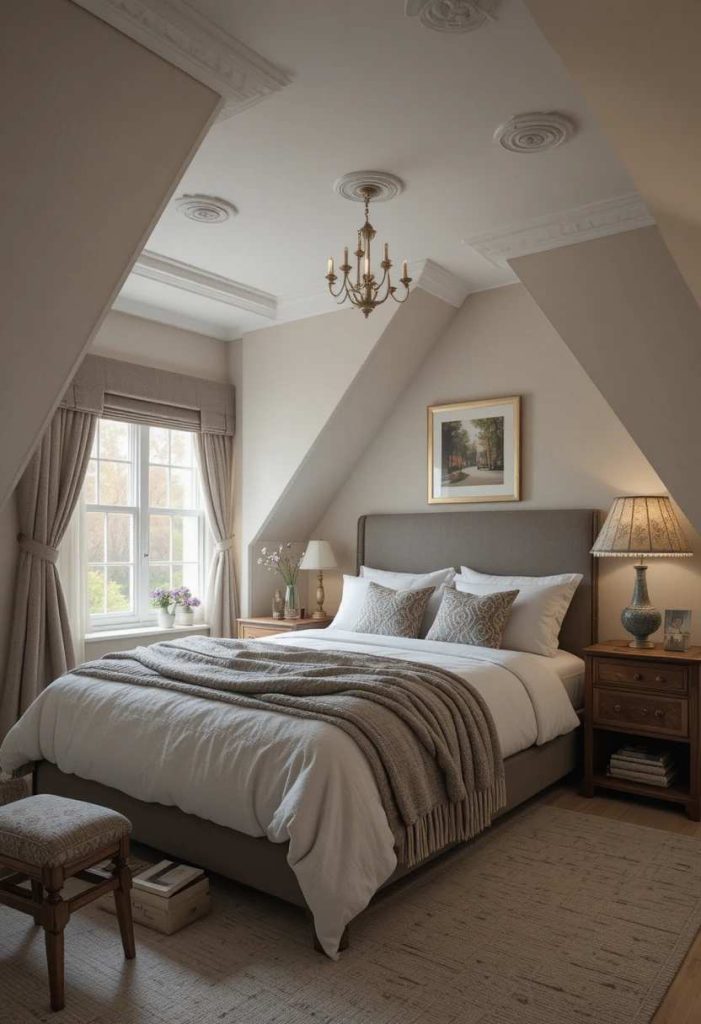
I used to copy rooms from magazines and wonder why ours felt wrong, until I realized our house is a cottage, not a show home, and the bedroom had to match it. The slope now wears soft white, the furniture is pale oak, and the fabrics are linen and wool, the same language as the rest of the house. When a room matches the house, it feels settled, as if it has always been there. I keep a small sample of the wall colour and the wood finish in a drawer, so anything new I buy has to sit happily beside them. Start with the house you have, not the one in the picture, and the room will fall into place.
How to do it:
Look at the rest of your home and note the colours, wood tones and fabrics it already uses. Repeat those in the bedroom so the slope feels part of the house, not an afterthought. Keep a paint sample and a wood offcut in a drawer to check anything new against.
26. Make It Cozy and Characterful
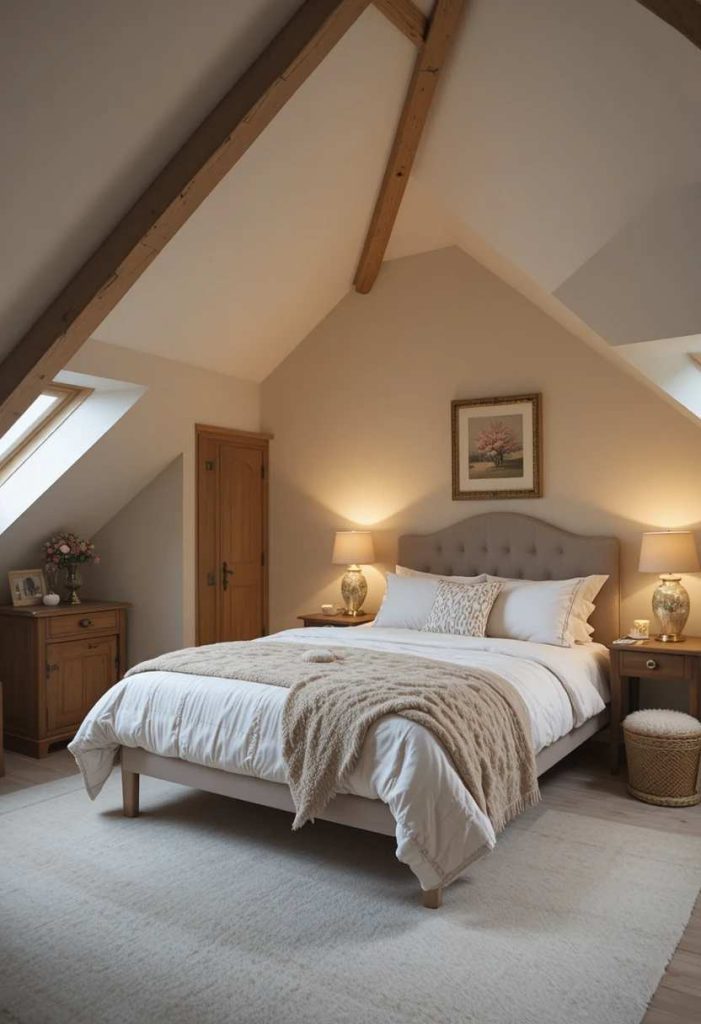
If I had to sum up this room in one idea, it would be this: let the angles do the work, and then make everything you touch soft. The bed sits under the slope, the low walls hide the storage, the light is warm, and the textures are the ones I reach for without thinking. It took a year of small changes rather than one big makeover, and the room is better for it, because every choice was tested by living in it. Start with the bed and the light, add the storage, and then layer the soft things. A slanted ceiling is not a problem to solve; it is the reason the room feels like a retreat.
How to do it:
Start with the bed under the slope and warm, layered light, then add low storage in the walls. Layer soft textures in a light palette and finish with two or three personal touches. Change one thing at a time and live with it before you add the next.
Your Slanted Ceiling Bedroom Checklist
☐ Measure the headroom above the bed before you move anything.
☐ Place the bed under the lowest part of the slope.
☐ Paint the slope and walls the same soft colour.
☐ Fit drawers or shelves into the low walls.
☐ Add a skylight or a sun tunnel for daylight.
☐ Keep the palette light, warm and cohesive.
☐ Choose a low bed frame with no tall headboard.
☐ Layer warm lighting and fit a dimmer.
☐ Add a soft rug that extends past the bed.
☐ Use sheer curtains on the sloped windows.
☐ Hang a pendant in the tallest spot.
☐ Keep surfaces clear with a five-minute nightly tidy.
☐ Add two or three personal touches you love.
☐ Step back, live with it for a week, then adjust one thing.
A Final Gentle Thought
Whichever ideas inspire you most, a slanted ceiling bedroom is really about embracing the angles to create a cozy, characterful retreat. Place the bed wisely, use the low walls cleverly, and keep it light and warm. In my own home, working with the slopes turned an awkward room into a dreamy escape. May yours always feel snug, charming, and full of character.
Frequently Asked Questions
How do I decorate a bedroom with a slanted ceiling?
Embrace the slope as a feature. Place the bed under the lowest part where you do not need standing height, use the taller areas for standing and moving, and turn low walls into storage. Keep the palette light and cohesive, paint the ceiling to enhance the cozy feel, and add soft textures and warm lighting.
Should I paint a slanted ceiling the same colour as the walls?
Painting the slanted ceiling and walls the same colour often works beautifully, wrapping the room in a seamless, cocooning feel that softens the angles and can make the space feel larger and more cohesive. Alternatively, a contrasting or slightly lighter ceiling can highlight the architecture. Both are lovely, so choose based on the mood you want.
Where should I put the bed under a slanted ceiling?
Place the bed under the sloping part of the ceiling, where you do not need full standing height. This makes clever use of the low space and frees up the taller areas for moving around and standing furniture. A low bed frame suits the lower ceiling, and positioning it under a window or skylight is especially charming.
How do I add storage to a room with slanted ceilings?
The low areas under the slope are ideal for clever storage. Add built-in drawers, cupboards, or shelving that follow the angle, use under-bed storage, and fit shelving into any nooks. Bespoke storage tailored to the slope makes the most of every inch while keeping the room streamlined and tidy.
How can I make a slanted ceiling bedroom feel bigger?
Keep the palette light and cohesive across the walls and ceiling, maximize natural light, and add mirrors to bounce it around. Choose low-profile furniture, keep the room uncluttered, and use the low walls for hidden storage. Wrapping the ceiling and walls in one soft colour also helps the space feel more open and seamless.
One Comment