
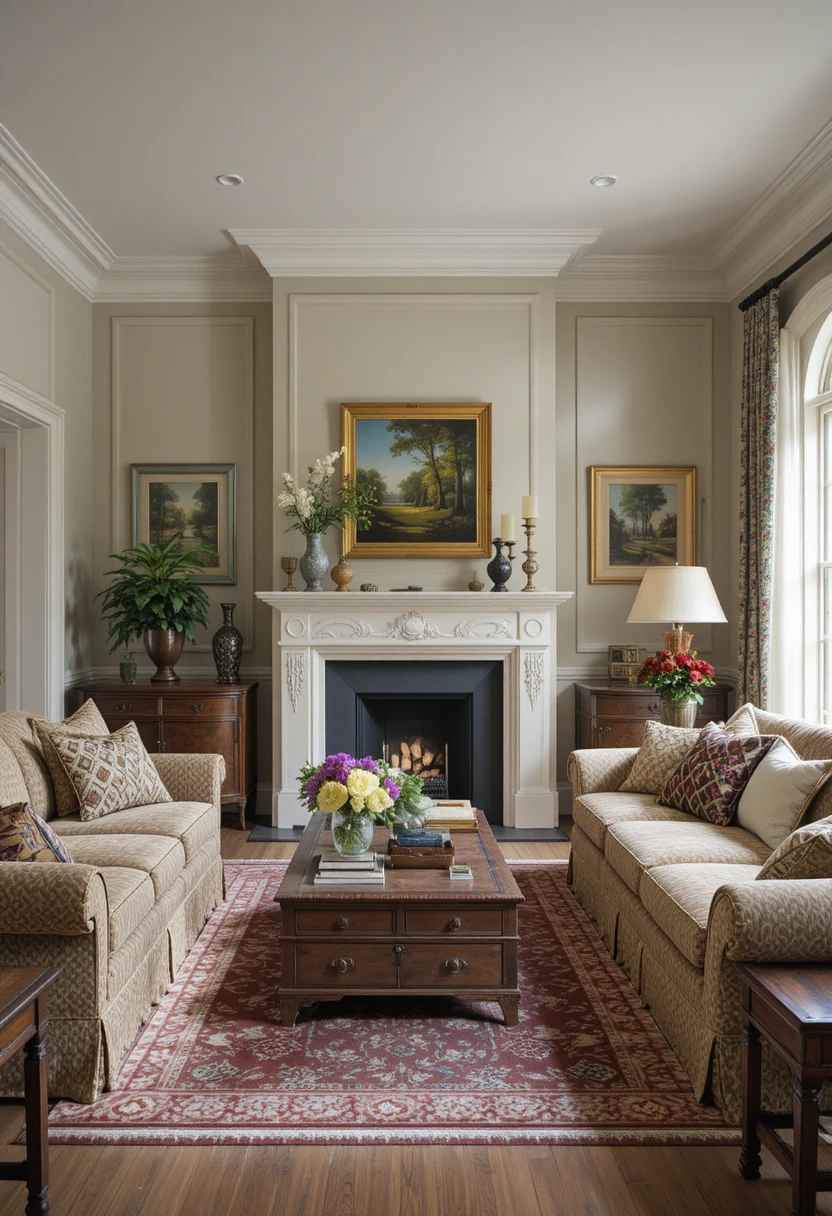
25 Grand millennial Living Room Ideas for Timeless, Cozy Charm
Grandmillennial style is a warm, joyful blend of classic tradition and fresh modern sensibility, embracing the cozy patterns and pieces our grandparents loved but styling them in a way that feels current and personal. Think chintz florals, ruffled lampshades, needlepoint cushions, and antique finds, all mixed with a light, confident hand. In my own home, leaning into grandmillennial touches made the living room feel layered, nostalgic, and full of soul. With patterns, vintage pieces, and heartfelt details, it becomes both timeless and cozy. Below are twenty five grandmillennial living room ideas, shared with warmth and a few lessons from my own home, along with simple steps to help you bring each one to life.
Key Takeaways
• Mix patterns: Layer florals, checks, and stripes with a confident hand for that collected, grandmillennial look.
• Embrace vintage: Antique and thrifted pieces add soul, story, and timeless character to the room.
• Add ruffles and trims: Skirted furniture, ruffled lampshades, and fringe bring cozy, nostalgic charm.
• Keep it warm: Soft colours, layered textures, and heartfelt details make the room feel welcoming and personal.
• Balance old and new: Style traditional pieces in a fresh, light way so the room feels current, not dated.
1. Mix Bold Patterns
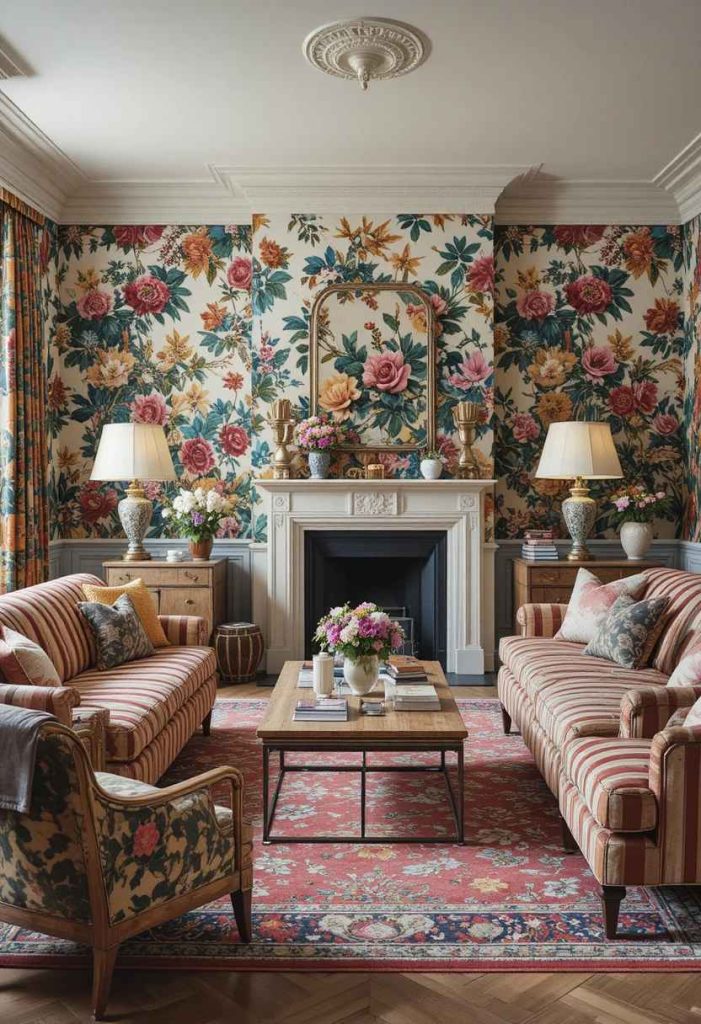
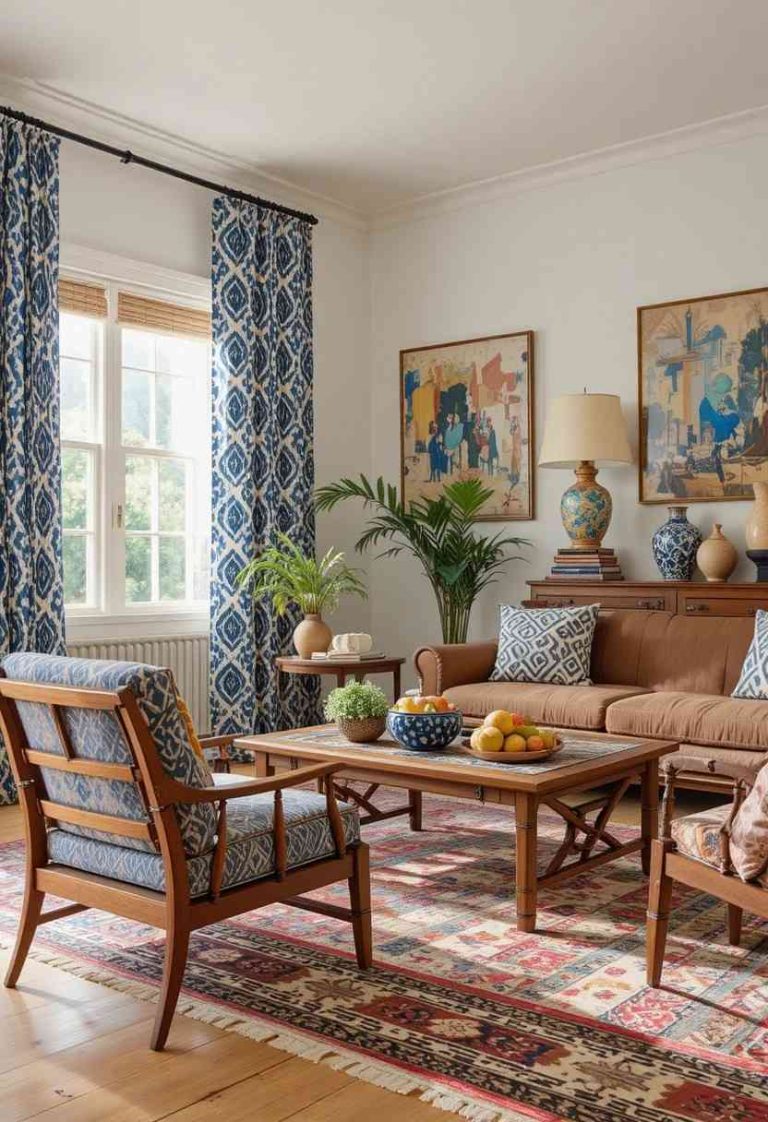
Layering florals, checks, and stripes is the heart of grandmillennial charm, and it is the first thing I get right before anything else goes into the room. I start with one pattern I truly love — in my case a blowsy rose chintz — then pull two quieter companions from its colours: a small sage check for the cushions and a narrow cream-and-blue stripe for the lampshade. Keeping one colour running through all three is what stops the mix from feeling busy, and I always test the trio together on the sofa in daylight before committing. If a pattern shouts louder than the rest, I demote it to a small cushion or a tray lining rather than letting it take over the room.
How to do it:
Choose a cohesive colour palette first. Layer a large floral with a small check and a stripe. Vary the scale for balance. Ground them with solid areas. Let the mix feel collected, not busy.
2. Add Chintz Florals
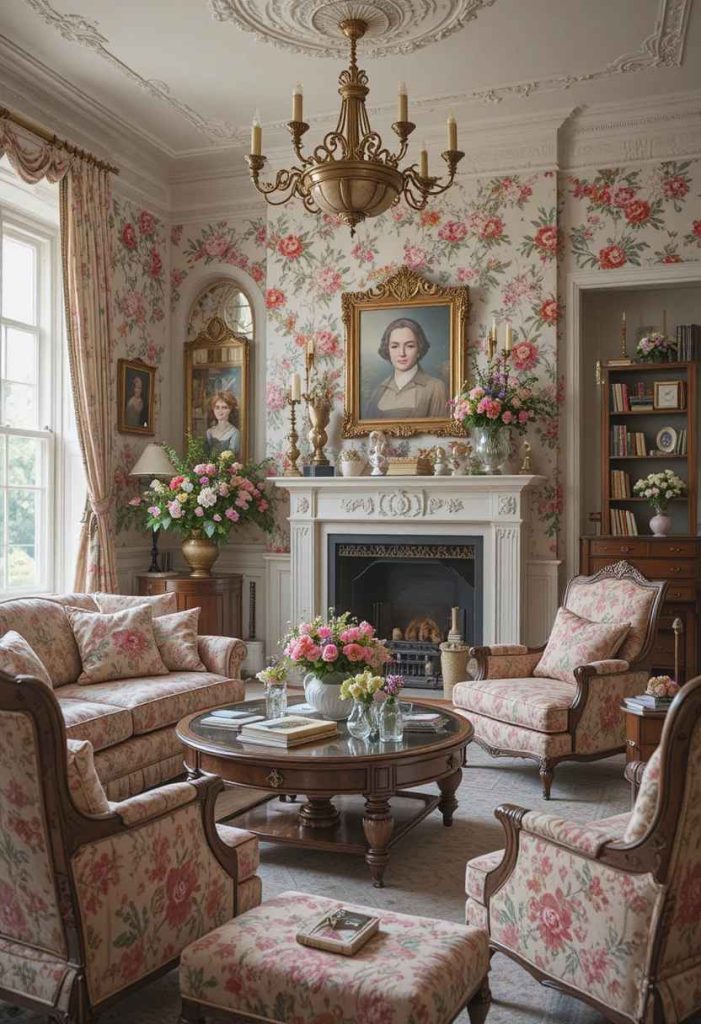
Classic chintz florals are the print I reach for when a room needs romance without fuss. I look for a blowsy, old-fashioned rose or peony in soft pinks, blues, and greens on a cream ground, and I always check the repeat — a generous, painterly repeat reads expensive, while a tight, flat one can look like wrapping paper. In my living room the chintz lives on two cushion covers and the armchair, never on every surface at once, which keeps it feeling deliberate rather than themed. I pair it with plain linen and a little dark wood so the blooms have somewhere calm to rest, and I wash the covers on a gentle cycle so the colours stay soft instead of fading to grey.
How to do it:
Add chintz florals through cushions, curtains, or an armchair. Choose a classic, colourful print. Pair it with solids to balance. Keep the palette cohesive. Let it add romantic charm.
3. Add a Skirted Sofa or Table
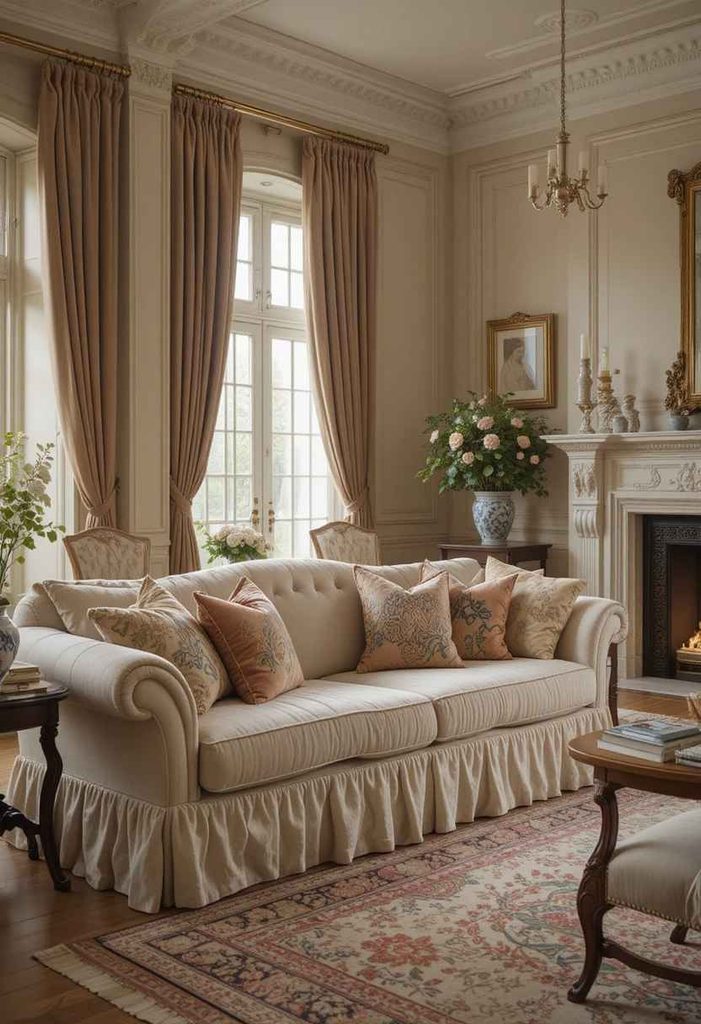
A skirted sofa or table is my favourite way to make a room feel finished and a little bit grand. The tailored drop of fabric hides legs, cords, and whatever I have stashed underneath — in our house that means board games and a basket of charging cables — while softening all the hard lines in the room. I choose a washable cotton or linen-blend in a solid colour that matches the rug, because a busy print on a skirt can look restless. The hem should just kiss the floor, so I measure twice before ordering and ask the maker to add a discreet weighted hem if the fabric is light. Once it is in place, the whole seating area looks calmer and more considered.
How to do it:
Choose a skirted sofa or chair in a washable linen or cotton, and measure the drop so the hem just kisses the floor. Steam the skirt after fitting so it hangs straight, and add a weighted hem if the fabric is light. Tuck a storage basket or board games beneath the skirt to use the hidden space.
4. Add Ruffled Lampshades
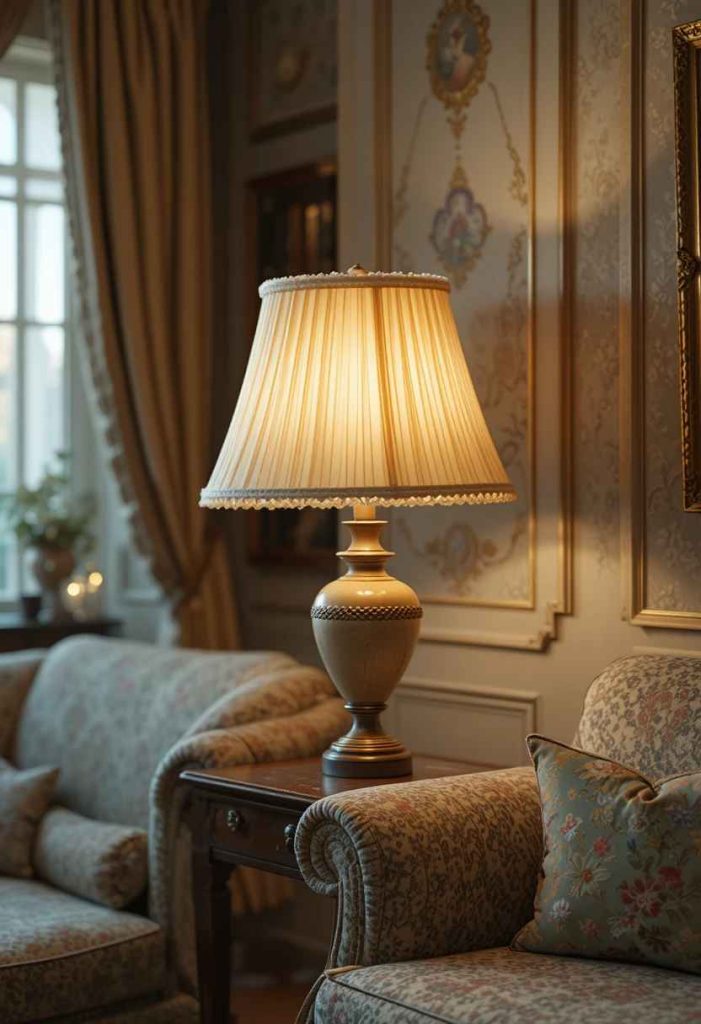
A ruffled or pleated lampshade is a small change with an outsized effect, and it is usually the first thing guests comment on. I swapped the plain drum shades on our two table lamps for softly gathered linen ones in a warm cream, and the light instantly turned golden and forgiving — perfect for evenings when the room needs to feel like a hug. The trick is proportion: the shade should be roughly two-thirds the height of the lamp base and wide enough to clear the bulb by a few centimetres. I keep the ruffle shallow rather than frilly, and I repeat the same shade on both lamps so the pair looks intentional instead of accidental.
How to do it:
Measure your lamp base first: the shade should be about two-thirds its height and wide enough to clear the bulb by a few centimetres. Choose a gathered or pleated linen shade in warm cream, and fit the same shade on both lamps in the room. Use a warm white bulb so the light turns golden in the evening.
5. Add Vintage and Antique Finds
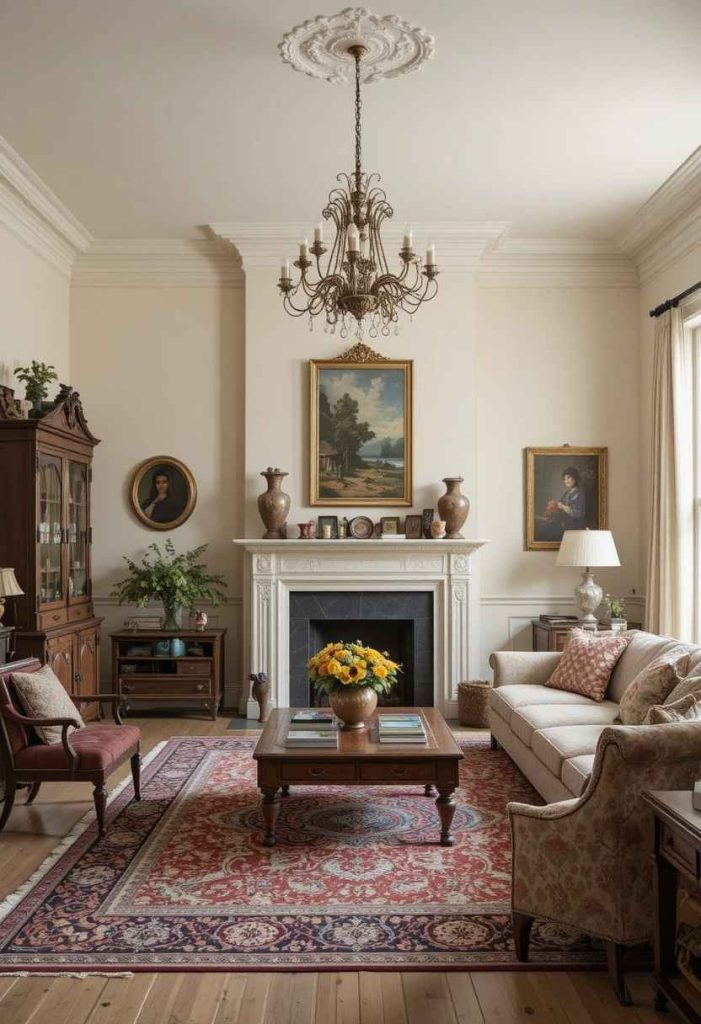
Antique pieces are what stop my living room from looking like a showroom, because every one of them arrived with a story. The oak side table by the sofa came from a car boot sale for less than a takeaway, and the gilt mirror above the mantel was my grandmother’s — I had it re-silvered rather than replacing it, which cost less than a new mirror and kept the history intact. When I hunt, I check joints, drawers, and the back of a piece before I fall in love with the front, and I only bring home things that are solid enough for daily use. If you enjoy this collected, storied feeling, these country living room ideas share the same thrifted spirit and show how vintage pieces sit happily beside newer furniture.
How to do it:
Add antique or vintage finds like frames or a side table. Look at charity shops and markets. Choose pieces with good character. Mix them with newer items. Let them add soulful story.
6. Add Blue and White
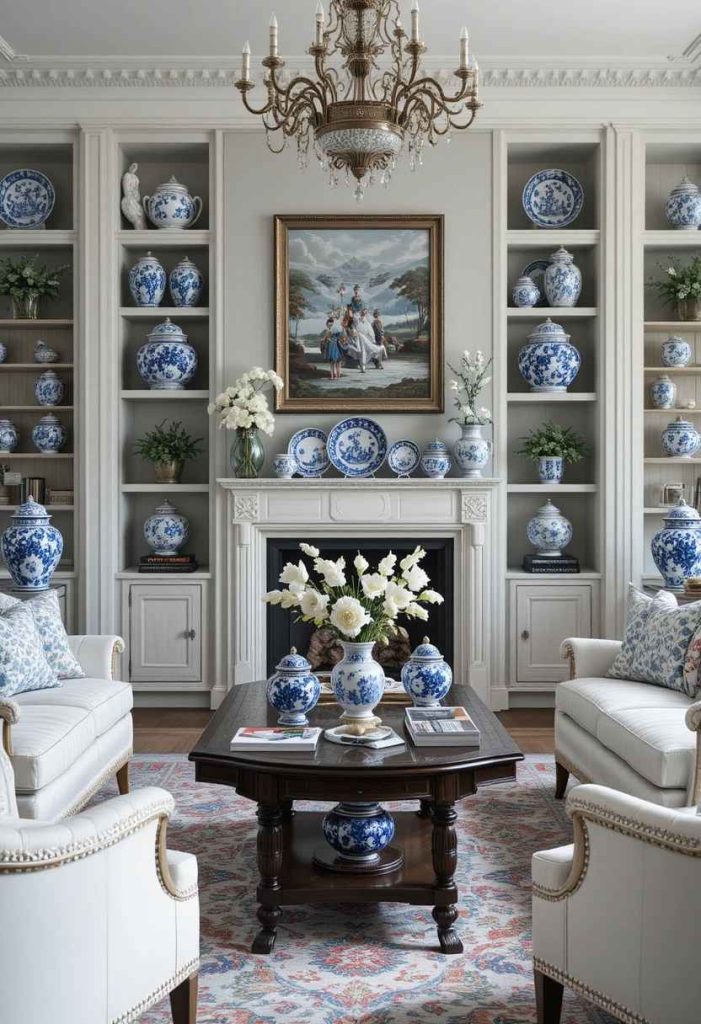
Blue and white is the combination I trust most when I want a room to feel fresh, classic, and calm all at once. I started with a pair of ginger jars on the mantel and a stack of blue-and-white plates on the dresser, then let the palette spill gently onto cushions and a throw — never more than three or four blue notes in one sightline, so the room stays serene rather than matchy. I mix the blues deliberately: a deep cobalt beside a powdery Wedgwood blue, with plenty of warm white in between to keep it from feeling cold. The white needs to be warm, not brilliant, or the whole scheme turns chilly in winter light.
How to do it:
Add blue and white through china, ginger jars, or textiles. Group blue and white pieces together. Balance them with warm tones. Keep the look fresh. Let it add timeless charm.
7. Add Needlepoint or Embroidered Cushions
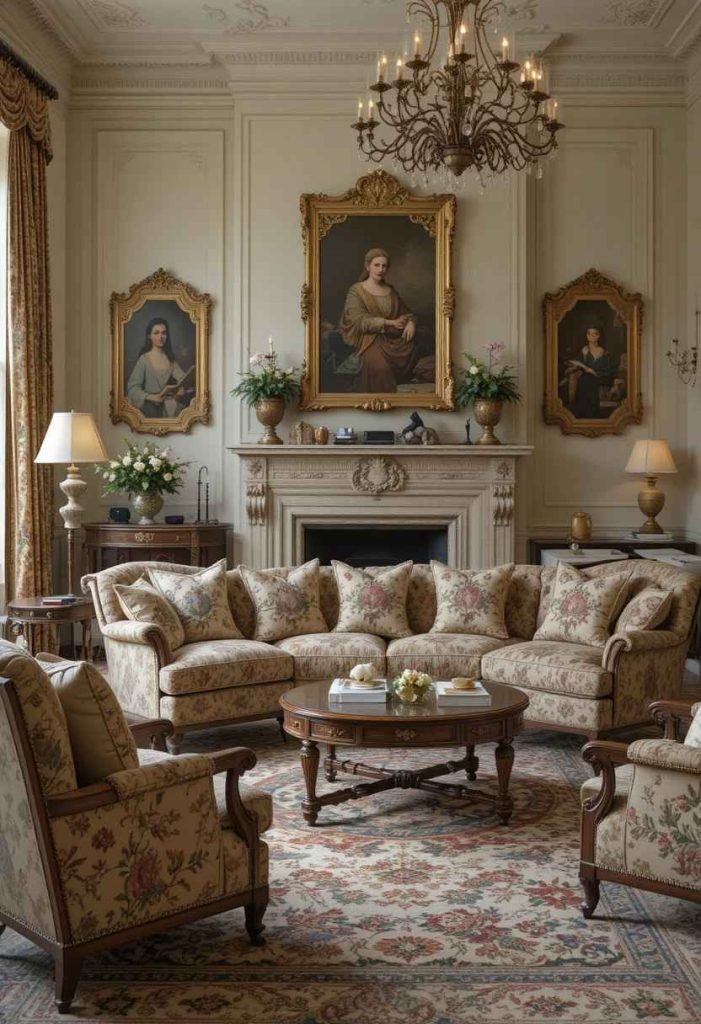
Needlepoint cushions are the handmade heart of my living room, and I love that no two are ever quite alike. I found my first pair at a flea market — a little faded, with a rose and a bird — and I had them backed with plain linen and a hidden zip so they could actually be used rather than admired from afar. If you are buying new, look for wool on a sturdy canvas and a design with a clear motif; tiny, fussy patterns disappear at sofa distance. I mix one needlepoint cushion with plain velvet and a small check, and I keep them on the chairs rather than the sofa so they do not get flattened by everyday sprawling.
How to do it:
Hunt for vintage or handmade needlepoint at flea markets, choosing wool on sturdy canvas with a clear, readable motif. Back each cushion with plain linen and a hidden zip so it can be washed and actually used. Pair one needlepoint cushion with plain velvet and a small check, and keep them on chairs rather than the sofa so they hold their shape.
8. Add Wicker or Rattan
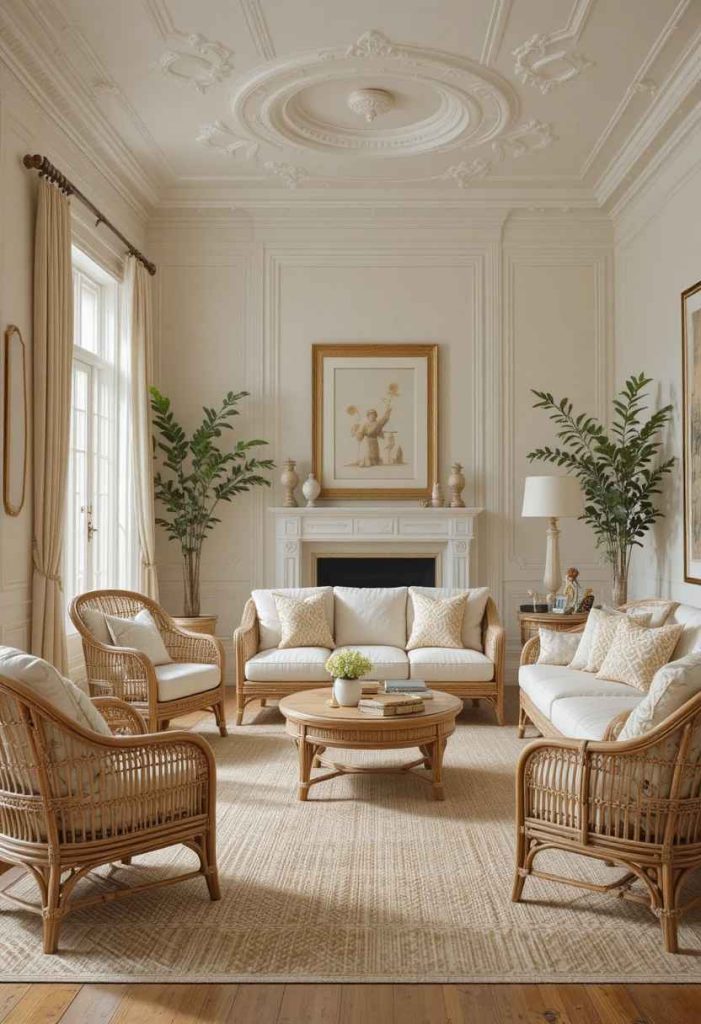
Wicker and rattan bring the outdoors in, and they are my antidote to a room that feels too polished. I use a rattan tray on the coffee table for remotes and books, a woven basket beside the sofa for throws, and a cane-backed chair that I rescued from a neighbour’s clear-out and re-seated myself on a rainy afternoon. The warm honey tones soften all the chintz and velvet, and the open weave lets light through, which matters in a room with a lot of pattern. I keep rattan to three pieces at most and choose one finish throughout, because mixed wicker tones can look accidental. A quick wipe with a damp cloth keeps it dust-free.
How to do it:
Add wicker or rattan through a chair, tray, or side table. Choose a warm, natural finish. Pair it with soft textiles. Keep it balanced. Let it add classic texture.
9. Add a Gallery of Framed Art
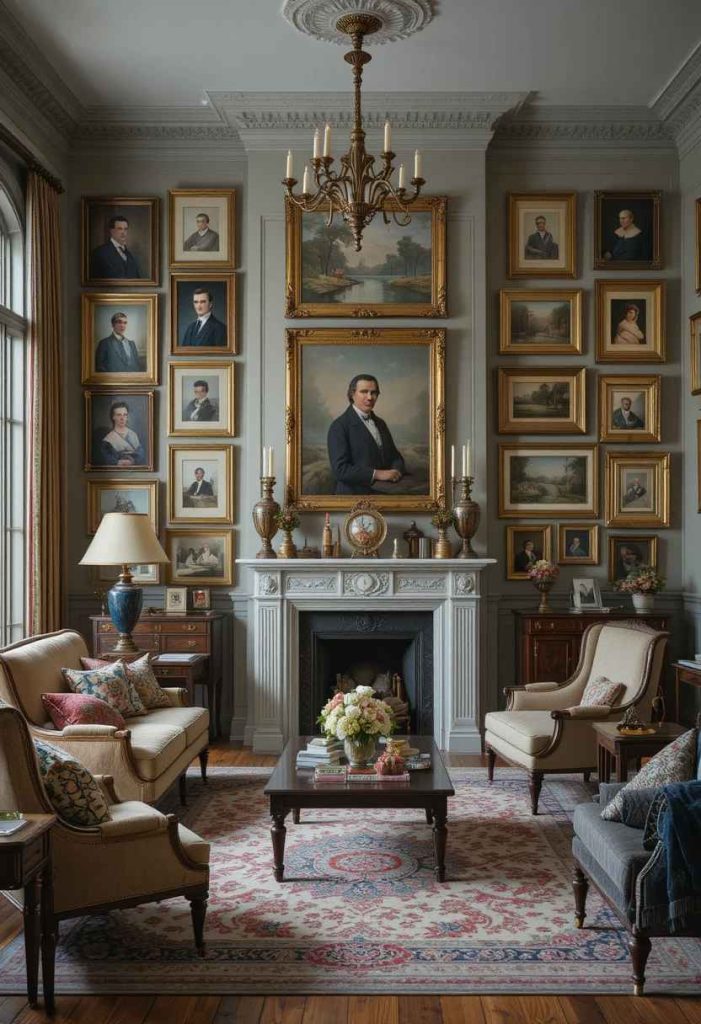
A wall of traditional framed art is how my living room tells its story, and it grew one frame at a time rather than arriving all at once. I started with the oil landscape above the sofa, then added botanical prints, a small portrait from a flea market, and a watercolour my daughter painted, hanging them at eye level with about five centimetres between frames so the group reads as one picture. I use slim gilt and dark wood frames and repeat each one at least twice, which ties the collection together. Before I hammer a single nail, I lay the whole arrangement on the floor and photograph it, then live with the photo for a day.
How to do it:
Create a gallery wall of framed art. Mix vintage prints, botanicals, and portraits. Use classic frames. Arrange them in a collected cluster. Let them add personal character.
10. Add Scalloped Details
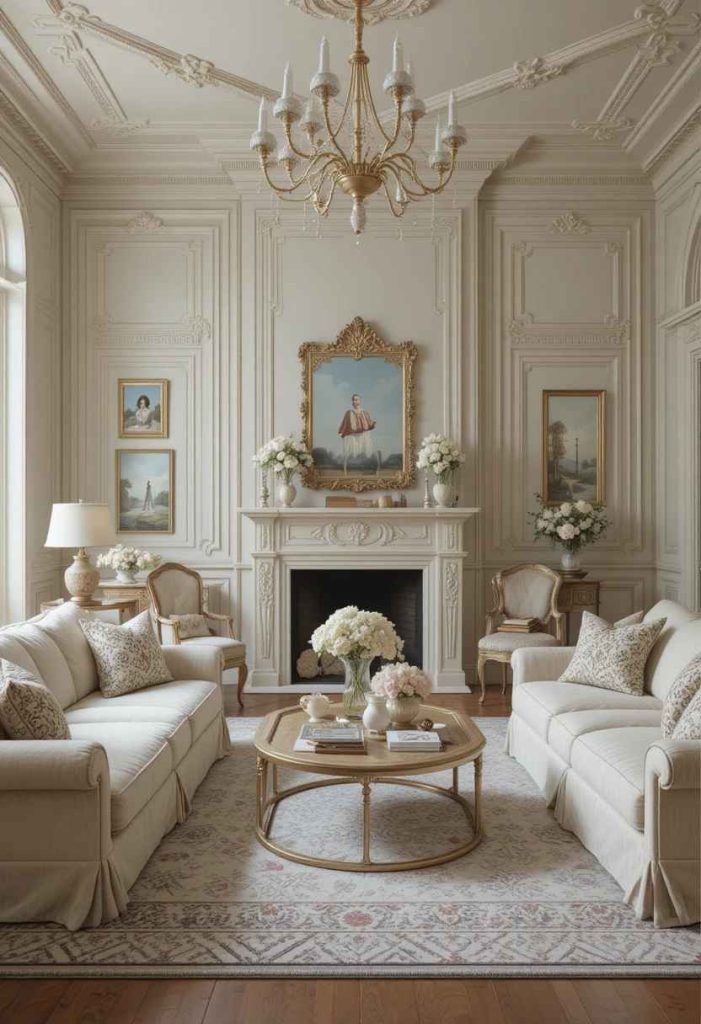
Scalloped edges are the prettiest small detail in grandmillennial style, and I use them sparingly so they stay special. My lampshades have a gentle scalloped hem, the tray on the coffee table has a scalloped rim, and the cushion on the reading chair is finished with a scalloped edge in a contrasting sage. The curve softens all the straight lines of the sofa and shelving, and it echoes the arches and curves in older furniture without shouting about it. I keep to one scallop style per room — if the shade is scalloped, the tray matches — and I avoid scallops on large pieces, where they can feel costume-like. Two or three touches are plenty.
How to do it:
Pick one scallop style and repeat it on two or three small pieces, such as a lampshade, a tray, and a cushion edge. Keep the scallop shallow and the colour pulled from your rug so it reads as a quiet detail. Leave large pieces plain so the curve stays a flourish rather than a theme.
11. Add Fringe and Trim
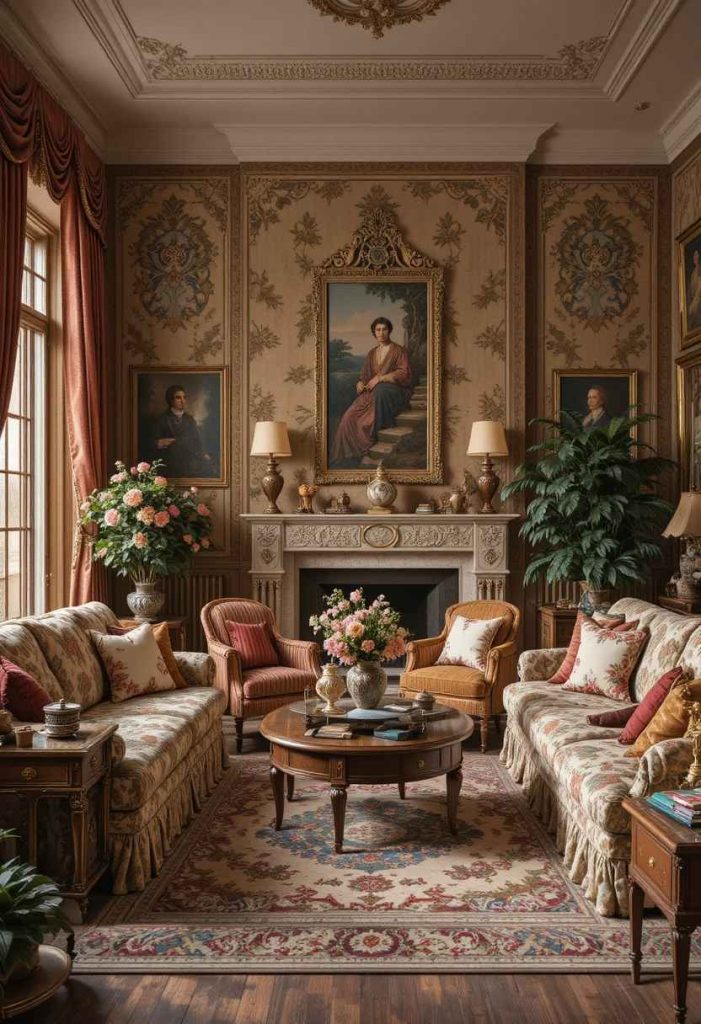
Fringe, tassels, and trim are the tailoring that makes a grandmillennial room feel considered rather than thrown together. I added a bullion fringe to the bottom of the sofa cushions, a tassel trim to the curtain tiebacks, and a narrow braid along the edge of the lampshade — each one small, each one in a colour pulled from the rug. The trick is restraint: I use trim on two or three pieces and keep the rest plain, so the detail reads as a deliberate flourish rather than clutter. I sew trims on by hand with a curved needle so I can remove them for washing, and I always buy an extra metre, because matching a dye lot months later is a losing game.
How to do it:
Sew fringe or tassel trim onto two or three pieces only, such as cushion edges and curtain tiebacks, in a colour taken from the rug. Stitch it on by hand with a curved needle so it can be removed for washing, and buy an extra metre to cover mistakes and future repairs.
12. Add Warm, Cheerful Colours
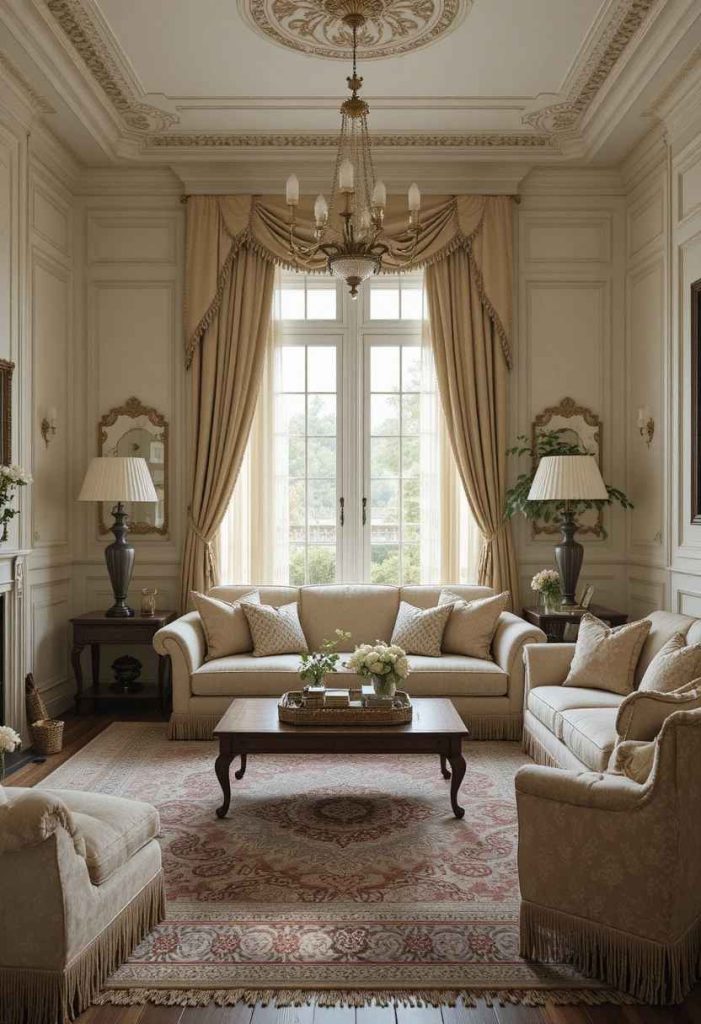
A palette of blush, sage, and buttery yellow is what makes my living room feel sunny even on a grey November afternoon. I paint the walls a warm cream, then bring the colours in through cushions, a throw, and the rug, keeping the largest pieces — the sofa and the curtains — in calm neutrals so the room can change with the seasons. My rule is three colours, repeated at least three times each: blush on the cushions, the lampshade, and a vase; sage on the throw, the plant pots, and a book spine. I test paint and fabric together in the room’s own light, because blush turns peach in warm lamplight and sage can go grey by north-facing windows.
How to do it:
Paint the walls warm cream and choose three colours from your rug or favourite floral: one main, one soft green or blue, one warm accent. Repeat each colour at least three times around the room, on cushions, throws, and vases. Keep the sofa and curtains neutral so you can refresh the palette with the seasons.
13. Add China and Ginger Jars
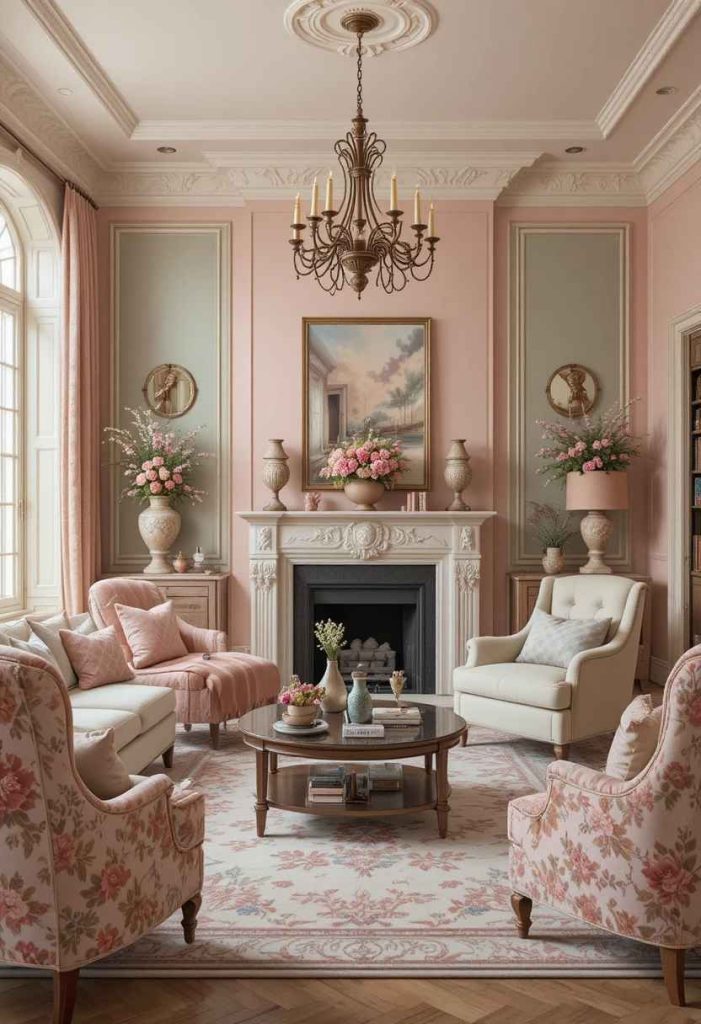
Displayed china and ginger jars are the jewellery of my living room, and I collect them slowly rather than buying a matching set. The ginger jars on the mantel are different heights and different blues, which is exactly what makes them look collected over a lifetime instead of ordered in one afternoon. I group them in odd numbers — three on the dresser, one tall one flanking the fireplace — and I leave breathing space around each group so the eye can rest. Plates go on the wall with proper plate hangers, never adhesive discs, and I dust the shelves weekly because blue and white shows every speck. Each piece has a story, and guests always ask about them.
How to do it:
Display china plates and ginger jars. Group them on shelves or a mantel. Choose blue and white or florals. Keep them balanced. Let them add collected charm.
14. Add a Statement Wallpaper
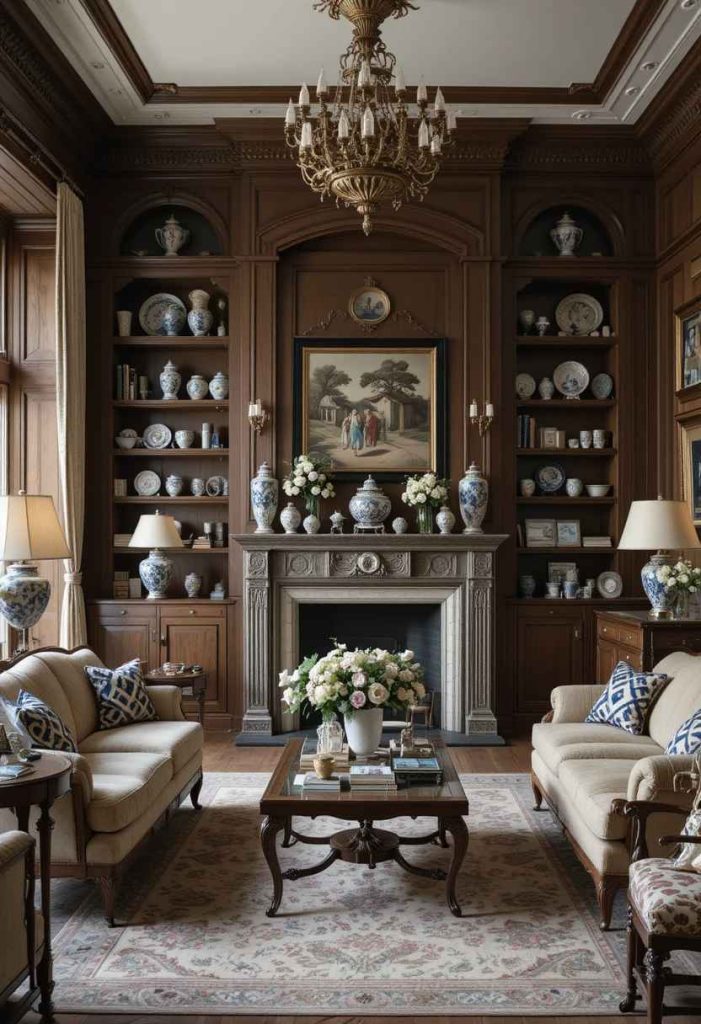
A traditional floral or trellis wallpaper is the bravest move in this whole list, and it transformed my feature wall in a single afternoon. I chose a soft trellis in sage and cream, hung it on the chimney breast only, and kept the other walls plain warm white so the pattern could be the star without overwhelming the room. Before committing, I ordered three samples and lived with them on the wall for a week, checking them in morning light, lamplight, and on a dull day. I hired a decorator for the hanging — paste-the-wall paper is forgiving, but a crooked seam would have haunted me — and I kept a spare roll for future repairs.
How to do it:
Add a traditional wallpaper on a feature wall. Choose a floral, trellis, or chinoiserie print. Match the palette to the room. Balance it with solids. Let it add timeless character.
15. Add Antique Lighting
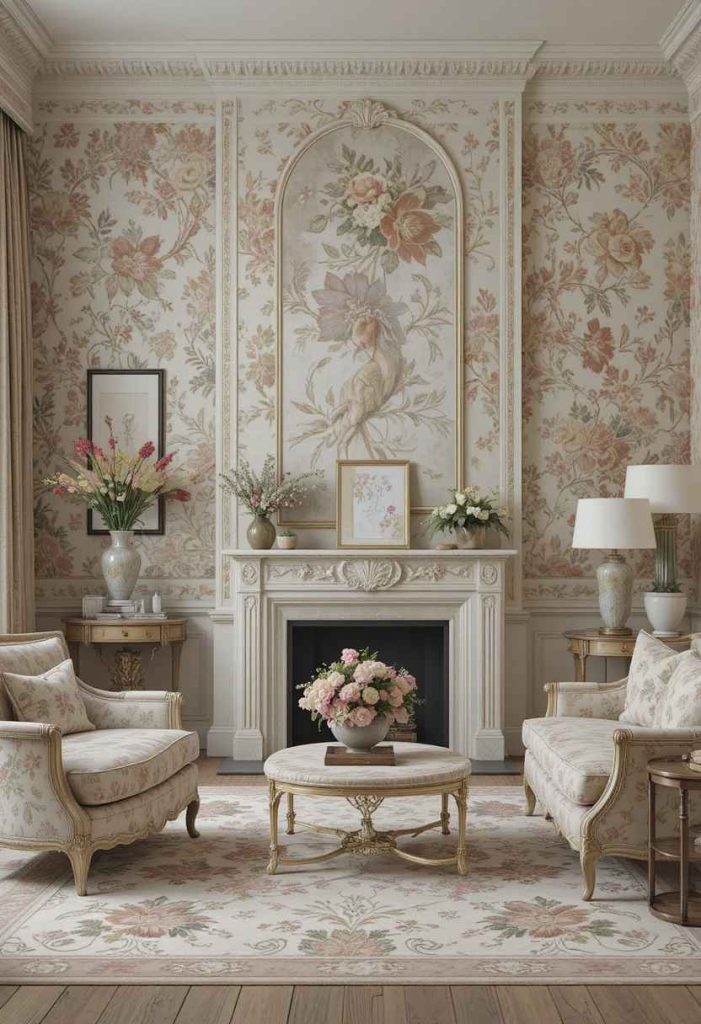
A vintage lamp or classic chandelier is what makes my living room glow in the evenings, and I hunt for lighting the way other people hunt for shoes. The brass chandelier over the coffee table came from an architectural salvage yard, rewired by an electrician before it went up, and the pair of ceramic lamps flanking the sofa were charity-shop finds with new shades. I always use warm white bulbs around 2700K, because cool bulbs turn chintz grey and make wood look flat. Every light is on a dimmer or a low-wattage bulb, and I layer three sources — overhead, table lamps, and candles — so the room never relies on one harsh ceiling light.
How to do it:
Add a vintage lamp or classic chandelier. Choose a traditional, elegant style. Pair it with a ruffled shade if you like. Add warm bulbs. Let it add timeless character.
16. Add Layered Textiles
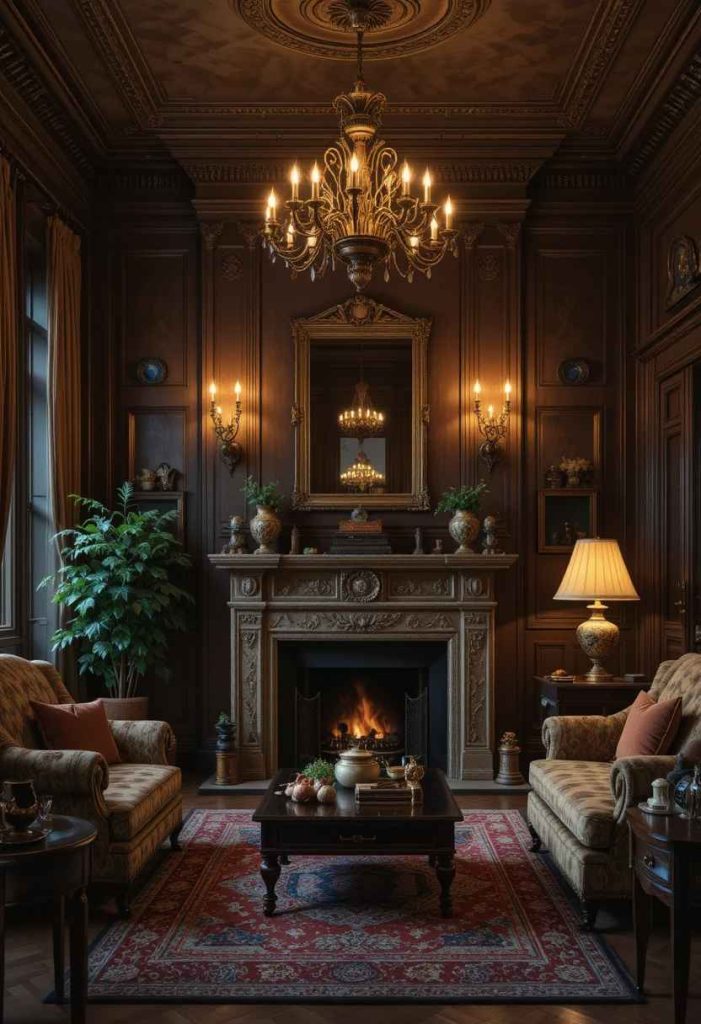
Layering textiles is how I build the cosy, collected feeling that defines grandmillennial style. I start with the rug, add a linen sofa throw folded over one arm, then mix velvet cushions, a needlepoint cushion, and a small floral bolster — each in a different texture but all sharing the same blush-and-sage palette. The layers need contrast to work: smooth velvet beside nubby wool, crisp linen beside soft cotton, so the hand finds something new everywhere it lands. I rotate the throw and two cushion covers with the seasons, which refreshes the room for the cost of a wash, and I keep a basket of spare throws by the sofa for cold evenings.
How to do it:
Start with the rug, then add one texture at a time: a linen throw over the sofa arm, a velvet cushion, a needlepoint cushion, and a wool blanket in the basket. Mix smooth and nubby textures in the same palette, and rotate two cushion covers with the seasons to refresh the room cheaply.
17. Add Fresh Flowers
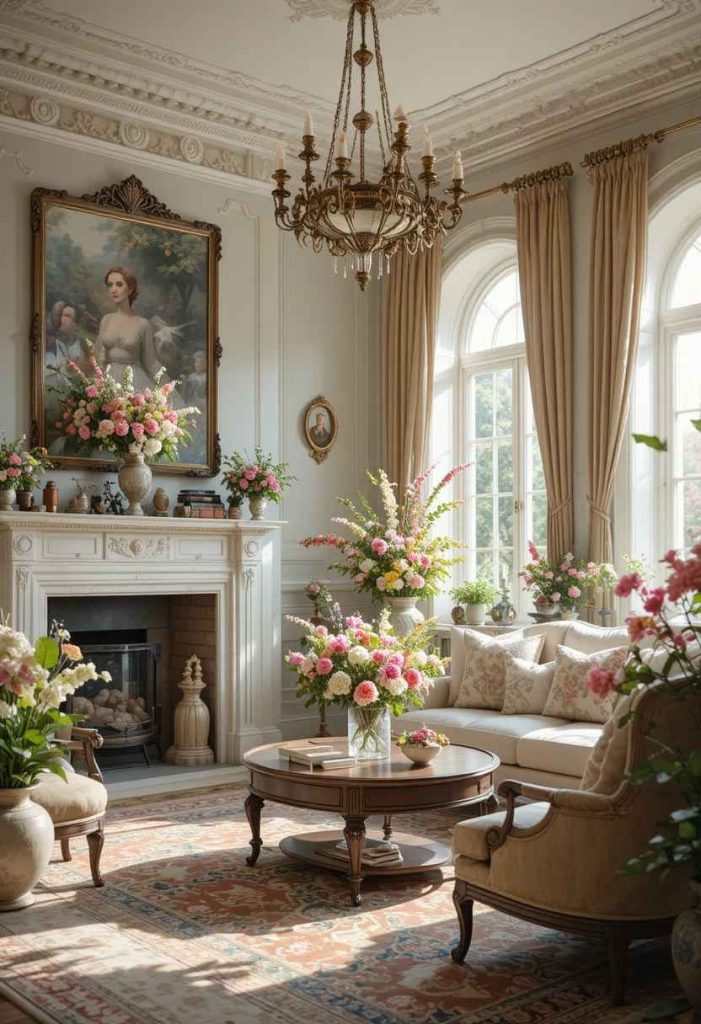
A jug of fresh flowers is the simplest luxury in my living room, and it is the one I never skip. Every Friday I pick up a bunch from the market — roses in summer, tulips in spring, whatever is cheapest and in season — and arrange them loosely in a jug or ginger jar on the coffee table, with a few stems in a bud vase on the mantel. I cut the stems at an angle, change the water every other day, and snip off any leaves below the waterline, which keeps a bunch looking fresh for a full week. Even a handful of garden greenery or a single stem in a jam jar changes the room, and it costs less than a coffee.
How to do it:
Buy one bunch of seasonal flowers each week and arrange them loosely in a jug or ginger jar on the coffee table. Cut stems at an angle, strip leaves below the waterline, and change the water every other day so the bunch lasts a full week. Keep a bud vase on the mantel for single stems and garden greenery.
18. Add a Classic Sofa
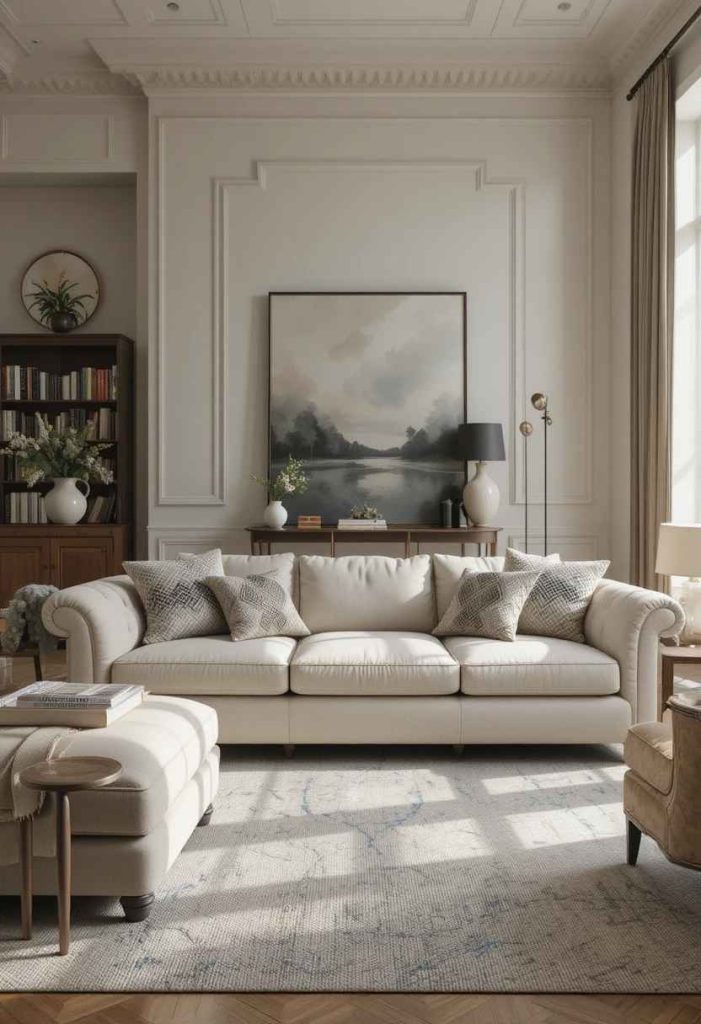
A traditional rolled arm or camelback sofa is the anchor of my grandmillennial living room, and I chose it the way you would choose a good coat: for the long term. I sat on a dozen before buying, checking that the seat depth suited my height, the arms were comfortable to lean on with a book, and the frame was solid hardwood rather than chipboard. I had it upholstered in a washable cream linen with a subtle stripe, and I keep a throw over the arm where the dog sleeps. The classic shape means it will never date, and the neutral fabric lets me change cushions and throws with the seasons without replacing the biggest piece in the room.
How to do it:
Choose a classic rolled arm or camelback sofa. Upholster it in a solid or subtle pattern. Pile it with patterned cushions. Keep it cozy. Let it anchor the room.
19. Add Botanical Prints
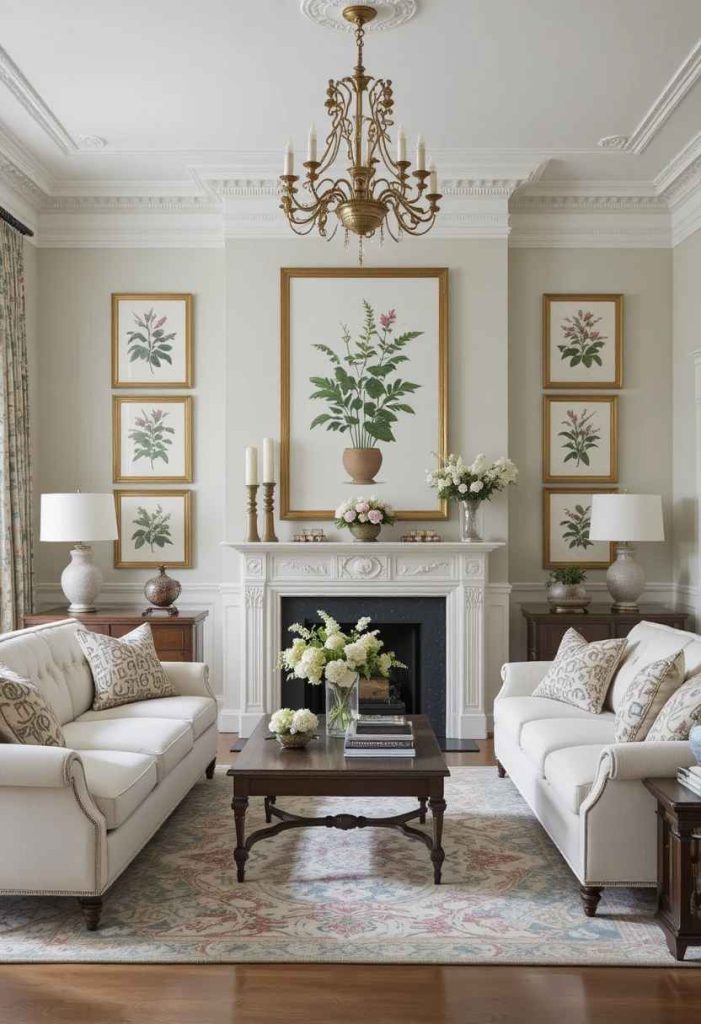
Framed botanical prints bring the garden indoors, and they are the calmest thing on my walls. I collected a set of four fern and rose engravings from a flea market, had them mounted with wide cream mounts in slim gilt frames, and hung them in a neat grid above the sideboard where they catch the morning light. The green of the leaves ties the whole room together — it repeats the sage in the cushions and the plants on the windowsill — and the scientific, labelled style feels properly grandmillennial: pretty, but with a purpose. I keep the frames identical and the spacing exact, because a grid only works when it is disciplined.
How to do it:
Add framed botanical prints. Group them in a grid or gallery. Use classic frames. Choose calming, colourful botanicals. Let them add fresh classic charm.
20. Add a Cozy Reading Corner
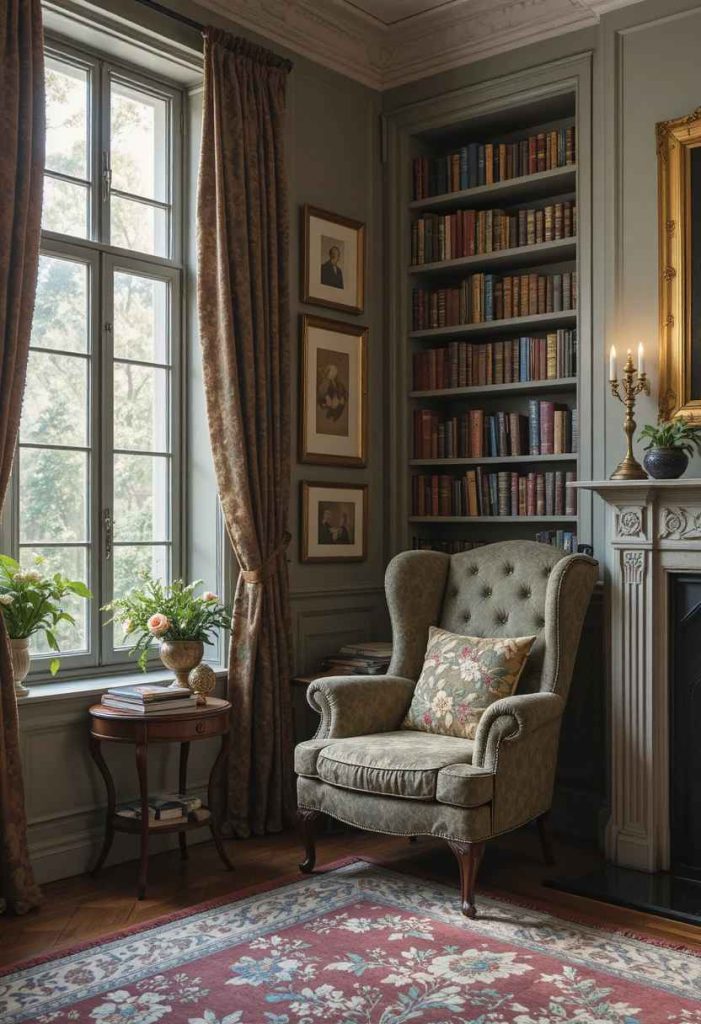
My reading corner is a wingback chair, a lamp, and a small table tucked by the window, and it is the spot I head for first with a cup of tea. The chair is an old one I had re-covered in a small sage floral, deep enough to curl up in with a blanket, and the table holds a stack of books and a candle within easy reach. I chose a lamp with a warm bulb and a shade at eye level when seated, so the light falls on the page rather than in my eyes, and I keep a basket of current reads beside the chair so I never have to get up mid-chapter. It is a small corner, but it is where the room earns its keep.
How to do it:
Place a wingback chair near a window with a small table and a lamp whose shade sits at eye level when you are seated. Add a needlepoint cushion, a folded throw, and a basket of books beside the chair. Keep the corner free of clutter so it stays an invitation rather than a storage spot.
21. Add Personal Heirlooms
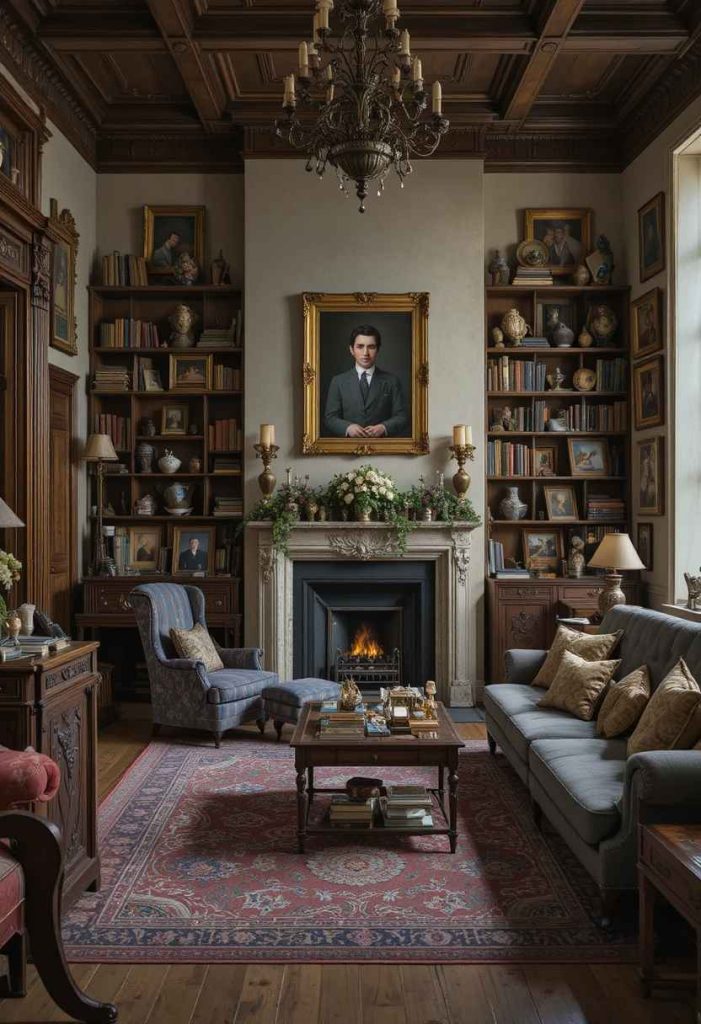
Family treasures are what make my living room mine, and I give them pride of place rather than hiding them away. My grandmother’s embroidered cushion sits on the reading chair, her silver teapot holds dried lavender on the mantel, and a framed photograph of my parents’ wedding day hangs beside the bookcase. I mix them in with newer pieces rather than creating a shrine — the teapot beside a modern vase, the photograph among botanical prints — so the room feels lived in rather than like a museum. Each piece carries a memory, and I tell the story when guests ask, which is often. New things come and go, but these stay.
How to do it:
Choose two or three heirlooms to display and give each a proper place: a cushion on the reading chair, a teapot on the mantel, a photograph among the prints. Mix them with newer pieces rather than grouping them into a shrine, and dust them weekly so they stay part of daily life. Write down the story of each piece while you still remember it.
22. Keep It Fresh and Edited
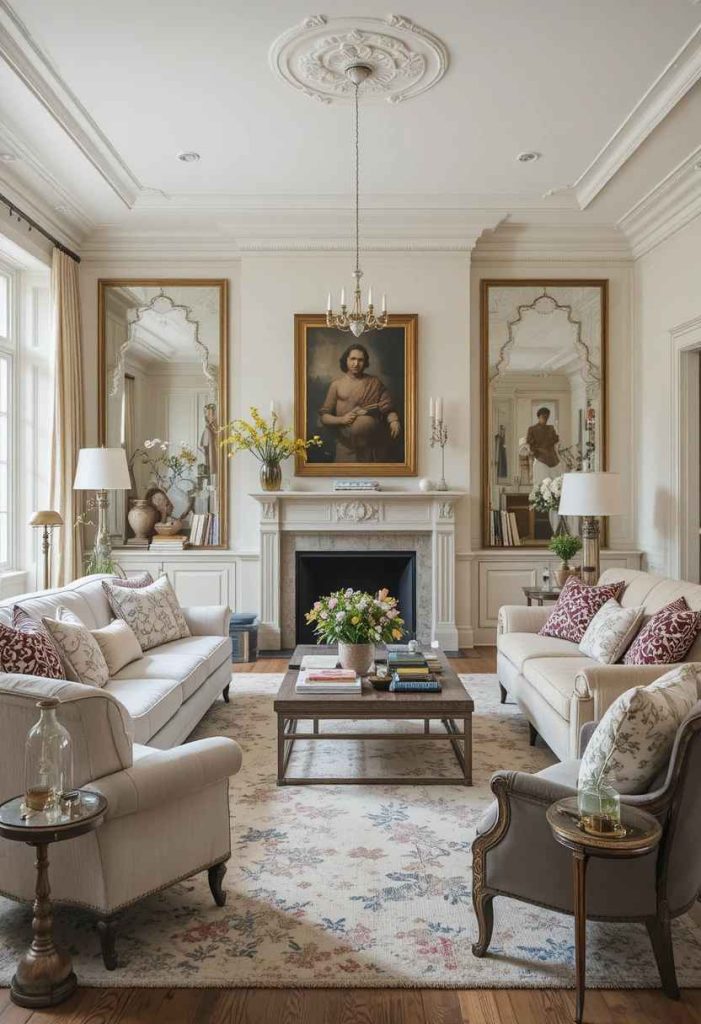
Keeping a grandmillennial room fresh is mostly about editing, and I am ruthless about it once a season. I take everything off the shelves, clean them, and put back only what I love — if a piece has no job and no story, it goes to the charity shop or into a box in the loft. Light helps enormously: I keep the curtains tied back during the day, the windows clean, and the walls a warm white so the patterns have air around them. One modern piece, like a simple floor lamp or a plain linen cushion, stops the room from feeling like a period set. If you are still finding your direction, browsing different living room aesthetics can help you name what suits your home before you spend anything.
How to do it:
Once a season, clear every shelf and put back only what you love, moving the rest to the charity shop or the loft. Tie curtains back during the day and keep windows clean so light reaches the patterns. Add one plain modern piece, such as a simple floor lamp, to stop the room feeling like a period set.
23. Add a Statement Rug
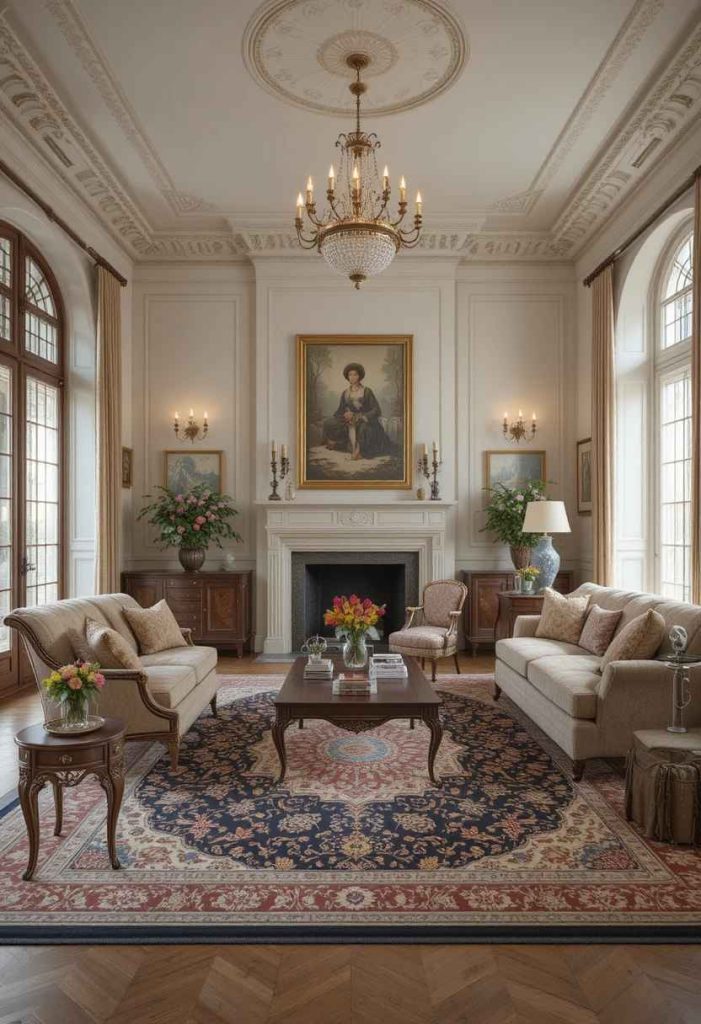
A traditional or oriental-style rug is what grounds my whole living room, and I bought the rug before anything else. It is a faded Persian-style design in blues, rust, and cream, large enough that the front legs of both sofas sit on it, which pulls the seating together into one conversation area. I chose a low pile so the door clears it and the vacuum copes, and I put a proper underlay beneath it so it never creeps across the wooden floor. The pattern hides crumbs and pet hair with heroic efficiency, and the colours gave me the palette for the entire room — every cushion and curtain was chosen to match something in that rug.
How to do it:
Add a traditional or oriental style rug. Choose a pattern that suits your palette. Size it to anchor the seating. Add a non slip pad. Let it ground the room.
24. Match It to Your Home
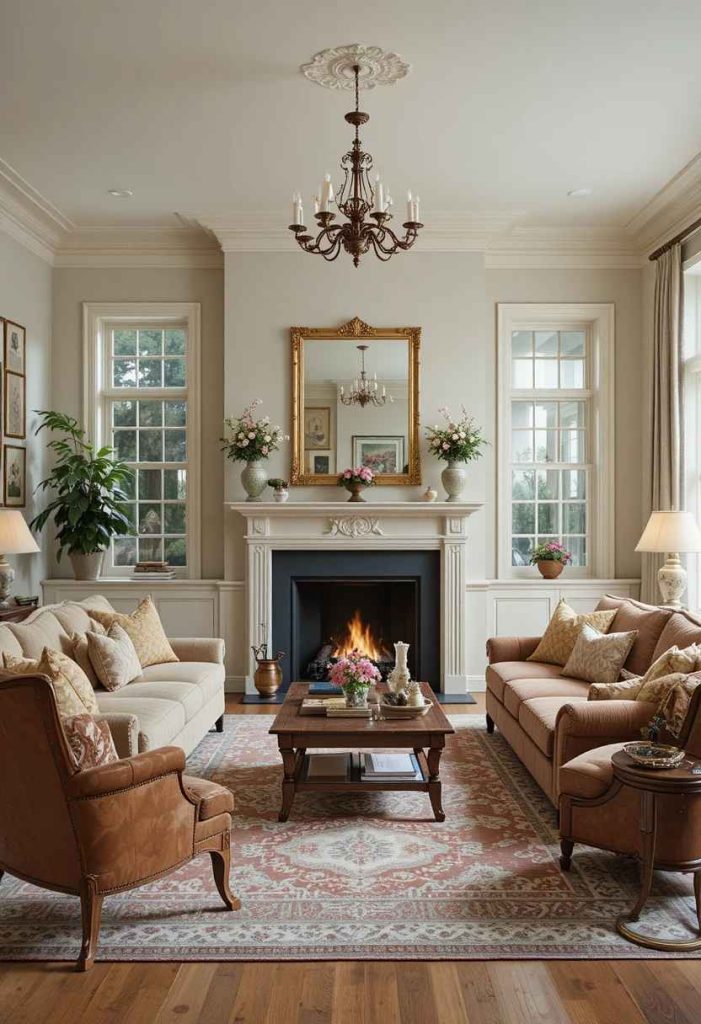
Styling grandmillennial pieces to suit my home, rather than copying a photograph, is what makes the room work. Our house is a 1930s semi with high ceilings and a bay window, so the tall bookcase, the chandelier, and the long curtains feel at home here; in a low-ceilinged flat I would have chosen a lower sofa, smaller patterns, and less fringe. I repeat the same three colours and two patterns through the hallway and dining room, so the living room feels connected to the rest of the house instead of being a themed island. Before buying anything large, I tape out its footprint on the floor and live with the outline for a day — it has saved me from two sofas that would never have fitted through the door.
How to do it:
Look honestly at your home first: note the ceiling height, window size, and existing wood tones before buying anything grandmillennial. Tape the footprint of any large piece on the floor and live with the outline for a day. Repeat the same three colours and two patterns through the hallway and dining room so the living room connects with the rest of the house.
25. Make It Timeless and Personal
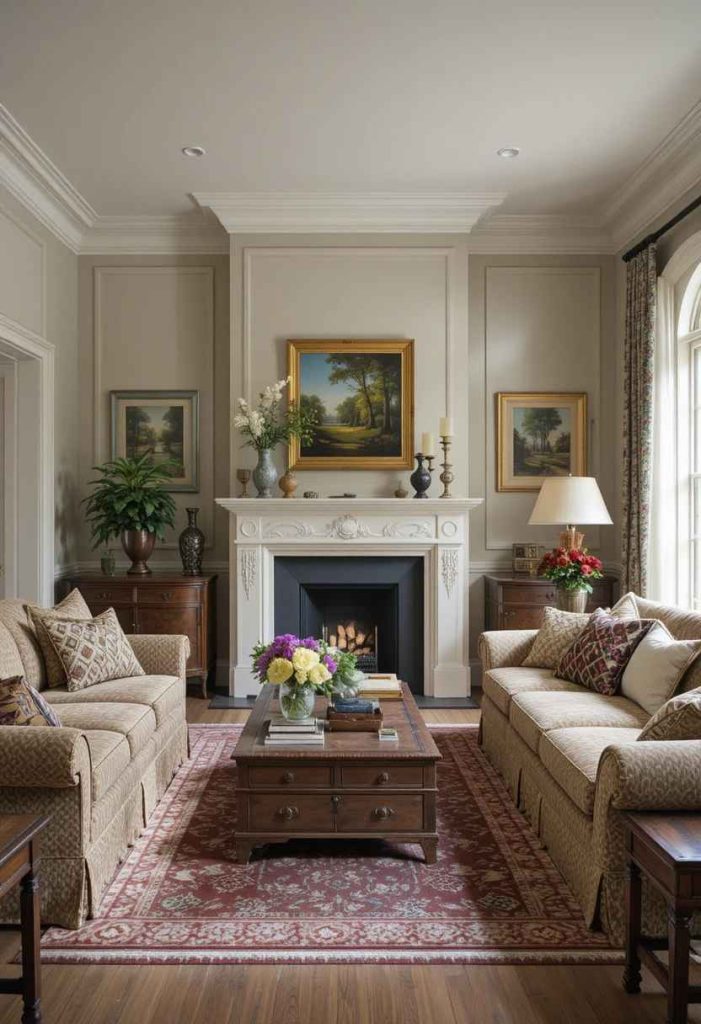
The best grandmillennial living room is one that feels both classic and unmistakably yours, and mine came together slowly over years rather than in one shopping trip. I started with the sofa and the rug, then added one loved thing at a time: a flea-market mirror, a cushion embroidered by my aunt, a stack of books I actually read. Each piece had to earn its place — it needed a job, a story, or a colour that tied it to the rest of the room. I still change small things with the seasons, a throw here, a jug of flowers there, but the bones stay the same. That slow, personal way of building a room is what makes it timeless.
How to do it:
Start with the sofa and rug, then add one loved piece at a time, checking that each has a job, a story, or a colour that ties it to the room. Change small things with the seasons — a throw, a jug of flowers — and leave the bones alone. Live with the room for a week after each change before deciding what it still needs.
Your Grandmillennial Living Room Checklist
☐ Mix florals, checks, and stripes in one shared colour palette
☐ Add chintz florals on cushions or an armchair
☐ Choose a skirted sofa or table in washable linen
☐ Fit ruffled or pleated lampshades in warm cream
☐ Hunt for one vintage or antique piece with a story
☐ Display blue-and-white china or ginger jars in odd numbers
☐ Add a needlepoint cushion backed with plain linen
☐ Bring in wicker or rattan in a single finish
☐ Hang a gallery of framed art at eye level
☐ Add scalloped edges to two or three small pieces
☐ Finish cushions and curtains with fringe or tassel trim
☐ Layer textiles in blush, sage, and buttery yellow
☐ Lay a traditional rug large enough for the sofa legs
☐ Edit once a season and keep one modern piece in the mix
A Final Gentle Thought
Whichever ideas you borrow, the heart of a grandmillennial living room is the same: classic patterns and old pieces, styled lightly and lived in properly. Start with one thing you love — a floral cushion, a thrifted mirror, a rug with a story — and build around it slowly, letting the room grow with you rather than arriving all at once. Keep the light in, edit often, and leave space for the things that make your house a home. If a piece makes you smile every time you walk in, it belongs. That is the whole secret, and it is a lovely room to come home to.
Frequently Asked Questions
What exactly is grandmillennial style?
Grandmillennial style, sometimes called granny chic, is a modern take on traditional decor. It takes the things our grandmothers loved — chintz florals, needlepoint, skirted furniture, ginger jars — and styles them in a light, uncluttered way with plenty of white space and a few modern pieces. The result feels classic and collected rather than old-fashioned, and it works best when every piece has a story or a job.
How do I mix patterns without it looking busy?
Start with one colour palette and stick to it, then vary the scale of your patterns: a large floral beside a small check and a fine stripe. Repeat one colour in every pattern so the eye reads them as a family, and ground the mix with plain linen or solid velvet. If the room starts to feel busy, remove one patterned piece — the mix usually needs editing, not more pattern.
Where can I find grandmillennial pieces on a budget?
Charity shops, flea markets, estate sales, and online marketplaces are the best hunting grounds, and patience is the real budget trick. Look for solid wood furniture, pretty china, and classic textiles, and check joints, drawers, and backs before you buy. A lick of paint, a new lampshade, or fresh trim can transform a tired find, so I buy for good bones rather than a perfect finish.
How do I keep grandmillennial style from feeling old-fashioned?
Keep one foot in the present: pair traditional patterns and antiques with clean modern pieces, plenty of light, and generous white space. Limit yourself to two or three traditional motifs — florals, gingham, or chintz — and balance them with plain linen and simple shapes. Edit regularly, and let a modern lamp or a plain cushion do the work of keeping the room current.
What colours work best for a grandmillennial living room?
Soft, warm, and cheerful tones are the heart of the look: blush pink, sage green, soft blue, and buttery yellow, balanced with plenty of warm cream and white. I use the deeper tones on small pieces like cushions and vases, and keep walls and large furniture light so the room stays bright. Test colours in your own light first, because blush can turn peach under warm bulbs and sage can look grey in a north-facing room.

3 Comments