20 Small Living Room Decor Ideas That Will Transform Your Space
Stylish, Budget-Friendly Ideas to Make a Small Living Room Feel Bigger, Brighter, and More Beautiful
Small living rooms have a magic of their own. They feel intimate, cozy, and inviting — but they also come with real design challenges. How do you fit everything you need without feeling cramped? How do you make a tiny space feel stylish, spacious.
The good news: you don’t need to knock down walls or spend a fortune. With the right design choices — smart furniture, clever color palettes, light-enhancing tricks, and a few unexpected styling moves — even the smallest living room can feel like a designer space.
In this guide, you’ll find 20 small living room decor ideas that are easy to execute, renter-friendly, budget-conscious.
1. Use Light, Neutral Wall Colors to Open Up the Space
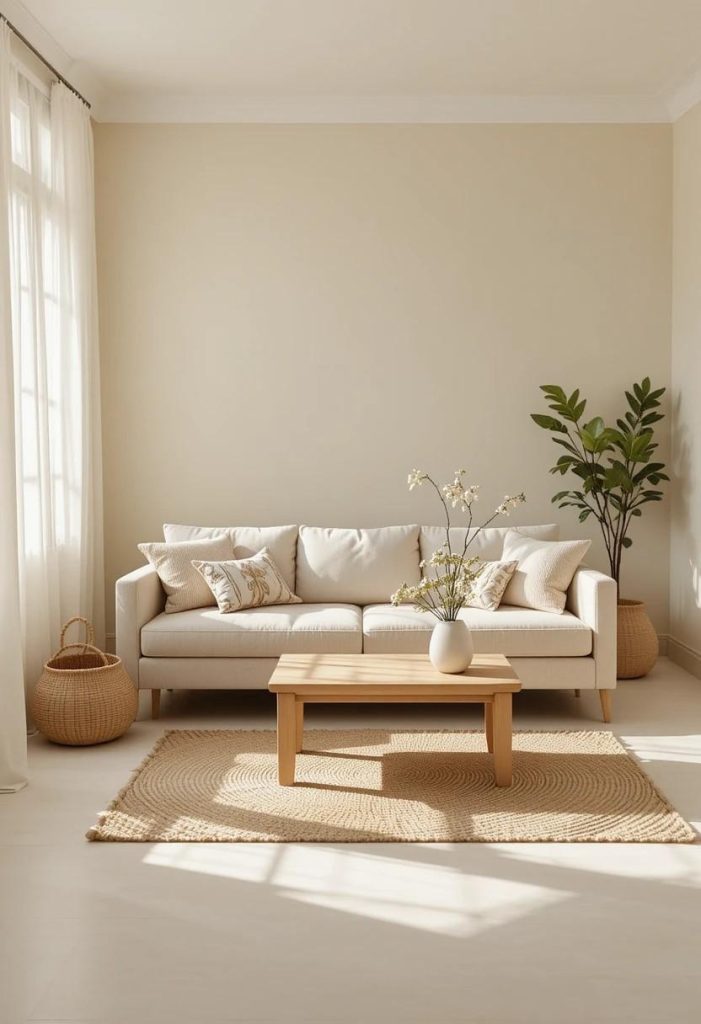
Color is the single most powerful tool in a small living room. Light, neutral wall colors like soft white, warm greige, pale taupe, and creamy ivory reflect natural light and make walls visually recede, instantly making the room feel larger and airier. Avoid dark, saturated walls in tiny spaces unless you are intentionally going for a cozy, moody cocoon look. Stick to one neutral across all four walls (and even the ceiling) for a seamless, expanded feel.
2. Choose a Compact Sofa with Exposed Legs
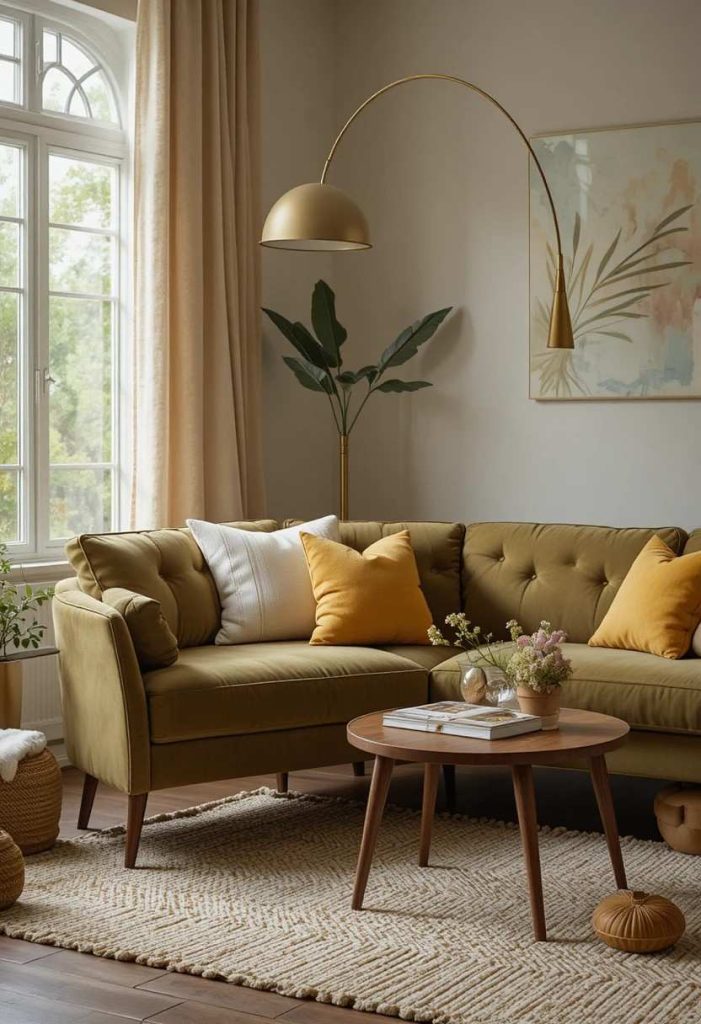
A sofa with raised, exposed legs lets light and air pass underneath, creating the illusion of more floor space. Skip oversized sectionals and chunky upholstered bases. Instead, opt for a compact two- or three-seater with slim wooden or metal legs. Mid-century modern sofas are a favorite for small spaces because they feel light, intentional, and stylish.
3. Hang Curtains High and Wide
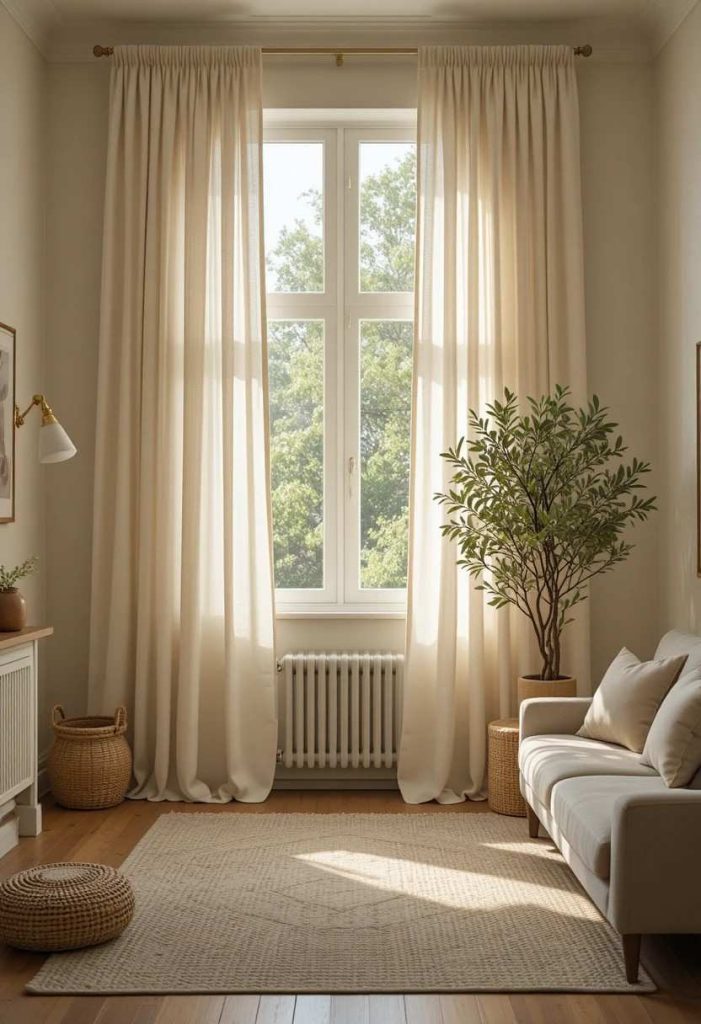
One of the easiest tricks to make a small living room feel taller and grander is to mount curtain rods close to the ceiling rather than just above the window frame. Extend the rod 6–12 inches past each side of the window so the curtains, when open, don’t cover the glass. This draws the eye upward and makes windows look significantly larger.
4. Add a Large Mirror as a Statement Piece
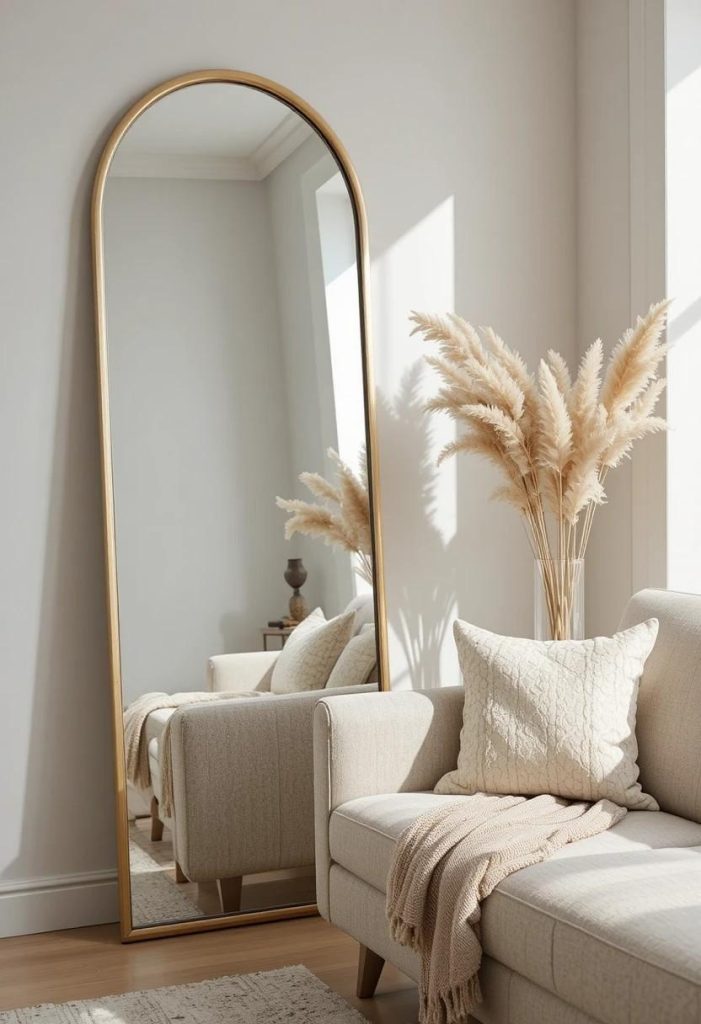
Mirrors are a small-space lifesaver. They bounce light around the room and visually double the square footage. Place a large floor-leaning mirror in a corner, hang an oversized arch mirror above the sofa, or position one directly across from a window to maximize the natural light it reflects. A single large mirror always looks more polished than a cluster of small ones.
5. Use a Round Coffee Table Instead of Rectangular
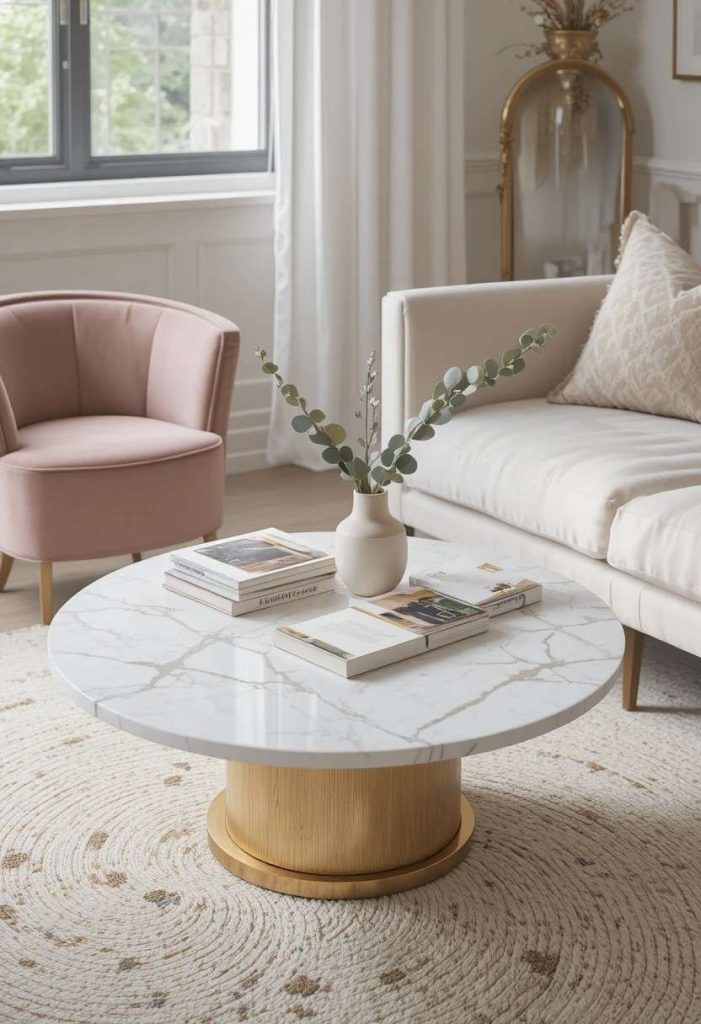
A round coffee table is a small-space secret weapon. It eliminates sharp corners that interrupt traffic flow, takes up less visual space, and allows people to move freely around it. Choose one with a slim profile, hairpin legs, or a pedestal base to keep the floor visually open. Glass and acrylic versions disappear almost entirely.
6. Choose Multi-Functional Furniture
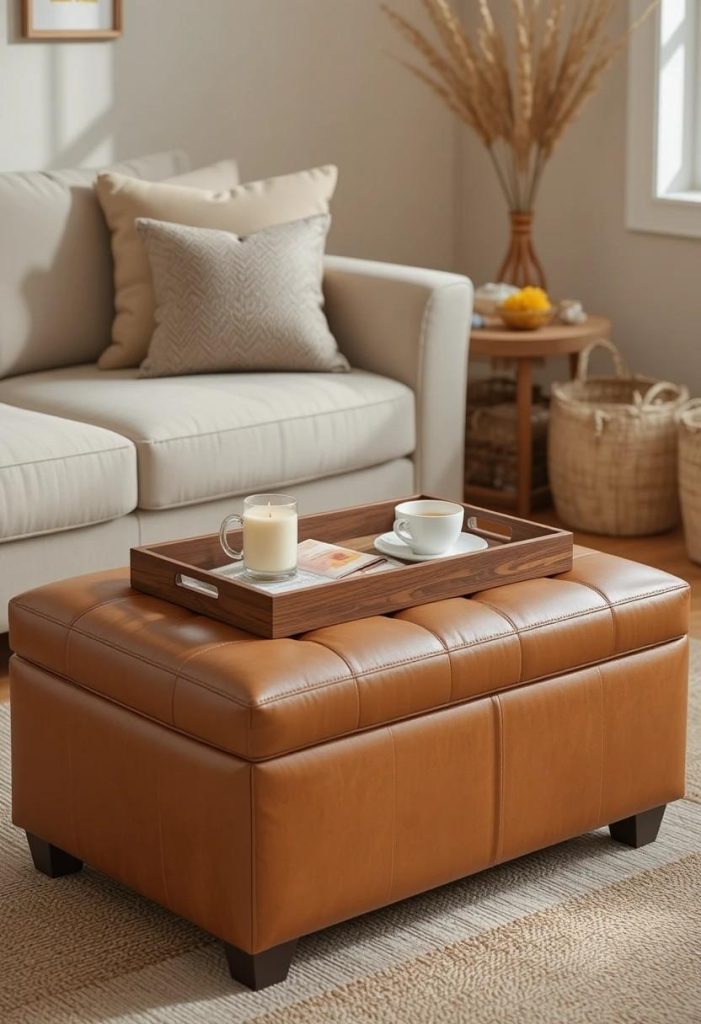
In a small living room, every piece needs to earn its place. Look for storage ottomans that double as coffee tables and extra seating, lift-top side tables that hide remotes and chargers, sleeper sofas for guests, and nesting tables that tuck away when not needed. Multifunctional furniture eliminates clutter and saves precious square footage.
7. Embrace Vertical Storage with Floating Shelves
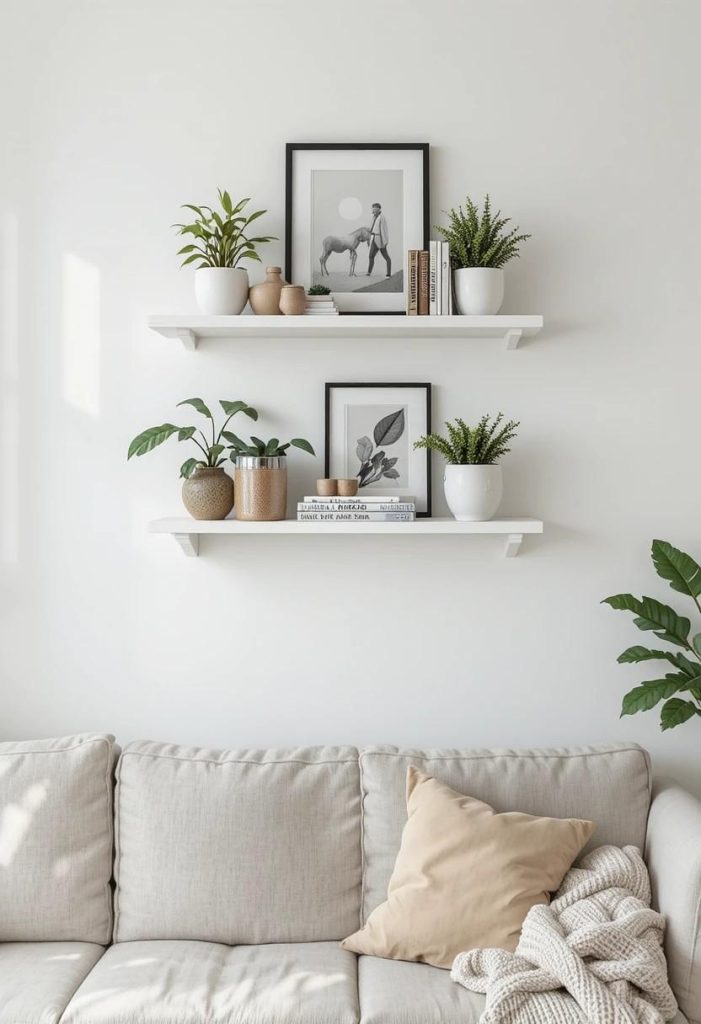
When floor space is tight, build up instead of out. Floating shelves take advantage of unused vertical wall space without adding visual bulk like bookcases do. Style them with a curated mix of books (some standing, some stacked), small plants, framed art, ceramics, and personal mementos. Leave breathing room — over-styled shelves can make a small room feel cluttered.
8. Layer Rugs for Coziness and Definition
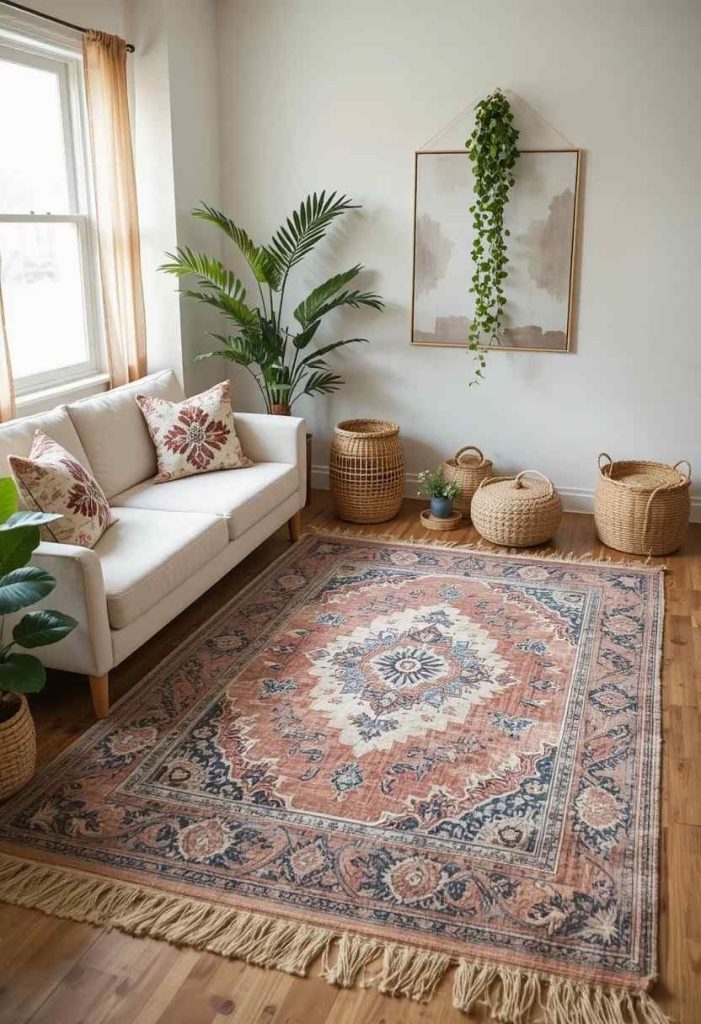
Layering rugs adds texture, warmth, and visual depth without adding visual weight. Start with a large neutral jute or sisal rug as the base, then layer a smaller patterned or vintage rug on top. This trick also defines the seating area in open-plan apartments and visually anchors the furniture, making the space feel intentional and curated.
9. Add Indoor Plants for Life and Height
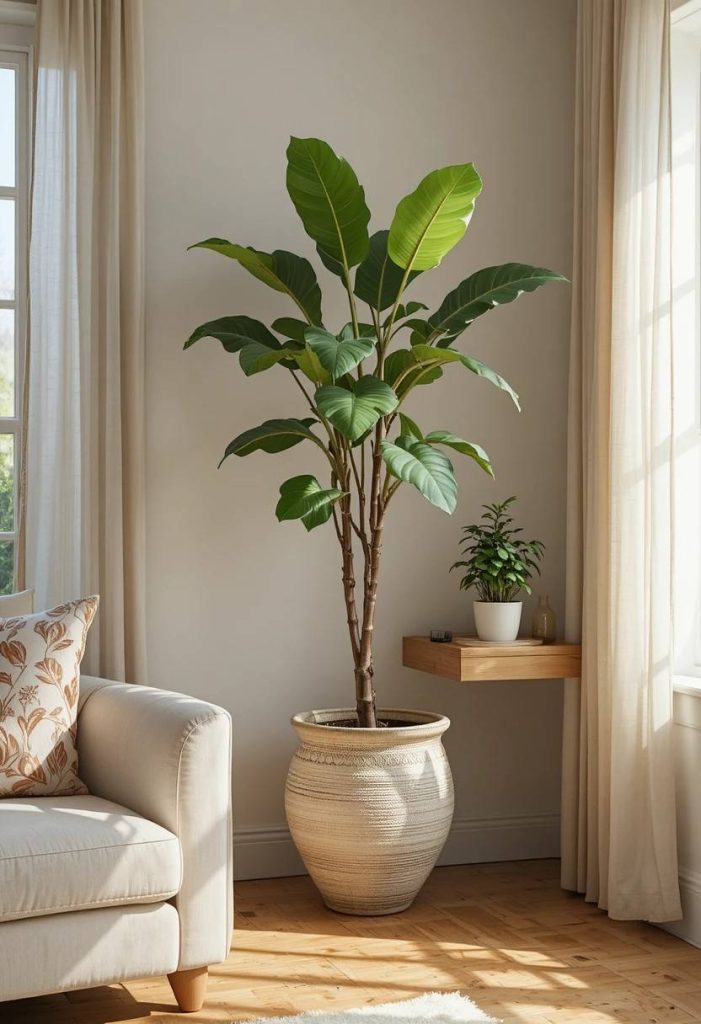
Plants instantly make a small living room feel fresh, alive, and curated. Use tall plants like fiddle leaf figs, snake plants, olive trees, or bird of paradise to draw the eye upward and add vertical interest. Smaller plants like pothos, ZZ plants, or succulents can sit on shelves, side tables, or hang from the ceiling. Stick to 2–3 plants in a small space to avoid overwhelming the room.
10. Maximize Natural Light
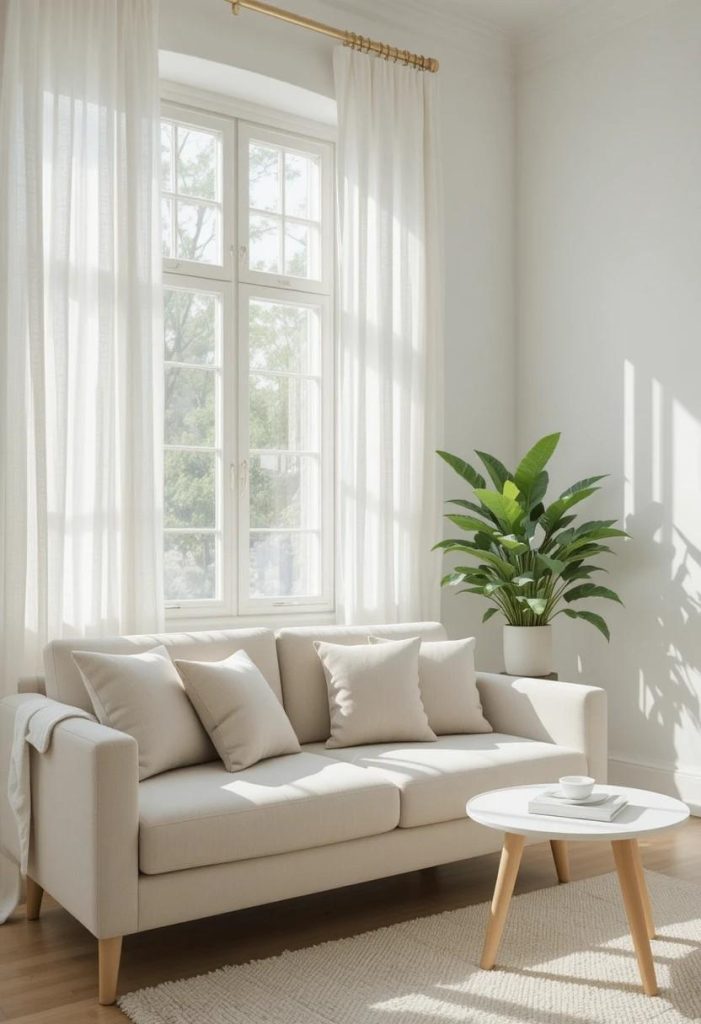
Natural light is the cheapest and most powerful small-space hack. Keep window treatments minimal — sheer linen curtains, light bamboo blinds, or no covering at all if privacy allows. Clean windows weekly, and never block them with bulky furniture. If natural light is limited, layer multiple soft lamp sources at different heights to mimic the depth that daylight provides.
11. Pick a Light, Cohesive Color Palette
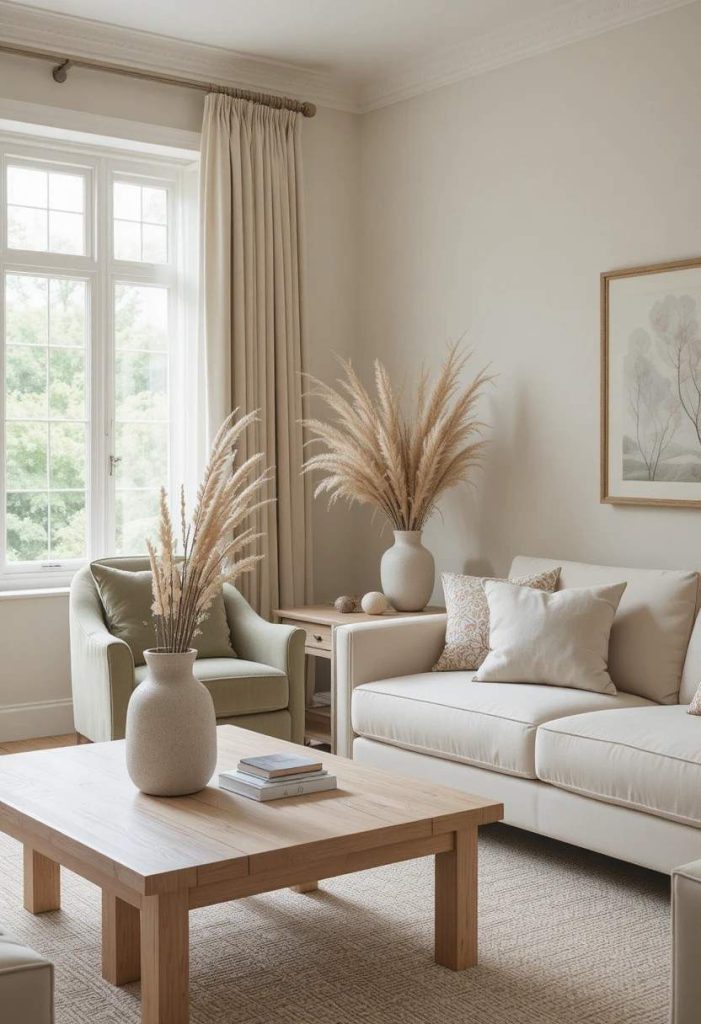
A consistent, light color palette of 2–3 main tones creates a sense of flow and openness. Build around soft neutrals (white, beige, greige, cream) and add one or two accent colors for personality — sage green, dusty pink, muted terracotta, or soft black work beautifully. Avoid too many competing colors in a small room; cohesion equals calm, and calm reads as spacious.
12. Use Wall Art to Draw the Eye Upward
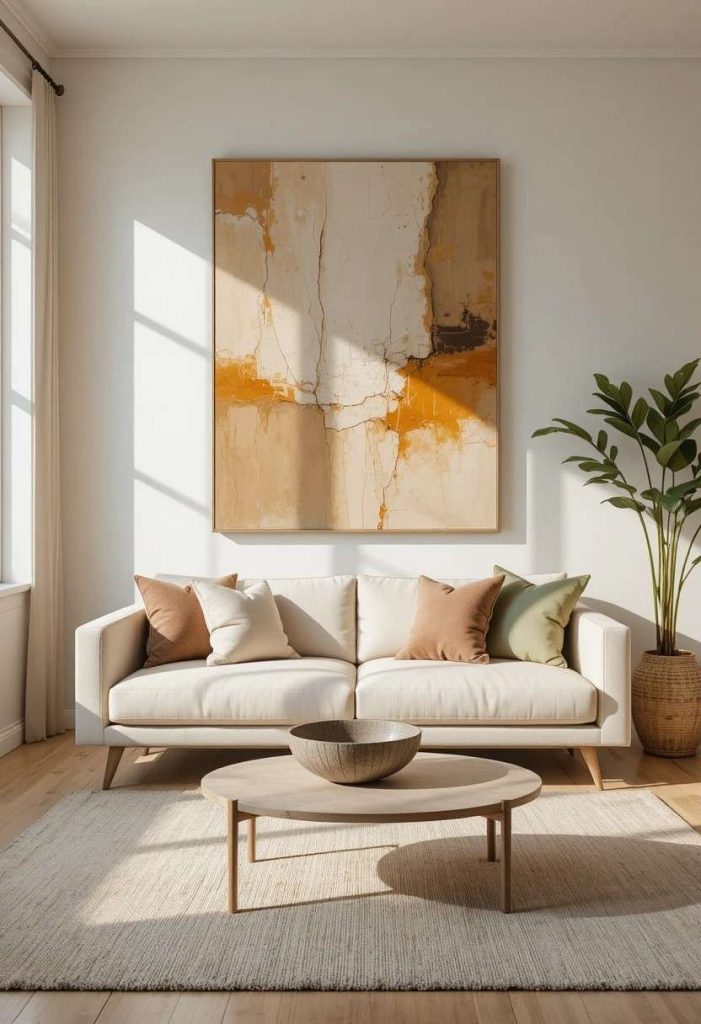
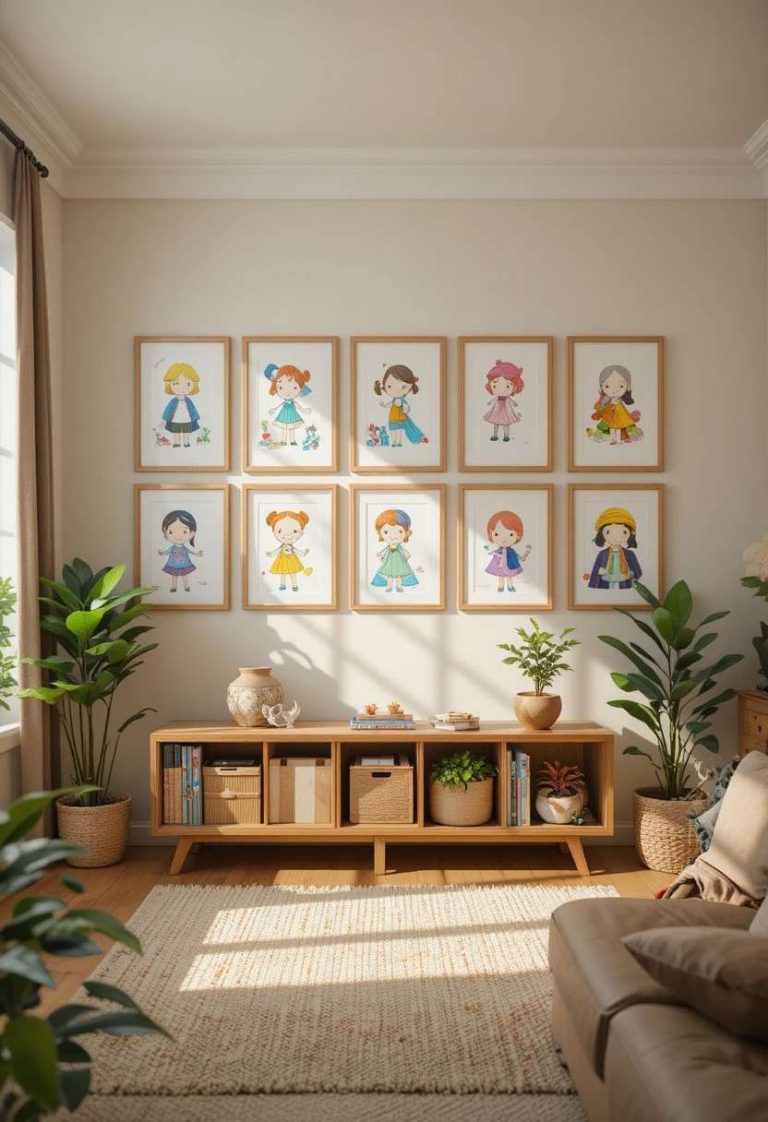
Strategically placed wall art makes ceilings feel taller and walls feel larger. Hang one oversized statement piece above the sofa rather than several small frames, or create a tight, vertical gallery wall that stretches upward. Keep the bottom of the artwork about 6–8 inches above the sofa so it reads as connected to the seating but doesn’t crowd it.
13. Choose Slim, Wall-Mounted Lighting
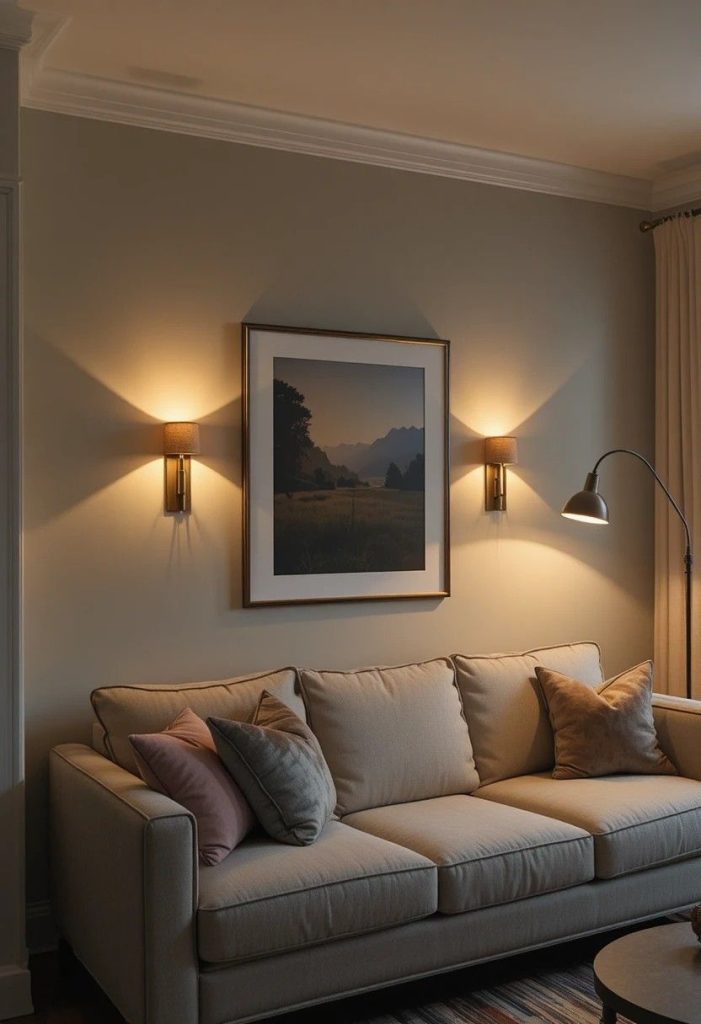
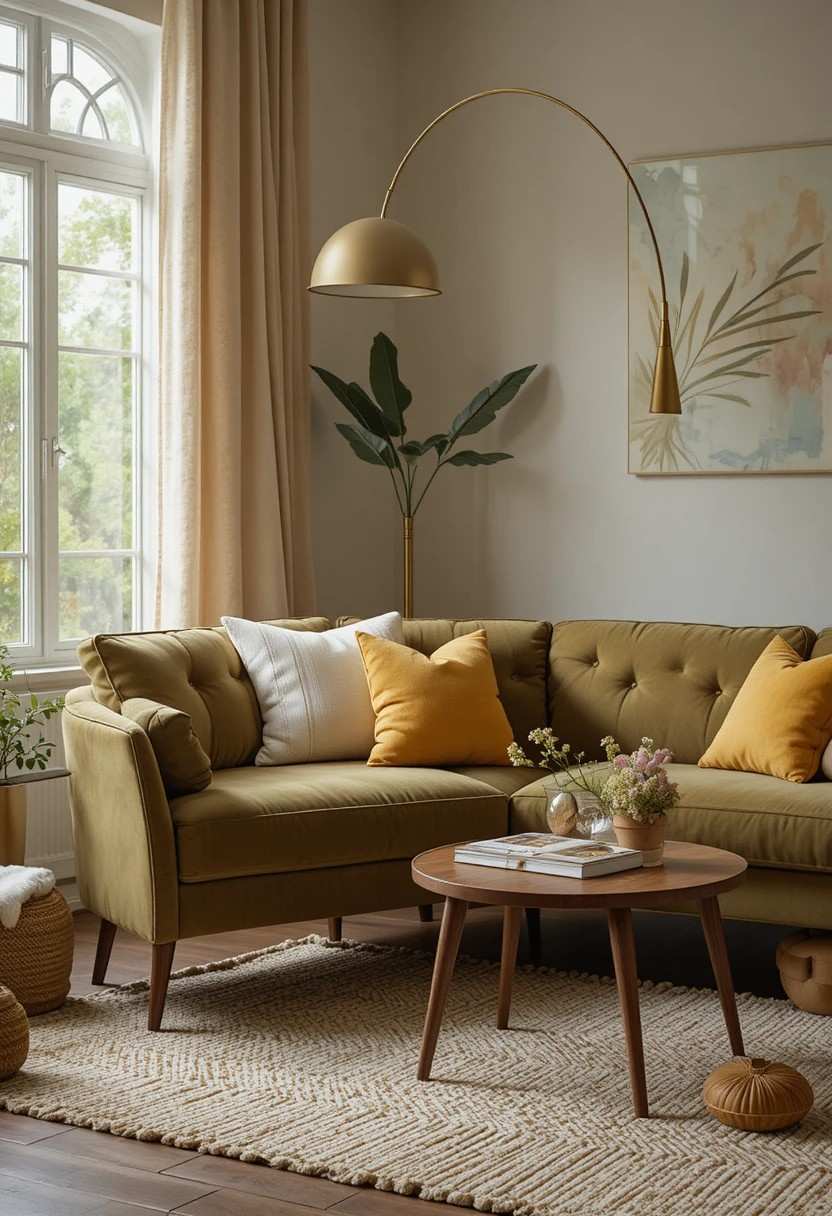
Floor lamps and bulky table lamps eat valuable floor and surface space in a small living room. Swap them for wall-mounted sconces, plug-in pendants, or slim arc floor lamps that hover over the sofa. Layer at least three light sources at different heights — overhead, mid-level, and low — to create a warm, dimensional glow rather than harsh overhead lighting.
14. Add Texture Through Throw Pillows and Blankets
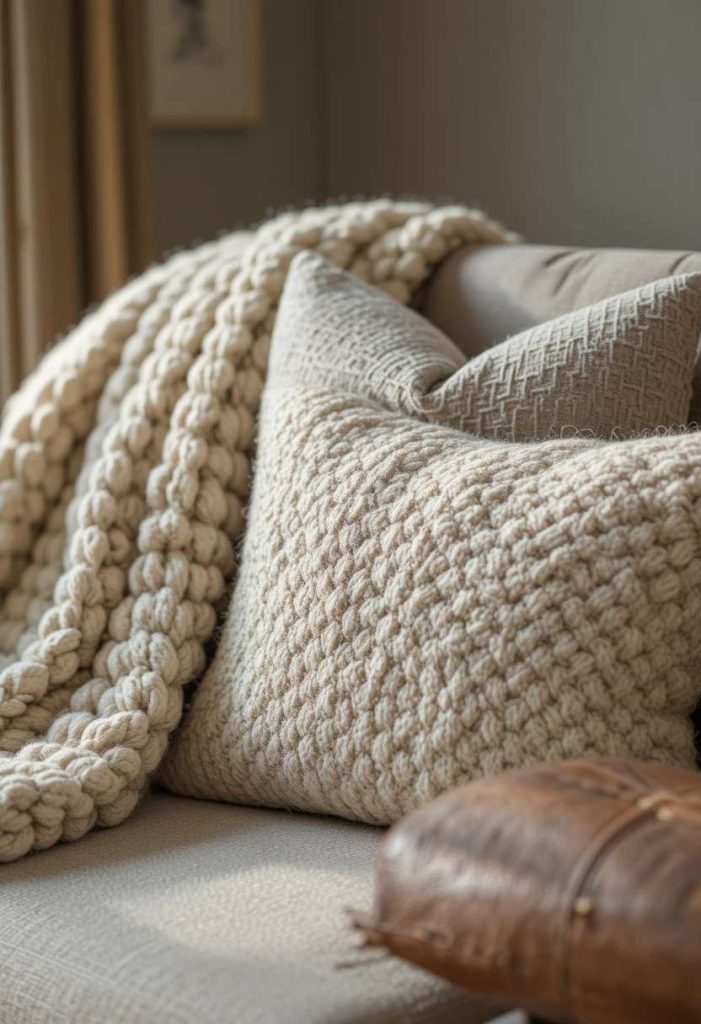
When color is kept neutral, texture becomes the star. Layer different fabrics — chunky knit throws, boucle pillows, linen cushions, leather accents, and woven baskets — to add visual interest without making the room feel busy. Mix two or three textures on the sofa for an intentional, designer look that photographs beautifully for Pinterest.
15. Float Furniture Away from Walls
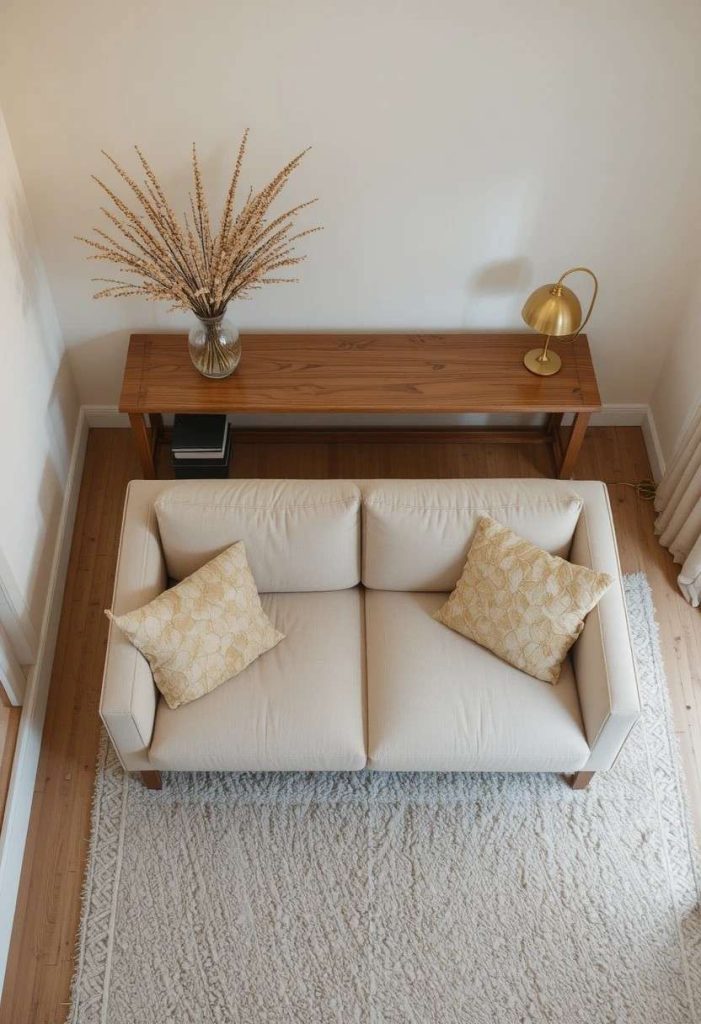
Counter-intuitively, pushing every piece of furniture against the wall makes a small room feel smaller, not bigger. Floating the sofa just 6–10 inches away from the wall creates a sense of intentional layout and tricks the eye into perceiving more space. Use the gap behind the sofa for a slim console, a tall plant, or a floor lamp.
16. Use a Statement Accent Chair
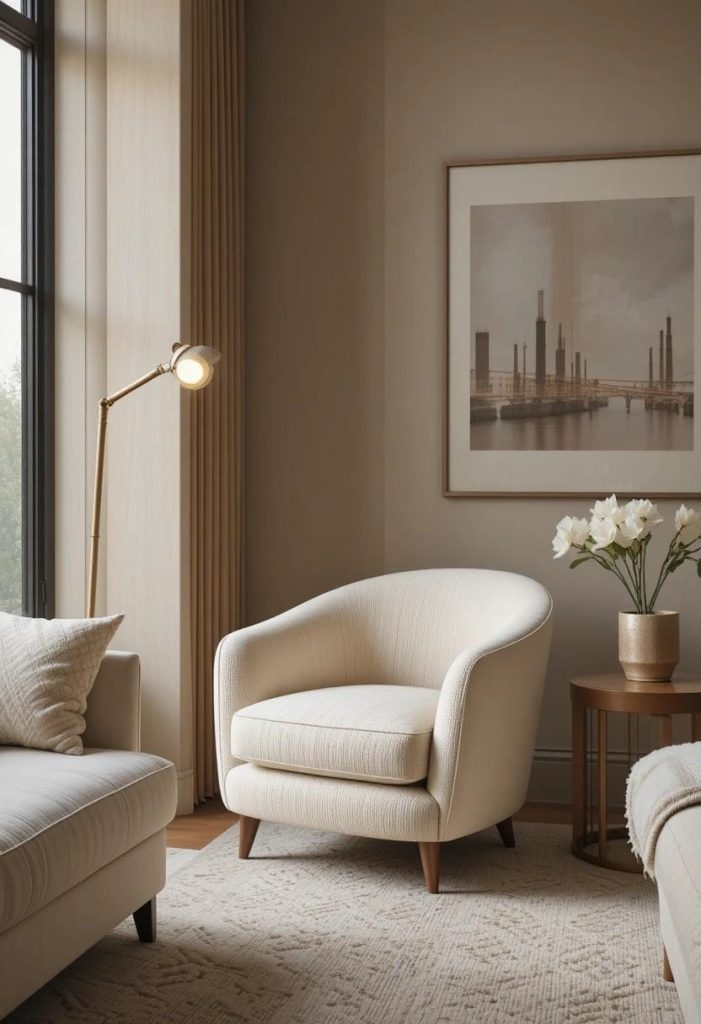
Rather than cramming a small living room with multiple chairs, choose one beautiful statement accent chair to add personality and a pop of color. Curvy boucle chairs, vintage rattan pieces, sculptural mid-century chairs, or velvet armchairs in dusty pink, forest green, or rust become instant focal points and make the room feel curated.
17. Keep the Decor Edited and Clutter-Free
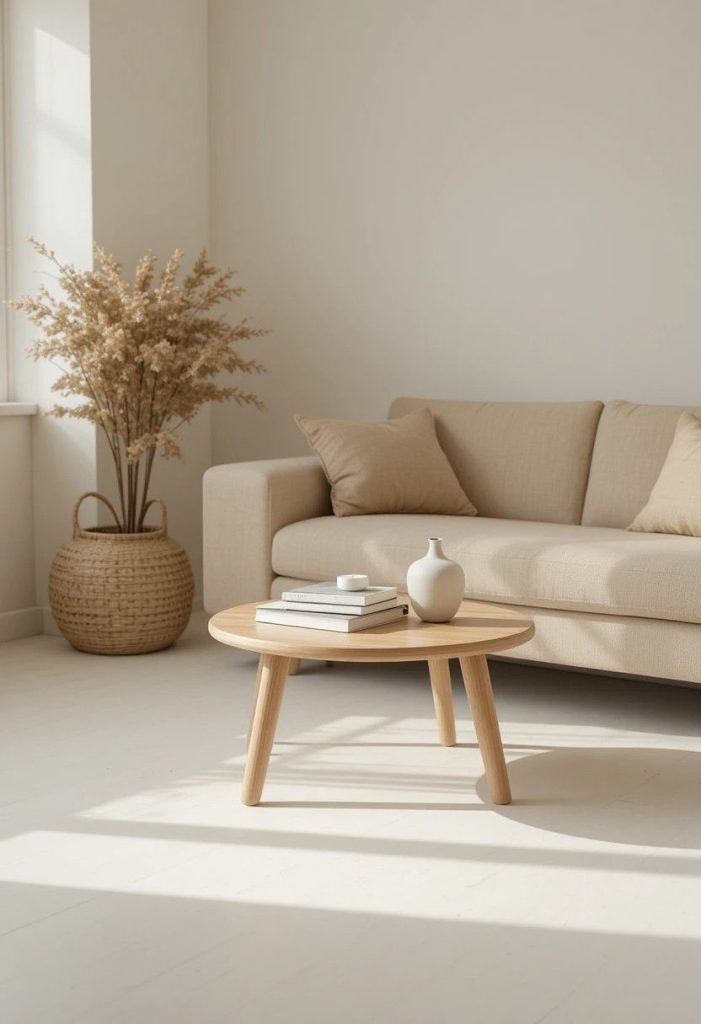
Small living rooms thrive on restraint. Follow the “less but better” rule — every object on display should be intentional, beautiful, or genuinely useful. Use closed storage (cabinets, baskets, ottomans) to hide remotes, cords, mail, and toys. Style surfaces with the “rule of three”: odd-numbered groupings of objects at varying heights look polished without feeling cluttered.
18. Paint or Replace the Ceiling for Visual Interest
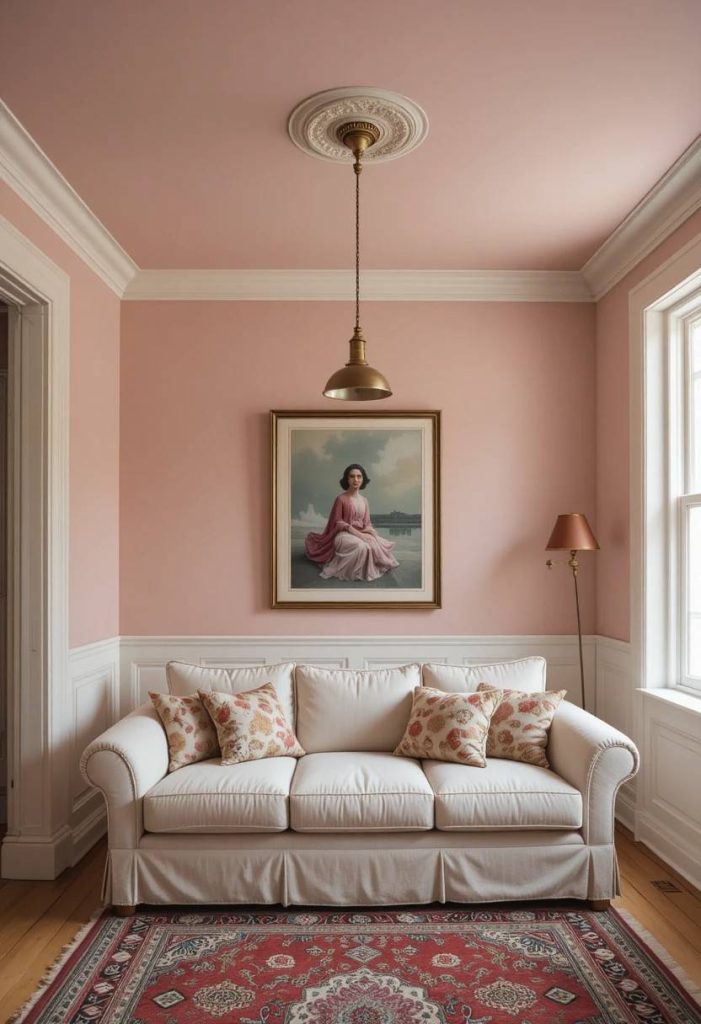
The ceiling is often called the “fifth wall” and is the most underused surface in small living rooms. Painting the ceiling a slightly lighter shade than the walls makes it feel taller. For a bold, modern look, paint it a soft contrasting color like blush, sage, or pale blue. Alternatively, install simple wood beams or peel-and-stick wallpaper for renter-friendly drama.
19. Style a Functional, Pretty Coffee Table
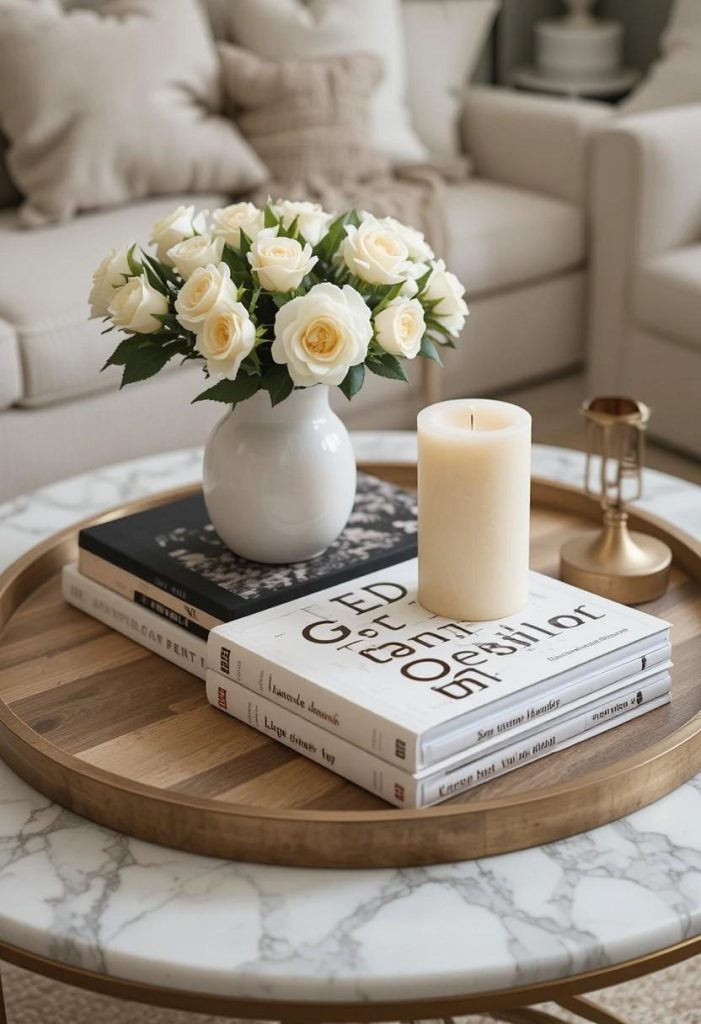
The coffee table is one of the most photographed surfaces in any living room, so make it count. Use a wooden or marble tray to corral 3–4 items: a stack of coffee table books, a small candle, fresh flowers or a green sprig in a vase, and one decorative object like a ceramic bowl or sculpture. Trays also make it easy to clear the surface when you need it.
20. Add a Personal Touch with Curated Decor
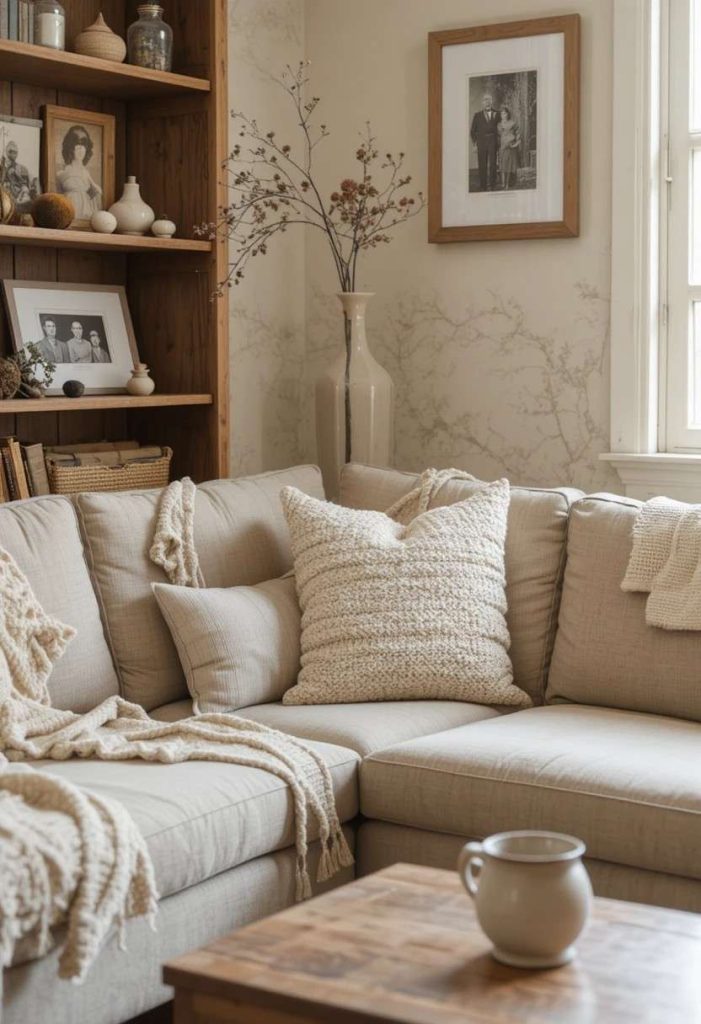
Finally, a small living room should feel like you. Beyond trends and tricks, include 2–3 personal touches that reflect your story: a travel souvenir on a shelf, a framed family photo in black and white, a handmade ceramic mug, or art from a local artist. These small, meaningful details transform a stylish room into a home and give it the unique, layered character that mass-produced decor never can.
Frequently Asked Questions (FAQ)
How can I make a small living room look bigger on a budget?
Start with the free changes: declutter ruthlessly, rearrange furniture away from walls, clean your windows, and hang your existing curtains higher and wider. Then invest in one large mirror, light neutral paint, and a few thoughtful textures. These five moves alone can transform a tiny space without spending much.
What colors make a small living room look bigger?
Soft whites, warm creams, light greige, pale taupe, and very soft pastels (blush, sage, sky blue) reflect light beautifully and make walls visually recede. Avoid dark, saturated colors on all four walls — unless you intentionally want a moody, cocoon effect.
Should I get a sectional or a regular sofa for a small living room?
A compact two- or three-seater sofa with exposed legs almost always works better than a sectional in a small living room. If you truly need extra seating, look for a slim apartment-sized sectional or pair a sofa with one statement accent chair instead.
How many plants should I have in a small living room?
Aim for 2–3 plants total: one tall floor plant for height (like a fiddle leaf fig or olive tree) and one or two smaller plants on shelves or side tables. Too many plants in a small space can feel cluttered and overwhelming.
Are mirrors really worth it in a small living room?
Absolutely. A large mirror — especially one placed across from a window — can visually double your room’s size and dramatically brighten the space. It’s one of the highest-impact, lowest-effort small living room decor moves you can make.
Final Thoughts
A small living room is not a limitation — it’s an invitation to be intentional. Every piece you choose, every color you commit to, and every styling decision you make has the power to completely transform how the space feels.
Start with two or three of the ideas above that excite you most. Maybe it’s hanging your curtains higher this weekend, swapping in a round coffee table, or finally adding that statement mirror. Small, consistent changes add up to a space that feels bigger, brighter, and beautifully yours.
Happy decorating! ✨