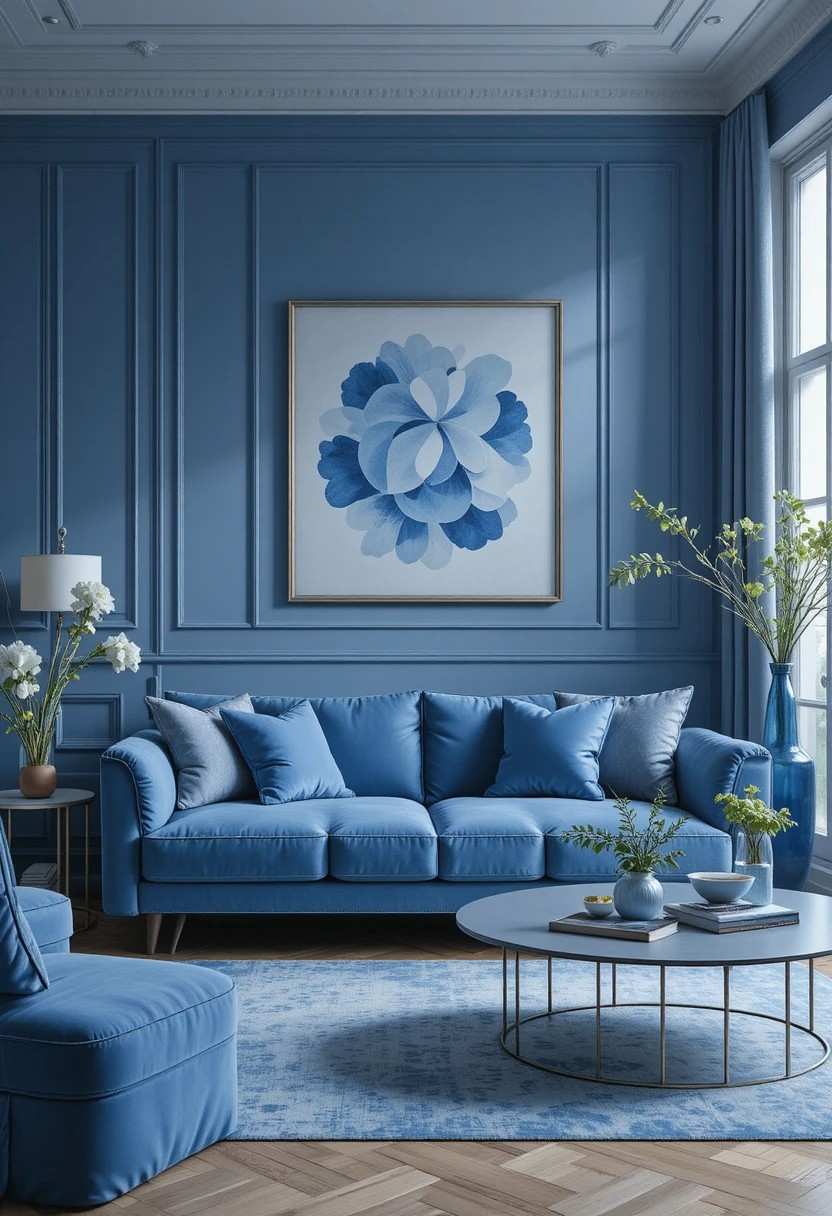
27 Blue Couch Living Room Ideas for a Stylish, Inviting Space
There is something wonderfully inviting about a blue couch resting at the heart of a living room. Blue brings a sense of calm, character, and easy charm, working beautifully whether it is soft and powdery or deep and dramatic navy. It is a colour that feels both timeless and fresh, pairing gorgeously with warm woods, soft neutrals, and cheerful pops of contrast. With the right touches, a blue sofa becomes a stylish, soothing centrepiece that makes the whole room feel welcoming. Below are twenty seven blue couch living room ideas, shared with warmth and inspiration, to help you create a stylish, inviting space you will love to come home to.
1. Pair Navy With Warm Wood
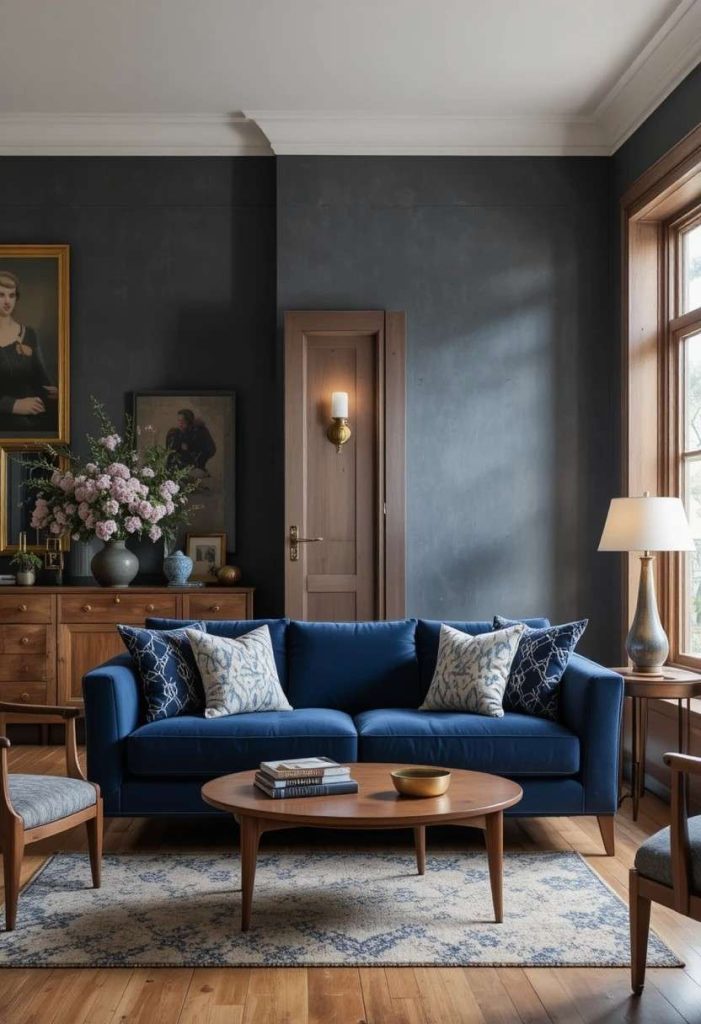
I fell for this pairing the first time I saw a deep navy sofa beside honey-toned oak. Navy brings depth and quiet drama, while warm wood keeps the room from feeling cold or formal. I echo the wood in two or three places — an oak side table, a walnut picture ledge, a woven basket — without matching everything perfectly. A cream throw softens the navy, and a brass lamp adds a gentle evening glow. If your sofa is very dark, choose lighter woods like ash or pale oak so the room stays bright. I have seen this rich navy work beyond the living room too, and these navy blue kitchen cabinet ideas show how bold and elegant it can feel in a kitchen.
How to do it: Start with the largest wood piece, like a coffee table or media console, in a warm mid-tone. Add two smaller wooden accents in a similar tone, then layer a cream or oatmeal throw and one brass touch, such as a lamp or tray. Step back and check the balance — if the navy feels heavy, lighten the rug or add a pale cushion.
2. Add Crisp White Accents
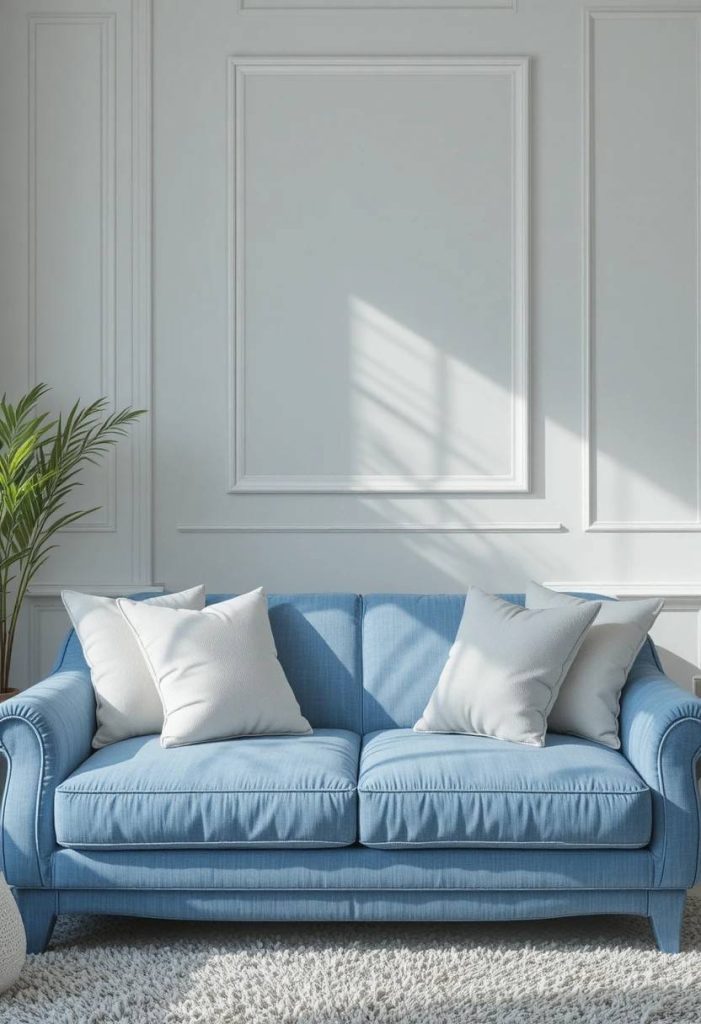
White is my favorite way to keep a blue couch feeling fresh instead of heavy. Crisp white cushions, a whitewashed shelf, or pale walls give the eye somewhere to rest, and the contrast makes the blue look richer and cleaner. I keep the white warm rather than stark — think soft cotton, linen, and creamy whites — so the room still feels cozy. In my living room, two white cushions and a light throw are enough to lift a deep blue sofa. If the room gets little sun, add a white lampshade or a pale rug to bounce the light around. The trick is balance: too much white can feel cold, so I always keep one warm texture nearby, like a woven basket or a wooden tray.
How to do it: Pick two or three white accents, such as cushions, a throw, and a lampshade. Mix textures — linen, cotton, and a smooth ceramic vase — so the white feels layered, not flat. Place the brightest white near a window or lamp to catch the light, then add one warm wood or rattan piece to keep the room cozy.
3. Layer in Soft Neutrals
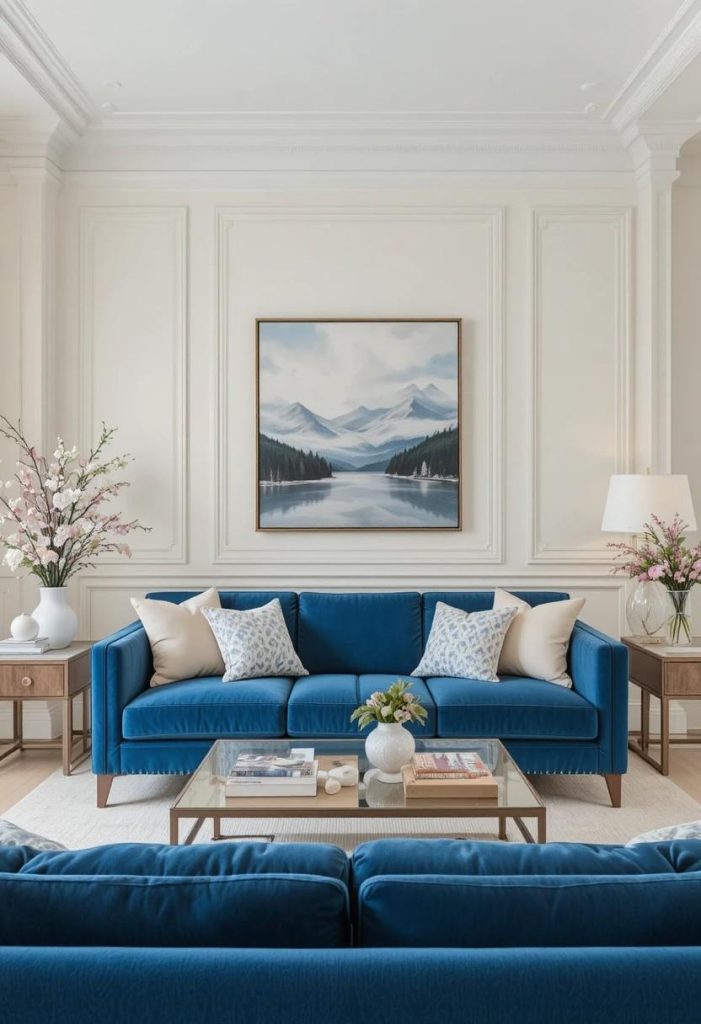
When I want a calm room that still feels styled, I surround my blue couch with soft neutrals. Cream, beige, and greige quiet the blue without washing it out, and the mix of tones gives the room depth without any loud color. I build the layers slowly: a beige rug underfoot, cream cushions on the sofa, and a greige throw folded over one arm. Texture does the heavy lifting here, so I mix nubby linen, smooth cotton, and a soft wool throw. If the room starts to feel flat, I add one deeper neutral, like a taupe cushion, to ground it. This palette is wonderfully forgiving, and I love how it lets the blue be the star while everything else whispers.
How to do it: Start with the largest neutral surface — the rug or the walls — in a pale cream or beige. Add cushions in two more neutrals, then a throw in a slightly deeper tone. Mix at least three textures, and finish with one dark accent, like a bronze frame, for definition.
4. Add Gold or Brass Touches
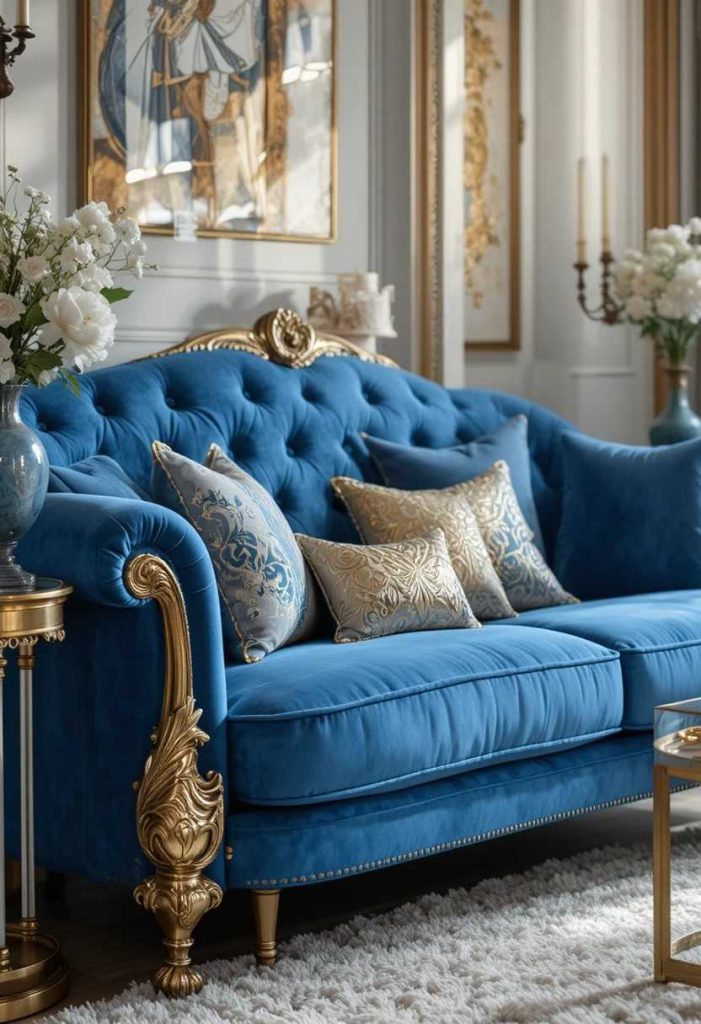
A little gold goes a long way beside a blue couch, and it is one of my favorite ways to make the room feel special. Warm brass against deep blue feels glamorous without being fussy, like jewelry for the room. I keep it restrained: a brass floor lamp, a small gold tray on the coffee table, and slim gold frames on the wall. The shine catches the light and warms up the cool blue beautifully. I avoid matching sets — mixed metals and slightly aged finishes feel more collected and personal. If your blue leans bright and cheerful, choose brushed brass rather than shiny gold so the look stays soft and relaxed.
How to do it: Choose one main brass piece, like a lamp or mirror frame, then add two small accents, such as a tray or candle holders. Keep the finishes similar — all brushed or all polished — and spread the pieces around the room rather than grouping them together.
5. Bring In Greenery
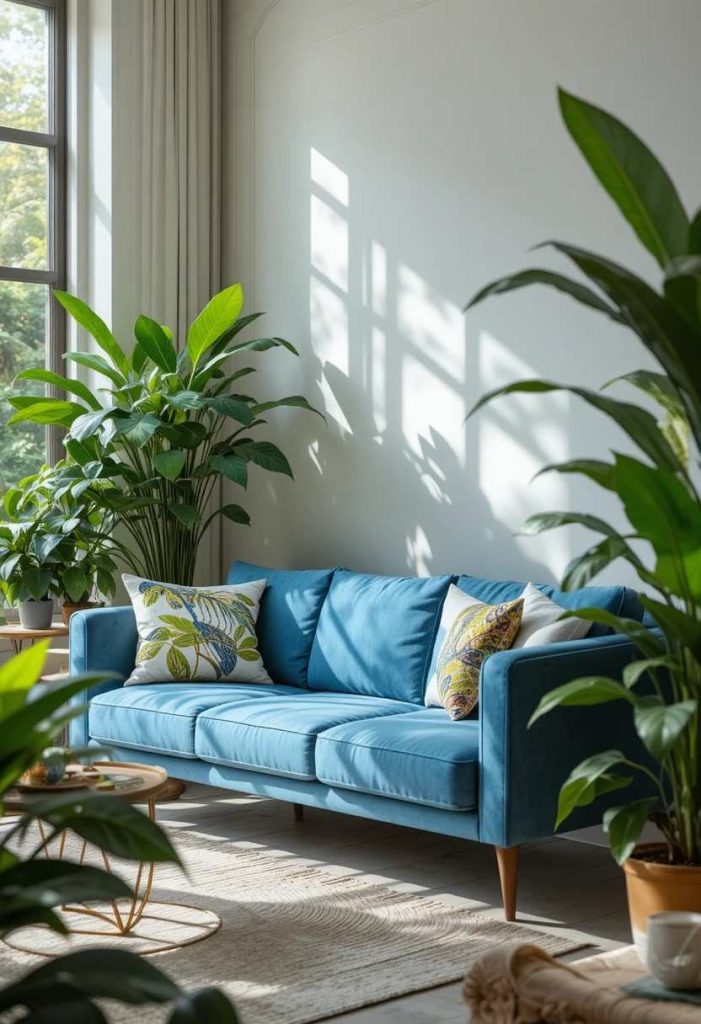
Plants are the easiest way I know to make a blue couch feel alive. Green and blue sit side by side in nature, so a leafy plant beside the sofa always looks right, and the fresh green stops the blue from feeling flat. I keep a tall fiddle leaf or olive tree in one corner and a small trailing plant on a side table, which gives the room height and softness at once. If you do not have a green thumb, a good faux olive branch or a hardy snake plant will do the job with almost no care. I like terracotta or woven pots here because their warmth balances the cool blue. Just remember to wipe the leaves now and then so they stay glossy and bright.
How to do it: Place one tall plant in a corner to frame the sofa, and one small plant on a side table or shelf. Choose pots in terracotta, wood, or woven fibers for warmth. Water on a weekly schedule, rotate the pots monthly, and dust the leaves so they stay healthy.
6. Try a Light Powder Blue
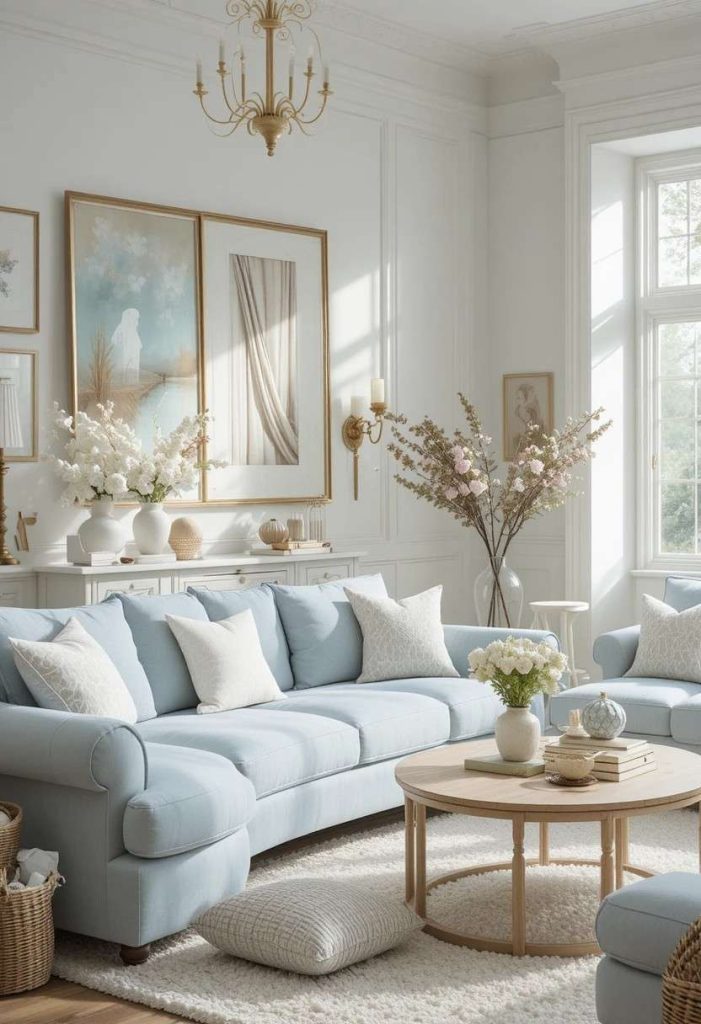
A powder blue couch is the gentlest choice on this list, and I love it in bright rooms where I want everything to feel airy. The pale blue reads almost like a neutral, so it pairs beautifully with whites, pale woods, and soft linen. I keep the rest of the room light too — a cream rug, white cushions, and sheer curtains — then add one slightly deeper blue cushion so the sofa does not disappear into the room. This is a wonderful choice for small living rooms because the pale color makes the sofa feel less bulky. I do recommend a washable slipcover or a performance fabric if you have kids or pets, since pale blue shows marks more easily.
How to do it: Keep the palette pale: cream walls, a light rug, and white or ivory cushions. Add one cushion in a deeper blue for contrast, and choose a washable or stain-resistant fabric. Let in as much daylight as you can to keep the pale blue glowing.
7. Add Warm Earthy Accents
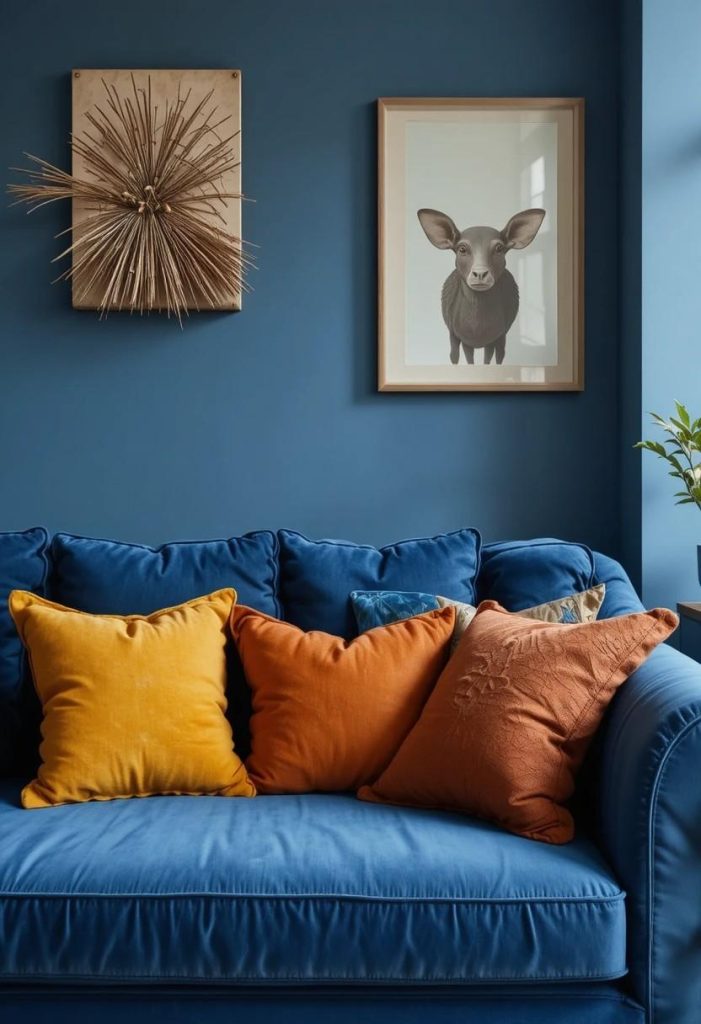
When a blue couch feels a little too cool, I reach for earthy colors like terracotta, mustard, and caramel. These warm tones balance the blue perfectly, and together they make the room feel snug and grounded. I like to start with cushions — one terracotta, one mustard — then add a caramel leather tray or a clay vase on the coffee table. The trick is to use the warm colors as accents, not equals, so the blue still leads. A woven rug with warm flecks ties it all together. This palette works all year, and I adjust it with the seasons: deeper rust tones in autumn, soft ochre in spring.
How to do it: Pick two warm accent colors, such as terracotta and mustard. Add them through cushions first, then one decor piece like a vase or throw. Keep the warm accents to about a third of the room so the blue stays the star, and add a natural-fiber rug to tie the tones together.
8. Layer in Patterned Cushions
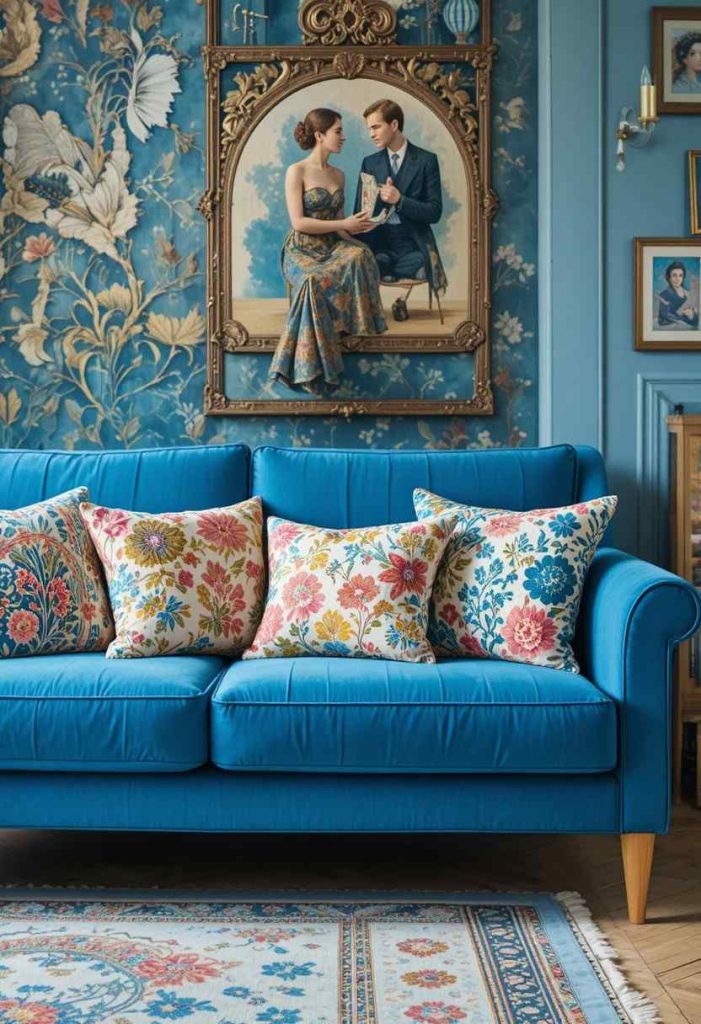
Patterned cushions are my favorite way to give a blue couch personality without committing to anything permanent. Florals, stripes, or checks keep the look lively, and because cushions are easy to swap, I can change the mood with the seasons. My rule is simple: pick patterns that share one color with each other — usually the blue of the sofa or a warm accent — and vary the scale, so a bold stripe sits next to a small floral. I use three cushions on a two-seater and five on a larger sofa, mixing one solid cushion in to give the eye a rest. If the patterns start to fight, I remove one and the room settles instantly.
How to do it: Choose two patterns that share a color, plus one solid cushion. Mix a large-scale pattern with a small-scale one for balance. Start with the boldest cushion in the center, flank it with the smaller pattern, and add the solid cushion at the end for rest.
9. Pair With a Light Rug
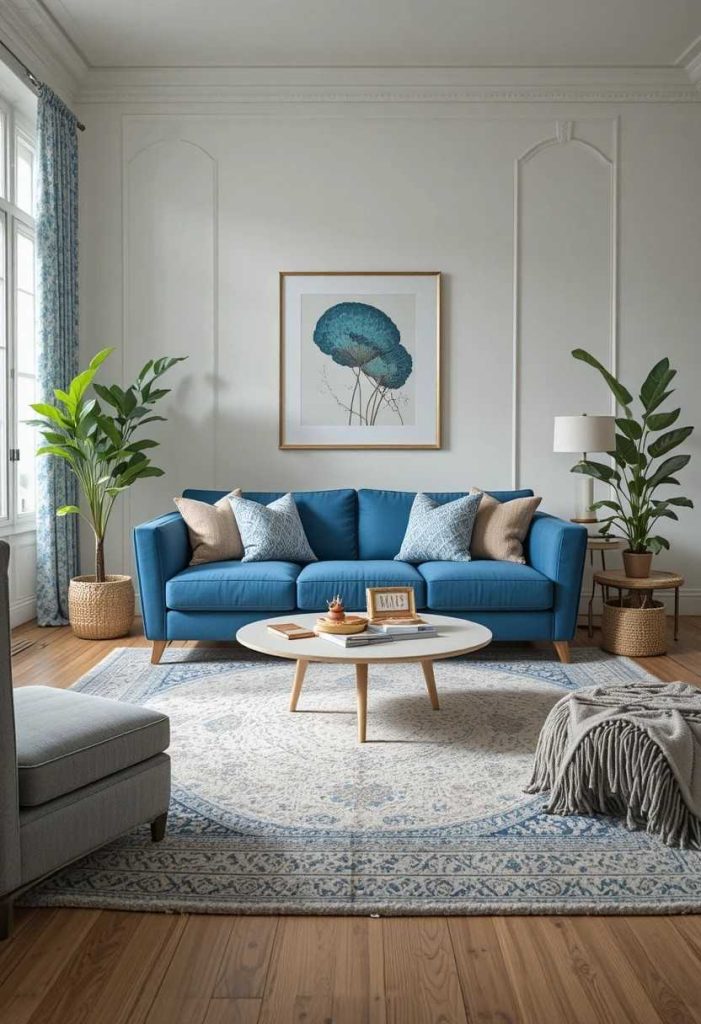
A pale rug under a blue couch changes the whole feeling of the room — it lifts the sofa, defines the seating area, and keeps a dark blue from swallowing the floor. I look for a rug in cream, pale grey, or a soft pattern that picks up the blue without matching it exactly. Size matters more than pattern here: the front legs of the sofa and chairs should sit on the rug, with at least a hand’s width of rug showing at the sides. In my living room, a low-pile rug works best because it is easy to vacuum and the sofa does not wobble on it. If you have pets or kids, choose a washable rug in a forgiving pattern.
How to do it: Measure your seating area and choose a rug large enough for the sofa’s front legs to rest on it. Lay the rug first, then place the sofa so it overlaps the edge by a few inches. Pick a low-pile or washable style for easy cleaning, and add a rug pad to stop slipping.
10. Add Warm Lighting
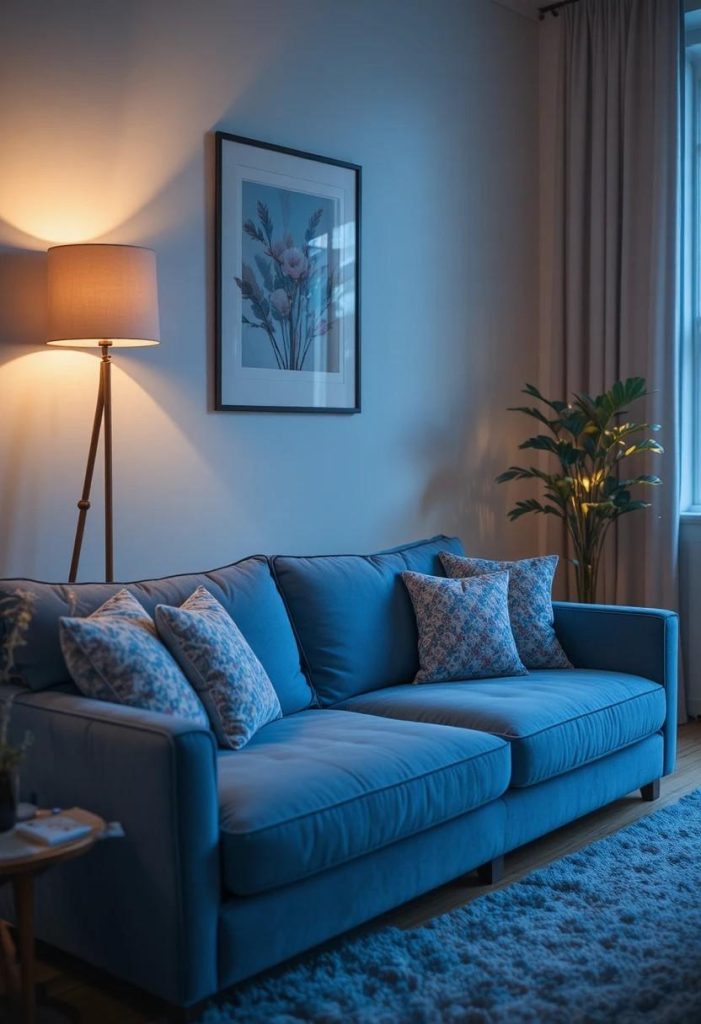
Good lighting is what makes a blue couch feel cozy after dark, and warm light is the secret. Cool white bulbs can make blue look cold and flat, but a warm glow — around 2700K — makes the fabric look rich and inviting. I use three layers: a floor lamp beside the sofa for reading, a table lamp on a side table for a soft pool of light, and a dimmer on the ceiling light so I can lower it in the evening. Candles on the coffee table add a lovely flicker on dark nights. I always choose warm bulbs for every lamp in the room, because one cool bulb is enough to throw the whole mood off.
How to do it: Swap every bulb near the sofa for a warm white (2700K) bulb. Place a floor lamp on one side of the couch and a table lamp on the other, then add a dimmer switch if you can. Finish with candles on the coffee table for a soft evening glow.
11. Go Bold With Deep Navy
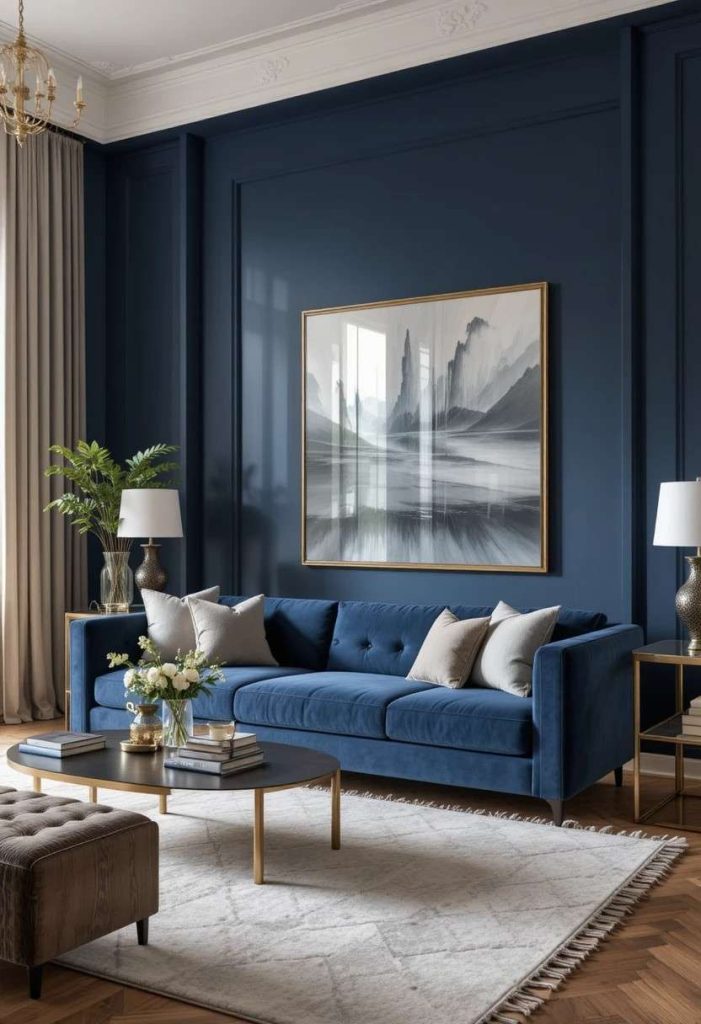
A deep navy couch is a brave choice, and I think it is one of the most elegant ones you can make. The rich color anchors the whole room, and it hides everyday marks far better than a pale sofa. I let the navy lead: pale walls, a light rug, and just a few warm accents so the sofa has room to breathe. Brass and warm wood are my favorite partners here because they keep the navy from feeling severe. If the room is small, I keep the other furniture slim and leggy so the space does not feel crowded. A navy sofa also pairs beautifully with crisp white cushions, which make the blue look even deeper and richer.
How to do it: Keep the walls pale and the rug light so the navy has contrast. Add warm wood and one brass accent to soften the depth. Choose slim, leggy side tables to keep the room airy, and finish with white or cream cushions to make the navy glow.
12. Mix In Natural Textures
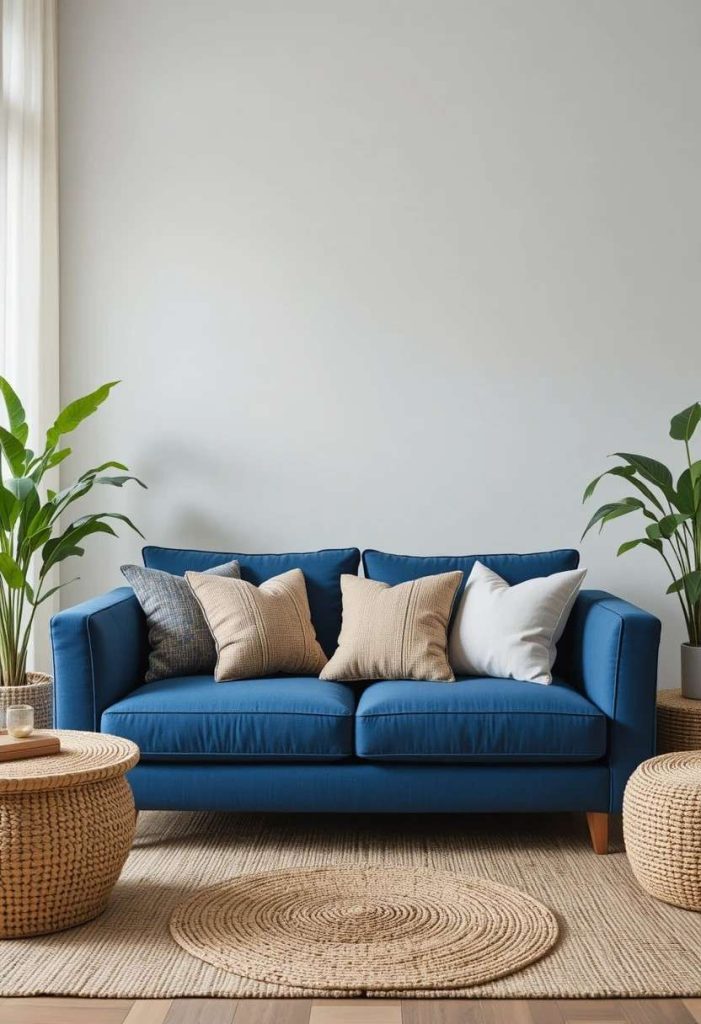
Rattan, jute, and linen are the textures I reach for when a blue couch needs softening. Natural materials bring organic warmth that balances the cool blue, and they make the room feel relaxed and collected rather than decorated. I start with a jute rug under the sofa, add linen cushions in cream and oatmeal, and finish with a rattan basket for throws or magazines. The mix of rough and smooth keeps the eye interested. I avoid too many matching sets — one rattan piece and one jute piece are enough. If the room feels too rustic, a single brass or glass accent lifts it back toward polished.
How to do it: Layer three natural textures: a jute or sisal rug, linen cushions, and a rattan basket or tray. Keep the colors warm and pale so they soften the blue. Add one smooth accent, like glass or brass, to keep the look balanced and polished.
13. Add a Pop of Yellow
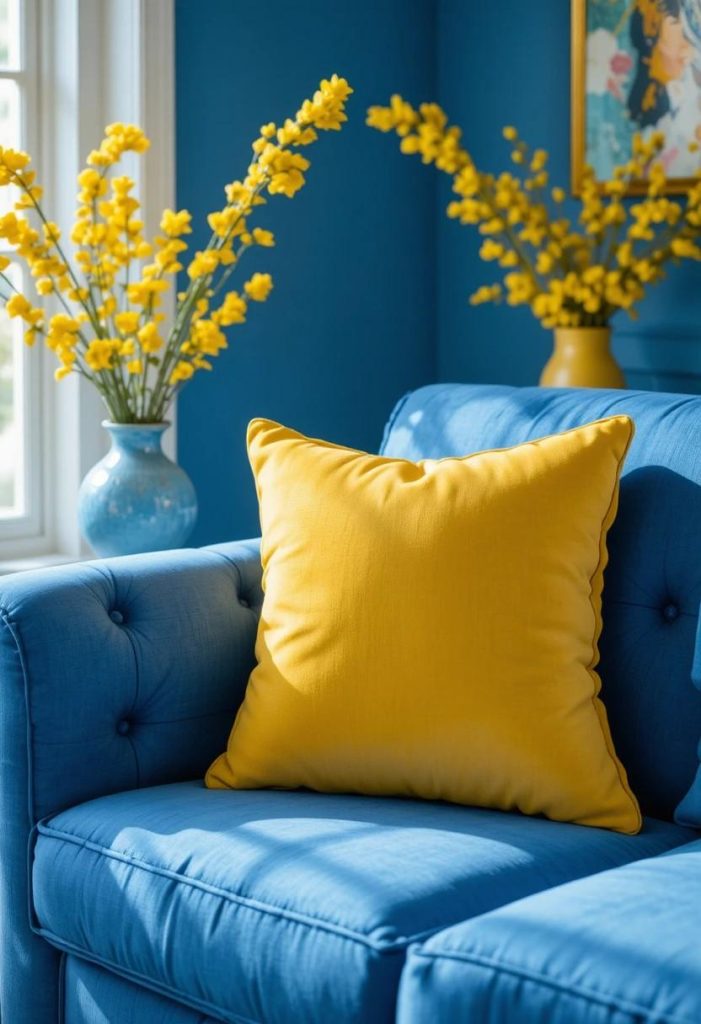
Blue and yellow are a classic pair for a reason — the sunny yellow wakes up the calm blue, and together they feel cheerful without being loud. I use yellow sparingly, like a favorite spice: two mustard cushions, a small yellow vase, or a sunny throw folded over the sofa arm. The key is to choose a warm, golden yellow rather than a bright lemon, which can feel harsh next to deep blue. I love this combination in rooms that need energy, like a family living room where everyone gathers. If yellow feels too bold for you, try a soft butter tone first — it gives the same warmth with a gentler touch.
How to do it: Pick one warm yellow accent, such as cushions or a throw, and keep it to about a tenth of the room. Pair it with a warm wood or brass piece so the yellow feels grounded. Try a soft butter yellow first if bright mustard feels too bold.
14. Keep Walls Soft and Light
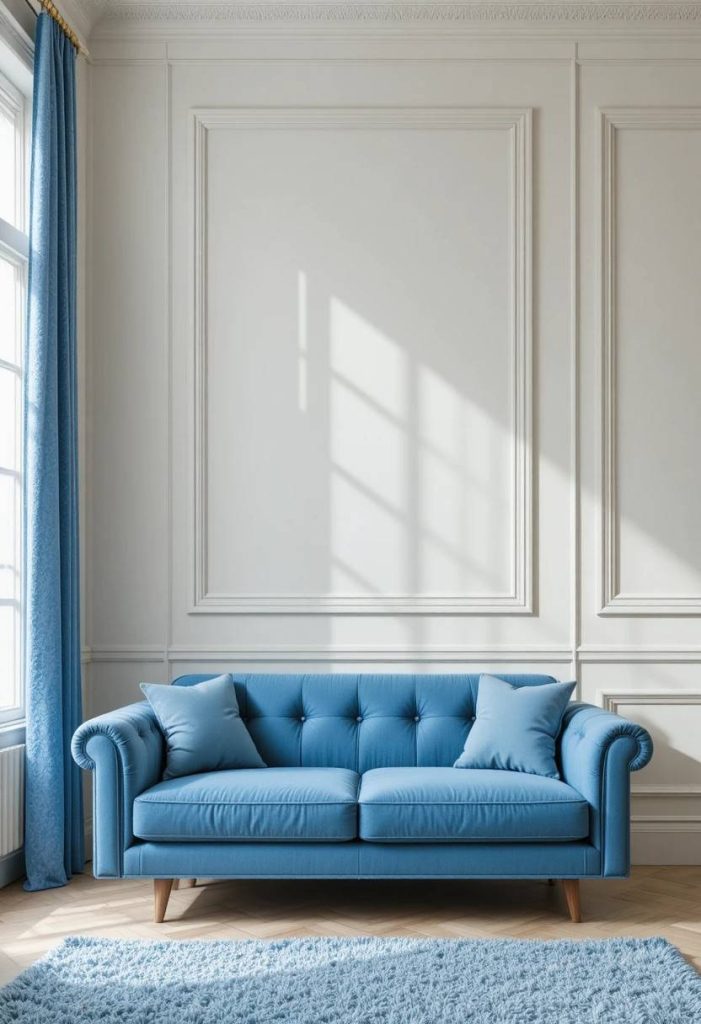
Pale walls are the simplest backdrop for a blue couch, and they let the sofa do all the talking. A soft white, pale grey, or warm greige keeps the room feeling open and fresh, and it makes even a deep navy sofa look crisp rather than heavy. I always test paint samples on the wall next to the sofa, because the blue can change how the wall color reads — a white that looks clean on the chart can turn pinkish beside navy. I paint the largest wall first, live with it for a few days, and then choose cushions to match. If you rent and cannot paint, pale curtains and a light rug give you the same brightening effect.
How to do it: Test three pale paint samples on the wall beside the sofa and view them in daylight and lamplight. Paint the largest wall first, then choose cushions that echo the wall tone. If you cannot paint, use pale curtains and a light rug to brighten the room instead.
15. Add Cozy Throws

A soft throw is the fastest way I know to make a blue couch look inviting — it adds color, texture, and a silent invitation to curl up. I keep two throws in rotation: a chunky knit in cream for winter and a light linen one in a warm neutral for summer. I drape one casually over an arm or the back corner, never folded too neatly, because a relaxed drape looks more welcoming. The throw is also a great place to add a new color without commitment — I have tried sage, blush, and mustard this way. If you love that relaxed, collected feeling, these country living room ideas are full of the same gentle, cozy charm. Wash throws often so they stay soft and fresh.
How to do it: Choose two throws in different weights — one chunky knit, one light linen. Drape one over the sofa arm in a loose fold, and keep the other in a basket nearby. Wash them regularly, and swap colors with the seasons for an easy refresh.
16. Pair With Grey Tones
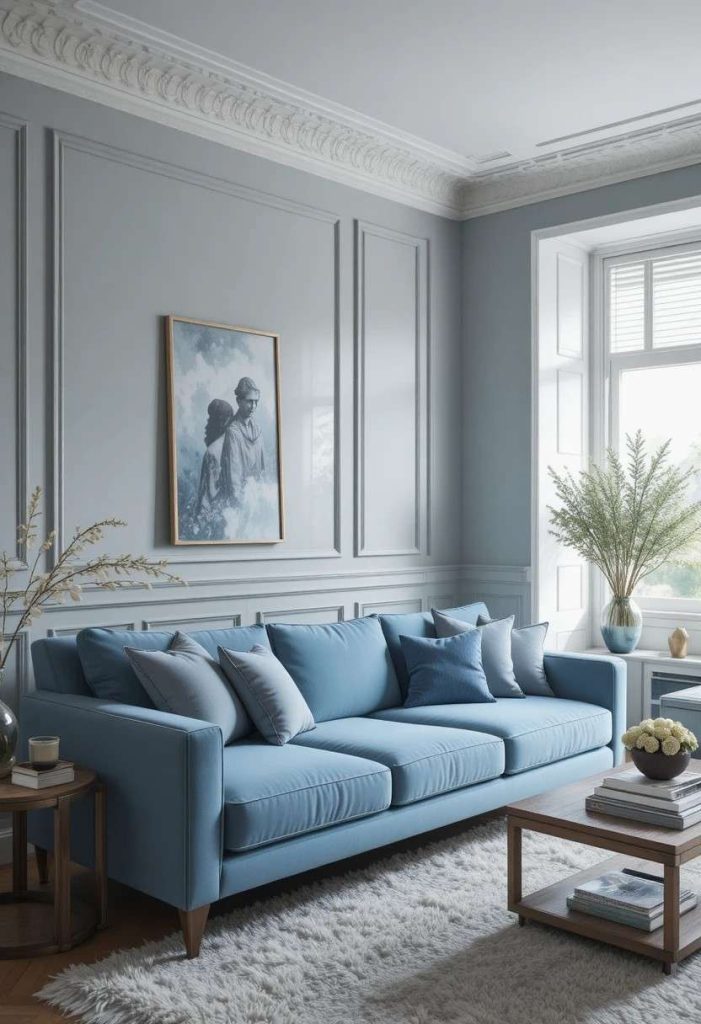
Grey and blue are natural partners, and together they make one of the calmest rooms I know. I use soft grey on the walls or rug, then layer in deeper grey cushions so the blue sofa has a quiet frame around it. The trick is to pick a grey with a warm undertone — a greige or warm grey — because a cold blue-grey can make the whole room feel chilly. I add one warm accent, like a wooden tray or a brass lamp, to keep the palette from feeling flat. This combination is perfect for a reading corner or a room where you want to unwind, and it works with almost any style of furniture.
How to do it: Choose a warm-toned grey for the walls or rug, and layer deeper grey cushions on the sofa. Add one warm wood or brass accent to stop the palette feeling cold. Keep the grey tones close together so the look stays soft and cohesive.
17. Add a Statement Coffee Table
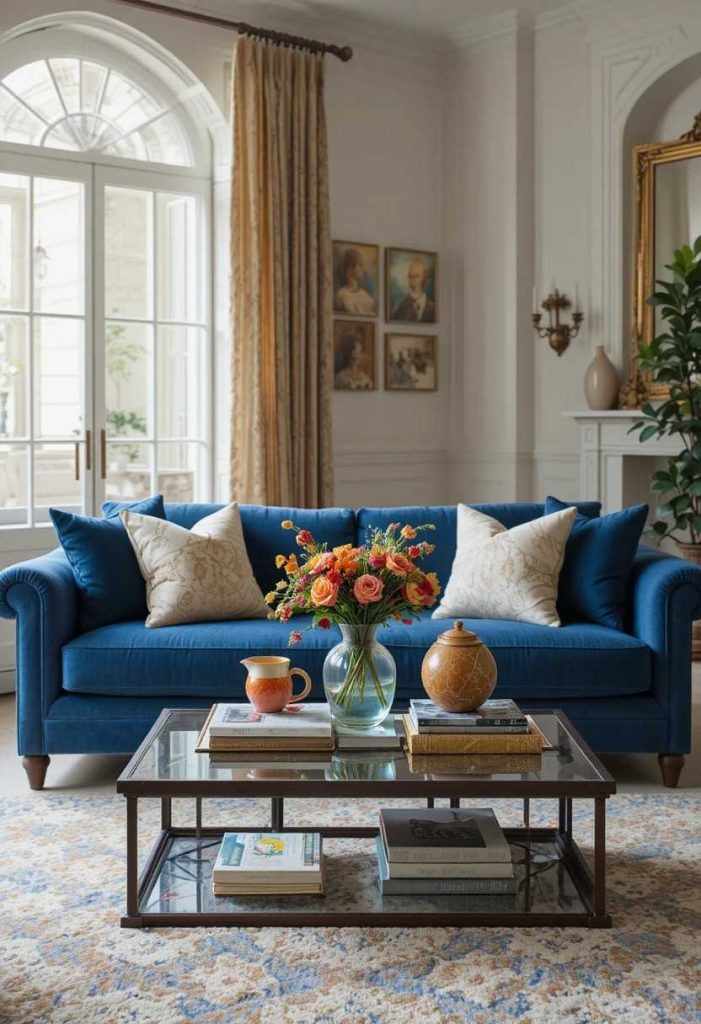
A beautiful coffee table in front of a blue couch does more than hold cups — it anchors the seating and gives the room its center. I look for a table with a warm wood top or a marble surface, because both materials make the blue look richer. Round tables work well in small rooms since they have no sharp corners to bump into, while a long rectangular table suits a big three-seater sofa. I keep the styling simple: a stack of two books, a small vase, and a candle. The table should sit about the same height as the sofa seat, so it is easy to reach without leaning.
How to do it: Measure your sofa and choose a table about two-thirds its length. Place it 14 to 18 inches from the sofa so there is room to walk around it. Style it with three items — books, a vase, and a candle — and leave some empty space so it does not look cluttered.
18. Try a Velvet Blue Couch
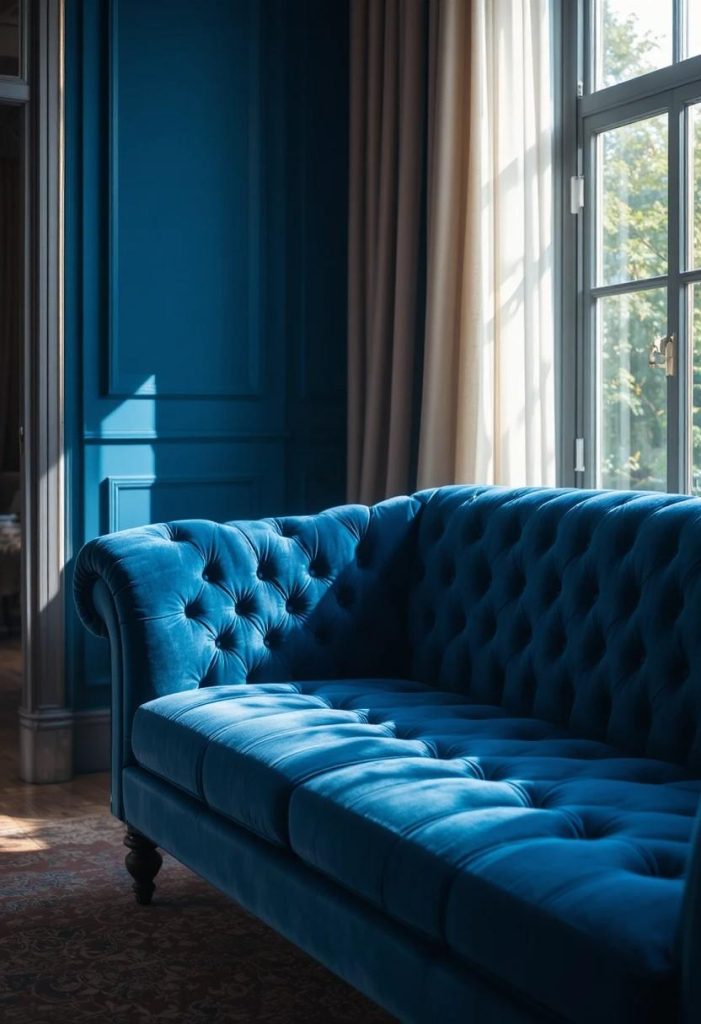
There is something wonderfully luxurious about blue velvet — the fabric catches the light as you move around the room, so the sofa seems to shift between deep navy and bright cobalt. I chose velvet for my own living room because it feels soft to sit on and instantly makes the space feel dressed up. It does need a little care: I brush it weekly with a soft clothes brush and keep a velvet-safe cleaner nearby for spills. If you have pets, choose a performance velvet, which resists claws and cleans more easily. Pair velvet with brass and warm wood for a classic look, or with pale linen for something lighter.
How to do it: Brush velvet weekly with a soft clothes brush, always in the same direction. Blot spills at once with a clean cloth and use a velvet-safe cleaner. Choose a performance velvet if you have pets, and pair it with brass and warm wood for a classic finish.
19. Add Coastal Charm
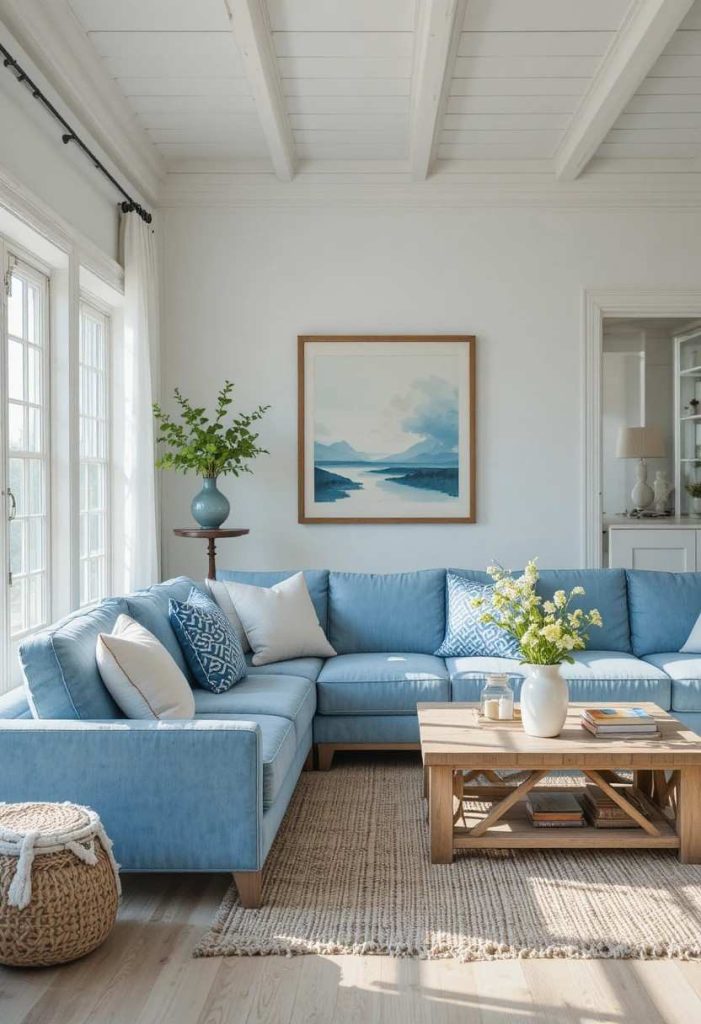
A blue couch is the natural starting point for a coastal living room, and I love how easily the look comes together. I pair the blue with crisp whites, pale driftwood tones, and natural textures like linen and jute, which echo the beach without any themed decor. A striped cushion or two gives a gentle nod to the seaside, and a woven basket holds throws for cool evenings. I avoid anything too literal — no anchors or shells on every shelf — because a few soft references feel more grown-up. The result is a room that feels light, breezy, and calm, like a long afternoon by the sea.
How to do it: Start with white walls and a light rug, then add driftwood-toned wood and linen cushions. Add one or two striped cushions and a woven basket for texture. Keep the palette to blue, white, and sandy neutrals, and skip themed ornaments for a calmer feel.
20. Add Art for Personality
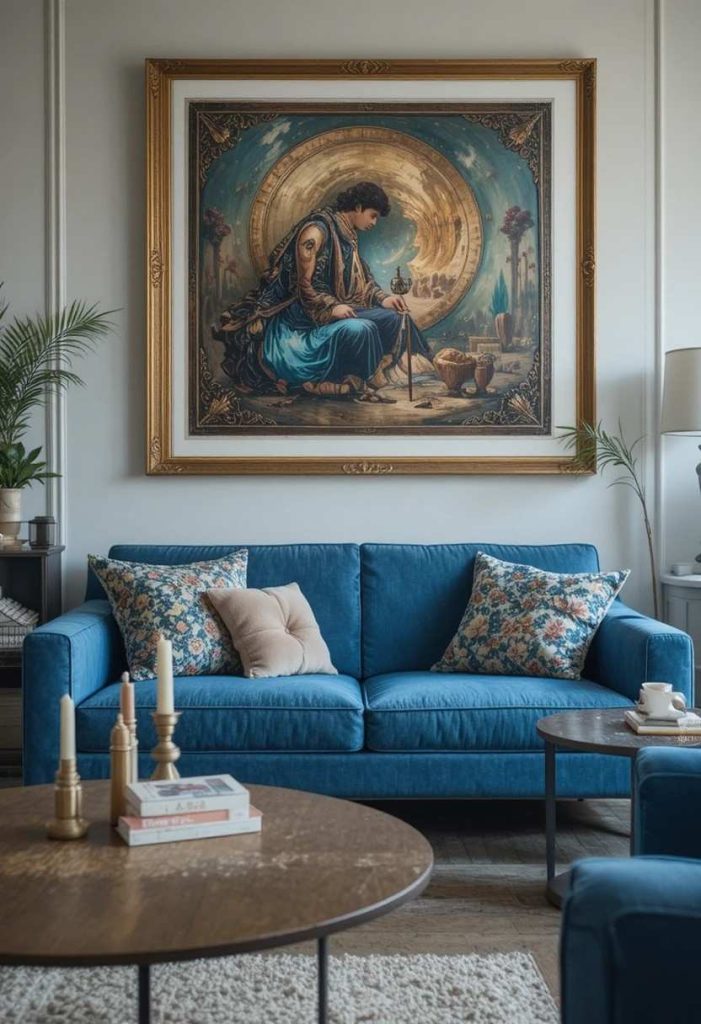
Art is how I make a blue couch feel personal instead of showroom-perfect. A large piece above the sofa draws the eye and ties the room together, and I like art that picks up the blue — a seascape, an abstract with navy strokes, or a print with a touch of the same color. I hang the art low enough to feel connected to the sofa, with its center about eye level when you are sitting down. If one big piece feels too much, a pair of smaller frames works just as well. I also lean a framed print on a sideboard for a relaxed, layered look that I can change whenever I like.
How to do it: Choose art that echoes the sofa’s blue or its accent colors. Hang the center of the piece at seated eye level, about 6 to 8 inches above the sofa back. Lean a second small frame on a sideboard for a layered feel, and swap prints seasonally.
21. Mix Blue With Blush Pink
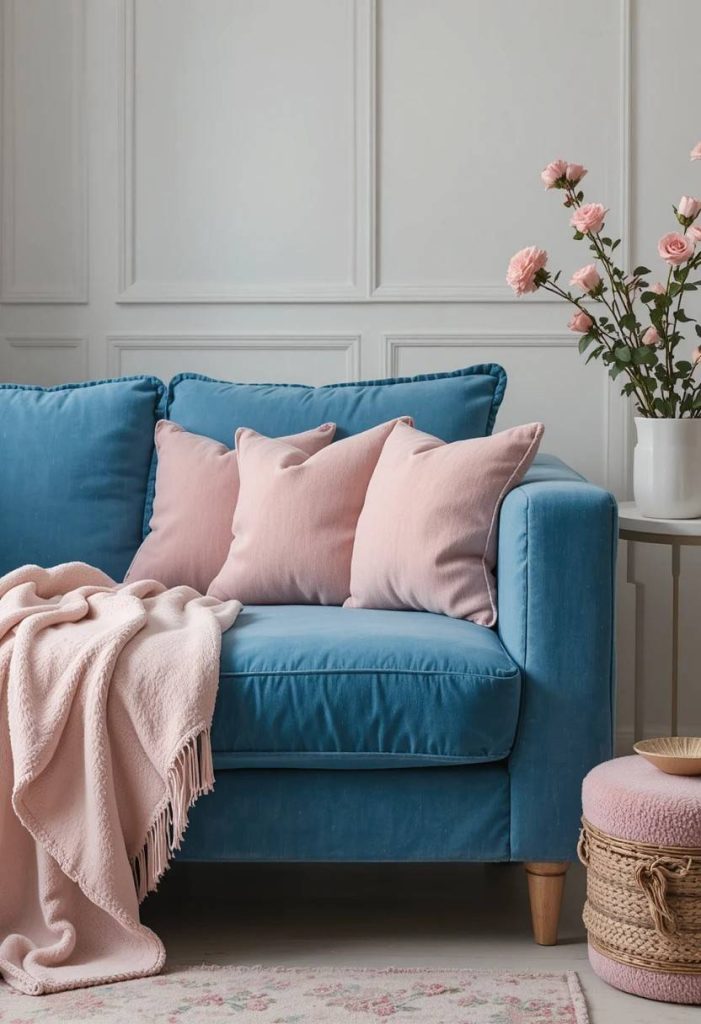
Blush pink is the softest partner for a blue couch, and I love this pairing in rooms where I want warmth without heat. The gentle pink takes the edge off the blue, and together they feel romantic and fresh. I use blush in small doses — two cushions, a throw, or a vase of pink roses — so the room stays calm rather than sugary. A warm wood or brass accent keeps the pink from feeling too sweet. This is a lovely choice for a bedroom-style living room or a reading nook, and it works especially well with a pale or powder blue sofa. If pink is not your color, a soft peach gives a similar warmth.
How to do it: Add blush through two cushions and one small decor piece, like a vase or throw. Keep the pink to about a fifth of the room and pair it with warm wood or brass. Try soft peach instead if blush feels too sweet for you.
22. Keep It Airy and Bright
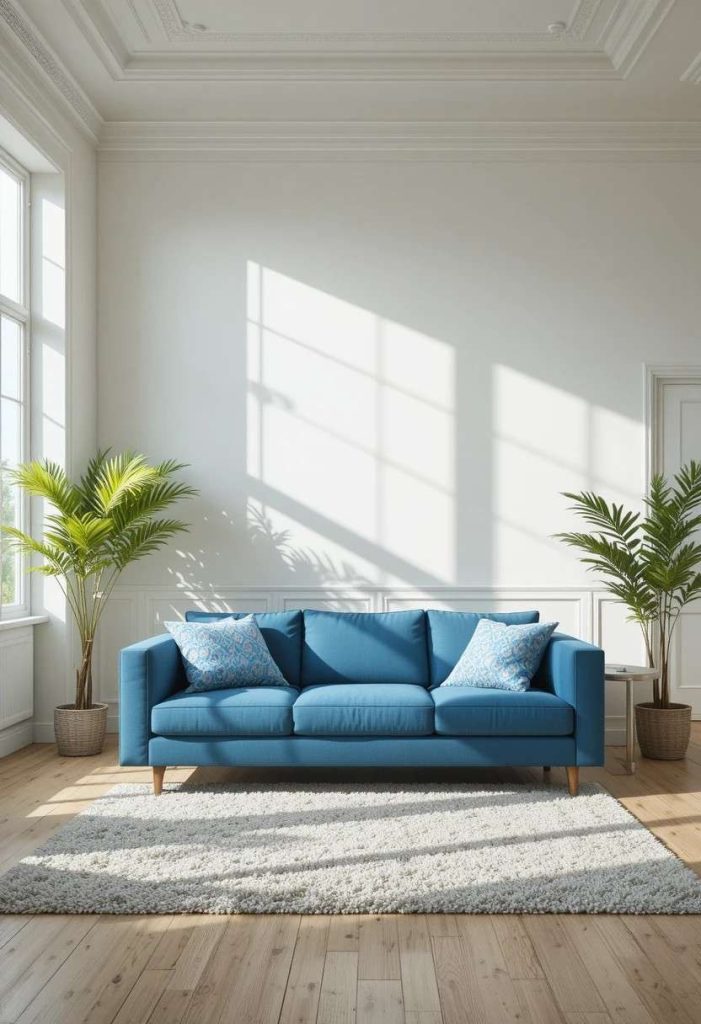
A blue couch can anchor a room without making it feel dark, as long as I keep the rest of the space light and open. I use pale walls, sheer curtains, and a light rug, and I leave breathing room around the sofa instead of pushing furniture against every wall. Mirrors help enormously — one leaning mirror opposite a window bounces daylight across the room. I also keep the coffee table and side tables slim and leggy so light flows underneath them. In my living room, this airy approach makes even a deep navy sofa feel fresh, and the room stays bright from morning to evening.
How to do it: Use pale walls, sheer curtains, and a light rug around the sofa. Leave a few inches of space behind the sofa so the room can breathe. Hang or lean a mirror opposite a window to bounce light, and choose slim, leggy tables that let light flow beneath them.
23. Add a Floor Lamp for Warmth
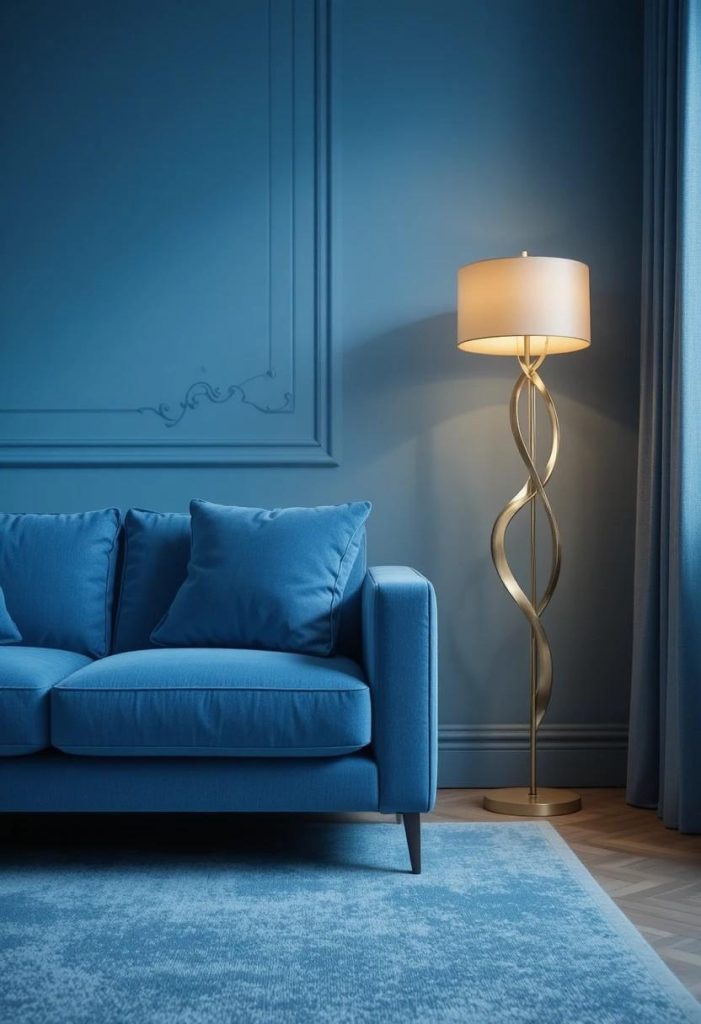
A tall floor lamp beside a blue couch is one of my favorite small upgrades because it changes how the whole corner feels. The warm light softens the blue in the evening, and the lamp itself becomes a slim, elegant accent. I look for a lamp with a linen or fabric shade, which glows gently, and a warm bulb inside. The lamp should stand a little taller than the sofa back so the light falls over the seating, not into your eyes. I place mine on the side where I read, with the switch easy to reach, and I keep a small table nearby for a book and a cup of tea.
How to do it: Choose a floor lamp slightly taller than the sofa back with a fabric shade and a warm bulb. Place it on your reading side, within easy reach of the switch. Add a small side table beside it for a book and a cup of tea.
24. Try a Monochrome Blue Look
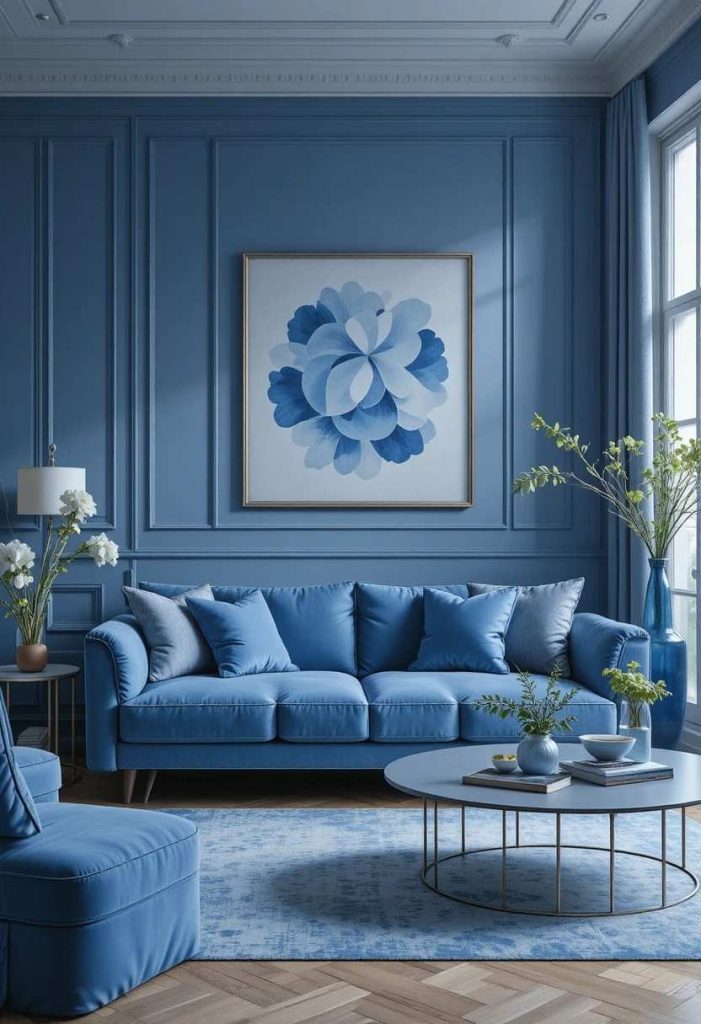
Layering different shades of blue is a brave choice that always looks intentional when I do it well. I start with the sofa as the mid-tone, then add deeper navy cushions and paler sky-blue throws, so the eye moves gently across the blues. Texture is what keeps a monochrome room from feeling flat — I mix velvet, linen, and knit so each blue reads differently. One warm accent is essential: a wooden tray, a brass lamp, or a cream cushion breaks up the blue and keeps the room cozy. I love this look in a small room because the single-color palette makes the space feel calm and unified.
How to do it: Let the sofa be the mid-tone blue, then add one deeper and one paler blue through cushions and throws. Mix textures — velvet, linen, knit — so each shade reads differently. Add one warm wood or brass accent to keep the room cozy.
25. Add Fresh Flowers
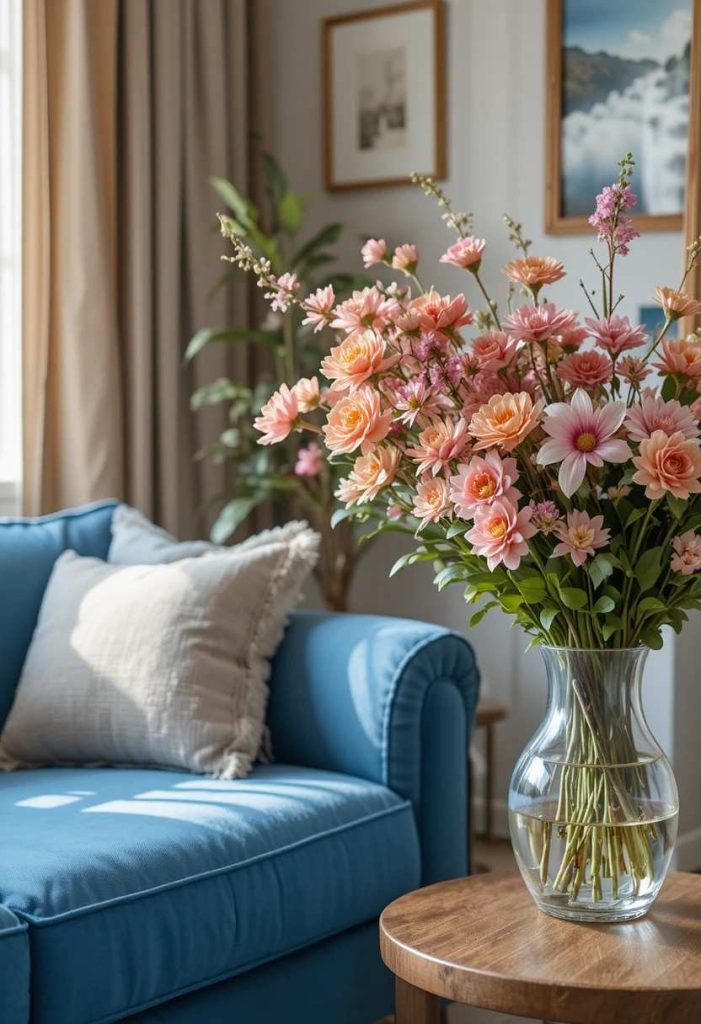
A vase of fresh flowers beside a blue couch is a small gesture that changes the whole room. The soft blooms bring color, life, and a gentle scent, and they look beautiful against the blue. I keep it simple: a small bunch of white or blush flowers in a clear vase on the side table, refreshed every week. In spring I use tulips, in summer I love garden roses, and in winter a few green stems still lift the room. If fresh flowers are not practical, a good faux arrangement in a ceramic vase gives the same lift with no upkeep. I always trim the stems and change the water so the flowers last longer.
How to do it: Place a small vase of white or blush flowers on the side table beside the sofa. Trim the stems, change the water every two days, and refresh the bunch weekly. Choose seasonal blooms, or use a good faux arrangement in a ceramic vase for no upkeep.
26. Pair With a Patterned Accent Chair
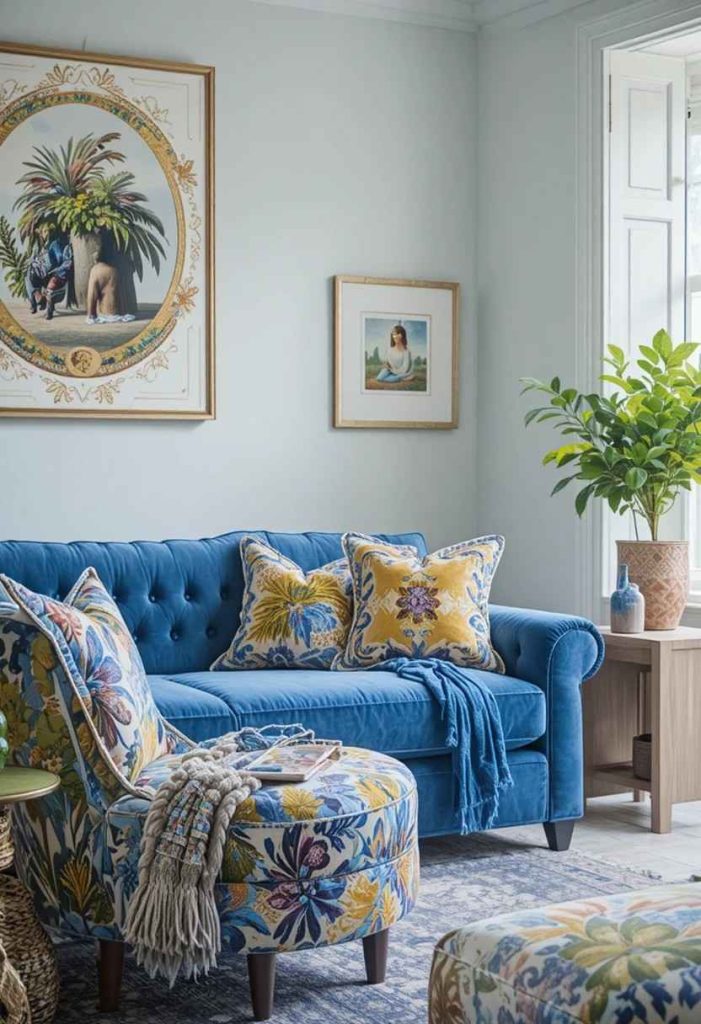
A patterned accent chair beside a blue couch is my favorite trick for bringing personality into a room without overwhelming it. The chair becomes a second focal point, and the pattern gives the eye something to enjoy. I choose a pattern that shares one color with the sofa — a navy stripe, a blue floral — and keep the chair’s other colors soft and neutral. The chair should be a similar scale to the sofa, not too big or too small, and I angle it slightly toward the sofa so the seating feels like a conversation. A small cushion on the chair ties the two pieces together. This pairing makes the room feel designed, but still relaxed and welcoming.
How to do it: Choose a chair pattern that shares the sofa’s blue and keep its other colors neutral. Pick a chair of similar scale and angle it slightly toward the sofa. Add a cushion that echoes the sofa color to tie the two pieces together.
27. Make It Personal and Inviting
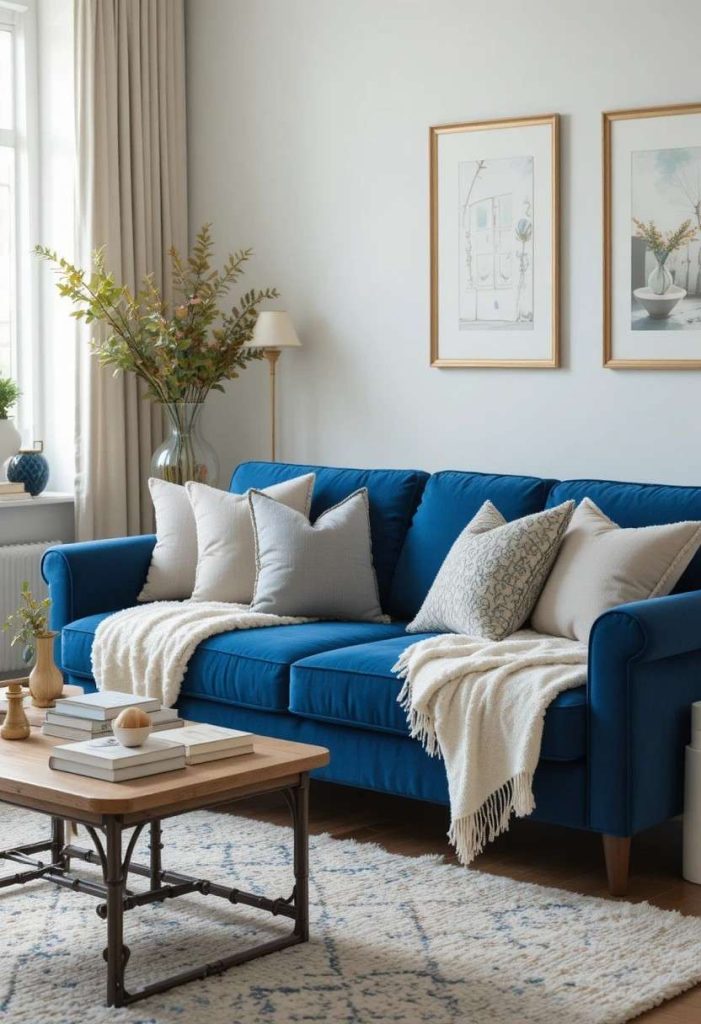
After all the styling, the thing that makes a blue couch living room feel like home is the personal touch. I fill my shelves with favorite books, a framed photo from a trip we loved, and a handmade bowl from a local market. These are the pieces that start conversations and make guests feel welcome. I keep the personal items to a few well-chosen favorites rather than covering every surface, so the room still feels calm. A cozy throw, a well-loved book left on the sofa arm, and a candle ready to light — these small, everyday details are what turn a stylish room into a place where you truly love to spend time.
How to do it: Pick three or four favorite items — a book, a photo, a handmade piece — and give each one a clear spot. Leave the rest of the surfaces calm so the favorites stand out. Finish with a throw and a candle within reach, ready for a quiet evening.
Frequently Asked Questions
What shade of blue is best for a couch?
It depends on your room and how you live in it. Deep navy is elegant, hides marks well, and suits larger rooms with good light. Mid-blue and denim tones feel relaxed and work in family rooms. Powder blue is soft and airy, and it is lovely in small or bright rooms, though it shows marks more easily. I always suggest ordering fabric swatches and looking at them in your room’s daylight before you decide.
What colors go well with a blue couch?
Blue is wonderfully easy to pair. Warm whites and creams keep it fresh, while warm woods and brass add warmth and a touch of glamour. Soft neutrals like beige and greige make a calm backdrop, and earthy accents such as terracotta and mustard bring cozy contrast. For a bolder look, try blush pink, sunny yellow, or a second shade of blue. I have even seen deep navy work beautifully outside the living room, and these navy blue kitchen cabinet ideas show how the color can anchor a whole kitchen.
Can a blue couch work in a small living room?
Yes, and I think it can be a wonderful choice. Choose a sofa with slim arms and visible legs so the floor shows beneath it, and keep the walls and rug pale so the room feels open. A powder blue or mid-blue sofa feels lighter than a deep navy in a small space. Add a mirror opposite the window to bounce light around, and keep the coffee table slim and leggy so the room stays airy.
What fabric is best for a blue couch, and how do I clean it?
For busy homes, I recommend a performance fabric or a tight-weave linen blend, which resists stains and is easy to spot-clean. Velvet looks luxurious and is surprisingly hard-wearing, but it needs regular brushing. For cleaning, vacuum weekly with an upholstery attachment, blot spills at once with a clean cloth, and check the care label before using any cleaner. A washable slipcover is a lifesaver if you have kids or pets.
How do I keep a blue couch from making the room feel cold?
Balance the cool blue with warmth in three places: warm wood furniture, warm lighting, and warm textiles. A wooden coffee table, a brass lamp, and a chunky knit throw in cream or caramel will warm the room at once. Choose warm white bulbs (around 2700K) for every lamp near the sofa, and add a natural-fiber rug underfoot. A few earthy accents, like terracotta cushions, finish the cozy feeling.
Your Blue Couch Living Room Checklist
Print this list and tick off each step as you style your blue couch living room.
- ☐ Choose your blue shade — navy for drama, powder blue for airy rooms
- ☐ Test fabric swatches in your room’s daylight
- ☐ Pair the sofa with warm wood furniture
- ☐ Add crisp white or cream cushions for contrast
- ☐ Layer soft neutrals like beige and greige
- ☐ Bring in greenery or fresh flowers
- ☐ Add one brass or gold accent
- ☐ Choose a light rug large enough for the sofa’s front legs
- ☐ Use warm white bulbs (2700K) in lamps near the sofa
- ☐ Drape a cozy throw over one arm
- ☐ Hang art that echoes the sofa’s blue
- ☐ Add a floor lamp for warm evening light
- ☐ Mix in natural textures like rattan, jute, and linen
- ☐ Finish with three personal touches that make the room yours
A Final Gentle Thought
Whichever ideas speak to you, a blue couch brings a calm, characterful charm that pairs beautifully with so many colours and styles. Balance it with warmth, light, and a few personal accents, and the room will feel both stylish and deeply welcoming. Choose the touches that bring you joy, and the space will become a true reflection of you. May your living room always be a calm, inviting haven where you love to gather, rest, and simply be.