15 Living Room Dining Room Combo Layout Ideas That Actually Work in Real Homes
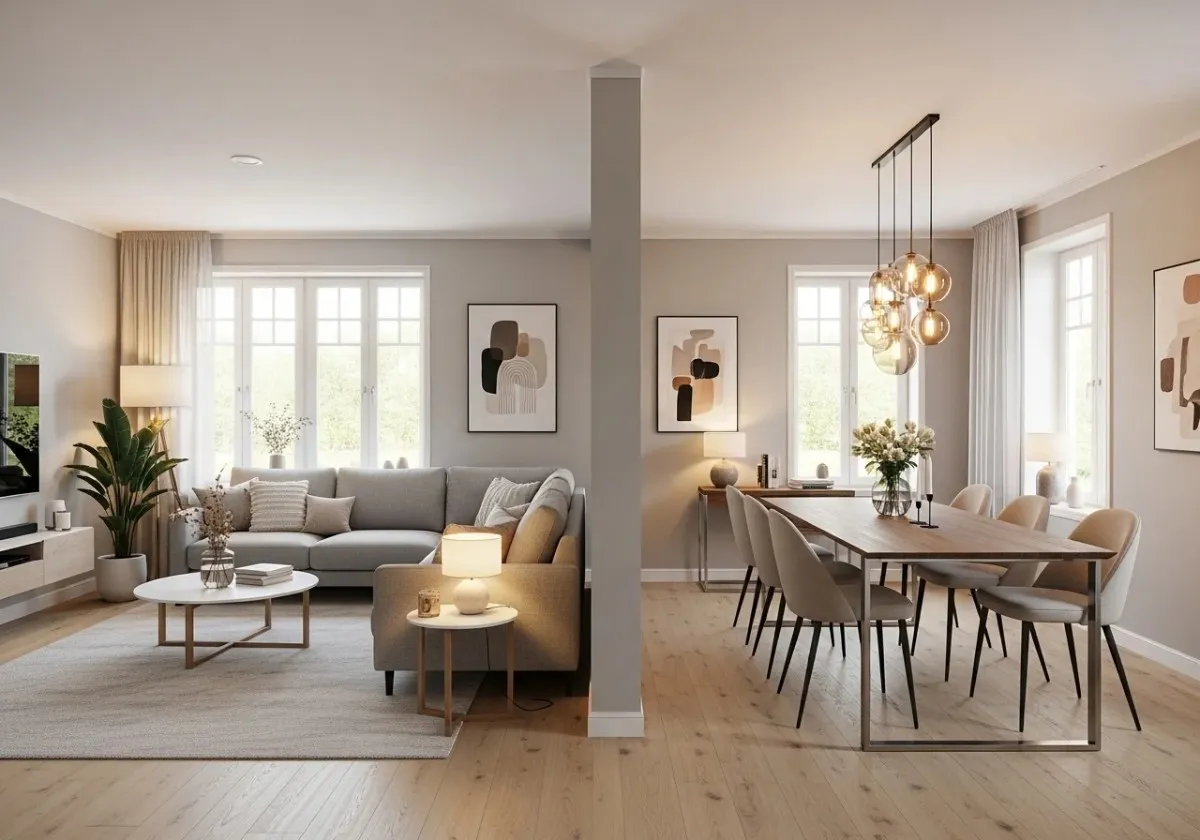
You love your home — but that awkward open-plan space? Not so much. You’re not sure where the living room ends and the dining room begins, and every layout attempt feels off. Sound familiar? If you’re searching for living room dining room combo layout ideas that actually work, you’re in the right place. These 15 ideas are practical, beautiful, and designed for real life — not a staged showroom.
1. Define Zones With a Statement Area Rug
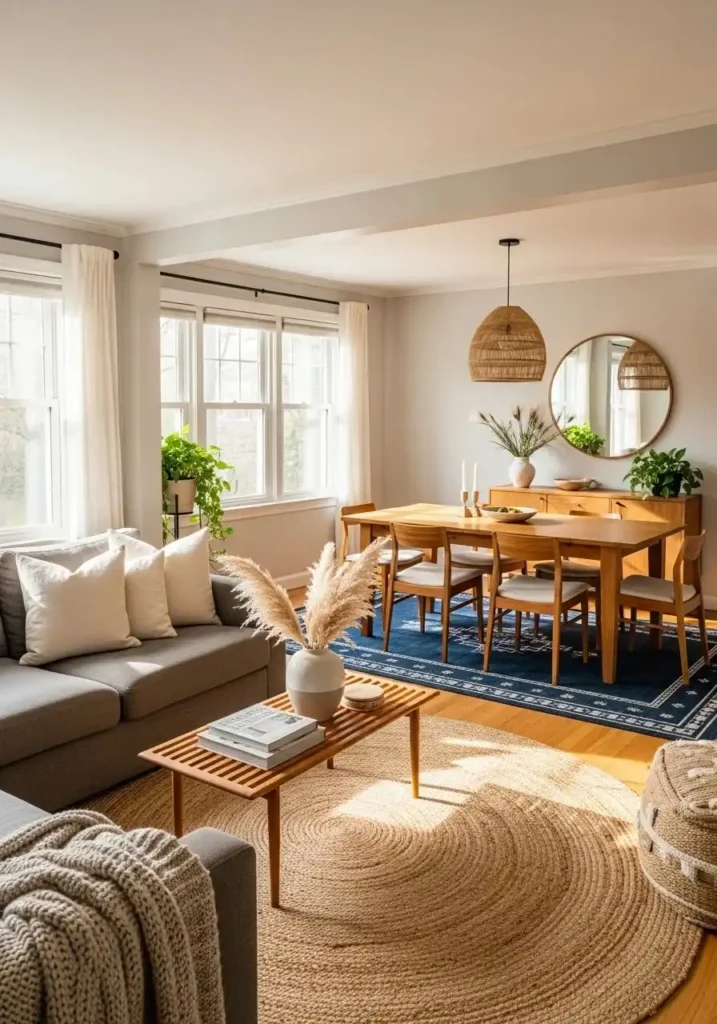
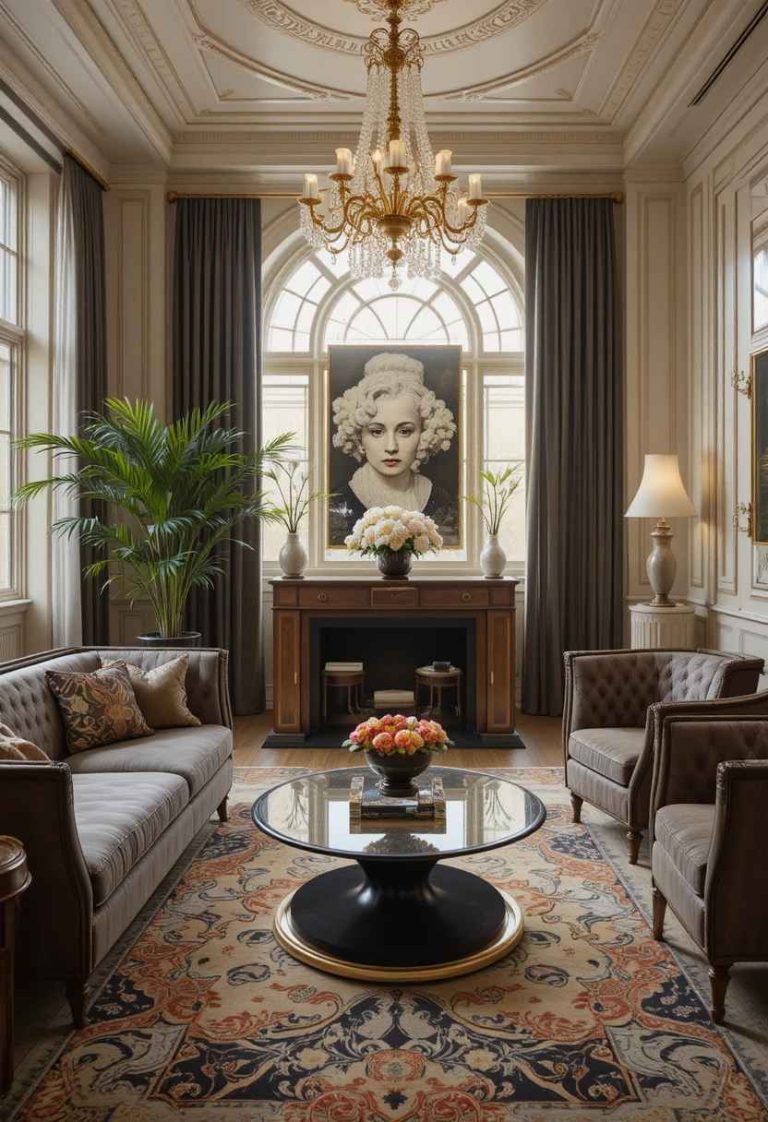
One of the easiest ways to create visual separation in a combined space is with two distinct rugs. Place a warm ivory jute rug under the sofa and a deep navy geometric rug beneath the dining table. Each rug anchors its zone, giving both areas a sense of purpose without walls. The contrast in texture — chunky natural fiber versus flat-weave wool — adds depth and dimension. Your eye reads them as two separate rooms, even in the same open space.
Tip:
Choose rugs in the same color family but different patterns to keep the look cohesive.
2. Use a Sofa as a Room Divider
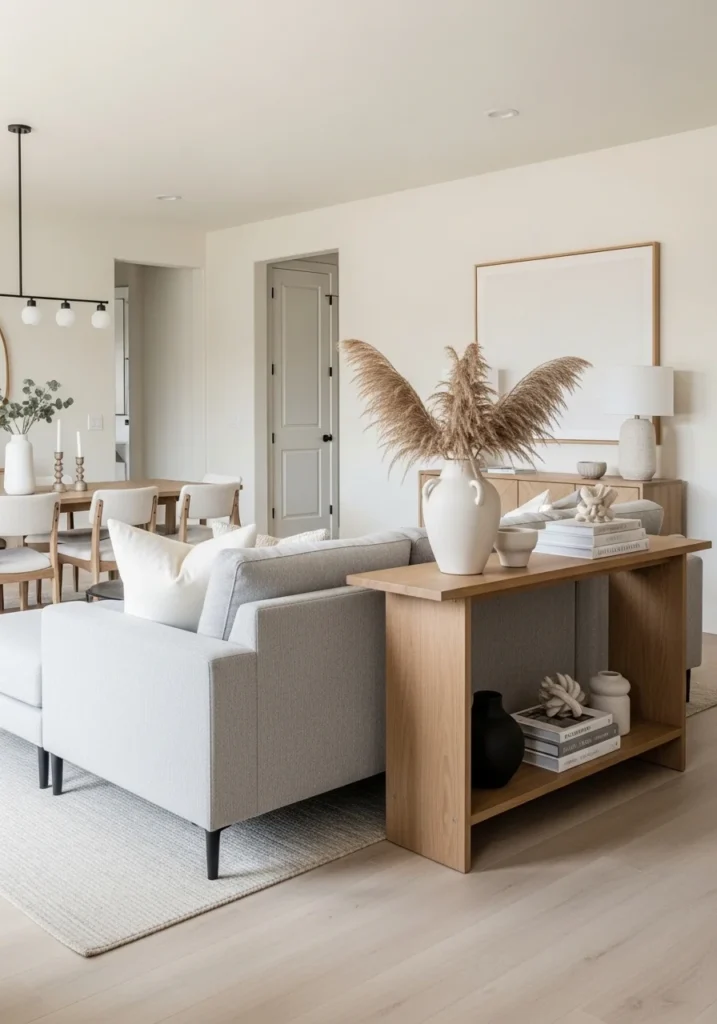
Float your sofa away from the wall and position it with its back facing the dining area. This simple move creates an invisible boundary between the two zones. A low-profile sofa in warm camel leather or soft sage linen works beautifully for this. The back of the sofa becomes an architectural feature — add a slim console table behind it for a lamp and a few styled objects. It feels intentional, grown-up, and surprisingly spacious.
Tip:
Keep the sofa back height under 35 inches so it doesn’t visually chop the room in half.
3. Layer Lighting to Set the Mood in Each Zone
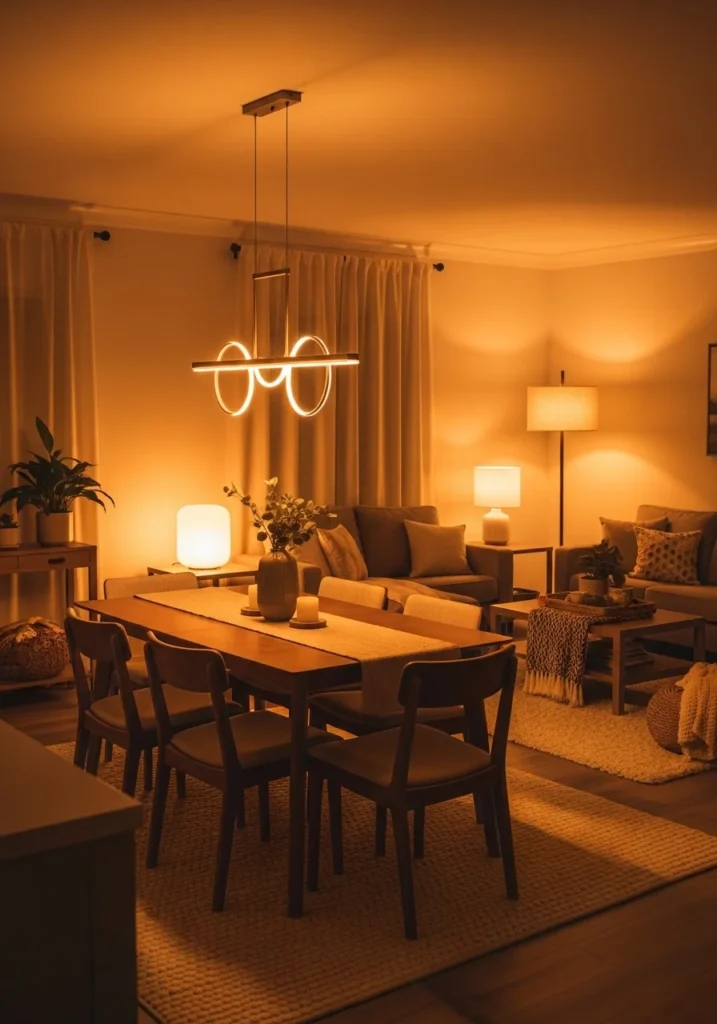
Lighting is the most underrated design tool in a combo space. Hang a statement pendant light — think aged brass or rattan — directly over the dining table to mark it as its own destination. In the living zone, go warm and layered: a floor lamp in the corner, table lamps on side tables, and soft recessed lighting overhead. The result? Each area has its own mood and atmosphere. Dinner feels intimate; the lounge feels relaxed. Different lights, different feelings — same room.
Tip:
Put both zones on separate dimmer switches for full control.
4. Embrace a Cohesive Neutral Color Palette
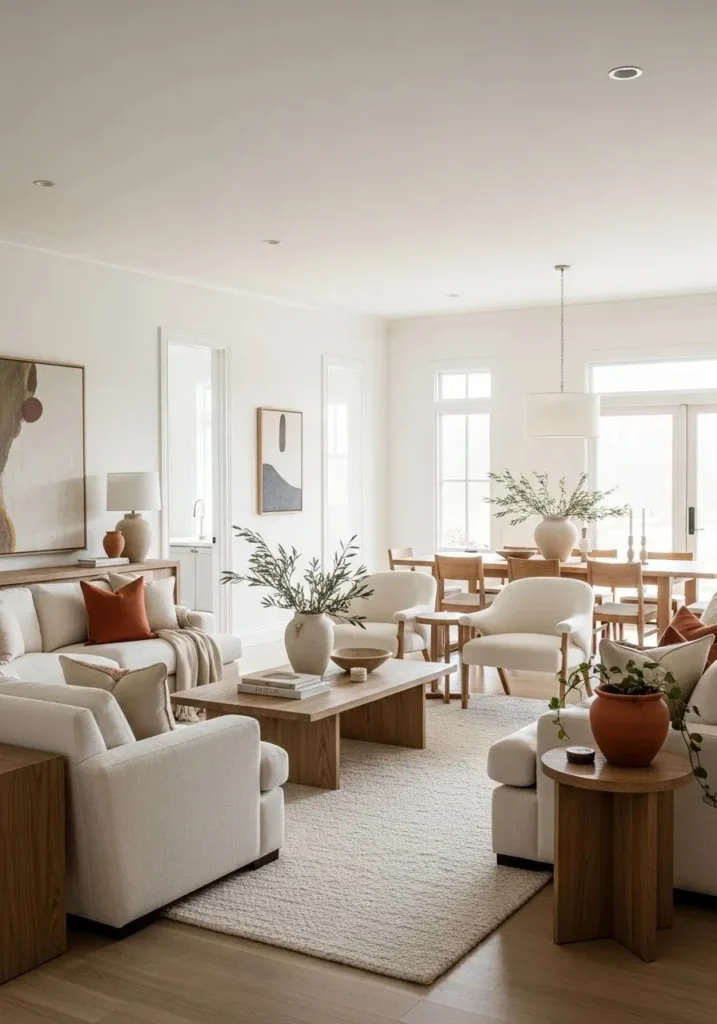
When a living room dining room combo layout flows into one open space, a unified color palette makes everything feel curated rather than cluttered. Try warm white walls, creamy upholstery, and pale oak wood tones throughout. Then add character through accents — terracotta cushions in the lounge, a olive-green table runner in the dining area. The base palette ties both zones together, while the accents give each space its own personality without fighting each other.
Tip:
Repeat at least one accent color in both zones to create visual flow.
5. Try an L-Shaped Layout for Natural Flow
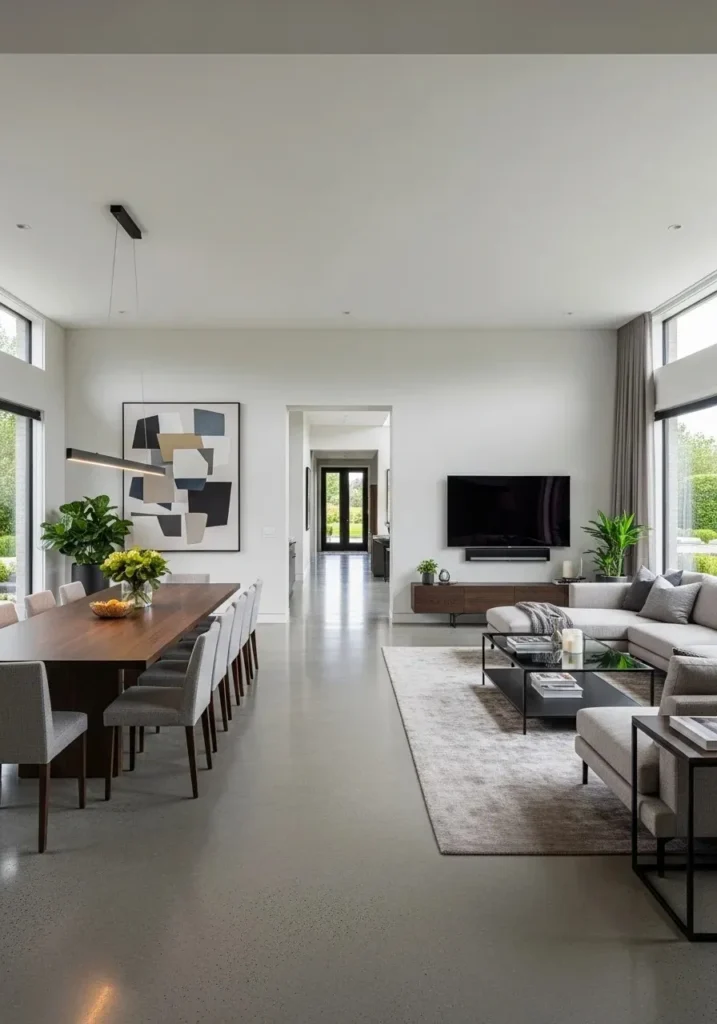
In a rectangular room, place your dining table at one end and your living furniture in an L-shape arrangement at the other. The L-shape — sofa plus an accent chair — naturally creates a social seating area without blocking the path to the dining zone. This layout maximizes every square foot and keeps traffic flowing smoothly. Use matching wood tones in both the dining chairs and your coffee table to visually stitch the two areas together into one harmonious composition.
Tip:
Leave at least 36 inches of walking space between the sofa and dining chairs.
6. Add a Bookshelf as a Soft Partition
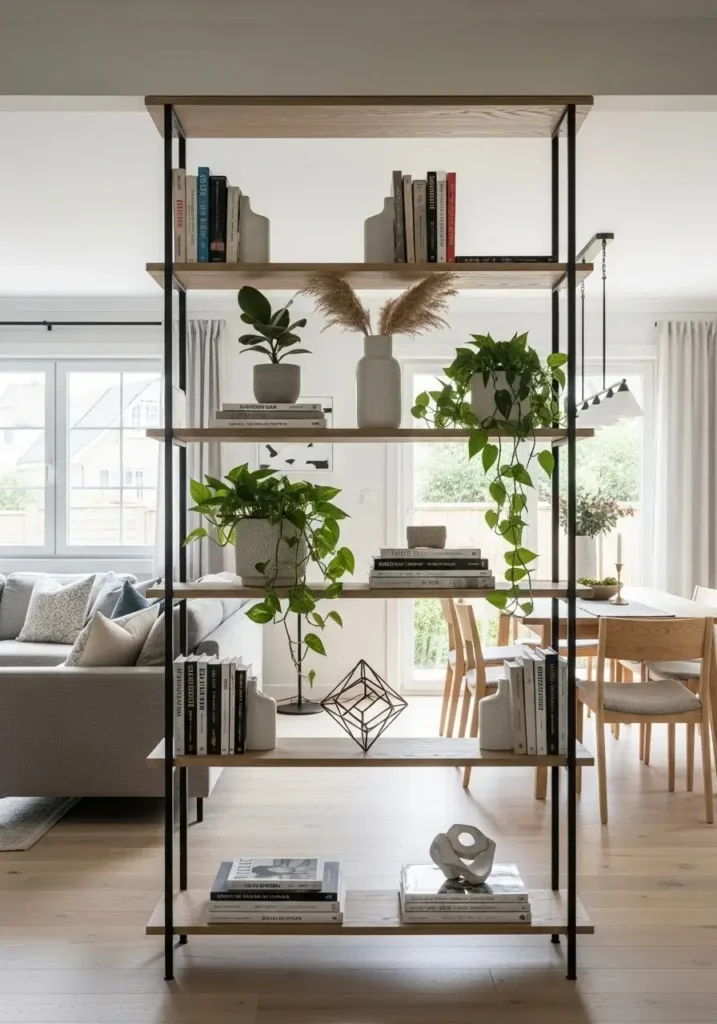
An open-back bookshelf — think BILLY-style but styled beautifully — can act as a graceful partition between your two zones. Arrange yours in a mix of books, trailing pothos plants, ceramic vases, and a candle or two. The gaps in the shelving keep the space airy and connected while still signaling “these are two different areas.” In a darker room, choose a shelf in warm white. In a brighter space, go for deep walnut or black to add drama and definition.
Tip:
Secure tall bookshelves to the wall for safety, especially in households with kids.
7. Play With Ceiling Treatments to Create Visual Rooms
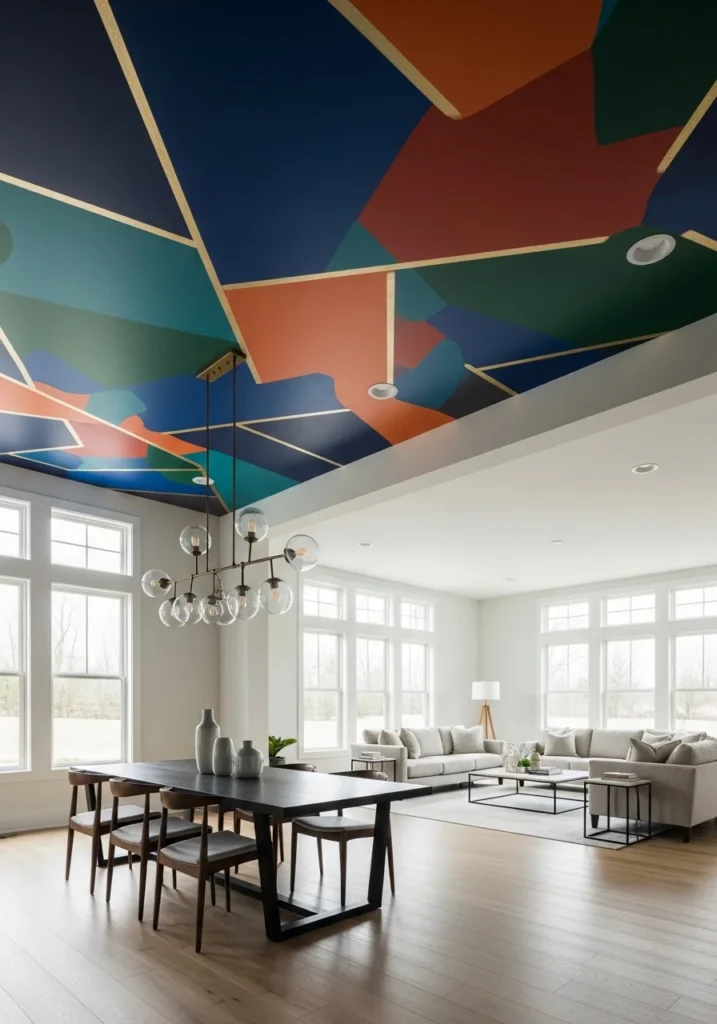
Here’s a design secret: you can create the feeling of separate rooms without a single wall — just look up. A wooden beam, a tray ceiling, or even a painted ceiling in a contrasting tone above the dining area instantly defines it as its own space. Try painting the dining zone ceiling a dusty terracotta while the rest stays crisp white. Warm, unexpected, and incredibly effective. Add a vintage-style pendant light to that colored ceiling and the zone feels like it was always meant to be there.
Tip:
Use the same color on the ceiling and one accent wall to keep the look grounded.
8. Use Matching Furniture Legs to Unify the Space
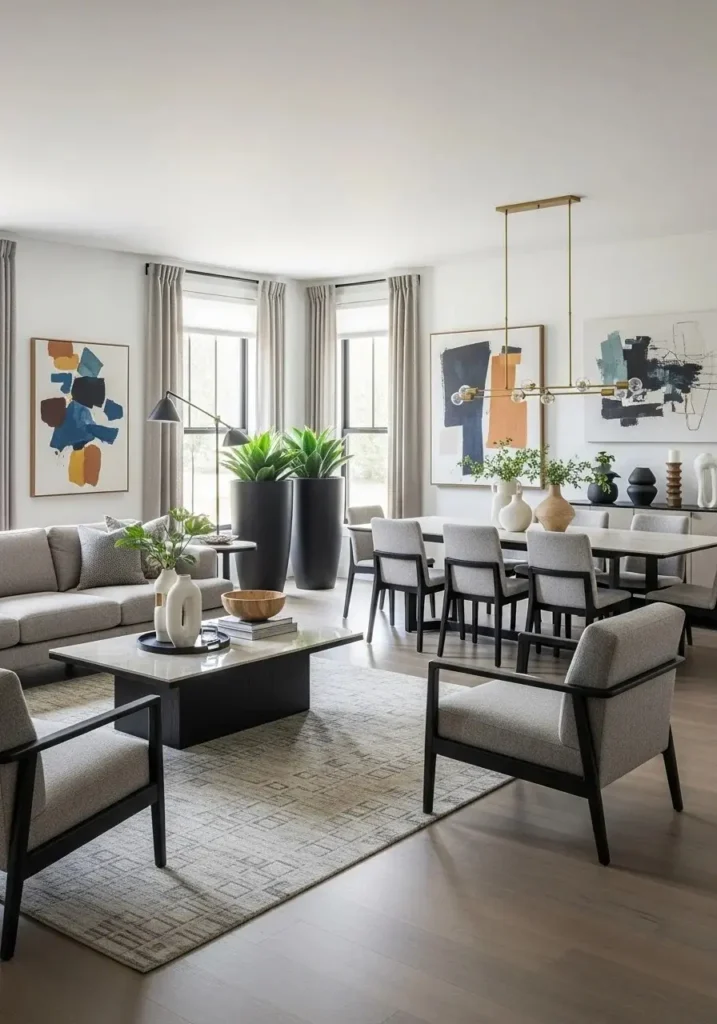
This small detail makes a big difference. When your coffee table, dining chairs, and side tables all share the same leg finish — say, brushed gold, matte black, or natural wood — the entire room reads as one considered design. It’s the kind of detail that makes guests say “this space feels so put together” without quite knowing why. You don’t need to match every piece of furniture, just the metal or wood accents. This trick works especially well in eclectic or collected-over-time interiors.
Tip:
Spray-paint old furniture legs to match new pieces — it takes under an hour.
9. Go Round With Your Dining Table
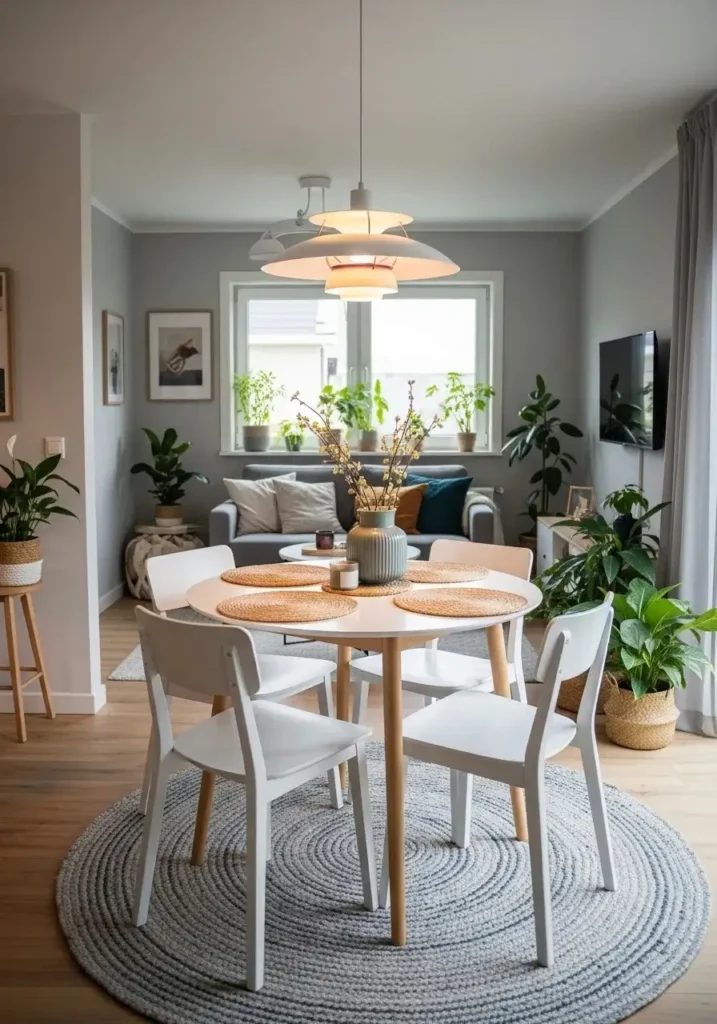
A round dining table is one of the smartest choices for combo spaces. It takes up less visual weight than a rectangular table, allows easier flow around it, and feels more social and intimate. Pair a round white marble table with rattan chairs for a fresh, modern-organic vibe. Or choose a dark walnut round table with upholstered chairs in a dusty pink velvet for something more moody and warm. Either way, the round shape softens the boundary between dining and living areas naturally.
Tip:
A 48-inch round table comfortably seats four and works well in tighter combos.
Also More Amazing In the Below For You More:
20 Dining Room Decor Ideas to Create a Warm and Stylish Space
20 Green Dining Room Ideas to Create a Fresh and Inviting Space
21 Colorful Dining Room Ideas to Make Your Space Feel Alive and Joyful
20 Moody Dining Room Ideas That Feel Bold, Cozy, and Unforgettable
10. Incorporate a Bench for Flexible Seating
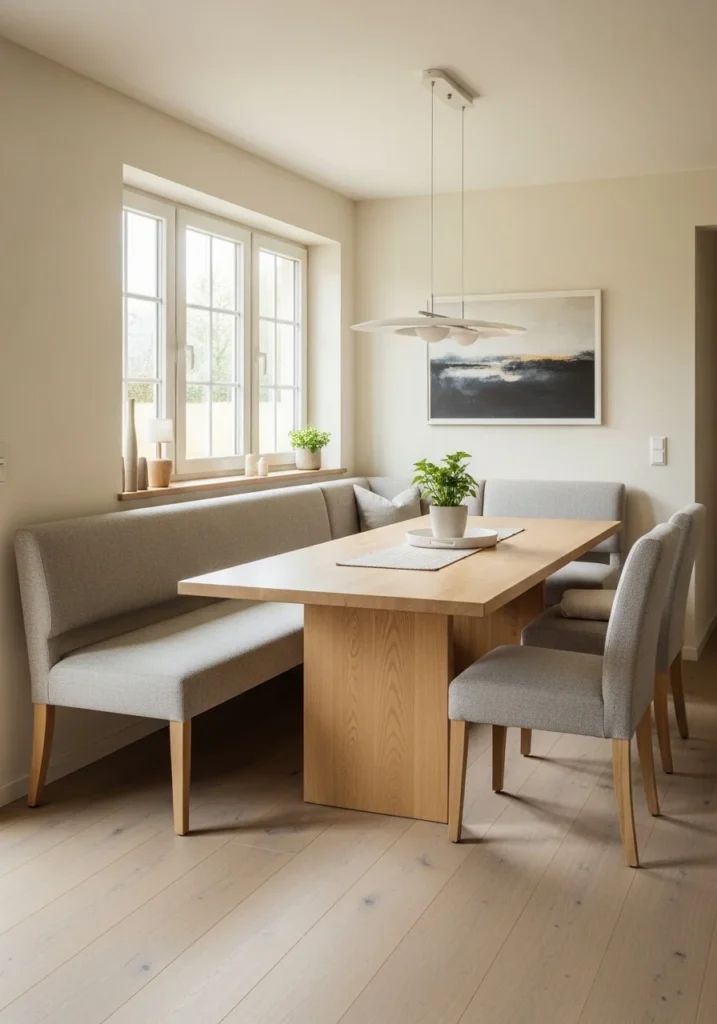
A long upholstered bench along one side of your dining table does double duty brilliantly. During dinner, it seats guests. On a lazy Sunday, it becomes extra perching space for the living room when you have people over. Choose a bench in a bouclé cream fabric or worn tan leather — something tactile and inviting. Tuck it fully under the dining table when not in use to keep the pathway clear. It’s one of those quietly genius multi-purpose solutions that makes small combo spaces feel effortlessly managed.
Tip:
Add a few scatter cushions on the bench to make it feel more lounge-like.
11. Hang Gallery Walls to Anchor Each Zone
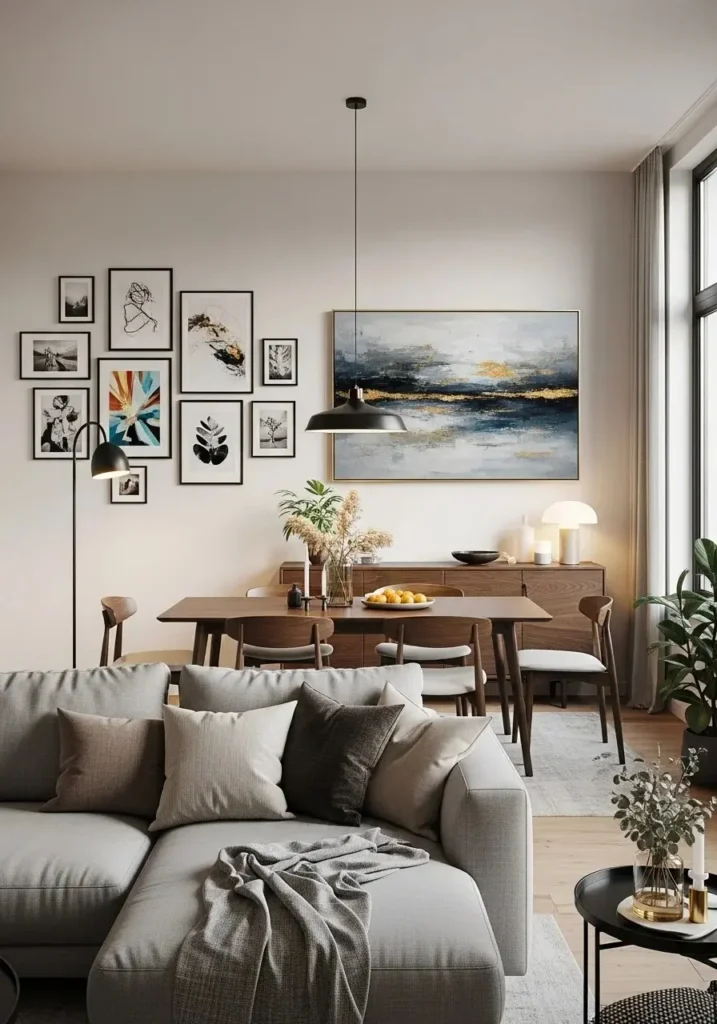
Art placement is one of the most powerful ways to say “this is its own space.” Create a gallery wall above your sofa — a mix of black-and-white photography, a mirror, and a few abstract prints. Then hang a single large-scale artwork above a sideboard in the dining zone. Two distinct art moments tell your eye that these are two rooms sharing one space. The contrast in approach — gallery cluster versus solo statement — reinforces the separation without any architectural intervention whatsoever.
Tip:
Use the same frame color across both art arrangements to keep the overall look tied together.
12. Bring in Plants as Natural Zone Dividers
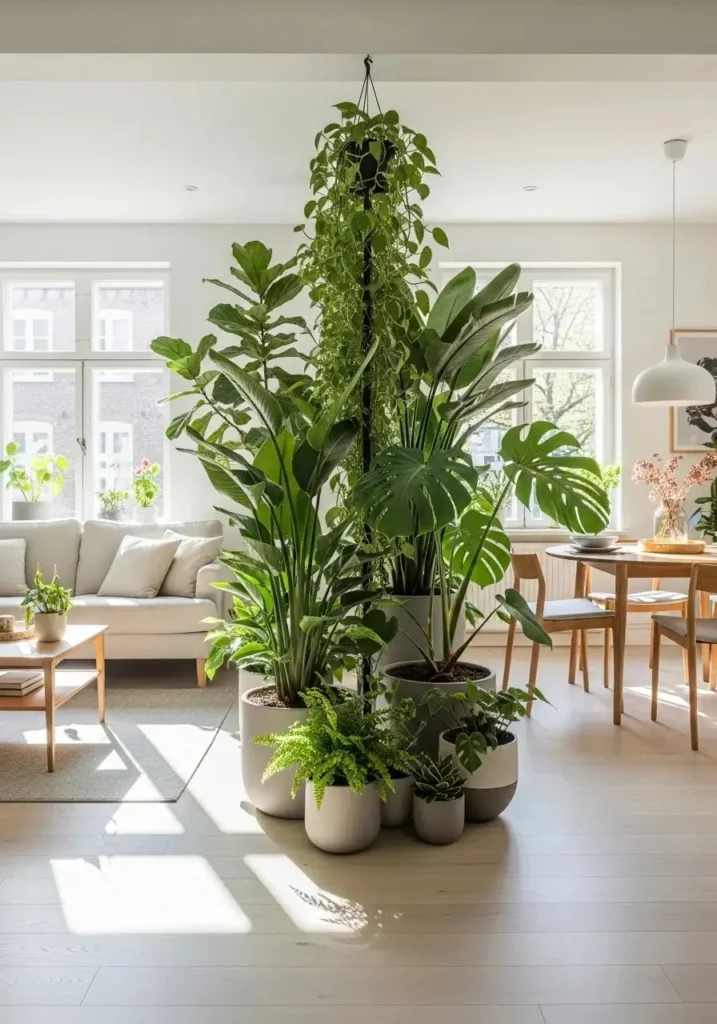
A cluster of tall indoor plants — think fiddle leaf figs, olive trees, or trailing pothos on a high shelf — can create a lush, living barrier between your zones. Group three plants of varying heights at the border between your dining and living areas. The greenery adds texture, warmth, and life while gently marking where one zone ends and another begins. It’s soft, organic, and works in every aesthetic from boho to minimalist. Plus, plants genuinely make people feel calmer and happier at home.
Tip:
Use matching pots in one neutral tone — terracotta, white, or black — to keep the plant cluster looking intentional.
13. Choose a Dining Table With Storage
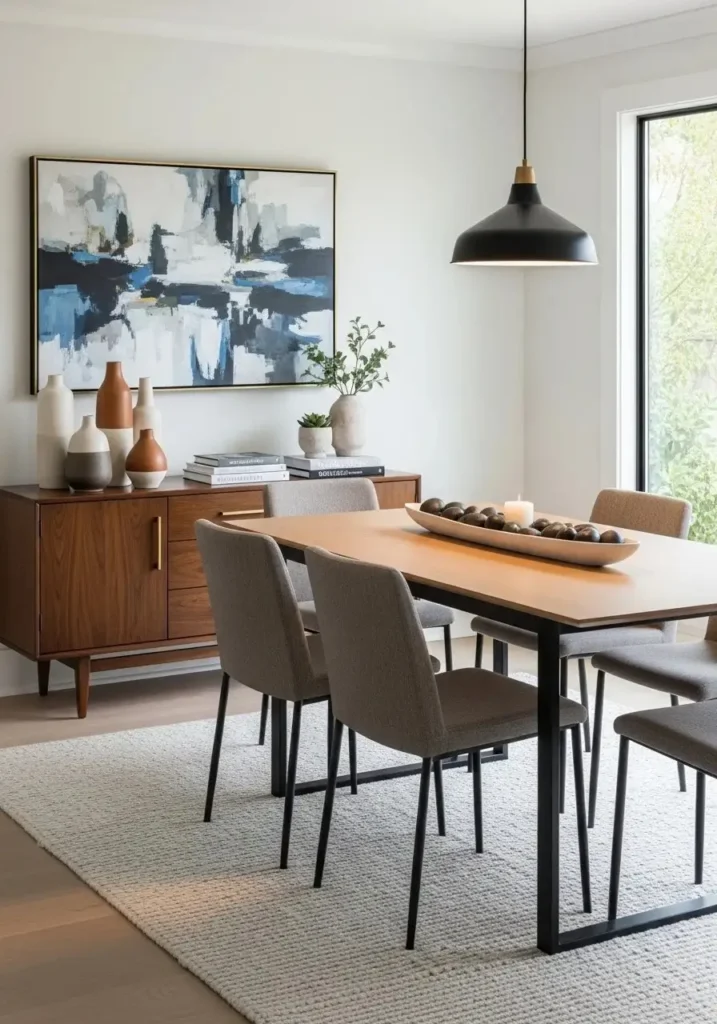
In a combo space, clutter is the enemy of calm. A dining table with built-in drawers or a sideboard directly beneath it keeps table linens, candles, and extra placemats hidden but accessible. Pair this with a slim console behind your sofa for remotes, books, and everyday bits. When every zone has its own storage moment, the entire space feels cleaner, calmer, and more intentional. Go for a sideboard in warm oak or matte olive green — something that feels like furniture, not a filing cabinet.
Tip:
Style the top of your sideboard with a tray, a candle, and one plant to make it feel curated.
14. Use a Half-Wall or Counter-Height Divider
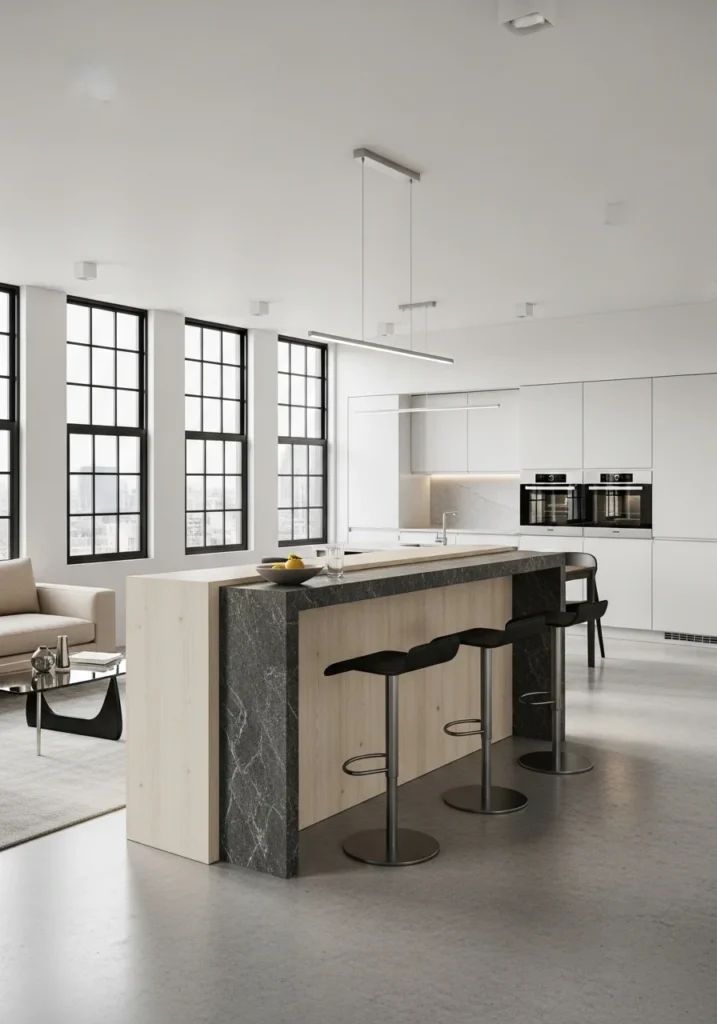
If you have a little more budget and flexibility, a half-wall or counter-height open divider is a stunning way to define the combo layout while keeping the openness you love. Picture a low white plaster wall topped with a marble ledge — just enough to define the dining zone, but see-through from a standing height. Add bar stools on the living room side and you’ve also created an informal breakfast bar. It’s architectural, purposeful, and gives the space a truly custom feel that guests always notice.
Tip:
Keep the half-wall height between 36 and 42 inches so it reads as a feature, not a barrier.
15. Let the Dining Area Double as a Work-From-Home Nook
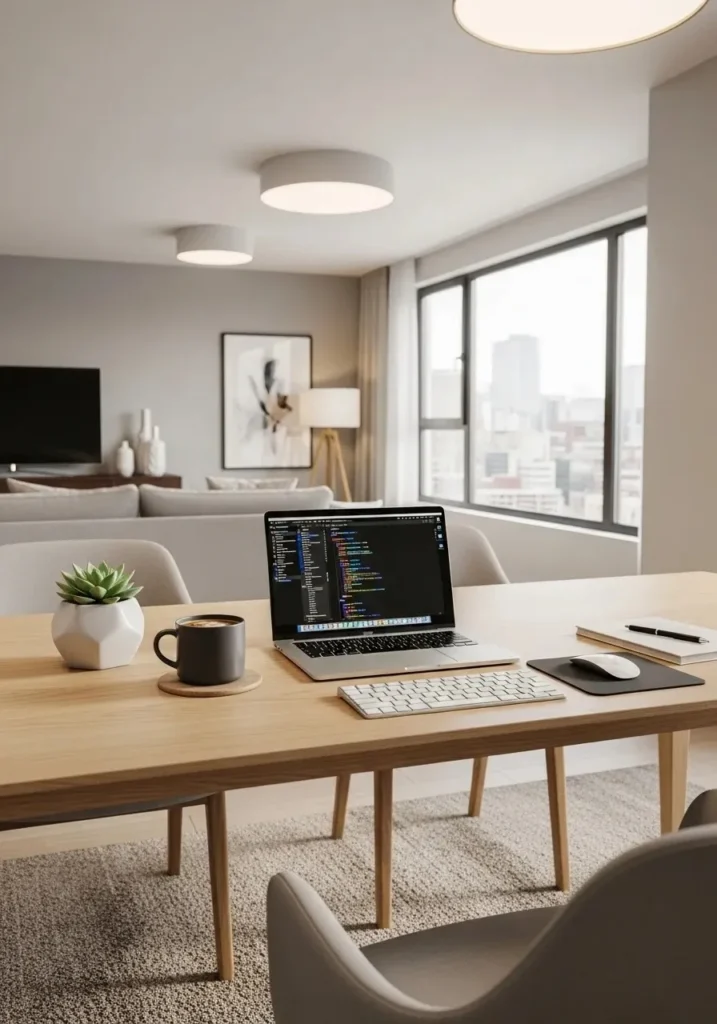
In today’s homes, a dining table that moonlights as a desk is pure smart living. Choose a dining table with a clean, uncluttered surface — solid oak, white lacquer, or dark walnut — and invest in one great pendant light above it that works for both dinner and deep focus. Add a slim shelving unit nearby for books and a small basket for laptop cables. In the evening, you clear the work away and set the table for dinner. Two uses, one beautiful space. No one needs to know it’s also your office.
Tip:
Keep a styled tray on the table — tuck work items underneath it, and lift it off for dinner guests.
Conclusion
Living room dining room combo layout ideas work best when they reflect how you actually live — not a magazine version of your life. Whether you start with two great rugs, a floating sofa, or a cluster of tall plants, every small decision adds up to a space that feels designed with care. You don’t need more square footage. You just need a little intention. Pick one idea from this list and start there. Your home is closer to beautiful than you think.