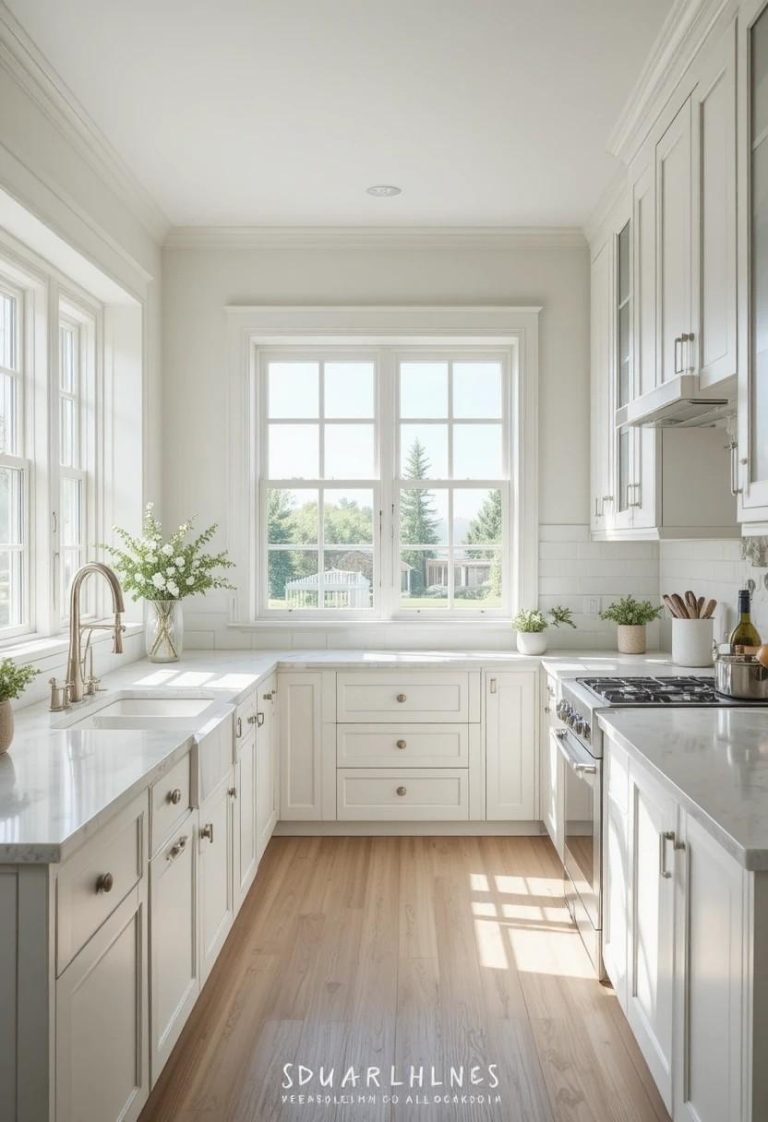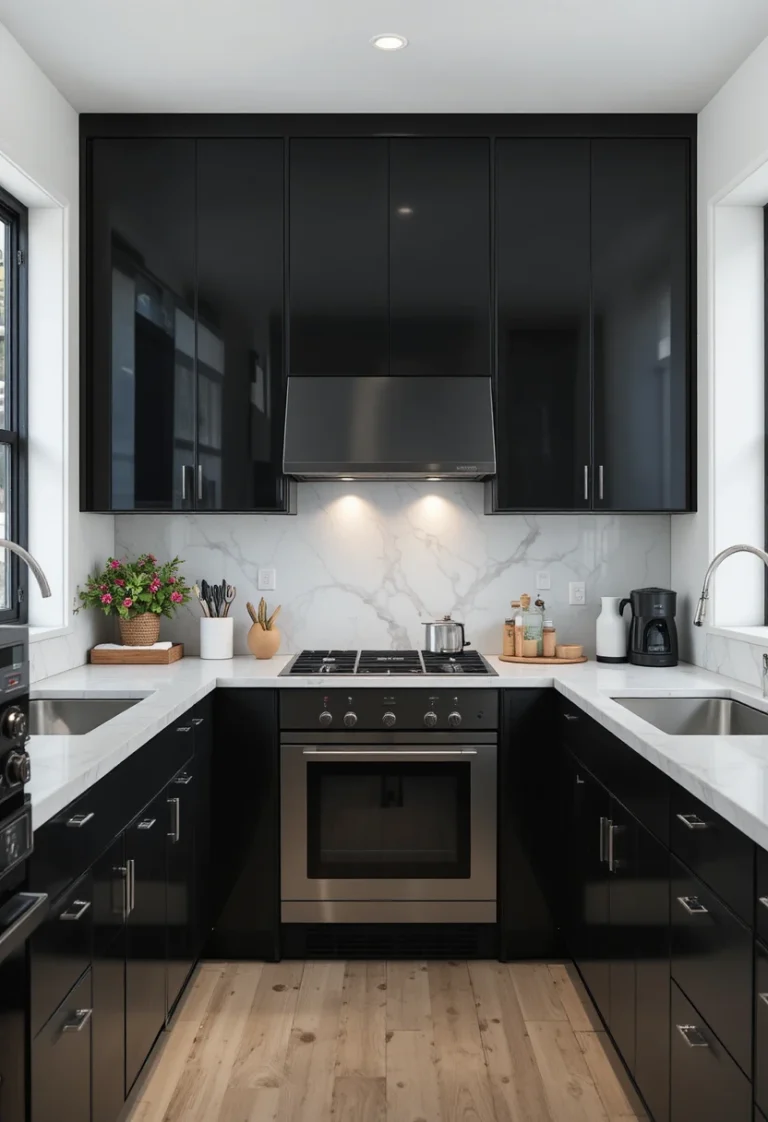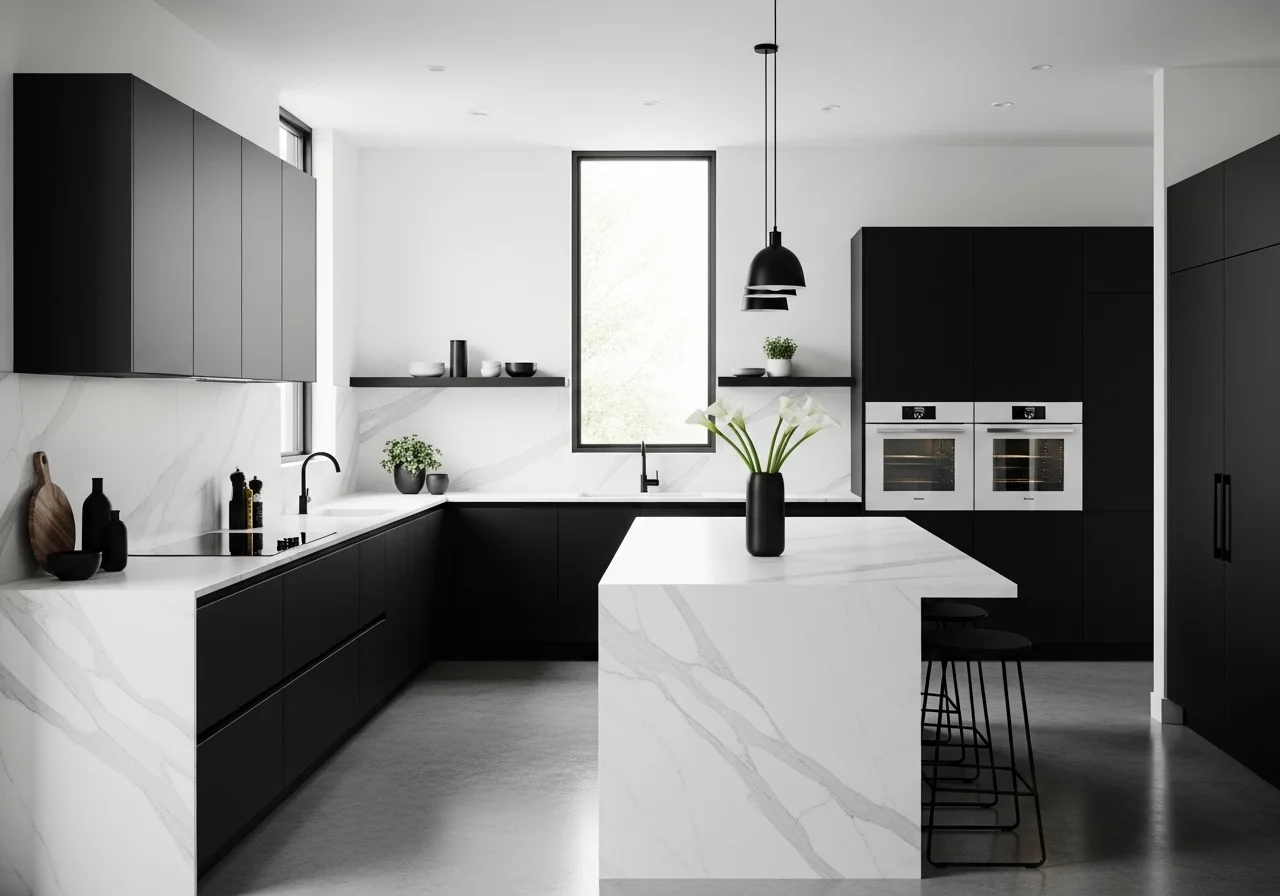
Black and White Countertops Kitchen Ideas: 20 Stunning Ways to Elevate Your Space
Ever walked into a kitchen and felt instantly impressed by how clean, bold, and effortlessly stylish it looked? That’s the magic of black and white. If your kitchen feels dull, outdated, or just missing that “wow” factor, you’re not alone.
The beauty of black and white countertops kitchen ideas is how they instantly create contrast, depth, and timeless elegance. Whether your style is modern, minimal, or cozy, this color combo works everywhere. Let’s explore 20 inspiring ideas to transform your kitchen into a space you’ll truly love.
1. Classic White Marble with Black Veins
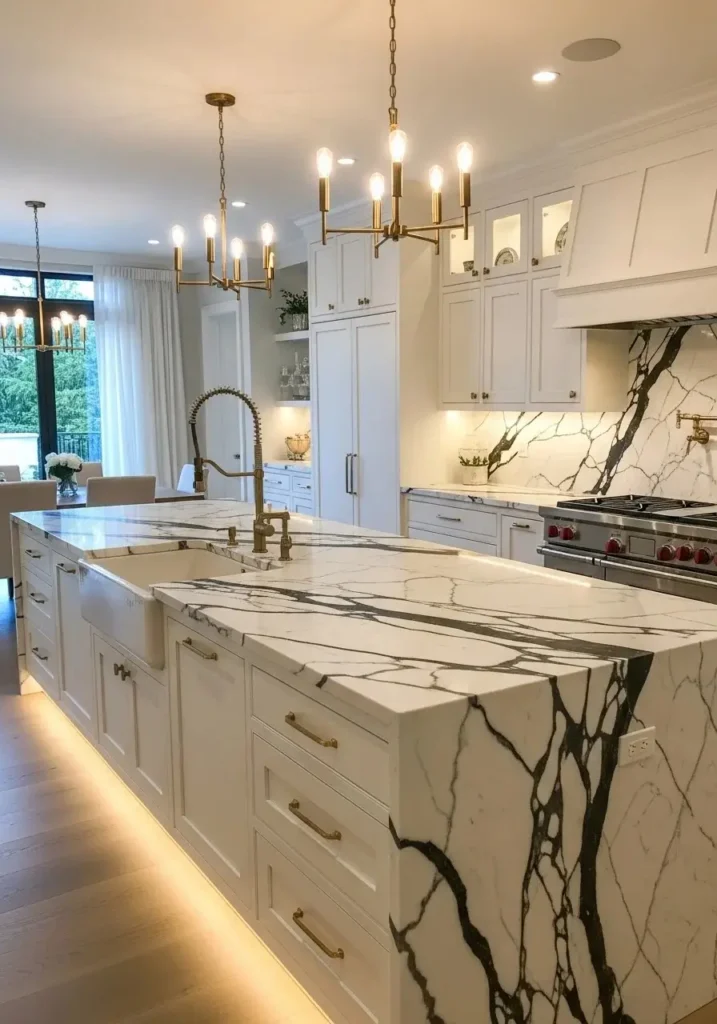
I still remember the first time I stood in front of a white marble worktop with bold black veins running through it. It stopped me in my tracks, because no two slabs are ever alike, and that feels rather special. I love how the dark lines move across the pale stone, dramatic and calm all at once. It lifts plain white cabinets beautifully and gives the whole room a quietly luxurious feel without shouting about it. If you enjoy a classic look with a little theatre, this is a wonderful place to start.
How to do it: Choose a slab in person and look at the veining in daylight, since photographs can flatter a stone that looks muddy in real life. Ask the supplier to show you the full slab, not just a small sample, and check how the veins will fall across the longest run. Keep the splashback plain and pale so the marble stays the star, then finish with warm lighting that picks out the texture in the evening.
2. Matte Black Countertops with White Cabinets
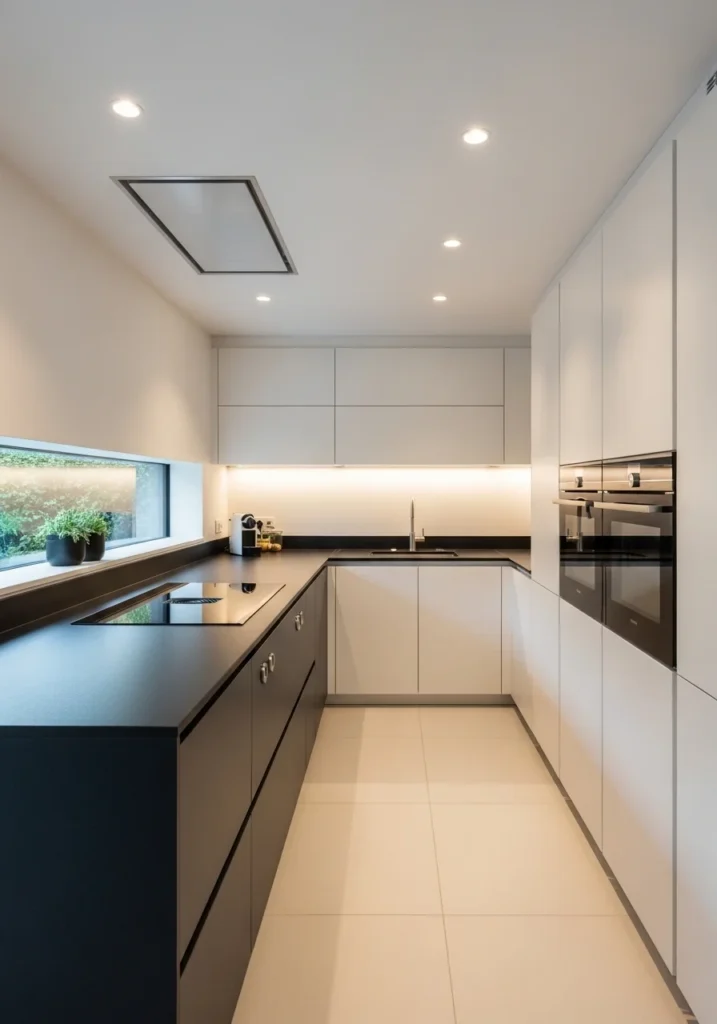
Matte black worktops were the choice I kept coming back to when I wanted a modern kitchen that still felt calm. The soft, low-sheen surface takes away the glare you get from polished stone, and the room feels gentler for it. Against crisp white cabinets the contrast is sharp, yet somehow it never feels harsh or cold. I find it hides smears and water marks better than gloss, which is a blessing if you cook every day. Add brushed brass handles or a warm wooden board, and the whole scheme softens beautifully. Browse more kitchen ideas with black countertops for inspiration before you commit to a finish.
How to do it: Order matt or honed samples in quartz, granite or laminate and compare them beside your cabinet doors in daylight and lamplight. Choose a fingerprint-resistant finish if you have children or cook often, and ask the supplier how it handles hot pans and acidic spills. Keep the cabinets a true bright white so the contrast stays crisp, then warm the scheme with brass handles and one wooden chopping board.
3. White Quartz with Subtle Grey Patterns
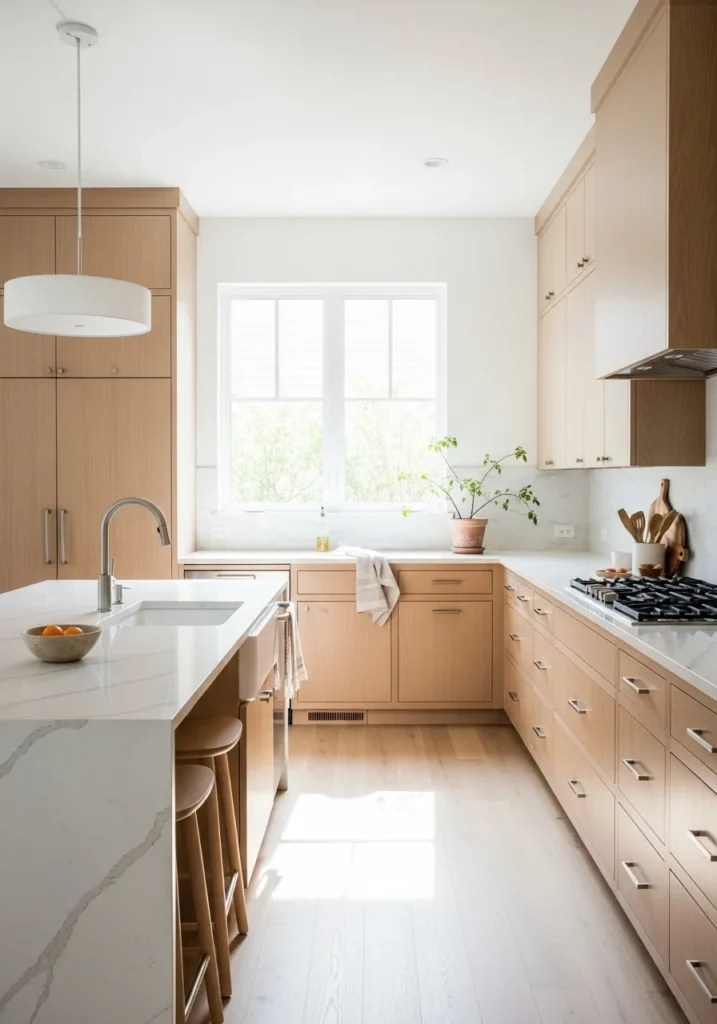
If marble makes you nervous, white quartz with soft grey veining is the calmer cousin I usually suggest first. It gives you that pale, veined look without the sealing, staining worries or delicate care that real marble demands. I love how forgiving it is in a busy kitchen, shrugging off red wine rings, lemon juice and hot mugs. The grey pattern is gentle enough to sit beside almost any cabinet colour, from warm white to pale sage. It also photographs beautifully, which matters if you love sharing your kitchen online. For me, it is the sensible choice that still feels special every single day.
How to do it: Take a cabinet door and a splashback tile with you when you choose the slab, and view them together in daylight. Ask for a sample at least 30 cm square, since small chips hide the pattern, and check the veining direction before the stone is cut. Seal the joints properly and wipe spills promptly, even though quartz is far more forgiving than marble.
4. Black Granite with Polished Finish
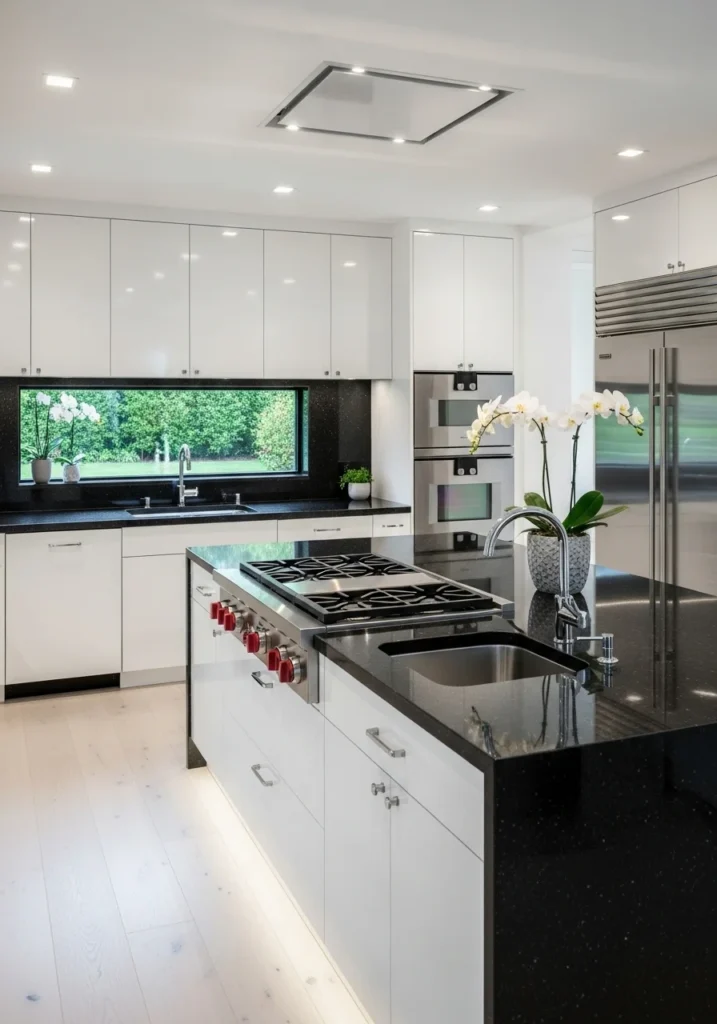
Polished black granite was my first love in kitchens, and it remains one of the most glamorous surfaces you can choose. The shine catches the light and bounces it around the room, which helps a darker kitchen feel brighter. I enjoy the tiny flecks of silver you only notice up close, like stars in a night sky. It is also wonderfully tough, shrugging off heat and heavy pans in a way softer stones cannot. Pair it with pale cabinets and it becomes the jewel of the room rather than a heavy block. A quick wipe with a microfibre cloth keeps the shine, and I find that little ritual rather satisfying.
How to do it: Ask to see the exact slab, since black granite varies from almost plain to heavily flecked, and choose the level of sparkle you like. Have it sealed on installation and reseal it once a year, following the supplier’s advice for your stone. Use a soft microfibre cloth and a pH-neutral cleaner for daily wiping, and keep a trivet by the hob for hot pans.
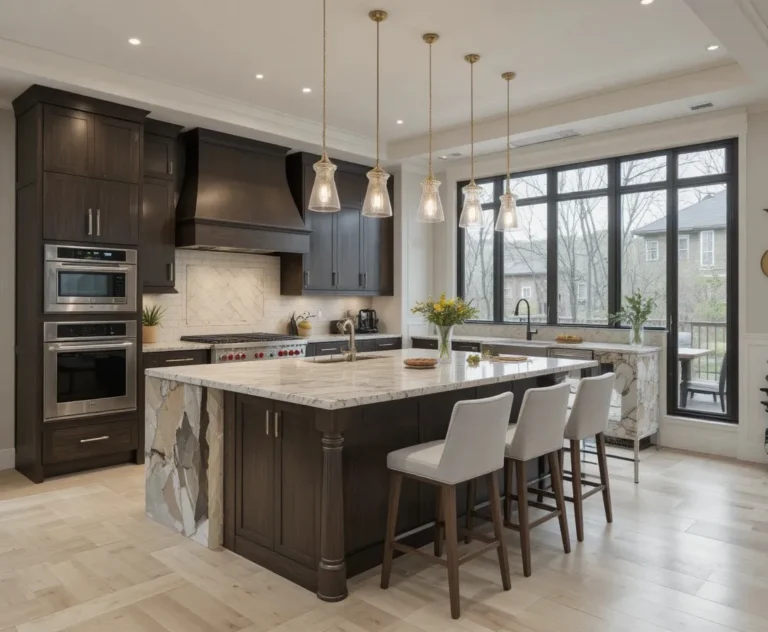
5. Waterfall Black and White Island
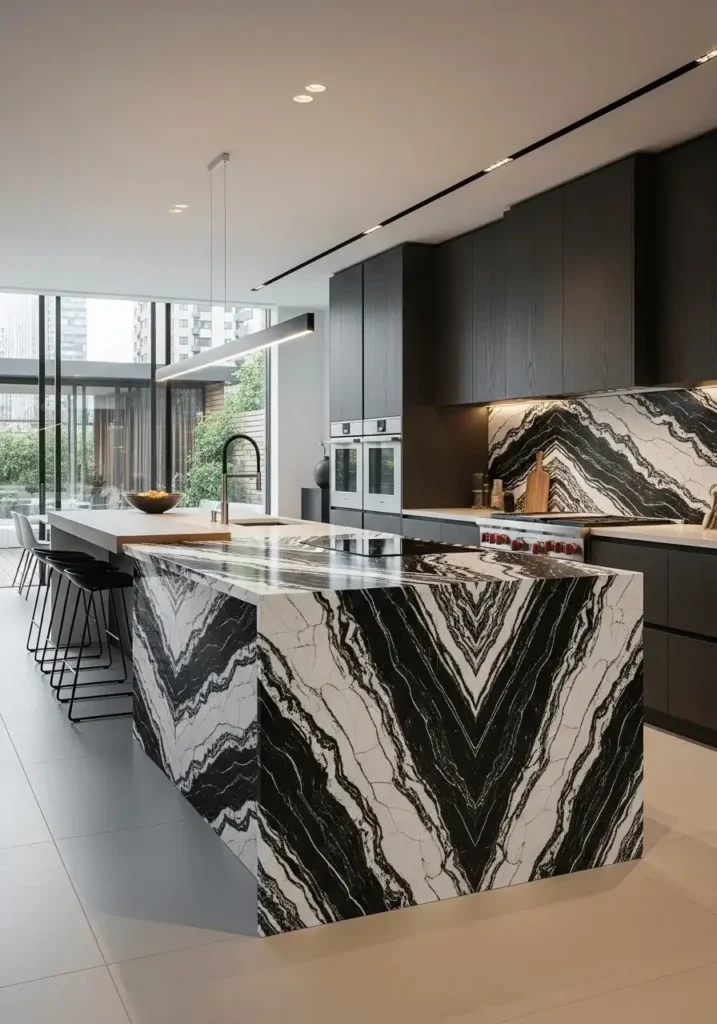
A waterfall island is the feature that makes visitors stop mid-sentence and run a hand along the stone. I love how the worktop flows down the island side to the floor, turning a practical surface into sculpture. In black and white it feels especially striking, the dark stone framing pale cabinets like a picture. It also hides scuffs at the island ends, where chairs and feet do their worst. Keep the rest of the room simple, because this island is more than enough drama on its own. I would choose it again in a heartbeat, especially where the island is the heart of the room.
How to do it: Ask your stone supplier for a book-matched waterfall edge so the veining flows over the corner without a jarring join. Confirm the island overhang gives at least 30 cm of knee room for stools, and check the floor can take the extra weight. Keep the island ends clear of clutter so the stone edge stays visible, and choose stools that tuck neatly underneath.
6. Black Countertops with White Subway Tile
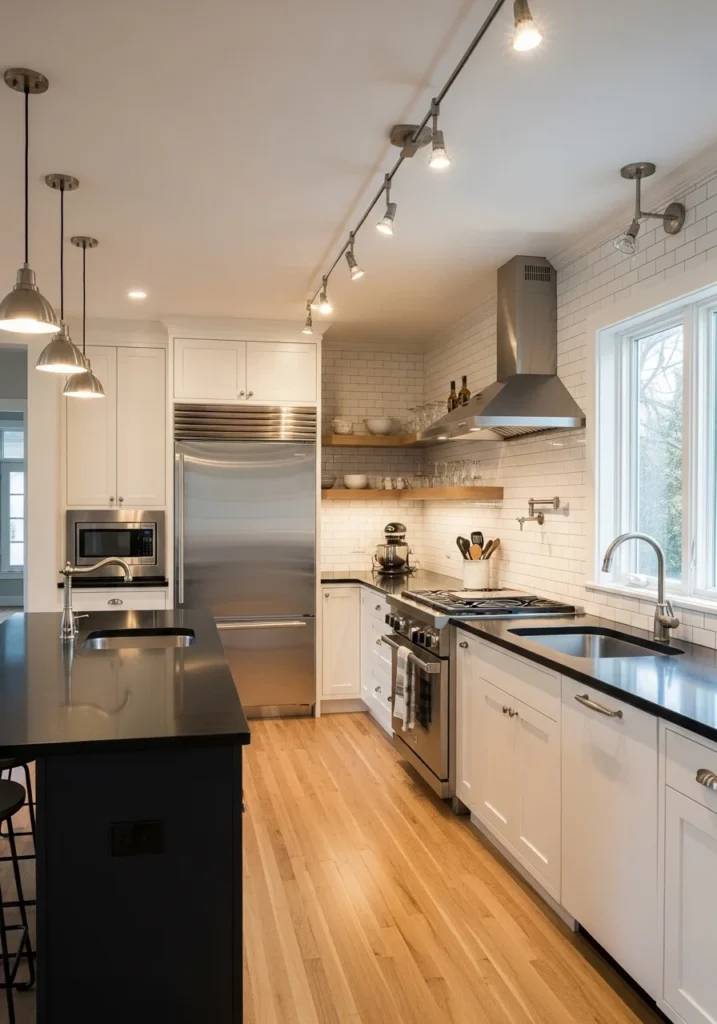
White subway tile is the backsplash I return to whenever a kitchen needs pattern without fuss. The small, glossy rectangles catch the light and lift a black worktop beautifully, especially in a galley kitchen. I like laying them in a brick pattern for a classic feel, or stacking them vertically when I want something more modern. Dark grout makes the pattern pop and hides cooking splashes, while pale grout keeps everything soft and seamless. Either way, the tiles cost very little and change the room completely. If you want more examples, this guide to a kitchen with black countertops shows the same pairing in nineteen different rooms.
How to do it: Choose a classic white subway tile in a glossy finish and lay it in a brick pattern from worktop to wall cabinets. Use dark grout for definition or pale grout for a softer look, and seal the grout lines once they are dry. Take the tiles right up to the underside of the cabinets for a clean finish, and keep a few spare tiles for future repairs.
7. White Countertops with Black Cabinets
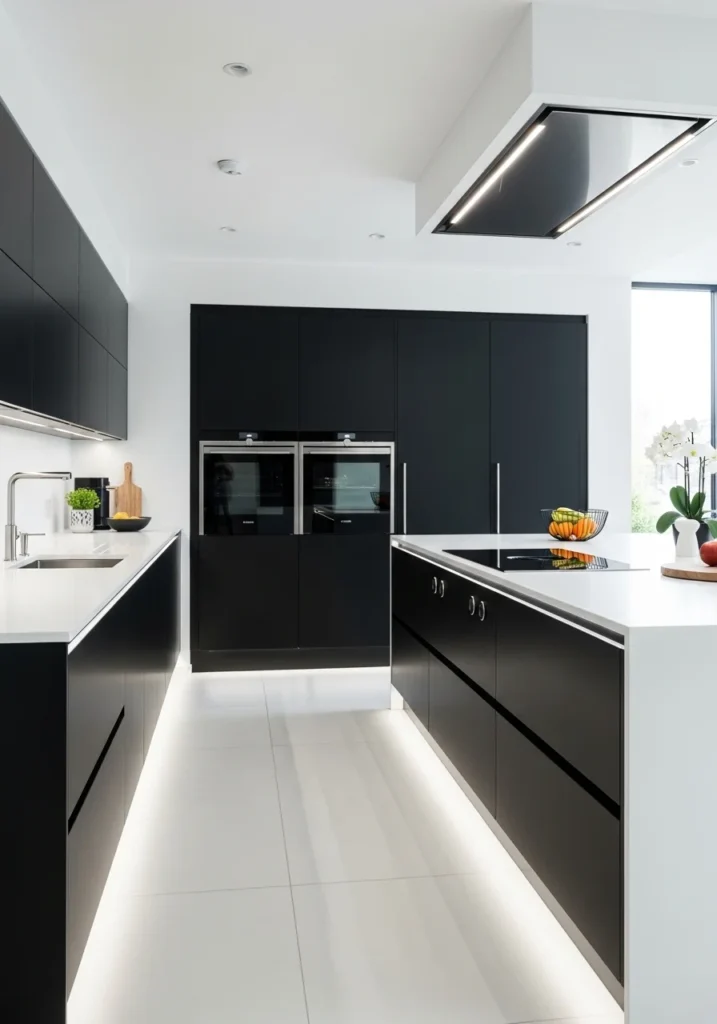
Turning the usual scheme upside down is braver than it looks, and I think white worktops with black cabinets is one of the most elegant reversals. The pale surface keeps the room feeling light, while the dark cabinets ground everything and hide marks beautifully. I love this pairing in smaller kitchens, because the white worktop reflects light back into the room. It also suits a traditional shaker kitchen just as well as a flat-fronted modern one. Add warm brass handles and a wooden floor, and the contrast feels rich rather than stark. It is a look I recommend whenever someone wants drama without a dark, heavy worktop.
How to do it: Paint a large sample board in your chosen black and prop it beside the white worktop for a few days, checking it morning and evening. Choose a warm black with a soft sheen rather than a flat, blue-black that can feel cold. Keep the walls pale and the lighting warm, then repeat the black in two small places, such as the tap and the light fittings.
8. Black and White Speckled Countertops
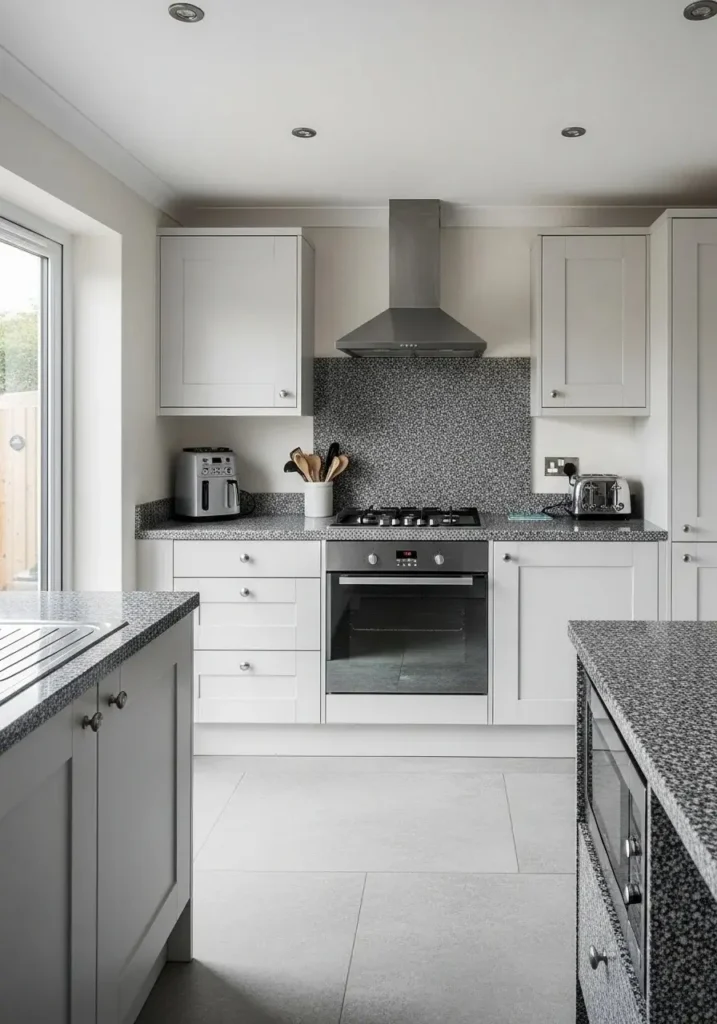
Speckled worktops remind me of my grandmother’s kitchen, and I mean that as the highest praise. The tiny flecks of black, white and grey give the surface a lively texture that plain stone cannot match. I find they are wonderfully forgiving, since crumbs, dust and water spots simply disappear into the pattern. That makes them a kind gift for anyone who cooks daily but dislikes wiping surfaces every hour. They also bridge modern and traditional cabinets with ease, which helps if your kitchen mixes old and new. Choose a fine speckle for a calm look, or a bolder one if you want the worktop to be the star.
How to do it: Order a large sample and live with it on your worktop for a week, spilling a little coffee and flour to see how it hides marks. Compare a fine speckle with a bold one in daylight, since the scale changes the whole feel. Keep cabinets and splashback plain so the speckle has room to breathe, and use a simple edge profile that suits the pattern.
9. Minimalist White Countertops with Black Accents
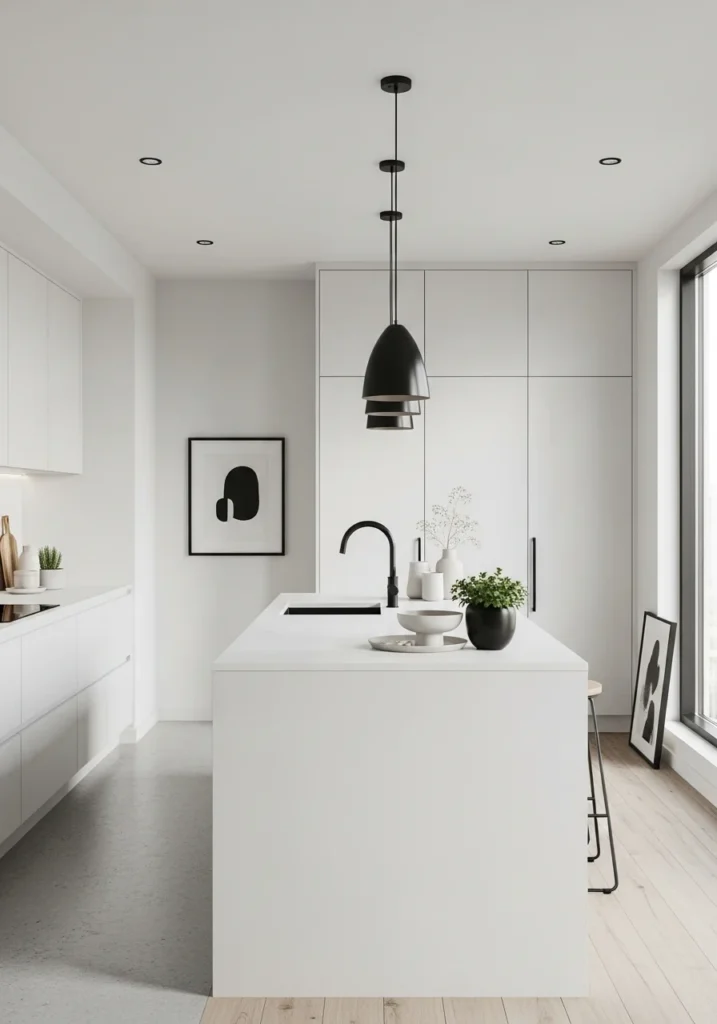
A minimalist white worktop with black accents is the look I choose when my head needs calm. The pale surface gives you room to breathe, while thin black lines, handles and frames add just enough definition. I keep the decor to almost nothing: a wooden board, a small vase, and space to actually cook. It sounds severe, but in practice it feels peaceful, like a deep breath at the start of the day. The black accents stop the white from feeling clinical, and the white stops the black from feeling heavy. For more pale, calm schemes, these white kitchen ideas are a lovely next stop.
How to do it: Limit the palette to white, black and one warm wood, repeating each tone at least twice in the room. Choose matt black handles, tap and light fittings in a single finish, and keep them slim rather than chunky. Clear the worktop each evening, leaving out only what you use daily, so the minimalist look survives real life.
See More Amazing Below Ideas Also:
20 Green Kitchen Ideas That Feel Fresh, Stylish & Truly Inviting
20 Kitchen Cabinet Color Ideas That Instantly Transform Your Space
19 Kitchen With Black Countertops Ideas That Feel Stylish, Warm & Effortlessly Modern
10. Black Soapstone with Soft Texture
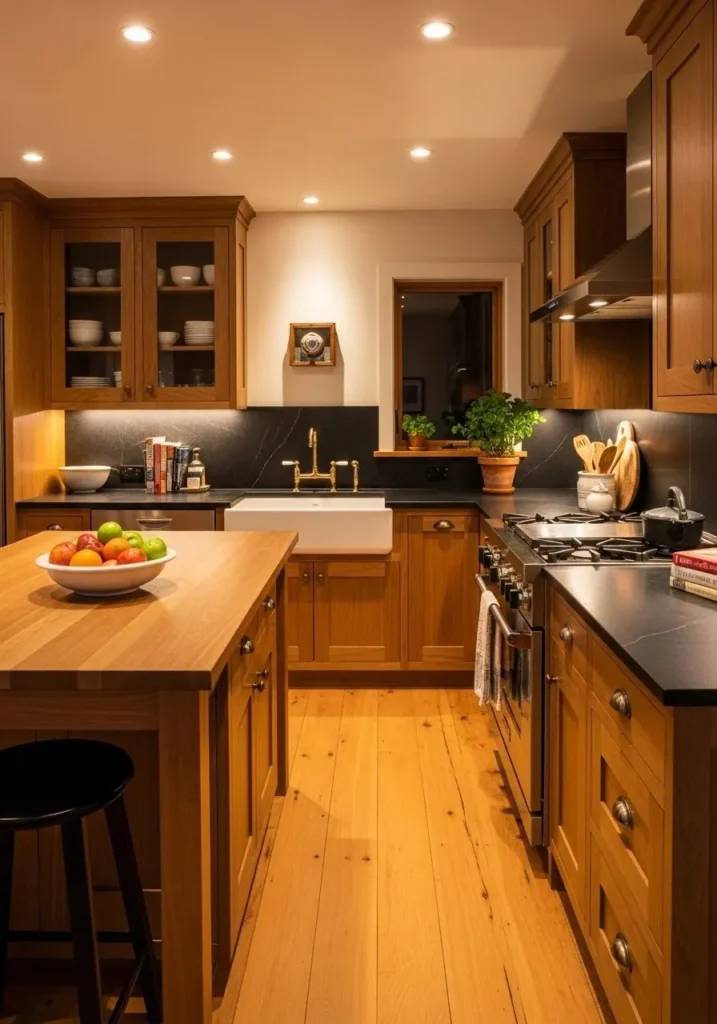
Soapstone has a soft, almost velvety feel under your hands, and that is what won me over. Unlike polished granite, it has a gentle matt surface that seems to absorb light rather than reflect it. I love how it deepens in colour over time, developing a rich patina that tells the story of your kitchen. It suits farmhouse and cottage kitchens beautifully, especially beside painted cabinets and a Belfast sink. Scratches can be sanded away and the surface oiled, which feels wonderfully low-drama. If you like materials that age gracefully instead of staying perfect, soapstone will make you very happy.
How to do it: Ask the supplier to show you an oiled and an unoiled sample, since oil deepens the colour dramatically. Apply mineral oil after installation and repeat every few weeks at first, then less often as the patina builds. Sand out small scratches with fine sandpaper and re-oil the spot, and use boards and trivets to protect the soft surface.
11. High-Contrast Black and White Quartz Patterns
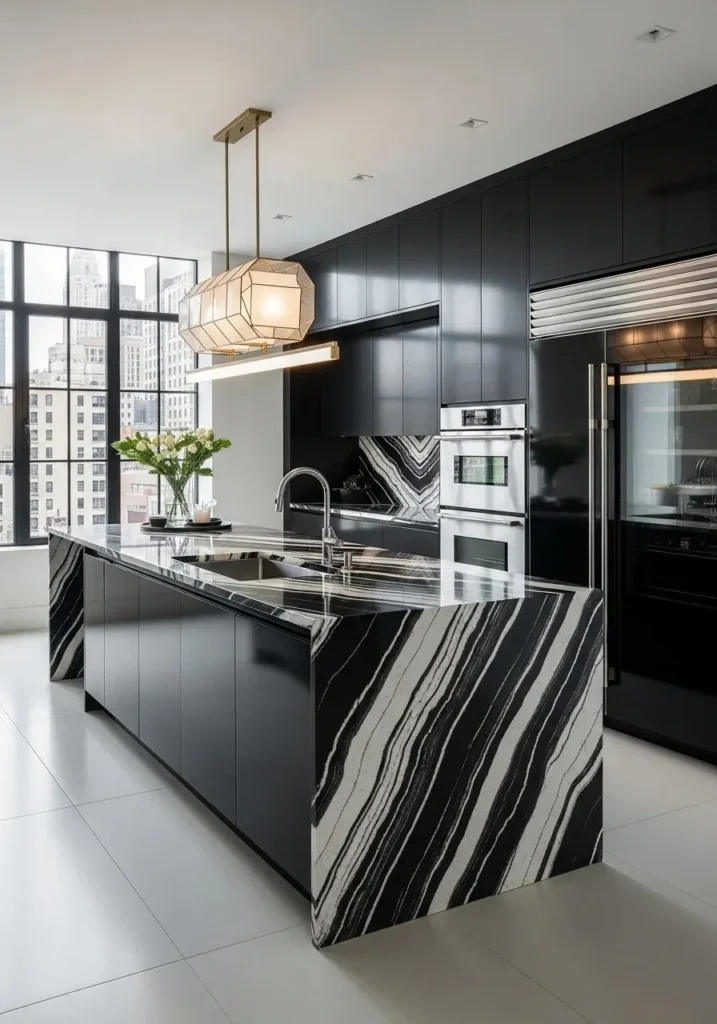
Bold quartz patterns are for the days when you want your kitchen to make a statement before you say a word. I love the graphic punch of strong black veining on a bright white ground, especially on an island where you see it all day. It feels modern and confident, yet the classic black-and-white palette keeps it from dating quickly. The trick is to let the worktop be the only loud pattern in the room. Keep cabinets flat and plain, choose a quiet splashback, and the quartz can shine without competition. I would use this in a home that loves entertaining, because it always starts a conversation.
How to do it: View the full slab before it is cut, and decide where the boldest veining should fall, usually on the island or the longest run. Keep the splashback plain and the cabinets flat-fronted so nothing competes with the pattern. Ask the fabricator to align the veining across joins, and choose a simple edge profile that suits the dramatic stone.
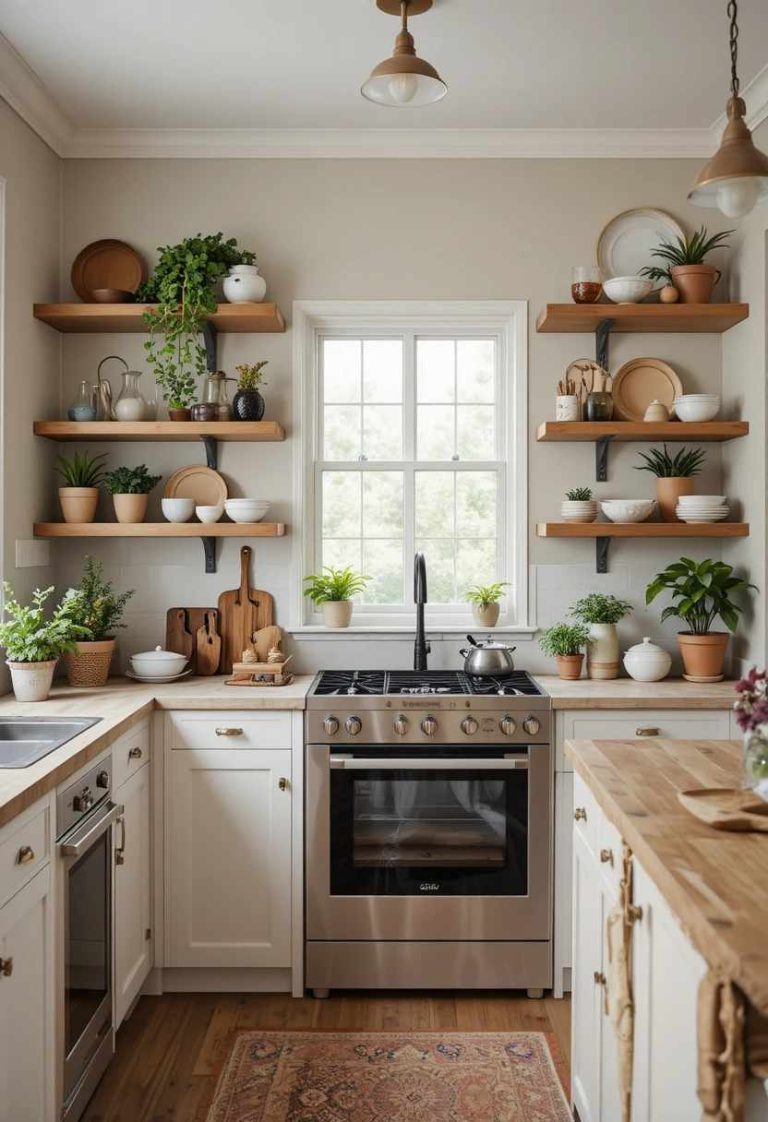
12. Black Countertops with White Open Shelving
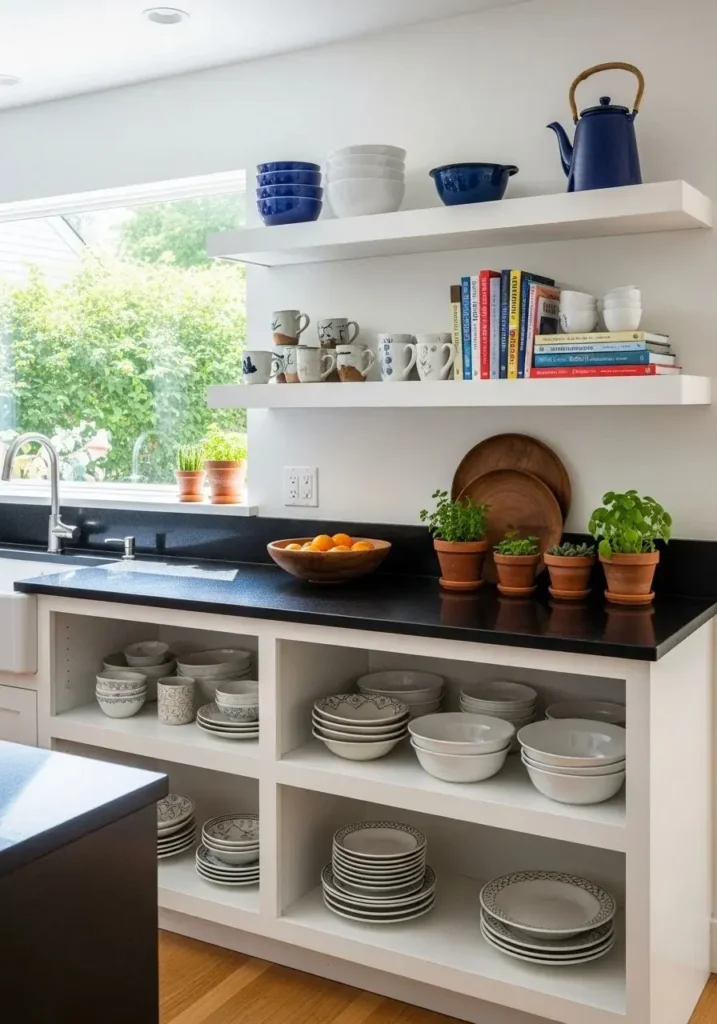
Open shelving was the change that made my kitchen feel twice as big, and I wish I had tried it sooner. White shelves against a black worktop create a light, airy rhythm that wall cabinets never manage. I style mine with pale crockery, a few glass jars and one trailing plant, and I leave plenty of empty space. The rule I follow is simple: if it is not beautiful or used weekly, it lives behind a door. Dusting takes a little more effort, but the openness is worth a weekly wipe. It lets me display the pieces I love instead of hiding them away.
How to do it: Remove one wall cabinet and fit two solid wood or painted shelves at eye level, using strong brackets that can carry plates and bowls. Style them with pale crockery grouped in odd numbers, leaving a third of each shelf empty. Keep everyday items within easy reach and move rarely used pieces into closed storage, then dust the shelves weekly.
13. White Countertops with Black Backsplash
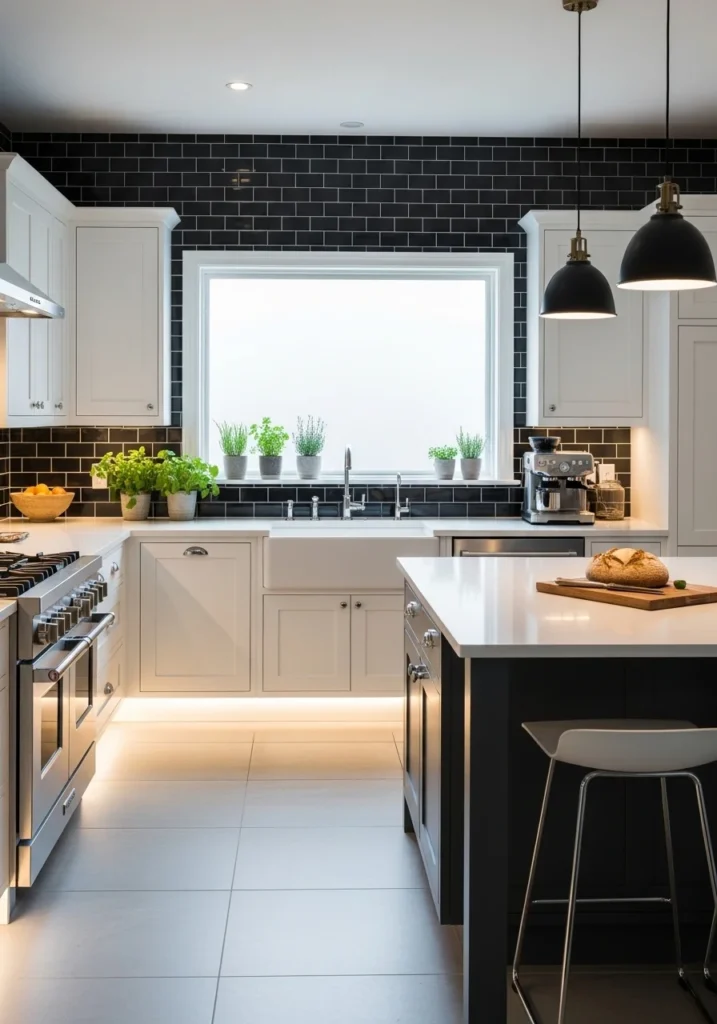
A black backsplash behind a white worktop is the boldest small change on this list, and it always surprises people. I love how it frames the worktop like a picture, giving the whole run of cabinets a finished, deliberate feel. It also hides cooking splashes brilliantly, which is a practical gift in a busy kitchen. The key is balance: keep the cabinets and walls pale so the dark tile feels like an accent, not a cave. I prefer handmade-look tiles with a little variation, because the texture stops the black from feeling flat. Choose a warm black with brown undertones if your kitchen gets little natural light.
How to do it: Order black tile samples and hold them against your white worktop in daylight and lamplight, checking for blue or brown undertones. Lay the tiles from worktop to wall cabinets, using a dark grout that disappears into the tile. Keep the rest of the room pale, add warm under-cabinet lighting, and seal natural stone tiles before grouting.
14. Mixed Material Black and White Countertops
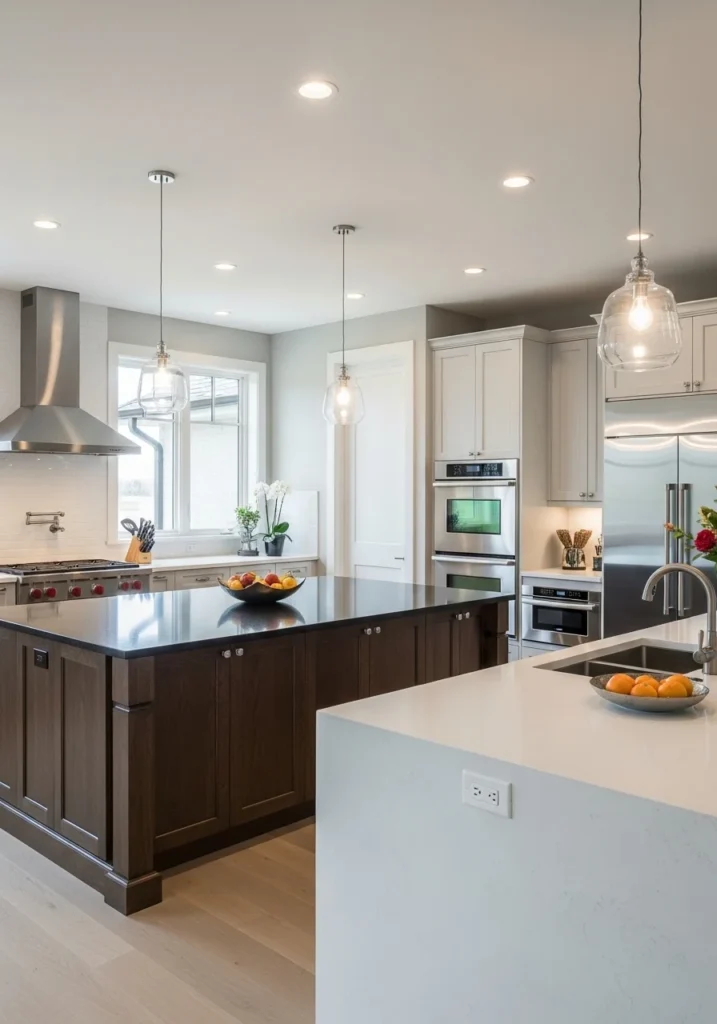
Mixing materials is how I make a kitchen feel collected rather than bought in one afternoon. A black stone run beside a white timber section gives you two textures, each suited to a different job. I use the stone for hot pans and pastry, and the timber for chopping and serving, which feels wonderfully practical. The mix also lets you spend less, since you can use a precious stone on the island and a simpler surface elsewhere. The secret is to repeat each material twice, so the pairing looks deliberate rather than accidental. A black tap or a white shelf can be the echo that ties the whole scheme together.
How to do it: Choose two materials that suit different jobs, such as stone for the cooking run and timber for the island or serving area. Repeat each material at least twice in the room, for example with a timber shelf echoing a timber worktop. Ask the fabricator to plan the joins carefully, and seal timber well around the sink where water splashes.
See More Amazing Below Ideas Also:
20 Green Kitchen Ideas That Feel Fresh, Stylish & Truly Inviting
20 Kitchen Cabinet Color Ideas That Instantly Transform Your Space
19 Kitchen With Black Countertops Ideas That Feel Stylish, Warm & Effortlessly Modern
15. Glossy White Countertops with Black Fixtures
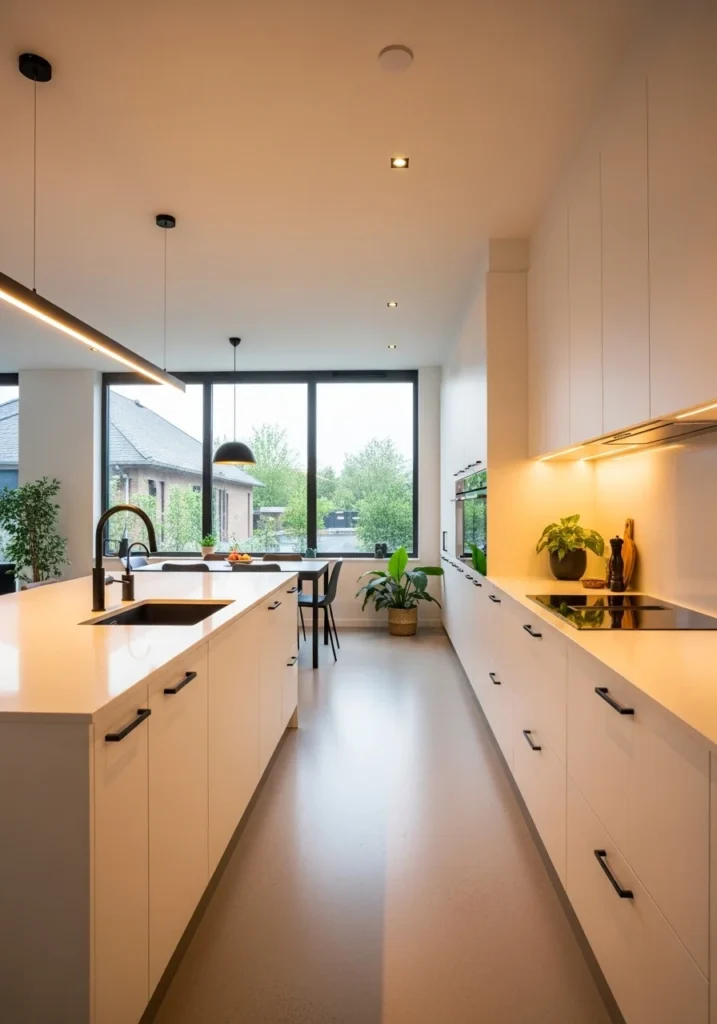
Glossy white worktops are my secret weapon in a kitchen that needs more light. They bounce daylight around the room in a way matt surfaces cannot, and the whole space feels brighter for it. I pair them with black fixtures, a matt tap, slim handles and a black pendant, so the shine has something to hold onto. The contrast keeps the white from feeling stark, and the gloss keeps the black from feeling heavy. Yes, you will see the odd fingerprint, but a quick wipe with a damp cloth sorts that in seconds. It is a pairing I reach for in small or north-facing kitchens that need every bit of help.
How to do it: Choose a glossy quartz or laminate and check the reflection in daylight, since strong gloss can show every mark. Pick one black finish for the tap, handles and lighting, and repeat it in at least three places. Keep a microfibre cloth by the sink for a quick daily wipe, and use boards and trivets to protect the glossy surface.
16. Black Marble Countertops with White Cabinets
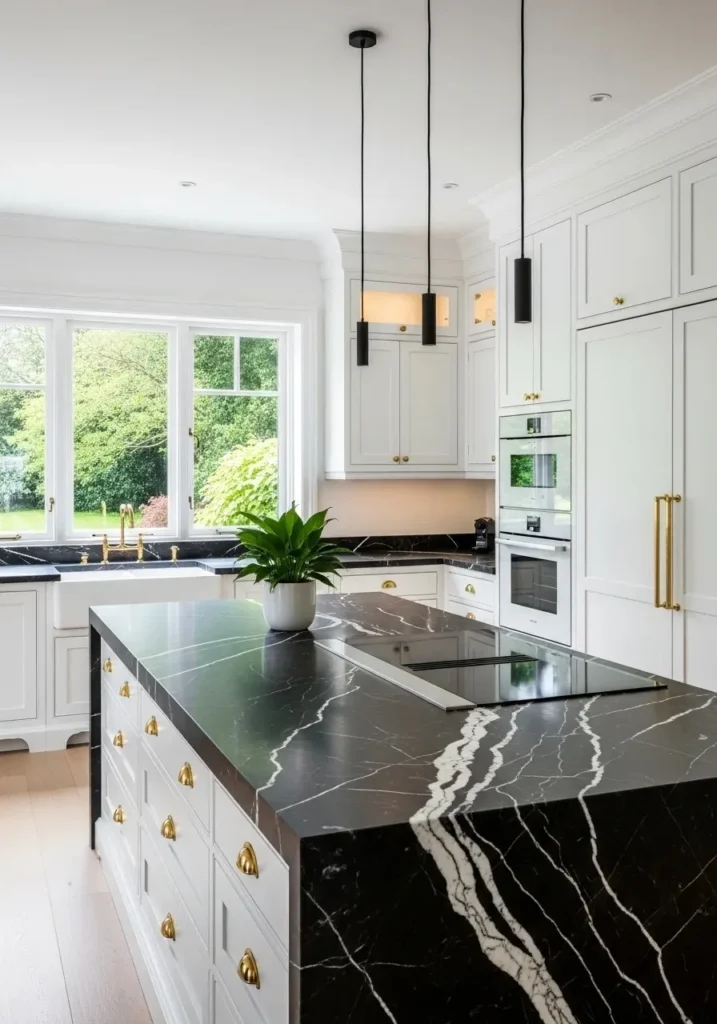
Black marble is the dramatic sibling of white marble, and it takes a confident kitchen to carry it well. I love the white veining that threads through the dark stone, like lightning across a night sky. It turns an ordinary run of cabinets into something that feels designed. White cabinets are the perfect partner, because they frame the dark stone and keep the room from feeling enclosed. It does need care, since marble marks more easily than quartz, but I think the beauty is worth the attention. If you love a little luxury in everyday life, this is the worktop that delivers it.
How to do it: View the slab in person and choose veining you love, since black marble ranges from fine white threads to bold lightning strikes. Have the stone sealed on installation and reseal it as the supplier advises, wiping spills, especially wine and citrus, straight away. Keep the cabinets bright white and the splashback simple so the marble stays the focus.
17. White Countertops with Black Waterfall Edge
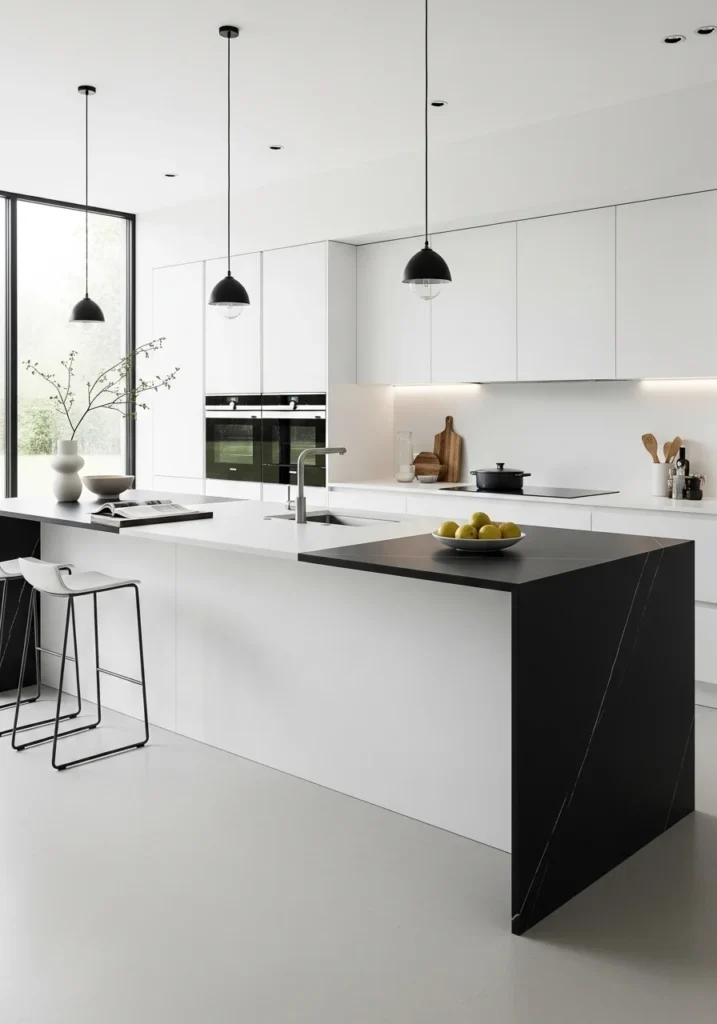
A white worktop with a black waterfall edge adds drama without darkening a kitchen. The pale top keeps the room light, while the dark edge draws your eye down the side of the island like a frame. I love how it defines the island in an open-plan space, giving the seating area a clear boundary. It also hides the scuffs and knocks that islands collect from stools and feet. Keep the island clear on top, because the waterfall edge deserves to be seen in full. Guests always comment on it, and it costs far less than a full black worktop.
How to do it: Ask the fabricator to mitre the waterfall corner so the black edge meets the white top in a clean, sharp line. Measure the seating overhang carefully, leaving at least 30 cm of knee room, and choose stools that fit neatly underneath. Keep the island top clear of clutter so the waterfall edge stays visible, and wipe the dark edge often since dust shows quickly.
18. Black Concrete Countertops with White Walls
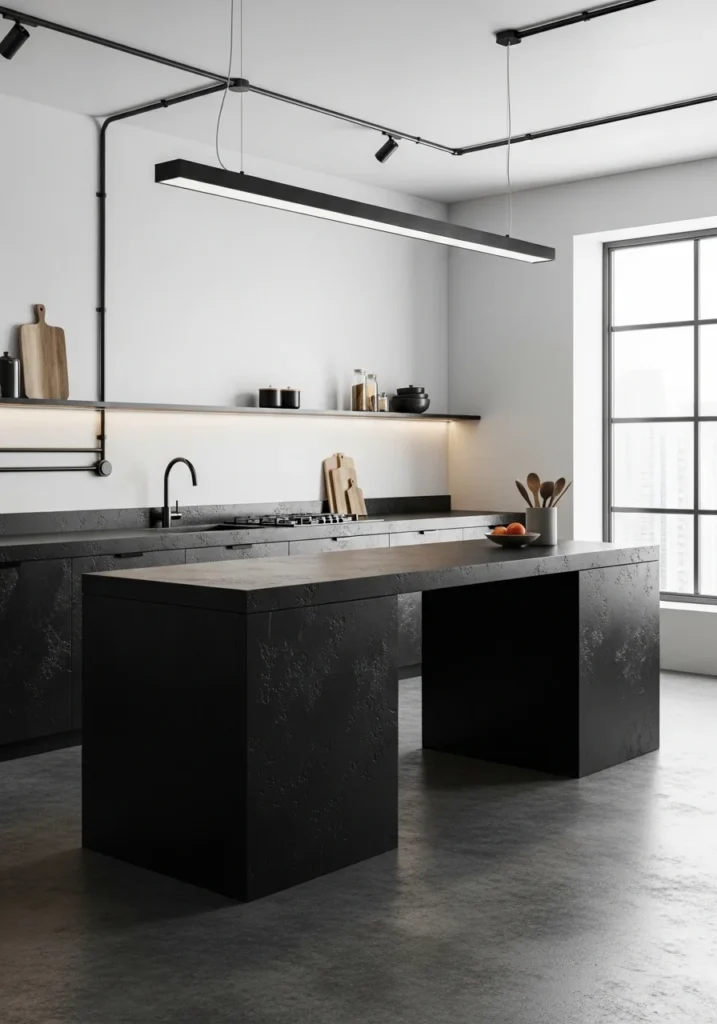
Concrete worktops sound industrial, but in my kitchen they feel warm, handmade and quietly characterful. The soft grey-black surface has tiny variations and air bubbles that make it feel like a crafted object, not a factory product. I love it against white walls, where the contrast feels calm rather than stark. It suits a relaxed, unfussy home, especially one with wooden floors and linen curtains. Concrete does need sealing and a little care, but I find the patina it develops only makes it more beautiful. If you like honest materials that show their making, concrete will reward you every day.
How to do it: Order a sample and check the colour in your own light, since concrete varies from soft grey to near black. Have the worktop sealed professionally and reseal it as advised, wiping up acidic spills quickly. Use boards and trivets for hot pans, and embrace the small marks that build the patina over time.
19. White Countertops with Black Cabinet Trim
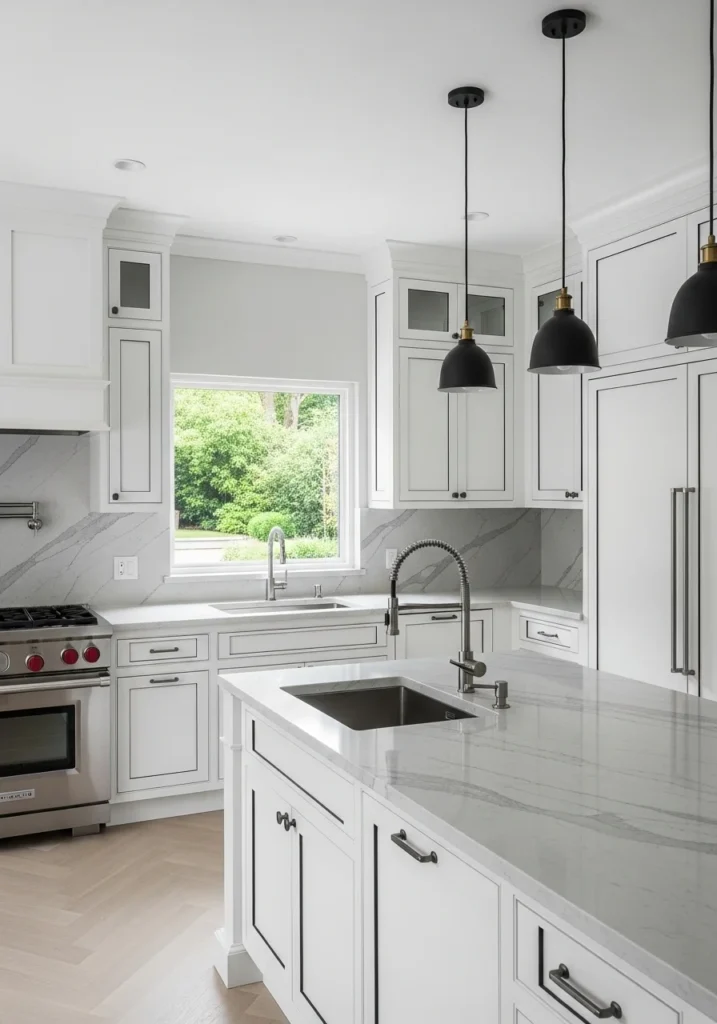
Black trim on white cabinets is the smallest change on this list, and possibly my favourite. A thin dark line around a door or drawer gives plain cabinets a tailored, furniture-like finish. I love how it echoes the black worktop without needing a single new surface. It is also wonderfully affordable: a roll of trim, a steady hand and an afternoon can transform a tired kitchen. Keep the lines slim and consistent, and repeat the black in the handles so the whole scheme feels intentional. It is proof that you do not need a big budget to get a considered, designer look.
How to do it: Choose a slim black trim, no wider than 2 cm, and test it on one door before committing to the whole kitchen. Apply it with a steady hand, keeping lines level and joints neat, or ask a joiner to fit it for a crisp finish. Match the trim to matt black handles and a black tap so the detail feels deliberate, then step back and check the lines read evenly.
20. Bold Black and White Patterned Countertops
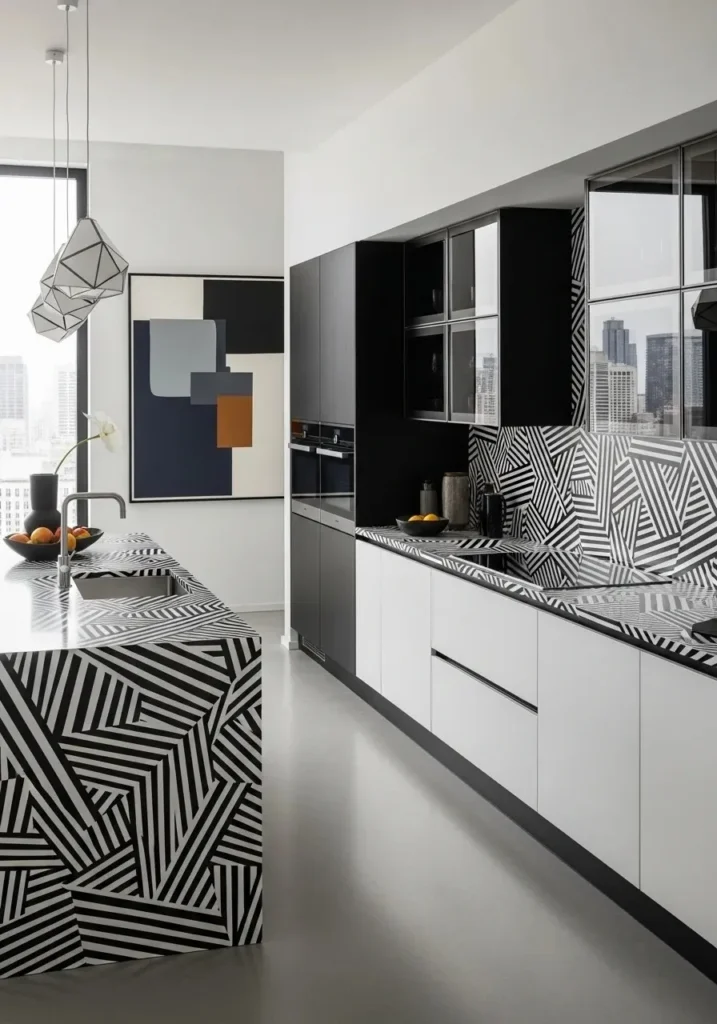
Patterned worktops are the brave choice, and I admire anyone who goes for them. A bold black and white pattern, whether terrazzo, checkerboard or a graphic stone, turns the worktop into the artwork of the room. I love how it hides crumbs and marks, and how it gives a plain kitchen instant personality. The rule I follow is to keep everything else quiet: plain cabinets, a simple splashback and very little clutter. Let the pattern have the stage, and it will reward you every morning. Use it on an island if a full run feels too much, and enjoy the compliments.
How to do it: Order a full box or a large sample and lay it out at home, since small chips never show how bold a pattern really is. Use the pattern on the island or one run only, keeping cabinets and splashback plain. Check the pattern direction before cutting, and choose a simple edge profile that lets the pattern speak.
Frequently Asked Questions
Do black and white countertops make a kitchen look smaller?
They can do, if the rest of the room is dark as well, but they do not have to. Pair black worktops with pale cabinets, white walls and good lighting, and the room will feel open and bright. A glossy or pale worktop reflects more light, while a matt black surface absorbs it, so choose the finish to suit the size and light of your room.
What cabinet colours work best with black and white countertops?
White is the classic partner and always works, giving the sharpest contrast. Warm wood softens the scheme, while soft grey and sage green both calm the black without dulling it. Navy adds richness if you want a bolder, more grown-up feel, so test large paint samples beside your worktop before you commit.
Are black countertops hard to keep clean?
Glossy black stone shows dust, water marks and fingerprints more readily than a pale worktop, so a quick daily wipe becomes part of the routine. A matt or honed finish hides marks far better, and a speckled or veined pattern is the most forgiving of all. Keep a microfibre cloth by the sink and the job takes less than a minute.
Which material is best for black and white countertops: quartz, granite or marble?
Quartz is the easiest to live with, because it needs no sealing, resists stains and comes in the widest range of black and white patterns. Granite is tougher and more heat-resistant, but it needs sealing and its pattern is set by nature. Marble is the most beautiful and the most delicate, so choose it when you love the look enough to care for it properly.
How do I stop a black and white kitchen feeling cold or stark?
Add warmth in layers: wood on a shelf or chopping board, brass on the handles and tap, and warm lighting under the cabinets. Soft textiles, such as a linen tea towel or a washable rug, help too, as does a plant or a pot of herbs on the sill. Keep one warm tone repeated in at least three places and the contrast will feel inviting rather than severe.
Your Black and White Countertops Checklist
- ☐ Choose pale or warm cabinets to balance the black worktops.
- ☐ Order large stone samples and view them in daylight and lamplight.
- ☐ Test cabinet paint beside the worktop before you commit.
- ☐ Pick a light splashback, such as white subway tile or marble.
- ☐ Fit warm LED strips under the wall cabinets, on a dimmer.
- ☐ Hang pendants 75 to 90 cm above the island, on a dimmer.
- ☐ Match the metals: one finish for handles, taps and lighting.
- ☐ Add one warm material, such as wood or brass, in every view.
- ☐ Seal natural stone as the supplier advises and wipe spills quickly.
- ☐ Keep a microfibre cloth by the sink for a daily wipe.
- ☐ Clear the worktop each evening, keeping only daily essentials out.
- ☐ Step back each week and remove one thing that does not earn its place.
Conclusion 🌿
A black and white kitchen works when the contrast feels deliberate rather than accidental. Choose the worktop that suits how you actually cook, balance it with pale cabinets and warm light, and let one or two details, a waterfall edge, a marble vein or a slim black trim, do the talking. The best schemes in this list are not the boldest or the most expensive; they are the ones that fit the people who use them.
Start with the idea that made you pause, order the samples, and live with them for a few days before you commit. Your perfect black and white kitchen is closer than you think, and it starts with a single confident choice.