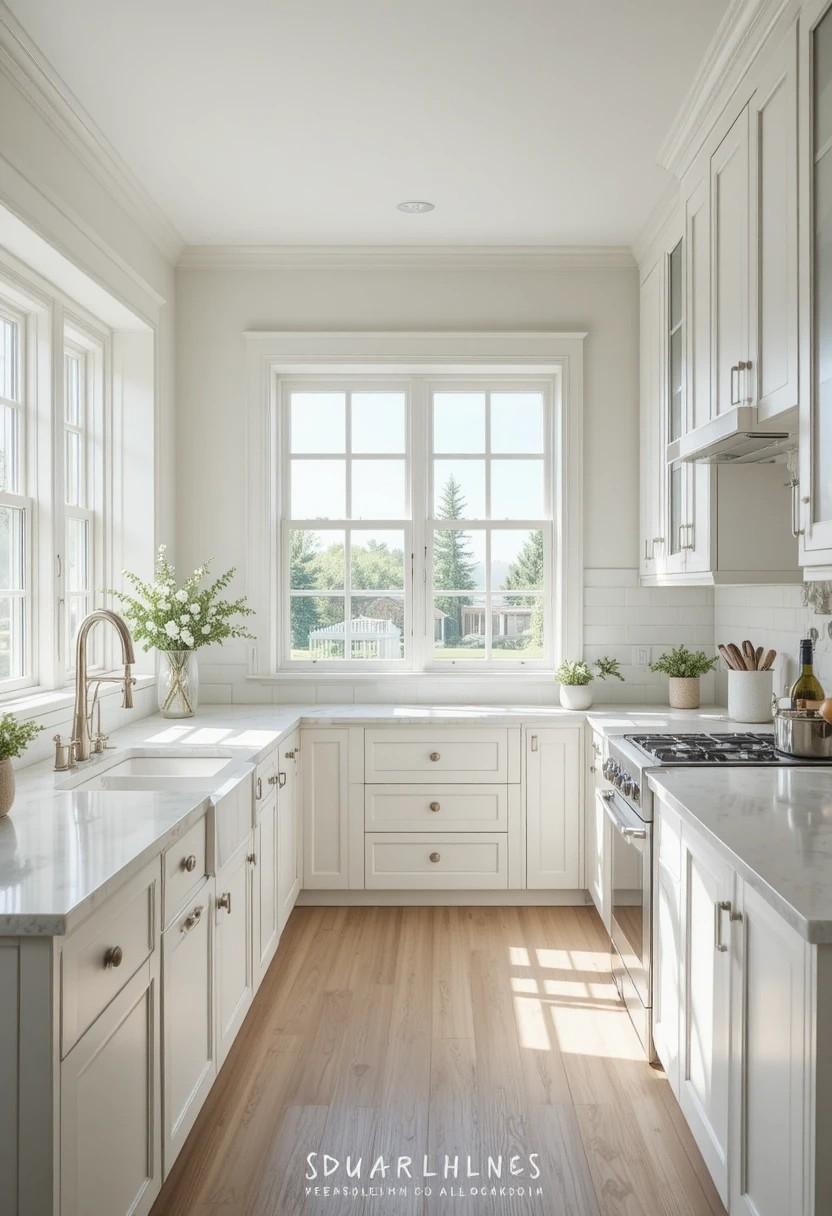
30 Coastal Kitchen Ideas for a Bright, Beachy Look
A gentle guide to wrapping your kitchen in soft light, airy colour, and the easy charm of the seaside.
There is something about a coastal kitchen that just feels like a deep breath. The light is soft, the colours are gentle, and every corner seems to whisper that everything is going to be okay. It is the kind of space where morning coffee tastes a little better and where friends linger long after the meal is done.
You do not need to live near the ocean to bring this feeling home. A bright, beachy kitchen is really about light, airy colour, and natural texture coming together in a calm and easy way. Whether you are planning a full remodel or simply refreshing a few details, the ideas below will help you create a kitchen that feels like a quiet seaside escape.
1. Crisp White Shaker Cabinets
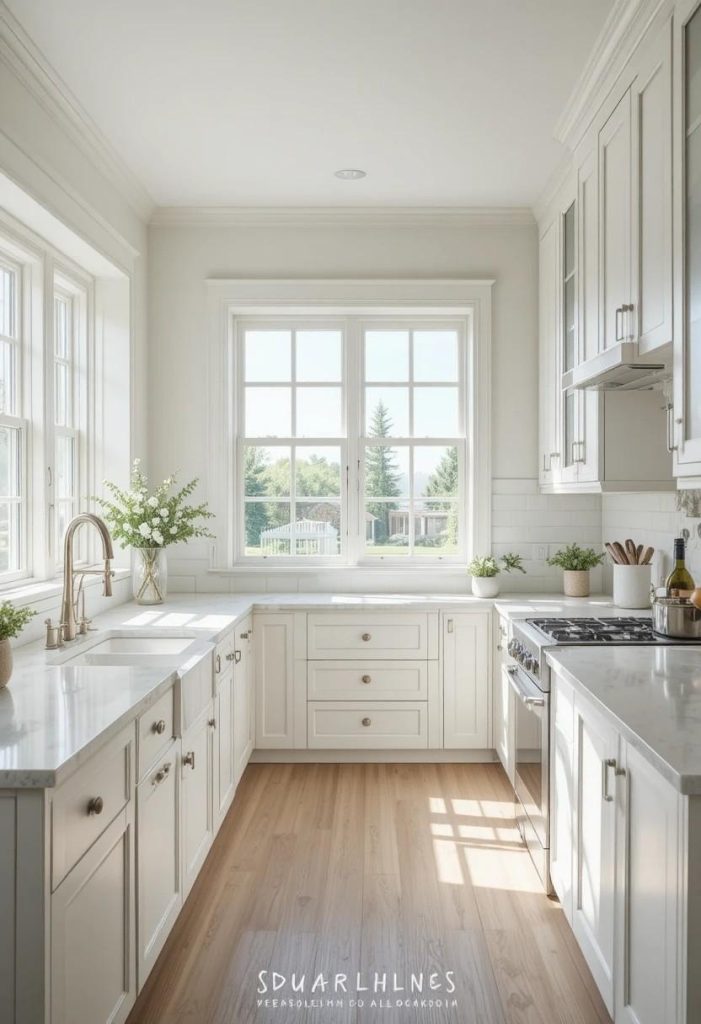
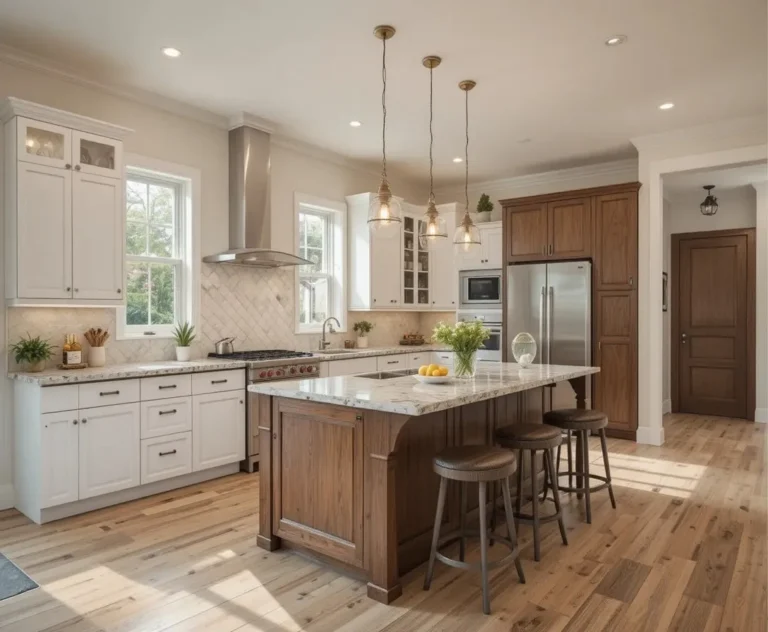
I started with white Shaker cabinets because they gave me a calm place to begin, and I have never regretted that choice. The flat panels and simple frames feel honest and unhurried, a bit like a cottage kitchen I once stayed in, where the light fell across the worktop every morning and nothing felt fussy. White bounces daylight around the room, so even a north-facing kitchen feels brighter, and it lets sea blues, sandy textures, and warm woods do the talking. I also love how easy the doors are to wipe down after cooking, and how well they suit both modern handles and old brass knobs.
How to do it: Choose a warm white rather than a stark blue-white, and ask for a satin or eggshell finish that wipes clean. Keep the door style plain, with a simple recessed panel, and fit soft-close hinges. Pair the cabinets with pale worktops first, then bring in colour through handles, a runner, and pottery, so the room stays light without feeling bare.
2. Soft Seafoam Green Lower Cabinets
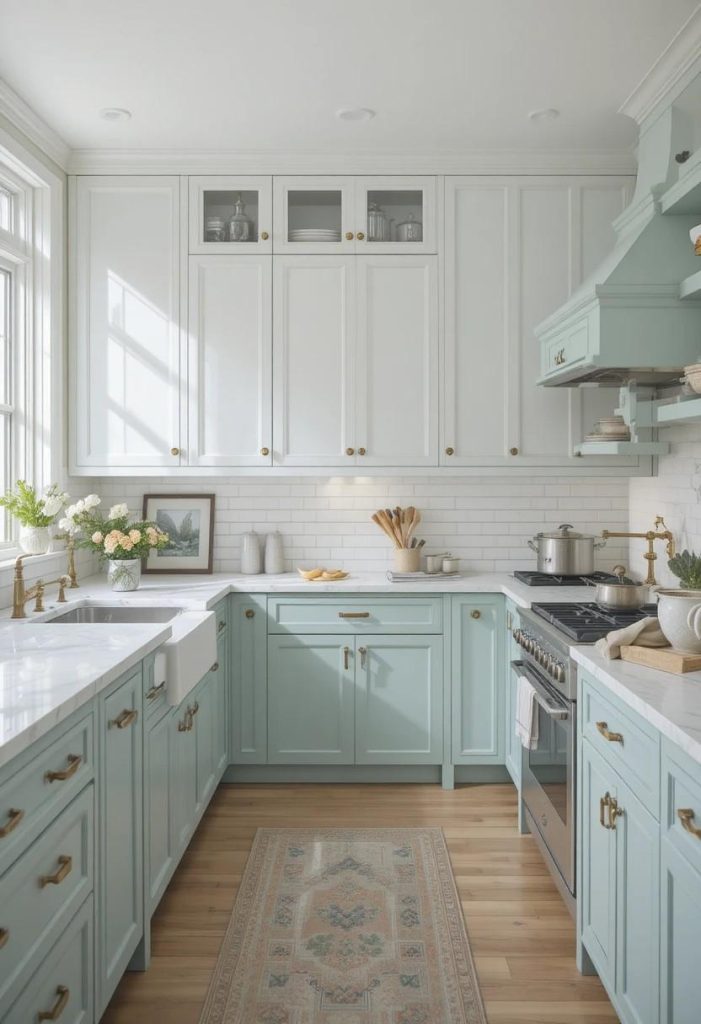
I painted only the lower cabinets seafoam green, and the change surprised me more than any other single decision in the room. The colour sits somewhere between pale green and soft blue, so it feels like shallow water over sand, and it grounds the kitchen without making it dark. Up above, the white wall cabinets keep everything airy, which means the green reads as a gentle wash rather than a bold statement. I have found it forgiving, too: crumbs and splashes show far less than they did on white, and the shade looks lovely beside oak, brass, and creamy stone.
How to do it: Paint a sample board first and live with it for a few days, checking it in morning light and evening light. Keep the upper cabinets white, choose a washable satin paint, and sand and prime the doors properly so the finish lasts. Finish with warm brass handles and a pale worktop to keep the green feeling fresh rather than heavy.
3. Whitewashed Wood Beams Overhead
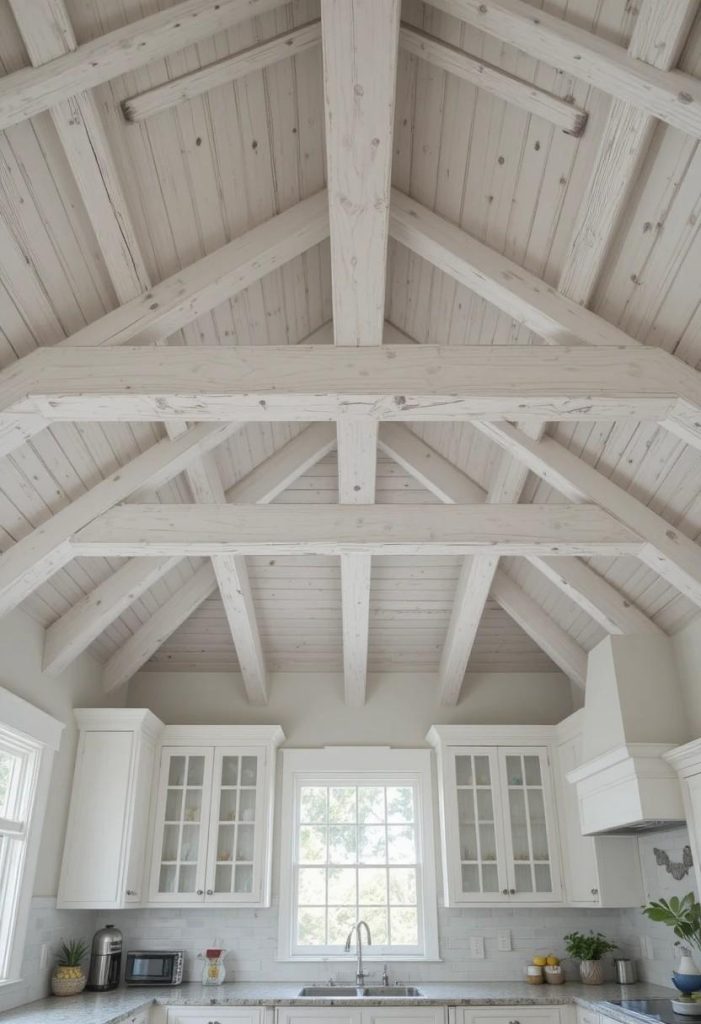
The first time I walked into a kitchen with whitewashed beams, I felt as though the ceiling had been lifted, even though nothing about the room had changed except the timber above my head. A pale wash lets the grain show through, so the beams feel weathered and honest rather than heavy, and they give a plain ceiling a story. In my own kitchen, they are the detail guests look up at first, and they tie the whole room to the cottage-by-the-sea feeling I wanted. They also soften tall white walls, which can otherwise feel a little stark.
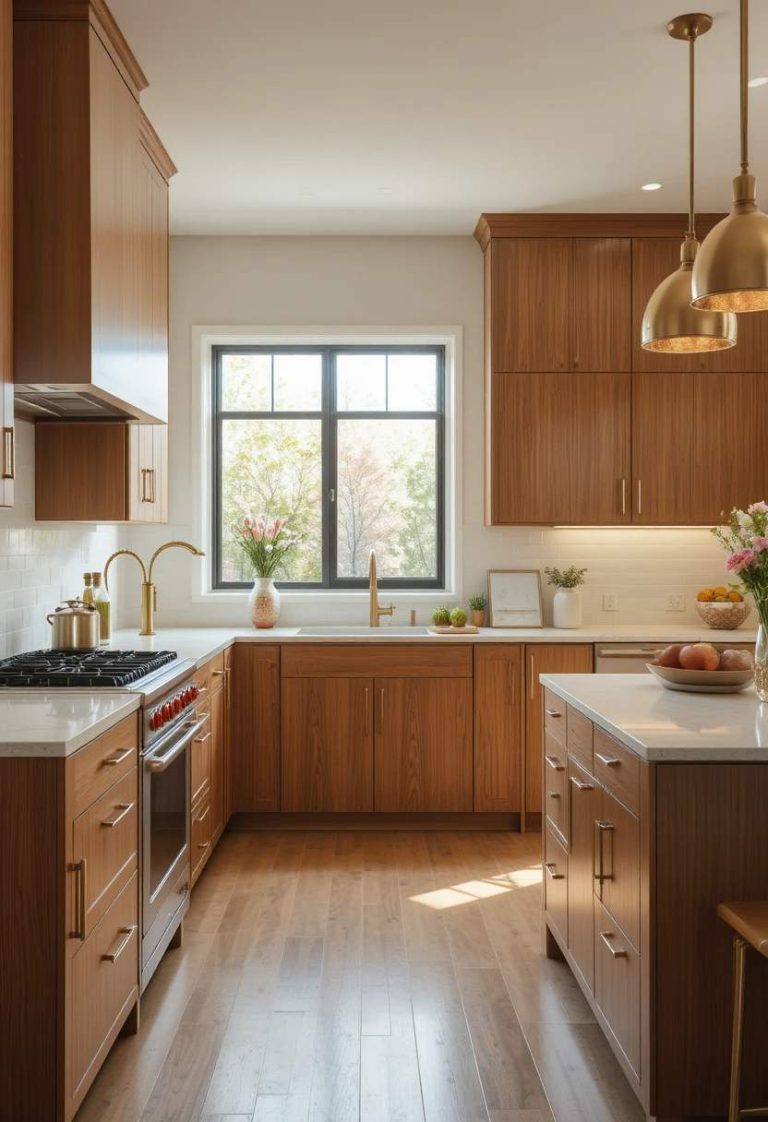
How to do it: Clean the beams well, then brush on a diluted white paint wash and wipe back the excess so the grain stays visible. Test the mix on a hidden section first, because a wash that is too strong can look flat. If you have no real beams, fit slim faux beams across the ceiling and whitewash them in the same way, spacing them evenly.
4. Natural Woven Pendant Lights
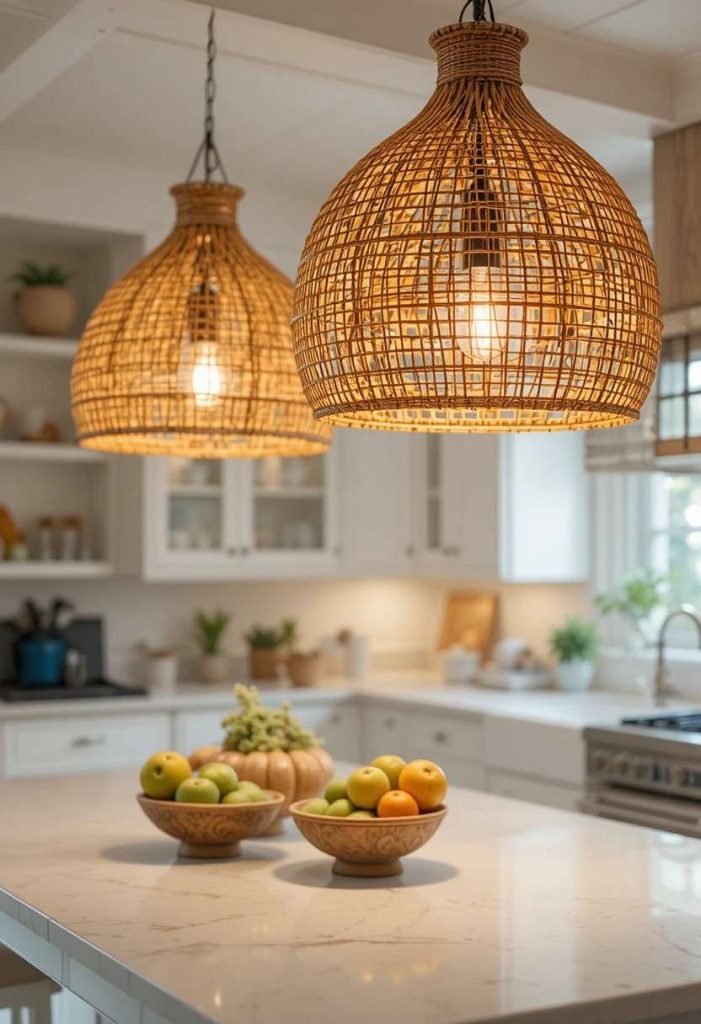
I swapped our plain metal pendants for woven rattan ones on a whim, and the kitchen changed character overnight. In daylight, the weave casts soft, dappled shadows that remind me of sunlight through beach grass, and in the evening the glow feels warm and low, like a lamp in a seaside cottage. I love that they are light to look at, even when they are quite large, so they suit a long island without blocking the view across the room. They also bring in texture, which a mostly white kitchen really needs, and they are far easier to live with than I expected.
How to do it: Hang two or three pendants in a row over an island, spacing them evenly and leaving about 75 to 90 centimetres between the worktop and the base of each shade. Choose a warm white bulb and, if you can, a dimmer, so the light can drop low in the evening. Dust the weave with a dry cloth or a soft brush every few weeks.
5. A Sandy Beige and White Palette
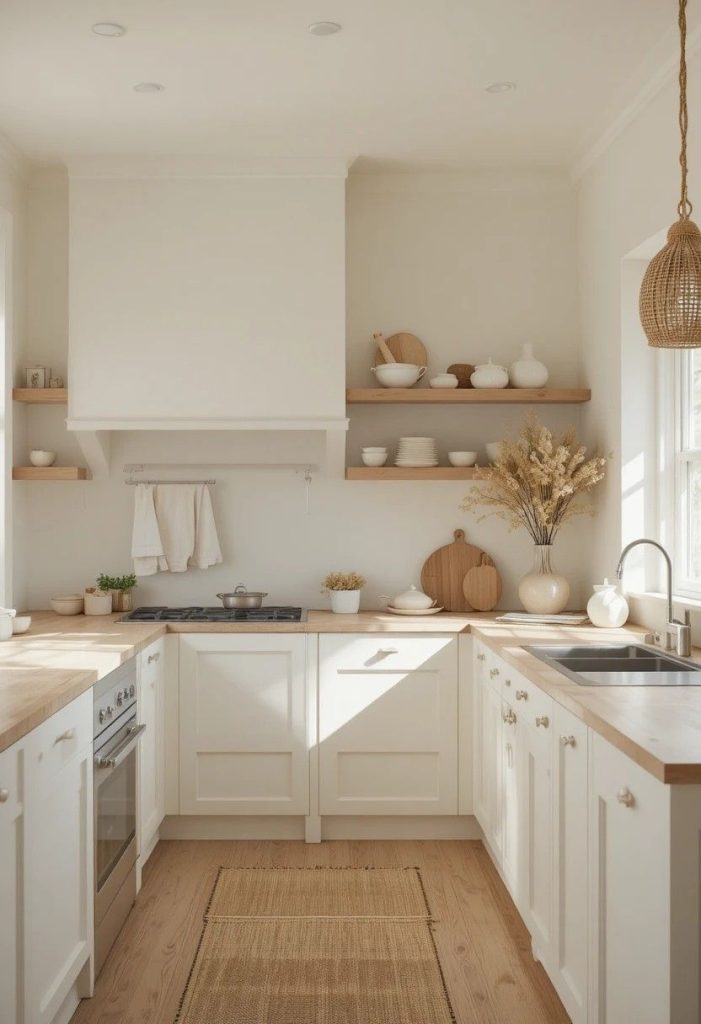
When I am unsure about colour, I go back to the beach itself: warm sand, white foam, pale driftwood, and the faintest blue-grey where the sea meets the sky. A sandy beige and white palette borrows exactly that, and it is the easiest coastal scheme I know, because the tones are so forgiving together. Beige warms up white walls so they never feel clinical, while white keeps the beige from looking muddy or dull. I have used this pairing in a tiny kitchen and a large one, and in both it made the room feel calm, bright, and easy to live in.
How to do it: Pick one warm white for the walls and cabinets, then layer two sandy tones through the floor, a runner, and wooden stools. Add a single cool accent, such as pale blue linen or sea glass, in small doses only. Hold paint and fabric samples together in daylight before you commit, and keep the darkest tone for the floor so the room feels grounded.
6. Open Shelving with Coastal Pottery
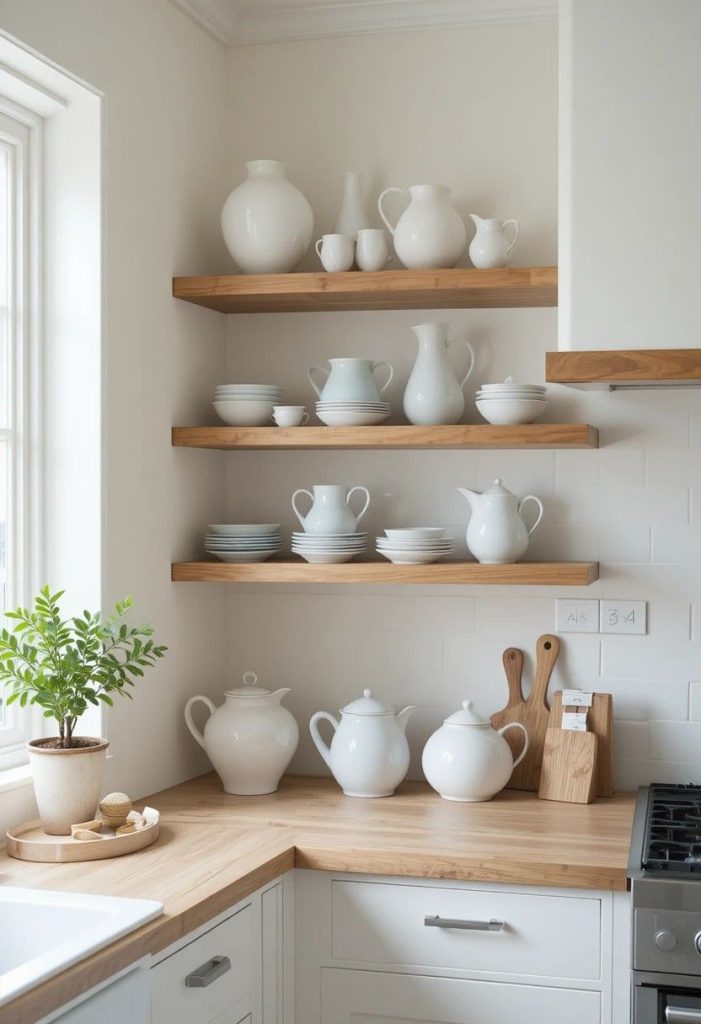
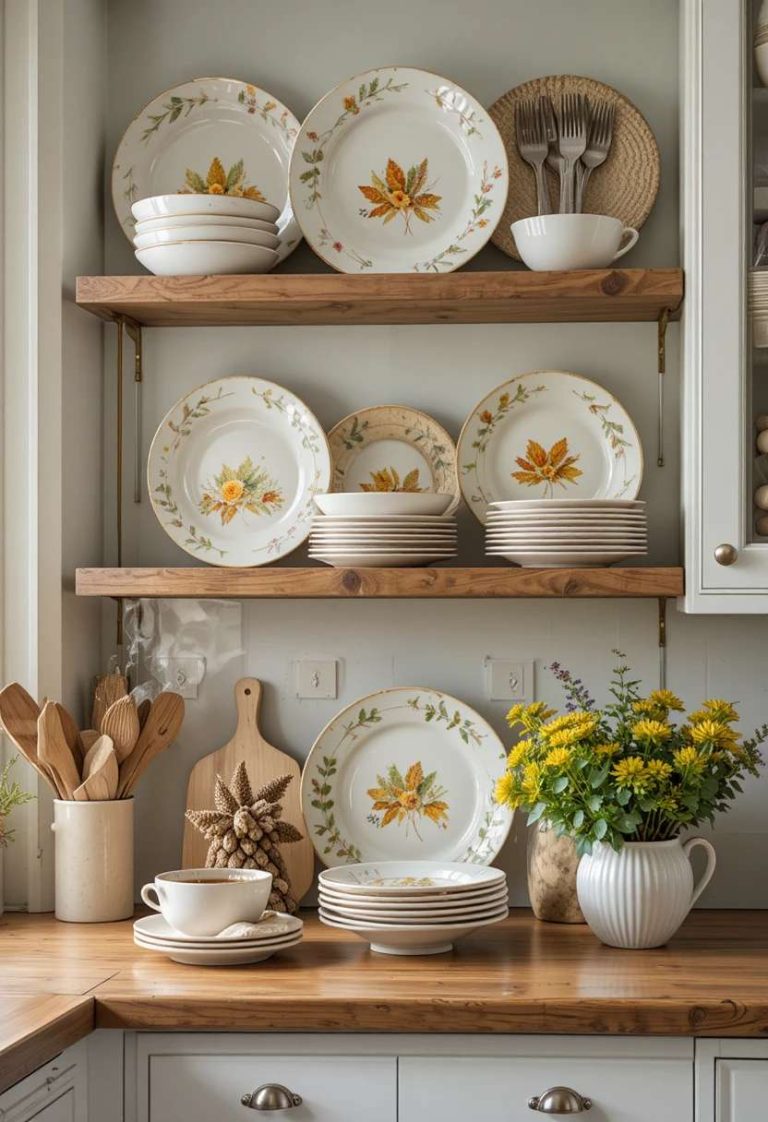
I took the doors off one wall cabinet as an experiment, and the shelves underneath have stayed open ever since, because they changed how the kitchen felt to use. My everyday bowls and mugs are suddenly within reach, and the pottery I love — a speckled jug, a few sea-blue bowls, a stack of cream plates — gets to be part of the room instead of hiding behind a door. I keep the styling simple, with breathing space between pieces, so the shelves feel calm rather than crowded. These kitchen organization ideas helped me give every shelf a clear job, so nothing drifts back into clutter.
How to do it: Replace one run of upper cabinets with two wooden shelves, fixed firmly into studs or solid wall plugs. Keep each shelf no deeper than about 25 centimetres, and store only the pieces you use weekly on the lowest shelf. Group pottery by colour, leave a gap between groups, and wash or dust the shelves when you do the weekly shop.
7. Shiplap Walls for Texture
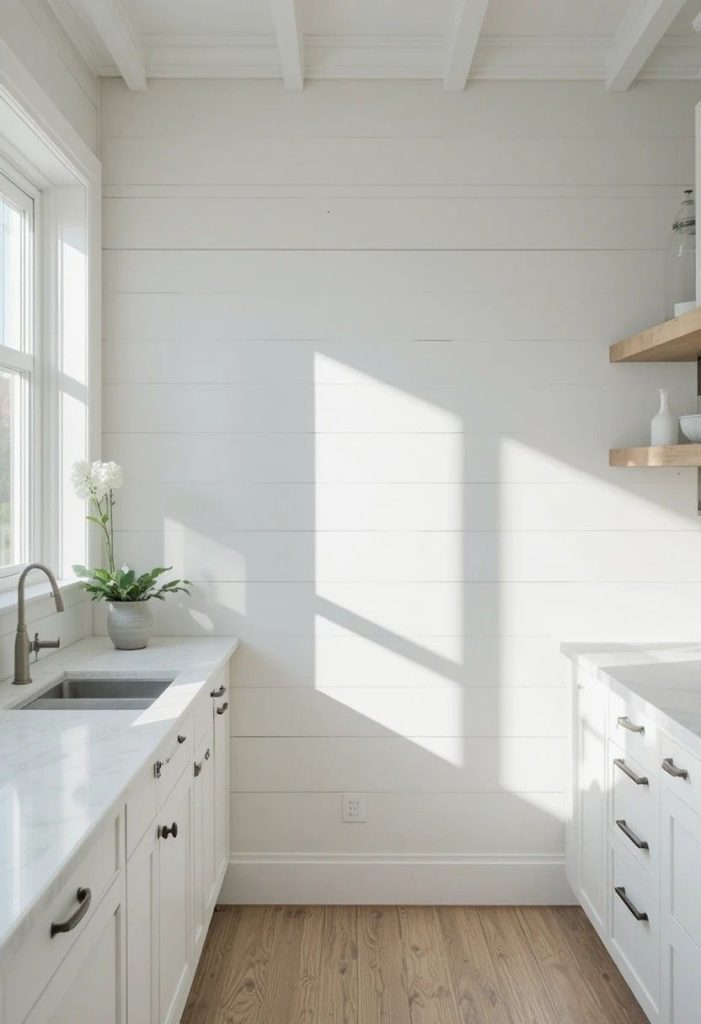
I had always thought of shiplap as a cottage cliché until I tried it on a single wall, and now I would not take it down. The slim horizontal lines catch the light as the day moves, so a plain wall gains a quiet rhythm, and the texture makes white paint feel warm instead of flat. It is also wonderfully practical in a kitchen: the boards hide small marks and uneven plaster far better than a smooth wall does. I chose to keep it to one feature wall and the side of the island, which gave me the seaside feeling without making the whole room feel like a beach hut.
How to do it: Fit shiplap boards horizontally on one wall, starting from the bottom and checking each board with a spirit level. Use moisture-resistant boards near the sink, paint them in a washable eggshell white, and seal the edges with caulk. If you rent, try peel-and-stick shiplap panels on a small section first and check they remove cleanly.
8. A Farmhouse Apron Sink in White
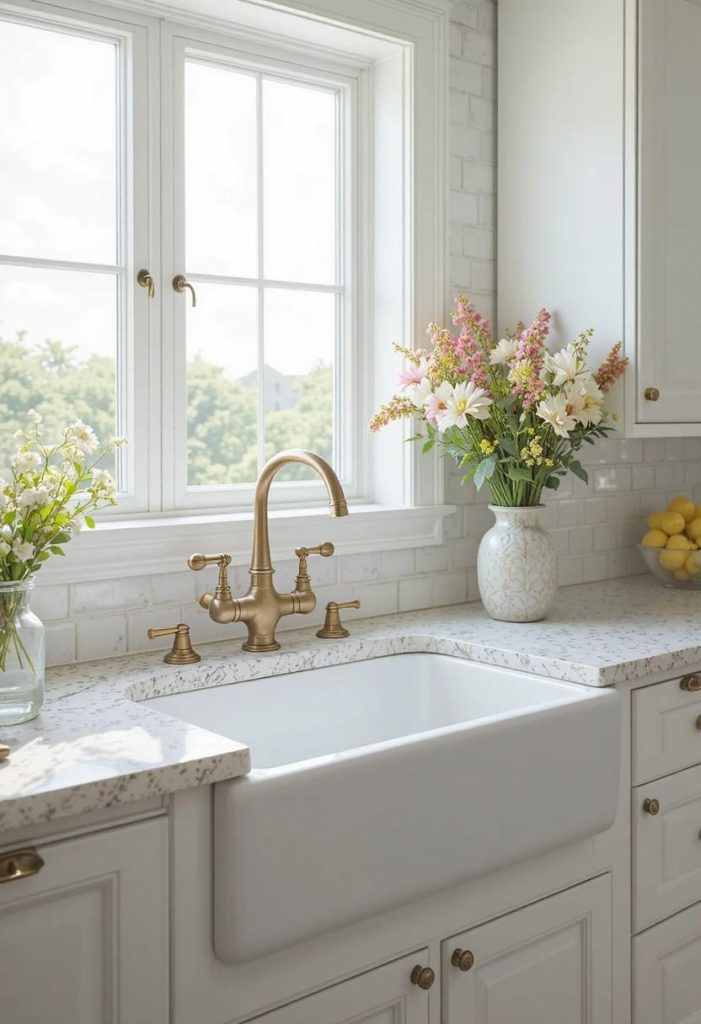
Our apron-front sink is the hardest-working thing in the kitchen, and somehow also the prettiest. The deep bowl swallows roasting tins and tall vases without a splashy struggle, and the wide white front softens the whole run of cabinets, like a clean apron on a cook. I was worried it would look too traditional next to our simpler cabinets, but the smooth curve actually balances them, and it gives me a reason to keep the worktop around it clear. After a year of daily use, the enamel still looks new, and I reach for it without thinking.
How to do it: Measure your cabinet width carefully, because an apron sink needs a cabinet made or adapted to suit it, with the front cut to fit. Choose fireclay or a good-quality composite, and check the weight so the cabinet can support it. Fit a single-lever tap in brushed brass or chrome, and wipe the front down after greasy cooking so marks do not set.
9. Light Oak Flooring with a Sun Bleached Finish
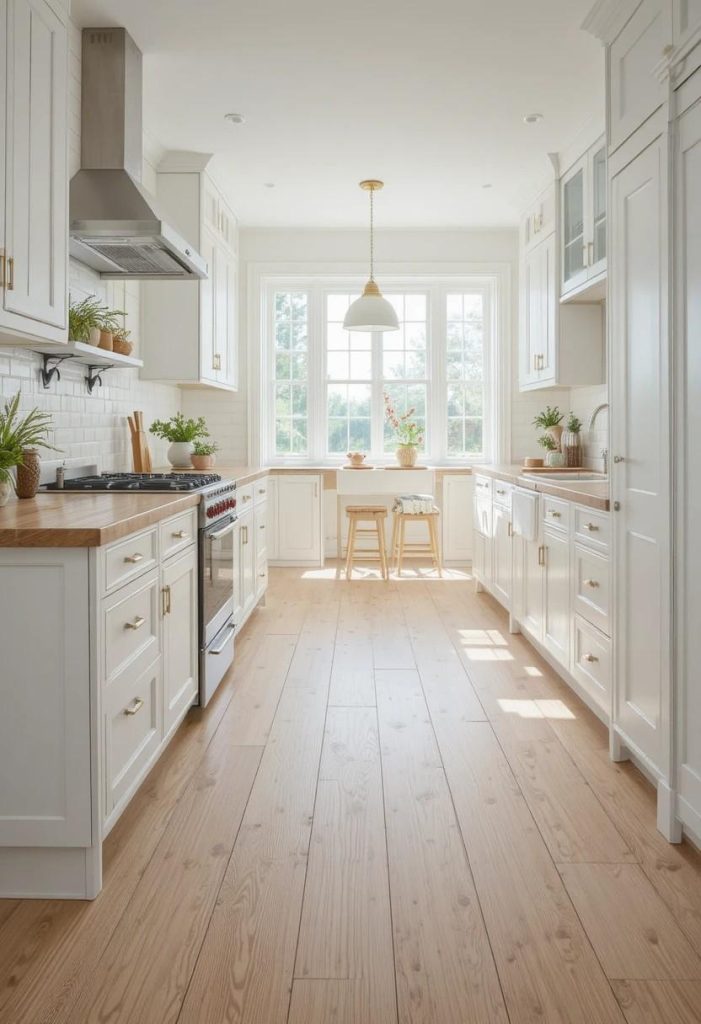
Pale oak flooring was the first thing I noticed in a friend’s coastal kitchen, before I had even registered the cabinets or the view. It felt warm underfoot, even on a grey morning, and the sun-bleached tone made the whole room look as though it had been gently faded by summers by the sea. I love that it works with almost everything: white cabinets, seafoam paint, rattan, linen, and stone all sit happily on it. It also hides dust and crumbs far better than a dark floor, which matters more than I expected in a room I use three times a day.
How to do it: Choose a pale oak with a matte, sun-bleached finish and a hardwearing lacquer or oil suitable for kitchens. Lay the boards in the direction of the longest wall or the main light source, and leave an expansion gap at the edges. Wipe up spills promptly, sweep with a soft brush, and use felt pads under stools and chairs to prevent scratches.
10. Glass Front Cabinets to Show Off Dishware
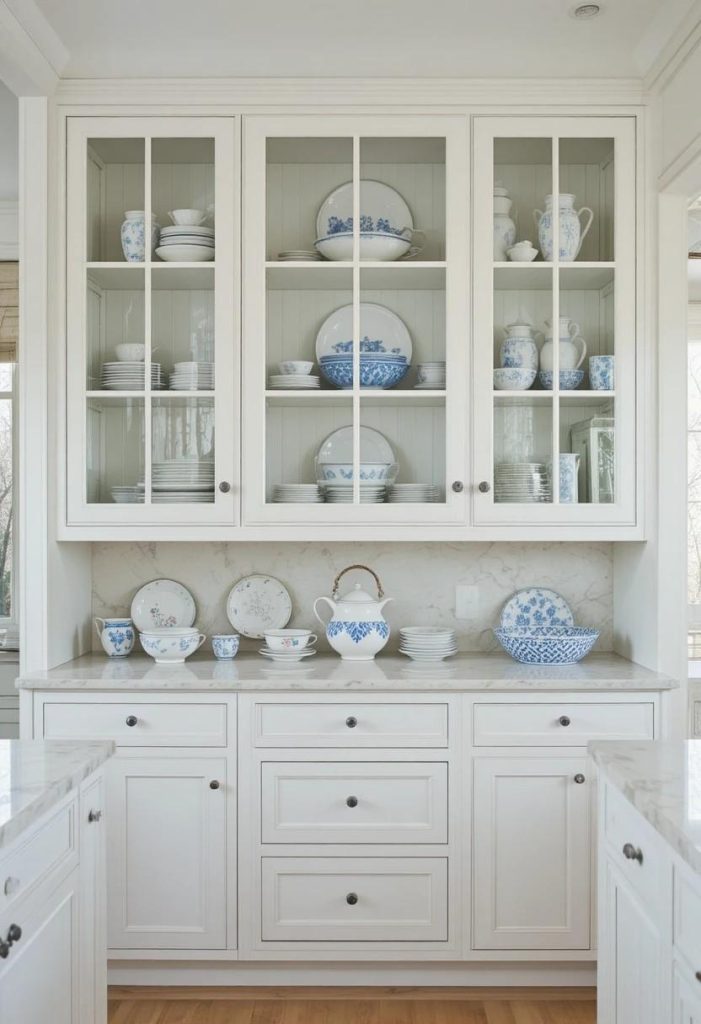
I replaced two solid cabinet doors with glass fronts, and it felt like opening a window inside the kitchen. The shelves behind them hold my prettiest pieces — white plates, pale blue glasses, a small stack of bowls — and seeing them every day makes me use them instead of saving them for visitors. Glass also breaks up a long run of white doors, so the kitchen looks less boxy and more like a collection of pieces. I was nervous about keeping the shelves tidy, but having only two glass cabinets keeps the job small, and it encourages me to keep just the pieces I truly love.
How to do it: Swap the doors on one or two upper cabinets for glazed doors, or fit clear glass panels into existing frames. Keep the shelves inside painted white and lit with a small LED strip if you can. Display matching sets in short stacks, leave space at the ends, and keep everyday items on the lower shelf so they are easy to reach.
11. A Driftwood Inspired Kitchen Island
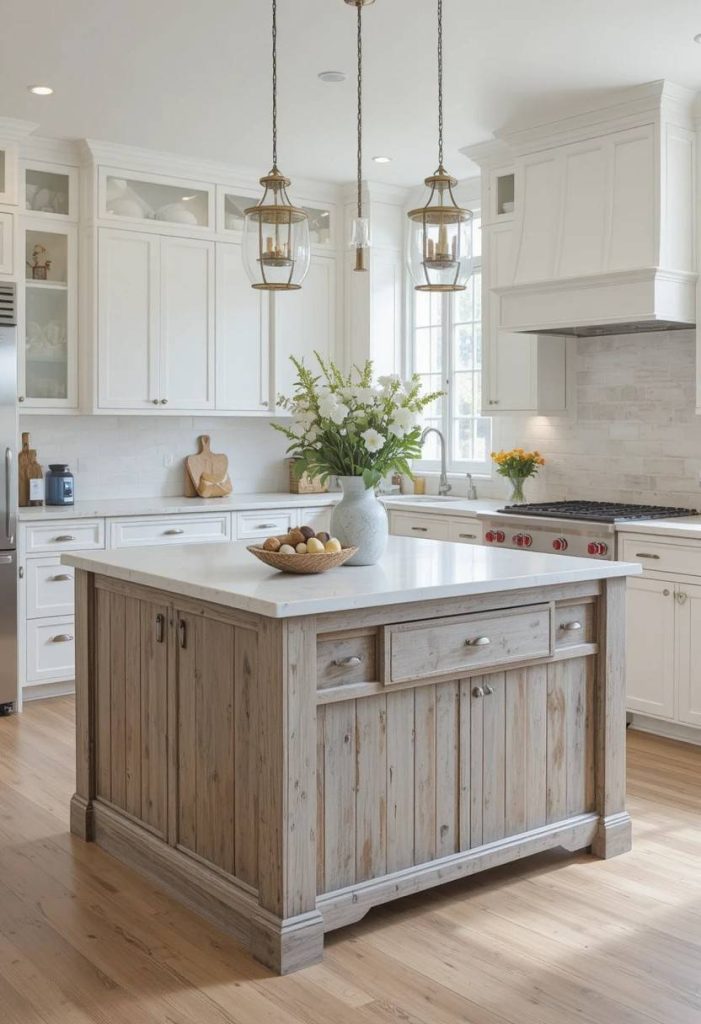
A driftwood-toned island sits at the centre of my kitchen like a piece of weathered timber washed up on the shore, and I planned the whole room around it. The soft grey-brown finish is calm next to white cabinets, and it gives the room a natural anchor without the weight of a dark island. I love gathering there in the morning: toast and coffee on the pale worktop, the children drawing at the far end, and everyone facing each other instead of a wall. If a full island feels too much for your space, these kitchen peninsula ideas show how a slimmer attached counter can give you the same gathering place.
How to do it: Choose a weathered grey-brown stain or a pale driftwood paint wash for the island base, keeping the worktop light. Allow about 60 centimetres of width per stool and at least 30 centimetres of overhang for knees. Fit deep drawers on the working side for pans, and seal the finish well so splashes wipe off easily.
12. Brass or Gold Hardware for Warmth
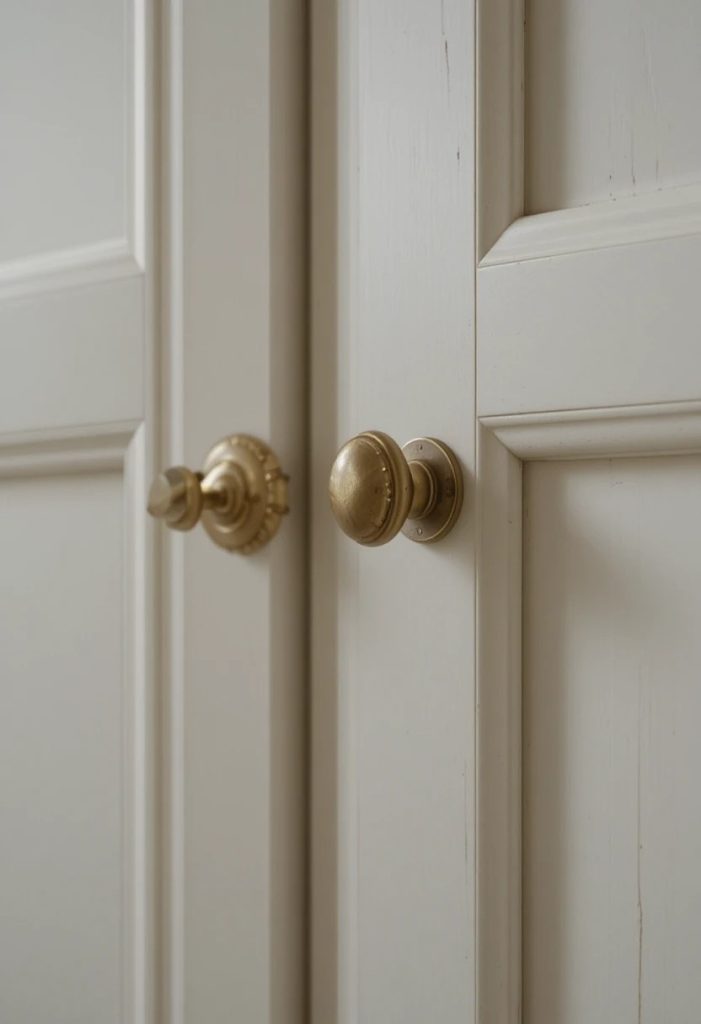
Swapping plain silver handles for warm brass was the smallest job on my list, and it made the biggest difference for the money. The soft gold tone catches the light every time I walk in, and it warms up white cabinets in a way that paint alone never could. I chose unlacquered brass, which mellows and gains a gentle patina over time, so the handles look better now than they did on the day I fitted them. Against seafoam paint and pale oak, they feel like jewellery for the kitchen: small, gleaming, and quietly luxurious.
How to do it: Measure the hole spacing on your existing handles before you order, and buy one sample to check the tone against your cabinets in daylight. Choose a brushed or aged brass finish, which shows fingerprints far less than polished gold. Fit the same finish on knobs, pulls, and the tap, and keep a soft cloth handy for a quick weekly polish.
13. Blue and White Patterned Backsplash Tiles
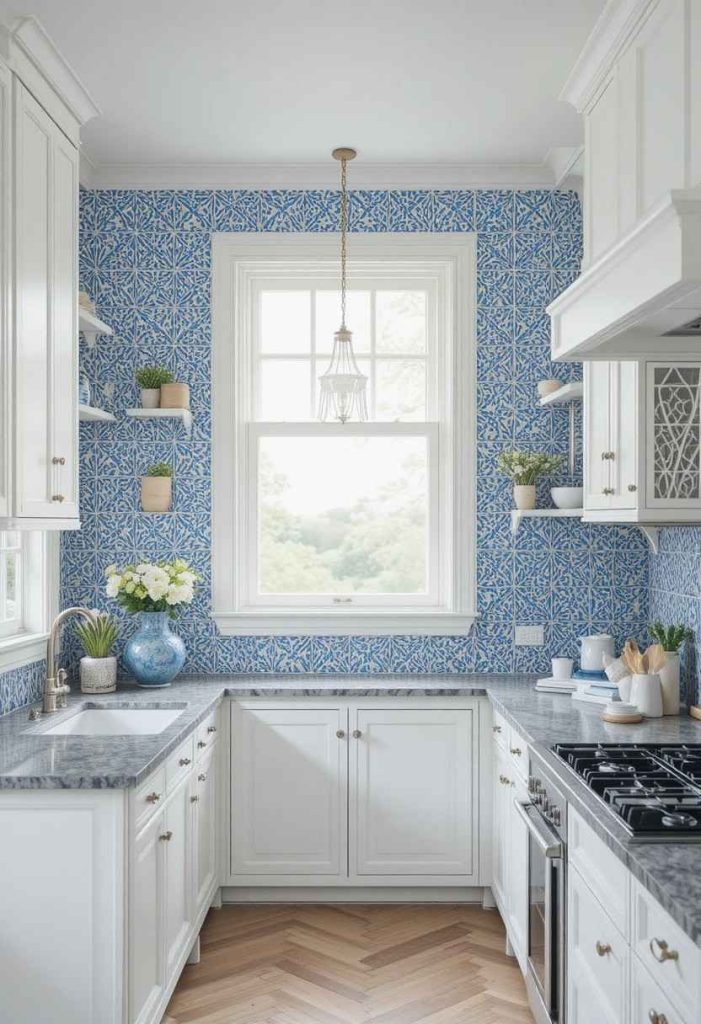
Blue and white tiles were my way of bringing the sea into the kitchen without painting a single wall blue. The pattern reminds me of old Portuguese tiles I once saw on a harbour wall, and it gives the cooker wall a focal point that plain subway tiles never managed. I kept the pattern to the splashback only, so it reads as a framed picture rather than a busy expanse, and I let the rest of the room stay calm. Every morning, while the kettle boils, I catch myself looking at the little waves and leaves in the design.
How to do it: Tile only the splashback behind the cooker and sink, keeping the pattern in one contained band. Lay the tiles out on the floor first to plan the pattern and avoid awkward cuts at the edges. Use a pale grout that suits the tile background, seal it after it cures, and wipe splashes off the same day so the grout stays bright.
14. Linen Roman Shades on the Windows
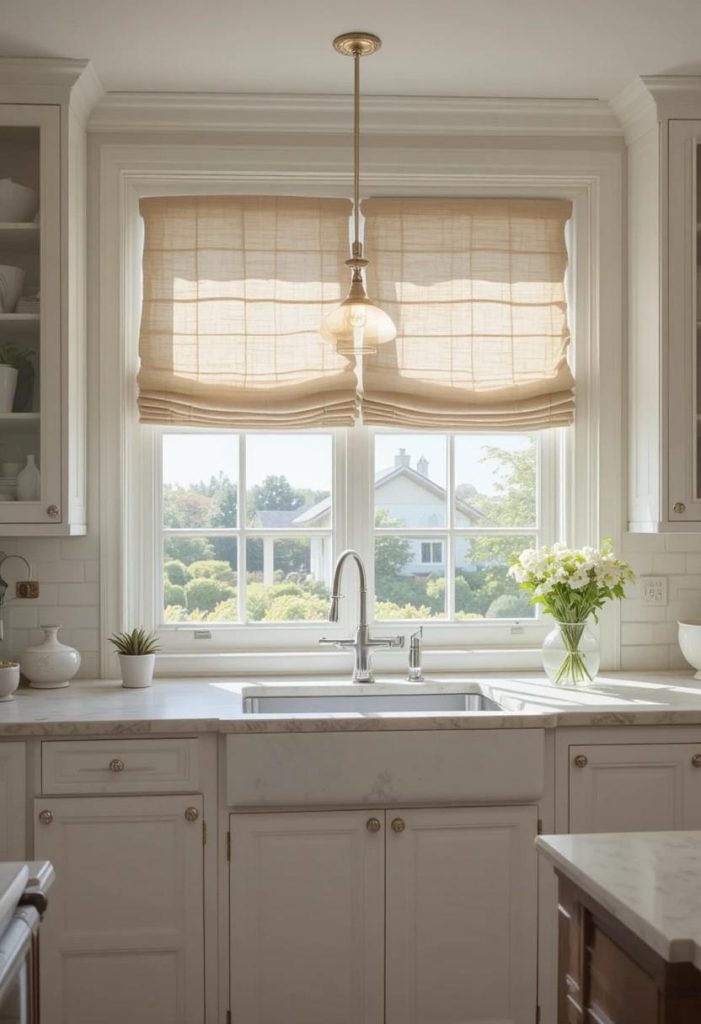
Linen Roman shades softened my kitchen windows in a way that curtains never quite managed. When they are down, the fabric filters the light into a soft, even glow, and the gentle folds add a tailored finish that feels calm rather than fussy. When they are up, they stack into a neat band at the top of the window, so the view stays completely clear. I chose a natural, undyed linen, which warms the white walls and sits beautifully beside rattan and oak. They also give me privacy in the evening without shutting out the daylight.
How to do it: Measure the window recess carefully and decide between an inside mount, which looks neat, and an outside mount, which makes the window look larger. Choose a light-filtering linen in natural or pale blue, and fit a cordless or wand-operated blind for safety. Vacuum the fabric gently with a brush attachment once a month, and spot-clean marks with a damp cloth.
15. A Bowl of Fresh Lemons or Citrus
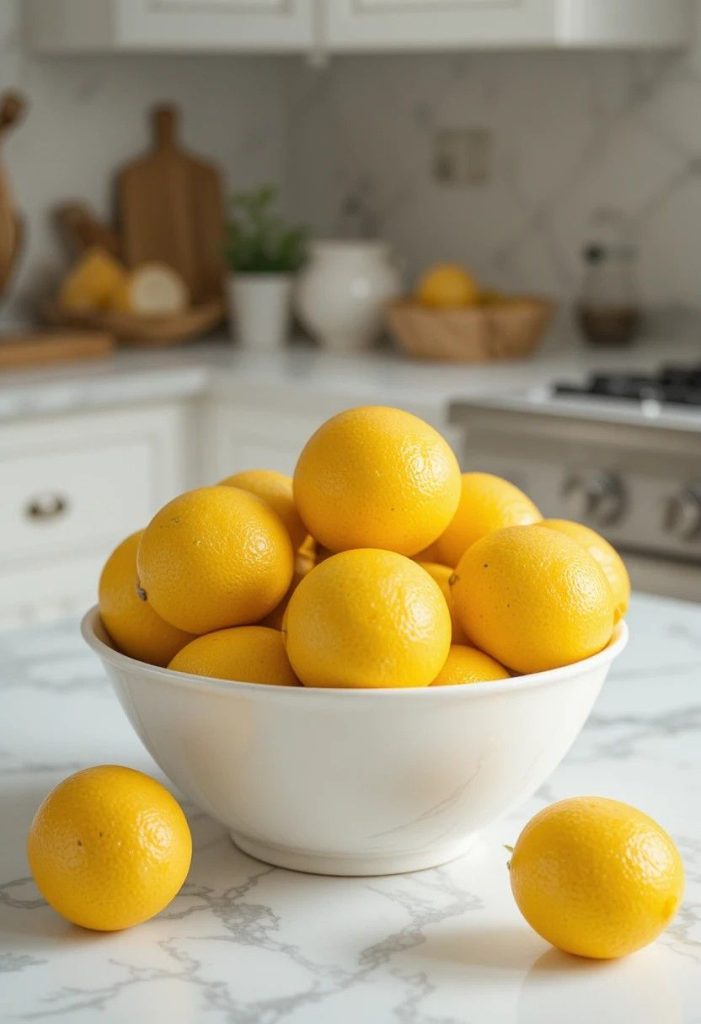
A bowl of lemons is my favourite five-minute coastal trick, because it works in every kitchen, in every season, and it costs almost nothing. The bright yellow lifts a pale worktop instantly, and the scent — sharp, clean, and sunny — does more for the room than any candle I own. I keep ours in a shallow ceramic bowl by the sink, where I can reach for one while I cook, and I replace them as they soften so the bowl always looks fresh. It is a small, living detail, and it reminds me that a coastal kitchen should feel gathered and used, not staged.
How to do it: Choose a wide, shallow bowl in white, pale blue, or natural wood, and fill it with whole lemons, limes, or a mix of both. Keep the bowl away from direct heat, wash the fruit before you display it, and use the oldest fruit first. Add a few green leaves from the garden if you have them, and refresh the display each week when you shop.
16. Rattan Counter Stools
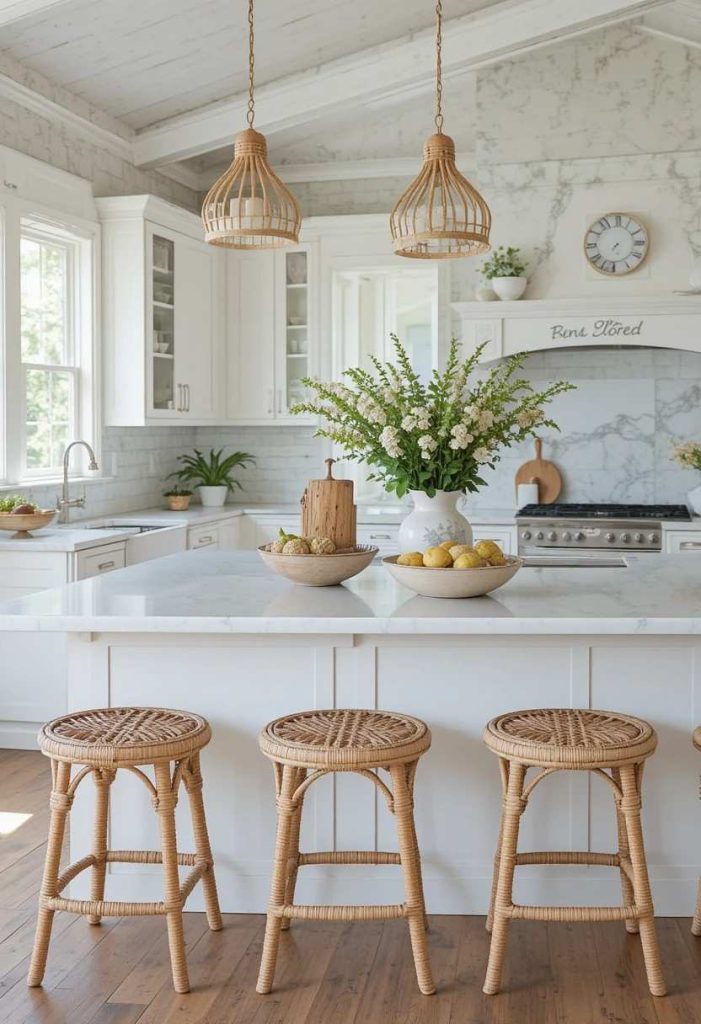
Rattan stools were the first seats I bought for our island, and they are still the ones everyone reaches for. The woven backs are comfortable without cushions, the natural tone warms up the white cabinets, and the open weave lets light pass through, so the stools never look heavy or blocky. I like that they feel informal: nobody sits up straight on a rattan stool, and that is exactly the mood I want at breakfast. They have survived spilled juice, sandy feet, and three years of daily use, and they still look as good as the day they arrived.
How to do it: Measure your counter height first — counter stools suit a worktop of about 90 centimetres, while bar stools suit a higher bar. Allow about 60 centimetres of width per stool and 15 centimetres between them. Choose a sturdy frame with a footrest, test the seat for comfort, and wipe the weave with a damp cloth after spills.
17. Soft White Marble or Quartz Counters
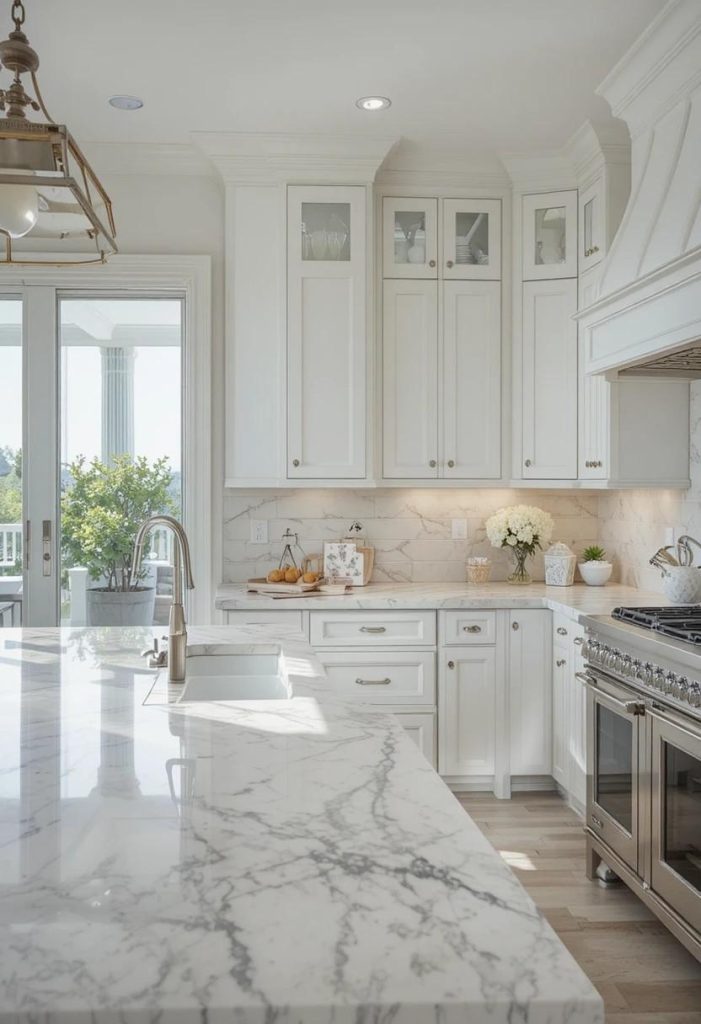
Soft white worktops with faint grey veining are, for me, the quiet luxury of a coastal kitchen. They look like sea foam frozen in stone, and they lift the whole room without shouting about it. I chose quartz in the end, because I wanted the marble look without the worry: it shrugs off lemon juice, red wine, and hot pans far better than natural stone, and it needs no sealing. The pale surface also bounces light back into the room, which makes the kitchen feel larger, and it gives me a clean, calm surface to cook on every day.
How to do it: Order samples of two or three white quartz or marble-look slabs and compare them against your cabinets in daylight. Choose a soft, low-contrast veining rather than a bold dramatic pattern, and ask for a slightly eased edge, which is kinder to hips and elbows. Wipe the surface after cooking with a damp cloth, and use a board for chopping and a trivet for hot pans.
18. A Statement Window Framing the Light
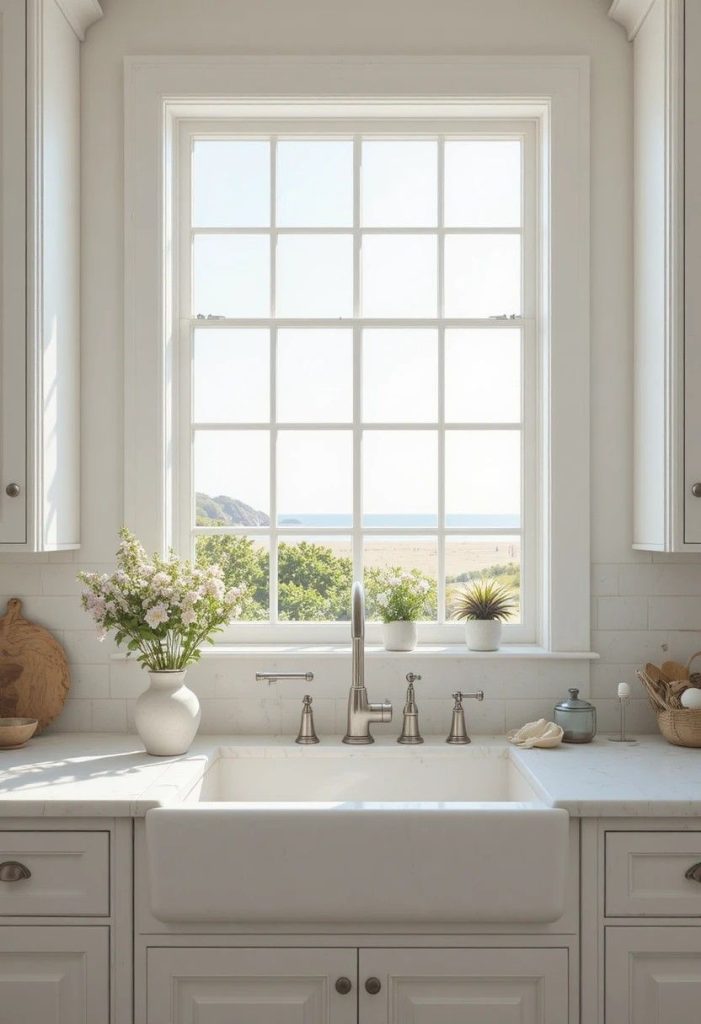
A large window over the sink is the best seat in my kitchen, even though nobody sits there. I wash up facing the garden, the sky, and whatever weather is passing, and the light that comes through makes the whole room feel twice as big. I kept the frame simple and white, with no heavy trim, so the view itself does the work, and I left the sill almost clear — just a small plant and a jug — so nothing blocks the light. On dark winter mornings, it is still the brightest spot in the house, and that matters more than any decoration I could hang there.
How to do it: If you can enlarge a window, choose the one over the sink or the main worktop, and keep the frame slim and white. Fit a deep sill in pale stone or wood for plants and a washing-up brush. Keep the glass clean inside and out, use a sheer blind or nothing at all, and place the sink or hob where you can enjoy the view while you work.
19. Coastal Botanical Prints on the Wall
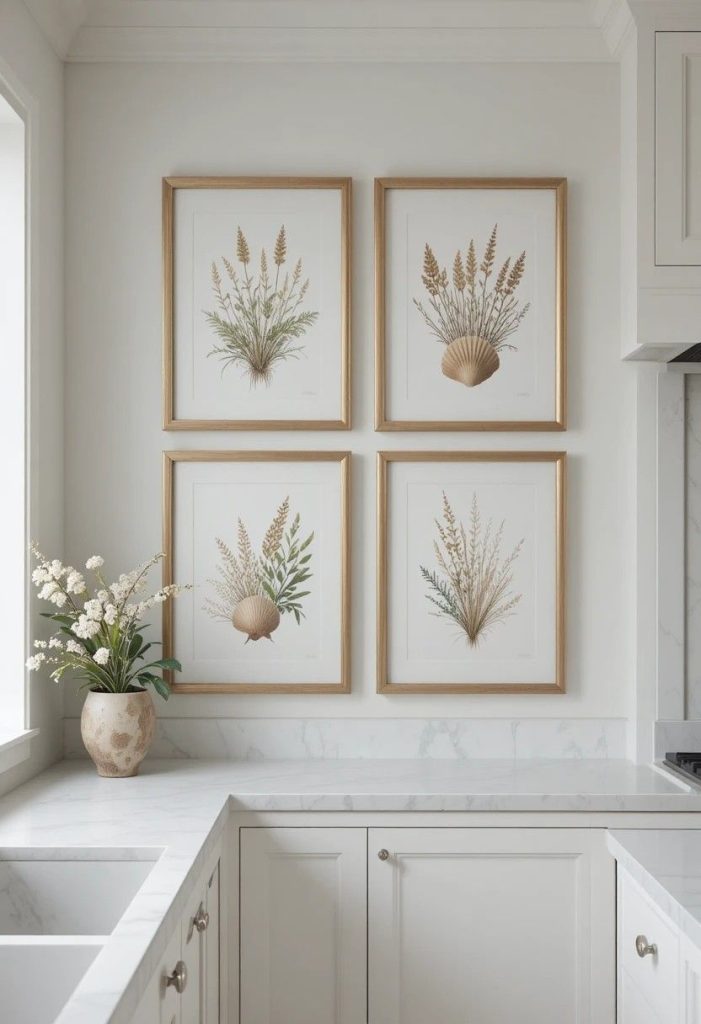
I hung three botanical prints — sea grasses, a sprig of eucalyptus, and a pale fern — on the one blank wall in my kitchen, and the room felt finished for the first time. The soft greens and cream tones pull the coastal palette together, and the simple frames in pale wood or white keep them from looking formal. I love that they are quiet art: they do not shout for attention, but they give your eye somewhere restful to land while you wait for the kettle. They also cost very little, and I can swap the prints with the seasons if I ever want a change.
How to do it: Choose two or three prints in the same size, with a shared colour palette of greens, blues, and cream. Hang them in a straight row at eye level, about 145 centimetres from the floor to the centre of the group, spacing them evenly. Use simple pale wood or white frames, hang them away from steam and splashes, and keep the wall around them clear.
20. Rope and Jute Accents
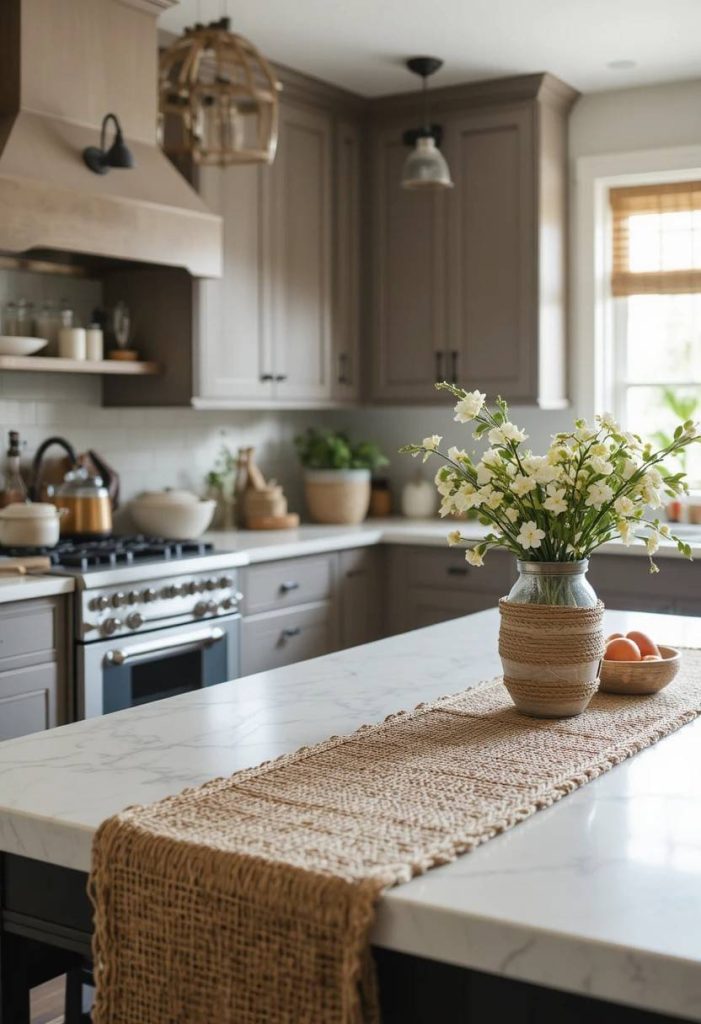
Rope and jute are the textures I reach for whenever my kitchen starts to feel too smooth and too new. A jute runner softens the floor in front of the sink, a rope-wrapped basket holds tea towels by the door, and a small jute placemat under a vase stops the table from looking bare. The fibres bring a beachy, handmade feeling that paint and tile cannot, and their warm sandy tone ties the whole room together. I keep them to a few pieces, though, because too much texture in one place can start to feel like a fishing net rather than a kitchen.
How to do it: Start with one jute runner in front of the sink or cooker, choosing a low, flat weave that is easy to sweep. Add one rope basket for tea towels or produce, and a set of jute placemats if you eat at the island. Shake the runner outside weekly, spot-clean spills quickly, and keep jute away from standing water so it does not stain.
21. A Built In Banquette with Striped Cushions
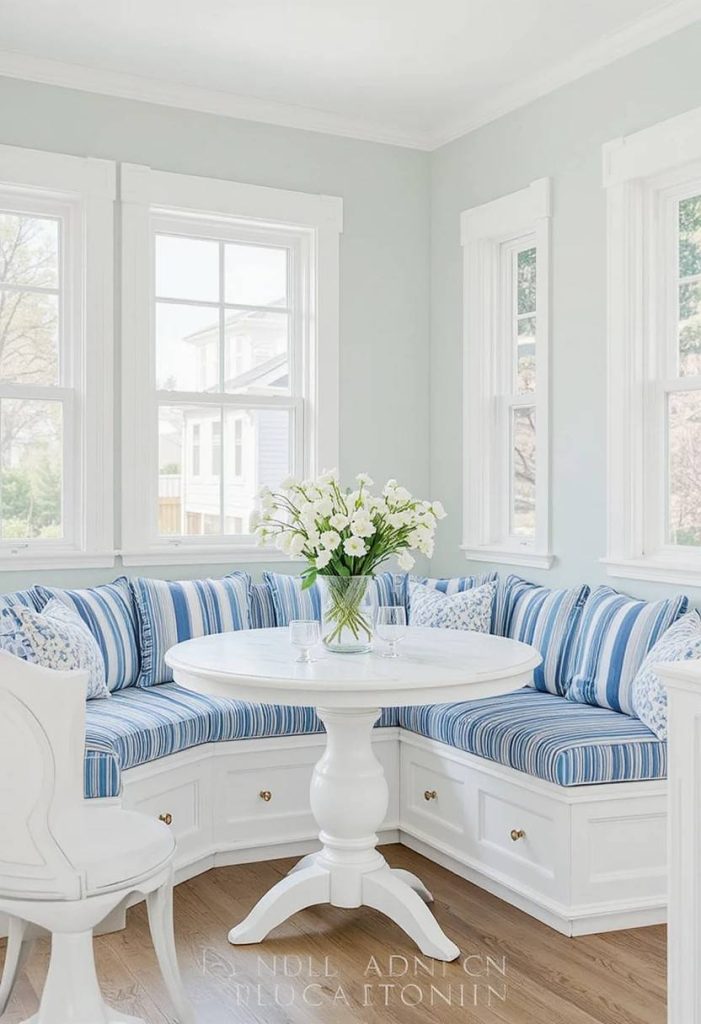
A built-in banquette turned the awkward corner of my kitchen into the place where everyone wants to sit. The bench hugs the wall, the striped cushions in blue and white feel like a deckchair brought indoors, and a small table in front of it is just right for breakfast, homework, and long cups of tea. I love that it seats more people than chairs ever could, and that the base hides storage for tablecloths and board games. In a smaller home, these small apartment kitchen ideas helped me plan a banquette that fits without crowding the room.
How to do it: Build the bench to seat height, about 45 centimetres, with a depth of about 45 centimetres, and add hinged lids or drawers underneath for storage. Choose washable striped cushions in outdoor or performance fabric, and fix a slim table at a height that leaves about 30 centimetres between the seat and the tabletop. Add a cushion that is easy to lift off and wash.
22. Seagrass Baskets for Storage
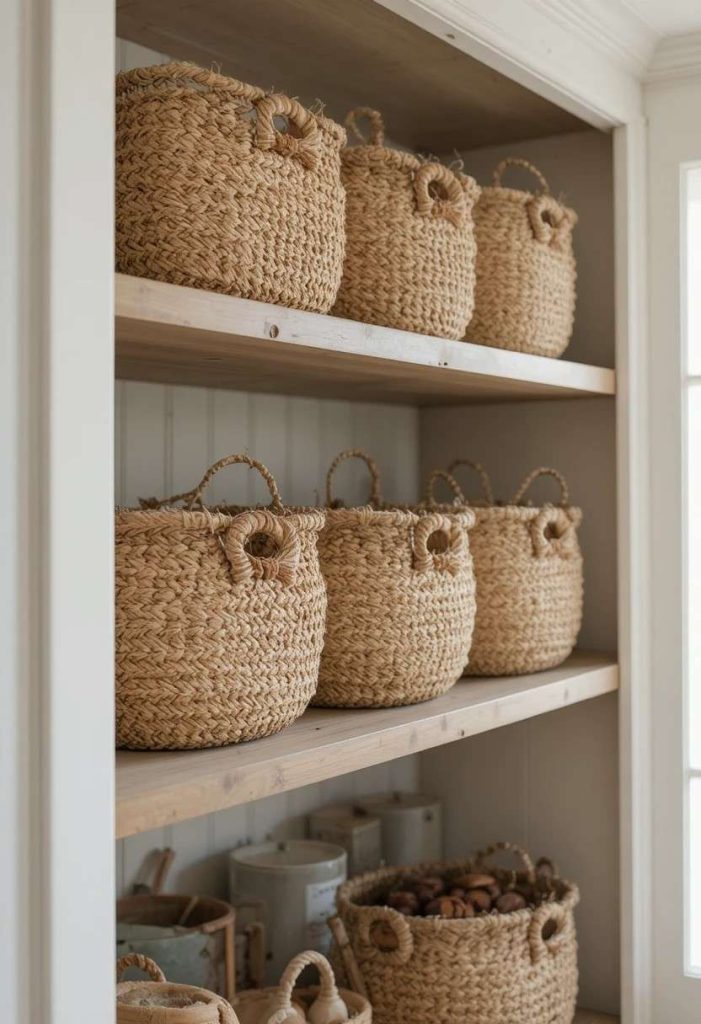
Seagrass baskets are my answer to the kitchen clutter that never seems to have a home: the onions and potatoes, the tea towels, the children’s lunchboxes, and the stack of cookbooks I reach for every week. Their warm, woven texture softens hard cabinets and worktops, and because they are light, I can lift a whole basket down from a shelf and carry it to the table. I keep one large basket for vegetables by the door, a smaller one for cloths under the sink, and a flat one on the open shelves for bread. They look calm and tidy, even when what is inside them is not.
How to do it: Choose two or three baskets in different sizes, with sturdy handles and a tight weave. Label the inside of each one, or keep a simple rule: one basket for vegetables, one for cloths, one for bread. Line the vegetable basket with a tea towel, empty and shake them out weekly, and keep them away from the sink so they stay dry.
23. A Pale Blue Painted Ceiling
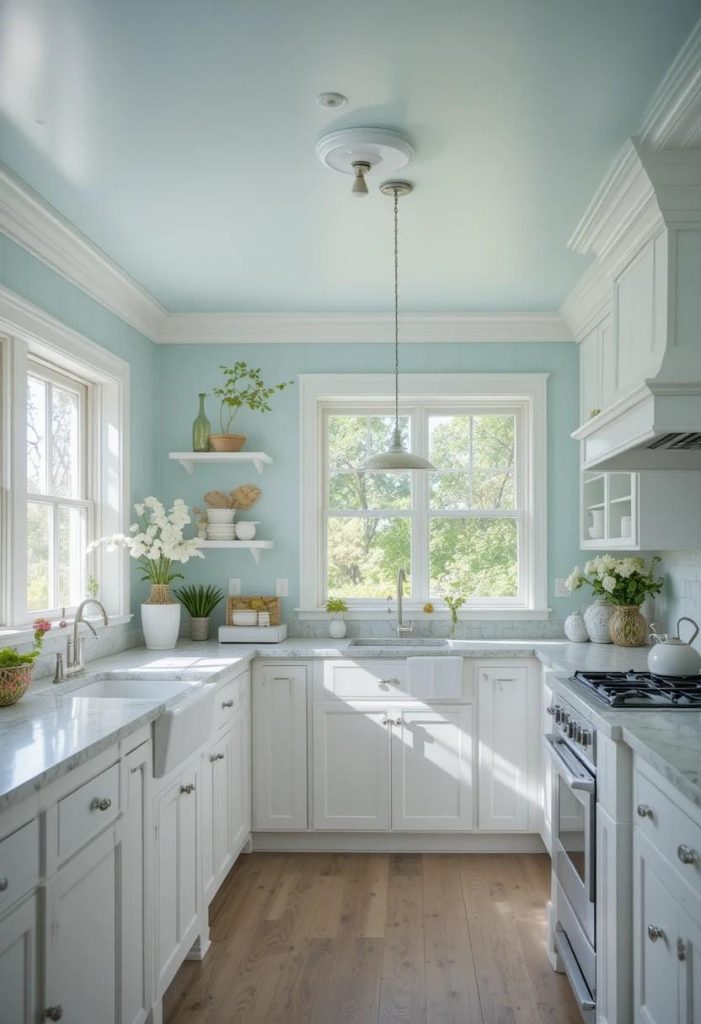
A pale blue ceiling was the bravest colour choice I made, and it is the one I would repeat first. It is the old porch-ceiling tradition, meant to echo the sky, and in a kitchen it makes the room feel taller and lighter, as though the ceiling has opened up above you. The shade is so soft that it never reads as blue on the walls; instead, the whole room takes on a faint, airy glow. I paired it with white cabinets and pale oak, and on grey days it is the detail that lifts my mood when I walk in.
How to do it: Choose the palest blue you can find, with a hint of grey, and test a large sample on the ceiling before you commit. Paint the ceiling first, before the walls, and use a flat or matte finish so the colour stays soft. Keep the walls white and the lighting warm, so the blue feels like sky rather than a statement.
24. Vintage Nautical Accessories
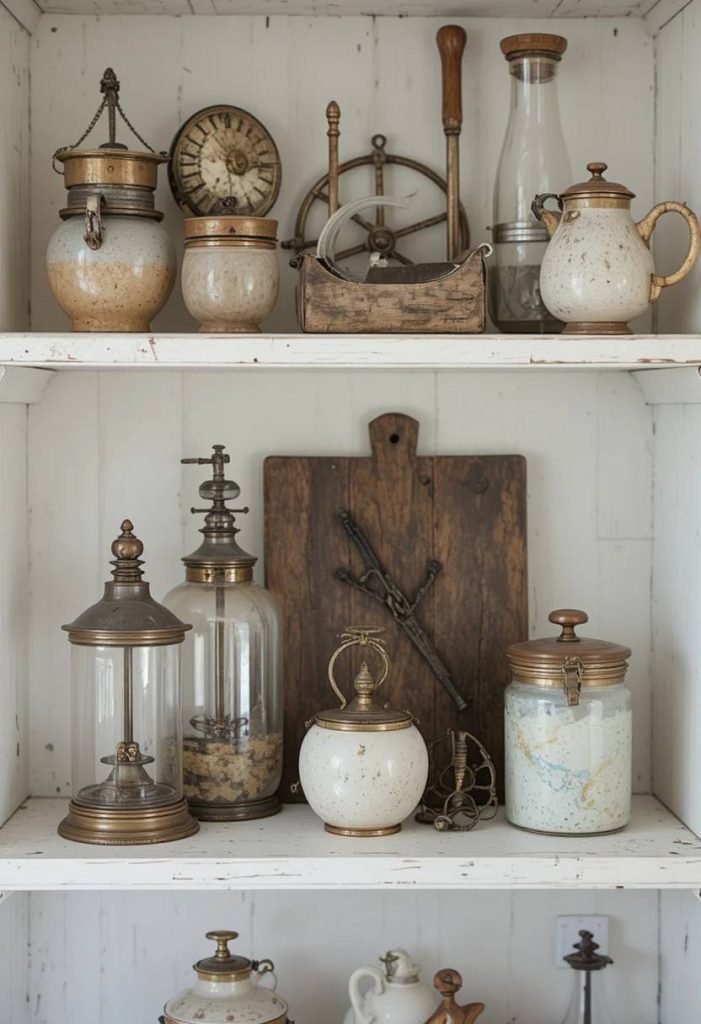
A few vintage nautical pieces give my kitchen a sense of history that new decor cannot quite copy. I have a small brass compass on the open shelf, an old ship’s lantern by the window, and a weathered rope cleat that holds a tea towel by the door. Each one has a story — the lantern came from a flea market, the compass from my grandfather — and together they make the room feel collected over time rather than bought in one afternoon. I keep them to three or four pieces, so they read as treasured finds instead of a theme-park display.
How to do it: Choose one larger piece, such as a lantern or a framed chart, and two small ones, such as a compass or a brass bell. Look in flea markets, charity shops, and antique stalls for pieces with genuine wear. Place them where they will not be knocked, keep brass polished lightly, and let each piece have space around it.
25. A Fresh Herb Garden on the Windowsill
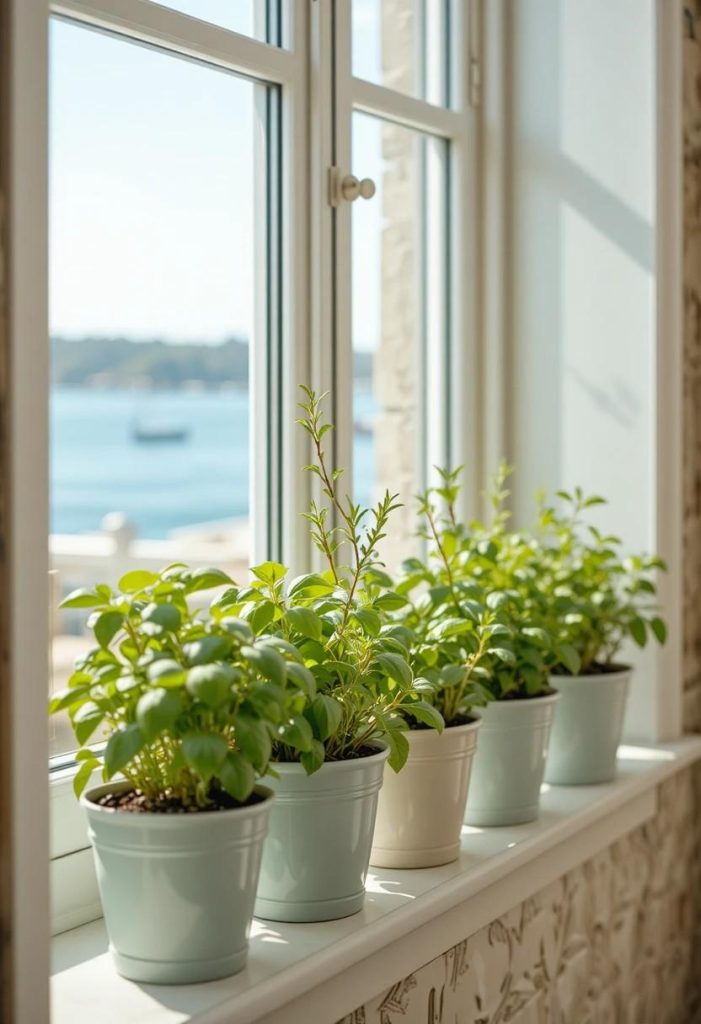
My windowsill herb garden is the most-used corner of the kitchen, and it is also one of the prettiest. Basil, mint, and parsley grow in mismatched pots, their green leaves softening the white sill and filling the room with a fresh scent whenever I brush past them. I snip herbs straight into salads, soups, and pasta, which makes even a simple supper feel a little special. I love watching them grow, too: on a grey day, a row of green pots is a small reminder that spring is coming, and they cost far less than a bunch of cut flowers.
How to do it: Choose a sunny windowsill and three pots with drainage holes, in white, terracotta, or pale blue. Plant basil, mint, and parsley first, because they are forgiving and useful, and water them when the top centimetre of soil feels dry. Snip the leaves from the top to encourage bushy growth, and feed them lightly every few weeks in spring and summer.
26. White Beadboard Cabinet Fronts
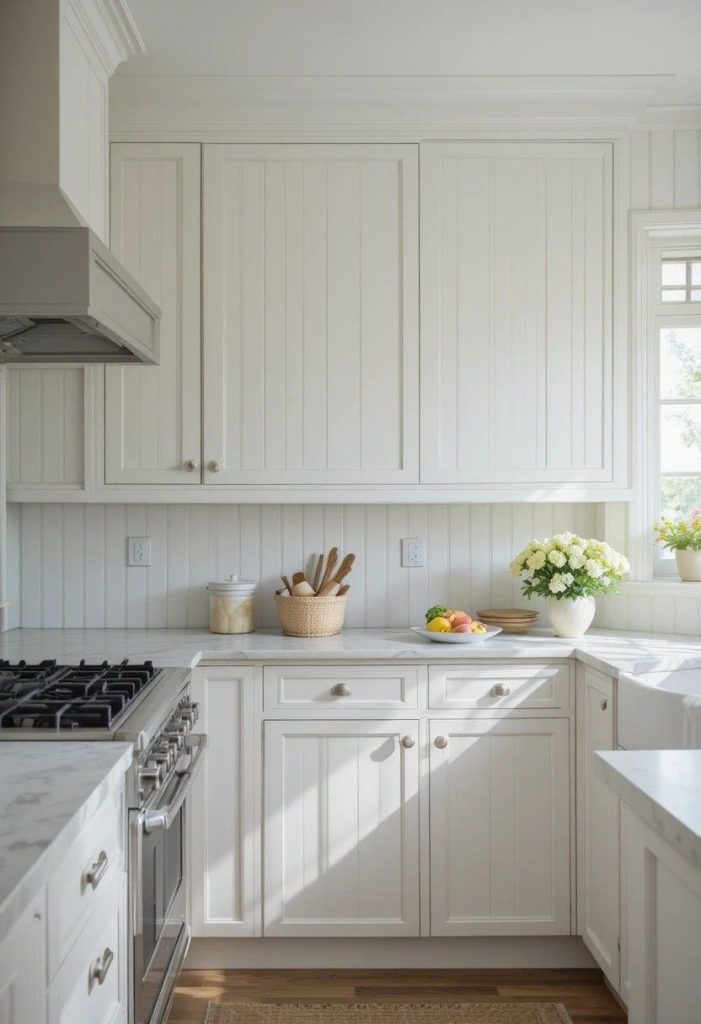
White beadboard fronts give my cabinets a cottage texture that flat doors never had. The fine vertical grooves catch the light and add a handmade feeling, a bit like the panelling in an old seaside cottage, and they make even a plain kitchen feel considered and cared for. I fitted them on the island and the lower cabinets only, leaving the wall cabinets smooth, so the texture stays a feature rather than a pattern that takes over the room. They also hide fingerprints and small marks better than a flat painted door, which is a quiet blessing with children in the house.
How to do it: Fit beadboard panels to the island and lower cabinet fronts, or choose ready-made beadboard doors if you are replacing them. Paint them in a washable white eggshell, and seal the grooves well so grease does not settle in them. Wipe the panels with a damp cloth, brushing along the grooves, and touch up chips promptly with a small brush.
27. Layered Natural Textures of Wood and Stone
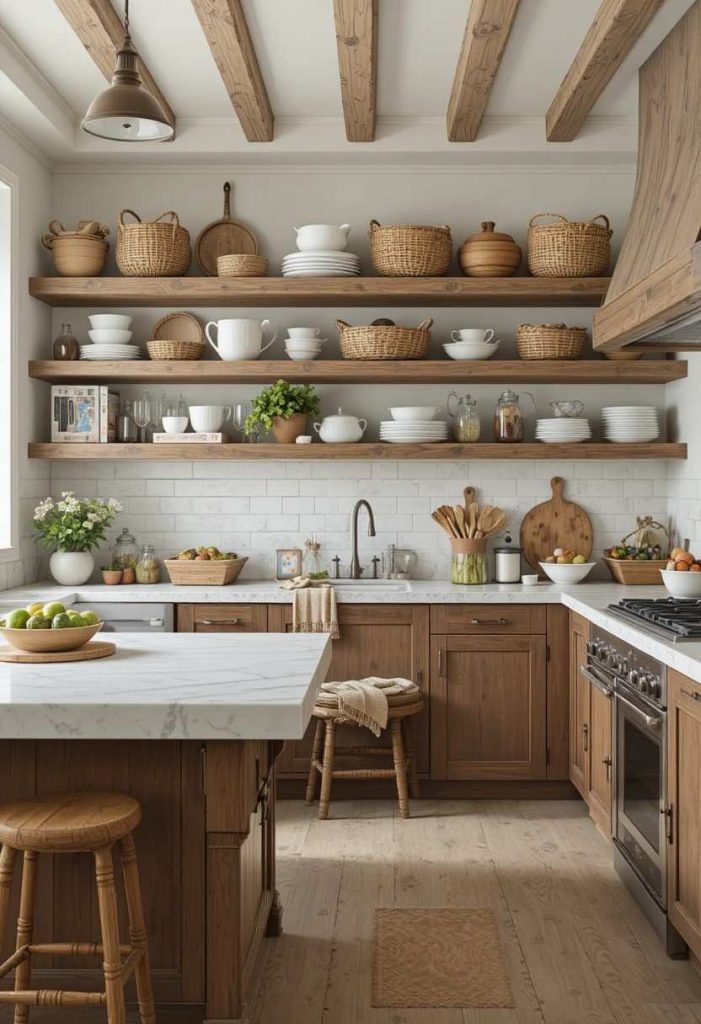
Layering wood and stone is how I stopped my kitchen from feeling like a showroom and started it feeling like a home. A wooden chopping board leans against a stone splashback, a rough stone vase sits beside a smooth oak stool, and a linen cloth softens the edge of a marble worktop. Each material brings its own temperature and texture, and together they feel like a shoreline: driftwood, pebbles, sand, and shell. I try to keep the colours close — pale wood, cream stone, soft grey — so the layers feel calm rather than busy, and the room gains depth without gaining clutter.
How to do it: Choose three natural materials — for example, pale oak, cream stone, and linen — and repeat them in at least two places each. Mix smooth and rough finishes, such as a polished worktop with a rough stone vase. Keep the palette pale and warm, and step back after each addition to check the room still feels calm.
28. A Coastal Gallery Wall of Framed Shells
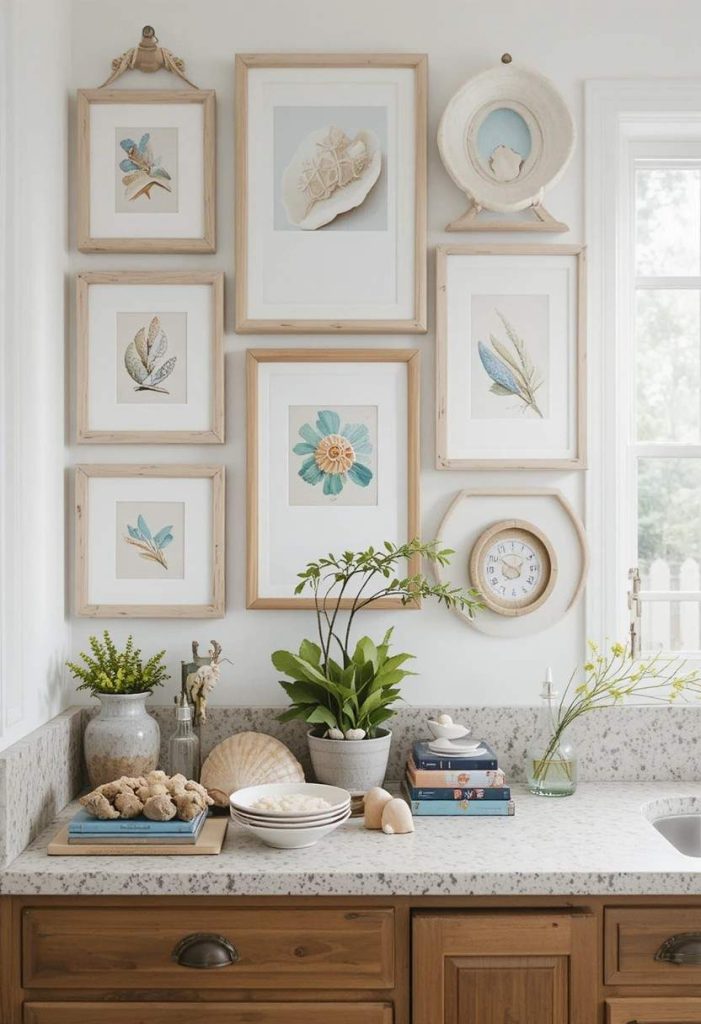
A small gallery wall of framed shells is the most personal corner of my kitchen. The shells came from holidays over the years — a scallop from Cornwall, a tiny cowrie from a market in Portugal, a spiral shell my daughter found on her first beach trip — and framing them turned a pocketful of souvenirs into art. I used matching white frames on a cream background, so the shells themselves take centre stage, and I hung them in a neat grid that feels calm rather than crowded. Guests always stop to look closely, and I love telling them where each shell came from.
How to do it: Choose six or nine shells of different shapes, and frame each one in a matching white or pale wood frame with a cream mount. Hang them in a grid with even spacing, about 5 centimetres between frames, at eye level. Keep the wall away from steam, use museum putty to hold the shells in place, and clean the glass with a soft cloth.
29. Soft Sheer Curtains that Let Light Flow
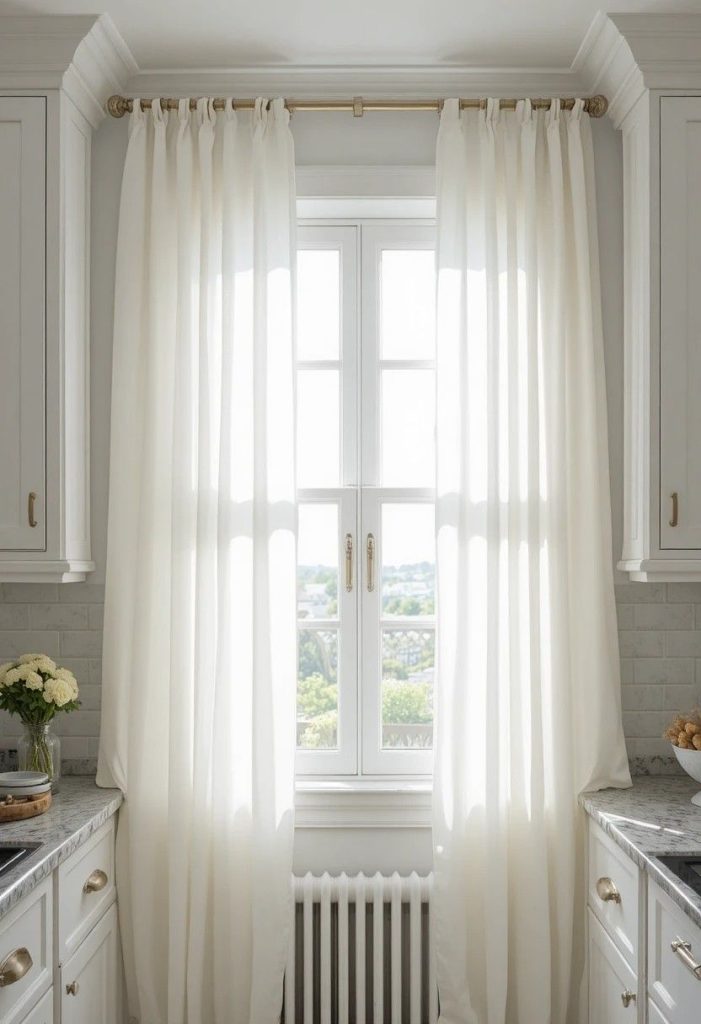
Soft sheer curtains were my answer to a kitchen window that faced the street, where I wanted privacy without losing the light. The fine white voile filters the view from outside, but it lets the sun pour in, and on a breezy day the fabric moves gently, which makes the whole room feel alive. I hung them on a slim rod, just inside the frame, so they look neat rather than fussy, and I chose a length that skims the sill so they never trail near the sink. They are the simplest window dressing I own, and they make the kitchen feel like a seaside cottage.
How to do it: Choose a fine white or cream voile in a washable fabric, and measure the window so the curtain is about one and a half times the width of the rod for a gentle gather. Hang the rod just above the frame, hem the curtain to sill length, and wash it on a gentle cycle every few months so it stays bright.
30. A Cozy Coffee Nook with Beachy Mugs
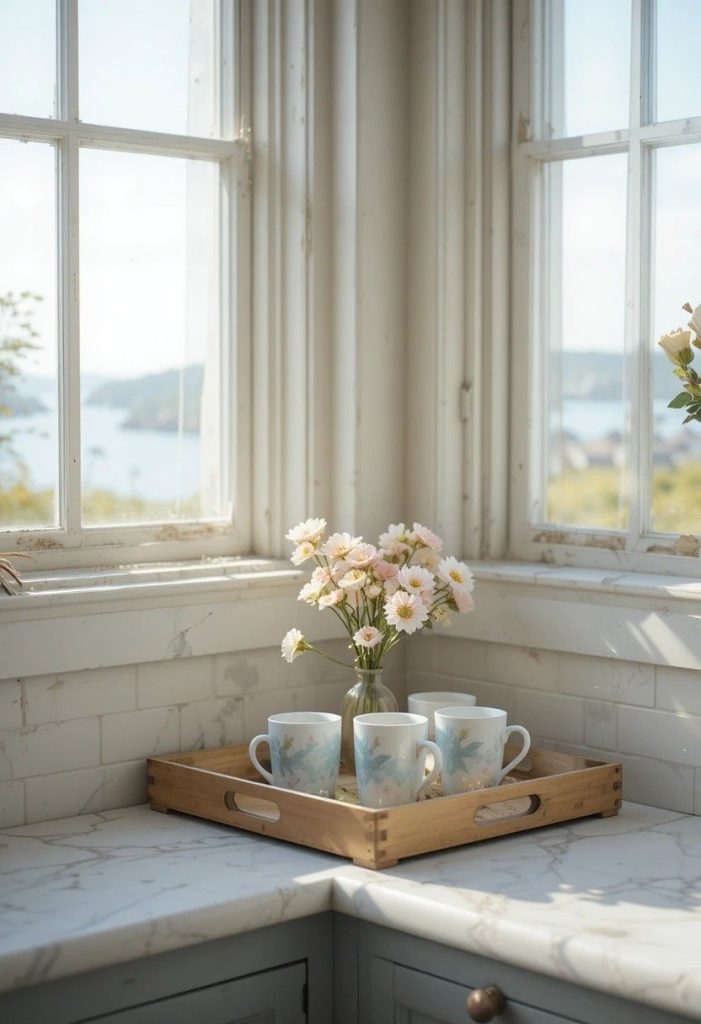
My coffee nook is a small corner of worktop, a kettle, and a row of beachy mugs — and it is where my day begins. I painted the wall behind it a soft sea blue, hung two small hooks for mugs, and set out a jar of coffee beans, a sugar bowl, and a tiny vase with a sprig of greenery. The mugs are all different: one striped, one speckled, one the colour of sea glass, and choosing one each morning is a small pleasure. It is a tiny space, but it feels like a café by the sea, and it keeps the rest of the worktop clear for cooking.
How to do it: Choose a quiet corner of worktop near a socket, and keep everything for coffee in one place: the kettle or machine, mugs on hooks or a small shelf, and jars for coffee, sugar, and spoons. Add a small tray to contain spills, a washable mat underneath, and one small plant or vase. Wipe the area down each morning so it stays inviting.
Frequently Asked Questions
What colours work best in a coastal kitchen?
Warm white is the best starting point, with sandy beige, pale oak, and soft grey for warmth. Add one sea-inspired shade, such as seafoam green, pale blue, or soft aqua, and keep it to cabinets, a splashback, or textiles so the room stays calm. Small touches of brass or driftwood brown will stop the palette from feeling cold.
How can I make a coastal kitchen feel cosy, not cold?
Layer natural textures over the pale base: a jute runner, linen shades, rattan stools, and a wooden chopping board will warm the room at once. Use warm white bulbs and a dimmer on the pendants, and add soft textiles such as striped cushions or a tea towel in a sea colour. A bowl of lemons, a herb pot, and a few well-loved objects will make the kitchen feel lived in.
Can I create a coastal kitchen in a small space?
Yes, and a small kitchen often suits the look best, because pale colours and clear surfaces make it feel larger. Keep the cabinets white, choose glass fronts or open shelves for one run only, and use a mirror or a large window to bounce the light. Pick two or three ideas from this list — a pale palette, woven light, and a few baskets — rather than trying to fit them all in.
What is the easiest low-cost coastal update?
Start with the details you can change in an afternoon: swap the handles for warm brass, add a bowl of lemons, hang sheer curtains, and style one open shelf with pottery you already own. A new runner, a set of striped cushions, or a coat of pale paint on the lower cabinets will also change the room for very little money. Live with those changes for a few weeks before you spend more.
How do I keep white cabinets and light worktops clean?
Choose washable satin or eggshell paint for cabinets and a sealed quartz worktop if you can, because both wipe clean with a damp cloth. Wipe splashes the same day, especially around the sink and cooker, and keep a small cloth handy for the handles. For stubborn marks, use a gentle, non-abrasive cleaner and test it on a hidden spot first.
Your Coastal Kitchen Checklist
☐ Choose a warm white for the cabinets and walls
☐ Add one sea-inspired colour, such as seafoam green or pale blue
☐ Bring in natural textures: rattan, jute, linen, and pale oak
☐ Hang woven pendants over the island or table
☐ Swap in brass handles for warmth
☐ Display the pottery and glassware you love on open shelves
☐ Keep worktops clear, with one bowl of lemons or a herb pot
☐ Add striped cushions or linen shades for softness
☐ Frame shells, botanical prints, or a favourite coastal photo
☐ Set up a coffee nook with beachy mugs
☐ Check the light: sheer curtains, clean windows, and pale floors
☐ Store everyday items in seagrass baskets
Bringing It All Together
A coastal kitchen is not something you buy in one afternoon. It grows slowly, one calm decision at a time: a warm white you love in the morning light, a seafoam cabinet that makes you smile, a woven pendant that glows at supper, and a bowl of lemons that keeps the worktop feeling alive. Start with the change that matters most to you, live with it for a few weeks, and let the next idea follow naturally.
What I love most about this look is how forgiving it is. Pale colours, natural textures, and a few treasured pieces will carry the seaside feeling far better than a room full of matching decor ever could, and they will still suit your kitchen in five years’ time. Choose the ideas that fit the way you cook, gather, and slow down, and let the rest go — your kitchen should feel like yours, not like a photograph.
Wishing you bright mornings and salty breezes.