
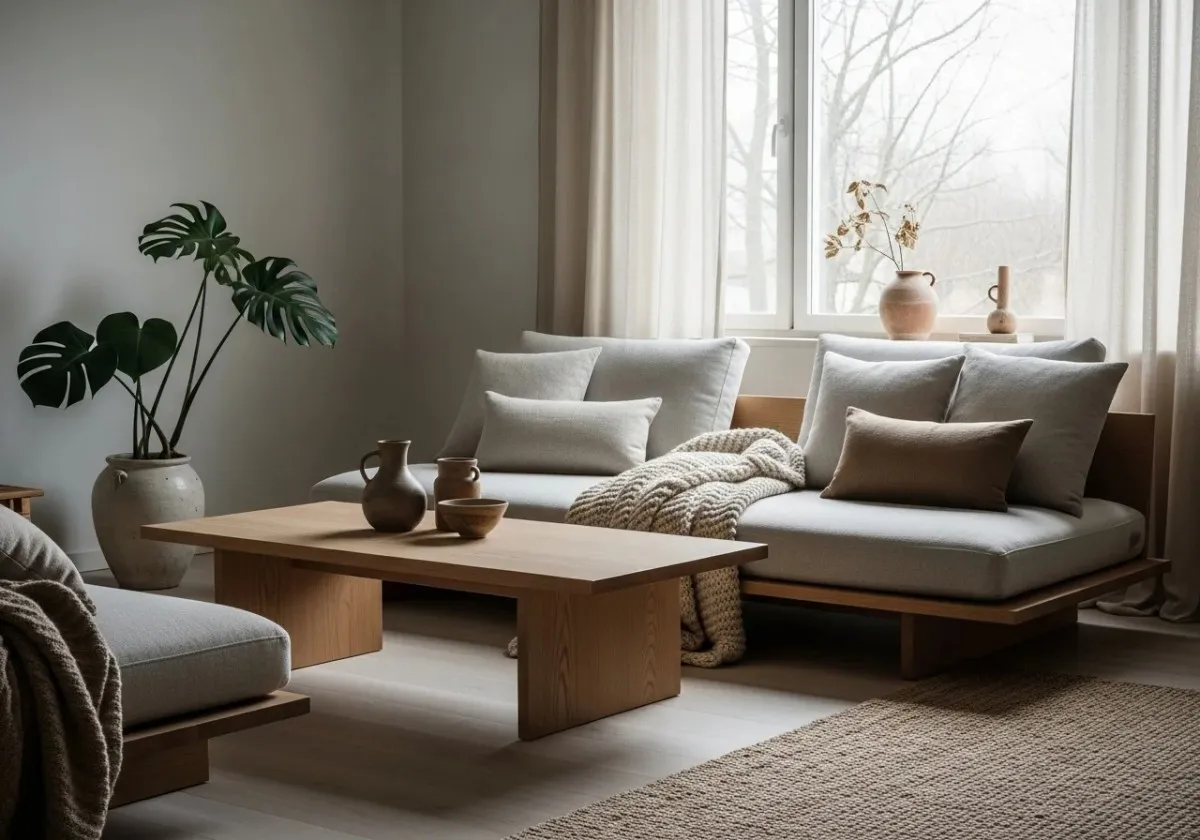
21 Japandi Living Room Ideas That Feel Calm, Minimal & Beautifully Balanced
Does your living room feel cluttered, overwhelming, or just missing that calm, cozy vibe you see in aesthetic homes online? You’re not alone. Many spaces look “decorated” but don’t actually feel peaceful. That’s where Japandi style changes everything. By blending Japanese simplicity with Scandinavian warmth, it creates a space that feels clean, functional, and deeply relaxing. In this guide, you’ll discover Japandi living room ideas that help you design a home that looks beautiful—and feels even better to live in every day.
1. Neutral Color Palette for a Calm Foundation
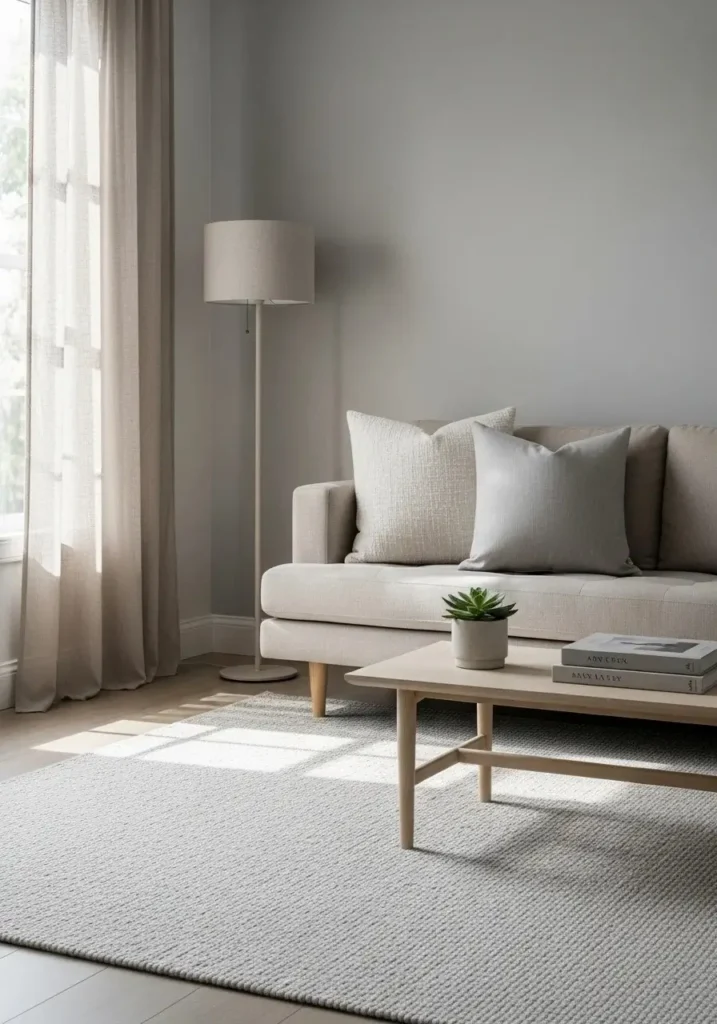
I always begin with colour, because everything else — wood, textiles, light — sits on top of that first choice. My palette is deliberately quiet: warm white walls, a soft beige sofa, a whisper of grey in the rug, and one deeper tone — charcoal or walnut — to stop the room feeling washed out. I test swatches in morning and evening light, as the same shade can look creamy at noon and cold by dusk. If you love pale, bright rooms, these Scandinavian living room ideas show the same calm base taken lighter still. Keep the palette tight, and the whole room will feel settled from the start.
How to do it: Paint the walls warm white and keep the ceiling the same shade. Choose the sofa in soft beige, then add grey through the rug or a throw. Introduce one dark accent — a walnut side table or charcoal cushion — and repeat it once more, perhaps in a frame. Step back at the doorway; if one colour shouts, soften it.
2. Low Furniture for a Grounded Feel
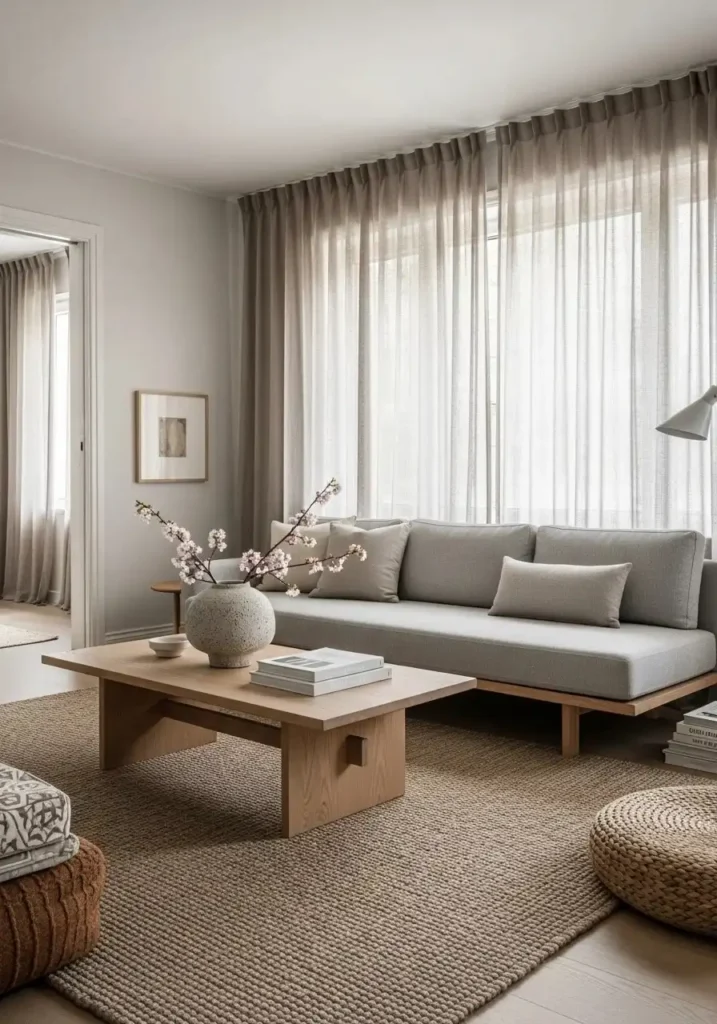
I love how a low sofa changes the whole feeling of a room the moment you sit down. It pulls your eye down, makes the ceiling feel higher, and gives the space that grounded, unhurried quality I associate with Japanese homes. In my own living room, swapping a tall-backed sofa for a low, wide one made the room feel calmer overnight, even though nothing else changed. Keep the proportions honest: a low coffee table, a floor cushion or two, and seating you can sink into without climbing. If the room is small, low furniture is a gift, because it leaves the walls and windows visible. Choose pieces with slim legs or none at all, and let the floor do some of the talking.
How to do it: Choose a sofa with a seat height of about 40 centimetres or lower. Pair it with a coffee table no higher than the seat. Add a floor cushion beside the sofa for extra seating. Keep the wall behind it clear, so the low line reads as a deliberate choice rather than a missing piece.
3. Natural Wood Tones for Warmth
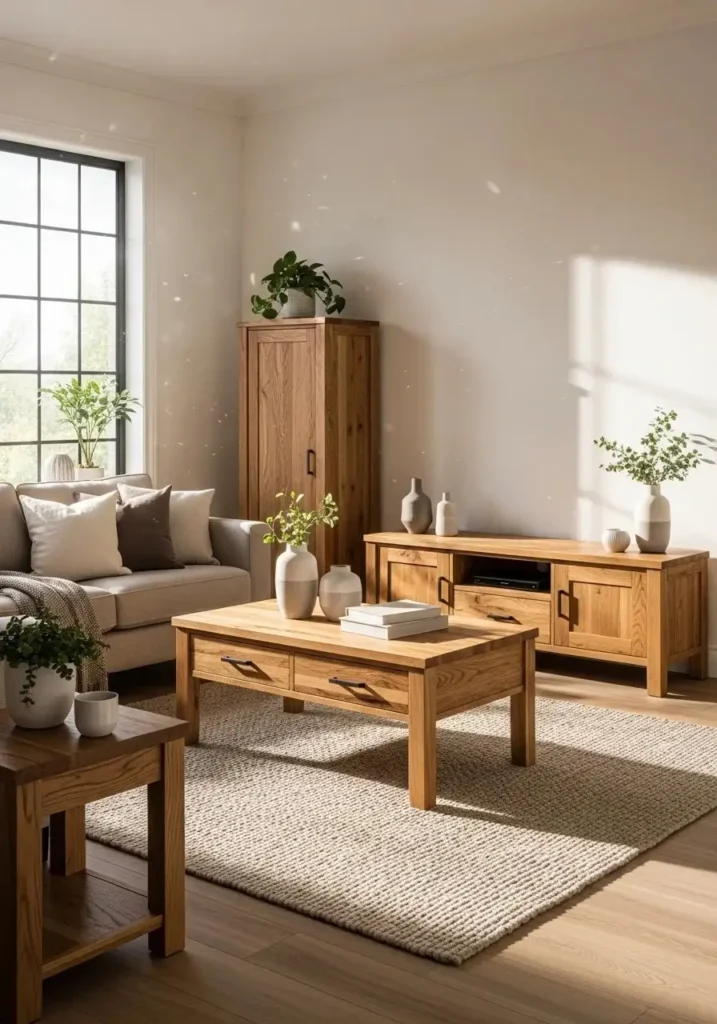
Wood is what stops a Japandi room feeling cold, and I never skip it. I look for light to medium tones first — pale oak, ash, a little walnut for depth — because they warm a neutral room without shouting. In my home, the same oak appears in the coffee table, a picture frame and the legs of a chair, which ties the room together without matching sets. I mix two tones at most, and I always check them side by side in daylight, since varnish can turn a warm wood orange by evening. Grain matters too: I prefer a soft, visible grain over a perfect, plasticky finish. It is the grain that makes the room feel alive.
How to do it: Pick one main wood tone for large pieces and one darker tone for accents. Test samples together in daylight before buying. Keep finishes matte or lightly oiled. Repeat the main tone in at least three places, such as a table, a frame and a shelf.
4. Minimal Decor with Purpose
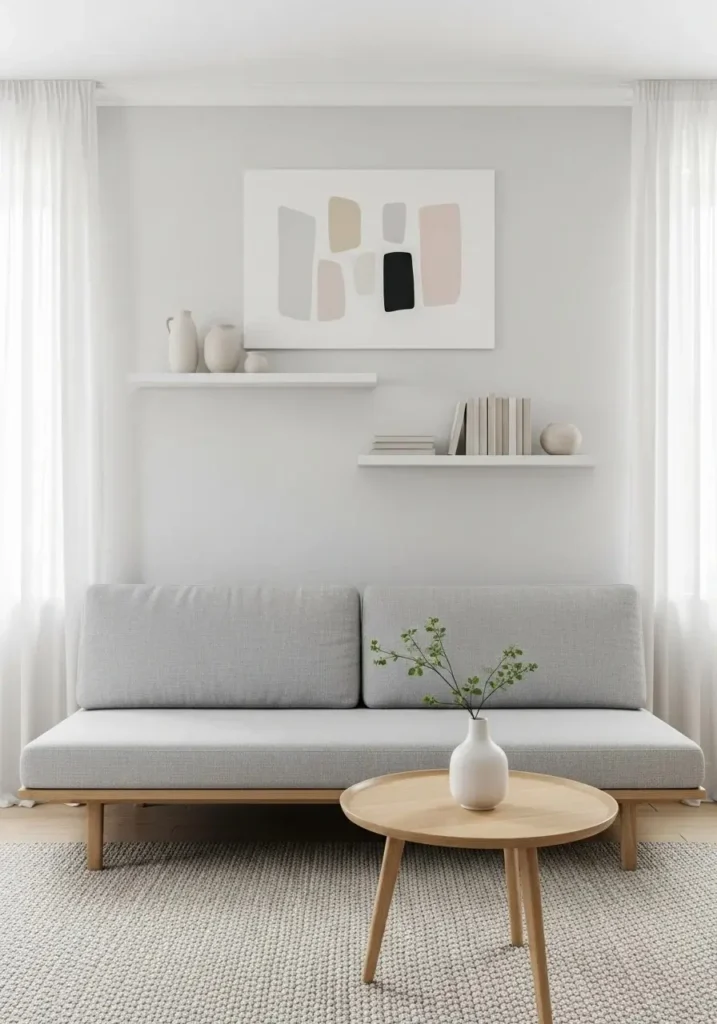
I used to fill every shelf, and my living room never felt calm. Japandi taught me to keep only the pieces I genuinely love, and to give each one room to breathe. Now a single handmade vase on a shelf means more to me than a row of ornaments ever did. I walk through the room with a basket once a month, and anything that has not earned its place goes elsewhere. The test I use is simple: if I would miss it tomorrow, it stays. What remains is not empty — it is edited, and that editing is what makes the room feel peaceful.
How to do it: Remove everything from one shelf and put back only three items you love. Leave a clear gap between each piece. Store the rest out of sight for a month. If you do not miss an item, let it go.
5. Soft Textures for Comfort
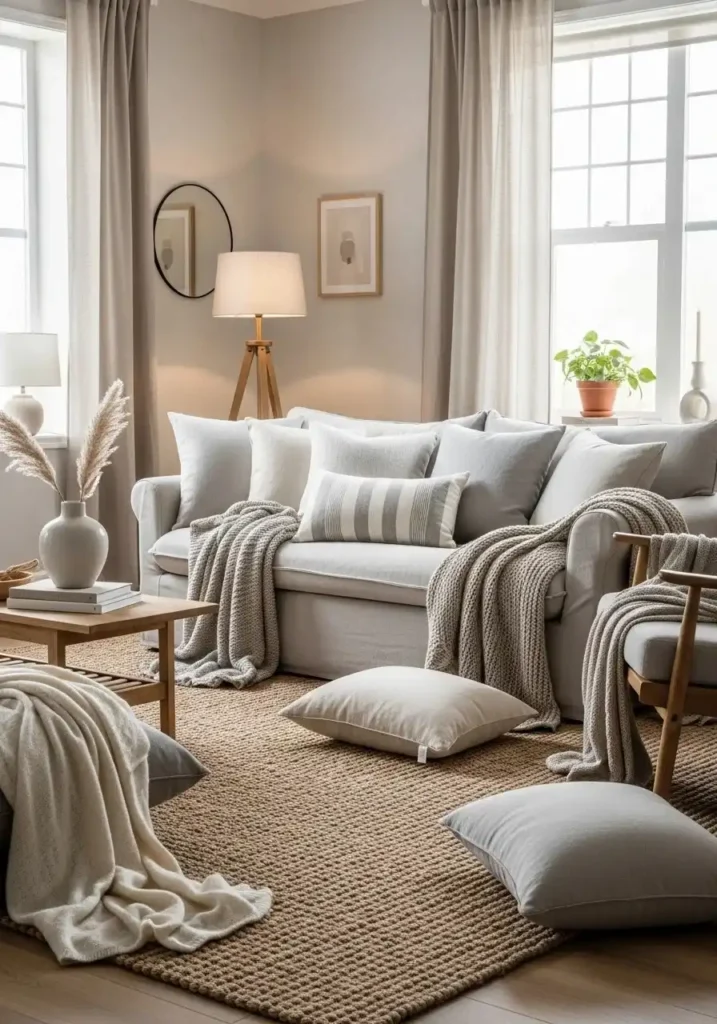
Texture is my quiet way of making a minimal room feel comfortable. I layer linen cushions, a cotton throw and a woven rug in the same pale palette, so the room stays calm while my hands always find something soft. I learned to mix textures rather than colours: a smooth ceramic lamp beside a nubby cushion, a flat-weave rug under a chunky knit. If you want texture with more pattern and colour, these boho living room ideas show how layering can feel relaxed rather than busy. The trick is restraint — three textures in a room is plenty, and each one should earn its place.
How to do it: Start with a linen cushion and a cotton throw on the sofa. Add a woven rug in a similar tone. Mix one smooth texture, such as ceramic, with one rough one, such as jute. Keep all of them in the same pale palette.
See More Amazing Ideas Also: 15 Living Room TV Wall Ideas That Instantly Elevate Your Space
6. Japandi Living Room Ideas with Indoor Plants
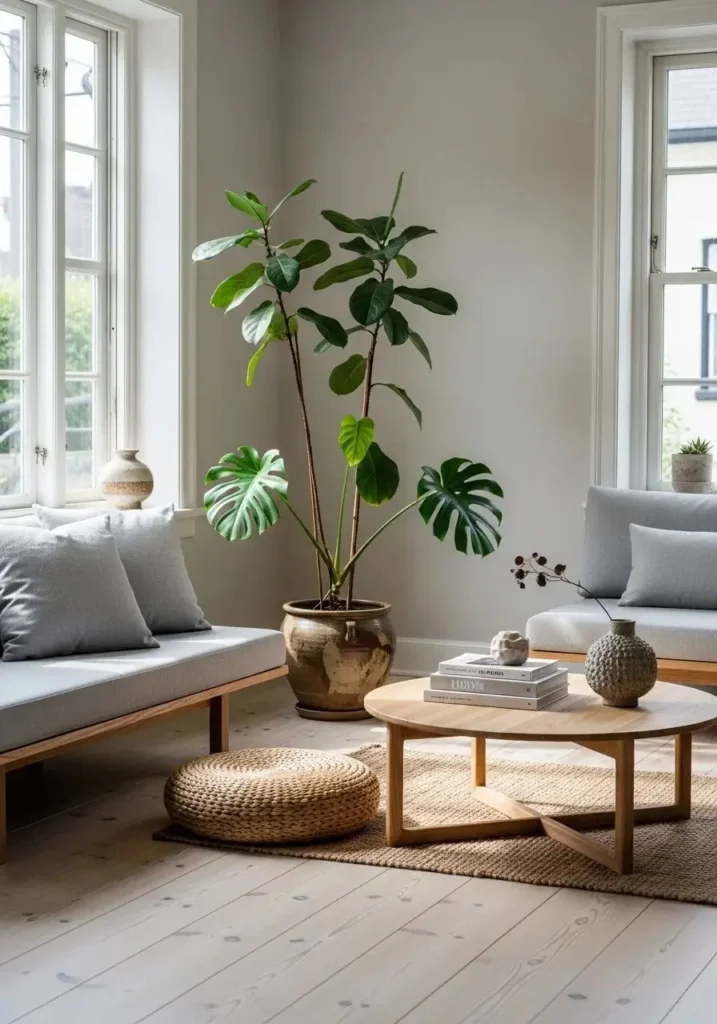
A plant is the easiest way I know to make a Japandi room feel alive. I keep just two or three, in plain ceramic or matte pots, because a jungle would undo the calm I am trying to create. My favourite is a tall, slow-growing olive tree in the corner, with a smaller trailing plant on a shelf for softness. I water them on the same morning each week, and I wipe the leaves when I dust — it is a small ritual that keeps me looking at the room properly. Choose plants you can keep alive; a struggling plant is worse than no plant at all.
How to do it: Choose one tall plant for a corner and one small one for a shelf or table. Use plain ceramic or matte pots in neutral tones. Place plants where they get the light they need. Water on a fixed day each week and remove dead leaves promptly.
7. Clean Lines and Simple Shapes
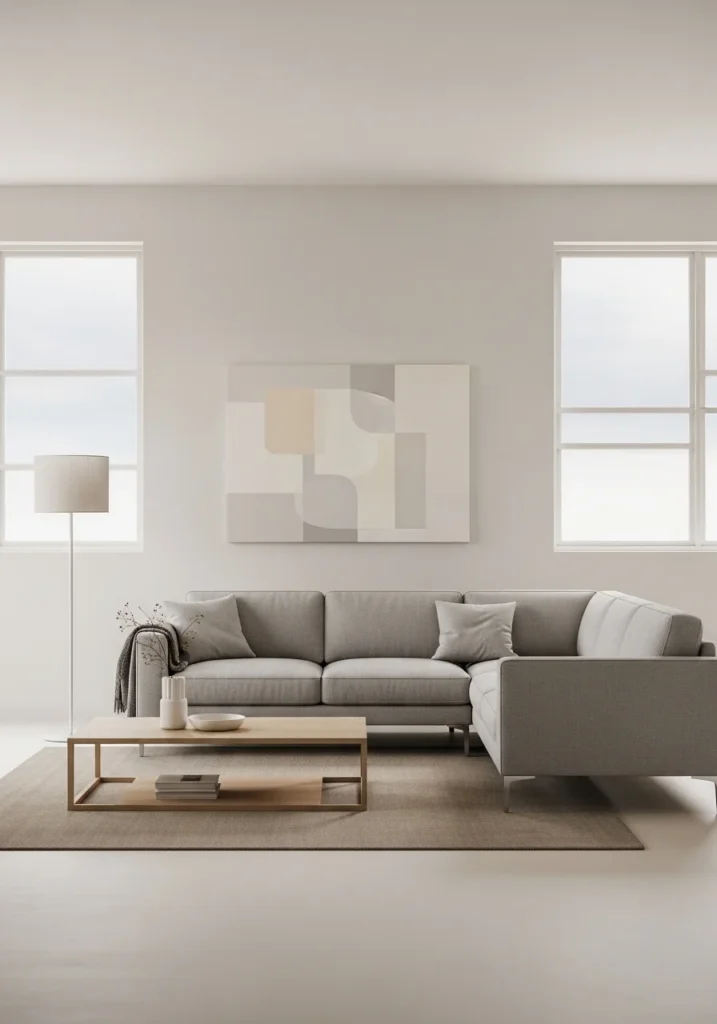
Clean lines are the backbone of this style, and I notice them most when they are missing. A sofa with a straight back, a table with a square edge, a lamp with a simple shade — together they give the room a quiet order that lets me relax. I avoid ornate carving and fussy detailing, not because I dislike them, but because they compete with the calm. For a sleeker take on the same clean lines, these contemporary living room ideas offer a more polished, modern angle. In my own room, I let one piece have a gentle curve, just to soften the geometry, and everything else stays straight.
How to do it: Choose furniture with straight edges and simple silhouettes. Avoid ornate carving, heavy trim and busy patterns. Let one piece, such as a curved chair, soften the geometry. Keep handles and hardware flat and unobtrusive.
8. Warm Lighting for a Cozy Atmosphere
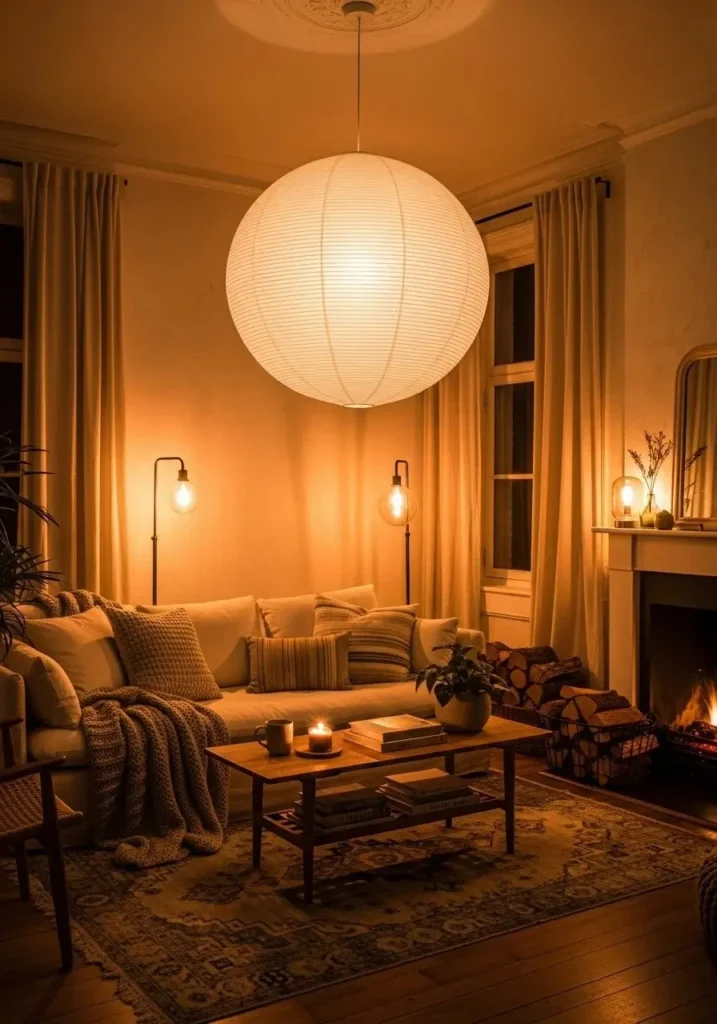
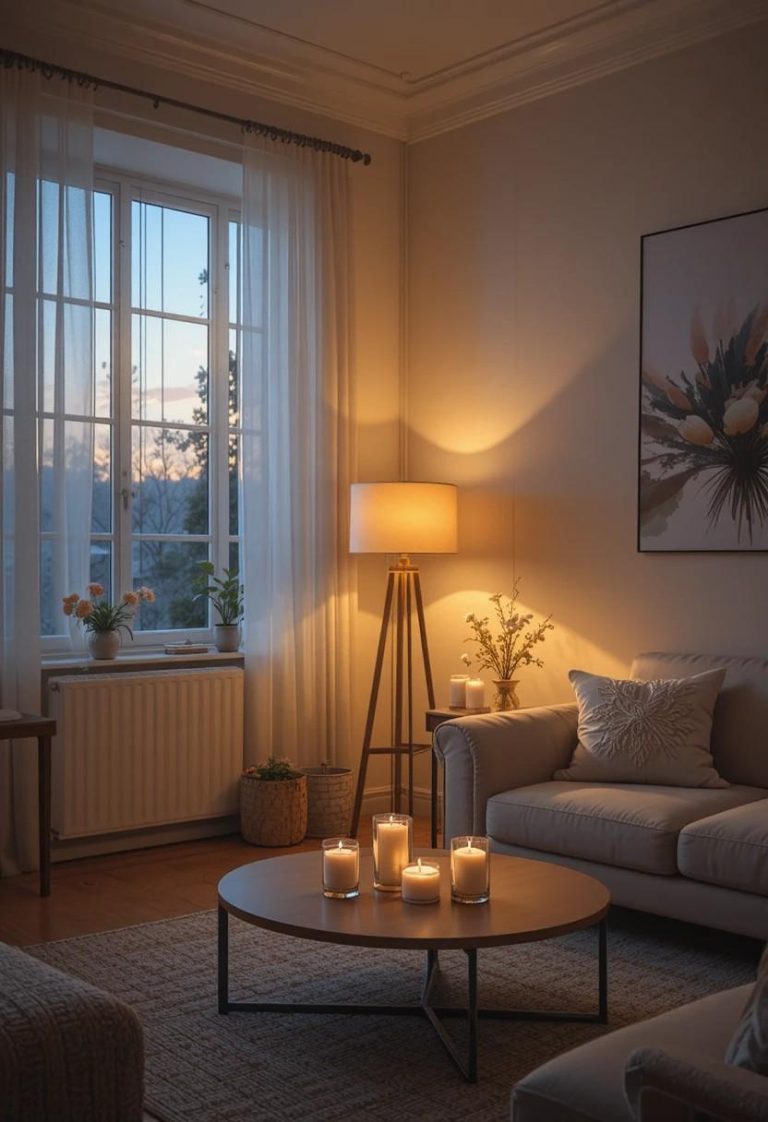
Lighting changed my living room more than any piece of furniture. I replaced one bright ceiling light with three warm sources — a paper floor lamp, a small table lamp and a candle on the coffee table — and the room finally felt like evening. I use warm white bulbs, around 2700 kelvin, because cooler light makes pale walls look grey. In winter I light a candle before dinner, and the room slows down with me. The rule I follow is simple: I should be able to read comfortably, but I should never feel as though I am in an office.
How to do it: Replace a single bright ceiling light with two or three warm lamps. Choose warm white bulbs of about 2700 kelvin. Place one lamp low, near the sofa, and one higher, on a shelf or table. Add a candle for evenings, and keep it away from curtains.
9. Open Space and Breathing Room
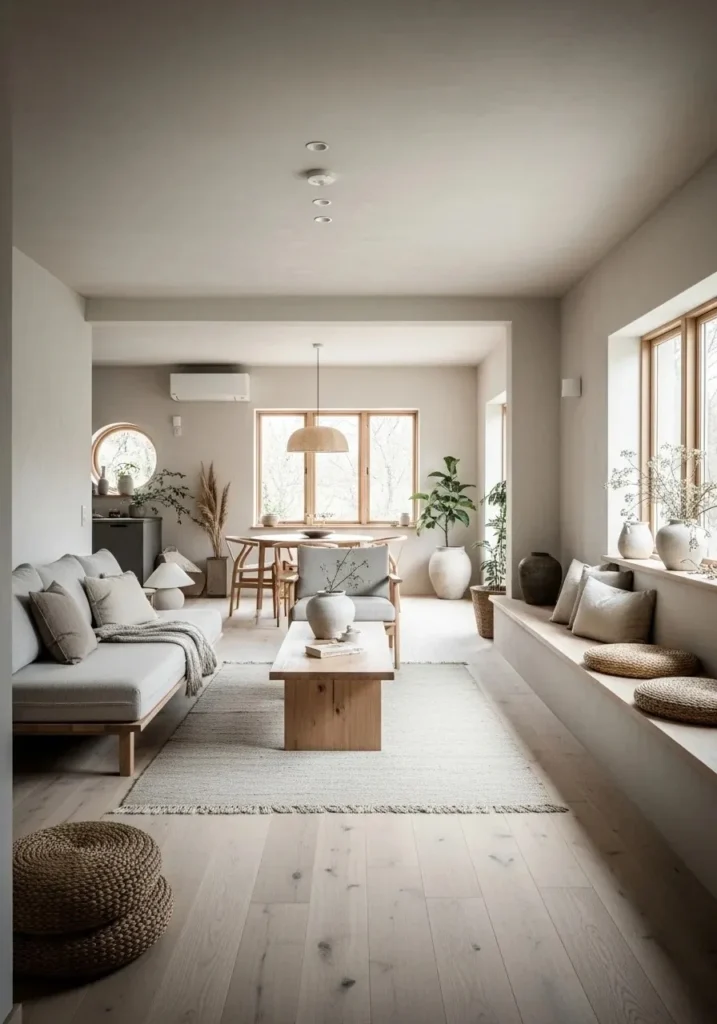
Empty space used to make me nervous, as though the room were unfinished. Now I protect it. I leave a clear stretch of floor between the sofa and the window, and I do not fill every corner, because that breathing room is what makes the furniture I do have feel considered. When friends visit, they always comment on how big the room feels, even though it is not large at all. My test is to stand at the door: if I can see a clear path to the window, the room is working. If I cannot, something needs to move.
How to do it: Stand at the doorway and check you can see a clear path to the window. Move one piece of furniture out of the room for a week. Leave at least one corner empty. Push furniture a few centimetres away from the walls to create air around it.
10. Functional Furniture with Hidden Storage
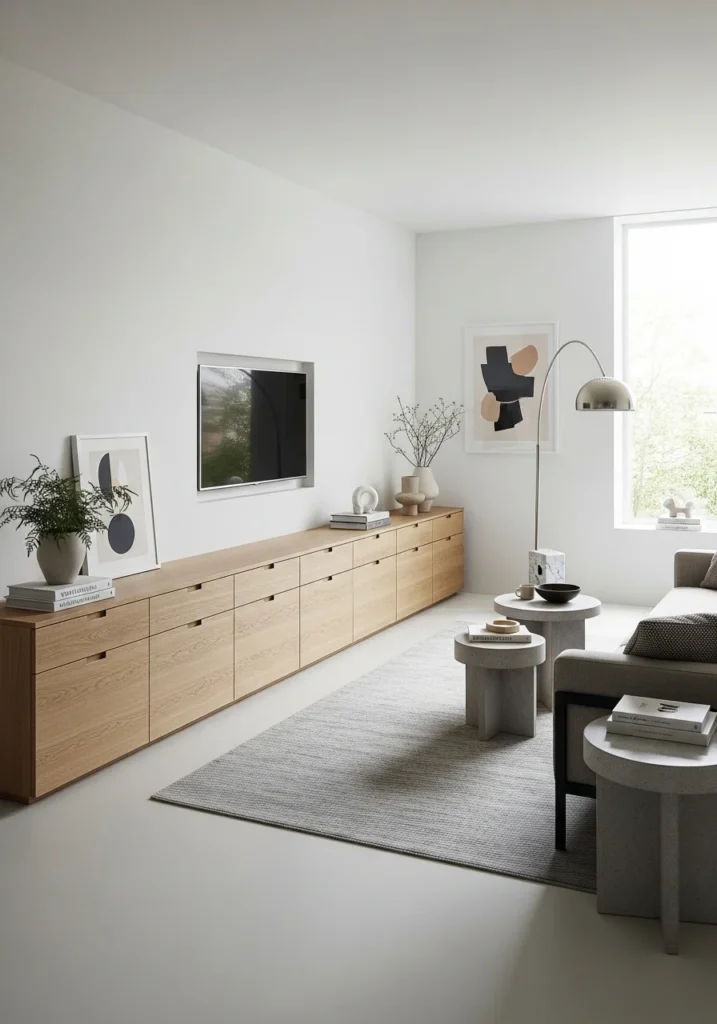
I am tidy by nature, but I am not tidy by effort, so hidden storage is what keeps my living room calm. A bench with a lift-up lid holds throws and board games, a low cabinet hides the router and the remotes, and nothing I need is ever far away. I choose pieces with flat, handleless fronts, because a visible handle would break the clean lines. Before I buy storage furniture, I list what must live inside it; if it does not solve a real clutter problem, I do not buy it. The best storage, in my experience, is the kind guests never notice.
How to do it: List the clutter that actually gathers in your living room. Choose a bench or cabinet that fits those items, with a flat, handleless front. Put one category of clutter in each piece. Empty and re-sort the storage once a season.
See More Amazing Ideas Also: 16 Apartment Living Room Ideas That Make Your Space Feel Bigger, Warmer & Truly Yours
11. Muted Accent Colors for Subtle Depth
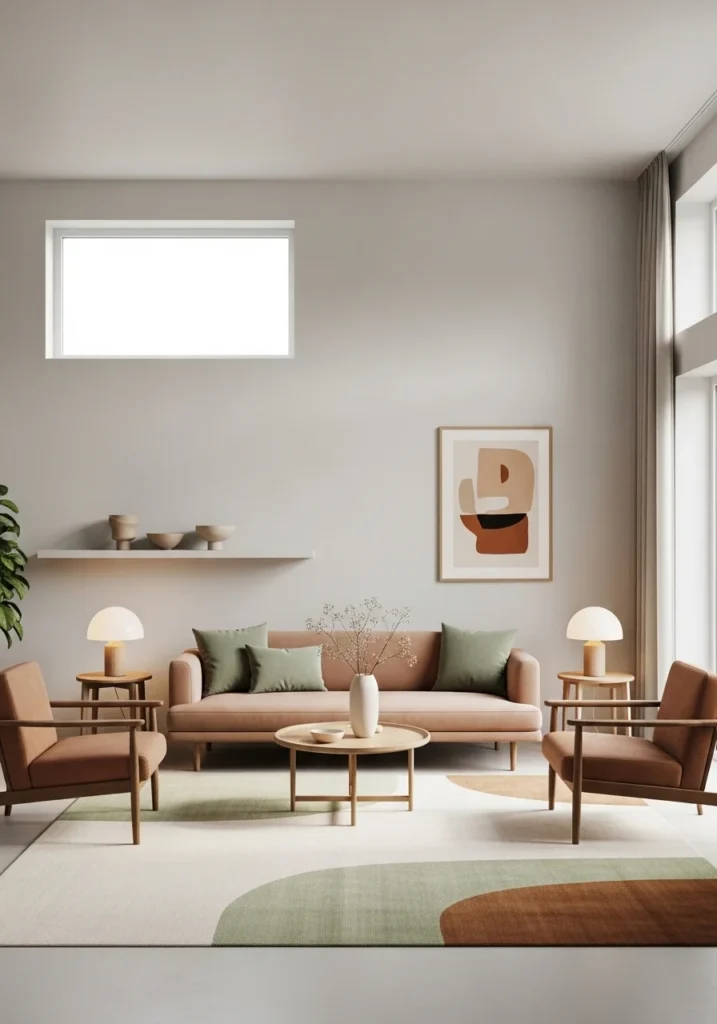
A Japandi room does not have to be all beige, and I love a quiet accent to keep it from feeling flat. My favourites are dusty green, muted clay and soft brown, used in small doses — a cushion, a throw, a single ceramic vase. I never use more than one accent colour at a time, and I repeat it in two or three places so it feels deliberate. I test the colour against the wood in the room first, because a green that fights the walnut will never settle. When it works, the room feels deeper without feeling busier, which is exactly the balance I want.
How to do it: Choose one muted accent, such as dusty green or soft clay. Use it in two or three small places, such as a cushion, a throw and a vase. Keep everything else neutral. Step back and check the accent feels calm, not loud; if it shouts, use less of it.
12. Japandi Living Room Ideas with Statement Lighting
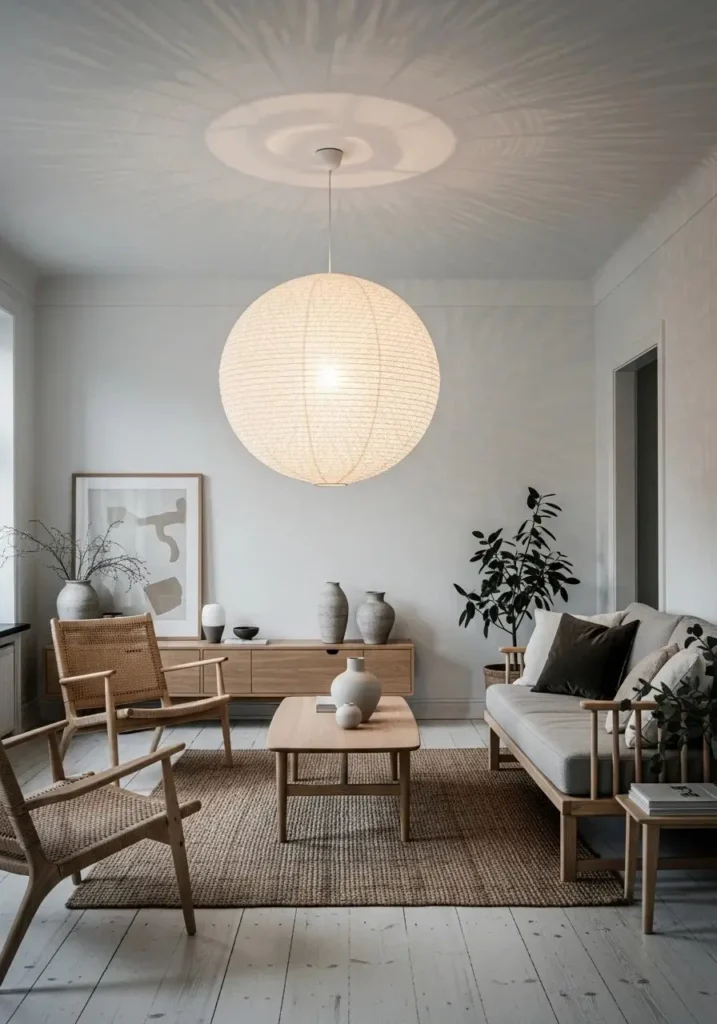
A statement light is the one place I let a Japandi room show off a little. I chose a large paper lantern over my coffee table, and it does two jobs at once: it glows warmly in the evening, and it is a piece of sculpture by day. I keep the rest of the lighting quiet so the lantern can be the star, and I hang it low enough to feel intimate but high enough to walk under. The material matters — paper, linen or pale wood keeps it soft, while metal would feel too hard. If you are unsure, go larger than you think; a small pendant in a big room always looks lost.
How to do it: Choose one statement light, such as a large paper lantern, for the centre of the room. Hang it over the coffee table, low enough to feel intimate. Keep other lights simple and dimmable. Choose natural materials — paper, linen or pale wood — rather than shiny metal.
13. Earthy Ceramics and Handmade Decor
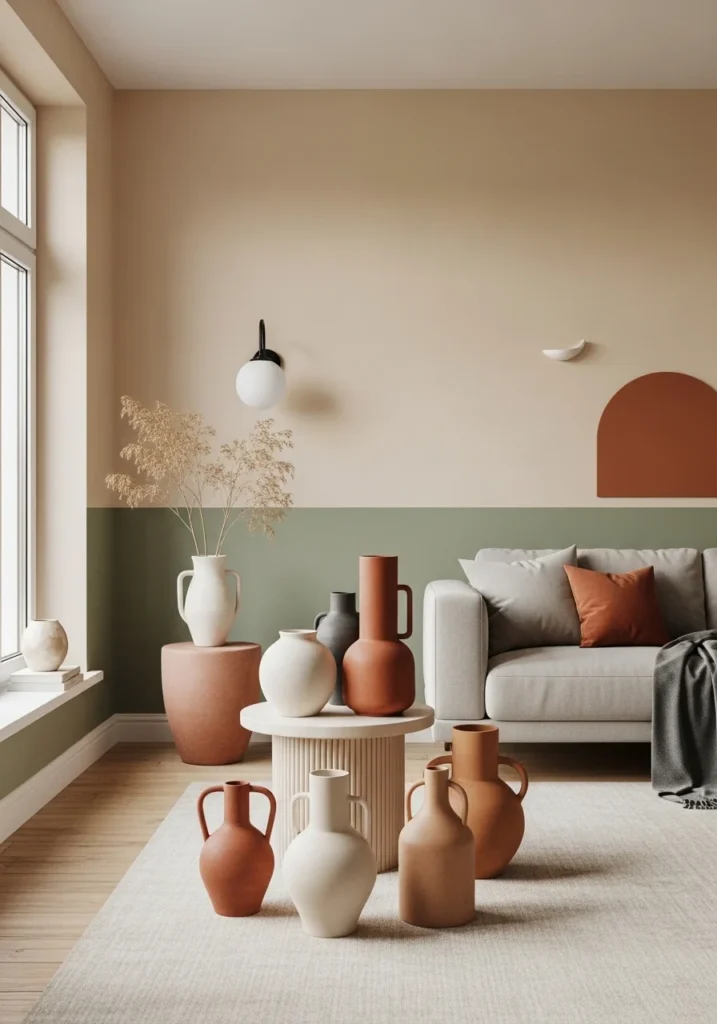
Handmade ceramics are the soul of my living room. I have a small collection — a speckled vase, a rough bowl, a jug with a slightly uneven rim — and each one reminds me that imperfection is part of the beauty. I group them in threes on a shelf or a side table, never scattered, because a group reads as a collection and a single piece alone can look lost. I buy them slowly, one at a time, from makers whose work I admire, rather than buying a matching set. That slowness is the point: the room grows with me.
How to do it: Buy one handmade ceramic piece at a time, rather than a matching set. Group three pieces together on a shelf or side table. Choose earthy glazes — speckled, matte or stone colours. Leave space around the group so each piece can be seen.
14. Light Wood Flooring for an Airy Base
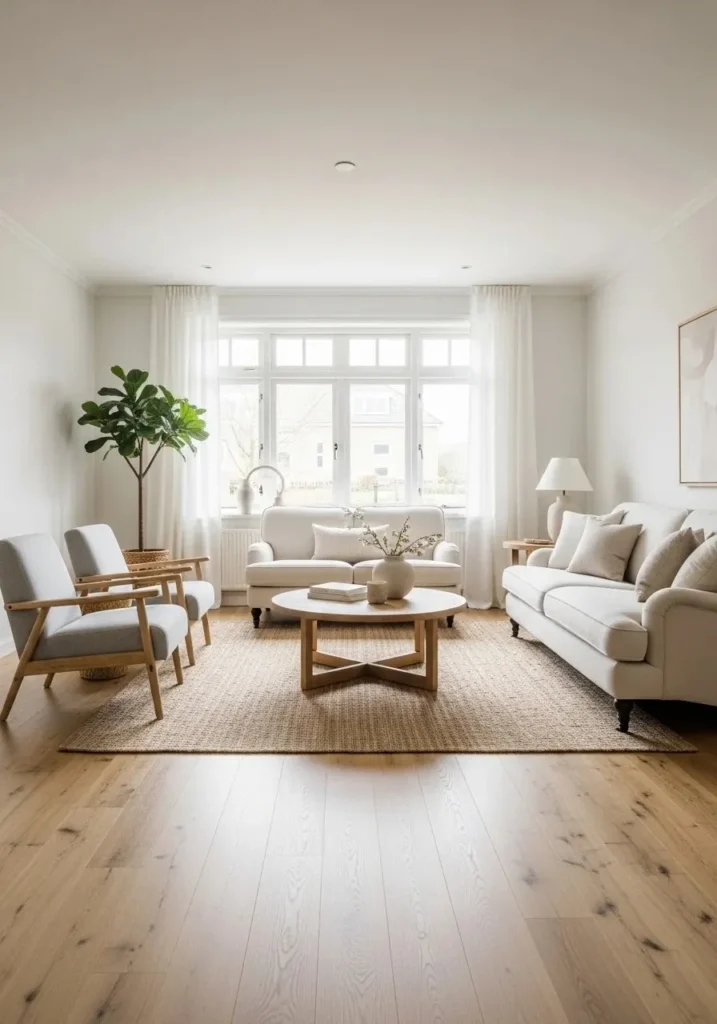
Light wood floors are the quiet foundation of my Japandi room. They bounce the daylight around, make the room feel larger, and give every piece of furniture a warm base to sit on. I chose a pale oak with a matte finish, because a glossy floor would reflect too much and feel cold underfoot. A rug in a soft neutral tone defines the seating area without hiding the wood, and I leave the edges of the floor visible so the room can breathe. If you are renting, a large pale rug over a darker floor gives you most of the same feeling.
How to do it: Choose pale oak or ash with a matte finish if you are replacing floors. If you are renting, lay a large pale rug over the existing floor. Keep the rug in a soft neutral tone. Leave a border of bare floor visible around the rug.
15. Minimal Wall Art with Soft Tones
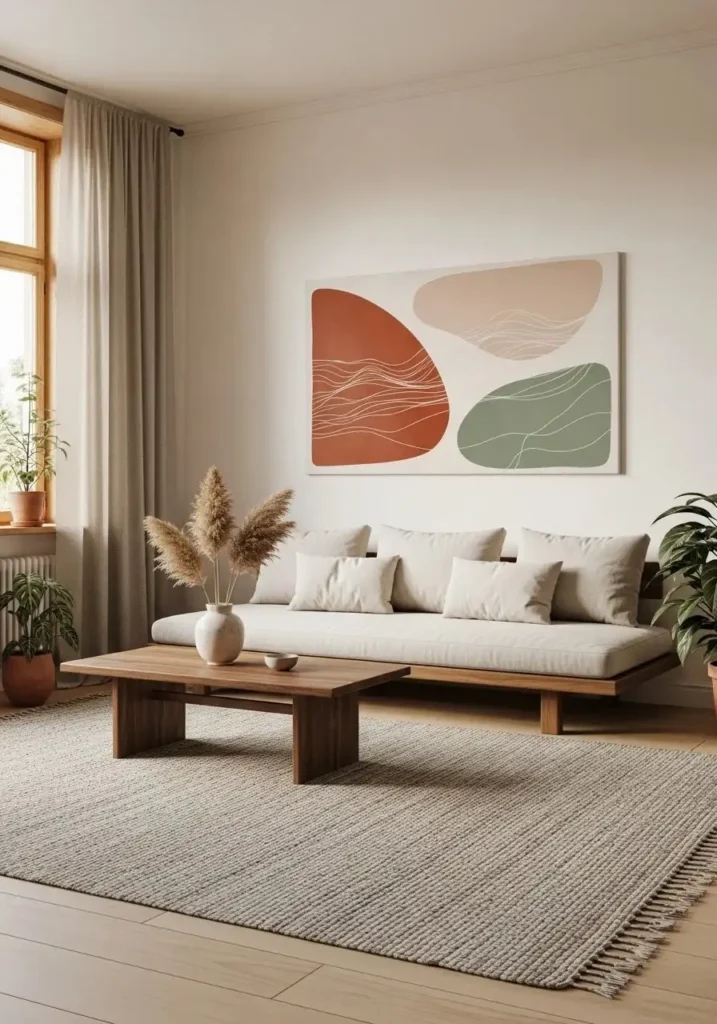
I used to think a bare wall was a wasted wall, until I hung one large, quiet print and realised how much calmer the room felt. Now I choose one or two pieces at most — a soft abstract, a landscape in muted tones, a simple line drawing — and I hang them at eye level where I can actually enjoy them. I frame them simply, in pale wood or thin black, and I leave plenty of wall around them. A gallery wall would fight the calm, so I resist it. The art I keep is the art I stop and look at, not the art that merely fills a space.
How to do it: Choose one large piece of art in soft, muted tones. Hang it at eye level, in a simple pale wood or thin black frame. Leave plenty of empty wall around it. Resist adding more; one piece you love beats a gallery wall here.
16. Low Wooden Coffee Tables for Simplicity
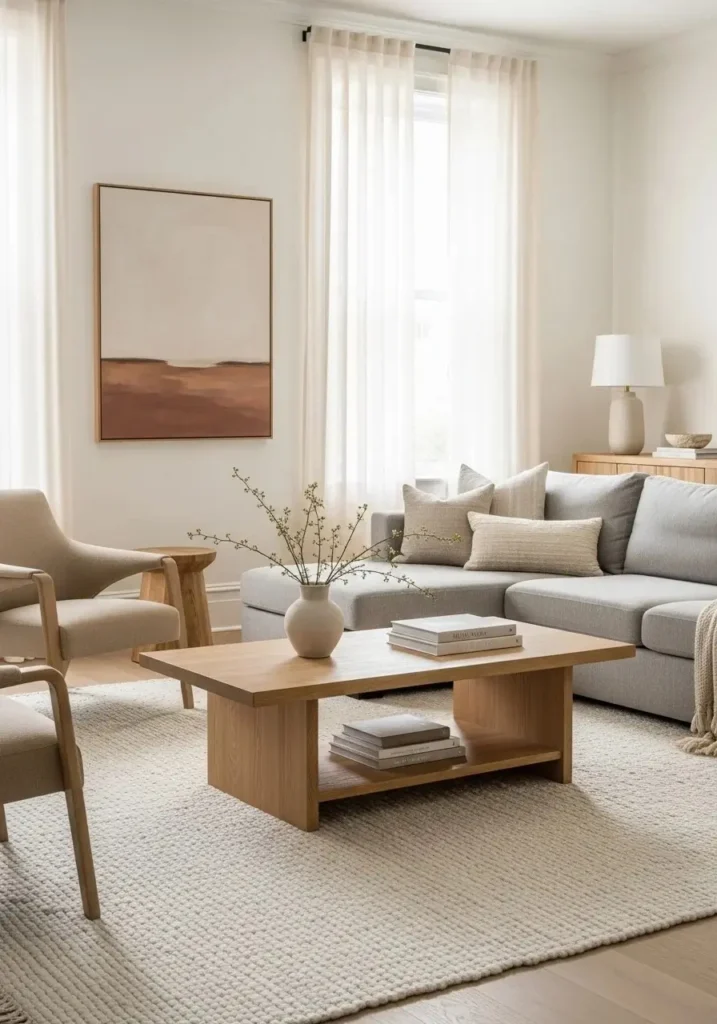
My coffee table is the hardest-working piece in the room, and also the one I am most particular about. I wanted it low, in solid wood, with a clear top that I could actually use — for a book, a cup of tea, a vase — without it becoming a dumping ground. I keep it mostly clear, with just one or two intentional items, and I wipe it down each evening so the morning starts calm. A low table also keeps the sightline across the room open, which is why the room feels bigger with it than it did with a taller one.
How to do it: Choose a low table in solid wood, with a seat-height top or lower. Keep the top mostly clear, with one or two intentional items only. Wipe it down each evening as part of a quick reset. Choose a size that leaves a comfortable gap to the sofa.
See More Amazing Ideas Also: 15 Living Room Wall Shelf Ideas to Style Your Space with Personality
17. Linen Curtains for Soft Light Flow
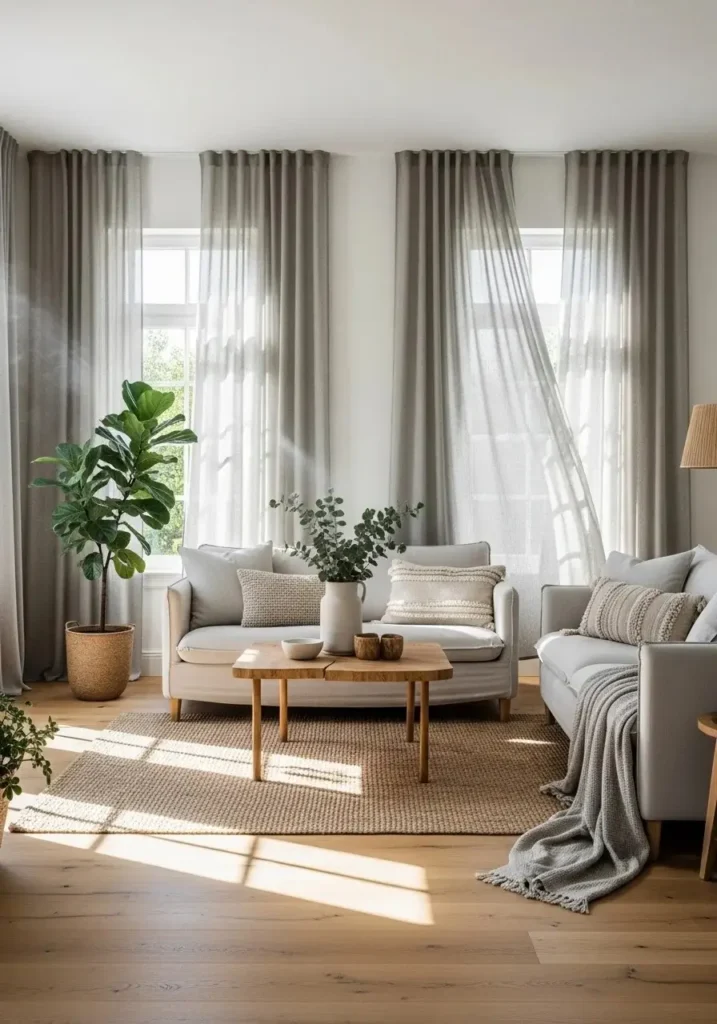
Linen curtains changed the light in my living room in a way I had not expected. They soften the edges of the window, filter the sun into a gentle glow, and move slightly when the door opens, which makes the whole room feel alive. I hang them high and wide, in a warm white or pale natural tone, so the window looks taller than it is. I never use heavy blackout fabric here; the point is to let the light in, not to shut it out. When they need washing, I line-dry them so they keep their soft, slightly rumpled texture.
How to do it: Hang linen curtains high and wide, in warm white or pale natural tones. Choose a lightweight weave that filters light rather than blocking it. Let the curtains fall to just above the floor. Line-dry them to keep their soft, rumpled texture.
18. Balanced Contrast Between Light and Dark
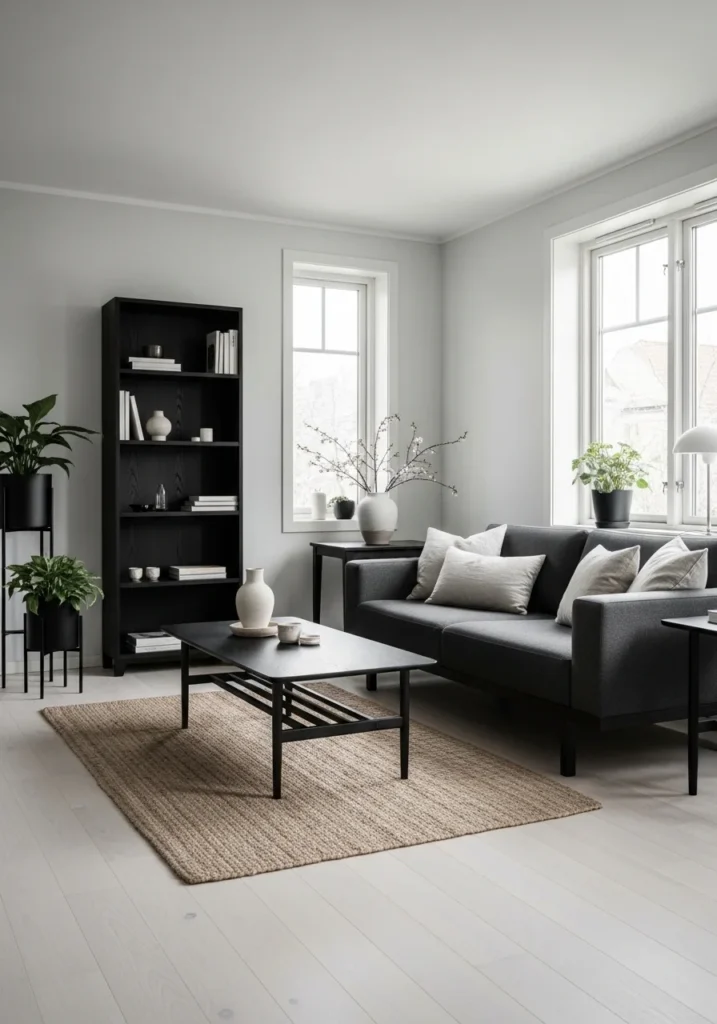
Contrast is what stops a pale room feeling washed out, and I use it in small, deliberate doses. Light walls with a dark walnut side table, a pale sofa with a charcoal cushion, a white lamp against a deep green plant — each pairing gives the eye something to rest on. I never let the dark side win; it should be about a quarter of the room, never half. When I am unsure, I photograph the room in black and white, which shows me instantly whether the balance is right. A room with no contrast feels flat, and a room with too much feels tense.
How to do it: Pair light walls with one dark piece, such as a walnut table or charcoal cushion. Keep dark tones to about a quarter of the room. Photograph the room in black and white to check the balance. If the dark side dominates, swap one dark item for a pale one.
19. Decluttered Surfaces for Visual Peace
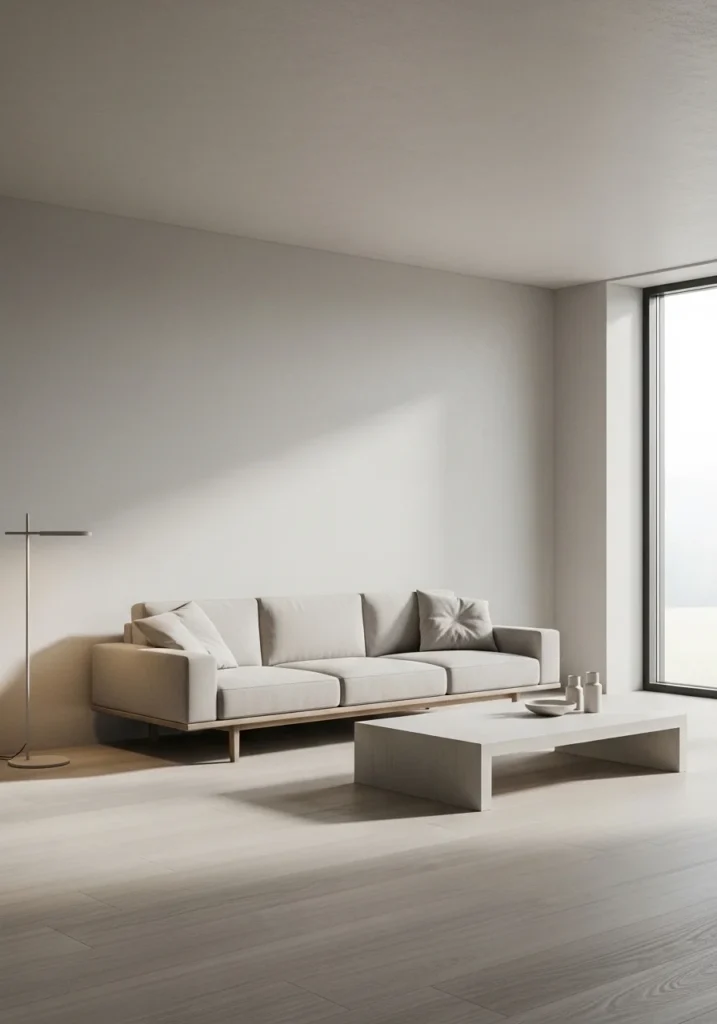
Clear surfaces are my daily reset, and they are the cheapest Japandi idea of all. Every evening I spend five minutes putting things away — books back on the shelf, cups to the kitchen, remotes in the drawer — and the next morning the room greets me calmly. I keep a small basket by the sofa for the things I use daily, so tidying is one movement, not a chore. The rule I live by is that a surface should hold only what belongs there, and everything else has a home elsewhere. It sounds strict, but it is what keeps the room feeling peaceful.
How to do it: Give every item a home elsewhere, and keep a small basket by the sofa for daily items. Spend five minutes each evening clearing surfaces. Keep only what belongs on each surface. Do a quick reset before guests arrive, not a deep clean.
20. Cozy Neutral Rugs for Grounding the Space
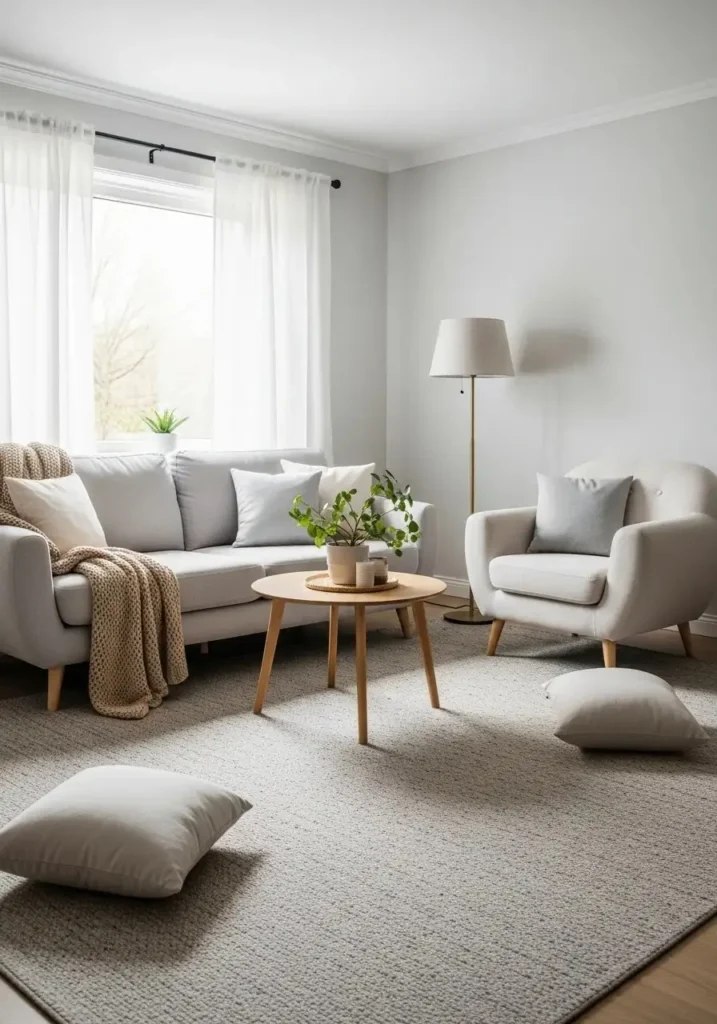
A rug is what turns a group of furniture into a room, and in a Japandi space I choose it carefully. Mine is a soft, neutral wool rug, large enough that the front legs of the sofa and chairs all sit on it, which pulls the seating together. I chose a low pile in a warm, pale tone, because a busy pattern would fight the calm. Underfoot it is the first soft thing I feel in the morning, and that matters more to me than how it looks in a photograph. If you are choosing one, go larger than you think — a rug that is too small makes the whole room feel unsettled.
How to do it: Measure your seating area and choose a rug large enough for the front legs of the sofa and chairs to sit on it. Pick a low-pile wool rug in a warm neutral tone. Keep the pattern plain or very subtle. Vacuum it weekly and rotate it twice a year so it wears evenly.
21. Intentional Empty Corners for Balance
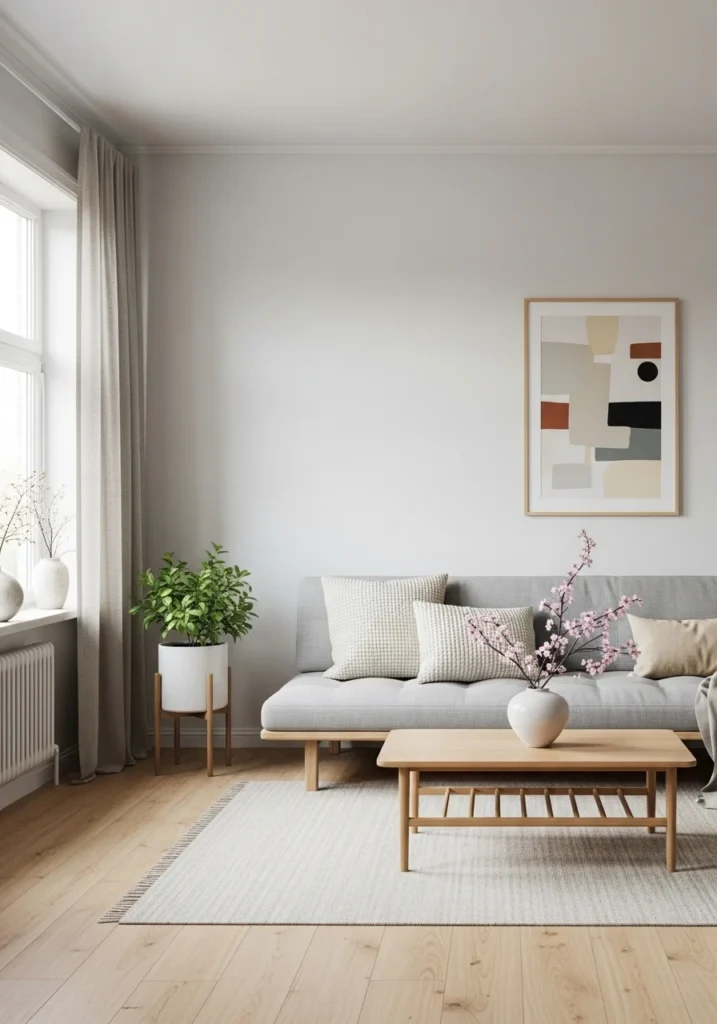
An empty corner used to feel like a mistake to me, as though I had forgotten to finish the room. Now it is one of my favourite things about it. I leave one corner deliberately clear, and it gives my eyes somewhere to rest — a pause in the room, like a breath. If a corner feels too bare, I add a single thing, a plant or a floor lamp, and nothing more. The discipline is in stopping at one. That empty space is not wasted; it is what makes everything else in the room feel intentional.
How to do it: Choose one corner and clear it completely. Live with it empty for a week. If it feels too bare, add a single plant or floor lamp and nothing else. Resist filling it further; the pause is the point.
Frequently Asked Questions
What is a Japandi living room?
Japandi blends Japanese minimalism with Scandinavian warmth. It pairs clean lines, low furniture and natural materials with soft textures, pale colours and plenty of breathing room. The result is a living room that feels calm and uncluttered, but still warm and comfortable to live in every day.
What colours work best in a Japandi living room?
Warm whites, soft beige, pale grey and one deeper tone, such as charcoal or walnut, are the safest starting point. Add a single muted accent — dusty green, soft clay or gentle brown — in small doses, and repeat it in two or three places. Keep the palette tight, and check swatches in morning and evening light, because the same shade can look very different through the day.
How do I make a Japandi living room feel cosy, not cold?
Layer soft textures and warm light. Add linen cushions, a wool rug and a cotton throw in pale tones, keep natural wood visible, and use warm white lamps rather than a single bright ceiling light. A plant or two also helps, because the green softens the pale palette. If the room still feels cool, add one more texture before you add colour.
Can I create a Japandi living room on a small budget?
Yes, and it is one of the cheapest styles to start. Declutter first, then repaint in warm white and move furniture to leave clear space. Add a pale rug, linen-look curtains and a plant, and look for solid wood pieces second-hand. You can build the room one piece at a time, which suits the slow, intentional spirit of the style.
What furniture should I avoid in a Japandi living room?
Avoid bulky, ornate or glossy pieces, and matching furniture sets that make the room feel like a showroom. Skip heavy patterned sofas, shiny chrome and anything that needs a lot of decoration to look finished. Choose simple, low, solid pieces instead, and leave enough of them out that the room can breathe.
Your Japandi Living Room Checklist
Use this list as you work through the ideas above, and tick each one off as your room comes together.
- ☐ Choose a warm neutral palette with one dark accent
- ☐ Swap in low-profile furniture
- ☐ Add natural wood in two tones
- ☐ Layer soft textures in pale colours
- ☐ Add two or three plants in plain pots
- ☐ Use warm lighting from two or three sources
- ☐ Keep surfaces clear with a daily five-minute reset
- ☐ Hang one large, quiet piece of art
- ☐ Lay a large neutral rug under the seating
- ☐ Leave one corner intentionally empty
🌿 Conclusion
A Japandi living room is not a look you buy in one afternoon; it is a way of living with less, chosen slowly and kept with care. Start with the palette and the light, add wood and texture where your hands will meet them, and leave room for the empty spaces to do their quiet work. You do not need all twenty-one ideas at once — choose the one that makes your shoulders drop, try it this weekend, and let the room change around it. That is how a calm home grows, one deliberate choice at a time, and it is a room I hope you will love coming home to.
One Comment