
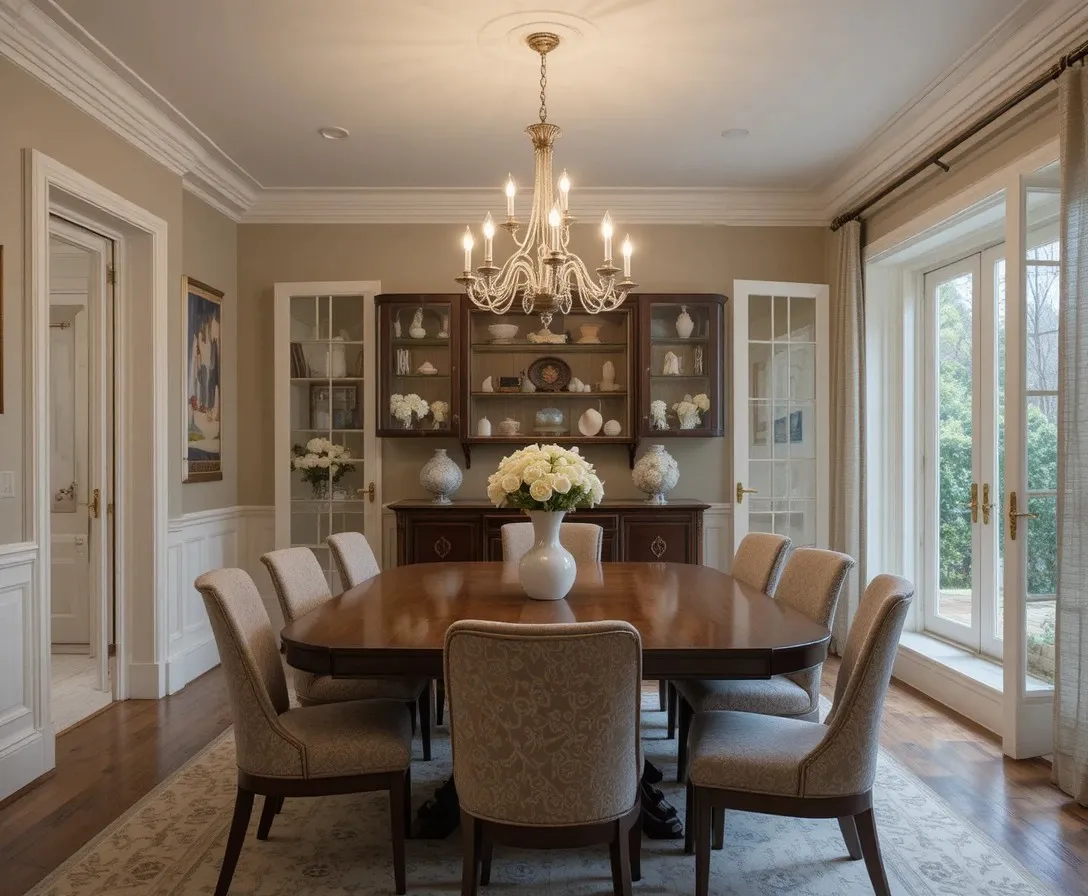
14 Dining Room Lighting Over Table Ideas That Make Every Meal Feel Elegant and Memorable
A dining room can have the perfect table, beautiful chairs, and carefully chosen decor, yet still feel strangely flat once the sun goes down. The real magic often comes from the lighting. The right dining room lighting over table setup completely changes how the space feels — softer, warmer, more intimate, and far more inviting. Whether you love modern minimalism, rustic charm, or bold statement pieces, lighting becomes the detail that pulls everything together and makes everyday dinners feel a little more special.
1. Oversized Pendant Lighting for a Bold Modern Look
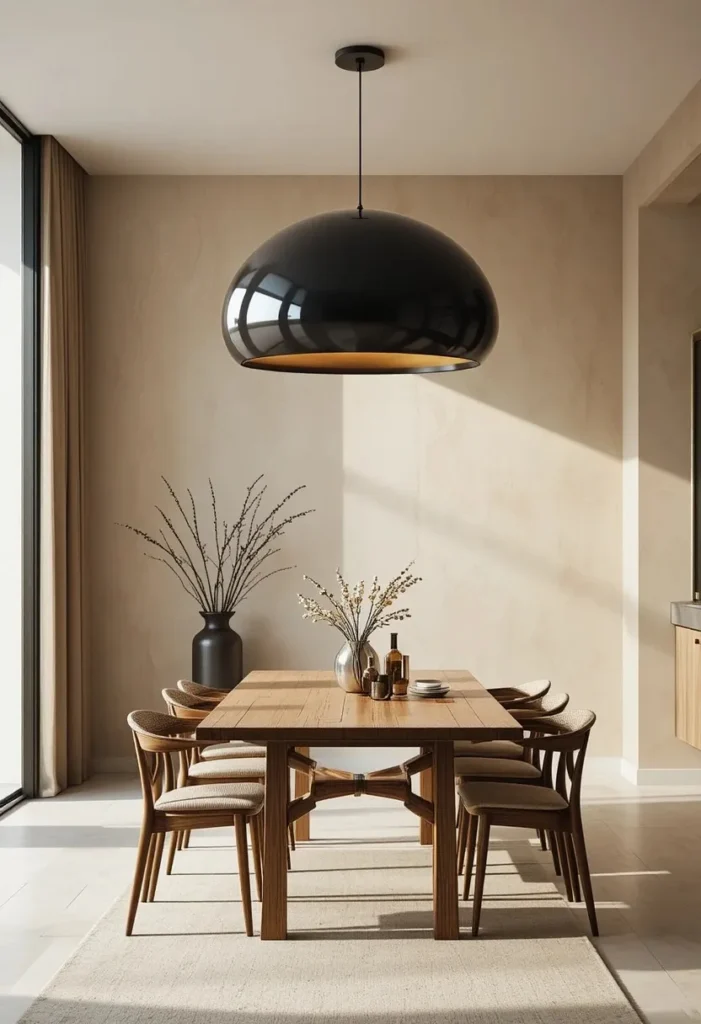
I still remember the evening we swapped a small shade for one oversized pendant, and suddenly our dining room felt like a room with a purpose. The table, which had always looked a little lost in the middle of the floor, had something to gather around at last. I love how a single large shade — woven, matte black, or sculpted glass — can make the whole space feel considered without adding clutter. The warm pool of light it throws downwards flatters food, faces, and a plain weeknight supper. Be brave with scale: a generous pendant looks deliberate, while a small one disappears.
How to do it: Measure the table first, then choose a pendant about one-half to two-thirds of its width. Hang it 75 to 90 centimetres above the tabletop, centred exactly over the middle, and fit a warm-white dimmable bulb so you can soften the light for long, slow dinners.
2. Dining Room Lighting Over Table with Linear Chandeliers
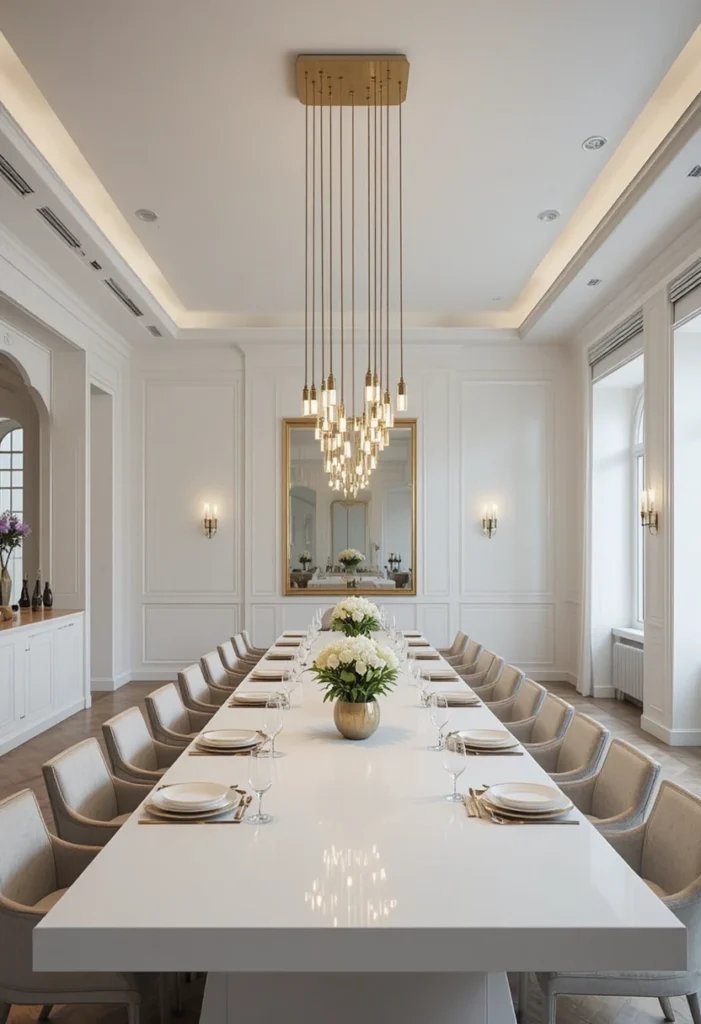
Our long rectangular table used to leave the people at each end sitting in shadow, no matter how bright the ceiling light was. A linear chandelier changed that in one afternoon, because its long, low shape follows the table instead of fighting it. I like how sleek black metal, warm brass, or frosted globes spread an even glow from end to end, so nobody squints at their plate. It also gives the room a calm, symmetrical feeling that suits quiet breakfasts and crowded Sunday lunches. Start with the table: its length and shape should decide the fitting, and these dining room table ideas helped me get the balance right.
How to do it: Measure the table length, then choose a linear fitting about two-thirds of that length. Centre it over the table, hang it 75 to 90 centimetres above the surface, and check from both ends that the light reaches every place setting evenly.
3. Warm Brass Lighting for Soft Elegance
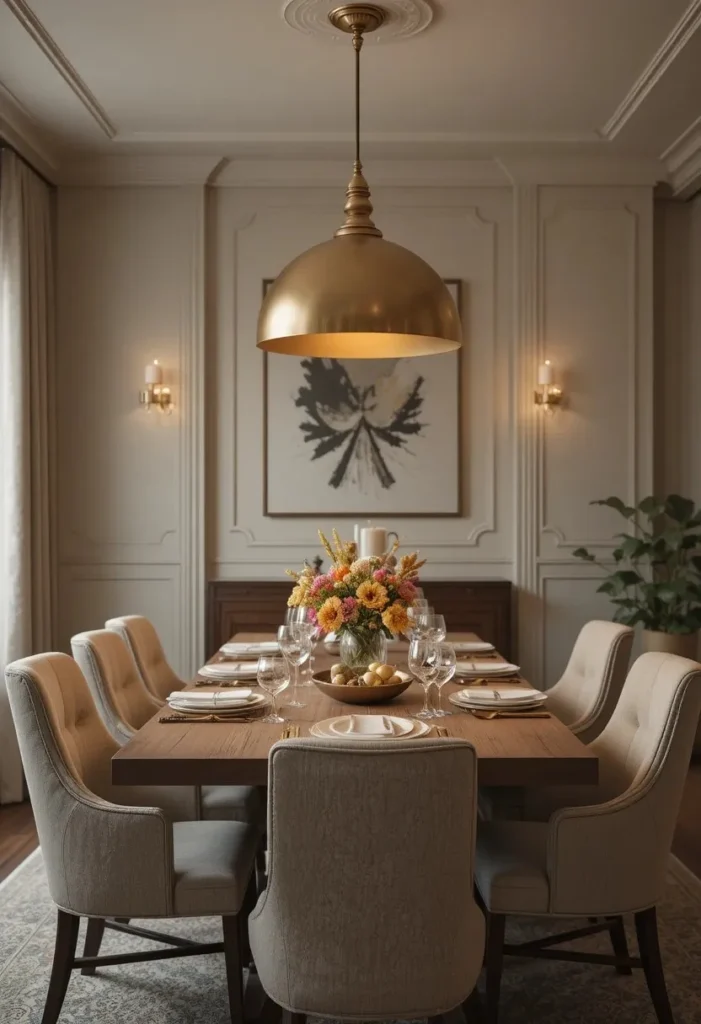
Brass is the finish I reach for when a dining room feels a little cool or unfinished, because it warms the room without shouting about it. I love the way golden tones catch the evening light and throw a soft glow across white walls, dark wood, and pale linen alike. It feels quietly luxurious, the sort of detail guests notice without quite knowing why the room feels so welcoming. Over time I have learned that brushed brass is far more forgiving than polished brass, since fingerprints and water marks show far less. Paired with warm-white bulbs, it turns a Tuesday supper into something that feels a touch more special.
How to do it: Choose brushed brass for an easy-care finish, fit warm-white bulbs at 2700K to 3000K, and repeat the brass in one or two small details, such as cutlery, a tray, or picture frames, so the fitting feels part of the room.
4. Woven Rattan Pendants for a Relaxed Organic Feel
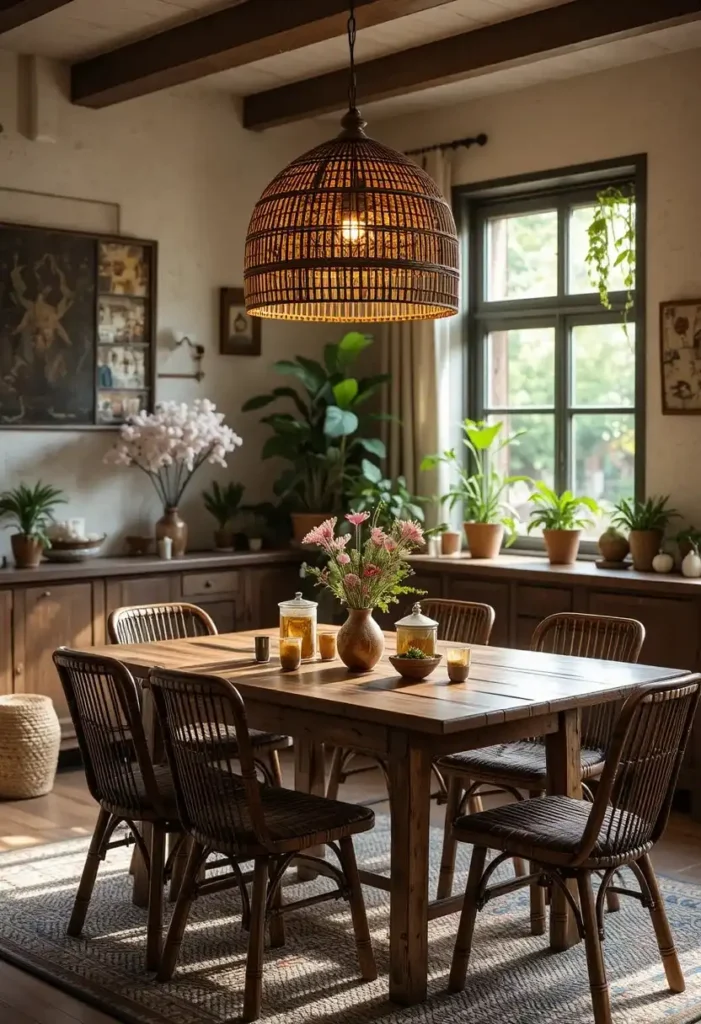
There is something about rattan that slows a room down, in the best possible way. I first tried a woven pendant in a dining space that felt too formal for family meals, and the change was immediate: the light softened, the shadows turned dappled and pretty, and everyone lingered longer at the table. I love pairing rattan with wood and earthy, natural textures, because the woven pattern adds warmth without any fuss. It also hides a multitude of sins in a plain room, giving the eye something handmade to rest on. For me, it is the easiest way to make a modern dining room feel relaxed and lived in.
How to do it: Choose a rattan shade wide enough to cover the middle of the table, hang it 75 to 90 centimetres above the surface, and put it on a dimmer so the woven shadows soften as the evening goes on. Dust it gently with a soft brush every few weeks.
5. Dining Room Lighting Over Table with Glass Globe Fixtures
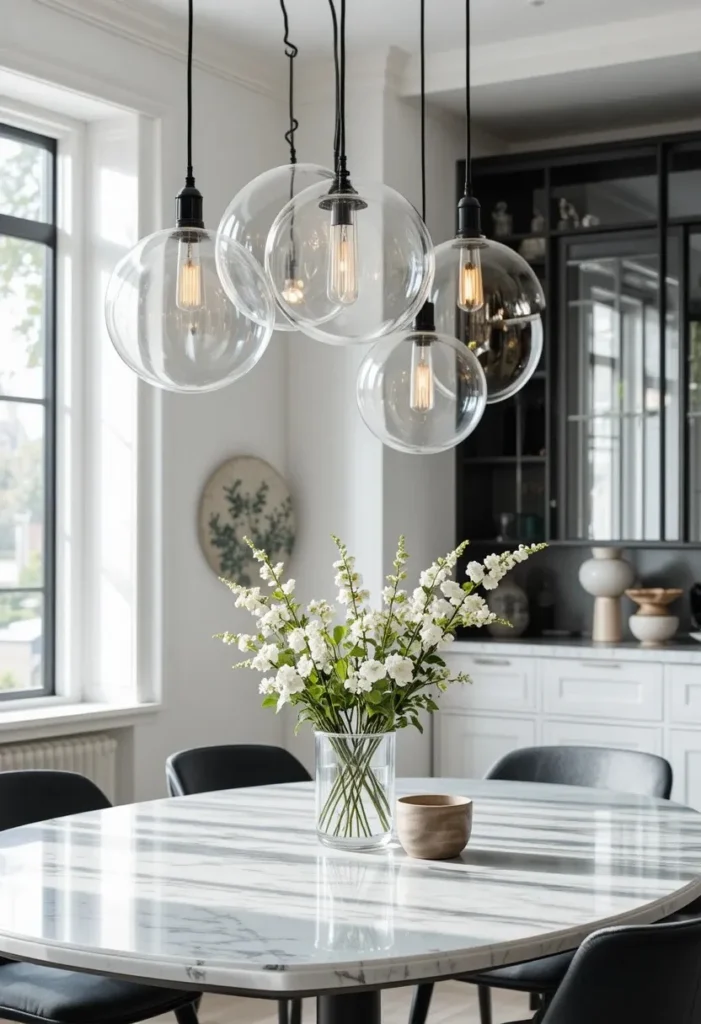
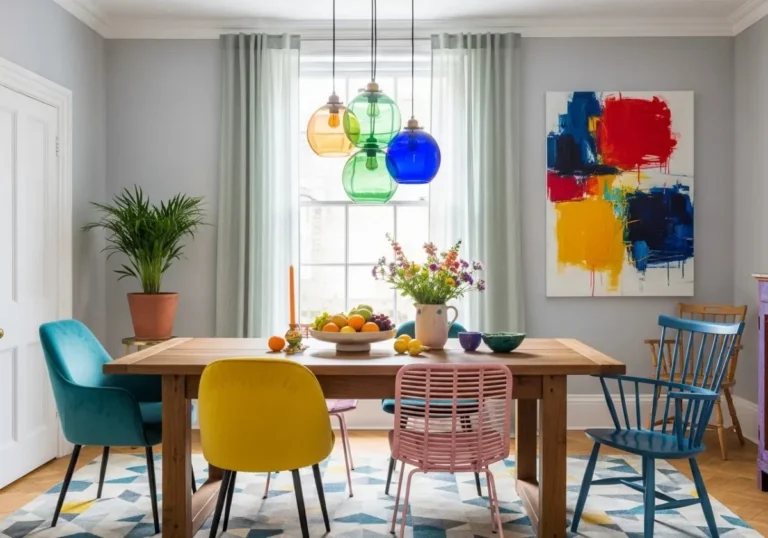
Glass globes are my answer when a dining room needs light but must not feel heavy. I love how clear or frosted globes seem to float above the table, letting the eye travel through them instead of stopping at a solid shade. The glow they give is gentle and even, which makes them perfect for small rooms, pale walls, and transitional spaces that sit between modern and traditional. Black or brass hardware adds just enough contrast to keep the look from feeling wishy-washy, and I always choose frosted glass when the table sits where people face the light directly. It is a calm, airy choice that never dates quickly.
How to do it: Choose frosted globes for softer light or clear globes for sparkle, hang them in a row or a small cluster 75 to 90 centimetres above the table, and use warm-white bulbs so the glow stays gentle after dark.
See More Ideas: 16 Color Drenched Dining Room Ideas That Make Every Meal Feel Like an Event
6. Black Metal Chandeliers for Modern Contrast
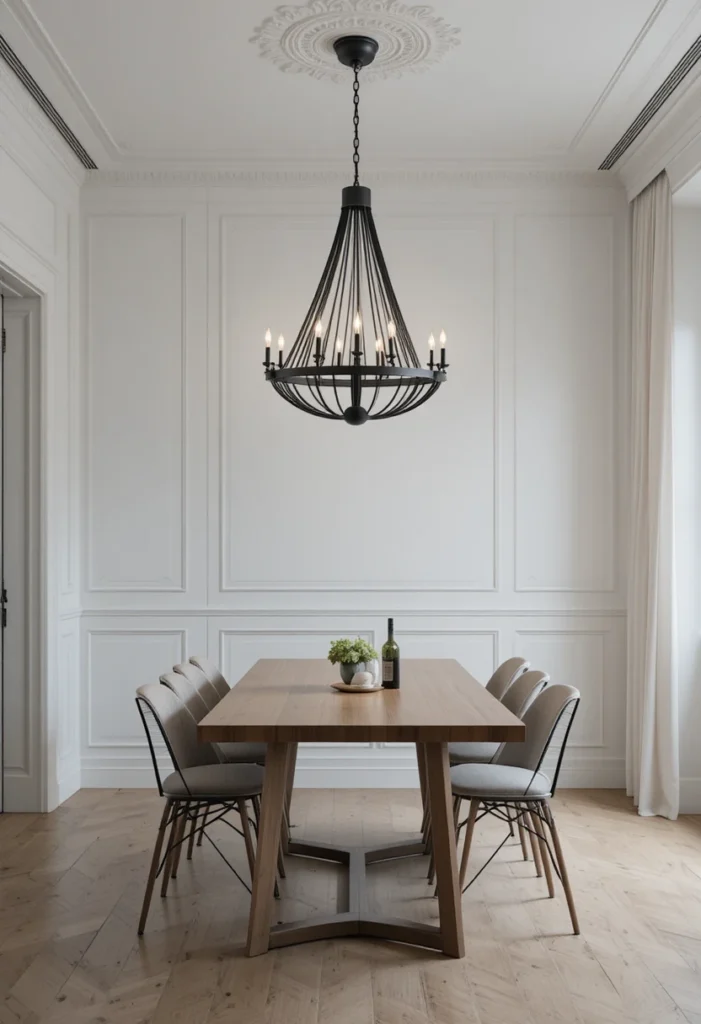
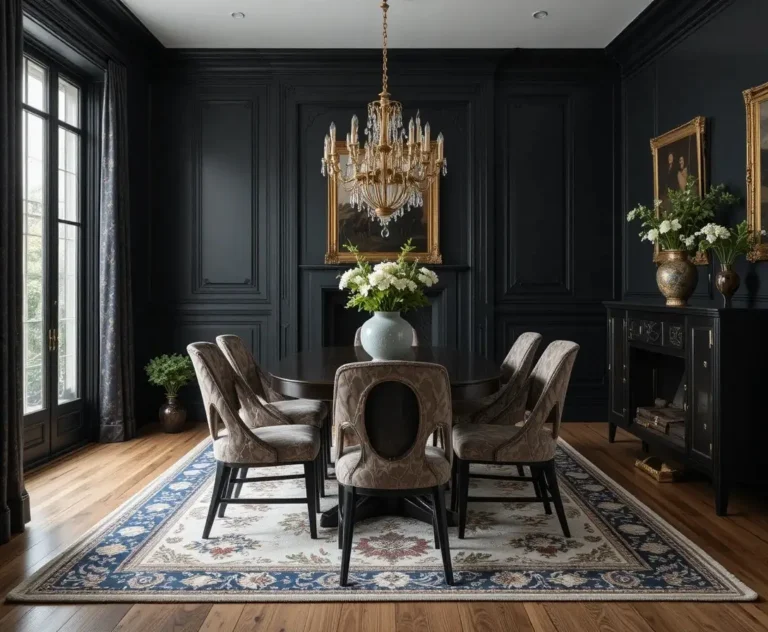
Black metal is the quickest way I know to give a pale dining room some backbone. I love how a dark chandelier frames the table like a picture, pulling the eye down to the food and the people around it. Against white walls it feels crisp and modern, and against blue walls it feels rich and moody — which is why I point friends towards blue dining room ideas when they want that drama without repainting everything. The finish hides dust far better than pale shades do, which matters in a room used every day. Keep the rest of the room simple, and let the black frame do the talking.
How to do it: Repeat the black in two small places, such as chair legs, a tray, or a frame, hang the chandelier 75 to 90 centimetres above the table, and fit warm-white bulbs so the dark finish does not make the light feel cold.
7. Minimal Pendant Lights for Clean Simplicity
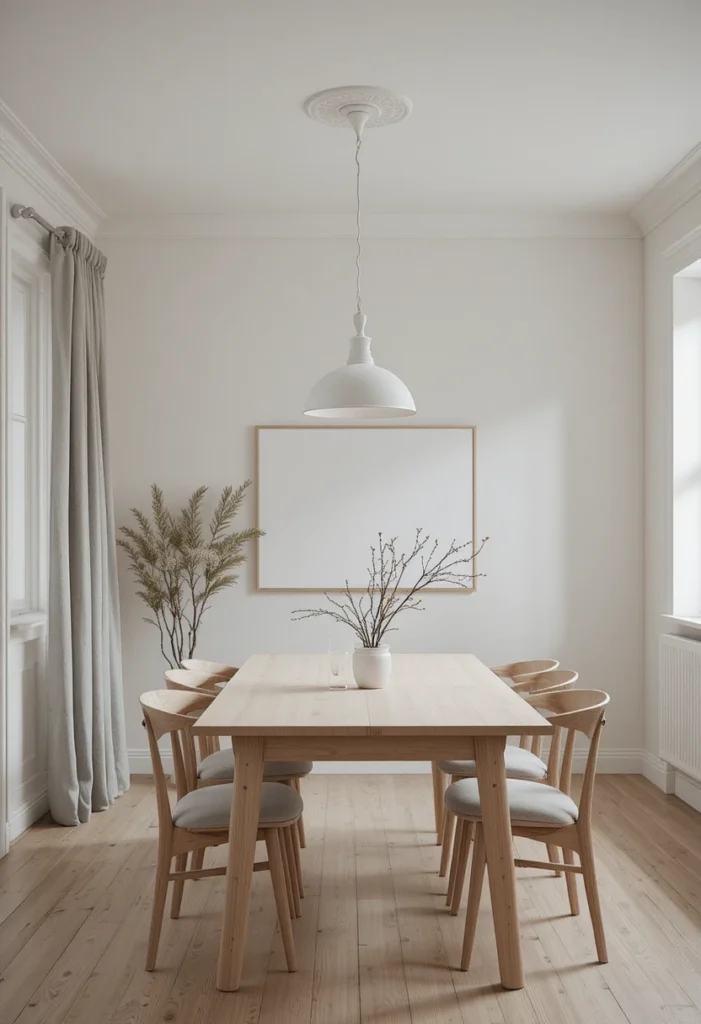
When a dining room starts to feel noisy, I strip the lighting right back to something simple. A smooth white, beige, or matte grey pendant does not shout for attention, yet it still warms the table with a gentle, uncluttered glow. I find that kind of restraint surprisingly calming at mealtimes, because nothing competes with the food, the conversation, or the people across from you. It also leaves room for texture elsewhere — a linen runner, a wooden bowl, or chairs with a beautiful shape. My rule is simple: if the room already has plenty to look at, let the light be the quiet part.
How to do it: Choose one smooth, neutral pendant, hang it slightly lower than usual — about 70 to 80 centimetres above the table — and keep the cord and ceiling rose plain so nothing distracts from the clean shape.
8. Cluster Pendant Lighting for a Designer Look
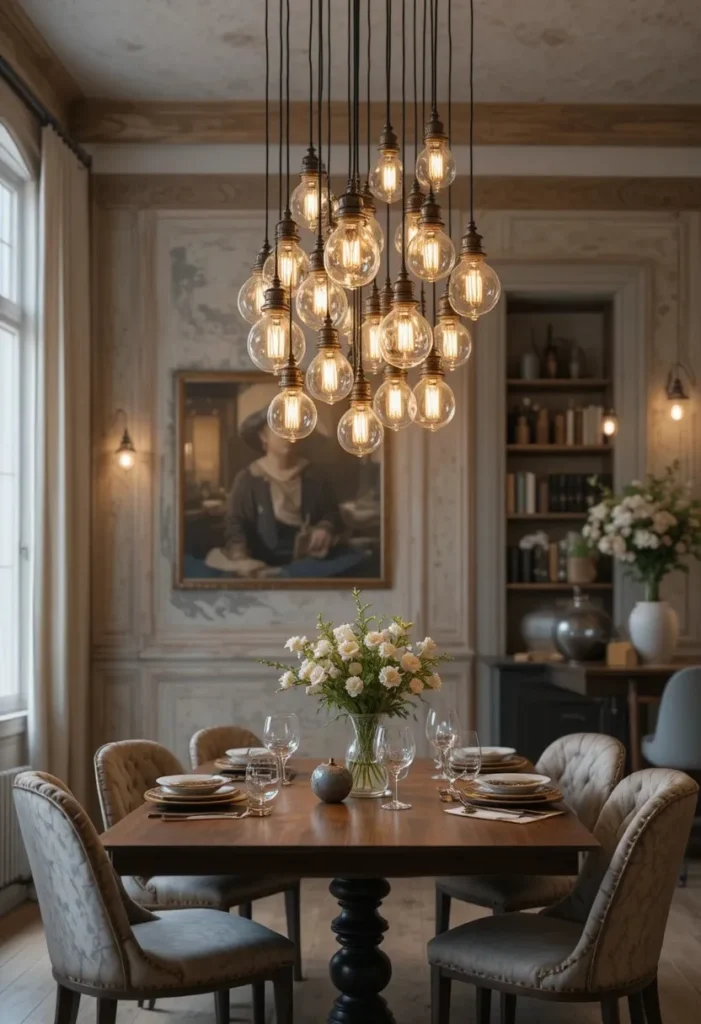
A cluster of pendants feels like a piece made just for your table, and that is why I love it. Hanging three or five small shades at different heights creates a layered glow that a single fitting can never quite match, and the uneven arrangement gives the room a sense of movement. I like mixing glass and metal, or keeping one material in different shapes, because the result feels collected rather than bought in one hurried trip. It works best over a long table, where the cluster can stretch out and fill the space. My warning is to keep the group centred, or the table can feel oddly lopsided.
How to do it: Choose three or five pendants from one matching family, hang them at staggered heights between 70 and 90 centimetres above the table, and centre the whole group over the middle of the table before fixing the drops.
9. Dining Room Lighting Over Table with Drum Shades
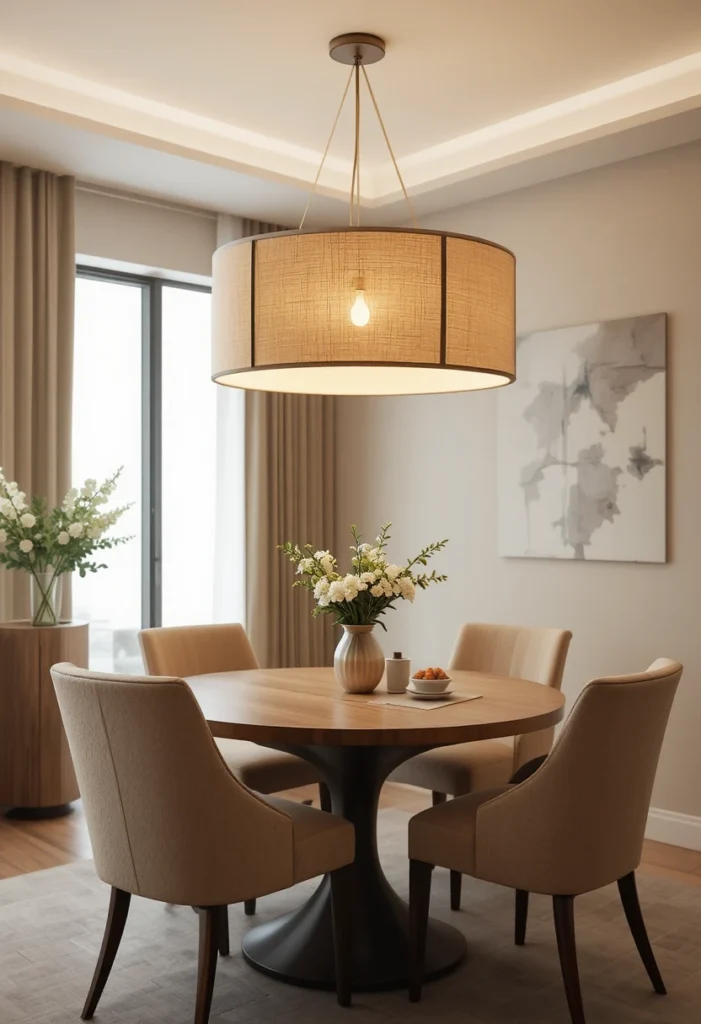
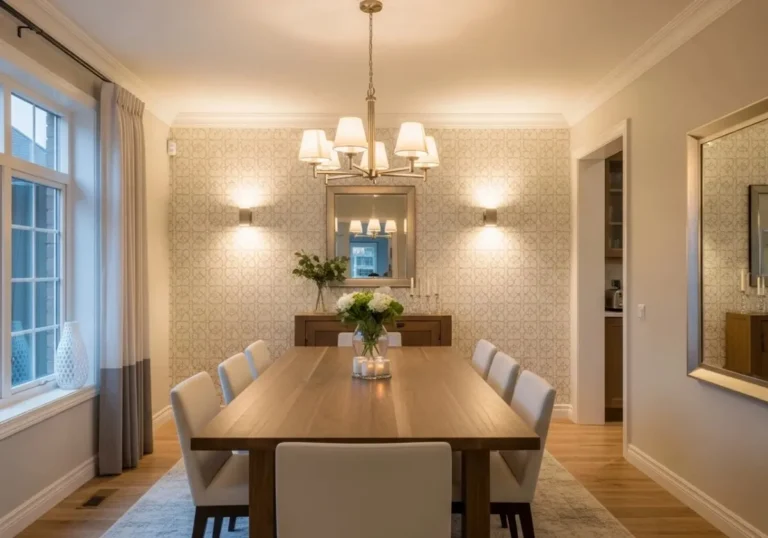
A drum shade is the lighting equivalent of a deep breath. I reach for one when a dining room feels a little harsh, because the fabric — linen, cotton, or a textured weave — softens the light and spreads it evenly across the table. Nobody ends up with a bright spot on their plate and shadows everywhere else, which makes long meals far more comfortable. I love neutral tones like beige, ivory, or soft grey here, since they warm the room without dictating the colour scheme. It is a forgiving choice, too: a drum shade suits traditional rooms, modern rooms, and most things in between.
How to do it: Choose a shade slightly wider than you think you need, hang it 75 to 90 centimetres above the table, and pick a washable fabric if you cook a lot, so steam and splashes do not stain it.
10. Industrial Style Metal Pendants
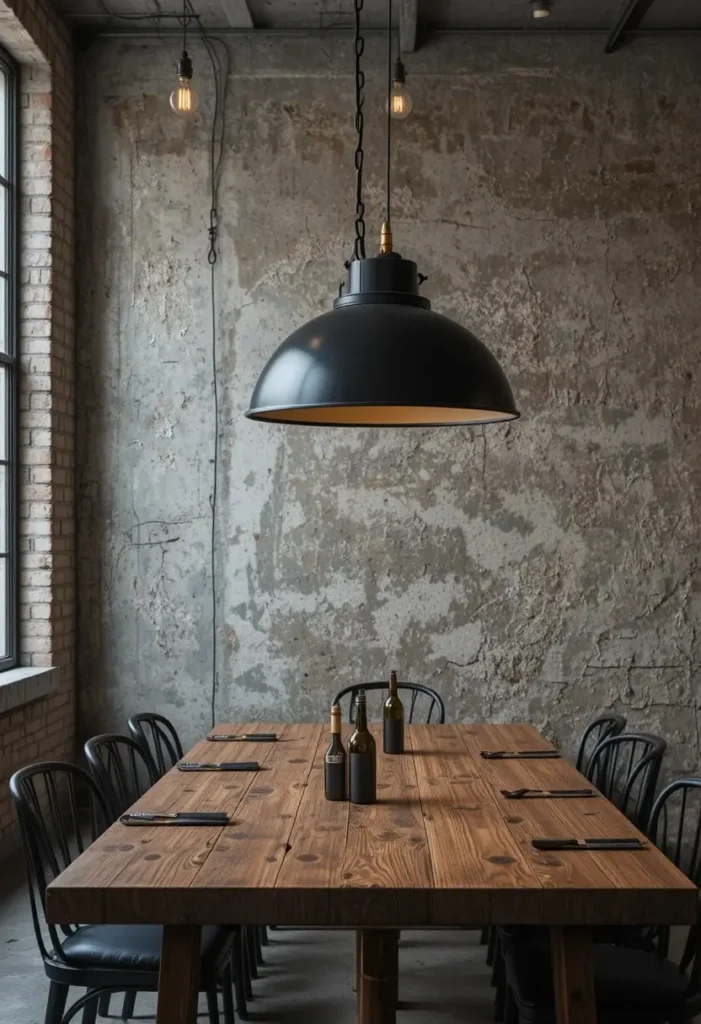
Industrial pendants suit a dining room that is not afraid of a little grit. I love the honesty of aged metal, matte black, or brushed steel, especially over a solid wood table where the contrast between raw metal and warm timber feels grounded and real. The look can lean cold if you are not careful, so I always soften it with warm bulbs, a linen runner, and something green on the table. Done well, it feels like a favourite café at home — relaxed, a little edgy, and made for long, noisy suppers. It is also wonderfully practical, because metal shades wipe clean in seconds.
How to do it: Choose aged metal or matte black shades, hang them 75 to 90 centimetres above the table, fit warm-white bulbs, and add a wooden or linen detail on the table to soften the hard metal edges.
11. Candle-Inspired Lighting Fixtures
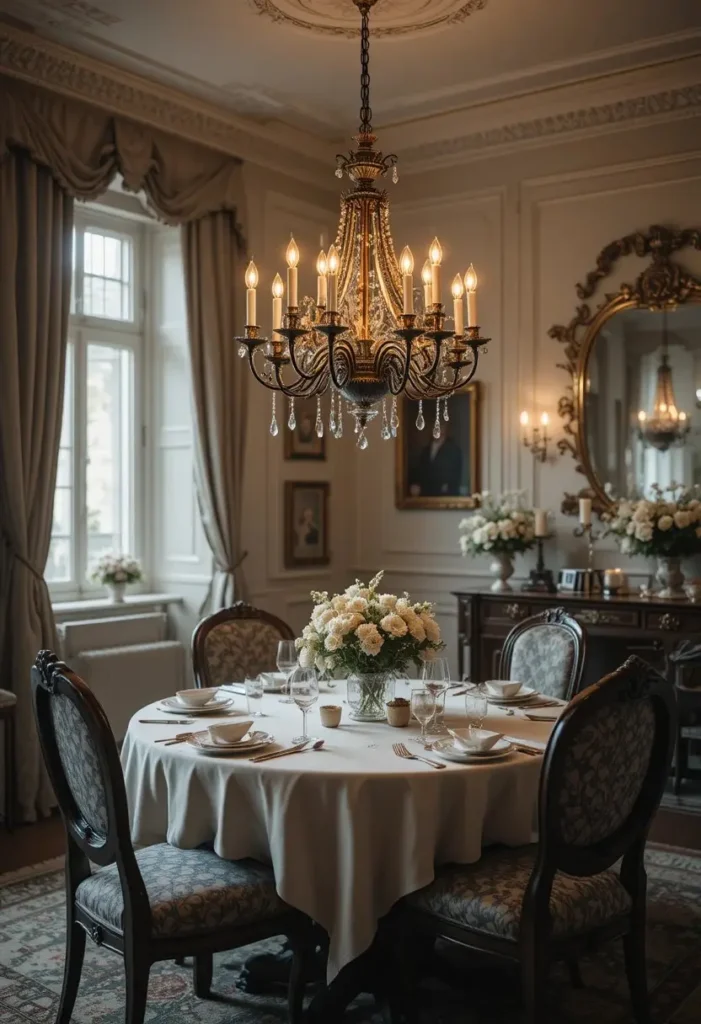
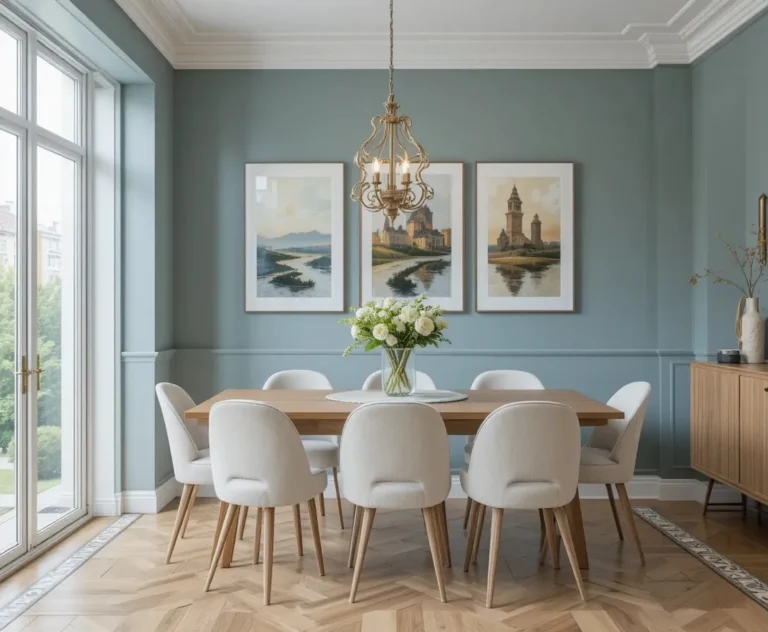
Candle-style chandeliers remind me of the dining rooms I loved as a child, where the light flickered gently and every meal felt like an occasion. Modern versions give you that same romantic glow without the worry of real flames, thanks to curved arms and warm bulbs that mimic candlelight beautifully. I love them in rooms with vintage touches — a dark wood table, linen napkins, or an old mirror — because they add nostalgia without feeling old-fashioned. They are also surprisingly flattering, softening faces and making even a simple supper feel considered. For a special evening, I dim them low and let the candles on the table do the rest.
How to do it: Choose a candle-style fitting sized to the table, hang it 75 to 90 centimetres above the surface, fit warm-white flame-style bulbs, and keep the surrounding decor simple so the romantic glow stays the focus.
See More Ideas: 14 Blue Dining Room Ideas That Make Your Space Feel Calm, Stylish, and Inviting
12. Adjustable Track Lighting Over Dining Table
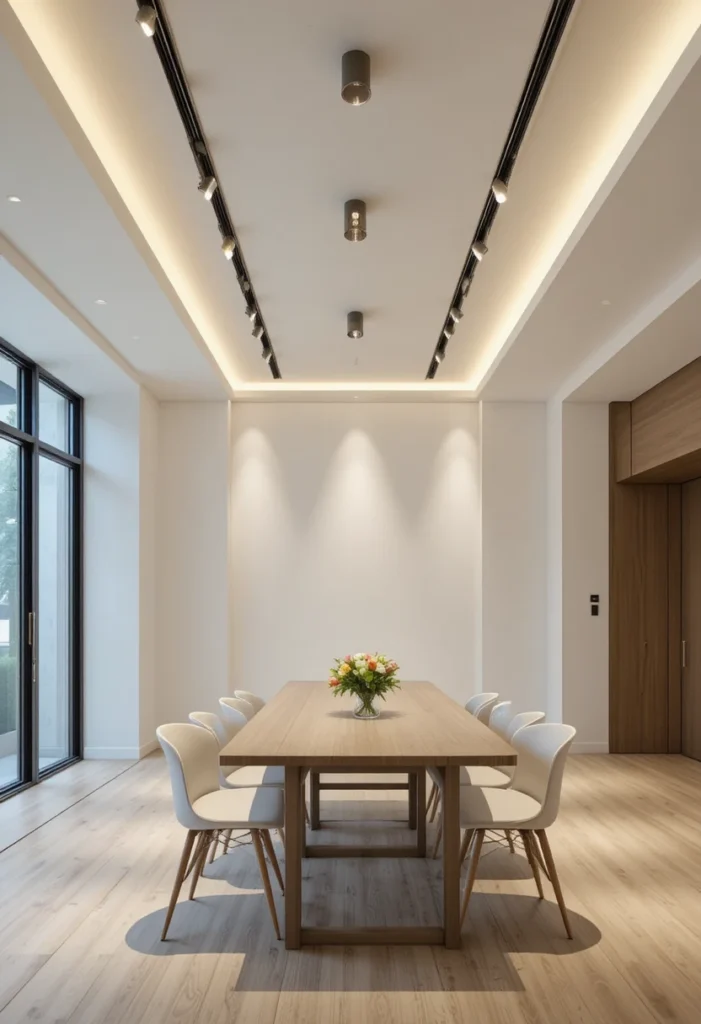
Track lighting is the practical choice I recommend when a dining table has to do more than host dinner. I love being able to angle each head where it is needed — down onto the table for homework or a jigsaw, then outwards for a softer, room-wide glow in the evening. It suits modern flats and open-plan spaces especially well, where one room must serve several purposes at once. The same flexible thinking works in the kitchen, and our kitchen island lighting ideas use the same trick of aiming light where you need it. Keep the rail slim and the heads small, and the system almost disappears into the ceiling.
How to do it: Fix the rail centrally above the table, angle two heads down onto the table and one or two outwards for background light, and choose heads on a dimmer so you can change the mood without moving a single fitting.
13. Sculptural Statement Lighting as Art
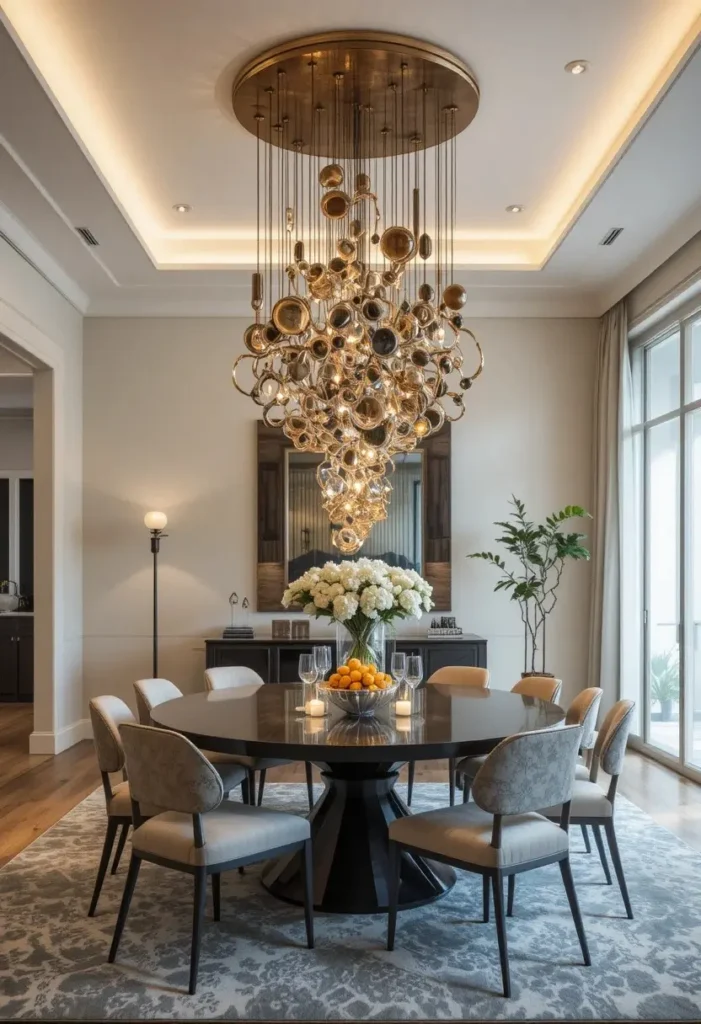
Some lights are worth buying for the daytime alone, and sculptural lighting is one of them. I love a fitting that acts like art above the table — an abstract shape, an asymmetrical curve, or a sweep of artistic metalwork that holds your attention even when the bulbs are off. It gives the room a strong focal point without a single picture on the wall, which is a gift in a small dining space. The trick is confidence: choose one bold piece, then keep everything around it quiet. A plain table, simple chairs, and a low centrepiece let the sculpture breathe and do its work.
How to do it: Measure the table and choose a sculptural fitting about one-half to two-thirds of its length, hang it 75 to 90 centimetres above the surface, and keep the table and walls plain so the fixture remains the clear focal point.
14. Soft LED Strip Lighting for Modern Glow
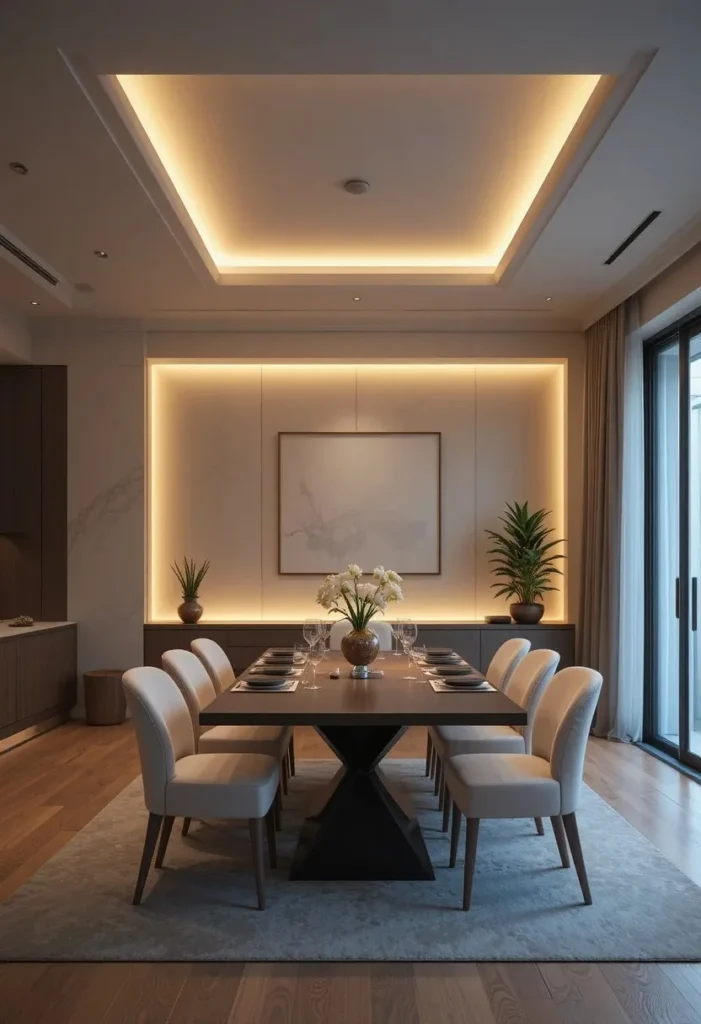
Hidden LED strips are my quietest lighting trick, and the one guests notice last but compliment most. Tucked above a ceiling cove or along a beam, they wash the ceiling with a soft, floating glow that makes the whole dining room feel calm and a little larger. I love that there is no visible fitting to dust or to compete with the table below, just light that seems to come from nowhere. Warm white is essential here — cool strips can make food look grey and the room feel like an office. Paired with a dimmer, the glow shifts easily from bright family breakfasts to slow, candlelit-feeling suppers.
How to do it: Fit warm-white LED strips above a ceiling cove or beam, hide the driver and wiring out of sight, put the strips on a dimmer, and test the glow at night before fixing the strips permanently.
Frequently Asked Questions
How high should I hang dining room lighting over the table?
Hang the bottom of the fitting 75 to 90 centimetres above the tabletop, which is about 30 to 36 inches. That height lights the table well without blocking faces across it. If your ceilings are very high, you can go a little lower, but always sit down and check that nobody has to duck or peer around the shade.
How big should a chandelier or pendant be over a dining table?
Choose a fitting about one-half to two-thirds of the table’s width, or about two-thirds of its length for a linear chandelier. A fitting that is too small looks lost, while one that is too wide crowds the table and can bump heads. Measure the table before you shop, and tape the outline on the ceiling if you are unsure.
What colour temperature is best for dining room lighting?
Warm white bulbs at 2700K to 3000K suit most dining rooms, because they flatter food and skin tones and feel relaxing in the evening. Cool white light can make a dining room feel stark and clinical. Always put dining lights on a dimmer, so you can soften the glow for long, slow meals.
Can I use more than one pendant over a dining table?
Yes, two or three pendants work beautifully over a long table, and a cluster of small pendants suits a square or round table. Space the centres evenly, keep them at the same height unless you are deliberately staggering a cluster, and centre the whole arrangement over the table. Check the view from the doorway as well as from your seat.
Do I need a dimmer switch for dining room lighting?
Yes, a dimmer is the single most useful upgrade I recommend for dining room lighting. It lets one fitting serve bright family breakfasts, homework, and soft evening meals. If a full dimmer is not possible, choose bulbs with a warm, low brightness and add candles on the table for evening glow.
Your Dining Room Lighting Checklist
☐ Measure the table before choosing a fitting.
☐ Choose a fitting one-half to two-thirds of the table width.
☐ Hang the light 75 to 90 centimetres above the table.
☐ Fit warm-white bulbs at 2700K to 3000K.
☐ Put the dining lights on a dimmer switch.
☐ Centre the fitting exactly over the middle of the table.
☐ Repeat one finish, such as brass or black, in a small detail.
☐ Sit down at night and check the light from every seat.
Conclusion
The right light over your dining table does far more than help you see your supper. It sets the pace of the evening, softens the room after a long day, and turns an ordinary table into the place everyone drifts towards. Whether you choose one oversized pendant, a row of glass globes, or a hidden LED glow, the best choice is the one that suits how your household actually eats, talks, and lingers.
Start with the feeling you want — calm, elegant, relaxed, or a little dramatic — then measure your table, hang your fitting at the right height, and live with it for a few evenings before you decide it is finished. One thoughtful change above the table is often all it takes to make every meal feel a little more elegant and memorable.
One Comment