
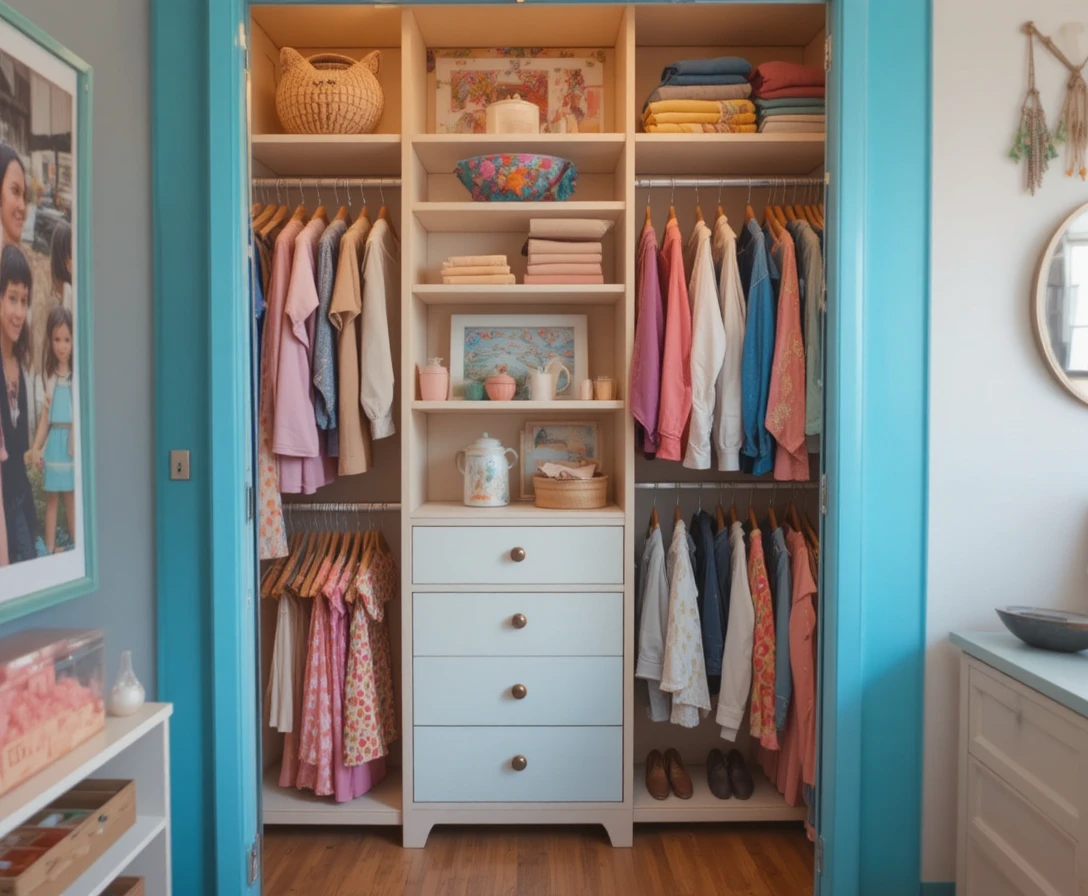
14 Kids Closet Organization Ideas That Make Everyday Routines Feel Easier and Calmer
Kids’ closets have a way of becoming chaotic almost overnight. Tiny shoes disappear, clothes pile up, toys sneak onto shelves, and suddenly opening the closet feels more stressful than helpful. But the right kids’ closet organization ideas can completely change that feeling. A well-organized closet doesn’t just look tidy — it makes busy mornings smoother, helps kids become more independent, and creates a calmer atmosphere in the entire room. With smart storage, playful details, and simple systems, even small closets can feel functional, neat, and surprisingly beautiful.
1. Use Low Hanging Rods for Easy Access
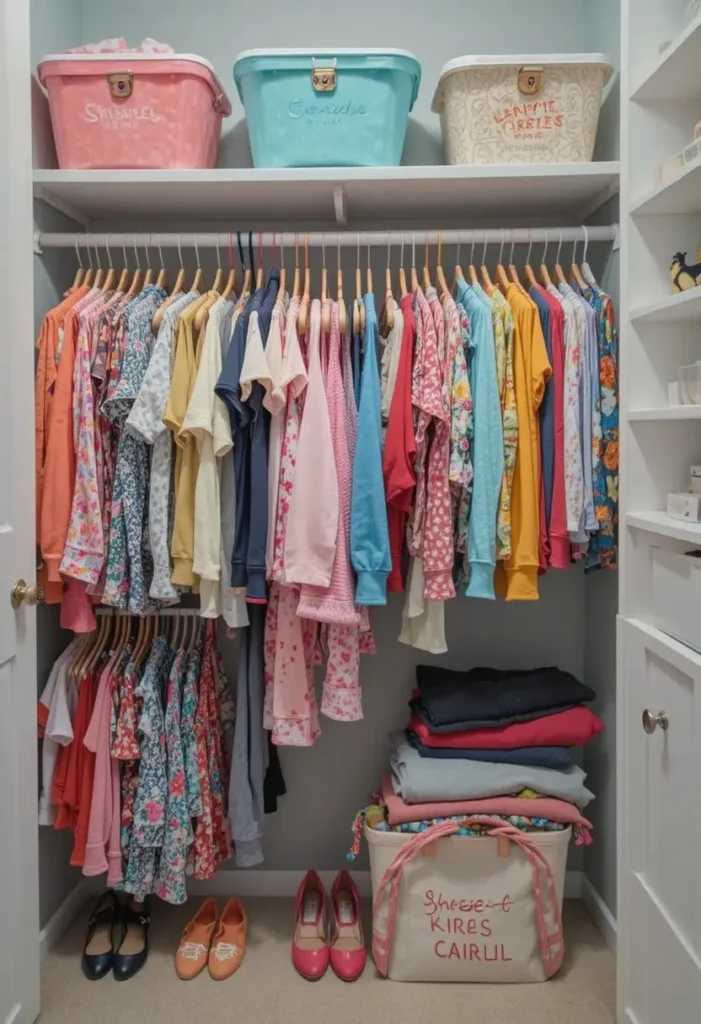
Lowering the rail was the change that turned our mornings from a scramble into something calmer. Before, my daughter would stand on tiptoe, tug at a sleeve, and eventually give up and call me. Now her dresses, cardigans and favourite tops hang where her hands can reach, and she chooses her own outfit while I pour the milk. I keep school clothes grouped on one side and play clothes on the other, with white shelving below holding soft baskets for socks and hair things. The light wood finish keeps the corner bright rather than crowded, and watching her dress herself, proud as anything, still makes me smile every morning.
How to do it: Measure your child’s shoulder height and fit a second rail just below it, using sturdy brackets fixed into studs. Hang everyday clothes on the lower rail and keep occasion outfits up high. Group school clothes together, leave a gap between garments, and let your child choose their outfit from the rail each morning.
Tip: Leave a little open space between hanging clothes so the closet feels less cramped visually.
2. Add Color-Coded Storage Bins
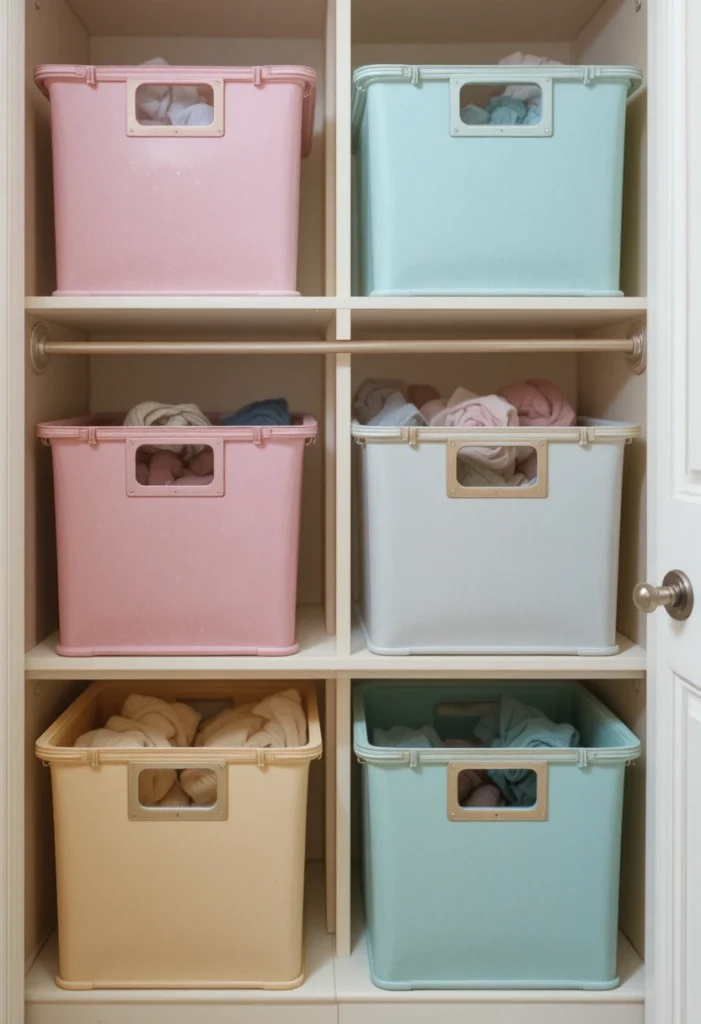
Colour is the language my children understand best in the morning, so our bins do the talking before I have even had my tea. Each child has a colour — dusty blue for my son, soft rose for my daughter — and socks, pyjamas, spare clothes and little toys each have a bin in that shade. The rule is wonderfully simple: if it is blue, it belongs in a blue bin, and even my four-year-old can tidy up without asking me where things go. I chose washable fabric bins with sturdy handles, because they get dragged across the floor, stuffed full and occasionally sat on. The pastel shades keep the closet feeling cheerful rather than chaotic, and when a bin starts to overflow I know at a glance that it is time for a sort-out.
How to do it: Give each child — or each category — its own colour, then buy bins in those shades. Label every bin with a word and a picture, place the most-used bins at your child’s height, and keep one empty bin spare for the inevitable overflow. Sort everything into its colour-coded home, then tidy by colour at the end of each day.
Tip: Use washable fabric bins for a softer and more child-friendly look.
3. Kids Closet Organization Ideas with Open Shelving
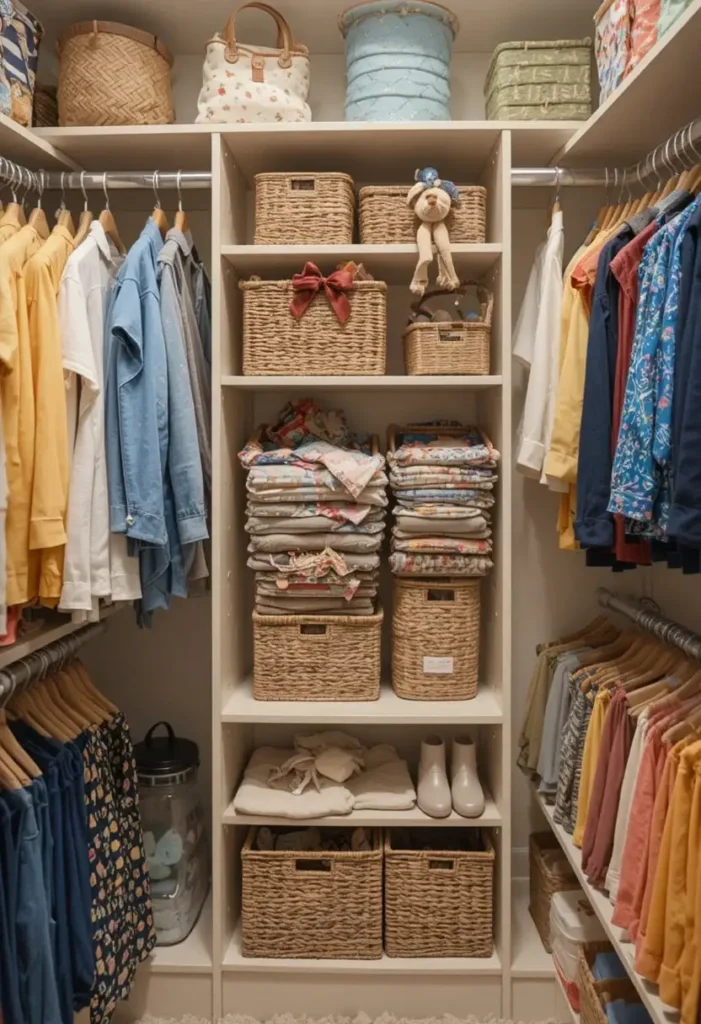
I used to fold everything away behind doors, and out of sight quickly became out of mind — jumpers forgotten, shoes piled in a heap, favourite books buried. Open shelving changed that, because my children can see what they own and reach it without pulling everything down. Folded jumpers sit in neat stacks no more than four high, shoes line up in pairs along the bottom shelf, and a woven basket on the top shelf holds the dressing-up clothes. I keep the shelves themselves pale and plain so the clothes provide the colour, and I leave one shelf half empty on purpose: that breathing space is what stops the whole closet sliding back into clutter.
How to do it: Clear the shelves completely and group clothes by type before anything goes back. Fold jumpers into stacks of no more than four, place shoes in pairs along the lowest shelf, and use woven baskets for smaller items. Leave one shelf partly empty, and put the things your child reaches for daily at their eye level.
Tip: Avoid stacking clothes too high so shelves stay neat longer.
4. Create a Mini Dressing Station
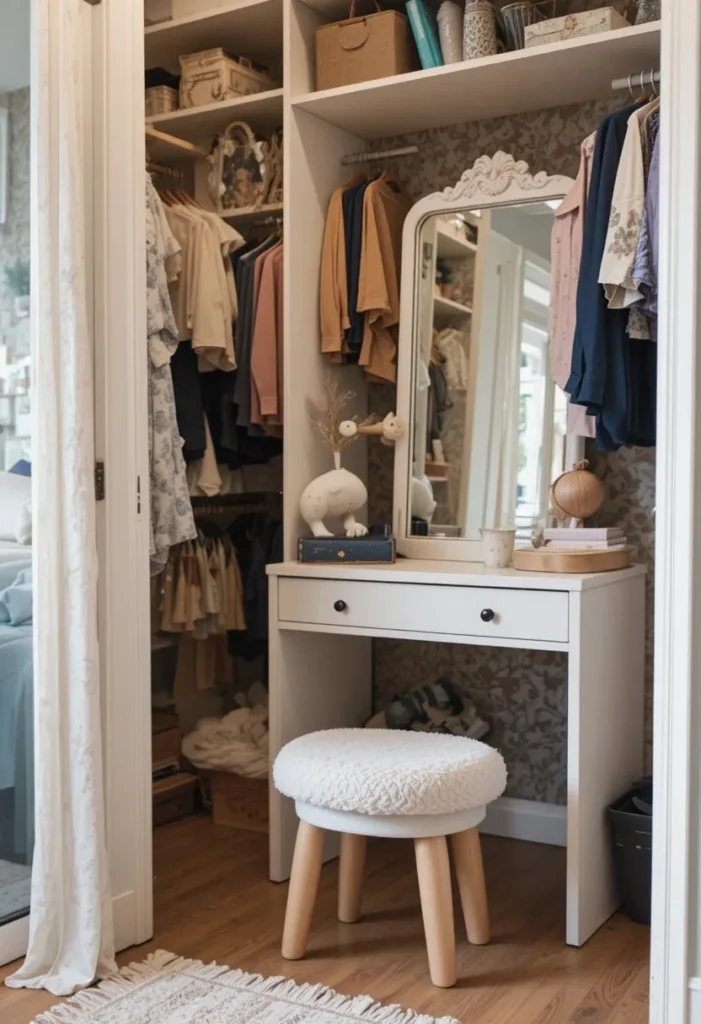
Tucked into one corner of the closet is my daughter’s favourite spot in the whole bedroom: a tiny dressing station with a small mirror, a wooden stool and three little hooks at her height. It takes up hardly any room, yet it has transformed getting ready from a chore into a little ritual she genuinely enjoys. She sits on the stool to pull on her socks, checks her reflection, hangs her cardigan on a hook when she comes home, and I swear she stands a little taller afterwards. I added a soft battery light above the mirror and a small basket for hairbrushes and clips, and chose an unbreakable acrylic mirror so I never have to worry about accidents.
How to do it: Choose a quiet corner of the closet and fix a small unbreakable mirror at your child’s eye level. Add a low stool, two or three hooks for tomorrow’s outfit, and a basket for brushes and hair things. Finish with a soft battery light above the mirror and keep the floor clear so the little station feels like a special spot.
Tip: Use unbreakable mirrors for a safer child-friendly setup.
5. Use Matching Hangers for a Cleaner Look
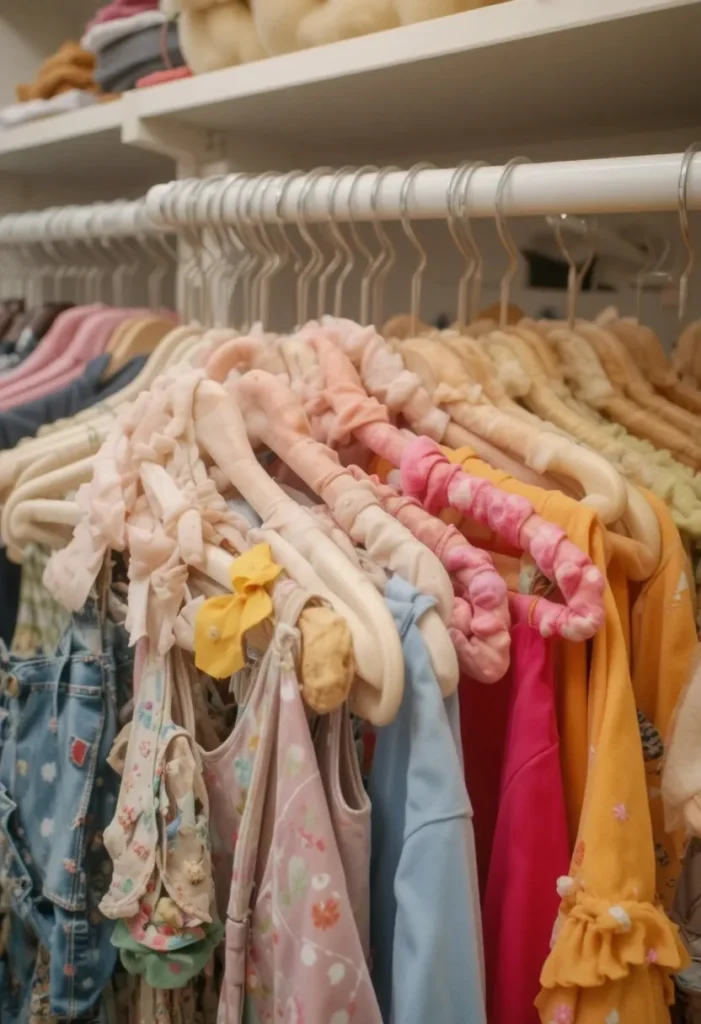
This was the cheapest change I made to the closet, and honestly the one that surprised me most. A jumble of chunky plastic hangers, wire ones from the dry cleaner and a few novelty shapes had made the rail look messy even when the clothes were tidy. I swapped them all for slim velvet hangers in one soft cream shade, and suddenly the whole closet looked calm and considered, with every little dress and shirt hanging at the same height. Slim hangers also freed up a surprising amount of rail space — nearly a hand’s width across the whole closet. I use the same matching idea in our kitchen, where uniform containers keep the shelves looking calm too — these kitchen organization ideas show how the same thinking works beyond the bedroom.
How to do it: Take everything off the rail and sort the hangers, keeping only one matching set. Choose slim velvet or wooden hangers in a single neutral shade, then rehang clothes grouped by type — tops together, dresses together, trousers together. Leave a finger’s width between garments so the rail never looks crammed.
Tip: Choose slim hangers to create extra space inside smaller closets.
Want more inspiration for keeping little shoes tidy? Check out these shoe storage ideas for the closet to make mornings easier.
6. Kids Closet Organization Ideas with Cube Storage
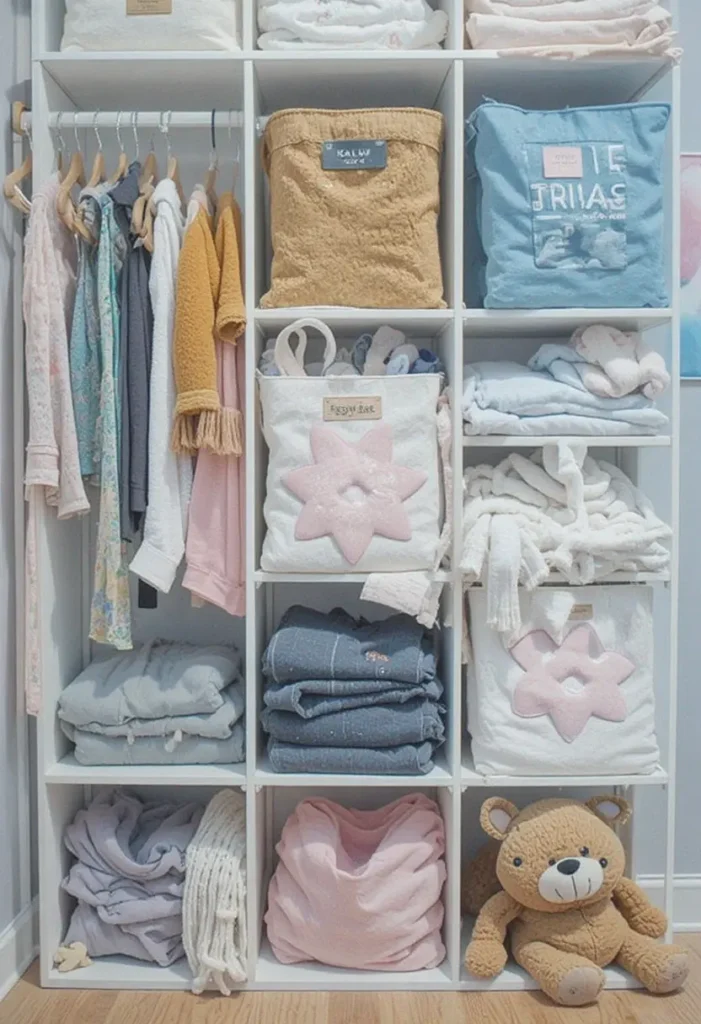
Cube storage is the workhorse of our closet, because it bends to whatever stage my children are in without me buying new furniture. Right now the bottom cubes hold fabric bins of Lego and soft toys, the middle ones hold folded T-shirts and leggings, and the top cube keeps spare bedding and out-of-season hats. When my son outgrows the toy phase, those same cubes will hold school books and sports kit, and nothing needs replacing. I label each cube with a picture and a word so both children can find things and — just as importantly — put them back. White cube units with soft woven bins keep the whole wall feeling fresh and airy rather than heavy.
How to do it: Measure the closet and choose a cube unit that fits with a little room to spare. Slide a fabric bin into each cube, label it with a word and a picture, and give the lowest cubes to the things your child uses daily. Rearrange the cubes as your child grows, swapping toys for books or sports kit.
Tip: Label each cube with words or pictures for easier cleanup routines.
7. Add Hooks for Backpacks and Jackets
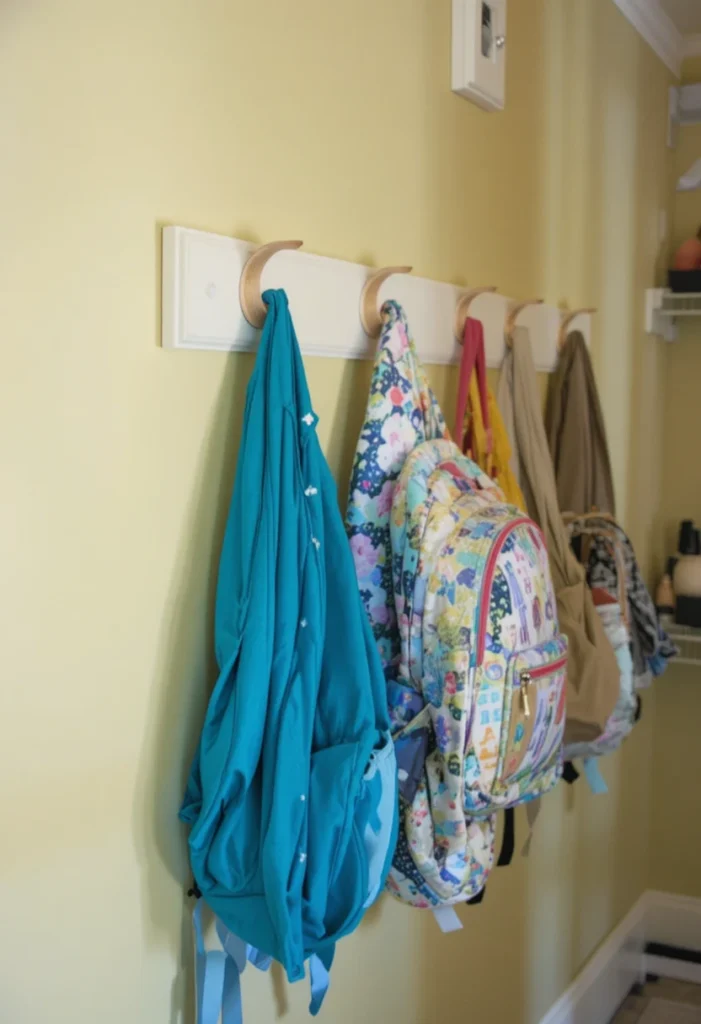
If there is one thing that ends up on a bedroom floor faster than anything else, it is a coat, a backpack or a hoodie shrugged off after school. Hooks fixed low on the closet wall have ended that daily pile-up in our house, because hanging something up is quicker than dropping it — but only if the hook is actually within reach. Each child has two hooks: one for the school bag, one for the coat or hoodie they wear most. Wooden pegs in soft colours suit our closet, and I fixed them into studs so they hold a full, heavy winter coat without pulling loose. The floor stays clear, mornings start without a hunt for the missing jumper, and the children feel proud of managing it themselves.
How to do it: Pick a clear stretch of wall inside the closet door or beside the rail and mark hook positions at your child’s shoulder height. Fix the hooks into studs or use strong wall plugs, then give each child one hook for their bag and one for their coat. Hang tomorrow’s outfit on a hook the night before to make mornings easier.
Tip: Install hooks low enough so younger children can reach them comfortably.
8. Kids Closet Organization Ideas with Seasonal Rotation Bins
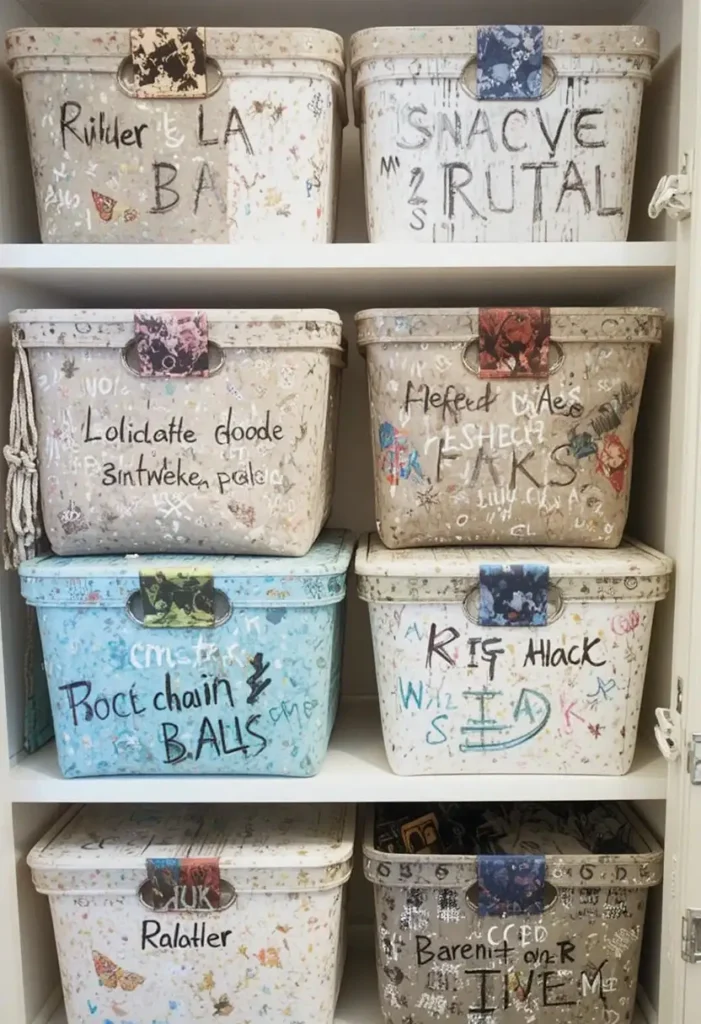
Our closet only ever holds the season we are actually living in, and that one rule has kept it from bursting at the seams. When the weather turns, I pull out the labelled bins from the top shelf — one for the next size up, one for the season ahead — and swap the heavy jumpers for short sleeves, or the other way round. Out-of-season clothes live in soft fabric bins or clear boxes up high, where they stay clean and out of the way until they are needed. I try on anything I am unsure about before it goes back on the rail, because a too-small sleeve discovered in September is far easier to deal with than one found on a freezing morning. If your little one is still tiny, these baby closet organization ideas cover size dividers and rotation for the nursery years too.
How to do it: At the start of each season, take every item off the rail and try on anything you are unsure about. Fold out-of-season clothes into labelled bins, mark each bin with the season and size, and store it on the highest shelf. Hang only current-season clothes back on the rail, grouped by type.
Tip: Switch clothing every season so the closet always feels fresh and organized.
9. Shoe Cubbies for Neat Everyday Storage
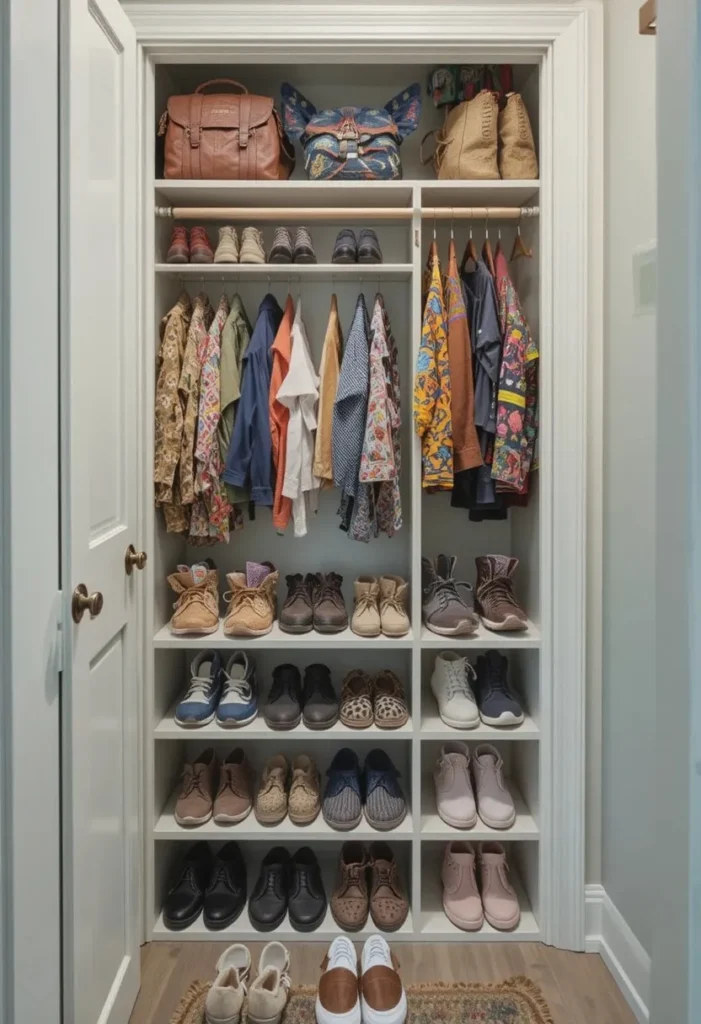
Shoes were the one thing that always defeated me, because a pair left on the closet floor would be kicked under the rail, separated from its partner, and found — if at all — five minutes after we needed to leave. Cubbies fixed that completely: one pair per cubby, daily shoes on the bottom row where small hands can reach them, and wellies and party shoes on the higher rows. My children can see every pair at a glance, which means they choose their own shoes and, miracle of miracles, put them back in the right cubby afterwards. Wooden cubbies suit our closet, though fabric ones work just as well in a smaller space. For more ways to keep footwear tidy, these shoe storage ideas for the closet are well worth a look.
How to do it: Clear the closet floor and measure the space for a cubby unit that fits. Place daily shoes in the bottom cubbies, less-worn pairs higher up, and keep one cubby empty for muddy shoes. Show your child that each pair has its own cubby, and make returning shoes part of the coming-home routine.
Tip: Place daily shoes at the bottom row for quick access.
10. Pegboard Wall for Flexible Closet Storage
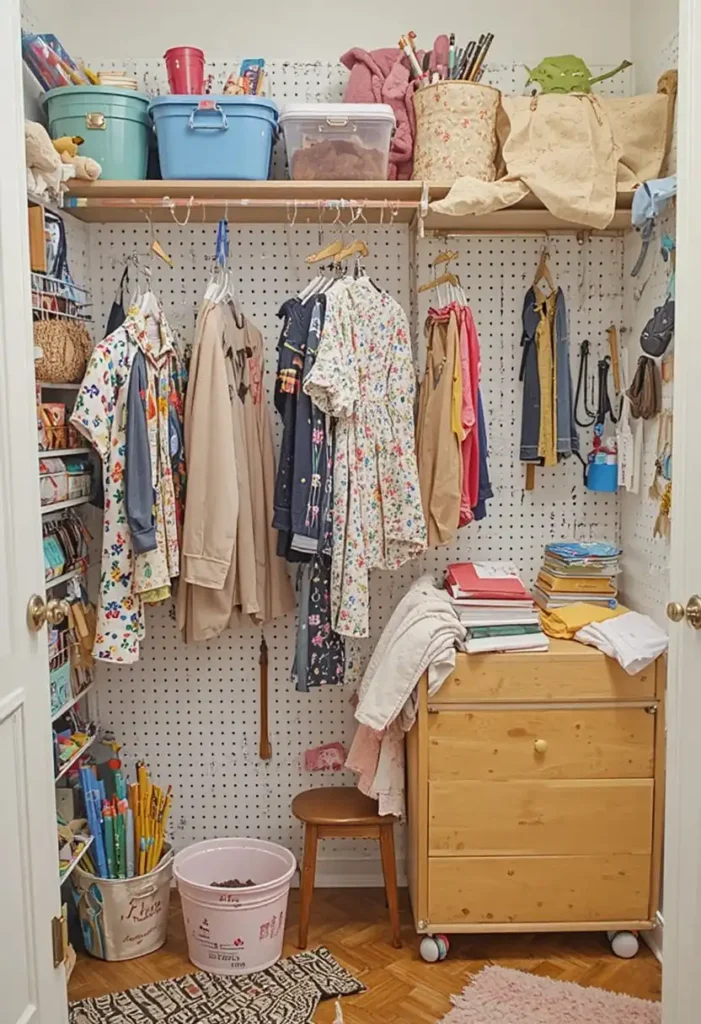
The back wall of our closet used to be dead space, a blank stretch where nothing lived and nothing could be reached. A pegboard changed that, because hooks, little baskets and clips can be moved around whenever our needs change — and with children, they change constantly. Right now it holds hair accessories in a small basket, a hook for the dressing-up crown, and clips for the weekly planner, but last year it held swim kit and goggles. I love that I can rearrange it in five minutes without drilling new holes, and the open layout means my children can see everything instead of forgetting what is hidden in a drawer. It grows with them, which is exactly what a kids closet needs to do.
How to do it: Fix a pegboard to a clear closet wall with proper plugs, leaving a small gap behind it for the hooks. Arrange hooks and small baskets at your child’s height, keeping heavier items low and lighter ones higher. Move things around as needs change, and keep the layout open so everything stays visible.
Tip: Keep heavier items lower and lighter items higher for safety.
11. Labelled Storage System for Easy Independence
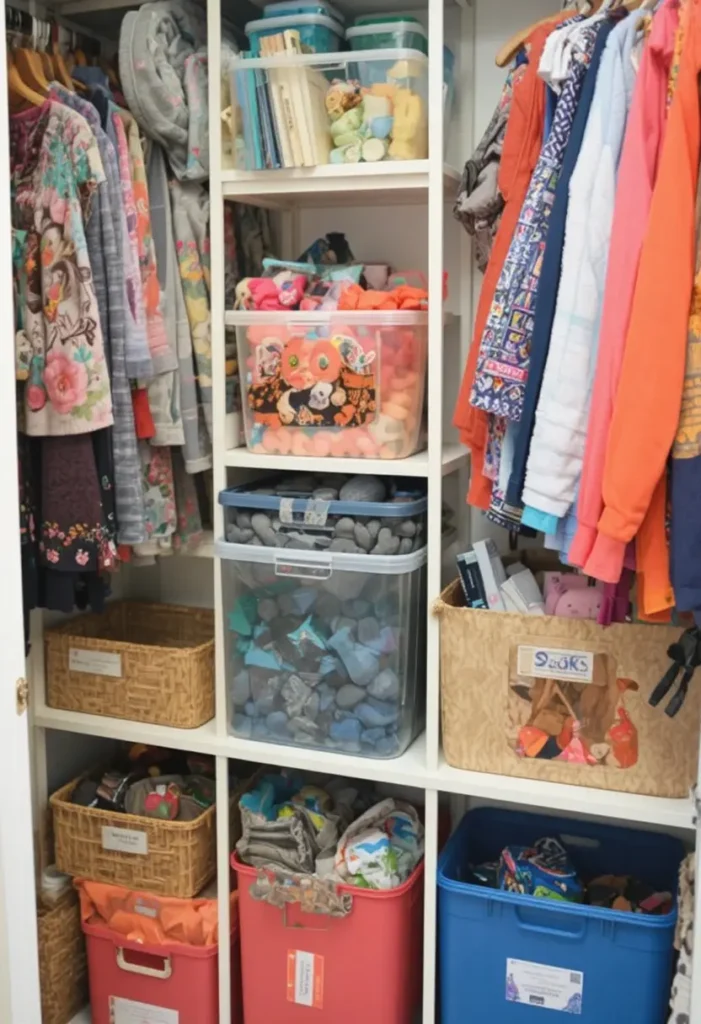
Labels are the difference between a system only I understand and one my children can actually keep up by themselves. In our closet every bin, basket and drawer has a label at my children’s eye level, with a simple picture beside the word — a sock, a sun for summer clothes, a moon for pyjamas — so even my youngest, who cannot read yet, knows exactly where things belong. We made the labels together one rainy afternoon, which meant the children felt ownership of the system from the start, and they still point proudly at “their” labels when friends visit. Matching labels on matching bins also keep the closet looking neat and considered, rather than a jumble of good intentions.
How to do it: Photograph or draw a simple picture for each category — socks, pyjamas, tops, toys — and pair it with one clear word on a label. Stick labels at your child’s eye level on the front of every bin and drawer, then walk through the closet together so your child learns where each label lives. Replace labels as categories change.
Tip: Place labels at eye level so kids can easily follow them.
If your closet feels tiny, check out these small walk-in closet ideas for smart layouts and storage inspiration.
12. Soft LED Lighting for a Brighter Closet Space
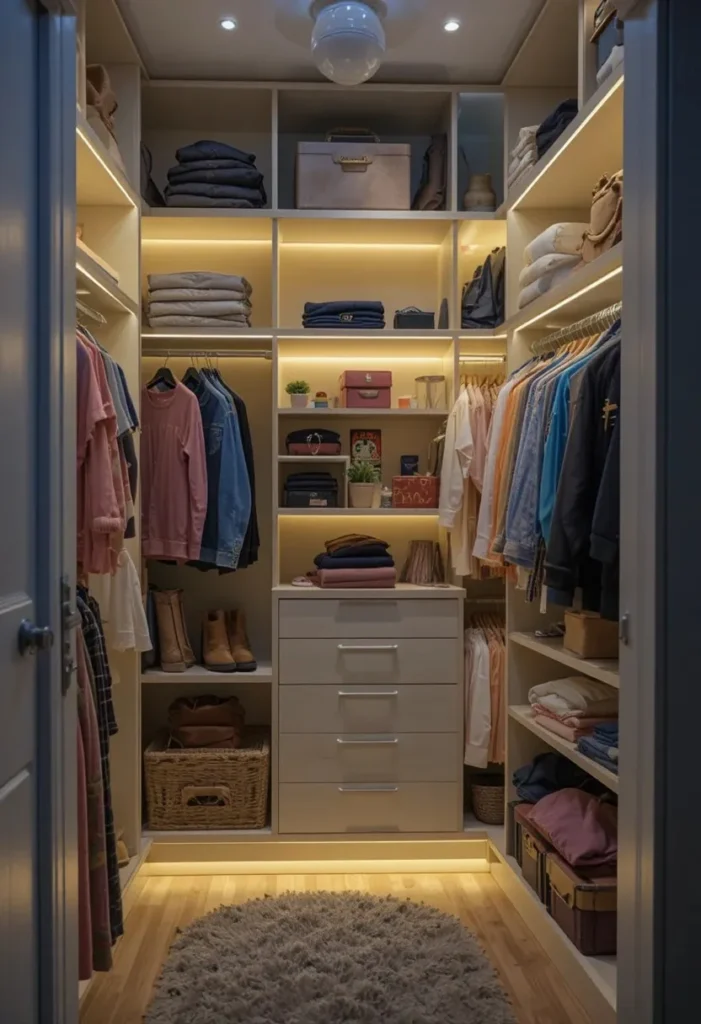
Our closet sits in the darkest corner of the bedroom, and for years my children would drag clothes out into the light just to see what colour they were holding. A strip of warm LED lights along the top of the closet, switched on by a little motion sensor, ended that habit overnight. Now the door opens, the light glows on, and they can actually see the difference between the navy jumper and the black one before they put it on. I chose battery-powered strips so there was no wiring to worry about, and warm white rather than bright white, which feels cosy instead of clinical. It is a small addition that makes the whole closet feel welcoming, especially on dark winter mornings.
How to do it: Choose warm white, battery-powered LED strips and measure the closet’s top edge before you buy. Stick the strips along the top and sides of the closet, add a motion sensor so the light switches on when the door opens, and check that no wires dangle within your child’s reach. Replace batteries every few months.
Tip: Use warm white lighting to avoid harsh brightness.
13. Neutral Color Theme for Calm Organization
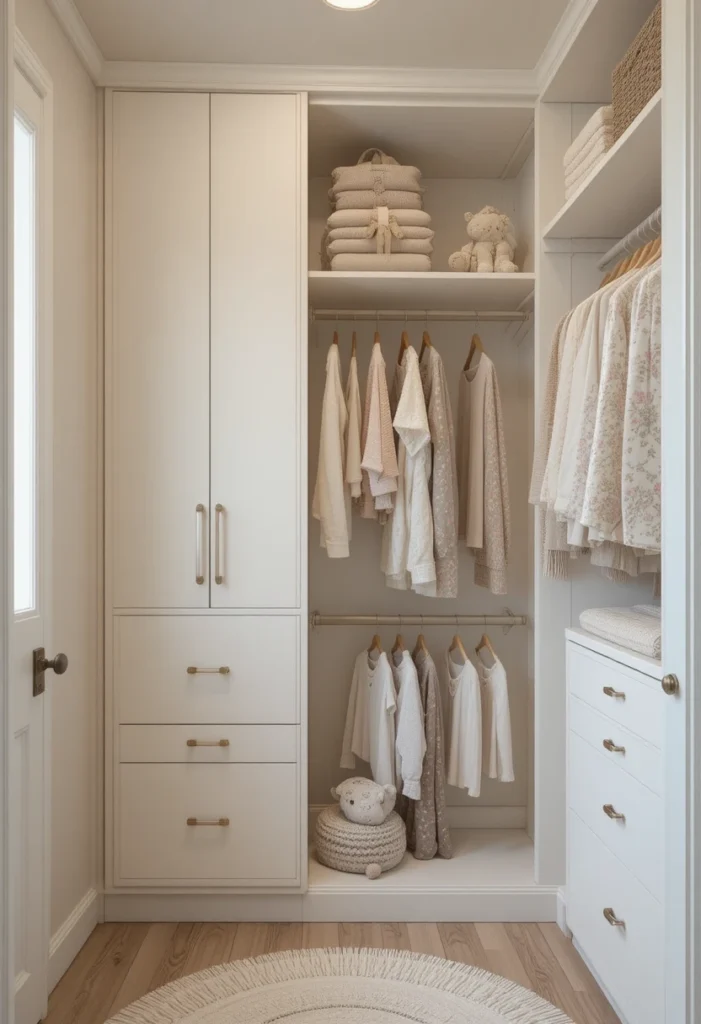
Children’s clothes are gloriously colourful, so I keep everything else in the closet quiet — whites, soft beiges and a whisper of sage — and let the clothes provide the colour. The effect is calmer than I expected: without competing patterns and bright storage shouting for attention, the closet feels spacious and restful, and choosing an outfit becomes easier because nothing is visually fighting for attention. I stick to two or three soft tones across bins, baskets and hangers, and repeat them on the shelves so the whole space feels considered rather than thrown together. It is a gentle backdrop that will suit my children for years, long after the dinosaur phase and the pink phase have both passed.
How to do it: Pick two or three soft neutral tones — white, beige and sage work well — and use them for bins, baskets and hangers. Keep the shelves and walls in the same pale palette, let the clothes provide the colour, and remove anything bright that breaks the calm. Step back and check the whole closet feels restful, not busy.
Tip: Stick to two or three soft tones for a balanced look.
14. Outgrown Clothes Donation Basket System
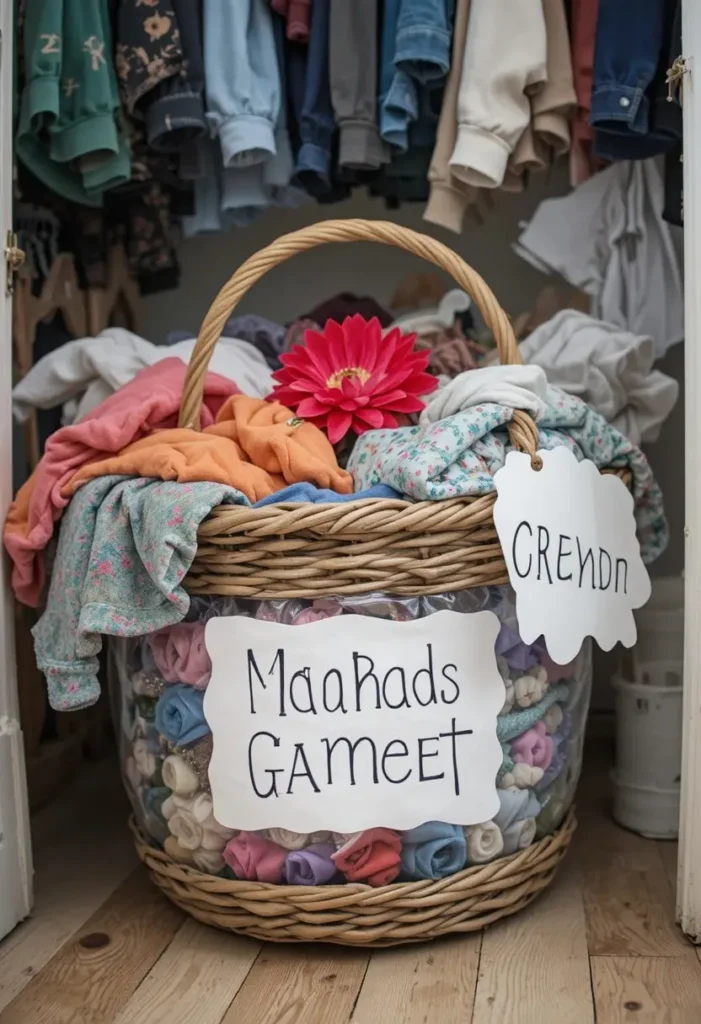
Children grow so fast that a closet can fill up with clothes that no longer fit before anyone notices, which is why a donation basket lives permanently on the closet floor. Whenever my children try something on and it is too tight, too short or simply unworn, it goes straight into the basket instead of back onto the rail — no pile on the chair, no bag forgotten in the corner. Once a month we empty it together, and my children choose which pieces go to a charity shop or to a younger cousin, which has quietly taught them that letting go of things can be a kind and generous act. The closet stays functional, the rail stays breathable, and nothing outgrown lingers for another season.
How to do it: Place a sturdy basket on the closet floor where your child can reach it easily, and label it clearly. Whenever clothes no longer fit, drop them straight into the basket instead of back on the rail. Empty the basket once a month, sorting pieces into charity, hand-me-downs and recycling, and involve your child in choosing what goes.
Tip: Empty the basket once a month to keep things under control.
Frequently Asked Questions
How low should a hanging rod be for a child?
Fit the rail at about your child’s shoulder height, so they can lift clothes off and hang them back without stretching or standing on tiptoe. For most children between three and seven, that is roughly 90 to 110 centimetres from the floor. Keep the everyday rail low and leave a higher rail for occasion clothes and out-of-season pieces you handle yourself.
How do I rotate outgrown clothes without the closet overflowing?
Keep only the current size and season on the rail, and store everything else in labelled bins on the top shelf. At the start of each season, try on anything you are unsure about and move too-small pieces straight into a donation basket or a hand-me-down box. A short sort-out four times a year is far easier than one overwhelming clear-out.
How can I organise a small shared closet for two children?
Give each child their own side of the rail, their own colour of bins, and their own set of hooks, so there is never an argument about whose things are whose. Use the full height with a second rail and extra shelves, and keep shared items such as spare bedding on the top shelf. Slim hangers and cube storage make the most of every centimetre.
How do I label a closet for a child who cannot read yet?
Use pictures instead of words: a simple drawing or photograph of socks, a sun for summer clothes, a moon for pyjamas. Stick the picture labels at your child’s eye level on the front of each bin, and use one colour per child or per category so the system works by sight alone. Making the labels together also helps your child remember where everything belongs.
How do I keep a kids closet tidy day to day?
Keep the system simple enough for a child to manage: one home for everything, labels they can follow, and daily shoes and outfits within easy reach. Build a two-minute tidy into the bedtime routine, with each child putting their own clothes away. A quick reset once a week and a proper sort-out each season will keep the closet from sliding back into chaos.
Your Kids Closet Checklist
☐ Fit a low rail your child can reach
☐ Give each child or category its own bin colour
☐ Label every bin with a word and a picture
☐ Keep daily clothes at your child’s eye level
☐ Add hooks for bags, coats and tomorrow’s outfit
☐ Put daily shoes in the bottom cubbies
☐ Store out-of-season clothes in labelled bins up high
☐ Keep a donation basket on the closet floor
☐ Swap to slim matching hangers
☐ Add soft LED lighting with a motion sensor
☐ Stick to two or three calm, neutral tones
☐ Leave one shelf partly empty for breathing space
☐ Do a two-minute tidy every evening
☐ Sort outgrown clothes at the start of each season
A Final Gentle Thought
Our kids closet will never be perfect, and I have stopped expecting it to be. What it can be, though, is a calm little corner that helps my children start the day feeling capable instead of overwhelmed — a rail they can reach, bins they can understand, and a hook for the coat they will grab on the way out. Start with the one change that would make your mornings easiest, whether that is the low rail, the labels or simply the donation basket, and let the rest follow in its own time. Small systems, kept up gently, are what turn a chaotic closet into a space that quietly looks after your family every single day.


2 Comments