25 Dining Room Wall Ideas to Add Style, Color, and Character
There is something wonderfully transformative about giving your dining room walls a little love and attention. Bare walls can leave a room feeling unfinished, while the right treatment adds instant style, colour, and character. From bold paint and elegant paneling to charming gallery walls and beautiful mirrors, your walls hold endless creative potential. With a few thoughtful ideas, you can turn plain surfaces into a stunning backdrop that makes every meal feel special. Below are twenty five dining room wall ideas, shared with warmth and inspiration, to help you add style, colour, and character to your space.
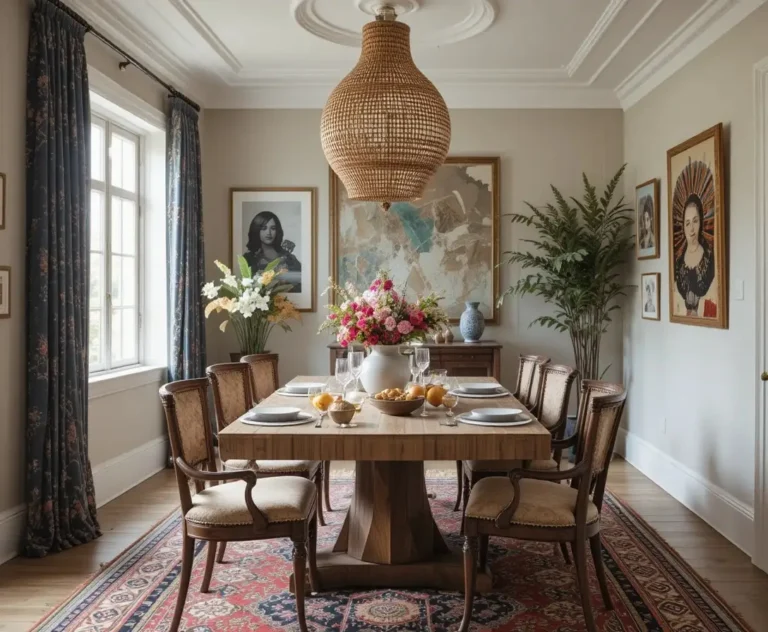
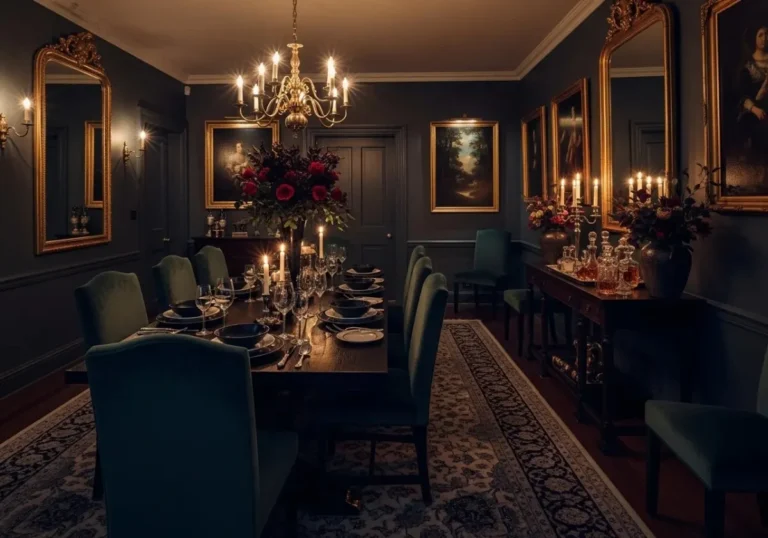
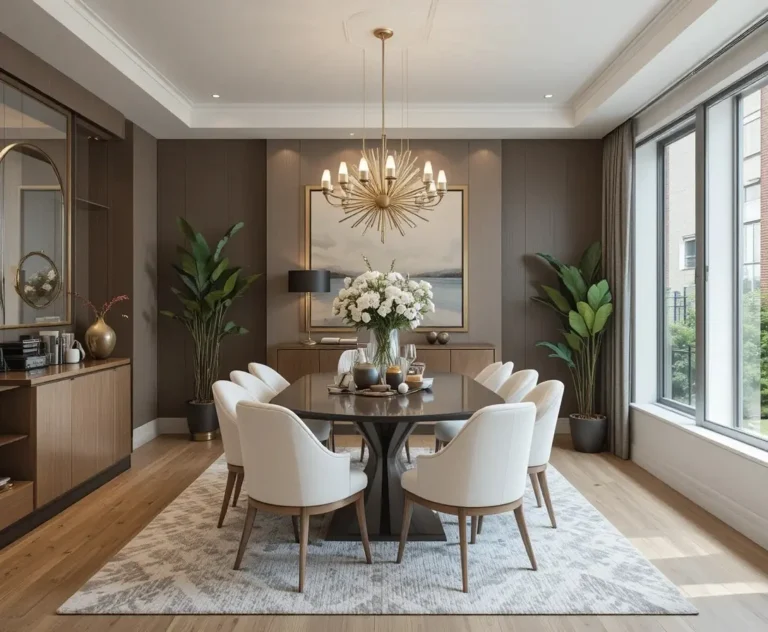
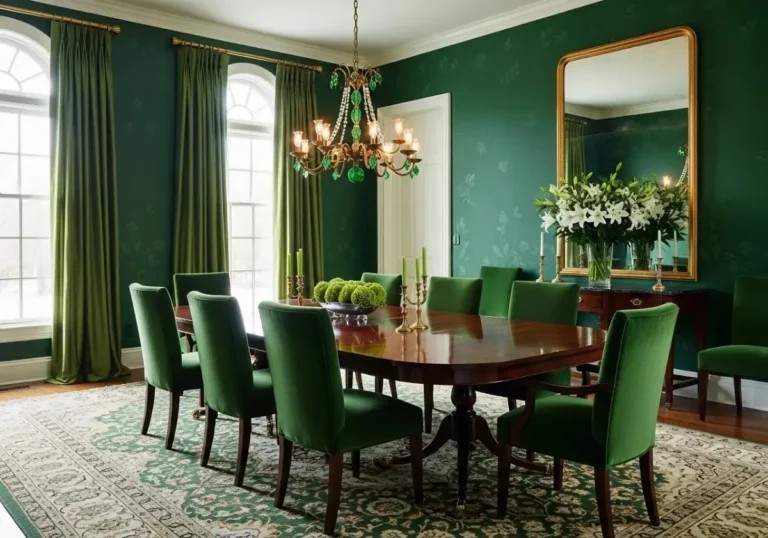
1. Add a Bold Accent Wall
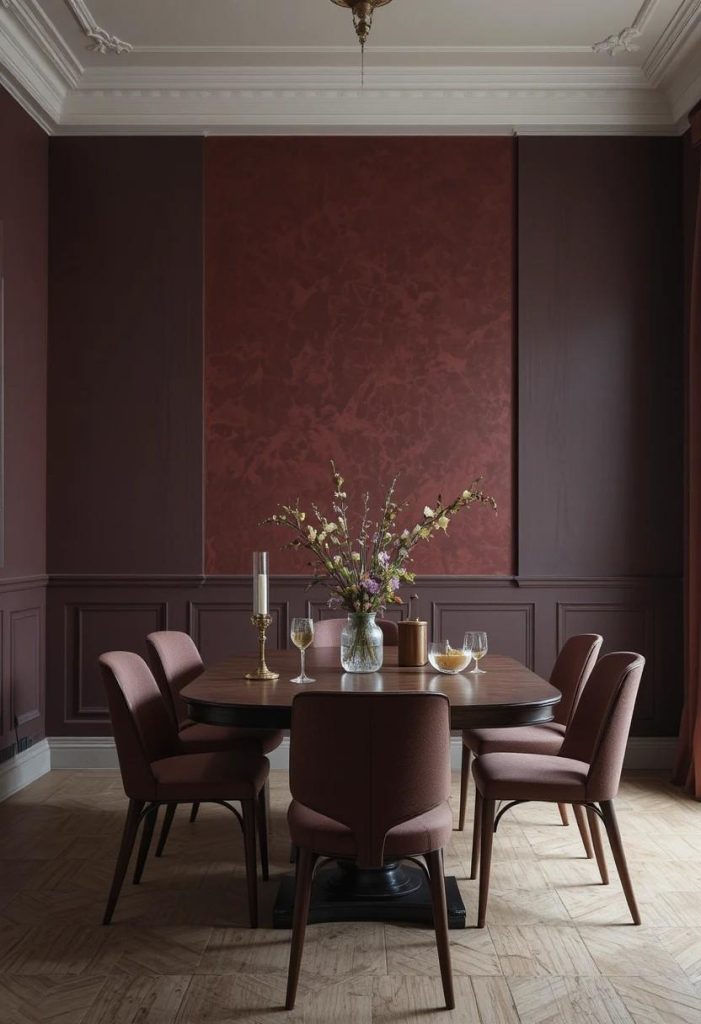
I will never forget the evening we painted the wall behind our sideboard a deep, inky teal, because the whole dining room seemed to sit up a little straighter. One bold wall does more than add colour; it gives the table a backdrop, makes the chairs look intentional, and turns even a plain weeknight supper into something that feels considered. I like a shade with depth, like forest green, navy, or aubergine, kept matte so the light falls softly across it. Keep the other walls pale, let the wood and linen do the warming, and watch how the room suddenly has a point of view.
How to do it: Choose the wall you see first when you walk in, usually the one behind the table or sideboard. Test three sample pots on large card and live with them for two days, checking the colour in morning and evening light. Clean the wall, cut in the edges with a brush, then roll on two coats, letting the first dry fully. Style the wall simply, with one picture or a shelf, so the colour stays the star.
2. Create a Gallery Wall
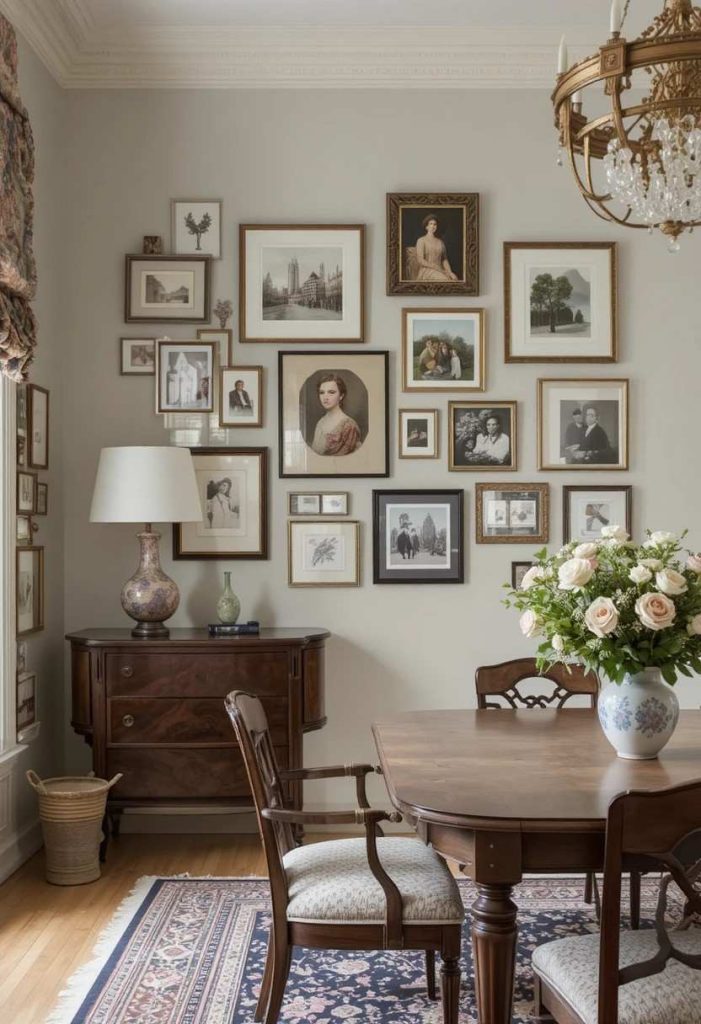
Our gallery wall started with three frames and a fair amount of dithering, and it has grown slowly ever since into the part of the dining room I love most. I mix family photographs with small prints, a pressed flower, and one slightly odd flea-market find, because the variety is what makes it feel like us rather than a shop display. The trick I swear by is keeping one thing consistent, either the frame colour or the spacing, so the collection feels gathered instead of chaotic. Hang the centre at eye level, step back often, and let the wall tell your story one frame at a time.
How to do it: Lay the frames on the floor first and shuffle them until the arrangement feels balanced, with bigger pieces anchoring the corners. Cut paper templates the same size as each frame, tape them to the wall, and live with the layout for a day. Hang the largest frame at eye level, about 145 centimetres from the floor to its centre, then fill in around it, keeping gaps of five to eight centimetres between frames.
3. Add Wall Paneling
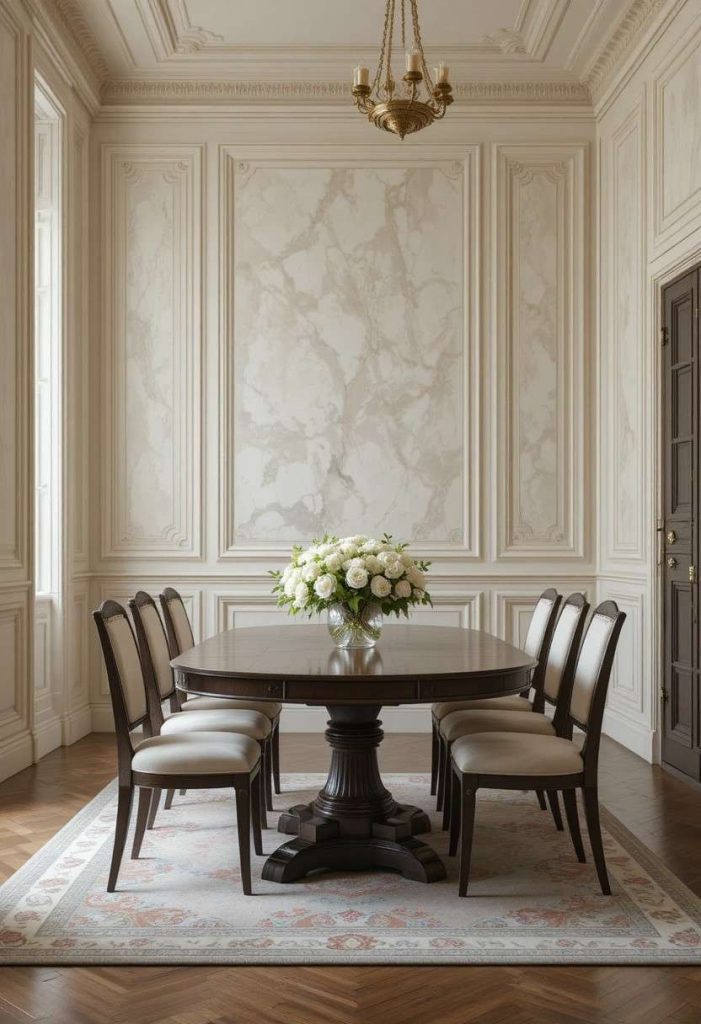
Paneling was the change that finally made our dining room feel finished, as though the walls had been given good bones at last. I love how the clean lines catch the light differently through the day, adding quiet texture without shouting for attention, and how a painted panelled wall makes even the simplest table setting look considered. It suits traditional rooms beautifully, yet a slim, modern profile works just as well in a pared-back space. My advice is to paint the panels the same colour as the wall for a soft, tailored look, or go one shade deeper for a little drama.
How to do it: Measure the wall and mark a level dado line at about 90 centimetres from the floor, or run the panels full height for a grander feel. Fix slim MDF battens with adhesive and pins, fill the joins, and sand smooth before priming. Paint everything, panels and wall, in the same washable eggshell, using two coats for a hard-wearing finish that wipes clean after dinner.
4. Hang a Large Mirror
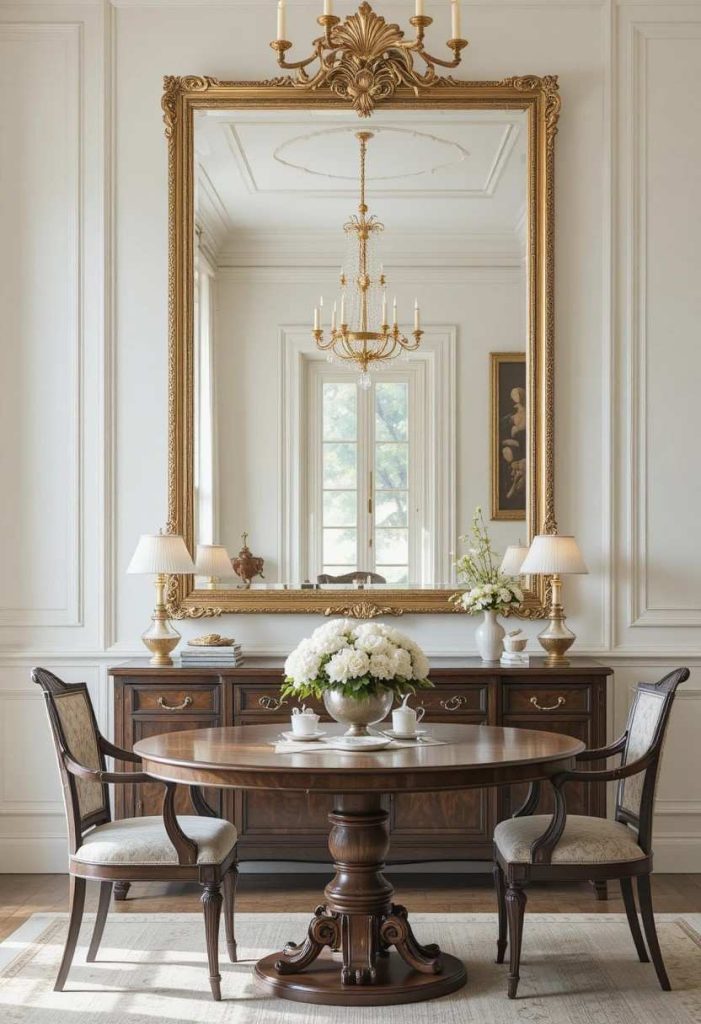
A large mirror is the closest thing I have found to magic in a dining room, because it borrows light from the window and hands it back twice over. Ours hangs opposite the garden doors, and on a grey afternoon it still catches a slice of sky and throws it across the table, making the whole room feel brighter and a little bigger. I prefer a generous size, at least two-thirds the width of the sideboard beneath it, with a frame that picks up the metal or wood already in the room. Position it to reflect something lovely, never a blank wall or the clutter of the kitchen doorway.
How to do it: Hold the mirror against the wall at eye level, with its centre about 145 centimetres from the floor, and check what it reflects from your usual seat at the table. Mark the fixing points with a pencil, then use wall plugs rated for the mirror’s weight, or a French cleat for heavy pieces. Hang it level, step back, and check it again at dusk, when the lamplight should double softly in the glass.
5. Add Floating Shelves
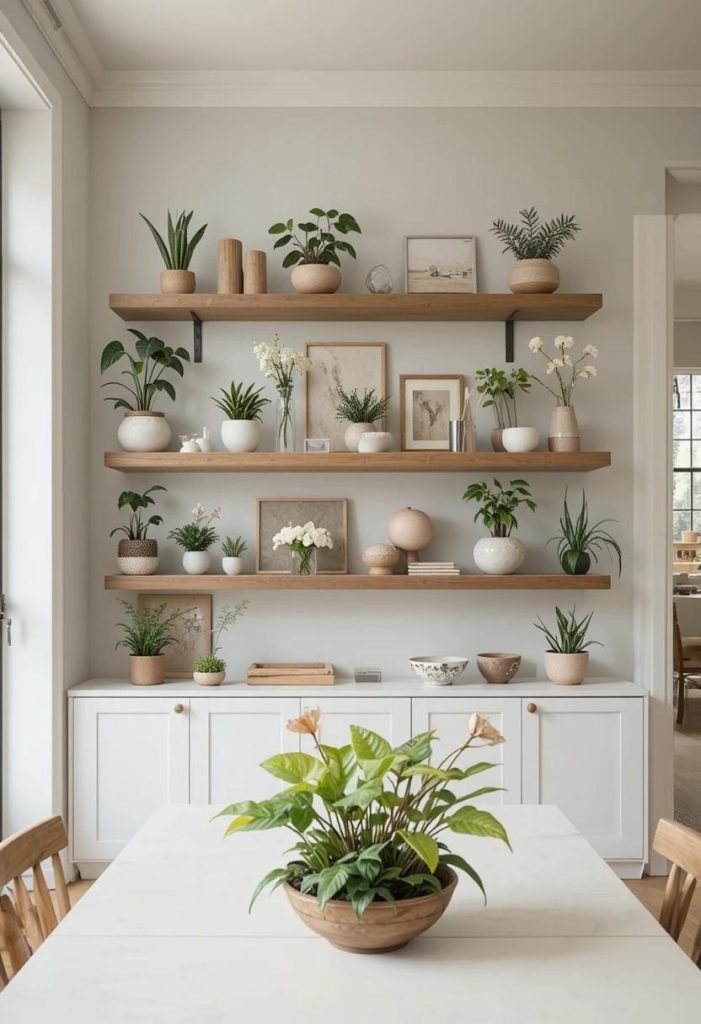
Floating shelves are my answer for the wall that needs something without needing everything, and I reach for them whenever a dining room feels bare but not empty enough for a full gallery. A pair of oak shelves above the sideboard holds our everyday ceramics, a trailing plant, and the little jug I bought on holiday, so the wall works hard and still breathes. I keep the styling loose and leave gaps between pieces, because a shelf crammed edge to edge just looks like a cupboard with the doors off. Change the display with the seasons and the shelves will never feel tired.
How to do it: Fix a pair of shelves about 40 centimetres above the sideboard, spacing them 35 to 45 centimetres apart, and always anchor into studs or use heavy-duty wall fixings. Style in small groups of three, mixing heights and textures, and keep heavier pieces low. Leave a third of each shelf empty so the display can breathe, and step back to check the balance before you call it done.
6. Try Bold Wallpaper
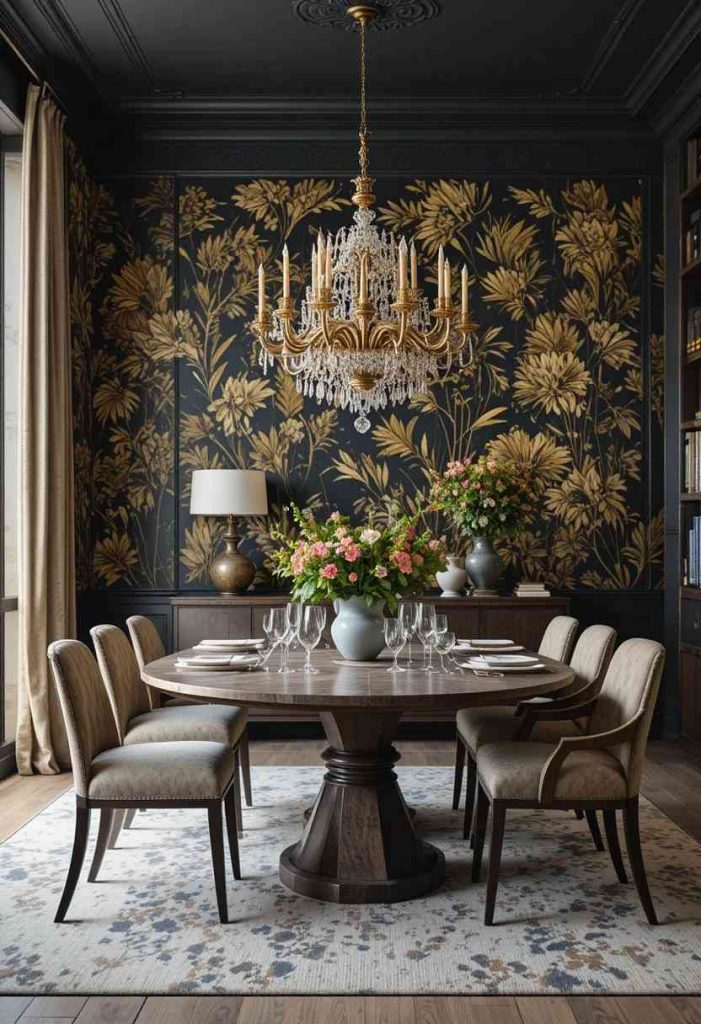
I used to think wallpaper belonged in bedrooms and hallways, until a roll of deep green botanical print turned our plainest dining wall into the room’s best feature. Bold wallpaper works because it does three jobs at once: colour, pattern, and texture, and it makes the table feel dressed even when it is bare. I would start with one feature wall behind the table and keep the rest of the room calm, so the print has space to breathe. Choose a wipeable finish if you have small children, and order a little extra, because matching the pattern uses more paper than you expect.
How to do it: Measure the wall and add ten percent extra for pattern matching, then order all rolls from the same batch number. Paste the wall, not the paper, if the wallpaper allows it, and hang the first drop perfectly plumb using a spirit level. Smooth each drop from the centre outwards, trim at the ceiling and skirting with a sharp knife, and wipe paste marks away with a damp sponge as you go.
7. Add a Statement Artwork
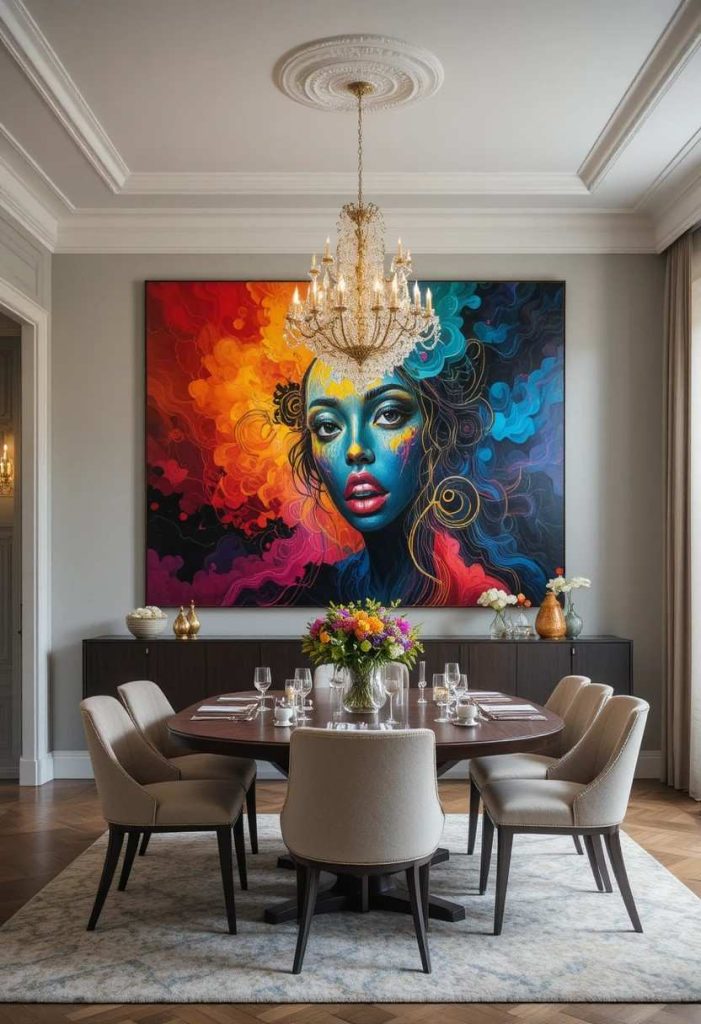
There is a large, sun-washed landscape hanging above our sideboard that I chose on a whim, and it still stops me mid-step some mornings, which is exactly what a statement piece should do. One big artwork gives the dining room a focal point that nothing else can, because the eye has somewhere definite to rest between courses. I look for a piece that pulls a colour from the room, perhaps the green of the chairs or the warm wood of the table, so it feels connected rather than dropped in. Scale matters more than subject: go bigger than feels sensible, and the wall will thank you.
How to do it: Choose a piece roughly two-thirds the width of the table or sideboard below it, and hang its centre at eye level, about 145 centimetres from the floor. Use two fixings for wide frames so the art hangs level and stays put. If the wall still feels bare, add a slim picture light above the frame to make the colours glow at dinner.
8. Use Warm Wood Cladding
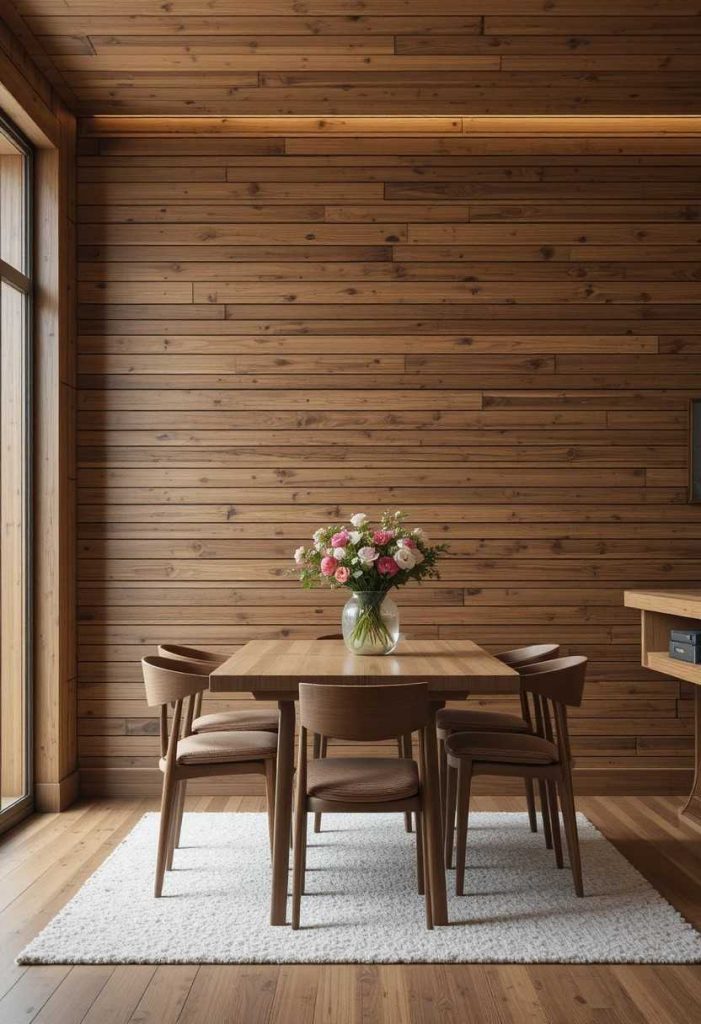
The first time I ran my hand along the oak slat wall behind our dining table, I understood why wood cladding has become everyone’s favourite: it warms a room in a way paint cannot. The narrow battens catch the evening light in soft stripes, and the natural grain gives the wall a gentle rhythm that makes even a modern room feel grounded. I like it best in a honey or walnut tone, kept away from heavy varnish so the wood still looks and feels like wood. Pair it with linen, stone, and a few green stems, and the dining room suddenly smells faintly of a cabin in the woods.
How to do it: Measure the wall, then cut slim timber battens to length and sand the edges smooth. Fix vertical battens to horizontal furring strips with a small, even gap between each one, checking with a spirit level as you go. Finish with a clear matte oil to bring out the grain, and leave the wall bare for a day so you can enjoy the texture before styling it.
9. Add a Plate or Basket Display
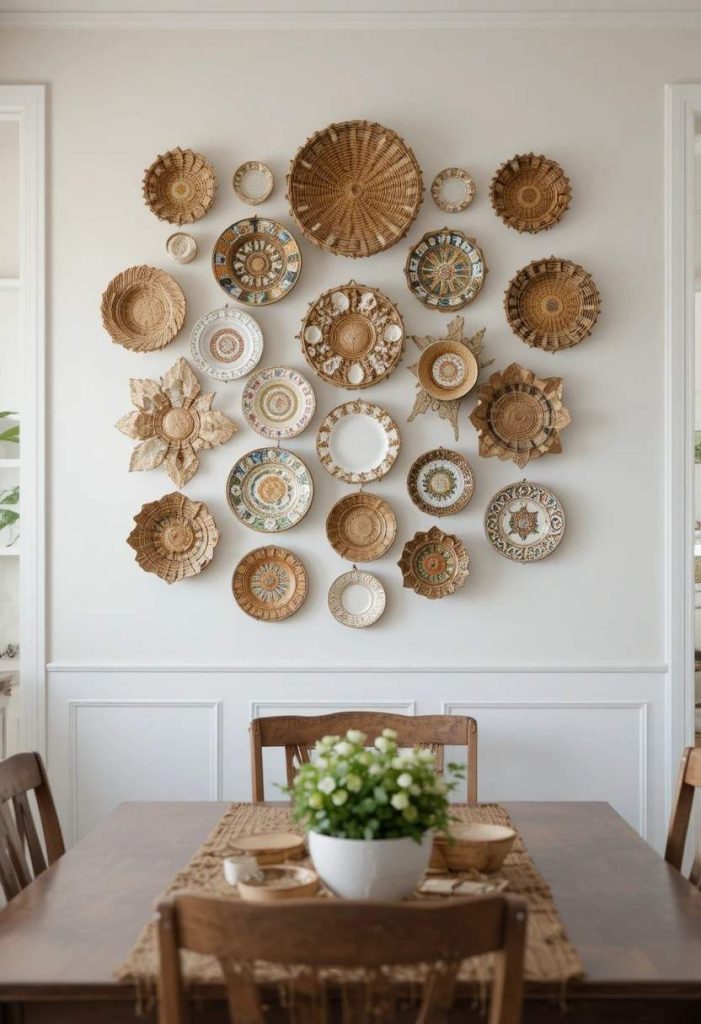
My plate wall began as a rescue mission for a cupboard full of dishes nobody ever used, and now it is the thing guests comment on when they sit down. There is something cheerful about a cluster of patterned plates or woven baskets on a dining wall: they add colour and texture without the formality of framed art, and they make the room feel collected over time. I mix sizes boldly, a big platter at the centre and smaller plates dancing around it, keeping the palette to two or three colours so the display stays calm. Hang them off-centre and the wall feels relaxed, as though it grew there.
How to do it: Gather plates or baskets in two or three colours and lay them on the floor to plan the shape, with the largest piece in the middle. Fix small plate hangers or adhesive disc hangers to the back of each piece, and use picture hooks rated for the weight. Hang the centre piece first at eye level, then work outwards, keeping the gaps even and stepping back often to check the balance.
10. Paint a Soft, Calming Colour
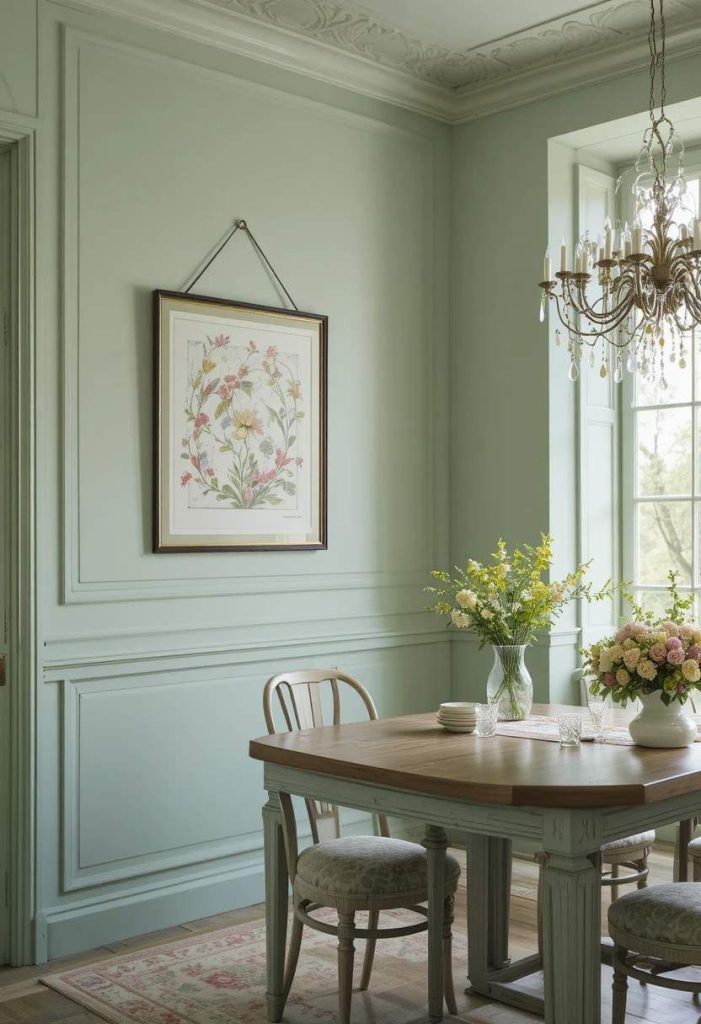
When life feels noisy, I reach for the quiet colours: a soft sage, a dusty blue, a blush that barely whispers. A gentle wall colour does not try to impress anyone; it simply lowers the shoulders of the whole room and makes long, lazy dinners feel easy. I painted our smallest dining wall a pale sage last spring, and ever since, breakfast tastes better there, which I know sounds silly, but calm walls do that to a person. Keep the wood pale, bring in linen and a little greenery, and let the colour be the calm background to everything else you love.
How to do it: Paint large test swatches directly on the wall and watch them for two days, morning and evening, since soft colours change with the light. Choose a washable matte or eggshell finish so marks wipe away. Cut in the edges, roll two thin coats, and finish the room with pale wood, linen napkins, and one green plant to keep the palette fresh.
11. Add Built-In Shelving
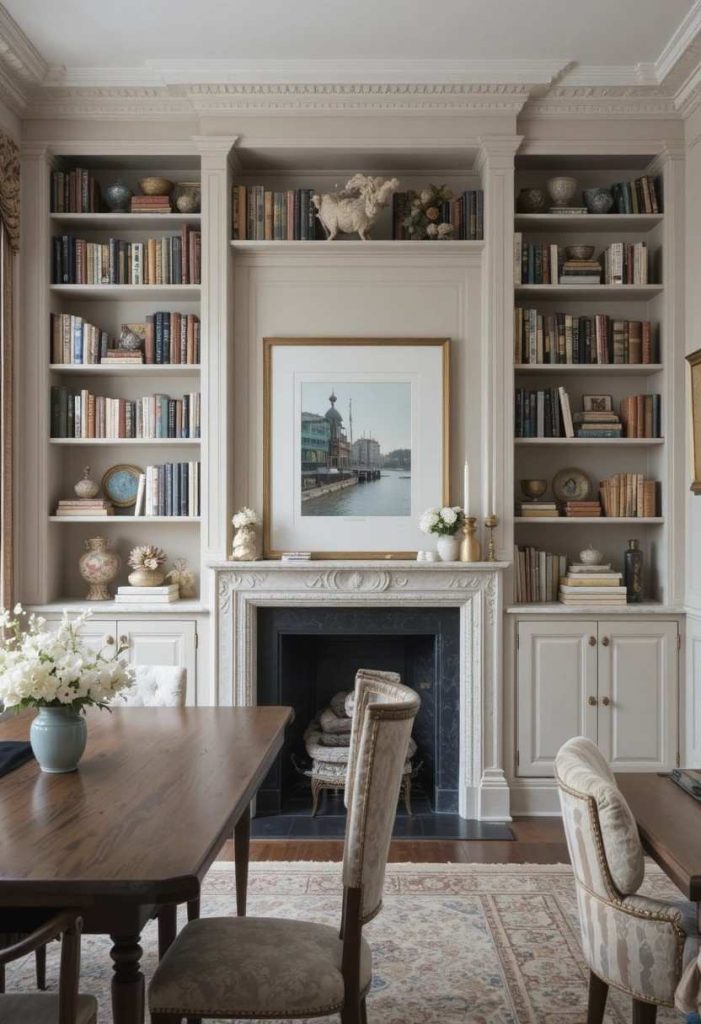
Built-in shelves were my solution to the sideboard that never quite held everything, and they have turned one whole dining wall into the hardest-working spot in the house. I love a shallow built-in painted the same colour as the wall, because it disappears into the architecture while still holding the good plates, the cookbooks, and the vase I only use when friends come for dinner. The secret is restraint: leave breathing room between objects, repeat one or two colours across the shelves, and keep the everyday clutter behind closed doors. Done well, it looks like the house was designed that way all along.
How to do it: Measure the alcove or wall and sketch the shelves to fit, keeping them 25 to 30 centimetres deep so plates and books sit comfortably. Build the carcass from painted MDF or have a joiner make it, then fix it level and fill the edges for a seamless look. Paint the whole unit in washable eggshell, style the shelves in small groups, and keep one shelf deliberately empty.
12. Create a Symmetrical Art Pair
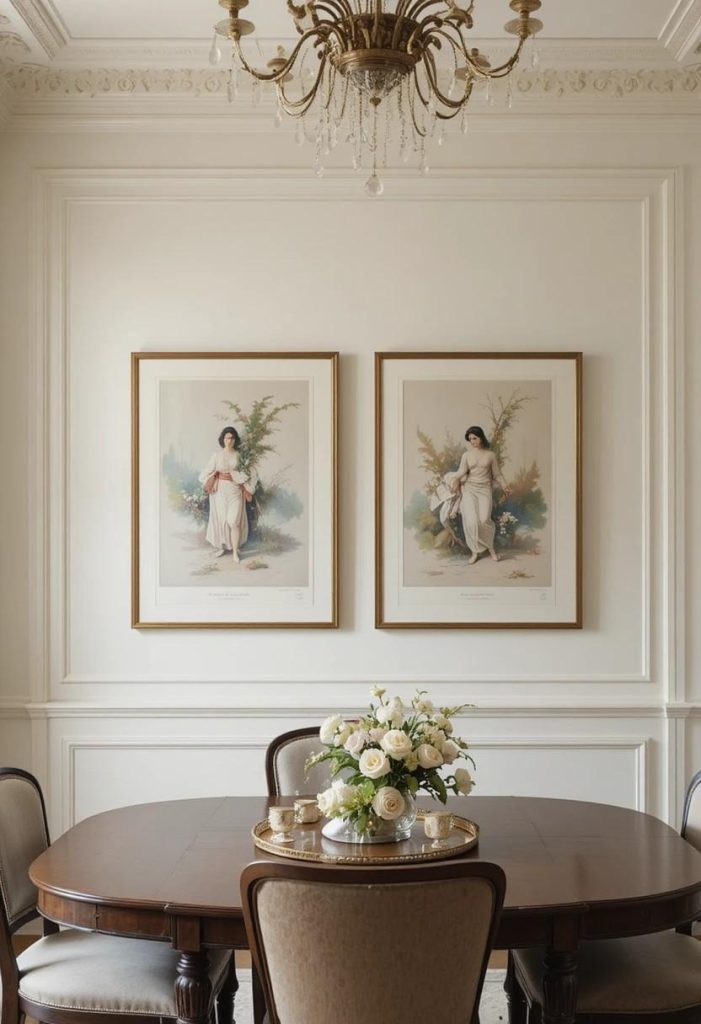
There is something deeply calming about symmetry, and a pair of matching artworks is the quickest way I know to bring it to a dining wall. I hung two identical botanical prints above our sideboard, and the balance they brought was instant: the room felt tidier, calmer, and somehow more grown-up, as though the wall had finally made up its mind. Symmetry works beautifully in a room that already has a strong centre, like a table or a fireplace, because it echoes that order. Keep the frames identical and the gap between them the width of your hand, and let the pair do the talking.
How to do it: Choose two pieces of the same size and frame, then mark their positions so the gap between them is even and the pair sits centred over the table or sideboard. Hang both with their centres at eye level, about 145 centimetres from the floor, and check the line between them with a spirit level. If one frame creeps higher than the other, even by a little, you will see it every dinner.
13. Add a Chalkboard or Menu Wall
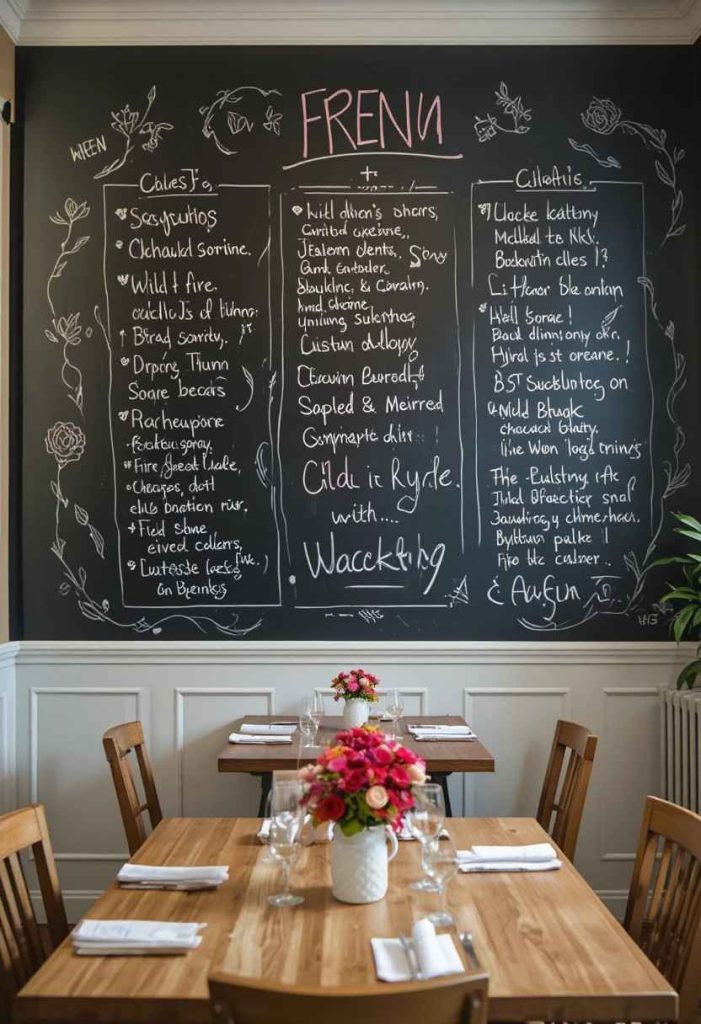
Our chalkboard wall started as a bit of fun and turned into the most-used surface in the dining room, because everyone in the house wants a say in what goes on it. One week it is the Sunday lunch menu written in my handwriting, the next it is a birthday message or a silly quote. I love how it invites the room to change with the seasons and the mood, and how it gives children a place to draw while dinner cooks. Keep the chalkboard to one panel or one framed board if a whole wall feels too much, and keep a little pot of chalk on the sideboard.
How to do it: Paint a smooth panel with two or three coats of chalkboard paint, letting each coat dry fully, or hang a framed chalkboard at eye level. Condition the surface by rubbing chalk over it and wiping it off before the first use. Write the menu or message with chalk pens for crisp lines, and keep a damp cloth nearby for quick changes.
14. Use Textured Plaster or Limewash
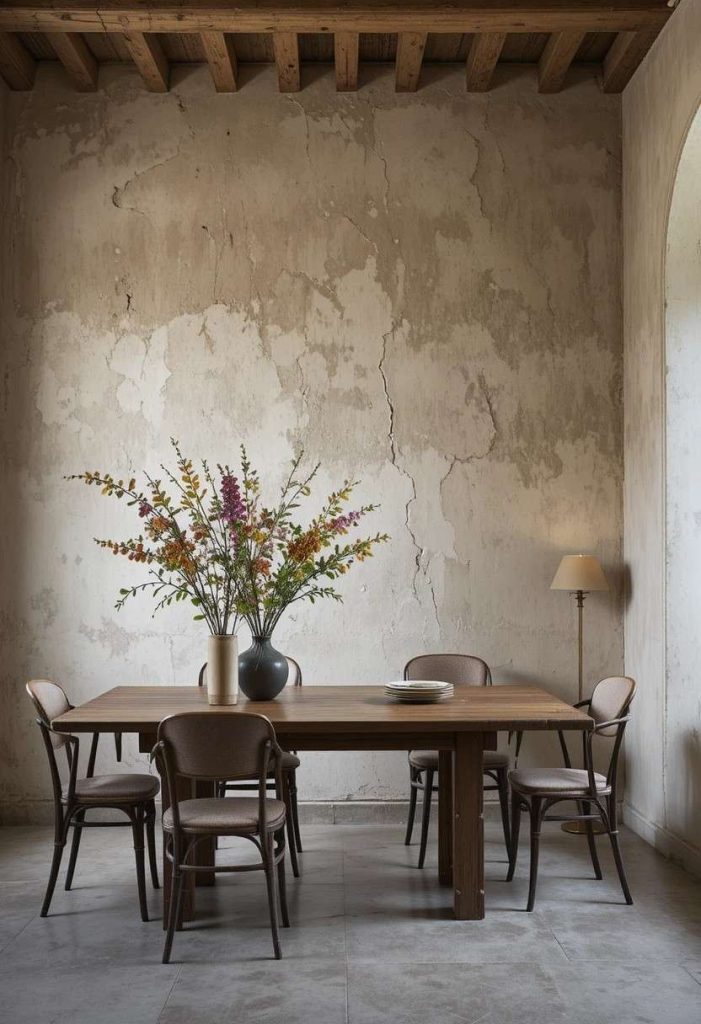
Limewash was the finish that taught me a wall can be interesting without being loud, because its soft, cloudy movement changes every time the light shifts. I love the way it looks hand-applied, with brush marks that catch the sun in the morning and go quiet and velvety by evening, giving the dining room a calm, old-soul feeling. It suits a room with simple furniture best, since the wall itself does the decorating. Choose a warm, earthy tone like clay, bone, or pale sage, and try a sample patch first, because limewash always dries lighter than it looks in the tin.
How to do it: Prepare the wall well, filling cracks and priming with a mineral primer so the limewash grips. Apply the first coat with a block brush in loose, criss-cross strokes, then let it dry fully before adding a second coat. Work in small sections and keep a wet edge, since limewash dries quickly, and step back often to check the cloudy effect is even.
15. Hang Woven Wall Art
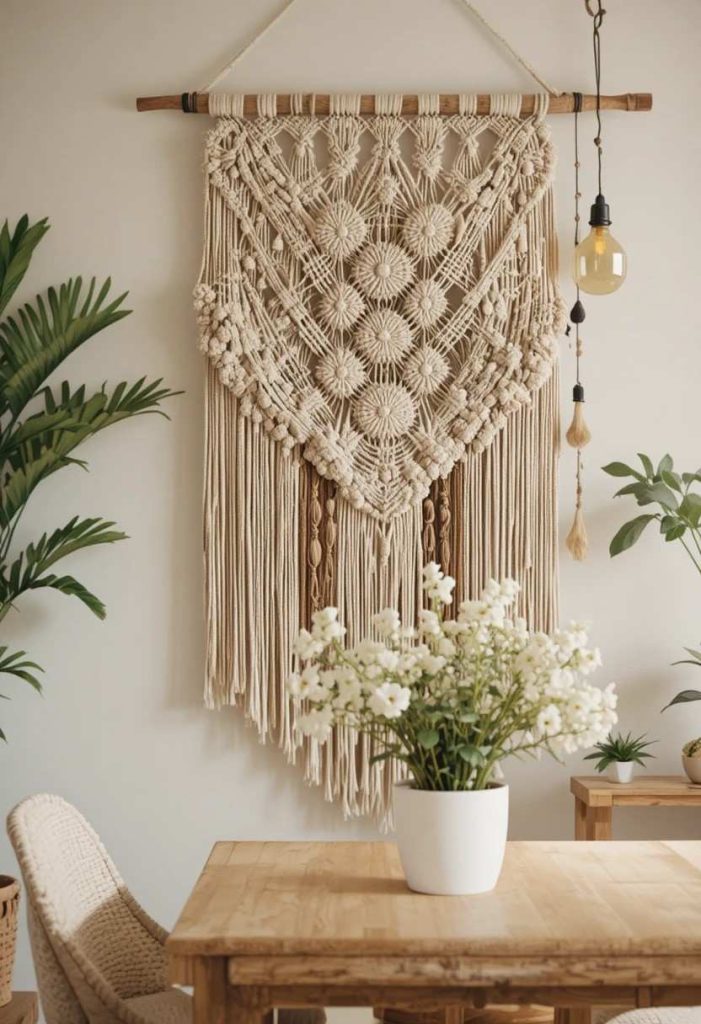
My macrame wall hanging is the softest thing in our dining room, and I reach for it on the days the room feels too sharp and square. The knotted cotton and wooden beads bring a handmade warmth that balances the hard edges of the table and chairs, and the gentle fringe moves slightly when the door opens, which makes me smile. I hang it on the narrow wall beside the window, where the light catches the texture, and I keep the rest of that wall bare so the weaving has room to breathe. If your dining room leans boho or relaxed, this is the easiest warm touch.
How to do it: Choose a woven piece sized to the wall, about two-thirds the width of the furniture below it, and hang it from a single sturdy hook at eye level. Keep the wall behind it plain and pale so the texture stands out. Dust it gently with a soft brush now and then, and keep it away from cooking steam so the fibres stay fresh.
16. Add a Bold Patterned Tile Feature
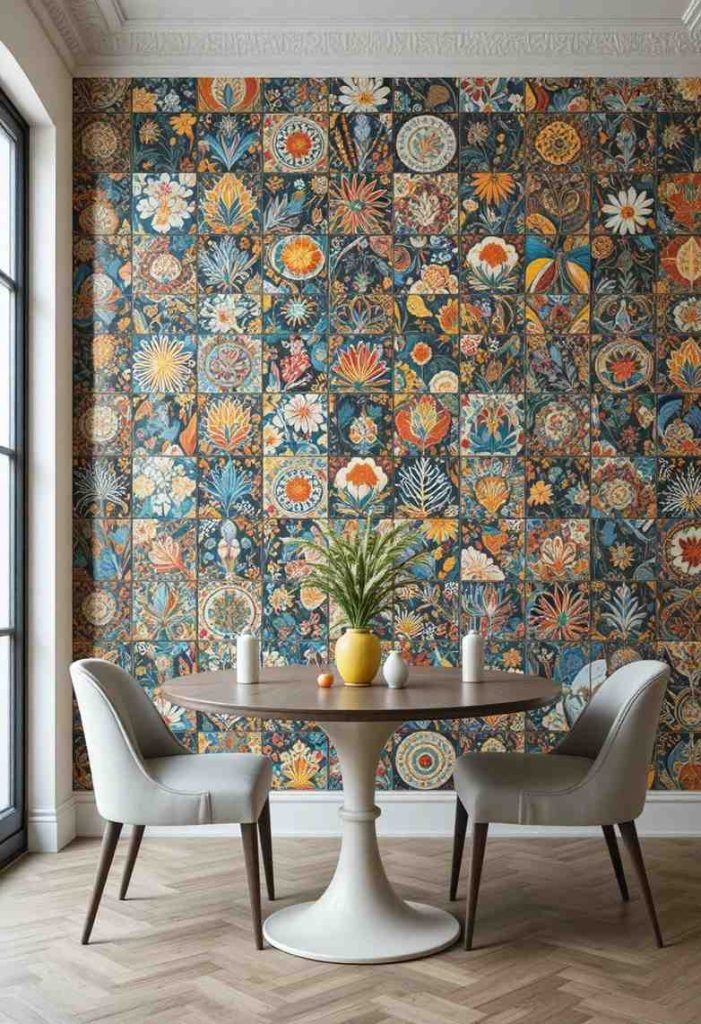
Patterned tile is my favourite way to bring bravery to a dining wall, because a small section of bold tile has the confidence of a full renovation without the upheaval. I chose a tile in blues and cream for the wall behind our sideboard, and it acts like a piece of art that also happens to shrug off splashes and fingerprints. The trick is to keep the tiled area generous enough to feel deliberate, at least the width of the sideboard, and to let the rest of the wall stay quiet. A grout in a tone pulled from the tile keeps the pattern calm and the lines crisp.
How to do it: Mark out the tiled area with a level line, then dry-lay the tiles on the floor to plan the pattern and cuts. Spread tile adhesive with a notched trowel, set the tiles with even spacers, and leave them to set overnight. Grout the joints, wipe the tiles clean with a damp sponge, and seal the grout once it has cured.
17. Frame a Window Beautifully
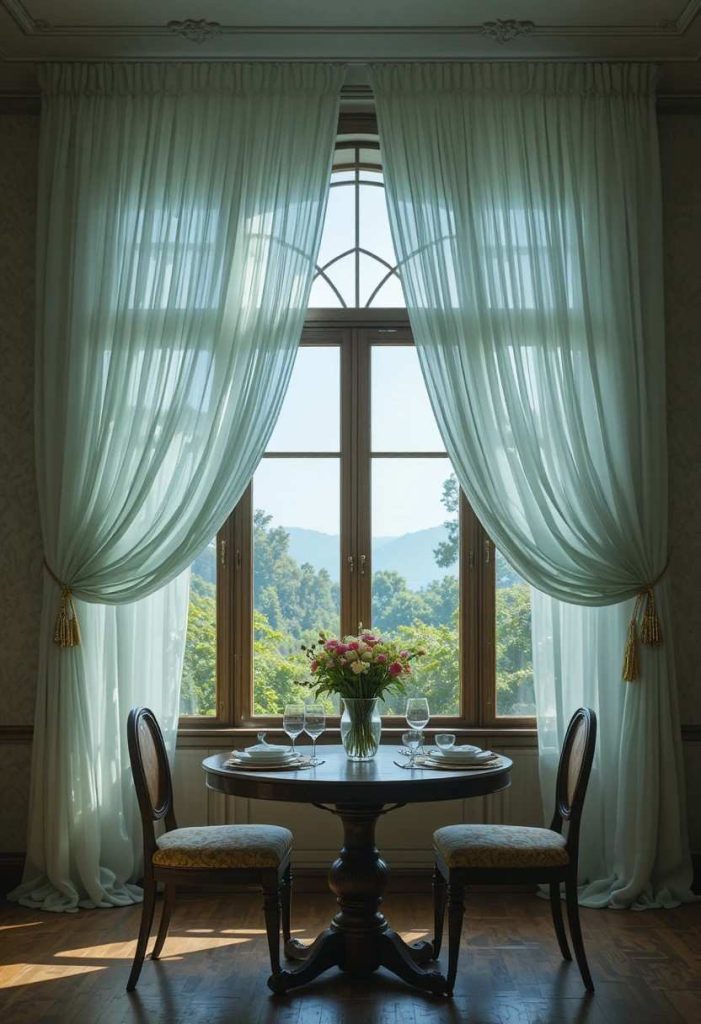
I used to treat our dining window as just a window, until I dressed it properly and realised it is the prettiest wall feature we own. Floor-length linen curtains in a warm white soften the edges of the room, frame the garden view like a painting, and make the whole space feel taller and more generous. I hang the rod high, close to the ceiling, and wide, so the curtains stack clear of the glass and the window looks far bigger than it is. A simple wooden or brass rod and rings that glide easily are all you need, plus a tieback for sunny mornings.
How to do it: Fix the curtain rod 10 to 15 centimetres above the window frame and 15 to 20 centimetres wider on each side, so the curtains clear the glass. Choose floor-length curtains that just kiss the floor, and hang them on rings for an easy glide. Add a sheer layer underneath if the window faces the street, so you keep the light and the privacy.
18. Add Sconces as Wall Decor
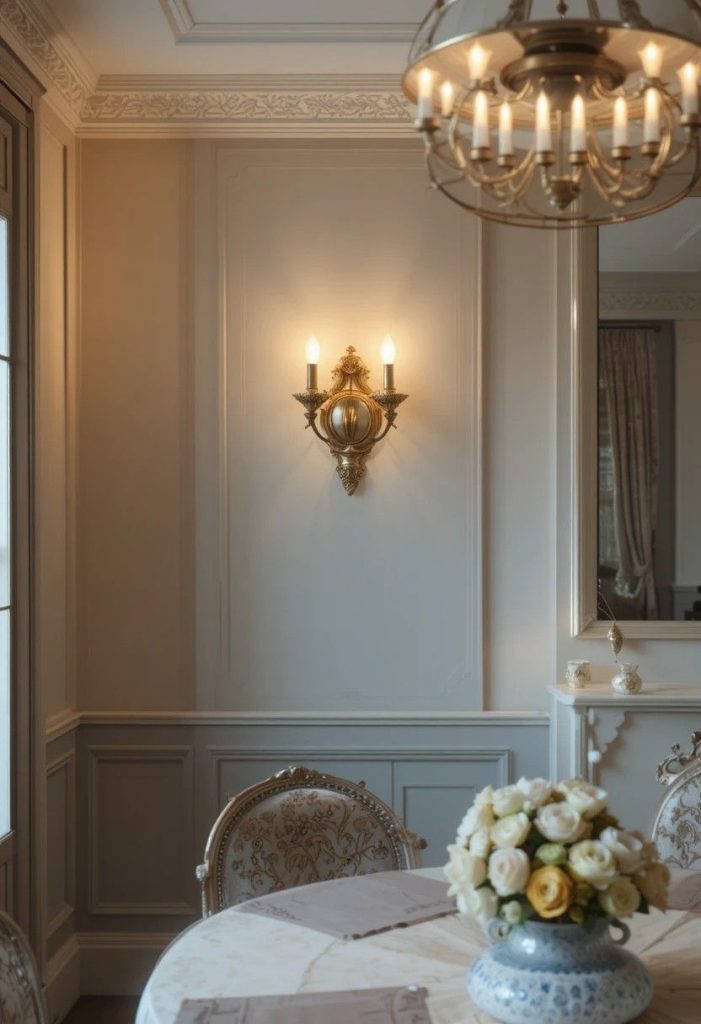
Sconces are the dining room detail I never knew I needed until the candlelit dinner after we fitted them, when the walls glowed softly and the table felt like a restaurant I wanted to linger in. Unlike ceiling lights, sconces wash the wall with low light that flatters everyone and makes the room feel intimate without a candle. I place them in pairs flanking the sideboard, at eye level, so they frame the wall rather than compete with it. Choose warm brass for tradition or matte black for a modern edge, fit warm white bulbs, and see my dining room lighting ideas for more ways to layer the glow.
How to do it: Mark the sconce positions in pairs, about 150 to 165 centimetres from the floor and at least 60 centimetres from the sideboard’s edges. If you are not wiring new points, choose plug-in sconces with a slim cord and a discreet cover. Fit warm white bulbs, add a dimmer if you can, and switch them on at dusk to see the walls glow.
19. Create a Floor-to-Ceiling Feature
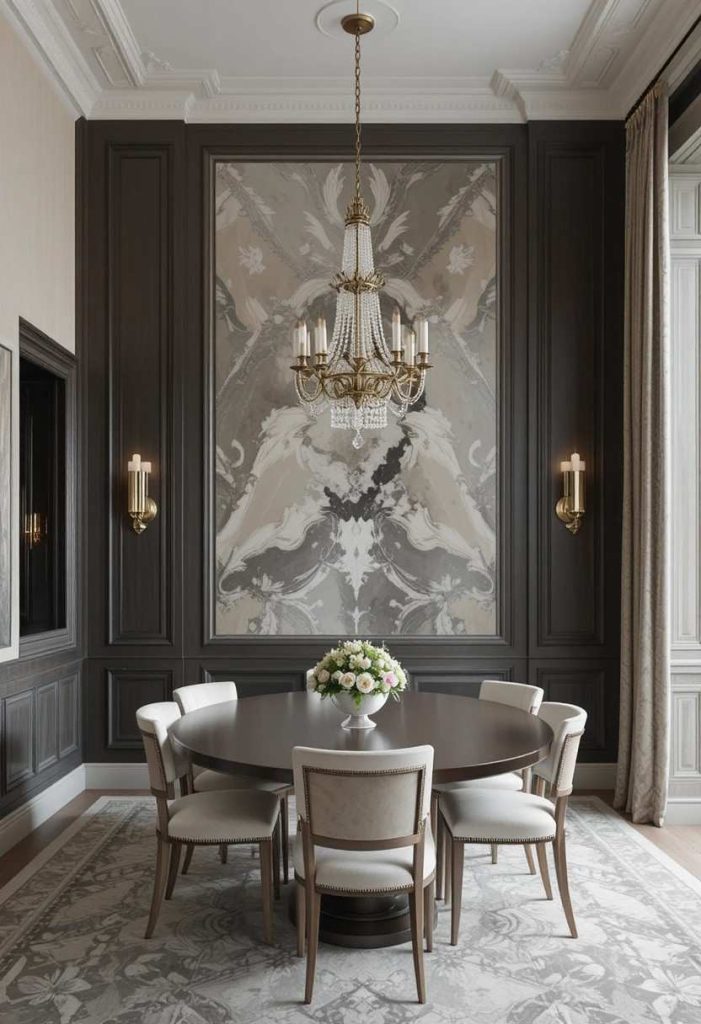
A floor-to-ceiling feature wall is the boldest move in this list, and it is the one that changed our dining room most, because it made the ceiling feel higher and the room feel considered. I ran vertical wood slats from the skirting to the ceiling behind the table, and the long lines draw the eye upward as a half-height treatment never could. It works best on a single wall, kept in one material and one tone, so the height itself is the statement. If your dining room has low ceilings, this is the trick I would try first, because nothing else lifts a room quite like it.
How to do it: Pick one wall, usually the one behind the table, and measure it top to bottom. Fix vertical slats or panels from skirting to ceiling, keeping the gaps perfectly even with spacers. Paint or oil the whole feature in one tone, step back to check the lines run true, and keep the furniture low so the height stays the star.
20. Add a Pop of Colour With Art
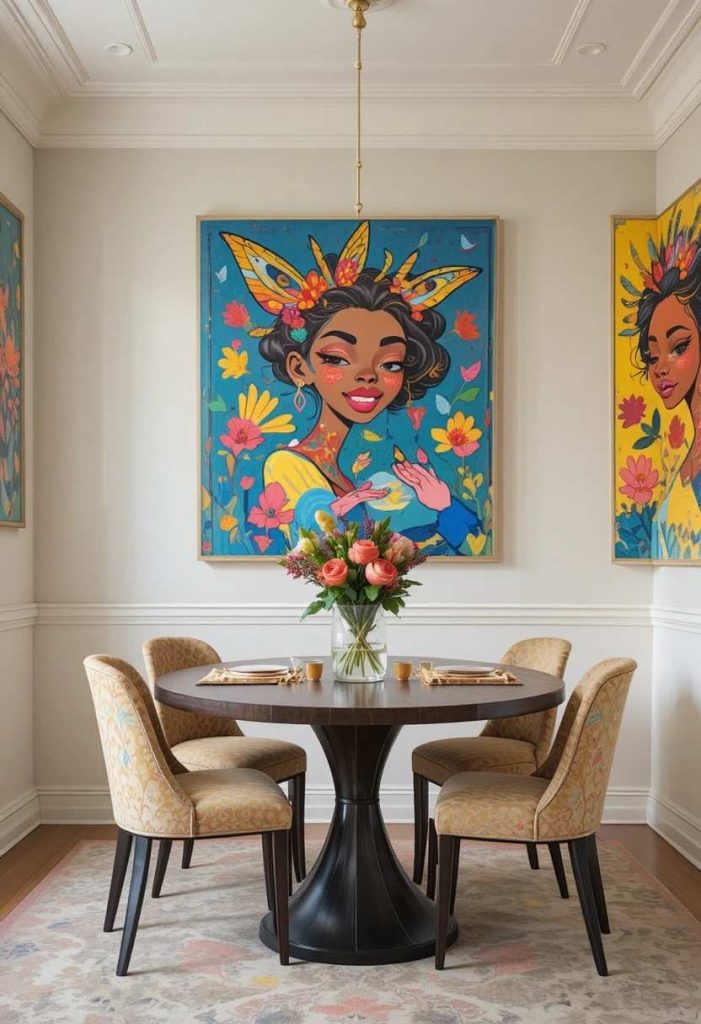
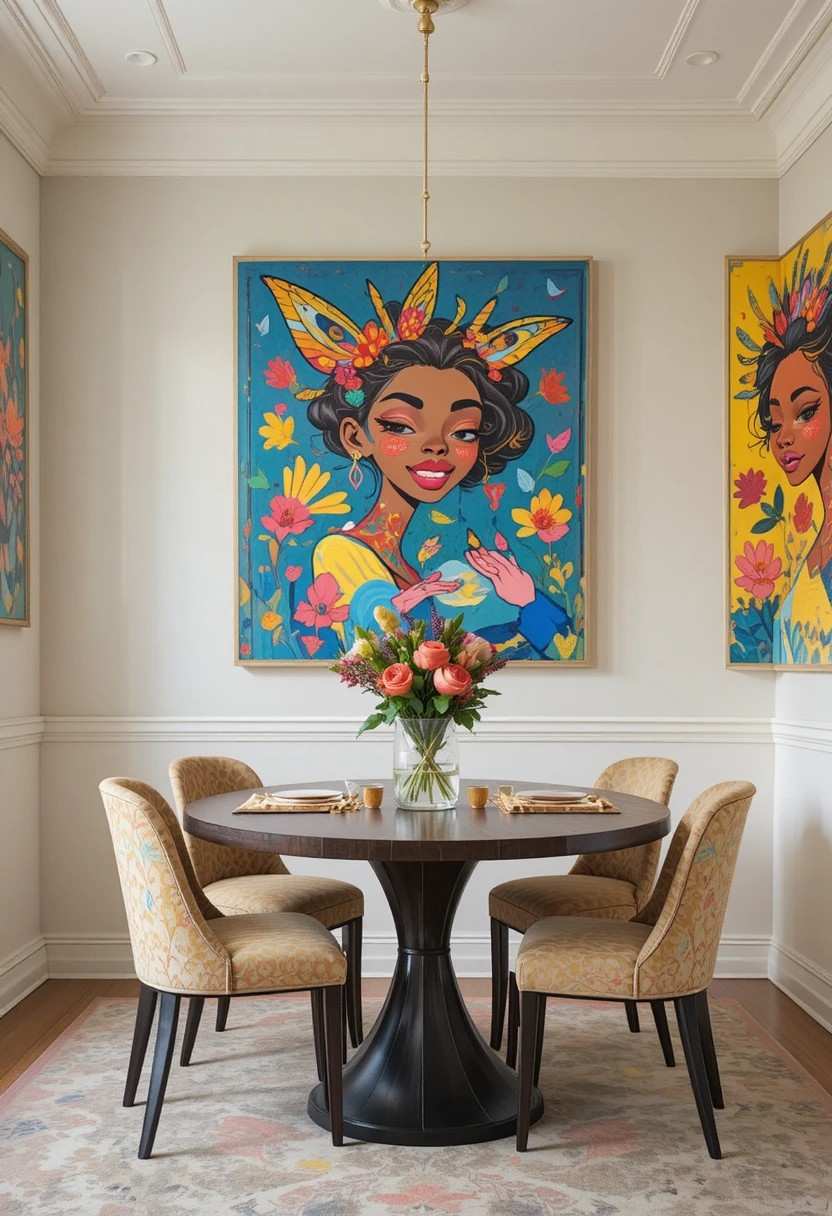
Some dining rooms do not need a whole new colour scheme, just one joyful jolt, and that is exactly what a bright piece of art gives you. I hung a bold, sunny print on our pale wall one grey February, and the room perked up overnight, as though someone had opened a curtain. Let the art carry the colour and keep everything else calm, so the eye goes straight to the one bright note. Pick a piece with one strong colour you love, coral, cobalt, or leafy green, and echo it once in a napkin or a vase, so the room feels joined up.
How to do it: Choose one artwork with a strong colour that makes you smile, sized about two-thirds the width of the furniture below it. Hang it at eye level on the palest wall, then echo its colour once, in napkins, a vase, or chair cushions. Keep the rest of the room neutral so the bright piece stays the hero.
21. Use a Two-Tone Wall
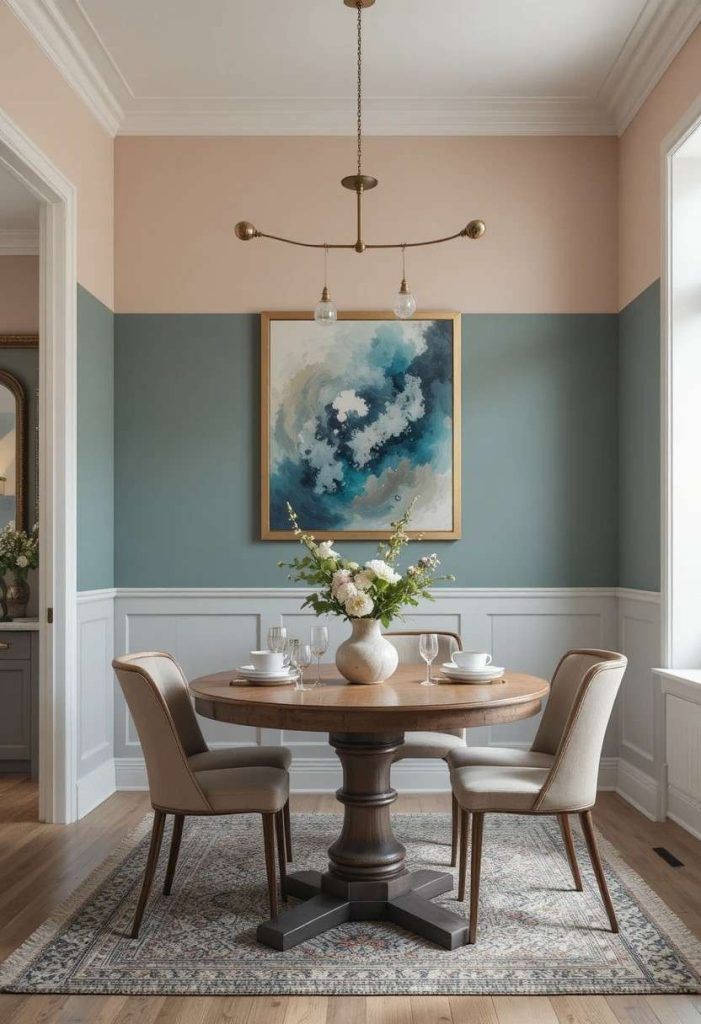
A two-tone wall is my favourite way to make a dining room feel designed rather than decorated, because a single horizontal line changes the proportion of the room. I painted the lower half of our dining wall a deep sage and left the top a warm white, and suddenly the chairs looked taller, the table looked more important, and the room felt calm and tailored. The line itself is the fun part: keep it at dado height for a classic feel, or lift it higher for something bolder. Finish the join with a slim picture rail or a strip of trim, and it looks intentional rather than half-finished.
How to do it: Mark a level line at dado height, about 90 centimetres from the floor, or higher for a bolder look, and mask it with painter’s tape. Paint the lower half in your chosen colour, let it dry, then paint the upper half in a warm white. Fix a slim trim along the join to hide the edge and give the wall a finished, tailored feel.
22. Add a Mirror Gallery
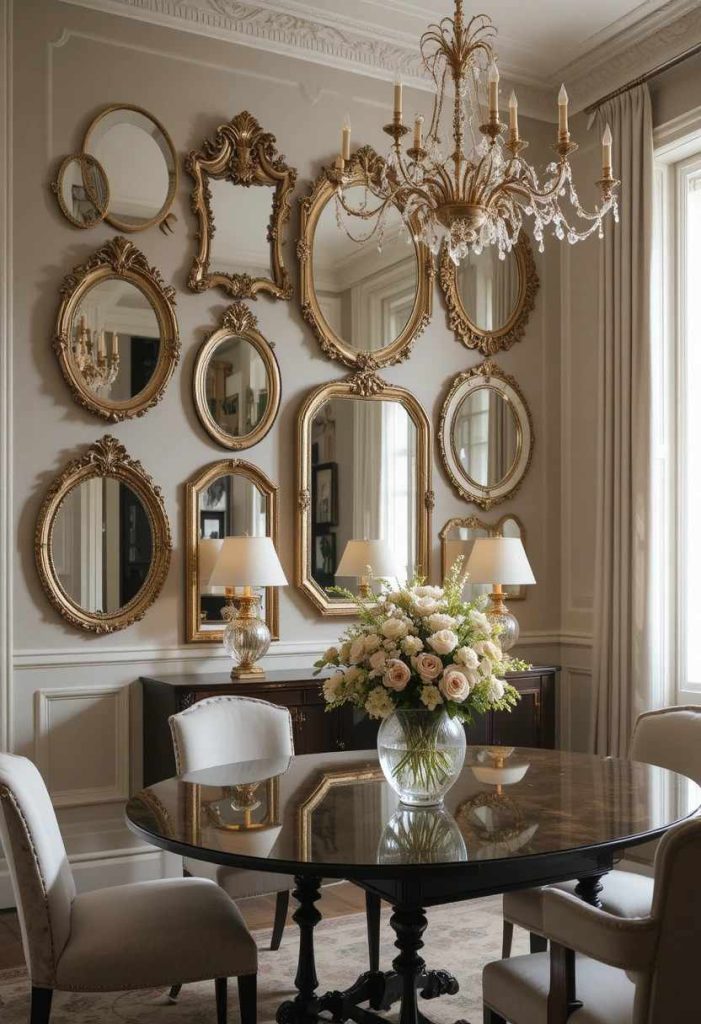
A mirror is lovely, but a gallery of mirrors is where the fun starts, because a cluster of different shapes turns a wall into a piece of jewellery for the room. I gathered round, arched, and oval mirrors over time, in brass, black, and pale wood, and hung them together on the long wall opposite the window. Each one catches a different slice of light, so the wall shimmers all day, and the room feels brighter and more glamorous without any extra lamps. Keep the frames in one or two finishes so the mix feels curated, and leave small gaps so each mirror has its own moment.
How to do it: Collect mirrors in different shapes but one or two finishes, then lay them on the floor to plan the cluster. Tape paper templates to the wall and adjust the spacing until the group feels balanced, with the largest mirror near the centre. Fix each mirror with the right wall plug for its weight, hang them level, and check the reflections from the table.
23. Add Greenery on the Wall
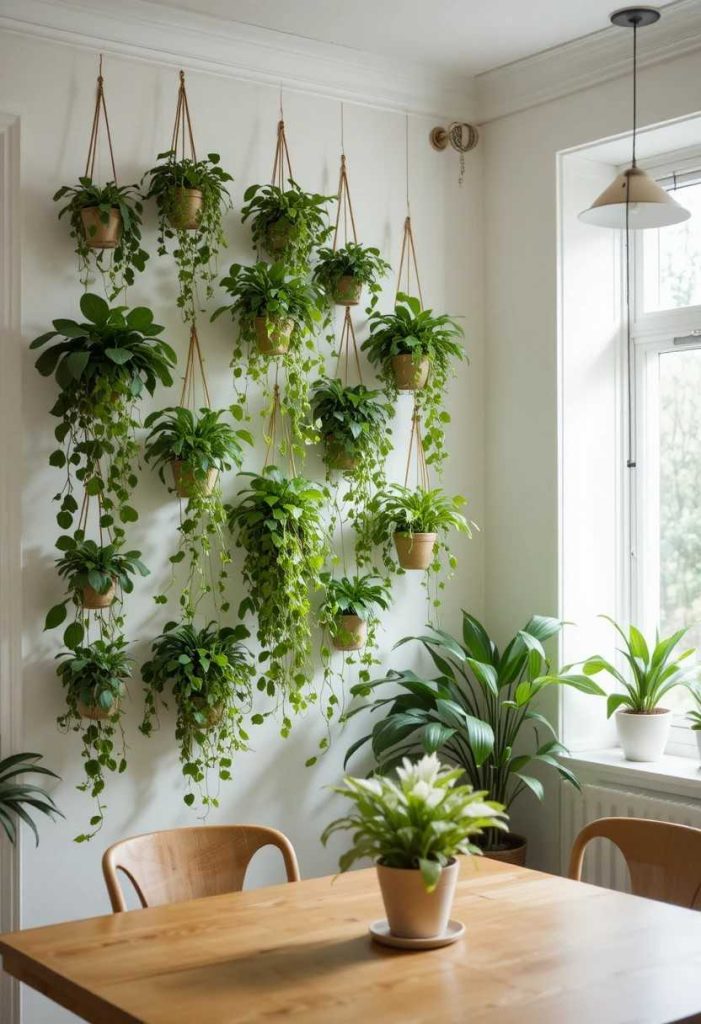
There is nothing like a little greenery to make a dining room feel alive, and a wall of plants does it without taking up a single inch of table space. I started with one trailing pothos on a wall-mounted shelf, and now a small collection of hanging planters softens the corner by the window, their leaves catching the light every time the sun comes round. Plants suit a dining wall because they add colour that changes with the seasons and a softness that no paint can match. Choose easy keepers like pothos, ferns, or trailing ivy, and group them in odd numbers for a natural, gathered feel.
How to do it: Fix wall-mounted planters or a slim shelf at a height you can reach for watering, near a window for the best light. Choose trailing plants like pothos or ivy, and pot them in lightweight containers so the fixings stay safe. Water little and often, wipe the leaves now and then, and rotate the plants so they grow evenly.
24. Match the Wall to Your Style
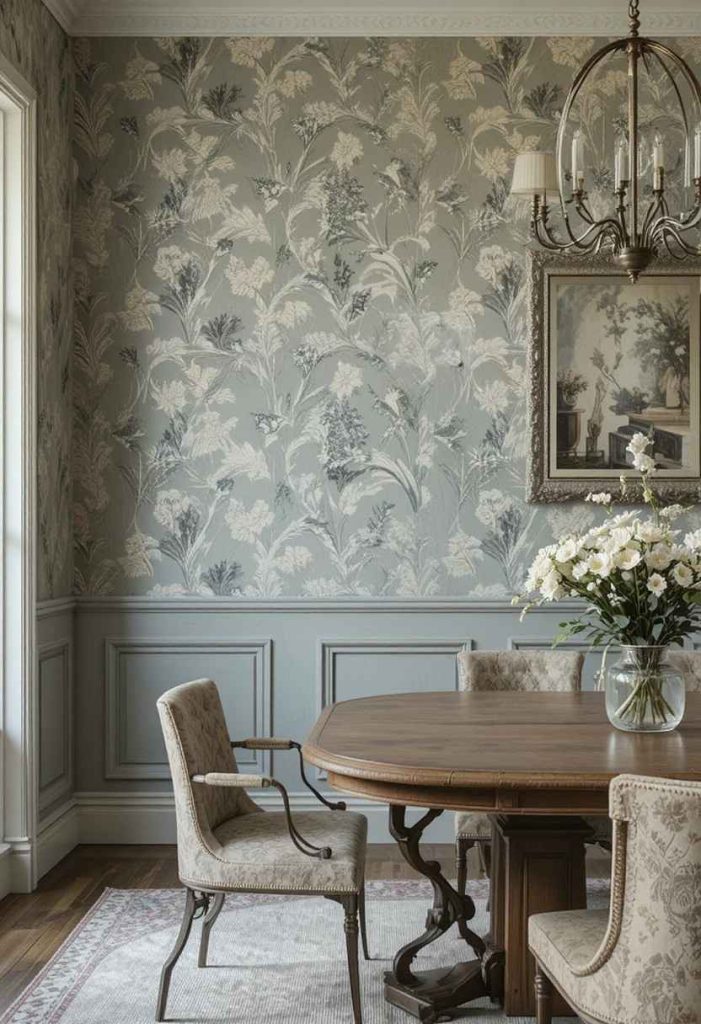
This is the idea I wish someone had told me before I painted our first dining wall a colour that fought everything else in the room, because a wall that matches your style makes everything else easier. I name the room in one word, modern, rustic, coastal, or classic, and let that word guide the wall: clean lines and calm colour for modern, warm wood and soft texture for rustic, pale plaster for coastal. When the wall and the room speak the same language, the table, the chairs, and the plates feel as though they belong together. See my modern dining room ideas if your style leans sleek and simple.
How to do it: Write down three words that describe your room, then pick a wall treatment that matches at least two of them. Pull one colour from your table or chairs and repeat it on the wall in a softer shade. Step back and check the wall, the table, and the light all feel like one room before you commit.
25. Make It Personal and Characterful
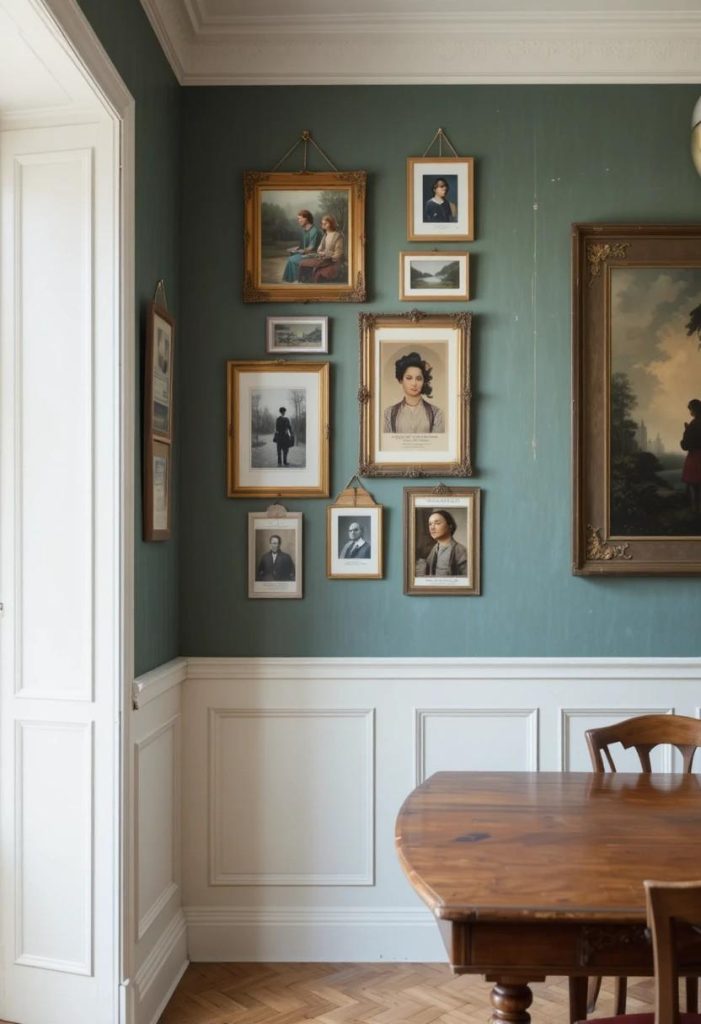
The most characterful dining walls I have seen were never bought in one go; they were gathered, slowly, from holidays, family, and small happy accidents. Our own wall holds a sketch my daughter made, a photograph of my grandmother’s kitchen, and a little ceramic bird that has survived three house moves, and every one of them makes dinner feel more like ours. Personal does not mean cluttered, though: I give each treasure space, group the small pieces together, and leave plain wall in between, so the eye can rest. A dining room that tells your story will always feel warmer than one that simply follows a trend.
How to do it: Gather three or four pieces that mean something to you, a photo, a sketch, a souvenir, and lay them out together. Hang the largest at eye level and cluster the smaller ones around it, keeping the gaps even. Leave plain wall around the group so each piece stands out, and add one new treasure a year, so the wall keeps growing with your story.
Frequently Asked Questions
What colour should I paint my dining room walls?
It depends on the mood you want and the light you have. Warm neutrals like soft white, greige, or pale sage suit most dining rooms and make evening meals feel relaxed, while deeper shades like navy, forest green, or aubergine add drama to a room with good natural light. Always test a large swatch on the wall and look at it morning and evening before you commit, since dining room light changes more than you expect.
How do I hang a gallery wall in a dining room?
Start by laying your frames on the floor and shuffling them until the arrangement feels balanced, with the largest pieces anchoring the corners. Keep one element consistent, such as the frame colour or the gap between frames, so the mix feels gathered rather than chaotic. Hang the centre of the arrangement at eye level, about 145 centimetres from the floor, and step back often to check the balance as you go.
Are mirrors a good idea on dining room walls?
Yes, mirrors are one of the best choices for a dining room, because they bounce light around, make the room feel larger, and double the glow of candles and lamps at dinner. Hang a large mirror opposite a window or a lovely view, and keep it at eye level with its centre about 145 centimetres from the floor. Avoid placing a mirror where it reflects clutter or a blank wall, since it will double whatever it faces.
What is wainscoting, and does it suit a dining room?
Wainscoting is wood panelling that covers the lower part of a wall, usually up to about 90 centimetres high, and it brings classic charm and texture to a dining room. It suits traditional and country-style rooms beautifully, and it also protects the wall from chair scuffs, which is a real bonus around a dining table. Paint it the same colour as the wall for a soft, tailored look, or a shade deeper for a little contrast.
How can I decorate the walls of a small dining room?
In a small dining room, choose one focal wall and keep the rest calm, since too many features will crowd the space. A large mirror, a single bold artwork, or a pale, soft colour will make the room feel bigger, while floating shelves add display space without taking up floor room. Keep frames and shelves slim, hang art at eye level, and leave some bare wall, because breathing room matters most when space is tight.
Your Dining Room Wall Checklist
Work through this list one step at a time, and tick each item off as your dining room walls come together.
☐ Choose one focal wall for your main feature
☐ Test paint colours on the wall in morning and evening light
☐ Hang art and mirrors at eye level, about 145 cm from the floor
☐ Measure the wall before ordering wallpaper, panels, or tiles
☐ Keep one element consistent across a gallery wall
☐ Pick a mirror that reflects a window or a lovely view
☐ Anchor shelves into studs or use heavy-duty fixings
☐ Add a dimmer or warm bulbs for a soft evening glow
☐ Leave breathing room between frames and shelves
☐ Match the wall treatment to your room’s style
☐ Add one personal piece that tells your story
☐ Wipe and dust frames, mirrors, and shelves once a month
☐ Step back and check the balance from every seat at the table
☐ Sit down to dinner and enjoy your new walls
A Final Gentle Thought
Your dining room walls have been waiting patiently for a little attention, and now you have twenty-five ways to give it to them. Start with the idea that made you smile first, whether that is a bold colour, a gallery of memories, or a single beautiful mirror, and let the rest follow in its own time. Walls do not need to be finished in a weekend to be wonderful; they only need to feel like yours. So light the candles, set the table, and enjoy the room you have made, one wall at a time.
And if the walls are sorted but the evenings still feel flat, my dining room lighting ideas will help you get the glow right.