
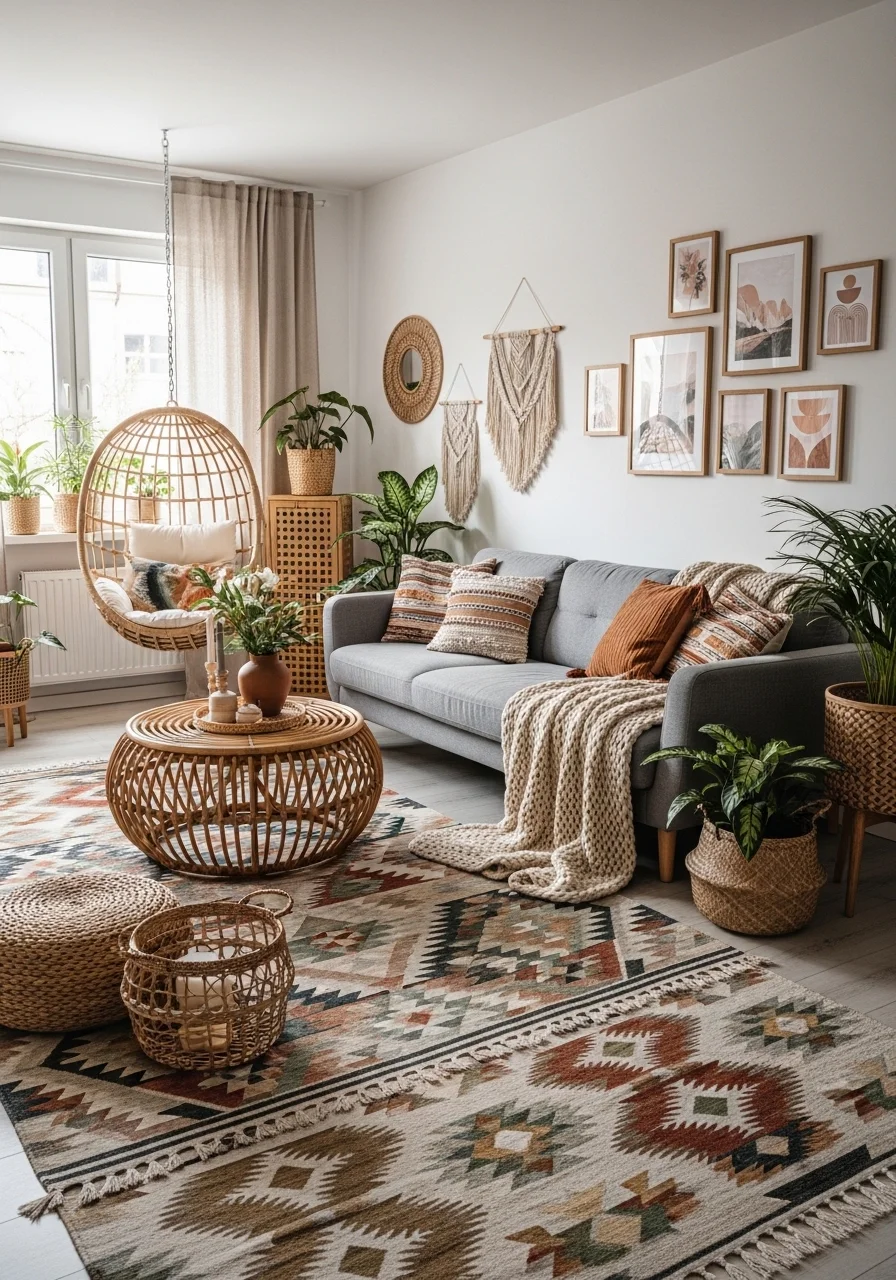
Hanging Plants Indoor Ideas: 18 Stunning Ways to Transform Your Space 🌿
Struggling to make your home feel lively and stylish without cluttering your space? You’re not alone. Many people love plants, but finding the right way to display them—especially in small areas—can feel overwhelming.
The good news? Hanging plants indoor ideas are the perfect solution. They save space, add visual interest, and instantly make any room feel fresh and cozy. In this guide, you’ll discover 18 creative, easy-to-style ideas that turn ordinary corners into Pinterest-worthy green spaces—no matter your budget or experience level.
1. Macramé Plant Hangers for a Boho Touch
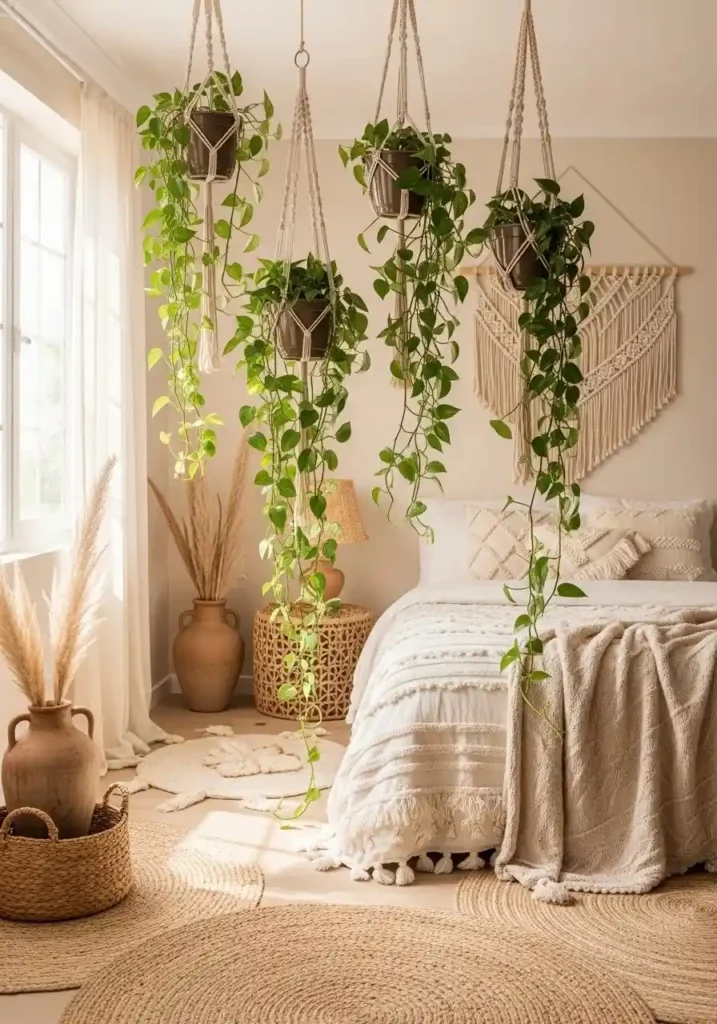
I first hung a macramé holder in a corner that had felt bare for months, and the change surprised me. The knotted cotton softened the straight lines of the room, and my trailing pothos finally had somewhere to spill without taking up a shelf. I like cream and natural tones because they sit quietly beside almost any bedding or sofa, while a rust or sage holder can pick up a cushion colour. Keep the pot light, check that the knot sits evenly, and hang it where you can see the leaves catch the light. Mine now lives beside my reading chair, and it still makes that corner feel finished.
How to do it: Choose a lightweight pot and a macramé hanger that fits it snugly. Fix a ceiling hook into a joist or use a sturdy wall bracket, then hang the holder at eye level. Place a trailing plant inside, spread the cords evenly, and turn the pot a quarter-turn each week so the growth stays balanced.
2. Ceiling Hooks with Minimal Pots
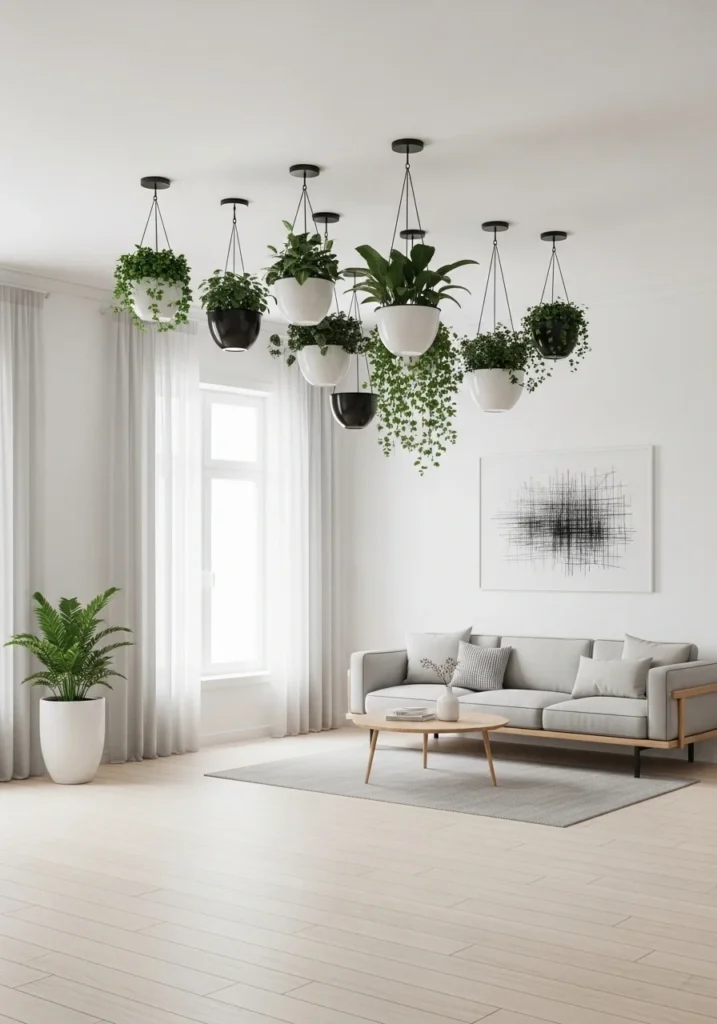
When my living room started to feel busy, I stripped the styling back to one clean hook and a plain ceramic pot, and the room seemed to breathe again. A single trailing plant draws the eye upwards, which makes a low ceiling feel taller and a small room feel less crowded. I choose matte white or soft grey pots for this look, and I keep the chain or cord short so the plant reads as part of the room rather than an afterthought. If you are choosing pots, these plant pots ideas will help you match shapes and finishes to your home. One well-placed plant, I have found, does far more than three crowded ones.
How to do it: Find a ceiling joist with a stud finder and screw in a hook rated for at least twice the weight of the watered pot. Hang a lightweight ceramic or resin pot, add a trailing plant such as pothos or string of pearls, and leave a clear drop below it so you can lift the pot down easily for watering.
3. Hanging Plants in the Kitchen Window
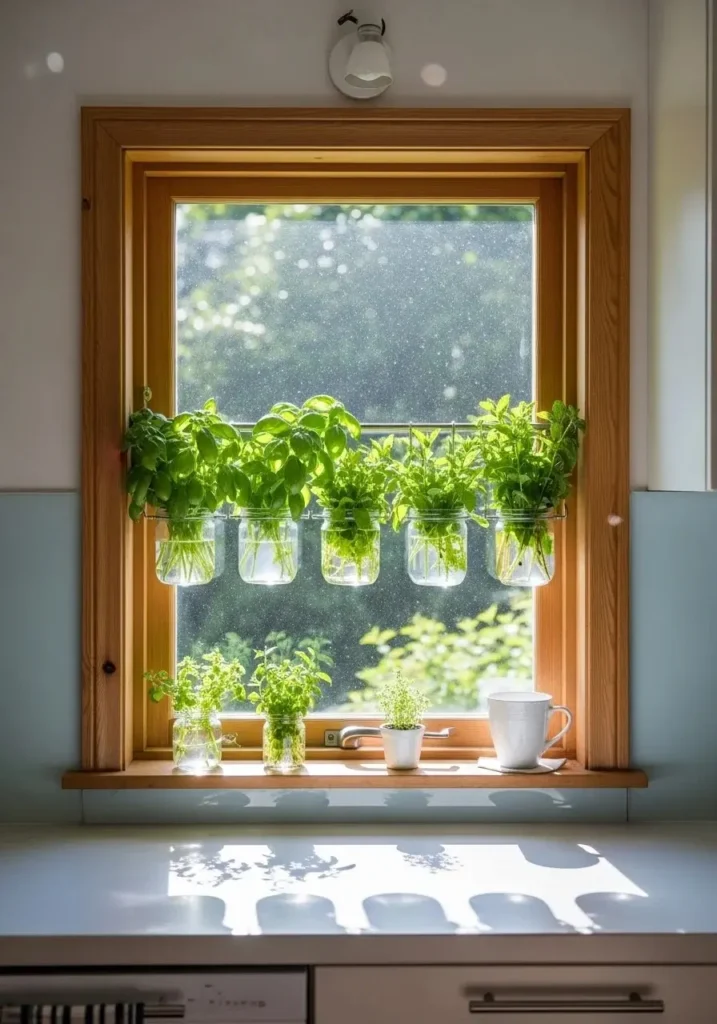
My kitchen window used to hold only a washing-up bottle and a sponge, so hanging herbs there felt like a small act of rebellion. Now mint, basil and parsley sit in the light while I cook, and I snip them straight into the pan. The steam from the kettle suits them, and the bright window keeps them from going leggy. I use small pots with saucers, because a dripping herb above the worktop is nobody’s idea of helpful. Start with one herb you actually cook with, and you will reach for the scissors far more often than you expect.
How to do it: Fit a tension rod or two small hooks across the window frame, keeping the pots clear of the glass. Hang small herb pots in macramé holders or on S-hooks, water them in the sink, and let them drain before hanging them back. Rotate the pots weekly so each side gets its share of light.
4. Floating Shelf with Hanging Vines
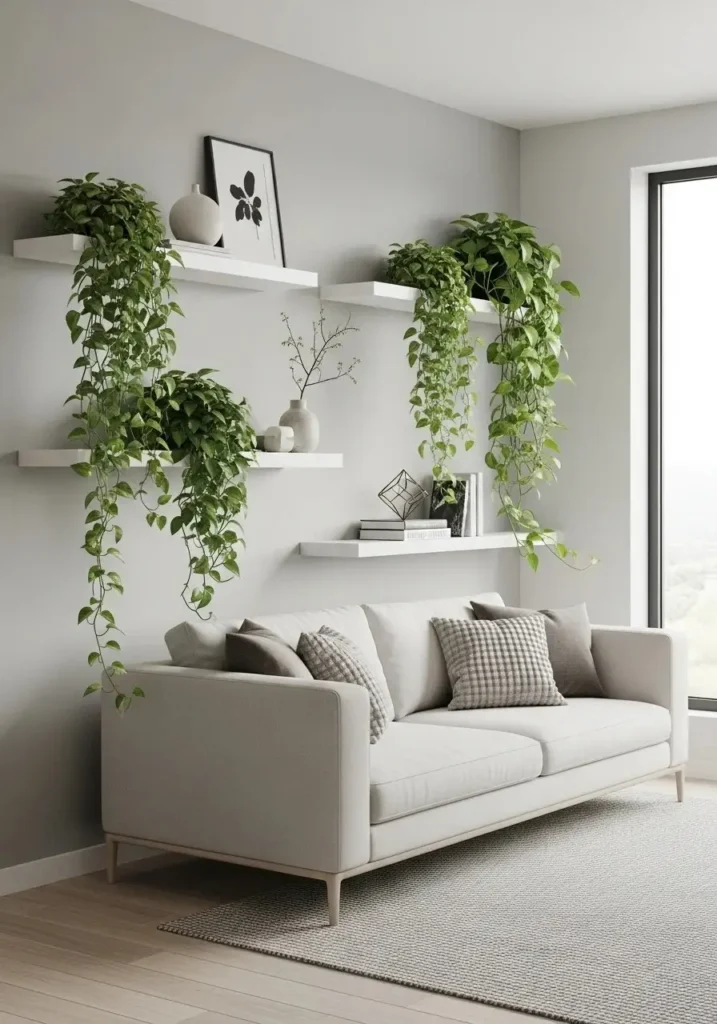
I love this idea because it gives a plant two jobs at once: the pot sits on the shelf, and the vines do the decorating below it. In my hallway, a single floating shelf holds a pothos, a small stack of books and a candle, and the trails soften what would otherwise be a very plain wall. The trick is restraint. Leave a little empty wood showing, and let one vine fall longer than the others for a natural, uneven line. If a vine starts to look thin at the top, I pinch back the tips, which encourages it to branch and fill out.
How to do it: Fix a floating shelf into wall studs at about shoulder height, using brackets rated for the weight of a watered pot. Set a trailing plant near one end, guide the longest vine over the front edge, and trim or pin the stems with small clear hooks to shape the fall. Water over a tray to protect the wall below.
5. Hanging Glass Terrariums
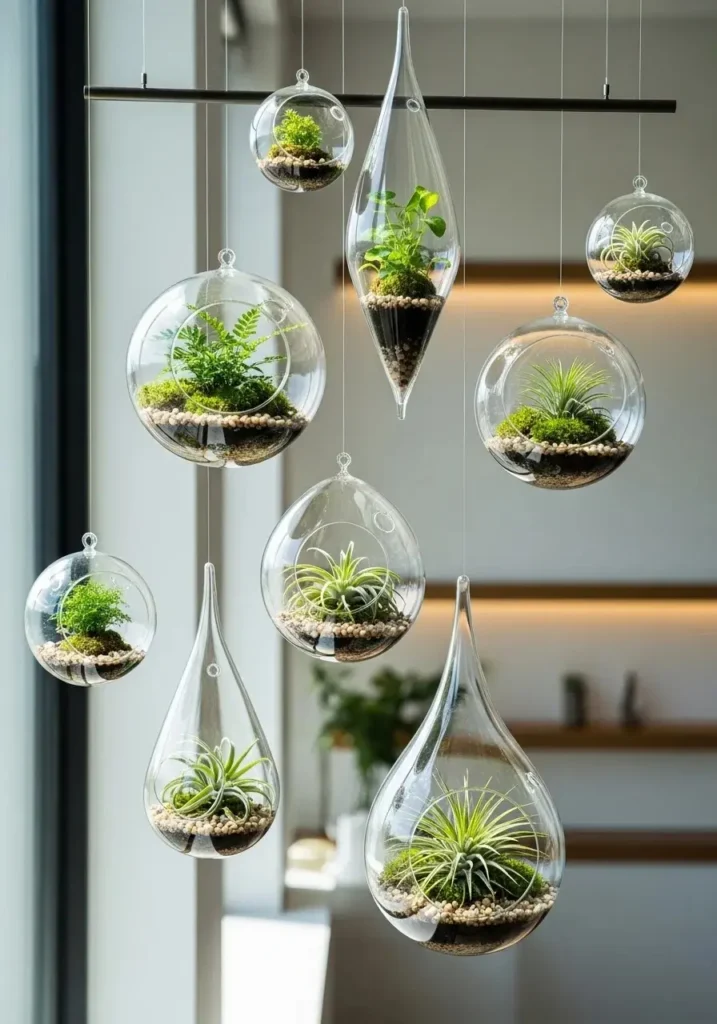
A glass terrarium feels like a tiny garden caught mid-air, and I reach for it whenever a room needs something delicate rather than leafy. Mine holds a small air plant, a few pebbles and a piece of driftwood, and it hangs in the window where the light catches the glass in the morning. Because the plants inside need very little soil, the whole thing stays light and easy to move. I mist the air plant once a week and soak it for twenty minutes once a month, and that is honestly the whole routine. It is a gentle first step if you are nervous about keeping plants alive.
How to do it: Choose a glass terrarium with an opening wide enough for your hand. Add a thin layer of pebbles for drainage, then a little moss or soil, and settle in an air plant or a small succulent. Hang it from a hook or branch with a fine chain, out of harsh midday sun, and mist or soak the plant as its type needs.
More Amazing Ideas Also For You: Plant Pots Ideas: 14 Creative Ways To Style Your Home
6. Bathroom Hanging Plants for Freshness
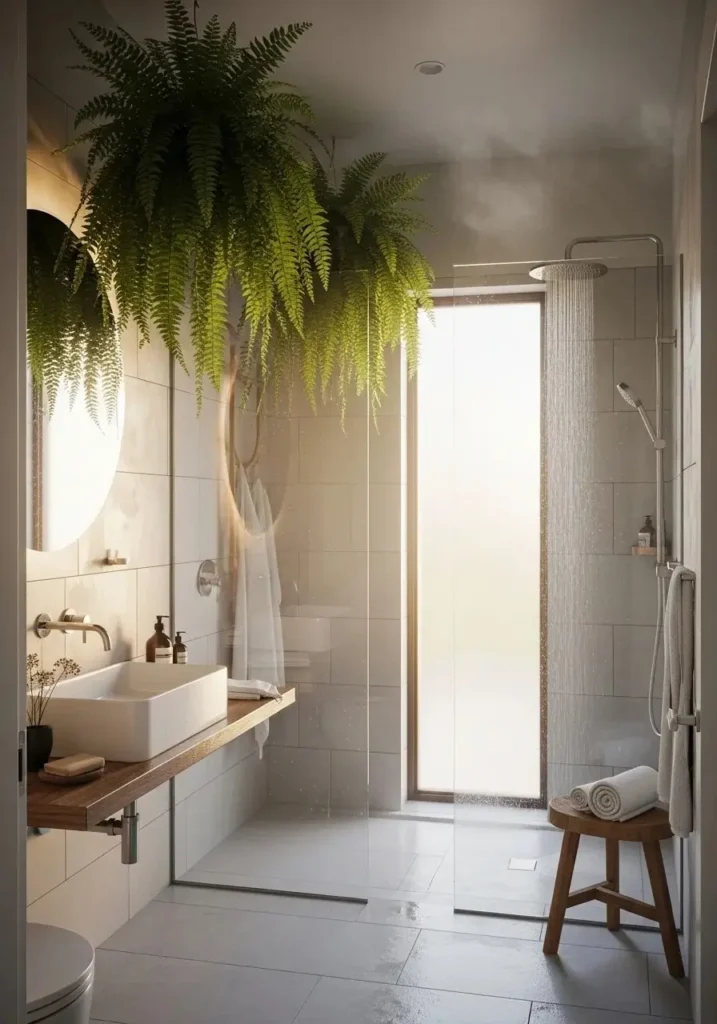
Our bathroom is the smallest room in the house, and it is also where a hanging plant makes the biggest difference. The steam from a shower suits ferns and pothos, and the green softens all that white tile and chrome. I hung mine from a hook beside the mirror, high enough that nobody brushes it while drying their hair, and low enough that I can lift it down to water it. A trailing plant in a plain white pot looks calm rather than fussy, which is exactly the mood I want first thing in the morning. Choose a plant that genuinely likes humidity, and the bathroom will largely look after it.
How to do it: Pick a moisture-loving plant such as a Boston fern, pothos or spider plant. Hang it from a ceiling hook or a suction hook on a tile, away from direct splashes. Water when the top of the soil feels dry, let it drain fully in the bath or sink, and trim any brown fronds promptly.
7. Corner Hanging Plant Cluster
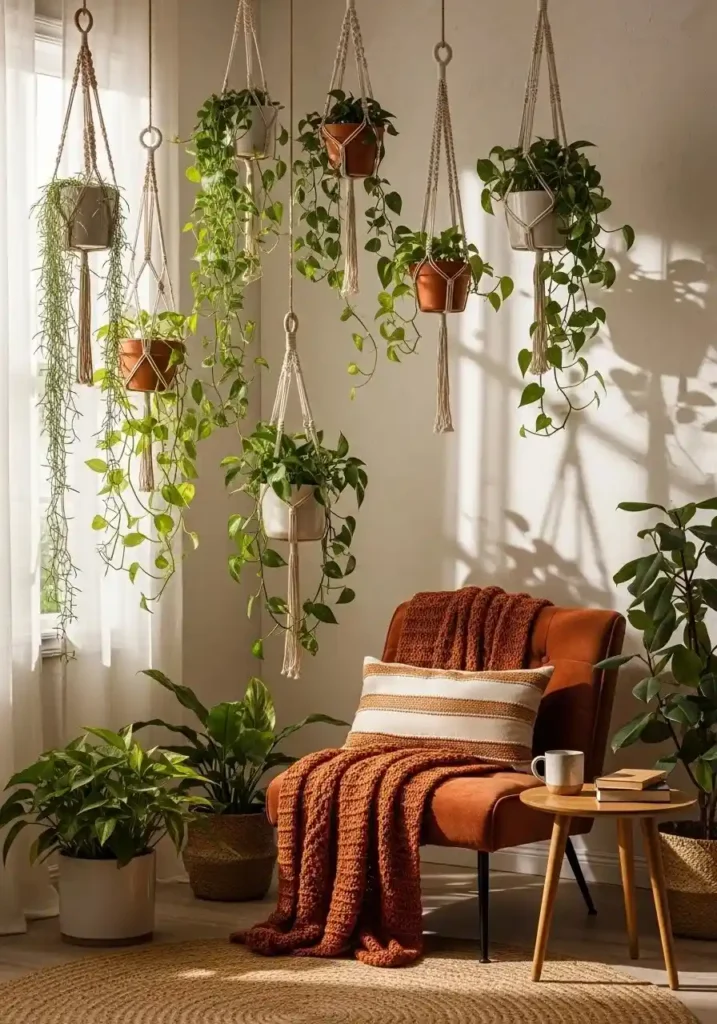
Empty corners can feel awkward, as though the room simply ran out of ideas, and a cluster of hanging plants is my favourite way to rescue one. I hang three plants at different heights in the corner of my living room: a fern at the top, a pothos in the middle, and a smaller trailing plant low enough to brush the arm of the chair. The staggered heights stop the group looking like a row, and the mix of leaf shapes keeps it interesting from every angle. I keep the pots in one colour family so the corner feels planned rather than crowded. Step back after hanging each one, because the spacing is easier to judge from across the room.
How to do it: Fix three hooks in a loose triangle on the two walls or ceiling of the corner, at heights about 20 cm apart. Hang the fullest plant highest and the longest trailer lowest. Use pots in matching tones, water each one in turn over a tray, and adjust the cords until no two pots sit at exactly the same level.
8. Hanging Plants Above the Bed
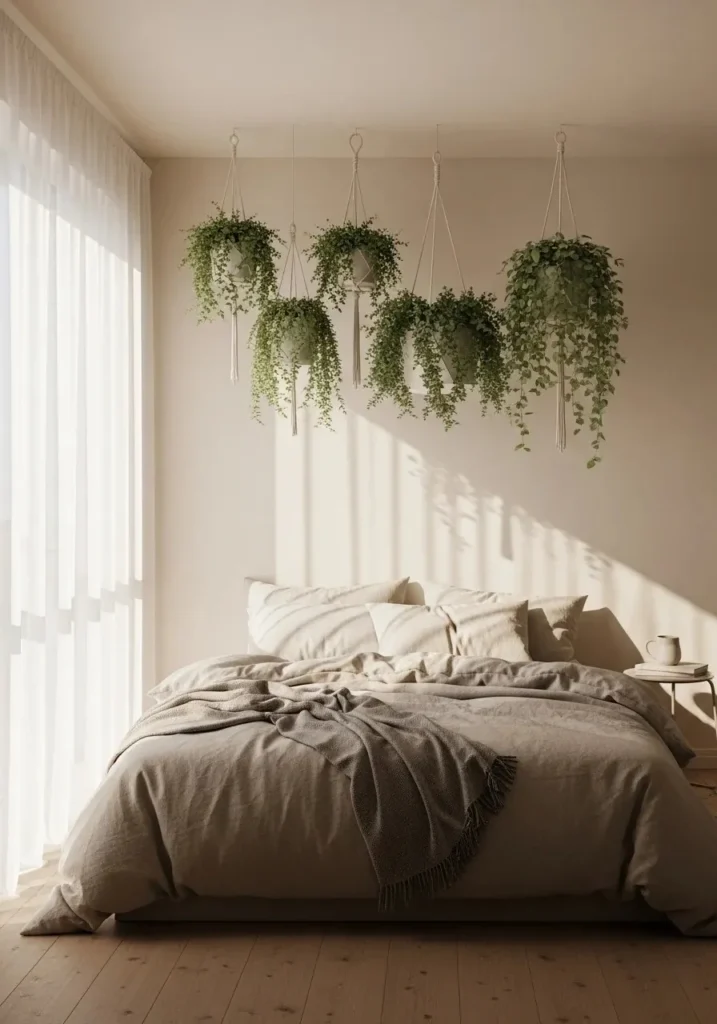
Waking up to green leaves above the bed is a much gentler start to the day than waking up to a blank ceiling, and I was surprised how quickly I got used to it. I hang two small, lightweight planters to one side of the bed rather than directly overhead, so nothing ever feels as though it might drop while I sleep. Trailing pothos works beautifully here because the vines frame the headboard without blocking the light. I water them in the bathroom and let them drain fully before hanging them back, which keeps the bedding dry. The result is a bedroom that feels calm, lived-in and a little bit like a garden room.
How to do it: Choose two lightweight pots and fix hooks into ceiling joists to the side of the bed, never directly above where you sleep. Hang the planters high enough to clear the headboard, use trailing plants with soft stems, and always water and drain them away from the bed before rehanging.
9. Curtain Rod Plant Hanging
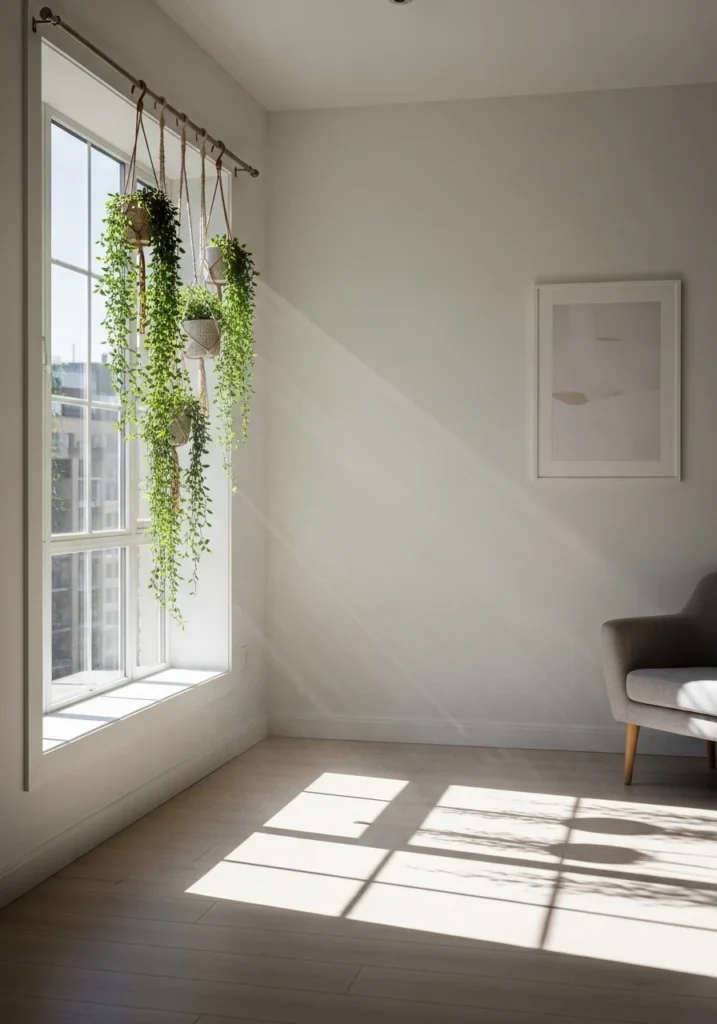
This is the idea I suggest first to renters, because it needs no drilling and uses a rod that is already there. I hung three small planters from S-hooks on my curtain rod, spaced between the curtain panels, and the window suddenly had a living frame. The plants get plenty of light, the curtains still close, and the whole thing comes down in minutes if I move house. Keep the pots very light — plastic or small ceramic — and check that the rod is firmly fixed before you load it. If the rod bows even slightly, take a plant off and spread the remaining ones wider.
How to do it: Check that your curtain rod is securely fixed and can take a little extra weight. Slip two or three S-hooks over the rod, hang small lightweight planters from them, and space the plants between curtain panels. Water in the sink, drain well, and slide the hooks aside whenever you need to close the curtains fully.
More Amazing Ideas Also For You: Indoor Water Plants Ideas: 12 Beautiful Ways to Bring Life Into Your Home
10. Hanging Wooden Ladder Display
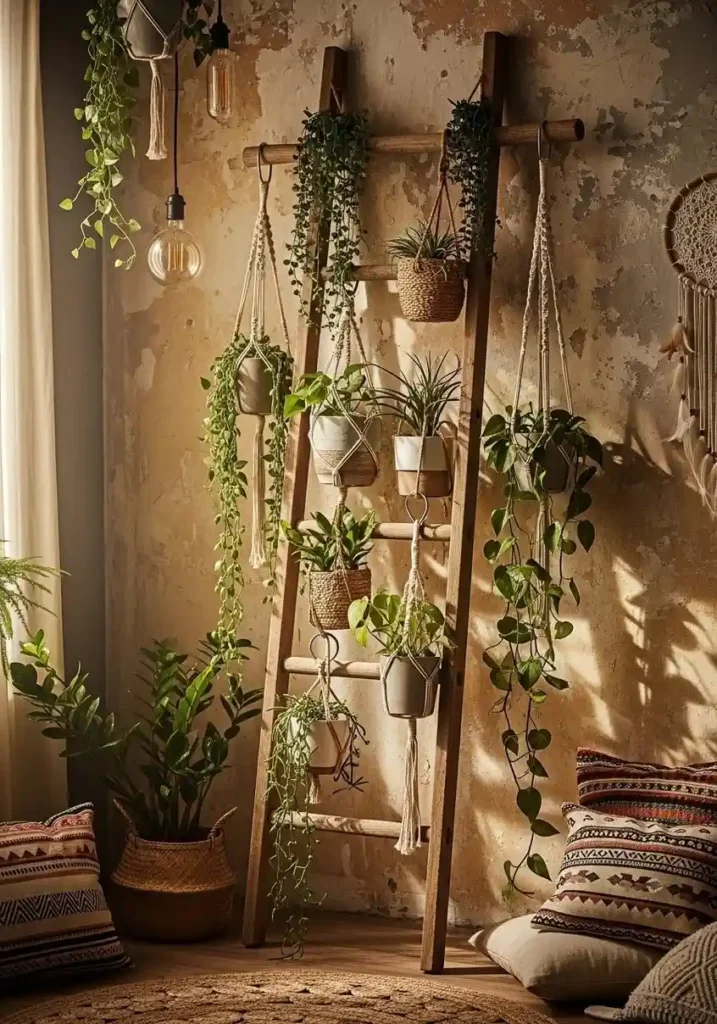
An old wooden ladder makes a wonderfully forgiving plant display, because its rungs already give you places to hang, perch and trail. I found mine at a flea market, sanded it lightly, and leaned it against the wall in the dining area. Now it holds two hanging planters, a small potted fern on a rung, and a trailing vine that is slowly making its way down one side. The wood warms up a room that had a lot of white paint, and the display is easy to rearrange when a plant outgrows its spot. If you are using a leaning ladder, fasten the top to the wall so it cannot slip.
How to do it: Clean and sand a wooden ladder, then secure the top to the wall with a small bracket if it leans. Hang planters from the rungs with S-hooks or rope, place heavier pots on the lower rungs, and let one trailing plant fall from the top. Check the fixings monthly and move plants to a brighter rung if they start to stretch.
11. Hanging Plants with Fairy Lights
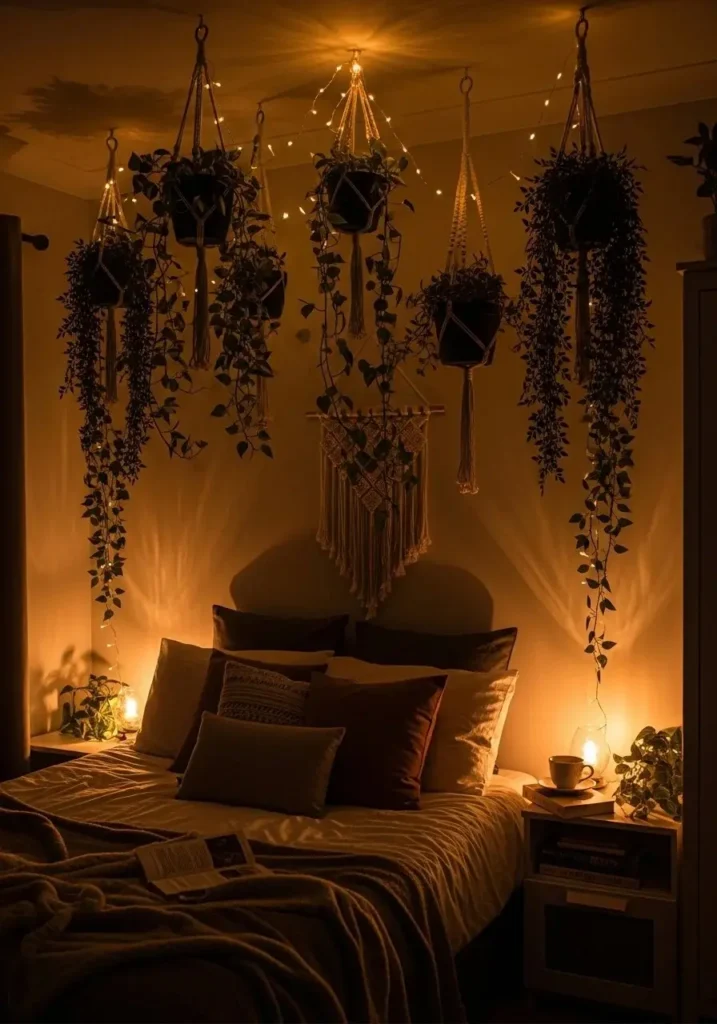
Fairy lights and trailing leaves are a combination I return to every winter, when the evenings draw in early and the house needs a little glow. I wind a warm-white string loosely through the vines above my reading chair, never pulling it tight, so the leaves still move and the lights sit among them rather than on top of them. The effect is gentle, not glittery, and it makes an ordinary evening feel a touch more special. I use battery lights on a timer, so they switch themselves on at dusk and I never have to remember. The same soft lighting works just as well on a balcony, as these balcony garden ideas show, if you have outdoor space too.
How to do it: Hang your plant first and check it is secure. Weave a battery-operated, warm-white fairy light loosely through the trailing stems, keeping the battery pack hidden behind the pot. Set the timer for dusk, keep the lights away from water when you mist, and replace the batteries before the glow starts to fade.
12. Minimal Metal Hanging Frames
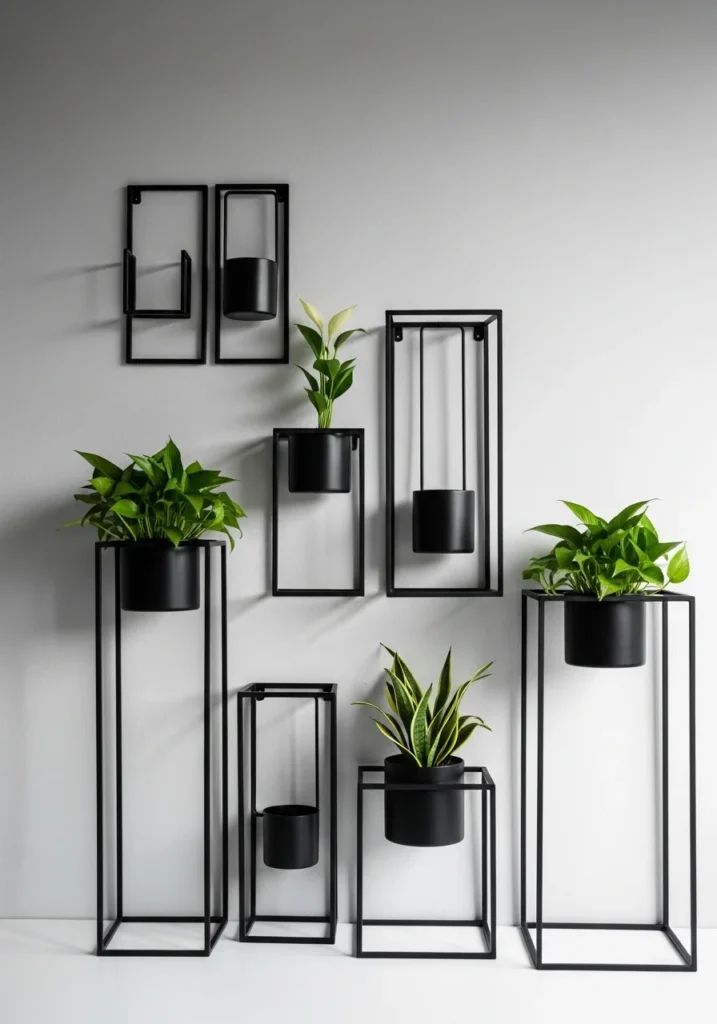
Metal frames suit the days when I want the plants to look deliberate and architectural rather than soft and trailing. A black geometric frame holds a single neat plant, and the clean lines work especially well against a plain wall or beside a modern sofa. I keep the plant itself simple — a small fern or a compact pothos — because a fussy plant would fight the frame. Gold frames feel warmer and suit rooms with brass handles or warm wood, while black frames suit cooler, greyer rooms. Measure the frame against the wall before you buy, because a frame that is too small can look lost.
How to do it: Choose a metal frame sized to the wall space, and fix its bracket into a stud or use a proper wall plug. Set the pot inside so it sits level, add a compact plant, and hang the frame at eye level. Wipe the metal with a dry cloth when you dust, and turn the plant weekly so it grows evenly.
13. Hanging Plants in Entryway
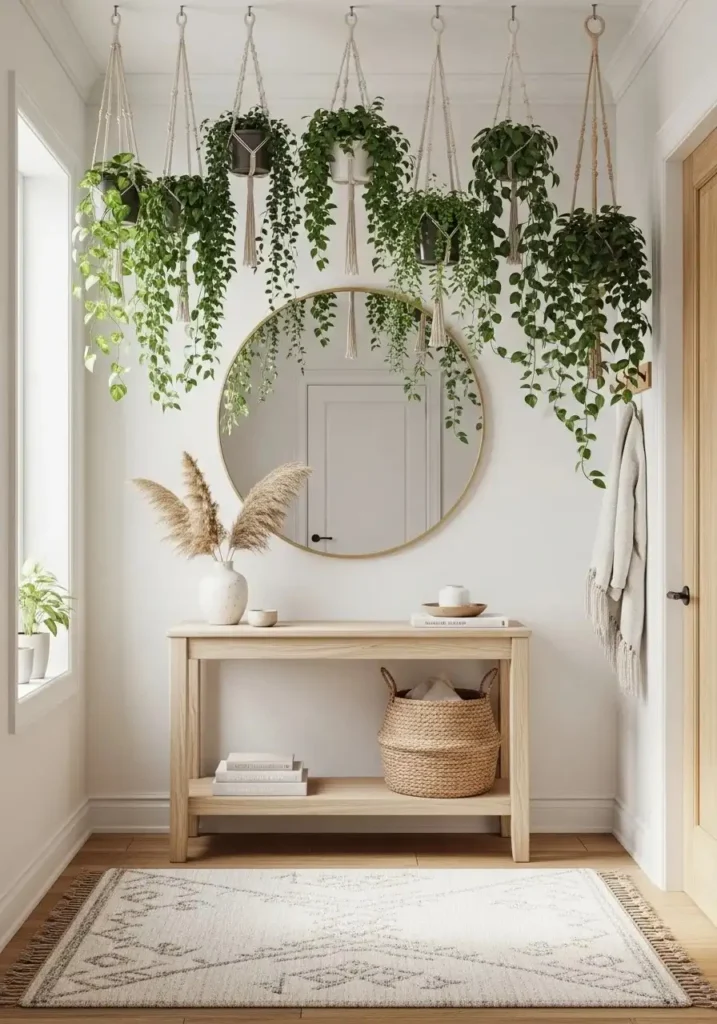
The entryway is the first thing guests see and the last thing I see before I leave, so I wanted it to feel welcoming rather than like a corridor for coats and keys. One hanging plant beside the door does that job better than any sign or picture I have tried. I chose a small, neat pothos in a plain pot, hung high enough that nobody catches it with a bag, and low enough to notice as you step inside. It also hides a scuffed patch of wall I have been meaning to paint. Keep the arrangement simple here, because the hallway already has a lot going on.
How to do it: Fix a ceiling hook or wall bracket beside the door, clear of the door swing. Hang one small, tidy plant in a lightweight pot, and keep the drop short so it does not brush heads or bags. Choose a plant that copes with draughts and lower light, and water it over a tray by the door.
More Amazing Ideas Also For You: Flower Pot Ideas: 10 Creative Ways to Style Your Plants Beautifully
14. DIY Rope Hanging Planters
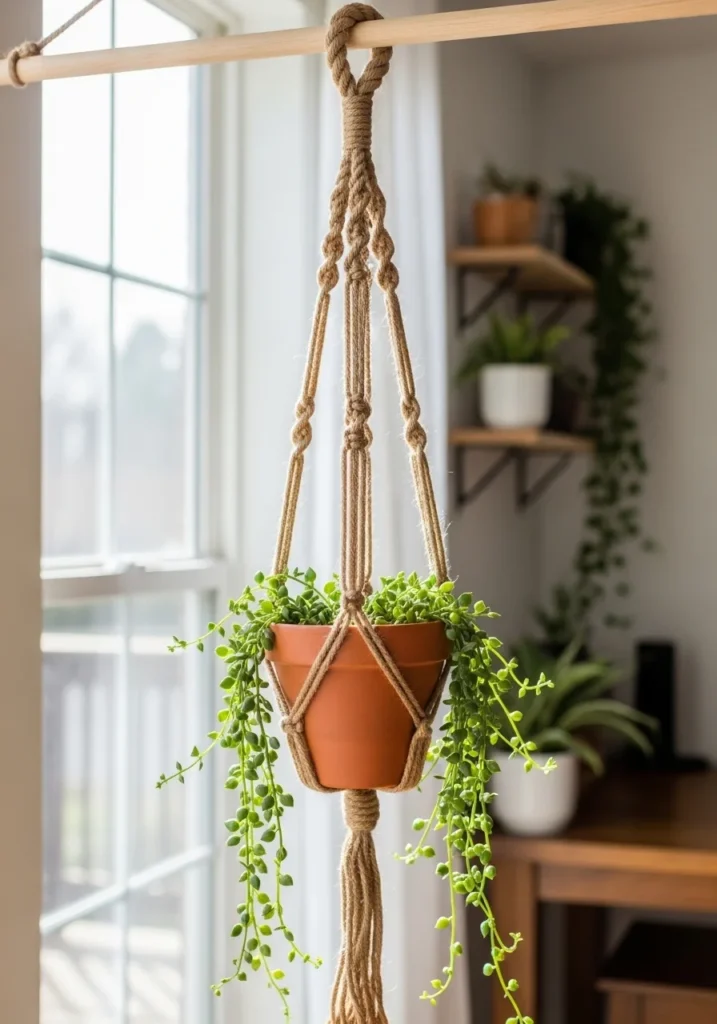
Making my own rope planters was the first plant project I actually finished in an afternoon, and I still use the ones I made. Thick cotton rope, a wooden ring and a terracotta pot are all you need, and the knots do not have to be perfect to look good — slightly uneven knots are part of the charm. I hang mine at different lengths in the study, where they soften the desk and the shelves without taking up any surface. The same keep-it-simple thinking works outside too, and these gravel garden ideas follow it for a low-maintenance yard. Test each planter with a full watering can before you trust it above furniture.
How to do it: Cut four equal lengths of thick cotton rope, thread them through a wooden ring, and knot them evenly beneath the pot to form a cradle. Hang the ring from a secure ceiling hook, set the potted plant inside, and check that the pot sits level. Load-test it with water first, then adjust the knots until the planter hangs straight.
15. Hanging Plants Over Dining Table
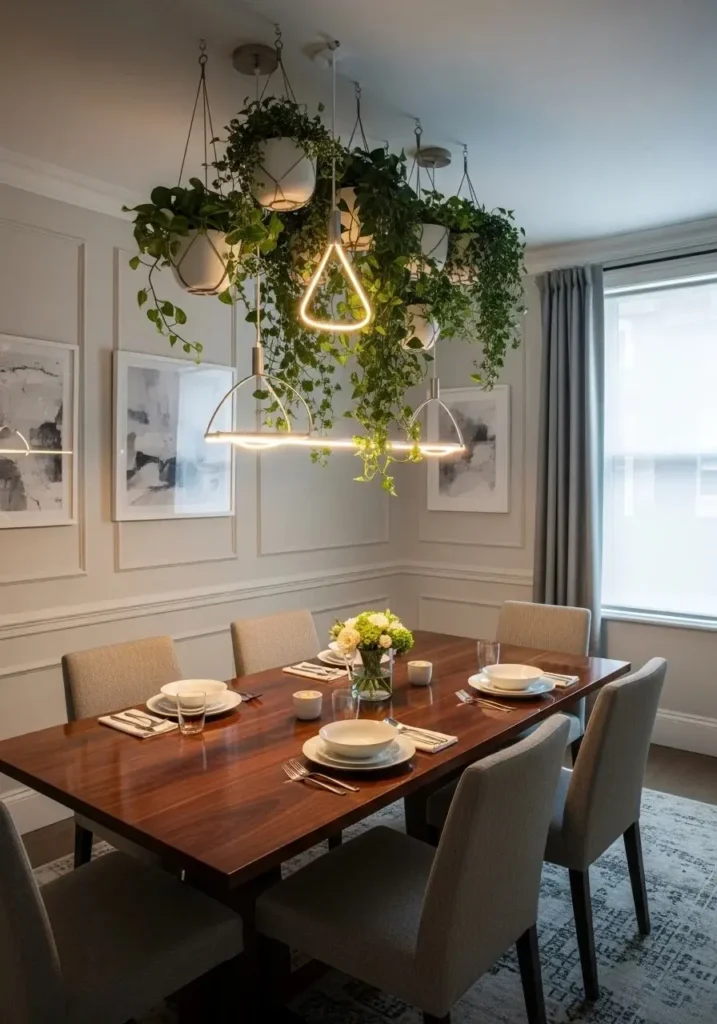
Hanging plants over the dining table changed how our evening meals feel, and I wish I had done it sooner. Two small planters hang either side of the pendant light, so the table has green at eye level without anything blocking the view across it. I keep the plants short and tidy — trailing vines would dip into the food — and I choose pots that match the light fitting so the whole arrangement feels intentional. At dinner, the leaves catch the warm light and the table feels dressed even before I put out plates. Water them in the kitchen and drain them well, because nobody wants a drip on the tablecloth.
How to do it: Fix two hooks into ceiling joists, one on each side of the pendant light, keeping the planters clear of the light itself. Hang short, compact plants in matching pots, at a height that stays above eye level when seated. Water and drain them in the sink, and trim any stems that start to reach towards the table.
16. Vertical Hanging Garden Wall
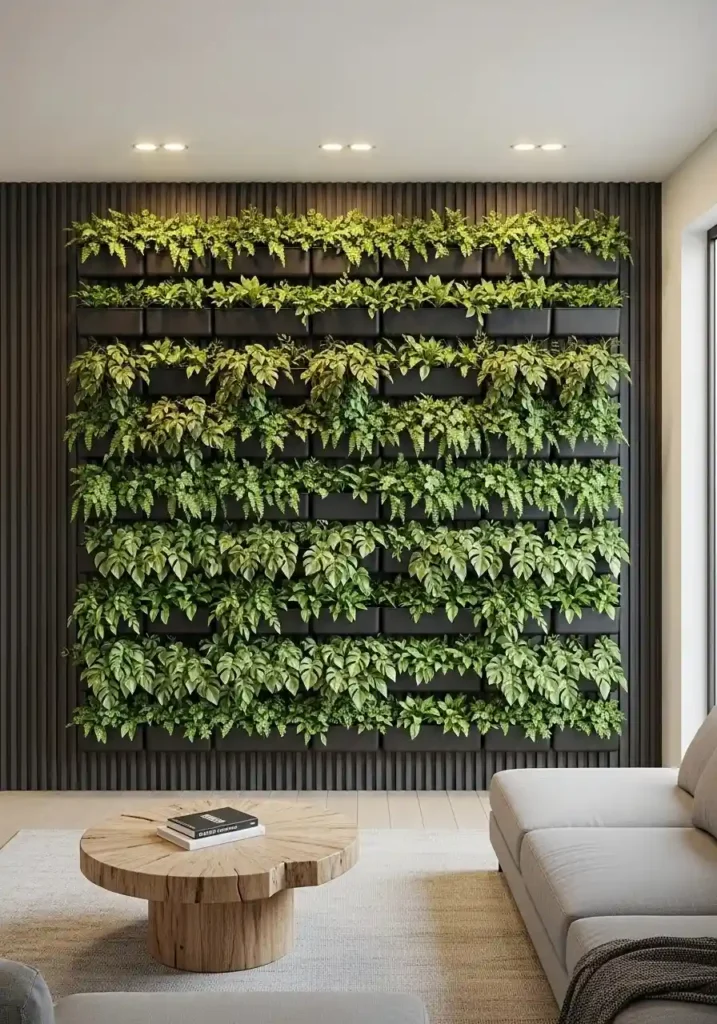
A plain wall in our living room had been blank for a year, and filling it with a vertical garden felt braver than it turned out to be. I started with a simple rail and five small hanging pots, mixing ferns, pothos and a spider plant so the textures varied from top to bottom. The wall now feels like a piece of art that changes as the plants grow, and visitors always ask about it first. I keep a small watering can nearby and water the top row first, catching any drips in the pots below. Start with five plants, not fifteen, and let the wall fill in over a season.
How to do it: Fix a wall rail or a row of hooks into studs, spacing the fixings evenly across the wall. Hang small pots in a mix of trailing and upright plants, putting the thirstiest plants lowest so drips water the row below. Water slowly with a long-spout can, and prune regularly to keep the wall tidy.
17. Hanging Plants in Workspace
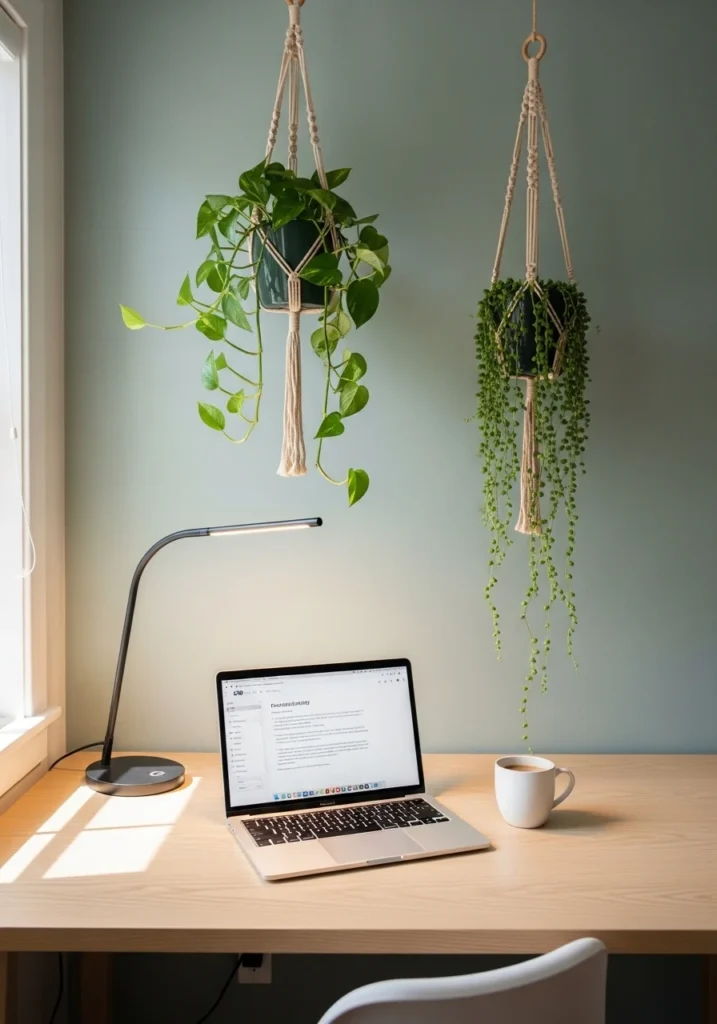
My desk used to be a flat, grey expanse of screen and paper, and one hanging plant above it made the whole corner feel kinder. I chose a pothos, because it forgives a missed watering when a deadline takes over, and I hung it to the side of the monitor so it never blocks the screen. Looking up at green leaves during a long afternoon genuinely helps me reset, in a way that another tab never does. I keep a small saucer under the pot and a watering can on the shelf, so looking after it takes less than a minute. If you work from home, start with one plant and see how the room changes.
How to do it: Hang one low-maintenance plant, such as pothos or a spider plant, from a ceiling hook or wall bracket beside your desk. Keep it clear of the screen and cables, use a pot with a saucer, and set a weekly reminder to check the soil. Trim the vines before they reach your keyboard or paperwork.
18. Luxury Hanging Planters with Gold Accents
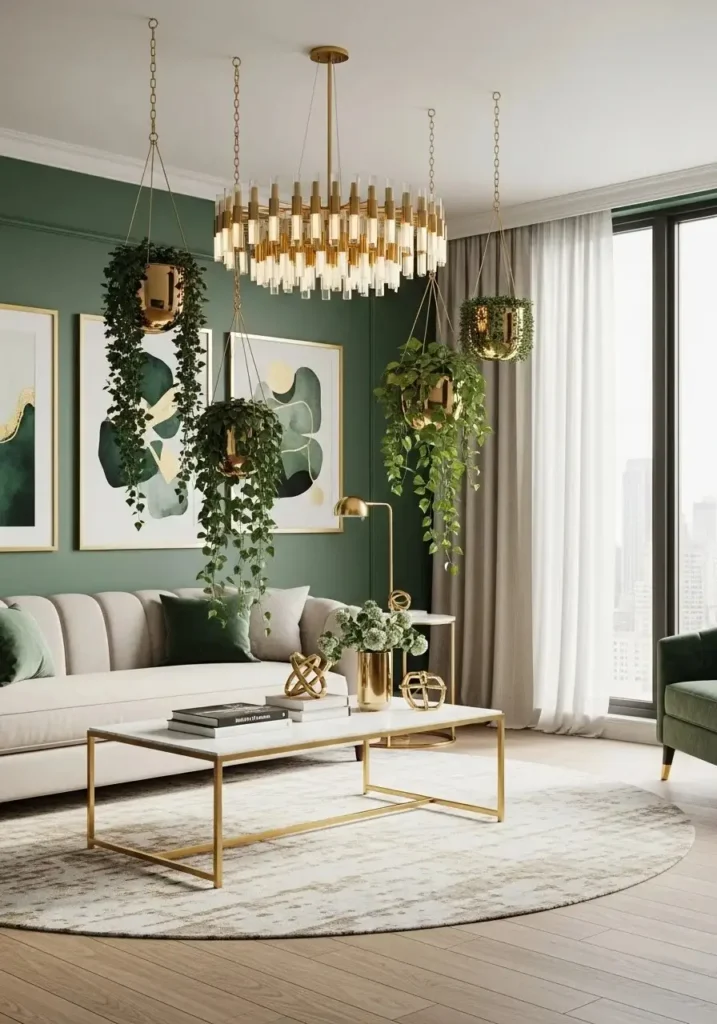
Gold planters are the one place where I allow myself a little drama, and in a room with warm wood and cream walls they earn it. I use just one gold planter, hung beside a mirror in the living room, with a deep green plant spilling over the rim. The metal catches the light in the afternoon and the green keeps it from feeling showy. One is enough, I have learned, because two gold planters start to compete with each other and with the room. I polish the planter with a soft, dry cloth when I dust, and I choose a plant with bold leaves so the pairing feels balanced.
How to do it: Choose one gold or brass planter with a clean shape, and hang it from a secure hook where afternoon light will catch it. Pair it with a bold-leaved plant such as a monstera or a large fern, keep the other pots in the room plain, and wipe the metal with a dry cloth to keep its shine.
Frequently Asked Questions
How do I hang plants indoors without damaging the ceiling?
Fix hooks into a ceiling joist whenever you can, because plasterboard alone will not hold a watered pot safely. For rented homes, use a tension rod, a curtain rod, a freestanding plant stand or adhesive hooks rated for the full wet weight. Always test the fixing with a full watering can before you hang the plant above furniture.
Which hanging plants are easiest for beginners?
Pothos, spider plants and philodendron are the most forgiving choices, because they tolerate missed waterings and a range of light levels. They also trail quickly, so you see results within weeks. Start with one of these, learn how its soil dries out in your home, and only then add a fern or a more demanding plant.
How often should I water hanging plants?
Most hanging plants need water every one to two weeks, but the right interval depends on the plant, the pot size and how warm your room is. Check the top 2–3 cm of soil with your finger, and water only when it feels dry. Hanging pots dry out faster than floor pots, because air moves around them on all sides.
Can hanging plants grow in low light?
Yes, some can, although they will grow more slowly and trail less than they would in bright, indirect light. Pothos, philodendron and ZZ plants cope best with a darker corner or a north-facing room. Keep them away from deep shade, rotate them towards the window every few weeks, and avoid overwatering, which is the usual cause of trouble in low light.
How do I stop hanging plants from dripping on furniture?
Always water hanging plants in the sink or bath, and let them drain for at least ten minutes before you hang them back. Use pots with drainage holes and a saucer, or keep a cache pot without holes as an outer sleeve. If a plant still drips, check that the soil is not waterlogged and that the pot is not sitting in standing water.
Your Hanging Plants Checklist
☐ Choose one spot and check how much light it gets through the day
☐ Find a ceiling joist or a secure wall fixing before you hang anything heavy
☐ Pick a lightweight pot with drainage holes and a saucer
☐ Start with an easy trailing plant such as pothos or a spider plant
☐ Hang the plant where you can lift it down easily for watering
☐ Water in the sink and let the pot drain for ten minutes before rehanging
☐ Turn the pot a quarter-turn each week so growth stays even
☐ Trim long vines and remove yellow leaves promptly
☐ Keep plants clear of beds, dining tables and door swings
☐ Check hooks, cords and knots once a month
☐ Group plants at different heights for a natural, layered look
☐ Step back, enjoy the green, and add a second plant only when the first is thriving
Conclusion 🌿
Hanging plants have changed the way I use the rooms in my home, because they put green exactly where my eye rests: above the bed, beside the kitchen window, over the dining table and in corners that once felt forgotten. You do not need a large house, a big budget or a perfect watering routine to enjoy them. One secure hook, one light pot and one forgiving trailing plant are enough to begin, and the rest of the ideas in this guide are there when you are ready for a second or third.
Start with the spot you look at most, hang the plant you will actually enjoy caring for, and let it settle in for a few weeks before you add more. Save your favourite ideas from this guide, check the hooks and cords as the plants grow heavier, and enjoy watching those first new leaves unfurl. Your home will feel calmer, greener and far more yours — one hanging plant at a time.
3 Comments