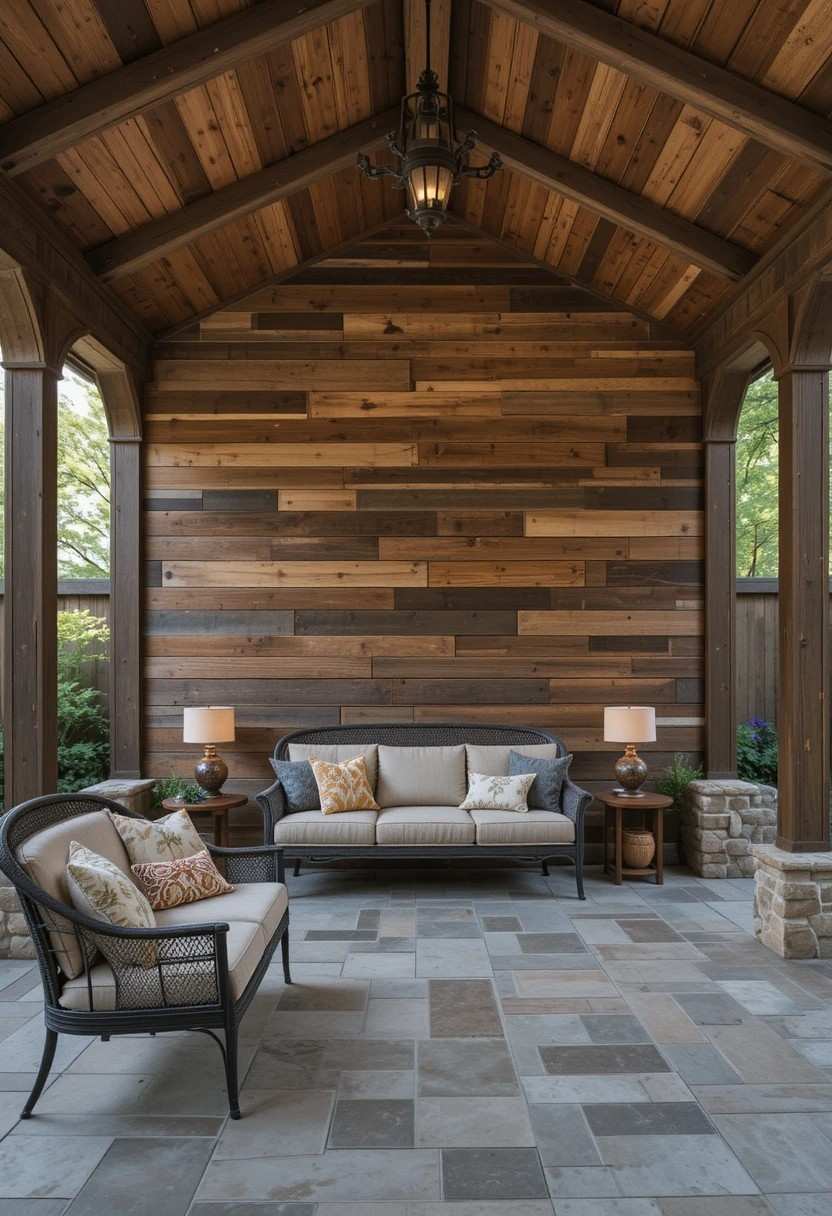
30 Outdoor Covered Patio Ideas to Create Your Dream Backyard Retreat
There is a particular kind of happiness in having a covered spot outside. It is the place you drink your coffee while it rains, where dinner stretches long into the evening, and where you can sit and listen to the garden without worrying about the sun or a sudden shower. A covered patio gives you the outdoors with a little protection built in, and that small bit of shelter is what turns an occasional space into one you actually live in.
The good news is that a dreamy covered patio does not have to mean a huge renovation. Some of these ideas are weekend projects, others are bigger investments, and a few are simply about styling what you already have in a softer, more inviting way. Wherever you are starting from, there is something here to move you closer to a backyard you love coming home to.
Below are thirty ideas grouped by feeling, from cozy and rustic to bright and modern.
Cozy and Inviting
1. A Soft Outdoor Living Room
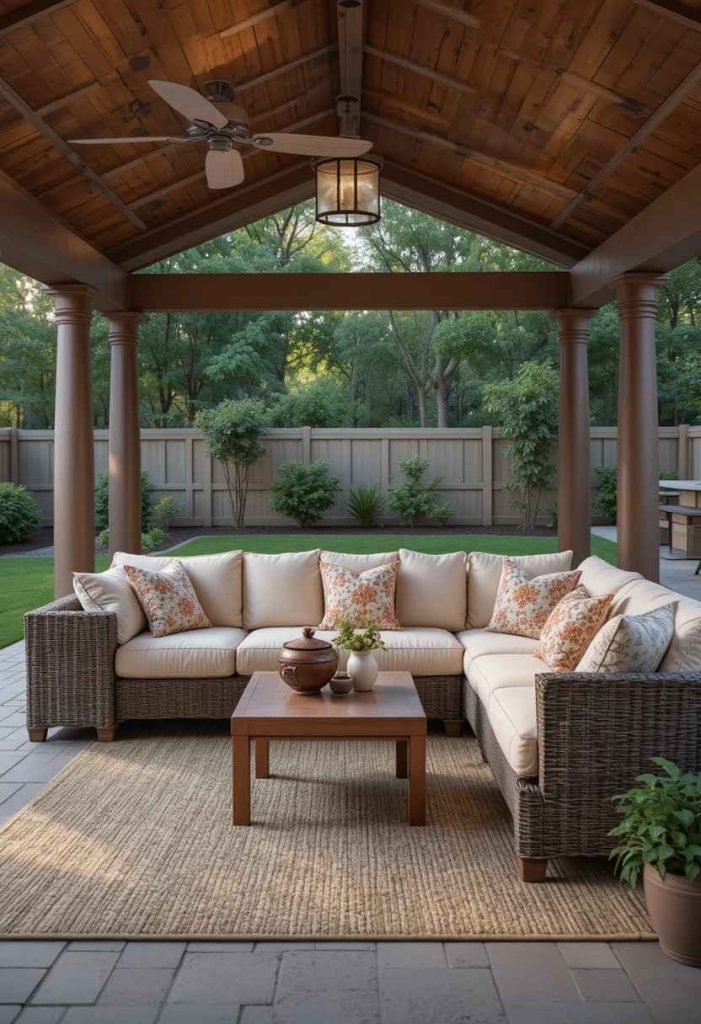
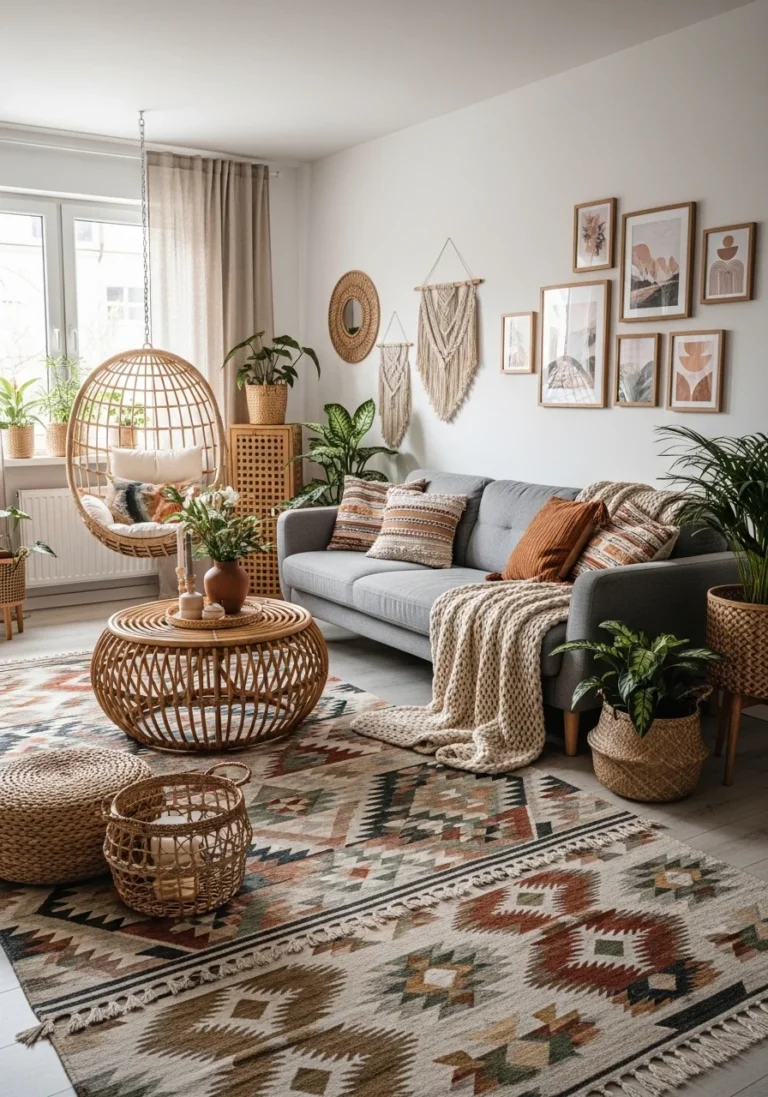
I have always thought the best patios borrow the comfort of the sitting room and simply move it outside, and this is the look I come back to most. A deep, low sofa with arms you can lean on, cushions in washable outdoor fabric, and a low coffee table for mugs and books will do more for a covered patio than any grand structure. I like a rug underfoot, even a simple woven one, because it stops the seating from floating on bare paving and makes the whole corner feel like a room. In the evening I pull a light throw over my knees, light a candle, and the space feels every bit as inviting as indoors, only with birdsong and fresh air.
How to do it: Measure the seating area first, then choose a deep outdoor sofa and two chairs that fit without crowding the walkway. Lay a weatherproof rug underneath, add washable cushions in two or three tones, and set a low coffee table in the middle. Finish with a folded throw and a lantern, and keep a small storage box nearby for cushions in wet weather.
2. String Lights Overhead
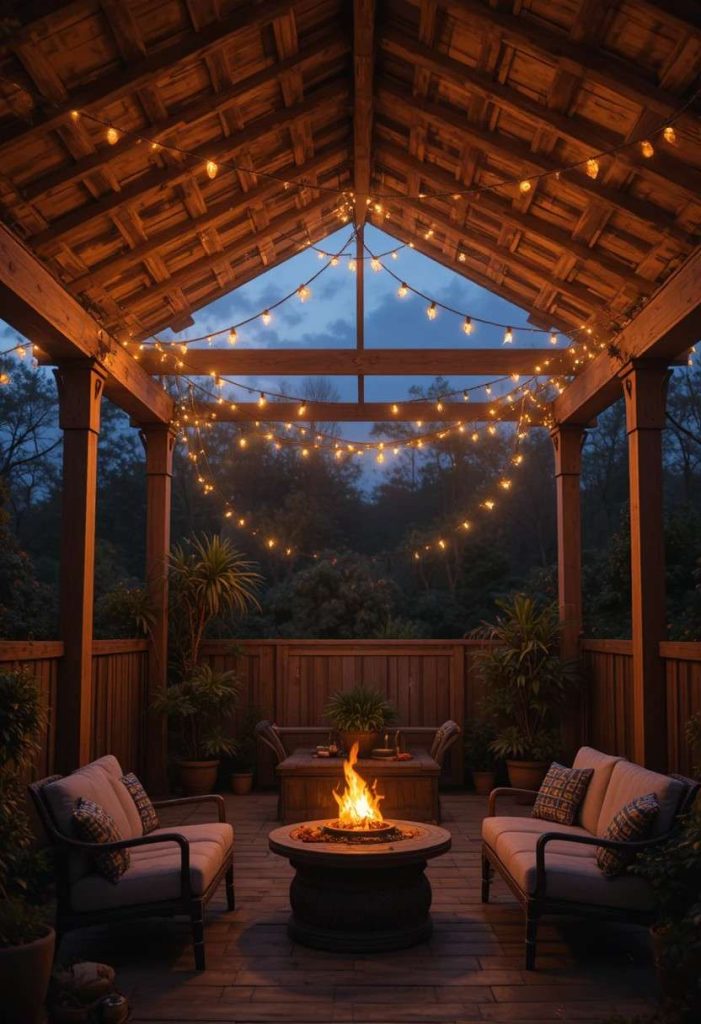
Few things change a patio as quickly as warm string lights, and I still remember the first evening I switched ours on. The whole space softened at once, and supper stretched happily past sunset because nobody wanted to go inside. I prefer warm white bulbs on a dimmer where possible, hung in gentle swags rather than pulled drum-tight, so the light feels relaxed instead of staged. For more low-cost inspiration, these cheap DIY patio decor ideas show how small touches can transform the space around the lights. Keep spare bulbs in a drawer, and the glow will carry you through many long evenings.
How to do it: Measure the span and buy outdoor-rated warm white lights a little longer than you need. Fix sturdy hooks or eye screws into beams or posts, then hang the strands in loose swags, keeping plugs and connections under cover. Plug them into an outdoor socket with a timer, test them at dusk, and adjust the sag until the glow feels even.
3. A Built-In Fireplace
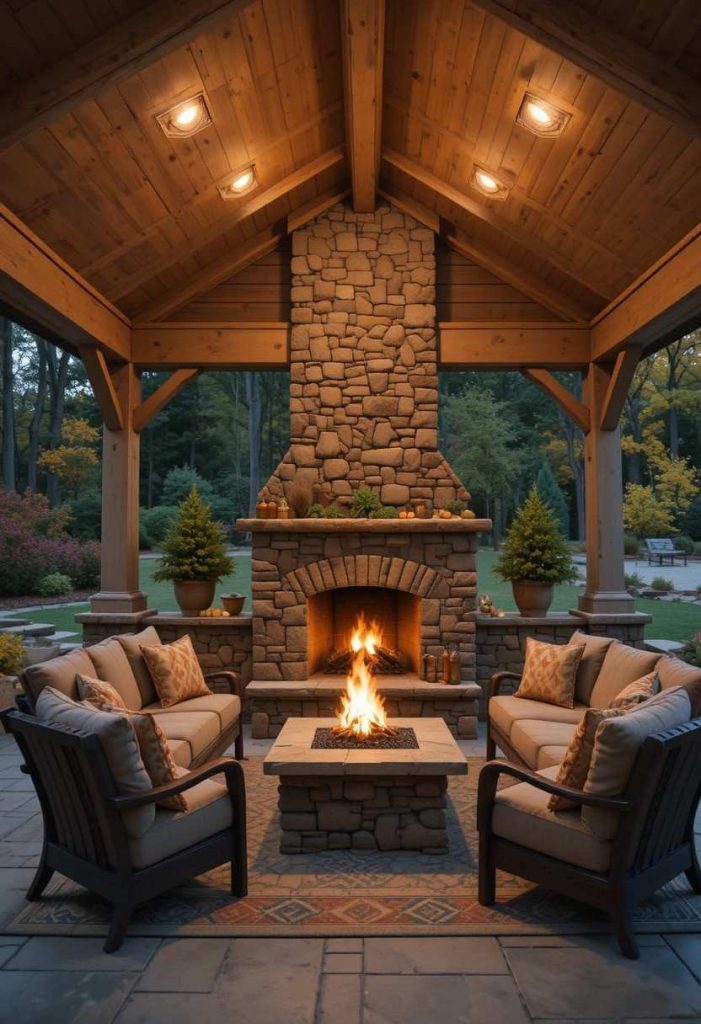
A fireplace turns a patio into a year-round retreat, and ours is the reason we still eat outside in October. There is something about the crackle and the flicker that slows everyone down, and guests naturally gather closer, phones forgotten, while the fire does the entertaining. I would always leave room for a log basket and a small hearth rug, because the practical details are what make a fireplace feel used rather than ornamental. Choose stone or brick that suits the house, keep the seating at a comfortable distance, and you will have a warm heart for the whole patio.
How to do it: Pick a sheltered wall or corner with clear space above the flue and good airflow. Have a qualified builder or installer fit a proper outdoor-rated fireplace with a safe hearth and chimney. Set seating about a metre from the opening, add a log store beside it, and keep a fireguard and a bucket of sand within easy reach.
4. Layered Outdoor Textiles
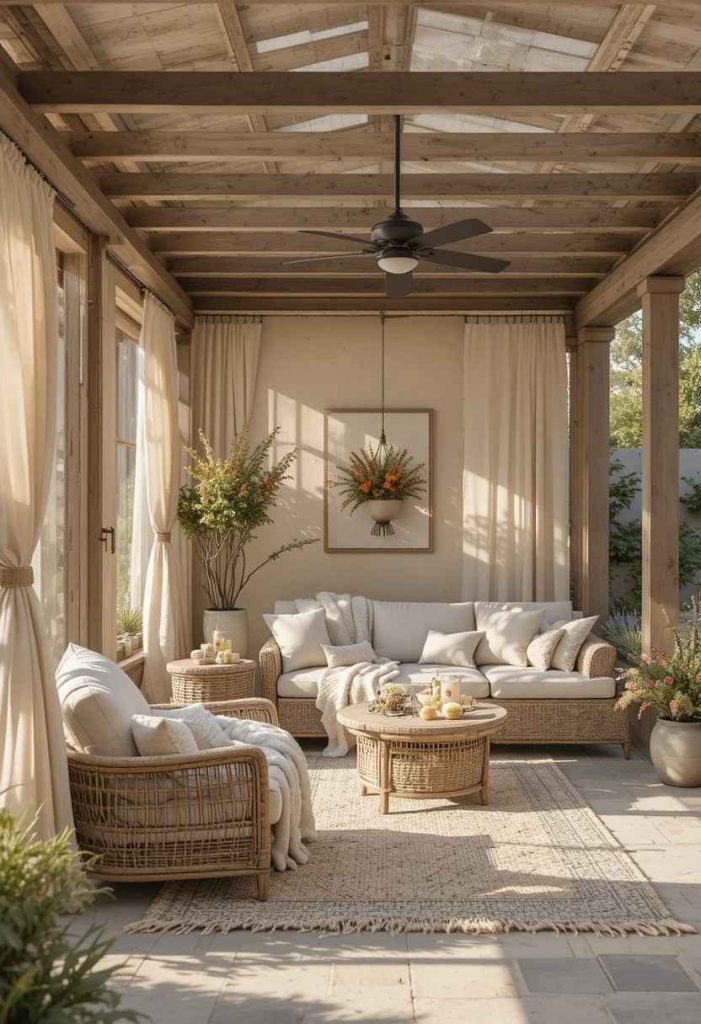
Textiles are the quickest way I know to make hard patio furniture feel soft and lived in. I layer a woven rug under the chairs, cushions in two or three patterns that share one colour, and a chunky throw folded over an arm so it is always within reach on a cool evening. Outdoor curtains are my favourite finishing touch, because they soften the edges of the cover and give a little shelter from low sun. The trick is to choose fabrics made for outdoors, in colours you already love indoors, so the patio feels like a natural extension of the house rather than a separate, harder space.
How to do it: Start with a weatherproof rug sized to the seating area, then add washable cushions in mixed patterns that share one main colour. Drape a throw over one chair arm and hang outdoor curtains from a wire or rod along the open side. Store soft items in a lidded box or under cover when heavy rain is forecast.
5. A Hanging Daybed or Swing
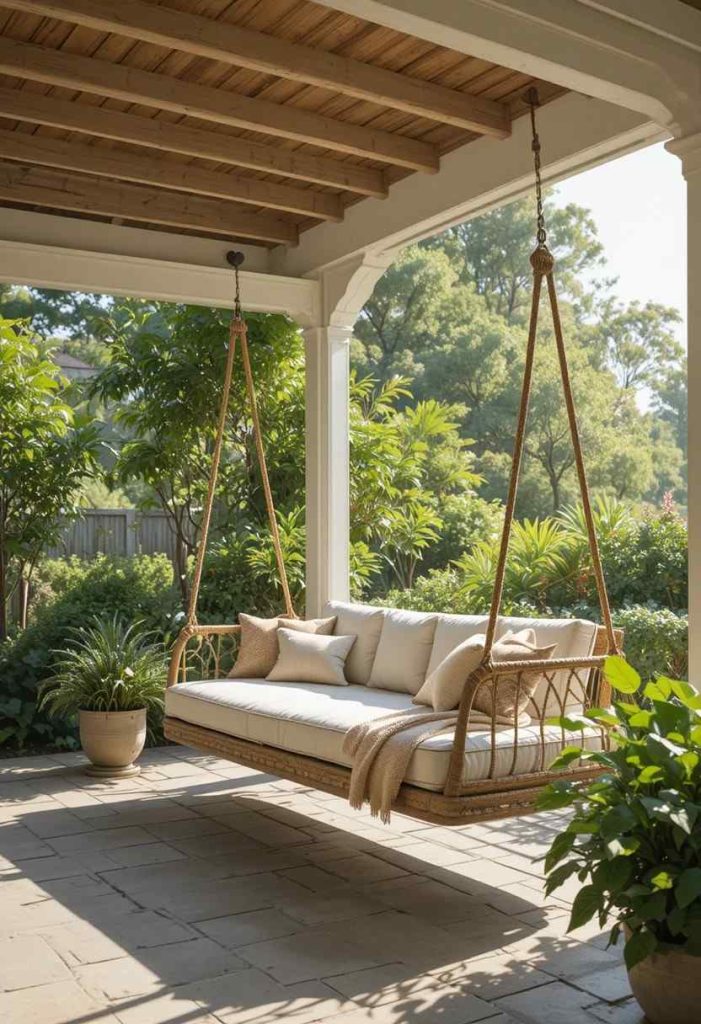
A hanging daybed is the seat everyone argues over, and I completely understand why. The gentle sway makes even a short sit-down feel like a proper rest, and I have lost count of the afternoons I meant to read one chapter and finished three. I dress ours with a firm mattress, washable covers, and plenty of pillows at the back so it works for reading as well as napping. Hang it where it catches a little breeze but stays out of the main walkway, and check the fixings every spring. It is a small luxury, but on a warm day it is the best seat in the garden.
How to do it: Check that the beam or frame can carry the weight, and use heavy-duty, outdoor-rated hanging hardware with lockable hooks. Hang the daybed level, about 30 cm off the floor, then add a firm outdoor mattress, washable covers and back pillows. Test it gently before use and re-check the fixings each season.
6. Warm Wood Ceiling
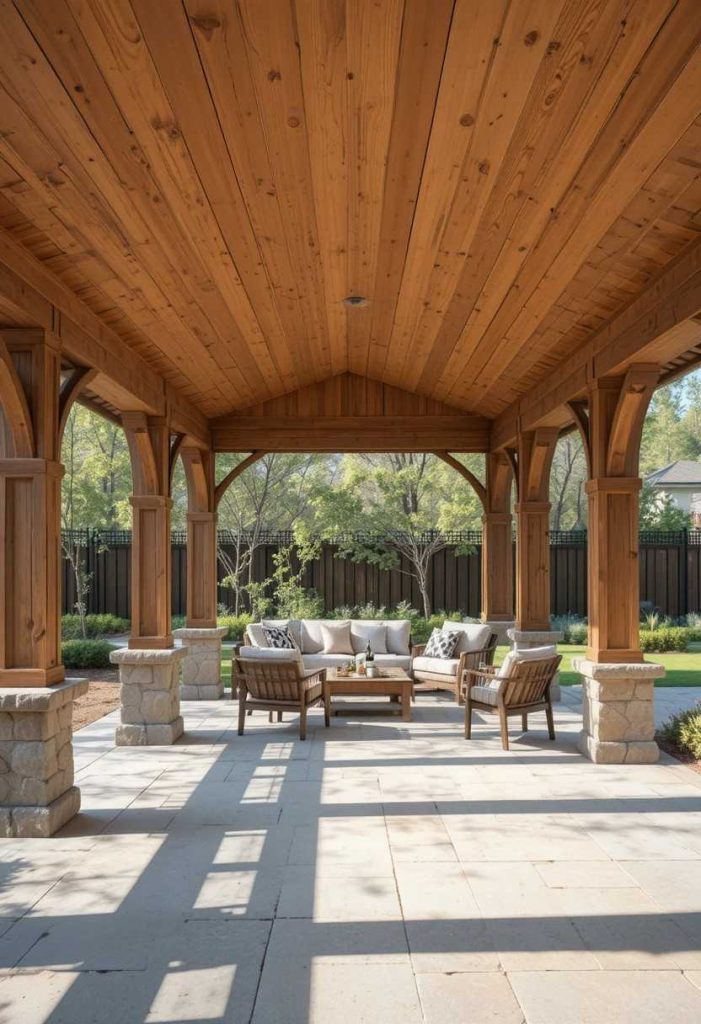
A wood plank ceiling is the detail that makes a patio cover feel finished rather than thrown up, and I notice it every time I sit underneath one. The warm tones soften plain posts and pale paving, and the lines of the planks draw the eye across the space so even a simple patio feels considered. I prefer a mid-toned wood with a clear seal rather than a dark stain, because it keeps the shade feeling light while still adding warmth. Pair it with simple furniture and a couple of lanterns, and the ceiling does much of the decorating for you, quietly, all year round.
How to do it: Choose exterior-grade tongue-and-groove boards in a warm mid-tone and seal all sides before fitting. Fix battens to the underside of the cover, then screw the boards in place, leaving a small gap for air movement. Seal the finished ceiling again, and add a slim downlight or two if the cover makes the space dark.
Natural and Garden Inspired
7. A Living Green Roof of Vines
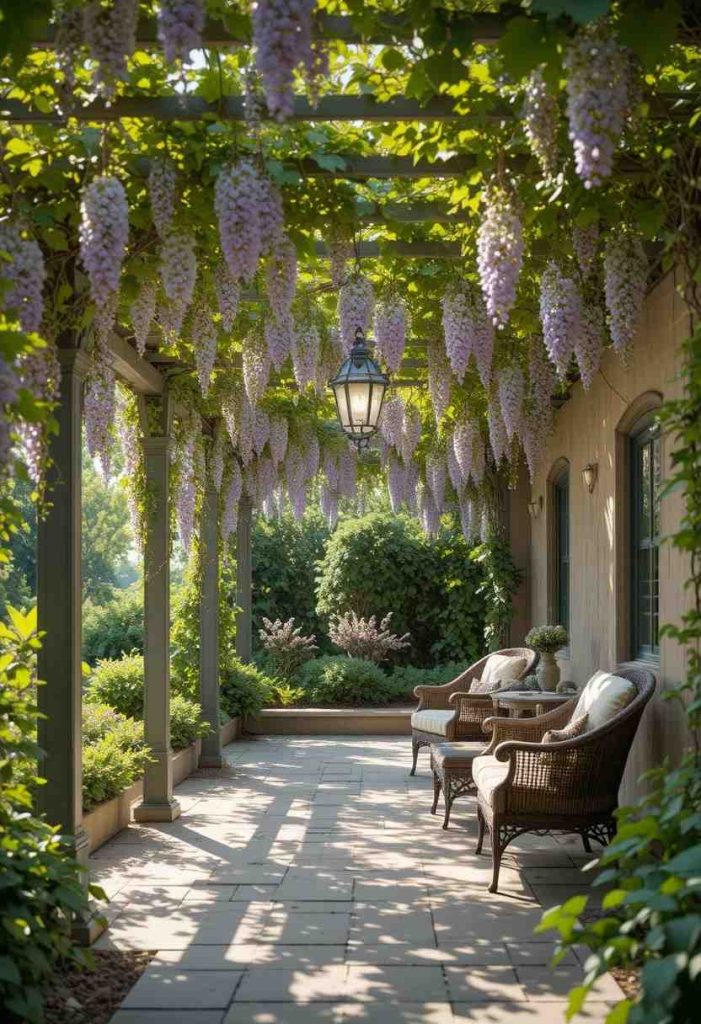
Letting vines grow over a pergola is the most patient kind of decorating, and it rewards you more every year. The first summer brings a light tracery of leaves, and by the third the cover feels like a green ceiling, dappled with shade and smelling faintly of flowers. I love star jasmine for its scent and wisteria for its spring drama, though grape vines are the practical choice if you also want fruit. Train the young stems along wires, prune once a year to keep the growth tidy, and be ready to wait a little. The shade it gives is softer and cooler than any fabric.
How to do it: Fix strong wires or a trellis across the pergola roof, then plant one climber per post in rich, well-drained soil. Tie young stems loosely to the wires as they grow and water well in the first year. Prune in late winter to keep the canopy open, and check the fixings as the vines gain weight.
8. Surrounded by Potted Plants
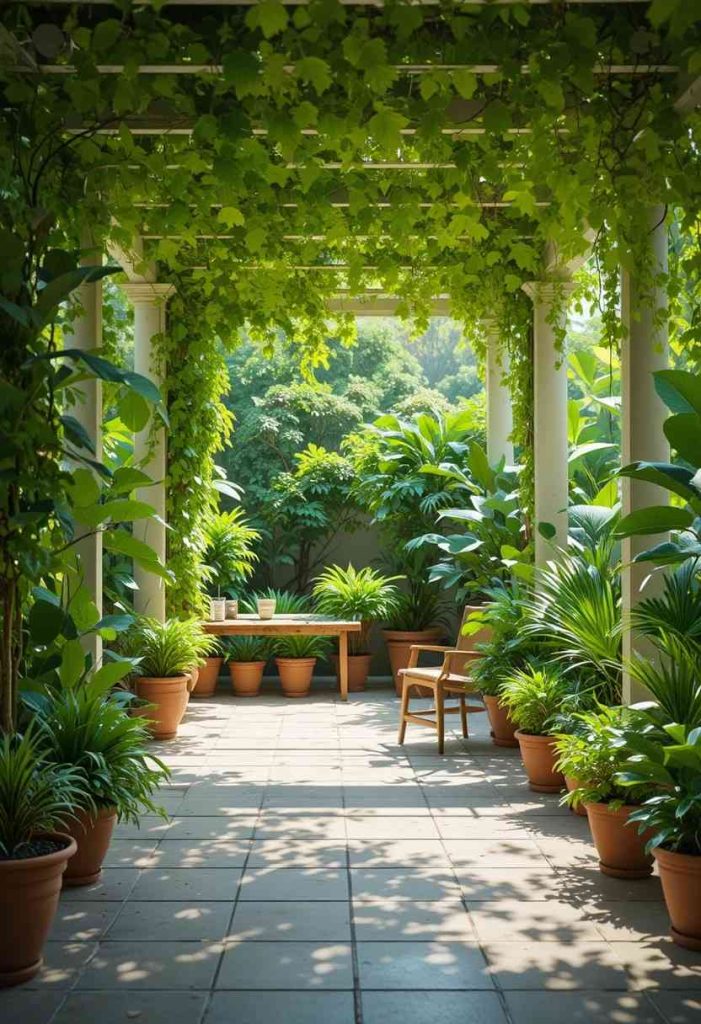
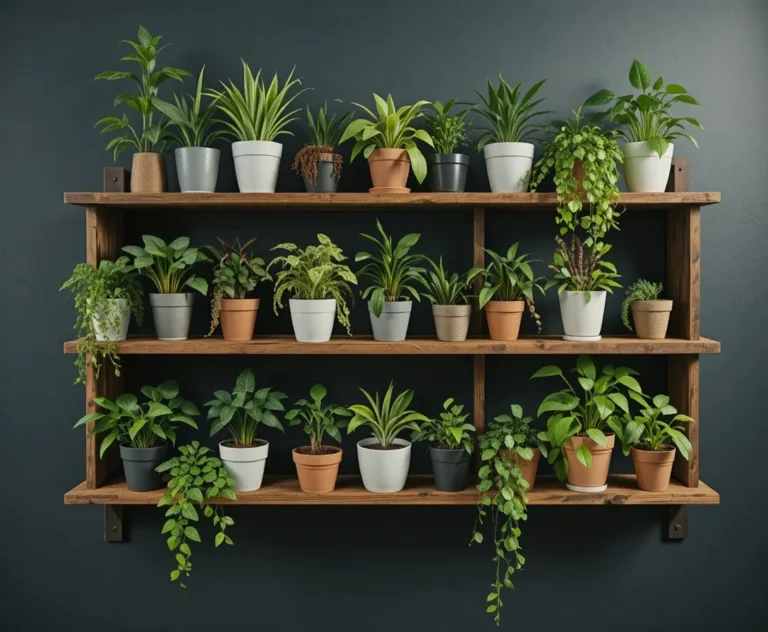
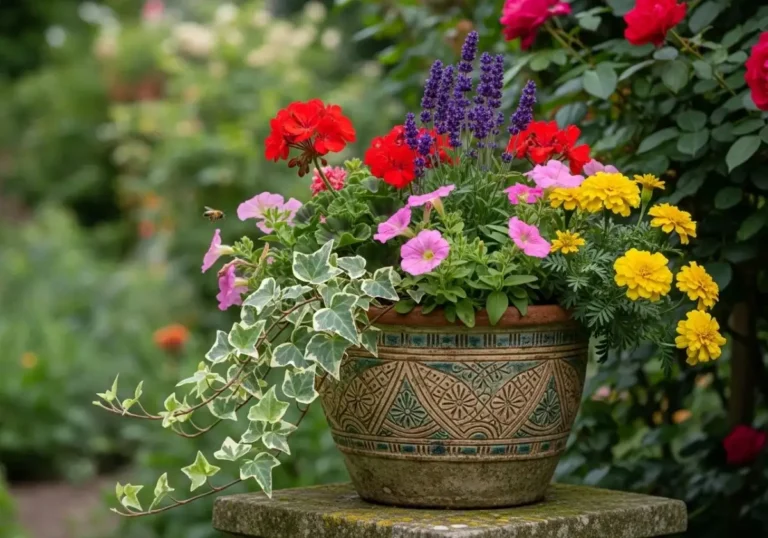
Pots are my favourite way to bring a garden right up to the patio chairs, because you can move them whenever the mood changes. I group them in threes and fives, mixing tall leafy plants in the corners with smaller herbs and flowers near the table, and I keep the pots themselves to two or three materials so the display feels calm rather than cluttered. Terracotta, stone and one dark glazed pot sit happily together here. Remember that pots under a cover dry out more slowly after rain but still need watering, so I check the soil with a finger and water deeply rather than little and often.
How to do it: Choose pots in different heights with drainage holes and saucers, then fill them with good potting mix. Place tall plants in the corners and smaller pots near the seating, grouping them in odd numbers. Water deeply when the top few centimetres of soil feel dry, and feed container plants monthly in the growing season.
9. A Vertical Garden Wall
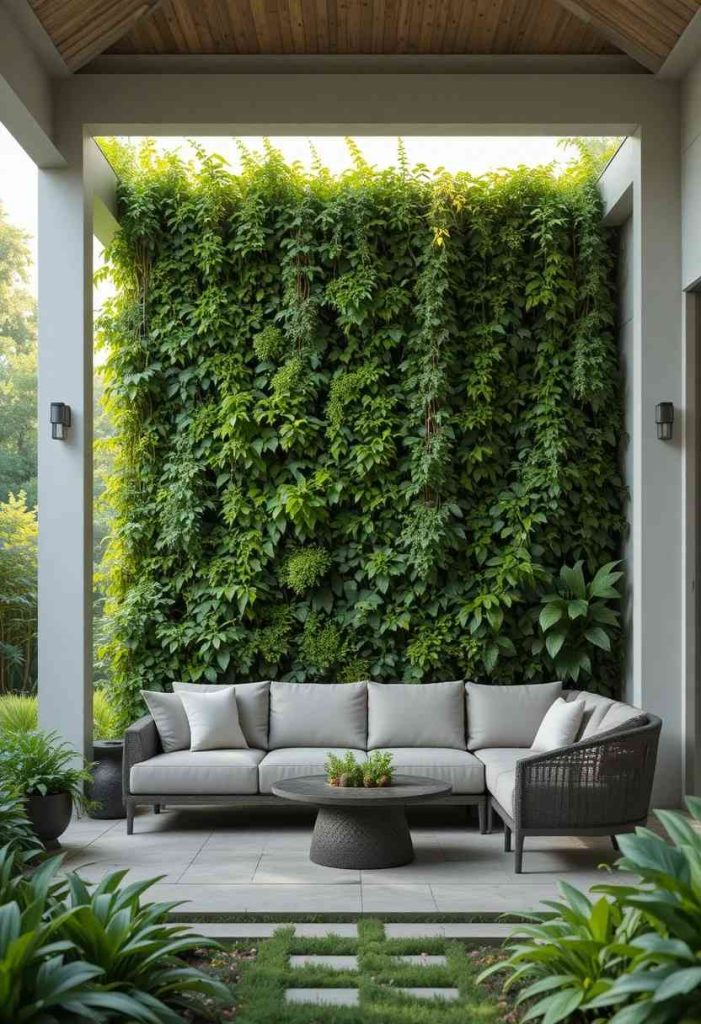
A living wall is the answer when the patio floor is already full but a bare wall is crying out for something green. I started with a simple pocket planter and a mix of ferns, trailing plants and herbs, and it quickly became the backdrop for every photograph taken out there. The trick is to choose plants that like the same light and water, and to keep the watering routine simple, because a wall that is hard to reach will soon be neglected. A small drip system or a watering can with a long spout makes all the difference, and the wall stays lush with very little fuss.
How to do it: Fix a pocket planter, trellis or wall planter to a sound wall, using plugs and screws that suit the wall type. Fill each pocket with potting mix and plant ferns, herbs and trailing plants that share the same light needs. Water from the top so the lower pockets catch the run-off, and trim trailing stems monthly.
10. Natural Stone Flooring
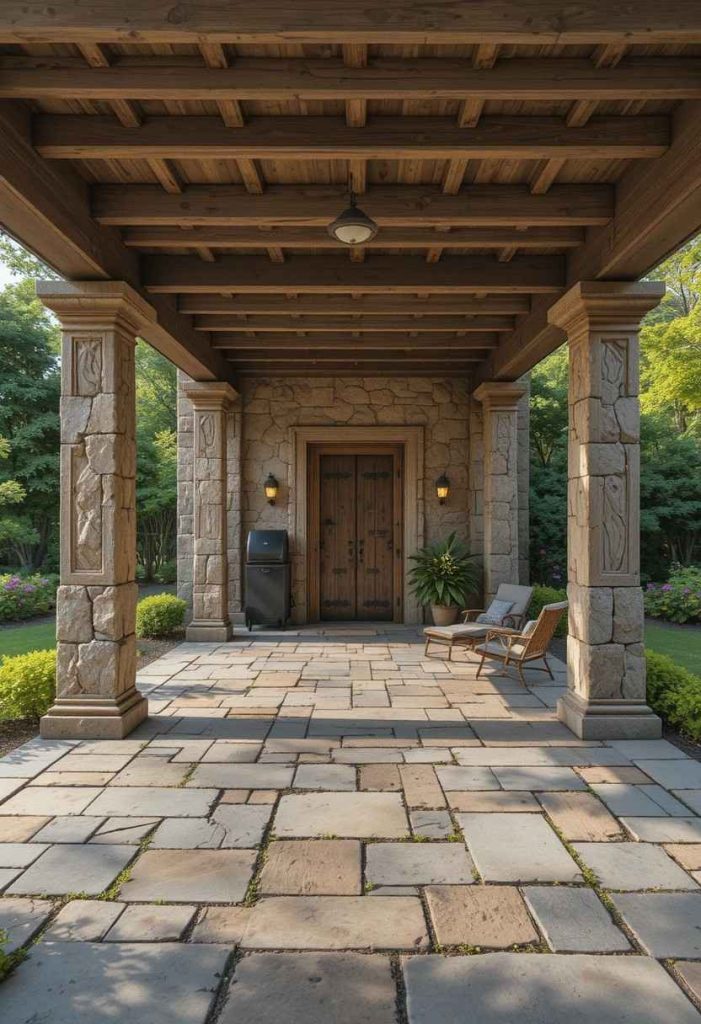
Flagstone underfoot changes the whole feel of a patio, because the uneven, organic surface connects it to the garden in a way that plain concrete never quite manages. I love how the stone stays cool on a hot day and how the colours deepen when it rains, and the gaps between the slabs are perfect for low creeping thyme. It is not the cheapest floor, so I would start with the seating area and extend it later if the budget allows. Around the edges, these gravel garden ideas show how loose stone can soften the border between patio and planting without much upkeep at all.
How to do it: Dig out the area to about 15 cm deep, then lay a compacted hardcore base and a layer of sharp sand. Set the flagstones with even joints, tapping each one level with a rubber mallet. Brush fine gravel or soil mixed with creeping thyme seed into the joints, then water the whole surface and let it settle.
11. A Bamboo or Thatched Cover

A bamboo or thatched roof brings an instant holiday feeling, and I think of it as the most relaxed cover you can choose. The light filters through in a soft, dappled pattern, and on a warm afternoon the shade feels cooler than a solid roof because the air can still move through it. It suits low, comfortable furniture, woven textures and plenty of plants, and it looks better with age as the bamboo silvers gently. Do check the structure underneath is sound and weatherproof, and plan to replace the thatch every few years. For a laid-back corner, though, nothing else feels quite so easy.
How to do it: Build or buy a sturdy frame with a waterproof layer underneath the bamboo or thatch. Fix bamboo poles or thatch panels tightly, overlapping them so rain runs off, and trim the edges neatly. Treat the bamboo yearly with exterior oil, and inspect the cover each spring for loose or worn sections.
12. A Water Feature Nearby

The soft sound of trickling water is what turns a patio from a seating area into a retreat, and I would not be without ours. A small wall fountain or a stone bowl with a solar pump is enough, and I like to place it where I can hear it from my usual chair without it dominating the conversation. Birds visit it too, which is a quiet joy in itself, and the sound masks traffic and neighbour noise surprisingly well. Keep it simple, keep it clean, and top it up in hot weather. A water feature asks for very little and gives back a sense of calm every single day.
How to do it: Choose a self-contained, solar-powered fountain or a small stone bowl with a pump, and set it on a level surface near the seating. Fill it with rainwater where possible, add a few pebbles to give birds a perch, and clean the pump filter monthly. Top up the water in hot weather and empty it before hard frosts.
Modern and Refined
13. Clean Lines and a Flat Roof

A flat roof with slim posts is the calmest kind of cover, and it suits a modern house beautifully. I like how the clean rectangle frames the garden like a picture, without fussy details competing with the planting, and how a low, straight-edged sofa and a simple dining table sit so naturally underneath it. The secret is in the proportions, so keep the posts slim, the roofline crisp, and the furniture low and uncluttered. A single sculptural plant in a plain pot is all the decoration this look needs, and the result feels grown up, quiet and easy to live with.
How to do it: Plan a flat roof with a slight fall for rainwater and slim steel or timber posts set on proper footings. Keep the roofline crisp with a fascia board, then furnish with low, straight-edged pieces in one or two materials. Add one sculptural plant in a plain pot, and hide cables and fixings for a clean finish.
14. A Louvered Pergola
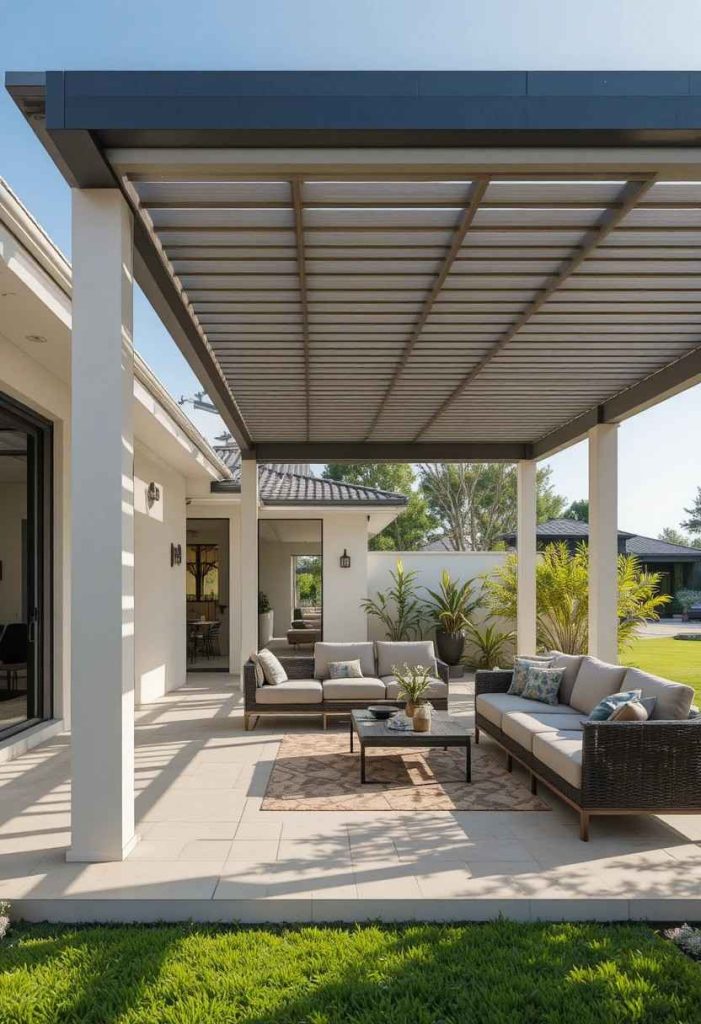
A louvered pergola is the cleverest cover I have used, because it lets me change the weather with a turn of a handle. Open the slats for morning sun over breakfast, angle them for dappled shade at midday, and close them tight when a shower passes over. It is an investment, so I would measure carefully, choose a size that covers the seating properly, and check the drainage, because a louvred roof that holds water will soon cause trouble. Once it is in place, though, it makes the patio usable in almost any weather, which is exactly what a good cover should do.
How to do it: Measure the seating area and choose a louvered pergola that covers it with room to spare. Set the posts on level concrete footings and fix the frame square and plumb. Fit the louvres to the maker’s instructions, check the drainage channels run clear, and test the handle or motor through its full range before furnishing.
15. Monochrome and Minimal
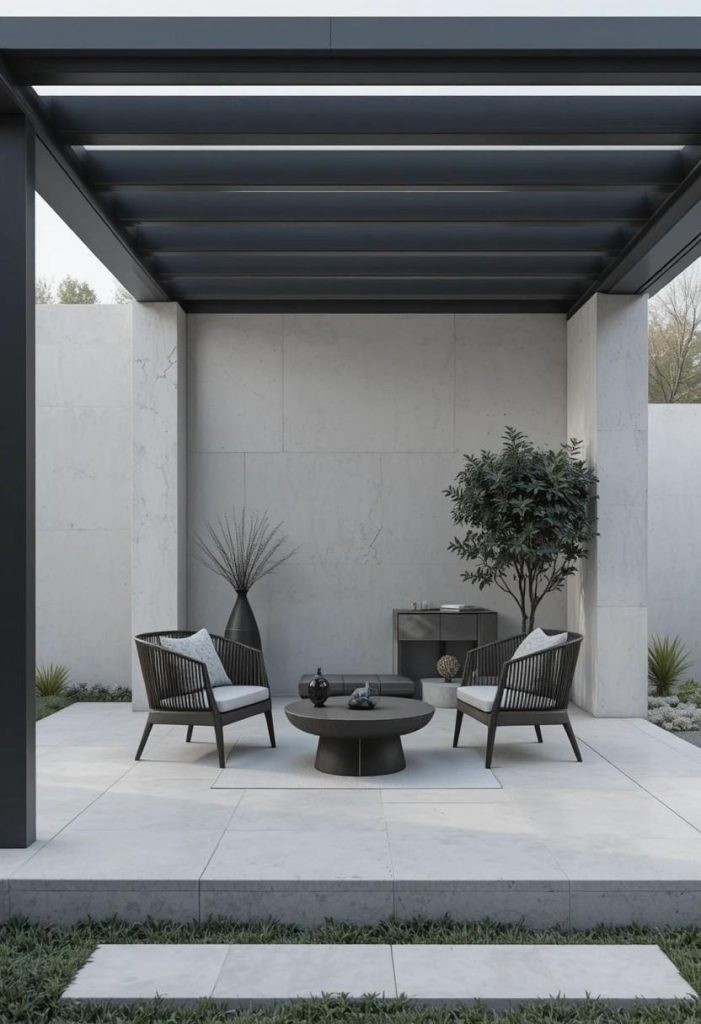
A quiet palette of greys, charcoals and soft whites is my choice when I want the patio to feel calm rather than busy. I keep the furniture simple, the cushions plain, and let texture do the work instead of colour, so a woven rug, a linen throw and a matt black lantern can carry the whole look. One green plant is enough to stop the scheme feeling cold, and I love how the monochrome backdrop makes the garden beyond it look brighter. It is also wonderfully forgiving, because a few leaves or a muddy paw print barely show, and the space always looks tidy with very little effort.
How to do it: Pick one main neutral, such as charcoal or soft grey, and use it across the furniture, cushions and pots. Add a second neutral for contrast and one green plant for life. Keep patterns to a minimum, choose matt finishes, and leave generous empty space around each piece so the calm palette can breathe.
16. An Outdoor Kitchen Setup
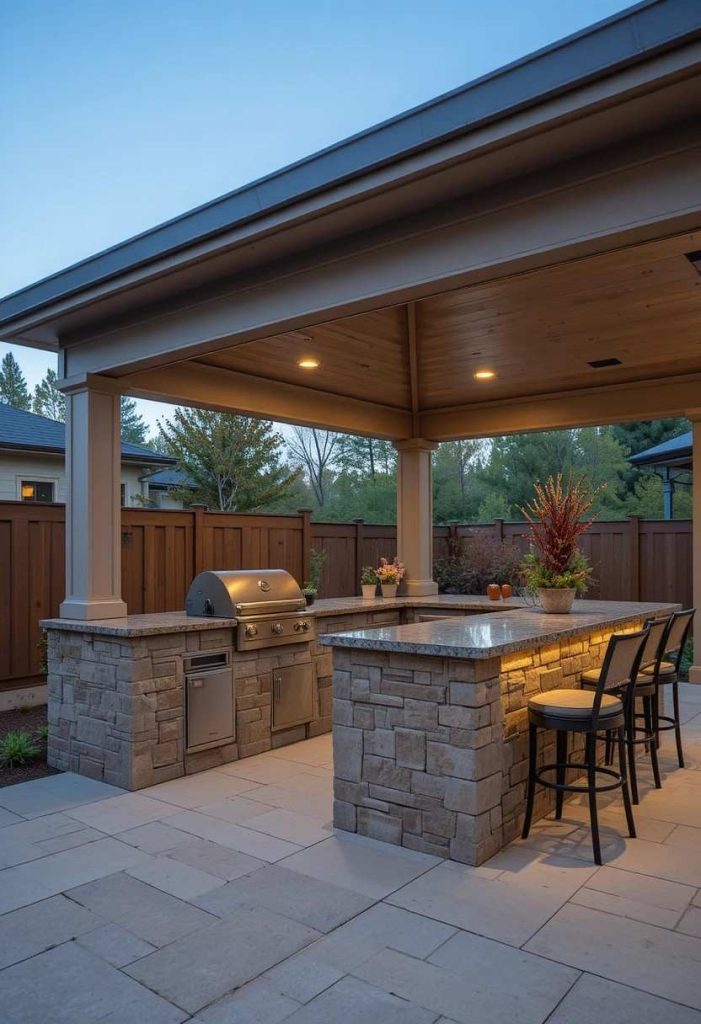
An outdoor kitchen is the idea that changed how often we eat outside, because once the grill, the counter and the stools are all under cover, there is no reason to run back indoors. I started small, with a good grill and a sturdy counter, and added a small sink and storage later, which is the order I would recommend. Keep the cooking zone near the edge of the cover for ventilation, and the seating where it can join the conversation. If you want to keep the cost down, these budget BBQ area ideas show how a simple grilling set-up can work beautifully without a full build. The result is a patio that feeds people properly.
How to do it: Set the grill near the open edge of the cover for ventilation, with a heatproof counter beside it for prep. Add a small sink or water jug, weatherproof storage for tools, and two or three stools on the opposite side. Keep a fire extinguisher nearby, and cover the grill and cushions when not in use.
17. Sleek Ceiling Fans
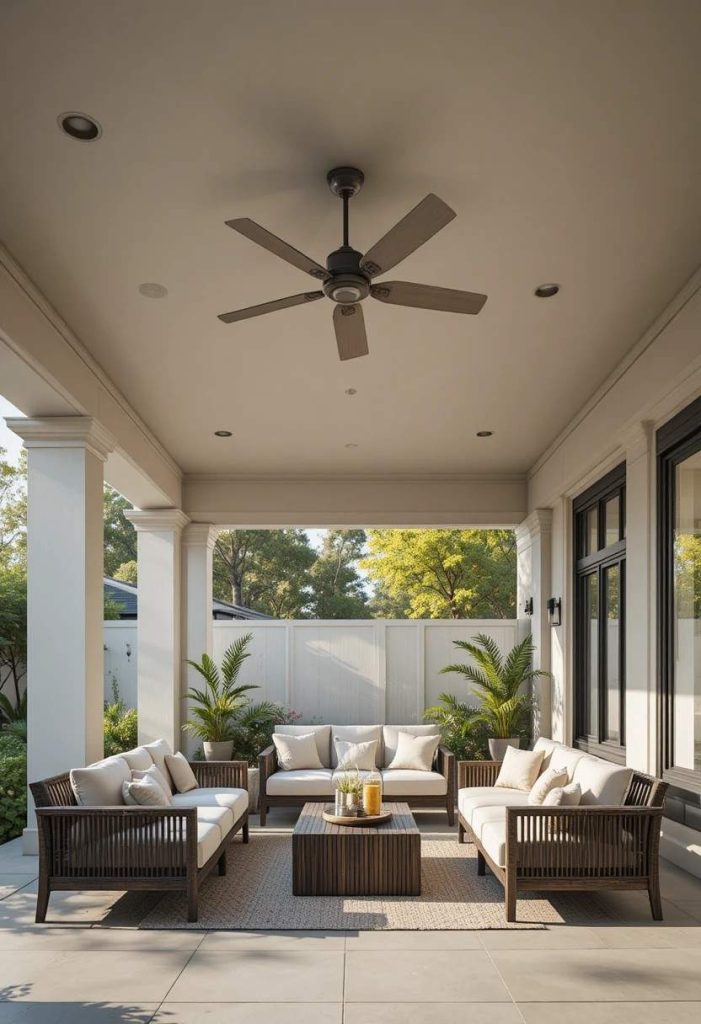
A ceiling fan is the quiet hero of a covered patio on a still, warm day, and I wish I had fitted ours sooner. It keeps the air moving without the noise of a portable fan, it helps keep midges away in the evening, and in winter, reversed, it pushes warm air back down from a heater. I choose a slim, outdoor-rated fan in a finish that matches the posts, with a remote control so I am not forever reaching for a pull cord. Mount it centrally over the seating, high enough to walk under safely, and it will earn its place every summer without ever drawing attention to itself.
How to do it: Choose an outdoor-rated ceiling fan sized to the covered area, with a remote control. Have an electrician fit it centrally over the seating, at least 2.1 metres above the floor, on a properly supported mount. Test all speeds, and clean the blades monthly so dust does not blow over the seating.
18. Glass Wind Panels
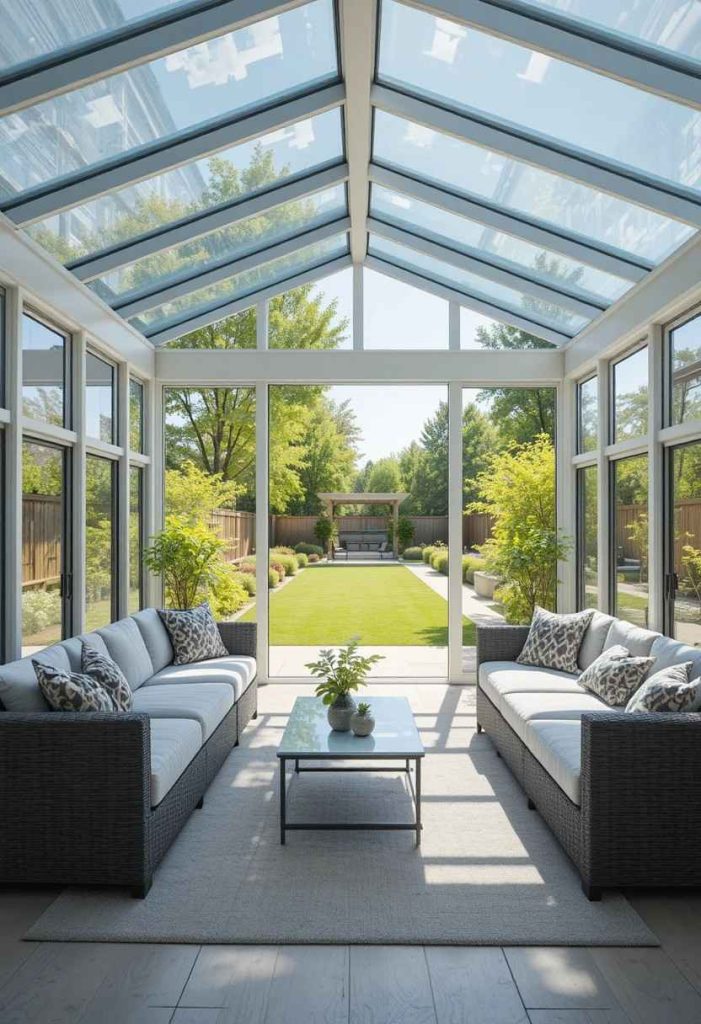
Glass panels are the answer for a patio that has a wonderful view but catches the wind, and I love how they solve the problem without hiding anything. They block the breeze, keep the warmth from a heater in, and still let you watch the garden, the sky and the sunset as if nothing were there. I would always use toughened safety glass, fitted properly into slim frames or channels, and I add a small decal at eye level so guests notice the panel before they walk into it. On a blustery evening, the difference between sitting behind glass and sitting in the open is the difference between staying out and going in.
How to do it: Measure the open sides and order toughened safety glass panels cut to fit slim channels or frames. Fix the channels level to the posts and floor, then lower the panels in with help and secure them with glazing rubber. Add a small decal at eye level, and clean the glass with a squeegee weekly.
Rustic and Charming
19. Exposed Wooden Beams
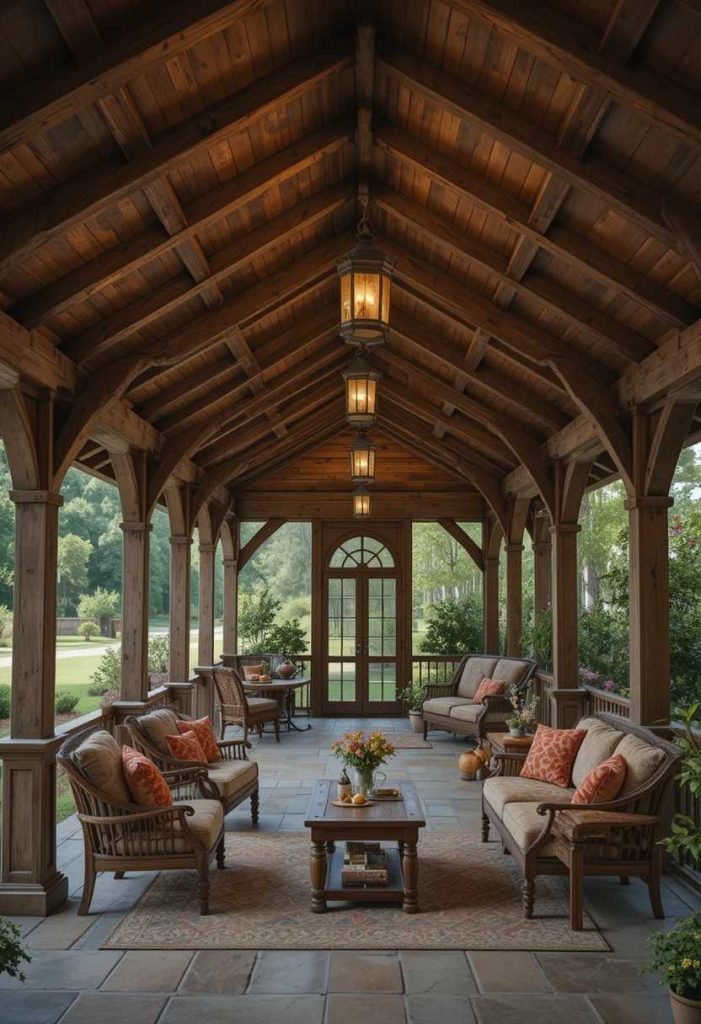
Heavy timber beams give a patio cover a handcrafted feeling that no slim metal post can match, and I love the way they age. The wood darkens gently, the grain shows through, and the whole structure feels as though it has always been part of the garden. I keep the furniture simple underneath, with linen cushions and a wooden table, so the beams can be the feature without competition. If you are building from scratch, ask for chunky sections and proper joints, because slim beams trying to look rustic never convince anyone. Sealed well, they will outlast most of the furniture beneath them.
How to do it: Choose chunky, exterior-grade timber beams and seal all sides before assembly. Set the posts on concrete footings, then lift the beams into place with help and fix them with proper timber joints and bolts. Check the structure is square and level, seal the finished wood again, and inspect the joints each year.
20. A Farmhouse Dining Spot
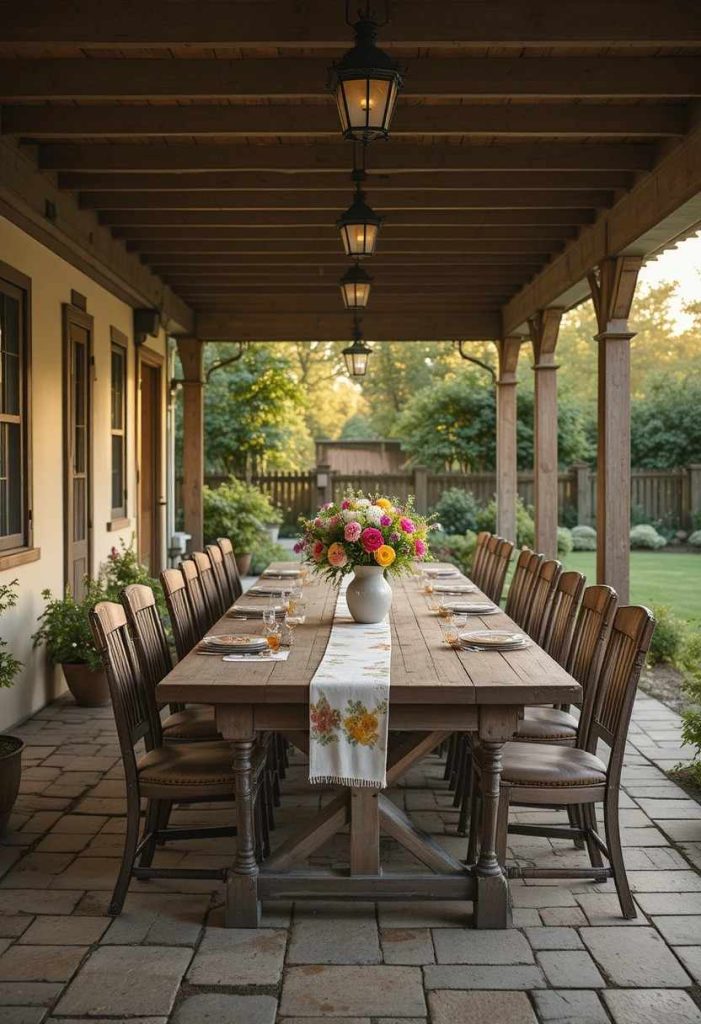
A long wooden table under the cover is where our slowest, happiest meals happen, and I would choose it over a formal dining room every time. Mismatched chairs, a jug of flowers from the garden, and a linen cloth that does not mind a crease are all it needs, and the cover means a shower never sends everyone scurrying indoors with their plates. I leave a bench along one side so extra guests can squeeze in, and I keep a lantern in the middle of the table for evenings that run long. It is not about perfection, it is about a table that invites people to sit down and stay a while.
How to do it: Choose a long, weatherproof wooden table and a bench for one side, with chairs for the other. Set it centrally under the cover with room to pull chairs out, then add a washable linen cloth, a jug of garden flowers and a lantern. Seal the table yearly and store the cloth indoors after wet meals.
21. Vintage Lanterns and Candles
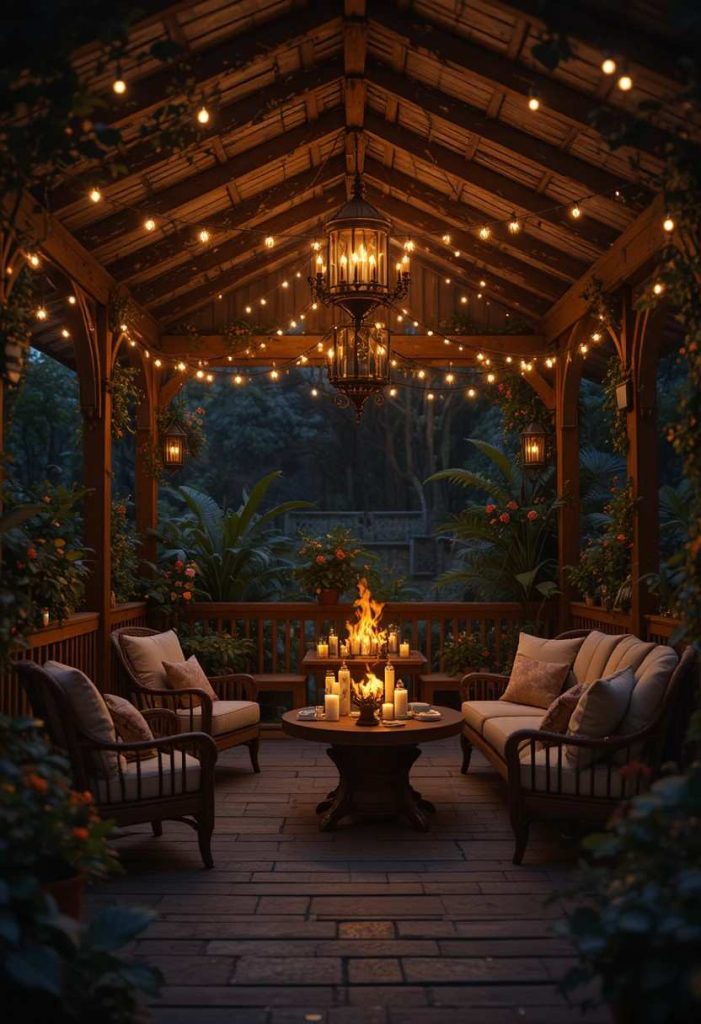
Vintage lanterns are my favourite evening light, because the flicker inside old glass feels softer and more romantic than any bulb. I collect them in different sizes, group two or three on a table or along a step, and use proper candles or good flameless ones when children are about. A lantern on the floor beside a chair is enough to read by, and a row of them along the edge of the patio marks the boundary beautifully after dark. Keep them out of the wind where you can, trim the wicks, and they will give you a glow that no electric light quite matches.
How to do it: Gather two or three lanterns in different heights and clean the glass well. Place the tallest near the seating and smaller ones along steps or the table edge, using real candles where safe or flameless candles with children around. Light them at dusk, trim wicks regularly, and store them under cover in wet weather.
22. A Reclaimed Wood Accent Wall
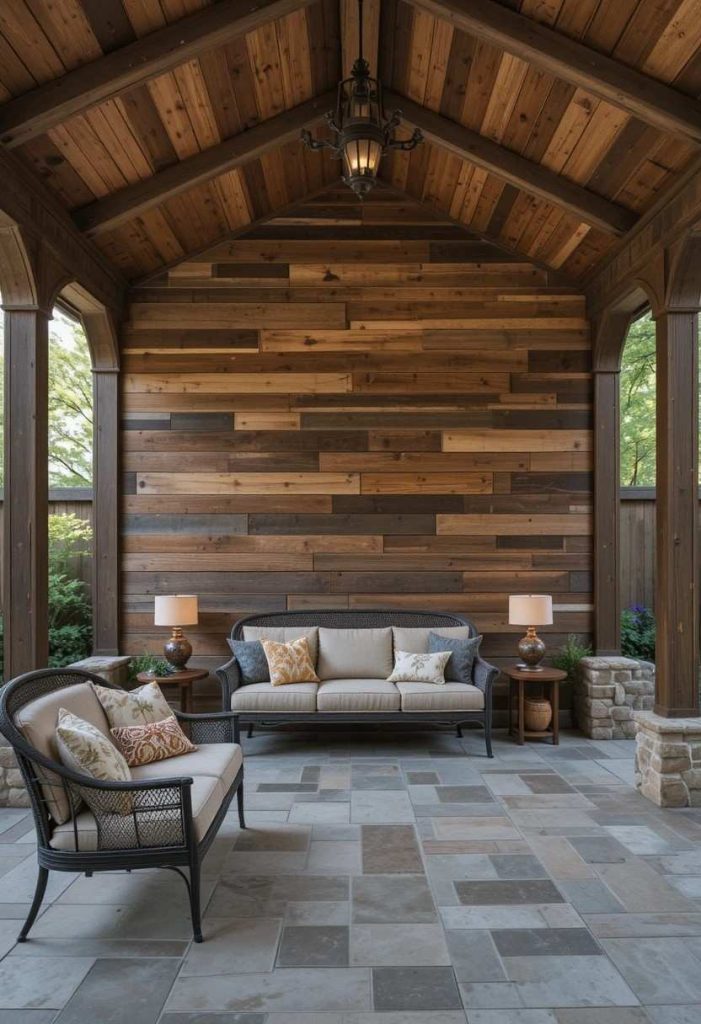
A wall of weathered, reclaimed wood is the feature I point to first when friends ask what changed our patio, because it gave the whole space warmth and history in a single weekend. Each board has its own colour and marks, so the wall never looks flat or new, and it makes a wonderful backdrop for a bench, a row of lanterns or a collection of pots. I seal ours well, because reclaimed wood outdoors needs protection from damp, and I keep furniture a few centimetres away so air can circulate behind it. It is the kind of wall that looks better every year.
How to do it: Source clean, dry reclaimed boards with no rot or nails, then sand them and seal all sides with exterior oil. Fix battens to the wall, then screw the boards horizontally with small gaps for air. Seal the finished wall again, and leave a gap behind any furniture placed against it.
23. Woven and Rattan Furniture
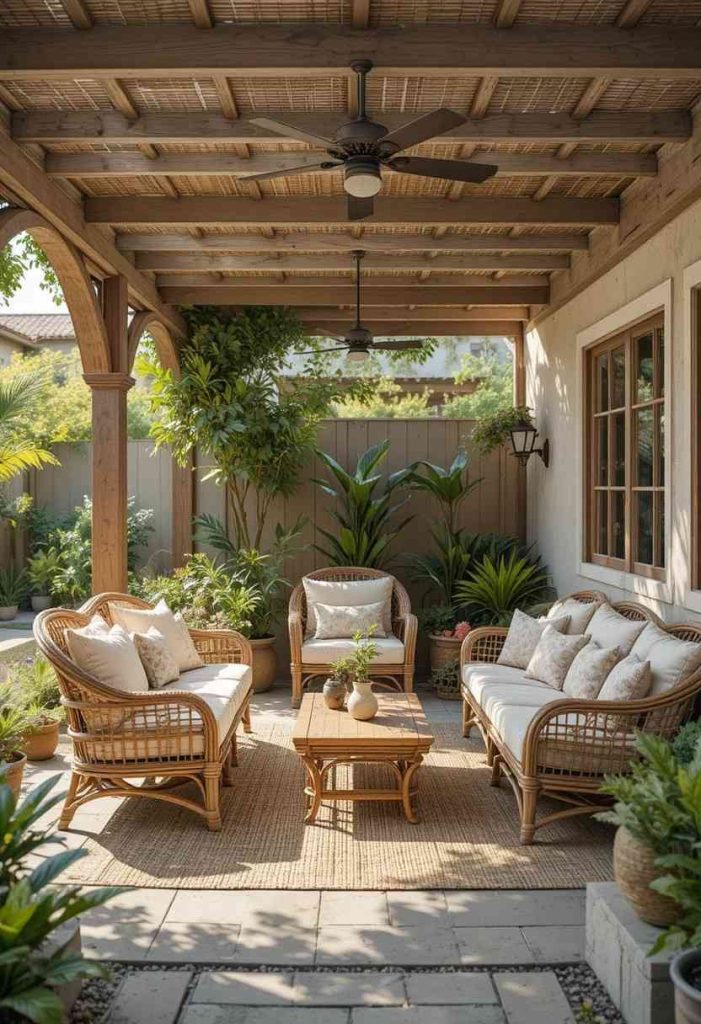
Rattan and woven furniture brings an easy, relaxed charm that suits a covered patio perfectly, and I reach for it whenever a space feels too hard or too formal. The warm tones and soft texture work with almost any colour, and the pieces are light enough to move when the sun shifts or extra guests arrive. I choose synthetic rattan for the pieces that stay outside all year, and keep natural rattan for the sheltered corner, because it lasts far longer that way. Add plain cushions in a colour you love, a small side table for drinks, and the whole corner feels like a holiday cottage garden.
How to do it: Choose synthetic rattan for pieces left outside all year and natural rattan for the most sheltered spots. Set a sofa or two chairs with a small side table, then add plain washable cushions and a throw. Brush the weave monthly, wash it with soapy water in spring, and cover the set in winter.
Small Space Solutions
24. A Cozy Balcony Cover
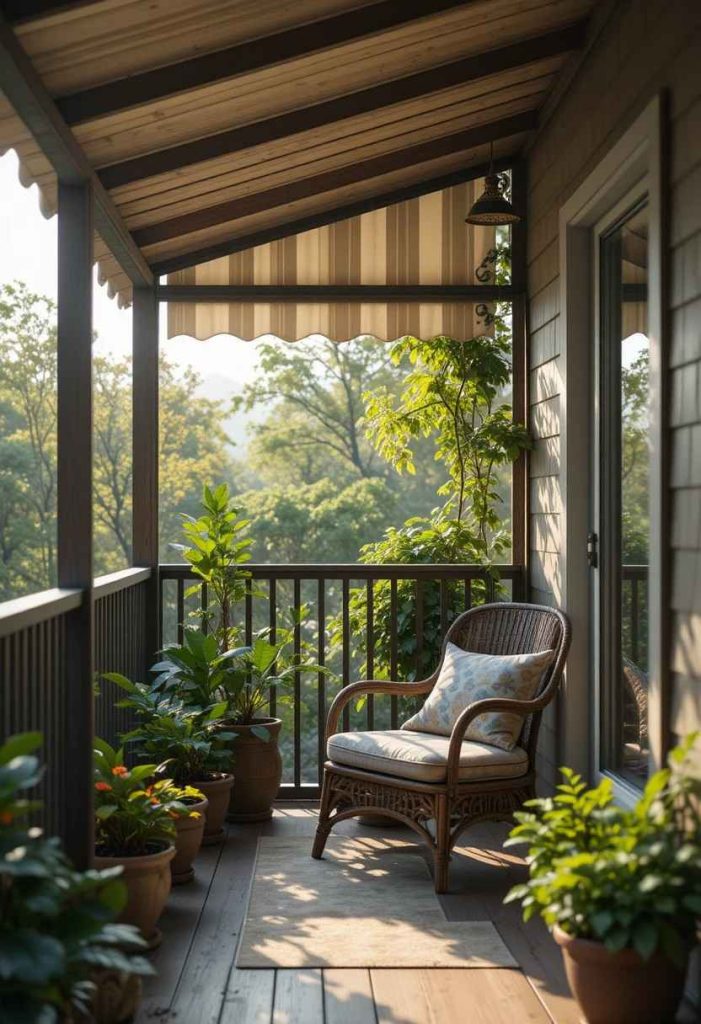
Even the smallest balcony deserves a little shelter, and a simple awning changed how often I use ours. One comfortable chair, a small side table, and a pot of herbs are genuinely enough, and the cover means I can sit out in a light shower with a book and feel wonderfully smug about it. I keep everything slim and foldable so the space never feels crowded, and I choose one soft colour for the cushion and the pot to tie it together. Measure carefully before you buy anything, because a chair that is two centimetres too wide can make a balcony feel impossible, while the right one makes it feel like a retreat.
How to do it: Measure the balcony carefully, then fit a retractable awning or a fixed canopy rated for your building. Choose one slim, foldable chair and a small side table that fit with room to walk past. Add a pot of herbs and a cushion in one soft colour, and fold the furniture away in high winds.
25. A Foldaway Bistro Setup
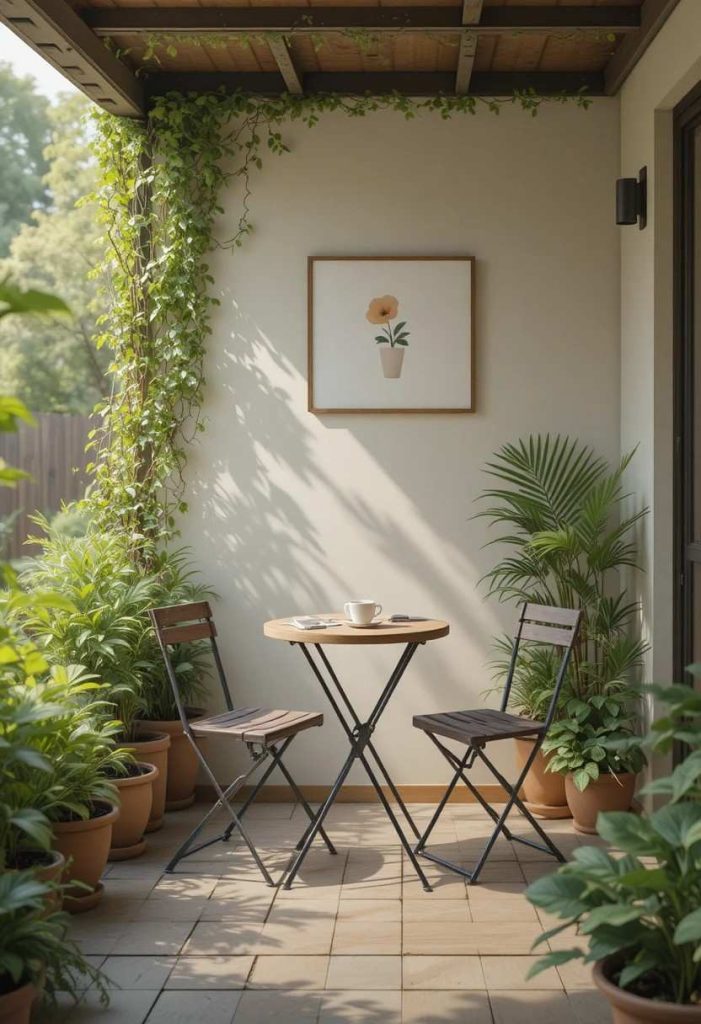
A foldaway bistro set is the kindest solution for a tight patio, because it gives you a proper place for coffee without giving up the whole space. I keep ours folded against the wall most of the week, and in two minutes it is open, with two chairs, a small table, and room for a pot of coffee and the morning paper. Choose a set that folds flat, with a table that is stable enough for a full mug, and keep it under the cover so it stays dry and ready. It is a small idea, but it is the one that turned our narrow patio from a walkway into a place where I actually sit down.
How to do it: Measure the spot and choose a folding bistro table and two chairs that fold flat against the wall. Check the table is stable with a full mug on it, then set it in the most sheltered corner. Add thin seat cushions and a small pot, and fold the set away when you need the floor space back.
26. A Corner Pergola Nook
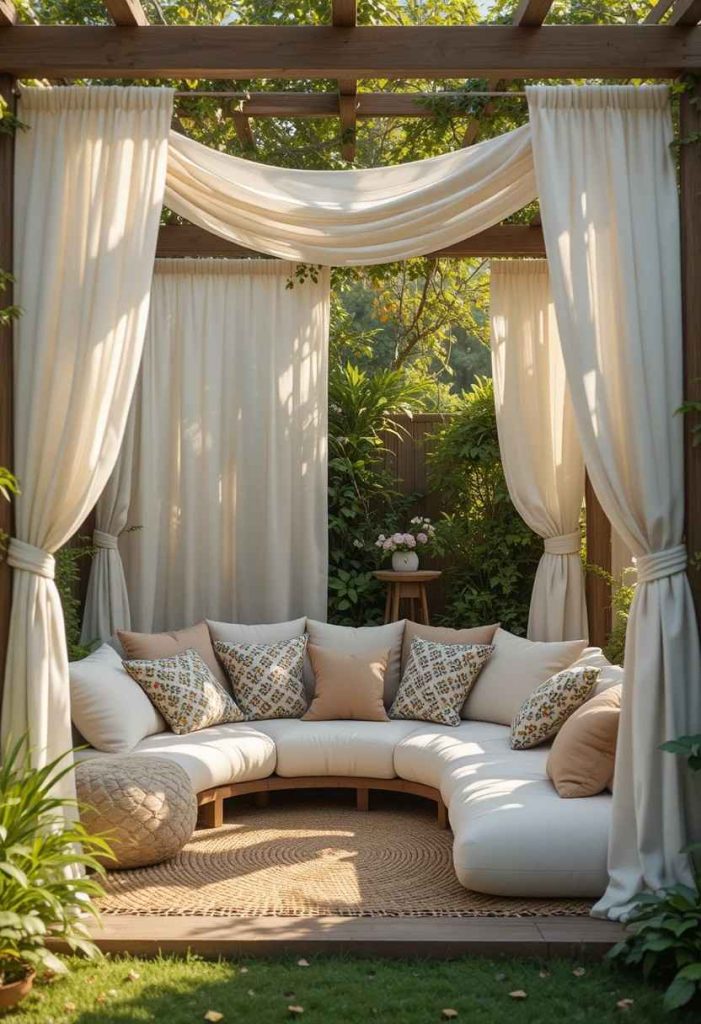
A small pergola tucked into a corner is my favourite way to make a big garden feel intimate, because it creates a room within the garden. I fill ours with deep cushions, a low table and a lantern, and it has become the spot where I take my first coffee and my last quiet ten minutes of the day. A climber on one post will soften it within a season, and a sheer outdoor curtain on the open side gives privacy without blocking the breeze. Keep the scale small and the furniture low, and the nook will feel cosy rather than cramped, a private corner that is entirely your own.
How to do it: Choose the sunniest corner and set a small pergola on level footings, leaving room to walk around it. Add a low bench or two cushions, a small table and a lantern, then plant a climber at one post. Hang a sheer outdoor curtain on the open side for privacy, and keep the furniture low so the nook feels cosy.
27. Vertical Storage and Style
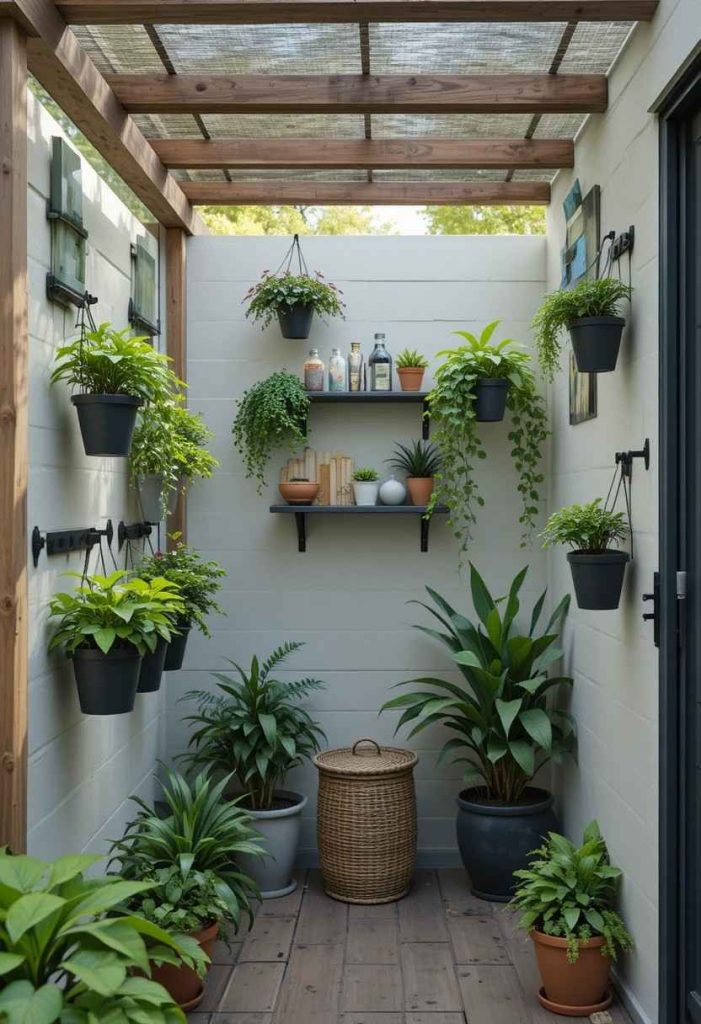
In a small covered space, the walls are the storage, and learning to use them changed our patio completely. Wall hooks hold lanterns and tools, hanging planters bring green down to eye level, and a slim shelf keeps books, sunscreen and a jug within reach without taking a single centimetre of floor. I keep everything within arm’s reach of where it is actually used, and I label nothing, because if it is not easy to grab, it will not be put away. The result is a patio that stays tidy, because everything has a place, and a floor that stays clear for chairs and bare feet.
How to do it: Fix sturdy wall hooks, a slim shelf and hanging planters to the posts or wall, using outdoor-rated fixings. Hang lanterns and tools on the hooks, keep books and sunscreen on the shelf, and plant trailing herbs in the hanging planters. Keep heavy items low, and check the fixings each spring.
Special Touches
28. A Patio Fire Pit Lounge
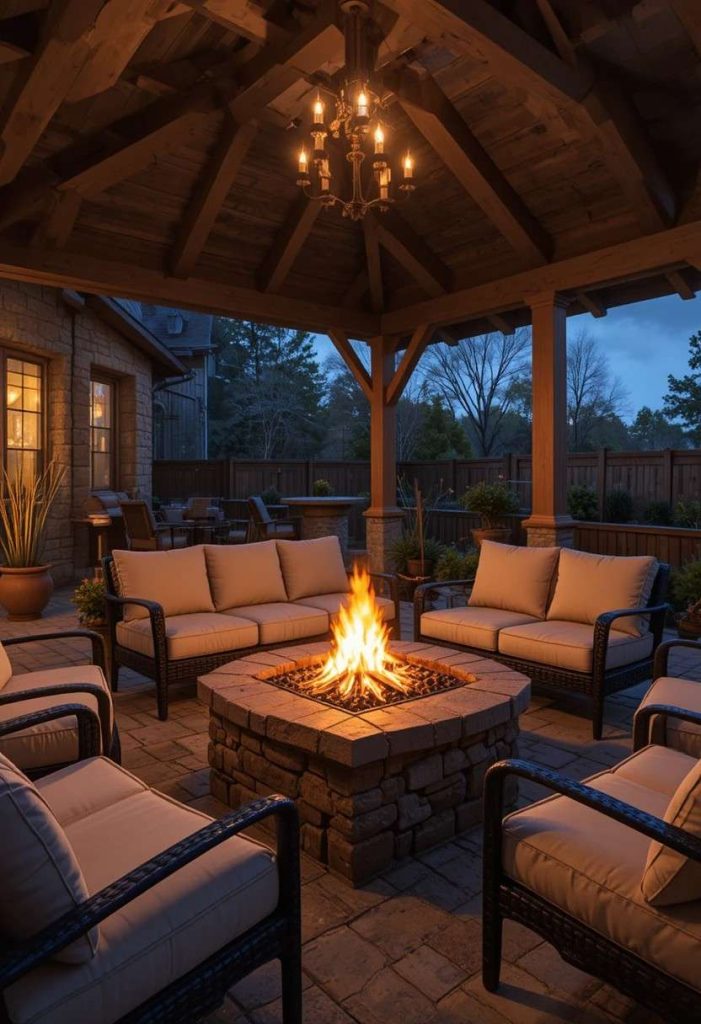
A fire pit under the cover is the gathering spot that turns an ordinary evening into an occasion, and ours has hosted more good conversations than any room in the house. I arrange low, comfortable chairs in a loose circle, keep a basket of blankets nearby, and always have a bucket of sand within reach, because safety should be part of the furniture, not an afterthought. Check that your cover is high enough and well ventilated before you light anything, and choose a smokeless fire pit if the space is enclosed. On a cool night, with the fire low and the stars above the open side, there is nowhere better to be.
How to do it: Check the cover is high enough and well ventilated, then set a smokeless fire pit on a heatproof base in the centre. Arrange low chairs in a loose circle, add a basket of blankets, and keep a bucket of sand and a fire extinguisher nearby. Light it only in calm weather and never leave it unattended.
29. A Hammock Corner
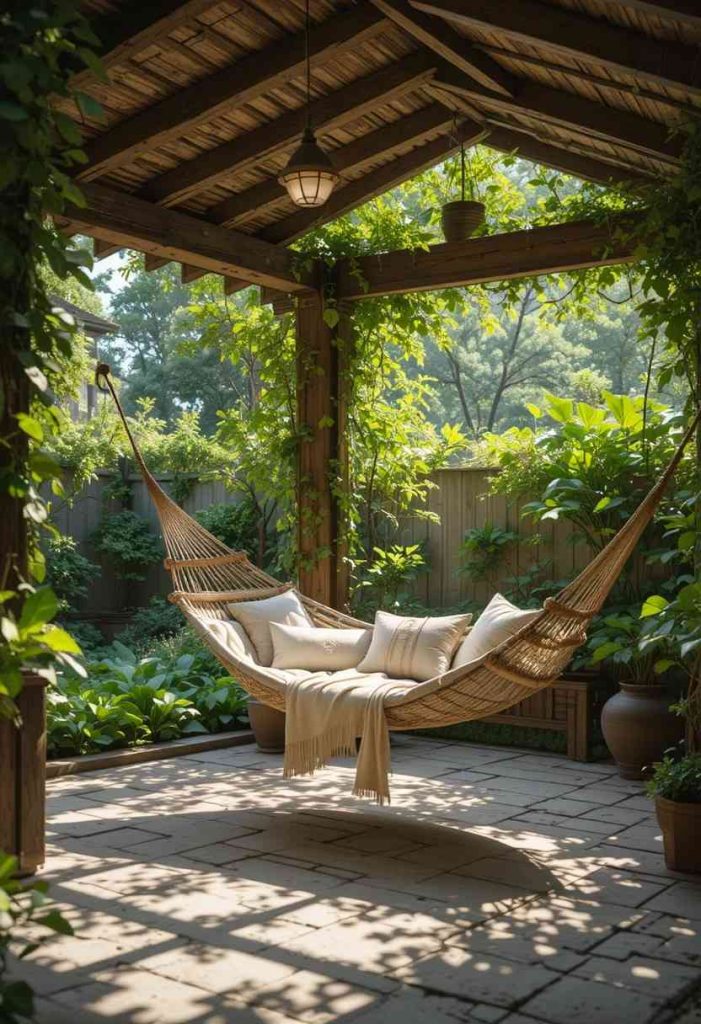
A hammock in a quiet corner is pure invitation to slow down, and I guard ours fiercely on sunny afternoons. It needs very little, just two strong anchor points, a little shade from the cover, and a small table nearby for a book and a cold drink. I hang ours with a gentle sag rather than pulled tight, because a hammock should cradle you rather than hold you flat, and I take it down in winter so the fabric lasts. It is the simplest luxury in this whole list, and on a warm day, with the garden humming around you, it is hard to imagine a better place to spend an hour.
How to do it: Find two solid anchor points, such as posts or a pergola beam, spaced to suit your hammock. Fix heavy-duty hooks or straps, then hang the hammock with a gentle sag, about 45 cm off the ground at its lowest point. Add a small side table and a cushion, and take the fabric down in winter.
30. A Sunset View Frame
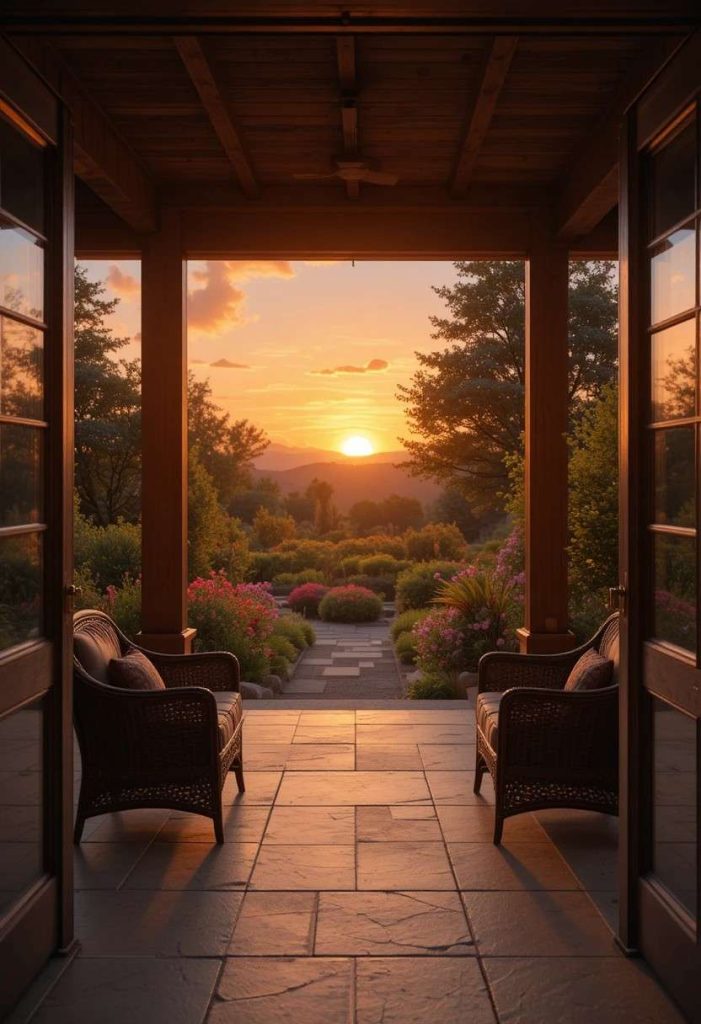
Framing the sunset is the idea that costs nothing and gives back the most, and it is the one I would do first if I were starting again. I moved our chairs so they face the gap in the fence where the evening light comes through, trimmed one overhanging branch, and suddenly the whole patio was designed around the best view in the garden. Keep the sightline clear, choose low furniture for that side, and let the planting frame the view rather than block it. On a clear evening, with the light turning gold and the day cooling down, you will be glad you planned the patio around the sunset instead of in spite of it.
How to do it: Stand where you usually sit at sunset and note exactly where the light comes through. Move the seating to face that gap, trim any branch that blocks it, and choose low furniture for the view side. Plant low grasses or flowers along the edges to frame the sightline, and keep tall items well to the sides.
Frequently Asked Questions
How much does a covered patio cost?
It depends on the size and the materials, but a simple pergola or awning can cost a few hundred pounds, while a solid roof with a fireplace or outdoor kitchen can run into several thousand. I would always start with the cover and the seating, because those two make the biggest difference, and add extras such as lighting and a fire pit over time. Getting two or three quotes from local builders will give you a realistic figure for your own garden.
What is the best cover for a patio that gets a lot of rain?
A solid roof with a proper fall and guttering is the most reliable choice in a wet climate, because it keeps the seating dry even in a heavy downpour. A louvered pergola is a good middle ground, since you can close the slats when rain arrives, but it needs clear drainage channels to work well. Whichever cover you choose, make sure water runs away from the house and the seating area.
Can I cover a patio on a small budget?
Yes, and some of the prettiest patios I have seen started with very little. A retractable awning, a shade sail or a simple pergola with climbing plants can give you shelter for a modest sum, and second-hand furniture and homemade textiles keep the rest of the cost down. Start with shade and seating, then add lighting and decoration a little at a time as the budget allows.
How do I keep a covered patio cool in summer?
Air movement matters more than anything, so leave at least one side open and consider a ceiling fan to keep the breeze going on still days. Light-coloured flooring and pale fabrics reflect heat rather than holding it, and climbing plants over a pergola give shade that is naturally cooler than a solid roof. A bowl of cold water for feet and a jug of iced drinks help too, on the hottest afternoons.
What flooring works best under a covered patio?
Natural stone, porcelain pavers and sealed concrete are the most practical choices, because they cope with rain, resist stains and stay cool underfoot. Timber decking feels warmer and softer, but it needs regular sealing under a cover where damp can linger. Whichever floor you choose, make sure it slopes very slightly away from the house so rainwater drains off instead of pooling.
Your Covered Patio Checklist
☐ Decide how you will use the patio most: coffee, dining, or evening gatherings
☐ Watch the sun and wind across the garden for a day or two
☐ Choose a cover that suits your climate and budget
☐ Set out seating first, with room to walk around it
☐ Lay a rug and add washable cushions and a throw
☐ Hang string lights and place lanterns for evening glow
☐ Add plants in pots at different heights around the edges
☐ Keep a storage box nearby for cushions and soft items
☐ Check that the cover drains away from the house
☐ Add shade, a fan or glass panels for hot and windy days
☐ Seal wood and choose outdoor-rated fabrics and metals
☐ Sit outside at sunset and enjoy the finished patio
A Few Gentle Tips Before You Begin
Think about how you will really use the space. A spot for quiet morning coffee asks for something different than a big family dining area, so picture your everyday moments first. What you love doing outside should shape the layout more than any photo.
Notice where the sun and wind come from. Watching your yard across a day or two tells you where shade is needed and where a breeze usually flows. Small observations like these make a big difference in comfort.
Build in layers of lighting. A mix of soft overhead string lights, a few lanterns, and a warm glow near the seating area keeps the patio inviting long after sunset. Different light levels make the space feel calm and flexible.
Choose materials made for the outdoors. Weather friendly fabrics, sealed wood, and rust resistant metals will last much longer and look better over time. It is worth spending a little more on pieces that can handle the rain and sun.
Start small if you need to. You do not have to do everything at once. A comfortable chair, a plant or two, and a little shade can be enough to begin. Let the patio grow slowly around the way you actually live in it.
Whichever ideas you choose, let the cover do its quiet work and let the patio earn its place in your daily life. Begin with the seat you will use tomorrow morning, add the light you will enjoy tomorrow evening, and let the rest follow one weekend at a time. A covered patio is at its best not on the day it is finished, but on the ordinary mornings and long evenings when you forget it was ever a project at all.