
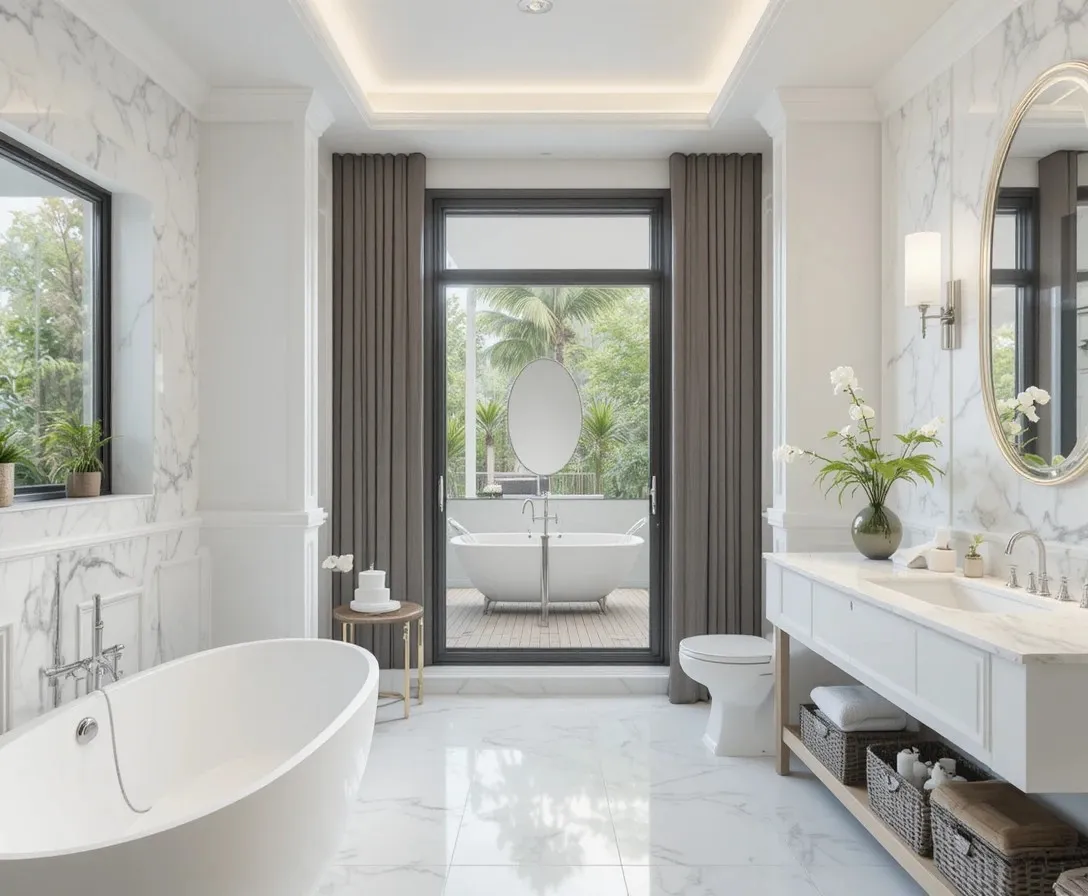
15 White Bathroom Ideas That Feel Bright, Calm, and Beautifully Timeless
A white bathroom has a way of looking effortlessly beautiful — bright, clean, peaceful, and timeless all at once. But in reality, designing one that feels cozy instead of cold can be trickier than it seems. Without the right textures, lighting, and accents, an all-white space can quickly feel plain or unfinished. That’s why the best white bathroom ideas focus on more than just color. They layer warmth, softness, and personality into the design while still keeping that fresh airy feeling everyone loves. Whether your style is modern, rustic, luxurious, or minimal, a thoughtfully designed white bathroom can make your entire home feel calmer and more elegant.
1. Layer Different Shades of White
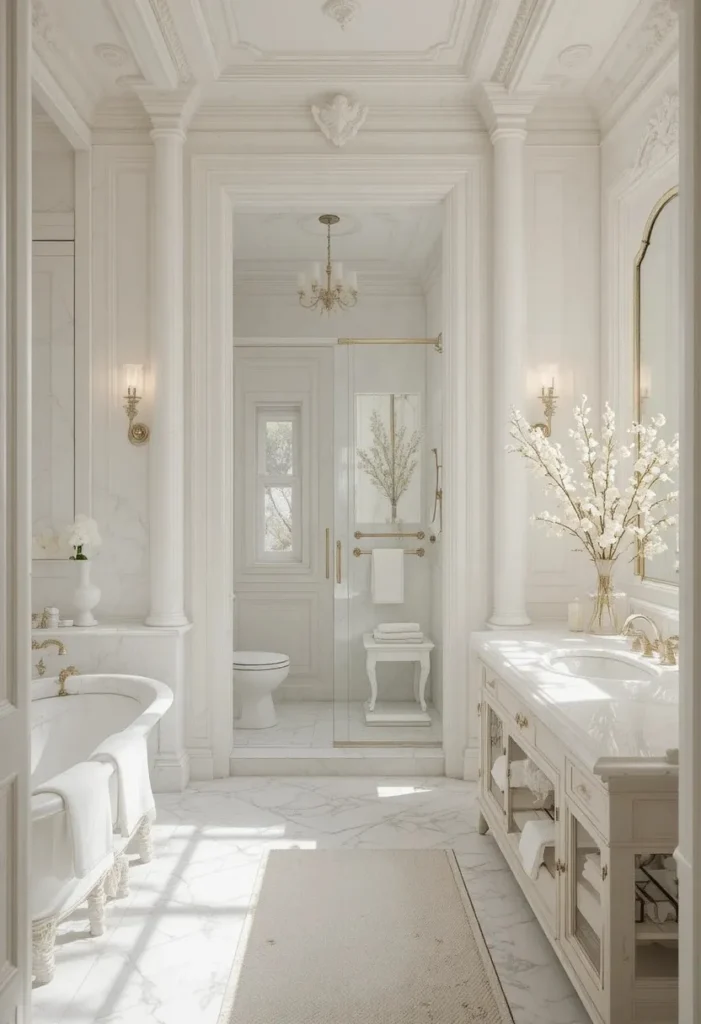
I learned this one the slow way, after painting everything the same brilliant white and wondering why the room felt more clinical than calm. The moment I started mixing shades, everything softened. I now pair crisp white walls with warm ivory towels, a creamy stone bath mat and a marble worktop with soft grey veining, and the room has real depth. My rule is to test swatches in the room itself, morning and evening, because a white that looks fresh at noon can turn chilly by lamplight. Keep the undertones consistent — all warm or all cool — and the layers will feel intentional rather than accidental.
How to do it: Start with your largest surfaces, then add the smaller layers. Paint the walls and ceiling in a warm or cool white to suit your light, choose towels and a bath mat in ivory or cream, and add one veined marble or stone surface. Mix matte paint with a glossy tile or polished worktop, step back in daylight, and swap any shade that looks grey or yellow against the others.
2. Add Warm Wood Accents
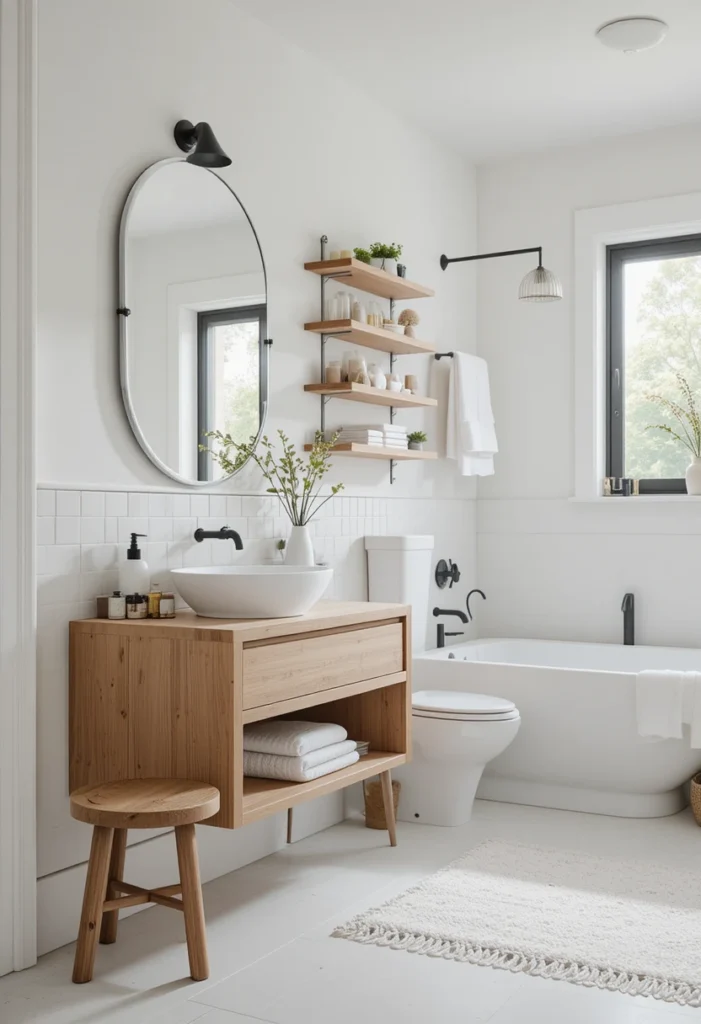
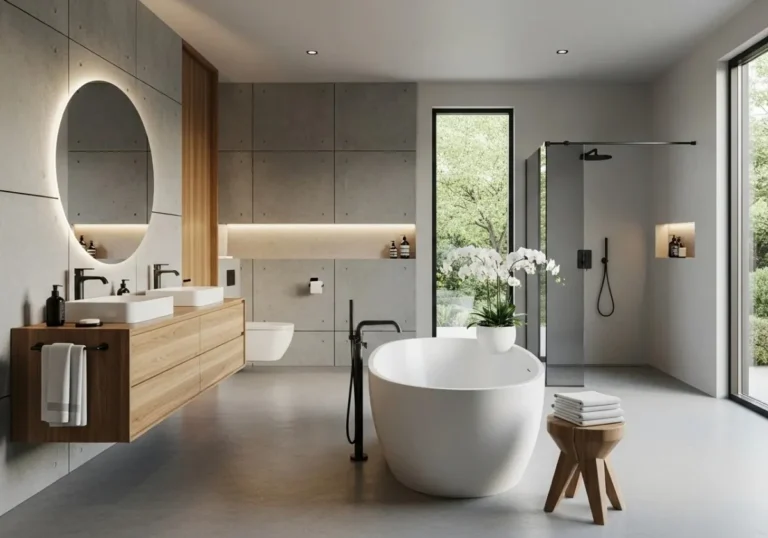
Wood is the quickest way I know to stop a white bathroom feeling cold, and I reach for it in any room that feels unwelcoming. In our bathroom, a pale oak vanity does most of the work, with a stool beside the bath and a shelf for rolled towels. The grain adds pattern without colour. I keep the tones light — oak, ash or bamboo — as darker woods can look heavy here. If you are choosing a new unit, my bathroom vanity ideas cover shapes and storage in detail. One or two wooden pieces are plenty, and the white still leads, while the wood warms it from the edges.
How to do it: Choose one main wooden piece, such as a vanity or stool, in a pale, water-resistant finish. Add one smaller piece, like a shelf, tray or soap dish, in the same tone. Seal the wood with a bathroom-safe oil or lacquer, keep it away from constant splashes, and wipe it dry after showers so the grain stays warm and pale.
3. Use Marble for a Luxurious Feel
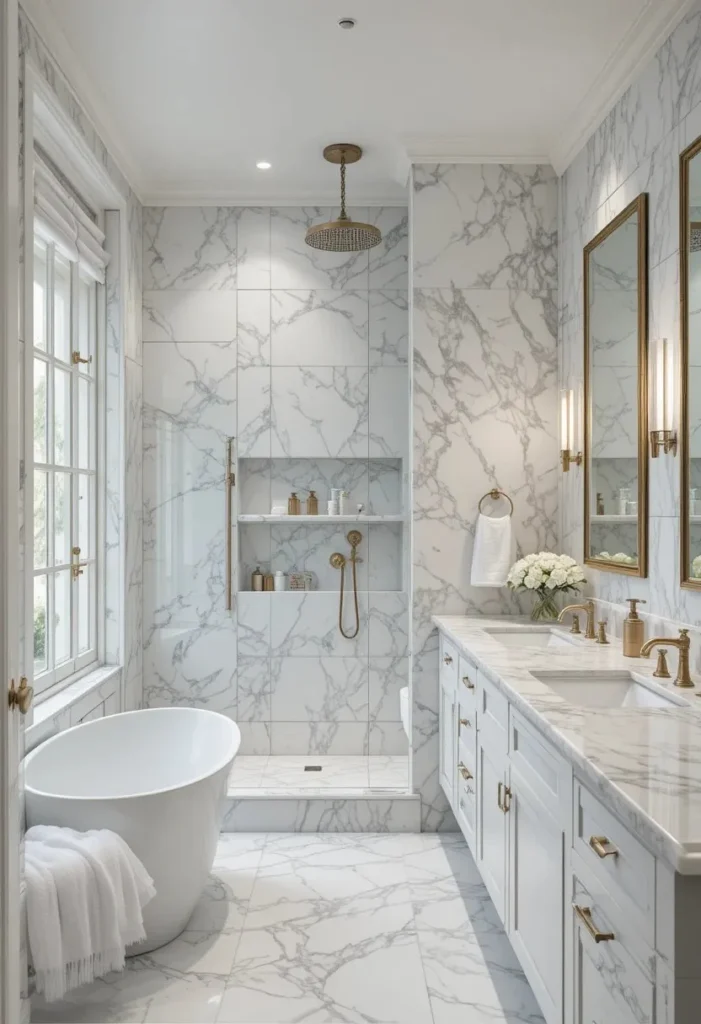
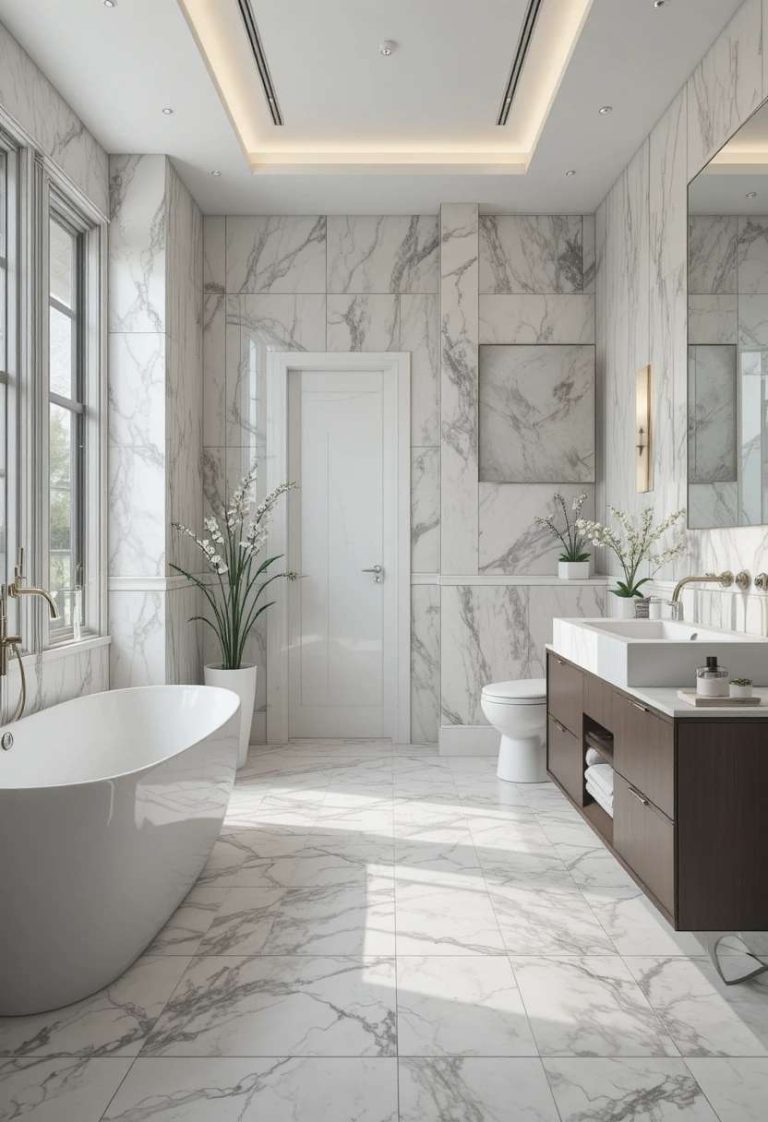
Marble was the material that finally made our white bathroom feel luxurious rather than merely clean. The veining gives the eye somewhere to rest without adding colour. A little goes a long way, so I would start with one surface — the vanity top, a shower wall or the floor — and let the rest of the room stay plain. Honed marble feels softer and more relaxed, while polished marble bounces light around and looks more formal. Seal it properly and wipe up toothpaste and coloured products quickly, because marble stains more easily than porcelain. Paired with brushed nickel or warm brass, it looks quietly expensive for years.
How to do it: Pick one marble surface to start, such as the vanity worktop, and order a sample to check against your tiles in daylight. Have it cut and sealed by a professional, use a pH-neutral cleaner, and place trays under bottles so oils and dyes never sit directly on the stone.
4. Create Contrast With Black Fixtures
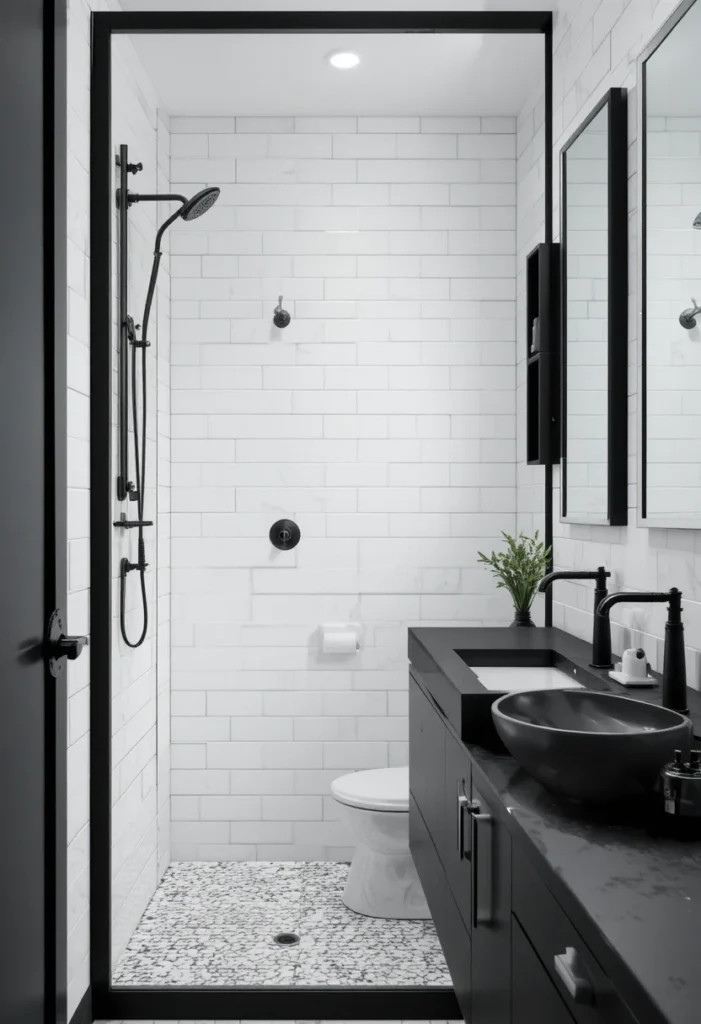
A touch of black is my favourite shortcut when a white bathroom feels a little too sweet. Matte black taps, a slim shower frame and a thin mirror edge give the room a clear outline, so everything looks more deliberate. I keep the black to hardware and frames only, so it reads as contrast rather than a second colour scheme. It works in modern, farmhouse and traditional rooms alike, as long as the shapes stay simple. My one caution is to match the finish across the room — matte with matte — because mixed blacks can look patchy. Echo it once, with a towel rail or framed print.
How to do it: Choose one matte black finish and use it for taps, the shower frame and the mirror edge. Keep the rest of the fittings pale, wipe the black surfaces with a soft cloth to avoid water marks, and avoid abrasive cleaners that can dull the coating.
5. Try an All-White Minimalist Bathroom
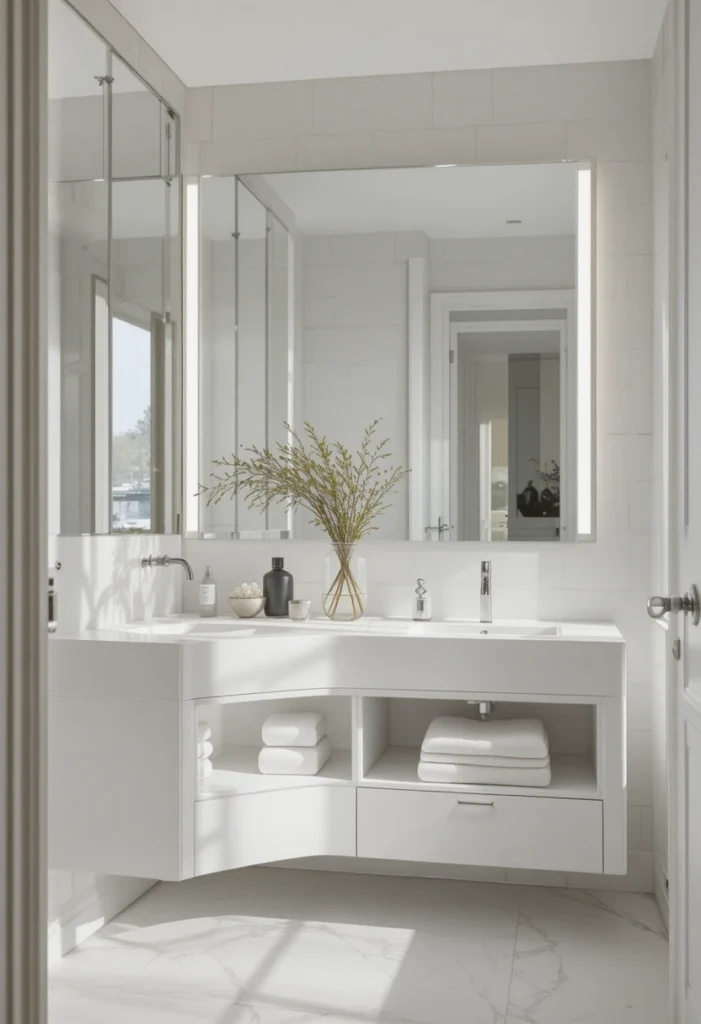
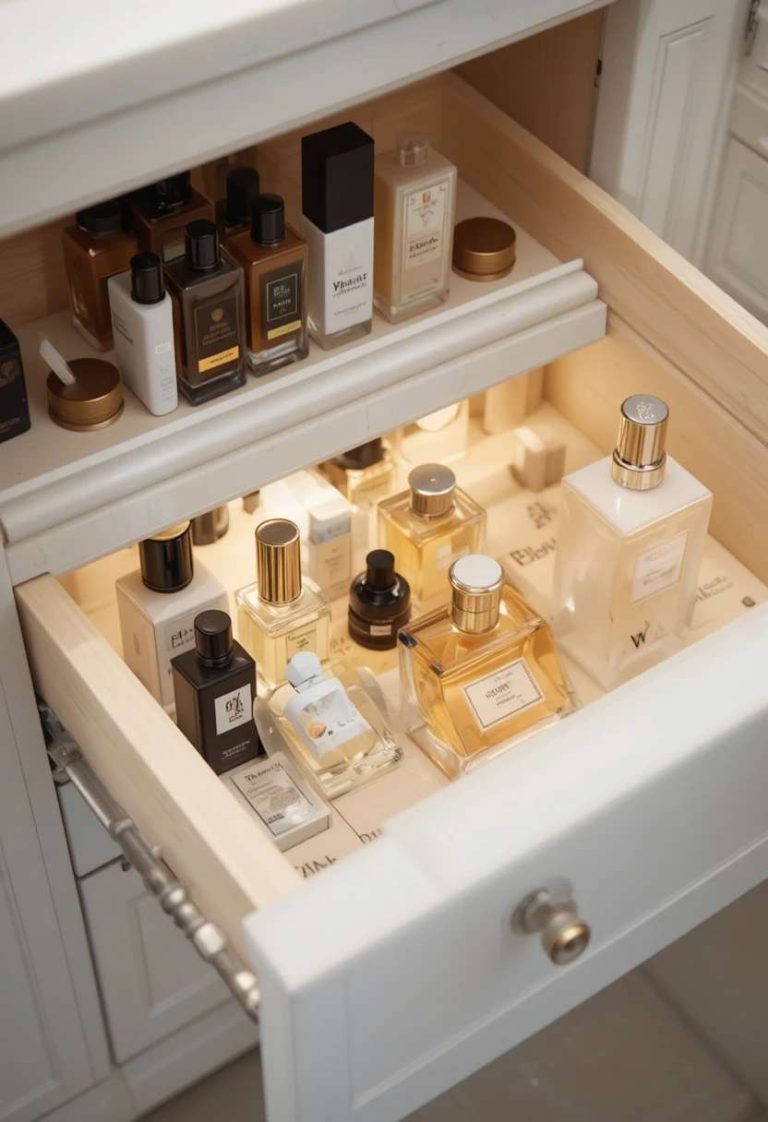
I find minimalist bathrooms easiest to live with when everything has a proper home, because the calm only lasts if the clutter stays hidden. Flat-front cabinets, a frameless mirror and a clear worktop make the room feel larger, and the white surfaces bounce the light around beautifully. That said, a minimalist bathroom should not feel empty. I keep one beautiful object on show — a ceramic vase, a folded stack of thick towels or a single stem in a bottle — and let the rest stay behind closed doors. Choose storage that fits your real routines, not an idealised version of them, and leave one drawer deliberately empty so the room can absorb the odd extra bottle. The result feels peaceful, not bare.
How to do it: Clear every surface, then return only what you use daily. Fit flat-front cabinets and a mirrored cabinet for toiletries, hide cleaning products in a cupboard, and keep one shelf or tray for a vase or folded towels. Do a five-minute tidy each evening so the calm lasts.
See More Ideas: 16 Bathroom Curtain Ideas That Instantly Upgrade Your Space
6. Add Texture With White Tiles
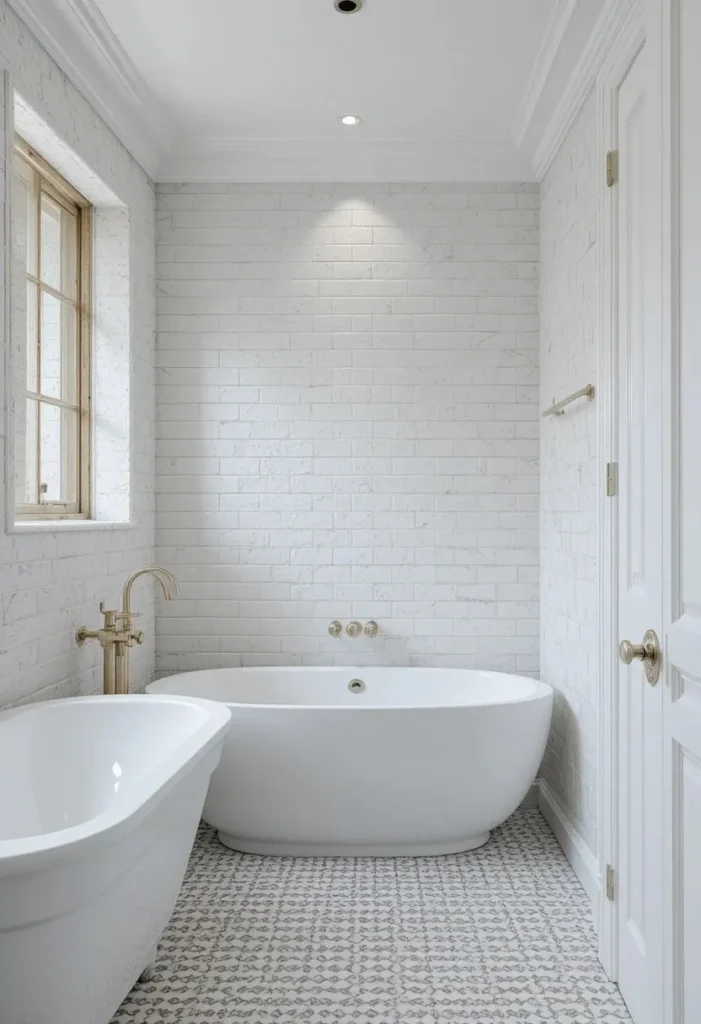
Texture is what stopped our white bathroom looking flat, and tiles are the easiest place to add it. A handmade-looking zellige tile in the shower catches the light differently every hour, while the rest stays smooth. Subway tiles in a herringbone pattern, a fluted stone panel or a patterned ceramic floor all do the same job. Choose one textured surface and let it be the star; two competing textures can make a small room feel busy. I pair a glossy wall tile with a matte floor so the room feels layered rather than shiny. Feel samples before you buy, because texture you can touch reads as luxury.
How to do it: Choose one feature area, such as the shower wall or floor, and pick a textured tile in white or a pale neutral. Order samples, check them in daylight and lamplight, and use a pale grout so the texture, not the grid, is what you notice. Seal natural stone tiles before grouting.
7. Bring in Soft Gold Accents
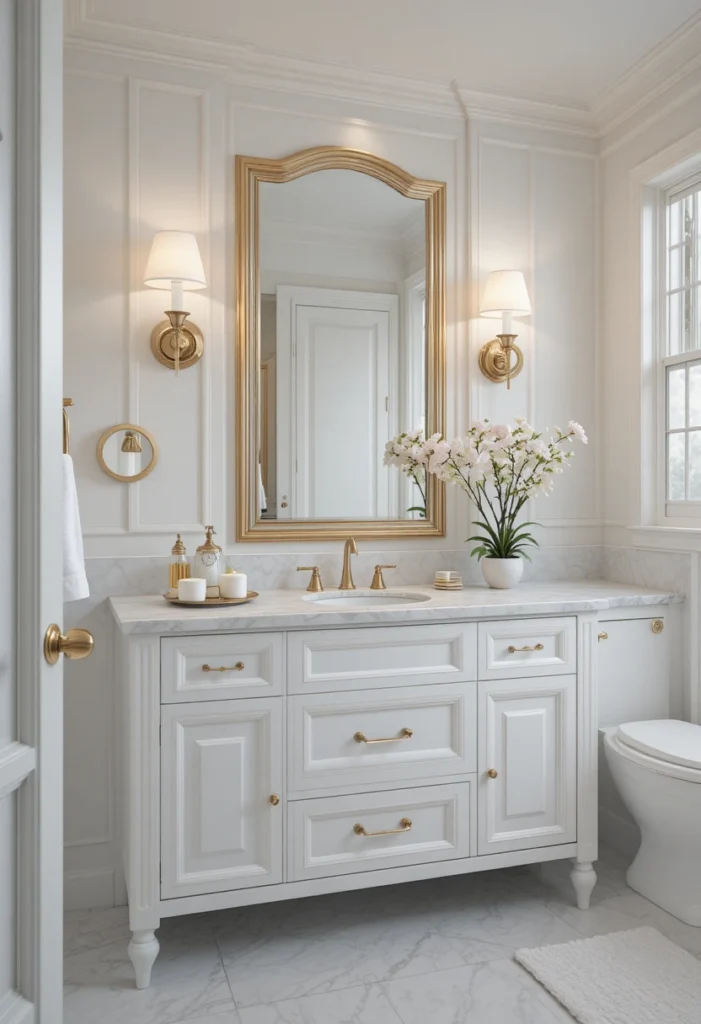
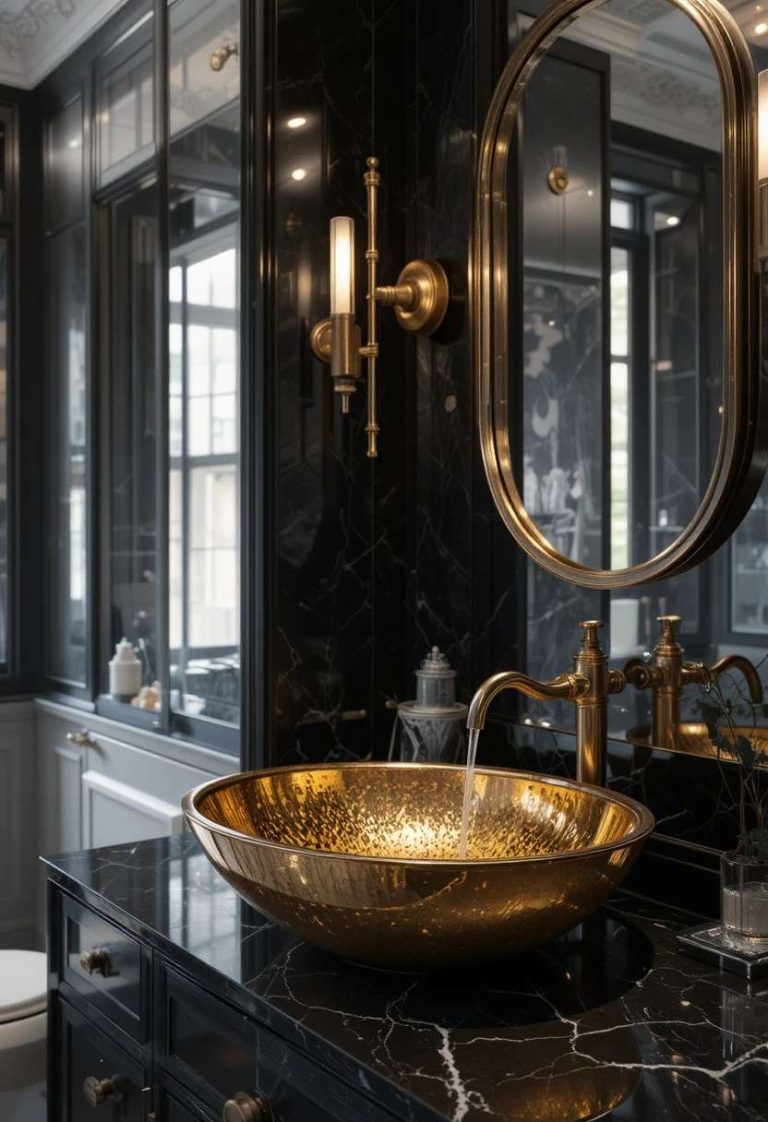
Soft gold is the finish I turn to when a white bathroom needs warmth but black feels too stark. Brushed gold taps, slim cabinet handles and a simple light fitting add a gentle glow that flatters pale tiles and warm marble alike. I use it sparingly — three or four touches at most — because gold stops looking elegant the moment it takes over. The softer, brushed finish is much easier to live with than polished gold, which shows every water mark. I also keep the rest of the metal in the room consistent, so the gold reads as a deliberate choice rather than a leftover. Against white, even a small gold-framed mirror or a pair of handles can lift the whole room.
How to do it: Pick brushed gold for taps, handles or a light fitting, and keep it to three or four touches. Match the tone across the pieces, wipe them with a soft, damp cloth, and avoid harsh descalers that can strip the finish.
8. Use Large Mirrors to Reflect Light
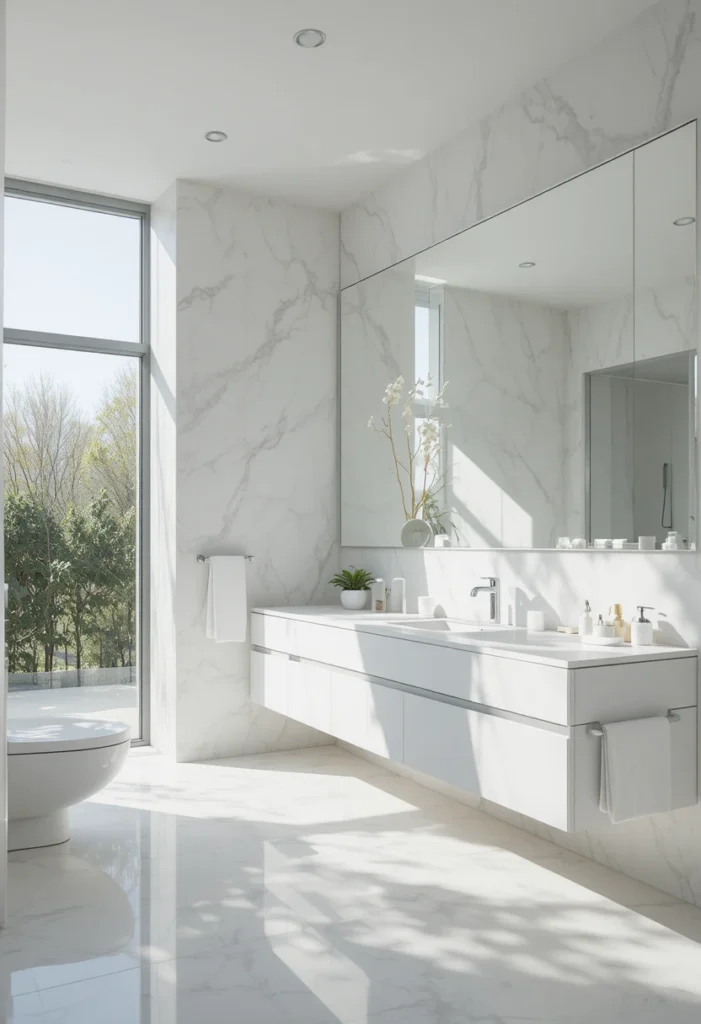
A large mirror changed our bathroom more than any piece of furniture, because it doubles the light and makes the room feel twice its size. I hung ours opposite the window, so daylight bounces straight across the white tiles, and even on grey mornings the room feels bright. The frame matters more than I expected: a thin black frame suits a modern room, brass warms a traditional one, and a frameless mirror disappears entirely in a minimalist space. Hang it so the centre sits at eye level, and keep the glass spotless, because smears show up far more on a big mirror. If you can, choose one wide mirror over two small ones; the unbroken reflection is what creates the sense of space.
How to do it: Measure the vanity wall and choose a mirror about two-thirds its width, or one large panel for a double vanity. Hang it with the centre at eye level, opposite a window where possible, and fix it to a stud or use proper wall anchors so it stays perfectly level.
9. Add Greenery for Freshness
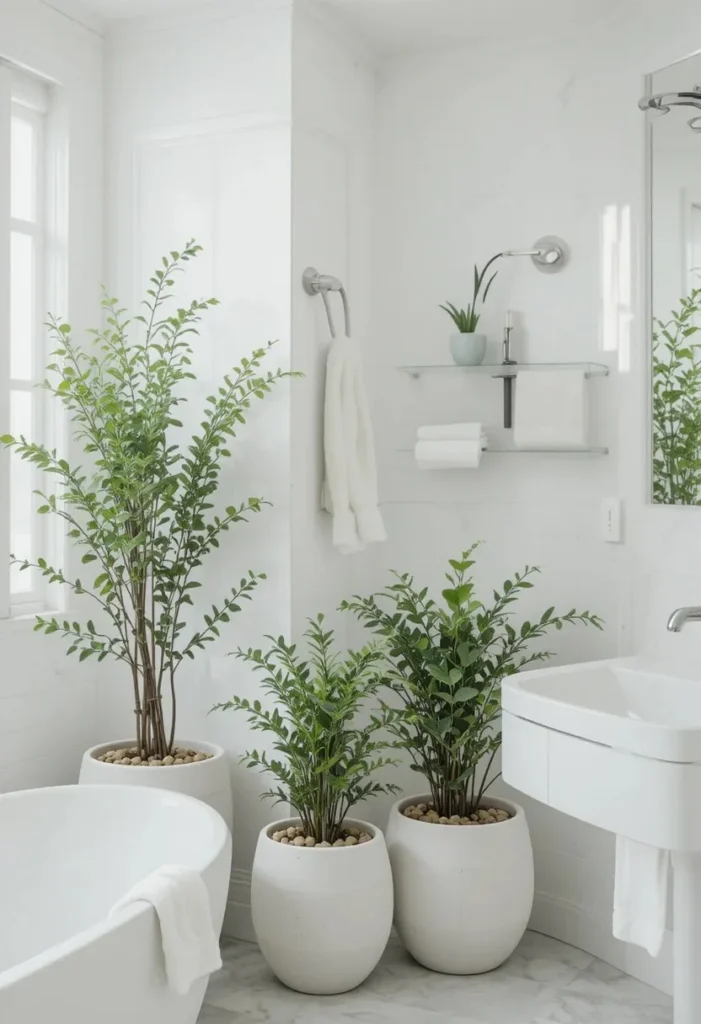
Plants are the one thing I add to every white bathroom, because nothing else softens hard tiles and bright surfaces quite so gently. A trailing pothos on a shelf, a small olive tree in a corner or a bundle of eucalyptus tied to the shower head brings in green without adding a colour scheme. The humidity suits most bathroom plants, so they tend to thrive with very little attention from me. I keep the planters simple — plain ceramic, stone or woven baskets — so the greenery stays the focus. If you love green against white, my sage green bathroom ideas show how the two work together across a whole room. One or two plants are enough; a jungle would fight the calm you are trying to create.
How to do it: Choose two or three humidity-loving plants, such as pothos, ferns or eucalyptus. Place one high, one low and one near the window, pot them in simple ceramic or woven planters, and water sparingly, checking the soil first so roots never sit in water.
10. Try a Spa-Inspired White Bathroom
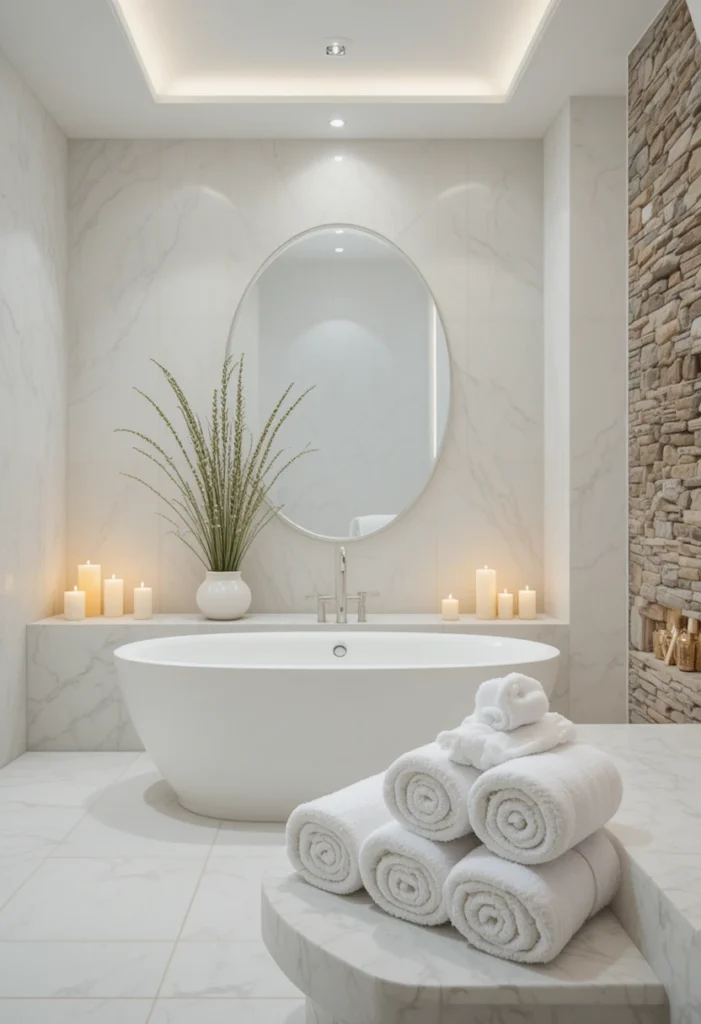
When I want the bathroom to feel like a spa, I start by taking things away rather than adding them. Clear worktops, a single tray with a candle and a bottle of bath oil, and a stack of thick white towels rolled on an open shelf set the mood before anything else. Warm, low lighting matters more than any product: I swap bright overhead light for a dimmer or a pair of candles in the evening, and the room immediately feels slower. Natural textures help too — a stone soap dish, a wooden bath tray, a linen robe on a hook. I keep scents simple as well, usually eucalyptus or lavender, because a spa should smell clean, not perfumed. The aim is a room that invites you to stay a little longer.
How to do it: Clear the surfaces, then add a wooden bath tray, rolled white towels and a candle in a sturdy glass holder. Fit a dimmer or use warm, low lighting, add a linen robe and a stone soap dish, and keep one calming scent, such as eucalyptus, rather than several competing ones.
See More Ideas: 14 Double Sink Bathroom Ideas That Make Busy Mornings Feel Beautiful
11. Use White and Beige Together
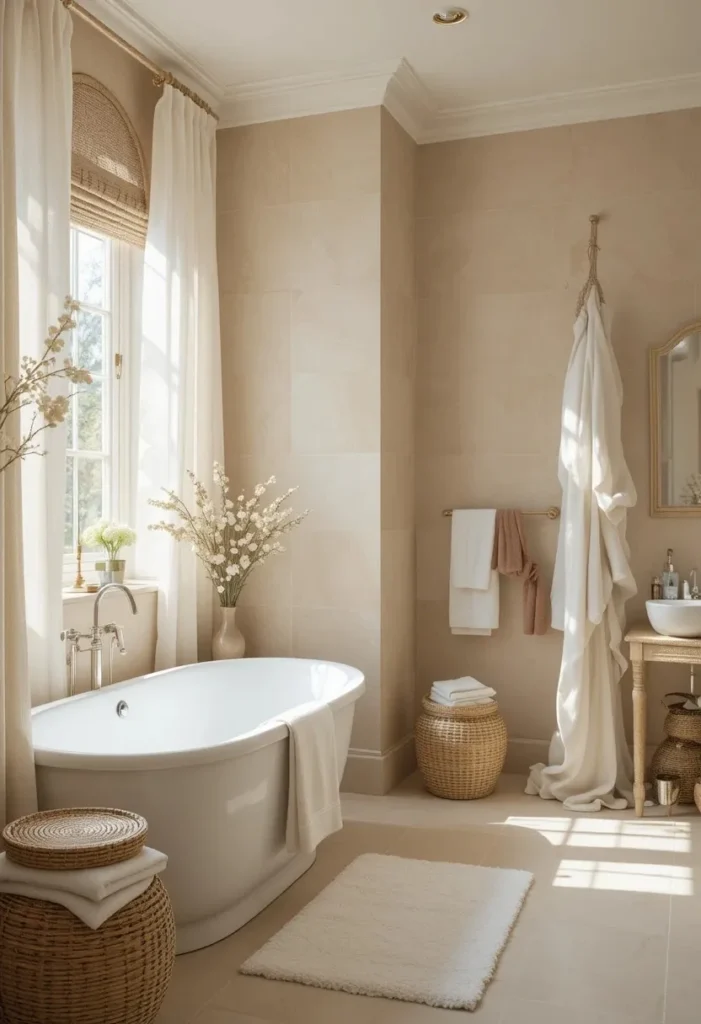
Beige is what I reach for when white alone feels too stark but I still want a pale, timeless room. Sandy floor tiles, a warm taupe bath mat and linen in a soft oatmeal tone take the chill out of white walls without darkening the space. I find the combination works best when the beige has a warm, yellow undertone that matches the white, rather than a grey one that can look muddy beside it. Layer the tones gradually — a beige tile, then a slightly deeper towel, then a woven basket — so the room feels collected rather than matched. This palette is forgiving for mixed wood tones too, which makes it a good choice if you are keeping an older vanity. The result is calm, warm and quietly elegant.
How to do it: Choose a warm beige with a yellow undertone and test it beside your white tiles. Use it on one large surface, such as the floor, then repeat it in towels, a linen shower curtain and a woven basket, keeping the white fixtures bright so the room stays fresh.
12. Add Statement Lighting
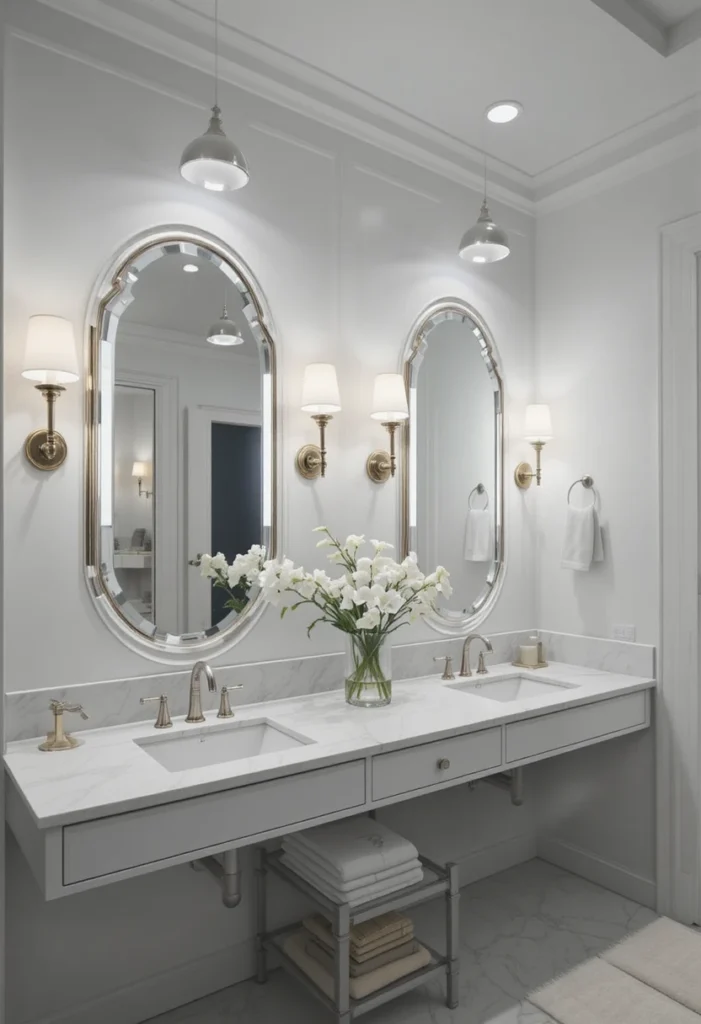
Lighting is the detail I notice first in a white bathroom, because pale walls show every shadow and every glare. A pair of sconces beside the mirror, a small pendant over the bath or a slim chandelier in a taller room can turn a plain space into one that feels considered. I always choose warm bulbs, around 2700K, because cool white light makes white tiles look harsh and skin look tired. A dimmer is worth fitting too, so the same room can feel bright in the morning and soft in the evening. If you are planning the whole scheme, my bathroom lighting ideas cover sconces, pendants, dimmers and mirror lights in detail. Keep the fitting itself simple and let the quality of the light do the work.
How to do it: Plan three layers: task light at the mirror, ambient light overhead and one low accent. Fit warm 2700K dimmable bulbs, place sconces at eye level beside the mirror, and have all wiring installed by a qualified electrician, especially near water.
13. Create a Farmhouse White Bathroom
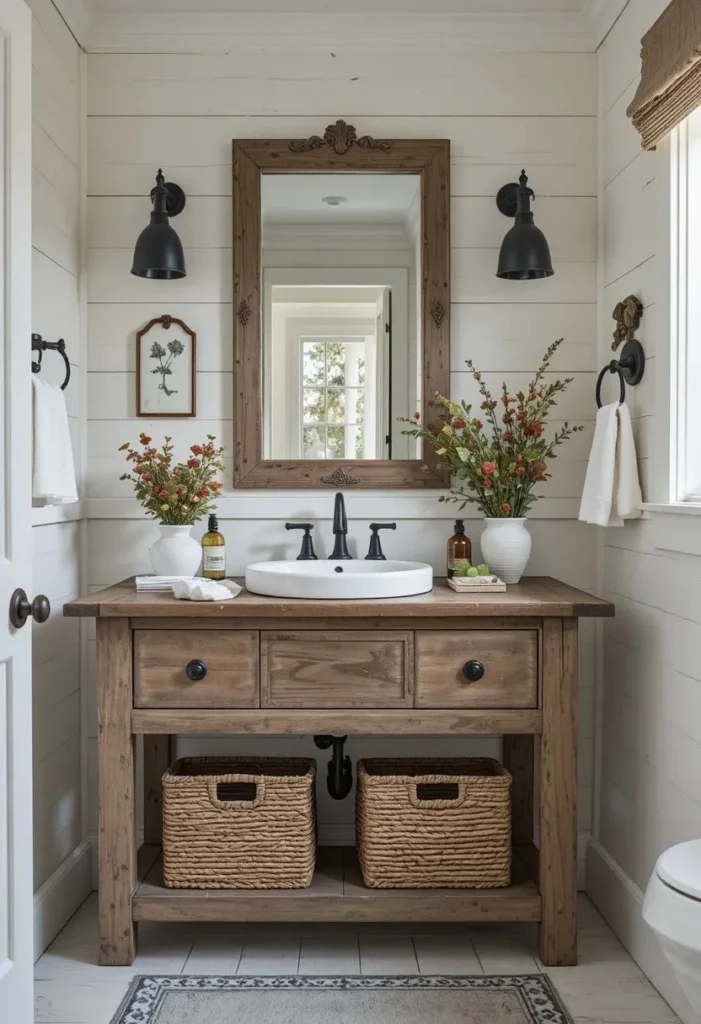
A farmhouse white bathroom feels like the most relaxed room in the house to me, and the charm comes from mixing honest materials rather than buying a matching set. Shiplap on one wall, a distressed wood vanity, a vintage-style mirror and matte black hardware give the room character without making it feel cluttered. I keep the white bright and the wood warm, so the contrast does the work, and I add woven baskets for towels and toiletries because they hide the everyday mess beautifully. A gingham or linen hand towel and a simple ceramic soap dish are enough decoration; farmhouse style goes wrong when every surface is styled. The room should feel as though it has grown over time, not been bought in a day.
How to do it: Add shiplap or panelling to one wall and paint it white in a durable eggshell finish. Pair it with a wood vanity, matte black hardware and a vintage-style mirror, then store towels in woven baskets and keep the worktop to a soap dish and one small vase.
14. Use White Curtains for Softness
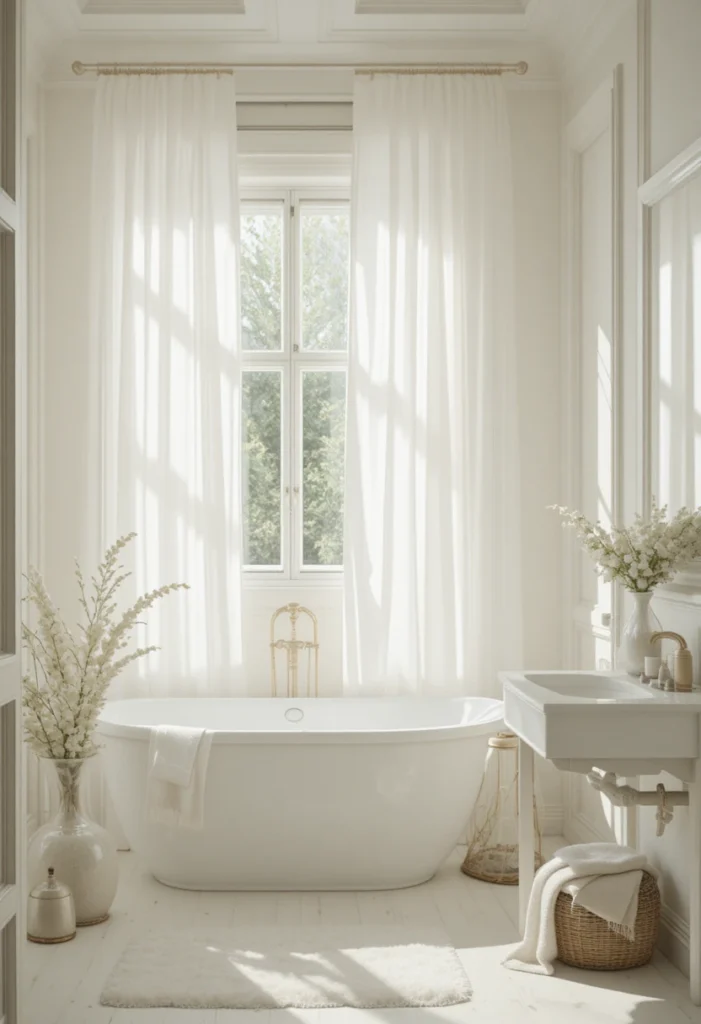
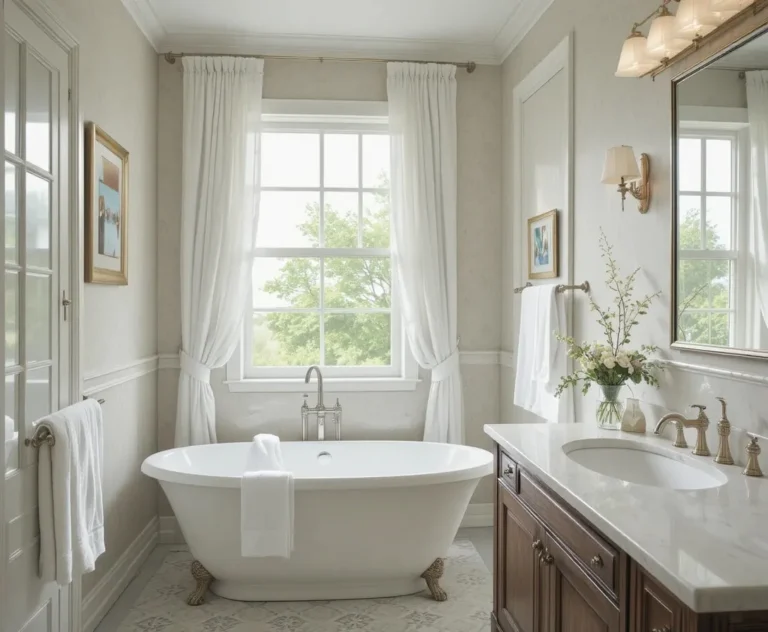
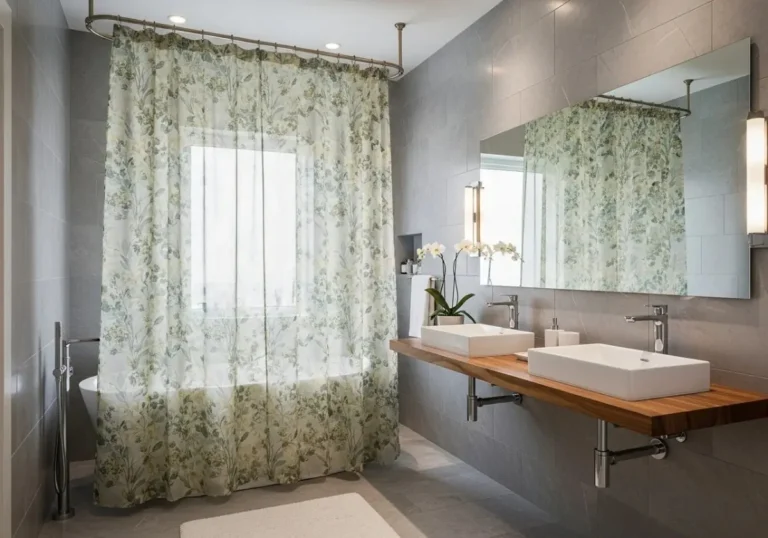
White curtains were a late addition in our bathroom, and I wish I had hung them sooner, because they changed the light completely. A linen or sheer curtain softens the hard edges of tile and glass, and sunlight filtering through it makes the whole room glow rather than glare. I hang them high and let them skim the sill or the floor, so the room feels taller. The fabric needs to cope with steam, so I choose washable linen or a cotton blend and avoid heavy linings that hold damp. A slim rod and simple rings keep the look relaxed, and I wash the curtains regularly so they stay bright. In a room full of hard surfaces, a little fabric goes a long way.
How to do it: Choose a washable linen or sheer cotton curtain in white or ivory. Hang it on a slim rod above the window frame, let it skim the sill or floor, and wash it regularly so steam and splashes never dull the fabric.
15. Keep Decor Simple and Intentional
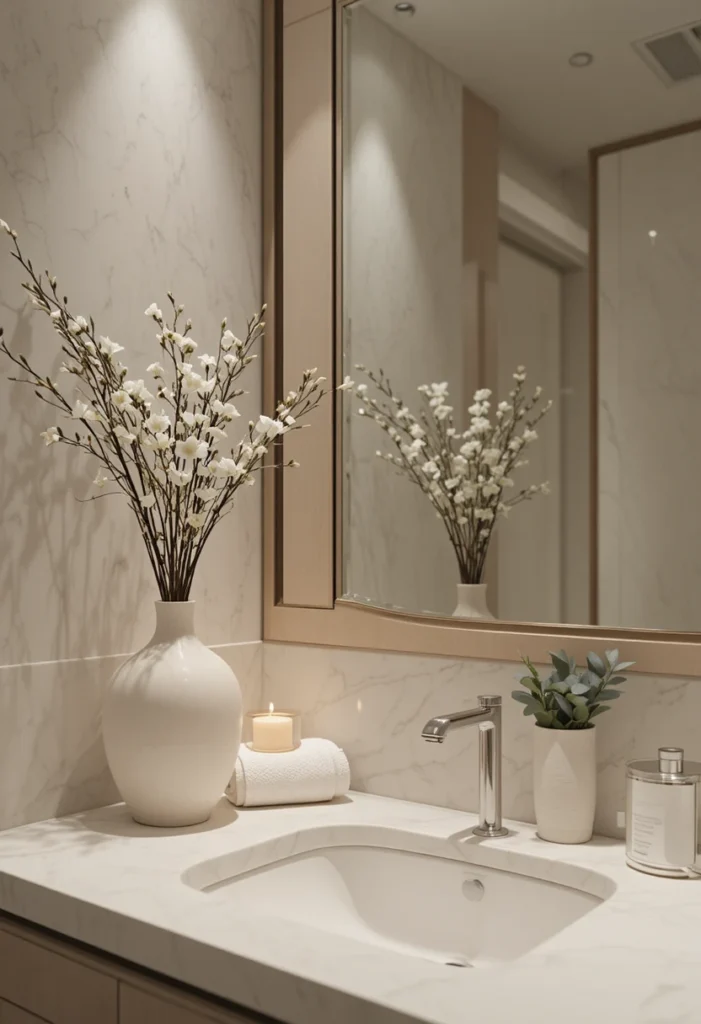
I have learned that a white bathroom looks best when I resist the urge to fill it, because the white itself is the decoration. A few well-chosen pieces — a ceramic vase with a single stem, a stack of thick folded towels, a framed print with plenty of white space — give the eye somewhere to rest without crowding the room. I choose texture over quantity, so a rough stone soap dish or a woven basket earns its place more than three small ornaments would. Every object should have a reason to be there, whether it is useful or genuinely beautiful, and I take away anything I stop noticing. Step back once a week and remove one thing that no longer earns its place; the room will feel calmer every time.
How to do it: Take everything off the surfaces, then return only three or four pieces: a vase, folded towels, a candle and one framed print. Choose texture over quantity, give each piece space around it, and remove one item a week until the room feels calm rather than bare.
Frequently Asked Questions
How do I stop a white bathroom feeling cold?
Layer warm materials into the room rather than adding more white. Pale wood, soft textiles in ivory and cream, warm lighting and one textured surface will take the chill out of the space. I also test paint swatches in daylight and lamplight, because a warm white keeps the room bright without making it feel cold.
What is the best white paint for a bathroom?
Choose a moisture-resistant paint in a satin or eggshell finish, which copes with steam and wipes clean easily. Pick a warm white with a yellow undertone for a north-facing room, or a clean, cool white if the room gets plenty of warm sunlight. Always test a large swatch on the wall first, as white paint can look very different once it is up.
Does a white bathroom suit a small bathroom?
Yes, white is one of the best choices for a small bathroom because it reflects light and makes the walls feel further away. A large mirror, glossy tiles and clear glass will add to the sense of space. Keep the fittings slim and the storage hidden, so the room feels open rather than crowded.
How do I keep a white bathroom clean?
Wipe the tiles and fittings down once a week with a gentle, pH-neutral cleaner, and dry the taps after use to avoid water marks. Seal grout and natural stone when the bathroom is new, and re-seal them once a year. Choosing washable paint and easy-clean surfaces makes the weekly routine much quicker.
Can I mix white with colour in a bathroom?
Yes, white works as a calm base for almost any colour. Soft sage green, warm beige and matte black all sit beautifully against white, while brushed gold or pale wood add warmth. I keep one accent colour dominant and repeat it in two or three places, so the room feels considered rather than busy.
Your White Bathroom Checklist
Work through this list before you buy anything, and tick each step off as you go.
- ☐ Choose warm or cool whites and test swatches in daylight and lamplight
- ☐ Pick one main material — marble, wood or textured tile — to lead the scheme
- ☐ Add warm wood in one or two pieces, in a pale, sealed finish
- ☐ Choose one metal finish and use it consistently
- ☐ Hang a large mirror opposite the window, centred at eye level
- ☐ Add greenery that loves humidity, in simple planters
- ☐ Fit warm 2700K bulbs and a dimmer
- ☐ Layer towels and textiles in ivory, cream and beige
- ☐ Keep the worktop to three or four chosen pieces
- ☐ Seal marble and stone before use
- ☐ Choose washable linen or sheer curtains for softness
- ☐ Plan storage so everyday items stay behind closed doors
- ☐ Wipe tiles and fittings weekly to keep the white bright
- ☐ Step back, live with the room for a week, then adjust one thing at a time
Conclusion
A white bathroom works best when it is treated as a layered room rather than a blank one, and I hope these fifteen ideas show how much warmth white can hold. The shades you layer, the wood you add, the marble, the mirrors and the light all matter more than any single feature, and small choices — a warm bulb, a rolled towel, a trailing plant — are what turn a bright room into a calm one. Start with the change that bothers you most, whether that is cold light or a cluttered worktop, and let the rest follow gradually. White will not date, and a room planned this way will still feel fresh, peaceful and beautifully timeless in years to come.
One Comment